

10 In the thirty-seventh year of Joash king of Judah, Jehoash the son of Jehoahaz began to reign over Israel in Samaria, and he reigned sixteen years. 11 He also did what was evil in the sight of the LORD. He did not depart from all the sins of Jeroboam the son of Nebat, which he made Israel to sin, but he walked in them. 12 Now the rest of the acts of Joash and all that he did, and the might with which he fought against Amaziah king of Judah, are they not written in the Book of the Chronicles of the Kings of Israel? 13 So Joash slept with his fathers, and Jeroboam sat on his throne. And Joash was buried in Samaria with the kings of Israel.
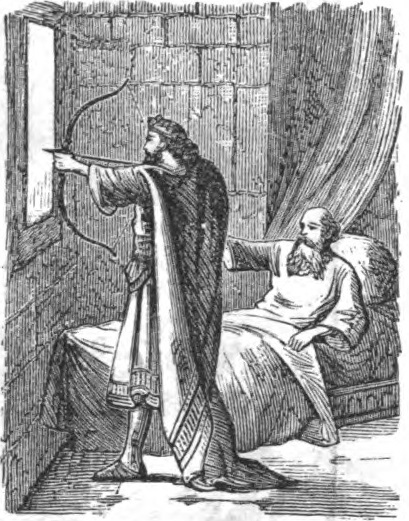
14 Now when Elisha had fallen sick with the illness of which he was to die, Joash king of Israel went down to him and wept before him, crying, “My father, my father! The chariots of Israel and its horsemen!” 15 And Elisha said to him, “Take a bow and arrows.” So he took a bow and arrows. 16 Then he said to the king of Israel, “Draw the bow,” and he drew it. And Elisha laid his hands on the king’s hands. 17 And he said, “Open the window eastward,” and he opened it. Then Elisha said, “Shoot,” and he shot. And he said, “The LORD‘s arrow of victory, the arrow of victory over Syria! For you shall fight the Syrians in Aphek until you have made an end of them.” 18 And he said, “Take the arrows,” and he took them. And he said to the king of Israel, “Strike the ground with them.” And he struck three times and stopped. 19 Then the man of God was angry with him and said, “You should have struck five or six times; then you would have struck down Syria until you had made an end of it, but now you will strike down Syria only three times.”
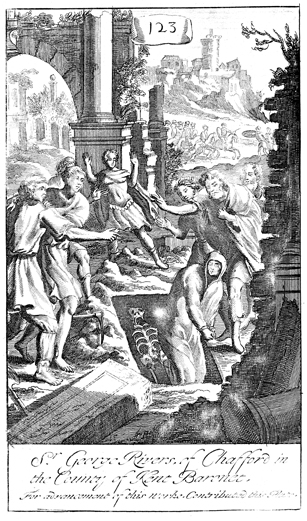
20 So Elisha died, and they buried him. Now bands of Moabites used to invade the land in the spring of the year. 21 And as a man was being buried, behold, a marauding band was seen and the man was thrown into the grave of Elisha, and as soon as the man touched the bones of Elisha, he revived and stood on his feet.
22 Now Hazael king of Syria oppressed Israel all the days of Jehoahaz. 23 But the LORD was gracious to them and had compassion on them, and he turned toward them, because of his covenant with Abraham, Isaac, and Jacob, and would not destroy them, nor has he cast them from his presence until now.
24 When Hazael king of Syria died, Ben-hadad his son became king in his place. 25 Then Jehoash the son of Jehoahaz took again from Ben-hadad the son of Hazael the cities that he had taken from Jehoahaz his father in war. Three times Joash defeated him and recovered the cities of Israel. – 2 Kings 13:10-25 ESV
Keeping up with the revolving door of kings who reigned over Israel and Judah is hard enough as it is, but it becomes even more difficult when two kings with the same name end up ruling at the same time. That’s the case in this particular passage. Jehoash ascended to the throne of Israel after the death of his father, Jehoahaz, and it just so happened that the king of Judah bore the same name. It seems only fitting and a bit ironic that these two nations that shared the same predilection for idolatry and apostasy would end up with rulers who shared the same name. While their reigns would only intersect for a period of about two years, they shared more in common than their name. In the end, both men proved to be ungodly leaders who failed to lead their people back to the worship of Yahweh.
Wh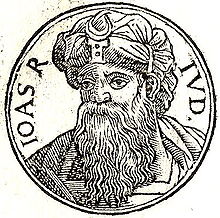

…as they still went on and talked, behold, chariots of fire and horses of fire separated the two of them. And Elijah went up by a whirlwind into heaven. And Elisha saw it and he cried, “My father, my father! The chariots of Israel and its horsemen!” And he saw him no more. – 2 Kings 2:11-12 ESV
This event followed Elisha’s request that Elijah give him a double portion of his spirit. He was to be Elijah’s replacement, and he felt ill-equipped for the task. It could be that King Jehoash hoped Elisha would pour out his spirit on him as well. He understood that Elisha possessed power and had direct access to Yahweh. With the prophet’s death, all of that might be lost. But rather than pour out his spirit on the apostate king, Elisha commanded him to take his bow and shoot an arrow out the window.
Elisha said, “Shoot,” and he shot. And he said, “The LORD‘s arrow of victory, the arrow of victory over Syria! For you shall fight the Syrians in Aphek until you have made an end of them.” – 2 Kings 13:17 ESV
Next, the prophet told the king to take his remaining arrows and strike the ground with them. Jehoash dutifully obeyed, but when he stopped after the third blow, Elisha responded in anger.
“You should have struck the ground five or six times!” he exclaimed. “Then you would have beaten Aram until it was entirely destroyed. Now you will be victorious only three times.” – 2 Kings 13:19 NLT
In a sense, Elisha had poured out his spirit on King Jehoash. He had placed his hands on those of the king and, together, they had shot the first arrow out the window. He then assured the king of his victory over the Syrians. But the extent of that victory would depend on Jehoash’s faith. By limiting the number of times he struck the ground, Jehoash was unwittingly revealing his lack of faith. The first arrow had symbolized the LORD’s victory over the Syrians. When Elisha had commanded Jehoash to take the remaining arrows and strike the ground, he should have done so until the prophet told him to stop. Each blow was meant to symbolize a victory over the enemy. But Jehoash had chosen to limit his expectations. In doing so, he inadvertently limited his chances of success over his enemy.
The author reminds his readers that God remained faithful to His disobedient people, refusing to abandon them despite their constant rejection of Him.
…the LORD was gracious and merciful to the people of Israel, and they were not totally destroyed. He pitied them because of his covenant with Abraham, Isaac, and Jacob. – 2 Kings 13:23 NLT
The author also reveals that Yahweh kept His word concerning the fate of the Syrians. Jehoash experienced three separate victories over his enemy, matching the exact number of times he struck the ground with his arrows — no more, no less. God allowed Jehoash to recover some of the territory stolen by the Syrians, but the fighting would continue throughout the rest of his reign. The sad reality is that the same God who raised a dead man back to life was fully capable of restoring a spiritually dead nation. Still, their continued stubbornness and lack of faithfulness would prevent them from experiencing the life-transformative power of Yahweh.
English Standard Version (ESV) The Holy Bible, English Standard Version. ESV® Permanent Text Edition® (2016). Copyright © 2001 by Crossway Bibles, a publishing ministry of Good News Publishers.
New Living Translation (NLT) Holy Bible, New Living Translation, copyright © 1996, 2004, 2015 by Tyndale House Foundation. Used by permission of Tyndale House Publishers Inc., Carol Stream, Illinois 60188. All rights reserved.