The Allure of Spiritual Syncretism

29 But every nation still made gods of its own and put them in the shrines of the high places that the Samaritans had made, every nation in the cities in which they lived. 30 The men of Babylon made Succoth-benoth, the men of Cuth made Nergal, the men of Hamath made Ashima, 31 and the Avvites made Nibhaz and Tartak; and the Sepharvites burned their children in the fire to Adrammelech and Anammelech, the gods of Sepharvaim. 32 They also feared the LORD and appointed from among themselves all sorts of people as priests of the high places, who sacrificed for them in the shrines of the high places. 33 So they feared the LORD but also served their own gods, after the manner of the nations from among whom they had been carried away.

34 To this day they do according to the former manner. They do not fear the LORD, and they do not follow the statutes or the rules or the law or the commandment that the LORD commanded the children of Jacob, whom he named Israel. 35 The LORD made a covenant with them and commanded them, “You shall not fear other gods or bow yourselves to them or serve them or sacrifice to them, 36 but you shall fear the LORD, who brought you out of the land of Egypt with great power and with an outstretched arm. You shall bow yourselves to him, and to him you shall sacrifice. 37 And the statutes and the rules and the law and the commandment that he wrote for you, you shall always be careful to do. You shall not fear other gods, 38 and you shall not forget the covenant that I have made with you. You shall not fear other gods, 39 but you shall fear the LORD your God, and he will deliver you out of the hand of all your enemies.” 40 However, they would not listen, but they did according to their former manner.

41 So these nations feared the LORD and also served their carved images. Their children did likewise, and their children’s children—as their fathers did, so they do to this day. 2 Kings 17:29-41 ESV

So they feared the Lord but also served their own gods.”
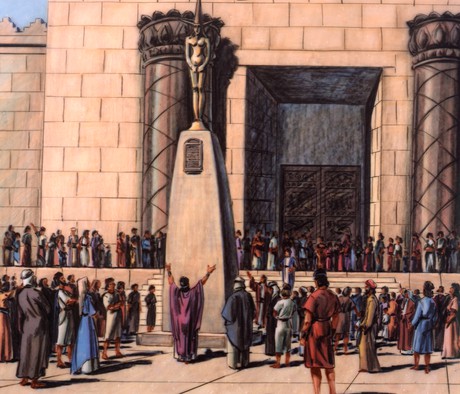
That phrase appears twice in the closing verses of chapter 17, and it aptly summarizes the spiritual state of the nation of Israel after it fell to the Assyrians. Many of its citizens had been captured and exiled to various locations in Assyria, and their vacancies were filled by people from other conquered nations who were forced to relocate to Israel and start new lives. This sudden influx of refugees from foreign countries turned Israel into a veritable melting pot and, ultimately, resulted in intermarriage between the remaining Jews and their new neighbors.

These newly transplanted inhabitants found themselves living in a foreign land where they didn’t understand the language or customs. They were strangers living in a strange place, but they found some comfort in the fact that many of their gods already had shrines dedicated to them in Israel. The ten northern tribes had been assimilating the gods of other nations for years. Under Jeroboam’s leadership, they had created their own gods, complete with temples and a priesthood. Under Ahab and Jezebel, they had adopted and promoted the worship of Baal and Asherah. And along the way, other kings of Israel had embraced the false gods of their foreign allies. So, the new arrivals to Israel found an atmosphere of religious tolerance and ecumenism.

Immediately after these foreign refugees arrived in Israel and took up residence in the abandoned cities of Samaria, they began worshiping their false gods. But the land on which they now lived belonged to Yahwah, and He took offense at their actions. He had set apart the land of Israel as holy and given to the descendants of Abraham as their inheritance. It was to have been a place where they lived in obedience to His will and worshiped Him alone. Their failure to do so led to their defeat and deportation at the hands of the Assyrians. However, their eviction from the land had not changed its sanctity or voided the covenant commitment God had made with His people. There was still a remnant of Jews living in the land of Israel, and He expected them to keep their end of the agreement they had made with Him.

So, when these foreigners began to worship their false gods on land that belonged to the one true God, they found themselves experiencing divine judgment.

But since these foreign settlers did not worship the LORD when they first arrived, the LORD sent lions among them, which killed some of them. – 2 Kings 17:25 NLT

As a result, the king of Assyria ordered that one of the exiled Israelite priests be sent back so that he might instruct the immigrants in the proper worship of Yahweh.

So one of the priests who had been exiled from Samaria returned to Bethel and taught the new residents how to worship the LORD. – 2 Kings 17:28 NLT

This highly pragmatic plan implemented by the king of Assyria was evidently successful. But while many of the new arrivals eagerly adopted Yahweh as their God, they added Him to their growing list of deities. He became just one more god to whom they offered sacrifices to win favor and good fortune.

These new residents worshiped the LORD, but they also appointed from among themselves all sorts of people as priests to offer sacrifices at their places of worship. And though they worshiped the LORD, they continued to follow their own gods according to the religious customs of the nations from which they came. – 2 Kings 17:32-33 NLT

With the sudden arrival of these various people groups, the religious landscape of Israel became ever more crowded and confused. Almost overnight, the idolatrous state of Israel exploded with new options and opportunities as the number of false gods continued to increase. The already tolerant and easily tempted Israelites found themselves surrounded by a virtual sea of new gods from which to choose.

Those from Babylon worshiped idols of their god Succoth-benoth. Those from Cuthah worshiped their god Nergal. And those from Hamath worshiped Ashima. The Avvites worshiped their gods Nibhaz and Tartak. And the people from Sepharvaim even burned their own children as sacrifices to their gods Adrammelech and Anammelech. – 2 Kings 17:30-31 NLT

The worship of Yahweh became increasingly more diluted and defused as a spirit of syncretism and religious pluralism spread over the land. The fall of Israel did not result in a spirit of repentance and religious reform among God’s people. In fact, His judgment of them was met by indifference and continued apostasy.

They continue to follow their former practices instead of truly worshiping the LORD and obeying the decrees, regulations, instructions, and commands he gave the descendants of Jacob, whose name he changed to Israel. – 2 Kings 17:34 NLT

There appears to be no remorse or repentance on the part of God’s people. Their neighbors had been taken captive and exiled to Assyria, but those who had been left behind remained just as committed to living in disobedience to God’s laws. And it seems that those who found themselves living as captives in Assyria were no less stubborn and unwilling to return to Yahweh. Yet when King Solomon dedicated the newly constructed Temple, he asked God to show mercy on His disobedient people, should they find themselves in exile and call out for help.

“If your people Israel are defeated by their enemies because they have sinned against you, and if they turn to you and acknowledge your name and pray to you here in this Temple, then hear from heaven and forgive the sin of your people Israel and return them to this land you gave their ancestors.” – 1 Kings 8:33-34 NLT

But they had failed to turn and acknowledge God’s name. They had refused to pray and ask for Yahweh’s forgiveness. Both those in exile and those living in the land of Israel continued to disobey His commands and violate His covenant agreement. And the author makes it clear that God took their disobedience seriously.

For the LORD had made a covenant with the descendants of Jacob and commanded them: “Do not worship any other gods or bow before them or serve them or offer sacrifices to them. But worship only the LORD, who brought you out of Egypt with great strength and a powerful arm. Bow down to him alone, and offer sacrifices only to him. Be careful at all times to obey the decrees, regulations, instructions, and commands that he wrote for you. You must not worship other gods. Do not forget the covenant I made with you, and do not worship other gods. You must worship only the LORD your God. He is the one who will rescue you from all your enemies.” – 2 Kings 17:35-39 NLT

They had no excuse. The remnant of Israelites still living in the land knew exactly what Yahweh expected of them, but they continued to reject His word and refused to repent. While the new residents were given instruction in the proper worship of Yahweh, they simply added Him to their long and growing list of god options. “While these new residents worshiped the LORD, they also worshiped their idols. And to this day their descendants do the same” (2 Kings 17:41 NLT).

This last verse is meant to convey a sense of inevitability and determinism. Nothing was going to change. They were fully committed to doing things their way, regardless of the circumstances or consequences. By the time Jesus appeared on the scene centuries later, the long-term implications of this syncretistic and overly tolerant religious mindset had resulted in the division between the Jews and the Samaritans. The foreigners transplanted into Israel by the king of Assyria eventually intermarried with the remaining Jewish population. These mixed marriages led to the assimilation of cultures and religions, producing a population known as the Samaritans. The Samaritans were considered to be half-breeds by the Jews of Jesus’ day and were treated as second-class citizens. They practiced a religion that combined the worship of Yahweh with aspects of paganism and idolatry. As the Samaritan woman confessed to Jesus, they even had their own place of worship, outside the confines of Jerusalem (John 4:20).

Chapter 17 of 2 Kings brings the story of the northern kingdom to a dramatic and somber close. At this point, part of the nation is living in exile in Assyria; the rest remain in the land but are marked by a spirit of spiritual syncretism and moral compromise. There will be no more kings to rule over the ten tribes. They will remain under God’s judgment and experience the curses He had warned would come should they choose to disobey. But the author will turn his attention back to the southern kingdom of Judah. For now, they remain free to follow God’s commands. But will they? The author provides a not-so-subtle hint of what lies in store for the people of Judah.

Because the LORD was very angry with Israel, he swept them away from his presence. Only the tribe of Judah remained in the land. But even the people of Judah refused to obey the commands of the LORD their God, for they followed the evil practices that Israel had introduced. – 2 Kings 17:18-19 NLT

The handwriting is on the wall, and the fate of the nation of Judah seems sealed by their stubborn refusal to learn anything from the fall of their northern neighbors. They had been eyewitnesses to the stark reality of Yahweh’s judgment and yet failed to make a much-needed course correction.

The prophet Jeremiah records Yahweh’s less-than-flattering assessment of the northern kingdom’s fall from grace and His prognosis for Judah’s future.

“Have you seen what fickle Israel has done? Like a wife who commits adultery, Israel has worshiped other gods on every hill and under every green tree. I thought, ‘After she has done all this, she will return to me.’ But she did not return, and her faithless sister Judah saw this. She saw that I divorced faithless Israel because of her adultery. But that treacherous sister Judah had no fear, and now she, too, has left me and given herself to prostitution. Israel treated it all so lightly—she thought nothing of committing adultery by worshiping idols made of wood and stone. So now the land has been polluted. But despite all this, her faithless sister Judah has never sincerely returned to me. She has only pretended to be sorry. I, the LORD, have spoken!” – Jeremiah 3:6-10 NLT

English Standard Version (ESV) The Holy Bible, English Standard Version. ESV® Permanent Text Edition® (2016). Copyright © 2001 by Crossway Bibles, a publishing ministry of Good News Publishers.

New Living Translation (NLT) Holy Bible, New Living Translation, copyright © 1996, 2004, 2015 by Tyndale House Foundation. Used by permission of Tyndale House Publishers Inc., Carol Stream, Illinois 60188. All rights reserved.

New Occupants, Same Old Story

19 Judah also did not keep the commandments of the LORD their God, but walked in the customs that Israel had introduced. 20 And the LORD rejected all the descendants of Israel and afflicted them and gave them into the hand of plunderers, until he had cast them out of his sight.

21 When he had torn Israel from the house of David, they made Jeroboam the son of Nebat king. And Jeroboam drove Israel from following the LORD and made them commit great sin. 22 The people of Israel walked in all the sins that Jeroboam did. They did not depart from them, 23 until the LORD removed Israel out of his sight, as he had spoken by all his servants the prophets. So Israel was exiled from their own land to Assyria until this day.

24 And the king of Assyria brought people from Babylon, Cuthah, Avva, Hamath, and Sepharvaim, and placed them in the cities of Samaria instead of the people of Israel. And they took possession of Samaria and lived in its cities. 25 And at the beginning of their dwelling there, they did not fear the LORD. Therefore the LORD sent lions among them, which killed some of them. 26 So the king of Assyria was told, “The nations that you have carried away and placed in the cities of Samaria do not know the law of the god of the land. Therefore he has sent lions among them, and behold, they are killing them, because they do not know the law of the god of the land.” 27 Then the king of Assyria commanded, “Send there one of the priests whom you carried away from there, and let him go and dwell there and teach them the law of the god of the land.” 28 So one of the priests whom they had carried away from Samaria came and lived in Bethel and taught them how they should fear the LORD. 2 Kings 17:19-28 ESV

The northern kingdom of Israel was conquered by the Assyrians in 722 BC, and as verse 18 indicates, the defeat of the ten northern tribes left only the southern kingdom, consisting of the tribes of Judah and Benjamin. Yet none of this should have come as a surprise. God repeatedly sent His prophets to warn of Israel’s impending fall. Even the prophets like Micah, who ministered to the southern kingdom of Judah, were ordered to declare God’s words of judgment against Israel’s capital city of Samaria.

“So I, the LORD, will make the city of Samaria
    a heap of ruins.
Her streets will be plowed up
    for planting vineyards.
I will roll the stones of her walls into the valley below,
    exposing her foundations.
All her carved images will be smashed.
    All her sacred treasures will be burned.
These things were bought with the money
    earned by her prostitution,
and they will now be carried away
    to pay prostitutes elsewhere.” – Micah 1:6-7 NLT

And Isaiah, another prophet to the southern kingdom, had also predicted the fall of Samaria.

What sorrow awaits the proud city of Samaria—
    the glorious crown of the drunks of Israel.
It sits at the head of a fertile valley,
    but its glorious beauty will fade like a flower.
It is the pride of a people
    brought down by wine.
For the LORD will send a mighty army against it.
    Like a mighty hailstorm and a torrential rain,
they will burst upon it like a surging flood
    and smash it to the ground.
The proud city of Samaria—
    the glorious crown of the drunks of Israel—
    will be trampled beneath its enemies’ feet. – Isaiah 28:1-3 NLT

But God had also raised up prophets who spoke directly to the people of Israel. Despite the ongoing apostasy and unfaithfulness of the northern kingdom, Yahweh continued to raise up men like Amos to deliver His message of impending judgment for their sins.

Announce this to the leaders of Philistia
    and to the great ones of Egypt:
“Take your seats now on the hills around Samaria,
    and witness the chaos and oppression in Israel.”

“My people have forgotten how to do right,”
    says the LORD.
“Their fortresses are filled with wealth
    taken by theft and violence.
Therefore,” says the Sovereign LORD,
    “an enemy is coming!
He will surround them and shatter their defenses.
    Then he will plunder all their fortresses.” – Amos 3:9-11 NLT

Hosea was another prophet to the northern kingdom who also clearly communicated God’s displeasure and His intention to punish them for their rebellion.

…they have deserted the LORD
    to worship other gods.

“Wine has robbed my people
    of their understanding.
They ask a piece of wood for advice!
    They think a stick can tell them the future!
Longing after idols
    has made them foolish.
They have played the prostitute,
    serving other gods and deserting their God.” – Hosea 10-12 NLT

Decade after decade, the kings of Israel led the nation down a path of destruction. They had been warned but refused to listen. And the author of 2 Kings reminds his readers that the Israelites had no one to blame but themselves.

Jeroboam drew Israel away from following the LORD and made them commit a great sin. And the people of Israel persisted in all the evil ways of Jeroboam. They did not turn from these sins until the LORD finally swept them away from his presence, just as all his prophets had warned. – 2 Kings 17:212-23 NLT

The fall of Israel should have been a wake-up call to the people living in Judah. As they witnessed the fall of their northern neighbor, they should have recognized it as the hand of God Almighty. “But even the people of Judah refused to obey the commands of the LORD their God, for they followed the evil practices that Israel had introduced” (2 Kings 17:19 NLT). It was God’s desire that Judah take notice of Israel’s fall and refuse to follow their example of idolatry and apostasy. The prophet Hosea shared God’s heart when he wrote, “Though you, Israel, are a prostitute, may Judah not be guilty of such things” (Hosea 4:15 NLT).

But the handwriting was on the wall. The fate of Judah was sealed. God knew exactly what was going to happen. The people of Judah would fail to learn from Israel’s mistake.

“The arrogance of Israel testifies against her;
    Israel and Ephraim will stumble under their load of guilt.
    Judah, too, will fall with them.
When they come with their flocks and herds
    to offer sacrifices to the LORD,
they will not find him,
    because he has withdrawn from them.
They have betrayed the honor of the LORD,
    bearing children that are not his.
Now their false religion will devour them
    along with their wealth.” – Hosea 5:5-7 NLT

It would be just a matter of time before Judah experienced a similar fate. While they had enjoyed a limited degree of spiritual success under the efforts of a few of their kings, they were still guilty of emulating Israel’s sins. A love affair with false gods would continue to plague the nation, leading them to turn their backs on Yahweh. Though they continued to offer their sacrifices at the Temple, the day was coming when God would no longer tolerate their hypocritical displays of faithfulness. That is why Hosea wrote, “When they come with their flocks and herds to offer sacrifices to the Lord, they will not find him” (Hosea 5:6 NLT).

It was the prophet Isaiah who declared God’s displeasure and disgust with Judah because their worship of Him was a meaningless mockery. They were just going through the motions.

“These people say they are mine. They honor me with their lips, but their hearts are far from me. And their worship of me is nothing but man-made rules learned by rote.” – Isaiah 29:13 NLT

The people of Judah had ring-side seats to the divine destruction of Israel. After witnessing the fall of their northern neighbor, they must have realized that the king of Assyria would not limit his conquest to the capture of Samaria. He would continue south, and they would likely be his next victim.

After having conquered Israel, the Assyrians took many of its citizens as captives. Then they began a repopulation campaign, importing people from other conquered territories, such as Babylon, Cuthah, Avva, Hamath, and Sepharvaim. These non-Jews were forcibly relocated into the towns of Samaria, filling the vacancies left by the exiled Israelites. The Assyrians expected these migrant workers to tend the land to maintain its production capacity. But God had other plans.

Because these foreigners knew nothing about Yahweh, they continued to worship their own gods. But they were now living on land that belonged to the God of Israel. Just because the people of Israel were gone did not mean that God had vacated the premises. It had been His land all along, and the Israelites had been nothing more than His stewards. In their absence, God would protect the integrity of His name and the sacredness of the land He had promised to Abraham, Isaac, and Jacob. The land was holy because He had consecrated it and set it apart, and He was not about to let it revert to its former state. When God gave the land to Joshua and the people of Israel, He had tasked them with removing all the pagan nations that currently occupied its borders. Now, centuries later, He was not about to let the land revert to its former state of pagan idolatry. So, when the new arrivals began to worship their false gods, Yahweh sent lions to attack them. The news of this divinely ordained act of judgment reached the king of Assyria.

“The people you have sent to live in the towns of Samaria do not know the religious customs of the God of the land. He has sent lions among them to destroy them because they have not worshiped him correctly.” – 2 Kings 17:26 NLT

Amazingly, the pagan Assyrians recognized the hand of God in all of this. They were more attentive to the actions of Yahweh than the people of Israel had ever been, and the king of Assyria took immediate action.

“Send one of the exiled priests back to Samaria. Let him live there and teach the new residents the religious customs of the God of the land.” – 2 Kings 17:27 NLT

It’s interesting to note that this lone priest was sent to Bethel, one of the two cities where King Jeroboam had placed his golden idols (1 Kings 12:25-30). Perhaps the king of Assyria knew that this town had become a key focal point of pagan worship. It would have made sense for these idol worshipers to seek out those places within Israel where they could offer sacrifices to their gods. And because Jeroboam had erected shrines in Bethel and Dan, these would have been attractive destinations for the newly arrived occupants seeking something that would remind them of home. So, the priest was sent to Bethel, which, in Hebrew, means “house of God.”

This unidentified priest was tasked with instructing the land’s new residents in the proper worship of Yahweh, the God of Israel. Don’t miss the irony in all of this. The people of Israel, who had been chosen by God, had chosen to worship other gods. So, Yahweh removed them from the land. The king of Assyria sent foreigners to replace the exiled Israelites and then ordered that they be instructed in the proper worship of Yahweh. This pagan king did what none of the kings of Israel had ever done, and it was all part of the sovereign will of the God of Israel.

But as will become clear, these new “converts” to Judaism would prove no different from the Israelites. Unwilling to give up their idols, they would simply add Yahweh as another option in their arsenal of deities, and the pattern of syncretism and unfaithfulness would continue. The land had new occupants, but it was the same old story. Their worship of Yahweh would be nothing but man-made rules learned by rote. Like the Israelites before them, they would just be going through the motions, forcing Yahweh to protect the honor of His name and the holiness of the land He had given to His chosen people.

English Standard Version (ESV) The Holy Bible, English Standard Version. ESV® Permanent Text Edition® (2016). Copyright © 2001 by Crossway Bibles, a publishing ministry of Good News Publishers.

New Living Translation (NLT) Holy Bible, New Living Translation, copyright © 1996, 2004, 2015 by Tyndale House Foundation. Used by permission of Tyndale House Publishers Inc., Carol Stream, Illinois 60188. All rights reserved.

They Would Not Listen

1 In the twelfth year of Ahaz king of Judah, Hoshea the son of Elah began to reign in Samaria over Israel, and he reigned nine years. And he did what was evil in the sight of the LORD, yet not as the kings of Israel who were before him. Against him came up Shalmaneser king of Assyria. And Hoshea became his vassal and paid him tribute. But the king of Assyria found treachery in Hoshea, for he had sent messengers to So, king of Egypt, and offered no tribute to the king of Assyria, as he had done year by year. Therefore the king of Assyria shut him up and bound him in prison. Then the king of Assyria invaded all the land and came to Samaria, and for three years he besieged it.

In the ninth year of Hoshea, the king of Assyria captured Samaria, and he carried the Israelites away to Assyria and placed them in Halah, and on the Habor, the river of Gozan, and in the cities of the Medes.

And this occurred because the people of Israel had sinned against the LORD their God, who had brought them up out of the land of Egypt from under the hand of Pharaoh king of Egypt, and had feared other gods and walked in the customs of the nations whom the LORD drove out before the people of Israel, and in the customs that the kings of Israel had practiced. And the people of Israel did secretly against the LORD their God things that were not right. They built for themselves high places in all their towns, from watchtower to fortified city. 10 They set up for themselves pillars and Asherim on every high hill and under every green tree, 11 and there they made offerings on all the high places, as the nations did whom the LORD carried away before them. And they did wicked things, provoking the LORD to anger, 12 and they served idols, of which the LORD had said to them, “You shall not do this.” 13 Yet the LORD warned Israel and Judah by every prophet and every seer, saying, “Turn from your evil ways and keep my commandments and my statutes, in accordance with all the Law that I commanded your fathers, and that I sent to you by my servants the prophets.”

14 But they would not listen, but were stubborn, as their fathers had been, who did not believe in the LORD their God. 15 They despised his statutes and his covenant that he made with their fathers and the warnings that he gave them. They went after false idols and became false, and they followed the nations that were around them, concerning whom the LORD had commanded them that they should not do like them. 16 And they abandoned all the commandments of the LORD their God, and made for themselves metal images of two calves; and they made an Asherah and worshiped all the host of heaven and served Baal. 17 And they burned their sons and their daughters as offerings and used divination and omens and sold themselves to do evil in the sight of the LORD, provoking him to anger. 18 Therefore the LORD was very angry with Israel and removed them out of his sight. None was left but the tribe of Judah only. 2 Kings 17:1-18 ESV

Chapter 17 marks the beginning of the end of the northern kingdom of Israel. It had been two centuries since God had divided Solomon’s domain in half and placed the ten northern tribes under the leadership of Jeroboam. Now, some 200 years later, God was about to bring judgment upon His disobedient children. It all takes place during the reign of Hoshea, who will have the not-so-pleasant privilege of serving as the last king of Israel. Like many of his predecessors, Hoshea had come to the throne by means of intrigue and insurrection. Under King Pekah’s leadership, Israel had suffered significant losses in terms of both land and lives. King Tiglath-Pileser of Assyria had conducted a relentless campaign of terror, eventually capturing “the towns of Ijon, Abel-beth-maacah, Janoah, Kedesh, and Hazor. He also conquered the regions of Gilead, Galilee, and all of Naphtali, and he took the people to Assyria as captives” (2 Kings 15:29 ESV). 

These actions left the nation in disarray and weakened Pekah’s hold on the throne of Israel. Hoshea took full advantage of the volatile conditions and launched a coup that resulted in Pekah’s assassination and his own ascension to the throne of Israel. But he had chosen a poor time to become king. The Assyrians had completely dominated and demoralized the Israelite army, leaving Hoshea with no choice but to become a vassal to King Tiglath-Pileser. He was nothing more than a puppet king, answering to the more powerful king of Assyria. But when Tiglath-Pileser was forced to return to Mesopotamia to address problems in his own land, Hoshea rebelled and declared Israel free of Assyrian rule. He stopped all tribute payments to Assyria and, to prevent further invasions, he formed an alliance with the Egyptians. Things appeared to be going in his favor.

Tiglath-Pileser eventually died and was replaced by his son, Shalmaneser. For two years, the new king of Assyria remained preoccupied with problems on the home front. But in 725 BC, he once again set his sights on the land of Philistia. One of the first things Shalmaneser did was order the arrest and imprisonment of the recalcitrant king of Israel. Hoshea was removed from the throne and placed in a prison cell, where he would wait out the fall of his kingdom. For three years, the Assyrians laid siege to the capital city of Samaria, and in 722 BC, it fell.

…in the ninth year of King Hoshea’s reign, Samaria fell, and the people of Israel were exiled to Assyria. They were settled in colonies in Halah, along the banks of the Habor River in Gozan, and in the cities of the Medes. – 2 Kings 17:6 NLT

But even worse than the fall of the capital was the capture and deportation of the people. They were forcibly removed from the land and taken as prisoners to Assyria. They were herded like animals and marched out of Israel, never to set foot in the land of promise again. And the author makes it painfully clear the reason behind their horrific fate.

This disaster came upon the people of Israel because they worshiped other gods. They sinned against the LORD their God, who had brought them safely out of Egypt and had rescued them from the power of Pharaoh, the king of Egypt. – 2 Kings 17:7 NLT

None of this should have come as a surprise because Yahweh had repeatedly warned them that they would face serious consequences if they chose to rebel against Him. Long before they had entered the land of Canaan, He had given them a detailed description of what would happen if they refused to remain faithful to their covenant commitment to Him. Moses pulled no punches when he outlined the devastating consequences of their rebellion to them.

“The LORD will exile you and your king to a nation unknown to you and your ancestors. There in exile you will worship gods of wood and stone! You will become an object of horror, ridicule, and mockery among all the nations to which the LORD sends you.” – Deuteronomy 28:36-37 NLT

“You will have sons and daughters, but you will lose them, for they will be led away into captivity.”Deuteronomy 28:41 NLT

“Just as the LORD has found great pleasure in causing you to prosper and multiply, the LORD will find pleasure in destroying you. You will be torn from the land you are about to enter and occupy. – Deuteronomy 28:63 NLT

And now, centuries later, the foreboding words of Moses had been fulfilled. God did what He had said He would do, and the author of 2 Kings puts all the blame on the people of Israel.

They had followed the practices of the pagan nations – vs 8

The people of Israel had also secretly done many things that were not pleasing to the LORD their God. – vs 9

They built pagan shrines for themselves – vs 9

They set up sacred pillars and Asherah poles – vs 10

They offered sacrifices on all the hilltops, just like the nations the LORD had driven from the land ahead of them – vs 11

Yes, they worshiped idols, despite the LORD’s specific and repeated warnings. – vs 12

And they had done all of this despite the repeated warnings of God’s prophets.

Again and again the LORD had sent his prophets and seers to warn both Israel and Judah: “Turn from all your evil ways. Obey my commands and decrees—the entire law that I commanded your ancestors to obey, and that I gave you through my servants the prophets.” – 2 Kings 17:13 NLT

But they had refused to listen. They rejected the prophets’ warnings and refused to believe that God would carry out His threat of judgment and destruction. In fact, the author states that “they despised all his warnings” (2 Kings 17:15 NLT). And it had all begun as soon as God had placed the ten northern tribes under the leadership of Jeroboam. In response to this tremendous responsibility given to him by God, Jeroboam had ordered the creation of two idols of gold made in the form of a calf. These false gods became the first of many that the people of Israel worshiped in place of Yahweh.

on the advice of his counselors, the king made two gold calves. He said to the people, “It is too much trouble for you to worship in Jerusalem. Look, Israel, these are the gods who brought you out of Egypt!”

He placed these calf idols in Bethel and in Dan—at either end of his kingdom. But this became a great sin, for the people worshiped the idols, traveling as far north as Dan to worship the one there. – 1 Kings 12:28-30 NLT

Centuries later, the spiritual state in Israel had not improved; it had actually worsened.

They set up an Asherah pole and worshiped Baal and all the forces of heaven. They even sacrificed their own sons and daughters in the fire. They consulted fortune-tellers and practiced sorcery and sold themselves to evil, arousing the LORD’s anger. – 2 Kings 17:16-17 NLT

King after king, generation after generation, the people of Israel would repeat the sins of their fathers. Meanwhile, the prophets of God repeated the warnings of Moses, calling the people to repent and return to their covenant commitment.

But the Israelites would not listen. They were as stubborn as their ancestors who had refused to believe in the LORD their God. – 2 Kings 17:14 NLT

So, God “swept them away from his presence” (2 Kings 17:18 NLT). In a sense, the ten northern tribes ceased to exist. Yes, even after the exile, many would remain in the land, but they would never have another king to rule over them. This remnant of God’s chosen people would live under the constant threat of enemy attack, and the former “land of promise” would become a place of hopelessness and heartache. The residual impact of the Assyrian invasion would be long-term and devastatingly difficult, just as God had warned.

Its armies will devour your livestock and crops, and you will be destroyed. They will leave you no grain, new wine, olive oil, calves, or lambs, and you will starve to death. – Deuteronomy 28:51 NLT

The people of God had turned their backs on Yahweh. Despite His many blessings and the constant demonstrations of His covenant faithfulness, they made a conscious decision to replace Him. He had warned them, but they had refused to listen. And now they were facing the consequences. Yahweh could be ignored, but He would not be mocked. They could refuse to heed His warnings, but they could not escape His judgment. The covenant commitment their ancestors made with Yahweh had been binding and irreversible. There was no excuse for their refusal to obey.

All the way back to their days in the wilderness after their deliverance from slavery in Egypt, the Israelites had eagerly agreed to keep their covenant commitment to Yahweh, not once but twice.

Then Moses went down to the people and repeated all the instructions and regulations the Lord had given him. All the people answered with one voice, “We will do everything the LORD has commanded. – Exodus 24:3 NLT

Then he took the Book of the Covenant and read it aloud to the people. Again they all responded, “We will do everything the LORD has commanded. We will obey. – Exodus 24:7 NLT

But “they despised his statutes and his covenant that he made with their fathers and the warnings that he gave them” (2 Kings 17:15 ESV). Rather than doing everything the LORD commanded, “they went after false idols and became false, and they followed the nations that were around them” (2 KINGS 17:15 ESV). Now, they were paying the price. 

English Standard Version (ESV) The Holy Bible, English Standard Version. ESV® Permanent Text Edition® (2016). Copyright © 2001 by Crossway Bibles, a publishing ministry of Good News Publishers.

New Living Translation (NLT) Holy Bible, New Living Translation, copyright © 1996, 2004, 2015 by Tyndale House Foundation. Used by permission of Tyndale House Publishers Inc., Carol Stream, Illinois 60188. All rights reserved.

The End Is Near

13 Shallum the son of Jabesh began to reign in the thirty-ninth year of Uzziah king of Judah, and he reigned one month in Samaria. 14 Then Menahem the son of Gadi came up from Tirzah and came to Samaria, and he struck down Shallum the son of Jabesh in Samaria and put him to death and reigned in his place. 15 Now the rest of the deeds of Shallum, and the conspiracy that he made, behold, they are written in the Book of the Chronicles of the Kings of Israel. 16 At that time Menahem sacked Tiphsah and all who were in it and its territory from Tirzah on, because they did not open it to him. Therefore he sacked it, and he ripped open all the women in it who were pregnant.

17 In the thirty-ninth year of Azariah king of Judah, Menahem the son of Gadi began to reign over Israel, and he reigned ten years in Samaria. 18 And he did what was evil in the sight of the LORD. He did not depart all his days from all the sins of Jeroboam the son of Nebat, which he made Israel to sin. 19 Pul the king of Assyria came against the land, and Menahem gave Pul a thousand talents of silver, that he might help him to confirm his hold on the royal power. 20 Menahem exacted the money from Israel, that is, from all the wealthy men, fifty shekels of silver from every man, to give to the king of Assyria. So the king of Assyria turned back and did not stay there in the land. 21 Now the rest of the deeds of Menahem and all that he did, are they not written in the Book of the Chronicles of the Kings of Israel? 22 And Menahem slept with his fathers, and Pekahiah his son reigned in his place.

23 In the fiftieth year of Azariah king of Judah, Pekahiah the son of Menahem began to reign over Israel in Samaria, and he reigned two years. 24 And he did what was evil in the sight of the LORD. He did not turn away from the sins of Jeroboam the son of Nebat, which he made Israel to sin. 25 And Pekah the son of Remaliah, his captain, conspired against him with fifty men of the people of Gilead, and struck him down in Samaria, in the citadel of the king’s house with Argob and Arieh; he put him to death and reigned in his place. 26 Now the rest of the deeds of Pekahiah and all that he did, behold, they are written in the Book of the Chronicles of the Kings of Israel.

27 In the fifty-second year of Azariah king of Judah, Pekah the son of Remaliah began to reign over Israel in Samaria, and he reigned twenty years. 28 And he did what was evil in the sight of the LORD. He did not depart from the sins of Jeroboam the son of Nebat, which he made Israel to sin.

29 In the days of Pekah king of Israel, Tiglath-pileser king of Assyria came and captured Ijon, Abel-beth-maacah, Janoah, Kedesh, Hazor, Gilead, and Galilee, all the land of Naphtali, and he carried the people captive to Assyria. 30 Then Hoshea the son of Elah made a conspiracy against Pekah the son of Remaliah and struck him down and put him to death and reigned in his place, in the twentieth year of Jotham the son of Uzziah. 31 Now the rest of the acts of Pekah and all that he did, behold, they are written in the Book of the Chronicles of the Kings of Israel. 2 Kings 15:13-31 ESV

During Azariah’s 52-year reign over the southern kingdom of Judah, things proved to be a bit more unstable north of the border. Israel was having difficulty keeping its kings alive. In just over 14 years, the ten northern tribes would go through six different kings, and all but one of them would be assassinated by their successors. It was a time marked by extreme political instability and worsening spiritual infidelity. Zechariah’s reign would be short-lived, lasting only six months before Shallum assassinated him and took his place on the throne. But Shallum would break Zechariah’s record for the shortest reign by surviving a single month before Menahem took his life and his throne.

According to the Jewish historian, Josephus, Menahem had been the commander-in-chief of Jeroboam II’s army. Evidently, Menahem had taken Shallum’s murder of Zechariah, the son of Jeroboam II, as an act of treason. So, he took matters into his own hands and executed the usurper to the throne in record time. Of course, Menahem chose to fill the vacancy left by Shallum’s untimely death by declaring himself king. But when some of Israel’s citizens refused to recognize his right to rule, he launched a brutal reprisal campaign against them.

Menahem destroyed the town of Tappuah and all the surrounding countryside as far as Tirzah, because its citizens refused to surrender the town. He killed the entire population and ripped open the pregnant women. – 2 Kings 15:16 NLT

It’s not surprising that the author describes Menahem’s ten-year reign as evil. He did nothing to restore the nation’s spiritual condition. Instead, he replicated the idolatrous ways of his predecessor, Jeroboam, the first king of the northern kingdom.

It was during Menahem’s less-than-stellar reign that the kingdom of Assyria first appeared on the scene. This up-and-coming nation would prove to be a constant source of trouble for both Israel and Judah. When the king of Assyria began to test his growing military might by launching raids into Israelite territory, Menahem determined that it was in his best interest to secure an alliance with this potent new threat to the region. So, he paid a substantial tribute to the Assyrians and funded it by exacting an exorbitant and highly unpopular tax on the wealthiest citizens of Israel. But his strategy appears to have worked.

…the king of Assyria turned from attacking Israel and did not stay in the land. – 2 Kings 15:20 NLT

But little did Menahem know that he was simply buying time. The Assyrians could be bought off, but they would not go away.

Menahem was succeeded by his son, Pekahiah, whose reign would last only two years. Pekahiah was eventually assassinated and replaced by Pekah, the son of the man who commanded his own army. And it was during Pekah’s 20-year, sin-stained reign that the Assyrians showed up again. Evidently, Pekah chose not to continue making tribute payments to the Assyrians, so King Tiglath-pileser ordered the resumption of raids into Israelite territory.

King Tiglath-pileser of Assyria attacked Israel again, and he captured the towns of Ijon, Abel-beth-maacah, Janoah, Kedesh, and Hazor. He also conquered the regions of Gilead, Galilee, and all of Naphtali, and he took the people to Assyria as captives. – 2 Kings 15:29 NLT

The scope and intensity of these raids are simply a foreshadowing of darker days to come. Long before the Israelites settled in the land of Canaan, God had warned them what would happen if they chose to be unfaithful by refusing to obey His commands.

“You will watch as your sons and daughters are taken away as slaves. Your heart will break for them, but you won’t be able to help them. A foreign nation you have never heard about will eat the crops you worked so hard to grow. You will suffer under constant oppression and harsh treatment. You will go mad because of all the tragedy you see around you.” – Deuteronomy 28:32-34 NLT

This was just the beginning. But Pekah did not recognize these devastating raids by the Assyrians as the judgment of God. Instead, he “did what was evil in the LORD’s sight. He refused to turn from the sins that Jeroboam son of Nebat had led Israel to commit” (2 Kings 15:28 NLT). And eventually, he suffered the same fate as his predecessor. After a 20-year reign, he too was assassinated. Israel’s constant harassment by the Assyrians eventually destabilized Pekah’s reign.

These costly raids and the enslavement of their fellow citizens led the people to grow increasingly more dissatisfied with Pekah’s leadership. Eventually, Hoshea, the son of Elah, took advantage of the unstable situation by instigating a successful coup against the king. He assassinated Pekah and took his place on the throne of Israel, but this latest regime change, like all those that had preceded it, made little difference. The people of Israel remained just as rebellious and unrepentant as ever, and the Assyrians grew increasingly powerful with each passing day. The handwriting was on the wall; it would not be long before God fulfilled His promise to bring curses upon the people of Israel for their unfaithfulness and disobedience.

During this time, Yahweh sent His prophets to warn the Israelites about their sinful behavior.

“The people of Israel have sinned again and again,
    and I will not let them go unpunished!
They sell honorable people for silver
    and poor people for a pair of sandals.
They trample helpless people in the dust
    and shove the oppressed out of the way.
Both father and son sleep with the same woman,
    corrupting my holy name.” – Amos 2:6-7 NLT

“From among all the families on the earth,
    I have been intimate with you alone.
That is why I must punish you
    for all your sins.” – Amos 3:2 NLT

“But now bring charges against Israel—your mother—
    for she is no longer my wife,
    and I am no longer her husband.
Tell her to remove the prostitute’s makeup from her face
    and the clothing that exposes her breasts.
Otherwise, I will strip her as naked
    as she was on the day she was born.
I will leave her to die of thirst,
    as in a dry and barren wilderness. – Hosea 2:2-3 NLT

They had been warned, but repeatedly refused to repent. Through intrigue and insurrection, the kings of Israel had led their people to sin against God, destabilizing the nation’s power and encouraging the people to forsake Yahweh. And the time was coming when God would repay them for their unfaithfulness. He would no longer allow His holy name to be desecrated by their constant disobedience of His commands and disregard for His will. They had failed to recognize and appreciate His faithfulness.

She doesn’t realize it was I who gave her everything she has—
    the grain, the new wine, the olive oil;
I even gave her silver and gold.
    But she gave all my gifts to Baal.” – Hosea 2:8 NLT

And they would pay dearly for their mistake.

English Standard Version (ESV) The Holy Bible, English Standard Version. ESV® Permanent Text Edition® (2016). Copyright © 2001 by Crossway Bibles, a publishing ministry of Good News Publishers.

New Living Translation (NLT) Holy Bible, New Living Translation, copyright © 1996, 2004, 2015 by Tyndale House Foundation. Used by permission of Tyndale House Publishers Inc., Carol Stream, Illinois 60188. All rights reserved.

A Legacy of Lousy Leadership

1 In the second year of Joash the son of Joahaz, king of Israel, Amaziah the son of Joash, king of Judah, began to reign. He was twenty-five years old when he began to reign, and he reigned twenty-nine years in Jerusalem. His mother’s name was Jehoaddin of Jerusalem. And he did what was right in the eyes of the LORD, yet not like David his father. He did in all things as Joash his father had done. But the high places were not removed; the people still sacrificed and made offerings on the high places. And as soon as the royal power was firmly in his hand, he struck down his servants who had struck down the king his father. But he did not put to death the children of the murderers, according to what is written in the Book of the Law of Moses, where the LORD commanded, “Fathers shall not be put to death because of their children, nor shall children be put to death because of their fathers. But each one shall die for his own sin.”

He struck down ten thousand Edomites in the Valley of Salt and took Sela by storm, and called it Joktheel, which is its name to this day.

Then Amaziah sent messengers to Jehoash the son of Jehoahaz, son of Jehu, king of Israel, saying, “Come, let us look one another in the face.” And Jehoash king of Israel sent word to Amaziah king of Judah, “A thistle on Lebanon sent to a cedar on Lebanon, saying, ‘Give your daughter to my son for a wife,’ and a wild beast of Lebanon passed by and trampled down the thistle. 10 You have indeed struck down Edom, and your heart has lifted you up. Be content with your glory, and stay at home, for why should you provoke trouble so that you fall, you and Judah with you?”

11 But Amaziah would not listen. So Jehoash king of Israel went up, and he and Amaziah king of Judah faced one another in battle at Beth-shemesh, which belongs to Judah. 12 And Judah was defeated by Israel, and every man fled to his home. 13 And Jehoash king of Israel captured Amaziah king of Judah, the son of Jehoash, son of Ahaziah, at Beth-shemesh, and came to Jerusalem and broke down the wall of Jerusalem for four hundred cubits, from the Ephraim Gate to the Corner Gate. 14 And he seized all the gold and silver, and all the vessels that were found in the house of the LORD and in the treasuries of the king’s house, also hostages, and he returned to Samaria.

15 Now the rest of the acts of Jehoash that he did, and his might, and how he fought with Amaziah king of Judah, are they not written in the Book of the Chronicles of the Kings of Israel? 16 And Jehoash slept with his fathers and was buried in Samaria with the kings of Israel, and Jeroboam his son reigned in his place.

17 Amaziah the son of Joash, king of Judah, lived fifteen years after the death of Jehoash son of Jehoahaz, king of Israel. 18 Now the rest of the deeds of Amaziah, are they not written in the Book of the Chronicles of the Kings of Judah? 19 And they made a conspiracy against him in Jerusalem, and he fled to Lachish. But they sent after him to Lachish and put him to death there. 20 And they brought him on horses; and he was buried in Jerusalem with his fathers in the city of David. 21 And all the people of Judah took Azariah, who was sixteen years old, and made him king instead of his father Amaziah. 22 He built Elath and restored it to Judah, after the king slept with his fathers. 2 Kings 14:1-22 ESV

When King Jehoash of Judah was assassinated by two of his own servants, his son Amaziah ascended to the throne. He was only 25 years old when he assumed leadership over the nation of Judah, and one of his first official acts as king was to avenge his father’s death by executing the guilty parties. But Amaziah showed self-restraint and an appreciation for the Mosaic Law by refusing to seek revenge against the families of those who had perpetrated this crime. He could have used his power to wipe out every last descendant of his father’s assassins, but he would have been in clear violation of the law God had given to Moses and the people of Israel.

Parents must not be put to death for the sins of their children, nor children for the sins of their parents. Those deserving to die must be put to death for their own crimes. – Deuteronomy 24:16 NLT

His knowledge of the law and his willingness to uphold it were strong indicators of his desire to follow Yahweh’s will.

But it would soon become evident that his dedication to God was impartial and incomplete.

Amaziah did what was pleasing in the LORD’s sight, but not like his ancestor David. Instead, he followed the example of his father, Joash. – 2 Kings 14:3 NLT

Amaziah was his father’s son and tended to replicate Joash’s half-hearted commitment to Yahweh rather than the whole-hearted dedication of his ancestor David. It was said of his father, “All his life Joash did what was pleasing in the LORD’s sight because Jehoiada the priest instructed him. Yet, even so, he did not destroy the pagan shrines, and the people still offered sacrifices and burned incense there” (2 Kings 12:2-3 NLT). As long as Jehoiada the priest remained alive, providing Joash with wise and godly counsel, the king did well. But upon the priest’s death, Jehoash began to listen to the advice of his princes, who encouraged him to introduce idolatry to Judah. With his permission, they “decided to abandon the Temple of the LORD, the God of their ancestors, and they worshiped Asherah poles and idols instead! ” (2 Chronicles 24:18 NLT).

And when God ordered Zechariah, the son of Jehoiada the priest, to deliver a message to Jehoash condemning his actions, the king had him stoned to death. And it was this act that led to his death by assassination. So, Amaziah tended to mimic his father’s leadership style, displaying a desire to follow Yahweh but failing to make it a top priority of his administration.

Amaziah did what was pleasing in the LORD’s sight, but not wholeheartedly. – 2 Chronicles 25:2 NLT

At one point during his reign, Amaziah took a census to determine the strength of his fighting force. In those days, nations didn’t always maintain standing armies; they relied on conscription. In the event of war, they would issue a draft calling upon all able-bodied men to defend their country. Amaziah’s census revealed that his army consisted of “300,000 select troops, twenty years old and older, all trained in the use of spear and shield” (2 Chronicles 25:5 NLT). Deeming this number to be insufficient, Amaziah ordered the hiring of “100,000 experienced fighting men from Israel” (2 Chronicles 25:6 NLT). He used his royal treasury to hire mercenaries, but God sent a prophet who warned him against trusting the Israelites.

“Your Majesty, do not hire troops from Israel, for the LORD is not with Israel. He will not help those people of Ephraim! If you let them go with your troops into battle, you will be defeated by the enemy no matter how well you fight. God will overthrow you, for he has the power to help you or to trip you up.”  – 2 Chronicles 25:7-8 NLT

Unlike his father, Amaziah listened to the prophet’s advice and dismissed the Israelite troops. These men returned to Israel, offended and infuriated by the king’s action. They would later seek their revenge by raiding and plundering towns belonging to Judah that lay along the border between their two countries. These raids resulted in the deaths of 3,000 Judean citizens. 

Meanwhile, Amaziah launched a campaign against the Edomites, who had revolted against Judean control in the region. His troops were victorious, killing 10,000 Edomites in the initial battle, and then slaughtering an additional 10,000 captives by throwing them off a cliff.  This decisive victory led Amaziah to set his sights on Israel. He determined that with his army and Yahweh’s help, he could defeat the Israelites in battle. So, he sent word to King Jehoash of Israel, issuing him a challenge to meet on the field of battle.

But there was a problem. Amaziah had not sought Yahweh’s counsel in the matter. In fact, his victory over the Edomites had actually angered Yahweh because Amaziah had made the fateful mistake of bringing back Edomite idols as part of the spoils of war.

When King Amaziah returned from slaughtering the Edomites, he brought with him idols taken from the people of Seir. He set them up as his own gods, bowed down in front of them, and offered sacrifices to them! This made the LORD very angry – 2 Chronicles 25:14-15 NLT

This prompted God to send another prophet with another word of warning to the king.

“Why do you turn to gods who could not even save their own people from you?” – 2 Chronicles 25:15 NLT

But this time, rather than heed the prophet’s warning, Amaziah threatened him.

“Since when have I made you the king’s counselor? Be quiet now before I have you killed!” – 2 Chronicles 25:16 NLT

The prophet, undeterred by the king’s threat, warned him that Yahweh would bring destruction upon Judah if he proceeded with his plans to do battle with Israel. But Amaziah rejected the word of the LORD, sending his challenge to King Jehoash of Israel. Even Jehoash tried to convince Amaziah that he had become a bit overconfident with his victory over the Edomites. By picking a fight with Israel, Amaziah was biting off far more than he could chew, and it would end in disaster for Judah. But Amaziah rejected the words of King Jehoash and sent his troops into battle against the Israelites, and the results were predictable.

Judah was routed by the army of Israel, and its army scattered and fled for home. King Jehoash of Israel captured Judah’s king, Amaziah son of Joash and grandson of Ahaziah, at Beth-shemesh. Then he marched to Jerusalem, where he demolished 600 feet of Jerusalem’s wall, from the Ephraim Gate to the Corner Gate. He carried off all the gold and silver and all the articles from the Temple of the LORD. He also seized the treasures from the royal palace, along with hostages, and then returned to Samaria. – 2 Kings 14:12-14 NLT

This devastating and humiliating defeat was the handiwork of God. Amaziah’s decision to bring back idols from Edom and set them up in Jerusalem reveals not only his unfaithfulness but his stupidity. After his defeat and capture, Amaziah must have heard the words of the prophet ringing in his ears: “Why do you turn to gods who could not even save their own people from you?”

He had bowed down to the false gods of Edom and, as a result, was punished severely by the one true God. Yet, even after this decisive defeat, Amaziah would go on to reign over Judah for an additional 15 years. And just as Amaziah had emulated his father’s life, he would end up replicating his death.

There was a conspiracy against Amaziah’s life in Jerusalem, and he fled to Lachish. But his enemies sent assassins after him, and they killed him there. They brought his body back to Jerusalem on a horse, and he was buried with his ancestors in the City of David. – 2 Kings 14:19-20 NLT

His 29-year reign ended with his assassination, and 2 Chronicles seems to indicate that his death was a direct result of his unfaithfulness. There were those in Jerusalem who blamed the loss to the Israelites on Amaziah’s decision to forsake Yahweh, so they had decided to take matters into their own hands.

After Amaziah turned away from the Lord, there was a conspiracy against his life in Jerusalem. – 2 Chronicles 25:27 NLT

Amaziah was murdered, given a royal funeral, and then replaced by his 16-year-old son, Uzziah. And while this young man would display a desire to follow Yahweh, his efforts at reform would be incomplete, so the saga of Judah’s spiritual decline would continue seemingly unabated.

he did what was right in the eyes of the LORD, according to all that his father Amaziah had done. Nevertheless, the high places were not taken away. The people still sacrificed and made offerings on the high places. – 2 Kings 15:3-4 ESV

English Standard Version (ESV) The Holy Bible, English Standard Version. ESV® Permanent Text Edition® (2016). Copyright © 2001 by Crossway Bibles, a publishing ministry of Good News Publishers.

New Living Translation (NLT) Holy Bible, New Living Translation, copyright © 1996, 2004, 2015 by Tyndale House Foundation. Used by permission of Tyndale House Publishers Inc., Carol Stream, Illinois 60188. All rights reserved.

The Curse of Low Expectations

10 In the thirty-seventh year of Joash king of Judah, Jehoash the son of Jehoahaz began to reign over Israel in Samaria, and he reigned sixteen years. 11 He also did what was evil in the sight of the LORD. He did not depart from all the sins of Jeroboam the son of Nebat, which he made Israel to sin, but he walked in them. 12 Now the rest of the acts of Joash and all that he did, and the might with which he fought against Amaziah king of Judah, are they not written in the Book of the Chronicles of the Kings of Israel? 13 So Joash slept with his fathers, and Jeroboam sat on his throne. And Joash was buried in Samaria with the kings of Israel.

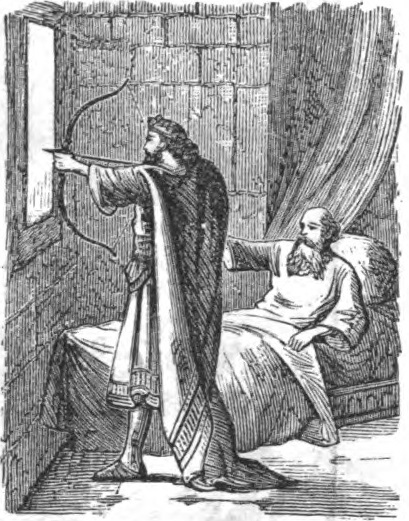
14 Now when Elisha had fallen sick with the illness of which he was to die, Joash king of Israel went down to him and wept before him, crying, “My father, my father! The chariots of Israel and its horsemen!” 15 And Elisha said to him, “Take a bow and arrows.” So he took a bow and arrows. 16 Then he said to the king of Israel, “Draw the bow,” and he drew it. And Elisha laid his hands on the king’s hands. 17 And he said, “Open the window eastward,” and he opened it. Then Elisha said, “Shoot,” and he shot. And he said, “The LORD‘s arrow of victory, the arrow of victory over Syria! For you shall fight the Syrians in Aphek until you have made an end of them.” 18 And he said, “Take the arrows,” and he took them. And he said to the king of Israel, “Strike the ground with them.” And he struck three times and stopped. 19 Then the man of God was angry with him and said, “You should have struck five or six times; then you would have struck down Syria until you had made an end of it, but now you will strike down Syria only three times.”

20 So Elisha died, and they buried him. Now bands of Moabites used to invade the land in the spring of the year. 21 And as a man was being buried, behold, a marauding band was seen and the man was thrown into the grave of Elisha, and as soon as the man touched the bones of Elisha, he revived and stood on his feet.

22 Now Hazael king of Syria oppressed Israel all the days of Jehoahaz. 23 But the LORD was gracious to them and had compassion on them, and he turned toward them, because of his covenant with Abraham, Isaac, and Jacob, and would not destroy them, nor has he cast them from his presence until now.

24 When Hazael king of Syria died, Ben-hadad his son became king in his place. 25 Then Jehoash the son of Jehoahaz took again from Ben-hadad the son of Hazael the cities that he had taken from Jehoahaz his father in war. Three times Joash defeated him and recovered the cities of Israel. 2 Kings 13:10-25 ESV

Keeping up with the revolving door of kings who reigned over Israel and Judah is hard enough as it is, but it becomes even more difficult when two kings with the same name end up ruling at the same time. That’s the case in this particular passage. Jehoash ascended to the throne of Israel after the death of his father, Jehoahaz, and it just so happened that the king of Judah bore the same name. It seems only fitting and a bit ironic that these two nations that shared the same predilection for idolatry and apostasy would end up with rulers who shared the same name. While their reigns would only intersect for a period of about two years, they shared more in common than their name. In the end, both men proved to be ungodly leaders who failed to lead their people back to the worship of Yahweh.

When Jehoash, the king of Judah, received a less-than-encouraging message from God, he ordered the stoning of the messenger. It just so happened that the man he executed was Zechariah, the son of Jehoiada the priest. This was the same Jehoiada who had saved the infant Jehoash from the hands of Queen Athaliah by providing him with sanctuary in the temple for six years. On Jehoash’s seventh birthday, Jehoiada had anointed him as the king of Judah. But years later, after Jehoiada’s death, Jehoash began to listen to the counsel of his ungodly advisors and ultimately forsake Yahweh. As a result, Judah suffered defeat at the hands of a much smaller Syrian force. He was wounded in the battle and, while recuperating from his injuries, he was assassinated by two of his own officials.

And the king of Israel, who bore the same name, shared a similar story of unfaithfulness and rebellion. The author sums up his 16-year reign with the words: “he did what was evil in the LORD’s sight. He refused to turn from the sins that Jeroboam son of Nebat had led Israel to commit” (2 Kings 13:11 NLT). He, too, forsook the LORD and led the people to continue their love affair with false gods. And it’s interesting to note that the heir to his throne was his son, Jeroboam II, whom he had named after the first king of the northern kingdom of Israel. His admiration for Jeroboam seems obvious but undeserved. After all, Jeroboam had been responsible for leading the Israelites into idolatry. When God split the nation of Israel in two after the reign of Solomon, He gave the ten northern tribes to Jeroboam as his kingdom. But Jeroboam responded to this gracious gift from God by erecting two golden calves and encouraging his people to forsake the worship of Yahweh. Yet Jehoash thought enough of this man to name his own son after him.

But sometime during his reign, Jehoash of Israel received word that the prophet Elisha was on his deathbed. Surprisingly, the king was grieved over this news and made a personal visit to see the dying prophet. While Jehoash was anything but a faithful worshiper of Yahweh, he knew that Elisha had great power and influence. This elderly prophet had proven time and time again that he spoke on behalf of God and was empowered by God. That’s why Jehoash greeted him with the somewhat cryptic statement: “My father, my father! The chariots of Israel and its horsemen!” (2 Kings 13:14 ESV). Evidently, Jehoash had heard the story of Elijah’s miraculous departure and Elisha’s role in it. Perhaps Elisha had shared with the king the details of that fateful day when God had used a whirlwind to take Elijah from the earth.

…as they still went on and talked, behold, chariots of fire and horses of fire separated the two of them. And Elijah went up by a whirlwind into heaven. And Elisha saw it and he cried, “My father, my father! The chariots of Israel and its horsemen!” And he saw him no more. – 2 Kings 2:11-12 ESV

This event followed Elisha’s request that Elijah give him a double portion of his spirit. He was to be Elijah’s replacement, and he felt ill-equipped for the task. It could be that King Jehoash hoped Elisha would pour out his spirit on him as well. He understood that Elisha possessed power and had direct access to Yahweh. With the prophet’s death, all of that might be lost. But rather than pour out his spirit on the apostate king, Elisha commanded him to take his bow and shoot an arrow out the window.

Elisha said, “Shoot,” and he shot. And he said, “The LORD‘s arrow of victory, the arrow of victory over Syria! For you shall fight the Syrians in Aphek until you have made an end of them.” – 2 Kings 13:17 ESV

Next, the prophet told the king to take his remaining arrows and strike the ground with them. Jehoash dutifully obeyed, but when he stopped after the third blow, Elisha responded in anger.

“You should have struck the ground five or six times!” he exclaimed. “Then you would have beaten Aram until it was entirely destroyed. Now you will be victorious only three times.” – 2 Kings 13:19 NLT

In a sense, Elisha had poured out his spirit on King Jehoash. He had placed his hands on those of the king and, together, they had shot the first arrow out the window. He then assured the king of his victory over the Syrians. But the extent of that victory would depend on Jehoash’s faith. By limiting the number of times he struck the ground, Jehoash was unwittingly revealing his lack of faith. The first arrow had symbolized the LORD’s victory over the Syrians. When Elisha had commanded Jehoash to take the remaining arrows and strike the ground, he should have done so until the prophet told him to stop. Each blow was meant to symbolize a victory over the enemy. But Jehoash had chosen to limit his expectations. In doing so, he inadvertently limited his chances of success over his enemy.

Having pronounced his last prophetic message, Elisha died. But the author relates a story that reveals one last miracle associated with the prophet of God. Sometime later, the body of a recently deceased man was inadvertently thrown into the cave containing Elisha’s bones. When the body of the dead man came into contact with Elisha’s remains, he was immediately restored to life. Amazingly, the author provides no further details about the story to indicate what happened to this newly resurrected man or how the story came to be known. But its inclusion in the narrative was meant to reveal that, though Elisha was dead,  Yahweh was alive and well. Elisha’s departure was not meant to be mistaken for God’s abandonment of Israel. He was still fully capable of restoring life to the lifeless. The all-powerful God of Israel used the bones of a dead prophet to restore life to a dead Israelite, a clear symbol of His desire to renew those among His chosen people who were marked by spiritual death.

The author reminds his readers that God remained faithful to His disobedient people, refusing to abandon them despite their constant rejection of Him.

the LORD was gracious and merciful to the people of Israel, and they were not totally destroyed. He pitied them because of his covenant with Abraham, Isaac, and Jacob. – 2 Kings 13:23 NLT

The author also reveals that Yahweh kept His word concerning the fate of the Syrians. Jehoash experienced three separate victories over his enemy, matching the exact number of times he struck the ground with his arrows — no more, no less. God allowed Jehoash to recover some of the territory stolen by the Syrians, but the fighting would continue throughout the rest of his reign. The sad reality is that the same God who raised a dead man back to life was fully capable of restoring a spiritually dead nation. Still, their continued stubbornness and lack of faithfulness would prevent them from experiencing the life-transformative power of Yahweh.

English Standard Version (ESV) The Holy Bible, English Standard Version. ESV® Permanent Text Edition® (2016). Copyright © 2001 by Crossway Bibles, a publishing ministry of Good News Publishers.

New Living Translation (NLT) Holy Bible, New Living Translation, copyright © 1996, 2004, 2015 by Tyndale House Foundation. Used by permission of Tyndale House Publishers Inc., Carol Stream, Illinois 60188. All rights reserved.
Godly Grief Vs Worldly Grief

1 In the twenty-third year of Joash the son of Ahaziah, king of Judah, Jehoahaz the son of Jehu began to reign over Israel in Samaria, and he reigned seventeen years. He did what was evil in the sight of the LORD and followed the sins of Jeroboam the son of Nebat, which he made Israel to sin; he did not depart from them. And the anger of the LORD was kindled against Israel, and he gave them continually into the hand of Hazael king of Syria and into the hand of Ben-hadad the son of Hazael. Then Jehoahaz sought the favor of the LORD, and the LORD listened to him, for he saw the oppression of Israel, how the king of Syria oppressed them. (Therefore the LORD gave Israel a savior, so that they escaped from the hand of the Syrians, and the people of Israel lived in their homes as formerly. Nevertheless, they did not depart from the sins of the house of Jeroboam, which he made Israel to sin, but walked in them; and the Asherah also remained in Samaria.) For there was not left to Jehoahaz an army of more than fifty horsemen and ten chariots and ten thousand footmen, for the king of Syria had destroyed them and made them like the dust at threshing. Now the rest of the acts of Jehoahaz and all that he did, and his might, are they not written in the Book of the Chronicles of the Kings of Israel? So Jehoahaz slept with his fathers, and they buried him in Samaria, and Joash his son reigned in his place. 2 Kings 13:1-9 ESV

God had used the Syrians to inflict judgment upon the southern kingdom of Judah. Because of the rebellion of His people, God had given King Hazael and his Syrian troops a resounding victory over the much larger and more powerful army of King Jehoash. Having been wounded in battle against the Syrians, Jehoash became an easy target for some of his disgruntled officials. They strongly opposed his murder of Zechariah, the son of Jehoiada the priest, and saw the nation’s recent defeat by a much smaller Syrian force as a sign of God’s judgment. So, these two men took it upon themselves to assassinate the king while he was lying in bed recovering from his injuries. He was then replaced by his son, Amaziah.

In the meantime, the northern kingdom of Israel was having its own set of struggles with the Syrians. Jehoahaz had ascended to the throne of his father, Jehu, and had managed to keep Israel’s legacy of apostasy alive and well.

He did what was evil in the sight of the LORD and followed the sins of Jeroboam the son of Nebat, which he made Israel to sin; he did not depart from them. – 2 Kings 13:2 ESV

In other words, it was business as usual in Israel. But God had grown weary of watching each successive royal administration try to outdo the sins of their predecessors. Fed up with their stubbornness and blatant unfaithfulness, He unleashed His righteous indignation against Israel and “gave them continually into the hand of Hazael king of Syria and into the hand of Ben-hadad the son of Hazael” (2 Kings 13:3 ESV).

The Syrians became the proverbial thorn in the side of the disobedient Israelites. This imagery was in keeping with God’s earlier warnings against Israel compromising with the pagan nations that occupied the promised land.

But if you do not drive out the inhabitants of the land from before you, then those of them whom you let remain shall be as barbs in your eyes and thorns in your sides, and they shall trouble you in the land where you dwell. – Numbers 33:55 ESV

God would later provide the Israelites with another warning, meant to discourage them from intermarrying with the pagan nations that occupied the land of Canaan.

…know for certain that the LORD your God will no longer drive out these nations before you, but they shall be a snare and a trap for you, a whip on your sides and thorns in your eyes, until you perish from off this good ground that the LORD your God has given you. – Joshua 23:13 ESV

And when the Israelites failed to drive out the inhabitants of the land, God announced that they were on their own; He was abandoning them to their wicked ways. They would have to deal with the consequences of their disobedience.

“So now I say, I will not drive them out before you, but they shall become thorns in your sides, and their gods shall be a snare to you.” – Judges 2:3 ESV

Yet, when God sent the Syrians to plague and provoke the unfaithful people of Israel, King Jehoahaz “sought the favor of the LORD” (2 Kings 13:4 ESV). The constant pain inflicted by this divinely-ordained “thorn” was more than Jehoahaz could bear, so he did something none of his predecessors had ever done: He humbled himself and cried out to God. And his cry was heard and answered. The author states that God, the very one who sent the Syrians, “saw the oppression of Israel, how the king of Syria oppressed them” (2 Kings 13:4 ESV). This statement makes it sound like God was surprised by what He saw, but it would be better interpreted as a declaration of God’s recognition of the suffering His chosen people were having to endure. His judgment, while fully just and well-deserved, had produced its intended results, and He felt compassion for the plight of His people. His discipline of His children was not because He had fallen out of love with them. In fact, the book of Proverbs reminds us, “the LORD corrects those he loves, just as a father corrects a child in whom he delights” (Proverbs3:12 NLT). And the author of Hebrews quotes this very proverb, then adds a further point of clarification.

As you endure this divine discipline, remember that God is treating you as his own children. Who ever heard of a child who is never disciplined by its father? If God doesn’t discipline you as he does all of his children, it means that you are illegitimate and are not really his children at all. – Hebrews 12:7-8 NLT

God had lovingly disciplined them for their disobedience and unfaithfulness. But, as the text reveals, He heard the humbled cry of their king and responded in love and compassion. He did for them what they couldn’t do for themselves; He rescued them from the very plight they had brought upon themselves.

Therefore the LORD gave Israel a savior, so that they escaped from the hand of the Syrians, and the people of Israel lived in their homes as formerly… – 2 Kings 13:5 ESV

This scene brings to mind the book of Judges, which chronicles the period of Israelite history long before they had a king. They had managed to enter Canaan, but failed to completely eliminate the pagan nations that occupied the land before them. As a result, they ended up intermarrying with these nations and worshiping their false gods. This led God to punish them.

…the people of Israel did what was evil in the sight of the LORD and served the Baals. And they abandoned the LORD, the God of their fathers, who had brought them out of the land of Egypt. They went after other gods, from among the gods of the peoples who were around them, and bowed down to them. And they provoked the LORD to anger. They abandoned the LORD and served the Baals and the Ashtaroth.  So the anger of the LORD was kindled against Israel, and he gave them over to plunderers, who plundered them. And he sold them into the hand of their surrounding enemies, so that they could no longer withstand their enemies. – Judges 2:11-14 ESV

But in time, God raised up deliverers who rescued His wayward people and restored them to a right relationship with Him.

Then the LORD raised up judges, who saved them out of the hand of those who plundered them. – Judges 2:17 ESV

Sadly, this cycle would repeat itself over and over again. The people would sin, so God would send a plunderer. Then, when the suffering became unbearable, the people would cry out, and another deliverer would show up to rescue them.

Now, hundreds of years later, the people of Israel would reveal that little had changed. They cried out, and God sent them a savior. We have no way of knowing the identity of this individual. Some have speculated that it was King Adad-Nirari III of Assyria. The Assyrians were the new kids on the block, an up-and-coming nation that was beginning to flex its military muscle in the region. To access the Mediterranean Sea and the fertile valleys located in Canaan, they would have to pass through the land belonging to Syria. It could be that God used this rapidly expanding world power to harass and distract the Syrians, buying King Jehoahaz and the Israelites a much-needed respite.

But regardless of the identity of this God-appointed “savior,” the people of Israel proved to be far from grateful for their rescue. In time, they fell back into their old habits.

But they continued to sin, following the evil example of Jeroboam. They also allowed the Asherah pole in Samaria to remain standing. – 2 Kings 13:6 NLT

Nothing had changed. Jehoahaz remained just as stubborn and unrepentant as always. Even the fact that God had allowed the Syrians to drastically reduce the fighting capacity of Israel’s army failed to elicit a change in Jehoahaz. The oppression of the Syrians got his attention and forced him to cry out to God, but once rescued, he continued to pursue the same ungodly agenda as before. The loving discipline and gracious deliverance of God failed to make a lasting impression on Jehoahaz. He was allowed to complete his reign, but with his decimated army,  he was a king in name only. He would die, and his son would inherit his throne and a diminished kingdom.

God’s loving discipline was meant to bring His wayward people to repentance. But Jehoahaz, like so many of his predecessors, failed to respond to God’s gracious deliverance appropriately. Despite his decimated army, Jehoahaz enjoyed an unexpected break from the Syrian oppression because Yahweh sent a “savior” to restore their fortunes. Yet, once the people “escaped from the hand of the Syrians, and…lived in their homes as formerly” (2 Kings 13:5 ESV), they refused to give up their old pagan practices. With the threat of the Syrians eliminated and their former lifestyles restored, the Israelites forsook Yahweh once again. The author provides an unflattering assessment of their response to Yahweh’s deliverance. “They continued to sin, following the evil example of Jeroboam. They also allowed the Asherah pole in Samaria to remain standing” (2 Kings 13:6 NLT).

This brings to mind a message that Jesus gave to the church in Laodicea, recorded in the Book of Revelation by the apostle John.

“I know all the things you do, that you are neither hot nor cold. I wish that you were one or the other! But since you are like lukewarm water, neither hot nor cold, I will spit you out of my mouth! You say, ‘I am rich. I have everything I want. I don’t need a thing!’ And you don’t realize that you are wretched and miserable and poor and blind and naked. So I advise you to buy gold from me—gold that has been purified by fire. Then you will be rich. Also buy white garments from me so you will not be shamed by your nakedness, and ointment for your eyes so you will be able to see. I correct and discipline everyone I love. So be diligent and turn from your indifference. – Revelation 3:15-19 NLT

That last line says it all. God the Father and Jesus Christ His Son demand true and lasting repentance. The apostle Paul refers to this kind of repentance and associates it with “godly grief.”

I rejoice, not because you were grieved, but because you were grieved into repenting. For you felt a godly grief, so that you suffered no loss through us.

For godly grief produces a repentance that leads to salvation without regret, whereas worldly grief produces death. – 2 Corinthians 7:9-10 ESV

The beleaguered people of Israel had suffered under the unrelenting attacks of the Syrians, and it seems that their grief was worldly and not godly. This produced a false form of repentance that failed to recognize their need for Yahweh. Once delivered from their oppression, their “grief” was replaced with a false sense of optimism and hope, but failed to produce a reverence for and dependence upon Yahweh as their true “savior.” They stubbornly refused to admit that they were “wretched and miserable and poor and blind and naked” (Revelation 3:17 NLT). And their “worldly grief” would ultimately result in death. 

English Standard Version (ESV) The Holy Bible, English Standard Version. ESV® Permanent Text Edition® (2016). Copyright © 2001 by Crossway Bibles, a publishing ministry of Good News Publishers.

New Living Translation (NLT) Holy Bible, New Living Translation, copyright © 1996, 2004, 2015 by Tyndale House Foundation. Used by permission of Tyndale House Publishers Inc., Carol Stream, Illinois 60188. All rights reserved.

Sovereign Over All

1 Naaman, commander of the army of the king of Syria, was a great man with his master and in high favor, because by him the LORD had given victory to Syria. He was a mighty man of valor, but he was a leper. Now the Syrians on one of their raids had carried off a little girl from the land of Israel, and she worked in the service of Naaman’s wife. She said to her mistress, “Would that my lord were with the prophet who is in Samaria! He would cure him of his leprosy.” So Naaman went in and told his lord, “Thus and so spoke the girl from the land of Israel.” And the king of Syria said, “Go now, and I will send a letter to the king of Israel.”

So he went, taking with him ten talents of silver, six thousand shekels of gold, and ten changes of clothing. And he brought the letter to the king of Israel, which read, “When this letter reaches you, know that I have sent to you Naaman my servant, that you may cure him of his leprosy.” And when the king of Israel read the letter, he tore his clothes and said, “Am I God, to kill and to make alive, that this man sends word to me to cure a man of his leprosy? Only consider, and see how he is seeking a quarrel with me.”

But when Elisha the man of God heard that the king of Israel had torn his clothes, he sent to the king, saying, “Why have you torn your clothes? Let him come now to me, that he may know that there is a prophet in Israel.” So Naaman came with his horses and chariots and stood at the door of Elisha’s house. 10 And Elisha sent a messenger to him, saying, “Go and wash in the Jordan seven times, and your flesh shall be restored, and you shall be clean.” 11 But Naaman was angry and went away, saying, “Behold, I thought that he would surely come out to me and stand and call upon the name of the LORD his God, and wave his hand over the place and cure the leper. 12 Are not Abana and Pharpar, the rivers of Damascus, better than all the waters of Israel? Could I not wash in them and be clean?” So he turned and went away in a rage. 13 But his servants came near and said to him, “My father, it is a great word the prophet has spoken to you; will you not do it? Has he actually said to you, ‘Wash, and be clean’?” 14 So he went down and dipped himself seven times in the Jordan, according to the word of the man of God, and his flesh was restored like the flesh of a little child, and he was clean.

15 Then he returned to the man of God, he and all his company, and he came and stood before him. And he said, “Behold, I know that there is no God in all the earth but in Israel; so accept now a present from your servant.” 2 Kings 5:1-15 ESV

Elisha appears to have been a prophet to the people because, at this point in the narrative, his interactions with the kings of Israel have been few and far between. Yet, he has provided a poor widow from Zarephath with a miraculous supply of oil that allowed her and her two young sons to escape poverty and avoid possible enslavement. Next, he rewarded the Shunammite woman’s hospitality by replacing the sorrow of her barrenness with the joy of motherhood. But years later, when that young son unexpectedly died, the prophet intervened again, raising him back to life and restoring his mother’s joy.

Then there’s the story of the poisoned stew. A young prophet inadvertently and innocently added wild gourds to a stew that Elisha’s servant had prepared, not knowing that they were poisonous. This deadly concoction could have resulted in the deaths of all the prophets who ate it, but Elisha intervened, purifying the contents and protecting the lives of God’s messengers.

All of these stories are meant to reveal God’s interest in and interactions with His people. The average Israelite had to live in a land permeated by idolatry and under the judgment of God. On two separate occasions, God brought famine on the land because of the apostasy of its godless kings. Yet, the stories of Elijah and Elisha reveal how God stepped into the lives of his people, graciously providing them with sustenance in the midst of His divine judgment. These stories are meant to showcase the mercy and love of God. Despite the ongoing unfaithfulness of Israel’s kings, the God of Israel remained committed to the covenant promises He had made to His people.

Chapter five contains another story that illustrates God’s sovereign hand over not only Israel, but also all the nations. While the kings of Israel continued to abuse their power by leading the people into idolatry and apostasy, God operated behind the scenes, demonstrating His unparalleled sovereignty over faithless kings, false gods, and even those outside the flock of Israel.

Suddenly, in chapter five, the author expands the scope of his narrative by including the plight of a Syrian general who suffered from the debilitating and potentially deadly disease known as leprosy. The inclusion of this story was intended to shock and surprise the Jewish audience to whom the author originally wrote. Their attention would have been piqued as soon as they read, “Naaman, commander of the army of the king of Syria, was a great man with his master and in high favor, because by him the LORD had given victory to Syria” (2 Kings 5:1 ESV). Why would the God of Israel have given this pagan idol worshiper a victory of any kind? This would have made no sense, and to make matters worse, this non-Hebrew is described as “a mighty man of valor” (2 Kings 5:1 ESV) who had led raids into Israel and captured and enslaved a young Jewish girl. To the Jewish reader, the only positive aspect of this story would have been that Naaman had leprosy.

Over the centuries, the Syrians had enjoyed a love-hate relationship with the nation of Israel. Ever since God had divided the country, creating the northern kingdom of Israel and the southern kingdom of Judah, the Syrians had made a habit of playing one against the other. Treaties had been signed and then broken. Alliances had been made, only to have been reneged upon. Syria had repeatedly taken advantage of the discord between Israel and Judah, choosing to align itself with one or the other based on what could be gained from the arrangement.

The Syrians were not to be trusted. They were self-promoting opportunists who regularly switched sides and deftly manipulated the strained relationship between Israel and Judah to their advantage. Yet, here is an unexpected and shocking story of a Syrian general who receives healing from the prophet of God. The mention of Yahweh providing this pagan Syrian general with victories in battle is yet another reference to His sovereignty over all nations.

Everything about this story is intended to reveal God’s sovereign hand. He is described as the source behind Syria’s victories, even over the nation of Israel. Not only that, one of those successful raids resulted in the capture of a young Jewish girl. But providentially, that same young girl ended up serving Naaman’s wife. Like Moses being adopted into Pharaoh’s family or Joseph serving in Pharaoh’s court, this young, unidentified Jewish girl found herself as a slave in the home of one of the most powerful men in Syria. Her plight, while difficult, had been God-ordained.

Because of her providential presence in Naaman’s household, she had become aware of his leprosy and was able to tell her mistress about a possible solution to his problem.

“I wish my master would go to see the prophet in Samaria. He would heal him of his leprosy.” – 2 Kings 5:3 NLT

Despite her predicament, she was still a faithful follower of Yahweh, and she believed that her God had the power to provide healing, even to the pagan commander who had enslaved her. Not only does this young girl display strong faith, but she also reveals a kind and compassionate heart. Rather than rejoicing over her captor’s plight, she expresses her desire that he be healed, even declaring her wish that he could meet the prophet of God.

Once again, God’s sovereignty is revealed through the somewhat strange chain of events that ensue. Naaman goes to Ben-Hadad II, the king of Syria, and receives permission to visit the city of Samaria. The king even provides Naaman with a letter of introduction to Jehoram, the king of Israel. In an attempt to guarantee Jehoram’s assistance, Ben-Hadad II sends 750 pounds of silver, 150 pounds of gold, and 10 changes of royal apparel. Don’t miss the irony in all of this. At the suggestion of a young Israelite slave girl, a pagan Syrian general has made an appeal to his pagan Syrian king. And that idol-worshiping Syrian king has sent a sizeable tribute to an apostate Israelite king, begging that he help his leprosy-stricken general get healing from the God of Israel. You can’t make this stuff up.

When Naaman presented his letter of introduction and the generous gifts from King Ben-hadad, he was met with both surprise and suspicion. Jehoram thinks the whole thing is a setup.

“Am I God, that I can give life and take it away? Why is this man asking me to heal someone with leprosy? I can see that he’s just trying to pick a fight with me.” – 2 Kings 5:7 NLT

It never seems to cross Jehoram’s mind to seek the aid of Yahweh or His prophet. He simply panics, assuming the whole thing is a clever ploy by Ben-Hadad to justify military action in the guise of revenge. However, while Jehoram decided to exclude God from the equation, Elisha became aware of what was happening and contacted the king.

“Why are you so upset? Send Naaman to me, and he will learn that there is a true prophet here in Israel.” – 2 Kings 5:8 NLT

Once again, God’s prophet came to the rescue. But what happens next is almost humorous. The famous general from Syria had to get in his chariot and, along with his retinue, make his way to Elisha’s humble home. But before Naaman could get there, the prophet sent a messenger to meet him with a rather strange set of instructions.

“Go and wash yourself seven times in the Jordan River. Then your skin will be restored, and you will be healed of your leprosy.” – 2 Kings 5:10 NLT

But the proud military commander, who was used to having all his subordinates report to him, was offended that Elisha didn’t bother to meet him. He had expected a bit of theatrics to accompany his healing.

“I expected him to wave his hand over the leprosy and call on the name of the LORD his God and heal me! – 2 Kings 5:11 NLT

But to Naaman’s disappointment, Elisha’s only instructions had been to bathe seven times in the Jordan River. This sounded ridiculous to the general, and he made his frustration known in no uncertain terms.

Aren’t the rivers of Damascus, the Abana and the Pharpar, better than any of the rivers of Israel? Why shouldn’t I wash in them and be healed?” – 2 Kings 5:12 NLT

But as Naaman was preparing to walk away in a huff, one of his own servants convinced him to follow the prophet’s instructions. After all, what did he have to lose? Yes, the whole bathing-in-the-Jordan thing would be a blow to his pride, but it might result in the healing he so desperately needed. So, Naaman took the advice of his servant and obeyed the command of the prophet. When he came up out of the water the seventh time, he was completely cleansed of his leprosy. In fact, the author describes the condition of his skin as that of a young child, with no scars, scabs, or lesions of any kind. Naaman the Syrian had experienced a miracle, and he clearly recognized that it had been the work of Yahweh, the God of Israel.

“Now I know that there is no God in all the world except in Israel. – 2 Kings 5:15 NLT

That’s an amazing admission to come from the lips of a pagan Syrian general who had spent his entire life worshiping Baal. Likely, he had often petitioned his god for healing from his condition, but his requests had remained unheeded because they had gone unheard. His leprosy had been real, but his god was not. Yet, here was Naaman standing before Yahweh’s prophet, healed and whole, and declaring his belief in the one true God of Israel.

English Standard Version (ESV) The Holy Bible, English Standard Version. ESV® Permanent Text Edition® (2016). Copyright © 2001 by Crossway Bibles, a publishing ministry of Good News Publishers.

New Living Translation (NLT) Holy Bible, New Living Translation, copyright © 1996, 2004, 2015 by Tyndale House Foundation. Used by permission of Tyndale House Publishers Inc., Carol Stream, Illinois 60188. All rights reserved.

You Can Run, But You Can’t Hide

1 After the death of Ahab, Moab rebelled against Israel.

Now Ahaziah fell through the lattice in his upper chamber in Samaria, and lay sick; so he sent messengers, telling them, “Go, inquire of Baal-zebub, the god of Ekron, whether I shall recover from this sickness.” But the angel of the LORD said to Elijah the Tishbite, “Arise, go up to meet the messengers of the king of Samaria, and say to them, ‘Is it because there is no God in Israel that you are going to inquire of Baal-zebub, the god of Ekron? Now therefore thus says the LORD, You shall not come down from the bed to which you have gone up, but you shall surely die.’” So Elijah went.

The messengers returned to the king, and he said to them, “Why have you returned?” And they said to him, “There came a man to meet us, and said to us, ‘Go back to the king who sent you, and say to him, Thus says the LORD, Is it because there is no God in Israel that you are sending to inquire of Baal-zebub, the god of Ekron? Therefore you shall not come down from the bed to which you have gone up, but you shall surely die.’” He said to them, “What kind of man was he who came to meet you and told you these things?” They answered him, “He wore a garment of hair, with a belt of leather about his waist.” And he said, “It is Elijah the Tishbite.”

Then the king sent to him a captain of fifty men with his fifty. He went up to Elijah, who was sitting on the top of a hill, and said to him, “O man of God, the king says, ‘Come down.’” 10 But Elijah answered the captain of fifty, “If I am a man of God, let fire come down from heaven and consume you and your fifty.” Then fire came down from heaven and consumed him and his fifty.

11 Again the king sent to him another captain of fifty men with his fifty. And he answered and said to him, “O man of God, this is the king’s order, ‘Come down quickly!’” 12 But Elijah answered them, “If I am a man of God, let fire come down from heaven and consume you and your fifty.” Then the fire of God came down from heaven and consumed him and his fifty.

13 Again the king sent the captain of a third fifty with his fifty. And the third captain of fifty went up and came and fell on his knees before Elijah and entreated him, “O man of God, please let my life, and the life of these fifty servants of yours, be precious in your sight. 14 Behold, fire came down from heaven and consumed the two former captains of fifty men with their fifties, but now let my life be precious in your sight.” 15 Then the angel of the LORD said to Elijah, “Go down with him; do not be afraid of him.” So he arose and went down with him to the king 16 and said to him, “Thus says the LORD, ‘Because you have sent messengers to inquire of Baal-zebub, the god of Ekron—is it because there is no God in Israel to inquire of his word?—therefore you shall not come down from the bed to which you have gone up, but you shall surely die.’”

17 So he died according to the word of the LORD that Elijah had spoken. Jehoram became king in his place in the second year of Jehoram the son of Jehoshaphat, king of Judah, because Ahaziah had no son. 18 Now the rest of the acts of Ahaziah that he did, are they not written in the Book of the Chronicles of the Kings of Israel? 2 Kings 1:1-18 ESV

The Book of 2 Kings continues the chronicle of the kings of Judah and Israel. With Ahab’s death, his son Ahaziah ascended to the throne, and he proved to be cut from the same cloth. “He did what was evil in the sight of the Lord and walked in the way of his father and in the way of his mother…” (1 Kings 22:52 ESV). In other words, he was just as immoral and spiritually bankrupt as every other king who had ruled over the northern kingdom. He not only inherited his father’s kingdom but also his predilection for false gods.  “He served Baal and worshiped him and provoked the LORD, the God of Israel, to anger in every way that his father had done” (1 Kings 22:53 ESV). And, as the opening chapter of 2 Kings reveals, his penchant for idolatry would prove to be his undoing.

But before the author reveals the fate of Ahaziah, he opens the second half of his history of the kings of Israel and Judah with a somewhat parenthetical statement: “After the death of Ahab, Moab rebelled against Israel” (2 Kings 1:1 ESV). It seems that Ahab had been extracting a sizeable annual tribute from the Moabites, literally fleecing his smaller neighbor to the east. But upon Ahab’s death, King Mesha put an end to these debilitating payments. 

Now Mesha king of Moab was a sheep breeder, and he had to deliver to the king of Israel 100,000 lambs and the wool of 100,000 rams. But when Ahab died, the king of Moab rebelled against the king of Israel. – 2 Kings 3:4-5 ESV

Before the very outset of his reign, Ahaziah would find himself having to deal with the sins of his father. Ahab had been a harsh and uncaring king who made a lot of enemies along the way, and Ahaziah would have his hands full trying to manage the royal mess his father had left him.

But before Ahaziah had a chance to deal with the rebellious Moabites, he suffered a life-threatening fall that left him confined to his bed in the royal palace in Samaria. His injuries were severe enough that he was concerned about whether he would fully recover. So, he sent messengers to the temple of Baal-zebub, the god of Ekron, seeking a divine prediction concerning his fate. It had been Ahaziah’s parents who had introduced Baal worship to Israel, and he proved to be a faithful adherent to their false religion. In his time of suffering, he sought the counsel of Baal rather than Yahweh, the covenant God of Israel. While Baal worship was rampant throughout the northern kingdom, Ahaziah sent his messengers to Ekron, which was located on Israel’s eastern border with Philistia. Ekron was a renowned occult center, and it was far enough away from Samaria that the news of the king’s injuries might be kept a secret.

However, Ahaziah’s messengers never reached Ekron. They were met along the way by Elijah, the prophet of Yahweh. Ahab’s old nemesis appears on the scene once again, but this time, he has bad news for Ahab’s son. Elijah had received instructions from Yahweh, commanding him to intercept the king’s messengers and inform them of their master’s fate. Ahaziah was hoping to hear a positive word from Baal, but instead, he would receive bad news from the God of Israel.

“Is there no God in Israel? Why are you going to Baal-zebub, the god of Ekron, to ask whether the king will recover? Now, therefore, this is what the LORD says: You will never leave the bed you are lying on; you will surely die.” – 2 Kings 1:3-4 NLT

There is a hint of sarcasm in this message. Yahweh is chiding Ahaziah for sending his messengers all the way to Ekron to seek a word from his false god. Baal worship was rampant within the nation of Israel. There were shrines and high places dedicated to Baal and Asherah all over the northern kingdom. In fact, Ahaziah had access to a Baal temple that his father had built in the capital city of Samaria.

He [Ahab] erected an altar for Baal in the house of Baal, which he built in Samaria. – 1 Kings 15:32 ESV

And there were literally hundreds of priests and prophets who served on behalf of Baal. Yet, Ahaziah had sent his messengers on a field trip all the way to Ekron in hopes of hearing something from his god. Perhaps he had started his search for an answer at the local temple, but had come up empty-handed. This could have led him to his “long-distance-call” to Ekron.

When Ahaziah heard the less-than-positive pronouncement his messengers delivered, he grew suspicious. This was not the news he had been expecting. So, he asked for a description of the man who had predicted his pending death. As soon as he heard what the man looked like, his suspicions were confirmed; it was Elijah the Tishbite. As the son of Ahab and Jezebel, Ahaziah would have grown up hearing the stories of Elijah and his defeat of the prophets of Baal on Mount Carmel. He would have been very familiar with his mother’s intense hatred for this prophet of Yahweh. The ongoing battle of words and will between his father and Elijah would have taken place right in front of him. So, when he discovered that Elijah had once again interjected himself into Israel’s affairs, he sent guards to arrest him. But, just like the messengers he had sent to Ekron, the guards never made it to their destination.

As visible proof of his role as a spokesman for Yahweh, Elijah called down fire from heaven that wiped out all 50 men, including their captain. But this display of power made no impression on the stubborn and unrepentant Ahaziah. He simply sent another 50 guards who suffered the very same fate. The third commander recognized the divine nature of Elijah’s role and wisely chose to beg for mercy.

“O man of God, please spare my life and the lives of these, your fifty servants. See how the fire from heaven came down and destroyed the first two groups. But now please spare my life!” – 2 Kings 1:13-14 NLT

The angel of God intervened, instructing Elijah to spare the lives of these men and accompany them back to Samaria. When he arrived in the capital city, Elijah reiterated his earlier message, but this time, directly to Ahaziah. He confirmed that the king would not recover from his injuries. Ahaziah’s stubborn refusal to seek God even in his time of greatest need would come with a death sentence. His unjustified yet unwavering allegiance to Baal had sealed his fate. As always, the words of Elijah proved to be true.

So Ahaziah died, just as the LORD had promised through Elijah. – 2 Kings 1:17 NLT

Yet another king of Israel met an untimely but well-deserved end. The legacy of unfaithfulness, begun by Jeroboam, had been passed down from generation to generation, infecting each successive king and bringing the just and righteous judgment of God upon them. And because Ahaziah had no male heir to whom he could leave the throne, his brother Jehoram became king of Israel.

Ahaziah, like his predecessors, failed to recognize Yahweh as the one true God. He acted as if Yahweh no longer existed in Israel. But he had been proven wrong. Yahweh was still alive and well, and His power was undiminished. While Ahaziah refused to seek Yahweh’s face, he could not escape Yahweh’s sovereign will. The God of Israel could be ignored, but He would not go away.

Ahaziah had made the fateful mistake of rejecting the one true God. Like his father, Ahaziah had stubbornly refused to acknowledge the supremacy of Yahweh, choosing instead to act as if the God of Israel was non-existent and powerless. But as King David declared in one of his psalms, only a fool would dare deny Yahweh’s existence.

Only fools say in their hearts,
    “There is no God.”
They are corrupt, and their actions are evil;
    not one of them does good!

The LORD looks down from heaven
    on the entire human race;
he looks to see if anyone is truly wise,
    if anyone seeks God.
But no, all have turned away;
    all have become corrupt.
No one does good,
    not a single one!

Will those who do evil never learn?
    They eat up my people like bread
    and wouldn’t think of praying to the Lord.
Terror will grip them,
    for God is with those who obey him.
The wicked frustrate the plans of the oppressed,
    but the LORD will protect his people. – Psalm 14:1-6 NLT

Ahaziah tried to pretend that Yahweh didn’t exist, but he paid for his folly with his life.

English Standard Version (ESV) The Holy Bible, English Standard Version. ESV® Permanent Text Edition® (2016). Copyright © 2001 by Crossway Bibles, a publishing ministry of Good News Publishers.

New Living Translation (NLT) Holy Bible, New Living Translation, copyright © 1996, 2004, 2015 by Tyndale House Foundation. Used by permission of Tyndale House Publishers Inc., Carol Stream, Illinois 60188. All rights reserved.

A Just Fate For Fleecing the Flock of God

17 Then the word of the LORD came to Elijah the Tishbite, saying, 18 “Arise, go down to meet Ahab king of Israel, who is in Samaria; behold, he is in the vineyard of Naboth, where he has gone to take possession. 19 And you shall say to him, ‘Thus says the LORD, “Have you killed and also taken possession?”’ And you shall say to him, ‘Thus says the LORD: “In the place where dogs licked up the blood of Naboth shall dogs lick your own blood.”’”

20 Ahab said to Elijah, “Have you found me, O my enemy?” He answered, “I have found you, because you have sold yourself to do what is evil in the sight of the LORD. 21 Behold, I will bring disaster upon you. I will utterly burn you up, and will cut off from Ahab every male, bond or free, in Israel. 22 And I will make your house like the house of Jeroboam the son of Nebat, and like the house of Baasha the son of Ahijah, for the anger to which you have provoked me, and because you have made Israel to sin. 23 And of Jezebel the LORD also said, ‘The dogs shall eat Jezebel within the walls of Jezreel.’ 24 Anyone belonging to Ahab who dies in the city the dogs shall eat, and anyone of his who dies in the open country the birds of the heavens shall eat.”

25 (There was none who sold himself to do what was evil in the sight of the LORD like Ahab, whom Jezebel his wife incited. 26 He acted very abominably in going after idols, as the Amorites had done, whom the LORD cast out before the people of Israel.)

27 And when Ahab heard those words, he tore his clothes and put sackcloth on his flesh and fasted and lay in sackcloth and went about dejectedly. 28 And the word of the LORD came to Elijah the Tishbite, saying, 29 “Have you seen how Ahab has humbled himself before me? Because he has humbled himself before me, I will not bring the disaster in his days; but in his son’s days I will bring the disaster upon his house.” 1 Kings 21:17-29 ESV

Ahab was busy surveying his newly acquired vineyard when he received a surprise visit from his old arch-nemesis, Elijah the prophet. The king had been making plans to transform Naboth’s vineyard into his own personal garden; however, Elijah was about to transform Ahab’s dream of a personal retreat into a living nightmare.

Speaking on behalf of God, Elijah leveled the charge against Ahab in the form of a condemning question: “Haven’t you committed murder and taken possession of the property of the deceased?” (1 Kings 21:19 NET). Elijah wasn’t looking for a confession from Ahab because his guilt was well-established. Jezebel’s little ploy to falsely accuse Naboth of cursing God and the king had fooled no one, most especially Yahweh. And before Ahab could respond, Elijah delivered the next part of his message.

“This is what the LORD has said: ‘In the spot where dogs licked up Naboth’s blood they will also lick up your blood—yes, yours!’” – 1 Kings 21:19 NET

It’s important to recall that Ahab was already under a curse from God for his refusal to execute Ben-hadad, the king of Syria. After Ahab had decided to spare Ben-hadad so he could sign a trade agreement with him, God sent a prophet with a dire pronouncement:

Because you have spared the man I said must be destroyed, now you must die in his place, and your people will die instead of his people.” – 1 Kings 20:42 NLT

Ahab had spared the life of a man whom God had condemned to death, and then he murdered a man who was undeserving of death. As a result, Ahab found himself under a double-curse from God. The first prophet had told Ahab that he would die for his first act of rebellion against God. Now, Elijah informed Ahab that his murder of Naboth had determined the nature of his death. It would be violent and humiliating, with the king’s blood poured out on the very same spot where Naboth had been unjustly stoned to death. And the only ones present at his death would be the wild dogs that would feast on his blood.

But Elijah’s words appear to have made no impact on Ahab. He simply responded, So, my enemy, you have found me! (1 Kings 21:20 NLT). He expresses no fear. He acknowledges no guilt. So, Elijah provided the stubborn and unrepentant king with further details concerning his fate. The prophet had traveled all the way to Jezreel for this confrontation because Ahab was totally committed to doing evil in the sight of the LORD. He had no morals or scruples and displayed no fear of or respect for Yahweh. He did whatever he wanted without ever considering whether his actions were in line with God’s will. Now he would learn the price he would have to pay for his rebellion. Ahab would face the same fate as two of his predecessors: Jeroboam and Baasha.

“I will bring disaster on you and consume you. I will destroy every one of your male descendants, slave and free alike, anywhere in Israel! I am going to destroy your family as I did the family of Jeroboam son of Nebat and the family of Baasha son of Ahijah, for you have made me very angry and have led Israel into sin.” – 1 Kings 21:21-22 NLT

Ahab’s dream of building a kingdom and a legacy that would last for generations had been forfeited. There would be no dynasty because God was going to eliminate all his male heirs. Ahab would have no sons to sit on his throne after him. And it should be noted that Elijah delivered this message on the very plot of land on which Ahab had hoped to build a garden. His dreams of fruitfulness were being dashed by God. He and his wicked wife, Jezebel, would be the last of their line because God was going to wipe out their heirs and destroy all hope of them propagating their legacy of sin and rebellion. Elijah let the king know that Jezebel would also pay dearly for her role in leading Israel into idolatry and apostasy. In fact, Ahab’s entire household would end up suffering degrading deaths as judgment for his sin.

“Dogs will eat Jezebel’s body at the plot of land in Jezreel. The members of Ahab’s family who die in the city will be eaten by dogs, and those who die in the field will be eaten by vultures.” – 1 Kings 21:23-24 NLT

At this point, the author provides a parenthetical commentary, intended to explain the harshness of God’s judgment. When it came to committing acts of wickedness and evil among the rulers of Israel, Ahab and Jezebel were the poster couple. Despite the abysmally poor track records of Jeroboam and Baasha, Ahab and Jezebel managed to establish a new low in terms of doing evil in the sight of the Lord.

Even for the callous and hard-hearted Ahab, this news was far more than he could bear. When the full scope of God’s judgment had finally registered in hiss brain, he was devastated.

…he tore his clothes and put sackcloth on his flesh and fasted and lay in sackcloth and went about dejectedly. – 1 Kings 21:27 ESV

Evidently, his display of sorrow and repentance was real because God acknowledged it as such.

“Do you see how Ahab has humbled himself before me? Because he has done this, I will not do what I promised during his lifetime. It will happen to his sons; I will destroy his dynasty.” – 1 Kings 21:29 NLT

Because Ahab had finally managed to display a semblance of humility and remorse for his actions, God would show him mercy. He would allow Ahab to live out his life, but Ahab’s son, Joram, would suffer in his place. Joram would have his blood spilled on the ground where Naboth was stoned to death (2 Kings 9:25-26). And there is no indication that Jezebel ever repented, so she would still have to endure the judgment God prescribed for her many sins. Her humiliating and gruesome death is recorded in the book of 2 Kings.

When Jezebel, the queen mother, heard that Jehu had come to Jezreel, she painted her eyelids and fixed her hair and sat at a window. When Jehu entered the gate of the palace, she shouted at him, “Have you come in peace, you murderer? You’re just like Zimri, who murdered his master!”

Jehu looked up and saw her at the window and shouted, “Who is on my side?” And two or three eunuchs looked out at him. “Throw her down!” Jehu yelled. So they threw her out the window, and her blood spattered against the wall and on the horses. And Jehu trampled her body under his horses’ hooves.

Then Jehu went into the palace and ate and drank. Afterward he said, “Someone go and bury this cursed woman, for she is the daughter of a king.” But when they went out to bury her, they found only her skull, her feet, and her hands.

When they returned and told Jehu, he stated, “This fulfills the message from the LORD, which he spoke through his servant Elijah from Tishbe: ‘At the plot of land in Jezreel, dogs will eat Jezebel’s body. Her remains will be scattered like dung on the plot of land in Jezreel, so that no one will be able to recognize her.’” – 2 Kings 9:32-37 NLT

Ahab and Jezebel had lived their lives according to their own standards. They had attempted to replace Yahweh with their own gods, repeatedly violated His commands, and ruled the people of Israel according to their own selfish agenda. But they would pay dearly for their rebellion. Their wickedness would result in Yahweh delivering His righteous and just judgment against them. These two icons of evil had ruled for years with impunity, but Yahweh had seen enough. For her apostasy and apathy toward the people of Israel, Jezebel would suffer a violent and degrading death. For his uncharacteristic display of remorse, Ahab would be spared, but only to realize that the judgment of Yahweh would fall on his son and heir to the throne. Yet, the text provides no response from Ahab. The news that his son would have to bear the brunt of Yahweh’s wrath does not seem to have fazed him. This self-absorbed “shepherd” of Israel showed no sympathy for his son’s fate and no regard for the impact his actions had on the flock of God.

Years later, the prophet Ezekiel would record Yahweh’s indictment against the kings of the northern tribe of Israel, including Ahab and his wicked wife.

Then this message came to me from the LORD: “Son of man, prophesy against the shepherds, the leaders of Israel. Give them this message from the Sovereign LORD: What sorrow awaits you shepherds who feed yourselves instead of your flocks. Shouldn’t shepherds feed their sheep? You drink the milk, wear the wool, and butcher the best animals, but you let your flocks starve. You have not taken care of the weak. You have not tended the sick or bound up the injured. You have not gone looking for those who have wandered away and are lost. Instead, you have ruled them with harshness and cruelty…you abandoned my flock and left them to be attacked by every wild animal. And though you were my shepherds, you didn’t search for my sheep when they were lost. You took care of yourselves and left the sheep to starve. Therefore, you shepherds, hear the word of the LORD. This is what the Sovereign LORD says: I now consider these shepherds my enemies, and I will hold them responsible for what has happened to my flock. I will take away their right to feed the flock, and I will stop them from feeding themselves. I will rescue my flock from their mouths; the sheep will no longer be their prey. – Ezekiel 32:1-4, 8-10 NLT

Yahweh held Ahab and Jezebel to account and delivered the judgment they both deserved. They had abused their authority and fleeced the flock of God. Now, the Great Shepherd was paying them back for their years of selfish and destructive leadership over His people.

English Standard Version (ESV) The Holy Bible, English Standard Version. ESV® Permanent Text Edition® (2016). Copyright © 2001 by Crossway Bibles, a publishing ministry of Good News Publishers.

New Living Translation (NLT) Holy Bible, New Living Translation, copyright © 1996, 2004, 2015 by Tyndale House Foundation. Used by permission of Tyndale House Publishers Inc., Carol Stream, Illinois 60188. All rights reserved.