New King – Same Old Story

15 In the twenty-seventh year of Asa king of Judah, Zimri reigned seven days in Tirzah. Now the troops were encamped against Gibbethon, which belonged to the Philistines, 16 and the troops who were encamped heard it said, “Zimri has conspired, and he has killed the king.” Therefore all Israel made Omri, the commander of the army, king over Israel that day in the camp. 17 So Omri went up from Gibbethon, and all Israel with him, and they besieged Tirzah. 18 And when Zimri saw that the city was taken, he went into the citadel of the king’s house and burned the king’s house over him with fire and died, 19 because of his sins that he committed, doing evil in the sight of the LORD, walking in the way of Jeroboam, and for his sin which he committed, making Israel to sin. 20 Now the rest of the acts of Zimri, and the conspiracy that he made, are they not written in the Book of the Chronicles of the Kings of Israel?

21 Then the people of Israel were divided into two parts. Half of the people followed Tibni the son of Ginath, to make him king, and half followed Omri. 22 But the people who followed Omri overcame the people who followed Tibni the son of Ginath. So Tibni died, and Omri became king. 23 In the thirty-first year of Asa king of Judah, Omri began to reign over Israel, and he reigned for twelve years; six years he reigned in Tirzah. 24 He bought the hill of Samaria from Shemer for two talents of silver, and he fortified the hill and called the name of the city that he built Samaria, after the name of Shemer, the owner of the hill.

25 Omri did what was evil in the sight of the LORD, and did more evil than all who were before him. 26 For he walked in all the way of Jeroboam the son of Nebat, and in the sins that he made Israel to sin, provoking the LORD, the God of Israel, to anger by their idols. 27 Now the rest of the acts of Omri that he did, and the might that he showed, are they not written in the Book of the Chronicles of the Kings of Israel? 28 And Omri slept with his fathers and was buried in Samaria, and Ahab his son reigned in his place. – 1 Kings 16:15-28 ESV

Zimri’s time in the spotlight was short-lived. This former chariot commander in Israel’s army had murdered King Elah and declared himself the new sovereign over the ten tribes of the northern kingdom. But his reign would last only seven days. Word of his seemingly successful coup attempt reached his fellow soldiers, who were encamped against the Philistines at a place called Gibbethon. Upon hearing of King Elah’s death, the troops threw their support behind Omri, who was the commander of the armies of Israel. They rejected Zimri’s claim to be king and, instead, nominated his superior officer as the obvious choice to replace Elah. Zimri may have caused the vacancy on the throne, but Omri would be the one to fill it.

Within days of seizing the throne from Elah and having secured his victory by liquidating every member of the king’s household, Zimri was safely ensconced in Tirzah, the former king’s capital. But one day he woke up to find that the city was being besieged, not by Philistines or some other foreign power, but by Omri and the rest of the Israelite army. Just seven days into his reign, Zimri had managed to instigate a civil war for which he was both outmanned and unprepared. Stealing the throne had been easy, but retaining it was going to be far more complicated than he could have imagined.

Recognizing the futility of the situation, Zimri chose to take his own life rather than surrender. He knew that Omri would order his execution for the murder of Elah, and he likely knew Omri had his own kingly aspirations. So, Zimri locked himself in the citadel of the king’s palace and burned the entire structure to the ground. In doing so, he controlled his own fate and managed to rob Omri of a palace from which to rule. If he couldn’t sit on the throne in Tirzah, neither would Omri.

But the author makes it clear that while Zimri had taken his own life, it had still been a case of divine judgment for his sins against God.

…he, too, had done what was evil in the LORD’s sight. He followed the example of Jeroboam in all the sins he had committed and led Israel to commit. – 1 Kings 16:19 NLT

When Zimri had entered Tirzah just days earlier, any thought of suicide would have been the last thing to enter his mind. He was focused on the future and dreaming of his newfound power and prestige. After all, he was the self-made king, the supreme ruler over all of Israel. As he sat on his throne in Tirzah, his mind would have been filled with thoughts of success and not suicide. But had he read the proverbs collected by Israel’s former king, Solomon, he would have understood that his plans were irrelevant if they stood in opposition to the will of God.

You can make many plans, but the LORD’s purpose will prevail. – Proverbs 19:21 NLT

We can make our plans, but the LORD determines our steps. – Proverbs 16:9 NLT

Zimri had plans for greatness, but he died in the smoldering rubble of the palace he had stolen through deceit and treachery. God had used this ambitious and self-consumed man to punish Elah for his wickedness, but He would not allow Zimri to benefit from his actions. His reign lasted exactly one week, then ended as quickly as it had begun.

But the sad state of affairs in Israel was far from over. While Omri had managed to seize the capital and secure the crown for himself, the nation was about to enter a time of division and disunity. Just as God had split Solomon’s kingdom in half, Omri would find himself ruling over a divided nation.

But now the people of Israel were split into two factions. Half the people tried to make Tibni son of Ginath their king, while the other half supported Omri. – 1 Kings 16:21 NLT

When Omri received the news that Zimri had killed King Elah, he had been leading his troops against the Philistines, the dreaded enemies of Israel. But now, as the king of Israel, he found himself going to war against his own people. A civil war had broken out, and Omni was forced to lead his troops in battle against the supporters of his rival, Tibni. The nation was divided, and rather than throwing their collective allegiance behind God Almighty, they chose sides and put their hopes in two extremely flawed and fallible men.
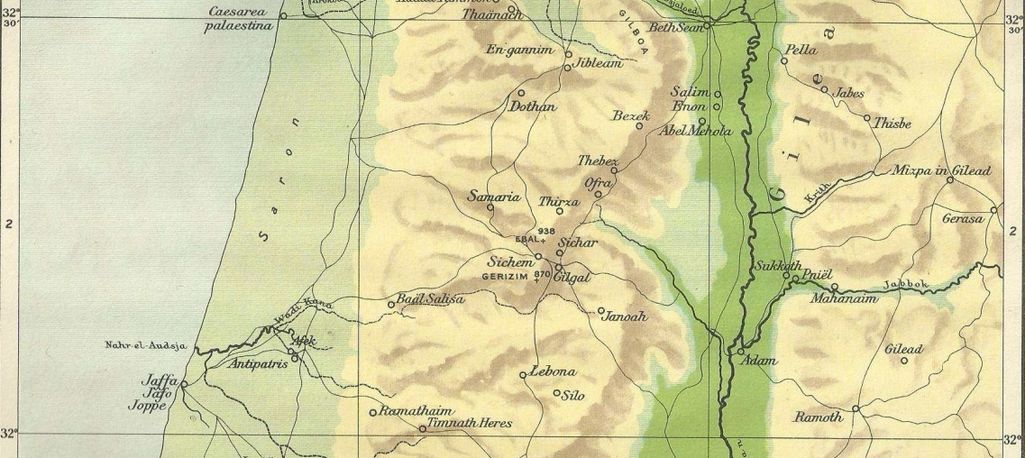
Omri eventually defeated Tibni and his forces, securing his place as the king of Israel. Half of the dozen years he ruled over Israel were spent in Tirzah, the former capital of King Elah. But Omri dreamed of establishing his own royal city from which to rule over the ten tribes of Israel. So, he found a favorable spot just west of Tirzah and purchased the land from a man named Shemer. In time, he built a fortified palace on the elevated portion of the land and named his new capital Samaria.

While the author doesn’t seem to treat this change in the location of the capital city with much importance, his mention of it is meant to foreshadow things to come. Omri would end up establishing a dynasty that would rule over Israel for an extended period of time. His newly established capital would become the focal point for Israel’s continuing spiritual decline and the epicenter of the nation’s eventual destruction.

The author chooses to summarize Omri’s 12-year reign in less-than-flattering terms.

Omri did what was evil in the sight of the LORD, and did more evil than all who were before him. – 1 Kings 16:25 ESV

Israel had a new king and a brand new capital, but they continued to suffer from the same old problem. Omri, like Jeroboam and Nadab before him, failed to use his divinely ordained power as king to lead the people back to God. Instead, he fostered the spirit of spiritual adultery and apostasy. Under his leadership, “the people provoked the anger of the LORD, the God of Israel, with their worthless idols” (1 Kings 16:21 NLT). 

On paper, Omri proved to be a highly accomplished and effective king. His 12 years on the throne of Israel were marked by military victories and peace negotiations with the enemies of Israel. He defeated the Moabites and brokered a treaty with Ethbaal, king of Tyre and Sidon, and this last act would prove to have long-lasting implications. As part of the treaty negotiations, Omri approved a marriage alliance between his son, Ahab, and Ethbaal’s daughter, Jezebel, and those two names will come up again.

While Omri appeared to be having success, he was actually operating outside the revealed will of God. His decisions were made without divine input and in direct violation of God’s commands. Hundreds of years earlier, Moses had warned the people of Israel about their interactions with the nations living in the land of Canaan.

When the LORD your God hands these nations over to you and you conquer them, you must completely destroy them. Make no treaties with them and show them no mercy. You must not intermarry with them. Do not let your daughters and sons marry their sons and daughters, for they will lead your children away from me to worship other gods. Then the anger of the LORD will burn against you, and he will quickly destroy you. – Deuteronomy 7:2-4 NLT

Like his predecessors, Omri was doing things according to his own plan. But as the proverbs warn, “You can make many plans, but the LORD’s purpose will prevail” (Proverbs 19:21 NLT). Omri’s ambitions to expand his kingdom at any cost would actually lead to the eventual fall of the nation. In his hopes of building Israel into a formidable force in the region, he was actually contributing to its downfall. His refusal to shepherd the people of God back to the fold of God would eventually result in their destruction at the hands of God.

English Standard Version (ESV) The Holy Bible, English Standard Version. ESV® Permanent Text Edition® (2016). Copyright © 2001 by Crossway Bibles, a publishing ministry of Good News Publishers.

New Living Translation (NLT) Holy Bible, New Living Translation, copyright © 1996, 2004, 2015 by Tyndale House Foundation. Used by permission of Tyndale House Publishers Inc., Carol Stream, Illinois 60188. All rights reserved.

A Painful But Vital Lesson to Learn

36 The Lord said to me: “Son of man, will you judge Oholah and Oholibah? Declare to them their abominations. 37 For they have committed adultery, and blood is on their hands. With their idols they have committed adultery, and they have even offered up to them for food the children whom they had borne to me. 38 Moreover, this they have done to me: they have defiled my sanctuary on the same day and profaned my Sabbaths. 39 For when they had slaughtered their children in sacrifice to their idols, on the same day they came into my sanctuary to profane it. And behold, this is what they did in my house. 40 They even sent for men to come from afar, to whom a messenger was sent; and behold, they came. For them you bathed yourself, painted your eyes, and adorned yourself with ornaments. 41 You sat on a stately couch, with a table spread before it on which you had placed my incense and my oil. 42 The sound of a carefree multitude was with her; and with men of the common sort, drunkards were brought from the wilderness; and they put bracelets on the hands of the women, and beautiful crowns on their heads.

43 “Then I said of her who was worn out by adultery, ‘Now they will continue to use her for a whore, even her!’ 44 For they have gone in to her, as men go in to a prostitute. Thus they went in to Oholah and to Oholibah, lewd women! 45 But righteous men shall pass judgment on them with the sentence of adulteresses, and with the sentence of women who shed blood, because they are adulteresses, and blood is on their hands.”

46 For thus says the Lord God: “Bring up a vast host against them, and make them an object of terror and a plunder. 47 And the host shall stone them and cut them down with their swords. They shall kill their sons and their daughters, and burn up their houses. 48 Thus will I put an end to lewdness in the land, that all women may take warning and not commit lewdness as you have done. 49 And they shall return your lewdness upon you, and you shall bear the penalty for your sinful idolatry, and you shall know that I am the Lord God.” – Ezekiel 23:36-49 ESV

From the moment God gave Moses His law on the top of Mount Sinai to the days before the people of Israel entered the land of Canaan, they had received repeated warnings about practicing idolatry.

“Whoever sacrifices to any god, other than the Lord alone, shall be devoted to destruction.” – Exodus 22:20 ESV

“Pay attention to all that I have said to you, and make no mention of the names of other gods, nor let it be heard on your lips.” – Exodus 23:13 ESV

“So do not corrupt yourselves by making an idol in any form—whether of a man or a woman, an animal on the ground, a bird in the sky, a small animal that scurries along the ground, or a fish in the deepest sea. And when you look up into the sky and see the sun, moon, and stars—all the forces of heaven—don’t be seduced into worshiping them. The Lord your God gave them to all the peoples of the earth.” – Deuteronomy 4:16-19 NLT

“So be careful not to break the covenant the Lord your God has made with you. Do not make idols of any shape or form, for the Lord your God has forbidden this. The Lord your God is a devouring fire; he is a jealous God.” – Deuteronomy 4:23-24 NLT

“When the Lord your God goes ahead of you and destroys the nations and you drive them out and live in their land, do not fall into the trap of following their customs and worshiping their gods. Do not inquire about their gods, saying, ‘How do these nations worship their gods? I want to follow their example.’ You must not worship the Lord your God the way the other nations worship their gods, for they perform for their gods every detestable act that the Lord hates. They even burn their sons and daughters as sacrifices to their gods.

“So be careful to obey all the commands I give you. You must not add anything to them or subtract anything from them.” – Deuteronomy 12:29-32 NLT

But for four chapters, God has delivered His blunt assessment of their abject failure to obey His commands. From the loftiest leader to the lowest peasant, everyone in Israel and Judah was guilty of pursuing an ever-expanding list of false gods. They had turned idolatry into a national sport where it seems everyone had become an active and eager participant.

To make matters worse, in their desperate attempt to elicit a favorable response from their newfound gods, they had embraced the reprehensible practice of child sacrifice. God’s chosen people had literally offered up their sons and daughters as atoning sacrifices to their gods of wood and stone.

“They have committed adultery with their idols, and their sons, whom they bore to me, they have passed through the fire as food to their idols.” – Ezekiel 23:37 NLT

But they never fully abandoned their worship of Yahweh. They simply integrated their new gods into a new syncretic religious experience that allowed them to hedge their bets and call on any and all deities who might help them succeed. Yahweh was good but not good enough. They wanted to make sure that they had all the proverbial bases covered and a full contingent of deities at their disposal.

But they had failed to remember that Yahweh is a devouring fire and a jealous God. In their zeal to become equal-opportunity idolaters, they had offended the one true God. They had the unmitigated gall to sacrifice their children to a false god and then walk into the temple and expect to receive a warm and welcoming reception from God.

“In the very same day they desecrated my sanctuary and profaned my Sabbaths. On the same day they slaughtered their sons for their idols, they came to my sanctuary to desecrate it. This is what they have done in the middle of my house.” – Ezekiel 23:38-39 NLT

They saw nothing wrong with worshiping at the shrine of Molech and then waltzing into the sanctuary to give Yahweh an equal share of their affections. But in doing so, they desecrated the house of God and defamed the honor of His name. They made the name of Yahweh a laughingstock among their pagan neighbors. No other nation treated their god with such disrespect and dishonor.

By embracing the idols of the surrounding nations, both Israel and Judah had hoped to forge alliances with them. They believed the shared experience of a common religion would make it far easier to co-exist with their pagan neighbors. And God accuses both nations of selling themselves out to the highest bidder, like a common prostitute. They had no shame, offering to get in bed with anyone who might benefit them in any way. But even their “lovers” had eventually lost interest in Jerusalem and Samaria, viewing them as nothing more than “lewd women” (Ezekiel 23:44 ESV) of low morals and with no scruples. Even the godless nations will exhibit a greater degree of righteousness as they judge Israel and Judah for their unprecedented treatment of Yahweh.

So, God determines to bring this charade to an end. No longer willing to stand back and watch His chosen people denigrate and dishonor His name, God declares His intent to “put an end to the obscene conduct in the land” (Ezekiel 23:48 NLT). God had already brought judgment against the northern kingdom of Israel. Now it was time for Judah to experience the full weight of God’s wrath. One of the very pagan nations whom Judah had embraced as a lover would be used by God to deliver the knock-out blow that would bring an end to their serial infidelity. And God is brutally blunt when summarizing the outcome of His pending judgment.

“They will repay you for your obscene conduct, and you will be punished for idol worship. Then you will know that I am the Sovereign Lord.” – Ezekiel 23:49 NLT

The sad result of this devastating event will be a sobering awareness that there is only one God. When the dust settles and the ruins of Jerusalem become visible for all to see, the people of Judah will finally realize that Yahweh was exactly who He had always claimed to be: ăḏōnāy yᵊhōvâ – the Sovereign Lord of all.

English Standard Version (ESV) The Holy Bible, English Standard Version. ESV® Permanent Text Edition® (2016). Copyright © 2001

New Living Translation (NLT) Holy Bible, New Living Translation, copyright © 1996, 2004, 2015 by Tyndale House Foundation. Used by permission of Tyndale House Publishers Inc., Carol Stream, Illinois 60188. All rights reserved.

Faithful to the End

53 “I will restore their fortunes, both the fortunes of Sodom and her daughters, and the fortunes of Samaria and her daughters, and I will restore your own fortunes in their midst, 54 that you may bear your disgrace and be ashamed of all that you have done, becoming a consolation to them. 55 As for your sisters, Sodom and her daughters shall return to their former state, and Samaria and her daughters shall return to their former state, and you and your daughters shall return to your former state. 56 Was not your sister Sodom a byword in your mouth in the day of your pride, 57 before your wickedness was uncovered? Now you have become an object of reproach for the daughters of Syria and all those around her, and for the daughters of the Philistines, those all around who despise you. 58 You bear the penalty of your lewdness and your abominations, declares the Lord.

59 “For thus says the Lord God: I will deal with you as you have done, you who have despised the oath in breaking the covenant, 60 yet I will remember my covenant with you in the days of your youth, and I will establish for you an everlasting covenant. 61 Then you will remember your ways and be ashamed when you take your sisters, both your elder and your younger, and I give them to you as daughters, but not on account of the covenant with you. 62 I will establish my covenant with you, and you shall know that I am the Lord, 63 that you may remember and be confounded, and never open your mouth again because of your shame, when I atone for you for all that you have done, declares the Lord God.” – Ezekiel 16:53-63 ESV

Sodom, Samaria, and Jerusalem are each accused of wickedness. Sodom is intended to represent the pagan nations with its blatant immorality and subsequent judgment and annihilation by God. Sodom and its sister city, Gomorrah, were the two poster cities for moral decadence and excess, and God destroyed them both. Samaria was the capital city of the northern kingdom of Israel. It was comprised of the ten northern tribes that God had split apart from Solomon’s kingdom as a result of his wicked behavior in the latter part of his reign. This son of David had chosen to erect idols to false gods all across his kingdom and, as a result, God divided his kingdom in half.

Jeroboam, who became the first king of the northern kingdom of Israel, proved to be a less-than-ideal leader. In an attempt to eliminate any allegiance the people might have to their former kingdom and to prevent them from returning to Jerusalem to worship at the temple, Jeroboam created his own capital in Shechem and then created two alternative worship centers dedicated to false gods.

…on the advice of his counselors, the king made two gold calves. He said to the people, “It is too much trouble for you to worship in Jerusalem. Look, Israel, these are the gods who brought you out of Egypt!”

He placed these calf idols in Bethel and in Dan—at either end of his kingdom. But this became a great sin, for the people worshiped the idols, traveling as far north as Dan to worship the one there.

Jeroboam also erected buildings at the pagan shrines and ordained priests from the common people—those who were not from the priestly tribe of Levi. And Jeroboam instituted a religious festival in Bethel, held on the fifteenth day of the eighth month, in imitation of the annual Festival of Shelters in Judah. There at Bethel he himself offered sacrifices to the calves he had made, and he appointed priests for the pagan shrines he had made. – 1 Kings 12:28-32 NLT

Decades later, Omri would ascend to the throne of the northern kingdom of Israel, and he would relocate the capital city to Samaria.

Omri bought the hill now known as Samaria from its owner, Shemer, for 150 pounds of silver. He built a city on it and called the city Samaria in honor of Shemer.

But Omri did what was evil in the Lord’s sight, even more than any of the kings before him. He followed the example of Jeroboam son of Nebat in all the sins he had committed and led Israel to commit. The people provoked the anger of the Lord, the God of Israel, with their worthless idols. – 1 Kings 16:24-26 NLT

Omri was succeeded by his son, Ahab, who managed to exceed his father in terms of wickedness. Early on his reign, Ahab “built a temple and an altar for Baal in Samaria. Then he set up an Asherah pole. He did more to provoke the anger of the Lord, the God of Israel, than any of the other kings of Israel before him” (1 Kings 16:32-33 NLT).

Yet as morally decadent and spiritually vacuous as Sodom and Samaria may have been, God declares that their wickedness paled in comparison to that of the city of Jerusalem. The capital city of the southern kingdom had become so evil that it made the deeds committed in Sodom and Samaria appear righteous in contrast. But despite this stark assessment, God declares that He will one day restore the fortunes of all three cities.

“But someday I will restore the fortunes of Sodom and Samaria, and I will restore you, too. Then you will be truly ashamed of everything you have done, for your sins make them feel good in comparison.” – Ezekiel 16:53-54 NLT

This astounding statement ties directly back to a promise given to the people of Israel long before they entered the land of Canaan. God had given the people of Israel His commands and ordered them to obey them. He even outlined the blessings they could expect if they obeyed and the curses that would befall them if they disobeyed. And then, Moses assured them that even if they failed to obey, they could experience God’s forgiveness and restoration if they returned to Him in humility and contrition.

…then the Lord your God will restore your fortunes. He will have mercy on you and gather you back from all the nations where he has scattered you. Even though you are banished to the ends of the earth, the Lord your God will gather you from there and bring you back again. The Lord your God will return you to the land that belonged to your ancestors, and you will possess that land again. Then he will make you even more prosperous and numerous than your ancestors! – Deuteronomy 30:3-5 NLT

God was informing Ezekiel that the judgment for the sins of Jerusalem was about to come upon them. The Babylonians would soon arrive and bring devastation and destruction to the land of Judah. The capital of Jerusalem would fall and the temple would be destroyed. Then the exiles living in Babylon would see their ranks swell as the tens of thousands of captives began to arrive after their long march from Jerusalem.

And yet, God declares that He will one day restore the fortunes of all those living in the land of Canaan, including Sodom, Samaria, and Jerusalem.

“Yes, your sisters, Sodom and Samaria, and all their people will be restored, and at that time you also will be restored.” – Ezekiel 16:55 NLT

This prophetic statement has yet to be fulfilled. While Ezra and Nehemiah eventually led the people of Israel out of their captivity in Babylon and back to the land of Judah, their fortunes were not completely restored. They did rebuild the city of Jerusalem and restored the temple to a semblance of its former glory, but Israel would never rise to its former state of power and prominence in the region. They would never have a king who would reign over them as David or Solomon had. In fact, their lowly status as a nation would be a constant reminder of just how egregious their sin had been.

“…now your greater wickedness has been exposed to all the world, and you are the one who is scorned—by Edom and all her neighbors and by Philistia. This is your punishment for all your lewdness and detestable sins, says the Lord.” – Ezekiel 16:57-58 NLT

They would be back in the land, but their fortunes would be far from fully restored. God warns them, “I will give you what you deserve, for you have taken your solemn vows lightly by breaking your covenant” (Ezekiel 16:59 NLT). They will reap the consequences of their sin. He will graciously restore them to the land but they will have to suffer the constant reminder of their unfaithfulness in the form of their diminished status as a nation. No longer would they reflect their former lofty position as God’s chosen people. And they will remain in that state for centuries.

But God points to a future time when He will fully restore His wayward people. He will do for them what they were incapable of doing for themselves. He will heal their sick and sinful hearts and restore them to a right relationship with Himself.

“Then I will pour out a spirit of grace and prayer on the family of David and on the people of Jerusalem. They will look on me whom they have pierced and mourn for him as for an only son. They will grieve bitterly for him as for a firstborn son who has died.” – Ezekiel 16:62-63 NLT

They will grieve, but only for a little while. God’s faithful adherence to His covenant commitments will cause the people of Israel to mourn their past behavior. They will regret their long history of rebellion against God, but God promises full restoration and a complete renewal of their relationship with Him. God will later provide Ezekiel with further details concerning this amazing transformation.

“Therefore, give the people of Israel this message from the Sovereign LORD: I am bringing you back, but not because you deserve it. I am doing it to protect my holy name, on which you brought shame while you were scattered among the nations. I will show how holy my great name is—the name on which you brought shame among the nations. And when I reveal my holiness through you before their very eyes, says the Sovereign LORD, then the nations will know that I am the LORD. For I will gather you up from all the nations and bring you home again to your land.

“Then I will sprinkle clean water on you, and you will be clean. Your filth will be washed away, and you will no longer worship idols. And I will give you a new heart, and I will put a new spirit in you. I will take out your stony, stubborn heart and give you a tender, responsive heart. And I will put my Spirit in you so that you will follow my decrees and be careful to obey my regulations.

“And you will live in Israel, the land I gave your ancestors long ago. You will be my people, and I will be your God.” – Ezekiel 36:22-28 NLT

Despite the unfaithfulness of His people, God will remain fully committed to His covenant promises. He will do all that He has promised to do, down to the smallest detail. While He had been forced to punish them for their sins, He had never stopped being their God, and He would never fail to fulfill each and every promise He had made.

God is not man, that he should lie, or a son of man, that he should change his mind. Has he said, and will he not do it? Or has he spoken, and will he not fulfill it? – Numbers 23:19 ESV

English Standard Version (ESV) The Holy Bible, English Standard Version. ESV® Permanent Text Edition® (2016). Copyright © 2001

New Living Translation (NLT) Holy Bible, New Living Translation, copyright © 1996, 2004, 2015 by Tyndale House Foundation. Used by permission of Tyndale House Publishers Inc., Carol Stream, Illinois 60188. All rights reserved.

Worse Than Sodom or Samaria

35 “Therefore, O prostitute, hear the word of the Lord: 36 Thus says the Lord God, Because your lust was poured out and your nakedness uncovered in your whorings with your lovers, and with all your abominable idols, and because of the blood of your children that you gave to them, 37 therefore, behold, I will gather all your lovers with whom you took pleasure, all those you loved and all those you hated. I will gather them against you from every side and will uncover your nakedness to them, that they may see all your nakedness. 38 And I will judge you as women who commit adultery and shed blood are judged, and bring upon you the blood of wrath and jealousy. 39 And I will give you into their hands, and they shall throw down your vaulted chamber and break down your lofty places. They shall strip you of your clothes and take your beautiful jewels and leave you naked and bare. 40 They shall bring up a crowd against you, and they shall stone you and cut you to pieces with their swords. 41 And they shall burn your houses and execute judgments upon you in the sight of many women. I will make you stop playing the whore, and you shall also give payment no more. 42 So will I satisfy my wrath on you, and my jealousy shall depart from you. I will be calm and will no more be angry. 43 Because you have not remembered the days of your youth, but have enraged me with all these things, therefore, behold, I have returned your deeds upon your head, declares the Lord God. Have you not committed lewdness in addition to all your abominations?

44 “Behold, everyone who uses proverbs will use this proverb about you: ‘Like mother, like daughter.’ 45 You are the daughter of your mother, who loathed her husband and her children; and you are the sister of your sisters, who loathed their husbands and their children. Your mother was a Hittite and your father an Amorite. 46 And your elder sister is Samaria, who lived with her daughters to the north of you; and your younger sister, who lived to the south of you, is Sodom with her daughters. 47 Not only did you walk in their ways and do according to their abominations; within a very little time you were more corrupt than they in all your ways. 48 As I live, declares the Lord God, your sister Sodom and her daughters have not done as you and your daughters have done. 49 Behold, this was the guilt of your sister Sodom: she and her daughters had pride, excess of food, and prosperous ease, but did not aid the poor and needy. 50 They were haughty and did an abomination before me. So I removed them, when I saw it. 51 Samaria has not committed half your sins. You have committed more abominations than they, and have made your sisters appear righteous by all the abominations that you have committed. 52 Bear your disgrace, you also, for you have intervened on behalf of your sisters. Because of your sins in which you acted more abominably than they, they are more in the right than you. So be ashamed, you also, and bear your disgrace, for you have made your sisters appear righteous. – Ezekiel 16:35-52 ESV

In this chapter, God directs His righteous indignation at the city of Jerusalem, which stood as a symbol of the rebellious and unrepentant people of Judah. It was a well-fortified city featuring the magnificent architecture of the temple and Solomon’s former palace. Its many opulent homes were the pride of the wealthy and well-to-do, who went about their daily lives with an over-confident air of privilege and pretentiousness. Its massive stone walls and well-fortified gates provided an atmosphere of peace and security to the residents safely ensconced inside its impenetrable perimeter.

Ever since its founding by King David, Jerusalem had enjoyed a reputation for being the royal city of the thriving nation of Israel. During Solomon’s reign, it expanded its borders northward with the construction of the temple and the king’s palace compound. Solomon spared no expense in creating a royal city that was the envy of Israel’s enemies. It symbolized their prosperity and prominence as a nation.

But despite Jerusalem’s impressive appearance, all was not well within its walls. Even during the reign of Solomon, the practice of idolatry had become a pervasive problem, and he was personally responsible for its spread.

Now King Solomon loved many foreign women. Besides Pharaoh’s daughter, he married women from Moab, Ammon, Edom, Sidon, and from among the Hittites. The Lord had clearly instructed the people of Israel, “You must not marry them, because they will turn your hearts to their gods.” Yet Solomon insisted on loving them anyway. He had 700 wives of royal birth and 300 concubines. And in fact, they did turn his heart away from the Lord.

In Solomon’s old age, they turned his heart to worship other gods instead of being completely faithful to the Lord his God, as his father, David, had been. Solomon worshiped Ashtoreth, the goddess of the Sidonians, and Molech, the detestable god of the Ammonites. In this way, Solomon did what was evil in the Lord’s sight; he refused to follow the Lord completely, as his father, David, had done. – 1 Kings 11:1-6 NLT

Influenced by his many foreign wives, Solomon erected places of worship for their false gods all over Israel. He built a shrine to the Moabite god, Chemosh, on the Mount of Olives, just east of the magnificent temple he had constructed for Yahweh. He also authorized the creation of another shrine to Molech, the god of the Ammonites. At these pagan altars, the people burned incense and offered sacrifices to their false gods and, in doing so, they angered the one true God who had chosen them to be His prized possession. As a result, God determined to punish them by dividing Solomon’s kingdom in half.

The Lord was very angry with Solomon, for his heart had turned away from the Lord, the God of Israel, who had appeared to him twice. He had warned Solomon specifically about worshiping other gods, but Solomon did not listen to the Lord’s command. So now the Lord said to him, “Since you have not kept my covenant and have disobeyed my decrees, I will surely tear the kingdom away from you and give it to one of your servants.” – 1 Kings 11:9-11 NLT

Upon Solomon’s death, the kingdom of Israel was divided into two separate kingdoms, Israel in the north and Judah in the south. Ten tribes would form the northern kingdom and set up their capital in the city of Samaria, while the southern kingdom of Judah would consist of the tribes of Judah and Benjamin. They would maintain Jerusalem as their capital city. And this division would remain in place for centuries, with each kingdom featuring its own set of kings but sharing the common bond of spiritual unfaithfulness demonstrated by their shared passion for idolatry.

In 721 BC, the northern kingdom of Israel experienced God’s wrath in the form of the Assyrian invasion, which left their capital city of Samaria destroyed and their days as a nation brought to an abrupt and ignominious end.

Then the king of Assyria invaded the entire land, and for three years he besieged the city of Samaria. Finally, in the ninth year of King Hoshea’s reign, Samaria fell, and the people of Israel were exiled to Assyria. They were settled in colonies in Halah, along the banks of the Habor River in Gozan, and in the cities of the Medes.

This disaster came upon the people of Israel because they worshiped other gods. They sinned against the Lord their God, who had brought them safely out of Egypt and had rescued them from the power of Pharaoh, the king of Egypt. They had followed the practices of the pagan nations the Lord had driven from the land ahead of them, as well as the practices the kings of Israel had introduced. – 2 Kings 17: 5-8 NLT

And God warns Ezekiel that the very same fate awaits the rebellious citizens of the southern kingdom of Judah. As they huddled in the safe confines of the walled city of Jerusalem, they believed they were immune from attack. And they assumed that the presence of the temple would guarantee God’s protection. But they were mistaken and God lets Ezekiel know just how wrong they were.

“…this is what I am going to do. I will gather together all your allies—the lovers with whom you have sinned, both those you loved and those you hated—and I will strip you naked in front of them so they can stare at you.” – Ezekiel 16:37 NLT

They had tried to form alliances with the Babylonians, in the hopes that this powerful nation would become their savior. But instead, God would use their “lover” to destroy them.

“They will knock down your pagan shrines and the altars to your idols. They will strip you and take your beautiful jewels, leaving you stark naked. They will band together in a mob to stone you and cut you up with swords. They will burn your homes and punish you in front of many women.” – Ezekiel 16:39-41 NLT

God lets them know that what happened to their “sister” Samaria, was going to happen to them. They would suffer the same fate. In fact, God declares that the southern kingdom was guilty of greater sins than its sisters, Samaria and Sodom.

“Your older sister was Samaria, who lived with her daughters in the north. Your younger sister was Sodom, who lived with her daughters in the south. But you have not merely sinned as they did. You quickly surpassed them in corruption.” – Ezekiel 16:46-47 NLT

God explains that the ancient city of Sodom, which He had destroyed in the days of Abraham, had been guilty of “pride, gluttony, and laziness, while the poor and needy suffered outside her door” (Ezekiel 16:49 NLT). Yet the sins that brought about the complete annihilation of Sodom were nothing compared with the sins of Judah. And even the capital city of Samaria was a rank amateur in terms of sinfulness when stacked up to Jerusalem.

“Even Samaria did not commit half your sins. You have done far more detestable things than your sisters ever did. They seem righteous compared to you. Shame on you! Your sins are so terrible that you make your sisters seem righteous, even virtuous.” – Ezekiel 16:51-52 NLT

Not exactly a glowing endorsement of Judah’s spiritual state. In His estimation, nothing had changed, even since the days when Jerusalem had been occupied by pagans.

“Truly your mother was a Hittite and your father an Amorite.” – Ezekiel 16:45 NLT

Once occupied by idol-worshiping Canaanites, the tiny city of Jerusalem had undergone a remarkable physical transformation during the reigns of David and Solomon. They had turned this former Canaanite stronghold into an awe-inspiring symbol of Israel’s power and prominence. God had richly blessed David and Solomon, providing both men with great success. He had given David countless victories over his enemies. He had bestowed Solomon with great wealth and wisdom. But despite God’s gracious outpouring of unmerited blessings, the city remained a haven for false gods and a bastion of idolatry and unfaithfulness. But all that was about to change.

English Standard Version (ESV) The Holy Bible, English Standard Version. ESV® Permanent Text Edition® (2016). Copyright © 2001

New Living Translation (NLT) Holy Bible, New Living Translation, copyright © 1996, 2004, 2015 by Tyndale House Foundation. Used by permission of Tyndale House Publishers Inc., Carol Stream, Illinois 60188. All rights reserved.

Seeking and Saving the Lost

11 On the way to Jerusalem he was passing along between Samaria and Galilee. 12 And as he entered a village, he was met by ten lepers, who stood at a distance 13 and lifted up their voices, saying, “Jesus, Master, have mercy on us.” 14 When he saw them he said to them, “Go and show yourselves to the priests.” And as they went they were cleansed. 15 Then one of them, when he saw that he was healed, turned back, praising God with a loud voice; 16 and he fell on his face at Jesus’ feet, giving him thanks. Now he was a Samaritan. 17 Then Jesus answered, “Were not ten cleansed? Where are the nine? 18 Was no one found to return and give praise to God except this foreigner?” 19 And he said to him, “Rise and go your way; your faith has made you well.”– Luke 17:11-19 ESV

At this point in his narrative, Luke reminds the reader that, despite all the recent delays and seeming distractions,  Jesus remained committed to going to Jerusalem. Up to this moment, Jesus had been in Judea, slowly making His way to His final destination. But Luke reports that, for some undisclosed reason, Jesus decided to take a detour, passing back through Samaria and all the way to its northern border with Galilee.

Luke’s placement of this real-life story at this point in his gospel account is intentional because it provides a direct link to a couple of Jesus’ parables recorded back in chapter 15. One involved a shepherd who searched for a missing sheep, while the other described a woman who diligently searched for a single lost coin.  Jesus told both of these parables in order to expose the hardened and uncaring hearts of the Pharisees. These men, who were supposed to be the spiritual shepherds of Israel, showed no compassion or concern for those whom they deemed to be sinners. The members of the Pharisees, Sadduccees, and other religious sects of Israel had become an exclusive society of spiritual elitists who looked down their noses at the poor, uneducated, and less fortunate. They had even deemed Jesus and his raggamuffin band of Galilean disciples to be little more than country bumpkins who attracted a motley blend of societal rejects, moral reprobates, and religious rejects. But Jesus took every opportunity to expose these men as hypocrites whose attitudes and actions stood opposed to the divine purposes of God.

In the parable of the lost sheep, Jesus told of a shepherd who, while leading his flock of 100 sheep through the wilderness, discovered that one had gone missing. It had somehow wandered away from the fold. At this point in the parable, Jesus posed the question: “Won’t he leave the ninety-nine others in the wilderness and go to search for the one that is lost until he finds it?” (Luke 15:4 NLT). To those living in an agrarian society, the answer to this question was obvious. The shepherd would risk everything to find that one lost sheep. But notice that Jesus describes the shepherd as leaving “the ninety-nine others in the wilderness” in order to find the one missing sheep. In this parable, the 99 sheep are meant to represent the Pharisees. They believed themselves to be the select sheep of Yahweh’s flock. They were pristine, pure, and spiritually healthy. But in the story, the shepherd leaves those sheep in the wilderness and turns his sole attention on the one missing sheep. And when he finds it, he returns and announces his discovery with great fanfare and joy. But Jesus discloses the real point of His story.

“I tell you, in the same way there will be more joy in heaven over one sinner who repents than over ninety-nine righteous people who have no need to repent.” – Luke 15:7 NET

This statement was meant as an unflattering slam of the Pharisees. They wrongly believed themselves to be righteous and in no need of repentance. In their minds, they were already right with God and had no need of a Savior. But Jesus exposes their faulty self-assessment. In the long run, it was they who were really lost, wandering in the wilderness of their prideful self-righteousness.

The second parable Jesus told involved a woman who discovered that one of her ten Greek coins was missing. Like the shepherd in the parable of the lost sheep, this woman instigated a desperate search of her home in an attempt to find that one missing coin. Its recovery was important to her. And Jesus indicated that her diligent search resulted in a positive outcome, causing her to declare her joy to her neighbors and friends. Then Jesus reveals that point of His story.

“In the same way, there is joy in the presence of God’s angels when even one sinner repents.” – Luke 15:10 NLT

The woman turned her attention away from the nine “non-lost” coins in order to discover the whereabouts of the one that was missing. What’s fascinating about this story is that Jesus seems to describe the lost coin as the sinner who repents of his sins and returns to its rightful place. But it was the woman who sought out the coin, not the other way around. Once again, Jesus was attempting to expose the uncaring nature of the Pharisees. They failed to share God’s love for sinners because they refused to admit that they were sinners themselves. But a few chapters later in his gospel, Luke records an encounter that Jesus had with a man named Zacchaeus, whom Luke describes as “the chief tax collector in the region” (Luke 19:2 NLT). Much to the disgust of the Jews, Jesus decided to share a meal with his notorious sinner, and He would later shock the self-righteous and prideful religious leaders by announcing, “Salvation has come to this home today, for this man has shown himself to be a true son of Abraham. For the Son of Man came to seek and save those who are lost” (Luke 19:9-10 NLT).

Jesus, unlike the Pharisees and other religious leaders, was dedicated to seeking the lost and offering them God’s unmerited gift of salvation. That was why He had come to earth in the first place. And Jesus repeatedly went out of His way to go where the sinners were. He spent His time in places like Galilee, far from the environs of Jerusalem where the religious leaders sat in the wealthy homes and enjoyed the perks that came with their privileged positions. Jesus even made forays into the region of Samaria, ministering to those whom the Jews considered little more than dogs and considered to be impure and idolatrous half-breeds.

So, that is what makes this surprising detour by Jesus so significant. He had been on His way to Jerusalem, the headquarters of the Sanhedrin, the high council of the Jewish religious leaders, when all of the sudden, He turned away and headed back into no-man’s land – the despised region of Samaria. Luke describes that Jesus traveled all the way to its northern border with Galilee, where He entered a village and was immediately confronted by ten men who suffered from the dreaded disease of leprosy. Notice how many men there were: Ten. How many coins did the woman in Jesus’ parable have? Ten. I don’t believe this is merely an interesting coincidence. This dramatic real-life encounter was meant to be a living illustration to Jesus’ disciples of all that He had been trying to teach them.

Upon seeing Jesus, all ten men cried out, “Jesus, Master, have mercy on us” (Luke 17:13 ESV). They each shared the same common problem: leprosy. And none of them could do anything about it. As a result of this devasting and potentially deadly disease, they were social outcasts and even prevented from participating in services at the local synagogue. These men were all equally despised, rejected, and hopeless. So, in their desperation, they called out to Jesus for help. And He responded. But notice what Jesus did. Rather than immediately heal them, He gave them instructions.

“Go and show yourselves to the priests.” – Luke 17:14 ESV

Jesus gave them something to do. At this point, they each remain infected with the disease. Nothing has changed. But Luke reports that “as they went they were cleansed” (Luke 17:14 ESV). They received their healing as they faithfully obeyed the command of Jesus. Even before they made it all the way to the priest, they received the mercy they had requested. But what happened next is revealing and the point of the whole story.

Then one of them, when he saw that he was healed, turned back, praising God with a loud voice; and he fell on his face at Jesus’ feet, giving him thanks. – Luke 17:15 ESV

Don’t miss this. All ten of the men received healing, but only one of them returned to thank Jesus for what He had done. The other nine would have immediately recognized the miraculous change that had come over their bodies. They too would have experienced the inexpressible joy of finding themselves completely healed and whole for the first time in a long time. But only one seems to have recognized that his healing had been the work of Jesus. It almost appears as if the others believed themselves to be the source of their miraculous transformation. They had received a command and had obeyed it. It was their faithful obedience that had led to their healing – or so they must have speculated. But one man knew that he had someone to thank for his remarkable restoration. And that man just happened to be a Samaritan.

The fact that Luke points out this man’s ethnic identity is critical to the story. It seems to suggest that the other nine men were all Jews. They were card-carrying members of the Hebrew race. But not a single one of them was willing to give Jesus credit for his healing. They simply walked away.

What’s interesting to consider is that this one man, a Samaritan, had suffered a double liability. He was both a leper and a Samaritan. He was avoided for his disease and despised for his ethnic identity. And even after receiving healing from leprosy, he would remain a member of a people group whom the Jews considered sub-human and undeserving of sympathy and love.

And Jesus points out the obvious when He asks, “Didn’t I heal ten men? Where are the other nine? Has no one returned to give glory to God except this foreigner?” (Luke 17:17-18 NLT). Nine had received mercy but had refused to give God glory. Only one man took the effort to return and express his gratitude to Jesus and offer praise to God the Father. 

At this point, Jesus makes a fascinating statement that requires some unpacking. He responds to the Samaritan by stating, “Rise and go your way; your faith has made you well” (Luke 17:19 ESV). The Greek word in this passage is sōzō and it conveys the idea of wholeness. What Jesus seems to be implying is that this one man received more than just healing from a disease. Each of the others had also been healed. But this one man, by returning and expressing glory to God and gratitude to Jesus, had received wholeness of life. This despised member of the Samaritan race didn’t just receive physical healing, but he was spiritually restored to a right relationship with the God of Abraham, Isaac, and Jacob.

In obeying the words of Jesus, the other nine men had exhibited a form of faith. But because they refused to express glory to God or gratitude to Jesus, it appears that they saw their healing as somehow their doing. They had obeyed and, as a result, they had been healed. But sadly, their physical healing was the only reward that they received. They had been healed but had not been made whole.

English Standard Version (ESV) The Holy Bible, English Standard Version. ESV® Permanent Text Edition® (2016). Copyright © 2001 by Crossway Bibles, a publishing ministry of Good News Publishers.

New Living Translation (NLT) Holy Bible, New Living Translation, copyright © 1996, 2004, 2015 by Tyndale House Foundation. Used by permission of Tyndale House Publishers Inc., Carol Stream, Illinois 60188. All rights reserved.

The Message (MSG)Copyright © 1993, 1994, 1995, 1996, 2000, 2001, 2002 by Eugene H. Peterson

The Kingdom of God

1 After this the Lord appointed seventy-two others and sent them on ahead of him, two by two, into every town and place where he himself was about to go. 2 And he said to them, “The harvest is plentiful, but the laborers are few. Therefore pray earnestly to the Lord of the harvest to send out laborers into his harvest. 3 Go your way; behold, I am sending you out as lambs in the midst of wolves. 4 Carry no moneybag, no knapsack, no sandals, and greet no one on the road. 5 Whatever house you enter, first say, ‘Peace be to this house!’ 6 And if a son of peace is there, your peace will rest upon him. But if not, it will return to you. 7 And remain in the same house, eating and drinking what they provide, for the laborer deserves his wages. Do not go from house to house. 8 Whenever you enter a town and they receive you, eat what is set before you. 9 Heal the sick in it and say to them, ‘The kingdom of God has come near to you.’ 10 But whenever you enter a town and they do not receive you, go into its streets and say, 11 ‘Even the dust of your town that clings to our feet we wipe off against you. Nevertheless know this, that the kingdom of God has come near.’ 12 I tell you, it will be more bearable on that day for Sodom than for that town. – Luke 10:1-12 ESV

For the second time, Jesus commissions a group of His followers and sends them on a mission to heal the sick and to declare the news that “the kingdom of God has come near to you” (Luke 10:10 ESV). Luke is the only one of the four gospel authors to record this incident and there is some confusion as to how many followers were actually enlisted for this assignment. Some translations record 70, while others put the number at 72. The difference is a result of a numerical variation found in the ancient manuscripts from which our modern translations were made. This difference is likely the result of a copiest’s error and nothing more. The exact number of people who were sent, while significant, is far less important than the nature of their assignment.

Luke states that these individuals were hand-picked by Jesus and placed in teams of two, with instructions to go to “all the towns and places he planned to visit” (Luke 10:1 NLT). In a sense, they were given the same role that John the Baptist had performed: To prepare the way for the Lord’s anointed. John had been performed the role of a herald, declaring the coming of the kingdom and calling the people to repent.

In those days John the Baptist came preaching in the wilderness of Judea, “Repent, for the kingdom of heaven is at hand.” For this is he who was spoken of by the prophet Isaiah when he said,

“The voice of one crying in the wilderness:
‘Prepare the way of the Lord;
make his paths straight.’” – Matthew 3:1-3 ESV

As Jesus began to make His way toward Jerusalem, He sent these pairs of followers ahead of Him to prepare the way for His arrival. And they received the same basic instructions He had given to the 12 disciples on their recent missionary excursion (Luke 9:1-6; Matthew 10:5-15). One of the key differences seems to be that the 12 disciples had been given specific instructions to focus all their efforts on the Jewish people. They were to avoid any interaction with Gentiles or Samaritans.

“Don’t go to the Gentiles or the Samaritans, but only to the people of Israel—God’s lost sheep.” – Matthew 10:5-6 NLT

But on this occasion, the 72 received no such prohibition. And it must be noted that Jesus and His followers were having to pass through Samaritan territory in order to reach Jerusalem (Luke 9:51-56). It seems likely that these teams were sent on ahead, following the route Jesus would take from Samaria all the way to Jerusalem.

Jesus had begun this trip in Galilee, from the town of Capernaum on the northern shore of the Sea of Galilee. When He and His disciples had arrived at the border of Samaria, He had sent two of them ahead with instructions to find accommodations for the night. But the Samaritan villagers had refused to allow Jesus and His followers to stay in their town. When the messengers returned with the bad news, the two brothers, James and John, asked Jesus for permission to “call down fire from heaven to burn them up” (Luke 9:54 NLT). But Jesus had rebuked these two men for their obvious hatred for Samaritans and their misguided desire to destroy an entire village over what was essentially a petty slight.

Due to the sheer size of the Samaritan territory, there would have been plenty of villages that Jesus and His disciples would have to pass through before they reached the region of Judea. So, it seems likely that the 72 were sent to 36 different villages that contained Jews, Gentiles, and even Samaritans. Their mission was not restricted  “to the lost sheep of the house of Israel” (Matthew 10:6 ESV). This difference is significant because Jesus was headed to Jerusalem so that He might offer His life as a ransom for many. He was going to sacrifice His life for the sins of mankind, including Jews, Gentiles, and Samaritans. All throughout Luke’s record of Jesus’ earthly ministry, he has recorded incident after incident where Jesus interfaced with non-Jews, including the Samaritan woman and the Roman centurion. And as Jesus prepared to make His final excursion to Jerusalem, where He would offer His life as an atonement for the sins of man, it only makes sense that He would send His followers with the good news regarding His all-inclusive message of the kingdom. It was the apostle Paul who later wrote:

There is no longer Jew or Gentile, slave or free, male and female. For you are all one in Christ Jesus. And now that you belong to Christ, you are the true children of Abraham. You are his heirs, and God’s promise to Abraham belongs to you. – Galatians 3:28-29 NLT

On this occasion, Jesus had dramatically increased the number of His messengers. Earlier, He had sent out the 12. Now, He was sending out 72. But He indicates that there would need to be more.

“The harvest is great, but the workers are few. So pray to the Lord who is in charge of the harvest; ask him to send more workers into his fields.” – Luke 10:2 NLT

Jesus had increased the number of messengers six-fold, but He knew that, in the days ahead, that number would need to increase dramatically. Once He had died, been resurrected, and had ascended back to His Father’s side, there would be a need for more messengers to declare the Good News. By sending the 72, Jesus was letting His 12 disciples know that the work ahead would beyond their capacity to do alone. They were going to need to increase their number. That’s why, after His resurrection, Jesus would tell His 11 remaining disciples, “Go therefore and make disciples of all nations, baptizing them in the name of the Father and of the Son and of the Holy Spirit, teaching them to observe all that I have commanded you” (Matthew 28:19-20 ESV).

The size of the harvest was going to demand additional workers. And Jesus knew that His death, burial, and resurrection were going to result in a tremendous harvest of new lives for the kingdom. He would later allude to the fruit-bearing nature of His pending death.

“The hour has come for the Son of Man to be glorified. Truly, truly, I say to you, unless a grain of wheat falls into the earth and dies, it remains alone; but if it dies, it bears much fruit.” – John 12:23-24 ESV

Jesus reiterates the warning He had given to the 12 when He had sent them out.

“Now go, and remember that I am sending you out as lambs among wolves.” – Luke 10:3 NLT

This is a rather abbreviated version of the instructions He had given the 12 disciples. For some reason, Jesus leaves out a few significant parts.

“Look, I am sending you out as sheep among wolves. So be as shrewd as snakes and harmless as doves. But beware! For you will be handed over to the courts and will be flogged with whips in the synagogues. You will stand trial before governors and kings because you are my followers. But this will be your opportunity to tell the rulers and other unbelievers about me.” – Matthew 10:16-18 NLT

But even though He leaves out some details, He makes it clear that their journey will be far from easy. And Jesus seems to be projecting into the future, revealing that the message of His coming death, burial, and resurrection will meet with opposition, and those who deliver it will find themselves ridiculed, rejected, and persecuted for their efforts.

The assignment being given to the 72 was meant to be a precursor of things to come. At this point, they were simply instructed to heal the sick and declare “The kingdom of God has come near to you” (Luke 10:9 ESV). But even those efforts would meet with mixed results. Some would accept their message while others would vehemently reject it. But it seems that Jesus wanted these messengers to know that there would be receptive ears in every village. His instructions appear to affirm that there would be at least one home in every village where the messengers would find “a son of peace” who would provide them with food and shelter. There would be no need to go door to door in the hopes of finding someone with a receptive ear and a generous heart. God would lead them to just the right home. That’s why Jesus told them to “Carry no moneybag, no knapsack, no sandals, and greet no one on the road” (Luke 10:4 ESV). God would provide for all their needs, including by directing them to those Jews and Gentiles who were ready to hear and accept what they had to say.

The primary message these people were to share was concerning the kingdom of God. Regardless of the ethnic or religious makeup of a particular town, the message was to be the same.

“The kingdom of God has come near to you.” – Luke 10:9 ESV

In a sense, these 72 followers of Jesus were to declare the coming of the King. The Messiah of Israel had arrived and that meant the Kingdom of God was not far behind. In a sense, these messengers were offering the inhabitants of these villages the opportunity to become citizens in Jesus’ coming kingdom. The miracles would be a sign of God’s power and provide evidence that something significant was taking place. Remember, the 72 were being sent ahead, preparing the way for the arrival of Jesus. So, when they pronounced the news that the king of God has come near, it would be closely followed by the arrival of Jesus.

And it should be noted that there would be a few villages where the messengers were unwelcome and their message regarding the kingdom was rejected. In those cases, Jesus instructed the pairs of followers to make a public declaration of judgment against that town.

“We wipe even the dust of your town from our feet to show that we have abandoned you to your fate. And know this—the Kingdom of God is near!” – Luke 10:11 NLT

The refusal of the villagers to accept the message regarding the kingdom did nothing to alter the reality of its coming. Whether they believed it or not, the Messiah had come and His kingdom was not far behind. Jesus would still pass through those towns on His way to Jerusalem but the stubborn and unbelieving populace would receive no benefit from His visit. He would come and go, leaving them in the same sinful state and facing the same dismal fate.

And just to emphasize the serious ramifications of their failure to believe, Jesus compares these people to the immoral citizens of Sodom. That ancient city had been destroyed by God for its rampant immorality. But they had not enjoyed a personal visitation from the Son of God. They had not been given news regarding the coming of the kingdom of God. But all those who heard the news of the kingdom and had the opportunity to see the King Himself were going to have to stand before God someday and face His judgment. God had shown them grace and they had returned the favor with rejection. A decision that they would regret for an eternity.

English Standard Version (ESV) The Holy Bible, English Standard Version. ESV® Permanent Text Edition® (2016). Copyright © 2001 by Crossway Bibles, a publishing ministry of Good News Publishers.

New Living Translation (NLT) Holy Bible, New Living Translation, copyright © 1996, 2004, 2015 by Tyndale House Foundation. Used by permission of Tyndale House Publishers Inc., Carol Stream, Illinois 60188. All rights reserved.

The Message (MSG)Copyright © 1993, 1994, 1995, 1996, 2000, 2001, 2002 by Eugene H. Peterson

Well Worth the Cost

51 When the days drew near for him to be taken up, he set his face to go to Jerusalem. 52 And he sent messengers ahead of him, who went and entered a village of the Samaritans, to make preparations for him. 53 But the people did not receive him, because his face was set toward Jerusalem. 54 And when his disciples James and John saw it, they said, “Lord, do you want us to tell fire to come down from heaven and consume them? 55 But he turned and rebuked them. 56 And they went on to another village.

57 As they were going along the road, someone said to him, “I will follow you wherever you go.” 58 And Jesus said to him, “Foxes have holes, and birds of the air have nests, but the Son of Man has nowhere to lay his head.” 59 To another he said, “Follow me.” But he said, “Lord, let me first go and bury my father.” 60 And Jesus said to him, “Leave the dead to bury their own dead. But as for you, go and proclaim the kingdom of God.” 61 Yet another said, “I will follow you, Lord, but let me first say farewell to those at my home.” 62 Jesus said to him, “No one who puts his hand to the plow and looks back is fit for the kingdom of God.” – Luke 9:51-62 ESV

The disciples were having difficulty understanding Jesus’ seeming obsession with suffering and dying. He had begun to disclose to them the details regarding the fate awaiting Him in Jerusalem, and they were not thrilled by what they heard. In fact, Jesus had just told them, “Listen to me and remember what I say. The Son of Man is going to be betrayed into the hands of his enemies” (Luke 9:44 NLT). And Luke indicates that this disclosure made no sense to the disciples. They were incapable of grasping its significance because it had been “hidden from them, so they couldn’t understand it, and they were afraid to ask him about it” (Luke 9:45 NLT).

But despite the inability of the disciples to comprehend the true nature of the Messiah’s mission, Jesus was fully aware of His Father’s plans and committed to carrying them out. And Luke subtly reveals the determination with which Jesus went about His divinely ordained task.

When the days drew near for him to be taken up, he set his face to go to Jerusalem. – Luke 9:51 ESV

In doing so, Jesus was fulfilling the prophecy concerning the obedient servant found in Isaiah 50.

The Sovereign Lord has spoken to me,
    and I have listened.
    I have not rebelled or turned away.
I offered my back to those who beat me
    and my cheeks to those who pulled out my beard.
I did not hide my face
    from mockery and spitting.

Because the Sovereign Lord helps me,
    I will not be disgraced.
Therefore, I have set my face like a stone,
    determined to do his will.
    And I know that I will not be put to shame. – Isaiah 50:5-7 NLT

Jesus was not an unwilling or helpless participant caught in the overwhelming flow of God’s grand redemptive plan. He was the fully committed and wholly dedicated co-author of this divine rescue operation. He knew what awaited Him in Jerusalem and He was totally prepared to carry out the assignment He had willingly taken on. And John makes it clear in his gospel that everything Jesus did was out of humble submission to His Heavenly Father and according to His own will.

“No one takes it from me, but I lay it down of my own accord. I have authority to lay it down, and I have authority to take it up again. This charge I have received from my Father.” – John 10:18 ESV

“I do as the Father has commanded me, so that the world may know that I love the Father.” – John 14:31 ESV

After an extended stay in the northern region of Galilee, Jesus was preparing to make the fateful return to Judea and the city of Jerusalem. This change of plans probably thrilled the disciples because they believed it would be in the capital city of Israel that Jesus would finally reveal Himself to be the long-awaited Messiah. It was in Jerusalem that King David had ruled and reigned, and it would be in Jerusalem that the heir to David’s throne would declare His kingship and deliver the people of Israel from their bondage to the Romans. With His return to Jerusalem, the disciples were hoping that Jesus would finally get down to business and use His divine power to “restore the kingdom to Israel” (Acts 1:6 ESV).

But Jesus had other plans. He had come to conquer sin and death, not the Romans. His incarnation had far greater implications than the national renewal of Israel. The apostle Paul explains the full import of Jesus’ earthly ministry.

Though he was God,
    he did not think of equality with God
    as something to cling to.
Instead, he gave up his divine privileges;
    he took the humble position of a slave
    and was born as a human being.
When he appeared in human form,
    he humbled himself in obedience to God
    and died a criminal’s death on a cross. – Philippians 2:6-8 NLT

When the disciples became aware of Jesus’ change in destination, they would envision a throne and a royal crown. But Jesus knew Jerusalem would be a place of rejection, suffering, and death. The only crown awaiting Him would be made of thorns, not gold. And instead of ascending to a royal throne, He would be lifted up and nailed to a wooden cross. But the disciples were oblivious to all of these things. While they were still naively hoping for a coronation, Jesus knew Jerusalem would be the place of His crucifixion. Yet, He set His face to go there.

To reach Jerusalem from Galilee, Jesus and His disciples would have to pass through the land of Samaria. This region was occupied by the descendants of Jews who had remained behind after the fall of the northern kingdom of Israel to the Assyrians. While many of their peers had been exiled to Assyria, these individuals were forced to fend for themselves and ended up intermarrying with other people groups. When the Israelites returned from their captivity, they declared these people to be half-breeds who had abandoned their Hebrew heritage and set up their own sacred site for the worship of Yahweh. The Jews considered them to be unclean and impure and would have nothing to do with them. That is why it was particularly upsetting to the disciples when Jesus had struck up a conversation with the Samaritan woman at the well (John 4).

So, it must have shocked the disciples when Jesus sent a few of them into Samaria to arrange for accommodations. It was one thing to pass through Samaria, but it would have been unthinkable to spend the night there. Yet that is exactly what Jesus intended.

He sent messengers ahead to a Samaritan village to prepare for his arrival. – Luke 9:52 NLT

The disciples who had been given this distasteful task would have been even more upset when they discovered that these unworthy Samaritans were unwilling to have Jesus stay in their village. James and John were particularly upset and offered to “call down fire from heaven to burn them up” (Luke 9:54 NLT). Their rather harsh reaction is almost humorous when you consider that the disciples had been unsuccessful in their attempt to cast out a demon. What led them to believe that they had the power to call down fire from heaven? But their reaction reveals the intensity of their hatred for the Samaritans. These men deemed the Samaritans’ treatment of Jesus as a sin worthy of death. But Jesus didn’t share their animosity. Instead, He rebuked the two “sons of thunder” (Mark 3:17), and made plans to stay in another village.

What the disciples failed to understand was that Jesus had just illustrated the rejection He had been talking about. Even the Samaritans refused to accept Him. They would have been aware of all the miracles He had performed throughout Galilee and it is likely that they would have longed to see Him do something similar among them. But when they heard that Jesus was headed to Jerusalem, they rejected Him. They shared the same sentiment as the woman at the well, who had boldly told Jesus, “you Jews insist that Jerusalem is the only place of worship, while we Samaritans claim it is here at Mount Gerizim, where our ancestors worshiped” (John 4:20 NLT).

They viewed Jesus as a false worshiper because He was headed to the wrong sacred site. But little did they know that, unless Jesus went to Jerusalem, there would be no way for anyone, Jew or Samaritan, to gain access to God. Jesus Himself was about to become the door through which all men had to enter if they wanted to worship God.

“Truly, truly, I say to you, I am the door of the sheep. All who came before me are thieves and robbers, but the sheep did not listen to them. I am the door. If anyone enters by me, he will be saved and will go in and out and find pasture.” – John 10:7-9 ESV

As they made their way to another village, someone in Jesus’ retinue stated, “I will follow you wherever you go” (Luke 9:57 NLT). But Jesus warned this well-meaning individual that there was a high cost to following Him. He had just been rejected by the Samaritans. In doing so, they had denied Him a place to lay His head. But that was nothing compared to the true cost of discipleship. Following Jesus was going to require significant sacrifice. So, when Jesus invited another individual in the crowd to follow Him, this man responded, “Lord, first let me return home and bury my father” (Luke 9:59 NLT). It would appear that this person wanted to delay his discipleship commitment until his father had died and he had received his inheritance. There is no indication that the man’s father was already dead. He was simply asking for a deferment. He was not quite ready to risk losing his future inheritance by following Jesus. But Jesus declared that there was something far more important than riches and temporal reward.

“Leave the dead to bury their own dead. But as for you, go and proclaim the kingdom of God.” – Luke 9:60 ESV

Discipleship required sacrifice and commitment. There was work to be done. The good news regarding the kingdom of God needed to be declared. Because without it, all were facing a fate worse than physical death. They were doomed to experience eternal separation from God the Father because of their sin. But Jesus had come to provide a means by which sinful men and women could experience new life, the forgiveness of sins, and a restored relationship with God as citizens of His kingdom.

Finally, a third person accepted Jesus’invitation to follow Him but with one caveat.

“Yes, Lord, I will follow you, but first let me say good-bye to my family.” – Luke 9:61 NLT

And Jesus rather bluntly and unsympathetically responded, “Anyone who puts a hand to the plow and then looks back is not fit for the Kingdom of God” (Luke 9:62 NLT). Jesus was attempting to teach His disciples that the kingdom of God was all about the future, not the past. Burying the dead, saying goodbye to relatives, debating over worship sites, and living with a preoccupation on the here-and-now would render a disciple unfit for the kingdom. Jesus had come to offer something new. He was not presenting a slightly improved version of the present, but a whole new future based on His sacrificial death on the cross. Following Him would be costly, it would be well worth it. Jesus wanted His disciples to consider the cost and, later on in his gospel account, Luke records these sobering words from the lips of Jesus.

“If you want to be my disciple, you must, by comparison, hate everyone else—your father and mother, wife and children, brothers and sisters—yes, even your own life. Otherwise, you cannot be my disciple. And if you do not carry your own cross and follow me, you cannot be my disciple. But don’t begin until you count the cost.” – Luke 14:26-28 NLT

English Standard Version (ESV) The Holy Bible, English Standard Version. ESV® Permanent Text Edition® (2016). Copyright © 2001 by Crossway Bibles, a publishing ministry of Good News Publishers.

New Living Translation (NLT) Holy Bible, New Living Translation, copyright © 1996, 2004, 2015 by Tyndale House Foundation. Used by permission of Tyndale House Publishers Inc., Carol Stream, Illinois 60188. All rights reserved.

The Message (MSG)Copyright © 1993, 1994, 1995, 1996, 2000, 2001, 2002 by Eugene H. Peterson

A Love of Darkness

12 The iniquity of Ephraim is bound up;
    his sin is kept in store.
13 The pangs of childbirth come for him,
    but he is an unwise son,
for at the right time he does not present himself
    at the opening of the womb.

14 I shall ransom them from the power of Sheol;
    I shall redeem them from Death.
O Death, where are your plagues?
    O Sheol, where is your sting?
    Compassion is hidden from my eyes.

15 Though he may flourish among his brothers,
    the east wind, the wind of the Lord, shall come,
    rising from the wilderness,
and his fountain shall dry up;
    his spring shall be parched;
it shall strip his treasury
    of every precious thing.
16 Samaria shall bear her guilt,
    because she has rebelled against her God;
they shall fall by the sword;
    their little ones shall be dashed in pieces,
    and their pregnant women ripped open. – Hosea 13:12-16 ESV

The problem was not that Israel had sinned. God had fully expected them to do so and had made ample preparations for that inevitable prospect. The entire sacrificial system was based on the knowledge that God’s people would sin and was intended to provide them with a means of receiving atonement, forgiveness, and a restored relationship with Him. But the Israelites had become guilty of unrepentant sin. They had chosen to worship other gods, in direct violation of God’s commands. And they repeatedly refused to repent of their sin of spiritual adultery. Despite the warnings of God’s prophets, the Israelites continued to forsake Yahweh and offer their sacrifices, affections, and allegiance to false gods. This left them living in a state of unrepentant sin for which their many sacrifices provided no atonement or forgiveness.

God wanted to redeem, forgive, and restore them, but their unwillingness to repent made that impossible. He had promised to forgive their sins – if they would only repent.

“…if my people who are called by my name humble themselves, and pray and seek my face and turn from their wicked ways, then I will hear from heaven and will forgive their sin and heal their land.” – 2 Chronicles 7:14 ESV

But God compares His stubborn people to an infant that refuses to go through childbirth. The mother goes through intense labor pains, attempting to bring her new baby into the world, but the child “resists being born” (Hosea 13:13 NLT). This fictitious scene is meant to expose the absurdity of Israel’s actions. Like a baby that chooses to remain in the comfortable and familiar environs of the womb, the Israelites had chosen to continue in their lifestyle of sin and apostasy.

The moment of birth has arrived,
    but they stay in the womb! – Hosea 13:13 NLT

God had great things in store for them – if they would only repent. He wanted to bless them with abundant life and all the benefits that would come with living in obedience to His just and holy commands. But they refused to repent. And because they refused to repent, the number of their unforgiven sins had increased exponentially, leaving them with a growing debt that could only be paid through death and destruction.

Whoever is steadfast in righteousness will live,
    but he who pursues evil will die.
Those of crooked heart are an abomination to the Lord,
    but those of blameless ways are his delight. – Proverbs 11:19-20 ESV

For the wages of sin is death… – Romans 6:23 ESV

But despite God’s desire that His people repent and return to Him, He is determined to punish them for their wickedness. He cannot turn a blind eye to their sin and simply act as if they have done nothing wrong. And while He is a loving, gracious, and compassionate God, He is also just and holy, and obligated to punish the iniquities of men. So, He asks a series of rhetorical questions:

“Should I ransom them from the grave?
    Should I redeem them from death?” – Hosea 13:14 NLT

And then God answers those questions with a clear declaration of Israel’s coming destruction.

“O death, bring on your terrors!
    O grave, bring on your plagues!
    For I will not take pity on them.” – Hosea 13:14 NLT

This time, they would receive no rescue from God. He would not intervene on their behalf and prevent the inevitable consequences for their sins. They would pay, and they would pay dearly. But they could have escaped the consequences of death and the grave if they would have only repented and returned to God in humble contrition. Had they only been willing to confess their sins, He would have been faithful and just to forgive them. The apostle John points out the reality of that divine response to man’s humble act of repentance.

If we confess our sins, he is faithful and just to forgive us our sins and to cleanse us from all unrighteousness. – 1 John 1:9 ESV

It is interesting to note that, centuries later, Jesus Christ would appear on the scene in Israel, preaching the same message of repentance. Matthew records how Jesus began His earthly ministry by fulfilling the prophecy found in the book of Isaiah.

“…the people dwelling in darkness
have seen a great light,
and for those dwelling in the region and shadow of death,
on them a light has dawned.”

From that time Jesus began to preach, saying, “Repent, for the kingdom of heaven is at hand.” – Matthew 4:16-17 ESV

Despite Israel’s continued transgressions and ongoing refusal to repent, God would send His own Son to earth preaching a message of repentance to all those who were willing to listen and obey. But like all the other prophets before Him, Jesus would find His Israelite audience to be resistant to His message. They would be attracted by His miracles and curious about His identity, but they could not bring themselves to believe that He could forgive their sins. In his gospel account, the apostle John reveals that the Jews refused to receive Jesus and His message of repentance.

The true light, which gives light to everyone, was coming into the world. He was in the world, and the world was made through him, yet the world did not know him. He came to his own, and his own people did not receive him. – John 1:9-11 ESV

And John goes on to reveal that Jesus was sent by God in order to offer sinful mankind a way of receiving forgiveness rather than condemnation. Jesus was the gracious gift sent by God the Father that could provide all those living under the condemnation of death with a means of atonement, forgiveness, and redemption.

For God did not send his Son into the world to condemn the world, but in order that the world might be saved through him. Whoever believes in him is not condemned, but whoever does not believe is condemned already, because he has not believed in the name of the only Son of God. And this is the judgment: the light has come into the world, and people loved the darkness rather than the light because their works were evil. – John 3:17-19 ESV

Even in Jesus’ day, things had not changed. The people of Israel still loved the darkness rather than the light. Like an infant clinging to the familiar darkness of the womb and refusing to be born into the light of day, the Israelites were stubbornly holding on to their lifestyle of sin and refusing to step into the light of God’s forgiveness.

God would punish the northern kingdom of Israel for its refusal to repent. He would send the Assyrian army to destroy the capital city of Samaria and take tens of thousands of its citizens into captivity.

“The people of Samaria
    must bear the consequences of their guilt
    because they rebelled against their God.
They will be killed by an invading army,
    their little ones dashed to death against the ground,
    their pregnant women ripped open by swords.” – Hosea 13:16 NLT

These words sound so harsh and barbaric to our modern sensibilities. They paint a portrait of God that we find unattractive and antithetical to our understanding of Him as a loving, gracious, and compassionate God. But we sometimes fail to understand that He is a holy and just God who cannot tolerate sin. His righteousness requires that He deal justly and decisively with all sin. But the truly amazing thing is that God had a plan in place that would deal with the deadly impact of sin and provide sinful mankind with a gracious and totally undeserved plan of escape. And it would be made possible through the gift of His Son. The apostle Paul reminds us of the wonderful secret regarding God’s plan of redemption.

But let me reveal to you a wonderful secret. We will not all die, but we will all be transformed! It will happen in a moment, in the blink of an eye, when the last trumpet is blown. For when the trumpet sounds, those who have died will be raised to live forever. And we who are living will also be transformed. For our dying bodies must be transformed into bodies that will never die; our mortal bodies must be transformed into immortal bodies.

Then, when our dying bodies have been transformed into bodies that will never die, this Scripture will be fulfilled:

“Death is swallowed up in victory.
O death, where is your victory?
    O death, where is your sting?”

For sin is the sting that results in death, and the law gives sin its power. But thank God! He gives us victory over sin and death through our Lord Jesus Christ. – 1 Corinthians 15:51-57 NLT

The Israelites would be punished for their sin. They would face the inevitable consequences of death and the grave. But God was not done. He would preserve a remnant of His people, and through that remnant, He would send His Son. Jesus, the Son of God, would be born into the tribe of Judah, of the seed of Abraham, and as a descendant of David. He would be sent by God to be the Savior of the world, offering His life as an atonement for the sins of mankind and as a means of receiving a restored relationship with a holy and just God. As the apostle Paul so aptly put it:

When we were utterly helpless, Christ came at just the right time and died for us sinners. – Romans 5:6 NLT

While Israel clung to the womb of sin and darkness, Jesus, the light of God’s glory, was born into the darkness of a sinful world in order to provide the gracious gift of God’s redemption and restoration.

English Standard Version (ESV) The Holy Bible, English Standard Version. ESV® Permanent Text Edition® (2016). Copyright © 2001 by Crossway Bibles, a publishing ministry of Good News Publishers.

New Living Translation (NLT) Holy Bible, New Living Translation, copyright © 1996, 2004, 2015 by Tyndale House Foundation. Used by permission of Tyndale House Publishers Inc., Carol Stream, Illinois 60188. All rights reserved.

The Message (MSG)Copyright © 1993, 1994, 1995, 1996, 2000, 2001, 2002 by Eugene H. Peterson


A Tale Told By An Idiot

1 Set the trumpet to your lips!
    One like a vulture is over the house of the Lord,
because they have transgressed my covenant
    and rebelled against my law.
2 To me they cry,
    “My God, we—Israel—know you.”
3 Israel has spurned the good;
    the enemy shall pursue him.

4 They made kings, but not through me.
    They set up princes, but I knew it not.
With their silver and gold they made idols
    for their own destruction.
5 I have spurned your calf, O Samaria.
    My anger burns against them.
How long will they be incapable of innocence?
6 For it is from Israel;
a craftsman made it;
    it is not God.
The calf of Samaria
    shall be broken to pieces.

7 For they sow the wind,
    and they shall reap the whirlwind.
The standing grain has no heads;
    it shall yield no flour;
if it were to yield,
    strangers would devour it. – Hosea 8:1-7 ESV

Israel’s repeated decisions to engage in treaties and alliances with foreign powers produced little more than moral compromise and further idolatry. These agreements provided Israel with a false sense of security that resulted in no real protection from its enemies. If anything, these ill-advised partnerships made Israel weaker by encouraging trust and dependence on something other than Yahweh. These countries offered the promise of assistance in times of trouble but, when the time came, they would always prove unreliable and untrustworthy. They were fairweather friends who profited from their relationship with Israel but had no intentions of putting their own well-being at risk. Like Hosea’s adulterous wife, these nations were prone to sell themselves to the highest bidder, constantly jumping from one relationship to another if it promised to be more profitable.

But Israel continued to place their trust in these unreliable suitors, even choosing to adopt their false gods as their own. And, in chapter eight, God turns His attention to Israel’s ever-present proclivity for idolatry. He commands Hosea to blow the trumpet, signaling the imminent arrival of God’s judgment. The enemy was at the gate. The end was near.

“Sound the alarm!
    The enemy descends like an eagle on the people of the Lord,
for they have broken my covenant
    and revolted against my law.” – Hosea 8:1 NLT

These words are reminiscent of those spoken by Moses to the people of Israel as they prepared to enter the land of promise generations earlier. In his last speech to the nation,  Moses warned them to keep their covenant agreement with God and to obey His law. Their successful conquest and settlement of the land of Canaan would be dependent upon their faithful adherence to covenant and Mosaic law. And Moses assured them that obedience would result in the blessings of God.

…if you faithfully obey the voice of the Lord your God, being careful to do all his commandments that I command you today, the Lord your God will set you high above all the nations of the earth. – Deuteronomy 28:1 ESV

But he also warned them that if they chose to disobey, they would suffer the consequences.

The Lord will bring a nation against you from far away, from the end of the earth, swooping down like the eagle, a nation whose language you do not understand, a hard-faced nation who shall not respect the old or show mercy to the young. It shall eat the offspring of your cattle and the fruit of your ground, until you are destroyed; it also shall not leave you grain, wine, or oil, the increase of your herds or the young of your flock, until they have caused you to perish. – Deuteronomy 28:49-51 ESV

Now, the time had come. The eagle was preparing to swoop down on the unsuspecting and defenseless sheep of God’s flock. Israel was about to learn the very painful lesson that God keeps His word. He always does what He says He will do. Unlike Israel’s fickle and unreliable allies, God always followed through on His covenant commitments. And He had clearly articulated what He would do if Israel obeyed and if they chose to disobey.

“If you obey the commands of the Lord your God and walk in his ways, the Lord will establish you as his holy people as he swore he would do. Then all the nations of the world will see that you are a people claimed by the Lord, and they will stand in awe of you.” – Deuteronomy 28:8-10 NLT

“If you do not serve the Lord your God with joy and enthusiasm for the abundant benefits you have received, you will serve your enemies whom the Lord will send against you. You will be left hungry, thirsty, naked, and lacking in everything. The Lord will put an iron yoke on your neck, oppressing you harshly until he has destroyed you.” – Deuteronomy 28:47-48 NLT

And God knew that, when the trumpet blew and the eagle flew, the people would have a sudden change of heart and begin to call on Him for aid and assistance. Their collective memory would be jogged and they would remember that salvation belongs to the Lord.

“Help us, for you are our God!” – Hosea 8:2 NLT

But it would be too late. They had made habit of rejecting the good things of God, including His covenant and His law. Now, they were going to have to pay for it. The enemy was going to hunt them down, like an eagle chasing its prey. They would run but they would find no place of shelter. They would enjoy no rescue at the hands of their allies. They would experience no miracle of redemption from their false gods. And while they would call out to Yahweh in one last-ditch effort to escape annihilation, their prayers would go unanswered.

And God makes it clear why He will refuse to rescue His people.

“The people have appointed kings without my consent,
    and princes without my approval.
By making idols for themselves from their silver and gold,
    they have brought about their own destruction.” – Hosea 8:4 NLT

They had lived their entire lives as if God was nonexistent. They conducted their civic and sacred lives without giving Yahweh a second thought. The God of Israel had become persona non grata in Israel. So, now they were going to experience what it would be like when the tables were turned – when God refused to acknowledge their existence. They were going to have to rely on the gods they had made with their own hands. They were going to have to trust in the nations with whom they had made their ill-fated treaties. In essence, God was saying, “You’ve made your bed, now lie on it.”

It’s interesting to note that God states His official rejection of the “calf” that Jeroboam had constructed years earlier. When God had split Solomon’s kingdom in two and created the northern kingdom of Israel, its newly appointed king, Jeroboam, had made the ill-advised decision to create his own religion, complete with false gods.

…the king made two gold calves. He said to the people, “It is too much trouble for you to worship in Jerusalem. Look, Israel, these are the gods who brought you out of Egypt!”

He placed these calf idols in Bethel and in Dan—at either end of his kingdom. But this became a great sin, for the people worshiped the idols, traveling as far north as Dan to worship the one there. – 1 Kings 12:28-30 NLT

But why is God choosing to declare His rejection of that idol right now? What took Him so long? It seems quite obvious that God had always disapproved of Jeroboam’s idols but now the time had come to demonstrate the depth of His anger and resentment. He had allowed them to continue to worship their man-made gods for years but now He was going to officially demonstrate His displeasure and disapproval by destroying the nation and its false gods. He had given them ample opportunity to return to Him but they had refused. So, it was time to act.

“They have planted the wind
    and will harvest the whirlwind.” – Hosea 8:7 NLT

This somewhat enigmatic phrase has a rather simple meaning. It follows the idea behind the old adage: You reap what you sow. If a farmer sows grains of wheat, he expects to harvest more wheat in return. But God states that the Israelites had made the decision to sow something of no relative value: Wind. They should have known better. If you sow the wind, you should expect to get more wind in return. Their lives had been marked by futility and vanity. They had pursued worthless objectives and now they were going to reap what they sowed. It is all reminiscent of a statement made by Shakespeare’s character, Macbeth. As he considered the recent death of his wife and the downward trajectory of his life, Macbeth reached the sad conclusion that it had all been nothing more than “a tale told by an idiot, full of sound and fury, signifying nothing.”

And Israel was about to learn that, while they had been busy sowing the wind, they had failed to plant what was profitable and necessary for their survival. They had not sown faithfulness and obedience. So, they would not reap redemption and restoration. And they would soon discover that the truth behind Macbeth’s words.

English Standard Version (ESV) The Holy Bible, English Standard Version. ESV® Permanent Text Edition® (2016). Copyright © 2001 by Crossway Bibles, a publishing ministry of Good News Publishers.

New Living Translation (NLT) Holy Bible, New Living Translation, copyright © 1996, 2004, 2015 by Tyndale House Foundation. Used by permission of Tyndale House Publishers Inc., Carol Stream, Illinois 60188. All rights reserved.

The Message (MSG)Copyright © 1993, 1994, 1995, 1996, 2000, 2001, 2002 by Eugene H. Peterson

Wretched, Miserable, Poor, Blind, and Naked

1 “Hear this word, you cows of Bashan,
    who are on the mountain of Samaria,
who oppress the poor, who crush the needy,
    who say to your husbands, ‘Bring, that we may drink!’
2 The Lord God has sworn by his holiness
    that, behold, the days are coming upon you,
when they shall take you away with hooks,
    even the last of you with fishhooks.
3 And you shall go out through the breaches,
    each one straight ahead;
    and you shall be cast out into Harmon,”
declares the Lord.

4 “Come to Bethel, and transgress;
    to Gilgal, and multiply transgression;
bring your sacrifices every morning,
    your tithes every three days;
5 offer a sacrifice of thanksgiving of that which is leavened,
    and proclaim freewill offerings, publish them;
    for so you love to do, O people of Israel!”
declares the Lord God. – Amos 4:1-5 ESV

As Amos continues to convey to the people of Israel God’s righteous indignation with them, he focuses his attention like a laser on the wealthy women of Samaria. Addressing them as “you cows of Bashan,” Amos is unapologetically brutal in his description of their selfish and luxuriant lifestyle. These well-to-do women were guilty of flaunting their wealth and social status by treating others with contempt and condescension. Amos accuses them of “oppressing” the poor and “crushing” the needy.  In the Hebrew language, those two words paint a stark and highly unflattering picture of these women from the upper strata of Israelites society. The word translated as “oppressed” is ʿāšaq, and it means “to violate, defraud, do violence.” Amos is accusing these women of taking advantage of the poor for personal gain. They were defrauding and deceiving the less fortunate in order to increase their own wealth and further enhance their luxurious lifestyles.

In Hebrew, the word “crush” is rāṣaṣ, and it too carries a much more sinister and sinful connotation. It means “to crack in pieces” and can be used either literally or figuratively. In the figurative sense, to crush someone is to treat them with such disdain and disrespect that they are left broken or crushed in spirit. It conveys a lack of empathy or compassion, a total disregard for the worth or well-being of the other.

It seems that Amos is targeting these particular women because they represent that segment of Israelite society that had enjoyed a certain amount of personal success during Jeroboam II’s reign. Under his leadership, the nation had expanded its borders and many of these wealthy families had probably profited from the boom environment this growth created. In the very next chapter, Amos points out the injust nature of their treatment of the poor.

You trample the poor,
    stealing their grain through taxes and unfair rent.
Therefore, though you build beautiful stone houses,
    you will never live in them. – Amos 5:11 NLT

Amos is not suggesting that these women were responsible for all these injustices. But they were enjoying the fruit of someone else’s unjust “labor.” Most likely their husbands were the ones who were “trampling the poor” by levying excessive taxes and charging exorbitant rental fees for their properties. And all the while, they were using their ill-gotten profits to build luxury homes for themselves and their wives.

And Amos portrays the wives of these men as demanding taskmasters who treat their husbands like slaves. Amos purposefully uses hyperbolic, over-the-top language to illustrate the decadent and immoral lifestyle of the upper-class members of Israelite society. His portrayal of these women as lounging on their couches and demanding their husbands to bring them another drink is meant to expose the narcissistic nature of their lives. They are self-consumed and more interested in personal pleasure than in keeping God’s laws.

But by all appearances, these very same women were faithful members of the religious community of Israel. They made regular trips to the altars and shrines set up in Bethel and Gilgal. They worshiped the false gods that Jeroboam II and his predecessors had set up all throughout Israel. In other words, these wealthy women were outstanding members of the faith community. And they most likely believed that their wealth and prosperity had been a gift from the gods.

But Yahweh sees through their sanctimonious and self-righteous displays of mock-godliness. He sees behind the walls of their ostentatious homes and witnesses their “Lives of the Rich and Famous” lifestyles. But He also sees into the recesses of their sin-hardened hearts and knows that they are uncaring and unrepentant of their many transgressions. That’s why He sarcastically challenges them to keep doing what they’ve always done. He encourages them to continue offering their sacrifices and tithes to their false gods.

“Go ahead and offer sacrifices to the idols at Bethel.
    Keep on disobeying at Gilgal.
Offer sacrifices each morning,
    and bring your tithes every three days.
Present your bread made with yeast
    as an offering of thanksgiving.
Then give your extra voluntary offerings
    so you can brag about it everywhere!
This is the kind of thing you Israelites love to do…” – Amos 4:4-5 NLT

They’re worshiping the wrong gods and for all the wrong reasons. They want to be recognized for their religious zeal and applauded for their sacrificial displays of self-righteous sacrifice.

In His sermon on the mount, Jesus exposed this kind of hypocritical religious play-acting. He viewed it as nothing more than an attempt to gain the praise of men.

“Watch out! Don’t do your good deeds publicly, to be admired by others, for you will lose the reward from your Father in heaven.” – Matthew 6:1 NLT

These very same women who were oppressing the poor and crushing the needy were regularly offering their sacrifices and tithes at the temple. They even offered “extra voluntary offerings” but only so they could brag about it to others. Everything they did was all about inflating their own sense of value and worth. It wasn’t enough to be rich. They wanted to be esteemed. But to God, their acts of religious pietism were nothing more than evidence of their sin-hardened hearts. And Jesus would go on to point out the hypocritical nature of giving to get noticed.

“When you give to someone in need, don’t do as the hypocrites do—blowing trumpets in the synagogues and streets to call attention to their acts of charity!” – Matthew 6:2 NLT

But God makes it clear that these kinds of people will pay dearly for their actions. He cannot and will not tolerate this kind of behavior among His chosen people. God has sworn by His own holiness that the guilty will be punished. This statement is intended to stress the otherness of God. He is set apart and holy. He is fully righteous and without sin. He cannot simply turn a blind eye to the unrighteous behavior of His people. His holy nature requires that He deal justly with the blatant disobedience of those who bear His name and have been called to be His light to the nations.

And God announces that these self-absorbed, pampered, and pretentiously pious women will suffer a devastating and humiliating fate.

“The time will come when you will be led away
    with hooks in your noses.
Every last one of you will be dragged away
    like a fish on a hook!
You will be led out through the ruins of the wall;
    you will be thrown from your fortresses.” – Amon 4:2-3 NLT

God predicts a less-than-flattering outcome for these women. They will one day find themselves on the receiving end of the oppression and crushing. When the Assyrians invade Israel, lay siege to the capital city of Samaria, and eventually breach the walls, they capture these women, leading them out of the city with hooks in their noses – just like cows being led to the slaughter. Their wealth and luxurious homes will provide no comfort or protection. Their tithes and extra volunteer offerings will do nothing to garner aid or assistance from their false gods. They will be unceremoniously marched out of town and led to a life marked by poverty and oppression.

But it didn’t have to be this way. As Amos will reveal in the following verses, God had given them ample opportunity to repent and return to Him. He had warned them. He had even afflicted them with plagues, diseases, famines, and troubles of all kinds. But they had repeatedly refused to heed His warnings or be humbled by His judgments. And God will repeatedly remind them, “you did not return to me” (Amos 4:8 ESV).

In the book of Revelation, the apostle John records the words of Jesus regarding the spiritual state of the church in Laodicea, and it is not a flattering picture.

“You say, ‘I am rich. I have everything I want. I don’t need a thing!’ And you don’t realize that you are wretched and miserable and poor and blind and naked.” – Revelation 3:17 NLT

This indictment from the lips of Jesus seems to apply to the wealthy women of Samaria who were living during the days of Amos. They were convinced that their wealth was evidence of their spiritual superiority. They were blessed. And they somehow believed that they deserved even more, which is what led them to oppress and crush the poor and needy. But like the Laodiceans, they were actually wretched, miserable, poor, blind, and naked. And the day was coming when their true spiritual condition would be exposed for all to see.

English Standard Version (ESV) The Holy Bible, English Standard Version. ESV® Permanent Text Edition® (2016). Copyright © 2001 by Crossway Bibles, a publishing ministry of Good News Publishers.

New Living Translation (NLT) Holy Bible, New Living Translation, copyright © 1996, 2004, 2015 by Tyndale House Foundation. Used by permission of Tyndale House Publishers Inc., Carol Stream, Illinois 60188. All rights reserved.

The Message (MSG)Copyright © 1993, 1994, 1995, 1996, 2000, 2001, 2002 by Eugene H. Peterson