The Curse of Low Expectations

10 In the thirty-seventh year of Joash king of Judah, Jehoash the son of Jehoahaz began to reign over Israel in Samaria, and he reigned sixteen years. 11 He also did what was evil in the sight of the LORD. He did not depart from all the sins of Jeroboam the son of Nebat, which he made Israel to sin, but he walked in them. 12 Now the rest of the acts of Joash and all that he did, and the might with which he fought against Amaziah king of Judah, are they not written in the Book of the Chronicles of the Kings of Israel? 13 So Joash slept with his fathers, and Jeroboam sat on his throne. And Joash was buried in Samaria with the kings of Israel.

14 Now when Elisha had fallen sick with the illness of which he was to die, Joash king of Israel went down to him and wept before him, crying, “My father, my father! The chariots of Israel and its horsemen!” 15 And Elisha said to him, “Take a bow and arrows.” So he took a bow and arrows. 16 Then he said to the king of Israel, “Draw the bow,” and he drew it. And Elisha laid his hands on the king’s hands. 17 And he said, “Open the window eastward,” and he opened it. Then Elisha said, “Shoot,” and he shot. And he said, “The LORD‘s arrow of victory, the arrow of victory over Syria! For you shall fight the Syrians in Aphek until you have made an end of them.” 18 And he said, “Take the arrows,” and he took them. And he said to the king of Israel, “Strike the ground with them.” And he struck three times and stopped. 19 Then the man of God was angry with him and said, “You should have struck five or six times; then you would have struck down Syria until you had made an end of it, but now you will strike down Syria only three times.”

20 So Elisha died, and they buried him. Now bands of Moabites used to invade the land in the spring of the year. 21 And as a man was being buried, behold, a marauding band was seen and the man was thrown into the grave of Elisha, and as soon as the man touched the bones of Elisha, he revived and stood on his feet.

22 Now Hazael king of Syria oppressed Israel all the days of Jehoahaz. 23 But the LORD was gracious to them and had compassion on them, and he turned toward them, because of his covenant with Abraham, Isaac, and Jacob, and would not destroy them, nor has he cast them from his presence until now.

24 When Hazael king of Syria died, Ben-hadad his son became king in his place. 25 Then Jehoash the son of Jehoahaz took again from Ben-hadad the son of Hazael the cities that he had taken from Jehoahaz his father in war. Three times Joash defeated him and recovered the cities of Israel. 2 Kings 13:10-25 ESV

Keeping up with the revolving door of kings who reigned over Israel and Judah is hard enough as it is, but it becomes even more difficult when two kings with the same name end up ruling at the same time. That’s the case in this particular passage. Jehoash ascended to the throne of Israel after the death of his father, Jehoahaz, and it just so happened that the king of Judah bore the same name. It seems only fitting and a bit ironic that these two nations that shared the same predilection for idolatry and apostasy would end up with rulers who shared the same name. While their reigns would only intersect for a period of about two years, they shared more in common than their name. In the end, both men proved to be ungodly leaders who failed to lead their people back to the worship of Yahweh.

When Jehoash, the king of Judah, received a less-than-encouraging message from God, he ordered the stoning of the messenger. It just so happened that the man he executed was Zechariah, the son of Jehoiada the priest. This was the same Jehoiada who had saved the infant Jehoash from the hands of Queen Athaliah by providing him with sanctuary in the temple for six years. On Jehoash’s seventh birthday, Jehoiada had anointed him as the king of Judah. But years later, after Jehoiada’s death, Jehoash began to listen to the counsel of his ungodly advisors and ultimately forsake Yahweh. As a result, Judah suffered defeat at the hands of a much smaller Syrian force. He was wounded in the battle and, while recuperating from his injuries, he was assassinated by two of his own officials.

And the king of Israel, who bore the same name, shared a similar story of unfaithfulness and rebellion. The author sums up his 16-year reign with the words: “he did what was evil in the LORD’s sight. He refused to turn from the sins that Jeroboam son of Nebat had led Israel to commit” (2 Kings 13:11 NLT). He, too, forsook the LORD and led the people to continue their love affair with false gods. And it’s interesting to note that the heir to his throne was his son, Jeroboam II, whom he had named after the first king of the northern kingdom of Israel. His admiration for Jeroboam seems obvious but undeserved. After all, Jeroboam had been responsible for leading the Israelites into idolatry. When God split the nation of Israel in two after the reign of Solomon, He gave the ten northern tribes to Jeroboam as his kingdom. But Jeroboam responded to this gracious gift from God by erecting two golden calves and encouraging his people to forsake the worship of Yahweh. Yet Jehoash thought enough of this man to name his own son after him.
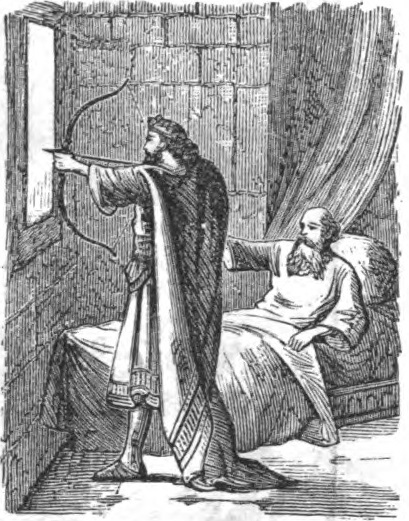
But sometime during his reign, Jehoash of Israel received word that the prophet Elisha was on his deathbed. Surprisingly, the king was grieved over this news and made a personal visit to see the dying prophet. While Jehoash was anything but a faithful worshiper of Yahweh, he knew that Elisha had great power and influence. This elderly prophet had proven time and time again that he spoke on behalf of God and was empowered by God. That’s why Jehoash greeted him with the somewhat cryptic statement: “My father, my father! The chariots of Israel and its horsemen!” (2 Kings 13:14 ESV). Evidently, Jehoash had heard the story of Elijah’s miraculous departure and Elisha’s role in it. Perhaps Elisha had shared with the king the details of that fateful day when God had used a whirlwind to take Elijah from the earth.

…as they still went on and talked, behold, chariots of fire and horses of fire separated the two of them. And Elijah went up by a whirlwind into heaven. And Elisha saw it and he cried, “My father, my father! The chariots of Israel and its horsemen!” And he saw him no more. – 2 Kings 2:11-12 ESV

This event followed Elisha’s request that Elijah give him a double portion of his spirit. He was to be Elijah’s replacement, and he felt ill-equipped for the task. It could be that King Jehoash hoped Elisha would pour out his spirit on him as well. He understood that Elisha possessed power and had direct access to Yahweh. With the prophet’s death, all of that might be lost. But rather than pour out his spirit on the apostate king, Elisha commanded him to take his bow and shoot an arrow out the window.

Elisha said, “Shoot,” and he shot. And he said, “The LORD‘s arrow of victory, the arrow of victory over Syria! For you shall fight the Syrians in Aphek until you have made an end of them.” – 2 Kings 13:17 ESV

Next, the prophet told the king to take his remaining arrows and strike the ground with them. Jehoash dutifully obeyed, but when he stopped after the third blow, Elisha responded in anger.

“You should have struck the ground five or six times!” he exclaimed. “Then you would have beaten Aram until it was entirely destroyed. Now you will be victorious only three times.” – 2 Kings 13:19 NLT

In a sense, Elisha had poured out his spirit on King Jehoash. He had placed his hands on those of the king and, together, they had shot the first arrow out the window. He then assured the king of his victory over the Syrians. But the extent of that victory would depend on Jehoash’s faith. By limiting the number of times he struck the ground, Jehoash was unwittingly revealing his lack of faith. The first arrow had symbolized the LORD’s victory over the Syrians. When Elisha had commanded Jehoash to take the remaining arrows and strike the ground, he should have done so until the prophet told him to stop. Each blow was meant to symbolize a victory over the enemy. But Jehoash had chosen to limit his expectations. In doing so, he inadvertently limited his chances of success over his enemy.
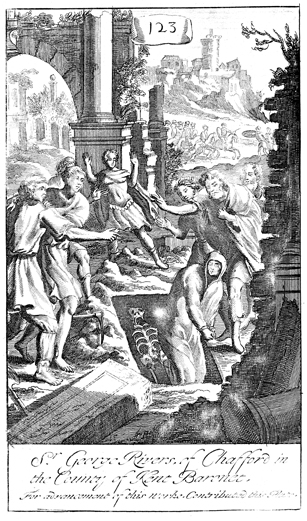
Having pronounced his last prophetic message, Elisha died. But the author relates a story that reveals one last miracle associated with the prophet of God. Sometime later, the body of a recently deceased man was inadvertently thrown into the cave containing Elisha’s bones. When the body of the dead man came into contact with Elisha’s remains, he was immediately restored to life. Amazingly, the author provides no further details about the story to indicate what happened to this newly resurrected man or how the story came to be known. But its inclusion in the narrative was meant to reveal that, though Elisha was dead,  Yahweh was alive and well. Elisha’s departure was not meant to be mistaken for God’s abandonment of Israel. He was still fully capable of restoring life to the lifeless. The all-powerful God of Israel used the bones of a dead prophet to restore life to a dead Israelite, a clear symbol of His desire to renew those among His chosen people who were marked by spiritual death.

The author reminds his readers that God remained faithful to His disobedient people, refusing to abandon them despite their constant rejection of Him.

the LORD was gracious and merciful to the people of Israel, and they were not totally destroyed. He pitied them because of his covenant with Abraham, Isaac, and Jacob. – 2 Kings 13:23 NLT

The author also reveals that Yahweh kept His word concerning the fate of the Syrians. Jehoash experienced three separate victories over his enemy, matching the exact number of times he struck the ground with his arrows — no more, no less. God allowed Jehoash to recover some of the territory stolen by the Syrians, but the fighting would continue throughout the rest of his reign. The sad reality is that the same God who raised a dead man back to life was fully capable of restoring a spiritually dead nation. Still, their continued stubbornness and lack of faithfulness would prevent them from experiencing the life-transformative power of Yahweh.

English Standard Version (ESV) The Holy Bible, English Standard Version. ESV® Permanent Text Edition® (2016). Copyright © 2001 by Crossway Bibles, a publishing ministry of Good News Publishers.

New Living Translation (NLT) Holy Bible, New Living Translation, copyright © 1996, 2004, 2015 by Tyndale House Foundation. Used by permission of Tyndale House Publishers Inc., Carol Stream, Illinois 60188. All rights reserved.

Nevertheless…

1 In the seventh year of Jehu, Jehoash began to reign, and he reigned forty years in Jerusalem. His mother’s name was Zibiah of Beersheba. And Jehoash did what was right in the eyes of the LORD all his days, because Jehoiada the priest instructed him. Nevertheless, the high places were not taken away; the people continued to sacrifice and make offerings on the high places.

Jehoash said to the priests, “All the money of the holy things that is brought into the house of the LORD, the money for which each man is assessed—the money from the assessment of persons—and the money that a man’s heart prompts him to bring into the house of the LORD, let the priests take, each from his donor, and let them repair the house wherever any need of repairs is discovered.” But by the twenty-third year of King Jehoash, the priests had made no repairs on the house. Therefore King Jehoash summoned Jehoiada the priest and the other priests and said to them, “Why are you not repairing the house? Now therefore take no more money from your donors, but hand it over for the repair of the house.” So the priests agreed that they should take no more money from the people, and that they should not repair the house.

Then Jehoiada the priest took a chest and bored a hole in the lid of it and set it beside the altar on the right side as one entered the house of the LORD. And the priests who guarded the threshold put in it all the money that was brought into the house of the LORD. 10 And whenever they saw that there was much money in the chest, the king’s secretary and the high priest came up and they bagged and counted the money that was found in the house of the LORD. 11 Then they would give the money that was weighed out into the hands of the workmen who had the oversight of the house of the LORD. And they paid it out to the carpenters and the builders who worked on the house of the LORD, 12 and to the masons and the stonecutters, as well as to buy timber and quarried stone for making repairs on the house of the LORD, and for any outlay for the repairs of the house. 13 But there were not made for the house of the LORD basins of silver, snuffers, bowls, trumpets, or any vessels of gold, or of silver, from the money that was brought into the house of the LORD, 14 for that was given to the workmen who were repairing the house of the LORD with it. 15 And they did not ask for an accounting from the men into whose hand they delivered the money to pay out to the workmen, for they dealt honestly. 16 The money from the guilt offerings and the money from the sin offerings was not brought into the house of the LORD; it belonged to the priests. 2 Kings 12:1-16 ESV

Joash, referred to as Jehoash in this chapter, became the next king of Judah at the age of seven. This young child found himself bearing the heavy burden of leadership over God’s people. But for the first six years of his life, he had lived in the Temple of God, where Jehoiada the priest served as his father figure and spiritual mentor. This faithful servant of God continued to guide the young king during the early years of his reign, and his influence had a powerful impact. The innocent young boy who ascended the throne at seven would rule for four decades, and the author summarizes his reign with the words, “Jehoash did what was right in the eyes of the LORD all his days, because Jehoiada the priest instructed him” (2 Kings 12:2 ESV).

After reading the sordid history of the kings of Israel, this statement comes as a much-needed breath of fresh air. All was not lost. There was still a remnant of the faithful living in the land of Judah, and the actions of Jehoiada the priest demonstrate how God uses His servants to protect and preserve His people. In the midst of all the paganism and idolatry that infected the nation, this one man had remained at his priestly post, serving his God and ministering to the spiritual needs of his people. When the time came to protect the God-appointed heir to the throne of David, Jehoiada willingly put his reputation and life on the line.

The story of Jehoiada is a timely reminder not to underestimate the influence of one individual who chooses to remain faithful to God in the face of overwhelming odds. His determination and perseverance made a world of difference. Like Elijah and Elisha, Jehoiada was thrust into an isolated and lonely role that required him to stand against the forces of evil in his day. By making the fateful decision to hide the young heir to the throne, Jehoiada risked bringing down the wrath of Queen Athaliah. It could have cost him his life, but for six long years, he willingly took the risk and was used by God to preserve the hope of Israel: an heir to sit on the throne of David.

But sadly, the day came when Jehoiada’s influence over the king abruptly ended. The faithful priest died.

But Jehoiada grew old and full of days, and died. He was 130 years old at his death. And they buried him in the city of David among the kings, because he had done good in Israel, and toward God and his house. – 2 Chronicles 24:15-16 ESV

This one man had made a tremendous impact on the king, the house of God, and the people of Israel, and his death left a gaping spiritual void in King Jehoash’s life. With his mentor gone, the king found himself listening to the advice of those whose intentions were less-than-honorable and far from godly.

Now after the death of Jehoiada the princes of Judah came and paid homage to the king. Then the king listened to them. And they abandoned the house of the LORD, the God of their fathers, and served the Asherim and the idols. And wrath came upon Judah and Jerusalem for this guilt of theirs. – 2 Chronicles 24:17-18 ESV

With faithful Jehoiada out of the way, the ungodly princes of Israel took advantage of the situation to promote their anti-Yahweh agenda and lead the nation back into idolatry. Sadly, King Jehoash heeded their counsel.

The next 13 verses of chapter 12 appear to chronicle what happened in Israel as long as Jehoiada remained alive. King Jehoash had ordered repairs to be made to the Temple of God. He had a vested interest in the welfare of this building because it had served as his home and sanctuary for the first six years of his life. But in the 23rd year of his reign, he discovered that his orders had not been followed and no repairs had been made. The people were required to make an annual contribution to the temple treasury, and Jehoash had ordered that part of those funds should be used for the much-needed repairs. But for some unstated reason, the priests failed to disperse the funds to the workmen. So, the work was never done.

To remedy the problem, the king and Jehoiada set up a different system that allowed the transfer of the funds directly to the workmen responsible for the repairs; the priests were removed from the process altogether. Jehoiada set up a large wooden chest at the entrance to the Temple. The people would place their offering in the box, and the money would be periodically collected and distributed to the workmen.

Then they gave the money to the construction supervisors, who used it to pay the people working on the LORD’s Temple—the carpenters, the builders, the masons, and the stonecutters. They also used the money to buy the timber and the finished stone needed for repairing the LORD’s Temple, and they paid any other expenses related to the Temple’s restoration. – 2 Kings 12:11-12 NLT

With this new system in place, the repairs to the house of God were made without any graft or corruption taking place. The honesty and integrity of the workmen eliminated any need for a reconciliation of the funds.

No accounting of this money was required from the construction supervisors, because they were honest and trustworthy men. – 2 Kings 12:15 ESV

This simple statement speaks volumes. The spiritual influence of Jehoiada could be seen in the way the people conducted their lives. The king wasn’t the only one who did what was right in the eyes of the Lord. There was a contagious spirit of honesty and integrity that permeated the culture. As long as Jehoiada remained alive and had the ear of the king, the nation seemed to thrive. But it seems that Jehoiada died not long after the repairs to the Temple were completed. And, as the book of 2 Chronicles reveals, his departure made an immediate impact on the nation.

They decided to abandon the Temple of the Lord, the God of their ancestors, and they worshiped Asherah poles and idols instead! Because of this sin, divine anger fell on Judah and Jerusalem. Yet the LORD sent prophets to bring them back to him. The prophets warned them, but still the people would not listen. – 2 Chronicles 24:18-19 NLT

In Jehoiada’s absence, God sent His prophets to call the people to repentance, but they would not listen. So, eventually, God sent Zechariah, the son of Jehoiada, with a final warning of judgment.

“This is what God says: Why do you disobey the LORD’s commands and keep yourselves from prospering? You have abandoned the LORD, and now he has abandoned you!” – 2 Chronicles 24:20 NLT

Infuriated by Zechariah’s words, King Jehoash and the leaders of Judah chose to kill the messenger.

Then the leaders plotted to kill Zechariah, and King Joash ordered that they stone him to death in the courtyard of the LORD’s Temple. That was how King Joash repaid Jehoiada for his loyalty—by killing his son. Zechariah’s last words as he died were, “May the LORD see what they are doing and avenge my death!” – 2 Chronicles 24:21-22 NLT

Don’t miss the significance of this statement. King Jehoash, who had been raised by Jehoiada in the Temple of God, had his mentor’s son stoned to death in the Temple courtyard. In doing so, he desecrated his former home and the house of Yahweh he had painstakingly repaired. The very one whom God had preserved so that he might sit on David’s throne proved to be as wicked as the woman he replaced. Without the godly influence of Jehoiada in his life, King Jehoash was exposed as an empty suit, a man with a crown on his head but without a heart for God.

The death of Jehoiada drives home the truth found in Proverbs 29:2: “When the righteous increase, the people rejoice, but when the wicked rule, the people groan.”

As long as Jehoiada remained alive, his godly influence influenced King Jehoash and helped to promote and preserve the worship of Yahweh in Judah. But when he passed away at the ripe old age of 130, Jehoiada’s godly influence died with him, leaving King Jehoash susceptible to the less-than-righteous counsel of his royal advisors.

Jehoash had started well. His order to repair the Temple was a positive step designed to revitalize the worship of Yahweh and restore the people’s reliance upon Him as the one and only God. But as the rest of the chapter will reveal, with his godly mentor gone, Jehoash would prove to be ill-prepared to continue the reforms he began.

English Standard Version (ESV) The Holy Bible, English Standard Version. ESV® Permanent Text Edition® (2016). Copyright © 2001 by Crossway Bibles, a publishing ministry of Good News Publishers.

New Living Translation (NLT) Holy Bible, New Living Translation, copyright © 1996, 2004, 2015 by Tyndale House Foundation. Used by permission of Tyndale House Publishers Inc., Carol Stream, Illinois 60188. All rights reserved.

Bad News From the Good Shepherd

30 When Jehu came to Jezreel, Jezebel heard of it. And she painted her eyes and adorned her head and looked out of the window. 31 And as Jehu entered the gate, she said, “Is it peace, you Zimri, murderer of your master?” 32 And he lifted up his face to the window and said, “Who is on my side? Who?” Two or three eunuchs looked out at him. 33 He said, “Throw her down.” So they threw her down. And some of her blood spattered on the wall and on the horses, and they trampled on her. 34 Then he went in and ate and drank. And he said, “See now to this cursed woman and bury her, for she is a king’s daughter.” 35 But when they went to bury her, they found no more of her than the skull and the feet and the palms of her hands. 36 When they came back and told him, he said, “This is the word of the LORD, which he spoke by his servant Elijah the Tishbite: ‘In the territory of Jezreel the dogs shall eat the flesh of Jezebel, 37 and the corpse of Jezebel shall be as dung on the face of the field in the territory of Jezreel, so that no one can say, This is Jezebel.’” 2 Kings 9:30-37 ESV

Having killed King Jehoram of Israel and King Ahaziah of Judah, Jehu returned to the summer palace in Jezreel, because there still remained one last piece of unfinished business. Ahaziah’s mother, Jezebel, was still alive and well, and Jehu knew that as long as she remained so, she would continue to have a devastating influence over the kingdom of Israel. She had proven herself to be resilient and stubbornly opposed to any attempt to restore the worship of Yahweh in Israel. Not only was she committed to her false gods, but she was also willing to do anything to maintain her vise-like grip on the kingdom over which her husband once ruled.

By the time Jehu showed up, Jezebel had been informed of her son’s death. In an apparent effort to disguise any sign of sorrow that might be mistaken for weakness, Jezebel “painted her eyes and adorned her head” (2 Kings 9:30 ESV). She got dressed in her royal robes and presented herself at the window of the palace. It seems likely that she believed herself to be the rightful heir to her son’s throne and hoped to convince the crowds gathered outside her window that she was still in charge. She called out to Jehu, “Is it peace, you Zimri, murderer of your master?” (2 Kings 9:31 ESV). This statement was meant to put Jehu in his place, comparing him to another former traitor, who 44 years earlier had assassinated King Elah of Israel. Whether she realized it or not, this was an apt comparison, because Zimri had also been used by God to fulfill His judgment upon the house of another wayward and wicked king.

There has been a recurring cycle of sin and judgment taking place throughout the books of 1st and 2nd Kings. It had all begun with Jeroboam, whom God had placed over the northern kingdom of Israel after having divided Solomon’s kingdom in half. But Jeroboam proved to be a wicked king who led the ten northern tribes into idolatry. As a result, God swore that He would punish Jeroboam and his descendants for their unfaithfulness.

“I will bring harm upon the house of Jeroboam and will cut off from Jeroboam every male, both bond and free in Israel, and will burn up the house of Jeroboam, as a man burns up dung until it is all gone. Anyone belonging to Jeroboam who dies in the city the dogs shall eat, and anyone who dies in the open country the birds of the heavens shall eat, for the LORD has spoken it.” – 1 Kings 14:10-11 ESV

Eventually, Jeroboam died and his son, Nadab, ascended to the throne of Israel. But he proved to be just as wicked as his father, continuing to encourage the Israelites to worship false gods. So, God raised up Baasha, who killed Nadab and crowned himself the king of Israel.

“As soon as he was king, he killed all the house of Jeroboam. He left to the house of Jeroboam not one that breathed, until he had destroyed it, according to the word of the LORD… – 1 Kings 15:29 ESV

But nothing changed. Baasha kept the legacy of Jeroboam alive, promoting idolatry and apostasy among the ten northern tribes of Israel. So, God was forced to deliver another message of judgment against the reigning king of Israel. This time, it had to do with Baasha.

“Since I exalted you out of the dust and made you leader over my people Israel, and you have walked in the way of Jeroboam and have made my people Israel to sin, provoking me to anger with their sins, behold, I will utterly sweep away Baasha and his house, and I will make your house like the house of Jeroboam the son of Nebat. Anyone belonging to Baasha who dies in the city the dogs shall eat, and anyone of his who dies in the field the birds of the heavens shall eat.” – 1 Kings 16:2-4 ESV

The pattern continues. God removes one king for his rebellion and replaces him with another who demonstrates the same stubborn penchant for doing things his own way. And don’t miss the similarity in the judgments God pronounces on both men. Each would suffer a similar fate, as would their descendants. God would wipe out any potential heirs, leaving their bodies to be eaten by scavengers.

Baasha had been given the opportunity to lead the people back to God, but had failed to do so. Eventually, he died, and his son, Elah became the king of Israel. This is where Zimri comes into the story.

Zimri came in and struck him down and killed him [Elah], in the twenty-seventh year of Asa king of Judah, and reigned in his place. When he began to reign, as soon as he had seated himself on his throne, he struck down all the house of Baasha. He did not leave him a single male of his relatives or his friends. Thus Zimri destroyed all the house of Baasha, according to the word of the Lord… – 1 Kings 16:10-12 ESV

Now, years later, here was Jezebel making an unfavorable comparison between Jehu and this former traitor and usurper to the throne. But little did she realize that Jehu, like Zimri, was acting on behalf of God Almighty. He had been anointed by the prophet of God and given divine instructions to bring judgment against the house of Ahab.

“Thus says the LORD, the God of Israel, I anoint you king over the people of the LORD, over Israel. And you shall strike down the house of Ahab your master, so that I may avenge on Jezebel the blood of my servants the prophets, and the blood of all the servants of the LORD. For the whole house of Ahab shall perish, and I will cut off from Ahab every male, bond or free, in Israel. And I will make the house of Ahab like the house of Jeroboam the son of Nebat, and like the house of Baasha the son of Ahijah. And the dogs shall eat Jezebel in the territory of Jezreel, and none shall bury her.” – 2 Kings 9:6-10 ESV

The next rotation in the cycle of sin and judgment was about to come full circle. Jezebel stood in the window of her palace, her makeup freshly applied and her royal gown glistening in the sunlight. But she could not disguise the darkness that lurked within her heart. She may have looked like a queen, and she probably believed she deserved to be queen. But God had other plans for Jezebel.

Down in the courtyard, still seated in his chariot, Jehu cried out, “Who is on my side? Who?” (2 Kings 9:32 ESV). At the sound of his voice, several servants peered out the window to see who was speaking. Then they heard him shout, “Throw her down” (2 Kings 9:33 ESV), and, without a moment’s hesitation, they grabbed the well-adorned queen and threw her from the upper-story window of the palace. These lowly servants could see that the tide had turned and their queen had lost her power. So, when commanded to choose sides, they had no trouble making their decision. They cast their votes by throwing Jezebel to the courtyard below. And the author provides a graphic description of her ignominious end:

…some of her blood spattered on the wall and on the horses, and they trampled on her.” – 2 Kings 9:33 ESV

His gruesome assignment completed, Jehu calmly entered the palace and sat down to a meal. When he finally gave the order for Jezebel’s body to be given a decent burial, all that was left were her skull, feet, and the palms of her hand. In keeping with God’s prophecy, wild scavenging dogs had picked her corpse apart, leaving little left to be buried. For more than 30 years, this woman had used her power and influence to shape the spiritual condition of the nation of Israel. Jezebel had fiercely promoted and defended her false gods, choosing to do everything in her power to eliminate the worship of Yahweh from Israel. But just as her 450 prophets had failed to defeat Elijah, the prophet of God, Jezebel failed in her quest to dethrone Yahweh as the God of Israel.

She was dead, but Yahweh was alive and well. Even a seemingly ceaseless cycle of apostate kings could not thwart the will of God. They could abandon Him, but He was not going away. He remained committed to the covenant He had made with Abraham, Isaac, and Jacob. And even if His chosen people refused to fulfill their end of the covenant agreement, He would do what He had promised to do.

In the Book of Ezekiel, the prophet records the words that Yahweh spoke against His so-called “shepherds,” those who had been given the divinely ordained task of caring for His flock. These political and spiritual leaders had failed to do their jobs, choosing instead to use their positions of power for personal profit. So, Yahweh had Ezekiel deliver a prophetic warning to these profiteering promoters of idolatry.

“Son of man, prophesy against the shepherds, the leaders of Israel. Give them this message from the Sovereign LORD: What sorrow awaits you shepherds who feed yourselves instead of your flocks. Shouldn’t shepherds feed their sheep? – Ezekiel 34:2 NLT

Jeroboam, Basha, Elah, Ahab, Jehoram, and Jezebel each proved to be unreliable shepherds who fleeced the flock of God and forced them to turn their backs on the Good Shepherd. But Yahweh would not tolerate their insubordination and insipient idolatry.

“Therefore, you shepherds, hear the word of the LORD: As surely as I live, says the Sovereign LORD, you abandoned my flock and left them to be attacked by every wild animal. And though you were my shepherds, you didn’t search for my sheep when they were lost. You took care of yourselves and left the sheep to starve. Therefore, you shepherds, hear the word of the LORD. This is what the Sovereign LORD says: I now consider these shepherds my enemies, and I will hold them responsible for what has happened to my flock. I will take away their right to feed the flock, and I will stop them from feeding themselves. I will rescue my flock from their mouths; the sheep will no longer be their prey.” – Ezekiel 34:8-10 NLT

The Good Shepherd would see to it that His flock was cared for. Despite the abysmal track record of His undershepherds, the covenant-keeping God of Israel would fulfill every promise He made to His people.

English Standard Version (ESV) The Holy Bible, English Standard Version. ESV® Permanent Text Edition® (2016). Copyright © 2001 by Crossway Bibles, a publishing ministry of Good News Publishers.

New Living Translation (NLT) Holy Bible, New Living Translation, copyright © 1996, 2004, 2015 by Tyndale House Foundation. Used by permission of Tyndale House Publishers Inc., Carol Stream, Illinois 60188. All rights reserved.

The Sovereign Will of God

1 Now Elisha had said to the woman whose son he had restored to life, “Arise, and depart with your household, and sojourn wherever you can, for the LORD has called for a famine, and it will come upon the land for seven years.” So the woman arose and did according to the word of the man of God. She went with her household and sojourned in the land of the Philistines seven years. And at the end of the seven years, when the woman returned from the land of the Philistines, she went to appeal to the king for her house and her land. Now the king was talking with Gehazi the servant of the man of God, saying, “Tell me all the great things that Elisha has done.” And while he was telling the king how Elisha had restored the dead to life, behold, the woman whose son he had restored to life appealed to the king for her house and her land. And Gehazi said, “My lord, O king, here is the woman, and here is her son whom Elisha restored to life.” And when the king asked the woman, she told him. So the king appointed an official for her, saying, “Restore all that was hers, together with all the produce of the fields from the day that she left the land until now.”

Now Elisha came to Damascus. Ben-hadad the king of Syria was sick. And when it was told him, “The man of God has come here,” the king said to Hazael, “Take a present with you and go to meet the man of God, and inquire of the LORD through him, saying, ‘Shall I recover from this sickness?’” So Hazael went to meet him, and took a present with him, all kinds of goods of Damascus, forty camels’ loads. When he came and stood before him, he said, “Your son Ben-hadad king of Syria has sent me to you, saying, ‘Shall I recover from this sickness?’” 10 And Elisha said to him, “Go, say to him, ‘You shall certainly recover,’ but the LORD has shown me that he shall certainly die.” 11 And he fixed his gaze and stared at him, until he was embarrassed. And the man of God wept. 12 And Hazael said, “Why does my lord weep?” He answered, “Because I know the evil that you will do to the people of Israel. You will set on fire their fortresses, and you will kill their young men with the sword and dash in pieces their little ones and rip open their pregnant women.” 13 And Hazael said, “What is your servant, who is but a dog, that he should do this great thing?” Elisha answered, “The LORD has shown me that you are to be king over Syria.” 14 Then he departed from Elisha and came to his master, who said to him, “What did Elisha say to you?” And he answered, “He told me that you would certainly recover.” 15 But the next day he took the bed cloth and dipped it in water and spread it over his face, till he died. And Hazael became king in his place. 2 Kings 8:1-15 ESV

Hazael meets prophet Elisha and asks for healing for his master, King Ben Hadad of Syria (2 Kings 8). Wood engraving, published in 1886.

It’s challenging to determine precisely when the two stories that open up Chapter 8 took place. But the author’s decision to include them at this point in his narrative doesn’t appear to have been based on a desire for chronological accuracy. He was trying to make a point about the spiritual conditions in and around Israel, and so he used the stories of two very different characters as illustrations. One has appeared before. The Shunammite woman was first introduced in Chapter 4. She was a faithful follower of Yahweh who had shown gracious hospitality to Elisha and his servant, providing them with shelter and food every time they passed through her town. Yahweh rewarded her generosity to His servant by allowing her to conceive and bear a son, something she had never been able to do. But sometime in his early childhood, her son became ill and died, and her joy turned to sorrow. But the prophet of God intervened and restored the child to life. Now, in Chapter 8, the author picks up the story where he left off.

Now Elisha had said to the woman whose son he had restored to life, “Arise, and depart with your household, and sojourn wherever you can, for the LORD has called for a famine, and it will come upon the land for seven years.” – 2 Kings 8:1 ESV

The prophet informed the Shunammite woman about a famine that God was about to bring upon the land because of Israel’s ongoing apostasy. He allowed this faithful servant of Yahweh to escape and find shelter until the seven years of famine had passed. She took the prophet’s advice and fled with her family to the land of the Philistines. But seven years later, when the famine was over and she returned to Shunem, she was homeless and landless. It could be that she was forced to sell her husband’s inheritance before she left seven years earlier. But there is also the possibility that the government had confiscated her land in her absence. In either case, the Mosaic law required that she be given the right to reclaim her land at any time (Leviticus 25:23-28). It would have been part of her husband’s inheritance and protected by law.

So, upon her return, she headed straight to the palace to make an appeal to the king. It seems likely that her husband is deceased, as Chapter 4 indicates he was more advanced in years (2 Kings 4:14). Yet, he may have been alive but physically unable to present his case before the king, so his wife acted on his behalf.

This is where the story gets interesting. In a display of divinely inspired timing, the woman arrived at the palace at the exact moment when Gehazi, Elisha’s servant, was speaking with King Jehoram. The fact that Gehazi was standing before the king indicates that this story took place before he was stricken with leprosy (2 Kings 5:20-27). The author doesn’t reveal the purpose behind Gehazi’s appointment with the king, but he does let us know what they discussed.

Now the king was talking with Gehazi the servant of the man of God, saying, “Tell me all the great things that Elisha has done.” – 2 Kings 8:4 ESV

Jehoram’s relationship with Elisha had been anything but cordial. Like all the kings of Israel, he had a love-hate relationship with God’s prophet. Jehoram was the son of Jezebel, and, like his wicked mother, he had continued to lead the people of Israel in the practice of idolatry. So, it seems a bit out of character for him to ask Gehazi to recount all the exploits of the prophet of God. But, once again, this reveals the divine timing and providential planning behind all that is taking place in the story. God was orchestrating everything, down to the last detail.

It just so happened that as Gehazi was telling Jehoram how Elisha had restored the woman’s son to life, she walked in the door. Gehazi, shocked at seeing the woman appear at just that moment, exclaimed, “My lord, O king, here is the woman, and here is her son whom Elisha restored to life” (2 Kings 8:5 ESV). This wasn’t a case of kismet, karma, fate, or good luck. It was the sovereign will of God Almighty on display. He had pre-ordained and orchestrated it all. The result was that the king ordered the immediate restoration of the woman’s land, “including the value of any crops that had been harvested during her absence” (2 Kings 8:6 NLT). He richly rewarded her for her faithfulness.

This sets up the second story. In this one, the location shifts from Samaria, the capital city of Israel, to Damascus, the capital city of Syria. In verses 1-6, the author presented the story of a faithful servant and a curious king. But in verses 7-15, he tells a strikingly different story about an unfaithful servant and a critically ill king. These stories are arranged as they are for a reason, and are meant to stand in stark contrast to one another. But they are also intended to demonstrate God’s sovereign hand over everything. From the palace of the king of Israel to the royal court of the pagan king of Syria, God is in complete control of all things. There is nothing that escapes His notice or falls outside His divine jurisdiction.

In another display of divine timing, Elisha has arrived in Damascus just as Ben-hadad, the king of Syria, has become ill. Upon hearing of Elisha’s presence in his capital, Ben-hadad determines to take advantage of this fortunate opportunity. He sends Hazael, the governor of Damascus, to ask Elisha whether he will recover from his illness, and, in a not-so-subtle attempt to garner a favorable response from the prophet, Ben-hadad includes a lucrative welcome gift. When Hazael delivers the king’s gift and message to Elisha, the prophet responds with a somewhat cryptic answer.

“Go and tell him, ‘You will surely recover.’ But actually the LORD has shown me that he will surely die!” – 2 Kings 8:10 NLT

Elisha had good news and bad news for the king. The good news was that Ben-hadad would recover from his illness. But the bad news was that he was destined to die. What followed this exchange was a long and awkward staredown between Elisha and Hazael. The prophet knew precisely what was going on in Hazael’s heart. God had revealed to Elisha what the governor was planning to do. So, he locked eyes with Hazael, perhaps hoping that the awkward silence would lead the governor to have second thoughts about his evil plan. But there was no confession from Hazael. Instead, Elisha began to weep. He knew what was going to happen and grieved over the long-term ramifications for the people of Israel.

“I know the terrible things you will do to the people of Israel. You will burn their fortified cities, kill their young men with the sword, dash their little children to the ground, and rip open their pregnant women!” – 2 Kings 8:12 NLT

God had given Elisha a glimpse into all that was going to take place. Ben-hadad would recover from his illness but would die at the hands of Hazael. When Hazael ascended to the throne of Syria, he would wreak havoc and destruction upon the nation of Israel. But, in actuality, he would become God’s chosen instrument of judgment upon His unfaithful people. This had always been part of God’s sovereign plan.

Chapter 19 of 1 Kings contains the story of Elijah running from the threat of Jezebel’s revenge. He escaped to the wilderness, where he sought shelter in a cave. But while there, he received a visit and a message from God.

And the LORD said to him, “Go, return on your way to the wilderness of Damascus. And when you arrive, you shall anoint Hazael to be king over Syria. And Jehu the son of Nimshi you shall anoint to be king over Israel, and Elisha the son of Shaphat of Abel-meholah you shall anoint to be prophet in your place.” – 1 Kings 19:15-16 ESV

Don’t miss the significance of what is going on here. Years earlier, God had commanded Elijah to anoint Hazael as the next king of Syria, and Elijah had obeyed. This means that long before Elisha showed up in Damascus and had his face-to-face encounter with Hazael, this man already had God’s divine seal of approval to be the next king of Syria. He had already been anointed by Elijah but had not yet assumed the throne. But it was just a matter of time. It was inevitable and unavoidable because it had been ordained by God. And God had made it clear to Elijah that He would one day use Hazael as His instrument of judgment upon the rebellious people of Israel.

And the one who escapes from the sword of Hazael shall Jehu put to death, and the one who escapes from the sword of Jehu shall Elisha put to death. Yet I will leave seven thousand in Israel, all the knees that have not bowed to Baal, and every mouth that has not kissed him.” – 1 Kings 19:17-18 ESV

Now, that prophecy was about to be fulfilled. God had shown Elisha what was about to happen, and the thought of it brought him to tears.

“The LORD has shown me that you are to be king over Syria.” – 2 Kings 8:13 ESV

The judgment of God was about to come upon the people of Israel. While Yahweh had rewarded the Shunammite woman for her faithfulness, He was about to bring death and destruction upon unfaithful Israel. The author closes his story with the fateful words: “the next day he [Hazael] took the bed cloth and dipped it in water and spread it over his face, till he died. And Hazael became king in his place” (2 Kings 8:15 ESV).

The man whom God had ordered Elijah to anoint years earlier was now the king. The sovereign will of God had been fulfilled, and the next phase of His plan for the rebellious people of Israel was about to begin.

English Standard Version (ESV) The Holy Bible, English Standard Version. ESV® Permanent Text Edition® (2016). Copyright © 2001 by Crossway Bibles, a publishing ministry of Good News Publishers.

New Living Translation (NLT) Holy Bible, New Living Translation, copyright © 1996, 2004, 2015 by Tyndale House Foundation. Used by permission of Tyndale House Publishers Inc., Carol Stream, Illinois 60188. All rights reserved.

Faith, Famine, and Fruitfulness

24 Afterward Ben-hadad king of Syria mustered his entire army and went up and besieged Samaria. 25 And there was a great famine in Samaria, as they besieged it, until a donkey’s head was sold for eighty shekels of silver, and the fourth part of a kab of dove’s dung for five shekels of silver.’ 26 Now as the king of Israel was passing by on the wall, a woman cried out to him, saying, “Help, my lord, O king!” 27 And he said, “If the LORD will not help you, how shall I help you? From the threshing floor, or from the winepress?” 28 And the king asked her, “What is your trouble?” She answered, “This woman said to me, ‘Give your son, that we may eat him today, and we will eat my son tomorrow.’ 29 So we boiled my son and ate him. And on the next day I said to her, ‘Give your son, that we may eat him.’ But she has hidden her son.” 30 When the king heard the words of the woman, he tore his clothes—now he was passing by on the wall—and the people looked, and behold, he had sackcloth beneath on his body— 31 and he said, “May God do so to me and more also, if the head of Elisha the son of Shaphat remains on his shoulders today.”

32 Elisha was sitting in his house, and the elders were sitting with him. Now the king had dispatched a man from his presence, but before the messenger arrived Elisha said to the elders, “Do you see how this murderer has sent to take off my head? Look, when the messenger comes, shut the door and hold the door fast against him. Is not the sound of his master’s feet behind him?” 33 And while he was still speaking with them, the messenger came down to him and said, “This trouble is from the LORD! Why should I wait for the LORD any longer?” 

1 But Elisha said, “Hear the word of the LORD: thus says the LORD, Tomorrow about this time a seah of fine flour shall be sold for a shekel, and two seahs of barley for a shekel, at the gate of Samaria.” Then the captain on whose hand the king leaned said to the man of God, “If the LORD himself should make windows in heaven, could this thing be?” But he said, “You shall see it with your own eyes, but you shall not eat of it.”2 Kings 6:24-7:2 ESV

One thing that becomes painfully evident when reading God’s Word is that it often paints humanity in far-from-flattering terms. The characters found in the Bible are presented with all their flaws and foibles fully exposed. The reader gets to see the good, the bad, and the ugly aspects of human nature in all their gory details. There are examples of mankind’s more positive traits, but they seem few and far between. From the opening pages of Genesis to the closing chapters of Revelation, the fallen nature of humanity is presented with painstaking accuracy.

Throughout the book, we see a litany of vices on display, including all of the seven deadly sins: pride, greed, lust, envy, gluttony, anger, and sloth. Countless stories chronicle mankind’s stubbornness, arrogance, and selfishness, and they are intended to stand in stark contrast to the righteousness of God. Throughout the Bible, we see the sinfulness of man set against the stark backdrop of God’s incomparable holiness. The stories of mankind’s unfaithfulness, arrogance, pride, and sin are seamlessly woven together with the countless examples of God’s power and sovereignty. And today’s passage contains one such story.

For some time, Ben-hadad II, the king of Syria, had been trying to develop secret plans to invade Israel. But each time he attempted to put them into action, the Israelites were one step ahead of him. He discovered that Elisha the prophet had been receiving secret intel on all their planning sessions, and it had come directly from Yahweh, the God of Israel. Since Ben-hadad couldn’t do anything to stop the all-powerful Yahweh, he decided to capture Elisha. But, once again, his strategy failed miserably. When his troops laid siege to the city of Dothan, where Elisha was living, God blinded them. Then Elisha led them to Samaria, where the king of Israel spared their lives and hosted a feast for them. These men returned home, grateful to be alive.

But then we read, “Afterward Ben-hadad king of Syria mustered his entire army and went up and besieged Samaria” (2 Kings 6:24 ESV). We’re not told how much time transpired between Ben-hadad’s last failed attempt to attack Israel and this latest campaign. But he had not given up his intentions to conquer the nation of Israel. This man’s stubborn persistence is on full display. Despite what had happened to his troops the last time they went into Israelite territory, he was determined to carry out his latest plan.

As a result of the siege, the conditions inside Samaria quickly deteriorated. Food became scarce, and the people within the walls of the city became desperate. Price gouging was prevalent because there was nothing to eat. People were willing to pay exorbitant prices for anything that even remotely resembled food.

The siege lasted so long that a donkey’s head sold for eighty pieces of silver, and a cup of dove’s dung sold for five pieces of silver. –  2 Kings 6:25 NLT 

These were desperate times. And to make sure we understand just how bad things had become, the author reveals that the people had resorted to cannibalism. To drive home the dire nature of their circumstances, he shares the story of a mother sacrificing her infant son so that she and her friends could survive. This sickening story was told to King Jehoram as he walked along the city walls, surveying the worsening conditions of his people. What makes this incident all the more repulsive is that it involved deceit and dishonesty. Facing starvation, two mothers had agreed to kill their own children and eat their flesh just to survive. One had followed through on her commitment, but when it came time for the second mother to kill her child, she couldn’t bring herself to do it. In a desperate attempt to preserve the life of her child, the woman hid him.

The abysmal conditions within Samaria should have come as no surprise to the people of Israel because Yahweh had warned them that disobedience to His law would result in severe discipline.

“If in spite of all this you still refuse to listen and still remain hostile toward me, then I will give full vent to my hostility. I myself will punish you seven times over for your sins. Then you will eat the flesh of your own sons and daughters. – Leviticus 26:27-29 NLT

“They will attack your cities until all the fortified walls in your land—the walls you trusted to protect you—are knocked down. They will attack all the towns in the land the LORD your God has given you.

“The siege and terrible distress of the enemy’s attack will be so severe that you will eat the flesh of your own sons and daughters, whom the LORD your God has given you. – Deuteronomy 28:52-53 NLT

Upon hearing the woman’s story, King Jehoram was sickened and tore his clothes in mourning. Yet, rather than see the situation as a sign of God’s judgment against apostate Israel, the king decided to blame Elisha. After all, the prophet was Yahweh’s official spokesman and had proven to be a thorn in Jehoram’s side for some time.

“May God strike me and even kill me if I don’t separate Elisha’s head from his shoulders this very day.” – 2 Kings 6:31 NLT

Jehoram was about to make the age-old mistake of killing the messenger. He knew that Elisha spoke for God, so he assumed that if he could eliminate the prophet, the conditions in Samaria would improve. But Elisha was not the cause of his problem or the source behind the judgment Israel was experiencing. The siege and the resulting famine were the handiwork of the sovereign, all-powerful Yahweh. God had warned them what would happen if they turned their backs on Him, and now they were suffering the consequences.

Jehoram’s decision to kill God’s prophet was doomed to failure. However, fueled by anger, arrogance, and pride, the king sent a messenger to retrieve Elisha and bring him back to the palace for execution. But Elisha was one step ahead of Jehoram, having been informed by God of the king’s intentions.

“A murderer has sent a man to cut off my head. When he arrives, shut the door and keep him out. We will soon hear his master’s steps following him.” – 2 Kings 6:32 NLT

When the messenger arrived, he found the door to Elisha’s home blocked. So, he dutifully delivered his message from the king.

“All this misery is from the LORD! Why should I wait for the LORD any longer?” – 2 Kings 6:33 NLT

Jehoram acknowledged that God was behind the siege, but he also revealed his doubt that God would ever rescue them. Since he couldn’t vent his frustration on God, he was determined to take out his anger on God’s prophet. He was following the same strategy his mother Jezebel had used when Elijah defeated and killed the 450 prophets of Baal. Angered by the prophet’s unexpected victory over her false god, she ordered his death (1 Kings 19:2). Now, years later, here was her son attempting to thwart the plan of God by killing the prophet of God. Jehoram’s pride, arrogance, and anger are on full display. At no point does he take ownership of his godless leadership of the nation. He displays no remorse or repentance. Yet the prophet delivered an unexpected, seemingly inexplicable message to the king.

“Listen to this message from the LORD! This is what the LORD says: By this time tomorrow in the markets of Samaria, six quarts of choice flour will cost only one piece of silver, and twelve quarts of barley grain will cost only one piece of silver.” – 2 Kings 7:1 NLT

Things were about to take a dramatic turn for the better. In just 24 hours, God would miraculously reverse the conditions in Samaria. The long-lasting siege and the devastating famine would come to an abrupt end, and the people living inside the walls of Samaria would suddenly find food readily available and affordable. But the king’s messenger found Elisha’s prediction to be far-fetched and refused to believe a word he said.

“That couldn’t happen even if the LORD opened the windows of heaven!” – 2 Kings 7:2 NLT

This arrogant man questioned the prophet’s words, but, more importantly, he displayed his doubt in Yahweh’s power, and Elisha warned him that he would pay dearly for his mistake.

“You will see it happen with your own eyes, but you won’t be able to eat any of it!” – 2 Kings 7:2 NLT

God was about to do something incredible, but this emissary of the king refused to believe it was possible. Like his boss, he had long ago given up any belief in Yahweh’s sovereignty and power. From his godless and apostate perspective, this problem was too big, even for God. For this unbelieving, apostate servant of the king, news of Israel’s reversal of fortunes was too good to be true. He refused to believe that the Syrians would suddenly abandon their siege and that the conditions in Samaria would miraculously change overnight. His faith in Elisha’s God was too small, so he forfeited any hope of enjoying the fruits of Yahweh’s favor.

The emissary’s doubts in Elisha’s words and Yahweh’s power reflect the spiritual state of the entire nation of Israel. His reticence to believe brings to mind the words of Yahweh recorded by the prophet Micah centuries later.

You are cursed with a curse, for you are robbing me, the whole nation of you. Bring the full tithe into the storehouse, that there may be food in my house. And thereby put me to the test, says the Lord of hosts, if I will not open the windows of heaven for you and pour down for you a blessing until there is no more need. I will rebuke the devourer for you, so that it will not destroy the fruits of your soil, and your vine in the field shall not fail to bear, says the Lord of hosts. – Malachi 39-11 ESV

English Standard Version (ESV) The Holy Bible, English Standard Version. ESV® Permanent Text Edition® (2016). Copyright © 2001 by Crossway Bibles, a publishing ministry of Good News Publishers.

New Living Translation (NLT) Holy Bible, New Living Translation, copyright © 1996, 2004, 2015 by Tyndale House Foundation. Used by permission of Tyndale House Publishers Inc., Carol Stream, Illinois 60188. All rights reserved.

The Prophet and the Profiteer

16 But he said, “As the LORD lives, before whom I stand, I will receive none.” And he urged him to take it, but he refused. 17 Then Naaman said, “If not, please let there be given to your servant two mule loads of earth, for from now on your servant will not offer burnt offering or sacrifice to any god but the LORD. 18 In this matter may the LORD pardon your servant: when my master goes into the house of Rimmon to worship there, leaning on my arm, and I bow myself in the house of Rimmon, when I bow myself in the house of Rimmon, the LORD pardon your servant in this matter.” 19 He said to him, “Go in peace.”

But when Naaman had gone from him a short distance, 20 Gehazi, the servant of Elisha the man of God, said, “See, my master has spared this Naaman the Syrian, in not accepting from his hand what he brought. As the LORD lives, I will run after him and get something from him.” 21 So Gehazi followed Naaman. And when Naaman saw someone running after him, he got down from the chariot to meet him and said, “Is all well?” 22 And he said, “All is well. My master has sent me to say, ‘There have just now come to me from the hill country of Ephraim two young men of the sons of the prophets. Please give them a talent of silver and two changes of clothing.’” 23 And Naaman said, “Be pleased to accept two talents.” And he urged him and tied up two talents of silver in two bags, with two changes of clothing, and laid them on two of his servants. And they carried them before Gehazi. 24 And when he came to the hill, he took them from their hand and put them in the house, and he sent the men away, and they departed. 25 He went in and stood before his master, and Elisha said to him, “Where have you been, Gehazi?” And he said, “Your servant went nowhere.” 26 But he said to him, “Did not my heart go when the man turned from his chariot to meet you? Was it a time to accept money and garments, olive orchards and vineyards, sheep and oxen, male servants and female servants? 27 Therefore the leprosy of Naaman shall cling to you and to your descendants forever.” So he went out from his presence a leper, like snow. 2 Kings 5:16-27 ESV

God’s miraculous healing of Naaman made a profound impact on him. His lifelong battle with leprosy had come to an end thanks to the healing power of Yahweh, the God of Israel. Naaman was blown away by the fact that a deity he didn’t even worship had been willing to cleanse him from his disease, and this gracious act and dramatic demonstration of power convinced Naaman that there were no gods but Yahweh. He recognized the God of Israel as the one true God and vowed to give up his worship of the gods of Syria.

From now on I will never again offer burnt offerings or sacrifices to any other god except the LORD.” – 2 Kings 5:17 NLT

Overjoyed by his newfound health, Naaman attempted to express his appreciation to Elisha by offering him gifts, but the prophet politely refused to take any kind of compensation for his role in Naaman’s healing. This led Naaman to make a rather strange request of Elisha.

“…please allow me to load two of my mules with earth from this place, and I will take it back home with me.” – 2 Kings 5:17 NLT

It appears that Naaman desired to transfer some of the soil from Samaria back to Syria so that he could worship Yahweh. It was a common belief among the pagans that the gods were geographically bound and ruled over specific regions of the earth. When Ben-hadad, the king of Syria, lost a decisive battle against Israel, his advisors convinced him that their defeat had been because they fought on Yahweh’s home turf.

“The Israelite gods are gods of the hills; that is why they won. But we can beat them easily on the plains.” – 1 Kings 20:23 NLT

The pagans believed the gods were confined to specific geographic areas, so Naaman hoped to bring some of the soil from Samaria back to Damascus to provide Yahweh a foothold in Syria and provide Naaman a place to worship Him. Elijah made no attempt to correct Naaman’s well-intentioned but misguided understanding of Yahweh. Instead, he allowed Naaman to load up his donkeys with dirt and then absolved him of any guilt for those times when he would have to join King Ben-hadad in the worship of the false god Rimmon.

At this point, the story takes a dramatic turn. Elisha had turned down Naaman’s generous offer of a gift as payment for his healing. But as Naaman prepared to leave, Elisha’s servant, Gehazi, decided to take advantage of the situation. Seeking an opportunity to profit personally from Naaman’s generosity, Gehazi caught up with the departing Syrian general and fabricated a tall tale that he hoped would result in a monetary windfall from the wealthy general.

“…my master has sent me to tell you that two young prophets from the hill country of Ephraim have just arrived. He would like 75 pounds of silver and two sets of clothing to give to them.”  – 2 Kings 5:22 NLT

Gehazi had been frustrated by Elisha’s rejection of Naaman’s generous offer. So, he concocted a plausible plan that would allow him to enrich himself at Naaman’s expense and without his master’s approval. To Gehazi’s surprise, Naaman doubled the size of his request, providing him with twice as much silver and two additional sets of clothes. Ecstatic over his apparent good fortune, Gehazi promptly hid the ill-gotten gain in his house.

But when Elisha confronted Gehazi about his recent whereabouts, the servant lied yet again. He attempted to deceive the prophet of God, but was shocked and dismayed to discover that Elisha knew exactly what had happened.

But Elisha asked him, “Don’t you realize that I was there in spirit when Naaman stepped down from his chariot to meet you? Is this the time to receive money and clothing, olive groves and vineyards, sheep and cattle, and male and female servants? – 2 Kings 5:26 NLT

Poor Gehazi had failed to consider that Elisha, as a prophet of God, could see through his little ruse. God had given Elisha a vision of Gehazi’s entire conversation with Naaman. He had seen and heard it all and knew all about the gifts hidden in Gehazi’s home. Elisha even revealed that he knew what had motivated Gehazi’s actions. The silver was only a means to an end. He had ambitious plans to become a prosperous landowner, complete with groves, vineyards, livestock, and a household full of slaves to serve his every need. Gehazi was not content to remain Elisha’s servant. He wanted more from life. But his discontentment revealed that he had no desire to follow in Elisha’s footsteps. At one time, Elisha had been the servant of Elijah. But when God decided to bring Elijah’s prophetic ministry to an end, He chose Elisha to be his replacement. It seems that Gehazi had no desire to be the next prophet of God. He had his own plans, and they did not include taking up Elisha’s mantel of leadership.

But Gehazi’s dreams of possessions, power, and prominence were about to become a living nightmare. Elisha delivered the devastating news that the gifts he received from Naaman would be accompanied by another unexpected surprise: Naaman’s leprosy.

“Because you have done this, you and your descendants will suffer from Naaman’s leprosy forever.” When Gehazi left the room, he was covered with leprosy; his skin was white as snow. – 2 Kings 5:27 NLT

Gehazi still had the silver and fine clothes that Naaman had given him. But his greed and blatant disregard for Yahweh had earned him a permanent reminder of God’s disfavor and judgment. Naaman returned home healed, whole, and ready to worship the God of Israel. But Gehazi would spend the rest of his life bearing the mark of Yahweh’s divine judgment. His ill-fated decision to profit from God’s power would have long-lasting implications, affecting his family for generations to come.

There is another powerful lesson to be learned from this story, and it comes from Jesus’s lips and is recorded in Luke’s gospel account. Jesus had returned to His hometown of Nazareth and was attending the local synagogue on the Sabbath. While there, He was invited to do the daily reading from the scroll. On this occasion, Jesus read from the book of Isaiah.

“The Spirit of the LORD is upon me,
    for he has anointed me to bring Good News to the poor.
He has sent me to proclaim that captives will be released,
    that the blind will see,
that the oppressed will be set free,
   and that the time of the LORD’s favor has come.” – Luke 4:18-19 NLT

Upon completing His reading, Jesus sat down and declared to those in the synagogue, “The Scripture you’ve just heard has been fulfilled this very day!” (Luke 4:21 NLT). This statement surprised them because He seemed to claim that He was the fulfillment of Isaiah’s prophecy concerning the long-awaited Messiah. They found it hard to imagine because they knew Jesus as the son of Joseph. He had grown up in their town, and there was no way that He could be the Messiah.

Jesus sensed their doubt and disbelief. He knew they would never accept Him as the Messiah unless He performed miracles that proved who He claimed to be. That’s when He told them, “No prophet is accepted in his own hometown” (Luke 4:24 NLT). Then Jesus reached back into Israel’s history and used Elijah and Elisha as evidence against His neighbors’ stubborn refusal to believe in Him. 

“But I tell you the truth, no prophet is accepted in his own hometown. Certainly there were many needy widows in Israel in Elijah’s time, when the heavens were closed for three and a half years, and a severe famine devastated the land. Yet Elijah was not sent to any of them. He was sent instead to a foreigner—a widow of Zarephath in the land of Sidon. And many in Israel had leprosy in the time of the prophet Elisha, but the only one healed was Naaman, a Syrian.” – Luke 4:24-27 NLT

Jesus reminds His Jewish audience that, back in their day, both Elijah and Elisha were used by God to minister to non-Jews. Elijah rescued the widow of Zarephath, a Sidonian woman suffering from the effects of a famine brought on by the people of Israel’s disobedience. And Elisha had healed a pagan, unbelieving Syrian general, cleansing him from leprosy and restoring him to full health. But it was Gehazi, the Jewish servant of the prophet of Yahweh, who found himself judged and condemned to suffer from leprosy for the rest of his life.

Jesus’ words made an impact on His listeners. They were offended by His inference that they were somehow undeserving of God’s mercy. He seemed to be saying that God would rather show mercy on Gentiles than waste His time with disbelieving Jews. They were so upset by Jesus’ words that they attempted to throw him off a nearby cliff. The story Jesus told about Elijah and Elisha had shamed them. They had never made that connection before, and they didn’t like it. In the midst of Israel’s rebellion against Yahweh, the prophets of God had been sent to the Gentiles. And now, Jesus was claiming to be the Son of God and the Messiah of Israel, but His fellow Jews were rejecting His message and ministry.

Hundreds of years later, the people of Israel remained just as stubborn and disobedient as they had been in the days of Elijah and Elisha. So, once again, God would take His offer of salvation and redemption to the Gentiles.

He came to his own, and his own people did not receive him. But to all who did receive him, who believed in his name, he gave the right to become children of God, who were born, not of blood nor of the will of the flesh nor of the will of man, but of God. – John 1:11-13 ESV

Jesus and Elisha knew that prophets weren’t called to profit from their profession. They had a God-ordained role to play and a divine message of reconciliation to deliver. They were not in it for personal gain or recognition. But Gehazi attempted to use the free gift of God’s grace to pad his pocketbook, and he paid dearly for it. Jesus warned His followers that while the gift of salvation was free, it came with a cost.

“If anyone would come after me, let him deny himself and take up his cross and follow me. For whoever would save his life will lose it, but whoever loses his life for my sake and the gospel’s will save it. For what does it profit a man to gain the whole world and forfeit his soul? For what can a man give in return for his soul?” – Mark 8:34-37 ESV

Elisha was a prophet of God. Gehazi tried to profit from God. One man was rewarded, while the other was judged.

English Standard Version (ESV) The Holy Bible, English Standard Version. ESV® Permanent Text Edition® (2016). Copyright © 2001 by Crossway Bibles, a publishing ministry of Good News Publishers.

New Living Translation (NLT) Holy Bible, New Living Translation, copyright © 1996, 2004, 2015 by Tyndale House Foundation. Used by permission of Tyndale House Publishers Inc., Carol Stream, Illinois 60188. All rights reserved.

The Bread of Life

38 And Elisha came again to Gilgal when there was a famine in the land. And as the sons of the prophets were sitting before him, he said to his servant, “Set on the large pot, and boil stew for the sons of the prophets.” 39 One of them went out into the field to gather herbs, and found a wild vine and gathered from it his lap full of wild gourds, and came and cut them up into the pot of stew, not knowing what they were. 40 And they poured out some for the men to eat. But while they were eating of the stew, they cried out, “O man of God, there is death in the pot!” And they could not eat it. 41 He said, “Then bring flour.” And he threw it into the pot and said, “Pour some out for the men, that they may eat.” And there was no harm in the pot.

42 A man came from Baal-shalishah, bringing the man of God bread of the firstfruits, twenty loaves of barley and fresh ears of grain in his sack. And Elisha said, “Give to the men, that they may eat.” 43 But his servant said, “How can I set this before a hundred men?” So he repeated, “Give them to the men, that they may eat, for thus says the LORD, ‘They shall eat and have some left.’” 44 So he set it before them. And they ate and had some left, according to the word of the LORD. 2 Kings 4:38-44 ESV

Once again, the author presents his readers with two stories intended to convey a message about the spiritual state of apostate Israel and her faithful, all-powerful God. God’s prophet, Elisha, becomes the primary means by which God reveals His power and authority among the people. In this case, Elisha will have to deal with the effects of yet another famine in the land. During the days of Elijah, God brought a devastating famine on the land of Israel because of the sins of King Ahab and his wicked queen, Jezebel. Elijah had been forced to deliver God’s message of judgment against the apostate king and his pagan, idol-worshiping wife.

“As the LORD, the God of Israel, lives, before whom I stand, there shall be neither dew nor rain these years, except by my word.” – 1 Kings 17:1 ESV

That first famine remained on the land until God determined to lift it, and its end came only after Elijah had defeated the 450 prophets of Baal on Mount Carmel. Through His prophet, God delivered a devastating and decisive blow to the false god of Ahab and Jezebel. And only after a demonstrative display of His power and authority did God relent and restore fruitfulness to the land of Israel.

And in a little while the heavens grew black with clouds and wind, and there was a great rain. – 1 Kings 18:45 ESV

Yet, despite God’s gracious act of undeserved kindness, the people remained just as committed to their false gods. King Ahab eventually died, but his two sons carried on his legacy of unfaithfulness, continuing to lead the people of Israel in apostasy and idolatry. As a result, God brought another famine on the land. In doing so, He purposefully transformed a “land flowing with milk and honey” (Exodus 33:3) into a wasteland. The people of Israel had decided to forsake Yahweh and worship the false gods of Canaan, so He withheld the rain and allowed their physical conditions to mirror the state of their hearts. Fruitfulness would be replaced with drought.

It would appear that the blessing of rain brought upon the land during the days of Elijah had made little impact on the people. They continued to reject Yahweh as the one true God. So, at some point, God cursed the land with yet another famine. This time, it was Elisha who had to deal with the effects of this divine judgment.

The scene described in these verses involves the prophets of God who have gathered at a place called Gilgal. The identity of the characters and the location are essential to understanding the story. Elijah had gathered together with other men who served as the spiritual spokesmen for God among the people of Israel. This was a conclave of committed Yahweh followers who gathered at the sacred site of Gilgal. This location is significant because it was there that Joshua erected a stone memorial to commemorate the Israelites’ crossing of the Jordan River.

The people came up out of the Jordan on the tenth day of the first month, and they encamped at Gilgal on the east border of Jericho. And those twelve stones, which they took out of the Jordan, Joshua set up at Gilgal. And he said to the people of Israel, “When your children ask their fathers in times to come, ‘What do these stones mean?’ then you shall let your children know, ‘Israel passed over this Jordan on dry ground.’ For the LORD your God dried up the waters of the Jordan for you until you passed over, as the LORD your God did to the Red Sea, which he dried up for us until we passed over, so that all the peoples of the earth may know that the hand of the LORD is mighty, that you may fear the LORD your God forever.” – Joshua 4:19-24 ESV

We have no way of knowing whether the stones were still standing during the days of Elisha, but all the prophets of God would have been aware of the significance of their surroundings; they were standing on sacred ground.

Elisha ordered his servant, Gehazi, to prepare a stew for the prophets. Keep in mind that there was a famine in the land, and food would have been scarce. Even these men of God would have been experiencing the impact of Yahweh’s judgment on the land. But Elisha, as Yahweh’s primary representative, took it upon himself to care for his fellow prophets. But one of the men made an innocent, yet potentially deadly mistake. In an effort to assist Gehazi, this unidentified prophet gathered some wild gourds and added them to the stew, but the gourds he picked proved to be poisonous. This young man had tried to help but had made things worse. His ignorance proved to be potentially deadly. His inability to recognize a toxic gourd could have ended in a tragedy. But fortunately, his mistake was caught, preventing any of his fellow prophets from dying as a result of his error.

The lesson here is clear. As prophets of God, these men were to know the difference between the true and the false. They were God’s spokesmen, commissioned by Him to deliver His message of repentance to the people of Israel. They were to point the people back to God. But if they failed to recognize and revere Yahweh as the one true God, they would run the risk of bringing judgment upon the nation. In a sense, the wild gourd is intended to represent the worship of false gods. The young prophet had been fooled by the apparent similarities between a good gourd and one that contained deadly poison. He had not been equipped to spot the differences, and his mistake almost cost his friends their lives.

The false gods the people of Israel worshipped were particularly deceptive because they often resembled the real thing. They were promoted as powerful deities who shared traits similar to those of Yahweh. These gods had altars and temples, and were said to possess supernatural powers that the Israelites would attempt to tap into by offering sacrifices. However, the entire point of the story is that these false gods were ultimately deadly and entirely unable to nourish or sustain the people. They were a poison that brought nothing but death and destruction.

Fortunately, the rest of the prophets of God recognized the presence of the poison, warning one another of the invisible danger before any lives were lost. Then Elisha stepped in and remedied the problem. He took flour and mixed it into the poisoned stew. Just as the wild gourd represents that deadly influence of idolatry, the flour stands for the purifying influence of God’s Word. The truth concerning Yahweh and His commands to worship Him as the one true God was the answer to the deadly influence of Baalism. This entire scene was intended to be a powerful reminder to the prophets of God of their indispensable role as God’s messengers. If they didn’t speak the truth, the people were doomed. If they failed to recognize the deceptive and deadly nature of idolatry, the nation had no hope of survival.

However, through the actions of Elisha, God purified the pot of stew, rendering the poisonous contents not only edible but also beneficial. There are obvious similarities between this miracle and one that Elisha performed earlier. Chapter two contains the story of Elisha transforming the brackish waters outside the city of Jericho. He had been told by the residents, …the water is bad, and the land is unfruitful” (2 Kings 2:19 ESV). The city had a water source, but it was non-potable. As a result, the land was unfruitful. But Elisha quickly resolved the problem, providing yet another decisive demonstration of God’s power and holiness.

Bring me a new bowl with salt in it.” So they brought it to him. Then he went out to the spring that supplied the town with water and threw the salt into it. And he said, “This is what the LORD says: I have purified this water. It will no longer cause death or infertility.” And the water has remained pure ever since, just as Elisha said. – 2 Kings 2:20-22 NLT

God used Elisha to make the water drinkable and the poisoned stew safe for consumption. The lesson? God’s presence and power were meant to be tangible and beneficial. He wanted to bless the lives of His people, and only He could bring sustenance and salvation. He was the great provider who could meet all their needs if only they would turn to Him.

God gave His prophets one further demonstration of His incomparable power to provide for all their needs. An unidentified man showed up who hailed from the town of Baal-shalishah. The name of the city is significant because it means “thrice great lord.” It was a town named after the false god, Baal, yet a resident of the city was bringing an offering dedicated to Yahweh. He brought 20 loaves of bread as a sacrifice of the first-fruits of his harvest, and he gave them to Elisha. The people of Israel had no access to the Temple in Jerusalem, so the man had no other way to present his offering to God. When Elisha received the gift, he ordered that it be distributed among his fellow prophets. But Elisha’s servant, Gehazi, informed him that the bread was insufficient to feed the 100 prophets.

Once again, God used Elisha to demonstrate His power to provide. Elisha ordered Gehazi to distribute the bread, telling him, “Give it to the people so they can eat, for this is what the Lord says: Everyone will eat, and there will even be some left over!” (2 Kings 4:43 NLT). When Gehazi followed his master’s instructions, a miracle occurred. All 100 prophets had more than enough bread to eat, and there were even leftovers. This story foreshadows another miracle that took place centuries later when Jesus fed the 5000 with nothing but three loaves of bread and two fish. Jesus, the final and consummate prophet of God, also demonstrated Yahweh’s power through a miracle of multiplication. Matthew records that when Jesus had broken the loaves and the fishes, “they all ate and were satisfied. And they took up twelve baskets full of the broken pieces left over” ( Matthew 14:20 ESV). 

In the midst of a famine, God miraculously fed His prophets with stew that He had purified and bread that He had multiplied. Hundreds of years later, when the nation of Israel found itself in another season of self-induced spiritual famine, God sent His Son as the Bread of Life to feed all those who hungered and thirsted for righteousness.

Jesus replied, “I am the bread of life. Whoever comes to me will never be hungry again. Whoever believes in me will never be thirsty.” – John 6:35 NLT

“Blessed are those who hunger and thirst for righteousness, for they will be filled.” – Matthew 5:6 BSB

English Standard Version (ESV) The Holy Bible, English Standard Version. ESV® Permanent Text Edition® (2016). Copyright © 2001 by Crossway Bibles, a publishing ministry of Good News Publishers.

New Living Translation (NLT) Holy Bible, New Living Translation, copyright © 1996, 2004, 2015 by Tyndale House Foundation. Used by permission of Tyndale House Publishers Inc., Carol Stream, Illinois 60188. All rights reserved.

A Light in the Darkness

25 When the man of God saw her coming, he said to Gehazi his servant, “Look, there is the Shunammite. 26 Run at once to meet her and say to her, ‘Is all well with you? Is all well with your husband? Is all well with the child?’” And she answered, “All is well.” 27 And when she came to the mountain to the man of God, she caught hold of his feet. And Gehazi came to push her away. But the man of God said, “Leave her alone, for she is in bitter distress, and the LORD has hidden it from me and has not told me.” 28 Then she said, “Did I ask my lord for a son? Did I not say, ‘Do not deceive me?’” 29 He said to Gehazi, “Tie up your garment and take my staff in your hand and go. If you meet anyone, do not greet him, and if anyone greets you, do not reply. And lay my staff on the face of the child.” 30 Then the mother of the child said, “As the LORD lives and as you yourself live, I will not leave you.” So he arose and followed her. 31 Gehazi went on ahead and laid the staff on the face of the child, but there was no sound or sign of life. Therefore he returned to meet him and told him, “The child has not awakened.”

32 When Elisha came into the house, he saw the child lying dead on his bed. 33 So he went in and shut the door behind the two of them and prayed to the LORD. 34 Then he went up and lay on the child, putting his mouth on his mouth, his eyes on his eyes, and his hands on his hands. And as he stretched himself upon him, the flesh of the child became warm. 35 Then he got up again and walked once back and forth in the house, and went up and stretched himself upon him. The child sneezed seven times, and the child opened his eyes. 36 Then he summoned Gehazi and said, “Call this Shunammite.” So he called her. And when she came to him, he said, “Pick up your son.” 37 She came and fell at his feet, bowing to the ground. Then she picked up her son and went out. 2 Kings 4:25b-37 ESV

Oftentimes, when reading the stories contained in the Scriptures, we find ourselves trying to ascertain their meaning or attempting to discover some helpful point of application. We desperately search for some relevant truth that we might apply to our own lives. And while this is a worthy goal, our relentless quest for a personalized point of application can leave us missing the primary message of the passage. This can be especially true when we extract these stories from their surrounding context. When we attempt to turn the stories of the Bible into Sunday School lessons, we tend to rob them of their Scriptural context and meaning.

In reading the story of the Shunammite woman, it would be easy to focus our attention on the loss of her child and the faith she exhibited by seeking out the prophet. And while there are lessons to be learned from her actions, the author seems to have a far greater and more significant point of emphasis. This entire story takes place in the context of Israel’s ongoing apostasy. It is a time of spiritual darkness and moral apathy. The kings of Israel have consistently led the nation away from the worship of Yahweh by promoting their own replacement deities. From the golden calves erected by Jeroboam to the Canaanite gods promoted by Ahab and Jezebel, the people of Israel have had a host of idols from which to choose. But through it all, Yahweh has remained faithful and all-powerful, and He has continued to reveal Himself through His prophets. First, He spoke and exhibited His power through Elijah. Then, upon Elijah’s death, God revealed Himself through Elijah’s former servant, Elisha.

But the stories involving Elijah and Elisha are not intended to focus our attention on these two men; they are designed to draw our eye to the God who worked through them. They were messengers of Yahweh and human conduits of His grace, mercy, power, and, at times, His judgment. They were the human representatives of God Almighty, speaking and acting on His behalf, and displaying His divine attributes before the people.

So, when the Shunammite woman discovers her son is dead and seeks out the prophet of God, it is less a statement about her faith than it is about God’s invasion of the darkness of Israel. All that takes place in this story is intended to point to Yahweh, not the woman, Gehazi the servant, or Elisha the prophet. But because we’re human, we tend to focus all our attention on the human actors in the drama and, in doing so, we run the risk of minimizing the role of the lead actor in the play: God Himself.

If we isolate this story from its context, we miss out on all that the author has been trying to reveal about God. Earlier, in Chapter 17 of 1 Kings, the author told the story of Elijah and the widow of Zarephath. After his decisive victory over the 450 prophets of Baal, Elijah had been threatened with death by Queen Jezebel, so he ran for his life. But God intercepted His fearful prophet and sent him to the town of Zarephath in Sidon. There, Elijah met a poor widow who was gathering wood to cook a final meal for herself and her son. But Elijah performed a miracle, providing the woman with a seemingly endless supply of flour that would sustain their lives for a long time to come. Sound familiar? It should. A very similar scene occurred when Elisha encountered the prophet’s widow in 2 Kings 4. This woman was about to lose her boys to slavery because of an unpaid debt. She was destitute and down to her last jar of oil. But Elisha intervened and miraculously multiplied her oil so that she had enough to satisfy her debt and sustain her and her sons for years to come.

But the similarities don’t stop there. The feel-good story of the widow of Zarephath also contains a less-than-happy plot twist. Her young son died unexpectedly, and she confronted Elijah about this devastating turn of events.

“O man of God, what have you done to me? Have you come here to point out my sins and kill my son?” – 1 Kings 17:18 NLT

Even Elijah was at a loss to understand why this tragedy had occurred, and he expressed his exasperation to Yahweh.

“O LORD my God, why have you brought tragedy to this widow who has opened her home to me, causing her son to die?” – 1 Kings 17:20 NLT

But the point of the passage is not the woman’s anger or Elijah’s disappointment with God. It is the divine intervention of Yahweh.

And he stretched himself out over the child three times and cried out to the LORD, “O LORD my God, please let this child’s life return to him.” The LORD heard Elijah’s prayer, and the life of the child returned, and he revived! – 1 Kings 17:21-22 NLT

Remember, both Elijah and Elisha had been chosen by God to be the human vessels through whom He revealed Himself to the people of Israel. They were nothing more than men, but God had set them apart for His use. He spoke and acted through them and, oftentimes, despite them.

However, don’t miss the significant parallels that can be found in all of these stories. The Shunammite woman, like the widow of Zarephath, suddenly finds her joy interrupted by the death of her child, so she seeks out the prophet of God. This time, it’s Elisha, and she confronts him about this devastating turn of events. Her worst nightmare has come true.

“Did I ask you for a son, my lord? And didn’t I say, ‘Don’t deceive me and get my hopes up’?” – 2 Kings 4:28 NLT

She was justifiably angry, and her appearance caught Elisha off guard; he had been given no prior insight from God concerning the death of her child. Yahweh had not revealed the nature of her distress or provided the prophet a solution to remedy it. But once Elisha discovered what had happened, he acted promptly. This former servant of Elijah would have been intimately familiar with the story of the widow of Zarephath. Most likely, he had been there to witness the miraculous death-to-life transformation that had taken place.

So, fully trusting that God would intervene yet again, he commanded his servant to take his staff and lay it on the body of the dead child. But this “remedy” proved ineffective. That was not the way God was going to restore the boy’s life. He wanted Elisha to be personally and physically involved in the miracle. It was not that God could not or would not operate through a staff. He had done so before and could do so again – if He so chose. Consider all the miracles God performed through the staff of Moses. However, on this occasion, God was going to require that Elisha be intimately involved in delivering the miracle. Just as Elijah had “stretched himself out over the child” (1 Kings 17:21 NLT), so Elisha “lay down on the child’s body” (2 Kings 4:34 NLT). In both cases, these men acted as God’s hands-on representatives, illustrating His intimate concern for His people through their own physical touch and personal involvement.

In a sense, the God of the universe had required both Elijah and Elisha to have some skin in the game. They became active agents in delivering God’s miracle. However, neither of these men was intended to be the focus of the story or viewed as the source behind the miracle. They were simply instruments in the hands of God. Yet, their personal touch made the transcendent God more knowable and relatable. Through their intimate involvement, they made the care and concern of God tangible and visible. God chose to revive the lives of these two boys through the hands-on touch of His chosen prophets.

Once again, let us not overlook the overall context of Scripture. These two stories point to an even greater display of God’s love and intimacy that was to come. Centuries later, God would send His own Son as His anointed messenger, delivering a message of repentance and renewal to the rebellious people of Israel. Jesus would become the final prophet of God, who would make the power and presence of God known through His incarnation.

No one has ever seen God. But the unique One, who is himself God, is near to the Father’s heart. He has revealed God to us. – John 1:18 NLT

Not that anyone has ever seen the Father; only I, who was sent from God, have seen him.” – John 6:46 NLT

Christ is the visible image of the invisible God. – Colossians 1:15 NLT

Jesus was God in human flesh, delivering the divine message of redemption and spiritual rejuvenation. Like Elijah and Elisha, Jesus was required to personally engage with the nation of Israel. However, His involvement in restoring life to the spiritually dead nation would require a far greater price than either Elijah or Elisha had paid. Jesus was required to sacrifice His own life so that many might live. He stretched out His hands on a cruel Roman cross, paying the penalty for mankind’s sin by offering His own sinless life as a substitute for sinful humanity. He died so that we might live, and paid the ultimate price so that those who were dead in their trespasses and sins might experience new life and enjoy a new relationship with God.

Elijah and Elisha both restored life to dead children, but Jesus came to provide eternal life to those who were condemned to death for their sins. Neither of the women in these stories deserved to see their sons resurrected to life. They had done nothing to earn the miracle of new life for their boys. If anything, they stand as symbols of the spiritual state of the nation of Israel. One was rich while the other was poor. Yet, they both lived in a time of spiritual apathy and apostasy. Their sons represent the next generation of Israelites who would grow up under the death-producing influence of idolatry. Yet, Yahweh graciously broke through the darkness of Israel’s apostasy and delivered life to the dead, just as He would through His Son generations later.

Nevertheless, that time of darkness and despair will not go on forever. The land of Zebulun and Naphtali will be humbled, but there will be a time in the future when Galilee of the Gentiles, which lies along the road that runs between the Jordan and the sea, will be filled with glory.

The people who walk in darkness
    will see a great light.
For those who live in a land of deep darkness,
    a light will shine. – Isaiah 9:1-2 NLT

English Standard Version (ESV) The Holy Bible, English Standard Version. ESV® Permanent Text Edition® (2016). Copyright © 2001 by Crossway Bibles, a publishing ministry of Good News Publishers.

New Living Translation (NLT) Holy Bible, New Living Translation, copyright © 1996, 2004, 2015 by Tyndale House Foundation. Used by permission of Tyndale House Publishers Inc., Carol Stream, Illinois 60188. All rights reserved.

All Is Well

One day Elisha went on to Shunem, where a wealthy woman lived, who urged him to eat some food. So whenever he passed that way, he would turn in there to eat food. And she said to her husband, “Behold now, I know that this is a holy man of God who is continually passing our way. 10 Let us make a small room on the roof with walls and put there for him a bed, a table, a chair, and a lamp, so that whenever he comes to us, he can go in there.”

11 One day he came there, and he turned into the chamber and rested there. 12 And he said to Gehazi his servant, “Call this Shunammite.” When he had called her, she stood before him. 13 And he said to him, “Say now to her, ‘See, you have taken all this trouble for us; what is to be done for you? Would you have a word spoken on your behalf to the king or to the commander of the army?’” She answered, “I dwell among my own people.” 14 And he said, “What then is to be done for her?” Gehazi answered, “Well, she has no son, and her husband is old.” 15 He said, “Call her.” And when he had called her, she stood in the doorway. 16 And he said, “At this season, about this time next year, you shall embrace a son.” And she said, “No, my lord, O man of God; do not lie to your servant.” 17 But the woman conceived, and she bore a son about that time the following spring, as Elisha had said to her.

18 When the child had grown, he went out one day to his father among the reapers. 19 And he said to his father, “Oh, my head, my head!” The father said to his servant, “Carry him to his mother.” 20 And when he had lifted him and brought him to his mother, the child sat on her lap till noon, and then he died. 21 And she went up and laid him on the bed of the man of God and shut the door behind him and went out. 22 Then she called to her husband and said, “Send me one of the servants and one of the donkeys, that I may quickly go to the man of God and come back again.” 23 And he said, “Why will you go to him today? It is neither new moon nor Sabbath.” She said, “All is well.” 24 Then she saddled the donkey, and she said to her servant, “Urge the animal on; do not slacken the pace for me unless I tell you.” 25 So she set out and came to the man of God at Mount Carmel. 2 Kings 4:8-25 ESV

When Elijah had been the prophet of God to Israel, his ministry seemed to focus on the royal household. Virtually all his interactions had been with King Ahab or his wife, Jezebel. While Elisha had begun his own prophetic ministry with a confrontation between himself and King Jehoram, he seems to have been a prophet to the people. In the last story, Elisha came to the aid of a recently widowed woman who was facing the prospect of having her two sons sold into slavery because of an unpaid debt. In a sense, this woman represented the nation of Israel. She had been left destitute by her husband, a former prophet of God. While alive, this man of God had incurred a sizeable debt, and had he made no plans for its repayment in the case of his death. In a real sense, the people of Israel found themselves spiritually destitute and owing an enormous debt to God Almighty. Their kings had taken advantage of God’s love and mercy, using His resources to fund their own profligate lifestyles. They had lived for the moment, never considering what would happen when God called their debt due. Jeroboam, Ahab, Ahaziah, and now Jehoram, all led the people into idolatry, leaving them with a debt they could not repay.

But Elisha had intervened on the widow’s behalf, providing her with a miracle that eliminated her debt, spared her sons, and met her needs for a long time to come. Through the actions of His faithful prophet, Yahweh revealed His love and concern for His covenant people. Now, the story shifts to yet another encounter between Elisha and a woman in need. But this time, the woman wasn’t even aware that she had a need.

For some unspecified reason, Elisha and his servant, Gehazi, made regular trips to the northern region of Israel that took them to the city of Shunem. In this city, Elisha made the acquaintance of a local woman who offered the prophet and his servant the use of her home so they could rest. Realizing that Elisha was a prophet of Yahweh, she showed him hospitality and even had her husband construct a room on the roof of their home where the two men could stay when they were in town.

Unlike the widow in the previous story, this woman was apparently wealthy and well taken care of. She had a husband and enjoyed a comfortable lifestyle. But she was also generous and willing to share what she had with others. The gracious hospitality she extended to the prophet of God reveals that, despite the apostasy all around her, she had maintained her dedication to Yahweh.

Desiring to thank the woman for her courtesy and care, Elisha sent his servant to inquire what they could do for her. He wanted to repay her for her kindness. But it’s interesting to note that he offered to speak a good word to the king or the commander of the army on her behalf. Why would the prophet of Yahweh offer to act as an intermediary between this woman and these two apostate leaders of Israel? Perhaps it was a test, designed to see if the woman was a faithful follower of Yahweh. Would his offer of access to the king pique her interest and reveal a self-aggrandizing side to her personality? Or, instead, would she ask the prophet of God to appeal to Yahweh on her behalf?

But the woman simply responded, “I dwell among my own people” (2 Kings 4:13 ESV). This rather cryptic-sounding statement was her way of saying, “I’m just fine. I’m well-taken care of and in need of nothing.”

Yet, Elisha somehow senses that her answer was not quite honest. She was hiding something. It was Gehazi who made the keen observation that she and her husband were childless. She had a husband and enjoyed a comfortable lifestyle, but Gehazi recognized that her husband was advanced in years, and she had no sons to carry on the family name.

While the woman in the previous story had been without a husband, she had been blessed with two sons. But the Shunnamite woman had a husband and no children. For the moment, the woman had no perceived need, but the day was coming when her husband would die with no male heirs to whom he could leave his land and estate. In that culture, the inheritance could not be passed on to the wife. So, without a son, she would be left with nothing. She didn’t realize it, but her predicament was far more precarious than she imagined.

So, Elisha called the woman in and informed her, “Next year at this time you will be holding a son in your arms!” (2 Kings 4:16 NLT). Her reaction to this news reveals that she had long ago given up hope of ever having a son.

“No, my lord!” she cried. “O man of God, don’t deceive me and get my hopes up like that.” – 2 Kings 4:16 NLT

When Elisha asked the woman what he could do for her, she had hidden her heart’s desire. She gave the impression that she had no need and was perfectly fine, but she had lied. Her heart longed for a son, but she had become convinced that her dream would never come true. So, she lived with a constant fear of the future. What would happen to her when her husband died? How would she survive?

But, once again, Elisha, operating on behalf of Yahweh, spoke a word of blessing over the woman, predicting that she would give birth to a son, and his words proved true. God performed a miracle and granted the woman her heart’s desire; she conceived and gave birth to a son. But the story doesn’t stop there. In the space of just a few verses, the author reveals that the storybook ending was about to take a dark turn. This precious gift from God was going to be suddenly and unexpectedly taken away.

One day, while visiting his father in the fields, the young boy complained of a headache. He was rushed home and, later that same day, he passed away in the arms of his mother. Every detail of this story makes the reader want to ask, “Why?” None of this makes sense. Why would God give this woman a son and then allow him to die? What good did it do for her to give birth to a son if he would never live long enough to become the heir? The woman was no better off than she had been before. If anything, her sorrow was only intensified by the loss of her long-awaited son.

But the actions of the woman reveal something about her faith. Upon her son’s death, she took the body and laid it on the prophet’s bed. Then she ordered her husband to saddle a donkey so she could fetch the prophet. At this point, it seems that the boy’s father was unaware that his son had died. For whatever reason, the woman chose to keep him in the dark, assuring him, “All is well” (2 Kings 4:23 ESV). Her son was dead, but she still had hope. She knew that the very same man who had predicted the birth of her son would know what to do. This time, rather than hide her need, she sought the one who could do something about it. And she found Elisha at Mount Carmel, the site of Elijah’s victory over the prophets of Baal.

The location where she found the prophet of God is vital because it provides the reader with a direct link to Elisha’s mentor, the prophet Elijah. The story of the wealthy woman from Shunem and the untimely death of her son is intended to recall the story of Elijah raising the dead son of the widow of Zarephath. Elijah had provided the impoverished widow and her young son with a miracle supply of oil and flour that would last until the drought in the land had ended. But this blessing was followed by what appeared to be a curse.

Some time later the woman’s son became sick. He grew worse and worse, and finally he died. Then she said to Elijah, “O man of God, what have you done to me? Have you come here to point out my sins and kill my son?” – 1 Kings 17:17-18 NLT

The distraught woman accused Elijah of taking the life of her son as judgment for her own sin. But the prophet “took the child’s body from her arms, carried him up the stairs to the room where he was staying, and laid the body on his bed. Then Elijah cried out to the LORD, ‘O Lord my God, why have you brought tragedy to this widow who has opened her home to me, causing her son to die?’” (1 Kings 17:19-20 NLT). Three times Elijah prayed over the child and “the Lord heard Elijah’s prayer, and the life of the child returned, and he revived!” (1 Kings 17:22 NLT). The woman’s response to this miraculous event was simple and yet profound. She stated, “Now I know for sure that you are a man of God, and that the LORD truly speaks through you” (1 Kings 17:24 NLT). 

The story from 1 Kings 17 is intended to inform the reader’s interpretation of the events found in 2 Kings 4. The death of the Shunnamite woman’s son should produce a sense of déjà vu, a feeling of having been here before. It is unclear whether the Shunnamite woman had heard the story of Elijah’s healing of the widow of Zarephath’s dead child, but the reader has. Therefore, there should be a growing sense of anticipation and expectation about what is about to happen. Yahweh is moving behind the scenes and is orchestrating the events with divine precision and perfect timing. The attentive reader can sense that something miraculous is about to happen because the need is dire, but Yahweh is great.

English Standard Version (ESV) The Holy Bible, English Standard Version. ESV® Permanent Text Edition® (2016). Copyright © 2001 by Crossway Bibles, a publishing ministry of Good News Publishers.

New Living Translation (NLT) Holy Bible, New Living Translation, copyright © 1996, 2004, 2015 by Tyndale House Foundation. Used by permission of Tyndale House Publishers Inc., Carol Stream, Illinois 60188. All rights reserved.

Impure Water and An Impious People

15 Now when the sons of the prophets who were at Jericho saw him opposite them, they said, “The spirit of Elijah rests on Elisha.” And they came to meet him and bowed to the ground before him. 16 And they said to him, “Behold now, there are with your servants fifty strong men. Please let them go and seek your master. It may be that the Spirit of the LORD has caught him up and cast him upon some mountain or into some valley.” And he said, “You shall not send.” 17 But when they urged him till he was ashamed, he said, “Send.” They sent therefore fifty men. And for three days they sought him but did not find him. 18 And they came back to him while he was staying at Jericho, and he said to them, “Did I not say to you, ‘Do not go’?”

19 Now the men of the city said to Elisha, “Behold, the situation of this city is pleasant, as my lord sees, but the water is bad, and the land is unfruitful.” 20 He said, “Bring me a new bowl, and put salt in it.” So they brought it to him. 21 Then he went to the spring of water and threw salt in it and said, “Thus says the LORD, I have healed this water; from now on neither death nor miscarriage shall come from it.” 22 So the water has been healed to this day, according to the word that Elisha spoke.

23 He went up from there to Bethel, and while he was going up on the way, some small boys came out of the city and jeered at him, saying, “Go up, you baldhead! Go up, you baldhead!” 24 And he turned around, and when he saw them, he cursed them in the name of the LORD. And two she-bears came out of the woods and tore forty-two of the boys. 25 From there he went on to Mount Carmel, and from there he returned to Samaria. 2 Kings 2:15-25 ESV

After Elijah’s miraculous departure, Elisha was forced to retrace his steps alone. When he arrived at the Jordan River, he used Elijah’s cloak to part the waters, then passed through the river on dry ground. Whether Elisha realized it or not, he was reliving the experience of the Israelites when they first arrived in the land of Canaan centuries earlier, and he was playing the part of Joshua. When the time came for the Israelites to occupy the land God had given them as an inheritance, they were under new leadership. Moses had died, and Joshua was his God-appointed successor. Joshua had inherited the responsibility of leading the nation of Israel across the Jordan River and into the Promised Land. He was old enough to remember that, 40 years earlier, Moses had failed in his first attempt to persuade the people to take possession of the land. So, God promised to give the new leader of His people a sign that He would be with him.

The LORD said to Joshua, “Today I will begin to exalt you in the sight of all Israel, that they may know that, as I was with Moses, so I will be with you. – Joshua 3:7 ESV

God knew that the people would be reluctant to follow Joshua. That’s why He shared the plan He had put in place to solidify Joshua’s role as Israel’s leader.

“Behold, the ark of the covenant of the LORD of all the earth is passing over before you into the Jordan. Now therefore take twelve men from the tribes of Israel, from each tribe a man. And when the soles of the feet of the priests bearing the ark of the LORD, the LORD of all the earth, shall rest in the waters of the Jordan, the waters of the Jordan shall be cut off from flowing, and the waters coming down from above shall stand in one heap.” – Joshua 3:11-13 ESV

And God’s plan worked to perfection. The waters of Jordan parted, and the people of Israel walked across on dry ground. With their new leader going before them, the nation of Israel left the wilderness behind and began the first part of their God-ordained mission to possess the land He had graciously given them.

Elisha’s crossing of the Jordan mirrors that momentous occasion. Elijah, the former spiritual leader of Israel, was gone, and Elisha, his unproven and inexperienced replacement, required evidence to solidify his role as the prophet of God. In a strange case of déjà vu, Elisha found himself mimicking the actions of Joshua once again. The first city the Israelites encountered after crossing the Jordan was Jericho, and that is precisely where Elisha headed. He was met by 50 prophets of God who acknowledged that a transfer of power and leadership had taken place.

…they said, “The spirit of Elijah rests on Elisha.” And they came to meet him and bowed to the ground before him. – 2 Kings 2:15 ESV

But you can sense their reluctance to accept Elisha as Elijah’s replacement. They offered to send a search party to look for Elijah. After all, the prophet had a reputation for disappearing for long periods and then reappearing unannounced. Perhaps he wasn’t really gone for good. While Elisha tried to talk them out of this vain quest, they persisted, and their search party came back empty-handed.

It’s essential to recall that the city of Jericho was destroyed by Joshua and the Israelites. It was the very first victory that they had experienced as part of their conquest of the land of Canaan. God had told Joshua, “See, I have given Jericho into your hand, with its king and mighty men of valor” (Joshua 6:2 ESV). And He had given Joshua a rather bizarre strategy for conquering Jericho.

“You shall march around the city, all the men of war going around the city once. Thus shall you do for six days. Seven priests shall bear seven trumpets of rams’ horns before the ark. On the seventh day you shall march around the city seven times, and the priests shall blow the trumpets. And when they make a long blast with the ram’s horn, when you hear the sound of the trumpet, then all the people shall shout with a great shout, and the wall of the city will fall down flat…” – Joshua 6:3-5 ESV

But as strange as God’s tactics may have sounded to Joshua and the people, the results were hard to refute. The walls fell, the entire city was destroyed, and Joshua placed the city of Jericho under a perpetual curse.

“May the curse of the LORD fall on anyone
    who tries to rebuild the town of Jericho.
At the cost of his firstborn son,
    he will lay its foundation.
At the cost of his youngest son,
    he will set up its gates.” – Joshua 6:26 NLT

This is a crucial point to consider because when Elisha arrived at Jericho, not only had it been rebuilt, but it was also occupied by 50 prophets of Yahweh. They even give the city their Goodhousekeeping Seal of Approval: “This town is located in pleasant surroundings, as you can see” (2 Kings 2:19 NLT). The only problem they had with Jericho was its lack of clean water.

“But the water is bad, and the land is unproductive.” – 2 Kings 2:19 NLT

In Joshua’s day, the city of Jericho represented the pagan nations that occupied the land of Canaan. It was well-fortified and well-defended, but it proved to be no match for the God of Israel. He had literally leveled the entire city, and His new leader had “burned the city with fire, and everything in it” (Joshua 6:24 ESV).

Now, centuries later, the city of Jericho had been rebuilt and reoccupied, but not by Canaanites. The people of Israel had made themselves at home in the very city Joshua had cursed, and the prophets of God seemed to have blessed their decision. Yet, the city and the surrounding land were unproductive and unfruitful. It was a town without a pure water supply. The revival of Jericho had been incomplete and insufficient; it was occupied but lacking in vitality and fruitfulness. Once again, the city had become a symbol of all that was wrong in the land of promise.

When Elisha crossed over the Jordan, he had entered into enemy territory, just as Joshua and the people of Israel had centuries earlier. However, this time, the Israelites were the enemy, not the Canaanites. Under the leadership of wicked kings like Jeroboam and Ahab, the people of Israel had become disobedient and idolatrous. As a result, they were under a curse, having long ago replaced God, their only source of sustenance and refreshment, with the false gods of Canaan.

Yahweh, in a demonstration of His covenant faithfulness, led Elisha to restore their source of physical water, but He was really calling the people back to Himself. He was reminding them that He was the only viable and reliable source of salvation and sustenance. The prophet Jeremiah would later describe the spiritual condition of Israel in stark terms.

O LORD, the hope of Israel,
    all who forsake you shall be put to shame;
those who turn away from you shall be written in the earth,
    for they have forsaken the LORD, the fountain of living water. – Jeremiah 17:13 ESV

Elisha purified the water source and made it clear to the people that this was an act of God.

“This is what the LORD says: I have purified this water. It will no longer cause death or infertility. – 2 Kings 2:21 NLT

Yahweh validated Elisha’s ministry, but, more importantly, He vindicated His own status as the One true God. The author clarifies that while the water had been made pure, the people remained stained by sin. The next event the author describes is intended to provide a stark contrast to the water’s purification. As Elisha made his way from Jericho to Bethel, he was confronted by a crowd of “small boys” (2 Kings 2:23 ESV). This description can be a bit misleading. In Hebrew, the phrase is qāṭān naʿar and carries a wide range of possible meanings. The word qāṭān can be translated as “small, little, or young.” The word naʿar was used to refer to a child, a servant, or even a young man. Therefore, based on the rather harsh actions of Elijah, it seems more likely that he encountered a group of young adolescent males rather than a group of small boys.

These “juvenile delinquents” confronted the prophet of God, mocking and making fun of him. The shouted, “Go up, you baldhead! Go up, you baldhead!” (2 Kings 2:23 ESV). Their disrespectful treatment of someone who was obviously their elder was a sign of their rebellious hearts. The content of their taunt suggests that they recognized Elisha as a prophet of God. Their shouts of “go up” appear to be a reference to Elijah’s dramatic departure by the fiery chariot. Not only do they harass Elisha, but they mock his predecessor’s divine departure. They sarcastically challenge Elisha to leave their land just as Elijah had done.

The actions of these young men symbolize the spiritual condition of the nation of Israel. They show disdain and dishonor for the prophet of God, and display no fear of Elisha and no respect for Yahweh. From the oldest to the youngest, the entire nation had become hard-hearted and resistant to the leadership of God’s anointed prophet. The next generation of Israelites had been infected by the apostasy and idolatry of their parents. So, Elisha issued a curse on these young men that resulted in a very unpleasant demonstration of divine judgment.

Then two bears came out of the woods and mauled forty-two of them. – 2 Kings 2:24 NLT

This time, there was no gracious act of mercy from God. Earlier, Elisha had made impure water clean. This time, he judged the impure actions of the insubordinate and impious young men, providing the people of Israel with a sobering reminder of not only Yahweh’s power but also His expectation of faithfulness and holiness. As the prophet of God, Elisha would be an instrument of refreshment and renewal, but he would also serve as God’s divine agent of judgment and condemnation. Yahweh wanted His people to return to Him in humility and repentance. He longed to restore and refresh His people, but He was prepared to discipline them should they refuse to repent.

English Standard Version (ESV) The Holy Bible, English Standard Version. ESV® Permanent Text Edition® (2016). Copyright © 2001 by Crossway Bibles, a publishing ministry of Good News Publishers.

New Living Translation (NLT) Holy Bible, New Living Translation, copyright © 1996, 2004, 2015 by Tyndale House Foundation. Used by permission of Tyndale House Publishers Inc., Carol Stream, Illinois 60188. All rights reserved.