A Preview of Coming Attractions

1 Jacob lived in the land of his father’s sojournings, in the land of Canaan.

2 These are the generations of Jacob. Joseph, being seventeen years old, was pasturing the flock with his brothers. He was a boy with the sons of Bilhah and Zilpah, his father’s wives. And Joseph brought a bad report of them to their father. 3 Now Israel loved Joseph more than any other of his sons, because he was the son of his old age. And he made him a robe of many colors. 4 But when his brothers saw that their father loved him more than all his brothers, they hated him and could not speak peacefully to him.

5 Now Joseph had a dream, and when he told it to his brothers they hated him even more. 6 He said to them, “Hear this dream that I have dreamed: 7 Behold, we were binding sheaves in the field, and behold, my sheaf arose and stood upright. And behold, your sheaves gathered around it and bowed down to my sheaf.” 8 His brothers said to him, “Are you indeed to reign over us? Or are you indeed to rule over us?” So they hated him even more for his dreams and for his words.

9 Then he dreamed another dream and told it to his brothers and said, “Behold, I have dreamed another dream. Behold, the sun, the moon, and eleven stars were bowing down to me.” 10 But when he told it to his father and to his brothers, his father rebuked him and said to him, “What is this dream that you have dreamed? Shall I and your mother and your brothers indeed come to bow ourselves to the ground before you?” 11 And his brothers were jealous of him, but his father kept the saying in mind. – Genesis 37:1-11 ESV

After providing a brief of Esau’s life and lineage, Moses shifts the focus back to Jacob. But rather than provide a similar genealogical treatment of Jacob’s life, Moses chose to narrow down his narrative to the life of one particular descendant of Jacob – his 11th son, Joseph. The story shifts from the clan of Esau living in the region of Edom to the family of Jacob living in Canaan, the land of promise. Jacob had returned to Hebron, where he was raising his 12 sons and one daughter. This was familiar territory to Jacob because it was at Hebron that his grandfather, Abraham, had settled after parting ways with Lot (Genesis 13:18). It was while he was living in Hebron that Abraham received a message from God.

“Look as far as you can see in every direction—north and south, east and west. I am giving all this land, as far as you can see, to you and your descendants as a permanent possession. And I will give you so many descendants that, like the dust of the earth, they cannot be counted! Go and walk through the land in every direction, for I am giving it to you.” – Genesis 13:15-17 NLT

It was in Hebron that Abraham purchased land from the Hittites to serve as a burial place for his wife, Sarah. And years later, Abraham’s sons Isaac and Ishmael would bury him alongside Sarah in the same cave on the very same land.

His sons Isaac and Ishmael buried him in the cave of Machpelah, near Mamre, in the field of Ephron son of Zohar the Hittite. This was the field Abraham had purchased from the Hittites and where he had buried his wife Sarah. After Abraham’s death, God blessed his son Isaac, who settled near Beer-lahai-roi in the Negev. – Genesis 25:9-11 NLT

When Isaac died at the ripe old age of 180, his sons, Esau and Jacob, buried him in Hebron as well.

So Jacob returned to his father, Isaac, in Mamre, which is near Kiriath-arba (now called Hebron), where Abraham and Isaac had both lived as foreigners. Isaac lived for 180 years. Then he breathed his last and died at a ripe old age, joining his ancestors in death. And his sons, Esau and Jacob, buried him. – Genesis 35:27-29 NLT

The cave of Machpelah near Hebron had become the family burial plot, so it made sense for Jacob, the son of Isaac and the grandson of Abraham, to settle his family in the same vicinity. Geographically, Hebron was located dead center in what would eventually become the nation of Israel. It was from that vantage point that God gave Abraham a panoramic view of the surrounding territory that would one day become the inheritance of his descendants.

“Look as far as you can see in every direction—north and south, east and west. I am giving all this land, as far as you can see, to you and your descendants as a permanent possession. And I will give you so many descendants that, like the dust of the earth, they cannot be counted! Go and walk through the land in every direction, for I am giving it to you.” – Genesis 13:14-17 NLT

And, years later, when Jacob was on his way from Hebron to Mesopotamia to escape the anger of his brother, God visited him in a dream and delivered virtually the same message He had given to Abraham.

“I am the Lord, the God of your grandfather Abraham, and the God of your father, Isaac. The ground you are lying on belongs to you. I am giving it to you and your descendants. Your descendants will be as numerous as the dust of the earth! They will spread out in all directions—to the west and the east, to the north and the south. And all the families of the earth will be blessed through you and your descendants. What’s more, I am with you, and I will protect you wherever you go. One day I will bring you back to this land. I will not leave you until I have finished giving you everything I have promised you.” – Genesis 28:13-15 NLT

Jacob had returned to Hebron where he now ruled as the patriarch of the family. Yet Moses does not make Jacob the hero of his story. Instead, he turns the reader’s attention to Joseph, one of the youngest of Jacob’s 12 sons. But Joseph was somewhat unique in that he was the first son to be born to Rachel who, for years, had suffered from barrenness. And while Leah, her sister and the second wife of Jacob, had given him six sons, Rachel remained without a child. Until God had intervened.

Then God remembered Rachel’s plight and answered her prayers by enabling her to have children. She became pregnant and gave birth to a son. “God has removed my disgrace,” she said. And she named him Joseph… – Genesis 30:22-24 NLT

And Moses indicates that Joseph enjoyed a certain degree of parental approval that his siblings found objectionable.

Jacob loved Joseph more than any of his other children because Joseph had been born to him in his old age. – Genesis 37:3 NLT

And to make matters worse, Jacob exhibited his favoritism for Joseph by giving him a fancy robe, which further incited his brothers against him. By the time Joseph was 17-years-old, he was the apple of his father’s eyes and the bane of his brothers’ existence. He was both loved and despised. And Joseph seemed to have enjoyed his favored status. He appears to have become his father’s eyes and ears, watching his older siblings and ratting them out if they did anything wrong.

Joseph reported to his father some of the bad things his brothers were doing. – Genesis 37:2 NLT

Not exactly the best way to win friends and influence enemies. So, between the blatant favoritism and the tattle-telling, Joseph developed a less-than-favorable relationship with his 10 older brothers.

…his brothers hated Joseph because their father loved him more than the rest of them. They couldn’t say a kind word to him. – Genesis 37:4 NLT

And it wouldn’t be long before their anger turned into action. They would soon learn that their brother was more than just an informant and a teacher’s pet. He was an arrogant, boastful dreamer. This runt of the litter was having literal dreams of greatness filled with delusions of grandeur, and it infuriated them. It would be one thing to write this all off as the behavior of an innocent child, but Joseph was 17-years-old. He should have known better. But there seems to be a degree of pride in this young man. What else would explain his eagerness to tell his older brothers about his dreams? He must have known that his brothers disliked him, and surely he knew that the content of his dreams was not going to be received well.

…when he told his brothers about it, they hated him more than ever. – Genesis 37:5 NLT

And it’s easy to understand why. His dream had used symbolic imagery of bundles of wheat displaying anthropomorphic characteristics. But his brothers had not missed the point. Their younger brother was clearly attempting to portray himself as their better, and they were furious.

“So you think you will be our king, do you? Do you actually think you will reign over us?” And they hated him all the more because of his dreams and the way he talked about them. – Genesis 37:8 NLT
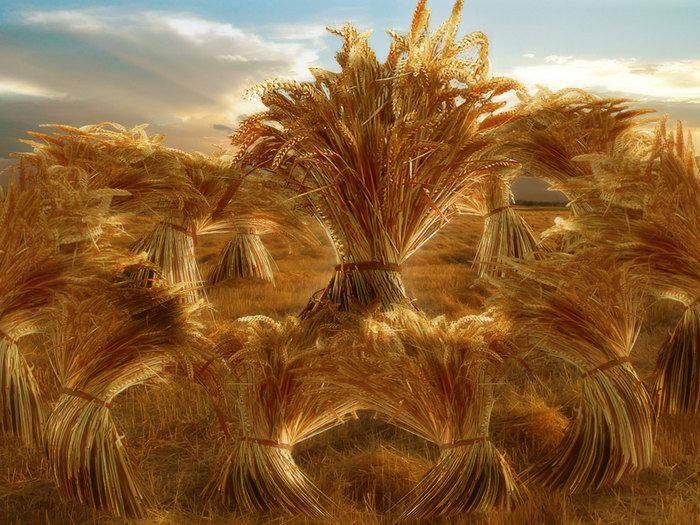
Perhaps it was just a case of naiveté. Maybe Joseph didn’t really know what he was doing and was sharing his dream with his brothers in the hopes that they might help him decipher its meaning. But that seems unlikely. As will become clear as the story unfolds, Joseph was far from an empty-headed dreamer. He was a very smart and resourceful young man. He had to be aware of his brothers’ hatred for him. And, in seeing their response to his first dream, he would have known that their jealousy of him and hatred for him was at an all-time high. But that didn’t stop him from sharing the content of a second dream.

Joseph had another dream, and again he told his brothers about it. “Listen, I have had another dream,” he said. “The sun, moon, and eleven stars bowed low before me!” – Genesis 37:9 NLT

Just reading that sentence makes me cringe in disbelief. What would possess Joseph to share this dream with his brothers? I think he knew exactly what it meant and he was eager to share it with his “eleven” brothers. And, not only that, he wanted his father and mother to hear the content of his dream as well.

It’s important to note that these dreams were not like those his father had experienced. There were no sightings of angelic beings or words of instruction from God. It would have been obvious to Moses and his original audience that these dreams were divinely ordained. But there is no indication that Jacob or his sons received them this way. In fact, Jacob was very familiar with dreams as mediums through which God spoke, but he did not view Joseph’s dream in that light.

…his father scolded him. “What kind of dream is that?” he asked. “Will your mother and I and your brothers actually come and bow to the ground before you?” – Genesis 37:10 NLT

But we know the rest of the story. Joseph was being given a glimpse into the future fate of Israel. None of them understood the ramifications of Joseph’s dream, but God was clearly conveying His plan to elevate Joseph to a place of prominence and primacy. This favorite son of Jacob would soon find himself basking in the favor of Pharaoh. What none of the characters in the story understood was that they were about to take an unexpected detour. Their journey to possess the promised land was about to take them to a place they never could have imagined. And it was all part of God’s preordained and perfectly formulated plan.

English Standard Version (ESV) The Holy Bible, English Standard Version. ESV® Permanent Text Edition® (2016). Copyright © 2001 by Crossway Bibles, a publishing ministry of Good News Publishers.

New Living Translation (NLT) Holy Bible, New Living Translation, copyright © 1996, 2004, 2015 by Tyndale House Foundation. Used by permission of Tyndale House Publishers Inc., Carol Stream, Illinois 60188. All rights reserved.

New English Translation (NET)NET Bible® copyright ©1996-2017 by Biblical Studies Press, L.L.C. http://netbible.com All rights reserved.
The Weight of Waiting

20 These are the sons of Seir the Horite, the inhabitants of the land: Lotan, Shobal, Zibeon, Anah, 21 Dishon, Ezer, and Dishan; these are the chiefs of the Horites, the sons of Seir in the land of Edom. 22 The sons of Lotan were Hori and Hemam; and Lotan’s sister was Timna. 23 These are the sons of Shobal: Alvan, Manahath, Ebal, Shepho, and Onam. 24 These are the sons of Zibeon: Aiah and Anah; he is the Anah who found the hot springs in the wilderness, as he pastured the donkeys of Zibeon his father. 25 These are the children of Anah: Dishon and Oholibamah the daughter of Anah. 26 These are the sons of Dishon: Hemdan, Eshban, Ithran, and Cheran. 27 These are the sons of Ezer: Bilhan, Zaavan, and Akan. 28 These are the sons of Dishan: Uz and Aran. 29 These are the chiefs of the Horites: the chiefs Lotan, Shobal, Zibeon, Anah, 30 Dishon, Ezer, and Dishan; these are the chiefs of the Horites, chief by chief in the land of Seir.

31 These are the kings who reigned in the land of Edom, before any king reigned over the Israelites. 32 Bela the son of Beor reigned in Edom, the name of his city being Dinhabah. 33 Bela died, and Jobab the son of Zerah of Bozrah reigned in his place. 34 Jobab died, and Husham of the land of the Temanites reigned in his place. 35 Husham died, and Hadad the son of Bedad, who defeated Midian in the country of Moab, reigned in his place, the name of his city being Avith. 36 Hadad died, and Samlah of Masrekah reigned in his place. 37 Samlah died, and Shaul of Rehoboth on the Euphrates reigned in his place. 38 Shaul died, and Baal-hanan the son of Achbor reigned in his place. 39 Baal-hanan the son of Achbor died, and Hadar reigned in his place, the name of his city being Pau; his wife’s name was Mehetabel, the daughter of Matred, daughter of Mezahab.

40 These are the names of the chiefs of Esau, according to their clans and their dwelling places, by their names: the chiefs Timna, Alvah, Jetheth, 41 Oholibamah, Elah, Pinon, 42 Kenaz, Teman, Mibzar, 43 Magdiel, and Iram; these are the chiefs of Edom (that is, Esau, the father of Edom), according to their dwelling places in the land of their possession. – Genesis 36:20-43 ESV

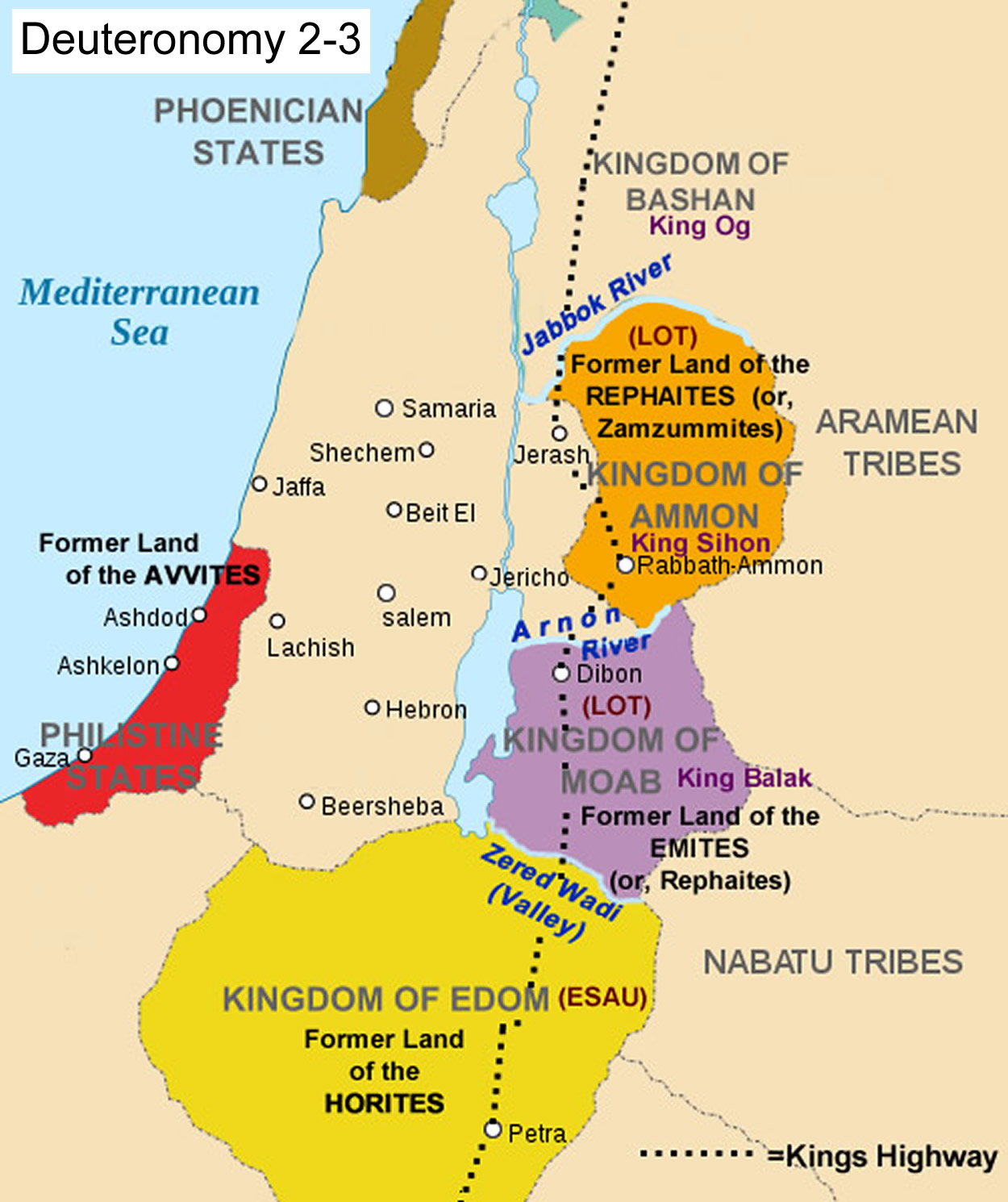
Moses makes it clear that the land in which Esau and his descendants eventually settled was far from empty. It had been occupied by another group of people known as the Horites. The first mention we have of them is found in Genesis 14, where they are listed among a group of nations that were defeated by an alliance of four kings. This confederation of kings attacked and defeated the people living in the area around Mount Seir,  in the far south of Canaan. They ended up conquering the cities of Sodom and Gomorrah, taking captive all the citizens, including the nephew of Abraham.

When Esau separated from his brother, Jacob, he ended up settling in the very same region as the Horites and, eventually, his sons and their children would supplant the Horites as the official inhabitants of the land. Hundreds of years later, when Moses prepared to lead the people of Israel into the promised land, he would receive instruction from God regarding this southern region and its inhabitants.

“You are about to pass through the territory of your brothers, the people of Esau, who live in Seir; and they will be afraid of you. So be very careful. Do not contend with them, for I will not give you any of their land, no, not so much as for the sole of the foot to tread on, because I have given Mount Seir to Esau as a possession.” – Deuteronomy 2:4-5 ESV

Moses records that Esau and his clan didn’t simply overwhelm the Horites with their superior numbers and strength, but that God orchestrated the transference of the land from one group to the other.

“…he [God] destroyed the Horites before them and they dispossessed them and settled in their place even to this day.” – Deuteronomy 2:22 ESV

The leader of the Horites was a man named Seir, and a large mountain in the region aptly bore his name. The Horites proved to be quite prolific, as the genealogy found in verses 20-43 reflects. But the chiefs of Seir and the chiefs of Esau would end up engaged in an ongoing conflict over control of the land around Mount Seir.

These are the sons of Dishan: Uz and Aran. These are the chiefs of the Horites: the chiefs Lotan, Shobal, Zibeon, Anah, Dishon, Ezer, and Dishan; these are the chiefs of the Horites, chief by chief in the land of Seir. – Genesis 36:28-30 ESV

These are the names of the chiefs of Esau, according to their clans and their dwelling places, by their names: the chiefs Timna, Alvah, Jetheth, Oholibamah, Elah, Pinon, Kenaz, Teman, Mibzar, Magdiel, and Iram; these are the chiefs of Edom (that is, Esau, the father of Edom), according to their dwelling places in the land of their possession. – Genesis 436:40-43 ESV

These two groups of “chiefs” or leaders of their clans would have gone head-to-head in battle with one another over control of the land. But what is interesting is that Moses provides a list of the kings who ruled over the land of Edom, and not one chief among the Horites or Edomites can be found on that list. It contains the name of eight Edomite kings, but none appear to be sons of Esau or Seir. In fact, one is referred to as a Temanite, another hales from Rehoboth, and still another comes from a place called Masrekah.  This sequential order of kings seems to reveal that there was a constant shift of power among the people groups that occupied this region. And Moses points out that the land of Edom had many kings long before the nation of Israel had their first monarch. Part of the reason for this disparity is that the people of Israel would eventually make their way to Egypt where they would remain for 400 years. During that time, the land of Edom would go through a long list of kings, chiefs, and leaders, while the Israelites were biding their time in Egypt. But the land of promise, like Edom, would not go unoccupied during the Israelites’ long absence. Canaan would be filled with nations, and overrun by the sins of idolatry and immorality.

And by the time Moses led the people of Israel back into the land, the  descendants of Esau (the Edomites) would be well established around Mount Seir. In keeping with God’s directive, the Israelites would view Edom as off-limits, restricting themselves to the purchase of food and supplies, but avoiding the confiscation of any Edomite territory because it had been given to them by God. And Moses states, “So we went on, away from our brothers, the people of Esau, who live in Seir, away from the Arabah road from Elath and Ezion-geber” (Deuteronomy 2:8 ESV).

All of this sets up the next section of Moses’ historical record of the people of Israel. While Esau and his descendants were busy making themselves at home in Edom, Israel and his descendants would be continuing the nomadic lifestyle established by Abraham and Isaac. Moses opens up chapter seven with the statement: “Jacob lived in the land of his father’s sojournings, in the land of Canaan” (Genesis 37:1 ESV).

The Hebrew word that Moses used is מָגוּר (māḡûr), which can also be translated “to be a stranger.” That is why the New Living Translation translates verse 1 this way: “So Jacob settled again in the land of Canaan, where his father had lived as a foreigner.”

Isaac, like his father before him, lived in the land of Canaan, more like an alien and a stranger than as a legal citizen. Neither Abraham or Isaac lived in a city or built a permanent dwelling place. They were sojourners, moving from one place to another, and never staying long enough to consider anywhere in the land of Canaan as their true home. And it is the author of the book of Hebrews who explains the reason behind this vagabond existence that was passed down from father to sin to grandson.

It was by faith that Abraham obeyed when God called him to leave home and go to another land that God would give him as his inheritance. He went without knowing where he was going. And even when he reached the land God promised him, he lived there by faith—for he was like a foreigner, living in tents. And so did Isaac and Jacob, who inherited the same promise. Abraham was confidently looking forward to a city with eternal foundations, a city designed and built by God. – Hebrews 11:8-10 NLT

And the author of Hebrews indicates that Abraham, Isaac, and Jacob never got to see that city – in their lifetimes.

All these people died still believing what God had promised them. They did not receive what was promised, but they saw it all from a distance and welcomed it. They agreed that they were foreigners and nomads here on earth. – Hebrews 11:13 NLT

The Edomites had kings and kingdoms. Even the Horites had a long list of chiefs and enjoyed that benefit of living in cities built by human hands. But the people of God would have to wait a long time before they experienced the fulfillment of God’s promise. God had promised to give them the land of Canaan as their inheritance, but neither Abraham, Isaac, or Jacob would make ever find their permanent home in the land of promise because God had something better in store.

Obviously people who say such things are looking forward to a country they can call their own. If they had longed for the country they came from, they could have gone back. But they were looking for a better place, a heavenly homeland. That is why God is not ashamed to be called their God, for he has prepared a city for them. – Hebrews 11:14-15 NLT

The wait would be difficult but well worth it.

English Standard Version (ESV) The Holy Bible, English Standard Version. ESV® Permanent Text Edition® (2016). Copyright © 2001 by Crossway Bibles, a publishing ministry of Good News Publishers.

New Living Translation (NLT) Holy Bible, New Living Translation, copyright © 1996, 2004, 2015 by Tyndale House Foundation. Used by permission of Tyndale House Publishers Inc., Carol Stream, Illinois 60188. All rights reserved.

New English Translation (NET)NET Bible® copyright ©1996-2017 by Biblical Studies Press, L.L.C. http://netbible.com All rights reserved.

Blessed But Not Chosen

1 These are the generations of Esau (that is, Edom). 2 Esau took his wives from the Canaanites: Adah the daughter of Elon the Hittite, Oholibamah the daughter of Anah the daughter of Zibeon the Hivite, 3 and Basemath, Ishmael’s daughter, the sister of Nebaioth. 4 And Adah bore to Esau, Eliphaz; Basemath bore Reuel; 5 and Oholibamah bore Jeush, Jalam, and Korah. These are the sons of Esau who were born to him in the land of Canaan.

6 Then Esau took his wives, his sons, his daughters, and all the members of his household, his livestock, all his beasts, and all his property that he had acquired in the land of Canaan. He went into a land away from his brother Jacob. 7 For their possessions were too great for them to dwell together. The land of their sojournings could not support them because of their livestock. 8 So Esau settled in the hill country of Seir. (Esau is Edom.)

9 These are the generations of Esau the father of the Edomites in the hill country of Seir. 10 These are the names of Esau’s sons: Eliphaz the son of Adah the wife of Esau, Reuel the son of Basemath the wife of Esau. 11 The sons of Eliphaz were Teman, Omar, Zepho, Gatam, and Kenaz. 12 (Timna was a concubine of Eliphaz, Esau’s son; she bore Amalek to Eliphaz.) These are the sons of Adah, Esau’s wife. 13 These are the sons of Reuel: Nahath, Zerah, Shammah, and Mizzah. These are the sons of Basemath, Esau’s wife. 14 These are the sons of Oholibamah the daughter of Anah the daughter of Zibeon, Esau’s wife: she bore to Esau Jeush, Jalam, and Korah.

15 These are the chiefs of the sons of Esau. The sons of Eliphaz the firstborn of Esau: the chiefs Teman, Omar, Zepho, Kenaz, 16 Korah, Gatam, and Amalek; these are the chiefs of Eliphaz in the land of Edom; these are the sons of Adah. 17 These are the sons of Reuel, Esau’s son: the chiefs Nahath, Zerah, Shammah, and Mizzah; these are the chiefs of Reuel in the land of Edom; these are the sons of Basemath, Esau’s wife. 18 These are the sons of Oholibamah, Esau’s wife: the chiefs Jeush, Jalam, and Korah; these are the chiefs born of Oholibamah the daughter of Anah, Esau’s wife. 19 These are the sons of Esau (that is, Edom), and these are their chiefs. – Genesis 36:1-19 ESV

Isaac has died, leaving his son, Jacob (Israel) as the heir of his estate and the recipient of God’s covenant promises and all the blessings it entails. And as Moses prepares to record Israel’s history as the newly designated leader of the covenant community, he provides a brief recap of Esau’s life and lineage. As the firstborn son of Isaac, Esau had been the rightful heir to the birthright and the blessing, but Jacob had managed to manipulate and deceive his brother so that he took possession of both. While time had healed the rift between these two brothers, they would find themselves going their separate ways. This chapter provides insight into Esau’s fate and a brief description of his family tree.

These first 19 verses seem painfully redundant because they repeat the names of Esau’s wives and sons three separate times. The first five verses list the three wives of Esau and the five sons they bore to him. Then, in verses 6-8, Moses list the wives and sons again, but adds the names of the ten grandsons born to Esau.

It’s important to note that Esau was a son of Isaac and, therefore, still a legitimate conduit through whom God would fulfill His promise to Isaac of many offspring.

“I will multiply your offspring as the stars of heaven and will give to your offspring all these lands. And in your offspring all the nations of the earth shall be blessed…” – Genesis 26:4 ESV

The different between Esau’s descendants and those of his brother was that his sons and grandsons would not be considered part of the chosen nation. When Jacob had managed to deceive Isaac and steal his brother’s blessing, it had left Esau with nothing. When he begged Isaac to provide him with a blessing of his own, all he got was a rather weak consolation prize.

“You will live away from the richness of the earth,
    and away from the dew of the heaven above.
You will live by your sword,
    and you will serve your brother.
But when you decide to break free,
    you will shake his yoke from your neck.” – Genesis 27:39-40 NLT

Not exactly the winning number to the lottery. But God would still bless Esau by providing him with five sons and 10 grandsons and, as the text makes clear, most of these men would grow up to be “the chiefs of the sons of Esau” (Genesis 36:15 ESV). They would become powerful leaders in their own right and from them would come many nations, including the Kenizzites, Edomites, and Amalekites.

While Jacob and Esau had mended their relationship, their descendants would never see eye to eye. In fact, a growing hostility would develop between the two groups, as they eventually found themselves fighting over the land of Canaan. It didn’t help that the Edomites, the descendants of Esau, became pagans, worshiping the false gods of the other nations inhabiting the land of promise. Eventually, the prophets Jeremiah and Obadiah issued prophetic pronouncements that warned of God’s judgment against them.

This message was given concerning Edom. This is what the Lord of Heaven’s Armies says:

“Is there no wisdom in Teman?
    Is no one left to give wise counsel?
Turn and flee!
    Hide in deep caves, you people of Dedan!
For when I bring disaster on Edom,
    I will punish you, too!
Those who harvest grapes
    always leave a few for the poor.
If thieves came at night,
    they would not take everything.
But I will strip bare the land of Edom,
    and there will be no place left to hide.
Its children, its brothers, and its neighbors
    will all be destroyed,
    and Edom itself will be no more.” – Jeremiah 49:7-10 NLT

The Lord says to Edom,
“I will cut you down to size among the nations;
    you will be greatly despised.
You have been deceived by your own pride
    because you live in a rock fortress
    and make your home high in the mountains.
‘Who can ever reach us way up here?’
    you ask boastfully.
But even if you soar as high as eagles
    and build your nest among the stars,
I will bring you crashing down,”
    says the Lord.” – Obadiah 1:2-4 NLT

God would bless Esau, resulting in the formation of a variety of nations and people groups. But they would fail to honor God and worship Him alone. Instead, they would seek and serve the false gods of Canaan, resulting in the pouring out of God’s divine wrath.

English Standard Version (ESV) The Holy Bible, English Standard Version. ESV® Permanent Text Edition® (2016). Copyright © 2001 by Crossway Bibles, a publishing ministry of Good News Publishers.

New Living Translation (NLT) Holy Bible, New Living Translation, copyright © 1996, 2004, 2015 by Tyndale House Foundation. Used by permission of Tyndale House Publishers Inc., Carol Stream, Illinois 60188. All rights reserved.

New English Translation (NET)NET Bible® copyright ©1996-2017 by Biblical Studies Press, L.L.C. http://netbible.com All rights reserved.
Two Deaths, A Birth, and a New Beginning

16 Then they journeyed from Bethel. When they were still some distance from Ephrath, Rachel went into labor, and she had hard labor. 17 And when her labor was at its hardest, the midwife said to her, “Do not fear, for you have another son.” 18 And as her soul was departing (for she was dying), she called his name Ben-oni; but his father called him Benjamin. 19 So Rachel died, and she was buried on the way to Ephrath (that is, Bethlehem), 20 and Jacob set up a pillar over her tomb. It is the pillar of Rachel’s tomb, which is there to this day. 21 Israel journeyed on and pitched his tent beyond the tower of Eder.

22 While Israel lived in that land, Reuben went and lay with Bilhah his father’s concubine. And Israel heard of it.

Now the sons of Jacob were twelve. 23 The sons of Leah: Reuben (Jacob’s firstborn), Simeon, Levi, Judah, Issachar, and Zebulun. 24 The sons of Rachel: Joseph and Benjamin. 25 The sons of Bilhah, Rachel’s servant: Dan and Naphtali. 26 The sons of Zilpah, Leah’s servant: Gad and Asher. These were the sons of Jacob who were born to him in Paddan-aram.

27 And Jacob came to his father Isaac at Mamre, or Kiriath-arba (that is, Hebron), where Abraham and Isaac had sojourned. 28 Now the days of Isaac were 180 years. 29 And Isaac breathed his last, and he died and was gathered to his people, old and full of days. And his sons Esau and Jacob buried him. – Genesis 35:16-29 ESV

After worshiping God at Bethel, Jacob, now going by his new name, Israel, made his way to the town of Ephrah, better known as Bethlehem. But along the way, his wife, Rachel, went into labor, and gave birth to her second child. But her labor proved to be difficult and she failed to survive the delivery. Just before her death, Rachel was able to verbalize her choice for the baby’s name: Ben-oni, which means “son of my sorrow.” But Israel, while grieved by his wife’s unexpected death, chose to see the positive side of this momentous occasion, and named his new son, Benjamin, which means, “Son of my good fortune.” From his perspective, the loss of his wife was balanced by the birth of his son. His memory of Rachel would always be associated with Benjamin, the son of his good fortune. In a sense, Israel was glorifying the fact that God had brought life from death.

It should not be overlooked that, at one time, the formerly barren Rachel had demanded that her husband do something about her condition. She desperately wanted to bear a child and, somehow, held him responsible for her condition.

When Rachel saw that she wasn’t having any children for Jacob, she became jealous of her sister. She pleaded with Jacob, “Give me children, or I’ll die!” – Genesis 30:1 NLT

While Jacob was incapable of doing anything about his wife’s dilemma, God graciously stepped in.

Then God remembered Rachel’s plight and answered her prayers by enabling her to have children. She became pregnant and gave birth to a son. “God has removed my disgrace,” she said. And she named him Joseph, for she said, “May the Lord add yet another son to my family.” – Genesis 30:22-24 NLT

And it’s interesting to note that God also answered her prayer, providing her with “another son” as per her request. But while she had believed that her ongoing barrenness would be her ultimate undoing, it was actually the bearing of children that would result in her death. In a way, her barrenness had been a divine form of protection. She had survived her first delivery, but the second one proved to be deadly.

After having provided Rachel with a proper burial, Israel continued his journey to Bethlehem, where he settled for a time. And somewhere near Bethlehem, “the house of bread,” Israel would experience a devastating breakdown in family etiquette. Reuben, his firstborn son born to him by Leah, committed an act immorality with Bilhah, his father’s concubine.

Moses provides no explanation for Reuben’s actions. But, besides the obvious motivation of sexual satisfaction, there is probably more going on here than meets the eye. By committing incest with Bilhah, Reuben may have hoped to diminish her status in Israel’s eyes. With Rachel dead, Reuben’s mother, Leah, would have assumed the role of favored wife. And his illicit affair with Bilhah would assured that she was seen as damaged goods in his father’s eyes. But there is also a good chance that his actions were meant to declare his rightful role as the firstborn son and, therefore, heir to the role of leadership over the clan.

This kind of thing would not have been rare or unexpected. In fact, we see one of Israel’s descendants playing out that very scenario in the book of 2 Samuel. Absalom, the eldest son of King David, aspired to his father’s throne. So, Ahithophel, a former advisor to King David, gave him some advice that he guaranteed would help make his dream come true.

“Go and sleep with your father’s concubines, for he has left them here to look after the palace. Then all Israel will know that you have insulted your father beyond hope of reconciliation, and they will throw their support to you.” So they set up a tent on the palace roof where everyone could see it, and Absalom went in and had sex with his father’s concubines. – 2 Samuel 16:21-22 NLT

Reuben’s actions, while unexplained, were immoral and ungodly. And they mirror the behavior of Shechem, who allowed his lust to get the best of him and ended up raping Dinah, the only daughter of Israel. He eventually died for his behavior but there is no indication that Reuben faced any repercussions for his crime. In keeping with the inaction he displayed at Shechem’s defilement of Dinah, Israel did nothing to avenge his Bilhah’s honor. It appears that Reuben went unchallenged and unpunished for his actions, and his name appears alongside all the other brothers in the brief genealogy found in verses 22-26.

These are the names of the twelve sons of Jacob: The sons of Leah were Reuben (Jacob’s oldest son), Simeon, Levi, Judah, Issachar, and Zebulun. The sons of Rachel were Joseph and Benjamin. The sons of Bilhah, Rachel’s servant, were Dan and Naphtali. The sons of Zilpah, Leah’s servant, were Gad and Asher. These are the names of the sons who were born to Jacob at Paddan-aram. – Genesis 35:22-26 NLT

But there is more to the story than Moses relates. It is not until he penned the book of 1 Chronicles that Moses divulged the consequences for Reuben’s actions, and they were severe. Like Esau, Reuben threw away his birthright in a moment of passion.

The oldest son of Israel was Reuben. But since he dishonored his father by sleeping with one of his father’s concubines, his birthright was given to the sons of his brother Joseph. For this reason, Reuben is not listed in the genealogical records as the firstborn son. The descendants of Judah became the most powerful tribe and provided a ruler for the nation, but the birthright belonged to Joseph. – 1 Chronicles 5:1-2 NLT

His little fling cost him dearly. And if he had been hoping to prove his superiority over his father by forcibly raping his concubine, he had made an epic error in judgment. A mistake he would regret for the rest of his life.

But, while Reuben would pay dearly for his lack of judgment, he would hold no grudge against Joseph, his younger brother who inherited his birthright. In fact, as the story unfolds, it will be Reuben who attempts to protect the life of Joseph when his brothers plot to murder him.

But when Reuben heard of their scheme, he came to Joseph’s rescue. “Let’s not kill him,” he said. “Why should we shed any blood? Let’s just throw him into this empty cistern here in the wilderness. Then he’ll die without our laying a hand on him.” Reuben was secretly planning to rescue Joseph and return him to his father. – Genesis 37:21-22 NLT

But that’s another story for another day. In this chapter, the defilement of Bilhah is followed by the death of Isaac. At some point, Israel made the long-delayed trip back to Hebron, to visit his aging father. And he made it just in time because, having lived 180 years, Isaac was knocking on death’s door.

With the death of Isaac, the entire focus of the narrative turns to Israel. the son of Isaac formerly known as Jacob. God was bringing the fulfillment of His promise full circle. It had passed from Abraham to Isaac and would now belong to Israel (Jacob). And as Isaac’s two sons buried his body, the stage was set for the next phase of God’s grand plan for the further fulfillment of His covenant promise to Abraham.

English Standard Version (ESV) The Holy Bible, English Standard Version. ESV® Permanent Text Edition® (2016). Copyright © 2001 by Crossway Bibles, a publishing ministry of Good News Publishers.

New Living Translation (NLT) Holy Bible, New Living Translation, copyright © 1996, 2004, 2015 by Tyndale House Foundation. Used by permission of Tyndale House Publishers Inc., Carol Stream, Illinois 60188. All rights reserved.

New English Translation (NET)NET Bible® copyright ©1996-2017 by Biblical Studies Press, L.L.C. http://netbible.com All rights reserved.

What’s In A Name?

1 God said to Jacob, “Arise, go up to Bethel and dwell there. Make an altar there to the God who appeared to you when you fled from your brother Esau.” 2 So Jacob said to his household and to all who were with him, “Put away the foreign gods that are among you and purify yourselves and change your garments. 3 Then let us arise and go up to Bethel, so that I may make there an altar to the God who answers me in the day of my distress and has been with me wherever I have gone.” 4 So they gave to Jacob all the foreign gods that they had, and the rings that were in their ears. Jacob hid them under the terebinth tree that was near Shechem.

5 And as they journeyed, a terror from God fell upon the cities that were around them, so that they did not pursue the sons of Jacob. 6 And Jacob came to Luz (that is, Bethel), which is in the land of Canaan, he and all the people who were with him, 7 and there he built an altar and called the place El-bethel, because there God had revealed himself to him when he fled from his brother. 8 And Deborah, Rebekah’s nurse, died, and she was buried under an oak below Bethel. So he called its name Allon-bacuth.

9 God appeared to Jacob again, when he came from Paddan-aram, and blessed him. 10 And God said to him, “Your name is Jacob; no longer shall your name be called Jacob, but Israel shall be your name.” So he called his name Israel. 11 And God said to him, “I am God Almighty: be fruitful and multiply. A nation and a company of nations shall come from you, and kings shall come from your own body. 12 The land that I gave to Abraham and Isaac I will give to you, and I will give the land to your offspring after you.” 13 Then God went up from him in the place where he had spoken with him. 14 And Jacob set up a pillar in the place where he had spoken with him, a pillar of stone. He poured out a drink offering on it and poured oil on it. 15 So Jacob called the name of the place where God had spoken with him Bethel. – Genesis 35:1-15 ESV

Ten years earlier, when Jacob had been fleeing from Canaan to escape the anger of his older brother, he had stopped at Bethel. While there, he had been received a vision from God in which he was given a divine promise that he would be the inheritor of the Abrahamic Covenant. The promise given to his grandfather of land, a seed, and a blessing would be his.

“I am the Lord, the God of Abraham your father and the God of Isaac. The land on which you lie I will give to you and to your offspring. Your offspring shall be like the dust of the earth, and you shall spread abroad to the west and to the east and to the north and to the south, and in you and your offspring shall all the families of the earth be blessed. Behold, I am with you and will keep you wherever you go, and will bring you back to this land. For I will not leave you until I have done what I have promised you.” – Genesis 28:13-15 NLT

Despite all that Jacob had done to deceive his brother, God had assured Jacob of His continued provision and protection. And on that occasion, Jacob had made a vow, stating that, if God kept His end of the bargain and returned him safely to Canaan, he would make his way back to Bethel and worship the one true God.

“If God will be with me and will keep me in this way that I go, and will give me bread to eat and clothing to wear, so that I come again to my father’s house in peace, then the Lord shall be my God, and this stone, which I have set up for a pillar, shall be God’s house. And of all that you give me I will give a full tenth to you.”– Genesis 28:20-22 ESV

But ten years had passed since Jacob had left Paddan-aram. For an entire decade, he had failed to return to Bethel (the house of God) and worship. Instead, he had chosen to settle outside the city of Shechem, and that decision had resulted in the rape of his daughter, Dinah, by the son of the king of Shechem. And while Jacob had been prepared to make a peace alliance with Hamor and his clan, permitting the intermarriage of their people, his sons had chosen a different path. To avenge the dishonoring of their sister, they slaughtered all the men of Shechem and enslaved all the women and children of the city. And just as Jacob had feared, the rumors of this gruesome act spread to the surrounding nations, creating a permanent stain on Jacob’s reputation.

“You have ruined me! You’ve made me stink among all the people of this land—among all the Canaanites and Perizzites. We are so few that they will join forces and crush us. I will be ruined, and my entire household will be wiped out!” – Genesis 34:30 ESV

But Jacob’s assessment of the situation was not quite right. Rather than painting a target on their backs, the actions of his sons had struck fear into the Canaanites.

…a terror from God fell upon the cities that were around them, so that they did not pursue the sons of Jacob. – Genesis 35:5 ESV

God used the slaughter of the Shechemites to instill a fear of Jacob and his people. The surrounding nations refused to take up arms against the much small and relatively defenseless Israelites, leaving Jacob free to travel from Shechem to Bethel unmolested.

But sadly, Jacob’s return to Bethel had not been his idea. His first response after the debacle at Shechem had not been to seek God but to escape the scene of the crime. But Moses indicates that received divine directions, ordering him to “Get ready and move to Bethel and settle there. Build an altar there to the God who appeared to you when you fled from your brother, Esau” (Genesis 35:1 NLT).

What Jacob did next is quite revealing. In preparation for their return to Bethel, he commanded his people to purify themselves, and this was to include the removal of all their pagan idols. Evidently, the household idols that Rachel had stolen from her father were not the only ones in the possession of Jacob’s people. And it appears that Jacob had tolerated their presence for ten years. Perhaps he had turned a blind eye to these pagan gods in the hopes that they might provide an additional source of security and blessing. But now that he was returning to Bethel, he knew it was time to clean house.

“We are now going to Bethel, where I will build an altar to the God who answered my prayers when I was in distress. He has been with me wherever I have gone.” – Genesis 35:3 NLT

God had been faithful. Now, it was Jacob’s turn. So, with all his family and possessions in tow, Jacob slowly made his way from Shechem to Bethel, a distance of about 30 miles. Upon his arrival, Jacob obeyed God’s command and constructed an altar. Then he “named the place El-bethel (which means ‘God of Bethel’), because God had appeared to him there when he was fleeing from his brother, Esau” (Genesis 35:7 NLT).

It is important to note that, prior to building the altar and worshiping Yahweh, Jacob had taken the effort to purge his household of false gods and to purify themselves from the bloodguilt incurred by the slaughter of the Shechemites. It could be that God provided these instructions to Jacob so that the Israelites would not enter into His presence defiled and guilty of idolatry. There was a cleansing and a purging necessary before they could expect to enter into the presence of God Almighty.

On an interesting side note, Moses relates the death of Deborah, the handmaid of Jacob’s mother, Rebekah. She had accompanied Rebekah from Haran in Mesopotamia when Abraham’s servant had come seeking a wife for Isaac. Moses doesn’t reveal how she came to live with Jacob, but it could be that she joined him upon his return to Canaan and after the death of Rebekah. But this faithful servant of Jacob’s family died and Jacob honored her by burying her beneath an oak tree in a valley near Bethel.

For the second time since returning to the land of Canaan, Jacob received a divine message regarding his new identity. Upon his arrival back in the land, Jacob had camped beside the Jabbok River, where he had a physical and life-changing encounter with God. He literally wrestled with the Almighty, eventually receiving a debilitating injury and a blessing for his efforts. And God changed Jacob’s name in the process.

“Your name shall no longer be called Jacob, but Israel, for you have striven with God and with men, and have prevailed.” – Genesis 32:28 ESV

Now, as he stood before the altar in Bethel, Jacob received a second reminder that his name had been irreversibly changed by God.

God blessed him, saying, “Your name is Jacob, but you will not be called Jacob any longer. From now on your name will be Israel.” So God renamed him Israel. – Genesis 35:9-10 NLT

It would appear that Jacob had failed to use his new God-given name, choosing instead to retain his old one. And, in a sense, Jacob had retained many of the habits associated with his old name. To a great extent, he remained a trickster and a deceiver. But by reminding Jacob of his new name, God was reinforcing His intention to not only rename His servant but to renew and remake him. God had great things in store for Israel.

Then God said, “I am El-Shaddai—‘God Almighty.’ Be fruitful and multiply. You will become a great nation, even many nations. Kings will be among your descendants! And I will give you the land I once gave to Abraham and Isaac. Yes, I will give it to you and your descendants after you.” – Genesis 35:11-12 NLT

The Abrahamic Covenant was officially passed down to the newly named Israel. As the grandson of Abraham, Israel was the rightful heir to the promise of a land, a seed, and a blessing. God was going to fulfill His covenant promise through Israel and his descendants. And it is essential to remember that one of those descendants would be Joseph, the only son born to Israel through Rachel. He will come to play a major role in the future of God’s chosen people. The other descendant of Israel who will factor into the fate of God’s people will be Judah, from whom the Messiah will come.

The stage is set and the future of Israel is secure. God has been working behind the scenes to prepare the way for the unfolding of His divine redemptive plan for mankind. And while the newly named Israel remains oblivious to God’s plans, he and his family will play a vital role in its fulfillment.

English Standard Version (ESV) The Holy Bible, English Standard Version. ESV® Permanent Text Edition® (2016). Copyright © 2001 by Crossway Bibles, a publishing ministry of Good News Publishers.

New Living Translation (NLT) Holy Bible, New Living Translation, copyright © 1996, 2004, 2015 by Tyndale House Foundation. Used by permission of Tyndale House Publishers Inc., Carol Stream, Illinois 60188. All rights reserved.

New English Translation (NET)NET Bible® copyright ©1996-2017 by Biblical Studies Press, L.L.C. http://netbible.com All rights reserved.

Revenge, Greed, and Deceit, Oh My!

13 The sons of Jacob answered Shechem and his father Hamor deceitfully, because he had defiled their sister Dinah. 14 They said to them, “We cannot do this thing, to give our sister to one who is uncircumcised, for that would be a disgrace to us. 15 Only on this condition will we agree with you—that you will become as we are by every male among you being circumcised. 16 Then we will give our daughters to you, and we will take your daughters to ourselves, and we will dwell with you and become one people. 17 But if you will not listen to us and be circumcised, then we will take our daughter, and we will be gone.”

18 Their words pleased Hamor and Hamor’s son Shechem. 19 And the young man did not delay to do the thing, because he delighted in Jacob’s daughter. Now he was the most honored of all his father’s house. 20 So Hamor and his son Shechem came to the gate of their city and spoke to the men of their city, saying, 21 “These men are at peace with us; let them dwell in the land and trade in it, for behold, the land is large enough for them. Let us take their daughters as wives, and let us give them our daughters. 22 Only on this condition will the men agree to dwell with us to become one people—when every male among us is circumcised as they are circumcised. 23 Will not their livestock, their property and all their beasts be ours? Only let us agree with them, and they will dwell with us.” 24 And all who went out of the gate of his city listened to Hamor and his son Shechem, and every male was circumcised, all who went out of the gate of his city.

25 On the third day, when they were sore, two of the sons of Jacob, Simeon and Levi, Dinah’s brothers, took their swords and came against the city while it felt secure and killed all the males. 26 They killed Hamor and his son Shechem with the sword and took Dinah out of Shechem’s house and went away. 27 The sons of Jacob came upon the slain and plundered the city, because they had defiled their sister. 28 They took their flocks and their herds, their donkeys, and whatever was in the city and in the field. 29 All their wealth, all their little ones and their wives, all that was in the houses, they captured and plundered.

30 Then Jacob said to Simeon and Levi, “You have brought trouble on me by making me stink to the inhabitants of the land, the Canaanites and the Perizzites. My numbers are few, and if they gather themselves against me and attack me, I shall be destroyed, both I and my household.” 31 But they said, “Should he treat our sister like a prostitute?” – Genesis 34:13-31 ESV

One of the things that stands out in this whole affair is the silence of Jacob. As head of his clan, he had a responsibility to defend his daughter’s honor and to manage his sons’ behavior. But he appears to have said little and done nothing. And his silence regarding Dinah’s rape was unacceptable to her two brothers, Simeon and Levi. They were furious with Shechem for his dishonoring of their sister. And they were appalled that Jacob would consider signing a treaty that would sanction the marriage of their sister to her abuser and promote further unions between the two clans. So, they came up with a plan of their own.

As has been evident throughout the story of Jacob’s life, deceit and trickery come into play once again. The sons of Jacob have inherited their father’s deceptive ways and are determined to use them for their advantage. They even pull the wool over Jacob’s eyes, tricking him into believing that their efforts are sincere. Yet, Moses uses very precise language when describing their response to Hamor and Shechem.

The sons of Jacob answered Shechem and his father Hamor deceitfully, because he had defiled their sister Dinah. – Genesis 34:13 ESV

The Hebrew word translated as “deceitfully” is מִרְמָה (mirmâ) and it describes the use of guile, falsehood, or craftiness with the intent to deceive. The practice of deceit is repeatedly condemned in the Scriptures. Even David, a descendant of Jacob, wrote:

But you, O God, will cast them down
    into the pit of destruction;
men of blood and treachery (mirmâ)
    shall not live out half their days.
But I will trust in you. – Psalm 55:23 ESV

Even King Solomon, another descendant of Jacob, penned the following assessment of those who practice deceit.

Whoever speaks the truth gives honest evidence,
    but a false witness utters deceit (mirmâ). – Proverbs 12:17 ESV

Notice that David links treachery or deceit with bloodshed, and that is exactly what takes place in this story. The lies of Jacob’s sons were intentional and, ultimately, deadly. Their plan all along was to deceive so that they might enact revenge. They had no intention of keeping their agreement with Hamor and Shechem. And nobody seems to see through their wicked scheme, including their own father.

Amazingly, Hamor and Shechem agreed to the rather bizarre conditions that Jacob’s sons added to the treaty. All the men of Shechem would be required to undergo the rite of circumcision in order to seal the agreement. And when Hamor and Shechem shared the terms of the treaty with their constituents, they received a unanimous affirmation.

So all the men in the town council agreed with Hamor and Shechem, and every male in the town was circumcised. – Genesis 34:24 NLT

This was a radical and painful concession on the part of the Shechemites. But it was not unprecedented. The Israelites were not the only nation to practice the rite of circumcision, and it was most commonly performed on male members of the community. There is some evidence that circumcision was practiced as premarital initiation. There is no indication from the text that Jacob’s sons were suggesting the mass conversion of the men of Shechem. They had no intention of welcoming these men into their faith community. It was simply a ploy, a cleverly disguised trick designed to lull the Shechemites into their trap. And it worked.

But it is important to note why the men of Shechem were so willing to endure such a painful procedure and allow themselves to be placed in such a vulnerable condition. Hamor and Shechem had been successful in persuading their countrymen because they had added an important caveat.

“…if we do this, all their livestock and possessions will eventually be ours. Come, let’s agree to their terms and let them settle here among us.” – Genesis 34:23 NLT

Greed was the impetus behind their decision. By agreeing to the terms of the treaty, the men of Shechem believed they would eventually assimilate the clan of Jacob into their own, and gain control over all their possessions. Intermarriage would result in great wealth and circumcision was a small price to pay for such a reward.

But little did these men know that Jacob’s sons had no intention of keeping their word. There would be no marriage between Shechem and Dinah, no blending of the two clans, and no sharing of livestock and possessions. All the Shechemites got out of the agreement was the pain associated with circumcision, followed by the penalty of death. They were slaughtered like helpless, injured animals.

But three days later, when their wounds were still sore, two of Jacob’s sons, Simeon and Levi, who were Dinah’s full brothers, took their swords and entered the town without opposition. Then they slaughtered every male there, including Hamor and his son Shechem. They killed them with their swords, then took Dinah from Shechem’s house and returned to their camp. – Genesis 34:25-26 NLT

Fueled by their anger and vengeance, Simeon and Levi left no man alive. They paid back the Shechemites for the defilement of their sister, delivering a devastating blow that would leave their father shocked and dismayed. And, to make matters worse, their brothers would join in on the action, looting and plundering the defenseless town. They even took the women and children of Shechem as slaves. And having heard the news of what his sons had done, Jacob confronted Simeon and Levi.

“You have ruined me! You’ve made me stink among all the people of this land—among all the Canaanites and Perizzites. We are so few that they will join forces and crush us. I will be ruined, and my entire household will be wiped out!” – Genesis 34:30 NLT

It’s interesting to note that Jacob was worried about his own reputation but never seems to have considered what Dinah’s rape had done to her social standing. Her virginity had been stolen from her, leaving her as little more than a social pariah. Her defilement had left her as “damaged goods” with little hope of ever being married. And Jacob’s willingness to give her to Shechem, the very man who had raped her, seems to indicate that he knew she had no other options. She either married Shechem or remained an unmarried woman the rest of her life.

But Jacob’s failure to deal with the egregious nature of Shechem’s sin left a leadership vacuum in his family, and his sons willingly filled it. And, in response to their father’s reprimand, Simeon and Levi defended their actions by angrily declaring, “But why should we let him treat our sister like a prostitute?” (Genesis 34:31 NLT).

It’s clear from the text that Jacob had already given Dinah to Shechem because the two brothers rescued her from his house. In Jacob’s mind, the deal was done, the treaty had been ratified. But in a single day, his sons had changed all that. And Jacob feared that their actions would end up turning the rest of the nations of Canaan against him. Word would get out and he would become a social pariah in the land of promise. He even feared that their newly acquired reputation for violence would come back to haunt them, resulting in their own eradication. But of all people, Jacob should have known that God had other plans.

He should have never settled outside the city of Shechem and he was wrong for signing an agreement with the citizens of that city. God had set him apart and had promised to make of his descendants a great nation. He and his children were the chosen people of God and the land of Canaan had been promised to them as their inheritance. In a way, Jacob’s sons had done him a favor, albeit by less-than-righteous means. Their spontaneous and anger-fueled response left Jacob with no option but to vacate the region of Shechem. He was no longer safe there. And in the very next chapter, God will direct Jacob to leave Shechem and return to Bethel because, despite Jacob’s fears, his days in Canaan were far from over.

English Standard Version (ESV) The Holy Bible, English Standard Version. ESV® Permanent Text Edition® (2016). Copyright © 2001 by Crossway Bibles, a publishing ministry of Good News Publishers.

New Living Translation (NLT) Holy Bible, New Living Translation, copyright © 1996, 2004, 2015 by Tyndale House Foundation. Used by permission of Tyndale House Publishers Inc., Carol Stream, Illinois 60188. All rights reserved.

New English Translation (NET)NET Bible® copyright ©1996-2017 by Biblical Studies Press, L.L.C. http://netbible.com All rights reserved.

Lust, Love and Lousy Leadership

1 Now Dinah the daughter of Leah, whom she had borne to Jacob, went out to see the women of the land. 2 And when Shechem the son of Hamor the Hivite, the prince of the land, saw her, he seized her and lay with her and humiliated her. 3 And his soul was drawn to Dinah the daughter of Jacob. He loved the young woman and spoke tenderly to her. 4 So Shechem spoke to his father Hamor, saying, “Get me this girl for my wife.”

5 Now Jacob heard that he had defiled his daughter Dinah. But his sons were with his livestock in the field, so Jacob held his peace until they came. 6 And Hamor the father of Shechem went out to Jacob to speak with him. 7 The sons of Jacob had come in from the field as soon as they heard of it, and the men were indignant and very angry, because he had done an outrageous thing in Israel by lying with Jacob’s daughter, for such a thing must not be done.

8 But Hamor spoke with them, saying, “The soul of my son Shechem longs for your daughter. Please give her to him to be his wife. 9 Make marriages with us. Give your daughters to us, and take our daughters for yourselves. 10 You shall dwell with us, and the land shall be open to you. Dwell and trade in it, and get property in it.” 11 Shechem also said to her father and to her brothers, “Let me find favor in your eyes, and whatever you say to me I will give. 12 Ask me for as great a bride-price and gift as you will, and I will give whatever you say to me. Only give me the young woman to be my wife.” – Genesis 34:1-12 ESV

As Jacob settled in the land of Canaan, he chose a place outside the city of Shechem. He purchased land from Hamor, the father of Shechem, for whom the city was named.  Hamor was a Hivite. This made him a descendant of Canaan, who was the son of Ham and the grandson of Noah.

Canaan fathered Sidon his firstborn and Heth, and the Jebusites, the Amorites, the Girgashites, the Hivites, the Arkites, the Sinites,  the Arvadites, the Zemarites, and the Hamathites. – Genesis 10:15-18 ESV

Technically, the Hivites were Canaanites, the descendants of Canaan. And they were all under the curse that Noah pronounced upon their forefather.

“May Canaan be cursed! May he be the lowest of servants to his relatives.” – Genesis 9:25 NLT

Jacob’s decision to settle in close proximity to Shechem and the Hivites would prove to be less than ideal. And the story sounds eerily similar to that of Lot, when he “settled among the cities of the valley and moved his tent as far as Sodom” (Genesis 13:12 ESV). That too proved to be a poor decision.

It seems that Jacob had one daughter named Dinah who was born to his first wife, Leah. This young girl was surrounded by 11 brothers who felt it their duty to protect her. But Dinah was beautiful and she soon caught the attention of the men inside Shechem, particularly the man for whom the city was named. Evidently, Jacob and his family lived close enough to the city to have regular contact with its inhabitants. Shechem, “the son of Hamor the Hivite, the prince of the land” (Genesis 34:2 ESV), became infatuated with the lovely daughter of Jacob. As the son of the man in charge, Shechem was probably used to getting his own way. And as his infatuation with Dinah intensified, it turned to lust, which eventually resulted in rape. He was so determined to possess Dinah that he simply took what was not rightfully his, and violated her.

Moses indicates that this egregious action “humiliated her” (Genesis 34:2 ESV). In that culture, the loss of her virginity made Dinah “damaged goods” and a social pariah. She would never find a suitor. Though she had done nothing to deserve what had happened, she would suffer greatly for it – far worse than her attacker.

But Moses describes Shechem’s lust slowly turning into love. He longed to be with Dinah and to marry her, so he begged his father to intercede with Jacob and ask for permission for the two to wed. It’s clear from the text that Jacob was aware of Shechem’s treatment of his daughter, but up to this point he has neither said nor done anything. Yet, when Dinah’s 11 brothers hear the devastating news, they rush in from the fields where they were caring for their father’s flocks. They arrived just in time to hear Hamor broach the subject of Shechem marrying Dinah, and they were appalled.

…the men were indignant and very angry, because he had done an outrageous thing in Israel by lying with Jacob’s daughter, for such a thing must not be done.– Genesis 34:7 ESV

This Hivite had treated their sister with disdain and committed the ultimate act of disrespect, and now he was asking for the right to marry her.

Evidently, Hamor sensed the animosity of the 11 men and realized that his son’s life was in danger. If he didn’t act quickly, this whole situation could get ugly. So, he expanded his proposal, hoping to win over the young unmarried sons of Jacob.

“My son Shechem is truly in love with your daughter,” he said. “Please let him marry her. In fact, let’s arrange other marriages, too. You give us your daughters for our sons, and we will give you our daughters for your sons. And you may live among us; the land is open to you! Settle here and trade with us. And feel free to buy property in the area.” – Genesis 34:8-10 NLT

Hamor was suggesting an alliance between the Hivites and Israelites. it seems that Hamor was trying to soften the blow of his son’s unacceptable behavior while, at the same time, encouraging a deepening and potentially profitable relationship between their two clans. Jacob was a wealthy man who had 11 single sons, who each stood to gain a portion of Jacob’s inheritance. This could be a win-win for Hamor.

Even Shechem got into the act, virtually begging Jacob and his sons for the right to marry Dinah. After what he had done, it seems quite bold of Shechem to show his face to the brothers of Dinah. But again, this was probably a young man who was used to getting his way. He even tells Jacob to name his price.

“Please be kind to me, and let me marry her,” he begged. “I will give you whatever you ask.No matter what dowry or gift you demand, I will gladly pay it—just give me the girl as my wife.” – Genesis 34:11-12 NLT

This presumptuous young man was obligating his father to pay whatever bride price Jacob demanded. His lust/love for Dinah was insatiable. He was willing to risk everything to have her. And his unbridled enthusiasm is reminiscent of Jacob’s actions when he first met Rachel.

Jacob loved Rachel. And he said, “I will serve you seven years for your younger daughter Rachel.” Laban said, “It is better that I give her to you than that I should give her to any other man; stay with me.” So Jacob served seven years for Rachel, and they seemed to him but a few days because of the love he had for her. – Genesis 29:18-20 ESV

Jacob’s infatuation with Rachel inhibited his ability to see through Laban’s deceit. He ended up working the seven years, only to be tricked by Laban into marrying Rachel’s older sister, Leah. Then he was forced to work an additional seven years to earn the right to marry Rachel.

Shechem, like Jacob, was about to discover the deceitful side of Jacob’s nature, and it would manifest itself through Jacob’s 11 sons. These young men had inherited their father’s propensity for deception and trickery and were not afraid to use it. And what will become increasingly clear is the absence of any leadership on Jacob’s part. He will simply disappear into the background as he allows his sons to handle the ongoing negotiations between the two clans. This man who had bought the birthright from his older brother would prove to be less than capable of leading his family well. Though blessed by God and having been chosen to be the one through whom the promises of God would be fulfilled, Jacob would exhibit a glaring lack of leadership, allowing his vengeance-driven sons to take matters into their own hands.

Moses doesn’t indicate how long Jacob had been in the land of promise since returning from Mesopotamia, but it appears as if it didn’t take long for things to take a turn for the worst.

English Standard Version (ESV) The Holy Bible, English Standard Version. ESV® Permanent Text Edition® (2016). Copyright © 2001 by Crossway Bibles, a publishing ministry of Good News Publishers.

New Living Translation (NLT) Holy Bible, New Living Translation, copyright © 1996, 2004, 2015 by Tyndale House Foundation. Used by permission of Tyndale House Publishers Inc., Carol Stream, Illinois 60188. All rights reserved.

New English Translation (NET)NET Bible® copyright ©1996-2017 by Biblical Studies Press, L.L.C. http://netbible.com All rights reserved.

The God of Israel

1 And Jacob lifted up his eyes and looked, and behold, Esau was coming, and four hundred men with him. So he divided the children among Leah and Rachel and the two female servants. 2 And he put the servants with their children in front, then Leah with her children, and Rachel and Joseph last of all. 3 He himself went on before them, bowing himself to the ground seven times, until he came near to his brother.

4 But Esau ran to meet him and embraced him and fell on his neck and kissed him, and they wept. 5 And when Esau lifted up his eyes and saw the women and children, he said, “Who are these with you?” Jacob said, “The children whom God has graciously given your servant.” 6 Then the servants drew near, they and their children, and bowed down. 7 Leah likewise and her children drew near and bowed down. And last Joseph and Rachel drew near, and they bowed down. 8 Esau said, “What do you mean by all this company that I met?” Jacob answered, “To find favor in the sight of my lord.” 9 But Esau said, “I have enough, my brother; keep what you have for yourself.” 10 Jacob said, “No, please, if I have found favor in your sight, then accept my present from my hand. For I have seen your face, which is like seeing the face of God, and you have accepted me. 11 Please accept my blessing that is brought to you, because God has dealt graciously with me, and because I have enough.” Thus he urged him, and he took it.

12 Then Esau said, “Let us journey on our way, and I will go ahead of you.” 13 But Jacob said to him, “My lord knows that the children are frail, and that the nursing flocks and herds are a care to me. If they are driven hard for one day, all the flocks will die. 14 Let my lord pass on ahead of his servant, and I will lead on slowly, at the pace of the livestock that are ahead of me and at the pace of the children, until I come to my lord in Seir.”

15 So Esau said, “Let me leave with you some of the people who are with me.” But he said, “What need is there? Let me find favor in the sight of my lord.” 16 So Esau returned that day on his way to Seir. 17 But Jacob journeyed to Succoth, and built himself a house and made booths for his livestock. Therefore the name of the place is called Succoth.

18 And Jacob came safely to the city of Shechem, which is in the land of Canaan, on his way from Paddan-aram, and he camped before the city. 19 And from the sons of Hamor, Shechem’s father, he bought for a hundred pieces of money the piece of land on which he had pitched his tent. 20 There he erected an altar and called it El-Elohe-Israel. – Genesis 33:1-20 ESV

The fateful moment Jacob had been dreading for 20 years had finally arrived. His return to the land of Canaan would have to begin with an uncomfortable and potentially dangerous reunion between him and the brother he had wrongfully deceived so many years earlier. It was payback time and Jacob had no idea what to expect when Esau arrived on the scene. So, when he looked up and saw Esau headed his way with a large force of 400 men, Jacob assumed the worst. All his attempts to win Esau’s favor with gifts of livestock appeared to have failed. The horde headed his way did not appear to be a welcoming party. So, he prepared for the worst.

Revealing the order of importance that Jacob placed on his wives and their children,  organized his family into three separate groups. Bilhah and Zilpah, the two slave women through whom he had fathered four sons, were placed in the first group along with their children. Leah came next, accompanied by her seven children. Then, forming the final group was Rachel and her only son, Joseph.

It seems that Jacob harbored hopes that, by placing Rachel and Joseph in the back of the line, they might be spared if Esau was out for revenge. Perhaps his anger would be assuaged long before he made it to them. Jacob was not expecting a happy reunion with Esau. The best he could hope for was some form of leniency and mercy. And he still had the option of placating his brother’s anger with additional payments in livestock.

Having taken his place at the front of the line, Jacob nervously waited to see what was going to happen. When his brother rode and dismounted, Jacob held his breath.

But Esau ran to meet him and embraced him and fell on his neck and kissed him, and they wept. – Genesis 33:4 ESV

Jacob must have been shocked and relieved by this unexpected display of affection from Esau. And an audible sigh of relief must have come from the lips of the nervous retinue standing behind Jacob. They would be spared. And when Esau looked at the long line of four women and 12 children, he asked his brother for introductions. And Jacob replied, “These are the children God has graciously given to me, your servant” (Genesis 33:5 NLT).

Jacob was a clever man and even his words reveal his penchant for cleverness and resourcefulness. Notice how he includes the name of God in his introduction of his children. By referring to them as gifts from God, Jacob was letting Esau know that they were under divine protection. It seems he was still a tad suspicious of his brother’s true intentions. And then, in another subtle, but equally adroit move, Jacob refers to himself as Esau’s servant. The Hebrew term he used is עֶבֶד (ʿeḇeḏ) and it literally means “slave.” Jacob was verbally submitting himself as a bondservant to his older brother. What makes this particularly interesting is that Jacob had worked very hard to cheat Esau out of his birthright and blessing so that he could be the head of the family and the inheritor of all their father’s possessions. But, at this point, Jacob was willing to sacrifice it all to restore his relationship with Esau.

After meeting all of Jacob’s wives and children, Esau revealed his curiosity about all the livestock that Jacob had sent his way.

“And what were all the flocks and herds I met as I came?” – Genesis 33:8 NLT

Jacob explained that they had been intended as gifts for Esau, but his brother politely refused to accept them.

“My brother, I have plenty,” Esau answered. “Keep what you have for yourself.” – Genesis 33:9 NLT

There appears to be a bit of bartering going on in this exchange. Esau is playing the generous host who refuses any thought of reciprocity for his hospitality. And Jacob is the guest who insists on rewarding Esau for his kindness. So, the two brothers continued to barter over the gifts, with Jacob finally winning the day. He wanted Esau to know how grateful he was for the gracious greeting he received and told his brother, “I have seen your face, which is like seeing the face of God, and you have accepted me” (Genesis 33:10 ESV). 

Jacob expresses his sincere desire to bless his brother. He assures Esau that God has greatly blessed him and he desires to share divide up his blessing with him. Once again, it is important to consider how much time and energy Jacob had spent attempting to steal away his brother’s birthright and blessing. But now, he is ready to share all that he has with the very one he had defrauded. The last 20 years have produced a dramatic change in Jacob.

Having successfully reunited with his brother, Jacob was determined to continue his journey to Canaan. But Esau was excited to host Jacob in his home in Seir, which was located in the land of Edom. But God had commanded Jacob to return to Canaan, the land he had promised to give him as his possession. So, when Esau offered to escort Jacob and his family to Seir, Jacob politely declined. He suggested that Esau and his men go on ahead because his flocks would need to travel at a much slower and time-consuming pace. Esau agreed to this plan and left Jacob and his retinue to continue the journey on their own.

But Jacob had no intentions of traveling to the land of Edom. He knew his destiny lie on the western side of the Jordan River in Canaan. His first stop was in Succoth, on the eastern side of the Jordan. Once there, he built a temporary dwelling place and shelters for his flocks. But his stay would not be permanent. He knew that his real home was in Canaan so, after some undisclosed time, he set out for the city of Shechem. But like his grandfather before him, Jacob didn’t take up residence in the city. Instead “he camped before the city” (Genesis 33:18 ESV). In time, he purchased the land on which he had pitched his tent, securing for himself and his family a permanent home in Canaan. And there he erected an altar and called it El-Elohe-Israel, which means “God, the God of Israel.”

In purchasing the land and erecting an altar to God, Jacob was staking his claim to Canaan and declaring his commitment to Yahweh. This was a watershed moment in Jacob’s life. And to commemorate it, he proudly used the new name given to him by God.

“Your name shall no longer be called Jacob, but Israel, for you have striven with God and with men, and have prevailed.” – Genesis 32:28 ESV

The fortunes and the future of Jacob were about to undergo a remarkable change. Along with a new name and a new home, Jacob was about to experience a brand new way of relating to and relying upon God. He had managed to escape a potential landmine with his brother, but that did not mean his stay in Canaan was going to be a cakewalk. And, as chapter 34 will reveal, things are about to heat up for Jacob.

English Standard Version (ESV) The Holy Bible, English Standard Version. ESV® Permanent Text Edition® (2016). Copyright © 2001 by Crossway Bibles, a publishing ministry of Good News Publishers.

New Living Translation (NLT) Holy Bible, New Living Translation, copyright © 1996, 2004, 2015 by Tyndale House Foundation. Used by permission of Tyndale House Publishers Inc., Carol Stream, Illinois 60188. All rights reserved.

New English Translation (NET)NET Bible® copyright ©1996-2017 by Biblical Studies Press, L.L.C. http://netbible.com All rights reserved.

And In This Corner…

22 The same night he arose and took his two wives, his two female servants, and his eleven children, and crossed the ford of the Jabbok. 23 He took them and sent them across the stream, and everything else that he had. 24 And Jacob was left alone. And a man wrestled with him until the breaking of the day. 25 When the man saw that he did not prevail against Jacob, he touched his hip socket, and Jacob’s hip was put out of joint as he wrestled with him. 26 Then he said, “Let me go, for the day has broken.” But Jacob said, “I will not let you go unless you bless me.” 27 And he said to him, “What is your name?” And he said, “Jacob.” 28 Then he said, “Your name shall no longer be called Jacob, but Israel, for you have striven with God and with men, and have prevailed.” 29 Then Jacob asked him, “Please tell me your name.” But he said, “Why is it that you ask my name?” And there he blessed him. 30 So Jacob called the name of the place Peniel, saying, “For I have seen God face to face, and yet my life has been delivered.” 31 The sun rose upon him as he passed Penuel, limping because of his hip. 32 Therefore to this day the people of Israel do not eat the sinew of the thigh that is on the hip socket, because he touched the socket of Jacob’s hip on the sinew of the thigh. – Genesis 32:22-32 ESV

Jacob has sent his gifts on ahead, hoping their arrival will persuade Esau to forgive and forget all the injustices and inequities Jacob had committed against him. But it will take time for the gifts to arrive and for Jacob to hear how effective his attempt to bribe his brother had been. In the meantime, Jacob took one more precautionary step. He relocated his two wives, his concubines, and his 11 sons on the other side of the Jabbok River. His intention was to use the river as a natural barrier, providing his family with an extra measure of separation and safety should Esau reject his gifts and come seeking revenge.

After sequestering his family on the far side of the river, Jacob returned to the other shore alone, and waited to face his fate. And the text paints a rather sobering and sorrowful picture when it states, “Jacob was left alone” (Genesis 32:24 ESV). He was left to do battle with his inner demons, wrestling over his past indiscretions and second-guessing the many times he had attempted to determine the outcome of his life by doing things his own way.

But Jacob quickly discovered that he was far from alone. Moses indicates that “a man wrestled with him until the breaking of the day” (Genesis 32:24 ESV). This unnamed intruder assaulted the weary and worried Jacob, forcing himself to fight for his life. And the two contestants seem to have been equally matched, until Jacob’s opponent delivered a debilitating blow. Moses indicates that “Jacob’s hip was put out of joint as he [the man] wrestled with him” (Genesis 32:25 ESV). The Hebrew word translated as “touched” is נָגַע (nāḡaʿ), and it can also mean “to strike.” This injury left Jacob incapacitated and unable to continue the fight, but he would not let go of his assailant.

But the stubborn and ever-opportunistic Jacob refused to give in, demanding that his opponent provide him with a blessing. He held on for dear life and declared, “I will not let you go unless you bless me” (Genesis 32:27 ESV).

While it’s unclear whether Jacob had somehow determined the identity of his opponent, it’s readily apparent that he was not willing to walk away empty handed. While the other man had won, Jacob demanded a consolation prize, in the form of a blessing. Jacob doesn’t elaborate, so we have no idea what kind of blessing he had in mind. But he had fought long and hard and felt he deserved something for all his effort. His demand for a blessing recalls the words of his brother, Esau, spoken after he discovered that Jacob had stolen his blessing.

“Oh my father, what about me? Bless me, too!” – Genesis 27:34 NLT

All his life, Jacob had been wrestling with someone over something. It had begun in the womb with his twin brother and that conflict had carried over into their adult lives. Jacob had also wrestled with Laban, his father-in-law. And, according to the prophet, Hosea, Jacob had spent his entire life wrestling with God.

Now the Lord is bringing charges against Judah.
    He is about to punish Jacob for all his deceitful ways,
    and pay him back for all he has done.
Even in the womb,
    Jacob struggled with his brother;
when he became a man,
    he even fought with God.
Yes, he wrestled with the angel and won.
    He wept and pleaded for a blessing from him.
There at Bethel he met God face to face,
    and God spoke to him… – Hosea 12:2-4 NLT

There seems to have been no point in Jacob’s life when he thought he had been blessed by God. Despite all of God’s promises and the content of the blessing he had tricked his father into giving to him, Jacob was still doubtful about his future. And as he stood all alone on the far shore of the Jabbok River, waiting to see if his brother would come with open arms or with a sword in his hand. Jacob was still fighting for the blessing he already possessed. It was his father, Isaac, who had declared:

“May God Almighty bless you and give you many children. And may your descendants multiply and become many nations! May God pass on to you and your descendants the blessings he promised to Abraham. May you own this land where you are now living as a foreigner, for God gave this land to Abraham.” – Genesis 28:3-4 NLT

But sadly, Jacob still didn’t feel blessed. He was scared and doubtful about his future. He was operating in a vacuum, with no confidence as to what his brother might do or how his life might pan out. And this was in spite of all that God had promised to do.

“I am the Lord, the God of your grandfather Abraham, and the God of your father, Isaac. The ground you are lying on belongs to you. I am giving it to you and your descendants. Your descendants will be as numerous as the dust of the earth! They will spread out in all directions—to the west and the east, to the north and the south. And all the families of the earth will be blessed through you and your descendants. What’s more, I am with you, and I will protect you wherever you go. One day I will bring you back to this land. I will not leave you until I have finished giving you everything I have promised you.” – Genesis 28:13-15 NLT

But instead of reprimanding Jacob for his doubt, God changed his name.

“From now on you will be called Israel, because you have fought with God and with men and have won.” – Genesis 32:28 NLT

The name, Israel, actually can mean “strives with God” or “God fights.” This new designation was meant to signal a change in Jacob’s identity and to reaffirm his God-ordained destiny. Jacob had fought with God and God had fought back – and won. His will would be done. Despite all of Jacob’s clever machinations and attempts to manipulate his own fate, God had been in control all along.

It seems that Jacob had his suspicions about the identity of his more powerful opponent, and so he attempted to get confirmation by asking for his name. But his question was answered with a question: “Why do you want to know my name?” (Genesis 32:29 NLT). There should have been no doubt in Jacob’s mind. He had just gone toe-to-toe with God and had lived to tell about it. And he went on to acknowledge this amazing reality, by naming the place “Peniel (which means ‘face of God’), for he said, ‘I have seen God face to face, yet my life has been spared’” (Genesis 32:30 NLT).

In one corner stood the conniving and manipulative trickster, Jacob. In the other stood the angel of God, representing the all-powerful and all-knowing God of the universe. It was an epic mismatch, but God graciously allowed Jacob to prevail. Despite the fact that Jacob had spent his entire life fighting with God, the Almighty still allowed him to have the upper hand in this battle. Not because he had earned it or deserved it, but simply because God was preparing to bless the nations of the world through Israel – both the man and the nation.

English Standard Version (ESV) The Holy Bible, English Standard Version. ESV® Permanent Text Edition® (2016). Copyright © 2001 by Crossway Bibles, a publishing ministry of Good News Publishers.

New Living Translation (NLT) Holy Bible, New Living Translation, copyright © 1996, 2004, 2015 by Tyndale House Foundation. Used by permission of Tyndale House Publishers Inc., Carol Stream, Illinois 60188. All rights reserved.

New English Translation (NET)NET Bible® copyright ©1996-2017 by Biblical Studies Press, L.L.C. http://netbible.com All rights reserved.

Mixing Prayer and Payola

1 Jacob went on his way, and the angels of God met him. 2 And when Jacob saw them he said, “This is God’s camp!” So he called the name of that place Mahanaim.

3 And Jacob sent messengers before him to Esau his brother in the land of Seir, the country of Edom, 4 instructing them, “Thus you shall say to my lord Esau: Thus says your servant Jacob, ‘I have sojourned with Laban and stayed until now. 5 I have oxen, donkeys, flocks, male servants, and female servants. I have sent to tell my lord, in order that I may find favor in your sight.’”

6 And the messengers returned to Jacob, saying, “We came to your brother Esau, and he is coming to meet you, and there are four hundred men with him.” 7 Then Jacob was greatly afraid and distressed. He divided the people who were with him, and the flocks and herds and camels, into two camps, 8 thinking, “If Esau comes to the one camp and attacks it, then the camp that is left will escape.”

9 And Jacob said, “O God of my father Abraham and God of my father Isaac, O Lord who said to me, ‘Return to your country and to your kindred, that I may do you good,’ 10 I am not worthy of the least of all the deeds of steadfast love and all the faithfulness that you have shown to your servant, for with only my staff I crossed this Jordan, and now I have become two camps. 11 Please deliver me from the hand of my brother, from the hand of Esau, for I fear him, that he may come and attack me, the mothers with the children. 12 But you said, ‘I will surely do you good, and make your offspring as the sand of the sea, which cannot be numbered for multitude.’”

13 So he stayed there that night, and from what he had with him he took a present for his brother Esau, 14 two hundred female goats and twenty male goats, two hundred ewes and twenty rams, 15 thirty milking camels and their calves, forty cows and ten bulls, twenty female donkeys and ten male donkeys. 16 These he handed over to his servants, every drove by itself, and said to his servants, “Pass on ahead of me and put a space between drove and drove.” 17 He instructed the first, “When Esau my brother meets you and asks you, ‘To whom do you belong? Where are you going? And whose are these ahead of you?’ 18 then you shall say, ‘They belong to your servant Jacob. They are a present sent to my lord Esau. And moreover, he is behind us.’” 19 He likewise instructed the second and the third and all who followed the droves, “You shall say the same thing to Esau when you find him, 20 and you shall say, ‘Moreover, your servant Jacob is behind us.’” For he thought, “I may appease him with the present that goes ahead of me, and afterward I shall see his face. Perhaps he will accept me.” 21 So the present passed on ahead of him, and he himself stayed that night in the camp. – Genesis 32:1-21 ESV

After a 20-year absence, Jacob was about to come face-to-face with his estranged brother, Esau. Years earlier, they had not parted on the best of terms. Angered at having been swindled out of his birthright and blessing by Jacob, Esau had been plotting his brothers murder. But their mother had intervened and sent Jacob to go live with her brother, Laban, in Mesopotamia. She had hoped this would prove to be a temporary separation, and had assured Jacob that, as soon as Esau calmed down, she would send word that it was safe to come home. That message was never delivered.

So as Jacob and his caravan drew closer to home, he became increasingly more concerned about what might happen when he finally encountered his brother. He had no way of knowing whether Esau had calmed down or if he would still be harboring thoughts of revenge.

Somewhere along the way, Jacob had an encounter with some angelic beings. It had been 20 years earlier that Jacob had received a vision from God in which he saw “a ladder set up on the earth, and the top of it reached to heaven. And behold, the angels of God were ascending and descending on it” (Genesis 28:12 ESV). Now, as he returned to the land of promise two decades later, he had another divine encounter. Moses provides no details about this meeting, but simply states that Jacob called the place Mahanaim, which means “two camps.” Perhaps he saw the angels of God encamped in the region and decided this was a good spot to stop for the night. The presence of these heavenly messengers must have provided Jacob with a sense of comfort and security, and prompted him to set up camp nearby.

But his anxiety is on full display as he instigates a plan designed to assuage the anger of his disgruntled brother. Jacob sends messengers ahead with a carefully worded greeting for Esau.

“Humble greetings from your servant Jacob. Until now I have been living with Uncle Laban, and now I own cattle, donkeys, flocks of sheep and goats, and many servants, both men and women. I have sent these messengers to inform my lord of my coming, hoping that you will be friendly to me.” – Genesis 32:4-5 NLT

Jacob was attempting to get some idea of his brother’s emotional state. How would he react to the news that Jacob was back in Canaan? Would it cause him to rejoice or simply reignite the long-simmering rage that lie hidden in his heart? And as the messengers departed, Jacob was left to wait, worry, and wonder about what was going to happen next. Moses doesn’t provide a timeline for how long it took the messengers to make the round-trip from Laban’s home back to Jacob’s encampment. But as the minutes stretched into hours and, possibly, days, Jacob’s anxiety must have reached an all-time high.

And when the messengers returned, the news they delivered was far from encouraging. Jacob was petrified by what he heard.

“We met your brother, Esau, and he is already on his way to meet you—with an army of 400 men!” – Genesis 32:6 NLT

This doesn’t sound like Esau is preparing to roll out the red carpet. And the army of 400 men doesn’t sound like the local welcome wagon. Moses reveals that “Jacob was terrified at the news” (Genesis 32:7 NLT). So, he immediately went into self-preservation mode, coming up with a plan for buying off his vengeance-seeking brother.

He divided his household, along with the flocks and herds and camels, into two groups. He thought, “If Esau meets one group and attacks it, perhaps the other group can escape.” – Genesis 32:7-8 NLT

Fearing the worst, Jacob divided his possessions, including his family members, into two separate groups, preparing to use them as guinea pigs to test the degree of his brother’s anger. He was hoping that Esau would be moved to show sympathy when he encountered the innocent women and children. By staggering the departure of the two groups, Jacob hoped to test Esau’s resolve. Would he be willing to slaughter his sisters-in-law and nephews or would the sight of them soften his hardened heart? If Esau proved to be inappeasable, Jacob was willing to risk the deaths of his loved one, hoping that at least one of the two groups would have time to escape and survive.

It’s interesting to note that, having committed himself to his own plan, Jacob also decided to get God involved. But his prayer almost comes across as an afterthought. It’s almost as if, once he had come up with his strategy, he asked God to bless it.

“O Lord, please rescue me from the hand of my brother, Esau. I am afraid that he is coming to attack me, along with my wives and children.” – Genesis 32:11 ESV

Jacob had not yet sent the first wave of flocks and family members to meet Esau, so he decided to ask God to step in and save the day. And, in his prayer, he reminds God of His earlier promise to protect and preserve him.

“…you said, ‘I will surely do you good, and make your offspring as the sand of the sea, which cannot be numbered for multitude.’” – Genesis 32:12 ESV

It was Jacob who had chosen to divide his household into two camps, exhibiting his willingness to risk their lives to save his own neck. He was fully prepared to send them out like innocent lambs to the slaughter. Fortunately, Jacob delayed his plan and decided to sleep on it. The next morning, he changed his mind and sent a delegation with a sizeable “bribe” to soften up Esau.

…he selected these gifts from his possessions to present to his brother, Esau: 200 female goats, 20 male goats, 200 ewes, 20 rams, 30 female camels with their young, 40 cows, 10 bulls, 20 female donkeys, and 10 male donkeys. – Genesis 32:13-15 NLT

Jacob was a wealthy man and he attempted to use his formidable resources to buy off his brother. But, the ever-wary Jacob, chose to send these gifts in waves, creating a buffer zone between himself and Esau. He hoped that the cumulative effect of each successive wave of tribute would slowly transform his brother’s desire for revenge into a growing lust for treasure.

Jacob’s plan and the logic behind it were simple. When Esau encountered each caravan of servants and livestock, he would want to know to whom they belonged. And each servant had been instructed to respond, “They belong to your servant Jacob, but they are a gift for his master Esau. Look, he is coming right behind us” (Genesis 32:18 NLT). One after the other, these traveling treasure troves would come into Esau’s sight and possession. And Jacob hoped that this progressive payment plan would reap huge dividends.

“I will try to appease him by sending gifts ahead of me. When I see him in person, perhaps he will be friendly to me.” – Genesis 32:20 NLT

Jacob had asked God to rescue him, but was putting all his hope and trust in his own intellectual and financial capital. He was attempting to use his sizeable, yet still limited, resources to save the day. And having invested all that he had, he was forced to wait and wonder what the morning might bring. But little did Jacob know that his next confrontation would not be with his unhappy brother but with his holy and all-powerful God.

English Standard Version (ESV) The Holy Bible, English Standard Version. ESV® Permanent Text Edition® (2016). Copyright © 2001 by Crossway Bibles, a publishing ministry of Good News Publishers.

New Living Translation (NLT) Holy Bible, New Living Translation, copyright © 1996, 2004, 2015 by Tyndale House Foundation. Used by permission of Tyndale House Publishers Inc., Carol Stream, Illinois 60188. All rights reserved.

New English Translation (NET)NET Bible® copyright ©1996-2017 by Biblical Studies Press, L.L.C. http://netbible.com All rights reserved.