The Lord Will Fight For You

When the king of Egypt was told that the people had fled, the mind of Pharaoh and his servants was changed toward the people, and they said, “What is this we have done, that we have let Israel go from serving us?” So he made ready his chariot and took his army with him, and took six hundred chosen chariots and all the other chariots of Egypt with officers over all of them. And the Lord hardened the heart of Pharaoh king of Egypt, and he pursued the people of Israel while the people of Israel were going out defiantly. The Egyptians pursued them, all Pharaoh’s horses and chariots and his horsemen and his army, and overtook them encamped at the sea, by Pi-hahiroth, in front of Baal-zephon.

10 When Pharaoh drew near, the people of Israel lifted up their eyes, and behold, the Egyptians were marching after them, and they feared greatly. And the people of Israel cried out to the Lord. 11 They said to Moses, “Is it because there are no graves in Egypt that you have taken us away to die in the wilderness? What have you done to us in bringing us out of Egypt? 12 Is not this what we said to you in Egypt: ‘Leave us alone that we may serve the Egyptians’? For it would have been better for us to serve the Egyptians than to die in the wilderness.” 13 And Moses said to the people, “Fear not, stand firm, and see the salvation of the Lord, which he will work for you today. For the Egyptians whom you see today, you shall never see again. 14 The Lord will fight for you, and you have only to be silent.” – Exodus 14:5-14 ESV

At some point, it dawned on Pharaoh that the Israelites had no intentions of returning from their 3-day trek into the wilderness. Verse 5 states that “word reached the king of Egypt that the Israelites had fled.” The Hebrew word translated as “fled” is בָּרַח (bāraḥ), which carries the idea of running away. It seems likely that Pharoah had sent spies to keep an eye on the Israelites and to ensure that they kept their end of the bargain and returned after worshiping their God in the wilderness. Instead, Pharaoh was informed that the Israelites were attempting to make a break for it but had become lost and confused in the process.

Upon receiving the news of the somewhat circuitous route the Israelites had taken, Pharaoh concluded that they had become lost. He immediately regretted his previous decision to allow them to leave and was determined to do everything in his power to get them back.

So Pharaoh harnessed his chariot and called up his troops. He took with him 600 of Egypt’s best chariots, along with the rest of the chariots of Egypt, each with its commander. – Exodus 14:6-7 NLT

Twice, Moses emphasizes that God hardened Pharaoh’s heart. Once again, this is meant to emphasize God’s sovereignty over all that was taking place. But it does not absolve Pharaoh of guilt in the matter. He was not being forced to do what he did. This arrogant king was being motivated by the wickedness of his own heart but all according to the divine plan of God.

The very fact that God had ordered Moses to have the Israelites begin their journey out of Egypt headed in one direction and then had them reverse their course, is a clear indication that God had something else He had planned to do. He was not yet done humiliating Pharaoh and was about to enact one more irrefutable demonstration of His superior power and authority.

God had told Moses in advance exactly what He was going to do and why.

“…once again I will harden Pharaoh’s heart, and he will chase after you. I have planned this in order to display my glory through Pharaoh and his whole army. After this the Egyptians will know that I am the Lord!” – Exodus 14:4 NLT

The Lord of Hosts(Jehovah Sabaoth) was about to do battle with the elite troops of Egypt. One of the most powerful and feared armies in the world was going to find itself going up against God Almighty.

As the Israelites sat in their makeshift camp along the shore of the Red Sea, waiting for directions from Moses, they were unaware that Pharaoh and his troops were headed their way. And Pharaoh was motivated by what he believed to be was a blatant display of arrogance on the part of the Israelites.

he chased after the people of Israel, who had left with fists raised in defiance. – Exodus 14:8 NLT

He had been given time to reconsider his earlier decision and came to the conclusion that the Israelites needed a healthy serving of humble pie. So, mounted in his royal chariot, Pharaoh led his crack troops in hasty pursuit of a fleeing mob of confused and defenseless Israelites. But the Israelites weren’t running; they were sitting quietly by the shores of the Red Sea awaiting instructions from Moses. The pillar of cloud, a manifestation of God’s presence, still hovered nearby, and they had been instructed not to break camp until the cloud began to move. By all indications, they were right where God wanted them to be.

But, in time, the Israelites heard the sound of the approaching army and could see the large sandstorm stirred up by the horses’ hooves and the chariot wheels. And as the Israelites watched in horror, the 600 chariots of the Egyptian army came into view, barrelling toward them with unbridled abandon. And the hearts of the Israelites sank in despair.

Almost as if in unison, the people cried out to God for help. Others directed their fear and anger at Moses, shouting, “Why did you bring us out here to die in the wilderness? Weren’t there enough graves for us in Egypt? What have you done to us? Why did you make us leave Egypt?” (Exodus 14:11 NLT). These questions, among others, poured out in a torrent of rage and abject terror as the people considered their doomed fate. They began to hurl accusations against Moses and Aaron, questioning their leadership an demeaning the failed nature of their strategy. From their perspective, Moses and Aaron had blown it. Their promise of deliverance had turned into a guarantee of certain destruction. And the Israelites began to regret having ever left Egypt in the first place.

It’s better to be a slave in Egypt than a corpse in the wilderness! – Exodus 14:12 NLT

As far as they could tell, listening to Moses and Aaron had been a huge mistake. And as they vented their frustration, fears, and anger at these two elderly men, the Israelites failed to notice that the pillar of cloud had never stirred or left their sight. It remained right where it had been all along, signifying that God was still with them.

But Moses must have seen the cloud and gained renewed confidence. He withstood the verbal onslaught and responded with a powerful call to faith.

“Fear not, stand firm, and see the salvation of the Lord, which he will work for you today. For the Egyptians whom you see today, you shall never see again. The Lord will fight for you, and you have only to be silent.” – Exodus 14:13-14 ESV

While the eyes of the Israelites were fixated on the 600 chariots headed their way, Moses must have fixed his sight on the pillar of cloud, remembering the words of the Lord.

I have planned this in order to display my glory through Pharaoh and his whole army. – Exodus 14:4 NLT

Moses gave the people three simple instructions.

Fear not – he encouraged them to cease fearing because he knew that uncontrolled fear can turn to flight. If they ran, they were as good as dead. They could not outrun chariots.

Stand firm – rather then run, they were to stand their ground because God had them right where He wanted them. He had led them to this very spot, and it would be on this ground that they would see the deliverance of God.

See the salvation of the Lord – whether they realized it or not, they had ringside seats to what would be the greatest show on earth. Moses was inviting them to stand back and watch their God perform a miracle of epic proportions. When they thought all was lost and their lives were in the balance, God was ready to provide them with salvation.

The army bearing down on them looked formidable. The fate awaiting them appeared to be unavoidable. Though they greatly out numbered the Egyptians, they were no match for chariots, swords, and spears. Yet, God wanted them to trust Him. The army they feared would soon be gone. The deadly outcome they expected would not be forthcoming. All because Jehovah Sabaoth was on their side and He was about to display His omnipotence on their behalf.

English Standard Version (ESV) The Holy Bible, English Standard Version. ESV® Permanent Text Edition® (2016). Copyright © 2001

New Living Translation (NLT) Holy Bible, New Living Translation, copyright © 1996, 2004, 2015 by Tyndale House Foundation. Used by permission of Tyndale House Publishers Inc., Carol Stream, Illinois 60188. All rights reserved.

Will You Trust Me?

17 When Pharaoh let the people go, God did not lead them by way of the land of the Philistines, although that was near. For God said, “Lest the people change their minds when they see war and return to Egypt.” 18 But God led the people around by the way of the wilderness toward the Red Sea. And the people of Israel went up out of the land of Egypt equipped for battle. 19 Moses took the bones of Joseph with him, for Joseph had made the sons of Israel solemnly swear, saying, “God will surely visit you, and you shall carry up my bones with you from here.” 20 And they moved on from Succoth and encamped at Etham, on the edge of the wilderness. 21 And the Lord went before them by day in a pillar of cloud to lead them along the way, and by night in a pillar of fire to give them light, that they might travel by day and by night. 22 The pillar of cloud by day and the pillar of fire by night did not depart from before the people. 

1 Then the Lord said to Moses, “Tell the people of Israel to turn back and encamp in front of Pi-hahiroth, between Migdol and the sea, in front of Baal-zephon; you shall encamp facing it, by the sea. For Pharaoh will say of the people of Israel, ‘They are wandering in the land; the wilderness has shut them in.’ And I will harden Pharaoh’s heart, and he will pursue them, and I will get glory over Pharaoh and all his host, and the Egyptians shall know that I am the Lord.” And they did so. – Exodus 13:17-14:4 ESV

The day of deliverance had finally arrived. After a series of divinely-ordained plagues had devastated the Egyptian economy and taken the lives of thousands of its citizens, Pharaoh finally relented and gave his permission for the Israelites to go into the adjacent wilderness to worship their God. His understanding of the agreement was that Moses would lead his people on a three-day journey outside the borders of Egypt, where they would conduct their worship service, and then return.

…Moses and Aaron went and said to Pharaoh, “Thus says the Lord, the God of Israel, ‘Let my people go, that they may hold a feast to me in the wilderness.’” – Exodus 5:2 ESV

Then they said, “The God of the Hebrews has met with us. Please let us go a three days’ journey into the wilderness that we may sacrifice to the Lord our God, lest he fall upon us with pestilence or with the sword.” – Exodus 5:3 ESV

Pharaoh never agreed to a permanent departure that would free the Israelites from their role as his virtual slaves. These people had become his unpaid workforce and he could not afford to give them up. They had become a vital source of labor and were critical to building the Egyptian infrastructure.

they ruthlessly made the people of Israel work as slaves and made their lives bitter with hard service, in mortar and brick, and in all kinds of work in the field. In all their work they ruthlessly made them work as slaves. – Exodus 1:13-14 ESV

Yet, God had other plans for His people. They would not be returning to Egypt but instead, would be traveling all the way to the land of Canaan. The most logical and shortest route for this journey would have taken the Israelites along the southern shore of the Mediterranean Sea. Moses refers to it as the “way of the land of the Philistines” (Exodus 13:17 ESV). This region of western Canaan was occupied by a variety of warring nations collectively referred to as Philistines. Some of these people groups were of Semitic lineage, while others had migrated from Crete and Greece.

Had the Israelites taken this much shorter and easier route, they would have encountered stiff resistance upon their arrival in the land of Canaan. And it is likely that this well-traveled northern trade route was fortified and protected by an Egyptian military presence. God knew that the people of Israel would become disheartened at the first sign of conflict, so He instructed Moses to lead the Israelites in a different direction.

So God led them in a roundabout way through the wilderness toward the Red Sea. Thus the Israelites left Egypt like an army ready for battle. – Exodus 13:18 NLT

The English Standard Version states that the people of Israel “went up out of the land of Egypt equipped for battle” (Exodus 13:18 ESV). The Hebrew word is חָמַשׁ (ḥāmaš) and it can be translated as “in battle array.” It is not suggesting that the Israelites were a well-armed militia but that they were leaving in an orderly manner. It is estimated that the Israelites may have numbered in the millions by the time they left Egypt, so Moses would have needed to arrange them in an orderly fashion just to maintain crowd control.

Moses provides a parenthetical statement that reveals his knowledge of his own people’s rich heritage. He somehow knew that the patriarch, Joseph, who had died more than four centuries earlier, had made his brothers swear an oath that they would bring his bones back to Canaan when the eventually returned.

Joseph made the sons of Israel swear, saying, “God will surely visit you, and you shall carry up my bones from here.” So Joseph died, being 110 years old. They embalmed him, and he was put in a coffin in Egypt. – Genesis 50:25-26 ESV

So, Moses arranged to have Joseph’s body exhumed and prepared for transport to Canaan.

As this mass of people made their way south toward the wilderness, the Egyptians must have watched with a mixture of relief and awe. They were glad to see the Israelites go because they had been the reason for all the disasters that had overtaken their land. But they must have been shocked at the sheer size of the multitude that was making its way out of Egypt; a group that included some of their own people. And they would have been dumbfounded at the sight of the pillar of cloud that seemed to be leading the procession.

Little did the Egyptians know that this atmospheric apparition was a sign of Yahweh’s presence and power. The God of Israel was leading His people as they made their way out of Egypt. There would be no doubt as to which direction they should go because God was directing their path. During the daylight hours, He would appear as a pillar of cloud, and during the dark of night, He would manifest His presence as a pillar of fire. At no point along the way would the people of Israel run the risk of taking a wrong turn or losing their way because “The pillar of cloud by day and the pillar of fire by night did not depart from before the people” (Exodus 13:22 ESV).

So, when God instructed Moses to have the people backtrack and reverse their course, the pillar of cloud would have led the way.

“Order the Israelites to turn back and camp by Pi-hahiroth between Migdol and the sea. Camp there along the shore, across from Baal-zephon. – Exodus 14:2 NLT

This abrupt change in direction was God-ordered and God-led. He wanted Moses to lead the people back toward Egypt, knowing full well that the Egyptians would interpret their actions as a sign of confusion. It was all intentional and part of God’s overall strategy for assuring Israel’s full and final release from Egyptian domination.

Pharaoh will think, ‘The Israelites are confused. They are trapped in the wilderness!’ And once again I will harden Pharaoh’s heart, and he will chase after you.” – Exodus 14:3-4 NLT

God had one last judgment He was going to pour out on Pharaoh. Yahweh was not yet done displaying His power and authority over this self-consumed and overly confident sovereign of the Egyptian people. To his own people, Pharaoh was more than a king who wielded great power; he was a god who was worshiped and revered. They believed that he possessed divine power and god-like attributes that made him invincible and worthy of their adoration and complete allegiance. And while the ten plagues had shaken their faith in the reliability of their gods, they still had Pharaoh at the helm of the national ship of state. But God was about to expose Pharaoh for the fraud he really was.

“I have planned this in order to display my glory through Pharaoh and his whole army. After this the Egyptians will know that I am the Lord!” – Exodus 14:4 NLT

The sudden change of course must have left the Israelites a bit confused. It would have left them wondering what Moses was thinking. But they couldn’t argue with the fact that the pillar of cloud was still out front, leading them to their next destination. God was with them, so they obeyed. But as they made camp for the night, they had no way of knowing what was about to happen next. Their little excursion into the wilderness was going to become a living nightmare and a test of their faith in Yahweh.

English Standard Version (ESV) The Holy Bible, English Standard Version. ESV® Permanent Text Edition® (2016). Copyright © 2001

New Living Translation (NLT) Holy Bible, New Living Translation, copyright © 1996, 2004, 2015 by Tyndale House Foundation. Used by permission of Tyndale House Publishers Inc., Carol Stream, Illinois 60188. All rights reserved.

Redemption Comes With a Price

1 The Lord said to Moses, “Consecrate to me all the firstborn. Whatever is the first to open the womb among the people of Israel, both of man and of beast, is mine.”

Then Moses said to the people, “Remember this day in which you came out from Egypt, out of the house of slavery, for by a strong hand the Lord brought you out from this place. No leavened bread shall be eaten. Today, in the month of Abib, you are going out. And when the Lord brings you into the land of the Canaanites, the Hittites, the Amorites, the Hivites, and the Jebusites, which he swore to your fathers to give you, a land flowing with milk and honey, you shall keep this service in this month. Seven days you shall eat unleavened bread, and on the seventh day there shall be a feast to the Lord. Unleavened bread shall be eaten for seven days; no leavened bread shall be seen with you, and no leaven shall be seen with you in all your territory. You shall tell your son on that day, ‘It is because of what the Lord did for me when I came out of Egypt.’ And it shall be to you as a sign on your hand and as a memorial between your eyes, that the law of the Lord may be in your mouth. For with a strong hand the Lord has brought you out of Egypt. 10 You shall therefore keep this statute at its appointed time from year to year.

11 “When the Lord brings you into the land of the Canaanites, as he swore to you and your fathers, and shall give it to you, 12 you shall set apart to the Lord all that first opens the womb. All the firstborn of your animals that are males shall be the Lord’s. 13 Every firstborn of a donkey you shall redeem with a lamb, or if you will not redeem it you shall break its neck. Every firstborn of man among your sons you shall redeem. 14 And when in time to come your son asks you, ‘What does this mean?’ you shall say to him, ‘By a strong hand the Lord brought us out of Egypt, from the house of slavery. 15 For when Pharaoh stubbornly refused to let us go, the Lord killed all the firstborn in the land of Egypt, both the firstborn of man and the firstborn of animals. Therefore I sacrifice to the Lord all the males that first open the womb, but all the firstborn of my sons I redeem.’ 16 It shall be as a mark on your hand or frontlets between your eyes, for by a strong hand the Lord brought us out of Egypt.” – Exodus 13:1-16 ESV

As the people of Israel prepared to make their long-awaited exit from Egypt, God reminded them that their escape from death during the tenth plague was going to come with a cost. When the death angel had passed over their homes on that fateful night, their firstborn sons had been spared. They had obeyed His command and sprinkled the blood of the unblemished lambs on the doorpost and lintels of their homes and, as a result, God redeemed the firstborn males “both of man and of beast” (Exodus 13:1 ESV). But the Egyptians experienced no such deliverance from the hand of God.

…that night at midnight, the Lord struck down all the firstborn sons in the land of Egypt, from the firstborn son of Pharaoh, who sat on his throne, to the firstborn son of the prisoner in the dungeon. Even the firstborn of their livestock were killed. – Exodus 12:29 NLT

Now, God reminded the Israelites that His sparing of their firstborns would have long-term implications.

“Dedicate to me every firstborn among the Israelites. The first offspring to be born, of both humans and animals, belongs to me.” – Exodus 13:1 NLT

Like the newly inaugurated Passover meal and the Feast of Unleavened Bread, the dedication of the firstborn was to be a perpetual rite among the Israelites. Every spring, when God’s people found themselves surrounded by the signs of new life, they were to remember His deliverance of the firstborn and dedicate all those born into their homes over the last year.

Evidently, this dedication ceremony would not go into effect until the people of Israel reached the promised land and took possession of it. It was to be implemented once God fulfilled His end of the covenant commitment and had them safely ensconced in their new homeland.

“This is what you must do when the Lord fulfills the promise he swore to you and to your ancestors. When he gives you the land where the Canaanites now live, you must present all firstborn sons and firstborn male animals to the Lord, for they belong to him. – Exodus 13:11-12 NLT

God had redeemed them. The Hebrew word for redeem is פָּדָה (pāḏâ) and it carries the idea of paying a ransom for something or someone. This redemption came with a cost – a life for a life. God had spared the lives of the firstborn, so they now belonged to Him. But the Israelites could redeem them back – for a price.

“A firstborn donkey may be bought back from the Lord by presenting a lamb or young goat in its place. But if you do not buy it back, you must break its neck. However, you must buy back every firstborn son.” – Exodus 13:13 NLT

The firstborn among their flocks and herds were no longer theirs to use at their discretion. They belonged to God. But He provided a way for the Israelites to redeem back their firstborn animals by allowing them to offer a substitute. To redeem back a donkey, the price was a lamb or young goat. An offering was required to buy back a firstborn male animal. Until this sacrifice was made, the animal was off-limits to the Israelites and unavailable for their use. And God would later reiterate His command regarding the dedication of the firstborn.

“You shall not delay to offer from the fullness of your harvest and from the outflow of your presses. The firstborn of your sons you shall give to me. You shall do the same with your oxen and with your sheep: seven days it shall be with its mother; on the eighth day you shall give it to me. – Exodus 22:29-30 ESV

But the terms of this agreement would later change. When the people of Israel reached Mount Sinai, Moses went to the top of the mountain where he received the Ten Commandments from God. But meanwhile, down in the valley, the people had coerced Aaron to make for them an idol in the form of a golden calf. They had grown impatient waiting on Moses to return and decided to return to their worship of the false gods of Egypt.

…they gathered around Aaron. “Come on,” they said, “make us some gods who can lead us. We don’t know what happened to this fellow Moses, who brought us here from the land of Egypt.” – Exodus 32:1 NLT

Aaron caved into their demands and crafted a calf out of the gold that the Egyptians had given them before they left Egypt.

When the people saw it, they exclaimed, “O Israel, these are the gods who brought you out of the land of Egypt!” – Exodus 32:4 NLT

But this blatant abandonment of Yahweh would cost them dearly. When Moses returned from the mountaintop, he “saw the calf and the dancing, and he burned with anger. He threw the stone tablets to the ground, smashing them at the foot of the mountain. He took the calf they had made and burned it. Then he ground it into powder, threw it into the water, and forced the people to drink it” (Exodus 32:19-20 NLT). Then Moses stood at the entrance of the camp and called for any who remained committed to Yahweh and “all the Levites gathered around him” (Exodus 32:26 NLT).

Moses ordered the men of the tribe of Levi to take their swords and join him in cleansing the camp of all those who had joined in the decadent display of debauchery and apostasy.

“Each of you, take your swords and go back and forth from one end of the camp to the other. Kill everyone—even your brothers, friends, and neighbors.” The Levites obeyed Moses’ command, and about 3,000 people died that day. – Exodus 32:27-28 NLT

As a result of their efforts, the Levites were rewarded for their service and faithfulness.

“Today you have ordained yourselves for the service of the Lord, for you obeyed him even though it meant killing your own sons and brothers. Today you have earned a blessing.” – Exodus 32:29 NLT

God would eventually reward the Levites with the honor of serving Him as priests and caretakers of the tabernacle. Their role at Sinai earned them the right to become substitutes for all the firstborn males born to the rest of the tribes.

“Look, I have chosen the Levites from among the Israelites to serve as substitutes for all the firstborn sons of the people of Israel. The Levites belong to me, for all the firstborn males are mine. On the day I struck down all the firstborn sons of the Egyptians, I set apart for myself all the firstborn in Israel, both of people and of animals. They are mine; I am the Lord.” – Numbers 3:12-13 NLT

But because there were not enough Levites to serve as substitutes for every male son among the rest of the tribes, God came up with another form of redemption.

“Take the Levites as substitutes for the firstborn sons of the people of Israel. And take the livestock of the Levites as substitutes for the firstborn livestock of the people of Israel. The Levites belong to me; I am the Lord. There are 273 more firstborn sons of Israel than there are Levites. To redeem these extra firstborn sons, collect five pieces of silver for each of them (each piece weighing the same as the sanctuary shekel, which equals twenty gerahs). Give the silver to Aaron and his sons as the redemption price for the extra firstborn sons.” – Numbers 3:45-48 NLT

The Israelites would be required to pay five pieces of silver as a redemption price for their sons. So, even when the firstborns were no longer required to serve out their dedication to God, they were expected to pay the redemption price. Their lives belonged to God.

This dedication of the firstborn was to be an annual rite among the Hebrews. Performed alongside Passover and the Feast of Unleavened Bread, it was intended to serve as a perpetual reminder of God’s gracious deliverance. He had provided a way of salvation so that the firstborn among the Israelites might be spared from death. And the apostle Peter would remind Christ-followers that God sent His Son as the ultimate form of redemption for rebellious mankind.

For you know that God paid a ransom to save you from the empty life you inherited from your ancestors. And it was not paid with mere gold or silver, which lose their value. It was the precious blood of Christ, the sinless, spotless Lamb of God. God chose him as your ransom long before the world began, but now in these last days he has been revealed for your sake. – 1 Peter 1:18-20 NLT

God had redeemed the Israelites from their captivity in Egypt. The sacrifice of the innocent lambs was a foreshadowing of the consummate sacrifice of the spotless Lamb of God. He would be the ultimate ransom paid so that men might be set free from slavery to sin and death. Like the Levites who remained unstained by the sins of their brothers and were able to appease the wrath of God, so Christ became the sinless one who defeated sin and death by offering Himself as the sacrificial substitute.

English Standard Version (ESV) The Holy Bible, English Standard Version. ESV® Permanent Text Edition® (2016). Copyright © 2001

New Living Translation (NLT) Holy Bible, New Living Translation, copyright © 1996, 2004, 2015 by Tyndale House Foundation. Used by permission of Tyndale House Publishers Inc., Carol Stream, Illinois 60188. All rights reserved.

Set Apart to Be Set Free

43 And the Lord said to Moses and Aaron, “This is the statute of the Passover: no foreigner shall eat of it, 44 but every slave that is bought for money may eat of it after you have circumcised him. 45 No foreigner or hired worker may eat of it. 46 It shall be eaten in one house; you shall not take any of the flesh outside the house, and you shall not break any of its bones. 47 All the congregation of Israel shall keep it. 48 If a stranger shall sojourn with you and would keep the Passover to the Lord, let all his males be circumcised. Then he may come near and keep it; he shall be as a native of the land. But no uncircumcised person shall eat of it. 49 There shall be one law for the native and for the stranger who sojourns among you.”

50 All the people of Israel did just as the Lord commanded Moses and Aaron. 51 And on that very day the Lord brought the people of Israel out of the land of Egypt by their hosts. – Exodus 12:43-51 ESV

Verses 1-13 of this chapter contain God’s instructions concerning the establishment of the Feast of Passover, one of the first of seven annual feasts that God would institute for the people of Israel. Verses 14-20 contain His instructions for the Feast of Unleavened Bread. These two annual feasts are closely linked in terms of their place on the Hebrew calendar but also in their association with God’s deliverance of the people of Israel from Egypt.

God commanded that Passover be celebrated on the tenth day of the first month of Abib, which would put the exodus as taking place somewhere around March or April. The Passover meal was followed by the Feast of Unleavened Bread, which lasted seven days. Together, these two God-ordained rites were to form a single memorial commemorating the day that God delivered His people from their captivity and oppression in Egypt. Sometime after Moses led the people out of Egypt, he reiterated God’s command concerning these two national feasts.

“Observe the month of Abib and keep the Passover to the Lord your God, for in the month of Abib the Lord your God brought you out of Egypt by night. And you shall offer the Passover sacrifice to the Lord your God, from the flock or the herd, at the place that the Lord will choose, to make his name dwell there. You shall eat no leavened bread with it. Seven days you shall eat it with unleavened bread, the bread of affliction—for you came out of the land of Egypt in haste—that all the days of your life you may remember the day when you came out of the land of Egypt. – Deuteronomy 16:1-3 ESV

On the very day that God had ordained for Israel’s deliverance from captivity, every Israelite household was to sacrifice the unblemished one-year-old male lamb that they had set aside four days earlier. These young lambs would have served as fitting symbols of Israel’s fruitfulness in the land. Not only had the Israelites multiplied greatly during their four-century sojourn in the land of Egypt, but also their flocks and herds flourished and expanded in number. These young lambs would have been prime breeding stock and, therefore, their use as sacrifices would have been costly to those who made their living from tending sheep.

“Freedom from blemish and injury not only befitted the sacredness of the purpose to which they were devoted, but was a symbol of the moral integrity of the person represented by the sacrifice. It was to be a male, as taking the place of the male first-born of Israel; and a year old, because it was not till then that it reached the full, fresh vigour of its life.” – C. F. Keil and Franz Delitzsch, Biblical Commentary on the Old Testament: Pentateuch

On the 14th day of the month Abib, the Israelites sacrificed their lambs and spread the blood on the doorpost and lintels of their homes. God told them that the blood was to be a sign for them so that, when the death angel passed through the land of Egypt, he would pass over every home marked with the blood of an innocent lamb.

This event held powerful prophetic meaning, standing as a “sign” for a greater sacrifice to come. The New Testament contains numerous insights into the foreshadowing contained in both the Passover and the Feast of Unleavened Bread. In John’s gospel, he records the words spoken by John the Baptist concerning Jesus.

“Behold, the Lamb of God, who takes away the sin of the world! – John 1:29 ESV

In his first letter to the believers in Corinth, Paul wrote:

Cleanse out the old leaven that you may be a new lump, as you really are unleavened. For Christ, our Passover lamb, has been sacrificed. Let us therefore celebrate the festival, not with the old leaven, the leaven of malice and evil, but with the unleavened bread of sincerity and truth. – 1 Corinthians 5:7-8 ESV

The apostle Peter gave the recipients of his first letter the following instructions:

…conduct yourselves with fear throughout the time of your exile, knowing that you were ransomed from the futile ways inherited from your forefathers, not with perishable things such as silver or gold, but with the precious blood of Christ, like that of a lamb without blemish or spot. – 1 Peter 1:17-19 ESV

The sacrifice of the innocent lambs was to serve as a preview of coming events. And each year after their miraculous exit from Egypt, the Israelites were to reenact the ordinances given to them that fateful night in the month of Abib. More lambs would be sacrificed and more unleavened bread would be eaten as a way of commemorating and celebrating what God had done. But the author of Hebrews reminds us that the greater sacrifice of Jesus was a one-time event that was never to be repeated.

…he has appeared once for all at the end of the ages to put away sin by the sacrifice of himself. And just as it is appointed for man to die once, and after that comes judgment, so Christ, having been offered once to bear the sins of many, will appear a second time, not to deal with sin but to save those who are eagerly waiting for him. – Hebrews 10:26-28 ESV

The Israelites would go on to celebrate countless Passovers after they arrived in Canaan. But they would also go on to sin against God’s commands and enslave themselves to the worship of false gods, which would end up with their subsequent captivity in foreign lands yet again. The northern kingdom of Israel would end up defeated and enslaved by the Assyrians. Years later, the southern kingdom of Judah would be destroyed and exiled by the Babylonians. All ten tribes of Israel would one day find themselves returned to their former roles as virtual slaves in a land far away from Canaan.

Before the Israelites could be delivered from their captivity in Egypt, they had to obey God’s command to remove all leaven from their homes. Leaven was used in baking bread and it caused the dough to rise. In the Old Testament, it is often used as a symbol for sin, which can permeate and influence every area of an individual’s life. God demanded that all leaven (sin) be removed. This meant that the bread they made to take with them on their journey into the wilderness was free from leaven. God’s deliverance was going to happen so quickly that they would have no time to wait for their dough to rise. Baking this leavenless dough produced a cracker-like bread that was less likely to spoil and perfect for sustaining life on the journey that lie ahead.

Once again, this unleavened bread was a foreshadowing of the better bread to some. Jesus said of Himself, “I am the bread of life; whoever comes to me shall not hunger” (John 6:35 ESV). He went on to explain the superior, life-sustaining nature of this “bread.”

“I am the bread of life. Your fathers ate the manna in the wilderness, and they died. This is the bread that comes down from heaven, so that one may eat of it and not die. I am the living bread that came down from heaven. If anyone eats of this bread, he will live forever. And the bread that I will give for the life of the world is my flesh.” – John 1:48-51 ESV

The Israelites would take their unleavened dough with them when they left, and it would sustain them along the way. But, in time, it ran out and God provided them with manna from heaven. He continued to miraculously meet their needs all along the way.

This brings us to the closing verses of chapter 12, where God provides some final, detailed instructions regarding the Passover. It was to be restricted to Israelites. No foreigner was to take part in the Passover meal. We know that when the Israelites left Egypt they were accompanied by a large contingent of non-Hebrews. Verse 38 states that a “mixed multitude also went up with them.” This could have represented a mixture of Egyptians and people from other nations who wanted to escape the ravages of the plagues that had devastated the land of Egypt.

But God had not delivered them. His miraculous intervention in Egypt had been on behalf of the descendants of Abraham, Isaac, and Jacob. So, God made it clear that the Passover was off-limits to all non-Hebrews.

“…no foreigner shall eat of it.” – Exodus 12:43 ESV

But God also provided a gracious exemption to this restriction.

“…but every slave that is bought for money may eat of it after you have circumcised him.” – Exodus 12:44 ESV

God made provisions for any foreign-born individuals who shared Israel’s fate as slaves. If those individuals wanted to take part in Israel’s celebration of their deliverance and join in the worship of Israel’s God, they would have to undergo the rite of circumcision. All non-Hebrew males who would willingly succumb to this requirement, demonstrating their faith in Israel’s God, would be allowed to take part in the Passover meal. But they would be expected to follow every requirement God had stipulated concerning the meal.

From that day forward, circumcision became the key determiner for any “stranger” or foreigner who wished to become a part of the covenant community known as the people of Israel. Their association with the nation required a sacrifice that would serve as a sign of their commitment.

“If a stranger shall sojourn with you and would keep the Passover to the Lord, let all his males be circumcised. Then he may come near and keep it; he shall be as a native of the land. But no uncircumcised person shall eat of it.” – Exodus 12:48 ESV

God’s deliverance had been for the descendants of Abraham, and circumcision was the covenant sign of His relationship with them.

“This is my covenant, which you shall keep, between me and you and your offspring after you: Every male among you shall be circumcised. You shall be circumcised in the flesh of your foreskins, and it shall be a sign of the covenant between me and you.” – Genesis 17:10-11 ESV

God had promised to produce from Abraham a great nation. He had also promised to provide for that future great nation a land of their own – the land of Canaan. But God had also told Abraham that his descendants would spend more than four hundred years as captives in a foreign land before any of those promises could be fulfilled.

“Know for certain that your offspring will be sojourners in a land that is not theirs and will be servants there, and they will be afflicted for four hundred years. But I will bring judgment on the nation that they serve, and afterward they shall come out with great possessions. – Genesis 15:13-14 ESV

And now, the time had come for God to fulfill that promise to His covenant people.

And on that very day the Lord brought the people of Israel out of the land of Egypt by their hosts. – Exodus 12:51 ESV

English Standard Version (ESV) The Holy Bible, English Standard Version. ESV® Permanent Text Edition® (2016). Copyright © 2001

New Living Translation (NLT) Holy Bible, New Living Translation, copyright © 1996, 2004, 2015 by Tyndale House Foundation. Used by permission of Tyndale House Publishers Inc., Carol Stream, Illinois 60188. All rights reserved.

God’s Divine Exit Plan

3The Egyptians were urgent with the people to send them out of the land in haste. For they said, “We shall all be dead.” 34 So the people took their dough before it was leavened, their kneading bowls being bound up in their cloaks on their shoulders. 35 The people of Israel had also done as Moses told them, for they had asked the Egyptians for silver and gold jewelry and for clothing. 36 And the Lord had given the people favor in the sight of the Egyptians, so that they let them have what they asked. Thus they plundered the Egyptians.

37 And the people of Israel journeyed from Rameses to Succoth, about six hundred thousand men on foot, besides women and children. 38 A mixed multitude also went up with them, and very much livestock, both flocks and herds. 39 And they baked unleavened cakes of the dough that they had brought out of Egypt, for it was not leavened, because they were thrust out of Egypt and could not wait, nor had they prepared any provisions for themselves.

40 The time that the people of Israel lived in Egypt was 430 years. 41 At the end of 430 years, on that very day, all the hosts of the Lord went out from the land of Egypt. 42 It was a night of watching by the Lord, to bring them out of the land of Egypt; so this same night is a night of watching kept to the Lord by all the people of Israel throughout their generations. – Exodus 12:33-42 ESV

Everything was happening according to God’s meticulous and well-timed plan. Every plague had come at just the right moment bringing with it the exact measure of God’s judgment upon the people of Egypt. Their cumulative effect finally brought Pharaoh to his knees when the final plague brought death to his doorstep. Having lost his firstborn son, Pharaoh hastily agreed to all the Israelites to temporarily leave the borders of Egypt to worship their all-powerful and death-delivering God. He was taking no more chances. This battle with Israel’s God had gotten personal and he had been on the losing end. So, he acquiesced and gave his permission for Moses to take the Israelites on their three-day journey into the wilderness to worship their God.

And his decision was met with the full approval of his citizens because they had also suffered great loss during the final plague. Moses states that “there was not a house where someone was not dead” (Exodus 12:30 ESV). This was a national disaster of epic proportions. With the dead bodies of their loved ones still lying in their homes, the Egyptians begged the Israelites to leave, lest there be more casualties in this battle of the wills between Pharaoh and Yahweh.

And the Israelites, having followed God’s instructions, were prepared to leave at a moment’s notice.

The Israelites took their bread dough before yeast was added. They wrapped their kneading boards in their cloaks and carried them on their shoulders. – Exodus 12:34 ESV

The night before, God had instituted the Passover meal, instructing His people to prepare the unblemished lamb and to consume it “with your belt fastened, your sandals on your feet, and your staff in your hand. And you shall eat it in haste. It is the Lord‘s Passover” (Exodus 12:11 ESV). Now, the meal having been eaten, and the blood of the lamb having been sprinkled on the doorways of their homes, the Israelites celebrated while the Egyptians mourned. The firstborns were alive and well in Goshen. The death angel had “passed over” their homes. Now, they were prepared to leave. So, they grabbed their kneading bowls and the unleavened dough they had prepared in advance, and they got ready to leave Egypt. But there was one last thing they had to do.

God had told Moses that the day would come when the people would be able to ask their Egyptian overlords for a handout and they would receive it.

“I know that the king of Egypt will not let you go unless compelled by a mighty hand. So I will stretch out my hand and strike Egypt with all the wonders that I will do in it; after that he will let you go. And I will give this people favor in the sight of the Egyptians; and when you go, you shall not go empty, but each woman shall ask of her neighbor, and any woman who lives in her house, for silver and gold jewelry, and for clothing. You shall put them on your sons and on your daughters. So you shall plunder the Egyptians.” – Exodus 3:19-22 ESV

What makes this prophecy so compelling is that its fulfillment came after the Egyptians had suffered the catastrophic losses of their loved ones. Even as the Egyptians were reeling from the devastating consequences of the last plague, they still were willing to turn over their valuables to the Israelites. In another demonstration of God’s sovereign will, the Israelites “asked the Egyptians for clothing and articles of silver and gold” (Exodus 12:35 NLT).

After all that had happened to them, it seems that the Egyptians would have been in no mood to play along with this seemingly ill-timed and ludicrous request. But Moses matter-of-factly states, “The Lord caused the Egyptians to look favorably on the Israelites, and they gave the Israelites whatever they asked for. So they stripped the Egyptians of their wealth!” (Exodus 12:36 NLT).  It was all part of His divine plan.

Moses then states that the number of Israelites who prepared to leave Egypt was “about 600,000 men, plus all the women and children.” (Exodus 12:37 NLT). Scholars have long attempted to calculate the total number of Israelites who exited Egypt on that fateful day. Assuming that many of the 600,000 men were married with children, some have speculated that the total number of Israelites was well over 1 million. And if you add in the “rabble of non-Israelites” (Exodus 12:38 NLT) who went with them, the number could have been as high as 2 million. But when considering the logistical problems associated with a group of this size, many scholars have tried to come up with ways to arrive at a much lower and more reasonable number.

For many, the idea of one to two million Israelites trying to navigate their way from Egypt to Canaan is not only improbable but simply impossible. How would Moses feed so many people? Imagine how long it would take for that many people to pass through the Red Sea when Moses parted its waters. Because of the difficulty posed in trying to reconcile such a staggering number of people, many scholars have come up with novel ways to determine a more manageable and believable interpretation of this passage. But, this entire story has been full of improbable and impossible scenarios that defy explanation.

When Jacob had begun his journey from Canaan to Egypt in order to escape the famine and reunite with his long-lost son, Joseph, God visited him at Beersheba and gave him the following promise:

“I am God, the God of your father. Do not be afraid to go down to Egypt, for there I will make you into a great nation.” – Genesis 46:3 ESV

More than 400 years later, Jacob’s descendants were preparing to leave Egypt and they had greatly increased in number, just as God had promised. In fact, the book of Exodus opened with the statement, “the people of Israel were fruitful and increased greatly; they multiplied and grew exceedingly strong, so that the land was filled with them” (Exodus 1:7 ESV).

And their fruitfulness had gotten the attention of the Pharaoh. He couldn’t help but notice that this motley group of 70 Hebrews who had entered the land four centuries earlier, had greatly increased in number; to the degree that he was forced to admit, “the people of Israel are too many and too mighty for us” (Exodus 1:9 ESV).

While we may balk at the idea of 1 million or more Israelites marching out of Egypt under the direction of Moses, it is readily apparent that God had done something miraculous with His chosen people. He had greatly blessed them and fulfilled His original promise to Abraham: “I will make of you a great nation” (Genesis 12:2 ESV).

And now, this mighty host was making its grand exit from the land of Egypt. Moses puts it this way:

At the end of 430 years, on that very day, all the hosts of the Lord went out from the land of Egypt. – Exodus 12:41 ESV

This raises a second point of contention among many commentators and biblical scholars. Just exactly how long were the Israelites in Egypt? Was it 400 years or 430 years? Some believe that the Bible contradicts itself in regard to this matter.

Centuries earlier, God had told Abraham that his descendants would find themselves living in a foreign land for a period of 400 years.

“Know for certain that your offspring will be sojourners in a land that is not theirs and will be servants there, and they will be afflicted for four hundred years.” – Genesis 15:13 ESV

But Moses clearly indicates that the people left Egypt after 430 years. In fact, he states that their exit took place “on that very day” (Exodus 12:41 ESV). This 430-year period is probably calculated from the day that Jacob and the 70 members of his family first entered Egypt.

All the persons belonging to Jacob who came into Egypt, who were his own descendants, not including Jacob’s sons’ wives, were sixty-six persons in all. And the sons of Joseph, who were born to him in Egypt, were two. All the persons of the house of Jacob who came into Egypt were seventy. – Genesis 46:26-27 NLT

The rag-tag group that entered the land was only 70 in number, but 430 years later, when they left, they had grown into a great host. In the book of Acts, Luke records that God eventually delivered this great host into the land of Canaan, some 450 years after Jacob and his small clan had first arrived.

And after destroying seven nations in the land of Canaan, he gave them their land as an inheritance. All this took about 450 years. – Acts 13:19 ESV

His calculation would seem to include the 40-plus years the Israelites spent wandering in the wilderness. But however the calculations are made, whether dealing with the number of Israelites or the total number of years they spent in Egypt, it is clear that God performed a great miracle for His chosen people. More than four centuries earlier, Joseph had told his brothers, “God sent me before you to preserve for you a remnant on earth, and to keep alive for you many survivors” (Genesis 45:7 ESV). Now, those “many survivors” were lined up with their kneading bowls, unleavened dough, gold, and silver, ready to begin the long journey to the land of promise.

English Standard Version (ESV) The Holy Bible, English Standard Version. ESV® Permanent Text Edition® (2016). Copyright © 2001

New Living Translation (NLT) Holy Bible, New Living Translation, copyright © 1996, 2004, 2015 by Tyndale House Foundation. Used by permission of Tyndale House Publishers Inc., Carol Stream, Illinois 60188. All rights reserved.

Plague Number Ten

29 At midnight the Lord struck down all the firstborn in the land of Egypt, from the firstborn of Pharaoh who sat on his throne to the firstborn of the captive who was in the dungeon, and all the firstborn of the livestock. 30 And Pharaoh rose up in the night, he and all his servants and all the Egyptians. And there was a great cry in Egypt, for there was not a house where someone was not dead. 31 Then he summoned Moses and Aaron by night and said, “Up, go out from among my people, both you and the people of Israel; and go, serve the Lord, as you have said. 32 Take your flocks and your herds, as you have said, and be gone, and bless me also!” – Exodus 12:29-32 ESV

God had warned His chosen people about the tenth and final plague that would befall the land of Egypt and, this time, Goshen would not be spared the devastating consequences of His judgment. When the death angel passed through the land, he would enact God’s divine order to take the lives of all the firstborn within the land, including those of the livestock.

I will pass through the land of Egypt that night, and I will strike all the firstborn in the land of Egypt, both man and beast; and on all the gods of Egypt I will execute judgments: I am the Lord.” – Exodus 12:12 ESV

This plague would indiscriminate in its effect. There would be no protective barrier placed over the land of Goshen, where the Israelites lived. Their flocks and herds would not be set apart and spared from the death angel’s dark designs. Death was coming to all the firstborns in the land of Egypt, including those of the Israelites – unless they believed God’s warning, obeyed His command, and fulfilled every part of His plan for their salvation.

“Go, pick out a lamb or young goat for each of your families, and slaughter the Passover animal. Drain the blood into a basin. Then take a bundle of hyssop branches and dip it into the blood. Brush the hyssop across the top and sides of the doorframes of your houses. And no one may go out through the door until morning. For the Lord will pass through the land to strike down the Egyptians. But when he sees the blood on the top and sides of the doorframe, the Lord will pass over your home. He will not permit his death angel to enter your house and strike you down. – Exodus 12:21-24 NLT

These instructions make it quite clear that obedience must accompany belief. To accept the reality of the coming judgment but to do nothing to prepare for it would result in certain death. Any Israelite who refused to follow God’s detailed plan of salvation would expose all the firstborns in his home to the judgment of God. Their Hebrew heritage would not save them. Being a Jew would not immunize them from God’s wrath. The death angel would visit any and all homes where the sign of the blood was missing. Living in Goshen would not be enough. Being a descendant of Abraham would not provide built-in protection. And refusing to sacrifice their unblemished lamb and sprinkle its blood on the doorpost and lintel of their home would leave any Israelite exposed to the wrath of their own righteous and just God.

And that very evening, at the stroke of midnight, the death angel passed through the land and meted out the justice of God.

…that night at midnight, the Lord struck down all the firstborn sons in the land of Egypt, from the firstborn son of Pharaoh, who sat on his throne, to the firstborn son of the prisoner in the dungeon. Even the firstborn of their livestock were killed. – Exodus 12:29 NLT

Moses reveals that “There was not a single house where someone had not died” (Exodus 12:30 NLT). This plague was widespread and left no home unaffected by its gruesome consequences. It all happened just as God had predicted to Moses.

“All the firstborn sons will die in every family in Egypt, from the oldest son of Pharaoh, who sits on his throne, to the oldest son of his lowliest servant girl who grinds the flour. Even the firstborn of all the livestock will die.” – Exodus 11:5 NLT

As the Egyptians slept soundly in their beds, their firstborn sons took their last breaths and died. Sometime during the early hours of the morning, the grim reality of what had just happened became apparent. An audible sound of mourning emanated from all over the land of Egypt, including from the halls of the royal palace, where Pharaoh had awoken to find the lifeless body of his own firstborn son, the rightful heir to his kingly dynasty.

This latest plague accomplished its objective. Pharoah, distraught with grief, ordered Moses and Aaron to the royal palace, where he issued the following long-delayed order:

“Get out!” he ordered. “Leave my people—and take the rest of the Israelites with you! Go and worship the Lord as you have requested. Take your flocks and herds, as you said, and be gone. Go, but bless me as you leave.” – Exodus 12:31-32 NLT

Long before Moses left Midian for Egypt, God had told him exactly what was going to happen. The Lord had given him a preview of coming attractions, including the death of Pharaoh’s own son.

“When you arrive back in Egypt, go to Pharaoh and perform all the miracles I have empowered you to do. But I will harden his heart so he will refuse to let the people go. Then you will tell him, ‘This is what the Lord says: Israel is my firstborn son. I commanded you, “Let my son go, so he can worship me.” But since you have refused, I will now kill your firstborn son!’” – Exodus 4:21-23 NLT

Now, God had Pharaoh’s full and undivided attention. The lifeless body of the heir to his throne was lying in his royal bed chamber. The most powerful man in all of Egypt had suffered a devastating and irreversible blow, and he had been powerless to do anything to prevent it.

The stage was set. The time for Israel’s departure had finally come. The ten successive plagues had primed the pump and prepared the hearts of the Egyptians to abide by God’s demand. Even the recalcitrant and headstrong Pharaoh had been broken by this latest outpouring of God’s divine judgment. This time, he demanded that Israelites leave, and as soon as possible. But before they left, he asked Moses and Aaron to pray a blessing over him.

It seems that Pharaoh wanted some kind of reward from the Israelite God for having graciously allowed His people to leave. Pharaoh wanted credit for doing what God had forced him to do. And, as the story unfolds, it will become clear that Pharaoh still expected the Israelites to return from their brief religious pilgrimage into the adjoining wilderness. After all, Moses and Aaron had always stated that their desire was to travel three days journey into the wilderness so that they might worship their God. And, as far as Pharaoh understood, that was still the case. So he boldly requested that they put in a good word for him when they worshiped their God.

But little did Pharaoh know that Moses and Aaron had no intentions of coming back. s

English Standard Version (ESV) The Holy Bible, English Standard Version. ESV® Permanent Text Edition® (2016). Copyright © 2001

New Living Translation (NLT) Holy Bible, New Living Translation, copyright © 1996, 2004, 2015 by Tyndale House Foundation. Used by permission of Tyndale House Publishers Inc., Carol Stream, Illinois 60188. All rights reserved.

Behold the Lamb!

1 The Lord said to Moses and Aaron in the land of Egypt, “This month shall be for you the beginning of months. It shall be the first month of the year for you. Tell all the congregation of Israel that on the tenth day of this month every man shall take a lamb according to their fathers’ houses, a lamb for a household. And if the household is too small for a lamb, then he and his nearest neighbor shall take according to the number of persons; according to what each can eat you shall make your count for the lamb. Your lamb shall be without blemish, a male a year old. You may take it from the sheep or from the goats, and you shall keep it until the fourteenth day of this month, when the whole assembly of the congregation of Israel shall kill their lambs at twilight.

“Then they shall take some of the blood and put it on the two doorposts and the lintel of the houses in which they eat it. They shall eat the flesh that night, roasted on the fire; with unleavened bread and bitter herbs they shall eat it. Do not eat any of it raw or boiled in water, but roasted, its head with its legs and its inner parts. 10 And you shall let none of it remain until the morning; anything that remains until the morning you shall burn. 11 In this manner you shall eat it: with your belt fastened, your sandals on your feet, and your staff in your hand. And you shall eat it in haste. It is the Lord‘s Passover. 12 For I will pass through the land of Egypt that night, and I will strike all the firstborn in the land of Egypt, both man and beast; and on all the gods of Egypt I will execute judgments: I am the Lord. 13 The blood shall be a sign for you, on the houses where you are. And when I see the blood, I will pass over you, and no plague will befall you to destroy you, when I strike the land of Egypt.

14 “This day shall be for you a memorial day, and you shall keep it as a feast to the Lord; throughout your generations, as a statute forever, you shall keep it as a feast. 15 Seven days you shall eat unleavened bread. On the first day you shall remove leaven out of your houses, for if anyone eats what is leavened, from the first day until the seventh day, that person shall be cut off from Israel. 16 On the first day you shall hold a holy assembly, and on the seventh day a holy assembly. No work shall be done on those days. But what everyone needs to eat, that alone may be prepared by you. 17 And you shall observe the Feast of Unleavened Bread, for on this very day I brought your hosts out of the land of Egypt. Therefore you shall observe this day, throughout your generations, as a statute forever. 18 In the first month, from the fourteenth day of the month at evening, you shall eat unleavened bread until the twenty-first day of the month at evening. 19 For seven days no leaven is to be found in your houses. If anyone eats what is leavened, that person will be cut off from the congregation of Israel, whether he is a sojourner or a native of the land. 20 You shall eat nothing leavened; in all your dwelling places you shall eat unleavened bread.”

21 Then Moses called all the elders of Israel and said to them, “Go and select lambs for yourselves according to your clans, and kill the Passover lamb. 22 Take a bunch of hyssop and dip it in the blood that is in the basin, and touch the lintel and the two doorposts with the blood that is in the basin. None of you shall go out of the door of his house until the morning. 23 For the Lord will pass through to strike the Egyptians, and when he sees the blood on the lintel and on the two doorposts, the Lord will pass over the door and will not allow the destroyer to enter your houses to strike you. 24 You shall observe this rite as a statute for you and for your sons forever. 25 And when you come to the land that the Lord will give you, as he has promised, you shall keep this service. 26 And when your children say to you, ‘What do you mean by this service?’ 27 you shall say, ‘It is the sacrifice of the Lord‘s Passover, for he passed over the houses of the people of Israel in Egypt, when he struck the Egyptians but spared our houses.’” And the people bowed their heads and worshiped.

28 Then the people of Israel went and did so; as the Lord had commanded Moses and Aaron, so they did. – Exodus 12:1-28 ESV

What happens next is most significant. God had chosen to redeem His people from their slavery and suffering in Egypt but before that event could take place, He needed to further separate them from the Egyptians. From the time they had arrived in the land of Egypt nearly four centuries earlier, they had lived in the land of Goshen. And during the outpouring of the last nine plagues, God had provided divine protection for His people, preventing them from experiencing the vast majority of the judgments that befell the Egyptians.

When the swarms of flies invaded the land, God somehow sealed off Goshen.

The Egyptian homes will be filled with flies, and the ground will be covered with them. But this time I will spare the region of Goshen, where my people live. – Exodus 8:21-22 NLT

God told Pharoah, “I will make a clear distinction between my people and your people. This miraculous sign will happen tomorrow” (Exodus 8:23 NLT). The Israelites and their livestock would be spared the debilitating effects of the biting flies. No pain would be felt. No discomfort would be experienced with the borders of Goshen.

With the fifth plague, God continued His divine preservation policy. Moses informed Pharaoh that a deadly disease would inflict all the livestock belonging to the Egyptians but all the livestock in Goshen would be spared.

“…the Lord will again make a distinction between the livestock of the Israelites and that of the Egyptians. Not a single one of Israel’s animals will die! – Exodus 12:4 NLT

The seventh plague brought more judgment upon the land of Egypt, in the form of a massive hailstorm that destroyed virtually all the vegetation in Egypt. “The only place without hail was the region of Goshen, where the people of Israel lived” (Exodus 9:26 NLT). God’s personally placed a dome of protection over the land of Goshen, preventing the hail and lightning from so much as touching a single leaf or stalk of grain.

With the eighth plague, an apocalyptic infestation of locusts followed the hailstorm and it would appear that the land of Goshen was spared yet again because God was very specific concerning the target of the locusts.

Raise your hand over the land of Egypt to bring on the locusts. Let them cover the land and devour every plant that survived the hailstorm.” – Exodus 10:12 NLT). Since the hail only fell outside the borders of Goshen, the locusts only attacked those plants that had survived the damage done by the storm. The land of the Israelites was shielded and their crops were passed over by the locusts.

Then when the ninth plague sank the land of Egypt in a deep and impenetrable darkness, the land of Goshen was drenched with sunlight.

“…darkness covered the entire land of Egypt for three days. During all that time the people could not see each other, and no one moved. But there was light as usual where the people of Israel lived. – Exodus 10:22-23 NLT

Now, in chapter 12, Moses records yet another instance of God setting His people apart for special favor. He was instructed by God to institute a new religious practice among the people of Israel that was to become a permanent and perpetual ritual.

“From now on, this month will be the first month of the year for you. Announce to the whole community of Israel that on the tenth day of this month each family must choose a lamb or a young goat for a sacrifice, one animal for each household. – Exodus 12:2-3 NLT

According to God’s instructions, this lamb “must be a one–year–old male, either a sheep or a goat, with no physical defects” (Exodus 12:5 NLT). This distinction ensured that this was an animal of great worth. Its purity would have qualified it to serve as breeding stock that could help to improve the overall quality of the flock. But this lamb was to be set apart for a completely different purpose.

On a predetermined evening, all of the families living in Goshen were to “slaughter their lamb or young goat at twilight” (Exodus 12:6 NLT). Then they were “to take some of the blood and smear it on the sides and top of the doorframes of the houses where they eat the animal” (Exodus 12:7 NLT). Having completed this rather strange ritual, the people were to wait inside their homes until God had sent his tenth and final plague upon the people of Egypt.

This time, the land of Goshen would not be spared, but the people living in Goshen could be exempt from God’s judgment as long as they obeyed His command.

The tenth and final plague would bring death to the people of Egypt. God would take the life of every firstborn, in every household in the land of Egypt, including that of Pharaoh. The loss would be significant. No family would escape this outpouring of God’s judgment unless they followed God’s plan. And that plan probably sounded a little far-fetched, a little bit strange, even to the people of God.

They were to take a 0ne-year-old lamb or goat, the best of their flock, without blemish, sacrifice it, then sprinkle its blood on the doorpost and lintel of their homes. Then they were to remain inside their homes so that the angel of God would pass over their homes, sparing their firstborn from death. This plan also included odd instructions concerning unleavened bread and the purging of their homes of all leaven. But all those who obeyed God’s instructions would be spared the loss of their firstborn. Those that did not would be visited with death and loss.

In his commentary on Exodus, John Gill has this to say about the Passover lamb. “This lamb was a type of Christ, who is therefore said to be our Passover sacrificed for us, comparable to a lamb for his innocence and harmlessness, for his meekness, humility, and patience, for usefulness both for food and raiment, as well as for being fit for sacrifice; and who is a lamb without spot and blemish, either of original sin, or actual transgression, holy in his nature, harmless in his life” (John Gill, Exposition on the Entire Bible, The Book of Exodus).

Jesus has done for us what each Passover lamb did for the children of Israel. He died so that His blood could cover our sins.

For you know that God paid a ransom to save you from the empty life you inherited from your ancestors. And the ransom he paid was not mere gold or silver. He paid for you with the precious lifeblood of Christ, the sinless, spotless Lamb of God. – 1 Peter 1:18-19 NLT

Jesus gave His life so that death would not visit our doorstep. Death was coming to every household in Egypt – regardless of their nationality, status, religious disposition, or moral standing. It was inevitable and unstoppable. But it could be avoided by following God’s of salvation. The same holds true today. Death in the form of eternal separation from God is coming to every household and person who lives today. But that death sentence can be avoided by accepting God’s plan of salvation – the gift of Jesus Christ as our sin substitute.

To many, it sounds odd and even ridiculous that this plan is the only plan. For others, they doubt that death is really coming, so they ignore the offer of salvation. Many think they can save themselves. I am sure that there Israelites who believed the same things during the time of Moses. They refused to believe Moses’ warning. Some decided to do it their way and save themselves. Others thought all this talk of lambs, blood, unleavened bread, and death was silly. They rejected God’s plan of salvation and lived to regret it. They suffered great loss.

But those who obeyed were spared. They were also delivered and blessed. Not only were they able to leave their slavery behind and walk away as free men, but they did so with their pockets full of the treasure of the Egyptians. God had blessed them with abundance – wealth beyond their wildest dreams. But this wealth was for a reason. God had a plan for that plunder. It would be used to build a tabernacle or dwelling place for Him.

As believers, we have been set free, released from slavery to sin, and are able to walk in freedom, thanks to the blood of Jesus Christ. And God has blessed us beyond belief.

How we praise God, the Father of our Lord Jesus Christ, who has blessed us with every spiritual blessing in the heavenly realms because we belong to Christ. – Ephesians 1:3 NLT

We who were poor are now rich in Christ. He has blessed us and filled us with His Spirit. He has made us His heirs. He has called us His children. We have everything we need for life and godliness (2 Peter 1:3). We are walking witnesses of His grace, mercy, power, and the truth of His redemptive plan.

Christ, our Passover Lamb, has been sacrificed for us. – 1 Corinthians 5:7 NLT

Jesus, our Passover Lamb, was sacrificed for us, and we have been set free.

English Standard Version (ESV) The Holy Bible, English Standard Version. ESV® Permanent Text Edition® (2016). Copyright © 2001

New Living Translation (NLT) Holy Bible, New Living Translation, copyright © 1996, 2004, 2015 by Tyndale House Foundation. Used by permission of Tyndale House Publishers Inc., Carol Stream, Illinois 60188. All rights reserved.
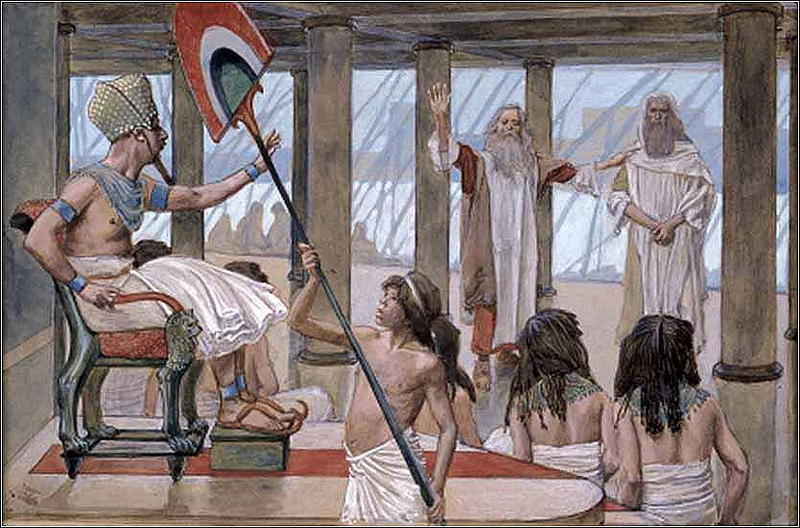
The Precursor to the Final Plague

1 The Lord said to Moses, “Yet one plague more I will bring upon Pharaoh and upon Egypt. Afterward he will let you go from here. When he lets you go, he will drive you away completely. Speak now in the hearing of the people, that they ask, every man of his neighbor and every woman of her neighbor, for silver and gold jewelry.” And the Lord gave the people favor in the sight of the Egyptians. Moreover, the man Moses was very great in the land of Egypt, in the sight of Pharaoh’s servants and in the sight of the people.

So Moses said, “Thus says the Lord: ‘About midnight I will go out in the midst of Egypt, and every firstborn in the land of Egypt shall die, from the firstborn of Pharaoh who sits on his throne, even to the firstborn of the slave girl who is behind the handmill, and all the firstborn of the cattle. There shall be a great cry throughout all the land of Egypt, such as there has never been, nor ever will be again. But not a dog shall growl against any of the people of Israel, either man or beast, that you may know that the Lord makes a distinction between Egypt and Israel.’ And all these your servants shall come down to me and bow down to me, saying, ‘Get out, you and all the people who follow you.’ And after that I will go out.” And he went out from Pharaoh in hot anger. Then the Lord said to Moses, “Pharaoh will not listen to you, that my wonders may be multiplied in the land of Egypt.”

10 Moses and Aaron did all these wonders before Pharaoh, and the Lord hardened Pharaoh’s heart, and he did not let the people of Israel go out of his land. – Exodus 11:1-10 ESV

The last plague ended on a foreboding note.

Then Pharaoh said to him, “Get away from me; take care never to see my face again, for on the day you see my face you shall die.” Moses said, “As you say! I will not see your face again.”  Exodus 10:28-29 ESV

Moses and Pharaoh parted ways on less-than-stellar terms, and the words of Moses carry an ominous tone to them. It is as if he knows that this epic war of the wills is about to come to an abrupt end. There is no reason to believe that Moses knew the exact number of plagues God had planned to send, but he could sense that God’s patience had run out.

All along the way, God had been displaying His power and authority over nature. He had transformed a staff into a snake and turned water into blood. He had somehow managed to produce an overabundance of frogs from the very same blood-infused water that had killed all the fish. Then He had produced an infestation of stinging gnats from the dust of the ground. This was followed by swarms of biting flies that appeared as if out of nowhere. But while those pesky flies made the lives of the Egyptians miserable, they were somehow prevented from entering the land of Goshen, where the Israelites lived. And that same region was protected when God sent death to the livestock of the Egyptians. Not a single sheep, cow, donkey, or camel belonging to the Israelites suffered death. Next God turned ash into a dustlike substance that spread throughout the land of Egypt, inflicting the Egyptians with anthrax-like sores all over their bodies. God followed this devastating disease with a double disaster that left the Egyptian agricultural economy in ruins. A hailstorm of epic proportions was followed by a nationwide locust infestation that stripped the land bare of all vegetation. And finally, there was darkness. In the middle of the day, Ra, the sun god literally disappeared from the sky.

Yahweh had repeatedly demonstrated His sovereignty over creation and His vast superiority over the false gods of Egypt. He had amply proven His status as the one true God. At any point along the way, God could have taken Pharaoh’s life and brought this whole lopsided battle to an end. But He had a very good reason for not doing so.

“By now I could have lifted my hand and struck you and your people with a plague to wipe you off the face of the earth. But I have spared you for a purpose—to show you my power and to spread my fame throughout the earth.” – Exodus 9:15-16 NLT

But with the ninth plague completed, God revealed to Moses what was about to happen. The darkness was about to be broken by the light of God’s sovereign glory.

“I will strike Pharaoh and the land of Egypt with one more blow. After that, Pharaoh will let you leave this country. In fact, he will be so eager to get rid of you that he will force you all to leave.” – Exodus 11:1 NLT

What happened next is an illustration of the apostle John’s words, written centuries later.

The light shines in the darkness, and the darkness can never extinguish it. – John 1:15 NLT

In his gospel, John makes the following statement regarding Jesus, the light of the world.

God’s light came into the world, but people loved the darkness more than the light, for their actions were evil. – John 3:19 NLT

The darkness that had permeated the land of Egypt was an apt symbol of their moral state as a people. They were living in the darkness of sin and had a darkened understanding of God’s glory. While they believed in all kinds of gods, they could not comprehend the idea of one God who possessed such devastating and unparalleled power. But now they were going to see God’s glory and greatness on full display.

God had already commanded Moses to inform Pharaoh of the unpleasant nature of the final and pending judgment.

“This is what the Lord says: At midnight tonight I will pass through the heart of Egypt. All the firstborn sons will die in every family in Egypt, from the oldest son of Pharaoh, who sits on his throne, to the oldest son of his lowliest servant girl who grinds the flour. Even the firstborn of all the livestock will die. Then a loud wail will rise throughout the land of Egypt, a wail like no one has heard before or will ever hear again. – Exodus 11:4-6 NLT

This plague was going to make all the others seem like a walk in the park. And this time, even the house of Pharaoh would go unspared. He too was going to lose a loved one. His eldest son was going to die and there was nothing he could do to prevent it. But in the land of Goshen, it would be another matter.

“…it will be so peaceful that not even a dog will bark. Then you will know that the Lord makes a distinction between the Egyptians and the Israelites.” – Exodus 11:7 NLT

The Israelites and their flocks and herds would be divinely protected. If they followed the Lord’s instructions, not a single firstborn among them would die. Their obedience to God’s instructions would preserve life. But along with protection from death, God would provide the Israelites with great wealth. Amazingly, despite all the trouble the Egyptians had suffered because of the presence of the Israelites, “the Lord had caused the Egyptians to look favorably on the people of Israel” (Exodus 11:3 NLT). Not only that, but “Moses was considered a very great man in the land of Egypt, respected by Pharaoh’s officials and the Egyptian people alike” (Exodus 11:3 NLT). Moses wasn’t exactly loved by Pharaoh, but the king’s officials and the citizens of his land held Moses in high esteem.

While Pharaoh’s heart had been hardened by all the plagues, the hearts of the people had actually been softened. So much so, that God instructed the Israelites to ask their Egyptian neighbors for gifts of gold and silver. This must have sounded like ill-fated advice to the shell-shocked Israelites. These people had suffered greatly at the hands of the Egyptians and the thought of their overlords providing them with parting gifts must have come across as more than a bit insane.

But God assured them that this final plague was going to be the deal-breaker. When the Egyptians see how God “makes a distinction between the Egyptians and the Israelites” (Exodus 11:7 NLT), they will beg the Israelites to leave and pay them to do so.

Moses delivered this bizarre pronouncement to Pharaoh, then vacated his presence for the last time. He was done asking for Pharaoh’s permission and cooperation. Moses knew that something was about to happen that would break this man’s seemingly unshakeable resolve to oppose the will of God. So, Moses walked out of Pharaoh’s presence and left the king to consider the weight of his words.

“At midnight tonight, I will pass through the heart of Egypt. All the firstborn sons will die in every family in Egypt, from the oldest son of Pharaoh, who sits on his throne…” – Exodus 11:4-5 NLT

The darkness of the ninth plague had dissipated, but a new and even deeper darkness was about to envelop the land as God sent the death angel to exact a costly judgment on the recalcitrant king of Egypt.

English Standard Version (ESV) The Holy Bible, English Standard Version. ESV® Permanent Text Edition® (2016). Copyright © 2001

New Living Translation (NLT) Holy Bible, New Living Translation, copyright © 1996, 2004, 2015 by Tyndale House Foundation. Used by permission of Tyndale House Publishers Inc., Carol Stream, Illinois 60188. All rights reserved.

Plague Number Nine

21 Then the Lord said to Moses, “Stretch out your hand toward heaven, that there may be darkness over the land of Egypt, a darkness to be felt.” 22 So Moses stretched out his hand toward heaven, and there was pitch darkness in all the land of Egypt three days. 23 They did not see one another, nor did anyone rise from his place for three days, but all the people of Israel had light where they lived. 24 Then Pharaoh called Moses and said, “Go, serve the Lord; your little ones also may go with you; only let your flocks and your herds remain behind.” 25 But Moses said, “You must also let us have sacrifices and burnt offerings, that we may sacrifice to the Lord our God. 26 Our livestock also must go with us; not a hoof shall be left behind, for we must take of them to serve the Lord our God, and we do not know with what we must serve the Lord until we arrive there.” 27 But the Lord hardened Pharaoh’s heart, and he would not let them go. 28 Then Pharaoh said to him, “Get away from me; take care never to see my face again, for on the day you see my face you shall die.” 29 Moses said, “As you say! I will not see your face again.” – Exodus 10:21-28 ESV

In reading all the details concerning the various plagues, it is easy to overlook the reason for their very existence. Yes, it is clear that Pharaoh’s stubbornness played a role in each plague’s arrival, but it is important to consider what Pharaoh was rejecting. Repeatedly, God made the same request that the arrogant king refused to honor.

Let my people go, that they may serve me. – Exodus 10:3 ESV

What sounded like a request was actually a demand from the God of the universe. He was not asking Pharaoh for permission; He was demanding full compliance with His sovereign will. From the beginning, God had made it clear to Moses and Aaron that they were there to lead the people of Israel out of Egypt, and Pharaoh was expected to comply with God’s preordained plans.

“You shall speak all that I command you, and your brother Aaron shall tell Pharaoh to let the people of Israel go out of his land.” – Exodus 7:2 ESV

From the very first moment Moses and Aaron appeared before Pharaoh, they had clearly articulated Yahweh’s demands. There was never a question as to what God wanted from Pharaoh. Prior to each successive plague, Moses and Aaron made the Lord’s demands known.

“Let my people go, that they may serve me in the wilderness.” – Exodus 7:16 ESV

“Let my people go, that they may serve me. – Exodus 8:1 ESV

“Let my people go, that they may serve me. – Exodus 8:20 ESV

“Let my people go, that they may serve me. – Exodus 9:1 ESV

“Let my people go, that they may serve me. – Exodus 9:13 ESV

“How long will you refuse to humble yourself before me? Let my people go, that they may serve me.” – Exodus 10:3 ESV

But there is an interesting and often overlooked pattern to these repeated demands. With every third plague, God does not issue any demands or give Pharaoh an opportunity to respond. He simply acts.

With the third plague, God told Aaron, “Stretch out your staff and strike the dust of the earth, so that it may become gnats in all the land of Egypt” (Exodus 7:16 ESV). There was no formal appointment between Pharaoh and God’s messengers. No demands were issued and no response was necessary. God simply ordered the land to be filled with an infestation of gnats.

Now, fast-forward to the sixth plague. Once again, rather than have Moses and Aaron reiterate His demands, God chose to pour out another judgment upon Egypt.

“Take handfuls of soot from the kiln, and let Moses throw them in the air in the sight of Pharaoh. It shall become fine dust over all the land of Egypt, and become boils breaking out in sores on man and beast throughout all the land of Egypt.” – Exodus 9:8-9 ESV

Pharaoh was a non-factor in this entire process. He was not consulted and, therefore, he had no say in the matter. The sovereign God acted independently and authoritatively, orchestrating His divine judgment against the unsuspecting people of Egypt.

And with the ninth plague, the pattern repeats itself. As with plagues three and six, plague nine comes with no warning. God makes no effort to inform Pharaoh of the consequences of refusing His demands. The king has made his will known. He has no intention of conceding to God’s command. In the face of God’s unrelenting and unstoppable displays of divine judgment, Pharaoh has remained resolute in his decision of non-compliance. So, God tells Moses, “Stretch out your hand toward heaven, that there may be darkness over the land of Egypt, a darkness to be felt” (Exodus 10:21 ESV).

The nation was still reeling from the devastating damage done by the locusts. What little vegetation had not been destroyed by the hail was completely wiped out by the supernatural swarm of locusts. Even Pharaoh’s counselors had warned him that his continued stubbornness was going to result in the complete destruction of their nation.

“Do you not yet understand that Egypt is ruined?” – Exodus 10:7 ESV

But Pharaoh’s heart remained hardened. He refused to bow his knee to Israel’s God. So, God ordered Moses to stretch out his hand and, immediately, an all-pervasive darkness came over the entire land of Egypt. For three solid days, “the people could not see each other, and no one moved” (Exodus 10:23 NLT). This was no ordinary darkness. It was a complete absence of light. No sun. No moon. No stars. It was impossible for anyone to see. All normal activities came to a complete halt as people remained inside their homes, huddled around the light from their oil lamps. No one dared to venture outside.

But there was light as usual where the people of Israel lived. – Exodus 10:23 NLT

As He had done before, God spared the people of Israel from the effects of this particular plague. Somehow, they were given light while the rest of the nation was blanketed in an opaque and oppressive darkness. The apostle John describes light as a primary characteristic of God.

God is light, and in him is no darkness at all. – 1 John 1:5 ESV

The prophet Isaiah would later write to the people of Israel, “O house of Jacob, come, let us walk in the light of the LORD” (Isaiah 2:5 ESV). With this ninth plague, God was demonstrating the reality of His light-giving presence. He was with His people. His light shined in the darkness that pervaded the rest of the land. In Him is no darkness at all. But in Egypt, the people were immersed in unpenetrable darkness. And what makes this plague so significant is the statement it made regarding Egypt’s most revered god.

Of all their deities, one stood out as the greatest of them all. Ra was considered the king of all the Egyptian gods and was believed to be the father of all creation. And because of his superior position among the gods, he was afforded great power and authority. He controlled the sun and light, and was responsible for the heavens and all power, including that of the king. He was sometimes portrayed riding through the heavens in a celestial boat, with the sun resting on his bird-like head.

He is one of the oldest deities in the Egyptian pantheon and was later merged with others such as Horus, becoming Ra-Horakhty (the morning sun), Amun (as noonday sun), and Atum (the evening sun) associated with primal life-giving energy. Ra is the Egyptian word for ‘sun’. As a solar deity, Ra embodied the power of the sun but was also thought to be the sun itself, envisioned as the great god riding in his barge across the heavens throughout the day and descending into the underworld at sunset. – http://www.worldhistory.org

One can only imagine the impact this plague of darkness had on the people of Egypt. Their revered God had literally disappeared from sight. Ra wasn’t just responsible for the sun, he was the sun itself. The God of Israel had vanquished the most powerful god of the Egyptians. And yet, in Goshen, the light was bright and comforting because Yahweh was present with His people.

With his patron god sidelined, Pharaoh decided it was time to concede to the God of Moses and Aaron. But, once again, he decided to try and bargain with Yahweh.

Finally, Pharaoh called for Moses. “Go and worship the Lord,” he said. “But leave your flocks and herds here. You may even take your little ones with you.” – Exodus 10:24 NLT

He would no longer prevent the women and children from accompanying their husbands and fathers. But, as a precaution, Pharaoh forbade the Israelites from taking any of their flocks or herds. He wanted collateral to ensure that the Israelites would return to the land of Goshen. Pharaoh was not about to risk losing his largest unpaid workforce. But Moses refused to accept Pharaoh’s terms.

“…you must provide us with animals for sacrifices and burnt offerings to the Lord our God. All our livestock must go with us, too; not a hoof can be left behind. We must choose our sacrifices for the Lord our God from among these animals. And we won’t know how we are to worship the Lord until we get there.” – Exodus 10:25-26 NLT

And true to form, Pharaoh dug in his heels and rejected Moses’ conditions. Fully frustrated by the actions of these two elderly Hebrews, Pharaoh cast them out of his presence and warned them never to return, upon pain of death.

“Never come back to see me again! The day you see my face, you will die!” – Exodus 10:28 NLT

And Moses politely and calmly replied, “As you say! I will not see your face again” (Exodus 10:29 ESV).

God was about to do something great. With the ninth plague, He was setting up His final and most devastating judgment against the people of Egypt. As the helpless Egyptians huddled in the darkness, the children of God were basking in the light of God’s presence. And that light was about to burst forth in glorious day as God unveiled the last phase of His grand plan of redemption for His people.

The prophet Isaiah wrote of a yet-future day when God will deliver His people yet again. But it reminds us that the story of Exodus is a foreshadowing of an even greater deliverance to come.

The people who walked in darkness
    have seen a great light;
those who dwelt in a land of deep darkness,
    on them has light shone.
You have multiplied the nation;
    you have increased its joy;
they rejoice before you
    as with joy at the harvest,
    as they are glad when they divide the spoil.
For the yoke of his burden,
    and the staff for his shoulder,
    the rod of his oppressor,
you have broken as on the day of Midian. – Isaiah 9:2-4 ESV

And Isaiah goes on to reveal the nature of this future light that will penetrate the darkness of man’s captivity to sin and death.

For to us a child is born,
    to us a son is given;
and the government shall be upon his shoulder,
    and his name shall be called
Wonderful Counselor, Mighty God,
    Everlasting Father, Prince of Peace.
Of the increase of his government and of peace
    there will be no end,
on the throne of David and over his kingdom,
    to establish it and to uphold it
with justice and with righteousness
    from this time forth and forevermore.
The zeal of the Lord of hosts will do this. – Isaiah 9:6-7 ESV

English Standard Version (ESV) The Holy Bible, English Standard Version. ESV® Permanent Text Edition® (2016). Copyright © 2001

New Living Translation (NLT) Holy Bible, New Living Translation, copyright © 1996, 2004, 2015 by Tyndale House Foundation. Used by permission of Tyndale House Publishers Inc., Carol Stream, Illinois 60188. All rights reserved.

Plague Number Eight

1 Then the Lord said to Moses, “Go in to Pharaoh, for I have hardened his heart and the heart of his servants, that I may show these signs of mine among them, and that you may tell in the hearing of your son and of your grandson how I have dealt harshly with the Egyptians and what signs I have done among them, that you may know that I am the Lord.”

So Moses and Aaron went in to Pharaoh and said to him, “Thus says the Lord, the God of the Hebrews, ‘How long will you refuse to humble yourself before me? Let my people go, that they may serve me. For if you refuse to let my people go, behold, tomorrow I will bring locusts into your country, and they shall cover the face of the land, so that no one can see the land. And they shall eat what is left to you after the hail, and they shall eat every tree of yours that grows in the field, and they shall fill your houses and the houses of all your servants and of all the Egyptians, as neither your fathers nor your grandfathers have seen, from the day they came on earth to this day.’” Then he turned and went out from Pharaoh.

Then Pharaoh’s servants said to him, “How long shall this man be a snare to us? Let the men go, that they may serve the Lord their God. Do you not yet understand that Egypt is ruined?” So Moses and Aaron were brought back to Pharaoh. And he said to them, “Go, serve the Lord your God. But which ones are to go?” Moses said, “We will go with our young and our old. We will go with our sons and daughters and with our flocks and herds, for we must hold a feast to the Lord.” 10 But he said to them, “The Lord be with you, if ever I let you and your little ones go! Look, you have some evil purpose in mind. 11 No! Go, the men among you, and serve the Lord, for that is what you are asking.” And they were driven out from Pharaoh’s presence.

12 Then the Lord said to Moses, “Stretch out your hand over the land of Egypt for the locusts, so that they may come upon the land of Egypt and eat every plant in the land, all that the hail has left.” 13 So Moses stretched out his staff over the land of Egypt, and the Lord brought an east wind upon the land all that day and all that night. When it was morning, the east wind had brought the locusts. 14 The locusts came up over all the land of Egypt and settled on the whole country of Egypt, such a dense swarm of locusts as had never been before, nor ever will be again. 15 They covered the face of the whole land, so that the land was darkened, and they ate all the plants in the land and all the fruit of the trees that the hail had left. Not a green thing remained, neither tree nor plant of the field, through all the land of Egypt. 16 Then Pharaoh hastily called Moses and Aaron and said, “I have sinned against the Lord your God, and against you. 17 Now therefore, forgive my sin, please, only this once, and plead with the Lord your God only to remove this death from me.” 18 So he went out from Pharaoh and pleaded with the Lord. 19 And the Lord turned the wind into a very strong west wind, which lifted the locusts and drove them into the Red Sea. Not a single locust was left in all the country of Egypt. 20 But the Lord hardened Pharaoh’s heart, and he did not let the people of Israel go. – Exodus 10:1-20 ESV

Exodus 12:12 contains a stunning statement from God that comes well after He has delivered nine of the ten plagues on the nation of Egypt. He simply states, “on all the gods of Egypt I will execute judgments: I am the Lord” (Exodus 12:12 ESV). As He prepares to launch the tenth and final judgment, He reminds Moses and Aaron that every one of the devastating signs He has sent upon Egypt has been a direct assault on their false and, therefore, unreliable gods.

And chapter ten contains Moses’ account of the eighth plague which brought a supernatural infestation of locusts upon the land. This too meant to pit the God of the Israelites against one or more of the gods of Egypt. Locusts were nothing new to the Egyptians. These voracious and destructive insects were a normal part of life in that region of the world. Their arrival and the subsequent damage they could do to all vegetation could wreak havoc on the Egyptian agricultural economy. That’s why the Egyptians had gods they relied upon to ward off this destructive menace, including the grain gods Neper, Nepri, Heneb, and Renenutet, as well as Isis and Set, two gods responsible for protecting the nation’s crops. Renenutet, in particular, was revered as a goddess of nourishment and the harvest. She was responsible for the fertility of the fields but was also deemed the protector of the royal office and power.

But with this eighth plague, God would bring another wave of destruction upon the land that would virtually destroy the nation’s economy and cripple Pharaoh’s administration.

God makes it clear to Moses that Pharaoh’s hardness of heart has all been part of the plan. From the very beginning, God had intended to bring a series of judgments against the Egyptians that would prepare the way for His people’s deliverance. Each plague was pre-planned and necessary and, all combined, they would have a cumulative effect that eventually forced Pharaoh to submit to God’s will. Not only that, they would serve as powerful reminders to the people of Israel of God’s power and providence.

“I have made him and his officials stubborn so I can display my miraculous signs among them. I’ve also done it so you can tell your children and grandchildren about how I made a mockery of the Egyptians and about the signs I displayed among them—and so you will know that I am the Lord.” – Exodus 10:1-2 NLT

Moses and Aaron did as they had done so many times before. They came before Pharaoh and delivered their latest message from God.

Let my people go, so they can worship me. If you refuse, watch out! For tomorrow I will bring a swarm of locusts on your country. They will cover the land so that you won’t be able to see the ground. They will devour what little is left of your crops after the hailstorm, including all the trees growing in the fields. They will overrun your palaces and the homes of your officials and all the houses in Egypt. Never in the history of Egypt have your ancestors seen a plague like this one!” – Exodus 10:3-6 NLT

But, by now, the reader has already come to expect the same outcome as before. Pharaoh will reject their warning. And that is exactly what happens, despite the pleas of Pharaoh’s officials. They warn the king that the nation may not survive another assault from the Israelite’s God. The plague of hail left their crops and orchards in ruin. What was not destroyed would most certainly be devastated by an infestation of locusts. So, they strongly suggested that Pharaoh make a concession to allow the men of Israel to go and worship their God. By demanding that the women and children remain in Goshen, it would ensure that the men would return to their families. In a sense, Pharaoh’s counselors were suggesting that he use the women and children as hostages.

But when Pharaoh announces his intention to let only the men go and worship, Moses argued, “We must all join together in celebrating a festival to the Lord” (Exodus 10:9 NLT). Unused to having his will opposed, Pharaoh erupted against Moses and told him that the deal was off. It was going to be his way or no way at all. At this, Moses and Aaron left the king’s presence and the locusts descended upon the land.

…the locusts swarmed over the whole land of Egypt, settling in dense swarms from one end of the country to the other. It was the worst locust plague in Egyptian history, and there has never been another one like it. – Exodus 10:14 NLT

Once again, the gods of Egypt proved powerless to stand before Jehovah. The Egyptians probably cried out to their gods, but there was no answer. They offered sacrifices and offerings, but there was no relief in sight. Wave after wave of locusts descended upon their fields and orchards, devouring “every plant in the fields and all the fruit on the trees that had survived the hailstorm” (Exodus 10:15 NLT).

And it didn’t take long before Moses and Aaron were summoned back into Pharaoh’s presence. They had gotten his attention and he was ready to negotiate. But first, he begged them to pray to their God so that this latest plight might come to an end.

“Forgive my sin, just this once, and plead with the Lord your God to take away this death from me.” – Exodus 10:17 NLT

He appears to be sincere. His pride appears to be broken. But after Moses prayed and God miraculously removed every last locust from the land of Egypt, Pharaoh resorted back to his old stubborn ways and refused to let the people go.

The land lay in utter disarray, devastated by the effects of the hail and the damage done by the locusts. But Pharaoh remained steadfast in his refusal to give in to God’s demands. He still thought he was in control. Despite all that God had done to his land, Pharaoh believed he remained the king over his domain. His great pride would not allow him to bend the knee to another, even the all-powerful God of the Israelites. He somehow believed he could win this battle of wills. But what he failed to understand was that the sovereign will of Yahweh can be resisted but never thwarted. Pharaoh could stubbornly stand his ground, but he would one day bow his knee to the all-powerful, all-knowing God of the universe.

English Standard Version (ESV) The Holy Bible, English Standard Version. ESV® Permanent Text Edition® (2016). Copyright © 2001

New Living Translation (NLT) Holy Bible, New Living Translation, copyright © 1996, 2004, 2015 by Tyndale House Foundation. Used by permission of Tyndale House Publishers Inc., Carol Stream, Illinois 60188. All rights reserved.