A Glimpse of God’s Goodness

12 Moses said to the Lord, “See, you say to me, ‘Bring up this people,’ but you have not let me know whom you will send with me. Yet you have said, ‘I know you by name, and you have also found favor in my sight.’ 13 Now therefore, if I have found favor in your sight, please show me now your ways, that I may know you in order to find favor in your sight. Consider too that this nation is your people.” 14 And he said, “My presence will go with you, and I will give you rest.” 15 And he said to him, “If your presence will not go with me, do not bring us up from here. 16 For how shall it be known that I have found favor in your sight, I and your people? Is it not in your going with us, so that we are distinct, I and your people, from every other people on the face of the earth?”

17 And the Lord said to Moses, “This very thing that you have spoken I will do, for you have found favor in my sight, and I know you by name.” 18 Moses said, “Please show me your glory.” 19 And he said, “I will make all my goodness pass before you and will proclaim before you my name ‘The Lord.’ And I will be gracious to whom I will be gracious, and will show mercy on whom I will show mercy. 20 But,” he said, “you cannot see my face, for man shall not see me and live.” 21 And the Lord said, “Behold, there is a place by me where you shall stand on the rock, 22 and while my glory passes by I will put you in a cleft of the rock, and I will cover you with my hand until I have passed by. 23 Then I will take away my hand, and you shall see my back, but my face shall not be seen.” – Exodus 33:12-23 ESV

Moses was perplexed and personally concerned about God’s decision to remove His presence from the people of Israel. As the one commissioned to lead these “stiff-necked people” (Exodus 33:3) to the promised land, Moses knew that, without God’s presence, his mission was doomed. God had declared His intention to vacate the premises because He knew the Israelites were going to continue their stiff-necked ways. Thousands of them had died as a result of their recent act of rebellion, so God told them, “You are a stubborn and rebellious people. If I were to travel with you for even a moment, I would destroy you” (Exodus 33:5 NLT).

Yet, He had ordered Moses to fulfill his original commission by leading the remaining Israelites to their final destination: “a land flowing with milk and honey” (Exodus 33:3 ESV). Moses was expected to take this ragtag remnant of fickle Yahweh followers the rest of the way to Canaan but without the benefit of God’s presence. But the thought of trying to complete his task without God’s presence proved to be too much for Moses. So, he took his concerns to the Lord.

This time, rather than ascending back to the top of Mount Sinai, Moses entered the Tent of Meeting, “which was outside the camp” (Exodus 33:5 ESV). The text introduces this special meeting place just before Moses begins his conversation with God.

Whenever Moses went out to the tent, all the people would rise up, and each would stand at his tent door, and watch Moses until he had gone into the tent. When Moses entered the tent, the pillar of cloud would descend and stand at the entrance of the tent, and the Lord would speak with Moses. – Exodus 33:8-9 ESV

This tent had served as a temporary “tabernacle” or sanctuary in which Moses would meet with God. It was located outside the camp and used as a kind of divine “phone booth” where Moses could communicate directly with God. Once the Tabernacle was constructed, this temporary tent of meeting would no longer be needed. But at this moment, with the Tabernacle yet to be built, Moses entered went outside the camp and entered the tent of meeting.

Moses had taken God’s announcement that He was removing His presence quite personally. From the moment God had commissioned him for this job, Moses had expressed his lack of qualifications.

“Who am I that I should go to Pharaoh and bring the children of Israel out of Egypt?” – Exodus 3:11 ESV

Yet God had assured Moses, “I will be with you” (Exodus 33:12 ESV). And even when Moses had continued to express his strong doubts, God had told him, “Now therefore go, and I will be with your mouth and teach you what you shall speak” (Exodus 4:12 ESV). But now, Moses was afraid that God was reneging on His promise. He had known all along that he was not up to the task, so the thought of leading the people of Israel on his own was more than he could stand. This led him to express his concern and consternation to Yahweh.

“See, you say to me, ‘Bring up this people,’ but you have not let me know whom you will send with me.” – Exodus 33:12 ESV

Moses begins his debate with a less-than-accurate statement. He claims that God has failed to identify the one who will be accompanying him to Canaan. God had clearly stated, “I will send an angel before you, and I will drive out the Canaanites, the Amorites, the Hittites, the Perizzites, the Hivites, and the Jebusites” (Exodus 33:2 ESV). But Moses wasn’t satisfied; he wanted more information. In a way, Moses was expressing his dissatisfaction with God’s alternative plan. He wasn’t content to have an angel serve as God’s proxy or stand-in. He wanted God Himself.

This led Moses to pull out his trump card. He appealed to the special relationship he enjoyed with Yahweh.

“…you have said, ‘I know you by name, and you have also found favor in my sight.’” – Exodus 33:12 ESV

In a way, Moses was saying, “You say you love me, now prove it.” He was appealing to God’s lovingkindness and faithfulness. Moses had grown to appreciate the nature of God and was counting on Yahweh’s unwavering commitment to protecting His own reputation.

“…if I have found favor in your sight, please show me now your ways, that I may know you in order to find favor in your sight. Consider too that this nation is your people.” – Exodus 33:13 ESV

Moses was pulling on God’s heartstrings. In a rather transparent attempt to “guilt” God, Moses appealed to His sense of righteousness. Didn’t God want to do the right thing? If Moses had found favor with God, wouldn’t God want to be favorable to Moses? Moses was trying to capitalize on his unique relationship with Yahweh, in the hopes of getting Him to reconsider His earlier decision.

Having heard Moses’ plea, God gave the answer Moses wanted to hear: “My presence will go with you, and I will give you rest” (Exodus 33:14 ESV). Yet even that positive affirmation was not quite enough for Moses. He wanted God to know just how important His presence was for this mission to be successful.

“If you don’t personally go with us, don’t make us leave this place. How will anyone know that you look favorably on me—on me and on your people—if you don’t go with us? For your presence among us sets your people and me apart from all other people on the earth.” – Exodus 33:15-16 NLT

Essentially, Moses was threatening to stay right where he was. If he had to stay the rest of his life in the wilderness of Sinai, where he was confident of God’s presence, he was willing to do so. Moses was willing to give up the promised land for the promise of God’s presence, power, and provision. Occupying the land of Canaan would be pointless because it was the presence of God that set the people of Israel apart from all the other nations on earth. Real estate or a relocation to a different spot on the map would not differentiate God’s people. Moses understood that it was God alone who made the people of Israel a holy nation. And God provided Moses with the further assurance he needed.

“I will indeed do what you have asked, for I look favorably on you, and I know you by name.” – Exodus 33:17 NLT

God would go with them. His presence would continue to dwell among them. But, almost pushing his luck, Moses made one more bold and daring request.

“Then show me your glorious presence.” – Exodus 33:18 NLT

Moses was asking for more. We know that when Moses entered the tent of meeting, “the pillar of cloud would descend and stand at the entrance of the tent” (Exodus 33:9 ESV). This tangible and visible sign of God’s presence hovered over the tent as Moses spoke with God, but Moses wanted a greater demonstration of God’s presence. He wanted to see God Himself – in all His glory.

And as proof of Moses’ favorable status, Yahweh agreed to give His servant a glimpse of His glory.

“I will make all my goodness pass before you, and I will call out my name, Yahweh, before you. For I will show mercy to anyone I choose, and I will show compassion to anyone I choose. But you may not look directly at my face, for no one may see me and live.” – Exodus 33:19-20 NLT

What makes this concession so important is that God had already revealed Himself to Moses on more than one occasion. The first had taken place years earlier at the very same location in Sinai. Somewhere near Mount Sinai, Moses heard the voice of God speaking to him from the midst of a burning bush, which caused him to draw near. But “Moses hid his face, for he was afraid to look at God” (Exodus 3:6 ESV).

For more than a year, Moses had also witnessed the presence of God in the form of the pillar of cloud by day and the pillar of fire by night. Then there was the more recent occasion when he, Aaron, Nadab, Abihu, and seventy of the elders of Israel shared a meal with God.

…they beheld God, and ate and drank. – Exodus 24:11 ESV

So, why was Moses requesting to see God’s glory? Notice that he did not ask for permission to see God’s face. He seems to have known better. The Hebrew word for “glory” is כָּבוֹד (kāḇôḏ), and it refers to God’s honor, splendor, or majesty. In a sense, Moses was asking to see more of God. Having feared the possible loss of God’s presence, Moses longed to see another manifestation of His glory and majesty. It is as if Moses was saying, “Show me more of Yourself!” And God’s response to Moses’ request was succinct.

“I will make all my goodness pass before you and will proclaim before you my name ‘The Lord.’” – Exodus 33:19 ESV

It is unclear what Moses was hoping to see. But God is quite clear and highly specific when He describes what aspect of His glory that He will allow His servant to observe. It will be the fulness of His goodness.

“In this instance, at least, God’s glory is his goodness. It is not his power, his majesty, or his awesomeness that will pass by Moses, but his goodness. And Moses has already seen a lot of that. God has mercifully sustained his people in Egypt. That’s his goodness. God has dramatically delivered his people from their captors. That’s his goodness. God has graciously provided for his people in the wilderness and protected them. That’s his goodness. God has graciously entered into a covenant with his people at Sinai. That’s his goodness.” – Victor P. Hamilton, Exodus

God agreed to let Moses get a glimpse of His goodness, and He summarizes exactly what His goodness entails.

“I will be gracious to whom I will be gracious, and will show mercy on whom I will show mercy.” – Exodus 33:19 ESV

To “see” God is to glimpse His goodness in the form of His grace and mercy. Moses, Aaron, and the rest of the people of Israel had seen God’s goodness repeatedly. Most recently, it had shown up in God mercifully sparing them from judgment. Despite what had happened at Sinai, they were alive and still able to worship and obey God. And God demonstrated His grace and mercy in how He revealed His goodness to Moses.

“…while my glory passes by I will put you in a cleft of the rock, and I will cover you with my hand until I have passed by. Then I will take away my hand, and you shall see my back, but my face shall not be seen.” – Exodus 33:22-23 ESV

God spared Moses” life by answering his request in this way. Had Moses seen the face of God, his life would have ended in death. But that day, Moses got a glimpse of God’s goodness and lived to tell about it. As the glory of God “passed by,” Moses was covered by the protective power of God’s goodness. The all-powerful and holy God of the universe placed His hand over His servant to protect him from certain death. Moses got to see the “back” of God, but the good news was that God was not leaving. Not only would He not abandon them., but He would renew His covenant commitment to them.

English Standard Version (ESV) The Holy Bible, English Standard Version. ESV® Permanent Text Edition® (2016). Copyright © 2001

New Living Translation (NLT) Holy Bible, New Living Translation, copyright © 1996, 2004, 2015 by Tyndale House Foundation. Used by permission of Tyndale House Publishers Inc., Carol Stream, Illinois 60188. All rights reserved.
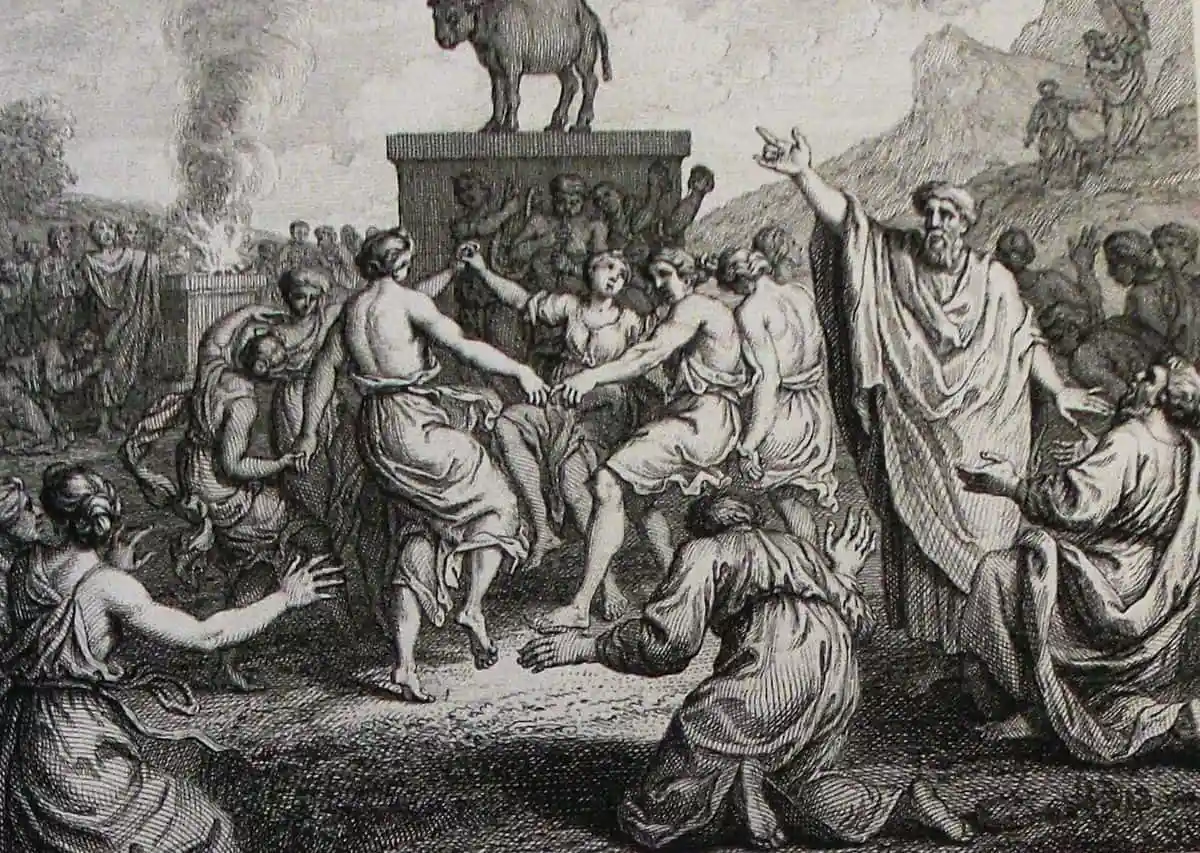
The Loss of God’s Presence

1 The Lord said to Moses, “Depart; go up from here, you and the people whom you have brought up out of the land of Egypt, to the land of which I swore to Abraham, Isaac, and Jacob, saying, ‘To your offspring I will give it.’ 2 I will send an angel before you, and I will drive out the Canaanites, the Amorites, the Hittites, the Perizzites, the Hivites, and the Jebusites. 3 Go up to a land flowing with milk and honey; but I will not go up among you, lest I consume you on the way, for you are a stiff-necked people.”

4 When the people heard this disastrous word, they mourned, and no one put on his ornaments. 5 For the Lord had said to Moses, “Say to the people of Israel, ‘You are a stiff-necked people; if for a single moment I should go up among you, I would consume you. So now take off your ornaments, that I may know what to do with you.’” 6 Therefore the people of Israel stripped themselves of their ornaments, from Mount Horeb onward.

7 Now Moses used to take the tent and pitch it outside the camp, far off from the camp, and he called it the tent of meeting. And everyone who sought the Lord would go out to the tent of meeting, which was outside the camp. 8 Whenever Moses went out to the tent, all the people would rise up, and each would stand at his tent door, and watch Moses until he had gone into the tent. 9 When Moses entered the tent, the pillar of cloud would descend and stand at the entrance of the tent, and the Lord would speak with Moses. 10 And when all the people saw the pillar of cloud standing at the entrance of the tent, all the people would rise up and worship, each at his tent door. 11 Thus the Lord used to speak to Moses face to face, as a man speaks to his friend. When Moses turned again into the camp, his assistant Joshua the son of Nun, a young man, would not depart from the tent. – Exodus 33:1-11 ESV

Israel’s ill-advised decision to abandon God proved to be far more costly than they could ever have imagined. Three thousand of their own kinsmen died as a result of their leadership role in the rebellion, while an undisclosed number of other Israelites lost their lives in the plague that God sent among them. These divine judgments must have left the people of Israel in a constant state of fear and anxiety. Had God’s wrath been satisfied or were more deaths to be expected? And would they be next? Yet the greatest judgment was yet to come, and it would appear in an unexpected form.

God commanded Moses to break camp and begin the next phase of the journey to Canaan. Their time at Sinai was complete. They had the Decalogue, the Book of the Covenant, and God’s plans for the Tabernacle. Now, it was time to complete their quest for the promised land. But notice how God changed how He referenced the people of Israel. He told Moses to depart and to take “the people you brought up from the land of Egypt” (Exodus 33:1 ESV). He no longer refers to them as His “treasured possession” (Exodus 19:5 ESV). Rather than “a kingdom of priests and a holy nation” (Exodus 19:6 ESV), they are simply “the people” whom Moses brought out of Egypt. Their decision to abandon God has dramatically altered their relationship with Him.

God will keep the covenant promise He made to Abraham, Isaac, and Jacob. Canaan will become the Israelite’s homeland, and to bring that outcome about, God will drive out all the inhabitants who currently occupy the land. He promises to send an angel ahead of them, who will “drive out the Canaanites, Amorites, Hittites, Perizzites, Hivites, and Jebusites” (Exodus 33:2 ESV). But the announcement about this divine agent is markedly different that what God had told them prior to their debacle with the golden calf.

“Behold, I send an angel before you to guard you on the way and to bring you to the place that I have prepared. Pay careful attention to him and obey his voice; do not rebel against him, for he will not pardon your transgression, for my name is in him.” – Exodus 23:20-21 ESV

Earlier, God had promised to send His angel to accompany them on their way to Canaan. He was to guide and guard them as they traveled. But the angel’s presence had come with conditions.

“But if you carefully obey his voice and do all that I say, then I will be an enemy to your enemies and an adversary to your adversaries.” – Exodus 23:22 ESV

And God had told them that their conquest of Canaan would require the destruction of all the inhabitants, the elimination of every idol, and complete allegiance to Him.

“When my angel goes before you and brings you to the Amorites and the Hittites and the Perizzites and the Canaanites, the Hivites and the Jebusites, and I blot them out, you shall not bow down to their gods nor serve them, nor do as they do, but you shall utterly overthrow them and break their pillars in pieces. You shall serve the Lord your God…” – Exodus 23:23-25 ESV

But the people’s rejection of God at Sinai proved to be catastrophic and in ways that were completely unexpected and unnerving. God informed Moses, “I will not travel among you, for you are a stubborn and rebellious people. If I did, I would surely destroy you along the way” (Exodus 33:3 NLT).

And God had Moses command the people to remove all their fine clothes and expensive jewelry. They would no longer be allowed to adorn themselves with the trinkets and treasures they had brought with them from Egypt. This prohibition seems to have direct ties to Aaron’s request for the Israelites to donate all their gold earrings so that he could make them a false god (Exodus 32:2-3). God wanted nothing to do with their fancy ornaments and fine clothing because they served as reminders of their rejection of Him. So, he told them, “You are a stubborn and rebellious people. If I were to travel with you for even a moment, I would destroy you. Remove your jewelry and fine clothes while I decide what to do with you” (Exodus 33:5 NLT). And this command would remain in effect all the way to their arrival in Canaan.

But the most devastating part of God’s message was His decision to rescind the promise of His divine presence. Back in chapter 25, Moses recorded God’s plans for the Tabernacle.

“…let them make me a sanctuary, that I may dwell in their midst.” – Exodus 25:8 ESV

And when Moses had descended from Mount Sinai, he brought those plans to the people of Israel. But now, the construction of the Tabernacle was put on hold. The place of God’s presence would not be built. Up until that moment, Moses had been accustomed to meeting with God at a place called the Tent of Meeting. This was another structure that was located on the outskirts of the camp where Moses would intervene on behalf of the people.

Whenever Moses went out to the Tent of Meeting, all the people would get up and stand in the entrances of their own tents. They would all watch Moses until he disappeared inside. As he went into the tent, the pillar of cloud would come down and hover at its entrance while the Lord spoke with Moses. – Exodus 33:8-9 NLT

The Tabernacle had been designed to replace the Tent of Meeting. It would become the new dwelling place of God among His people. But their actions at Sinai had changed all that.

“The significance of this turn of events cannot be stressed too highly. The whole purpose of the Exodus was for God and his people to be together. God’s presence with them will be firmly established in the proposed tabernacle. By saying, ‘go ahead, but you’re going without me,’ the events of the previous thirty-one chapters are being undone. This is not merely a setback; it means the end of the road.” – Peter Enns, Exodus

This announcement left the people in a state of mourning. They were shocked and dismayed to find out that Yahweh would no longer dwell in their midst. They did as God had said and removed their fine clothes and expensive jewelry. They went into a state of mourning and tried to assuage the anger of their unhappy God with their outward display of contrition. But the damage had been done. Their rejection of God had been costly. They were now facing the prospect of traveling all the way to Canaan but without God in their midst. Their decision to replace Yahweh would haunt them for some time to come, and only time would reveal whether they learned the lesson God intended for them.

English Standard Version (ESV) The Holy Bible, English Standard Version. ESV® Permanent Text Edition® (2016). Copyright © 2001

New Living Translation (NLT) Holy Bible, New Living Translation, copyright © 1996, 2004, 2015 by Tyndale House Foundation. Used by permission of Tyndale House Publishers Inc., Carol Stream, Illinois 60188. All rights reserved.

No Atonement Available

30 The next day Moses said to the people, “You have sinned a great sin. And now I will go up to the Lord; perhaps I can make atonement for your sin.” 31 So Moses returned to the Lord and said, “Alas, this people has sinned a great sin. They have made for themselves gods of gold. 32 But now, if you will forgive their sin—but if not, please blot me out of your book that you have written.” 33 But the Lord said to Moses, “Whoever has sinned against me, I will blot out of my book. 34 But now go, lead the people to the place about which I have spoken to you; behold, my angel shall go before you. Nevertheless, in the day when I visit, I will visit their sin upon them.”

35 Then the Lord sent a plague on the people, because they made the calf, the one that Aaron made. – Exodus 32:30-35 ESV

It is easy to overlook the gravity of the situation that had taken place in the valley below Mount Sinai. The people of Israel had done far more than order the creation of a false god that they might worship. Their little festal celebration was far much more than a party to commemorate their new deity. It was all blatant rejection of God Almighty and a patent refusal to keep the commitments they had made to Him. They had made a conscious decision to turn their backs on Yahweh and renege on their vows to obey His laws.

But God took their actions as a direct affront to His sovereignty and as a willful violation of the gracious covenant He had made with the people of Israel.

“Now therefore, if you will indeed obey my voice and keep my covenant, you shall be my treasured possession among all peoples, for all the earth is mine; and you shall be to me a kingdom of priests and a holy nation.” – Exodus 19:5-6 ESV

And on two separate occasions, the people had responded to God’s call to covenant faithfulness by making a corporate oath to obey.

“All that the Lord has spoken we will do.” – Exodus 19:8 ESV

“All the words that the Lord has spoken we will do.” – Exodus 24:3 ESV

But their actions spoke louder than their words. While Moses had been up on Mount Sinai receiving God’s plans for the Tabernacle, the people had grown restless. His absence had left them with a leadership void and a growing sense of dissatisfaction with their nomadic lifestyle in the wilderness. Despite God’s ongoing provision for all their needs, they were wrestling with discontentment and disappointment over their circumstances. They had yet to fully accept Yahweh as their God. They viewed Him as a distant deity who resided among the thunder, lightning, smoke, and fire that covered Mount Sinai. They feared Him but did not yet revere Him. They understood Him to be powerful and potentially dreadful but did not view Him as relational.

What makes their predicament so precarious is that they stood before God as guilty of having violated two of the primary commands that had been written by the finger of God on the tablets of stone that now lay shattered on the valley floor. God had clearly prohibited their worship of any other God but Him.

“You shall have no other gods before me.” – Exodus 20:3 ESV

This was not an optional clause in the covenant. It was a command that completely ruled out the worship of any other gods but Yahweh. And to make sure the people understood the nature of this restriction, God provided further clarification.

“You shall not make for yourself a carved image, or any likeness of anything that is in heaven above, or that is in the earth beneath, or that is in the water under the earth. You shall not bow down to them or serve them, for I the Lord your God am a jealous God, visiting the iniquity of the fathers on the children to the third and the fourth generation of those who hate me…” – Exodus 20:4-5 ESV

And yet, what had they done? In Moses’ absence, they had grown impatient and decided that these laws were no longer applicable or amenable to them. Incited by a group of disgruntled malcontents, the people demanded that Aaron provide them with a new god to replace the one that Moses had introduced them to.

“Up, make us gods who shall go before us. As for this Moses, the man who brought us up out of the land of Egypt, we do not know what has become of him.” – Exodus 32:1 ESV

During their long stay in Egypt, they had grown accustomed to the concept of a plurality of gods. In fact, they had adopted many of those gods as their own (Joshua 24:14-15). So, the idea of worshiping one god was new to them. And this God of Moses had proven to be a particularly difficult deity to embrace because He was invisible and seemingly unapproachable. By demanding that Aaron manufacture a new god, they were hedging their bets. They were hoping he could produce a second or third option when it came to divine assistance.

But Moses understood the gravity of their sin. He had heard the voice of God stating His divine displeasure with His people.

“I have seen this people, and behold, it is a stiff-necked people. Now therefore let me alone, that my wrath may burn hot against them and I may consume them, in order that I may make a great nation of you.” – Exodus 32:9-10 ESV

Now, as he stood before his brother and the surviving members of the Israelite nation, Moses warned them that they were not out of the woods yet. The execution of the ringleaders had not solved their problem.

“You have sinned a great sin. And now I will go up to the Lord; perhaps I can make atonement for your sin.” – Exodus 32:30 ESV

What is amazing to consider is that Aaron was still alive. Moses had demanded his death along with the rest of the men who had instigated the rebellion. Even though Aaron had given in to their demands and had fabricated the false god, he had been spared death. This is likely linked to Moses’ understanding that Aaron had been set apart by God to serve as the future high priest of Israel. But although Aaron was alive, he was far from guiltless.

As the mediator for God’s people, Moses headed back up the mountain to intercede on their behalf before Yahweh. He entered again into God’s presence as the people stood in the valley below, waiting to hear what the verdict would be. Moses had left them in a state of anxious insecurity, having indicated his own doubts concerning the outcome of his efforts.

“…perhaps I can make atonement for your sin.” – Exodus 32:30 ESV

He would do his best, but he could not assure the people that God would forgive them for their actions.

Once he arrived back at the summit, Moses addressed his concerns to God in the form of an ultimatum.

“Alas, this people has sinned a great sin. They have made for themselves gods of gold. But now, if you will forgive their sin—but if not, please blot me out of your book that you have written.” – Exodus 32:31-32 ESV

Moses seems to bargain with God. He confesses the sins of the people and knows that they deserve death for what they have done, but he pleads for God to forgive them. If God, in His righteous judgment, should refuse to forgive, Moses asks that God absolve him of all responsibility for the people. By asking that he be blotted out of God’s “book,” it appears that Moses is asking for a premature death. He would rather die than have to watch the divine annihilation of his fellow Israelites. By referencing this “book,” Moses is likely indicating his belief in a divine record of all living humans. Moses preferred death to life if God was not going to forgive the people of Israel. He knew that God had every right to mete out justice and judgment upon His rebellious people.  But Moses longed for forgiveness.

God responded to Moses’ request with a declaration of His intent.

“Whoever has sinned against me, I will blot out of my book.” – Exodus 32:33 ESV

Moses would not die. God was not going to punish Moses for the sins of the people. But He would hold responsible all those who had willingly joined in the rebellion. They would pay with their lives. And God chose to punish the guilty with a plague. He brought upon them the same kind of judgment He had used against the nation of Egypt. We are not told the nature of the plague, but it is clear that God poured out His wrath on the guilty. He did not accept Moses’ offer to serve as a substitute for their sins. Moses could not offer atonement with his life because he too was a sinner. Those who were guilty would have to atone for their own sins with their own lives. But not all died because not all had participated in the rebellion.

God instructed Moses to continue his role of leading the people. He had a job to do and God had a promise to fulfill. The rest of the people of Israel would continue their journey to Canaan and one day cross over into the Jordan River into the promised land.

“…now go, lead the people to the place about which I have spoken to you; behold, my angel shall go before you.” – Exodus 32:34 ESV

God would be faithful to His covenant. But for all those who had chosen to break the covenant with God, they would pay dearly.

“Nevertheless, in the day when I visit, I will visit their sin upon them.” – Exodus 32:34 ESV

English Standard Version (ESV) The Holy Bible, English Standard Version. ESV® Permanent Text Edition® (2016). Copyright © 2001

New Living Translation (NLT) Holy Bible, New Living Translation, copyright © 1996, 2004, 2015 by Tyndale House Foundation. Used by permission of Tyndale House Publishers Inc., Carol Stream, Illinois 60188. All rights reserved.

The Painful Process of Purging

21 And Moses said to Aaron, “What did this people do to you that you have brought such a great sin upon them?” 22 And Aaron said, “Let not the anger of my lord burn hot. You know the people, that they are set on evil. 23 For they said to me, ‘Make us gods who shall go before us. As for this Moses, the man who brought us up out of the land of Egypt, we do not know what has become of him.’ 24 So I said to them, ‘Let any who have gold take it off.’ So they gave it to me, and I threw it into the fire, and out came this calf.”

25 And when Moses saw that the people had broken loose (for Aaron had let them break loose, to the derision of their enemies), 26 then Moses stood in the gate of the camp and said, “Who is on the Lord’s side? Come to me.” And all the sons of Levi gathered around him. 27 And he said to them, “Thus says the Lord God of Israel, ‘Put your sword on your side each of you, and go to and fro from gate to gate throughout the camp, and each of you kill his brother and his companion and his neighbor.’” 28 And the sons of Levi did according to the word of Moses. And that day about three thousand men of the people fell. 29 And Moses said, “Today you have been ordained for the service of the Lord, each one at the cost of his son and of his brother, so that he might bestow a blessing upon you this day.” – Exodus 32:21-29 ESV

As soon as Moses and Joshua arrived back in the Israelite camp, Moses made a beeline for Aaron. He must have been beside himself with confusion and consternation as he considered how his brother had let this happen. While Moses had been up on the mountain, he had left Aaron in charge, and had told the elders of Israel, “Wait here for us until we return to you. And behold, Aaron and Hur are with you. Whoever has a dispute, let him go to them” (Exodus 24:14 ESV). Now, Moses had practically run back down the mountain after hearing God’s report of all that had happened in his absence.

“Go down, for your people, whom you brought up out of the land of Egypt, have corrupted themselves. They have turned aside quickly out of the way that I commanded them. They have made for themselves a golden calf and have worshiped it and sacrificed to it…” – Exodus 32:7-8 ESV

God never implicated Aaron, but Moses needed to know how any of this could have happened without his brother’s knowledge or consent. So, as soon as he saw Aaron, Moses demanded an explanation.

“What did this people do to you that you have brought such a great sin upon them?” – Exodus 32:21 ESV

Moses didn’t pull any punches or give his brother the benefit of the doubt. He seemed to know that Aaron was responsible for what had happened, and Aaron’s response speaks volumes.

“Don’t get so upset, my lord,” Aaron replied. “You yourself know how evil these people are. They said to me, ‘Make us gods who will lead us. We don’t know what happened to this fellow Moses, who brought us here from the land of Egypt.’ So I told them, ‘Whoever has gold jewelry, take it off.’ When they brought it to me, I simply threw it into the fire—and out came this calf!” – Exodus 32:23-24 NLT

Aaron didn’t deny complicity but he did try to absolve himself of any responsibility. He admitted that he played a role in the debacle, but painted himself as an unwilling and unwitting participant. He claimed to be an innocent victim of mob rule. These “evil people” pressured him into taking part in their wicked scheme. He had no other choice.

Aaron appealed to his brother’s own history of dealing with the Israelites. If anyone could understand what it was like to deal with these stubborn people, it would be Moses. After all, they had given him a run for his money on more than one occasion. Aaron somehow believed that Moses would excuse his actions by placing all the burden of guilt on the people. Surely Moses would absolve his own brother of any responsibility once he recognized that Aaron had been forcefully coerced by the unruly Israelites.

But Aaron’s excuse lacked any hint of transparency or believability. It was filled with half-truths and cleverly worded alibis designed to mitigate responsibility and avoid judgment. Aaron was fairly accurate when detailing the people’s demand that he make them an idol, and he made sure to place part of the blame on Moses for having been AWOL for 40 days. In a sense, he was saying that none of this would have happened if Moses had simply stayed in the camp.

This whole exchange between Aaron and his brother is a classic example of passing the buck. Aaron knew he was guilty, but he was desperate to transfer as much of the blame as possible onto the people. And since there were far too many witnesses who could corroborate his role in fashioning the golden calf, Aaron decided to fabricate a far-fetched tale to explain its sudden appearance. He admitted to taking up the collection of gold from the people but made it sound like he did so as some kind of tax or penalty for their unjust demand. When Aaron tossed their gold into the fire to destroy it, the golden calf miraculously came out of the flames. In other words, it just appeared – like magic.

This wild claim stood in direct contradiction to the facts. When the people demanded that Aaron make them a god to replace Yahweh, he responded, “Take off the rings of gold that are in the ears of your wives, your sons, and your daughters, and bring them to me” (Exodus 32:2 ESV). And when they had done so, “he received the gold from their hand and fashioned it with a graving tool and made a golden calf” (Exodus 32:4 ESV).

In an effort to protect himself, Aaron lied to his brother and to God. He blatantly misrepresented the facts in an effort to paint himself in the best possible light. But Moses saw through his brother’s subterfuge.

Moses saw that Aaron had let the people get completely out of control, much to the amusement of their enemies. – Exodus 32:25 NLT

This statement stresses the fact that, even with the idol destroyed, the people were still running around in a state of wild abandon. Their “revelry” had not abated, even after Moses melted down their idol, pulverized the gold, mixed it with water, and forced them to drink it. The moral mayhem continued and Moses held his brother completely responsible for it. To make matters worse, news of Israel’s debauchery spread to the other nations in the area. Reports of this party in the wilderness of Sinai circulated far and wide, leaving Israel a veritable laughing stock among their enemies. The so-called people of Yahweh had abandoned their great deity for a golden calf, and now there were dancing around in the wilderness like a bunch of drunk adolescents who gained access to their parent’s liquor cabinet. Even their pagan neighbors saw their actions as reprehensible and unacceptable.

But Moses had seen enough. He knew something had to be done, so he called for reinforcements. At this point in the narrative, Moses displays a holy vengeance for the Lord’s reputation. Having seen the extent of the wickedness that had taken place in his absence, Moses knew that he had to intervene. God had been justly angry about the situation in the camp and now Moses shared that anger.

Moses called on all those who remained faithful to the Lord to join him, and the tribe of Levi stepped forward. Then Moses commissioned them for the purging and purifying work that God had in store for them.

“Thus says the Lord God of Israel, ‘Put your sword on your side each of you, and go to and fro from gate to gate throughout the camp, and each of you kill his brother and his companion and his neighbor.’” – Exodus 32:27 ESV

While Aaron had tried to make light of what had happened, Moses knew that this situation was going to require drastic measures. God had given him a plan for mitigating the damage done by the people’s actions and it was going to be painful and permanent in nature. The guilty were going to pay for their sins with their lives.

When men of the tribe of Levi stepped forward when Moses issued his call, they had no idea what was going to be required of them. They had demonstrated their zeal for the Lord by answering Moses’ call, but now they were going to have to prove their faithfulness by striking down all those within the camp who had played a role in the rebellion. And, as a result of their efforts, more than 3,000 men of Israel paid for their apostasy with their lives.

It would seem that God called for the deaths of all those who had played a leadership role in the uprising. Many more were guilty of participating in the idolatry and immorality that accompanied it. But God was interested in dealing with those who had instigated the whole affair. And for their role in the purging, the tribe of Levi was given a special commendation.

“Today you have been ordained for the service of the Lord, each one at the cost of his son and of his brother, so that he might bestow a blessing upon you this day.” – Exodus 32:29 ESV

Because they had declared their allegiance to God and were willing to do the dirty work of protecting the integrity of His name, God rewarded them with the honor of serving as priests and servants. The Levites had stood by their kinsman, Moses, and had taken up arms against all those who dared to abandon their God. They were honored for their commitment to God by being given the privilege of serving Him as shepherds over the people. By executing the 3,000 ringleaders, they had actually spared God’s people from further apostasy. They had purged the evil from their midst. But God was not yet done. The instigators had paid for their crime with their lives, but all those who had gladly followed their lead would also face God’s judgment.

English Standard Version (ESV) The Holy Bible, English Standard Version. ESV® Permanent Text Edition® (2016). Copyright © 2001

New Living Translation (NLT) Holy Bible, New Living Translation, copyright © 1996, 2004, 2015 by Tyndale House Foundation. Used by permission of Tyndale House Publishers Inc., Carol Stream, Illinois 60188. All rights reserved.

Sin in the Camp

14 And the Lord relented from the disaster that he had spoken of bringing on his people.

15 Then Moses turned and went down from the mountain with the two tablets of the testimony in his hand, tablets that were written on both sides; on the front and on the back they were written. 16 The tablets were the work of God, and the writing was the writing of God, engraved on the tablets. 17 When Joshua heard the noise of the people as they shouted, he said to Moses, “There is a noise of war in the camp.” 18 But he said, “It is not the sound of shouting for victory, or the sound of the cry of defeat, but the sound of singing that I hear.” 19 And as soon as he came near the camp and saw the calf and the dancing, Moses’ anger burned hot, and he threw the tablets out of his hands and broke them at the foot of the mountain. 20 He took the calf that they had made and burned it with fire and ground it to powder and scattered it on the water and made the people of Israel drink it.  – Exodus 32:14-20 ESV

Did Moses really change the mind of God? Was his intercession on behalf of the people the reason “the Lord relented from the disaster that he had spoken of bringing on his people” (Exodus 32:14)? It would appear from the text that Moses was successful in persuading God to spare the people of Israel from His wrath. But this conclusion would stand in direct contrast to other passages in the Bible that teach of God’s immutability or unchanging nature.

“For I the Lord do not change; therefore you, O children of Jacob, are not consumed.” – Malachi 3:6 ESV

In this passage from the book of Malachi, God was declaring His intentions to judge His people for their apostasy, but He would not completely destroy them because He had made a covenant promise and was going to fulfill it.

In the New Testament, James picks up on this theme when he writes:

Every good gift and every perfect gift is from above, coming down from the Father of lights, with whom there is no variation or shadow due to change. – James 1:17 ESV

God is consistent in character and action. He doesn’t say one thing and then do another; a fact that is recorded in the book of Numbers.

God is not man, that he should lie,
    or a son of man, that he should change his mind.
Has he said, and will he not do it?
    Or has he spoken, and will he not fulfill it? – Numbers 23:19 ESV

God had made a covenant commitment to Abraham, that He would produce from him a great nation and one day give them the land of Canaan as their inheritance.

“And I will establish my covenant between me and you and your offspring after you throughout their generations for an everlasting covenant, to be God to you and to your offspring after you. And I will give to you and to your offspring after you the land of your sojournings, all the land of Canaan, for an everlasting possession, and I will be their God.” – Genesis 17:7-8 ESV

And over the centuries, God reiterated and reconfirmed that covenant to Abraham’s descendants, all the way down to Moses and the people of Israel whom He had freed from captivity in Egypt. When God had commissioned Moses to be the deliverer of the people of Israel, He told him, “I promise that I will bring you up out of the affliction of Egypt to the land of the Canaanites, the Hittites, the Amorites, the Perizzites, the Hivites, and the Jebusites, a land flowing with milk and honey” (Exodus 3:17 ESV). God made a commitment and He was going to keep it.

So, what did God mean when He said to Moses, “let me alone, that my wrath may burn hot against them and I may consume them, in order that I may make a great nation of you” (Exodus 32:10 ESV)? Was He lying? Did He not mean what He said?

When reading a passage like this one, it is essential to consider the participants in the conversation. God was speaking to Moses, His chosen servant. This was an intimate conversation between the Lord and the man He had selected to lead His people out of captivity and all the way to the land of Canaan. Nothing about what happened in the valley had surprised God or caught Him off-guard. When He described the Israelites as “a stiff-necked people” (Exodus 32:9 ESV), He was not stating a fact He had just discerned from their most recent activity. He had known it all along, and Moses was also well aware of their stubborn disposition.

This entire exchange between God and Moses was meant to be a test – of Moses. God knew what had happened in the Israelite camp. Because of His omniscience and omnipresence, He had witnessed all that they had done to reject Him as their God. But Moses had been completely unaware of the sordid scene going on in the valley until God had informed him, and he had still not seen the extent of Israel’s wickedness with his own eyes.

Notice the wording of God’s statement to Moses. He places the burden on Moses when He says, “therefore let me alone, that my wrath may burn hot against them and I may consume them” (Exodus 32:10 ESV). In other words, God informs Moses that the fate of the Israelites is in his hands. God doesn’t say He is going to destroy them. He states that their destruction will come if Moses fails to intercede. And God knew the outcome before Moses did. Because of His omniscience, God knew exactly what Moses was going to do, even before Moses did.

And it is essential to note how Moses responded to God. He reminded the Lord of His power, faithfulness, reputation, and His covenant commitment. But God didn’t need a primer on His character or a pep talk about remaining faithful to His promises. This was a test to see if Moses fully understood the vast gap between the graciousness and goodness of God and the sinfulness of his own people. Because Moses was about to get a wake-up call concerning the moral and spiritual poverty of the people of Israel when he walked back into their camp. He would discover just how evil and worthy of God’s wrath they really were.

God was preparing Moses for the worst. He knew His servant was in for the shock when the full extent of Israel’s sinfulness became apparent. So, when Moses interceded and appealed to God’s faithfulness and reminded Him of His covenant commitment, it revealed that Moses understood that Israel’s future was fully dependent upon God’s mercy. They were incapable of living up to God’s holy requirements, and the only thing that kept God from destroying them was His mercy, grace, and commitment to keep His covenant promises.

The following insights from Philip Graham Ryken shed light on this difficult passage.

“It was never God’s purpose to destroy the Israelites, but only to save them. Even as he threatened wrath, there were hints that he would show mercy. First there was the simple fact that God commanded Moses to go down. If he really intended to destroy the Israelites, then why send Moses down at all? The answer is that he was planning to save them through the intercession of their mediator. the Israelites had not sinned themselves outside the grace of God. He was sending Moses to pray for their forgiveness.

Then there is the fact that God refers to the Israelites as the people of Moses: ‘Go down, because your people, whom you brought up out of Egypt…’ (Escod. 32:7). By talking this way, God was showing that the people were alienated from him by their sin. If they were going to make a cow and say, ‘These are your gods, O Israel!’ (v. 4b), then God was going to say to Moses, ‘these are your people.’ But he was not trying to shift the blame. Rather, he was helping Moses identify with the Israelites. There is a sense in which they were his people. Moses was their spiritual representative.” – Philip Graham Ryken, Exodus

From Moses’ perspective, it appeared as if God relented or changed His mind. Moses fully expected God to destroy the people of Israel because they deserved it. But rather than rain down judgment on His disobedient people, God sent Moses down the mountain carrying the two tablets containing His laws. In his arms, Moses’ held the Decalogue, but his mind was weighed down by all the details concerning the plans for God’s house and the installation of the priesthood. This poor man must have been confused and conflicted as he made his way down the mountain with Joshua, his companion. And when the camp of Israel came into sight, Moses was appalled by what he saw. It was worse than he could have imagined.

…as soon as he came near the camp and saw the calf and the dancing, Moses’ anger burned hot, and he threw the tablets out of his hands and broke them at the foot of the mountain. – Exodus 32:19 ESV

In a fit of rage, Moses destroyed the two tablets containing God’s law. This is the same man who dared to ask God, “does your wrath burn hot against your people?” (Exodus 32:11 ESV). He had the audacity to advise God, “Turn from your burning anger and relent from this disaster against your people” (Exodus 32:12 ESV). But now, having gotten a first-hand look at the magnitude of the problem, Moses was so angry that he broke the two tablets upon which God had engraved the Ten Commandments.

The people had been violating God’s laws, but in his anger, Moses actually destroyed the laws of God. In a sense, Moses acted out the entire problem with the law and Israel’s licentiousness. The law was never going to hold back their propensity for sin. In fact, Paul states that the purpose behind the law was never to irradicate sin, but to reveal it.

…its purpose is to keep people from having excuses, and to show that the entire world is guilty before God. For no one can ever be made right with God by doing what the law commands. The law simply shows us how sinful we are. – Romans 3:19-20 NLT

And since Moses had already relayed God’s laws to the people of Israel, they were without excuse. They knew that what they were doing was in violation of God’s laws, but they did it anyway. They willingly disregarded God’s commands. Not only that, they blatantly disregarded God Himself by making false gods meant to replace Him.

But in his white-hot anger, Moses destroyed the golden calf, burning it with fire and grinding what was left into a fine powder that he mixed with water and forced the people to drink. The people had been consumed by their own sin; now they were forced to consume their sin in the form of the foul-tasting concoction that Moses whipped up. There is no explanation given for this strange disciplinary action. But it must have left a powerful impression on the people as they gagged down the idol-laced water and considered the weight of their sin. But despite the distasteful nature of their judgment, it didn’t take long before the excuses began to flow and the blame game began. No one wanted to take responsibility for what had happened. But while God would not destroy the people of Israel, He would bring judgment against them. They would pay dearly for their sins and learn a painful lesson regarding the gravity of failing to obey god.

English Standard Version (ESV) The Holy Bible, English Standard Version. ESV® Permanent Text Edition® (2016). Copyright © 2001

New Living Translation (NLT) Holy Bible, New Living Translation, copyright © 1996, 2004, 2015 by Tyndale House Foundation. Used by permission of Tyndale House Publishers Inc., Carol Stream, Illinois 60188. All rights reserved.

An Appeal to God’s Faithfulness

7 And the Lord said to Moses, “Go down, for your people, whom you brought up out of the land of Egypt, have corrupted themselves. 8 They have turned aside quickly out of the way that I commanded them. They have made for themselves a golden calf and have worshiped it and sacrificed to it and said, ‘These are your gods, O Israel, who brought you up out of the land of Egypt!’” 9 And the Lord said to Moses, “I have seen this people, and behold, it is a stiff-necked people. 10 Now therefore let me alone, that my wrath may burn hot against them and I may consume them, in order that I may make a great nation of you.”

11 But Moses implored the Lord his God and said, “O Lord, why does your wrath burn hot against your people, whom you have brought out of the land of Egypt with great power and with a mighty hand? 12 Why should the Egyptians say, ‘With evil intent did he bring them out, to kill them in the mountains and to consume them from the face of the earth’? Turn from your burning anger and relent from this disaster against your people. 13 Remember Abraham, Isaac, and Israel, your servants, to whom you swore by your own self, and said to them, ‘I will multiply your offspring as the stars of heaven, and all this land that I have promised I will give to your offspring, and they shall inherit it forever.’” – Exodus 32:7-13 ESV

God knew something to which Moses was completely oblivious. For 40 days and nights, Moses had been sequestered at the top of Mount Sinai where he had just received God’s plans for the Tabernacle and instructions for commissioning his brother, Aaron, as the high priest. But while Moses had been away, things had taken a decidedly dark turn down in the valley. His brother, under pressure from the people, had decided to play the role of a priest over his very own religion with its very own god.

Moses had just taken down all the details concerning the construction of God’s house, an elaborate sanctuary designed to be Yahweh’s throneroom on earth. This sacred structure was to be His self-designed dwelling place among the people of Israel.

“…let them make me a sanctuary, that I may dwell in their midst. Exactly as I show you concerning the pattern of the tabernacle, and of all its furniture, so you shall make it.” – Exodus 25:8-9 ESV

But along with the plans for the Tabernacle, God had given Moses instructions regarding the investiture of Aaron and his sons as priests.

“…bring near to you Aaron your brother, and his sons with him, from among the people of Israel, to serve me as priests—Aaron and Aaron’s sons, Nadab and Abihu, Eleazar and Ithamar.” – Exodus 28:1 ESV

These men had been divinely chosen to serve as mediators between Yahweh and the people of Israel, ministering on their behalf in the Tabernacle. To accentuate the sacred nature of their new role, God ordained the creation of distinctive garments that would set them apart as holy and serve as reminders of their sanctified status as priests.

But, unbeknownst to Moses, Aaron was already serving as a priest by offering sacrifices to the golden calf idol he had commissioned. Not only that, he had declared a holy day on which the people would honor their new god with sacrifices and a raucous celebration that included plenty of feasting and drinking. And, as if this wasn’t bad enough, the people “rose up to play” (Exodus 32:6 ESV). The Hebrew phrase can be translated as “they stood up to laugh, mock, or play.”

They had sat down to eat a meal but followed it with dancing and celebration. And this imagery of a feast is significant because it ties directly to the meal that Moses, Aaron, and the elders of Israel had shared together in the presence of God.

Then Moses, Aaron, Nadab, Abihu, and the seventy elders of Israel climbed up the mountain. There they saw the God of Israel. Under his feet there seemed to be a surface of brilliant blue lapis lazuli, as clear as the sky itself. And though these nobles of Israel gazed upon God, he did not destroy them. In fact, they ate a covenant meal, eating and drinking in his presence! – Exodus 24:9-11 NLT

That remarkable moment in time was meant to seal the covenant that God had made with the people of Israel. Those leaders had been privileged to break bread with Yahweh Himself and that memorable event was intended to ratify their agreement to obey the commands of God. They served as representatives of the people and their presence before God affirmed what the people had agreed to do.

“All that the Lord has spoken we will do, and we will be obedient.” – Exodus 24:7 ESV

And yet, those very same men were part of the crowd that was feasting and playing in celebration of their newfound god. They rose up from another covenant meal and worshiped an altogether different god. In doing so, they broke the covenant they had made with Yahweh. They violated the very commands they had pledged to keep. And God was not happy.

“How quickly they have turned away from the way I commanded them to live! They have melted down gold and made a calf, and they have bowed down and sacrificed to it. They are saying, ‘These are your gods, O Israel, who brought you out of the land of Egypt.’” – Exodus 32:8 NLT

Even God appears stunned by how quickly the people turned their backs on Him. But He wasn’t surprised or caught off guard. In His omniscience, God knew that the people of Israel would prove unfaithful and incapable of keeping His commands. His description of them as “a stiff-necked people” (Exodus 32:9 ESV) is not a statement of revelation. It is not as if He just discovered that fact, but He has known all along. From the moment He chose to deliver them from their captivity in Egypt, He knew they would prove to be a stubborn and rebellious people, and they had proven that fact every step of the way from Goshen to Sinai.

These people had a habit of murmuring and complaining. They had a track record of ingratitude and dissatisfaction with God’s way of doing things. And now, they had topped off their not-so-subtle attitude of rebellion by dismissing Yahweh altogether. They dumped their Deliverer and replaced Him with a god of their own making. And describes their actions in highly unflattering terms.

“Go down, for your people, whom you brought up out of the land of Egypt, have corrupted themselves.” – Exodus 32:7 ESV

The Hebrew word, שָׁחַת (šāḥaṯ), carries the idea of decay, spoilage, or ruin. The actions of the people of Israel had made them unacceptable in the eyes of God. They had made themselves impure and morally reprehensible to a holy God. In a word, they defiled themselves, and God held them personally responsible.

This led God to reveal to Moses His plan for dealing with their blatant display of apostasy.

“Now leave me alone so my fierce anger can blaze against them, and I will destroy them. Then I will make you, Moses, into a great nation.” – Exodus 32:10 NLT

This statement was intended to let Moses know just how serious this situation was. God was so offended that He was willing to start from scratch, and this would not have been the first time. When the sins of mankind had reached a fever pitch during the days of Noah, God had chosen to begin again by destroying every human being but Noah and his immediate family. But even with a new start, humanity continued to display its propensity for rebellion and godlessness. That led God to choose Abram, a pagan from the land of Ur, through whom He started a brand new nation that eventually became the people of Israel.

But the Israelites had displayed their hand. Even after God had rescued them from their captivity in Egypt and pledged to make His divine presence a permanent part of their community, they turned their backs on Him. So, God informed Moses that He was willing to start all over again. He would reboot the system once again; this time allowing Moses to play the role of Abraham.

Moses had to have been shocked by what God told him. He too must have been angered by this latest news of his people’s rebellion. Moses must have been appalled by Aaron’s role in the whole affair. But rather than embrace God’s plan to start over, Moses intervened. He interceded on behalf of his rebellious people and begged God to reconsider.

“O Lord!” he said. “Why are you so angry with your own people whom you brought from the land of Egypt with such great power and such a strong hand? Why let the Egyptians say, ‘Their God rescued them with the evil intention of slaughtering them in the mountains and wiping them from the face of the earth’? Turn away from your fierce anger. Change your mind about this terrible disaster you have threatened against your people!” – Exodus 32:11-12 NLT

Moses appealed to God’s faithfulness and reminded Him of His own reputation. The last thing God would want is for the nations of the world to view His actions in a negative light. For God to destroy the people of Israel now would send the wrong message and portray Him as unfaithful and untrustworthy. Yahweh would come across as just another fickle, revenge-minded deity who viewed human beings as nothing more than pawns in some kind of divine game of chance.

Moses reminded Yahweh of the covenant He had made with the patriarchs of Israel.

“Remember your servants Abraham, Isaac, and Jacob. You bound yourself with an oath to them, saying, ‘I will make your descendants as numerous as the stars of heaven. And I will give them all of this land that I have promised to your descendants, and they will possess it forever.’” – Exodus 32:13 NLT

In all of this, Moses was revealing his understanding of God’s nature and his awareness of the bigger picture concerning the people of Israel. They were on their way to the land that God had promised to Abraham, Isaac, and Jacob. That was the destination and it was all part of the sovereign strategy that God had put in place centuries earlier. This moment in the wilderness was just a phase in the long-established plan of God and should not be allowed to deter or derail what God had ordained.

Moses was revealing his growing sense of trust in the promises of God. There had been times along the way when he had been ready to give up and go home. The constant complaining of the people had gotten on his nerves and tempted him to throw in the towel. But he was learning to trust in the will of God and to view the ups and downs of life as part of His divine plan. The Egyptians had been no problem for God. The lack of water in the wilderness and the Israelite’s diminishing supply of bread had not thrown a wrench into God’s plan. And as far as Moses could see, their blatant display of rebellion should pose no threat to God’s providential plan either. Yahweh was far too faithful to let this incident prevent His sovereign will from being done.

Moses knew that God was great. He was well aware of God’s holiness and transcendence. He was intimately familiar with God’s power. But he had also grown to understand God’s unwavering faithfulness. With the plans for the Tabernacle in his hands, Moses longed to see it take form in the valley below so that the people might know and experience the joy of God’s presence. So, he went to the mat with God and urged Him to display His faithfulness once again – in a big way.

English Standard Version (ESV) The Holy Bible, English Standard Version. ESV® Permanent Text Edition® (2016). Copyright © 2001

New Living Translation (NLT) Holy Bible, New Living Translation, copyright © 1996, 2004, 2015 by Tyndale House Foundation. Used by permission of Tyndale House Publishers Inc., Carol Stream, Illinois 60188. All rights reserved.

Fair-Weather Faith

1 When the people saw that Moses delayed to come down from the mountain, the people gathered themselves together to Aaron and said to him, “Up, make us gods who shall go before us. As for this Moses, the man who brought us up out of the land of Egypt, we do not know what has become of him.” 2 So Aaron said to them, “Take off the rings of gold that are in the ears of your wives, your sons, and your daughters, and bring them to me.” 3 So all the people took off the rings of gold that were in their ears and brought them to Aaron. 4 And he received the gold from their hand and fashioned it with a graving tool and made a golden calf. And they said, “These are your gods, O Israel, who brought you up out of the land of Egypt!” 5 When Aaron saw this, he built an altar before it. And Aaron made a proclamation and said, “Tomorrow shall be a feast to the Lord.” 6 And they rose up early the next day and offered burnt offerings and brought peace offerings. And the people sat down to eat and drink and rose up to play. – Exodus 32:1-6 ESV

While Moses had been up on the mountaintop receiving the Decalogue and the Book of the Covenant from God, he had left his brother, Aaron, in charge of the people down in the valley. The last they had seen of Moses was him ascending Mount Sinai into the dark storm cloud. The thunder, lightning, and earth-shaking signs that accompanied God’s presence at Sinai had left them terrified and unwilling to go anywhere near the mountain or its summit. They wanted nothing to do with Yahweh and were content to let Moses act as their proxy.

Then Moses climbed up the mountain, and the cloud covered it. And the glory of the Lord settled down on Mount Sinai, and the cloud covered it for six days. On the seventh day the Lord called to Moses from inside the cloud. To the Israelites at the foot of the mountain, the glory of the Lord appeared at the summit like a consuming fire. Then Moses disappeared into the cloud as he climbed higher up the mountain. He remained on the mountain forty days and forty nights. – Exodus 24:15-18 NLT

During those 40 days and nights, the people of Israel began to wonder whether Moses was ever coming back. His long delay left them concerned about his safety and their own future. What would they do if Moses never came back? For all they knew, Moses had died on the mountaintop, a victim of Yahweh’s wrath.

It’s important to remember the sequence of events that precede chapter 32. God has already given Moses His laws and regulation, and Moses has shared them with the people. Not only that, the people expressed their eager willingness to obey all that God commanded.

Then Moses went down to the people and repeated all the instructions and regulations the Lord had given him. All the people answered with one voice, “We will do everything the Lord has commanded.” – Exodus 24:3 NLT

Following this corporate commitment to keep God’s laws, Moses wrote them all down for posterity (Exodus 24:4). Having completed his record of God’s commands, Moses “took the Book of the Covenant and read it aloud to the people” and, once again, “they all responded, ‘We will do everything the Lord has commanded. We will obey’” (Exodus 24:7 NLT). The people had heard every one of God’s commands and had agreed to keep them.

As part of the ceremony to inaugurate the institution of God’s laws, Moses offered blood sacrifices and sprinkled some of the blood on the people, telling them, “Look, this blood confirms the covenant the Lord has made with you in giving you these instructions” (Exodus 24:8 NLT). They had made a vow to obey all of God’s commands, and now that agreement had been sealed with blood, making it binding and carrying a penalty of death if they broke their commitment. This auspicious ceremony was then followed by a special invitation-only meal between some of the leadership of Israel and God Almighty.

Then Moses, Aaron, Nadab, Abihu, and the seventy elders of Israel climbed up the mountain. There they saw the God of Israel. Under his feet there seemed to be a surface of brilliant blue lapis lazuli, as clear as the sky itself. And though these nobles of Israel gazed upon God, he did not destroy them. In fact, they ate a covenant meal, eating and drinking in his presence! – Exodus 24:9-11 NLT

Then Moses was told to ascend back to the mountaintop where God promised to give a copy of the Ten Commandments written by His own hand.

“Come up to me on the mountain. Stay there, and I will give you the tablets of stone on which I have inscribed the instructions and commands so you can teach the people.” So Moses and his assistant Joshua set out, and Moses climbed up the mountain of God. – Exodus 24:12-13 NLT

Moses left Aaron and the elders of Israel in charge during his absence. These were the very same men who had been given the privilege of seeing the God of Israel and eating a covenant meal with Him. In sharing that meal with Yahweh, they had personally sealed their commitments to the covenant and pledged themselves to see that every law God had given was obeyed by the people of Israel.

What happens next is critical. According to chapter 24, Moses returned to the top of Mount Sinai, “And the glory of the Lord settled down on Mount Sinai, and the cloud covered it for six days. On the seventh day the Lord called to Moses from inside the cloud. To the Israelites at the foot of the mountain, the glory of the Lord appeared at the summit like a consuming fire. Then Moses disappeared into the cloud as he climbed higher up the mountain. He remained on the mountain forty days and forty nights” (Exodus 24:16-18 NLT).

This brings us to the events recorded in chapter 32. At the end of the 40 days, “When the Lord finished speaking with Moses on Mount Sinai, he gave him the two stone tablets inscribed with the terms of the covenant, written by the finger of God.” (Exodus 31:18 NLT).

Moses left the mountaintop with the God-inscribed copy of the Decalogue and all the instructions regarding the construction of the Tabernacle and the establishment of the priesthood. His arms and his mind were full of the divinely revealed will of God for the people of Israel. It is essential to understand that Moses was coming down from the mountain with not only the Ten Commandments but the plans for the Tabernacle, the house within which God’s presence was to dwell among the people. God had made a commitment to live among His chosen people in a house that they could construct with their own hands and pay for with their own resources.

But all that God had shared with Moses regarding the Tabernacle stands in direct opposition to what was taking place down in the valley. In Moses’ absence, the people began to have second thoughts about Yahweh. They were well aware of His commands and had heard every one of the regulations contained in the Book of the Covenant. They had even given their hearty approval and voiced their full commitment to living their lives according to God’s law.

But it took just over a month for the people of Israel to lose all their enthusiasm. The longer Moses delayed, the more they began to have second thoughts about everything. In their minds, Moses was Yahweh’s official representative and spokesperson. If Moses wasn’t coming back, their link to Yawheh would be broken. After all, it had been Moses who showed up in Egypt with news of their deliverance by the hand of Yahweh. And Moses had been the one to lead them out of Egypt and into the wilderness with the help of his God. But with Moses apparently gone, they began to question Yahweh and all the commitments they had made to Him.

When the people saw how long it was taking Moses to come back down the mountain, they gathered around Aaron. “Come on,” they said, “make us some gods who can lead us. We don’t know what happened to this fellow Moses, who brought us here from the land of Egypt.” – Exodus 32:1 NLT

With Moses out of the picture, the people turned to Aaron. At this point, Aaron had no concept of God’s plans regarding the Tabernacle and his future role as the high priest. That information resided with Moses and he had not yet returned to share it. So, when the people came to Aaron and expressed their desire to replace Yahweh with another god, he eagerly obliged them.

“Take the gold rings from the ears of your wives and sons and daughters, and bring them to me.” – Exodus 32:2 NLT

Little did Aaron know that he was taking what belonged to Yahweh and ordering it to be used for idolatry. He was unaware that God had given Moses a very different use for the resources of the people of Israel.

The Lord said to Moses, “Speak to the people of Israel, that they take for me a contribution. From every man whose heart moves him you shall receive the contribution for me. And this is the contribution that you shall receive from them: gold, silver, and bronze, blue and purple and scarlet yarns and fine twined linen, goats’ hair, tanned rams’ skins, goatskins, acacia wood, oil for the lamps, spices for the anointing oil and for the fragrant incense, onyx stones, and stones for setting, for the ephod and for the breastpiece. And let them make me a sanctuary, that I may dwell in their midst. Exactly as I show you concerning the pattern of the tabernacle, and of all its furniture, so you shall make it.” – Exodus 25:1-9 NLT

Aaron ordered the people to donate their gold earrings to construct an idol that was intended to replace Yahweh. This false god would take the place of the one true God. And in carrying out the will of the people, Aaron violated the very first commandment of the Decalogue.

“You must not have any other god but me. You must not make for yourself an idol of any kind or an image of anything in the heavens or on the earth or in the sea. You must not bow down to them or worship them, for I, the Lord your God, am a jealous God who will not tolerate your affection for any other gods.” – Exodus 20:3-5 NLT

And the man who oversaw the construction of this false god was the one whom God had chosen to serve as the high priest of Israel.

Then Aaron took the gold, melted it down, and molded it into the shape of a calf. – Exodus 32:4 NLT

God had great plans for Aaron and the people of Israel. They had no way of knowing that Moses was on his way down the mountain with God’s blueprints for the Tabernacle and His plans for the atoning work of the priesthood. The creator of heaven and earth was getting ready to take up residence among them, and yet they were busy replacing Him with a false god of their own design. And when Aaron had completed the construction of the golden calf and its accompanying altar, the people exclaimed, “O Israel, these are the gods who brought you out of the land of Egypt!” (Exodus 32:4 NLT).

Buoyed by the people’s enthusiasm, Aaron declared a feast for the following day so that the people might worship their newfound god. And sadly, the text records that “The people got up early the next morning to sacrifice burnt offerings and peace offerings. After this, they celebrated with feasting and drinking, and they indulged in pagan revelry” (Exodus 32:6 NLT).

Don’t miss the irony in all of this. Moses was coming down the mountain with all the details concerning the Tabernacle, the priesthood, and the sacrificial system. He had the plans for the Bronze Altar and directions for how the people might receive atonement and cleansing for their sins. But before his feet could reach the valley floor, the people of Israel had decided to come up with a plan of their own. It took just 40 days for the Israelites to forget Yahweh and every commitment they had made to Him. In their minds, He had always been Moses’ God and not their own. So, when Moses failed to return, they seized the opportunity to seek and serve another god.

English Standard Version (ESV) The Holy Bible, English Standard Version. ESV® Permanent Text Edition® (2016). Copyright © 2001

New Living Translation (NLT) Holy Bible, New Living Translation, copyright © 1996, 2004, 2015 by Tyndale House Foundation. Used by permission of Tyndale House Publishers Inc., Carol Stream, Illinois 60188. All rights reserved.

Getting to Know God

12 And the Lord said to Moses, 13 “You are to speak to the people of Israel and say, ‘Above all you shall keep my Sabbaths, for this is a sign between me and you throughout your generations, that you may know that I, the Lord, sanctify you. 14 You shall keep the Sabbath, because it is holy for you. Everyone who profanes it shall be put to death. Whoever does any work on it, that soul shall be cut off from among his people. 15 Six days shall work be done, but the seventh day is a Sabbath of solemn rest, holy to the Lord. Whoever does any work on the Sabbath day shall be put to death. 16 Therefore the people of Israel shall keep the Sabbath, observing the Sabbath throughout their generations, as a covenant forever. 17 It is a sign forever between me and the people of Israel that in six days the Lord made heaven and earth, and on the seventh day he rested and was refreshed.’”

18 And he gave to Moses, when he had finished speaking with him on Mount Sinai, the two tablets of the testimony, tablets of stone, written with the finger of God. – Exodus 31:12-18 ESV

It should be clear by now that God places a high priority on the observance of the Sabbath. He first introduced this holy day of rest when He gave the people manna in the wilderness. In response to their grumbling about the lack of food, God provided them with manna from heaven.

“This is what the Lord has commanded: ‘Tomorrow is a day of solemn rest, a holy Sabbath to the Lord; bake what you will bake and boil what you will boil, and all that is left over lay aside to be kept till the morning.’” – Exodus 16:23 ESV

Moses said, “Eat it today, for today is a Sabbath to the Lord; today you will not find it in the field. Six days you shall gather it, but on the seventh day, which is a Sabbath, there will be none.” – Exodus 16-24-25 ESV

The priority of the Sabbath had been established long before Israel arrived at Sinai and Moses had received the Ten Commandments. But God restated this holy observance when He gave the Decalogue to Moses.

“Remember the Sabbath day, to keep it holy. Six days you shall labor, and do all your work, but the seventh day is a Sabbath to the Lord your God. On it you shall not do any work, you, or your son, or your daughter, your male servant, or your female servant, or your livestock, or the sojourner who is within your gates. For in six days the Lord made heaven and earth, the sea, and all that is in them, and rested on the seventh day. Therefore the Lord blessed the Sabbath day and made it holy.” – Exodus 20:8-11 ESV

Now, after a lengthy conversation with Moses on top of Mount Sinai, God gave His servant two tablets of stone on which He had inscribed the Ten Commandments with His own finger (Exodus 31:18). And then, in an obvious attempt to emphasize the importance of the Sabbath observance, God verbally restated its requirements to Moses.

“Tell the people of Israel: ‘Be careful to keep my Sabbath day, for the Sabbath is a sign of the covenant between me and you from generation to generation. It is given so you may know that I am the Lord, who makes you holy. You must keep the Sabbath day, for it is a holy day for you. Anyone who desecrates it must be put to death; anyone who works on that day will be cut off from the community.’” – Exodus 31:13-14 NLT

Moses was about to descend back down to the valley with the tablets written by the hand of God and his own handwritten copy of the Book of the Covenant. He was to share all of this with the people of Israel but the one command that God highlighted was that concerning the Sabbath.

The Sabbath was more than just a command; it was to be a permanent sign of the covenant between God and His people.

“It is a permanent sign of my covenant with the people of Israel. For in six days the Lord made heaven and earth, but on the seventh day he stopped working and was refreshed.” – Exodus 31:17 NLT

This weekly observance was designed to be a reminder of their unique relationship with their Creator-God. The purpose of the Tabernacle was to house the presence of God. That meant that the One who created the heavens and earth was going to dwell in their midst. When God had completed His creation of the universe and all it contains, He rested. He ceased from His labors because he had finished what He had set out to do. And by observing the Sabbath each week, the Israelites would be commemorating and sanctifying that one-of-a-kind day in history. Their great God had made all that their eyes could see and yet, He had chosen to dwell among them. Not only that, He had made a covenant with them – to be their God and to give them the privilege of being His chosen people. This covenant between God and the people of Israel was revealed to Moses in the wilderness of Sinai when he received his divine commission.

“Say therefore to the people of Israel, ‘I am the Lord, and I will bring you out from under the burdens of the Egyptians, and I will deliver you from slavery to them, and I will redeem you with an outstretched arm and with great acts of judgment. I will take you to be my people, and I will be your God, and you shall know that I am the Lord your God, who has brought you out from under the burdens of the Egyptians…’” – Exodus 6:6-7 ESV

But that was not the first time God had spoken of the covenant. When Abraham, the patriarch of the people of Israel, had been chosen by God, he had received a similar promise concerning his future descendants.

“And I will establish my covenant between me and you and your offspring after you throughout their generations for an everlasting covenant, to be God to you and to your offspring after you.” – Genesis 17:7 ESV

Now, centuries later, that promise had been fulfilled. The people of Israel were the offspring of Abraham and God was making His covenant a permanent reality. The Tabernacle was designed to be the house of God so that the people might enjoy the blessing of His presence among them. But God did not need a place to stay; He wanted a people who desired a relationship with Him. The Sabbath was designed to be a day when the people made God their highest priority. Rather than working, they were to put all their energy toward knowing and serving God. He was to be their highest priority and greatest good.

The emphasis on rest has less to do with physical cessation from work than it does with the idea of reliance upon and trust in God for all their needs. With the Tabernacle, they would have a place to seek and find God. Located in the middle of their camp, this special structure would house God’s divine presence and assure His people that they were never alone. They had nothing to fear, except the holiness of their God, which is why God reiterates their need to observe the Sabbath or suffer the consequences.

“Anyone who works on the Sabbath must be put to death.” – Exodus 31:16 NLT

“This penalty seems harsh, but not when we realize what the Sabbath was intended to do. By not keeping the Sabbath, the Israelite was showing that he or she was not interested in knowing God.” – Peter Enns, Exodus

To work on the Sabbath was to exhibit a distrust in God’s presence and provision. It would be taken as a visual statement of self-sufficiency and a lack of reliance upon God’s word. That one day had been set aside by God and was intended to be a time when the people of Israel sought Him above all else. If you were working, you weren’t relying. If you were busy doing other things, you would have no time to set your mind on knowing the very One who created the heavens and the earth.

God knew His people well. When they heard Moses articulate the design of the Tabernacle, they would immediately want to begin the process of its construction. But God knew that, in their enthusiasm to build His house, they would run the risk of violating the Sabbath. Under the direction of Bezalel and Oholiab, and in the hopes of completing the Tabernacle in record time, they would attempt to work a seven-day week and violate God’s command. In their effort to build a house for God, they would neglect to take time to know God.

It is so important to remember that everything about the Tabernacle was intended to point back to the glory, greatness, holiness, majesty, and power of God. That structure in the wilderness was meant to be a constant reminder to the people of Israel about the wonder and awesomeness of the God who had chosen to have a relationship with Him. It sat in the middle of their camp for a reason. Among a sea of drab-looking tents, the Tabernacle would stand out and make a powerful statement about the transcendence of God. He was like no other. He was both attractive and awe-inspiring. He was accessible but also off-limits. He was approachable but so holy that entrance into His presence required purification and atonement.

The Tabernacle was meant to declare the glory of God. The Sabbath was intended to as a day to focus one’s attention on that reality. Rather than working, the people of Israel were to spend their time worshiping the One who had made them His chosen possession. Instead of meeting their own needs, they were to meet with the One who had rescued and redeemed them from their captivity in Egypt. He had chosen them and had promised to live among them, but now He expected them to seek to know and worship Him – “throughout their generations, as a covenant forever” (Exodus 31:16 ESV).

English Standard Version (ESV) The Holy Bible, English Standard Version. ESV® Permanent Text Edition® (2016). Copyright © 2001

New Living Translation (NLT) Holy Bible, New Living Translation, copyright © 1996, 2004, 2015 by Tyndale House Foundation. Used by permission of Tyndale House Publishers Inc., Carol Stream, Illinois 60188. All rights reserved.

God’s House Built God’s Way

1 The Lord said to Moses, 2 “See, I have called by name Bezalel the son of Uri, son of Hur, of the tribe of Judah, 3 and I have filled him with the Spirit of God, with ability and intelligence, with knowledge and all craftsmanship, 4 to devise artistic designs, to work in gold, silver, and bronze, 5 in cutting stones for setting, and in carving wood, to work in every craft. 6 And behold, I have appointed with him Oholiab, the son of Ahisamach, of the tribe of Dan. And I have given to all able men ability, that they may make all that I have commanded you: 7 the tent of meeting, and the ark of the testimony, and the mercy seat that is on it, and all the furnishings of the tent, 8 the table and its utensils, and the pure lampstand with all its utensils, and the altar of incense, 9 and the altar of burnt offering with all its utensils, and the basin and its stand, 10 and the finely worked garments, the holy garments for Aaron the priest and the garments of his sons, for their service as priests, 11 and the anointing oil and the fragrant incense for the Holy Place. According to all that I have commanded you, they shall do.” – Exodus 31:1-11 ESV

The Tabernacle and its furnishings had been designed by God but were to be handcrafted by men. For an earthly house for God to go from concept to concrete form, human hands would be required. Up until this point in the narrative, the Tabernacle was just an idea with no basis in reality. None of its furnishings had been fabricated. The curtains and veils had not been sewn. The timber for its beams had not been harvested or milled. Even the bronze, silver, and gold that would adorn the Tabernacle had not been collected, let alone smelted and purified for use.

There was much to be done, but before Moses could begin the process of enlisting workers and making assignments, God revealed the names of the two men who were to oversee the construction of His house. While Moses had been assigned the task of recording God’s plans for the Tabernacle, he would not be in charge of its construction. That responsibility would fall to two men who had been specially chosen by God: Bezalel and Oholiab.

It’s clear from God’s instructions, that the construction of the Tabernacle would require great skill and craftsmanship. This was to be no ordinary structure and its fabrication would involve a wide range of disciplines, including stone masonry, metallurgy, weaving, engraving, carpentry, embroidery, and tanning. To our knowledge, Moses had none of these skills and knew nothing about managing a massive construction project of this nature. While he had grown up in Pharaoh’s court and was intimately familiar with fine furnishing and opulent surroundings, nothing on his resume would have suggested that he was the man to build God’s house. He was a prophet with 40 years of shepherding experience.

But God’s plans for the Tabernacle included the men who would oversee its construction. They had been there all along. When Bezalel and Oholiab had walked out of Egypt along with the rest of the people of Israel, no one had any idea that they were to become two of the most important men in the entire nation, including themselves. They were just two more Israelites making their way to the land of Canaan along with their friends and family members. But God had plans for them. And God had equipped both of them for their future roles as His construction foremen.

“Look, I have specifically chosen Bezalel son of Uri, grandson of Hur, of the tribe of Judah. I have filled him with the Spirit of God, giving him great wisdom, ability, and expertise in all kinds of crafts. He is a master craftsman, expert in working with gold, silver, and bronze. He is skilled in engraving and mounting gemstones and in carving wood. He is a master at every craft!” – Exodus 31:2-5 NLT

Bezalel was a highly gifted man with expertise in a wide range of disciplines. He was an artisan and craftsman with extraordinary talents and abilities that set him apart from his peers. But God makes it clear that Bezalel’s gifts were divinely ordained. This man had been prepared for this very moment by the Spirit of God. We are not given any information regarding Bezalel’s previous construction experience or how he made his living in Egypt. Perhaps he put some of his diverse skills to work on the many building projects that Pharaoh forced the Israelites to complete. But, according to God, Bezalel was born for this moment. His true purpose in life had been to oversee the construction of God’s house.

And even his name suggests the future role that God had for him. Bezalel means “”in the shadow (i.e. protection) of God.” This man had been sovereignly prepared and preserved by God for this moment in time. He didn’t just “happen” to be in the crowd that day. He hadn’t submitted his resume to Moses along with a host of other candidates. It’s likely that Moses didn’t even know Bezalel existed. But God did. And God had providentially equipped Bezalel with “ability and intelligence, with knowledge and all craftsmanship” (Exodus 31:3 ESV).

These words reveal that Bezalel’s expertise was divinely inspired. He had been given a supernatural endowment that enhanced his natural skills and abilities. This Spirit-empowered ability was going to allow him to take God’s design and bring it to fruition. The details that Moses had recorded would need to be interpreted and interpolated before they could become reality. Bezalel was not handed detailed blueprints and a lengthy list of design criteria. Much of the Tabernacle’s construction would be left to his Spirit-enabled imagination. Even artists who have tried to illustrate the Tabernacle based on the details found in Exodus have found it difficult to discern the exact nature of its final form.

But with the Spirit’s help, Bezalel would have the wisdom necessary to discern and carry out every detail of God’s plan. This was going to be a project of massive proportions that would require spiritual insight and practical skills. And Bezalel was just the man for the task. But he would not be alone. God had also chosen an assistant to serve alongside Bezalel.

“I have personally appointed Oholiab son of Ahisamach, of the tribe of Dan, to be his assistant. Moreover, I have given special skill to all the gifted craftsmen so they can make all the things I have commanded you to make.” – Exodus 31:6 NLT

Oholiab was to be Bezalel’s foreman, overseeing a team of “gifted craftsmen” who had each been divinely selected and equipped for their roles.

“The artistic gifts these men possessed all came from God. To be specific, they came from God the Holy Spirit. Presumably Bezalel and Oholiab already had some natural talent for the arts and crafts (which also came from God). However, they were being given a special commission, and with that commission came special gifts. They alone were called to build God’s holy tabernacle, and in order to do this work they were inspired in the true sense of the word: They were filled with the Holy Spirit.“ – Philip Graham Ryken, Exodus: Saved For God’s Glory

This was not a Habitat for Humanity building project where everyone grabbed a hammer and started pounding nails. This entire project could have become an unorganized mess had not God preordained the very men who would oversee its implementation and completion. And it should not be surprising that God had a well-thought-out plan in place for carrying out the construction of His house. He had left nothing to chance but, instead, He had preselected and supernaturally prepared those who would carry out the plans for the Tabernacle’s construction.

Every single item that God described to Moses was to be made by these men. That means that there was a wide range of talents represented among them. Some of them, like Bezalel, were multi-talented and capable of contributing in a variety of ways. Others were experts in a particular field and assigned a single task to complete. There were those who did menial tasks such as chopping down the trees to make the support beams for the Tabernacle. Others slaughtered the goats and rams, then tanned their hides to make the outer lining for the Tabernacle’s roof. Some worked with precious gems and metals. There were those who sewed and weaved the curtains, while another group built the furniture that would fill God’s house. It was truly a team effort that required constant oversight and careful attention to detail. Nothing was to be overlooked. There was to be no skimping or cutting of corners. Attention to detail was paramount and mistakes would not be tolerated. After all, every facet of this vast project would ultimately form the dwelling place of God Almighty.

The Tabernacle was God’s idea, and so was the manner of its construction. He left nothing to chance. He had raised up the men who would build the Tabernacle long before He gave the plans for its design to Moses. Even before He had called Moses to deliver His people from their captivity in Egypt, God had sovereignly ordained those who would build His house. And according to King David, God had these men and their future roles in mind before they were even born.

You made all the delicate, inner parts of my body
    and knit me together in my mother’s womb.
Thank you for making me so wonderfully complex!
    Your workmanship is marvelous—how well I know it.
You watched me as I was being formed in utter seclusion,
    as I was woven together in the dark of the womb.
You saw me before I was born.
    Every day of my life was recorded in your book.
Every moment was laid out
    before a single day had passed. – Psalm 139:13-16 NLT

Every individual who played a part in the building of God’s house was chosen for their role. Not only that, they were divinely equipped to contribute their part to the overall project. There was no skill missing. Not one part of the Tabernacle’s construction was left unaccounted for. At no point did Bezalel or Oholiel run out of materials or skilled workers. No one was forced to work outside their competency. God provided all they needed. And the apostle Paul reminds us that God has called and equipped another group of individuals to whom He has assigned another important task, the building of His Church.

For we are his workmanship, created in Christ Jesus for good works, which God prepared beforehand, that we should walk in them. – Ephesians 2:10 ESV

God has chosen us and equipped us for service, just as He did with Bezalel and Oholiel, and Paul goes on to describe the purpose behind God’s supernatural endowment of His people.

And he gave the apostles, the prophets, the evangelists, the shepherds and teachers, to equip the saints for the work of ministry, for building up the body of Christ, until we all attain to the unity of the faith and of the knowledge of the Son of God, to mature manhood, to the measure of the stature of the fullness of Christ. – Ephesians 4:11-13 ESV

God’s house built God’s way and all for God’s glory.

English Standard Version (ESV) The Holy Bible, English Standard Version. ESV® Permanent Text Edition® (2016). Copyright © 2001

New Living Translation (NLT) Holy Bible, New Living Translation, copyright © 1996, 2004, 2015 by Tyndale House Foundation. Used by permission of Tyndale House Publishers Inc., Carol Stream, Illinois 60188. All rights reserved.

Purity and Peculiarity

17 The Lord said to Moses, 18 “You shall also make a basin of bronze, with its stand of bronze, for washing. You shall put it between the tent of meeting and the altar, and you shall put water in it, 19 with which Aaron and his sons shall wash their hands and their feet. 20 When they go into the tent of meeting, or when they come near the altar to minister, to burn a food offering to the Lord, they shall wash with water, so that they may not die. 21 They shall wash their hands and their feet, so that they may not die. It shall be a statute forever to them, even to him and to his offspring throughout their generations.”

22 The Lord said to Moses, 23 “Take the finest spices: of liquid myrrh 500 shekels, and of sweet-smelling cinnamon half as much, that is, 250, and 250 of aromatic cane, 24 and 500 of cassia, according to the shekel of the sanctuary, and a hin of olive oil. 25 And you shall make of these a sacred anointing oil blended as by the perfumer; it shall be a holy anointing oil. 26 With it you shall anoint the tent of meeting and the ark of the testimony, 27 and the table and all its utensils, and the lampstand and its utensils, and the altar of incense, 28 and the altar of burnt offering with all its utensils and the basin and its stand. 29 You shall consecrate them, that they may be most holy. Whatever touches them will become holy. 30 You shall anoint Aaron and his sons, and consecrate them, that they may serve me as priests. 31 And you shall say to the people of Israel, ‘This shall be my holy anointing oil throughout your generations. 32 It shall not be poured on the body of an ordinary person, and you shall make no other like it in composition. It is holy, and it shall be holy to you. 33 Whoever compounds any like it or whoever puts any of it on an outsider shall be cut off from his people.’”

34 The Lord said to Moses, “Take sweet spices, stacte, and onycha, and galbanum, sweet spices with pure frankincense (of each shall there be an equal part), 35 and make an incense blended as by the perfumer, seasoned with salt, pure and holy. 36 You shall beat some of it very small, and put part of it before the testimony in the tent of meeting where I shall meet with you. It shall be most holy for you. 37 And the incense that you shall make according to its composition, you shall not make for yourselves. It shall be for you holy to the Lord. 38 Whoever makes any like it to use as perfume shall be cut off from his people.” – Exodus 30:17-38 ESV

Holiness seems to be the theme of these closing verses of chapter 30.

“…it shall be a holy anointing oil…” – vs 25

“You shall consecrate them, that they may be most holy.” – vs 30

“Whatever touches them will become holy.” – vs 30

“This shall be my holy anointing oil throughout your generations.” – vs 31

“It is holy, and it shall be holy to you.” – vs 32

“…make an incense blended as by the perfumer, seasoned with salt, pure and holy.” – vs 35

“It shall be most holy for you.” – vs 36

“It shall be for you holy to the Lord.” – vs 37

The Hebrew word translated as “holy” is קֹדֶשׁ (qōḏeš) and it refers to something as being “sacred,” “separate,” or “set apart.” Even the oil and incense used in the Tabernacle were to be distinctively different and set apart solely for God’s use. There was to be nothing ordinary or pedestrian about God’s house, His priests, or the rites and rituals performed within it. Purity and peculiarity were essential requirements for the worship of God. Yahweh would not dwell in just any tent. His abode had to reflect His glory and grandeur. And His priests, while ordinary men, must be clothed in garments that matched the magnitude of their calling. When performing their priestly duties, they were to be dressed in clothes of unparalleled beauty and anointed with a costly oil made from a proprietary blend of myrrh, sweet-smelling cinnamon, aromatic cane, cassia, and olive oil.

Their hands and feet were to be washed in the special bronze basin that was located between the altar of sacrifice and the veil that led into the Holy Place. For Aaron and his sons, the old adage, “cleanliness is next to godliness” was especially true because God had warned, “They must wash with water whenever they go into the Tabernacle to appear before the Lord and when they approach the altar to burn up their special gifts to the Lord—or they will die!” (Exodus 30:20 NLT). They were forbidden to even draw near God’s presence in an unclean state. This ritual too, had to do with holiness or set-apartness. Their cleansing at the basin did not completely rid them of all dirt and grime, but it symbolized their need for purification before they could access a holy and righteous God.

This basin was strategically located at the door of the Tabernacle as a visual reminder to Aaron and his sons that their personal purity was essential. One must keep in mind that the basic was the very first stop after the priests had slaughtered and sacrificed animals on the bronze altar. Their hands and feet would have been covered in blood, requiring them to cleanse themselves before they could pass through the veil into the Holy Place.

It was King David who later wrote:

Who shall ascend the hill of the Lord?
    And who shall stand in his holy place?
He who has clean hands and a pure heart… – Psalm 24:3-4 ESV

The practice of ritual cleansing was meant as a constant reminder to the priests that their personal purity was important to God. His holiness was to be honored at all times, and His perfect righteousness was never to be treated lightly or flippantly. To do so would bring the penalty of death.

It’s interesting to note that God set apart Aaron and his sons to serve as priests in the Tabernacle. They were chosen by God for this distinguished honor. But their set-apart status was not enough. They needed the proper clothing to wear. They needed blood sacrifices to atone for their sins and make possible their forgiveness. They required anointing with oil to signify their status as God’s chosen servants. Then they needed to be covered in the sweet-smelling blend of olive oil and spices to mask even the smallest hint of unacceptable odor that might offend a holy God. This whole process speaks of their ongoing need for sanctification. Not one step was to be left out. Every phase of the process was essential in preparing them to serve God Almighty.

The aromatic blend of olive oil and expensive spices was not just reserved for Aaron and his sons. It was also to be used “to anoint the Tabernacle, the Ark of the Covenant, the table and all its utensils, the lampstand and all its accessories, the incense altar, the altar of burnt offering and all its utensils, and the washbasin with its stand” (Exodus 30:26-28 NLT).

This process rendered all the items as holy or set apart to God. And God states that anyone or anything that came into contact with those very same items would be considered holy as well. This is not to say that holiness is contagious or transferable, but that holiness is mandatory. Verse 29 seems to indicate that only those who have been anointed with the holy oil could touch the pieces located within the Tabernacle. No other person, no matter their pedigree or social status, was allowed to enter the Holy Place or touch any of the furniture found within it. Holiness was required.

And God warns that the oil belongs to Him, not Aaron and his sons. It was made for His benefit. The sweet aroma it gave off was for His enjoyment. That meant that no one was to replicate it or use it for any other purpose.

“It must never be used to anoint anyone else, and you must never make any blend like it for yourselves. It is holy, and you must treat it as holy. Anyone who makes a blend like it or anoints someone other than a priest will be cut off from the community.” – Exodus 30:32-33 NLT

Violation of this command would result in expulsion from the community of Israel. Some rabbinical scholars speculate that the penalty actually involved physical death. To be “cut off” meant to be permanently eliminated by means of execution. But whether the penalty involved ex-communication or execution, it would prove to be a costly mistake to violate God’s command.

The same penalty was reserved for any misuse of the incense that was to be placed before the Ark of the Covenant. This special blend of spices was also set apart solely for God’s use. It was to be considered as holy or sacred, and never to be replicated or repurposed for any other use.

“Never use this formula to make this incense for yourselves. It is reserved for the Lord, and you must treat it as holy. Anyone who makes incense like this for personal use will be cut off from the community.” – Exodus 30:37-38 NLT

The Tabernacle did not belong to the people of Israel. It was God’s possession just as they were. And everything associated with the Tabernacle was to be set apart for His use and for His glory. From the anointing oil and incense to the priestly robes and particular pieces of furniture that filled the inner recesses of the Tabernacle, it all belonged to the Lord. The holiness of these items was not tied to the actual composition of the oil and spice blend. What rendered them holy was God’s selection of them as His own. The oil was nothing more than a ceremonial reminder of their set-apart status. God wanted His people to know that His choice of them had rendered them holy. They were His prized possession, and He expected them to demonstrate that reality in their everyday lives. The Tabernacle was meant to be a visual reminder to God’s people of what it means to be holy and set apart. Cleanliness, purity, distinctiveness, and total dedication were required of the Tabernacle and of His people. They were to keep themselves pure and undefiled in all their ways. As the psalmist wrote years later:

Blessed are those whose way is blameless,
    who walk in the law of the Lord!
Blessed are those who keep his testimonies,
    who seek him with their whole heart,
who also do no wrong,
    but walk in his ways! – Psalm 119:1-3 ESV

English Standard Version (ESV) The Holy Bible, English Standard Version. ESV® Permanent Text Edition® (2016). Copyright © 2001

New Living Translation (NLT) Holy Bible, New Living Translation, copyright © 1996, 2004, 2015 by Tyndale House Foundation. Used by permission of Tyndale House Publishers Inc., Carol Stream, Illinois 60188. All rights reserved.