The Pernicious Problem of Pride

41 Now the rest of the acts of Solomon, and all that he did, and his wisdom, are they not written in the Book of the Acts of Solomon? 42 And the time that Solomon reigned in Jerusalem over all Israel was forty years. 43 And Solomon slept with his fathers and was buried in the city of David his father. And Rehoboam his son reigned in his place.

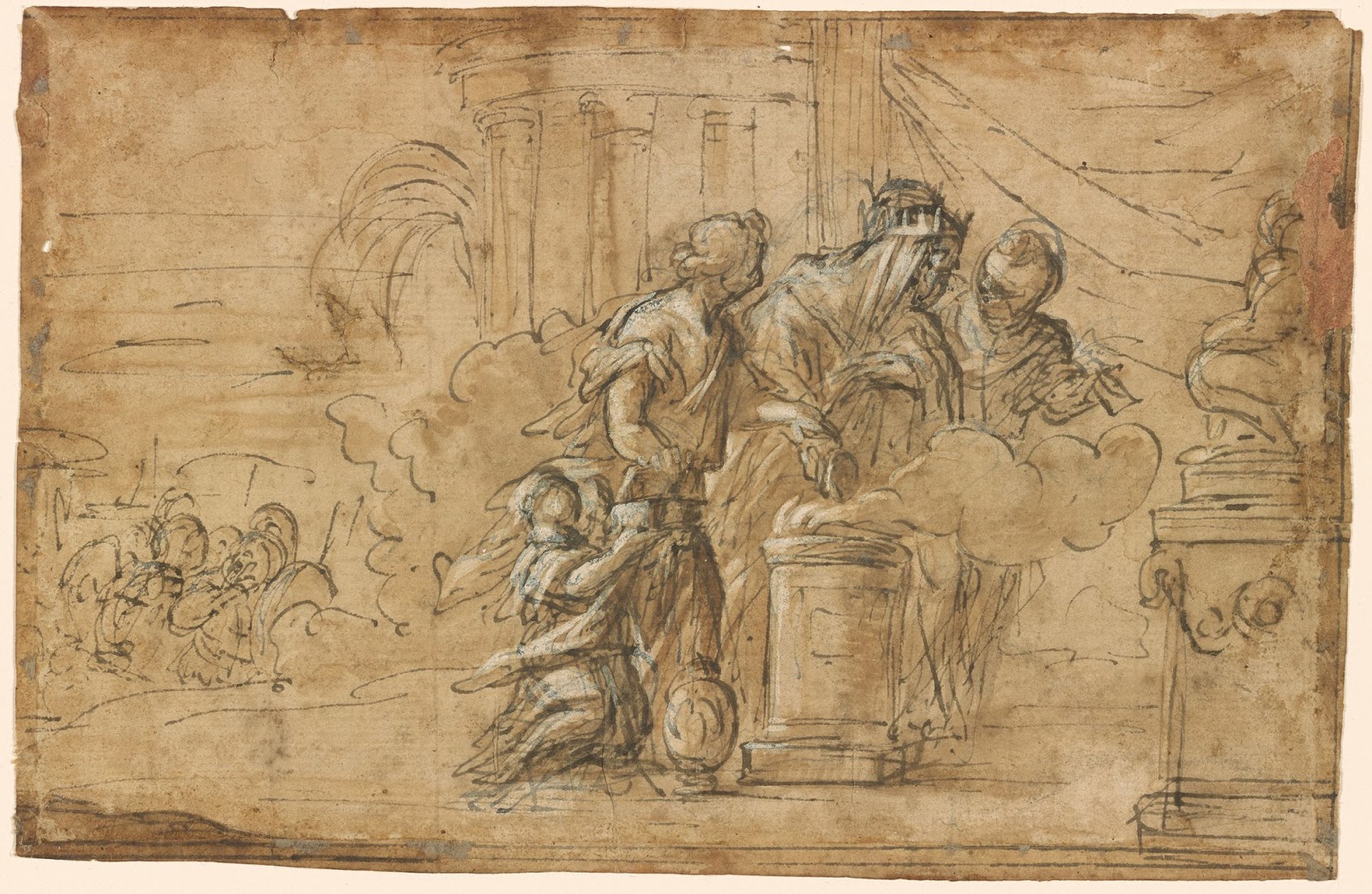
1 Rehoboam went to Shechem, for all Israel had come to Shechem to make him king. And as soon as Jeroboam the son of Nebat heard of it (for he was still in Egypt, where he had fled from King Solomon), then Jeroboam returned from Egypt. And they sent and called him, and Jeroboam and all the assembly of Israel came and said to Rehoboam, “Your father made our yoke heavy. Now therefore lighten the hard service of your father and his heavy yoke on us, and we will serve you.” He said to them, “Go away for three days, then come again to me.” So the people went away.

Then King Rehoboam took counsel with the old men, who had stood before Solomon his father while he was yet alive, saying, “How do you advise me to answer this people?” And they said to him, “If you will be a servant to this people today and serve them, and speak good words to them when you answer them, then they will be your servants forever.” But he abandoned the counsel that the old men gave him and took counsel with the young men who had grown up with him and stood before him. And he said to them, “What do you advise that we answer this people who have said to me, ‘Lighten the yoke that your father put on us’?” 10 And the young men who had grown up with him said to him, “Thus shall you speak to this people who said to you, ‘Your father made our yoke heavy, but you lighten it for us,’ thus shall you say to them, ‘My little finger is thicker than my father’s thighs. 11 And now, whereas my father laid on you a heavy yoke, I will add to your yoke. My father disciplined you with whips, but I will discipline you with scorpions.’”

12 So Jeroboam and all the people came to Rehoboam the third day, as the king said, “Come to me again the third day.” 13 And the king answered the people harshly, and forsaking the counsel that the old men had given him, 14 he spoke to them according to the counsel of the young men, saying, “My father made your yoke heavy, but I will add to your yoke. My father disciplined you with whips, but I will discipline you with scorpions.” 15 So the king did not listen to the people, for it was a turn of affairs brought about by the LORD that he might fulfill his word, which the LORD spoke by Ahijah the Shilonite to Jeroboam the son of Nebat. 1 Kings 11:41-12:15 ESV

As God had promised, Solomon was allowed to complete his reign with his kingdom still intact. But upon Solomon’s death, his son Rehoboam, who succeeded him to the throne, found himself facing a God-ordained crisis that would leave his kingdom divided and greatly diminished. It would be easy to sympathize with poor Rehoboam because he was utterly unaware of what was about to happen to him. The day of his coronation should have been one of the most joyous occasions of his life. He was inheriting the vast kingdom his father had established, along with all the wealth and riches that Solomon had accumulated over the last four decades. He was a lucky young man. But his fate was about to take a decidedly negative turn for the worse. Speaking through the prophet Ahijah, God had promised to divide the kingdom of Israel, awarding ten of the tribes to Jeroboam and leaving Rehoboam with only one.

For the sake of my servant David, the one whom I chose and who obeyed my commands and decrees, I will keep Solomon as leader for the rest of his life. But I will take the kingdom away from his son and give ten of the tribes to you. His son will have one tribe so that the descendants of David my servant will continue to reign, shining like a lamp in Jerusalem, the city I have chosen to be the place for my name.” – 1 Kings 11:34-36 NLT

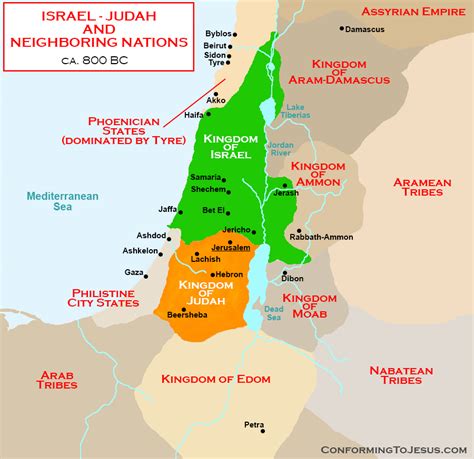
But any sorrow one might feel for Rehoboam is quickly dispelled when his true nature is revealed as he attempts to handle his first official crisis as king. For some undisclosed reason, Rehoboam had decided to hold his coronation ceremony in the city of Shechem, located in the land that belonged to the tribe of Ephraim. His decision to hold this vital ceremony outside the city of Jerusalem may indicate that he was aware of the potential problem with Jeroboam. Solomon had likely warned Rehoboam about the possible threat from the Ephraimites.

Before his death, Solomon had become aware of the prediction that Ahijah the prophet had delivered concerning Jeroboam and attempted to have Jeroboam murdered. Jeroboam, who was an Ephraimite, had been assigned the task of supervising the conscripted labor force from among his own people. In performing his duties, he became aware of the heavy burden Solomon had placed upon the Ephraimites and other northern tribes. So, Rehoboam may have moved his coronation to Shechem in an attempt to placate and win over the disgruntled Ephraimites. But this ploy would prove unsuccessful.

From his place of exile in Egypt, Jeroboam heard the news that Solomon had died and returned to Israel, where he was promptly appointed the official spokesperson for the ten northern tribes. When Rehoboam arrived in Shechem for his coronation, he was met by a large contingent of the people who made an appeal through their appointed leader, Jeroboam.

“Your father was a hard master,” they said. “Lighten the harsh labor demands and heavy taxes that your father imposed on us. Then we will be your loyal subjects.” – 1 Kings 12:4 NLT

Notice that Jeroboam did not restate the words of the prophet. He did not boast about the promise God had made, declaring that he was going to be the next king over ten of the tribes of Israel. There were no threats of insurrection or insurgency. He simply expressed the people’s grievances and their desire to have the heavy burdens of labor and taxation alleviated.

This was a defining moment for Rehoboam. He could have seen this as an opportunity to unify the nation by demonstrating his intentions to be a fair and just king. Even though he was the son of Solomon, Rehoboam would have to win the favor and trust of the people. He was being given the opportunity to rectify some of his father’s less-than-stellar policies.

Having heard the people’s request, Rehoboam sent the people away, assuring them that he would take everything into consideration and return with a decision. As the son of Solomon, the man who compiled and edited an entire book of proverbial sayings, Rehoboam would have grown up hearing all the sage advice his father had gathered.

Where there is no guidance, a people falls, but in an abundance of counselors there is safety. – Proverbs 11:14 ESV

Without counsel plans fail, but with many advisers they succeed. – Proverbs 15:22 ESV

Plans are established by counsel; by wise guidance wage war. – Proverbs 20:18 ESV

Only with sound guidance should you wage war, and victory lies in a multitude of counselors. – Proverbs 24:6 BSB

So, it should come as no surprise that Rehoboam sought counsel. First, he “discussed the matter with the older men who had counseled his father” (1 Kings 12:6 NLT). These men advised Rehoboam that he could win over the people’s hearts by responding favorably to their request. He could forestall any potential unrest by demonstrating that he was, first and foremost, the servant of all the people. While Rehoboam was from the tribe of Judah, he was expected to serve as God’s shepherd over all the people. By making this concession, Rehoboam could avoid a rebellion and establish himself as a compassionate and caring king.

But Rehoboam didn’t like what he heard. The author flatly states, “Rehoboam rejected the advice of the older men and instead asked the opinion of the young men who had grown up with him and were now his advisers” (1 Kings 12:8 NLT). In doing so, Rehoboam lived out the truth revealed in the proverbs his father had so painstakingly collected.

The way of a fool is right in his own eyes, but a wise man listens to advice. – Proverbs 12:15 ESV

Listen to advice and accept instruction, that you may gain wisdom in the future. – Proverbs 19:20 ESV

Listen to instruction and be wise; do not ignore it. – Proverbs 8:33 BSB

Unlike his father, Rehoboam had not been given the gift of wisdom from God. He was young and inexperienced and in desperate need of wise counsel. But when he received it, he rejected it, choosing instead to seek out those who would tell him what he wanted to hear. Disliking the counsel of the older and wiser men, Rehoboam turned to his peers for advice, and they were more than eager to give it.

The young men replied, “This is what you should tell those complainers who want a lighter burden: ‘My little finger is thicker than my father’s waist! Yes, my father laid heavy burdens on you, but I’m going to make them even heavier! My father beat you with whips, but I will beat you with scorpions!’” – 1 Kings 12:10-11 NLT

These brash young men appealed to Rehoboam’s ego. They advised him to lay down the law and establish his reputation as a no-holds-barred disciplinarian who ruled with an iron fist. These young men knew Rehoboam well, and their advice was meant to appeal to his over-inflated ego and his desperate need to escape the shadow of his father’s reputation. In a demonstration of his inherent foolishness and pride, Rehoboam heeded the counsel of his peers and handed down his decision to the people. In doing so, he fulfilled the words of another of his father’s proverbs.

Those who trust their own insight are foolish, but anyone who walks in wisdom is safe. – Proverbs 28:26 NLT

Rather than humbly heeding the pleas of his people, Rehoboam listened to his own heart. However, the author reveals that this was all part of God’s sovereign will.

…it was a turn of affairs brought about by the LORD that he might fulfill his word. – 1 Kings 12:15 ESV

God didn’t force Rehoboam to do what he did. This stubborn and prideful young man simply acted according to his own sinful nature. However, in doing so, he fulfilled God’s will. Rehoboam’s decision would fuel the fire that would end up burning down his kingdom. In a foolish attempt to establish himself as a great king, Rehoboam unwittingly brought about the dismantling of the realm his father had built.

It seems likely that his more senior advisors would have responded to his fateful decision by quoting some of the proverbs his father had compiled. These sage counselors would have encouraged him to demonstrate humility rather than pride.

Pride leads to disgrace,
    but with humility comes wisdom. – Proverbs 11:2 NLT

Pride goes before destruction,
    and haughtiness before a fall. – Proverbs 16:18 ESV

Haughtiness goes before destruction;
    humility precedes honor. – Proverbs 18:12 NLT

Pride ends in humiliation,
    while humility brings honor. – Proverbs 29:23 NLT

Their own life experiences would have prompted them to beg Rehoboam to reconsider his unwise and potentially devastating decision. But Rehoboam’s mind was made up, and the fate of his kingdom was sealed. This sad state of affairs was a fulfillment of the warning God had given to Solomon. Because of Solomon’s unfaithfulness and refusal to repent of his spiritual infidelity, God did as He said He would do and split the kingdom, leaving Rehoboam with one tribe over which to rule. The days ahead would prove to be difficult as the heir to Solomon’s throne attempted to thwart God’s plan by winning back the ten disgruntled tribes through military force. His efforts would fail miserably, and the judgment of God would remain in effect for generations to come, all because one man failed to keep his covenant commitment to Yahweh.

English Standard Version (ESV) The Holy Bible, English Standard Version. ESV® Permanent Text Edition® (2016). Copyright © 2001 by Crossway Bibles, a publishing ministry of Good News Publishers.

New Living Translation (NLT) Holy Bible, New Living Translation, copyright © 1996, 2004, 2015 by Tyndale House Foundation. Used by permission of Tyndale House Publishers Inc., Carol Stream, Illinois 60188. All rights reserved.
God’s Will Would Be Done

26 Jeroboam the son of Nebat, an Ephraimite of Zeredah, a servant of Solomon, whose mother’s name was Zeruah, a widow, also lifted up his hand against the king. 27 And this was the reason why he lifted up his hand against the king. Solomon built the Millo, and closed up the breach of the city of David his father. 28 The man Jeroboam was very able, and when Solomon saw that the young man was industrious he gave him charge over all the forced labor of the house of Joseph. 29 And at that time, when Jeroboam went out of Jerusalem, the prophet Ahijah the Shilonite found him on the road. Now Ahijah had dressed himself in a new garment, and the two of them were alone in the open country. 30 Then Ahijah laid hold of the new garment that was on him, and tore it into twelve pieces. 31 And he said to Jeroboam, “Take for yourself ten pieces, for thus says the LORD, the God of Israel, ‘Behold, I am about to tear the kingdom from the hand of Solomon and will give you ten tribes 32 (but he shall have one tribe, for the sake of my servant David and for the sake of Jerusalem, the city that I have chosen out of all the tribes of Israel), 33 because they have forsaken me and worshiped Ashtoreth the goddess of the Sidonians, Chemosh the god of Moab, and Milcom the god of the Ammonites, and they have not walked in my ways, doing what is right in my sight and keeping my statutes and my rules, as David his father did. 34 Nevertheless, I will not take the whole kingdom out of his hand, but I will make him ruler all the days of his life, for the sake of David my servant whom I chose, who kept my commandments and my statutes. 35 But I will take the kingdom out of his son’s hand and will give it to you, ten tribes. 36 Yet to his son I will give one tribe, that David my servant may always have a lamp before me in Jerusalem, the city where I have chosen to put my name. 37 And I will take you, and you shall reign over all that your soul desires, and you shall be king over Israel. 38 And if you will listen to all that I command you, and will walk in my ways, and do what is right in my eyes by keeping my statutes and my commandments, as David my servant did, I will be with you and will build you a sure house, as I built for David, and I will give Israel to you. 39 And I will afflict the offspring of David because of this, but not forever.’” 40 Solomon sought therefore to kill Jeroboam. But Jeroboam arose and fled into Egypt, to Shishak king of Egypt, and was in Egypt until the death of Solomon. 1 Kings 11:26-40 ESV

Despite all his wisdom, Solomon had made some serious errors in judgment, not the least of which was his decision to violate many of God’s commands. He had chosen to disobey God by amassing for himself stables full of thousands of horses and a harem filled with a thousand wives and concubines. On top of that, he had filled his treasury with vast quantities of gold and silver — all in direct violation of God’s commands (Deuteronomy 17:16-17).

Solomon had also managed to fulfill all the dire predictions the prophet Samuel had conveyed to the people of Israel when they demanded “a king to judge us like all the other nations have” (1 Samuel 8:5 NLT). Long before David or Solomon reigned over Israel, God had been their sovereign King. But the day came when the people grew tired of being governed by the judges and prophets whom God had placed over them. They preferred to have a leader who looked and acted like the kings of their enemies. In demanding a human king, they actually rejected the righteous rule of God over their lives. So, God gave them their wish but warned them of the consequences.

These will be the ways of the king who will reign over you: he will take your sons and appoint them to his chariots and to be his horsemen and to run before his chariots. And he will appoint for himself commanders of thousands and commanders of fifties, and some to plow his ground and to reap his harvest, and to make his implements of war and the equipment of his chariots. He will take your daughters to be perfumers and cooks and bakersHe will take your male servants and female servants and the best of your young men and your donkeys, and put them to his work. – 1 Samuel 8:11-13, 16 ESV

Solomon was guilty of all of the above. He had conscripted large numbers of his own people to serve as laborers on his many building projects. Solomon had used his power as king to force the people of Israel to do his bidding. There’s little doubt that the citizens of Solomon’s realm grew resentful of the involuntary nature of their role in building his kingdom and fame. Verse 26 introduces a man named Jeroboam, from the tribe of Ephraim, one of the largest of the northern tribes. It just so happened that Jeroboam was the son of one of Solomon’s former officials. At some point, Solomon took note of this young man, whose father had recently died. Recognizing a certain degree of leadership ability in Jeroboam, Solomon decided to put him on his payroll.

Jeroboam was a very capable young man, and when Solomon saw how industrious he was, he put him in charge of the labor force from the tribes of Ephraim and Manasseh, the descendants of Joseph. – 1 Kings 11:28 NLT

But notice that Solomon expected Jeroboam to supervise the laborers who had been conscripted from his own tribe. This unique responsibility exposed Jeroboam to the less-than-ideal conditions under which his fellow tribesmen were forced to serve King Solomon. It should come as no surprise that Jeroboam began to build up resentment over what he observed day after day. This scenario bears a striking resemblance to one involving the famous Hebrew patriarch, Moses. The great deliverer of Israel had been born in Egypt during a time when the people of Israel were suffering great persecution at the hands of Pharaoh, the king of Egypt.

…the Egyptians made the Israelites their slaves. They appointed brutal slave drivers over them, hoping to wear them down with crushing labor. They forced them to build the cities of Pithom and Rameses as supply centers for the king.the Egyptians worked the people of Israel without mercy. They made their lives bitter, forcing them to mix mortar and make bricks and do all the work in the fields. They were ruthless in all their demands. – Exodus 1:11, 13-14 NLT

However, even under these harsh conditions, the people of Israel continued to increase in number, prompting Pharaoh to devise a plan to significantly reduce their numbers.

Then Pharaoh, the king of Egypt, gave this order to the Hebrew midwives, Shiphrah and Puah: “When you help the Hebrew women as they give birth, watch as they deliver. If the baby is a boy, kill him; if it is a girl, let her live.” – Exodus 1:15-16 NLT

He instituted a policy of ethnic cleansing meant to diminish any future possibility of the Israelites staging a revolt. But in the midst of this horrible circumstance, God raised up Israel’s future deliverer. Moses, who was an infant at the time and a target of Pharaoh’s edict, was miraculously spared and ended up being adopted into Pharaoh’s household. He would be raised as an Egyptian, living in the royal palace and enjoying all the benefits of his position as the adopted grandson of Pharaoh. But one day, as an adult, Moses would be given an up-close and personal exposure to the plight of his own people.

Many years later, when Moses had grown up, he went out to visit his own people, the Hebrews, and he saw how hard they were forced to work. During his visit, he saw an Egyptian beating one of his fellow Hebrews. After looking in all directions to make sure no one was watching, Moses killed the Egyptian and hid the body in the sand. – Exodus 2: 11-12 NLT

Despite his high standing in Pharaoh’s household, Moses’ rash action brought down the full wrath of his grandfather. He became a wanted man and was forced to flee for his life, eventually settling as an exile in the land of Midian. It was while living in the wilderness of Midian that Moses had a personal encounter with God and received his commission as Israel’s future deliverer.

Moses had seen the mistreatment of his people and taken matters into his own hands. But God was going to use Moses’ misapplied empathy and compassion in a far more effective way – all so that His divine will might be fulfilled.

In the case of Jeroboam, he was given a similar commission from God. But rather than a visit from God in the form of a burning bush, Jeroboam was confronted by a prophet of God.

One day as Jeroboam was leaving Jerusalem, the prophet Ahijah from Shiloh met him along the way. Ahijah was wearing a new cloak. The two of them were alone in a field, and Ahijah took hold of the new cloak he was wearing and tore it into twelve pieces. Then he said to Jeroboam, “Take ten of these pieces, for this is what the LORD, the God of Israel, says: ‘I am about to tear the kingdom from the hand of Solomon, and I will give ten of the tribes to you!’” – 1 Kings 11:29-31 NLT

Like Moses, Jeroboam received a direct commission from Yahweh. In a sense, he, too, would become a deliverer of his people. God was going to use Jeroboam to deliver the tribe of Ephraim, along with nine other northern tribes, from their subjugation under Solomon’s rule. As Moses was used by God to punish the wicked Egyptians, Jeroboam would become God’s chosen instrument for delivering judgment upon Solomon for his many acts of unfaithfulness and disobedience.

Much to his shock and surprise, Jeroboam was informed that God was going to divide Solomon’s vast kingdom in half and install him as the new king over ten of the tribes. God was painfully specific when delineating His reasons for this dramatic shift in the nation’s fortunes.

“For Solomon has abandoned me and worshiped Ashtoreth, the goddess of the Sidonians; Chemosh, the god of Moab; and Molech, the god of the Ammonites. He has not followed my ways and done what is pleasing in my sight. He has not obeyed my decrees and regulations as David his father did.” – 1 Kings 11:33 NLT

Yet, God also revealed His intentions to allow Solomon to complete his reign over an undivided kingdom. But at Solomon’s death, his son would inherit a kingdom that consisted of a single tribe, that of Judah.

“His son will have one tribe so that the descendants of David my servant will continue to reign, shining like a lamp in Jerusalem, the city I have chosen to be the place for my name.” – 1 Kings 11:36 NLT

Despite Solomon’s unfaithfulness, God remained faithful, vowing to keep the covenant He had made with David. He would preserve a remnant of Solomon’s kingdom so that one day He might fulfill the promise concerning the future king who would reign on David’s throne for perpetuity.

“And your house and your kingdom shall be made sure forever before me. Your throne shall be established forever.” – 2 Samuel 7:16 ESV

God had future plans in store for the rebellious nation of Israel. But for now, He was determined to punish Solomon for his repeated acts of unfaithfulness. He provided Jeroboam with the same arrangements He had made with Solomon. If Jeroboam remained committed to the word and the will of God, he would enjoy God’s blessings.

“I will place you on the throne of Israel, and you will rule over all that your heart desires. If you listen to what I tell you and follow my ways and do whatever I consider to be right, and if you obey my decrees and commands, as my servant David did, then I will always be with you. I will establish an enduring dynasty for you as I did for David, and I will give Israel to you. – 1 Kings 11:37-38 NLT

Because 1 Kings is a book of history, it will just be a matter of time before we know whether Jeroboam lived up to God’s expectations. Yet, regardless of what Solomon had done or whatever Jeroboam would end up doing, God’s will would be done. All His promises would be kept and His plan would be fulfilled in its entirety.

But when Solomon heard about the message spoken by the prophet, he tried to thwart Yahweh’s will. He set out to eliminate any threat by having Jeroboam murdered. But Jeroboam escaped to Egypt, where he remained in exile until the death of Solomon. It’s interesting to note that Moses had fled from Egypt to escape the wrath of Pharaoh. Now, Jeroboam was fleeing to Egypt in an attempt to escape the wrath of Solomon. But, like Moses, Jeroboam would one day return and complete the assignment Yahweh had given him.

English Standard Version (ESV) The Holy Bible, English Standard Version. ESV® Permanent Text Edition® (2016). Copyright © 2001 by Crossway Bibles, a publishing ministry of Good News Publishers.

New Living Translation (NLT) Holy Bible, New Living Translation, copyright © 1996, 2004, 2015 by Tyndale House Foundation. Used by permission of Tyndale House Publishers Inc., Carol Stream, Illinois 60188. All rights reserved.

No Peace for the Wicked

And the LORD was angry with Solomon, because his heart had turned away from the LORD, the God of Israel, who had appeared to him twice 10 and had commanded him concerning this thing, that he should not go after other gods. But he did not keep what the LORD commanded. 11 Therefore the LORD said to Solomon, “Since this has been your practice and you have not kept my covenant and my statutes that I have commanded you, I will surely tear the kingdom from you and will give it to your servant. 12 Yet for the sake of David your father I will not do it in your days, but I will tear it out of the hand of your son. 13 However, I will not tear away all the kingdom, but I will give one tribe to your son, for the sake of David my servant and for the sake of Jerusalem that I have chosen.”

14 And the LORD raised up an adversary against Solomon, Hadad the Edomite. He was of the royal house in Edom. 15 For when David was in Edom, and Joab the commander of the army went up to bury the slain, he struck down every male in Edom 16 (for Joab and all Israel remained there six months, until he had cut off every male in Edom). 17 But Hadad fled to Egypt, together with certain Edomites of his father’s servants, Hadad still being a little child. 18 They set out from Midian and came to Paran and took men with them from Paran and came to Egypt, to Pharaoh king of Egypt, who gave him a house and assigned him an allowance of food and gave him land. 19 And Hadad found great favor in the sight of Pharaoh, so that he gave him in marriage the sister of his own wife, the sister of Tahpenes the queen. 20 And the sister of Tahpenes bore him Genubath his son, whom Tahpenes weaned in Pharaoh’s house. And Genubath was in Pharaoh’s house among the sons of Pharaoh. 21 But when Hadad heard in Egypt that David slept with his fathers and that Joab the commander of the army was dead, Hadad said to Pharaoh, “Let me depart, that I may go to my own country.” 22 But Pharaoh said to him, “What have you lacked with me that you are now seeking to go to your own country?” And he said to him, “Only let me depart.”

23 God also raised up as an adversary to him, Rezon the son of Eliada, who had fled from his master Hadadezer king of Zobah. 24 And he gathered men about him and became leader of a marauding band, after the killing by David. And they went to Damascus and lived there and made him king in Damascus. 25 He was an adversary of Israel all the days of Solomon, doing harm as Hadad did. And he loathed Israel and reigned over Syria. 1 Kings 11:9-25 ESV

Solomon’s name is derived from the Hebrew word shalowm, which means “peace,” and Solomon lived up to his name, delivering to his people an unprecedented time of peace and tranquility.

Solomon’s dominion extended over all the kingdoms west of the Euphrates River, from Tiphsah to Gaza. And there was peace on all his borders. During the lifetime of Solomon, all of Judah and Israel lived in peace and safety. – 1 Kings 4:24-25 NLT

While Solomon used his great wealth to purchase thousands of horses and chariots to equip his army, his investment proved unwise and unnecessary because there were no enemies to fight. He had managed to secure the peace through carefully negotiated treaties with the surrounding nations and through marital alliances with princesses from Moab, Ammon, Edom, Sidon, and among the Hittites.

However, those very same women ultimately turned Solomon’s heart away from the Lord. By choosing to align himself with these pagan princesses, Solomon exposed himself to the false gods of their home nations. Driven by his own lust for sensual pleasure, Solomon compromised his convictions and disobeyed the command of God.

“You shall not enter into marriage with them, neither shall they with you, for surely they will turn away your heart after their gods.” – 1 Kings 11:2 ESV

To say that Solomon was obsessed with women is not an exaggeration. He had managed to accumulate for himself 700 wives of royal birth, in direct violation of God’s word. The text reveals that Solomon “clung to these in love” (1 Kings 11:2 ESV). The image conveyed in the Hebrew is that Solomon was clinging to these women, like a child with a toy he refuses to give up. The Hebrew word for “love” in this passage is ‘ahab, and in the context, it carries a somewhat negative connotation.  The author appears to portray Solomon as driven by lustful, sensual motives that blinded him to the dangers of his actions. This man had the financial resources and the power to deny himself nothing his heart desired. He was like an addict with full access to his drug of choice. Solomon loved women, and he had more than 700 wives and 300 concubines to satisfy his seemingly insatiable sexual desires.

In an attempt to please his many wives, Solomon constructed altars and shrines to the various gods they worshipped.

On the Mount of Olives, east of Jerusalem, he even built a pagan shrine for Chemosh, the detestable god of Moab, and another for Molech, the detestable god of the Ammonites. Solomon built such shrines for all his foreign wives to use for burning incense and sacrificing to their gods. – 1 Kings 11:7-8 NLT

This undertaking proved costly to Solomon, and not just financially. Just as he had invested his financial resources to build a Temple to the one true God, he poured money and human resources into the construction of worship sites dedicated to the false gods of his many wives. The presence of these ubiquitous shrines became a source of temptation to the people of Israel, causing them to turn their backs on Yahweh.

God had promised to give Solomon wealth and fame, but now he was using the financial blessings of God to promote the worship of false gods. His determination to placate his wives’ religious convictions did not go unnoticed by Yahweh. God delivered a stinging rebuke to Solomon, informing him that his disobedience would have dire consequences.

“Since you have not kept my covenant and have disobeyed my decrees, I will surely tear the kingdom away from you and give it to one of your servants.” – 1 Kings 11:11 NLT

God had chosen Solomon to be the next king of Israel, following in the footsteps of his father, David. But Solomon had “refused to follow the LORD completely, as his father, David, had done” (1 Kings 11:6 NLT). Unlike David, Solomon failed to remain faithful to God. He had a divided allegiance, allowing his love for God to become diluted by his love of the world and his lust for sensual pleasures. So, God threatened to bring judgment upon Solomon by dividing his kingdom in half. The vast empire that Solomon had spent so much time, energy, and money building would be reduced to a fraction of its former glory. Not only that, the peace that Israel enjoyed would be disrupted by the arrival of “adversaries” — enemies sent by God to punish His disobedient king and people.

Out of His respect for David, God graciously allowed Solomon to complete his reign with his kingdom intact. It would be Solomon’s son who would have to suffer the consequences of his father’s sin. But, in the meantime, Solomon would have to endure the unpleasant prospect of war. The text clearly states that “the LORD raised up Hadad the Edomite, a member of Edom’s royal family, to be Solomon’s adversary” (1 Kings 11:14 NLT). This was a sovereign act of God. Hadad was chosen by God to be an instrument of His judgment against Solomon.

Hadad was a member of the Edomite royal family who had been living in exile in Egypt ever since David’s forces had conquered and occupied their land.

So David became even more famous when he returned from destroying 18,000 Edomites in the Valley of Salt. He placed army garrisons throughout Edom, and all the Edomites became David’s subjects. In fact, the LORD made David victorious wherever he went. – 2 Samuel 8:13-14 NLT

In an attempt to explain Hadad’s animosity toward Solomon, the author reveals that “Hadad and a few of his father’s royal officials escaped and headed for Egypt” (1 Kings 11:17 NLT). Joab, the commanding general over David’s armies, had remained in Edom with a contingent of troops, orchestrating a clean-up operation. They spent six months methodically and systematically eradicating every last male among the Edomites.

Having fled to Egypt for refuge, Hadad found himself welcomed by Pharaoh with open arms. He was even allowed to marry the queen’s sister. This very brief history of Hadad’s time in Egypt mirrors that of Moses. The one who would become the eventual deliverer of Israel had been born in Egypt, during a perilous time when Pharaoh had ordered the deaths of all the male children of the Hebrews. However, Moses had been miraculously delivered and ultimately became a member of Pharaoh’s household. And this young man was eventually used by God to rescue His people from their enslavement in Egypt.

Yet, in Hadad’s case, he was an Edomite who had fled to Egypt for refuge and would be used by God, not to deliver the people of Israel, but to punish them. He would return to the land of promise to bring judgment, not blessing. He would be used by God to deliver punishment, not peace, and he would not be alone in his role as God’s agent of judgment. God would also raise up Rezon, son of Eliada.

While Hadad represented the Edomites in the south, Rezon would rally the northern enemies of Israel. Essentially, God was creating a pincer movement designed to envelop the Israelites from two sides. Solomon was going to find himself surrounded by adversaries, and these two men would use their intense hatred for David and the people of Israel to fuel their ongoing and unrelenting harassment of Solomon.

Rezon was Israel’s bitter adversary for the rest of Solomon’s reign, and he made trouble, just as Hadad did. Rezon hated Israel intensely and continued to reign in Aram. – 1 Kings 11:25 NLT

Solomon’s “love” for his many wives had led him to disobey God. His unbridled lust had influenced him to make unwise decisions that resulted in ungodly behavior. And now, he was going to pay the consequences. Solomon, the king whose name meant “peace”  (shalom), would have his fairytale existence disrupted by external threats that would impact his bottom line and sow doubt and distrust among his people. The glory days were over. Solomon’s decision to disobey Yahweh came with a high price that would leave him with regrets and fill him with remorse. He would later record his thoughts in the Book of Ecclesiastes.

When you vow a vow to God, do not delay paying it, for he has no pleasure in fools. Pay what you vow. It is better that you should not vow than that you should vow and not pay. Let not your mouth lead you into sin, and do not say before the messenger that it was a mistake. Why should God be angry at your voice and destroy the work of your hands? For when dreams increase and words grow many, there is vanity; but God is the one you must fear. – Ecclesiastes 5:4-7 ESV

Solomon failed to keep his vow to Yahweh and suffered the consequences, but he learned a valuable lesson from his mistake that he chose to share for posterity.

The end of the matter; all has been heard. Fear God and keep his commandments, for this is the whole duty of man. For God will bring every deed into judgment, with every secret thing, whether good or evil. – Ecclesiastes 12:13-14 ESV

English Standard Version (ESV) The Holy Bible, English Standard Version. ESV® Permanent Text Edition® (2016). Copyright © 2001 by Crossway Bibles, a publishing ministry of Good News Publishers.

New Living Translation (NLT) Holy Bible, New Living Translation, copyright © 1996, 2004, 2015 by Tyndale House Foundation. Used by permission of Tyndale House Publishers Inc., Carol Stream, Illinois 60188. All rights reserved.

The Perils of Pursuing Personal Pleasure

1 Now King Solomon loved many foreign women, along with the daughter of Pharaoh: Moabite, Ammonite, Edomite, Sidonian, and Hittite women, from the nations concerning which the LORD had said to the people of Israel, “You shall not enter into marriage with them, neither shall they with you, for surely they will turn away your heart after their gods.” Solomon clung to these in love. He had 700 wives, who were princesses, and 300 concubines. And his wives turned away his heart. For when Solomon was old his wives turned away his heart after other gods, and his heart was not wholly true to the LORD his God, as was the heart of David his father. For Solomon went after Ashtoreth the goddess of the Sidonians, and after Milcom the abomination of the Ammonites. So Solomon did what was evil in the sight of the LORD and did not wholly follow the LORD, as David his father had done. Then Solomon built a high place for Chemosh the abomination of Moab, and for Molech the abomination of the Ammonites, on the mountain east of Jerusalem. And so he did for all his foreign wives, who made offerings and sacrificed to their gods. 1 Kings 11:1-8 ESV


In this chapter, the author pulls back the curtain on Solomon’s life, revealing the poorly veiled secret that would prove to be his ultimate downfall. Solomon loved women, and he used his position and power as king to more than satisfy his insatiable desire for the opposite sex. The text reveals the staggering fact that Solomon had amassed a harem of 1,000 wives and concubines. And it had all started with his marriage to the daughter of the Egyptian Pharaoh (1 Kings 3:1). This had probably been a marriage of convenience, allowing Solomon to form a close alliance with another powerful nation. He certainly made the most of this marital union by purchasing thousands of horses and chariots from the Egyptians to equip his army (1 Kings 10:28-29).

But Solomon’s infatuation with women didn’t stop with Pharaoh’s daughter. He went on to add other foreign women to his growing harem, including “Moabite, Ammonite, Edomite, Sidonian, and Hittite women” (1 Kings 11:1 ESV). The author also highlights the underlying problem with Solomon’s actions. Solomon had chosen to love foreign women “from the nations concerning which the Lord had said to the people of Israel, ‘You shall not enter into marriage with them, neither shall they with you, for surely they will turn away your heart after their gods’” (1 Kings 11:2 ESV).

Solomon was in direct violation of God’s command, given to the people of Israel during their journey from Egypt to Canaan. Yahweh had warned the Israelites that they were not to intermarry with the pagans who currently occupied the land He was giving them as their inheritance. Moses conveyed this command in no uncertain terms.

“When the LORD your God brings you into the land you are about to enter and occupy, he will clear away many nations ahead of you: the Hittites, Girgashites, Amorites, Canaanites, Perizzites, Hivites, and Jebusites. These seven nations are greater and more numerous than you. When the LORD your God hands these nations over to you and you conquer them, you must completely destroy them. Make no treaties with them and show them no mercy. You must not intermarry with them. Do not let your daughters and sons marry their sons and daughters, for they will lead your children away from me to worship other gods. Then the anger of the LORD will burn against you, and he will quickly destroy you.” – Deuteronomy 7:1-4 NLT

God had also prohibited the Israelites from having anything to do with the Ammonites and Moabites.

“These nations did not welcome you with food and water when you came out of Egypt. Instead, they hired Balaam son of Beor from Pethor in distant Aram-naharaim to curse you. But the LORD your God refused to listen to Balaam. He turned the intended curse into a blessing because the LORD your God loves you. As long as you live, you must never promote the welfare and prosperity of the Ammonites or Moabites. – Deuteronomy 23:4-6 NLT

But Solomon was a collector. He had a passion for fine things and filled his palace with treasures of all kinds, including women from every corner of the known world. He treated them like prized possessions, living symbols of his unsurpassed wealth and evidence of his obsession with fulfilling his heart’s every desire. Years later, Solomon would confess his narcissistic propensities.

“I collected great sums of silver and gold, the treasure of many kings and provinces. I hired wonderful singers, both men and women, and had many beautiful concubines. I had everything a man could desire!

So I became greater than all who had lived in Jerusalem before me, and my wisdom never failed me. Anything I wanted, I would take. I denied myself no pleasure. – Ecclesiastes 2:8-9 NLT

Despite God’s warnings, Solomon “clung to these in love” (1 Kings 11:2 ESV). Even though Solomon had been gifted with wisdom beyond compare, his obsessive-compulsive tendencies led him to make decisions that were clearly foolish and, ultimately, destructive. God had made His will perfectly and plainly clear.

“The king must not take many wives for himself, because they will turn his heart away from the LORD.” – Deuteronomy 17:17 NLT

But Solomon, emboldened by his wisdom and empowered by his position as king, decided that he knew what was best. Fulfilling his physical desires and passions took precedence over his obedience to God, and he would suffer the consequences for his unfaithfulness.

Whenever a child of God places his will above that of God, he will find himself making constant compromises and concessions to justify his actions. He will rationalize his decisions in an attempt to convince himself that he is doing the right thing. In doing so, he allows himself to be driven by his desires, rather than guided by the loving hand of God Almighty. This pattern of behavior is clearly evident in the life of Solomon. In Chapter 3, the author declared Solomon’s love for and commitment to God.

Solomon loved the Lord, walking in the statutes of David his father – 1 Kings 3:3 ESV

But by Chapter 11, things had begun to change.

King Solomon loved many foreign women – 1 Kings 11:1 ESV

Solomon never stopped loving Yahweh, but he soon found himself with divided affections and a diminished devotion to Him. His love, or better yet, lust for his many wives made it impossible for Solomon to love God with all his heart, soul, mind, and strength. His capacity to love God had been severely diluted. He had allowed himself to become distracted by the things of this world, and, as the apostle John makes clear, this love affair with material possessions and physical passions always leads to diminished devotion to God.

Do not love this world nor the things it offers you, for when you love the world, you do not have the love of the Father in you. For the world offers only a craving for physical pleasure, a craving for everything we see, and pride in our achievements and possessions. These are not from the Father, but are from this world. And this world is fading away, along with everything that people crave. But anyone who does what pleases God will live forever.  – 1 John 2:15-17 NLT

Chapter 11 marks a sad and sobering turning point in Solomon’s life. Everything had started out so well; he had been appointed by God to replace his father as king of Israel. He had been gifted with great wisdom and rewarded with wealth and fame. His kingdom was marked by peace and prosperity. And he had been given the privilege and honor of building a Temple for Yahweh. But the honeymoon was over.

Solomon had failed to heed his father’s warning.

“Take courage and be a man. Observe the requirements of the LORD your God, and follow all his ways. Keep the decrees, commands, regulations, and laws written in the Law of Moses so that you will be successful in all you do and wherever you go.” – 1 Kings 2:2-3 NLT

God had made a covenant commitment to David.

“Furthermore, the LORD declares that he will make a house for you—a dynasty of kings! For when you die and are buried with your ancestors, I will raise up one of your descendants, your own offspring, and I will make his kingdom strong. He is the one who will build a house—a temple—for my name. And I will secure his royal throne forever.” – 2 Samuel 7:11-13 NLT

But David had understood that this promise came with conditions. He knew that the covenant blessings would be forfeited if his son refused to remain faithful to God. And David had shared this important caveat with his son while lying on his deathbed.

“If your descendants live as they should and follow me faithfully with all their heart and soul, one of them will always sit on the throne of Israel.” – 1 Kings 2:4 NLT

Yet, the son of David ultimately committed the unpardonable sin. Not only did he disobey God by marrying foreign women, but he began to worship their false gods.

Solomon went after Ashtoreth the goddess of the Sidonians, and after Milcom the abomination of the Ammonites. So Solomon did what was evil in the sight of the LORD and did not wholly follow the LORD, as David his father had done. – 1 Kings 11:5-6 NLT

His love for the world and all the tempting pleasures it offered had turned his heart from the LORD. His life had become a living example of something Jesus later warned about.

“No one can serve two masters. For you will hate one and love the other; you will be devoted to one and despise the other. You cannot serve God and be enslaved to money.” – Matthew 6:24 NLT

It is fascinating to note that Solomon’s love of women eventually led him to develop a devotion to their pagan gods. And his affection for these false gods would prompt him to erect shrines and places of worship in their honor. The man who had built the house for Yahweh, the one true God, found himself building altars to Chemosh and Molech, the gods of the Moabites and Ammonites. But notice where he built them – “on the mountain east of Jerusalem” (1 Kings 11:7 ESV). This was the Mount of Olives, the very same place where, hundreds of years later, another son of David would pray the following prayer: “Father… not my will, but yours, be done” (Luke 22:42 ESV). In the exact location where Solomon had erected altars to the false gods of his foreign wives, Jesus would declare His commitment to faithfully fulfill God’s will.

It was on the Mount of Olives that Solomon and his many wives offered up their sacrifices to  Molech and  Chemosh. But in the very same place, Jesus, the Son of David and the Savior of the world, would humbly and obediently sacrifice His own will for that of His Heavenly Father.

As the Son of God, Jesus enjoyed all the privileges and prerogatives that came with His royal title. The apostle Paul reminds us that, “he did not think of equality with God as something to cling to. Instead, he gave up his divine privileges; he took the humble position of a slave and was born as a human being” (Philippians 2:6-7 NLT). In His humanity, Jesus’ devotion to His Heavenly Father was put to the test when Satan tempted Him in the wilderness. The enemy tried to persuade Jesus to use His divine rights and powers to satisfy His physical needs. 

“If you are the Son of God, tell these stones to become loaves of bread.”

But Jesus told him, “No! The Scriptures say,

‘People do not live by bread alone,
    but by every word that comes from the mouth of God.’” – Matthew 4:3-4 NLT

When this ploy failed, Satan took Jesus to the highest point of the Temple grounds and challenged Him to test His Father’s love for Him.

“If you are the Son of God, jump off! For the Scriptures say,

‘He will order his angels to protect you.
And they will hold you up with their hands
    so you won’t even hurt your foot on a stone.’” – Matthew 4:6 NLT

But Jesus calmly responded, “The Scriptures also say, ‘You must not test the Lord your God’” (Matthew 4:7 NLT). 

In a final effort to persuade Jesus to use His divine rights for personal gain, Satan took Jesus to the peak of a very high mountain.. From this lofty vantage point, he showed Jesus all the kingdoms of the world in all their glory. Then he made Jesus a very tempting offer.

“I will give it all to you,” he said, “if you will kneel down and worship me.” – Matthew 4:9 NLT

Satan was offering Jesus sovereignty over his earthly domain in exchange for submission to his will. But Jesus was not interested in gaining what was rightfully His through any means other than that ordained by God the Father.

“Get out of here, Satan,” Jesus told him. “For the Scriptures say,

‘You must worship the Lord your God
    and serve only him.’” – Matthew 4:10 NLT

Jesus was not willing to take shortcuts or step outside of His Father’s will. No earthly temptation to pursue personal pleasure or self-satisfaction would ever persuade Him to abandon His love for and commitment to His Heavenly Father. But despite Yahweh’s repeated warnings about his unfaithful behavior, Solomon would refuse to change his ways. His love affair with the world and his obsession with women would ultimately turn his heart away from the Lord, sealing his own fate and that of his kingdom.

English Standard Version (ESV) The Holy Bible, English Standard Version. ESV® Permanent Text Edition® (2016). Copyright © 2001 by Crossway Bibles, a publishing ministry of Good News Publishers.

New Living Translation (NLT) Holy Bible, New Living Translation, copyright © 1996, 2004, 2015 by Tyndale House Foundation. Used by permission of Tyndale House Publishers Inc., Carol Stream, Illinois 60188. All rights reserved.

Blinded by the Blessings

14 Now the weight of gold that came to Solomon in one year was 666 talents of gold, 15 besides that which came from the explorers and from the business of the merchants, and from all the kings of the west and from the governors of the land. 16 King Solomon made 200 large shields of beaten gold; 600 shekels of gold went into each shield. 17 And he made 300 shields of beaten gold; three minas of gold went into each shield. And the king put them in the House of the Forest of Lebanon. 18 The king also made a great ivory throne and overlaid it with the finest gold. 19 The throne had six steps, and the throne had a round top, and on each side of the seat were armrests and two lions standing beside the armrests, 20 while twelve lions stood there, one on each end of a step on the six steps. The like of it was never made in any kingdom. 21 All King Solomon’s drinking vessels were of gold, and all the vessels of the House of the Forest of Lebanon were of pure gold. None were of silver; silver was not considered as anything in the days of Solomon. 22 For the king had a fleet of ships of Tarshish at sea with the fleet of Hiram. Once every three years the fleet of ships of Tarshish used to come bringing gold, silver, ivory, apes, and peacocks.

23 Thus King Solomon excelled all the kings of the earth in riches and in wisdom. 24 And the whole earth sought the presence of Solomon to hear his wisdom, which God had put into his mind. 25 Every one of them brought his present, articles of silver and gold, garments, myrrh, spices, horses, and mules, so much year by year.

26 And Solomon gathered together chariots and horsemen. He had 1,400 chariots and 12,000 horsemen, whom he stationed in the chariot cities and with the king in Jerusalem. 27 And the king made silver as common in Jerusalem as stone, and he made cedar as plentiful as the sycamore of the Shephelah. 28 And Solomon’s import of horses was from Egypt and Kue, and the king’s traders received them from Kue at a price. 29 A chariot could be imported from Egypt for 600 shekels of silver and a horse for 150, and so through the king’s traders they were exported to all the kings of the Hittites and the kings of Syria. 1 Kings 10:14-29 ESV

Up to this point in his narrative of Solomon’s reign, the author of 1 Kings seems to have spent far more time describing Solomon’s vast wealth than providing evidence of his great wisdom. He has only offered one concrete example where Solomon utilized his God-given gift of wisdom to settle a dispute between two prostitutes who were fighting over legal custody of a newborn baby (1 Kings 3:16-28). There have been several allusions to Solomon’s wisdom, such as the statement made by the Queen of Sheba.

“Everything I heard in my country about your achievements and wisdom is true! I didn’t believe what was said until I arrived here and saw it with my own eyes. In fact, I had not heard the half of it! Your wisdom and prosperity are far beyond what I was told. – 1 Kings 10:6-7 NLT

However, it appears that the author has intentionally placed more emphasis on Solomon’s rapidly expanding financial portfolio. God had promised to bless Solomon with riches and honor (1 Kings 3:13), and it is evident that He had kept His word. In just a single year, nearly 25 tons of gold were added to Solomon’s treasury. That’s a staggering figure, but it represents only a fraction of the revenue that flowed into the kingdom each year. Income from his many business ventures, tributes paid by vassal states, and gifts from various kings and dignitaries further enhanced his annual revenue. His proverbial cup was running over.

People from every nation came to consult him and to hear the wisdom God had given him. Year after year everyone who visited brought him gifts of silver and gold, clothing, weapons, spices, horses, and mules. – 1 Kings 10:24-25 NLT

As a result, “King Solomon became richer and wiser than any other king on earth” (1 Kings 10:23 NLT). It seems that his wisdom and wealth shared a symbiotic relationship. Both were gifts that had been made possible by God. Yet, like all God-given gifts, the real test lies in how they are utilized. Both wisdom and wealth can be misused and abused. Any gift from God can be used for ungodly purposes. It seems that Solomon allowed his wisdom and wealth to become a distraction. Somewhere along the way, he had lost sight of the divine purpose for his gifts — to govern the people of Israel with justice (1 Kings 3:11). He began to repurpose his wisdom and riches in a vain search for meaning in life. He would later write of his growing disenchantment with the pursuit of pleasure and prosperity.

I became greater than all who had lived in Jerusalem before me, and my wisdom never failed me. Anything I wanted, I would take. I denied myself no pleasure. I even found great pleasure in hard work, a reward for all my labors. But as I looked at everything I had worked so hard to accomplish, it was all so meaningless—like chasing the wind. There was nothing really worthwhile anywhere. – Ecclesiastes 2:9-11 NLT

Notice how many times Solomon uses the personal pronoun “I.” He had become totally self-consumed, focusing all his attention on what he could gain from what he had been given. Even his God-given wisdom became little more than a tool for trying to decipher the mysteries of life. While he understood wisdom’s inherent value, it wasn’t long before he came to despise this valuable gift from God.

Yet I saw that the wise and the foolish share the same fate. Both will die. So I said to myself, “Since I will end up the same as the fool, what’s the value of all my wisdom? This is all so meaningless!” For the wise and the foolish both die. The wise will not be remembered any longer than the fool. In the days to come, both will be forgotten.

So I came to hate life because everything done here under the sun is so troubling. Everything is meaningless—like chasing the wind. – Ecclesiastes 3:14-17 NLT

Twenty years after ascending to the throne of his father, David, Solomon was experiencing unparalleled success. He had the Midas touch. It seems that everything he touched turned to literal gold. In fact, gold was so prevalent in his kingdom that “silver was considered worthless in Solomon’s day” (1 Kings 10:21 NLT).

Solomon had built his own fleet of ships, which returned every three years with their holds full of additional treasures, including “gold, silver, ivory, apes, and peacocks” (1 Kings 10:22 NLT). He had amassed “a huge force of chariots and horses. He had 1,400 chariots and 12,000 horses” ( 1 Kings 10:26 NLT). And many of those horses had been imported from as far away as Egypt.

All of these descriptions of Solomon’s incredible wealth must be placed within the context of the commands God had given concerning those who would serve as kings over His people.

“The king must not build up a large stable of horses for himself or send his people to Egypt to buy horses, for the Lord has told you, ‘You must never return to Egypt.’ The king must not take many wives for himself, because they will turn his heart away from the Lord. And he must not accumulate large amounts of wealth in silver and gold for himself.” – Deuteronomy 17:16-17 NLT

God had blessed Solomon with unparalleled resources, but Solomon used them in ways that were contradictory to God’s will. His misuse of God’s gracious gift was in clear violation of God’s command. Solomon’s wealth had never been intended to feed his ego or fulfill his wildest dreams. It was meant to enable him to provide the people of Israel with proper care and protection. While accumulating chariots and horses may have sounded like a good strategy for ensuring Israel’s national security, it was in direct violation of God’s will. Solomon’s own father had written about the futility of placing one’s hope in such things.

Now I know that the LORD saves his anointed;
he will answer him from his holy heaven
with the saving might of his right hand.
Some trust in chariots and some in horses,
but we trust in the name of the LORD our God.
They collapse and fall,
but we rise and stand upright. – Psalm 20:6-8 NLT

Solomon appears to have been preoccupied with the outward trappings of royalty. He had built for himself an opulent palace, where exquisite meals were served on golden plates and the finest wine was served in golden goblets. Oppulence was prevalent in Solomon’s kingdom. He spared no expense, spending vast sums of money on frivolous things like decorative shields made of gold and a one-of-a-kind royal throne of incomparable value

Then the king made a huge throne, decorated with ivory and overlaid with fine gold. The throne had six steps and a rounded back. There were armrests on both sides of the seat, and the figure of a lion stood on each side of the throne. There were also twelve other lions, one standing on each end of the six steps. No other throne in all the world could be compared with it! – 1 Kings 10:18-20 NLT

Solomon looked like a king and lived like one. He had all the trappings of success and, from the outsider’s perspective, was living the dream. Yet, the day would come when Solomon finally recognized that he had confused the gift with the Giver.

Those who love money will never have enough. How meaningless to think that wealth brings true happiness! The more you have, the more people come to help you spend it. So what good is wealth—except perhaps to watch it slip through your fingers! – Ecclesiastes 10-11 NLT

The wisdom and wealth given to him by God had never been intended to fulfill his every self-centered desire or satiate his relentless need for self-satisfaction. Solomon had been anointed and blessed so that he might lead the nation of Israel into a period of peace, prosperity, and faithful service to God. Solomon had started out well, even asking God for the capacity to lead the people of Israel with wisdom and discernment.

“Give me an understanding heart so that I can govern your people well and know the difference between right and wrong. For who by himself is able to govern this great people of yours?” – 1 Kings 3:9 NLT

But somewhere along the way, Solomon let the blessings of God go to his head. He had allowed the gifts to take precedence over the Giver and, in doing so, turned the blessings of God into a curse. His insatiable appetite for success and significance would turn his heart away from God. His relentless pursuit of pleasure and personal comfort would distract him from fulfilling his God-given purpose. Yahweh had set him on the throne to promote godliness and faithfulness among the people of Israel.

“…if you will follow me with integrity and godliness, as David your father did, obeying all my commands, decrees, and regulations, then I will establish the throne of your dynasty over Israel forever.” – 1 Kings 9:4-5 NLT

But God’s promise to extend the Davidic dynasty came with a crucial conditional clause.

“But if you or your descendants abandon me and disobey the commands and decrees I have given you, and if you serve and worship other gods, then I will uproot Israel from this land that I have given them. I will reject this Temple that I have made holy to honor my name. I will make Israel an object of mockery and ridicule among the nations. – 1 Kings 9:6-7 NLT

And as the next chapter unfolds, the outcome of Solomon’s pursuit of pleasure, prosperity, and prestige will become painfully apparent. He would have been wise to heed the words of Moses, spoken to the Israelites as they prepared to enter the land of Canaan.

“Remember the LORD your God. He is the one who gives you power to be successful, in order to fulfill the covenant he confirmed to your ancestors with an oath. But I assure you of this: If you ever forget the LORD your God and follow other gods, worshiping and bowing down to them, you will certainly be destroyed.  – Deuteronomy 8:18-19 NLT

English Standard Version (ESV) The Holy Bible, English Standard Version. ESV® Permanent Text Edition® (2016). Copyright © 2001 by Crossway Bibles, a publishing ministry of Good News Publishers.

New Living Translation (NLT) Holy Bible, New Living Translation, copyright © 1996, 2004, 2015 by Tyndale House Foundation. Used by permission of Tyndale House Publishers Inc., Carol Stream, Illinois 60188. All rights reserved.
No Greater Gift Than God

1 Now when the queen of Sheba heard of the fame of Solomon concerning the name of the LORD, she came to test him with hard questions. She came to Jerusalem with a very great retinue, with camels bearing spices and very much gold and precious stones. And when she came to Solomon, she told him all that was on her mind. And Solomon answered all her questions; there was nothing hidden from the king that he could not explain to her. And when the queen of Sheba had seen all the wisdom of Solomon, the house that he had built, the food of his table, the seating of his officials, and the attendance of his servants, their clothing, his cupbearers, and his burnt offerings that he offered at the house of the LORD, there was no more breath in her.

And she said to the king, “The report was true that I heard in my own land of your words and of your wisdom, but I did not believe the reports until I came and my own eyes had seen it. And behold, the half was not told me. Your wisdom and prosperity surpass the report that I heard. Happy are your men! Happy are your servants, who continually stand before you and hear your wisdom! Blessed be the LORD your God, who has delighted in you and set you on the throne of Israel! Because the LORD loved Israel forever, he has made you king, that you may execute justice and righteousness.” 10 Then she gave the king 120 talents of gold, and a very great quantity of spices and precious stones. Never again came such an abundance of spices as these that the queen of Sheba gave to King Solomon.

11 Moreover, the fleet of Hiram, which brought gold from Ophir, brought from Ophir a very great amount of almug wood and precious stones. 12 And the king made of the almug wood supports for the house of the LORD and for the king’s house, also lyres and harps for the singers. No such almug wood has come or been seen to this day.

13 And King Solomon gave to the queen of Sheba all that she desired, whatever she asked besides what was given her by the bounty of King Solomon. So she turned and went back to her own land with her servants. 1 Kings 10:1-13 ESV

In the two decades that Solomon had served as king of Israel, the news of his incomparable wisdom, vast wealth, and rapidly expanding kingdom had spread throughout the known world (1 Kings 4:31). News of his skills as a composer, author, horticulturist, and biologist further enhanced his already mythical reputation as the wisest man who ever lived. Intrigued by what they heard, kings and dignitaries from other nations sent their emissaries to Jerusalem to see if all the rumors about him were true.

…kings from every nation sent their ambassadors to listen to the wisdom of Solomon. – 1 Kings 4:34 NLT

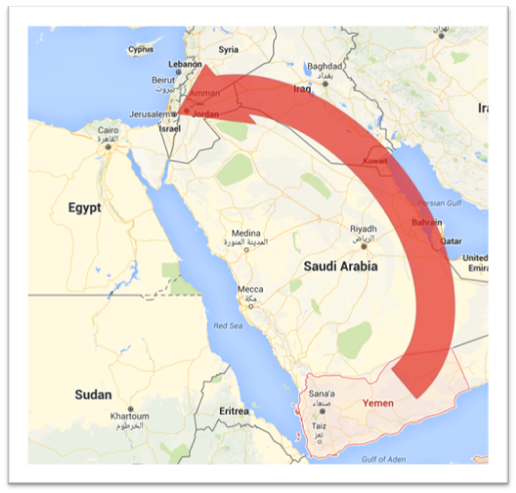
The author of 1 Kings provides an extended example of one such visit. On this occasion, the Queen of Sheba undertook the long and arduous journey to Jerusalem to witness the wisdom of Solomon firsthand. The kingdom of Sheba was located approximately 1,200 miles away, on the southwestern corner of the Arabian Peninsula, in the region now known as Yemen. The queen traveled with a large royal retinue and brought with her a vast amount of spices, gold, and precious stones. It appears that the real purpose of her trip was to secure an alliance between her nation and the rapidly expanding kingdom of Solomon. From its location at the confluence of the Sea of Aden and the Red Sea, the kingdom of Sheba had been able to expand its dominance of the spice and incense trade in that region of the world. A peaceful alliance with a powerful nation like Israel would only further enhance and protect their future prospects.

Upon her arrival, the queen was given a personal appointment with Solomon, where she was able to satisfy her curiosity about his wisdom and wealth. This interrogation was most likely meant to assess the validity of Solomon’s reputation, but was also intended to reassure the queen whether a treaty with Israel would be beneficial. In the end, she was left breathless by her encounter with Solomon.

…when the queen of Sheba had seen all the wisdom of Solomon, the house that he had built, the food of his table, the seating of his officials, and the attendance of his servants, their clothing, his cupbearers, and his burnt offerings that he offered at the house of the LORD, there was no more breath in her. – 1 Kings 10:4-5 ESV

She was blown away by what she saw and heard, and confessed that the reality of Solomon’s wisdom and the greatness of his kingdom far exceeded the rumors and her own expectations.

“Everything I heard in my country about your achievements and wisdom is true! I didn’t believe what was said until I arrived here and saw it with my own eyes. In fact, I had not heard the half of it! Your wisdom and prosperity are far beyond what I was told. – 1 Kings 10:6-7 NLT

The inclusion of this personal, third-party assessment of Solomon’s greatness was meant to validate all that the author had written up to this point. Her testimony was intended to prove that all the descriptions concerning Solomon’s wisdom and the wealth of his kingdom were far from rhetorical flourishes or hyperbole. It was all true.

And this pagan queen affirmed the divine nature of Solomon’s reign, deeming the people of Israel as the fortunate recipients of their God’s love because He had chosen to make this just and righteous man their king.

“Praise the LORD your God, who delights in you and has placed you on the throne of Israel. Because of the LORD’s eternal love for Israel, he has made you king so you can rule with justice and righteousness.” – 1 Kings 10:9 NLT

In a way, the inclusion of this statement was meant to remind the Hebrew readers of this book that their nation had been blessed by God. His sovereign decision to anoint Solomon as David’s successor was a divine act of love and mercy because He had given them a wise, just, and righteous king to rule over them. After decades spent conquering the nations of Canaan and fighting ongoing battles with the Philistines, God had blessed the people of Israel with a time of peace and prosperity.

Saul’s reign had ended in failure and disappointment. David’s reign had been marked by war and bloodshed. Now Solomon was leading them into a period of unprecedented expansion, prosperity, and peace. This was meant to be a golden age for the nation of Israel.

And, almost as further proof of God’s blessing on the nation, the author records that the queen of Sheba gifted Solomon with “9,000 pounds of gold, great quantities of spices, and precious jewels” (1 Kings 10:10 NLT). The blessings just kept coming. Solomon’s great wealth continued to grow. And all of this was in keeping with the promise that God had made to Solomon.

“Because you have asked for wisdom in governing my people with justice and have not asked for a long life or wealth or the death of your enemies—I will give you what you asked for! I will give you a wise and understanding heart such as no one else has had or ever will have! And I will also give you what you did not ask for—riches and fame! No other king in all the world will be compared to you for the rest of your life!” – 1 Kings 3:11-13 NLT

However, it’s essential to recall that God’s promise came with a condition.

“…if you follow me and obey my decrees and my commands as your father, David, did, I will give you a long life.” – 1 Kings 3:14 NLT

That vital caveat must not be overlooked, and its presence constantly lingers behind the scenes portrayed in Chapter 10. God was faithfully keeping the promise He had made to Solomon, blessing him with riches and fame beyond his wildest imagination. However, the unspoken question that looms over this entire narrative is whether Solomon, in the midst of his growing wealth and notoriety, will be able to remain faithful to God. As his fame and fortune continue to increase, will he allow the blessings of God to become substitutes for God, distracting his attention and diverting his love?

Almost as an aside, the author reveals another example of God’s blessings on Solomon. He notes that Hiram, the king of Tyre, continued to shower Solomon with incredible gifts of great value.

Hiram’s ships brought gold from Ophir, and they also brought rich cargoes of red sandalwood and precious jewels. – 1 Kings 10:11 NLT

Without having to lift a finger, Solomon’s immense wealth was growing by the minute. God was using these pagan potentates to expand Solomon’s already extensive net worth. But would Solomon view these gifts as the gracious provision of God, meant to underwrite the divine initiatives He had in mind for the nation of Israel? Or would Solomon allow his growing wealth to fund a lifestyle of excess and dissipation? The answer to those questions can be found in the writings of Solomon himself.

Those who love money will never have enough. How meaningless to think that wealth brings true happiness! The more you have, the more people come to help you spend it. So what good is wealth—except perhaps to watch it slip through your fingers! – Ecclesiastes 5:10-11 NLT

Solomon would eventually discover that even the blessings of God become disappointing and disillusioning when they become substitutes for Him. The Book of Ecclesiastes chronicles his growing love affair with materialism and hedonism. Over time, he allowed his fame and riches, graciously bestowed upon him by God, to distract him from his worship of and commitment to God.

I became greater than all who had lived in Jerusalem before me, and my wisdom never failed me. Anything I wanted, I would take. I denied myself no pleasure. I even found great pleasure in hard work, a reward for all my labors. But as I looked at everything I had worked so hard to accomplish, it was all so meaningless—like chasing the wind. There was nothing really worthwhile anywhere. – Ecclesiastes 2:9-11 NLT

However, at this point in the story, Solomon appears to recognize that his blessed lifestyle has come from the gracious hand of God. He has not yet succumbed to the temptation to make the gifts of higher value than the Giver. The pessimism of unbridled prosperity and the endless pursuit of insatiable pleasure would eventually set in. But for now, Solomon was content to graciously accept his blessings as gifts from Yahweh.

As for the queen of Sheba, having been exposed to the visual evidence of God’s goodness, she returned to her kingdom more convinced than ever of Solomon’s greatness. The signs of Yahweh’s presence, pleasure, and provision were inescapable. But for Solomon, the blessings of God would prove to be a distraction, filling his royal treasuries with great wealth and his heart with dangerous thoughts about his own self-importance. Possessions, power, pleasure, and prominence can be gifts from God that quickly turn into weapons of self-destruction. Jesus Himself had much to say about the dangers of the love of money and the

“Don’t store up treasures here on earth, where moths eat them and rust destroys them, and where thieves break in and steal. Store your treasures in heaven, where moths and rust cannot destroy, and thieves do not break in and steal. Wherever your treasure is, there the desires of your heart will also be. – Matthew 6:19-21 NLT

“No one can serve two masters. For you will hate one and love the other; you will be devoted to one and despise the other. You cannot serve God and be enslaved to money. – Matthew 6:24 NLT

“Beware! Guard against every kind of greed. Life is not measured by how much you own.” – Luke 12:15 NLT

“The seed that fell among the thorns represents others who hear God’s word, but all too quickly the message is crowded out by the worries of this life, the lure of wealth, and the desire for other things, so no fruit is produced. – Mark 4:18-19 NLT

The queen of Sheba had been enamored with Solomon’s wealth and wisdom. But would Solomon allow those divine gifts to replace his love for the Giver?

English Standard Version (ESV) The Holy Bible, English Standard Version. ESV® Permanent Text Edition® (2016). Copyright © 2001 by Crossway Bibles, a publishing ministry of Good News Publishers.

New Living Translation (NLT) Holy Bible, New Living Translation, copyright © 1996, 2004, 2015 by Tyndale House Foundation. Used by permission of Tyndale House Publishers Inc., Carol Stream, Illinois 60188. All rights reserved.

The Danger of Divided Allegiance

10 At the end of twenty years, in which Solomon had built the two houses, the house of the LORD and the king’s house, 11 and Hiram king of Tyre had supplied Solomon with cedar and cypress timber and gold, as much as he desired, King Solomon gave to Hiram twenty cities in the land of Galilee. 12 But when Hiram came from Tyre to see the cities that Solomon had given him, they did not please him. 13 Therefore he said, “What kind of cities are these that you have given me, my brother?” So they are called the land of Cabul to this day. 14 Hiram had sent to the king 120 talents of gold.

15 And this is the account of the forced labor that King Solomon drafted to build the house of the LORD and his own house and the Millo and the wall of Jerusalem and Hazor and Megiddo and Gezer 16 (Pharaoh king of Egypt had gone up and captured Gezer and burned it with fire, and had killed the Canaanites who lived in the city, and had given it as dowry to his daughter, Solomon’s wife; 17 so Solomon rebuilt Gezer) and Lower Beth-horon 18 and Baalath and Tamar in the wilderness, in the land of Judah, 19 and all the store cities that Solomon had, and the cities for his chariots, and the cities for his horsemen, and whatever Solomon desired to build in Jerusalem, in Lebanon, and in all the land of his dominion. 20 All the people who were left of the Amorites, the Hittites, the Perizzites, the Hivites, and the Jebusites, who were not of the people of Israel— 21 their descendants who were left after them in the land, whom the people of Israel were unable to devote to destruction—these Solomon drafted to be slaves, and so they are to this day. 22 But of the people of Israel Solomon made no slaves. They were the soldiers, they were his officials, his commanders, his captains, his chariot commanders and his horsemen.

23 These were the chief officers who were over Solomon’s work: 550 who had charge of the people who carried on the work.

24 But Pharaoh’s daughter went up from the city of David to her own house that Solomon had built for her. Then he built the Millo.

25 Three times a year Solomon used to offer up burnt offerings and peace offerings on the altar that he built to the LORD, making offerings with it before the LORD. So he finished the house.

26 King Solomon built a fleet of ships at Ezion-geber, which is near Eloth on the shore of the Red Sea, in the land of Edom. 27 And Hiram sent with the fleet his servants, seamen who were familiar with the sea, together with the servants of Solomon. 28 And they went to Ophir and brought from there gold, 420 talents, and they brought it to King Solomon. 1 Kings 9:10-28 ESV

Solomon doesn’t realize it, but he is at the midway point of his 40-year reign. He has just completed the construction of the Temple, his royal palaces, and all the buildings that will house his administrative offices.

With these projects behind him, Solomon turns his attention to other pressing matters. First, he makes an attempt to compensate King Hiram of Phoenicia for all the material and financial aid he provided over the years. Early in his reign, Solomon made an agreement with Hiram that provided all the lumber he needed for his many construction projects, while Hiram received much-needed grain and olive oil in return.

So Hiram supplied as much cedar and cypress timber as Solomon desired. In return, Solomon sent him an annual payment of 100,000 bushels of wheat for his household and 110,000 gallons of pure olive oil. – 1 Kings 5:10-11 NLT

This agreement had lasted for 20 years, and during that time, Solomon compensated King Hiram for all the lumber and paid wages to all the Phoenician wood-workers who helped with the various construction projects (1 Kings 5:6). But now that all the work was done, Solomon wanted to make a gesture of goodwill to his friend in Phoenicia. So, he gave Hiram 20 cities located in the land of Galilee along the border between Israel and Phoenicia. This appears to be a gracious act of generosity on Solomon’s part, but it quickly becomes apparent that his gift was a bit disingenuous. When Hiram personally inspected the cities Solomon had given him, his response reveals his deep disappointment.

“What kind of towns are these, my brother?” he asked. So Hiram called that area Cabul (which means “worthless”), as it is still known today. – 1 Kings 9:13 NLT

Evidently, these towns were located in a region of Galilee that was not conducive to agricultural production. Since Phoenicia occupied a narrow strip of land along the Mediterranean Sea, they were woefully deficient in arable farmland. That’s why Solomon’s compensation for the lumber had taken the form of grain and olive oil. At first glance, it would appear that Solomon had given them what they had always needed: Land on which to grow crops. But Hiram described Solomon’s gift as “Cabul,” a word that means “bound” or “sterile.” And while these 20 towns expanded the range of Hiram’s kingdom, they were essentially worthless. They provided no practical value. What makes Solomon’s gift that much more egregious is that, over the years, Hiram had given Solomon 120 talents of gold. To put that in perspective, that’s nearly 5 tons of gold.

One could almost draw the conclusion that Solomon was somewhat of a Scrooge, a financial tightwad who was more than willing to spend money on himself but was somewhat stingy when it came to others. It is also interesting to note that Solomon had given away land that had been part of the inheritance given by God to the people of Israel.

It’s most likely that the 20 towns were located in territory that belonged to the tribes of Asher, Naphtali, and Zebulun. In awarding these cities to Hiram, Solomon was guilty of giving away land that belonged to the people of God. His willingness to turn over possession of the land, coupled with Hiram’s poor assessment of it, reveals that it held no real value to Solomon.

One of the things that can be learned from studying the history of the Israelites is that every decision they made had long-term ramifications. The Book of Judges reveals that, at one point, the tribes of Asher, Naphtali, and Zebulun were told to conquer and occupy the land allotted to them by God, but they failed.

The tribe of Zebulun failed to drive out the residents of Kitron and Nahalol, so the Canaanites continued to live among them. But the Canaanites were forced to work as slaves for the people of Zebulun.

The tribe of Asher failed to drive out the residents of Acco, Sidon, Ahlab, Aczib, Helbah, Aphik, and Rehob. Instead, the people of Asher moved in among the Canaanites, who controlled the land, for they failed to drive them out.

Likewise, the tribe of Naphtali failed to drive out the residents of Beth-shemesh and Beth-anath. Instead, they moved in among the Canaanites, who controlled the land. Nevertheless, the people of Beth-shemesh and Beth-anath were forced to work as slaves for the people of Naphtali. – Judges 1:30-33 NLT

One of the reasons the Phoenicians even existed was because of the failure of these three tribes to do what God had commanded them to do. As a result of their inability to drive out the inhabitants of the land, the Phoenicians occupied territory that was supposed to belong to the people of God. Now, Solomon had just awarded the Phoenicians with even more of Israel’s God-given inheritance.

Solomon’s primary focus was the city of Jerusalem. Having willingly forfeited the towns located in the north, Solomon poured his time and energy into expanding his royal capital. To do so, Solomon enslaved thousands of non-Jews to work as laborers on his various rebuilding and enlargement projects. He conscripted Amorites, Hittites, Perizzites, Hivites, and Jebusites who were living in the land of Israel to provide slave labor for his ambitious expansion program. These people were used to extend the walls of Jerusalem, connecting the Old City of David with the newer area surrounding the Temple complex, the royal palaces, and administrative headquarters. They “built towns as supply centers and constructed towns where his chariots and horses could be stationed” (1 Kings 9:19 NLT). Solomon was constructing a virtual theme park dedicated to his greatness, complete with palaces, terraces, stables for his numerous horses, and barracks for his expanding army. 

And it’s essential to recall that God had warned the people of Israel that their kings were not to rule like the kings of other nations.

The king must not build up a large stable of horses for himself… – Deuteronomy 17:16 NLT

The king must not take many wives for himself… – Deuteronomy 17:17 NLT

And he must not accumulate large amounts of wealth in silver and gold for himself… – Deuteronomy 17:17 NLT

Solomon violated each of these commands. And while at this point, it appears that the daughter of Pharaoh was his only wife, it wouldn’t be long before he expanded his household greatly.

Now King Solomon loved many foreign women. Besides Pharaoh’s daughter, he married women from Moab, Ammon, Edom, Sidon, and from among the Hittites. The LORD had clearly instructed the people of Israel, “You must not marry them, because they will turn your hearts to their gods.” Yet Solomon insisted on loving them anyway. He had 700 wives of royal birth and 300 concubines. And in fact, they did turn his heart away from the LORD. – 1 Kings 11:1-3 NLT

Whether it was wives and concubines or horses and chariots, Solomon always seemed to be in expansion mode. Enough was never enough. He even built a fleet of boats and initiated an aggressive trading venture that yielded 16 tons of gold. For Solomon, bigger was always better. Yet, late in his life, he would make a sad but telling admission.

I increased my possessions:
I built houses for myself;
I planted vineyards for myself.
I designed royal gardens and parks for myself,
and I planted all kinds of fruit trees in them.
I constructed pools of water for myself,
to irrigate my grove of flourishing trees.
I purchased male and female slaves,
and I owned slaves who were born in my house;
I also possessed more livestock—both herds and flocks—
than any of my predecessors in Jerusalem.
I also amassed silver and gold for myself,
as well as valuable treasures taken from kingdoms and provinces.
I acquired male singers and female singers for myself,
and what gives a man sensual delight—a harem of beautiful concubines.
So I was far wealthier than all my predecessors in Jerusalem,
yet I maintained my objectivity.
I did not restrain myself from getting whatever I wanted;
I did not deny myself anything that would bring me pleasure.
So all my accomplishments gave me joy;
this was my reward for all my effort.
Yet when I reflected on everything I had accomplished
and on all the effort that I had expended to accomplish it,
I concluded: “All these achievements and possessions are ultimately profitless—
like chasing the wind!
There is nothing gained from them on earth.” – Ecclesiastes 1:4-11 NLT

They say, “hindsight is 20-20,” and that maxim would prove to be true in Solomon’s life. He would one day discover that his obsession with constant expansion, endless pleasure, and rampant materialism would never satisfy. But at the midway point of his reign, he didn’t know any better. So, he continued to strive to balance his affection for the things of this world with his devotion to God.  He continued to accumulate material goods while simultaneously offering sacrifices to God. Without even realizing it, he was worshiping two gods. Solomon was living out the very thing Jesus would later warn His disciples about.

“No one can serve two masters. For you will hate one and love the other; you will be devoted to one and despise the other. You cannot serve God and be enslaved to money.” – Matthew 6:24 NLT

There was a reason Yahweh forbade His kings from accumulating wealth, wives, and material possessions. They were to place their hope and trust in Him alone. Marital alliances with foreign nations were off-limits for Israel’s kings because of the risk of idolatry. Yahweh knew that these pagan women would bring their foreign gods with them, providing a dangerous influence on Israel’s kings. He also prohibited the kings of Israel from establishing fighting forces that used military tactics borrowed from foreign powers. Horses and chariots were off limits because they would give the Israelites a false sense of superiority based on something other than Yahweh. King David had warned about the danger of misplaced hope.

Some nations boast of their chariots and horses,
    but we boast in the name of the LORD our God. – Psalm 20:7 NLT

Solomon’s kingdom was growing along with his reputation, and it would seem that his ego was expanding at an equally rapid rate. His unbridled power and influence led him to make decisions that would have unexpected consequences. His enslavement of the former inhabitants of the land and his forced conscription of Israelite citizens would come back to haunt him (1 Kings 12:1-4). But for now, Solomon was living the dream, unaware that his decisions would have long-term ramifications.

English Standard Version (ESV) The Holy Bible, English Standard Version. ESV® Permanent Text Edition® (2016). Copyright © 2001 by Crossway Bibles, a publishing ministry of Good News Publishers.

New Living Translation (NLT) Holy Bible, New Living Translation, copyright © 1996, 2004, 2015 by Tyndale House Foundation. Used by permission of Tyndale House Publishers Inc., Carol Stream, Illinois 60188. All rights reserved.
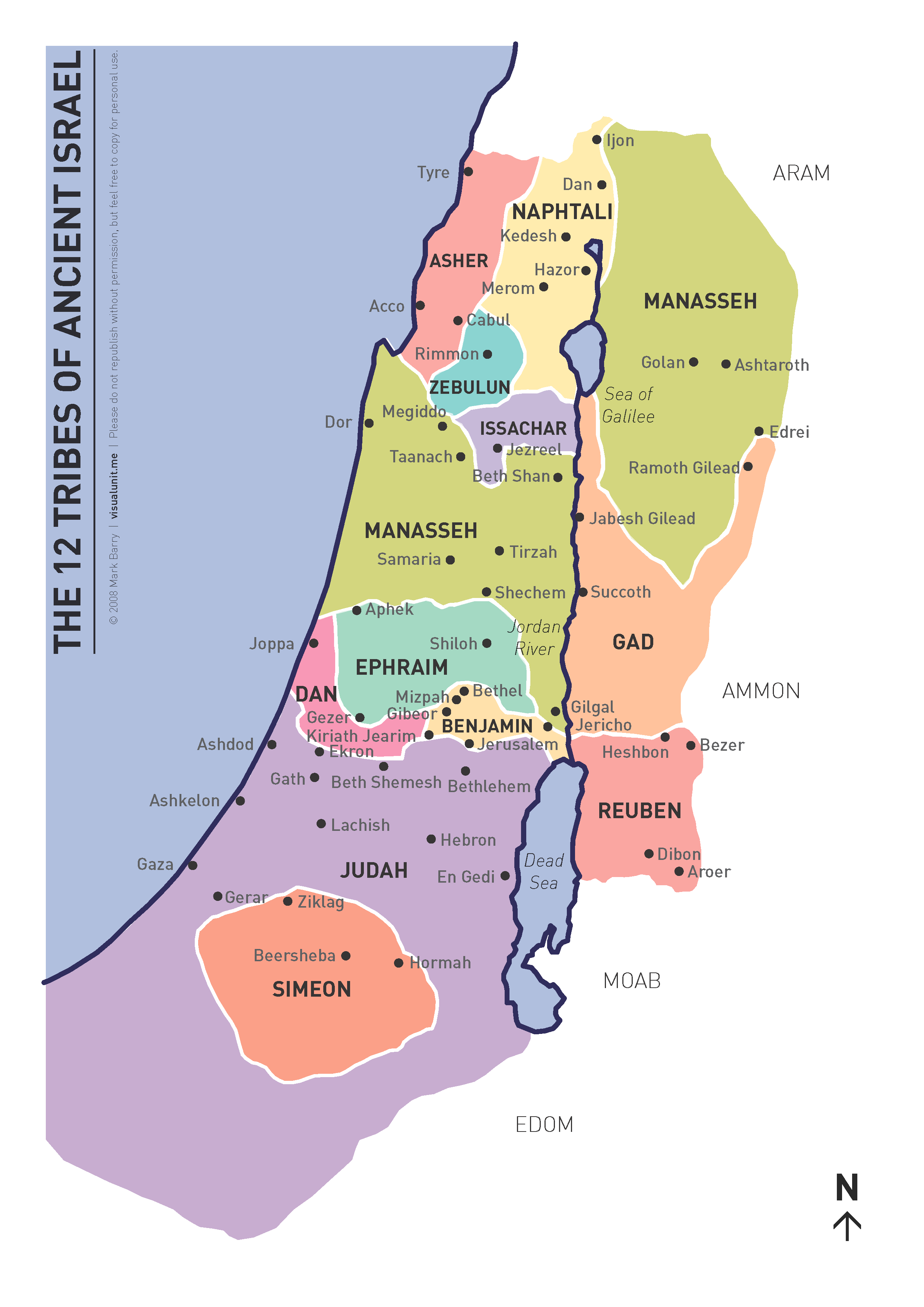
Obedience Is Non-Optional

1 As soon as Solomon had finished building the house of the LORD and the king’s house and all that Solomon desired to build, the LORD appeared to Solomon a second time, as he had appeared to him at Gibeon. And the LORD said to him, “I have heard your prayer and your plea, which you have made before me. I have consecrated this house that you have built, by putting my name there forever. My eyes and my heart will be there for all time. And as for you, if you will walk before me, as David your father walked, with integrity of heart and uprightness, doing according to all that I have commanded you, and keeping my statutes and my rules, then I will establish your royal throne over Israel forever, as I promised David your father, saying, ‘You shall not lack a man on the throne of Israel.’ But if you turn aside from following me, you or your children, and do not keep my commandments and my statutes that I have set before you, but go and serve other gods and worship them, then I will cut off Israel from the land that I have given them, and the house that I have consecrated for my name I will cast out of my sight, and Israel will become a proverb and a byword among all peoples. And this house will become a heap of ruins. Everyone passing by it will be astonished and will hiss, and they will say, ‘Why has the LORD done thus to this land and to this house?’ Then they will say, ‘Because they abandoned the LORD their God who brought their fathers out of the land of Egypt and laid hold on other gods and worshiped them and served them. Therefore the LORD has brought all this disaster on them.’” 1 Kings 9:1-9 ESV

Twenty years into what would prove to be a 40-year reign, Solomon received a second vision from God. Having completed all the major building programs he had initiated, including the Temple, Solomon was ready to focus his attention elsewhere. So, God revealed Himself to Solomon in a dream, just as He had done at Gibeon 20 years earlier.

At Gibeon the LORD appeared to Solomon in a dream by night – 1 Kings 3:5 ESV

In this second divinely inspired dream, Solomon heard God reaffirm His commitment to honor the Temple by bestowing His presence upon it. In doing so, God would set the Temple apart and make it holy.

“I have heard your prayer and your petition. I have set this Temple apart to be holy—this place you have built where my name will be honored forever. I will always watch over it, for it is dear to my heart. – 1 Kings 9:3 NLT

At the dedication of the Temple, when the fire descended from heaven and consumed the sacrifices, God demonstrated His acceptance of both the offering and the Temple. This was followed by the cloud of His presence taking up residence in the Holy of Holies. These actions signified that the building Solomon had constructed had been consecrated to God and was now deemed for His use alone. The Temple, its grounds, and all the furniture and utensils contained within it belonged exclusively to God. He affirmed His approval of the Temple and His willingness to grace it with His presence, power, and protection. But Yahwehn also expected His people to treat the Temple with a requisite degree of reverence and awe.

Next, God turned His attention to Solomon. It was not enough to have a Temple dedicated to the service and worship of God; Yahweh also expected His king to live a life that was totally set apart and consecrated to Him. So, He gave Solomon a sobering reminder of His expectations.

“As for you, if you will follow me with integrity and godliness, as David your father did, obeying all my commands, decrees, and regulations, then I will establish the throne of your dynasty over Israel forever. For I made this promise to your father, David: ‘One of your descendants will always sit on the throne of Israel.’” – 1 Kings 9:4-5 NLT

Notice the conditional nature of this statement. God said, “if you will…then I will.” The promise God made to David was conditional. David could expect to have a line of descendants to sit on his throne, but God expected those men to live in faithfulness and obedience to Him. As the firstborn son to inherit the crown from his father, Solomon was expected to live a life marked by integrity and godliness, just as his father did. God was demanding that Solomon follow in the footsteps of David, who, throughout his life, had displayed a commitment to living and leading in godliness. The psalmist reminds us that David had been chosen by God to shepherd His people, and David had done his job well.

He chose David his servant
    and took him from the sheepfolds;
from following the nursing ewes he brought him
    to shepherd Jacob his people,
    Israel his inheritance.
With upright heart he shepherded them
    and guided them with his skillful hand. – Psalm 78:70-72 ESV

Now, it was Solomon’s turn. He had done an excellent job of constructing the Temple, but now it was time to lead the people with integrity of heart and to guide them with skillful hands. As God’s appointed and anointed king, he was to be an example for the nation, displaying a commitment to God that revealed his consecrated status. Like the Temple, Solomon belonged to God. He had been dedicated to God’s service and was expected to shepherd God’s people according to His will. Yahweh warns Solomon of the severe consequences he or any of his descendants will face if they fail to remain faithful.

“But if you or your descendants abandon me and disobey the commands and decrees I have given you, and if you serve and worship other gods, then I will uproot Israel from this land that I have given them. I will reject this Temple that I have made holy to honor my name. I will make Israel an object of mockery and ridicule among the nations.” – 1 Kings 9:6-7 NLT

Anyone familiar with Israel’s history recognizes that this warning from God is more than prescriptive; it is also prophetic. In other words, God is not only giving Solomon a list of prohibitions, but He is also providing him with a glimpse into the nation’s future fate. Despite all He had done for them, the people of Israel would end up turning their backs on Him. It would begin with their kings, the very men whom God had promised to bless if they would follow Him with integrity and godliness.

Look closely at what God says He will do.

I will uproot Israel from this land… – Vs. 7

I will reject this Temple that I have made holy to honor my name… – Vs. 7

I will make Israel an object of mockery and ridicule among the nations… – Vs. 7

If Solomon or any of his descendants failed to keep their covenant commitment to God, the nation would suffer God’s judgment. They would forfeit the inheritance they had received from Him. Rather than living in the land of promise, a land flowing with milk and honey, they would find themselves eking out an existence as exiles in a foreign land.

Even the majestic Temple would become an eyesore, prompting people to question what could have caused God to bring such a calamity upon His house and His people.

“…all who pass by will be appalled and will gasp in horror. They will ask, ‘Why did the LORD do such terrible things to this land and to this Temple?’ – 1 Kings 9:8 NLT

In his dream, Solomon receives the sobering answer to their question.

“Because his people abandoned the LORD their God, who brought their ancestors out of Egypt, and they worshiped other gods instead and bowed down to them. That is why the LORD has brought all these disasters on them.” – 1 Kings 9:9 NLT

The author of 1 Kings already knows the rest of the story; his inclusion of this incident is meant to foreshadow and explain all that is to come. His audience will be reading this chapter long after Solomon is gone and his successors have begun to reveal their penchant for disobedience and unfaithfulness. The final verses of the last chapter conclude on a somber and poignant note.

Ahaziah son of Ahab began to rule over Israel in the seventeenth year of King Jehoshaphat’s reign in Judah. He reigned in Samaria two years. But he did what was evil in the LORD’s sight, following the example of his father and mother and the example of Jeroboam son of Nebat, who had led Israel to sin. He served Baal and worshiped him, provoking the anger of the LORD, the God of Israel, just as his father had done. – 1 Kings 22:51-53 NLT

By this time in the story, the nation of Israel had suffered a civil war that left it divided into two competing kingdoms: Israel and Judah. Both are characterized by wickedness and idolatry. Nearly all of their kings displayed a blatant disregard for God, violating His commands and failing to shepherd His people with integrity of heart or guiding them with skillful hands. For the most part, they turn out to be poor shepherds who refused to keep their end of God’s covenant agreement. As a result, the whole nation suffered.

Solomon’s dream was intended as a warning. God wanted His king to understand that a Temple would not be enough. A place to worship God would prove to be insufficient if the heart of the king remained uncommitted to God. Years later, God would speak through the prophet Isaiah, declaring the blatant hypocrisy of His people, who confused the ritual of worship with genuine, heartfelt devotion to God.

 “These people say they are mine.
They honor me with their lips,
    but their hearts are far from me.
And their worship of me
    is nothing but man-made rules learned by rote. – Isaiah 29:13 NLT

The promise of God’s abiding presence among them was contingent upon their obedience and obeisance. Yahweh placed a high priority on the covenant commitment they had made to Him. The Book of Exodus records the enthusiastic response of God’s people when Moses read the contents of the Book of the Law to them in the wilderness.

“We will do everything the Lord has commanded. We will obey.” – Exodus 24:7 NLT

Years later, at Moab, Moses would rearticulate Yahweh’s expectations and explain that their commitment to the covenant would be binding on all their descendants.

“You are standing here today to enter into the covenant of the LORD your God. The LORD is making this covenant, including the curses. By entering into the covenant today, he will establish you as his people and confirm that he is your God, just as he promised you and as he swore to your ancestors Abraham, Isaac, and Jacob.

“But you are not the only ones with whom I am making this covenant with its curses. I am making this covenant both with you who stand here today in the presence of the LORD our God, and also with the future generations who are not standing here today.” – Deuteronomy 29:12-15 NLT

There was no escape clause or statute of limitations. Future generations of Israelites could not claim ignorance or opt out of the commitment their ancestors had made. It was binding and non-negotiable. So, as Solomon took in the words that Yahweh spoke in his vision, he understood the gravity of the moment and the sobering significance of the message he had just received: Obey or risk God’s judgment.

English Standard Version (ESV) The Holy Bible, English Standard Version. ESV® Permanent Text Edition® (2016). Copyright © 2001 by Crossway Bibles, a publishing ministry of Good News Publishers.

New Living Translation (NLT) Holy Bible, New Living Translation, copyright © 1996, 2004, 2015 by Tyndale House Foundation. Used by permission of Tyndale House Publishers Inc., Carol Stream, Illinois 60188. All rights reserved.

The Risk of Fading Faithfulness

54 Now as Solomon finished offering all this prayer and plea to the LORD, he arose from before the altar of the LORD, where he had knelt with hands outstretched toward heaven. 55 And he stood and blessed all the assembly of Israel with a loud voice, saying, 56 “Blessed be the LORD who has given rest to his people Israel, according to all that he promised. Not one word has failed of all his good promise, which he spoke by Moses his servant. 57 The LORD our God be with us, as he was with our fathers. May he not leave us or forsake us, 58 that he may incline our hearts to him, to walk in all his ways and to keep his commandments, his statutes, and his rules, which he commanded our fathers. 59 Let these words of mine, with which I have pleaded before the LORD, be near to the LORD our God day and night, and may he maintain the cause of his servant and the cause of his people Israel, as each day requires, 60 that all the peoples of the earth may know that the LORD is God; there is no other. 61 Let your heart therefore be wholly true to the LORD our God, walking in his statutes and keeping his commandments, as at this day.” 

62 Then the king, and all Israel with him, offered sacrifice before the LORD. 63 Solomon offered as peace offerings to the LORD 22,000 oxen and 120,000 sheep. So the king and all the people of Israel dedicated the house of the LORD. 64 The same day the king consecrated the middle of the court that was before the house of the LORD, for there he offered the burnt offering and the grain offering and the fat pieces of the peace offerings, because the bronze altar that was before the LORD was too small to receive the burnt offering and the grain offering and the fat pieces of the peace offerings.

65 So Solomon held the feast at that time, and all Israel with him, a great assembly, from Lebo-hamath to the Brook of Egypt, before the LORD our God, seven days. 66 On the eighth day he sent the people away, and they blessed the king and went to their homes joyful and glad of heart for all the goodness that the LORD had shown to David his servant and to Israel his people. 1 Kings 8:54-66 ESV

After Solomon had finished his prayer of dedication for the temple, he turned to address the crowd of spectators who had gathered to witness this auspicious occasion. But it’s interesting to note what the author of 1 Kings leaves out of his description of this event. For some strange reason, he chose to ignore what appears to be a rather significant meteorological phenomenon. Evidently, the close of Solomon’s prayer was accompanied by a potent sign from heaven that would have been hard to miss or misinterpret. Fortunately, the Book of 2 Chronicles fills in the gaps, providing a detailed description of precisely what happened.

When Solomon finished praying, fire flashed down from heaven and burned up the burnt offerings and sacrifices, and the glorious presence of the LORD filled the Temple. The priests could not enter the Temple of the LORD because the glorious presence of the LORD filled it. When all the people of Israel saw the fire coming down and the glorious presence of the LORD filling the Temple…– 2 Chronicles 7:1-3 NLT

Solomon had been kneeling before the bronze altar that stood in the courtyard, outside the entrance to the Temple. This was the altar that Hiram had constructed. On it, the bodies of the sacrificial animals were placed that had been dedicated to God. When Solomon closed his prayer,  fire came down from heaven and consumed the carcasses of the animals. At the same time, the glory of the LORD filled the temple, most likely in the form of a dark cloud. God had heard Solomon’s prayer and signaled His answer in a powerful and demonstrative way. By consuming the sacrifices, God deemed them to be acceptable. By filling the Holy of Holies with His Shekinah glory, He placed His seal of approval on the Temple itself. This unexpected display of power made a profound impression on the people.

…they fell face down on the ground and worshiped and praised the Lord, saying,

“He is good!
    His faithful love endures forever!” – 2 Chronicles 7:3 NLT

They were blown away by what they witnessed, and their amazement turned to shouts of praise as they reflected on God’s goodness and unfailing love. He had graciously deemed to accept their sacrifices and to grace the Temple with His presence. They were overjoyed at having been able to witness this mind-blowing demonstration of HIs covenant commitment to them. Solomon put into words what the people were thinking.

“Praise the LORD who has given rest to his people Israel, just as he promised. Not one word has failed of all the wonderful promises he gave through his servant Moses. – 1 Kings 8:56 NLT

Their very presence in the land was evidence of God’s faithfulness. Hundreds of years earlier, He had made a promise to Moses that He would give the people of Israel the land of Canaan as their inheritance. That promise had been a reiteration of the one He had made to Abraham centuries earlier.

Speaking to the audience gathered before him, Solomon expressed his hope that God would show Himself just as faithful to them as He had been to their ancestors. But he also declared his understanding that, besides God’s abiding presence, they would need His divine assistance to remain faithful themselves. He knew that, without God’s help, they were powerless to live in obedience to the commands outlined in the Mosaic Law.

“May the LORD our God be with us as he was with our ancestors; may he never leave us or abandon us. May he give us the desire to do his will in everything and to obey all the commands, decrees, and regulations that he gave our ancestors.” – 1 Kings 8:57-58 NLT

As a people, they were utterly dependent upon God for all their needs. He was their provider, sustainer, and protector. And, as illustrated by the content of his prayer, Solomon was well aware that the people of Israel would falter and fail. He knew their hearts would wander and their commitment to God would wane. There would be moments marked by disobedience and rebellion. So, he expressed his hope that God would not forget the content of his prayer.

“…may these words that I have prayed in the presence of the LORD be before him constantly, day and night, so that the LORD our God may give justice to me and to his people Israel, according to each day’s needs.” – 1 Kings 8:59 NLT

He was asking that God faithfully fulfill His covenant commitment to them – despite them. Solomon called the people to make a strong assessment of their commitment to God as well.

“…may you be completely faithful to the LORD our God. May you always obey his decrees and commands, just as you are doing today.” – 1 Kings 8:61 NLT

After the impressive display they had just witnessed, there was no reason for them to ever doubt God’s faithfulness. The proper response to such a powerful reminder would be a heartfelt commitment to remain obedient to the One who had already done so much for them. Their determination to live in faithful obedience to their good and gracious God would become a witness to the nations around them.

“Then people all over the earth will know that the LORD alone is God and there is no other.” – 1 Kings 8:60 NLT

That was the bottom line. While the Temple would serve as a physical manifestation of God’s glory, their lives were meant to be a visible demonstration of how sinful men can enjoy a relationship with a holy God. They were to be witnesses to the world of God’s gracious love and, through their adherence to His commands, they were to illustrate their submission to and faith in His divine will.

Solomon’s address to the people was followed by the sacrifice of hundreds of thousands of cattle, sheep, and goats. Gallons upon gallons of blood were spilled. Countless unblemished animals were sacrificed one after the other as offerings to Yahweh. They also offered up burnt offerings, grain offerings, and the fat of peace offerings. This went on for days – “fourteen days in all—seven days for the dedication of the altar and seven days for the Festival of Shelters” (1 Kings 8:65 NLT).

When the festivities finally came to an end, “They blessed the king and went to their homes joyful and glad because the LORD had been good to his servant David and to his people Israel” (1 Kings 8:66 NLT)

This was a high point in the history of the Hebrew people. They had a king, just as they had always hoped for, and he was wise, powerful, and wealthy. They were living in a time of unprecedented peace and prosperity. Now, their seven-year effort to complete the Temple had culminated with God’s divine seal of approval. He had graciously renewed His covenant commitment to them, and all they had to do was remain faithful in return.

But faithfulness would prove to be a rare commodity among the people of Israel. Even their wise king, who had used his wisdom and wealth to build a glorious house for Yahweh, would discover that faithfulness was not something money could buy. Even Yahweh would warn King Solomon that faithfulness was a non-negotiable requirement if they wanted to enjoy His abiding presence, protection, and power.

“…if you turn aside from following me, you or your children, and do not keep my commandments and my statutes that I have set before you, but go and serve other gods and worship them, then I will cut off Israel from the land that I have given them, and the house that I have consecrated for my name I will cast out of my sight, and Israel will become a proverb and a byword among all peoples. And this house will become a heap of ruins.” – 1 Kings 9:6-8 ESV

The Temple would not be enough, and the sacrifices of animals could never replace the need for repentant hearts. If the Israelites wanted to continue to enjoy the abiding presence of Yahweh, they would need to treat Him with honor that emanated from their hearts. Solomon would have been wise to consider the words his father once wrote.

You do not desire a sacrifice, or I would offer one.
    You do not want a burnt offering.
The sacrifice you desire is a broken spirit.
    You will not reject a broken and repentant heart, O God. – Psalm 51:16-17 NLT

Hundreds of years later, Yahweh would pronounce an indictment against His unfaithful people, warning them of the coming destruction of Jerusalem because they refused to honor Him as the one true God. Solomon’s Temple still stood, and the people continued to offer the required sacrifices and celebrate the prescribed annual feasts. But it was all ritual and religious rule-keeping. Their hearts were not in it.

“…this people draw near with their mouth
    and honor me with their lips,
    while their hearts are far from me… – Isaiah 29:13 ESV

When the dedication ceremonies for the Temple finally ended, the people “blessed the king and went to their homes joyful and glad because the LORD had been good to his servant David and to his people Israel” (1 Kings 8:66 NLT). It had been a great day, filled with awe-inspiring signs from heaven and a spectacular demonstration of communal dedication to Yahweh. Everybody, from the king to the lowliest peasant, was thrilled to be an Israelite, one of the chosen people of God. They felt privileged and honored to be part of Yahweh’s treasured possession. But when the thrill of the moment wore off and the rigors of daily life resumed, would their joy and gladness remain? Would the cares of life and the temptations of the world turn their hearts away from Yahweh and cause their faithfulness to fade? Only time would tell. 

English Standard Version (ESV) The Holy Bible, English Standard Version. ESV® Permanent Text Edition® (2016). Copyright © 2001 by Crossway Bibles, a publishing ministry of Good News Publishers.

New Living Translation (NLT) Holy Bible, New Living Translation, copyright © 1996, 2004, 2015 by Tyndale House Foundation. Used by permission of Tyndale House Publishers Inc., Carol Stream, Illinois 60188. All rights reserved.

Hear, Forgive, and Restore

22 Then Solomon stood before the altar of the LORD in the presence of all the assembly of Israel and spread out his hands toward heaven, 23 and said, “O LORD, God of Israel, there is no God like you, in heaven above or on earth beneath, keeping covenant and showing steadfast love to your servants who walk before you with all their heart; 24 you have kept with your servant David my father what you declared to him. You spoke with your mouth, and with your hand have fulfilled it this day. 25 Now therefore, O LORD, God of Israel, keep for your servant David my father what you have promised him, saying, ‘You shall not lack a man to sit before me on the throne of Israel, if only your sons pay close attention to their way, to walk before me as you have walked before me.’ 26 Now therefore, O God of Israel, let your word be confirmed, which you have spoken to your servant David my father.

27 “But will God indeed dwell on the earth? Behold, heaven and the highest heaven cannot contain you; how much less this house that I have built! 28 Yet have regard to the prayer of your servant and to his plea, O LORD my God, listening to the cry and to the prayer that your servant prays before you this day, 29 that your eyes may be open night and day toward this house, the place of which you have said, ‘My name shall be there,’ that you may listen to the prayer that your servant offers toward this place. 30 And listen to the plea of your servant and of your people Israel, when they pray toward this place. And listen in heaven your dwelling place, and when you hear, forgive.

31 “If a man sins against his neighbor and is made to take an oath and comes and swears his oath before your altar in this house, 32 then hear in heaven and act and judge your servants, condemning the guilty by bringing his conduct on his own head, and vindicating the righteous by rewarding him according to his righteousness.

33 “When your people Israel are defeated before the enemy because they have sinned against you, and if they turn again to you and acknowledge your name and pray and plead with you in this house, 34 then hear in heaven and forgive the sin of your people Israel and bring them again to the land that you gave to their fathers.

35 “When heaven is shut up and there is no rain because they have sinned against you, if they pray toward this place and acknowledge your name and turn from their sin, when you afflict them, 36 then hear in heaven and forgive the sin of your servants, your people Israel, when you teach them the good way in which they should walk, and grant rain upon your land, which you have given to your people as an inheritance.

37 “If there is famine in the land, if there is pestilence or blight or mildew or locust or caterpillar, if their enemy besieges them in the land at their gates, whatever plague, whatever sickness there is, 38 whatever prayer, whatever plea is made by any man or by all your people Israel, each knowing the affliction of his own heart and stretching out his hands toward this house, 39 then hear in heaven your dwelling place and forgive and act and render to each whose heart you know, according to all his ways (for you, you only, know the hearts of all the children of mankind), 40 that they may fear you all the days that they live in the land that you gave to our fathers.

41 “Likewise, when a foreigner, who is not of your people Israel, comes from a far country for your name’s sake 42 (for they shall hear of your great name and your mighty hand, and of your outstretched arm), when he comes and prays toward this house, 43 hear in heaven your dwelling place and do according to all for which the foreigner calls to you, in order that all the peoples of the earth may know your name and fear you, as do your people Israel, and that they may know that this house that I have built is called by your name.

44 “If your people go out to battle against their enemy, by whatever way you shall send them, and they pray to the LORD toward the city that you have chosen and the house that I have built for your name, 45 then hear in heaven their prayer and their plea, and maintain their cause.

46 “If they sin against you—for there is no one who does not sin—and you are angry with them and give them to an enemy, so that they are carried away captive to the land of the enemy, far off or near, 47 yet if they turn their heart in the land to which they have been carried captive, and repent and plead with you in the land of their captors, saying, ‘We have sinned and have acted perversely and wickedly,’ 48 if they repent with all their heart and with all their soul in the land of their enemies, who carried them captive, and pray to you toward their land, which you gave to their fathers, the city that you have chosen, and the house that I have built for your name, 49 then hear in heaven your dwelling place their prayer and their plea, and maintain their cause 50 and forgive your people who have sinned against you, and all their transgressions that they have committed against you, and grant them compassion in the sight of those who carried them captive, that they may have compassion on them 51 (for they are your people, and your heritage, which you brought out of Egypt, from the midst of the iron furnace). 52 Let your eyes be open to the plea of your servant and to the plea of your people Israel, giving ear to them whenever they call to you. 53 For you separated them from among all the peoples of the earth to be your heritage, as you declared through Moses your servant, when you brought our fathers out of Egypt, O LORD God.” 1 Kings 8:22-53 ESV

This prayer, offered at the opening of the temple, provides tremendous insight into Solomon’s knowledge of God and his keen awareness of human nature. His words reveal how greatly he revered and honored Yahweh, the all-powerful God of Israel. While Solomon had built a Temple that would be considered one of the wonders of the world, it was no match for the majestic and holy God of the universe. Even in all its glory and splendor, Solomon’s Temple was an insufficient dwelling place for the one true God who created the heavens and the earth, and he admitted it.

“…even the highest heavens cannot contain you. How much less this Temple I have built! – 1 Kings 8:27 NLT

Solomon boldly proclaimed Yahweh’s unique nature as the one true God.

“O LORD, God of Israel, there is no God like you in all of heaven above or on the earth below.” – 1 Kings 8:23 NLT

Yahweh is incomparable and without rival. All other gods are the figments of men’s imagination and, therefore, non-existent. But Israel’s God is real and has proven His existence through tangible acts of power, grace, mercy, and love. He is a covenant-making, promise-keeping God who always fulfills every commitment He has made. The very fact that Solomon was dedicating the temple was proof that Yahweh had kept His promise to David.

“It is Solomon your son who shall build my house and my courts, for I have chosen him to be my son, and I will be his father. I will establish his kingdom forever if he continues strong in keeping my commandments and my rules, as he is today.” – 1 Chronicles 28:6-7 ESV

As Solomon stood before the Temple with his arms outstretched in humble supplication, he pleaded with the God of heaven, asking Him to continue to extend His mercy, grace, and forgiveness upon His people. But Solomon knew that God’s unfailing love and faithfulness were conditional. It required the faithful and obedient worship of His people. They had been set apart for His glory and were expected to worship Him alone. They were to refrain from worshiping other gods, and were expected to keep His commandments, and demonstrate to the world their status as His chosen people – “a kingdom of priests and a holy nation” (Exodus 19:6 ESV).

Solomon clearly understood God’s expectations. They were to be a people who were wholeheartedly committed to God – “servants who walk before you with all their heart” (1 Kings 8:23 ESV). And Solomon fully understood that God required the same degree of obedience from him. God had promised to extend David’s dynasty as long as his successors mirrored David’s faithfulness.

“You shall not lack a man to sit before me on the throne of Israel, if only your sons pay close attention to their way, to walk before me as you have walked before me.” – 1 Kings 8:25 ESV

Solomon knew that the presence of the Temple alone would not be enough to ensure God’s ongoing favor. It would offer no guarantee of God’s presence and could never serve as a substitute for the faithfulness of the people. It would serve as a place of intercession, where the Israelites could come, confess their sins, declare their intention to repent, and humbly ask God for forgiveness.

Speaking on behalf of himself and the entire nation of Israel, Solomon prayed, “May you hear the humble and earnest requests from me and your people Israel when we pray toward this place. Yes, hear us from heaven where you live, and when you hear, forgive” (1 Kings 8:30 NLT).

What Solomon says next is quite revealing, and his words, while directed at God, seem to be spoken for the benefit of the people as well. As they stand in the courtyard of the newly completed Temple, they can hear every word Solomon says, and the full import of his prayer is not lost on them.

Solomon felt the need to present God with a series of hypothetical scenarios in which the people might find themselves in need of forgiveness.

If someone wrongs another person…” – Vs. 31 NLT

If your people Israel are defeated by their enemies because they have sinned against you…” – Vs. 33 NLT

If the skies are shut up and there is no rain because your people have sinned against you…” – Vs. 35 NLT

If there is a famine in the land or a plague or crop disease or attacks of locusts or caterpillars, or if your people’s enemies are in the land besieging their towns—whatever disaster or disease there is…” – Vs. 37 NLT

If your people go out where you send them to fight their enemies…” – Vs. 44 NLT

If they sin against you—and who has never sinned?—you might become angry with them and let their enemies conquer them and take them captive to their land far away or near. – Vs. 46 NLT

Solomon tried to cover all the bases, offering up a wide range of potential circumstances that reveal his astute understanding of human nature and man’s propensity to sin. He was aware that the nation of Israel, while set apart by God, would not always live up to its special status. So, he wanted to remind the people that, when they sinned, and they would, there was a proper and preferred response.

“…if they turn to you and acknowledge your name and pray to you here in this Temple, then hear from heaven and forgive the sin of your people Israel.” – 1 Kings 8:33-34 NLT

Sin was inevitable, but forgiveness was always available. It simply required confession and repentance – an admission of guilt and a willing realignment of their love back to God alone. It didn’t matter how egregious or grievous the sin; God would forgive, as long as they came in humble repentance. This offer of forgiveness was available to all the people of God, whether they were natural-born Jews or foreigners who had converted to Judaism.

“In the future, foreigners who do not belong to your people Israel will hear of you. They will come from distant lands because of your name, for they will hear of your great name and your strong hand and your powerful arm. And when they pray toward this Temple, then hear from heaven where you live, and grant what they ask of you. In this way, all the people of the earth will come to know and fear you, just as your own people Israel do. They, too, will know that this Temple I have built honors your name.” – 1 Kings 8:41-43 NLT

Solomon even described the worst-case scenario of the people of Israel being defeated by their enemies and exiled to a foreign land. This must have seemed like a far-fetched and unlikely outcome to the people standing in the Temple courtyard. After all, they lived in one of the most powerful nations on earth at that time. However, Solomon prophetically poses a potential scenario in which the people’s sins lead to their expulsion from the land. He reminds them that, even in that dark hour, their response should be the same: Pray, confess, and repent.

And if the worst should ever happen, Solomon begs Yahweh to honor His covenant commitment and answer the prayers of His people.

“Forgive your people who have sinned against you. Forgive all the offenses they have committed against you. Make their captors merciful to them, for they are your people—your special possession—whom you brought out of the iron-smelting furnace of Egypt.” – 1 Kings 8:50-51 NLT

Little did Solomon know that his words would be recorded for posterity and become permanently etched on the pages of this book and passed down from generation to generation. Hundreds of years later, when the people of Israel found themselves exiled in the land of Babylon because of their sin and rebellion against God, they would find in God’s Word a record of Solomon’s prayer and a reminder that God’s forgiveness was theirs to have – if only they would repent and return to Him.

The Book of 2 Chronicles records Yahweh’s response to Solomon’s prayer of dedication, in which He assures His people of His willingness to hear their confessions and offer forgiveness and restoration.

“…if my people who are called by my name will humble themselves and pray and seek my face and turn from their wicked ways, I will hear from heaven and will forgive their sins and restore their land. My eyes will be open and my ears attentive to every prayer made in this place.” – 2 Chronicles 7:14-15 NLT

But their confession of guilt must be accompanied by humility and heartfelt repentance. They must be willing to turn from their wicked ways and return to the worship of Yahweh alone. Divine judgment must produce humble contrition and repentant hearts, then Yahweh will hear, forgive, and restore.

English Standard Version (ESV) The Holy Bible, English Standard Version. ESV® Permanent Text Edition® (2016). Copyright © 2001 by Crossway Bibles, a publishing ministry of Good News Publishers.

New Living Translation (NLT) Holy Bible, New Living Translation, copyright © 1996, 2004, 2015 by Tyndale House Foundation. Used by permission of Tyndale House Publishers Inc., Carol Stream, Illinois 60188. All rights reserved.