A Refusal to Repent

32 In the second year of Pekah the son of Remaliah, king of Israel, Jotham the son of Uzziah, king of Judah, began to reign. 33 He was twenty-five years old when he began to reign, and he reigned sixteen years in Jerusalem. His mother’s name was Jerusha the daughter of Zadok. 34 And he did what was right in the eyes of the LORD, according to all that his father Uzziah had done. 35 Nevertheless, the high places were not removed. The people still sacrificed and made offerings on the high places. He built the upper gate of the house of the LORD. 36 Now the rest of the acts of Jotham and all that he did, are they not written in the Book of the Chronicles of the Kings of Judah? 37 In those days the LORD began to send Rezin the king of Syria and Pekah the son of Remaliah against Judah. 38 Jotham slept with his fathers and was buried with his fathers in the city of David his father, and Ahaz his son reigned in his place.

1 In the seventeenth year of Pekah the son of Remaliah, Ahaz the son of Jotham, king of Judah, began to reign. Ahaz was twenty years old when he began to reign, and he reigned sixteen years in Jerusalem. And he did not do what was right in the eyes of the LORD his God, as his father David had done, but he walked in the way of the kings of Israel. He even burned his son as an offering, according to the despicable practices of the nations whom the LORD drove out before the people of Israel. And he sacrificed and made offerings on the high places and on the hills and under every green tree.

Then Rezin king of Syria and Pekah the son of Remaliah, king of Israel, came up to wage war on Jerusalem, and they besieged Ahaz but could not conquer him.2 Kings 15:32-16:5 ESV

In the northern kingdom of Israel, they were going through kings so quickly that the royal palace needed revolving doors to handle the high traffic volume. In just 14 years, they had been ruled by six different kings, most of whose reigns ended in assassination. But back in Judah, it was a different story. Azariah (Uzziah) had served as king for 52 years, and for the last 11 years of his reign, his son, Jotham, served as his co-regent. Their sharing of the kingly role was necessitated by Azariah’s contracting leprosy and being confined to his home. His disease required that he be quarantined, and made governance of the nation almost impossible. So, “Jotham the king’s son was over the household, governing the people of the land” (2 Kings 15:5 ESV). The sad reality is that Azariah’s condition was the direct result of his own pride and a decision to violate the Mosaic law. His disobedience incurred God’s divine wrath and judgment in the form of leprosy. But despite his condition, Azariah was able to continue ruling over the nation of Judah, with his son’s assistance. This also provided Jotham with on-the-job training that helped prepare him for the day when the monarchy would become his alone.

While the final 11 years of Azariah’s reign were marked by leprosy and forced isolation, he had been a good king. For the majority of his 52-year rule, he had done “what was right in the eyes of the LORD, according to all that his father Amaziah had done. He set himself to seek God in the days of Zechariah, who instructed him in the fear of God, and as long as he sought the LORD, God made him prosper” (2 Chronicles 26:4-5 ESV). And it seems that Azariah’s love for God was far more infectious than his disease because the author lets us know that Jotham “did what was right in the eyes of the LORD, according to all that his father Uzziah had done” (2 Kings 15:34 ESV).

But the author of 2 Chronicles adds an important detail that sheds light on the actions of this young 26-year-old king.

Jotham did what was pleasing in the LORD’s sight. He did everything his father, Uzziah, had done, except that Jotham did not sin by entering the Temple of the Lord. But the people continued in their corrupt ways. – 2 Chronicles 27:3 NLT

Jotham followed in his father’s spiritual footsteps but with one crucial exception. He “did not sin by entering the Temple of the LORD” (2 Chronicles 27:3 NLT). This is a reference to Uzziah’s unwise decision to enter “the LORD’s Temple to offer incense on the incense altar” (2 Chronicles 26:16 NET). This unauthorized action on Uzziah’s part was the direct result of his growing power and pride. 

He became very famous, for he received tremendous support and became powerful. But once he became powerful, his pride destroyed him. He disobeyed the LORD his God. – 2 Chronicles 26:15-16 NET

Uzziah believed he could do no wrong and took it upon himself to offer incense in the Temple, in direct violation of God’s law. He was the king and not a priest, so his actions were inappropriate. He was immediately confronted by a contingent of 81 priests.

“It is not proper for you, Uzziah, to offer incense to the LORD. That is the responsibility of the priests, the descendants of Aaron, who are consecrated to offer incense. Leave the sanctuary, for you have disobeyed and the LORD God will not honor you!” – 2 Chronicles 26:18 NET

But rather than heeding the priests’ counsel, Uzziah became angry. Still holding the incense censer in his hand, the king lashed out at his accusers.

While he was ranting and raving at the priests, a skin disease appeared on his forehead right there in front of the priests in the LORD’s temple near the incense altar.  When Azariah the high priest and the other priests looked at him, there was a skin disease on his forehead. They hurried him out of there; even the king himself wanted to leave quickly because the Lord had afflicted him. King Uzziah suffered from a skin disease until the day he died. He lived in separate quarters, afflicted by a skin disease and banned from the LORD’s temple. – 2 Chronicles 26:19-21 NET

One of the results of Uzziah’s contraction of this dreaded disease was that it rendered him unclean and, therefore, unable to enter the Temple of God. The book of Leviticus provides the specific command detailing the isolating aspect of the disease.

“Those who suffer from a serious skin disease must tear their clothing and leave their hair uncombed. They must cover their mouth and call out, ‘Unclean! Unclean!’ As long as the serious disease lasts, they will be ceremonially unclean. They must live in isolation in their place outside the camp. – Leviticus 13:45-46 NLT

It seems that Jotham was deeply influenced by his father’s actions and Yahweh’s response. The text states, “He did not, however, have the audacity to enter the temple” (2 Chronicles 27:3 NET).  His decision to avoid the Temple could have been out of resentment for God’s harsh treatment of his father or out of fear that he might suffer a similar fate. But it seems more likely that he was simply being overly cautious to avoid repeating his father’s mistake.

It’s interesting to note that Jotham “built the upper gate of the house of the LORD” (2 Kings 15:35 ESV). According to Thomas L. Constable, the upper gate was “an opening between the outer and inner courts on the north side of the temple near the altar of burnt offerings” (Dr. Thomas L. Constable, Notes on 1 Chronicles).  This becomes more relevant when you consider that Jotham’s father had been punished by God because he had “entered the Temple of the LORD to burn incense on the altar of incense” (2 Chronicles 26:16 ESV). In doing so, he assumed the role of the priest, in direct violation of God’s law. Now, his son had built a gate that made entrance into that area of the Temple more accessible than ever. Perhaps Jotham intended this construction project to be a not-so-subtle statement about his father’s actions and subsequent punishment.

While Jotham accomplished a variety of noteworthy renovation and expansion projects, he failed to remove the high places on which the people sacrificed to their false gods.  As a result, “the people still followed corrupt practices” (2 Chronicles 27:2 ESV). While he was busy renovating the Temple grounds dedicated to Yahweh, the people continued to worship idols. But for the most part, Jotham proved to be a faithful king who sought to honor God, and this brought about God’s blessings.

Jotham became mighty, because he ordered his ways before the LORD his God. – 2 Chronicles 27:6 ESV

Yet, these verses provide a glimpse of God’s coming judgment against the nation of Judah. While the southern kingdom had remained far more faithful than its northern neighbor, a growing wave of spiritual infidelity was spreading among its inhabitants. And Yahweh will respond to this unfaithfulness by allowing the nation of Judah to experience His disfavor in the form of foreign powers that will begin to harass and test them.

In those days the LORD began to send Rezin the king of Syria and Pekah the son of Remaliah against Judah. – 2 Kings 15:37 ESV

Eventually, Jotham died, and his son, Ahaz, took his place on the throne of Judah. But Ahaz did not share his father’s love for God. In fact, the author’s mention of God sending foreign powers against Judah foreshadows future judgment. The nation was about to take a dark turn. Under Ahaz’s reign, the spiritual fortunes of Judah would decline sharply. He would not continue the godly legacy of his father and grandfather. Instead, he would emulate and even eclipse the sins of the kings of Israel.

He did not do what was pleasing in the sight of the LORD his God, as his ancestor David had done. Instead, he followed the example of the kings of Israel, even sacrificing his own son in the fire. In this way, he followed the detestable practices of the pagan nations the LORD had driven from the land ahead of the Israelites. He offered sacrifices and burned incense at the pagan shrines and on the hills and under every green tree. – 2 Kings 2-4 NLT

Ahaz “walked in the ways of the kings of Israel” (2 Chronicles 28:2 ESV). And his decision to fully embrace the false gods of the Canaanites would cost him dearly. This was a man who became so committed to idolatry that he regularly “burned his sons as an offering” (2 Chronicles 28:2 ESV). He was willing to sacrifice the lives of his own children to win the favor of the gods. But while spilling the blood of his sons failed to garner the attention of his false deities, it did manage to bring down the judgment of Yahweh.

Because of all this, the LORD his God allowed the king of Aram [Syria] to defeat Ahaz and to exile large numbers of his people to Damascus. The armies of the king of Israel also defeated Ahaz and inflicted many casualties on his army. In a single day Pekah son of Remaliah, Israel’s king, killed 120,000 of Judah’s troops, all of them experienced warriors, because they had abandoned the LORD, the God of their ancestors. – 2 Chronicles 28:5-6 NLT

God would use the Syrians and the Israelites as His instruments of judgment against Ahaz and the people of Judah. But despite Ahaz’s blatant displays of unfaithfulness, Yahweh would not allow these outside forces to completely destroy Judah. The situation quickly became a recurring cycle of sin and judgment. Ahaz’s worship of his false gods would bring the judgment of Yahweh in the form of the Syrians and Israelites. These attacks would cause Ahaz to intensify his efforts to gain the favor of his many gods. His desperation to find a solution would produce further idolatry and result in additional judgment from God. But in his stubbornness, Ahaz never stopped to consider that repentance and a return to Yahweh might be the best answer to his problem.

Ahaz seems to have forgotten the promise that Yahweh made to Solomon on the day the newly completed Temple was dedicated. Yahweh warned that their failure to obey Him would bring judgment.

At times I might shut up the heavens so that no rain falls, or command grasshoppers to devour your crops, or send plagues among you. – 2 Chronicles 7:13 NLT

But He also assured them that repentance would bring restoration.

If my people who are called by my name will humble themselves and pray and seek my face and turn from their wicked ways, I will hear from heaven and will forgive their sins and restore their land.” – 2 Chronicles 7:14 NLT

He went on to warn of the dire consequences that would accompany their refusal to worship Him alone. If they chose to embrace the false gods of the Canaanites, they would pay dearly.

“But if you or your descendants abandon me and disobey the decrees and commands I have given you, and if you serve and worship other gods,  then I will uproot the people from this land that I have given them. I will reject this Temple that I have made holy to honor my name. I will make it an object of mockery and ridicule among the nations. And though this Temple is impressive now, all who pass by will be appalled. They will ask, ‘Why did the LORD do such terrible things to this land and to this Temple?’” – 2 Chronicles 7:19-21 NLT

Ahaz ignored Yahweh’s warnings and “sacrificed and made offerings on the high places and on the hills and under every green tree” (2 Kings 16:4 NLT). He went out of his way to offend Yahweh, flaunting his idolatrous behavior throughout the land of Judah, and even sacrificing his sons on the altars to his many false gods. But Yahweh would prove faithful to keep His word. Ahaz could ignore Yahweh’s warnings, but he would not escape the judgment to come.

English Standard Version (ESV) The Holy Bible, English Standard Version. ESV® Permanent Text Edition® (2016). Copyright © 2001 by Crossway Bibles, a publishing ministry of Good News Publishers.

New Living Translation (NLT) Holy Bible, New Living Translation, copyright © 1996, 2004, 2015 by Tyndale House Foundation. Used by permission of Tyndale House Publishers Inc., Carol Stream, Illinois 60188. All rights reserved.

The End Is Near

13 Shallum the son of Jabesh began to reign in the thirty-ninth year of Uzziah king of Judah, and he reigned one month in Samaria. 14 Then Menahem the son of Gadi came up from Tirzah and came to Samaria, and he struck down Shallum the son of Jabesh in Samaria and put him to death and reigned in his place. 15 Now the rest of the deeds of Shallum, and the conspiracy that he made, behold, they are written in the Book of the Chronicles of the Kings of Israel. 16 At that time Menahem sacked Tiphsah and all who were in it and its territory from Tirzah on, because they did not open it to him. Therefore he sacked it, and he ripped open all the women in it who were pregnant.

17 In the thirty-ninth year of Azariah king of Judah, Menahem the son of Gadi began to reign over Israel, and he reigned ten years in Samaria. 18 And he did what was evil in the sight of the LORD. He did not depart all his days from all the sins of Jeroboam the son of Nebat, which he made Israel to sin. 19 Pul the king of Assyria came against the land, and Menahem gave Pul a thousand talents of silver, that he might help him to confirm his hold on the royal power. 20 Menahem exacted the money from Israel, that is, from all the wealthy men, fifty shekels of silver from every man, to give to the king of Assyria. So the king of Assyria turned back and did not stay there in the land. 21 Now the rest of the deeds of Menahem and all that he did, are they not written in the Book of the Chronicles of the Kings of Israel? 22 And Menahem slept with his fathers, and Pekahiah his son reigned in his place.

23 In the fiftieth year of Azariah king of Judah, Pekahiah the son of Menahem began to reign over Israel in Samaria, and he reigned two years. 24 And he did what was evil in the sight of the LORD. He did not turn away from the sins of Jeroboam the son of Nebat, which he made Israel to sin. 25 And Pekah the son of Remaliah, his captain, conspired against him with fifty men of the people of Gilead, and struck him down in Samaria, in the citadel of the king’s house with Argob and Arieh; he put him to death and reigned in his place. 26 Now the rest of the deeds of Pekahiah and all that he did, behold, they are written in the Book of the Chronicles of the Kings of Israel.

27 In the fifty-second year of Azariah king of Judah, Pekah the son of Remaliah began to reign over Israel in Samaria, and he reigned twenty years. 28 And he did what was evil in the sight of the LORD. He did not depart from the sins of Jeroboam the son of Nebat, which he made Israel to sin.

29 In the days of Pekah king of Israel, Tiglath-pileser king of Assyria came and captured Ijon, Abel-beth-maacah, Janoah, Kedesh, Hazor, Gilead, and Galilee, all the land of Naphtali, and he carried the people captive to Assyria. 30 Then Hoshea the son of Elah made a conspiracy against Pekah the son of Remaliah and struck him down and put him to death and reigned in his place, in the twentieth year of Jotham the son of Uzziah. 31 Now the rest of the acts of Pekah and all that he did, behold, they are written in the Book of the Chronicles of the Kings of Israel. 2 Kings 15:13-31 ESV

During Azariah’s 52-year reign over the southern kingdom of Judah, things proved to be a bit more unstable north of the border. Israel was having difficulty keeping its kings alive. In just over 14 years, the ten northern tribes would go through six different kings, and all but one of them would be assassinated by their successors. It was a time marked by extreme political instability and worsening spiritual infidelity. Zechariah’s reign would be short-lived, lasting only six months before Shallum assassinated him and took his place on the throne. But Shallum would break Zechariah’s record for the shortest reign by surviving a single month before Menahem took his life and his throne.

According to the Jewish historian, Josephus, Menahem had been the commander-in-chief of Jeroboam II’s army. Evidently, Menahem had taken Shallum’s murder of Zechariah, the son of Jeroboam II, as an act of treason. So, he took matters into his own hands and executed the usurper to the throne in record time. Of course, Menahem chose to fill the vacancy left by Shallum’s untimely death by declaring himself king. But when some of Israel’s citizens refused to recognize his right to rule, he launched a brutal reprisal campaign against them.

Menahem destroyed the town of Tappuah and all the surrounding countryside as far as Tirzah, because its citizens refused to surrender the town. He killed the entire population and ripped open the pregnant women. – 2 Kings 15:16 NLT

It’s not surprising that the author describes Menahem’s ten-year reign as evil. He did nothing to restore the nation’s spiritual condition. Instead, he replicated the idolatrous ways of his predecessor, Jeroboam, the first king of the northern kingdom.

It was during Menahem’s less-than-stellar reign that the kingdom of Assyria first appeared on the scene. This up-and-coming nation would prove to be a constant source of trouble for both Israel and Judah. When the king of Assyria began to test his growing military might by launching raids into Israelite territory, Menahem determined that it was in his best interest to secure an alliance with this potent new threat to the region. So, he paid a substantial tribute to the Assyrians and funded it by exacting an exorbitant and highly unpopular tax on the wealthiest citizens of Israel. But his strategy appears to have worked.

…the king of Assyria turned from attacking Israel and did not stay in the land. – 2 Kings 15:20 NLT

But little did Menahem know that he was simply buying time. The Assyrians could be bought off, but they would not go away.

Menahem was succeeded by his son, Pekahiah, whose reign would last only two years. Pekahiah was eventually assassinated and replaced by Pekah, the son of the man who commanded his own army. And it was during Pekah’s 20-year, sin-stained reign that the Assyrians showed up again. Evidently, Pekah chose not to continue making tribute payments to the Assyrians, so King Tiglath-pileser ordered the resumption of raids into Israelite territory.

King Tiglath-pileser of Assyria attacked Israel again, and he captured the towns of Ijon, Abel-beth-maacah, Janoah, Kedesh, and Hazor. He also conquered the regions of Gilead, Galilee, and all of Naphtali, and he took the people to Assyria as captives. – 2 Kings 15:29 NLT

The scope and intensity of these raids are simply a foreshadowing of darker days to come. Long before the Israelites settled in the land of Canaan, God had warned them what would happen if they chose to be unfaithful by refusing to obey His commands.

“You will watch as your sons and daughters are taken away as slaves. Your heart will break for them, but you won’t be able to help them. A foreign nation you have never heard about will eat the crops you worked so hard to grow. You will suffer under constant oppression and harsh treatment. You will go mad because of all the tragedy you see around you.” – Deuteronomy 28:32-34 NLT

This was just the beginning. But Pekah did not recognize these devastating raids by the Assyrians as the judgment of God. Instead, he “did what was evil in the LORD’s sight. He refused to turn from the sins that Jeroboam son of Nebat had led Israel to commit” (2 Kings 15:28 NLT). And eventually, he suffered the same fate as his predecessor. After a 20-year reign, he too was assassinated. Israel’s constant harassment by the Assyrians eventually destabilized Pekah’s reign.

These costly raids and the enslavement of their fellow citizens led the people to grow increasingly more dissatisfied with Pekah’s leadership. Eventually, Hoshea, the son of Elah, took advantage of the unstable situation by instigating a successful coup against the king. He assassinated Pekah and took his place on the throne of Israel, but this latest regime change, like all those that had preceded it, made little difference. The people of Israel remained just as rebellious and unrepentant as ever, and the Assyrians grew increasingly powerful with each passing day. The handwriting was on the wall; it would not be long before God fulfilled His promise to bring curses upon the people of Israel for their unfaithfulness and disobedience.

During this time, Yahweh sent His prophets to warn the Israelites about their sinful behavior.

“The people of Israel have sinned again and again,
    and I will not let them go unpunished!
They sell honorable people for silver
    and poor people for a pair of sandals.
They trample helpless people in the dust
    and shove the oppressed out of the way.
Both father and son sleep with the same woman,
    corrupting my holy name.” – Amos 2:6-7 NLT

“From among all the families on the earth,
    I have been intimate with you alone.
That is why I must punish you
    for all your sins.” – Amos 3:2 NLT

“But now bring charges against Israel—your mother—
    for she is no longer my wife,
    and I am no longer her husband.
Tell her to remove the prostitute’s makeup from her face
    and the clothing that exposes her breasts.
Otherwise, I will strip her as naked
    as she was on the day she was born.
I will leave her to die of thirst,
    as in a dry and barren wilderness. – Hosea 2:2-3 NLT

They had been warned, but repeatedly refused to repent. Through intrigue and insurrection, the kings of Israel had led their people to sin against God, destabilizing the nation’s power and encouraging the people to forsake Yahweh. And the time was coming when God would repay them for their unfaithfulness. He would no longer allow His holy name to be desecrated by their constant disobedience of His commands and disregard for His will. They had failed to recognize and appreciate His faithfulness.

She doesn’t realize it was I who gave her everything she has—
    the grain, the new wine, the olive oil;
I even gave her silver and gold.
    But she gave all my gifts to Baal.” – Hosea 2:8 NLT

And they would pay dearly for their mistake.

English Standard Version (ESV) The Holy Bible, English Standard Version. ESV® Permanent Text Edition® (2016). Copyright © 2001 by Crossway Bibles, a publishing ministry of Good News Publishers.

New Living Translation (NLT) Holy Bible, New Living Translation, copyright © 1996, 2004, 2015 by Tyndale House Foundation. Used by permission of Tyndale House Publishers Inc., Carol Stream, Illinois 60188. All rights reserved.

The Pervasive Power of Pride

1 In the twenty-seventh year of Jeroboam king of Israel, Azariah the son of Amaziah, king of Judah, began to reign. He was sixteen years old when he began to reign, and he reigned fifty-two years in Jerusalem. His mother’s name was Jecoliah of Jerusalem. And he did what was right in the eyes of the LORD, according to all that his father Amaziah had done. Nevertheless, the high places were not taken away. The people still sacrificed and made offerings on the high places. And the LORD touched the king, so that he was a leper to the day of his death, and he lived in a separate house. And Jotham the king’s son was over the household, governing the people of the land.’ Now the rest of the acts of Azariah, and all that he did, are they not written in the Book of the Chronicles of the Kings of Judah? And Azariah slept with his fathers, and they buried him with his fathers in the city of David, and Jotham his son reigned in his place.

In the thirty-eighth year of Azariah king of Judah, Zechariah the son of Jeroboam reigned over Israel in Samaria six months. And he did what was evil in the sight of the LORD, as his fathers had done. He did not depart from the sins of Jeroboam the son of Nebat, which he made Israel to sin. 10 Shallum the son of Jabesh conspired against him and struck him down at Ibleam and put him to death and reigned in his place. 11 Now the rest of the deeds of Zechariah, behold, they are written in the Book of the Chronicles of the Kings of Israel. 12 (This was the promise of the LORD that he gave to Jehu, “Your sons shall sit on the throne of Israel to the fourth generation.” And so it came to pass.) 2 Kings 15:1-12 ESV

Reading this chapter can become a bit confusing because it seems to chronicle the lives of two different kings serving over Judah at the very same time. In verse 1, we are introduced to Azariah, the son of Amaziah. Then, in verse 13, we’re told that Shallum became king of Israel during the reign of Uzziah, king of Judah. There is a simple solution, though; the king of Judah went by two different names. Chapter 26 of the book of 2 Chronicles uses this alternate name exclusively when recording the history of his reign. But they are one and the same man.

As the opening verses indicate, Azariah (Uzziah) ascended to the throne of Judah after the death of his father, Amaziah. He was only 16 years old at the time of his coronation and would reign for 52 years. Only Manasseh enjoyed a longer tenure on the throne of Judah.

Azariah’s lengthy reign brought stability to a nation that had been reeling after the assassination of its prior king, Azariah’s father. It was a time of blessing and prosperity because, unlike so many other kings of Judah, Azariah chose to seek the LORD.

…he did what was right in the eyes of the LORD, according to all that his father Amaziah had done. He set himself to seek God in the days of Zechariah, who instructed him in the fear of God, and as long as he sought the LORD, God made him prosper. – 2 Chronicles 26:4-5 ESV

But there are three qualifying words in the above statement: “as long as.” Azariah’s prosperity and success were directly tied to his faithfulness. It was God who made him prosper. And as long as he remained faithful to Yahweh, he experienced His blessings. And, according to the Book of 2 Chronicles, those blessings were many.

God helped him against the Philistines and against the Arabians who lived in Gurbaal and against the Meunites. The Ammonites paid tribute to Uzziah, and his fame spread even to the border of Egypt, for he became very strong. – 2 Chronicles 26:7-8 ESV

Azariah built cities within the territories he confiscated from the Philistines. He also ordered the construction of fortified towers throughout the land of Judah and had cisterns dug to provide water for his growing herds. Azariah had extensive landholdings, including farms and vineyards. He was wealthy, successful, and powerful, and his army was well-trained and equipped with the latest in weapons technology. And the city of Jerusalem was protected by state-of-the-art fortifications. As a result, “His fame spread far and wide, for the LORD gave him marvelous help, and he became very powerful” (2 Chronicles 26:15 NLT).

Azariah enjoyed Yahweh’s blessings. He had it all: Wealth, power, and fame. But you can almost sense that he was ripe for a fall, and the author of 2 Kings cuts to the chase, revealing that Azariah’s days of enjoying the blessings of God would be short-lived and followed by a time of judgment and despair.

Nevertheless, the high places were not taken away. The people still sacrificed and made offerings on the high places. And the LORD touched the king, so that he was a leper to the day of his death, and he lived in a separate house. – 2 Kings 15:4-5 ESV

The book of 2 Chronicles provides us with the details surrounding Azariah’s fall, and it’s an all-too-familiar story of the pitfalls of pride.

But when he had become powerful, he also became proud, which led to his downfall. He sinned against the LORD his God by entering the sanctuary of the LORD’s Temple and personally burning incense on the incense altar. – 2 Chronicles 26:16 NLT

Azariah was a man who became accustomed to getting what he wanted. He had enjoyed unprecedented success; everything he touched seemed to turn to gold. His victories were many, his landholdings were significant, his wealth was extensive, and his power was unsurpassed. But all of this led to a pride problem. He came to believe that he could get away with anything. But when he entered the sanctuary of God and attempted to usurp the role of the priests, he overstepped his bounds. He violated the Mosaic law and incurred God’s wrath. And it is not as if Azariah didn’t know any better because he had been informed of his indiscretion by the high priest and 80 other men of God.

They confronted King Uzziah and said, “It is not for you, Uzziah, to burn incense to the LORD. That is the work of the priests alone, the descendants of Aaron who are set apart for this work. Get out of the sanctuary, for you have sinned. The LORD God will not honor you for this!” – 2 Chronicles 26:18 NLT

But rather than repent of his sin, Azariah became angry. He didn’t like being told what he could or could not do. So, God struck him with leprosy. In just seconds, Azariah’s entire life was turned upside down. He was immediately removed from the Temple and, because of his leprosy, was banned from ever setting foot in the house of God again for the rest of his life. He would spend the last 11 years of his reign in quarantine and isolation, as his son ruled the nation as his co-regent. Eventually, Azariah died, and his son took his place as king of Judah. He was buried, and the only lasting legacy he left behind was his failure. The people would say of him, “He had leprosy” (2 Chronicles 26:23 NLT).

Azariah had fallen prey to the age-old sin of pride and failed to heed the warnings of his predecessor, Solomon. In his Book of Proverbs, Solomon included the wise but often ignored saying, “Pride goes before destruction, and a haughty spirit before a fall” (Proverbs 16:18 ESV). Azariah learned a painful lesson on the pervasive power of pride. He had enjoyed the seemingly endless blessings of God, but had wrongly assumed that he could do no wrong. However, Yahweh has standards and expects His children to live according to His will and in keeping with His commands. The king was not exempt from God’s rules, and Azariah learned that lesson the hard way. 

About three years before Azariah’s fateful decision to play priest and offer sacrifices to God, Zechariah, the son of Jeroboam II, became king in Israel. The assessment of his reign is a familiar one.

And he did what was evil in the sight of the Lord, as his fathers had done. – 2 Kings 15:9 ESV

Unlike Azariah, Zechariah’s reign was brief, lasting only six short months, and it would end with his assassination by Shallum, who would take his place on the throne of Israel. But Zechariah’s abbreviated reign fulfilled a promise that God had made to Jehu, king of Israel. Jehu had obeyed God’s command and destroyed the house of Ahab. Not only that, he ordered the execution of any who worshiped Baal and turned the temple of Baal into a public latrine. As a reward for Jehu’s cleansing campaign, God made a vow:

“You have done well in following my instructions to destroy the family of Ahab. Therefore, your descendants will be kings of Israel down to the fourth generation.” – 2 Kings 10:30 NLT

Zechariah was the fulfillment of that promise, but his reign would only last half a year. His murder would usher in an era of intrigue, deception, and instability. Over the next 20 years, the northern kingdom of Israel would have six different kings, and only one would die from natural causes; the rest would be assassinated. It would be a time marked by pervasive wickedness, rampant idolatry, and increasing resistance on the part of the people to heed God’s repeated calls to repent.

At the dedication of the Temple in Jerusalem during the reign of Solomon, God issued a promise to His chosen people. He agreed to dwell in their midst in the house they had constructed for Him, listening to their prayers and responding to their cries of need. But it was all conditioned on one thing: Their repentance.

“…if my people who are called by my name will humble themselves and pray and seek my face and turn from their wicked ways, I will hear from heaven and will forgive their sins and restore their land. My eyes will be open and my ears attentive to every prayer made in this place. For I have chosen this Temple and set it apart to be holy—a place where my name will be honored forever. I will always watch over it, for it is dear to my heart.” – 2 Chronicles 7:14-16 NLT

God required that His people display humility and a willingness to turn away from their wicked ways. In other words, He demanded repentance. If they wished to experience His presence, power, and provision, they would have to change their ways, not just outwardly but inwardly. External acts of obedience would not be enough. Sacrifices and offerings of contrition would prove insufficient if their hearts were not in it. King David understood the need for genuine, heartfelt repentance when it came to confession of sin. After being convicted of his illicit and immoral affair with Bathsheba, he penned the following words to God in the 51st Psalm.

You do not desire a sacrifice, or I would offer one.
    You do not want a burnt offering.
The sacrifice you desire is a broken spirit.
    You will not reject a broken and repentant heart, O God. – Psalm 51:16-17 NLT

The prophet Joel echoed this same sentiment when he wrote:

That is why the LORD says,
    “Turn to me now, while there is time.
Give me your hearts.
    Come with fasting, weeping, and mourning.
Don’t tear your clothing in your grief,
    but tear your hearts instead.”
Return to the Lord your God,
    for he is merciful and compassionate,
slow to get angry and filled with unfailing love. 
    He is eager to relent and not punish. – Joel 2:12-13 NLT

Yahweh wanted to forgive His people. He was anxious to restore their fortunes and pour out His blessings. But He demanded a change of heart that showed up in tangible expressions of humility, obedience, and dependence upon Him.

English Standard Version (ESV) The Holy Bible, English Standard Version. ESV® Permanent Text Edition® (2016). Copyright © 2001 by Crossway Bibles, a publishing ministry of Good News Publishers.

New Living Translation (NLT) Holy Bible, New Living Translation, copyright © 1996, 2004, 2015 by Tyndale House Foundation. Used by permission of Tyndale House Publishers Inc., Carol Stream, Illinois 60188. All rights reserved.
Playing the Long Game

23 In the fifteenth year of Amaziah the son of Joash, king of Judah, Jeroboam the son of Joash, king of Israel, began to reign in Samaria, and he reigned forty-one years. 24 And he did what was evil in the sight of the LORD. He did not depart from all the sins of Jeroboam the son of Nebat, which he made Israel to sin. 25 He restored the border of Israel from Lebo-hamath as far as the Sea of the Arabah, according to the word of the LORD, the God of Israel, which he spoke by his servant Jonah the son of Amittai, the prophet, who was from Gath-hepher. 26 For the LORD saw that the affliction of Israel was very bitter, for there was none left, bond or free, and there was none to help Israel. 27 But the LORD had not said that he would blot out the name of Israel from under heaven, so he saved them by the hand of Jeroboam the son of Joash.

28 Now the rest of the acts of Jeroboam and all that he did, and his might, how he fought, and how he restored Damascus and Hamath to Judah in Israel, are they not written in the Book of the Chronicles of the Kings of Israel? 29 And Jeroboam slept with his fathers, the kings of Israel, and Zechariah his son reigned in his place. 2 Kings 14:23-29 ESV

Sometime during the reign of King Jehoash of Judah, the other King Jehoash of Israel made his son, Jeroboam II, his co-regent. He was named after the first king of the northern kingdom, who ruled after God divided the nation of Israel in half. This division of Solomon’s kingdom was done as a punishment for his idolatry and apostasy. In the latter years of his reign, Solomon had begun to worship the false gods of his many foreign wives.

So Solomon did what was evil in the sight of the LORD and did not wholly follow the LORD, as David his father had done. Then Solomon built a high place for Chemosh the abomination of Moab, and for Molech the abomination of the Ammonites, on the mountain east of Jerusalem. And so he did for all his foreign wives, who made offerings and sacrificed to their gods. 1 Kings 11:6-8 ESV

As punishment for Solomon’s unfaithfulness, God raised up Jeroboam and placed him over the ten northern tribes of Israel. But Jeroboam proved to be just as unfaithful as Solomon. One of his first official acts as king was to establish his own religion, complete with golden calf idols erected in the cities of Dan and Bethel. He even created his own priesthood and sacrificial system so that the ten northern tribes would have no reason to go to Jerusalem to worship at the Temple of Yahweh.

King Jehoash’s decision to name his son after this man reveals much about his character. But the author seems to assure his readers that the name was fitting because Jeroboam II lived up to the reputation of his infamous predecessor.

He did what was evil in the LORD’s sight. He refused to turn from the sins that Jeroboam son of Nebat had led Israel to commit. – 2 Kings 14:24 NLT

At his father’s death, Jeroboam II transitioned from his position as co-regent to king of all the northern tribes, a title he would hold for 41 years. He would become the longest-reigning king in the history of Israel, outlasting the monarchy of King Jehoash of Judah and that of his son, Amaziah. But other than the note describing the sinful disposition of Jeroboam’s reign, the author provides few other details about his accomplishments. There is a brief mention of his expansion of Israel’s territorial boundaries, but it would appear that this was the work of God, not Jeroboam.

Verse 25 mentions the name of Jonah. He was one of three prophets, including Hosea and Amos, who ministered to the ten northern tribes of Israel. This is the same Jonah who would later receive a divine commission from God to call the pagan people of Ninevah to repentance (Jonah 1:1-2). But long before Jonah was sent to the Assyrians, his responsibility was to act as God’s spokesman to the kings and citizens of Israel. It would appear from the text that Jonah gave King Jeroboam a word from Yahweh, commanding him to expand Israel’s borders, and the king obeyed.

Jeroboam II recovered the territories of Israel between Lebo-hamath and the Dead Sea, just as the LORD, the God of Israel, had promised through Jonah son of Amittai, the prophet from Gath-hepher. – 2 Kings 14:25 NLT

By faithfully fulfilling this divine mandate, Jeroboam II restored Israel’s borders to near their former extent under King Solomon. While Jeroboam was anything but a godly king, he proved an accomplished leader who helped reestablish Israel’s power and prominence. In fact, both the northern and southern kingdoms would experience unprecedented prosperity during this period. This fact seems difficult to reconcile when considering that both kingdoms were being ruled over by godless kings who promoted idolatry and apostasy. Yet, the author reveals that God was at work, behind the scenes, protecting and preserving His people.

And because the LORD had not said he would blot out the name of Israel completely, he used Jeroboam II, the son of Jehoash, to save them. – 2 Kings 14:27 NLT

God had made a covenant commitment to preserve His people. Despite their repeated demonstrations of disobedience and unfaithfulness, He had never allowed them to suffer the full and well-deserved consequences of their sin. He stepped in and rescued them time and time again. Long before they ever entered the land of Canaan or established themselves as a nation, God had clearly communicated His expectations to them.

If you fully obey the LORD your God and carefully keep all his commands that I am giving you today, the LORD your God will set you high above all the nations of the world. You will experience all these blessings if you obey the LORD your God… – Deuteronomy 28:1-2 NLT

Then God outlined all the blessings they could expect if they lived in obedience to His will. But He also warned them that disobedience would bring curses.

But if you refuse to listen to the LORD your God and do not obey all the commands and decrees I am giving you today, all these curses will come and overwhelm you… – Deuteronomy 28:15 NLT

The list of potential curses that followed was intense and terrifying, and ended with the warning: “The LORD will exile you and your king to a nation unknown to you and your ancestors. There in exile you will worship gods of wood and stone! You will become an object of horror, ridicule, and mockery among all the nations to which the LORD sends you[ (Deuteronomy 28:36-37 NLT).

Should they choose to disobey, there would be dire and devastating consequences. But as the author of 2 Kings reveals, “the LORD had not said he would blot out the name of Israel completely” (2 Kings 14:27 NLT). While Yahweh had warned of destruction and even eventual deportation, He had never spoken of Israel’s obliteration. He was committed to keeping the promise He had made to Abraham, Isaac, and Jacob, and it was Jacob whom God renamed Israel.

“Your name is Jacob, but you will not be called Jacob any longer. From now on your name will be Israel.” So God renamed him Israel.

Then God said, “I am El-Shaddai—‘God Almighty.’ Be fruitful and multiply. You will become a great nation, even many nations. Kings will be among your descendants! And I will give you the land I once gave to Abraham and Isaac. Yes, I will give it to you and your descendants after you.” – Genesis 35:10-12 NLT

This scene took place in Bethel, and it just so happened that Bethel was one of the towns where the original Jeroboam set up a golden calf idol. The very place where God promised to make of Jacob (Israel) a great nation, Jeroboam I had erected an idol that would lead the people away from Yahweh. He had promoted disobedience and, in doing so, had brought upon the people of Israel the curses of God.  Yet the author of 2 Kings reveals that God chose to show compassion to His rebellious people.

…the LORD saw the bitter suffering of everyone in Israel, and that there was no one in Israel, slave or free, to help them. – 2 Kings 14:26 NLT

Yes, they were rebellious. The people of Israel had forsaken Him repeatedly, but Yahweh viewed His chosen people as helpless and hopeless; they had no one to save them. Their kings had proven themselves unwilling and incapable of providing godly leadership, and Jeroboam II was no different than his namesake. Yet, God chose to use this godless king to protect His chosen people.

…because the LORD had not said he would blot out the name of Israel completely, he used Jeroboam II, the son of Jehoash, to save them. – 2 Kings 14:27 NLT

God was preserving His people, not because they deserved it, but because He had a plan that required their continued existence. Centuries earlier, God made a promise to the patriarch, Abraham:

“I will certainly bless you. I will multiply your descendants beyond number, like the stars in the sky and the sand on the seashore. Your descendants will conquer the cities of their enemies. And through your descendants all the nations of the earth will be blessed—all because you have obeyed me.” – Genesis 22:17-18 NLT

God had made a commitment to bless the nations of the earth through Abraham’s descendants. Yet, as we have seen, the seed of Abraham had proven to be anything but a blessing. They brought shame to the name of Yahweh through their repeated demonstrations of unfaithfulness. But God chose to preserve them because He had a plan to bring about the blessing of the nations. He would accomplish this plan through the “seed” of Abraham, and the apostle Paul tells us exactly how God fulfilled that promise.

Now the promises were made to Abraham and to his offspring. It does not say, “And to offsprings,” referring to many, but referring to one, “And to your offspring,” who is Christ. – Galatians 3:16 NLT

God preserved the Israelites so that Jesus, who was born a descendant of Abraham, might become the ultimate fulfillment of God’s promise to bless the nations. Paul goes on to describe how God’s commitment to protect and preserve the nation of Israel has impacted all the nations of the earth.

There is neither Jew nor Greek, there is neither slave nor free, there is no male and female, for you are all one in Christ Jesus. And if you are Christ’s, then you are Abraham’s offspring, heirs according to promise. – Galatians 3:28-29 NLT

All along the way, God had been watching out for His chosen people because He had set them apart for a reason. They were to be the conduit through which He would bring the blessing of salvation to a lost and dying world. That is why, even after He eventually sent them into exile in Babylon, God restored them to the land of promise.

“I myself will tend my sheep and give them a place to lie down in peace, says the Sovereign LORD. I will search for my lost ones who strayed away, and I will bring them safely home again. I will bandage the injured and strengthen the weak. But I will destroy those who are fat and powerful. I will feed them, yes—feed them justice!” – Ezekiel 34:15-16 NLT

Yahweh was faithful to keep His promise and preserve His people so that, one day, He might send His Son as the Messiah of Israel and the Savior of the world. His plans for Israel were timeless and not temporary, and were never about the kingdoms of David or Solomon. The split of the kingdom, the fall of Israel, and Babylon’s defeat of Judah were all part of His sovereign strategy to prepare the way for the eventual King of kings and Lord of lords — Jesus Christ the Savior.

English Standard Version (ESV) The Holy Bible, English Standard Version. ESV® Permanent Text Edition® (2016). Copyright © 2001 by Crossway Bibles, a publishing ministry of Good News Publishers.

New Living Translation (NLT) Holy Bible, New Living Translation, copyright © 1996, 2004, 2015 by Tyndale House Foundation. Used by permission of Tyndale House Publishers Inc., Carol Stream, Illinois 60188. All rights reserved.

A Legacy of Lousy Leadership

1 In the second year of Joash the son of Joahaz, king of Israel, Amaziah the son of Joash, king of Judah, began to reign. He was twenty-five years old when he began to reign, and he reigned twenty-nine years in Jerusalem. His mother’s name was Jehoaddin of Jerusalem. And he did what was right in the eyes of the LORD, yet not like David his father. He did in all things as Joash his father had done. But the high places were not removed; the people still sacrificed and made offerings on the high places. And as soon as the royal power was firmly in his hand, he struck down his servants who had struck down the king his father. But he did not put to death the children of the murderers, according to what is written in the Book of the Law of Moses, where the LORD commanded, “Fathers shall not be put to death because of their children, nor shall children be put to death because of their fathers. But each one shall die for his own sin.”

He struck down ten thousand Edomites in the Valley of Salt and took Sela by storm, and called it Joktheel, which is its name to this day.

Then Amaziah sent messengers to Jehoash the son of Jehoahaz, son of Jehu, king of Israel, saying, “Come, let us look one another in the face.” And Jehoash king of Israel sent word to Amaziah king of Judah, “A thistle on Lebanon sent to a cedar on Lebanon, saying, ‘Give your daughter to my son for a wife,’ and a wild beast of Lebanon passed by and trampled down the thistle. 10 You have indeed struck down Edom, and your heart has lifted you up. Be content with your glory, and stay at home, for why should you provoke trouble so that you fall, you and Judah with you?”

11 But Amaziah would not listen. So Jehoash king of Israel went up, and he and Amaziah king of Judah faced one another in battle at Beth-shemesh, which belongs to Judah. 12 And Judah was defeated by Israel, and every man fled to his home. 13 And Jehoash king of Israel captured Amaziah king of Judah, the son of Jehoash, son of Ahaziah, at Beth-shemesh, and came to Jerusalem and broke down the wall of Jerusalem for four hundred cubits, from the Ephraim Gate to the Corner Gate. 14 And he seized all the gold and silver, and all the vessels that were found in the house of the LORD and in the treasuries of the king’s house, also hostages, and he returned to Samaria.

15 Now the rest of the acts of Jehoash that he did, and his might, and how he fought with Amaziah king of Judah, are they not written in the Book of the Chronicles of the Kings of Israel? 16 And Jehoash slept with his fathers and was buried in Samaria with the kings of Israel, and Jeroboam his son reigned in his place.

17 Amaziah the son of Joash, king of Judah, lived fifteen years after the death of Jehoash son of Jehoahaz, king of Israel. 18 Now the rest of the deeds of Amaziah, are they not written in the Book of the Chronicles of the Kings of Judah? 19 And they made a conspiracy against him in Jerusalem, and he fled to Lachish. But they sent after him to Lachish and put him to death there. 20 And they brought him on horses; and he was buried in Jerusalem with his fathers in the city of David. 21 And all the people of Judah took Azariah, who was sixteen years old, and made him king instead of his father Amaziah. 22 He built Elath and restored it to Judah, after the king slept with his fathers. 2 Kings 14:1-22 ESV

When King Jehoash of Judah was assassinated by two of his own servants, his son Amaziah ascended to the throne. He was only 25 years old when he assumed leadership over the nation of Judah, and one of his first official acts as king was to avenge his father’s death by executing the guilty parties. But Amaziah showed self-restraint and an appreciation for the Mosaic Law by refusing to seek revenge against the families of those who had perpetrated this crime. He could have used his power to wipe out every last descendant of his father’s assassins, but he would have been in clear violation of the law God had given to Moses and the people of Israel.

Parents must not be put to death for the sins of their children, nor children for the sins of their parents. Those deserving to die must be put to death for their own crimes. – Deuteronomy 24:16 NLT

His knowledge of the law and his willingness to uphold it were strong indicators of his desire to follow Yahweh’s will.

But it would soon become evident that his dedication to God was impartial and incomplete.

Amaziah did what was pleasing in the LORD’s sight, but not like his ancestor David. Instead, he followed the example of his father, Joash. – 2 Kings 14:3 NLT

Amaziah was his father’s son and tended to replicate Joash’s half-hearted commitment to Yahweh rather than the whole-hearted dedication of his ancestor David. It was said of his father, “All his life Joash did what was pleasing in the LORD’s sight because Jehoiada the priest instructed him. Yet, even so, he did not destroy the pagan shrines, and the people still offered sacrifices and burned incense there” (2 Kings 12:2-3 NLT). As long as Jehoiada the priest remained alive, providing Joash with wise and godly counsel, the king did well. But upon the priest’s death, Jehoash began to listen to the advice of his princes, who encouraged him to introduce idolatry to Judah. With his permission, they “decided to abandon the Temple of the LORD, the God of their ancestors, and they worshiped Asherah poles and idols instead! ” (2 Chronicles 24:18 NLT).

And when God ordered Zechariah, the son of Jehoiada the priest, to deliver a message to Jehoash condemning his actions, the king had him stoned to death. And it was this act that led to his death by assassination. So, Amaziah tended to mimic his father’s leadership style, displaying a desire to follow Yahweh but failing to make it a top priority of his administration.

Amaziah did what was pleasing in the LORD’s sight, but not wholeheartedly. – 2 Chronicles 25:2 NLT

At one point during his reign, Amaziah took a census to determine the strength of his fighting force. In those days, nations didn’t always maintain standing armies; they relied on conscription. In the event of war, they would issue a draft calling upon all able-bodied men to defend their country. Amaziah’s census revealed that his army consisted of “300,000 select troops, twenty years old and older, all trained in the use of spear and shield” (2 Chronicles 25:5 NLT). Deeming this number to be insufficient, Amaziah ordered the hiring of “100,000 experienced fighting men from Israel” (2 Chronicles 25:6 NLT). He used his royal treasury to hire mercenaries, but God sent a prophet who warned him against trusting the Israelites.

“Your Majesty, do not hire troops from Israel, for the LORD is not with Israel. He will not help those people of Ephraim! If you let them go with your troops into battle, you will be defeated by the enemy no matter how well you fight. God will overthrow you, for he has the power to help you or to trip you up.”  – 2 Chronicles 25:7-8 NLT

Unlike his father, Amaziah listened to the prophet’s advice and dismissed the Israelite troops. These men returned to Israel, offended and infuriated by the king’s action. They would later seek their revenge by raiding and plundering towns belonging to Judah that lay along the border between their two countries. These raids resulted in the deaths of 3,000 Judean citizens. 

Meanwhile, Amaziah launched a campaign against the Edomites, who had revolted against Judean control in the region. His troops were victorious, killing 10,000 Edomites in the initial battle, and then slaughtering an additional 10,000 captives by throwing them off a cliff.  This decisive victory led Amaziah to set his sights on Israel. He determined that with his army and Yahweh’s help, he could defeat the Israelites in battle. So, he sent word to King Jehoash of Israel, issuing him a challenge to meet on the field of battle.

But there was a problem. Amaziah had not sought Yahweh’s counsel in the matter. In fact, his victory over the Edomites had actually angered Yahweh because Amaziah had made the fateful mistake of bringing back Edomite idols as part of the spoils of war.

When King Amaziah returned from slaughtering the Edomites, he brought with him idols taken from the people of Seir. He set them up as his own gods, bowed down in front of them, and offered sacrifices to them! This made the LORD very angry – 2 Chronicles 25:14-15 NLT

This prompted God to send another prophet with another word of warning to the king.

“Why do you turn to gods who could not even save their own people from you?” – 2 Chronicles 25:15 NLT

But this time, rather than heed the prophet’s warning, Amaziah threatened him.

“Since when have I made you the king’s counselor? Be quiet now before I have you killed!” – 2 Chronicles 25:16 NLT

The prophet, undeterred by the king’s threat, warned him that Yahweh would bring destruction upon Judah if he proceeded with his plans to do battle with Israel. But Amaziah rejected the word of the LORD, sending his challenge to King Jehoash of Israel. Even Jehoash tried to convince Amaziah that he had become a bit overconfident with his victory over the Edomites. By picking a fight with Israel, Amaziah was biting off far more than he could chew, and it would end in disaster for Judah. But Amaziah rejected the words of King Jehoash and sent his troops into battle against the Israelites, and the results were predictable.

Judah was routed by the army of Israel, and its army scattered and fled for home. King Jehoash of Israel captured Judah’s king, Amaziah son of Joash and grandson of Ahaziah, at Beth-shemesh. Then he marched to Jerusalem, where he demolished 600 feet of Jerusalem’s wall, from the Ephraim Gate to the Corner Gate. He carried off all the gold and silver and all the articles from the Temple of the LORD. He also seized the treasures from the royal palace, along with hostages, and then returned to Samaria. – 2 Kings 14:12-14 NLT

This devastating and humiliating defeat was the handiwork of God. Amaziah’s decision to bring back idols from Edom and set them up in Jerusalem reveals not only his unfaithfulness but his stupidity. After his defeat and capture, Amaziah must have heard the words of the prophet ringing in his ears: “Why do you turn to gods who could not even save their own people from you?”

He had bowed down to the false gods of Edom and, as a result, was punished severely by the one true God. Yet, even after this decisive defeat, Amaziah would go on to reign over Judah for an additional 15 years. And just as Amaziah had emulated his father’s life, he would end up replicating his death.

There was a conspiracy against Amaziah’s life in Jerusalem, and he fled to Lachish. But his enemies sent assassins after him, and they killed him there. They brought his body back to Jerusalem on a horse, and he was buried with his ancestors in the City of David. – 2 Kings 14:19-20 NLT

His 29-year reign ended with his assassination, and 2 Chronicles seems to indicate that his death was a direct result of his unfaithfulness. There were those in Jerusalem who blamed the loss to the Israelites on Amaziah’s decision to forsake Yahweh, so they had decided to take matters into their own hands.

After Amaziah turned away from the Lord, there was a conspiracy against his life in Jerusalem. – 2 Chronicles 25:27 NLT

Amaziah was murdered, given a royal funeral, and then replaced by his 16-year-old son, Uzziah. And while this young man would display a desire to follow Yahweh, his efforts at reform would be incomplete, so the saga of Judah’s spiritual decline would continue seemingly unabated.

he did what was right in the eyes of the LORD, according to all that his father Amaziah had done. Nevertheless, the high places were not taken away. The people still sacrificed and made offerings on the high places. – 2 Kings 15:3-4 ESV

English Standard Version (ESV) The Holy Bible, English Standard Version. ESV® Permanent Text Edition® (2016). Copyright © 2001 by Crossway Bibles, a publishing ministry of Good News Publishers.

New Living Translation (NLT) Holy Bible, New Living Translation, copyright © 1996, 2004, 2015 by Tyndale House Foundation. Used by permission of Tyndale House Publishers Inc., Carol Stream, Illinois 60188. All rights reserved.

The Curse of Low Expectations

10 In the thirty-seventh year of Joash king of Judah, Jehoash the son of Jehoahaz began to reign over Israel in Samaria, and he reigned sixteen years. 11 He also did what was evil in the sight of the LORD. He did not depart from all the sins of Jeroboam the son of Nebat, which he made Israel to sin, but he walked in them. 12 Now the rest of the acts of Joash and all that he did, and the might with which he fought against Amaziah king of Judah, are they not written in the Book of the Chronicles of the Kings of Israel? 13 So Joash slept with his fathers, and Jeroboam sat on his throne. And Joash was buried in Samaria with the kings of Israel.

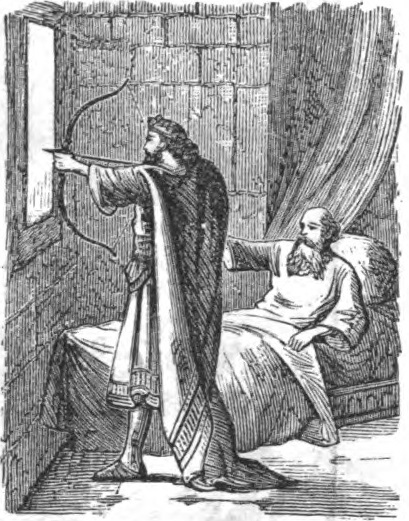
14 Now when Elisha had fallen sick with the illness of which he was to die, Joash king of Israel went down to him and wept before him, crying, “My father, my father! The chariots of Israel and its horsemen!” 15 And Elisha said to him, “Take a bow and arrows.” So he took a bow and arrows. 16 Then he said to the king of Israel, “Draw the bow,” and he drew it. And Elisha laid his hands on the king’s hands. 17 And he said, “Open the window eastward,” and he opened it. Then Elisha said, “Shoot,” and he shot. And he said, “The LORD‘s arrow of victory, the arrow of victory over Syria! For you shall fight the Syrians in Aphek until you have made an end of them.” 18 And he said, “Take the arrows,” and he took them. And he said to the king of Israel, “Strike the ground with them.” And he struck three times and stopped. 19 Then the man of God was angry with him and said, “You should have struck five or six times; then you would have struck down Syria until you had made an end of it, but now you will strike down Syria only three times.”

20 So Elisha died, and they buried him. Now bands of Moabites used to invade the land in the spring of the year. 21 And as a man was being buried, behold, a marauding band was seen and the man was thrown into the grave of Elisha, and as soon as the man touched the bones of Elisha, he revived and stood on his feet.

22 Now Hazael king of Syria oppressed Israel all the days of Jehoahaz. 23 But the LORD was gracious to them and had compassion on them, and he turned toward them, because of his covenant with Abraham, Isaac, and Jacob, and would not destroy them, nor has he cast them from his presence until now.

24 When Hazael king of Syria died, Ben-hadad his son became king in his place. 25 Then Jehoash the son of Jehoahaz took again from Ben-hadad the son of Hazael the cities that he had taken from Jehoahaz his father in war. Three times Joash defeated him and recovered the cities of Israel. 2 Kings 13:10-25 ESV

Keeping up with the revolving door of kings who reigned over Israel and Judah is hard enough as it is, but it becomes even more difficult when two kings with the same name end up ruling at the same time. That’s the case in this particular passage. Jehoash ascended to the throne of Israel after the death of his father, Jehoahaz, and it just so happened that the king of Judah bore the same name. It seems only fitting and a bit ironic that these two nations that shared the same predilection for idolatry and apostasy would end up with rulers who shared the same name. While their reigns would only intersect for a period of about two years, they shared more in common than their name. In the end, both men proved to be ungodly leaders who failed to lead their people back to the worship of Yahweh.

When Jehoash, the king of Judah, received a less-than-encouraging message from God, he ordered the stoning of the messenger. It just so happened that the man he executed was Zechariah, the son of Jehoiada the priest. This was the same Jehoiada who had saved the infant Jehoash from the hands of Queen Athaliah by providing him with sanctuary in the temple for six years. On Jehoash’s seventh birthday, Jehoiada had anointed him as the king of Judah. But years later, after Jehoiada’s death, Jehoash began to listen to the counsel of his ungodly advisors and ultimately forsake Yahweh. As a result, Judah suffered defeat at the hands of a much smaller Syrian force. He was wounded in the battle and, while recuperating from his injuries, he was assassinated by two of his own officials.

And the king of Israel, who bore the same name, shared a similar story of unfaithfulness and rebellion. The author sums up his 16-year reign with the words: “he did what was evil in the LORD’s sight. He refused to turn from the sins that Jeroboam son of Nebat had led Israel to commit” (2 Kings 13:11 NLT). He, too, forsook the LORD and led the people to continue their love affair with false gods. And it’s interesting to note that the heir to his throne was his son, Jeroboam II, whom he had named after the first king of the northern kingdom of Israel. His admiration for Jeroboam seems obvious but undeserved. After all, Jeroboam had been responsible for leading the Israelites into idolatry. When God split the nation of Israel in two after the reign of Solomon, He gave the ten northern tribes to Jeroboam as his kingdom. But Jeroboam responded to this gracious gift from God by erecting two golden calves and encouraging his people to forsake the worship of Yahweh. Yet Jehoash thought enough of this man to name his own son after him.

But sometime during his reign, Jehoash of Israel received word that the prophet Elisha was on his deathbed. Surprisingly, the king was grieved over this news and made a personal visit to see the dying prophet. While Jehoash was anything but a faithful worshiper of Yahweh, he knew that Elisha had great power and influence. This elderly prophet had proven time and time again that he spoke on behalf of God and was empowered by God. That’s why Jehoash greeted him with the somewhat cryptic statement: “My father, my father! The chariots of Israel and its horsemen!” (2 Kings 13:14 ESV). Evidently, Jehoash had heard the story of Elijah’s miraculous departure and Elisha’s role in it. Perhaps Elisha had shared with the king the details of that fateful day when God had used a whirlwind to take Elijah from the earth.

…as they still went on and talked, behold, chariots of fire and horses of fire separated the two of them. And Elijah went up by a whirlwind into heaven. And Elisha saw it and he cried, “My father, my father! The chariots of Israel and its horsemen!” And he saw him no more. – 2 Kings 2:11-12 ESV

This event followed Elisha’s request that Elijah give him a double portion of his spirit. He was to be Elijah’s replacement, and he felt ill-equipped for the task. It could be that King Jehoash hoped Elisha would pour out his spirit on him as well. He understood that Elisha possessed power and had direct access to Yahweh. With the prophet’s death, all of that might be lost. But rather than pour out his spirit on the apostate king, Elisha commanded him to take his bow and shoot an arrow out the window.

Elisha said, “Shoot,” and he shot. And he said, “The LORD‘s arrow of victory, the arrow of victory over Syria! For you shall fight the Syrians in Aphek until you have made an end of them.” – 2 Kings 13:17 ESV

Next, the prophet told the king to take his remaining arrows and strike the ground with them. Jehoash dutifully obeyed, but when he stopped after the third blow, Elisha responded in anger.

“You should have struck the ground five or six times!” he exclaimed. “Then you would have beaten Aram until it was entirely destroyed. Now you will be victorious only three times.” – 2 Kings 13:19 NLT

In a sense, Elisha had poured out his spirit on King Jehoash. He had placed his hands on those of the king and, together, they had shot the first arrow out the window. He then assured the king of his victory over the Syrians. But the extent of that victory would depend on Jehoash’s faith. By limiting the number of times he struck the ground, Jehoash was unwittingly revealing his lack of faith. The first arrow had symbolized the LORD’s victory over the Syrians. When Elisha had commanded Jehoash to take the remaining arrows and strike the ground, he should have done so until the prophet told him to stop. Each blow was meant to symbolize a victory over the enemy. But Jehoash had chosen to limit his expectations. In doing so, he inadvertently limited his chances of success over his enemy.

Having pronounced his last prophetic message, Elisha died. But the author relates a story that reveals one last miracle associated with the prophet of God. Sometime later, the body of a recently deceased man was inadvertently thrown into the cave containing Elisha’s bones. When the body of the dead man came into contact with Elisha’s remains, he was immediately restored to life. Amazingly, the author provides no further details about the story to indicate what happened to this newly resurrected man or how the story came to be known. But its inclusion in the narrative was meant to reveal that, though Elisha was dead,  Yahweh was alive and well. Elisha’s departure was not meant to be mistaken for God’s abandonment of Israel. He was still fully capable of restoring life to the lifeless. The all-powerful God of Israel used the bones of a dead prophet to restore life to a dead Israelite, a clear symbol of His desire to renew those among His chosen people who were marked by spiritual death.

The author reminds his readers that God remained faithful to His disobedient people, refusing to abandon them despite their constant rejection of Him.

the LORD was gracious and merciful to the people of Israel, and they were not totally destroyed. He pitied them because of his covenant with Abraham, Isaac, and Jacob. – 2 Kings 13:23 NLT

The author also reveals that Yahweh kept His word concerning the fate of the Syrians. Jehoash experienced three separate victories over his enemy, matching the exact number of times he struck the ground with his arrows — no more, no less. God allowed Jehoash to recover some of the territory stolen by the Syrians, but the fighting would continue throughout the rest of his reign. The sad reality is that the same God who raised a dead man back to life was fully capable of restoring a spiritually dead nation. Still, their continued stubbornness and lack of faithfulness would prevent them from experiencing the life-transformative power of Yahweh.

English Standard Version (ESV) The Holy Bible, English Standard Version. ESV® Permanent Text Edition® (2016). Copyright © 2001 by Crossway Bibles, a publishing ministry of Good News Publishers.

New Living Translation (NLT) Holy Bible, New Living Translation, copyright © 1996, 2004, 2015 by Tyndale House Foundation. Used by permission of Tyndale House Publishers Inc., Carol Stream, Illinois 60188. All rights reserved.
Godly Grief Vs Worldly Grief

1 In the twenty-third year of Joash the son of Ahaziah, king of Judah, Jehoahaz the son of Jehu began to reign over Israel in Samaria, and he reigned seventeen years. He did what was evil in the sight of the LORD and followed the sins of Jeroboam the son of Nebat, which he made Israel to sin; he did not depart from them. And the anger of the LORD was kindled against Israel, and he gave them continually into the hand of Hazael king of Syria and into the hand of Ben-hadad the son of Hazael. Then Jehoahaz sought the favor of the LORD, and the LORD listened to him, for he saw the oppression of Israel, how the king of Syria oppressed them. (Therefore the LORD gave Israel a savior, so that they escaped from the hand of the Syrians, and the people of Israel lived in their homes as formerly. Nevertheless, they did not depart from the sins of the house of Jeroboam, which he made Israel to sin, but walked in them; and the Asherah also remained in Samaria.) For there was not left to Jehoahaz an army of more than fifty horsemen and ten chariots and ten thousand footmen, for the king of Syria had destroyed them and made them like the dust at threshing. Now the rest of the acts of Jehoahaz and all that he did, and his might, are they not written in the Book of the Chronicles of the Kings of Israel? So Jehoahaz slept with his fathers, and they buried him in Samaria, and Joash his son reigned in his place. 2 Kings 13:1-9 ESV

God had used the Syrians to inflict judgment upon the southern kingdom of Judah. Because of the rebellion of His people, God had given King Hazael and his Syrian troops a resounding victory over the much larger and more powerful army of King Jehoash. Having been wounded in battle against the Syrians, Jehoash became an easy target for some of his disgruntled officials. They strongly opposed his murder of Zechariah, the son of Jehoiada the priest, and saw the nation’s recent defeat by a much smaller Syrian force as a sign of God’s judgment. So, these two men took it upon themselves to assassinate the king while he was lying in bed recovering from his injuries. He was then replaced by his son, Amaziah.

In the meantime, the northern kingdom of Israel was having its own set of struggles with the Syrians. Jehoahaz had ascended to the throne of his father, Jehu, and had managed to keep Israel’s legacy of apostasy alive and well.

He did what was evil in the sight of the LORD and followed the sins of Jeroboam the son of Nebat, which he made Israel to sin; he did not depart from them. – 2 Kings 13:2 ESV

In other words, it was business as usual in Israel. But God had grown weary of watching each successive royal administration try to outdo the sins of their predecessors. Fed up with their stubbornness and blatant unfaithfulness, He unleashed His righteous indignation against Israel and “gave them continually into the hand of Hazael king of Syria and into the hand of Ben-hadad the son of Hazael” (2 Kings 13:3 ESV).

The Syrians became the proverbial thorn in the side of the disobedient Israelites. This imagery was in keeping with God’s earlier warnings against Israel compromising with the pagan nations that occupied the promised land.

But if you do not drive out the inhabitants of the land from before you, then those of them whom you let remain shall be as barbs in your eyes and thorns in your sides, and they shall trouble you in the land where you dwell. – Numbers 33:55 ESV

God would later provide the Israelites with another warning, meant to discourage them from intermarrying with the pagan nations that occupied the land of Canaan.

…know for certain that the LORD your God will no longer drive out these nations before you, but they shall be a snare and a trap for you, a whip on your sides and thorns in your eyes, until you perish from off this good ground that the LORD your God has given you. – Joshua 23:13 ESV

And when the Israelites failed to drive out the inhabitants of the land, God announced that they were on their own; He was abandoning them to their wicked ways. They would have to deal with the consequences of their disobedience.

“So now I say, I will not drive them out before you, but they shall become thorns in your sides, and their gods shall be a snare to you.” – Judges 2:3 ESV

Yet, when God sent the Syrians to plague and provoke the unfaithful people of Israel, King Jehoahaz “sought the favor of the LORD” (2 Kings 13:4 ESV). The constant pain inflicted by this divinely-ordained “thorn” was more than Jehoahaz could bear, so he did something none of his predecessors had ever done: He humbled himself and cried out to God. And his cry was heard and answered. The author states that God, the very one who sent the Syrians, “saw the oppression of Israel, how the king of Syria oppressed them” (2 Kings 13:4 ESV). This statement makes it sound like God was surprised by what He saw, but it would be better interpreted as a declaration of God’s recognition of the suffering His chosen people were having to endure. His judgment, while fully just and well-deserved, had produced its intended results, and He felt compassion for the plight of His people. His discipline of His children was not because He had fallen out of love with them. In fact, the book of Proverbs reminds us, “the LORD corrects those he loves, just as a father corrects a child in whom he delights” (Proverbs3:12 NLT). And the author of Hebrews quotes this very proverb, then adds a further point of clarification.

As you endure this divine discipline, remember that God is treating you as his own children. Who ever heard of a child who is never disciplined by its father? If God doesn’t discipline you as he does all of his children, it means that you are illegitimate and are not really his children at all. – Hebrews 12:7-8 NLT

God had lovingly disciplined them for their disobedience and unfaithfulness. But, as the text reveals, He heard the humbled cry of their king and responded in love and compassion. He did for them what they couldn’t do for themselves; He rescued them from the very plight they had brought upon themselves.

Therefore the LORD gave Israel a savior, so that they escaped from the hand of the Syrians, and the people of Israel lived in their homes as formerly… – 2 Kings 13:5 ESV

This scene brings to mind the book of Judges, which chronicles the period of Israelite history long before they had a king. They had managed to enter Canaan, but failed to completely eliminate the pagan nations that occupied the land before them. As a result, they ended up intermarrying with these nations and worshiping their false gods. This led God to punish them.

…the people of Israel did what was evil in the sight of the LORD and served the Baals. And they abandoned the LORD, the God of their fathers, who had brought them out of the land of Egypt. They went after other gods, from among the gods of the peoples who were around them, and bowed down to them. And they provoked the LORD to anger. They abandoned the LORD and served the Baals and the Ashtaroth.  So the anger of the LORD was kindled against Israel, and he gave them over to plunderers, who plundered them. And he sold them into the hand of their surrounding enemies, so that they could no longer withstand their enemies. – Judges 2:11-14 ESV

But in time, God raised up deliverers who rescued His wayward people and restored them to a right relationship with Him.

Then the LORD raised up judges, who saved them out of the hand of those who plundered them. – Judges 2:17 ESV

Sadly, this cycle would repeat itself over and over again. The people would sin, so God would send a plunderer. Then, when the suffering became unbearable, the people would cry out, and another deliverer would show up to rescue them.

Now, hundreds of years later, the people of Israel would reveal that little had changed. They cried out, and God sent them a savior. We have no way of knowing the identity of this individual. Some have speculated that it was King Adad-Nirari III of Assyria. The Assyrians were the new kids on the block, an up-and-coming nation that was beginning to flex its military muscle in the region. To access the Mediterranean Sea and the fertile valleys located in Canaan, they would have to pass through the land belonging to Syria. It could be that God used this rapidly expanding world power to harass and distract the Syrians, buying King Jehoahaz and the Israelites a much-needed respite.

But regardless of the identity of this God-appointed “savior,” the people of Israel proved to be far from grateful for their rescue. In time, they fell back into their old habits.

But they continued to sin, following the evil example of Jeroboam. They also allowed the Asherah pole in Samaria to remain standing. – 2 Kings 13:6 NLT

Nothing had changed. Jehoahaz remained just as stubborn and unrepentant as always. Even the fact that God had allowed the Syrians to drastically reduce the fighting capacity of Israel’s army failed to elicit a change in Jehoahaz. The oppression of the Syrians got his attention and forced him to cry out to God, but once rescued, he continued to pursue the same ungodly agenda as before. The loving discipline and gracious deliverance of God failed to make a lasting impression on Jehoahaz. He was allowed to complete his reign, but with his decimated army,  he was a king in name only. He would die, and his son would inherit his throne and a diminished kingdom.

God’s loving discipline was meant to bring His wayward people to repentance. But Jehoahaz, like so many of his predecessors, failed to respond to God’s gracious deliverance appropriately. Despite his decimated army, Jehoahaz enjoyed an unexpected break from the Syrian oppression because Yahweh sent a “savior” to restore their fortunes. Yet, once the people “escaped from the hand of the Syrians, and…lived in their homes as formerly” (2 Kings 13:5 ESV), they refused to give up their old pagan practices. With the threat of the Syrians eliminated and their former lifestyles restored, the Israelites forsook Yahweh once again. The author provides an unflattering assessment of their response to Yahweh’s deliverance. “They continued to sin, following the evil example of Jeroboam. They also allowed the Asherah pole in Samaria to remain standing” (2 Kings 13:6 NLT).

This brings to mind a message that Jesus gave to the church in Laodicea, recorded in the Book of Revelation by the apostle John.

“I know all the things you do, that you are neither hot nor cold. I wish that you were one or the other! But since you are like lukewarm water, neither hot nor cold, I will spit you out of my mouth! You say, ‘I am rich. I have everything I want. I don’t need a thing!’ And you don’t realize that you are wretched and miserable and poor and blind and naked. So I advise you to buy gold from me—gold that has been purified by fire. Then you will be rich. Also buy white garments from me so you will not be shamed by your nakedness, and ointment for your eyes so you will be able to see. I correct and discipline everyone I love. So be diligent and turn from your indifference. – Revelation 3:15-19 NLT

That last line says it all. God the Father and Jesus Christ His Son demand true and lasting repentance. The apostle Paul refers to this kind of repentance and associates it with “godly grief.”

I rejoice, not because you were grieved, but because you were grieved into repenting. For you felt a godly grief, so that you suffered no loss through us.

For godly grief produces a repentance that leads to salvation without regret, whereas worldly grief produces death. – 2 Corinthians 7:9-10 ESV

The beleaguered people of Israel had suffered under the unrelenting attacks of the Syrians, and it seems that their grief was worldly and not godly. This produced a false form of repentance that failed to recognize their need for Yahweh. Once delivered from their oppression, their “grief” was replaced with a false sense of optimism and hope, but failed to produce a reverence for and dependence upon Yahweh as their true “savior.” They stubbornly refused to admit that they were “wretched and miserable and poor and blind and naked” (Revelation 3:17 NLT). And their “worldly grief” would ultimately result in death. 

English Standard Version (ESV) The Holy Bible, English Standard Version. ESV® Permanent Text Edition® (2016). Copyright © 2001 by Crossway Bibles, a publishing ministry of Good News Publishers.

New Living Translation (NLT) Holy Bible, New Living Translation, copyright © 1996, 2004, 2015 by Tyndale House Foundation. Used by permission of Tyndale House Publishers Inc., Carol Stream, Illinois 60188. All rights reserved.
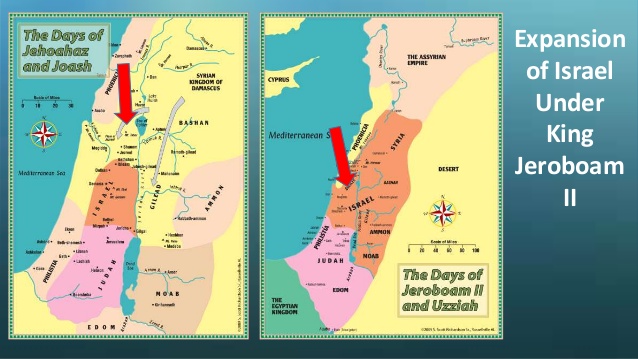
Robbing God Is Risky

17 At that time Hazael king of Syria went up and fought against Gath and took it. But when Hazael set his face to go up against Jerusalem, 18 Jehoash king of Judah took all the sacred gifts that Jehoshaphat and Jehoram and Ahaziah his fathers, the kings of Judah, had dedicated, and his own sacred gifts, and all the gold that was found in the treasuries of the house of the LORD and of the king’s house, and sent these to Hazael king of Syria. Then Hazael went away from Jerusalem.

19 Now the rest of the acts of Joash and all that he did, are they not written in the Book of the Chronicles of the Kings of Judah? 20 His servants arose and made a conspiracy and struck down Joash in the house of Millo, on the way that goes down to Silla. 21 It was Jozacar the son of Shimeath and Jehozabad the son of Shomer, his servants, who struck him down, so that he died. And they buried him with his fathers in the city of David, and Amaziah his son reigned in his place. 2 Kings 12:17-21 ESV

With the death of Jehoiada the priest, King Jehoash became like a ship without a rudder. His former mentor and father figure had been a stabilizing factor in his life, and his departure left the king directionless and vulnerable to the influence of others. The book of 2 Chronicles reveals that not long after Jehoiada’s death, “the leaders of Judah came and bowed before King Joash and persuaded him to listen to their advice. They decided to abandon the Temple of the Lord, the God of their ancestors, and they worshiped Asherah poles and idols instead! Because of this sin, divine anger fell on Judah and Jerusalem” (2 Chronicles 24:17-18 NLT). Though God sent prophets who called the nation to repentance, the people refused to listen, and King Jehoash led the way in rejecting the messengers of Yahweh.

God placed His Spirit upon Zechariah, the son of Jehoiada, who delivered a stinging indictment against the nation.

“This is what God says: Why do you disobey the LORD’s commands and keep yourselves from prospering? You have abandoned the LORD, and now he has abandoned you!” – 2 Chronicles 24:20 NLT

But his words fell on deaf ears and hard hearts. Rather than call the people to repentance, King Jehoash repaid his former mentor, Jehoiada, by having his son stoned to death in the Temple courtyard. As Zechariah died, he cried out, “May the LORD see what they are doing and avenge my death!” (2 Chronicles 24:22 NLT).

This curse from the lips of God’s dying prophet would come to fruition. God would avenge the death of Zechariah, and He would use the pagan nation of Syria to do it. For years, the Syrians had been harassing the northern kingdom of Israel. All the while Jehoash had been king in Judah, his counterpart in Israel had been waging an ongoing war against the Syrians. King Jehoahaz had ascended to the throne of his father, Jehu, and had picked up where his father had left off, doing “what was evil in the sight of the LORD and followed the sins of Jeroboam the son of Nebat” (2 Kings 13:2 ESV). As a result, God “gave them continually into the hand of Hazael king of Syria and into the hand of Ben-hadad the son of Hazael” (2 Kings 13:3 ESV). This continued throughout the reign of King Jehoahaz.

But now, God was going to use the Syrians to punish the rebellious and unrepentant nation of Judah. King Hazael took his campaign of terror further south, moving along the coast of the Mediterranean, and eventually capturing the city of Gath, deep within Judean territory. Then he set his sights on Jerusalem. In the spring of the year, Hazael and his army attacked the capital city, “and destroyed all the princes of the people from among the people and sent all their spoil to the king of Damascus” (2 Chronicles 24:23 ESV). The chronicler goes on to reveal that this victory was God-ordained.

Though the army of the Syrians had come with few men, the LORD delivered into their hand a very great army, because Judah had forsaken the LORD, the God of their fathers. Thus they executed judgment on Joash. – 2 Chronicles 24:24 ESV

The attack left Jehoash wounded, and, in desperation, the king decided to do whatever he had to do to keep Hazael from capturing the city. So, he stripped bare the Temple treasury, sending all the sacred items and the gold to Hazael as a form of ransom.

Jehoash king of Judah took all the sacred gifts that Jehoshaphat and Jehoram and Ahaziah his fathers, the kings of Judah, had dedicated, and his own sacred gifts, and all the gold that was found in the treasuries of the house of the LORD and of the king’s house, and sent these to Hazael king of Syria. Then Hazael went away from Jerusalem. – 2 Kings 12:18 ESV

This king, who had been raised by the priest of God in the house of God, sold out Yahweh. In the face of the Syrian assault, Jehoash resorted to paying off his attackers, stripping the Temple of all its holy treasures and priceless valuables. Rather than turning to Yahweh for help, Jehoash took what had been consecrated to God and used it to buy off the enemy, and his plan seemed to work.

Hazael took the treasure and left, but Jehoash’s troubles were far from over. Still suffering from the wounds he had received in the attack on Jerusalem, Jehoash was in a vulnerable state. His treasury was bankrupt, and he was a physically broken man. It seems that some of his officials recognized that Judah’s recent defeat at the hands of the Syrians had something to do with Jehoash’s decision to kill Zechariah. The curse uttered by the dying prophet had come true. So, they decided to eliminate the cause of all their troubles.

…his own officials plotted to kill him for murdering the son of Jehoiada the priest. They assassinated him as he lay in bed. – 2 Chronicles 24:25 NLT

The author of 2 Kings even provides the names of the two conspirators.

The assassins were Jozacar son of Shimeath and Jehozabad son of Shomer—both trusted advisers. – 2 Kings 12:21 NLT

These men would have had easy access to the king because he trusted them. They had become replacements for Jehoiada, providing the king with counsel and acting as his mentors. But unlike the former priest, these men had no love for Jehoash. They viewed him as a plague upon the nation and determined that his removal might placate God and prevent further judgment. Yet, it’s important to understand that their actions were ordained by God. It’s interesting to note that these two men were actually foreigners. One was the son of an Ammonite woman, and the other was the son of a Moabite woman. This reference to their birth mothers is significant because it links the events in this chapter all the way back to the Book of Genesis.

Genesis 19 contains the account of God’s rescue of Lot and his daughters from the wicked city of Sodom. Lot, the nephew of Abraham, had decided to settle in the fertile valleys of the Jordan, but it wasn’t long before he “moved his tent as far as Sodom” (Genesis 13:12 ESV). This proved to be a poor decision, becausethe men of Sodom were wicked, great sinners against the LORD” (Genesis 13:12 ESV). Eventually, Lot relocated his family inside the walls of the city of Sodom. When God determined to destroy Sodom and its neighboring city of Gomorrah for the wickedness of their inhabitants, Abraham convinced God to spare Lot and his daughters. But once they were rescued by the angels of God, Lot’s daughters displayed the negative influence of their time spent in Sodom. Fearful that they would never find husbands, they came up with a plan to get their father drunk and commit incest with him, all under the guise of prolonging their father’s lineage. Their mother was dead, and their father had no sons. So, in their minds, this was the only way of preserving the family line. But their sinful decision produced a less-than-ideal outcome.

…both of Lot’s daughters became pregnant by their own father. When the older daughter gave birth to a son, she named him Moab. He became the ancestor of the nation now known as the Moabites. When the younger daughter gave birth to a son, she named him Ben-ammi. He became the ancestor of the nation now known as the Ammonites. – Genesis 19:36 NLT

The descendants of these two young ladies became the Ammonites and Moabites. These distant relatives of the Israelites were pagan nations that worshiped false gods. It’s no coincidence that the men who plotted and carried out the assassination of Jehoash had ties to these two nations. God had used the Syrians to inflict judgment upon Judah. Now, He used an Ammonite and a Moabite to bring death to the rebellious and unrepentant Jehoash.

God had preserved and protected Jehoash, allowing him to find sanctuary in the Temple and receive instruction from Jehoiada the priest. But when his godly mentor died, Jehoash was exposed for what he really was — just another king who refused to acknowledge Yahweh as the one true Sovereign. Jehoash had started out so well but ended poorly, choosing to forsake God and listen to the advice of men. Rather than heed the warnings of God’s prophet, Jehoash put him to death. Instead of placing his trust in Yahweh, Jehoash attempted to buy his way out of trouble, using the treasury of God in a failed attempt to escape the judgment of God. And he died trying.

Joash was buried with his ancestors in the City of David. Then his son Amaziah became the next king. – 2 Kings 12:21 NLT

Another king had come to power and disappeared from the scene because he refused to honor the One who had placed him on the throne to begin with. Yahweh had graciously preserved the nation of Judah, providing ample evidence of His patience and love. He would later juxtapose His faithfulness against the backdrop of Judah’s ongoing apostasy, and, interestingly enough, He would accuse them of having robbed Him.

“For I the LORD do not change; therefore you, O children of Jacob, are not consumed. From the days of your fathers you have turned aside from my statutes and have not kept them. Return to me, and I will return to you, says the LORD of hosts. But you say, ‘How shall we return?’ Will man rob God? Yet you are robbing me. But you say, ‘How have we robbed you?’ In your tithes and contributions. You are cursed with a curse, for you are robbing me, the whole nation of you. Bring the full tithe into the storehouse, that there may be food in my house. And thereby put me to the test, says the LORD of hosts, if I will not open the windows of heaven for you and pour down for you a blessing until there is no more need. I will rebuke the devourer for you, so that it will not destroy the fruits of your soil, and your vine in the field shall not fail to bear, says the LORD of hosts. Then all nations will call you blessed, for you will be a land of delight, says the LORD of hosts. – Malachi 3:6-12 NLT

The people of Judah had robbed God of what was rightfully His: their divinely ordained contributions and tithes, which were intended to be expressions of their love for and dependence upon Him. What little they had given was consecrated to Yahweh and was to be used as He prescribed. But Jehoash had taken these dedicated gifts and handed them over to the king of a pagan nation in a vain attempt to protect his kingdom from the judgment of Yahweh. In doing so, Jehoash sealed his own fate. Had he turned to God rather than stealing from God, Jehoash would have enjoyed an outpouring of blessings. But instead, Jehoash died a violent death at the hands of an Ammonite and Moabite and was buried “with his fathers in the city of David” (2 Kings 12:21 ESV).

English Standard Version (ESV) The Holy Bible, English Standard Version. ESV® Permanent Text Edition® (2016). Copyright © 2001 by Crossway Bibles, a publishing ministry of Good News Publishers.

New Living Translation (NLT) Holy Bible, New Living Translation, copyright © 1996, 2004, 2015 by Tyndale House Foundation. Used by permission of Tyndale House Publishers Inc., Carol Stream, Illinois 60188. All rights reserved.

Nevertheless…

1 In the seventh year of Jehu, Jehoash began to reign, and he reigned forty years in Jerusalem. His mother’s name was Zibiah of Beersheba. And Jehoash did what was right in the eyes of the LORD all his days, because Jehoiada the priest instructed him. Nevertheless, the high places were not taken away; the people continued to sacrifice and make offerings on the high places.

Jehoash said to the priests, “All the money of the holy things that is brought into the house of the LORD, the money for which each man is assessed—the money from the assessment of persons—and the money that a man’s heart prompts him to bring into the house of the LORD, let the priests take, each from his donor, and let them repair the house wherever any need of repairs is discovered.” But by the twenty-third year of King Jehoash, the priests had made no repairs on the house. Therefore King Jehoash summoned Jehoiada the priest and the other priests and said to them, “Why are you not repairing the house? Now therefore take no more money from your donors, but hand it over for the repair of the house.” So the priests agreed that they should take no more money from the people, and that they should not repair the house.

Then Jehoiada the priest took a chest and bored a hole in the lid of it and set it beside the altar on the right side as one entered the house of the LORD. And the priests who guarded the threshold put in it all the money that was brought into the house of the LORD. 10 And whenever they saw that there was much money in the chest, the king’s secretary and the high priest came up and they bagged and counted the money that was found in the house of the LORD. 11 Then they would give the money that was weighed out into the hands of the workmen who had the oversight of the house of the LORD. And they paid it out to the carpenters and the builders who worked on the house of the LORD, 12 and to the masons and the stonecutters, as well as to buy timber and quarried stone for making repairs on the house of the LORD, and for any outlay for the repairs of the house. 13 But there were not made for the house of the LORD basins of silver, snuffers, bowls, trumpets, or any vessels of gold, or of silver, from the money that was brought into the house of the LORD, 14 for that was given to the workmen who were repairing the house of the LORD with it. 15 And they did not ask for an accounting from the men into whose hand they delivered the money to pay out to the workmen, for they dealt honestly. 16 The money from the guilt offerings and the money from the sin offerings was not brought into the house of the LORD; it belonged to the priests. 2 Kings 12:1-16 ESV

Joash, referred to as Jehoash in this chapter, became the next king of Judah at the age of seven. This young child found himself bearing the heavy burden of leadership over God’s people. But for the first six years of his life, he had lived in the Temple of God, where Jehoiada the priest served as his father figure and spiritual mentor. This faithful servant of God continued to guide the young king during the early years of his reign, and his influence had a powerful impact. The innocent young boy who ascended the throne at seven would rule for four decades, and the author summarizes his reign with the words, “Jehoash did what was right in the eyes of the LORD all his days, because Jehoiada the priest instructed him” (2 Kings 12:2 ESV).

After reading the sordid history of the kings of Israel, this statement comes as a much-needed breath of fresh air. All was not lost. There was still a remnant of the faithful living in the land of Judah, and the actions of Jehoiada the priest demonstrate how God uses His servants to protect and preserve His people. In the midst of all the paganism and idolatry that infected the nation, this one man had remained at his priestly post, serving his God and ministering to the spiritual needs of his people. When the time came to protect the God-appointed heir to the throne of David, Jehoiada willingly put his reputation and life on the line.

The story of Jehoiada is a timely reminder not to underestimate the influence of one individual who chooses to remain faithful to God in the face of overwhelming odds. His determination and perseverance made a world of difference. Like Elijah and Elisha, Jehoiada was thrust into an isolated and lonely role that required him to stand against the forces of evil in his day. By making the fateful decision to hide the young heir to the throne, Jehoiada risked bringing down the wrath of Queen Athaliah. It could have cost him his life, but for six long years, he willingly took the risk and was used by God to preserve the hope of Israel: an heir to sit on the throne of David.

But sadly, the day came when Jehoiada’s influence over the king abruptly ended. The faithful priest died.

But Jehoiada grew old and full of days, and died. He was 130 years old at his death. And they buried him in the city of David among the kings, because he had done good in Israel, and toward God and his house. – 2 Chronicles 24:15-16 ESV

This one man had made a tremendous impact on the king, the house of God, and the people of Israel, and his death left a gaping spiritual void in King Jehoash’s life. With his mentor gone, the king found himself listening to the advice of those whose intentions were less-than-honorable and far from godly.

Now after the death of Jehoiada the princes of Judah came and paid homage to the king. Then the king listened to them. And they abandoned the house of the LORD, the God of their fathers, and served the Asherim and the idols. And wrath came upon Judah and Jerusalem for this guilt of theirs. – 2 Chronicles 24:17-18 ESV

With faithful Jehoiada out of the way, the ungodly princes of Israel took advantage of the situation to promote their anti-Yahweh agenda and lead the nation back into idolatry. Sadly, King Jehoash heeded their counsel.

The next 13 verses of chapter 12 appear to chronicle what happened in Israel as long as Jehoiada remained alive. King Jehoash had ordered repairs to be made to the Temple of God. He had a vested interest in the welfare of this building because it had served as his home and sanctuary for the first six years of his life. But in the 23rd year of his reign, he discovered that his orders had not been followed and no repairs had been made. The people were required to make an annual contribution to the temple treasury, and Jehoash had ordered that part of those funds should be used for the much-needed repairs. But for some unstated reason, the priests failed to disperse the funds to the workmen. So, the work was never done.

To remedy the problem, the king and Jehoiada set up a different system that allowed the transfer of the funds directly to the workmen responsible for the repairs; the priests were removed from the process altogether. Jehoiada set up a large wooden chest at the entrance to the Temple. The people would place their offering in the box, and the money would be periodically collected and distributed to the workmen.

Then they gave the money to the construction supervisors, who used it to pay the people working on the LORD’s Temple—the carpenters, the builders, the masons, and the stonecutters. They also used the money to buy the timber and the finished stone needed for repairing the LORD’s Temple, and they paid any other expenses related to the Temple’s restoration. – 2 Kings 12:11-12 NLT

With this new system in place, the repairs to the house of God were made without any graft or corruption taking place. The honesty and integrity of the workmen eliminated any need for a reconciliation of the funds.

No accounting of this money was required from the construction supervisors, because they were honest and trustworthy men. – 2 Kings 12:15 ESV

This simple statement speaks volumes. The spiritual influence of Jehoiada could be seen in the way the people conducted their lives. The king wasn’t the only one who did what was right in the eyes of the Lord. There was a contagious spirit of honesty and integrity that permeated the culture. As long as Jehoiada remained alive and had the ear of the king, the nation seemed to thrive. But it seems that Jehoiada died not long after the repairs to the Temple were completed. And, as the book of 2 Chronicles reveals, his departure made an immediate impact on the nation.

They decided to abandon the Temple of the Lord, the God of their ancestors, and they worshiped Asherah poles and idols instead! Because of this sin, divine anger fell on Judah and Jerusalem. Yet the LORD sent prophets to bring them back to him. The prophets warned them, but still the people would not listen. – 2 Chronicles 24:18-19 NLT

In Jehoiada’s absence, God sent His prophets to call the people to repentance, but they would not listen. So, eventually, God sent Zechariah, the son of Jehoiada, with a final warning of judgment.

“This is what God says: Why do you disobey the LORD’s commands and keep yourselves from prospering? You have abandoned the LORD, and now he has abandoned you!” – 2 Chronicles 24:20 NLT

Infuriated by Zechariah’s words, King Jehoash and the leaders of Judah chose to kill the messenger.

Then the leaders plotted to kill Zechariah, and King Joash ordered that they stone him to death in the courtyard of the LORD’s Temple. That was how King Joash repaid Jehoiada for his loyalty—by killing his son. Zechariah’s last words as he died were, “May the LORD see what they are doing and avenge my death!” – 2 Chronicles 24:21-22 NLT

Don’t miss the significance of this statement. King Jehoash, who had been raised by Jehoiada in the Temple of God, had his mentor’s son stoned to death in the Temple courtyard. In doing so, he desecrated his former home and the house of Yahweh he had painstakingly repaired. The very one whom God had preserved so that he might sit on David’s throne proved to be as wicked as the woman he replaced. Without the godly influence of Jehoiada in his life, King Jehoash was exposed as an empty suit, a man with a crown on his head but without a heart for God.

The death of Jehoiada drives home the truth found in Proverbs 29:2: “When the righteous increase, the people rejoice, but when the wicked rule, the people groan.”

As long as Jehoiada remained alive, his godly influence influenced King Jehoash and helped to promote and preserve the worship of Yahweh in Judah. But when he passed away at the ripe old age of 130, Jehoiada’s godly influence died with him, leaving King Jehoash susceptible to the less-than-righteous counsel of his royal advisors.

Jehoash had started well. His order to repair the Temple was a positive step designed to revitalize the worship of Yahweh and restore the people’s reliance upon Him as the one and only God. But as the rest of the chapter will reveal, with his godly mentor gone, Jehoash would prove to be ill-prepared to continue the reforms he began.

English Standard Version (ESV) The Holy Bible, English Standard Version. ESV® Permanent Text Edition® (2016). Copyright © 2001 by Crossway Bibles, a publishing ministry of Good News Publishers.

New Living Translation (NLT) Holy Bible, New Living Translation, copyright © 1996, 2004, 2015 by Tyndale House Foundation. Used by permission of Tyndale House Publishers Inc., Carol Stream, Illinois 60188. All rights reserved.
True to His Word

13 When Athaliah heard the noise of the guard and of the people, she went into the house of the LORD to the people. 14 And when she looked, there was the king standing by the pillar, according to the custom, and the captains and the trumpeters beside the king, and all the people of the land rejoicing and blowing trumpets. And Athaliah tore her clothes and cried, “Treason! Treason!” 15 Then Jehoiada the priest commanded the captains who were set over the army, “Bring her out between the ranks, and put to death with the sword anyone who follows her.” For the priest said, “Let her not be put to death in the house of the LORD.” 16 So they laid hands on her; and she went through the horses’ entrance to the king’s house, and there she was put to death.

17 And Jehoiada made a covenant between the LORD and the king and people, that they should be the LORD’s people, and also between the king and the people. 18 Then all the people of the land went to the house of Baal and tore it down; his altars and his images they broke in pieces, and they killed Mattan the priest of Baal before the altars. And the priest posted watchmen over the house of the LORD. 19 And he took the captains, the Carites, the guards, and all the people of the land, and they brought the king down from the house of the LORD, marching through the gate of the guards to the king’s house. And he took his seat on the throne of the kings. 20 So all the people of the land rejoiced, and the city was quiet after Athaliah had been put to death with the sword at the king’s house.

21 Jehoash was seven years old when he began to reign. 2 Kings 11:13-21 ESV

For six years, Joash [Jehoash], the young heir to David’s Throne, had lived in the temple of Yahweh, right under Athaliah’s nose. The house of God proved to be the perfect hiding place for the young boy because it would have been the last place Athaliah would have ever looked. Like her parents, Ahab and Jezebel, she was a committed Baal worshiper, so any chance of her running into Joash at the house of God would have been highly unlikely.

In this story, the temple of the one true God plays a significant role, serving as a reminder that, in Judah, Yahweh still played a major role in the lives of the people. While some of the kings of Judah had successfully introduced the worship of idols, the people had not completely abandoned Yahweh. The Temple of Solomon still stood, and the sacrificial system remained in place. Jehoiada and his fellow priests faithfully maintained God’s house and looked after the spiritual well-being of God’s people. Now, Jehoiada had provided sanctuary for God’s chosen king in the house that bore Yahweh’s name, and it must not be overlooked that the Temple of God had direct ties all the way back to King David.

It had always been David’s dream to build a great Temple in honor of Yahweh, but he would learn that God had other plans.

“And I will give you rest from all your enemies. Moreover, the LORD declares to you that the LORD will make you a house. When your days are fulfilled and you lie down with your fathers, I will raise up your offspring after you, who shall come from your body, and I will establish his kingdom. He shall build a house for my name, and I will establish the throne of his kingdom forever.” – 2 Samuel 7:11-13 ESV

God went on to promise David, “your house and your kingdom shall be made sure forever before me. Your throne shall be established forever” (2 Samuel 7:16 ESV). God was going to build David’s house or dynasty.  But it would be David’s son, Solomon, who would have the privilege of constructing a house that would bear Yahweh’s name and in which His glory would dwell. Now, the house built by Solomon had become the means by which God fulfilled His promise to preserve the house of David. Joash, the descendant of David and the rightful heir to the throne of Judah, was alive because he had been given sanctuary and protection in the house of God.

When word leaked out that Joash was alive and that he had been crowned the king of Judah, the crowds flocked to the Temple to see if the news was true. And it wasn’t long before Athaliah was told about the great commotion taking place at the Temple of Yahweh. So, she went to see for herself.

Much to her surprise, there stood her seven-year-old grandson, Joash, very much alive and well, and wearing a crown on his head. In an attempt to secure her ascension to the throne of Judah, Athaliah had ordered the eradication of her deceased son’s entire royal family. But as she entered the house of the LORD, she saw murderous scheme had failed. In a matter of seconds, Athaliah’s house of cards began to crumble. For six years, she had lived under the delusion that she had successfully secured her place as the queen of Judah. But little did she know that God had been protecting and preserving the seed of David until he was ready to take the throne.

It must not be overlooked that when Jehoiada placed the crown on Joash’s head, he also presented the young king with a copy of the Mosaic Law.

Jehoiada brought out Joash, the king’s son, placed the crown on his head, and presented him with a copy of God’s laws. – 2 Kings 11:12 NLT

This practice was in keeping with the commands of God concerning the kings of Israel.

“When he sits on the throne as king, he must copy for himself this body of instruction on a scroll in the presence of the Levitical priests. He must always keep that copy with him and read it daily as long as he lives. That way he will learn to fear the LORD his God by obeying all the terms of these instructions and decrees. This regular reading will prevent him from becoming proud and acting as if he is above his fellow citizens. It will also prevent him from turning away from these commands in the smallest way. And it will ensure that he and his descendants will reign for many generations in Israel.” – Deuteronomy 17:18-20 NLT

Athaliah, an ungodly and unauthorized queen, was standing before the God-appointed king of Judah, and this young man was backed by the Law of God, the priests of God, and had the full support of the people of God. But in a fit of rage, Athaliah declared the entire scene to be nothing less than an act of treason. She refused to acknowledge Joash as the rightful heir to the throne because she would not recognize Yahweh as the one and only God of Judah.

But her claims of treason were met with an order from Jehoiada the priest, commanding that she be removed from the Temple and summarily executed. She was the one who had been guilty of treason, and so, she was the one who deserved to die.

With her death, a spirit of revival broke out in the land of Judah. Jehoiada immediately “made a covenant between the LORD and the king and the people that they would be the LORD’s people” (2 Kings 11:17 NLT). In a sense, he called the people to repent and return to the worship of Yahweh. They had a new king, but Jehoiada knew that it would mean nothing without a renewed commitment to their worship of Yahweh. Joash was just a seven-year-old boy with no leadership skills or experience. However, if he and the people under his care would recommit themselves to the word and the will of God, they would find themselves enjoying His blessings once again.

In a decisive demonstration of their renewed zeal for Yahweh, the people tore down the temple of Baal. Its very presence indicates that Athaliah and her ungodly relatives in Israel had played a major role in the declining spiritual state within Judah. The city of Jerusalem, home to the Temple of Yahweh, also had a temple dedicated to Baal, the false god of Ahab and Jezebel. But in the revival-like atmosphere that accompanied Joash’s crowning, the people were moved to eradicate every last vestige of Baal worship from their midst.

They demolished the altars and smashed the idols to pieces, and they killed Mattan the priest of Baal in front of the altars. – 2 Kings 11:18 NLT

With Athaliah and her false god out of the way, it was time for Joash to move from God’s house to David’s palace. So, Jehoiada led a procession from the Temple to the royal residence, where “the king took his seat on the royal throne” (2 Kings 11:19 NLT). And at that moment, God reaffirmed the promise He had made to David.

Your house and your kingdom will continue before me for all time, and your throne will be secure forever. – 2 Samuel 7:16 NLT

God was committed to keeping His word because He had a far greater plan in store that would involve the line of David. His preservation of David’s “house” or royal line was crucial because there was to be one final descendant of David who would rule and reign, not just over Judah and Israel, but over all the kingdoms of the world. The prophet Isaiah spoke of this coming Davidic King who would bring salvation to the world.

In that day the heir to David’s throne
    will be a banner of salvation to all the world.
The nations will rally to him,
    and the land where he lives will be a glorious place. – Isaiah 11:10 NLT

Joash had been protected so that David’s line could be preserved. Despite the unfaithfulness of His people, God was faithfully keeping His promise to David so that His plans for the future redemption of the world could be fulfilled in Christ. The prophet Isaiah would later write of the arrival of their future heir to David’s throne.

For a child is born to us,
    a son is given to us.
The government will rest on his shoulders.
    And he will be called:
Wonderful Counselor, Mighty God,
    Everlasting Father, Prince of Peace.
His government and its peace
    will never end.
He will rule with fairness and justice from the throne of his ancestor David
    for all eternity.
The passionate commitment of the Lord of Heaven’s Armies
    will make this happen! – Isaiah 9:6-7 NLT

And the angel Gabriel would confirm Isaiah’s prophecy when, centuries later, he announced the unexpected news to a young virgin girl named Mary that she would give birth to a son, whom she would name Jesus.

“He will be very great and will be called the Son of the Most High. The Lord God will give him the throne of his ancestor David. And he will reign over Israel forever; his Kingdom will never end!” – Luke 1:32-33 NLT

As young Joash made his way from the Temple to the royal throne, he served as a physical reminder of Yahweh’s unwavering commitment to keep His covenant promises. No one, including the wicked daughter of Ahab and Jezebel, could prevent Him from fulfilling His plan to keep the line of David intact and the throne of David reserved for the future King of kings and Lord of lords. And, in the Book of Revelation, the apostle John records his vision of God’s final fulfillment of His promise to David.

Then the seventh angel blew his trumpet, and there were loud voices shouting in heaven:

“The world has now become the Kingdom of our Lord and of his Christ,
    and he will reign forever and ever.” – Revelation 11:15 NLT

English Standard Version (ESV) The Holy Bible, English Standard Version. ESV® Permanent Text Edition® (2016). Copyright © 2001 by Crossway Bibles, a publishing ministry of Good News Publishers.

New Living Translation (NLT) Holy Bible, New Living Translation, copyright © 1996, 2004, 2015 by Tyndale House Foundation. Used by permission of Tyndale House Publishers Inc., Carol Stream, Illinois 60188. All rights reserved.