God’s Miracle Makeover of Israel

25 “I will sprinkle clean water on you, and you shall be clean from all your uncleannesses, and from all your idols I will cleanse you. 26 And I will give you a new heart, and a new spirit I will put within you. And I will remove the heart of stone from your flesh and give you a heart of flesh. 27 And I will put my Spirit within you, and cause you to walk in my statutes and be careful to obey my rules. 28 You shall dwell in the land that I gave to your fathers, and you shall be my people, and I will be your God. 29 And I will deliver you from all your uncleannesses. And I will summon the grain and make it abundant and lay no famine upon you. 30 I will make the fruit of the tree and the increase of the field abundant, that you may never again suffer the disgrace of famine among the nations. 31 Then you will remember your evil ways, and your deeds that were not good, and you will loathe yourselves for your iniquities and your abominations. 32 It is not for your sake that I will act, declares the Lord God; let that be known to you. Be ashamed and confounded for your ways, O house of Israel.

33 “Thus says the Lord God: On the day that I cleanse you from all your iniquities, I will cause the cities to be inhabited, and the waste places shall be rebuilt. 34 And the land that was desolate shall be tilled, instead of being the desolation that it was in the sight of all who passed by. 35 And they will say, ‘This land that was desolate has become like the garden of Eden, and the waste and desolate and ruined cities are now fortified and inhabited.’ 36 Then the nations that are left all around you shall know that I am the Lord; I have rebuilt the ruined places and replanted that which was desolate. I am the Lord; I have spoken, and I will do it.

37 “Thus says the Lord God: This also I will let the house of Israel ask me to do for them: to increase their people like a flock. 38 Like the flock for sacrifices, like the flock at Jerusalem during her appointed feasts, so shall the waste cities be filled with flocks of people. Then they will know that I am the Lord.” Ezekiel 36:25-38 ESV

The nations mocked the integrity and reliability of Israel’s God by questioning His failure to protect them.

These are the people of the Lord, but he couldn’t keep them safe in his own land! – Ezekiel 36:20 NLT

The people of Israel had flaunted their sins in the face of God despite His repeated warnings of judgment. Even after the Babylonians had begun their siege of Jerusalem, the city’s residents refused to repent of their sins and return to the Lord so that they might be pardoned and delivered. As far away as Babylon, where the exiles from Nebuchadnezzar’s first incursion into Judah had been sent, the Jews were continuing to flaunt their idolatry and immorality in the face of God.

Yet, despite these ongoing displays of stubbornness and unfaithfulness, God promised to redeem and restore a remnant of His people.

“But the mountains of Israel will produce heavy crops of fruit for my people—for they will be coming home again soon! See, I care about you, and I will pay attention to you. Your ground will be plowed and your crops planted. I will greatly increase the population of Israel, and the ruined cities will be rebuilt and filled with people. – Ezekiel 36:8-10 NLT

But there is far more to this promise than the repatriation of God’s people to the land of promise. They had been cast out because of their wickedness and there had been little change in their spiritual condition. Nowhere along the way has God pointed out any sign of contrition or sorrow for their sin. He has not acknowledged a change in their behavior or any display of repentance among them. Yet, He promises to restore them to the land. How can that be? Why would God allow His rebellious and unrepentant children to occupy the land of promise again when they had shown no indication that they were ready to change their ways?

He has guaranteed their return in no uncertain terms.

“I, the Sovereign Lord, will gather you back from the nations where you have been scattered, and I will give you the land of Israel once again.” – Ezekiel 11:17 NLT

I will reach out with my strong hand and powerful arm, and I will bring you back from the lands where you are scattered. – Ezekiel 20:34 NLT

I will bring them back home to their own land of Israel from among the peoples and nations. I will feed them on the mountains of Israel and by the rivers and in all the places where people live. – Ezekiel 34:13 NLT

And there are no conditions tied to these promises. In other words, God has not demanded any particular action on the part of His people for these promises to be fulfilled. This message from God represents a marked change from the original agreement He had made with the Israelites when they were leaving Egypt and headed to the land of promise.

“When I led your ancestors out of Egypt, it was not burnt offerings and sacrifices I wanted from them. This is what I told them: ‘Obey me, and I will be your God, and you will be my people. Do everything as I say, and all will be well!’” – Jeremiah 7:22-23 NLT

That covenant was conditional, stipulating a stringent and unwavering commitment on the part of God’s people that they keep His commands. But this time, God demands nothing from His people. There are no calls to obedience or demands for a change in their behavior. What makes this passage so remarkable is its non-conditional nature. God is going to do for His people what they were incapable of doing for themselves.

The prophet Jeremiah records God’s assessment of His people’s inability to do the right thing.

“But my people would not listen to me. They kept doing whatever they wanted, following the stubborn desires of their evil hearts. They went backward instead of forward. From the day your ancestors left Egypt until now, I have continued to send my servants, the prophets—day in and day out. But my people have not listened to me or even tried to hear. They have been stubborn and sinful—even worse than their ancestors.” – Jeremiah 7:24-26 NLT

It didn’t matter how many times God warned, rebuked, or punished them; they would not repent because they could not. They didn’t have it in them. Yes, there were isolated cases of repentant Jews along the way. There was always a remnant of those who remained faithful to Yahweh, but they were few numbers.

So, God reveals that He is going to do something radically different. Rather than demand repentance, God is going to provide complete renewal – from the inside out.

“I will sprinkle clean water on you, and you will be clean. Your filth will be washed away, and you will no longer worship idols. And I will give you a new heart, and I will put a new spirit in you. I will take out your stony, stubborn heart and give you a tender, responsive heart. And I will put my Spirit in you so that you will follow my decrees and be careful to obey my regulations.” – Ezekiel 36:25-27 NLT

This does not describe some self-motivated, self-improvement strategy instigated by God’s people. No, this is a radical and supernatural transformation of their entire nature. It is exactly what Paul describes in his letter to the Corinthians.

Don’t you realize that those who do wrong will not inherit the Kingdom of God? Don’t fool yourselves. Those who indulge in sexual sin, or who worship idols, or commit adultery, or are male prostitutes, or practice homosexuality, or are thieves, or greedy people, or drunkards, or are abusive, or cheat people—none of these will inherit the Kingdom of God. Some of you were once like that. But you were cleansed; you were made holy; you were made right with God by calling on the name of the Lord Jesus Christ and by the Spirit of our God. – 1 Corinthians 6:9-11 NLT

The members of the Corinthian church to whom Paul wrote had been radically transformed by the power of God made possible through their faith in Jesus Christ. They had been cleansed, made holy, and restored to a right relationship with God through their relationship with Jesus Christ. And as Paul told the believers in Ephesus, “God saved you by his grace when you believed. And you can’t take credit for this; it is a gift from God. Salvation is not a reward for the good things we have done, so none of us can boast about it” (Ephesians 2:8-9 NLT).

God describes the same kind of transformation taking place in the lives of His chosen people, the Israelites.

“The day is coming,” says the Lord, “when I will make a new covenant with the people of Israel and Judah. This covenant will not be like the one I made with their ancestors when I took them by the hand and brought them out of the land of Egypt. They broke that covenant, though I loved them as a husband loves his wife,” says the Lord.

“But this is the new covenant I will make with the people of Israel after those days,” says the Lord. “I will put my instructions deep within them, and I will write them on their hearts. I will be their God, and they will be my people.

And they will not need to teach their neighbors, nor will they need to teach their relatives, saying, ‘You should know the Lord.’ For everyone, from the least to the greatest, will know me already,” says the Lord. “And I will forgive their wickedness, and I will never again remember their sins.” – Jeremiah 31:31-34 NLT

This passage speaks of a future day when God will redeem, renew, and restore His rebellious people. It will be the greatest of all miracles, a profound surgical procedure in which He removes their hearts of stone and replaces them with hearts of flesh. Everything about them will be changed in an instant. And He makes it clear that they will have nothing to brag about because they will have done nothing to make it happen.

I am not doing this because you deserve it. O my people of Israel, you should be utterly ashamed of all you have done!” – Ezekiel 36:32 NLT

The holy and righteous God of Israel will one day pardon His rebellious people. He will redeem a remnant from among the descendants of Abraham and restore them to the land of Canaan where they will live in perfect communion with Him. And when this unprecedented transformation takes place, everyone will know that it is the work of God. There will be no other explanation.

Then the surrounding nations that survive will know that I, the Lord, have rebuilt the ruins and replanted the wasteland. For I, the Lord, have spoken, and I will do what I say. – Ezekiel 36:36 NLT

English Standard Version (ESV) The Holy Bible, English Standard Version. ESV® Permanent Text Edition® (2016). Copyright © 2001

New Living Translation (NLT) Holy Bible, New Living Translation, copyright © 1996, 2004, 2015 by Tyndale House Foundation. Used by permission of Tyndale House Publishers Inc., Carol Stream, Illinois 60188. All rights reserved.
Their Blame and God’s Name

16 The word of the Lord came to me: 17 “Son of man, when the house of Israel lived in their own land, they defiled it by their ways and their deeds. Their ways before me were like the uncleanness of a woman in her menstrual impurity. 18 So I poured out my wrath upon them for the blood that they had shed in the land, for the idols with which they had defiled it. 19 I scattered them among the nations, and they were dispersed through the countries. In accordance with their ways and their deeds I judged them. 20 But when they came to the nations, wherever they came, they profaned my holy name, in that people said of them, ‘These are the people of the Lord, and yet they had to go out of his land.’ 21 But I had concern for my holy name, which the house of Israel had profaned among the nations to which they came.

22 “Therefore say to the house of Israel, Thus says the Lord God: It is not for your sake, O house of Israel, that I am about to act, but for the sake of my holy name, which you have profaned among the nations to which you came. 23 And I will vindicate the holiness of my great name, which has been profaned among the nations, and which you have profaned among them. And the nations will know that I am the Lord, declares the Lord God, when through you I vindicate my holiness before their eyes. 24 I will take you from the nations and gather you from all the countries and bring you into your own land.” – Ezekiel 36:16-24 ESV

The good news was that God was going to purge the land and prepare it for the return of His chosen people. That bit of information would have come as a huge relief in the wake of all the latest news concerning Judah’s fall and Jerusalem’s destruction. As Ezekiel’s audience processed all the details of the reports from home making their way to Babylon, a pall of depression and despondency would have settled over them. They were already in exile, waiting to be joined by more of their fellow citizens, the latest round of victims from Nebuchadnezzar’s relentless siege of Jerusalem. Now that the invasion was over, so were their hopes of ever returning home.

But with Ezekiel’s latest message, their hopes were restored by the news that God was going to allow them to return home one day.

“…the mountains of Israel will produce heavy crops of fruit for my people—for they will be coming home again soon! See, I care about you, and I will pay attention to you. Your ground will be plowed and your crops planted. I will greatly increase the population of Israel, and the ruined cities will be rebuilt and filled with people.” – Ezekiel 36:8-10 NLT

After all that had happened, they could rest in the knowledge that God cared for them. He had not abandoned or forgotten them. The very fact that He had sent a prophet to minister to them in the middle of Babylon should have clued them into the fact that He still had a keen interest in their welfare.

This chapter is replete with good news concerning the rebellious people of God, and it will only get better. But God knew it was vital that His unfaithful children understand the reason for their suffering. As they rejoiced over the news of their eventual return and God’s plans to prosper them once again, He wanted them to grasp the seriousness of their guilt and the true cause of His harsh judgment of them. And God is unsparing and quite graphic in His description of their crime.

“…when the people of Israel were living in their own land, they defiled it by the evil way they lived. To me their conduct was as unclean as a woman’s menstrual cloth.” – Ezekiel 36:17 NLT

He leaves little to the imagination and makes no attempt to sugarcoat or downplay the extent of their iniquity. This imagery would have hit Ezekiel’s Jewish audience quite hard because they were very familiar with the Mosaic Laws concerning this matter.

“Whenever a woman has her menstrual period, she will be ceremonially unclean for seven days. Anyone who touches her during that time will be unclean until evening. Anything on which the woman lies or sits during the time of her period will be unclean. If any of you touch her bed, you must wash your clothes and bathe yourself in water, and you will remain unclean until evening. If you touch any object she has sat on, you must wash your clothes and bathe yourself in water, and you will remain unclean until evening. This includes her bed or any other object she has sat on; you will be unclean until evening if you touch it. If a man has sexual intercourse with her and her blood touches him, her menstrual impurity will be transmitted to him. He will remain unclean for seven days, and any bed on which he lies will be unclean. – Leviticus 15:19-24 NLT

Their sin had become as natural and normal to them as a woman’s monthly menstrual cycle. They didn’t have to plan it or think about it; it just happened. And when it did, it contaminated everything and everyone around them. Their actions made everything they touched impure and unholy. But rather than seven days out of the month, their impurity had become a 365-day-a-year problem.

And God makes it clear that this problem was not the result of normal bodily functions or a pre-programmed function of human anatomy. No, they were making personal choices that resulted in the violation of God’s will and the defamation of His holy name.

“They polluted the land with murder and the worship of idols…” – Ezekiel 36:18 NLT

A woman’s menstrual cycle is inevitable and unavoidable, but that is not true of murder and idolatry. In fact, God had provided clear prohibitions against these things.

“You shall have no other gods before me. You shall not make for yourself a carved image, or any likeness of anything that is in heaven above, or that is in the earth beneath, or that is in the water under the earth. You shall not bow down to them or serve them…” – Exodus 20:3-4 ESV

“You shall not murder.” – Exodus 20:13 ESV

But they had repeatedly violated these two commands, along with all the others. It seems that God pointed out these two sins because they both involved the shedding and spreading of blood. Murder requires the taking of life and the spilling of blood. And the brand of idolatry that God’s people had begun to embrace often involved human sacrifice. Their downward spiritual spiral had led them to offer up their own children to false gods like Molech. And the blood of their victims cried out to God from the soil of the polluted land of promise.

And God wants them to understand that all they have suffered has been the result of God’s anger against their blatant and unrepentant wickedness.

“I poured out my fury on them. I scattered them to many lands to punish them for the evil way they had lived. – Ezekiel 36:18-19 NLT

They had no one to blame but themselves. While their deportation to Babylon had been God’s doing, it had been their own fault. He had simply given them what they rightly deserved. He had punished them in keeping with His own righteousness and according to His covenant commitment.

“…if you refuse to listen to the Lord your God and do not obey all the commands and decrees I am giving you today…The Lord will exile you and your king to a nation unknown to you and your ancestors. There in exile you will worship gods of wood and stone! You will become an object of horror, ridicule, and mockery among all the nations to which the Lord sends you. – Deuteronomy 28:15, 36-37 NLT

It had all happened just as God promised, including His prediction of their continued unfaithfulness through further idolatry. His punishment of them had virtually no impact on their behavior. They were so addicted to idolatry that they couldn’t resist the temptation, even while undergoing divine judgment for that very sin.

But little did they know that their actions had been adding to their long list of crimes against the Almighty. And, worst of all, all the while they had been violating the will of God, they had been defaming the name of God.

“…they brought shame on my holy name. – Ezekiel 36:20 NLT

It wasn’t just the fact that the people of God were living godless lives. There is no doubt that their behavior was a stain on God’s name because they were violating everything that He stood for. But God points out that their punishment had raised questions about Him among the pagan nations of the world.

For the nations said, ‘These are the people of the Lord, but he couldn’t keep them safe in his own land!’ – Ezekiel 36:20 NLT

God doesn’t worry about public opinion. What people think about Him plays no part in His decision-making. But He does care about His name because it is a reflection of His character. Yet, He had been willing to risk the repudiation of His reputation in order to deal with the sins of His people. The very ones who bore His name and should have been declaring His greatness and goodness to the nations had become a drain on His personal reputation. And the prophet Jeremiah provides a glimpse into God’s rationale for allowing this to happen.

“Have you noticed what people are saying?—‘The Lord chose Judah and Israel and then abandoned them!’ They are sneering and saying that Israel is not worthy to be counted as a nation. But this is what the Lord says: I would no more reject my people than I would change my laws that govern night and day, earth and sky. I will never abandon the descendants of Jacob or David, my servant, or change the plan that David’s descendants will rule the descendants of Abraham, Isaac, and Jacob. Instead, I will restore them to their land and have mercy on them.” – Jeremiah 33:24-26 NLT

And Ezekiel receives the very same message from the Lord concerning His rebellious people.

“I was concerned for my holy name, on which my people brought shame among the nations. Therefore, give the people of Israel this message from the Sovereign Lord: I am bringing you back, but not because you deserve it.” – Ezekiel 36:21-22 NLT

That last line is huge and should not be overlooked. None of what God was promising to do was deserved. They had done nothing to earn His affection or receive His forgiveness, and that had been true from the very beginning. His decision to make a nation called Israel and set it apart as His own had nothing to do with merit. As Moses told the people of Israel, they existed as a result of God’s love and faithfulness.

The LORD did not set His affection on you and choose you because you were more numerous than the other peoples, for you were the fewest of all peoples. But because the LORD loved you and kept the oath He swore to your fathers… – Deuteronomy 7:7-8 BSB

And all that God was promising for the future would be based on His love and faithfulness as well. But even greater than His unwavering love for His people is His love for His own name. That is why God declared, “I will show how holy my great name is—the name on which you brought shame among the nations” (Ezekiel 36:23 NLT). And when He is done, rather than mock the God of Israel, the nations will know that He alone is the Lord.

English Standard Version (ESV) The Holy Bible, English Standard Version. ESV® Permanent Text Edition® (2016). Copyright © 2001

New Living Translation (NLT) Holy Bible, New Living Translation, copyright © 1996, 2004, 2015 by Tyndale House Foundation. Used by permission of Tyndale House Publishers Inc., Carol Stream, Illinois 60188. All rights reserved.

A Reversal of Fortunes

“And you, son of man, prophesy to the mountains of Israel, and say, O mountains of Israel, hear the word of the Lord. Thus says the Lord God: Because the enemy said of you, ‘Aha!’ and, ‘The ancient heights have become our possession,’ therefore prophesy, and say, Thus says the Lord God: Precisely because they made you desolate and crushed you from all sides, so that you became the possession of the rest of the nations, and you became the talk and evil gossip of the people, therefore, O mountains of Israel, hear the word of the Lord God: Thus says the Lord God to the mountains and the hills, the ravines and the valleys, the desolate wastes and the deserted cities, which have become a prey and derision to the rest of the nations all around, therefore thus says the Lord God: Surely I have spoken in my hot jealousy against the rest of the nations and against all Edom, who gave my land to themselves as a possession with wholehearted joy and utter contempt, that they might make its pasturelands a prey. Therefore prophesy concerning the land of Israel, and say to the mountains and hills, to the ravines and valleys, Thus says the Lord God: Behold, I have spoken in my jealous wrath, because you have suffered the reproach of the nations. Therefore thus says the Lord God: I swear that the nations that are all around you shall themselves suffer reproach.

“But you, O mountains of Israel, shall shoot forth your branches and yield your fruit to my people Israel, for they will soon come home. For behold, I am for you, and I will turn to you, and you shall be tilled and sown. 10 And I will multiply people on you, the whole house of Israel, all of it. The cities shall be inhabited and the waste places rebuilt. 11 And I will multiply on you man and beast, and they shall multiply and be fruitful. And I will cause you to be inhabited as in your former times, and will do more good to you than ever before. Then you will know that I am the Lord. 12 I will let people walk on you, even my people Israel. And they shall possess you, and you shall be their inheritance, and you shall no longer bereave them of children. 13 Thus says the Lord God: Because they say to you, ‘You devour people, and you bereave your nation of children,’ 14 therefore you shall no longer devour people and no longer bereave your nation of children, declares the Lord God.15 And I will not let you hear anymore the reproach of the nations, and you shall no longer bear the disgrace of the peoples and no longer cause your nation to stumble, declares the Lord God.” Ezekiel 36:1-15 ESV

Twenty fine chapters separate this message from the one Ezekiel received back in chapter six, and a quick perusal reveals their similarities and extreme differences. Back in chapter six, God gave His prophet a message to deliver against the mountains of Israel.

This is what the Sovereign Lord says to the mountains and hills and to the ravines and valleys: I am about to bring war upon you, and I will smash your pagan shrines. All your altars will be demolished, and your places of worship will be destroyed. I will kill your people in front of your idols. – Ezekiel 6:3-4 NLT

God goes on to warn of further judgments upon the land, describing shocking scenes of devastation and death. His chosen people will die from war, famine, and disease, as He pours out His fury upon them. And the land will suffer greatly because of the “idols and altars on every hill and mountain and under every green tree and every great shade tree—the places where they offered sacrifices to their idols” (Ezekiel 6:13 NLT).

The sins of the nation had defiled the land that God had set apart as their inheritance. Through repeated acts of immorality and their unrelenting practice of idolatry, they had desecrated the very place that was to have been their forever home. At one point, God had described Israel as “a land flowing with milk and honey, the most glorious of all lands” (Exodus 20:15 ESV), but it had been polluted by the very presence of His ungrateful and unfaithful children. So, God warned of His plan to “clean house” and purge the land of its primary problem: The people who lived there. And long before the Israelites had ever entered the land of Canaan, God had warned them about picking up the habits of the nations that lived in the land before them. Because of the wickedness of the Canaanites, God said,“ the entire land has become defiled” and “I am punishing the people who live there. I will cause the land to vomit them out” (Leviticus 18:25 NLT). But He went on to warn the Israelites not to make the same mistake. 

“All these detestable activities are practiced by the people of the land where I am taking you, and this is how the land has become defiled. So do not defile the land and give it a reason to vomit you out, as it will vomit out the people who live there now. – Leviticus 18:27-28 NLT

As Ezekiel received the words recorded in chapter 36, the damage had been done. He was living among a contingent of Israelites who had already been “spewed out” of the land of promise and found themselves living as exiles in Babylon. And because of the recent fall of Jerusalem, they would soon be joined by a new wave of displaced refugees.

But chapter 36 provides a diametrically different message concerning the land of Israel. In what is almost a mirror image of the message contained in chapter six, God communicates His future plans for the land of promise. This time He has good news for Ezekiel to deliver to the “mountains of Israel” (Ezekiel 36:1 ESV).

See, I care about you, and I will pay attention to you. Your ground will be plowed and your crops planted. I will greatly increase the population of Israel, and the ruined cities will be rebuilt and filled with people. I will increase not only the people, but also your animals. O mountains of Israel, I will bring people to live on you once again. I will make you even more prosperous than you were before. – Ezekiel 36:9-11 NLT

The very people whom God had vomited from the land would be restored and the land would be renewed. But before that could happen, God was going to have to clean house again. This time, He would remove all those nations who had taken up residence in Israel’s forced absence. All the squatters and land-grabbers would be evicted to make way for the return of God’s chosen people.

Therefore, O mountains of Israel, hear the word of the Sovereign Lord. He speaks to the hills and mountains, ravines and valleys, and to ruined wastes and long-deserted cities that have been destroyed and mocked by the surrounding nations. This is what the Sovereign Lord says: My jealous anger burns against these nations, especially Edom, because they have shown utter contempt for me by gleefully taking my land for themselves as plunder. – Ezekiel 36:4-5 NLT

When the northern kingdom of Israel had fallen to the Assyrians, it didn’t take long for their neighbors to take advantage of their weakened state and enrich themselves by plundering their property and possessions. And the same thing would take place after the fall of the southern kingdom of Judah to the Babylonians. Nearby nations like Edom would use the opportunity to expand their borders at Judah’s expense. Having escaped annihilation at the hands of the Babylonian army, these smaller neighboring states would see Judah’s demise as a windfall and mock its fall.

Israel is a land that devours its own people and robs them of their children!” – Ezekiel 36:13 NLT

But God promises to turn their words against them. They can laugh and ridicule all they want, but the day is coming when God will turn the tables once again. He provides a stern rebuke to Judah’s arrogant enemies and warns them that their days in the land are numbered.

“…this is what the Sovereign Lord says: I have taken a solemn oath that those nations will soon have their own shame to endure. – Ezekiel 36:7 NLT

God was going to wipe the smirk off their faces and eliminate their very presence from the land. This time, they would be spewed out and left homeless. Because God had given the land to His people as their inheritance. The land of milk and honey would be restored to its former glory and filled with the sights and sounds of God’s children enjoying the bounty of His blessings.

I will make you even more prosperous than you were before. – Ezekiel 36:11 NLT

The hills, mountains, ravines, and valleys throughout Israel will once again be places of joy and celebration. The fields will be plowed and deliver an abundance of crops. The pastures will produce more than enough food to feed the flocks of God’s people. The ruined wastes and long-deserted cities will be rebuilt and repopulated as God orchestrates the return of His children.

The prophet, Zechariah, echoes these words of future hope and divine restoration.

“Once more I will cause the remnant in Judah and Israel to inherit these blessings. Among the other nations, Judah and Israel became symbols of a cursed nation. But no longer! Now I will rescue you and make you both a symbol and a source of blessing. So don’t be afraid.” – Zechariah 8:12-13 NLT

And God provided Zechariah with further insight into that future day when He will restore the fortunes of His people and reestablish them as the inheritors of His land.

“This is what the Lord of Heaven’s Armies says: People from nations and cities around the world will travel to Jerusalem. The people of one city will say to the people of another, ‘Come with us to Jerusalem to ask the Lord to bless us. Let’s worship the Lord of Heaven’s Armies. I’m determined to go.’ Many peoples and powerful nations will come to Jerusalem to seek the Lord of Heaven’s Armies and to ask for his blessing. – Zechariah 8:20-22 NLT

Everything will come full circle because God has ordained it. He is faithful to keep His word and determined to finish what He began.

Then you will know that I am the Lord. – Ezekiel 36:11 NLT

English Standard Version (ESV) The Holy Bible, English Standard Version. ESV® Permanent Text Edition® (2016). Copyright © 2001

New Living Translation (NLT) Holy Bible, New Living Translation, copyright © 1996, 2004, 2015 by Tyndale House Foundation. Used by permission of Tyndale House Publishers Inc., Carol Stream, Illinois 60188. All rights reserved.

Divine Payback

1 The word of the Lord came to me: “Son of man, set your face against Mount Seir, and prophesy against it, and say to it, Thus says the Lord God: Behold, I am against you, Mount Seir, and I will stretch out my hand against you, and I will make you a desolation and a waste. I will lay your cities waste, and you shall become a desolation, and you shall know that I am the Lord. Because you cherished perpetual enmity and gave over the people of Israel to the power of the sword at the time of their calamity, at the time of their final punishment, therefore, as I live, declares the Lord God, I will prepare you for blood, and blood shall pursue you; because you did not hate bloodshed, therefore blood shall pursue you. I will make Mount Seir a waste and a desolation, and I will cut off from it all who come and go. And I will fill its mountains with the slain. On your hills and in your valleys and in all your ravines those slain with the sword shall fall. I will make you a perpetual desolation, and your cities shall not be inhabited. Then you will know that I am the Lord.

10 “Because you said, ‘These two nations and these two countries shall be mine, and we will take possession of them’—although the Lord was there— 11 therefore, as I live, declares the Lord God, I will deal with you according to the anger and envy that you showed because of your hatred against them. And I will make myself known among them, when I judge you. 12 And you shall know that I am the Lord.

“I have heard all the revilings that you uttered against the mountains of Israel, saying, ‘They are laid desolate; they are given us to devour.’ 13 And you magnified yourselves against me with your mouth, and multiplied your words against me; I heard it. 14 Thus says the Lord God: While the whole earth rejoices, I will make you desolate. 15 As you rejoiced over the inheritance of the house of Israel, because it was desolate, so I will deal with you; you shall be desolate, Mount Seir, and all Edom, all of it. Then they will know that I am the Lord.” Ezekiel 35:1-15 ESV

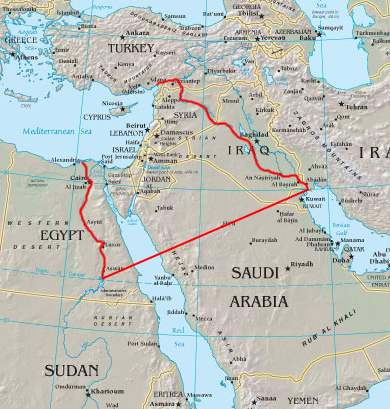
In the last chapter, God delivered the good news regarding Israel’s eventual restoration to the land of Canaan. He announced that in the distant future, He will return His people to their former land where will enjoy the blessings of His presence and His gracious provision for all their needs. This as-yet-to-be-fulfilled prophecy includes their reoccupation of the northern kingdom of Israel as well as the southern kingdom of Judah. But God will not stop there. He intends to expand the land of promise back to the original boundaries He had promised to Abraham and had articulated to Moses as the people prepared to conquer Canaan.

“I will send terror ahead of you to drive out the Hivites, Canaanites, and Hittites. But I will not drive them out in a single year, because the land would become desolate and the wild animals would multiply and threaten you. I will drive them out a little at a time until your population has increased enough to take possession of the land. And I will fix your boundaries from the Red Sea to the Mediterranean Sea, and from the eastern wilderness to the Euphrates River. I will hand over to you the people now living in the land, and you will drive them out ahead of you.” – Exodus 23:28-31 NLT

But when the people were preparing to enter the land for the very first time, God gave them strict instructions to not take any land from the Edomites, who were the direct descendants of Esau, the son of Isaac and the twin brother of Jacob.

Give these orders to the people: “You will pass through the country belonging to your relatives the Edomites, the descendants of Esau, who live in Seir. The Edomites will feel threatened, so be careful. Do not bother them, for I have given them all the hill country around Mount Seir as their property, and I will not give you even one square foot of their land. – Deuteronomy 2:4-5 NLT

But now, centuries later, as God delivers His news of future restoration, He informs Ezekiel that the rules of the game will be drastically different. He gives Ezekiel a message to deliver to Mount Seir, but the recipient is really the Edomites, the people who occupied the land of Seir.

While God had chosen Isaac’s son, Jacob over his brother Esau to be the son of the promise, God had awarded Esau’s descendants the land of Seir as their homeland.

He had done the same for the descendants of Esau who lived in Seir, for he destroyed the Horites so they could settle there in their place. The descendants of Esau live there to this day. – Deuteronomy 2:22 NLT

All during the reigns of David and Solomon, the Edomites had occupied the land of Seir. This region just south and east of the Dead Sea remained under Edomite control even after God had divided Israel into two kingdoms. And during the Babylonian occupation of Judah and while Ezekiel and his fellow Jews lived in exile in Babylon, the Edomites maintained their control of the land.

Over the centuries, the descendants of Jacob and the descendants of Esau had endured an ongoing love-hate relationship. They were like the Hatfields and McCoys, blood relatives who just couldn’t get along, and this fraternal conflict was predicted by God even before the two patriarchs of these people groups were born. While Isaac’s wife, Rebekah, was carrying Jacob and Esau in her womb, God informed her, “The sons in your womb will become two nations. From the very beginning, the two nations will be rivals. One nation will be stronger than the other; and your older son will serve your younger son” (Genesis 25:23 NLT).

This conflict that began in the womb continued after the birth of the two boys and expanded into an internecine battle between their descendants. Bad blood existed between the Israelites and Edomites for generations, and even when the nation of Judah was under attack by the Babylonians, the Edomites would take advantage of Judah’s vulnerable state by conducting raids against their towns and villages. So, there was no love loss between the two nations.

But for God to fulfill His promise of future restoration as outlined in chapter 34, He reveals that even the Edomites will have to relinquish their land. It belonged to His chosen people, the descendants of Jacob. So, He gives Ezekiel as far-from-promising message for the Edomites.

“I am your enemy, O Mount Seir,
    and I will raise my fist against you
    to destroy you completely.
I will demolish your cities
    and make you desolate.
Then you will know that I am the Lord. – Ezekiel 35:3-4 NLT

They had aligned themselves against God’s chosen people and now they would pay the price for their misguided decision. From God’s perspective, the Edomites were guilty of piling on. While He was bringing judgment against His chosen people, the descendants of Esau decided to exploit the situation for their own advantage.

“Your eternal hatred for the people of Israel led you to butcher them when they were helpless, when I had already punished them for all their sins. – Ezekiel 35:5 NLT

God had not ordered them to do this. It was not part of His disciplinary protocol for the rebellious people of Judah. The Edomites had acted on their own accord and sought to enrich themselves at Judah’s expense. And the day was coming when they would be held accountable for their mistake. The land God had graciously given them would be taken away and awarded to the people of Israel.

Their real crime was their open disdain for God. As the descendants of Abraham and Isaac, they should have understood the sovereignty and power of Yahweh. They should have had an awe and respect for Him but, instead, they flaunted their will right in His face. They arrogantly declared, “The lands of Israel and Judah will be ours. We will take possession of them. What do we care that the Lord is there!” (Ezekiel 35:10 NLT). And God states that their hubris will be their undoing.

I will make myself known to Israel by what I do to you.” – Ezekiel 35:11 NLT

Some day in the future, the descendants of Jacob will recognize the greatness of God when they watch Him destroy the Edomites and make the land of Seir part of the inheritance of Israel. At this point in human history, the nation of Edom no longer exists. They would eventually fall to the Babylonians, then to the Medo-Persians, and, ultimately to the Hasmoneans in 126 B.C.

But to date, the land of Edom remains outside of Israel’s control. It is not currently a part of the modern state of Israel but lies within the borders of southwestern Jordan, located between the Dead Sea and the Gulf of Aqaba. But God is not done yet. His plan is far from finished and His promise to restore His people to the land will one day be accomplished. Their enemies will be defeated. The land will become theirs, “from the Red Sea to the Mediterranean Sea, and from the eastern wilderness to the Euphrates River” (Exodus 23:31 NLT). 

English Standard Version (ESV) The Holy Bible, English Standard Version. ESV® Permanent Text Edition® (2016). Copyright © 2001

New Living Translation (NLT) Holy Bible, New Living Translation, copyright © 1996, 2004, 2015 by Tyndale House Foundation. Used by permission of Tyndale House Publishers Inc., Carol Stream, Illinois 60188. All rights reserved.

I Am the Lord Their God with Them

25 “I will make with them a covenant of peace and banish wild beasts from the land, so that they may dwell securely in the wilderness and sleep in the woods. 26 And I will make them and the places all around my hill a blessing, and I will send down the showers in their season; they shall be showers of blessing. 27 And the trees of the field shall yield their fruit, and the earth shall yield its increase, and they shall be secure in their land. And they shall know that I am the Lord, when I break the bars of their yoke, and deliver them from the hand of those who enslaved them. 28 They shall no more be a prey to the nations, nor shall the beasts of the land devour them. They shall dwell securely, and none shall make them afraid. 29 And I will provide for them renowned plantations so that they shall no more be consumed with hunger in the land, and no longer suffer the reproach of the nations. 30 And they shall know that I am the Lord their God with them, and that they, the house of Israel, are my people, declares the Lord God. 31 And you are my sheep, human sheep of my pasture, and I am your God, declares the Lord God.” Ezekiel 34:25-31 ESV

Despite the absence of godly leadership that led to a centuries-long pattern of sin, God had not given up on His rebellious people. Their lack of faithfulness had not diminished His unwavering commitment to His covenant. Early on in this book, Ezekiel recorded Yahweh’s promise to keep His covenant promises.

“I will give you what you deserve, for you have taken your solemn vows lightly by breaking your covenant. Yet I will remember the covenant I made with you when you were young, and I will establish an everlasting covenant with you.” – Ezekiel 16:59-60 NLT

Their failure to hold up their end of the covenant commitment would not deter God from fulfilling His promises. He would do all that He said He would do. That included their judgment, in the form of the Babylonian destruction of Jerusalem, as well as their future restoration. There would be many dark days in the wake of Judah’s fall, but they would be followed by a glorious and bright future.

As Ezekiel addressed the Jews living in forced exile in Babylon, he was dealing with a doubly defeated audience. They had already experienced the pain and degradation of captivity and had lived for years as refugees in a foreign land. But they managed to endure their humiliating circumstances by dreaming of a day when they would return to the land of Canaan. So, when they received the latest news that Jerusalem had fallen and the temple had been destroyed, they were left in a state of abject despair. All was lost. They had no king, no country, no temple, and, therefore, no hope. Yet, God wanted them to know that He was still in control and had great plans for their future. And He will reiterate that plan repeatedly.

“I will make a covenant of peace with them, an everlasting covenant. I will give them their land and increase their numbers, and I will put my Temple among them forever. I will make my home among them. I will be their God, and they will be my people. – Ezekiel 37:26-27 NLT

Imagine the impact of those words on a people who had just learned that their beloved temple had been destroyed by the Babylonians. They were still reeling from the news that their homeland was now a vassal state of a foreign power and their capital city lie in ruins. The news that God was going to return them to their land and restore their temple would have been music to their ears. And almost as if to silence any doubts they may still have harbored, God stated His intentions yet again.

“I will end the captivity of my people; I will have mercy on all Israel, for I jealously guard my holy reputation! They will accept responsibility for their past shame and unfaithfulness after they come home to live in peace in their own land, with no one to bother them. When I bring them home from the lands of their enemies, I will display my holiness among them for all the nations to see.” – Ezekiel 39:25-27 NLT

To a captive people who hailed from a now-defeated country, this was almost too good to be true. The thought of ever returning to the land would have seemed impossible to them. Even if they could return, how would they ever survive in such abysmal conditions? Yet, God was promising their return to a land of peace and plenty. In the place of the demolished temple, there would stand a glorious new temple. Rather than living as the underlings of the Babylonian king, they would serve the King of kings, Jehovah Himself.

But this divine promise of a bright future has yet to be fulfilled. While a remnant of the Babylonian captives eventually returned to the land of Judah, they did not find it in the glorious state that God described. Some 70 years after the first wave of Jewish citizens arrived in Babylon as captives, Nehemiah would lead a small contingent of Jews back to the land of Judah, arriving sometime in the year 445 B.C. And what they found was far from idyllic or encouraging.

After dark I went out through the Valley Gate, past the Jackal’s Well, and over to the Dung Gate to inspect the broken walls and burned gates. Then I went to the Fountain Gate and to the King’s Pool, but my donkey couldn’t get through the rubble. So, though it was still dark, I went up the Kidron Valley instead, inspecting the wall before I turned back and entered again at the Valley Gate. – Nehemiah 2:13-15 NLT

Nehemiah was appalled by what he saw. Yes, he had returned to the land but he did not find a restored Jerusalem and a rebuilt temple. After his inspection, he reported his findings to the Jewish leaders.

“You know very well what trouble we are in. Jerusalem lies in ruins, and its gates have been destroyed by fire. Let us rebuild the wall of Jerusalem and end this disgrace!” – Nehemiah 2:17 NLT

Thanks to Nehemiah’s organizational skills and the hard work of the people, the walls of the city were eventually restored, the gates rehung, and the temple rebuilt. But when the dust settled, Jerusalem was just a shadow of its former glory. And over the centuries, Judah would never regain its former status as a powerful nation-state. It would remain under the heavy hand of foreign powers, all the way up to the coming of Christ when the Romans ruled over the land of Palestine.

But regardless of Israel’s current conditions, these promises of God remain. Nothing has changed. His commitment to their future restoration has not expired or been abrogated. God speaks of a time when their chains will be removed and their fortunes reversed. The land will provide for all their needs. They will enjoy peace and prosperity.

They will live in safety, and no one will frighten them. – Ezekiel 34:28 NLT

They will suffer no more famines or foreign invasions. Instead, they will enjoy the permanent presence of God in their midst. And with God living amongst them, they will receive a new capacity to serve and worship Him alone.

“But this is the new covenant I will make with the people of Israel after those days,” says the Lord. “I will put my instructions deep within them, and I will write them on their hearts. I will be their God, and they will be my people. And they will not need to teach their neighbors, nor will they need to teach their relatives, saying, ‘You should know the Lord.’ For everyone, from the least to the greatest, will know me already,” says the Lord. “And I will forgive their wickedness, and I will never again remember their sins.” – Jeremiah 31:33-34 NLT

This unprecedented day lies somewhere in the future. It has yet to occur but comes with a divine guarantee of fulfillment. God has promised it and, therefore, it is as good as done.

The book of Isaiah also speaks of this future day, adding the important aspect of an heir of King David who will come to sit on the royal throne in Jerusalem.

In that day the heir to David’s throne
    will be a banner of salvation to all the world.
The nations will rally to him,
    and the land where he lives will be a glorious place.
In that day the Lord will reach out his hand a second time
    to bring back the remnant of his people—
those who remain in Assyria and northern Egypt;
    in southern Egypt, Ethiopia, and Elam;
    in Babylonia, Hamath, and all the distant coastlands.
He will raise a flag among the nations
    and assemble the exiles of Israel.
He will gather the scattered people of Judah
    from the ends of the earth. – Isaiah 11:10-12 NLT

This heir is none other than Jesus Christ himself.  After His second coming, He will ascend to the throne and rule for a thousand years in the city of David. The end of His millennial reign will usher in the eternal state as He completes God’s plans for man’s redemption and the renewal of all creation. The victorious Christ will willingly relinquish His authority in an act of reverence to His Heavenly Father.

After that the end will come, when he will turn the Kingdom over to God the Father, having destroyed every ruler and authority and power. For Christ must reign until he humbles all his enemies beneath his feet. And the last enemy to be destroyed is death. For the Scriptures say, “God has put all things under his authority.” (Of course, when it says “all things are under his authority,” that does not include God himself, who gave Christ his authority.) Then, when all things are under his authority, the Son will put himself under God’s authority, so that God, who gave his Son authority over all things, will be utterly supreme over everything everywhere. – 1 Corinthians 15:24-28 NLT

In that Millennial Kingdom, Jesus, the son of David, will rule over the restored people of Israel in a revitalized land. He will reign in righteousness and usher in a time of peace and prosperity. Many of the promises found in the book of Ezekiel will be fulfilled at that time. But even that will not be the end. There will be yet another phase to God’s grand redemptive plan that includes a new heaven and a new earth. At the end of the thousand-year reign of Christ, Satan will be defeated and the eternal state will begin, and its arrival will be marked by the New Jerusalem. The apostle John described this epic event in the book of Revelation.

Then I saw a new heaven and a new earth, for the old heaven and the old earth had disappeared. And the sea was also gone. And I saw the holy city, the new Jerusalem, coming down from God out of heaven like a bride beautifully dressed for her husband.

I heard a loud shout from the throne, saying, “Look, God’s home is now among his people! He will live with them, and they will be his people. God himself will be with them. He will wipe every tear from their eyes, and there will be no more death or sorrow or crying or pain. All these things are gone forever.”  – Revelation 21:1-4 NLT

God will be with them. The same God who founded them as a nation, set them apart as His own, and eventually punished them for their sins, would restore them to their former place at His side. The covenant-making God would prove Himself to be the covenant-keeping God.

English Standard Version (ESV) The Holy Bible, English Standard Version. ESV® Permanent Text Edition® (2016). Copyright © 2001

New Living Translation (NLT) Holy Bible, New Living Translation, copyright © 1996, 2004, 2015 by Tyndale House Foundation. Used by permission of Tyndale House Publishers Inc., Carol Stream, Illinois 60188. All rights reserved.

You Won’t, But I Will

11 “For thus says the Lord God: Behold, I, I myself will search for my sheep and will seek them out. 12 As a shepherd seeks out his flock when he is among his sheep that have been scattered, so will I seek out my sheep, and I will rescue them from all places where they have been scattered on a day of clouds and thick darkness. 13 And I will bring them out from the peoples and gather them from the countries, and will bring them into their own land. And I will feed them on the mountains of Israel, by the ravines, and in all the inhabited places of the country. 14 I will feed them with good pasture, and on the mountain heights of Israel shall be their grazing land. There they shall lie down in good grazing land, and on rich pasture they shall feed on the mountains of Israel. 15 I myself will be the shepherd of my sheep, and I myself will make them lie down, declares the Lord God. 16 I will seek the lost, and I will bring back the strayed, and I will bind up the injured, and I will strengthen the weak, and the fat and the strong I will destroy. I will feed them in justice.

17 “As for you, my flock, thus says the Lord God: Behold, I judge between sheep and sheep, between rams and male goats. 18 Is it not enough for you to feed on the good pasture, that you must tread down with your feet the rest of your pasture; and to drink of clear water, that you must muddy the rest of the water with your feet? 19 And must my sheep eat what you have trodden with your feet, and drink what you have muddied with your feet?

20 “Therefore, thus says the Lord God to them: Behold, I, I myself will judge between the fat sheep and the lean sheep. 21 Because you push with side and shoulder, and thrust at all the weak with your horns, till you have scattered them abroad, 22 I will rescue my flock; they shall no longer be a prey. And I will judge between sheep and sheep. 23 And I will set up over them one shepherd, my servant David, and he shall feed them: he shall feed them and be their shepherd. 24 And I, the Lord, will be their God, and my servant David shall be prince among them. I am the Lord; I have spoken. Ezekiel 34:11-24 ESV

God has leveled His indictment against the leaders of Judah. From the priests and prophets to the king and his court, they all stand before God guilty of malfeasance. Not only have they neglected their God-ordained duties, but they have used their roles for personal profit and self-advancement. Personally responsible for the physical and spiritual well-being of God’s flock, these men had left the people of Judah in a weakened and vulnerable state. God describes them as scattered and defenseless. And, repeatedly, God accuses His undershepherds of failing to do anything about it.

“…my sheep have been scattered without a shepherd, and they are easy prey for any wild animal. They have wandered through all the mountains and all the hills, across the face of the earth, yet no one has gone to search for them. – Ezekiel 34:5-6 NLT

“…you abandoned my flock and left them to be attacked by every wild animal. And though you were my shepherds, you didn’t search for my sheep when they were lost.” – Ezekiel 34:8 NLT

These men were guilty of abandonment and neglect. They were so self-absorbed with their own well-being that they failed to provide for the ones under their care. And because of their poor job performance, God declares the prophets, priests, and king to be His enemies.

I now consider these shepherds my enemies, and I will hold them responsible for what has happened to my flock. I will take away their right to feed the flock, and I will stop them from feeding themselves.” – Ezekiel 34:10 NLT

And God emphatically declares His intentions to step in and rectify the problem these men have created.

I will rescue my flock from their mouths; the sheep will no longer be their prey.” – Ezekiel 34:10 NLT

Four times in verse 10, God states, “I will.” He will not stand back and watch this travesty of leadership any longer. He will get involved intimately and personally. He offers His personal promise to do what the shepherds should have been doing all along.

In the next 14 verses of Ezekiel 34, God continues to use that same phrase, stating 21 more times that He is about to engage His divine powers on behalf of his neglected and disenfranchised sheep.

His use of the sheep metaphor is quite telling. Sheep are not the brightest of animals. They have a herd mentality and rarely think for themselves. They tend to wander, are virtually defenseless, susceptible to disease, easily frightened, injury-prone, and without proper care, can become filthy, matted, and insect-infested. That’s why they need a shepherd.

Throughout the Old Testament, God refers to His people as sheep and their leaders as shepherds. God appoints leaders to shepherd His flock. He expects them to care for and protect His people. But instead, they tended to fend for themselves and take advantage of the people, leading them into sin and causing them to stumble spiritually. Their lousy leadership was devastating to the nation, and it is chronicled in sordid detail in the history of Israel’s kings. Far too many of them proved to be godless men who led the people astray and caused them to seek sustenance and safety from false gods.

Even the spiritual leaders proved to be more harmful than helpful to the well-being of the people. And God was going to hold them all accountable. Ezekiel 34 is God’s indictment against the shepherds of Israel who had failed to do their jobs. He tells them, “You have not taken care of the weak. You have not tended the sick or bound up the injured. You have not gone looking for those who have wandered away and are lost. Instead, you have ruled them with harshness and cruelty” (Ezekiel 34:4 NLT).

They had failed to do their job. They had left the sheep defenseless and helpless. So, God said He would step in and do what the shepherds had failed to do. Over and over again He says, “I will…” He will search, rescue, feed, care for, tend, bandage, judge, and set over them a true shepherd who will care for them properly.

At the point Ezekiel penned these words from God, the northern kingdom of Israel had been non-existent for hundreds of years. It had fallen to the Assyrians centuries earlier. And, just recently, the southern kingdom of Judah had fallen to the Babylonians. Nebuchadnezzar and his forces had ended their long siege of Jerusalem by breaking through the walls and completely destroying the capital city of Judah. The temple was demolished, the city looted, and the people were taken back to Babylon as captives. Those who didn’t end up as slaves fled for their lives. That is why God describes them as scattered and wandering “through all the mountains and all the hills, across the face of the earth” (Ezekiel 34:8 NLT).

But repeatedly declares that He is ready, willing, and able to do something about their plight. In the final verse of this chapter, God emphatically states His relationship with His sheep.

“You are my flock, the sheep of my pasture. You are my people, and I am your God.” – Ezekiel 43:31 NLT

The psalmists understood this unique relationship between God and His people.

Please listen, O Shepherd of Israel,
    you who lead Joseph’s descendants like a flock. – Psalm 80:1 NLT

Acknowledge that the Lord is God!
    He made us, and we are his.
    We are his people, the sheep of his pasture. – Psalm 100:3 NLT

And as their shepherd, God promises to do what all good shepherds do: Care for His flock. They had been scattered to the four winds, but He would search for them until He found them. Then He would oversee their return to the land of promise where they will enjoy peace and prosperity once again.

Yes, I will give them good pastureland on the high hills of Israel. There they will lie down in pleasant places and feed in the lush pastures of the hills. I myself will tend my sheep and give them a place to lie down in peace, says the Sovereign Lord. – Ezekiel 34:14-15 NLT

God is promising a future day when His scattered, skittish, and scarred sheep will find themselves living in the rich pasturelands of Canaan again. It is an image of complete restoration, both physically and spiritually. They will once again be the sheep of His pasture.

The prophet, Micah, echoes this powerful promise from God.

“Someday, O Israel, I will gather you;
    I will gather the remnant who are left.
I will bring you together again like sheep in a pen,
    like a flock in its pasture.
Yes, your land will again
    be filled with noisy crowds! – Micah 2:12 NLT

And Micah takes this powerful prophecy one step further when he writes:

“In that coming day,” says the Lord,
“I will gather together those who are lame,
    those who have been exiles,
    and those whom I have filled with grief.
Those who are weak will survive as a remnant;
    those who were exiles will become a strong nation.
Then I, the Lord, will rule from Jerusalem
    as their king forever.”
As for you, Jerusalem,
    the citadel of God’s people,
your royal might and power
    will come back to you again.
The kingship will be restored
    to my precious Jerusalem. – Micah 4:6-8 NLT

But in the midst of all this good news, God delivered a bit of bad news.

I will judge between one animal of the flock and another, separating the sheep from the goats.” – Ezekiel 34:17 NLT

It’s hard not to see the foreboding nature of this statement. The warning of separation is meant to convey judgment. Jesus Himself used this same imagery when speaking of the final judgment in His Olivette discourse.

“But when the Son of Man comes in his glory, and all the angels with him, then he will sit upon his glorious throne. All the nations will be gathered in his presence, and he will separate the people as a shepherd separates the sheep from the goats. He will place the sheep at his right hand and the goats at his left. – Matthew 25:31-33 NLT

But in Ezekiel 34, the separation seems to be a statement of judgment against the underperforming shepherds of Israel. He accuses them of having kept the best pastures for themselves. In their zeal for self-promotion and personal gain, they had taken advantage of the people, leaving them in a neglected and weakened state. So, God warns them “I will surely judge between the fat sheep and the scrawny sheep. For you fat sheep pushed and butted and crowded my sick and hungry flock until you scattered them to distant lands” (Ezekiel 34:20-21 NLT).

Then with the sheep restored and the shepherds judged, God promises to give them a new shepherd, a man cut from the same cloth as King David.

“I will set over them one shepherd, my servant David. He will feed them and be a shepherd to them. And I, the Lord, will be their God, and my servant David will be a prince among my people. I, the Lord, have spoken!” – Ezekiel 34:23-24 NLT

In the midst of all the turmoil surrounding Judah’s fall, God promises that a day is coming when the people of Israel will be restored and enjoy the protection of a king who, like David, will shepherd them just as David did.

He chose David his servant
    and took him from the sheepfolds;
from following the nursing ewes he brought him
    to shepherd Jacob his people,
    Israel his inheritance.
With upright heart he shepherded them
    and guided them with his skillful hand. – Psalm 78:70-72 ESV

God will make it happen.

English Standard Version (ESV) The Holy Bible, English Standard Version. ESV® Permanent Text Edition® (2016). Copyright © 2001

New Living Translation (NLT) Holy Bible, New Living Translation, copyright © 1996, 2004, 2015 by Tyndale House Foundation. Used by permission of Tyndale House Publishers Inc., Carol Stream, Illinois 60188. All rights reserved.

Scattered Sheep and Shoddy Shepherds

1 The word of the Lord came to me: “Son of man, prophesy against the shepherds of Israel; prophesy, and say to them, even to the shepherds, Thus says the Lord God: Ah, shepherds of Israel who have been feeding yourselves! Should not shepherds feed the sheep? You eat the fat, you clothe yourselves with the wool, you slaughter the fat ones, but you do not feed the sheep. The weak you have not strengthened, the sick you have not healed, the injured you have not bound up, the strayed you have not brought back, the lost you have not sought, and with force and harshness you have ruled them. So they were scattered, because there was no shepherd, and they became food for all the wild beasts. My sheep were scattered; they wandered over all the mountains and on every high hill. My sheep were scattered over all the face of the earth, with none to search or seek for them.

“Therefore, you shepherds, hear the word of the Lord: As I live, declares the Lord God, surely because my sheep have become a prey, and my sheep have become food for all the wild beasts, since there was no shepherd, and because my shepherds have not searched for my sheep, but the shepherds have fed themselves, and have not fed my sheep, therefore, you shepherds, hear the word of the Lord: 10 Thus says the Lord God, Behold, I am against the shepherds, and I will require my sheep at their hand and put a stop to their feeding the sheep. No longer shall the shepherds feed themselves. I will rescue my sheep from their mouths, that they may not be food for them. Ezekiel 34:1-10 ESV

While every Israelite was personally responsible for their own sin, God placed blame on the nation’s leadership and held them culpable for the sorry spiritual state of the His chosen people. The civic and religious leaders of Judah had played an undeniable role in the nation’s demise. According to God, these powerful and influential men were guilty of using their positions of authority to mislead and abuse those under their care. Rather than serving as loving shepherds for God’s flock, they had used their God-given authority for personal gain.

Yahweh, the Good Shepherd, accused these men of fleecing His flock. When they should have been protecting God’s people, they had chosen to use their roles for personal profit and self-promotion. And God warns them that He will hold them responsible for their abuse of power.

What sorrow awaits you shepherds who feed yourselves instead of your flocks. Shouldn’t shepherds feed their sheep? – Ezekiel 34:2 NLT

God is unsparing in His assessment of their crimes. Using the shepherding metaphor to full advantage, God accuses them of neglect, abuse, cruelty, and dereliction of duty.

“You drink the milk, wear the wool, and butcher the best animals, but you let your flocks starve. You have not taken care of the weak. You have not tended the sick or bound up the injured. You have not gone looking for those who have wandered away and are lost. Instead, you have ruled them with harshness and cruelty.” – Ezekiel 34:4 NLT

But who are these shiftless shepherds? Throughout the Old Testament, the term “shepherd” is used to refer to kings, governors, priests, and even prophets. Since God is addressing His chosen people, His reference to shepherds would include the king and his royal court, as well as all the civic and religious leaders of Israel. Anyone in a position of authority would have been included in God’s indictment.

Earlier in his book, Ezekiel recorded God’s displeasure with the self-proclaimed prophets of Judah who were purporting to speak for God but were actually propagating false messages that contradicted the words of Ezekiel.

“…these prophets of yours are like jackals digging in the ruins. They have done nothing to repair the breaks in the walls around the nation. They have not helped it to stand firm in battle on the day of the Lord. Instead, they have told lies and made false predictions.” – Ezekiel 13:4-6 NLT

The people viewed these men as spiritual leaders and took their words as having come from God. But their messages were nothing but lies, intended to deceive and designed to provide false hope. They were nothing more than snake-oil salesmen promoting a self-concocted product offering beguiling but completely bogus benefits.

But the prophets weren’t the only ones whom God held responsible. The priests also played a role in the nation’s spiritual freefall. The very ones who should have been promoting obedience and modeling faithfulness were guilty of gross misconduct and failure to fulfill their God-given role. The prophet Hosea recorded God’s stinging rebuke of the priestly order and His intention to punish them for their catastrophic abuse of power.

“My people are being destroyed
    because they don’t know me.
Since you priests refuse to know me,
    I refuse to recognize you as my priests.
Since you have forgotten the laws of your God,
    I will forget to bless your children.
The more priests there are,
    the more they sin against me.
They have exchanged the glory of God
    for the shame of idols.

“When the people bring their sin offerings, the priests get fed.
    So the priests are glad when the people sin!
‘And what the priests do, the people also do.’
    So now I will punish both priests and people
    for their wicked deeds.” – Hosea 4:6-9 NLT

The prophet Malachi provides God’s clear explanation of the priestly role and His blunt assessment of those responsible for carrying it out.

“The words of a priest’s lips should preserve knowledge of God, and people should go to him for instruction, for the priest is the messenger of the Lord of Heaven’s Armies. But you priests have left God’s paths. Your instructions have caused many to stumble into sin. You have corrupted the covenant I made with the Levites…” – Malachi 2:7-8 NLT

As the spiritual leaders of His people, God held the priests and prophets responsible for the well-being of the flock. They were the teachers and truth-tellers, the guides responsible for leading and feeding the sheep of God’s flock. But they had dropped the ball. Rather than model righteousness and promote holiness, they had led the way in wickedness and unfaithfulness. When God had made His covenant with the tribe of Levi, setting them apart for their role as the priestly order, He declared, “they did not lie or cheat; they walked with me, living good and righteous lives, and they turned many from lives of sin” (Malachi 2:6 NLT). But all that had changed. Over time, the priests had become corrupt and used their God-ordained roles to promote sin rather than sanctification, and God would hold them accountable.

But there’s one more group of shepherds whom God must expose and excoriate. At the top of the leadership pyramid sat the king and all his royal counselors. As the designated head of state, the king was ultimately responsible for the well-being of the nation. His position as supreme ruler meant that the buck stopped with him. His role as God’s vice-regent provided him with great authority but it came with significant responsibility. The king was to serve as the primary example of submission to God. His power and authority had been delegated to him by God and it was to be used to provide protection and promote godliness. Yet, all throughout the history of the kings of Israel and Judah, there appears a recurring theme. The vast majority of the kings “did what was evil in the Lord’s sight” (2 Kings 15:9 NLT). They promoted idolatry, encouraged wickedness, and modeled unfaithfulness.

King David had encouraged Solomon, his son and heir to the throne, to remain faithful to God. His ascension to the kingship would require obedience to God.

“Observe the requirements of the LORD your God, and follow all his ways. Keep the decrees, commands, regulations, and laws written in the Law of Moses so that you will be successful in all you do and wherever you go. If you do this, then the LORD will keep the promise he made to me. He told me, ‘If your descendants live as they should and follow me faithfully with all their heart and soul, one of them will always sit on the throne of Israel.’” – 1 Kings 2:3-4 NLT

Yet, Solomon had proved to be far from faithful. While he started out well, he ended his reign by promoting idolatry and causing the people to sin against God. As a result, God divided his kingdom in half, creating the northern kingdom of Israel and the southern kingdom of Judah. And both kingdoms demonstrated a propensity for unfaithfulness. The sins of the kings resulted in God’s judgment of the people and their scattering among the nations.

“…my sheep have been scattered without a shepherd, and they are easy prey for any wild animal. They have wandered through all the mountains and all the hills, across the face of the earth, yet no one has gone to search for them. – Ezekiel 34:5-6 NLT

God accuses His shepherds of abandonment. Not only had they been the cause of their sin, but they had also done nothing to restore them to God’s fold when they had become scattered. And God declares His intention to hold these men responsible for their actions. And, more than that, He promises to step in and do what they should have done all along.

“I now consider these shepherds my enemies, and I will hold them responsible for what has happened to my flock. I will take away their right to feed the flock, and I will stop them from feeding themselves. I will rescue my flock from their mouths; the sheep will no longer be their prey.” – Ezekiel 34:10 NLT

English Standard Version (ESV) The Holy Bible, English Standard Version. ESV® Permanent Text Edition® (2016). Copyright © 2001

New Living Translation (NLT) Holy Bible, New Living Translation, copyright © 1996, 2004, 2015 by Tyndale House Foundation. Used by permission of Tyndale House Publishers Inc., Carol Stream, Illinois 60188. All rights reserved.

The Final Purging

21 In the twelfth year of our exile, in the tenth month, on the fifth day of the month, a fugitive from Jerusalem came to me and said, “The city has been struck down.” 22 Now the hand of the Lord had been upon me the evening before the fugitive came; and he had opened my mouth by the time the man came to me in the morning, so my mouth was opened, and I was no longer mute.

23 The word of the Lord came to me: 24 “Son of man, the inhabitants of these waste places in the land of Israel keep saying, ‘Abraham was only one man, yet he got possession of the land; but we are many; the land is surely given us to possess.’ 25 Therefore say to them, Thus says the Lord God: You eat flesh with the blood and lift up your eyes to your idols and shed blood; shall you then possess the land? 26 You rely on the sword, you commit abominations, and each of you defiles his neighbor’s wife; shall you then possess the land? 27 Say this to them, Thus says the Lord God: As I live, surely those who are in the waste places shall fall by the sword, and whoever is in the open field I will give to the beasts to be devoured, and those who are in strongholds and in caves shall die by pestilence. 28 And I will make the land a desolation and a waste, and her proud might shall come to an end, and the mountains of Israel shall be so desolate that none will pass through. 29 Then they will know that I am the Lord, when I have made the land a desolation and a waste because of all their abominations that they have committed.

30 “As for you, son of man, your people who talk together about you by the walls and at the doors of the houses, say to one another, each to his brother, ‘Come, and hear what the word is that comes from the Lord.’ 31 And they come to you as people come, and they sit before you as my people, and they hear what you say but they will not do it; for with lustful talk in their mouths they act; their heart is set on their gain. 32 And behold, you are to them like one who sings lustful songs with a beautiful voice and plays well on an instrument, for they hear what you say, but they will not do it. 33 When this comes—and come it will!—then they will know that a prophet has been among them.” Ezekiel 33:21-33 ESV

Exactly three years earlier, “in the ninth year, in the tenth month, on the tenth day of the month” (Ezekiel 24:1 ESV), the prophet Ezekiel had received a message from Yahweh concerning the coming destruction of Jerusalem. He was told to “write down today’s date, because on this very day the king of Babylon is beginning his attack against Jerusalem” (Ezekiel 24:2 NLT). And God informed His prophet that the Babylonian siege would last three years, then end with the city’s fall.

“Son of man, on the day I take away their stronghold—their joy and glory, their heart’s desire, their dearest treasure—I will also take away their sons and daughters. And on that day a survivor from Jerusalem will come to you in Babylon and tell you what has happened. And when he arrives, your voice will suddenly return so you can talk to him, and you will be a symbol for these people. Then they will know that I am the Lord.” – Ezekiel 24:25-27 NLT

Up until that point, Ezekiel had been struck mute by God and was completely unable to speak to the people. He was restricted to conveying his messages through dramatic demonstrations as dictated by God. But Ezekiel was informed that his muteness would come to an end on the day he received news of Jerusalem’s destruction. And chapter 33 of Ezekiel records that fateful day.

The night before the messenger arrived from Jerusalem with news of the city’s devastating end, God had opened Ezekiel’s mouth so that he could speak. The prophet’s renewed capacity for speech would be put to use immediately as God provided him with a message for “the scattered remnants of Israel living among the ruined cities” (Ezekiel 33:24 NLT). It seems that for seven-and-a-half years, Ezekiel had only been able to speak when God allowed him to do so.

“I will make your tongue stick to the roof of your mouth so that you will be speechless and unable to rebuke them, for they are rebels. But when I give you a message, I will loosen your tongue and let you speak. Then you will say to them, ‘This is what the Sovereign Lord says!” – Ezekiel 3:26-27 NLT

But with Jerusalem’s demise, this on-again-off-again condition was removed and Ezekiel had full freedom to speak on behalf of God with no restrictions. His first message was to all those Israelites who were living as exiles in foreign lands or who had taken up residence in the wastelands of Canaan. Within these two groups, there were those who believed they had every right to return to the land and make it their own. Their assumption was based on their identity as children of Abraham, and the logic behind it was simple.

“Abraham was only one man, yet he gained possession of the entire land. We are many; surely the land has been given to us as a possession.” – Ezekiel 33:24 NLT

In a sense, they were right. The land had been promised to them by God, but that promise came with conditions. God expected them to live in obedience to His commands. Their status as descendants of Abraham was not enough. Prior to them entering the land of Canaan for the first time, Moses had clearly communicated God’s expectations.

If you fully obey the Lord your God and carefully keep all his commands that I am giving you today, the Lord your God will set you high above all the nations of the world. You will experience all these blessings if you obey the Lord your God.” – Deuteronomy 28:1-2 NLT

Obedience was the key to blessing. And those blessings would help to set them apart as God’s chosen people.

“If you obey the commands of the Lord your God and walk in his ways, the Lord will establish you as his holy people as he swore he would do. Then all the nations of the world will see that you are a people claimed by the Lord, and they will stand in awe of you. – Deuteronomy 28:9-10 NLT

But now, centuries later, the Israelites were the laughingstock of the world. Hundreds of years earlier, the northern kingdom of Israel had fallen to the Assyrians and now the southern kingdom of Judah was a vassal state of the Babylonians. Its cities lay in ruins and its people had been relegated to a life of poverty and dispossession. Yet, they still believed they had every right to return to the land and enjoy all its benefits.

But God had other plans for them because He knew they remained unrepentant and unworthy to occupy His holy land. Their sinful actions had left the land of promise defiled and in need of divine purging, and God was merciless in exposing their culpability.

You eat meat with blood in it, you worship idols, and you murder the innocent. Do you really think the land should be yours? Murderers! Idolaters! Adulterers! Should the land belong to you?” – Ezekiel 33:25-26 NLT

They were law-breakers and covenant violators and God knew that even the fall of Jerusalem would not cause them to acknowledge their sins and repent. Over the centuries, they had developed a track record of stubborn resistance to God’s calls for repentance, and now they were going to experience the full extent of His wrath, just as He had outlined it to Moses centuries earlier.

“…if you do not listen to me or obey all these commands, and if you break my covenant by rejecting my decrees, treating my regulations with contempt, and refusing to obey my commands, I will punish you.” – Leviticus 26:14-16 NLT

God had given Moses a detailed description of His judgments, clearly indicating the escalating nature of their intensity if the people refused to respond.

And if, in spite of all this, you still disobey me, I will punish you seven times over for your sins. – Leviticus 26:18 NLT

“If even then you remain hostile toward me and refuse to obey me, I will inflict disaster on you seven times over for your sins. – Leviticus 26:21 NLT

“And if you fail to learn the lesson and continue your hostility toward me, then I myself will be hostile toward you. I will personally strike you with calamity seven times over for your sins.” – Leviticus 26:23-24 NLT

“If in spite of all this you still refuse to listen and still remain hostile toward me, then I will give full vent to my hostility. I myself will punish you seven times over for your sins. – Leviticus 26:27-28 NLT

Every if-then statement was fulfilled because the people of Israel refused to listen. No judgment awakened their sense of shame or caused them to repent of their sins. They stubbornly clung to their ways and watched as wave after wave of God’s judgments came against them. And now, God declares that He is going to bring the last phase of His judgment, just as He had predicted through the pen of Moses.

“And for those of you who survive, I will demoralize you in the land of your enemies. You will live in such fear that the sound of a leaf driven by the wind will send you fleeing. You will run as though fleeing from a sword, and you will fall even when no one pursues you. Though no one is chasing you, you will stumble over each other as though fleeing from a sword. You will have no power to stand up against your enemies. You will die among the foreign nations and be devoured in the land of your enemies. Those of you who survive will waste away in your enemies’ lands because of their sins and the sins of their ancestors.” – Leviticus 26:36-39 NLT

That day had come. God declares to Ezekiel, “I will completely destroy the land and demolish her pride. Her arrogant power will come to an end” (Ezekiel 33:28 NLT). The time for purging and cleansing had arrived.

And as for the exiles among whom Ezekiel ministered, God had a word for them as well. Their plaintive pleas for the prophet to give them a message from God were a sham. They had no intentions of keeping the commands of God, whether written on a scroll as part of the Mosaic Law or spoken from the lips of His prophet.

“…my people come pretending to be sincere and sit before you. They listen to your words, but they have no intention of doing what you say. Their mouths are full of lustful words, and their hearts seek only after money. – Ezekiel 33:31 NLT

God informs Ezekiel that his audience only feigns interest. They listen politely and intently to what he has to say but have no intentions of changing their behavior. Yet God assures His prophet, “when all these terrible things happen to them—as they certainly will—then they will know a prophet has been among them” (Ezekiel 33:33 NLT). God hints at a day when the people will finally wake up and realize what they have done. The full weight of God’s judgment will have its full effect, awakening His rebellious people to their need for God’s healing and forgiveness. While this chapter ends on a negative note, it gives a glimpse of the good news to come. God’s judgment had a purpose and His plan was not yet complete.

English Standard Version (ESV) The Holy Bible, English Standard Version. ESV® Permanent Text Edition® (2016). Copyright © 2001

New Living Translation (NLT) Holy Bible, New Living Translation, copyright © 1996, 2004, 2015 by Tyndale House Foundation. Used by permission of Tyndale House Publishers Inc., Carol Stream, Illinois 60188. All rights reserved.

Do the Right Thing

1 The word of the Lord came to me: “Son of man, speak to your people and say to them, If I bring the sword upon a land, and the people of the land take a man from among them, and make him their watchman, and if he sees the sword coming upon the land and blows the trumpet and warns the people, then if anyone who hears the sound of the trumpet does not take warning, and the sword comes and takes him away, his blood shall be upon his own head. He heard the sound of the trumpet and did not take warning; his blood shall be upon himself. But if he had taken warning, he would have saved his life. But if the watchman sees the sword coming and does not blow the trumpet, so that the people are not warned, and the sword comes and takes any one of them, that person is taken away in his iniquity, but his blood I will require at the watchman’s hand.

“So you, son of man, I have made a watchman for the house of Israel. Whenever you hear a word from my mouth, you shall give them warning from me. If I say to the wicked, O wicked one, you shall surely die, and you do not speak to warn the wicked to turn from his way, that wicked person shall die in his iniquity, but his blood I will require at your hand. But if you warn the wicked to turn from his way, and he does not turn from his way, that person shall die in his iniquity, but you will have delivered your soul.

10 “And you, son of man, say to the house of Israel, Thus have you said: ‘Surely our transgressions and our sins are upon us, and we rot away because of them. How then can we live?’ 11 Say to them, As I live, declares the Lord God, I have no pleasure in the death of the wicked, but that the wicked turn from his way and live; turn back, turn back from your evil ways, for why will you die, O house of Israel?

12 “And you, son of man, say to your people, The righteousness of the righteous shall not deliver him when he transgresses, and as for the wickedness of the wicked, he shall not fall by it when he turns from his wickedness, and the righteous shall not be able to live by his righteousness when he sins. 13 Though I say to the righteous that he shall surely live, yet if he trusts in his righteousness and does injustice, none of his righteous deeds shall be remembered, but in his injustice that he has done he shall die. 14 Again, though I say to the wicked, ‘You shall surely die,’ yet if he turns from his sin and does what is just and right, 15 if the wicked restores the pledge, gives back what he has taken by robbery, and walks in the statutes of life, not doing injustice, he shall surely live; he shall not die. 16 None of the sins that he has committed shall be remembered against him. He has done what is just and right; he shall surely live.

17 “Yet your people say, ‘The way of the Lord is not just,’ when it is their own way that is not just. 18 When the righteous turns from his righteousness and does injustice, he shall die for it. 19 And when the wicked turns from his wickedness and does what is just and right, he shall live by this. 20 Yet you say, ‘The way of the Lord is not just.’ O house of Israel, I will judge each of you according to his ways.” Ezekiel 33:1-20 ESV

In this chapter, Ezekiel records the message he received from God concerning his ministry and mission. It seems to announce a shift in the focus of Ezekiel’s message. The earlier portions of his book contain repeated warnings of God’s pending judgment. They foreshadow the coming destruction of Judah and the fall of Jerusalem. But in chapters 32-33, Ezekiel received and delivered the news that those prophetic events had become reality. The Babylonian siege of Jerusalem had ended and the city had been destroyed.

At this point, it seems that any calls to repentance would be unnecessary. The people of Judah had failed to turn from their sins and return to the Lord, so the judgment of God had come just as He had promised. But this chapter provides the people of Judah with a much-needed reminder that God was not done with them. His judgment, while just and well-deserved, was not the final chapter in His relationship with them.

The chapter opens with a personal message from God to Ezekiel that explains his role as “a watchman for the house of Israel” (Ezekiel 33:7 ESV), and it is not the first time the prophet has heard these words. All the way back in chapter 3, Ezekiel recorded the original commission he received from God.

“Son of man, I have appointed you as a watchman for Israel. Whenever you receive a message from me, warn people immediately.” – Ezekiel 3:17 NLT

It is as if God is recommissioning Ezekiel. With the fall of Jerusalem, it would have been easy for Ezekiel to assume that his work was done. He had warned of Judah’s coming destruction and now it had taken place. Jerusalem had been leveled and its people taken into captivity or scattered to the four winds. There was no longer any incentive left that might provide the people with sufficient motivation to repent. But God was not done and He wanted Ezekiel to know that his mission had not ended with the fall of Jerusalem. There was more to do.

God begins by reminding Ezekiel of the watchman’s role. He describes the scene of a city facing a possible attack from enemy forces sent by His hand. With the threat of divine judgment looming, the citizens of that city would appoint an individual to serve as an early warning system. His job would be to patrol the walls and announce any signs of enemy encroachment.

In ancient days, most of the larger cities were surrounded by massive defensive walls. On those walls were posted sentries or watchmen, whose responsibility it was to watch for potential threats. Day and night, as long as they were on duty, they had to keep an eye out for possible enemy attacks. When they saw trouble on the horizon, they were to sound an alarm to let the people inside the walls know that danger was imminent and that appropriate action was needed. If the watchman did his job and the people failed to listen, he was absolved of any responsibility for their deaths. But if he saw the threat and refused to warn the people, their deaths would be on his head.

Everything in this message is a repeat of the one Ezekiel received in chapter 3. God is reiterating His call for Ezekiel to serve as the watchman for the people of Israel. While he wasn’t standing high on the wall of a city, Ezekiel was prominently placed in the middle of the exiles living in Babylon. He had a unique vantage point that allowed him to see the future and warn the people of God what was going to happen next. As has already been proven true, his warnings were not idle threats, but God-given predictions of coming disaster, and his job came with obvious dangers. The most prominent one was that if he failed to sound the alarm and warn the people, he would be held responsible for the fate of their souls. But God makes it clear that if Ezekiel continues to do his job and the people fail to listen, then he will be absolved of any responsibility. He would have done his job.

But God wants Ezekiel to know that his ministry is far from done. Though the judgment of God had come and the nation of Judah had fallen to the Babylonians, there was more for Ezekiel to do. That is why God recommissions His prophet by stating, “Now, son of man, I am making you a watchman for the people of Israel” (Ezekiel 33:7 NLT).

This time, God gives Ezekiel a message to deliver to the people that is much more personal than corporate. It focuses on the actions of the individual.

“If I announce that some wicked people are sure to die and you fail to tell them to change their ways, then they will die in their sins, and I will hold you responsible for their deaths. But if you warn them to repent and they don’t repent, they will die in their sins, but you will have saved yourself.” – Ezekiel 33:8-9 NLT

With the fall of Jerusalem, the Jews living in exile alongside Ezekiel found themselves in a state of depression and despair. They had lost hope of ever returning to their homeland and wondered what was going to happen to them. There was a palpable sense of guilt pervading the exiles as they questioned their own culpability in Judah’s fall. Were they responsible? Was God going to bring judgment on them? They had become conscious of their sins and were fearful of the possible repercussions, and God knew exactly what they were thinking.

“Son of man, give the people of Israel this message: You are saying, ‘Our sins are heavy upon us; we are wasting away! How can we survive?’ – Ezekiel 33:10 NLT

The hope of returning to Judah one day was all that had kept them going. Now that hope was gone. With their homeland in shambles, they were stuck in Babylon and facing an uncertain future. But God wanted them to know that it was not too late, and He gave Ezekiel a new message to deliver to His despondent people.

“As surely as I live, says the Sovereign Lord, I take no pleasure in the death of wicked people. I only want them to turn from their wicked ways so they can live. Turn! Turn from your wickedness, O people of Israel! Why should you die?” – Ezekiel 33:11 NLT

In the next nine verses, God delivers a simple message of repentance. He calls on His people to do the right thing. Yes, they were guilty of sin and rebellion against Him, but they could reverse that trend. It was not too late.

In this passage, God is not suggesting that behavior can guarantee one’s eternal security. He is not promoting salvation by works. He is simply explaining the natural consequences of human actions. A man who lives a righteous life and yet commits a sin against God, cannot assume that his past acts of righteousness will exempt him from judgment. And an unrighteous man who decides to turn from his wicked ways must not assume that his past deeds will prevent him from enjoying God’s forgiveness.

God knew that the exiles were accusing Him of injustice. They felt as if they had been treated unfairly and that His judgment of them had been too severe. They exclaimed, “The Lord isn’t doing what’s right” (Ezekiel 33:17 NLT). But God turned the tables on them by stating, “it is they who are not doing what’s right” (Ezekiel 33:17 NLT). He was calling them to repentance and they were refusing to obey. God was looking for a change in attitude that showed up in a change of actions. He expected the righteous to continue pursuing righteousness. If they didn’t, they would face the consequences. He expected the wicked to turn back to Him in repentance. If they did, they would receive forgiveness. If they didn’t, they could expect to be judged accordingly.

And through it all, Ezekiel was expected to maintain his role as God’s watchman and messenger. He was to watch and warn. He was to continue encouraging the people to do the right thing by calling them to pursue righteousness rather than wickedness. God makes the message plain and simple.

“…when righteous people turn away from their righteous behavior and turn to evil, they will die. But if wicked people turn from their wickedness and do what is just and right, they will live.” – Ezekiel 33:18-19 NLT

And God knew that the people would continue to accuse Him of being unjust and unfair, but He reminded them, “I judge each of you according to your deeds” (Ezekiel 33:20 NLT). They each had a personal responsibility to heed the warnings of the prophet and respond accordingly. God, the just and righteous one, was simply reiterating the call He had given them from the very beginning.

“Speak to all the congregation of the people of Israel and say to them, You shall be holy, for I the Lord your God am holy. – Leviticus 19:2 ESV

English Standard Version (ESV) The Holy Bible, English Standard Version. ESV® Permanent Text Edition® (2016). Copyright © 2001

New Living Translation (NLT) Holy Bible, New Living Translation, copyright © 1996, 2004, 2015 by Tyndale House Foundation. Used by permission of Tyndale House Publishers Inc., Carol Stream, Illinois 60188. All rights reserved.

You Will Know

17 In the twelfth year, in the twelfth month, on the fifteenth day of the month, the word of the Lord came to me: 18 “Son of man, wail over the multitude of Egypt, and send them down, her and the daughters of majestic nations, to the world below, to those who have gone down to the pit:

19 ‘Whom do you surpass in beauty?
    Go down and be laid to rest with the uncircumcised.’

20 They shall fall amid those who are slain by the sword. Egypt is delivered to the sword; drag her away, and all her multitudes. 21 The mighty chiefs shall speak of them, with their helpers, out of the midst of Sheol: ‘They have come down, they lie still, the uncircumcised, slain by the sword.’

22 “Assyria is there, and all her company, its graves all around it, all of them slain, fallen by the sword, 23 whose graves are set in the uttermost parts of the pit; and her company is all around her grave, all of them slain, fallen by the sword, who spread terror in the land of the living.

24 “Elam is there, and all her multitude around her grave; all of them slain, fallen by the sword, who went down uncircumcised into the world below, who spread their terror in the land of the living; and they bear their shame with those who go down to the pit. 25 They have made her a bed among the slain with all her multitude, her graves all around it, all of them uncircumcised, slain by the sword; for terror of them was spread in the land of the living, and they bear their shame with those who go down to the pit; they are placed among the slain.

26 “Meshech-Tubal is there, and all her multitude, her graves all around it, all of them uncircumcised, slain by the sword; for they spread their terror in the land of the living. 27 And they do not lie with the mighty, the fallen from among the uncircumcised, who went down to Sheol with their weapons of war, whose swords were laid under their heads, and whose iniquities are upon their bones; for the terror of the mighty men was in the land of the living. 28 But as for you, you shall be broken and lie among the uncircumcised, with those who are slain by the sword.

29 “Edom is there, her kings and all her princes, who for all their might are laid with those who are killed by the sword; they lie with the uncircumcised, with those who go down to the pit.

30 “The princes of the north are there, all of them, and all the Sidonians, who have gone down in shame with the slain, for all the terror that they caused by their might; they lie uncircumcised with those who are slain by the sword, and bear their shame with those who go down to the pit.

31 “When Pharaoh sees them, he will be comforted for all his multitude, Pharaoh and all his army, slain by the sword, declares the Lord God. 32 For I spread terror in the land of the living; and he shall be laid to rest among the uncircumcised, with those who are slain by the sword, Pharaoh and all his multitude, declares the Lord God.” Ezekiel 32:17-32 ESV

Fourteen days later, Ezekiel received the second part of God’s oracle concerning Egypt’s demise. In it, he is told to “weep for the hordes of Egypt and for the other mighty nations” (Ezekiel 32:18 NLT). The scene depicted by God is that of a funeral and Ezekiel is instructed to “bury” Egypt in a grave, sending the deceased nation “to the world below” (Ezekiel 32:18 ESV); to the afterlife. The entire nation of Egypt is portrayed as a corpse ready for burial and Ezekiel is given the responsibility of interring the body and conducting the funeral.

But despite Egypt’s vast wealth and reputation for extravagance as illustrated by its many architectural wonders, the funeral described is that of a pauper. Rather than a royal entombment attended by visiting dignitaries and marked by solemnity and almost worshipful sorrow by the adoring public, this burial is of a relative unknown. God even gives Ezekiel the words of the eulogy he is to speak at the graveside.

“O Egypt, are you lovelier than the other nations?
    No! So go down to the pit and lie there among the outcasts.” – Ezekiel 32:19 NLT

The nation of Egypt would experience the same fate as the “uncircumcised” heathen. When the Babylonians swept through the land, they would be indiscriminate in their destruction. Nebuchadnezzar’s forces would be merciless and show no pity to anyone, leaving the bodies of the wealthy and well-educated lying in the streets alongside the poor and disenfranchised. God even describes their welcome in Sheol with biting sarcasm.

“Down in the grave mighty leaders will mockingly welcome Egypt and its allies, saying, ‘They have come down; they lie among the outcasts, hordes slaughtered by the sword.’” – Ezekiel 32:21 NLT

Egypt will join the other nations that have fallen before them. People from Assyria, Elam, Meshech-Tubal, Edom, the princes of the north, and the Sidonians have all entered the grave and will be ready to greet its newest occupant with open arms. At one time, all these nations “struck terror in the hearts of people everywhere, but now they have been slaughtered by the sword” (Ezekiel 32:23 NLT). They had been major players and had enjoyed their moment in the spotlight, but now there were relegated to an eternal existence of obscurity and irrelevance in the grave. And Egypt would suffer the same fate.

This message, given by God to Ezekiel, was intended to be shared with the Jewish exiles living in Babylon. It was meant to persuade these displaced people from putting any hope in Egypt as a potential source of salvation for Judah. When the Babylonians had first appeared on the scene, threatening the peace of the region, the people of Judah looked for help from their more powerful allies. The Egyptians were a logical choice because they had a track record of success. As one of the oldest nations in the region, they had a long history of military dominance and hegemony. So, it was only natural for Judah to place its hope in their neighbor to the south. Even the exiles were tempted to see the Egyptians as the key to the survival of their homeland and the means of their eventual return from captivity.

But God wanted them to know that Pharaoh would not be their savior. While his people believed him to be a god, he was just another man and his nation would prove to be just another victim of Babylon’s seemingly unstoppable global expansion.

“You too, Egypt, will lie crushed and broken among the outcasts, all slaughtered by the sword. – Ezekiel 32:28 NLT

From chapter 25 to chapter 32, the phrase “know I am the LORD” occurs 19 times. The oracles contained within these chapters serve as a powerful indictment against the nations of the world but are really a divine dismissal of the gods of this world. The nation of Judah, like its northern neighbor, Israel, was guilty of spiritual adultery. For centuries, they had made a habit of worshiping the false gods of the nations that occupied the land of Canaan. They had become equal-opportunity idolaters who saw nothing wrong with adopting the gods of their pagan neighbors and treating them with the same awe and reverence they had once reserved for Yahweh.

During their 400-year exile in Egypt, the people of Israel worshiped the gods of the Egyptians. In the process of delivering them from their captivity, God exhibited His superiority over these false gods through the ten plagues He sent against the people of Egypt. Each plague was a direct attack on one of their many gods. And when God had finished His divine smackdown of Egypt’s deities, He led them out of bondage and to the land He had promised them. But even after arriving in the land of Canaan, the people of Israel continued their love affair with false gods. In direct violation of God’s commands, they embraced the gods of the Canaanites and the neighboring nations. And despite God’s repeated calls to repent and return to Him, they stubbornly refused.

Prior to the people of Israel entering the land of Canaan, Moses stood before them and issued a covenant commitment.

“I am making this covenant both with you who stand here today in the presence of the Lord our God, and also with the future generations who are not standing here today.

“You remember how we lived in the land of Egypt and how we traveled through the lands of enemy nations as we left. You have seen their detestable practices and their idols made of wood, stone, silver, and gold. I am making this covenant with you so that no one among you—no man, woman, clan, or tribe—will turn away from the Lord our God to worship these gods of other nations, and so that no root among you bears bitter and poisonous fruit.” – Deuteronomy 29:15-18 NLT

But his words had little or no lasting impact. It didn’t take them long to break their covenant with Moses and violate the laws given to them by God. Their entire history is replete with examples of their unfaithfulness and spiritual infidelity. Now, as Ezekiel ministered to the people of God living as exiles in Babylon, they were reaping the consequences of their disobedience. They were experiencing exactly what Joshua had warned their ancestors would happen in they turned to the false gods of Canaan.

“…as surely as the Lord your God has given you the good things he promised, he will also bring disaster on you if you disobey him. He will completely destroy you from this good land he has given you.  If you break the covenant of the Lord your God by worshiping and serving other gods, his anger will burn against you, and you will quickly vanish from the good land he has given you.” – Joshua 23:15-16 NLT

And all those nations from whom they had adopted their false gods would fall before the righteous wrath of Yahweh. Each would eventually pay the price for its idolatry and refusal to acknowledge the one true God. But their destruction would be a sobering warning to the people of Judah, reminding them of the words of God: “Then they will know that I am the Lord.”

English Standard Version (ESV) The Holy Bible, English Standard Version. ESV® Permanent Text Edition® (2016). Copyright © 2001

New Living Translation (NLT) Holy Bible, New Living Translation, copyright © 1996, 2004, 2015 by Tyndale House Foundation. Used by permission of Tyndale House Publishers Inc., Carol Stream, Illinois 60188. All rights reserved.