The Lord Made It Succeed

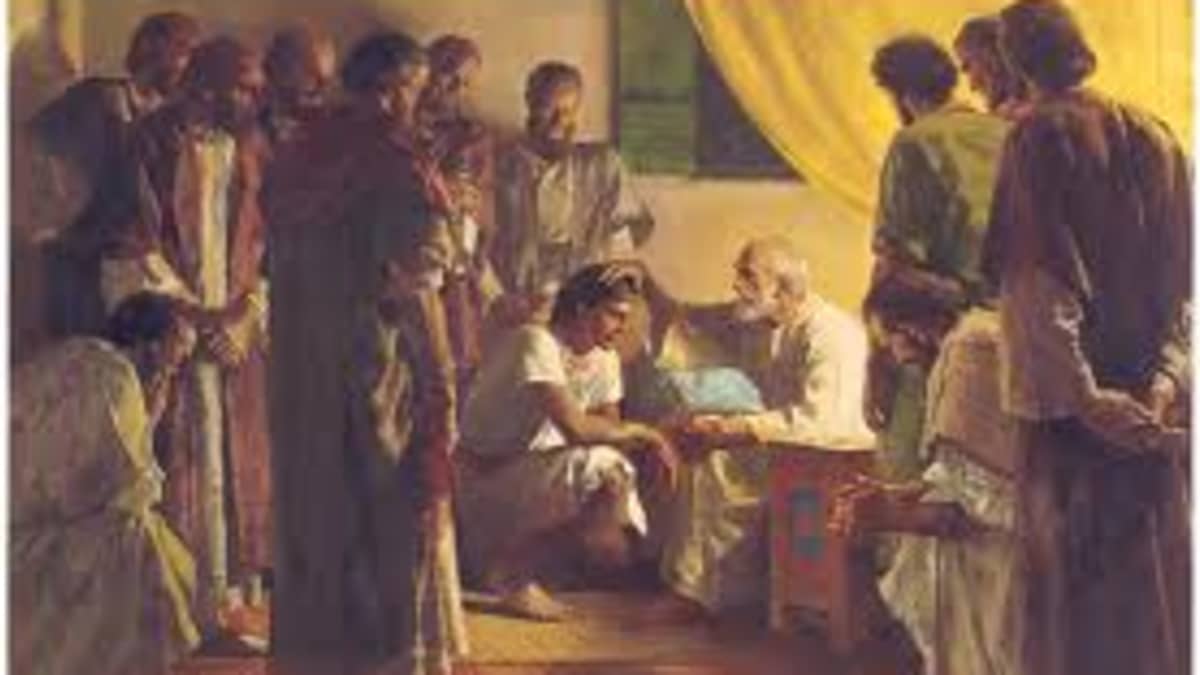
19 As soon as his master heard the words that his wife spoke to him, “This is the way your servant treated me,” his anger was kindled. 20 And Joseph’s master took him and put him into the prison, the place where the king’s prisoners were confined, and he was there in prison. 21 But the Lord was with Joseph and showed him steadfast love and gave him favor in the sight of the keeper of the prison. 22 And the keeper of the prison put Joseph in charge of all the prisoners who were in the prison. Whatever was done there, he was the one who did it. 23 The keeper of the prison paid no attention to anything that was in Joseph’s charge, because the Lord was with him. And whatever he did, the Lord made it succeed. – Genesis 39:19-23 ESV
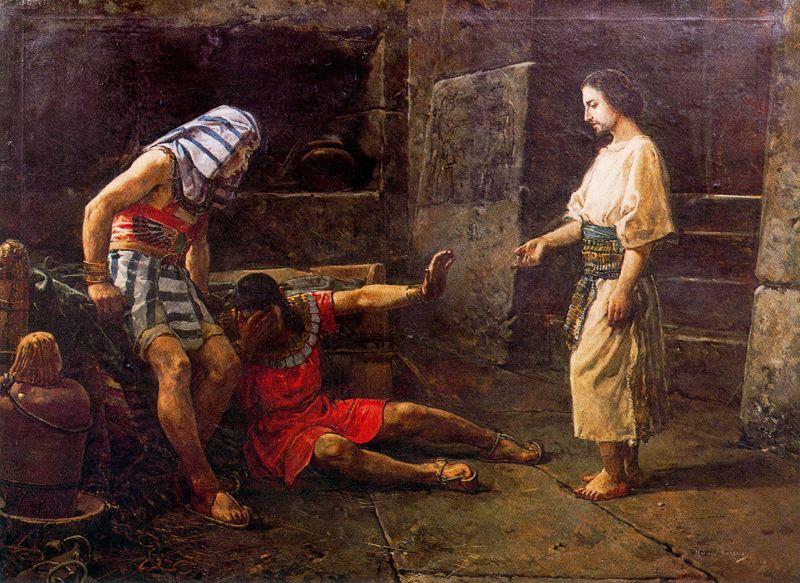
Angered by Joseph’s repeated refusals to accommodate her sexual advances, Potiphar’s humiliated wife falsely and maliciously accused him of attempted rape. And her husband, shocked but also angered by this news, was forced to confine Joseph to prison. Had the master truly believed in Joseph’s guilt, it is likely he would have ordered his execution. After all, for a common slave to attempt to violate his master’s wife would have been a crime worthy of death. Considered to be little more than personal property, a slave had no rights and his life was in the hand of his master. But rather than having Joseph executed for this egregious crime, Potiphar chose to spare his life by confining him to prison.

This echoes the treatment Joseph had received at the hands of his brothers. When he had shown up in Dothan, their first response had been to put him to death.

“Here comes this dreamer. Come now, let us kill him and throw him into one of the pits. Then we will say that a fierce animal has devoured him, and we will see what will become of his dreams.” – Genesis 37:19-20 ESV

But Reuben had intervened and spared Joseph’s life. Rather than committing murder, he suggested that they confine Joseph to an empty cistern, where he would be left to die of natural causes. Reuben had hoped to come back later and rescue Joseph. But before he could do so, Judah convinced his brothers to sell Joseph to Ishmaelite traders. And that sale had resulted in Joseph’s purchase by Potiphar, which eventually led to his imprisonment for a crime of which he was completely innocent. But, as before, Joseph was spared from death.

While preferable to capital punishment, Joseph’s imprisonment was still undeserved and would have been a far-from-pleasant experience. Yet, Moses points out that “the Lord was with Joseph and showed him steadfast love and gave him favor in the sight of the keeper of the prison” (Genesis 39:21 ESV). This theme runs throughout the entire  narrative found in chapter 10. God had been the one to protect Joseph from the murderous intentions of his brothers. And God had been behind Joseph’s sale to the Ishmaelites and his eventual purchase by Potiphar. None of this was blind luck or a case of cosmic karma.

The Lord was with Joseph, and he became a successful man, and he was in the house of his Egyptian master. His master saw that the Lord was with him and that the Lord caused all that he did to succeed in his hands. – Genesis 39:2-3 ESV

God had orchestrated every facet of this story, including Joseph’s imprisonment in the facility reserved solely for the king’s prisoners. This factor will become more important and pertinent as chapter 40 unfolds. But suffice it to say that each and every sequence of this story took place according to the sovereign plan of God.

Just as God had shown Joseph favor in the eyes of Potiphar, He also elevated Joseph in the eyes of the prison’s warden.

…the keeper of the prison put Joseph in charge of all the prisoners who were in the prison. Whatever was done there, he was the one who did it.  – Genesis 39:22 ESV

This innocent young man displayed an uncanny knack for leadership that led the warden to place all the prisoners under Joseph’s supervision. And before long, Joseph found himself functioning more as a prison administrator than a prisoner. He wielded power, authority, and great influence. He had entered as a common criminal but, before he knew it, Joseph was functioning as the second most powerful man in the entire prison.

The warden had no more worries, because Joseph took care of everything. The Lord was with him and caused everything he did to succeed. – Genesis 39:23 NLT

Prison walls were an insufficient barrier against the sovereign hand of God. The vindictive plans of a bitter woman could not derail God’s plans for His child. God’s love for Joseph was far superior to anything Potiphar or his wife could try to do to him. As the psalmist wrote, “The LORD is for me, so I will have no fear. What can mere people do to me?” (Psalm 118:6 NLT). They could falsely accuse Joseph. They could imprison him. They could even threaten to take his life. But as the apostle Paul so aptly put it:

“If God is for us, who can ever be against us?” – Genesis 8:31 NLT

And Paul would go on to remind his readers that God’s love for His children was inseparable and unwavering.

I am convinced that nothing can ever separate us from God’s love. Neither death nor life, neither angels nor demons, neither our fears for today nor our worries about tomorrow—not even the powers of hell can separate us from God’s love. No power in the sky above or in the earth below—indeed, nothing in all creation will ever be able to separate us from the love of God that is revealed in Christ Jesus our Lord. – Romans 8:38-39 NLT

God, out of His marvelous love and mercy, was making Joseph a success – even in prison. He was protecting Joseph’s life, expanding his influence, and preparing him for the next phase of his God-ordained journey. The prison would prove to be a doorway to freedom, a portal to salvation, and a divine pathway to Israel’s promised future. No one would have seen this coming, including Joseph. Potiphar and his wife will disappear into the pages of ancient history, never to be heard from again. Joseph’s brothers will go on with their lives, oblivious of Joseph’s fate and ignorant of their own pre-ordained destiny with drought and famine.

Little did Joseph know that his unexpected and undeserved imprisonment would foreshadow another captivity to come. This son of Abraham would become a symbol for the descendants of Abraham who would one day find themselves also living as captives in the land of Egypt. And they too would discover that, despite their unpleasant circumstances, God was with them. The God of Abraham, Isaac, and Jacob would step into the darkness of their predicament and turn their seeming failure into success.

English Standard Version (ESV) The Holy Bible, English Standard Version. ESV® Permanent Text Edition® (2016). Copyright © 2001 by Crossway Bibles, a publishing ministry of Good News Publishers.

New Living Translation (NLT) Holy Bible, New Living Translation, copyright © 1996, 2004, 2015 by Tyndale House Foundation. Used by permission of Tyndale House Publishers Inc., Carol Stream, Illinois 60188. All rights reserved.

New English Translation (NET)NET Bible® copyright ©1996-2017 by Biblical Studies Press, L.L.C. http://netbible.com All rights reserved.

 

The Lord Was With Him

1 Now Joseph had been brought down to Egypt, and Potiphar, an officer of Pharaoh, the captain of the guard, an Egyptian, had bought him from the Ishmaelites who had brought him down there. 2 The Lord was with Joseph, and he became a successful man, and he was in the house of his Egyptian master. 3 His master saw that the Lord was with him and that the Lord caused all that he did to succeed in his hands. 4 So Joseph found favor in his sight and attended him, and he made him overseer of his house and put him in charge of all that he had. 5 From the time that he made him overseer in his house and over all that he had, the Lord blessed the Egyptian’s house for Joseph’s sake; the blessing of the Lord was on all that he had, in house and field. 6 So he left all that he had in Joseph’s charge, and because of him he had no concern about anything but the food he ate.

Now Joseph was handsome in form and appearance. 7 And after a time his master’s wife cast her eyes on Joseph and said, “Lie with me.” 8 But he refused and said to his master’s wife, “Behold, because of me my master has no concern about anything in the house, and he has put everything that he has in my charge. 9 He is not greater in this house than I am, nor has he kept back anything from me except you, because you are his wife. How then can I do this great wickedness and sin against God?” 10 And as she spoke to Joseph day after day, he would not listen to her, to lie beside her or to be with her.

11 But one day, when he went into the house to do his work and none of the men of the house was there in the house, 12 she caught him by his garment, saying, “Lie with me.” But he left his garment in her hand and fled and got out of the house. 13 And as soon as she saw that he had left his garment in her hand and had fled out of the house, 14 she called to the men of her household and said to them, “See, he has brought among us a Hebrew to laugh at us. He came in to me to lie with me, and I cried out with a loud voice. 15 And as soon as he heard that I lifted up my voice and cried out, he left his garment beside me and fled and got out of the house.” 16 Then she laid up his garment by her until his master came home, 17 and she told him the same story, saying, “The Hebrew servant, whom you have brought among us, came in to me to laugh at me. 18 But as soon as I lifted up my voice and cried, he left his garment beside me and fled out of the house.” – Genesis 39:1-18 ESV

While Judah was busy dealing with his own set of problems, his younger brother was hundreds of miles away, attempting to acclimate to his new role as a slave.  The Ishmaelite traders to whom Judah and his brothers had sold Joseph, had eventually cashed in by selling him to an Egyptian named Potiphar, the captain Pharaoh’s guard. The once-favored son of Jacob was now a household slave to one of the most powerful men in the land of Egypt. His circumstances had taken a dramatic turn for the worst and, yet, Moses indicates that God was with him.

The Lord was with Joseph, and he became a successful man, and he was in the house of his Egyptian master. – Genesis 39:2 ESV

This statement almost sounds self-contradictory. How in the world could Joseph be described as a slave and a success at the same time? Those two conditions seem to be mutually exclusive. And how could Moses declare that God was with Joseph when all the conditions surrounding his life seem to indicate that God had actually abandoned Joseph? From a purely human perspective it would appear that Joseph’s life was in a downward spiral. He had traded in his expensive robe for the garments of a common slave. No longer would he enjoy the perks that came with being the apple of his father’s eye. This rather spoiled young man would no longer have servants to meet his every need, but instead, he would find himself relegated to the lowly status of a household slave to an Egyptian master.

But despite his seeming fall from grace, God was with him. Not only that, God favored him. Even in the midst of Joseph’s less-than-ideal conditions, the God of Abraham, Isaac, and Jacob was watching over him. In fact, Moses accentuates this point three additional times in the chapter.

…the Lord was with him and that the Lord caused all that he did to succeed in his hands… – Genesis 39:3 ESV

…the Lord was with Joseph and showed him steadfast love and gave him favor in the sight of the keeper of the prison. – Genesis 39:21 ESV

…the Lord was with him. And whatever he did, the Lord made it succeed. – Genesis 39:23 ESV

Joseph had only been 17-years-old when his brothers sold him as a slave. So, by the time this story took place, he may have been in his early 20s. He was far from home and living in a strange land where he was unfamiliar with the customs and unable to speak their language. But over time, Joseph became increasingly more acculturated to his new environment, eventually learning to speak their native tongue and perform his duties with both confidence and excellence. And his acclimation didn’t go unnoticed or unrewarded by Potiphar.

…he soon made Joseph his personal attendant. He put him in charge of his entire household and everything he owned. From the day Joseph was put in charge of his master’s household and property, the Lord began to bless Potiphar’s household for Joseph’s sake. – Genesis 39:4-5 NLT

Potiphar could sense that Joseph enjoyed the blessings of his God. Purchasing this young Hebrew slave had turned out to be a windfall for Potiphar. It seems that everything Joseph touched turned to gold. And, eventually, Potiphar made Joseph his personal attendant, giving him responsibility over his entire household and land holdings. To Potiphar, Joseph turned out to be a great investment. He was like some kind of lucky charm or talisman that brought him good fortune and great reward. And it was all the work of God.

Eventually, Potiphar put all his fiscal and household affairs under the direct supervision of this young Hebrew slave and, because Joseph was blessed by God, Pharaoh enjoyed a great return on his investment. According to Moses, Joseph was so effective and reliable, that the most difficult decision Potiphar faced each day was deciding what to eat.

But this is where the story takes a decidedly dark turn. Though having been betrayed by his own brothers, this handsome and highly gifted young man was enjoying great success. The trajectory of his life had begun to trend upward, which must have provided much-needed encouragement to Joseph at this dark and lonely period of his life. Once again, he was enjoying the favor of God as expressed through the actions of a father-like figure in his life. Potiphar had bestowed on this young Hebrew slave great responsibilities that were evidence of his great respect for Joseph’s integrity and ingenuity.

But Potiphar wasn’t the only one who had taken an interest in Joseph. The Egyptian captain’s wife was also attracted to Joseph, but not for his management skills. Moses points out that Joseph was “a very handsome and well-built young man” (Genesis 39:6 NLT). And this fact had not escaped Potiphar’s wife. For as long as Joseph had been in their home, she had begun to see him as far more than a servant. In her eyes, Joseph had become an object of lust and desire. And it wasn’t long until her lust became so intense and insatiable that she propositioned the unsuspecting Joseph. But out of respect for his master and reverence for God, Joseph refused her advances.

“…my master trusts me with everything in his entire household. No one here has more authority than I do. He has held back nothing from me except you, because you are his wife. How could I do such a wicked thing? It would be a great sin against God.” – Genesis 39:8-9 NLT

As the old saying goes, Joseph was between a rock and a hard place. By denying his master’s wife, he was risking her wrath. But if he gave in, he would be violating his master’s trust and, worse yet, he would be guilty of offending the righteous will of a holy God. And Joseph knew that his recent stretch of good fortune had actually been the work of his good and gracious God.

But Potiphar’s wife proved to be persistent because her lust was exigent. She was not going to give up easily.

She kept putting pressure on Joseph day after day, but he refused to sleep with her, and he kept out of her way as much as possible. – Genesis 39:10 NLT

Poor Joseph was left with no other alternative but to avoid all contact with the woman. But that proved to be difficult, if not impossible. Unfortunately, the day came when Joseph found himself all alone in the house with her. It seems likely that this unlikely state of affairs had been arranged in advance by Potiphar’s wife. No longer able to control her lustful thoughts, she orchestrated the perfect scenario to see them fulfilled.

She came and grabbed him by his cloak, demanding, “Come on, sleep with me!” Joseph tore himself away, but he left his cloak in her hand as he ran from the house. – Genesis 39:12 NLT

Joseph ran for his life. In doing so, he illustrated the point made by the apostle Paul centuries later.

Run from sexual sin! No other sin so clearly affects the body as this one does. For sexual immorality is a sin against your own body. – 1 Corinthians 6:18 NLT

But while Joseph had escaped the grasp of Potiphar’s wife, he had not escaped the anger fueled by her damaged ego. She was livid that this common slave had dared to spurn her sexual advances, and she decided to make him pay for it. This vindictive woman crafted a sordid tale of attempted rape and painted herself as the innocent victim of Joseph’s unwanted advances.

And it is at this point that the reader must wrestle with the question: But where was God in all this? It is difficult to read this story and not question why God did not step in and protect Joseph. It is clear that, by running away, Joseph did the right thing. He took the proper path and honored his master and his God. But why did God allow this woman to put Joseph in this compromising and potentially catastrophic situation? Could He not have prevented it? Why did faithful Joseph have to endure yet another case of undeserved and premeditated vengeance? He had done nothing to deserve being sold into slavery. And now, he had done nothing to deserve being falsely accused of rape. But it is important to remember what Moses point out four different times in this chapter.

The Lord was with Joseph… – Genesis 39:2 ESV

While Joseph’s circumstances were about to dramatically change, his relationship with God remained the same. The Lord had not abandoned him. The Almighty was still with him. And God’s plans, while taking a slightly unexpected path, remained unchanged.

English Standard Version (ESV) The Holy Bible, English Standard Version. ESV® Permanent Text Edition® (2016). Copyright © 2001 by Crossway Bibles, a publishing ministry of Good News Publishers.

New Living Translation (NLT) Holy Bible, New Living Translation, copyright © 1996, 2004, 2015 by Tyndale House Foundation. Used by permission of Tyndale House Publishers Inc., Carol Stream, Illinois 60188. All rights reserved.

New English Translation (NET)NET Bible® copyright ©1996-2017 by Biblical Studies Press, L.L.C. http://netbible.com All rights reserved.


The Unlikely Purpose of Perez

20 When Judah sent the young goat by his friend the Adullamite to take back the pledge from the woman’s hand, he did not find her. 21 And he asked the men of the place, “Where is the cult prostitute who was at Enaim at the roadside?” And they said, “No cult prostitute has been here.” 22 So he returned to Judah and said, “I have not found her. Also, the men of the place said, ‘No cult prostitute has been here.’” 23 And Judah replied, “Let her keep the things as her own, or we shall be laughed at. You see, I sent this young goat, and you did not find her.”

24 About three months later Judah was told, “Tamar your daughter-in-law has been immoral. Moreover, she is pregnant by immorality.” And Judah said, “Bring her out, and let her be burned.” 25 As she was being brought out, she sent word to her father-in-law, “By the man to whom these belong, I am pregnant.” And she said, “Please identify whose these are, the signet and the cord and the staff.” 26 Then Judah identified them and said, “She is more righteous than I, since I did not give her to my son Shelah.” And he did not know her again.

27 When the time of her labor came, there were twins in her womb. 28 And when she was in labor, one put out a hand, and the midwife took and tied a scarlet thread on his hand, saying, “This one came out first.” 29 But as he drew back his hand, behold, his brother came out. And she said, “What a breach you have made for yourself!” Therefore his name was called Perez. 30 Afterward his brother came out with the scarlet thread on his hand, and his name was called Zerah. – Genesis 38:20-30 ESV

Reading through the book of Genesis reminds us that God’s are incomparable and, at times, inconceivable. There are times when He accomplishes His divine will in the most extraordinary ways and through the most unlikely of people. Consider His choice of Abram and Sarah. Why would God set apart a man from the land of Chaldea, who had done nothing to deserve the right to be the father of a great nation? And why would God choose to make that great nation using a man who had a barren wife? Why did God choose Jacob over Esau, knowing that Esau was a natural-born con man who would go out of his way to defraud his own brother and deceive his elderly father?

In this chapter, we see additional evidence of God’s sometimes strange and difficult-to-understand ways. And as we read this story, we must remember the words of the apostle Paul: “How impossible it is for us to understand his decisions and his ways!” (Romans 11:33 NLT). And God Himself reminds us, “…my ways are far beyond anything you could imagine” (Isaiah 55:8 NLT).

Judah had refused to honor his commitment to allow his third-born son, Shelah, to father a son through Tamar, the widowed wife of his two older brothers. Er and Onan had both been wicked men whom God had punished by death. This had left Tamar not only a widow but childless. And Judah had agreed to honor the practice of levirate marriage by requiring his third son to marry Tamar and father a son who would carry on the family name. But when the time came, Judah changed his mind. But Tamar never forgot the vow he had made, and when the time was right, she took matters into her own hands and attempted to right the wrong that had been done to her.

Through a rather remarkable set of circumstances, Judah had sexual relations with Tamar, believing her to be a cult prostitute. And he had agreed to compensate her for her services by giving her a goat. Since he didn’t have the goat with him when the salacious act took place, he offered three items as collateral. Later on, he sent a friend to pay the “prostitute” and retrieve his personal effects, but the woman was nowhere to be found. Anxious to put this indiscretion behind him, Judah calls off the search for the woman and writes off his personal items as a loss.

But little did Judah know that his one-night fling would come back to haunt him. Three months later, he received word that Tamar had become pregnant, and he was furious. He saw this as an unacceptable act of immorality on her part and demanded that she be put to death. But in the heat of his righteous indignation, Jacob received a shocking message from his daughter-in-law that turned his anger into anxiety.

“The man who owns these things made me pregnant. Look closely. Whose seal and cord and walking stick are these?” – Genesis 38:25 NLT

There in his hands, Jacob held the proof of his own sin. He had impregnated his own daughter-in-law. This news must have been a shock to his system, tempting him to come up with some way to cover up his sin and save face among his people. But it appears that Judah owned up to his role in the affair and declared Tamar as the undeserving victim.

“She is more righteous than I am, because I didn’t arrange for her to marry my son Shelah.” – Genesis 38:26 NLT

Tamar went on to give birth to twin sons: Perez and Zerah. And the nature of their births was similar to that of Jacob and Esau. When Zerah attempted to exit the womb first, a midwife tied a scarlet thread to his wrist. But when the babies were finally born, it was Perez who came out first, much to the surprise of the midwife. To all those watching, Zerah should have been the firstborn. Since his hand had come out first, he must have been closest to the birth canal. But inside the womb, the two babies switched positions at the last second, and Perez came out first. He became the unexpected and unlikely firstborn. And it would be through this son that God would fulfill His commitment to Abraham.

“I will make of you a great nation, and I will bless you and make your name great, so that you will be a blessing. I will bless those who bless you, and him who dishonors you I will curse, and in you all the families of the earth shall be blessed.” – Genesis 12:2-3 ESV

In his letter to the believers in Galatia, the apostle Paul unpacks this divine promise and clarifies the nature of its meaning.

Know then that it is those of faith who are the sons of Abraham. And the Scripture, foreseeing that God would justify the Gentiles by faith, preached the gospel beforehand to Abraham, saying, “In you shall all the nations be blessed.” So then, those who are of faith are blessed along with Abraham, the man of faith. – Galatians 3:7-9 ESV

According to Paul, when God made that promise to Abraham, He was predicting the coming of the Messiah. It would be through the offspring of Abraham that “the blessing” of the nations would come. And Paul reveals that this blessing would come in the form of Jesus the Messiah of Israel.

Now the promises were made to Abraham and to his offspring. It does not say, “And to offsprings,” referring to many, but referring to one, “And to your offspring,” who is Christ. – Galatians 3:16 ESV

This amazing fact is in keeping with the way God continued to reiterate the promise to Abraham and his descendants.

“Behold, my covenant is with you, and you shall be the father of a multitude of nations. No longer shall your name be called Abram, but your name shall be Abraham, for I have made you the father of a multitude of nations. I will make you exceedingly fruitful, and I will make you into nations, and kings shall come from you.  And I will establish my covenant between me and you and your offspring after you throughout their generations for an everlasting covenant, to be God to you and to your offspring after you.” – Genesis 17:4-7 ESV

Not only would Abraham father a great nation, but from his offspring would come great kings, including King David. And the book of Ruth reveals that God would use an unlikely candidate named Perez as the conduit through whom the great King David would come.

Now these are the generations of Perez: Perez fathered Hezron, Hezron fathered Ram, Ram fathered Amminadab, Amminadab fathered Nahshon, Nahshon fathered Salmon, Salmon fathered Boaz, Boaz fathered Obed, Obed fathered Jesse, and Jesse fathered David. – Ruth 4:18-22 ESV

And if we fast-forward to the gospel of Matthew, we see that Jesus would come through the line of Perez as well. That is why He is referred to as the Son of David. Matthew opens up his gospel with the genealogy of Jesus.

Abraham was the father of Isaac, and Isaac the father of Jacob, and Jacob the father of Judah and his brothers, and Judah the father of Perez and Zerah by Tamar, and Perez the father of Hezron, and Hezron the father of Ram, and Ram the father of Amminadab, and Amminadab the father of Nahshon, and Nahshon the father of Salmon, and Salmon the father of Boaz by Rahab, and Boaz the father of Obed by Ruth, and Obed the father of Jesse, and Jesse the father of David the king. – Matthew 1:2-6 ESV

And the very next line of the genealogy provides another reminder of God’s unfathomable ways.

And David was the father of Solomon by the wife of Uriah… – Matthew 1:7 ESV

David had committed adultery with Bathsheba and then ordered the death of her husband so that he could take her as his wife. The child born to them as a result of their immoral act was taken by the Lord. But God replaced that child with Solomon, who would become the heir to David’s throne. And it would be through the line of Solomon that Jesus came. Matthew ends the lineage with the words, “and Jacob the father of Joseph the husband of Mary, of whom Jesus was born, who is called Christ” (Matthew 1:16 ESV). From Abraham to Judah to Perez to David to Joseph to Jesus.

And while Joseph was not the biological father of Jesus, the throne of David rightfully belonged to Jesus as the king’s legally-justified descendant and heir. God had chosen to bring salvation to the world through the most unlikely of circumstances and by using the least likely people. Despite the immorality of Judah, the trickery of Jacob, the deceit of Tamar, and the other egregious acts of countless other individuals, God’s divine will was being accomplished according to His perfect and righteous plan.

English Standard Version (ESV) The Holy Bible, English Standard Version. ESV® Permanent Text Edition® (2016). Copyright © 2001 by Crossway Bibles, a publishing ministry of Good News Publishers.

New Living Translation (NLT) Holy Bible, New Living Translation, copyright © 1996, 2004, 2015 by Tyndale House Foundation. Used by permission of Tyndale House Publishers Inc., Carol Stream, Illinois 60188. All rights reserved.

New English Translation (NET)NET Bible® copyright ©1996-2017 by Biblical Studies Press, L.L.C. http://netbible.com All rights reserved.

Meanwhile, Back In Canaan

1 It happened at that time that Judah went down from his brothers and turned aside to a certain Adullamite, whose name was Hirah. 2 There Judah saw the daughter of a certain Canaanite whose name was Shua. He took her and went in to her, 3 and she conceived and bore a son, and he called his name Er. 4 She conceived again and bore a son, and she called his name Onan. 5 Yet again she bore a son, and she called his name Shelah. Judah was in Chezib when she bore him.

6 And Judah took a wife for Er his firstborn, and her name was Tamar. 7 But Er, Judah’s firstborn, was wicked in the sight of the Lord, and the Lord put him to death. 8 Then Judah said to Onan, “Go in to your brother’s wife and perform the duty of a brother-in-law to her, and raise up offspring for your brother.” 9 But Onan knew that the offspring would not be his. So whenever he went in to his brother’s wife he would waste the semen on the ground, so as not to give offspring to his brother. 10 And what he did was wicked in the sight of the Lord, and he put him to death also. 11 Then Judah said to Tamar his daughter-in-law, “Remain a widow in your father’s house, till Shelah my son grows up”—for he feared that he would die, like his brothers. So Tamar went and remained in her father’s house.

12 In the course of time the wife of Judah, Shua’s daughter, died. When Judah was comforted, he went up to Timnah to his sheepshearers, he and his friend Hirah the Adullamite. 13 And when Tamar was told, “Your father-in-law is going up to Timnah to shear his sheep,” 14 she took off her widow’s garments and covered herself with a veil, wrapping herself up, and sat at the entrance to Enaim, which is on the road to Timnah. For she saw that Shelah was grown up, and she had not been given to him in marriage. 15 When Judah saw her, he thought she was a prostitute, for she had covered her face. 16 He turned to her at the roadside and said, “Come, let me come in to you,” for he did not know that she was his daughter-in-law. She said, “What will you give me, that you may come in to me?” 17 He answered, “I will send you a young goat from the flock.” And she said, “If you give me a pledge, until you send it—” 18 He said, “What pledge shall I give you?” She replied, “Your signet and your cord and your staff that is in your hand.” So he gave them to her and went in to her, and she conceived by him. 19 Then she arose and went away, and taking off her veil she put on the garments of her widowhood. – Genesis 38:1-19 ESV

While Joseph was carted off to Egypt as a slave, his wicked brothers went on with their lives as if nothing had ever happened. It was Judah, one of Joseph’s half-brothers, who had come up with the plan to cash in by selling Joseph as a slave rather than spilling innocent blood.

“What will we gain by killing our brother? We’d have to cover up the crime. Instead of hurting him, let’s sell him to those Ishmaelite traders. After all, he is our brother—our own flesh and blood!” – Genesis 37:26 NLT

With their 20 pieces of silver in hand, the brothers had left Dothan and returned home to Hebron.  Once there, they delivered the devastating news of Joseph’s death with their father. Their carefully crafted lie devastated Jacob, but these men showed no remorse or regret. They had managed to eliminate their nemesis and were glad of it.

For Joseph’s brothers, it was business as usual. They went on with their lives, seemingly giving no thought to the fate of their younger brother. While visiting with a friend from Adullam, Judah met a Canaanite woman named Shua whom he eventually married. There is no indication that he ever consulted Jacob about this marriage, and it is probably because he knew his father would disapprove. When Jacob had been a young man, his father Isaac had sent him to Mesopotamia to find a wife from among his own clan.

“You must not marry any of these Canaanite women. Instead, go at once to Paddan-aram, to the house of your grandfather Bethuel, and marry one of your uncle Laban’s daughters. May God Almighty bless you and give you many children. And may your descendants multiply and become many nations! May God pass on to you and your descendants the blessings he promised to Abraham. May you own this land where you are now living as a foreigner, for God gave this land to Abraham.” – Genesis 28:1-4 NLT

But Judah had decided to do things his own way. And his decision to marry a Canaanite woman seemed to bear fruit, in the form of three sons: Er, Onan, and Shelah. When Er became a man, Judah arranged for him to marry a woman named Tamar. But according to Moses, Er was a wicked man and God took his life. That left Tamar a widow. According to a common practice of the time, a brother of the deceased man was expected to marry his brother’s widow so that she could bear a son and carry on her husband’s name. This was referred to as levirate marriage. So, Judah approached Onan and convinced him to do the right thing.

“Go and marry Tamar, as our law requires of the brother of a man who has died. You must produce an heir for your brother.” – Genesis 38:8 NLT

This practice would eventually become part of the Mosaic law for the people of Israel.

“If two brothers are living together on the same property and one of them dies without a son, his widow may not be married to anyone from outside the family. Instead, her husband’s brother should marry her and have intercourse with her to fulfill the duties of a brother-in-law. The first son she bears to him will be considered the son of the dead brother, so that his name will not be forgotten in Israel.” – Deuteronomy 25:5-6 NLT

But Onan was not interested in fathering a child that, technically, would not be his own. “So whenever he had intercourse with his brother’s wife, he spilled the semen on the ground. This prevented her from having a child who would belong to his brother” (Genesis 38:9 NLT). He purposefully refused to impregnate his brother’s wife, denying him the right of an heir to carry on his name. And God found this to be a crime worthy of death.

But the Lord considered it evil for Onan to deny a child to his dead brother. So the Lord took Onan’s life, too. – Genesis 38:10 NLT

This left Tamar a widow for the second time. And because Judah’s third son was too young for marriage, he convinced Tamar to wait until Shelah grew up, promising her that he would fulfill the levirate commitment. But Judah failed to keep his word because he feared that, if Shelah married Tamar, he too might die. Perhaps Judah thought Tamar was cursed. He even refused to allow Tamar to live among his clan, choosing instead for her to return home to her parents where she was to stay until Shelah was of marrying age. But like the story of Joseph’s “death” that Judah had told to Jacob, his words to Tamar were all a lie.

This left Tamar in a very difficult position. She had no husband, no rights, and, without a son, she had no hope for the future. As a woman living in that culture, she was completely dependent upon a husband or son to care for her needs. Now, she was forced to return to her parents’ home, where she was forced to wait for Shelah to fulfill his commitment to her.

The years would pass by and life would go on as usual. Shelah grew up and Tamar continued to wait. Eventually, Jacob’s wife died, leaving him a widow as well. After mourning his wife’s death, he joined his Adullamite friend again for the annual sheering of the sheep. Somehow, Tamar learned that her father-in-law was headed to Timnah, and she made arrangements to confront him there. She was well aware that Shelah was now a man and that Judah was preventing him from marrying her.

Disguising herself with a veil, Tamar sat outside the gate of Timnah, waiting for the chance to confront her father-in-law. When Judah arrived and saw her, he mistook her for a prostitute and propositioned her. To make matters worse, Judah believed Tamar to be a cult prostitute (Genesis 38:21), a woman who offered sexual favors as part of the worship of Canaanite false gods. Judah was making poor choices that would come back to haunt him.

It seems unlikely that Tamar was purposefully portraying herself as a temple prostitute, but once Judah mistook her for one, she played along. She asked Judah what he was willing to pay to have sex with her, and he offered her the price of a young goat. But Tamar knew Judah well and demanded that he provide some form of proof of payment. So, at Tamar’s request, Judah left behind his identification seal, its cord, and his staff. Each of these things would have been unique to Judah and would have been of great value. She knew he would want them back and this would force him to keep his word.

That Judah would give up those particular reveals much about his lack of discernment. He was letting his desires and passions control his decisions. And Moses indicates that not only did Judah have sex with Tamar, but he impregnated her. When they were done, she returned home to her father’s house and Judah went on his way, completely oblivious as to the ramifications of his actions. The deceiver had been deceived. And the one who had refused to keep his promise would actually be the one through whom God would fulfill His promise to Abraham. Because the child within Tamar’s womb would eventually be the one through whom the Messiah would come. In his gospel, Matthew records the genealogy of Jesu, and it prominently features the name of Tamar, the widowed wife of Er.

This is a record of the ancestors of Jesus the Messiah, a descendant of David and of Abraham:

Abraham was the father of Isaac.
Isaac was the father of Jacob.
Jacob was the father of Judah and his brothers.
Judah was the father of Perez and Zerah (whose mother was Tamar). – Matthew 1:1-3 NLT

God had allowed Joseph to be sold into slavery by his brothers. God had taken two of Tamar’s husbands before she could bear them children. God had stood back and watched as Judah deceived Tamar by refusing to allow his third son to marry her. But all of it had been part of His divine plan. There were things happening behind the scenes that no one was aware of – but God. Joseph must have felt like a helpless victim as he made his way to Egypt. Judah must have believed himself to be, not only clever but a wise and caring father. And Tamar was a spurned woman in search of revenge and restitution for the injustices she had endured. But little did any of them know that God was orchestrating every facet of their lives – for their good and His glory.

English Standard Version (ESV) The Holy Bible, English Standard Version. ESV® Permanent Text Edition® (2016). Copyright © 2001 by Crossway Bibles, a publishing ministry of Good News Publishers.

New Living Translation (NLT) Holy Bible, New Living Translation, copyright © 1996, 2004, 2015 by Tyndale House Foundation. Used by permission of Tyndale House Publishers Inc., Carol Stream, Illinois 60188. All rights reserved.

New English Translation (NET)NET Bible® copyright ©1996-2017 by Biblical Studies Press, L.L.C. http://netbible.com All rights reserved.

From Sonship to Slavery

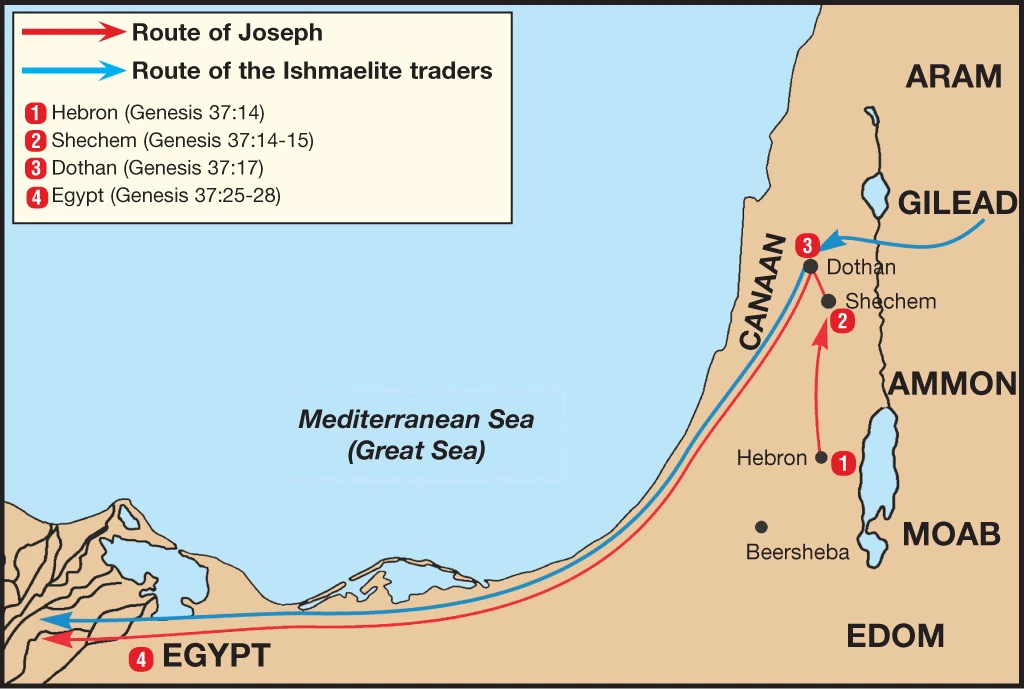
12 Now his brothers went to pasture their father’s flock near Shechem. 13 And Israel said to Joseph, “Are not your brothers pasturing the flock at Shechem? Come, I will send you to them.” And he said to him, “Here I am.” 14 So he said to him, “Go now, see if it is well with your brothers and with the flock, and bring me word.” So he sent him from the Valley of Hebron, and he came to Shechem. 15 And a man found him wandering in the fields. And the man asked him, “What are you seeking?” 16 “I am seeking my brothers,” he said. “Tell me, please, where they are pasturing the flock.” 17 And the man said, “They have gone away, for I heard them say, ‘Let us go to Dothan.’” So Joseph went after his brothers and found them at Dothan.

18 They saw him from afar, and before he came near to them they conspired against him to kill him. 19 They said to one another, “Here comes this dreamer. 20 Come now, let us kill him and throw him into one of the pits. Then we will say that a fierce animal has devoured him, and we will see what will become of his dreams.” 21 But when Reuben heard it, he rescued him out of their hands, saying, “Let us not take his life.” 22 And Reuben said to them, “Shed no blood; throw him into this pit here in the wilderness, but do not lay a hand on him”—that he might rescue him out of their hand to restore him to his father. 23 So when Joseph came to his brothers, they stripped him of his robe, the robe of many colors that he wore. 24 And they took him and threw him into a pit. The pit was empty; there was no water in it.

25 Then they sat down to eat. And looking up they saw a caravan of Ishmaelites coming from Gilead, with their camels bearing gum, balm, and myrrh, on their way to carry it down to Egypt. 26 Then Judah said to his brothers, “What profit is it if we kill our brother and conceal his blood? 27 Come, let us sell him to the Ishmaelites, and let not our hand be upon him, for he is our brother, our own flesh.” And his brothers listened to him. 28 Then Midianite traders passed by. And they drew Joseph up and lifted him out of the pit, and sold him to the Ishmaelites for twenty shekels of silver. They took Joseph to Egypt.

29 When Reuben returned to the pit and saw that Joseph was not in the pit, he tore his clothes 30 and returned to his brothers and said, “The boy is gone, and I, where shall I go?” 31 Then they took Joseph’s robe and slaughtered a goat and dipped the robe in the blood. 32 And they sent the robe of many colors and brought it to their father and said, “This we have found; please identify whether it is your son’s robe or not.” 33 And he identified it and said, “It is my son’s robe. A fierce animal has devoured him. Joseph is without doubt torn to pieces.” 34 Then Jacob tore his garments and put sackcloth on his loins and mourned for his son many days. 35 All his sons and all his daughters rose up to comfort him, but he refused to be comforted and said, “No, I shall go down to Sheol to my son, mourning.” Thus his father wept for him. 36 Meanwhile the Midianites had sold him in Egypt to Potiphar, an officer of Pharaoh, the captain of the guard. – Genesis 37:12-36 ESV

Joseph and his father had a unique relationship. While Joseph enjoyed the privileged status of being his father’s favorite son, he also appears to have served as Jacob’s personal spy, keeping tabs on the activities of his older brothers. Verse 2 reveals that “Joseph reported to his father some of the bad things his brothers were doing.” (Genesis 37:2 NLT). This doesn’t necessarily prove that Joseph was a snitch, but it does help to explain why his brothers hated him so much. They probably believed that Joseph’s royal treatment by their father was a form of compensation for his role as an informant. Joseph’s older brothers viewed him as spoiled, arrogant, and untrustworthy. He seemed to delight in telling them about his dreams, in which they were always cast as his groveling subjects. When he paraded around in the robe of many colors his father had given him, it only served to aggravate the seething envy of his brothers.

Sadly, Jacob appears to have been oblivious to the animosity he was stirring up in his own home. He doesn’t appear to recognize that his favored treatment of Joseph was driving a wedge between his 17-year-old son and his brothers that would soon reach a dangerous tipping point. Without realizing it, Jacob was fostering an atmosphere of distrust and dissension within his own home, and it was about to come back to haunt him.

Unwittingly, Jacob gave Joseph an assignment that would result in his disappearance and apparent death. He sent his young son to check up on his older brothers who were shepherding their flocks near Shechem, some 60 miles north of Hebron. Jacob owned land there, that he had bought from Hamor, the king of Shechem (Genesis 33:19). It was there that the son of Hamor had raped Jacob’s daughter Dinah and that her brothers, Simeon and Levi, had taken revenge by slaughtering all the males in Shechem. Now, years later, the sons of Jacob had returned to the scene of the crime, but rather than slaughtering and plundering, they were shepherding.

Eager to please his father, Joseph donned his multicolored robe and set off with the intention of returning with a full report of his brothers’ activities. But, unable to locate his brothers, Joseph sought the aid of a local resident and discovered his brothers had headed north to Dothan. Moses doesn’t reveal why the brothers left Shechem for Dothan, but the name “Dothan” means “two wells,” so it could be that they went there in search of water for their flocks. It just so happens that Dothan was located on a major trading route between Syria and Egypt. Perhaps the brothers intended to sell or trade some of their sheep or wool.

Moses indicates that the brothers saw Joseph coming from a distance. Most likely, due to his colorful coat. And, as soon as they saw him, their anger reached a fever pitch. No longer content to simply despise Jacob, they began to plot his death.

“Here comes this dreamer. Come now, let us kill him and throw him into one of the pits. Then we will say that a fierce animal has devoured him, and we will see what will become of his dreams.” – Genesis 37:19-20 ESV

They may not have understood the meaning behind the dreams or known the source of their content, but they recognized an arrogant spoiled brat when they saw one. And they had had enough of Joseph. But Reuben, the eldest son of Jacob, intervened and pleaded with his brothers to spare Joseph’s life. He offered an alternative solution, suggesting that they throw Joseph in a nearby pit or cistern. Since the pit was located in the wilderness, far from prying eyes, the brothers assumed that Reuben was suggesting that they leave Joseph to die by natural causes. But his real intention was to come back later and rescue him. As the firstborn son, Reuben felt an obligation to protect his younger brother.

Having stripped Joseph of his colorful robe, they threw him into the empty cistern and sat down to enjoy a meal together. But their reverie was soon interrupted by a caravan of Ishmaelite traders. These men would have been close relatives of Reuben and his brothers because Ishmael had been the brother of their grandfather, Isaac. And, in verse 28, Moses indicates that there were also Midianites in the caravan. They were also close relatives of Jacob’s sons because Midian had been a brother to Ishmael and Isaac, having been born to Abraham through his second wife, Keturah.

So, this entire transaction was a family affair. The brothers of Joseph sold him to the brothers of Isaac, their grandfather. And it was Judah, a younger brother of Reuben, who came up with the idea of profiting off their brother rather than simply letting him die.

“What profit is it if we kill our brother and conceal his blood? Come, let us sell him to the Ishmaelites, and let not our hand be upon him, for he is our brother, our own flesh.” – Genesis 37:27 ESV

Their dislike for Joseph was so great that they all agreed to sell him as a slave in exchange for twenty shekels of silver. They literally sold out their younger brother. Unaware that this transaction had taken place, Reuben returned to find Joseph gone and he immediately felt the weight of his responsibility as the eldest son. What was he going to tell his father? How would Jacob ever get over the loss of his favorite son?

But his brothers had already come up with a plan. They took Joseph’s infamous robe and covered it with animal blood, then they concocted a story that had Joseph being killed and consumed by a wild animal. These men made a mutual pact to hide their actions from their father and deceive him into believing that his favorite son was dead. And their plan worked. When they returned to Hebron and informed their father, he was deeply distraught.

Jacob tore his clothes and dressed himself in burlap. He mourned deeply for his son for a long time. His family all tried to comfort him, but he refused to be comforted. – Genesis 37:34-35 NLT

But while Jacob mourned Joseph’s death, his missing son was actually on his way to Egypt (Genesis 37:28). No longer wearing his signature robe or enjoying his father’s favor, Joseph was transported to Egypt, where he was sold “to Potiphar, an officer of Pharaoh, the king of Egypt. Potiphar was captain of the palace guard” (Genesis 37:36 NLT).

Hundreds of miles from where Jacob was living a nightmare, mourning the loss of his favorite son, God was actually paving the way for the fulfillment of Joseph’s dreams. This entire scenario was part of God’s sovereign plan for the people of Israel, and He had foreshadowed it in a message He had given Abraham hundreds of years earlier.

“You can be sure that your descendants will be strangers in a foreign land, where they will be oppressed as slaves for 400 years. But I will punish the nation that enslaves them, and in the end they will come away with great wealth. (As for you, you will die in peace and be buried at a ripe old age.) After four generations your descendants will return here to this land, for the sins of the Amorites do not yet warrant their destruction.” – Genesis 15:13-16 NLT

God had a plan and He was bringing it about through the actions of Jacob and his sons. These men were completely unaware that their decisions were being sovereignly orchestrated by God Almighty in order to bring about His divine will. Jacob’s unwise favoring of his son had caused strife within his home, but God would use that animosity for good. Joseph would pridefully flaunt his status as the favored son and inflame the anger of his brothers. And those men would allow their jealousy and rage to treat their brother with contempt and disdain, selling him out for a few pieces of silver. But as bad as it all seemed, it was all the work of a loving, gracious, and all-knowing God, who was preparing to do something far greater than they could have ever imagined.

English Standard Version (ESV) The Holy Bible, English Standard Version. ESV® Permanent Text Edition® (2016). Copyright © 2001 by Crossway Bibles, a publishing ministry of Good News Publishers.

New Living Translation (NLT) Holy Bible, New Living Translation, copyright © 1996, 2004, 2015 by Tyndale House Foundation. Used by permission of Tyndale House Publishers Inc., Carol Stream, Illinois 60188. All rights reserved.

New English Translation (NET)NET Bible® copyright ©1996-2017 by Biblical Studies Press, L.L.C. http://netbible.com All rights reserved.

A Preview of Coming Attractions

1 Jacob lived in the land of his father’s sojournings, in the land of Canaan.

2 These are the generations of Jacob. Joseph, being seventeen years old, was pasturing the flock with his brothers. He was a boy with the sons of Bilhah and Zilpah, his father’s wives. And Joseph brought a bad report of them to their father. 3 Now Israel loved Joseph more than any other of his sons, because he was the son of his old age. And he made him a robe of many colors. 4 But when his brothers saw that their father loved him more than all his brothers, they hated him and could not speak peacefully to him.

5 Now Joseph had a dream, and when he told it to his brothers they hated him even more. 6 He said to them, “Hear this dream that I have dreamed: 7 Behold, we were binding sheaves in the field, and behold, my sheaf arose and stood upright. And behold, your sheaves gathered around it and bowed down to my sheaf.” 8 His brothers said to him, “Are you indeed to reign over us? Or are you indeed to rule over us?” So they hated him even more for his dreams and for his words.

9 Then he dreamed another dream and told it to his brothers and said, “Behold, I have dreamed another dream. Behold, the sun, the moon, and eleven stars were bowing down to me.” 10 But when he told it to his father and to his brothers, his father rebuked him and said to him, “What is this dream that you have dreamed? Shall I and your mother and your brothers indeed come to bow ourselves to the ground before you?” 11 And his brothers were jealous of him, but his father kept the saying in mind. – Genesis 37:1-11 ESV

After providing a brief of Esau’s life and lineage, Moses shifts the focus back to Jacob. But rather than provide a similar genealogical treatment of Jacob’s life, Moses chose to narrow down his narrative to the life of one particular descendant of Jacob – his 11th son, Joseph. The story shifts from the clan of Esau living in the region of Edom to the family of Jacob living in Canaan, the land of promise. Jacob had returned to Hebron, where he was raising his 12 sons and one daughter. This was familiar territory to Jacob because it was at Hebron that his grandfather, Abraham, had settled after parting ways with Lot (Genesis 13:18). It was while he was living in Hebron that Abraham received a message from God.

“Look as far as you can see in every direction—north and south, east and west. I am giving all this land, as far as you can see, to you and your descendants as a permanent possession. And I will give you so many descendants that, like the dust of the earth, they cannot be counted! Go and walk through the land in every direction, for I am giving it to you.” – Genesis 13:15-17 NLT

It was in Hebron that Abraham purchased land from the Hittites to serve as a burial place for his wife, Sarah. And years later, Abraham’s sons Isaac and Ishmael would bury him alongside Sarah in the same cave on the very same land.

His sons Isaac and Ishmael buried him in the cave of Machpelah, near Mamre, in the field of Ephron son of Zohar the Hittite. This was the field Abraham had purchased from the Hittites and where he had buried his wife Sarah. After Abraham’s death, God blessed his son Isaac, who settled near Beer-lahai-roi in the Negev. – Genesis 25:9-11 NLT

When Isaac died at the ripe old age of 180, his sons, Esau and Jacob, buried him in Hebron as well.

So Jacob returned to his father, Isaac, in Mamre, which is near Kiriath-arba (now called Hebron), where Abraham and Isaac had both lived as foreigners. Isaac lived for 180 years. Then he breathed his last and died at a ripe old age, joining his ancestors in death. And his sons, Esau and Jacob, buried him. – Genesis 35:27-29 NLT

The cave of Machpelah near Hebron had become the family burial plot, so it made sense for Jacob, the son of Isaac and the grandson of Abraham, to settle his family in the same vicinity. Geographically, Hebron was located dead center in what would eventually become the nation of Israel. It was from that vantage point that God gave Abraham a panoramic view of the surrounding territory that would one day become the inheritance of his descendants.

“Look as far as you can see in every direction—north and south, east and west. I am giving all this land, as far as you can see, to you and your descendants as a permanent possession. And I will give you so many descendants that, like the dust of the earth, they cannot be counted! Go and walk through the land in every direction, for I am giving it to you.” – Genesis 13:14-17 NLT

And, years later, when Jacob was on his way from Hebron to Mesopotamia to escape the anger of his brother, God visited him in a dream and delivered virtually the same message He had given to Abraham.

“I am the Lord, the God of your grandfather Abraham, and the God of your father, Isaac. The ground you are lying on belongs to you. I am giving it to you and your descendants. Your descendants will be as numerous as the dust of the earth! They will spread out in all directions—to the west and the east, to the north and the south. And all the families of the earth will be blessed through you and your descendants. What’s more, I am with you, and I will protect you wherever you go. One day I will bring you back to this land. I will not leave you until I have finished giving you everything I have promised you.” – Genesis 28:13-15 NLT

Jacob had returned to Hebron where he now ruled as the patriarch of the family. Yet Moses does not make Jacob the hero of his story. Instead, he turns the reader’s attention to Joseph, one of the youngest of Jacob’s 12 sons. But Joseph was somewhat unique in that he was the first son to be born to Rachel who, for years, had suffered from barrenness. And while Leah, her sister and the second wife of Jacob, had given him six sons, Rachel remained without a child. Until God had intervened.

Then God remembered Rachel’s plight and answered her prayers by enabling her to have children. She became pregnant and gave birth to a son. “God has removed my disgrace,” she said. And she named him Joseph… – Genesis 30:22-24 NLT

And Moses indicates that Joseph enjoyed a certain degree of parental approval that his siblings found objectionable.

Jacob loved Joseph more than any of his other children because Joseph had been born to him in his old age. – Genesis 37:3 NLT

And to make matters worse, Jacob exhibited his favoritism for Joseph by giving him a fancy robe, which further incited his brothers against him. By the time Joseph was 17-years-old, he was the apple of his father’s eyes and the bane of his brothers’ existence. He was both loved and despised. And Joseph seemed to have enjoyed his favored status. He appears to have become his father’s eyes and ears, watching his older siblings and ratting them out if they did anything wrong.

Joseph reported to his father some of the bad things his brothers were doing. – Genesis 37:2 NLT

Not exactly the best way to win friends and influence enemies. So, between the blatant favoritism and the tattle-telling, Joseph developed a less-than-favorable relationship with his 10 older brothers.

…his brothers hated Joseph because their father loved him more than the rest of them. They couldn’t say a kind word to him. – Genesis 37:4 NLT

And it wouldn’t be long before their anger turned into action. They would soon learn that their brother was more than just an informant and a teacher’s pet. He was an arrogant, boastful dreamer. This runt of the litter was having literal dreams of greatness filled with delusions of grandeur, and it infuriated them. It would be one thing to write this all off as the behavior of an innocent child, but Joseph was 17-years-old. He should have known better. But there seems to be a degree of pride in this young man. What else would explain his eagerness to tell his older brothers about his dreams? He must have known that his brothers disliked him, and surely he knew that the content of his dreams was not going to be received well.

…when he told his brothers about it, they hated him more than ever. – Genesis 37:5 NLT

And it’s easy to understand why. His dream had used symbolic imagery of bundles of wheat displaying anthropomorphic characteristics. But his brothers had not missed the point. Their younger brother was clearly attempting to portray himself as their better, and they were furious.

“So you think you will be our king, do you? Do you actually think you will reign over us?” And they hated him all the more because of his dreams and the way he talked about them. – Genesis 37:8 NLT

Perhaps it was just a case of naiveté. Maybe Joseph didn’t really know what he was doing and was sharing his dream with his brothers in the hopes that they might help him decipher its meaning. But that seems unlikely. As will become clear as the story unfolds, Joseph was far from an empty-headed dreamer. He was a very smart and resourceful young man. He had to be aware of his brothers’ hatred for him. And, in seeing their response to his first dream, he would have known that their jealousy of him and hatred for him was at an all-time high. But that didn’t stop him from sharing the content of a second dream.

Joseph had another dream, and again he told his brothers about it. “Listen, I have had another dream,” he said. “The sun, moon, and eleven stars bowed low before me!” – Genesis 37:9 NLT

Just reading that sentence makes me cringe in disbelief. What would possess Joseph to share this dream with his brothers? I think he knew exactly what it meant and he was eager to share it with his “eleven” brothers. And, not only that, he wanted his father and mother to hear the content of his dream as well.

It’s important to note that these dreams were not like those his father had experienced. There were no sightings of angelic beings or words of instruction from God. It would have been obvious to Moses and his original audience that these dreams were divinely ordained. But there is no indication that Jacob or his sons received them this way. In fact, Jacob was very familiar with dreams as mediums through which God spoke, but he did not view Joseph’s dream in that light.

…his father scolded him. “What kind of dream is that?” he asked. “Will your mother and I and your brothers actually come and bow to the ground before you?” – Genesis 37:10 NLT

But we know the rest of the story. Joseph was being given a glimpse into the future fate of Israel. None of them understood the ramifications of Joseph’s dream, but God was clearly conveying His plan to elevate Joseph to a place of prominence and primacy. This favorite son of Jacob would soon find himself basking in the favor of Pharaoh. What none of the characters in the story understood was that they were about to take an unexpected detour. Their journey to possess the promised land was about to take them to a place they never could have imagined. And it was all part of God’s preordained and perfectly formulated plan.

English Standard Version (ESV) The Holy Bible, English Standard Version. ESV® Permanent Text Edition® (2016). Copyright © 2001 by Crossway Bibles, a publishing ministry of Good News Publishers.

New Living Translation (NLT) Holy Bible, New Living Translation, copyright © 1996, 2004, 2015 by Tyndale House Foundation. Used by permission of Tyndale House Publishers Inc., Carol Stream, Illinois 60188. All rights reserved.

New English Translation (NET)NET Bible® copyright ©1996-2017 by Biblical Studies Press, L.L.C. http://netbible.com All rights reserved.

The Weight of Waiting

20 These are the sons of Seir the Horite, the inhabitants of the land: Lotan, Shobal, Zibeon, Anah, 21 Dishon, Ezer, and Dishan; these are the chiefs of the Horites, the sons of Seir in the land of Edom. 22 The sons of Lotan were Hori and Hemam; and Lotan’s sister was Timna. 23 These are the sons of Shobal: Alvan, Manahath, Ebal, Shepho, and Onam. 24 These are the sons of Zibeon: Aiah and Anah; he is the Anah who found the hot springs in the wilderness, as he pastured the donkeys of Zibeon his father. 25 These are the children of Anah: Dishon and Oholibamah the daughter of Anah. 26 These are the sons of Dishon: Hemdan, Eshban, Ithran, and Cheran. 27 These are the sons of Ezer: Bilhan, Zaavan, and Akan. 28 These are the sons of Dishan: Uz and Aran. 29 These are the chiefs of the Horites: the chiefs Lotan, Shobal, Zibeon, Anah, 30 Dishon, Ezer, and Dishan; these are the chiefs of the Horites, chief by chief in the land of Seir.

31 These are the kings who reigned in the land of Edom, before any king reigned over the Israelites. 32 Bela the son of Beor reigned in Edom, the name of his city being Dinhabah. 33 Bela died, and Jobab the son of Zerah of Bozrah reigned in his place. 34 Jobab died, and Husham of the land of the Temanites reigned in his place. 35 Husham died, and Hadad the son of Bedad, who defeated Midian in the country of Moab, reigned in his place, the name of his city being Avith. 36 Hadad died, and Samlah of Masrekah reigned in his place. 37 Samlah died, and Shaul of Rehoboth on the Euphrates reigned in his place. 38 Shaul died, and Baal-hanan the son of Achbor reigned in his place. 39 Baal-hanan the son of Achbor died, and Hadar reigned in his place, the name of his city being Pau; his wife’s name was Mehetabel, the daughter of Matred, daughter of Mezahab.

40 These are the names of the chiefs of Esau, according to their clans and their dwelling places, by their names: the chiefs Timna, Alvah, Jetheth, 41 Oholibamah, Elah, Pinon, 42 Kenaz, Teman, Mibzar, 43 Magdiel, and Iram; these are the chiefs of Edom (that is, Esau, the father of Edom), according to their dwelling places in the land of their possession. – Genesis 36:20-43 ESV

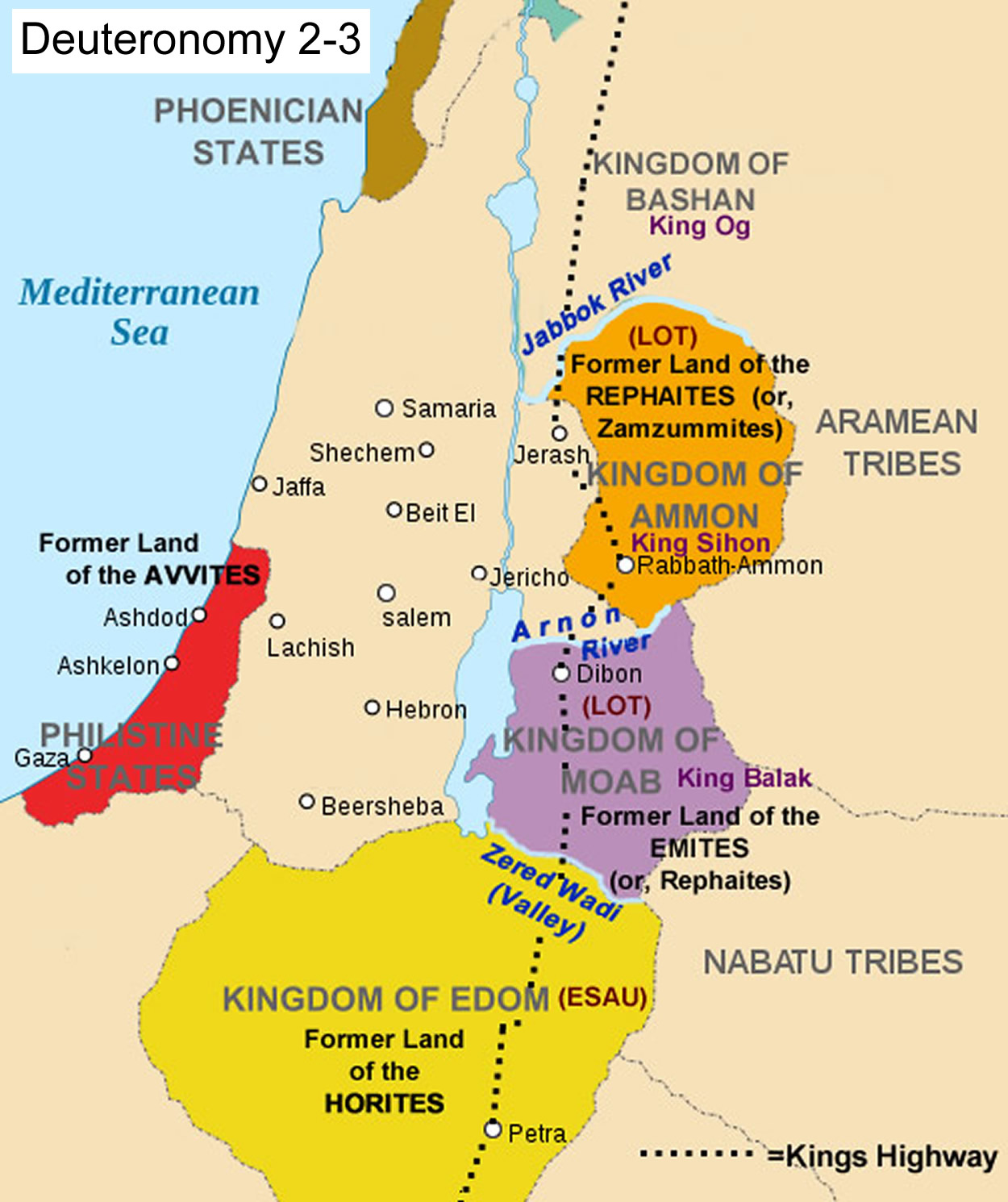
Moses makes it clear that the land in which Esau and his descendants eventually settled was far from empty. It had been occupied by another group of people known as the Horites. The first mention we have of them is found in Genesis 14, where they are listed among a group of nations that were defeated by an alliance of four kings. This confederation of kings attacked and defeated the people living in the area around Mount Seir,  in the far south of Canaan. They ended up conquering the cities of Sodom and Gomorrah, taking captive all the citizens, including the nephew of Abraham.

When Esau separated from his brother, Jacob, he ended up settling in the very same region as the Horites and, eventually, his sons and their children would supplant the Horites as the official inhabitants of the land. Hundreds of years later, when Moses prepared to lead the people of Israel into the promised land, he would receive instruction from God regarding this southern region and its inhabitants.

“You are about to pass through the territory of your brothers, the people of Esau, who live in Seir; and they will be afraid of you. So be very careful. Do not contend with them, for I will not give you any of their land, no, not so much as for the sole of the foot to tread on, because I have given Mount Seir to Esau as a possession.” – Deuteronomy 2:4-5 ESV

Moses records that Esau and his clan didn’t simply overwhelm the Horites with their superior numbers and strength, but that God orchestrated the transference of the land from one group to the other.

“…he [God] destroyed the Horites before them and they dispossessed them and settled in their place even to this day.” – Deuteronomy 2:22 ESV

The leader of the Horites was a man named Seir, and a large mountain in the region aptly bore his name. The Horites proved to be quite prolific, as the genealogy found in verses 20-43 reflects. But the chiefs of Seir and the chiefs of Esau would end up engaged in an ongoing conflict over control of the land around Mount Seir.

These are the sons of Dishan: Uz and Aran. These are the chiefs of the Horites: the chiefs Lotan, Shobal, Zibeon, Anah, Dishon, Ezer, and Dishan; these are the chiefs of the Horites, chief by chief in the land of Seir. – Genesis 36:28-30 ESV

These are the names of the chiefs of Esau, according to their clans and their dwelling places, by their names: the chiefs Timna, Alvah, Jetheth, Oholibamah, Elah, Pinon, Kenaz, Teman, Mibzar, Magdiel, and Iram; these are the chiefs of Edom (that is, Esau, the father of Edom), according to their dwelling places in the land of their possession. – Genesis 436:40-43 ESV

These two groups of “chiefs” or leaders of their clans would have gone head-to-head in battle with one another over control of the land. But what is interesting is that Moses provides a list of the kings who ruled over the land of Edom, and not one chief among the Horites or Edomites can be found on that list. It contains the name of eight Edomite kings, but none appear to be sons of Esau or Seir. In fact, one is referred to as a Temanite, another hales from Rehoboth, and still another comes from a place called Masrekah.  This sequential order of kings seems to reveal that there was a constant shift of power among the people groups that occupied this region. And Moses points out that the land of Edom had many kings long before the nation of Israel had their first monarch. Part of the reason for this disparity is that the people of Israel would eventually make their way to Egypt where they would remain for 400 years. During that time, the land of Edom would go through a long list of kings, chiefs, and leaders, while the Israelites were biding their time in Egypt. But the land of promise, like Edom, would not go unoccupied during the Israelites’ long absence. Canaan would be filled with nations, and overrun by the sins of idolatry and immorality.

And by the time Moses led the people of Israel back into the land, the  descendants of Esau (the Edomites) would be well established around Mount Seir. In keeping with God’s directive, the Israelites would view Edom as off-limits, restricting themselves to the purchase of food and supplies, but avoiding the confiscation of any Edomite territory because it had been given to them by God. And Moses states, “So we went on, away from our brothers, the people of Esau, who live in Seir, away from the Arabah road from Elath and Ezion-geber” (Deuteronomy 2:8 ESV).

All of this sets up the next section of Moses’ historical record of the people of Israel. While Esau and his descendants were busy making themselves at home in Edom, Israel and his descendants would be continuing the nomadic lifestyle established by Abraham and Isaac. Moses opens up chapter seven with the statement: “Jacob lived in the land of his father’s sojournings, in the land of Canaan” (Genesis 37:1 ESV).

The Hebrew word that Moses used is מָגוּר (māḡûr), which can also be translated “to be a stranger.” That is why the New Living Translation translates verse 1 this way: “So Jacob settled again in the land of Canaan, where his father had lived as a foreigner.”

Isaac, like his father before him, lived in the land of Canaan, more like an alien and a stranger than as a legal citizen. Neither Abraham or Isaac lived in a city or built a permanent dwelling place. They were sojourners, moving from one place to another, and never staying long enough to consider anywhere in the land of Canaan as their true home. And it is the author of the book of Hebrews who explains the reason behind this vagabond existence that was passed down from father to sin to grandson.

It was by faith that Abraham obeyed when God called him to leave home and go to another land that God would give him as his inheritance. He went without knowing where he was going. And even when he reached the land God promised him, he lived there by faith—for he was like a foreigner, living in tents. And so did Isaac and Jacob, who inherited the same promise. Abraham was confidently looking forward to a city with eternal foundations, a city designed and built by God. – Hebrews 11:8-10 NLT

And the author of Hebrews indicates that Abraham, Isaac, and Jacob never got to see that city – in their lifetimes.

All these people died still believing what God had promised them. They did not receive what was promised, but they saw it all from a distance and welcomed it. They agreed that they were foreigners and nomads here on earth. – Hebrews 11:13 NLT

The Edomites had kings and kingdoms. Even the Horites had a long list of chiefs and enjoyed that benefit of living in cities built by human hands. But the people of God would have to wait a long time before they experienced the fulfillment of God’s promise. God had promised to give them the land of Canaan as their inheritance, but neither Abraham, Isaac, or Jacob would make ever find their permanent home in the land of promise because God had something better in store.

Obviously people who say such things are looking forward to a country they can call their own. If they had longed for the country they came from, they could have gone back. But they were looking for a better place, a heavenly homeland. That is why God is not ashamed to be called their God, for he has prepared a city for them. – Hebrews 11:14-15 NLT

The wait would be difficult but well worth it.

English Standard Version (ESV) The Holy Bible, English Standard Version. ESV® Permanent Text Edition® (2016). Copyright © 2001 by Crossway Bibles, a publishing ministry of Good News Publishers.

New Living Translation (NLT) Holy Bible, New Living Translation, copyright © 1996, 2004, 2015 by Tyndale House Foundation. Used by permission of Tyndale House Publishers Inc., Carol Stream, Illinois 60188. All rights reserved.

New English Translation (NET)NET Bible® copyright ©1996-2017 by Biblical Studies Press, L.L.C. http://netbible.com All rights reserved.
Blessed But Not Chosen

1 These are the generations of Esau (that is, Edom). 2 Esau took his wives from the Canaanites: Adah the daughter of Elon the Hittite, Oholibamah the daughter of Anah the daughter of Zibeon the Hivite, 3 and Basemath, Ishmael’s daughter, the sister of Nebaioth. 4 And Adah bore to Esau, Eliphaz; Basemath bore Reuel; 5 and Oholibamah bore Jeush, Jalam, and Korah. These are the sons of Esau who were born to him in the land of Canaan.

6 Then Esau took his wives, his sons, his daughters, and all the members of his household, his livestock, all his beasts, and all his property that he had acquired in the land of Canaan. He went into a land away from his brother Jacob. 7 For their possessions were too great for them to dwell together. The land of their sojournings could not support them because of their livestock. 8 So Esau settled in the hill country of Seir. (Esau is Edom.)

9 These are the generations of Esau the father of the Edomites in the hill country of Seir. 10 These are the names of Esau’s sons: Eliphaz the son of Adah the wife of Esau, Reuel the son of Basemath the wife of Esau. 11 The sons of Eliphaz were Teman, Omar, Zepho, Gatam, and Kenaz. 12 (Timna was a concubine of Eliphaz, Esau’s son; she bore Amalek to Eliphaz.) These are the sons of Adah, Esau’s wife. 13 These are the sons of Reuel: Nahath, Zerah, Shammah, and Mizzah. These are the sons of Basemath, Esau’s wife. 14 These are the sons of Oholibamah the daughter of Anah the daughter of Zibeon, Esau’s wife: she bore to Esau Jeush, Jalam, and Korah.

15 These are the chiefs of the sons of Esau. The sons of Eliphaz the firstborn of Esau: the chiefs Teman, Omar, Zepho, Kenaz, 16 Korah, Gatam, and Amalek; these are the chiefs of Eliphaz in the land of Edom; these are the sons of Adah. 17 These are the sons of Reuel, Esau’s son: the chiefs Nahath, Zerah, Shammah, and Mizzah; these are the chiefs of Reuel in the land of Edom; these are the sons of Basemath, Esau’s wife. 18 These are the sons of Oholibamah, Esau’s wife: the chiefs Jeush, Jalam, and Korah; these are the chiefs born of Oholibamah the daughter of Anah, Esau’s wife. 19 These are the sons of Esau (that is, Edom), and these are their chiefs. – Genesis 36:1-19 ESV

Isaac has died, leaving his son, Jacob (Israel) as the heir of his estate and the recipient of God’s covenant promises and all the blessings it entails. And as Moses prepares to record Israel’s history as the newly designated leader of the covenant community, he provides a brief recap of Esau’s life and lineage. As the firstborn son of Isaac, Esau had been the rightful heir to the birthright and the blessing, but Jacob had managed to manipulate and deceive his brother so that he took possession of both. While time had healed the rift between these two brothers, they would find themselves going their separate ways. This chapter provides insight into Esau’s fate and a brief description of his family tree.

These first 19 verses seem painfully redundant because they repeat the names of Esau’s wives and sons three separate times. The first five verses list the three wives of Esau and the five sons they bore to him. Then, in verses 6-8, Moses list the wives and sons again, but adds the names of the ten grandsons born to Esau.

It’s important to note that Esau was a son of Isaac and, therefore, still a legitimate conduit through whom God would fulfill His promise to Isaac of many offspring.

“I will multiply your offspring as the stars of heaven and will give to your offspring all these lands. And in your offspring all the nations of the earth shall be blessed…” – Genesis 26:4 ESV

The different between Esau’s descendants and those of his brother was that his sons and grandsons would not be considered part of the chosen nation. When Jacob had managed to deceive Isaac and steal his brother’s blessing, it had left Esau with nothing. When he begged Isaac to provide him with a blessing of his own, all he got was a rather weak consolation prize.

“You will live away from the richness of the earth,
    and away from the dew of the heaven above.
You will live by your sword,
    and you will serve your brother.
But when you decide to break free,
    you will shake his yoke from your neck.” – Genesis 27:39-40 NLT

Not exactly the winning number to the lottery. But God would still bless Esau by providing him with five sons and 10 grandsons and, as the text makes clear, most of these men would grow up to be “the chiefs of the sons of Esau” (Genesis 36:15 ESV). They would become powerful leaders in their own right and from them would come many nations, including the Kenizzites, Edomites, and Amalekites.

While Jacob and Esau had mended their relationship, their descendants would never see eye to eye. In fact, a growing hostility would develop between the two groups, as they eventually found themselves fighting over the land of Canaan. It didn’t help that the Edomites, the descendants of Esau, became pagans, worshiping the false gods of the other nations inhabiting the land of promise. Eventually, the prophets Jeremiah and Obadiah issued prophetic pronouncements that warned of God’s judgment against them.

This message was given concerning Edom. This is what the Lord of Heaven’s Armies says:

“Is there no wisdom in Teman?
    Is no one left to give wise counsel?
Turn and flee!
    Hide in deep caves, you people of Dedan!
For when I bring disaster on Edom,
    I will punish you, too!
Those who harvest grapes
    always leave a few for the poor.
If thieves came at night,
    they would not take everything.
But I will strip bare the land of Edom,
    and there will be no place left to hide.
Its children, its brothers, and its neighbors
    will all be destroyed,
    and Edom itself will be no more.” – Jeremiah 49:7-10 NLT

The Lord says to Edom,
“I will cut you down to size among the nations;
    you will be greatly despised.
You have been deceived by your own pride
    because you live in a rock fortress
    and make your home high in the mountains.
‘Who can ever reach us way up here?’
    you ask boastfully.
But even if you soar as high as eagles
    and build your nest among the stars,
I will bring you crashing down,”
    says the Lord.” – Obadiah 1:2-4 NLT

God would bless Esau, resulting in the formation of a variety of nations and people groups. But they would fail to honor God and worship Him alone. Instead, they would seek and serve the false gods of Canaan, resulting in the pouring out of God’s divine wrath.

English Standard Version (ESV) The Holy Bible, English Standard Version. ESV® Permanent Text Edition® (2016). Copyright © 2001 by Crossway Bibles, a publishing ministry of Good News Publishers.

New Living Translation (NLT) Holy Bible, New Living Translation, copyright © 1996, 2004, 2015 by Tyndale House Foundation. Used by permission of Tyndale House Publishers Inc., Carol Stream, Illinois 60188. All rights reserved.

New English Translation (NET)NET Bible® copyright ©1996-2017 by Biblical Studies Press, L.L.C. http://netbible.com All rights reserved.

Two Deaths, A Birth, and a New Beginning

16 Then they journeyed from Bethel. When they were still some distance from Ephrath, Rachel went into labor, and she had hard labor. 17 And when her labor was at its hardest, the midwife said to her, “Do not fear, for you have another son.” 18 And as her soul was departing (for she was dying), she called his name Ben-oni; but his father called him Benjamin. 19 So Rachel died, and she was buried on the way to Ephrath (that is, Bethlehem), 20 and Jacob set up a pillar over her tomb. It is the pillar of Rachel’s tomb, which is there to this day. 21 Israel journeyed on and pitched his tent beyond the tower of Eder.

22 While Israel lived in that land, Reuben went and lay with Bilhah his father’s concubine. And Israel heard of it.

Now the sons of Jacob were twelve. 23 The sons of Leah: Reuben (Jacob’s firstborn), Simeon, Levi, Judah, Issachar, and Zebulun. 24 The sons of Rachel: Joseph and Benjamin. 25 The sons of Bilhah, Rachel’s servant: Dan and Naphtali. 26 The sons of Zilpah, Leah’s servant: Gad and Asher. These were the sons of Jacob who were born to him in Paddan-aram.

27 And Jacob came to his father Isaac at Mamre, or Kiriath-arba (that is, Hebron), where Abraham and Isaac had sojourned. 28 Now the days of Isaac were 180 years. 29 And Isaac breathed his last, and he died and was gathered to his people, old and full of days. And his sons Esau and Jacob buried him. – Genesis 35:16-29 ESV

After worshiping God at Bethel, Jacob, now going by his new name, Israel, made his way to the town of Ephrah, better known as Bethlehem. But along the way, his wife, Rachel, went into labor, and gave birth to her second child. But her labor proved to be difficult and she failed to survive the delivery. Just before her death, Rachel was able to verbalize her choice for the baby’s name: Ben-oni, which means “son of my sorrow.” But Israel, while grieved by his wife’s unexpected death, chose to see the positive side of this momentous occasion, and named his new son, Benjamin, which means, “Son of my good fortune.” From his perspective, the loss of his wife was balanced by the birth of his son. His memory of Rachel would always be associated with Benjamin, the son of his good fortune. In a sense, Israel was glorifying the fact that God had brought life from death.

It should not be overlooked that, at one time, the formerly barren Rachel had demanded that her husband do something about her condition. She desperately wanted to bear a child and, somehow, held him responsible for her condition.

When Rachel saw that she wasn’t having any children for Jacob, she became jealous of her sister. She pleaded with Jacob, “Give me children, or I’ll die!” – Genesis 30:1 NLT

While Jacob was incapable of doing anything about his wife’s dilemma, God graciously stepped in.

Then God remembered Rachel’s plight and answered her prayers by enabling her to have children. She became pregnant and gave birth to a son. “God has removed my disgrace,” she said. And she named him Joseph, for she said, “May the Lord add yet another son to my family.” – Genesis 30:22-24 NLT

And it’s interesting to note that God also answered her prayer, providing her with “another son” as per her request. But while she had believed that her ongoing barrenness would be her ultimate undoing, it was actually the bearing of children that would result in her death. In a way, her barrenness had been a divine form of protection. She had survived her first delivery, but the second one proved to be deadly.

After having provided Rachel with a proper burial, Israel continued his journey to Bethlehem, where he settled for a time. And somewhere near Bethlehem, “the house of bread,” Israel would experience a devastating breakdown in family etiquette. Reuben, his firstborn son born to him by Leah, committed an act immorality with Bilhah, his father’s concubine.

Moses provides no explanation for Reuben’s actions. But, besides the obvious motivation of sexual satisfaction, there is probably more going on here than meets the eye. By committing incest with Bilhah, Reuben may have hoped to diminish her status in Israel’s eyes. With Rachel dead, Reuben’s mother, Leah, would have assumed the role of favored wife. And his illicit affair with Bilhah would assured that she was seen as damaged goods in his father’s eyes. But there is also a good chance that his actions were meant to declare his rightful role as the firstborn son and, therefore, heir to the role of leadership over the clan.

This kind of thing would not have been rare or unexpected. In fact, we see one of Israel’s descendants playing out that very scenario in the book of 2 Samuel. Absalom, the eldest son of King David, aspired to his father’s throne. So, Ahithophel, a former advisor to King David, gave him some advice that he guaranteed would help make his dream come true.

“Go and sleep with your father’s concubines, for he has left them here to look after the palace. Then all Israel will know that you have insulted your father beyond hope of reconciliation, and they will throw their support to you.” So they set up a tent on the palace roof where everyone could see it, and Absalom went in and had sex with his father’s concubines. – 2 Samuel 16:21-22 NLT

Reuben’s actions, while unexplained, were immoral and ungodly. And they mirror the behavior of Shechem, who allowed his lust to get the best of him and ended up raping Dinah, the only daughter of Israel. He eventually died for his behavior but there is no indication that Reuben faced any repercussions for his crime. In keeping with the inaction he displayed at Shechem’s defilement of Dinah, Israel did nothing to avenge his Bilhah’s honor. It appears that Reuben went unchallenged and unpunished for his actions, and his name appears alongside all the other brothers in the brief genealogy found in verses 22-26.

These are the names of the twelve sons of Jacob: The sons of Leah were Reuben (Jacob’s oldest son), Simeon, Levi, Judah, Issachar, and Zebulun. The sons of Rachel were Joseph and Benjamin. The sons of Bilhah, Rachel’s servant, were Dan and Naphtali. The sons of Zilpah, Leah’s servant, were Gad and Asher. These are the names of the sons who were born to Jacob at Paddan-aram. – Genesis 35:22-26 NLT

But there is more to the story than Moses relates. It is not until he penned the book of 1 Chronicles that Moses divulged the consequences for Reuben’s actions, and they were severe. Like Esau, Reuben threw away his birthright in a moment of passion.

The oldest son of Israel was Reuben. But since he dishonored his father by sleeping with one of his father’s concubines, his birthright was given to the sons of his brother Joseph. For this reason, Reuben is not listed in the genealogical records as the firstborn son. The descendants of Judah became the most powerful tribe and provided a ruler for the nation, but the birthright belonged to Joseph. – 1 Chronicles 5:1-2 NLT

His little fling cost him dearly. And if he had been hoping to prove his superiority over his father by forcibly raping his concubine, he had made an epic error in judgment. A mistake he would regret for the rest of his life.

But, while Reuben would pay dearly for his lack of judgment, he would hold no grudge against Joseph, his younger brother who inherited his birthright. In fact, as the story unfolds, it will be Reuben who attempts to protect the life of Joseph when his brothers plot to murder him.

But when Reuben heard of their scheme, he came to Joseph’s rescue. “Let’s not kill him,” he said. “Why should we shed any blood? Let’s just throw him into this empty cistern here in the wilderness. Then he’ll die without our laying a hand on him.” Reuben was secretly planning to rescue Joseph and return him to his father. – Genesis 37:21-22 NLT

But that’s another story for another day. In this chapter, the defilement of Bilhah is followed by the death of Isaac. At some point, Israel made the long-delayed trip back to Hebron, to visit his aging father. And he made it just in time because, having lived 180 years, Isaac was knocking on death’s door.

With the death of Isaac, the entire focus of the narrative turns to Israel. the son of Isaac formerly known as Jacob. God was bringing the fulfillment of His promise full circle. It had passed from Abraham to Isaac and would now belong to Israel (Jacob). And as Isaac’s two sons buried his body, the stage was set for the next phase of God’s grand plan for the further fulfillment of His covenant promise to Abraham.

English Standard Version (ESV) The Holy Bible, English Standard Version. ESV® Permanent Text Edition® (2016). Copyright © 2001 by Crossway Bibles, a publishing ministry of Good News Publishers.

New Living Translation (NLT) Holy Bible, New Living Translation, copyright © 1996, 2004, 2015 by Tyndale House Foundation. Used by permission of Tyndale House Publishers Inc., Carol Stream, Illinois 60188. All rights reserved.

New English Translation (NET)NET Bible® copyright ©1996-2017 by Biblical Studies Press, L.L.C. http://netbible.com All rights reserved.

What’s In A Name?

1 God said to Jacob, “Arise, go up to Bethel and dwell there. Make an altar there to the God who appeared to you when you fled from your brother Esau.” 2 So Jacob said to his household and to all who were with him, “Put away the foreign gods that are among you and purify yourselves and change your garments. 3 Then let us arise and go up to Bethel, so that I may make there an altar to the God who answers me in the day of my distress and has been with me wherever I have gone.” 4 So they gave to Jacob all the foreign gods that they had, and the rings that were in their ears. Jacob hid them under the terebinth tree that was near Shechem.

5 And as they journeyed, a terror from God fell upon the cities that were around them, so that they did not pursue the sons of Jacob. 6 And Jacob came to Luz (that is, Bethel), which is in the land of Canaan, he and all the people who were with him, 7 and there he built an altar and called the place El-bethel, because there God had revealed himself to him when he fled from his brother. 8 And Deborah, Rebekah’s nurse, died, and she was buried under an oak below Bethel. So he called its name Allon-bacuth.

9 God appeared to Jacob again, when he came from Paddan-aram, and blessed him. 10 And God said to him, “Your name is Jacob; no longer shall your name be called Jacob, but Israel shall be your name.” So he called his name Israel. 11 And God said to him, “I am God Almighty: be fruitful and multiply. A nation and a company of nations shall come from you, and kings shall come from your own body. 12 The land that I gave to Abraham and Isaac I will give to you, and I will give the land to your offspring after you.” 13 Then God went up from him in the place where he had spoken with him. 14 And Jacob set up a pillar in the place where he had spoken with him, a pillar of stone. He poured out a drink offering on it and poured oil on it. 15 So Jacob called the name of the place where God had spoken with him Bethel. – Genesis 35:1-15 ESV

Ten years earlier, when Jacob had been fleeing from Canaan to escape the anger of his older brother, he had stopped at Bethel. While there, he had been received a vision from God in which he was given a divine promise that he would be the inheritor of the Abrahamic Covenant. The promise given to his grandfather of land, a seed, and a blessing would be his.

“I am the Lord, the God of Abraham your father and the God of Isaac. The land on which you lie I will give to you and to your offspring. Your offspring shall be like the dust of the earth, and you shall spread abroad to the west and to the east and to the north and to the south, and in you and your offspring shall all the families of the earth be blessed. Behold, I am with you and will keep you wherever you go, and will bring you back to this land. For I will not leave you until I have done what I have promised you.” – Genesis 28:13-15 NLT

Despite all that Jacob had done to deceive his brother, God had assured Jacob of His continued provision and protection. And on that occasion, Jacob had made a vow, stating that, if God kept His end of the bargain and returned him safely to Canaan, he would make his way back to Bethel and worship the one true God.

“If God will be with me and will keep me in this way that I go, and will give me bread to eat and clothing to wear, so that I come again to my father’s house in peace, then the Lord shall be my God, and this stone, which I have set up for a pillar, shall be God’s house. And of all that you give me I will give a full tenth to you.”– Genesis 28:20-22 ESV

But ten years had passed since Jacob had left Paddan-aram. For an entire decade, he had failed to return to Bethel (the house of God) and worship. Instead, he had chosen to settle outside the city of Shechem, and that decision had resulted in the rape of his daughter, Dinah, by the son of the king of Shechem. And while Jacob had been prepared to make a peace alliance with Hamor and his clan, permitting the intermarriage of their people, his sons had chosen a different path. To avenge the dishonoring of their sister, they slaughtered all the men of Shechem and enslaved all the women and children of the city. And just as Jacob had feared, the rumors of this gruesome act spread to the surrounding nations, creating a permanent stain on Jacob’s reputation.

“You have ruined me! You’ve made me stink among all the people of this land—among all the Canaanites and Perizzites. We are so few that they will join forces and crush us. I will be ruined, and my entire household will be wiped out!” – Genesis 34:30 ESV

But Jacob’s assessment of the situation was not quite right. Rather than painting a target on their backs, the actions of his sons had struck fear into the Canaanites.

…a terror from God fell upon the cities that were around them, so that they did not pursue the sons of Jacob. – Genesis 35:5 ESV

God used the slaughter of the Shechemites to instill a fear of Jacob and his people. The surrounding nations refused to take up arms against the much small and relatively defenseless Israelites, leaving Jacob free to travel from Shechem to Bethel unmolested.

But sadly, Jacob’s return to Bethel had not been his idea. His first response after the debacle at Shechem had not been to seek God but to escape the scene of the crime. But Moses indicates that received divine directions, ordering him to “Get ready and move to Bethel and settle there. Build an altar there to the God who appeared to you when you fled from your brother, Esau” (Genesis 35:1 NLT).

What Jacob did next is quite revealing. In preparation for their return to Bethel, he commanded his people to purify themselves, and this was to include the removal of all their pagan idols. Evidently, the household idols that Rachel had stolen from her father were not the only ones in the possession of Jacob’s people. And it appears that Jacob had tolerated their presence for ten years. Perhaps he had turned a blind eye to these pagan gods in the hopes that they might provide an additional source of security and blessing. But now that he was returning to Bethel, he knew it was time to clean house.

“We are now going to Bethel, where I will build an altar to the God who answered my prayers when I was in distress. He has been with me wherever I have gone.” – Genesis 35:3 NLT

God had been faithful. Now, it was Jacob’s turn. So, with all his family and possessions in tow, Jacob slowly made his way from Shechem to Bethel, a distance of about 30 miles. Upon his arrival, Jacob obeyed God’s command and constructed an altar. Then he “named the place El-bethel (which means ‘God of Bethel’), because God had appeared to him there when he was fleeing from his brother, Esau” (Genesis 35:7 NLT).

It is important to note that, prior to building the altar and worshiping Yahweh, Jacob had taken the effort to purge his household of false gods and to purify themselves from the bloodguilt incurred by the slaughter of the Shechemites. It could be that God provided these instructions to Jacob so that the Israelites would not enter into His presence defiled and guilty of idolatry. There was a cleansing and a purging necessary before they could expect to enter into the presence of God Almighty.

On an interesting side note, Moses relates the death of Deborah, the handmaid of Jacob’s mother, Rebekah. She had accompanied Rebekah from Haran in Mesopotamia when Abraham’s servant had come seeking a wife for Isaac. Moses doesn’t reveal how she came to live with Jacob, but it could be that she joined him upon his return to Canaan and after the death of Rebekah. But this faithful servant of Jacob’s family died and Jacob honored her by burying her beneath an oak tree in a valley near Bethel.

For the second time since returning to the land of Canaan, Jacob received a divine message regarding his new identity. Upon his arrival back in the land, Jacob had camped beside the Jabbok River, where he had a physical and life-changing encounter with God. He literally wrestled with the Almighty, eventually receiving a debilitating injury and a blessing for his efforts. And God changed Jacob’s name in the process.

“Your name shall no longer be called Jacob, but Israel, for you have striven with God and with men, and have prevailed.” – Genesis 32:28 ESV

Now, as he stood before the altar in Bethel, Jacob received a second reminder that his name had been irreversibly changed by God.

God blessed him, saying, “Your name is Jacob, but you will not be called Jacob any longer. From now on your name will be Israel.” So God renamed him Israel. – Genesis 35:9-10 NLT

It would appear that Jacob had failed to use his new God-given name, choosing instead to retain his old one. And, in a sense, Jacob had retained many of the habits associated with his old name. To a great extent, he remained a trickster and a deceiver. But by reminding Jacob of his new name, God was reinforcing His intention to not only rename His servant but to renew and remake him. God had great things in store for Israel.

Then God said, “I am El-Shaddai—‘God Almighty.’ Be fruitful and multiply. You will become a great nation, even many nations. Kings will be among your descendants! And I will give you the land I once gave to Abraham and Isaac. Yes, I will give it to you and your descendants after you.” – Genesis 35:11-12 NLT

The Abrahamic Covenant was officially passed down to the newly named Israel. As the grandson of Abraham, Israel was the rightful heir to the promise of a land, a seed, and a blessing. God was going to fulfill His covenant promise through Israel and his descendants. And it is essential to remember that one of those descendants would be Joseph, the only son born to Israel through Rachel. He will come to play a major role in the future of God’s chosen people. The other descendant of Israel who will factor into the fate of God’s people will be Judah, from whom the Messiah will come.

The stage is set and the future of Israel is secure. God has been working behind the scenes to prepare the way for the unfolding of His divine redemptive plan for mankind. And while the newly named Israel remains oblivious to God’s plans, he and his family will play a vital role in its fulfillment.

English Standard Version (ESV) The Holy Bible, English Standard Version. ESV® Permanent Text Edition® (2016). Copyright © 2001 by Crossway Bibles, a publishing ministry of Good News Publishers.

New Living Translation (NLT) Holy Bible, New Living Translation, copyright © 1996, 2004, 2015 by Tyndale House Foundation. Used by permission of Tyndale House Publishers Inc., Carol Stream, Illinois 60188. All rights reserved.

New English Translation (NET)NET Bible® copyright ©1996-2017 by Biblical Studies Press, L.L.C. http://netbible.com All rights reserved.