Jehovah-Jireh

13 And Abraham lifted up his eyes and looked, and behold, behind him was a ram, caught in a thicket by his horns. And Abraham went and took the ram and offered it up as a burnt offering instead of his son. 14 So Abraham called the name of that place, “The Lord will provide”; as it is said to this day, “On the mount of the Lord it shall be provided.”– Genesis  22:13-14 ESV

Genesis 22 contains the familiar and somewhat unsettling story of Abraham’s attempted sacrifice of his son Isaac. Moses records every excruciating detail surrounding this God-sanctioned event that required a loving father to offer up the life of his one-and-only son as a sacrifice. Abraham had received clear and non-negotiable instructions from ‘ĕlōhîm.

“Take your son, your only son Isaac, whom you love, and go to the land of Moriah, and offer him there as a burnt offering on one of the mountains of which I shall tell you.” – Genesis 22:2 ESV

Amazingly, the text contains no pushback from Abraham. There is no record of him arguing with or questioning God’s command. It simply states, “So Abraham rose early in the morning, saddled his donkey, and took two of his young men with him, and his son Isaac” (Genesis 22:3 ESV).

Three days into their journey to the region of Moriah, Abraham saw their final destination in the distance and decided to leave his servants behind. He and Isaac would travel alone to the place of sacrifice. Abraham, perhaps hoping to hide his true intentions from his unwitting son, told his servants, “The boy and I will travel a little farther. We will worship there, and then we will come right back” (Genesis 22:5 NLT). Some have determined this to be a statement of faith on Abraham’s part, suggesting that he was confident that God would spare his son. But it seems more likely that Abraham was waiting until the last minute to let Isaac in on the true nature of their journey. His son had no way of knowing the fate that lay in store for him.

Moses describes how Abraham took all the elements he would need for the sacrifice, including a knife, a blazing torch, and wood. Then he adds the heartwrenching notation: “And Abraham took the wood of the burnt offering and laid it on Isaac his son” (Genesis 22:6 ESV). Isaac was carrying the very wood upon which his young life would be consumed.

For those of us living on this side of the crucifixion, it should be easy to recognize the similarities between Isaac and Jesus. Both entered the world through miraculous, God-ordained births. Isaac was born to an elderly and barren woman. Jesus was born to a young virgin girl. Each of them was deeply adored by their respective fathers. And just as Abraham was facing the prospect of sacrificing his son, centuries later, God would offer up His one and only Son as the Lamb who takes away the sins of the world (John 1:29). There is even a striking similarity between Isaac bearing the wood for his own sacrifice and Jesus carrying the cross upon which He would be crucified.

But for the Jews for whom Moses recorded this story, none of these links to the future death of the Messiah would have been apparent. For them, this story would have had significance because it involved Isaac, who would later become the father of Jacob, the man whom God later renamed, Israel. And it was from this one man that they owed their very existence. To hear the story of how Jacob’s father was almost put to death by order of Yahweh must have left them appalled and confused. How could their God, the God of Abraham, Isaac, and Jacob, order such a thing? And, of course, they would have been viewing this entire scene through the lens of the Mosaic Law. They had been given clear instructions to avoid the religious rituals and customs of their pagan neighbors.

You must not worship the Lord your God the way the other nations worship their gods, for they perform for their gods every detestable act that the Lord hates. They even burn their sons and daughters as sacrifices to their gods. – Leviticus 12:31 NLT

And yet, Abraham had no written law to guide his actions. He was operating according to the spoken word of God Almighty, and His instructions had been clear.

“Take your son, your only son—yes, Isaac, whom you love so much—and go to the land of Moriah. Go and sacrifice him as a burnt offering on one of the mountains, which I will show you.” – Genesis 22:2 NLT

The disconcerting nature of this divine command must have left Abraham filled with questions. Why would God require the sacrifice of the very son whom He had miraculously provided? What possible good could come from something so seemingly wicked? But the key is found in three words found in the opening verse of this chapter: God tested Abraham.

The people of Israel were very familiar with the concept of divine testing. In fact, their ancestors had spent 40 years wandering in the wilderness, enduring ongoing tests from Yahweh that were designed to increase their dependence upon Him. The Book of Deuteronomy records Moses’ powerful words spoken to the people of Israel as they prepared to enter the land of Canaan for the first time.

“Remember how the LORD your God led you through the wilderness for these forty years, humbling you and testing you to prove your character, and to find out whether or not you would obey his commands. Yes, he humbled you by letting you go hungry and then feeding you with manna, a food previously unknown to you and your ancestors. He did it to teach you that people do not live by bread alone; rather, we live by every word that comes from the mouth of the LORD. For all these forty years your clothes didn’t wear out, and your feet didn’t blister or swell. Think about it: Just as a parent disciplines a child, the LORD your God disciplines you for your own good.” – Deuteronomy 8:2-5 NLT

So, it seems highly likely that the original readers of this book would have understood the nature of the test that Abraham was having to face. They knew that Yahweh expected obedience from His people because obedience was a sign of dependence and faith. They knew what disobedience looked like because they had grumbled and whined about their dislike for manna. During their years wandering in the wilderness, they spent more time complaining to Moses than they spent worshiping and expressing gratitude to God.

As Abraham and Isaac made their way to the site of the sacrifice, Isaac couldn’t help but notice that something was missing.

He said, “Behold, the fire and the wood, but where is the lamb for a burnt offering?” – Genesis 22:7 ESV

To the young Isaac, this was a glaring oversight. Why had his father failed to select an unblemished lamb before they left home? How were they going to find a suitable animal out in the wilderness? But Abraham calmly answered, “God will provide for himself the lamb for a burnt offering, my son” (Genesis 22:8 ESV). Once again, some believe this was an expression of Abraham’s faith. They suggest that Abraham somehow knew that God would provide a substitute. But, according to the author of Hebrews, Abraham was declaring his belief that Isaac was the lamb that God had provided. The sacrifice would take place. But Abraham still believed that God would fulfill His covenant promise, even if it meant raising Isaac from the dead.

It was by faith that Abraham offered Isaac as a sacrifice when God was testing him. Abraham, who had received God’s promises, was ready to sacrifice his only son, Isaac, even though God had told him, “Isaac is the son through whom your descendants will be counted.” Abraham reasoned that if Isaac died, God was able to bring him back to life again. And in a sense, Abraham did receive his son back from the dead. – Hebrews 11:17-19 NLT

Abraham fully intended to go through with God’s command. He did not delay, hoping for a last-minute reprieve. He did not scan the horizon, hoping for a lamb to miraculously appear. No, Moses records that “Abraham built an altar and arranged the wood on it. Then he tied his son, Isaac, and laid him on the altar on top of the wood. And Abraham picked up the knife to kill his son as a sacrifice” (Genesis 22:0-10 NLT).

One can only imagine the turmoil going on in Abraham’s mind and heart. Every fiber of his being must have been conflicted as his fatherly instincts waged war against his desire to walk before God and be blameless (Genesis 17:1). Interestingly enough, Moses provides no insight into Isaac’s reactions. The young boy appears to have remained eerily silent throughout this ordeal. He asked no further questions. He refused to put up a struggle. But just as Abraham prepared to shed the blood of his own innocent son, God intervened.

“Do not lay your hand on the boy or do anything to him, for now I know that you fear God, seeing you have not withheld your son, your only son, from me.” – Genesis 22:21 ESV

Abraham clearly loved Isaac. But he reverenced God. The Hebrew word for “fear” is יָרֵא (yārē’) and, in this context, it refers to reverent awe for God that is expressed through obedience. Abraham did not do what he did out of fear of God’s wrath, but out of reverence for God’s holiness and power. His obedience was an expression of his faith in an all-powerful and perfectly righteous God.

As the author of Hebrews suggests, “Abraham did receive his son back from the dead” (Hebrews 11:17 NLT). In Abraham’s mind, Isaac’s death was a foregone conclusion. But, at the very last second, his son’s life was spared. God provided a substitute.

Abraham lifted up his eyes and looked, and behold, behind him was a ram, caught in a thicket by his horns. And Abraham went and took the ram and offered it up as a burnt offering instead of his son. – Genesis 22:17 ESV

This verse foreshadows another sacrifice that would take place centuries later. It too would involve a loving Father and His precious Son. But this time, there would be no last-minute reprieve. There would be no substitute. In fact, the Son would serve as the substitute for sinful mankind. The apostle Paul reminds us of the tremendous cost that our Heavenly Father paid so that we might live to see another day.

He who did not spare his own Son but gave him up for us all, how will he not also with him graciously give us all things? – Romans 8:32 ESV

Abraham had his son returned to him, and out of gratitude and a growing reverence for this gracious and compassionate God, he named the place Jehovah-Jireh (YHWH-Yireh), which is most commonly translated as “the Lord will provide.” Isaac had been spared, not because he deserved it, but because God had plans to offer a far more significant and superior sacrifice. The apostle Paul declares the glory of this future gift the Lamb who would take away the sins of the world.

For everyone has sinned; we all fall short of God’s glorious standard. Yet God, in his grace, freely makes us right in his sight. He did this through Christ Jesus when he freed us from the penalty for our sins. For God presented Jesus as the sacrifice for sin. People are made right with God when they believe that Jesus sacrificed his life, shedding his blood. This sacrifice shows that God was being fair when he held back and did not punish those who sinned in times past, for he was looking ahead and including them in what he would do in this present time. God did this to demonstrate his righteousness, for he himself is fair and just, and he makes sinners right in his sight when they believe in Jesus. – Romans 3:23-26 NLT

There seems to be far more going on in this story than simply God’s provision of a substitute sacrifice. As important as that was, it paints an incomplete picture of ‘ĕlōhîm’s actions. Moses named the location YHWH yirʾe. The second half of that name is a transliteration of the Hebrew word rā’â which means “to see,” “look,” or “foresee.”

The Amplified Bible translates verse 14 as follows:

So Abraham named that place The LORD Will Provide. And it is said to this day, “On the mountain of the LORD it will be seen and provided.”

The Aramaic Bible in Plain English also weaves in the idea of seeing, adding the aspect of appearance.

And Abraham called the name of that place “LORD JEHOVAH will appear” of which it is said today, “In this mountain LORD JEHOVAH will appear.”

The Septuagint, the Greek translation of the Hebrew Bible, gives the meaning of the name as “The LORD hath seen.”

The 1917 Jewish Publication Society translation renders verse 14 this way:

And Abraham called the name of that place Adonai-jireh; as it is said to this day: “In the mount where the LORD is seen.

There seems to be far more going on here than the provision of a ram to take the place of Isaac. God saw Abraham’s faith and responded by providing a substitute. In that gracious act of mercy, Abraham saw the hand of God. And in the entire sequence of events, we can see God’s plan to send His Son as “the Lamb of God who takes away the sins of the world” (John 1:29). The same Hebrew word that is transliterated as jireh is used in verse 13 where it states, “Then Abraham looked up and saw a ram caught by its horns in a thicket. So he took the ram and sacrificed it as a burnt offering in place of his son.”

Throughout this entire scenario, sight plays a significant role. God was watching. Abraham was waiting to see what God would do. As Hebrews makes clear, he was counting on the fact that God could raise his son back to life. But then he saw the ram and experienced the grace of God. For modern-day Christians reading this account of Abraham and Isaac, we get to see that Mount Moriah was the eventual site of the Temple built by Solomon. It would also be the same area in which the sinless Son of God sacrificed His life on behalf of sinful humanity. Jehovah-Jireh sees and provides, not only a ram for the son of Abraham but His own Son for the sins of the world. He saw the need for His Son to be a Savior long before the world was made, Adam and Eve were created, or the fall took place. And we are the beneficiaries of God’s foresight and faithfulness, just as Isaac was.

English Standard Version (ESV)
The Holy Bible, English Standard Version. ESV® Permanent Text Edition® (2016). Copyright © 2001 by Crossway Bibles, a publishing ministry of Good News Publishers.

New Living Translation (NLT)
Holy Bible, New Living Translation, copyright © 1996, 2004, 2015 by Tyndale House Foundation. Used by permission of Tyndale House Publishers Inc., Carol Stream, Illinois 60188. All rights reserved.
They Had Their Work Cut Out For Them

1 The sons of Reuben the firstborn of Israel (for he was the firstborn, but because he defiled his father’s couch, his birthright was given to the sons of Joseph the son of Israel, so that he could not be enrolled as the oldest son; though Judah became strong among his brothers and a chief came from him, yet the birthright belonged to Joseph), the sons of Reuben, the firstborn of Israel: Hanoch, Pallu, Hezron, and Carmi. The sons of Joel: Shemaiah his son, Gog his son, Shimei his son, Micah his son, Reaiah his son, Baal his son, Beerah his son, whom Tiglath-pileser king of Assyria carried away into exile; he was a chief of the Reubenites. And his kinsmen by their clans, when the genealogy of their generations was recorded: the chief, Jeiel, and Zechariah, and Bela the son of Azaz, son of Shema, son of Joel, who lived in Aroer, as far as Nebo and Baal-meon. He also lived to the east as far as the entrance of the desert this side of the Euphrates, because their livestock had multiplied in the land of Gilead. 10 And in the days of Saul they waged war against the Hagrites, who fell into their hand. And they lived in their tents throughout all the region east of Gilead.

11 The sons of Gad lived over against them in the land of Bashan as far as Salecah: 12 Joel the chief, Shapham the second, Janai, and Shaphat in Bashan. 13 And their kinsmen according to their fathers’ houses: Michael, Meshullam, Sheba, Jorai, Jacan, Zia and Eber, seven. 14 These were the sons of Abihail the son of Huri, son of Jaroah, son of Gilead, son of Michael, son of Jeshishai, son of Jahdo, son of Buz. 15 Ahi the son of Abdiel, son of Guni, was chief in their fathers’ houses, 16 and they lived in Gilead, in Bashan and in its towns, and in all the pasturelands of Sharon to their limits. 17 All of these were recorded in genealogies in the days of Jotham king of Judah, and in the days of Jeroboam king of Israel.

18 The Reubenites, the Gadites, and the half-tribe of Manasseh had valiant men who carried shield and sword, and drew the bow, expert in war, 44,760, able to go to war. 19 They waged war against the Hagrites, Jetur, Naphish, and Nodab. 20 And when they prevailed over them, the Hagrites and all who were with them were given into their hands, for they cried out to God in the battle, and he granted their urgent plea because they trusted in him. 21 They carried off their livestock: 50,000 of their camels, 250,000 sheep, 2,000 donkeys, and 100,000 men alive. 22 For many fell, because the war was of God. And they lived in their place until the exile.

23 The members of the half-tribe of Manasseh lived in the land. They were very numerous from Bashan to Baal-hermon, Senir, and Mount Hermon. 24 These were the heads of their fathers’ houses: Epher, Ishi, Eliel, Azriel, Jeremiah, Hodaviah, and Jahdiel, mighty warriors, famous men, heads of their fathers’ houses.’ 25 But they broke faith with the God of their fathers, and whored after the gods of the peoples of the land, whom God had destroyed before them. 26 So the God of Israel stirred up the spirit of Pul king of Assyria, the spirit of Tiglath-pileser king of Assyria, and he took them into exile, namely, the Reubenites, the Gadites, and the half-tribe of Manasseh, and brought them to Halah, Habor, Hara, and the river Gozan, to this day. – 1 Chronicles 5:1-26 ESV

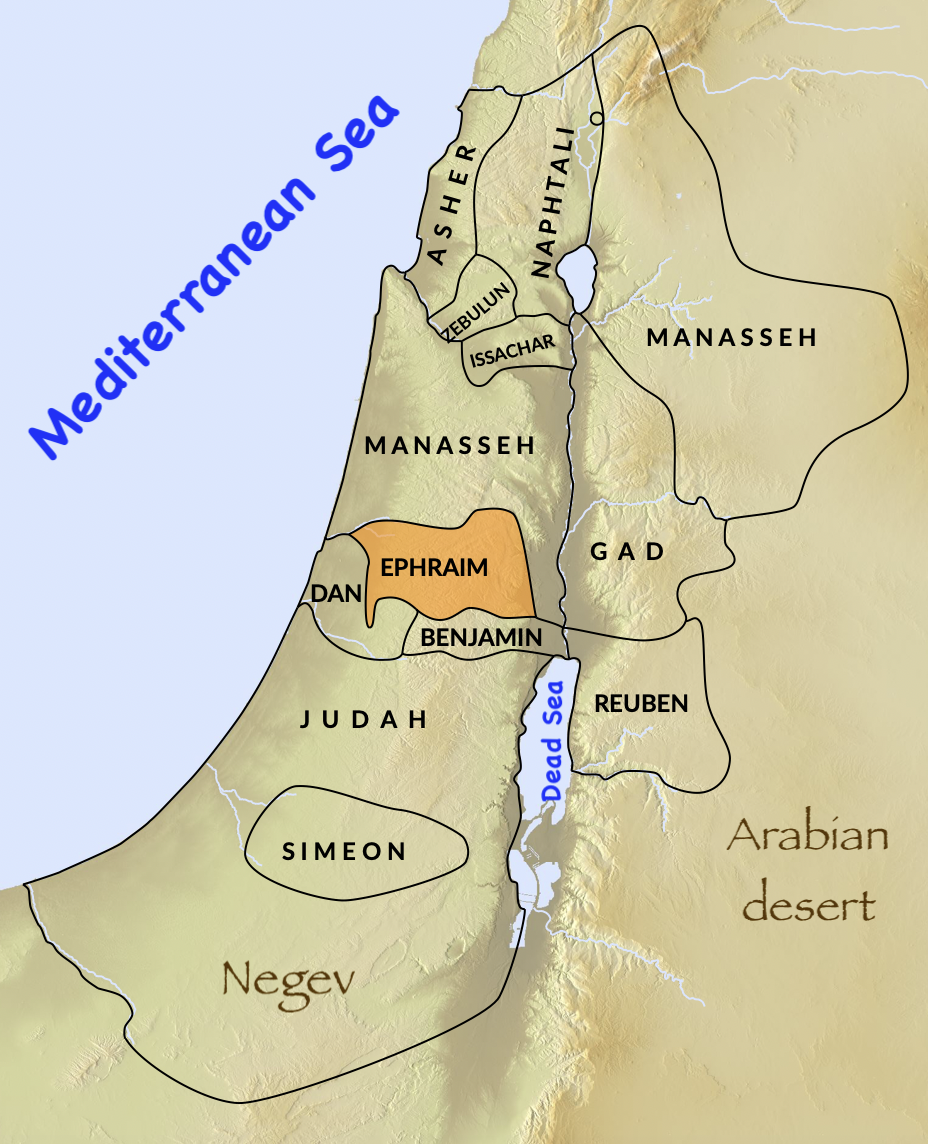
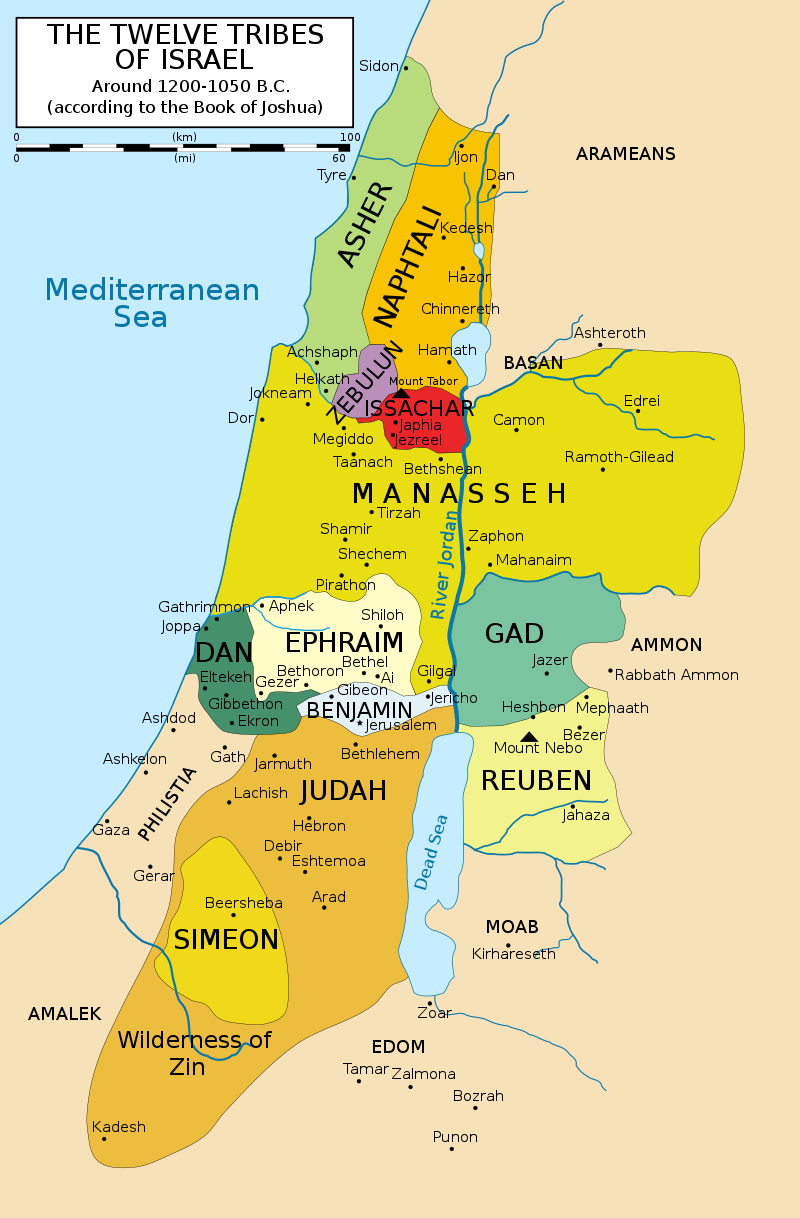
This chapter covers the descendants of the three tribes of Israel that settled on the east side of the Jordan River, outside the designated borders of the promised land. The region in which they settled is often referred to as the Transjordan. Prior to beginning the conquest and occupation of the land of Canaan as God had commanded, the tribes of Reuben, Gad, and Manasseh asked for permission to settle east of the Jordan on fertile land that was perfect for raising their many flock and herds.

The tribes of Reuben and Gad owned vast numbers of livestock. So when they saw that the lands of Jazer and Gilead were ideally suited for their flocks and herds, they came to Moses, Eleazar the priest, and the other leaders of the community. They said, “Notice the towns of Ataroth, Dibon, Jazer, Nimrah, Heshbon, Elealeh, Sibmah, Nebo, and Beon. The Lord has conquered this whole area for the community of Israel, and it is ideally suited for all our livestock. If we have found favor with you, please let us have this land as our property instead of giving us land across the Jordan River.” – Numbers 32:1-5 NLT

Angered by the self-centered nature of their request, Moses gave them an emphatic “No!” as his answer.

“The Lord was angry with Israel and made them wander in the wilderness for forty years until the entire generation that sinned in the Lord’s sight had died. But here you are, a brood of sinners, doing exactly the same thing! You are making the Lord even angrier with Israel. If you turn away from him like this and he abandons them again in the wilderness, you will be responsible for destroying this entire nation!” – Numbers 32:13-15 NLT

Moses feared that if he gave in to their request, they would get comfortable and refuse to assist their brothers in conquering the land of Canaan. This would leave the remainder of the tribes at a distinct disadvantage. However, the elders of the three tribes assured Moses that they would play their part in the conquest of Canaan.

“We simply want to build pens for our livestock and fortified towns for our wives and children. Then we will arm ourselves and lead our fellow Israelites into battle until we have brought them safely to their land. Meanwhile, our families will stay in the fortified towns we build here, so they will be safe from any attacks by the local people. We will not return to our homes until all the people of Israel have received their portions of land. But we do not claim any of the land on the other side of the Jordan. We would rather live here on the east side and accept this as our grant of land.” – Numbers 32:16-19 NLT

While these three tribes refused their inheritance in the land of promise, the chronicler included them in his genealogical listing, along with the rest of the tribes of Israel. Their decision to settle outside the borders of the promised land did not forfeit their right to be called the children of God. It also did not protect them from facing God’s judgment and being conquered by foreign invaders. They too ended up as slaves but not to the Babylonians.

…these tribes were unfaithful to the God of their ancestors. They worshiped the gods of the nations that God had destroyed. So the God of Israel caused King Pul of Assyria (also known as Tiglath-pileser) to invade the land and take away the people of Reuben, Gad, and the half-tribe of Manasseh as captives. The Assyrians exiled them to Halah, Habor, Hara, and the Gozan River, where they remain to this day. – 1 Chronicles 5:25-26 NLT

The inference is that these tribes never returned to the land of promise. Unlike the remaining tribes, the Reubenites, Gadites, and the half-tribe of Manasseh ended up becoming slaves to the Assyrians. Their defeat and deportation took place hundreds of years before the fall of the kingdom of Judah. There is no biblical record of any of the descendants of these tribes returning to the promised land. This closing statement in chapter 5 is meant to remind the returning Israelites of the unique nature of their restoration to the land by God. They were no more deserving than the other three tribes, but God had allowed them to escape their captivity in Babylon and experience the joy of returning to their homeland.

The tribe of Reuben receives special attention because of the actions of their patriarch. He is listed as “the firstborn of Israel” (1 Chronicles 5:1) because he was the oldest son of Jacob. But Reuben had forfeited his rights as the eldest son because “he dishonored his father by sleeping with one of his father’s concubines” and, as a result, “his birthright was given to the sons of his brother Joseph” (1 Chronicles 5:1 NLT). While the chronicler provides little in the way of details, it’s likely his audience was very familiar with the sordid story. The Book of Genesis fills in the gaps.

Then Jacob traveled on and camped beyond Migdal-eder. While he was living there, Reuben had intercourse with Bilhah, his father’s concubine, and Jacob soon heard about it. – Genesis 35:21-22 NLT

Even before the law was given by God, Reuben’s behavior was deemed unacceptable by the prevailing social standards. It seems that his actions were motivated by more than sexual desire. By sleeping with his father’s concubine, Reuben was issuing a direct challenge to his father’s authority and attempting to assert his right to serve as the head of the family. But his act of indiscretion brought down the wrath of his father and the loss of his rights as the firstborn son.

“Reuben, you are my firstborn, my strength,
    the child of my vigorous youth.
    You are first in rank and first in power.
But you are as unruly as a flood,
    and you will be first no longer.
For you went to bed with my wife;
    you defiled my marriage couch.” – Genesis 49:3-4 NLT

The chronicler provides the ramifications of this “curse” issued by Jacob.

For this reason, Reuben is not listed in the genealogical records as the firstborn son. The descendants of Judah became the most powerful tribe and provided a ruler for the nation, but the birthright belonged to Joseph. – 1 Chronicles 5:1-2 NLT

“…because of his sin (v. 1) God passed him over. God blessed Joseph with the double portion of the birthright. He did this by elevating Joseph’s two sons, Ephraim and Manasseh, to equality among Jacob’s other sons, Joseph’s brothers.” – Thomas L. Constable, Notes on 1 Chronicles

Despite his egregious sin, Reuben’s tribe was allowed to settle in the region of Gilead and enjoy the bounty of the land and victories over their enemies.

The tribe of Gad also settled east of the Jordan, sharing the land of Gilead with the Reubenites and expanding their territory into Bashan. They too enjoyed God’s blessings in the form of military success and agricultural abundance.

While these three tribes settled in land outside the borders of the promised land, they were not immune from conflict. They too were seen as foreign invaders by the land’s current occupants and were forced to wage war with their enemies. The chronicler points out that “There were 44,760 capable warriors in the armies of Reuben, Gad, and the half-tribe of Manasseh. They were all skilled in combat and armed with shields, swords, and bows. They waged war against the Hagrites, the Jeturites, the Naphishites, and the Nodabites” (1 Chronicles 5:18-19 NLT). Their occupation of land outside the borders of the designated inheritance did not relieve them of the need to do battle with the enemies of God. The constant conflict they faced led them to trust in the Lord for His assistance. While they could boast of having a large and well-trained army, they knew they were powerless without God’s help. 

The chronicler points out one such occasion when they turned to Yahweh for help.

They cried out to God during the battle, and he answered their prayer because they trusted in him. So the Hagrites and all their allies were defeated. – 1 Chronicles 5:20 NLT

God knew no boundaries. He was not the God of the promised land; He was the God of the people of Israel, and that included the tribes of Reuben, Gad, and Manasseh. Little did these three tribes know that they had settled in land that was always meant to be part of the inheritance God had promised Abraham.

So the Lord made a covenant with Abram that day and said, “I have given this land to your descendants, all the way from the border of Egypt to the great Euphrates River— the land now occupied by the Kenites, Kenizzites, Kadmonites, Hittites, Perizzites, Rephaites, Amorites, Canaanites, Girgashites, and Jebusites.” – Genesis 15:18-21 NLT

God later confirmed this promise with Moses.

“I will fix your boundaries from the Red Sea to the Mediterranean Sea, and from the eastern wilderness to the Euphrates River.” – Exodus 23:31 NLT

God had always planned for the land of Israel to extend all the way to the Euphrates River. But at no point in Israel’s history have their borders included this vast tract of land now occupied by Jordan, Syria, Lebanon, and Iraq. Even during the reigns of David and Solomon, when the borders of Israel expanded greatly, they never included these vast regions. But the day will come when God will complete what He began and fulfill all that He promised to Abraham.

In the meantime, the newly arrived remnant of God’s chosen people needed to be reminded that their ancestors had conquered large portions of Canaan and it was still their rightful possession. But like the tribes of Reuben, Gad, and Manasseh, they would have to trust God if they wanted to enjoy the full scope of their promised inheritance. They were back in the land but the battle was far from over. There was work to be done and they would need to rely upon God if they wanted to see their borders expanded, their homes and towns restored, and their nation renewed.

English Standard Version (ESV)
The Holy Bible, English Standard Version. ESV® Permanent Text Edition® (2016). Copyright © 2001 by Crossway Bibles, a publishing ministry of Good News Publishers.

New Living Translation (NLT)
Holy Bible, New Living Translation, copyright © 1996, 2004, 2015 by Tyndale House Foundation. Used by permission of Tyndale House Publishers Inc., Carol Stream, Illinois 60188. All rights reserved.
When We Lose Our Identity

28 The sons of Abraham: Isaac and Ishmael. 29 These are their genealogies: the firstborn of Ishmael, Nebaioth, and Kedar, Adbeel, Mibsam, 30 Mishma, Dumah, Massa, Hadad, Tema, 31 Jetur, Naphish, and Kedemah. These are the sons of Ishmael. 32 The sons of Keturah, Abraham’s concubine: she bore Zimran, Jokshan, Medan, Midian, Ishbak, and Shuah. The sons of Jokshan: Sheba and Dedan. 33 The sons of Midian: Ephah, Epher, Hanoch, Abida, and Eldaah. All these were the descendants of Keturah.

34 Abraham fathered Isaac. The sons of Isaac: Esau and Israel. 35 The sons of Esau: Eliphaz, Reuel, Jeush, Jalam, and Korah. 36 The sons of Eliphaz: Teman, Omar, Zepho, Gatam, Kenaz, and of Timna, Amalek. 37 The sons of Reuel: Nahath, Zerah, Shammah, and Mizzah.

38 The sons of Seir: Lotan, Shobal, Zibeon, Anah, Dishon, Ezer, and Dishan. 39 The sons of Lotan: Hori and Hemam; and Lotan’s sister was Timna. 40 The sons of Shobal: Alvan, Manahath, Ebal, Shepho, and Onam. The sons of Zibeon: Aiah and Anah. 41 The son of Anah: Dishon. The sons of Dishon: Hemdan, Eshban, Ithran, and Cheran. 42 The sons of Ezer: Bilhan, Zaavan, and Akan. The sons of Dishan: Uz and Aran.

43 These are the kings who reigned in the land of Edom before any king reigned over the people of Israel: Bela the son of Beor, the name of his city being Dinhabah. 44 Bela died, and Jobab the son of Zerah of Bozrah reigned in his place. 45 Jobab died, and Husham of the land of the Temanites reigned in his place. 46 Husham died, and Hadad the son of Bedad, who defeated Midian in the country of Moab, reigned in his place, the name of his city being Avith. 47 Hadad died, and Samlah of Masrekah reigned in his place. 48 Samlah died, and Shaul of Rehoboth on the Euphrates reigned in his place. 49 Shaul died, and Baal-hanan, the son of Achbor, reigned in his place. 50 Baal-hanan died, and Hadad reigned in his place, the name of his city being Pai; and his wife’s name was Mehetabel, the daughter of Matred, the daughter of Mezahab. 51 And Hadad died.

The chiefs of Edom were: chiefs Timna, Alvah, Jetheth, 52 Oholibamah, Elah, Pinon, 53 Kenaz, Teman, Mibzar, 54 Magdiel, and Iram; these are the chiefs of Edom. – 1 Chronicles 1:28-54 ESV

Paul wrote the following words of encouragement to his young protégé, Timothy:

All Scripture is inspired by God and is useful to teach us what is true and to make us realize what is wrong in our lives. It corrects us when we are wrong and teaches us to do what is right. – 2 Timothy 3:16 NLT

Little did he know at the time that his own words would eventually be included in the canon of Scripture and considered to be the inspired words of God. But when Paul wrote to Timothy and referenced the trustworthiness and God-inspired power of the Scriptures, he had the Tanakh or Hebrew Bible in mind, what we now refer to as the Old Testament.

Paul’s wholehearted commendation of the Hebrew Bible should give us pause when encountering the lengthy genealogies in 1 Chronicles. Most modern readers find these extended lists of unfamiliar names difficult to read and far from inspiring or helpful to their faith journey. But Paul would beg to differ. He believed that all Scripture was penned under the inspiration of God’s Spirit and intended for the edification and spiritual advancement of His people. Each word and every sentence was recorded and preserved by God as part of His divine revelation to mankind.

But the nine chapters of unrecognizable and unpronounceable names found in the Book of 1 Chronicles test our belief in Paul’s assessment. These genealogies tend to make no sense to us and they seem to serve no purpose. But to the chronicler’s original audience, they provided a lifeline back to their heritage as God’s chosen people. They had returned to the land of promise after 70 years of forced exile in Babylon. Under the leadership of Ezra and Nehemiah, they rebuilt the walls of Jerusalem and the Temple itself. But they were a ragtag remnant living in a city that still showed the signs of the Babylonian destruction and the years of neglect as the people languished in captivity.

When these chapters were penned, the Israelites were worshiping in a recently rebuilt Temple that was a mere shadow of its former glory. The once-powerful nation of Israel was weak, impoverished, and virtually defenseless. They had no king or army. They were surrounded by powerful enemies and faced the insurmountable task of reestablishing themselves in the land. Most of them had not been alive when David and Solomon had reigned over Israel. They had never seen the magnificent Temple that Solomon constructed. When they walked back into the land of Judah, their eyes were met by scenes of destruction and devastation. After seven decades of living as slaves in a foreign land, these disenfranchised people were more Babylonian than Jewish. They had lost their bearings and forgotten their rich heritage as the sons and daughters of Abraham.

So the chronicler began his book by giving his readers an extended history lesson designed to reestablish their identity as God’s chosen people. He takes them all the way back to Adam, the first man, as a reminder that they too were created in the image of God. As human beings, they represented the apex of God’s creation. But the descendants of Adam sinned against God and brought down His judgment. This led to God to choose Noah and his three sons as the means by which He would repopulate the earth with a new generation of men and women made in His image.

For the sake of his Hebrew audience, the author fast-forwarded to the life of Abraham, their patriarch and the father of their people. From this one man came the nation of the Israelites and every man and woman who read these genealogical lists could find his or her lineage outlined somewhere in the opening chapters of this book. They were part of the ongoing story of God’s people.

But more than that, they shared a heritage with David, the great king of Israel, to whom God had promised to give a long-lasting dynasty. One of David’s descendants was to sit on the throne of Israel again. But at the time of the writing of 1 Chronicles, the people of God were living in Jerusalem and worshiping at the Temple, but they had no king. They were weak, defenseless, and surrounded by enemies who were less-than-ecstatic that they had returned to the land. But the chronicler wanted them to understand their unique status as God’s chosen people. Much of what he wrote in this book was designed to show them who they were, how they got to be in the state they were in, and what they needed to do to see their circumstances change. Their current situation was the direct result of their own unfaithfulness and disobedience. They were reaping the results of their failure to seek God. So the chronicler wants them to understand that, as God’s people, they must return to Him, and live as the true heirs of Israel.

God’s hand had been on Israel from the very beginning. The lists of genealogies start with Adam and clearly reveal God’s sovereign choice of Abraham and His divine selection of David. He had been active all along the way, orchestrating events in such a way that the nation of Israel would be His chosen people. And despite what would be a lengthy track record of disobedience and rebellion against His will and authority, God eventually restored His disobedient children to the land He had promised to give them as their inheritance. While they had failed to live up to His expectations and commands, He had kept His promises to them. He had miraculously provided the means by which the Temple could be rebuilt and the sacrificial system restored. He used a pagan king to make possible the return of His people to the land and the funding of the restoration of the walls of Jerusalem and the reconstruction of the Temple itself. The Temple was a symbol of God’s divine presence and a reminder of God’s willingness to provide forgiveness for sin and restoration to a right relationship to Him through the sacrificial system. But as the people of God, they would have to live in obedience to His commands, faithfully seeking His face and worshiping according to His standards, not their own.

After 70 years in exile, it would have been easy for the people of God to forget their identity. Most of those who returned to the land of Israel had probably been born in Babylon, and were seeing the land of promise for the first time. They had no recollection of how things used to be and no concept of the former glory of Jerusalem or the magnificence of the original Temple. They had long forgotten their unique status as the children of God. Theirs had been a life of slavery, servitude, and suffering, and while they were now living back in the land, they were doing so as a weakened, impoverished, and powerless people who had no king, no army, and no apparent hope for the future. But the chronicler takes time to remind them of their heritage. He wants them to understand the significance of who they are and the reality of their relationship with God.

Paul does a similar thing when writing to the believers in Ephesus. He reminds them, “You were dead in the trespasses and sins in which you once walked, following the course of this world, following the prince of the power of the air, the spirit that is now at work in the sons of disobedience—among whom we all once lived in the passions of our flesh, carrying out the desires of the body and the mind, and were by nature children of wrath, like the rest of mankind” (Ephesians 2:1-3 ESV). Then he adds those two powerful words, “But God…”

Amid our former position as sin-ravaged, spiritually lifeless, flesh-driven dead men, God showered us with His mercy and grace, providing us with salvation through Christ “even when we were dead in our trespasses” (Ephesians 2:4 ESV). He gave us new life. He provided us with new hope. As a result, Paul exhorts his readers to “walk in a manner worthy of the calling to which you have been called” (Ephesians 4:1 ESV). He challenges them to live up to their new status as God’s chosen people. Their lives were to be marked by humility, gentleness, patience, forebearance, love, unity, and a mutual commitment to spiritual growth and maturity. Their conduct and speech were to be different. Their lifestyle was to emulate that of Christ. They bore the name of Christ and shared His status as children of God. So they were to live accordingly, putting off their old nature and putting on the new self, “created after the likeness of God in true righteousness and holiness” (Ephesians 4:24 ESV).

As a child of God, I am to live differently. I must recognize my position as His son and walk in a manner worthy of my calling as His adopted child. My unique status should be apparent in my behavior. Paul told his readers to put away falsehood, speak the truth, not let their anger turn to sin, resist Satan, stop stealing, work honestly, talk righteously, extend grace, and stop grieving the Holy Spirit. He was very specific and it was likely because his readers had been used to living in such a way that their lives had been marked by behavior that was unChrist-like and unflattering to their role as God’s chosen people. As God’s sons and daughters, our behavior must reflect our beliefs. Our comportment must match our confession. We must live or walk in a manner worthy of our calling and in honor of the name of Christ.

English Standard Version (ESV)
The Holy Bible, English Standard Version. ESV® Permanent Text Edition® (2016). Copyright © 2001 by Crossway Bibles, a publishing ministry of Good News Publishers.

New Living Translation (NLT)
Holy Bible, New Living Translation, copyright © 1996, 2004, 2015 by Tyndale House Foundation. Used by permission of Tyndale House Publishers Inc., Carol Stream, Illinois 60188. All rights reserved.

Heirs of the Promise

1 Adam, Seth, Enosh; Kenan, Mahalalel, Jared; Enoch, Methuselah, Lamech; Noah, Shem, Ham, and Japheth.

The sons of Japheth: Gomer, Magog, Madai, Javan, Tubal, Meshech, and Tiras. The sons of Gomer: Ashkenaz, Riphath, and Togarmah. The sons of Javan: Elishah, Tarshish, Kittim, and Rodanim.

The sons of Ham: Cush, Egypt, Put, and Canaan. The sons of Cush: Seba, Havilah, Sabta, Raamah, and Sabteca. The sons of Raamah: Sheba and Dedan. 10 Cush fathered Nimrod. He was the first on earth to be a mighty man.

11 Egypt fathered Ludim, Anamim, Lehabim, Naphtuhim, 12 Pathrusim, Casluhim (from whom the Philistines came), and Caphtorim.

13 Canaan fathered Sidon his firstborn and Heth, 14 and the Jebusites, the Amorites, the Girgashites, 15 the Hivites, the Arkites, the Sinites, 16 the Arvadites, the Zemarites, and the Hamathites.

17 The sons of Shem: Elam, Asshur, Arpachshad, Lud, and Aram. And the sons of Aram: Uz, Hul, Gether, and Meshech. 18 Arpachshad fathered Shelah, and Shelah fathered Eber. 19 To Eber were born two sons: the name of the one was Peleg (for in his days the earth was divided), and his brother’s name was Joktan. 20 Joktan fathered Almodad, Sheleph, Hazarmaveth, Jerah, 21 Hadoram, Uzal, Diklah, 22 Obal, Abimael, Sheba, 23 Ophir, Havilah, and Jobab; all these were the sons of Joktan.

24 Shem, Arpachshad, Shelah; 25 Eber, Peleg, Reu; 26 Serug, Nahor, Terah; 27 Abram, that is, Abraham. – 1 Chronicles 1:1-27 ESV

I know what you’re thinking. Why in the world did God include this chapter in the Bible? What could possibly be the purpose of this mind-numbing list of hard-to-pronounce names? But we have to keep in mind the original author’s intent and who his original audience would have been.

For us, as modern-day Christians, these names mean next to nothing, except for the occasional reference to Adam, Abraham, and Isaac. But even though we know who these men were, we aren’t exactly sure what they have to do with us. But the Chronicler was writing to a particular audience for whom this list would have had real significance. It is believed that the books of Chronicles were the last books written in the Old Testament. They would have been penned after the people of Israel had returned to the Promised Land from Babylon where they had been exiled by God for their disobedience. Upon their return, they would have been suffering from a kind of identity crisis. Many of them would have been born in exile, having never set foot in the land of Canaan before. Now here they were, living in the land of “promise.” What did that mean to them? Where was the promise? They would have returned weak and powerless to a land that was desolate with the vast majority of its cities decimated and in disrepair.  This would have been a whole new land to them and they would have felt like strangers in their own home. Their collective experience would have been much like that of a prisoner released after 70 years in confinement and allowed to return home. He would feel like an alien even in his own home.

So the writer of Chronicles begins by reminding his readers of their heritage. They needed to remember their rich heritage and their unique relationship to the God of their ancestors. Yahweh had a plan for them.

During their lengthy stay in Babylon, God had sent them a message through Jeremiah the prophet.

This is what the Lord says: “You will be in Babylon for seventy years. But then I will come and do for you all the good things I have promised, and I will bring you home again. 11 For I know the plans I have for you,” says the Lord. “They are plans for good and not for disaster, to give you a future and a hope.” – Jeremiah 10-11 NLT

Now that plan had come to fruition. Their detour into captivity had not changed God’s original plan. Beginning with Adam, the author takes them through the genealogy of Adam, Abraham, and Isaac, all the way to David, all the while giving them a history lesson in who they were and what God was doing in their midst. He reminds them that as the descendants of Abraham and Isaac, they were the chosen people of God. He is also going to remind them about the former Temple and the sacrificial system God ordained to take place there. He is going to remind them of their covenant relationship with God as descendants of Abraham. David was their covenant king whom God had placed over them and through his lineage would come the ultimate Shepherd/King, the Messiah.

“The purpose of these two volumes [1 and 2 Chronicles] is to review the history of Israel from the dawn of the human race to the Babylonian captivity and Cyrus’ edict of restoration. This review is composed with a very definite purpose in mind, to give to the Jews of the Second Commonwealth the true spiritual foundations of their theocracy as the covenant people of Jehovah. This historian’s purpose is to show that the true glory of the Hebrew nation was found in its covenant relationship to God, as safeguarded by the prescribed forms of worship in the temple and administered by the divinely ordained priesthood under the protection of the divinely authorized dynasty of David. Always the emphasis is upon that which is sound and valid in Israel’s past as furnishing a reliable basis for the task of reconstruction which lay ahead. Great stress is placed upon the rich heritage of Israel and its unbroken connection with the patriarchal beginnings (hence the prominence accorded to genealogical lists).” – Gleason L. Archer Jr., A Survey of Old Testament Introduction

Having just recently returned from exile in Babylon, the ragtag remnant of Israelites to whom the Chronicler wrote had their work cut out for them. They were facing the daunting task of rebuilding their cities and homes. The land was filled with foreign invaders who had taken advantage of their absence and claimed ownership rights over their inheritance. Their reclamation of the land was going to be long and arduous and the Chronicler knew they were going to need a refresher course in their history and a reminder of their status as God’s chosen people.

For modern readers, the first nine chapters of 1 Chronicles can be a tough read because they are essentially one long-running genealogical record. But for the original audience, these lengthy lists of names carried important significance. Each Israelite who had made the long journey from Babylon back to the Land of Promise could trace his heritage back to one of the names contained in these opening chapters. Their roots and rich heritage were on display as a not-so-subtle reminder of their status as heirs of God’s covenant promises.

Their story could be traced all the way back to Adam. That is where God’s unique relationship with mankind began. But sin destroyed that relationship, resulting in God’s judgment and His destruction of humanity.

But the Lord saw that the wickedness of humankind had become great on the earth. Every inclination of the thoughts of their minds was only evil all the time. The Lord regretted that he had made humankind on the earth, and he was highly offended.  So the Lord said, “I will wipe humankind, whom I have created, from the face of the earth—everything from humankind to animals, including creatures that move on the ground and birds of the air, for I regret that I have made them.” – Genesis 6:5-7 NET

Yet, despite all the wickedness that filled the earth, there was one man who found favor with God. The Genesis account states that “Noah was a godly man; he was blameless among his contemporaries. He walked with God. Noah had three sons: Shem, Ham, and Japheth” (Genesis 6:9-10 NET).

With this one godly man and his three sons, God started over again. After saving them from the devastating effects of the flood, God gave them the same mandate He had given to Adam and Eve.

Then God blessed Noah and his sons and told them, “Be fruitful and multiply. Fill the earth. All the animals of the earth, all the birds of the sky, all the small animals that scurry along the ground, and all the fish in the sea will look on you with fear and terror. I have placed them in your power.” – Genesis 9:1-2 NLT

The sons of Noah would become the patriarchs of all the nations of the earth, including the Israelites.

The sons of Noah who came out of the boat with their father were Shem, Ham, and Japheth. (Ham is the father of Canaan.) From these three sons of Noah came all the people who now populate the earth. – Genesis 9:18-19 NLT

And that is where the author of 1 Chronicles picks up the story. In the first four verses, he collapses the timeline and moves from Adam to Noah and his three sons. Then he begins to unpack the lineage of each of Noah’s sons until he reaches the one name that resonated with his Israelite audience: Abraham.

Abraham was the revered patriarch of the Israelite people, the father of their nation and the original recipient of God’s covenant promises. It was to Abraham that God made the promise to multiply his seed and produce a great nation, and the genealogical record contained in the first nine chapters of this book provides proof that God kept that promise. The very fact that the Israelites were still in existence was evidence that Yahweh was a covenant-keeping God. Despite their disobedience and God’s judgment, they had been allowed to return to the land of promise and begin again. Yahweh had promised to restore them and He had kept His word.

This is what the Lord says: “You will be in Babylon for seventy years. But then I will come and do for you all the good things I have promised, and I will bring you home again…I will be found by you,” says the Lord. “I will end your captivity and restore your fortunes. I will gather you out of the nations where I sent you and will bring you home again to your own land.” – Jeremiah 29:10, 14 NLT

They were home but nothing was familiar. The land was desolated. Many of their cities were occupied by foreign invaders. They had no king or standing army. They were powerless, leaderless, and facing an uphill battle to reclaim what was rightfully theirs. But the Chronicler wanted them to know they were sons and daughters of the one true God. They had Yahweh on their side. The God of Abraham, Isaac, and Jacob was not only their advocate, He was their protector and provider.

Sometimes we can forget who we are. As we live in this fallen world, surrounded by sin and bombarded by the false lies of the enemy, we can too often lose sight of who we are and forget the promises of God. Like the Israelites, we are children of the promise. We are heirs of God and joint heirs with Jesus Christ. We have been chosen by God and He has a plan for our lives.

While our circumstances may not be the best and we may sometimes feel as if we are anything but saints, we must constantly remind ourselves of the truth of God’s Word and His promises found in it. While this first chapter may be hard to read, and even harder to find something spiritually life-changing to pull out of it, we can walk away knowing that we too are children of Abraham, with access to all the promises made to him.

So that’s why faith is the key! God’s promise is given to us as a free gift. And we are certain to receive it, whether or not we follow Jewish customs, if we have faith like Abraham’s. For Abraham is the father of all who believe. – Romans 4:16 NLT

English Standard Version (ESV)
The Holy Bible, English Standard Version. ESV® Permanent Text Edition® (2016). Copyright © 2001 by Crossway Bibles, a publishing ministry of Good News Publishers.

New Living Translation (NLT)
Holy Bible, New Living Translation, copyright © 1996, 2004, 2015 by Tyndale House Foundation. Used by permission of Tyndale House Publishers Inc., Carol Stream, Illinois 60188. All rights reserved.

The Transcendence of God

Studying the attributes of God is a noble and worthy task but it must be acknowledged that man’s capacity to understand the greatness of God is limited by his inherent finiteness. The apostle Paul eloquently stated humanity’s dilemma.

Oh, how great are God’s riches and wisdom and knowledge! How impossible it is for us to understand his decisions and his ways!

For who can know the Lord’s thoughts?
    Who knows enough to give him advice?
And who has given him so much
    that he needs to pay it back?

For everything comes from him and exists by his power and is intended for his glory. All glory to him forever! Amen. – Romans 11:33-36 NLT

Paul makes it clear that the human mind is incapable of fully comprehending the greatness of God. This all-powerful and incomparable Being is Invisible to the human eye and incomprehensible to the human mind and must choose to make Himself known if He is to be recognized at all. As Paul stated in the opening chapter of Romans, God displayed certain aspects of His divine nature through creation.

For ever since the world was created, people have seen the earth and sky. Through everything God made, they can clearly see his invisible qualities—his eternal power and divine nature. So they have no excuse for not knowing God. – Romans 1:20 NLT

The universe reveals His power, majesty, creativity, and sovereign control over all things. While we can’t physically see God, we can witness the work of His hands and begin to grasp the awesome nature of His power and transcendence. David was blown away by the indisputable evidence of God found in the natural world. He could see the proof of God’s existence everywhere he looked.

The heavens proclaim the glory of God.
    The skies display his craftsmanship.
Day after day they continue to speak;
    night after night they make him known.
They speak without a sound or word;
    their voice is never heard.
Yet their message has gone throughout the earth,
    and their words to all the world. – Psalm 19:1-14 NLT

Creation declares the glory of God but it will never fully mirror the majesty of its Maker, and David seemed to understand that fact. When he became king of Israel, David voiced his growing awareness of God’s unlimited power and sovereignty over all things. God didn’t just make the universe, He ruled over it with unrivaled authority that made David’s royal power pale in comparison.

“O Lord, the God of our ancestor Israel, may you be praised forever and ever! Yours, O Lord, is the greatness, the power, the glory, the victory, and the majesty. Everything in the heavens and on earth is yours, O Lord, and this is your kingdom. We adore you as the one who is over all things. Wealth and honor come from you alone, for you rule over everything. Power and might are in your hand, and at your discretion people are made great and given strength.” – 1 Chronicles 29:10-12 NLT

To say that God is transcendent is to confess His otherness. In other words, it is an admission that God is not like us. He is not a slightly improved version of man; a human being on steroids. According to the Merriam-Webster Dictionary, transcendent means “being beyond the limits of all possible experience and knowledge” (“Transcendent.” Merriam-Webster.com Dictionary, Merriam-Webster, https://www.merriam-webster.com/dictionary/transcendent. Accessed 15 Aug. 2024). God is beyond our comprehension. He exists outside our scope of understanding. He is not only invisible but unknowable and, yet, He has chosen to make Himself known.

God desires for us to know Him, not just cognitively but personally and intimately. The Bible is the record of God’s revelation of Himself to man. It all began in the garden where God developed an ongoing relationship with the first man and woman. In that pristine and perfect environment, Adam and Eve enjoyed the presence of the transcendent God. He spoke to them and made His presence known to them. They couldn’t see Him but they knew He was there. When they eventually disobeyed His command concerning the tree of the knowledge of good and evil, they attempted to hide from Him.

When the cool evening breezes were blowing, the man and his wife heard the Lord God walking about in the garden. So they hid from the Lord God among the trees. – Genesis 3:8 NLT

Their sin resulted in their banishment from the garden and the loss of their intimacy with God. From that point forward, mankind began its unrelenting trajectory away from God. It was not that God was somehow relegated to the garden and their travels took them further from His presence. Distance didn’t determine their separation from God, it was the spiritual state of their hearts. But the further they went, the weaker their awareness of God became. In time, they forgot about Him altogether, and the Book of Genesis records the sad result of their faithlessness and forgetfulness.

The Lord observed the extent of human wickedness on the earth, and he saw that everything they thought or imagined was consistently and totally evil. – Genesis 6:5 NLT

Humanity had been allowed to know and experience the transcendent God of the universe but had chosen to walk away from Him. So God started over, revealing Himself to a man named Noah. Once again, the invisible, all-powerful God made Himself known and knowable. He spoke with Noah and provided him with a plan to repopulate the world and reboot the system. The flood destroyed the rest of humanity but Noah and his family were preserved by God. They were given the privilege of salvation and the responsibility to be fruitful and multiply and fill the earth. 

This royal reboot allowed Noah and his family to experience the personal presence of the transcendent God. He sealed them in the ark and protected them during the days of the flood. He graciously preserved them and mercifully released them to begin the process of filling the world with more of their kind. But the rest of the Book of Genesis records the less-than-stellar results of their post-flood experience. It didn’t take long for Humanity 2.0 to succumb to the same internal bugs that doomed the previous model.

But all along the way, God continued to make Himself known. He revealed Himself to Abraham, Isaac, and Jacob. He displayed His glory to Moses. He showed up in a light show on the peak of Mount Sinai, displaying His majestic power to the people of Israel cowering in the valley. He gave them His Law, designed to be a further revelation of His holiness and righteousness. He provided them with the Tabernacle and the sacrificial system to accentuate His set-apartness and to ensure their own holiness. The invisible, unknowable, inaccessible God continued to make Himself known. He had made them His own people, His chosen possession. He gave them a land as their inheritance. He provided them with kings. He blessed them and prospered them. But in return, they turned their back on Him

“When Israel was a child, I loved him,
    and I called my son out of Egypt.
But the more I called to him,
    the farther he moved from me,
offering sacrifices to the images of Baal
    and burning incense to idols.
I myself taught Israel how to walk,
    leading him along by the hand.
But he doesn’t know or even care
    that it was I who took care of him.
I led Israel along
    with my ropes of kindness and love.
I lifted the yoke from his neck,
    and I myself stooped to feed him.” – Hosea 11:1-4 NLT

The more the transcendent God made Himself known, the more comfortable and complacent the people of God became. They lost their awareness of His greatness. Their awe and wonder diminished over time. His blessings became rote and expected. They took His power for granted. Eventually, God chose to remove His hand of blessing and allow His people to experience the loss of His presence. They had lost their wonder and appreciation for God. Their undeserved access to and intimacy with Him lost its value. His persistent presence robbed them of their appreciation for His transcendence.

And so the Lord says,
    “These people say they are mine.
They honor me with their lips,
    but their hearts are far from me.
And their worship of me
    is nothing but man-made rules learned by rote.
Because of this, I will once again astound these hypocrites
    with amazing wonders.
The wisdom of the wise will pass away,
    and the intelligence of the intelligent will disappear.” – Isaiah 29:13-14 NLT

For centuries, the people of Israel would lose their privileged position as God’s chosen people. Their Temple would be destroyed. The sacrificial system would be eliminated. Tens of thousands of Israelites would spend their lives living in exile in foreign lands, far from their homeland and separated from their God. They say that distance makes the heart grow fonder, but that was not the case for the Israelites. Even after their return to the land of Israel, they failed to reestablish their wonder and awe for God. Their hearts remained far from Him. But the transcendent God was not done revealing Himself to His people.

But when the right time came, God sent his Son, born of a woman, subject to the law. God sent him to buy freedom for us who were slaves to the law, so that he could adopt us as his very own children. – Galatians 4:4-5 NLT

God sent His Son, and this staggering event would prove to be the greatest revelation of God that man has ever experienced. The apostle John reminds us of the staggering nature of Jesus’ incarnation.

No one has ever seen God. But the unique One, who is himself God, is near to the Father’s heart. He has revealed God to us. – John 1:18 NLT

Jesus, the Son of God, made the invisible God visible, a fact the apostle Paul makes abundantly clear.

Christ is the visible image of the invisible God. He existed before anything was created and is supreme over all creation… – Colossians 15 NLT

The unknowable, unapproachable, invisible God of the universe wants to be known. He desires to have a relationship with fallen humanity. As Paul makes clear, no one is seeking a relationship with God. The reality of indwelling sin makes the pursuit of God impossible for all men.

“No one is righteous—
    not even one.
No one is truly wise;
    no one is seeking God.
All have turned away;
    all have become useless.
No one does good,
    not a single one.” – Romans 3:10-12 NLT

But God sought us out. He sent His Son to make Himself known and knowable. The transcendent God condescended to take on human flesh and make the fulness of the Godhead visible to fallen mankind. This fact should not only astound us but cause us to rejoice in the greatness and goodness of our gracious God.

“He is far away, in one sense, but in another He is as near as your heartbeat, for the cross has bridged the gulf. Let the blood of Jesus cleanse us from all sin. He who is God the Transcendent One says, ‘Come unto me, all ye that labour and are heavy laden, and I will give you rest. Take my yoke upon you, and learn of me; for I am meek and lowly in heart: and ye shall find rest unto your souls.’” – A. W. Tozer, The Attributes of God

English Standard Version (ESV)
The Holy Bible, English Standard Version. ESV® Permanent Text Edition® (2016). Copyright © 2001 by Crossway Bibles, a publishing ministry of Good News Publishers.

New Living Translation (NLT)
Holy Bible, New Living Translation, copyright © 1996, 2004, 2015 by Tyndale House Foundation. Used by permission of Tyndale House Publishers Inc., Carol Stream, Illinois 60188. All rights reserved.

Our Sin Substitute

11 And when David arose in the morning, the word of the Lord came to the prophet Gad, David’s seer, saying, 12 “Go and say to David, ‘Thus says the Lord, Three things I offer you. Choose one of them, that I may do it to you.’” 13 So Gad came to David and told him, and said to him, “Shall three years of famine come to you in your land? Or will you flee three months before your foes while they pursue you? Or shall there be three days’ pestilence in your land? Now consider, and decide what answer I shall return to him who sent me.”’ 14 Then David said to Gad, “I am in great distress. Let us fall into the hand of the Lord, for his mercy is great; but let me not fall into the hand of man.”

15 So the Lord sent a pestilence on Israel from the morning until the appointed time. And there died of the people from Dan to Beersheba 70,000 men. 16 And when the angel stretched out his hand toward Jerusalem to destroy it, the Lord relented from the calamity and said to the angel who was working destruction among the people, “It is enough; now stay your hand.” And the angel of the Lord was by the threshing floor of Araunah the Jebusite. 17 Then David spoke to the Lord when he saw the angel who was striking the people, and said, “Behold, I have sinned, and I have done wickedly. But these sheep, what have they done? Please let your hand be against me and against my father’s house.”

18 And Gad came that day to David and said to him, “Go up, raise an altar to the Lord on the threshing floor of Araunah the Jebusite.” 19 So David went up at Gad’s word, as the Lord commanded. 20 And when Araunah looked down, he saw the king and his servants coming on toward him. And Araunah went out and paid homage to the king with his face to the ground. 21 And Araunah said, “Why has my lord the king come to his servant?” David said, “To buy the threshing floor from you, in order to build an altar to the Lord, that the plague may be averted from the people.” 22 Then Araunah said to David, “Let my lord the king take and offer up what seems good to him. Here are the oxen for the burnt offering and the threshing sledges and the yokes of the oxen for the wood. 23 All this, O king, Araunah gives to the king.” And Araunah said to the king, “May the Lord your God accept you.” 24 But the king said to Araunah, “No, but I will buy it from you for a price. I will not offer burnt offerings to the Lord my God that cost me nothing.” So David bought the threshing floor and the oxen for fifty shekels of silver. 25 And David built there an altar to the Lord and offered burnt offerings and peace offerings. So the Lord responded to the plea for the land, and the plague was averted from Israel. 2 Samuel 24:12-25 ESV

David had sinned. He had conducted a census to determine the size of his nation and, ultimately, his army. His actions revealed that his trust was not in the Lord but in the size and strength of his army. But having completed his ill-fated census, David immediately regretted his decision and recognized it as an affront to God.

“I have sinned greatly in what I have done. But now, O Lord, please take away the iniquity of your servant, for I have done very foolishly.” – 2 Samuel 24:10 ESV

David was wise to confess his sin, but his iniquity and guilt remained. He knew that restitution would need to be made. Some form of payment would be required to cover the sin he had committed. David was well-acquainted with the requirements of the sacrificial law and knew that his sin must be atoned for. The author of Hebrews reminds us: “Indeed, under the law almost everything is purified with blood, and without the shedding of blood there is no forgiveness of sins” (Hebrews 9:22 ESV).

David couldn’t just say, “I’m sorry” and then expect everything to go back to the way it was before. Payment for sin was required, and God offered David three different payment plans. He sent word to David through a prophet named Gad.

I will give you three choices. Choose one of these punishments, and I will inflict it on you. – 2 Samuel 24:12 NLT

His three choices included a lengthy famine, a devastating plague, or a three-month time period when his mighty army would be powerless against its enemies. In all three cases, death was a non-negotiable outcome. His people were either going to die by the sword, starvation, or sickness. David’s response seems to indicate that the one option he ruled out was the three months’ worth of defeat at the hands of his enemies. He cried out to God, “let us fall into the hands of the Lord, for his mercy is great. Do not let me fall into human hands” (2 Samuel 24:14 NLT). This man who had just taken a census to determine the size of his army had no desire to go to war. It wasn’t that he was afraid of a good fight, it was that he knew this one would be a losing proposition. For someone used to always coming out on the winning side, the thought of being humiliated by his enemies was not an option. So, he begged God to remove that option.

“…let us fall into the hands of the Lord, for his mercy is great. Do not let me fall into human hands.” – 2 Samuel 24:14 NLT

David opted to have God mete out the punishment, trusting in His mercy and grace. So, God sent a plague across the entire nation of Israel. The nature of God’s chosen form of punishment should not be overlooked. David had just finished numbering his people and determining the size of his fighting force. The census revealed that he had a potential army of one million three hundred thousand men, a fact that must have pleased David greatly. During his reign, the population of Israel had increased greatly, making him the ruler of a mighty nation and the commander of a formidable army.

But God’s judgment would prove costly and go directly to the heart of David’s sin: His misplaced trust in the size of his army. As a result of the plague, David lost 70,000 men, a staggering figure that represents close to 20 percent of his fighting force. Sadly, these men all died as a result of David’s sin, not because they had done anything to deserve it. They didn’t have the honor of sacrificing their lives in the heat of battle while facing the enemies of Israel. They were struck down by a debilitating plague because of a sin committed by their commander-in-chief, and they were not alone. An undetermined number of women and children also died as a result of the plague.

The text makes it clear that the death toll was going to increase greatly because God’s angel “was preparing to destroy Jerusalem” (2 Samuel 24:16 NLT). The plague had already lasted three days and now the city of David was to be the target of God’s wrath. But when David witnessed the destruction he had brought upon his people, he cried out to God again.

“I am the one who has sinned and done wrong! But these people are as innocent as sheep—what have they done? Let your anger fall against me and my family.” – 2 Samuel 24:17 NLT

As a result of David’s plea, God sent the prophet Gad with instructions.

“Go up and build an altar to the Lord on the threshing floor of Araunah the Jebusite.” – 2 Samuel 24:18 NLT

This is where it all gets interesting. The threshing floor of Araunah was where the angel of the Lord had been stopped by God from bringing any more destruction upon the people.

But as the angel was preparing to destroy Jerusalem, the Lord relented and said to the death angel, “Stop! That is enough!” At that moment the angel of the Lord was by the threshing floor of Araunah the Jebusite. – 2 Samuel 24:16 NLT

This place held special significance for the Israelites. Centuries earlier, the patriarch Abraham had gone to this very same spot to offer up his son Isaac as a sacrifice to God.  He and his wife Sarah had waited over 60 years for Isaac to be born. Yet God, who had promised to give Abraham a son and had miraculously caused his barren wife to give birth, commanded that the long-awaited child be put to death.

“Take your son, your only son—yes, Isaac, whom you love so much—and go to the land of Moriah. Go and sacrifice him as a burnt offering on one of the mountains, which I will show you.” – Genesis 22:2 ESV

Amazingly, Abraham obeyed the command of God and prepared to sacrifice the life of his son. But at the last second, God intervened and an angel of the Lord stayed Abraham’s hand. Then God provided a substitute sacrifice, a ram whose horns had been caught in a thicket. That ram took Isaac’s place and its blood was spilled on his behalf.

So he [Abraham] took the ram and sacrificed it as a burnt offering in place of his son. Abraham named the place Yahweh-Yireh (which means “the Lord will provide”). – Genesis 22:13-14 NLT

Now, centuries later, God commanded David to build an altar to offer a sacrifice on behalf of his people.

David built an altar there to the Lord and sacrificed burnt offerings and peace offerings. And the Lord answered his prayer for the land, and the plague on Israel was stopped. – 2 Samuel 24:25 NLT

This was no coincidence. God chose this spot for a reason. It was at this location that He had spared the life of Isaac. It was here that He would spare the people of Israel. And it would be on this very same spot, the threshing floor of Araunah, that Solomon would build his magnificent temple, where countless sacrifices would be made on behalf of the people. Sacrifice was required for forgiveness to be received because without the shedding of blood there is no forgiveness of sins. David could confess his sins, but payment was still required.

As followers of Christ, we live under a different dispensation. We are no longer required to make payment for our sins. We don’t have to shed the blood of an innocent animal to satisfy the just demands of a holy God. Why? Because our sins have been paid for in full. The apostle John reminds us, “But if we confess our sins to him, he is faithful and just to forgive us our sins and to cleanse us from all wickedness” (1 John 1:9 NLT). All we have to do is confess our sins. There is no more condemnation for our sins. There is no further payment required because Jesus paid it all. The author of Hebrews tells us just how different things are now because of what Jesus did for us on the cross.

The sacrifices under that system [the Mosaic law] were repeated again and again, year after year, but they were never able to provide perfect cleansing for those who came to worship. If they could have provided perfect cleansing, the sacrifices would have stopped, for the worshipers would have been purified once for all time, and their feelings of guilt would have disappeared. But instead, those sacrifices actually reminded them of their sins year after year. For it is not possible for the blood of bulls and goats to take away sins. – Hebrews 10:1-4 NLT

But he goes on to give us the good news:

For God’s will was for us to be made holy by the sacrifice of the body of Jesus Christ, once for all time. – Hebrews 10:10 NLT

Our sins, past, present, and future, have all been paid for by Christ’s death on the cross. He paid the debt we owed. He covered our sins with His blood. As a result, we have complete forgiveness for ALL of our sins. We don’t have to ask for forgiveness; we simply have to confess our sins. The forgiveness is guaranteed. When we sin, God’s Spirit convicts us, and that conviction leads us to confess our sins to God. To confess means to agree with Him that we have sinned against Him. When we confess, He responds with forgiveness – each and every time – faithfully and fully.

English Standard Version (ESV) The Holy Bible, English Standard Version. ESV® Permanent Text Edition® (2016). Copyright © 2001 by Crossway Bibles, a publishing ministry of Good News Publishers.

New Living Translation (NLT) Holy Bible, New Living Translation, copyright © 1996, 2004, 2015 by Tyndale House Foundation. Used by permission of Tyndale House Publishers Inc., Carol Stream, Illinois 60188. All rights reserved.

Refusing to Do God’s Will God’s Way

28 So Moses gave command concerning them to Eleazar the priest and to Joshua the son of Nun and to the heads of the fathers’ houses of the tribes of the people of Israel. 29 And Moses said to them, “If the people of Gad and the people of Reuben, every man who is armed to battle before the Lord, will pass with you over the Jordan and the land shall be subdued before you, then you shall give them the land of Gilead for a possession. 30 However, if they will not pass over with you armed, they shall have possessions among you in the land of Canaan.” 31 And the people of Gad and the people of Reuben answered, “What the Lord has said to your servants, we will do. 32 We will pass over armed before the Lord into the land of Canaan, and the possession of our inheritance shall remain with us beyond the Jordan.”

33 And Moses gave to them, to the people of Gad and to the people of Reuben and to the half-tribe of Manasseh the son of Joseph, the kingdom of Sihon king of the Amorites and the kingdom of Og king of Bashan, the land and its cities with their territories, the cities of the land throughout the country. 34 And the people of Gad built Dibon, Ataroth, Aroer, 35 Atroth-shophan, Jazer, Jogbehah, 36 Beth-nimrah and Beth-haran, fortified cities, and folds for sheep. 37 And the people of Reuben built Heshbon, Elealeh, Kiriathaim, 38 Nebo, and Baal-meon (their names were changed), and Sibmah. And they gave other names to the cities that they built. 39 And the sons of Machir the son of Manasseh went to Gilead and captured it, and dispossessed the Amorites who were in it. 40 And Moses gave Gilead to Machir the son of Manasseh, and he settled in it. 41 And Jair the son of Manasseh went and captured their villages, and called them Havvoth-jair. 42 And Nobah went and captured Kenath and its villages, and called it Nobah, after his own name.  Numbers 32:28-42 ESV

After listening to the proposal from the tribes of Gad and Reuben, Moses agreed to allow them to settle in land on the eastern side of the Jordan River, just outside the borders of Canaan. But he required them to swear an oath of fealty to the ten remaining tribes, agreeing to assist them in their conquest of the land of Canaan.

Moses then communicated the terms of the agreement to all the tribes of Israel, ensuring that everyone understood what was expected and what was to be done if those terms were not met. He wanted there to be no confusion or disagreement as to what this concession entailed for both parties.

“The men of Gad and Reuben who are armed for battle must cross the Jordan with you to fight for the Lord. If they do, give them the land of Gilead as their property when the land is conquered. But if they refuse to arm themselves and cross over with you, then they must accept land with the rest of you in the land of Canaan.” – Numbers 32:29-30 NLT

Notice that the terms of the agreement included the full participation of the Gadites and Reubenites until the land of Canaan was fully conquered. This would not be a short-term commitment that entailed a single battle or a few short weeks of military service; the two tribes were obligated to fight alongside their brothers for the foreseeable future. These two tribes were committing a sizeable number of their male population to fight for land that they would never occupy. In fact, the census Moses had taken revealed that between the tribes of Gad and Reuben, they fielded 84,230 soldiers. That comprised 14 percent of the entire Israelite force. So, their involvement in the conquest of Canaan would be vitally necessary to Israel’s success.

The two tribes committed themselves to the terms of the agreement, assuring Moses and the rest of the leaders that they would follow through on their part of the agreement.

“We are your servants, and we will do as the Lord has commanded! We will cross the Jordan into Canaan fully armed to fight for the Lord, but our property will be here on this side of the Jordan.” – Numbers 32:31-32 NLT

For however long it took, the Gadites and Reubenites would fight alongside their brothers and help ensure that every one of the ten tribes had successfully conquered and occupied their portion of the inheritance. That was a huge commitment on their part.

At this point in the narrative, it becomes clear that there was a third tribe that decided to get in on the action. This was the tribe of Manasseh, one of the two sons of Joseph.

So Moses assigned land to the tribes of Gad, Reuben, and half the tribe of Manasseh son of Joseph. He gave them the territory of King Sihon of the Amorites and the land of King Og of Bashan—the whole land with its cities and surrounding lands. – Numbers 32:33 NLT

Half of this tribe also decided to take advantage of the prime real estate on the eastern side of the Jordan River, and Moses gave them his approval.

The rest of the chapter outlines how the three tribes began their conquest of the area known as the Transjordan. Long before the Israelites crossed over the Jordan River and began to do battle with the Canaanites, the tribes of Gad, Reuben, and Manasseh were gaining invaluable fighting experience against the enemies of Israel. The battles they undertook east of the Jordan would provide them with much-needed expertise in warfare strategy. It seems likely that their fellow Israelites assisted in many of these battles, assuring that the three tribes were able to capture and occupy enough land to meet the needs of their people.

God was sovereignly preparing the entire nation to enter the land of promise and carry out His divine plan. By the time came for them to cross the Jordan and conduct their first military campaign, they would have the confidence and experience they needed to succeed.

However, it is important to note that the plan of these three tribes to occupy the Transjordan was not what God had intended. Interestingly enough, Got had promised Abraham that this very region would one day belong to his descendants.

On that day the Lord made a covenant with Abram, saying, “To your offspring I give this land, from the river of Egypt to the great river, the river Euphrates, the land of the Kenites, the Kenizzites, the Kadmonites, the Hittites, the Perizzites, the Rephaim, the Amorites, the Canaanites, the Girgashites and the Jebusites.” – Genesis 15:18-21 ESV

God had given His word that the future territory of His chosen people would be vast and encompass land all the way to the Euphrates River. But God’s instructions to Moses were to conquer the land west of the Jordan River. That was to be the initial portion of the inheritance God would give to His people. By demanding a share of the land east of the Jordan, the three tribes were demanding that God act according to their terms and timeline. While Yahweh had demanded that all 12 tribes conquer and occupy the land of the Canaanites, these three tribes decided that they knew better. It is impossible to say what would have happened had the tribes of Gad, Reuben, and Manasseh never made their request. How would the outcome have differed if they had been willing to accept God’s original terms and trusted His gracious gift of land in Canaan?

This episode in the long history of Israel’s tenure in the land of Canaan is just one more example of God’s patience with His people’s stubbornness and ongoing resistance to His will. Their decision to occupy the land east of the Jordan was not against His revealed will but it was in conflict with His timing. Had they waited and willingly obeyed God’s directive, the entire region promised to Abraham would have eventually come under the possession of Israel. But as the story continues and the roller-coaster history of the Israelites unfolds, it will become increasingly clear that disobedience and unfaithfulness will darken any hopes of God’s people enjoying all that He had planned for them. Even the battle for the land of Canaan would be hard-fought, and their attempts to expel the land’s occupants would be unsuccessful and incomplete.

The land deal east of Jordan would prove to be just one more sign of Israel’s unwillingness to trust God and walk according to His will.

English Standard Version (ESV) The Holy Bible, English Standard Version. ESV® Permanent Text Edition® (2016). Copyright © 2001

New Living Translation (NLT) Holy Bible, New Living Translation, copyright © 1996, 2004, 2015 by Tyndale House Foundation. Used by permission of Tyndale House Publishers Inc., Carol Stream, Illinois 60188. All rights reserved.

A New Generation and a New Opportunity

52 The Lord spoke to Moses, saying, 53 “Among these the land shall be divided for inheritance according to the number of names. 54 To a large tribe you shall give a large inheritance, and to a small tribe you shall give a small inheritance; every tribe shall be given its inheritance in proportion to its list. 55 But the land shall be divided by lot. According to the names of the tribes of their fathers they shall inherit. 56 Their inheritance shall be divided according to lot between the larger and the smaller.”

57 This was the list of the Levites according to their clans: of Gershon, the clan of the Gershonites; of Kohath, the clan of the Kohathites; of Merari, the clan of the Merarites. 58 These are the clans of Levi: the clan of the Libnites, the clan of the Hebronites, the clan of the Mahlites, the clan of the Mushites, the clan of the Korahites. And Kohath was the father of Amram. 59 The name of Amram’s wife was Jochebed the daughter of Levi, who was born to Levi in Egypt. And she bore to Amram Aaron and Moses and Miriam their sister. 60 And to Aaron were born Nadab, Abihu, Eleazar, and Ithamar. 61 But Nadab and Abihu died when they offered unauthorized fire before the Lord. 62 And those listed were 23,000, every male from a month old and upward. For they were not listed among the people of Israel, because there was no inheritance given to them among the people of Israel.

63 These were those listed by Moses and Eleazar the priest, who listed the people of Israel in the plains of Moab by the Jordan at Jericho. 64 But among these there was not one of those listed by Moses and Aaron the priest, who had listed the people of Israel in the wilderness of Sinai. 65 For the Lord had said of them, “They shall die in the wilderness.” Not one of them was left, except Caleb the son of Jephunneh and Joshua the son of Nun.  Numbers 26:52-65 ESV

The census ordered by Jehovah had more than one purpose. Not only would it determine the number of men eligible for military service, but it would also provide the basis for each tribe’s land allotment once they entered Canaan. Since Moses was ordered to conduct the census tribe by tribe, the final number of each tribe’s combatants would reflect their overall population size and their appropriate share of the inheritance. Knowing that the apportionment of the land could be a potential landmine, God gave Moses strict instructions regarding its division and allotment.

“Divide the land among the tribes, and distribute the grants of land in proportion to the tribes’ populations, as indicated by the number of names on the list. Give the larger tribes more land and the smaller tribes less land, each group receiving a grant in proportion to the size of its population.” – Numbers 26:53-54 NLT

It only made sense that the larger tribes would receive a larger portion of the land. But to prevent the larger tribes from using their influence to grab the best land for themselves, God ordered Moses to use a lottery system to determine how the land was divided and assigned.

“But you must assign the land by lot, and give land to each ancestral tribe according to the number of names on the list. Each grant of land must be assigned by lot among the larger and smaller tribal groups.” – Numbers 26:55-56 NLT

Because of his role as the leader of the nation of Israel, Moses found himself in a delicate and somewhat difficult position. Not only was he responsible for convincing the people to enter the land and begin its conquest, but he would also have to determine the boundaries of each tribe’s land allotment. Even while God had ordered this task to be accomplished through the casting of lots, there was still a good chance that one or more of the tribes might be dissatisfied with the location or physical characteristics of the land they received. It didn’t help that virtually every square inch of Canaan was already occupied by other nations that were not going to give up their land without a fight. So, Moses had his work cut out for him.

But God had sovereignly ordained a strategy that would protect Moses from accusations of self-aggrandizement or using his power to promote his particular tribe. Moses was a member of the tribe of Levi and God had already determined that this tribe would receive no allotment of land in Canaan. They were to serve as priests and the caretakers of the Tabernacle, and God had already made it clear that He would provide for all their needs once they arrived in the land of promise.

“Remember that the Levitical priests—that is, the whole of the tribe of Levi—will receive no allotment of land among the other tribes in Israel. Instead, the priests and Levites will eat from the special gifts given to the Lord, for that is their share. They will have no land of their own among the Israelites. The Lord himself is their special possession, just as he promised them. – Deuteronomy 18:1-2 NLT

The tribe of Levi would not own any land in Canaan, so no one could accuse Moses of showing favoritism to his own clan. But without land, how would the Levites feed their families, flocks, and herds? God had made provision for that as well.

“You priests will receive no allotment of land or share of property among the people of Israel. I am your share and your allotment. As for the tribe of Levi, your relatives, I will compensate them for their service in the Tabernacle. Instead of an allotment of land, I will give them the tithes from the entire land of Israel.” – Numbers 18:20-21 NLT

God had arranged a way for them to have ample food to eat. Not only that, He had ordained a plan to provide for their living arrangements. While they would receive no allotment of land, they would be given cities located within the other tribes’ territories.

“Command the people of Israel to give to the Levites from their property certain towns to live in, along with the surrounding pasturelands. These towns will be for the Levites to live in, and the surrounding lands will provide pasture for their cattle, flocks, and other livestock. The pastureland assigned to the Levites around these towns will extend 1,500 feet from the town walls in every direction. Measure off 3,000 feet outside the town walls in every direction—east, south, west, north—with the town at the center. This area will serve as the larger pastureland for the towns. – Numbers 35:2-5 NLT

God had made ample preparations and provisions for the Levites. In doing so, He had ensured that there would be no way for Moses to use his power to reward his own tribe. God had protected him. But while the Levites were exempt from military service, they were still included in the census.

The men from the Levite clans who were one month old or older numbered 23,000. But the Levites were not included in the registration of the rest of the people of Israel because they were not given an allotment of land when it was divided among the Israelites. – Numbers 26:62 NLT

The Levites were numbered but not required to register for military service. They would continue to serve as priests and perform the duties assigned to them as caretakers of the Tabernacle.

But this chapter ends with a rather somber reminder of the previous generation. Nearly 40 years earlier, God had ordered that a census be taken when the people were camped at the base of Mount Sinai. It had been a year since they escaped their enslavement in Egypt and they were well on their way to their final destination – the land of promise. So, God ordered Moses to conduct a census to ascertain their exact number.

A year after Israel’s departure from Egypt, the Lord spoke to Moses in the Tabernacle in the wilderness of Sinai. On the first day of the second month of that year he said, “From the whole community of Israel, record the names of all the warriors by their clans and families. List all the men twenty years old or older who are able to go to war. You and Aaron must register the troops, and you will be assisted by one family leader from each tribe.” – Numbers 1:1-4 NLT

The number came to 603,550, not including the Levites. Nearly 38 years later, the number had not changed dramatically; they could still field 601,730 eligible men for combat duty. God had sustained their numbers all throughout the four decades they had wandered in the wilderness. But Moses points out that while the numbers were relatively the same, the names and faces had changed.

Not one person on this list had been among those listed in the previous registration taken by Moses and Aaron in the wilderness of Sinai. For the Lord had said of them, “They will all die in the wilderness.” Not one of them survived except Caleb son of Jephunneh and Joshua son of Nun. – Numbers 26:64-64 NLT

The previous generation had blown their chance to enter the land of Canaan. Thirty-eight years earlier, they had the opportunity to cross the Jordan River and begin the conquest of the land, but they refused. When the spies reported that there were powerful nations occupying the land, the people made the fateful decision to reject God’s offer of an inheritance and decided to return to Egypt instead. But God would not allow them to return to their former enslavement. As punishment for their disobedience, they were doomed to wander through the wilderness until every last one of them died. The only two members of that generation who would enter the land of Canaan were Caleb and Joshua, the two spies who had tried to convince the people to trust God and obey His command to enter the land. But their words had fallen on deaf ears.

Now, 38 years later, those two men would be the sole survivors of the previous generation who would have the privilege and honor of crossing the Jordan River and occupying the land that had been promised to them by God. They had waited four decades, but now their hopes and dreams would finally be fulfilled. Their faithfulness and resilience would be rewarded by God and both men would play significant roles in Israel’s conquering and occupation of the land of Canaan. The Lord had cleaned house and was ready to fulfill His promise to provide His people with their inheritance, using these two faithful men to lead the way.

English Standard Version (ESV) The Holy Bible, English Standard Version. ESV® Permanent Text Edition® (2016). Copyright © 2001

New Living Translation (NLT) Holy Bible, New Living Translation, copyright © 1996, 2004, 2015 by Tyndale House Foundation. Used by permission of Tyndale House Publishers Inc., Carol Stream, Illinois 60188. All rights reserved.

A God of Order

1 The Lord spoke to Moses in the wilderness of Sinai, in the tent of meeting, on the first day of the second month, in the second year after they had come out of the land of Egypt, saying, “Take a census of all the congregation of the people of Israel, by clans, by fathers’ houses, according to the number of names, every male, head by head. From twenty years old and upward, all in Israel who are able to go to war, you and Aaron shall list them, company by company. And there shall be with you a man from each tribe, each man being the head of the house of his fathers. And these are the names of the men who shall assist you. From Reuben, Elizur the son of Shedeur; from Simeon, Shelumiel the son of Zurishaddai; from Judah, Nahshon the son of Amminadab; from Issachar, Nethanel the son of Zuar; from Zebulun, Eliab the son of Helon; 10 from the sons of Joseph, from Ephraim, Elishama the son of Ammihud, and from Manasseh, Gamaliel the son of Pedahzur; 11 from Benjamin, Abidan the son of Gideoni; 12 from Dan, Ahiezer the son of Ammishaddai; 13 from Asher, Pagiel the son of Ochran; 14 from Gad, Eliasaph the son of Deuel; 15 from Naphtali, Ahira the son of Enan.” 16 These were the ones chosen from the congregation, the chiefs of their ancestral tribes, the heads of the clans of Israel.

17 Moses and Aaron took these men who had been named, 18 and on the first day of the second month, they assembled the whole congregation together, who registered themselves by clans, by fathers’ houses, according to the number of names from twenty years old and upward, head by head, 19 as the Lord commanded Moses. So he listed them in the wilderness of Sinai.

20 The people of Reuben, Israel’s firstborn, their generations, by their clans, by their fathers’ houses, according to the number of names, head by head, every male from twenty years old and upward, all who were able to go to war: 21 those listed of the tribe of Reuben were 46,500.

22 Of the people of Simeon, their generations, by their clans, by their fathers’ houses, those of them who were listed, according to the number of names, head by head, every male from twenty years old and upward, all who were able to go to war: 23 those listed of the tribe of Simeon were 59,300.

24 Of the people of Gad, their generations, by their clans, by their fathers’ houses, according to the number of the names, from twenty years old and upward, all who were able to go to war: 25 those listed of the tribe of Gad were 45,650.

26 Of the people of Judah, their generations, by their clans, by their fathers’ houses, according to the number of names, from twenty years old and upward, every man able to go to war: 27 those listed of the tribe of Judah were 74,600.

28 Of the people of Issachar, their generations, by their clans, by their fathers’ houses, according to the number of names, from twenty years old and upward, every man able to go to war: 29 those listed of the tribe of Issachar were 54,400.

30 Of the people of Zebulun, their generations, by their clans, by their fathers’ houses, according to the number of names, from twenty years old and upward, every man able to go to war: 31 those listed of the tribe of Zebulun were 57,400.

32 Of the people of Joseph, namely, of the people of Ephraim, their generations, by their clans, by their fathers’ houses, according to the number of names, from twenty years old and upward, every man able to go to war: 33 those listed of the tribe of Ephraim were 40,500.

34 Of the people of Manasseh, their generations, by their clans, by their fathers’ houses, according to the number of names, from twenty years old and upward, every man able to go to war: 35 those listed of the tribe of Manasseh were 32,200.

36 Of the people of Benjamin, their generations, by their clans, by their fathers’ houses, according to the number of names, from twenty years old and upward, every man able to go to war: 37 those listed of the tribe of Benjamin were 35,400.

38 Of the people of Dan, their generations, by their clans, by their fathers’ houses, according to the number of names, from twenty years old and upward, every man able to go to war: 39 those listed of the tribe of Dan were 62,700.

40 Of the people of Asher, their generations, by their clans, by their fathers’ houses, according to the number of names, from twenty years old and upward, every man able to go to war: 41 those listed of the tribe of Asher were 41,500.

42 Of the people of Naphtali, their generations, by their clans, by their fathers’ houses, according to the number of names, from twenty years old and upward, every man able to go to war: 43 those listed of the tribe of Naphtali were 53,400.

44 These are those who were listed, whom Moses and Aaron listed with the help of the chiefs of Israel, twelve men, each representing his fathers’ house. 45 So all those listed of the people of Israel, by their fathers’ houses, from twenty years old and upward, every man able to go to war in Israel— 46 all those listed were 603,550.

47 But the Levites were not listed along with them by their ancestral tribe. 48 For the Lord spoke to Moses, saying, 49 “Only the tribe of Levi you shall not list, and you shall not take a census of them among the people of Israel. 50 But appoint the Levites over the tabernacle of the testimony, and over all its furnishings, and over all that belongs to it. They are to carry the tabernacle and all its furnishings, and they shall take care of it and shall camp around the tabernacle. 51 When the tabernacle is to set out, the Levites shall take it down, and when the tabernacle is to be pitched, the Levites shall set it up. And if any outsider comes near, he shall be put to death. 52 The people of Israel shall pitch their tents by their companies, each man in his own camp and each man by his own standard. 53 But the Levites shall camp around the tabernacle of the testimony, so that there may be no wrath on the congregation of the people of Israel. And the Levites shall keep guard over the tabernacle of the testimony.” 54 Thus did the people of Israel; they did according to all that the Lord commanded Moses. – Numbers 1:1-54 ESV

Written by Moses, this book was originally part of a five-book known as the Pentateuch, which in Hebrew means “the five scrolls.” The opening chapter of this fourth book of the Pentateuch begins with God commanding Moses to take a census of the people of Israel, who are still encamped at the base of Mount Sinai. A year and a half has passed since God delivered them from their enslavement to the Egyptians and led them to Mount Sinai under the leadership of Moses.

During their stay at Mount Sinai, God revealed Himself to the people of Israel in the form of a storm cloud that encompassed the peak of the mountain and was accompanied by thunder and lightning.

On the morning of the third day there were thunders and lightnings and a thick cloud on the mountain and a very loud trumpet blast, so that all the people in the camp trembled. Then Moses brought the people out of the camp to meet God, and they took their stand at the foot of the mountain. Now Mount Sinai was wrapped in smoke because the Lord had descended on it in fire. The smoke of it went up like the smoke of a kiln, and the whole mountain trembled greatly. – Exodus 18:16-18 ESV

This theophany or visible manifestation of God’s presence was intended to illustrate the glory and greatness of God and instill in the Israelites a reverence for His holiness.

Now the appearance of the glory of the Lord was like a devouring fire on the top of the mountain in the sight of the people of Israel. – Exodus 24:17 ESV

The theophany had its intended effect, creating in the Israelites a reverential awe and a reluctance to draw near the mountain out of fear of death. It was from His temporary abode on the mountaintop that God gave Moses the law and the design for the Tabernacle. A month after having completed the construction of the Tabernacle and the inauguration of the sacrificial system, Moses received a command from God to take a census or a numbering of the people. This divine decree was in preparation for the people to leave Mount Sinai and continue their journey to Canaan, the land God had promised to give them as their inheritance.

According to Moses, the census was taken “on the first day of the second month, in the second year after they had come out of the land of Egypt” (Numbers 1:1 ESV). Twenty days later, the Israelites would break camp and begin the final stage of their journey to the land of Canaan.

In the second year, in the second month, on the twentieth day of the month, the cloud lifted from over the tabernacle of the testimony, and the people of Israel set out by stages from the wilderness of Sinai. – Numbers 10:11-12 ESV

But before they left, God instructed Moses to take a head count of all the males who were 20 years of age or older. He was not to include the mixed multitude that had left Egypt with them but was only to count those men were members of the twelve tribes of Israel. No one who was unfit for military service was to be counted. No women or children were to be included in the final number.

So, Moses had everyone arranged according to their tribe and when the counting was complete, they discovered that there were 603,550 able-bodied men among them. If you add in wives and kids, as well as an estimate of how many foreigners were traveling with them, it isn’t hard to see that the number of people traveling under Moses’ leadership was well over a million and a half. That’s a staggering sum, and the book of Numbers is going to chronicle their nearly 40-year journey through the wilderness.

Their movement from Mount Sinai to Canaan was going to be a logistical miracle. To travel that long and far with that many people would prove to be a feat of epic proportions that would require divine empowerment to succeed.

So why did God have Moses number the people? What could have been His purpose? First of all, it was probably a not-so-subtle reminder that God was keeping the promise He had made to Abraham that He would multiply his seed exceedingly, which was the same promise He had renewed to Jacob.

“Your offspring shall be like the dust of the earth, and you shall spread abroad to the west and to the east and to the north and to the south, and in you and your offspring shall all the families of the earth be blessed.”Genesis 28:14

When the descendants of Jacob first arrived in Egypt, their entire clan was just over 70 in number. But during their four-century-long stay in Egypt, they experienced a dramatic population increase that could only be explained as a miracle of God. The book of Exodus records that by the time they left Egypt, they were no longer a clan; they were a nation.

And the people of Israel journeyed from Rameses to Succoth, about six hundred thousand men on foot, besides women and children. A mixed multitude also went up with them, and very much livestock, both flocks and herds. – Exodus 12:37-38 ESV

Now, a year and a half later, the census would reveal that their number had not diminished. God had protected and preserved them along the way. And even though He had been forced to mete out judgment on those who had participated in the incident of the golden calf at Mount Sinai (Exodus 32), God had actually increased their number. By the time Moses completed the census, they would know that God had made good on His promise to transform them into a great nation, and they could trust Him to fulfill His promise to give them the land of Canaan as their inheritance.

A second part of God’s command for the census was for Moses to select men from each of the various tribes and clans to assist him. Leadership was going to be critical for this journey, and order would need to be maintained. This divine enlistment of additional leadership was intended to display God’s care and concern for His people. He knew what they would need to survive the journey from Mount Sinai to Canaan, so He had Moses appoint these men as shepherds over the people so that they might care for them.

A good shepherd always knows the exact number of the sheep under his care. As the Shepherd of Israel (Psalms 80:1), God also numbers His flock so that He might properly care for each and every one of them.

Thirdly, God seems to go out of His way to differentiate the Israelites from the host of foreigners traveling with them. We don’t know how many “mixed multitude” left Egypt with them, but it was probably not an insignificant number. So, when God commands the census to be taken, He orders that it not include anyone but the sons of Israel. This differentiation between the Israelites and the mixed multitude illustrates the special relationship between God and His chosen people. God had clearly told the Israelites that they would hold a special place in His heart.

“…you shall be my treasured possession among all peoples, for all the earth is mine; and you shall be to me a kingdom of priests and a holy nation. – Exodus 19:5-6 ESV

God cares for His own. He knows those that are His (2 Timothy 2:19), and He knows them by name (Philippians 4:3). Even the hairs of their head are numbered (Matthew 10:30).

Finally, God seems to be arranging the people in such a way as to facilitate and improve their orderly travel and the administration of justice. This was not going to be an unruly rabble traveling through the wilderness, but a well-ordered army. God only had Moses number the men who were fit for battle, and then Moses was ordered to arrange them in military rank and file. This was probably meant as a reminder that they were going to have to be prepared to fight when they arrived in the land of promise. Their promised inheritance would not just be handed over to them. So, God was letting them know that would have to learn to follow commands and march in an orderly manner.

Can you imagine what it would have been like for a million and a half people to travel through the wilderness without some kind of plan or orderly system of communication and administration? There would have been thousands of children, hundreds of thousands of animals, and plenty of excuses for chaos and disorder. So, God arranged them in troops and provided them with leaders. God is a god of order, not confusion. He has a plan. He has a purpose. He knows exactly what is needed and when it is needed. And He can always be trusted.

English Standard Version (ESV) The Holy Bible, English Standard Version. ESV® Permanent Text Edition® (2016). Copyright © 2001

New Living Translation (NLT) Holy Bible, New Living Translation, copyright © 1996, 2004, 2015 by Tyndale House Foundation. Used by permission of Tyndale House Publishers Inc., Carol Stream, Illinois 60188. All rights reserved.

Free to Live By Faith

21 Tell me, you who desire to be under the law, do you not listen to the law? 22 For it is written that Abraham had two sons, one by a slave woman and one by a free woman. 23 But the son of the slave was born according to the flesh, while the son of the free woman was born through promise. 24 Now this may be interpreted allegorically: these women are two covenants. One is from Mount Sinai, bearing children for slavery; she is Hagar. 25 Now Hagar is Mount Sinai in Arabia; she corresponds to the present Jerusalem, for she is in slavery with her children. 26 But the Jerusalem above is free, and she is our mother. 27 For it is written,

“Rejoice, O barren one who does not bear;
    break forth and cry aloud, you who are not in labor!
For the children of the desolate one will be more
    than those of the one who has a husband.”

28 Now you, brothers, like Isaac, are children of promise. 29 But just as at that time he who was born according to the flesh persecuted him who was born according to the Spirit, so also it is now. 30 But what does the Scripture say? “Cast out the slave woman and her son, for the son of the slave woman shall not inherit with the son of the free woman.” 31 So, brothers, we are not children of the slave but of the free woman. – Galatians 4:21-31 ESV

One of the dangers of biblical interpretation is taking what was meant to be literal and making it allegorical. This is most often done when a passage contains a difficult or controversial message. A literal translation may present the reader with certain problems that can easily be rectified by a rendering that is allegorical or figurative in nature.

Since the Bible is comprised of a variety of literary styles, such as history and poetry, and some passages are allegorical in nature, it can be tempting to interpret what God intended to be taken as literal and to force upon it an allegorical meaning. Another thing that can make reading and interpreting the Bible difficult is that some passages have both literal and allegorical messages within them. Paul provides us with a case in point. In his defense of justification by faith alone in Christ alone, Paul uses the historical account of the births of Ishmael and Isaac to explain the true nature of the law and man’s relationship to it.

Paul somewhat sarcastically asked his readers, who seemed to be set on living according to the law, why they refused to listen to what the law said. He then tells the story of the birth of Abraham’s two sons, found in the book of Genesis, located in the “law” section of the Old Testament. When a Jew referred to “the book of the law,” he was referring to not only the Mosaic law but to the Pentateuch, the first five books of the Bible as we know it today.

The Genesis account tells of the birth of Ishmael to Abraham through his wife’s handmaiden, Hagar. This had been the result of Sarah’s attempt to help God fulfill His promise to give Abraham a son. The only problem was that it was not according to God’s plan. Sarah had viewed her barrenness as a problem too big for God to handle, so she intervened and encouraged Abraham to have a child with Hagar. But Paul pointed out that Ishmael, “the son of the slave was born according to the flesh” (Galatians 4:23 ESV).

Paul’s emphasis was that Ishmael’s birth was of the flesh or natural, and as the son of a slave woman, his relationship to Abraham would be completely different than that of Isaac. God had told Abraham that Ishmael would not be an acceptable substitute or stand-in as his heir.

“As for Ishmael, I have heard you; behold, I have blessed him and will make him fruitful and multiply him greatly. He shall father twelve princes, and I will make him into a great nation. But I will establish my covenant with Isaac, whom Sarah shall bear to you at this time next year.” – Genesis 17:20-21 ESV

God had promised to give Abraham an heir through Sarah, despite her barrenness, and God supernaturally intervened and made it possible for Sarah to conceive and bear Abraham a son. Isaac’s birth was the direct fulfillment of God’s long-standing promise to Abraham.

Go from your country and your kindred and your father’s house to the land that I will show you. And I will make of you a great nation, and I will bless you and make your name great, so that you will be a blessing. – Genesis 12:1-2 ESV

As for Sarai your wife, you shall not call her name Sarai, but Sarah shall be her name. I will bless her, and moreover, I will give you a son by her. I will bless her, and she shall become nations; kings of peoples shall come from her. – Genesis 17:15-16 ESV

And Abraham said to God, “Oh that Ishmael might live before you!” God said, “No, but Sarah your wife shall bear you a son, and you shall call his name Isaac. I will establish my covenant with him as an everlasting covenant for his offspring after him.” – Genesis 17:18-19 ESV

Ishmael, the son of the slave woman, was not to be Abraham’s heir. That right and responsibility would go to Isaac, the son of the promise. It is at this point that Paul reveals the allegorical or figurative message found in this literal, historical recounting of the births of Ishmael and Isaac.

Now this may be interpreted allegorically: these women are two covenants. – Galatians 4:24 ESV

Under the inspiration of the Holy Spirit, Paul provides an analogy or illustration of what these historical events represent or foreshadow. Ishmael represented the covenant of the law given at Mount Sinai. According to Paul, Ishmael was born “according to the flesh,” a clear indication that his birth was not part of God’s plan. Ishmael was the result of Sarah’s ingenuity and Abraham’s compliance, therefore, he was disqualified from becoming the fulfillment of God’s promise.

The law, though given by God, was completely dependent upon man’s ability to live up to it. It was based on self-reliance. God never intended the law to result in man’s justification; it simply revealed and exposed the depths of man’s sinfulness. The law enslaved men under sin. It condemned them for their sin but could do nothing to relieve them from its control over their lives. That is, until Christ came.

But when the fullness of time had come, God sent forth his Son, born of woman, born under the law, to redeem those who were under the law, so that we might receive adoption as sons. – Galatians 4:4-5 ESV

At one point, Jesus had told the Pharisees, the experts in the Mosaic law, “Truly, truly, I say to you, everyone who practices sin is a slave to sin. The slave does not remain in the house forever; the son remains forever. So if the Son sets you free, you will be free indeed” (John 8:34-36 ESV).

Paul was attempting to contrast Judaism with Christianity and compare life under the law with a life lived according to faith. Paul wanted his readers to know that they were children according to the promise. They had been freed from the onerous task of attempting to keep the law in an ill-fated effort to earn a right standing before God. Jesus Christ had died to set them free and to justify them before God according to His works, not theirs. So why would they ever want to revert to a life of trying to keep the law?

Ishmael would not share in the inheritance promised by God to Abraham’s heir, and those who attempt to live by keeping the law through dependence upon their own self-effort will not inherit eternal life. That gift is reserved for those who place their faith in the sacrificial death of God’s Son, who was the ultimate fulfillment of the promise. Paul made that point earlier in his letter.

Now the promises were made to Abraham and to his offspring. It does not say, “And to offsprings,” referring to many, but referring to one, “And to your offspring,” who is Christ. – Galatians 3:16 ESV

Paul’s entire point is that the promise preceded the giving of the Law, and it came through the line of Isaac, not Ishmael. Jesus would be a descendant of Jacob, the son of Isaac. The opening verse of Matthew’s gospel spells out Jesus’ line of descent.

The book of the genealogy of Jesus Christ, the son of David, the son of Abraham. – Matthew 1:1 ESV

Matthew goes on to qualify Jesus’ fulfillment of the promises made to Abraham by revealing His direct line of descent from the patriarch of the Hebrew people. He came through the line of Isaac, not Ishmael, therefore, He was a Son of the promise.

Paul’s allegorical take on this historical event does not change any of the details concerning the births of Isaac and Ishmael, but it does provide vital clarification concerning the future implications of this Old Testament story. Ishmael’s birth was the result of Abraham and Sarah trying to help God out. Ishmael was born to Hagar, whom Paul compares to Mount Sinai, where the Mosaic Law was given. Hagar was an Egyptian who served as a personal slave to Sarah. She represents those who were required to live under the law. But Sarah was a free woman who represented all those who lived according to the promise. Hagar is a symbol of the earthly Jerusalem which, in Paul’s day, was enslaved to the Romans and still held captive by the law. But Sarah represents the heavenly Jerusalem, where the children of God live in the freedom provided for them by Jesus Christ.

Paul knew that the temptation toward legalism and self-reliance was alive and well in Galatia. It had been brought in by the Judaizers, who were persecuting the Gentile believers by demanding their conversion to Judaism and their strict adherence to the Mosaic Law.  These Gentile believers were under tremendous pressure to earn favor with God through their own self-effort. But Paul wanted them to remember that they were called to live their lives by faith. They were to trust in God and His indwelling Holy Spirit, not in their weak and frail flesh.

Paul wanted them to embrace the same attitude he had when it came to the freedoms found in Jesus Christ.

It is no longer I who live, but Christ lives in me. So I live in this earthly body by trusting in the Son of God, who loved me and gave himself for me. – Galatians 2:20 NLT

English Standard Version (ESV) The Holy Bible, English Standard Version. ESV® Permanent Text Edition® (2016). Copyright © 2001

New Living Translation (NLT) Holy Bible, New Living Translation, copyright © 1996, 2004, 2015 by Tyndale House Foundation. Used by permission of Tyndale House Publishers Inc., Carol Stream, Illinois 60188. All rights reserved.