The Law and the Promise

15 To give a human example, brothers: even with a man-made covenant, no one annuls it or adds to it once it has been ratified. 16 Now the promises were made to Abraham and to his offspring. It does not say, “And to offsprings,” referring to many, but referring to one, “And to your offspring,” who is Christ. 17 This is what I mean: the law, which came 430 years afterward, does not annul a covenant previously ratified by God, so as to make the promise void. 18 For if the inheritance comes by the law, it no longer comes by promise; but God gave it to Abraham by a promise.

19 Why then the law? It was added because of transgressions, until the offspring should come to whom the promise had been made, and it was put in place through angels by an intermediary. 20 Now an intermediary implies more than one, but God is one.

21 Is the law then contrary to the promises of God? Certainly not! For if a law had been given that could give life, then righteousness would indeed be by the law. 22 But the Scripture imprisoned everything under sin, so that the promise by faith in Jesus Christ might be given to those who believe. – Galatians 3:15-22 ESV

From the very beginning, God intended for man to be made right with Him through a single individual who would somehow satisfy His just and holy demands. God had made a promise to Abraham that all the nations of the earth would be blessed through him. He had promised Abraham that his “seed” (singular), referring to a single individual, would be the source of this blessing. From the family tree of Abraham would come the Messiah, Jesus Christ, who would bless the nations with His provision of salvation through faith in His sacrificial death on the cross.

Paul makes it clear that this promise of the coming Messiah was given 430 years before the law was given at Mount Sinai, and the law did not replace the promise.

The agreement God made with Abraham could not be canceled 430 years later when God gave the law to Moses. God would be breaking his promise. – Galatians 3:17 NLT

In other words, if God suddenly replaced the promise with a requirement to keep the law, He would be changing the rules in mid-stream. Rather than the promise or covenant that was unilateral and unconditional, God would be substituting it with the law, placing impossible conditions on our ultimate salvation. But the covenant God made with Abraham did not include conditions. It was not dependent upon Abraham’s actions or behavior, but was purely based on the faithfulness of God.

So then why did God bother to give Moses and the people of Israel the law? Paul answers that question, making it clear that the law was never intended to save mankind. Paul explains its purpose when he writes, “It was given alongside the promise to show people their sins” (Galatians 3:19 NLT). He clarifies this thought in his letter to the Romans. “…it was the law that showed me my sin. I would never have known that coveting is wrong if the law had not said, ‘You must not covet.’ But sin used this command to arouse all kinds of coveting desires within me! If there were no law, sin would not have that power” (Romans 7:7-8 NLT).

The law was given to reveal what God’s holy and righteous requirements were. The law put in writing what God’s expectations of man were, and, by disclosing those expectations, it also revealed man’s limitations. The law showed mankind just how impossible it was to live up to God’s holy and exacting standards. When men tried to obey the law, it actually resulted in more sin, rather than less. Knowledge of God’s righteous requirements exposed man’s inherent desire to live in disobedience to them. Our own sinful natures rebelled against God’s law.

Basically, the law was intended to show us our desperate need for a Savior. Trying to obey the law showed men that they were incapable of saving themselves. They couldn’t live up to God’s standard, so God provided another way. He sent His own Son to live as a man and do what no other man had ever done: keep the law to perfection. Jesus became the fulfillment of the law. He was completely obedient to the law, resulting in a sinless life unworthy of condemnation. He kept the law and lived up to  God’s exacting standard. He fulfilled the requirement and, therefore, satisfied the just and righteous demands of God.

This leads Paul to ask, “Is there a conflict, then, between God’s law and God’s promises? Absolutely not! If the law could give us new life, we could be made right with God by obeying it. But the Scriptures declare that we are all prisoners of sin, so we receive God’s promise of freedom only by believing in Jesus Christ” (Galatians 3:21-22 NLT). Paul always takes it back to this one thought and undeniable truth: Man can’t save himself. He is incapable of living the kind of life God requires; he needs a Savior.

The law shows us our desperate need for a Savior.

For everyone has sinned; we all fall short of God’s glorious standard. Yet God, with undeserved kindness, declares that we are righteous. He did this through Christ Jesus when he freed us from the penalty of our sins. For God presented Jesus as the sacrifice for sin. People are made right with God when they believe that Jesus sacrificed his life, shedding his blood. – Romans 3:23-25 NLT

God gave the promise before He gave the law, and God fulfilled the promise because His Son fulfilled the law. We have nothing to add except our faith.

Father, I have no problem admitting or acknowledging my sinfulness. It is painfully clear to me. You have shown me my sin, but You have also revealed to me the solution., and it has nothing to do with my effort to stop sinning. It is solely based on the sacrificial death of Your Son in my place. You promised to bless all mankind and You have. You have provided a way to be made right with You and it has nothing to do with my ability to earn or deserve Your favor. It is all because of what Jesus Christ has done on my behalf. Thank You! Amen.

English Standard Version (ESV) The Holy Bible, English Standard Version. ESV® Permanent Text Edition® (2016). Copyright © 2001 by Crossway Bibles, a publishing ministry of Good News Publishers.

New Living Translation (NLT) Holy Bible, New Living Translation, copyright © 1996, 2004, 2015 by Tyndale House Foundation. Used by permission of Tyndale House Publishers Inc., Carol Stream, Illinois 60188. All rights reserved.
Refusing to Do God’s Will God’s Way

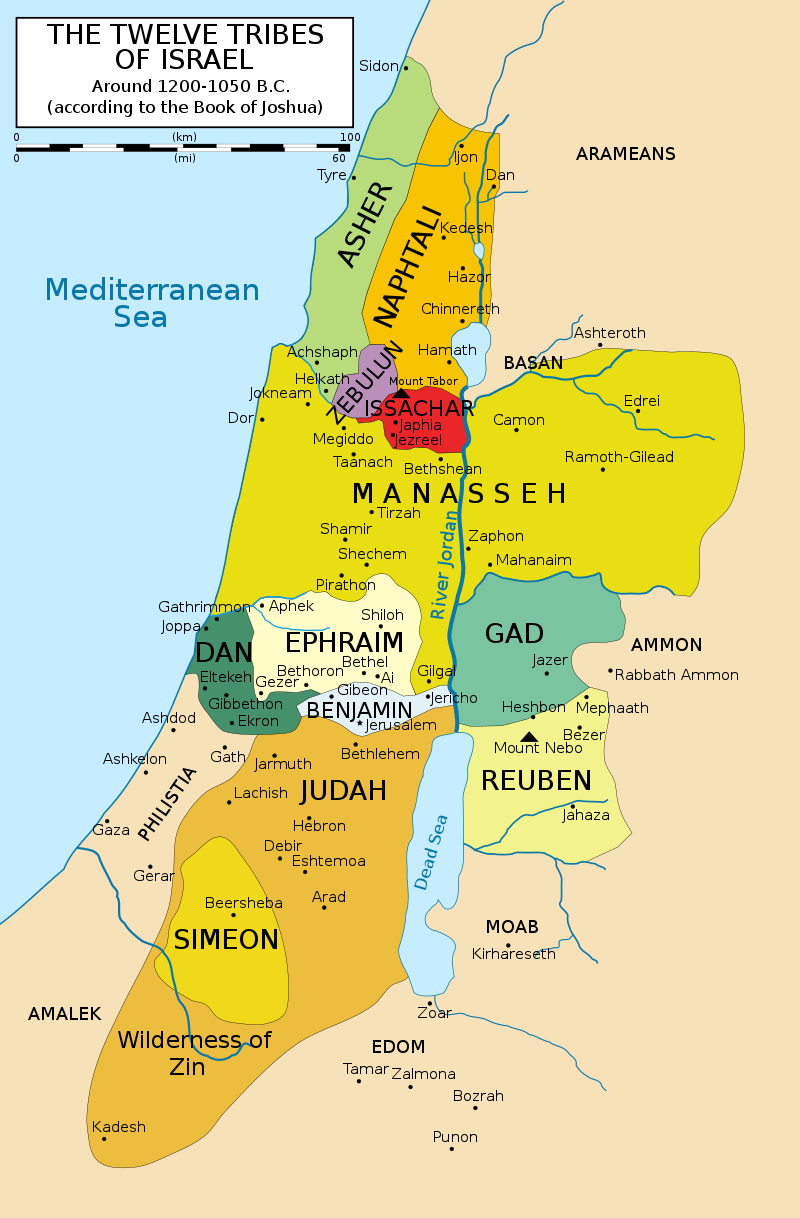
28 So Moses gave command concerning them to Eleazar the priest and to Joshua the son of Nun and to the heads of the fathers’ houses of the tribes of the people of Israel. 29 And Moses said to them, “If the people of Gad and the people of Reuben, every man who is armed to battle before the Lord, will pass with you over the Jordan and the land shall be subdued before you, then you shall give them the land of Gilead for a possession. 30 However, if they will not pass over with you armed, they shall have possessions among you in the land of Canaan.” 31 And the people of Gad and the people of Reuben answered, “What the Lord has said to your servants, we will do. 32 We will pass over armed before the Lord into the land of Canaan, and the possession of our inheritance shall remain with us beyond the Jordan.”

33 And Moses gave to them, to the people of Gad and to the people of Reuben and to the half-tribe of Manasseh the son of Joseph, the kingdom of Sihon king of the Amorites and the kingdom of Og king of Bashan, the land and its cities with their territories, the cities of the land throughout the country. 34 And the people of Gad built Dibon, Ataroth, Aroer, 35 Atroth-shophan, Jazer, Jogbehah, 36 Beth-nimrah and Beth-haran, fortified cities, and folds for sheep. 37 And the people of Reuben built Heshbon, Elealeh, Kiriathaim, 38 Nebo, and Baal-meon (their names were changed), and Sibmah. And they gave other names to the cities that they built. 39 And the sons of Machir the son of Manasseh went to Gilead and captured it, and dispossessed the Amorites who were in it. 40 And Moses gave Gilead to Machir the son of Manasseh, and he settled in it. 41 And Jair the son of Manasseh went and captured their villages, and called them Havvoth-jair. 42 And Nobah went and captured Kenath and its villages, and called it Nobah, after his own name.  Numbers 32:28-42 ESV

After listening to the proposal from the tribes of Gad and Reuben, Moses agreed to allow them to settle in land on the eastern side of the Jordan River, just outside the borders of Canaan. But he required them to swear an oath of fealty to the ten remaining tribes, agreeing to assist them in their conquest of the land of Canaan.

Moses then communicated the terms of the agreement to all the tribes of Israel, ensuring that everyone understood what was expected and what was to be done if those terms were not met. He wanted there to be no confusion or disagreement as to what this concession entailed for both parties.

“The men of Gad and Reuben who are armed for battle must cross the Jordan with you to fight for the Lord. If they do, give them the land of Gilead as their property when the land is conquered. But if they refuse to arm themselves and cross over with you, then they must accept land with the rest of you in the land of Canaan.” – Numbers 32:29-30 NLT

Notice that the terms of the agreement included the full participation of the Gadites and Reubenites until the land of Canaan was fully conquered. This would not be a short-term commitment that entailed a single battle or a few short weeks of military service; the two tribes were obligated to fight alongside their brothers for the foreseeable future. These two tribes were committing a sizeable number of their male population to fight for land that they would never occupy. In fact, the census Moses had taken revealed that between the tribes of Gad and Reuben, they fielded 84,230 soldiers. That comprised 14 percent of the entire Israelite force. So, their involvement in the conquest of Canaan would be vitally necessary to Israel’s success.

The two tribes committed themselves to the terms of the agreement, assuring Moses and the rest of the leaders that they would follow through on their part of the agreement.

“We are your servants, and we will do as the Lord has commanded! We will cross the Jordan into Canaan fully armed to fight for the Lord, but our property will be here on this side of the Jordan.” – Numbers 32:31-32 NLT

For however long it took, the Gadites and Reubenites would fight alongside their brothers and help ensure that every one of the ten tribes had successfully conquered and occupied their portion of the inheritance. That was a huge commitment on their part.

At this point in the narrative, it becomes clear that there was a third tribe that decided to get in on the action. This was the tribe of Manasseh, one of the two sons of Joseph.

So Moses assigned land to the tribes of Gad, Reuben, and half the tribe of Manasseh son of Joseph. He gave them the territory of King Sihon of the Amorites and the land of King Og of Bashan—the whole land with its cities and surrounding lands. – Numbers 32:33 NLT

Half of this tribe also decided to take advantage of the prime real estate on the eastern side of the Jordan River, and Moses gave them his approval.

The rest of the chapter outlines how the three tribes began their conquest of the area known as the Transjordan. Long before the Israelites crossed over the Jordan River and began to do battle with the Canaanites, the tribes of Gad, Reuben, and Manasseh were gaining invaluable fighting experience against the enemies of Israel. The battles they undertook east of the Jordan would provide them with much-needed expertise in warfare strategy. It seems likely that their fellow Israelites assisted in many of these battles, assuring that the three tribes were able to capture and occupy enough land to meet the needs of their people.

God was sovereignly preparing the entire nation to enter the land of promise and carry out His divine plan. By the time came for them to cross the Jordan and conduct their first military campaign, they would have the confidence and experience they needed to succeed.

However, it is important to note that the plan of these three tribes to occupy the Transjordan was not what God had intended. Interestingly enough, Got had promised Abraham that this very region would one day belong to his descendants.

On that day the Lord made a covenant with Abram, saying, “To your offspring I give this land, from the river of Egypt to the great river, the river Euphrates, the land of the Kenites, the Kenizzites, the Kadmonites, the Hittites, the Perizzites, the Rephaim, the Amorites, the Canaanites, the Girgashites and the Jebusites.” – Genesis 15:18-21 ESV

God had given His word that the future territory of His chosen people would be vast and encompass land all the way to the Euphrates River. But God’s instructions to Moses were to conquer the land west of the Jordan River. That was to be the initial portion of the inheritance God would give to His people. By demanding a share of the land east of the Jordan, the three tribes were demanding that God act according to their terms and timeline. While Yahweh had demanded that all 12 tribes conquer and occupy the land of the Canaanites, these three tribes decided that they knew better. It is impossible to say what would have happened had the tribes of Gad, Reuben, and Manasseh never made their request. How would the outcome have differed if they had been willing to accept God’s original terms and trusted His gracious gift of land in Canaan?

This episode in the long history of Israel’s tenure in the land of Canaan is just one more example of God’s patience with His people’s stubbornness and ongoing resistance to His will. Their decision to occupy the land east of the Jordan was not against His revealed will but it was in conflict with His timing. Had they waited and willingly obeyed God’s directive, the entire region promised to Abraham would have eventually come under the possession of Israel. But as the story continues and the roller-coaster history of the Israelites unfolds, it will become increasingly clear that disobedience and unfaithfulness will darken any hopes of God’s people enjoying all that He had planned for them. Even the battle for the land of Canaan would be hard-fought, and their attempts to expel the land’s occupants would be unsuccessful and incomplete.

The land deal east of Jordan would prove to be just one more sign of Israel’s unwillingness to trust God and walk according to His will.

English Standard Version (ESV) The Holy Bible, English Standard Version. ESV® Permanent Text Edition® (2016). Copyright © 2001

New Living Translation (NLT) Holy Bible, New Living Translation, copyright © 1996, 2004, 2015 by Tyndale House Foundation. Used by permission of Tyndale House Publishers Inc., Carol Stream, Illinois 60188. All rights reserved.

A Famine and Fruitfulness

20 So Joseph bought all the land of Egypt for Pharaoh, for all the Egyptians sold their fields, because the famine was severe on them. The land became Pharaoh’s. 21 As for the people, he made servants of them from one end of Egypt to the other. 22 Only the land of the priests he did not buy, for the priests had a fixed allowance from Pharaoh and lived on the allowance that Pharaoh gave them; therefore they did not sell their land.

23 Then Joseph said to the people, “Behold, I have this day bought you and your land for Pharaoh. Now here is seed for you, and you shall sow the land. 24 And at the harvests you shall give a fifth to Pharaoh, and four fifths shall be your own, as seed for the field and as food for yourselves and your households, and as food for your little ones.” 25 And they said, “You have saved our lives; may it please my lord, we will be servants to Pharaoh.” 26 So Joseph made it a statute concerning the land of Egypt, and it stands to this day, that Pharaoh should have the fifth; the land of the priests alone did not become Pharaoh’s.

27 Thus Israel settled in the land of Egypt, in the land of Goshen. And they gained possessions in it, and were fruitful and multiplied greatly. 28 And Jacob lived in the land of Egypt seventeen years. So the days of Jacob, the years of his life, were 147 years.

29 And when the time drew near that Israel must die, he called his son Joseph and said to him, “If now I have found favor in your sight, put your hand under my thigh and promise to deal kindly and truly with me. Do not bury me in Egypt, 30 but let me lie with my fathers. Carry me out of Egypt and bury me in their burying place.” He answered, “I will do as you have said.” 31 And he said, “Swear to me”; and he swore to him. Then Israel bowed himself upon the head of his bed. – Genesis 47:20-31 ESV

With his family comfortably settled in the land of Goshen, Joseph returned to his duties of stewarding the well-being of Pharaoh’s empire. Throughout the year seven years of famine, he used the grain he had stockpiled during the seven years of plenty to feed the starving citizens of the country. But didn’t set up a welfare state. Instead, he sold the grain to the people. And when their money ran out, he traded grain for livestock. When their supply of livestock was exhausted, the people were allowed to trade in their land holdings for grain, amassing an extensive real estate empire for the state. Then, when the people no longer had any money to spend, livestock to sell, or land to trade, they were left with only one option: To become the indentured servants of Pharaoh. And while this may appear as an egregious example of government overreach, Joseph was actually using the government’s administrative capabilities to protect and preserve the people and the nation.

Joseph allowed the people to continue living on the land, raising crops as they had done before. But he imposed a 20 percent tax on all agricultural production. This levy, while high, would allow Pharaoh’s administration to continue their food assistance program throughout the remaining years of the famine. The people were allowed to keep four-fifths of whatever they harvested, but the remaining one-fifth went into the royal granaries. And the people did not see any of this as a land grab or a form of government-led extortion. They were grateful to be alive.

“You have saved our lives; may it please my lord, we will be servants to Pharaoh.” – Genesis 47:25 ESV

Yet, it should not be overlooked that, while the people of Egypt were slowly handing over their resources, lands, and freedoms to the state, the people of Israel were enjoying the blessings of God in Goshen.

Meanwhile, the people of Israel settled in the region of Goshen in Egypt. There they acquired property, and they were fruitful, and their population grew rapidly. – Genesis 47:27 NLT

It seems that the Israelites were able to take advantage of the dire situation in Egypt by buying up land that their Egyptian neighbors were being forced to sell. All during the famine, Joseph provided Jacob and the rest of his family with food. Jacob had entered Egypt a very wealthy man, and he used his formidable resources to accumulate a growing real estate portfolio in Egypt. As his family grew, so did his land holdings. God was fulfilling the promise He had made to Jacob years earlier.

“Your name is Jacob; no longer shall your name be called Jacob, but Israel shall be your name.” So he called his name Israel. And God said to him, “I am God Almighty: be fruitful and multiply.” – Genesis 35:10-11 ESV

At that time, Jacob had no idea that the fruitfulness and multiplication of his family would take place in Egypt and not Canaan. But that had been God’s plan all along. Even Joseph understood that reality. Everything that had happened in his life had been according to the preordained, sovereign will of God Almighty. He would later emphasize that fact to his brothers.

“Do not fear, for am I in the place of God? As for you, you meant evil against me, but God meant it for good, to bring it about that many people should be kept alive, as they are today. So do not fear; I will provide for you and your little ones.” – Genesis 50:19-21 ESV

So, Jacob’s migration to Egypt had been God’s will. He had planned it, orchestrated it, and was now fulfilling it in real-time. But Jacob would not live long enough to see Canaan again. In fact, none of his sons, including Joseph would ever set foot in the promised land again. Jacob would live an additional 17 years, dying at the ripe old age of 147. But as he looked around him, he could see the signs of God’s blessings everywhere. He had lived to see his long-lost son restored to his side. He was the proud patriarch of a rapidly growing clan living in a fruitful land that God had miraculously provided. And while he had never owned an acre of land in Canaan, he had been able to take title to a large portion of the land in Egypt’s rich Nile delta.

But Jacob never saw Egypt as his home. To the end of his life, he still retained his love and longing for the land of Canaan. He had not forgotten God’s promise to provide the land of Canaan as his inheritance. And, while he knew he would never make it back there alive, he made Joseph swear that his body would be returned to Canaan for burial, in the very same plot of land that Abraham had bought to bury Sarah. Even in death, he wanted to be associated with the land of promise. And Joseph swore an oath to fulfill his father’s dying wish.

For Jacob, Egypt was simply a temporary, but necessary diversion in the journey toward God’s fulfillment of the promise. Whether or not he knew the details that God had shared with his grandfather, Abraham, is unclear. In Genesis 15:13, Moses records God’s announcement to Abraham that his descendants would spend 400 years in a foreign land. But at the end of that end lengthy period of time, they would return to the land of Canaan. And whether Jacob had a four-century delay in mind, he knew that the day would come when God returned His people to their land.

English Standard Version (ESV) The Holy Bible, English Standard Version. ESV® Permanent Text Edition® (2016). Copyright © 2001 by Crossway Bibles, a publishing ministry of Good News Publishers.

New Living Translation (NLT) Holy Bible, New Living Translation, copyright © 1996, 2004, 2015 by Tyndale House Foundation. Used by permission of Tyndale House Publishers Inc., Carol Stream, Illinois 60188. All rights reserved.

New English Translation (NET)NET Bible® copyright ©1996-2017 by Biblical Studies Press, L.L.C. http://netbible.com All rights reserved.

Little Is Much When God Is In It

1 So Israel took his journey with all that he had and came to Beersheba, and offered sacrifices to the God of his father Isaac. And God spoke to Israel in visions of the night and said, “Jacob, Jacob.” And he said, “Here I am.” Then he said, “I am God, the God of your father. Do not be afraid to go down to Egypt, for there I will make you into a great nation. I myself will go down with you to Egypt, and I will also bring you up again, and Joseph’s hand shall close your eyes.”

Then Jacob set out from Beersheba. The sons of Israel carried Jacob their father, their little ones, and their wives, in the wagons that Pharaoh had sent to carry him. They also took their livestock and their goods, which they had gained in the land of Canaan, and came into Egypt, Jacob and all his offspring with him, his sons, and his sons’ sons with him, his daughters, and his sons’ daughters. All his offspring he brought with him into Egypt.

Now these are the names of the descendants of Israel, who came into Egypt, Jacob and his sons. Reuben, Jacob’s firstborn, and the sons of Reuben: Hanoch, Pallu, Hezron, and Carmi. 10 The sons of Simeon: Jemuel, Jamin, Ohad, Jachin, Zohar, and Shaul, the son of a Canaanite woman. 11 The sons of Levi: Gershon, Kohath, and Merari. 12 The sons of Judah: Er, Onan, Shelah, Perez, and Zerah (but Er and Onan died in the land of Canaan); and the sons of Perez were Hezron and Hamul. 13 The sons of Issachar: Tola, Puvah, Yob, and Shimron. 14 The sons of Zebulun: Sered, Elon, and Jahleel. 15 These are the sons of Leah, whom she bore to Jacob in Paddan-aram, together with his daughter Dinah; altogether his sons and his daughters numbered thirty-three.

16 The sons of Gad: Ziphion, Haggi, Shuni, Ezbon, Eri, Arodi, and Areli. 17 The sons of Asher: Imnah, Ishvah, Ishvi, Beriah, with Serah their sister. And the sons of Beriah: Heber and Malchiel. 18 These are the sons of Zilpah, whom Laban gave to Leah his daughter; and these she bore to Jacob—sixteen persons.

19 The sons of Rachel, Jacob’s wife: Joseph and Benjamin. 20 And to Joseph in the land of Egypt were born Manasseh and Ephraim, whom Asenath, the daughter of Potiphera the priest of On, bore to him. 21 And the sons of Benjamin: Bela, Becher, Ashbel, Gera, Naaman, Ehi, Rosh, Muppim, Huppim, and Ard. 22 These are the sons of Rachel, who were born to Jacob—fourteen persons in all.

23 The son of Dan: Hushim. 24 The sons of Naphtali: Jahzeel, Guni, Jezer, and Shillem. 25 These are the sons of Bilhah, whom Laban gave to Rachel his daughter, and these she bore to Jacob—seven persons in all.

26 All the persons belonging to Jacob who came into Egypt, who were his own descendants, not including Jacob’s sons’ wives, were sixty-six persons in all. 27 And the sons of Joseph, who were born to him in Egypt, were two. All the persons of the house of Jacob who came into Egypt were seventy. – Genesis 46:1-27 ESV

As Jacob and his family began their journey from Canaan to Egypt, it must have been a bitter-sweet moment for this aging patriarch. While he must have been ecstatic at the thought of seeing his long-lost son, Joseph, it could not have been easy for him to leave behind the land that had been promised by God to his father and grandfather. The land of Canaan was supposed to be his inheritance and that of his children. But it had been devastated by a famine and was no longer capable of sustaining Jacob’s growing family. He really had no other choice but to leave Canaan behind and accept Pharaoh’s generous, yet unexpected, offer. So, motivated by the promise of good land and the prospect of being reunited with Joseph, Jacob and his family set out.

But Jacob made one last stop before crossing the southern border of Canaan and entering the wilderness of the Negev. He instructed his son to lead the caravan to Beersheba, a region that held special significance to Jacob and his family. It was there that Abraham, Jacob’s grandfather, had purchased a well from Abimelech, for the prices of seven yew lambs. The name Beersheba means “well of seven,” and it was there that “Abraham planted a tamarisk tree…and called there on the name of the Lord, the Everlasting God” (Genesis 21:33 ESV).

Years later, Isaac, Jacob’s father, would return to Beersheba and receive a vision from God, telling him, “I am the God of Abraham your father. Fear not, for I am with you and will bless you and multiply your offspring for my servant Abraham’s sake” (Genesis 26:24 ESV). And Isaac “built an altar there and called upon the name of the Lord” (Genesis 26:25 ESV).

Jacob returned to this familiar spot, likely in the hopes of receiving a word from God that might confirm his relocation to Egypt. Jacob was understandably reluctant to leave the land that God had promised to give him as an inheritance. What would happen in his absence? Would they ever return? Would the promise every be fulfilled? This was a watershed moment for Jacob and he sought assurances from God. And God did not disappoint.

After offering sacrifices to God on one of the altars that his grandfather or father had constructed, Jacob went to sleep. And during his sleep, God visited him in a dream and delivered a much-needed word of assurance.

“I am God, the God of your father. Do not be afraid to go down to Egypt, for there I will make you into a great nation. I myself will go down with you to Egypt, and I will also bring you up again, and Joseph’s hand shall close your eyes.” – Genesis 46:3-4 ESV

Jacob had the permission he had been seeking. God had sensed Jacob’s reticence and provided him with divine permission to relocated his family to Egypt. And not only did Jacob have permission to go, he was given the assurance of God’s presence as he did so. Then God upped the ante by reconfirming his promise to turn the clan of Jacob into a mighty nation. This was familiar refrain that had been heard for three generations but had yet to happen. God had told Abraham:

I will make of you a great nation, and I will bless you and make your name great, so that you will be a blessing.” – Genesis 12:2 ESV

And God had informed Abraham how this transformation would take place.

“Know for certain that your offspring will be sojourners in a land that is not theirs and will be servants there, and they will be afflicted for four hundred years. But I will bring judgment on the nation that they serve, and afterward they shall come out with great possessions. – Genesis 15:13-14 ESV

Even when Abraham was 99-years-old and still fatherless, God had reconfirmed his promise to make of him a great nation.

I will make you exceedingly fruitful, and I will make you into nations, and kings shall come from you.” – Genesis 17:6 ESV

And as Abraham anxiously waited for a son, God continued to reiterate His promise.

“Abraham shall surely become a great and mighty nation, and all the nations of the earth shall be blessed in him.” – Genesis 18:18 ESV

Now, years later, Jacob and his family were on their way to the very land where God had said the offspring of Abraham would “sojourn.” This trip had been God-ordained and had been part of the divine plan all along, just as Joseph’s betrayal by his brothers and the famine had been.

Having received confirmation from God, Jacob and his family continued their journey. And Moses uses verses 8-25 to give a detailed description of all the “sons” of Jacob. This list contains all the male descendants who had been born to Jacob while he lived in the land of Canaan. And while the list seems lengthy, it all adds up to a far-from-impressive number.

All the persons belonging to Jacob who came into Egypt, who were his own descendants, not including Jacob’s sons’ wives, were sixty-six persons in all. – Genesis 46:26 ESV

Riding in the wagons that Pharaoh had provided and eating the provisions he had sent, this little ragtag band of Israelites made their way to Egypt. They were small in number and facing an uncertain future in a foreign land where they would be in the minority and little more than aliens. But that had always been their lot. At no time in Canaan had Abraham, Isaac, or Jacob enjoyed the benefit of overwhelming numbers or superior strength. They had always been outsiders, living in a land that was occupied by others. They owned little land, occupied no cities, and garnered little respect. And now they were moving to a country where nothing was familiar and there hopes of inheriting the land of Canaan was a quickly fading memory.

Even if you add in Joseph, his wife, and two sons, the total number of Jacob’s family was a mere 70 individuals. But God was not phased by this seemingly insignificant and insufficient head count. As the creation account revealed, God is fully capable of creating something from nothing. And the entrance of 70 people into the land of Canaan was about to prove true the words of the old hymn, “Little Is Much When God Is In It.”

English Standard Version (ESV) The Holy Bible, English Standard Version. ESV® Permanent Text Edition® (2016). Copyright © 2001 by Crossway Bibles, a publishing ministry of Good News Publishers.

New Living Translation (NLT) Holy Bible, New Living Translation, copyright © 1996, 2004, 2015 by Tyndale House Foundation. Used by permission of Tyndale House Publishers Inc., Carol Stream, Illinois 60188. All rights reserved.
New English Translation (NET)NET Bible® copyright ©1996-2017 by Biblical Studies Press, L.L.C. http://netbible.com All rights reserved.

The Weight of Waiting

20 These are the sons of Seir the Horite, the inhabitants of the land: Lotan, Shobal, Zibeon, Anah, 21 Dishon, Ezer, and Dishan; these are the chiefs of the Horites, the sons of Seir in the land of Edom. 22 The sons of Lotan were Hori and Hemam; and Lotan’s sister was Timna. 23 These are the sons of Shobal: Alvan, Manahath, Ebal, Shepho, and Onam. 24 These are the sons of Zibeon: Aiah and Anah; he is the Anah who found the hot springs in the wilderness, as he pastured the donkeys of Zibeon his father. 25 These are the children of Anah: Dishon and Oholibamah the daughter of Anah. 26 These are the sons of Dishon: Hemdan, Eshban, Ithran, and Cheran. 27 These are the sons of Ezer: Bilhan, Zaavan, and Akan. 28 These are the sons of Dishan: Uz and Aran. 29 These are the chiefs of the Horites: the chiefs Lotan, Shobal, Zibeon, Anah, 30 Dishon, Ezer, and Dishan; these are the chiefs of the Horites, chief by chief in the land of Seir.

31 These are the kings who reigned in the land of Edom, before any king reigned over the Israelites. 32 Bela the son of Beor reigned in Edom, the name of his city being Dinhabah. 33 Bela died, and Jobab the son of Zerah of Bozrah reigned in his place. 34 Jobab died, and Husham of the land of the Temanites reigned in his place. 35 Husham died, and Hadad the son of Bedad, who defeated Midian in the country of Moab, reigned in his place, the name of his city being Avith. 36 Hadad died, and Samlah of Masrekah reigned in his place. 37 Samlah died, and Shaul of Rehoboth on the Euphrates reigned in his place. 38 Shaul died, and Baal-hanan the son of Achbor reigned in his place. 39 Baal-hanan the son of Achbor died, and Hadar reigned in his place, the name of his city being Pau; his wife’s name was Mehetabel, the daughter of Matred, daughter of Mezahab.

40 These are the names of the chiefs of Esau, according to their clans and their dwelling places, by their names: the chiefs Timna, Alvah, Jetheth, 41 Oholibamah, Elah, Pinon, 42 Kenaz, Teman, Mibzar, 43 Magdiel, and Iram; these are the chiefs of Edom (that is, Esau, the father of Edom), according to their dwelling places in the land of their possession. Genesis 36:20-43 ESV

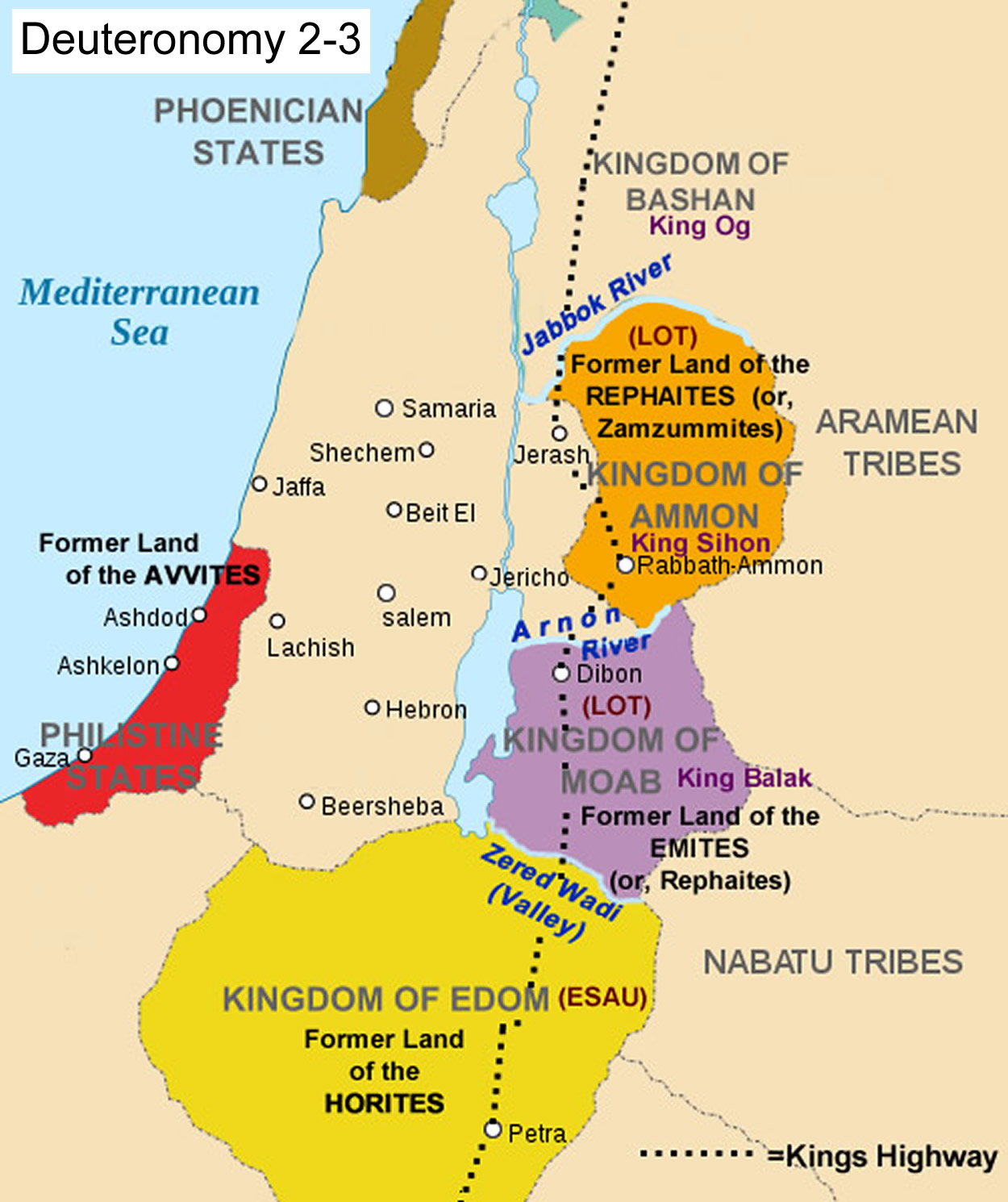
Moses makes it clear that the land in which Esau and his descendants eventually settled was far from empty. It had been occupied by another group of people known as the Horites. The first mention we have of them is found in Genesis 14, where they are listed among a group of nations that were defeated by an alliance of four kings. This confederation of kings attacked and defeated the people living in the area around Mount Seir,  in the far south of Canaan. They ended up conquering the cities of Sodom and Gomorrah, taking captive all the citizens, including the nephew of Abraham.

When Esau separated from his brother, Jacob, he ended up settling in the very same region as the Horites and, eventually, his sons and their children would supplant the Horites as the official inhabitants of the land. Hundreds of years later, when Moses prepared to lead the people of Israel into the promised land, he would receive instruction from God regarding this southern region and its inhabitants.

“You are about to pass through the territory of your brothers, the people of Esau, who live in Seir; and they will be afraid of you. So be very careful. Do not contend with them, for I will not give you any of their land, no, not so much as for the sole of the foot to tread on, because I have given Mount Seir to Esau as a possession.” – Deuteronomy 2:4-5 ESV

Moses records that Esau and his clan didn’t simply overwhelm the Horites with their superior numbers and strength, but that God orchestrated the transference of the land from one group to the other.

“…he [God] destroyed the Horites before them and they dispossessed them and settled in their place even to this day.” – Deuteronomy 2:22 ESV

The leader of the Horites was a man named Seir, and a large mountain in the region aptly bore his name. The Horites proved to be quite prolific, as the genealogy found in verses 20-43 reflects. But the chiefs of Seir and the chiefs of Esau would end up engaged in an ongoing conflict over control of the land around Mount Seir.

These are the sons of Dishan: Uz and Aran. These are the chiefs of the Horites: the chiefs Lotan, Shobal, Zibeon, Anah, Dishon, Ezer, and Dishan; these are the chiefs of the Horites, chief by chief in the land of Seir. – Genesis 36:28-30 ESV

These are the names of the chiefs of Esau, according to their clans and their dwelling places, by their names: the chiefs Timna, Alvah, Jetheth, Oholibamah, Elah, Pinon, Kenaz, Teman, Mibzar, Magdiel, and Iram; these are the chiefs of Edom (that is, Esau, the father of Edom), according to their dwelling places in the land of their possession. – Genesis 436:40-43 ESV

These two groups of “chiefs” or leaders of their clans would have gone head-to-head in battle with one another over control of the land. But what is interesting is that Moses provides a list of the kings who ruled over the land of Edom, and not one chief among the Horites or Edomites can be found on that list. It contains the name of eight Edomite kings, but none appear to be sons of Esau or Seir. In fact, one is referred to as a Temanite, another hales from Rehoboth, and still another comes from a place called Masrekah.  This sequential order of kings seems to reveal that there was a constant shift of power among the people groups that occupied this region. And Moses points out that the land of Edom had many kings long before the nation of Israel had their first monarch. Part of the reason for this disparity is that the people of Israel would eventually make their way to Egypt where they would remain for 400 years. During that time, the land of Edom would go through a long list of kings, chiefs, and leaders, while the Israelites were biding their time in Egypt. But the land of promise, like Edom, would not go unoccupied during the Israelites’ long absence. Canaan would be filled with nations, and overrun by the sins of idolatry and immorality.

And by the time Moses led the people of Israel back into the land, the  descendants of Esau (the Edomites) would be well established around Mount Seir. In keeping with God’s directive, the Israelites would view Edom as off-limits, restricting themselves to the purchase of food and supplies, but avoiding the confiscation of any Edomite territory because it had been given to them by God. And Moses states, “So we went on, away from our brothers, the people of Esau, who live in Seir, away from the Arabah road from Elath and Ezion-geber (Deuteronomy 2:8 ESV).

All of this sets up the next section of Moses’ historical record of the people of Israel. While Esau and his descendants were busy making themselves at home in Edom, Israel and his descendants would be continuing the nomadic lifestyle established by Abraham and Isaac. Moses opens up chapter seven with the statement: “Jacob lived in the land of his father’s sojournings, in the land of Canaan” (Genesis 37:1 ESV).

The Hebrew word that Moses used is מָגוּר (māḡûr), which can also be translated “to be a stranger.” That is why the New Living Translation translates verse 1 this way: “So Jacob settled again in the land of Canaan, where his father had lived as a foreigner.

Isaac, like his father before him, lived in the land of Canaan, more like an alien and a stranger than as a legal citizen. Neither Abraham or Isaac lived in a city or built a permanent dwelling place. They were sojourners, moving from one place to another, and never staying long enough to consider anywhere in the land of Canaan as their true home. And it is the author of the book of Hebrews who explains the reason behind this vagabond existence that was passed down from father to sin to grandson.

It was by faith that Abraham obeyed when God called him to leave home and go to another land that God would give him as his inheritance. He went without knowing where he was going. And even when he reached the land God promised him, he lived there by faith—for he was like a foreigner, living in tents. And so did Isaac and Jacob, who inherited the same promise. Abraham was confidently looking forward to a city with eternal foundations, a city designed and built by God. – Hebrews 11:8-10 NLT

And the author of Hebrews indicates that Abraham, Isaac, and Jacob never got to see that city – in their lifetimes.

All these people died still believing what God had promised them. They did not receive what was promised, but they saw it all from a distance and welcomed it. They agreed that they were foreigners and nomads here on earth. – Hebrews 11:13 NLT

The Edomites had kings and kingdoms. Even the Horites had a long list of chiefs and enjoyed that benefit of living in cities built by human hands. But the people of God would have to wait a long time before they experienced the fulfillment of God’s promise. God had promised to give them the land of Canaan as their inheritance, but neither Abraham, Isaac, or Jacob would make ever find their permanent home in the land of promise because God had something better in store.

Obviously people who say such things are looking forward to a country they can call their own. If they had longed for the country they came from, they could have gone back. But they were looking for a better place, a heavenly homeland. That is why God is not ashamed to be called their God, for he has prepared a city for them. – Hebrews 11:14-15 NLT

The wait would be difficult but well worth it.

English Standard Version (ESV) The Holy Bible, English Standard Version. ESV® Permanent Text Edition® (2016). Copyright © 2001 by Crossway Bibles, a publishing ministry of Good News Publishers.

New Living Translation (NLT) Holy Bible, New Living Translation, copyright © 1996, 2004, 2015 by Tyndale House Foundation. Used by permission of Tyndale House Publishers Inc., Carol Stream, Illinois 60188. All rights reserved.

New English Translation (NET)NET Bible® copyright ©1996-2017 by Biblical Studies Press, L.L.C. http://netbible.com All rights reserved.

What’s In A Name?

1 God said to Jacob, “Arise, go up to Bethel and dwell there. Make an altar there to the God who appeared to you when you fled from your brother Esau.” So Jacob said to his household and to all who were with him, “Put away the foreign gods that are among you and purify yourselves and change your garments. Then let us arise and go up to Bethel, so that I may make there an altar to the God who answers me in the day of my distress and has been with me wherever I have gone.” So they gave to Jacob all the foreign gods that they had, and the rings that were in their ears. Jacob hid them under the terebinth tree that was near Shechem.

And as they journeyed, a terror from God fell upon the cities that were around them, so that they did not pursue the sons of Jacob. And Jacob came to Luz (that is, Bethel), which is in the land of Canaan, he and all the people who were with him, and there he built an altar and called the place El-bethel, because there God had revealed himself to him when he fled from his brother. And Deborah, Rebekah’s nurse, died, and she was buried under an oak below Bethel. So he called its name Allon-bacuth.

God appeared to Jacob again, when he came from Paddan-aram, and blessed him. 10 And God said to him, “Your name is Jacob; no longer shall your name be called Jacob, but Israel shall be your name.” So he called his name Israel. 11 And God said to him, “I am God Almighty: be fruitful and multiply. A nation and a company of nations shall come from you, and kings shall come from your own body. 12 The land that I gave to Abraham and Isaac I will give to you, and I will give the land to your offspring after you.” 13 Then God went up from him in the place where he had spoken with him. 14 And Jacob set up a pillar in the place where he had spoken with him, a pillar of stone. He poured out a drink offering on it and poured oil on it. 15 So Jacob called the name of the place where God had spoken with him Bethel. Genesis 35:1-15 ESV

Ten years earlier, when Jacob had been fleeing from Canaan to escape the anger of his older brother, he had stopped at Bethel. While there, he had been received a vision from God in which he was given a divine promise that he would be the inheritor of the Abrahamic Covenant. The promise given to his grandfather of land, a seed, and a blessing would be his.

“I am the Lord, the God of Abraham your father and the God of Isaac. The land on which you lie I will give to you and to your offspring. Your offspring shall be like the dust of the earth, and you shall spread abroad to the west and to the east and to the north and to the south, and in you and your offspring shall all the families of the earth be blessed. Behold, I am with you and will keep you wherever you go, and will bring you back to this land. For I will not leave you until I have done what I have promised you.” – Genesis 28:13-15 NLT

Despite all that Jacob had done to deceive his brother, God had assured Jacob of His continued provision and protection. And on that occasion, Jacob had made a vow, stating that, if God kept His end of the bargain and returned him safely to Canaan, he would make his way back to Bethel and worship the one true God.

“If God will be with me and will keep me in this way that I go, and will give me bread to eat and clothing to wear, so that I come again to my father’s house in peace, then the Lord shall be my God, and this stone, which I have set up for a pillar, shall be God’s house. And of all that you give me I will give a full tenth to you.”– Genesis 28:20-22 ESV

But ten years had passed since Jacob had left Paddan-aram. For an entire decade, he had failed to return to Bethel (the house of God) and worship. Instead, he had chosen to settle outside the city of Shechem, and that decision had resulted in the rape of his daughter, Dinah, by the son of the king of Shechem. And while Jacob had been prepared to make a peace alliance with Hamor and his clan, permitting the intermarriage of their people, his sons had chosen a different path. To avenge the dishonoring of their sister, they slaughtered all the men of Shechem and enslaved all the women and children of the city. And just as Jacob had feared, the rumors of this gruesome act spread to the surrounding nations, creating a permanent stain on Jacob’s reputation.

“You have ruined me! You’ve made me stink among all the people of this land—among all the Canaanites and Perizzites. We are so few that they will join forces and crush us. I will be ruined, and my entire household will be wiped out!” – Genesis 34:30 ESV

But Jacob’s assessment of the situation was not quite right. Rather than painting a target on their backs, the actions of his sons had struck fear into the Canaanites.

a terror from God fell upon the cities that were around them, so that they did not pursue the sons of Jacob. – Genesis 35:5 ESV

God used the slaughter of the Shechemites to instill a fear of Jacob and his people. The surrounding nations refused to take up arms against the much small and relatively defenseless Israelites, leaving Jacob free to travel from Shechem to Bethel unmolested.

But sadly, Jacob’s return to Bethel had not been his idea. His first response after the debacle at Shechem had not been to seek God but to escape the scene of the crime. But Moses indicates that received divine directions, ordering him to “Get ready and move to Bethel and settle there. Build an altar there to the God who appeared to you when you fled from your brother, Esau” (Genesis 35:1 NLT).

What Jacob did next is quite revealing. In preparation for their return to Bethel, he commanded his people to purify themselves, and this was to include the removal of all their pagan idols. Evidently, the household idols that Rachel had stolen from her father were not the only ones in the possession of Jacob’s people. And it appears that Jacob had tolerated their presence for ten years. Perhaps he had turned a blind eye to these pagan gods in the hopes that they might provide an additional source of security and blessing. But now that he was returning to Bethel, he knew it was time to clean house.

“We are now going to Bethel, where I will build an altar to the God who answered my prayers when I was in distress. He has been with me wherever I have gone.” – Genesis 35:3 NLT

God had been faithful. Now, it was Jacob’s turn. So, with all his family and possessions in tow, Jacob slowly made his way from Shechem to Bethel, a distance of about 30 miles. Upon his arrival, Jacob obeyed God’s command and constructed an altar. Then he “named the place El-bethel (which means ‘God of Bethel’), because God had appeared to him there when he was fleeing from his brother, Esau” (Genesis 35:7 NLT).

It is important to note that, prior to building the altar and worshiping Yahweh, Jacob had taken the effort to purge his household of false gods and to purify themselves from the bloodguilt incurred by the slaughter of the Shechemites. It could be that God provided these instructions to Jacob so that the Israelites would not enter into His presence defiled and guilty of idolatry. There was a cleansing and a purging necessary before they could expect to enter into the presence of God Almighty.

On an interesting side note, Moses relates the death of Deborah, the handmaid of Jacob’s mother, Rebekah. She had accompanied Rebekah from Haran in Mesopotamia when Abraham’s servant had come seeking a wife for Isaac. Moses doesn’t reveal how she came to live with Jacob, but it could be that she joined him upon his return to Canaan and after the death of Rebekah. But this faithful servant of Jacob’s family died and Jacob honored her by burying her beneath an oak tree in a valley near Bethel.

For the second time since returning to the land of Canaan, Jacob received a divine message regarding his new identity. Upon his arrival back in the land, Jacob had camped beside the Jabbok River, where he had a physical and life-changing encounter with God. He literally wrestled with the Almighty, eventually receiving a debilitating injury and a blessing for his efforts. And God changed Jacob’s name in the process.

“Your name shall no longer be called Jacob, but Israel, for you have striven with God and with men, and have prevailed.” – Genesis 32:28 ESV

Now, as he stood before the altar in Bethel, Jacob received a second reminder that his name had been irreversibly changed by God.

God blessed him, saying, “Your name is Jacob, but you will not be called Jacob any longer. From now on your name will be Israel.” So God renamed him Israel. – Genesis 35:9-10 NLT

It would appear that Jacob had failed to use his new God-given name, choosing instead to retain his old one. And, in a sense, Jacob had retained many of the habits associated with his old name. To a great extent, he remained a trickster and a deceiver. But by reminding Jacob of his new name, God was reinforcing His intention to not only rename His servant but to renew and remake him. God had great things in store for Israel.

Then God said, “I am El-Shaddai—‘God Almighty.’ Be fruitful and multiply. You will become a great nation, even many nations. Kings will be among your descendants! And I will give you the land I once gave to Abraham and Isaac. Yes, I will give it to you and your descendants after you.” – Genesis 35:11-12 NLT

The Abrahamic Covenant was officially passed down to the newly named Israel. As the grandson of Abraham, Israel was the rightful heir to the promise of a land, a seed, and a blessing. God was going to fulfill His covenant promise through Israel and his descendants. And it is essential to remember that one of those descendants would be Joseph, the only son born to Israel through Rachel. He will come to play a major role in the future of God’s chosen people. The other descendant of Israel who will factor into the fate of God’s people will be Judah, from whom the Messiah will come.

The stage is set and the future of Israel is secure. God has been working behind the scenes to prepare the way for the unfolding of His divine redemptive plan for mankind. And while the newly named Israel remains oblivious to God’s plans, he and his family will play a vital role in its fulfillment.

English Standard Version (ESV) The Holy Bible, English Standard Version. ESV® Permanent Text Edition® (2016). Copyright © 2001 by Crossway Bibles, a publishing ministry of Good News Publishers.

New Living Translation (NLT) Holy Bible, New Living Translation, copyright © 1996, 2004, 2015 by Tyndale House Foundation. Used by permission of Tyndale House Publishers Inc., Carol Stream, Illinois 60188. All rights reserved.

New English Translation (NET)NET Bible® copyright ©1996-2017 by Biblical Studies Press, L.L.C. http://netbible.com All rights reserved.

It Never Pays to Bargain With God

Now Esau saw that Isaac had blessed Jacob and sent him away to Paddan-aram to take a wife from there, and that as he blessed him he directed him, “You must not take a wife from the Canaanite women,” and that Jacob had obeyed his father and his mother and gone to Paddan-aram. So when Esau saw that the Canaanite women did not please Isaac his father, Esau went to Ishmael and took as his wife, besides the wives he had, Mahalath the daughter of Ishmael, Abraham’s son, the sister of Nebaioth.

10 Jacob left Beersheba and went toward Haran. 11 And he came to a certain place and stayed there that night, because the sun had set. Taking one of the stones of the place, he put it under his head and lay down in that place to sleep. 12 And he dreamed, and behold, there was a ladder set up on the earth, and the top of it reached to heaven. And behold, the angels of God were ascending and descending on it! 13 And behold, the Lord stood above it and said, “I am the Lord, the God of Abraham your father and the God of Isaac. The land on which you lie I will give to you and to your offspring. 14 Your offspring shall be like the dust of the earth, and you shall spread abroad to the west and to the east and to the north and to the south, and in you and your offspring shall all the families of the earth be blessed. 15 Behold, I am with you and will keep you wherever you go, and will bring you back to this land. For I will not leave you until I have done what I have promised you.” 16 Then Jacob awoke from his sleep and said, “Surely the Lord is in this place, and I did not know it.” 17 And he was afraid and said, “How awesome is this place! This is none other than the house of God, and this is the gate of heaven.”

18 So early in the morning Jacob took the stone that he had put under his head and set it up for a pillar and poured oil on the top of it. 19 He called the name of that place Bethel, but the name of the city was Luz at the first. 20 Then Jacob made a vow, saying, “If God will be with me and will keep me in this way that I go, and will give me bread to eat and clothing to wear, 21 so that I come again to my father’s house in peace, then the Lord shall be my God, 22 and this stone, which I have set up for a pillar, shall be God’s house. And of all that you give me I will give a full tenth to you.” Genesis 28:6-22 ESV

After Jacob had left to seek a wife from among his mother’s family in Mesopotamia, his brother Esau decided to try and win back his parent’s favor by marrying a woman from among his own clan. Esau already had two Hittite wives, but he knew that these marriages had been a huge disappointment to his mother and father. So, when he had heard Isaac warn Jacob not to take a wife from among the Canaanites, Esau determined to make amends with his parents by marrying one of his cousins. Her name was Mahalath and she was the daughter of Ishmael, the elder son of Abraham. While Esau had been angered by his parent’s complicity in Jacob’s stealing of his blessing, he also desired their favor. Having lost his birthright and his blessing, he was desperate to win them over. But he failed to consider the fact that God had divinely ordained the separation of Ishmael’s clan from that of Isaac’s. The Ishmaelites were not destined to share in the covenant promise made to Abraham. So, Esau’s marriage to Mahalath would do little to improve his relationship with his parents or to enhance his future prospects. Yet, during his brother’s 20-year absence, Esau would build a life for himself in Canaan, raising a family and attempting to maintain a civil relationship with his mother and father.

Meanwhile, Jacob continued his long and arduous journey to Haran. But some 58 miles into his trip, he was forced to stop for the night, and it would prove to be anything but a restful evening. As he drifted off to sleep, he had a vivid and somewhat disturbing dream. He envisioned a giant flight of steps reaching from heaven to earth, and on that massive stairway, there was a host of angels ascending and descending. But Jacob’s eye was drawn to the top of the stairway, where he caught a glimpse of Yahweh, the Lord. And, considering all that Jacob had just done to deceive his father and defraud his brother, this vision of the Almighty must have struck fear into his heart. Was God going to repay him for having stolen his brother’s blessing? Was this going to be some kind of well-deserved payback for his treachery and deceit? But before Jacob could formulate any words to speak to God, he was presented with an unexpected announcement.

“I am the Lord, the God of your grandfather Abraham, and the God of your father, Isaac. The ground you are lying on belongs to you. I am giving it to you and your descendants. Your descendants will be as numerous as the dust of the earth! They will spread out in all directions—to the west and the east, to the north and the south. And all the families of the earth will be blessed through you and your descendants. – Genesis 28:13-14 NLT

The symbolism contained in this dream is powerful and significant. As Jacob lay in the darkness, separated from his family and facing an uncertain future, a host of angelic beings were moving back and forth between heaven and earth. These messengers of God represent His divine oversight and influence over all that happens on earth. Their movement between the two realms was meant to symbolize His sovereign control over the affairs of this world. They were His celestial agents, carrying out His wishes and accomplishing His divine will among men.

While Jacob and his mother had been busily conspiring to deceive Isaac and defraud Esau, God’s will had been carried out. There was a constant movement taking place between heaven and earth, as God’s messengers carried out His orders and implemented His sovereign plans among men. But Jacob and Rebekah had been oblivious to this invisible activity taking place in the unseen realms. They had mistakenly thought that they were in control of their futures and fate. But now, Jacob was receiving a divine wake-up call, informing him that all his trickery and deceit had been unnecessary. There had been no need for Jacob to barter for the birthright or to steal the blessing of the firstborn. God had always intended for the covenant promise to be his. It had not been his cleverly conceived plan to fool Isaac that had earned him the right to his father’s inheritance. It had been the sovereign will of God.

From among all the men who lived on the earth, God had chosen Abraham. And He had given this undeserving Chaldean a promise to bless him beyond his wildest dream.

“I will make you into a great nation, and I will bless you,
and I will make your name great,
so that you will exemplify divine blessing.
I will bless those who bless you,
but the one who treats you lightly I must curse,
so that all the families of the earth may receive blessing through you.” – Genesis 12:2-3 NLT

And then, God had chosen Abraham’s son, Isaac, to be the conduit through whom this blessing would flow. God had sovereignly passed by Ishmael, the firstborn. And now, God was announcing that it had always been His plan to choose Jacob over Esau. The covenant promise would flow to him and through him. God was going to use this flawed vessel as the conduit through which He would accomplish His redemptive plan for mankind. And, not only that, God informed Jacob that he would enjoy divine protection all during his extended journey.

“What’s more, I am with you, and I will protect you wherever you go. One day I will bring you back to this land. I will not leave you until I have finished giving you everything I have promised you.” – Genesis 28:15 NLT

What Jacob didn’t know was that his trip was going to take much longer than he anticipated. Two decades would pass before he was able to return to Beersheba and, during that time, Jacob would experience both the blessings and the discipline of God. He would eventually find the wife for which he was searching. But, more importantly, he would discover the power and sovereignty of God. The next 20 years of his life would be filled with joy and sorrow, success and failure, hope and heartache. But his roller-coaster existence would also be marked by the constant assurance that God was with him, operating behind the scenes and orchestrating every aspect of his life. God had promised Jacob that he would remain with him to the end.

The impact this dream had on Jacob can be seen in his response when he awoke.

“Surely the Lord is in this place, and I wasn’t even aware of it!” – Genesis 28:16 NLT

Jacob could have spoken those words back in Beersheba as well because God had always been with him. He just hadn’t realized it. This divine encounter left Jacob shaken and sobered.

“What an awesome place this is! It is none other than the house of God, the very gateway to heaven!” – Genesis 28:17 NLT

Out of reverence for God, Jacob took the stone upon which his head had rested while he dreamed and he turned it into a sacred pillar. He named the place Bethel which means “house of God.” What’s fascinating is that this is the very same spot where, years earlier, Jacob’s grandfather Abraham had erected an altar to God.

Then he moved from there to the hill country east of Bethel and pitched his tent, with Bethel on the west and Ai on the east. There he built an altar to the Lord and worshiped the Lord. – Genesis 12:8 NLT

Like his grandfather before him, Jacob worshiped Yahweh. But, in keeping with his bargaining nature, Jacob attempted to strike a deal with God.

“If God will indeed be with me and protect me on this journey, and if he will provide me with food and clothing, and if I return safely to my father’s home, then the Lord will certainly be my God. And this memorial pillar I have set up will become a place for worshiping God, and I will present to God a tenth of everything he gives me.” – Genesis 28:20-22 NLT

Rather than rejoice in the fact that God had just promised to bless and not punish him, Jacob arrogantly attempted to bargain with the Almighty. He placed conditions on his continued worship of God. Despite the fact that God had promised to fulfill every aspect of the promise He had made, Jacob wanted guarantees. This undeserving grandson of Abraham tried to arm wrestle Yahweh by threatening to hold his worship if his conditions were not met. Suffice it to say, Jacob had a lot to learn about God.

English Standard Version (ESV) The Holy Bible, English Standard Version. ESV® Permanent Text Edition® (2016). Copyright © 2001 by Crossway Bibles, a publishing ministry of Good News Publishers.

New Living Translation (NLT) Holy Bible, New Living Translation, copyright © 1996, 2004, 2015 by Tyndale House Foundation. Used by permission of Tyndale House Publishers Inc., Carol Stream, Illinois 60188. All rights reserved.

New English Translation (NET)NET Bible® copyright ©1996-2017 by Biblical Studies Press, L.L.C. http://netbible.com All rights reserved.

Like Father, Like Son

So Isaac settled in Gerar. When the men of the place asked him about his wife, he said, “She is my sister,” for he feared to say, “My wife,” thinking, “lest the men of the place should kill me because of Rebekah,” because she was attractive in appearance. When he had been there a long time, Abimelech king of the Philistines looked out of a window and saw Isaac laughing with Rebekah his wife. So Abimelech called Isaac and said, “Behold, she is your wife. How then could you say, ‘She is my sister’?” Isaac said to him, “Because I thought, ‘Lest I die because of her.’” 10 Abimelech said, “What is this you have done to us? One of the people might easily have lain with your wife, and you would have brought guilt upon us.” 11 So Abimelech warned all the people, saying, “Whoever touches this man or his wife shall surely be put to death.”

12 And Isaac sowed in that land and reaped in the same year a hundredfold. The Lord blessed him, 13 and the man became rich, and gained more and more until he became very wealthy. 14 He had possessions of flocks and herds and many servants, so that the Philistines envied him. 15 (Now the Philistines had stopped and filled with earth all the wells that his father’s servants had dug in the days of Abraham his father.) 16 And Abimelech said to Isaac, “Go away from us, for you are much mightier than we.” Genesis 26:6-16 ESV

Isaac and his family are facing a severe famine in the land of Canaan. And this is not the first time that God has allowed the land of promise to withhold its bounty. Nearly two centuries earlier, another famine had come upon the land of Canaan. Isaac’s father, Abraham, had been only 75-years-old at the time and was a new arrival to the land, having been called by God out of Haran in Mesopotamia. Yet, while God had promised to give Abraham the land of Canaan as his inheritance, a severe famine forced Abraham to seek refuge in Egypt.

Now there was a famine in the land. So Abram went down to Egypt to sojourn there, for the famine was severe in the land. – Genesis 12:10 ESV

Hundreds of years later, when Isaac found himself facing similar circumstances, God warned him to avoid Egypt like the plague.

“Do not go down to Egypt; dwell in the land of which I shall tell you. Sojourn in this land, and I will be with you and will bless you, for to you and to your offspring I will give all these lands, and I will establish the oath that I swore to Abraham your father. – Genesis 26:2-3 ESV

Abraham was dead and gone, but as this passage will reveal, his influence still lingered over his family. And God knew that Isaac would be prone to follow in the footsteps of his father. There is little doubt that Abraham had told his son about his fateful trip to Egypt and all that occurred there. His decision to seek food and shelter in Egypt had not been his primary mistake. It was the unwise decision he made once he had crossed the border.

When he was about to enter Egypt, he said to Sarai his wife, “I know that you are a woman beautiful in appearance, and when the Egyptians see you, they will say, ‘This is his wife.’ Then they will kill me, but they will let you live. Say you are my sister, that it may go well with me because of you, and that my life may be spared for your sake.” – Genesis 12:11-13 ESV

Finding himself a stranger in Egypt, Abraham had feared for his own life, and so he convinced his wife to hide their marital status. He hoped that by having Sarah claim to be his sister, which technically she was, the Egyptians would not kill him so they could have his beautiful wife. But his plan had backfired. The Pharaoh himself had decided to add Sarah as a concubine in his harem, leaving Abraham very much alive, but also very much alone. But God had intervened, sparing Sarah from humiliation at the hands of Pharaoh, and returning her to Abraham’s side.

So, Isaac’s warning from God that he avoid Egypt at all costs makes more sense with that story in mind. But there is another story from Abraham’s past that factors into this account. While Isaac had been forbidden by God to seek shelter in Egypt, Moses makes it clear that “Isaac went to Gerar to Abimelech king of the Philistines” (Genesis 26:1 ESV). This should sound eerily familiar.

Years earlier, Abraham had also journeyed to the land of Gerar. And, as he had done in Egypt, he begged Sarah to introduce herself as his sister. He had learned little from his close call with Pharaoh and was still having a difficult time believing that God could protect him from his enemies. So, upon their arrival in Gerar, Sarah had once again faithfully followed her husband’s counsel, and the next thing she knew, she was in the harem of King Abimelech. And as before, God intervened and protected Sarah.

God came to Abimelech in a dream by night and said to him, “Behold, you are a dead man because of the woman whom you have taken, for she is a man’s wife.” – Genesis 20:3 ESV

Sarah was returned to Abraham, along with many sheep, oxen, and male and female servants. The relieved Abimelech showered Abraham with gifts, including 1,000 pieces of silver. The unbelieving and distrustful Abraham had walked away a wealthy man, just as he had done in Egypt. And perhaps it was this silver lining on the dark cloud of Abraham’s behavior that attracted Isaac and prompted him to mirror his father’s behavior. Because that is exactly what he did.

So Isaac settled in Gerar. When the men of the place asked him about his wife, he said, “She is my sister,” for he feared to say, “My wife,” thinking, “lest the men of the place should kill me because of Rebekah,” because she was attractive in appearance. – Genesis 26:6-7 ESV

His little ploy seems to have worked because a great deal of time passed and no one attempted to add Rebekah to their harem. And because no one suspected them to be husband and wife, there had been no threats on Isaac’s life. But in time, their little charade was exposed.

When he had been there a long time, Abimelech king of the Philistines looked out of a window and saw Isaac laughing with Rebekah his wife. – Genesis 26:8 ESV

There is far more here than meets the eye. Isaac and Rebekah were doing far more than sharing an innocent laugh together. The NET Bible Study Notes explains:

The Hebrew word מְצַחֵק (mtsakheq), from the root צָחַק (tsakhaq, “laugh”), forms a sound play with the name “Isaac” right before it. Here it depicts an action, probably caressing or fondling, that indicated immediately that Rebekah was Isaac’s wife, not his sister. Isaac’s deception made a mockery of God’s covenantal promise. Ignoring God’s promise to protect and bless him, Isaac lied to protect himself and acted in bad faith to the men of Gerar.

As he had done some 70-90 years earlier, Abimelech proved to be more righteous than Abraham or Isaac. He had done more to protect the wives of these two men than they had. And when he discovered the lie that Isaac and Rebekah had been living and considered the consequences it could have brought upon his people, Abimelech confronted Isaac and warned his people to avoid Rebekah or face death.

“What is this you have done to us? One of the people might easily have lain with your wife, and you would have brought guilt upon us.” So Abimelech warned all the people, saying, “Whoever touches this man or his wife shall surely be put to death.” – Genesis 26:10-11 ESV

One of the difficult things to understand about these stories is how God repeatedly blessed Abraham and Isaac even in the midst of their unfaithful actions. Moses reveals that Isaac’s lies and deception were seemingly rewarded by God.

And Isaac sowed in that land and reaped in the same year a hundredfold. The Lord blessed him, and the man became rich, and gained more and more until he became very wealthy. He had possessions of flocks and herds and many servants, so that the Philistines envied him. – Genesis 26:12-14 ESV

But these blessings were not a result of Isaac’s actions. They were the fulfillment of God’s covenant promise to Abraham. God was blessing Isaac in spite of his behavior, not because of it. God had told Abraham, “I will bless you and make your name great, so that you will be a blessing” (Genesis 12:2 ESV). God had made a self-binding agreement with Abraham, declaring His intentions to establish an everlasting covenant between Himself and Abraham’s descendants.

“I will make you exceedingly fruitful, and I will make you into nations, and kings shall come from you. And I will establish my covenant between me and you and your offspring after you throughout their generations for an everlasting covenant, to be God to you and to your offspring after you.” – Genesis 17:6-7 ESV

And Isaac was destined to play a role in God’s fulfillment of His covenant promise. After Abraham had shown his willingness to obey God and sacrifice Isaac, his only son, God had reiterated His promise.

“…because you have done this and have not withheld your son, your only son, I will surely bless you, and I will surely multiply your offspring as the stars of heaven and as the sand that is on the seashore. And your offspring shall possess the gate of his enemies, and in your offspring shall all the nations of the earth be blessed, because you have obeyed my voice.” – Genesis 26:16-18 ESV

Now, years later, the adult Isaac stood back and watched as God poured out His covenant blessings, despite all that he had done to deserve God’s judgment and wrath. And while he was blessed by God, he also found himself despised by the occupants of the land. As they watched him prosper at their expense, they decided to treat him as persona non grata and cast him from their land. Even they could see that Isaac was under some kind of divine protection. He was living under a charm and they were jealous of his supernatural and inexplicable success.

But as God continued to bless Isaac, He was also preparing him for what was to come. There would be yet another famine in the land, and the days ahead would be full of conflict and constant relocation, as Isaac and his family continued the same nomadic lifestyle that Abraham had endured. God was blessing Isaac so that he might one day be a blessing. God was separating Isaac so that, one day, his descendants might become the set-apart people of God. And through Isaac would come another Son who would mirror the nature of His Father. He would become the offspring of Abraham who would bring the blessing of God to the nations.

English Standard Version (ESV) The Holy Bible, English Standard Version. ESV® Permanent Text Edition® (2016). Copyright © 2001 by Crossway Bibles, a publishing ministry of Good News Publishers.

New Living Translation (NLT) Holy Bible, New Living Translation, copyright © 1996, 2004, 2015 by Tyndale House Foundation. Used by permission of Tyndale House Publishers Inc., Carol Stream, Illinois 60188. All rights reserved.

New English Translation (NET)NET Bible® copyright ©1996-2017 by Biblical Studies Press, L.L.C. http://netbible.com All rights reserved.

A Divine Love Story

52 When Abraham’s servant heard their words, he bowed himself to the earth before the Lord. 53 And the servant brought out jewelry of silver and of gold, and garments, and gave them to Rebekah. He also gave to her brother and to her mother costly ornaments. 54 And he and the men who were with him ate and drank, and they spent the night there. When they arose in the morning, he said, “Send me away to my master.” 55 Her brother and her mother said, “Let the young woman remain with us a while, at least ten days; after that she may go.” 56 But he said to them, “Do not delay me, since the Lord has prospered my way. Send me away that I may go to my master.” 57 They said, “Let us call the young woman and ask her.” 58 And they called Rebekah and said to her, “Will you go with this man?” She said, “I will go.” 59 So they sent away Rebekah their sister and her nurse, and Abraham’s servant and his men. 60 And they blessed Rebekah and said to her,

“Our sister, may you become
    thousands of ten thousands,
and may your offspring possess
    the gate of those who hate him!”

61 Then Rebekah and her young women arose and rode on the camels and followed the man. Thus the servant took Rebekah and went his way.

62 Now Isaac had returned from Beer-lahai-roi and was dwelling in the Negeb. 63 And Isaac went out to meditate in the field toward evening. And he lifted up his eyes and saw, and behold, there were camels coming. 64 And Rebekah lifted up her eyes, and when she saw Isaac, she dismounted from the camel 65 and said to the servant, “Who is that man, walking in the field to meet us?” The servant said, “It is my master.” So she took her veil and covered herself. 66 And the servant told Isaac all the things that he had done. 67 Then Isaac brought her into the tent of Sarah his mother and took Rebekah, and she became his wife, and he loved her. So Isaac was comforted after his mother’s death.  Genesis 24:52-67 ESV

Having received a warm welcome from Laban and a positive response from Rebekah’s father concerning her betrothal to Isaac, Abraham’s servant worshiped Yahweh once again. He was deeply grateful for the way God had interceded on his behalf and orchestrated this picture-perfect outcome. Everything had turned out better than he could have ever imagined. And having thanked Yahweh for His divine assistance, the servant dispensed the treasures he had carried all the way from Hebron. First, he lavished the bride to be with additional gifts of jewelry and clothing. Then he handed out the gifts that Abraham had included for Rebekah’s family members.

What followed next was a celebration. With the agreement reached and sealed by the giving of gifts, the servant and his men enjoyed a feast put on by the father of the bride. But the next morning, having completed his assignment, Abraham’s servant was ready to begin the long journey home. He couldn’t wait to tell Abraham all that had happened and see the look on Isaac’s face when he saw his future wife for the very first time.

But when Bethuel and Milcah heard that the servant was making plans to leave right away, they tried to buy time, and that is understandable. Their daughter was about to walk out the door and there was a good chance they might never see her again. So, they tried to delay her departure for ten days. But the servant resisted their impassioned pleas.

“Don’t delay me. The Lord has made my mission successful; now send me back so I can return to my master.” – Genesis 24:56 NLT

One can almost sense the servant’s fear that something might go horribly wrong. He seemed bent on accelerating their departure so no one would have time for to change their mind. And Rebekah’s parents, overcome with sadness at the thought of losing their daughter, decided to leave the decision up to her.  And she simply replied, “Yes, I will go” (Genesis 24:58 NLT).

Rebekah was loaded onto one of the camels and, accompanied by her childhood nurse, she began the long journey to Canaan and to her uncertain future as the wife of a man she had never laid eyes on.  Moses does not reveal Rebekah’s age but this departure from her family and her homeland had to have been difficult. She was willingly entering into a marriage covenant with a complete stranger who lived in a foreign land. She was leaving everything she had ever known behind her and venturing into uncharted territory. And perhaps sensing her reticence and fear, her family pronounced a blessing upon her.

“Our sister, may you become
    thousands of ten thousands,
and may your offspring possess
    the gate of those who hate him!” – Genesis 24:60 ESV

Little did they know that their blessing coincided with the promise that God had expressed to Abraham more than 37 years earlier.

“As for Sarai your wife, you shall not call her name Sarai, but Sarah shall be her name. I will bless her, and moreover, I will give you a son by her. I will bless her, and she shall become nations; kings of peoples shall come from her.” – Genesis 17:15-16 ESV

“Sarah your wife shall bear you a son, and you shall call his name Isaac. I will establish my covenant with him as an everlasting covenant for his offspring after him. – Genesis 17:19 ESV

Young Rebekah was the chosen instrument through whom God would fulfill His promise. She had been preordained by God to become the wife of Isaac and the future mother of Jacob. And all the events surrounding her encounter with the servant of Abraham reveal the sovereign hand of God. This was literally a marriage made in heaven.

The caravan slowly made its way back to Canaan, and it appears that Abraham’s servant had set his final destination as the Negeb, where Isaac was living, It’s interesting to note that he didn’t make his way to his master’s home, but instead, chose to deliver Rebekah directly to Isaac. Moses indicates that Isaac looked up and saw a caravan headed his way. As he made his way to intercept the travelers, Rebekah him from a distance and inquired who this stranger might be. The servant announced, “It is my master” (Genesis 24:65 ESV). 

Rebekah, realizing that she was about to meet her future husband, took her veil and covered her face. Meanwhile, the servant eagerly informed Isaac of all that had taken place in Haran. He was beside himself with excitement as he shared the miraculous nature of the journey and how God had provided just the right woman for Isaac.

Having heard the details surrounding Rebekah’s divine selection, Isaac, “brought Rebekah into his mother Sarah’s tent, and she became his wife. He loved her deeply, and she was a special comfort to him after the death of his mother” (Genesis 24:67 NLT). Still mourning the loss of his mother, Isaac was comforted by the knowledge that God had provided him with a wife and a means for fulfilling the covenant promises made to Abraham. Rebekah would take the place of Sarah and become the mother of a great nation. Through she and Isaac the nations of the world would be blessed.

English Standard Version (ESV) The Holy Bible, English Standard Version. ESV® Permanent Text Edition® (2016). Copyright © 2001 by Crossway Bibles, a publishing ministry of Good News Publishers.

New Living Translation (NLT) Holy Bible, New Living Translation, copyright © 1996, 2004, 2015 by Tyndale House Foundation. Used by permission of Tyndale House Publishers Inc., Carol Stream, Illinois 60188. All rights reserved.

New English Translation (NET)NET Bible® copyright ©1996-2017 by Biblical Studies Press, L.L.C. http://netbible.com All rights reserved.

God of the Impossible

And he said to him, “I am the Lord who brought you out from Ur of the Chaldeans to give you this land to possess.” But he said, “O Lord God, how am I to know that I shall possess it?” He said to him, “Bring me a heifer three years old, a female goat three years old, a ram three years old, a turtledove, and a young pigeon.” 10 And he brought him all these, cut them in half, and laid each half over against the other. But he did not cut the birds in half. 11 And when birds of prey came down on the carcasses, Abram drove them away.

12 As the sun was going down, a deep sleep fell on Abram. And behold, dreadful and great darkness fell upon him. 13 Then the Lord said to Abram, “Know for certain that your offspring will be sojourners in a land that is not theirs and will be servants there, and they will be afflicted for four hundred years. 14 But I will bring judgment on the nation that they serve, and afterward they shall come out with great possessions. 15 As for you, you shall go to your fathers in peace; you shall be buried in a good old age. 16 And they shall come back here in the fourth generation, for the iniquity of the Amorites is not yet complete.”

17 When the sun had gone down and it was dark, behold, a smoking fire pot and a flaming torch passed between these pieces. 18 On that day the Lord made a covenant with Abram, saying, “To your offspring I give this land, from the river of Egypt to the great river, the river Euphrates, 19 the land of the Kenites, the Kenizzites, the Kadmonites, 20 the Hittites, the Perizzites, the Rephaim, 21 the Amorites, the Canaanites, the Girgashites and the Jebusites.”  Genesis 15:7-21 ESV

Abram “believed the Lord” (Genesis 15:6 ESV). In other words, he trusted that God would fulfill the promise He had made. Abram’s attempt to number the stars in the night sky had been quickly followed by God’s bold assertion, “So shall your offspring be” (Genesis 15:5 ESV).  And Abram had taken God at His word.

Then, after declaring His plan to give Abram innumerable descendants, God reiterated His promise to provide Canaan as their future homeland.

“I am the Lord who brought you out from Ur of the Chaldeans to give you this land to possess.” – Genesis 15:7 ESV

God was simply reminding Abram of the promise that He had earlier made.

“Look as far as you can see in every direction—north and south, east and west. I am giving all this land, as far as you can see, to you and your descendants as a permanent possession. And I will give you so many descendants that, like the dust of the earth, they cannot be counted! Go and walk through the land in every direction, for I am giving it to you.” – Genesis 13:14-17 NLT

But while Abram believed that God could and would fulfill those promises, he was still filled with apprehension and nagging doubts. As a finite human being, he couldn’t help but look at the circumstances surrounding his life and wonder how God was going to pull off what appeared to be an impossible feat. From Abram’s limited perspective, it appeared as if the odds were against him. He was old and his wife was barren. And, while he had successfully defeated the armies of the four kings of Mesopotamia, he knew the land of Canaan was occupied by more nations than he could ever hope to defeat with his small militia. In fact, God would even accentuate the impossible odds that Abram faced when He later declared, “To your offspring I will give this land…the land of the Kenites, the Kenizzites, the Kadmonites, the Hittites, the Perizzites, the Rephaim, the Amorites, the Canaanites, the Girgashites and the Jebusites” (Genesis 15:19-21 ESV). 

That’s a formidable list of potential foes that will have to be defeated before Abram can occupy the land. And, according to Genesis 14:14, Abram had only 318 trained fighters at his disposal. The deck was stacked against him. And add to that the problem of Sarai’s infertility, and it is no wonder that Abram had questions for God.

“O Sovereign Lord, how can I be sure that I will actually possess it?” – Genesis 15:8 NLT

Abram needed proof. It wasn’t that he no longer believed God, it was just that he desperately needed a tangible sign to help fortify and solidify his belief. Abram’s struggle was normal and natural, and he was not the only God-follower who needed a sign to bolster their faith. Moses, the man who was recording the life of Abram, knew what it was like to struggle with doubts. When he had received his call to deliver the people of Israel from their captivity in Egypt, Moses had declared his doubts that the people would believe he had been sent by God.

“What if they won’t believe me or listen to me? What if they say, ‘The Lord never appeared to you’?” – Exodus 4:1 NLT

In response, God told had Moses to take his shepherd’s staff and throw it on the ground. When Abram obeyed, the staff transformed into a snake. Then, God told Moses to pick the snake up by the tail. Once again, Moses did as he was told.

So Moses reached out and grabbed it, and it turned back into a shepherd’s staff in his hand.” – Exodus 4:4 NLT

This “sign” was meant to provide Moses with faith and it was to serve as proof to the people of Israel that Moses had been sent by God.

“Perform this sign,” the Lord told him. “Then they will believe that the Lord, the God of their ancestors—the God of Abraham, the God of Isaac, and the God of Jacob—really has appeared to you.” – Exodus 4:5 NLT

Belief and unbelief can actually coexist at the same time. And nowhere is this idea better illustrated than in the gospel of Mark. He records an encounter between Jesus and a man whose son was possessed by a demon. In Jesus’ absence, the disciples had attempted to cast out the demon but had failed. So, Jesus asked the father how long the boy had been possessed. To which the father replied, “From childhood…it has often cast him into fire and into water, to destroy him. But if you can do anything, have compassion on us and help us” (Mark 9:21-22 NLT). This man was desperate. He wanted to see his boy set free from this devastating and life-threatening disorder. And he hoped that Jesus might be able to do what the disciples had failed to do.

While the man had sought out the rabbi from Nazareth, believing that He had the power to heal and cast out demons, Jesus sensed the man’s lingering doubt. In earshot of the man, the disciples, and the rest of the crowd that had assembled, Jesus declared, “All things are possible for one who believes” (Mark 9:23 NLT). To which the father immediately responded, “I believe; help my unbelief! (Mark 9:24 NLT).

This honest statement from a grieving father represents the heart cry of every child of God. Saddled by a finite perspective and equipped with a faith that is burdened down by a sinful nature that is predisposed to doubt and disobey God, every believer finds himself struggling with unbelief. But God the Father, just like God the Son, is always willing to bolster unbelief. And so, rather than chastising Abram for his request for a sign, God patiently and powerfully obliged His reluctant servant.

But God didn’t simply perform a miracle like He had with Moses. Instead, He involved Abram in the process, by ordering him to gather “a three-year-old heifer, a three-year-old female goat, a three-year-old ram, a turtledove, and a young pigeon” (Genesis 15:9 NLT). After checking off all the items on his God-ordained shopping list, Abram brought the animals to God and proceeded to prepare them for sacrifice.

God was commanding Abram to prepare a covenant ceremony. This would have been a common occurrence in Abram’s day that was meant to seal a bilateral covenant between two parties. The animals were killed then split down the middle. The two halves were then separated, forming a pathway between them. To seal their agreement, the two parties would walk together between the lifeless bodies of the sacrificed animals, signifying their commitment to remain faithful to the covenant agreement or face the same fate as the animals. It was a blood covenant.

But after completing his assignment, Abram had to spend the next hours fending off the birds of prey that were attempting to consume the carcasses of the sacrificed animals. Exhausted by the effort, Abram eventually fell asleep. His attempts to drive off the “unclean” scavengers proved too much for him. And this failure to preserve the sacrifice was meant to reveal Abram’s complete dependence upon God. As Abram slept, “a terrifying darkness came down over him” (Genesis 15:12 NLT). Even in his unconscious state, Abram sensed a feeling of dread. Something terrible was about to happen. He had fallen asleep with the disturbing image of the dismembered animals being attacked by ravenous birds seared in his brain. And this seemed to conjure up a foreboding sense of dread.

“…Abram driving off the birds of prey from the dismembered pieces portrays him defending his descendants from the attacks of foreign nations. Genesis itself tells of a number of attacks by foreigners against the children of Abraham and it already looks forward to the sojourn in Egypt.” – Thomas L. Constable, Notes on Genesis

In the midst of Abram’s fitful and fearful sleep, God spoke to him, affirming that his feelings of dread were well justified. There were difficult days in store for His descendants. God’s fulfillment of the promise to give the land of Canaan to Abram’s descendants would be delayed by a seeming tragedy.

“You can be sure that your descendants will be strangers in a foreign land, where they will be oppressed as slaves for 400 years. – Genesis 15:13 NLT

This was probably not the sign Abram had been seeking. It only seemed to confirm his lingering doubts and fears about the promises of God. But God followed this dose of bad news with a confident assurance of a glorious outcome.

But I will punish the nation that enslaves them, and in the end they will come away with great wealth. (As for you, you will die in peace and be buried at a ripe old age.) After four generations your descendants will return here to this land, for the sins of the Amorites do not yet warrant their destruction.” – Genesis 15:14-16 NLT

God was letting Abram know that His plans and His promise were long-term in nature, and their fulfillment was not up to Abram. In fact, as Abram slept, God ratified the covenant between them. In a normal covenant ceremony, both parties would have walked together between the carcasses, forming a bilateral agreement. But this covenant was unilateral in nature. When the sun went down and darkness descended on the land, “a smoking fire pot and a flaming torch passed between these pieces” (Genesis 15:17 ESV). The presence of God, symbolized by smoke and fire, passed along the pathway and ratified the covenant. God was holding Himself accountable to keep the covenant He was making with Abram and his descendants. And this imagery of smoke and fire would become a recurring theme for the Israelites as God led them from Egypt to the promised land by a pillar of fire by night and a pillar of smoke by day (Exodus 13:21).

God gave Abram a glimpse into the future. And while it would have its fair share of dark days, Abram could rest in the knowledge that God was in full control of the outcome. It would all happen according to His sovereign will and by virtue of His unwavering faithfulness. None of it hinged on Abram’s faith. God was going to do what He promised to do. His plan was perfect and infallible. The promise of a seed and an inheritance would be fulfilled, whether Abram believed or not. The covenant ceremony was intended to assure Abram that the outcome was completely up to God, and He would not disappoint. Yes, the future would be filled with dark days and disappointing setbacks, but they were all part of God’s plan. A barren wife, a 400-year delay, and the presence of powerful foes would not be enough to thwart the plans of God.

English Standard Version (ESV) The Holy Bible, English Standard Version. ESV® Permanent Text Edition® (2016). Copyright © 2001 by Crossway Bibles, a publishing ministry of Good News Publishers.

New Living Translation (NLT) Holy Bible, New Living Translation, copyright © 1996, 2004, 2015 by Tyndale House Foundation. Used by permission of Tyndale House Publishers Inc., Carol Stream, Illinois 60188. All rights reserved.
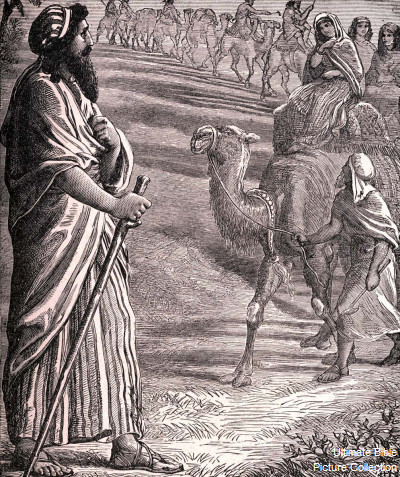
New English Translation (NET)NET Bible® copyright ©1996-2017 by Biblical Studies Press, L.L.C. http://netbible.com All rights reserved.