Giving To Give God Glory

The point is this: whoever sows sparingly will also reap sparingly, and whoever sows bountifully will also reap bountifully. Each one must give as he has decided in his heart, not reluctantly or under compulsion, for God loves a cheerful giver. And God is able to make all grace abound to you, so that having all sufficiency in all things at all times, you may abound in every good work. As it is written,

“He has distributed freely, he has given to the poor;
    his righteousness endures forever.”

10 He who supplies seed to the sower and bread for food will supply and multiply your seed for sowing and increase the harvest of your righteousness. 11 You will be enriched in every way to be generous in every way, which through us will produce thanksgiving to God. 12 For the ministry of this service is not only supplying the needs of the saints but is also overflowing in many thanksgivings to God. 13 By their approval of this service, they will glorify God because of your submission that comes from your confession of the gospel of Christ, and the generosity of your contribution for them and for all others, 14 while they long for you and pray for you, because of the surpassing grace of God upon you. 15 Thanks be to God for his inexpressible gift! – 2 Corinthians 9:6-15 ESV

There is a certain segment of Christendom today that operates on the “give-to-get” philosophy, which holds that God is somehow obligated to “pour out a blessing” on all who give. They use this very passage to teach that the more you give, the more God is obligated to pay you back for your generosity. But is that what Paul is teaching? Is he portraying giving as some kind of divine financial investment strategy that guarantees a low-risk, high-yield return? There is little doubt that Paul is implying that those who give sparingly shouldn’t expect God to bless them, and those who give generously will experience a bountiful return on their investment. But what is the nature of that return? Is it more money? Is Paul guaranteeing a high financial yield to the more generous among us? If he is, then the motivation behind the giving becomes based on greed and avarice.

Paul’s emphasis is on giving and doing so freely and liberally. But the motivation should be based on submission to the will of God and a recognition of His grace and generosity toward us. Anything we have to give has been given to us by Him, so our giving is to be out of gratitude, not greed. It is to be an expression of love for the saints, not a lust for increased wealth.

Paul emphasizes that our giving should be done cheerfully, not for a financial return, but to do the will of God and to participate in the care of the saints and the cause of His Kingdom. The motivation behind our giving is dependence upon God, not money. Paul says, “God will generously provide all you need. Then you will always have everything you need and plenty left over to share with others” (2 Corinthians 9:8 NLT).

When we give, we are releasing our hold or dependence upon the very resources the world says are our source of hope and means of self-reliance. But Paul says that when we give, we show our dependence on God. We are submitting our care to His divine will and ability to meet our daily needs. When we give generously and cheerfully, we display our belief that God will not allow us to go hungry. It is His grace that He will pour out on us, and not necessarily in the form of money. According to Paul, God has a greater concern for us than our financial stability.

He who supplies seed to the sower and bread for food will supply and multiply your seed for sowing and increase the harvest of your righteousness. – 2 Corinthians 9:10 ESV

Notice what is being harvested: Your righteousness. The real benefit behind our giving is righteousness, not financial reward.

The other fruit produced from sowing generously is thanksgiving. And Paul extends the concept of giving beyond just the financial arena.

You will be enriched in every way to be generous in every way, which through us will produce thanksgiving to God. – 2 Corinthians 9:11 ESV

When we willingly obey God’s prompting to give of our money, time, or talents, we will find that God enriches us with even more of those same resources so that we might continue to give. The point is not that we are giving to get more of whatever it is we just gave away, but that we might see the grace of God poured out on us and through us. That is what produces thanksgiving to Him. When we see God at work in our lives, using us and blessing us, we can’t help but be grateful to Him for His grace and goodness.

Paul goes on to say, “the service of this ministry is not only providing for the needs of the saints but is also overflowing with many thanks to God” (2 Corinthians 9:12 NLT). In other words, our generous giving produces a crop of thanksgiving from those who are the beneficiaries of our giving. They will be grateful to us, but more importantly, they will express gratitude to God.  Not only that, “they will glorify God because of your obedience to your confession in the gospel of Christ and the generosity of your sharing with them and with everyone” (2 Corinthians 9:13 NLT).

Our giving results in their gratitude and God’s glory, and it all starts with our submission to God that comes as a result of our salvation by God. Our generosity, in whatever form it takes, is a byproduct of our salvation. We love because He first loved us. We give because He has so graciously given to us.

Paul would have us remember that our giving is an expression of God’s “surpassing grace” upon us. And like Paul, we should be able to say, “Thanks be to God for his inexpressible gift!” (2 Corinthians 9:15 ESV). We are the recipients of God’s grace, His unmerited favor. We are the beneficiaries of His benevolent, sacrificial gift of His own Son’s death as payment for our sins. Our debt was paid by His sacrifice. God gave the greatest thing He had to give so that we might have life, and it is because of that inexpressible gift that we are to give to others. And the return on investment? An increase in righteousness, thankfulness, and glory to God.

Father, I have to admit that this whole section of Paul’s letter seems to be like a broken record that keeps repeating itself. Part of me wants him to change subjects and move on to something less convicting and uncomfortable. But it is clear that generosity was important to Paul because it was important to You. He wasn’t a pastor trying to raise money for a new sanctuary or a parking lot expansion. He was a faithful shepherd encouraging his flock to see their God-given blessings as resources to serve one another. I can’t help but think about Paul’s words to the believers in Rome.

“In his grace, God has given us different gifts for doing certain things well. So if God has given you the ability to prophesy, speak out with as much faith as God has given you. If your gift is serving others, serve them well. If you are a teacher, teach well. If your gift is to encourage others, be encouraging. If it is giving, give generously. If God has given you leadership ability, take the responsibility seriously. And if you have a gift for showing kindness to others, do it gladly” – Romans 12:6-8 NLT

We live under the constant fear of never having enough. But You are a good and gracious God who has promised to supply all our needs. You did not promise us a life of ease, comfort, riches, and convenience. But You did promise to supply all our needs through Your glorious riches (Philippians 4:19), and all You ask is that we share what we have been given with others – for their good and Your glory. Amen

English Standard Version (ESV) The Holy Bible, English Standard Version. ESV® Permanent Text Edition® (2016). Copyright © 2001 by Crossway Bibles, a publishing ministry of Good News Publishers.

New Living Translation (NLT) Holy Bible, New Living Translation, copyright © 1996, 2004, 2015 by Tyndale House Foundation. Used by permission of Tyndale House Publishers Inc., Carol Stream, Illinois 60188. All rights reserved.

A Faithful Remnant

1 Now the wife of one of the sons of the prophets cried to Elisha, “Your servant my husband is dead, and you know that your servant feared the LORD, but the creditor has come to take my two children to be his slaves.” And Elisha said to her, “What shall I do for you? Tell me; what have you in the house?” And she said, “Your servant has nothing in the house except a jar of oil.” Then he said, “Go outside, borrow vessels from all your neighbors, empty vessels and not too few. Then go in and shut the door behind yourself and your sons and pour into all these vessels. And when one is full, set it aside.” So she went from him and shut the door behind herself and her sons. And as she poured they brought the vessels to her. When the vessels were full, she said to her son, “Bring me another vessel.” And he said to her, “There is not another.” Then the oil stopped flowing. She came and told the man of God, and he said, “Go, sell the oil and pay your debts, and you and your sons can live on the rest.” 2 Kings 4:1-7 ESV

The author has made the corporate nature of Israel’s sin abundantly clear. While focusing most of his attention on the men who ruled over the northern and southern kingdoms of Israel, he also exposed the pervasive nature of the unfaithfulness and apostasy that infected the entire nation. As the kings of Israel continued to stubbornly pursue and promote the worship of false gods, the people willingly followed their lead. Yet, despite the ubiquitous presence of idolatry, a remnant of those who chose to remain faithful to Yahweh remained, and these faithful few found themselves constantly tempted to compromise their convictions and cave in to the pressure to conform. On those occasions when Yahweh was forced to pour out His divine judgment upon the nation, these same individuals suffered alongside their rebellious neighbors.

However, the author occasionally provides a glimpse into the lives of these spiritual holdouts, and when he does, they shine like stars in the darkness of Israel’s apostasy and rebellion. These somewhat rare sightings of the faithful few also provide a powerful reminder of God’s mercy and love. He knows His flock and is aware of those who still worship Him as the one true God despite the spiritual decline taking place all around them. Not only that, He is fully cognizant of their circumstances and always ready to care for them in their time of need.

Chapter four opens up with one such story, and it follows close on the heels of the account of Israel’s miraculous victory over the Moabites. God had graciously rescued the forces of Jehoram and Jehoshaphat after they had run out of water in the wilderness of Edom. The God of Abraham, Isaac, and Jacob had intervened on their behalf, refreshing them with water and then rewarding them with a decisive, yet undeserved, victory over the Moabites.

The prophet Elisha played a pivotal role in this memorable event, delivering the good news of God’s plan to rescue them from impending doom and grant them victory over their enemy. However, when the prophet returned home, he found himself facing yet another crisis, one much smaller in scale but just as serious in nature. He was approached by the wife of a fellow prophet whose husband had recently died, leaving her and her two young boys with no source of income. The creditors were already knocking at the door, demanding payment of her husband’s debts. If she failed to settle her accounts in full, her boys would become indentured servants, paying off the debt through years of forced labor.

This was a common practice in those days, even among the Israelites. Those who were unable to pay off their debts could become servants to their creditors, working off their indebtedness through labor. But God had provided regulations concerning these transactions.

“If you buy a Hebrew slave, he may serve for no more than six years. Set him free in the seventh year, and he will owe you nothing for his freedom. If he was single when he became your slave, he shall leave single. But if he was married before he became a slave, then his wife must be freed with him. – Exodus 21:2-3 NLT

“If one of your fellow Israelites falls into poverty and is forced to sell himself to you, do not treat him as a slave. Treat him instead as a hired worker or as a temporary resident who lives with you, and he will serve you only until the Year of Jubilee. At that time he and his children will no longer be obligated to you, and they will return to their clans and go back to the land originally allotted to their ancestors. The people of Israel are my servants, whom I brought out of the land of Egypt, so they must never be sold as slaves. Show your fear of God by not treating them harshly. – Leviticus 25:39-43 NLT

This widow found herself in a difficult situation, facing the potential loss of her two young sons, so she appealed to Elisha. We are given no insight into what she expected the prophet to do for her. Was she hoping he would intercede with her creditors and beg them for mercy? Did she think the prophet would pay off her debt? Even Elisha questioned her expectations.

What can I do to help you? Tell me, what do you have in the house? – 2 Kings 4:2 NLT

To the widow, this question must have sounded like a request for payment. She probably heard the prophet asking what she had to offer in return for his help, so she sadly reported, Nothing at all, except a flask of olive oil” (2 Kings 4:2 NLT). Her circumstances were dire. She had nothing to offer the prophet and no way of paying off her debt. From her perspective, everything was hopeless, and her prospects for deliverance were bleak. Even if her sons became indentured servants, it would be years before their labor would pay off the debt, and, in the meantime, she would be left alone and with no means of financial support. It couldn’t get any worse.

But Elisha saw things from a different perspective. He had just witnessed his God provide water to a desert and rescue the army of an apostate, unbelieving king. He fully trusted that Yahweh could and would rescue this helpless widow in her time of need. So, Elisha instructed her to gather as many jars, containers, pots, and pans as she could find, even borrowing them from her neighbors. He wanted her to be aggressive in her efforts, instructing her to find “not too few” of these empty vessels. When she was done, she and her boys were to close the door to their house and then begin the process of pouring the olive oil from her near-empty flask into the various jugs and jars they had gathered.

So she did as she was told. Her sons kept bringing jars to her, and she filled one after another. Soon every container was full to the brim! – 2 Kings 4:5-6 NLT

At no point did the widow question Elisha’s instructions. Despite how strange his orders may have seemed, she and her boys faithfully did as they had been told, and a miracle took place right before their eyes. The oil in the jar somehow replenished itself and did not run out until the last jar had been filled. Imagine the excitement of those young boys as they brought jar after jar to their mother and observed as she filled them with the seemingly endless supply of oil. Soon, their entire house was filled with jars brimming with oil. When the supply of jars finally ran out, the oil stopped flowing. But not before God had miraculously filled every last vessel.

When the woman informed Elisha what had happened, he showed no sign of surprise, but simply told her to take the oil and sell it. She was to use the proceeds to settle her debt. But God didn’t just bring her indebtedness to zero; He gave her a surplus. Once the oil had been sold, she and her sons would have more than enough money to take care of their needs for a long time to come.

This story evokes another miracle that occurred between a prophet and a destitute widow. Elisha’s former mentor, Elijah, had a similar experience. After his victory over the prophets of Baal, Yahweh instructed Elijah, “Go and live in the village of Zarephath, near the city of Sidon. I have instructed a widow there to feed you” (1 Kings 17:9 NLT). When he arrived in Zarephath, the prophet asked the widow for some bread and a cup of water. But the woman replied, “I swear by the LORD your God that I don’t have a single piece of bread in the house. And I have only a handful of flour left in the jar and a little cooking oil in the bottom of the jug. I was just gathering a few sticks to cook this last meal, and then my son and I will die” (1 Kings 17:12 NLT).

Unfazed by her disappointing news, Elijah instructed the woman to take what flour and oil she had and bake him a small loaf of bread. Then he informed her, “Don’t be afraid! Go ahead and do just what you’ve said, but make a little bread for me first. Then use what’s left to prepare a meal for yourself and your son. For this is what the LORD, the God of Israel, says: There will always be flour and olive oil left in your containers until the time when the Lord sends rain and the crops grow again!” (1 Kings 17:13-14 NLT).

So she did as Elijah said, and she and Elijah and her family continued to eat for many days. There was always enough flour and olive oil left in the containers, just as the LORD had promised through Elijah. –1 Kings 17:15-16 NLT

This unnamed woman and the widow who followed Elisha’s instructions both represent the remnant of the faithful who lived all throughout the nation of Israel at that time. Despite all the apostasy and unfaithfulness, some still longed to have their needs met by the God of Abraham, Isaac, and Jacob. They refused to bow the knee to Baal and Asherah. They had resisted the temptation to compromise their convictions. In their time of need, Yahweh saw them and sent one of His prophets to minister to them. Neither woman knew what to expect, but shared their plight with the prophet of the one true God. They somehow knew that their only hope of rescue would be found in throwing themselves at the mercy of Yahweh, and He delivered.

While Israel had proven to be unfaithful to God, He continued to demonstrate His covenant faithfulness to them in both big and small ways. This story offers a glimpse into the merciful nature of God and His care and concern for those who are “the least of these” (Matthew 25:40).

“For the LORD your God is the God of gods and Lord of lords. He is the great God, the mighty and awesome God, who shows no partiality and cannot be bribed. He ensures that orphans and widows receive justice. He shows love to the foreigners living among you and gives them food and clothing. – Deuteronomy 10:17-18 NLT

English Standard Version (ESV) The Holy Bible, English Standard Version. ESV® Permanent Text Edition® (2016). Copyright © 2001 by Crossway Bibles, a publishing ministry of Good News Publishers.

New Living Translation (NLT) Holy Bible, New Living Translation, copyright © 1996, 2004, 2015 by Tyndale House Foundation. Used by permission of Tyndale House Publishers Inc., Carol Stream, Illinois 60188. All rights reserved.
No Greater Gift Than God

1 Now when the queen of Sheba heard of the fame of Solomon concerning the name of the LORD, she came to test him with hard questions. She came to Jerusalem with a very great retinue, with camels bearing spices and very much gold and precious stones. And when she came to Solomon, she told him all that was on her mind. And Solomon answered all her questions; there was nothing hidden from the king that he could not explain to her. And when the queen of Sheba had seen all the wisdom of Solomon, the house that he had built, the food of his table, the seating of his officials, and the attendance of his servants, their clothing, his cupbearers, and his burnt offerings that he offered at the house of the LORD, there was no more breath in her.

And she said to the king, “The report was true that I heard in my own land of your words and of your wisdom, but I did not believe the reports until I came and my own eyes had seen it. And behold, the half was not told me. Your wisdom and prosperity surpass the report that I heard. Happy are your men! Happy are your servants, who continually stand before you and hear your wisdom! Blessed be the LORD your God, who has delighted in you and set you on the throne of Israel! Because the LORD loved Israel forever, he has made you king, that you may execute justice and righteousness.” 10 Then she gave the king 120 talents of gold, and a very great quantity of spices and precious stones. Never again came such an abundance of spices as these that the queen of Sheba gave to King Solomon.

11 Moreover, the fleet of Hiram, which brought gold from Ophir, brought from Ophir a very great amount of almug wood and precious stones. 12 And the king made of the almug wood supports for the house of the LORD and for the king’s house, also lyres and harps for the singers. No such almug wood has come or been seen to this day.

13 And King Solomon gave to the queen of Sheba all that she desired, whatever she asked besides what was given her by the bounty of King Solomon. So she turned and went back to her own land with her servants. 1 Kings 10:1-13 ESV

In the two decades that Solomon had served as king of Israel, the news of his incomparable wisdom, vast wealth, and rapidly expanding kingdom had spread throughout the known world (1 Kings 4:31). News of his skills as a composer, author, horticulturist, and biologist further enhanced his already mythical reputation as the wisest man who ever lived. Intrigued by what they heard, kings and dignitaries from other nations sent their emissaries to Jerusalem to see if all the rumors about him were true.

…kings from every nation sent their ambassadors to listen to the wisdom of Solomon. – 1 Kings 4:34 NLT

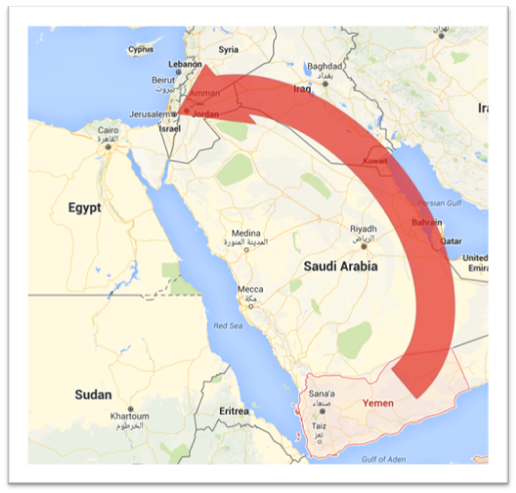
The author of 1 Kings provides an extended example of one such visit. On this occasion, the Queen of Sheba undertook the long and arduous journey to Jerusalem to witness the wisdom of Solomon firsthand. The kingdom of Sheba was located approximately 1,200 miles away, on the southwestern corner of the Arabian Peninsula, in the region now known as Yemen. The queen traveled with a large royal retinue and brought with her a vast amount of spices, gold, and precious stones. It appears that the real purpose of her trip was to secure an alliance between her nation and the rapidly expanding kingdom of Solomon. From its location at the confluence of the Sea of Aden and the Red Sea, the kingdom of Sheba had been able to expand its dominance of the spice and incense trade in that region of the world. A peaceful alliance with a powerful nation like Israel would only further enhance and protect their future prospects.

Upon her arrival, the queen was given a personal appointment with Solomon, where she was able to satisfy her curiosity about his wisdom and wealth. This interrogation was most likely meant to assess the validity of Solomon’s reputation, but was also intended to reassure the queen whether a treaty with Israel would be beneficial. In the end, she was left breathless by her encounter with Solomon.

…when the queen of Sheba had seen all the wisdom of Solomon, the house that he had built, the food of his table, the seating of his officials, and the attendance of his servants, their clothing, his cupbearers, and his burnt offerings that he offered at the house of the LORD, there was no more breath in her. – 1 Kings 10:4-5 ESV

She was blown away by what she saw and heard, and confessed that the reality of Solomon’s wisdom and the greatness of his kingdom far exceeded the rumors and her own expectations.

“Everything I heard in my country about your achievements and wisdom is true! I didn’t believe what was said until I arrived here and saw it with my own eyes. In fact, I had not heard the half of it! Your wisdom and prosperity are far beyond what I was told. – 1 Kings 10:6-7 NLT

The inclusion of this personal, third-party assessment of Solomon’s greatness was meant to validate all that the author had written up to this point. Her testimony was intended to prove that all the descriptions concerning Solomon’s wisdom and the wealth of his kingdom were far from rhetorical flourishes or hyperbole. It was all true.

And this pagan queen affirmed the divine nature of Solomon’s reign, deeming the people of Israel as the fortunate recipients of their God’s love because He had chosen to make this just and righteous man their king.

“Praise the LORD your God, who delights in you and has placed you on the throne of Israel. Because of the LORD’s eternal love for Israel, he has made you king so you can rule with justice and righteousness.” – 1 Kings 10:9 NLT

In a way, the inclusion of this statement was meant to remind the Hebrew readers of this book that their nation had been blessed by God. His sovereign decision to anoint Solomon as David’s successor was a divine act of love and mercy because He had given them a wise, just, and righteous king to rule over them. After decades spent conquering the nations of Canaan and fighting ongoing battles with the Philistines, God had blessed the people of Israel with a time of peace and prosperity.

Saul’s reign had ended in failure and disappointment. David’s reign had been marked by war and bloodshed. Now Solomon was leading them into a period of unprecedented expansion, prosperity, and peace. This was meant to be a golden age for the nation of Israel.

And, almost as further proof of God’s blessing on the nation, the author records that the queen of Sheba gifted Solomon with “9,000 pounds of gold, great quantities of spices, and precious jewels” (1 Kings 10:10 NLT). The blessings just kept coming. Solomon’s great wealth continued to grow. And all of this was in keeping with the promise that God had made to Solomon.

“Because you have asked for wisdom in governing my people with justice and have not asked for a long life or wealth or the death of your enemies—I will give you what you asked for! I will give you a wise and understanding heart such as no one else has had or ever will have! And I will also give you what you did not ask for—riches and fame! No other king in all the world will be compared to you for the rest of your life!” – 1 Kings 3:11-13 NLT

However, it’s essential to recall that God’s promise came with a condition.

“…if you follow me and obey my decrees and my commands as your father, David, did, I will give you a long life.” – 1 Kings 3:14 NLT

That vital caveat must not be overlooked, and its presence constantly lingers behind the scenes portrayed in Chapter 10. God was faithfully keeping the promise He had made to Solomon, blessing him with riches and fame beyond his wildest imagination. However, the unspoken question that looms over this entire narrative is whether Solomon, in the midst of his growing wealth and notoriety, will be able to remain faithful to God. As his fame and fortune continue to increase, will he allow the blessings of God to become substitutes for God, distracting his attention and diverting his love?

Almost as an aside, the author reveals another example of God’s blessings on Solomon. He notes that Hiram, the king of Tyre, continued to shower Solomon with incredible gifts of great value.

Hiram’s ships brought gold from Ophir, and they also brought rich cargoes of red sandalwood and precious jewels. – 1 Kings 10:11 NLT

Without having to lift a finger, Solomon’s immense wealth was growing by the minute. God was using these pagan potentates to expand Solomon’s already extensive net worth. But would Solomon view these gifts as the gracious provision of God, meant to underwrite the divine initiatives He had in mind for the nation of Israel? Or would Solomon allow his growing wealth to fund a lifestyle of excess and dissipation? The answer to those questions can be found in the writings of Solomon himself.

Those who love money will never have enough. How meaningless to think that wealth brings true happiness! The more you have, the more people come to help you spend it. So what good is wealth—except perhaps to watch it slip through your fingers! – Ecclesiastes 5:10-11 NLT

Solomon would eventually discover that even the blessings of God become disappointing and disillusioning when they become substitutes for Him. The Book of Ecclesiastes chronicles his growing love affair with materialism and hedonism. Over time, he allowed his fame and riches, graciously bestowed upon him by God, to distract him from his worship of and commitment to God.

I became greater than all who had lived in Jerusalem before me, and my wisdom never failed me. Anything I wanted, I would take. I denied myself no pleasure. I even found great pleasure in hard work, a reward for all my labors. But as I looked at everything I had worked so hard to accomplish, it was all so meaningless—like chasing the wind. There was nothing really worthwhile anywhere. – Ecclesiastes 2:9-11 NLT

However, at this point in the story, Solomon appears to recognize that his blessed lifestyle has come from the gracious hand of God. He has not yet succumbed to the temptation to make the gifts of higher value than the Giver. The pessimism of unbridled prosperity and the endless pursuit of insatiable pleasure would eventually set in. But for now, Solomon was content to graciously accept his blessings as gifts from Yahweh.

As for the queen of Sheba, having been exposed to the visual evidence of God’s goodness, she returned to her kingdom more convinced than ever of Solomon’s greatness. The signs of Yahweh’s presence, pleasure, and provision were inescapable. But for Solomon, the blessings of God would prove to be a distraction, filling his royal treasuries with great wealth and his heart with dangerous thoughts about his own self-importance. Possessions, power, pleasure, and prominence can be gifts from God that quickly turn into weapons of self-destruction. Jesus Himself had much to say about the dangers of the love of money and the

“Don’t store up treasures here on earth, where moths eat them and rust destroys them, and where thieves break in and steal. Store your treasures in heaven, where moths and rust cannot destroy, and thieves do not break in and steal. Wherever your treasure is, there the desires of your heart will also be. – Matthew 6:19-21 NLT

“No one can serve two masters. For you will hate one and love the other; you will be devoted to one and despise the other. You cannot serve God and be enslaved to money. – Matthew 6:24 NLT

“Beware! Guard against every kind of greed. Life is not measured by how much you own.” – Luke 12:15 NLT

“The seed that fell among the thorns represents others who hear God’s word, but all too quickly the message is crowded out by the worries of this life, the lure of wealth, and the desire for other things, so no fruit is produced. – Mark 4:18-19 NLT

The queen of Sheba had been enamored with Solomon’s wealth and wisdom. But would Solomon allow those divine gifts to replace his love for the Giver?

English Standard Version (ESV) The Holy Bible, English Standard Version. ESV® Permanent Text Edition® (2016). Copyright © 2001 by Crossway Bibles, a publishing ministry of Good News Publishers.

New Living Translation (NLT) Holy Bible, New Living Translation, copyright © 1996, 2004, 2015 by Tyndale House Foundation. Used by permission of Tyndale House Publishers Inc., Carol Stream, Illinois 60188. All rights reserved.

The Godly Life Versus the Good Life

1 My son, do not forget my teaching,
    but let your heart keep my commandments,
for length of days and years of life
    and peace they will add to you.

Let not steadfast love and faithfulness forsake you;
    bind them around your neck;
    write them on the tablet of your heart.
So you will find favor and good success
    in the sight of God and man.

Trust in the Lord with all your heart,
    and do not lean on your own understanding.
In all your ways acknowledge him,
    and he will make straight your paths.
Be not wise in your own eyes;
    fear the Lord, and turn away from evil.
It will be healing to your flesh
    and refreshment to your bones.

Honor the Lord with your wealth
    and with the firstfruits of all your produce;
10 then your barns will be filled with plenty,
    and your vats will be bursting with wine.

11 My son, do not despise the Lord’s discipline
    or be weary of his reproof,
12 for the Lord reproves him whom he loves,
    as a father the son in whom he delights. Proverbs 3:1-12 ESV

The Proverbs are full of comparisons, juxtapositions, and contrasts. There is wisdom and foolishness, wickedness and righteousness, and the God-follower and the self-worshiper. These sayings of Solomon paint a vivid picture that contrasts the life of the man who seeks after God and the man who turns his back on God, setting himself up as the master of his own fate and the captain of his soul.

Solomon writes from the perspective of a father appealing to his child, begging his son to make the attainment of wisdom and understanding his highest priority. But in doing so, Solomon is not suggesting that his son pursue an academic-based education. He is not recommending an increase in human reason or mere head-knowledge. He is spurring on his son to pursue God – the sole source of all wisdom, knowledge, reason, and common sense.

Getting to know God is the goal, not gaining wisdom for wisdom’s sake. Solomon tells his son, “Trust in the Lord with all your heart; do not depend on your own understanding” (Proverbs 3:5 NLT). How easy it is for each of us to trust in anything and everything but God. Rather than trust God, we turn to our own limited understanding and attempt to explain the complexities of life and solve the difficulties that come with living life on this sometimes perplexing planet.

If we lack joy, we attempt to find it through the means that this world makes possible. If we feel unloved, we seek satisfaction and significance through the pursuit of pleasure or even promiscuity. We seek – but we tend to seek in the wrong places.

But Solomon tells his son, “Seek his will in all you do, and he will show you which path to take” (Proverbs 3:6 NLT). He reminds his son that wisdom brings joy, is profitable, valuable, precious, and is the key to long life. But that kind of wisdom is only available from God. Wisdom, true wisdom, flows directly from God and nowhere else. Our ability to live life well on this planet is completely dependent upon the wisdom and understanding that God alone provides. And it comes from a relationship, not just a book.

We learn wisdom from watching and coming to know God, not just by reading about Him. Wisdom isn’t a product that God imparts. It is the essence of who He is. It is His very character. Wisdom, understanding and knowledge do not exist apart from God. So, what the world offers as wisdom is a cheap substitute.

At their core, wisdom and understanding are spiritual resources, not academic or cerebral ones. They flow from a right relationship with God. Solomon tells us, “Fear of the Lord is the foundation of true knowledge, but fools despise wisdom and discipline” (Proverbs 1:7 NLT). The fool wants nothing to do with God. He desires wisdom and understanding for their own sake, for what he might get out of them. But he has no desire to have a personal relationship with the One who makes them possible. He does’t want the loving discipline that also comes from God and is necessary for acquiring true wisdom and understanding. But those who long to have a relationship with God will find that wisdom, understanding, and knowledge are the byproducts of their pursuit of God.

One of the things Solomon desires for his son is the sense of peace and well-being that come through a right relationship with God. By pursuing and availing himself of the wisdom God has to offer, this young man can experience a wide range of beneficial and highly attractive blessings from God.

Length of days and years of life… – vs 2

Peace… – vs 2

Favor… – vs 4

Good success… – vs 4

Straight paths… – vs 6

Healing to your flesh and refreshment to your bones… – vs 8

Full barns and vats bursting with wine… – vs 10

The loving reproof of God… – vs 12

This isn’t Solomon’s version of the prosperity gospel. He isn’t offering his son the key to having his best life now. He is simply stating that godly wisdom results in godly character and those whose lives bring glory and honor to God will be rewarded.

It is Solomon’s hope and prayer that his son will remember and ingrain all that he has taught. He wants his son to implement his teachings and commandments. But Solomon isn’t speaking of human insights or mere fatherly wisdom. He is calling his son to listen, learn, and appropriate all the godly wisdom that he has tried to impart, including steadfast love and faithfulness (vs 3). These things are of such value that Solomon compares them to priceless jewels to be hung on a necklace and worn around the neck. They are to be written down and preserved for posterity, kept close to the heart so that they are always within reach when needed.

The godly life is a profitable life because it brings favor with God and also with men.

you will find favor with both God and people,
    and you will earn a good reputation. – Proverbs 3:4 NLT

Godly people stand out in the crowd. Their relationship with God sets them apart and makes them distinctively different from the rest of the world. Unlike other people, those who place their trust in God display a reliance on His will instead of their own. They depend upon His wisdom rather than trusting on their own flawed and highly limited understanding. They make it a habit to turn their backs on evil and keep their eyes focused on the only One who can help them walk the straight path that leads to life rather than death.

Since God is their sole source of wisdom, comfort, security, and significance, they are willing to give back to Him what rightfully belongs to Him, including their material resources. That’s why Solomon encourages his son to be generous with God.

Honor the Lord with your wealth
    and with the best part of everything you produce.
Then he will fill your barns with grain,
    and your vats will overflow with good wine. – Proverbs 3:9-10 NLT

God doesn’t need our “stuff.” He doesn’t require our possessions in order to fill His depleted treasury. By giving our resources to God, we are acknowledging that they have not taken His place as the source of all our needs, wants, and desires. We have not allowed the gifts to take precedence over the Giver.

And the one who understands and appreciates the role of God as the sole source of sustenance in his life will also warmly receive and accept God’s loving discipline. God provides for all our needs, from the physical to the spiritual and the psychological to the moral. He loves us enough to discipline us. He patiently trains and lovingly corrects us.

My child, don’t reject the Lord’s discipline,
    and don’t be upset when he corrects you.
For the Lord corrects those he loves,
    just as a father corrects a child in whom he delights. – Proverbs 3:11-12 NLT

So, the one who willfully seeks the wisdom of God through an ever-deepening relationship with God will always experience a well-balanced does of blessings and discipline.

English Standard Version (ESV) The Holy Bible, English Standard Version. ESV® Permanent Text Edition® (2016). Copyright © 2001 by Crossway Bibles, a publishing ministry of Good News Publishers.

New Living Translation (NLT) Holy Bible, New Living Translation, copyright © 1996, 2004, 2015 by Tyndale House Foundation. Used by permission of Tyndale House Publishers Inc., Carol Stream, Illinois 60188. All rights reserved.

New English Translation (NET)NET Bible® copyright ©1996-2017 by Biblical Studies Press, L.L.C. http://netbible.com All rights reserved.


A Refusal to Trust God

“For I the Lord do not change; therefore you, O children of Jacob, are not consumed. From the days of your fathers you have turned aside from my statutes and have not kept them. Return to me, and I will return to you, says the Lord of hosts. But you say, ‘How shall we return?’ Will man rob God? Yet you are robbing me. But you say, ‘How have we robbed you?’ In your tithes and contributions. You are cursed with a curse, for you are robbing me, the whole nation of you. 10 Bring the full tithe into the storehouse, that there may be food in my house. And thereby put me to the test, says the Lord of hosts, if I will not open the windows of heaven for you and pour down for you a blessing until there is no more need. 11 I will rebuke the devourer for you, so that it will not destroy the fruits of your soil, and your vine in the field shall not fail to bear, says the Lord of hosts. 12 Then all nations will call you blessed, for you will be a land of delight, says the Lord of hosts. – Malachi 3:6-12 ESV

The very fact that a remnant of the nation of Israel was still living in the land of Canaan was a sign of God’s covenantal commitment. He remained faithful to keep all the promises He had made to the descendants of Abraham. Despite their centuries-long abuse of His grace and constant refusal to keep their commitments to keep His law, God had not completely wiped them off the face of the earth. He had punished them by sending the Babylonians to conquer and capture them, but He had not abandoned them. In fact, He had been the one to make their unlikely return to the land of Judah a reality. Yet here He was again, having to call His rebellion people to repent and return to Him. God desired to bless them, but could not do so as long as they remained unfaithful and unwilling to confess their sins and repent.

Their stubbornness and self-righteousness are evidenced by the question they posed to God.

“How shall we return?” – Malachi 3:7 ESV

In a sense, they were declaring their innocence. How could they return when they had never really abandoned God? When King Cyrus of Persia had decreed that the Israelites could return to the land of Judah, they had been part of the remnant that had agreed to do so. They had been part of the brave few who had made the difficult journey home and spent years rebuilding the city and its infrastructure. It had been their hard work that had caused the temple to rise from the rubble, and it was their sacrifices and offerings that had helped to reinstitute the sacrificial system. So, how could God demand that they return? What more could they do?

But God knew they were simply going through the motions. Their hearts were not in it. They had proven themselves to be unfaithful, showering their affections on the false gods of the neighboring nations. They had allowed their sons and daughters to intermarry with non-Israelites, in direct violation of a divine prohibition. And these unholy unions had caused the people of Israel to embrace the gods of the Canaanites. The result was syncretism, a toxic blend of religious beliefs that resulted in a watered-down and ineffective spiritual experience. They were guilty of spiritual adultery, treating Yahweh as one more lover among many. And, to make matters worse, God accused them of theft.

“Will man rob God? Yet you are robbing me. – Malachi 3:8 ESV

They boldly denied the accusation by questioning the accuracy of God’s statement. In their minds, they had done nothing to offend God. They had continued to offer the mandatory sacrifices and bring the appropriate offerings as the law required. But God disagreed. When presenting their mandatory tithes and offerings, they had regularly short-changed God by offering far less than He had required. This all goes back to the commands God had given the people of Israel long before they had settled in the land of Canaan. Just prior to their crossing of the Jordan River, Moses had delivered to the people God’s laws concerning the offerings of firstfruits and tithes.

“When you come into the land that the Lord your God is giving you for an inheritance and have taken possession of it and live in it, you shall take some of the first of all the fruit of the ground, which you harvest from your land that the Lord your God is giving you, and you shall put it in a basket, and you shall go to the place that the Lord your God will choose, to make his name to dwell there. – Deuteronomy 26:1-2 ESV

God had assured them that Canaan was fruitful and abundant, a land flowing with milk and honey. But they were not to put their trust in the land or its productivity. They were to trust in the God who had fed them with quail and manna all during the years they had wandered in the wilderness. He would be their source of provision. By offering Him the first of their harvest, they would be displaying their complete dependence upon Him. And God would use these resources to provide for those in need among them.

“When you have finished paying all the tithe of your produce in the third year, which is the year of tithing, giving it to the Levite, the sojourner, the fatherless, and the widow, so that they may eat within your towns and be filled, then you shall say before the Lord your God, ‘I have removed the sacred portion out of my house, and moreover, I have given it to the Levite, the sojourner, the fatherless, and the widow, according to all your commandment that you have commanded me. I have not transgressed any of your commandments, nor have I forgotten them. – Deuteronomy 26:12-13 ESV

Every third year, they were to dedicate the first of all their produce to God. And they were to do it as a form of worship, expressing gratitude for all that God had done for them. As they placed their gifts before the altar, they were to declare the undeniable reality of God’s faithful.

“‘…he brought us into this place and gave us this land, a land flowing with milk and honey. 10 And behold, now I bring the first of the fruit of the ground, which you, O Lord, have given me.’ And you shall set it down before the Lord your God and worship before the Lord your God.” – Deuteronomy 26:9-10 ESV

And yet, God states that the people of Israel had been robbing Him of their tithes and offerings. They had been keeping back what was rightfully His. And as a result, “the Levite, the sojourner, the fatherless, and the widow” were having to do without. God’s ordained system of social welfare had been disrupted by their disobedience and greed. Had they obeyed God’s commands, they would have been a model community that displayed mutual love and care. There was to be no needy or neglected in Israel. Since God was their ultimate provider, no one would do without. And God calls them to put Him to the test and see if His promises will not prove true.

“Bring the full tithe into the storehouse, that there may be food in my house. And thereby put me to the test, says the Lord of hosts, if I will not open the windows of heaven for you and pour down for you a blessing until there is no more need.” – Malachi 3:10 ESV

All they had to do was obey. If they would simply keep the Lord’s command and do as they were told, they would experience the unprecedented and unparalleled blessings of God.

“I will rebuke the devourer for you, so that it will not destroy the fruits of your soil, and your vine in the field shall not fail to bear, says the Lord of hosts.” – Malachi 3:11 ESV

The land was fruitful because God made it so. The soil was perfect for raising crops because God had deemed it so. But He could also bring drought, famine, and pestilence upon the land. God could bring enemies against Israel who would their farms and plunder their flocks and herds and empty their grain stores. But God preferred to bless them, and He would as long as they faithfully kept their covenant commitments.

And God reminded the people that their faithfulness would have far-reaching implications. Not only would the needy among them be properly cared for, but the nations would look on in amazement as they witnessed the supernatural blessings that Israel enjoyed.

“Then all nations will call you blessed, for you will be a land of delight, says the Lord of hosts.” – Malachi 3:12 ESV

Obedience was intended to result in divine blessing, which was to serve as a witness to the nations. God wanted to abundantly prosper His people so that the greatness of His name might be proclaimed throughout the world. As His chosen people, they had been set apart so that they might display His glory. As they faithfully followed His will and lived according to His exacting standards, they would be blessed by God and give indisputable evidence that He was the one and only God.

English Standard Version (ESV) The Holy Bible, English Standard Version. ESV® Permanent Text Edition® (2016). Copyright © 2001 by Crossway Bibles, a publishing ministry of Good News Publishers.

New Living Translation (NLT) Holy Bible, New Living Translation, copyright © 1996, 2004, 2015 by Tyndale House Foundation. Used by permission of Tyndale House Publishers Inc., Carol Stream, Illinois 60188. All rights reserved.

New English Translation (NET)NET Bible® copyright ©1996-2017 by Biblical Studies Press, L.L.C. http://netbible.com All rights reserved.

More Than You Need

Jesus said to them, “Children, do you have any fish?” They answered him, “No.” He said to them, “Cast the net on the right side of the boat, and you will find some.” So they cast it, and now they were not able to haul it in, because of the quantity of fish. That disciple whom Jesus loved therefore said to Peter, “It is the Lord!” When Simon Peter heard that it was the Lord, he put on his outer garment, for he was stripped for work, and threw himself into the sea. The other disciples came in the boat, dragging the net full of fish, for they were not far from the land, but about a hundred yards off.

When they got out on land, they saw a charcoal fire in place, with fish laid out on it, and bread. 10 Jesus said to them, “Bring some of the fish that you have just caught.” 11 So Simon Peter went aboard and hauled the net ashore, full of large fish, 153 of them. And although there were so many, the net was not torn. 12 Jesus said to them, “Come and have breakfast.” Now none of the disciples dared ask him, “Who are you?” They knew it was the Lord. 13 Jesus came and took the bread and gave it to them, and so with the fish. 14 This was now the third time that Jesus was revealed to the disciples after he was raised from the dead. John 21:5-14 ESV

The sun was just coming up as the weary disciples began to pull in their net after an unsuccessful night of fishing. They had returned to the Sea of Galilee just as Jesus had told them to but, apparently bored with waiting, seven of them had decided to try their hand at fishing. But as they prepared to return empty-handed, they heard someone call out to them. Whether it was due to a combination of their distance from shore and the poor morning light, they were unable to make out the identity of the stranger who shouted to them from the shoreline.

But it seems likely that they were a bit put out by His impertinent and somewhat invasive question: “Children, do you have any fish?” (John 21:5 ESV). And you can hear the tone of irritation in their curt response: “No.”

Peter and his companions were worn out and probably a bit put out by their failure to catch a single, solitary fish. These men were professionals and they had probably used every trick of the trade they could think of – but all to no avail. Now, this nosy bystander was unknowingly rubbing salt in the wound, leaving what little pride they had left completely destroyed.

John makes it clear that they failed to recognize Jesus. Again, it could have been because of their distance from shore and the poor lighting conditions. But, like the two disciples who encountered the resurrected Jesus on the road to Emaus, these men could have been a case of divine disablement.

While they were talking and discussing together, Jesus himself drew near and went with them. But their eyes were kept from recognizing him. – Luke 24:14-15 ESV

Whatever the case, the disciples had no idea that it was Jesus who was speaking to them. So, when this “stranger” suggested that they cast their net on the other side of the boat, they must have felt a strong urge to tell him to mind his own business. And yet, surprisingly, they did just as the man suggested. It could be that they did so out of respect. When the man had called out to them, he had called them “children.” The Greek word is paidion, and it was typically used to refer to a young child. It was a term of affection. So, perhaps they understood their well-meaning friend to be an older gentleman to whom they wanted to show honor by heeding his advice.

So, when he shouted out, “Cast the net on the right side of the boat, and you will find some” (John 21:6 ESV), they immediately complied. Yet, it is doubtful that they harbored any suspicions that this time would be any different than all the others. They had no expectations that their efforts would prove successful. They simply wanted to cast their net, haul it back in, and call it a day. But they were in for a big surprise.

John, still writing in the third-person just as he has done throughout his gospel, recounts what happened when he and his fellow disciples did as the man had suggested.

So they cast it, and now they were not able to haul it in, because of the quantity of fish. – John 21:6 ESV

It was a miracle. And John was the first to recognize the nature of what had happened and the identity of who was behind it all. He immediately called out, “It is the Lord!” (John 21:7 ESV). And in that split second of time, the eyes of every man in the boat shifted from the amazing sight of the net full of fish to the man standing on the shore. And forgetting all about the net, they began to row to shore. The always impulsive Peter, too excited to wait,  jumped into the water and swam to meet Jesus. Suddenly, the Giver became more important than the gift. The net full of fish lost its appeal as they recognized their resurrected Lord and Savior. 

When they finally made it to shore, they found Jesus standing by a charcoal fire grilling fish. It’s important to note that, in the Greek, the word for fish is in the singular tense. He is cooking one fish. And this entire scene should call to mind an earlier occasion that took place on the shore of the Sea of Galilee. Jesus and His disciples had encountered a large crowd of His followers and Mark recounts that Jesus “had compassion on them, because they were like sheep without a shepherd” (Mark 6:34 ESV). Jesus, knowing that the people were tired and hungry, instructed His disciples to feed them. But they responded in disbelief, indicating that they did not have the resources to feed such a large crowd. And when Jesus asked them to gather what was available, they came back with fives loaves of bread and two fish. And Andrew, upon taking a look at the meager resources at their disposal, had responded, “what are they for so many?” (John 6:9 ESV). 

The disciples were full of doubts. They looked at the circumstances, assessed their potential for success, and concluded that the numbers were not in their favor. But they were wrong. John records that Jesus “took the loaves, and when he had given thanks, he distributed them to those who were seated. So also the fish, as much as they wanted” (John 6:11 ESV).

Yet, as Peter and his companions stood on the shore of the Sea of Galilee, they were looking at a single fish roasting on a charcoal fire. And it seems likely that the famished Andrew once again thought to himself, “what is this for so many?” How were eight men going to satisfy their hunger with one measly fish? But Jesus refocused their attention on the net that still remained tied to the boat and lying in the water.

“Bring some of the fish that you have just caught.” – John 21:10 ESV

John reveals that there were exactly 153 fish in that net. Many commentators have tried to come up with some hidden meaning behind that number, but it would seem that John is simply trying to compare and contrast the two stories. In the earlier case, the disciples had only been able to find two fish. But on this occasion, they had shown up with 153. And the difference between the two numbers the work of Jesus. He had been the one to instruct them to cast their net on the other side of the boat. So, the miraculous supply of fish had been His doing. But in graciously inviting them to bring what they had “caught,” Jesus was allowing them to contribute to the meal.

And what Jesus did next should not be overlooked.

Jesus came and took the bread and gave it to them, and so with the fish. – John 21:13 ESV

There is little doubt that John had the feeding of the 5,000 in mind when he recorded this scene on the shores of the Sea of Galilee. What he describes is remarkably similar to what happened on that earlier occasion.

Jesus then took the loaves, and when he had given thanks, he distributed them to those who were seated. So also the fish, as much as they wanted. – John 6:11 ESV

They ate and were satisfied. Jesus had miraculously met their need by transforming what was insufficient into an overabundance. But in this story, we see Jesus providing an overabundance before He met the need. And He allowed them to be participants in the miracle of provision. They had cast the net. They had rowed the boat. And Peter had hauled it to shore. But there were far more fish than they could eat. The supply outstripped the demand.

This entire scene was intended as a lesson in the sufficiency of Jesus and the need for their complete dependency upon Him. It was reminiscent of His earlier words to them.

“Remain in me, and I will remain in you. For a branch cannot produce fruit if it is severed from the vine, and you cannot be fruitful unless you remain in me.

“Yes, I am the vine; you are the branches. Those who remain in me, and I in them, will produce much fruit. For apart from me you can do nothing.” – John 15:4-5 NLT

They were learning the invaluable lesson that the apostle Paul had learned.

I can do all things through him who strengthens me. – Philippians 4:13 ESV

And Paul would add:

And my God will supply every need of yours according to his riches in glory in Christ Jesus. – Philippians 4:19 ESV

As Jesus prepared to return to His Father’s side in heaven, He was letting His disciples know that they would become His ambassadors, carrying on His mission and conveying His message of Good News to the world. But they would need to rely upon Him. They would need to abide in Him. In just a matter of days, they would receive the indwelling presence of the Spirit of God, who would provide them with the power of God so that they might do the will of God. They would have all the resources they needed to do all that Jesus would commission them to do.

English Standard Version (ESV) The Holy Bible, English Standard Version. ESV® Permanent Text Edition® (2016). Copyright © 2001 by Crossway Bibles, a publishing ministry of Good News Publishers.

New Living Translation (NLT) Holy Bible, New Living Translation, copyright © 1996, 2004, 2015 by Tyndale House Foundation. Used by permission of Tyndale House Publishers Inc., Carol Stream, Illinois 60188. All rights reserved.

The Message (MSG)Copyright © 1993, 1994, 1995, 1996, 2000, 2001, 2002 by Eugene H. Peterson

1 Kings 21-22, 2 Corinthians 9

Abounding Grace.

1 Kings 21-22, 2 Corinthians 9

 And God is able to make all grace abound to you, so that having all sufficiency in all things at all times, you may abound in every good work. – 2 Corinthians 9:8 ESV

God loves to shower His grace and mercy upon His people. He enjoys blessing those who are called by His name and receives no joy in having to discipline us for our sins. The manifold blessings of God are available to those who live according to His ways and are willing to submit to His will. This truth is on display throughout the Old and New Testaments. Those men and women who willingly and obediently lived their lives on God’s terms were blessed by God. He placed His hand on their lives and bestowed His favor upon them. This doesn’t mean that their lives were always easy or free from trouble. But it does mean that they were able to see and experience His blessings in their lives in spite of the circumstances surrounding them. But those who chose to disobey God and lived according to their own terms found out that God’s mercy and grace tended to be in short supply. Rather than His grace, they received His anger and judgment.

What does this passage reveal about God?

Ahab was one of those characters who had chosen to live life on his own terms, rather than God’s. He and his wife, Jezebel, were wicked people who influenced the people of Israel to rebel against God, worshiping false gods instead. Their reign was marked by idolatry, murder, corruption and unfaithfulness to God. They were self-serving, selfish and unwilling to live according to God’s very clear commands. As a result, they experienced God’s judgment. Ahab would lose his kingdom and his life. Jezebel would eventually be taken out by God Himself. Their lifestyle of corruption and narcissism would not be tolerated by God. They could have enjoyed God’s presence and power in their lives and His blessings on their kingdom, but God was not going to bless them while they continued to live in rebellion against Him.

What does this passage reveal about man?

There will always be those who are willing to tell us what we want to hear. Ahab had 400 prophets who were more than willing to tell him that battle with the Syrians was a great idea. They weren’t interested in telling the truth or about speaking for God, they simply wanted to maintain their position as prophets. So they told the king what he wanted to hear. Micaiah, on the other hand would only speak what God told him to speak. He was unwilling to lie to the king just to protect his own head. His allegiance to God far outweighed any concern he might have had for his own safety or success. Micaiah told Ahab that his prophets were all liars and that their message was not from God. In fact, they had been sent by God to deceive Ahab. Micaiah’s determination to speak the truth got him thrown in prison. But God would end up blessing Micaiah and destroying Ahab.

How would I apply what I’ve read to my own life?

God wants to bless us, but He also wants us to be a blessing to others. He wants us to live our lives unselfishly and with our eyes focused on His kingdom and our hearts centered on His desire to use us to bring blessing to those around us. Paul wrote the Corinthian believers, encouraging them to be cheerful givers, providing willingly and sacrificially to those in need in Macedonia. Paul reminded them that “whoever sows sparingly will also reap sparingly, and whoever sows bountifully will also reap bountifully” (2 Corinthians 9:6 ESV). They were to give joyfully and willingly, in obedience to God. Their focus was to be on the needs around them. Their lives were not to be lived selfishly, dwelling on their own lives while ignoring the needs of others. Paul told them that their sacrifice would not go unnoticed by God, because He “is able to make all grace about to you, so that having all sufficiency in all things at all times, you may about in every good work” (2 Corinthians 9:8 ESV). They were to give without reluctance and not out of some sense of compulsion. And if they did, they would be “enriched in every way to be generous in every way” (2 Corinthians 9:11 ESV). God would bless them so that they could continue to be a blessing to others. What a difference in the way the world encourages us to live. In place of selfishness, we are to live lives of selflessness. Rather than focus on ourselves, we are to focus on the needs of those around us. And when we do, God’s grace abounds. As the old saying goes, “You can’t out-give God.”

Father, I want to experience Your abounding grace in my life more and more, but I know it begins with me living a life of sacrifice and selflessness. Help me get my attention off of myself and on to those around me. Make me a cheerful giver of my time and resources. All for Your glory. Amen

Ken Miller
Grow Pastor & Minister to Men
kenm@christchapelbc.org

2 Corinthians 8:1-15

Grace-Based Giving.

2 Corinthians 8:1-15

Out of the most severe trial, their overflowing joy and their extreme poverty welled up in rich generosity. – 2 Corinthians 8:2 NIV

In this section of his letter, Paul began to address a topic that has always sent chills up the spines of most believers throughout the centuries: Giving. Yes, he brought up and encouraged the need to give. But not to build facilities or expand ministry projects. No, Paul was raising money for the persecuted and impoverished believers back in Jerusalem. Everywhere he went and to every church he encountered, he encouraged them to contribute toward the needs of their brothers and sisters in Jerusalem. The amazing thing is that many of the individuals to whom Paul was making this request were just as poor and equally persecuted. But he asked nonetheless. And even in the midst of their own troubles and trials, these people gave richly and generously – an out-flowing of their own joy in Christ. They were glad to give, even to people they had never met living in a land they would probably never see.

And Paul reminds the Corinthian believers that the giving by the Macedonians went far beyond what he had expected. They had even begged Paul repeatedly for the privilege of sharing in the needs of the believers in Jerusalem. They had not given out of their abundance, but had shared beyond what they could even afford. And their financial giving had been accompanied by an equally fervent giving of themselves to God and to the ministry of Paul. These people were committed to the cause of Christ and the well-being of the Kingdom. For Paul, giving was simply an expression or evidence of a believer’s love. He compared it to what Christ had done for them. “You know the generous grace of our Lord Jesus Christ. Though he was rich, yet for your sakes he became poor, so that by his poverty he could make you rich” (2 Corinthians 8:9 NLT). When Jesus willingly, sacrificially took on human flesh and came to dwell among men, it was the ultimate expression of love and generosity. He gave up His divine rights, privileges and position as God, became a man and died a criminal’s death on the cross. He gave so that we might receive. He made us rich by providing for us eternal life – a gift we could never have afforded any other way. His selfless, sacrificial example should provide every believer with more than enough motive to give graciously and gladly to our fellow brothers and sisters in Christ.

Paul did not ask them to “give till it hurts.” He simply asked them to be faithful and to finish what they had begun. They key was that they should give eagerly and willingly, not under compulsion or out of some sense of guilt. “Give in proportion to what you have. Whatever you give is acceptable if you give it eagerly” (2 Corinthians 8:11-12 NLT). Paul was not interested in making the Corinthians feel guilty or encouraging them to give what they didn’t have or couldn’t afford. He was simply wanting them to share in the needs of the body of Christ globally. The concept of community and commonality was always on Paul’s mind and heart. The church was global, not just local. The abundance of a few was meant to minister to those in need. God’s provision for His people would take place through the body of Christ as believers faithfully shared with others what God had faithfully provided for them. There should be no need within the body of Christ. That had been the experience of the early church from its inception. “And all the believers met together in one place and shared everything they had. They sold their property and possessions and shared the money with those in need” (Acts 2:44-45 NLT). What a witness that must have been to the community around them. That kind of love and generosity was no more the norm then than it is today. This wasn’t some form of socialism, but simply a concrete expression of the love of Christ lived out in everyday life. It was a picture of the body of Christ ministering to itself selfessly and, at times, sacrificially, so that all might prosper spiritually and physically. That kind of love is contagious and gives evidence of the transformative power of the Spirit of God in the lives of the people of God.

Father, give me a heart of generosity. Let me see my abundance not as a special privilege to be spent only on my own selfish needs and desires, but as a resource to share with those around me. May the body of Christ today learn to live as a true community, giving generously and willingly to one another so that no one ever has need. May we mirror the generosity and grace of Jesus among ourselves and in front of a lost and dying world. Amen.

Ken Miller
Grow Pastor & Minister to Men
kenm@christchapelbc.org

Proverbs 12b

Deep Roots.

“Wickedness never brings stability, but the godly have deep roots.” ­– Proverbs 12:3 NLT

We live on about an acre of land that is covered with beautiful old oak trees. When we built our home there more than two decades ago, we chose to place it on the one open spot on the entire property because we didn’t want to remove a single tree. In the 20-plus years we have lived there, we have left about half the property uncultivated and wild. There is no sprinkler system and we do little in the way of maintenance or manicuring. Yet even in the driest times of the year, the oaks in that part of our property are just as green and lush as the ones that enjoy the daily dose of water I provide. Why is that? How come the trees that receive no water look just as good as the those that benefit from my generous sprinkling? The answer is simple. They have a different source. They don’t need my water because they get what they need from somewhere else. They have sunk their roots deep into the soil and have tapped into a water supply that I can’t see. They are not dependent on my meager supply, but have discovered a virtually limitless flow of cool, clear water that more than meets their needs – regardless of the weather.

In this Proverb, we are reminded that the godly also have deep roots. “The godly are well rooted and bear their own fruit” (Proverbs 12:12b NLT). The image of the “root” (שֹׁרֶשׁ, shoresh) is a word picture that emphasizes the security and stability of the righteous. Those who are wise, or godly, have sunk their roots deep into the soil of God’s gracious love, and are firmly planted. They are not only nourished as a result, but they can’t be uprooted. David described these people as “trees planted along the riverbank, bearing fruit each season. Their leaves never wither, and they prosper in all they do” (Psalm 1:3 NLT). Elsewhere in the Psalms we read, “But the godly will flourish like palm trees and grow strong like the cedars of Lebanon. For they are transplanted to the Lord’s own house. They flourish in the courts of our God. Even in old age they will still produce fruit; they will remain vital and green” (Psalm 92:12-14 NLT).

There is a permanency and vitality to the life of the godly. When we seek our roots deep into God’s unchanging faithfulness, we find ourselves with a firm foundation and a reliable, unfailing source of sustenance. The winds may blow, but we hold firm. The droughts may come, but we never thirst. The same can’t be said for the wicked. Those who refuse to place their trust in God find themselves on shaky ground. They end up trying to quench their thirsts from other sources that dry up and never quite fill up their need. God put it this way in the book of Jeremiah: “Cursed are those who put their trust in mere humans, who rely on human strength and turn their hearts away from the Lord. They are like stunted shrubs in the desert, with no hope for the future. They will live in the barren wilderness, in an uninhabited salty land. But blessed are those who trust in the Lord and have made the Lord their hope and confidence. They are like trees planted along a riverbank, with roots that reach deep into the water. Such trees are not bothered by the heat or worried by long months of drought. Their leaves stay green, and they never stop producing fruit” (Jeremiah 17:5-8 NLT).

Deep roots are a metaphor for trust. When we trust in God, it is as if we have sunk our roots deep into a limitless source of refreshing, life-giving water. We can handle the droughts of life. We can withstand the storms of life. Our roots are strong. Our foundation is firm. Our hope is secure. In God!

Father, I want to sink my roots into Your firm foundation. I want to place my trust in You and not in “mere humans.” I don’t want to end up like a stunted shrub in the desert with no hope for the future. Keep teaching me to trust in You for all that I need. Nothing else can substitute for You. Amen.

Ken Miller
Grow Pastor & Minister to Men
kenm@christchapelbc.org

Psalm 65 – Day 1

As If Forgiveness Was Not Enough.

“Though we are overwhelmed by our sins, you forgive them all.” – Psalm 65:3 NLT

Sinfulness is the one characteristic we all share as human beings. And forgiveness from our sins is the one thing we all must receive from God if we are to live in harmony with Him. In order for us to have a right relationship with God, our sin problem had to be taken care of. The penalty for our sin – death – had to be paid in full. And God took care of it by sending His Son to die in our place on the cross. Because of Jesus’ substitutionary death on the cross for us, we had our sin payment paid in full. And not only the sins of the past, but the sins yet to be committed. That is why we can bring any sin to Him and receive forgiveness. Like David, we can feel overwhelmed by our sin and still receive forgiveness from God. All we need to do is confess them – admit that what we have done is sin against Him. And the amazing thing is that God forgives us each and every time.

But as amazing as forgiveness of sin is, we can sometimes forget that God’s mercy shows up in our lives in so many other ways that we take for granted. David reminds us that God not only forgives our sins, He answers our prayers. “You faithfully answer our prayers with awesome deeds” (Psalm 65:5 NLT). We pray. God answers. And He answers according to His power. God does great and mighty things when we pray and place ourselves at His mercy. But that’s not all. God has surrounded with signs of His power. The mountains and the oceans, the rising and setting sun, the rain and the rivers. The way He can turn a dry valley into a lush pasture, providing food for a flock of grazing sheep. His faithfulness in causing crops to grow and the earth to provide much-needed resources for life to continue on this planet. When David saw all that God did on a daily basis for mankind, he said, “you inspire shouts of joy!” (Psalm 65:8 NLT). You would think forgiveness of sin and the gift of salvation would be enough. But God continues to pour out His blessings on men in so many ways. All we enjoy on this earth is a gift from Him. Everything that exists was created by Him. The wonders of this world remind us constantly of Him. He is a great, good, faithful and forgiving God who inspires shouts of joy!

Father, while I am eternally grateful for Your forgiveness of my sins, I don’t ever want to take for granted all the other wonders You work in and around my life each and every day. You are a merciful, loving God who has given mankind so much. You provided us with life and then You surrounded us with the awe of Your creation. Even with the affects of the fall, this world is still a pretty amazing place in which to live. We get to see Your power and experience Your provision each and every day. So not only do I get to enjoy Your forgiveness, I get to live in the midst of Your creation. Amen

Ken Miller
Grow Pastor & Minister to Men
kenm@christchapelbc.org