The LORD Is God

22 Then Elijah said to the people, “I, even I only, am left a prophet of the LORD, but Baal’s prophets are 450 men. 23 Let two bulls be given to us, and let them choose one bull for themselves and cut it in pieces and lay it on the wood, but put no fire to it. And I will prepare the other bull and lay it on the wood and put no fire to it. 24 And you call upon the name of your god, and I will call upon the name of the LORD, and the God who answers by fire, he is God.” And all the people answered, “It is well spoken.” 25 Then Elijah said to the prophets of Baal, “Choose for yourselves one bull and prepare it first, for you are many, and call upon the name of your god, but put no fire to it.” 26 And they took the bull that was given them, and they prepared it and called upon the name of Baal from morning until noon, saying, “O Baal, answer us!” But there was no voice, and no one answered. And they limped around the altar that they had made. 27 And at noon Elijah mocked them, saying, “Cry aloud, for he is a god. Either he is musing, or he is relieving himself, or he is on a journey, or perhaps he is asleep and must be awakened.” 28 And they cried aloud and cut themselves after their custom with swords and lances, until the blood gushed out upon them. 29 And as midday passed, they raved on until the time of the offering of the oblation, but there was no voice. No one answered; no one paid attention.

30 Then Elijah said to all the people, “Come near to me.” And all the people came near to him. And he repaired the altar of the LORD that had been thrown down. 31 Elijah took twelve stones, according to the number of the tribes of the sons of Jacob, to whom the word of the LORD came, saying, “Israel shall be your name,” 32 and with the stones he built an altar in the name of the LORD. And he made a trench about the altar, as great as would contain two seahs of seed. 33 And he put the wood in order and cut the bull in pieces and laid it on the wood. And he said, “Fill four jars with water and pour it on the burnt offering and on the wood.” 34 And he said, “Do it a second time.” And they did it a second time. And he said, “Do it a third time.” And they did it a third time. 35 And the water ran around the altar and filled the trench also with water.

36 And at the time of the offering of the oblation, Elijah the prophet came near and said, “O LORD, God of Abraham, Isaac, and Israel, let it be known this day that you are God in Israel, and that I am your servant, and that I have done all these things at your word. 37 Answer me, O LORD, answer me, that this people may know that you, O LORD, are God, and that you have turned their hearts back.” 38 Then the fire of the LORD fell and consumed the burnt offering and the wood and the stones and the dust, and licked up the water that was in the trench. 39 And when all the people saw it, they fell on their faces and said, “The LORD, he is God; the Lord, he is God.” 40 And Elijah said to them, “Seize the prophets of Baal; let not one of them escape.” And they seized them. And Elijah brought them down to the brook Kishon and slaughtered them there. – 1 Kings 18:22-40 ESV

The battle for the hearts of the people of Israel was about to begin. Having accepted Elijah’s challenge, King Ahab had decreed that the people assemble at nearby Mount Carmel. He also ordered the 450 prophets of Baal to come, ready to prove the power of their god. But as Elijah stood before the gathered assembly, he issued them a stern challenge.

“How long will you go limping between two different opinions? If the LORD is God, follow him; but if Baal, then follow him.” – 1 Kings 18:21 ESV

His words are reminiscent of those spoken by Joshua hundreds of years earlier, as he addressed the nation of Israel near the end of his life. He, too, had called the people to choose who they were going to serve, the one true God or the false gods of Egypt and Canaan.

“Now therefore fear the LORD and serve him in sincerity and in faithfulness. Put away the gods that your fathers served beyond the River and in Egypt, and serve the LORD. And if it is evil in your eyes to serve the LORD, choose this day whom you will serve, whether the gods your fathers served in the region beyond the River, or the gods of the Amorites in whose land you dwell. But as for me and my house, we will serve the LORD.” – Joshua 24:14-15 ESV

The fickle nature of the Israelites had not changed much over the centuries. They remained prone to chasing after any and every god who came along. They were equal-opportunity idolaters who seemed to have no sense of guilt or shame. Their willingness to accept and affirm any and all gods placed before them had been a problem from the beginning. While they never entirely abandoned their worship of Yahweh, they were constantly trying out new gods in a vain attempt to cover all their bases. Their syncretistic approach to religion and worship was driven by self-interest and greed. In a sense, they seemed to operate on the belief that two gods were better than one. But Elijah was demanding that they make up their minds. He would not allow them to play the field and continue to offend Yahweh with their spiritual adultery.

In an attempt to stress the lopsided nature of the battle that was about to ensue, Elijah claimed that he was the only prophet of Yahweh still standing in Israel. But he was wrong, and he knew it. In his earlier encounter with Obadiah, he had learned that there were at least 100 prophets whom God had spared through Obadiah’s actions. But Elijah chose to ignore this detail so that he could paint as bleak a picture as possible. At that moment, the odds were 450 to one. He was the sole prophet of God, preparing to face the overwhelming numbers of the prophets of Baal.

But Elijah knew that this day was not about a battle between him and the more numerous adversaries on the other side; it would be a divine display of Yahweh’s power and Baal’s impotence. Just as Baal had been unable to stop the ravages of the drought that had devastated the land for three years, he would prove incapable of hearing and answering the desperate cries of his prophets.

Elijah set the rules of the contest. Each side was to select an appropriate sacrifice, then offer it up on an altar before their respective god. Then they were to cry out to their deity of choice, and whichever god responded by consuming the offering with fire would prove to be the true god.

In describing the ensuing scene, the author clearly attempts to lampoon the efforts of the prophets of Baal. Their energetic and somewhat odd behavior displays their desperate hope that their god will show up.

…they called on the name of Baal from morning until noontime, shouting, “O Baal, answer us!” But there was no reply of any kind. Then they danced, hobbling around the altar they had made. – 1 Kings 18:26 NLT

The harder they tried to garner the attention of their seemingly distant and disinterested god, the more Elijah taunted their efforts.

“You’ll have to shout louder,” he scoffed, “for surely he is a god! Perhaps he is daydreaming, or is relieving himself. Or maybe he is away on a trip, or is asleep and needs to be wakened!” – 1 Kings 18:27 NLT

In desperation and growing frustration, they resort to shedding their own blood, vainly hoping that their self-mutilation might appease and awaken their god to action. But the author summarizes their prolonged and ineffective efforts with the simple statement: “there was no sound, no reply, no response” (1 Kings 18:29 NLT). Their god remained silent and unresponsive.

Broken and bloodied by their hours-long effort to call down fire from their god, they finally gave up. Then it was Elijah’s turn. After rebuilding the altar to Yahweh that Jezebel had ordered destroyed, Elijah had the altar and the sacrifice drenched in water. He purposefully stacked the deck against Yahweh, creating what would appear to be impossible odds. Elijah used 12 stones to build the altar and then drenched the altar and the sacrifice with 12 large jars of water. Even though this event was taking place among the ten tribes of the northern kingdom, Elijah wanted them to realize that Yahweh was the God over the 12 tribes of Israel. They were a divided nation because of idolatry. But in God’s eyes, they were still His chosen people.

Elijah’s simple prayer illustrates his belief that Yahweh longed to restore His covenant people. The God of Abraham, Isaac, and Jacob still loved His people and greatly desired that they would repent and return to Him.

“O LORD, God of Abraham, Isaac, and Jacob, prove today that you are God in Israel and that I am your servant. Prove that I have done all this at your command. O LORD, answer me! Answer me so these people will know that you, O LORD, are God and that you have brought them back to yourself.” – 1 Kings 18:36-37 NLT

No histrionics. No desperate displays of emotional cajoling and pleading. Elijah simply asked God to display His power so that the people might know He was there and that He cared. Elijah was asking God to demonstrate His covenant faithfulness despite their years of unfaithfulness. And, unlike Baal, God heard and responded.

Immediately the fire of the LORD flashed down from heaven and burned up the young bull, the wood, the stones, and the dust. It even licked up all the water in the trench! – 1 Kings 18:38 NLT

The impact of this divine demonstration of power was immediate. Blown away by this supernatural display, the people fell on their faces and cried out, “The LORD—he is God! Yes, the LORD is God!” (1 Kings 18:39 NLT). The altar to Baal remained untouched, just as the prophets had left it. But the altar to Yahweh was consumed entirely, rocks and all. God had more than accepted the sacrifice that Elijah had offered. In doing so, He demonstrated His power, reconfirmed His covenant commitment, and validated His prophet. He was the one true God, and Elijah was His chosen messenger.

As a final demonstration of God’s unparalleled greatness and His prophet’s authority to act on His behalf, Elijah ordered the capture of every single prophet of Baal. The people obeyed his command and brought all 450 of these false prophets to the Kishon Valley, where Elijah meted out divine judgment and justice on every one of them. These men had played a significant role in the nation’s spiritual decline. They were the visual representation of their false god, and their lies and deception had caused the people of Israel to abandon Yahweh for a god that was nothing more than a figment of man’s fertile imagination.

Looking on as this unexpected scene unfolded before their eyes, King Ahab and his wife Jezebel had to have been reeling from the shock of it all. Not only had their god not shown up, but the prophets who observed this false deity were destroyed. But, as we will see, rather than repent for their sins against God, the royal couple will respond in anger and resentment, attempting to take out their wrath on God’s messenger. This arrogant and self-consumed pair will continue to reject Yahweh, stubbornly refusing to admit, “The LORD—he is God! Yes, the LORD is God!”

English Standard Version (ESV) The Holy Bible, English Standard Version. ESV® Permanent Text Edition® (2016). Copyright © 2001 by Crossway Bibles, a publishing ministry of Good News Publishers.

New Living Translation (NLT) Holy Bible, New Living Translation, copyright © 1996, 2004, 2015 by Tyndale House Foundation. Used by permission of Tyndale House Publishers Inc., Carol Stream, Illinois 60188. All rights reserved.

Limping Between Two Spiritual Opinions

1 After many days the word of the LORD came to Elijah, in the third year, saying, “Go, show yourself to Ahab, and I will send rain upon the earth.” 2 So Elijah went to show himself to Ahab. Now the famine was severe in Samaria. 3 And Ahab called Obadiah, who was over the household. (Now Obadiah feared the LORD greatly, 4 and when Jezebel cut off the prophets of the LORD, Obadiah took a hundred prophets and hid them by fifties in a cave and fed them with bread and water.) 5 And Ahab said to Obadiah, “Go through the land to all the springs of water and to all the valleys. Perhaps we may find grass and save the horses and mules alive, and not lose some of the animals.” 6 So they divided the land between them to pass through it. Ahab went in one direction by himself, and Obadiah went in another direction by himself.

7 And as Obadiah was on the way, behold, Elijah met him. And Obadiah recognized him and fell on his face and said, “Is it you, my lord Elijah?” 8 And he answered him, “It is I. Go, tell your lord, ‘Behold, Elijah is here.’” 9 And he said, “How have I sinned, that you would give your servant into the hand of Ahab, to kill me? 10 As the LORD your God lives, there is no nation or kingdom where my lord has not sent to seek you. And when they would say, ‘He is not here,’ he would take an oath of the kingdom or nation, that they had not found you. 11 And now you say, ‘Go, tell your lord, “Behold, Elijah is here.”’ 12 And as soon as I have gone from you, the Spirit of the LORD will carry you I know not where. And so, when I come and tell Ahab and he cannot find you, he will kill me, although I your servant have feared the LORD from my youth. 13 Has it not been told my lord what I did when Jezebel killed the prophets of the Lord, how I hid a hundred men of the Lord’s prophets by fifties in a cave and fed them with bread and water? 14 And now you say, ‘Go, tell your lord, “Behold, Elijah is here”’; and he will kill me.” 15 And Elijah said, “As the LORD of hosts lives, before whom I stand, I will surely show myself to him today.” 16 So Obadiah went to meet Ahab, and told him. And Ahab went to meet Elijah.

17 When Ahab saw Elijah, Ahab said to him, “Is it you, you troubler of Israel?” 18 And he answered, “I have not troubled Israel, but you have, and your father’s house, because you have abandoned the commandments of the LORD and followed the Baals. 19 Now therefore send and gather all Israel to me at Mount Carmel, and the 450 prophets of Baal and the 400 prophets of Asherah, who eat at Jezebel’s table.”

20 So Ahab sent to all the people of Israel and gathered the prophets together at Mount Carmel. 21 And Elijah came near to all the people and said, “How long will you go limping between two different opinions? If the LORD is God, follow him; but if Baal, then follow him.” And the people did not answer him a word. – 1 Kings 18:1-22 ESV

For nearly three years, Elijah has been living in exile among the Sidonians. God had sent him there to protect and preserve him for the next phase of his mission. Three years earlier, Elijah had delivered God’s message of judgment to King Ahab and his pagan queen, Jezebel. Their joint decision to use their royal power to legislate the worship of Baal had brought down the anger of Yahweh in the form of a devastating famine. Knowing this godless couple would seek to kill His messenger, God sent Elijah away so that he could live to fight another day, and that day had finally come.

In his original encounter with Ahab, Elijah had boldly declared that the famine would last until God ordered him to bring it to an end.

“As surely as the LORD, the God of Israel, lives—the God I serve—there will be no dew or rain during the next few years until I give the word!” – 1 Kings 17:1 NLT

Now, three years later, Elijah had received his marching orders from God.

“Go, show yourself to Ahab, and I will send rain upon the earth.” – 1 Kings 18:1 ESV

God had allowed the drought to take its toll. Three years without rain had resulted in a widespread famine that had even impacted the capital city of Samaria. It was there that Ahab had ordered the construction of a temple to Baal, the Phoenician fertility god.

He erected an altar for Baal in the house of Baal, which he built in Samaria. And Ahab made an Asherah. Ahab did more to provoke the LORD, the God of Israel, to anger than all the kings of Israel who were before him. – 1 Kings 16:32-33 ESV

But Baal’s presence had not spared the royal city. Whatever power the people believed their beloved fertility god possessed had failed to stem the ravaging effects of the drought and the life-threatening nature of the resulting famine. Things had gotten so bad that Ahab ordered a search for any land where there might be grass to feed his horses and mules. As king, he was more concerned about the fate of his livestock than he was about the well-being of the people under his care. So, he sent his household manager on a desperate, but futile search for green grass in the midst of a famine. But what Obadiah ended up finding was something neither he nor the king ever expected.

As Obadiah was walking along, he suddenly saw Elijah coming toward him. Obadiah recognized him at once and bowed low to the ground before him. “Is it really you, my lord Elijah?” he asked. – 1 Kings 18:7 NLT

Obadiah was shocked to run into Elijah. After three years, he had probably assumed that the prophet had met an untimely end. But out of reverence and honor, he bowed before Elijah. This man, who served as a royal official in the court of King Ahab, was still a faithful follower of Yahweh, and the author provides an essential parenthetical description that lets the reader know that Obadiah can be trusted.

Obadiah was a devoted follower of the LORD. Once when Jezebel had tried to kill all the LORD’s prophets, Obadiah had hidden 100 of them in two caves. He put fifty prophets in each cave and supplied them with food and water. – 1 Kings 18:3-4 NLT

This little detail concerning Obadiah will prove to be important as the narrative unfolds. First, it lets the reader know that after Elijah had delivered God’s message concerning the drought, Jezebel had launched a campaign to liquidate any and all of God’s prophets from the land of Israel. It seems reasonable to believe that her goal had been to catch and eliminate Elijah. Still, she was willing to execute any prophet of Yahweh who might stand in opposition to her will and the worship of her false god.

But the author’s little aside provides a second detail that will prove crucial. Jezebel’s death squads had failed to find and kill 100 prophets of Yahweh because they had been protected by Obadiah. At significant risk to his own life, this royal official had willfully violated the queen’s command by aiding and abetting those whose executions she had ordered. God had chosen to use ravens to deliver food for Elijah. But in the case of the 100 prophets, He had selected a member of Ahab’s royal court. Once again, God had used an unlikely and unexpected source to preserve His messengers. The fact that these 100 prophets exist will become more important as the story unfolds.

Recognizing Obadiah as a member of the royal court, Elijah instructed him to return to the palace with a message for the king.

“Go, tell your lord, ‘Behold, Elijah is here.’” – 1 Kings 18:8 ESV

Obadiah, while a faithful follower of Yahweh, was not thrilled at the prospect of sharing this news with King Ahab. He knew that Elijah was a wanted man with a bounty on his head, and Ahab had gone to great lengths to locate and eliminate this proverbial thorn in his side.

“I swear by the Lord your God that the king has searched every nation and kingdom on earth from end to end to find you” – 1 Kings 18:10 NLT

After three years, Ahab’s quest to find Elijah had proven unsuccessful, and his frustration would have been at an all-time high. Obadiah was afraid that if he delivered Elijah’s message and then the prophet disappeared again, the king would take out his anger on him. In an attempt to let Elijah know that he had already risked his life in the cause of Yahweh, Obadiah shared the story of his rescue of the 100 prophets. Hadn’t that been enough? Was God now requiring him to put his life on the line again just so he could deliver Elijah’s message to the king?

But Elijah promised his reluctant friend that he would not put his life in jeopardy; he would not be going anywhere because he had a job to do. In fact, he assured Obadiah that he would appear before the king that very day. So, Obadiah did as the prophet commanded and rode to find the king, who was also conducting a futile search for green grass.

When Ahab heard the news, he dropped everything and rode to meet Elijah. Upon seeing the man he loathed and despised, the king sarcastically asked, “Is it you, you troubler of Israel?” (1 Kings 18:17 ESV). This arrogant and apostate king tried to blame Elijah for the nation’s woes. He knew that Elijah had spoken the drought into existence, and he held him personally responsible for all the pain and suffering it had caused. His stubborn and unrepentant heart would not allow him to admit his own culpability for what had happened. It was the sin of Ahab and his wife that had brought down the judgment of God. Elijah had just been the messenger, and he immediately placed the blame for Israel’s woes right where it belonged.

“I have made no trouble for Israel,” Elijah replied. “You and your family are the troublemakers, for you have refused to obey the commands of the LORD and have worshiped the images of Baal instead.” – 1 Kings 18:18 NLT

Ahab and his father Omri had led the people of Israel into apostasy by promoting the worship of false gods. They had turned their backs on Yahweh, causing God’s chosen people to commit spiritual adultery by giving their allegiance and affections to the gods of the Canaanites. They were to blame for the drought and the famine it caused.

But it’s important to recall that God had told Elijah to deliver a message to Ahab that would have sounded like good news: “Tell him that I will soon send rain!” (1 Kings 18:1 NLT). Yet, while the drought was about to end, the judgment was far from over. God was about to deliver a devastating blow to the royal couple that would reveal the impotence of their false god and the futility of abandoning the one true God.

Elijah threw down the gauntlet, challenging the king to a public showdown that would pit Baal against Yahweh.

“Now summon all Israel to join me at Mount Carmel, along with the 450 prophets of Baal and the 400 prophets of Asherah who are supported by Jezebel.” – 1 Kings 18:19 NLT

Driven by pride, the king took the challenge and called for an assembly of all the people of Israel. He ordered all the prophets of his false gods to gather together to do battle with Elijah and his God. Just consider the arrogance required to do what Ahab did. He was willingly and deliberately going to war with God Almighty, and he legitimately thought he could win, but his ego was in for a rude awakening. His gods were about to be exposed for what they were: Figments of man’s fertile and futile imagination that would be proven lifeless and powerless before the God of the universe.

In an epic showdown, Elijah was going to take on the god of Ahab and Jezebel, and challenge the people of Israel to end their vacillating indecision about which God they would serve. In a sense, Elijah was following the lead of Joshua, who, centuries earlier, had issued a similar challenge to the indecisive and unfaithful Israelites of his day.

“…choose today whom you will serve. Would you prefer the gods your ancestors served beyond the Euphrates? Or will it be the gods of the Amorites in whose land you now live? But as for me and my family, we will serve the LORD.” – Joshua 24:15 NLT

English Standard Version (ESV) The Holy Bible, English Standard Version. ESV® Permanent Text Edition® (2016). Copyright © 2001 by Crossway Bibles, a publishing ministry of Good News Publishers.

New Living Translation (NLT) Holy Bible, New Living Translation, copyright © 1996, 2004, 2015 by Tyndale House Foundation. Used by permission of Tyndale House Publishers Inc., Carol Stream, Illinois 60188. All rights reserved.

The Power to Revive and Restore

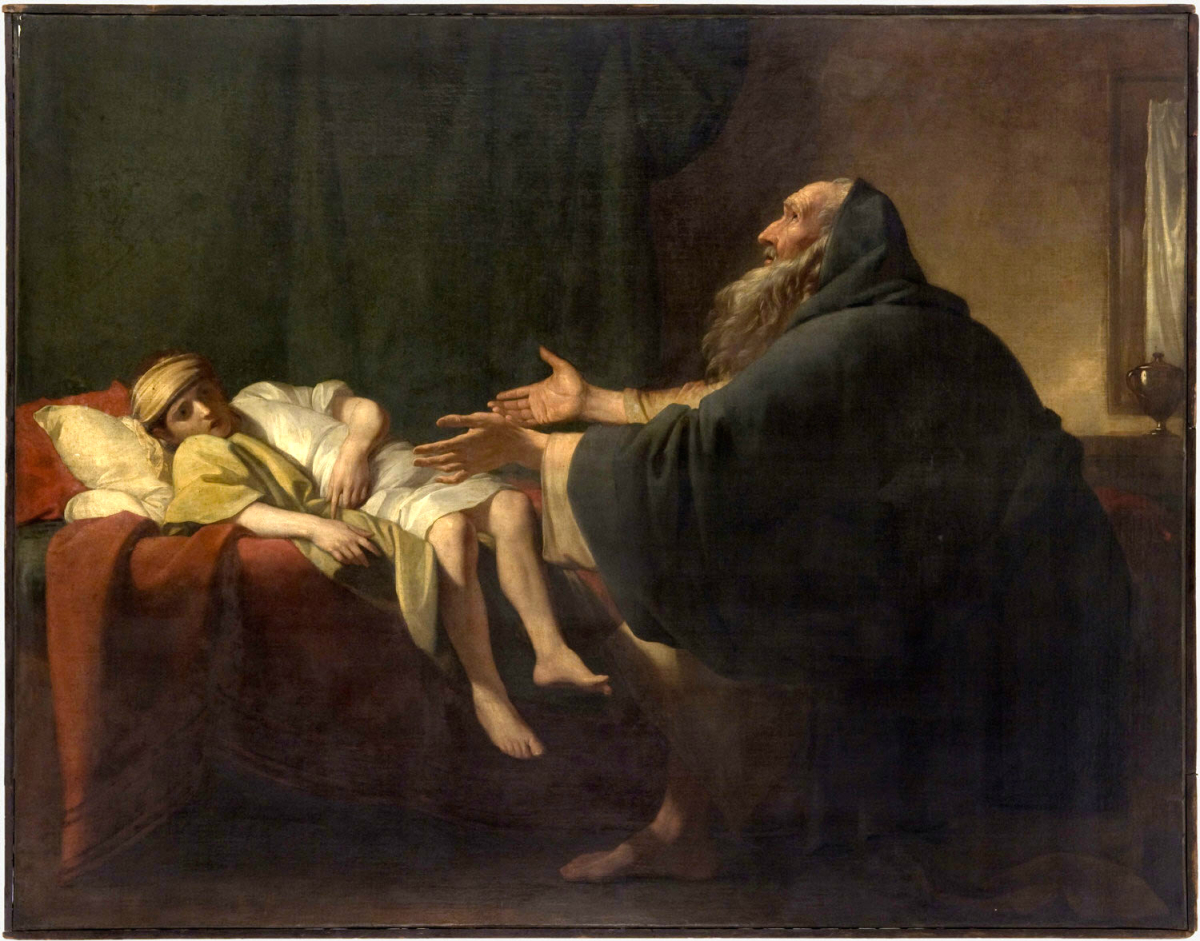
17 After this the son of the woman, the mistress of the house, became ill. And his illness was so severe that there was no breath left in him. 18 And she said to Elijah, “What have you against me, O man of God? You have come to me to bring my sin to remembrance and to cause the death of my son!” 19 And he said to her, “Give me your son.” And he took him from her arms and carried him up into the upper chamber where he lodged, and laid him on his own bed. 20 And he cried to the LORD, “O LORD my God, have you brought calamity even upon the widow with whom I sojourn, by killing her son?” 21 Then he stretched himself upon the child three times and cried to the LORD, “O LORD my God, let this child’s life come into him again.” 22 And the LORD listened to the voice of Elijah. And the life of the child came into him again, and he revived. 23 And Elijah took the child and brought him down from the upper chamber into the house and delivered him to his mother. And Elijah said, “See, your son lives.” 24 And the woman said to Elijah, “Now I know that you are a man of God, and that the word of the LORD in your mouth is truth.” – 1 Kings 17:17-24 ESV

God used Elijah to deliver His message of judgment against King Ahab and his foreign queen, Jezebel. In marrying this princess from Sidon, Ahab had also adopted her false god, Baal, and built a temple for its worship. He also erected a shrine to honor Asherah, the moon-goddess and supposed mother of this pagan deity. Angered by these blatant acts of rebellion and apostasy, God had sent Elijah to tell the royal couple that their kingdom would suffer under a great drought. Their disrespect and disregard for God had brought His discipline.

But after Elijah successfully delivered his message, God sent him away. He ended up at a cave, where God graciously and miraculously arranged for ravens to provide all the food he needed to survive. But eventually, Elijah became a victim of the very drought he predicted. Soon, the brook dried up, and the daily deliveries of bread and meat no longer appeared. So, God sent Elijah to the Sidonian town of Zarephath, where he took up residence with a poor widow and her son. She, too, was suffering from the effects of the drought. But, once again, Yahweh proved Himself to be the one true God by causing her meager supply of flour and oil to miraculously multiply and never run out.

In the midst of a drought and severe famine, she had more than enough to sustain herself, her son, and God’s prophet. Through it all, Elijah learned to trust God for all His needs. But even more importantly, Elijah discovered that his God was greater than the gods of Ahab and Jezebel. While Baal, the so-called fertility god, was powerless to stop the drought or reverse the effects of the famine, Yahweh turned “a handful of flour in a jar and a little oil in a jug” (1 Kings 17:12 ESV) into a never-ending food supply for Elijah and his gracious hostess.

Then suddenly, the story takes a dramatic turn for the worse. The woman’s young son dies unexpectedly. Faced with this devastating change in her circumstances, the woman vented all her anger and frustration on the prophet of God.

“O man of God, what have you done to me? Have you come here to point out my sins and kill my son?” – 1 Kings 17:18 NLT

It seems that the woman had falsely assumed that her son’s death was a form of divine retribution for a former sin she had committed. Perhaps by this time, Elijah had shared the details of his encounter with Ahab and Jezebel, explaining that he had been the one to predict the drought as a punishment for their sin. So, when her son suddenly died, she would have naturally reasoned that God was using the prophet to deliver yet another judgment for sin – that of her own.

But ignoring her despair-driven accusation, Elijah took the lifeless body of her son and placed it on his own bed. Then Elijah turned his attention to God. But notice the tone of His prayer. He seems to echo the words of the widow, passing the blame up the food chain and questioning the goodness and graciousness of God.

“O LORD my God, why have you brought tragedy to this widow who has opened her home to me, causing her son to die?” – 1 Kings 17:20 NLT

Elijah’s response reveals his firm belief that God is sovereign over all things, but he is perplexed and confused by the seeming injustice of it all. In his frustration, He accuses God of doing something wicked. The Hebrew word is rāʿaʿ, which is most often translated as “evil.” The boy’s death makes no sense to Elijah; it seems unnecessary and completely nonproductive. When Elijah first met the woman, she had been fully expecting her son to die of starvation because of the drought. But God had intervened and provided more than enough food to keep all three of them alive. So, to Elijah, the boy’s death seemed pointless and, if anything, it appeared to be an act of cruelty.

But while Elijah was having a difficult time understanding the ways of God, he remained convinced of the power of God. Three times, he lay across the dead body of the boy and cried out, “O LORD my God, please let this child’s life return to him” (1 Kings 17:21 NLT). And the fact that Elijah repeated this process three separate times demonstrates both his persistence and dependence upon God.

It’s important to consider that Elijah had no precedent on which to base his prayer. He was asking Yahweh to do the impossible – to raise a dead body back to life. There is no indication that Elijah had ever seen or heard of God doing such a thing. Elijah was not basing his request on some past miracle recorded in the Hebrew scriptures. The Pentateuch, the first five books of the Bible, contains no instance of God raising the dead back to life. So, Elijah was asking God to do something that had never been done before. His request was a tremendous act of faith.

In a classic example of understatement, the author simply records, “The LORD heard Elijah’s prayer, and the life of the child returned, and he revived!” (1 Kings 17:22 NLT). One can only imagine Elijah’s shock and surprise when the lifeless body of the boy was suddenly reanimated. Two times, nothing had happened. But on the third try, God chose to intervene and answer Elijah’s prayer. We’re not told why God didn’t answer Elijah’s prayer the first time. Perhaps it was a test of Elijah’s faith to see if he would continue to ask and believe even when his request went unanswered. But God had heard, and He ultimately answered, and in a truly remarkable way. Elijah’s unbridled excitement and enthusiasm were on display as he announced the news to the boy’s grieving mother.

“See, your son lives.” – 1 Kings 17:23 ESV

It would be easy to misread this statement and assume that Elijah is saying something like, “See, I told you so!” It almost appears as if he is chastising the woman for her lack of faith. But at no point in the story did Elijah tell the woman that her son would live. He had no way of knowing whether God would answer his prayer or not. At least two times, God failed to do so. But when God had finally provided the miracle for which Elijah was asking, the prophet couldn’t contain his enthusiasm. The New Living Translation provides a much more accurate rendering of Elijah’s response.

“Look!” he said. “Your son is alive!” – 1 Kings 17:23 NLT

No one was as shocked as Elijah, and his joy overflowed in a display of emotional celebration. He most likely walked into the room, carrying the boy in his arms, and then handed him over to the smothering embrace of his overjoyed mother. And, through tears mixed with laughter, the woman managed to express her gratitude to the prophet by declaring her belief in his God.

“Now I know for sure that you are a man of God, and that the LORD truly speaks through you.” – 1 Kings 17:24 NLT

While Yahweh had been keeping the widow and her son alive, she must have had her doubts about Elijah and his God. But now, as she clutched her resurrected son in her arms, she finally recognized and confessed the sovereignty of God and the authority of His prophet. Her son had been dead but was now alive. Her devastating loss had been miraculously reversed with the return of her son. Her sorrow had been turned to joy.

It is easy to overlook the fact that this miracle took place in an obscure village in the region of Sidon. While Jezebel had brought her false god from Sidon to the land of Israel, Elijah had brought the God of Israel to the land of Sidon. The arrival of Baal had been accompanied by drought and famine. But when Yahweh made His appearance in the pagan land of the Sidonians, He had turned a widow’s poverty into plenty and had replaced death with life. In doing so, He had proved Himself to be the one and only God of the universe.

And God intended this powerful lesson to prepare His prophet for all that was about to happen. Elijah didn’t know it yet, but the most significant test of his faith was in his future. After three years of a debilitating and devastating famine, God was going to send Elijah back to the land of Israel to go face-to-face with the king and queen and toe-to-toe with their false god. If Yahweh could revive the dead son of the Sidonian widow, He was powerful enough to restore the stagnant spiritual state of the people of Israel. But would Elijah continue to believe in Yahweh’s power when the odds were stacked against him and the forces of evil threatened his very existence? Only time would tell.

English Standard Version (ESV) The Holy Bible, English Standard Version. ESV® Permanent Text Edition® (2016). Copyright © 2001 by Crossway Bibles, a publishing ministry of Good News Publishers.

New Living Translation (NLT) Holy Bible, New Living Translation, copyright © 1996, 2004, 2015 by Tyndale House Foundation. Used by permission of Tyndale House Publishers Inc., Carol Stream, Illinois 60188. All rights reserved.

Drought, Doubt, and Deliverance

1 Now Elijah the Tishbite, of Tishbe in Gilead, said to Ahab, “As the LORD, the God of Israel, lives, before whom I stand, there shall be neither dew nor rain these years, except by my word.” 2 And the word of the LORD came to him: 3 “Depart from here and turn eastward and hide yourself by the brook Cherith, which is east of the Jordan. 4 You shall drink from the brook, and I have commanded the ravens to feed you there.” 5 So he went and did according to the word of the LORD. He went and lived by the brook Cherith that is east of the Jordan. 6 And the ravens brought him bread and meat in the morning, and bread and meat in the evening, and he drank from the brook. 7 And after a while the brook dried up, because there was no rain in the land.

8 Then the word of the LORD came to him, 9 “Arise, go to Zarephath, which belongs to Sidon, and dwell there. Behold, I have commanded a widow there to feed you.” 10 So he arose and went to Zarephath. And when he came to the gate of the city, behold, a widow was there gathering sticks. And he called to her and said, “Bring me a little water in a vessel, that I may drink.” 11 And as she was going to bring it, he called to her and said, “Bring me a morsel of bread in your hand.” 12 And she said, “As the LORD your God lives, I have nothing baked, only a handful of flour in a jar and a little oil in a jug. And now I am gathering a couple of sticks that I may go in and prepare it for myself and my son, that we may eat it and die.” 13 And Elijah said to her, “Do not fear; go and do as you have said. But first make me a little cake of it and bring it to me, and afterward make something for yourself and your son. 14 For thus says the LORD, the God of Israel, ‘The jar of flour shall not be spent, and the jug of oil shall not be empty, until the day that the LORD sends rain upon the earth.’” 15 And she went and did as Elijah said. And she and he and her household ate for many days. 16 The jar of flour was not spent, neither did the jug of oil become empty, according to the word of the LORD that he spoke by Elijah. – 1 Kings 17:1-16 ESV

Almost as if out of nowhere, a new character appears on the scene. His sudden and unexpected arrival seems intended to accentuate the divine nature of his mission. No background story or biographical information is provided, other than his name and the identity of his hometown.

His introduction into the narrative is timed to coincide with the rise to power of King Ahab and his Sidonian queen, Jezebel. With this new power couple ruling over the northern kingdom of Israel, the spiritual state of the ten northern tribes has reached an all-time low. The author ended chapter 16 with an unflattering description of their influence over the nation.

…he [Ahab] took for his wife Jezebel the daughter of Ethbaal king of the Sidonians, and went and served Baal and worshiped him. He erected an altar for Baal in the house of Baal, which he built in Samaria. And Ahab made an Asherah. Ahab did more to provoke the LORD, the God of Israel, to anger than all the kings of Israel who were before him. – 1 Kings 16:31-33 ESV

To claim that Ahab had managed to anger God more than any of his predecessors is a significant statement. He was following in the footsteps of some world-class, all-star-quality apostates. But when it came to wickedness and unfaithfulness, Ahab set the new gold standard. He became the proverbial poster boy for all that is wicked and ungodly, while his wife managed to earn herself a permanent spot in the spiritual hall of infamy.

In the middle of their sin-fueled and self-absorbed reign, God decides to deliver a message to them, utilizing an obscure and unknown man named Elijah. This will not be the first time God has sent a prophet to deliver a message to a wayward and rebellious king. When Jeroboam had made the fateful decision to replace Yahweh with his own false gods, an unnamed prophet appeared on the scene with a dire message for the king, and he demonstrated God’s anger by destroying one of the altars Jeroboam had dedicated to his false god. Later on, Jeroboam sent his wife to consult with another prophet of God, in hopes of getting a prognosis regarding his young son’s illness. But what he got was bad news. He was told that his son would die and that every one of his male heirs would face the same fate before they could inherit the throne. In other words, any hopes of establishing a dynasty would be destroyed.

As the seventh king to reign over the northern kingdom of Israel, Ahab would not be the first to receive a message from God. But, in his case, the prophet would play a more pronounced and prolonged role in his life. The sins of Ahab and his wife were so egregious that God made his prophet a permanent fixture in their kingdom.

Elijah’s very first encounter with the king and queen was far from favorable. He stood before this powerful couple and boldly proclaimed, “As the LORD, the God of Israel, lives, before whom I stand, there shall be neither dew nor rain these years, except by my word” (1 Kings 17:1 ESV). That took guts and a fair amount of faith. He was claiming to have the God-given authority to withhold rain from the kingdom of Israel. Any way you look at it, this had to come across as a less-than-veiled threat to Ahab and Jezebel. But before they had time to cut this arrogant upstart down to size, God gave him instructions to get out of town.

“Depart from here and turn eastward and hide yourself by the brook Cherith, which is east of the Jordan.” – 1 Kings 17:3 ES

Elijah had done his job, but now it was time for God to prepare him for the next phase of his assignment. Before sending his prophet back into the mouth of the lion’s den, God planned to equip him for what was to come. He was determined to make Elijah a faithful and obedient messenger, strong enough to handle all the vitriol and violence that was about to come his way. Standing up to Ahab and Jezebel was not going to be easy, so God graciously eased Elijah into his new role with a hands-on experience that would teach him to trust and obey.

While in God’s preparatory school for prophets, Elijah was miraculously fed and cared for; he received a twice-daily ration of bread and meat, delivered to his cave by ravens. And outside the cave was a ready source of clean, pure water. But in time, “the brook dried up, because there was no rain in the land” (1 Kings 17:7 ESV). In other words, Elijah’s prediction of drought had come true, and he suffered just like everyone else. Without rain, there was no harvest, so that meant there was no more bread or meat for the ravens to deliver. Elijah’s little oasis in the wilderness had become a death trap. So, God gave him new instructions.

“Go and live in the village of Zarephath, near the city of Sidon. I have instructed a widow there to feed you.” – 1 Kings 17:8 NLT

This would have been a long and arduous journey under normal conditions, but the presence of drought made it even more so. Interestingly, God sent Elijah to a city in the region of Sidon, the very kingdom over which Jezebel’s father was king. Elijah was being sent to the same place Ahab had acquired a queen and her false god, Baal. Zarephath lay between Tyre and Sidon, two of the most prominent Phoenician cities. But as the story makes clear, the drought had made its way all the way to the coast of the Mediterranean Sea.

God provided Elijah with scant details about what to do when he arrived in Zarephath. The prophet had no food and received no word from God regarding when and how it would come, if it did at all. So, when Elijah encountered a widow gathering sticks, he decided to throw himself on her mercy. He asked for a drink of water and a morsel of bread. But then he discovered that this woman’s state was worse than his own.

“I swear by the LORD your God that I don’t have a single piece of bread in the house. And I have only a handful of flour left in the jar and a little cooking oil in the bottom of the jug. I was just gathering a few sticks to cook this last meal, and then my son and I will die.” – 1 Kings 17:12 NLT

The drought had taken its toll, leaving the woman with no food with which to feed herself or her young son.  It shouldn’t be overlooked that Baal, the god of the Phoenicians, was considered a fertility god. He was the provider of bountiful blessings, whether in the form of crops or children. Yet, this woman was living in a drought and watching her young son starve to death. There was nothing bountiful taking place in Zarephath, and Jezebel’s god was nowhere to be found.

Then, God gave Elijah a message to deliver to the woman.

“Don’t be afraid! Go ahead and do just what you’ve said, but make a little bread for me first. Then use what’s left to prepare a meal for yourself and your son. For this is what the LORD, the God of Israel, says: There will always be flour and olive oil left in your containers until the time when the LORD sends rain and the crops grow again!” – 1 Kings 17:13-14 NLT

While the god of the Phoenicians had failed to provide, the God of Israel would meet her needs and preserve the lives of both her and her son. Even in a time of drought, God would miraculously provide flour and oil in abundance until He decided to open up the skies and end the drought.

The woman faithfully obeyed the word of the prophet, and “There was always enough flour and olive oil left in the containers, just as the LORD had promised through Elijah” (1 Kings 17:16 NLT). God graciously provided for this Sidonian widow and her son, and He continued to meet the needs of His prophet. But more importantly, God was teaching Elijah that He could be trusted. He was greater than the fertility god of the Phoenicians. He was more powerful than the false deity of Ahab and Jezebel. The brook may have dried up, but the resources of God remained unending and plentiful. The ravens may have stopped showing up, but the miracle-working power of God remained undiminished. Elijah was learning the vital truth that no circumstance is too difficult for Yahweh, and the days ahead would provide further confirmation of that fact.

English Standard Version (ESV) The Holy Bible, English Standard Version. ESV® Permanent Text Edition® (2016). Copyright © 2001 by Crossway Bibles, a publishing ministry of Good News Publishers.

New Living Translation (NLT) Holy Bible, New Living Translation, copyright © 1996, 2004, 2015 by Tyndale House Foundation. Used by permission of Tyndale House Publishers Inc., Carol Stream, Illinois 60188. All rights reserved.

Just When You Thought It Couldn’t Get Any Worse

29 In the thirty-eighth year of Asa king of Judah, Ahab the son of Omri began to reign over Israel, and Ahab the son of Omri reigned over Israel in Samaria twenty-two years. 30 And Ahab the son of Omri did evil in the sight of the LORD, more than all who were before him. 31 And as if it had been a light thing for him to walk in the sins of Jeroboam the son of Nebat, he took for his wife Jezebel the daughter of Ethbaal king of the Sidonians, and went and served Baal and worshiped him. 32 He erected an altar for Baal in the house of Baal, which he built in Samaria. 33 And Ahab made an Asherah. Ahab did more to provoke the LORD, the God of Israel, to anger than all the kings of Israel who were before him. 34 In his days Hiel of Bethel built Jericho. He laid its foundation at the cost of Abiram his firstborn, and set up its gates at the cost of his youngest son Segub, according to the word of the LORD, which he spoke by Joshua the son of Nun. – 1 Kings 16:29-34 ESV

Things have not been going well in the northern kingdom of Judah. The downward spiritual spiral that began with the reign of Jeroboam has continued unabated. His decision to re-image the God of Israel as a golden calf had been in direct violation of the command given to Moses by God hundreds of years earlier.

“I am the LORD your God, who rescued you from the land of Egypt, the place of your slavery. You must not have any other god but me. You must not make for yourself an idol of any kind or an image of anything in the heavens or on the earth or in the sea. You must not bow down to them or worship them, for I, the LORD your God, am a jealous God who will not tolerate your affection for any other gods. I lay the sins of the parents upon their children; the entire family is affected—even children in the third and fourth generations of those who reject me.” – Exodus 20:1-5 NLT

And yet, despite God’s clear instructions, Jeroboam made his own gods and then attempted to claim that they, not Yahweh, had delivered the nation from their captivity in Egypt.

So on the advice of his counselors, the king made two gold calves. He said to the people, “It is too much trouble for you to worship in Jerusalem. Look, Israel, these are the gods who brought you out of Egypt!”

He placed these calf idols in Bethel and in Dan—at either end of his kingdom. But this became a great sin, for the people worshiped the idols, traveling as far north as Dan to worship the one there. – 1 Kings 12:28-30 NLT

Jeroboam’s decision brought a curse from God upon his dynasty. As a result, his son, Abijah, died in infancy. Another son, Nadab, inherited the throne upon Jeroboam’s death, but in the second year of his reign, he was assassinated by a man named Baasha, who declared himself king. Baasha fulfilled the curse God had placed over the house of Jeroboam by putting to death every one of his descendants. But because Baasha proved to be a wicked king who led the people into further idolatry, God placed a curse on his house as well. Baasha was assassinated by Zimri, the commander of his chariots, who then proceeded to wipe out the entire royal household. But Zimri’s reign would last only seven days. When faced with a coup led by Omri, his former superior officer, Zimri chose to commit suicide. Omri then declared himself to be the legitimate king of Israel. But his reign would prove to be no better than that of his predecessor. In fact, the author flatly states, “Omri did what was evil in the sight of the LORD, and did more evil than all who were before him. For he walked in all the way of Jeroboam the son of Nebat, and in the sins that he made Israel to sin, provoking the LORD, the God of Israel, to anger by their idols” (1 Kings 16:25-26 ESV).

There has been no break in Israel’s downward trajectory. Like water in a sink when the plug is pulled, the spiritual state of the nation continued to spiral down the drain. And just when it appears that Israel has reached an all-time low, another character is introduced who manages to establish himself as the official record holder for apostasy and wickedness.

Omri was succeeded by his son, Ahab, and in more ways than one. Not only did this young man ascend to his father’s throne, but he managed to eclipse his father’s record of sin and rebellion. The author introduces Ahab’s reign with the stinging indictment: “Ahab the son of Omri did evil in the sight of the LORD, more than all who were before him” (1 Kings 16:30 ESV). Then he follows up that far-from-flattering assessment with tangible proof.

He compares the wickedness of Ahab with that of Jeroboam, the first king of the northern tribes of Israel. Jeroboam had been guilty of making his own false gods and attributing to them the credit for something Yahweh had done. In a sense, Jeroboam had tried to create his own version of the one true God. But Ahab decided to abandon Yahweh altogether, replacing Him with Baal, the god of the Canaanites, and his choice of this particular god was influenced by his wife, Jezebel. His marriage to Jezebel had been orchestrated by his father as part of a treaty he had made with Ethbaal, the king of Tyre and Sidon. To form an alliance with this pagan nation, Omri arranged a marriage between his son and Ethbaal’s daughter. This unholy alliance was in direct violation of God’s command.

When the LORD your God hands these nations over to you and you conquer them, you must completely destroy them. Make no treaties with them and show them no mercy. You must not intermarry with them. Do not let your daughters and sons marry their sons and daughters, for they will lead your children away from me to worship other gods. – Deuteronomy 7:2-3 NLT

While the marriage had been Omri’s idea, the author refuses to absolve Ahab of any guilt for his role in the affair. He had been fully compliant and complicit.

…he took for his wife Jezebel the daughter of Ethbaal king of the Sidonians, and went and served Baal and worshiped him. – 1 Kings 16:31 ESV

Just as God had warned, Ahab’s pagan wife ended up having a powerful and detrimental influence over him. This marriage, arranged purely for political purposes, was destined to have dire spiritual implications. What Omri had done to secure the state of his kingdom would end up sealing its fate. Jezebel would do more to degrade the spiritual health of the nation than any king, including her own husband.

This pagan princess introduced her new husband to the gods of her people. The Phoenicians and Canaanites considered Baal to be the most powerful of all the gods. According to their mythology, he was the offspring of El, the chief god, and Asherah, the moon goddess. Baal was sometimes referred to as the sun god or the god of thunder. He was considered a fertility god who rewarded those who worshiped him with fruitfulness, in the form of children and abundant crops.

Ahab willingly and eagerly adopted the false gods of Jezebel, ordering the construction of a temple dedicated to Baal and the erection of an Asherah pole for the worship of Baal’s mother, the moon goddess. These actions stand in stark contrast to those of Solomon, who constructed a Temple for Yahweh in the capital city of Jerusalem. Now, here was Ahab, the king of the northern tribes of Judah, building a temple in the capital city of Samaria dedicated to the worship of the false god of the Canaanites. The people of Israel had sunk to an all-time low, and it was going to get even worse.

The author provided a foreshadowing of things to come when he stated that Ahab “did more to provoke the anger of the LORD, the God of Israel, than any of the other kings of Israel before him” (1 Kings 16:33 NLT). This foreboding statement is followed by another tangible expression of Ahab’s ill-fated actions. It seems that Ahab had given orders to rebuild the destroyed city of Jericho. This task was assigned to a man named Hiel, but the endeavor proved costly. While overseeing the construction of the city, Hiel ended up losing two of his own sons. 

This somewhat strange and seemingly out-of-place narrative is meant to illustrate Ahab’s blatant disregard for the will of God. His determination to rebuild the city of Jericho was in direct violation of God’s command. Hundreds of years earlier, when the Israelites had first entered the land of Canaan, Jericho had been the first city they had defeated and destroyed. God had given them a supernatural victory over the city and its inhabitants, and then He commanded its destruction, placing a curse on anyone who tried to rebuild the ruins.

“Cursed before the Lord be the man who rises up and rebuilds this city, Jericho.

“At the cost of his firstborn shall he
    lay its foundation,
and at the cost of his youngest son
    shall he set up its gates.” – Joshua 6:26 ESV

Hiel, under direct orders from Ahab, ended up violating the command of God, and, as a result, he inadvertently found himself suffering the curse of God. The author sadly states that this poor man “laid its foundation at the cost of Abiram his firstborn, and set up its gates at the cost of his youngest son Segub, according to the word of the LORD” (1 Kings 16:34 ESV).

The marriage of Ahab and Jezebel would prove to be one of the worst things that ever happened to the people of God. This unholy alliance ended up bringing great sorrow upon the nation, leading the people into further rebellion against God. Eventually, Jezebel became the poster girl for wickedness and evil. Her very name would become a byword for all that stands opposed to God. In fact, her name appears in the very last book of the Bible, as a less-than-flattering description of a woman who would end up leading the church at Thyatira into immorality and the worship of false gods.

“But I have this complaint against you. You are permitting that woman—that Jezebel who calls herself a prophet—to lead my servants astray. She teaches them to commit sexual sin and to eat food offered to idols. I gave her time to repent, but she does not want to turn away from her immorality.” – Revelation 2:20-21 NLT

But the devastating exploits of this power couple were just beginning. As will become painfully evident, their evil actions would not go unnoticed or unpunished by God. He is omniscient and omnipotent, possessing the divine capacity to see and know all things, and the power to deal with the wickedness of man justly and sovereignly. Ahab and Jezebel would wield tremendous authority and display an unbridled arrogance toward Yahweh. Their failure to honor and revere Him as God would come back to haunt them. The actions of this royal couple would bring down God’s wrath, not just because they refused to honor Him, but because they influenced others to follow their lead. The apostle Paul describes the fate of all those who follow the path of Ahab and Jezebel.

Since they thought it foolish to acknowledge God, he abandoned them to their foolish thinking and let them do things that should never be done. Their lives became full of every kind of wickedness, sin, greed, hate, envy, murder, quarreling, deception, malicious behavior, and gossip. They are backstabbers, haters of God, insolent, proud, and boastful. They invent new ways of sinning, and they disobey their parents. They refuse to understand, break their promises, are heartless, and have no mercy. They know God’s justice requires that those who do these things deserve to die, yet they do them anyway. Worse yet, they encourage others to do them, too. – Romans 1:28-32 NLT

English Standard Version (ESV) The Holy Bible, English Standard Version. ESV® Permanent Text Edition® (2016). Copyright © 2001 by Crossway Bibles, a publishing ministry of Good News Publishers.

New Living Translation (NLT) Holy Bible, New Living Translation, copyright © 1996, 2004, 2015 by Tyndale House Foundation. Used by permission of Tyndale House Publishers Inc., Carol Stream, Illinois 60188. All rights reserved.
New King – Same Old Story

15 In the twenty-seventh year of Asa king of Judah, Zimri reigned seven days in Tirzah. Now the troops were encamped against Gibbethon, which belonged to the Philistines, 16 and the troops who were encamped heard it said, “Zimri has conspired, and he has killed the king.” Therefore all Israel made Omri, the commander of the army, king over Israel that day in the camp. 17 So Omri went up from Gibbethon, and all Israel with him, and they besieged Tirzah. 18 And when Zimri saw that the city was taken, he went into the citadel of the king’s house and burned the king’s house over him with fire and died, 19 because of his sins that he committed, doing evil in the sight of the LORD, walking in the way of Jeroboam, and for his sin which he committed, making Israel to sin. 20 Now the rest of the acts of Zimri, and the conspiracy that he made, are they not written in the Book of the Chronicles of the Kings of Israel?

21 Then the people of Israel were divided into two parts. Half of the people followed Tibni the son of Ginath, to make him king, and half followed Omri. 22 But the people who followed Omri overcame the people who followed Tibni the son of Ginath. So Tibni died, and Omri became king. 23 In the thirty-first year of Asa king of Judah, Omri began to reign over Israel, and he reigned for twelve years; six years he reigned in Tirzah. 24 He bought the hill of Samaria from Shemer for two talents of silver, and he fortified the hill and called the name of the city that he built Samaria, after the name of Shemer, the owner of the hill.

25 Omri did what was evil in the sight of the LORD, and did more evil than all who were before him. 26 For he walked in all the way of Jeroboam the son of Nebat, and in the sins that he made Israel to sin, provoking the LORD, the God of Israel, to anger by their idols. 27 Now the rest of the acts of Omri that he did, and the might that he showed, are they not written in the Book of the Chronicles of the Kings of Israel? 28 And Omri slept with his fathers and was buried in Samaria, and Ahab his son reigned in his place. – 1 Kings 16:15-28 ESV

Zimri’s time in the spotlight was short-lived. This former chariot commander in Israel’s army had murdered King Elah and declared himself the new sovereign over the ten tribes of the northern kingdom. But his reign would last only seven days. Word of his seemingly successful coup attempt reached his fellow soldiers, who were encamped against the Philistines at a place called Gibbethon. Upon hearing of King Elah’s death, the troops threw their support behind Omri, who was the commander of the armies of Israel. They rejected Zimri’s claim to be king and, instead, nominated his superior officer as the obvious choice to replace Elah. Zimri may have caused the vacancy on the throne, but Omri would be the one to fill it.

Within days of seizing the throne from Elah and having secured his victory by liquidating every member of the king’s household, Zimri was safely ensconced in Tirzah, the former king’s capital. But one day he woke up to find that the city was being besieged, not by Philistines or some other foreign power, but by Omri and the rest of the Israelite army. Just seven days into his reign, Zimri had managed to instigate a civil war for which he was both outmanned and unprepared. Stealing the throne had been easy, but retaining it was going to be far more complicated than he could have imagined.

Recognizing the futility of the situation, Zimri chose to take his own life rather than surrender. He knew that Omri would order his execution for the murder of Elah, and he likely knew Omri had his own kingly aspirations. So, Zimri locked himself in the citadel of the king’s palace and burned the entire structure to the ground. In doing so, he controlled his own fate and managed to rob Omri of a palace from which to rule. If he couldn’t sit on the throne in Tirzah, neither would Omri.

But the author makes it clear that while Zimri had taken his own life, it had still been a case of divine judgment for his sins against God.

…he, too, had done what was evil in the LORD’s sight. He followed the example of Jeroboam in all the sins he had committed and led Israel to commit. – 1 Kings 16:19 NLT

When Zimri had entered Tirzah just days earlier, any thought of suicide would have been the last thing to enter his mind. He was focused on the future and dreaming of his newfound power and prestige. After all, he was the self-made king, the supreme ruler over all of Israel. As he sat on his throne in Tirzah, his mind would have been filled with thoughts of success and not suicide. But had he read the proverbs collected by Israel’s former king, Solomon, he would have understood that his plans were irrelevant if they stood in opposition to the will of God.

You can make many plans, but the LORD’s purpose will prevail. – Proverbs 19:21 NLT

We can make our plans, but the LORD determines our steps. – Proverbs 16:9 NLT

Zimri had plans for greatness, but he died in the smoldering rubble of the palace he had stolen through deceit and treachery. God had used this ambitious and self-consumed man to punish Elah for his wickedness, but He would not allow Zimri to benefit from his actions. His reign lasted exactly one week, then ended as quickly as it had begun.

But the sad state of affairs in Israel was far from over. While Omri had managed to seize the capital and secure the crown for himself, the nation was about to enter a time of division and disunity. Just as God had split Solomon’s kingdom in half, Omri would find himself ruling over a divided nation.

But now the people of Israel were split into two factions. Half the people tried to make Tibni son of Ginath their king, while the other half supported Omri. – 1 Kings 16:21 NLT

When Omri received the news that Zimri had killed King Elah, he had been leading his troops against the Philistines, the dreaded enemies of Israel. But now, as the king of Israel, he found himself going to war against his own people. A civil war had broken out, and Omni was forced to lead his troops in battle against the supporters of his rival, Tibni. The nation was divided, and rather than throwing their collective allegiance behind God Almighty, they chose sides and put their hopes in two extremely flawed and fallible men.

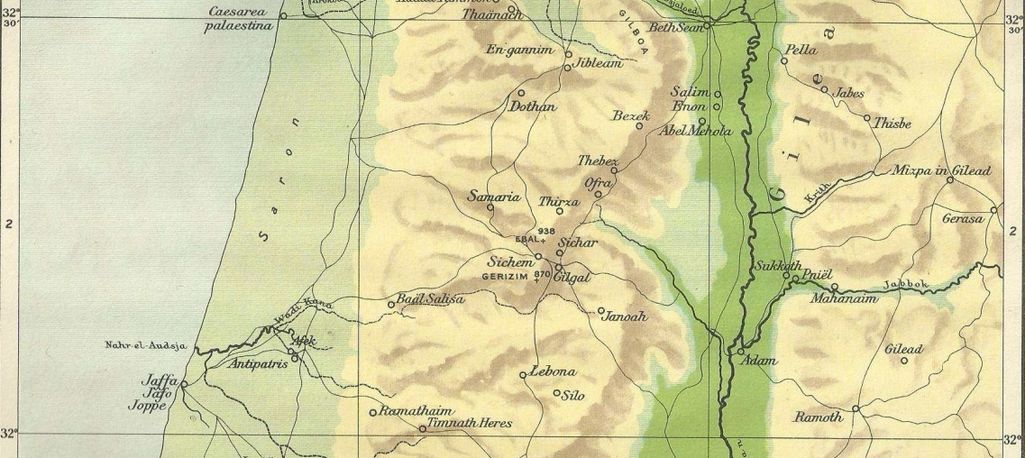
Omri eventually defeated Tibni and his forces, securing his place as the king of Israel. Half of the dozen years he ruled over Israel were spent in Tirzah, the former capital of King Elah. But Omri dreamed of establishing his own royal city from which to rule over the ten tribes of Israel. So, he found a favorable spot just west of Tirzah and purchased the land from a man named Shemer. In time, he built a fortified palace on the elevated portion of the land and named his new capital Samaria.

While the author doesn’t seem to treat this change in the location of the capital city with much importance, his mention of it is meant to foreshadow things to come. Omri would end up establishing a dynasty that would rule over Israel for an extended period of time. His newly established capital would become the focal point for Israel’s continuing spiritual decline and the epicenter of the nation’s eventual destruction.

The author chooses to summarize Omri’s 12-year reign in less-than-flattering terms.

Omri did what was evil in the sight of the LORD, and did more evil than all who were before him. – 1 Kings 16:25 ESV

Israel had a new king and a brand new capital, but they continued to suffer from the same old problem. Omri, like Jeroboam and Nadab before him, failed to use his divinely ordained power as king to lead the people back to God. Instead, he fostered the spirit of spiritual adultery and apostasy. Under his leadership, “the people provoked the anger of the LORD, the God of Israel, with their worthless idols” (1 Kings 16:21 NLT). 

On paper, Omri proved to be a highly accomplished and effective king. His 12 years on the throne of Israel were marked by military victories and peace negotiations with the enemies of Israel. He defeated the Moabites and brokered a treaty with Ethbaal, king of Tyre and Sidon, and this last act would prove to have long-lasting implications. As part of the treaty negotiations, Omri approved a marriage alliance between his son, Ahab, and Ethbaal’s daughter, Jezebel, and those two names will come up again.

While Omri appeared to be having success, he was actually operating outside the revealed will of God. His decisions were made without divine input and in direct violation of God’s commands. Hundreds of years earlier, Moses had warned the people of Israel about their interactions with the nations living in the land of Canaan.

When the LORD your God hands these nations over to you and you conquer them, you must completely destroy them. Make no treaties with them and show them no mercy. You must not intermarry with them. Do not let your daughters and sons marry their sons and daughters, for they will lead your children away from me to worship other gods. Then the anger of the LORD will burn against you, and he will quickly destroy you. – Deuteronomy 7:2-4 NLT

Like his predecessors, Omri was doing things according to his own plan. But as the proverbs warn, “You can make many plans, but the LORD’s purpose will prevail” (Proverbs 19:21 NLT). Omri’s ambitions to expand his kingdom at any cost would actually lead to the eventual fall of the nation. In his hopes of building Israel into a formidable force in the region, he was actually contributing to its downfall. His refusal to shepherd the people of God back to the fold of God would eventually result in their destruction at the hands of God.

English Standard Version (ESV) The Holy Bible, English Standard Version. ESV® Permanent Text Edition® (2016). Copyright © 2001 by Crossway Bibles, a publishing ministry of Good News Publishers.

New Living Translation (NLT) Holy Bible, New Living Translation, copyright © 1996, 2004, 2015 by Tyndale House Foundation. Used by permission of Tyndale House Publishers Inc., Carol Stream, Illinois 60188. All rights reserved.

False Gods = False Hope

1 When Ephraim spoke, there was trembling;
    he was exalted in Israel,
    but he incurred guilt through Baal and died.
2 And now they sin more and more,
    and make for themselves metal images,
idols skillfully made of their silver,
    all of them the work of craftsmen.
It is said of them,
    “Those who offer human sacrifice kiss calves!”
3 Therefore they shall be like the morning mist
    or like the dew that goes early away,
like the chaff that swirls from the threshing floor
    or like smoke from a window.
– Hosea 13:1-3 ESV

Hosea continues to give the tribe of Ephraim a special designation as the premier tribe among the other nine that made up the northern kingdom of Judah. And this was appropriate considering the words of Jacob, spoken when he had blessed his two grandsons, Ephraim and Manasseh, the sons of Joseph.

“Manasseh will also become a great people, but his younger brother will become even greater. And his descendants will become a multitude of nations.”

So Jacob blessed the boys that day with this blessing: “The people of Israel will use your names when they give a blessing. They will say, ‘May God make you as prosperous as Ephraim and Manasseh.’” In this way, Jacob put Ephraim ahead of Manasseh. – Genesis 48:19-20 NLT

The tribe of Ephraim was the largest of the tribes within the northern kingdom and it played a significant leadership role within the nation. In fact, the very first king who ruled over the northern kingdom of Israel had been Jeroboam, a member of the tribe of Ephraim (1 King 11:26). And it was Jeroboam who, after being given the responsibility by God to rule over the ten northern tribes, had made the fateful decision to create his own gods and religion. He had created two golden calf idols and decreed them to be the gods of Israel, even setting up temples for their worship in Dan and Bethel.

So on the advice of his counselors, the king made two gold calves. He said to the people, “It is too much trouble for you to worship in Jerusalem. Look, Israel, these are the gods who brought you out of Egypt!”

He placed these calf idols in Bethel and in Dan—at either end of his kingdom. But this became a great sin, for the people worshiped the idols, traveling as far north as Dan to worship the one there. – 1 Kings 12:28-30 NLT

The ten northern tribes had not gotten off to a great start, and their downward spiritual trajectory never fully recovered. Jeroboam had created a fertile environment in which apostasy and idolatry could grow, and his successors continued to lead the people away from worshiping Yahweh as the one true God. Eventually, this led to the worship of Baal, the god of the Canaanites. And Jezebel, the wife of Ahab, one of Israel’s future kings, would aggressively promote Baal as the primary god of the northern kingdom.

Ahab son of Omri did what was evil in the LORD’s sight, even more than any of the kings before him. And as though it were not enough to follow the sinful example of Jeroboam, he married Jezebel, the daughter of King Ethbaal of the Sidonians, and he began to bow down in worship of Baal. First Ahab built a temple and an altar for Baal in Samaria. Then he set up an Asherah pole. He did more to provoke the anger of the LORD, the God of Israel, than any of the other kings of Israel before him. – 1 Kings 16:30-33 NLT

It should not be surprising to learn that Ahab was also a member of the tribe of Ephraim.

The seventh king of Israel, Ahab (reigned c. 874–c. 853 bc), was also an Ephraimite. His generally peaceful reign was marred by the worship of the Canaanite god Baal by his wife, Jezebel. From about 745 bc, the northern kingdom was often referred to as the Kingdom of Ephraim, a reflection of the tribe’s importance. – Britannica, The Editors of Encyclopaedia. “Ephraim”. Encyclopedia Britannica, https://www.britannica.com/topic/Ephraim-Jewish-tribe. Accessed 19 June 2021.

So, Hosea’s calling out of this particular tribe was well deserved. They had played a major role in Israel’s spiritual decline and would be held responsible.

the people of Ephraim sinned by worshiping Baal
    and thus sealed their destruction. – Hosea 13:1 NLT

They used their access to the throne to promote idolatry and, in doing so, led the people of Israel to forsake God. And according to Hosea, this one tribe encouraged a spirit of unfaithfulness among the other nine tribes.

Now they continue to sin by making silver idols,
    images shaped skillfully with human hands. – Hosea 13:2 NLT

The practice of idolatry became prolific and profitable. The making of idols became a cottage industry, providing a lucrative business opportunity for many in Israel. And it wasn’t long before the Israelites added a host of new gods to their growing pantheon of false gods. One could find shrines, altars, and high places dedicated to these deities all over the kingdom of Israel. And each was served by its own priests and warranted its own set of rules and rituals to regulate proper worship and to ensure its adherents received a favorable response.

But in order to worship these false gods, the Israelites had to turn their backs on the one true God. In bowing down before the idols they had made with their own hands, they were abandoning their hope and trust in Yahweh. They were seeking help from pieces of stone and metal that were incapable of hearing or responding to their requests. And the prophet Isaiah recorded God’s sarcastic assessment of idolatry’s absurdity.

You are my witnesses—is there any other God?
    No! There is no other Rock—not one!”

How foolish are those who manufacture idols.
    These prized objects are really worthless.
The people who worship idols don’t know this,
    so they are all put to shame.
Who but a fool would make his own god—
    an idol that cannot help him one bit?
All who worship idols will be disgraced
    along with all these craftsmen—mere humans—
    who claim they can make a god.
They may all stand together,
    but they will stand in terror and shame. – Isaiah 20:8-11 NLT

Later on, in Isaiah’s book, there is another unflattering statement by God that reflects the sheer stupidity behind the practice of idolatry. Yahweh paints a ridiculous-looking portrait of a craftsman cutting down a tree and going through the process of creating his god.

…he uses part of the wood to make a fire.
    With it he warms himself and bakes his bread.
Then—yes, it’s true—he takes the rest of it
    and makes himself a god to worship!
He makes an idol
    and bows down in front of it!
He burns part of the tree to roast his meat
    and to keep himself warm.
    He says, “Ah, that fire feels good.”
Then he takes what’s left
    and makes his god: a carved idol!
He falls down in front of it,
    worshiping and praying to it.
“Rescue me!” he says.
    “You are my god!” – Isaiah 44:15-17 NLT

And the prophet Jeremiah provides yet another one of God’s stinging indictments against the absurd practice of idolatry.

“Their ways are futile and foolish.
    They cut down a tree, and a craftsman carves an idol.
They decorate it with gold and silver
    and then fasten it securely with hammer and nails
    so it won’t fall over.
Their gods are like
    helpless scarecrows in a cucumber field!
They cannot speak,
    and they need to be carried because they cannot walk.
Do not be afraid of such gods,
    for they can neither harm you nor do you any good.” – Jeremiah 10:3-5 NLT

But while these false gods can do neither harm nor good, Yahweh can. And Hosea points out the unsettling fact that all those who choose to worship other gods will be judged by the one true God.

Therefore, they will disappear like the morning mist,
    like dew in the morning sun,
like chaff blown by the wind,
    like smoke from a chimney. – Hosea 13:3 NLT

They were about to learn a painful but invaluable lesson. When the wrath of Yahweh fell, their false gods would be proven helpless and defenseless. Their sacrifices would accomplish nothing. Their cries for deliverance would go unheard and unanswered. While Yahweh was a “refuge and strength, a very present help in trouble” (Psalm 46:1 ESV), their false gods would be exposed as worthless and, ultimately, totally unreliable.

English Standard Version (ESV) The Holy Bible, English Standard Version. ESV® Permanent Text Edition® (2016). Copyright © 2001 by Crossway Bibles, a publishing ministry of Good News Publishers.

New Living Translation (NLT) Holy Bible, New Living Translation, copyright © 1996, 2004, 2015 by Tyndale House Foundation. Used by permission of Tyndale House Publishers Inc., Carol Stream, Illinois 60188. All rights reserved.

The Message (MSG)Copyright © 1993, 1994, 1995, 1996, 2000, 2001, 2002 by Eugene H. Peterson


Preserving and Protecting the Line of David

13 When Athaliah heard the noise of the guard and of the people, she went into the house of the Lord to the people. 14 And when she looked, there was the king standing by the pillar, according to the custom, and the captains and the trumpeters beside the king, and all the people of the land rejoicing and blowing trumpets. And Athaliah tore her clothes and cried, “Treason! Treason!” 15 Then Jehoiada the priest commanded the captains who were set over the army, “Bring her out between the ranks, and put to death with the sword anyone who follows her.” For the priest said, “Let her not be put to death in the house of the Lord.” 16 So they laid hands on her; and she went through the horses’ entrance to the king’s house, and there she was put to death.

17 And Jehoiada made a covenant between the Lord and the king and people, that they should be the Lord’s people, and also between the king and the people. 18 Then all the people of the land went to the house of Baal and tore it down; his altars and his images they broke in pieces, and they killed Mattan the priest of Baal before the altars. And the priest posted watchmen over the house of the Lord. 19 And he took the captains, the Carites, the guards, and all the people of the land, and they brought the king down from the house of the Lord, marching through the gate of the guards to the king’s house. And he took his seat on the throne of the kings. 20 So all the people of the land rejoiced, and the city was quiet after Athaliah had been put to death with the sword at the king’s house.

21 Jehoash was seven years old when he began to reign. – 2 Kings 11:13-21 ESV

For six years, Joash, the young heir to David’s throne, had lived in the temple of Yahweh – and right under Athaliah’s nose. The house of God proved to be the perfect hiding place for the young boy because it would have been the last place Athaliah would have ever looked. Like her parents, Ahab and Jezebel, she was a committed Baal worshiper. So, any chance of her running into Joash at the house of God would have been highly unlikely. In this story, the temple of the one true God plays a significant role. It is a reminder that, in Judah, Yahweh still played a major role in the lives of the people. While some of the kings of Judah had successfully introduced the worship of idols, the people had not abandoned Yahweh. The temple Solomon had built still stood, and the sacrificial system remained in place. Jehoiada and his fellow priests faithfully maintained God’s house and looked after the spiritual well-being of God’s people. And now, Jehoiada had provided sanctuary for God’s chosen king in the house that bore God’s name. And it must not be overlooked that the temple of God had direct ties all the way back to King David.

It had always been David’s dream to build a great temple in honor of Yahweh. But God informed David that He had other plans.

“And I will give you rest from all your enemies. Moreover, the Lord declares to you that the Lord will make you a house. When your days are fulfilled and you lie down with your fathers, I will raise up your offspring after you, who shall come from your body, and I will establish his kingdom. He shall build a house for my name, and I will establish the throne of his kingdom forever.” – 2 Samuel 7:11-13 ESV

God went on to promise David, “your house and your kingdom shall be made sure forever before me. Your throne shall be established forever” (2 Samuel 7:16 ESV). God was going to build David’s house or dynasty.  But it would be David’s son, Solomon, whom God would give the privilege of constructing a house that would bear His name and in which His glory would dwell. And now, the house built by Solomon had become the means by which God fulfilled His promise to preserve the house of David. Joash, the descendant of David and the rightful heir to the throne of Judah, was alive because he had been given sanctuary and protection in the house of God.

When word got out that Joash was alive and that he had been crowned the king of Judah, the crowds flocked to the temple to see if the news was true. And it wasn’t long before Athaliah was told about the great commotion taking place at the temple of Yahweh. So, she went to see for herself.

Much to her shock and surprise, there stood her seven-year-old grandson, Joash, very much alive and well, and wearing a crown on his head. In a matter of seconds, Athaliah’s house of cards began to crumble. Her insidious plan to eradicate all the heirs to her son’s throne had failed. For six years she had lived under the delusion that she had successfully secured her place as the queen of Judah. But little did she know that God had been protecting and preserving the seed of David until he was ready to take the throne. And it must not be overlooked that when Jehoiada placed the crown on the head of Joash, he had also presented the young king with a copy of the Mosaic Law.

Jehoiada brought out Joash, the king’s son, placed the crown on his head, and presented him with a copy of God’s laws. – 2 Kings 11:12 NLT

This practice was in keeping with the commands of God concerning the kings of Israel.

“When he sits on the throne as king, he must copy for himself this body of instruction on a scroll in the presence of the Levitical priests. He must always keep that copy with him and read it daily as long as he lives. That way he will learn to fear the Lord his God by obeying all the terms of these instructions and decrees. This regular reading will prevent him from becoming proud and acting as if he is above his fellow citizens. It will also prevent him from turning away from these commands in the smallest way. And it will ensure that he and his descendants will reign for many generations in Israel.” – Deuteronomy 17:18-20 NLT

Athaliah, an ungodly and unauthorized queen, was standing before the God-appointed king of Judah. And this young man was backed by the law of God, the priests of God, and had the full support of the people of God. But declared the entire scene to be nothing less than an act of treason. She refused to acknowledge Joash as the rightful heir to the throne because she refused to acknowledge Yahweh as the one and only God of Judah.

But her claims of treason were met with an order from Jehoiada the priest, commanding that she be taken from the temple and executed. She was the one who had been guilty of treason and so, she was the one who deserved to die.

With her death, a spirit of revival broke out in the land of Judah. Jehoiada immediately “made a covenant between the Lord and the king and the people that they would be the Lord’s people” (2 Kings 11:17 NLT). In a sense, he called the people to repent and return to the worship of Yahweh. They had a new king but Jehoiada knew that it would mean nothing without a renewed commitment to God. Joash was just a seven-year-old boy with no leadership skills or experience. But if he and the people under his care would recommit themselves to the Word and the will of God, they would find themselves enjoying the blessings of God once again.

In a decisive demonstration of their renewed zeal for Yahweh, the people tore down the temple of Baal. Its very presence indicates that Athaliah and her ungodly relatives in Israel had played a major role in the declining spiritual state within Judah. The city of Jerusalem, home to the temple of God, also had a temple dedicated to Baal, the false god of Ahab and Jezebel. But in the revival-like atmosphere that accompanied Joash’s crowning, the people were moved to eradicate every last vestige of Baal worship from their midst.

They demolished the altars and smashed the idols to pieces, and they killed Mattan the priest of Baal in front of the altars. – 2 Kings 11:18 NLT

With Athaliah and her false god out of the way, it was time for Joash to move from God’s house to David’s palace. So, Jehoiada led a processional from the temple to the royal residence, where “the king took his seat on the royal throne” (2 Kings 11:19 NLT). And at that moment, God reaffirmed the promise He had made to David.

“Your house and your kingdom will continue before me for all time, and your throne will be secure forever.” – 2 Samuel 7:16 NLT

God was committed to keeping His word because He had a far greater plan in store that would involve the line of David. His preservation of David’s house was crucial because there was to be one final descendant of David who would rule and reign, not just over Judah and Israel, but over all the kingdoms of the world. The prophet Isaiah spoke of this coming King and the day when He will bring salvation to the world.

In that day the heir to David’s throne
    will be a banner of salvation to all the world.
The nations will rally to him,
    and the land where he lives will be a glorious place. – Isaiah 11:10 NLT

Joash had been protected so that David’s line could be preserved. Despite the unfaithfulness of His people, God was faithfully keeping His promise to David so that His plans for the future redemption of the world could be fulfilled in Christ.

English Standard Version (ESV) The Holy Bible, English Standard Version. ESV® Permanent Text Edition® (2016). Copyright © 2001 by Crossway Bibles, a publishing ministry of Good News Publishers.

New Living Translation (NLT) Holy Bible, New Living Translation, copyright © 1996, 2004, 2015 by Tyndale House Foundation. Used by permission of Tyndale House Publishers Inc., Carol Stream, Illinois 60188. All rights reserved.

The Message (MSG)Copyright © 1993, 1994, 1995, 1996, 2000, 2001, 2002 by Eugene H. Peterson


A Gift From God

1 Now when Athaliah the mother of Ahaziah saw that her son was dead, she arose and destroyed all the royal family. 2 But Jehosheba, the daughter of King Joram, sister of Ahaziah, took Joash the son of Ahaziah and stole him away from among the king’s sons who were being put to death, and she put him and his nurse in a bedroom. Thus they hid him from Athaliah, so that he was not put to death. 3 And he remained with her six years, hidden in the house of the Lord, while Athaliah reigned over the land.

4 But in the seventh year Jehoiada sent and brought the captains of the Carites and of the guards, and had them come to him in the house of the Lord. And he made a covenant with them and put them under oath in the house of the Lord, and he showed them the king’s son. 5 And he commanded them, “This is the thing that you shall do: one third of you, those who come off duty on the Sabbath and guard the king’s house 6 (another third being at the gate Sur and a third at the gate behind the guards) shall guard the palace. 7 And the two divisions of you, which come on duty in force on the Sabbath and guard the house of the Lord on behalf of the king, 8 shall surround the king, each with his weapons in his hand. And whoever approaches the ranks is to be put to death. Be with the king when he goes out and when he comes in.”

9 The captains did according to all that Jehoiada the priest commanded, and they each brought his men who were to go off duty on the Sabbath, with those who were to come on duty on the Sabbath, and came to Jehoiada the priest. 10 And the priest gave to the captains the spears and shields that had been King David’s, which were in the house of the Lord. 11 And the guards stood, every man with his weapons in his hand, from the south side of the house to the north side of the house, around the altar and the house on behalf of the king. 12 Then he brought out the king’s son and put the crown on him and gave him the testimony. And they proclaimed him king and anointed him, and they clapped their hands and said, “Long live the king!” – 2 Kings 11:1-12 ESV

Meanwhile, back in Judah.

Once again, the author shifts the focus of his narrative back to the southern kingdom. While Jehu had been systematically and brutally eliminating the legacy of Ahab from Israel, a regime change had taken place in Judah as well. While the two nations operated independently of one another, they had developed close ties through intermarriage and military alliances. Ahab and Jezebel had a daughter, Athaliah, who had married King Jehoram of Israel. Her influence over him is readily apparent when you read how God assessed his reign and disclosed the nature of his death.

“…you have been as evil as the kings of Israel. You have led the people of Jerusalem and Judah to worship idols, just as King Ahab did in Israel. And you have even killed your own brothers, men who were better than you. So now the Lord is about to strike you, your people, your children, your wives, and all that is yours with a heavy blow. You yourself will suffer with a severe intestinal disease that will get worse each day until your bowels come out.” – 2 Chronicles 21:13-15 NLT

And when Jehoram ending up dying just as God had predicted, he was replaced by Ahaziah, the son he shared with Athalia. During his reign, Ahaziah maintained a close relationship with his family back in Israel, even making a trip to visit his uncle, King Jehoram, who was recuperating from battle injuries at his summer palace in Jezreel. But the timing of his trip proved both ill-planned and ill-fated. He had arrived in Jezreel at the exact moment when Jehu was launching his coup against the house of Ahab. And his decision to be in Israel at that precise moment proved deadly.

When King Ahaziah of Judah saw what was happening, he fled along the road to Beth-haggan. Jehu rode after him, shouting, “Shoot him, too!” So they shot Ahaziah in his chariot at the Ascent of Gur, near Ibleam. He was able to go on as far as Megiddo, but he died there. His servants took him by chariot to Jerusalem, where they buried him with his ancestors in the City of David. – 2 Kings 9:27-28 NLT

In a single day, Jehu had managed to kill the kings of Israel and Judah, creating an immediate power vacuum in both nations. He would end up filling the void left by King Jehoram in Israel, but the battle for control of Ahaziah’s empty throne would prove more complicated and deadly.

As soon as Athalia received the news that her son had been murdered by Jehu, she launched a brutal campaign to secure the crown for herself. Rather than mourn the death of her son, “she arose and destroyed all the royal family” (2 Kings 11:1 ESV). She callously eliminated any and all competition. And thanks to her husband’s sins against Yahweh, her work had been made much easier. As punishment for Jehoram’s ungodly leadership, God had brought judgment against Judah in the form of enemy raiding parties.

Then the Lord stirred up the Philistines and the Arabs, who lived near the Ethiopians, to attack Jehoram. They marched against Judah, broke down its defenses, and carried away everything of value in the royal palace, including the king’s sons and his wives. Only his youngest son, Ahaziah, was spared. – 2 Chronicles 21:16-17 NLT

Now, with Ahaziah out of the picture, Athaliah had few competitors for the throne. But she still went out of her way to eliminate anyone who might jeopardize her plan to rule over Judah. In doing so, Athaliah was going against the revealed will of God. He had made a covenant commitment to David that one of his descendants would sit on his throne forever.

“When your days are fulfilled and you lie down with your fathers, I will raise up your offspring after you, who shall come from your body, and I will establish his kingdom. He shall build a house for my name, and I will establish the throne of his kingdom forever.

“And your house and your kingdom shall be made sure forever before me. Your throne shall be established forever.” – 2 Samuel 7:12-13, 16 ESV

Athaliah was not a descendant of David, but she was not about to let that minor detail stand in her way. So, she set out to clear her path to power by systematically wiping out anyone who might claim to be the rightful heir to David’s throne. 

Having successfully eliminated the competition, Athaliah became the self-appointed queen of Judah, and she would hold that title for the next six years. But little did she know that all the while she sat on the throne, the true king of Judah was being protected in the house of God. During her ambitious and murderous power-grab, she had inadvertently overlooked one minor detail: A young boy named Joash. He was the son of King Ahaziah and, therefore, the rightful heir to the throne.

When Athaliah had begun her murderous spree, her step-daughter, Jehosheba, had risked her life by protecting Joash, the infant son of Ahaziah. The book of 2 Chronicles provides us with a detailed description of her brave rescue attempt.

Ahaziah’s sister Jehosheba, the daughter of King Jehoram, took Ahaziah’s infant son, Joash, and stole him away from among the rest of the king’s children, who were about to be killed. She put Joash and his nurse in a bedroom. In this way, Jehosheba, wife of Jehoiada the priest and sister of Ahaziah, hid the child so that Athaliah could not murder him. – 2 Chronicles 22:11 NLT

Don’t miss the sovereign hand of God in all of this. It just so happens that Jehosheba was not only the daughter of the king and, therefore, the half-sister of Joash, but she was also the wife of Jehoiada the priest. These relationships were God-ordained and providentially established to not only keep Joash alive but to preserve the promise that God had made to David years earlier. After initially hiding Joash in a room within the palace, Jehosheba and her husband, Jehoiada, moved him to the temple. And for the next six years, the young boy would find protection in the house of God. Yahweh, the God of David, was preserving the seed of David so that He might fulfill the promise He had made to David. And what makes this so significant is that God was preserving David’s seed so that He might one day send His own Son as the ultimate fulfillment of the Davidic Covenant. The psalmist writes, “The Lord swore to David a sure oath from which he will not turn back: ‘One of the sons of your body I will set on your throne’” ( Psalm 132:11 ESV). And the apostle Paul reminds us that Jesus was the Son whom God had in mind when He made that promise to David.

God promised this Good News long ago through his prophets in the holy Scriptures. The Good News is about his Son. In his earthly life he was born into King David’s family line, and he was shown to be the Son of God when he was raised from the dead by the power of the Holy Spirit. He is Jesus Christ our Lord. – Romans 1:2-4 NLT

But had Jehosheba not been there to preserve the life of her brother, the line of David would have come to an abrupt end. And had her husband not been Jehoiada the priest, the young boy would not have been given sanctuary in the temple of God. All of this was the handiwork of God Almighty, who was operating behind the scenes in order to preserve and protect His covenant promise. Nothing was going to stand in the way of God’s long-term redemptive plan for the people of Israel and the nations of the world – including Athaliah.

And in time, Athaliah’s 15-minutes of fame came to an end. When Joash reached the age of seven, Jehoiada the priest called for the captains of the Carites, who served as royal bodyguards. He brought them into the temple and introduced them to Joash, the rightful heir to the throne. This would have been shocking news to these men. None of them would have had any idea that Joash was alive. Jehoiada’s decision to use the temple as the venue for revealing this exciting news was intended to remind these men that God was at work. He had them swear an oath before God that they would protect the new king at all costs, and they agreed. Then, as if to solidify their commitment, he equipped these men with “spears and shields that had been King David’s, which were in the house of the Lord” ( 2 Kings 11:10 ESV). This was intended as a not-so-subtle reminder that Joash was a descendant of the great king, David, and the rightful heir to the throne of Judah.

Having instigated plans to provide protection for Joash, Jehoiada took the next steps to make inaugurate the new king of Judah.

Then he brought out the king’s son and put the crown on him and gave him the testimony. And they proclaimed him king and anointed him, and they clapped their hands and said, “Long live the king!” – 2 Kings 11:12 ESV

After six years under the reign of Athaliah, the fate of Judah was about to take a dramatic turn. From the holy temple of God, a cry would go out, declaring that Judah had a new king. The sovereign plan of God was alive and well, and it was about to be revealed in the life of a seven-year-old boy named Joash. And it’s interesting to note that Joash’s name means, “given by the Lord.” He would be a gracious gift from God Almighty, providing immediate hope for the people of Judah and a link to the future promise of the Messiah.

English Standard Version (ESV) The Holy Bible, English Standard Version. ESV® Permanent Text Edition® (2016). Copyright © 2001 by Crossway Bibles, a publishing ministry of Good News Publishers.

New Living Translation (NLT) Holy Bible, New Living Translation, copyright © 1996, 2004, 2015 by Tyndale House Foundation. Used by permission of Tyndale House Publishers Inc., Carol Stream, Illinois 60188. All rights reserved.

The Message (MSG)Copyright © 1993, 1994, 1995, 1996, 2000, 2001, 2002 by Eugene H. Peterson


Close, But No Cigar

18 Then Jehu assembled all the people and said to them, “Ahab served Baal a little, but Jehu will serve him much. 19 Now therefore call to me all the prophets of Baal, all his worshipers and all his priests. Let none be missing, for I have a great sacrifice to offer to Baal. Whoever is missing shall not live.” But Jehu did it with cunning in order to destroy the worshipers of Baal. 20 And Jehu ordered, “Sanctify a solemn assembly for Baal.” So they proclaimed it. 21 And Jehu sent throughout all Israel, and all the worshipers of Baal came, so that there was not a man left who did not come. And they entered the house of Baal, and the house of Baal was filled from one end to the other. 22 He said to him who was in charge of the wardrobe, “Bring out the vestments for all the worshipers of Baal.” So he brought out the vestments for them. 23 Then Jehu went into the house of Baal with Jehonadab the son of Rechab, and he said to the worshipers of Baal, “Search, and see that there is no servant of the Lord here among you, but only the worshipers of Baal.” 24 Then they went in to offer sacrifices and burnt offerings.

Now Jehu had stationed eighty men outside and said, “The man who allows any of those whom I give into your hands to escape shall forfeit his life.” 25 So as soon as he had made an end of offering the burnt offering, Jehu said to the guard and to the officers, “Go in and strike them down; let not a man escape.” So when they put them to the sword, the guard and the officers cast them out and went into the inner room of the house of Baal, 26 and they brought out the pillar that was in the house of Baal and burned it. 27 And they demolished the pillar of Baal, and demolished the house of Baal, and made it a latrine to this day.

28 Thus Jehu wiped out Baal from Israel. 29 But Jehu did not turn aside from the sins of Jeroboam the son of Nebat, which he made Israel to sin—that is, the golden calves that were in Bethel and in Dan. 30 And the Lord said to Jehu, “Because you have done well in carrying out what is right in my eyes, and have done to the house of Ahab according to all that was in my heart, your sons of the fourth generation shall sit on the throne of Israel.” 31 But Jehu was not careful to walk in the law of the Lord, the God of Israel, with all his heart. He did not turn from the sins of Jeroboam, which he made Israel to sin.

32 In those days the Lord began to cut off parts of Israel. Hazael defeated them throughout the territory of Israel: 33 from the Jordan eastward, all the land of Gilead, the Gadites, and the Reubenites, and the Manassites, from Aroer, which is by the Valley of the Arnon, that is, Gilead and Bashan. 34 Now the rest of the acts of Jehu and all that he did, and all his might, are they not written in the Book of the Chronicles of the Kings of Israel? 35 So Jehu slept with his fathers, and they buried him in Samaria. And Jehoahaz his son reigned in his place. 36 The time that Jehu reigned over Israel in Samaria was twenty-eight years. – 2 Kings 10:18-36 ESV

Jehu’s meteoric rise to power left the people of Israel in a state of shock and confusion. Virtually overnight, he had radically altered the political landscape of the country, completely eradicating any vestige of the former regime. Ahab and Jezebel’s three-decade-long reign of evil had come to an abrupt and ignominious end. But what would happen now? What kind of king would Jehu prove to be? To most of the citizens of Israel, Jehu remained a mystery. He had not campaigned for office or taken time to communicate his particular political platform. This man had suddenly appeared out of nowhere, upsetting the status quo and creating a spirit of anxiety and confusion among the people. And he was far from done.

Jehu proved to be a clever and cunning individual who used his relative anonymity to his advantage. Having literally cleaned house by killing off every one of Ahab’s male descendants, as well as all of his relatives and former administrative officials, Jehu turned his attention to the godless citizens of Israel. And it appears he focused his attention on the capital city of Samaria.

The new king called for a solemn assembly, a mandatory gathering of all the worshipers of Baal. Since Jehu’s political and religious positions were unknown to anyone, he was able to leave the people with the impression that he was an ardent worshiper of Baal. He even pledged to outdo Ahab in his commitment to this false god of fertility.

“Ahab’s worship of Baal was nothing compared to the way I will worship him! Therefore, summon all the prophets and worshipers of Baal, and call together all his priests. See to it that every one of them comes, for I am going to offer a great sacrifice to Baal. Anyone who fails to come will be put to death.” – 2 Kings 10:18-19 NLT

He commanded that every priest and faithful adherent to Baal join him for a special assembly, to be held in the house of Baal in Samaria. He even sent messengers all over Israel, informing the people to gather for this great occasion. And as the news spread, the excitement among the people began to build. So, when the big day arrived, “They all came—not a single one remained behind—and they filled the temple of Baal from one end to the other.” (2 Kings 10:21 NLT).

Next, Jehu instructed that every Baal worshiper be given a special vestment or robe. And, as if to keep this solemn assembly free from contamination, he commanded that no worshipers of Yahweh be allowed in the building. This was going to be an exclusive, members-only service dedicated to the great god, Baal. You can almost sense the excitement and the air of eager anticipation as the people waited to see what would happen next. And when Jehu, their new king, offered up a sacrifice to their god, they had to have been beside themselves with joy and pride. Baal was being given a place of prominence and priority in the new administration. But little did they know that the whole affair had been nothing more than a clearly disguised ruse. They had been lured to their own deaths. When Jehu had pledged to make a great sacrifice to Baal, he had been talking about them. They were to be the sacrifice.

And Jehu ordered the slaughter of every single priest and parishioner. Within seconds, the standing-room-only crowd began to realize what was happening. Screams echoed through the halls as Jehu’s men made their way through the panic-stricken mass of humanity, striking down any and all who stood in their path. It was a virtual blood bath. Those who did not fall victim to the sword were likely trampled to death as they attempted to find the nearest exit. But Jehu had posted guards to ensure that no one escaped alive.

At some point, the killing ended, but Jehu was far from done. He ordered the destruction of any and all idols dedicated to Baal. If they were made of stone, they were demolished. If they were carved from wood, they were burned. In a sense, Jehu attempted to purge the memory of Baal from the nation of Israel. And in one last act of desecration, he ordered that the temple to Baal be converted into a public toilet.

And the author seems to give Jehu high marks for his actions that day.

Thus Jehu wiped out Baal from Israel. – 2 Kings 10:17 ESV

His campaign to eradicate the worship of Baal had been a rousing success. The false god of Ahab and Jezebel had been removed and reduced to a memory. But there was a problem. While Jehu had focused all his time and energy on the removal of Baal, he had failed to deal with the root problem that plagued the nation of Israel: Idolatry.

Baal had been a symptom, not the disease. The reason the people had so readily accepted the false god of Jezebel was that they had a long-standing track record for apostasy and idolatry. From the very moment when God had split the kingdom of Solomon in half, the ten northern tribes had dedicated themselves to the worship of false gods. Their newly appointed king, Jeroboam, had made the fateful decision to erect golden calves in the cities of Dan and Bethel. And while Ahab and Jezebel had promoted Baal as the premier god of the Israelites, the people had not abandoned the gods of Jeroboam. And, sadly, the author reveals that Jehu’s purging of Baal, while effective, was insufficient.

But Jehu did not turn aside from the sins of Jeroboam the son of Nebat, which he made Israel to sin—that is, the golden calves that were in Bethel and in Dan. – 2 Kings 10:29 ESV

The people of Israel remained idolatrous and unfaithful. And Jehu’s fervor for Yahweh proved to be far from perfect.

Jehu was not careful to walk in the law of the Lord, the God of Israel, with all his heart. He did not turn from the sins of Jeroboam, which he made Israel to sin. – 2 Kings 10:31 ESV

Jehu had addressed the symptom, but not the disease. In a sense, he had successfully removed the tumor, but the cancer cells remained. And it was only a matter of time before evidence of the deadly disease surfaced once again.

Jehu had done what God had commanded him to do. He had faithfully fulfilled the instructions of the prophet and was rewarded for his obedience.

“Because you have done well in carrying out what is right in my eyes, and have done to the house of Ahab according to all that was in my heart, your sons of the fourth generation shall sit on the throne of Israel.” – 2 Kings 10:30 ESV

But what Jehu had failed to do was reestablish the worship of Yahweh. He had removed Baal but had left the golden calves. He allowed the people to continue their pursuit of false gods rather than lead them back to the worship of the one true God.

For the next 28 years, Jehu would reign over Israel, but his kingdom would grow progressively weaker and smaller. His partial purging of Israel’s idols would allow the cancer of unfaithfulness to spread. Jehu had been successful in removing the foreign gods of Jezebel, but he had turned a blind eye to the home-grown gods of Jeroboam. And God had been very specific about his prohibition of false gods of any kind.

“You must not have any other god but me. You must not make for yourself an idol of any kind or an image of anything in the heavens or on the earth or in the sea. You must not bow down to them or worship them, for I, the LORD your God, am a jealous God who will not tolerate your affection for any other gods.” – Exodus 20:3-5 NLT

But Jehu refused to obey the command of God. He not only tolerated the gods of Jeroboam, but he also promoted them. As the king of Israel, he encouraged the people to give their affection and attention to something other than Yahweh. And, as a result, God diminished the extent of his kingdom and, eventually, brought his dynasty to an end. Jehu proved to be a good king, but not a great one. He had been faithful to purge the kingdom of Ahab’s evil influence, but he had failed to lead the people back to Yahweh.

English Standard Version (ESV) The Holy Bible, English Standard Version. ESV® Permanent Text Edition® (2016). Copyright © 2001 by Crossway Bibles, a publishing ministry of Good News Publishers.

New Living Translation (NLT) Holy Bible, New Living Translation, copyright © 1996, 2004, 2015 by Tyndale House Foundation. Used by permission of Tyndale House Publishers Inc., Carol Stream, Illinois 60188. All rights reserved.

The Message (MSG)Copyright © 1993, 1994, 1995, 1996, 2000, 2001, 2002 by Eugene H. Peterson