I Fear God

18 On the third day Joseph said to them, “Do this and you will live, for I fear God: 19 if you are honest men, let one of your brothers remain confined where you are in custody, and let the rest go and carry grain for the famine of your households, 20 and bring your youngest brother to me. So your words will be verified, and you shall not die.” And they did so. 21 Then they said to one another, “In truth we are guilty concerning our brother, in that we saw the distress of his soul, when he begged us and we did not listen. That is why this distress has come upon us.” 22 And Reuben answered them, “Did I not tell you not to sin against the boy? But you did not listen. So now there comes a reckoning for his blood.” 23 They did not know that Joseph understood them, for there was an interpreter between them. 24 Then he turned away from them and wept. And he returned to them and spoke to them. And he took Simeon from them and bound him before their eyes. 25 And Joseph gave orders to fill their bags with grain, and to replace every man’s money in his sack, and to give them provisions for the journey. This was done for them.

26 Then they loaded their donkeys with their grain and departed. 27 And as one of them opened his sack to give his donkey fodder at the lodging place, he saw his money in the mouth of his sack. 28 He said to his brothers, “My money has been put back; here it is in the mouth of my sack!” At this their hearts failed them, and they turned trembling to one another, saying, “What is this that God has done to us?”

29 When they came to Jacob their father in the land of Canaan, they told him all that had happened to them, saying, 30 “The man, the lord of the land, spoke roughly to us and took us to be spies of the land. 31 But we said to him, ‘We are honest men; we have never been spies. 32 We are twelve brothers, sons of our father. One is no more, and the youngest is this day with our father in the land of Canaan.’ 33 Then the man, the lord of the land, said to us, ‘By this I shall know that you are honest men: leave one of your brothers with me, and take grain for the famine of your households, and go your way. 34 Bring your youngest brother to me. Then I shall know that you are not spies but honest men, and I will deliver your brother to you, and you shall trade in the land.’”

35 As they emptied their sacks, behold, every man’s bundle of money was in his sack. And when they and their father saw their bundles of money, they were afraid. 36 And Jacob their father said to them, “You have bereaved me of my children: Joseph is no more, and Simeon is no more, and now you would take Benjamin. All this has come against me.” 37 Then Reuben said to his father, “Kill my two sons if I do not bring him back to you. Put him in my hands, and I will bring him back to you.” 38 But he said, “My son shall not go down with you, for his brother is dead, and he is the only one left. If harm should happen to him on the journey that you are to make, you would bring down my gray hairs with sorrow to Sheol.” – Genesis 42:18-38 ESV

Zaphenath-paneah (Joseph), the governor of Egypt, ordered the sons of Jacob to return to the land of Canaan, with instructions to bring back their younger brother, Benjamin.  This would provide proof that they truly were innocent foreigners is search of food to survive the famine. But Joseph was seeking to ensure that they had not treated his younger brother with the same hatred and disdain as they had shown to him. He wanted to Benjamin with his own eyes. And to ensure that the men returned, Joseph help Simeon as collateral. This was likely a test of his brothers’ character as well. Would they return as ordered and spare their brother’s life or would they abandon him to his fate in Egypt?

When Reuben and his brothers heard the governor’s instructions, they were filled with guilt and regret. They couldn’t help but conclude that this was all God’s divine judgment for what they had done to their brother years earlier.

“Clearly we are being punished because of what we did to Joseph long ago. We saw his anguish when he pleaded for his life, but we wouldn’t listen. That’s why we’re in this trouble.” – Genesis 42:21 NLT

And Reuben made matters worse by reminding them that he had been the one who had tried to talk them out of their ill-fated plan to get rid of Joseph.

“Didn’t I tell you not to sin against the boy?…But you wouldn’t listen. And now we have to answer for his blood!” – Genesis 42:22 NLT

This only added to their sense of guilt and shame. They freely aired their dirty laundry right in front of the royal governor, thinking him incapable of understanding their language. But as they bickered among themselves, Joseph listened in, taking note of every word they spoke. And upon witnessing the bitter acrimony among his siblings, Joseph was moved to tears. All the memories of his past came rushing in and overwhelmed his emotions. When he regained his composure, Joseph took Simeon as a hostage and ordered the nine other brothers to take their allotment of grain and return home. Their brother would be released as soon as they returned with Benjamin.

Joseph ordered Simeon be bound with ropes as his brothers looked on helplessly. This was meant to be a vivid and painful reminder of their callous treatment of Joseph so many years before. Simeon’s fate was in their hands. And, for the second time, the brothers found themselves returning home with devastating news for their father. But this time, rather than fabricating a lie, they would be telling the truth.

Before they left for Canaan, Joseph had the grain they had purchased loaded onto their pack animals, and then provided them with provisions for their journey. He also played a rather cruel trick on them, ordering that the money they had paid for the grain be returned in full, and secretly dispersed among the bags of grain. When the brothers stopped for the night, they each discovered the money had been returned to the sacks in which the grain was contained. This made them look like thieves. And they immediately concluded that this was a punishment from the hand of God.

“What is this that God has done to us?” – Genesis 42:28 ESV

Could things get any worse? Their brother was a prisoner in Egypt. They were returning to Canaan with grain they had not paid for, making them guilty of theft. And, on top of that, they were going to have to somehow convince their father to send his youngest son back with them to Egypt. It was all a never-ending nightmare.

When they finally returned home and told their father all that had happened, Jacob was beside himself with grief and fear.

“You have bereaved me of my children: Joseph is no more, and Simeon is no more, and now you would take Benjamin. All this has come against me.” – Genesis 42:36 ESV

It was more than he could bear. His sons had returned with much-needed food, but they had left their brother behind. To make matters worse, the Egyptian governor was demanding that Jacob send his youngest son back to Egypt if he ever wanted to see Simeon again. This put Jacob in the unenviable position of risking the life of one son or possibly both. If he refused to send Benjamin, he would never see Simeon again. If he agreed to the governor’s demands and sent Benjamin, he had no guarantee that either would ever return. In fact, he had to face the very real possibility that none of his sons would return if the governor accused them of stealing the grain they brought back from Egypt.

Sensing his father’s dilemma, Reuben promised to bring back Simeon and Benjamin, offering his own two sons as sacrificial substitutes should he fail to do so. He was putting his own family line in jeopardy by doing so, but he was willing to take that risk to guarantee Simeon’s release. Jacob reluctantly agreed to send Benjamin back to Egypt, along with his 10 older brothers. This decision must have been gut-wrenching as he considered the very real possibility that he might never see any of them again.

In reading this emotionally charged story, it’s easy to overlook a statement made by Joseph that establishes the tone for all the takes place. After placing his brothers in confinement for three days, Joseph had them brought before him. Then he said something that must have caught them by surprise. After all, they believed they were standing before a powerful Egyptian dignitary who was speaking to them through an interpreter. But as the translator relayed Joseph’s message, they must have been surprised and encouraged.

Do this and you will live, for I fear God.” – Genesis 42:18 ESV

They must have looked at one another in astonishment as, out of the mouth of this Egyptian lord, came the name of ‘ĕlōhîm, the God of Israel. While hiding his true identity from his brothers, Joseph was not disguising his faith in God. He wanted his brothers to know that their fate was in God’s hands, not his own. If they would only obey his orders and return with their younger brother, all would go well. Their brother Simeon would be cared for while they were gone and be released upon their return. And it must have surprised these men to have someone whom they thought to be a pagan to encourage them to trust their own God. This Egyptian was showing more faith than they were. It seems apparent that Joseph could see God’s sovereign handiwork behind all of the events of the last three days. And, somehow, he knew that good was going to come from it all.

English Standard Version (ESV) The Holy Bible, English Standard Version. ESV® Permanent Text Edition® (2016). Copyright © 2001 by Crossway Bibles, a publishing ministry of Good News Publishers.

New Living Translation (NLT) Holy Bible, New Living Translation, copyright © 1996, 2004, 2015 by Tyndale House Foundation. Used by permission of Tyndale House Publishers Inc., Carol Stream, Illinois 60188. All rights reserved.

New English Translation (NET)NET Bible® copyright ©1996-2017 by Biblical Studies Press, L.L.C. http://netbible.com All rights reserved.

 

An Awkward Family Reunion

1 When Jacob learned that there was grain for sale in Egypt, he said to his sons, “Why do you look at one another?” And he said, “Behold, I have heard that there is grain for sale in Egypt. Go down and buy grain for us there, that we may live and not die.” So ten of Joseph’s brothers went down to buy grain in Egypt. But Jacob did not send Benjamin, Joseph’s brother, with his brothers, for he feared that harm might happen to him. Thus the sons of Israel came to buy among the others who came, for the famine was in the land of Canaan.

Now Joseph was governor over the land. He was the one who sold to all the people of the land. And Joseph’s brothers came and bowed themselves before him with their faces to the ground. Joseph saw his brothers and recognized them, but he treated them like strangers and spoke roughly to them. “Where do you come from?” he said. They said, “From the land of Canaan, to buy food.” And Joseph recognized his brothers, but they did not recognize him. And Joseph remembered the dreams that he had dreamed of them. And he said to them, “You are spies; you have come to see the nakedness of the land.” 10 They said to him, “No, my lord, your servants have come to buy food. 11 We are all sons of one man. We are honest men. Your servants have never been spies.”

12 He said to them, “No, it is the nakedness of the land that you have come to see.” 13 And they said, “We, your servants, are twelve brothers, the sons of one man in the land of Canaan, and behold, the youngest is this day with our father, and one is no more.” 14 But Joseph said to them, “It is as I said to you. You are spies. 15 By this you shall be tested: by the life of Pharaoh, you shall not go from this place unless your youngest brother comes here. 16 Send one of you, and let him bring your brother, while you remain confined, that your words may be tested, whether there is truth in you. Or else, by the life of Pharaoh, surely you are spies.” 17 And he put them all together in custody for three days. – Genesis 42:1-17 ESV

Moses now turns the reader’s attention back to Israel (Jacob) and his family, living in the land of Canaan. It has been years since Jacob received the devastating news of his son’s death. He had mourned the loss of Joseph but then had been forced to move on with his life. He was the patriarch of a large and rapidly expanding family. Many of his 11 remaining sons had married and started families of their own, but they remained a close part of the Israelite clan. So, when the famine spread to Canaan, Israel found himself with a crisis on his hands. There was no grain for purchase in the land of Canaan, which made it difficult for Israel to feed his family and livestock.

Upon hearing that grain was for sale in Egypt, Israel assigned his sons the unenviable task of making the long trip to the land of the Pharaohs and returning with as much grain as they could purchase. But Israel and his sons had no idea what awaited them in Egypt. Their objective was to buy temporary relief from their troubles. But God had something far more significant in mind.

Years earlier, God had told Israel’s grandfather, Abraham, that his offspring would end up living in a foreign land for four centuries. But God had also promised that He would deliver them from that land and return them to Canaan.

Then the Lord said to Abram, “Know for certain that your offspring will be sojourners in a land that is not theirs and will be servants there, and they will be afflicted for four hundred years. But I will bring judgment on the nation that they serve, and afterward they shall come out with great possessions. As for you, you shall go to your fathers in peace; you shall be buried in a good old age. And they shall come back here in the fourth generation, for the iniquity of the Amorites is not yet complete.” Genesis 15:13-16 ESV

So, as Israel’s 10 sons made their way to Egypt, their only aspiration was to return with grain so that their clan could survive the famine back home. But they were about to play important roles in a divine drama that would preface the next chapter in the story of God’s chosen people.

Upon arrival in Egypt, the sons of Israel were ushered into the presence of the royal governor, who was responsible for the sale of all grain in Egypt. It just so happened that this dignitary was their long-lost brother, Joseph, but they failed to recognize him. He was years older and, most likely, dressed in Egyptian garments. And the last thing they expected to find in Egypt was their long-forgotten brother.

But Joseph had not forgotten them. And upon recognizing the faces of the very men who had sold him into slavery, Joseph decided to keep his identity veiled so that he could ascertain the state of affairs back home. He had no reason to trust his brothers and it must have concerned him that they had shown up in Egypt without their father and younger sibling. Had his father died while he was away? Did his jealous brothers do to young Benjamin what they had done to him? Joseph had so many unanswered questions, so he continued to portray himself as Zaphenath-paneah, the governor of Egypt until he could determine the trustworthiness of his brothers.

Moses indicates that Joseph kept up a convincing charade, speaking to his brothers in stern tones and displaying a suspicious attitude toward them.

…he treated them like strangers and spoke roughly to them. – Genesis 42:7 ESV

A wave of emotions must have swept over Joseph as he stood staring into the faces of the men who had treated him with such disdain. Driven by nothing more than jealousy, these so-called brothers had conspired to kill him. And if it had not been for his brother Judah’s intervention, they would have left Joseph to rot in an abandoned cistern. But Judah had come up with the idea of selling Joseph to Ishmaelite traders. That way, they could be rid of him without being guilty of spilling innocent blood. And each of his brothers had been complicit in their betrayal of Joseph. Even Reuben, who had hoped to extricate him from the pit and return him to their father, had eventually caved into his brothers’ demands.

Now they stood before Joseph, like groveling slaves before their master. And the scene brought to Joseph’s mind the vivid images he had seen in his long-forgotten dreams. It was his sharing of these dreams that had turned his brothers against him.

One night Joseph had a dream, and when he told his brothers about it, they hated him more than ever. “Listen to this dream,” he said. “We were out in the field, tying up bundles of grain. Suddenly my bundle stood up, and your bundles all gathered around and bowed low before mine!” – Genesis 37:5-7 NLT

Soon Joseph had another dream, and again he told his brothers about it. “Listen, I have had another dream,” he said. “The sun, moon, and eleven stars bowed low before me!” – Genesis 37:9 NLT

And, while these dreams infuriated his brothers, “his father wondered what the dreams meant” (Genesis 37:11 NLT). Now, years later, they were all about to find out. As Reuben, Judah, and their eight other brothers kneeled before the powerful governor of Egypt, they feared for their lives because he was accusing them of being spies. They vehemently denied the accusation and swore that their sole intention was to purchase grain for their families back in Canaan.

“Your servants have simply come to buy food. We are all brothers—members of the same family. We are honest men, sir! We are not spies!” – Genesis 42:10-11 NLT

Their claim to be honest men must have struck a nerve with Joseph. How could these deceivers and betrayers dare to consider themselves to be honest and trustworthy? Nothing from Joseph’s memory could support such a claim. So, he continued to question the veracity of their story.

Desperate to convince the governor of their innocence, they reveal that they have a young brother who has remained at home with their father. But because Joseph knew his brothers to be liars, he was reticent to trust them. How was he to know if Israel or Benjamin were alive or dead? He knew his brothers were capable of just about anything, so he came up with a test to determine whether they deserved his favor or anger.

“This is how I will test your story. I swear by the life of Pharaoh that you will never leave Egypt unless your youngest brother comes here! One of you must go and get your brother. I’ll keep the rest of you here in prison. Then we’ll find out whether or not your story is true. By the life of Pharaoh, if it turns out that you don’t have a younger brother, then I’ll know you are spies.” – Genesis 42:15-16 NLT

Joseph was anxious to know that Benjamin was alive and well. After all, he and Benjamin shared the same birth mother, Rachel. And since Rachel’s death, Benjamin had become near and dear to Joseph’s heart. Yet, because of his brothers’ actions, Joseph had been denied the joy of watching his younger sibling grow up. So much time had passed and he longed to be reunited with his father and brother. And God was using Joseph’s desires to instigate a plan that would eventually fulfill the very words that God had spoken to Abraham.

“Know for certain that your offspring will be sojourners in a land that is not theirs and will be servants there, and they will be afflicted for four hundred years. – Genesis 15:13 ESV

English Standard Version (ESV) The Holy Bible, English Standard Version. ESV® Permanent Text Edition® (2016). Copyright © 2001 by Crossway Bibles, a publishing ministry of Good News Publishers.

New Living Translation (NLT) Holy Bible, New Living Translation, copyright © 1996, 2004, 2015 by Tyndale House Foundation. Used by permission of Tyndale House Publishers Inc., Carol Stream, Illinois 60188. All rights reserved.

New English Translation (NET)NET Bible® copyright ©1996-2017 by Biblical Studies Press, L.L.C. http://netbible.com All rights reserved.


Repentance Must Precede Restoration

Blow the horn in Gibeah,
    the trumpet in Ramah.
Sound the alarm at Beth-aven;
    we follow you, O Benjamin!
Ephraim shall become a desolation
    in the day of punishment;
among the tribes of Israel
    I make known what is sure.
10 The princes of Judah have become
    like those who move the landmark;
upon them I will pour out
    my wrath like water.
11 Ephraim is oppressed, crushed in judgment,
    because he was determined to go after filth.
12 But I am like a moth to Ephraim,
    and like dry rot to the house of Judah.

13 When Ephraim saw his sickness,
    and Judah his wound,
then Ephraim went to Assyria,
    and sent to the great king.
But he is not able to cure you
    or heal your wound.
14 For I will be like a lion to Ephraim,
    and like a young lion to the house of Judah.
I, even I, will tear and go away;
    I will carry off, and no one shall rescue.

15 I will return again to my place,
    until they acknowledge their guilt and seek my face,
    and in their distress earnestly seek me. Hosea 5:8-15 ESV

Since we’re not Israelites, it’s a bit difficult for us to figure out what is going on in these verses. Hosea begins verse 8 by listing three different cities that most of us know little or nothing about. But they would have had significance to the original readers of his book. Hosea’s mention of them was intended to provide geographic reference points that help establish a context for what follows. Gibeah and Ramah were cities located in the southern kingdom of Judah. Both were just north of the capital city of Jerusalem and not far from the border Judah shared with Israel. Beth-haven was located just across the border in the southern kingdom of Israel. Hosea has purposefully altered the name of this particular town in order to drive home a point. The actual name of the city was Bethel and it had a long, rich history among the descendants of Abraham. In Hebrew, the name Bethel means, “house of God,  but Hosea repeatedly refers to it as Beth-haven, which can be translated as “house of wickedness.”

With this less-than-flattering name change, Hosea is making a powerful statement about the spiritual state of Israel. At one time, Bethel had held a special significance among the descendants of Abraham. They would have been very familiar with the story of Abraham’s call by God, recorded in the book of Genesis. Not long after God had led Abraham to the land of Canaan, He had communicated His promise to make of Abraham a great nation. He also promised to give the entire land of Canaan to Abraham’s offspring. This would have included the land on which Gibeah, Raman, and Bethel sat. Genesis records that, not long after receiving this promise from God, Abraham traveled to Bethel, where he erected an altar to Yahweh.

Then the Lord appeared to Abram and said, “To your offspring I will give this land.” So he built there an altar to the Lord, who had appeared to him. From there he moved to the hill country on the east of Bethel and pitched his tent, with Bethel on the west and Ai on the east. And there he built an altar to the Lord and called upon the name of the Lord. And Abram journeyed on, still going toward the Negeb. – Genesis 12:7-9 ESV

Years later, Abraham’s grandson, Jacob, would have a divinely inspired dream in which God reiterated the very same promise He had communicated to Abraham.

“I am the Lord, the God of Abraham your father and the God of Isaac. The land on which you lie I will give to you and to your offspring. Your offspring shall be like the dust of the earth, and you shall spread abroad to the west and to the east and to the north and to the south, and in you and your offspring shall all the families of the earth be blessed. – Genesis 28:13-14 ESV

And Jacob would respond in awe and wonder at this gracious pronouncement by God.

“Surely the Lord is in this place, and I did not know it.” And he was afraid and said, “How awesome is this place! This is none other than the house of God, and this is the gate of heaven.” – Genesis 28:16-17 ESV

As a result of this remarkable dream and the promise it contained, “He called the name of that place Bethel” (Genesis 28:19 ESV). Jacob set up a sacred pillar to Yahweh, thereby establishing Bethel as a permanent worship site in Israel. Years later, he  returned to that same sight and built an altar to the Lord, renaming it El-Bethel (God of Bethel). At one time, the Ark of the Covenant was kept at there. So, for generations, the Israelites had recognized this site as holy and dedicated to Yahweh. But when the kingdom was divided in half, King Jeroboam deemed Bethel as one of the locations for the worship of his false god. He built a temple there and placed within it one of the golden calf idols he had made.

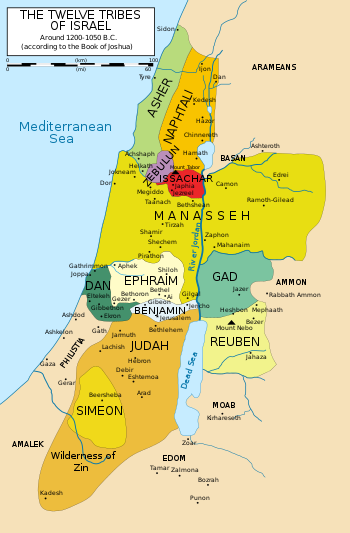
Bethel sat at the boundary between the tribes of Ephraim and Benjamin and eventually delineated the border between the northern kingdom of Israel and the southern kingdom of Judah. So, when Hosea points out these three cities, he is focusing his attention on the literal heart of Israel. They are each located at the center of the land that God had given to the 12 tribes of Israel.

And Hosea announces that the sound of trumpets would be heard in these three cities. But these would not be trumpets of joy or celebration. They would be the warning signs of coming destruction. The armies of Judah and Israel would be summoned for war, but they would prove ineffective against the enemies that God was bringing against them.

One thing is certain, Israel:
    On your day of punishment,
    you will become a heap of rubble. – Hosea 5:9 NLT

Both nations were guilty and, as a result, both would suffer the consequences for their sin and rebellion.

“The leaders of Judah have become like thieves.
    So I will pour my anger on them like a waterfall.
The people of Israel will be crushed and broken by my judgment
    because they are determined to worship idols.
I will destroy Israel as a moth consumes wool.
    I will make Judah as weak as rotten wood.” – Hosea 5:10-12 NLT

The nations of Judah and Israel had each violated their covenant agreements with God. But they had also violated their covenant agreements with one another. When Moses had allotted each tribe their portion of the land of Canaan, they had agreed to respect the boundaries the God had established for them. But Judah had stolen land that belonged to Benjamin. And ever since the division of the kingdom, Israel had repeatedly invaded and plundered land belonging to the tribe of Judah. By violating God’s commands as communicated through the Mosaic Law, the people of Israel and Judah no longer had a basis for knowing right from wrong.  Everyone did what was right in his own eyes. It was a moral free-for-all.

What’s interesting to note is that, when both nations found themselves suffering God’s judgment for their sin, they attempted to escape it by turning to foreign powers for help. And on of the nations from which they sought assistance was the Assyrians. The kings of Judah and Israel had repeatedly sought salvation from the ruthless and morally corrupt Assyrians, but it had done them no good.

“When Israel and Judah saw how sick they were,
    Israel turned to Assyria—
to the great king there—
    but he could neither help nor cure them. – Hosea 5:13 NLT

False gods and foreign powers were no match for God Almighty. There was no army big enough, no country powerful enough, and no god mighty enough to provide escape from the righteous wrath of God. They could run. They could hide. They could hire help. But in the end, God was going to do exactly what He said He would do.

“I will be like a lion to Israel,
    like a strong young lion to Judah.
    I will tear them to pieces!
I will carry them off,
    and no one will be left to rescue them.” – Hosea 5:14 NLT

And God warns them that they will find Him non-existent and unrelenting in His judgment until they admit their guilt and return to Him in humility and brokenness. This statement reflects the prayer that Solomon prayed at the dedication of the temple in Jerusalem, hundreds of years earlier. Consider the words of his prayer closely.

“If they [Israel] sin against you—and who has never sinned?—you might become angry with them and let their enemies conquer them and take them captive to their land far away or near.  But in that land of exile, they might turn to you in repentance and pray, ‘We have sinned, done evil, and acted wickedly.’ If they turn to you with their whole heart and soul in the land of their enemies and pray toward the land you gave to their ancestors—toward this city you have chosen, and toward this Temple I have built to honor your name—then hear their prayers and their petition from heaven where you live, and uphold their cause. Forgive your people who have sinned against you. Forgive all the offenses they have committed against you. Make their captors merciful to them, for they are your people—your special possession…” – 1 Kings 8:46-51 NLT

As David wrote in one of his psalms, “The sacrifice you desire is a broken spirit. You will not reject a broken and repentant heart, O God” (Psalm 51:17 NLT). God was looking for a heart of humility and repentance from His people. And until they were willing to bow before Him in contrition and confession, they would search for Him in vain.

English Standard Version (ESV) The Holy Bible, English Standard Version. ESV® Permanent Text Edition® (2016). Copyright © 2001 by Crossway Bibles, a publishing ministry of Good News Publishers.

New Living Translation (NLT) Holy Bible, New Living Translation, copyright © 1996, 2004, 2015 by Tyndale House Foundation. Used by permission of Tyndale House Publishers Inc., Carol Stream, Illinois 60188. All rights reserved.

The Message (MSG)Copyright © 1993, 1994, 1995, 1996, 2000, 2001, 2002 by Eugene H. Peterson

The Sovereign Hand of God

12 Of Benjamin he said,

“The beloved of the Lord dwells in safety.
The High God surrounds him all day long,
    and dwells between his shoulders.”

13 And of Joseph he said,

“Blessed by the Lord be his land,
    with the choicest gifts of heaven above,
    and of the deep that crouches beneath,
14 with the choicest fruits of the sun
    and the rich yield of the months,
15 with the finest produce of the ancient mountains
    and the abundance of the everlasting hills,
16 with the best gifts of the earth and its fullness
    and the favor of him who dwells in the bush.
May these rest on the head of Joseph,
    on the pate of him who is prince among his brothers.
17 A firstborn bull—he has majesty,
    and his horns are the horns of a wild ox;
with them he shall gore the peoples,
    all of them, to the ends of the earth;
they are the ten thousands of Ephraim,
    and they are the thousands of Manasseh.” Deuteronomy 33:12-17 ESV

A quick comparison between the blessings given by Jacob to his 12 sons and those given by Moses to the 12 tribes of Israel reveal some interesting differences. For instance, Jacob referred to his youngest son, Benajamin, as a ravenous wolf who plunders his enemies at night.

“Benjamin is a ravenous wolf,
    devouring his enemies in the morning
    and dividing his plunder in the evening.” – Genesis 49:27 NLT

Yet, Moses seems to refer to the tribe of Benjamin as “the beloved of the Lord.” But the words of Moses can and have been translated in two different ways. The New English Translation renders verse 12 as follows:

“Of Benjamin he said:
The beloved of the Lord will live safely by him;
he protects him all the time,
and the Lord places him on his chest.” – Deuteronomy 33:12 NET

The New American Standard Version takes a similar approach.

“May the beloved of the Lord dwell in security by Him,
Who shields him all the day,
And he dwells between His shoulders.”

In these translations, the “beloved of the Lord” is clearly not a reference to Benjamin, but to somone or something else. It could be speaking of the tribe of Judah, the tribe from which the Messiah would come. Recall the words of Jacob’s blessing to his son, Judah.

“The scepter will not depart from Judah,
    nor the ruler’s staff from his descendants,
until the coming of the one to whom it belongs,
    the one whom all nations will honor.” – Genesis 49:10 NLT

The term, “the beloved of the Lord” could also be a reference to Jesus Himself. But it is seems more likely that the tribe of Judah is the focus of Moses’ words. These two tribes, Benjamin and Judah would enjoy close ties, even sharing a common border in the land of Canaan.

The first allotment of land went to the clans of the tribe of Benjamin. It lay between the territory assigned to the tribes of Judah and Joseph. – Joshua 18:11 NLT

Years later, when God split the kingdom of Israel in half, the two tribes of Judah and Benjamin would form the new southern kingdom of Judah. And the larger, more powerful tribe of Judah would provide protection for its smaller neighbor and ally. The territory alloted to Benjamin also contained the city of Jerusalem, which would become the capital of Judah, later known as the city of David, and the place where Solomon built the temple of God.

Jacob predicted that his son, Benjamin, would produce a people who were warlike and reknowned for their success in battle. But the book of Judges reveals that the Benjamites would eventually use their propensity for battle in a civil war against the other 11 tribes of Israel. It would end in their defeat at the hands of their brothers.

And the Lord defeated Benjamin before Israel, and the people of Israel destroyed 25,100 men of Benjamin that day. All these were men who drew the sword. So the people of Benjamin saw that they were defeated. – Judges 20:35-36 ESV

These were dark days for the tribe of Benjamin and for the people of God, with the 21st chapter of the book of Judges closing with the sobering words:

In those days there was no king in Israel. Everyone did what was right in his own eyes. – Judges 21:25 ESV

But the first king of Israel came from the tribe of Benjamin, a man named Saul, who would prove to be a great warrior, but a lousy king. And God would eventually reject him as king, replacing him with a man after His own heart, a man named David. And David, from the tribe of Judah, and Jonathan, the son of Saul from the tribe of Benjamin, would become the closest of friends. So, we see this bound between these two tribes lived out over time. And eventually, the apostle Paul would come from the tribe of Benjamin.

“I myself am an Israelite, a descendant of Abraham, a member of the tribe of Benjamin.” – Romans 11:1 ESV

This small tribe would play a significant role in the history of Israel, for both good and bad. But God would use them to accomplish His divine will for His people and for the world. From this somewhat irrelevant tribe would come Saul, the first king of Israel. But hundreds of years later, there would come another Saul, the one known as the apostle Paul, whom God would use to spread the gospel of Jesus Christ throughout the world. And all because Paul would have his life transformed by an encounter with Jesus, the Son of God and a member of the tribe of Judah.

Next, Moses turns his attention to the tribe of Joseph. He was the son Jacob thought had been killed by wild animals, but later discovered had been sold into slavery by his own brothers. Jacob and Joseph were reunited in Egypt, where Joseph had become a powerful ruler in the kingdom of Pharaoh. And Joseph was able to use his authority to provide protection and provision for his family when the were forced to flee from the famine taking place in Canaan. So, Jacob held a special place in his heart for Joseph, as revealed in the words of the blessing he pronounced over him.

“Joseph is a fruitful bough,
    a fruitful bough by a spring;
    his branches run over the wall.
The archers bitterly attacked him,
    shot at him, and harassed him severely,
yet his bow remained unmoved;
    his arms were made agile
by the hands of the Mighty One of Jacob
    (from there is the Shepherd, the Stone of Israel),
by the God of your father who will help you,
    by the Almighty who will bless you
    with blessings of heaven above,
blessings of the deep that crouches beneath,
    blessings of the breasts and of the womb.
The blessings of your father
    are mighty beyond the blessings of my parents,
    up to the bounties of the everlasting hills.
May they be on the head of Joseph,
    and on the brow of him who was set apart from his brothers.” – Genesis 49:22-26 ESV

Moses picks up on Jacob’s high honor of Joseph, referring to him as “him who is prince among his brothers” (Deuteronomy 33:16 ESV). And when Moses speaks of Joseph, he clarifies that he is really addressing the tribes of the two sons of Joseph, Ephraim and Manasseh. Eventually, the name Ephraim would become closely associated with the ten tribes that comprised the northern kingdom of Israel. Just as Joseph was “set apart from his brothers” (Deuteronomy 49:26 ESV), Ephraim, Manasseh, and the other eight tribes would be set apart from Judah and Benjamin, dividing the once unified nation in two.

Moses pronounces a blessing on Joseph and his descendants, calling on God to provide them with “the choicest gifts of heaven above” (Deuteronomy 33:13 ESV) and:

“the choicest fruits of the sun
    and the rich yield of the months,
with the finest produce of the ancient mountains
    and the abundance of the everlasting hills,
with the best gifts of the earth and its fullness
    and the favor of him who dwells in the bush.” – Deuteronomy 33:14-16 ESV

God would continue to bless Joseph’s descendants, providing them with good land and and an abundance of blessings. But they would prove to be rebellious and spiritual unfaithful to God. They would turn their backs on God by worshiping false gods of their own making. And yet, they would enjoy great success and grow in number.

“…they are the ten thousands of Ephraim,
    and they are the thousands of Manasseh.” – Genesis 49:17 ESV

God would bless them, in spite of them. But the day would come when God would punish them for their sins, bringing judgment upon them in the form of the Assyrian army and allowing them to be defeated and deported as slaves. God would reward the descendants of Joseph for their forefather’s faithfulness while living in Egypt. But, eventually, He would punish them for their own unfaithfulness while living in the land of promise.

English Standard Version (ESV) The Holy Bible, English Standard Version. ESV® Permanent Text Edition® (2016). Copyright © 2001 by Crossway Bibles, a publishing ministry of Good News Publishers.

New Living Translation (NLT) Holy Bible, New Living Translation, copyright © 1996, 2004, 2015 by Tyndale House Foundation. Used by permission of Tyndale House Publishers Inc., Carol Stream, Illinois 60188. All rights reserved.

The Message (MSG) Copyright © 1993, 1994, 1995, 1996, 2000, 2001, 2002 by Eugene H. Peterson

“I Shall Bear the Blame.”

When Judah and his brothers came to Joseph’s house, he was still there. They fell before him to the ground. Joseph said to them, “What deed is this that you have done? Do you not know that a man like me can indeed practice divination?” 16 And Judah said, “What shall we say to my lord? What shall we speak? Or how can we clear ourselves? God has found out the guilt of your servants; behold, we are my lord’s servants, both we and he also in whose hand the cup has been found.” But he said, “Far be it from me that I should do so! Only the man in whose hand the cup was found shall be my servant. But as for you, go up in peace to your father.”

Then Judah went up to him and said, “Oh, my lord, please let your servant speak a word in my lord’s ears, and let not your anger burn against your servant, for you are like Pharaoh himself. My lord asked his servants, saying, ‘Have you a father, or a brother?’ And we said to my lord, ‘We have a father, an old man, and a young brother, the child of his old age. His brother is dead, and he alone is left of his mother’s children, and his father loves him.’ Then you said to your servants, ‘Bring him down to me, that I may set my eyes on him.’ We said to my lord, ‘The boy cannot leave his father, for if he should leave his father, his father would die.’ Then you said to your servants, ‘Unless your youngest brother comes down with you, you shall not see my face again.’

“When we went back to your servant my father, we told him the words of my lord. And when our father said, ‘Go again, buy us a little food,’ we said, ‘We cannot go down. If our youngest brother goes with us, then we will go down. For we cannot see the man’s face unless our youngest brother is with us.’ Then your servant my father said to us, ‘You know that my wife bore me two sons. One left me, and I said, “Surely he has been torn to pieces,” and I have never seen him since. If you take this one also from me, and harm happens to him, you will bring down my gray hairs in evil to Sheol.’

“Now therefore, as soon as I come to your servant my father, and the boy is not with us, then, as his life is bound up in the boy’s life, as soon as he sees that the boy is not with us, he will die, and your servants will bring down the gray hairs of your servant our father with sorrow to Sheol. For your servant became a pledge of safety for the boy to my father, saying, ‘If I do not bring him back to you, then I shall bear the blame before my father all my life.’ Now therefore, please let your servant remain instead of the boy as a servant to my lord, and let the boy go back with his brothers. For how can I go back to my father if the boy is not with me? I fear to see the evil that would find my father.” – Genesis 44:14-34 ESV

The brothers of Joseph have been accused of stealing – again – and the evidence is not in their favor. They were caught with the money intended to pay for their grain still in their sacks. Not only that, the diviner’s cup that belonged to the governor was discovered in Benjamin’s sack. Of course, they had been set up by Joseph, but they were not yet aware of that fact. All they knew was that they were in deep trouble. They were non-resident aliens accused of stealing from the second-most powerful man in Egypt. And when they were brought before this man, it was Judah who did the talking. He felt a special responsibility because he had been the one to convince Jacob to allow them to return to Egypt with Benjamin, just as the governor had commanded.

Send the boy with me, and we will arise and go, that we may live and not die, both we and you and also our little ones. I will be a pledge of his safety. From my hand you shall require him. If I do not bring him back to you and set him before you, then let me bear the blame forever.” – Genesis 43:8-9 ESV

Now everything had gone south. The worst that could happen had happened. They were standing before the governor accused of being thieves and the case against them was strong. Once again, the brothers found themselves bowing down before Joseph, just as his dreams had foreshadowed. When confronted by Joseph about their crime, Judah speaks up, but does not waste time trying to deny the facts of the case. He admits that they are guilty and all worthy of judgment. They deserve to be enslaved. Even though it was Benjamin in whose sack the governor’s goblet was found, Judah includes all the brothers in the guilt. They all agree to accept the blame and the punishment. But the governor has other plans.

“Far be it from me to do this! The man in whose hand the cup was found will become my slave, but the rest of you may go back to your father in peace.” – Genesis 44:17 NLT

As part of his test for his brothers, Joseph informs them that it is only Benjamin, their youngest brother who will remain behind as a slave. They are free to go and return to their father, Jacob. Again, this is a Joseph’s way of assessing the integrity of his brothers. Would they take advantage of the opportunity and hightail it out of town, leaving their brother a slave in Egypt? Or would they do the right thing and do whatever it took to protect their father’s favorite son? Judah provides the answer. He steps forward and takes the responsibility to appeal to the governor, keeping the commitment he had made to his father. He is going to do whatever he had to do to make sure Benjamin was returned to his father, even if it meant that he would take Benjamin’s place, remaining in Egypt as a slave. This selfless, sacrificial act should have a familiar ring to it. Judah was offering himself as a sin-substitute, willingly expressing his desire to suffer for the sins of another, so that they might set free from guilt and condemnation. Judah pleads with the governor:

“Indeed, your servant pledged security for the boy with my father, saying, ‘If I do not bring him back to you, then I will bear the blame before my father all my life.’

“So now, please let your servant remain as my lord’s slave instead of the boy. As for the boy, let him go back with his brothers.” – Genesis 44:32-33 NLT

Judah was willing to become a slave for another. He was giving his life as a ransom, a payment for someone else. Sound familiar? It should. It would be Jesus, a descendant of Judah, who would say: “You know that the rulers in this world lord it over their people, and officials flaunt their authority over those under them. But among you it will be different. Whoever wants to be a leader among you must be your servant, and whoever wants to be first among you must be the slave of everyone else. For even the Son of Man came not to be served but to serve others and to give his life as a ransom for many” (Mark 10:42-45 NLT). Unknowingly, Judah was exhibiting the character of Christ, by leading through serving and loving through sacrifice. It would be a long time before the apostle John penned the following words, but they are exemplified in the life and actions of Judah:

This is real love—not that we loved God, but that he loved us and sent his Son as a sacrifice to take away our sins. Dear friends, since God loved us that much, we surely ought to love each other. No one has ever seen God. But if we love each other, God lives in us, and his love is brought to full expression in us. – 1 John 4:10-11 NLT

Judah was loving his father and his brother the best way he knew how, by offering his life as a sacrifice. This action did not go unnoticed by Jacob or by God. Years later, on his deathbed, Jacob would bless Judah, making the following prediction: “The scepter shall not depart from Judah, nor the ruler’s staff from between his feet, until tribute comes to him; and to him shall be the obedience of the peoples” (Genesis 49:10 ESV).  It would be through the tribe of Judah that the Messiah would come. King David would come from the line of Judah, as would Solomon. Israel’s greatest days would be under the reigns of these two kings. And it will be under the Messiah’s kingship that the people of Israel will rule and reign once again. Centuries later, the angel, Gabriel, would tell Mary:

“Do not be afraid, Mary, for you have found favor with God. And behold, you will conceive in your womb and bear a son, and you shall call his name Jesus. He will be great and will be called the Son of the Most High. And the Lord God will give to him the throne of his father David, and he will reign over the house of Jacob forever, and of his kingdom there will be no end.” – Luke 1 30-33 ESV

Judah’s willingness to give his life as a ransom for his brother was a sign of something far greater to come. The Son of God coming to earth to give His life as a ransom for many – the sinless for the sinful. Unlike Jesus, Judah was a sinner and deserving of judgment. But his willingness to love his brother unconditionally and give his life sacrificially, is a picture of the love of Christ for mankind. As Jesus Himself would one day say, “Greater love has no one than this, that someone lay down his life for his friends” (John 15:13 ESV).


Déjà Vu All Over Again.

Then he commanded the steward of his house, “Fill the men’s sacks with food, as much as they can carry, and put each man’s money in the mouth of his sack, and put my cup, the silver cup, in the mouth of the sack of the youngest, with his money for the grain.” And he did as Joseph told him.

As soon as the morning was light, the men were sent away with their donkeys. They had gone only a short distance from the city. Now Joseph said to his steward, “Up, follow after the men, and when you overtake them, say to them, ‘Why have you repaid evil for good? Is it not from this that my lord drinks, and by this that he practices divination? You have done evil in doing this.’”

When he overtook them, he spoke to them these words. They said to him, “Why does my lord speak such words as these? Far be it from your servants to do such a thing! Behold, the money that we found in the mouths of our sacks we brought back to you from the land of Canaan. How then could we steal silver or gold from your lord’s house? Whichever of your servants is found with it shall die, and we also will be my lord’s servants.” He said, “Let it be as you say: he who is found with it shall be my servant, and the rest of you shall be innocent.” Then each man quickly lowered his sack to the ground, and each man opened his sack. And he searched, beginning with the eldest and ending with the youngest. And the cup was found in Benjamin’s sack. Then they tore their clothes, and every man loaded his donkey, and they returned to the city. – Genesis 44:1-13 ESV

Just when things seemed to be going so well, everything went south for the brothers. After their wonderful meal with the governor, they were sent away with their sacks filled with grain, their brother, Simeon, freed from prison, and Benjamin safely in tow. Their destination was Canaan. But they didn’t get far. Once again, Joseph had instructed that the money they bought to pay for the grain be secretly returned to their sacks. Not only that, he had an expensive goblet placed in the sack of the youngest brother, Benjamin. Then he sent his steward, most likely with an armed party, to catch up to his brothers’ caravan and expose their “treachery.”

This story has an eerie sense of déjà vu about it. Many years earlier, when Jacob was attempting to secretly get away from his uncle, Laban, and return to Canaan, his caravan was overtaken by Laban and his kinsmen. Not only had Jacob snuck away without telling Laban or giving him a chance to say goodbye to his daughters and grandchildren, someone in his party had stolen Laban’s household gods. Jacob explained that he had failed to tell Laban because he feared he would take his daughters back by force. As far as the stolen idols went, he claimed to know nothing about them, telling Laban:

Anyone with whom you find your gods shall not live. In the presence of our kinsmen point out what I have that is yours, and take it.” Now Jacob did not know that Rachel had stolen them. – Genesis 31:32 ESV

Laban searched and searched, but did not find the idols because Rachel, his daughter had hidden them in her camel’s saddle and was sitting on them. Eventually, Laban allowed Jacob and his entourage to leave, having been warned by God in a dream not to do any harm to Jacob. Jacob had been fortunate. He had made a rash vow to kill anyone who had stolen the idols. Little had he known that his own wife was the guilty culprit.

Like father, like sons. When Joseph’s steward caught up with them, they too quickly denied the allegations, saying, “Far be it from your servants to do such a thing!” (Genesis 44:7 ESV). Sounding eerily similar to their father, Jacob, one of the sons rashly blurted out, “Whichever of your servants is found with it shall die, and we also will be my lord’s servants” (Genesis 44:9 ESV). They were offended by the accusation. They knew they were innocent, but they have also known better. This was not the first time they had been wrongly accused of being thieves. But their short-term memory loss seems to have prevented them from remembering how that had all turned out. The money had been in their sacks, just as had been claimed. And now, the claims of stealing proved true again. Not only was the money in their sacks, so was the governor’s prized goblet. The steward gives the goblet special value by saying it is the one the governor uses to practice the art of divination. This does not necessarily mean that Joseph, a worshiper of Yahweh, was guilty of doing divination, it was likely meant to prove to the brothers that the cup had special value and that the governor had secret powers.

Once again, Joseph was giving his brothers a test to determine their loyalty and honesty. When the cup was found in Benjamin’s sack, the steward gave Joseph’s pronouncement: “he who is found with it shall be my servant, and the rest of you shall be innocent” (Genesis 44:10 ESV). Would they take advantage of the situation, saving their own lives by abandoning their younger brother to a life of slavery. As Joseph knew all too well, it would not have been the first time for them to do such a thing. Would they be willing to leave Benjamin behind, cutting their losses, and returning with their grain and their money in tow?

The brothers were devastated. “Then they tore their clothes, and every man loaded his donkey, and they returned to the city” (Genesis 44:13 ESV). They couldn’t believe this was happening to them again. Was this all the punishment of God for their former treatment of Joseph? Was it some form of divine payback? Were they suffering under God’s curse and doomed to spend the rest of their lives making restitution for their former sins?

How easy it is to see the inexplicable and unpleasant experiences of life as a form of God’s punishment or displeasure. How quickly we assume that difficulties are signs of God’s anger for something we have done or, possibly, should have done. Perhaps God is simply testing us, revealing the true state of our heart and the condition of our faith. Rather than automatically assuming the worst, are we willing to let God reveal to us what He is trying to show us, about ourselves or about Him? Could He be trying to show us our pride and self-sufficiency? Might He be trying to prove to us our weakness and His strength?

Joseph’s brothers didn’t understand their God. They didn’t fully trust Him. Unlike King David, they didn’t realize just how much God loved them and cared for them. He had great plans for them.

O Lord, you have examined my heart  and know everything about me. You know when I sit down or stand up. You know my thoughts even when I’m far away. You see me when I travel and when I rest at home. You know everything I do. You know what I am going to say even before I say it, Lord. You go before me and follow me. You place your hand of blessing on my head. Such knowledge is too wonderful for me, too great for me to understand! – Psalm 139:1-6 NLT

It was David’s intimate understanding of God’s love that allowed him to say, “Search me, O God, and know my heart; test me and know my anxious thoughts. Point out anything in me that offends you, and lead me along the path of everlasting life” (Psalm 139:23-24 NLT). He knew God loved him and was willing to let God expose anything about him that needed to be changed. What if Joseph’s brothers had looked at their lives with that perspective? What if they had been willing to say, “Lord, what are you trying to tell us? What are you trying to reveal about us?”

Like David, we all need to see the trials of life as opportunities to let God reveal the hidden sins and unseen weaknesses in our life. Trials tend to expose faults. They can bring out the worst and the best in us. Which is why David said: “How can I know all the sins lurking in my heart? Cleanse me from these hidden faults. Keep your servant from deliberate sins! Don’t let them control me. Then I will be free of guilt and innocent of great sin” (Psalm 19:12-13 NLT).

Joseph’s Dream Come True.

When Joseph came home, they brought into the house to him the present that they had with them and bowed down to him to the ground. And he inquired about their welfare and said, “Is your father well, the old man of whom you spoke? Is he still alive?” They said, “Your servant our father is well; he is still alive.” And they bowed their heads and prostrated themselves. And he lifted up his eyes and saw his brother Benjamin, his mother’s son, and said, “Is this your youngest brother, of whom you spoke to me? God be gracious to you, my son!” Then Joseph hurried out, for his compassion grew warm for his brother, and he sought a place to weep. And he entered his chamber and wept there. Then he washed his face and came out. And controlling himself he said, “Serve the food.” They served him by himself, and them by themselves, and the Egyptians who ate with him by themselves, because the Egyptians could not eat with the Hebrews, for that is an abomination to the Egyptians. And they sat before him, the firstborn according to his birthright and the youngest according to his youth. And the men looked at one another in amazement. Portions were taken to them from Joseph’s table, but Benjamin’s portion was five times as much as any of theirs. And they drank and were merry with him. – Genesis 43:26-34 ESV

It had been many years since Joseph had experienced his two dreams while living in the land of Canaan with his father and brothers. He would have been 39-years old at this point in the story, but he would not have forgotten those two dreams and the reaction of his father and brothers when he shared them. He may not have fully known what they meant, but he knew jealousy and resentment when he saw it. Those two dreams were the impetus for his brothers’ betrayal of him.

Now Joseph had a dream, and when he told it to his brothers they hated him even more. He said to them, “Hear this dream that I have dreamed: Behold, we were binding sheaves in the field, and behold, my sheaf arose and stood upright. And behold, your sheaves gathered around it and bowed down to my sheaf.” His brothers said to him, “Are you indeed to reign over us? Or are you indeed to rule over us?” So they hated him even more for his dreams and for his words. – Genesis 37:5-8 ESV

It was his dreams, at least in part, that had resulted in his sale to the Midianite traders. And that one act had set in motion a chain of events that led to Joseph’s rise to power. And now, years later, at least one of his dreams would be fulfilled right before his eyes.

And they bowed their heads and prostrated themselves. – Genesis 43:28b ESV

But this was not the thing that caught Joseph’s attention. He was not seeking for revenge or retribution. He did not gloat over the fact that his brothers were being forced to bow before him. At this point, they did not even know who he was. No, Joseph was overcome with emotion by seeing his younger brother, Benjamin. Jacob had 12 sons. Four of them were born to his wife, Leah. They were Reuben, Simeon, Levi and Judah. Dan and Naphtali were born to Bilhah. Gad and Asher were born to Zilpah. Issachar and Zebulun were born to Leah. But Joseph and Benjamin were born to Rachel. They shared the same mother. And there was a 16-year difference in their ages. So when Joseph saw Benjamin, he was overcome with emotion. So much so, that he had to excuse himself and go to another room to weep. When he had regained his composure, he rejoined his brothers for a meal.

It was at this meal that Joseph gave his brothers yet another test. While they all shared the privilege of eating in the Egyptian governor’s home as his guests, Benjamin was given five times the portions his brothers received. Joseph was showing his youngest brother favor much as his father had done to him years earlier. Would his brothers become jealous? Would they reveal a hatred for Benjamin as they had for Joseph? Joseph got his answer. “And they drank and were merry with him” (Genesis 43:34 ESV). The Hebrew word translated “merry”, actually indicates that they got drunk. This time his brothers were too busy being amazed at their incredible good fortune and too relieved that things had turned out the way they had to get jealous. But they were in for quite a surprise. Their merriment was going to turn into amazement when they discovered who their host really was. Their joy was going to turn into fear when they learned his true identity and realized their dangerous predicament. But before Joseph would reveal himself to his brothers, he had yet another test to give them.

Why all the subterfuge? Why didn’t Joseph just reveal himself to his brothers immediately? Was it really necessary for him to play this charade and keep his identity a secret? What was he trying to accomplish? The best we can gather from the events recorded in the book of Genesis is that Joseph was trying to ascertain if his brothers had changed. Did they have any remorse over what they had done to him years earlier? In the years since they had sold him into slavery, had they matured and had enough time to rethink their actions? Did they regret their earlier decision? Joseph longed to be restored to his family, but he had to know just what kind of family they were. He was in a position to bless them and provide for them, but Joseph wanted to know the condition of their hearts. We know from the record of Genesis, that Joseph was a man of integrity and honor. He had proven himself to be honest, a hard worker and loyal to his employers. In every situation he found himself, he applied himself to his work and made himself an invaluable asset to all those around him. He had the favor of God and men. But what about his brothers? Could they be trusted? Were they men of integrity and honesty? When they discovered who Joseph was, would their bowing be replaced with renewed hatred and jealousy. Joseph had been favored by God Himself. God had raised Joseph to a prominent position in the court of Pharaoh. God had clothed Joseph with beautiful garments and given him riches beyond his brothers’ wildest dreams. Would their old jealousies surface again?

Behind all of this is the hand of God preparing his people for His blessings and the fulfillment of His promises. As we have already seen, this is not really a story about Joseph, but about God and His faithfulness to His chosen people, Israel. Joseph is simply a conduit through whom God sent dreams and by whom God was going to fulfill the promises He had made to Abraham. Joseph’s dream had come true. His brothers had bowed down before him. But the real point of the story is that God’s promise was coming true. He was in the process of fulfilling all that He had said He would do. And each of these events is part of His divine plan for bringing about His to make of Abraham a great nation and, through him, to bless all the families of the earth.