The Pervasive Power of Pride

1 In the twenty-seventh year of Jeroboam king of Israel, Azariah the son of Amaziah, king of Judah, began to reign. He was sixteen years old when he began to reign, and he reigned fifty-two years in Jerusalem. His mother’s name was Jecoliah of Jerusalem. And he did what was right in the eyes of the LORD, according to all that his father Amaziah had done. Nevertheless, the high places were not taken away. The people still sacrificed and made offerings on the high places. And the LORD touched the king, so that he was a leper to the day of his death, and he lived in a separate house. And Jotham the king’s son was over the household, governing the people of the land.’ Now the rest of the acts of Azariah, and all that he did, are they not written in the Book of the Chronicles of the Kings of Judah? And Azariah slept with his fathers, and they buried him with his fathers in the city of David, and Jotham his son reigned in his place.

In the thirty-eighth year of Azariah king of Judah, Zechariah the son of Jeroboam reigned over Israel in Samaria six months. And he did what was evil in the sight of the LORD, as his fathers had done. He did not depart from the sins of Jeroboam the son of Nebat, which he made Israel to sin. 10 Shallum the son of Jabesh conspired against him and struck him down at Ibleam and put him to death and reigned in his place. 11 Now the rest of the deeds of Zechariah, behold, they are written in the Book of the Chronicles of the Kings of Israel. 12 (This was the promise of the LORD that he gave to Jehu, “Your sons shall sit on the throne of Israel to the fourth generation.” And so it came to pass.) 2 Kings 15:1-12 ESV

Reading this chapter can become a bit confusing because it seems to chronicle the lives of two different kings serving over Judah at the very same time. In verse 1, we are introduced to Azariah, the son of Amaziah. Then, in verse 13, we’re told that Shallum became king of Israel during the reign of Uzziah, king of Judah. There is a simple solution, though; the king of Judah went by two different names. Chapter 26 of the book of 2 Chronicles uses this alternate name exclusively when recording the history of his reign. But they are one and the same man.

As the opening verses indicate, Azariah (Uzziah) ascended to the throne of Judah after the death of his father, Amaziah. He was only 16 years old at the time of his coronation and would reign for 52 years. Only Manasseh enjoyed a longer tenure on the throne of Judah.

Azariah’s lengthy reign brought stability to a nation that had been reeling after the assassination of its prior king, Azariah’s father. It was a time of blessing and prosperity because, unlike so many other kings of Judah, Azariah chose to seek the LORD.

…he did what was right in the eyes of the LORD, according to all that his father Amaziah had done. He set himself to seek God in the days of Zechariah, who instructed him in the fear of God, and as long as he sought the LORD, God made him prosper. – 2 Chronicles 26:4-5 ESV

But there are three qualifying words in the above statement: “as long as.” Azariah’s prosperity and success were directly tied to his faithfulness. It was God who made him prosper. And as long as he remained faithful to Yahweh, he experienced His blessings. And, according to the Book of 2 Chronicles, those blessings were many.

God helped him against the Philistines and against the Arabians who lived in Gurbaal and against the Meunites. The Ammonites paid tribute to Uzziah, and his fame spread even to the border of Egypt, for he became very strong. – 2 Chronicles 26:7-8 ESV

Azariah built cities within the territories he confiscated from the Philistines. He also ordered the construction of fortified towers throughout the land of Judah and had cisterns dug to provide water for his growing herds. Azariah had extensive landholdings, including farms and vineyards. He was wealthy, successful, and powerful, and his army was well-trained and equipped with the latest in weapons technology. And the city of Jerusalem was protected by state-of-the-art fortifications. As a result, “His fame spread far and wide, for the LORD gave him marvelous help, and he became very powerful” (2 Chronicles 26:15 NLT).

Azariah enjoyed Yahweh’s blessings. He had it all: Wealth, power, and fame. But you can almost sense that he was ripe for a fall, and the author of 2 Kings cuts to the chase, revealing that Azariah’s days of enjoying the blessings of God would be short-lived and followed by a time of judgment and despair.

Nevertheless, the high places were not taken away. The people still sacrificed and made offerings on the high places. And the LORD touched the king, so that he was a leper to the day of his death, and he lived in a separate house. – 2 Kings 15:4-5 ESV

The book of 2 Chronicles provides us with the details surrounding Azariah’s fall, and it’s an all-too-familiar story of the pitfalls of pride.

But when he had become powerful, he also became proud, which led to his downfall. He sinned against the LORD his God by entering the sanctuary of the LORD’s Temple and personally burning incense on the incense altar. – 2 Chronicles 26:16 NLT

Azariah was a man who became accustomed to getting what he wanted. He had enjoyed unprecedented success; everything he touched seemed to turn to gold. His victories were many, his landholdings were significant, his wealth was extensive, and his power was unsurpassed. But all of this led to a pride problem. He came to believe that he could get away with anything. But when he entered the sanctuary of God and attempted to usurp the role of the priests, he overstepped his bounds. He violated the Mosaic law and incurred God’s wrath. And it is not as if Azariah didn’t know any better because he had been informed of his indiscretion by the high priest and 80 other men of God.

They confronted King Uzziah and said, “It is not for you, Uzziah, to burn incense to the LORD. That is the work of the priests alone, the descendants of Aaron who are set apart for this work. Get out of the sanctuary, for you have sinned. The LORD God will not honor you for this!” – 2 Chronicles 26:18 NLT

But rather than repent of his sin, Azariah became angry. He didn’t like being told what he could or could not do. So, God struck him with leprosy. In just seconds, Azariah’s entire life was turned upside down. He was immediately removed from the Temple and, because of his leprosy, was banned from ever setting foot in the house of God again for the rest of his life. He would spend the last 11 years of his reign in quarantine and isolation, as his son ruled the nation as his co-regent. Eventually, Azariah died, and his son took his place as king of Judah. He was buried, and the only lasting legacy he left behind was his failure. The people would say of him, “He had leprosy” (2 Chronicles 26:23 NLT).

Azariah had fallen prey to the age-old sin of pride and failed to heed the warnings of his predecessor, Solomon. In his Book of Proverbs, Solomon included the wise but often ignored saying, “Pride goes before destruction, and a haughty spirit before a fall” (Proverbs 16:18 ESV). Azariah learned a painful lesson on the pervasive power of pride. He had enjoyed the seemingly endless blessings of God, but had wrongly assumed that he could do no wrong. However, Yahweh has standards and expects His children to live according to His will and in keeping with His commands. The king was not exempt from God’s rules, and Azariah learned that lesson the hard way. 

About three years before Azariah’s fateful decision to play priest and offer sacrifices to God, Zechariah, the son of Jeroboam II, became king in Israel. The assessment of his reign is a familiar one.

And he did what was evil in the sight of the Lord, as his fathers had done. – 2 Kings 15:9 ESV

Unlike Azariah, Zechariah’s reign was brief, lasting only six short months, and it would end with his assassination by Shallum, who would take his place on the throne of Israel. But Zechariah’s abbreviated reign fulfilled a promise that God had made to Jehu, king of Israel. Jehu had obeyed God’s command and destroyed the house of Ahab. Not only that, he ordered the execution of any who worshiped Baal and turned the temple of Baal into a public latrine. As a reward for Jehu’s cleansing campaign, God made a vow:

“You have done well in following my instructions to destroy the family of Ahab. Therefore, your descendants will be kings of Israel down to the fourth generation.” – 2 Kings 10:30 NLT

Zechariah was the fulfillment of that promise, but his reign would only last half a year. His murder would usher in an era of intrigue, deception, and instability. Over the next 20 years, the northern kingdom of Israel would have six different kings, and only one would die from natural causes; the rest would be assassinated. It would be a time marked by pervasive wickedness, rampant idolatry, and increasing resistance on the part of the people to heed God’s repeated calls to repent.

At the dedication of the Temple in Jerusalem during the reign of Solomon, God issued a promise to His chosen people. He agreed to dwell in their midst in the house they had constructed for Him, listening to their prayers and responding to their cries of need. But it was all conditioned on one thing: Their repentance.

“…if my people who are called by my name will humble themselves and pray and seek my face and turn from their wicked ways, I will hear from heaven and will forgive their sins and restore their land. My eyes will be open and my ears attentive to every prayer made in this place. For I have chosen this Temple and set it apart to be holy—a place where my name will be honored forever. I will always watch over it, for it is dear to my heart.” – 2 Chronicles 7:14-16 NLT

God required that His people display humility and a willingness to turn away from their wicked ways. In other words, He demanded repentance. If they wished to experience His presence, power, and provision, they would have to change their ways, not just outwardly but inwardly. External acts of obedience would not be enough. Sacrifices and offerings of contrition would prove insufficient if their hearts were not in it. King David understood the need for genuine, heartfelt repentance when it came to confession of sin. After being convicted of his illicit and immoral affair with Bathsheba, he penned the following words to God in the 51st Psalm.

You do not desire a sacrifice, or I would offer one.
    You do not want a burnt offering.
The sacrifice you desire is a broken spirit.
    You will not reject a broken and repentant heart, O God. – Psalm 51:16-17 NLT

The prophet Joel echoed this same sentiment when he wrote:

That is why the LORD says,
    “Turn to me now, while there is time.
Give me your hearts.
    Come with fasting, weeping, and mourning.
Don’t tear your clothing in your grief,
    but tear your hearts instead.”
Return to the Lord your God,
    for he is merciful and compassionate,
slow to get angry and filled with unfailing love. 
    He is eager to relent and not punish. – Joel 2:12-13 NLT

Yahweh wanted to forgive His people. He was anxious to restore their fortunes and pour out His blessings. But He demanded a change of heart that showed up in tangible expressions of humility, obedience, and dependence upon Him.

English Standard Version (ESV) The Holy Bible, English Standard Version. ESV® Permanent Text Edition® (2016). Copyright © 2001 by Crossway Bibles, a publishing ministry of Good News Publishers.

New Living Translation (NLT) Holy Bible, New Living Translation, copyright © 1996, 2004, 2015 by Tyndale House Foundation. Used by permission of Tyndale House Publishers Inc., Carol Stream, Illinois 60188. All rights reserved.

Playing the Long Game

23 In the fifteenth year of Amaziah the son of Joash, king of Judah, Jeroboam the son of Joash, king of Israel, began to reign in Samaria, and he reigned forty-one years. 24 And he did what was evil in the sight of the LORD. He did not depart from all the sins of Jeroboam the son of Nebat, which he made Israel to sin. 25 He restored the border of Israel from Lebo-hamath as far as the Sea of the Arabah, according to the word of the LORD, the God of Israel, which he spoke by his servant Jonah the son of Amittai, the prophet, who was from Gath-hepher. 26 For the LORD saw that the affliction of Israel was very bitter, for there was none left, bond or free, and there was none to help Israel. 27 But the LORD had not said that he would blot out the name of Israel from under heaven, so he saved them by the hand of Jeroboam the son of Joash.

28 Now the rest of the acts of Jeroboam and all that he did, and his might, how he fought, and how he restored Damascus and Hamath to Judah in Israel, are they not written in the Book of the Chronicles of the Kings of Israel? 29 And Jeroboam slept with his fathers, the kings of Israel, and Zechariah his son reigned in his place. 2 Kings 14:23-29 ESV

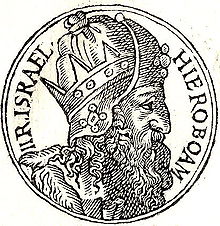
Sometime during the reign of King Jehoash of Judah, the other King Jehoash of Israel made his son, Jeroboam II, his co-regent. He was named after the first king of the northern kingdom, who ruled after God divided the nation of Israel in half. This division of Solomon’s kingdom was done as a punishment for his idolatry and apostasy. In the latter years of his reign, Solomon had begun to worship the false gods of his many foreign wives.

So Solomon did what was evil in the sight of the LORD and did not wholly follow the LORD, as David his father had done. Then Solomon built a high place for Chemosh the abomination of Moab, and for Molech the abomination of the Ammonites, on the mountain east of Jerusalem. And so he did for all his foreign wives, who made offerings and sacrificed to their gods. 1 Kings 11:6-8 ESV

As punishment for Solomon’s unfaithfulness, God raised up Jeroboam and placed him over the ten northern tribes of Israel. But Jeroboam proved to be just as unfaithful as Solomon. One of his first official acts as king was to establish his own religion, complete with golden calf idols erected in the cities of Dan and Bethel. He even created his own priesthood and sacrificial system so that the ten northern tribes would have no reason to go to Jerusalem to worship at the Temple of Yahweh.

King Jehoash’s decision to name his son after this man reveals much about his character. But the author seems to assure his readers that the name was fitting because Jeroboam II lived up to the reputation of his infamous predecessor.

He did what was evil in the LORD’s sight. He refused to turn from the sins that Jeroboam son of Nebat had led Israel to commit. – 2 Kings 14:24 NLT

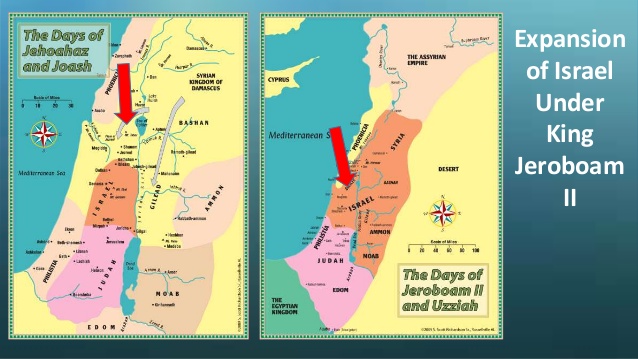
At his father’s death, Jeroboam II transitioned from his position as co-regent to king of all the northern tribes, a title he would hold for 41 years. He would become the longest-reigning king in the history of Israel, outlasting the monarchy of King Jehoash of Judah and that of his son, Amaziah. But other than the note describing the sinful disposition of Jeroboam’s reign, the author provides few other details about his accomplishments. There is a brief mention of his expansion of Israel’s territorial boundaries, but it would appear that this was the work of God, not Jeroboam.

Verse 25 mentions the name of Jonah. He was one of three prophets, including Hosea and Amos, who ministered to the ten northern tribes of Israel. This is the same Jonah who would later receive a divine commission from God to call the pagan people of Ninevah to repentance (Jonah 1:1-2). But long before Jonah was sent to the Assyrians, his responsibility was to act as God’s spokesman to the kings and citizens of Israel. It would appear from the text that Jonah gave King Jeroboam a word from Yahweh, commanding him to expand Israel’s borders, and the king obeyed.

Jeroboam II recovered the territories of Israel between Lebo-hamath and the Dead Sea, just as the LORD, the God of Israel, had promised through Jonah son of Amittai, the prophet from Gath-hepher. – 2 Kings 14:25 NLT

By faithfully fulfilling this divine mandate, Jeroboam II restored Israel’s borders to near their former extent under King Solomon. While Jeroboam was anything but a godly king, he proved an accomplished leader who helped reestablish Israel’s power and prominence. In fact, both the northern and southern kingdoms would experience unprecedented prosperity during this period. This fact seems difficult to reconcile when considering that both kingdoms were being ruled over by godless kings who promoted idolatry and apostasy. Yet, the author reveals that God was at work, behind the scenes, protecting and preserving His people.

And because the LORD had not said he would blot out the name of Israel completely, he used Jeroboam II, the son of Jehoash, to save them. – 2 Kings 14:27 NLT

God had made a covenant commitment to preserve His people. Despite their repeated demonstrations of disobedience and unfaithfulness, He had never allowed them to suffer the full and well-deserved consequences of their sin. He stepped in and rescued them time and time again. Long before they ever entered the land of Canaan or established themselves as a nation, God had clearly communicated His expectations to them.

If you fully obey the LORD your God and carefully keep all his commands that I am giving you today, the LORD your God will set you high above all the nations of the world. You will experience all these blessings if you obey the LORD your God… – Deuteronomy 28:1-2 NLT

Then God outlined all the blessings they could expect if they lived in obedience to His will. But He also warned them that disobedience would bring curses.

But if you refuse to listen to the LORD your God and do not obey all the commands and decrees I am giving you today, all these curses will come and overwhelm you… – Deuteronomy 28:15 NLT

The list of potential curses that followed was intense and terrifying, and ended with the warning: “The LORD will exile you and your king to a nation unknown to you and your ancestors. There in exile you will worship gods of wood and stone! You will become an object of horror, ridicule, and mockery among all the nations to which the LORD sends you[ (Deuteronomy 28:36-37 NLT).

Should they choose to disobey, there would be dire and devastating consequences. But as the author of 2 Kings reveals, “the LORD had not said he would blot out the name of Israel completely” (2 Kings 14:27 NLT). While Yahweh had warned of destruction and even eventual deportation, He had never spoken of Israel’s obliteration. He was committed to keeping the promise He had made to Abraham, Isaac, and Jacob, and it was Jacob whom God renamed Israel.

“Your name is Jacob, but you will not be called Jacob any longer. From now on your name will be Israel.” So God renamed him Israel.

Then God said, “I am El-Shaddai—‘God Almighty.’ Be fruitful and multiply. You will become a great nation, even many nations. Kings will be among your descendants! And I will give you the land I once gave to Abraham and Isaac. Yes, I will give it to you and your descendants after you.” – Genesis 35:10-12 NLT

This scene took place in Bethel, and it just so happened that Bethel was one of the towns where the original Jeroboam set up a golden calf idol. The very place where God promised to make of Jacob (Israel) a great nation, Jeroboam I had erected an idol that would lead the people away from Yahweh. He had promoted disobedience and, in doing so, had brought upon the people of Israel the curses of God.  Yet the author of 2 Kings reveals that God chose to show compassion to His rebellious people.

…the LORD saw the bitter suffering of everyone in Israel, and that there was no one in Israel, slave or free, to help them. – 2 Kings 14:26 NLT

Yes, they were rebellious. The people of Israel had forsaken Him repeatedly, but Yahweh viewed His chosen people as helpless and hopeless; they had no one to save them. Their kings had proven themselves unwilling and incapable of providing godly leadership, and Jeroboam II was no different than his namesake. Yet, God chose to use this godless king to protect His chosen people.

…because the LORD had not said he would blot out the name of Israel completely, he used Jeroboam II, the son of Jehoash, to save them. – 2 Kings 14:27 NLT

God was preserving His people, not because they deserved it, but because He had a plan that required their continued existence. Centuries earlier, God made a promise to the patriarch, Abraham:

“I will certainly bless you. I will multiply your descendants beyond number, like the stars in the sky and the sand on the seashore. Your descendants will conquer the cities of their enemies. And through your descendants all the nations of the earth will be blessed—all because you have obeyed me.” – Genesis 22:17-18 NLT

God had made a commitment to bless the nations of the earth through Abraham’s descendants. Yet, as we have seen, the seed of Abraham had proven to be anything but a blessing. They brought shame to the name of Yahweh through their repeated demonstrations of unfaithfulness. But God chose to preserve them because He had a plan to bring about the blessing of the nations. He would accomplish this plan through the “seed” of Abraham, and the apostle Paul tells us exactly how God fulfilled that promise.

Now the promises were made to Abraham and to his offspring. It does not say, “And to offsprings,” referring to many, but referring to one, “And to your offspring,” who is Christ. – Galatians 3:16 NLT

God preserved the Israelites so that Jesus, who was born a descendant of Abraham, might become the ultimate fulfillment of God’s promise to bless the nations. Paul goes on to describe how God’s commitment to protect and preserve the nation of Israel has impacted all the nations of the earth.

There is neither Jew nor Greek, there is neither slave nor free, there is no male and female, for you are all one in Christ Jesus. And if you are Christ’s, then you are Abraham’s offspring, heirs according to promise. – Galatians 3:28-29 NLT

All along the way, God had been watching out for His chosen people because He had set them apart for a reason. They were to be the conduit through which He would bring the blessing of salvation to a lost and dying world. That is why, even after He eventually sent them into exile in Babylon, God restored them to the land of promise.

“I myself will tend my sheep and give them a place to lie down in peace, says the Sovereign LORD. I will search for my lost ones who strayed away, and I will bring them safely home again. I will bandage the injured and strengthen the weak. But I will destroy those who are fat and powerful. I will feed them, yes—feed them justice!” – Ezekiel 34:15-16 NLT

Yahweh was faithful to keep His promise and preserve His people so that, one day, He might send His Son as the Messiah of Israel and the Savior of the world. His plans for Israel were timeless and not temporary, and were never about the kingdoms of David or Solomon. The split of the kingdom, the fall of Israel, and Babylon’s defeat of Judah were all part of His sovereign strategy to prepare the way for the eventual King of kings and Lord of lords — Jesus Christ the Savior.

English Standard Version (ESV) The Holy Bible, English Standard Version. ESV® Permanent Text Edition® (2016). Copyright © 2001 by Crossway Bibles, a publishing ministry of Good News Publishers.

New Living Translation (NLT) Holy Bible, New Living Translation, copyright © 1996, 2004, 2015 by Tyndale House Foundation. Used by permission of Tyndale House Publishers Inc., Carol Stream, Illinois 60188. All rights reserved.

The Fateful Journey From Faith to Fear

41 And Elijah said to Ahab, “Go up, eat and drink, for there is a sound of the rushing of rain.” 42 So Ahab went up to eat and to drink. And Elijah went up to the top of Mount Carmel. And he bowed himself down on the earth and put his face between his knees. 43 And he said to his servant, “Go up now, look toward the sea.” And he went up and looked and said, “There is nothing.” And he said, “Go again,” seven times. 44 And at the seventh time he said, “Behold, a little cloud like a man’s hand is rising from the sea.” And he said, “Go up, say to Ahab, ‘Prepare your chariot and go down, lest the rain stop you.’” 45 And in a little while the heavens grew black with clouds and wind, and there was a great rain. And Ahab rode and went to Jezreel. 46 And the hand of the LORD was on Elijah, and he gathered up his garment and ran before Ahab to the entrance of Jezreel. 

1 Ahab told Jezebel all that Elijah had done, and how he had killed all the prophets with the sword. Then Jezebel sent a messenger to Elijah, saying, “So may the gods do to me and more also, if I do not make your life as the life of one of them by this time tomorrow.” Then he was afraid, and he arose and ran for his life and came to Beersheba, which belongs to Judah, and left his servant there. 1 Kings 18:41-19:3 ESV

Chapter 18 opened up with the words God spoke to Elijah: “Go, show yourself to Ahab, and I will send rain upon the earth” (1 Kings 18:1 ESV). This statement contains a command as well as a promise from God. After his three-and-a-half-year absence, Elijah was to return to Israel from Sidon and confront King Ahab one more time. But while this command would likely involve significant risk to the prophet, his obedience would result in a tremendous blessing on the people. God would end the prolonged drought and restore rain to the land.

It is impossible to know if Elijah was aware of all that would have to happen before the rain returned. There is no indication as to when God divulged the rest of His plan and Elijah’s role in it. But before the physical drought could end, the spiritual drought afflicting the people would have to come to a decisive conclusion that involved a dramatic confrontation between Elijah and the 450 prophets of Baal. However, the real battle would be between Yahweh, the God of Israel, and Baal, the god of Ahab and Jezebel.

Yahweh had won the day, displaying His power by sending fire from heaven that “consumed the burnt offering and the wood and the stones and the dust, and licked up the water that was in the trench” (1 Kings 18:38 ESV). This demonstrative exhibition of God’s omnipotence brought the people to their knees in fear and worship. What they had just witnessed left them thoroughly convinced that Yahweh was the one true God, and that newly revived awareness left them crying out, “The LORD, he is God; the LORD, he is God” (1 Kings 18:39 ESV). And as if to put an exclamation point on the whole scene, Elijah ordered the capture and execution of all 450 of Baal’s so-called prophets. Their god had remained silent when they cried to him for help. Now the prophet of Yahweh silenced them for good. They would no longer deceive and mislead the people of Israel with fallacious promises concerning their false god.

But there was still one thing missing: The rain that Yahweh had promised. Baal had been discredited, his prophets had been eliminated, and the peoples’ reverence for Yahweh had been rejuvenated. But the land remained under the God-ordained drought that had turned Israel into a dust bowl where water and food were scarce and daily survival was a challenge. The land that God had once described as “flowing with milk and honey” (Exodus 33:3 ESV) had become fruitless and lifeless, reflecting the spiritual state of the people who occupied it.

Hundreds of years earlier, long before the people of Israel took possession of the land of Canaan, Moses warned what would happen if they proved unfaithful.

“And if you will indeed obey my commandments that I command you today, to love the LORD your God, and to serve him with all your heart and with all your soul, he will give the rain for your land in its season, the early rain and the later rain, that you may gather in your grain and your wine and your oil. And he will give grass in your fields for your livestock, and you shall eat and be full. Take care lest your heart be deceived, and you turn aside and serve other gods and worship them; then the anger of the LORD will be kindled against you, and he will shut up the heavens, so that there will be no rain, and the land will yield no fruit, and you will perish quickly off the good land that the LORD is giving you.” – Deuteronomy 11:13-17 ESV

Years later, when God’s people continued to display their propensity for unfaithfulness, His prophet, Joel, would offer this promise of divine restoration even in the face of their disobedience.

Surely the LORD has done great things!
    Don’t be afraid, O land.
Be glad now and rejoice,
    for the LORD has done great things.
Don’t be afraid, you animals of the field,
    for the wilderness pastures will soon be green.
The trees will again be filled with fruit;
    fig trees and grapevines will be loaded down once more.
Rejoice, you people of Jerusalem!
    Rejoice in the LORD your God!
For the rain he sends demonstrates his faithfulness.
    Once more the autumn rains will come,
    as well as the rains of spring.
The threshing floors will again be piled high with grain,
    and the presses will overflow with new wine and olive oil.

The LORD says, “I will give you back what you lost…” – Joel 2:20-25 ESV

That day on Mount Carmel, the people had seen the fire of God fall from heaven, completely consuming the altar, sacrifice, and water. But they had not yet seen or felt His blessing. As Joel stated, “the rain he sends demonstrates his faithfulness.” Their land was in desperate need of restoration and rejuvenation, and so were they. After three-and-a-half years of spiritual drought, their hearts were parched and hardened. They had lost the capacity for fruitfulness and faithfulness and needed an outpouring of God’s grace and mercy.

Elijah knew what God had in store. So, he informed the shell-shocked king to “Go get something to eat and drink, for I hear a mighty rainstorm coming!” (1 Kings 18:41 NLT). There was a blessing on the horizon. Despite Ahab and Jezebel’s wickedness, God was about to pour out His goodness on the land.

The fact that Ahab had food to eat is symbolic of his self-centered approach to leadership. His sins had brought God’s curse upon the nation, but while the people suffered severely from the lack of rain, Ahab and Jezebel lived in royal comfort and ease. God would later issue an indictment against the leaders of Israel, warning them of their blatant disregard for the care of His people.

“What sorrow awaits you shepherds who feed yourselves instead of your flocks. Shouldn’t shepherds feed their sheep?” – Ezekiel 34:2 NLT

As Ahab was busy satisfying his own needs, Elijah interceded on behalf of the people of Israel. He “climbed to the top of Mount Carmel and bowed low to the ground and prayed with his face between his knees” (1 Kings 18:42 NLT). At one point during his prayer, he stopped and sent his servant to look toward the Mediterranean Sea in the east. But the servant saw nothing. This pattern repeated itself five more times with the same disappointing result. But the seventh time, the servant returned with a different report.

“I saw a little cloud about the size of a man’s hand rising from the sea.” – 1 Kings 18:44 NLT

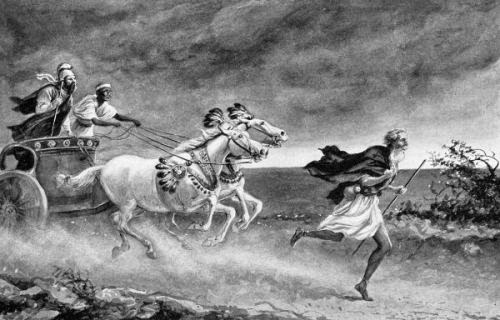
Out on the distant horizon, the servant saw what appeared to be a glimmer of hope. It was a small and seemingly insignificant cloud, but Elijah knew what it meant. The blessing of God was about to fall and, when it did, it would come in torrents. So, he instructed his servant to warn Ahab to leave immediately, or he may not make it back to his winter palace in Jezreel. When Elijah’s servant looked to the east, he saw only a faint possibility. But through his eyes of faith,  Elijah saw something altogether different. He perceived the imminent arrival of the outpouring of God’s blessing, and before long, that small cloud developed into a massive storm that brought strong winds and torrential rains. As Ahab tried to outrun the storm in his chariot, “the LORD gave special strength to Elijah. He tucked his cloak into his belt and ran ahead of Ahab’s chariot all the way to the entrance of Jezreel” (1 Kings 18:46 NLT).

Because Jezreel was anywhere from 10 to 20 miles east of Mount Carmel, some commentators attempt to explain this last verse by saying that Ahab’s chariot got caught in the mud and delayed his arrival. Others speculate that Elijah simply took a shortcut over the ridge of Mount Carmel. But everything about this story has been focused on the matchless power of God, and it should not seem out of the question that God might endow his prophet with a supernatural capacity to outrun the chariot of his arch-nemesis. God had defeated Baal. Now, the prophet of God had defeated the benefactor of Baal.

But while Elijah had won the victory at Mount Carmel and the race to Jezreel, he would have little time to celebrate. Upon hearing the unexpected news of all that had transpired on Mount Carmel, Jezebel was outraged and directed all her anger at Elijah.

“May the gods strike me and even kill me if by this time tomorrow I have not killed you just as you killed them.” – 1 Kings 19:2 NLT

Despite all that Ahab told her about the day’s events, she remained unconvinced of Yahweh’s power. She even called on Baal and his queen mother, Asherah, to come to her aid so that she might avenge the deaths of the prophets by killing Elijah. She was still putting her hope and trust in her false gods. Even the sudden arrival of long-awaited rain did nothing to diminish her misplaced trust in her lifeless and powerless gods. Baal, Jezebel’s beloved fertility god, had done nothing to eliminate the drought that had plagued the land.

But even more surprising than Jezebel’s stubborn belief in Baal and her resistance to God was Elijah’s sudden display of fear and doubt. This man, who had called down fire from heaven and had singlehandedly executed 450 prophets of Baal, found himself intimidated by the idle threats of this self-absorbed, idol-worshiping queen. Her vow to avenge her false god should have made Elijah laugh with scorn. Her god had proven himself to be speechless, powerless, and utterly helpless in the face of Yahweh. Yet, the formerly faithful Elijah was suddenly fearful, and this time, rather than running to the problem in the strength of God, he took flight and tried to escape it. He fled for his life, covering the 25 miles from Jezreel to Beersheba, motivated by fear and in the strength of his own flesh. Faced with the threats of Jezebel, Elijah took his eyes off God and took his fate into his own hands. 

This faithful man of God allowed the words of an idol-obsessed queen to dishearten and defeat him. He had bravely faced off against the 450 prophets of Baal, but now, with Jezebel’s words ringing in his ear, Elijah ran all the way to Beersheba, located on the southern border of Judah. From there, he would enter the Judean wilderness, the very same place where the disobedient and doubtful Israelites had wandered for 40 years when they refused to enter the promised land. And, in no time at all, the once faith-filled Elijah would find himself racked by fear and desiring death rather than face the vengeful anger of Jezebel.

English Standard Version (ESV) The Holy Bible, English Standard Version. ESV® Permanent Text Edition® (2016). Copyright © 2001 by Crossway Bibles, a publishing ministry of Good News Publishers.

New Living Translation (NLT) Holy Bible, New Living Translation, copyright © 1996, 2004, 2015 by Tyndale House Foundation. Used by permission of Tyndale House Publishers Inc., Carol Stream, Illinois 60188. All rights reserved.

The High Cost of Compromised Convictions

11 Now an old prophet lived in Bethel. And his sons came and told him all that the man of God had done that day in Bethel. They also told to their father the words that he had spoken to the king. 12 And their father said to them, “Which way did he go?” And his sons showed him the way that the man of God who came from Judah had gone. 13 And he said to his sons, “Saddle the donkey for me.” So they saddled the donkey for him and he mounted it. 14 And he went after the man of God and found him sitting under an oak. And he said to him, “Are you the man of God who came from Judah?” And he said, “I am.” 15 Then he said to him, “Come home with me and eat bread.” 16 And he said, “I may not return with you, or go in with you, neither will I eat bread nor drink water with you in this place, 17 for it was said to me by the word of the LORD, ‘You shall neither eat bread nor drink water there, nor return by the way that you came.’” 18 And he said to him, “I also am a prophet as you are, and an angel spoke to me by the word of the LORD, saying, ‘Bring him back with you into your house that he may eat bread and drink water.’” But he lied to him. 19 So he went back with him and ate bread in his house and drank water.

20 And as they sat at the table, the word of the LORD came to the prophet who had brought him back. 21 And he cried to the man of God who came from Judah, “Thus says the LORD, ‘Because you have disobeyed the word of the LORD and have not kept the command that the LORD your God commanded you, 22 but have come back and have eaten bread and drunk water in the place of which he said to you, “Eat no bread and drink no water,” your body shall not come to the tomb of your fathers.’” 23 And after he had eaten bread and drunk, he saddled the donkey for the prophet whom he had brought back. 24 And as he went away a lion met him on the road and killed him. And his body was thrown in the road, and the donkey stood beside it; the lion also stood beside the body. 25 And behold, men passed by and saw the body thrown in the road and the lion standing by the body. And they came and told it in the city where the old prophet lived.

26 And when the prophet who had brought him back from the way heard of it, he said, “It is the man of God who disobeyed the word of the LORD; therefore the LORD has given him to the lion, which has torn him and killed him, according to the word that the LORD spoke to him.” 27 And he said to his sons, “Saddle the donkey for me.” And they saddled it. 28 And he went and found his body thrown in the road, and the donkey and the lion standing beside the body. The lion had not eaten the body or torn the donkey. 29 And the prophet took up the body of the man of God and laid it on the donkey and brought it back to the city to mourn and to bury him. 30 And he laid the body in his own grave. And they mourned over him, saying, “Alas, my brother!” 31 And after he had buried him, he said to his sons, “When I die, bury me in the grave in which the man of God is buried; lay my bones beside his bones. 32 For the saying that he called out by the word of the LORD against the altar in Bethel and against all the houses of the high places that are in the cities of Samaria shall surely come to pass.”

33 After this thing Jeroboam did not turn from his evil way, but made priests for the high places again from among all the people. Any who would, he ordained to be priests of the high places. 34 And this thing became sin to the house of Jeroboam, so as to cut it off and to destroy it from the face of the earth. 1 Kings 13:11-34 ESV

After delivering God’s message of judgment to Jeroboam and having destroyed the altar dedicated to one of Jeroboam’s false gods, the young prophet began his return journey to Judah. He had successfully fulfilled his God-ordained mission and was following Yahweh’s strict instructions to spend no additional time among the northern tribes. He was to accept no forms of hospitality or allow anything to delay his return home. He was even warned to take a different route back to Judah to prevent anyone from interfering with his mission. This young prophet had proved to be obedient to the will of God, even rejecting Jeroboam’s tempting offer of a meal and a reward. Instead, he declared his intentions to remain faithful to every detail of God’s instructions.

“Even if you gave me half of everything you own, I would not go with you. I would not eat or drink anything in this place. For the LORD gave me this command: ‘You must not eat or drink anything while you are there, and do not return to Judah by the same way you came.’” So he left Bethel and went home another way. – 1 Kings 13:8-10 NLT

But as the story continues to unfold and the young prophet makes his way home, he decides to take what appears to be an unsanctioned break under a large tree. Having not yet crossed the border into Judah, he decided to take a much-needed rest. While the text does not tell where the young man began his journey to Judah that day, he had likely spent many hours making the trip to Bethel. If he started his trip from Jerusalem, it would have been a 90-mile trek to Bethel. And now, after having destroyed Jeroboam’s altar to his false god, the prophet had to walk all the way back. So, it makes perfect sense that he was weary from all the activity and excitement of the day. He was tired, hungry, and alone. But he had not yet completed his mission. He had been instructed by God to return to Judah without delay and to avoid all distractions.

Yet, as the young man rested under the tree, he was approached by a stranger — an old prophet who happened to live in Bethel. The author provides few details about this man, except that he was a prophet and a father. His sons, who had witnessed the events at the altar that day, returned home and told him all that the young prophet had said and done. Intrigued by what he heard, the elder prophet commanded his sons to saddle a donkey so that he could seek out his younger peer. It seems likely that he simply wanted to verify the message the younger prophet had delivered. As a prophet himself, this older man would have been interested in whether the message delivered by the young man was actually from Yahweh. If it were, there were dark days ahead for the northern kingdom. What the young prophet declared at the altar earlier that day did not bode well for the ten northern tribes.

“A child named Josiah will be born into the dynasty of David. On you he will sacrifice the priests from the pagan shrines who come here to burn incense, and human bones will be burned on you.” – 1 Kings 13:2 NLT

Those were serious words that implied future judgment against the northern kingdom, and this senior prophet was anxious to verify their veracity. So, he mounted his donkey and began his search for the one who had delivered this foreboding message. Since the young prophet had decided to take his unscheduled rest stop under the tree, the older prophet caught up with him before he had crossed over into Judah. This is where the story gets interesting.

Based on what happens next, it is difficult to understand the motives of the older man. He clearly used deception to convince the younger prophet to return to his home for a meal. His offer was rejected by the young man because it violated the command of God.

“I am not allowed to eat or drink anything here in this place. For the Lord gave me this command: ‘You must not eat or drink anything while you are there, and do not return to Judah by the same way you came.’” – 1 Kings 13:16-17 NLT

They were still within the borders of Israel because the young prophet had not yet made it to the safety of Judah. But, anxious to hear more about the young man’s message from God, the older prophet lied to him. He falsely claimed to have been given a message from an angel commanding him to bring the young man to his home for a meal. Driven by hunger, the young prophet lowered his defenses and accepted the offer. But in doing so, he disobeyed the command of God. He allowed his physical appetites to cloud his thinking and compromise his convictions.

The text indicates that the young prophet violated the divine decree by sharing a meal in the older prophet’s home. As soon as he had eaten the food he had been commanded to avoid, the young man received a stinging rebuke from God delivered by the very man who had just deceived him.

“This is what the LORD says: You have defied the word of the LORD and have disobeyed the command the LORD your God gave you. You came back to this place and ate and drank where he told you not to eat or drink. Because of this, your body will not be buried in the grave of your ancestors.” – 1 Kings 13:21-22 NLT

This time, the older prophet had spoken the truth. His lie had caused the younger prophet to disobey God. Now, he had the unpleasant responsibility of delivering God’s message of judgment against the very man he had deceived and caused to disobey. The rest of the story reads like something out of Grimms’ Fairy Tales. The young man, with a full stomach and a heavy heart, began his journey home. But before he could make it into Judah, he was attacked by a lion. The beast killed the prophet but left the body and the donkey unmolested. Uncharacteristically, the lion stood sentry over the fallen body, protecting it from other predators. Passing travelers saw the strange scene and reported it back in Bethel. Upon hearing the news, the older prophet retrieved the body of the young man and placed it in his own tomb, located in the city of Bethel.

The old man was now fully convinced that what the young prophet had said had been the word of God.

“For the message the LORD told him to proclaim against the altar in Bethel and against the pagan shrines in the towns of Samaria will certainly come true.” – 1 Kings 13:32 NLT

Yahweh had used this young, unnamed prophet to declare His judgment against the ten northern tribes. Their continued apostasy would eventually lead to their destruction. When it came to His chosen people, God was deadly serious about their obedience to Him. Whether they were a fully united confederation of 12 tribes or divided into two rival kingdoms, they remained His prized possession and were obligated to live according to His commands. Obedience would bring the blessings of God, but disobedience would bring His curses.

The young prophet had learned the costly lesson that partial obedience was insufficient and unacceptable to God. He had almost completed his mission but had ultimately failed. He had been sent by God, but he ultimately ended up being punished by God for allowing worldly distractions to divert him from his ultimate goal. Had he crossed the border into Judah, he could have eaten his fill of food. But he compromised and allowed his physical appetites to cloud his thinking and distract him from his God-given assignment, and he paid dearly for his mistake. This young man’s life is a perfect illustration of what the apostle John warned about in his first epistle.

Do not love this world nor the things it offers you, for when you love the world, you do not have the love of the Father in you. For the world offers only a craving for physical pleasure, a craving for everything we see, and pride in our achievements and possessions. These are not from the Father, but are from this world. And this world is fading away, along with everything that people crave. But anyone who does what pleases God will live forever. – 1 John 2:15-17 NLT

The young prophet’s desire for physical pleasure ended up superseding his love for God, and it proved not only disappointing but deadly. The older and supposedly wiser prophet had long ago compromised his convictions by remaining in Israel long after Jeroboam had erected his false gods and created his own religion. He had done nothing to address the apostasy in Israel, and he seemed unbothered by the fact that Jeroboam restricted the people from returning to Jerusalem to celebrate the annual feasts. The fact that Yahweh chose to use a younger and much less experienced prophet to deliver His message of judgment to Jeroboam speaks volumes. Yet, in the end, the older prophet was convicted by his compromise and complacency and did the right thing.

So the prophet laid the body of the man of God on the donkey and took it back to the town to mourn over him and bury him. He laid the body in his own grave, crying out in grief, “Oh, my brother!” – 1 Kings 13:29-30 NLT

English Standard Version (ESV) The Holy Bible, English Standard Version. ESV® Permanent Text Edition® (2016). Copyright © 2001 by Crossway Bibles, a publishing ministry of Good News Publishers.

New Living Translation (NLT) Holy Bible, New Living Translation, copyright © 1996, 2004, 2015 by Tyndale House Foundation. Used by permission of Tyndale House Publishers Inc., Carol Stream, Illinois 60188. All rights reserved.

A God Who Can Be Trusted

1 The sons of Judah: Perez, Hezron, Carmi, Hur, and Shobal. Reaiah the son of Shobal fathered Jahath, and Jahath fathered Ahumai and Lahad. These were the clans of the Zorathites. These were the sons of Etam: Jezreel, Ishma, and Idbash; and the name of their sister was Hazzelelponi, and Penuel fathered Gedor, and Ezer fathered Hushah. These were the sons of Hur, the firstborn of Ephrathah, the father of Bethlehem. Ashhur, the father of Tekoa, had two wives, Helah and Naarah; Naarah bore him Ahuzzam, Hepher, Temeni, and Haahashtari. These were the sons of Naarah. The sons of Helah: Zereth, Izhar, and Ethnan. Koz fathered Anub, Zobebah, and the clans of Aharhel, the son of Harum. Jabez was more honorable than his brothers; and his mother called his name Jabez, saying, “Because I bore him in pain.” 10 Jabez called upon the God of Israel, saying, “Oh that you would bless me and enlarge my border, and that your hand might be with me, and that you would keep me from harm so that it might not bring me pain!” And God granted what he asked. 11 Chelub, the brother of Shuhah, fathered Mehir, who fathered Eshton. 12 Eshton fathered Beth-rapha, Paseah, and Tehinnah, the father of Ir-nahash. These are the men of Recah. 13 The sons of Kenaz: Othniel and Seraiah; and the sons of Othniel: Hathath and Meonothai. 14 Meonothai fathered Ophrah; and Seraiah fathered Joab, the father of Ge-harashim, so-called because they were craftsmen. 15 The sons of Caleb the son of Jephunneh: Iru, Elah, and Naam; and the son of Elah: Kenaz. 16 The sons of Jehallelel: Ziph, Ziphah, Tiria, and Asarel. 17 The sons of Ezrah: Jether, Mered, Epher, and Jalon. These are the sons of Bithiah, the daughter of Pharaoh, whom Mered married; and she conceived and bore Miriam, Shammai, and Ishbah, the father of Eshtemoa. 18 And his Judahite wife bore Jered the father of Gedor, Heber the father of Soco, and Jekuthiel the father of Zanoah. 19 The sons of the wife of Hodiah, the sister of Naham, were the fathers of Keilah the Garmite and Eshtemoa the Maacathite. 20 The sons of Shimon: Amnon, Rinnah, Ben-hanan, and Tilon. The sons of Ishi: Zoheth and Ben-zoheth. 21 The sons of Shelah the son of Judah: Er the father of Lecah, Laadah the father of Mareshah, and the clans of the house of linen workers at Beth-ashbea; 22 and Jokim, and the men of Cozeba, and Joash, and Saraph, who ruled in Moab and returned to Lehem (now the records are ancient). 23 These were the potters who were inhabitants of Netaim and Gederah. They lived there in the king’s service.

24 The sons of Simeon: Nemuel, Jamin, Jarib, Zerah, Shaul; 25 Shallum was his son, Mibsam his son, Mishma his son. 26 The sons of Mishma: Hammuel his son, Zaccur his son, Shimei his son. 27 Shimei had sixteen sons and six daughters; but his brothers did not have many children, nor did all their clan multiply like the men of Judah. 28 They lived in Beersheba, Moladah, Hazar-shual, 29 Bilhah, Ezem, Tolad, 30 Bethuel, Hormah, Ziklag, 31 Beth-marcaboth, Hazar-susim, Beth-biri, and Shaaraim. These were their cities until David reigned. 32 And their villages were Etam, Ain, Rimmon, Tochen, and Ashan, five cities, 33 along with all their villages that were around these cities as far as Baal. These were their settlements, and they kept a genealogical record.

34 Meshobab, Jamlech, Joshah the son of Amaziah, 35 Joel, Jehu the son of Joshibiah, son of Seraiah, son of Asiel, 36 Elioenai, Jaakobah, Jeshohaiah, Asaiah, Adiel, Jesimiel, Benaiah, 37 Ziza the son of Shiphi, son of Allon, son of Jedaiah, son of Shimri, son of Shemaiah— 38 these mentioned by name were princes in their clans, and their fathers’ houses increased greatly. 39 They journeyed to the entrance of Gedor, to the east side of the valley, to seek pasture for their flocks, 40 where they found rich, good pasture, and the land was very broad, quiet, and peaceful, for the former inhabitants there belonged to Ham. 41 These, registered by name, came in the days of Hezekiah, king of Judah, and destroyed their tents and the Meunites who were found there, and marked them for destruction to this day, and settled in their place, because there was pasture there for their flocks. 42 And some of them, five hundred men of the Simeonites, went to Mount Seir, having as their leaders Pelatiah, Neariah, Rephaiah, and Uzziel, the sons of Ishi. 43 And they defeated the remnant of the Amalekites who had escaped, and they have lived there to this day. – 1 Chronicles 4:1-43 ESV

In this chapter, the chronicler continues to expand his genealogical record, providing further details about the descendants of the tribe of Judah. By this time in the narrative, the contemporary reader can begin to lose interest and face the temptation to skip ahead to chapter 10 where the “real” story begins. But that would be an unfortunate mistake because these rather laborious and somewhat boring chapters are also part of God’s inspired word. They are there for a reason and are intended to be read and carefully considered. As this chapter will illustrate, there are often nuggets of divine truth hidden within the barren landscape of the seemingly endless lists of names.

“How barren to us is this register, both of incident and interest! And yet, as barren rocks and sandy deserts make integral and necessary parts of the globe; so do these genealogical tables make necessary parts of the history of providence and grace in the maintenance of truth, and the establishment of the church of Christ. Therefore, no one that fears God will either despise or lightly esteem them.” – Adam Clarke, The Holy Bible, Containing the Old and New Testaments, with A Commentary and Critical Notes, Volume II – Joshua to Esther

The first thing that should catch our attention is the list of Judah’s sons: Perez, Hezron, Carmi, Hur, and Shobal. A quick look back at chapter 3 reveals a somewhat glaring discrepancy in the names.

Judah had three sons from Bathshua, a Canaanite woman. Their names were Er, Onan, and Shelah. But the Lord saw that the oldest son, Er, was a wicked man, so he killed him. Later Judah had twin sons from Tamar, his widowed daughter-in-law. Their names were Perez and Zerah. So Judah had five sons in all. – 1 Chronicles 2:3-4 NLT

According to chapter 3, Judah had five sons named Er, Onan, Shelah, Perez, and Zerah. So why does the chronicler provide a different list in chapter 4? To the original Jewish audience, the difference would have been clear. They would have recognized the second list as representing successive generations, not blood brothers. The names of Perez, Hezron, Carmi, Hur, and Shobal were included to show the generational legacy of Judah. According to J. Barton Payne, “the five descendants of Judah, from Perez to Shobal, were not brothers but successive generations. ‘Carmi’ must therefore be a scribal error for Caleb.” (J. Barton Payne, “1 & 2 Chronicles”  The Expositor’s Bible Commentary, Volume 4).

Centuries earlier, when Jacob was nearing death, he pronounced blessings upon his 12 sons. For Judah, he reserved a very special blessing.

“Judah, your brothers will praise you.
    You will grasp your enemies by the neck.
    All your relatives will bow before you.
Judah, my son, is a young lion
    that has finished eating its prey.
Like a lion he crouches and lies down;
    like a lioness—who dares to rouse him?
The scepter will not depart from Judah,
    nor the ruler’s staff from his descendants,
until the coming of the one to whom it belongs,
    the one whom all nations will honor.” – Genesis 49:8-10 NLT

Judah was not the firstborn, but he was given a very specific blessing that predicted his leadership role among his brothers. This prophecy from his father was far-reaching and covered a lengthy timespan that extended well beyond the life of Judah. Its reference to the scepter and the ruler’s staff foreshadowed a long line of kings that would come from the tribe of Judah. As the original readers recognized, this prophecy was fulfilled by the likes of David, Solomon, Uzziah, Jehoash, Amaziah, Hezekiah, and Josiah. Those were some of the “good” kings who descended from Judah and provided the nation of Israel with wise and godly leadership. But the greatest king was yet to come. He would be “the one whom all nations will honor” (Genesis 49:10 NLT).

At the time of the writing of this book, Israel had no king. There was no David or Solomon to rule over their fledgling nation. But centuries later, the King of kings and Lord of lords came to earth, born to a woman named Mary who just happened to be a descendant of Judah. The genealogical record found in Luke chapter 3 records Mary’s family tree all the way back to Perez, the son of Judah (Luke 3:33). She gave birth to a son who would fulfill the prophecy of Jacob and become “the Lion of the tribe of Judah, the heir to David’s throne” (Revelation 5:5 NLT).

The Book of Revelation reveals that this future descendant of Judah will become the final king in the line that descends from David. He will be the one true King and will establish an everlasting kingdom on earth.

Then I saw heaven opened, and a white horse was standing there. Its rider was named Faithful and True, for he judges fairly and wages a righteous war. His eyes were like flames of fire, and on his head were many crowns. A name was written on him that no one understood except himself. He wore a robe dipped in blood, and his title was the Word of God. The armies of heaven, dressed in the finest of pure white linen, followed him on white horses. From his mouth came a sharp sword to strike down the nations. He will rule them with an iron rod. He will release the fierce wrath of God, the Almighty, like juice flowing from a winepress. On his robe at his thigh was written this title: King of all kings and Lord of all lords. – Revelation 19:11-16 NLT

But the original readers of the Book of 1 Chronicles would not have been privy to this wonderful news. They simply longed for the day when God would fulfill His promise and place another king on the throne in Jerusalem. At this point in history, they were virtually leaderless, and their hopes of reliving the glory days of David and Solomon were little more than wishful thinking.

But in the middle of this genealogical list, there is one name that stands out among all the others. His inclusion in the list and the statements made about him are intended to drive home an important point to the ragtag remnant of Jews who had returned to the land of promise.

There was a man named Jabez who was more honorable than any of his brothers. His mother named him Jabez because his birth had been so painful. He was the one who prayed to the God of Israel, “Oh, that you would bless me and expand my territory! Please be with me in all that I do, and keep me from all trouble and pain!” And God granted him his request. – 1 Chronicles 4:9-10 NLT

What makes Jabez particularly interesting is that we are not provided with the name of his father. The nature of his lineage is not exactly clear. He is not included as a son of any particular man but, instead, his name simply appears. But while we may not know much about his genealogical background, the chronicler provides us with a fascinating glimpse into his character and prayer life.

Jabez was an honorable man who had a vibrant relationship with Yahweh. It’s impossible to know whether he lived before or after the exile but his inclusion in the list is clearly intended to provide the newly returned exiles that they can turn to God for help in their time of need. They may not have a king, but they do have God.

No details are provided about Jabez’s circumstances or the impetus behind his prayer. But at some point in his life, he prayed a very specific prayer to “the God of Israel.” He turned to Yahweh in his time of need and made a request that contained four specific elements. First, he asked God to bless him. Notice that Jabez didn’t elaborate on the nature of that blessing. He didn’t provide God with a list of recommendations or helpful suggestions. He was willing to trust God to pour out His blessings as He saw fit. There are no requests for health, healing, wealth, happiness, popularity, lack of trouble, or an abundance of good things. He just asked that God would bless him.

Secondly, he asked God to expand his territory. Jabez wasn’t looking to pad his portfolio of properties. This wasn’t a request for more land so he could increase his power and influence. As a faithful follower of Yahweh, he was expecting God to bless him with more children, which would require additional land to provide for their needs. His request had more to do with honoring God by producing more of his kind and filling the land with additional worshipers of Yahweh.

Thirdly, he pleaded with God to be with Him in all his endeavors. He longed for God to be his constant companion and the source of power and provision for every area of his life. He wasn’t a one-day-a-week kind of God-follower. He wanted a 24-hour-a-day, 365-days-a-year relationship with God. He knew he was nothing without God. His accomplishments would be meaningless without God’s guidance, power, and provision.

Finally, he asked God to protect him from trouble and pain. This doesn’t seem to be a request for a trouble-free life. In other words, Jabez wasn’t asking God to act as some kind of divine force field that would shield him from all pain and suffering. It makes more sense to see this as a request for divine protection from doing the wrong thing. Jabez knew his own heart well and realized His need for God’s assistance in staying morally pure. Verse 10 might better be translated as “Keep me from doing evil so that I might not cause others pain!

Jabez wanted to live a godly life but he knew it was impossible without God’s help. He desired to live a righteous life that was motivated by his devotion to God and made possible by the power of God. And the text states that “God granted what he asked.”

This simple statement was meant to remind the Israelites that they could follow the example of Jabez and turn to God for help, guidance, power, and blessings. There was nothing they faced that was out of God’s control. There was no enemy so powerful that God could not provide victory. If only they would honor God and rely upon His mercy, grace, love, and power, they could experience His blessings just as Jabez did.

English Standard Version (ESV)
The Holy Bible, English Standard Version. ESV® Permanent Text Edition® (2016). Copyright © 2001 by Crossway Bibles, a publishing ministry of Good News Publishers.

New Living Translation (NLT)
Holy Bible, New Living Translation, copyright © 1996, 2004, 2015 by Tyndale House Foundation. Used by permission of Tyndale House Publishers Inc., Carol Stream, Illinois 60188. All rights reserved.

The Lord of Heaven’s Armies

27 And Balak said to Balaam, “Come now, I will take you to another place. Perhaps it will please God that you may curse them for me from there.” 28 So Balak took Balaam to the top of Peor, which overlooks the desert. 29 And Balaam said to Balak, “Build for me here seven altars and prepare for me here seven bulls and seven rams.” 30 And Balak did as Balaam had said, and offered a bull and a ram on each altar.

1 When Balaam saw that it pleased the Lord to bless Israel, he did not go, as at other times, to look for omens, but set his face toward the wilderness. And Balaam lifted up his eyes and saw Israel camping tribe by tribe. And the Spirit of God came upon him, and he took up his discourse and said,

“The oracle of Balaam the son of Beor,
    the oracle of the man whose eye is opened,
the oracle of him who hears the words of God,
    who sees the vision of the Almighty,
    falling down with his eyes uncovered:
How lovely are your tents, O Jacob,
    your encampments, O Israel!
Like palm groves that stretch afar,
    like gardens beside a river,
like aloes that the Lord has planted,
    like cedar trees beside the waters.
Water shall flow from his buckets,
    and his seed shall be in many waters;
his king shall be higher than Agag,
    and his kingdom shall be exalted.
God brings him out of Egypt
    and is for him like the horns of the wild ox;
he shall eat up the nations, his adversaries,
    and shall break their bones in pieces
    and pierce them through with his arrows.
He crouched, he lay down like a lion
    and like a lioness; who will rouse him up?
Blessed are those who bless you,
    and cursed are those who curse you.”

10 And Balak’s anger was kindled against Balaam, and he struck his hands together. And Balak said to Balaam, “I called you to curse my enemies, and behold, you have blessed them these three times. 11 Therefore now flee to your own place. I said, ‘I will certainly honor you,’ but the Lord has held you back from honor.” 12 And Balaam said to Balak, “Did I not tell your messengers whom you sent to me, 13 ‘If Balak should give me his house full of silver and gold, I would not be able to go beyond the word of the Lord, to do either good or bad of my own will. What the Lord speaks, that will I speak’? 14 And now, behold, I am going to my people. Come, I will let you know what this people will do to your people in the latter days.” Numbers 23:27-24:14 ESV

The third time would be the charm, or so Balak hoped. In his relentless effort to have Balaam curse the Israelites, Balak suggested that they try their luck at a third location. He still harbored hopes that Balaam might be able to convince Jehovah to change His mind and curse His own people. In a sense, Balak was attempting to treat God as he had Balaam, by trying to buy Him off. Balak seemed to believe that deities were no different than humans and were susceptible to bribes and influence peddling. He had already authorized the construction of 14 altars and the sacrifice of 56 bulls and seven rams in an attempt to sway the mind of Israel’s God, and his obsession with defeating the Israelites drove him to up the ante one more time.

But on this occasion, Balaam refused to seek the will of Jehovah because he already knew what the answer would be. The seer had already determined that nothing would convince the God of Israel to do anything but bless His people. Balak’s sacrifices were an exercise in futility and a waste of time.

Rather than follow Balak to Mount Peor, Balaam headed to the wilderness, where it appears he was given a vision by God. As he lay prostrate on the ground, the Holy Spirit opened his eyes to see the Israelites “camping tribe by tribe” (Numbers 24:2 ESV). In the previous accounts, Balaam had stood on higher ground and seen a portion of the Israelite camp with his own eyes. But this time, he was given a vision that allowed him to see each of the 12 tribes of Israel, and this Spirit-induced dream was accompanied by yet another message from God.

“This is the message of Balaam son of Beor,
    the message of the man whose eyes see clearly,
the message of one who hears the words of God,
    who sees a vision from the Almighty,
    who bows down with eyes wide open…” – Numbers 24:3-4 NLT

Balaam was left without any doubts regarding the countless number of Israelites camped in the plains of Moab. He was given a panoramic vision of the entire nation of Israel and was overwhelmed by what he saw.

“How beautiful are your tents, O Jacob;
    how lovely are your homes, O Israel!
They spread before me like palm groves,
    like gardens by the riverside.
They are like tall trees planted by the Lord,
    like cedars beside the waters…” – Numbers 24:5-6 NLT

In his trance-like state, Balaam envisioned Israel as tall trees planted by the hand of God. They grew tall and strong beside the waters and were cared for by their divine gardener.

“He will pour the water out of his buckets,
and their descendants will be like abundant water;
their king will be greater than Agag,
and their kingdom will be exalted.” – Numbers 24:7 NET

As God had promised to Abraham centuries earlier, He was going to bless His people and transform them into a mighty nation.

“I will make of you a great nation, and I will bless you and make your name great, so that you will be a blessing. I will bless those who bless you, and him who dishonors you I will curse…” – Genesis 12:2-3 ESV

God had delivered them from their captivity in Egypt and led them through the wilderness for the last four decades. But soon, they would no longer be wanderers in the wilderness but citizens of a mighty kingdom ruled over by a powerful king. The promised blessings of Jehovah would be fully realized and there was nothing anyone could do to prevent this predetermined outcome.

“God brought them out of Egypt.
They have, as it were, the strength of a young bull;
they will devour hostile people,
and will break their bones,
and will pierce them through with arrows. – Numbers 24:8 NET

Once again, Balak was receiving far-from-pleasant news from his hired gun. Rather than pronouncing a curse on Israel, Balaam was singing the praises of their God and warning against any attempts to do them harm. None of this was what Balak wanted to hear. To make matters worse, Balaam describes God as a hungry apex predator, waiting to attack and destroy any who would dare stand against His will. Part of the message God gave to Balaam was a direct quote from His covenant promise to Abraham.

“Blessed are those who bless you,
    and cursed are those who curse you.” – Numbers 24:9 ESV

This reiteration of God’s commitment to curse all those who cursed His people was intended to provide Balak with one final warning to rethink his strategy. Israel was favored by God and there was nothing Balaam or anyone else could do to alter that fact. Their future was in the hands of Jehovah. He had great plans for them and would see to it that the covenant promises He made to Abraham were fully fulfilled.

But Balak refused to accept Balaam’s assessment and angrily fired his disappointing diviner. He reneged on his promise of reward and sent Balaam home empty-handed.

“I called you to curse my enemies! Instead, you have blessed them three times. Now get out of here! Go back home! I promised to reward you richly, but the Lord has kept you from your reward.” – Numbers 24:10-11 NLT

But before he departed, Balaam had one more thing to say to his former employer. He reminded Balak that from the very beginning, he had been open and above board about his inability to curse the Israelites. He had warned Balak that regardless of how much reward he was offered, he “would be powerless to do anything against the will of the Lord” (Numbers 24:13 NLT). While Balaam confessed that he could be easily bought off, Jehovah was not susceptible to bribes. The God of Israel had made promises to His people and He would faithfully fulfill them, despite anyone’s attempts to deter or dissuade Him.

As Balaam prepared to return home, he gave Balak one final series of messages that would leave the over-confident king in a state of despair and disillusionment. Not only would God never curse His own people, but He would use them to pour out curses on the nations of Canaan. This wandering band of former slaves would become a force to be reckoned with, as Jehovah carried out His promise to transform them into a mighty nation and give them the land of Canaan as their home. God would keep every covenant commitment He had made to Abraham, including the promise of many descendants and the gift of a homeland.

“Look as far as you can see in every direction—north and south, east and west. I am giving all this land, as far as you can see, to you and your descendants as a permanent possession. And I will give you so many descendants that, like the dust of the earth, they cannot be counted! Go and walk through the land in every direction, for I am giving it to you.” – Genesis 13:14-17 NLT

More than half a millennium later, God was preparing to fulfill the promise He had made to Abraham, and nothing would stand in his way. King Balak of Moab and his forces would prove to be little more than a speed bump for God Almighty. Like Pharaoh and the army of Egypt, this foreign power would discover the nation of Israel to be a formidable foe backed by an omnipotent God.

On his way out the door, Balaam will deliver one final message to his former client, detailing the fate of the nations of Canaan. Once again, this pagan seer from Aram will become God’s chosen instrument to declare a divine pronouncement on Israel’s future and Moab’s fate. But God will expand the scope of His plans for Israel’s future conquests by including the Kenites and Amalekites. This final message from Jehovah, delivered through this unlikely envoy, will outline an expansive plan for Israel’s destiny that spans thousands of years and will culminate with the second coming of the Messiah and the establishment of His Kingdom on earth.

Balak would soon learn the painful lesson that it doesn’t pay to curse God’s chosen people. The most powerful nations of this earth are no match for Jehovah Sabaoth – the Lord of Heaven’s Armies.

The kings of the earth prepare for battle;
    the rulers plot together
against the Lord
    and against his anointed one.
“Let us break their chains,” they cry,
    “and free ourselves from slavery to God.”

But the one who rules in heaven laughs.
    The Lord scoffs at them.
Then in anger he rebukes them,
    terrifying them with his fierce fury.
For the Lord declares, “I have placed my chosen king on the throne
    in Jerusalem, on my holy mountain.” – Psalm 2:2-6 NLT

English Standard Version (ESV) The Holy Bible, English Standard Version. ESV® Permanent Text Edition® (2016). Copyright © 2001

New Living Translation (NLT) Holy Bible, New Living Translation, copyright © 1996, 2004, 2015 by Tyndale House Foundation. Used by permission of Tyndale House Publishers Inc., Carol Stream, Illinois 60188. All rights reserved.

A God of Order

1 The Lord spoke to Moses in the wilderness of Sinai, in the tent of meeting, on the first day of the second month, in the second year after they had come out of the land of Egypt, saying, “Take a census of all the congregation of the people of Israel, by clans, by fathers’ houses, according to the number of names, every male, head by head. From twenty years old and upward, all in Israel who are able to go to war, you and Aaron shall list them, company by company. And there shall be with you a man from each tribe, each man being the head of the house of his fathers. And these are the names of the men who shall assist you. From Reuben, Elizur the son of Shedeur; from Simeon, Shelumiel the son of Zurishaddai; from Judah, Nahshon the son of Amminadab; from Issachar, Nethanel the son of Zuar; from Zebulun, Eliab the son of Helon; 10 from the sons of Joseph, from Ephraim, Elishama the son of Ammihud, and from Manasseh, Gamaliel the son of Pedahzur; 11 from Benjamin, Abidan the son of Gideoni; 12 from Dan, Ahiezer the son of Ammishaddai; 13 from Asher, Pagiel the son of Ochran; 14 from Gad, Eliasaph the son of Deuel; 15 from Naphtali, Ahira the son of Enan.” 16 These were the ones chosen from the congregation, the chiefs of their ancestral tribes, the heads of the clans of Israel.

17 Moses and Aaron took these men who had been named, 18 and on the first day of the second month, they assembled the whole congregation together, who registered themselves by clans, by fathers’ houses, according to the number of names from twenty years old and upward, head by head, 19 as the Lord commanded Moses. So he listed them in the wilderness of Sinai.

20 The people of Reuben, Israel’s firstborn, their generations, by their clans, by their fathers’ houses, according to the number of names, head by head, every male from twenty years old and upward, all who were able to go to war: 21 those listed of the tribe of Reuben were 46,500.

22 Of the people of Simeon, their generations, by their clans, by their fathers’ houses, those of them who were listed, according to the number of names, head by head, every male from twenty years old and upward, all who were able to go to war: 23 those listed of the tribe of Simeon were 59,300.

24 Of the people of Gad, their generations, by their clans, by their fathers’ houses, according to the number of the names, from twenty years old and upward, all who were able to go to war: 25 those listed of the tribe of Gad were 45,650.

26 Of the people of Judah, their generations, by their clans, by their fathers’ houses, according to the number of names, from twenty years old and upward, every man able to go to war: 27 those listed of the tribe of Judah were 74,600.

28 Of the people of Issachar, their generations, by their clans, by their fathers’ houses, according to the number of names, from twenty years old and upward, every man able to go to war: 29 those listed of the tribe of Issachar were 54,400.

30 Of the people of Zebulun, their generations, by their clans, by their fathers’ houses, according to the number of names, from twenty years old and upward, every man able to go to war: 31 those listed of the tribe of Zebulun were 57,400.

32 Of the people of Joseph, namely, of the people of Ephraim, their generations, by their clans, by their fathers’ houses, according to the number of names, from twenty years old and upward, every man able to go to war: 33 those listed of the tribe of Ephraim were 40,500.

34 Of the people of Manasseh, their generations, by their clans, by their fathers’ houses, according to the number of names, from twenty years old and upward, every man able to go to war: 35 those listed of the tribe of Manasseh were 32,200.

36 Of the people of Benjamin, their generations, by their clans, by their fathers’ houses, according to the number of names, from twenty years old and upward, every man able to go to war: 37 those listed of the tribe of Benjamin were 35,400.

38 Of the people of Dan, their generations, by their clans, by their fathers’ houses, according to the number of names, from twenty years old and upward, every man able to go to war: 39 those listed of the tribe of Dan were 62,700.

40 Of the people of Asher, their generations, by their clans, by their fathers’ houses, according to the number of names, from twenty years old and upward, every man able to go to war: 41 those listed of the tribe of Asher were 41,500.

42 Of the people of Naphtali, their generations, by their clans, by their fathers’ houses, according to the number of names, from twenty years old and upward, every man able to go to war: 43 those listed of the tribe of Naphtali were 53,400.

44 These are those who were listed, whom Moses and Aaron listed with the help of the chiefs of Israel, twelve men, each representing his fathers’ house. 45 So all those listed of the people of Israel, by their fathers’ houses, from twenty years old and upward, every man able to go to war in Israel— 46 all those listed were 603,550.

47 But the Levites were not listed along with them by their ancestral tribe. 48 For the Lord spoke to Moses, saying, 49 “Only the tribe of Levi you shall not list, and you shall not take a census of them among the people of Israel. 50 But appoint the Levites over the tabernacle of the testimony, and over all its furnishings, and over all that belongs to it. They are to carry the tabernacle and all its furnishings, and they shall take care of it and shall camp around the tabernacle. 51 When the tabernacle is to set out, the Levites shall take it down, and when the tabernacle is to be pitched, the Levites shall set it up. And if any outsider comes near, he shall be put to death. 52 The people of Israel shall pitch their tents by their companies, each man in his own camp and each man by his own standard. 53 But the Levites shall camp around the tabernacle of the testimony, so that there may be no wrath on the congregation of the people of Israel. And the Levites shall keep guard over the tabernacle of the testimony.” 54 Thus did the people of Israel; they did according to all that the Lord commanded Moses. – Numbers 1:1-54 ESV

Written by Moses, this book was originally part of a five-book known as the Pentateuch, which in Hebrew means “the five scrolls.” The opening chapter of this fourth book of the Pentateuch begins with God commanding Moses to take a census of the people of Israel, who are still encamped at the base of Mount Sinai. A year and a half has passed since God delivered them from their enslavement to the Egyptians and led them to Mount Sinai under the leadership of Moses.

During their stay at Mount Sinai, God revealed Himself to the people of Israel in the form of a storm cloud that encompassed the peak of the mountain and was accompanied by thunder and lightning.

On the morning of the third day there were thunders and lightnings and a thick cloud on the mountain and a very loud trumpet blast, so that all the people in the camp trembled. Then Moses brought the people out of the camp to meet God, and they took their stand at the foot of the mountain. Now Mount Sinai was wrapped in smoke because the Lord had descended on it in fire. The smoke of it went up like the smoke of a kiln, and the whole mountain trembled greatly. – Exodus 18:16-18 ESV

This theophany or visible manifestation of God’s presence was intended to illustrate the glory and greatness of God and instill in the Israelites a reverence for His holiness.

Now the appearance of the glory of the Lord was like a devouring fire on the top of the mountain in the sight of the people of Israel. – Exodus 24:17 ESV

The theophany had its intended effect, creating in the Israelites a reverential awe and a reluctance to draw near the mountain out of fear of death. It was from His temporary abode on the mountaintop that God gave Moses the law and the design for the Tabernacle. A month after having completed the construction of the Tabernacle and the inauguration of the sacrificial system, Moses received a command from God to take a census or a numbering of the people. This divine decree was in preparation for the people to leave Mount Sinai and continue their journey to Canaan, the land God had promised to give them as their inheritance.

According to Moses, the census was taken “on the first day of the second month, in the second year after they had come out of the land of Egypt” (Numbers 1:1 ESV). Twenty days later, the Israelites would break camp and begin the final stage of their journey to the land of Canaan.

In the second year, in the second month, on the twentieth day of the month, the cloud lifted from over the tabernacle of the testimony, and the people of Israel set out by stages from the wilderness of Sinai. – Numbers 10:11-12 ESV

But before they left, God instructed Moses to take a head count of all the males who were 20 years of age or older. He was not to include the mixed multitude that had left Egypt with them but was only to count those men were members of the twelve tribes of Israel. No one who was unfit for military service was to be counted. No women or children were to be included in the final number.

So, Moses had everyone arranged according to their tribe and when the counting was complete, they discovered that there were 603,550 able-bodied men among them. If you add in wives and kids, as well as an estimate of how many foreigners were traveling with them, it isn’t hard to see that the number of people traveling under Moses’ leadership was well over a million and a half. That’s a staggering sum, and the book of Numbers is going to chronicle their nearly 40-year journey through the wilderness.

Their movement from Mount Sinai to Canaan was going to be a logistical miracle. To travel that long and far with that many people would prove to be a feat of epic proportions that would require divine empowerment to succeed.

So why did God have Moses number the people? What could have been His purpose? First of all, it was probably a not-so-subtle reminder that God was keeping the promise He had made to Abraham that He would multiply his seed exceedingly, which was the same promise He had renewed to Jacob.

“Your offspring shall be like the dust of the earth, and you shall spread abroad to the west and to the east and to the north and to the south, and in you and your offspring shall all the families of the earth be blessed.”Genesis 28:14

When the descendants of Jacob first arrived in Egypt, their entire clan was just over 70 in number. But during their four-century-long stay in Egypt, they experienced a dramatic population increase that could only be explained as a miracle of God. The book of Exodus records that by the time they left Egypt, they were no longer a clan; they were a nation.

And the people of Israel journeyed from Rameses to Succoth, about six hundred thousand men on foot, besides women and children. A mixed multitude also went up with them, and very much livestock, both flocks and herds. – Exodus 12:37-38 ESV

Now, a year and a half later, the census would reveal that their number had not diminished. God had protected and preserved them along the way. And even though He had been forced to mete out judgment on those who had participated in the incident of the golden calf at Mount Sinai (Exodus 32), God had actually increased their number. By the time Moses completed the census, they would know that God had made good on His promise to transform them into a great nation, and they could trust Him to fulfill His promise to give them the land of Canaan as their inheritance.

A second part of God’s command for the census was for Moses to select men from each of the various tribes and clans to assist him. Leadership was going to be critical for this journey, and order would need to be maintained. This divine enlistment of additional leadership was intended to display God’s care and concern for His people. He knew what they would need to survive the journey from Mount Sinai to Canaan, so He had Moses appoint these men as shepherds over the people so that they might care for them.

A good shepherd always knows the exact number of the sheep under his care. As the Shepherd of Israel (Psalms 80:1), God also numbers His flock so that He might properly care for each and every one of them.

Thirdly, God seems to go out of His way to differentiate the Israelites from the host of foreigners traveling with them. We don’t know how many “mixed multitude” left Egypt with them, but it was probably not an insignificant number. So, when God commands the census to be taken, He orders that it not include anyone but the sons of Israel. This differentiation between the Israelites and the mixed multitude illustrates the special relationship between God and His chosen people. God had clearly told the Israelites that they would hold a special place in His heart.

“…you shall be my treasured possession among all peoples, for all the earth is mine; and you shall be to me a kingdom of priests and a holy nation. – Exodus 19:5-6 ESV

God cares for His own. He knows those that are His (2 Timothy 2:19), and He knows them by name (Philippians 4:3). Even the hairs of their head are numbered (Matthew 10:30).

Finally, God seems to be arranging the people in such a way as to facilitate and improve their orderly travel and the administration of justice. This was not going to be an unruly rabble traveling through the wilderness, but a well-ordered army. God only had Moses number the men who were fit for battle, and then Moses was ordered to arrange them in military rank and file. This was probably meant as a reminder that they were going to have to be prepared to fight when they arrived in the land of promise. Their promised inheritance would not just be handed over to them. So, God was letting them know that would have to learn to follow commands and march in an orderly manner.

Can you imagine what it would have been like for a million and a half people to travel through the wilderness without some kind of plan or orderly system of communication and administration? There would have been thousands of children, hundreds of thousands of animals, and plenty of excuses for chaos and disorder. So, God arranged them in troops and provided them with leaders. God is a god of order, not confusion. He has a plan. He has a purpose. He knows exactly what is needed and when it is needed. And He can always be trusted.

English Standard Version (ESV) The Holy Bible, English Standard Version. ESV® Permanent Text Edition® (2016). Copyright © 2001

New Living Translation (NLT) Holy Bible, New Living Translation, copyright © 1996, 2004, 2015 by Tyndale House Foundation. Used by permission of Tyndale House Publishers Inc., Carol Stream, Illinois 60188. All rights reserved.

Far From Fair Weather Friends

11 Now when Job’s three friends heard of all this evil that had come upon him, they came each from his own place, Eliphaz the Temanite, Bildad the Shuhite, and Zophar the Naamathite. They made an appointment together to come to show him sympathy and comfort him. 12 And when they saw him from a distance, they did not recognize him. And they raised their voices and wept, and they tore their robes and sprinkled dust on their heads toward heaven. 13 And they sat with him on the ground seven days and seven nights, and no one spoke a word to him, for they saw that his suffering was very great. – Job 2:11-13 ESV

Amid all his sorrow and suffering, Job gets a visit from three of his closest friends. Each of them had received news of Job’s losses and made plans to leave their respective towns and rendevous in Uz to provide moral support to their mutual friend. We know from chapter 32, that another friend named Elihu joined them at some point. At this point, we know nothing about these men, other than their names but in time their individual personalities will become increasingly more evident.

But for now, all we know is that they graciously agreed to gather in Uz to check on the physical, mental, and emotional well-being of their friend. It is important to note that what motivated their travel plans was “this evil that had come upon” Job (Job 2:11 ESV). The Hebrew word for “evil” is הָרָעָה (raʿ) and it refers to that which is bad, wicked, malignant, or simply disagreeable. But it would appear that these men had all come to the same conclusion. Whatever had happened to their friend was the result of evil, and it will soon become clear that they assumed that Job had done something to deserve the distress and devastation he was experiencing. They believed there was a cause-and-effect rationale behind all that had happened to Job and they would soon deem it their responsibility to help Job confess whatever sin he had committed to merit God’s judgment.

Yet, upon their arrival in Uz, the well-meaning and highly motivated friends of Job find their friend’s condition far more distressing than they could have ever imagined. The skin disease from which Job suffered had left him virtually unrecognizable. Their shock and distress at Job’s alarming physical state left them stunned. But soon, their silence soon gave way to mournful cries of pity as “they tore their robes and threw dust into the air over their heads to show their grief” (Job 2:12 NLT). This rather theatrical display of emotions was probably not what Job had expected and, most certainly, not what he needed at the moment. This dramatic demonstration was intended to convince Job that they felt his pain and could somehow relate to all that he had suffered. This is not to suggest that these friends were insincere or simply putting on a show of false sympathy. They were doing what was culturally customary in that day and age. The sincerity of their actions is evidenced by their willingness to sit in silence beside their grieving friend for a full seven days as he continued to mourn Job his staggering losses.

No one said a word to Job, for they saw that his suffering was too great for words. – Job 2:13 NLT

No doubt, this show of mutual support meant a great deal to Job. He had just lost all ten of his adult children and the only words of comfort and counsel he got from his wife was to curse God and die (Job 2:9). He had been left alone to wrestle with the import of his situation, so the arrival of his friends would have been a source of great encouragement. Their decision to join him in Uz was a sign of their love and affection for him, and their willingness to sit in silence while Job mourned demonstrates that they were there for the long haul. Their visit was not a spur-of-the-moment kind of thing, and they were in no rush to return home. They quietly waited, biding their time until Job was ready to hear what they had to say. And, as we will see, they were not at a loss for words; they were simply waiting for the right time to share their insights into Job’s circumstances.

These men demonstrated the truth of the proverb: “A friend is always loyal, and a brother is born to help in time of need” (Proverbs 17:17 NLT). In Job’s time of need,  his friends were there for him. Their presence was palpable and tangible. Even as they sat alongside him in silence, their close proximity served as a balm for the pain Job was having to endure. His trials were no less difficult, but he no longer faced them alone.

Yet, the arrival of Job’s friends would not be without its own set of difficulties. These compassionate companions would soon break their silence and begin to share their personal insights into Job’s predicament. Once the seven days of mourning had passed, they would begin to offer up their well-reasoned assessment of Job’s situation and outline a strategy for remedying the problem.

But Job will beat them to the punch. His patient endurance will run its course and he’ll take the opportunity to take exception with God’s providential plan for his life. Surprisingly, the blameless Job will end up cursing his ill-fated life and express his preference for an early death. His carefully constructed facade of faithfulness will begin to crumble under the weight of his burdens. It’s not that Job no longer believes in God; it is that he no longer has the strength to endure the weight of his own sorrow and suffering. But God will show no surprise at Job’s outburst. He will hear His servant out and then allow Job’s friends to share their collective wisdom. But ultimately, God will step in and set the record straight. The entire ordeal surrounding Job’s life will be given an explanation and the sovereign plan of Almighty God will be exposed for all to see.

English Standard Version (ESV) The Holy Bible, English Standard Version. ESV® Permanent Text Edition® (2016). Copyright © 2001

New Living Translation (NLT) Holy Bible, New Living Translation, copyright © 1996, 2004, 2015 by Tyndale House Foundation. Used by permission of Tyndale House Publishers Inc., Carol Stream, Illinois 60188. All rights reserved.


It Pays to Obey

1 You shall not make idols for yourselves or erect an image or pillar, and you shall not set up a figured stone in your land to bow down to it, for I am the Lord your God. You shall keep my Sabbaths and reverence my sanctuary: I am the Lord.

“If you walk in my statutes and observe my commandments and do them, then I will give you your rains in their season, and the land shall yield its increase, and the trees of the field shall yield their fruit. Your threshing shall last to the time of the grape harvest, and the grape harvest shall last to the time for sowing. And you shall eat your bread to the full and dwell in your land securely. I will give peace in the land, and you shall lie down, and none shall make you afraid. And I will remove harmful beasts from the land, and the sword shall not go through your land. You shall chase your enemies, and they shall fall before you by the sword. Five of you shall chase a hundred, and a hundred of you shall chase ten thousand, and your enemies shall fall before you by the sword. I will turn to you and make you fruitful and multiply you and will confirm my covenant with you. 10 You shall eat old store long kept, and you shall clear out the old to make way for the new. 11 I will make my dwelling among you, and my soul shall not abhor you. 12 And I will walk among you and will be your God, and you shall be my people. 13 I am the Lord your God, who brought you out of the land of Egypt, that you should not be their slaves. And I have broken the bars of your yoke and made you walk erect. Leviticus 26:1-13 ESV

After all that God has said and done since their arrival at Sinai, the Israelites are now given the conditions surrounding their covenant relationship with Yahweh. They have received His Decalogue and Book of the Covenant and agreed to keep all the laws and regulations contained within them. Moses delivered to them all of God’s instructions concerning the sacrificial system and the Levitical priesthood. Moses also provided them with God’s detailed plans for the construction of the Tabernacle which was to serve as Yahweh’s earthly dwelling place. God had provided them with instructions concerning all the holy days and feasts that were to celebrate each year throughout their generations. And all along the way, it seems that the people quietly agreed to do all that God had commanded them. They showed no signs of disagreement and displayed no hint of disobedience. But God knew that it wouldn’t be long before His people found His laws and regulations to be a burden rather than a blessing. When they arrived in the land of Canaan, they would see other nations that were not required to live up to God’s exacting standards. The Canaanites would be free to do as they pleased, unhampered by God’s restrictive legal code.

But all throughout the book of Leviticus, God had called His people to live in obedience to His will. He would not let them forget that He had saved them and had great plans for them, but their submission and obedience were non-negotiable requirements if they wanted to experience the full extent of His blessings.

I am the Lord your God. Consecrate yourselves therefore, and be holy, for I am holy. You shall not defile yourselves with any swarming thing that crawls on the ground. For I am the Lord who brought you up out of the land of Egypt to be your God. You shall therefore be holy, for I am holy.” – Leviticus 11:44-45 ESV

You shall follow my rules and keep my statutes and walk in them. I am the Lord your God. You shall therefore keep my statutes and my rules; if a person does them, he shall live by them: I am the Lord. – Leviticus 18:4-5 ESV

So keep my charge never to practice any of these abominable customs that were practiced before you, and never to make yourselves unclean by them: I am the Lord your God.” – Leviticus 18:30 ESV

“I am the Lord your God, who brought you out of the land of Egypt. And you shall observe all my statutes and all my rules, and do them: I am the Lord.” – Leviticus 19:36-37 ESV

They shall therefore keep my charge, lest they bear sin for it and die thereby when they profane it: I am the Lord who sanctifies them. – Leviticus 22:9 ESV

They shall not profane the holy things of the people of Israel, which they contribute to the Lord, and so cause them to bear iniquity and guilt, by eating their holy things: for I am the Lord who sanctifies them.” – Leviticus 22:15-16 ESV

“So you shall keep my commandments and do them: I am the Lord. And you shall not profane my holy name, that I may be sanctified among the people of Israel. I am the Lord who sanctifies you, who brought you out of the land of Egypt to be your God: I am the Lord.” – Leviticus 22:31-33 ESV

God had made His expectations perfectly clear. Obedience was an obligation, not an option. But their adherence to His commands was not to be viewed as a burden. He wanted them to understand that their faithful commitment to the covenant He had made with them was designed to be a blessing, and in chapter 26 He outlines all the amazing benefits they can expect to receive as a result of their obedience to His commands.

And God opens up the chapter with a reminder of the two most fundamental and foundational laws He had given them.

“You shall not make idols for yourselves or erect an image or pillar, and you shall not set up a figured stone in your land to bow down to it, for I am the Lord your God. – Leviticus 26:1 ESV

According to the Decalogue, the Israelites were forbidden from worshiping any other deity but Yahweh. They were not to follow the polytheistic ways of the Canaanites, willfully worshiping a host of assorted deities of their own making. Yahweh was the only true God and they were to revere and honor Him alone. And because He had set apart the Sabbath as a day of rest and a sign of their reliance upon Him, they were to honor it at all times. This applied to the Tabernacle as well. God had ordered its construction so that it might serve as His earthly dwelling place and guarantee His presence among them. They were to treat His sanctuary as holy and give it the honor it deserved as the house of Yahweh.

What the Israelites needed to understand was the truly unique nature of their relationship with Yahweh. He had chosen them to be His treasured possession. He had singled them out among all the nations of the earth to become His chosen people. And His laws were designed to regulate their lives and distinguish them from every other people group on the planet. By obeying His commands they would demonstrate their distinctiveness and prove their status as “a kingdom of priests and a holy nation” (Exodus 19:6 ESV).

But their status as God’s treasured possession came with a condition: Obedience.

“…if you will indeed obey my voice and keep my covenant, [then] you shall be my treasured possession among all peoples, for all the earth is mine.” – Exodus 19: 5 ESV

This is a conditional statement. To continue to enjoy their one-of-a-kind status as His chosen people, they would have to remain fully committed to and in compliance with His covenant commands. The covenant was conditional. But the good news was that obedience was well worth it. If they chose to keep their covenant commitments, God would pour out His blessings upon them – abundantly and in every area of their lives.

God was going to bless their land with rain and produce an abundance of crops – well beyond anything they could have imagined. They would experience prosperity in the form of fruitfulness in their fields and vineyards. God promised to extend their growing seasons so that they were able to harvest long after their neighbor’s fields had gone barrren. This was a promise of divine intervention and sovereign provision.

But not only did God promise them fruitful fields and full stomachs, but He also guaranteed their safety in the land.

“I will give you peace in the land, and you will be able to sleep with no cause for fear. I will rid the land of wild animals and keep your enemies out of your land. In fact, you will chase down your enemies and slaughter them with your swords. – Leviticus 26:6-7 NLT

God would provide for them and protect them. He would feed them and defend them. And along with fruitful fields, they would experience the blessing of fruitful wombs.

“I will look favorably upon you, making you fertile and multiplying your people. And I will fulfill my covenant with you. – Leviticus 26:9 NLT

God would see to it that the land was filled to overflowing with His chosen people. Their number would increase exponentially but never outstrip the ability of the land to provide because God would supernaturally and sovereignly supply all their needs.

But the greatest blessing they stood to gain from a life of obedience was the ongoing presence of Yahweh. He promised to remain with them and to live among them – as long as they remained faithful to Him.

“I will live among you, and I will not despise you. I will walk among you; I will be your God, and you will be my people.” – Leviticus 26:11 NLT

God guaranteed His ongoing provision, protection, and presence but it was conditioned upon their obedience. He would not tolerate unfaithfulness or turn a blind eye to idolatry. He would not and could not dwell among those who refused to honor Him and treated Him with disdain. His presence was the key to His provision and protection, and His ongoing presence was directly tied to their obedience. They stood to gain greatly if they would simply remain faithful to their covenant commitments. And lest they forget, God reminded them once again of all that He had done for them.

“I am the Lord your God, who brought you out of the land of Egypt so you would no longer be their slaves. I broke the yoke of slavery from your neck so you can walk with your heads held high.” – Leviticus 26:13 NLT

Obedience was not to be viewed as a burden. It was not a “yoke” of oppression like they had experienced in Egypt. God was not their slave master, but their liberator. He had released them from bondage so that they might walk in freedom. No longer weighed down by the unjust laws placed upon them by Pharaoh, the Israelites were free to walk in the light of God’s glorious presence and in keeping with His life-transformative laws. And as long as they did, they would be blessed.

English Standard Version (ESV) The Holy Bible, English Standard Version. ESV® Permanent Text Edition® (2016). Copyright © 2001

New Living Translation (NLT) Holy Bible, New Living Translation, copyright © 1996, 2004, 2015 by Tyndale House Foundation. Used by permission of Tyndale House Publishers Inc., Carol Stream, Illinois 60188. All rights reserved.

No Compromise

10 “For six years you shall sow your land and gather in its yield, 11 but the seventh year you shall let it rest and lie fallow, that the poor of your people may eat; and what they leave the beasts of the field may eat. You shall do likewise with your vineyard, and with your olive orchard.

12 “Six days you shall do your work, but on the seventh day you shall rest; that your ox and your donkey may have rest, and the son of your servant woman, and the alien, may be refreshed.

13 “Pay attention to all that I have said to you, and make no mention of the names of other gods, nor let it be heard on your lips.

14 “Three times in the year you shall keep a feast to me. 15 You shall keep the Feast of Unleavened Bread. As I commanded you, you shall eat unleavened bread for seven days at the appointed time in the month of Abib, for in it you came out of Egypt. None shall appear before me empty-handed. 16 You shall keep the Feast of Harvest, of the firstfruits of your labor, of what you sow in the field. You shall keep the Feast of Ingathering at the end of the year, when you gather in from the field the fruit of your labor. 17 Three times in the year shall all your males appear before the Lord God.

18 “You shall not offer the blood of my sacrifice with anything leavened, or let the fat of my feast remain until the morning.

19 “The best of the firstfruits of your ground you shall bring into the house of the Lord your God.

“You shall not boil a young goat in its mother’s milk. – Exodus 23:10-19 ESV

The next two laws continue God’s focus on truth and justice. While they appear to be dealing with the required Sabbath observances, there is more to these two commands than cessation from work or allowing the land to “rest” in the seventh year. The point behind these commands is love as expressed in concern for others.

God’s Sabbath laws were designed to provide physical rest, but they were also intended to minister to the needs of the less fortunate. In the case of the Sabbath year, God decreed that each seventh year, the people were to rest from their cultivation and care of the fields and orchards.

“Plant and harvest your crops for six years, but let the land be renewed and lie uncultivated during the seventh year. – Exodus 23:10-11 NLT

These two laws anticipated the Israelite’s pending occupation of the land of Canaan. Seven years after they arrived in the land and took possession of it, they would be expected to enact this command. For six years they would labor and tend the land, but in the seventh year, they would take a God-ordained break so that the land could be renewed and restored.

But there was another point to this command. God wanted His people to care for the poor and needy among them.

“…let the poor among you harvest whatever grows on its own. Leave the rest for wild animals to eat. The same applies to your vineyards and olive groves. – Exodus 23:11 NLT

For six years, God would meet the needs of His people and provide plenty of food to sustain them through the seventh year. This would echo His establishment of the Sabbath day.

“Look, I’m going to rain down food from heaven for you. Each day the people can go out and pick up as much food as they need for that day. I will test them in this to see whether or not they will follow my instructions. On the sixth day they will gather food, and when they prepare it, there will be twice as much as usual.” – Exodus 16:4-5 NLT

“Eat this food today, for today is a Sabbath day dedicated to the Lord. There will be no food on the ground today. You may gather the food for six days, but the seventh day is the Sabbath. There will be no food on the ground that day.” – Exodus 16:25-26 NLT

The Sabbath year was to mirror the Sabbath day. God wanted His people to believe in His divine providence. He was their provider and sustainer. He would care for all their needs. And when the people finally settled in the land of Canaan, they would have to be reminded that everything they possessed had been given to them by God.

“I gave you land you had not worked on, and I gave you towns you did not build—the towns where you are now living. I gave you vineyards and olive groves for food, though you did not plant them.” – Joshua 24:13 NLT

So, if God had graciously provided for all their needs, they were to reciprocate by sharing God’s bounty with the less fortunate among them, including the wild animals. God’s blessings were to be shared, not hoarded. By allowing their fields and vineyards to go uncultivated, they would experience no diminishment in crop yield. In fact, God would miraculously produce a bumper harvest that would meet the needs of all – without their help. God would step in and bless His creation for the benefit of all His creatures. And the Israelites were expected to participate in this gracious act of benevolence by simply resting and relying upon God’s goodness.

And God applied the same principle to the Sabbath day.

“You have six days each week for your ordinary work, but on the seventh day you must stop working. This gives your ox and your donkey a chance to rest. It also allows your slaves and the foreigners living among you to be refreshed.” – Exodus 23:12 NLT

Notice the emphasis on others. God wanted His people to share His concern for all creation. He knew that they would be tempted to view their status as His chosen people as a badge of honor and look down on others with an air of superiority. But their designation as His treasured possession did not give them to right to treat others with contempt. They had an obligation to use their status as God’s people as a means to reflect His character through their actions. Their unique relationship with Yahweh was meant to benefit all those around them, including their livestock.

God ends this section with a warning: “Pay close attention to all my instructions. You must not call on the name of any other gods. Do not even speak their names” (Exodus 23:13 NLT). This was a call to obedience and obeisance. God wanted their adherence to His commands as well as their unwavering devotion to His Lordship over their lives. He was looking for total commitment, not half-hearted compliance. This was about more than a list of rules to keep. It was about faithfulness and choosing to live in a way that reflected God’s character and demonstrated His glory.

The next commandments have to do with the annual feasts and festivals that God would establish for His people. Once again, these annual events were intended to take place once the Israelites took possession of the land of Canaan. But God had let Pharaoh know that these festivals were the whole reason He was demanding the release of His people.

“This is what the Lord, the God of Israel, says: Let my people go so they may hold a festival in my honor in the wilderness.” – Exodus 5:1 NLT

Moses replied, “We will all go—young and old, our sons and daughters, and our flocks and herds. We must all join together in celebrating a festival to the Lord.” – Exodus 10:9 NLT

With their exodus from Egypt, the Israelites began a pilgrimage to the promised land, and the three festivals outlined in this chapter were intended to be pilgrim feasts. The first came in the spring: The Feast of Unleavened Bread. This feast was directly tied to the Feast of Passover, and both pointed back to that eventful night in Egypt when God protected His people from the judgment of the death angel (Exodus 12).

God had established the Feast of Unleavened Bread as a perpetual ordinance designed to recall His divine deliverance of them from their captivity in Egypt.

“This is a day to remember forever—the day you left Egypt, the place of your slavery. Today the Lord has brought you out by the power of his mighty hand. (Remember, eat no food containing yeast.) On this day in early spring, in the month of Abib, you have been set free. You must celebrate this event in this month each year after the Lord brings you into the land of the Canaanites, Hittites, Amorites, Hivites, and Jebusites. (He swore to your ancestors that he would give you this land—a land flowing with milk and honey.) For seven days the bread you eat must be made without yeast. Then on the seventh day, celebrate a feast to the Lord. Eat bread without yeast during those seven days. In fact, there must be no yeast bread or any yeast at all found within the borders of your land during this time. – Exodus 13:3-7 NLT

This feast was intended to be a liberation celebration. And two months later, it was to be followed by a second feast: The Feast of the Harvest. This particular festival was designed to show gratitude to God for all His provision. Also known as the Feast of Firstfruits, this annual event was a way for the Israelites to return thanks to God for His gracious providence over their lives.

Seven months after Passover, the Israelites were to celebrate a third feast: The Feast of Ingathering. This festival took place in the autumn after all the crops had been harvested and safely stored. During this week-long event, the Israelites were to live in temporary shelters as a reminder of their years wandering in the wilderness. That is why this festival is also referred to as the Feast of Booths or the Feast of Tabernacles.

“You must observe this festival to the Lord for seven days every year. This is a permanent law for you, and it must be observed in the appointed month from generation to generation. For seven days you must live outside in little shelters. All native-born Israelites must live in shelters. This will remind each new generation of Israelites that I made their ancestors live in shelters when I rescued them from the land of Egypt. I am the Lord your God.” – Leviticus 23:41-43 NLT

The commemoration of these annual feasts or festivals also required blood sacrifices. There was a cost to keeping these ordinances. Numbers 29 records that, during the Feast of Ingathering, the Israelites were required to make sacrifices for eight consecutive days, and the number of animals offered up was substantial. There were also grain offerings, liquid offerings, burnt offerings, and sin offerings. And according to Exodus 23, there were strict requirements as to how these offerings were to be made. God was very specific. And while these laws might sound strange to our modern ears, they were designed to illustrate the reality of sin and man’s need for redemption. Even the prohibition against boiling “a young goat in its mother’s milk” (Exodus 23:19) was meant as a protection for God’s people. It’s likely that this was a practice among the Canaanites and part of their idolatrous worship. But it also conveys a powerful contrast concerning life and death. To boil a goat in its mother’s milk would be to use the source of life to bring about death. It would be an inappropriate and unacceptable sacrifice.

God was meticulous in the giving of His commands. He would not allow His people to adopt or adapt pagan practices as part of their worship of Him. Whether it was the Sabbath observances or the annual feasts, the laws God ordained were binding and not up for debate or alteration. God’s will must be done in God’s way. No compromise. No cutting corners. 

English Standard Version (ESV) The Holy Bible, English Standard Version. ESV® Permanent Text Edition® (2016). Copyright © 2001

New Living Translation (NLT) Holy Bible, New Living Translation, copyright © 1996, 2004, 2015 by Tyndale House Foundation. Used by permission of Tyndale House Publishers Inc., Carol Stream, Illinois 60188. All rights reserved.