Things That Were Not Right

1 In the twelfth year of Ahaz king of Judah, Hoshea the son of Elah began to reign in Samaria over Israel, and he reigned nine years. And he did what was evil in the sight of the Lord, yet not as the kings of Israel who were before him. Against him came up Shalmaneser king of Assyria. And Hoshea became his vassal and paid him tribute. But the king of Assyria found treachery in Hoshea, for he had sent messengers to So, king of Egypt, and offered no tribute to the king of Assyria, as he had done year by year. Therefore the king of Assyria shut him up and bound him in prison. Then the king of Assyria invaded all the land and came to Samaria, and for three years he besieged it.

In the ninth year of Hoshea, the king of Assyria captured Samaria, and he carried the Israelites away to Assyria and placed them in Halah, and on the Habor, the river of Gozan, and in the cities of the Medes.

And this occurred because the people of Israel had sinned against the Lord their God, who had brought them up out of the land of Egypt from under the hand of Pharaoh king of Egypt, and had feared other gods and walked in the customs of the nations whom the Lord drove out before the people of Israel, and in the customs that the kings of Israel had practiced. And the people of Israel did secretly against the Lord their God things that were not right. They built for themselves high places in all their towns, from watchtower to fortified city. 10 They set up for themselves pillars and Asherim on every high hill and under every green tree, 11 and there they made offerings on all the high places, as the nations did whom the Lord carried away before them. And they did wicked things, provoking the Lord to anger, 12 and they served idols, of which the Lord had said to them, “You shall not do this.” 13 Yet the Lord warned Israel and Judah by every prophet and every seer, saying, “Turn from your evil ways and keep my commandments and my statutes, in accordance with all the Law that I commanded your fathers, and that I sent to you by my servants the prophets.”

14 But they would not listen, but were stubborn, as their fathers had been, who did not believe in the Lord their God. 15 They despised his statutes and his covenant that he made with their fathers and the warnings that he gave them. They went after false idols and became false, and they followed the nations that were around them, concerning whom the Lord had commanded them that they should not do like them. 16 And they abandoned all the commandments of the Lord their God, and made for themselves metal images of two calves; and they made an Asherah and worshiped all the host of heaven and served Baal. 17 And they burned their sons and their daughters as offerings and used divination and omens and sold themselves to do evil in the sight of the Lord, provoking him to anger. 18 Therefore the Lord was very angry with Israel and removed them out of his sight. None was left but the tribe of Judah only. 2 Kings 17:1-18 ESV

Chapter 17 marks the beginning of the end of the northern kingdom of Israel. It had been two centuries since God had divided Solomon’s domain in half and placed the ten northern tribes under the leadership of Jeroboam. Now, some 200 years later, God was about to bring judgment upon His disobedient children. And it all takes place during the reign of Hoshea, who will have the not-so-pleasant privilege of serving as the last king of Israel. Like many of his predecessors, Hoshea had come to the throne by means of intrigue and insurrection. Under King Pekah’s leadership, Israel had suffered great losses in terms of both land and lives. King Tiglath-Pileser had conducted a relentless campaign of terror, eventually capturing “the towns of Ijon, Abel-beth-maacah, Janoah, Kedesh, and Hazor. He also conquered the regions of Gilead, Galilee, and all of Naphtali, and he took the people to Assyria as captives” (2 Kings 15:29 ESV). 

These actions left the nation in a state of disarray and weakened Pekah’s hold on the throne of Israel. Hoshea took full advantage of the volatile conditions and launched a coup that results in Pekah’s assassination and his own ascension to the throne of Israel. But he had chosen a poor time to become king. The Assyrians had completely dominated and demoralized the Israelite army, leaving Hoshea with no choice but to become a vassal to King Tiglath-Pileser. He was nothing more than a puppet king, answering to the more powerful king of Assyria. But when Tiglath-Pileser was forced to return to Mesopotamia to deal with problems in his own land, Hoshea rebelled and declared Israel to be free from Assyrian rule. He stopped all tribute payments to Assyria and, in an effort to prevent further invasions, he made an alliance with the Egyptians. Things appeared to be going in his favor.

Tiglath-Pileser eventually died and was replaced by his son, Shalmaneser. For two years, the new king of Assyria remained preoccupied with problems on the home front. But in 725 BC, he once again set his sights on the land of Philistia. One of the first things Shalmaneser did was order the arrest and imprisonment of the recalcitrant king of Israel. Hoshea was removed from the throne and placed in a prison cell, where he would wait out the fall of his kingdom. For three years, the Assyrians laid siege to the capital city of Samaria, and in 722 BC it fell.

…in the ninth year of King Hoshea’s reign, Samaria fell, and the people of Israel were exiled to Assyria. They were settled in colonies in Halah, along the banks of the Habor River in Gozan, and in the cities of the Medes. – 2 Kings 17:6 NLT

But even worse than the fall of the capital was the capture and deportation of the people. They were forcibly removed from the land and taken as prisoners to Assyria. They were herded like animals and marched out of Israel, never to step foot in the land of promise again. And the author makes it painfully clear why they were suffering this horrific fate.

This disaster came upon the people of Israel because they worshiped other gods. They sinned against the Lord their God, who had brought them safely out of Egypt and had rescued them from the power of Pharaoh, the king of Egypt. – 2 Kings 17:7 NLT

And none of this should have come as a surprise. God had warned them repeatedly that they would face serious consequences if they chose to rebel against Him. Long before they had entered the land of Canaan, God had given them a detailed description of what would happen if they refused to remain faithful to their covenant commitment to Him. Moses pulled no punches when he outlined for them the devastating consequences for their rebellion.

“The Lord will exile you and your king to a nation unknown to you and your ancestors. There in exile you will worship gods of wood and stone! You will become an object of horror, ridicule, and mockery among all the nations to which the Lord sends you.” – Deuteronomy 28:36-37 NLT

“You will have sons and daughters, but you will lose them, for they will be led away into captivity.” – Deuteronomy 28:41 NLT

“Just as the Lord has found great pleasure in causing you to prosper and multiply, the Lord will find pleasure in destroying you. You will be torn from the land you are about to enter and occupy. – Deuteronomy 28:63 NLT

And now, centuries later, the words of Moses had been proven true. God had done what He had said He would do. And the author of 2 Kings puts all the blame on the people of Israel.

They had followed the practices of the pagan nations – vs 8

The people of Israel had also secretly done many things that were not pleasing to the Lord their God. – vs 9

They built pagan shrines for themselves – vs 9

They set up sacred pillars and Asherah poles – vs 10

They offered sacrifices on all the hilltops, just like the nations the Lord had driven from the land ahead of them – vs 11

Yes, they worshiped idols, despite the Lord’s specific and repeated warnings. – vs 12

And they had done all of this despite the repeated warnings of God’s prophets.

Again and again the Lord had sent his prophets and seers to warn both Israel and Judah: “Turn from all your evil ways. Obey my commands and decrees—the entire law that I commanded your ancestors to obey, and that I gave you through my servants the prophets.” – 2 Kings 17:13 NLT

But they had refused to listen. They rejected the words of the prophets and refused to believe that God would follow through on His warnings. In fact, the author states that “they despised all his warnings” (2 Kings 17:15 NLT). And it had all begun as soon as God had placed the ten northern tribes in the hands of Jeroboam. In response to this tremendous responsibility given to him by God, Jeroboam had ordered the creation of two idols of gold made in the form of a calf. These false gods became the first of many that the people of Israel would worship in place of Yahweh.

They set up an Asherah pole and worshiped Baal and all the forces of heaven. They even sacrificed their own sons and daughters in the fire. They consulted fortune-tellers and practiced sorcery and sold themselves to evil, arousing the Lord’s anger. – 2 Kings 17:16-17 NLT

King after king, generation after generation, the people of Israel would repeat the sins of their fathers. And the prophets of God would repeat the warnings of Moses, calling the people to repent and return to their covenant commitment.

But the Israelites would not listen. They were as stubborn as their ancestors who had refused to believe in the Lord their God. – 2 Kings 17:14 NLT

So, God “swept them away from his presence” (2 Kings 17:18 NLT). In a sense, the ten northern tribes ceased to exist. Yes, even after the exile, there would be many who remained in the land, but they would never have another king to rule over them. They would live under the constant threat of enemy attack. The land of promise would become a place of hopelessness and heartache. The residual impact of the Assyrian invasion would be long-term and devastatingly difficult, just as God had warned.

Its armies will devour your livestock and crops, and you will be destroyed. They will leave you no grain, new wine, olive oil, calves, or lambs, and you will starve to death. – Deuteronomy 28:51 NLT

The people of God had turned their backs on Him. Despite His many blessings and the constant reminders of His covenant faithfulness, they had made a conscious decision to replace Him. He had warned them, but they had refused to listen. And now they were facing the consequences.

English Standard Version (ESV) The Holy Bible, English Standard Version. ESV® Permanent Text Edition® (2016). Copyright © 2001 by Crossway Bibles, a publishing ministry of Good News Publishers.

New Living Translation (NLT) Holy Bible, New Living Translation, copyright © 1996, 2004, 2015 by Tyndale House Foundation. Used by permission of Tyndale House Publishers Inc., Carol Stream, Illinois 60188. All rights reserved.

The Message (MSG)Copyright © 1993, 1994, 1995, 1996, 2000, 2001, 2002 by Eugene H. Peterson


When Faith Turns to Fear

41 And Elijah said to Ahab, “Go up, eat and drink, for there is a sound of the rushing of rain.” 42 So Ahab went up to eat and to drink. And Elijah went up to the top of Mount Carmel. And he bowed himself down on the earth and put his face between his knees. 43 And he said to his servant, “Go up now, look toward the sea.” And he went up and looked and said, “There is nothing.” And he said, “Go again,” seven times. 44 And at the seventh time he said, “Behold, a little cloud like a man’s hand is rising from the sea.” And he said, “Go up, say to Ahab, ‘Prepare your chariot and go down, lest the rain stop you.’” 45 And in a little while the heavens grew black with clouds and wind, and there was a great rain. And Ahab rode and went to Jezreel. 46 And the hand of the Lord was on Elijah, and he gathered up his garment and ran before Ahab to the entrance of Jezreel. 

1 Ahab told Jezebel all that Elijah had done, and how he had killed all the prophets with the sword. Then Jezebel sent a messenger to Elijah, saying, “So may the gods do to me and more also, if I do not make your life as the life of one of them by this time tomorrow.” Then he was afraid, and he arose and ran for his life and came to Beersheba, which belongs to Judah, and left his servant there. 1 Kings 18:41-19:3 ESV

Chapter 18 opened up with the words God spoke to Elijah: “Go, show yourself to Ahab, and I will send rain upon the earth” (1 Kings 18:1 ESV). This statement contains a command as well as a promise from God. After his three-and-a-half-year absence, Elijah was to return to Israel from Sidon and confront King Ahab one more time. But while this command would likely involve great risk to the prophet, his obedience would result in a tremendous blessing on the people. God would end the long drought and restore rain to the land.

It is impossible to know if Elijah was aware of all that would have to happen before the rain returned. There is no indication as to when God divulged the rest of His plan and Elijah’s role in it. But before the physical drought could end, the spiritual drought afflicting the people would have to come to a decisive conclusion that involved a dramatic confrontation between Elijah and the 450 prophets of Baal. But the real battle would be between Yahweh, the God of Israel, and Baal, the god of Ahab and Jezebel.

And God had won the day. He displayed His power by sending fire from heaven that “consumed the burnt offering and the wood and the stones and the dust, and licked up the water that was in the trench” (1 Kings 18:38 ESV). This demonstrative exhibition of God’s omnipotence brought the people to their knees in fear and worship of God. What they had just witnessed left them thoroughly convinced that Yahweh was the one true God, and that newly revived awareness left them crying out, “The Lord, he is God; the Lord, he is God” (1 Kings 18:39 ESV). And as if to put an exclamation point on the whole scene, Elijah had ordered the capture and execution of all 450 of Baal’s so-called prophets. When they had cried out to their god, he had remained silent. Now the prophet of Yahweh silenced them – for good. They would no longer deceive and mislead the people of Israel with fallacious promises concerning their false god.

But there was still one thing missing: The rain that God had promised. Baal had been discredited, his prophets had been eliminated, and the peoples’ reverence for Yahweh had been rejuvenated. But the land remained under the God-ordained drought that had turned Israel into a dust bowl where water and food were scarce and daily survival had become critical. The land that God had once described as “flowing with milk and honey” (Exodus 33:3 ESV) had become fruitless and lifeless, reflecting the spiritual state of the people who occupied it.

Hundreds of years earlier, long before the people of Israel took possession of the land of Canaan, Moses had warned them what would happen if they proved unfaithful.

“And if you will indeed obey my commandments that I command you today, to love the Lord your God, and to serve him with all your heart and with all your soul, he will give the rain for your land in its season, the early rain and the later rain, that you may gather in your grain and your wine and your oil. And he will give grass in your fields for your livestock, and you shall eat and be full. Take care lest your heart be deceived, and you turn aside and serve other gods and worship them; then the anger of the Lord will be kindled against you, and he will shut up the heavens, so that there will be no rain, and the land will yield no fruit, and you will perish quickly off the good land that the Lord is giving you.” – Deuteronomy 11:13-17 ESV

And years later, when God’s people continued to display their propensity for unfaithfulness, His prophet, Joel, would offer this promise of divine restoration even in the face of their disobedience.

Surely the Lord has done great things!
    Don’t be afraid, O land.
Be glad now and rejoice,
    for the Lord has done great things.
Don’t be afraid, you animals of the field,
    for the wilderness pastures will soon be green.
The trees will again be filled with fruit;
    fig trees and grapevines will be loaded down once more.
Rejoice, you people of Jerusalem!
    Rejoice in the Lord your God!
For the rain he sends demonstrates his faithfulness.
    Once more the autumn rains will come,
    as well as the rains of spring.
The threshing floors will again be piled high with grain,
    and the presses will overflow with new wine and olive oil.

The Lord says, “I will give you back what you lost…” – Joel 2:20-25 ESV

That day on Mount Carmel, the people had seen the fire of God fall from heaven, completely consuming the altar, sacrifice, and water. But they had not yet seen or felt His blessing. As Joel stated, “the rain he sends demonstrates his faithfulness.” Their land was in desperate need of restoration and rejuvenation, and so were they. After three-and-a-half-years of spiritual drought, their hearts were parched and hardened. They had lost the capacity for fruitfulness and faithfulness and they needed an outpouring of God’s grace and mercy.

Elijah knew what God had in store. So, he informed the shell-shocked king to “Go get something to eat and drink, for I hear a mighty rainstorm coming!” (1 Kings 18:41 NLT). There was a blessing on the horizon. In spite of Ahab and Jezebel’s wickedness, God was about to pour out His goodness on the land.

The fact that Ahab had food to eat is symbolic of his self-centered approach to leadership. His sins had brought God’s curse upon the nation. But while they suffered severely from the lack of rain, Ahab and Jezebel lived in royal comfort and ease. God would later issue an indictment against the leaders of Israel, warning them of their blatant disregard for the care of His people.

“What sorrow awaits you shepherds who feed yourselves instead of your flocks. Shouldn’t shepherds feed their sheep?” – Ezekiel 34:2 NLT

And as Ahab was busy satisfying his own needs, Elijah interceded on behalf of the people of Israel. He “climbed to the top of Mount Carmel and bowed low to the ground and prayed with his face between his knees” (1 Kings 18:42 NLT). At one point during his prayer, he stops and sends his servant to look toward the Mediterranean Sea in the east. But the servant sees nothing. This pattern repeats itself five more times with the same disappointing result. But the seventh time, the servant returns with a different report.

“I saw a little cloud about the size of a man’s hand rising from the sea.” – 1 Kings 18:44 NLT

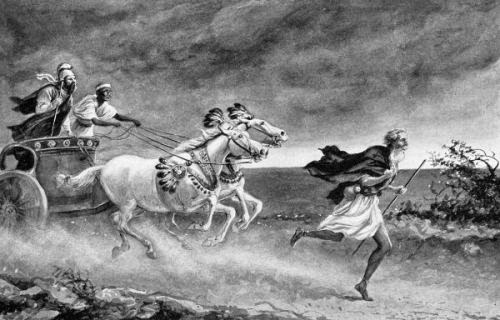
Out on the distant horizon, the servant had seen what appeared to be a small glimmer of hope. It was a small and seemingly insignificant cloud. But Elijah knew what it meant. The blessing of God was about to fall and, when it did, it would come in torrents. So, he instructed his servant to warn Ahab to leave immediately or he may not make it back to his winter palace in Jezreel. When Elijah’s servant had looked to the east, he only saw a faint possibility. But through his eyes of faith,  Elijah saw something altogether different. He perceived the imminent arrival of the outpouring of God’s blessing. And before long that small cloud had developed into a massive storm that brought strong winds and torrential rains. And as Ahab tried to outrun the storm in his chariot, “the Lord gave special strength to Elijah. He tucked his cloak into his belt and ran ahead of Ahab’s chariot all the way to the entrance of Jezreel” (1 Kings 18:46 NLT).

Because Jezreel was anywhere from 10-20 miles east of Mount Carmel, some commentators attempt to explain this last verse by saying that Ahab’s chariot got caught in the mud and delayed his arrival. Others speculate that Elijah simply took a shortcut over the ridge of Mount Carmel. But everything about this story has been focused on the matchless power of God. And it should not seem out of the question that God might endow his prophet with a supernatural capacity to outrun the chariot of his arch-nemesis. God had defeated Baal. Now, the prophet of God had defeated the benefactor of Baal.

But while Elijah had won the victory at Mount Carmel and the race to Jezreel, he would have little time to celebrate. Upon hearing the unexpected news of all that had transpired on Mount Carmel, Jezebel was outraged and directed all her anger at Elijah.

“May the gods strike me and even kill me if by this time tomorrow I have not killed you just as you killed them.” – 1 Kings 19:2 NLT

Despite all that Ahab told her about the day’s events, she remained unconvinced of Yahweh’s power. She even called on Baal and his queen mother, Asherah, to come to her aid so that she might avenge the deaths of the prophets by killing Elijah. She was still putting her hope and trust in her false gods. Even the sudden arrival of long-awaited rain did nothing to diminish her misplaced trust in her lifeless and powerless gods.

But even more surprising than Jezebel’s stubborn resistance to God was Elijah’s sudden display of fear and doubt. This man who had called down fire from heaven and had singlehandedly executed 450 prophets of Baal found himself intimidated by the idle threats of this self-absorbed, idol-worshiping queen. Her vow to avenge her false god should have made Elijah laugh with scorn. Her god had proven himself to be speechless, powerless, and utterly helpless in the face of Yahweh. Yet, the formerly faithful Elijah was suddenly fearful, and this time, rather than running to the problem in the strength of God, he ran away from it. He fled for his life, covering the 25 miles from Jezreel to Beersheba motivated by fear and in the strength of his own flesh. Faced with the threats of Jezebel, Elijah took his eyes off of God and took his fate into his own hands.

English Standard Version (ESV) The Holy Bible, English Standard Version. ESV® Permanent Text Edition® (2016). Copyright © 2001 by Crossway Bibles, a publishing ministry of Good News Publishers.

New Living Translation (NLT) Holy Bible, New Living Translation, copyright © 1996, 2004, 2015 by Tyndale House Foundation. Used by permission of Tyndale House Publishers Inc., Carol Stream, Illinois 60188. All rights reserved.

The Message (MSG)Copyright © 1993, 1994, 1995, 1996, 2000, 2001, 2002 by Eugene H. Peterson

When the Blessings Become a Curse

14 Now the weight of gold that came to Solomon in one year was 666 talents of gold, 15 besides that which came from the explorers and from the business of the merchants, and from all the kings of the west and from the governors of the land. 16 King Solomon made 200 large shields of beaten gold; 600 shekels of gold went into each shield. 17 And he made 300 shields of beaten gold; three minas of gold went into each shield. And the king put them in the House of the Forest of Lebanon. 18 The king also made a great ivory throne and overlaid it with the finest gold. 19 The throne had six steps, and the throne had a round top, and on each side of the seat were armrests and two lions standing beside the armrests, 20 while twelve lions stood there, one on each end of a step on the six steps. The like of it was never made in any kingdom. 21 All King Solomon’s drinking vessels were of gold, and all the vessels of the House of the Forest of Lebanon were of pure gold. None were of silver; silver was not considered as anything in the days of Solomon. 22 For the king had a fleet of ships of Tarshish at sea with the fleet of Hiram. Once every three years the fleet of ships of Tarshish used to come bringing gold, silver, ivory, apes, and peacocks.

23 Thus King Solomon excelled all the kings of the earth in riches and in wisdom. 24 And the whole earth sought the presence of Solomon to hear his wisdom, which God had put into his mind. 25 Every one of them brought his present, articles of silver and gold, garments, myrrh, spices, horses, and mules, so much year by year.

26 And Solomon gathered together chariots and horsemen. He had 1,400 chariots and 12,000 horsemen, whom he stationed in the chariot cities and with the king in Jerusalem. 27 And the king made silver as common in Jerusalem as stone, and he made cedar as plentiful as the sycamore of the Shephelah. 28 And Solomon’s import of horses was from Egypt and Kue, and the king’s traders received them from Kue at a price. 29 A chariot could be imported from Egypt for 600 shekels of silver and a horse for 150, and so through the king’s traders they were exported to all the kings of the Hittites and the kings of Syria. 1 Kings 10:14-29 ESV

Up to this point in his narrative of Solomon’s reign, the author of 1 Kings seems to have spent far more time describing Solomon’s vast wealth than providing evidence of his great wisdom. He has only provided one concrete example where Solomon utilized his God-given gift of wisdom to settle a dispute between two prostitutes who were fighting over legal custody of a newborn baby (1 Kings 3:16-28). There have been several allusions to Solomon’s wisdom, such as the statement made by the Queen of Sheba.

“Everything I heard in my country about your achievements and wisdom is true! I didn’t believe what was said until I arrived here and saw it with my own eyes. In fact, I had not heard the half of it! Your wisdom and prosperity are far beyond what I was told. – 1 Kings 10:6-7 NLT

But it would appear that the author has purposefully placed more emphasis on Solomon’s rapidly expanding financial portfolio. God had promised to bless Solomon with riches and honor (1 Kings 3:13), and it is quite evident that God had kept that promise. In just a single year, nearly 25 tons of gold was added to Solomon’s treasury. That’s a staggering figure. But it represents only a fraction of the revenue that flowed into the kingdom each year. Income for his many business ventures, tributes paid by vassal states, and gifts from various kings and dignitaries further enhanced his annual revenue. His proverbial cup was running over.

People from every nation came to consult him and to hear the wisdom God had given him. Year after year everyone who visited brought him gifts of silver and gold, clothing, weapons, spices, horses, and mules. – 1 Kings 10:24-25 NLT

As a result, “King Solomon became richer and wiser than any other king on earth” (1 Kings 10:23 NLT). It seems that his wisdom and wealth shared a symbiotic relationship. Both were gifts that had been made possible by God. And yet, like all gifts given by God to men, the real test lies in how they are put to use. Both wisdom and wealth can be misused and abused. Any God-given gift can be exploited for ungodly purposes. And it would appear that Solomon had allowed his wisdom and wealth to become a distraction. Somewhere along the way, Solomon had lost sight of the divine purpose for his gifts – that he might govern the people of Israel with justice (1 Kings 3:11). He began to repurpose his wisdom and riches in a vain search for meaning in life. He would later write of his

I became greater than all who had lived in Jerusalem before me, and my wisdom never failed me. Anything I wanted, I would take. I denied myself no pleasure. I even found great pleasure in hard work, a reward for all my labors. But as I looked at everything I had worked so hard to accomplish, it was all so meaningless—like chasing the wind. There was nothing really worthwhile anywhere. – Ecclesiastes 2:9-11 NLT

Notice how many times Solomon uses the personal pronoun, “I.” He had become totally self-consumed, focusing all his attention on what he could gain from what he had been given. Even his God-given wisdom became little more than a tool for trying to decipher the mysteries of life. And while he understood wisdom’s inherent value, it wasn’t long before he came to despise this valuable gift from God.

Yet I saw that the wise and the foolish share the same fate. Both will die. So I said to myself, “Since I will end up the same as the fool, what’s the value of all my wisdom? This is all so meaningless!” For the wise and the foolish both die. The wise will not be remembered any longer than the fool. In the days to come, both will be forgotten.

So I came to hate life because everything done here under the sun is so troubling. Everything is meaningless—like chasing the wind. – Ecclesiastes 3:14-17 NLT

Twenty years after ascending to the throne of his father David, Solomon was experiencing unparalleled success. He had the Midas touch. It seems that everything he touched turned to literal gold. In fact, gold was so prevalent in his kingdom that “silver was considered worthless in Solomon’s day” (1 Kings 10:21 NLT).

Solomon had built his own fleet of ships that returned every three years with their holds full of additional treasures of “gold, silver, ivory, apes, and peacocks” (1 Kings 10:22 NLT). He had amassed “a huge force of chariots and horses. He had 1,400 chariots and 12,000 horses” ( 1 Kings 10:26 NLT). And many of those horses had been imported from as far away as Egypt.

All of these descriptions of Solomon’s incredible wealth must be placed within the context of the commands God had given concerning all those who would serve as kings over His people.

“The king must not build up a large stable of horses for himself or send his people to Egypt to buy horses, for the Lord has told you, ‘You must never return to Egypt.’ The king must not take many wives for himself, because they will turn his heart away from the Lord. And he must not accumulate large amounts of wealth in silver and gold for himself.” – Deuteronomy 17:16-17 NLT

God had blessed Solomon with unparalleled resources, but Solomon was using them in ways that were contradictory to God’s will. His use of God’s gracious gift was in clear violation of God’s command. Solomon’s wealth had never been intended to feed his ego or fulfill his wildest dreams. It was meant to enable him to provide the people of Israel with proper care and protection. And while accumulating chariots and horses may have sounded like a good strategy for ensuring Israel’s national security, it was against the will of God. Solomon’s own father had written about the futility of placing one’s hope in such things.

Now I know that the Lord saves his anointed;
he will answer him from his holy heaven
with the saving might of his right hand.
Some trust in chariots and some in horses,
but we trust in the name of the Lord our God.
They collapse and fall,
but we rise and stand upright. – Psalm 20:6-8 NLT

Solomon seems to have been obsessed with all the outward trappings of royalty. He had built for himself an opulent palace, where exquisite meals were served on golden plates and the finest wine was served in golden goblets. And when it came to the throne upon which he sat, Solomon spared no expense.

Then the king made a huge throne, decorated with ivory and overlaid with fine gold. The throne had six steps and a rounded back. There were armrests on both sides of the seat, and the figure of a lion stood on each side of the throne. There were also twelve other lions, one standing on each end of the six steps. No other throne in all the world could be compared with it! – 1 Kings 10:18-20 NLT

Solomon looked like a king and lived like one. He had all the trappings of success and, from the outsider’s perspective, was living the dream. Yet, the day would come when Solomon finally recognized that he had confused the gift with the Giver.

Those who love money will never have enough. How meaningless to think that wealth brings true happiness! The more you have, the more people come to help you spend it. So what good is wealth—except perhaps to watch it slip through your fingers! – Ecclesiastes 10-11 NLT

The wisdom and wealth given to him by God had never been intended to fulfill his every self-centered desire or provide him with some form of personal satisfaction. Solomon had been anointed and blessed by God so that he might lead the nation of Israel into a period of peace, prosperity, and faithful service to God. Solomon had started out well, even asking God for the capacity to lead the people of Israel with wisdom and discernment.

“Give me an understanding heart so that I can govern your people well and know the difference between right and wrong. For who by himself is able to govern this great people of yours?” – 1 Kings 3:9 NLT

But somewhere along the way, Solomon had let the blessings of God go to his head. He had allowed the gifts to take precedence over the Giver and, in doing so, turned the blessings into a curse.

English Standard Version (ESV) The Holy Bible, English Standard Version. ESV® Permanent Text Edition® (2016). Copyright © 2001 by Crossway Bibles, a publishing ministry of Good News Publishers.

New Living Translation (NLT) Holy Bible, New Living Translation, copyright © 1996, 2004, 2015 by Tyndale House Foundation. Used by permission of Tyndale House Publishers Inc., Carol Stream, Illinois 60188. All rights reserved.

The Message (MSG)Copyright © 1993, 1994, 1995, 1996, 2000, 2001, 2002 by Eugene H. Peterson

Turning God’s Blessings Into Burdens

1 Now when the queen of Sheba heard of the fame of Solomon concerning the name of the Lord, she came to test him with hard questions. She came to Jerusalem with a very great retinue, with camels bearing spices and very much gold and precious stones. And when she came to Solomon, she told him all that was on her mind. And Solomon answered all her questions; there was nothing hidden from the king that he could not explain to her. And when the queen of Sheba had seen all the wisdom of Solomon, the house that he had built, the food of his table, the seating of his officials, and the attendance of his servants, their clothing, his cupbearers, and his burnt offerings that he offered at the house of the Lord, there was no more breath in her.

And she said to the king, “The report was true that I heard in my own land of your words and of your wisdom, but I did not believe the reports until I came and my own eyes had seen it. And behold, the half was not told me. Your wisdom and prosperity surpass the report that I heard. Happy are your men! Happy are your servants, who continually stand before you and hear your wisdom! Blessed be the Lord your God, who has delighted in you and set you on the throne of Israel! Because the Lord loved Israel forever, he has made you king, that you may execute justice and righteousness.” 10 Then she gave the king 120 talents of gold, and a very great quantity of spices and precious stones. Never again came such an abundance of spices as these that the queen of Sheba gave to King Solomon.

11 Moreover, the fleet of Hiram, which brought gold from Ophir, brought from Ophir a very great amount of almug wood and precious stones. 12 And the king made of the almug wood supports for the house of the Lord and for the king’s house, also lyres and harps for the singers. No such almug wood has come or been seen to this day.

13 And King Solomon gave to the queen of Sheba all that she desired, whatever she asked besides what was given her by the bounty of King Solomon. So she turned and went back to her own land with her servants. 1 Kings 10:1-13 ESV

In the two decades that Solomon had served as king of Israel, the news of his incomparable wisdom, vast wealth, and rapidly expanding kingdom had begun to spread throughout the known world (1 Kings 4:31). News of his skills as a composer, author, horticulturist, and biologist further enhanced his already mythical reputation as the wisest man who ever lived. Intrigued by what they heard, kings and dignitaries from other nations sent their emissaries to Jerusalem to see if all the rumors about him were true.

…kings from every nation sent their ambassadors to listen to the wisdom of Solomon. – 1 Kings 4:34 NLT

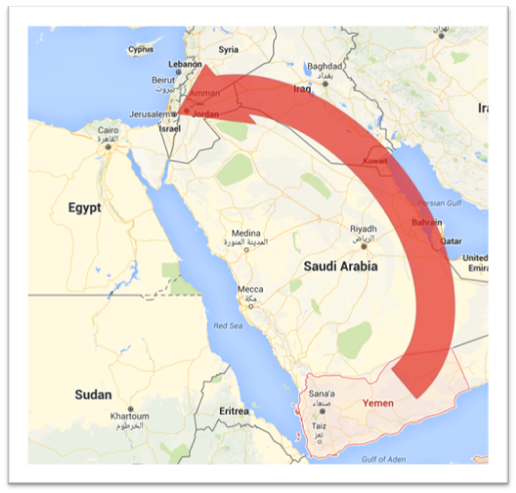
And the author of 1 Kings provides an extended example of one such visit. On this occasion, the Queen of Sheba undertook the long and arduous journey to Jerusalem in order to witness the wisdom of Solomon firsthand. The kingdom of Sheba was located 1200 miles away, on the southwest corner of the Arabian Peninsula, in the region that is now known as Yemen. The queen traveled with a large royal retinue and brought with her a vast amount of spices, gold, and precious stones. And it would seem that the real purpose for her trip was to secure an alliance between her nation and the rapidly expanding kingdom of Solomon. From its location at the confluence of the Sea of Aden and the Red Sea, the kingdom of Sheba had been able to expand its dominance of the spice and incense trade in that region of the world. And a peaceful alliance with a powerful nation like Israel would only further enhance and protect their future prospects.

Upon her arrival, the queen was given a personal appointment with Solomon, where she was able to satisfy her curiosity about his wisdom and wealth. This interrogation was most likely meant to assess the validity of Solomon’s reputation but was also intended to assure the queen whether a treaty with Israel would be beneficial. In the end, she was left breathless by her encounter with Solomon.

…when the queen of Sheba had seen all the wisdom of Solomon, the house that he had built, the food of his table, the seating of his officials, and the attendance of his servants, their clothing, his cupbearers, and his burnt offerings that he offered at the house of the Lord, there was no more breath in her. – 1 Kings 10:4-5 ESV

She was blown away by what she saw and heard. And she confessed that the reality of Solomon’s wisdom and the greatness of his kingdom far exceeded the rumors and her own expectations.

“Everything I heard in my country about your achievements and wisdom is true! I didn’t believe what was said until I arrived here and saw it with my own eyes. In fact, I had not heard the half of it! Your wisdom and prosperity are far beyond what I was told. – 1 Kings 10:6-7 NLT

The inclusion of this personal, third-party assessment of Solomon’s greatness was meant to validate all that the author had written up to this point. Her testimony was intended to prove that all the descriptions concerning Solomon’s wisdom and the wealth of his kingdom were far from rhetorical flourishes or hyperbole. It was all true.

And this pagan queen affirmed the divine nature of Solomon’s reign, deeming the people of Israel as the fortunate recipients of their God’s love because He had chosen to make this just and righteous man their king.

“Praise the Lord your God, who delights in you and has placed you on the throne of Israel. Because of the Lord’s eternal love for Israel, he has made you king so you can rule with justice and righteousness.” – 1 Kings 10:9 NLT

In a way, this statement is meant to remind the Hebrew readers of this book that their nation indeed been blessed by God. His sovereign decision to anoint Solomon as  David’s successor had been a divine act of love and mercy. He had given them a wise, just, and righteous king to rule over them. After decades spent conquering the nations of Canaan and fighting ongoing battles with the Philistines, God had blessed the people of Israel with a time of peace and prosperity. Saul’s reign had ended in failure and disappointment. David’s reign had been marked by war and bloodshed. Now Solomon was leading them into a period of unprecedented growth and success. This was meant to be a golden age for the nation of Israel.

And, almost as further proof of God’s blessing on the nation, the author records that the queen of Sheba gifted Solomon with “9,000 pounds of gold, great quantities of spices, and precious jewels” (1 Kings 10:10 NLT). The blessings just kept coming. Solomon’s great wealth continued to grow. And all of this was in keeping with the promise that God had made to Solomon.

“Because you have asked for wisdom in governing my people with justice and have not asked for a long life or wealth or the death of your enemies—I will give you what you asked for! I will give you a wise and understanding heart such as no one else has had or ever will have! And I will also give you what you did not ask for—riches and fame! No other king in all the world will be compared to you for the rest of your life!” – 1 Kings 3:11-13 NLT

But it’s important to remember that God’s promise had come with a condition.

“…if you follow me and obey my decrees and my commands as your father, David, did, I will give you a long life.” – 1 Kings 3:14 NLT

That important caveat must not be overlooked. And its presence constantly lingers behind the scene portrayed in chapter 10. God was faithfully keeping the promise He had made to Solomon, blessing him with riches and fame beyond belief. But the unspoken question that looms over this entire narrative is whether Solomon, in the midst of his growing wealth and notoriety, will manage to remain faithful to God. Or will he allow the blessings of God to become substitutes for God, distracting his attention and diverting his love.

Almost as an aside, the author reveals another example of God’s blessings on Solomon. He notes that Hiram, the king of Tyre, continued to shower Solomon with incredible gifts of great value.

Hiram’s ships brought gold from Ophir, and they also brought rich cargoes of red sandalwood and precious jewels. – 1 Kings 10:11 NLT

Without having to lift a finger, Solomon’s immense wealth was growing by the minute. God was using these pagan potentates to expand Solomon’s already extensive net worth. But would Solomon view these gifts as the gracious provision of God, meant to underwrite the divine initiatives He had in mind for the nation of Israel? Or would Solomon allow his growing wealth to fund a lifestyle of excess and dissipation? The answer to those questions can be found in the writings of Solomon himself.

Those who love money will never have enough. How meaningless to think that wealth brings true happiness! The more you have, the more people come to help you spend it. So what good is wealth—except perhaps to watch it slip through your fingers! – Ecclesiastes 5:10-11 NLT

Solomon would eventually discover that even the blessings of God become disappointing and disillusioning when they are allowed to take His place. He had allowed his fame and riches, graciously given to him by God, to distract him from his worship of and commitment to God.

I became greater than all who had lived in Jerusalem before me, and my wisdom never failed me. Anything I wanted, I would take. I denied myself no pleasure. I even found great pleasure in hard work, a reward for all my labors. But as I looked at everything I had worked so hard to accomplish, it was all so meaningless—like chasing the wind. There was nothing really worthwhile anywhere. – Ecclesiastes 2:9-11 NLT

But at this point in the story, Solomon is enjoying the blessings of God. And having been exposed to the visual evidence of God’s goodness, the queen of Sheba returned to her kingdom, home more convinced than ever of Solomon’s greatness.

English Standard Version (ESV) The Holy Bible, English Standard Version. ESV® Permanent Text Edition® (2016). Copyright © 2001 by Crossway Bibles, a publishing ministry of Good News Publishers.

New Living Translation (NLT) Holy Bible, New Living Translation, copyright © 1996, 2004, 2015 by Tyndale House Foundation. Used by permission of Tyndale House Publishers Inc., Carol Stream, Illinois 60188. All rights reserved.

The Message (MSG)Copyright © 1993, 1994, 1995, 1996, 2000, 2001, 2002 by Eugene H. Peterson
Bright Hope For Dark Days

1 How lonely sits the city
    that was full of people!
How like a widow has she become,
    she who was great among the nations!
She who was a princess among the provinces
    has become a slave. – Lamentations 1:1 ESV

As of midnight last night, my community is under a “shelter-in-place” order mandated by the local authorities. It is just the latest in a long list of changes to our way of life. And it is likely that there will be more to come. We are in the midst of a worldwide pandemic, the Coronavirus (COVID-19) outbreak, that is radically altering life as we know it.

This unprecedented worldwide catastrophe has impacted the health of hundreds of thousands of people across the globe, with the current number of cases reaching the half-million mark. And sadly, as of this writing, there have been in excess of 20,000 deaths as a result of this deadly disease.

On top of the devastating toll it is taking on human life, COVI-D-19 has wreaked havoc on the global economy, shutting down countless businesses both large and small, putting millions of people out of work and without sources of income. It would be an understatement to say that these are difficult days.

So, as I was preparing to begin a new Devotionary, I was drawn to the Old Testament book of Lamentations. Sadly, the unfortunate title given to this book has kept many people from ever digging into its rich and rewarding content. Yes, the name is a bit depressing, but as the old saying goes, “There’s more to a book than its cover.”

The title “Lamentations” was given to the book long after it was written and actually comes from the Hebrew Talmud. The Hebrew Bible provided the book with a different, but no less depressing title: “Ah, how” or “Alas” (Heb. ‘ekah). It comes from the first word in the first, second, and fourth chapters.

There is no clear consensus as to the book’s author, but tradition has usually pointed to Jeremiah. The Septuagint, the Greek translation of the Hebrew Bible, opens the book of Lamentations with the following preface: “And it came to pass after Israel had been taken away into captivity and Jerusalem had been laid waste that Jeremiah sat weeping and lamented this lamentation over Jerusalem and said.”

The content of the book focuses on the immediate aftermath of the fall of the city of Jerusalem and the southern kingdom of Judah to the Babylonians. As God had warned repeatedly through His prophets, Nebuchadnezzar, the king of Babylon, had destroyed the nation of Judah and its capital city, taking captive tens of thousands of its people and leaving a destroyed economy, a ravaged landscape, and an emotionally devastated people behind.

For centuries, after the book was written, the people of Israel would read its content as part of an annual fast day recalled Jerusalem’s destruction. It was intended to be a much-needed reminder to future generations of Israelites that unfaithfulness was unacceptable to God. The destruction of Judah and Jerusalem had been the result of their ancestors’ disobedience and disloyalty to God. But the book also chronicles God’s remarkable faithfulness. Despite the failure of God’s chosen covenant-people to remain faithful to Him, He would refuse to abandon them completely.

The message contained in Lamentations, while directed at the nation of Judah, has lasting implications and timeless lessons that remain applicable for the people of God in all ages. Charles Swindoll describes the book’s relevance for anyone who would consider themselves a child of God.

“It [Lamentations] is a mute reminder that sin, in spite of all its allurement and excitement, carries with it heavy weights of sorrow, grief, misery, barrenness, and pain. It is the other side of the ‘eat, drink, and be merry’ coin.” – Charles R. Swindoll, The Lamentations of Jeremiah

This book reveals the God-ordained ramifications of a life of disobedience. The fate of the people of Judah was directly tied to their refusal to keep their covenant commitment to God. Long before the Babylonians laid siege to Jerusalem, God had warned the people of Judah what would happen as a result of the unfaithfulness to Him.

“The Lord will bring you and your king whom you set over you to a nation that neither you nor your fathers have known. And there you shall serve other gods of wood and stone. And you shall become a horror, a proverb, and a byword among all the peoples where the Lord will lead you away.” – Deuteronomy 28:36-37 ESV

And God had left them with no doubt as to the cause of their future suffering.

“All these curses shall come upon you and pursue you and overtake you till you are destroyed, because you did not obey the voice of the Lord your God, to keep his commandments and his statutes that he commanded you.  – Deuteronomy 28:45 ESV

Centuries later, the apostle Paul would pick up on the basic theme of this book when he wrote to the believers in Galatia.

Do not be deceived: God is not mocked, for whatever one sows, that will he also reap. For the one who sows to his own flesh will from the flesh reap corruption, but the one who sows to the Spirit will from the Spirit reap eternal life. – Galatians 6:7-8 ESV

Simply put, sin has consequences. That is the message of Numbers 32:23: “be sure your sin will find you out.”

Now, don’t misunderstand me. I am not insinuating that the COVID-19 virus is the punishment of God on the sins of mankind. I am not trying to make a correlation between the destruction of Jerusalem and the current state of affairs in America. All I want to do is allow this Spirit-inspired book to remind each of us that our God is faithful. Even in the midst of the worst circumstances, our God is loving, gracious, kind, merciful, and all-powerful. He does not abandon His own.

I am reminded of the words David wrote in the 23rd Psalm.

Even when I walk
    through the darkest valley,
I will not be afraid,
    for you are close beside me.
Your rod and your staff
    protect and comfort me. – Psalm 23:4 NLT

These are dark days. We are walking (six-feet apart) in “the valley of the shadow of death,” but our God is by our side. Of all people, we should be able to rest and rejoice in the faithfulness of our God. We should find comfort in His consistency. We should find hope in His heart of compassion and mercy. The truly remarkable thing about the book of Lamentations is that while it vividly portrays Judah’s suffering, it also revels in the goodness of God.

The steadfast love of the Lord never ceases;
    his mercies never come to an end;
they are new every morning;
    great is your faithfulness. – Lamentations 3:22-23 ESV

For the Lord will not
    cast off forever,
but, though he cause grief, he will have compassion
    according to the abundance of his steadfast love;
for he does not afflict from his heart
    or grieve the children of men. – Lamentations 3:31-33 ESV

What could God be trying to teach us during these difficult days? In what ways could He be trying to get our attention in order to remind us that His love is steadfast, His mercies are never-ending, and His faithfulness is great? The steadfast love of the Lord never ceases. Will we choose to believe this great truth about our God, even when the circumstances of life seem to call it into question? That is the message of Lamentation.

English Standard Version (ESV)
The Holy Bible, English Standard Version. ESV® Permanent Text Edition® (2016). Copyright © 2001 by Crossway Bibles, a publishing ministry of Good News Publishers.

New Living Translation (NLT)
Holy Bible, New Living Translation, copyright © 1996, 2004, 2015 by Tyndale House Foundation. Used by permission of Tyndale House Publishers Inc., Carol Stream, Illinois 60188. All rights reserved.

The Message (MSG)Copyright © 1993, 1994, 1995, 1996, 2000, 2001, 2002 by Eugene H. Peterson

Faithful to the End

18 And of Zebulun he said,

“Rejoice, Zebulun, in your going out,
    and Issachar, in your tents.
19 They shall call peoples to their mountain;
    there they offer right sacrifices;
for they draw from the abundance of the seas
    and the hidden treasures of the sand.”

20 And of Gad he said,

“Blessed be he who enlarges Gad!
    Gad crouches like a lion;
    he tears off arm and scalp.
21 He chose the best of the land for himself,
    for there a commander’s portion was reserved;
and he came with the heads of the people,
    with Israel he executed the justice of the Lord,
    and his judgments for Israel.”

22 And of Dan he said,

“Dan is a lion’s cub
    that leaps from Bashan.” Deuteronomy 33:18-22 ESV

Zebulun and Issachar were sons of Jacob by Leah, and their allotments of land in Canaan shared a common border. So, Moses addresses these two tribes with a combined blessing.

Moses refers to Zebulun “going out” and Issachar “in your tents.” It seems that one tribe would become traders, going out in ships and returning with foreign goods and profits from their journeys. Yet the tribe of Issachar would remain in their tents, living a more agrarian and settled life.

But with their location between the Mediterranean Sea and the Sea of Galilee, they would “draw from the abundance of the seas.” And Zebulun, in particular, would benefit greatly from its access to Sidon. They would eventually establish commercial links to the Phoenicians, and become profitable traders all along the Mediterranean coastline.

In his blessing of Zebulun, Jacob had prophesied of the tribe’s close association with the sea.

“Zebulun shall dwell at the shore of the sea;
    he shall become a haven for ships,
    and his border shall be at Sidon.” – Genesis 49:13 ESV

It is important to note that the land the tribe of Zebulun occupied would become part of region known as Galilee. And the book of Isaiah predicts that the day would come when Zebulun and its neighboring tribe, Naphtali, would experience days of darkness and despair. They, along with the other tribes of the northern kingdom, would be conquered by the Assyrians and taken into captivity. But God had good news for them.

Nevertheless, that time of darkness and despair will not go on forever. The land of Zebulun and Naphtali will be humbled, but there will be a time in the future when Galilee of the Gentiles, which lies along the road that runs between the Jordan and the sea, will be filled with glory.

The people who walk in darkness
    will see a great light.
For those who live in a land of deep darkness,
    a light will shine. – Isaiah 9:1-2 NLT

Out of the land of Galilee would come the long-awaited Messiah. God would send His Son as the light of the world, piercing the darkness of sin and offering a means by which fallen mankind could be restored to a right relationship with Himself.

Concerning Issachar, Jacob had seen his son’s occupation as a laborer, working the land and, as Moses later put it, benefiting from “the hidden treasures of the sand.” But Jacob also predicted the future Issachar and his brothers would experience as slaves of the Assyrians.

“Issachar is a strong donkey,
    crouching between the sheepfolds.
He saw that a resting place was good,
    and that the land was pleasant,
so he bowed his shoulder to bear,
    and became a servant at forced labor.” – Genesis 49:14-15 ESV

When it came to his son, Gad, Jacob had little to say.

“Raiders shall raid Gad,
    but he shall raid at their heels.” – Genesis 49:19 ESV

It seems that Gad, a relatively small tribe, would find itself under constant attack by marauding bands of brigands and opportunists. We know from Judges 1, that none of the tribes were successful in removing the Canaanites from the land. So, there were always remnants of these enemies wandering throughout the land, wreaking havoc on unsuspecting villages and towns belonging to the Israelites. And because Gad as relatively small, they were an easy target. But Jacob predicted that the descendants of Gad would give as well as they took.

Moses adds another element to his blessing of the tribe of Gad, by recognizing God’s blessing of them. They were awarded “the best of the land” – a reference to the land of Gilead on the eastern side of the Jordan. Long before the people of Israel crossed the border into Canaan, the tribes of Gad, Manassah, and Reuben had requested to settle the rich pasture land lying outside the land of promise. And Moses gave them permission to do so as long as they agreed to help the remaining tribes conquer and settle the land of Canaan. They did so and were awarded the land of Gilead as their inheritance. Moses honors them for the commitment to keep their word.

“…he came with the heads of the people,
    with Israel he executed the justice of the Lord,
    and his judgments for Israel.” – Deuteronomy 33:21 ESV

When Jacob blessed his son, Dan, he paints a rather disconcerting image of his future. He describes him as a judge of his people, but also as a serpent or poisonous snake.

“Dan shall judge his people
    as one of the tribes of Israel.
Dan shall be a serpent in the way,
    a viper by the path,
that bites the horse’s heels
    so that his rider falls backward.
I wait for your salvation, O Lord.” – Genesis 49:16-18 ESV

The book of Judges clarifies this rather conflicting image by telling us, “Now in those days Israel had no king. And the tribe of Dan was trying to find a place where they could settle, for they had not yet moved into the land assigned to them when the land was divided among the tribes of Israel” (Judges 18:1 NLT).

They had been alloted land in Canaan and, while it was small in size, it was very fertile. But, like all the other tribes, Dan had failed to drive out the Canaanites and so they never fully occupied the land given to them by God.

The Amorites pressed the people of Dan back into the hill country, for they did not allow them to come down to the plain. – Judges 1:34 ESV

So, rather than obeying the command of God, they decided to search for other lands in which to settle. They set out five spies who came back with a report of a possible spot for resettlement.

So the five men went on to the town of Laish, where they noticed the people living carefree lives, like the Sidonians; they were peaceful and secure. The people were also wealthy because their land was very fertile. And they lived a great distance from Sidon and had no allies nearby. – Judges 18:7 NLT

This news prompted the Danites to send 600 men to attack Laish and take the land as their own. But on the way, they decided to steal a Levite who was serving in the household of an Israelite named Micah. We know from the text, that Micah had employed this Levite to serve as his personal priest and that Micah and his neighbors were idolatrous. When the Danites stole the young Levite, they also took the false gods Micah worshiped, which cause he and his neighbors to chase down the Danites and beg for their return.

Then, with Micah’s idols and his priest, the men of Dan came to the town of Laish, whose people were peaceful and secure. They attacked with swords and burned the town to the ground. There was no one to rescue the people, for they lived a great distance from Sidon and had no allies nearby. This happened in the valley near Beth-rehob.

Then the people of the tribe of Dan rebuilt the town and lived there. They renamed the town Dan after their ancestor, Israel’s son, but it had originally been called Laish. – Judges 18:27-29 NLT

Years later, God would divide the kingdom of Israel in two, creating Judah in the south and Israel in the north. The Danites would play a huge part in the eventual fall of the northern kingdom of Israel. In 1 Kings 12:25-33, we have the account of King Jeroboam who, fearing that the citizens of the northern kingdom would travel to Jerusalem in the south in order to worship God, decided to erect two altars in the north of Dan. Not only that, he erected a golden calf at each location, creating his own false gods and an entire religious system of his own design.

Interestingly enough, all Moses had to say about Dan was “Dan is a lion’s whelp,
That leaps forth from Bashan” (Deuteronomy 33:22 NLT). Bashan was located near Laish, the town that the Danites conquered and occupied. The description of Dan as a lion’s whelp or cub is intended to portray that tribe as impetuous and undisciplined. It lacks wisdom and the skills acquired by age and experience. The Danites would steal land not given to them by God. They would steal a Levite and make him their personal priest, something God never commanded. And, on top of all that, they would steal idols and set them up as their gods. Eventually, under the poor leadership of Jeroboam, they would create their own religion and erect their own altars to false gods, leading to their eventual judgment by God.

Each of these tribes, Zebulun, Issachar, Gad, and Dan, had been set apart by God as His own. But they had all failed to live up to God’s standards. They had proven to be unfaithful, disbelieving, and disobedient. But even their wickedness would not keep God from displaying His faithfulness. Out of the darkness of Zebulun a great light would shine. The book of John records the arrival of this great light in the form of Jesus Christ, the Son of God and the Savior of the world.

The true light, which gives light to everyone, was coming into the world. He was in the world, and the world was made through him, yet the world did not know him. He came to his own, and his own people did not receive him. But to all who did receive him, who believed in his name, he gave the right to become children of God, who were born, not of blood nor of the will of the flesh nor of the will of man, but of God. – John 1:9-13 ESV

Even though darkness reigned, the light penetrated the darkness. Even though the tribes of Israel proved unfaithful, God proved Himself to be faithful to keep His word.

English Standard Version (ESV) The Holy Bible, English Standard Version. ESV® Permanent Text Edition® (2016). Copyright © 2001 by Crossway Bibles, a publishing ministry of Good News Publishers.

New Living Translation (NLT) Holy Bible, New Living Translation, copyright © 1996, 2004, 2015 by Tyndale House Foundation. Used by permission of Tyndale House Publishers Inc., Carol Stream, Illinois 60188. All rights reserved.

The Message (MSG) Copyright © 1993, 1994, 1995, 1996, 2000, 2001, 2002 by Eugene H. Peterson

The God Behind the Blessings

“Let Reuben live, and not die,
    but let his men be few.”

And this he said of Judah:

“Hear, O Lord, the voice of Judah,
    and bring him in to his people.
With your hands contend for him,
    and be a help against his adversaries.”

And of Levi he said,

“Give to Levi your Thummim,
    and your Urim to your godly one,
whom you tested at Massah,
    with whom you quarreled at the waters of Meribah;
who said of his father and mother,
    ‘I regard them not’;
he disowned his brothers
    and ignored his children.
For they observed your word
    and kept your covenant.
10 They shall teach Jacob your rules
    and Israel your law;
they shall put incense before you
    and whole burnt offerings on your altar.
11 Bless, O Lord, his substance,
    and accept the work of his hands;
crush the loins of his adversaries,
    of those who hate him, that they rise not again.” Deuteronomy 33:6-11 ESV

Moses begins his pronouncement of blessings on the 12 tribes with Reuben. This is in keeping with Reuben’s position as the first-born son of Jacob. And Moses seems to echo the sentiments of Jacob when he bestowed the following blessing on Reuben hundreds of years earlier:

“Reuben, you are my firstborn, my strength,
    the child of my vigorous youth.
    You are first in rank and first in power.
But you are as unruly as a flood,
    and you will be first no longer.
For you went to bed with my wife;
    you defiled my marriage couch.” – Genesis 49:3-4 NLT

Reuben had sinned against his father and against God, having slept with his father’s concubine Bilhah. This was a crime punishable by death, and yet, Reuben was allowed to live. But as the words of Jacob reveal, Reuben and his descendants would pay for dearly for his sin. The Reubenites would be one of three tribes who asked for and receive land on the east side of the Jordan, choosing to settle outside the land of promise. In time, they would lose their prestige, fading in prominence and number. It is interesting to note that the tribe of Reuben produced no judges, prophets, or rulers. In spite of his sin, Reuben was allowed to live, but his descendants would never enjoy fulness of life.

Moses deviates from Jacob’s order of blessings by skipping over the tribes of Simeon and Levi and focusing on Judah. And Moses’ blessing, while shorter in length, contains some of the same thoughts as those expressed by Jacob. Both men saw Judah as the preeminent tribe among the 12. Jacob had predicted Judah’s rise to prominence, describing his son as a young lion that grabs its enemies by the neck. Jacob mentions the king’s scepter and the ruler’s staff, symbols of power and authority, and states that from this tribe will come one to whom these things rightfully belong.

“Judah, your brothers will praise you.
    You will grasp your enemies by the neck.
    All your relatives will bow before you.
Judah, my son, is a young lion
    that has finished eating its prey.
Like a lion he crouches and lies down;
    like a lioness—who dares to rouse him?
The scepter will not depart from Judah,
    nor the ruler’s staff from his descendants,
until the coming of the one to whom it belongs,
    the one whom all nations will honor.
He ties his foal to a grapevine,
    the colt of his donkey to a choice vine.
He washes his clothes in wine,
    his robes in the blood of grapes.
His eyes are darker than wine,
    and his teeth are whiter than milk.” – Genesis 49:8-12 NLT

This prophetic statement concerns the coming Messiah, Jesus Christ. Jesus was born of the tribe of Judah and was a descendant of King David. The scepter and the ruler’s staff belong to Him. And in John’s vision of Jesus recorded in the book of Revelation, he describes Jesus as “the Lion of the tribe of Judah, the Root of David” (Revelation 5:5 ESV). Obviously, the tribe of Judah would play a significant role in God’s plan of redemption for the world. It would be through this tribe that the Savior would come. And Moses, seeming to understand the future significance of this tribe, pronounces a blessing, asking God to protect and provide for them.

The great king David would come from the tribe of Judah. And it would be he who elevated the nation of Israel to greatness, establishing them as a major political and military force in that region of the world. And after God eventually divided the kingdom of Israel in half, the southern portion would take on the name of Judah, further enhancing this tribe’s prominence among the 12.

Next, Moses turns his attention to the tribe of Levi, and he has much more to say about this tribe than Jacob did. Not only that, his words concerning Levi are much more positive than those of Jacob.

“Simeon and Levi are two of a kind;
    their weapons are instruments of violence.
May I never join in their meetings;
    may I never be a party to their plans.
For in their anger they murdered men,
    and they crippled oxen just for sport.
A curse on their anger, for it is fierce;
    a curse on their wrath, for it is cruel.
I will scatter them among the descendants of Jacob;
    I will disperse them throughout Israel.” – Genesis 49:5-7 NLT

Jacob had a reason to be upset with these two sons. They had brought shame to the house of Jacob by their deceitful treatment of the Hivites. The story is a complicated one, but involves the rape of their sister, Dinah, by “Shechem the son of Hamor the Hivite, the prince of the land” (Genesis 34:2 ESV). Rather than seeking revenge for the rape of his daughter, Jacob determined to make a treaty with the Hivites, agreeing to allow intermarriage between their two nations, in direct violation of God’s command. Jacob’s sons demanded that Jacob require the circumcision of all the males among the Hivites as part of the agreement. When the Hivites had agreed and followed through on their commitment to be circumcised, Levi and Simeon “took their swords and came against the city while it felt secure and killed all the males” (Genesis 34:25 ESV). And rather than bless them, Jacob had issued a curse, predicting their ultimate dispersal among the rest of the tribes of Israel. And little did he know, that is exactly what would happen. But not as he suspected.

The book of Exodus records a seminal event in the history of Israel. Moses had been on Mount Sinai receiving the Ten Commandments from God when he received the news from God that things were not going well back in the camp of Israel. Moses descended the mountain only to find the people of Israel reveling before the golden calf they had constructed in his absence. While he had been on Sinai receiving God’s law, the people had been in the valley worshiping a false god they had made with their own hands. After destroying the idol they had made, Moses turned his anger against the people of Israel.

So he stood at the entrance to the camp and shouted, “All of you who are on the Lord’s side, come here and join me.” And all the Levites gathered around him.

Moses told them, “This is what the Lord, the God of Israel, says: Each of you, take your swords and go back and forth from one end of the camp to the other. Kill everyone—even your brothers, friends, and neighbors.” The Levites obeyed Moses’ command, and about 3,000 people died that day.

Then Moses told the Levites, “Today you have ordained yourselves for the service of the Lord, for you obeyed him even though it meant killing your own sons and brothers. Today you have earned a blessing.” – Exodus 32:26-29 NLT

The tribe of Levi stepped up and used their swords to defend the integrity of God’s name and mete out His justice and judgment against all those who had participated in the idolatry and spiritual adultery. And as a result of their efforts, the Levites were set apart for the service of the Lord. They would become the priestly order, tasked with representing the rest of the tribes before the Lord and for the care and transport of the tabernacle. And when the nation of Israel conquered the land of Canaan, the Levites would not be given land as an inheritance but would be given cities scattered throughout the tribes of Israel, in fulfillment of Jacob’s words.

The Levites had used treachery and deceit to repay the Hivites for the rape of their sister, but they had been motivated by a desire to avenge her mistreatment. They had also stood opposed to the treaty their father had made with the Hivites, knowing that it was improper for them to intermarry with these uncircumcised pagans. But while their hearts had been in the right place, they had taken matters into their own hands and violated the treaty their father had made. Yet, hundreds of years later, God would redeem the Levites, raising them up and using them to serve as His agents of judgment against their own brothers and sisters.

And Moses blesses them for their role as God’s intercessors. They had been used by God to avenge His holy name and mete out His judgment against the wicked at Sinai. And they had been set apart as priests, teaching Israel God’s laws, and offering sacrifices on their behalf so that they might remain in a right standing with God. At Sinai, the Levites had shed the blood of their brothers and sisters in order to assuage the righteous anger of God. But in the tabernacle, they would spill the blood of innocent bulls and goats, pouring it out as a sacrifice to God on behalf of the sins of the people.

From the days of Jacob to the time of Moses, God was working behind the scenes,  orchestrating events in such as a way that every blessing bestowed by each man would be fulfilled. But these blessings were not the words of men. They were the Spirit-inspired will of God. Neither Moses or Jacob fully understood the full import of their words or the exact nature of their outcome. But God did. He was and is sovereign over all. And while the tribe of Reuben would settle outside the land of promise, they would assist the rest of the tribes in conquering and possessing their inheritance. And God would raise up the tribe of Judah, allowing them to produce the future Messiah, the Savior of the world. The Levites, while cursed by their father for their deceit, would be redeemed by God and used to carry His tabernacle, communicate His law, and care for the spiritual needs of His people.

English Standard Version (ESV) The Holy Bible, English Standard Version. ESV® Permanent Text Edition® (2016). Copyright © 2001 by Crossway Bibles, a publishing ministry of Good News Publishers.

New Living Translation (NLT) Holy Bible, New Living Translation, copyright © 1996, 2004, 2015 by Tyndale House Foundation. Used by permission of Tyndale House Publishers Inc., Carol Stream, Illinois 60188. All rights reserved.

The Message (MSG) Copyright © 1993, 1994, 1995, 1996, 2000, 2001, 2002 by Eugene H. Peterson

Set Apart By God

10 “He found him in a desert land,
    and in the howling waste of the wilderness;
he encircled him, he cared for him,
    he kept him as the apple of his eye.
11 Like an eagle that stirs up its nest,
    that flutters over its young,
spreading out its wings, catching them,
    bearing them on its pinions,
12 the Lord alone guided him,
    no foreign god was with him.
13 He made him ride on the high places of the land,
    and he ate the produce of the field,
and he suckled him with honey out of the rock,
    and oil out of the flinty rock.
14 Curds from the herd, and milk from the flock,
    with fat of lambs,
rams of Bashan and goats,
    with the very finest of the wheat—
    and you drank foaming wine made from the blood of the grape.

15 “But Jeshurun grew fat, and kicked;
    you grew fat, stout, and sleek;
then he forsook God who made him
    and scoffed at the Rock of his salvation.
16 They stirred him to jealousy with strange gods;
    with abominations they provoked him to anger.
17 They sacrificed to demons that were no gods,
    to gods they had never known,
to new gods that had come recently,
    whom your fathers had never dreaded.
18 You were unmindful of the Rock that bore you,
    and you forgot the God who gave you birth.” Deuteronomy 32:10-18 ESV

The Lord’s song continues. It recounts how God discovered Jacob and his family, the nation of Israel, in Egypt, a desert land. God rescued the descendants of Jacob from their captivity in Egypt, where they had served as the slaves of Pharaoh for hundreds of years. God had heard their cries of despair and had sent Moses to be their deliverer.

During those many days the king of Egypt died, and the people of Israel groaned because of their slavery and cried out for help. Their cry for rescue from slavery came up to God. And God heard their groaning, and God remembered his covenant with Abraham, with Isaac, and with Jacob. God saw the people of Israel—and God knew. – Exodus 2:23-25 NLT

The God of Abraham, Isaac, and Jacob, saw the plight of His chosen people and responded with compassion. He protected them like a mother eagle would its chicks. Using Jacob as a synonym for Israel, the poem describes how God cared for His own.

he encircled him, he cared for him,
    he kept him as the apple of his eye” – Deuteronomy 32:19 ESV

Centuries of captivity in a foreign land had not changed God’s feelings about Jacob and his descendants. The circumstances surrounding their years in Egypt were not to be seen as proof of God’s abandonment of them. The promise He had made to Abraham still held. In fact, it was during their stay in Egypt that the family of Jacob increased in number from just over 70 people to a great nation numbering in the millions.

But the people of Israel were fruitful and increased greatly; they multiplied and grew exceedingly strong, so that the land was filled with them. – Exodus 1:7 ESV

And this meteoric growth was exactly what God had promised Abraham so many years earlier when He had called out of Haran.

I will make you into a great nation. I will bless you and make you famous, and you will be a blessing to others. I will bless those who bless you and curse those who treat you with contempt. All the families on earth will be blessed through you.” – Genesis 12:2-3 NLT

God had kept His promise. But His ways are not man’s ways. His methods don’t always make sense to us. The nation of Israel was born out of adversity. It grew up in the context of slavery and servitude. It was a nation in bondage, enslaved by the enemy and incapable of delivering itself from its predicament.

And it was in the midst of their darkest moment that God stepped in and did for them what they could not do for themselves. He delivered them from bondage. He set them free from captivity. And their rescue is indicative of what God has done for all those whom He has rescued from slavery to sin.

When we were utterly helpless, Christ came at just the right time and died for us sinners. – Romans 5:6 NLT

But God showed his great love for us by sending Christ to die for us while we were still sinners. – Romans 5:8 NLT

Paul describes us as having been “slaves to sin” (Romans 6:20). And Jesus said, “everyone who sins is a slave of sin” (John 8:34 NLT). But He has set us free. And “if the Son sets you free, you are truly free” (John 8:36 NLT).

The Israelites were set free from slavery in Egypt. God guided them out of their captivity, having delivered from the oppressive hand of Pharaoh. And when they left the land of Egypt, they did so with God alone as their guide and companion, having left the false gods of the Egyptians behind them. And God led them, fed them, and protected them all the way through the wilderness. But more than that, He taught them about obedience and faithfulness, using trials and difficulties to increase their trust in Him.

“Remember how the Lord your God led you through the wilderness for these forty years, humbling you and testing you to prove your character, and to find out whether or not you would obey his commands. Yes, he humbled you by letting you go hungry and then feeding you with manna, a food previously unknown to you and your ancestors. He did it to teach you that people do not live by bread alone; rather, we live by every word that comes from the mouth of the Lord. For all these forty years your clothes didn’t wear out, and your feet didn’t blister or swell. Think about it: Just as a parent disciplines a child, the Lord your God disciplines you for your own good.” – Deuteronomy 8:2-5 NLT

God was gracious and good to the people of Israel, providing them with an abundance of blessings in the form of tangible and practical resources intended to prolong and improve life.

…produce of the fields
…honey for from the cliffs
…olive oil from the hardest of rocks
…butter from the herd
…milk from the flock
…the fat of lambs
…rams and goats of Bashan
…the best of the kernels of wheat
…the juice of grapes

Even in the wilderness, they enjoyed the blessings of God. They ate well and were well-cared for by God. Even their wilderness experience was better than the years they had spent in captivity in Egypt. Walking with God in the wilderness is always better than living in slavery without Him.

God had set apart Israel as His own precious possession. They had done nothing to earn or deserve His gracious deliverance of them. And Moses had made this point quite clear earlier in the book of Deuteronomy.

“For you are a holy people, who belong to the LORD your God. Of all the people on earth, the LORD your God has chosen you to be his own special treasure.

“The LORD did not set his heart on you and choose you because you were more numerous than other nations, for you were the smallest of all nations! Rather, it was simply that the LORD loves you, and he was keeping the oath he had sworn to your ancestors. That is why the LORD rescued you with such a strong hand from your slavery and from the oppressive hand of Pharaoh, king of Egypt.” – Deuteronomy 7:6-8 NLT

The blessings of God were undeserved. His love for them was not based on any inherent worth in them. And He would continue to love them, in spite of them.

But this song was intended to bring witness against the Israelites, convicting them of their unfaithfulness to God. And to do so, it accentuates the unmerited favor of God. When they had been helpless slaves, God heard their cries and rescued them. He set them free from their oppression and misery, making them His own chosen possession, “the apple of his eye” (Deuteronomy 32:10 ESV). But would they remain so? Were the Israelites going to honor the one who set them free by keeping His commands and living in obedience to His will for them?

Even as they stood on the edge of the promised land, preparing to cross over and claim it as their own, God was revealing the sad truth about their fate. They would become slaves yet again. The people whom God had set free would once again find themselves living in bondage and surrounded by false gods and foreign overlords. They had been set apart by God but would choose not to live that way. They had been made His precious possession but would end up as little more than the property of their enemies. And the next verses of the song will explain how this dramatic change in circumstances will happen.

English Standard Version (ESV) The Holy Bible, English Standard Version. ESV® Permanent Text Edition® (2016). Copyright © 2001 by Crossway Bibles, a publishing ministry of Good News Publishers.

New Living Translation (NLT) Holy Bible, New Living Translation, copyright © 1996, 2004, 2015 by Tyndale House Foundation. Used by permission of Tyndale House Publishers Inc., Carol Stream, Illinois 60188. All rights reserved.

The Message (MSG) Copyright © 1993, 1994, 1995, 1996, 2000, 2001, 2002 by Eugene H. Peterson

The Secret Things of God

16 “You know how we lived in the land of Egypt, and how we came through the midst of the nations through which you passed. 17 And you have seen their detestable things, their idols of wood and stone, of silver and gold, which were among them. 18 Beware lest there be among you a man or woman or clan or tribe whose heart is turning away today from the Lord our God to go and serve the gods of those nations. Beware lest there be among you a root bearing poisonous and bitter fruit, 19 one who, when he hears the words of this sworn covenant, blesses himself in his heart, saying, ‘I shall be safe, though I walk in the stubbornness of my heart.’ This will lead to the sweeping away of moist and dry alike. 20 The Lord will not be willing to forgive him, but rather the anger of the Lord and his jealousy will smoke against that man, and the curses written in this book will settle upon him, and the Lord will blot out his name from under heaven. 21 And the Lord will single him out from all the tribes of Israel for calamity, in accordance with all the curses of the covenant written in this Book of the Law. 22 And the next generation, your children who rise up after you, and the foreigner who comes from a far land, will say, when they see the afflictions of that land and the sicknesses with which the Lord has made it sick— 23 the whole land burned out with brimstone and salt, nothing sown and nothing growing, where no plant can sprout, an overthrow like that of Sodom and Gomorrah, Admah, and Zeboiim, which the Lord overthrew in his anger and wrath— 24 all the nations will say, ‘Why has the Lord done thus to this land? What caused the heat of this great anger?’ 25 Then people will say, ‘It is because they abandoned the covenant of the Lord, the God of their fathers, which he made with them when he brought them out of the land of Egypt, 26 and went and served other gods and worshiped them, gods whom they had not known and whom he had not allotted to them. 27 Therefore the anger of the Lord was kindled against this land, bringing upon it all the curses written in this book, 28 and the Lord uprooted them from their land in anger and fury and great wrath, and cast them into another land, as they are this day.’

29 “The secret things belong to the Lord our God, but the things that are revealed belong to us and to our children forever, that we may do all the words of this law.” Deuteronomy 29:16-29 ESV

This section is bookended by two phrases that provide us with the context of all that Moses has to say in-between. He begins with the words, “You know…” and then ends by talking about “the secret things…” which belong to the Lord. Moses realized that there were many things that God had left unrevealed to the people of Israel. There were a great many divine truths of which they were ignorant. As God would later say of Himself: “For my thoughts are not your thoughts, neither are your ways my ways, declares the Lord. For as the heavens are higher than the earth, so are my ways higher than your ways and my thoughts than your thoughts” (Isaiah 55:8-9 ESV).

Man in limited in his knowledge. He can’t know the future. He can predict and prognosticate, but it all ends up being little more than speculation or wishful thinking. Solomon, the wisest man who ever lived, warned against such vain speculation.

Do not boast about tomorrow, for you do not know what a day may bring. – Proverbs 27:1 ESV

James provides even greater detail regarding man’s arrogant attempt to plan for the future, basing his decisions on things he cannot know or control.

Look here, you who say, “Today or tomorrow we are going to a certain town and will stay there a year. We will do business there and make a profit.” How do you know what your life will be like tomorrow? Your life is like the morning fog—it’s here a little while, then it’s gone. What you ought to say is, “If the Lord wants us to, we will live and do this or that.” Otherwise you are boasting about your own pretentious plans, and all such boasting is evil. – James 4:13-16 NLT

The Israelites had no idea what their future would look like. But they did know what God had done in the past and what He had commanded them to do in the present. And Moses had provided them with ample warning regarding what would happen should they choose to disobey what the did know – all that God had told them to do.

The generation to whom Moses was speaking had not grown up in Egypt. They had not experienced the pain and suffering of captivity in a foreign land. But they knew all about the details concerning Israel’s 400-plus years of slavery. They were also very well aware of the idolatry that ran rampant in Egypt because their parents had told them stories of the countless gods the Egyptians worshiped, including the Pharaoh himself.

Even during their 40 years of wandering in the wilderness, the Israelites had been exposed to one nation after another where they discovered the names of even more false gods and witnessed new forms of pagan worship. So, by the time the got to Canaan, they were highly familiar with idolatry, which is why Moses warned them to avoid that temptation like a plague.

“Beware lest there be among you a man or woman or clan or tribe whose heart is turning away today from the Lord our God to go and serve the gods of those nations.” – Deuteronomy 29:18 ESV

And they were to take this warning seriously, keeping an eye out for anyone who might consider abandoning the one true God for a false god. All it would take was one man or woman to throw a wrench into God’s plans for the entire nation. The covenant God had made with them was communal in nature, and adherence to it was to be a community-wide affair. If even one individual took the attitude, “I shall be safe, though I walk in the stubbornness of my heart” (Deuteronomy 29:19 ESV), the whole nation would suffer the consequences.

They knew better. God had warned them repeatedly that the entire nation would be held accountable. They had seen what had happened when Achan had disobeyed God and taken treasure from the city of Jericho and had buried it in his tent. His hidden sin had resulted in Israel’s unexpected defeat when they attacked the city of Ai. God had held the entire nation culpable until they had dealt with the sin in their midst.

Moses makes sure the people understand the gravity of allowing disobedience in any form or fashion to infect the camp.

“The Lord will never pardon such people. Instead his anger and jealousy will burn against them. All the curses written in this book will come down on them, and the Lord will erase their names from under heaven. The Lord will separate them from all the tribes of Israel, to pour out on them all the curses of the covenant recorded in this Book of Instruction.” – Deuteronomy 29:20-21 NLT

They knew better and couldn’t claim ignorance as an excuse. And they could know for certain that future generations would reap the consequences of their present mistakes.

“Then the generations to come, both your own descendants and the foreigners who come from distant lands, will see the devastation of the land and the diseases the Lord inflicts on it. – Deuteronomy 29:22 NLT

They might not be able to predict the future, but they could certainly influence it by choosing to disobey God in the here-and-now. Their present disobedience would bring future destruction to the land that will leave even the pagan nations scratching their heads in wonder and asking, “Why has the Lord done thus to this land? What caused the heat of this great anger?” (Deuteronomy 29:24 ESV).

And the answer to their questions will be a simple one: “It is because they abandoned the covenant of the Lord, the God of their fathers, which he made with them when he brought them out of the land of Egypt, and went and served other gods and worshiped them, gods whom they had not known and whom he had not allotted to them” (Deuteronomy 29:25-26 ESV).

There was a lot the Israelites didn’t know. As they stood on the edge of the land of Canaan preparing to enter in and conquer the nations who occupied it, their minds were filled with questions of all kinds. How would it go? Would they be successful? How long would it take? Would they die in battle? Would the nations living in the land prove to be too strong?

A million doubts, fears, and concerns had to have crossed their minds. Moses must have seen the apprehension in their eyes, which is why he told them, “The secret things belong to the Lord our God…” (Deuteronomy 29:29 ESV). Rather than wasting time worrying about the unknown and the unrevealed, Moses wanted them to focus on what they did know: “the things that are revealed belong to us and to our children forever” (Deuteronomy 29:29 ESV). They knew the law of God. Moses had just gone over it in detail. They knew all about the blessings that would come with obedience and they were more than familiar with the curses that would come upon them if they disobeyed.

They knew what God had done to free them from captivity in Egypt. They knew He had promised to give them the land of Canaan as their inheritance and was getting ready to do so. They knew all about idols and the constant threat these false gods would pose, tempting them to abandon God and forget His commands. They knew they had to enter the land and eliminate the nations who lived their, along with all their idols, altars, and shrines. They knew they had to remain faithful if they wanted to be fruitful. They knew that God would not tolerate sin the camp or allow even one case of disobedience to go unpunished.

God had told them all they needed to know. They had no reason to worry about the future, unless they decided to live disobediently in the present. They knew that God expected them to be faithful. And if they did what God wanted, they could know that He would do all that He had promised.

English Standard Version (ESV) The Holy Bible, English Standard Version. ESV® Permanent Text Edition® (2016). Copyright © 2001 by Crossway Bibles, a publishing ministry of Good News Publishers.

New Living Translation (NLT) Holy Bible, New Living Translation, copyright © 1996, 2004, 2015 by Tyndale House Foundation. Used by permission of Tyndale House Publishers Inc., Carol Stream, Illinois 60188. All rights reserved.

The Message (MSG) Copyright © 1993, 1994, 1995, 1996, 2000, 2001, 2002 by Eugene H. Peterson

How Low Can You Go?

52 “They shall besiege you in all your towns, until your high and fortified walls, in which you trusted, come down throughout all your land. And they shall besiege you in all your towns throughout all your land, which the Lord your God has given you. 53 And you shall eat the fruit of your womb, the flesh of your sons and daughters, whom the Lord your God has given you, in the siege and in the distress with which your enemies shall distress you. 54 The man who is the most tender and refined among you will begrudge food to his brother, to the wife he embraces, and to the last of the children whom he has left, 55 so that he will not give to any of them any of the flesh of his children whom he is eating, because he has nothing else left, in the siege and in the distress with which your enemy shall distress you in all your towns. 56 The most tender and refined woman among you, who would not venture to set the sole of her foot on the ground because she is so delicate and tender, will begrudge to the husband she embraces, to her son and to her daughter, 57 her afterbirth that comes out from between her feet and her children whom she bears, because lacking everything she will eat them secretly, in the siege and in the distress with which your enemy shall distress you in your towns.  Deuteronomy 28:52-57 ESV

These are disturbing verses. Their content is graphic and difficult to comprehend. And it is essential that we not forget the context. The people of Israel are poised to enter the land of Canaan and Moses has been addressing them for quite some time now. He has reiterated the law to them and reminded them of the blessings that will accompany obedience to God’s commands. But has also been warning them about the curses that will fall on them should they choose to rebel against God by disobeying His law.

But in these verses, Moses describes some very disturbing scenes that had to have left the Israelites appalled and shaking their heads in disbelief. They could never have imagined these kinds of things happening among their people. The graphic nature of Moses’ words would have been offensive and off-putting. Some probably accused Moses of resorting to scare tactics, using hyperbolic imagery in an attempt to goad them into fear-based compliance to God’s law. The thought of these kinds of hideous things happening among them would have been impossible to comprehend or even consider.

After all, Moses describes grotesque scenes of desperately hungry people resorting to cannibalism in order to keep from starving to death. The enemy has surrounded their city, creating a food-shortage within its wall and leaving the inhabitants with no food and little hope of survival. And this scene will be taking place all throughout the land of Canaan, as city after city comes under attack from a distant nation whom God will send against the people of Israel.

“The Lord will bring a nation against you from far away, from the end of the earth, swooping down like the eagle, a nation whose language you do not understand, a hard-faced nation who shall not respect the old or show mercy to the young.” – Deuteronomy 28:49-50 ESV

Once again, as far-fetched as all of this may have sounded to the people of Israel, Moses was actually providing a God-ordained glimpse into the future. He was revealing what will actually take place when the Assyrians come against the northern kingdom of Israel and, hundreds of years later, when the Babylonians sweep down on the southern kingdom of Judah. The dire circumstances Moses described would actually take place. And Moses would not be the only one to predict this unfathomable outcome. Hundreds of years later, the prophet, Jeremiah, would deliver the following warning from God to the people of Judah:

“And I will make this city a horror, a thing to be hissed at. Everyone who passes by it will be horrified and will hiss because of all its wounds. And I will make them eat the flesh of their sons and their daughters, and everyone shall eat the flesh of his neighbor in the siege and in the distress, with which their enemies and those who seek their life afflict them.” – Jeremiah 18:8-9 ESV

The book of Lamentations predicts this same implausible outcome.

Look, O Lord, and see!
    With whom have you dealt thus?
Should women eat the fruit of their womb,
    the children of their tender care?
Should priest and prophet be killed
    in the sanctuary of the Lord? – Lamentations 2:20 ESV

And the prophet Ezekiel would provide additional proof of God’s coming judgment.

“And because of all your abominations I will do with you what I have never yet done, and the like of which I will never do again. Therefore fathers shall eat their sons in your midst, and sons shall eat their fathers” – Ezekiel 5:9-10

That these atrocities actually took place is beyond debate. The Jewish historian, Josephus, records that, during the Roman siege of Jerusalem in A.D. 70, the city’s starving citizens resorted to eating their own children. He provides a detailed account of one such circumstance.

Among the residents of the region beyond Jordan was a woman called Mary, daughter of Eleazar, of the village of Bethezuba (the name means “House of Hyssop”). She was well off, and of good family, and had fled to Jerusalem with her relatives, where she became involved with the siege. Most of the property she had packed up and brought with her from Peraea had been plundered by the tyrants [Simon and John, leaders of the Jewish war-effort], and the rest of her treasure, together with such foods as she had been able to procure, was being carried by their henchmen in their daily raids. In her bitter resentment the poor woman cursed and abused these extortioners, and this incensed them against her. However, no one put her to death either from exasperation or pity. She grew weary of trying to find food for her kinsfolk. In any case, it was by now impossible to get any, wherever you tried. Famine gnawed at her vitals, and the fire of rage was ever fiercer than famine. So, driven by fury and want, she committed a crime against nature. Seizing her child, an infant at the breast, she cried, My poor baby, why should I keep you alive in this world of war and famine? Even if we live till the Romans come, they will make slaves of us; and anyway, hunger will get us before slavery does; and the rebels are crueler than both. Come, be food for me, and an avenging fury to the rebels, and a tale of cold horror to the world to complete the monstrous agony of the Jews. With these words she killed her son, roasted the body, swallowed half of it, and stored the rest in a safe place. But the rebels were on her at once, smelling roasted meat, and threatening to kill her instantly if she did not produce it. – Josephus, The Jewish War

So, there’s little doubt that the words of Moses were far from idle threats. God was deadly serious and wanted His people to know that a disregard for His holy law would result a breakdown of the social fabric of Israelite society that would be unimaginable and incomprehensible.

Josephus would go on to describe the scene that took place behind the walls of Jerusalem as “an act unparalleled in the history of either the Greeks or the barbarians, and as horrible to relate as it is incredible to hear.”

The curses of God would render every man and woman into selfish and self-protective beasts whose only concern would become their own personal survival. Love of God and love of others would be the farthest thing from their minds. The thought of a killing and consuming her own child is beyond comprehension. But the judgment of God against the repeated rebellion of His people would be so severe that the unthinkable would become commonplace. What was once immoral would become acceptable and unavoidable.

The Israelites, who at one time had enjoyed special status as His chosen people, would eventually become guilty of committing some of the most heinous and morally repugnant acts ever committed by humanity. And as Moses has pointed out, it will begin with their decision to disobey the commands of God. The “tender and refined” among them would become the cold-hearted and callous. Rebellion against God is downward spiral with a trajectory that is difficult to reverse. And these mind-boggling, sensibility-shocking descriptions of the once-law-abiding Israelites resorting to cannibalism may be difficult to comprehend, but they would be the unavoidable outcome of a willful choice to reject the will of God by disobeying the law of God.

English Standard Version (ESV) The Holy Bible, English Standard Version. ESV® Permanent Text Edition® (2016). Copyright © 2001 by Crossway Bibles, a publishing ministry of Good News Publishers.

New Living Translation (NLT) Holy Bible, New Living Translation, copyright © 1996, 2004, 2015 by Tyndale House Foundation. Used by permission of Tyndale House Publishers Inc., Carol Stream, Illinois 60188. All rights reserved.

The Message (MSG) Copyright © 1993, 1994, 1995, 1996, 2000, 2001, 2002 by Eugene H. Peterson