The Feast of Weeks

15 “You shall count seven full weeks from the day after the Sabbath, from the day that you brought the sheaf of the wave offering. 16 You shall count fifty days to the day after the seventh Sabbath. Then you shall present a grain offering of new grain to the Lord. 17 You shall bring from your dwelling places two loaves of bread to be waved, made of two tenths of an ephah. They shall be of fine flour, and they shall be baked with leaven, as firstfruits to the Lord. 18 And you shall present with the bread seven lambs a year old without blemish, and one bull from the herd and two rams. They shall be a burnt offering to the Lord, with their grain offering and their drink offerings, a food offering with a pleasing aroma to the Lord. 19 And you shall offer one male goat for a sin offering, and two male lambs a year old as a sacrifice of peace offerings. 20 And the priest shall wave them with the bread of the firstfruits as a wave offering before the Lord, with the two lambs. They shall be holy to the Lord for the priest. 21 And you shall make a proclamation on the same day. You shall hold a holy convocation. You shall not do any ordinary work. It is a statute forever in all your dwelling places throughout your generations.

22 “And when you reap the harvest of your land, you shall not reap your field right up to its edge, nor shall you gather the gleanings after your harvest. You shall leave them for the poor and for the sojourner: I am the Lord your God.” Leviticus 23:15-22 ESV

The Feast of Firstfruits was to mark the beginning of the spring harvest season for the nation of Israel. It was a time to express thanks to God for His gracious provision of produce in the new land. But Moses was given instructions to establish yet another holy convocation to take place 50 days later when the final crops of that harvest season would be gathered in.

This festival was called the Feast of Weeks or Shabuoth (Exodus 34:22). Sometime during the 3rd and 2nd centuries BC, the Hebrew Scriptures were translated into Greek and this came to be known as the Septuagint. In the Septuagint, the Feast of Weeks became the Feast of Pentecost because of the 50-day timeline reference. The Greek word, pentekostos means “the fiftieth day.”

Nearly two months after the wave offering was presented (Leviticus 23:12), the Israelites were to bring another offering that marked the end of the harvest season. This feast was intended to celebrate the rich bounty that God had provided. At the beginning of the season, they had given God a small portion of the initial harvest that represented the first and best of the land’s produce. But 50 days later, when the last of the grain was harvested, the people were to look back in gratitude for all that God had given them. He had blessed them richly.

The harvest season was to be bookended by two different grain offerings. The first was an offering most likely consisted of barley grain because it was one of the first crops to ripen. This was presented in the form of a sheaf that was waved before the Lord by the priest. It was accompanied by the sacrifice of a single unblemished one-year-old lamb along with a food and drink offering. But the grain offering given during the Feast of Weeks was to consist of wheat grain that had been made into loaves of bread.

From wherever you live, bring two loaves of bread to be lifted up before the Lord as a special offering. Make these loaves from four quarts of choice flour, and bake them with yeast. They will be an offering to the Lord from the first of your crops. – Leviticus 23:17 NLT

  This one-day feast was intended to celebrate the generosity that God had shown to His covenant people. He had brought them into the land as He had promised and blessed them with homes, fields, and vineyards. The faithfulness of God was visibly demonstrated by the fruitfulness of the land. All their needs had been met and, in grateful response, they were to celebrate their gracious God.

As the text makes clear, this celebration included a greater number of sacrificial animals. Through a tangible display of generosity, the Israelites would demonstrate the true extent of their gratefulness. They were required to offer a one-year-old lamb, a young bull, two rams, a male goat, and two additional one-year-old lambs. There were also food and drink offerings that were included in the day’s ceremonies.

One of the interesting differences between this feast and the Feast of Unleavened Bread that marked the beginning of the festival season, was the presence of yeast in the baking of the bread. The Israelites calendar year began with Passover, and the day after Passover began the Feast of Unleavened Bread.

“The Lord’s Passover begins at sundown on the fourteenth day of the first month. On the next day, the fifteenth day of the month, you must begin celebrating the Festival of Unleavened Bread. This festival to the Lord continues for seven days, and during that time the bread you eat must be made without yeast.” – Leviticus 23:5-6 NLT

But 50 days later, the people were given permission to bake bread with yeast.

“…bring two loaves of bread to be lifted up before the Lord as a special offering. Make these loaves from four quarts of choice flour, and bake them with yeast. – Leviticus 23:17 NLT

The Passover and Feast of Unleavened Bread were intended to commemorate the Israelites’ release from captivity in Egypt. In the inaugural Passover, God had instructed His people to prepare bread made without yeast.

“This is a day to remember. Each year, from generation to generation, you must celebrate it as a special festival to the Lord. This is a law for all time. For seven days the bread you eat must be made without yeast. On the first day of the festival, remove every trace of yeast from your homes. Anyone who eats bread made with yeast during the seven days of the festival will be cut off from the community of Israel. – Exodus 12:14-15 NLT

And God had been adamant about the prohibition concerning yeast.

The bread you eat must be made without yeast…” – Exodus 12:18 NLT

During those seven days, there must be no trace of yeast in your homes.” – Exodus 12:19 NLT

“Anyone who eats anything made with yeast during this week will be cut off from the community of Israel.” – Exodus 12:19 NLT

“During those days you must not eat anything made with yeast.” – Exodus 12:20 NLT

“Wherever you live, eat only bread made without yeast.” – Exodus 12:20 NLT

The idea was that the people of Israel needed to be ready to leave at a moment’s notice. When God got ready to deliver them, they would have to move quickly. There would be no time to wait for their bread to rise. So, as the book of Exodus reveals, “The Israelites took their bread dough before yeast was added. They wrapped their kneading boards in their cloaks and carried them on their shoulders” (Exodus 12:34 NLT).

And that event was to be celebrated every year at the Feast of Unleavened Bread. But 50 days later at the Feast of Weeks, the rules changed. There was no longer any prohibition against yeast because there was no longer any need to leave the land. They were home. The Egyptians had been defeated. The promised land had become a reality. And the Israelites were enjoying the bounty and blessing of God in their new homeland. They had plenty of time to harvest their wheat, mill the grain, make the dough, and wait for the yeast to do its work. Then they could bake the bread and enjoy the fruits of their labor. All because of the goodness of God.

It’s interesting to note that, centuries later, the apostle Peter would preach a sermon on the Day of Pentecost, the very same feast day described in Leviticus 23. On that day in the city of Jerusalem, Peter and his companions had been waiting in an upper room just as Jesus had told them to do, and something incredible happened.

On the day of Pentecost all the believers were meeting together in one place. Suddenly, there was a sound from heaven like the roaring of a mighty windstorm, and it filled the house where they were sitting. Then, what looked like flames or tongues of fire appeared and settled on each of them. And everyone present was filled with the Holy Spirit and began speaking in other languages, as the Holy Spirit gave them this ability. – Acts 2:1-4 NLT

Some 50 days after the Passover, Peter and the disciples were transformed by the power of the Holy Spirit, just as Jesus had promised them.

“But you will receive power when the Holy Spirit comes upon you. And you will be my witnesses, telling people about me everywhere—in Jerusalem, throughout Judea, in Samaria, and to the ends of the earth.” – Acts 1:8 NLT

And, filled with the power of the Holy Spirit, Peter preached a sermon to the crowd that had gathered in the streets of Jerusalem. And as a result of his message, more than 3,000 people came to faith in Christ, and the church of Jesus Christ was born. And Luke notes that this new community of Christ-followers was marked by their fellowship and unity.

And they devoted themselves to the apostles’ teaching and the fellowship, to the breaking of bread and the prayers. – Acts 2:42 NLT

And day by day, attending the temple together and breaking bread in their homes, they received their food with glad and generous hearts, praising God and having favor with all the people. – Acts 2:46-47 NLT

Don’t miss the reference to bread. God had delivered these 3,000 individuals from slavery to sin to freedom in Christ. They were new creations and were living in the “promised land” of salvation that was rich and bountiful. They were “feasting” on the bread of life.

Jesus said to them, “I am the bread of life; whoever comes to me shall not hunger, and whoever believes in me shall never thirst. – John 6:35 ESV

All their needs had been met in Christ. Their sins were forgiven. Their iniquity had been replaced with the perfect righteousness of Christ. Those who had once been enemies of God were now His adopted children and heirs. God had graciously provided for all their needs through the gift of His Son.

English Standard Version (ESV) The Holy Bible, English Standard Version. ESV® Permanent Text Edition® (2016). Copyright © 2001

New Living Translation (NLT) Holy Bible, New Living Translation, copyright © 1996, 2004, 2015 by Tyndale House Foundation. Used by permission of Tyndale House Publishers Inc., Carol Stream, Illinois 60188. All rights reserved.

Bread of Life

19 And Moses said to them, “Let no one leave any of it over till the morning.” 20 But they did not listen to Moses. Some left part of it till the morning, and it bred worms and stank. And Moses was angry with them. 21 Morning by morning they gathered it, each as much as he could eat; but when the sun grew hot, it melted.

22 On the sixth day they gathered twice as much bread, two omers each. And when all the leaders of the congregation came and told Moses, 23 he said to them, “This is what the Lord has commanded: ‘Tomorrow is a day of solemn rest, a holy Sabbath to the Lord; bake what you will bake and boil what you will boil, and all that is left over lay aside to be kept till the morning.’” 24 So they laid it aside till the morning, as Moses commanded them, and it did not stink, and there were no worms in it. 25 Moses said, “Eat it today, for today is a Sabbath to the Lord; today you will not find it in the field. 26 Six days you shall gather it, but on the seventh day, which is a Sabbath, there will be none.”

27 On the seventh day some of the people went out to gather, but they found none. 28 And the Lord said to Moses, “How long will you refuse to keep my commandments and my laws? 29 See! The Lord has given you the Sabbath; therefore on the sixth day he gives you bread for two days. Remain each of you in his place; let no one go out of his place on the seventh day.” 30 So the people rested on the seventh day.

31 Now the house of Israel called its name manna. It was like coriander seed, white, and the taste of it was like wafers made with honey. 32 Moses said, “This is what the Lord has commanded: ‘Let an omer of it be kept throughout your generations, so that they may see the bread with which I fed you in the wilderness, when I brought you out of the land of Egypt.’” 33 And Moses said to Aaron, “Take a jar, and put an omer of manna in it, and place it before the Lord to be kept throughout your generations.” 34 As the Lord commanded Moses, so Aaron placed it before the testimony to be kept. 35 The people of Israel ate the manna forty years, till they came to a habitable land. They ate the manna till they came to the border of the land of Canaan. 36 (An omer is the tenth part of an ephah.) – Exodus 16:19-36 ESV

Moses had clearly instructed the people to refrain from hoarding the manna that God provided. The Lord had promised to provide just enough to meet their daily dietary requirements.

…whoever gathered much had nothing left over, and whoever gathered little had no lack. Each of them gathered as much as he could eat. – Exodus 16:18 ESV

But some within the camp of Israel refused to follow Moses’ instructions, choosing instead to preserve some of their manna for the following day. Underlying this action was a doubt in God’s ability to provide for their daily needs. Fearing that the manna might not show up the next day, they tried to preserve some of their rations to help tide them over. But when they woke the following morning, they found that their manna had spoiled and become inedible. And their actions angered Moses.

These people had no need to doubt God because He sent the manna every morning, like clockwork. And after the people had gathered what they needed, whatever manna was left over simply melted away from the heat of the sun. God graciously and miraculously met their needs, and no one among the millions of Israelites went hungry.

But God’s provision of manna came with a second and highly important test. Up until this point, the people had been instructed to gather just enough manna to meet their needs for that day.

Gather of it, each one of you, as much as he can eat. – Exodus 16:16 ESV

But on the sixth day, Moses announced that they were to gather twice as much manna. When the leaders of the people questioned Moses about this surprising change in protocol, he revealed the message he had received from the Lord.

“This is what the Lord has said: ‘Tomorrow is a time of cessation from work, a holy Sabbath to the Lord. Whatever you want to bake, bake today; whatever you want to boil, boil today; whatever is left put aside for yourselves to be kept until morning.’” – Exodus 16:24 NLT

On this occasion, God altered His prohibition against attempting to keep manna for the next day. This time He told the Israelites to gather enough for two days and assured them that it would not spoil. But God had a specific reason for changing the rules of the game. He was establishing a new pattern for their daily lives by setting aside the seventh day of each week for the purpose of rest. Moses made God’s instructions perfectly clear.

“Eat it today, for today is a Sabbath to the Lord; today you will not find it in the field. Six days you shall gather it, but on the seventh day, which is a Sabbath, there will be none.” – Exodus 16:25-26 ESV

God would provide double the amount of manna on the sixth day, but on the seventh day, there would be none to gather. He would remove any temptation for the Israelites to go out and gather on that final day of the week. But when that first “Sabbath” day arrived, some of the people refused to believe God’s word and went out to gather their daily quota of manna, only to find that the ground was bare. And this time, it was God who became incensed by the peoples’ refusal to obey His commands.

“How long will you refuse to keep my commandments and my laws? See! The Lord has given you the Sabbath; therefore on the sixth day he gives you bread for two days. Remain each of you in his place; let no one go out of his place on the seventh day.” – Exodus 16:28-29 ESV

God was attempting to indoctrinate His people into this new way of life. From this point forward, the seventh day was to be a special day, set aside for rest. There would be no need to gather manna because God had already provided enough for that day. And there was to be no preparation of the manna on the seventh day because it was to be a work-free day. All of this was instituted to prepare the people for the fourth law that would be given to them on Mount Sinai.

“Remember the Sabbath day, to keep it holy. Six days you shall labor, and do all your work, but the seventh day is a Sabbath to the Lord your God. On it you shall not do any work, you, or your son, or your daughter, your male servant, or your female servant, or your livestock, or the sojourner who is within your gates. For in six days the Lord made heaven and earth, the sea, and all that is in them, and rested on the seventh day. Therefore the Lord blessed the Sabbath day and made it holy. – Exodus 20:8-11 ESV

God was making the seventh day a holy day. The Hebrew word for “holy” is קָדַשׁ (qāḏaš) and it means “to be set apart, to consecrate.” God was separating this day from all the rest, indicating that it was to be treated as sacred or hallowed. On this day, the people were to cease from their labors and, in so doing, they would be following the example given by God during the days of creation.

“The Israelites must keep the Sabbath by observing the Sabbath throughout their generations as a perpetual covenant. It is a sign between me and the Israelites forever; for in six days the Lord made the heavens and the earth, and on the seventh day he rested and was refreshed.’” – Exodus 31:16-17 NLT

God was giving His people a day set apart for rest and refreshment. But more than that, it was a day to remember His providential provision for all their needs. The God who made the heavens and the earth and all they contain was also capable of meeting all their needs. In time, the Israelites would understand the sanctity of this special day. It was a non-optional observance that came with severe consequences if it was ignored.

“Surely you must keep my Sabbaths, for it is a sign between me and you throughout your generations, that you may know that I am the Lord who sanctifies you. So you must keep the Sabbath, for it is holy for you. Everyone who defiles it must surely be put to death; indeed, if anyone does any work on it, then that person will be cut off from among his people. Six days work may be done, but on the seventh day is a Sabbath of complete rest, holy to the Lord; anyone who does work on the Sabbath day must surely be put to death.” – Exodus 31:12-15 NLT

From this point forward, the observance of the Sabbath was to remind the people of Israel of their long tenure in Egypt, where they labored seven days a week without rest. They never knew where their next meal would come from. Their desire for rest was never met. But now, God had provided them with freedom from labor and the fear of want. He was their liberator, provider, and protector. And to commemorate this special act of provision, God instructed Moses, “Let an omer of it be kept throughout your generations, so that they may see the bread with which I fed you in the wilderness, when I brought you out of the land of Egypt” (Exodus 16:32 ESV). This specially preserved manna was placed in the ark of the covenant as a memorial and a reminder of God’s gracious providential care. And for the next 40 years, the lives of the Israelites would be preserved by this daily sign of God’s faithfulness and love. 

It would become their bread of life and provide a foreshadowing of a future day when the Messiah would come to earth, offering Himself as the true bread of life. On one occasion, His disciples reminded Jesus,  “Our ancestors ate the manna in the wilderness, just as it is written, ‘He gave them bread from heaven to eat’” (John 6:31 NLT). But Jesus responded, “I tell you the solemn truth, it is not Moses who has given you the bread from heaven, but my Father is giving you the true bread from heaven. For the bread of God is the one who comes down from heaven and gives life to the world” (John 6:32-33 NLT).

For now, the Israelites would have to be satisfied with manna. But it served as a sign of greater things to come. God was going to preserve their lives so that, one day, He could send His Son as one of their own so that He might become the true bread from heaven.

English Standard Version (ESV) The Holy Bible, English Standard Version. ESV® Permanent Text Edition® (2016). Copyright © 2001

New Living Translation (NLT) Holy Bible, New Living Translation, copyright © 1996, 2004, 2015 by Tyndale House Foundation. Used by permission of Tyndale House Publishers Inc., Carol Stream, Illinois 60188. All rights reserved.

One Thing Is Necessary

38 Now as they went on their way, Jesus entered a village. And a woman named Martha welcomed him into her house. 39 And she had a sister called Mary, who sat at the Lord’s feet and listened to his teaching. 40 But Martha was distracted with much serving. And she went up to him and said, “Lord, do you not care that my sister has left me to serve alone? Tell her then to help me.” 41 But the Lord answered her, “Martha, Martha, you are anxious and troubled about many things, 42 but one thing is necessary. Mary has chosen the good portion, which will not be taken away from her.” – Luke 10:38-42 ESV

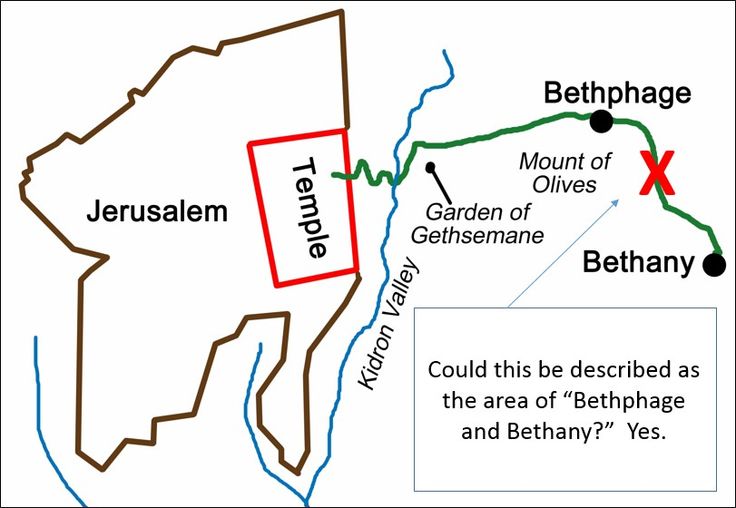
Jesus is continuing His move toward Jerusalem. Since leaving Galilee, He has traveled through Samaria and is now in Judea, having arrived at the village of Bethany. While Luke does not provide the location for the events recorded in these verses, the apostle John reveals that Mary and Martha lived in the village of Bethany with their brother Lazarus (John 10:1). Sometime later, when Lazarus became deathly ill, the two sisters would beg Jesus to return to their home so that He might heal their brother. But by the time Jesus arrived, Lazarus would die, providing Jesus with the opportunity to display His power and authority over death and the grave.

But on this occasion, Jesus and His disciples visit the home of Mary, Martha, and Lazarus, where they enjoy a much-needed respite from the travels. With His arrival in Bethany, Jesus had gotten within two miles of Jerusalem. Bethany will become Jesus’ unofficial headquarters in Judea as He prepares for the final weeks of His earthly ministry and life. In the days ahead, Mary and Martha will become recurring characters in the story surrounding His final days.

We are not told if Jesus had a previous relationship with these two women and their brother, or if this is His first encounter with them. But Luke reports that “Martha welcomed him into her house” (Luke 10:38 ESV). She played the role of gracious hostess, inviting Jesus and His disciples into her home, where she quickly busied herself with the preparations of a meal. But her sister, Mary, chose to join the disciples as they listened to Jesus teach. It seems clear that both of these women were familiar with Jesus and had some kind of former relationship with His ministry. Perhaps they had encountered Him in the Judean wilderness after His baptism by John.

But Luke’s intention for including this story seems to be based on the diametrically opposed responses of the two women. He presents Martha as an anxious and somewhat driven individual who wants to make a good impression on Jesus and His companions. Luke describes her as being “distracted by the big dinner she was preparing” (Luke 10:40 NLT). It seems obvious that Martha has the gift of hospitality. She is working feverishly to prepare a meal for Jesus and she wants everything to be just right. It almost appears as if Luke is attempting to portray Martha as being driven by a legalistic, works-based mentality. But for Martha, the presence of Jesus in her home presented her with the opportunity to do what she did best: Entertain her guests with a well-cooked meal. It was something she enjoyed doing and it brought her great joy. But Luke makes it clear that Martha was a bit put out that her sister was letting her do all the work. While she was slaving away in the kitchen, Mary was enjoying a relaxing evening in the living room, listening to Jesus teach. This prompted Martha to interrupt Jesus and ask, “Lord, doesn’t it seem unfair to you that my sister just sits here while I do all the work? Tell her to come and help me” (Luke 10:40 NLT).

It’s not difficult to tell that these two women had distinctly different personalities. Martha was a doer. Since the moment Jesus had shown up at her home, she had spent all her time in the kitchen, doing everything in her power to make sure that her guests were well taken care of. The thought of postponing her preparations so she could listen to Jesus teach never crossed her mind. And when she saw her sister doing just that, it made her angry and resentful – perhaps even jealous.

Martha wanted Jesus to take her side and order Mary to come to her assistance. But Jesus does just the opposite. Instead of speaking to Mary, He addresses the disgruntled Martha.

Martha, Martha, you are anxious and troubled about many things…” – Luke 10:41 ESV

Jesus can sense Martha’s frustration. She is filled with angst and anxiety, and more than a little put out with her sister’s lack of assistance. And Jesus’ words seem to convey that He knows there is more going on than meets the eye. Martha is dealing with far more than just resentment over having to prepare a meal on her own. Jesus reveals that she is “troubled about many things.” He seems to know that all her feverish activity is driven by hidden insecurities an incessant need to earn favor through hard work. And Jesus points out the fact that Martha’s nervous energy, while well-intended, was distracting her from what was really important.

“There is only one thing worth being concerned about. Mary has discovered it, and it will not be taken away from her.” – Luke 10:42 NLT

Whether she realized it or not, Martha had the Messiah of Israel as a guest in her home. But rather than sitting at His feet and listening to Him teach, she was busy trying to impress Him with her culinary skills. Mary represents all those who “hunger and thirst for righteousness” (Matthew 5:6). And as Jesus stated in His sermon on the mount, “they shall be satisfied.” But Martha was busy trying to prepare a meal so that she could feed Jesus. She had reversed the roles. She saw herself as the one responsible for meeting Jesus’ needs and she wanted Mary to assist her. But in doing so, she was missing the whole point of Jesus’ incarnation.

This entire scene is reminiscent of an earlier event in Jesus’ life involving a Samaritan woman whom He had encountered at a well. His disciples had gone into town to get food, leaving Jesus alone with the woman. He had struck up a conversation with the woman by asking her for a drink of water. “The woman was surprised, for Jews refuse to have anything to do with Samaritans” (John 4:9 NLT).

Shocked that Jesus had even spoken to her, the woman responded, “You are a Jew, and I am a Samaritan woman. Why are you asking me for a drink?” (John 4:9 NLT). And Jesus further surprised the woman by stating, “If you only knew the gift God has for you and who you are speaking to, you would ask me, and I would give you living water” (John 4:10 NLT). This prompted a conversation between Jesus and the woman regarding that dealt with what Jesus meant by “living water.”

“…those who drink the water I give will never be thirsty again. It becomes a fresh, bubbling spring within them, giving them eternal life.” – John 4:14 NLT

Jesus was offering the woman something far more significant than ordinary water from a well. He had begun by asking her for a drink of well water but had quickly turned the tables by offering her the source of eternal life. As their conversation progressed, the woman began to grasp the meaning of Jesus’ words. She went from thinking that He was offering her a better source of water to realizing that He was the long-awaited Messiah. She immediately left her water jar at the well and returned to the town where she told everyone she could find “Come and see a man who told me everything I ever did! Could he possibly be the Messiah?” (John 4:29 NLT).

Meanwhile, the disciples returned with food and urged Jesus to eat. But Jesus responded by telling them, “I have food to eat that you do not know about” (John 4:32 ESV). Like the woman who had considered offering Jesus water from her jar, the disciples had attempted to offer Jesus food they had purchased in town. But Jesus surprised them when He said, “My food is to do the will of him who sent me and to accomplish his work” (John 4:34 ESV).

Jesus didn’t need the woman’s water or the disciples’ food. He had not come to receive but to give. And Martha was learning a similar lesson concerning her relationship with Jesus. He did not need the meal she was so feverishly preparing. But she did need what He had to offer. That’s why He told her, “Mary has discovered it, and it will not be taken away from her” (Luke 10:42 NLT). Mary had been sitting at the feet of the Messiah, taking in all that He had to offer. He was feeding her from the rich bounty of His wisdom, satisfying her hunger and thirst for righteousness. She had willingly and submissively come to the true source of all her needs. And, unlike her sister, Mary’s life was marked by peace and security, rather than frenzied activity and anxiety.

This passage is not intended to condemn Martha’s activity or her desire to serve. But it is meant to stress the disciple’s need to rest at the feet of Jesus. He is the source of living water. He is the bread of life. It is He who provides for all our needs and not the other way around. Serving Jesus is commendable. But recognizing our constant need to be served by Him is essential if we are to experience the fulness of life He came to offer. That is why He reminded His disciples, “For even the Son of Man came not to be served but to serve others and to give his life as a ransom for many” (Mark 10:45 NLT).

We are to emulate His life of service and sacrifice, but we can only do so when we realize our complete dependence upon Him. When the Samaritan woman returned to her village, she was able to offer her friends living water because she had met the Messiah. After Jesus’ resurrection and ascension, the disciples were able to offer others the bread of life because their hunger for righteousness had been satisfied by Jesus, the bread that came down from heaven (John 6:50).

Mary had recognized that “one thing is necessary” (Luke 10:42). And it would not be long before Martha and all the disciples learned the same invaluable lesson. Jesus is the source of all that we need. He is living water, the bread of life, and the only means by which sinful men and women can be made right with God.

English Standard Version (ESV) The Holy Bible, English Standard Version. ESV® Permanent Text Edition® (2016). Copyright © 2001 by Crossway Bibles, a publishing ministry of Good News Publishers.

New Living Translation (NLT) Holy Bible, New Living Translation, copyright © 1996, 2004, 2015 by Tyndale House Foundation. Used by permission of Tyndale House Publishers Inc., Carol Stream, Illinois 60188. All rights reserved.

The Message (MSG)Copyright © 1993, 1994, 1995, 1996, 2000, 2001, 2002 by Eugene H. Peterson

Filled With Faith

22 And as they were eating, he took bread, and after blessing it broke it and gave it to them, and said, “Take; this is my body.” 23 And he took a cup, and when he had given thanks he gave it to them, and they all drank of it. 24 And he said to them, “This is my blood of the covenant, which is poured out for many. 25 Truly, I say to you, I will not drink again of the fruit of the vine until that day when I drink it new in the kingdom of God.” Mark 14:22-25 ESV

With His unidentified betrayer seated at the table with them, Jesus and His disciples began to eat the Passover meal together. As each course of this sacred meal was served, these men would have found it difficult to take their minds off of Jesus’ earlier announcement. One of them was going to do the unthinkable and betray the Lord. And the only hint that Jesus had given as to who the culprit might be was that it was “one of you twelve who is eating from this bowl with me” (Mark 14:20 NLT). That meant it could be any one of them.

But, acting as the head of the family in their shared Passover celebration, Jesus administered the various rites associated with this traditional meal to His 12 “sons.” And on this night, this annual and highly familiar event took on new meaning for these men. Little did they understand at the time that their Lord and Master was standing before them as the Pascal Lamb. He was as John the Baptist had said, “the Lamb of God, who takes away the sin of the world” (John 1:29 ESV). And He was “the bread of God…who comes down from heaven and gives life to the world” (John 6:33 ESV).

These declarations concerning Jesus’ true identity were being illustrated right before their eyes. Jesus used the various elements associated with the Passover meal to point to His God-ordained mission as their deliverer. This meal, which they had eaten every year throughout their lives, had always been a foreshadowing of something greater to come. Yes, it was a commemoration of God’s deliverance of the people of Israel from their captivity in Egypt. But it had also been given as a sign of the deliverance Jesus would bring when He came to earth as the sacrificial Lamb. Through the offering of His sinless body and the shedding of His innocent blood, Jesus would provide mankind with a way to be delivered from its captivity to sin and death.

So, during the meal, Jesus took some of the unleavened bread (a symbol of sinlessness) and “after blessing it broke it and gave it to them, and said, ‘Take; this is my body’” (Mark 14:22 ESV). And Luke records that Jesus added, “which is given for you. Do this in remembrance of me” (Luke 22:19 ESV). He offered them the bread and invited them to consume it, as a symbol of their faith in the sacrificial offering He was about to make on their behalf. It seems likely that the disciples recalled an earlier statement made by Jesus concerning the bread from heaven.

“I am the living bread that came down from heaven. If anyone eats of this bread, he will live forever. And the bread that I will give for the life of the world is my flesh.” – John 6:51 ESV

As they held the broken pieces of bread in their hands, the disciples had to wrestle with the significance of Jesus’ words and actions. But before they had tie to take in what Jesus was saying, He “took a cup, and when he had given thanks he gave it to them, and they all drank of it” (Mark 14:23 ESV). And according to Matthew’s account, Jesus told them, “this is my blood of the covenant, which is poured out for many for the forgiveness of sins” (Matthew 26:28 ESV).

Once again, the minds of the disciples must have been filled with memories of Jesus’ earlier teachings concerning the bread and the blood. At that time, His words had made little sense. But now, they were coming into clearer focus.

“Truly, truly, I say to you, unless you eat the flesh of the Son of Man and drink his blood, you have no life in you. Whoever feeds on my flesh and drinks my blood has eternal life, and I will raise him up on the last day. For my flesh is true food, and my blood is true drink. Whoever feeds on my flesh and drinks my blood abides in me, and I in him.” – John 6:53-56 ESV

Just as the disciples consumed the bread and the wine that night, they would have to ingest the body and blood of Jesus. In order to benefit from what Jesus was about to do for them, they would have to make His life a part of their own. In an act of faith, they would need to take in the gift of His body and blood, believing that these sacred elements would provide them with eternal life. The eating of bread and wine is an act of faith, It is an outward demonstration of trust that their consumption will provide nourishment to the physical body, In the same way, the body and blood of Christ are “consumed” as an act of faith, a willful display of faith in the efficacious nature of Jesus’ death on our behalf. He becomes part of us. He comes to live within us. That is exactly what Jesus meant when He said, “Whoever feeds on my flesh and drinks my blood abides in me, and I in him” (John 6:56 ESV).

In time, the disciples would understand the nature of Jesus’ words. With the coming of the Holy Spirit, they would be given the power to grasp and appreciate all that they had heard Jesus say to them. The apostle Paul would later describe the memorial aspect of what Jesus had done that fateful night. The church would go on to establish the eating of the bread and the drinking of the wine as a regularly occurring part of their corporate worship experience.

“For as often as you eat this bread and drink the cup, you proclaim the Lord’s death until he comes.” – 1 Corinthians 11:26 ESV

And the proclamation of His death is to continue until He returns again. It is His death that brings life. It was the sacrifice of His body and blood that made forgiveness of sin and freedom from death possible. But we must never forget that His death was followed by His resurrection. He was restored to life by the power of the Spirit of God. And He returned to His Father’s side in heaven. But, one day, He will return. And Jesus told His disciples, “I will not drink again of the fruit of the vine until that day when I drink it new in the kingdom of God” (Mark 14:25 ESV). Jesus was assuring His disciples that His death, burial, resurrection, and ascension would be followed by His return. When He comes back, He will establish His Kingdom on earth and once again share a cup of celebration with His faithful followers.

The apostle John provides us with a glimpse into this future day when Jesus will share another meal with His disciples. On this occasion, there will be no bread broken as a sign of death or wine consumed as a symbol of His shed blood. This will be a victory meal, a time of joyous celebration as the people of God rejoice in the finished work of the Son of God.

Then I heard what seemed to be the voice of a great multitude, like the roar of many waters and like the sound of mighty peals of thunder, crying out,

“Hallelujah!
For the Lord our God
    the Almighty reigns.
Let us rejoice and exult
    and give him the glory,
for the marriage of the Lamb has come,
    and his Bride has made herself ready;
it was granted her to clothe herself
    with fine linen, bright and pure”—

for the fine linen is the righteous deeds of the saints.

And the angel said to me, “Write this: Blessed are those who are invited to the marriage supper of the Lamb.” And he said to me, “These are the true words of God.” – Revelation 19:6-9 ESV

English Standard Version (ESV) The Holy Bible, English Standard Version. ESV® Permanent Text Edition® (2016). Copyright © 2001 by Crossway Bibles, a publishing ministry of Good News Publishers.

New Living Translation (NLT) Holy Bible, New Living Translation, copyright © 1996, 2004, 2015 by Tyndale House Foundation. Used by permission of Tyndale House Publishers Inc., Carol Stream, Illinois 60188. All rights reserved.

The Message (MSG)Copyright © 1993, 1994, 1995, 1996, 2000, 2001, 2002 by Eugene H. Peterson

A Case of Déjà Vu

1 In those days, when again a great crowd had gathered, and they had nothing to eat, he called his disciples to him and said to them, “I have compassion on the crowd, because they have been with me now three days and have nothing to eat. And if I send them away hungry to their homes, they will faint on the way. And some of them have come from far away.” And his disciples answered him, “How can one feed these people with bread here in this desolate place?” And he asked them, “How many loaves do you have?” They said, “Seven.” And he directed the crowd to sit down on the ground. And he took the seven loaves, and having given thanks, he broke them and gave them to his disciples to set before the people; and they set them before the crowd. And they had a few small fish. And having blessed them, he said that these also should be set before them. And they ate and were satisfied. And they took up the broken pieces left over, seven baskets full. And there were about four thousand people. And he sent them away. 10 And immediately he got into the boat with his disciples and went to the district of Dalmanutha Mark 8:1-10 ESV

There is the School of Hard Knocks and then there is the lesser-known but equally popular School of Repetitive Lessons. The first provides unsolicited educational opportunities through the means of difficult and often unexpected life experiences. These painful and oftentimes self-inflicted life lessons are a vital part of the human growth process. It was Friedrich Nietzsche who said, “That which does not kill us makes us stronger.”

But many of us have spent more time in the second educational venue without even realizing it. Like the main character in the movie, Groundhog Day, we wake up each morning with the eery sensation that we’ve been here before. But we can’t quite put our finger on it. Everything feels a bit repetitive, almost as if someone has rewound the video of our life and hit replay. Like a child who has to repeat second grade, we find ourselves reliving and relearning certain life experiences because we failed to grasp their significance the first time around. It’s what I affectionately call it God’s School for Remedial Slow Learners.

Today’s passage has an air of familiarity to it. In reading it, it’s difficult to ignore the impression that we’ve been here before – because we have. In a sense, Mark is allowing us to look on as the 12 disciples re-enter the School of Repetitive Learning where they will get a second opportunity to learn what they missed the first time around.

Chapter six contains Mark’s account of the feeding of the 5,000. On that occasion, Jesus had feed a large crowd, probably in excess of 10,000 people, with nothing more than fives loaves of bread and two fishes. He had miraculously multiplied those meager resources so that everyone in the crowd was able to eat as much as they wanted. And when the people had walked away full and satisfied, the disciples were able to fill up 12 baskets with the uneaten bread and fish. Those 12 baskets were to be a visual answer to the question that Andrew had asked: “what are they for so many?” (John 6:9 ESV). Andrew had deemed the fives loaves and two fish as insufficient to meet the need they faced. But in doing so, he failed to understand the sufficiency of Jesus. And even after Jesus had proven His power to provide, the disciples had failed to learn the lesson. Mark went on to comment, “they did not understand about the loaves, but their hearts were hardened” (Mark 6:52 ESV).

So, here we are again, watching the disciples as they reenter Jesus’ School of Repetitive Learning. And Mark makes sure we don’t miss the recurrent nature of this scene.

…again a great crowd had gathered, and they had nothing to eat… – Mark 8:1 ESV

It was déjà vu all over again, but the disciples fail to recognize the repetitive nature of what is happening. So, Jesus sets up the scene for them.

“I feel sorry for these people. They have been here with me for three days, and they have nothing left to eat. If I send them home hungry, they will faint along the way. For some of them have come a long distance.” – Mark 8:2-3 NLT

Jesus lobs them a softball. He graciously offers them an opportunity to prove that they had learned the lesson from the previous experience. But they swing and miss.

“How are we supposed to find enough food to feed them out here in the wilderness?” – Mark 8:4 NLT

The quiz had one simple question and, sadly, they reveal that they had no idea what the answer was. And they show no signs that they recognize anything familiar about this scene. So, once again, Jesus asks them to assess their available resources.

“How many loaves do you have?” – Mark 8:5 ESV

And all they can muster up is a scant seven loaves of bread and a few small fish. By this time, you would have expected at least one of the disciples to have recalled the earlier episode and made the connection. Surely, Peter and Andrew were capable of remembering what Jesus had done with the five loaves and two fish. Wasn’t John smart enough to recognize what was happening and to express his confidence in Jesus’ ability to meet the need of the moment? Evidently not.

So Jesus told all the people to sit down on the ground. Then he took the seven loaves, thanked God for them, and broke them into pieces. He gave them to his disciples, who distributed the bread to the crowd. – Mark 8:6 NLT

Jesus performed yet another miracle and allowed His hard-hearted disciples to participate in the process. They became the means of distribution. The bread, broken and blessed by Jesus, passed from His hands through theirs. They took what Jesus provided and made it available to those in need. These slow-to-learn and quick-to-doubt men were being given a glimpse of the future role they would play as Jesus’ ambassadors. The day was coming when He would allow His body to be broken on behalf of sinful men and women, the Bread of Life offering Himself so that the spiritually hungry might be satisfied. And the disciples would be given the task of distributing the Bread to all those who would receive it.

“…you will be my witnesses in Jerusalem and in all Judea and Samaria, and to the end of the earth.” – Acts 1:8 ESV

Little did they know that these lessons were intended to prepare them for something far more significant and life-changing. They remained oblivious to the lesson that Jesus was trying to teach them. And it would not be the last time that Jesus used the metaphor of broken bread to convey the reality of His life’s mission. One night, in the room where Jesus celebrated His last Passover meal with His disciples, He would revisit those two earlier experiences, connecting the dots for them.

And he took bread, and when he had given thanks, he broke it and gave it to them, saying, “This is my body, which is given for you. Do this in remembrance of me.” – Luke 22:19 ESV

It had never been about loaves and fishes. It had never been about satisfying temporal needs or filling empty stomachs. Jesus had come to offer His life as a sacrifice for the sins of fallen mankind. And one day, these very same men would find themselves distributing the good news of Jesus’ sacrificial death, burial, and resurrection to the spiritually hungry. Jesus would offer His life to be broken and they would have the joy and privilege of distributing the news of His gift to all those who would accept it.

Jesus had declared Himself to be the bread that had been sent from heaven by God the Father.

For the bread of God is he who comes down from heaven and gives life to the world.” – John 6:33 ESV

And He offered Himself as the means by which the hungry and thirsty might find satisfaction.

“I am the bread of life; whoever comes to me shall not hunger…” – John 6:35 ESV

So, as the disciples once again distributed the broken bread and fish, they probably had the nagging sense that they had been here before. It all had an eery familiarity to it. The people ate and were satisfied. And the disciples picked up seven baskets of leftovers. But they remained just as oblivious as before. They failed to learn the lesson Jesus was trying to teach them. But He would lovingly and patiently repeat the message because He knew the day was coming when the light would go on and all the lessons would finally make sense. These men who had been so slow to learn would become His primary means of distributing the Bread of Life to a spiritually famished world.

English Standard Version (ESV) The Holy Bible, English Standard Version. ESV® Permanent Text Edition® (2016). Copyright © 2001 by Crossway Bibles, a publishing ministry of Good News Publishers.

New Living Translation (NLT) Holy Bible, New Living Translation, copyright © 1996, 2004, 2015 by Tyndale House Foundation. Used by permission of Tyndale House Publishers Inc., Carol Stream, Illinois 60188. All rights reserved.

The Message (MSG)Copyright © 1993, 1994, 1995, 1996, 2000, 2001, 2002 by Eugene H. Peterson

Who Are You?

21 So he said to them again, “I am going away, and you will seek me, and you will die in your sin. Where I am going, you cannot come.” 22 So the Jews said, “Will he kill himself, since he says, ‘Where I am going, you cannot come’?” 23 He said to them, “You are from below; I am from above. You are of this world; I am not of this world. 24 I told you that you would die in your sins, for unless you believe that I am he you will die in your sins.” 25 So they said to him, “Who are you?” Jesus said to them, “Just what I have been telling you from the beginning. 26 I have much to say about you and much to judge, but he who sent me is true, and I declare to the world what I have heard from him.” 27 They did not understand that he had been speaking to them about the Father. 28 So Jesus said to them, “When you have lifted up the Son of Man, then you will know that I am he, and that I do nothing on my own authority, but speak just as the Father taught me. 29 And he who sent me is with me. He has not left me alone, for I always do the things that are pleasing to him.” 30 As he was saying these things, many believed in him. John 8:21-30 ESV

Jesus has performed miracles. He has healed the sick. And He has repeatedly and unapologetically declared His identity as the Son of God. In spite of all the instances in which He has referred to God as His Father, alluded to His having come down from heaven, and of possessing authority over death and life, the people still can’t seem to figure out who He is. And as Jesus continued to reveal His identity to the Jewish crowd that had gathered to hear him in the treasury of the temple, all they could say to Him was, “Who are you?”

Jesus had just declared Himself to be “the light of the world” who came to offer “the light of life” (John 8:12 ESV). And He backed up His statement by claiming God Almighty as His witness. Not only that, He declared God to be His Father.

I am the one who bears witness about myself, and the Father who sent me bears witness about me.” – John 8:18 ESV

The meaning behind His words escaped them. They couldn’t figure out what it was He was trying to say. When He referred to His Father, they could only think in earthly, human terms. Which is what had led them to ask, “Where is your Father?” (John 8:12 ESV). And Jesus had responded to this question by stating, “You know neither me nor my Father. If you knew me, you would know my Father also” (John 8:19 ESV).

Their inability to recognize Jesus as the Son of God was because they lacked a relationship with His Heavenly Father. They were blinded by their own ignorance. They knew the Scriptures but had no true knowledge of the God whom the Scriptures revealed. Even the Mosaic law, provided by God to reveal His own holiness, had become little more than a list of burdensome regulations and rules to keep. Yet David had described the commands of God as intensely valuable and desirable because they came from God.

The instructions of the Lord are perfect,
    reviving the soul.
The decrees of the Lord are trustworthy,
    making wise the simple.
The commandments of the Lord are right,
    bringing joy to the heart.
The commands of the Lord are clear,
    giving insight for living.
Reverence for the Lord is pure,
    lasting forever.
The laws of the Lord are true;
    each one is fair.
They are more desirable than gold,
    even the finest gold.
They are sweeter than honey,
    even honey dripping from the comb.
They are a warning to your servant,
    a great reward for those who obey them. – Psalm 19:7-11 NLT

But because the people had no real understanding of God, they were incapable of comprehending the identity of His Son. Unlike David, the people of Israel had no love for God’s written Word. They found its content to be restrictive and overly demanding. So, how would they ever learn to love His Living Word?

God had graciously given the people of Israel His law in order to set them apart as His own prized possession. By living according to His holy commands, they would experience His blessings in the form of His ongoing presence and provision. Now, the Living Word of God was standing right in front of them, revealing the key to the ultimate blessing of God: eternal life.

During their years in the wilderness, God had provided the people of Israel manna, a miraculous source of nourishment that required no sowing, reaping, or baking on their part. It was a gracious gift, freely given, that was designed to meet their daily need for physical sustenance. Now, the Bread of Life was standing right in front of them, offering His body as the key to their spiritual nourishment – “the food that endures to eternal life” (John 6:27 ESV).

And the Creator God who had said, “Let there be light” (Genesis 1:3 ESV) and had “separated the light from the darkness” (Genesis 1:4 ESV), and declared it good, had sent His Son to bring light into a world darkened by sin. But the people failed to see Jesus for who He was. Their spiritual blindness kept them from even recognizing the brightness of God’s Light shining right in front of them. And John opened up his Gospel with the sobering reality of their rejection.

The true light, which gives light to everyone, was coming into the world. He was in the world, and the world was made through him, yet the world did not know him. He came to his own, and his own people did not receive him. – John 1:9-11 ESV

And as Jesus stood in the treasury that day, He proclaimed to His sin-blinded audience, “I am going away, and you will seek me, and you will die in your sin. Where I am going, you cannot come” (John 8:21 ESV). Jesus was announcing that God’s “light of life” was not going to shine forever. He had come to earth to illuminate the darkness with His perfectly sinless life. With His incarnation, He had made the invisible God visible. As John stated in the opening chapter of his Gospel, Jesus made God known.

No one has ever seen God, but the one and only Son, who is Himself God and is at the Father’s side, has made Him known. – John 1:18 BSB

But Jesus was letting the people know that His light was going to be extinguished. He had come to die. It was all part of God’s divine plan of redemption. His incarnation would be followed by His crucifixion and, ultimately, His resurrection and ascension. Jesus had not come to take up permanent residence on earth. He even told them, “I am not of this world” (John 8:23 ESV). He was the Son of God, who had been sent on a mission by His Heavenly Father, and once His task was complete, He would be returning to His rightful place at His Father’s side in heaven.

And Jesus made a sobering pronouncement to His audience that day:  “you will die in your sin. Where I am going, you cannot come” (John 8:21 ESV). The “Light” would be leaving and they would remain in the darkness of their sin, incapable of finding Jesus or a way to have eternal life. He was the key to gaining access to God the Father and the only hope they had of experiencing everlasting life. That is why He will later declare:

“My light will shine for you just a little longer. Walk in the light while you can, so the darkness will not overtake you. Those who walk in the darkness cannot see where they are going. Put your trust in the light while there is still time; then you will become children of the light.” – John 12:35-36 NLT

Jesus had been very clear about who He was and what He had come to do.

“I told you that you would die in your sins, for unless you believe that I am he you will die in your sins.” – John 8:23 ESV

He had been brutally honest about His identity and had openly declared their need to believe in who He was and to accept His offer of eternal life. But all they had to say was, “Who are you?” And Jesus patiently responded, “The one I have always claimed to be” (John 8:25 NLT). There were no secrets. Jesus hadn’t been hiding the ball or disguising His mission. Their failure to recognize Him was due to their own spiritual blindness.

They did not understand that he had been speaking to them about the Father. – John 8:27 ESV

What they failed to understand was that Jesus had come from God. They could not bring themselves to believe that He was divine. All that He said and did was due to His identity as the Son of God. He had authority and power because He was God in human flesh. He could offer life because He was the author of life. He had power over the natural realm because He had created it. He had the ability to heal because He had all the power of heaven at His disposal.

But Jesus informed them that the true proof of His deity would come in an unexpected and spectacular form.

“When you have lifted up the Son of Man, then you will know that I am he, and that I do nothing on my own authority, but speak just as the Father taught me. – John 8:28 ESV

His pending death, of which they were clueless, would become the greatest evidence of His deity because it would result in His resurrection. By rising from the dead, God would deem His Son’s sacrifice for the sins of mankind as worthy and acceptable. Jesus’ offering of His body and blood in the place of condemned sinners would satisfy the just demands of a holy God. And by raising His Son back to life, God would declare His righteous wrath as fully satisfied. And all those who believed in His Son’s death on their behalf would enjoy eternal life. Rather than facing condemnation for their sin and rebellion, they will enjoy complete forgiveness and a restored relationship with God. All because of Jesus, “who was delivered up for our trespasses and raised for our justification” (Romans 4:25 ESV).

Jesus was on a mission. He had a job to complete. And the ability of the people to fully understand His identity would not come about until He had finished the task He had been assigned. It would not be until He had been “lifted up” and risen again that the full scope of His ministry would be revealed. And as Jesus will reveal to His disciples, it will only be through the coming of the Holy Spirit that sinful men and women will be able to see the glory of God’s gift of salvation through the death of His Son.

English Standard Version (ESV) The Holy Bible, English Standard Version. ESV® Permanent Text Edition® (2016). Copyright © 2001 by Crossway Bibles, a publishing ministry of Good News Publishers.

New Living Translation (NLT)
Holy Bible, New Living Translation, copyright © 1996, 2004, 2015 by Tyndale House Foundation. Used by permission of Tyndale House Publishers Inc., Carol Stream, Illinois 60188. All rights reserved.

The Message (MSG)Copyright © 1993, 1994, 1995, 1996, 2000, 2001, 2002 by Eugene H. Peterson

The Spirit Who Gives Life

37 On the last day of the feast, the great day, Jesus stood up and cried out, “If anyone thirsts, let him come to me and drink. 38 Whoever believes in me, as the Scripture has said, ‘Out of his heart will flow rivers of living water.’” 39 Now this he said about the Spirit, whom those who believed in him were to receive, for as yet the Spirit had not been given, because Jesus was not yet glorified. John 7:37-39 ESV

All of the events covered in chapter seven have occurred during the Feast of Booths in Jerusalem. Now, after having informed His audience about His coming departure, Jesus returns to the temple grounds in order to make a statement regarding the coming of the Holy Spirit. John describes this scene as taking place on the last day of the feast, “the great day.” According to Deuteronomy 16:13, the Feast of Booths lasted seven days. But the day following the feast, which always fell on the Sabbath, was to be a special day as well.

On the eighth day you shall hold a holy convocation and present a food offering to the Lord. It is a solemn assembly; you shall not do any ordinary work.– Leviticus 23:36 ESV

It is impossible to know whether Jesus made His announcement about the coming Holy Spirit on the seventh or eighth day. By designating it as “the great day,” John could have been referencing the final day of the feast itself, the seventh day. Or he could have been referring to the eighth day, which was considered by most Jews to be just as much a part of the feast as the previous seven days. It was on that day, a Sabbath day, that a final holy convocation was held to celebrate God’s gracious provision for the needs of His chosen people during the 40 years they had spent in the wilderness.

During the 1st-Century AD, the Jews celebrated the Feast of Booths with a series of man-made rites or rituals that were not outlined in the Mosaic law. One of these was the daily water libation. The details surrounding this daily ritual are essential to understanding the nature of Jesus’ comments.

The third daily ceremony was the rite of the water libation. On the first morning of Sukkot a procession of priests went down to the pool of Siloam to bring up to the Temple a golden container of water sufficient to last throughout the seven days of the feast. The water was brought up with great ceremony. The shofar was blown and the pilgrims who had come to Jerusalem for the feast waved their lulavs as the priests carried the water around the altar. The great Hallel (Psalms 113-118) were recited. Then the priest on duty poured out the contents of two silver bowls: one held water and the other held wine. This was an act of prayer and an expression of dependence upon God to pour out his blessing of rain upon the earth.

On the last or “great” day of the feast, the water libation rite reached its climax. The priests circled the altar seven times and then poured out the water with great pomp and ceremony. This was Hoshana Rabbah, the great “HOSHIANA,” (which translated is “save now”). – © Jews for Jesus USA. All rights reserved. Used by permission.

The water from the Pool of Siloam was poured out along with the daily drink offering of wine. The pouring out of the water was intended to represent God’s gracious provision of life-sustaining water for His people during their days in the wilderness. The water was representative of His saving grace, as described in the book of Isaiah.

“Behold, God is my salvation;
I will trust, and will not be afraid;
for the Lord God is my strength and my song,
and he has become my salvation.”

With joy you will draw water from the wells of salvation.– Isaiah 12:2-3 ESV

The pouring out of the wine was meant to represent God’s promise to pour out His Spirit upon His people.

“For I will pour water on the thirsty land, and streams on the dry ground; I will pour my Spirit upon your offspring, and my blessing on your descendants.” – Isaiah 44:3 ESV

It is believed that as the water and wine were poured out, the people would chant Isaiah 12:3 as well as Isaiah 55:1: “Come, everyone who thirsts, come to the waters;
and he who has no money, come, buy and eat! Come, buy wine and milk without money and without price.”

With all this as background, the words of Jesus take on a whole new significance. And whether He spoke those words on the seventh or eighth day becomes immaterial. The point is that Jesus used the context of the daily pouring out of the water and the wine to offer His promise of the coming Spirit of God. John describes Jesus as standing up and crying out. There is an intensity to the scene. Jesus is shouting at the top of His lungs, passionately inviting the people to receive what God is about to offer.

“If anyone thirsts, let him come to me and drink. – John 7:37 ESV

With that statement, Jesus made Himself the focal point of the entire festival. He purposely took the Isaiah 55:1 passage and made it about Himself. None of this would have escaped His Jewish audience. And the religious leaders would have been appalled at His audacity and apparent blasphemy. But Jesus was far from done. He quickly added:

“Whoever believes in me, as the Scripture has said, ‘Out of his heart will flow rivers of living water.’” – John 7:38 ESV

This statement presents a problem. There is no Old Testament passage that seems to correspond with Jesus’ words. So, it would seem that Jesus was summarizing and interpreting a variety of Old Testament passages that were intended to point toward the future advent of the Holy Spirit. These would have included the following:

“And I will not hide my face anymore from them, when I pour out my Spirit upon the house of Israel, declares the Lord God.” – Ezekiel 39:29 ESV

“For I will pour water on the thirsty land,
    and streams on the dry ground;
I will pour my Spirit upon your offspring,
    and my blessing on your descendants.” – Isaiah 44:3 ESV

Jesus was linking these promises to Himself. The pouring out of the Spirit of God was tied directly to belief in Him as the Son of God. In a sense, Jesus was making belief in Him a mandatory condition for experiencing the outpouring of the Spirit. And this bold claim would have been highly offensive to His audience, especially to the Jewish religious leaders.

But everything Jesus said mirrored the words He had spoken to the Samaritan woman He had encountered at Jacob’s well. He had told her, “If you knew the gift of God, and who it is that is saying to you, ‘Give me a drink,’ you would have asked him, and he would have given you living water” (John 4:10 ESV). And then He had added, “Everyone who drinks of this water will be thirsty again, but whoever drinks of the water that I will give him will never be thirsty again. The water that I will give him will become in him a spring of water welling up to eternal life” (John 4:13-14 ESV).

He had offered this woman a source of living water that would result in eternal life. But He was the key to receiving this incredible resource. It would be through faith in Jesus that the promise of the outpouring of God’s Spirit would come.

When Jesus had described Himself as the bread that came down from heaven, He had disclosed that “unless you eat the flesh of the Son of Man and drink his blood, you have no life in you” (John 6:53 ESV). In doing so, He had presented Himself as the sole source of eternal life. Through belief in Him as the Son of God, sin-stained men and women could find cleansing and complete purification. They would be able to enter into God’s presence unashamed and fully accepted as righteous in His eyes. But Jesus had added an important factor that would make this promise possible.

“Then what if you were to see the Son of Man ascending to where he was before? It is the Spirit who gives life; the flesh is no help at all. The words that I have spoken to you are spirit and life.” – John 6:62-63 ESV

Jesus had been revealing all along that He was going to have to die so that eternal life could be made available. He would have to offer His life as a ransom for sinful mankind. And His death would be followed by His resurrection and ascension. But when He had ascended, the Holy Spirit would come, providing all those who placed their faith in Him with abundant life now and eternal life to come.

And John provides an important point of clarification when he adds: “Now this he said about the Spirit, whom those who believed in him were to receive, for as yet the Spirit had not been given, because Jesus was not yet glorified” (John 7:39 ESV).

John includes this point of explanation for the benefit of his readers. He realized that they would have found the words of Jesus just as difficult to understand as the Jews who heard them on “the great day” of the feast. As John will make clear, Jesus’ invitation was met with mixed reviews. They didn’t know what to make of His words. They were perplexed by His offer of rivers of living water. And it was because they had no idea that Jesus was about to lay down His life for their sins. He was going to offer Himself as a substitute, the Lamb of God who takes away the sin of the world (John 1:29). The Bread of Life would be broken. His blood would be poured out. His life would be given as an atonement for the sins of men. And His death, resurrection, and ascension would make possible the pouring out of “the Spirit who gives life” (John 6:63 ESV).

English Standard Version (ESV) The Holy Bible, English Standard Version. ESV® Permanent Text Edition® (2016). Copyright © 2001 by Crossway Bibles, a publishing ministry of Good News Publishers.

New Living Translation (NLT)
Holy Bible, New Living Translation, copyright © 1996, 2004, 2015 by Tyndale House Foundation. Used by permission of Tyndale House Publishers Inc., Carol Stream, Illinois 60188. All rights reserved.

The Message (MSG)Copyright © 1993, 1994, 1995, 1996, 2000, 2001, 2002 by Eugene H. Peterson

Return to Sender

32 The Pharisees heard the crowd muttering these things about him, and the chief priests and Pharisees sent officers to arrest him. 33 Jesus then said, “I will be with you a little longer, and then I am going to him who sent me. 34 You will seek me and you will not find me. Where I am you cannot come.” 35 The Jews said to one another, “Where does this man intend to go that we will not find him? Does he intend to go to the Dispersion among the Greeks and teach the Greeks? 36 What does he mean by saying, ‘You will seek me and you will not find me,’ and, ‘Where I am you cannot come’?” John 7:32-36 ESV

The Pharisees were among the growing number who found Jesus’ claims to be preposterous and potentially dangerous. As members of the religious leadership of Israel, they had convinced themselves that Jesus posed a serious threat to the nation. His words and actions were stirring up the people and giving them the hope that their Messiah had finally come. The Pharisees saw this as a problem because the people expected the Messiah to be a military leader who would free them from Roman oppression and reestablish Israel’s prominence as a nation. If enough people were swayed into believing that Jesus was the Messiah, His followers could insight a rebellion against the Roman authorities and bring down the wrath of Caesar.

Their fear was well-founded. Even John alluded to the fact that there was a movement among some of Jesus’ followers to make Him their king. Immediately after His miraculous feeding of the 5,000, the awe-struck crowd came up with a way to use His supernatural powers to even greater advantage.

When the people saw him do this miraculous sign, they exclaimed, “Surely, he is the Prophet we have been expecting!” When Jesus saw that they were ready to force him to be their king, he slipped away into the hills by himself. – John 6:14-15 NLT

So, it’s easy to see why the Pharisees were anxious about Jesus’ growing fame. And whenever they heard the people says things like, “When the Christ appears, will he do more signs than this man has done?” (John 7:31 ESV), their fears increased exponentially. Any reference to Jesus as the Christ or Messiah was considered to be a red flag to these men that signaled danger ahead. That’s why they immediately responded by sending officers to arrest Jesus. They wanted Him off the streets and under lock and key. In their less-than-humble opinion, Jesus was a menace to society, not the long-awaited Messiah of Israel.

The entire scene described in chapter seven takes place on the temple grounds. This was the home turf of the Pharisees and the other members of the Sanhedrin and they viewed Jesus as a dangerous interloper who was trying to incite rebellion among the people. They had already tried to get their hands on Him, but John indicates that their efforts had been unsuccessful “because his hour had not yet come” (John 7:30 ESV).

There was a divine timeline associated with Jesus’ earthly ministry. No one was going to crown Him king prematurely or have Him arrested ahead of schedule. God had ordained a specific sequence for the events that were to mark the last days of Jesus’ life. They could not be rushed, prevented, or altered in any way. And Jesus continued to speak with a complete sense of calm, informing His audience of what was about to happen.

I will be with you only a little longer. Then I will return to the one who sent me. You will search for me but not find me. And you cannot go where I am going. – John 7:33-34 NLT

As usual, Jesus spoke in rather cryptic terms that left His listeners more confused than comforted. In a sense, Jesus was simply articulating that His hour had not yet come. He would be leaving them, but now was not the time. The religious leaders would eventually get their hands on Him, but it would be according to God’s timing, not their own. And Jesus informs His audience that His next destination would not be a throne or a jail cell. He would be returning to His Father’s side in heaven.

Jesus was fully aware that death awaited Him. His whole purpose in coming to earth had been to die on behalf of sinful mankind. He had come to offer His life as a ransom for many (Mark 10:45). But His death would not signal the end of His ministry. It would be just the beginning. The Pharisees and their peers believed that if they could put Jesus to death they would eliminate His influence over the people. But they were wrong. And the people believed that if they could force Jesus to be their king, they could eliminate the oppressive rule of the Romans. But they too were wrong.

In a sense, everyone was seeking Jesus. The crowds were seeking to make Him their king. The Pharisees were seeking to make Him a martyr. But God had other plans for Jesus. The Father was preparing to offer His Son as Lamb who takes away the sins of the world (John 1:29). And once Jesus accomplished that objective, He would be restored to His Father’s side. And no matter how hard the crowds or the Pharisees searched for Him, their efforts would prove fruitless.

And as expected, the words Jesus spoke made no sense to those who heard them. They wracked their brains trying to figure out where Jesus intended to go so that they could not find Him. Was He thinking of leaving Judea permanently? Did He have plans to go beyond the borders of Palestine and join other Jews who had been dispersed among the Gentile nations? In their minds, none of this made any sense. Why would the Messiah of Israel leave the borders of Israel? Why would He go where they could not find Him?

Even the Pharisees in the crowd must have been stunned by Jesus’ announcement. Was He really leaving? Was their problem about to go away for good? Was their worst nightmare about to turn into a dream come true?

Everyone was left asking the same question: “What does he mean when he says, ‘You will search for me but not find me,’ and ‘You cannot go where I am going’?” (John 7:36 NLT). With this final question, John drives home the point that the Jews had no clue as to Jesus’ true identity. They had no idea where He had come from and they had no idea where He was going because they had no clue that He was the Son of God. Over and over again, Jesus had explained that He had been sent by God. Now, He was declaring that the plan was for Him to return to His Father’s side.

When Jesus stated, “I will return to the one who sent me,” He was declaring once again His divinity. He was not really from Nazareth in Galilee. And while He had been born in Bethlehem in Judea, He was actually the Son of God sent from heaven. He was the true light that had come into the world (John 1:9).  He was the true bread from heaven (John 6:32). He was the living bread that had come down from heaven (John 6:51). He had been sent by God and He would one day return to His rightful place at His Father’s side. The deity of Jesus is central to John’s gospel. He was the Son of God who had been sent by His Heavenly Father with a task to perform that no mere man could accomplish. If Jesus was just a man, His death would have proved Him to be nothing more than a martyr but not the Messiah. If Jesus was just a man, crowing Him king would have made Him a sovereign, but not a Savior. Jesus had come to offer His sinless life as a ransom for many. And the apostle Paul reminds us of the staggering significance of what Jesus accomplished by taking on human flesh and dying on behalf of sinful men and women.

When we were utterly helpless, Christ came at just the right time and died for us sinners. Now, most people would not be willing to die for an upright person, though someone might perhaps be willing to die for a person who is especially good. But God showed his great love for us by sending Christ to die for us while we were still sinners. – Romans 5:6-8 NLT

 English Standard Version (ESV) The Holy Bible, English Standard Version. ESV® Permanent Text Edition® (2016). Copyright © 2001 by Crossway Bibles, a publishing ministry of Good News Publishers.

New Living Translation (NLT)
Holy Bible, New Living Translation, copyright © 1996, 2004, 2015 by Tyndale House Foundation. Used by permission of Tyndale House Publishers Inc., Carol Stream, Illinois 60188. All rights reserved.

The Message (MSG)Copyright © 1993, 1994, 1995, 1996, 2000, 2001, 2002 by Eugene H. Peterson

The Holy One of God

67 So Jesus said to the twelve, “Do you want to go away as well?” 68 Simon Peter answered him, “Lord, to whom shall we go? You have the words of eternal life, 69 and we have believed, and have come to know, that you are the Holy One of God.” 70 Jesus answered them, “Did I not choose you, the twelve? And yet one of you is a devil.” 71 He spoke of Judas the son of Simon Iscariot, for he, one of the twelve, was going to betray him. John 6:60-66 ESV

Jesus’ discourse in the synagogue at Capernaum had left His listeners confused, disturbed, and even angry. And John indicates that when Jesus had finished “many of his disciples turned back and no longer walked with him” (John 6:59 ESV). This comment by John regarding Jesus’ disciples is not a reference to the 12 men Jesus had chosen to follow Him. This was how John differentiated between the people who followed Jesus because of His miracles and “the Jews” who refused to believe that Jesus was anyone special.

The first group believed Jesus had supernatural powers, just as the Old Testament prophets had. Which is why some thought he might be a prophet sent from God. Others strongly considered the possibility that He might be the long-awaited Messiah. But none of them would have believed that He was God in human flesh. Yet, throughout His brief, but impactful, speech in the synagogue, Jesus had repeatedly claimed to have been sent to earth by God, His Father.

“For I have come down from heaven, not to do my own will but the will of him who sent me.” – John 6:38 ESV

While Jesus’ invitation to eat His flesh and drink His blood had left the people scratching their heads in confusion, it was His claim to have God as His Father that turned many of them from followers into scoffers.

“As the living Father sent me, and I live because of the Father, so whoever feeds on me, he also will live because of me.” – John 6:57 ESV

He was boldly claiming to be divine, having been sent by God, and in possession of the key to eternal life. This was too much for some of His followers to handle. So, they walked away. But none of this surprised Him. Before they made their decision to leave, Jesus informed them that He already knew their state of unbelief.

“But there are some of you who do not believe.” – John 6:64 ESV

And John adds the note: “For Jesus knew from the beginning who those were who did not believe, and who it was who would betray him” (John 6:64 ESV). Jesus knew who His true disciples were. And as John indicates, Jesus even knew that there was one among the 12 disciples who would prove to be a betrayer and not a believer.

Anyone could follow Jesus, but only those who were called by God and empowered by the Spirit of God would see Jesus for who He truly was. That is why Jesus had said, “The Spirit alone gives eternal life. Human effort accomplishes nothing. And the very words I have spoken to you are spirit and life” (John 6:63 ESV). Without the regenerating work of the Spirit, no one could understand and accept the words coming from the lips of Jesus.

Jesus had come to offer Himself as the bread of life, destined to provide spiritual nourishment to those with a hunger for righteousness. He came to pour out His blood so that those who thirsted for righteousness might be satisfied. Many in the crowd that day had come to see a miracle. They had hoped Jesus would provide them with another free meal. Their minds were stuck on material things. Their hopes were focused on worldly matters. If they believed Jesus to be the Messiah, it was only because they were longing that He might set them free from Roman oppression. They were looking for a human savior who would provide them with temporal relief from their physical suffering, whether that meant subjugation to Rome, hunger, disease, illness, or poverty.

But Jesus had come to offer them eternal life. He had made that point perfectly clear.

Do not work for the food that perishes, but for the food that endures to eternal life, which the Son of Man will give to you.” – John 6:27 ESV

For the bread of God is he who comes down from heaven and gives life to the world.” – John 6:33 ESV

“For this is the will of my Father, that everyone who looks on the Son and believes in him should have eternal life…” – John 6:40 ESV

Truly, truly, I say to you, whoever believes has eternal life. – John 6:47 ESV

“I am the living bread that came down from heaven. If anyone eats of this bread, he will live forever. – John 6:51 ESV

But the crowds could not understand what Jesus was saying. His offer of eternal life made no sense to them because they refused to believe that He was the Son of God. It was His divinity that made His offer of eternity possible. It was because He was the Son of God that He could make the offer of eternal life because He was the author of life.

He was in the beginning with God. All things were made through him, and without him was not any thing made that was made. In him was life, and the life was the light of men. – John 1:2-4 ESV

John began his gospel with the presentation of Jesus as the Son of God and the co-creator of the world. As part of the Godhead, Jesus had played an integral role in the creation of all life on earth. So now, Jesus was claiming to be God and in full possession of the divine power to not only bestow temporal life but eternal life on all those whom God gives Him. In the preceding chapter, Jesus made the bold claim:

For as the Father raises the dead and gives them life, so also the Son gives life to whom he will.” – John 6:21 ESV

The Jews believed that God had the power to raise the dead. But only God possessed that kind of supernatural power. And yet, here was Jesus claiming to have the very same capacity to bestow life, not just on the physically dead, but on the spiritually dead. And this claim was more than some of His followers could handle, so they walked away.

But as the crowds dispersed, Jesus turned to His 12 disciples and asked them a probing question: “Do you want to go away as well?” (John 6:67 ESV). The structure of the sentence in the Greek reveals that Jesus was not in doubt about their commitment, but that He was seeking their confirmation of that commitment. He wanted to hear from their own lips what He knew to be true in their hearts. And Peter spoke for the group when he said, “Lord, to whom shall we go? You have the words of eternal life, and we have believed, and have come to know, that you are the Holy One of God” (John 6:68-69 ESV).

With these words, Peter was acknowledging that he and his fellow disciples believed all that Jesus had said concerning Himself. They had heard what He had said concerning eternal life and believed His words to be true. He was the Holy One of God, having been sent from heaven with the words of eternal life. But there was still much that Peter and his companions did not understand concerning Jesus. In fact, it would be some time before Peter made a second confession regarding Jesus. On that occasion, Jesus asked His disciples who the people considered Him to be, and they had responded, “Some say John the Baptist, others say Elijah, and others Jeremiah or one of the prophets” (Matthew 16:14 ESV). But when Jesus had asked them “But who do you say that I am?”, Peter had spoken up and said, “You are the Christ, the Son of the living God” (Matthew 16:16 ESV). 

At that moment, Peter had expressed his belief that Jesus was the Messiah and, not only that, the Son of God. And Jesus revealed that this epiphany on Peter’s part had been made possible by God.

“For flesh and blood has not revealed this to you, but my Father who is in heaven.” – Matthew 16:17 ESV

The truth is, the disciples were on a journey of discovery. Their understanding of who Jesus was would continue to expand with each passing day. But they would tend to view Jesus through their own particular lens of understanding. They couldn’t help but bring their own personal perspectives and longings to bear. While they recognized and believed that Jesus had “words of eternal life,” they were still longing for Him to set up His kingdom in this life. They were hanging their hopes on Him being the Messiah and that He would one day reveal Himself to the world and restore Israel to its former glory. That is what would later prompt James and John to approach Jesus and ask Him to do them a favor.

“When you sit on your glorious throne, we want to sit in places of honor next to you, one on your right and the other on your left.” – Mark 10:37 NLT

They were looking for places of honor in what they believed would be His earthly kingdom. But Jesus warned them that He would have to drink the “bitter cup of suffering” before His kingdom could be established. He would have to die before He could reign. He would need to suffer before He could be glorified. And Jesus foreshadowed their own suffering, which would take place after His ascension and they began their ministry on His behalf.

“You will indeed drink from my bitter cup and be baptized with my baptism of suffering” – Mark 10:39 NLT 

There was much that would have to happen before the Kingdom would come in all its glory. And Jesus warned that even among the 12, there was one who did not share Peter’s belief that He was the Holy One of God.

“Did I not choose you, the twelve? And yet one of you is a devil.” He spoke of Judas the son of Simon Iscariot, for he, one of the twelve, was going to betray him. – John 6:70-71 ESV

Little did Peter know that Jesus would have to be betrayed. The Holy One of God would have to be brutally crucified. In order for the Son of God to be the Savior of the world, He would have to allow His body to be broken and His blood to be spilled, so that some may have eternal life.

English Standard Version (ESV) The Holy Bible, English Standard Version. ESV® Permanent Text Edition® (2016). Copyright © 2001 by Crossway Bibles, a publishing ministry of Good News Publishers.

New Living Translation (NLT)
Holy Bible, New Living Translation, copyright © 1996, 2004, 2015 by Tyndale House Foundation. Used by permission of Tyndale House Publishers Inc., Carol Stream, Illinois 60188. All rights reserved.

The Message (MSG)Copyright © 1993, 1994, 1995, 1996, 2000, 2001, 2002 by Eugene H. Peterson

Fairweather Followers

60 When many of his disciples heard it, they said, “This is a hard saying; who can listen to it?” 61 But Jesus, knowing in himself that his disciples were grumbling about this, said to them, “Do you take offense at this? 62 Then what if you were to see the Son of Man ascending to where he was before? 63 It is the Spirit who gives life; the flesh is no help at all. The words that I have spoken to you are spirit and life. 64 But there are some of you who do not believe.” (For Jesus knew from the beginning who those were who did not believe, and who it was who would betray him.) 65 And he said, “This is why I told you that no one can come to me unless it is granted him by the Father.” 

After this many of his disciples turned back and no longer walked with him.John 6:60-66 ESV

The message Jesus delivered in the synagogue regarding “the bread that came down from heaven” (John 6:57 ESV) had made an impression on His audience. His bizarre comments about eating His flesh and drinking His blood had not gone unnoticed. His offer of eternal life definitely piqued their interest. But there appears to be no one who heard Jesus speak who grasped the meaning behind all that He said.

When Jesus had attempted to tell Nicodemus about the need for a new birth “from above” in order to enter the kingdom of heaven, the well-educated Pharisee had responded, “How can these things be?” (John 3:9 ESV). And Jesus answered with a question of His own: “If I have told you earthly things and you do not believe, how can you believe if I tell you heavenly things?” (John 3:12 ESV).

Nicodemus had been unable to grasp the spiritual nature of Jesus’ words. His mind was stuck on an earthly plane, limiting his ability to hear the wonderful news that Jesus was conveying in His message. And he had walked away confused, but not converted.

The same was true for those who heard Jesus speak in the synagogue in Capernaum. John has made it clear that a good portion of the audience “grumbled about him, because he said, ‘I am the bread that came down from heaven’” (John 6:41 ESV). They saw Jesus as a man from Nazareth, not some divine being who had descended from the sky. And when they heard Jesus claim that eating His flesh would result in eternal life, they had “disputed among themselves, saying, ‘How can this man give us his flesh to eat?’” (John 6:52 ESV).

If one were to judge the effectiveness of Jesus’ communication skills based on the peoples’ response, the conclusion would have to be that He failed miserably. His sermon appears to have produced no converts. No one asked to receive the bread that He offered. No one came forward eager to drink His blood. Instead, they disputed, grumbled, and struggled to understand what Jesus was talking about. John even indicates that even those who considered themselves followers of Jesus were having a difficult time taking in all that He had said.

These “disciples” as John describes them were made up of those who had traveled all the way from Bethsaida, eager to see Jesus perform another miracle. They had eaten the bread and fish He had multiplied and had shown up in Capernaum hoping to receive more of the same. Others had heard the rumors about His miracles and were anxious to see Him perform a sign with their own eyes. In the gospels, the term “disciple” is used to refer to all those who followed Jesus. It does not necessarily mean that these people were believers. In fact, John will make it clear that many of these disciples or followers of Jesus ended up abandoning Him as a result of His message in the synagogue.

“…many of his disciples turned back and no longer walked with him.” – John 6:66 ESV

They had been attracted by His miraculous works but repulsed by His words. They proved to be fairweather followers who chose to walk away from Jesus when they didn’t get what they wanted from Him.

When Jesus overheard the grumbling among His followers, He responded, “Does this offend you? Then what will you think if you see the Son of Man ascend to heaven again?” (John 6:61-62 NLT). Here Jesus reveals the true nature of their contention. It was not so much that He had offered His body and blood as food, but that He had claimed to be the Son of God sent from heaven.

This is the work of God, that you believe in him whom he has sent.” – John 6:29 ESV

the bread of God is he who comes down from heaven…” –John 6:33 ESV

“For I have come down from heaven, not to do my own will but the will of him who sent me.” – John 6:38 ESV

“I am the bread that came down from heaven.” – John 6:41 ESV

“This is the bread that comes down from heaven, so that one may eat of it and not die. I am the living bread that came down from heaven.” – John 6:50-51 ESV

Jesus reveals that this was the crux of the matter. They just couldn’t bring themselves to believe that He was divine. They could possibly accept the fact that He was a prophet sent from God or even the Messiah. But in either case, He would have been a mere man, and not God in human flesh.

But as difficult as it was to accept that Jesus had come down from heaven, He prophetically reveals that the day will come when He returns. Once again, Jesus was speaking rather cryptically, using language that left His audience scratching their heads in confusion. But there was a small contingent within the crowd who would one day understand the full import of His words. The men who would later become His apostles and the emissaries of His message would be eyewitnesses to His future ascension. 

So then the Lord Jesus, after he had spoken to them, was taken up into heaven and sat down at the right hand of God. And they went out and preached everywhere, while the Lord worked with them and confirmed the message by accompanying signs. – Mark 16:19-20 ESV

But Jesus’ mention of His ascension most likely included a veiled reference to His crucifixion. He had told Nicodemus, And as Moses lifted up the serpent in the wilderness, so must the Son of Man be lifted up, that whoever believes in him may have eternal life” (John 3:14-15 ESV). John also records Jesus restating this claim and adds an important note of clarification.

“And I, when I am lifted up from the earth, will draw all people to myself.” He said this to show by what kind of death he was going to die. – John 12:32-33 ESV

Jesus’ return to heaven would be preceded by His sacrificial death. He had come to die so that others might live. His death had been the sole purpose behind His coming. He had been sent from heaven to offer His life as a ransom for many so that they might be restored to a right relationship with God. His body would be broken and His blood would be poured out for the sins of many. And one day, His true followers would fully comprehend the meaning of His words. Luke records that when His disciples saw Him ascend into heaven, “they worshiped him and returned to Jerusalem with great joy, and were continually in the temple blessing God” (Luke 24:52-53 ESV).

But that day in the synagogue in Capernaum, there was no one who comprehended the meaning behind Jesus’ words. And there were none who rejoiced at what they heard. And Jesus revealed that their inability to understand His words was because they lacked insight from the Spirit of God.

“It is the Spirit who gives life; the flesh is no help at all. The words that I have spoken to you are spirit and life.” – John 6:63 ESV

Not only were they unable to comprehend His words, but they were also incapable of achieving eternal life. Without the Spirit’s help, they would remain blind to the reality of what Jesus was saying. It was just as Jesus had told Nicodemus:

“That which is born of the flesh is flesh, and that which is born of the Spirit is spirit.” – John 3:6 ESV

There were some in Jesus’ audience who would eventually end up understanding the words of Jesus and believing His claim to be the Son of God. But as Jesus revealed, there were others who would not and could not believe. And John adds further proof of Jesus’ deity by stating that He “knew from the beginning who those were who did not believe, and who it was who would betray him” (John 6:64 ESV).

The crowd that followed Jesus was about to grow smaller. And Jesus revealed that following after Him was not the same as coming to Him. Anyone could join the crowds that lined up to see Him work miracles. But only those called by God and empowered by the Spirit of God could become true disciples of the Son of God. And Jesus reiterated His earlier claim.

“no one can come to me unless it is granted him by the Father.” – John 6:65 ESV

Many would follow, but not all would believe. Miracles may attract a crowd, but they don’t transform a sinner into a saint. Only the Spirit of God can do that. he opens the eyes of those blinded by sin so they can see the truth of Gospel:

“For God so loved the world, that he gave his only Son, that whoever believes in him should not perish but have eternal life. – John 3:16 ESV

English Standard Version (ESV) The Holy Bible, English Standard Version. ESV® Permanent Text Edition® (2016). Copyright © 2001 by Crossway Bibles, a publishing ministry of Good News Publishers.

New Living Translation (NLT)
Holy Bible, New Living Translation, copyright © 1996, 2004, 2015 by Tyndale House Foundation. Used by permission of Tyndale House Publishers Inc., Carol Stream, Illinois 60188. All rights reserved.

The Message (MSG)Copyright © 1993, 1994, 1995, 1996, 2000, 2001, 2002 by Eugene H. Peterson