Hear, Forgive, and Restore

22 Then Solomon stood before the altar of the LORD in the presence of all the assembly of Israel and spread out his hands toward heaven, 23 and said, “O LORD, God of Israel, there is no God like you, in heaven above or on earth beneath, keeping covenant and showing steadfast love to your servants who walk before you with all their heart; 24 you have kept with your servant David my father what you declared to him. You spoke with your mouth, and with your hand have fulfilled it this day. 25 Now therefore, O LORD, God of Israel, keep for your servant David my father what you have promised him, saying, ‘You shall not lack a man to sit before me on the throne of Israel, if only your sons pay close attention to their way, to walk before me as you have walked before me.’ 26 Now therefore, O God of Israel, let your word be confirmed, which you have spoken to your servant David my father.

27 “But will God indeed dwell on the earth? Behold, heaven and the highest heaven cannot contain you; how much less this house that I have built! 28 Yet have regard to the prayer of your servant and to his plea, O LORD my God, listening to the cry and to the prayer that your servant prays before you this day, 29 that your eyes may be open night and day toward this house, the place of which you have said, ‘My name shall be there,’ that you may listen to the prayer that your servant offers toward this place. 30 And listen to the plea of your servant and of your people Israel, when they pray toward this place. And listen in heaven your dwelling place, and when you hear, forgive.

31 “If a man sins against his neighbor and is made to take an oath and comes and swears his oath before your altar in this house, 32 then hear in heaven and act and judge your servants, condemning the guilty by bringing his conduct on his own head, and vindicating the righteous by rewarding him according to his righteousness.

33 “When your people Israel are defeated before the enemy because they have sinned against you, and if they turn again to you and acknowledge your name and pray and plead with you in this house, 34 then hear in heaven and forgive the sin of your people Israel and bring them again to the land that you gave to their fathers.

35 “When heaven is shut up and there is no rain because they have sinned against you, if they pray toward this place and acknowledge your name and turn from their sin, when you afflict them, 36 then hear in heaven and forgive the sin of your servants, your people Israel, when you teach them the good way in which they should walk, and grant rain upon your land, which you have given to your people as an inheritance.

37 “If there is famine in the land, if there is pestilence or blight or mildew or locust or caterpillar, if their enemy besieges them in the land at their gates, whatever plague, whatever sickness there is, 38 whatever prayer, whatever plea is made by any man or by all your people Israel, each knowing the affliction of his own heart and stretching out his hands toward this house, 39 then hear in heaven your dwelling place and forgive and act and render to each whose heart you know, according to all his ways (for you, you only, know the hearts of all the children of mankind), 40 that they may fear you all the days that they live in the land that you gave to our fathers.

41 “Likewise, when a foreigner, who is not of your people Israel, comes from a far country for your name’s sake 42 (for they shall hear of your great name and your mighty hand, and of your outstretched arm), when he comes and prays toward this house, 43 hear in heaven your dwelling place and do according to all for which the foreigner calls to you, in order that all the peoples of the earth may know your name and fear you, as do your people Israel, and that they may know that this house that I have built is called by your name.

44 “If your people go out to battle against their enemy, by whatever way you shall send them, and they pray to the LORD toward the city that you have chosen and the house that I have built for your name, 45 then hear in heaven their prayer and their plea, and maintain their cause.

46 “If they sin against you—for there is no one who does not sin—and you are angry with them and give them to an enemy, so that they are carried away captive to the land of the enemy, far off or near, 47 yet if they turn their heart in the land to which they have been carried captive, and repent and plead with you in the land of their captors, saying, ‘We have sinned and have acted perversely and wickedly,’ 48 if they repent with all their heart and with all their soul in the land of their enemies, who carried them captive, and pray to you toward their land, which you gave to their fathers, the city that you have chosen, and the house that I have built for your name, 49 then hear in heaven your dwelling place their prayer and their plea, and maintain their cause 50 and forgive your people who have sinned against you, and all their transgressions that they have committed against you, and grant them compassion in the sight of those who carried them captive, that they may have compassion on them 51 (for they are your people, and your heritage, which you brought out of Egypt, from the midst of the iron furnace). 52 Let your eyes be open to the plea of your servant and to the plea of your people Israel, giving ear to them whenever they call to you. 53 For you separated them from among all the peoples of the earth to be your heritage, as you declared through Moses your servant, when you brought our fathers out of Egypt, O LORD God.” 1 Kings 8:22-53 ESV

This prayer, offered at the opening of the temple, provides tremendous insight into Solomon’s knowledge of God and his keen awareness of human nature. His words reveal how greatly he revered and honored Yahweh, the all-powerful God of Israel. While Solomon had built a Temple that would be considered one of the wonders of the world, it was no match for the majestic and holy God of the universe. Even in all its glory and splendor, Solomon’s Temple was an insufficient dwelling place for the one true God who created the heavens and the earth, and he admitted it.

“…even the highest heavens cannot contain you. How much less this Temple I have built! – 1 Kings 8:27 NLT

Solomon boldly proclaimed Yahweh’s unique nature as the one true God.

“O LORD, God of Israel, there is no God like you in all of heaven above or on the earth below.” – 1 Kings 8:23 NLT

Yahweh is incomparable and without rival. All other gods are the figments of men’s imagination and, therefore, non-existent. But Israel’s God is real and has proven His existence through tangible acts of power, grace, mercy, and love. He is a covenant-making, promise-keeping God who always fulfills every commitment He has made. The very fact that Solomon was dedicating the temple was proof that Yahweh had kept His promise to David.

“It is Solomon your son who shall build my house and my courts, for I have chosen him to be my son, and I will be his father. I will establish his kingdom forever if he continues strong in keeping my commandments and my rules, as he is today.” – 1 Chronicles 28:6-7 ESV

As Solomon stood before the Temple with his arms outstretched in humble supplication, he pleaded with the God of heaven, asking Him to continue to extend His mercy, grace, and forgiveness upon His people. But Solomon knew that God’s unfailing love and faithfulness were conditional. It required the faithful and obedient worship of His people. They had been set apart for His glory and were expected to worship Him alone. They were to refrain from worshiping other gods, and were expected to keep His commandments, and demonstrate to the world their status as His chosen people – “a kingdom of priests and a holy nation” (Exodus 19:6 ESV).

Solomon clearly understood God’s expectations. They were to be a people who were wholeheartedly committed to God – “servants who walk before you with all their heart” (1 Kings 8:23 ESV). And Solomon fully understood that God required the same degree of obedience from him. God had promised to extend David’s dynasty as long as his successors mirrored David’s faithfulness.

“You shall not lack a man to sit before me on the throne of Israel, if only your sons pay close attention to their way, to walk before me as you have walked before me.” – 1 Kings 8:25 ESV

Solomon knew that the presence of the Temple alone would not be enough to ensure God’s ongoing favor. It would offer no guarantee of God’s presence and could never serve as a substitute for the faithfulness of the people. It would serve as a place of intercession, where the Israelites could come, confess their sins, declare their intention to repent, and humbly ask God for forgiveness.

Speaking on behalf of himself and the entire nation of Israel, Solomon prayed, “May you hear the humble and earnest requests from me and your people Israel when we pray toward this place. Yes, hear us from heaven where you live, and when you hear, forgive” (1 Kings 8:30 NLT).

What Solomon says next is quite revealing, and his words, while directed at God, seem to be spoken for the benefit of the people as well. As they stand in the courtyard of the newly completed Temple, they can hear every word Solomon says, and the full import of his prayer is not lost on them.

Solomon felt the need to present God with a series of hypothetical scenarios in which the people might find themselves in need of forgiveness.

If someone wrongs another person…” – Vs. 31 NLT

If your people Israel are defeated by their enemies because they have sinned against you…” – Vs. 33 NLT

If the skies are shut up and there is no rain because your people have sinned against you…” – Vs. 35 NLT

If there is a famine in the land or a plague or crop disease or attacks of locusts or caterpillars, or if your people’s enemies are in the land besieging their towns—whatever disaster or disease there is…” – Vs. 37 NLT

If your people go out where you send them to fight their enemies…” – Vs. 44 NLT

If they sin against you—and who has never sinned?—you might become angry with them and let their enemies conquer them and take them captive to their land far away or near. – Vs. 46 NLT

Solomon tried to cover all the bases, offering up a wide range of potential circumstances that reveal his astute understanding of human nature and man’s propensity to sin. He was aware that the nation of Israel, while set apart by God, would not always live up to its special status. So, he wanted to remind the people that, when they sinned, and they would, there was a proper and preferred response.

“…if they turn to you and acknowledge your name and pray to you here in this Temple, then hear from heaven and forgive the sin of your people Israel.” – 1 Kings 8:33-34 NLT

Sin was inevitable, but forgiveness was always available. It simply required confession and repentance – an admission of guilt and a willing realignment of their love back to God alone. It didn’t matter how egregious or grievous the sin; God would forgive, as long as they came in humble repentance. This offer of forgiveness was available to all the people of God, whether they were natural-born Jews or foreigners who had converted to Judaism.

“In the future, foreigners who do not belong to your people Israel will hear of you. They will come from distant lands because of your name, for they will hear of your great name and your strong hand and your powerful arm. And when they pray toward this Temple, then hear from heaven where you live, and grant what they ask of you. In this way, all the people of the earth will come to know and fear you, just as your own people Israel do. They, too, will know that this Temple I have built honors your name.” – 1 Kings 8:41-43 NLT

Solomon even described the worst-case scenario of the people of Israel being defeated by their enemies and exiled to a foreign land. This must have seemed like a far-fetched and unlikely outcome to the people standing in the Temple courtyard. After all, they lived in one of the most powerful nations on earth at that time. However, Solomon prophetically poses a potential scenario in which the people’s sins lead to their expulsion from the land. He reminds them that, even in that dark hour, their response should be the same: Pray, confess, and repent.

And if the worst should ever happen, Solomon begs Yahweh to honor His covenant commitment and answer the prayers of His people.

“Forgive your people who have sinned against you. Forgive all the offenses they have committed against you. Make their captors merciful to them, for they are your people—your special possession—whom you brought out of the iron-smelting furnace of Egypt.” – 1 Kings 8:50-51 NLT

Little did Solomon know that his words would be recorded for posterity and become permanently etched on the pages of this book and passed down from generation to generation. Hundreds of years later, when the people of Israel found themselves exiled in the land of Babylon because of their sin and rebellion against God, they would find in God’s Word a record of Solomon’s prayer and a reminder that God’s forgiveness was theirs to have – if only they would repent and return to Him.

The Book of 2 Chronicles records Yahweh’s response to Solomon’s prayer of dedication, in which He assures His people of His willingness to hear their confessions and offer forgiveness and restoration.

“…if my people who are called by my name will humble themselves and pray and seek my face and turn from their wicked ways, I will hear from heaven and will forgive their sins and restore their land. My eyes will be open and my ears attentive to every prayer made in this place.” – 2 Chronicles 7:14-15 NLT

But their confession of guilt must be accompanied by humility and heartfelt repentance. They must be willing to turn from their wicked ways and return to the worship of Yahweh alone. Divine judgment must produce humble contrition and repentant hearts, then Yahweh will hear, forgive, and restore.

English Standard Version (ESV) The Holy Bible, English Standard Version. ESV® Permanent Text Edition® (2016). Copyright © 2001 by Crossway Bibles, a publishing ministry of Good News Publishers.

New Living Translation (NLT) Holy Bible, New Living Translation, copyright © 1996, 2004, 2015 by Tyndale House Foundation. Used by permission of Tyndale House Publishers Inc., Carol Stream, Illinois 60188. All rights reserved.

Yet For All That…

40 “But if they confess their iniquity and the iniquity of their fathers in their treachery that they committed against me, and also in walking contrary to me, 41 so that I walked contrary to them and brought them into the land of their enemies—if then their uncircumcised heart is humbled and they make amends for their iniquity, 42 then I will remember my covenant with Jacob, and I will remember my covenant with Isaac and my covenant with Abraham, and I will remember the land. 43 But the land shall be abandoned by them and enjoy its Sabbaths while it lies desolate without them, and they shall make amends for their iniquity, because they spurned my rules and their soul abhorred my statutes. 44 Yet for all that, when they are in the land of their enemies, I will not spurn them, neither will I abhor them so as to destroy them utterly and break my covenant with them, for I am the Lord their God. 45 But I will for their sake remember the covenant with their forefathers, whom I brought out of the land of Egypt in the sight of the nations, that I might be their God: I am the Lord.”

46 These are the statutes and rules and laws that the Lord made between himself and the people of Israel through Moses on Mount Sinai. Leviticus 26:40-46 ESV

The final judgment the people of Israel will face for breaking their covenant commitment with God will be their defeat by a foreign power and their expulsion from the land. It was during their captivity in Egypt that they had become a nation, and God had led them out of Egypt and was in the process of leading them to their promised land. Yet, at their temporary camp at the base of Mount Sinai, God was warning them about their need to remain faithful and keep the covenant He had made with them. If they failed to do so, they would end up the way they began – as captives in a foreign land. God would keep His promise to give them the land of Canaan as their inheritance, but they would be required to walk in His statutes and observe all His commandments (Leviticus 26:3). As long as they were faithful, Yahweh would continue to dwell among them and provide for and protect them.

Yet, God made it perfectly clear that their future would be filled with pain and suffering if they chose to disobey Him. He had set them apart as His own, but they were going to have to live up to that preferred status. Their behavior would need to come in line with the expectations of Yahweh. All the blessings and benefits that came with being God’s treasured possession came with conditions. There was a commitment and a cost to being God’s “kingdom of priests and a holy nation” (Exodus 19:6 ESV).

One of the greatest points of difference between Israel and all the other nations on earth was to be their behavior. God’s commandments provided His people with a blueprint for living as His set-apart people. The Decalogue and the Book of the Covenant contained all the rules and requirements that would regulate their lives and separate them from the rest of fallen humanity. The Israelites were no different than any other people group on the planet. They were just as sin-prone and wired to pursue self-reliance. Yet, God had set them apart to live in communion with Him. But to do so, they would need to live in compliance with His holy and righteous laws. If they did, they would reflect His nature and honor His name among the pagan nations of the world.

But as this chapter has shown, if they failed to keep His commands, their actions would be seen as an act of rebellion and a personal affront to the character of God. Rather than honoring God through their obedience, they would bring shame to His name by treating His laws with contempt. And God swore to bring judgment upon His covenant people if they persisted in violating their covenant commitment.

“…if you break my covenant by rejecting my decrees, treating my regulations with contempt, and refusing to obey my commands, I will punish you…” – Leviticus 26:15-16 NLT

But as harsh as God’s punishments would be, His grace would never fail, and His covenant commitment would remain firm. Despite their future rebellion, God would not abandon or forsake them. There was one last condition that would dictate the fate of God’s people. Verse 40 opens with two simple words: “But if….”  They begin a conditional statement that outlines what God will do in response to an action on the part of His exiled people.

This section fast-forwards to the future when God’s people are living in adverse conditions in a foreign land because of their refusal to keep His commands. It is a time of great suffering and sorrow.

“You will die among the foreign nations and be devoured in the land of your enemies. Those of you who survive will waste away in your enemies’ lands because of their sins and the sins of their ancestors.” – Leviticus 26:38-39 NLT

Yet despite those desperate conditions, God provides His people with a glimmer of hope. If they will only confess their sins and humble themselves before Him, He will remember the covenant He made with Abraham, Isaac, and Jacob. It is not as if God will somehow forget what He promised to the patriarchs and need to be reminded. It is that He will hear their confession, see their humility, and renew His commitment to do all that He had promised to do. Their time in exile will function as a temporary delay in God’s covenant commitment. His blessings will be put on hold but He will remain firmly committed to keeping His covenant promises.

What is interesting to note is God’s promise to remember the land. During their time in exile, the land will go fallow and unattended. With no one to occupy them, many of the cities and villages will become virtual ghost towns. Fields will go unplowed and cultivated. Vineyards will return to their wild and untended states. But this imagery is in keeping with God’s commands concerning the Sabbath Year. When the people finally occupied the land of Canaan, they were commanded to set apart every seventh year as a time to allow the land to rest.

“For six years you shall sow your field, and for six years you shall prune your vineyard and gather in its fruits, but in the seventh year there shall be a Sabbath of solemn rest for the land, a Sabbath to the Lord. You shall not sow your field or prune your vineyard. You shall not reap what grows of itself in your harvest, or gather the grapes of your undressed vine. It shall be a year of solemn rest for the land.” – Leviticus 25:3-5 ESV

This law was just as binding as any other, but it seems that the Israelites failed to honor this command during their time in the land of Canaan. And God later warned the Israelites that their disobedience to all His commands would result in their expulsion from the land.

Therefore thus says the Lord of hosts: Because you have not obeyed my words, behold, I will send for all the tribes of the north, declares the Lord, and for Nebuchadnezzar the king of Babylon, my servant, and I will bring them against this land and its inhabitants, and against all these surrounding nations. I will devote them to destruction, and make them a horror, a hissing, and an everlasting desolation. Moreover, I will banish from them the voice of mirth and the voice of gladness, the voice of the bridegroom and the voice of the bride, the grinding of the millstones and the light of the lamp. This whole land shall become a ruin and a waste, and these nations shall serve the king of Babylon seventy years. – Jeremiah 25:8-11 ESV

This future judgment is in perfect alignment with the warning God issued in Leviticus 26:33. He had predicted their failure to obey and had warned of the ramifications. And in the book of 2 Chronicles, we have recorded the fulfillment of these prophecies.

He took into exile in Babylon those who had escaped from the sword, and they became servants to him and to his sons until the establishment of the kingdom of Persia, to fulfill the word of the Lord by the mouth of Jeremiah, until the land had enjoyed its Sabbaths. All the days that it lay desolate it kept Sabbath, to fulfill seventy years. – 2 Chronicles 36:20-21 ESV

For more than 490 years, the Israelites failed to keep God’s commands concerning the Sabbath Year. They refused to allow the land to rest, choosing instead to treat that year just like any other year, plowing, cultivating, and harvesting as they always did. Ignoring God’s command, they decided to do what they deemed best, greedily gathering as much produce as they could and, in doing so, revealing their unwillingness to view God as their ultimate source of provision.

So, God decrees that the land will rest for 70 years and “enjoy its Sabbaths while it lies desolate without them, and they shall make amends for their iniquity, because they spurned my rules and their soul abhorred my statutes” (Leviticus 26:43 ESV). The land will rest while they suffer unrest. God’s land will be restored while God’s people endure hardship.

But when they finally come to an end of themselves and bow in humility before God, confessing their sins and crying out for deliverance, God promises to restore them as well.

“But despite all this, I will not utterly reject or despise them while they are in exile in the land of their enemies. I will not cancel my covenant with them by wiping them out, for I am the Lord their God. For their sakes I will remember my ancient covenant with their ancestors, whom I brought out of the land of Egypt in the sight of all the nations, that I might be their God. I am the Lord.” – Leviticus 26:44-45 NLT

Seven decades of suffering will be followed by forgiveness, restoration, and renewal. Despite their serial unfaithfulness, God will redeem His people from captivity yet again and return them to the land of Canaan. It was a God-ordained famine that led Jacob and his family to seek refuge in Egypt, and it was there that God transformed them into a mighty nation, causing Pharaoh to enslave them in an attempt to control them. But God heard their cries and delivered them from their suffering. He eventually led them to the land of Canaan, just as He had promised Abraham, Isaac, and Jacob. But as Leviticus 26 predicts, God’s people would eventually suffer a spiritual famine, failing to nourish themselves on the blessings of God and choosing instead to feast on the tempting but malnourished delights of the world. And their decision to reject the food of God as revealed in the law of God would result in the judgment of God. But their actions would never negate the promises of God.

“Blessed are those who hunger and thirst for righteousness, for they shall be satisfied.” – Matthew 5:6 ESV

English Standard Version (ESV) The Holy Bible, English Standard Version. ESV® Permanent Text Edition® (2016). Copyright © 2001

New Living Translation (NLT) Holy Bible, New Living Translation, copyright © 1996, 2004, 2015 by Tyndale House Foundation. Used by permission of Tyndale House Publishers Inc., Carol Stream, Illinois 60188. All rights reserved.

Repentance Must Precede Restoration

Blow the horn in Gibeah,
    the trumpet in Ramah.
Sound the alarm at Beth-aven;
    we follow you, O Benjamin!
Ephraim shall become a desolation
    in the day of punishment;
among the tribes of Israel
    I make known what is sure.
10 The princes of Judah have become
    like those who move the landmark;
upon them I will pour out
    my wrath like water.
11 Ephraim is oppressed, crushed in judgment,
    because he was determined to go after filth.
12 But I am like a moth to Ephraim,
    and like dry rot to the house of Judah.

13 When Ephraim saw his sickness,
    and Judah his wound,
then Ephraim went to Assyria,
    and sent to the great king.
But he is not able to cure you
    or heal your wound.
14 For I will be like a lion to Ephraim,
    and like a young lion to the house of Judah.
I, even I, will tear and go away;
    I will carry off, and no one shall rescue.

15 I will return again to my place,
    until they acknowledge their guilt and seek my face,
    and in their distress earnestly seek me. Hosea 5:8-15 ESV

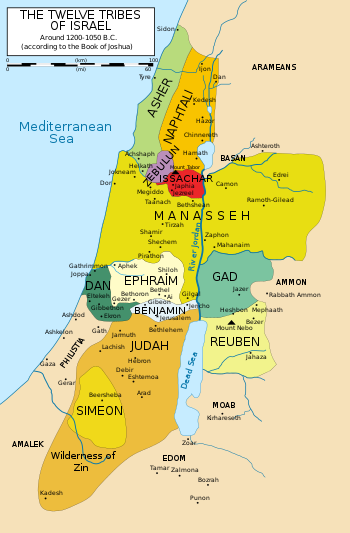
Since we’re not Israelites, it’s a bit difficult for us to figure out what is going on in these verses. Hosea begins verse 8 by listing three different cities that most of us know little or nothing about. But they would have had significance to the original readers of his book. Hosea’s mention of them was intended to provide geographic reference points that help establish a context for what follows. Gibeah and Ramah were cities located in the southern kingdom of Judah. Both were just north of the capital city of Jerusalem and not far from the border Judah shared with Israel. Beth-haven was located just across the border in the southern kingdom of Israel. Hosea has purposefully altered the name of this particular town in order to drive home a point. The actual name of the city was Bethel and it had a long, rich history among the descendants of Abraham. In Hebrew, the name Bethel means, “house of God,  but Hosea repeatedly refers to it as Beth-haven, which can be translated as “house of wickedness.”

With this less-than-flattering name change, Hosea is making a powerful statement about the spiritual state of Israel. At one time, Bethel had held a special significance among the descendants of Abraham. They would have been very familiar with the story of Abraham’s call by God, recorded in the book of Genesis. Not long after God had led Abraham to the land of Canaan, He had communicated His promise to make of Abraham a great nation. He also promised to give the entire land of Canaan to Abraham’s offspring. This would have included the land on which Gibeah, Raman, and Bethel sat. Genesis records that, not long after receiving this promise from God, Abraham traveled to Bethel, where he erected an altar to Yahweh.

Then the Lord appeared to Abram and said, “To your offspring I will give this land.” So he built there an altar to the Lord, who had appeared to him. From there he moved to the hill country on the east of Bethel and pitched his tent, with Bethel on the west and Ai on the east. And there he built an altar to the Lord and called upon the name of the Lord. And Abram journeyed on, still going toward the Negeb. – Genesis 12:7-9 ESV

Years later, Abraham’s grandson, Jacob, would have a divinely inspired dream in which God reiterated the very same promise He had communicated to Abraham.

“I am the Lord, the God of Abraham your father and the God of Isaac. The land on which you lie I will give to you and to your offspring. Your offspring shall be like the dust of the earth, and you shall spread abroad to the west and to the east and to the north and to the south, and in you and your offspring shall all the families of the earth be blessed. – Genesis 28:13-14 ESV

And Jacob would respond in awe and wonder at this gracious pronouncement by God.

“Surely the Lord is in this place, and I did not know it.” And he was afraid and said, “How awesome is this place! This is none other than the house of God, and this is the gate of heaven.” – Genesis 28:16-17 ESV

As a result of this remarkable dream and the promise it contained, “He called the name of that place Bethel” (Genesis 28:19 ESV). Jacob set up a sacred pillar to Yahweh, thereby establishing Bethel as a permanent worship site in Israel. Years later, he  returned to that same sight and built an altar to the Lord, renaming it El-Bethel (God of Bethel). At one time, the Ark of the Covenant was kept at there. So, for generations, the Israelites had recognized this site as holy and dedicated to Yahweh. But when the kingdom was divided in half, King Jeroboam deemed Bethel as one of the locations for the worship of his false god. He built a temple there and placed within it one of the golden calf idols he had made.

Bethel sat at the boundary between the tribes of Ephraim and Benjamin and eventually delineated the border between the northern kingdom of Israel and the southern kingdom of Judah. So, when Hosea points out these three cities, he is focusing his attention on the literal heart of Israel. They are each located at the center of the land that God had given to the 12 tribes of Israel.

And Hosea announces that the sound of trumpets would be heard in these three cities. But these would not be trumpets of joy or celebration. They would be the warning signs of coming destruction. The armies of Judah and Israel would be summoned for war, but they would prove ineffective against the enemies that God was bringing against them.

One thing is certain, Israel:
    On your day of punishment,
    you will become a heap of rubble. – Hosea 5:9 NLT

Both nations were guilty and, as a result, both would suffer the consequences for their sin and rebellion.

“The leaders of Judah have become like thieves.
    So I will pour my anger on them like a waterfall.
The people of Israel will be crushed and broken by my judgment
    because they are determined to worship idols.
I will destroy Israel as a moth consumes wool.
    I will make Judah as weak as rotten wood.” – Hosea 5:10-12 NLT

The nations of Judah and Israel had each violated their covenant agreements with God. But they had also violated their covenant agreements with one another. When Moses had allotted each tribe their portion of the land of Canaan, they had agreed to respect the boundaries the God had established for them. But Judah had stolen land that belonged to Benjamin. And ever since the division of the kingdom, Israel had repeatedly invaded and plundered land belonging to the tribe of Judah. By violating God’s commands as communicated through the Mosaic Law, the people of Israel and Judah no longer had a basis for knowing right from wrong.  Everyone did what was right in his own eyes. It was a moral free-for-all.

What’s interesting to note is that, when both nations found themselves suffering God’s judgment for their sin, they attempted to escape it by turning to foreign powers for help. And on of the nations from which they sought assistance was the Assyrians. The kings of Judah and Israel had repeatedly sought salvation from the ruthless and morally corrupt Assyrians, but it had done them no good.

“When Israel and Judah saw how sick they were,
    Israel turned to Assyria—
to the great king there—
    but he could neither help nor cure them. – Hosea 5:13 NLT

False gods and foreign powers were no match for God Almighty. There was no army big enough, no country powerful enough, and no god mighty enough to provide escape from the righteous wrath of God. They could run. They could hide. They could hire help. But in the end, God was going to do exactly what He said He would do.

“I will be like a lion to Israel,
    like a strong young lion to Judah.
    I will tear them to pieces!
I will carry them off,
    and no one will be left to rescue them.” – Hosea 5:14 NLT

And God warns them that they will find Him non-existent and unrelenting in His judgment until they admit their guilt and return to Him in humility and brokenness. This statement reflects the prayer that Solomon prayed at the dedication of the temple in Jerusalem, hundreds of years earlier. Consider the words of his prayer closely.

“If they [Israel] sin against you—and who has never sinned?—you might become angry with them and let their enemies conquer them and take them captive to their land far away or near.  But in that land of exile, they might turn to you in repentance and pray, ‘We have sinned, done evil, and acted wickedly.’ If they turn to you with their whole heart and soul in the land of their enemies and pray toward the land you gave to their ancestors—toward this city you have chosen, and toward this Temple I have built to honor your name—then hear their prayers and their petition from heaven where you live, and uphold their cause. Forgive your people who have sinned against you. Forgive all the offenses they have committed against you. Make their captors merciful to them, for they are your people—your special possession…” – 1 Kings 8:46-51 NLT

As David wrote in one of his psalms, “The sacrifice you desire is a broken spirit. You will not reject a broken and repentant heart, O God” (Psalm 51:17 NLT). God was looking for a heart of humility and repentance from His people. And until they were willing to bow before Him in contrition and confession, they would search for Him in vain.

English Standard Version (ESV) The Holy Bible, English Standard Version. ESV® Permanent Text Edition® (2016). Copyright © 2001 by Crossway Bibles, a publishing ministry of Good News Publishers.

New Living Translation (NLT) Holy Bible, New Living Translation, copyright © 1996, 2004, 2015 by Tyndale House Foundation. Used by permission of Tyndale House Publishers Inc., Carol Stream, Illinois 60188. All rights reserved.

The Message (MSG)Copyright © 1993, 1994, 1995, 1996, 2000, 2001, 2002 by Eugene H. Peterson

The Blessing of Brokenness

26 Now as they were eating, Jesus took bread, and after blessing it broke it and gave it to the disciples, and said, “Take, eat; this is my body.” 27 And he took a cup, and when he had given thanks he gave it to them, saying, “Drink of it, all of you, 28 for this is my blood of the covenant, which is poured out for many for the forgiveness of sins. 29 I tell you I will not drink again of this fruit of the vine until that day when I drink it new with you in my Father’s kingdom.”

30 And when they had sung a hymn, they went out to the Mount of Olives. 31 Then Jesus said to them, “You will all fall away because of me this night. For it is written, ‘I will strike the shepherd, and the sheep of the flock will be scattered.’ 32 But after I am raised up, I will go before you to Galilee.” 33 Peter answered him, “Though they all fall away because of you, I will never fall away.” 34 Jesus said to him, “Truly, I tell you, this very night, before the rooster crows, you will deny me three times.” 35 Peter said to him, “Even if I must die with you, I will not deny you!” And all the disciples said the same. – Matthew 26:26-35 ESV

break-bread-300x178Jesus and His disciples had gathered in the upper room of a borrowed house somewhere in the city of Jerusalem in order to celebrate the Passover together. It was at this gathering that Jesus revealed the one who would betray Him: Judas. One of the original 12 disciples, Judas had already made a deal with the chief priests, agreeing to turn Jesus over to them in return for a bounty of 30 pieces of silver. And, when Jesus exposed Judas as the one who would betray Him, rather than repent and beg for forgiveness, Judas left the room, intent on doing what he had agreed to do.

Jesus shared some serious words of warning regarding Judas.

“…woe to that man by whom the Son of Man is betrayed! It would have been better for that man if he had not been born.” – Matthew 26:24 ESV

Judas’ decision to betray Jesus was part of God’s redemptive plan. Jesus had been well aware of it and knew it was necessary for God’s will to be fulfilled. But Judas had made the willful choice to betray his master and friend. He put his own self-interests ahead of any devotion he may have had for Jesus. And, evidently, Judas had done a masterful job of disguising his true nature from the rest of the disciples, because when Jesus had announced that one of them would betray Him, none of them assumed it would be Judas. Instead, they each wondered if he was speaking of them. But Jesus made it perfectly clear who the betrayer was.

“It is he to whom I will give this morsel of bread when I have dipped it.” So when he had dipped the morsel, he gave it to Judas, the son of Simon Iscariot. Then after he had taken the morsel, Satan entered into him. Jesus said to him, “What you are going to do, do quickly.” Now no one at the table knew why he said this to him. Some thought that, because Judas had the moneybag, Jesus was telling him, “Buy what we need for the feast,” or that he should give something to the poor. So, after receiving the morsel of bread, he immediately went out. And it was night.” – John 13:26-30 ESV

His departure must have left the rest of the disciples in a state of disbelief. It’s interesting to consider that no one among them attempted to stop Judas, not even the normally impulsive Peter. Judas simply left the room, and the meal continued.

What happened next takes on an even more serious tone when we consider that Judas was on his way to meet with the religious leaders in order to set in motion the betrayal and ultimate arrest and crucifixion of Jesus. He was about to initiate a chain of events that would lead to the death of the Son of God. And as Judas made his way through the streets of Jerusalem, with the words of Jesus echoing in his mind, Jesus addressed His remaining disciples.

He took a piece of unleavened bread, prayed over it, then divided it among them. And He announced, “Take, eat; this is my body.” In his gospel account, Luke adds, “which is given for you. Do this in remembrance of me” (Luke 22:19 ESV). It may be that, at this moment, some of the disciples recalled the words of Jesus spoken earlier in His ministry:

“…the bread of God is he who comes down from heaven and gives life to the world.” – John 6:33 ESV

I am the bread of life; whoever comes to me shall not hunger, and whoever believes in me shall never thirst.” – John 6:35 ESV

I am the bread of life. Your fathers ate the manna in the wilderness, and they died. This is the bread that comes down from heaven, so that one may eat of it and not die. I am the living bread that came down from heaven. If anyone eats of this bread, he will live forever. And the bread that I will give for the life of the world is my flesh.” – John 6:48-51 ESV

Jesus was about to lay down His life as a sacrifice for the sins of mankind. His body would be beaten, broken, and bruised. He would have His life brutally taken from Him by those whose very existence was His doing. Yet, for the sake of His disciples, Jesus commemorated what was about to happen, so that they might always remember the source of their salvation. His death would be the means of their eternal life. No amount of good works could earn for them what Jesus was about to provide for them by the sacrifice of His own life.

And then Jesus took one of the cups of wine, prayed over it, and said, “Drink of it, all of you, for this is my blood of the covenant, which is poured out for many for the forgiveness of sins” (Matthew 26:27-28 ESV). Jesus, as if to emphasize what He had just said, pointed the disciples to the sacrificial nature of His pending death. His blood would be poured out, like the lambs used in the temple sacrifices.

On the day that Jesus had appeared at the Jordan River to be baptized, John the Baptist had announced:

“Behold, the Lamb of God, who takes away the sin of the world!” – John 1:29 ESV

Jesus was the consummate paschal lamb, the sinless substitute who would offer up His life as payment for the sin debt of fallen humanity. And the author of Hebrews clarified the necessity of Jesus’ blood sacrifice.

…without the shedding of blood there is no forgiveness of sins. – Hebrews 9:22 ESV

There was no other way. Jesus had to die. His body would be broken, and His blood would be spilled because the just wrath of God against the sins of mankind had to be satisfied or propitiated. And the apostle John would later write, “He is the propitiation for our sins, and not for ours only but also for the sins of the whole world” (1 John 1:29 ESV). And John would go on to describe this sacrificial act of Jesus as an expression of God’s love for sinful mankind.

In this is love, not that we have loved God but that he loved us and sent his Son to be the propitiation for our sins. – 1 John 4:10 ESV

All of this had to have struck the disciples like a lead weight. It was all so unexpected and unbelievable. And none of it lined up with their hopes and dreams concerning the Messiah. With each word Jesus spoke, their world collapsed in on them, and it was about to get even darker as the night progressed.

Jesus informed them that this would be their last meal together, but assured them that they would feast together again at a later date, most likely a reference to the Marriage Supper of the Lamb.

But with the Passover meal completed, they made their way through the dark night, out the eastern gate of the city to the Mount of Olives. And Jesus dropped yet another bomb on His already shell-shocked disciples.

“You will all fall away because of me this night. For it is written, ‘I will strike the shepherd, and the sheep of the flock will be scattered.’ – Matthew 26:31 ESV

Every single one of them would desert Him at His greatest hour of need. Under the coming persecution of the religious leaders, the disciples would scatter and hide. But upon hearing this pronouncement from Jesus, the always impulsive Peter said, “Though they all fall away because of you, I will never fall away” (Matthew 26:33 ESV). Those words would come back to haunt Peter. And Peter would make matters even worse for himself by refuting Jesus’ claim that he would deny the Lord three times.

“Even if I must die with you, I will not deny you!” – Matthew 2:35 ESV

Peter was well-intentioned, and with his bold claim, he spoke for all of the disciples. But none of them knew what was about to happen. They had no idea just how bad things were going to get in the next few hours. But Jesus did. And yet, He gave them a subtle, yet confident bit of news:

“…after I am raised up, I will go before you to Galilee.” – Matthew 26:32 ESV

Jesus knew He was going to die, but He was also confident that He would rise again. That was the Father’s plan. His death was necessary, but so was His resurrection. His death would serve as the payment for the sins of mankind. But His restoration to life would be proof that His death had been sufficient and fully satisfactory to God.

This dark cloud had a silver lining, even though the events of the next few hours would be horrific for the disciples. They would be agonizingly painful for Jesus. But He faced it all with confidence and faith in His Father’s will. And what He was about to do, He did willingly.

“No one can take my life from me. I sacrifice it voluntarily. For I have the authority to lay it down when I want to and also to take it up again. For this is what my Father has commanded.” – John 10:18 NLT

English Standard Version (ESV)
The Holy Bible, English Standard Version. ESV® Permanent Text Edition® (2016). Copyright © 2001 by Crossway Bibles, a publishing ministry of Good News Publishers.

New Living Translation (NLT)
Holy Bible, New Living Translation, copyright © 1996, 2004, 2015 by Tyndale House Foundation. Used by permission of Tyndale House Publishers Inc., Carol Stream, Illinois 60188. All rights reserved.

The Message (MSG)Copyright © 1993, 1994, 1995, 1996, 2000, 2001, 2002 by Eugene H. Peterson

Reshaped Or Shattered.

Thus says the Lord, “Go, buy a potter’s earthenware flask, and take some of the elders of the people and some of the elders of the priests, and go out to the Valley of the Son of Hinnom at the entry of the Potsherd Gate, and proclaim there the words that I tell you. You shall say, ‘Hear the word of the Lord, O kings of Judah and inhabitants of Jerusalem. Thus says the Lord of hosts, the God of Israel: Behold, I am bringing such disaster upon this place that the ears of everyone who hears of it will tingle. Because the people have forsaken me and have profaned this place by making offerings in it to other gods whom neither they nor their fathers nor the kings of Judah have known; and because they have filled this place with the blood of innocents, and have built the high places of Baal to burn their sons in the fire as burnt offerings to Baal, which I did not command or decree, nor did it come into my mind—therefore, behold, days are coming, declares the Lord, when this place shall no more be called Topheth, or the Valley of the Son of Hinnom, but the Valley of Slaughter. And in this place I will make void the plans of Judah and Jerusalem, and will cause their people to fall by the sword before their enemies, and by the hand of those who seek their life. I will give their dead bodies for food to the birds of the air and to the beasts of the earth. And I will make this city a horror, a thing to be hissed at. Everyone who passes by it will be horrified and will hiss because of all its wounds. And I will make them eat the flesh of their sons and their daughters, and everyone shall eat the flesh of his neighbor in the siege and in the distress, with which their enemies and those who seek their life afflict them.’

“Then you shall break the flask in the sight of the men who go with you, and shall say to them, ‘Thus says the Lord of hosts: So will I break this people and this city, as one breaks a potter’s vessel, so that it can never be mended. Men shall bury in Topheth because there will be no place else to bury. Thus will I do to this place, declares the Lord, and to its inhabitants, making this city like Topheth. The houses of Jerusalem and the houses of the kings of Judah—all the houses on whose roofs offerings have been offered to all the host of heaven, and drink offerings have been poured out to other gods—shall be defiled like the place of Topheth.’”

Then Jeremiah came from Topheth, where the Lord had sent him to prophesy, and he stood in the court of the Lord’s house and said to all the people: “Thus says the Lord of hosts, the God of Israel, behold, I am bringing upon this city and upon all its towns all the disaster that I have pronounced against it, because they have stiffened their neck, refusing to hear my words.” Jeremiah 19 ESV

In chapter 18, God referred to Judah as a lump of clay in His hands, that he could reshape and refashion as He saw fit. But in this chapter, God uses a slightly different metaphor, referring to Judah as a clay pot, but one that has been baked in the sun and hardened beyond repair or reshaping. Like a clay pot that has been contaminated and polluted in some way, Judah was unsalvageable. Their sins were so repulsive and repugnant to God that He determined to destroy them. And God sets out the strong and irrefutable evidence of their many sins:

“For Israel has forsaken me and turned this valley into a place of wickedness.”

“The people burn incense to foreign gods—idols never before acknowledged by this generation, by their ancestors, or by the kings of Judah.”

“…they have filled this place with the blood of innocent children.”

“They have built pagan shrines to Baal, and there they burn their sons as sacrifices to Baal.”

“…you burned incense on the rooftops to your star gods, and where liquid offerings were poured out to your idols.”

They stood before God as guilty. The charges against them were many and the nature of their sins for which they were charged were appalling. They weren’t just guilty of your garden variety, everybody’s-doing-it kind of idolatry. And it wasn’t just one or two gods they worshiped. They had managed to find gods to worship that their ancestors had never even heard of. On top of that, they had added human sacrifice to their list of despicable practices. They were sacrificing their own sons and daughters to Baal. And God makes it clear that none of this had been His idea. That kind of deplorable act had never even crossed His mind. But they did it anyway. They worshiped false gods at shrines in their homes. They would go up to their rooftops and make offerings to the gods of the planets and stars. They had set up high places or altars all around Judah to their various gods. Their’s was not a minor infraction. It was serious and deserving of deadly serious treatment by God.

To drive home His point, God had Jeremiah buy a piece of pottery and go the Valley of Hinnom, just outside the walls of Jerusalem through the Potsherd’s Gate. He was to drag along some of the leaders of the people as well as some of the priests. They were there to act as witnesses to what God was going to have Jeremiah do. The Valley of Himmon had a less-than-ideal reputation. It was where people disposed of their garbage, Back in the days of King Solomon, he had erected an altar to Molech. Kings Ahaz and Manasseh had both practiced child sacrifice in this very same place during their reigns. It was King Josiah, in an attempt to institute reforms in Judah, who had the Valley of Hinnom defiled by spreading human bones over the area, rendering it ceremonially unclean. From that point on, it had become more or less a city dump.

It was there that God had Jeremiah enact his mini-drama before the representative leadership of Judah. God made it clear that He was going to deal with the sins of the people and in a dramatic manner. It would be so bad that the Valley of Hinnom would be renamed the Valley of Slaughter. And you can only imagine the shock and anger felt by the leaders of Judah when they heard Jeremiah speak these words on behalf of God:

“For I will upset the careful plans of Judah and Jerusalem. I will allow the people to be slaughtered by invading armies, and I will leave their dead bodies as food for the vultures and wild animals. I will reduce Jerusalem to ruins, making it a monument to their stupidity.” – Jeremiah 19:7-8 NLT

When the Babylonians eventually laid siege to the city of Jerusalem, trapping the people inside its walls, the people would resort to cannibalism in an attempt to survive. They would go from sacrificing their children as offerings to appease non-existent gods to eating them in order to extend their own lives. Their depravity would reach an all-time low and be “driven to utter despair” (Jeremiah 19:9 NLT).

And as a shocking crescendo to his speech, Jeremiah was instructed to take the clay pot he had purchased and smash it on the ground right in front of his audience. The sound of the impact and the flying shards of pottery would make a lasting impression on the priests and leaders of Judah. And the words of Yahweh added an extra measure of soberness to the scene.

“As this jar lies shattered, so I will shatter the people of Judah and Jerusalem beyond all hope of repair.” – Jeremiah 19:11 NLT

Having delivered his message as commanded, Jeremiah’s next stop was the temple, where he stood before the people and spoke to them the words of God.

“This is what the Lord of Heaven’s Armies, the God of Israel, says: ‘I will bring disaster upon this city and its surrounding towns as I promised, because you have stubbornly refused to listen to me.’ – Jeremiah 19:15 NLT

Now everybody knew. – the civic leaders, the religious leaders and the everyday man on the street. The message of God had been delivered. So, how would the people respond? We will see in the very next chapter, that all Jeremiah got for his efforts was a beating at the hands of the priest who was in charge of the temple. Evidently, Jeremiah’s little demonstration with the pottery had not been appreciated. News of God’s displeasure with them was not something the people of Judah wanted to hear, especially the religious leaders. They knew they were particularly culpable for the state of affairs in Judah. They were supposed to be God’s shepherds, caring for His flock, assuring their spiritual well-being. But they had played a significant role in the spiritual decline of the nation. And because nobody likes to get called out and exposed, they reacted harshly to Jeremiah.

This chapter presents us with a comparison and a choice. As was revealed in chapter 18, Judah was still like a lump of clay in the hands of God. They were still moldable and malleable in His hands. But they had to submit to His divine will and come to Him in contrition and brokenness. Or, they could choose to be hardened by their sin, becoming like a sun-baked piece of pottery whose flaws and imperfections were permanent and irremediable. That decision would result in their destruction, a shattering of their lives because of the unrepentant nature of their hearts. God’s desire is always repentance and restoration. He takes no pleasure in bringing judgment upon His people. But when they stubbornly refuse to admit their guilt and return to Him in brokenness and repentance, He is obligated by His very nature to deal with them in righteousness and with justice.


English Standard Version (ESV)
The Holy Bible, English Standard Version. ESV® Permanent Text Edition® (2016). Copyright © 2001 by Crossway Bibles, a publishing ministry of Good News Publishers.

New Living Translation (NLT)
Holy Bible, New Living Translation, copyright © 1996, 2004, 2015 by Tyndale House Foundation. Used by permission of Tyndale House Publishers Inc., Carol Stream, Illinois 60188. All rights reserved.

The Message (MSG)Copyright © 1993, 1994, 1995, 1996, 2000, 2001, 2002 by Eugene H. Petersoz

Unprecedented and Unnatural.

“Therefore thus says the Lord:
Ask among the nations,
    Who has heard the like of this?
The virgin Israel
    has done a very horrible thing.
Does the snow of Lebanon leave
    the crags of Sirion?
Do the mountain waters run dry,
    the cold flowing streams?
But my people have forgotten me;
    they make offerings to false gods;
they made them stumble in their ways,
    in the ancient roads,
and to walk into side roads,
    not the highway,
making their land a horror,
    a thing to be hissed at forever.
Everyone who passes by it is horrified
    and shakes his head.
Like the east wind I will scatter them
    before the enemy.
I will show them my back, not my face,
    in the day of their calamity.”
Jeremiah 18:13-17 ESV

Even by pagan standards, what Judah had done was abnormal and a bit difficult to defend. Even they would consider it absurd for an entire nation to turn their backs on their national deity. It just wasn’t done. The kind of unfaithfulness Judah had exhibited to their God, Yahweh, was shocking. And that is God’s point in His message to Jeremiah. He describes what Judah has done as “horrible”. It is a word that conveys the idea of shock and dread at the thought of something. Seeing what Judah has done should cause the viewer to bristle with horror. He will use this same word again when He describes the sins of the false prophets of Judah.

“But in the prophets of Jerusalem
    I have seen a horrible thing:
they commit adultery and walk in lies;
    they strengthen the hands of evildoers,
    so that no one turns from his evil;
all of them have become like Sodom to me,
    and its inhabitants like Gomorrah.” – Jeremiah 23:14 ESV

Judah’s treatment of God has the equivalent shock value of you or I stumbling into the scene of a brutal murder. We would have to turn away in horror and disgust. It would be totally unexpected and abnormal, an assault on our senses. And this is how God portrayed Judah’s treatment of Him. Even by nature’s standards, it was abnormal and unnatural.

“Does the snow ever disappear from the mountaintops of Lebanon? Do the cold streams flowing from those distant mountains ever run dry?” – Jeremiah 18:14 NLT

These two rhetorical questions have the same answer: No. There is always snow on the mountaintops of Lebanon. And as a result, there is always melting snow providing the people of Judah cold, refreshing water. They can count on it. It is always there. It is a normal and natural occurrence that happens season after season. If the snow failed to show up, it would be shocking. If the streams dried up, it would be horrific. But, even in nature, there is a faithfulness exhibited that was missing among God’s people.

“But my people are not so reliable, for they have deserted me;
    they burn incense to worthless idols.
They have stumbled off the ancient highways
    and walk in muddy paths.” – Jeremiah 18:15 NLT

The people of Judah could rely on the streams to be filled with refreshing water. They could count on the sun coming up every morning and setting every evening. They had grown accustomed to the crops growing in their fields and their vineyards producing grapes. The blessings of God had become common place to them and they took them for granted. Had the rains ceased, the crops failed, the grapevines shriveled up and their herds and flocks died in the fields, the people of Judah would have been the first to complain. They would have demanded God fix the problem and put things back the way they were supposed to be. But for some reason, they were unable to see the unnatural and abnormal nature of their treatment of God. But He saw it. And He was going to deal with it.

“Therefore, their land will become desolate,
    a monument to their stupidity.
All who pass by will be astonished
    and will shake their heads in amazement.
I will scatter my people before their enemies
    as the east wind scatters dust.
And in all their trouble I will turn my back on them
    and refuse to notice their distress.” – Jeremiah 18:16-17 NLT

They had chosen to turn their back on God. It was unnatural and abnormal. It made no sense. It was shocking to witness. But even more shocking would be God’s judgment of them. Their once fruitful and productive land would become desolate. It would be a veritable ghost town, devoid of human life, leaving all those who see it shaking their heads in astonishment and wondering how it happened. The people of Judah would scatter to the four winds, in their vain attempt to escape the wrath of the Babylonians. And when things get tough, they will cry out to God, expecting Him to deliver them, just like He has done so many times before. They will offer sacrifices and make offerings to God in the hopes that He will intervene and spare them. But He will refuse to notice their distress. Speaking through the prophet Isaiah, God lets the people of Judah know how He views their attempts at pacifying Him with last-minute sacrifices designed to save them from a fate worse than death.

“Your acts of worship
    are acts of sin:
Your sacrificial slaughter of the ox
    is no different from murdering the neighbor;
Your offerings for worship,
    no different from dumping pig’s blood on the altar;
Your presentation of memorial gifts,
    no different from honoring a no-god idol.
You choose self-serving worship,
    you delight in self-centered worship—disgusting!
Well, I choose to expose your nonsense
    and let you realize your worst fears,
Because when I invited you, you ignored me;
    when I spoke to you, you brushed me off.
You did the very things I exposed as evil,
    you chose what I hate.”   – Isaiah 66:3-4 MSG

It will all be too little, too late. And God will know that their hearts are not in it. It was King David who wrote the following words after he had been exposed by the prophet Nation regarding his sin with Bathsheba. Convicted by the prophet, David responded in confession and contrition.

“You do not desire a sacrifice, or I would offer one. You do not want a burnt offering. The sacrifice you desire is a broken spirit. You will not reject a broken and repentant heart, O God.” – Psalm 51:16-17 NLT

That’s what God wanted from Judah. He wanted brokenness over their sin and hearts that reflected a desire to turn away from their pattern of unfaithfulness and idolatry. David knew that God’s greatest desire was that His people turn to Him, but they must do so in true repentance, accompanied by broken spirits, crushed by the staggering weight of their own sin against Him.

The Lord hears his people when they call to him for help. He rescues them from all their troubles. The Lord is close to the brokenhearted; he rescues those whose spirits are crushed. – Psalm 34:17-18 NLT

But the people of Judah were not yet crushed. Their spirits were not yet broken. They were filled with pride and consumed with their own self-importance. They didn’t really need God, but that would change when the Babylonians showed up on their doorstep. But even then, they would only come to God to get what they wanted from Him. They would demand rescue by Him, but refuse to pledge allegiance to Him. They were in for a rude awakening. And the devastating results of their unfaithfulness will linger long after they are gone, acting as a permanent “monument to their stupidity”. The people who had enjoyed the blessings of God will become those who bring upon themselves the judgment of God. Unprecedented and unnatural, but not unexpected. God had warned them. He had given them ample opportunity to repent and return to Him. He had been patient with them. But His patience had run out.

English Standard Version (ESV)
The Holy Bible, English Standard Version. ESV® Permanent Text Edition® (2016). Copyright © 2001 by Crossway Bibles, a publishing ministry of Good News Publishers.

New Living Translation (NLT)
Holy Bible, New Living Translation, copyright © 1996, 2004, 2015 by Tyndale House Foundation. Used by permission of Tyndale House Publishers Inc., Carol Stream, Illinois 60188. All rights reserved.

The Message (MSG)Copyright © 1993, 1994, 1995, 1996, 2000, 2001, 2002 by Eugene H. Petersoz

Longing For God’s Presence.

Oh, that You would rend the heavens and come down, that the mountains might quake at Your presence—as fire kindles the brushwood, as fire causes water to boil—to make Your name known to Your adversaries, that the nations may tremble at Your presence! – Isaiah 64:1-2 ESV

Isaiah 64

Isaiah was a prophet of God speaking the words of God to the people of God. He prophesied over a period of time in Judah that spanned the reigns of four different kings. Over that time, he had watched their brothers and sisters in the northern kingdom of Israel fall to the Assyrians because of their sin and rebellion against God. And he saw the nation of Judah committing the very same sins and headed for the same fate if they did not repent and return to God. Early in his ministry as God’s prophet, God had given Isaiah a vision and a clear message concerning His people. “Hear, O heavens, and give ear, O earth; for the Lord has spoken: ‘Children have I reared and brought up, but they have rebelled against me. The ox knows its owner, and the donkey its master’s crib, but Israel does not know, my people do not understand’” (Isaiah 1:2-3 ESV). God’s people had rejected Him. They had consistently disobeyed Him. And Isaiah knew that, because of God’s holiness and righteousness, He was going to have to bring judgment against them. God would not allow His people to continue to live in open rebellion to Him. He would be forced to punish them for their sin, motivated by their pride and self-sufficiency.

But Isaiah longed to see God step in. He knew that their only hope was to be found in God. After years of prophesying to the people of Judah, he had no illusions that they might actually hear what he was saying and repent. Unless God did something, their fate was sealed. They would be incapable of saving themselves, so if anything was going to happen, it would have to be God’s doing. So he cried out, “Oh, that You would rend the heavens and come down!” He was looking for a visitation from God, a physical manifestation of God’s presence much like the people had experienced when He came down to Mount Sinai in the wilderness. That had been an attention-getting, never-to-be-forgotten moment for the people standing at the foot of the mountain. “Then Moses brought the people out of the camp to meet God, and they took their stand at the foot of the mountain. Now Mount Sinai was wrapped in smoke because the Lord had descended on it in fire. The smoke of it went up like the smoke of a kiln, and the whole mountain trembled greatly. And as the sound of the trumpet grew louder and louder, Moses spoke, and God answered him in thunder. The Lord came down on Mount Sinai, to the top of the mountain” (Exodus 19:17-20 ESV). That appearance by God had made an impression on the people, and Isaiah longed to see God do the same thing in his day. He knew that the people of Judah would continue to ignore God unless He showed up in a spectacular fashion, complete with thunder and lightning, smoke, earthquakes, and other attention-getting signs. In essence, God had become invisible to them. He was out of sight, out of mind. They no longer expected to see Him or hear from Him. The message of Isaiah was just like those of the other prophets who had been warning them for years. Their words went in one ear and out the other. So Isaiah wanted to see God show up in power, might and majesty.

Isaiah’s hope was that an appearance from God would ignite a change among the people. Perhaps it would light a spiritual fire under them and cause them to reconsider his message and return to God. Not only that, Isaiah believed it would do wonders for God’s reputation among the pagan nations that were threatening the security of Judah. The reasoning behind Isaiah request that God make an appearance was in order “to make Your name known to Your adversaries, that the nations may tremble at Your presence!” But the truth is, that was the role the people of God were supposed to have fulfilled. They were the ones who were to have made God’s name known to the nations as they lived in obedience to Him. They were to be living illustrations of what it looked like to live in obedience to God, enjoying His presence, power and provision. Any time the people of Israel had lived in submission to God’s will and obeyed His commands, He had stepped in a given them victories over their enemies. He had blessed them. And had put the fear of God in their enemies. The reign of Solomon is a perfect illustration of that reality. It was a period of unprecedented peace and prosperity. As long as the people remained faithful to God, His power and presence was with them. The problem in Isaiah’s day was not that God was absent, but that the people were disobedient. It was their sin that was preventing God’s power from being displayed among them.

We may long for God’s presence, but He has not left us. He is never far away. The only thing that puts distance between us and God is our own sin. Longing for Him to show up in power makes no sense if we have no desire to do what He says. Desiring God to do great things is silly if we aren’t willing to do what He has called us to do in the first place. The people in Jesus’ day longed to see Him perform signs and miracles. They got a kick out of seeing Him do the miraculous. But for the most part, they had no interest in what He was offering them. They refused to repent and return. Longing to see the power of God while refusing to submit to the authority of God is pointless. God’s power is best revealed through our dependence upon Him and obedience to Him.

Prayer For Guidance.

Then all the commanders of the forces, and Johanan the son of Kareah and Jezaniah the son of Hoshaiah, and all the people from the least to the greatest, came near  and said to Jeremiah the prophet, “Let our plea for mercy come before you, and pray to the Lord your God for us, for all this remnant—because we are left with but a few, as your eyes see us—that the Lord your God may show us the way we should go, and the thing that we should do.” – Jeremiah 42:1-3 ESV

Have you ever been at a loss as to what to do? Maybe you have found yourself going through what appears to be the discipline of God for something you have done and you want to know what your next steps should be. The people of Judah found themselves in that very predicament. They were surrounded by the military forces of Babylon and under the disciplinary judgment of God for their persistent sin and rebellion against Him. In fact, Jerusalem had already fallen to the Babylonians and thousands of their friends and fellow countrymen had already been taken captive to Babylon. They were the remnant that had been left. Their king, Zedekiah, had been captured by the Babylonians as he attempted to escape the city at night. He was taken to Nebuchadnezzar, the king of Babylonian, where he was forced to watch as all his sons were killed right in front of him, then he had his own eyes gouged out. The remnant that had been left knew their days were numbered. They had no king, no army, and no hope. There were some among them who wanted to turn to Egypt for help. Rather than take their problem to God, they thought they could solve it themselves with a little outside help. Others were recommending flight. We should just run away, they counseled. Some were even suggesting Egypt as the destination for their flight. So what should they do? Wisely, if not a bit too tardily, they decided to ask God. So they asked Jeremiah to go to God on their behalf and ask Him for guidance. What did He want them to do? You see, they were confused and divided. They asked, “that the Lord your God may show us the way we should go, and the thing that we should do.” Now that all was in a shambles and they had no other viable options, they suddenly decided to take their problem to God. They even promised to do whatever God said, if only He would answer them. “May the Lord be a true and faithful witness against us if we do not act according to all the word with which the Lord your God sends you to us. Whether it is good or bad, we will obey the voice of the Lord our God to whom we are sending you, that it may be well with us when we obey the voice of the Lord our God” (Jeremiah 42:5-6 ESV). But would all this prove to be too little, too late? Would God refuse to answer their request because of their consistent refusal to listen to His prophets and their call to repentance?

God answered. He made them sweat it out for ten days, but He answered. “Thus says the Lord, the God of Israel, to whom you sent me to present your plea for mercy before him: If you will remain in this land, then I will build you up and not pull you down; I will plant you, and not pluck you up; for I relent of the disaster that I did to you. Do not fear the king of Babylon, of whom you are afraid. Do not fear him, declares the Lord, for I am with you, to save you and to deliver you from his hand. I will grant you mercy, that he may have mercy on you and let you remain in your own land” (Jeremiah 42:9-12 ESV). God’s answer was conditional. It contains an if-then statement. God promised to build them up, to plant them, to relent, to be with them, to save and deliver them, to show them mercy and allow them remain in the land – IF they would simply remain in the land and trust Him. Everything in them said to run and God knew it. He knew what they were thinking. He knew they were wanting to turn their attention to Egypt and place their trust in them. But while everything around them looked bleak and beyond hope, God wanted them to know that He was not done. He would even cause the king of Babylon to show them mercy. But if they refused to listen to God and took matters into their own hands, God would punish them just as He had their friends and neighbors. “Thus says the Lord of hosts, the God of Israel: If you set your faces to enter Egypt and go to live there, then the sword that you fear shall overtake you there in the land of Egypt, and the famine of which you are afraid shall follow close after you to Egypt, and there you shall die. All the men who set their faces to go to Egypt to live there shall die by the sword, by famine, and by pestilence. They shall have no remnant or survivor from the disaster that I will bring upon them’ (Jeremiah 42:15-17 ESV).

Even in the midst of our most difficult situations, including those that are the result of our own sin and rebellion, we can call out to God for help and guidance. But we must be willing to listen to what He has to say. God will answer. He will give us direction, but we must obey Him – even when it seems to make no sense. Fear and flight may seem the most logical next step, but if God says, “Stay!”, we must stay. There is only one thing worse than refusing to seek guidance from the Lord, and that is to refuse to obey His guidance once you have sought it. God’s will may not make sense to us. His guidance may seem counter intuitive. Everything in us may scream that our way makes more sense, but we must obey. God answers when we call. But the question is whether we will obey when He answers.

Sinners by Nature.

Behold, I was brought forth in iniquity, and in sin did my mother conceive me. Behold, you delight in truth in the inward being, and you teach me wisdom in the secret heart. – Psalm 51:5-6 ESV

Psalm 51

David was well aware of the seriousness of what he had done and he knew that he had sinned against God. Whatever punishment God might bring his way was well-deserved and completely justified, which is why all David could do is appeal to God’s mercy. And even if David had never committed adultery with Bathsheba and arranged for the death of her husband, he would have still been just as guilty before God. Why? Because his sin and guilt were inherited by him and inherent in him. He had been born a sinner. From God’s perspective, every man and woman ever born came into this world having inherited the sin nature of Adam. Paul writes, “Therefore, just as sin came into the world through one man, and death through sin, and so death spread to all men because all sinned” (Romans 5:12 ESV). Even David’s own son would confess, “Surely there is not a righteous man on earth who does good and never sins” (Ecclesiastes 7:20 ESV). And Paul would conclude that “all have sinned and fall short of the glory of God” (Romans 3:23 ESV). Adam’s “one trespass led to condemnation for all men” (Romans 5:18 ESV)

So David knew that his guilt before God was not simply tied to his affair with Bathsheba. He wasn’t a sinner because he had sinned. He had sinned because he was a sinner. That is a hard concept for most of us to accept, because we want to believe that we are somehow good at heart. We want to think that we are born with a clean moral slate, free from sin and capable of doing good. But the Scriptures paint a much more bleak picture. Adam’s rebellious heart was passed down to each and every one of his descendants. And it doesn’t take long to see that even young children have an innate capacity to reveal their sin natures at very early ages. Lying, deception, selfishness, and manipulation all come naturally to children. They don’t have to be taught. Which is why David knew that he stood before God as guilty, because he had been that way from the very moment of conception. David was in no way minimizing what he had done or blaming his actions on Adam. He was simply admitting that his actions stemmed from his sinful heart – his sin nature. And Paul warns us about our sin nature. “When you follow the desires of your sinful nature, the results are very clear: sexual immorality, impurity, lustful pleasures, idolatry, sorcery, hostility, quarreling, jealousy, outbursts of anger, selfish ambition, dissension, division, envy, drunkenness, wild parties, and other sins like these. Let me tell you again, as I have before, that anyone living that sort of life will not inherit the Kingdom of God” (Galatians 5:19-21 NLT).

David’s dilemma was that he had been born with a sin nature and was prone to sin, yet God expected more. “Behold, you delight in truth in the inward being, and you teach me wisdom in the secret heart” (Psalm 51:6 ESV). God wanted David to be honest about his sin. He wanted David to confess his guilt and allow God to do some serious rehabilitation on him at the heart level. Simply confessing his sin would not have been enough. Making sacrifices for his sin, without having a broken and contrite heart would have accomplished nothing. Later on in this same prayer David will say, “The sacrifice you desire is a broken spirit. You will not reject a broken and repentant heart, O God” (Psalm 51:17 NLT). God mends broken hearts. He takes our brokenness and guilt and lovingly restores our wholeness and gives us the joy of His forgiveness. David knew that God delighted in truth in the inner being. God has high standards. But God also lovingly teaches those who come to him in brokenness and humility. God wants nothing more from us that our humble dependence upon Him. We are incapable of nothing but sin. “We are all infected and impure with sin. When we display our righteous deeds, they are nothing but filthy rags” (Isaiah 64:6 NLT). But the amazing thing is that God offers us a way to be made right with Him. He has provided a means by which we can be forgiven, not just of the sins we commit, but of our very sin natures. “For the sin of this one man, Adam, caused death to rule over many. But even greater is God’s wonderful grace and his gift of righteousness, for all who receive it will live in triumph over sin and death through this one man, Jesus Christ” (Romans 5:17 NLT). Just as David had to come to God with his brokenness and humility, aware of his sinfulness and completely dependent upon God’s mercy, so do we. God’s free gift of salvation made possible through Jesus Christ is available to all who will believe that they are sinners in need of a Savior. Paul makes the process quite clear for us. “We are made right with God by placing our faith in Jesus Christ. And this is true for everyone who believes, no matter who we are. For everyone has sinned; we all fall short of God’s glorious standard. Yet God, with undeserved kindness, declares that we are righteous. He did this through Christ Jesus when he freed us from the penalty for our sins. For God presented Jesus as the sacrifice for sin. People are made right with God when they believe that Jesus sacrificed his life, shedding his blood” (Romans 3:23-25 NLT). Guilty sinners can become forgiven saints. Enemies of God can become His children. The condemned can become the redeemed. But it all begins with the acknowledgement of our sin and our desperate need for a Savior.