Just When You Thought It Couldn’t Get Any Worse

29 In the thirty-eighth year of Asa king of Judah, Ahab the son of Omri began to reign over Israel, and Ahab the son of Omri reigned over Israel in Samaria twenty-two years. 30 And Ahab the son of Omri did evil in the sight of the LORD, more than all who were before him. 31 And as if it had been a light thing for him to walk in the sins of Jeroboam the son of Nebat, he took for his wife Jezebel the daughter of Ethbaal king of the Sidonians, and went and served Baal and worshiped him. 32 He erected an altar for Baal in the house of Baal, which he built in Samaria. 33 And Ahab made an Asherah. Ahab did more to provoke the LORD, the God of Israel, to anger than all the kings of Israel who were before him. 34 In his days Hiel of Bethel built Jericho. He laid its foundation at the cost of Abiram his firstborn, and set up its gates at the cost of his youngest son Segub, according to the word of the LORD, which he spoke by Joshua the son of Nun. 1 Kings 16:29-34 ESV

Things have not been going well in the northern kingdom of Judah. The downward spiritual spiral that began with the reign of Jeroboam has continued unabated. His decision to re-image the God of Israel as a golden calf had been in direct violation of the command given to Moses by God hundreds of years earlier.

“I am the LORD your God, who rescued you from the land of Egypt, the place of your slavery. You must not have any other god but me. You must not make for yourself an idol of any kind or an image of anything in the heavens or on the earth or in the sea. You must not bow down to them or worship them, for I, the LORD your God, am a jealous God who will not tolerate your affection for any other gods. I lay the sins of the parents upon their children; the entire family is affected—even children in the third and fourth generations of those who reject me.” – Exodus 20:1-5 NLT

And yet, despite God’s clear instructions, Jeroboam made his own gods and then attempted to claim that they, not Yahweh, had delivered the nation from their captivity in Egypt.

So on the advice of his counselors, the king made two gold calves. He said to the people, “It is too much trouble for you to worship in Jerusalem. Look, Israel, these are the gods who brought you out of Egypt!”

He placed these calf idols in Bethel and in Dan—at either end of his kingdom. But this became a great sin, for the people worshiped the idols, traveling as far north as Dan to worship the one there. – 1 Kings 12:28-30 NLT

Jeroboam’s decision brought a curse from God upon his dynasty. As a result, his son, Abijah, died in infancy. Another son, Nadab, inherited the throne upon Jeroboam’s death, but in the second year of his reign, he was assassinated by a man named Baasha, who declared himself king. Baasha fulfilled the curse God had placed over the house of Jeroboam by putting to death every one of his descendants. But because Baasha proved to be a wicked king who led the people into further idolatry, God placed a curse on his house as well. Baasha was assassinated by Zimri, the commander of his chariots, who then proceeded to wipe out the entire royal household. But Zimri’s reign would last only seven days. When faced with a coup led by Omri, his former superior officer, Zimri chose to commit suicide. Omri then declared himself to be the legitimate king of Israel. But his reign would prove to be no better than that of his predecessor. In fact, the author flatly states, “Omri did what was evil in the sight of the LORD, and did more evil than all who were before him. For he walked in all the way of Jeroboam the son of Nebat, and in the sins that he made Israel to sin, provoking the LORD, the God of Israel, to anger by their idols” (1 Kings 16:25-26 ESV).

There has been no break in Israel’s downward trajectory. Like water in a sink when the plug is pulled, the spiritual state of the nation continued to spiral down the drain. And just when it appears that Israel has reached an all-time low, another character is introduced who manages to establish himself as the official record holder for apostasy and wickedness.

Omri was succeeded by his son, Ahab, and in more ways than one. Not only did this young man ascend to his father’s throne, but he managed to eclipse his father’s record of sin and rebellion. The author introduces Ahab’s reign with the stinging indictment: “Ahab the son of Omri did evil in the sight of the LORD, more than all who were before him” (1 Kings 16:30 ESV). Then he follows up that far-from-flattering assessment with tangible proof.

He compares the wickedness of Ahab with that of Jeroboam, the first king of the northern tribes of Israel. Jeroboam had been guilty of making his own false gods and attributing to them the credit for something Yahweh had done. In a sense, Jeroboam had tried to create his own version of the one true God. But Ahab decided to abandon Yahweh altogether, replacing Him with Baal, the god of the Canaanites, and his choice of this particular god was influenced by his wife, Jezebel. His marriage to Jezebel had been orchestrated by his father as part of a treaty he had made with Ethbaal, the king of Tyre and Sidon. To form an alliance with this pagan nation, Omri arranged a marriage between his son and Ethbaal’s daughter. This unholy alliance was in direct violation of God’s command.

When the LORD your God hands these nations over to you and you conquer them, you must completely destroy them. Make no treaties with them and show them no mercy. You must not intermarry with them. Do not let your daughters and sons marry their sons and daughters, for they will lead your children away from me to worship other gods. – Deuteronomy 7:2-3 NLT

While the marriage had been Omri’s idea, the author refuses to absolve Ahab of any guilt for his role in the affair. He had been fully compliant and complicit.

…he took for his wife Jezebel the daughter of Ethbaal king of the Sidonians, and went and served Baal and worshiped him. – 1 Kings 16:31 ESV

Just as God had warned, Ahab’s pagan wife ended up having a powerful and detrimental influence over him. This marriage, arranged purely for political purposes, was destined to have dire spiritual implications. What Omri had done to secure the state of his kingdom would end up sealing its fate. Jezebel would do more to degrade the spiritual health of the nation than any king, including her own husband.

This pagan princess introduced her new husband to the gods of her people. The Phoenicians and Canaanites considered Baal to be the most powerful of all the gods. According to their mythology, he was the offspring of El, the chief god, and Asherah, the moon goddess. Baal was sometimes referred to as the sun god or the god of thunder. He was considered a fertility god who rewarded those who worshiped him with fruitfulness, in the form of children and abundant crops.

Ahab willingly and eagerly adopted the false gods of Jezebel, ordering the construction of a temple dedicated to Baal and the erection of an Asherah pole for the worship of Baal’s mother, the moon goddess. These actions stand in stark contrast to those of Solomon, who constructed a Temple for Yahweh in the capital city of Jerusalem. Now, here was Ahab, the king of the northern tribes of Judah, building a temple in the capital city of Samaria dedicated to the worship of the false god of the Canaanites. The people of Israel had sunk to an all-time low, and it was going to get even worse.

The author provided a foreshadowing of things to come when he stated that Ahab “did more to provoke the anger of the LORD, the God of Israel, than any of the other kings of Israel before him” (1 Kings 16:33 NLT). This foreboding statement is followed by another tangible expression of Ahab’s ill-fated actions. It seems that Ahab had given orders to rebuild the destroyed city of Jericho. This task was assigned to a man named Hiel, but the endeavor proved costly. While overseeing the construction of the city, Hiel ended up losing two of his own sons. 

This somewhat strange and seemingly out-of-place narrative is meant to illustrate Ahab’s blatant disregard for the will of God. His determination to rebuild the city of Jericho was in direct violation of God’s command. Hundreds of years earlier, when the Israelites had first entered the land of Canaan, Jericho had been the first city they had defeated and destroyed. God had given them a supernatural victory over the city and its inhabitants, and then He commanded its destruction, placing a curse on anyone who tried to rebuild the ruins.

“Cursed before the Lord be the man who rises up and rebuilds this city, Jericho.

“At the cost of his firstborn shall he
    lay its foundation,
and at the cost of his youngest son
    shall he set up its gates.” – Joshua 6:26 ESV

Hiel, under direct orders from Ahab, ended up violating the command of God, and, as a result, he inadvertently found himself suffering the curse of God. The author sadly states that this poor man “laid its foundation at the cost of Abiram his firstborn, and set up its gates at the cost of his youngest son Segub, according to the word of the LORD” (1 Kings 16:34 ESV).

The marriage of Ahab and Jezebel would prove to be one of the worst things that ever happened to the people of God. This unholy alliance ended up bringing great sorrow upon the nation, leading the people into further rebellion against God. Eventually, Jezebel became the poster girl for wickedness and evil. Her very name would become a byword for all that stands opposed to God. In fact, her name appears in the very last book of the Bible, as a less-than-flattering description of a woman who would end up leading the church at Thyatira into immorality and the worship of false gods.

“But I have this complaint against you. You are permitting that woman—that Jezebel who calls herself a prophet—to lead my servants astray. She teaches them to commit sexual sin and to eat food offered to idols. I gave her time to repent, but she does not want to turn away from her immorality.” – Revelation 2:20-21 NLT

But the devastating exploits of this power couple were just beginning. As will become painfully evident, their evil actions would not go unnoticed or unpunished by God. He is omniscient and omnipotent, possessing the divine capacity to see and know all things, and the power to deal with the wickedness of man justly and sovereignly. Ahab and Jezebel would wield tremendous authority and display an unbridled arrogance toward Yahweh. Their failure to honor and revere Him as God would come back to haunt them. The actions of this royal couple would bring down God’s wrath, not just because they refused to honor Him, but because they influenced others to follow their lead. The apostle Paul describes the fate of all those who follow the path of Ahab and Jezebel.

Since they thought it foolish to acknowledge God, he abandoned them to their foolish thinking and let them do things that should never be done. Their lives became full of every kind of wickedness, sin, greed, hate, envy, murder, quarreling, deception, malicious behavior, and gossip. They are backstabbers, haters of God, insolent, proud, and boastful. They invent new ways of sinning, and they disobey their parents. They refuse to understand, break their promises, are heartless, and have no mercy. They know God’s justice requires that those who do these things deserve to die, yet they do them anyway. Worse yet, they encourage others to do them, too. – Romans 1:28-32 NLT

English Standard Version (ESV) The Holy Bible, English Standard Version. ESV® Permanent Text Edition® (2016). Copyright © 2001 by Crossway Bibles, a publishing ministry of Good News Publishers.

New Living Translation (NLT) Holy Bible, New Living Translation, copyright © 1996, 2004, 2015 by Tyndale House Foundation. Used by permission of Tyndale House Publishers Inc., Carol Stream, Illinois 60188. All rights reserved.
Our Hope Is In Him

A Song. A Psalm of David.

1 My heart is steadfast, O God!
    I will sing and make melody with all my being!
Awake, O harp and lyre!
    I will awake the dawn!
I will give thanks to you, O LORD, among the peoples;
    I will sing praises to you among the nations.
For your steadfast love is great above the heavens;
    your faithfulness reaches to the clouds.

Be exalted, O God, above the heavens!
    Let your glory be over all the earth!
That your beloved ones may be delivered,
    give salvation by your right hand and answer me!

God has promised in his holiness:
    “With exultation I will divide up Shechem
    and portion out the Valley of Succoth.
Gilead is mine; Manasseh is mine;
    Ephraim is my helmet,
    Judah my scepter.
Moab is my washbasin;
    upon Edom I cast my shoe;
    over Philistia I shout in triumph.”

10 Who will bring me to the fortified city?
    Who will lead me to Edom?
11 Have you not rejected us, O God?
    You do not go out, O God, with our armies.
12 Oh grant us help against the foe,
    for vain is the salvation of man!
13 With God we shall do valiantly;
    it is he who will tread down our foes. Psalm 108:1-13 ESV

David is ready. He is prepared to face anything because he is strong and confident. But this psalm is not a boastful display of self-reliance but a confession of his hope and trust in God. He knows that with God’s assistance, he can face any situation with confidence and peace.

With God’s help we will do mighty things,
    for he will trample down our foes.Psalm 108:13 NLT

There is no enemy too powerful or problem too big for God. David has learned that fear is futile and pointless when God is on your side. Trying to take matters into your own hands is absurd when you have the God of the universe fighting for you. David’s awareness of this fact causes him to sing God’s praises. He can’t help but express gratefulness for God’s unfailing love and faithfulness.

My heart is confident in you, O God;
    no wonder I can sing your praises with all my heart! – Psalm 1-8:1 NLT

He has witnessed God’s deliverance in the past, and he is confident that he will see it in the future, all because of God’s unchanging nature. God has promised to rescue His people “by His holiness” (Psalm 108:7 NLT). His very character assures that He will do what He has promised to do. He will come through. He will answer. David would have been very familiar with the words of Balaan recorded in the Book of Numbers.

God is not a man, so he does not lie. He is not human, so he does not change his mind. Has he ever spoken and failed to act? Has he ever promised and not carried it through? – Numbers 23:19 NLT

But when the storms of life rage, it is easy to forget that God is faithful. When you find yourself surrounded by trouble, doubting that God will keep His promises can be tempting. Like David, we can question God’s presence and power.

Have you rejected us, O God?
    Will you no longer march with our armies? – Psalm 108:11 NLT

During those times of doubt and despair, we must remind ourselves that God is faithful. He rescues. He restores. He may not do it according to our schedule or how we would like it done, but He will act. In those moments when God appears inactive or unresponsive, we can be tempted to turn to someone or something else for help. I

Often, we are tempted to trust ourselves to come up with the solution we’re looking for, despite our abysmal track record. But David knew better. In his experience, he had found all human help to be useless (Psalm 108:12b NLT). He had learned from painful experience that anything he turned to as a substitute for God eventually failed. But with God’s help, he could do the impossible.

As king, David was responsible for protecting the people of Israel from their enemies. He was the warrior king who led the troops of Israel into battle against the Philistines, Moabites, and Edomites. David recites God’s promise to defeat these perennial enemies of Israel.

“Moab, my washbasin, will become my servant,
    and I will wipe my feet on Edom
    and shout in triumph over Philistia.” – Psalm 108:9 NLT

Long before Israel began their conquest of the land of Canaan, Moses assured the Israelites that their efforts would be successful.

“When the LORD your God brings you into the land you are about to enter and occupy, he will clear away many nations ahead of you: the Hittites, Girgashites, Amorites, Canaanites, Perizzites, Hivites, and Jebusites. These seven nations are greater and more numerous than you. When the Lord your God hands these nations over to you and you conquer them, you must completely destroy them. Make no treaties with them and show them no mercy.” – Deuteronomy 7:1-2 NLT

Hundreds of years later, David continued what Joshua and the Israelites had begun, and he was still trusting in the LORD for His success.

Now rescue your beloved people.
    Answer and save us by your power.
God has promised this by his holiness:
“I will divide up Shechem with joy.
    I will measure out the valley of Succoth.
Gilead is mine,
    and Manasseh, too.
Ephraim, my helmet, will produce my warriors,
    and Judah, my scepter, will produce my kings. – Psalm 108:6-8 NLT

The land was theirs. Each of the tribes had received its allotment of territory but the enemies of Israel remained. This was not because God had failed to keep His word but because the people of Israel had failed to do what He had commanded. Moses had made God’s expectations clear.

“…you must completely destroy them. Make no treaties with them and show them no mercy. You must not intermarry with them. Do not let your daughters and sons marry their sons and daughters, for they will lead your children away from me to worship other gods. Then the anger of the Lord will burn against you, and he will quickly destroy you.” – Deuteronomy 7:2-4 NLT

But the Book of Judges reveals the truth about Israel’s compliance with God’s command.

the people of Benjamin did not drive out the Jebusites who lived in Jerusalem, so the Jebusites have lived with the people of Benjamin in Jerusalem to this day. – Judges 1:21 NLT

When Israel grew strong, they put the Canaanites to forced labor, but did not drive them out completely. – Judges 1:28 NLT

Ephraim did not drive out the Canaanites who lived in Gezer, so the Canaanites lived in Gezer among them. – Judges 1:29 NLT

Zebulun did not drive out the inhabitants of Kitron, or the inhabitants of Nahalol, so the Canaanites lived among them – Judges 1:30 NLT

And the list goes on and on. By the time David ascended the throne of Israel, the 12 tribes had begun to intermarry with the surrounding nations, making treaties and alliances that directly defied God’s command. But David remained committed to carrying out the LORD’s divine mandate. Yet, he knew he could not do it in his own strength or without the LORD’s assistance.

This is a lesson only learned through experience. It can be taught, but it is rarely caught until we are forced to experience it firsthand. Relying on God takes guts. When everything in you says to take matters into your own hands, trusting takes faith. But as our understanding of His character grows, we become increasingly more confident and quick to place our trust in Him and Him alone. Then we can sing along with David, “My heart is confident in you, O God; no wonder I can sing your praises with all my heart!
Wake up, lyre and harp! I will wake the dawn with my song. I will thank you, Lord, among all the people. I will sing your praises among the nations. For your unfailing love is higher than the heavens” (Psalm 108:1-4 NLT).

Father, continue to teach me to trust You. Thank You that my heart is more confident in You today than it has ever been. I still have a long way to go, but You have never given me a reason to doubt You. The enemies of life remain. The threats against Your people are real. But You are always faithful and true. Your strength has not diminished. Your promise to fight for Your people has not been reneged or removed in any way. So, help me to trust You when times are tough. Keep me from turning to other sources of help and hope that can’t deliver. Prevent me from relying on myself and trying to play god because my efforts are useless without You. Amen

English Standard Version (ESV) The Holy Bible, English Standard Version. ESV® Permanent Text Edition® (2016). Copyright © 2001 by Crossway Bibles, a publishing ministry of Good News Publishers.

New Living Translation (NLT) Holy Bible, New Living Translation, copyright © 1996, 2004, 2015 by Tyndale House Foundation. Used by permission of Tyndale House Publishers Inc., Carol Stream, Illinois 60188. All rights reserved.

Drastic Measures Required

1 While Ezra prayed and made confession, weeping and casting himself down before the house of God, a very great assembly of men, women, and children, gathered to him out of Israel, for the people wept bitterly. And Shecaniah the son of Jehiel, of the sons of Elam, addressed Ezra: “We have broken faith with our God and have married foreign women from the peoples of the land, but even now there is hope for Israel in spite of this. Therefore let us make a covenant with our God to put away all these wives and their children, according to the counsel of my lord and of those who tremble at the commandment of our God, and let it be done according to the Law. Arise, for it is your task, and we are with you; be strong and do it.” Then Ezra arose and made the leading priests and Levites and all Israel take an oath that they would do as had been said. So they took the oath.

Then Ezra withdrew from before the house of God and went to the chamber of Jehohanan the son of Eliashib, where he spent the night, neither eating bread nor drinking water, for he was mourning over the faithlessness of the exiles. And a proclamation was made throughout Judah and Jerusalem to all the returned exiles that they should assemble at Jerusalem, and that if anyone did not come within three days, by order of the officials and the elders all his property should be forfeited, and he himself banned from the congregation of the exiles.

Then all the men of Judah and Benjamin assembled at Jerusalem within the three days. It was the ninth month, on the twentieth day of the month. And all the people sat in the open square before the house of God, trembling because of this matter and because of the heavy rain. 10 And Ezra the priest stood up and said to them, “You have broken faith and married foreign women, and so increased the guilt of Israel. 11 Now then make confession to the Lord, the God of your fathers and do his will. Separate yourselves from the peoples of the land and from the foreign wives.” 12 Then all the assembly answered with a loud voice, “It is so; we must do as you have said. 13 But the people are many, and it is a time of heavy rain; we cannot stand in the open. Nor is this a task for one day or for two, for we have greatly transgressed in this matter. 14 Let our officials stand for the whole assembly. Let all in our cities who have taken foreign wives come at appointed times, and with them the elders and judges of every city, until the fierce wrath of our God over this matter is turned away from us.” 15 Only Jonathan the son of Asahel and Jahzeiah the son of Tikvah opposed this, and Meshullam and Shabbethai the Levite supported them.

16 Then the returned exiles did so. Ezra the priest selected men, heads of fathers’ houses, according to their fathers’ houses, each of them designated by name. On the first day of the tenth month they sat down to examine the matter; 17 and by the first day of the first month they had come to the end of all the men who had married foreign women. Ezra 10:1-17 ESV

Shortly after his return to Judah, Ezra discovered that the first wave of returned exiles were guilty of violating God’s law. For the last 80 years, they had been compromising their set-apart status as God’s chosen people by intermarrying with the land’s foreign occupants.

“The people of Israel and the priests and the Levites have not separated themselves from the peoples of the lands with their abominations, from the Canaanites, the Hittites, the Perizzites, the Jebusites, the Ammonites, the Moabites, the Egyptians, and the Amorites. For they have taken some of their daughters to be wives for themselves and for their sons, so that the holy race has mixed itself with the peoples of the lands.” – Ezra 9:1-2 ESV

Ezra was shaken to the core by this disturbing news and driven to his knees before Yahweh. He knew the people’s behavior was deserving of judgment because they had violated God’s long-standing prohibition against marriage with outsiders. As a scribe and an expert in the Mosaic Law, Ezra was highly familiar with the details of this divine decree and recited it back to God as part of his prayer.

“The land you are entering to possess is totally defiled by the detestable practices of the people living there. From one end to the other, the land is filled with corruption. Don’t let your daughters marry their sons! Don’t take their daughters as wives for your sons. Don’t ever promote the peace and prosperity of those nations. – Ezra 9:11-12 NLT

This law was not a statement about interracial marriage but a call to holiness and moral purity. The nations that inhabited the land of Canaan were not followers of Yahweh. They had their own gods and utilized a range of “detestable” rites and rituals to worship these false deities. Chapter 18 of the Book of Leviticus contains a list of practices that were off-limits to the people of God. It includes such sins as incest, child sacrifice, homosexuality, and bestiality. And God made it clear that these sins were

“Do not defile yourselves in any of these ways, for the people I am driving out before you have defiled themselves in all these ways. Because the entire land has become defiled, I am punishing the people who live there.” – Leviticus 18:24-25 NLT

You must not commit any of these detestable sins.” – Leviticus 18:26 NLT

So obey my instructions, and do not defile yourselves by committing any of these detestable practices that were committed by the people who lived in the land before you. I am the Lord your God.” – Leviticus 18:30 NLT

God was not condemning the Canaanites as an inferior race; He was warning against the threat of religious compromise that accompanies cohabitation with non-Yahweh followers. Marriage involves the comingling of the lives of a man and a woman as they become “one flesh.” They share everything in common, including their sexual desires and spiritual beliefs and practices. That is why God warned the people of Israel to abstain from intermarriage.

“You must not intermarry with them. Do not let your daughters and sons marry their sons and daughters, for they will lead your children away from me to worship other gods.” – Deuteronomy 7:3-4 NLT

It was always about spiritual fidelity and faithfulness. That is why Paul provided the believers in Corinth with a powerful warning about the risk of spiritual compromise that happens when believers become “unequally yoked” with unbelievers.

Don’t team up with those who are unbelievers. How can righteousness be a partner with wickedness? How can light live with darkness? What harmony can there be between Christ and the devil? How can a believer be a partner with an unbeliever? And what union can there be between God’s temple and idols? For we are the temple of the living God. – 2 Corinthians 6:14-16 NLT

Ezra was faced with a dilemma. He confessed the people’s guilt but knew that God would be just and right if He decided to pour out His wrath.

“O Lord, the God of Israel, you are just, for we are left a remnant that has escaped, as it is today. Behold, we are before you in our guilt, for none can stand before you because of this.” – Ezra 9:15 ESV

It’s important to note that Ezra became aware of the people’s transgression after offering sacrifices to God at the Temple.

Then the exiles who had come out of captivity sacrificed burnt offerings to the God of Israel. They presented twelve bulls for all the people of Israel, as well as ninety-six rams and seventy-seven male lambs. They also offered twelve male goats as a sin offering. All this was given as a burnt offering to the Lord. – Ezra 8:35 NLT

The sin offers had been meant to provide atonement for the sins of the people. But now Ezra knew that the people were unrepentant and unwilling to give up their unsanctioned marriages and unholy alliances with their false gods. Despite all the sacrifices offered in His name, God could not overlook their blatant disregard for His Law.

As Ezra prayed, wept, and mourned the sorry state of affairs in Judah, he was joined by a large group of men, women, and children. They had heard Ezra’s confession of guilt and were convicted of their guilt and their need for repentance.

“We have been unfaithful to our God, for we have married these pagan women of the land. But in spite of this there is hope for Israel. Let us now make a covenant with our God to divorce our pagan wives and to send them away with their children. We will follow the advice given by you and by the others who respect the commands of our God. Let it be done according to the Law of God.” – Ezra 10:2-3 NLT

They knew that confession was not enough. God required a change in their behavior. So, to appease God, they came up with a plan that required drastic measures and a corporate commitment on the part of the people. Every single marriage that was in violation of God’s Law was to be annulled. All foreign wives and their children were to be “put away,” an act of permanent separation that was intended to restore the purity of the people of God.

“This proposal is harsh in the light of modern Christian conceptions. Why should innocent children be punished? We must remember that the religious influence of the mothers on their children was regarded as the stumbling block. To keep the religion of the Lord pure was the one and only aim of Ezra and the returned exiles. As a small minority group, the repatriates lived in the Holy Land among a large population of influential people who were followers of various polytheistic religions. Against such larger numbers they had to defend themselves and their religious identity. Thus the drastic measures are understandable.” – F. Charles Fensham, The Books of Ezra and Nehemiah. New International Commentary on the Old Testament series

Ezra gave his approval to the plan and ordered its immediate ratification by “the leaders of the priests and the Levites and all the people of Israel” (Ezra 10:5 NLT). He then spent the night praying and fasting to prepare himself for the difficult days that lie ahead. He knew this was going to be a formidable undertaking for the people of Judah. Their sin was grievous and the corrective measures were going to be painful and gut-wrenching for all involved. Husbands and wives would be permanently separated. Fathers would never see their children again. Ezra found no joy in issuing the order to break up these homes but he knew it was necessary. The next morning, he addressed the people of Judah, ordering them to carry out the covenant they had made.

“You have committed a terrible sin. By marrying pagan women, you have increased Israel’s guilt. So now confess your sin to the Lord, the God of your ancestors, and do what he demands. Separate yourselves from the people of the land and from these pagan women.” – Ezra 10:10-11 NLT

Despite the devastating consequences of Ezra’s command, the people agreed to obey it. But they begged for time to carry it out. Their request for additional time points to the magnitude and scope of the problem. This was a widespread problem that stretched to the far corners of the land of Judah, so they begged Ezra for more time to fulfill their commitment.

“This isn’t something that can be done in a day or two, for many of us are involved in this extremely sinful affair. And this is the rainy season, so we cannot stay out here much longer.” – Ezra 10:13 NLT

To dissolve these marriages would require a certificate of divorce and authorization by the priesthood. This would take time. So, a plan was established to set up local courts throughout Judah where the people could come to have their marriages legally annulled. But as will become clear in the closing verses of this chapter, the priests and leaders of Judah had set the precedence for this debacle. They had paved the way for the people’s transgression by validating intermarriage through their own lives. It had started at the top and trickled down to those below. The shepherds had failed the sheep and God was not pleased.

English Standard Version (ESV)
The Holy Bible, English Standard Version. ESV® Permanent Text Edition® (2016). Copyright © 2001 by Crossway Bibles, a publishing ministry of Good News Publishers.

New Living Translation (NLT)
Holy Bible, New Living Translation, copyright © 1996, 2004, 2015 by Tyndale House Foundation. Used by permission of Tyndale House Publishers Inc., Carol Stream, Illinois 60188. All rights reserved.

The Message (MSG)Copyright © 1993, 1994, 1995, 1996, 2000, 2001, 2002 by Eugene H. Peterson


Doing Battle With Sin

1 After this David defeated the Philistines and subdued them, and David took Metheg-ammah out of the hand of the Philistines.

And he defeated Moab and he measured them with a line, making them lie down on the ground. Two lines he measured to be put to death, and one full line to be spared. And the Moabites became servants to David and brought tribute.

David also defeated Hadadezer the son of Rehob, king of Zobah, as he went to restore his power at the river Euphrates. And David took from him 1,700 horsemen, and 20,000 foot soldiers. And David hamstrung all the chariot horses but left enough for 100 chariots. And when the Syrians of Damascus came to help Hadadezer king of Zobah, David struck down 22,000 men of the Syrians. Then David put garrisons in Aram of Damascus, and the Syrians became servants to David and brought tribute. And the Lord gave victory to David wherever he went. And David took the shields of gold that were carried by the servants of Hadadezer and brought them to Jerusalem. And from Betah and from Berothai, cities of Hadadezer, King David took very much bronze.

When Toi king of Hamath heard that David had defeated the whole army of Hadadezer, 10 Toi sent his son Joram to King David, to ask about his health and to bless him because he had fought against Hadadezer and defeated him, for Hadadezer had often been at war with Toi. And Joram brought with him articles of silver, of gold, and of bronze. 11 These also King David dedicated to the Lord, together with the silver and gold that he dedicated from all the nations he subdued, 12 from Edom, Moab, the Ammonites, the Philistines, Amalek, and from the spoil of Hadadezer the son of Rehob, king of Zobah.

13 And David made a name for himself when he returned from striking down 18,000 Edomites in the Valley of Salt. 14 Then he put garrisons in Edom; throughout all Edom he put garrisons, and all the Edomites became David’s servants. And the Lord gave victory to David wherever he went. – 2 Samuel 8:1-14 ESV

Chapter five ended with the words: “And David did as the Lord commanded him, and struck down the Philistines from Geba to Gezer” (2 Samuel 5:25 ESV). Chapter eight begins with the words: “After this David defeated the Philistines and subdued them, and David took Metheg-ammah out of the hand of the Philistines” (2 Samuel 8:1 ESV). Many commentators believe that chapters six and seven are parenthetical and not chronological in nature. They deal with more religious-oriented aspects of David’s reign, while chapters five and eight deal with his military conquests.

Chapter six describes David’s efforts to bring the Ark of the Covenant into the city of Jerusalem. Chapter seven covers God’s giving of His covenant to David. Chapter seven opens with the words: “Now when the king lived in his house and the Lord had given him rest from all his surrounding enemies…” (2 Samuel 7:1 ESV). It is that second half of the sentence that leads most Old Testament scholars to believe the covenant was given to David later in his reign after he had ceased from war with the enemies of Israel. Therefore, like chapter six, chapter seven is out of chronological order. These two chapters were placed where they are in the story because they provide a spiritual context to David’s reign. They reveal his zeal for and dedication to the Lord, a key motivating force in his military efforts. They also shed light on the real source behind David’s military success: God. That point is made clear in chapter eight.

And the Lord gave victory to David wherever he went. – 2 Samuel 8:15 ESV

Chapter eight picks up where chapter five left off. David, as God’s hand-picked king, was finishing what Joshua and the people of Israel should have done when they entered the Promised Land years earlier. God had given them very specific commands regarding their conquest and occupation of the land of Canaan.

Moses my servant is dead. Therefore, the time has come for you to lead these people, the Israelites, across the Jordan River into the land I am giving them. I promise you what I promised Moses: ‘Wherever you set foot, you will be on land I have given you—from the Negev wilderness in the south to the Lebanon mountains in the north, from the Euphrates River in the east to the Mediterranean Sea in the west, including all the land of the Hittites.’ No one will be able to stand against you as long as you live. For I will be with you as I was with Moses. I will not fail you or abandon you. – Joshua 1:2-5 NLT

God had told Moses what the people were to do when they entered the land He had promised to Abraham and his descendants, and Moses had passed the words of God on to the people.

“In those towns that the Lord your God is giving you as a special possession, destroy every living thing. You must completely destroy the Hittites, Amorites, Canaanites, Perizzites, Hivites, and Jebusites, just as the Lord your God has commanded you. This will prevent the people of the land from teaching you to imitate their detestable customs in the worship of their gods, which would cause you to sin deeply against the Lord your God.” – Deuteronomy 20:16-18 NLT

But the people of God had disobeyed and failed to purge the land of its inhabitants. They had been half-hearted in their efforts and allowed the majority of the nations that occupied the land of Canaan to remain. And, just as God had predicted, the people of the land ended up infecting the people of God with their idolatry, immorality, and “detestable customs.” This is what led to the period of the judges. In fact, the opening chapters of the book of Judges reveal exactly what had happened.

 The Lord was with the people of Judah, and they took possession of the hill country. But they failed to drive out the people living in the plains, who had iron chariots. – Judges 1:19 ESV

The tribe of Benjamin, however, failed to drive out the Jebusites, who were living in Jerusalem. So to this day the Jebusites live in Jerusalem among the people of Benjamin. – Judges 1:21 ESV

The tribe of Manasseh failed to drive out the people living in Beth-shan, Taanach, Dor, Ibleam, Megiddo, and all their surrounding settlements  – Judges 1:27 ESV

The tribe of Ephraim failed to drive out the Canaanites living in Gezer, so the Canaanites continued to live there among them. – Judges 1:29 ESV

The tribe of Zebulun failed to drive out the residents of Kitron and Nahalol, so the Canaanites continued to live among them. – Judges 1:30 ESV

This pattern of repeated nonfeasance got so bad that God ended up sending an angel to deliver some extremely bad news:

“I brought you out of Egypt into this land that I swore to give your ancestors, and I said I would never break my covenant with you. For your part, you were not to make any covenants with the people living in this land; instead, you were to destroy their altars. But you disobeyed my command. Why did you do this? So now I declare that I will no longer drive out the people living in your land. They will be thorns in your sides, and their gods will be a constant temptation to you.” – Judges 2:1-3 NLT

Because they refused to do as He commanded, God removed His divine protection. By the time David became king, the situation had grown far worse. Without God’s divine assistance, the Israelites found themselves unable to “weed out” the thorns that surrounded them. These remnant nations proved to be a real threat to Israel’s future as a nation, not just physically but spiritually. Their armies constantly harassed the people of Israel but it was their false gods that did the greatest damage. Idolatry ended up being Israel’s Achilles heal.

So, as the king and commander-in-chief of Israel’s armies, David determined to finish what Joshua had begun. He was going to carry out God’s command and purge the land of these nations and their false gods.

David defeated the Philistines, Moabites, Syrians, Edomites, Amalekites, Ammonites, and the armies of Zobah. However, the author makes it clear that David’s military successes were not his own doing. God was giving David victories over his enemies. The very fact that David was forced to fight so many battles reflects just how unsuccessful the Israelites had been in their efforts to rid the land of its inhabitants. Their disobedience had allowed these nations to not only survive but to thrive. They had grown in numbers and strength and were no longer merely an irritant to the people of Israel, but a real threat to their existence. But David was doing everything in his power and with God’s help to subdue and destroy them.

To our modern, more enlightened sensibilities, the content of this chapter can be shocking, even appalling. God’s order for the complete annihilation of the inhabitants of the land of Canaan seems to portray Him as callous and blood-thirsty, with a seemingly capricious outlook on human life. How can the loving, creator-God call for the destruction of entire people groups, including men, women, and innocent children? This question has caused many to doubt the veracity of the Old Testament. It has led others to reject the very idea of God Himself. Richard Dawkins, a proudly professing atheist and staunch opponent of Christianity has described the God of the Bible as, “a vindictive, bloodthirsty ethnic cleanser; a misogynistic, homophobic, racist, infanticidal, genocidal, filicidal, pestilential, megalomaniacal, sadomasochistic, capriciously malevolent bully” (Richard Dawkins, The God Delusion).  He goes on to state, “The tragi-farce of God’s maniacal jealousy against alternative gods recurs continually through the Old Testament.”

For someone like Dawkins, the issue has less to do with the destruction of the people of Canaan, than it does with his desire for proof that the God of the Bible is the fanciful creation of man’s imagination. He simply uses the Old Testament record of God’s call for the destruction of the inhabitants of Canaan as proof that this so-called “God” of the Israelites, even if He did exist, would not be worth following. But he misses the whole point of the story and the true nature of mankind’s tragic situation.

The Bible makes it painfully clear that all men (women and children included) are sinners and stand before God as guilty and worthy of death. Their sins are not viewed as innocent mistakes or simply character flaws but as acts of open rebellion against a holy God. Humanity rejected the rule and reign of God, choosing the path of autonomy and self-rule. This anarchy had to be dealt with and, because God’s holiness consists of justice, He was obligated by His own nature to deal righteously with the sins of men. He could not simply overlook mankind’s rebellion because He recognized that sin, like an infectious disease, is contagious and capable of spreading from one person to another. Like cancer cells in the human body, sin metastasizes and spreads, destroying everything in its path. Sin is non-discriminatory and merciless.

God’s call for the destruction of the inhabitants of the land was based on His understanding of the true danger of indwelling sin. Left unchecked, the sinful dispositions of the unbelieving Canaanites would gradually infect and influence the people of God. According to the Old Testament record, that is exactly what happened. Over time, the people of Israel found themselves abandoning their set-apart status as God’s chosen people and blending in with the surrounding culture. They became just like the nations around them as the cancer of sin spread among them and destroyed their once-healthy relationship with God.

The same thing happens to believers today as we allow the sins of the world to contaminate our lives. Rather than doing radical surgery and removing the sin that so easily entangles us (Hebrews 12:1), we embrace it, welcoming it with open arms. We end up loving the world and the things of the world (1 John 12:15). We become friends with the world, failing to recognize that the world hates us and is out to destroy us (John 15:18-19).

The removal of the sinful influences in our lives is difficult and oftentimes painful. It may require us to abandon those longstanding relationships that are a negative influence on our lives and a threat to our spiritual health. As God’s chosen people, we are expected to live set-apart lives that clearly differentiate our status as His children. This demands that we pull away from those individuals whose influence in our lives is unhealthy and potentially destructive. This may sound radical and even unloving, but it is for our own good.

God doesn’t forbid our association with the world. He doesn’t expect us to live in seclusion, isolating ourselves from the surrounding culture. We are called to be salt and light, agents of influence and change in a sin-darkened world. But we must take sin seriously. We must never compromise our convictions or grow complacent about our calling. David knew just how dangerous sin could be, both externally and internally, and he was willing to do whatever it took to remove both. In Psalm 139, he offers a compelling and heartfelt prayer to God.

O God, if only you would destroy the wicked!
    Get out of my life, you murderers!
They blaspheme you;
    your enemies misuse your name.
O Lord, shouldn’t I hate those who hate you?
    Shouldn’t I despise those who oppose you?
Yes, I hate them with total hatred,
    for your enemies are my enemies.

Search me, O God, and know my heart;
    test me and know my anxious thoughts.
Point out anything in me that offends you,
    and lead me along the path of everlasting life. – Psalm 139:19-24 NLT

But as those living on this side of the cross, we must balance the words of David with those of Jesus. He came to offer a better way. He provided a new weapon in the war against sin: The gospel. That is why He could tell His followers that the key to conquering sin is love.

“But to you who are willing to listen, I say, love your enemies! Do good to those who hate you. Bless those who curse you. Pray for those who hurt you…Love your enemies! Do good to them. Lend to them without expecting to be repaid. Then your reward from heaven will be very great, and you will truly be acting as children of the Most High, for he is kind to those who are unthankful and wicked. You must be compassionate, just as your Father is compassionate.” – Luke 6:27-28, 35-36 NLT

English Standard Version (ESV) The Holy Bible, English Standard Version. ESV® Permanent Text Edition® (2016). Copyright © 2001 by Crossway Bibles, a publishing ministry of Good News Publishers.

New Living Translation (NLT) Holy Bible, New Living Translation, copyright © 1996, 2004, 2015 by Tyndale House Foundation. Used by permission of Tyndale House Publishers Inc., Carol Stream, Illinois 60188. All rights reserved.

Divine On-the-Job Training

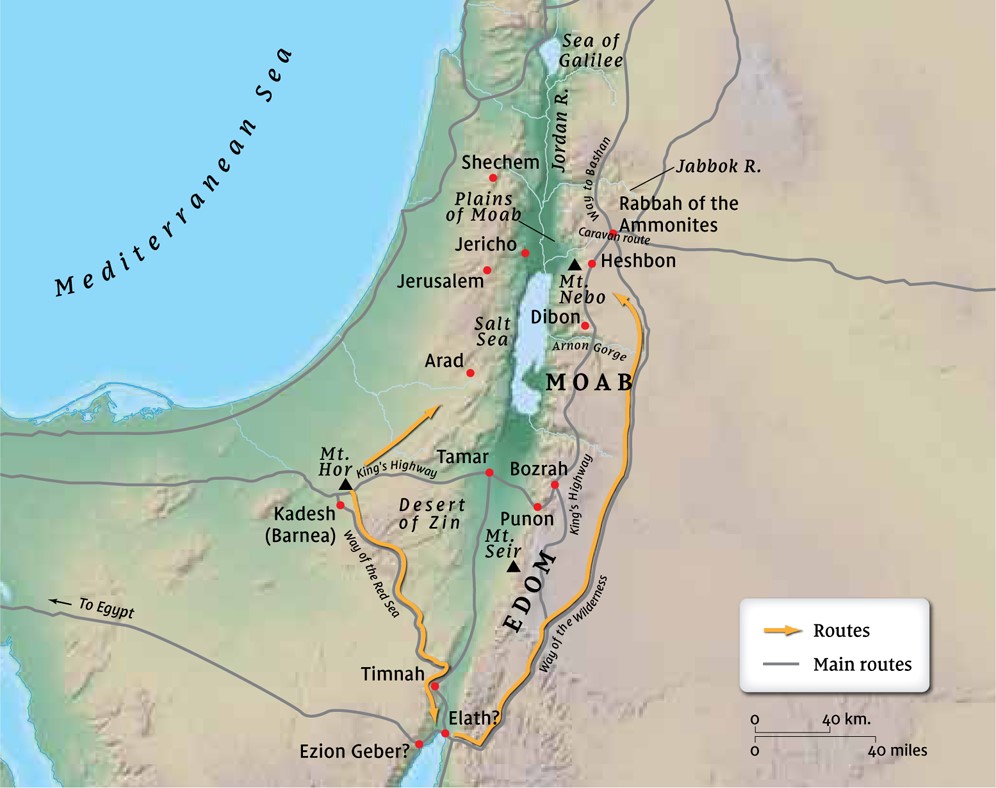
21 Then Israel sent messengers to Sihon king of the Amorites, saying, 22 “Let me pass through your land. We will not turn aside into field or vineyard. We will not drink the water of a well. We will go by the King’s Highway until we have passed through your territory.” 23 But Sihon would not allow Israel to pass through his territory. He gathered all his people together and went out against Israel to the wilderness and came to Jahaz and fought against Israel. 24 And Israel defeated him with the edge of the sword and took possession of his land from the Arnon to the Jabbok, as far as to the Ammonites, for the border of the Ammonites was strong. 25 And Israel took all these cities, and Israel settled in all the cities of the Amorites, in Heshbon, and in all its villages. 26 For Heshbon was the city of Sihon the king of the Amorites, who had fought against the former king of Moab and taken all his land out of his hand, as far as the Arnon. 27 Therefore the ballad singers say,

“Come to Heshbon, let it be built;
    let the city of Sihon be established.
28 For fire came out from Heshbon,
    flame from the city of Sihon.
It devoured Ar of Moab,
    and swallowed the heights of the Arnon.
29 Woe to you, O Moab!
    You are undone, O people of Chemosh!
He has made his sons fugitives,
    and his daughters captives,
    to an Amorite king, Sihon.
30 So we overthrew them;
    Heshbon, as far as Dibon, perished;
    and we laid waste as far as Nophah;
    fire spread as far as Medeba.”

31 Thus Israel lived in the land of the Amorites. 32 And Moses sent to spy out Jazer, and they captured its villages and dispossessed the Amorites who were there. 33 Then they turned and went up by the way to Bashan. And Og the king of Bashan came out against them, he and all his people, to battle at Edrei. 34 But the Lord said to Moses, “Do not fear him, for I have given him into your hand, and all his people, and his land. And you shall do to him as you did to Sihon king of the Amorites, who lived at Heshbon.” 35 So they defeated him and his sons and all his people, until he had no survivor left. And they possessed his land. Numbers 21:21-35 ESV

This is the Numbers’ version of the story of Israel’s unfortunate confrontation with the Sihon, the king of the Amorites. It’s also recorded in Deuteronomy 2, but in this rendition, Moses reveals that “Israel settled in all the cities of the Amorites, in Heshbon, and in all its villages” (Numbers 21:25 ESV). Not only did they conquer the Amorites, but they confiscated their cities and villages and moved into them. For the first time since leaving Egypt 39 years earlier, the Israelites found themselves living in real houses and enjoying all the amenities of a semi-settled existence.

On this occasion, they refused to walk away from a fight as they had in Edom because the territory of the Amorites provided the only access point to the land of promise. The Amorites were attempting to block the Israelites’ way to their inheritance, and while Moses tried to reason with Sihon, he soon discovered that brute force would be the only negotiating tool that would get the king’s attention.

God provided the Israelites with a decisive victory over the Amorites, and Moses made it clear that the land Israel conquered and confiscated had originally belonged to the Moabites. This is significant because, according to Deuteronomy 2, God had commanded the Israelites to avoid any conflict with the Moabites and had forbidden them from attempting to occupy any of their land. The territory of the Moabites was off-limits and under a divine ban.

“Do not bother the Moabites, the descendants of Lot, or start a war with them. I have given them Ar as their property, and I will not give you any of their land.” – Deuteronomy 2:9 NLT

But it appears that God provided Moses with a special dispensation regarding these cities and villages because Sihon had stolen them from the Moabites. These lands had transferred hands and, technically, no longer belonged to the Moabites.

Heshbon had been the capital of King Sihon of the Amorites. He had defeated a former Moabite king and seized all his land as far as the Arnon River. – Numbers 21:26 NLT

This transfer of ownership officially rendered the land open for conquest and occupation. But Moses points out that the Israelites went as far as the border of the Ammonites and no further. This is because the Israelites had been forbidden from taking any land belonging to the Ammonites or Moabites. These two people groups were the descendants of the two sons born to Lot through his incestuous relationship with his own daughters (Genesis 19:34-38).

But God had been explicit when issuing His prohibition about Moabite and Ammonite land.

“Do not bother the Moabites, the descendants of Lot, or start a war with them. I have given them Ar as their property, and I will not give you any of their land.” – Deuteronomy 2:9 NLT

“Today you will cross the border of Moab at Ar and enter the land of the Ammonites, the descendants of Lot. But do not bother them or start a war with them. I have given the land of Ammon to them as their property, and I will not give you any of their land.” – Deuteronomy 19:18-19 NLT

The land occupied by the Moabites and Ammonites was not part of the inheritance God had promised to Abraham, so there was really no need for Israel to get comfortable on this side of the river. Their land lay to the west and would be theirs soon enough.

But for the time being, God allowed them to live in the cities and villages they had taken from the Amorites. Moses relates the lyrics of a so-called “Song of Heshbon,” a ballad that had been composed by the Amorites commemorating Sihon’s defeat of the Moabites.

“Come to Heshbon and let it be rebuilt!
    Let the city of Sihon be restored.
A fire flamed forth from Heshbon,
    a blaze from the city of Sihon.
It burned the city of Ar in Moab;
    it destroyed the rulers of the Arnon heights.
What sorrow awaits you, O people of Moab!
    You are finished, O worshipers of Chemosh!
Chemosh has left his sons as refugees,
    his daughters as captives of Sihon, the Amorite king.
We have utterly destroyed them,
    from Heshbon to Dibon.
We have completely wiped them out
    as far away as Nophah and Medeba.” – Numbers 21:27-29 NLT

This little ditty provided justification for Israel’s occupation of the former Moabite cities because they had originally been stolen and occupied by the Amorites. So, technically, Israel had not violated God’s decree. Notice that Moses is very specific with his wording.

Thus Israel lived in the land of the Amorites.” – Numbers 21:31 ESV

God allowed Israel to continue their conquest of additional Amorite-occupied land, and He also provided them with decisive victories over the kingdom of Bashan.

“So the Lord our God handed King Og and all his people over to us, and we killed them all. Not a single person survived. We conquered all sixty of his towns—the entire Argob region in his kingdom of Bashan. Not a single town escaped our conquest. These towns were all fortified with high walls and barred gates. We also took many unwalled villages at the same time. We completely destroyed the kingdom of Bashan, just as we had destroyed King Sihon of Heshbon. We destroyed all the people in every town we conquered—men, women, and children alike. But we kept all the livestock for ourselves and took plunder from all the towns. – Deuteronomy 3:3-7 NLT

Israel’s wandering days were over, and with these battles, God was giving them on-the-job training, preparing them for the day when they crossed over the Jordan River and began their conquest of the land of Canaan. These victories on the east side of the Jordan were less about land acquisition than they were about providing the Israelites with much-needed military experience. They were learning how to conduct urban warfare as well as developing tactical strategies and honing their skills as warriors. Their access to well-fortified cities provided them with protection from their growing list of enemies. Until God gave them their marching orders to cross the Jordan, they would live on the east side and fine-tune their fighting skills.

English Standard Version (ESV) The Holy Bible, English Standard Version. ESV® Permanent Text Edition® (2016). Copyright © 2001

New Living Translation (NLT) Holy Bible, New Living Translation, copyright © 1996, 2004, 2015 by Tyndale House Foundation. Used by permission of Tyndale House Publishers Inc., Carol Stream, Illinois 60188. All rights reserved.

Set Apart to Stand Out, Not Blend In

19 “You shall keep my statutes. You shall not let your cattle breed with a different kind. You shall not sow your field with two kinds of seed, nor shall you wear a garment of cloth made of two kinds of material.

20 “If a man lies sexually with a woman who is a slave, assigned to another man and not yet ransomed or given her freedom, a distinction shall be made. They shall not be put to death, because she was not free; 21 but he shall bring his compensation to the Lord, to the entrance of the tent of meeting, a ram for a guilt offering. 22 And the priest shall make atonement for him with the ram of the guilt offering before the Lord for his sin that he has committed, and he shall be forgiven for the sin that he has committed.

23 “When you come into the land and plant any kind of tree for food, then you shall regard its fruit as forbidden. Three years it shall be forbidden to you; it must not be eaten. 24 And in the fourth year all its fruit shall be holy, an offering of praise to the Lord. 25 But in the fifth year you may eat of its fruit, to increase its yield for you: I am the Lord your God.” Leviticus 19:19-25 ESV

In the following section. God emphasizes the distinctive nature of holiness, calling His people to their lives in such a way that their set-apart status as His children is clear for all to see. There was to be no blurring of the lines; no compromising of His holy standards, in a vain attempt to blend in with the culture of Canaan. These verses seem to focus on Israel’s eventual entrance into the land of Canaan when they would find themselves surrounded by pagan nations whose morals and ethical standards were far different than those found in the Decalogue and the Book of the Covenant.

So, God highlighted various laws that were intended to differentiate the Israelites from all the other nations living in the land of Canaan. To our modern sensibilities, these laws may sound arbitrary and even strange. But it is important to consider the context of Canaan and the need for God’s people to remain distinctively different and set apart from all the people groups who currently occupied the land. For the Israelites to conquer and occupy the land promised to them by God, they would have to remain faithful to His calling to be a holy nation and a royal priesthood. There could be no compromising or accommodating, no bending of the rules, or lowering of God’s standards – especially when it came to worship.

That’s why God starts out this section with the five-word command: “You shall keep my statutes” (Leviticus 19:19 ESV). His rules were not up for debate or discussion, and He would not tolerate any effort by the Israelites to blend in and get along with their pagan neighbors. God knew that His people would be tempted to accommodate and make concessions in an effort to get along with the Canaanites. Yet, He was not calling the Israelites to blend in; He was commanding them to stand out. In fact, when it came time for the people of Israel to begin their conquest of Canaan, Moses would deliver a powerful reminder of God’s expectations.  

“When you enter the land the Lord your God is giving you, be very careful not to imitate the detestable customs of the nations living there. For example, never sacrifice your son or daughter as a burnt offering. And do not let your people practice fortune-telling, or use sorcery, or interpret omens, or engage in witchcraft, or cast spells, or function as mediums or psychics, or call forth the spirits of the dead. Anyone who does these things is detestable to the Lord. It is because the other nations have done these detestable things that the Lord your God will drive them out ahead of you. But you must be blameless before the Lord your God. The nations you are about to displace consult sorcerers and fortune-tellers, but the Lord your God forbids you to do such things.” – Deuteronomy 18:9-14 NLT

What stood behind God’s call to distinctiveness was the unique relationship the Israelites enjoyed with their Creator-God. They alone had been set apart to be His chosen people. They alone had been given His law to regulate their lives and the sacrificial system to guarantee their ongoing relationship with Him. He had promised to dwell among them and had designated the Tabernacle as His earthly dwelling place.

In the very next chapter, God will reiterate His call to holiness, reminding the Israelites that they enjoy a one-of-a-kind status as His chosen people.

“You must be holy because I, the LORD, am holy. I have set you apart from all other people to be my very own.” – Leviticus 20:26 NLT

Everything about the Israelites was to be different and distinct, down to the way they bred their animals, sowed their crops, and fashioned their fabrics. Notice how God emphasizes His prohibition against mixing things that don’t belong together.

“Do not mate two different kinds of animals. Do not plant your field with two different kinds of seed. Do not wear clothing woven from two different kinds of thread. – Leviticus 19:19 NLT

There was an order to God’s creation, and He expected His chosen people to adhere to it. Mankind has a propensity for taking shortcuts and making compromises. But, as a principle, this tendency to take the easy way tends to violate God’s way. Making concessions and compromises may appear to be the right thing to do but it makes a life of distinctiveness difficult to maintain. God knew that full-blown apostasy began with small and seemingly innocent concessions.

In verses 20-22, God deals with another improper form of “blending” or “mating;” that of an Israelite man and a slave girl. There are a number of issues at play here. First of all, the man is guilty of having sex with a slave girl who is probably a pagan. To make matters worse, the girl has been betrothed to another man. So, the situation involves several layers of impropriety. The man has had sex outside of the bonds of marriage. On top of that, he has committed this sin with a pagan slave. But because the woman was betrothed to another man, the sin involves adultery. So, God demands that the man pay compensation to the woman’s husband-to-be, and then offer the proper sacrifice in the Tabernacle to pay for his guilt and to receive atonement.

Israelites were not free to have sex with whomever they wished. There were rules and standards. Though the girl was a slave, she still had rights. Her diminished social status did not render her open game for another man’s inappropriate sexual advances. This was the kind of “detestable customs” Moses was talking about. While the Canaanites might approve of such conduct, God did not.

From this rather blatant example of inappropriate “mating,” God shifts His focus to the topic of planting and harvesting. When the Israelites arrived in Canaan, they would be expected to cultivate the land so that it might be fruitful and productive. But God wanted His people to depend upon Him for all their needs. God was giving them a land that was extremely bountiful. There would be no lack of food or water. And Moses knew that the blessings of the land would tempt the people to forget about the provision of God. So, he later warned them:

“So obey the commands of the LORD your God by walking in his ways and fearing him. For the LORD your God is bringing you into a good land of flowing streams and pools of water, with fountains and springs that gush out in the valleys and hills. It is a land of wheat and barley; of grapevines, fig trees, and pomegranates; of olive oil and honey. It is a land where food is plentiful and nothing is lacking. It is a land where iron is as common as stone, and copper is abundant in the hills. When you have eaten your fill, be sure to praise the LORD your God for the good land he has given you.” – Deuteronomy 8:6-10 NLT

God wanted them to plant trees, but He also wanted them to trust Him for all their needs. So, He implemented a five-year moratorium on eating any fruit that the tree produced. For the first three years, the fruit was to go unharvested. In the fourth year, the fruit was to be dedicated to God. And finally, in the fifth year, the fruit of the tree was available for the owner to harvest and enjoy. This five-year delay was intended to teach God’s people to wait on Him. It was also meant to eliminate the risk of self-sufficiency.

“Beware that in your plenty you do not forget the LORD your God and disobey his commands, regulations, and decrees that I am giving you today. For when you have become full and prosperous and have built fine homes to live in, and when your flocks and herds have become very large and your silver and gold have multiplied along with everything else, be careful! Do not become proud at that time and forget the LORD your God…” – Deuteronomy 8:11-14 NLT

God was to be their provider and protector. But because He was giving them a land that was naturally fruitful and filled with all kinds of wonderful things to eat, they would find it easy to become self-reliant and no longer in need of His help. The very blessings of God could end up distracting them from their dependence upon Him.

One of the things that would set apart the people of God from their pagan neighbors was their complete and utter reliance upon God for all their needs. And that reliance began with their unwavering commitment to keep His commands. God would not tolerate compromise or complacency among His chosen people. The greatest risk they faced was allowing the richness of the land to diminish their reliance upon the Lord. And this was the very charge Jesus leveled against the church of Laodicea.

“You say, ‘I am rich. I have everything I want. I don’t need a thing!’ And you don’t realize that you are wretched and miserable and poor and blind and naked.” – Revelation 3:17 NLT

Jesus saw this church as having made unacceptable compromises. It wasn’t that they were living in complete rebellion, but that they had made harmful concessions that had left them with a “lukewarm” and ineffective faith. They weren’t living set apart and distinctive lives in the midst of the culture. So Jesus warned them to alter the trajectory of their faith and return to Him.

“I correct and discipline everyone I love. So be diligent and turn from your indifference.” – Revelation 3:19 NLT

And God was calling His chosen people to avoid the need for His discipline by living in keeping with His commands. That’s why He opened this section with the words, “You shall keep my statutes” (Leviticus 19:19 ESV). God didn’t want His people to become lukewarm and ineffective. His desire was that they remain obedient, dependent, and faithful so that the rest of the world might see His presence and power made manifest through their lives. They had been set apart to stand out, not blend in.

English Standard Version (ESV) The Holy Bible, English Standard Version. ESV® Permanent Text Edition® (2016). Copyright © 2001

New Living Translation (NLT) Holy Bible, New Living Translation, copyright © 1996, 2004, 2015 by Tyndale House Foundation. Used by permission of Tyndale House Publishers Inc., Carol Stream, Illinois 60188. All rights reserved.

Live Like It

1 And the Lord spoke to Moses, saying, “Speak to the people of Israel and say to them, I am the Lord your God. You shall not do as they do in the land of Egypt, where you lived, and you shall not do as they do in the land of Canaan, to which I am bringing you. You shall not walk in their statutes. You shall follow my rules and keep my statutes and walk in them. I am the Lord your God. You shall therefore keep my statutes and my rules; if a person does them, he shall live by them: I am the Lord. – Leviticus 18:1-5 ESV

God knew that His people would face the ongoing temptation to carry out His ceremonial law while, at the same time, living lives that contradicted the very intentions of those laws. In other words, they would run the risk of living hypocritical lives that reflected an outward appearance of obedience that covered up the true conditions of their hearts. It was the very same of which Jesus accused the Jewish religious leader of His day.

“What sorrow awaits you teachers of religious law and you Pharisees. Hypocrites! For you are so careful to clean the outside of the cup and the dish, but inside you are filthy—full of greed and self-indulgence! – Matthew 23:25 NLT

“What sorrow awaits you teachers of religious law and you Pharisees. Hypocrites! For you are like whitewashed tombs—beautiful on the outside but filled on the inside with dead people’s bones and all sorts of impurity. Outwardly you look like righteous people, but inwardly your hearts are filled with hypocrisy and lawlessness. – Matthew 23:27-28 NLT

Jesus was exposing these men for what they truly were: blatant charlatans who were adept at displaying outward conformity to God’s will but whose actions were nothing more than a carefully-orchestrated performance designed to earn the praise and respect of the people. They were little more than play actors. In fact, the Greek word for hypocrite is ὑποκριτής (hypokritēs), a term used to describe those who performed in the Greek plays that were so popular throughout the Roman world of Jesus’ day. Jesus was comparing the law-abiding religious leaders of His day to actors who used elaborate costumes and masks to fool their audiences into believing they were someone else.

Jesus pulled back the curtain on their little drama and exposed their deceptive masquerade. They were not what they appeared to be. And in the same way, God was warning the people of Israel about the danger of going through the motions by feigning obedience to His law while, at the same time, living in silent disregard to His desire that they live truly holy lives.

Yahweh has spent a great deal of time outlining the exacting details of His ceremonial law. He has provided His chosen people with clear and compelling regulations for conducting their daily lives, covering everything from the food they could eat to the various skin diseases that could render them unholy and unworthy of entering His Tabernacle. The entire sacrificial system was designed to mitigate their failure to keep His law. When they sinned, they had a way of receiving atonement by offering the appropriate sacrifice in the acceptable manner God had prescribed.

But the Israelites had proven themselves to be a stubborn people who were prone to doing things their own way. Their 400-year-long stint in Egypt had made them accustomed to the pagan practices of their captors. Idolatry had become a normal and acceptable part of their lives. The sexual promiscuity of their Egyptian overlords had dulled the moral sensibilities of the Israelites, leaving them open to increasingly more decadent and defiling types of behavior. Sins like adultery had become commonplace, even among God’s people, and no longer carried any social stigma or sense of impropriety. So, God took the time to discuss the need for behavior that reflected their status as God’s chosen and set-apart people.

In a real sense, the Israelites were going from the firepan into the fire. Their divinely-orchestrated escape from captivity had allowed them to leave the decadence of Egypt behind, but a great challenge lie in the future. God knew something of which they were completely oblivious. The land of Canaan, their future home, was a place filled with immoral and idolatrous nations that were going to make the Egyptians look like amateurs. Compared to the more sophisticated Egyptians, the Canaanites would take immorality to a whole new and much lower level. And God knew that His people would be prone to adopt and adapt the pagan practices of their new neighbors. That’s why He commanded Moses to warn the sin-prone Israelites to refrain from mimicking the ways of the world.

“…do not act like the people in Egypt, where you used to live, or like the people of Canaan, where I am taking you. You must not imitate their way of life.” – Leviticus 18:3 NLT

God had chosen the people of Israel to be His “treasured possession among all peoples,” and as such, they were to be “a kingdom of priests and a holy nation.” (Exodus 19:5-6 ESV). Their lives were to stand out from the crowd. Their behavior was to be radically different, dictated by the conditions established by God Himself and articulated in the Mosaic Law. They were not free to live according to their own wills or in keeping with the rest of the world. Their behavioral standards were God-ordained and came with severe consequences if disobeyed. God made it perfectly clear that obedience was mandatory and non-optional.

You must obey all my regulations and be careful to obey my decrees, for I am the Lord your God. – Leviticus 18:4 NLT

These were laws; not suggestions, and they came from the very throne of God in heaven, not the minds of mortal men. Yet, God knew that the Israelites would struggle obeying His law and lean toward living like their pagan neighbors. The law would set them apart, but failure to allow the law to transform their daily behavior would render them ineffective in their assignment to be a kingdom of priests and a holy nation.

Centuries later, the apostle Paul warned the Jewish Christians living in Rome of this very danger. He knew they were proud of their Jewish heritage and wore it like a badge of honor, but their outward actions did not reflect the kind of character God demanded.

You who call yourselves Jews are relying on God’s law, and you boast about your special relationship with him. You know what he wants; you know what is right because you have been taught his law. You are convinced that you are a guide for the blind and a light for people who are lost in darkness. You think you can instruct the ignorant and teach children the ways of God. For you are certain that God’s law gives you complete knowledge and truth.

Well then, if you teach others, why don’t you teach yourself? You tell others not to steal, but do you steal? You say it is wrong to commit adultery, but do you commit adultery? You condemn idolatry, but do you use items stolen from pagan temples? You are so proud of knowing the law, but you dishonor God by breaking it. No wonder the Scriptures say, “The Gentiles blaspheme the name of God because of you.” – Romans 2:17-24 NLT

And Paul would go on to downplay their inordinate pride in their Jewish heritage; instead calling them to live in a way that reflects the gospel’s power to transform the human heart and create true life change.

For you are not a true Jew just because you were born of Jewish parents or because you have gone through the ceremony of circumcision. No, a true Jew is one whose heart is right with God. And true circumcision is not merely obeying the letter of the law; rather, it is a change of heart produced by the Spirit. And a person with a changed heart seeks praise from God, not from people. – Romans 2:28-29 NLT

For the Jews of Moses’ day, obedience to God’s law came with striking benefits. It wasn’t merely about blind obedience and mindless adherence to a lengthy set of arbitrary rules and regulations. God’s law brought life.

“If you obey my decrees and my regulations, you will find life through them. I am the Lord.” – Leviticus 18:5 NLT

He wanted them to know that His laws were laws for living – bringing peace, joy, contentment, purpose, blessings, and the benefit of an ongoing relationship with Him. God was not a divine policeman enforcing arbitrary and needless rules designed to stifle human flourishing. He wasn’t some curmudgeonly old skinflint in the sky trying to rob mere mortals of all the joys of life. The Lord God was giving His chosen people a unique opportunity to live in perfect communion with Him, enjoying all the benefits of His divine goodness and glory as they lived in this fallen and sin-stained world. But those blessings would require obedience to His law. Rather than live like the Romans and Canaanites, the Israelites were to live like God’s chosen and set-apart people – for all the world to see.

English Standard Version (ESV) The Holy Bible, English Standard Version. ESV® Permanent Text Edition® (2016). Copyright © 2001

New Living Translation (NLT) Holy Bible, New Living Translation, copyright © 1996, 2004, 2015 by Tyndale House Foundation. Used by permission of Tyndale House Publishers Inc., Carol Stream, Illinois 60188. All rights reserved.

From Rags to Riches and Back Again

1 Again the word of the Lord came to me: “Son of man, make known to Jerusalem her abominations, and say, Thus says the Lord God to Jerusalem: Your origin and your birth are of the land of the Canaanites; your father was an Amorite and your mother a Hittite. And as for your birth, on the day you were born your cord was not cut, nor were you washed with water to cleanse you, nor rubbed with salt, nor wrapped in swaddling cloths. No eye pitied you, to do any of these things to you out of compassion for you, but you were cast out on the open field, for you were abhorred, on the day that you were born.

“And when I passed by you and saw you wallowing in your blood, I said to you in your blood, ‘Live!’ I said to you in your blood, ‘Live!’ I made you flourish like a plant of the field. And you grew up and became tall and arrived at full adornment. Your breasts were formed, and your hair had grown; yet you were naked and bare.

“When I passed by you again and saw you, behold, you were at the age for love, and I spread the corner of my garment over you and covered your nakedness; I made my vow to you and entered into a covenant with you, declares the Lord God, and you became mine. Then I bathed you with water and washed off your blood from you and anointed you with oil. 10 I clothed you also with embroidered cloth and shod you with fine leather. I wrapped you in fine linen and covered you with silk. 11 And I adorned you with ornaments and put bracelets on your wrists and a chain on your neck. 12 And I put a ring on your nose and earrings in your ears and a beautiful crown on your head. 13 Thus you were adorned with gold and silver, and your clothing was of fine linen and silk and embroidered cloth. You ate fine flour and honey and oil. You grew exceedingly beautiful and advanced to royalty. 14 And your renown went forth among the nations because of your beauty, for it was perfect through the splendor that I had bestowed on you, declares the Lord God.  Ezekiel 16:1-14 ESV

Chapter 16 contains the remarkable rags-to-riches story of the nation of Israel. In it, God uses the city of Jerusalem as a symbol of His chosen people, describing how it rose to a place of prominence and privilege from its humble and rather sordid beginnings. And this unprecedented transformation had been the result of God’s unmerited mercy and love.

God begins with a depiction of Jerusalem’s less-than-flattering origins.

“You are nothing but a Canaanite! Your father was an Amorite and your mother a Hittite.” – Ezekiel 16:2 NLT

The city of Jerusalem had begun its rather sordid history as a Canaanite city, having been founded by Amorites and Hittites. At one time, it had been occupied by Jebusites and received its original name of Jebus. But during the lifetime of Abraham, it had been ruled over by a king named Melchizedek and bore the name of Salem (Genesis 14:18). At some point, its name was changed to Jerusalem and this was the city that King David attacked, conquered, and established as his royal capital.

David then led his men to Jerusalem to fight against the Jebusites, the original inhabitants of the land who were living there. The Jebusites taunted David, saying, “You’ll never get in here! Even the blind and lame could keep you out!” For the Jebusites thought they were safe. But David captured the fortress of Zion, which is now called the City of David. – 2 Samuel 5:6-7 NLT

So David made the fortress his home, and he called it the City of David. He extended the city, starting at the supporting terraces and working inward. And David became more and more powerful, because the Lord God of Heaven’s Armies was with him. – 2 Samuel 5:9-10 NLT

But God describes Jerusalem’s origins as far from impressive.

On the day you were born, no one cared about you. – Ezekiel 16:4 NLT

On the day you were born, you were unwanted, dumped in a field and left to die. – Ezekiel 16:5 NLT

Jerusalem had never been an impressive place. It was not located along any trade routes and it had no natural resources from which to profit. It was located a significant distance from the Mediterranean Sea and the nearest body of water was the salt-infused and, therefore, lifeless Dead Sea. Though it was located on the lower slope of Mount Moriah, Jerusalem was not blessed with natural defensive qualities. To secure his city, David was required to build large walls and this effort was completed by Solomon, his son and heir to his throne.

But long before Jerusalem’s glory days as the capital city of Israel, it had been nothing but an insignificant and unimpressive dot on the proverbial map. In its original state, Jerusalem had nothing to offer. As cities go, it wasn’t much to look at and there weren’t a lot of people beating down the door to live within its walls. Yet, God had shown pity on this pitiful place.

“But I came by and saw you there, helplessly kicking about in your own blood. As you lay there, I said, ‘Live!’ And I helped you to thrive like a plant in the field. You grew up and became a beautiful jewel. Your breasts became full, and your body hair grew, but you were still naked.” – Ezekiel 16:6-7 NLT

Through the efforts of David and Solomon, God slowly transformed Jerusalem into a magnificent city. And He describes the city’s metamorphosis in terms of a lover bestowing expensive gifts on his bride.

“I gave you expensive clothing of fine linen and silk, beautifully embroidered, and sandals made of fine goatskin leather. I gave you lovely jewelry, bracelets, beautiful necklaces, a ring for your nose, earrings for your ears, and a lovely crown for your head. And so you were adorned with gold and silver. Your clothes were made of fine linen and costly fabric and were beautifully embroidered. You ate the finest foods—choice flour, honey, and olive oil—and became more beautiful than ever. You looked like a queen, and so you were!” – Ezekiel 16:10-13 NLT

God knew that the people of Judah, even those living in exile in Babylon, had placed a great deal of hope in the existence of the former hometown. At one time, they had all enjoyed the amenities and perks that came with living in this beautiful incredible city. They had personally benefited from the many blessings God had bestowed upon Jerusalem. For centuries, the people of Israel had walked within its walls and taken in the grandeur of the king’s palace and the splendor of the magnificent temple that Solomon had built and dedicated to Yahweh. On their annual pilgrimages to Jerusalem to celebrate the feast of Pentecost, the people of Israel would sing songs celebrating the greatness of their God and the city that contained His house.

I was glad when they said to me,
    “Let us go to the house of the Lord.”
And now here we are,
    standing inside your gates, O Jerusalem.
Jerusalem is a well-built city;
    its seamless walls cannot be breached. – Psalm 122:1-3 NLT

Those who trust in the Lord are as secure as Mount Zion;
    they will not be defeated but will endure forever.
Just as the mountains surround Jerusalem,
    so the Lord surrounds his people, both now and forever. – Psalm 125:1-2 NLT

God knew that the exiles were still counting on the fact that He would continue to protect their former home. They couldn’t imagine their God allowing the city of David to fall into enemy hands. Any thought of the Babylonians breaking through the impregnable walls of the city was beyond their imaginations. It was impossible, inconceivable, and highly improbable. Or so they thought.

What they failed to understand was that the city was nothing more than a symbol of their spiritual state as a nation. It had once been an insignificant and unimpressive backwater town, but God had transformed it into a city of great beauty and power. The same was true of Israel as a nation. There had been a time when they were few in number and far from impressive and yet God had chosen them as His own. Moses records their transformation from relative obscurity to prominence in the book of Deuteronomy.

“The Lord did not set his heart on you and choose you because you were more numerous than other nations, for you were the smallest of all nations! Rather, it was simply that the Lord loves you, and he was keeping the oath he had sworn to your ancestors. That is why the Lord rescued you with such a strong hand from your slavery and from the oppressive hand of Pharaoh, king of Egypt.” – Deuteronomy 7:7-8 NLT

Long before the people of Israel conquered the land of Canaan and occupied the city of Jerusalem, God had demanded that they live in faithful obedience to His commands.

“He is the faithful God who keeps his covenant for a thousand generations and lavishes his unfailing love on those who love him and obey his commands. But he does not hesitate to punish and destroy those who reject him. Therefore, you must obey all these commands, decrees, and regulations I am giving you today.” – Deuteronomy 7:9-11 NLT

Centuries later, when Solomon had completed the construction of the temple and dedicated it to the Lord, he received a sobering warning from God.

“…if you or your descendants abandon me and disobey the commands and decrees I have given you, and if you serve and worship other gods, then I will uproot Israel from this land that I have given them. I will reject this Temple that I have made holy to honor my name. I will make Israel an object of mockery and ridicule among the nations. And though this Temple is impressive now, all who pass by will be appalled and will gasp in horror. They will ask, ‘Why did the Lord do such terrible things to this land and to this Temple?’” – 1 Kings 9:6-8 NLT

The temple and the city of Jerusalem were nothing more than symbols of God’s glory and goodness. They existed to demonstrate His blessings upon the obedient people of Israel. But should the people who lived within the city’s walls and worshiped within the temple’s courtyard fail to honor and obey Him as God, they would see their circumstances drastically altered and their city dramatically destroyed.

English Standard Version (ESV) The Holy Bible, English Standard Version. ESV® Permanent Text Edition® (2016). Copyright © 2001

New Living Translation (NLT) Holy Bible, New Living Translation, copyright © 1996, 2004, 2015 by Tyndale House Foundation. Used by permission of Tyndale House Publishers Inc., Carol Stream, Illinois 60188. All rights reserved.

Lust, Love and Lousy Leadership

Now Dinah the daughter of Leah, whom she had borne to Jacob, went out to see the women of the land. And when Shechem the son of Hamor the Hivite, the prince of the land, saw her, he seized her and lay with her and humiliated her. And his soul was drawn to Dinah the daughter of Jacob. He loved the young woman and spoke tenderly to her. So Shechem spoke to his father Hamor, saying, “Get me this girl for my wife.”

Now Jacob heard that he had defiled his daughter Dinah. But his sons were with his livestock in the field, so Jacob held his peace until they came. And Hamor the father of Shechem went out to Jacob to speak with him. The sons of Jacob had come in from the field as soon as they heard of it, and the men were indignant and very angry, because he had done an outrageous thing in Israel by lying with Jacob’s daughter, for such a thing must not be done.

But Hamor spoke with them, saying, “The soul of my son Shechem longs for your daughter. Please give her to him to be his wife. Make marriages with us. Give your daughters to us, and take our daughters for yourselves. 10 You shall dwell with us, and the land shall be open to you. Dwell and trade in it, and get property in it.” 11 Shechem also said to her father and to her brothers, “Let me find favor in your eyes, and whatever you say to me I will give. 12 Ask me for as great a bride-price and gift as you will, and I will give whatever you say to me. Only give me the young woman to be my wife.” Genesis 34:1-12 ESV

As Jacob settled in the land of Canaan, he chose a place outside the city of Shechem. He purchased land from Hamor, the father of Shechem, for whom the city was named.  Hamor was a Hivite. This made him a descendant of Canaan, who was the son of Ham and the grandson of Noah.

Canaan fathered Sidon his firstborn and Heth, and the Jebusites, the Amorites, the Girgashites, the Hivites, the Arkites, the Sinites,  the Arvadites, the Zemarites, and the Hamathites. – Genesis 10:15-18 ESV

Technically, the Hivites were Canaanites, the descendants of Canaan. And they were all under the curse that Noah pronounced upon their forefather.

“May Canaan be cursed! May he be the lowest of servants to his relatives.” – Genesis 9:25 NLT

Jacob’s decision to settle in close proximity to Shechem and the Hivites would prove to be less than ideal. And the story sounds eerily similar to that of Lot, when he “settled among the cities of the valley and moved his tent as far as Sodom” (Genesis 13:12 ESV). That too proved to be a poor decision.

It seems that Jacob had one daughter named Dinah who was born to his first wife, Leah. This young girl was surrounded by 11 brothers who felt it their duty to protect her. But Dinah was beautiful and she soon caught the attention of the men inside Shechem, particularly the man for whom the city was named. Evidently, Jacob and his family lived close enough to the city to have regular contact with its inhabitants. Shechem, “the son of Hamor the Hivite, the prince of the land” (Genesis 34:2 ESV), became infatuated with the lovely daughter of Jacob. As the son of the man in charge, Shechem was probably used to getting his own way. And as his infatuation with Dinah intensified, it turned to lust, which eventually resulted in rape. He was so determined to possess Dinah that he simply took what was not rightfully his, and violated her.

Moses indicates that this egregious action “humiliated her” (Genesis 34:2 ESV). In that culture, the loss of her virginity made Dinah “damaged goods” and a social pariah. She would never find a suitor. Though she had done nothing to deserve what had happened, she would suffer greatly for it – far worse than her attacker.

But Moses describes Shechem’s lust slowly turning into love. He longed to be with Dinah and to marry her, so he begged his father to intercede with Jacob and ask for permission for the two to wed. It’s clear from the text that Jacob was aware of Shechem’s treatment of his daughter, but up to this point he has neither said nor done anything. Yet, when Dinah’s 11 brothers hear the devastating news, they rush in from the fields where they were caring for their father’s flocks. They arrived just in time to hear Hamor broach the subject of Shechem marrying Dinah, and they were appalled.

…the men were indignant and very angry, because he had done an outrageous thing in Israel by lying with Jacob’s daughter, for such a thing must not be done.– Genesis 34:7 ESV

This Hivite had treated their sister with disdain and committed the ultimate act of disrespect, and now he was asking for the right to marry her.

Evidently, Hamor sensed the animosity of the 11 men and realized that his son’s life was in danger. If he didn’t act quickly, this whole situation could get ugly. So, he expanded his proposal, hoping to win over the young unmarried sons of Jacob.

“My son Shechem is truly in love with your daughter,” he said. “Please let him marry her. In fact, let’s arrange other marriages, too. You give us your daughters for our sons, and we will give you our daughters for your sons. And you may live among us; the land is open to you! Settle here and trade with us. And feel free to buy property in the area.” – Genesis 34:8-10 NLT

Hamor was suggesting an alliance between the Hivites and Israelites. it seems that Hamor was trying to soften the blow of his son’s unacceptable behavior while, at the same time, encouraging a deepening and potentially profitable relationship between their two clans. Jacob was a wealthy man who had 11 single sons, who each stood to gain a portion of Jacob’s inheritance. This could be a win-win for Hamor.

Even Shechem got into the act, virtually begging Jacob and his sons for the right to marry Dinah. After what he had done, it seems quite bold of Shechem to show his face to the brothers of Dinah. But again, this was probably a young man who was used to getting his way. He even tells Jacob to name his price.

“Please be kind to me, and let me marry her,” he begged. “I will give you whatever you ask.No matter what dowry or gift you demand, I will gladly pay it—just give me the girl as my wife.” – Genesis 34:11-12 NLT

This presumptuous young man was obligating his father to pay whatever bride price Jacob demanded. His lust/love for Dinah was insatiable. He was willing to risk everything to have her. And his unbridled enthusiasm is reminiscent of Jacob’s actions when he first met Rachel.

Jacob loved Rachel. And he said, “I will serve you seven years for your younger daughter Rachel.” Laban said, “It is better that I give her to you than that I should give her to any other man; stay with me.” So Jacob served seven years for Rachel, and they seemed to him but a few days because of the love he had for her. – Genesis 29:18-20 ESV

Jacob’s infatuation with Rachel inhibited his ability to see through Laban’s deceit. He ended up working the seven years, only to be tricked by Laban into marrying Rachel’s older sister, Leah. Then he was forced to work an additional seven years to earn the right to marry Rachel.

Shechem, like Jacob, was about to discover the deceitful side of Jacob’s nature, and it would manifest itself through Jacob’s 11 sons. These young men had inherited their father’s propensity for deception and trickery and were not afraid to use it. And what will become increasingly clear is the absence of any leadership on Jacob’s part. He will simply disappear into the background as he allows his sons to handle the ongoing negotiations between the two clans. This man who had bought the birthright from his older brother would prove to be less than capable of leading his family well. Though blessed by God and having been chosen to be the one through whom the promises of God would be fulfilled, Jacob would exhibit a glaring lack of leadership, allowing his vengeance-driven sons to take matters into their own hands.

Moses doesn’t indicate how long Jacob had been in the land of promise since returning from Mesopotamia, but it appears as if it didn’t take long for things to take a turn for the worst.

English Standard Version (ESV) The Holy Bible, English Standard Version. ESV® Permanent Text Edition® (2016). Copyright © 2001 by Crossway Bibles, a publishing ministry of Good News Publishers.

New Living Translation (NLT) Holy Bible, New Living Translation, copyright © 1996, 2004, 2015 by Tyndale House Foundation. Used by permission of Tyndale House Publishers Inc., Carol Stream, Illinois 60188. All rights reserved.

New English Translation (NET)NET Bible® copyright ©1996-2017 by Biblical Studies Press, L.L.C. http://netbible.com All rights reserved.

The Unfathomable Ways of God

1 These are the generations of the sons of Noah, Shem, Ham, and Japheth. Sons were born to them after the flood.

The sons of Japheth: Gomer, Magog, Madai, Javan, Tubal, Meshech, and Tiras. The sons of Gomer: Ashkenaz, Riphath, and Togarmah. The sons of Javan: Elishah, Tarshish, Kittim, and Dodanim. From these the coastland peoples spread in their lands, each with his own language, by their clans, in their nations.

The sons of Ham: Cush, Egypt, Put, and Canaan. The sons of Cush: Seba, Havilah, Sabtah, Raamah, and Sabteca. The sons of Raamah: Sheba and Dedan. Cush fathered Nimrod; he was the first on earth to be a mighty man. He was a mighty hunter before the Lord. Therefore it is said, “Like Nimrod a mighty hunter before the Lord.” 10 The beginning of his kingdom was Babel, Erech, Accad, and Calneh, in the land of Shinar. 11 From that land he went into Assyria and built Nineveh, Rehoboth-Ir, Calah, and 12 Resen between Nineveh and Calah; that is the great city. 13 Egypt fathered Ludim, Anamim, Lehabim, Naphtuhim, 14 Pathrusim, Casluhim (from whom the Philistines came), and Caphtorim.

15 Canaan fathered Sidon his firstborn and Heth, 16 and the Jebusites, the Amorites, the Girgashites, 17 the Hivites, the Arkites, the Sinites, 18 the Arvadites, the Zemarites, and the Hamathites. Afterward the clans of the Canaanites dispersed. 19 And the territory of the Canaanites extended from Sidon in the direction of Gerar as far as Gaza, and in the direction of Sodom, Gomorrah, Admah, and Zeboiim, as far as Lasha. 20 These are the sons of Ham, by their clans, their languages, their lands, and their nations. Genesis 10:1-20 ESV

Noah lived a long and fruitful life. For 950 years, this righteous and blameless man had walked with God. No, he had not been perfect or sinless. But he had stood out from the rest of his generation as a man who had a heart for God. And, as a result, Noah found favor with God. He and the members of his immediate family were chosen by God and graciously given a chance to survive the judgment that God poured out on the world. They alone had lived before and after the devastation of the flood. After assessing the pervasive presence of wickedness amongst mankind, God had decided to destroy His creation and start over. With this small remnant of humanity and a relative sampling of the rest of the living creatures, God rebooted the entire creation project.

In Genesis 10, Moses provides another genealogical listing designed to emphasize this new phase of God’s plan. The first genealogy is found in chapter five and covers the family tree of Adam all the way to Noah. Now, Moses picks up the story of mankind’s expansion by chronicling the family trees of Noah’s three sons: Shem, Ham, and Japheth.

Noah eventually died, but his three sons would continue to fulfill God’s mandate to be fruitful, multiply, and fill the earth. Humanity would continue to use its God-given capacity to procreate. Just as Adam and Eve had born children, so would these three men. And, as Moses makes clear, “Sons were born to them after the flood” (Genesis 10:1 ESV). Life continued. But as will soon become readily evident, so did sin.

From this one man, Noah, would come all the nations of the world. And though he was a man who walked with God, his descendants would show a stubborn capacity to walk away from God. The further the narrative gets away from the story of Eden, the greater the distance grows between God and mankind. As humanity multiplies and spreads across the earth, its desire for autonomy and independence from God will increase exponentially.

Yet, God had a strategy in place. He was working behind the scenes to preserve a faithful remnant through whom He could bring about His ultimate redemptive plan for the world. The genealogical lists found in Genesis 10 are intended to display God’s sovereign power and glory. The births recorded in this chapter are meant to emphasize God’s providential orchestration of all things. He was divinely determining the trajectory of mankind, creating from the three sons of Noah all the future nations of the world. In the book of Deuteronomy, Moses encouraged the people of Israel to consider God’s sovereign authority over the nations.

Remember the days of old;
    consider the years of many generations;
ask your father, and he will show you,
    your elders, and they will tell you.
When the Most High gave to the nations their inheritance,
    when he divided mankind,
he fixed the borders of the peoples
    according to the number of the sons of God. – Deuteronomy 32:7-8 ESV

And many centuries later, the apostle Paul would reemphasize the undeniable sovereignty of God over the affairs of mankind.

And he made from one man every nation of mankind to live on all the face of the earth, having determined allotted periods and the boundaries of their dwelling place, that they should seek God, and perhaps feel their way toward him and find him. Yet he is actually not far from each one of us, for

“‘In him we live and move and have our being’;

as even some of your own poets have said,

“‘For we are indeed his offspring.’” – Acts 17:26-28 ESV

In the lengthy list of names found in Genesis 10, Moses provides a series of not-so-subtle hints, designed to explain to his readers the origins of some of the nations of their day. In the family tree of Ham, Moses reveals the genesis of Babel, the city that would later become known as Babylon. Of course, that same family tree contains the name of Canaan, the son of Ham whom Noah had cursed. From this son would come the Canaanites, the people group who would occupy the land that God would later promise to Abraham as his inheritance. In verse 12 is mentioned the city of Nineveh, which would later become the capital of the Assyrian empire, the nation that God would eventually use to destroy the northern kingdom of Israel. Verse 14 contains the name of the Philistines, another people group that would prove to be a constant thorn in the side of God’s chosen people.

Moses also points out that Canaan became the father of “the Jebusites, the Amorites, the Girgashites, the Hivites, the Arkites, the Sinites, the Arvadites, the Zemarites, and the Hamathites” (Genesis 10:16-18 ESV). This list of names would have been very familiar to Moses’ audience. Among this list are the names of the nations that God had promised to defeat so that Moses and the people of Israel could occupy the land of Canaan.

The Lord said to Moses, “Depart; go up from here, you and the people whom you have brought up out of the land of Egypt, to the land of which I swore to Abraham, Isaac, and Jacob, saying, ‘To your offspring I will give it.’ I will send an angel before you, and I will drive out the Canaanites, the Amorites, the Hittites, the Perizzites, the Hivites, and the Jebusites. Go up to a land flowing with milk and honey; but I will not go up among you, lest I consume you on the way, for you are a stiff-necked people.” – Exodus 33:1-3 ESV

Moses is assuring his people that God had been behind the creation of these various nations. Their formation had not been a byproduct of chance or serendipity. They had been divinely ordained. And while many of these nations would eventually become the enemies of Israel, they would be completely under the authority and dominion of God Almighty. There was a purpose for their existence and it had been determined by God.

And Moses provides one last “hint” in his genealogical record of Ham’s family tree. In verse 19, he describes the eventual territorial boundaries of the Canaanites. And in his description, he includes the names of two infamous cities that would play an important role in the history of Israel: Sodom and Gomorrah.

The family tree of Ham includes such names as Egypt, Canaan, Babel, Assyria, Nineveh, Canaan, Sodom, and Gomorrah. The Jewish readers to whom Moses wrote would have flinched at the mention of these names. They were laden with significance and represented important milestones in the history of the Jewish people. And yet, Moses is painstakingly proving that these various nations and cities were the byproduct of God’s sovereign will. A point he emphasizes when he writes, “These are the sons of Ham, by their clans, their languages, their lands, and their nations” (Genesis 10:20 ESV).

“The table of nations is a ‘horizontal’ genealogy rather than a ‘vertical’ one (those in chapters 5 and 11 are vertical). Its purpose is not primarily to trace ancestry; instead, it shows political, geographical, and ethnic affiliations among tribes for various reasons, most notable being holy war. Tribes shown to be ‘kin’ would be in league together. Thus this table aligns the predominant tribes in and around the land promised to Israel. These names include founders of tribes, clans, cities, and territories.” – Allen P. Ross, Genesis

The Jews, who were designated as God’s chosen people, had to constantly question why God had allowed such nations as Egypt, Assyria, and Babylon to exist. Why did God permit the presence of wicked cities like Sodom and Gomorrah? Wouldn’t the world have been a better place without the Canaanites, Amorites, and Jebusites?

But this chapter was intended to display and explain the sovereignty of God. As Paul so clearly asserted, “From one man he created all the nations throughout the whole earth. He decided beforehand when they should rise and fall, and he determined their boundaries” (Genesis 17:26 NLT).

The sin committed by Ham (Genesis 9) produced some significant consequences. His genealogical line is filled with a rogue’s gallery of names and locations that would have struck fear into the hearts of the Jewish people. But these individuals and nations each existed for a reason. They would have divinely ordained roles to play in God’s unfolding redemptive plan. Yes, from Ham would come the Canaanites. But as chapter 11 will reveal, from Shem would come Abram, the father of the Hebrew people.

When dealing with the question of God’s sovereignty, it’s essential that we accept the bad with the good. The existence of the Canaanites, Ninevites, Babylonians, Egyptians, and Sodomites may cause us to question the wisdom of God, we must always remember that God’s ways are not always understandable or even logical to our finite minds. And the sovereign God of the universe has warned us that trying to comprehend His ways is well beyond our limited capacity.

“My thoughts are nothing like your thoughts,” says the Lord.
    “And my ways are far beyond anything you could imagine.
For just as the heavens are higher than the earth,
    so my ways are higher than your ways
    and my thoughts higher than your thoughts.” – Isaiah 55:8-9 NLT

Mankind was procreating and filling the earth, but all the while, God was fulfilling His sovereign, infallible will.

English Standard Version (ESV) The Holy Bible, English Standard Version. ESV® Permanent Text Edition® (2016). Copyright © 2001 by Crossway Bibles, a publishing ministry of Good News Publishers.

New Living Translation (NLT) Holy Bible, New Living Translation, copyright © 1996, 2004, 2015 by Tyndale House Foundation. Used by permission of Tyndale House Publishers Inc., Carol Stream, Illinois 60188. All rights reserved.

New English Translation (NET)NET Bible® copyright ©1996-2017 by Biblical Studies Press, L.L.C. http://netbible.com All rights reserved.