They Would Not Listen

1 In the twelfth year of Ahaz king of Judah, Hoshea the son of Elah began to reign in Samaria over Israel, and he reigned nine years. And he did what was evil in the sight of the LORD, yet not as the kings of Israel who were before him. Against him came up Shalmaneser king of Assyria. And Hoshea became his vassal and paid him tribute. But the king of Assyria found treachery in Hoshea, for he had sent messengers to So, king of Egypt, and offered no tribute to the king of Assyria, as he had done year by year. Therefore the king of Assyria shut him up and bound him in prison. Then the king of Assyria invaded all the land and came to Samaria, and for three years he besieged it.

In the ninth year of Hoshea, the king of Assyria captured Samaria, and he carried the Israelites away to Assyria and placed them in Halah, and on the Habor, the river of Gozan, and in the cities of the Medes.

And this occurred because the people of Israel had sinned against the LORD their God, who had brought them up out of the land of Egypt from under the hand of Pharaoh king of Egypt, and had feared other gods and walked in the customs of the nations whom the LORD drove out before the people of Israel, and in the customs that the kings of Israel had practiced. And the people of Israel did secretly against the LORD their God things that were not right. They built for themselves high places in all their towns, from watchtower to fortified city. 10 They set up for themselves pillars and Asherim on every high hill and under every green tree, 11 and there they made offerings on all the high places, as the nations did whom the LORD carried away before them. And they did wicked things, provoking the LORD to anger, 12 and they served idols, of which the LORD had said to them, “You shall not do this.” 13 Yet the LORD warned Israel and Judah by every prophet and every seer, saying, “Turn from your evil ways and keep my commandments and my statutes, in accordance with all the Law that I commanded your fathers, and that I sent to you by my servants the prophets.”

14 But they would not listen, but were stubborn, as their fathers had been, who did not believe in the LORD their God. 15 They despised his statutes and his covenant that he made with their fathers and the warnings that he gave them. They went after false idols and became false, and they followed the nations that were around them, concerning whom the LORD had commanded them that they should not do like them. 16 And they abandoned all the commandments of the LORD their God, and made for themselves metal images of two calves; and they made an Asherah and worshiped all the host of heaven and served Baal. 17 And they burned their sons and their daughters as offerings and used divination and omens and sold themselves to do evil in the sight of the LORD, provoking him to anger. 18 Therefore the LORD was very angry with Israel and removed them out of his sight. None was left but the tribe of Judah only. 2 Kings 17:1-18 ESV

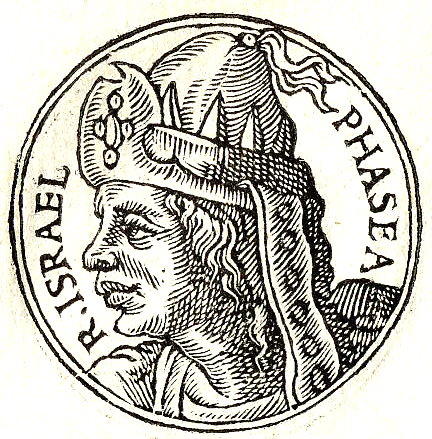
Chapter 17 marks the beginning of the end of the northern kingdom of Israel. It had been two centuries since God had divided Solomon’s domain in half and placed the ten northern tribes under the leadership of Jeroboam. Now, some 200 years later, God was about to bring judgment upon His disobedient children. It all takes place during the reign of Hoshea, who will have the not-so-pleasant privilege of serving as the last king of Israel. Like many of his predecessors, Hoshea had come to the throne by means of intrigue and insurrection. Under King Pekah’s leadership, Israel had suffered significant losses in terms of both land and lives. King Tiglath-Pileser of Assyria had conducted a relentless campaign of terror, eventually capturing “the towns of Ijon, Abel-beth-maacah, Janoah, Kedesh, and Hazor. He also conquered the regions of Gilead, Galilee, and all of Naphtali, and he took the people to Assyria as captives” (2 Kings 15:29 ESV). 

These actions left the nation in disarray and weakened Pekah’s hold on the throne of Israel. Hoshea took full advantage of the volatile conditions and launched a coup that resulted in Pekah’s assassination and his own ascension to the throne of Israel. But he had chosen a poor time to become king. The Assyrians had completely dominated and demoralized the Israelite army, leaving Hoshea with no choice but to become a vassal to King Tiglath-Pileser. He was nothing more than a puppet king, answering to the more powerful king of Assyria. But when Tiglath-Pileser was forced to return to Mesopotamia to address problems in his own land, Hoshea rebelled and declared Israel free of Assyrian rule. He stopped all tribute payments to Assyria and, to prevent further invasions, he formed an alliance with the Egyptians. Things appeared to be going in his favor.

Tiglath-Pileser eventually died and was replaced by his son, Shalmaneser. For two years, the new king of Assyria remained preoccupied with problems on the home front. But in 725 BC, he once again set his sights on the land of Philistia. One of the first things Shalmaneser did was order the arrest and imprisonment of the recalcitrant king of Israel. Hoshea was removed from the throne and placed in a prison cell, where he would wait out the fall of his kingdom. For three years, the Assyrians laid siege to the capital city of Samaria, and in 722 BC, it fell.

…in the ninth year of King Hoshea’s reign, Samaria fell, and the people of Israel were exiled to Assyria. They were settled in colonies in Halah, along the banks of the Habor River in Gozan, and in the cities of the Medes. – 2 Kings 17:6 NLT

But even worse than the fall of the capital was the capture and deportation of the people. They were forcibly removed from the land and taken as prisoners to Assyria. They were herded like animals and marched out of Israel, never to set foot in the land of promise again. And the author makes it painfully clear the reason behind their horrific fate.

This disaster came upon the people of Israel because they worshiped other gods. They sinned against the LORD their God, who had brought them safely out of Egypt and had rescued them from the power of Pharaoh, the king of Egypt. – 2 Kings 17:7 NLT

None of this should have come as a surprise because Yahweh had repeatedly warned them that they would face serious consequences if they chose to rebel against Him. Long before they had entered the land of Canaan, He had given them a detailed description of what would happen if they refused to remain faithful to their covenant commitment to Him. Moses pulled no punches when he outlined the devastating consequences of their rebellion to them.

“The LORD will exile you and your king to a nation unknown to you and your ancestors. There in exile you will worship gods of wood and stone! You will become an object of horror, ridicule, and mockery among all the nations to which the LORD sends you.” – Deuteronomy 28:36-37 NLT

“You will have sons and daughters, but you will lose them, for they will be led away into captivity.”Deuteronomy 28:41 NLT

“Just as the LORD has found great pleasure in causing you to prosper and multiply, the LORD will find pleasure in destroying you. You will be torn from the land you are about to enter and occupy. – Deuteronomy 28:63 NLT

And now, centuries later, the foreboding words of Moses had been fulfilled. God did what He had said He would do, and the author of 2 Kings puts all the blame on the people of Israel.

They had followed the practices of the pagan nations – vs 8

The people of Israel had also secretly done many things that were not pleasing to the LORD their God. – vs 9

They built pagan shrines for themselves – vs 9

They set up sacred pillars and Asherah poles – vs 10

They offered sacrifices on all the hilltops, just like the nations the LORD had driven from the land ahead of them – vs 11

Yes, they worshiped idols, despite the LORD’s specific and repeated warnings. – vs 12

And they had done all of this despite the repeated warnings of God’s prophets.

Again and again the LORD had sent his prophets and seers to warn both Israel and Judah: “Turn from all your evil ways. Obey my commands and decrees—the entire law that I commanded your ancestors to obey, and that I gave you through my servants the prophets.” – 2 Kings 17:13 NLT

But they had refused to listen. They rejected the prophets’ warnings and refused to believe that God would carry out His threat of judgment and destruction. In fact, the author states that “they despised all his warnings” (2 Kings 17:15 NLT). And it had all begun as soon as God had placed the ten northern tribes under the leadership of Jeroboam. In response to this tremendous responsibility given to him by God, Jeroboam had ordered the creation of two idols of gold made in the form of a calf. These false gods became the first of many that the people of Israel worshiped in place of Yahweh.

on the advice of his counselors, the king made two gold calves. He said to the people, “It is too much trouble for you to worship in Jerusalem. Look, Israel, these are the gods who brought you out of Egypt!”

He placed these calf idols in Bethel and in Dan—at either end of his kingdom. But this became a great sin, for the people worshiped the idols, traveling as far north as Dan to worship the one there. – 1 Kings 12:28-30 NLT

Centuries later, the spiritual state in Israel had not improved; it had actually worsened.

They set up an Asherah pole and worshiped Baal and all the forces of heaven. They even sacrificed their own sons and daughters in the fire. They consulted fortune-tellers and practiced sorcery and sold themselves to evil, arousing the LORD’s anger. – 2 Kings 17:16-17 NLT

King after king, generation after generation, the people of Israel would repeat the sins of their fathers. Meanwhile, the prophets of God repeated the warnings of Moses, calling the people to repent and return to their covenant commitment.

But the Israelites would not listen. They were as stubborn as their ancestors who had refused to believe in the LORD their God. – 2 Kings 17:14 NLT

So, God “swept them away from his presence” (2 Kings 17:18 NLT). In a sense, the ten northern tribes ceased to exist. Yes, even after the exile, many would remain in the land, but they would never have another king to rule over them. This remnant of God’s chosen people would live under the constant threat of enemy attack, and the former “land of promise” would become a place of hopelessness and heartache. The residual impact of the Assyrian invasion would be long-term and devastatingly difficult, just as God had warned.

Its armies will devour your livestock and crops, and you will be destroyed. They will leave you no grain, new wine, olive oil, calves, or lambs, and you will starve to death. – Deuteronomy 28:51 NLT

The people of God had turned their backs on Yahweh. Despite His many blessings and the constant demonstrations of His covenant faithfulness, they made a conscious decision to replace Him. He had warned them, but they had refused to listen. And now they were facing the consequences. Yahweh could be ignored, but He would not be mocked. They could refuse to heed His warnings, but they could not escape His judgment. The covenant commitment their ancestors made with Yahweh had been binding and irreversible. There was no excuse for their refusal to obey.

All the way back to their days in the wilderness after their deliverance from slavery in Egypt, the Israelites had eagerly agreed to keep their covenant commitment to Yahweh, not once but twice.

Then Moses went down to the people and repeated all the instructions and regulations the Lord had given him. All the people answered with one voice, “We will do everything the LORD has commanded. – Exodus 24:3 NLT

Then he took the Book of the Covenant and read it aloud to the people. Again they all responded, “We will do everything the LORD has commanded. We will obey. – Exodus 24:7 NLT

But “they despised his statutes and his covenant that he made with their fathers and the warnings that he gave them” (2 Kings 17:15 ESV). Rather than doing everything the LORD commanded, “they went after false idols and became false, and they followed the nations that were around them” (2 KINGS 17:15 ESV). Now, they were paying the price. 

English Standard Version (ESV) The Holy Bible, English Standard Version. ESV® Permanent Text Edition® (2016). Copyright © 2001 by Crossway Bibles, a publishing ministry of Good News Publishers.

New Living Translation (NLT) Holy Bible, New Living Translation, copyright © 1996, 2004, 2015 by Tyndale House Foundation. Used by permission of Tyndale House Publishers Inc., Carol Stream, Illinois 60188. All rights reserved.

The End Is Near

13 Shallum the son of Jabesh began to reign in the thirty-ninth year of Uzziah king of Judah, and he reigned one month in Samaria. 14 Then Menahem the son of Gadi came up from Tirzah and came to Samaria, and he struck down Shallum the son of Jabesh in Samaria and put him to death and reigned in his place. 15 Now the rest of the deeds of Shallum, and the conspiracy that he made, behold, they are written in the Book of the Chronicles of the Kings of Israel. 16 At that time Menahem sacked Tiphsah and all who were in it and its territory from Tirzah on, because they did not open it to him. Therefore he sacked it, and he ripped open all the women in it who were pregnant.

17 In the thirty-ninth year of Azariah king of Judah, Menahem the son of Gadi began to reign over Israel, and he reigned ten years in Samaria. 18 And he did what was evil in the sight of the LORD. He did not depart all his days from all the sins of Jeroboam the son of Nebat, which he made Israel to sin. 19 Pul the king of Assyria came against the land, and Menahem gave Pul a thousand talents of silver, that he might help him to confirm his hold on the royal power. 20 Menahem exacted the money from Israel, that is, from all the wealthy men, fifty shekels of silver from every man, to give to the king of Assyria. So the king of Assyria turned back and did not stay there in the land. 21 Now the rest of the deeds of Menahem and all that he did, are they not written in the Book of the Chronicles of the Kings of Israel? 22 And Menahem slept with his fathers, and Pekahiah his son reigned in his place.

23 In the fiftieth year of Azariah king of Judah, Pekahiah the son of Menahem began to reign over Israel in Samaria, and he reigned two years. 24 And he did what was evil in the sight of the LORD. He did not turn away from the sins of Jeroboam the son of Nebat, which he made Israel to sin. 25 And Pekah the son of Remaliah, his captain, conspired against him with fifty men of the people of Gilead, and struck him down in Samaria, in the citadel of the king’s house with Argob and Arieh; he put him to death and reigned in his place. 26 Now the rest of the deeds of Pekahiah and all that he did, behold, they are written in the Book of the Chronicles of the Kings of Israel.

27 In the fifty-second year of Azariah king of Judah, Pekah the son of Remaliah began to reign over Israel in Samaria, and he reigned twenty years. 28 And he did what was evil in the sight of the LORD. He did not depart from the sins of Jeroboam the son of Nebat, which he made Israel to sin.

29 In the days of Pekah king of Israel, Tiglath-pileser king of Assyria came and captured Ijon, Abel-beth-maacah, Janoah, Kedesh, Hazor, Gilead, and Galilee, all the land of Naphtali, and he carried the people captive to Assyria. 30 Then Hoshea the son of Elah made a conspiracy against Pekah the son of Remaliah and struck him down and put him to death and reigned in his place, in the twentieth year of Jotham the son of Uzziah. 31 Now the rest of the acts of Pekah and all that he did, behold, they are written in the Book of the Chronicles of the Kings of Israel. 2 Kings 15:13-31 ESV

During Azariah’s 52-year reign over the southern kingdom of Judah, things proved to be a bit more unstable north of the border. Israel was having difficulty keeping its kings alive. In just over 14 years, the ten northern tribes would go through six different kings, and all but one of them would be assassinated by their successors. It was a time marked by extreme political instability and worsening spiritual infidelity. Zechariah’s reign would be short-lived, lasting only six months before Shallum assassinated him and took his place on the throne. But Shallum would break Zechariah’s record for the shortest reign by surviving a single month before Menahem took his life and his throne.

According to the Jewish historian, Josephus, Menahem had been the commander-in-chief of Jeroboam II’s army. Evidently, Menahem had taken Shallum’s murder of Zechariah, the son of Jeroboam II, as an act of treason. So, he took matters into his own hands and executed the usurper to the throne in record time. Of course, Menahem chose to fill the vacancy left by Shallum’s untimely death by declaring himself king. But when some of Israel’s citizens refused to recognize his right to rule, he launched a brutal reprisal campaign against them.

Menahem destroyed the town of Tappuah and all the surrounding countryside as far as Tirzah, because its citizens refused to surrender the town. He killed the entire population and ripped open the pregnant women. – 2 Kings 15:16 NLT

It’s not surprising that the author describes Menahem’s ten-year reign as evil. He did nothing to restore the nation’s spiritual condition. Instead, he replicated the idolatrous ways of his predecessor, Jeroboam, the first king of the northern kingdom.

It was during Menahem’s less-than-stellar reign that the kingdom of Assyria first appeared on the scene. This up-and-coming nation would prove to be a constant source of trouble for both Israel and Judah. When the king of Assyria began to test his growing military might by launching raids into Israelite territory, Menahem determined that it was in his best interest to secure an alliance with this potent new threat to the region. So, he paid a substantial tribute to the Assyrians and funded it by exacting an exorbitant and highly unpopular tax on the wealthiest citizens of Israel. But his strategy appears to have worked.

…the king of Assyria turned from attacking Israel and did not stay in the land. – 2 Kings 15:20 NLT

But little did Menahem know that he was simply buying time. The Assyrians could be bought off, but they would not go away.

Menahem was succeeded by his son, Pekahiah, whose reign would last only two years. Pekahiah was eventually assassinated and replaced by Pekah, the son of the man who commanded his own army. And it was during Pekah’s 20-year, sin-stained reign that the Assyrians showed up again. Evidently, Pekah chose not to continue making tribute payments to the Assyrians, so King Tiglath-pileser ordered the resumption of raids into Israelite territory.

King Tiglath-pileser of Assyria attacked Israel again, and he captured the towns of Ijon, Abel-beth-maacah, Janoah, Kedesh, and Hazor. He also conquered the regions of Gilead, Galilee, and all of Naphtali, and he took the people to Assyria as captives. – 2 Kings 15:29 NLT

The scope and intensity of these raids are simply a foreshadowing of darker days to come. Long before the Israelites settled in the land of Canaan, God had warned them what would happen if they chose to be unfaithful by refusing to obey His commands.

“You will watch as your sons and daughters are taken away as slaves. Your heart will break for them, but you won’t be able to help them. A foreign nation you have never heard about will eat the crops you worked so hard to grow. You will suffer under constant oppression and harsh treatment. You will go mad because of all the tragedy you see around you.” – Deuteronomy 28:32-34 NLT

This was just the beginning. But Pekah did not recognize these devastating raids by the Assyrians as the judgment of God. Instead, he “did what was evil in the LORD’s sight. He refused to turn from the sins that Jeroboam son of Nebat had led Israel to commit” (2 Kings 15:28 NLT). And eventually, he suffered the same fate as his predecessor. After a 20-year reign, he too was assassinated. Israel’s constant harassment by the Assyrians eventually destabilized Pekah’s reign.

These costly raids and the enslavement of their fellow citizens led the people to grow increasingly more dissatisfied with Pekah’s leadership. Eventually, Hoshea, the son of Elah, took advantage of the unstable situation by instigating a successful coup against the king. He assassinated Pekah and took his place on the throne of Israel, but this latest regime change, like all those that had preceded it, made little difference. The people of Israel remained just as rebellious and unrepentant as ever, and the Assyrians grew increasingly powerful with each passing day. The handwriting was on the wall; it would not be long before God fulfilled His promise to bring curses upon the people of Israel for their unfaithfulness and disobedience.

During this time, Yahweh sent His prophets to warn the Israelites about their sinful behavior.

“The people of Israel have sinned again and again,
    and I will not let them go unpunished!
They sell honorable people for silver
    and poor people for a pair of sandals.
They trample helpless people in the dust
    and shove the oppressed out of the way.
Both father and son sleep with the same woman,
    corrupting my holy name.” – Amos 2:6-7 NLT

“From among all the families on the earth,
    I have been intimate with you alone.
That is why I must punish you
    for all your sins.” – Amos 3:2 NLT

“But now bring charges against Israel—your mother—
    for she is no longer my wife,
    and I am no longer her husband.
Tell her to remove the prostitute’s makeup from her face
    and the clothing that exposes her breasts.
Otherwise, I will strip her as naked
    as she was on the day she was born.
I will leave her to die of thirst,
    as in a dry and barren wilderness. – Hosea 2:2-3 NLT

They had been warned, but repeatedly refused to repent. Through intrigue and insurrection, the kings of Israel had led their people to sin against God, destabilizing the nation’s power and encouraging the people to forsake Yahweh. And the time was coming when God would repay them for their unfaithfulness. He would no longer allow His holy name to be desecrated by their constant disobedience of His commands and disregard for His will. They had failed to recognize and appreciate His faithfulness.

She doesn’t realize it was I who gave her everything she has—
    the grain, the new wine, the olive oil;
I even gave her silver and gold.
    But she gave all my gifts to Baal.” – Hosea 2:8 NLT

And they would pay dearly for their mistake.

English Standard Version (ESV) The Holy Bible, English Standard Version. ESV® Permanent Text Edition® (2016). Copyright © 2001 by Crossway Bibles, a publishing ministry of Good News Publishers.

New Living Translation (NLT) Holy Bible, New Living Translation, copyright © 1996, 2004, 2015 by Tyndale House Foundation. Used by permission of Tyndale House Publishers Inc., Carol Stream, Illinois 60188. All rights reserved.

I Will Sing of My Redeemer

1 By the waters of Babylon,
there we sat down and wept,
when we remembered Zion.
On the willows there
we hung up our lyres.
For there our captors
required of us songs,
and our tormentors, mirth, saying,
“Sing us one of the songs of Zion!”

How shall we sing the Lord‘s song
in a foreign land?
If I forget you, O Jerusalem,
let my right hand forget its skill!
Let my tongue stick to the roof of my mouth,
if I do not remember you,
if I do not set Jerusalem
above my highest joy!

Remember, O Lord, against the Edomites
the day of Jerusalem,
how they said, “Lay it bare, lay it bare,
down to its foundations!”
O daughter of Babylon, doomed to be destroyed,
blessed shall he be who repays you
with what you have done to us!
Blessed shall he be who takes your little ones
and dashes them against the rock. – Psalm 137:1-9 ESV

This psalm is a song of lament, written sometime after the fall of Jerusalem to Babylonian invaders in 587 B.C.. After a 30-month-long siege, the city’s inhabitants were on the brink of starvation, a fact that the prophet Jeremiah describes in great detail in the Book of Lamentations.

See how the precious children of Jerusalem,
worth their weight in fine gold,
are now treated like pots of clay
made by a common potter.

Even the jackals feed their young,
but not my people Israel.
They ignore their children’s cries,
like ostriches in the desert.

The parched tongues of their little ones
stick to the roofs of their mouths in thirst.
The children cry for bread,
but no one has any to give them.

The people who once ate the richest foods
now beg in the streets for anything they can get.
Those who once wore the finest clothes
now search the garbage dumps for food.

The guilt of my people
is greater than that of Sodom,
where utter disaster struck in a moment
and no hand offered help.

Our princes once glowed with health—
brighter than snow, whiter than milk.
Their faces were as ruddy as rubies,
their appearance like fine jewels.

But now their faces are blacker than soot.
No one recognizes them in the streets.
Their skin sticks to their bones;
it is as dry and hard as wood.

Those killed by the sword are better off
than those who die of hunger.
Starving, they waste away
for lack of food from the fields.– Lamentations 4:2-9 NLT

Eventually, the Babylonians breached the city’s walls.

By July 18 in the eleventh year of Zedekiah’s reign, the famine in the city had become very severe, and the last of the food was entirely gone.Then a section of the city wall was broken down. Since the city was surrounded by the Babylonians… 2 Kings 25:3-4 NLT

After a slight delay, Nebuchadnezzar ordered the wanton destruction of Jerusalem and the capture of many of its citizens, who were taken back to Babylon as slaves.

On August 14 of that year,which was the nineteenth year of King Nebuchadnezzar’s reign, Nebuzaradan, the captain of the guard and an official of the Babylonian king, arrived in Jerusalem. He burned down the Temple of the Lord, the royal palace, and all the houses of Jerusalem. He destroyed all the important buildings in the city. Then he supervised the entire Babylonian army as they tore down the walls of Jerusalem on every side. Then Nebuzaradan, the captain of the guard, took as exiles the rest of the people who remained in the city, the defectors who had declared their allegiance to the king of Babylon, and the rest of the population. But the captain of the guard allowed some of the poorest people to stay behind to care for the vineyards and fields.– 2 Kings 25:8-12 NLT

The psalmist picks up the story sometime after the exiles arrived in Babylon. He describes them as weeping beside the rivers of Babylon, as they considered the full weight of their devastating circumstances. The depth of their sorrow is reflected in their decision to ban all music.

We put away our harps,
hanging them on the branches of poplar trees.
For our captors demanded a song from us.– Psalm 137:2-3 NLT

Mocked relentlessly by their Babylonian overlords, the exiles mourned and wept in silence, refusing to assuage their grief with songs. This sad state of affairs should not have been a surprise to them, because Yahweh had warned it would happen.

“And now the Lord of Heaven’s Armies says: Because you have not listened to me, I will gather together all the armies of the north under King Nebuchadnezzar of Babylon, whom I have appointed as my deputy. I will bring them all against this land and its people and against the surrounding nations. I will completely destroy you and make you an object of horror and contempt and a ruin forever. I will take away your happy singing and laughter. The joyful voices of bridegrooms and brides will no longer be heard. Your millstones will fall silent, and the lights in your homes will go out.This entire land will become a desolate wasteland. Israel and her neighboring lands will serve the king of Babylon for seventy years.” – Ezekiel 25:8-11 NLT

The former citizens of Jerusalem justified their actions, saying, “How can we sing the songs of the LORD while in a pagan land?” (Psalm 137:4 NLT). From their perspective, they had no reason to sing. Their city had been destroyed, their homes burned, the Temple plundered and reduced to rubble, and they had been chained and forced-marched all the way to Babylon, where they would spend the next seven decades as slaves. Even if Yahweh’s promise was true, and they would return to Jerusalem after 70 years, many of them knew they would never live long enough to see that day. 

Yet, the psalmist refused to give up. He couldn’t bring himself to give up and give in to despair. He wasn’t minimizing their situation; he was simply attempting to remind himself and his fellow exiles that they still had reason to hope.

If I forget you, O Jerusalem,
let my right hand forget how to play the harp.
May my tongue stick to the roof of my mouth
if I fail to remember you,
if I don’t make Jerusalem my greatest joy.– Psalm 137:5-6 NLT

When the Babylonians shouted, “Sing us one of those songs of Jerusalem!” (Psalm 137:3 NLT), they were mocking the Israelites’ practice of singing the songs of ascent as they made their annual pilgrimages to Jerusalem during the feast days. The psalms were designed to remind the Israelites of the unique status of Jerusalem, not just as their national capital, but as the home of the Temple, considered to be Yahweh’s earthly dwelling place. As they made their way up the paths to Mount Zion, they could see the glorious Temple, which stood as a reminder that they served a holy, all-powerful, and covenant-keeping God.

I look up to the mountains—
does my help come from there?
My help comes from the LORD,
who made heaven and earth!– Psalm 121:1-2 NLT

The LORD keeps you from all harm
and watches over your life.
The LORD keeps watch over you as you come and go,
both now and forever.– Psalm 121:7-8 NLT

What if the LORD had not been on our side?
Let all Israel repeat:
What if the LORDhad not been on our side
when people attacked us?
They would have swallowed us alive
in their burning anger.
The waters would have engulfed us;
a torrent would have overwhelmed us.
Yes, the raging waters of their fury
would have overwhelmed our very lives.– Psalm 124:1-5 NLT

But now, they sat by the rivers of Babylon, engulfed and overwhelmed by the reality that their God had not saved them. He had not been on their side. As they had walked away from Jerusalem in chains, their minds were seared with the parting image of their once-glorious Temple in ruins and their impregnable city reduced to rubble.

But the psalmist wanted to remember Jerusalem as it had been before the Babylonians arrived. He longed to relish the halcyon days when Yahweh’s Shekinah glory dwelled above the Mercy Seat in the Holy of Holies. He still held out hope that their God had not completely abandoned them. While their circumstances were bleak and their chances for survival seemed slim, he believed that Yahweh was still on His throne and would remain faithful to His covenant promises. He offered up a prayer to the LORD, begging Him to remember what the Edomites said as they gleefully witnessed the fall of Jerusalem.

O LORD, remember what the Edomites did
on the day the armies of Babylon captured Jerusalem.
“Destroy it!” they yelled.
“Level it to the ground!” – Psalm 137:7 NLT

The Edomites were descendants of Esau, the brother of Jacob, and thus blood relatives of the Israelites. But the Edomites held a long-standing grudge against Jacob’s progeny, and rejoiced in their destruction. The sight of Jerusalem being invaded by Babylonian troops spurred the Edomites to demand its complete destruction. They wanted the Israelites and their capital city wiped off the face of the earth.

The psalmist called on Yahweh to act. Surely, the God of Abraham, Isaac, and Jacob would not stand back and allow His chosen people to suffer permanent extinction. He had heard the cries of the prophets, warning the Israelites to repent of their sins or face God’s judgment, and he had lived to experience it firsthand. But he had also heard the prophets speak of God’s promise to redeem and restore them.

This is what the LORD says: “You will be in Babylon for seventy years. But then I will come and do for you all the good things I have promised, and I will bring you home again. For I know the plans I have for you,” says the LORD. “They are plans for good and not for disaster, to give you a future and a hope. In those days when you pray, I will listen. If you look for me wholeheartedly, you will find me. I will be found by you,” says the LORD. “I will end your captivity and restore your fortunes. I will gather you out of the nations where I sent you and will bring you home again to your own land.” – Jeremiah 29:10-14 NLT

He might not live to see that day, but he was willing to trust that the LORD would bring it about. With the words of the prophet Jeremiah ringing in his ears, the psalmist expressed his belief that Yahweh would do what He promised to do.

“Listen to this message from the LORD,
    you nations of the world;
    proclaim it in distant coastlands:
The LORD, who scattered his people,
    will gather them and watch over them
    as a shepherd does his flock.
For the LORD has redeemed Israel
    from those too strong for them.
They will come home and sing songs of joy on the heights of Jerusalem.” – Jeremiah 31:10-12 NLT

Notice the emphasis on songs of joy. While the Babylonians mocked the Israelites’ songs of ascent, the psalmist focused on the day when singing would be renewed because of God’s faithfulness. The highways and byways surrounding Jerusalem would once again ring with joyful praise as the Israelites made their way to a restored city and a rebuilt Temple, where they would enjoy a renewed relationship with their God. This news, coupled with Jeremiah’s prediction of Babylon’s eventual fall, produced hope in the heart of the psalmist.

“How Babylon is fallen—
great Babylon, praised throughout the earth!
Now she has become an object of horror
among the nations.
The sea has risen over Babylon;
she is covered by its crashing waves.
Her cities now lie in ruins;
she is a dry wasteland
where no one lives or even passes by.
– Jeremiah 51:41-43 NLT

The tables will be turned, and the fortunes of Israel and Babylon will be reversed, which led the psalmist to end his song with an exuberant, if not macabre, refrain of praise and rejoicing.

O Babylon, you will be destroyed.
    Happy is the one who pays you back
    for what you have done to us.
Happy is the one who takes your babies
    and smashes them against the rocks! – Psalm 137:8-9 NLT

Father, when times get tough, it can be difficult to sing Your praises. Suffering seems to cause short-term memory loss, leaving us unable to recall Your many acts of grace, mercy, kindness, and love. Dark days can produce a cloudy recollection of Your power and providential provision of all our needs. We can find ourselves sitting by our “rivers of Babylon,” whining about our lot in life rather than singing about Your glory and goodness. Help me keep a song on my lips at all times because You are forever faithful, all-powerful, never unaware of my circumstances, and . always ready to act on my behalf. I have plenty of reasons to sing Your praises even when I can’t sense Your presence. Amen

English Standard Version (ESV) The Holy Bible, English Standard Version. ESV® Permanent Text Edition® (2016). Copyright © 2001 by Crossway Bibles, a publishing ministry of Good News Publishers.

New Living Translation (NLT) Holy Bible, New Living Translation, copyright © 1996, 2004, 2015 by Tyndale House Foundation. Used by permission of Tyndale House Publishers Inc., Carol Stream, Illinois 60188. All rights reserved.

Our Gracious God

To the choirmaster: according to Lilies. A Testimony. Of Asaph, a Psalm.

1 Give ear, O Shepherd of Israel,
    you who lead Joseph like a flock.
You who are enthroned upon the cherubim, shine forth.
    Before Ephraim and Benjamin and Manasseh,
stir up your might
    and come to save us!

Restore us, O God;
    let your face shine, that we may be saved!

O LORD God of hosts,
    how long will you be angry with your people’s prayers?
You have fed them with the bread of tears
    and given them tears to drink in full measure.
You make us an object of contention for our neighbors,
    and our enemies laugh among themselves.

Restore us, O God of hosts;
    let your face shine, that we may be saved!

You brought a vine out of Egypt;
    you drove out the nations and planted it.
You cleared the ground for it;
    it took deep root and filled the land.
10 The mountains were covered with its shade,
    the mighty cedars with its branches.
11 It sent out its branches to the sea
    and its shoots to the River.
12 Why then have you broken down its walls,
    so that all who pass along the way pluck its fruit?
13 The boar from the forest ravages it,
    and all that move in the field feed on it.

14 Turn again, O God of hosts!
    Look down from heaven, and see;
have regard for this vine,
15     the stock that your right hand planted,
    and for the son whom you made strong for yourself.
16 They have burned it with fire; they have cut it down;
    may they perish at the rebuke of your face!
17 But let your hand be on the man of your right hand,
    the son of man whom you have made strong for yourself!
18 Then we shall not turn back from you;
    give us life, and we will call upon your name!

19 Restore us, O LORD God of hosts!
    Let your face shine, that we may be saved! Psalm 80:1-19 ESV

Like the psalm that precedes it, this is a national psalm of lament, but it is difficult to determine the exact context surrounding its message. Some scholars believe Asaph is addressing the fall of the northern kingdom of Israel in 722 BC. But if Asaph was a resident of the southern kingdom of Judah, his prayer in verse 3 would appear to place the timing of this psalm after the fall of Jerusalem in 586 BC.

Before Ephraim and Benjamin and Manasseh,
stir up your might
    and come to save us! – Psalm 80:3 ESV

Asaph seems to indicate that something has happened to the people of Judah, the residents of the southern kingdom. In verses 5 and 6, he describes the extent of their suffering, which he attributes to God’s divine punishment.

You have fed us with sorrow
    and made us drink tears by the bucketful.
You have made us the scorn of neighboring nations.
    Our enemies treat us as a joke. – Psalm 80:5-6 NLT

Asaph’s reference to Ephraim, Benjamin, and Manasseh is intended as a not-so-subtle reminder that the nation of Israel used to be a unified whole. There had been a time under the reigns of David and Solomon when the 12 tribes of Israel were unified and dominated the political landscape of Canaan. Ephraim was the primary tribe in the north, the Benjamites lived in the south, and the tribe of Manasseh was located east of the Jordan River in the Transjordan. So it makes more sense to see this psalm lamenting Israel’s abysmal condition after the northern and southern kingdoms had fallen to the Assyrians and Babylonians.

It is interesting to note that Asaph opens his psalm with a reference to Joseph, the son of Jacob, who had been sold into slavery by his brothers. Under God’s sovereign hand, this young man ended up in Egypt and rose to the second-highest position in the land. His miraculous and meteoric rise to prominence was God-ordained and for the sole purpose of providing a place of refuge for his family when a famine struck the land of Canaan.

Asaph opens his psalm by addressing Yahweh as the “Shepherd of Israel” (Psalm 80:1 ESV), who leads Joseph like a flock. Joseph’s two sons, born to him in Egypt, were adopted by his father Jacob, and their descendants became heirs of the land of promise. Ephraim and Manasseh, two of the tribes mentioned in verse 2, were the descendants of Joseph’s two sons and, at one time, enjoyed a place within the unified nation of Israel alongside the tribe of Benjamin.

But sin had disrupted Israel’s peace and prosperity. King Solomon, the wisest man who ever lived, behaved like a fool by fostering idolatry and apostasy in the kingdom. His actions resulted in God splitting the kingdom in half. From that point, the downward spiritual spiral continued in the north, south, and east, as all the tribes exhibited a penchant for unfaithfulness and a stubborn refusal to repent and return to Yahweh.

So, Asaph calls on God to step in and fix the problem.

Show us your mighty power.
    Come to rescue us! – Psalm 80:3 NLT

Asaph attributes their fate to God’s displeasure with them, but he never acknowledges their complicity and guilt. At no point does Asaph attempt to confess the sins of his fellow Israelites. Instead, he questions why God remains so angry and unwilling to answer their prayers for deliverance.

Asaph attempts to remind God of His past acts of kindness by chronicling how He had delivered the Israelites from their slavery in Egypt and established them in the land of Canaan.

You brought us from Egypt like a grapevine;
    you drove away the pagan nations and transplanted us into your land.
You cleared the ground for us,
    and we took root and filled the land.
Our shade covered the mountains;
    our branches covered the mighty cedars.
We spread our branches west to the Mediterranean Sea;
    our shoots spread east to the Euphrates River. – Psalm 80:8-11 NLT

Those were the good old days, when the Israelites enjoyed the blessings of God. They had been fruitful and filled the land of Canaan. Under the leadership of David and Solomon, their numbers grew and their kingdom spread, making them a force to be reckoned with in the region. But all that had changed. The conditions in Israel were markedly different when Asaph penned this psalm because sin had brought the judgment of God.

Yet, Asaph never mentions their sin. He fails to acknowledge their complicity in their own demise, choosing instead to blame God.

But now, why have you broken down our walls
    so that all who pass by may steal our fruit?
The wild boar from the forest devours it,
    and the wild animals feed on it. – Psalm 80:12-13 NLT

While God had brought judgment upon the people of Israel, it had been as a result of their rebellion against Him. Asaph obsesses over the consequences they suffered and demands remediation, but he refuses to confess their guilt. He begs God to intervene and appears to try to shame God into action.

Take care of this grapevine
    that you yourself have planted,
    this son you have raised for yourself. – Psalm 80:14-15 NLT

Asaph freely admits that God had chosen Israel to be His treasured possession, but he couldn’t understand why they were suffering so greatly. It made no sense. As the nation that bore His name, the Israelites should have been prospering and enjoying all the benefits of their privileged position. But, according to Asaph, they were like a vineyard that had been “chopped up and burned by” (Psalm 80:16 NLT) by their enemies.

So, Asaph asks God to reverse the trend and restore His people to greatness.

May you give support to the one you have chosen,
to the one whom you raised up for yourself.
Psalm 80:17 NET

In response to God’s miraculous deliverance, Asaph promises the renewed allegiance of the people of Israel.

Then we will never abandon you again.
    Revive us so we can call on your name once more. – Psalm  80:17 NLT

By referring to God’s name, Asaph appeals to God’s reputation. He knows that Yahweh holds His name in high regard and will not allow it to be tarnished by those privileged to bear it. He had warned the Israelites that their behavior reflected on His character.

“You must worship no other gods, for the Lord, whose very name is Jealous, is a God who is jealous about his relationship with you.” – Exodus 34:14 NLT

He would not allow them to drag His name through the mud by their repeated acts of apostasy and idolatry, and that is the reason for their current state of deprivation and despair. All 12 tribes were guilty of worshiping other gods and had angered Yahweh with their refusal to heed His warnings and repent of their sins. But Asaph longs to see God redeem and restore them.

Turn us again to yourself, O Lord God of Heaven’s Armies.
    Make your face shine down upon us.
    Only then will we be saved. – Psalm 80:19 NLT

He was right. God was the only solution to their problem. Their cities lay in ruins, and their economy was devastated. They had no king or army and no hope of improving their fortunes unless God stepped in. Asaph’s reliance upon God was commendable, but he failed to recognize the corporate need for repentance. The prophets made it clear that redemption and restoration were available but required repentance.

Seek the Lord while you can find him.
    Call on him now while he is near.
Let the wicked change their ways
    and banish the very thought of doing wrong.
Let them turn to the Lord that he may have mercy on them.
    Yes, turn to our God, for he will forgive generously. – Isaiah 55:6-7 NLT

God would later inspire Jeremiah to deliver the following message to the Israelites living in exile in Babylon. He wanted them to know that their captivity had an expiration date, but to enjoy His deliverance, they must exhibit repentant hearts.

“For I know the plans I have for you,” says the Lord. “They are plans for good and not for disaster, to give you a future and a hope. In those days when you pray, I will listen. If you look for me wholeheartedly, you will find me. I will be found by you,” says the Lord. “I will end your captivity and restore your fortunes. I will gather you out of the nations where I sent you and will bring you home again to your own land.” – Jeremiah 29:11-14 NLT

Asaph was right to call on God, but neglected to call the people to repentance. God had promised to hear their prayers and restore their fortunes, but He required that they look for him “wholeheartedly.” God demanded their sold-out devotion to Him alone, instead of their usual brand of half-hearted, going-through-the-motions, on-again-off-again worship.

Yet, despite their failure to repent and return to Him in wholehearted devotion, God eventually released them from their exile in Babylon and restored them to the land of Canaan. Their covenant-keeping God graciously ended their captivity and arranged for a remnant to return to Jerusalem under the leadership of Ezra and Nehemiah. Yahweh proved to be faithful even when His people refused to keep their end of the covenant agreement. And, according to the Book of Ezekiel, God is far from done with His chosen people. The day is coming when He will perform a miracle of transformation that will ensure their unwavering devotion to Him.

“For I will gather you up from all the nations and bring you home again to your land.

“Then I will sprinkle clean water on you, and you will be clean. Your filth will be washed away, and you will no longer worship idols. And I will give you a new heart, and I will put a new spirit in you. I will take out your stony, stubborn heart and give you a tender, responsive heart. And I will put my Spirit in you so that you will follow my decrees and be careful to obey my regulations.

“And you will live in Israel, the land I gave your ancestors long ago. You will be my people, and I will be your God. I will cleanse you of your filthy behavior.” – Ezekiel 36:24-29 NLT

Father, You truly are amazing. Your love never fails. You always keep Your word. Your grace is always undeserved. Your mercy never runs out. Your patience is inexhaustible. And Your plan for Your people is unstoppable. Despite us, You continually pour out Your blessings through Jesus Christ. You have made a way where there was no way. You do the impossible and accomplish the improbable. And we don’t deserve it. Amen

English Standard Version (ESV) The Holy Bible, English Standard Version. ESV® Permanent Text Edition® (2016). Copyright © 2001 by Crossway Bibles, a publishing ministry of Good News Publishers.

New Living Translation (NLT) Holy Bible, New Living Translation, copyright © 1996, 2004, 2015 by Tyndale House Foundation. Used by permission of Tyndale House Publishers Inc., Carol Stream, Illinois 60188. All rights reserved.

For Your Own Sake, O Lord

1 In the first year of Darius the son of Ahasuerus, by descent a Mede, who was made king over the realm of the Chaldeans— in the first year of his reign, I, Daniel, perceived in the books the number of years that, according to the word of the Lord to Jeremiah the prophet, must pass before the end of the desolations of Jerusalem, namely, seventy years.

Then I turned my face to the Lord God, seeking him by prayer and pleas for mercy with fasting and sackcloth and ashes. I prayed to the Lord my God and made confession, saying, “O Lord, the great and awesome God, who keeps covenant and steadfast love with those who love him and keep his commandments, we have sinned and done wrong and acted wickedly and rebelled, turning aside from your commandments and rules. We have not listened to your servants the prophets, who spoke in your name to our kings, our princes, and our fathers, and to all the people of the land. To you, O Lord, belongs righteousness, but to us open shame, as at this day, to the men of Judah, to the inhabitants of Jerusalem, and to all Israel, those who are near and those who are far away, in all the lands to which you have driven them, because of the treachery that they have committed against you. To us, O Lord, belongs open shame, to our kings, to our princes, and to our fathers, because we have sinned against you. To the Lord our God belong mercy and forgiveness, for we have rebelled against him 10 and have not obeyed the voice of the Lord our God by walking in his laws, which he set before us by his servants the prophets. 11 All Israel has transgressed your law and turned aside, refusing to obey your voice. And the curse and oath that are written in the Law of Moses the servant of God have been poured out upon us, because we have sinned against him. 12 He has confirmed his words, which he spoke against us and against our rulers who ruled us, by bringing upon us a great calamity. For under the whole heaven there has not been done anything like what has been done against Jerusalem. 13 As it is written in the Law of Moses, all this calamity has come upon us; yet we have not entreated the favor of the Lord our God, turning from our iniquities and gaining insight by your truth. 14 Therefore the Lord has kept ready the calamity and has brought it upon us, for the Lord our God is righteous in all the works that he has done, and we have not obeyed his voice. 15 And now, O Lord our God, who brought your people out of the land of Egypt with a mighty hand, and have made a name for yourself, as at this day, we have sinned, we have done wickedly.

16 “O Lord, according to all your righteous acts, let your anger and your wrath turn away from your city Jerusalem, your holy hill, because for our sins, and for the iniquities of our fathers, Jerusalem and your people have become a byword among all who are around us. 17 Now therefore, O our God, listen to the prayer of your servant and to his pleas for mercy, and for your own sake, O Lord, make your face to shine upon your sanctuary, which is desolate. 18 O my God, incline your ear and hear. Open your eyes and see our desolations, and the city that is called by your name. For we do not present our pleas before you because of our righteousness, but because of your great mercy. 19 O Lord, hear; O Lord, forgive. O Lord, pay attention and act. Delay not, for your own sake, O my God, because your city and your people are called by your name.” – Daniel 9:1-19 ESV

This chapter opens with a second mention of Darius the Mede ruling over the kingdom of the Chaldeans. His name first appeared in chapter six in reference to an earlier event in Daniel’s life. He is the one who made a decree that for 30 days all the citizens of his kingdom must pray to him alone. His fateful decision had been at the prompting of his counselors who were jealous of Daniel and hoping to get rid of him. They were the ones who suggested that the penalty for disobeying the king’s order would be death by being fed to the lion.

There has been much debate as to the identity of Darius because no extra-biblical records contain any mention of a Babylonian or Medo-Persian king by that name. As was stated in our discussion of the events in chapter six, the simplest solution to this problem may lie in the meaning of the name “Darius.” It is of Aramaic origin and translates as “lord.” It was likely a title rather than a proper name. It seems that the author purposefully chose to leave out the name of the king involved in the story. He also provides scant details to help determine the date of the events recorded in this chapter. It is as if Darius was intended to represent all the “lords” who ruled over the kingdom of Babylon and its successor, the Medo-Persian empire.

But regardless of who Darius was, the events recorded in this chapter most likely happened toward the end of Daniel’s life when he was in his early 80s. Even in his latter years, Daniel remains faithful to Yahweh. Somehow he had received a copy of the letters that Jeremiah the prophet had written to the exiles living in Babylon. Jeremiah remained in Jerusalem but was commissioned by God to deliver a message to all those who had been taken captive by the Babylonians at the fall of Jerusalem. The letter was intended for “the elders, priests, prophets, and all the people who had been exiled to Babylon by King Nebuchadnezzar” (Jeremiah 29:1 NLT), and here is what it said:

This is what the Lord of Heaven’s Armies, the God of Israel, says to all the captives he has exiled to Babylon from Jerusalem: “Build homes, and plan to stay. Plant gardens, and eat the food they produce. Marry and have children. Then find spouses for them so that you may have many grandchildren. Multiply! Do not dwindle away! And work for the peace and prosperity of the city where I sent you into exile. Pray to the Lord for it, for its welfare will determine your welfare.” – Jeremiah 29:4-7 NLT

Daniel had managed to get his hands on some of the correspondence between Jeremiah and the Hebrew people living in Babylon. It also seems apparent that he had access to some of Jeremiah’s other writings. This faithful and aging servant of Yahweh remained uncompromised in his convictions despite his long tenure in the Babylonian administration. One of the reasons for his undiminished faith was that he stayed in touch with his God. He was obviously a man of prayer. But he was also a man of the Word. This chapter reveals that Daniel was reading from the writings of Jeremiah the prophet.

Under God’s direction, Jeremiah had faithfully sent letters reminding the Israelites to make the most of their time in Babylon but to never forget that there would be an end to their exile. God had told Jeremiah that their period of suffering would last 70 years and then they would be restored to the land.

When Daniel pens the words of this chapter, the people of Israel have been in captivity for about 67 years. He has spent most of his adult life in Babylon and upon reading the words of Jeremiah, he discovers that the fulfillment of God’s promise is drawing near. But rather than sit back, Daniel prays. What prompted this reaction was what he found written in Jeremiah’s prophesy:

This is what the Lord says: “You will be in Babylon for seventy years. But then I will come and do for you all the good things I have promised, and I will bring you home again. For I know the plans I have for you,” says the Lord. “They are plans for good and not for disaster, to give you a future and a hope. In those days when you pray, I will listen. If you look for me wholeheartedly, you will find me. I will be found by you,” says the Lord. “I will end your captivity and restore your fortunes. I will gather you out of the nations where I sent you and will bring you home again to your own land.” – Jeremiah 29:10-14 NLT

It seems likely that he also read Jeremiah’s reaction when God commanded him to buy a field just before the Babylonians invaded Judah.

“O Sovereign Lord, you have told me to buy the field – paying good money for it before these witnesses – even though the city will soon be handed over to the Babylonians.” – Jeremiah 32:25 NLT

God’s command made no sense to Jeremiah. It was a bad time to be investing in land but Jeremiah did as the Lord commanded because he understood God’s unfailing love and believed that God would fulfill His promise to restore Israel to the land one day. Jeremiah’s investment was based on the integrity of God.

Daniel read the words of Jeremiah and his response was one of prayer and fasting. His prayer was full of repentance on behalf of the people, and he included himself in their guilt. He appealed to God’s mercy. He praised God for His unfailing love and unwavering commitment to keep His promises. He acknowledged that their restoration would have nothing to do with their own merit; it would be for God’s sake and the honor of His name. Despite their years of rebellion and sin, God would forgive and restore them.

This entire chapter is reminiscent of the words God spoke at the dedication of the Temple that Solomon built for God’s glory. Yahweh told them that if they failed to be faithful, He would bring punishment. But if they repented, He would restore them.

“Then if my people who are called by my name will humble themselves and pray and seek my face and turn from their wicked ways, I will hear from heaven and will forgive their sins and restore their land.” – 2 Chronicles 7:14 NLT

Now, centuries later, Daniel is reminded of God’s promise of restoration and challenged by the need for humility, repentance, and prayer. So, he takes it upon himself to step up and do what God commanded. Even after all the decades of living in Babylon, Daniel longed to go home to Judah. Yet, he knew that God expected a change of heart among His people. Repentance must precede restoration.

Daniel was not bitter with God. He did not shake his fist in the face of God and demand an explanation or compensation for damages done. Instead, he openly confessed the sins of his people and justified God’s actions.

“You have kept your word and done to us and our rulers exactly as you warned. Never has there been such a disaster as happened in Jerusalem. Every curse written against us in the Law of Moses has come true. Yet we have refused to seek mercy from the Lord our God by turning from our sins and recognizing his truth.” – Daniel 9:12-13 NLT

Despite their exile, the people of Israel remained defiant and unrepentant. But not Daniel. He was ready to see God work and so he was ready to confess and call out for God’s mercy. He reminds God of His previous rescue of the people from their captivity in Egypt. He believes that God can do it again but knows that God is looking for repentant hearts among His people. This leads Daniel to cry out, “O my God, lean down and listen to me. Open your eyes and see our despair. See how your city—the city that bears your name—lies in ruins. We make this plea, not because we deserve help, but because of your mercy” (Daniel 9:18 NLT).

He knew they didn’t deserve God’s favor so he called on God to preserve the integrity of His own name. Daniel realized he was asking a lot but believed Yahweh to be a covenant-keeping God who always kept His word.

English Standard Version (ESV) The Holy Bible, English Standard Version. ESV® Permanent Text Edition® (2016). Copyright © 2001 by Crossway Bibles, a publishing ministry of Good News Publishers.

New Living Translation (NLT) Holy Bible, New Living Translation, copyright © 1996, 2004, 2015 by Tyndale House Foundation. Used by permission of Tyndale House Publishers Inc., Carol Stream, Illinois 60188. All rights reserved.

New English Translation (NET)NET Bible® copyright ©1996-2017 by Biblical Studies Press, L.L.C. http://netbible.com All rights reserved.

When We Lose Our Identity

28 The sons of Abraham: Isaac and Ishmael. 29 These are their genealogies: the firstborn of Ishmael, Nebaioth, and Kedar, Adbeel, Mibsam, 30 Mishma, Dumah, Massa, Hadad, Tema, 31 Jetur, Naphish, and Kedemah. These are the sons of Ishmael. 32 The sons of Keturah, Abraham’s concubine: she bore Zimran, Jokshan, Medan, Midian, Ishbak, and Shuah. The sons of Jokshan: Sheba and Dedan. 33 The sons of Midian: Ephah, Epher, Hanoch, Abida, and Eldaah. All these were the descendants of Keturah.

34 Abraham fathered Isaac. The sons of Isaac: Esau and Israel. 35 The sons of Esau: Eliphaz, Reuel, Jeush, Jalam, and Korah. 36 The sons of Eliphaz: Teman, Omar, Zepho, Gatam, Kenaz, and of Timna, Amalek. 37 The sons of Reuel: Nahath, Zerah, Shammah, and Mizzah.

38 The sons of Seir: Lotan, Shobal, Zibeon, Anah, Dishon, Ezer, and Dishan. 39 The sons of Lotan: Hori and Hemam; and Lotan’s sister was Timna. 40 The sons of Shobal: Alvan, Manahath, Ebal, Shepho, and Onam. The sons of Zibeon: Aiah and Anah. 41 The son of Anah: Dishon. The sons of Dishon: Hemdan, Eshban, Ithran, and Cheran. 42 The sons of Ezer: Bilhan, Zaavan, and Akan. The sons of Dishan: Uz and Aran.

43 These are the kings who reigned in the land of Edom before any king reigned over the people of Israel: Bela the son of Beor, the name of his city being Dinhabah. 44 Bela died, and Jobab the son of Zerah of Bozrah reigned in his place. 45 Jobab died, and Husham of the land of the Temanites reigned in his place. 46 Husham died, and Hadad the son of Bedad, who defeated Midian in the country of Moab, reigned in his place, the name of his city being Avith. 47 Hadad died, and Samlah of Masrekah reigned in his place. 48 Samlah died, and Shaul of Rehoboth on the Euphrates reigned in his place. 49 Shaul died, and Baal-hanan, the son of Achbor, reigned in his place. 50 Baal-hanan died, and Hadad reigned in his place, the name of his city being Pai; and his wife’s name was Mehetabel, the daughter of Matred, the daughter of Mezahab. 51 And Hadad died.

The chiefs of Edom were: chiefs Timna, Alvah, Jetheth, 52 Oholibamah, Elah, Pinon, 53 Kenaz, Teman, Mibzar, 54 Magdiel, and Iram; these are the chiefs of Edom. – 1 Chronicles 1:28-54 ESV

Paul wrote the following words of encouragement to his young protégé, Timothy:

All Scripture is inspired by God and is useful to teach us what is true and to make us realize what is wrong in our lives. It corrects us when we are wrong and teaches us to do what is right. – 2 Timothy 3:16 NLT

Little did he know at the time that his own words would eventually be included in the canon of Scripture and considered to be the inspired words of God. But when Paul wrote to Timothy and referenced the trustworthiness and God-inspired power of the Scriptures, he had the Tanakh or Hebrew Bible in mind, what we now refer to as the Old Testament.

Paul’s wholehearted commendation of the Hebrew Bible should give us pause when encountering the lengthy genealogies in 1 Chronicles. Most modern readers find these extended lists of unfamiliar names difficult to read and far from inspiring or helpful to their faith journey. But Paul would beg to differ. He believed that all Scripture was penned under the inspiration of God’s Spirit and intended for the edification and spiritual advancement of His people. Each word and every sentence was recorded and preserved by God as part of His divine revelation to mankind.

But the nine chapters of unrecognizable and unpronounceable names found in the Book of 1 Chronicles test our belief in Paul’s assessment. These genealogies tend to make no sense to us and they seem to serve no purpose. But to the chronicler’s original audience, they provided a lifeline back to their heritage as God’s chosen people. They had returned to the land of promise after 70 years of forced exile in Babylon. Under the leadership of Ezra and Nehemiah, they rebuilt the walls of Jerusalem and the Temple itself. But they were a ragtag remnant living in a city that still showed the signs of the Babylonian destruction and the years of neglect as the people languished in captivity.

When these chapters were penned, the Israelites were worshiping in a recently rebuilt Temple that was a mere shadow of its former glory. The once-powerful nation of Israel was weak, impoverished, and virtually defenseless. They had no king or army. They were surrounded by powerful enemies and faced the insurmountable task of reestablishing themselves in the land. Most of them had not been alive when David and Solomon had reigned over Israel. They had never seen the magnificent Temple that Solomon constructed. When they walked back into the land of Judah, their eyes were met by scenes of destruction and devastation. After seven decades of living as slaves in a foreign land, these disenfranchised people were more Babylonian than Jewish. They had lost their bearings and forgotten their rich heritage as the sons and daughters of Abraham.

So the chronicler began his book by giving his readers an extended history lesson designed to reestablish their identity as God’s chosen people. He takes them all the way back to Adam, the first man, as a reminder that they too were created in the image of God. As human beings, they represented the apex of God’s creation. But the descendants of Adam sinned against God and brought down His judgment. This led to God to choose Noah and his three sons as the means by which He would repopulate the earth with a new generation of men and women made in His image.

For the sake of his Hebrew audience, the author fast-forwarded to the life of Abraham, their patriarch and the father of their people. From this one man came the nation of the Israelites and every man and woman who read these genealogical lists could find his or her lineage outlined somewhere in the opening chapters of this book. They were part of the ongoing story of God’s people.

But more than that, they shared a heritage with David, the great king of Israel, to whom God had promised to give a long-lasting dynasty. One of David’s descendants was to sit on the throne of Israel again. But at the time of the writing of 1 Chronicles, the people of God were living in Jerusalem and worshiping at the Temple, but they had no king. They were weak, defenseless, and surrounded by enemies who were less-than-ecstatic that they had returned to the land. But the chronicler wanted them to understand their unique status as God’s chosen people. Much of what he wrote in this book was designed to show them who they were, how they got to be in the state they were in, and what they needed to do to see their circumstances change. Their current situation was the direct result of their own unfaithfulness and disobedience. They were reaping the results of their failure to seek God. So the chronicler wants them to understand that, as God’s people, they must return to Him, and live as the true heirs of Israel.

God’s hand had been on Israel from the very beginning. The lists of genealogies start with Adam and clearly reveal God’s sovereign choice of Abraham and His divine selection of David. He had been active all along the way, orchestrating events in such a way that the nation of Israel would be His chosen people. And despite what would be a lengthy track record of disobedience and rebellion against His will and authority, God eventually restored His disobedient children to the land He had promised to give them as their inheritance. While they had failed to live up to His expectations and commands, He had kept His promises to them. He had miraculously provided the means by which the Temple could be rebuilt and the sacrificial system restored. He used a pagan king to make possible the return of His people to the land and the funding of the restoration of the walls of Jerusalem and the reconstruction of the Temple itself. The Temple was a symbol of God’s divine presence and a reminder of God’s willingness to provide forgiveness for sin and restoration to a right relationship to Him through the sacrificial system. But as the people of God, they would have to live in obedience to His commands, faithfully seeking His face and worshiping according to His standards, not their own.

After 70 years in exile, it would have been easy for the people of God to forget their identity. Most of those who returned to the land of Israel had probably been born in Babylon, and were seeing the land of promise for the first time. They had no recollection of how things used to be and no concept of the former glory of Jerusalem or the magnificence of the original Temple. They had long forgotten their unique status as the children of God. Theirs had been a life of slavery, servitude, and suffering, and while they were now living back in the land, they were doing so as a weakened, impoverished, and powerless people who had no king, no army, and no apparent hope for the future. But the chronicler takes time to remind them of their heritage. He wants them to understand the significance of who they are and the reality of their relationship with God.

Paul does a similar thing when writing to the believers in Ephesus. He reminds them, “You were dead in the trespasses and sins in which you once walked, following the course of this world, following the prince of the power of the air, the spirit that is now at work in the sons of disobedience—among whom we all once lived in the passions of our flesh, carrying out the desires of the body and the mind, and were by nature children of wrath, like the rest of mankind” (Ephesians 2:1-3 ESV). Then he adds those two powerful words, “But God…”

Amid our former position as sin-ravaged, spiritually lifeless, flesh-driven dead men, God showered us with His mercy and grace, providing us with salvation through Christ “even when we were dead in our trespasses” (Ephesians 2:4 ESV). He gave us new life. He provided us with new hope. As a result, Paul exhorts his readers to “walk in a manner worthy of the calling to which you have been called” (Ephesians 4:1 ESV). He challenges them to live up to their new status as God’s chosen people. Their lives were to be marked by humility, gentleness, patience, forebearance, love, unity, and a mutual commitment to spiritual growth and maturity. Their conduct and speech were to be different. Their lifestyle was to emulate that of Christ. They bore the name of Christ and shared His status as children of God. So they were to live accordingly, putting off their old nature and putting on the new self, “created after the likeness of God in true righteousness and holiness” (Ephesians 4:24 ESV).

As a child of God, I am to live differently. I must recognize my position as His son and walk in a manner worthy of my calling as His adopted child. My unique status should be apparent in my behavior. Paul told his readers to put away falsehood, speak the truth, not let their anger turn to sin, resist Satan, stop stealing, work honestly, talk righteously, extend grace, and stop grieving the Holy Spirit. He was very specific and it was likely because his readers had been used to living in such a way that their lives had been marked by behavior that was unChrist-like and unflattering to their role as God’s chosen people. As God’s sons and daughters, our behavior must reflect our beliefs. Our comportment must match our confession. We must live or walk in a manner worthy of our calling and in honor of the name of Christ.

English Standard Version (ESV)
The Holy Bible, English Standard Version. ESV® Permanent Text Edition® (2016). Copyright © 2001 by Crossway Bibles, a publishing ministry of Good News Publishers.

New Living Translation (NLT)
Holy Bible, New Living Translation, copyright © 1996, 2004, 2015 by Tyndale House Foundation. Used by permission of Tyndale House Publishers Inc., Carol Stream, Illinois 60188. All rights reserved.

The High Cost of Commitment

24 At a lodging place on the way the Lord met him and sought to put him to death. 25 Then Zipporah took a flint and cut off her son’s foreskin and touched Moses’ feet with it and said, “Surely you are a bridegroom of blood to me!” 26 So he let him alone. It was then that she said, “A bridegroom of blood,” because of the circumcision.

27 The Lord said to Aaron, “Go into the wilderness to meet Moses.” So he went and met him at the mountain of God and kissed him. 28 And Moses told Aaron all the words of the Lord with which he had sent him to speak, and all the signs that he had commanded him to do. 29 Then Moses and Aaron went and gathered together all the elders of the people of Israel. 30 Aaron spoke all the words that the Lord had spoken to Moses and did the signs in the sight of the people. 31 And the people believed; and when they heard that the Lord had visited the people of Israel and that he had seen their affliction, they bowed their heads and worshiped. – Exodus 4:24-31 ESV

Having received his final instructions from God, Moses set off for Egypt with his wife Zipporah, and two sons, Gershom and Eliezer. Gershom, whose name means “sojourner there,” is mentioned in chapter two, but Eliezer’s name does not appear until chapter 18, and his name means “my God is helper.”

The long journey back to Egypt required many stops along the way so that Zipporah and their young boys could rest. On one of those occasions, Moses received another visit from Jehovah that would prove to be far from pleasant. Recording the details of that fateful evening, he records that they had stopped for the night, and “the Lord met Moses and sought to kill him” (Exodus 4:24 NLT). 

This statement is meant to shock the reader. It comes completely out of nowhere and provides no rationale or context for its existence. The reader is left to wonder why God would want to kill the very man He has called to be the deliverer of His chosen people. It makes no sense. It seems pointless and out of character for God. But there is a powerful lesson contained in this seemingly out-of-place sentence.

Moses had finally given in and obeyed God’s commission to return to Egypt as His deliverer, but he was doing so in a state of disobedience. Moses had failed to keep one of the most important commands that God had ever given His people. More than half a century earlier, God had visited Moses’ forefather, Abraham, and reiterated His promise to provide Abraham with a multitude of descendants. But as part of his covenant commitment, Abraham and his heirs were ordered to practice the rite of circumcision.

Then God said to Abraham, “Your responsibility is to obey the terms of the covenant. You and all your descendants have this continual responsibility. This is the covenant that you and your descendants must keep: Each male among you must be circumcised. You must cut off the flesh of your foreskin as a sign of the covenant between me and you. From generation to generation, every male child must be circumcised on the eighth day after his birth. This applies not only to members of your family but also to the servants born in your household and the foreign-born servants whom you have purchased. All must be circumcised. Your bodies will bear the mark of my everlasting covenant. Any male who fails to be circumcised will be cut off from the covenant family for breaking the covenant.” – Genesis 17:9-14 NLT

The penalty for not carrying out this sacred rite was death. That is what God meant when He said, “any male who fails to be circumcised will be cut off” (Exodus 17:14 NLT). This rather humorless wordplay was meant to convey the seriousness of the command. It was non-optional and binding on all generations of Abraham’s descendants.

Yet, Moses had failed to keep this command. It becomes readily apparent from the text that Gershom, Moses’ firstborn son, remained uncircumcised. We are given no reason for this oversight on Moses’ part, but the penalty for his failure to keep the covenant command was clear. Yet, rather than order the death of Gershom, God declares His intent to kill Moses.

It is no coincidence that this death sentence for Moses comes immediately after the record of God’s final words to Moses before he left Midian.

“…you shall say to Pharaoh, ‘Thus says the Lord, Israel is my firstborn son, and I say to you, “Let my son go that he may serve me.” If you refuse to let him go, behold, I will kill your firstborn son.’” – Exodus 4:22-23 ESV

If Pharaoh refused to obey God, the life of his firstborn son would be forfeited. But because Moses refused to obey God and circumcise Gershom, it would be Moses who died and not his firstborn son. God was holding Moses personally responsible for this blatant violation of His covenant command.

In a desperate attempt to spare her husband’s life, Zipporah took matters into her own hands and immediately carried out the circumcision of Gershom. Then, in a rather strange display of frustration and disappointment, she took “her son’s foreskin and touched Moses’ feet with it” ( Exodus 4:25 ESV). In a sense, she was laying the blame at the feet of her husband. He had failed to lead his family well and, in doing so, had put them all at risk. Moses’ refusal to circumcise Gershom had placed a target on the young boy’s back because he would spend his life as a covenant violator who was worthy of death. He would also spend his life as an outsider, separated from fellowship with God’s covenant people.

Zipporah’s actions reflect her frustration with Moses, and she gives full vent to her anger when she tells her husband, “Surely you are a bridegroom of blood to me!” (Exodus 4:25 ESV). In his commentary on the book of Exodus, the Italian Rabbi, U. Cassutto provides the following translation of Zipporah’s statement:

“I have delivered you from death, and your return to life makes you my bridegroom a second time, this time my blood bridegroom, a bridegroom acquired through blood”

In a sense, she has paid the bridegroom price. She has sacrificed the blood of their firstborn son in order to save the life of her disobedient husband. And, in doing so, she spared the life of Gershom as well. He would no longer live under the condemnation of death for his uncircumcised state.

And what makes this scene so important is that it emphasizes just how seriously God takes sin in the life of His chosen people. Moses had finally chosen to obey God and take up the mantle as His deliverer, but he was doing so in a state of disobedience. The one whom God chose to lead the circumcised sons of Abraham out of their bondage in Egypt, was leading an uncircumcised son into Egypt. This was unacceptable, and God was willing to kill the messenger rather than allow him to tarnish the entire mission with his own disobedience. Moses needed to be in a right relationship with God if he was going to serve as a messenger from God. What God had demanded of Abraham was true of Moses as well.

“I am God Almighty; walk before me, and be blameless…” – Genesis 17:1 ESV

There could be no hidden areas in Moses’ life. He could not afford to have any undisclosed indiscretions or secret sins. He was to stand before Pharaoh as God’s representative. When he spoke, he was to speak on behalf of God. So, his character would be integral to the carrying out of his commission.

As all this was going on, God was working behind the scenes to keep His promise to enlist Aaron, Moses’ brother, as his assistant. When Moses had expressed his reticence to act as God’s mouthpiece, God offered to let Aaron take up that responsibility.

“You shall speak to him and put the words in his mouth, and I will be with your mouth and with his mouth and will teach you both what to do. He shall speak for you to the people, and he shall be your mouth, and you shall be as God to him. And take in your hand this staff, with which you shall do the signs.” – Exodus 4:15-17 ESV

So, God arranged for the two to meet on the outskirts of Egypt, where Moses brought his brother up to speed on all that God had said and done back at Mount Horeb. We are given no insight as to how Aaron received all this news from his brother. But it must have been like drinking from a firehose. Aaron didn’t have the benefit of seeing the burning bush or hearing the voice of God. He simply had to take all that his brother said at face value and trust that this was a divinely ordained mission. And, by all indications, he heard his brother out and decided to join him in this rather Quixote-lie quest.

They eventually arrived in Egypt, made their way to the land of Goshen, and gathered all the elders of the people of Israel.

Aaron spoke all the words that the Lord had spoken to Moses and did the signs in the sight of the people. – Exodus 4:30 ESV

This God-ordained tag team went right to work, carrying out the commands of God and launching the providential plan that He had ordained. And probably much to Moses’ surprise, “the people believed; and when they heard that the Lord had visited the people of Israel and that he had seen their affliction, they bowed their heads and worshiped” (Exodus 4:31 ESV).

Early on, Moses had questioned the feasibility of this plan. He wondered whether the people of Israel would even remember the name of Jehovah, let alone accept the far-fetched idea of Him orchestrating their deliverance from Egypt. But when he and Aaron faithfully did what God had told them to do, the people believed. They were desperate for someone to deliver them from their suffering and when they discovered that Jehovah had heard their pleas for help, they responded in worship. Suddenly, the gods of Egypt were out of sight, out of mind. Jehovah, the God of Israel, had returned and they were ready to give Him the glory and reverence He deserved. But their newfound faith was about to be severely tested.

English Standard Version (ESV) The Holy Bible, English Standard Version. ESV® Permanent Text Edition® (2016). Copyright © 2001

New Living Translation (NLT) Holy Bible, New Living Translation, copyright © 1996, 2004, 2015 by Tyndale House Foundation. Used by permission of Tyndale House Publishers Inc., Carol Stream, Illinois 60188. All rights reserved.

A Bitter-Sweet Assignment

1 And he said to me, “Son of man, stand on your feet, and I will speak with you.” And as he spoke to me, the Spirit entered into me and set me on my feet, and I heard him speaking to me. And he said to me, “Son of man, I send you to the people of Israel, to nations of rebels, who have rebelled against me. They and their fathers have transgressed against me to this very day. The descendants also are impudent and stubborn: I send you to them, and you shall say to them, ‘Thus says the Lord God.’ And whether they hear or refuse to hear (for they are a rebellious house) they will know that a prophet has been among them. And you, son of man, be not afraid of them, nor be afraid of their words, though briers and thorns are with you and you sit on scorpions. Be not afraid of their words, nor be dismayed at their looks, for they are a rebellious house. And you shall speak my words to them, whether they hear or refuse to hear, for they are a rebellious house.

“But you, son of man, hear what I say to you. Be not rebellious like that rebellious house; open your mouth and eat what I give you.” And when I looked, behold, a hand was stretched out to me, and behold, a scroll of a book was in it. 10 And he spread it before me. And it had writing on the front and on the back, and there were written on it words of lamentation and mourning and woe.

1 And he said to me, “Son of man, eat whatever you find here. Eat this scroll, and go, speak to the house of Israel.” So I opened my mouth, and he gave me this scroll to eat. And he said to me, “Son of man, feed your belly with this scroll that I give you and fill your stomach with it.” Then I ate it, and it was in my mouth as sweet as honey. – Ezekiel 2:1-3:3 ESV

Ezekiel had been given a vision of God’s glory, and it left him face down on the ground in reverential fear and wonder. As this exiled young priest stood by the banks of the Kebar River in Babylon, the God of the universe made an unexpected and highly spectacular appearance.

Above this surface was something that looked like a throne made of blue lapis lazuli. And on this throne high above was a figure whose appearance resembled a man. From what appeared to be his waist up, he looked like gleaming amber, flickering like a fire. And from his waist down, he looked like a burning flame, shining with splendor. All around him was a glowing halo, like a rainbow shining in the clouds on a rainy day. This is what the glory of the Lord looked like to me. – Ezekiel 1:26-28 NLT

It is safe to assume that this was a once-in-a-lifetime experience for Ezekiel. He had never seen anything like this before, and to have the God of Abraham, Isaac, and Jacob appear to him in the remote recesses of the land of Babylon must have been a shock to his system. He was just a lowly priest who had been taken captive just like all the other residents of Jerusalem when the city had fallen to King Nebuchadnezzar’s forces.  Jehoiachin was the king of Judah at the time and, according to 2 Kings 12:9, “He did evil in the sight of the Lord as his ancestors had done.” Like most of his predecessors, Jehoiachin chose to use his royal power to promote idolatry that fostered unfaithfulness to God, and he suffered greatly for his refusal to honor the Almighty.

At that time the generals of King Nebuchadnezzar of Babylon marched to Jerusalem and besieged the city. King Nebuchadnezzar of Babylon came to the city while his generals were besieging it. King Jehoiachin of Judah, along with his mother, his servants, his officials, and his eunuchs surrendered to the king of Babylon. The king of Babylon, in the eighth year of his reign, took Jehoiachin prisoner. Nebuchadnezzar took from there all the riches in the treasuries of the Lord’s temple and of the royal palace. He removed all the gold items that King Solomon of Israel had made for the Lord’s temple, just as the Lord had warned. He deported all the residents of Jerusalem, including all the officials and all the soldiers (10,000 people in all). This included all the craftsmen and those who worked with metal. No one was left except for the poorest among the people of the land. – 2 Kings 12:10-14 NLT

Living amongst the exiled people of God, Ezekiel had firsthand experience with the apathy and complacency that had taken hold of them. A long way from home and no longer able to avail themselves of the temple and the sacrificial system, they had begun to lose interest in the things of God. Their circumstances had left them feeling abandoned by God and distraught over the far-from-ideal conditions of their captivity. With the passage of time, God had become out of sight, out of mind. They simply assumed He had turned His back on them and so, in time, they gave up hope and determined to make the most of their situation in Babylon.

But God had other plans that included appointing Ezekiel as the one who would deliver His message to the exiles. He had not forgotten about them. They had not been abandoned. Their exile had been intended to get their attention and to bring them to a point of repentance. Now, Ezekiel was going to be commissioned to serve as God’s spokesperson, delivering His call to repentance.

Having gotten Ezekiel’s full attention through the grand display of His glory, God delivered the details of his new assignment.

“I am sending you to the nation of Israel, a rebellious nation that has rebelled against me. They and their ancestors have been rebelling against me to this very day. They are a stubborn and hard-hearted people. But I am sending you to say to them, ‘This is what the Sovereign Lord says!’” – Ezekiel 2:3-4 NLT

God makes it painfully clear that Ezekiel’s new task would not be easy. He would have to deliver a message from God to a people who had a track record of stubbornness and insubordination. And God warns Ezekiel that his audience may not receive his message with open arms.

“And whether they listen or refuse to listen—for remember, they are rebels—at least they will know they have had a prophet among them.” – Ezekiel 2:5 NLT

There was no guarantee that Ezekiel would experience success. Despite the fact that he would be speaking the words of God, he had no way of knowing how the people would respond. In fact, God made it sound like his mission was doomed to certain failure.

What would you do if God called you to a task that He knew you were going to fail at? What if He even told you your efforts would be fruitless and non-productive? Most of us would bail. We would give up long before we got going. Because we’re wired with one thing in mind – success – and failure is not an acceptable alternative. But when Ezekiel got his marching orders from God, he was also given the not-so-great news that his ministry would be unsuccessful because his audience was going to be unresponsive.  God even told Ezekiel to expect threats and animosity. This was going to be one difficult job assignment.

In a sense, God was foreshadowing failure, but demanding obedience. Ezekiel’s success would not be measured by the number of callous, carnal Israelites he converted, but on his willingness to carry out God’s assignment faithfully, even in the face of rejection, ridicule, and poor results.

Even the message God gave Ezekiel to share was anything but good news. In his vision, Ezekiel was given a scroll that was covered with writing front and back, from edge to edge. It’s content?

“Funeral songs, words of sorrows, and pronouncements of doom.” – Ezekiel 2:9b NLT

It was a veritable compendium of bad news. So, not only would Ezekiel have a non-responsive audience, he was given an unappealing message. But God fully understood the foreboding nature of Ezekiel’s assignment, and he knew that Ezekiel was already wrestling with whether to follow through with His command. The young priest was afraid of how he and his message might be received by the people, but God encouraged him to have faith.

“Do not fear them or their words. Don’t be afraid even though their threats surround you like nettles and briars and stinging scorpions. Do not be dismayed by their dark scowls, even though they are rebels.” – Ezekiel 2:6 NLT

God was telling Ezekiel not to be frightened by the things they would threaten to do to him, the harsh words they might say about him, or the negative reaction they would inevitably have to him.

“Son of man, do not fear them or their words. Don’t be afraid even though their threats surround you like nettles and briers and stinging scorpions. Do not be dismayed by their dark scowls, even though they are rebels. You must give them my messages whether they listen or not. But they won’t listen, for they are completely rebellious!” – Ezekiel 2:6-7 NLT

Ezekiel was going to experience resistance. His message would not be well-received and the people would hold him responsible for its content. It was only a matter of time before they sought to kill the messenger. That’s why God warned Ezekiel to refrain from emulating the rebellious nature of his audience. He was not to reject God’s assignment just because it sounded difficult and more than a bit dangerous. God was open and above board as to the difficulty of the mission. He didn’t attempt to sugarcoat the assignment or paint a rosy picture of its outcome. Instead, God gave His newly appointed prophet all he would need to succeed.

“Son of man, listen to what I say to you. Do not join them in their rebellion. Open your mouth, and eat what I give you.” – Ezekiel 2:8 NLT

God held out a scroll, upon which were written lamentations, mourning, and woes. In other words, it was filled with bad news. The sheer volume of disheartening content was so great that it covered both sides of the scroll. God’s indictment against His people was great and He commanded Ezekiel to consume every last bit of it. He was to take it all in so that he might regurgitate it, word for word, to the disobedient people of God.

“Son of man, eat whatever you find here. Eat this scroll, and go, speak to the house of Israel.” – Ezekiel 3:1 ESV

But much to his surprise, Ezekiel found the less-than-appealing content of the scroll to be “sweet as honey.” (Ezekiel 3:3 ESV). There is a similar scene described in the book of Revelation. In it, the apostle John is given a vision of an angel who descends from heaven with a scroll in his hand. He presents the scroll to John and commands him to eat it.

“Yes, take it and eat it,” he said. “It will be sweet as honey in your mouth, but it will turn sour in your stomach!” So I took the small scroll from the hand of the angel, and I ate it! It was sweet in my mouth, but when I swallowed it, it turned sour in my stomach.

Then I was told, “You must prophesy again about many peoples, nations, languages, and kings.” – Revelation 10:9-11 NLT

Both John and Ezekiel would find the words of God to be both sweet and bitter. When the truth of God is consumed, it is pleasant and life-giving, but it can also result in conviction and condemnation.

For the word of God is alive and powerful. It is sharper than the sharpest two-edged sword, cutting between soul and spirit, between joint and marrow. It exposes our innermost thoughts and desires. – Hebrews 4:12 NLT

All Scripture is inspired by God and is useful to teach us what is true and to make us realize what is wrong in our lives. It corrects us when we are wrong and teaches us to do what is right. – 2 Timothy 3:16 NLT

For Ezekiel, consuming God’s word was sweet to the taste, but declaring it to the people would be a bitter experience. They would find it distasteful and difficult to swallow. But God was calling Ezekiel to be faithful and fearless in declaring its truth regardless of the outcome.

English Standard Version (ESV) The Holy Bible, English Standard Version. ESV® Permanent Text Edition® (2016). Copyright © 2001

New Living Translation (NLT) Holy Bible, New Living Translation, copyright © 1996, 2004, 2015 by Tyndale House Foundation. Used by permission of Tyndale House Publishers Inc., Carol Stream, Illinois 60188. All rights reserved.

A Vision of God’s Glory

As I looked, behold, a stormy wind came out of the north, and a great cloud, with brightness around it, and fire flashing forth continually, and in the midst of the fire, as it were gleaming metal. And from the midst of it came the likeness of four living creatures. And this was their appearance: they had a human likeness, but each had four faces, and each of them had four wings. Their legs were straight, and the soles of their feet were like the sole of a calf’s foot. And they sparkled like burnished bronze. Under their wings on their four sides they had human hands. And the four had their faces and their wings thus: their wings touched one another. Each one of them went straight forward, without turning as they went. 10 As for the likeness of their faces, each had a human face. The four had the face of a lion on the right side, the four had the face of an ox on the left side, and the four had the face of an eagle. 11 Such were their faces. And their wings were spread out above. Each creature had two wings, each of which touched the wing of another, while two covered their bodies. 12 And each went straight forward. Wherever the spirit would go, they went, without turning as they went. 13 As for the likeness of the living creatures, their appearance was like burning coals of fire, like the appearance of torches moving to and fro among the living creatures. And the fire was bright, and out of the fire went forth lightning. 14 And the living creatures darted to and fro, like the appearance of a flash of lightning. – Ezekiel 1:4-14 ESV

It was while Ezekiel was exiled to Babylon, living near the Kebar River, that God came to visit him in a vision. Little did Ezekiel know that his role as a priest was about to be expanded to that of a prophet. A long way from home and far from the ruins of the temple in Jerusalem that had been destroyed by the Babylonians, Ezekiel was going to receive a vision and a commission from God Almighty.

Ezekiel would later describe this life-changing event in very intimate terms.

the hand of the Lord was upon me there – Ezekiel 3:22 ESV

…the hand of the Lord God fell upon me there. – Ezekiel 8:1 ESV

Such was the appearance of the likeness of the glory of the Lord. And when I saw it, I fell on my face, and I heard the voice of one speaking. – Ezekiel 1:28 ESV

God revealed Himself to Ezekiel in an unforgettable and virtually indescribable manner. This was no burning bush encounter like the one Moses experienced in the wilderness. Ezekiel was given a much more intense and comprehensive glimpse of the Almighty, and it began with a vision of what the dumbfounded prophet describes as four living beings.

As I looked, I saw a great storm coming from the north, driving before it a huge cloud that flashed with lightning and shone with brilliant light. There was fire inside the cloud, and in the middle of the fire glowed something like gleaming amber. From the center of the cloud came four living beings – Ezekiel 1:4-5 NLT

One can only imagine Ezekiel’s shock as he witnessed these strange-looking apparitions appear before his eyes. The text does not reveal whether this bizarre vision took place while Ezekiel was awake or came upon him in the form of a dream. But the strange and surrealistic nature of what Ezekiel saw must have left him shaken and more than a bit scared.

A powerful thunderstorm suddenly appeared on the northern horizon, accompanied by lightning and brilliant light. This was no ordinary storm and that face was quickly confirmed by the sudden appearance of the four creatures. Ezekiel’s attempt to describe these bizarre beings reveals just extraordinary they were. He had never seen anything like them before and was at a loss as to how to describe them. To his eyes, they were an other-worldly amalgam of human and animal characteristics that were beyond belief.

At first glance, they appeared to be human but, upon closer examination, Ezekiel saw that they each had one head with four faces. “Each had a human face in the front, the face of a lion on the right side, the face of an ox on the left side, and the face of an eagle at the back” (Ezekiel 1:10 NLT).

Ezekiel is given no explanation for this disturbing combination of facial features. But it would seem that each was meant to represent something significant about God’s creative order. Man was meant to be the apex of all the living creatures God created. The lion was the king of the beasts, the most powerful of all the wild animals. The ox was the most valuable of all the domesticated animals, a creature equipped with great strength and intelligence. And the eagle was considered the king of the skies, a majestic bird of prey whose keen vision and powerful talons made him a mighty hunter.

According to Ezekiel, these four-faced creatures each had four wings and human hands. They used one pair of wings to cover their bodies, while the other pair of wings were fully extended with the tips touching the wings of the creature next to them. It seems that the four creatures formed a square so that “each one moved straight forward in any direction without turning around” (Ezekiel 1:9 NLT).

But even as mesmerizing as these creatures were, Ezekiel’s attention was drawn to something that appeared in the midst of them.

In the middle of the living beings was something like burning coals of fire or like torches. It moved back and forth among the living beings. It was bright, and lightning was flashing out of the fire. – Ezekiel 1:13 NET

It is difficult to ascertain whether this light emanated from the creatures themselves or from something else. But it seems as if the vision was meant to draw Ezekiel’s eye ever higher, exposing him to something far more significant than the creatures themselves. As fantastic as these heavenly beings appeared to be, they were not the focus of the vision. They were simply a preview of what was to come.

“These spiritual beings who were part angel, part human, and part animal were fitting representatives of the whole created order. Their activity affirmed the relationship of God to his creation as Lord of all things. This idea was vital in helping Ezekiel and the captives in exile and the people in Judah understand that in the midst of the storms of life, God was still on his throne. He was not oblivious to their circumstances.” – L. E. Cooper Sr., Ezekiel

God was setting the stage for what was to come. These divine apparitions were meant to get the prophet’s attention and prepare him to receive the message God had in store for him. God could have just appeared to Ezekiel, but He chose to preface His appearance with a supernatural outpouring of signs that accentuated His power and glory. In the midst of all the doom and gloom of captivity in Babylon, Ezekiel was being given a veritable light show designed to remind him of Yahweh’s majesty and holiness.

The God of Israel was manifesting His presence in the midst of His exiled people. He had not forgotten or forsaken them. He had always promised to remember and redeem them, and He had communicated those intentions to the prophet Jeremiah.

“When the time for them to be rescued comes,”
says the Lord of Heaven’s Armies,
“I will rescue you from foreign subjugation.
I will deliver you from captivity.
Foreigners will then no longer subjugate them.
But they will be subject to the Lord their God
and to the Davidic ruler whom I will raise up as king over them. – Jeremiah 30:8-9 NLT

As Ezekiel’s vision will make clear, God was still on His throne and fully in command of all that was going on in the world. The captivity of His chosen people had been part of His plan, and their future redemption would also come about just as He had promised. Ezekiel was being given a much-needed reminder of God’s glory and greatness so that he might receive, believe, and deliver God’s message for the helpless and hopeless living in exile in Babylon.

English Standard Version (ESV) The Holy Bible, English Standard Version. ESV® Permanent Text Edition® (2016). Copyright © 2001

New Living Translation (NLT) Holy Bible, New Living Translation, copyright © 1996, 2004, 2015 by Tyndale House Foundation. Used by permission of Tyndale House Publishers Inc., Carol Stream, Illinois 60188. All rights reserved.

But God…

1 And you were dead in the trespasses and sins in which you once walked, following the course of this world, following the prince of the power of the air, the spirit that is now at work in the sons of disobedience— among whom we all once lived in the passions of our flesh, carrying out the desires of the body and the mind, and were by nature children of wrath, like the rest of mankind. But God, being rich in mercy, because of the great love with which he loved us, even when we were dead in our trespasses, made us alive together with Christ—by grace you have been saved— and raised us up with him and seated us with him in the heavenly places in Christ Jesus, so that in the coming ages he might show the immeasurable riches of his grace in kindness toward us in Christ Jesus. For by grace you have been saved through faith. And this is not your own doing; it is the gift of God, not a result of works, so that no one may boast. 10 For we are his workmanship, created in Christ Jesus for good works, which God prepared beforehand, that we should walk in them. Ephesians 2:1-10 ESV

Paul put a strong emphasis on the future but he never forgot the past. When addressing believers, he strived to stress the eternal significance of their redemption. He wanted them to understand that their faith in Christ had both immediate and long-term implications. They could enjoy the present benefits of a restored relationship with God, as revealed by the indwelling presence and power of the Holy Spirit.
But the Spirit was also intended as a sign or proof of their inheritance to come (Ephesians 1:13-14).

But Paul knew that, in order for believers to truly appreciate the present and future blessings of God, they must constantly recall their former condition as enemies of God. There was a time when all followers of Christ stood on the other side of the door of grace. As Paul will remind the Ephesians believers in the very next section of his letter, “In those days you were living apart from Christ. You were excluded from citizenship among the people of Israel, and you did not know the covenant promises God had made to them. You lived in this world without God and without hope” (Ephesians 2:12 NLT). This is the very same message he gave to the believers in Galatia.

Formerly, when you did not know God, you were enslaved to those that by nature are not gods. – Galatians 4:8 ESV

Paul understood the power of recall. He knew that an accurate memory of the past was essential if the Ephesians were going to cultivate an appreciation for all that God had accomplished on their behalf. Looking back could provide a much-needed reminder of just how gracious God had been. Their salvation had been undeserved. They had been enemies of God, living in open rebellion to His will and ways. And Paul pulls no punches in describing the desperate state of their former condition.

Once you were dead because of your disobedience and your many sins. You used to live in sin, just like the rest of the world, obeying the devil—the commander of the powers in the unseen world. – Ephesians 2:1-2 NLT

Paul believed that having a healthy and honest view of the past was essential for understanding the glorious nature of God’s gift of salvation. Jesus had not come to redeem the righteous. He had not sacrificed His life on behalf of the good and the godly, but for those who were sin-enslaved and recognized their need for a Savior. On one occasion, when the Pharisees ridiculed Jesus for associating with notorious sinners, He responded, “Healthy people don’t need a doctor—sick people do. I have come to call not those who think they are righteous, but those who know they are sinners” (Mark 2:17 NLT).

Paul’s mention of the devil was intended to stress the former enslavement of the Ephesian believers. Before coming to faith in Christ, they had not been free to do as they pleased. They had been the slaves to Satan himself, “the spirit at work in the hearts of those who refuse to obey God” (Ephesians 2:2 NLT). In his second letter to the church in Corinth, Paul described the sinister role of Satan in sobering terms.

Satan, who is the god of this world, has blinded the minds of those who don’t believe. They are unable to see the glorious light of the Good News. They don’t understand this message about the glory of Christ, who is the exact likeness of God. – 2 Corinthians 4:4 NLT

And Paul’s obsession with Satan’s enslavement of the lost was well-founded. It was based on the message he had received from Jesus at the time of his conversion on the road to Damascus. He shared the details of this encounter in his trial before King Agrippa.

“And the Lord replied, ‘I am Jesus, the one you are persecuting. Now get to your feet! For I have appeared to you to appoint you as my servant and witness. Tell people that you have seen me, and tell them what I will show you in the future. And I will rescue you from both your own people and the Gentiles. Yes, I am sending you to the Gentiles to open their eyes, so they may turn from darkness to light and from the power of Satan to God. Then they will receive forgiveness for their sins and be given a place among God’s people, who are set apart by faith in me.’” – Acts 26:15-18 NLT

Paul’s commission from Jesus had been to help set captives free. His entire ministry had been to bring good news, to open the eyes of the blind, and to set the captives free. And Paul knew that, in doing so, he was simply continuing the ministry of Jesus Himself. When Jesus appeared at the synagogue in His hometown of Nazareth, He had read a passage from the scroll of Isaiah the prophet.

“The Spirit of the Lord is upon me,
    for he has anointed me to bring Good News to the poor.
He has sent me to proclaim that captives will be released,
    that the blind will see,
that the oppressed will be set free,
   and that the time of the Lord’s favor has come.” – Luke 4:18-19 NLT

And when He had finished, Jesus had sat down and calmly but boldly declared, “The Scripture you’ve just heard has been fulfilled this very day!” (Luke 4:21 NLT). Now, Paul was carrying on the mission that Jesus had begun. He had been tasked with the job of setting captives free and, somewhat ironically, his efforts had earned him imprisonment in Rome. Yet, he continued to use his pen to proclaim the glorious nature of the freedom made possible through faith in Christ. And he reminded the Ephesians that every believer, including himself, had at one time been a slave to Satan and an enemy of God, “following the passionate desires and inclinations of our sinful nature. By our very nature we were subject to God’s anger, just like everyone else” (Ephesians 2:3 NLT).

But God…

Those two simple words form one of the most powerful and impactful sentences in the entire Bible. Paul reveled in the idea of God’s undeserved, yet undeniable intervention in mankind’s desperate condition.

But God is so rich in mercy, and he loved us so much, that even though we were dead because of our sins, he gave us life when he raised Christ from the dead. (It is only by God’s grace that you have been saved!) – Ephesians 2:4-5 NLT

Mercy, love, grace. Those three words form the foundation of Paul’s thinking on this matter. God showered sinful, enslaved humanity mercy (undeserved kindness). He poured out His unselfish, sacrificial love on those who deserved His justice and wrath. And it was all a display of His unmerited favor (grace) and lovingkindness.

Paul wanted the Ephesians to understand that their salvation had been totally undeserved. They had done nothing worthy of God’s love, mercy, and grace. Their transformation from enemies of God to sons and daughters of God had been the work of God alone. And Paul is unapologetic in his defense of God’s sovereign role in the salvation of sinful humanity.

God saved you by his grace when you believed. And you can’t take credit for this; it is a gift from God. – Ephesians 2:8 NLT

This point is essential to Paul’s argument, which is why he repeats it three separate times.

It is only by God’s grace that you have been saved! – vs 5

So God can point to us in all future ages as examples of the incredible wealth of his grace and kindness toward us – vs 7

God saved you by his grace when you believed. – vs 8

For Paul, one of the greatest sins a believer can commit is to attempt to rob God of glory by taking credit for something He alone has done. That is why he places so much emphasis on salvation being a gift and not a reward. It is not earned or merited. It is not a form of payment for services rendered.

Salvation is not a reward for the good things we have done, so none of us can boast about it. – Ephesians 2:9 NLT

And yet, believers find it so easy to take credit for something over which they had no control. Their only role was to receive that which was freely given. Their blinded eyes were opened by God. The chains that once bound them were broken by God. The sins that once condemned them were forgiven by God. Their remarkable transformation had been the work of a loving, gracious, and merciful God.

You were dead because of your sins and because your sinful nature was not yet cut away. Then God made you alive with Christ, for he forgave all our sins. He canceled the record of the charges against us and took it away by nailing it to the cross. – Colossians 2:13-14 NLT

And there had been a divine purpose behind this radical reformation of their lives. The gift of salvation was not to be wasted or squandered. Their new identity as God’s chosen people was not to be taken lightly or treated flippantly. God had an objective in mind. His redemptive plan was not arbitrary or pointless. And Paul reminds the Ephesians that they were literal works of art, God’s “workmanship” (poieme). They were like priceless masterpieces, created by the hand of the Creator-God, and intended to bring Him glory. And the greatest way God’s people can bring Him glory is by doing what He redeemed them to do.

He has created us anew in Christ Jesus, so we can do the good things he planned for us long ago. – Ephesians 2:9 NLT

No longer slaves to sin, the Ephesians were free to do the will of God. With their eyes opened, they could clearly see. With their chains broken, they could freely serve. With their former sins forgiven, they could gratefully obey. They were new creations designed to live new lives in the power of the Spirit of God. And God had important work for them to do.

English Standard Version (ESV) The Holy Bible, English Standard Version. ESV® Permanent Text Edition® (2016). Copyright © 2001 by Crossway Bibles, a publishing ministry of Good News Publishers.

New Living Translation (NLT) Holy Bible, New Living Translation, copyright © 1996, 2004, 2015 by Tyndale House Foundation. Used by permission of Tyndale House Publishers Inc., Carol Stream, Illinois 60188. All rights reserved.

New English Translation (NET)NET Bible® copyright ©1996-2017 by Biblical Studies Press, L.L.C. http://netbible.com All rights reserved.