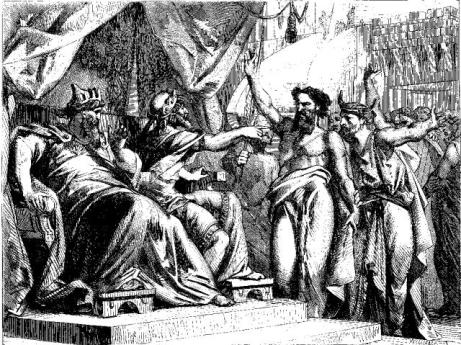
Conviction Over Compromise

1 For three years Syria and Israel continued without war. But in the third year Jehoshaphat the king of Judah came down to the king of Israel. And the king of Israel said to his servants, “Do you know that Ramoth-gilead belongs to us, and we keep quiet and do not take it out of the hand of the king of Syria?” And he said to Jehoshaphat, “Will you go with me to battle at Ramoth-gilead?” And Jehoshaphat said to the king of Israel, “I am as you are, my people as your people, my horses as your horses.”

And Jehoshaphat said to the king of Israel, “Inquire first for the word of the LORD.” Then the king of Israel gathered the prophets together, about four hundred men, and said to them, “Shall I go to battle against Ramoth-gilead, or shall I refrain?” And they said, “Go up, for the Lord will give it into the hand of the king.” But Jehoshaphat said, “Is there not here another prophet of the LORD of whom we may inquire?” And the king of Israel said to Jehoshaphat, “There is yet one man by whom we may inquire of the LORD, Micaiah the son of Imlah, but I hate him, for he never prophesies good concerning me, but evil.” And Jehoshaphat said, “Let not the king say so.” Then the king of Israel summoned an officer and said, “Bring quickly Micaiah the son of Imlah.” 10 Now the king of Israel and Jehoshaphat the king of Judah were sitting on their thrones, arrayed in their robes, at the threshing floor at the entrance of the gate of Samaria, and all the prophets were prophesying before them. 11 And Zedekiah the son of Chenaanah made for himself horns of iron and said, “Thus says the LORD, ‘With these you shall push the Syrians until they are destroyed.’” 12 And all the prophets prophesied so and said, “Go up to Ramoth-gilead and triumph; the LORD will give it into the hand of the king.”

13 And the messenger who went to summon Micaiah said to him, “Behold, the words of the prophets with one accord are favorable to the king. Let your word be like the word of one of them, and speak favorably.” 14 But Micaiah said, “As the LORD lives, what the LORD says to me, that I will speak.” 1 Kings 22:1-14 ESV

King Ahab had been placed under a curse from God for having spared the life of Ben-hadad, the king of Syria. Rather than obey God’s command to put his enemy to death, Ahab had chosen to sign a peace treaty with him that would allow Israel to profit from Syria’s lucrative trading business. Yet, despite the judgment leveled against him by God, Ahab’s decision seems to have produced positive results.

The treaty that Ahab brokered produced three years of peace and prosperity between the two nations. Israel and Syria became allies and trading partners. According to an inscription on an Assyrian tablet discovered in 1861, Ahab and Ben-hadad were part of a 12-nation confederation that faced Emperor Shalmaneser and the Assyrians in the Battle of Qarqar in 853 BC. So, while God had decreed that Ahab’s dynasty would come to an end with his death, the king of Israel continued to enjoy a small measure of success. His insatiable desire for glory and self-aggrandizement would eventually drive him to jeopardize his peaceful and prosperous relationship with Syria.

During the time Ahab was on the throne of Israel, Jehoshaphat became the king of Judah. He succeeded his father, Asa, and, according to the book of 2 Chronicles, Jehoshaphat proved to be a good king.

The LORD was with Jehoshaphat, because he walked in the earlier ways of his father David. He did not seek the Baals, but sought the God of his father and walked in his commandments, and not according to the practices of Israel. Therefore the LORD established the kingdom in his hand. And all Judah brought tribute to Jehoshaphat, and he had great riches and honor. His heart was courageous in the ways of the LORD. And furthermore, he took the high places and the Asherim out of Judah. – 2 Chronicles 17:3-6 ESV

Because Jehoshaphat chose to remove all the false gods and restore the worship of the one true God, his reign was blessed, and the southern kingdom of Judah became a powerful force in the region. But Jehoshaphat, like his father before him, made the mistake of placing his trust in the Syrians. When King Baasha of Israel began to build a fortified city on the border between Israel and Judah, King Asa sought the help of Ben-hadad and the Syrians. Asa “took silver and gold from the treasures of the house of the LORD and the king’s house and sent them to Ben-hadad king of Syria” (2 Chronicles 16:2 ESV). He used these funds to convince Ben-hadad to break his covenant with Israel and join forces with him. His ploy worked, and Baasha stopped construction on his military outpost. But God condemned Asa for his alliance with Ben-hadad, warning that Judah would face non-stop war during the rest of his reign. Rather than trust God, Asa had placed his hope in a foreign king who worshiped false gods.

And while his son Jehoshaphat would prove to be faithful to God, he would also make an alliance with an ungodly, idol-worshiping king.

Now Jehoshaphat had great riches and honor, and he made a marriage alliance with Ahab. After some years he went down to Ahab in Samaria. And Ahab killed an abundance of sheep and oxen for him and for the people who were with him, and induced him to go up against Ramoth-gilead. – 2 Chronicles 18:1-2 ESV

This marital alliance ultimately put Jehoshaphat in a difficult position. While visiting Israel’s capital city of Samaria, Jehoshaphat was presented with an official request from Ahab for military assistance in recapturing the town of Ramoth-gilead from the Syrians. It galled Ahab that the Syrians had stolen a city that had once belonged to Israel, and nothing had been done about it.

“Do you know that Ramoth-gilead belongs to us, and we keep quiet and do not take it out of the hand of the king of Syria?” – 1 Kings 22:3 ESV

So, he called on Jehoshaphat to help him right this apparent wrong, and Jehoshaphat quickly and readily agreed.

“I am as you are, my people as your people, my horses as your horses.” – 1 Kings 22:4 ESV

But Jehoshaphat, anxious to remain obedient to God, asked Ahab to seek Yahweh’s counsel. It’s important to understand that Jehoshaphat wanted to know what the “LORD” (Yahweh) would have them do. But when Ahab commissioned his 400 prophets to seek the will of the gods, they came back with the answer:

“Go up, for the Lord (ăḏōnāy) will give it into the hand of the king.” – 1 Kings 22:6 ESV

These men did not mention the name of Yahweh, and Jehoshaphat seems to have immediately recognized that these were false prophets who had been seeking the will of their false god. So, he asked Ahab if there were no prophets of the one true God left in Israel. Ahab reluctantly confessed that one prophet of Yahweh remained, a man named Micaiah, whom he hated with a passion.

“He never prophesies anything but trouble for me!” – 1 Kings 22:8 NLT

Micaiah never told Ahab what he wanted to hear, so the king avoided him like the plague. But Jehoshaphat insisted that Micaiah be consulted before any action was taken against the Syrians.  So, Ahab sent someone to fetch his least-favorite prophet. In the meantime, his 400 false prophets bombarded Jehoshaphat with their cheery predictions of success.

“Go up to Ramoth-gilead and triumph; the LORD (Yahweh) will give it into the hand of the king.” – 1 Kings 22:12 ESV

This time, the prophets of Baal changed their tune and mentioned the name of Yahweh. Perhaps they hoped this reference to the God of Israel would convince Jehoshaphat to acquiesce and give his approval for the joint venture against the Syrians.

The text doesn’t reveal how long it took for Micaiah to be located and brought to Samaria. However, during the delay, Jehoshaphat found himself pressured to listen to the false prophets and join forces with Ahab. The temptation to compromise his convictions was great. He could have easily given in and listened to the popular opinions of the crowd, but instead, Jehoshaphat waited to hear a word from Yahweh.

Even Micaiah found himself pressured to follow the party line. The messenger who located him delivered a not-so-subtle warning that there was only one answer King Ahab wanted to hear.

“Look, all the prophets are promising victory for the king. Be sure that you agree with them and promise success.” – 1 Kings 22:13 NLT

But Micaiah would not be bullied into submission. He knew how much Ahab hated him, and he would be risking his life to disobey a direct order from the king. Yet his allegiance to Yahweh was greater than his fear of Ahab. So, he told the messenger, “As surely as the LORD lives, I will say only what the LORD tells me to say” (1 Kings 22:14 NLT).

It must have been a long and awkward trip back to Samaria for the messenger. He probably feared for his own life because he knew the prophet was determined to deliver bad news to the king. Everyone who worked for Ahab and all the people who lived in Israel knew that their king had no love affair with Yahweh. He had spent his entire reign promoting the worship of false gods like Baal and Asherah, and he had done everything he could do to ignore and even eliminate the prophets of God. Ahab knew exactly what Micaiah was going to say when he showed up, and it would not be what he wanted to hear.

Ahab needed Jehoshaphat’s help against the Syrians, and he knew that Jehoshaphat’s God would stand opposed to his ambitious plans to recapture Ramoth-gilead. Ahab didn’t want to hear from God because he was unwilling to do God’s will. Like a petulant child, Ahab was determined to get his way, even if it meant disobeying Yahweh’s will. But the prophet of the LORD was unwilling to succumb to the pressure to compromise his convictions and tell the king what he wanted to hear. He would speak the truth, even if it cost him his life. This obscure and little-known prophet was going to choose character over conformity and stand up to the threats of the wicked and powerful king of Israel.

Micaiah’s commitment to Yahweh was unassailable and non-negotiable. Nothing would convince him to compromise or sell out. He was determined to remain faithful to his God, whatever the cost. His bold determination to stand his ground in the face of intense opposition and even the threat of death is reminiscent of the actions of Shadrach, Meshach, and Abednego, the Hebrew friends of Daniel who found themselves facing a death sentence for refusing to bow to the statue King Nebuchadnezzar had erected.

“I will give you one more chance to bow down and worship the statue I have made when you hear the sound of the musical instruments. But if you refuse, you will be thrown immediately into the blazing furnace. And then what god will be able to rescue you from my power?”

Shadrach, Meshach, and Abednego replied, “O Nebuchadnezzar, we do not need to defend ourselves before you. If we are thrown into the blazing furnace, the God whom we serve is able to save us. He will rescue us from your power, Your Majesty. But even if he doesn’t, we want to make it clear to you, Your Majesty, that we will never serve your gods or worship the gold statue you have set up.” – Daniel 3:15-18 NLT

These three young men were willing to die for their beliefs and gladly faced the fires of the furnace with their commitment to Yahweh uncompromised. And their unwavering faith was rewarded.

So Shadrach, Meshach, and Abednego stepped out of the fire. Then the high officers, officials, governors, and advisers crowded around them and saw that the fire had not touched them. Not a hair on their heads was singed, and their clothing was not scorched. They didn’t even smell of smoke! – Daniel 3:26-27 NLT

The Book of Acts records another story of uncompromising faith in the face of unrelenting pressure. Peter and John had been jailed by the powerful Jewish Sanhedrin for preaching “that through Jesus there is a resurrection of the dead” (Acts 4:2 NLT). The following morning, when the two men were dragged before the council, they were ordered to cease and desist. The high priest commanded them, “never again to speak or teach in the name of Jesus” (Acts 4:18 NLT). 

But Peter and John replied, “Do you think God wants us to obey you rather than him? We cannot stop telling about everything we have seen and heard.” – Acts 4:18-20 NLT

Facing the threat of additional jail time or worse, Peter and John stood their ground and declared their intention to continue preaching the truth concerning Jesus. They could be threatened, but they would not be silenced. And, in doing so, they joined the ranks of other faithful men like Micaiah, Daniel, Shadrach, Meshach, and Abednego.

English Standard Version (ESV) The Holy Bible, English Standard Version. ESV® Permanent Text Edition® (2016). Copyright © 2001 by Crossway Bibles, a publishing ministry of Good News Publishers.

New Living Translation (NLT) Holy Bible, New Living Translation, copyright © 1996, 2004, 2015 by Tyndale House Foundation. Used by permission of Tyndale House Publishers Inc., Carol Stream, Illinois 60188. All rights reserved.

The Transcendence of God

Studying the attributes of God is a noble and worthy task but it must be acknowledged that man’s capacity to understand the greatness of God is limited by his inherent finiteness. The apostle Paul eloquently stated humanity’s dilemma.

Oh, how great are God’s riches and wisdom and knowledge! How impossible it is for us to understand his decisions and his ways!

For who can know the Lord’s thoughts?
    Who knows enough to give him advice?
And who has given him so much
    that he needs to pay it back?

For everything comes from him and exists by his power and is intended for his glory. All glory to him forever! Amen. – Romans 11:33-36 NLT

Paul makes it clear that the human mind is incapable of fully comprehending the greatness of God. This all-powerful and incomparable Being is Invisible to the human eye and incomprehensible to the human mind and must choose to make Himself known if He is to be recognized at all. As Paul stated in the opening chapter of Romans, God displayed certain aspects of His divine nature through creation.

For ever since the world was created, people have seen the earth and sky. Through everything God made, they can clearly see his invisible qualities—his eternal power and divine nature. So they have no excuse for not knowing God. – Romans 1:20 NLT

The universe reveals His power, majesty, creativity, and sovereign control over all things. While we can’t physically see God, we can witness the work of His hands and begin to grasp the awesome nature of His power and transcendence. David was blown away by the indisputable evidence of God found in the natural world. He could see the proof of God’s existence everywhere he looked.

The heavens proclaim the glory of God.
    The skies display his craftsmanship.
Day after day they continue to speak;
    night after night they make him known.
They speak without a sound or word;
    their voice is never heard.
Yet their message has gone throughout the earth,
    and their words to all the world. – Psalm 19:1-14 NLT

Creation declares the glory of God but it will never fully mirror the majesty of its Maker, and David seemed to understand that fact. When he became king of Israel, David voiced his growing awareness of God’s unlimited power and sovereignty over all things. God didn’t just make the universe, He ruled over it with unrivaled authority that made David’s royal power pale in comparison.

“O Lord, the God of our ancestor Israel, may you be praised forever and ever! Yours, O Lord, is the greatness, the power, the glory, the victory, and the majesty. Everything in the heavens and on earth is yours, O Lord, and this is your kingdom. We adore you as the one who is over all things. Wealth and honor come from you alone, for you rule over everything. Power and might are in your hand, and at your discretion people are made great and given strength.” – 1 Chronicles 29:10-12 NLT

To say that God is transcendent is to confess His otherness. In other words, it is an admission that God is not like us. He is not a slightly improved version of man; a human being on steroids. According to the Merriam-Webster Dictionary, transcendent means “being beyond the limits of all possible experience and knowledge” (“Transcendent.” Merriam-Webster.com Dictionary, Merriam-Webster, https://www.merriam-webster.com/dictionary/transcendent. Accessed 15 Aug. 2024). God is beyond our comprehension. He exists outside our scope of understanding. He is not only invisible but unknowable and, yet, He has chosen to make Himself known.

God desires for us to know Him, not just cognitively but personally and intimately. The Bible is the record of God’s revelation of Himself to man. It all began in the garden where God developed an ongoing relationship with the first man and woman. In that pristine and perfect environment, Adam and Eve enjoyed the presence of the transcendent God. He spoke to them and made His presence known to them. They couldn’t see Him but they knew He was there. When they eventually disobeyed His command concerning the tree of the knowledge of good and evil, they attempted to hide from Him.

When the cool evening breezes were blowing, the man and his wife heard the Lord God walking about in the garden. So they hid from the Lord God among the trees. – Genesis 3:8 NLT

Their sin resulted in their banishment from the garden and the loss of their intimacy with God. From that point forward, mankind began its unrelenting trajectory away from God. It was not that God was somehow relegated to the garden and their travels took them further from His presence. Distance didn’t determine their separation from God, it was the spiritual state of their hearts. But the further they went, the weaker their awareness of God became. In time, they forgot about Him altogether, and the Book of Genesis records the sad result of their faithlessness and forgetfulness.

The Lord observed the extent of human wickedness on the earth, and he saw that everything they thought or imagined was consistently and totally evil. – Genesis 6:5 NLT

Humanity had been allowed to know and experience the transcendent God of the universe but had chosen to walk away from Him. So God started over, revealing Himself to a man named Noah. Once again, the invisible, all-powerful God made Himself known and knowable. He spoke with Noah and provided him with a plan to repopulate the world and reboot the system. The flood destroyed the rest of humanity but Noah and his family were preserved by God. They were given the privilege of salvation and the responsibility to be fruitful and multiply and fill the earth. 

This royal reboot allowed Noah and his family to experience the personal presence of the transcendent God. He sealed them in the ark and protected them during the days of the flood. He graciously preserved them and mercifully released them to begin the process of filling the world with more of their kind. But the rest of the Book of Genesis records the less-than-stellar results of their post-flood experience. It didn’t take long for Humanity 2.0 to succumb to the same internal bugs that doomed the previous model.

But all along the way, God continued to make Himself known. He revealed Himself to Abraham, Isaac, and Jacob. He displayed His glory to Moses. He showed up in a light show on the peak of Mount Sinai, displaying His majestic power to the people of Israel cowering in the valley. He gave them His Law, designed to be a further revelation of His holiness and righteousness. He provided them with the Tabernacle and the sacrificial system to accentuate His set-apartness and to ensure their own holiness. The invisible, unknowable, inaccessible God continued to make Himself known. He had made them His own people, His chosen possession. He gave them a land as their inheritance. He provided them with kings. He blessed them and prospered them. But in return, they turned their back on Him

“When Israel was a child, I loved him,
    and I called my son out of Egypt.
But the more I called to him,
    the farther he moved from me,
offering sacrifices to the images of Baal
    and burning incense to idols.
I myself taught Israel how to walk,
    leading him along by the hand.
But he doesn’t know or even care
    that it was I who took care of him.
I led Israel along
    with my ropes of kindness and love.
I lifted the yoke from his neck,
    and I myself stooped to feed him.” – Hosea 11:1-4 NLT

The more the transcendent God made Himself known, the more comfortable and complacent the people of God became. They lost their awareness of His greatness. Their awe and wonder diminished over time. His blessings became rote and expected. They took His power for granted. Eventually, God chose to remove His hand of blessing and allow His people to experience the loss of His presence. They had lost their wonder and appreciation for God. Their undeserved access to and intimacy with Him lost its value. His persistent presence robbed them of their appreciation for His transcendence.

And so the Lord says,
    “These people say they are mine.
They honor me with their lips,
    but their hearts are far from me.
And their worship of me
    is nothing but man-made rules learned by rote.
Because of this, I will once again astound these hypocrites
    with amazing wonders.
The wisdom of the wise will pass away,
    and the intelligence of the intelligent will disappear.” – Isaiah 29:13-14 NLT

For centuries, the people of Israel would lose their privileged position as God’s chosen people. Their Temple would be destroyed. The sacrificial system would be eliminated. Tens of thousands of Israelites would spend their lives living in exile in foreign lands, far from their homeland and separated from their God. They say that distance makes the heart grow fonder, but that was not the case for the Israelites. Even after their return to the land of Israel, they failed to reestablish their wonder and awe for God. Their hearts remained far from Him. But the transcendent God was not done revealing Himself to His people.

But when the right time came, God sent his Son, born of a woman, subject to the law. God sent him to buy freedom for us who were slaves to the law, so that he could adopt us as his very own children. – Galatians 4:4-5 NLT

God sent His Son, and this staggering event would prove to be the greatest revelation of God that man has ever experienced. The apostle John reminds us of the staggering nature of Jesus’ incarnation.

No one has ever seen God. But the unique One, who is himself God, is near to the Father’s heart. He has revealed God to us. – John 1:18 NLT

Jesus, the Son of God, made the invisible God visible, a fact the apostle Paul makes abundantly clear.

Christ is the visible image of the invisible God. He existed before anything was created and is supreme over all creation… – Colossians 15 NLT

The unknowable, unapproachable, invisible God of the universe wants to be known. He desires to have a relationship with fallen humanity. As Paul makes clear, no one is seeking a relationship with God. The reality of indwelling sin makes the pursuit of God impossible for all men.

“No one is righteous—
    not even one.
No one is truly wise;
    no one is seeking God.
All have turned away;
    all have become useless.
No one does good,
    not a single one.” – Romans 3:10-12 NLT

But God sought us out. He sent His Son to make Himself known and knowable. The transcendent God condescended to take on human flesh and make the fulness of the Godhead visible to fallen mankind. This fact should not only astound us but cause us to rejoice in the greatness and goodness of our gracious God.

“He is far away, in one sense, but in another He is as near as your heartbeat, for the cross has bridged the gulf. Let the blood of Jesus cleanse us from all sin. He who is God the Transcendent One says, ‘Come unto me, all ye that labour and are heavy laden, and I will give you rest. Take my yoke upon you, and learn of me; for I am meek and lowly in heart: and ye shall find rest unto your souls.’” – A. W. Tozer, The Attributes of God

English Standard Version (ESV)
The Holy Bible, English Standard Version. ESV® Permanent Text Edition® (2016). Copyright © 2001 by Crossway Bibles, a publishing ministry of Good News Publishers.

New Living Translation (NLT)
Holy Bible, New Living Translation, copyright © 1996, 2004, 2015 by Tyndale House Foundation. Used by permission of Tyndale House Publishers Inc., Carol Stream, Illinois 60188. All rights reserved.

More Than Skin Deep

She

12 While the king was on his couch,
    my nard gave forth its fragrance.
13 My beloved is to me a sachet of myrrh
    that lies between my breasts.
14 My beloved is to me a cluster of henna blossoms
    in the vineyards of Engedi.

He

15 Behold, you are beautiful, my love;
    behold, you are beautiful;
    your eyes are doves.

She

16 Behold, you are beautiful, my beloved, truly delightful.
Our couch is green;
17     the beams of our house are cedar;
    our rafters are pine.Song of Solomon 1:12-17 ESV

There is much debate as to whether this poem is in chronological order or if it is a collection of smaller poems that fail to share a common time sequence. If they are meant to follow one another in sequential order, there appear to be some fairly large gaps in the narrative. The dialogue seems to take a fast leap forward between the first 11 verses of chapter one and the remaining six verses.

The relationship between the two lovers deepens in significance and their rhetoric intensifies, describing what seems to suggest is a much more physical and intimate aspect of their growing love for one another. The young Shulammite maiden describes seeing her lover reclining on his dining couch. As she gazes at him she can’t help but feel a deep attraction to him, comparing him to the fragrant blossoms of the henna plant found in the vineyards of Engeddi.

She reveals her hope that the attraction between them is mutual and that her perfume is having its desired effect. She has adorned herself with a necklace featuring a sachet of aromatic myrrh that hands strategically between her breasts. All of this language suggests that she was trying to seduce her lover. She has spared no expense, having anointed her body with costly nard, a fragrant oil that would have filled the room in which they sat. This is the same type of oil that was used to anoint the head of Jesus.

And while he [Jesus] was at Bethany in the house of Simon the leper, as he was reclining at table, a woman came with an alabaster flask of ointment of pure nard, very costly, and she broke the flask and poured it over his head. There were some who said to themselves indignantly, “Why was the ointment wasted like that? For this ointment could have been sold for more than three hundred denarii and given to the poor.” – Mark 14:3-5 ESV

This young woman has gone to great expense to gain the attention of her beloved and her efforts produced the intended result. Despite the strategically placed necklace and the aromatic perfume, his gaze is drawn to her eyes.

“How beautiful you are, my darling,
    how beautiful!
    Your eyes are like doves.” – Song of Solomon 1:15 NLT

They say the eyes are the window to the soul. Looking into someone’s eyes can reveal a lot about their character and their intentions. Jesus described them as lamps that provide light for the body. In a sense, they are portals that control what enters into your heart and reveal its condition to all those around you.

“Your eye is like a lamp that provides light for your body. When your eye is healthy, your whole body is filled with light. But when your eye is unhealthy, your whole body is filled with darkness. And if the light you think you have is actually darkness, how deep that darkness is!” – Matthew 6:22-23 NLT

In praising the beauty of her eyes, Solomon is looking beneath the surface and complimenting her inner character; she is beautiful inside and out. She has adorned herself with jewelry and expensive perfume, but his gaze is attracted to that which lies within. It is not unlike the earlier compliment she gave to him.

“…your name is like the spreading fragrance of scented oils…” – Song of Solomon 1:3 NLT

His name, which is synonymous with his character, is like a well-pleasing aroma that follows him wherever he goes. In other words, his reputation precedes him, but in a good way. There is little doubt that this couple shares a mutual attraction to one another but it is more than skin deep. Their emphasis on one another’s inner character is refreshing and provides a wonderful glimpse into a missing ingredient in many relationships today. With our modern-day obsession with externals, it is so easy to overlook the condition of the heart. Social media allows us to create the perfect persona by providing a means of carefully curating only those images that reflect our preferred identity. Few people post unflattering images of themselves online. The increasing availability of software that can enhance or dramatically alter our visage makes it possible to portray ourselves in a way that is more wishful thinking than reality.

Yet, this couple was anything but lovestruck and blinded by passion. They appear to be fully aware of each other’s inner qualities and that knowledge only enhanced their love for one another.

But there is little doubt that this young woman was infatuated with her lover’s outer appearance. She makes that point embarrassingly clear when she states, “You are so handsome, my love, pleasing beyond words!” (Song of Solomon 1:16 NLT). He was good-looking as well as being of good character, and those two traits made him all the more appealing to her. The old adage, “Love is blind,” is meant to convey the idea that outer beauty is not the only factor considered when two people fall in love. There is far more to the equation than simply good looks, and yet, it never hurts to fall in love with someone who is easy on the eyes. That is clearly the case with her beloved.

Just being out in nature with her significant other brings her great joy and pleasure. She describes the great outdoors as if it is their private sanctuary.

“The soft grass is our bed;
    fragrant cedar branches are the beams of our house,
    and pleasant smelling firs are the rafters.” – Song of Solomon 1:17 NLT

This should not be taken as a description of sexual intercourse or an inference that this couple was involved in any kind of immorality. She simply describes a carefree afternoon with the love of her life as they share the beauty of God’s creation and one another’s company. Just being together brought her great joy. While they were not yet married and didn’t share a home together, they were able to turn every moment into an opportunity to live as if they were already one.

This relationship was being built on a foundation of mutual respect, shared admiration, unwavering love, and a commitment to the long haul. They were in this for the duration, and while their words reflect a somewhat innocent and inexperienced outlook on love, it is clear that there is more to this relationship than meets the eye.

English Standard Version (ESV) The Holy Bible, English Standard Version. ESV® Permanent Text Edition® (2016). Copyright © 2001

New Living Translation (NLT) Holy Bible, New Living Translation, copyright © 1996, 2004, 2015 by Tyndale House Foundation. Used by permission of Tyndale House Publishers Inc., Carol Stream, Illinois 60188. All rights reserved.

For the Sake of His Name

In the seventh year, in the fifth month, on the tenth day of the month, certain of the elders of Israel came to inquire of the Lord, and sat before me. And the word of the Lord came to me: “Son of man, speak to the elders of Israel, and say to them, Thus says the Lord God, Is it to inquire of me that you come? As I live, declares the Lord God, I will not be inquired of by you. Will you judge them, son of man, will you judge them? Let them know the abominations of their fathers, and say to them, Thus says the Lord God: On the day when I chose Israel, I swore to the offspring of the house of Jacob, making myself known to them in the land of Egypt; I swore to them, saying, I am the Lord your God. On that day I swore to them that I would bring them out of the land of Egypt into a land that I had searched out for them, a land flowing with milk and honey, the most glorious of all lands. And I said to them, ‘Cast away the detestable things your eyes feast on, every one of you, and do not defile yourselves with the idols of Egypt; I am the Lord your God.’ But they rebelled against me and were not willing to listen to me. None of them cast away the detestable things their eyes feasted on, nor did they forsake the idols of Egypt.

“Then I said I would pour out my wrath upon them and spend my anger against them in the midst of the land of Egypt. But I acted for the sake of my name, that it should not be profaned in the sight of the nations among whom they lived, in whose sight I made myself known to them in bringing them out of the land of Egypt. 10 So I led them out of the land of Egypt and brought them into the wilderness. 11 I gave them my statutes and made known to them my rules, by which, if a person does them, he shall live. 12 Moreover, I gave them my Sabbaths, as a sign between me and them, that they might know that I am the Lord who sanctifies them. 13 But the house of Israel rebelled against me in the wilderness. They did not walk in my statutes but rejected my rules, by which, if a person does them, he shall live; and my Sabbaths they greatly profaned.

“Then I said I would pour out my wrath upon them in the wilderness, to make a full end of them. 14 But I acted for the sake of my name, that it should not be profaned in the sight of the nations, in whose sight I had brought them out. 15 Moreover, I swore to them in the wilderness that I would not bring them into the land that I had given them, a land flowing with milk and honey, the most glorious of all lands, 16 because they rejected my rules and did not walk in my statutes, and profaned my Sabbaths; for their heart went after their idols. 17 Nevertheless, my eye spared them, and I did not destroy them or make a full end of them in the wilderness.

18 “And I said to their children in the wilderness, ‘Do not walk in the statutes of your fathers, nor keep their rules, nor defile yourselves with their idols. 19 I am the Lord your God; walk in my statutes, and be careful to obey my rules, 20 and keep my Sabbaths holy that they may be a sign between me and you, that you may know that I am the Lord your God.’ 21 But the children rebelled against me. They did not walk in my statutes and were not careful to obey my rules, by which, if a person does them, he shall live; they profaned my Sabbaths.

“Then I said I would pour out my wrath upon them and spend my anger against them in the wilderness. 22 But I withheld my hand and acted for the sake of my name, that it should not be profaned in the sight of the nations, in whose sight I had brought them out. 23 Moreover, I swore to them in the wilderness that I would scatter them among the nations and disperse them through the countries, 24 because they had not obeyed my rules, but had rejected my statutes and profaned my Sabbaths, and their eyes were set on their fathers’ idols. 25 Moreover, I gave them statutes that were not good and rules by which they could not have life, 26 and I defiled them through their very gifts in their offering up all their firstborn, that I might devastate them. I did it that they might know that I am the Lord. – Ezekiel 20:1-26 NLT

Sometime around 591 BC, Ezekiel received a delegation of Jewish officials who sought to receive a word from the Lord. Rumors had been circulating among the exiles that the Egyptians had secured a victory in Sudan and were flexing their muscles in Palestine. They had also heard that Zedekiah, the king of Judah, was seeking an alliance with the Egyptians in hopes of overthrowing the occupation of the Babylonians. So, the dignitaries who knocked on Ezekiel’s door were most likely looking for divine confirmation that their hopes for a successful alliance with Egypt would be confirmed. But God had a different message for them.

First, He confronted them for their audacity to seek His face when they had been defaming His name for so many years. They had no interest in getting to know God but simply wanted to know what He knew. They were attempting to use God as a fortune teller, hoping to extract from Him the information they wanted to hear. But what God had to tell them would not be music to their ears.

“This is what the Sovereign Lord says: How dare you come to ask me for a message? As surely as I live, says the Sovereign Lord, I will tell you nothing! – Ezekiel 20:3 NLT

Yet, God went on to tell them more than they wanted to know. He revisited their long track record of idolatry and apostasy, reminding them how little had changed over the centuries. From the moment He chose them as His special possession, they had made a habit of worshiping other gods. In fact, when God had come to the descendants of Jacob who had been living in captivity in Egypt for more than 400 years, He found them worshiping the false gods of Egypt. But, He promised to deliver them and take them to the land of Canaan, but with one condition.

“Each of you, get rid of the vile images you are so obsessed with. Do not defile yourselves with the idols of Egypt, for I am the Lord your God.” – Ezekiel 20:7 NLT

Even after hearing God’s promise of deliverance and His description of the fruitful land they would receive as their inheritance, they continued to worship the gods of Egypt.

“They did not get rid of the vile images they were obsessed with, or forsake the idols of Egypt. Then I threatened to pour out my fury on them to satisfy my anger while they were still in Egypt. – Ezekiel 20:8 NLT

Yet, God kept His word and freed them from their captivity. But He did so in order to protect the honor of His name. He had committed Himself to love and protect the descendants of Abraham. He was their God and they were His chosen people. If He abandoned them, the honor of His name would be diminished among the nations.

God’s name represents who He is. It encompasses His character and nature. His name isn’t just a label or designation to help differentiate Him from something or someone else. It is His essence. And as the chosen children of God, the people of Israel were to help set apart His name by living lives that were distinctly different from the nations around them.

In this chapter, God reminds the people of their repeated rejection of Him over the centuries. Over and over again, He says, “But they rebelled…” God had made a solemn oath to deliver them from captivity and give them the Promised Land. In return, He had asked them to get rid of their idols and worship Him alone. But they couldn’t do it. They repeatedly rebelled and refused to obey His law – all throughout their years in the wilderness and even after they arrived in the Promised Land. So God was forced to punish them for their rebellion. He would have been absolutely just in wiping them out completely, but instead, He showed them grace and mercy – all to protect the integrity of His name.

He was going to do what He said He would do. He was going to keep the terms of His covenant. He had promised them the land and He was going to give it to them – in spite of their unfaithfulness and rebellion. God’s name and His character were at stake. If He failed to bring the people of Israel into the promised land, the nations would have questioned His integrity. They would have doubted His power. They would have never seen His holiness or set-apartness – those characteristics about Him that made Him distinct from all other gods.

Over the years, the people of God had brought shame on His name. They had been set apart by God as distinct and holy. They were His possession and were to live like it. That is why He gave them the Law. That is why He provided the sacrificial system.

“I gave them my decrees and regulations so they could find life by keeping them. And I gave them my Sabbath days of rest as a sign between them and me. It was to remind them that I am the Lord, who had set them apart to be holy.” – Ezekiel 20:11-12 NLT

Unlike all the other nations, the Israelites were commanded to worship God alone. But they had failed to do so, and as a result, they had defiled His name. And while God would have been completely justified in destroying them, He was committed to keeping His promises because the honor of His name was at stake.

Yet, even after experiencing the grace of His miraculous deliverance from captivity, they continued to worship the false gods of Egypt.

“They wouldn’t obey my regulations even though obedience would have given them life. They also violated my Sabbath days. So I threatened to pour out my fury on them, and I made plans to utterly consume them in the wilderness. – Ezekiel 20:13 NLT

Several times along the way from Egypt to Canaan, the people of Israel tested God’s patience and pushed His mercy to the limits. But when they arrived at the banks of the Jordan River and refused to enter the land, God determined to curse them so they might wander in the wilderness until that first generation died off. Then He would allow their descendants to enter the land and enjoy His presence and provision. But even that second generation of Israelites proved to be far from faithful.

“But their children, too, rebelled against me. They refused to keep my decrees and follow my regulations, even though obedience would have given them life. And they also violated my Sabbath days.” – Ezekiel 20:21 NLT

The pattern continued. Each generation repeated the same deadly mistake, forsaking the one true God for the false gods of Egypt and Canaan. They refused to obey His commands and worship Him alone. For 40 long years, God endured the stubborn resistance of His covenant-breaking people. And while He refused to destroy them, He did predict their future downfall. He would bring them to the land and bless them abundantly, but He would also punish them for their unwillingness to honor Him as God.

“Nevertheless, I withdrew my judgment against them to protect the honor of my name before the nations that had seen my power in bringing them out of Egypt. But I took a solemn oath against them in the wilderness. I swore I would scatter them among all the nations because they did not obey my regulations.” – Ezekiel 20:22-24 NLT

As the covenant-keeping God, if He failed to keep His promises, He would prove Himself either untrustworthy or incapable of doing what He had promised. So when the people failed to honor God’s name, He intervened so that he might protect the integrity of His name. He punished justly, spared them graciously, and continually extended mercy – refusing the wipe them out completely, all to protect the honor of His name.

But if the Jewish officials thought God was going to overlook their track record of sin and give them a favorable message concerning their deliverance, they were going to be disappointed. God warned Ezekiel that the day of judgment was about to come. The gracious and merciful God of Israel had seen and endured enough.

“I gave them over to worthless decrees and regulations that would not lead to life. I let them pollute themselves with the very gifts I had given them, and I allowed them to give their firstborn children as offerings to their gods—so I might devastate them and remind them that I alone am the Lord.” – Ezekiel 20:25-26 NLT

Zedekiah’s overtures to Egypt would amount to nothing. Any hopes of securing an alliance against the Babylonians would fail. If the Israelites would not honor the integrity of God’s name, He would do so Himself.

English Standard Version (ESV) The Holy Bible, English Standard Version. ESV® Permanent Text Edition® (2016). Copyright © 2001

New Living Translation (NLT) Holy Bible, New Living Translation, copyright © 1996, 2004, 2015 by Tyndale House Foundation. Used by permission of Tyndale House Publishers Inc., Carol Stream, Illinois 60188. All rights reserved.

A Woman of God

10 An excellent wife who can find?
    She is far more precious than jewels.
11 The heart of her husband trusts in her,
    and he will have no lack of gain.
12 She does him good, and not harm,
    all the days of her life.
13 She seeks wool and flax,
    and works with willing hands.
14 She is like the ships of the merchant;
    she brings her food from afar.
15 She rises while it is yet night
    and provides food for her household
    and portions for her maidens.
16 She considers a field and buys it;
    with the fruit of her hands she plants a vineyard.
17 She dresses herself with strength
    and makes her arms strong.
18 She perceives that her merchandise is profitable.
    Her lamp does not go out at night.
19 She puts her hands to the distaff,
    and her hands hold the spindle.
20 She opens her hand to the poor
    and reaches out her hands to the needy.
21 She is not afraid of snow for her household,
    for all her household are clothed in scarlet.
22 She makes bed coverings for herself;
    her clothing is fine linen and purple.
23 Her husband is known in the gates
    when he sits among the elders of the land.
24 She makes linen garments and sells them;
    she delivers sashes to the merchant.
25 Strength and dignity are her clothing,
    and she laughs at the time to come.
26 She opens her mouth with wisdom,
    and the teaching of kindness is on her tongue.
27 She looks well to the ways of her household
    and does not eat the bread of idleness.
28 Her children rise up and call her blessed;
    her husband also, and he praises her:
29 “Many women have done excellently,
    but you surpass them all.”
30 Charm is deceitful, and beauty is vain,
    but a woman who fears the Lord is to be praised.
31 Give her of the fruit of her hands,
    and let her works praise her in the gates. – Proverbs 31:10-31 ESV

It would seem that King Lemuel had a mother whose praises he was eager to sing. These closing verses of chapter 31 are a testimony to his mother’s character and the impact she had made on his life. For Lemuel, the woman who had raised him and inculcated words of wisdom into his life became the model for what it means to be a godly mother and wife.

Lemuel had high standards when it came to looking for a wife. And his mother had warned him not to waste his time and energy pursuing women whose lack of moral integrity and character would only end up damaging his reputation and his reign. As a king, Lemuel would have had no shortage of potential marriage candidates. There would have been an endless supply of young ladies eager to win the attention of the king and secure themselves a permanent place by his side as queen. So, as Lemuel wrestled with the weight of finding a suitable mate, he was forced to admit:

Who can find a virtuous and capable wife?
    She is more precious than rubies. – Proverbs 31:2 NLT

Lemuel bemoans the fact that finding a good wife is difficult work but well worth the effort. As he considers his own mother’s life and legacy, he recognizes the value of setting a high standard and refusing to settle for less.

We all know how difficult it can be to find the “right” person to spend the rest of your life with. But Lemuel’s advice is to take your time and wait until you discover someone whose life is marked by godly characteristics that are of surpassing value and worth. King Lemuel poses a wonderful question when he asks, “Who can find a wife of noble character?” He compares the search for such a woman to the quest for a priceless jewel. She is rare and extremely valuable, and well worth searching and waiting for.

Lemuel goes on to list the kinds of qualities that mark the virtuous woman, and it is an extensive and impressive list. She will be trustworthy, faithful, hardworking, industrious, diligent, entrepreneurial, energetic, strong, caring, compassionate, wise, and godly. And those qualities will not only make her an excellent wife, but an influential mother, friend, and neighbor.

She will fear God and love her family. But what’s interesting is that King Lemuel spends no time describing her looks. In fact, he states that “charm is deceptive, and beauty does not last” (Proverbs 31:30 NLT). But then as now, culture puts a high priority on charm and beauty. Looks are important, and Lemuel is not dismissing the importance of physical attraction. He is simply stating that beauty can be skin deep and, when looking for a wife, you want to look beneath the surface.

To be honest, I was first attracted to my wife because of her looks, but then I quickly discovered her charm. As I spent more with her, I realized there was more to her beauty than had first met my eye. I was fortunate to discover that she was also a “woman who fears the Lord” (Proverbs 31:30 NLT).

One of the greatest desires of any parent is for their son to find a woman whose life will be characterized by the qualities found in these verses. And for Christian parents, one of the most important characteristics we pray for in our future daughter-in-laws is that they fear the Lord. We long for our son to find a woman who loves, respects, and reverences God and who displays a steady and growing dependence upon Him.

Lemuel’s concept of an ideal wife is a woman who answers to God. She is committed to living for God. She is learning to rest in God. And what father would not want his son to find a woman like that. Let’s face it, there are many beautiful, charming women in the world, but who can find a woman of noble character? Those kinds of women are few and far between. They are rare and priceless. They are limited to those who have given their lives to Christ and who are willing to allow Him to so radically change their hearts that they become priceless treasures in His hands. They are the ones who have allowed God to transform their lives in such a way that their inner beauty far surpasses their physical looks. Beauty fades but character lasts.

Charm is deceptive, and beauty does not last;
    but a woman who fears the Lord will be greatly praised. – Proverbs 31:30 NLT

According to Lemuel, what makes a woman truly attractive is the godly character that far surpasses any outward charm they may possess. The apostle Peter describes it as a “beauty that comes from within.” And he encourages godly women to place a higher priority on cultivating their inner character than they do on enhancing their outer beauty

Don’t be concerned about the outward beauty of fancy hairstyles, expensive jewelry, or beautiful clothes. You should clothe yourselves instead with the beauty that comes from within, the unfading beauty of a gentle and quiet spirit, which is so precious to God. – 1 Peter 3:3-4 NLT

That kind of woman will greatly enrich any man’s life, and he will find she is well worth searching and waiting for. He will learn that she is of extreme value and deserves a husband who is also a man of noble, moral, and upright character. He will be motivated to display a character that is in keeping with hers. His love for and fear of God will mirror that of his wife. And sadly, those kinds of marriages seem to be few and far between. But they’re worth praying and waiting for.

In a society obsessed with outer beauty, it pays to be reminded that God looks at the heart. He is not impressed with externals. He does not measure our value based on our good looks or outer attractiveness. God is all about inner character. He sees what others too often fail to see and what most of us even refuse to look for. In this famous Proverb, King Lemuel describes a most impressive woman. She is industrious, a successful businesswoman, a loving mother, a highly disciplined worker, a caring friend, and a dedicated wife. In fact, this woman is almost too good to be true. But I don’t think the point of this Proverb is to hold up this woman as a model for all women to follow. Lemuel is simply reminding us that character counts.

It is what is on the inside that gives our lives value. This woman’s industry and hard work are laudable, but they are not the point. Hard work can simply become another form of idol worship, leading to workaholism and self-sufficiency. While King Lemuel describes this woman as dressing in fine linen and purple gowns, he says, “She is clothed with dignity and strength” (Proverbs 31:25 NLT).

Her inner character was outwardly visible by virtue of the way she lived her life. She worked hard out of love for her family, rather than love of self. She was industrious because she cared for others more than she cared for herself. This woman feared God. She had a reverence for God that drove her actions and determined her attitude about everything. Verse 10 describes her as “virtuous.” That word really has to do with inner strength. She was trustworthy, good, hard-working, discerning, compassionate, giving, humble, wise, kind, loving, and worthy of praise from both her children and her husband. Why? Because she had an inner beauty that was far more than skin deep. It was the byproduct of time spent with God.

If some of us, both men and women, spent more time in the Word and less time in the gym or in front of the mirror, we might exhibit more of the character qualities this woman possessed. If we cared more about the condition of our souls than we did about our bodies, we would be far more attractive to the world around us.

Charm can mislead and beauty soon fades. The woman to be admired and praised is the woman [or man] who lives in the Fear-of-GOD. – Proverbs 31:30 MSG

English Standard Version (ESV) The Holy Bible, English Standard Version. ESV® Permanent Text Edition® (2016). Copyright © 2001 by Crossway Bibles, a publishing ministry of Good News Publishers.

New Living Translation (NLT) Holy Bible, New Living Translation, copyright © 1996, 2004, 2015 by Tyndale House Foundation. Used by permission of Tyndale House Publishers Inc., Carol Stream, Illinois 60188. All rights reserved.

New English Translation (NET)NET Bible® copyright ©1996-2017 by Biblical Studies Press, L.L.C. http://netbible.com All rights reserved.

One Motive In Mind

For you remember, brothers, our labor and toil: we worked night and day, that we might not be a burden to any of you, while we proclaimed to you the gospel of God. 10 You are witnesses, and God also, how holy and righteous and blameless was our conduct toward you believers. 11 For you know how, like a father with his children, 12 we exhorted each one of you and encouraged you and charged you to walk in a manner worthy of God, who calls you into his own kingdom and glory. 1 Thessalonians 2:9-12 ESV

Paul has already compared his ministry among the Thessalonians to that of “a nursing mother taking care of her own children” (1 Thessalonians 2:8 ESV). He seemed to have no problem with mixing metaphors if it helped him drive home a point. In verse 7, Paul describes the manner of his and Silas’ ministry to that of children.

we were like children among you. – 1 Thessalonians 2:7 NLT

Some translations read, “we were gentle among you.” This is because there are two different variants of this sentence found in the earliest manuscripts. One has the word, ēpioi, which means “gentle or mild.” The other has a very similar word, nēpioi, which can be translated as “little children.” It would seem that the second alternative is the one most likely intended because it fits with the flow of Paul’s logic. In the context of these verses, he transitions from comparing the spirit of his ministry to that of a little child, then to a nursing mother’s compassionate and sacrificial love, and ends with the paternal instincts of a father.

you know that we treated each of you as a father treats his own children. – 1 Thessalonians 2:11 NLT

By referring to themselves as “little children,” Paul was attempting to emphasize the innocence behind their motivation. They had been guileless and without deceit in preaching the gospel among the Thessalonians. Paul has already emphasized the integrity of their ministry by declaring “our appeal does not spring from error or impurity or any attempt to deceive” (1 Thessalonians 2:3 ESV).

It’s interesting to note how Jesus described one of His disciples, Nathanael, upon meeting him for the first time.

“Behold, an Israelite indeed, in whom there is no deceit!” – John 1:47 ESV

The Greek word translated as “deceit” is dolos and it refers to “cunning and craftiness.” It was used to refer to a pattern of hypocrisy or dishonesty in one’s thoughts or actions. Paul is emphasizing their guilelessness, the complete absence of any manipulative efforts meant to distort the truth or deceive the Thessalonians. And Paul reminds them that he and Silas had gone out of their way to be a blessing and not a burden.

Don’t you remember, dear brothers and sisters, how hard we worked among you? Night and day we toiled to earn a living so that we would not be a burden to any of you as we preached God’s Good News to you. – 1 Thessalonians 2:9 NLT

As apostles of Christ, they could have expected and demanded remuneration for their efforts. When Jesus had sent out the 72 on their first missionary journey, He had instructed them, “remain in the same house, eating and drinking what they provide, for the laborer deserves his wages” (Luke 10:7 ESV). Paul had shared this same idea with Timothy.

Elders who do their work well should be respected and paid well, especially those who work hard at both preaching and teaching. For the Scripture says, “You must not muzzle an ox to keep it from eating as it treads out the grain.” And in another place, “Those who work deserve their pay!” – 1 Timothy 5:17-18 NLT

And both Jesus and Paul had taken a Mosaic law and applied it to the ministry of elders, preachers, teachers, and apostles.

“You must not muzzle an ox to keep it from eating as it treads out the grain. – Deuteronomy 25:4 ESV

They could have demanded payment for services rendered, but instead, they had chosen to pay their own way. They took nothing from the Thessalonians in return for their sharing of the gospel. Paul flatly denied any semblance of greed or avarice behind their efforts.

God is our witness that we were not pretending to be your friends just to get your money! – 1 Thessalonians 2:5 NLT

No, they had ministered out of a spirit of fatherly love, displaying a heartfelt concern for those under their care.

We pleaded with you, encouraged you, and urged you to live your lives in a way that God would consider worthy. – 1 Thessalonians 2:12 NLT

This parental point of view is something Paul talked about frequently. He told the believers in Corinth, “I am not writing these things to shame you, but to warn you as my beloved children” (1 Corinthians 4:14 NLT). He addressed the believers in Galatia with the same sense of parental care and concern.

Oh, my dear children! I feel as if I’m going through labor pains for you again, and they will continue until Christ is fully developed in your lives. – Galatians 4:19 NLT

Paul was not interested in fame or fortune. His ministry was not a job or a means to earn a living. It was a divine calling and Paul took it seriously. Like a loving parent, Paul sacrificed constantly, giving up his rights in order to minister to the needs of those under his care. He had gone without sleep. He had endured trials and tribulations. In fact, Paul provided the believers in Corinth with a well-documented list of his “accomplishments” as an apostle of Jesus Christ and a father to the faithful.

I have worked harder, been put in prison more often, been whipped times without number, and faced death again and again. Five different times the Jewish leaders gave me thirty-nine lashes. Three times I was beaten with rods. Once I was stoned. Three times I was shipwrecked. Once I spent a whole night and a day adrift at sea. 26I have traveled on many long journeys. I have faced danger from rivers and from robbers. I have faced danger from my own people, the Jews, as well as from the Gentiles. I have faced danger in the cities, in the deserts, and on the seas. And I have faced danger from men who claim to be believers but are not. I have worked hard and long, enduring many sleepless nights. I have been hungry and thirsty and have often gone without food. I have shivered in the cold, without enough clothing to keep me warm.

Then, besides all this, I have the daily burden of my concern for all the churches. – 2 Corinthians 11:23-28 NLT

Paul wasn’t bragging. He was simply driving home the reality of his daily existence. It would be ludicrous for anyone to question Paul’s commitment to his calling or to accuse him of being in it only for what he could get out of it. Paul truly believed it when he said, “to live is Christ, and to die is gain” (Philippians 1:21 NLT). And he was not afraid to give his life for the cause of the Kingdom and for the sake of the flock of Jesus Christ. He was happy to be able to serve God, sacrifice on behalf of Jesus, and share the good news of salvation to anyone who would hear.

But I will rejoice even if I lose my life, pouring it out like a liquid offering to God, just like your faithful service is an offering to God. And I want all of you to share that joy. – Philippians 2:17 NLT

And Paul was content with his lot in life. He needed nothing. He didn’t crave the favor of men. He didn’t desire an easier life. Fame and fortune had no appeal to him. He wasn’t in it for the money. He didn’t preach in order to become popular. Paul simply did what he was called to do – willingly, gladly, and contentedly.

Not that I was ever in need, for I have learned how to be content with whatever I have. I know how to live on almost nothing or with everything. I have learned the secret of living in every situation, whether it is with a full stomach or empty, with plenty or little. – Philippians 4:11-12 NLT

For Paul, the objective was clear. He was to preach the gospel. And when anyone heard and accepted God’s gracious offer of salvation through faith alone in Christ alone, he was to come alongside them and lovingly guide them in their spiritual journey. And Paul reminds the Thessalonians of his efforts to do just that in their lives.

…we exhorted each one of you and encouraged you and charged you to walk in a manner worthy of God, who calls you into his own kingdom and glory. – 1 Thessalonians 2:12 ESV

As important as salvation was, Paul understood that sanctification was equally as vital in the life of a believer. Salvation should result in transformation. Belief should impact behavior. An expression of faith in Christ should express itself in a life of dedication to Him, resulting in a radical change in both inward character and outward conduct.

English Standard Version (ESV)
The Holy Bible, English Standard Version. ESV® Permanent Text Edition® (2016). Copyright © 2001 by Crossway Bibles, a publishing ministry of Good News Publishers.

New Living Translation (NLT)
Holy Bible, New Living Translation, copyright © 1996, 2004, 2015 by Tyndale House Foundation. Used by permission of Tyndale House Publishers Inc., Carol Stream, Illinois 60188. All rights reserved.

The Message (MSG)Copyright © 1993, 1994, 1995, 1996, 2000, 2001, 2002 by Eugene H. Peterson

A Gracious Thing.

Servants, be subject to your masters with all respect, not only to the good and gentle but also to the unjust. For this is a gracious thing, when, mindful of God, one endures sorrows while suffering unjustly. For what credit is it if, when you sin and are beaten for it, you endure? But if when you do good and suffer for it you endure, this is a gracious thing in the sight of God. For to this you have been called, because Christ also suffered for you, leaving you an example, so that you might follow in his steps. He committed no sin, neither was deceit found in his mouth. When he was reviled, he did not revile in return; when he suffered, he did not threaten, but continued entrusting himself to him who judges justly. He himself bore our sins in his body on the tree, that we might die to sin and live to righteousness. By his wounds you have been healed. For you were straying like sheep, but have now returned to the Shepherd and Overseer of your souls. – 1 Peter 2:18-25 ESV

Peter now turns his attention to those within the church who were servants. The actual Greek word he uses is οἰκέτης (oiketēs) and it refers to a household servant or domestic. In many, if not all, cases these people were actually slaves. Theirs was not a normal case of voluntary employment. Those for whom they worked were considered their masters. They were obligated by Roman law to obey their masters It is thought that as many as 1 in 3 of the population of Italy were slaves. In the rest of the Roman provinces it was as much as 1 in 5. So slaves were a major part of the Roman economy and social structure. The Ancient History Encyclopedia provides a glimpse into the Roman perspective on slavery.

Slavery, that is complete mastery (dominium) of one individual over another, was so embedded in Roman culture that slaves became almost invisible and there was certainly no feeling of injustice in this situation on the part of the rulers. Inequality in power, freedom and the control of resources was an accepted part of life and went right back to the mythology of Jupiter overthrowing Saturn. As K.Bradley eloquently puts it, ‘freedom…was not a general right but a select privilege’ (Potter, 627). Further, it was believed that the freedom of some was only possible because others were enslaved. Slavery, was, therefore, not considered an evil but a necessity by Roman citizens.(Mark Cartwright. “Slavery in the Roman World,” Ancient History Encyclopedia. Last modified November 01, 2013. http://www.ancient.eu /article/629/.)

Peter does not address the institution of slavery. Instead, he speaks directly to those within the church who happened to be slaves or servants. That is the amazing thing. The very fact that these individuals were part of the local body of Christ speaks volumes about the church’s view of them as individuals. They were considered equal members of the body of Christ and were addressed as individuals with both responsibilities and rights. So Peter talks directly to them, giving them very personalized and specific instructions regarding their behavior. They were to “be subject” to their masters. He repeats the phrase he used when speaking to the church as a whole about their relationship to governmental authorities. These slaves had another issue. They were under the authority of their masters. They were obligated by law to obey. But Peter gives them a new way of looking at their role. In fact, he says that they were to treat their masters with all respect, whether they were good and gentle or unjust. And in Peter’s estimation, if a slave was suffering because of his faith in Christ, it was a “gracious thing.” The word he used was χάρις (charis). Charis was used by the New Testament authors to refer to God’s good will, loving-kindness, and favor. It was “the merciful kindness by which God, exerting his holy influence upon souls, turns them to Christ, keeps, strengthens, increases them in Christian faith, knowledge, affection, and kindles them to the exercise of the Christian virtues” (“G5485 – charis (KJV) :: Strong’s Greek Lexicon.” Blue Letter Bible. http://www.blueletterbible.org).

They were to view their suffering as a sign of God’s grace and a reminder of His ongoing transformation of their lives into the likeness of His Son. He reminds them that enduring suffering for doing wrong accomplishes nothing. But enduring suffering for doing what is right and good “is a gracious thing in the sight of God” (1 Peter 2:20 ESV). When we endure suffering for the sake of Christ, our actions not only please God, but God is pleased to use those times of difficulty to mold us and make us more holy. Paul told the believers in Rome, “we rejoice in our sufferings, knowing that suffering produces endurance, and endurance produces character, and character produces hope, and hope does not put us to shame, because God’s love has been poured into our hearts through the Holy Spirit who has been given to us” (Romans 5:3-5 ESV). Suffering that comes as a result of our faith is to be expected. For a slave in Peter’s day, the ridicule and shame that would have accompanied their faith would have been great. They were not viewed as people. They were property. Their masters would have seen their new-found faith in Christ as a threat. They had no rights. A master seeing their slave mixing in with other individuals of other classes of society as part of the church would have infuriated them.

But Peter reminds the slaves “to this you have been called, because Christ also suffered for you, leaving you an example, so that you might follow in his steps” (1 Peter 2:21 ESV). Then Peter explains how the example of Christ applied to them. Throughout His suffering on this earth, Jesus “continued entrusting himself to him who judges justly” (1 Peter 2:23 ESV). He kept His faith in God. He knew that His heavenly Father was watching and would reward Him for His faithfulness. He never took His eyes off His calling. “He himself bore our sins in his body on the tree, that we might die to sin and live to righteousness” (1 Peter 2:24 ESV). And it was the suffering of Christ that provided the means of salvation for mankind. By his wounds we have been healed. It was His suffering and death that made it possible for slaves, servants, masters, men, women, children, Jews, Gentiles and people from all walks of life to return to the Shepherd and Overseer of their souls. Christ’s suffering had a purpose. So does ours. It produces endurance, character and hope. And it reveals the grace of God as He uses anything and everything in our lives to produce in us the image of His Son.

Peace With God.

Therefore, since we have been justified by faith, we have peace with God through our Lord Jesus Christ. Through him we have also obtained access by faith into this grace in which we stand, and we rejoice in hope of the glory of God. Not only that, but we rejoice in our sufferings, knowing that suffering produces endurance, and endurance produces character, and character produces hope, and hope does not put us to shame, because God’s love has been poured into our hearts through the Holy Spirit who has been given to us. – Romans 5:1-5 ESV

Having settled the case of whether justification is by works or by faith, Paul now moves on in his discussion about the gospel of God. Paul emphatically and confidently states, “since we have been justified by faith.” The tense of the Greek word he uses is extremely important because it speaks of an event that has already happened. In essence, Paul is saying, “having been declared righteous.” It is in the past tense. It speaks of an event that has already taken place. Once someone places their faith in Jesus Christ as their Savior, they are immediately declared righteous or are justified by God. Their debt to God is paid in full, their sins are removed, and they receive the righteousness of Christ. It is a done deal. And it is all done by God and as a result of faith. We no longer have to justify ourselves with God anymore. No more works to earn His favor. No more effort to try and live up to His righteous standards in the hopes that He will accept us. Our salvation is accompanied by our justification.

And one of the greatest benefits of our justification is peace with God. In verse 10 of this same chapter, Paul makes it clear that, before salvation, we were all enemies of God. We were subject to His wrath. We stood condemned and deserving of His righteous, just judgment. In his letter to the church in Colossae, Paul wrote, “You were his enemies, separated from him by your evil thoughts and actions. Yet now he has reconciled you to himself through the death of Christ in his physical body. As a result, he has brought you into his own presence, and you are holy and blameless as you stand before him without a single fault” (Colossians 1:21-22 ESV). God’s gospel, His plan for man’s salvation, has provided a means by which sinful, guilty, rebellious men and women can be made right with Him, enjoying a state of permanent peace and the uninterrupted joy of His presence. The Greek word Paul used for peace carries the idea of harmony, security and safety. It is “the tranquil state of a soul assured of its salvation through Christ, and so fearing nothing from God and content with its earthly lot, of whatsoever sort that is” (Outline of Biblical Usage).

We enjoy this peace with God because of the grace of God. It is His unmerited favor that has made it all possible. We did nothing to deserve or earn it. Paul reminds us that we obtained access into this grace-given position through faith. In other words, we have access into the very presence of God as a result of God’s mercy. And it is our faith in the graciousness, goodness, mercy and kindness of God made evident in the death of His Son that makes our reconciliation with Him possible. And our new-found peace with God is permanent, including the future hope of our eternal relationship with Him, which is why Paul states, “we rejoice in hope of the glory of God.” There is a day coming when His Son will return and those who have been made right with God through faith in Christ’s sacrificial death on the cross will enjoy an eternity of permanent peace with God.

But in the meantime, Paul tells us, we should rejoice in our present sufferings. While we wait for the hope of the glory of God, we find ourselves living on this earth and facing trials and troubles of all kinds. Our new-found peace with God has put us at odds with the world in which we live. Jesus told His disciples, “If the world hates you, know that it has hated me before it hated you. If you were of the world, the world would love you as its own; but because you are not of the world, but I chose you out of the world, therefore the world hates you” (John 15:17-18 ESV). As a result of our new-found righteousness with God, we stand in stark contrast with the world around us. As we live according to His indwelling Holy Spirit we will find ourselves facing increasing suffering as a result of our faith. Paul reminds us, “continue in the faith, stable and steadfast, not shifting from the hope of the gospel that you heard” (Colossians 1:23 ESV). The temptation will be to bail out or give up. But we must understand that our “suffering produces endurance, and endurance produces character, and character produces hope, and hope does not put us to shame” (Romans 5:3-5 ESV). Our reconciled state with God will produce irreconcilable differences with this world. But any suffering we encounter will produce in us a patient endurance. We learn to persevere. And that perseverance produces in us character. As we endure patiently the sufferings of life, we have our character tested and proven to be true or genuine. We see the character of Christ revealed in our lives in the form of the fruit of the Spirit: love, joy, peace, patience, kindness, goodness, faithfulness, gentleness, and self-control. And as we see the characteristics show up in our lives in spite of the suffering we may endure, we grow in our hope. It solidifies our certainty that we really do belong to God. We really are new creations. And our hope will not leave us hanging. We will not find ourselves ashamed or embarrassed because of the faith we placed in God’s promises. Our trust in Christ’s redemptive work on the cross will not leave us disappointed in the end. We can suffer. We can endure, we can grow, we can hope, “because God’s love has been poured into our hearts through the Holy Spirit who has been given to us” (Romans 5:5 ESV). The very presence of the Spirit within us is a reminder of God’s love for us, but He is also the source of our enduring love for God. Our justification is by faith. Our sanctification is by faith. Our capacity to endure is the result of faith.

Titus 1

Character Counts.

Titus 1

He must hold firm to the trustworthy word as taught, so that he may be able to give instruction in sound doctrine and also to rebuke those who contradict it. – Titus 1:9 NLT

Like Timothy, Titus was one of Paul’s protégés. He was a Greek Gentile whom Paul had evidently led to Christ. This young man had actually accompanied Paul on several of his missionary journeys and had gained the great apostle’s trust, so that Paul was confident in sending him out on his own on numerous occasions as his representative. In fact, Paul had sent him to the island of Crete in order to help establish some sense of order within the churches there, including appointing elders to help him lead. “This is why I left you in Crete, so that you might put what remained into order, and appoint elders in every town as I directed you” (Titus 1:5 NLT). As in the case of Timothy, Paul had to instruct Titus how to deal with false teachers who had become a real problem within the fledgling churches on Crete.

Titus found himself ministering in a place where the reputation of the inhabitants was far from stellar. Paul even quoted Epimenides, a 6th Century BC philosopher and religious prophet who happened to be a Cretan himself. He said, “Cretans are always liars, evil beasts, lazy gluttons” (Titus 1:12 NLT). Paul went out of his way to paint a less-than-flattering picture of the people of Crete. He described them as  “insubordinate, empty talkers and deceivers, especially those of the circumcision party” (Titus 1:10 NLT). Evidently, not only were the false teachers men of poor repute, so were some of the members of the local churches in Crete. So Paul spent a great deal of time in his letter talking about good works. He wanted Titus to understand just how important good character and moral behavior should be to the life of every believer. Paul commanded Titus to deal harshly and firmly with those whose lives were marked by laziness and lying. He didn’t want his young disciple to tolerate the disorder and chaos these kinds of people were bringing into the church. He told Titus to “rebuke them sharply, that they may be sound in the faith” (Titus 1:13 NLT). Rebuking and restoration were both to be a part of Titus’ ministry on Crete.

One of the first things Titus was to concentrate on was the appointment of elders for the local churches on Crete. Part of the problem of disorder was based on a lack of qualified leadership. So Paul told Titus what to look for in the kind of men needed to help lead the churches there. Notice that Paul’s description has much to do with character and says little about Scripture knowledge, academic requirements, business success, or even leadership skills. Instead, Paul mentions qualities and characteristics that would have been visible to all those who knew these men. Titus was to look for the outward evidence of an inward transformation that had taken place in the lives of these men due to their relationship with Christ and their knowledge of the Word of God. Each of them were to “hold firm to the trustworthy word as taught, so that he may be able to give instruction in sounddoctrine and also to rebuke those who contradict it” (Titus 1:9 NLT). In other words, they had to know the truth of the Gospel and the realities regarding God and His redemptive plan for man if they were going to be able to refute falsehood and defend the Good News from attack.

But the real point Paul seems to be making is the contrast of character between these future leaders and those who were doing harm to the church. Those who would lead the church had to be men who were above reproach or blameless. This didn’t mean that they had to be perfect or sinless. The Greek word Paul used referred to the fact that these men were to have no glaring character flaws and they didn’t live their lives in such a way that it would cause people to point their fingers in criticism, resulting in harm to the reputation of the church. They were to be loving husbands who didn’t have reputations for unfaithfulness. They were to be fathers who had proven themselves capable leaders at home, having seen their children come to faith in Christ and who were modeling lives of moral integrity and obedience. Paul went on to say that an elder candidate “must not be arrogant or quick-tempered or a drunkard or violent or greedy for gain” (Titus 1:7 NLT). Instead, he was to be “hospitable, a lover of good, self-controlled, upright, holy, and disciplined” (Titus 1:8 NLT).

Titus was going to need help in dealing with the disorder and negative moral influences within the churches on Crete. He couldn’t handle it on his own. So Paul emphasized the need for him to find the right kind of men to lovingly lead the flock of God, providing much-needed discipline and modeling the character of Christ to all those around them.

Father, the church needs men of character today. We desperately need those whose lives are marked by moral integrity and faithfulness to help lead and protect Your flock. We are surrounded by those who would love to destroy and distract Your people, and far too often those within the church lack the spiritual maturity to care for themselves. So we ask that You would raise up men and women who are filled with Your Spirit and firmly founded on Your Word to lead Your church. Amen.

Ken Miller
Grow Pastor & Minister to Men
kenm@christchapelbc.org

1 Corinthians 6:1-11

Where’s the Proof?

1 Corinthians 6:1-11

Some of you were once like that. But you were cleansed, you were made holy; you were made right with God by calling on the name of the Lord Jesus Christ and by the Spirit of our God. – 1 Corinthians 6:11 NLT

Paul was looking for signs of life change. He expected to see true transformation in the lives of the believers in Corinth. But instead, their behavior would seem to indicate that nothing had changed at all. It was bad enough that they had been tolerating sexual immorality in their midst. But they were also taking one another to court over a variety of ordinary disputes. For one thing, this revealed that there were unresolved issues in the church. But rather than deal with them as a family, they were trying to settle them through the secular legal system. This was not an indictment on Paul’s part on the judicial system of his day, but a concern for the reputation of the name of Christ and the health of the church. Paul had started out his letter dealing with the issue of divisions in the church. He had told them, “I appeal to you, dear brothers and sisters, by the authority of our Lord Jesus Christ, to live in harmony with each other. Let there be no divisions in the church. Rather, be one one mind, united in thought and purpose” (1 Corinthians 1:10 NLT).

One of the distinctives of the Body of Christ is unity. It is the God-given, Spirit-empowered ability to love one another and to live in unity with one another. The fact that the believers in Corinth were having disputes was bad enough. That they were attempting to settle those disputes through the secular legal system was almost unbearable to Paul. As far as he was concerned, it would have been better for them to just accept whatever injustice had been done rather than demean the name of Christ by having two believers sue one another. Paul couldn’t understand why two believers couldn’t settle their differences on their own or with the help of someone in the church. Paul accused the Corinthians of cheating one another. Their actions and subsequent disputes were driven by wrong motives. They were evidence of unchanged lives and immoral behavior. He even linked their behavior with some other, rather serious sounding sins. “Don’t you realize that those who do wrong will not inherit the Kingdom of God? Don’t fool yourselves. Those who indulge in sexual sin, or who worship idols, or commit adultery, or are male prostitutes, or practice homosexuality, or are thieves, or greedy people, or drunkards, or are abusive or cheat people – none of these will inherit the Kingdom of God” (1 Corinthians 6:9-10 NLT). Do you notice what Paul has done? He has included cheating one another, his synonym for taking one another to court, with other worse-sounding sins. Our first reaction is to use these verses as an indictment against adultery and homosexuality, but Paul’s main point was to illustrate the danger of the seemingly more innocent behavior of the Corinthians. Their actions bore evidence of unchanged lives. He reminded them that they used to be like that, but they had undergone a change. They had been cleansed. They had been made holy. They had been made right with God. All because of they had placed their faith in Jesus Christ a their Savior. The Holy Spirit had indwelt them and had begun His transformative work in them. As a result, their lives should have evidenced by changed behavior.

Too often, we settle for so much less than what God has promised through Christ. He has given us the capacity to live transformed, radically changed lives, but instead we find ourselves living slightly improved versions of our old lives. We struggle with the same old attitudes and exhibit the same old actions that were part of our lives prior to coming to Christ. But we have been changed. Going to court was not the real issue for Paul. It was that they were having unresolved disputes that made it necessary for them to go there in the first place. Those disputes were driven by greed, jealousy, abuse and a variety of other un-Christlike attitudes. Where was the harmony? Where was the selfless, sacrificial love to which God had called them? Where was the transformed behavior that Christ had died to provide and the Spirit made possible? Paul expected to see changed behavior, not more of the same old thing. He expected to see transformed lives and a Spirit-empowered unity in the church that set it radically apart from the rest of society. We should expect the same thing today.

Father, too often we appear more like the world than we do like Christ. As believers we can exhibit the character of this world more than we do the character of Christ. Our lives are to be different. Our behavior is to be distinct and set apart. But we find ourselves driven by wrong motives. We struggle with selfish, sin-driven desires rather than by the power of the Spirit. Don’t let us forget that we have been cleansed, made holy, and made right with You. We have been given new natures and a capacity to live new lives because of the indwelling presence of Your Spirit. May our actions and attitudes reflect the reality of the fact that we have been transformed by You. Amen.

Ken Miller
Grow Pastor & Minister to Men
kenm@christchapelbc.org