Free But Not Without Cost

15 But the free gift is not like the trespass. For if many died through one man’s trespass, much more have the grace of God and the free gift by the grace of that one man Jesus Christ abounded for many. 16 And the free gift is not like the result of that one man’s sin. For the judgment following one trespass brought condemnation, but the free gift following many trespasses brought justification. 17 For if, because of one man’s trespass, death reigned through that one man, much more will those who receive the abundance of grace and the free gift of righteousness reign in life through the one man Jesus Christ. ­– Romans 5:15-17 ESV

Adam’s sin brought death into the world, and his sin was the result of disbelief. He and Eve both doubted God and paid the consequences. When the serpent spoke to Eve in the garden, he got her to question the veracity of God’s word. He planted seeds of doubt in her mind, and she coerced Adam to join her in eating the forbidden fruit. Disobedience is the natural byproduct of doubt, and their disobedience led to the death of all.

But Paul holds Adam responsible for the fall because Adam was the one who received the prohibition against eating the fruit of the tree of the knowledge of good and evil — directly from God Himself. Yet, when God confronted Adam about his actions in the garden, he passed the buck, blaming Eve and, ultimately, God for his sins.

“It was the woman you gave me who gave me the fruit, and I ate it.” -Genesis 3:12 NLT

In his letter to Timothy, Paul points out that “it was not Adam who was deceived by Satan. The woman was deceived, and sin was the result” (1 Timothy 2:14 NLT). Adam was not duped by the disingenuous lies of Satan; he knowingly and deliberately disobeyed the revealed will of God. His decision to disregard God’s command and ignore the divine warning of death was costly. But in his letter to the church in Ephesus, Paul presents Jesus as the antithesis of Adam.

The free gift is not like the result of that one man’s sin.” Adam’s sin brought death. God’s free gift brought righteousness. Adam’s sin brought condemnation. God’s free gift brought justification. And the free gift that Paul is talking about is the grace of God made possible by the death of His Son, Jesus Christ. He speaks of this same amazing gift of God’s grace in his letter to the Ephesian church. “But God, being rich in mercy, because of the great love with which he loved us, even when we were dead in our trespasses, made us alive together with Christ ­– by grace you have been saved. –Ephesians 2:4-5 ESV

For some reason, Adam chose to doubt God’s warning of judgment for disobeying His command. He ate the fruit, somehow believing that he had impunity. But he was wrong, and his doubt caused him to disbelieve God, and that disbelief led to disobedience and death. But Jesus’ faithfulness to His Father’s will resulted in a life of obedience, even to the point of willingly facing death.

In his letter to the church in Philippi, Paul described Jesus’ unfailing determination to do the will of His Heavenly Father, even when it demanded that He face an excruciating death by crucifixion.

And being found in human form, he humbled himself by becoming obedient to the point of death, even death on a cross. – Philippians 2:8 ESV

Jesus’ obedience to the Father resulted in justification for all men, not just Himself. His death paid the penalty for the sins of all men for all time.

Adam’s sin brought the reign of death to mankind; Christ’s sacrifice ended the reign of sin and death. The apostle John wrote, “For God so loved the world, that he gave his only Son, that whoever believes in him should not perish but have eternal life” (John 3:16 ESV). Jesus Himself said, “Truly, truly, I say to you, whoever hears my word and believes him who sent me has eternal life. He does not come into judgment, but has passed from death to life” (John 5:24 ESV).

Paul describes the gift of God’s grace as being free, but it must be accepted. It requires no payment on our part, but it does demand belief in the message of God’s grace as offered through the death of His Son. Any hope we have for being seen as righteous and acceptable in God’s eyes is found only in the saving work of Jesus Christ on the cross. Adam’s sin brought death and condemnation to all mankind, but Jesus brings the offer of eternal life and freedom from future condemnation to anyone who places their faith in Him as their sin substitute and Savior. In Chapter 8 of this letter, Paul writes, “There is therefore now no condemnation for those who are in Christ Jesus” (Romans 8:1 ESV).

Many struggle with the idea of imputed sin. They find it unfair that one man’s sin could have infected and impacted an entire race of people. That God should hold humanity responsible for the sin of one man committed all those years ago seems to portray God as a tyrant. But it is not as if we stand guiltless and innocent before God. The sin of Adam and Eve introduced sin into the world, and it didn’t take long to take root. Adam’s own sons inherited his sin nature. Cain murdered Abel out of jealousy and anger.

And Paul clearly pointed out that “all have sinned and fall short of the glory of God” (Romans 3:23 ESV). It is not as if anyone can stand before God with their hands clean and their hearts free from sin and rebellion against Him. Adam’s sin brought about God’s condemnation of all sin, and everyone has sinned. Death became the penalty for man’s disbelief and disobedience.

But God also brought the cure for man’s inescapable and inevitable death sentence. He sent His Son as the payment for the sins of men. He satisfied His own wrath against sin with the life of His own Son.

The first Adam could not remain faithful to God; he doubted and disobeyed God. But Jesus Christ, the last Adam, lived a life of obedience and faithfulness to God, fully meeting His righteous requirements and fulfilling His law. Which is why Paul writes, “‘The first man, Adam, became a living person.’ But the last Adam—that is, Christ—is a life-giving Spirit.” (1 Corinthians 15:45 NLT).

All Adam could pass on to us was his human nature and, along with it, his sinful disposition. But Paul delineates the further distinctions between the “two Adams.”

Adam, the first man, was made from the dust of the earth, while Christ, the second man, came from heaven. Earthly people are like the earthly man, and heavenly people are like the heavenly man. – 1 Corinthians 15:47-48 NLT

With our belief in God’s gracious and merciful gift of His Son, we become new creations. We receive new natures and become children of God. He transforms us from being his enemies, alienated and under His wrath, to members of His family. As His children, we find ourselves standing in His presence, covered in the righteousness of Christ and freed from the condemnation of sin and death. And none of this is based on our merit or hard work, but it is solely a free gift of grace made possible through “the one man Jesus Christ” (Romans 5:17 ESV).

Father, Adam sinned, but so do I. He disbelieved Your word, and there are times when I do as well. Yet, because of Your grace and mercy, I stand before You as your child and not Your enemy. I am still a sinner, yet You see me not as condemned and unclean, but as righteous and sanctified. And I did nothing to deserve it. You paid my sin debt with the life of Your own Son. He willingly sacrificed Himself for me — out of love. He owed me nothing. I was unloving and unloveable. I was unworthy and unable to do anything about my sin problem, but You did it for me. Purely out of grace, mercy, and love. And as the old hymn states, “I stand amazed in the presence of Jesus the Nazarene, and wonder how He could love me, a sinner condemned, unclean” (Charles Hutchison Gabriel, “I Stand Amazed In the Presence,” 1905). Amen

English Standard Version (ESV) The Holy Bible, English Standard Version. ESV® Permanent Text Edition® (2016). Copyright © 2001 by Crossway Bibles, a publishing ministry of Good News Publishers.

New Living Translation (NLT) Holy Bible, New Living Translation, copyright © 1996, 2004, 2015 by Tyndale House Foundation. Used by permission of Tyndale House Publishers Inc., Carol Stream, Illinois 60188. All rights reserved.22

Called to Be Saints

1 Paul, a servant of Christ Jesus, called to be an apostle, set apart for the gospel of God, which he promised beforehand through his prophets in the holy Scriptures, concerning his Son, who was descended from David according to the flesh and was declared to be the Son of God in power according to the Spirit of holiness by his resurrection from the dead, Jesus Christ our Lord, through whom we have received grace and apostleship to bring about the obedience of faith for the sake of his name among all the nations, including you who are called to belong to Jesus Christ,

To all those in Rome who are loved by God and called to be saints:

Grace to you and peace from God our Father and the Lord Jesus Christ. – Romans 1:1-7 ESV

Paul wrote his letter to the church in Rome from the city of Corinth during the winter of A.D. 56-57. It would be another three years before Paul actually set foot in Rome and, when he did, he would do so as a prisoner of the Roman government. It is not clear how the church in Rome got started. Paul obviously played no role in it, having never been there before, and there is no indication that any other apostle had ever made it to the Roman capital to share the gospel. Nevertheless, the gospel had arrived, perhaps as a result of eyewitnesses to the events at the Feast of Pentecost, when the Holy Spirit descended upon the followers of Jesus. When Peter preached his first sermon, under the influence of the Spirit of God, more than 3,000 individuals came to faith in Christ. Many of these people, who had been in Jerusalem for the annual celebration of Pentecost, would have returned to their hometowns, carrying the good news about Jesus with them. It is likely that some were citizens of Rome.

Regardless of how the church in Rome began, it had gained a worldwide reputation, and Paul acknowledged it.

Let me say first that I thank my God through Jesus Christ for all of you, because your faith in him is being talked about all over the world. – Romans 1:8 NLT

No doubt, Paul wrote his letter to the church in Rome under the influence of the Holy Spirit and with the desire to provide them with a solid understanding of the doctrine of the gospel of God. He knew the incredible influence this church would have because of its location within the capital of Rome, the most powerful nation in the world at the time.

Paul began his letter by introducing himself, even though the believers in Rome would have been well-acquainted with him. He referred to himself as a servant of Christ Jesus, who did not operate on his own initiative, but was a willing slave to the one who had saved him. He served as an apostle, commissioned by Jesus Himself. And he acknowledged that he had been set apart or appointed for a singular purpose: to take the gospel to the Gentiles.

The entire letter of Romans will elaborate on the remarkable significance of God’s good news concerning His Son. Paul boldly and unapologetically claims both the deity and full humanity of Jesus, “who was descended from David according to the flesh and was declared to be the Son of God” (Romans 1:3-4 ESV). Paul emphatically declares that Jesus was resurrected from the dead by the power of the Holy Spirit, and that one miraculous reality made salvation possible and the grace of God available to sinful mankind. The resurrection of Jesus is the central doctrine of the Christian faith. Without it, we have no hope, which is what led Paul to write, “If Christ has not been raised, your faith is futile and you are still in your sins” (1 Corinthians 15:17 ESV).

Paul never missed an opportunity to share the gospel, but he also took advantage of every chance he was given to strengthen the local church. He not only wanted to see people saved from sin, but also to ensure they grew in their salvation. In verse seven, Paul refers to his readers as saints (hagios), which means “set apart or holy ones.” In Paul’s mind, they were positionally holy, but they were also to be practically holy in their behavior. They had been “called to belong to Jesus Christ,” and so their actions and attitudes should reflect that calling.

A major part of what Paul writes in this letter concerns what practical holiness looks like. He wanted the Roman believers to live as if they were dead to sin and alive to God. They were to live by faith and not by works. They were to live according to the power of the Spirit of God and not the flesh. They were to recognize their position as heirs of God and to offer their bodies as living sacrifices to God, refusing to be conformed to this world.

The gospel of God does not stop with our salvation, but carries on throughout our lives as God continues His work of sanctification in our lives, “to bring about the obedience of faith for the sake of his name among all the nations” (Romans 1:5 ESV).

As followers of Jesus Christ, we are loved by God. The very fact that He sent His own Son to die in our place is the greatest expression of love He could have displayed. But not only are we loved by God, but we are also called by Him to be saints or set-apart ones. We are to live our lives in the power of His Holy Spirit and allow Him to continually transform us into the likeness of His Son. It is God’s miraculous transformation of us that proves our salvation by His Son. Not only have we been saved, but we are also being conformed to the image of Christ.

For those whom he foreknew he also predestined to be conformed to the image of his Son, in order that he might be the firstborn among many brothers. – Romans 8:29 ESV

God’s continual transformation of our lives is one of the greatest testimonies to the reality of the risen Christ and the power of the gospel.

Father, there is no doubt in my mind that You have been conducting an ongoing transformation of my life from the moment I placed my faith in Jesus at the age of seven. There have been days when that growth has wained and my faith has weakened, but You have never left me or forsaken me. Despite my stubbornness, You have never removed Your Spirit from me. I have repeatedly stiff-armed the Spirit and refused to listen to His words of warning and conviction. I have lived according to the flesh far more than I would like to admit. But Your work of sanctification in my life has never stopped. I can look back and see the radical change that has taken place, not because of my efforts, but because of Your grace, mercy, and love. More than 63 years ago, You called me into a relationship with You through faith in the death and resurrection of Your Son. Over the decades, You have remained faithful to Your promise to transform me into the likeness of Jesus. It hasn’t always been pretty and I haven’t always done my part. But I am grateful for Your commitment to finish what You began and for the knowledge that I will one day experience the joy of becoming like Christ, sinless, pure, and completely set apart from sin. Amen

English Standard Version (ESV) The Holy Bible, English Standard Version. ESV® Permanent Text Edition® (2016). Copyright © 2001 by Crossway Bibles, a publishing ministry of Good News Publishers.

New Living Translation (NLT) Holy Bible, New Living Translation, copyright © 1996, 2004, 2015 by Tyndale House Foundation. Used by permission of Tyndale House Publishers Inc., Carol Stream, Illinois 60188. All rights reserved.

Render Unto Caesar

15 Then the Pharisees went and plotted how to entangle him in his words. 16 And they sent their disciples to him, along with the Herodians, saying, “Teacher, we know that you are true and teach the way of God truthfully, and you do not care about anyone’s opinion, for you are not swayed by appearances 17 Tell us, then, what you think. Is it lawful to pay taxes to Caesar, or not?” 18 But Jesus, aware of their malice, said, “Why put me to the test, you hypocrites? 19 Show me the coin for the tax.” And they brought him a denarius 20 And Jesus said to them, “Whose likeness and inscription is this?” 21 They said, “Caesar’s.” Then he said to them, “Therefore render to Caesar the things that are Caesar’s, and to God the things that are God’s.” 22 When they heard it, they marveled. And they left him and went away. –  Matthew 22:15-22 ESV

render_unto_caesar1.jpg

It’s probably safe to say that none of us actually enjoy paying our taxes. We see it as a necessary evil and a burdensome obligation. We do it because it’s required by law and carries stiff penalties for those who fail to comply. Throughout history, taxation has had a long and less-than-popular reputation. Even in Jesus’ day, the topic of taxes was a hot topic among the population of ancient Palestine.

The Romans levied heavy taxes on the Jews, and the Jewish tax collectors added their own exorbitant fees. Then there was the Temple tax that every Jew had to pay, which, in actuality, was used to support the lavish lifestyles of the priests themselves. These men lived in luxury while the average Jew struggled to make ends meet.

In his book, The Message and the Kingdom, Richard Horsley describes the elegant lifestyles enjoyed by these government-appointed tax collectors.

“…impressive archeological remains of their Jerusalem residences show how elegant their lifestyle had become. In spacious structures unhesitantly dubbed ‘mansions’ by the archeologists who uncovered them in the 1970’s, we can get a glimpse of a lavish life in mosaic floored reception rooms and dining rooms with elaborate painted and carved stucco wall decorations and with a wealth of fine tableware, glassware, carved stone table tops, and other interior furnishings and elegant peristyles.” – Richard Horsley, The Message and the Kingdom

This staggering combination of tax obligations was overwhelming to the Jewish people, making everyday life unbearable and the very mention of taxes intolerable. Palestine was a veritable powder keg waiting to ignite, and, according to the Jewish historian Josephus, the Romans’ refusal to lessen the tax burdens was the eventual cause of the Jewish War and the Siege of Jerusalem in 70 AD.

The Roman taxation of Palestine was a hot-button topic among the Jews, the religious leaders used it in an attempt to put Jesus on the spot. They were always looking for an opportunity to incite Jesus into saying something that might violate their own laws or portray Him as a political threat to the Roman occupiers. They were certain that it was only a matter of time before He said something that got Him into trouble with the people or with the Roman authorities. If they could get Him to say something the people would disagree with, He would lose His popularity and His growing following. If they could trick Him into saying something that could be taken as divisive or revolutionary by the Romans, then they could enlist the government’s aid in getting rid of Him. So they sent some “spies pretending to be honest men” (Luke 20:20 NLT).

In other words, they didn’t come dressed as priests, Pharisees, or religious leaders. They disguised themselves as average Jews, hoping to blend in with the crowd and catch Jesus off-guard and unprepared. Their question was well-planned and had a clear motivation behind it. “They tried to get Jesus to say something that could be reported to the Roman governor so he would arrest Jesus” (Luke 20:20 NLT). After attempting to butter Him up with false flattery, they asked their question: “Tell us, then, what you think. Is it lawful to pay taxes to Caesar, or not?” (Matthew 22:17 ESV).

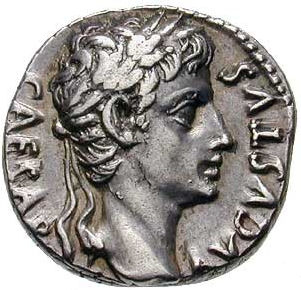
Render-Unto-CaesarBut Matthew makes it clear that Jesus saw through their ruse. He knew they were trying to trick Him and even accused them of hypocrisy. But despite His awareness of their less-than-sincere motives, He chose to answer their question. He asked for a Roman coin, which would have carried the image of Caesar, a fact that He got them to verify. Then He told them, “Therefore render to Caesar the things that are Caesar’s, and to God the things that are God’s” (Matthew 22:21 ESV).

The simple interpretation of this passage would be that Jesus was encouraging civil obedience. The people of God must be good citizens and set the right example, even in the case of a corrupt and oppressive government. But there appears to be a much more significant point to Jesus’ statement.

Interestingly, he emphasized Caesar’s image on the coin. The Roman emperor was considered a god by his own people. So, Jesus told them to give back to Caesar the coin bearing his image. It was stamped with his likeness and, therefore, belonged to him. But Jesus also stated that they were to give to God what belonged to God. Don’t miss Jesus’ logic.

In the book of Genesis, we read, “So God created human beings in his own image. In the image of God he created them; male and female he created them” (Genesis 1:27 NLT). Every good Jew would have known this story and understood what Jesus was saying. Men and women are made in the image of God. In a sense, they are stamped with His likeness, therefore, they belong to Him.

Jesus taught that people should give themselves to God and His kingdom instead of worrying about the temporal things of this world, like money and taxes. In His Sermon on the Mount, Jesus said, “So don’t worry about these things, saying, ‘What will we eat? What will we drink? What will we wear?’ These things dominate the thoughts of unbelievers, but your heavenly Father already knows all your needs. Seek the Kingdom of God above all else, and live righteously, and he will give you everything you need” (Matthew 6:31-33 NLT). For the average Jew, paying taxes to Caesar was a burden because it made it difficult to afford the necessities of life, like food and clothing. Yet, Jesus told them not to worry about those kinds of things because their Heavenly Father was fully capable of providing all that they needed. He had done it for their ancestors as they wandered in the wilderness, providing them with water from a rock, quail they could easily catch with their hands, and Manna that miraculously appeared each day with the morning dew.

The Romans and high taxes weren’t the problem. It was the people’s failure to honor and revere God. They saw themselves as victims rather than as citizens of the Kingdom of God. The Romans could levy taxes on the Jew’s property and possessions, but they could not touch their identity as the image-bearers of God and His chosen people. They had been handpicked by God and redeemed out of slavery in Egypt. They were His people – His prized possession. He had told them, “For you are a holy people, who belong to the LORD your God. Of all the people on earth, the LORD your God has chosen you to be his own special treasure” (Deuteronomy 7:6 NLT).

These people had been oppressed and burdened before, and God had rescued them. And while, in Jesus’ day, they were suffering oppression under Roman rule, it had far less to do with taxes than it did with sin. God wanted to rescue and redeem them from slavery to sin and death, which is why He had sent His Son. But their minds were elsewhere. They saw their burdens as earthly, not spiritual. They wanted a Messiah to rescue them from the taxes and tyranny of the Romans. But Jesus had come to rescue them from a life enslaved to sin and the death sentence that came with it.

Jesus wanted these people to give God what was rightfully His – their lives. He wanted them to turn over their lives to the very one who could save them. Jesus stood before them as the Son of God and their Messiah. He was the solution to their problem, but they failed to recognize Him as such. Jesus had not come to foment insurrection, but to provide salvation. He had not come to lead a revolt against Rome, but to provide restoration with God. His was a spiritual revolution, not an earthly one. And He subtly reminded His listeners that God, in whose image they were made, required what was due Him. Just as Caesar would punish any and all who refused to pay his mandatory tax, God would punish all those who refused to give Him what rightfully belonged to Him.

God had warned the people of Israel what would happen if they failed to render unto Him what was rightfully His. “Understand, therefore, that the Lord your God is indeed God. He is the faithful God who keeps his covenant for a thousand generations and lavishes his unfailing love on those who love him and obey his commands. But he does not hesitate to punish and destroy those who reject him” (Deuteronomy 7:9-10 NLT).

The last part of verse 21 reflects what Jesus had been trying to convey.

“…give to God what belongs to God.” – Matthew 22:21 NLTIf

If Caesar wanted his coins back, return them to him. But it was God alone who deserved man’s respect and honor. Because we bear His image, we belong to Him. And Jesus was demanding that the people of Israel give God what was rightfully His: Their lives and their unwavering devotion.

At the heart of this entire exchange is man’s love affair with money and materialism. In His Sermon on the Mount, Jesus warned about the dangers of a divided love.

“Don’t store up treasures here on earth, where moths eat them and rust destroys them, and where thieves break in and steal. Store your treasures in heaven, where moths and rust cannot destroy, and thieves do not break in and steal. Wherever your treasure is, there the desires of your heart will also be. – Matthew 6:19-21 NLT

He knew that the people were inordinately tied to the treasures of this world and, as a result, they had a divided allegiance. So, He warned them:

“No one can serve two masters. For you will hate one and love the other; you will be devoted to one and despise the other. You cannot serve God and be enslaved to money. – Matthew 6:24 NLT

The religious leaders of Israel were enslaved to money, materialism, power, and prestige. They may have faithfully worshiped at the altar of Yahweh, but the real focus of their devotion and desire was earthly treasures. They did not love the Roman government but were willing to do business with the enemy because they benefited greatly from the relationship. Their greatest fear was that Jesus would disrupt their symbiotic and self-serving relationship with the Romans. They had a bird’s nest on the ground, and this upstart Rabbi from Nazareth threatened to destroy it all. That’s why Caiaphas, the high priest, would later tell his fellow members of the Sanhedrin that Jesus’ death was preferable to the nation’s demise at the hands of the Romans.

“You don’t realize that it’s better for you that one man should die for the people than for the whole nation to be destroyed.” – John 11:50 NLT

Caiaphas was out to preserve the status quo, and if it required the death of one man, then it would be well worth it. But what Caiaphas failed to realize was that his words were really prophetic.

He did not say this on his own; as high priest at that time he was led to prophesy that Jesus would die for the entire nation. And not only for that nation, but to bring together and unite all the children of God scattered around the world. – John 11:51-52 NLT

As “the image of the invisible God” (Colossians 1:15), Jesus would eventually give back to God what was rightfully His. He would sacrifice His own life on behalf of sinful mankind and satisfy the just demands of a holy God by offering His body as the ultimate tribute. Through the willing sacrifice of His life, Jesus would render unto God what was rightfully His.

For in him all the fullness of God was pleased to dwell, and through him to reconcile to himself all things, whether on earth or in heaven, making peace by the blood of his cross. – Colossians 1:19-20 NLT

Jesus’ command to “render unto Caesar” is accompanied by an even more important imperative: “Give to God what belongs to God.” That is the heart of His answer and the message He desires every true disciple to hear. Those who place their faith in Jesus become God’s treasured possession. Not only were they made in His image but they were redeemed out of slavery to death and sin.

God bought you with a high price. So you must honor God with your body. – 1 Corinthians 6:20 NLT

For you know that God paid a ransom to save you from the empty life you inherited from your ancestors. And it was not paid with mere gold or silver, which lose their value. It was the precious blood of Christ, the sinless, spotless Lamb of God. – 1 Peter 1:18-19 NLT

God sacrificed His Son so that sinners could receive forgiveness, redemption, and righteousness. But this gracious gift comes with a “tax” or obligation to render unto God what is rightfully His: Our allegiance and willing obedience to bear His image to the world. Paul provided Titus with a powerful reminder of what it means to give to God what is rightfully His.

…we are instructed to turn from godless living and sinful pleasures. We should live in this evil world with wisdom, righteousness, and devotion to God, while we look forward with hope to that wonderful day when the glory of our great God and Savior, Jesus Christ, will be revealed. He gave his life to free us from every kind of sin, to cleanse us, and to make us his very own people, totally committed to doing good deeds.

You must teach these things and encourage the believers to do them. – Titus 2:12-15 NLT

English Standard Version (ESV)
The Holy Bible, English Standard Version. ESV® Permanent Text Edition® (2016). Copyright © 2001 by Crossway Bibles, a publishing ministry of Good News Publishers.

New Living Translation (NLT)
Holy Bible, New Living Translation, copyright © 1996, 2004, 2015 by Tyndale House Foundation. Used by permission of Tyndale House Publishers Inc., Carol Stream, Illinois 60188. All rights reserved.

When We Lose Our Identity

28 The sons of Abraham: Isaac and Ishmael. 29 These are their genealogies: the firstborn of Ishmael, Nebaioth, and Kedar, Adbeel, Mibsam, 30 Mishma, Dumah, Massa, Hadad, Tema, 31 Jetur, Naphish, and Kedemah. These are the sons of Ishmael. 32 The sons of Keturah, Abraham’s concubine: she bore Zimran, Jokshan, Medan, Midian, Ishbak, and Shuah. The sons of Jokshan: Sheba and Dedan. 33 The sons of Midian: Ephah, Epher, Hanoch, Abida, and Eldaah. All these were the descendants of Keturah.

34 Abraham fathered Isaac. The sons of Isaac: Esau and Israel. 35 The sons of Esau: Eliphaz, Reuel, Jeush, Jalam, and Korah. 36 The sons of Eliphaz: Teman, Omar, Zepho, Gatam, Kenaz, and of Timna, Amalek. 37 The sons of Reuel: Nahath, Zerah, Shammah, and Mizzah.

38 The sons of Seir: Lotan, Shobal, Zibeon, Anah, Dishon, Ezer, and Dishan. 39 The sons of Lotan: Hori and Hemam; and Lotan’s sister was Timna. 40 The sons of Shobal: Alvan, Manahath, Ebal, Shepho, and Onam. The sons of Zibeon: Aiah and Anah. 41 The son of Anah: Dishon. The sons of Dishon: Hemdan, Eshban, Ithran, and Cheran. 42 The sons of Ezer: Bilhan, Zaavan, and Akan. The sons of Dishan: Uz and Aran.

43 These are the kings who reigned in the land of Edom before any king reigned over the people of Israel: Bela the son of Beor, the name of his city being Dinhabah. 44 Bela died, and Jobab the son of Zerah of Bozrah reigned in his place. 45 Jobab died, and Husham of the land of the Temanites reigned in his place. 46 Husham died, and Hadad the son of Bedad, who defeated Midian in the country of Moab, reigned in his place, the name of his city being Avith. 47 Hadad died, and Samlah of Masrekah reigned in his place. 48 Samlah died, and Shaul of Rehoboth on the Euphrates reigned in his place. 49 Shaul died, and Baal-hanan, the son of Achbor, reigned in his place. 50 Baal-hanan died, and Hadad reigned in his place, the name of his city being Pai; and his wife’s name was Mehetabel, the daughter of Matred, the daughter of Mezahab. 51 And Hadad died.

The chiefs of Edom were: chiefs Timna, Alvah, Jetheth, 52 Oholibamah, Elah, Pinon, 53 Kenaz, Teman, Mibzar, 54 Magdiel, and Iram; these are the chiefs of Edom. – 1 Chronicles 1:28-54 ESV

Paul wrote the following words of encouragement to his young protégé, Timothy:

All Scripture is inspired by God and is useful to teach us what is true and to make us realize what is wrong in our lives. It corrects us when we are wrong and teaches us to do what is right. – 2 Timothy 3:16 NLT

Little did he know at the time that his own words would eventually be included in the canon of Scripture and considered to be the inspired words of God. But when Paul wrote to Timothy and referenced the trustworthiness and God-inspired power of the Scriptures, he had the Tanakh or Hebrew Bible in mind, what we now refer to as the Old Testament.

Paul’s wholehearted commendation of the Hebrew Bible should give us pause when encountering the lengthy genealogies in 1 Chronicles. Most modern readers find these extended lists of unfamiliar names difficult to read and far from inspiring or helpful to their faith journey. But Paul would beg to differ. He believed that all Scripture was penned under the inspiration of God’s Spirit and intended for the edification and spiritual advancement of His people. Each word and every sentence was recorded and preserved by God as part of His divine revelation to mankind.

But the nine chapters of unrecognizable and unpronounceable names found in the Book of 1 Chronicles test our belief in Paul’s assessment. These genealogies tend to make no sense to us and they seem to serve no purpose. But to the chronicler’s original audience, they provided a lifeline back to their heritage as God’s chosen people. They had returned to the land of promise after 70 years of forced exile in Babylon. Under the leadership of Ezra and Nehemiah, they rebuilt the walls of Jerusalem and the Temple itself. But they were a ragtag remnant living in a city that still showed the signs of the Babylonian destruction and the years of neglect as the people languished in captivity.

When these chapters were penned, the Israelites were worshiping in a recently rebuilt Temple that was a mere shadow of its former glory. The once-powerful nation of Israel was weak, impoverished, and virtually defenseless. They had no king or army. They were surrounded by powerful enemies and faced the insurmountable task of reestablishing themselves in the land. Most of them had not been alive when David and Solomon had reigned over Israel. They had never seen the magnificent Temple that Solomon constructed. When they walked back into the land of Judah, their eyes were met by scenes of destruction and devastation. After seven decades of living as slaves in a foreign land, these disenfranchised people were more Babylonian than Jewish. They had lost their bearings and forgotten their rich heritage as the sons and daughters of Abraham.

So the chronicler began his book by giving his readers an extended history lesson designed to reestablish their identity as God’s chosen people. He takes them all the way back to Adam, the first man, as a reminder that they too were created in the image of God. As human beings, they represented the apex of God’s creation. But the descendants of Adam sinned against God and brought down His judgment. This led to God to choose Noah and his three sons as the means by which He would repopulate the earth with a new generation of men and women made in His image.

For the sake of his Hebrew audience, the author fast-forwarded to the life of Abraham, their patriarch and the father of their people. From this one man came the nation of the Israelites and every man and woman who read these genealogical lists could find his or her lineage outlined somewhere in the opening chapters of this book. They were part of the ongoing story of God’s people.

But more than that, they shared a heritage with David, the great king of Israel, to whom God had promised to give a long-lasting dynasty. One of David’s descendants was to sit on the throne of Israel again. But at the time of the writing of 1 Chronicles, the people of God were living in Jerusalem and worshiping at the Temple, but they had no king. They were weak, defenseless, and surrounded by enemies who were less-than-ecstatic that they had returned to the land. But the chronicler wanted them to understand their unique status as God’s chosen people. Much of what he wrote in this book was designed to show them who they were, how they got to be in the state they were in, and what they needed to do to see their circumstances change. Their current situation was the direct result of their own unfaithfulness and disobedience. They were reaping the results of their failure to seek God. So the chronicler wants them to understand that, as God’s people, they must return to Him, and live as the true heirs of Israel.

God’s hand had been on Israel from the very beginning. The lists of genealogies start with Adam and clearly reveal God’s sovereign choice of Abraham and His divine selection of David. He had been active all along the way, orchestrating events in such a way that the nation of Israel would be His chosen people. And despite what would be a lengthy track record of disobedience and rebellion against His will and authority, God eventually restored His disobedient children to the land He had promised to give them as their inheritance. While they had failed to live up to His expectations and commands, He had kept His promises to them. He had miraculously provided the means by which the Temple could be rebuilt and the sacrificial system restored. He used a pagan king to make possible the return of His people to the land and the funding of the restoration of the walls of Jerusalem and the reconstruction of the Temple itself. The Temple was a symbol of God’s divine presence and a reminder of God’s willingness to provide forgiveness for sin and restoration to a right relationship to Him through the sacrificial system. But as the people of God, they would have to live in obedience to His commands, faithfully seeking His face and worshiping according to His standards, not their own.

After 70 years in exile, it would have been easy for the people of God to forget their identity. Most of those who returned to the land of Israel had probably been born in Babylon, and were seeing the land of promise for the first time. They had no recollection of how things used to be and no concept of the former glory of Jerusalem or the magnificence of the original Temple. They had long forgotten their unique status as the children of God. Theirs had been a life of slavery, servitude, and suffering, and while they were now living back in the land, they were doing so as a weakened, impoverished, and powerless people who had no king, no army, and no apparent hope for the future. But the chronicler takes time to remind them of their heritage. He wants them to understand the significance of who they are and the reality of their relationship with God.

Paul does a similar thing when writing to the believers in Ephesus. He reminds them, “You were dead in the trespasses and sins in which you once walked, following the course of this world, following the prince of the power of the air, the spirit that is now at work in the sons of disobedience—among whom we all once lived in the passions of our flesh, carrying out the desires of the body and the mind, and were by nature children of wrath, like the rest of mankind” (Ephesians 2:1-3 ESV). Then he adds those two powerful words, “But God…”

Amid our former position as sin-ravaged, spiritually lifeless, flesh-driven dead men, God showered us with His mercy and grace, providing us with salvation through Christ “even when we were dead in our trespasses” (Ephesians 2:4 ESV). He gave us new life. He provided us with new hope. As a result, Paul exhorts his readers to “walk in a manner worthy of the calling to which you have been called” (Ephesians 4:1 ESV). He challenges them to live up to their new status as God’s chosen people. Their lives were to be marked by humility, gentleness, patience, forebearance, love, unity, and a mutual commitment to spiritual growth and maturity. Their conduct and speech were to be different. Their lifestyle was to emulate that of Christ. They bore the name of Christ and shared His status as children of God. So they were to live accordingly, putting off their old nature and putting on the new self, “created after the likeness of God in true righteousness and holiness” (Ephesians 4:24 ESV).

As a child of God, I am to live differently. I must recognize my position as His son and walk in a manner worthy of my calling as His adopted child. My unique status should be apparent in my behavior. Paul told his readers to put away falsehood, speak the truth, not let their anger turn to sin, resist Satan, stop stealing, work honestly, talk righteously, extend grace, and stop grieving the Holy Spirit. He was very specific and it was likely because his readers had been used to living in such a way that their lives had been marked by behavior that was unChrist-like and unflattering to their role as God’s chosen people. As God’s sons and daughters, our behavior must reflect our beliefs. Our comportment must match our confession. We must live or walk in a manner worthy of our calling and in honor of the name of Christ.

English Standard Version (ESV)
The Holy Bible, English Standard Version. ESV® Permanent Text Edition® (2016). Copyright © 2001 by Crossway Bibles, a publishing ministry of Good News Publishers.

New Living Translation (NLT)
Holy Bible, New Living Translation, copyright © 1996, 2004, 2015 by Tyndale House Foundation. Used by permission of Tyndale House Publishers Inc., Carol Stream, Illinois 60188. All rights reserved.

The True Offspring of Abraham

31 So Jesus said to the Jews who had believed him, “If you abide in my word, you are truly my disciples, 32 and you will know the truth, and the truth will set you free.” 33 They answered him, “We are offspring of Abraham and have never been enslaved to anyone. How is it that you say, ‘You will become free’?”

34 Jesus answered them, “Truly, truly, I say to you, everyone who practices sin is a slave to sin. 35 The slave does not remain in the house forever; the son remains forever. 36 So if the Son sets you free, you will be free indeed. 37 I know that you are offspring of Abraham; yet you seek to kill me because my word finds no place in you. 38 I speak of what I have seen with my Father, and you do what you have heard from your father.”

39 They answered him, “Abraham is our father.” Jesus said to them, “If you were Abraham’s children, you would be doing the works Abraham did, 40 but now you seek to kill me, a man who has told you the truth that I heard from God. This is not what Abraham did. 41 You are doing the works your father did.” They said to him, “We were not born of sexual immorality. We have one Father—even God.” John 8:31-41 ESV

This entire encounter between Jesus and His adversaries has taken place in the treasury of the temple, the area located in the Court of the Women. Between the colonnades of the courtyard were placed 13 boxes that were used for the collection of voluntary monetary contributions to the care and maintenance of the temple. Two of the boxes were dedicated to the collection of the half-shekel tax, which was required of every male Israelite of age, including proselytes and slaves. Mark describes the use of these offering boxes in his Gospel.

And he sat down opposite the treasury and watched the people putting money into the offering box. Many rich people put in large sums. And a poor widow came and put in two small copper coins, which make a penny. – Mark 12:41-42 ESV

It was in this environment, the only area on the temple mount where women were allowed to enter, and where vast sums of money were collected and stored, that Jesus chose to address the crowd about His role as the “light of the world” (John 8:12 ESV). He had come to shed the light of God’s glory through His sinless life but, ultimately, through His sacrificial death. As the Son of God, He would become the offering that would pay the debt owed by sinful mankind and satisfy the just demands of His holy Father in heaven.

Jesus had come to earth in order to accomplish the will of His Father, which required that He give His life as a ransom or payment for a sinful and condemned humanity. He even alluded to His death and the role the religious leaders of the Jews would play in bringing it about.

“When you have lifted up the Son of Man, then you will know that I am he…” – John 8:28 ESV

And John indicates that, as a result of Jesus’ message, “many believed in him” (John 8:30 ESV). John doesn’t elaborate on what he means by this statement. But it seems clear that the belief of these people was limited in nature. They were becoming increasingly more convinced that Jesus was someone special, perhaps even the Messiah. But so much of what Jesus was saying still made no sense to them. They knew there was something special about Jesus but His claim to be the Son of God was outside their capacity to grasp. And Jesus was well aware that their belief in Him had its limitations. Which is why He addressed them directly.

“If you abide in my word, you are truly my disciples, and you will know the truth, and the truth will set you free.” – John 8:31-32 ESV

It is almost as if Jesus is expecting their belief to be short-lived. After all, He has already seen what happens when the content of His message becomes too difficult to understand or accept. Earlier in chapter six, John recorded the reaction of Jesus’ followers then they heard Him speak about eating His body and drinking His blood.

“This is very hard to understand. How can anyone accept it?” – John 6:60 ESV

At this point many of his disciples turned away and deserted him. – John 6:66 ESV

So, knowing that His message was going to become increasingly difficult to accept, Jesus warned His so-called followers that the proof of true discipleship would be to remain committed to hearing and keeping His word. It wasn’t enough to accept the parts they found attractive. When Jesus had spoken of a bread from heaven that gives life, the people had been eager to get their hands on it. But when He had elaborated on His meaning by saying He was that bread and they would have to eat His flesh and drink His blood, they found His words distasteful and too difficult to accept. So, they had walked away.

The freedom Jesus offered would not be available until He had completed the task assigned to Him by His Heavenly Father. He was going to have to finish His mission by sacrificing His life on the cross. And all those who believed His death to be a satisfactory payment for their sins would find true freedom. Jesus states that they  “will be free indeed” (John 8:36 ESV).

But even this message of freedom becomes difficult for His audience to hear and accept. They immediately begin to reject His assessment of their condition, saying, “We are offspring of Abraham and have never been enslaved to anyone. How is it that you say, ‘You will become free’?” (John 8:33 ESV). They found His words to be offensive, not attractive. As Jews, they were extremely proud of their heritage as descendants of Abraham. They viewed themselves as the recipients of all the promises made by God to Abraham. In their minds, they were the chosen people of God and the rightful heirs to all the blessings God had guaranteed to shower on His children.

They even viewed their current occupation by the Romans as a temporary setback. They refused to view their condition as that of slaves and found Jesus’ offer of freedom offensive. But Jesus didn’t have the Romans in view either. The freedom He was offering them was spiritual in nature. And He clearly points out the difference.

“Truly, truly, I say to you, everyone who practices sin is a slave to sin.” – John 8:34 ESV

Remember what Jesus said: “If you abide in my word, you are truly my disciples.” He had told them that a true disciple would continue to accept what He had to say, regardless of how difficult it might be to hear. Now, He accuses them of being slaves to sin. As Jews, they would have recognized the reality of their sinfulness, but they would have also taken great comfort in the forgiveness made possible by the sacrificial system. They counted on receiving atonement for their sins by dutifully presenting their offerings to God. But what they failed to understand was “impossible for the blood of bulls and goats to take away sins” (Hebrews 10:4 ESV).

The author of Hebrews goes on to say, “every priest stands daily at his service, offering repeatedly the same sacrifices, which can never take away sins” (Hebrews 10:11 ESV). The sacrificial system could only offer temporary absolution for sin. It could not provide a permanent release or freedom from the pervasive presence and power of sin. The very fact that the Jews had to continually offer their sacrifices was evidence that they were actually slaves to sin. But Jesus was offering them a different kind of sacrifice, that would provide a permanent solution to their sin problem – something the author of Hebrews points out.

But when Christ had offered for all time a single sacrifice for sins, he sat down at the right hand of God, waiting from that time until his enemies should be made a footstool for his feet. For by a single offering he has perfected for all time those who are being sanctified. – Hebrews 10:12-14 ESV

What the people believed about Jesus was incomplete and insufficient. Even if they believed Him to be their Messiah, they failed to understand that He had come to set them free from slavery to sin, not to offer them release from Roman oppression. They viewed themselves as children of God, but Jesus makes it clear that they are simply the descendants of Abraham.

“I know that you are offspring of Abraham; yet you seek to kill me because my word finds no place in you.” – John 8:37 ESV

They were Jews by birth and right, but that did not mean that they were children of God. And this is where Jesus began to address their real problem. Because they refused to accept Him as the Son of God, they were proving their lack of relationship with His Father in heaven. And Jesus is about to blow away all their preconceived notions regarding their identity as God’s chosen people. He makes a somewhat cryptic comment that is going to leave them furious when they finally understand what He implies by it.

“I speak of what I have seen with my Father, and you do what you have heard from your father.” – John 8:38 ESV

Their immediate response was to claim Abraham as their father. But Jesus counters that if this was true, they would be reacting to Him in a far different fashion.

“If you were Abraham’s children, you would be doing the works Abraham did, but now you seek to kill me, a man who has told you the truth that I heard from God. This is not what Abraham did. – John 8:39-40 ESV

They wanted to claim descendency from Abraham, but Jesus was revealing that they lacked the faith of Abraham. They failed to understand and believe in the promises of God as Abraham had. And the apostle Paul later explains what Abraham came to know and believe about the promises of God.

Now the promises were made to Abraham and to his offspring. It does not say, “And to offsprings,” referring to many, but referring to one, “And to your offspring,” who is Christ. This is what I mean: the law, which came 430 years afterward, does not annul a covenant previously ratified by God, so as to make the promise void. For if the inheritance comes by the law, it no longer comes by promise; but God gave it to Abraham by a promise.

Why then the law? It was added because of transgressions, until the offspring should come to whom the promise had been made…” – Galatians 3:16-19 ESV

The promises made to Abraham were to be fulfilled in Christ – the Messiah of Israel. While Abraham did not understand the full import of God’s words, he chose to believe and trust all that God had to say. And the book of Genesis records that Abraham “believed the LORD, and the LORD counted him as righteous because of his faith” (Genesis 15:6 NLT).

Yet the people listening to Jesus in the Court of the Women were having a difficult time receiving and accepting what He had to say. And while they would vehemently defend themselves, claiming to be the children of God, Jesus was about to drop another bombshell on them that would turn their belief in Him to anger and resentment.

English Standard Version (ESV) The Holy Bible, English Standard Version. ESV® Permanent Text Edition® (2016). Copyright © 2001 by Crossway Bibles, a publishing ministry of Good News Publishers.

New Living Translation (NLT)
Holy Bible, New Living Translation, copyright © 1996, 2004, 2015 by Tyndale House Foundation. Used by permission of Tyndale House Publishers Inc., Carol Stream, Illinois 60188. All rights reserved.

The Message (MSG)Copyright © 1993, 1994, 1995, 1996, 2000, 2001, 2002 by Eugene H. Peterson

The Light and the Right

There was a man sent from God, whose name was John. He came as a witness, to bear witness about the light, that all might believe through him. He was not the light, but came to bear witness about the light.

The true light, which gives light to everyone, was coming into the world. 10 He was in the world, and the world was made through him, yet the world did not know him. 11 He came to his own, and his own people did not receive him. 12 But to all who did receive him, who believed in his name, he gave the right to become children of God, 13 who were born, not of blood nor of the will of the flesh nor of the will of man, but of God. – John 1:6-13 ESV

Up to this point in his gospel account, the apostle John has yet to mention the name of Jesus, choosing instead to refer to Him as the Word, the life, and the light. It seems that John is attempting to establish, from the outset, the divinity and eternality of Jesus. The birth of Jesus, while important to John, was only significant because the Word of God who was God took on human flesh. The co-creator of the universe became one with His creation by assuming the lowly nature of a man. The apostle Paul describes this divine demotion in stark terms:

he gave up his divine privileges;
    he took the humble position of a slave
    and was born as a human being… – Philippians 2:7 NLT

John was not trying to underplay the humanity of Jesus. He had spent more than three years of his life living with and learning from Jesus. John had shared many meals with Jesus and seen Him fall asleep in the bow of a fishing boat, exhausted from the day’s activities. He had watched as Jesus wept over Jerusalem and the death of His friend, Lazarus. And he had been an eye-witness to the gruesome crucifixion of Jesus, watching in helplessness as his friend and teacher endured excruciating pain and eventually gave up His life. But John knew that the birth, life, and death of Jesus were meaningless if Jesus was not the Word of God and the light of men.

And John recalls how God had prefaced the arrival of Jesus in human form by sending a witness, a martyria – one who testifies. Unlike Jesus, this witness was a mere “man.” But he had been sent by God. In that sense, he followed in a long line of other men, the prophets of the Old Testament, whom God had sent to proclaim His Word to His chosen people.

But the people of Israel had endured a nearly 400-year period of silence, with no prophets or witnesses for God appearing on the scene. Malachi, the last of the prophets disappeared off the scene around 400 B.C. So, for four long centuries, the people of God had no word from God. He had gone silent. And those years had been anything but pleasant. The Israelites had no king and found themselves under the successive rules of the Persians, the Greeks, and, eventually, the Romans. Their land was under constant occupation by enemy forces, and they were subjected to the humiliation of living under Gentile rule. In 63 B.C., the Romans conquered Israel and subjected the land to military occupation and heavy taxation.

The people of God were relegated to living as little more than slaves in what had once been the land of promise. And their dire circumstances created in them an intense desire for the arrival of their long-awaited Messiah. The prophets had spoken of one who would come and rescue them from their suffering. He would be a warrior-king like David had been, wielding his sword on behalf of the downtrodden people of Israel and delivering them from their enemies. But with each passing year, their hopes of rescue grew dimmer as the Messiah’s arrival failed to take place.

But John emphasizes that there was hope. A light had pierced the darkness. A baby had been born who would prove to be the very one for whom the Israelites had been waiting. And that baby’s birth had been heralded by angels, proclaiming “the good news of great joy” (Luke 2:10 ESV).

“For unto you is born this day in the city of David a Savior, who is Christ the Lord.” – Luke 2:11 ESV

The word, “Christ” is the Greek equivalent of “Messiah.” The angels were announcing the arrival of the Savior of Israel. The 400-years of silence had been broken. The long period of darkness had been broken by the arrival of the light of the world.

Eight days after His birth, the parents of Jesus took Him to the temple in Jerusalem to be circumcised. There, a “righteous and devout” man named Simeon pronounced a blessing on the baby.

“Lord, now you are letting your servant depart in peace,
    according to your word;
for my eyes have seen your salvation
   that you have prepared in the presence of all peoples,
a light for revelation to the Gentiles,
    and for glory to your people Israel.” – Like 2:29-32 ESV

The light had come. And some 30 years later, John the Baptist would begin to testify of the arrival of the light. The infant had become an adult and the earthly ministry of Jesus was about to begin. John the Baptist was given the responsibility to act as God’s herald, announcing the arrival of the Messiah.

In those days John the Baptist came preaching in the wilderness of Judea, “Repent, for the kingdom of heaven is at hand.” For this is he who was spoken of by the prophet Isaiah when he said,

“The voice of one crying in the wilderness:
‘Prepare the way of the Lord;
    make his paths straight.’” – Matthew 3:1-3 ESV

John makes it clear that John the Baptist “was not the light, but came to bear witness about the light” (John 1:8 ESV). He was the messenger, not the Messiah. His job was to proclaim the arrival of the King and His Kingdom. And John the Baptist knew his place, fully recognizing that Jesus was someone and something special. He humbly announced, “Though his ministry follows mine, I’m not even worthy to be his slave and untie the straps of his sandal” (John 1:27 NLT).

And yet, the apostle John records that the good news regarding the arrival of the light of men received an unenthusiastic response from the people.

The true light, which gives light to everyone, was coming into the world. He was in the world, and the world was made through him, yet the world did not know him. – John 1:9-10 ESV

You can almost sense the disbelief and disgust in John’s words. How could these people fail to recognize the arrival of the light? The creator of the universe had penetrated the darkness of their world and they acted as if nothing had happened. They were completely oblivious to the momentous nature of what was taking place right in front of them. And, to make matters worse, John describes the failure of the Israelites to recognize and receive their long-awaited Messiah.

He came to his own, and his own people did not receive him. – John 1:11 ESV

The one they had longed for had finally appeared and they had chosen to reject Him. But John makes it clear that not all had rejected Jesus. He had been one of a handful of Jews who had chosen to follow Jesus because they believed Him to be the Messiah. John had been joined by Peter, who had said of Jesus, “You have the words that give eternal life” (John 6:68 NLT). It was Peter who also said of Jesus, “You are the Christ, the Son of the living God” (Matthew 16:16 ESV).

And John makes it clear that all those who received Jesus and “believed in his name, he gave the right to become children of God” (John 1:12 ESV). John is writing these words after the fact – long after Jesus’ death, resurrection, and ascension. He is writing after the events of Pentecost when the Spirit of God had descended upon the disciples gathered in the upper room. John is penning these words with full confidence that Jesus was who He had claimed to be and who Peter had testified Him to be: “the Christ, the Son of the living God.”

And because Jesus was the Christ, the Son of the living God, all those who believed in Him received life. “In him was life, and the life was the light of men” (John 1:4 ESV). And that life was eternal in nature. The creator-God had given men their initial life, but the Son of the living God, the light of the world, had made it possible for men to have everlasting life. They were “were born, not of blood nor of the will of the flesh nor of the will of man, but of God” (John 1:13 ESV). 

John is describing the new birth, the Spirit-empowered transformation that takes place in an individual’s life when they place their faith in Jesus. It is what Jesus described to the Pharisee, Nicodemus.

“I tell you the truth, unless you are born again, you cannot see the Kingdom of God.”
 – John 3:3 NLT

And Jesus qualified His statement by adding, “Humans can reproduce only human life, but the Holy Spirit gives birth to spiritual life” (John 3:6 NLT). And that is John’s point in this passage. The new birth is not like human birth. It is not the result of human initiative. It is the miraculous work of God, made possible through the birth, death, burial, and resurrection of His Son, Jesus Christ. Those who received Jesus as the Christ and believed in His name as the Son of God enjoyed the amazing benefit of eternal life. They became children of God. Their acceptance of the Light provided them with the right to be adopted into God’s family. It was just as Jesus had told Nicodemus:

“For this is how God loved the world: He gave his one and only Son, so that everyone who believes in him will not perish but have eternal life. God sent his Son into the world not to judge the world, but to save the world through him.” – John 3:16-17 NLT

The Light had come. And He had made possible the right to become a child of God. But belief was the key. Faith was the means by which eternal life became accessible and possible.

to all who did receive him, who believed in his name, he gave the right to become children of God.” – John 1:12 ESV

English Standard Version (ESV) The Holy Bible, English Standard Version. ESV® Permanent Text Edition® (2016). Copyright © 2001 by Crossway Bibles, a publishing ministry of Good News Publishers.

New Living Translation (NLT)
Holy Bible, New Living Translation, copyright © 1996, 2004, 2015 by Tyndale House Foundation. Used by permission of Tyndale House Publishers Inc., Carol Stream, Illinois 60188. All rights reserved.

The Message (MSG)Copyright © 1993, 1994, 1995, 1996, 2000, 2001, 2002 by Eugene H. Peterson

Future Glory Versus Present Suffering

13 But we ought always to give thanks to God for you, brothers beloved by the Lord, because God chose you as the firstfruits to be saved, through sanctification by the Spirit and belief in the truth. 14 To this he called you through our gospel, so that you may obtain the glory of our Lord Jesus Christ. 15 So then, brothers, stand firm and hold to the traditions that you were taught by us, either by our spoken word or by our letter.

16 Now may our Lord Jesus Christ himself, and God our Father, who loved us and gave us eternal comfort and good hope through grace, 17 comfort your hearts and establish them in every good work and word. 2 Thessalonians 2:13-17 ESV

The Thessalonians had been distracted. They had taken their eye off the prize and were focusing on their present circumstances, wondering if, as the false prophets had claimed, that the day of the Lord had begun. Their trials and tribulations seemed to support the idea that the end had begun. So, they began to believe they were living in the last days. But this thought was creating confusion and causing them to doubt the teachings of Paul and his companions.

Paul describes the last days as being filled with apostasy, rebellion, and the judgment of God upon all those who reject the truth concerning His Son. As bad as things may have been for the Thessalonian believers, their conditions were nothing like those that will accompany the final days. And the presence of trials in the life of a believer was not to be confused with the future day of Tribulation. In fact, Paul and the other New Testament authors encouraged believers to welcome trials as a vital part of God’s plan for their ongoing sanctification.

Dear brothers and sisters, when troubles of any kind come your way, consider it an opportunity for great joy. For you know that when your faith is tested, your endurance has a chance to grow. So let it grow, for when your endurance is fully developed, you will be perfect and complete, needing nothing. – James 1:2-4 NLT

So be truly glad. There is wonderful joy ahead, even though you must endure many trials for a little while. These trials will show that your faith is genuine. It is being tested as fire tests and purifies gold—though your faith is far more precious than mere gold. So when your faith remains strong through many trials, it will bring you much praise and glory and honor on the day when Jesus Christ is revealed to the whole world. – 1 Peter 1:6-7 NLT

God’s discipline is always good for us, so that we might share in his holiness. No discipline is enjoyable while it is happening—it’s painful! But afterward there will be a peaceful harvest of right living for those who are trained in this way. – Hebrews 12:10-11 NLT

Suffering and sanctification are inseparable in the life of the believer. Just as Jesus suffered in this life and then experienced the joy of glorification, so will we one day. And Paul reminded the believers in Rome that their status as children of God, made possible through their faith in Christ, also made them co-heirs with Christ. And part of their inheritance was the glory to come. But, as with Jesus, their suffering must precede their glorification.

And since we are his children, we are his heirs. In fact, together with Christ we are heirs of God’s glory. But if we are to share his glory, we must also share his suffering.

Yet what we suffer now is nothing compared to the glory he will reveal to us later. – Romans 8:17-18 NLT

But as Paul states, their present suffering was nothing when compared with their future glorification. And in his letter to the church in Philippi, Paul stressed the example provided by the incarnation, crucifixion, and resurrection of Jesus.

6 Though he was God,
    he did not think of equality with God
    as something to cling to.
Instead, he gave up his divine privileges;
    he took the humble position of a slave
    and was born as a human being.
When he appeared in human form,
    he humbled himself in obedience to God
    and died a criminal’s death on a cross.

9 Therefore, God elevated him to the place of highest honor
    and gave him the name above all other names,
10 that at the name of Jesus every knee should bow,
    in heaven and on earth and under the earth,
11 and every tongue declare that Jesus Christ is Lord,
    to the glory of God the Father. – Philippians 2:6-11 NLT

And Paul reminds the Thessalonian believers that they had been chosen by God “to be among the first to experience salvation—a salvation that came through the Spirit who makes you holy and through your belief in the truth” (2 Thessalonians 2:13 NLT). Their experiences of suffering were proof of their salvation and sanctification. They had been given the privilege of suffering on behalf of Christ and Paul reminds them that their suffering has a purpose. It is a God-ordained process for increasing their dependence upon His indwelling Spirit so that their lives might display His power in their weakness.

And Paul had learned this truth from firsthand experience. Three different times he had asked God to remove “the thorn” in his flesh. But each time God had answered: “My grace is all you need. My power works best in weakness” (2 Corinthians 12:9 NLT). And this eye-opening lesson from God had radically altered Paul’s perspective on the role of suffering and weakness in the life of the believer.

So now I am glad to boast about my weaknesses, so that the power of Christ can work through me. That’s why I take pleasure in my weaknesses, and in the insults, hardships, persecutions, and troubles that I suffer for Christ. For when I am weak, then I am strong. – 2 Corinthians 12:9-10 NLT

Paul stressed to the Thessalonians believers that God’s ultimate goal behind their salvation was not their present happiness, but their future glorification.

To this he called you through our gospel, so that you may obtain the glory of our Lord Jesus Christ. – 2 Thessalonians 2:14 ESV

Their ultimate glorification would not come in this life, but in the life to come. In the meantime, God was using the presence of suffering and trials to expose their weakness and to encourage increasing dependence upon the Spirit’s presence and power within them. And Paul challenged them to stay the course. Not only were they destined to experience additional suffering in this life, but they would also find themselves bombarded by false teaching that contradicted the words of Jesus and His apostles.

So, Paul called them to “stand firm and keep a strong grip on the teaching we passed on to you both in person and by letter” (2 Thessalonians 2:15 NLT). As he told the believers in Ephesus, his job was “to equip God’s people to do his work and build up the church, the body of Christ” (Ephesians 4:12 NLT). And he was committed to doing just that.

This will continue until we all come to such unity in our faith and knowledge of God’s Son that we will be mature in the Lord, measuring up to the full and complete standard of Christ. – Ephesians 4:13 NLT

His commitment was fueled by his belief in the transformative nature of the gospel message. Salvation was to result in sanctification. Faith in Christ was meant to produce those who bore the image of Christ. Spiritual infancy was to give way to spiritual maturity. And the spiritually mature are far less likely to be deceived and distracted by false teaching.

Then we will no longer be immature like children. We won’t be tossed and blown about by every wind of new teaching. We will not be influenced when people try to trick us with lies so clever they sound like the truth. Instead, we will speak the truth in love, growing in every way more and more like Christ, who is the head of his body, the church. – Ephesians 4:14-15 NLT

Paul closes out this part of his letter with a prayer that takes the form of a blessing. He asks God the Father and Jesus Christ His Son to provide the Thessalonians with comfort and strength in the midst of all their trials. Notice that he does not ask for the removal of their trials. His emphasis is on hope. This is a clear reference to their future salvation and glorification. God and His Son, Paul reminds the Thessalonians, “loved us and gave us eternal comfort and good hope through grace” (2 Thessalonians 2:16 ESV). He stresses eternity and hope. His point is that the Thessalonians needed to quit being distracted by their current circumstances and the misguided teaching of the false prophets and refocus their attention on the finish line. 

If they kept their eyes on the prize, they would realize that “their present sufferings are not comparable to the glory that will be revealed” (Romans 8:18 BSB). And this future hope would provide the comfort and strength necessary to live transformed lives in the present.

English Standard Version (ESV)
The Holy Bible, English Standard Version. ESV® Permanent Text Edition® (2016). Copyright © 2001 by Crossway Bibles, a publishing ministry of Good News Publishers.

New Living Translation (NLT)
Holy Bible, New Living Translation, copyright © 1996, 2004, 2015 by Tyndale House Foundation. Used by permission of Tyndale House Publishers Inc., Carol Stream, Illinois 60188. All rights reserved.

The Message (MSG)Copyright © 1993, 1994, 1995, 1996, 2000, 2001, 2002 by Eugene H. Peterson

I Will Hope In Him

19 Remember my affliction and my wanderings,
    the wormwood and the gall!
20 My soul continually remembers it
    and is bowed down within me.
21 But this I call to mind,
    and therefore I have hope:

22 The steadfast love of the Lord never ceases;
    his mercies never come to an end;
23 they are new every morning;
    great is your faithfulness.
24 “The Lord is my portion,” says my soul,
    “therefore I will hope in him.”

25 The Lord is good to those who wait for him,
    to the soul who seeks him.
26 It is good that one should wait quietly
    for the salvation of the Lord.
27 It is good for a man that he bear
    the yoke in his youth.

28 Let him sit alone in silence
    when it is laid on him;
29 let him put his mouth in the dust—
    there may yet be hope;
30 let him give his cheek to the one who strikes,
    and let him be filled with insults.

31 For the Lord will not
    cast off forever,
32 but, though he cause grief, he will have compassion
    according to the abundance of his steadfast love;
33 for he does not afflict from his heart
    or grieve the children of men. – Lamentations 3:19-33 ESV

Jeremiah was not afraid to tell God how he was feeling. And one of the reasons he felt comfortable sharing his heart with God is because he knew how much God cared for him. He could dare to bare his soul because he believed that his Heavenly Father was already aware of his plight and was the only source of hope he had left. There was no king in Israel he could turn to for help. The army had been destroyed. The capital lay in ruins. Even the temple of God was nothing but a smoldering pile of rubble. And as Jeremiah surveyed his surroundings and evaluated his circumstances, the only thing he had left was his relationship with God.

Jeremiah’s mood was dark and he was having a difficult time accepting all that had happened. When he looked around him he saw nothing that could put a positive spin on his circumstances. Happy thoughts were hard to come by. Perseverance was in short supply. And his hope was dwindling fast.

I have forgotten what happiness is;
so I say, “My endurance has perished;
    so has my hope from the Lord.”  – Lamentations 3:17-18 ESV

He was beginning to doubt God. The pressing problems of life were taking a toll on his faith. This prophet of God was allowing the circumstances of life to determine his perspective about God. But he caught himself. He realigned his thoughts and refocused his attention on what he knew to be true about God, and his hope was restored.

But this I call to mind,
    and therefore I have hope… – Lamentations 3:21 ESV

And what was it that Jeremiah called to mind? The unwavering, never-ceasing love of the Lord.

The steadfast love of the Lord never ceases;
    his mercies never come to an end;
they are new every morning;
    great is your faithfulness. – Lamentations 3:22-23 ESV

In the midst of all the uncertainty surrounding him, Jeremiah found hope in the certainty of God’s love. With all the change that had happened in Judah, Jeremiah forced himself to focus on the one thing that would consistently remain the same: The faithful love of the Lord.

All that had happened in Judah was not to be taken as a sign that God no longer loved them. The judgment they had experienced had been an expression of God’s love for them. He had been lovingly correcting them.

“My child, don’t make light of the LORD’s discipline, and don’t give up when he corrects you. For the LORD disciplines those he loves, and he punishes each one he accepts as his child.” – Hebrews 12:6-7 NLT

Just as a parent disciplines a child, the LORD your God disciplines you for your own good. – Deuteronomy 8:5 NLT

But when you’re on the receiving end of God’s judgment, it is difficult to see it as loving and good. It is painful and unpleasant. It appears to be unkind and unnecessary. But the author of Hebrews would have us remember that even human fathers lovingly discipline their children. So, how much more so must our Heavenly Father discipline those whom He calls His own?

For our earthly fathers disciplined us for a few years, doing the best they knew how. But God’s discipline is always good for us, so that we might share in his holiness. No discipline is enjoyable while it is happening—it’s painful! But afterward there will be a peaceful harvest of right living for those who are trained in this way. – Hebrews 12:10-11 NLT

For Jeremiah, his hope was based on the unchanging nature of God. The love of God never ceases. His capacity to show mercy is endless. His mercies show up every day just like the morning sun. His faithfulness is great – which means it is beyond measure, limitless, totally sufficient and will never run out. The presence of problems was not to be seen as proof of the absence of God’s faithfulness. He was the covenant-keeping God who always fulfills His promises. And while things looked bleak in Judah, God had not abandoned His people or His prophet.

And Jeremiah, as much to himself as to the people around him, points out the key to thriving under the loving discipline of God.

The Lord is good to those who depend on him,
    to those who search for him.
So it is good to wait quietly
    for salvation from the Lord.
And it is good for people to submit at an early age
    to the yoke of his discipline… – Lamentations 3:25-27 NLT

Yes, the days were dark. The conditions in Judah were bleak and unpleasant. But God was loving, gracious, kind, and compassionate. He had a purpose behind all the pain. Their suffering was intended to act as a divine wakeup call, alerting the people of Judah to the seriousness of their sin and their need for God’s salvation.

God had removed every prop upon which they had built their lives. Their human king and his earthly kingdom had been destroyed. Their prophets and priests, intended to be the spokesmen for God, had been silenced. The sacrificial system, meant to provide atonement for sin, had been eliminated. Their economy was shot. Their homes had been demolished. Their neighbors had been taken captive. And their prospects for the future were bleak. But God was still there. And that’s why Jeremiah said, “there may yet be hope” (Lamentations 3:29 ESV).

But before they could hope to be rescued by God, they were going to have to accept the discipline of God. They were going to have to willingly submit to His loving instruction. To stubbornly resist His discipline would do little more than prolong the pain. They had a lesson to learn and God would patiently persist until they were as willing to accept His instruction as they were His salvation.

And Jeremiah reminds his people that God’s steadfast love and unwavering faithfulness will one day result in their restoration to a right relationship with Him.

For no one is abandoned
    by the Lord forever.
Though he brings grief, he also shows compassion
    because of the greatness of his unfailing love.
For he does not enjoy hurting people
    or causing them sorrow. – Lamentations 3:31-33 NLT

Despite the catastrophic circumstances surrounding the nation of Judah, God was not done with them. He had plans in place that would result in their future blessing. His love had not run out. His mercies had not been tapped out. This whole state of affairs was all part of God’s divine plan and He had already told them how it was going to work out.

This is what the Lord says: “You will be in Babylon for seventy years. But then I will come and do for you all the good things I have promised, and I will bring you home again. For I know the plans I have for you,” says the Lord. “They are plans for good and not for disaster, to give you a future and a hope. In those days when you pray, I will listen. If you look for me wholeheartedly, you will find me.” – Jeremiah 29:10-13 NLT

And this is what led Jeremiah to say, “this I call to mind, and therefore I have hope.”

English Standard Version (ESV)
The Holy Bible, English Standard Version. ESV® Permanent Text Edition® (2016). Copyright © 2001 by Crossway Bibles, a publishing ministry of Good News Publishers.

New Living Translation (NLT)
Holy Bible, New Living Translation, copyright © 1996, 2004, 2015 by Tyndale House Foundation. Used by permission of Tyndale House Publishers Inc., Carol Stream, Illinois 60188. All rights reserved.

The Message (MSG)Copyright © 1993, 1994, 1995, 1996, 2000, 2001, 2002 by Eugene H. Peterson

Set Apart by God

44 For I am the Lord your God. Consecrate yourselves therefore, and be holy, for I am holy. You shall not defile yourselves with any swarming thing that crawls on the ground. 45 For I am the Lord who brought you up out of the land of Egypt to be your God. You shall therefore be holy, for I am holy.” – Leviticus 11:44-45 ESV

14 As obedient children, do not be conformed to the passions of your former ignorance, 15 but as he who called you is holy, you also be holy in all your conduct, 16 since it is written, “You shall be holy, for I am holy.” – 1 Peter 1:14-16 ESV

In order to understand the concept of sanctification, we have to spend some time in the Old Testament. In Hebrew, the word qadash is most commonly translated as “sanctified.” But you can also find it translated as “consecrated,” “holy,” or “hallowed.” It carries a number of different meanings, including “to set apart or separate.”

God set apart or sanctified the seventh day, the Sabbath, as a special day to be marked by rest from work. He also set apart the priests and assigned them the responsibility of acting as His servants, caring for the tabernacle and offering sacrifices on behalf of the people. And God set apart the tabernacle itself by displaying the glory of His presence in the Holy of Holies.

Throughout the Old Testament, there are countless examples of qadash, the setting apart of something or someone by God for His use. God set apart Abram as His own, choosing him from among all the people on earth and making a covenant promise to make of him a great nation. 

Now the Lord said to Abram, “Go from your country and your kindred and your father’s house to the land that I will show you. And I will make of you a great nation, and I will bless you and make your name great, so that you will be a blessing. I will bless those who bless you, and him who dishonors you I will curse, and in you all the families of the earth shall be blessed.” – Genesis 12:1-3 ESV

And God kept that promise to Abram by blessing him with many descendants, who became the people of Israel. His decision to set apart Israel as His own possession was not based on some characteristic found in them, but was determined by His love for them. And God expressed His love by sanctifying them, setting them apart from every other nation on earth, and providing them with a one-of-a-kind relationship with Himself.

“For you are a people holy to the Lord your God. The Lord your God has chosen you to be a people for his treasured possession, out of all the peoples who are on the face of the earth. It was not because you were more in number than any other people that the Lord set his love on you and chose you, for you were the fewest of all peoples, but it is because the Lord loves you and is keeping the oath that he swore to your fathers, that the Lord has brought you out with a mighty hand and redeemed you from the house of slavery, from the hand of Pharaoh king of Egypt.” – Deuteronomy 7:6-8 ESV

The nation of Israel enjoyed the unprecedented status of being God’s chosen people. But their relationship with God came with expectations from God. As the Leviticus passage reveals, their lifestyle was to reflect their sanctified status as God’s possession. He had set the apart as His own and their behavior was to reflect their status as His possession. And notice that God put certain restrictions on them that included their dietary habits. Thirty seven times in Leviticus 11, God uses the word tame’, to refer to those creatures which He deemed as “unclean” or “defiled,” and therefore, off limits to the Israelites. The list included camels, pigs, vultures, certain sea creatures, and insects. God refers to these creatures as being sheqets, which means “detestable” or “an abomination.” In a sense, God had sanctified these creatures as unholy. They were to be avoided at all costs. The people of Israel were to refrain from eating them. If they did so, they would become defiled and, therefore, unholy.

Even contact with them could make an Israelite impure. Which is why God warns the Israelites: “ You shall not make yourselves detestable with any swarming thing that swarms, and you shall not defile yourselves with them, and become unclean through them” (Leviticus 11:43 ESV). Instead, the people of God were to consecrate themselves or set themselves apart as holy to God. The word translated as “consecrate” is qadash, the same word translated later in the passage as “sanctify.” The people of Israel, having been set apart by God, were to set themselves apart through their actions, by faithfully obeying God’s commands.

Notice that their distinctive lifestyle was tied directly to their distinctive relationship with God.

For I am the Lord your God. Consecrate yourselves therefore, and be holy, for I am holy.” – Leviticus 11:44 ESV

God tells them that, because He is set apart or holy, they were to be also. The Hebrew word translated as “holy” is qadowsh, and it is derived from the root word, qadash. The people of Israel were to live set-apart lives. God had called them to live distinctively different lives, set apart from the rest of the nations around them. They had been set apart by God and now there were to live as who they were. And that distinctiveness was to show up in everyday life.

God reminds the Israelites that He had redeemed them out of slavery in Egypt and had brought them to their own land. It was within that new land that their lives were to reflect their new status as His children.

“I am the Lord who brought you up out of the land of Egypt to be your God. You shall therefore be holy, for I am holy.” – Leviticus 11:45 ESV

By commanding the Israelites to “be boly,” God is not asking the them to become something. He is not suggesting that they have to set themselves apart or make themselves holy. No, He is demanding that they live in such a way that their lives adequately demonstrate their set-apart status. Why? Because they belong to Him and He is set apart and holy. There was no other god like Yahweh. And there was to be no other people like the Israelites.

And the apostle Peter picks up on this call to distinctiveness as he writes to believers living in the first century. Quoting from the Leviticus passage, Peter reminds New Testament followers of Christ that they too are to live set-apart lives.

First of all, he warns them not to go back to their old way of living.

Don’t slip back into your old ways of living to satisfy your own desires. You didn’t know any better then. – 1 Peter 1:14 NLT

They were to be “obedient children,” living according to the commands of God. Not to win favor or to earn brownie with God, but as a means of reflecting their set-apartness. They had been chosen by God and their behavior needed to distinguish them as His children. Set apart people live set apart lives. Sanctified people live sanctified lives. Those who God has deemed holy should live lives that reflect their holiness. And Peter makes it clear that holy people strive to be holy in all their conduct. No compartmentalization. The Greek word Peter used is anastrophē and it refers to “manner of life” or “behavior.” There was to be no area of the believer’s life that was free from God’s expectation of holiness. God had set the entire individual apart, not just their soul, mind, or spirit. The apostle Paul told the believers in Rome:

And so, dear brothers and sisters, I plead with you to give your bodies to God because of all he has done for you. Let them be a living and holy sacrifice—the kind he will find acceptable. This is truly the way to worship him. – Romans 12:1 NLT

Christ-followers are to live set-apart lives, in every area of their lives. Like the Israelites in the Old Testament and the believers in the New Testament, modern-day Christians are to be holy because the God who chose us is holy. Our lives are to reflect our sanctified status as His children. We are to live like our heavenly Father, not perfectly or completely free from sin, but with an intention to show ourselves to be who He has made us to be: His children.

English Standard Version (ESV) The Holy Bible, English Standard Version. ESV® Permanent Text Edition® (2016). Copyright © 2001 by Crossway Bibles, a publishing ministry of Good News Publishers.

New Living Translation (NLT) Holy Bible, New Living Translation, copyright © 1996, 2004, 2015 by Tyndale House Foundation. Used by permission of Tyndale House Publishers Inc., Carol Stream, Illinois 60188. All rights reserved.

The Message (MSG) Copyright © 1993, 1994, 1995, 1996, 2000, 2001, 2002 by Eugene H. Peterson


Justice and Mercy.

“And to the house of the king of Judah say, ‘Hear the word of the Lord, O house of David! Thus says the Lord:

“‘Execute justice in the morning,
    and deliver from the hand of the oppressor
    him who has been robbed,
lest my wrath go forth like fire,
    and burn with none to quench it,
    because of your evil deeds.’”

“Behold, I am against you, O inhabitant of the valley,
    O rock of the plain,
declares the Lord;
you who say, ‘Who shall come down against us,
    or who shall enter our habitations?’
I will punish you according to the fruit of your deeds,
declares the Lord;
    I will kindle a fire in her forest,
    and it shall devour all that is around her.” Jeremiah 21:11-14 ESV

God gave Jeremiah a message to deliver to the king of Judah. Actually, it was addressed to the house of David, signifying that this was intended for any and all kings who sat on the throne of David. They were to be men who administered justice, just as God does. They were to operate on His behalf, dispensing justice and mercy to the people of God. They were to care for the oppressed and needy, to protect the innocent and punish the wicked. God had ordained them to stand in His place, holding positions of power and authority, but doing so in righteousness and holiness. These men, like David, Solomon, Josiah, and Zedekiah, were to have been icons of virtue. They occupied their places of authority because God had made it possible. But they were to have represented His desires and mirrored His character.

As for the Rock, his work is perfect,
for all his ways are just.
He is a reliable God who is never unjust,
he is fair and upright. – Deuteronomy 32:4 NLT

The King in his might loves justice.
    You have established equity;
you have executed justice
    and righteousness in Jacob.
Exalt the Lord our God;
    worship at his footstool!
    Holy is he! – Psalm 99:4-5 ESV

Blessed is he whose help is the God of Jacob,
    whose hope is in the Lord his God,
who made heaven and earth,
    the sea, and all that is in them,
who keeps faith forever;
    who executes justice for the oppressed,
    who gives food to the hungry.

The Lord sets the prisoners free;
   the Lord opens the eyes of the blind.
The Lord lifts up those who are bowed down;
    the Lord loves the righteous.
The Lord watches over the sojourners;
    he upholds the widow and the fatherless,
    but the way of the wicked he brings to ruin. – Psalm 146:5-9 ESV

But the kings of Judah were not the only ones whom God expected to dispense justice. Through the prophet Micah, He had given the people of God a clear indication of His expectation of them.

“With what shall I come before the Lord,
and bow myself before God on high?
Shall I come before him with burnt offerings,
with calves a year old?
Will the Lord be pleased with thousands of rams,
with ten thousands of rivers of oil?
Shall I give my firstborn for my transgression,
the fruit of my body for the sin of my soul?”
He has told you, O man, what is good;
and what does the Lord require of you
but to do justice, and to love kindness,
and to walk humbly with your God?” – Micah 6:6-8 ESV

For God, the sacrifices and offerings they made to Him meant nothing if those who made them did not do justice, love kindness and walk in humility before Him. Going through the motions of offering sacrifices to God were meaningless if your daily actions did not reflect a love for Him as evidenced by your love for His people. The apostle John is quite blunt about those who claim to love God but fail to love others. “If someone says, ‘I love God,’ but hates a Christian brother or sister, that person is a liar; for if we don’t love people we can see, how can we love God, whom we cannot see?” (1 John 4:20 NLT). And in His Sermon on the Mount, Jesus gave a similar admonition. “So if you are presenting a sacrifice at the altar in the Temple and you suddenly remember that someone has something against you, leave your sacrifice there at the altar. Go and be reconciled to that person. Then come and offer your sacrifice to God” (Matthew 5:23-24 NLT).

What good did it do to offer sacrifices to God if you were living out of step with His will? God wanted to see a change in their behavior. He wanted more than just ritualistic obedience. He wanted to see behavior in keeping with their faith. And when His people showed justice and mercy to one another, they were living as He would have them live. They were acting as His children, giving outward evidence of their relationship with Him as His sons and daughters.

But the kings of Judah had failed to obey God’s command. They had not dispensed justice. They had not cared for the oppressed. And their disobedience had been infectious, spreading throughout the nation and creating an epidemic of injustice among the people. So, God warned them, “my anger will burn like an unquenchable fire because of all your sins” (Jeremiah 21:12 NLT). The pride and arrogance of the people had become unbearable and God could no longer allow it to increase. They had become cocky, believing that their great walled city, occupying a prominent place on Mount Zion, was impenetrable and unconquerable. They believed they were divinely protected from defeat because they were God’s people living in the city that bore God’s name and held God’s temple. “No one can touch us here. No one can break in here” (Jeremiah 21:13 NLT).

But God had news for them. He said, “I myself will punish you for your sinfulness” (Jeremiah 21:14 NLT). He would personally oversee their destruction. And while idolatry and immorality would be major contributing factors to their demise, it was really a case of their injustice and refusal to care for the poor and needy that sealed their fate. They had become an overly religious people, but lacked a tangible expression of having been changed by their religion. They worshiped all kinds of gods, but failed to love their fellow men. Their lives did not reflect the character of God. They didn’t love like He loved. They failed to show mercy as He did. They refused to dispense justice to the poor, needy and oppressed. And their failure to do so led to their ultimate destruction by God.

It was the great king David who wrote:

“With the merciful you show yourself merciful;
with the blameless man you show yourself blameless;
with the purified you deal purely,
and with the crooked you make yourself seem tortuous.
You save a humble people,
but your eyes are on the haughty to bring them down.” – 2 Samuel 22:26-28 ESV

God expects His people to emulate His ways. They are to express His character and reflect His heart in the way they live their lives. As His children, we are His representative on this earth, modeling and exhibiting His love, grace, mercy and justice to all those around us. We are to love others as we have been loved. We are to show mercy to others as He has shown mercy to us. We are to love justice as He does. Because we are His children.

English Standard Version (ESV)
The Holy Bible, English Standard Version. ESV® Permanent Text Edition® (2016). Copyright © 2001 by Crossway Bibles, a publishing ministry of Good News Publishers.

New Living Translation (NLT)
Holy Bible, New Living Translation, copyright © 1996, 2004, 2015 by Tyndale House Foundation. Used by permission of Tyndale House Publishers Inc., Carol Stream, Illinois 60188. All rights reserved.

The Message (MSG)Copyright © 1993, 1994, 1995, 1996, 2000, 2001, 2002 by Eugene H. Peterson