Drastic Measures Required

1 While Ezra prayed and made confession, weeping and casting himself down before the house of God, a very great assembly of men, women, and children, gathered to him out of Israel, for the people wept bitterly. 2 And Shecaniah the son of Jehiel, of the sons of Elam, addressed Ezra: “We have broken faith with our God and have married foreign women from the peoples of the land, but even now there is hope for Israel in spite of this. 3 Therefore let us make a covenant with our God to put away all these wives and their children, according to the counsel of my lord and of those who tremble at the commandment of our God, and let it be done according to the Law. 4 Arise, for it is your task, and we are with you; be strong and do it.” 5 Then Ezra arose and made the leading priests and Levites and all Israel take an oath that they would do as had been said. So they took the oath.

6 Then Ezra withdrew from before the house of God and went to the chamber of Jehohanan the son of Eliashib, where he spent the night, neither eating bread nor drinking water, for he was mourning over the faithlessness of the exiles. 7 And a proclamation was made throughout Judah and Jerusalem to all the returned exiles that they should assemble at Jerusalem, 8 and that if anyone did not come within three days, by order of the officials and the elders all his property should be forfeited, and he himself banned from the congregation of the exiles.

9 Then all the men of Judah and Benjamin assembled at Jerusalem within the three days. It was the ninth month, on the twentieth day of the month. And all the people sat in the open square before the house of God, trembling because of this matter and because of the heavy rain. 10 And Ezra the priest stood up and said to them, “You have broken faith and married foreign women, and so increased the guilt of Israel. 11 Now then make confession to the Lord, the God of your fathers and do his will. Separate yourselves from the peoples of the land and from the foreign wives.” 12 Then all the assembly answered with a loud voice, “It is so; we must do as you have said. 13 But the people are many, and it is a time of heavy rain; we cannot stand in the open. Nor is this a task for one day or for two, for we have greatly transgressed in this matter. 14 Let our officials stand for the whole assembly. Let all in our cities who have taken foreign wives come at appointed times, and with them the elders and judges of every city, until the fierce wrath of our God over this matter is turned away from us.” 15 Only Jonathan the son of Asahel and Jahzeiah the son of Tikvah opposed this, and Meshullam and Shabbethai the Levite supported them.

16 Then the returned exiles did so. Ezra the priest selected men, heads of fathers’ houses, according to their fathers’ houses, each of them designated by name. On the first day of the tenth month they sat down to examine the matter; 17 and by the first day of the first month they had come to the end of all the men who had married foreign women. – Ezra 10:1-17 ESV

Shortly after his return to Judah, Ezra discovered that the first wave of returned exiles were guilty of violating God’s law. For the last 80 years, they had been compromising their set-apart status as God’s chosen people by intermarrying with the land’s foreign occupants.

“The people of Israel and the priests and the Levites have not separated themselves from the peoples of the lands with their abominations, from the Canaanites, the Hittites, the Perizzites, the Jebusites, the Ammonites, the Moabites, the Egyptians, and the Amorites. For they have taken some of their daughters to be wives for themselves and for their sons, so that the holy race has mixed itself with the peoples of the lands.” – Ezra 9:1-2 ESV

Ezra was shaken to the core by this disturbing news and driven to his knees before Yahweh. He knew the people’s behavior was deserving of judgment because they had violated God’s long-standing prohibition against marriage with outsiders. As a scribe and an expert in the Mosaic Law, Ezra was highly familiar with the details of this divine decree and recited it back to God as part of his prayer.

“The land you are entering to possess is totally defiled by the detestable practices of the people living there. From one end to the other, the land is filled with corruption. Don’t let your daughters marry their sons! Don’t take their daughters as wives for your sons. Don’t ever promote the peace and prosperity of those nations.” – Ezra 9:11-12 NLT

This law was not a statement about interracial marriage but a call to holiness and moral purity. The nations that inhabited the land of Canaan were not followers of Yahweh. They had their own gods and utilized a range of “detestable” rites and rituals to worship these false deities. Chapter 18 of the Book of Leviticus contains a list of practices that were off-limits to the people of God. It includes such sins as incest, child sacrifice, homosexuality, and bestiality. And God made it clear that these sins were

“Do not defile yourselves in any of these ways, for the people I am driving out before you have defiled themselves in all these ways. Because the entire land has become defiled, I am punishing the people who live there.” – Leviticus 18:24-25 NLT

“You must not commit any of these detestable sins.” – Leviticus 18:26 NLT

“So obey my instructions, and do not defile yourselves by committing any of these detestable practices that were committed by the people who lived in the land before you. I am the Lord your God.” – Leviticus 18:30 NLT

God was not condemning the Canaanites as an inferior race; He was warning against the threat of religious compromise that accompanies cohabitation with non-Yahweh followers. Marriage involves the comingling of the lives of a man and a woman as they become “one flesh.” They share everything in common, including their sexual desires and spiritual beliefs and practices. That is why God warned the people of Israel to abstain from intermarriage.

“You must not intermarry with them. Do not let your daughters and sons marry their sons and daughters, for they will lead your children away from me to worship other gods.” – Deuteronomy 7:3-4 NLT

It was always about spiritual fidelity and faithfulness. That is why Paul provided the believers in Corinth with a powerful warning about the risk of spiritual compromise that happens when believers become “unequally yoked” with unbelievers.

Don’t team up with those who are unbelievers. How can righteousness be a partner with wickedness? How can light live with darkness? What harmony can there be between Christ and the devil? How can a believer be a partner with an unbeliever? And what union can there be between God’s temple and idols? For we are the temple of the living God. – 2 Corinthians 6:14-16 NLT

Ezra was faced with a dilemma. He confessed the people’s guilt but knew that God would be just and right if He decided to pour out His wrath.

“O Lord, the God of Israel, you are just, for we are left a remnant that has escaped, as it is today. Behold, we are before you in our guilt, for none can stand before you because of this.” – Ezra 9:15 ESV

It’s important to note that Ezra became aware of the people’s transgression after offering sacrifices to God at the Temple.

Then the exiles who had come out of captivity sacrificed burnt offerings to the God of Israel. They presented twelve bulls for all the people of Israel, as well as ninety-six rams and seventy-seven male lambs. They also offered twelve male goats as a sin offering. All this was given as a burnt offering to the Lord. – Ezra 8:35 NLT

The sin offers had been meant to provide atonement for the sins of the people. But now Ezra knew that the people were unrepentant and unwilling to give up their unsanctioned marriages and unholy alliances with their false gods. Despite all the sacrifices offered in His name, God could not overlook their blatant disregard for His Law.

As Ezra prayed, wept, and mourned the sorry state of affairs in Judah, he was joined by a large group of men, women, and children. They had heard Ezra’s confession of guilt and were convicted of their guilt and their need for repentance.

“We have been unfaithful to our God, for we have married these pagan women of the land. But in spite of this there is hope for Israel. Let us now make a covenant with our God to divorce our pagan wives and to send them away with their children. We will follow the advice given by you and by the others who respect the commands of our God. Let it be done according to the Law of God.” – Ezra 10:2-3 NLT

They knew that confession was not enough. God required a change in their behavior. So, to appease God, they came up with a plan that required drastic measures and a corporate commitment on the part of the people. Every single marriage that was in violation of God’s Law was to be annulled. All foreign wives and their children were to be “put away,” an act of permanent separation that was intended to restore the purity of the people of God.

“This proposal is harsh in the light of modern Christian conceptions. Why should innocent children be punished? We must remember that the religious influence of the mothers on their children was regarded as the stumbling block. To keep the religion of the Lord pure was the one and only aim of Ezra and the returned exiles. As a small minority group, the repatriates lived in the Holy Land among a large population of influential people who were followers of various polytheistic religions. Against such larger numbers they had to defend themselves and their religious identity. Thus the drastic measures are understandable.” – F. Charles Fensham, The Books of Ezra and Nehemiah. New International Commentary on the Old Testament series

Ezra gave his approval to the plan and ordered its immediate ratification by “the leaders of the priests and the Levites and all the people of Israel” (Ezra 10:5 NLT). He then spent the night praying and fasting to prepare himself for the difficult days that lie ahead. He knew this was going to be a formidable undertaking for the people of Judah. Their sin was grievous and the corrective measures were going to be painful and gut-wrenching for all involved. Husbands and wives would be permanently separated. Fathers would never see their children again. Ezra found no joy in issuing the order to break up these homes but he knew it was necessary. The next morning, he addressed the people of Judah, ordering them to carry out the covenant they had made.

“You have committed a terrible sin. By marrying pagan women, you have increased Israel’s guilt. So now confess your sin to the Lord, the God of your ancestors, and do what he demands. Separate yourselves from the people of the land and from these pagan women.” – Ezra 10:10-11 NLT

Despite the devastating consequences of Ezra’s command, the people agreed to obey it. But they begged for time to carry it out. Their request for additional time points to the magnitude and scope of the problem. This was a widespread problem that stretched to the far corners of the land of Judah, so they begged Ezra for more time to fulfill their commitment.

“This isn’t something that can be done in a day or two, for many of us are involved in this extremely sinful affair. And this is the rainy season, so we cannot stay out here much longer.” – Ezra 10:13 NLT

To dissolve these marriages would require a certificate of divorce and authorization by the priesthood. This would take time. So, a plan was established to set up local courts throughout Judah where the people could come to have their marriages legally annulled. But as will become clear in the closing verses of this chapter, the priests and leaders of Judah had set the precedence for this debacle. They had paved the way for the people’s transgression by validating intermarriage through their own lives. It had started at the top and trickled down to those below. The shepherds had failed the sheep and God was not pleased.

English Standard Version (ESV)
The Holy Bible, English Standard Version. ESV® Permanent Text Edition® (2016). Copyright © 2001 by Crossway Bibles, a publishing ministry of Good News Publishers.

New Living Translation (NLT)
Holy Bible, New Living Translation, copyright © 1996, 2004, 2015 by Tyndale House Foundation. Used by permission of Tyndale House Publishers Inc., Carol Stream, Illinois 60188. All rights reserved.

The Message (MSG)Copyright © 1993, 1994, 1995, 1996, 2000, 2001, 2002 by Eugene H. Peterson
 

Cleansing Is Always the Key to Blessing

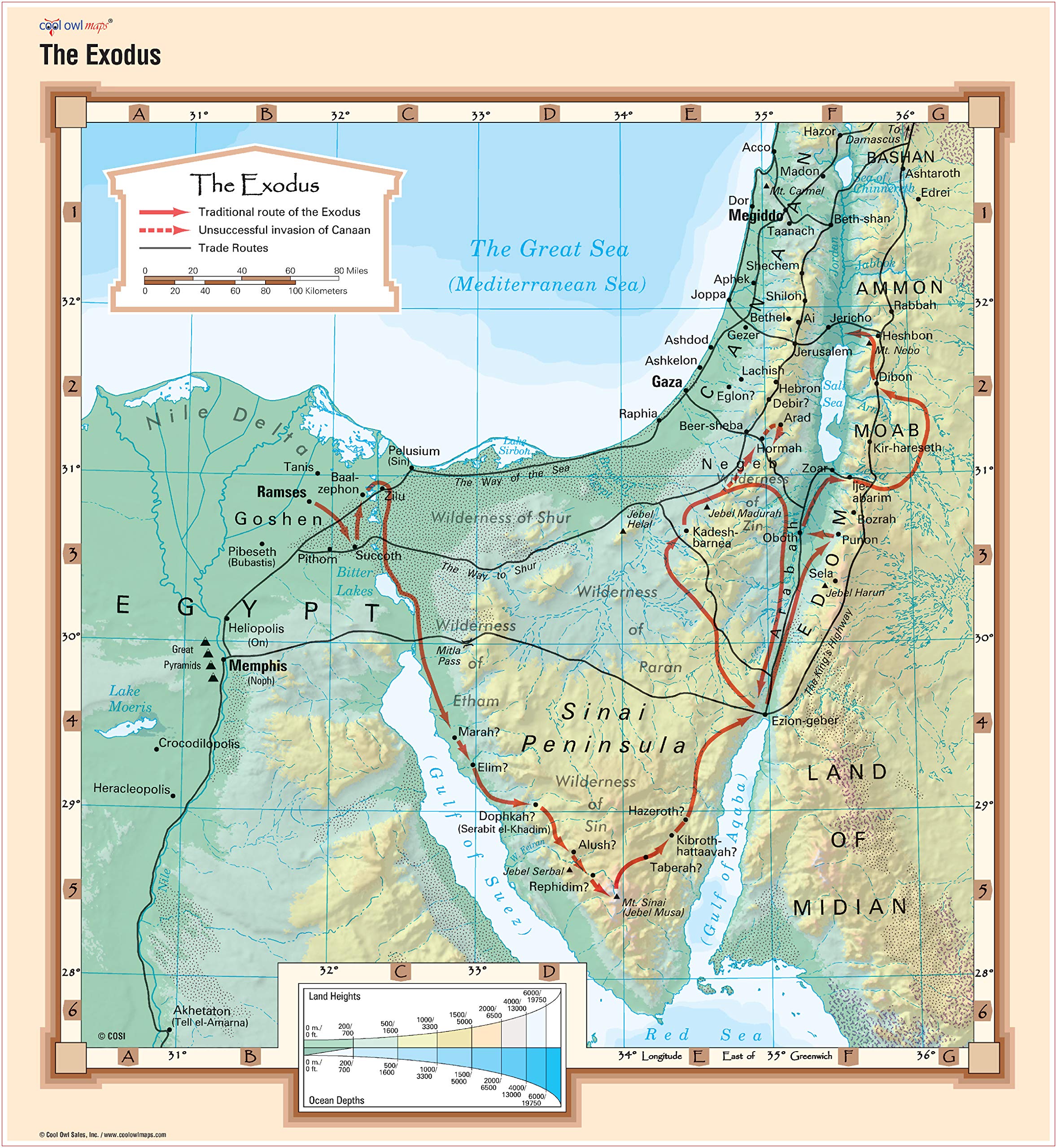
1 These are the stages of the people of Israel, when they went out of the land of Egypt by their companies under the leadership of Moses and Aaron. 2 Moses wrote down their starting places, stage by stage, by command of the Lord, and these are their stages according to their starting places. 3 They set out from Rameses in the first month, on the fifteenth day of the first month. On the day after the Passover, the people of Israel went out triumphantly in the sight of all the Egyptians, 4 while the Egyptians were burying all their firstborn, whom the Lord had struck down among them. On their gods also the Lord executed judgments.

5 So the people of Israel set out from Rameses and camped at Succoth. 6 And they set out from Succoth and camped at Etham, which is on the edge of the wilderness. 7 And they set out from Etham and turned back to Pi-hahiroth, which is east of Baal-zephon, and they camped before Migdol. 8 And they set out from before Hahiroth and passed through the midst of the sea into the wilderness, and they went a three days’ journey in the wilderness of Etham and camped at Marah. 9 And they set out from Marah and came to Elim; at Elim there were twelve springs of water and seventy palm trees, and they camped there. 10 And they set out from Elim and camped by the Red Sea. 11 And they set out from the Red Sea and camped in the wilderness of Sin. 12 And they set out from the wilderness of Sin and camped at Dophkah. 13 And they set out from Dophkah and camped at Alush. 14 And they set out from Alush and camped at Rephidim, where there was no water for the people to drink. 15 And they set out from Rephidim and camped in the wilderness of Sinai. 16 And they set out from the wilderness of Sinai and camped at Kibroth-hattaavah. 17 And they set out from Kibroth-hattaavah and camped at Hazeroth. 18 And they set out from Hazeroth and camped at Rithmah. 19 And they set out from Rithmah and camped at Rimmon-perez. 20 And they set out from Rimmon-perez and camped at Libnah. 21 And they set out from Libnah and camped at Rissah. 22 And they set out from Rissah and camped at Kehelathah. 23 And they set out from Kehelathah and camped at Mount Shepher. 24 And they set out from Mount Shepher and camped at Haradah. 25 And they set out from Haradah and camped at Makheloth. 26 And they set out from Makheloth and camped at Tahath. 27 And they set out from Tahath and camped at Terah. 28 And they set out from Terah and camped at Mithkah. 29 And they set out from Mithkah and camped at Hashmonah. 30 And they set out from Hashmonah and camped at Moseroth. 31 And they set out from Moseroth and camped at Bene-jaakan. 32 And they set out from Bene-jaakan and camped at Hor-haggidgad. 33 And they set out from Hor-haggidgad and camped at Jotbathah. 34 And they set out from Jotbathah and camped at Abronah. 35 And they set out from Abronah and camped at Ezion-geber. 36 And they set out from Ezion-geber and camped in the wilderness of Zin (that is, Kadesh). 37 And they set out from Kadesh and camped at Mount Hor, on the edge of the land of Edom.

38 And Aaron the priest went up Mount Hor at the command of the Lord and died there, in the fortieth year after the people of Israel had come out of the land of Egypt, on the first day of the fifth month. 39 And Aaron was 123 years old when he died on Mount Hor.

40 And the Canaanite, the king of Arad, who lived in the Negeb in the land of Canaan, heard of the coming of the people of Israel.

41 And they set out from Mount Hor and camped at Zalmonah. 42 And they set out from Zalmonah and camped at Punon. 43 And they set out from Punon and camped at Oboth. 44 And they set out from Oboth and camped at Iye-abarim, in the territory of Moab. 45 And they set out from Iyim and camped at Dibon-gad. 46 And they set out from Dibon-gad and camped at Almon-diblathaim. 47 And they set out from Almon-diblathaim and camped in the mountains of Abarim, before Nebo. 48 And they set out from the mountains of Abarim and camped in the plains of Moab by the Jordan at Jericho; 49 they camped by the Jordan from Beth-jeshimoth as far as Abel-shittim in the plains of Moab.

50 And the Lord spoke to Moses in the plains of Moab by the Jordan at Jericho, saying, 51 “Speak to the people of Israel and say to them, When you pass over the Jordan into the land of Canaan, 52 then you shall drive out all the inhabitants of the land from before you and destroy all their figured stones and destroy all their metal images and demolish all their high places. 53 And you shall take possession of the land and settle in it, for I have given the land to you to possess it. 54 You shall inherit the land by lot according to your clans. To a large tribe you shall give a large inheritance, and to a small tribe you shall give a small inheritance. Wherever the lot falls for anyone, that shall be his. According to the tribes of your fathers you shall inherit. 55 But if you do not drive out the inhabitants of the land from before you, then those of them whom you let remain shall be as barbs in your eyes and thorns in your sides, and they shall trouble you in the land where you dwell. 56 And I will do to you as I thought to do to them.” – Numbers 33:1-56 ESV

After doing to rapid-fire recounting of Israel’s trek from Egypt to the banks of the Jordan River, Moses prepares the people of God for their next big task. They are almost at the end of their four-decade-long journey, but they are far from done.  After more than 40 years in the wilderness, they stand on the eastern bank of the Jordan River waiting for God’s command to cross over and begin their conquest and occupation of the land of promise. The day they had long been waiting for had finally arrived. There had been a lengthy delay, but now it was time to enjoy what God had promised so long ago.

But as with most things associated with God, the blessing was tied to a requirement. He had one last instruction to give them before they took possession of the land, and it was a fairly significant one. They must drive out all the people who were living there. On top of that, they had to destroy all the idols and pagan shrines erected to the gods of the land. They were to smash every vestige of idol worship they found. In other words, God expected them to clean up before they settled down.

Sounds simple enough doesn’t it? But if you’re the least bit familiar with the story of the Israelites, they didn’t exactly follow God’s instructions to the letter; they took a few liberties. It’s almost as if the enemy (Satan) was standing there just as he had been in the garden of Eden, asking the question, “Surely, God has not said…”

I can just hear Satan whispering in their ears, “You don’t have to get rid of ALL the idols, just most of them.” Or maybe he worded his temptation this way: “You might want to leave one of the pagan shrines intact, just in case Yahweh doesn’t come through for you.”

As far as God’s command to rid the land of all its occupants, Satan probably did his best to convince the Israelites just how politically incorrect and insensitive this might appear to the rest of the people in the region. They probably thought to themselves, “We don’t want to get off on the wrong foot with our new neighbors, do we?”

And God seemed to know that the people would have second thoughts about His command, so He warned them what would happen if they failed to obey.

“But if you fail to drive out the people who live in the land, those who remain will be like splinters in your eyes and thorns in your sides. They will harass you in the land where you live. And I will do to you what I had planned to do to them.” – Numbers 33:55-56 NLT

“Disobey me,” God says, “and you will live to regret it.” This was not a suggestion, but a command. God expected them to follow His requirements without delay or deviation. He had a good reason for what He was asking them to do, and He knew exactly what would happen if they chose to disobey Him. If the Israelites failed to remove the land’s occupants, their enemies would become a constant threat and a thorn in their side. They would never learn to live amicably together. So, cleansing was critical for spiritual survival.

In his commentary on the Book of Numbers, Dr. Thomas Constable writes, “The repetition of ‘all’ (Numbers 33:52) stresses the importance of completely clearing the land of its inhabitants and their religious paraphernalia. God wanted to clean up the land spiritually and to make it a ‘holy land.’ The land was a gift from God to His first-born son, Israel (Numbers 33:53). God warned the Israelites what would happen to them if they were not completely obedient (Numbers 333:55-56). The Canaanites would be a constant source of irritation to them, and God would deal with His people as He planned to deal with the Canaanites.”

God wanted to purify the land spiritually and make it holy. That reminds me of what God wants to do with my life. He wants to clean it up spiritually and set it apart for His use. He is about removing anything in my life that might defile or defeat me. In essence, He wants to clean house.

But I tend to hang on to certain remnants of my past. I want to give the enemy some footholds in my life where he can live in peace. I want to maintain some of the idols that were there before God came to occupy the land because I find them comforting. They bring me a little bit of peace and assurance. But God wants to purge my life of any vestiges of the past. He wants to make all things new.

To receive all the blessings the promised land had to offer, the people were going to have to obey God fully. The same thing is true for us today. To enjoy all the blessings our new life in Christ offers, we must obey God fully. God makes this clear in His Word.

…throw off your old evil nature and your former way of life, which is rotten through and through, full of lust and deception. – Ephesians 4:22 NLT

Don’t lie to one another. You’re done with that old life. It’s like a filthy set of ill-fitting clothes you’ve stripped off and put in the fire. – Colossians 3:9 MSG

The night is almost gone; the day of salvation will soon be here. So don’t live in darkness. Get rid of your evil deeds. Shed them like dirty clothes. Clothe yourselves with the armor of right living, as those who live in the light. We should be decent and true in everything we do, so that everyone can approve of our behavior. Don’t participate in wild parties and getting drunk, or in adultery and immoral living, or in fighting and jealousy. But let the Lord Jesus Christ take control of you, and don’t think of ways to indulge your evil desires. – Romans 13:12-14 NLT

God was looking for a change in the lives of the Israelites. He wanted to purge and purify them, and that process began with a thorough cleansing of the land. His desire was to rid the landscape of their lives of any and all vestiges of the past.

Like the Israelites, we must take our set-apart status seriously.  We must remove all the idols and false gods that might draw us away from full reliance upon Him. If we do, we will be blessed. If we don’t, we will always find ourselves doing battle with past enemies and tempted to worship the false gods of our former life. Cleansing is always the key to blessing.

English Standard Version (ESV) The Holy Bible, English Standard Version. ESV® Permanent Text Edition® (2016). Copyright © 2001

New Living Translation (NLT) Holy Bible, New Living Translation, copyright © 1996, 2004, 2015 by Tyndale House Foundation. Used by permission of Tyndale House Publishers Inc., Carol Stream, Illinois 60188. All rights reserved.

Give Credit Where Credit Is Due

25 The Lord said to Moses, 26 “Take the count of the plunder that was taken, both of man and of beast, you and Eleazar the priest and the heads of the fathers’ houses of the congregation, 27 and divide the plunder into two parts between the warriors who went out to battle and all the congregation. 28 And levy for the Lord a tribute from the men of war who went out to battle, one out of five hundred, of the people and of the oxen and of the donkeys and of the flocks. 29 Take it from their half and give it to Eleazar the priest as a contribution to the Lord. 30 And from the people of Israel’s half you shall take one drawn out of every fifty, of the people, of the oxen, of the donkeys, and of the flocks, of all the cattle, and give them to the Levites who keep guard over the tabernacle of the Lord.” 31 And Moses and Eleazar the priest did as the Lord commanded Moses.

32 Now the plunder remaining of the spoil that the army took was 675,000 sheep, 33 72,000 cattle, 34 61,000 donkeys, 35 and 32,000 persons in all, women who had not known man by lying with him. 36 And the half, the portion of those who had gone out in the army, numbered 337,500 sheep, 37 and the Lord’s tribute of sheep was 675. 38 The cattle were 36,000, of which the Lord’s tribute was 72. 39 The donkeys were 30,500, of which the Lord’s tribute was 61. 40 The persons were 16,000, of which the Lord’s tribute was 32 persons. 41 And Moses gave the tribute, which was the contribution for the Lord, to Eleazar the priest, as the Lord commanded Moses.

42 From the people of Israel’s half, which Moses separated from that of the men who had served in the army— 43 now the congregation’s half was 337,500 sheep, 44 36,000 cattle, 45 and 30,500 donkeys, 46 and 16,000 persons— 47 from the people of Israel’s half Moses took one of every 50, both of persons and of beasts, and gave them to the Levites who kept guard over the tabernacle of the Lord, as the Lord commanded Moses.

48 Then the officers who were over the thousands of the army, the commanders of thousands and the commanders of hundreds, came near to Moses 49 and said to Moses, “Your servants have counted the men of war who are under our command, and there is not a man missing from us. 50 And we have brought the Lord’s offering, what each man found, articles of gold, armlets and bracelets, signet rings, earrings, and beads, to make atonement for ourselves before the Lord.” 51 And Moses and Eleazar the priest received from them the gold, all crafted articles. 52 And all the gold of the contribution that they presented to the Lord, from the commanders of thousands and the commanders of hundreds, was 16,750 shekels. 53 (The men in the army had each taken plunder for himself.) 54 And Moses and Eleazar the priest received the gold from the commanders of thousands and of hundreds, and brought it into the tent of meeting, as a memorial for the people of Israel before the Lord. – Numbers 31:25-54 ESV

There were 12,000 Israelite soldiers chosen to go into battle against the Midianites; 1,000 men from every tribe. That is a relatively small number when compared with the 601,730 men deemed battle-worthy according to the recent census taken by Moses. This small contingent of soldiers easily defeated their enemy and brought back an abundance of plunder from their raids of the towns and villages of the Midianites. And according to the military leaders, they had not lost a single man in the process.

“We, your servants, have accounted for all the men who went out to battle under our command; not one of us is missing!” – Numbers 31:49 NLT

The mission had been a rousing success, and the bounty they had taken from the Midianites was substantial. But before anyone could enjoy the riches they had plundered, everyone and everything had to be ceremonially purified.

“Anything made of gold, silver, bronze, iron, tin, or lead—that is, all metals that do not burn—must be passed through fire in order to be made ceremonially pure. These metal objects must then be further purified with the water of purification. But everything that burns must be purified by the water alone. On the seventh day you must wash your clothes and be purified. Then you may return to the camp.” – Numbers 31:22-24 NLT

Moses warned the soldiers that they must also go through a purification ritual before they could enter the camp.

“…all of you who have killed anyone or touched a dead body must stay outside the camp for seven days. You must purify yourselves and your captives on the third and seventh days. Purify all your clothing, too, and everything made of leather, goat hair, or wood.” – Numbers 31:19-20 NLT

Contact with the enemy had rendered these men ceremonially impure, so they were required to go through a period of forced isolation and cleansing, along with all those taken captive during the mission. This was the process God had established and communicated to Moses back in chapter 19.

“All those who touch a dead human body will be ceremonially unclean for seven days. They must purify themselves on the third and seventh days with the water of purification; then they will be purified. But if they do not do this on the third and seventh days, they will continue to be unclean even after the seventh day. All those who touch a dead body and do not purify themselves in the proper way defile the Lord’s Tabernacle, and they will be cut off from the community of Israel. Since the water of purification was not sprinkled on them, their defilement continues.” – Numbers 19:11-13 NLT

Once the men and their captives had completed the purification process, the booty was divided. The 12,000 combatants would receive their fair share of the reward, but those who remained behind would not be left out. This pattern of equity among those who went into battle and their brothers who remained behind would become a norm for the nation of Israel.

Centuries later, after a rousing victory over the Amalekites, King David encountered a problem among his soldiers. The ones who had assisted him in the battle were angry at having to share their plunder with those who had remained behind.

“They didn’t go with us, so they can’t have any of the plunder we recovered. Give them their wives and children, and tell them to be gone.” – 1 Samuel 30:22 NLT

These men wanted all the plunder for themselves. But David denied their selfish demands, saying: “No, my brothers! Don’t be selfish with what the Lord has given us. He has kept us safe and helped us defeat the band of raiders that attacked us. Who will listen when you talk like this? We share and share alike—those who go to battle and those who guard the equipment” (1 Samuel 23-24 NLT).

God had Moses establish a similar plan that required him to make a detailed list of all the plunder taken from the Midianites. Once that was done, Moses ordered that half the plunder be divided equally between the 12,000 men who had fought in the battle, while the other half was to be shared between the rest of the Israelites. But a portion of all the plunder was to be dedicated to God. From the soldier’s share 1/500th of all that was taken was to be given to the Lord.

“…one of every 500 of the prisoners and of the cattle, donkeys, sheep, and goats…” – Numbers 31:28 NLT

This share was to be placed under the care of Eleazar, the high priest, as an offering to the Lord, and the numbers are staggering. The Israelites dedicated 675 sheep and goats to God, along with 72 cattle, and 61 donkeys. The text also states that 32 virgin girls, taken as captives, were set aside for the Lord. It is likely that these young women became servants to the Levitical priests and assisted in the maintenance of the Tabernacle. Of the plunder given to the rest of the people, 1/50th of it was given to the Levites.

Moses took one of every fifty prisoners and animals and gave them to the Levites, who maintained the Lord’s Tabernacle. All this was done as the Lord had commanded Moses. – Numbers 31:47 NLT

There was one final offering presented to Yahweh. The military leaders who oversaw the battle came before Moses with an offering of atonement. Out of gratitude for God’s protection of their men, they brought a large number of gold armbands, bracelets, rings, earrings, and necklaces that the soldiers had taken as plunder. This would have been from the portion of the booty that belonged to the 12,000 soldiers. These men willingly gave up part of their reward as an offering to God.

“…we are presenting the items of gold we captured as an offering to the Lord from our share of the plunder—armbands, bracelets, rings, earrings, and necklaces. This will purify our lives before the Lord and make us right with him.” – Numbers 31:50 NLT

In essence, this was a ransom for the lives that God had graciously spared. Not one man had died in this expedition and the generals and captains were expressing their gratitude to God for His mercy and providential care.

This entire scenario paints a picture of how things were to unfold as the Israelites entered the land of Canaan. It served as a practice run in preparation for their future conquest of the promised land. There would be many more battles ahead, and every victory they enjoyed was to be recognized as the result of God’s grace and mercy. He would be going before them and fighting alongside them, and they were never to forget to render their thanksgiving to Him for His protection and provision.

Moses would repeatedly warn the people to take their relationship with God seriously. Without Him, they were nothing. He knew they would always face the temptation to take credit for their own success; a dangerous prospect that was to be avoided at all costs.

“Beware that in your plenty you do not forget the Lord your God and disobey his commands, regulations, and decrees that I am giving you today. For when you have become full and prosperous and have built fine homes to live in, and when your flocks and herds have become very large and your silver and gold have multiplied along with everything else, be careful!” – Deuteronomy 8:11-13 NLT

With every victory would come the temptation to glory in their success and celebrate their newfound wealth. But Moses wanted to remember that faithfulness was far more important than fame or financial success.

“Remember the Lord your God. He is the one who gives you power to be successful, in order to fulfill the covenant he confirmed to your ancestors with an oath.” – Deuteronomy 8:18 NLT

The Israelites had just experienced the providential hand of God. Their success over the Midianites had been His doing, not their own, and this amazing victory without the loss of a single Israelite soldier was the proof. They had learned the invaluable lesson that faith in God results in the presence and power of God. If they would only obey, they would experience even greater victories in the days ahead. But they were also learning that every successful battle was to be followed by a willing acknowledgment of God’s role as expressed by their faithful gifts of gratitude. God was going to go before them, and with each successive victory over their enemies, they would be expected to give credit where credit is due.

English Standard Version (ESV) The Holy Bible, English Standard Version. ESV® Permanent Text Edition® (2016). Copyright © 2001

New Living Translation (NLT) Holy Bible, New Living Translation, copyright © 1996, 2004, 2015 by Tyndale House Foundation. Used by permission of Tyndale House Publishers Inc., Carol Stream, Illinois 60188. All rights reserved.

The Soul-Cleansing Blood of the Lamb

11 “Whoever touches the dead body of any person shall be unclean seven days. 12 He shall cleanse himself with the water on the third day and on the seventh day, and so be clean. But if he does not cleanse himself on the third day and on the seventh day, he will not become clean. 13 Whoever touches a dead person, the body of anyone who has died, and does not cleanse himself, defiles the tabernacle of the Lord, and that person shall be cut off from Israel; because the water for impurity was not thrown on him, he shall be unclean. His uncleanness is still on him.

14 “This is the law when someone dies in a tent: everyone who comes into the tent and everyone who is in the tent shall be unclean seven days. 15 And every open vessel that has no cover fastened on it is unclean. 16 Whoever in the open field touches someone who was killed with a sword or who died naturally, or touches a human bone or a grave, shall be unclean seven days. 17 For the unclean they shall take some ashes of the burnt sin offering, and fresh water shall be added in a vessel. 18 Then a clean person shall take hyssop and dip it in the water and sprinkle it on the tent and on all the furnishings and on the persons who were there and on whoever touched the bone, or the slain or the dead or the grave. 19 And the clean person shall sprinkle it on the unclean on the third day and on the seventh day. Thus on the seventh day he shall cleanse him, and he shall wash his clothes and bathe himself in water, and at evening he shall be clean.

20 “If the man who is unclean does not cleanse himself, that person shall be cut off from the midst of the assembly, since he has defiled the sanctuary of the Lord. Because the water for impurity has not been thrown on him, he is unclean. 21 And it shall be a statute forever for them. The one who sprinkles the water for impurity shall wash his clothes, and the one who touches the water for impurity shall be unclean until evening. 22 And whatever the unclean person touches shall be unclean, and anyone who touches it shall be unclean until evening.” – Numbers 19:11-22 ESV

I am always amazed at the level of detail and intricacy found in the laws God gave to the Israelites. It can become confusing and a bit overwhelming at times as you read about the various sacrifices outlined by God in order for the people to maintain their purity before Him. It had to be intimidating for the people of Moses’ day.

Just trying to remember and keep all those rules and regulations would have been a daunting task, and there were different sacrifices for different situations. Chapter 19 outlines the sacrifice necessary to cleanse someone who has become defiled by having touched or been in the vicinity of a dead body. There was an elaborate and very specific rite or ritual to be followed for the defiled person to be cleansed. Failure to follow God’s instructions would result in continued defilement and their removal from the camp. This banning from fellowship in the community would also deny them access to the Tabernacle and any ability to offer sacrifices for their sins. This was serious stuff.

So, God tells them to sacrifice a red heifer – one without defect and that had never worn a yoke. It was to be slaughtered outside the camp, and then some of its blood was to be sprinkled on the Tabernacle to cleanse it from defilement. The body of the heifer was to be burned completely, along with some cedar wood, hyssop, and scarlet yarn. The ashes were to be gathered and stored in a clean place outside the camp. Those ashes would play a critical role in the cleansing process of the defiled.

Any time someone came into contact with a dead body, they were to be immediately banned from the community to keep their defilement from spreading. The ashes from the red heifer were to be mixed with clean water, then sprinkled on the defiled person on the third and seventh days of his uncleanness. Then on the seventh day, he was to bathe and wash his clothes. Strict adherence to this purification protocol was required before the defiled individual was allowed to return to normal life.

That same water was also to be sprinkled on the Tabernacle and all its furnishings because the defilement of even one Israelite rendered God’s house defiled and in need of purification. If you think about it, with people dying regularly because of disease, old age, and other natural causes, it would have been easy for any Israelite to become defiled. So, this regulation was a regular part of daily life. Through no fault of your own, you could find yourself defiled and in danger of being cut off from the people of God. But fortunately, God provided a way to receive cleansing, and it involved the shedding of blood. The life of an unblemished animal had to be sacrificed so that the defiled person could receive cleansing.

There is a lot of obvious symbolism here. The unblemished red heifer represents Christ. He was the unblemished sacrifice for our sins. The hyssop, cedar wood, and scarlet yarn were all used in the cleansing of lepers. They may also represent the hyssop branch that was used to offer wine to Christ on the cross (John 19:29), the wood of the cross on which He was hung, and the scarlet robe that was placed on Him at His trial (Matthew 27:28). The blood speaks of Christ’s sacrificial death on the cross for the sins of mankind.

…the blood of Jesus his Son cleanses us from all sin… – 1 John 1:7 ESV

Just think how much more the blood of Christ will purify our consciences from sinful deeds so that we can worship the living God. For by the power of the eternal Spirit, Christ offered himself to God as a perfect sacrifice for our sins. – Hebrews 9:14 NLT

But all the symbolic imagery found in Numbers 19 was but a shadow of what was to come. While the mixture of water and ashes could cleanse a man on the outside, it did nothing to purify his heart. He would be outwardly clean, but inside, he would still be full of sin and corruption. Such was the inadequacy of this system. It was incomplete and incapable of totally wiping away sin and guilt. Additional sacrifices were required. More blood would have to be shed. More ashes and water would need to be sprinkled. At no point could the people of God know that their sins were completely and permanently forgiven.

Just minutes after going through the rite of purification, you could inadvertently stumble upon a dead body and be defiled again. If a loved one died in your tent you would be rendered unclean and required to undergo the purification ritual. It was a never-ending process that required extreme diligence and perfect obedience. But these sacrifices were intended to represent a far better and more permanent sacrifice to come.

The book of Hebrews tells us that these regulations were a picture of the atoning work of Christ. They were an imperfect glimpse into the perfect cleansing that He would offer.

The blood of goats and bulls and the ashes of a heifer sprinkled on those who are ceremonially unclean sanctify them so that they are outwardly clean. How much more, then, will the blood of Christ, who through the eternal Spirit offered himself unblemished to God, cleanse our consciences from acts that lead to death, so that we may serve the living God! – Hebrews 9:13-14 NIV

The Message paraphrases those verses this way: “If that animal blood and the other rituals of purification were effective in cleaning up certain matters of our religion and behavior, think how much more the blood of Christ cleans up our whole lives, inside and out” (Hebrews 9:13-14 MSG).

Inside and out. That’s the difference; that’s the key. Christ came to provide cleansing that reaches to the core of who we are. He came to purify our hearts, not just our actions. He came to cleanse us from the sin that permeates our very being. We aren’t just defiled by sin, we are sinners; our very nature is sinful. It is our sinful natures that separate us from God. But Jesus Christ came to provide us with new natures. He didn’t just sprinkle us with His blood; He washed us with it. We are daily being transformed into His likeness as the old vestiges of our sinful nature are slowly but surely removed. He is cleansing us inside and out.

Have you been to Jesus for the cleansing pow’r?
Are you washed in the blood of the Lamb?
Are you fully trusting in His grace this hour?
Are you washed in the blood of the Lamb?

Are you washed in the blood,
In the soul-cleansing blood of the Lamb?
Are your garments spotless? Are they white as snow?
Are you washed in the blood of the Lamb? – Elisha A. Hoffman, 1878

In the Book of Revelation, the apostle John was given a vision of the throne room of God, where he saw “a great multitude that no one could number, from every nation, from all tribes and peoples and languages, standing before the throne and before the Lamb, clothed in white robes, with palm branches in their hands” (Revelation 7:9 ESV). He heard this huge throng of people crying out, “Salvation belongs to our God who sits on the throne, and to the Lamb!” (Revelation 7:10 ESV), and when he inquired as to who they were, he was told, “These are the ones coming out of the great tribulation. They have washed their robes and made them white in the blood of the Lamb” (Revelation 7:14 ESV).

These individuals are the survivors of the Great Tribulation, what will be one of the worst periods of human suffering in all of history. They would have witnessed the deaths of loved ones and endured great personal suffering. Every one of these people would have been defiled by constant contact with the countless bodies of the dead who fell at the hands of the Antichrist. Yet, John sees them clothed in white and standing before the throne of God in heaven.

“Therefore they are before the throne of God,
    and serve him day and night in his temple;
    and he who sits on the throne will shelter them with his presence.
They shall hunger no more, neither thirst anymore;
    the sun shall not strike them,
    nor any scorching heat.
For the Lamb in the midst of the throne will be their shepherd,
    and he will guide them to springs of living water,
and God will wipe away every tear from their eyes.” – Revelation 7:15-17 ESV

Their purity will be the byproduct of the soul-cleansing blood of Jesus, the spotless Lamb of God. Even the defilement of the Great Tribulation will not prevent them from entering the presence of God and singing the praises of His greatness and goodness.

Living in a fallen world marred by sin and marked by corruption can leave the child of God defiled and in need of purification. But there is always hope for the sin-soiled saint. As John wrote in his first letter, “the blood of Jesus his Son cleanses us from all sin” (1 John 1:7 ESV). Sin infects and contaminates; it stains and stigmatizes even the godliest among us. But the blood of Christ has the power to purify and restore, and not just the outside of the cup. The purification He provides is all-encompassing and reaches down to the depths of the heart.

Therefore, brothers, since we have confidence to enter the holy places by the blood of Jesus, by the new and living way that he opened for us through the curtain, that is, through his flesh, and since we have a great priest over the house of God, let us draw near with a true heart in full assurance of faith, with our hearts sprinkled clean from an evil conscience and our bodies washed with pure water. – Hebrews 10:19-22 ESV

English Standard Version (ESV) The Holy Bible, English Standard Version. ESV® Permanent Text Edition® (2016). Copyright © 2001

New Living Translation (NLT) Holy Bible, New Living Translation, copyright © 1996, 2004, 2015 by Tyndale House Foundation. Used by permission of Tyndale House Publishers Inc., Carol Stream, Illinois 60188. All rights reserved.

Our Gracious God

1 Now the Lord spoke to Moses and to Aaron, saying, 2 “This is the statute of the law that the Lord has commanded: Tell the people of Israel to bring you a red heifer without defect, in which there is no blemish, and on which a yoke has never come. 3 And you shall give it to Eleazar the priest, and it shall be taken outside the camp and slaughtered before him. 4 And Eleazar the priest shall take some of its blood with his finger, and sprinkle some of its blood toward the front of the tent of meeting seven times. 5 And the heifer shall be burned in his sight. Its skin, its flesh, and its blood, with its dung, shall be burned. 6 And the priest shall take cedarwood and hyssop and scarlet yarn, and throw them into the fire burning the heifer. 7 Then the priest shall wash his clothes and bathe his body in water, and afterward he may come into the camp. But the priest shall be unclean until evening. 8 The one who burns the heifer shall wash his clothes in water and bathe his body in water and shall be unclean until evening. 9 And a man who is clean shall gather up the ashes of the heifer and deposit them outside the camp in a clean place. And they shall be kept for the water for impurity for the congregation of the people of Israel; it is a sin offering. 10 And the one who gathers the ashes of the heifer shall wash his clothes and be unclean until evening. And this shall be a perpetual statute for the people of Israel, and for the stranger who sojourns among them. – Numbers 19:1-10 ESV

One of the things to keep in mind when reading these verses is the recent judgment that God had enacted upon the people of God. As a result of Korah’s rebellion, nearly 15,000 Israelites died from a plague that God had sent among the people. This large-scale pandemic had left the survivors with a massive clean-up task. The bodies of the fallen had to be gathered and properly buried, which rendered unclean all those who participated in the operation. Having come into contact with the bodies of the dead, these individuals would have been considered defiled and in need of purification, and God had already provided clear instructions regarding the treatment of the unclean.

“Command the people of Israel that they put out of the camp everyone who is leprous or has a discharge and everyone who is unclean through contact with the dead. You shall put out both male and female, putting them outside the camp, that they may not defile their camp, in the midst of which I dwell.” And the people of Israel did so, and put them outside the camp; as the Lord said to Moses, so the people of Israel did. – Numbers 5:2-4 ESV

Due to the sheer number of volunteers necessary to dispose of nearly 15,000 corpses, the Israelites would have needed a tent city to house all those who had become defiled and ceremonially unclean. So, God instituted a new command that would bring a quick resolution to the problem.

“Tell the people of Israel to bring you a red heifer, a perfect animal that has no defects and has never been yoked to a plow. Give it to Eleazar the priest, and it will be taken outside the camp and slaughtered in his presence. Eleazar will take some of its blood on his finger and sprinkle it seven times toward the front of the Tabernacle.” – Numbers 19:2-4 NLT

This was to be a corporate endeavor, with the entire congregation participating, whether they were personally unclean or not. They were to choose a red heifer that was free from defects and had never been used to pull a plow. This means it would have been a highly valuable animal in the prime of health; they were not free to bring a maimed or diseased heifer. There was no option to offer an older, less valuable animal or one that was worn out by a lifetime of hard work. This sacrifice was going to cost them something.

The whole point of this ceremony was to protect the holiness of the Tabernacle. The deaths of the rebels would have ended up defiling the entire congregation, and their defilement posed a very real and present danger to the holiness of the Tabernacle itself. But the death of the heifer was not meant for atonement. In other words, its death was not intended to provide cleansing from sin but to purify from defilement.

Notice the detailed instructions God provided for Aaron. First, the animal was to be slaughtered and some of its blood was to be used for purification.

Eleazar will take some of its blood on his finger and sprinkle it seven times toward the front of the Tabernacle. – Numbers 19:4 NLT

Eleazar was one of the four sons of Aaron and served as a priest alongside his father and brothers. His job was to supervise the entire process, ensuring that the remains of the heifer were taken outside the camp and burned. As the body was cremated, Eleazar was to add a stick of cedar, a hyssop branch, and some scarlet yarn.

“Cedar wood was not as subject to decay as most other woods and so represented the continuance of life. It was also aromatic when burnt and was probably either the common brown-berried cedar or the Phoenician juniper. Hyssop stood for purification from corruption, and the priests used it to apply blood, as in the Passover ritual. Scarlet wool symbolized the strong vital energy connected with blood (cf. Lev. 14:6). All of these elements combined to signify all that strengthened life. The person in charge added these elements to the heifer ashes as the heifer was burning.” – Thomas L. Constable, Notes on Numbers

The leftover ashes were to be collected and kept in a specific location outside the camp. All those involved in the sacrifice of the heifer were required to go through a special purification process before they could return to the camp. The ashes were to be maintained for the future purification of any who became defiled through contact with the dead; the ashes were to be mixed with water and used as a purifying agent. The death of the innocent and unblemished heifer was required for the cleansing properties of the water to be effective. The ashes mixed with water would provide purification from defilement and restore the guilty to a state of holiness. They could once again enter the camp and enjoy access to the Tabernacle and all the rites associated with it.

While all the imagery in this passage is difficult for us to understand, and the burning of the red heifer seems rather strange to our modern sensibilities, the entire process provides a beautiful illustration of God’s patience, grace, and mercy. Even after all that the Israelites had done to offend Him, God provided a means for the guilty to receive forgiveness and the unclean to be purified from the devastating effects of sin and death. Korah’s rebellion had been a direct attack on God’s sovereignty, and the perpetrators had suffered the ultimate consequence for their efforts: Death. Their actions had not only left the people of Israel with a massive clean-up effort but also the problem of how to deal with a community-wide defilement. Sin always has consequences; it impacts and infects far more than the guilty party. Rectifying the negative ramifications of Korah’s actions was going to take time and would require the efforts of the entire community. But the very one whom Korah and his cohorts had chosen to disobey was the one who graciously provided a path to purification and restoration for the people of Israel. God intervened, yet again.

English Standard Version (ESV) The Holy Bible, English Standard Version. ESV® Permanent Text Edition® (2016). Copyright © 2001

New Living Translation (NLT) Holy Bible, New Living Translation, copyright © 1996, 2004, 2015 by Tyndale House Foundation. Used by permission of Tyndale House Publishers Inc., Carol Stream, Illinois 60188. All rights reserved.

Till the Perfect Comes

1 So the Lord said to Aaron, “You and your sons and your father’s house with you shall bear iniquity connected with the sanctuary, and you and your sons with you shall bear iniquity connected with your priesthood. 2 And with you bring your brothers also, the tribe of Levi, the tribe of your father, that they may join you and minister to you while you and your sons with you are before the tent of the testimony. 3 They shall keep guard over you and over the whole tent, but shall not come near to the vessels of the sanctuary or to the altar lest they, and you, die. 4 They shall join you and keep guard over the tent of meeting for all the service of the tent, and no outsider shall come near you. 5 And you shall keep guard over the sanctuary and over the altar, that there may never again be wrath on the people of Israel. 6 And behold, I have taken your brothers the Levites from among the people of Israel. They are a gift to you, given to the Lord, to do the service of the tent of meeting. 7 And you and your sons with you shall guard your priesthood for all that concerns the altar and that is within the veil; and you shall serve. I give your priesthood as a gift, and any outsider who comes near shall be put to death.” – Numbers 18:1-7 ESV

As a result of the rebellion of Korah, God brought a plague among the people of Israel. It was only Aaron’s quick action in atoning for their sins, that prevented the complete destruction of the people of Israel at the hands of God. Aaron intervened and interceded on their behalf, and God spared them. As a result, God reconfirmed His selection of Aaron and his sons to serve as His priests.

The budding of Aaron’s rod provided a divine sign of confirmation that God had chosen Aaron and the tribe of Levi as His servants. God had set the Levites apart and only they could serve as caretakers of the Tabernacle and only Aaron and his sons could serve as priestly intercessors with God on behalf of the people. With their jobs came great responsibilities and great blessings. They were to remain holy and wholly dedicated to God. They received no inheritance in the land, but God provided for them from the gifts that were given to Him as a part of the sacrifices of the people. The Levites received from God that which was holy. They ate well but they had to be very careful not to profane or desecrate the things of God through unholy conduct.

God warned Aaron, “You, your sons, and your relatives from the tribe of Levi will be held responsible for any offenses related to the sanctuary. But you and your sons alone will be held responsible for violations connected with the priesthood” (Numbers 18:1 NLT).

These were ordinary men who had been given an extraordinary responsibility. They were the literal keepers of the spiritual flame of Israel and were to maintain God’s house and everything in it. The Levites were tasked with protecting and transporting God’s sacred house and all its contents. Aaron and his sons, as the priests, were responsible for offering sacrifices on behalf of the people, atoning for their sins, and providing a means for them to remain in right standing with God. But their work could never fully remove guilt or provide full atonement for the sins of the people. The priesthood and the sacrificial system as outlined in the Old Testament was a foreshadowing of something greater to come.

They serve in a system of worship that is only a copy, a shadow of the real one in heaven. For when Moses was getting ready to build the Tabernacle, God gave him this warning: “Be sure that you make everything according to the pattern I have shown you here on the mountain.” But now Jesus, our High Priest, has been given a ministry that is far superior to the old priesthood, for he is the one who mediates for us a far better covenant with God, based on better promises. – Hebrews 8:5-6 NLT

God’s plans for the Tabernacle, the sacrificial system, and the priesthood pointed to a far greater future reality. The Tabernacle was fashioned after the heavenly model that Moses was shown in a vision. The Tabernacle that Moses and the people of Israel built was a magnificent structure, but it was made from earthly materials and constructed by sinful men. Even Aaron and his sons, who served in its inner chambers, were flawed and far from perfect, just like every other Israelite. For them to perform their duties as priests, they had to undergo rigorous purification rites for the atonement of their own sins. According to the book of Hebrews, their humanity made them susceptible to death just like everyone else and required that there be constant replacements available.

The former priests were many in number, because they were prevented by death from continuing in office. – Hebrews 7:23 ESV

But God’s plan was far greater than that of the Tabernacle and the earthly priesthood. He had already determined a better means of atonement for the sins of mankind. It would involve His own Son and had been his plan from before the foundation of the world. After His resurrection from the dead, Jesus gave His disciples two separate Bible lessons where He “opened their minds to understand the Scriptures” (Luke 24:45 ESV). For the two disciples on the road to Emmaus, “he interpreted to them in all the Scriptures the things concerning himself” (Luke 24:27 ESV). Jesus unpacked all the writings of Moses and the prophets, showing how His coming had been foreshadowed and predicted; everything had been pointing to Him. The entire sacrificial system was but a shadow of things to come. The priesthood as practiced in Moses’ day, served as a glimpse of something greater to come.

He is the kind of high priest we need because he is holy and blameless, unstained by sin. He has been set apart from sinners and has been given the highest place of honor in heaven.  Unlike those other high priests, he does not need to offer sacrifices every day. They did this for their own sins first and then for the sins of the people. But Jesus did this once for all when he offered himself as the sacrifice for the people’s sins.  The law appointed high priests who were limited by human weakness. But after the law was given, God appointed his Son with an oath, and his Son has been made the perfect High Priest forever. – Hebrews 7:26-28 NLT

Man would need a greater High Priest. Sinful humanity would require a greater means of atonement. The sacrificial system, as practiced by the Jews in Moses’ day and even into the days of Jesus, could never fully eradicate the sins of men. Since man’s capacity for sin was endless, so was the need for constant sacrifice. There was never a point at which they were totally forgiven and completely free from the guilt of their sin. If nothing else, the law and the sacrificial system were a daily reminder of the ever-present reality of sin and guilt. No one could keep the law perfectly so, therefore, no one was truly sinless. And the constant capacity to sin required the constant need to sacrifice to atone for those sins.

But Jesus came to put an end to the madness. He was the High Priest who came to deal with sin once and for all.

He did not enter heaven to offer himself again and again, like the high priest here on earth who enters the Most Holy Place year after year with the blood of an animal. If that had been necessary, Christ would have had to die again and again, ever since the world began. But now, once for all time, he has appeared at the end of the age to remove sin by his own death as a sacrifice. And just as each person is destined to die once and after that comes judgment, so also Christ died once for all time as a sacrifice to take away the sins of many people. He will come again, not to deal with our sins, but to bring salvation to all who are eagerly waiting for him. – Hebrews 9:25-28 NLT

Because of Jesus’ sacrifice, our sins have been paid for. Our atonement has been accomplished once and for all. We can now stand before God as righteous in His eyes. All because of what Jesus accomplished on the cross on our behalf. We have been set free and are no longer slaves to sin. Empowered by the indwelling Holy Spirit, we can live differently and distinctively; our righteousness is not of our own making but has been provided for us by Christ Himself. He bore our sins and transferred His righteousness to us. He died so that we might live.

When reading the Old Testament, we must look for Christ and understand that it all foreshadows His ultimate arrival on the scene. The Old Testament is as much about Christ as the four Gospels. Before His ascension, Jesus took time to teach His disciples and point out all that the Old Testament Scriptures revealed about Himself. The story of the Bible is the story of God’s ultimate redemption of mankind through the saving work of His one and only Son. Like any story, it has a beginning and an end. In the story recorded in Luke, we see Jesus departing from His disciples and ascending into heaven, but we know that’s not the end of the story.

This Jesus, who was taken up from you into heaven, will come in the same way you saw him go into heaven. – Acts 1:11 ESV

He has gone, but He will someday return. His work as High Priest is complete but His job as King is not yet fulfilled. And we look forward to the day when God closes the final chapter in His great book of redemption.

English Standard Version (ESV) The Holy Bible, English Standard Version. ESV® Permanent Text Edition® (2016). Copyright © 2001

New Living Translation (NLT) Holy Bible, New Living Translation, copyright © 1996, 2004, 2015 by Tyndale House Foundation. Used by permission of Tyndale House Publishers Inc., Carol Stream, Illinois 60188. All rights reserved.

New and Improved

1 TNow the point in what we are saying is this: we have such a high priest, one who is seated at the right hand of the throne of the Majesty in heaven, 2 a minister in the holy places, in the true tent that the Lord set up, not man. 3 For every high priest is appointed to offer gifts and sacrifices; thus it is necessary for this priest also to have something to offer. 4 Now if he were on earth, he would not be a priest at all, since there are priests who offer gifts according to the law. 5 They serve a copy and shadow of the heavenly things. For when Moses was about to erect the tent, he was instructed by God, saying, “See that you make everything according to the pattern that was shown you on the mountain.” 6 But as it is, Christ has obtained a ministry that is as much more excellent than the old as the covenant he mediates is better, since it is enacted on better promises. 7 For if that first covenant had been faultless, there would have been no occasion to look for a second. – Hebrews 8:1-7 ESV

A better covenant. A better high priest. A better ministry. A better promise. Everything about Jesus is better. To borrow from an age-old, tried, and true advertising slogan, you might say that everything about Jesus is “new and improved.” Jesus didn’t just provide man with one more option among many. No, He made possible the one and only means by which sinful men and women could be restored to a right relationship with God.

Unlike the priests who served in the Tabernacle in the wilderness and the Temple in Jerusalem, Jesus ministers in the divine Tabernacle of God located in heaven. His is not an earthly or temporal ministry, but a heavenly and eternal one. He is no longer offering up sacrifices to appease or propitiate God, because His death fully paid the penalty for sin and satisfied the just demands of a righteous God – once and for all.

In this first section of chapter eight, the author continues to establish Jesus as superior to all and everyone else. But he does so by contrasting the old covenant with the new covenant. In verses 22-28 of chapter seven, he pointed out that Jesus is “the guarantor of a better covenant.” This new covenant only requires one priest: Jesus. And what sets this new high priest apart is that He will never die or need to be replaced. Unlike Aaron and his successors, Jesus died but rose again. His earthly ministry ended in death but was followed by His resurrection and ascension. Now, He is seated at the right hand of God the Father and intercedes on behalf of all those who have placed their faith in Him as Savior.

Christ Jesus is the one who died—more than that, who was raised—who is at the right hand of God, who indeed is interceding for us. – Romans 8:34 ESV

The new covenant that Jesus inaugurated by the shedding of His blood on a Roman cross requires no more daily sacrifices for sin. Under the old covenant, the people of Israel were required to offer repeated sacrifices day after day and year after year because their sins never ceased and their atonement was never full or complete. They were in constant need of purification and forgiveness, “For it is impossible for the blood of bulls and goats to take away sins” (Hebrews 10:4 ESV).

Under the old covenant, the rituals and rites performed by Aaron and his sons were incapable of providing inner purification. They were primarily ceremonial in nature and dealt with the external problem of uncleanness or impurity.

For the gifts and sacrifices that the priests offer are not able to cleanse the consciences of the people who bring them. For that old system deals only with food and drink and various cleansing ceremonies—physical regulations that were in effect only until a better system could be established. – Hebrews 9:9-10 ESV

During the days of the Tabernacle and the Temple, the simple act of touching a forbidden object or eating one of many prohibited foods could render someone unclean and unworthy to enter God’s presence. Purification was necessary but the process only produced a temporary state of acceptability before God. It could do nothing to change the condition of the human heart. The entire process could only make the individual acceptable to God but could not produce a permanent state of righteousness.

So, something better was needed and God provided it. This better covenant administered by a better high priest had been part of God’s plan from the very beginning. All that came before it was intended to be a foreshadowing of something better to come. The Mosaic Law, the Tabernacle, and the sacrificial system were earthly representations of the heavenly realm.

Chapter eight discloses that the high priest of the new covenant sits at the right hand of God in a heavenly Tabernacle, not an earthly one. The Tabernacle in the wilderness was a replica of the real thing, what the author describes as “a copy and shadow of the heavenly things” (Hebrews 8:5 ESV).

And over the centuries, the millions of animal sacrifices offered in both the Tabernacle and the Temple in Jerusalem were simply foreshadowings of a better sacrifice to come.

For it is impossible for the blood of bulls and goats to take away sins. – Hebrews 10:4 ESV

They could provide temporary atonement or relief from sin’s condemnation but were not intended to offer a permanent fix. That is why the sacrifices were “continually offered every year” (Hebrews 10:1 ESV). In his gospel, Luke records the words Jesus spoke to His disciples on the night He shared His last Passover meal with them.

After supper he took another cup of wine and said, “This cup is the new covenant between God and his people – an agreement confirmed with my blood, which is poured out as a sacrifice for.” – Luke 22:20 NLT

With the death of Jesus, a new covenant was made between God and man. It replaced the old covenant. Why? Because it provided a better way for men to be made right with God. In fact, it provided the only way for men to be made right with God. Under the old covenant, the shedding of blood provided temporary relief from the condemnation of sin. But with His death, Jesus provided a permanent solution to man’s sin problem. Rather than sinful men having to try and earn a right standing with God through self-effort, Jesus provided the gift of His own righteousness. He took on man’s sin and, in exchange, gave the formerly condemned His righteousness in return. That is why Paul wrote, “For God made Christ, who never sinned, to be the offering for our sin, so that we could be made right with God through Christ” (2 Corinthians 5:21 NLT).

And Paul further elaborates on this point in his letter to the Romans.

The law of Moses was unable to save us because of the weakness of our sinful nature. So God did what the law could not do. He sent his own Son in a body like the bodies we sinners have. And in that body God declared an end to sin’s control over us by giving his Son as a sacrifice for our sins. He did this so that the just requirement of the law would be fully satisfied for us, who no longer follow our sinful nature but instead follow the Spirit. – Romans 8:3-4 NLT

In chapter nine, the author of Hebrews continues his elaboration on the point that Jesus was the better mediator of a better covenant.

Therefore he is the mediator of a new covenant, so that those who are called may receive the promised eternal inheritance, since a death has occurred that redeems them from the transgressions committed under the first covenant. – Hebrews 9:15 ESV

It was not that the old covenant was bad; it was simply that it was incomplete. It could reveal sin but could not remove it. It could display what righteousness looked like but was not able to produce righteousness in a man’s heart. It all pointed to something better to come. It was a foreshadowing of something greater to be revealed. It revealed man’s sinfulness so that he would understand his desperate need for a Savior.

It’s interesting to note that when Jesus walked this earth, He offered the following commentary on the spiritual state of man:

“Healthy people don’t need a doctor – sick people do. I have come to call not those who think they are righteous, but those who know they are sinners.” – Mark 2:17 NLT

His point? Those who think they are without sin and in no need of a Savior will never turn to Him. It is those who are “weary and carry heavy burdens” (Matthew 11:29) who will find rest for their souls. The apostle John wrote, “If we claim we have no sin, we are only fooling ourselves and not living in the truth” (1 John 1:8 NLT). To deny the presence of sin is to live a lie, and the apostle warns that it is tantamount to calling God a liar.

If we claim we have not sinned, we are calling God a liar and showing that his word has no place in our hearts. – 1 John 1:10 NLT

Jesus offers a better ministry as a better high priest and the mediator of a better covenant based on better promises. But to take advantage of it, men must recognize their sin and their desperate need for a Savior. They must desire something better. They must turn from the old covenant with its laws, rules, and regulations. They must give up the hope of achieving righteousness in their own effort and receive by faith the new covenant that Christ has made possible through His blood.

Therefore, if anyone is in Christ, he is a new creation. The old has passed away; behold, the new has come. – 2 Corinthians 5:17 ESV

English Standard Version (ESV) The Holy Bible, English Standard Version. ESV® Permanent Text Edition® (2016). Copyright © 2001

New Living Translation (NLT) Holy Bible, New Living Translation, copyright © 1996, 2004, 2015 by Tyndale House Foundation. Used by permission of Tyndale House Publishers Inc., Carol Stream, Illinois 60188. All rights reserved.

When Good Is Not Good Enough

16 And the Lord spoke to Moses, saying, 17 “Speak to Aaron, saying, None of your offspring throughout their generations who has a blemish may approach to offer the bread of his God. 18 For no one who has a blemish shall draw near, a man blind or lame, or one who has a mutilated face or a limb too long, 19 or a man who has an injured foot or an injured hand, 20 or a hunchback or a dwarf or a man with a defect in his sight or an itching disease or scabs or crushed testicles. 21 No man of the offspring of Aaron the priest who has a blemish shall come near to offer the Lord’s food offerings; since he has a blemish, he shall not come near to offer the bread of his God. 22 He may eat the bread of his God, both of the most holy and of the holy things, 23 but he shall not go through the veil or approach the altar, because he has a blemish, that he may not profane my sanctuaries, for I am the Lord who sanctifies them.” 24 So Moses spoke to Aaron and to his sons and to all the people of Israel. – Leviticus 21:16-24 ESV

God placed high expectations upon His priests because they served as His emissaries and mediators. Their everyday involvement in His Tabernacle required that they be holy and pure. In a sense, God was demanding of them what He demanded of Abraham.

“…walk before me, and be blameless…” – Genesis 17:1 ESV

This divine decree from God, spoken to Abraham in his 90th year, was not a call to perfection or sinlessness; it was an invitation to live a wholehearted, fully transparent life as a His servant. God demanded that Abraham not live in hiddenness or secrecy. There were to be no areas of his life that were off-limits to God. There was to be no compartmentalization or secular-sacred split when it came to his behavior. God wanted all of Abraham and the same thing was true of Aaron and his sons.

When reading this section of Leviticus, one might reach the conclusion that God is discriminatory and disparaging of the physically disadvantaged. But that would require reading the text in a superficial manner and only from a human perspective. It is important to remember that the entire book of Leviticus highlights the holiness of Yahweh. The giving of the law and the Book of the Covenant, the construction of the Tabernacle, and the institution of the sacrificial system were all intended to highlight the holiness of Israel’s God. All these things were meant to point to His perfection and moral purity and the need for His people to live in a way that reflected His glory.

So, when God issues the command that any defective, disfigured, or deformed priest was banned from ministering in His presence, it was meant to remind the Israelites of His holiness. There were to be no concessions, compromises, or shortcuts. If it was inappropriate and unacceptable for them to offer an injured, disfigured, or diseased animal as a sacrifice, why would it be okay for a “blemished” priest to participate in the very same ceremony?

Those priests with permanent disfigurements were permanently banned from serving in the Tabernacle. If their injuries or illnesses were temporary, they would be prohibited from serving only until they were healed.

“Disqualified priests still participated in other priestly functions and could still eat the portions given them in the sanctuary. They just could not serve as sacrificing priests in the holy place.” – Allen P. Ross, Holiness to the Lord: A Guide to the Exposition of the Book of Leviticus

God provides a comprehensive but not exhaustive list of disqualifying conditions, including blindness, lameness, disfigurement, deformity, broken limbs, defective eyes, skin sores, scabs, and damaged testicles. God also excludes the “hunchbacked or dwarfed” (Leviticus 21;20 NLT). In all of these cases, the “defects” of the individual would have been readily apparent to everyone. The evidence of these conditions would have been difficult to hide from the rest of the community. So, if a priest who suffered from either a temporary or permanent defect was allowed to minister before God in the holy place, it would have sent a very strong and wrong signal to the people of God.

It’s difficult to read this passage and not consider the words that God spoke to the prophet Samuel concerning his search for the next king of Israel. God had sent Samuel to the house of Jesse in order to find a replacement for King Saul. As the first king of Israel, Saul proved to be a disappointment because he had disobeyed God. As a result, God rejected him as king and vowed to replace him with “a man after his own heart” (1 Samuel 13:14 NLT). So, when Samuel arrived at the house of Jesse, he had his host bring in each of his sons, one by one. When he saw Eliab, the firstborn, Samuel responded, “Surely this is the Lord’s anointed!” (1 Samuel 16:6 NLT). To Samuel, this young man had all the outward characteristics of a king. He looked the part. But God warned Samuel that he was focusing on the wrong thing.

“Don’t judge by his appearance or height, for I have rejected him. The LORD doesn’t see things the way you see them. People judge by outward appearance, but the LORD looks at the heart.” – 1 Samuel 16:7 NLT

Eventually, Samuel examined all of Jesse’s sons without receiving divine confirmation regarding any of them. That is until David showed up.

And the Lord said, “This is the one; anoint him.” – 1 Samuel 16:12 NLT

Yes, the text states that David was “dark and handsome, with beautiful eyes” (1 Samuel 16:12 NLT), but that was not the reason God chose him. The Book of Acts records that “God removed Saul and replaced him with David, a man about whom God said, ‘I have found David son of Jesse, a man after my own heart. He will do everything I want him to do’” (Acts 13:22 NLT).

So, this raises the question: Why does God seem to place so much emphasis on outward appearance when it comes to His priests? Is this a case of inconsistency on God’s part? The logical answer is no, because “The LORD is righteous in all his ways” (Psalm 145:17 ESV). Everything He does is right, good, perfect, and without contradiction or inconsistency.

The men who served in God’s Tabernacle were required to be physically without defect. He had already provided the means for taking care of their “heart defects.” There were sacrifices they had to make for personal atonement before they could serve in God’s house and minister on behalf of the people. Any interior “imperfections” would be taken care of through this process. But their physical flaws and defects were another matter. These outward conditions were visible for all to see and would have sent an improper message to the rest of the faith community if these men were allowed to enter the presence of God in their flawed and imperfect state.

This is not to be construed as some kind of statement regarding the diminished spiritual status of those with birth defects, diseases, deformities, or disfigurements. God was not declaring such people as spiritual outcasts or damaged goods. He was simply emphasizing the need for His priests to be both spiritually and physically “unblemished” to serve in His presence.

“Physically inferior priests were not necessarily inferior spiritually, but the priest’s duties and office required completeness since the priest stood between God and people.” – Thomas L. Constable, Notes on Leviticus, 2023 Edition

God makes His intentions perfectly clear. He is not degrading these men for physical character traits over which they have no control or say. He is simply stressing the importance of their role as His representatives and highlighting that any physical flaws they may have could end up diminishing His glory and holiness before the people.

“…because of his physical defect, he may not enter the room behind the inner curtain or approach the altar, for this would defile my holy places. I am the Lord who makes them holy.” – Leviticus 21:23 NLT

God wanted Aaron to understand that there were to be no concessions made when it came to God’s holiness. That included the holiness of God’s house, the sacrificial system, and the men who served God’s priests. Those who came into His presence must be physically and spiritually blameless and unblemished. There was to be no unsightly skin disease covered by the white, flowing robes of the priesthood. No lame, blind, or disfigured priest was allowed to offer sacrifices before Yahweh. These kinds of conditions were visual evidence of the effects of the fall. Sin’s entrance into God’s creation brought death and disease and served as constant reminders of the damaged relationship between God and all that He had made. He alone remained holy and pure, free from contamination, and completely flawless in every way. Yet, He had chosen to dwell with those who were “damaged goods.” He had come to earth and set up residence among a people who were blemished both inside and out. But their sinfulness, as evidenced by their damaged hearts and physically flawed bodies, would be a constant barrier to their relationship with Him. That’s why He gave them His law, His Tabernacle, and the sacrificial system. And it’s why He established the priesthood as a means of providing His people with spiritual leadership, intercession, and instruction. But for these men to do their job, they would have to be “without defect.”

In God’s economy, good is never good enough. He has higher standards. He places demands upon His people but also provides the means by which they can live up to those demands. He expects holiness. And while He knows His people will never be able to measure up to His standards in this life, He never lowers the bar or cuts corners. As He declared to Moses, “I am the Lord who makes them holy” (Leviticus 21:23 NLT).

English Standard Version (ESV) The Holy Bible, English Standard Version. ESV® Permanent Text Edition® (2016). Copyright © 2001

New Living Translation (NLT) Holy Bible, New Living Translation, copyright © 1996, 2004, 2015 by Tyndale House Foundation. Used by permission of Tyndale House Publishers Inc., Carol Stream, Illinois 60188. All rights reserved.

Life for Life

10 “If any one of the house of Israel or of the strangers who sojourn among them eats any blood, I will set my face against that person who eats blood and will cut him off from among his people. 11 For the life of the flesh is in the blood, and I have given it for you on the altar to make atonement for your souls, for it is the blood that makes atonement by the life. 12 Therefore I have said to the people of Israel, No person among you shall eat blood, neither shall any stranger who sojourns among you eat blood.

13 “Any one also of the people of Israel, or of the strangers who sojourn among them, who takes in hunting any beast or bird that may be eaten shall pour out its blood and cover it with earth. 14 For the life of every creature is its blood: its blood is its life. Therefore I have said to the people of Israel, You shall not eat the blood of any creature, for the life of every creature is its blood. Whoever eats it shall be cut off. 15 And every person who eats what dies of itself or what is torn by beasts, whether he is a native or a sojourner, shall wash his clothes and bathe himself in water and be unclean until the evening; then he shall be clean. 16 But if he does not wash them or bathe his flesh, he shall bear his iniquity.” – Leviticus 17:10-16 ESV

Life is in the blood. This simple statement is far from simplistic in its implications. All human and animal life is dependent upon blood for its existence. A significant loss of blood could lead to the loss of life. And in God’s economy, blood was not only necessary for sustaining life but it also served as the means for receiving atonement. God, the Creator of all life, placed a high value on blood’s life-giving properties. In the early days of creation, God provided Adam and Eve with a very specific diet.

…out of the ground the Lord God made to spring up every tree that is pleasant to the sight and good for food… – Genesis 2:9 ESV

And God commanded the first couple, “You may surely eat of every tree of the garden…” (Genesis 2:16 ESV). This non-carnivorous diet would continue for generations. It would not be until after the great worldwide flood that God would expand man’s dietary menu to include the consumption of meat. Once Noah and his family exited the ark, they were informed by God that their food options had increased to include “All the animals of the earth, all the birds of the sky, all the small animals that scurry along the ground, and all the fish in the sea” (Genesis 9:2 NLT).

God informed Noah, “I have given them to you for food, just as I have given you grain and vegetables” (Genesis 9:3 NLT). But He also warned him, “…you must never eat any meat that still has the lifeblood in it” (Genesis 9:4 NLT). The new menu items were accompanied by a rather large asterisk that detailed the conditions surrounding the consumption of animal flesh and the spilling of innocent blood.

“And I will require the blood of anyone who takes another person’s life. If a wild animal kills a person, it must die. And anyone who murders a fellow human must die. If anyone takes a human life, that person’s life will also be taken by human hands. For God made human beings in his own image. Now be fruitful and multiply, and repopulate the earth.” – Genesis 9:5-7 NLT

Now, centuries later, Moses and the people of Israel were being reminded of this divine decree that had been in place since the flood. God wanted the Israelites to understand that, as His chosen people, they were expected to keep this long-standing ban on the consumption of blood. This prohibition would have been passed down by Noah and his sons to their descendants. But it seems obvious that future generations of Ham, Shem, and Japheth’s progeny failed to heed God’s command. They had become fruitful and repopulated the earth, but they had not heeded God’s warning concerning blood and its close association with the sanctity of human life. God had warned Noah that human beings were made in His image and their lives were to be treated with dignity and respect. God had ordained that blood would contain the elements necessary to sustain the human body. Even life within the animal kingdom would be directly linked to the presence of blood.

As God prepared the Israelites to live in communion with Him, He reiterated His ban on the consumption of blood. It was essential that His chosen people live in keeping with His commands, both old and new. They were not free to live like the other nations of the world. They could not afford to ignore God’s commands because He had set them apart and given them the responsibility of demonstrating to the world what it looks like to live in obedience to Him and in perfect communion with Him.

The consumption of blood was strictly off-limits for God’s people. There were no exceptions or exemptions. And God made His thoughts on the matter perfectly clear.

“I will set my face against that person who eats the blood, and I will cut him off from the midst of his people…” – Leviticus 17:10 ESV

God would stand opposed to anyone who chose to violate His ban. Their decision to disobey God would have dire consequences, making them His enemy and the object of His divine wrath and judgment. They would be “cut off,” a not-so-pleasant euphemism that describes their permanent removal from the faith community through death. God wasn’t kidding around.

“By refraining from eating flesh with blood in it, man is honoring life. To eat blood is to despise life. This idea emerges most clearly in Genesis 9:4ff, where the sanctity of human life is associated with not eating blood. Thus one purpose of this law is the inculcation of respect for all life.” – Gordon J. Wenham, The Book of Leviticus

God further clarified His stance on blood by stating, “for the life of every living thing is in the blood. So I myself have assigned it to you on the altar to make atonement for your lives, for the blood makes atonement by means of the life” (Leviticus 17:11 NLT). The life-sustaining attributes of blood made it an extension of God’s creative power. By its very essence, blood carries on the original creation mandate by giving and guaranteeing life to the creatures God formed “in the beginning.”

But there is another aspect of blood that further enhances its value. God established blood as the means of atonement.

“…for the blood makes atonement by means of the life.” – Leviticus 17:11 NLT

“Throughout the Bible blood is not only the symbol of life – it is the life. When blood is shed, life is relinquished. Draining blood from an animal formed a graphic picture for the worshiper that the lifeblood was taken. God had designed it this way so that the people were confronted with the loss of life and reminded of the sacrifice every time the blood of the animal was shed. Therefore, to eat blood denigrated life and disregarded its divinely intended purpose.” – Allen P. Ross, Holiness to the Lord: A Guide to the Exposition of the Book of Leviticus

God had designed blood to sustain life. He had also ordained it as a means for obtaining atonement for sin. Blood in the veins provides life. But blood sprinkled on the altar also provides life by reconciling sinful men to a holy God. The penalty for sin is death. But shed blood that resulted in the death of an innocent animal could also provide renewed life for the guilty sinner. God designed blood to bring life. And whether it pumped in the veins or was poured out on the altar as a sacrifice, blood gave life to God’s people. So, it was to be treated with proper dignity, honor, and respect.

“It is this higher use of shed blood that greatly enhanced the prohibition against eating blood. Since God had designed blood for atonement, it had to be brought to God. Eating it made common or profane something that God intended for the sanctuary.” – Allen P. Ross, Holiness to the Lord: A Guide to the Exposition of the Book of Leviticus

And all of this points to the future, when Jesus would come to earth to offer His life as “the Lamb of God, who takes away the sins of the world” (John 1:29 ESV). Jesus poured out His blood so that we might have life. He sacrificed Himself in our place, the righteous for the unrighteous (1 Peter 3:18) so that we could receive life rather than death. And the apostle Peter provides a powerful reminder of the efficacy of Christ’s atoning work, made possible by the shedding of His blood – life for life.

For everyone has sinned; we all fall short of God’s glorious standard. Yet God, in his grace, freely makes us right in his sight. He did this through Christ Jesus when he freed us from the penalty for our sins. For God presented Jesus as the sacrifice for sin. People are made right with God when they believe that Jesus sacrificed his life, shedding his blood. – Romans 3:23-25 NLT

English Standard Version (ESV) The Holy Bible, English Standard Version. ESV® Permanent Text Edition® (2016). Copyright © 2001

New Living Translation (NLT) Holy Bible, New Living Translation, copyright © 1996, 2004, 2015 by Tyndale House Foundation. Used by permission of Tyndale House Publishers Inc., Carol Stream, Illinois 60188. All rights reserved.

Brokenness Before Forgiveness

23 “Then Aaron shall come into the tent of meeting and shall take off the linen garments that he put on when he went into the Holy Place and shall leave them there. 24 And he shall bathe his body in water in a holy place and put on his garments and come out and offer his burnt offering and the burnt offering of the people and make atonement for himself and for the people. 25 And the fat of the sin offering he shall burn on the altar. 26 And he who lets the goat go to Azazel shall wash his clothes and bathe his body in water, and afterward he may come into the camp. 27 And the bull for the sin offering and the goat for the sin offering, whose blood was brought in to make atonement in the Holy Place, shall be carried outside the camp. Their skin and their flesh and their dung shall be burned up with fire. 28 And he who burns them shall wash his clothes and bathe his body in water, and afterward he may come into the camp.

29 “And it shall be a statute to you forever that in the seventh month, on the tenth day of the month, you shall afflict yourselves and shall do no work, either the native or the stranger who sojourns among you. 30 For on this day shall atonement be made for you to cleanse you. You shall be clean before the Lord from all your sins. 31 It is a Sabbath of solemn rest to you, and you shall afflict yourselves; it is a statute forever. 32 And the priest who is anointed and consecrated as priest in his father’s place shall make atonement, wearing the holy linen garments. 33 He shall make atonement for the holy sanctuary, and he shall make atonement for the tent of meeting and for the altar, and he shall make atonement for the priests and for all the people of the assembly. 34 And this shall be a statute forever for you, that atonement may be made for the people of Israel once in the year because of all their sins.” And Aaron did as the Lord commanded Moses. – Leviticus 16:23-34 ESV

In what has come to be known as The Song of the Suffering Servant, the prophet Isaiah predicts the future death of the Lord’s Messiah. In this prophetic passage, Isaiah describes in great detail the trial and crucifixion of Jesus Christ, the Lamb of God who takes away the sins of the world (John 1:29). And there is a portion of the passage that sounds eerily similar to the fate suffered by the scapegoat.

…the Lord has laid on him
    the iniquity of us all.

He was oppressed, and he was afflicted,
    yet he opened not his mouth;
like a lamb that is led to the slaughter,
    and like a sheep that before its shearers is silent,
    so he opened not his mouth.
By oppression and judgment he was taken away;
    and as for his generation, who considered
that he was cut off out of the land of the living. – Isaiah 53:6-8 ESV

Just as Aaron laid his hands on the scapegoat to transfer the sins of the people onto the innocent animal, God laid the iniquities of mankind onto His sinless and undeserving Son. For a time on the cross, as Jesus bore the weight of the sins of humanity, He was separated from His Heavenly Father. His unbroken communion with His Father was temporarily shattered, causing Him to cry out, “My God, my God, why have you forsaken me?” (Matthew 27:46 ESV).

Like the scapegoat, Jesus found Himself cast from God’s presence – cut off from the land of the living. But Jesus’ separation was temporary. He died, paying the full debt owed because of mankind’s sins. But He also rose from the dead as evidence that His sacrifice satisfied the demands of a just and holy God. The scapegoat was led into the wilderness where it would die. But it would experience no resurrection. And the next year, another goat would take its place, suffering the very same fate. And this would go on for centuries because the people of Israel would continue to sin and remain in constant need of atonement.

But one day, Jesus would come and do what no scapegoat could ever do. According to the apostle Peter, Jesus would be the final and perfect sacrifice, offering His sinless life in place of sinful humanity, dying the death they owed so that, by faith, they might enjoy atonement, the forgiveness of their sins, and the hope of eternal life.

Christ suffered for our sins once for all time. He never sinned, but he died for sinners to bring you safely home to God. He suffered physical death, but he was raised to life in the Spirit. – 1 Peter 3:18 NLT

Once Aaron had overseen the sending away of the scapegoat, he was to go through a ritual of cleansing, removing his blood-stained garments, washing his body with water, and putting on his high-priestly robes. Having removed the last vestiges of sin and corruption, Aaron then a burnt offering for himself and for the people. He also burned the fat of the purification offering. The final step in the sacrificial process was to have the hides, flesh, and dung of the bull and goat taken outside the camp and burned. The one assigned to this rather unpleasant task was to ceremonially cleanse himself before returning to the camp. This completed the process of removing all sin and defilement from the Tabernacle and from within the family of Israel.

But there was one more vital step required for the Day of Atonement to be complete and satisfactory. God ordered that the entire day be “a Sabbath day of complete rest” (Leviticus 16:31 NLT). No work was to be done. No food was to be eaten. God describes this day of complete abstinence as a day for “afflicting the soul.” As Aaron was busy offering sacrifices on their behalf, they were to deny themselves the normal aspects of daily life. Rather than eat, they were to fast and pray. Instead of bathing, they were to cover themselves with sackcloth and ashes, a sign of mourning over their sins. They were to cease from all work and place their trust in the atoning work of the high priest as he interceded on their behalf. This final step in the process was required for the atoning benefits to take full effect.

On that day offerings of purification will be made for you, and you will be purified in the Lord’s presence from all your sins. – Leviticus 16;30 NLT

Aaron could carry out every part of the process established by God, but if the people refused to own up to the seriousness of their own sins and “afflict their souls” appropriately, his efforts would be for naught. David, the great king of Israel, understood the need for repentance. After having an affair with another man’s wife and arranging for that man’s murder so the woman could be his, David was punished by God for his crimes. The baby born from this adulterous relationship died. And after David had taken time to contemplate his actions, he wrote the following:

You do not desire a sacrifice, or I would offer one.
    You do not want a burnt offering.
The sacrifice you desire is a broken spirit.
    You will not reject a broken and repentant heart, O God. – Pslam 51:16-17 NLT

David understood that no amount of blood sacrifices could cleanse him of his sins if he was unwilling to own up to what he had done. The apostle John put it this way:

If we say we have fellowship with him while we walk in darkness, we lie and do not practice the truth. – 1 John 1:6 ESV

John knew that unacknowledged sin that remains unconfessed destroys a believer’s fellowship with God. And he went on to warn about the danger of denying sin in the face of the Spirit’s convicting ministry.

If we say we have no sin, we deceive ourselves, and the truth is not in us. – 1 John 1:8 ESV

John wasn’t denying the efficacy of Jesus’ sacrifice. In fact, he made it clear that “the blood of Jesus his Son cleanses us from all sin” (1 John 1:7 ESV). The problem arises when we deny or debate the existence of sin in our lives and refuse to confess.

If we say we have not sinned, we make him a liar, and his word is not in us. – 1 John 1:10 ESV

For God to institute an entire day dedicated to the removal of all sin and then have His people deny the very existence of that sin would have been a travesty. Yet, John reminds us that, even today, those who have been cleansed by the blood of Jesus Christ, need to own up to their sin, repent and seek forgiveness. And when we “afflict our souls” through confession, prayer, and fasting, we enjoy the cleansing and life-giving joy of complete forgiveness.

If we confess our sins, he is faithful and just to forgive us our sins and to cleanse us from all unrighteousness. – 1 John 1:9 ESV

Sin was inevitable for the people of Israel. That’s why the Day of Atonement was an annual event. God knew His people would disobey His commands and end up defiling themselves, the camp, and the Tabernacle itself. In doing so, they would break fellowship with Him. Their defilement would require purification. But it all began with a humble admission of their sin and their need for cleansing by God. Atonement is always a gift from God and never a work we perform. Aaron did all the work on behalf of the people. The only thing required of them was confession and contrition. As David so aptly put it: “The sacrifice you desire is a broken spirit. You will not reject a broken and repentant heart, O God” (Psalms 51:17 NLT).

English Standard Version (ESV) The Holy Bible, English Standard Version. ESV® Permanent Text Edition® (2016). Copyright © 2001

New Living Translation (NLT) Holy Bible, New Living Translation, copyright © 1996, 2004, 2015 by Tyndale House Foundation. Used by permission of Tyndale House Publishers Inc., Carol Stream, Illinois 60188. All rights reserved.