Light In the Darkness

22 And as they were eating, he took bread, and after blessing it broke it and gave it to them, and said, “Take; this is my body.” 23 And he took a cup, and when he had given thanks he gave it to them, and they all drank of it. 24 And he said to them, “This is my blood of the covenant, which is poured out for many. 25 Truly, I say to you, I will not drink again of the fruit of the vine until that day when I drink it new in the kingdom of God.” – Mark 14:22-25 ESV
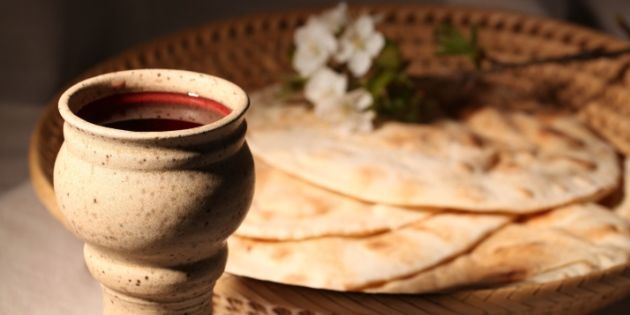
With His unidentified betrayer seated at the table with them, Jesus and His disciples began to eat the Passover meal together. As each course of this sacred meal was served, these men would have found it difficult to forget Jesus’ earlier announcement. One of them was going to do the unthinkable and betray Him. The only hint Jesus gave about the betrayer’s identity was that it would be “one of you twelve who is eating from this bowl with me” (Mark 14:20 NLT). That meant it could be any one of them.

But, acting as the head of the family in their shared Passover celebration, Jesus administered the various rites associated with this traditional meal to His 12 “sons.” That night, this annual, familiar event took on new meaning for these men. Little did they understand then that their Lord and Master stood before them as the Passover Lamb. As John the Baptist had declared, Jesus was “the Lamb of God, who takes away the sin of the world” (John 1:29 ESV). And, as the apostle John later wrote, He was “the bread of God…who comes down from heaven and gives life to the world” (John 6:33 ESV).

These declarations about Jesus’ true identity were unfolding right before their eyes. Jesus used the elements of the Passover meal to point to His God-ordained mission as their deliverer. This meal, which they had eaten every year throughout their lives, had always foreshadowed something greater to come. Yes, it was a commemoration of God’s deliverance of the people of Israel from their captivity in Egypt, but it was also a sign of the deliverance Jesus would bring when He came to earth as the sacrificial Lamb. Through the offering of His sinless body and the shedding of His innocent blood, Jesus would provide mankind with a way to be delivered from its captivity to sin and death.

So, during the meal, Jesus took some unleavened bread (a symbol of sinlessness), “after blessing it broke it and gave it to them, and said, ‘Take; this is my body’” (Mark 14:22 ESV). And Luke records that Jesus added, “which is given for you. Do this in remembrance of me” (Luke 22:19 ESV). He offered them the bread and invited them to consume it, as a symbol of their faith in the sacrificial offering He was about to make on their behalf. The disciples likely recalled an earlier statement by Jesus about the bread from heaven.

“I am the living bread that came down from heaven. If anyone eats of this bread, he will live forever. And the bread that I will give for the life of the world is my flesh.” – John 6:51 ESV

As they held the broken pieces of bread in their hands, the disciples had to wrestle with the significance of Jesus’ words and actions. But before they could take in what He was saying, He “took a cup, and when he had given thanks he gave it to them, and they all drank of it” (Mark 14:23 ESV). According to Matthew’s account, Jesus told them, “This is my blood of the covenant, which is poured out for many for the forgiveness of sins” (Matthew 26:28 ESV).

Once again, the disciples’ minds must have been filled with memories of Jesus’ earlier teachings about bread and blood. At the time, His words had made little sense, but now they were coming into clearer focus.

“Truly, truly, I say to you, unless you eat the flesh of the Son of Man and drink his blood, you have no life in you. Whoever feeds on my flesh and drinks my blood has eternal life, and I will raise him up on the last day. For my flesh is true food, and my blood is true drink. Whoever feeds on my flesh and drinks my blood abides in me, and I in him.” – John 6:53-56 ESV

Just as the disciples consumed the bread and wine that night, they would have to ingest the body and blood of Jesus. To benefit from what Jesus was about to do for them, they had to make His life their own. In an act of faith, they would need to receive the gift of His body and blood, believing these sacred elements would provide them with eternal life. Eating bread and drinking wine is an act of faith. It is an outward demonstration of trust that what they consume will nourish the physical body. In the same way, the body and blood of Christ are “consumed” as an act of faith, a willful display of faith in the efficacious nature of Jesus’ death on our behalf. He becomes part of us. He comes to live within us. That is exactly what Jesus meant when He said, “Whoever feeds on my flesh and drinks my blood abides in me, and I in him” (John 6:56 ESV).

In time, the disciples would understand the import of Jesus’ words. With the coming of the Holy Spirit, they would be given the power to grasp and appreciate all they had heard Jesus say. The apostle Paul later described the memorial aspect of what Jesus did that fateful night.

“For as often as you eat this bread and drink the cup, you proclaim the Lord’s death until he comes.” – 1 Corinthians 11:26 ESV

The church would go on to establish eating the bread and drinking the wine as a regular part of its corporate worship. And the proclamation of His death continues until He returns again because His death brings life. The sacrifice of His body and blood made forgiveness of sin and freedom from death possible. But we must never forget that His death was followed by resurrection; the Spirit of God restored Him to life. He returned to His Father’s side in heaven, but He will return one day.

When Jesus told His disciples, “I will not drink again of the fruit of the vine until that day when I drink it new in the kingdom of God” (Mark 14:25 ESV), He was assuring them that His death, burial, resurrection, and ascension would be followed by His return. When He returns, He will establish His Kingdom on earth and once again share a celebratory cup with His faithful followers.

The apostle John gives us a glimpse of this future day when Jesus will share another meal with His disciples. On this occasion, no bread will be broken as a sign of death, and no wine will be consumed as a symbol of His shed blood. This will be a victory meal, a time of joyous celebration as the people of God rejoice in the finished work of the Son of God.

Then I heard what seemed to be the voice of a great multitude, like the roar of many waters and like the sound of mighty peals of thunder, crying out,

“Hallelujah!
For the Lord our God
    the Almighty reigns.
Let us rejoice and exult
    and give him the glory,
for the marriage of the Lamb has come,
    and his Bride has made herself ready;
it was granted her to clothe herself
    with fine linen, bright and pure”—

for the fine linen is the righteous deeds of the saints.

And the angel said to me, “Write this: Blessed are those who are invited to the marriage supper of the Lamb.” And he said to me, “These are the true words of God.” – Revelation 19:6-9 ESV

For the disciples, the hours ahead would be dark and foreboding. One of them would leave the room and commit his cowardly act of betrayal. Mark records that they sang a hymn together before departing to the Mount of Olives. The primary songs sung during Passover during the 1st Century were the Hallel Psalms (Psalm 113-118). Imagine Jesus and His 11 remaining disciples singing the closing lines of Psalm 118.

Blessed is he who comes in the name of the Lord.
    From the house of the Lord we bless you.
The Lord is God,
    and he has made his light shine on us.
With boughs in hand, join in the festal procession
    up to the horns of the altar.

You are my God, and I will praise you;
    you are my God, and I will exalt you.

Give thanks to the Lord, for he is good;
    his love endures forever. – Psalm 118:26-29 ESV

The darkness was coming, but the Light would shine again. The apostle Paul later wrote, “For God, who said, ‘Let there be light in the darkness,’ has made this light shine in our hearts so we could know the glory of God that is seen in the face of Jesus Christ” (2 Corinthians 4:6 NLT). Death would appear to win. Darkness would extinguish the Light, but only for a moment. As John later wrote concerning his Lord and Savior, “The Word gave life to everything that was created, and his life brought light to everyone. The light shines in the darkness, and the darkness can never extinguish it” (John 14-5 NLT).

English Standard Version (ESV) The Holy Bible, English Standard Version. ESV® Permanent Text Edition® (2016). Copyright © 2001 by Crossway Bibles, a publishing ministry of Good News Publishers.

New Living Translation (NLT) Holy Bible, New Living Translation, copyright © 1996, 2004, 2015 by Tyndale House Foundation. Used by permission of Tyndale House Publishers Inc., Carol Stream, Illinois 60188. All rights reserved.

Never Forget

1 “Observe the month of Abib and keep the Passover to the Lord your God, for in the month of Abib the Lord your God brought you out of Egypt by night. 2 And you shall offer the Passover sacrifice to the Lord your God, from the flock or the herd, at the place that the Lord will choose, to make his name dwell there. 3 You shall eat no leavened bread with it. Seven days you shall eat it with unleavened bread, the bread of affliction—for you came out of the land of Egypt in haste—that all the days of your life you may remember the day when you came out of the land of Egypt. 4 No leaven shall be seen with you in all your territory for seven days, nor shall any of the flesh that you sacrifice on the evening of the first day remain all night until morning. 5 You may not offer the Passover sacrifice within any of your towns that the Lord your God is giving you, 6 but at the place that the Lord your God will choose, to make his name dwell in it, there you shall offer the Passover sacrifice, in the evening at sunset, at the time you came out of Egypt. 7 And you shall cook it and eat it at the place that the Lord your God will choose. And in the morning you shall turn and go to your tents. 8 For six days you shall eat unleavened bread, and on the seventh day there shall be a solemn assembly to the Lord your God. You shall do no work on it.” – Deuteronomy 16:1-8 ESV

Moses has been reminding the people of their obligation to offer the appropriate sacrifices at the appropriate time and place. Now, he is going to elaborate on the particular feasts and festivals at which these various offerings were to be made.

“All the firstborn males that are born of your herd and flock you shall dedicate to the Lord your God. You shall do no work with the firstborn of your herd, nor shear the firstborn of your flock.You shall eat it, you and your household, before the Lord your God year by year at the place that the Lord will choose.” – Deuteronomy 15:19-20 NLT

The first, and most important one, was the Feast of Passover. This yearly celebration was instituted while the people of Israel were still in Egypt and was closely associated with the final plague: The death of the firstborn. On the night the very first Passover was held, God spared all those whose homes were marked by the blood of an unblemished lamb. This sign, placed on the doorposts of their homes in an act of faith, provided those inside with protection from the judgment of God. Their homes were “passed over” by the Death Angel and their firstborns were spared. And God had told the people that this momentous event was to be celebrated on an annual and perpetual basis for generations to come.

“This day shall be for you a memorial day, and you shall keep it as a feast to the Lord; throughout your generations, as a statute forever, you shall keep it as a feast.” – Exodus 12:14 ESV

Passover began with the sacrifice of the lamb and the sprinkling of its blood, followed by a meal at which the lamb was to be eaten

“They shall eat the flesh that night, roasted on the fire; with unleavened bread and bitter herbs they shall eat it. Do not eat any of it raw or boiled in water, but roasted, its head with its legs and its inner parts. And you shall let none of it remain until the morning; anything that remains until the morning you shall burn. In this manner you shall eat it: with your belt fastened, your sandals on your feet, and your staff in your hand. And you shall eat it in haste. It is the Lord‘s Passover.” – Exodus 12:8-11 ESV

The consumption of the lamb was to be followed by the Feast of Unleavened Bread, a seven-day-long period of time in which all leaven, a symbol of sin, was removed from the homes and from the diets of the Israelites.

“For seven days no leaven is to be found in your houses. If anyone eats what is leavened, that person will be cut off from the congregation of Israel, whether he is a sojourner or a native of the land. You shall eat nothing leavened; in all your dwelling places you shall eat unleavened bread.” – Exodus 12:19-20 ESV

And Moses had instructed the people to faithfully observe this God-ordained series of celebrations and commemorations each and every year.

“You shall observe this rite as a statute for you and for your sons forever. And when you come to the land that the Lord will give you, as he has promised, you shall keep this service. And when your children say to you, ‘What do you mean by this service?’ you shall say, ‘It is the sacrifice of the Lord‘s Passover, for he passed over the houses of the people of Israel in Egypt, when he struck the Egyptians but spared our houses.’” – Exodus 12:24-27 ESV

Now, some 40 years later, the Israelites were preparing to enter the land and Moses reminded them once again of their obligation to keep these important feasts and festivals. But it was essential that the Israelites not allow these holy days to devolve into nothing more than glorified holidays. They were intended to be commemorations or memorials of all that God had done for them. They were meant to be links to the past, reminding the people of God’s greatness and goodness. And as each successive generation found itself further and further from the original Passover, it was going to be essential that the memory of God’s gracious deliverance be retold and their gratitude for His kindness be rekindled.

That’s why Moses was so emphatic in his reminder that they keep these feasts. He knew that, once they arrived in the land, they would be tempted to leave the past behind. As they acclimated to their new home, they would find their former condition as slaves a distant and quickly fading memory. These feasts were meant to be reminders of God’s deliverance and a constant call to remain faithful to Him alone. The removal of the leaven would provide a visual lesson of the ever-present and pervasive nature of sin. It would always be with them. And while God had delivered them from slavery and provided the land of Canaan as their inheritance, they were to keep themselves holy and totally dedicated to God.

“Seven days you shall eat it with unleavened bread, the bread of affliction—for you came out of the land of Egypt in haste—that all the days of your life you may remember the day when you came out of the land of Egypt.” – Deuteronomy 16:3 ESV

There is a sense in which God’s people are to live with their heads on a swivel, constantly looking back in an effort to recall the past and all that God has done, but also looking forward in faith, eagerly anticipating all that God has promised to do.

The apostle Paul was constantly reminding the churches to which he wrote of their past condition, prior to their coming to faith in Christ.

Some of you were once like that. But you were cleansed; you were made holy; you were made right with God by calling on the name of the Lord Jesus Christ and by the Spirit of our God. – 1 Corinthians 6:11 NLT

He told the believers in Ephesus:

Once you were dead because of your disobedience and your many sins. You used to live in sin, just like the rest of the world, obeying the devil—the commander of the powers in the unseen world. He is the spirit at work in the hearts of those who refuse to obey God. All of us used to live that way, following the passionate desires and inclinations of our sinful nature. By our very nature we were subject to God’s anger, just like everyone else.

But God is so rich in mercy, and he loved us so much, that even though we were dead because of our sins, he gave us life when he raised Christ from the dead. (It is only by God’s grace that you have been saved!). – Ephesians 2:1-5 NLT

Looking back is an essential part of the Christian’s growth experience. If we fail to remember our pre-salvation condition, we will end up taking our faith for granted. The miracle of our spiritual transformation will lose its impact. The sacrifice that Jesus made on our behalf will tend to diminish in its value. But if we recall the helplessness and hopelessness of our former condition, the grace and mercy of God will retain its glory and wonder.

God had miraculously and graciously liberated the Israelites from their slavery in Egypt. He had faithfully led them through the wilderness and placed them on the edge of the very land He had promised to give them as their inheritance. But it was going to be vital that they remember their past. These annual feasts and festivals were to be celebrations and commemorations. They were intended to be times of rejoicing and recalling, feasting and reflecting.

When it comes to the goodness and graciousness of God, forgetfulness is a dangerous tendency that is to be avoided at all costs. That’s why Moses was constantly reminding the Israelites to never forget. Because he knew that forgetfulness would ultimately lead to unfaithfulness.

When you have eaten your fill, be sure to praise the LORD your God for the good land he has given you.

“But that is the time to be careful! Beware that in your plenty you do not forget the LORD your God and disobey his commands, regulations, and decrees that I am giving you today. For when you have become full and prosperous and have built fine homes to live in, and when your flocks and herds have become very large and your silver and gold have multiplied along with everything else, be careful! Do not become proud at that time and forget the LORD your God, who rescued you from slavery in the land of Egypt.” – Deuteronomy 8:10-14 NLT

English Standard Version (ESV) The Holy Bible, English Standard Version. ESV® Permanent Text Edition® (2016). Copyright © 2001 by Crossway Bibles, a publishing ministry of Good News Publishers.

New Living Translation (NLT) Holy Bible, New Living Translation, copyright © 1996, 2004, 2015 by Tyndale House Foundation. Used by permission of Tyndale House Publishers Inc., Carol Stream, Illinois 60188. All rights reserved.

The Message (MSG) Copyright © 1993, 1994, 1995, 1996, 2000, 2001, 2002 by Eugene H. Peterson