An Alien and Undeserved Righteousness

9 He also told this parable to some who trusted in themselves that they were righteous, and treated others with contempt: 10 “Two men went up into the temple to pray, one a Pharisee and the other a tax collector. 11 The Pharisee, standing by himself, prayed thus: ‘God, I thank you that I am not like other men, extortioners, unjust, adulterers, or even like this tax collector. 12 I fast twice a week; I give tithes of all that I get.’ 13 But the tax collector, standing far off, would not even lift up his eyes to heaven, but beat his breast, saying, ‘God, be merciful to me, a sinner!’ 14 I tell you, this man went down to his house justified, rather than the other. For everyone who exalts himself will be humbled, but the one who humbles himself will be exalted.” – Luke 18:9-14 ESV

With His telling of the parable of the unrighteous judge, it appears that Jesus was taking a bit of a diversion from discussing the shortcomings of the Pharisees. But in many ways, the parable was just another in a long line of stinging indictments of these self-righteous men who had made a god out of their religion. While Jesus has begun to focus His attention on His disciples in an attempt to prepare them for what lies ahead, He has not stopped exposing the arrogant and uncaring nature of the Pharisees and their fellow religious leaders.

In His previous parable, Jesus told the story of “a judge who neither feared God nor respected man” (Luke 18:2 ESV). This man, by virtue of his role, was meant to be an unbiased arbiter, settling disputes between two parties. But how could he do so if he “neither feared God nor respected man?” And this man’s presence in the story was meant to reflect the attitude of the Jewish religious leaders. According to Jesus, they were guilty of the same thing. And by using the term “judge,” Jesus was not offering them a compliment. The Outline of Biblical Usage describes a judge as “one who passes or arrogates to himself, judgment on anything.”

The Pharisees were quick to judge, condemning others for their lack of religious zeal and their failure to keep all the man-made rules and regulations they had appended to the Mosaic Law. At one point Jesus had delivered a strong word of warning against these men.

“…what sorrow also awaits you experts in religious law! For you crush people with unbearable religious demands, and you never lift a finger to ease the burden.” – Luke 11:46 NLT

They had become self-appointed judges of the people who feared no repercussions from God. In fact, they actually thought they were doing God a favor by holding the people to such high moral and ethical standards. But like the widow in the parable, the poor and disenfranchised of Israel were longing for justice. They were seeking a judge who would act righteously and deliver justice on their behalf.

Consider closely verse 9 of this chapter. Luke records that Jesus “told this parable to some who trusted in themselves that they were righteous, and treated others with contempt” (Luke 18:9 ESV). It seems obvious that Jesus was focusing His attention of the Pharisees who were still lingering on the edges of the crowd that followed Him. Despite all He had said against them, they had not gone anywhere. But Jesus was not just addressing the Pharisees. Their longstanding attitude of spiritual superiority and self-righteousness had infected others.  They had gone out of their way to teach their flawed philosophy of religion to others, something for which Jesus held them accountable.

“What sorrow awaits you teachers of religious law and you Pharisees. Hypocrites! For you cross land and sea to make one convert, and then you turn that person into twice the child of hell you yourselves are!” – Matthew 23:15 NLT

As far as Jesus was concerned, self-righteousness was a dangerous and deadly heresy that led people to rely on their own efforts and merits to earn favor with God. It was a dead-end street that eventually terminated with eternal separation from God. As the prophet Isaiah wrote: “We are all infected and impure with sin. When we display our righteous deeds, they are nothing but filthy rags” (Isaiah 64:6 NLT). The apostle Paul would later quote from the psalms in order to convey the same universal and inescapable reality:

“No one is righteous—
    not even one.
No one is truly wise;
    no one is seeking God.
All have turned away;
    all have become useless.
No one does good,
    not a single one.” – Romans 3:10-12 NLT

Self-righteousness is the greatest form of blasphemy because the one who practices it sets himself up as God. He elevates himself to the place of the Almighty, determining his eternal state based on his own biased judgment, rather than that of God. Anyone who believes he has earned a right standing before God has diminished the deadly nature of sin and devalued the righteous standards of God.

There is no way to get around the fact that in order for anyone to consider themselves to be righteous based on their own efforts, they must lower God’s standard for holiness. Which is really diminishing the holiness of God Himself, because He is the ultimate standard by which we are judged. So, rather than using God as the gold standard for holiness, men begin to compare themselves with one another. According to the apostle Paul, this horizontal matrix for measuring holiness is not only flawed but foolish.

…we wouldn’t dare say that we are as wonderful as these other men who tell you how important they are! But they are only comparing themselves with each other, using themselves as the standard of measurement. How ignorant! – 2 Corinthians 10:12 NLT

So, in His parable, Jesus relates the story of two men who have gone to the temple in Jerusalem to pray. One was a Pharisee, an icon of religious rectitude. The other was a tax collector, who represented the spiritual dregs of society. Yet, Jesus places both men in the temple courtyard where they are praying to God. But that is where the similarities end. Jesus portrays the Pharisee as a self-consumed man with an over-inflated sense of self-worth. He stands in the temple courtyard and boldly prays:

“‘I thank you, God, that I am not like other people—cheaters, sinners, adulterers. I’m certainly not like that tax collector! I fast twice a week, and I give you a tenth of my income.” – Luke 18:11-12 NLT

His words are the epitome of arrogance and pride. In a blatant display of self-righteous self-congratulation, he declares his moral superiority to the God of the universe. And he does so by comparing himself to the tax collector who is standing nearby. To the Pharisee, the differences between the two men could not be more obvious. Based on his religious zeal and faithful adherence to the smallest requirement of the law, he holds the moral high ground. He has earned the right to be heard by God.

Yet, Jesus quickly moves the focus from the fictional Pharisee to the tax collector, who “stood at a distance and dared not even lift his eyes to heaven as he prayed. Instead, he beat his chest in sorrow…” (Luke 18:13 NLT). In starks contrast to the Pharisee, the tax collector epitomizes humility and a high degree of self-awareness. He knows exactly what he is and what he justly deserves.

“O God, be merciful to me, for I am a sinner.” – Luke 18:13 NLT

Fully aware that his sin separates him from a holy God, this man pleads for mercy. He confesses his sinful state and, in a sense, places himself at the mercy of the court. He is more than willing to let the Judge decide his fate but he longs for justice coupled with mercy and forgiveness.

And then, Jesus dropped the bombshell:

“I tell you, this sinner, not the Pharisee, returned home justified before God.” – Luke 18:14 NLT

Don’t miss the significance of Jesus’ statement. He is declaring that the tax collector, a self-admitted sinner, is declared to be righteous by God. This is a judicial act by which God, in His sovereign authority, deems the unrighteous to be righteous in His eyes. The apostle Paul would expand on this marvelous thought in his letter to the believers in Rome.

But now God has shown us a way to be made right with him without keeping the requirements of the law, as was promised in the writings of Moses and the prophets long ago. We are made right with God by placing our faith in Jesus Christ. And this is true for everyone who believes, no matter who we are.

For everyone has sinned; we all fall short of God’s glorious standard. Yet God, in his grace, freely makes us right in his sight. He did this through Christ Jesus when he freed us from the penalty for our sins. For God presented Jesus as the sacrifice for sin. People are made right with God when they believe that Jesus sacrificed his life, shedding his blood. – Romans 3:21-25 NLT

Jesus was hinting at a reality to come. He was going to go to the cross and offer Himself as the sinless substitute for sinful mankind. And all those who were willing to recognize and confess their sins and place their faith in Him would be imputed His righteousness as a gift from God. Jesus would take on their sin and, in exchange, they would receive His righteousness. But this “great exchange” begins with the sinner’s willingness to confess his desperate need for a Savior. Like the widow who needed a judge to settle her case, sinners are dependent upon the Judge of the universe to rule in their favor. Not based on their own merit, but according to His mercy and grace.

The apostle Paul, who in his former life was a dedicated and zealous Pharisee, offered his radically altered understanding of how one is made right with God.

I no longer count on my own righteousness through obeying the law; rather, I become righteous through faith in Christ. For God’s way of making us right with himself depends on faith. – Philippians 3:9 NLT

At one time, Paul would have been that self-righteous Pharisee standing in the courtyard singing his own praises. But, mercifully, Jesus had appeared to him on the road to Damascus, blinding his eyes, but helping him see for the first time the sin that separated him from a holy God. He went from being a self-righteous Pharisee facing an eternity separated from God to a self-confessing sinner who received the righteousness of Christ and the assurance of eternal life.

So, Jesus wrapped up His little parable with the sobering statement:

“…those who exalt themselves will be humbled, and those who humble themselves will be exalted.” – Luke 18:14 NLT

The apostle Peter would reiterate the words of Jesus in his first letter:

“God opposes the proud but gives grace to the humble.”

So humble yourselves under the mighty power of God, and at the right time he will lift you up in honor. – 1 Peter 5:5-6 NLT

English Standard Version (ESV) The Holy Bible, English Standard Version. ESV® Permanent Text Edition® (2016). Copyright © 2001 by Crossway Bibles, a publishing ministry of Good News Publishers.

New Living Translation (NLT) Holy Bible, New Living Translation, copyright © 1996, 2004, 2015 by Tyndale House Foundation. Used by permission of Tyndale House Publishers Inc., Carol Stream, Illinois 60188. All rights reserved.

The Message (MSG)Copyright © 1993, 1994, 1995, 1996, 2000, 2001, 2002 by Eugene H. Peterson

Enemy Intel

31 And he went down to Capernaum, a city of Galilee. And he was teaching them on the Sabbath, 32 and they were astonished at his teaching, for his word possessed authority. 33 And in the synagogue there was a man who had the spirit of an unclean demon, and he cried out with a loud voice, 34 “Ha! What have you to do with us, Jesus of Nazareth? Have you come to destroy us? I know who you are—the Holy One of God.” 35 But Jesus rebuked him, saying, “Be silent and come out of him!” And when the demon had thrown him down in their midst, he came out of him, having done him no harm. 36 And they were all amazed and said to one another, “What is this word? For with authority and power he commands the unclean spirits, and they come out!” 37 And reports about him went out into every place in the surrounding region. – Luke 4:31-37ESV

After having escaped the wrath of his disbelieving neighbors in Nazareth, Jesus made His way to Capernaum, located on the northern shore of the Sea of Galilee. As before, Jesus was invited to address the congregation at the local synagogue on the Sabbath. And, once again, those who heard Him speak “were astonished at his teaching” (Luke 4:32 ESV). Evidently, Jesus spoke with a sense of power and authority that was like nothing they had ever heard before. Luke does not divulge the content of Jesus’ teaching, but it seems likely that it would have been similar to what He had shared in Nazareth. It would have been natural for Jesus to read from the Torah, which contained the first five books of the Old Testament. But in most synagogues in the 1st-Century, it was also a common practice to read from the books of the Law and the Prophets. That’s why Jesus read from the book of Isaiah in his hometown synagogue of Nazareth. This practice is mentioned in the book of Acts.

Now Paul and his companions set sail from Paphos and came to Perga in Pamphylia. And John left them and returned to Jerusalem, but they went on from Perga and came to Antioch in Pisidia. And on the Sabbath day they went into the synagogue and sat down. After the reading from the Law and the Prophets, the rulers of the synagogue sent a message to them, saying, “Brothers, if you have any word of encouragement for the people, say it.” – Acts 13:13-15 ESV

Later on in his gospel, Luke records the interaction between the recently resurrected Jesus and two of His followers, who were traveling on the road to Emmaus. These two dejected disciples had been discussing the crucifixion of Jesus when He suddenly appeared by their side as they walked. They did not immediately recognize Him, but as Jesus walked alongside them, He “took them through the writings of Moses and all the prophets, explaining from all the Scriptures the things concerning himself” (Luke 24:27 NLT). And later on, when they realized that they had been talking with the risen Lord, they said, “Didn’t our hearts burn within us as he talked with us on the road and explained the Scriptures to us?” (Luke 24:32 NLT).

So, as Jesus opened up the Scriptures on that Sabbath day in Capernaum, He may have used the Word of God to reveal His identity to them. But whatever Jesus said, Luke reports that “his word possessed authority” (Luke 4:32 ESV). The Greek word he used to describe the teaching of Jesus is exousia, which can also be translated as “one who possesses authority.” Jesus didn’t simply read Scripture and then share His opinion, He spoke with a sense of right and privilege, as the Son of God who was Himself the incarnate Word of God.

In the beginning was the Word, and the Word was with God, and the Word was God. He was in the beginning with God. All things were made through him, and without him was not any thing made that was made. – John 1:1-3 ESV

While the majority of His audience were amazed by His teaching, there was one individual who made the connection between His words and His identity. Luke reports that “there was a man who had the spirit of an unclean demon” (Luke 4:33 ESV). And in the midst of Jesus’ teaching, the demon within this man suddenly interrupted the proceedings by causing him to shout, “Ha! What have you to do with us, Jesus of Nazareth? Have you come to destroy us? I know who you are—the Holy One of God” (Luke 4:34 ESV).

One of the first questions we should ask is why this man was in the synagogue, to begin with? If the people of Capernaum knew He was demon-possessed, he would have been considered unclean and unfit for entrance into this place of worship. Perhaps they were unaware of his condition, or it could that he entered the room unexpectedly while everyone was listening to Jesus speak. But regardless of how the man got there, the demon within him immediately recognized who Jesus was and revealed an awareness of why He had come. Evidently, the demon spoke on behalf of his companions, who had also taken up residence within this poor man.

While the rest of the audience recognized that Jesus spoke with authority, the demons understood the exact nature of that authority, and they feared the worst. The primary demon expressed their concern that Jesus had come to destroy them. They understood Him to be “the Holy One of God” (Luke 4:34 ESV), the Son of God and the Messiah of Israel. And the demons seemed to be aware that Jesus possessed a power and authority that was greater than their own. Not only could He dispossess them, but He could also destroy them.

But before the demon could say anything more, Jesus shouted, “Be silent and come out of him!” (Luke 4:35 ESV). And at the word of Jesus, the demons were cast out, causing the man to collapse on the floor, exhausted but completely unharmed. And all those who witnessed this encounter were left slack-jawed and amazed. They whispered among themselves, “What is this word? For with authority and power he commands the unclean spirits, and they come out!” (Luke 4:36 ESV).

They had just witnessed the authority of Jesus on full display and were left thoroughly blown away by the experience. They had never seen anything like this before. But what they didn’t fully realize was that Jesus had just demonstrated His Messianic power and proven His right to rule and reign. He had authority over both the natural and spiritual realms. Even the demons were subject to His word.

And with this miracle, Jesus gave evidence that His claim to be the fulfillment of Isaiah’s prophecy was true. When He had read from the scroll of Isaiah in the synagogue in Nazareth, He had boldly proclaimed, “Today this Scripture has been fulfilled in your hearing” (Luke 4:21 ESV). And one of the things Jesus had claimed He had been anointed by the Spirit of God to do was to “proclaim liberty to the captives” and “to set at liberty those who are oppressed” (Luke 4:18 ESV). And the man who stood in the synagogue that day was now demon-free thanks to the Holy One of God.

And, as one would expect, “The news about Jesus spread through every village in the entire region” (Luke 4:37 NLT). The rumors spread. His reputation grew. And the interest in this rabbi from Nazareth increased with each passing day. But apart from the confession of the demon, most people were still unsure of just who Jesus was and what He had come to do. They were impressed with His power, amazed by His words, and curious about His identity, but not quite ready to deem Him the Holy One of God.

English Standard Version (ESV) The Holy Bible, English Standard Version. ESV® Permanent Text Edition® (2016). Copyright © 2001 by Crossway Bibles, a publishing ministry of Good News Publishers.

New Living Translation (NLT) Holy Bible, New Living Translation, copyright © 1996, 2004, 2015 by Tyndale House Foundation. Used by permission of Tyndale House Publishers Inc., Carol Stream, Illinois 60188. All rights reserved.

The Message (MSG)Copyright © 1993, 1994, 1995, 1996, 2000, 2001, 2002 by Eugene H. Peterson
Return to the Lord

1 Return, O Israel, to the Lord your God,
    for you have stumbled because of your iniquity.
2 Take with you words
    and return to the Lord;
say to him,
    “Take away all iniquity;
accept what is good,
    and we will pay with bulls
    the vows of our lips.
3 Assyria shall not save us;
    we will not ride on horses;
and we will say no more, ‘Our God,’
    to the work of our hands.
In you the orphan finds mercy.”

4 I will heal their apostasy;
    I will love them freely,
    for my anger has turned from them.
5 I will be like the dew to Israel;
    he shall blossom like the lily;
    he shall take root like the trees of Lebanon;
6 his shoots shall spread out;
    his beauty shall be like the olive,
    and his fragrance like Lebanon.
7 They shall return and dwell beneath my shadow;
    they shall flourish like the grain;
they shall blossom like the vine;
    their fame shall be like the wine of Lebanon.

8 O Ephraim, what have I to do with idols?
    It is I who answer and look after you.
I am like an evergreen cypress;
    from me comes your fruit.

9 Whoever is wise, let him understand these things;
    whoever is discerning, let him know them;
for the ways of the Lord are right,
    and the upright walk in them,
    but transgressors stumble in them. – Hosea 14:1-9 ESV

Despite all the chapters dealing with Israel’s apostasy and God’s pending judgment, the book of Hosea ends on a highly positive note. In the closing chapter, Hosea makes one more impassioned plea for the rebellious people of Israel to return to the Lord. He lovingly implores them to leave their sins behind and make their way back to God. Hosea reminds them that they can only find healing and forgiveness with Yahweh. Their idols are useless and incapable of providing them with the help they need. But they will need to confess their sins and offer heart-felt sacrifices to the one true God. If they do, they will receive atonement and a restored relationship with the one who lovingly set them apart as His own chosen possession.

In an effort to encourage a positive response to his call to repentance, Hosea even provides them with the words to say.

“Forgive all our sins and graciously receive us,
    so that we may offer you our praises.
Assyria cannot save us,
    nor can our warhorses.
Never again will we say to the idols we have made,
    ‘You are our gods.’
No, in you alone
    do the orphans find mercy.” – Hosea 14:2-3 NLT

He practically wrote their confession for them, so all they had to do was speak the words.  But it would all mean nothing if their hearts were not in it. God was not interested in lip service. Pious-sounding words that were not back up by sincerity of heart were worthless to Him, and He had condemned such hypocritical behavior before.

“These people draw near to Me with their mouths and honor Me with their lips, but their hearts are far from Me. Their worship of Me is but rules taught by men.” – Isaiah 29:13 BSB

God also gave a somewhat discouraging assessment to His prophet, Ezekiel, warning him that the people would listen to his words but with no intention of doing what he said.

“Son of man, your people talk about you in their houses and whisper about you at the doors. They say to each other, ‘Come on, let’s go hear the prophet tell us what the Lord is saying!’ So my people come pretending to be sincere and sit before you. They listen to your words, but they have no intention of doing what you say. Their mouths are full of lustful words, and their hearts seek only after money. You are very entertaining to them, like someone who sings love songs with a beautiful voice or plays fine music on an instrument. They hear what you say, but they don’t act on it!” – Ezekiel 33:30-32 NLT

King David had understood that what God wanted from His sinful people was not ritualistic sacrifices offered in some kind of perfunctory fashion. He desired that His people offer Him their broken and repentant hearts, not empty sacrifices that were in keeping with the letter of the law but lacking in sincerity and truth.

“You do not desire a sacrifice, or I would offer one.
    You do not want a burnt offering.
The sacrifice you desire is a broken spirit.
    You will not reject a broken and repentant heart, O God.” – Psalm 51:16-17 NLT

Hosea wants the people of Israel to know that only meaningful repentance will result in restoration. He even quotes God’s promise to restore His repentant people.

“Then I will heal you of your faithlessness;
    my love will know no bounds,
    for my anger will be gone forever.” – Hosea 14:4 NLT

Amazingly, God offers His people the undeserved gift of His forgiveness, mercy, and grace. He is still willing to show them compassion. He is still prepared to shower them with His blessings – despite all the centuries marked by rebellion, unfaithfulness, and disobedience to His holy law. All the way back when Solomon was still king over the unified kingdom of Israel, God had made him a promise. It was at the dedication of the newly constructed temple that Solomon had constructed in God’s honor. After Solomon’s prayer of dedication, God made a pledge that He would honor the new temple with His name and listen to the prayers that His people prayed toward this sacred site.

“…if My people who are called by My name humble themselves and pray and seek My face and turn from their wicked ways, then I will hear from heaven, forgive their sin, and heal their land.” – 2 Chronicles 7:14 BSB

That promise was still valid, because God always keeps His word.

God is not a man, so he does not lie. He is not human, so he does not change his mind. Has he ever spoken and failed to act? Has he ever promised and not carried it through? – Numbers 23:19 NLT

God is a covenant-keeping God. He does not renege or go back on His promises. And in the book of psalms, we read on His covenant commitment to David.

“I will establish your descendants as kings forever;
    they will sit on your throne from now until eternity.” – Psalm 89:4 NLT

God loved David greatly and called him a man after His own heart. And He promised to give David a long-lasting, never-ending dynasty. But at the time when Hosea was writing the book that bears his name, the prospects of this promise being fulfilled looked bleak. The kingdom that David had turned over to his son Solomon had been divided in two. And the day was quickly coming when there would no longer be a king over Israel or Judah. Both nations would be defeated by foreign powers and watch as their kings were dethroned and their kingdoms destroyed. To this day, there has been no king to rule over the people of Israel. Yet God had promised David:

“I will make him my firstborn son,
    the mightiest king on earth.
I will love him and be kind to him forever;
    my covenant with him will never end.
I will preserve an heir for him;
    his throne will be as endless as the days of heaven.” – Psalm 89:27-29 NLT

But there was a caveat that came with the promise. God had also warned what would happen in the people of Israel failed to be obedient. There would be consequences.

“But if his descendants forsake my instructions
    and fail to obey my regulations,
if they do not obey my decrees
    and fail to keep my commands,
then I will punish their sin with the rod,
    and their disobedience with beating.
But I will never stop loving him
    nor fail to keep my promise to him.
No, I will not break my covenant;
    I will not take back a single word I said.” – Psalm 89:30-34 NLT

They would suffer for their sins but God would not alter one letter of His covenant commitment to David. He would never stop loving him. He would never fail to keep the promises He made to him. And the descendants of David would stand to benefit greatly from God’s faithful commitment to keep His word.

“I will be to Israel
    like a refreshing dew from heaven.
Israel will blossom like the lily;
    it will send roots deep into the soil
    like the cedars in Lebanon.” – Hosea 14:5 NLT

Using highly poetic language, God describes a remarkable change in Israel’s future circumstances.

“My people will again live under my shade.
    They will flourish like grain and blossom like grapevines.” – Hosea 14:7 NLT

Just as they are assured the inevitability of their coming destruction, they are also promised their future restoration and revitalization by the gracious hand of God.

But in the meantime, God pleads with His people to “stay away from idols!” (Hosea 14:8 NLT). He longs to be their sole source of comfort and the only one to whom they turn for help, hope, and healing.

“I am the one who answers your prayers and cares for you.
I am like a tree that is always green;
    all your fruit comes from me.” – Hosea 14:8 NLT

Their false gods will fail them. But not Yahweh. Lifeless idols cannot hear or answer their prayers. But God can and will – if they will only call out to Him in humility and brokenness. And Hosea wraps up his book with one final plea for the people to act wisely and respond to the Lord with discernment. They must choose.

The paths of the Lord are true and right,
    and righteous people live by walking in them.
    But in those paths sinners stumble and fall. – Hosea 14:9 NLT

This was essentially the same message that the prophet, Jeremiah, pronounced. He too recorded God’s call for His people to make the right choice and to walk the right path. But sadly, they refused to listen.

This is what the Lord says:
“Stop at the crossroads and look around.
    Ask for the old, godly way, and walk in it.
Travel its path, and you will find rest for your souls.
    But you reply, ‘No, that’s not the road we want!’
I posted watchmen over you who said,
    ‘Listen for the sound of the alarm.’
But you replied,
    ‘No! We won’t pay attention!’” – Jeremiah 6:16-17 NLT

Choose the right path. Heed the warnings of God. Display a heart of contrition. Repent and return to the Lord. And He will graciously offer you forgiveness, atonement, and the joy of a restored relationship with Himself.

English Standard Version (ESV) The Holy Bible, English Standard Version. ESV® Permanent Text Edition® (2016). Copyright © 2001 by Crossway Bibles, a publishing ministry of Good News Publishers.

New Living Translation (NLT) Holy Bible, New Living Translation, copyright © 1996, 2004, 2015 by Tyndale House Foundation. Used by permission of Tyndale House Publishers Inc., Carol Stream, Illinois 60188. All rights reserved.

The Message (MSG)Copyright © 1993, 1994, 1995, 1996, 2000, 2001, 2002 by Eugene H. Peterson


Repentance Must Precede Restoration

8 Blow the horn in Gibeah,
    the trumpet in Ramah.
Sound the alarm at Beth-aven;
    we follow you, O Benjamin!
9 Ephraim shall become a desolation
    in the day of punishment;
among the tribes of Israel
    I make known what is sure.
10 The princes of Judah have become
    like those who move the landmark;
upon them I will pour out
    my wrath like water.
11 Ephraim is oppressed, crushed in judgment,
    because he was determined to go after filth.
12 But I am like a moth to Ephraim,
    and like dry rot to the house of Judah.

13 When Ephraim saw his sickness,
    and Judah his wound,
then Ephraim went to Assyria,
    and sent to the great king.
But he is not able to cure you
    or heal your wound.
14 For I will be like a lion to Ephraim,
    and like a young lion to the house of Judah.
I, even I, will tear and go away;
    I will carry off, and no one shall rescue.

15 I will return again to my place,
    until they acknowledge their guilt and seek my face,
    and in their distress earnestly seek me. – Hosea 5:8-15 ESV

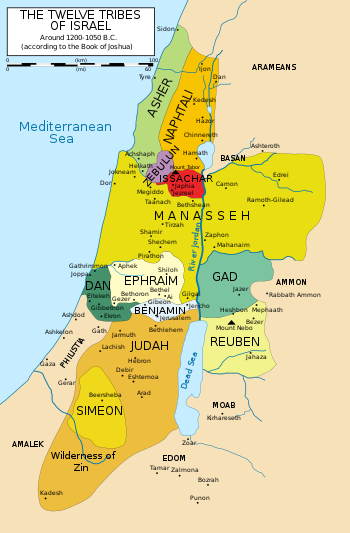
Since we’re not Israelites, it’s a bit difficult for us to figure out what is going on in these verses. Hosea begins verse 8 by listing three different cities that most of us know little or nothing about. But they would have had significance to the original readers of his book. Hosea’s mention of them was intended to provide geographic reference points that help establish a context for what follows. Gibeah and Ramah were cities located in the southern kingdom of Judah. Both were just north of the capital city of Jerusalem and not far from the border Judah shared with Israel. Beth-haven was located just across the border in the southern kingdom of Israel. Hosea has purposefully altered the name of this particular town in order to drive home a point. The actual name of the city was Bethel and it had a long, rich history among the descendants of Abraham. In Hebrew, the name Bethel means, “house of God,  but Hosea repeatedly refers to it as Beth-haven, which can be translated as “house of wickedness.”

With this less-than-flattering name change, Hosea is making a powerful statement about the spiritual state of Israel. At one time, Bethel had held a special significance among the descendants of Abraham. They would have been very familiar with the story of Abraham’s call by God, recorded in the book of Genesis. Not long after God had led Abraham to the land of Canaan, He had communicated His promise to make of Abraham a great nation. He also promised to give the entire land of Canaan to Abraham’s offspring. This would have included the land on which Gibeah, Raman, and Bethel sat. Genesis records that, not long after receiving this promise from God, Abraham traveled to Bethel, where he erected an altar to Yahweh.

Then the Lord appeared to Abram and said, “To your offspring I will give this land.” So he built there an altar to the Lord, who had appeared to him. From there he moved to the hill country on the east of Bethel and pitched his tent, with Bethel on the west and Ai on the east. And there he built an altar to the Lord and called upon the name of the Lord. And Abram journeyed on, still going toward the Negeb. – Genesis 12:7-9 ESV

Years later, Abraham’s grandson, Jacob, would have a divinely inspired dream in which God reiterated the very same promise He had communicated to Abraham.

“I am the Lord, the God of Abraham your father and the God of Isaac. The land on which you lie I will give to you and to your offspring. Your offspring shall be like the dust of the earth, and you shall spread abroad to the west and to the east and to the north and to the south, and in you and your offspring shall all the families of the earth be blessed.” – Genesis 28:13-14 ESV

And Jacob would respond in awe and wonder at this gracious pronouncement by God.

“Surely the Lord is in this place, and I did not know it.” And he was afraid and said, “How awesome is this place! This is none other than the house of God, and this is the gate of heaven.” – Genesis 28:16-17 ESV

As a result of this remarkable dream and the promise it contained, “He called the name of that place Bethel” (Genesis 28:19 ESV). Jacob set up a sacred pillar to Yahweh, thereby establishing Bethel as a permanent worship site in Israel. Years later, he  returned to that same sight and built an altar to the Lord, renaming it El-Bethel (God of Bethel). At one time, the Ark of the Covenant was kept at there. So, for generations, the Israelites had recognized this site as holy and dedicated to Yahweh. But when the kingdom was divided in half, King Jeroboam deemed Bethel as one of the locations for the worship of his false god. He built a temple there and placed within it one of the golden calf idols he had made.

Bethel sat at the boundary between the tribes of Ephraim and Benjamin and eventually delineated the border between the northern kingdom of Israel and the southern kingdom of Judah. So, when Hosea points out these three cities, he is focusing his attention on the literal heart of Israel. They are each located at the center of the land that God had given to the 12 tribes of Israel.

And Hosea announces that the sound of trumpets would be heard in these three cities. But these would not be trumpets of joy or celebration. They would be the warning signs of coming destruction. The armies of Judah and Israel would be summoned for war, but they would prove ineffective against the enemies that God was bringing against them.

One thing is certain, Israel:
    On your day of punishment,
    you will become a heap of rubble. – Hosea 5:9 NLT

Both nations were guilty and, as a result, both would suffer the consequences for their sin and rebellion.

“The leaders of Judah have become like thieves.
    So I will pour my anger on them like a waterfall.
The people of Israel will be crushed and broken by my judgment
    because they are determined to worship idols.
I will destroy Israel as a moth consumes wool.
    I will make Judah as weak as rotten wood.” – Hosea 5:10-12 NLT

The nations of Judah and Israel had each violated their covenant agreements with God. But they had also violated their covenant agreements with one another. When Moses had allotted each tribe their portion of the land of Canaan, they had agreed to respect the boundaries the God had established for them. But Judah had stolen land that belonged to Benjamin. And ever since the division of the kingdom, Israel had repeatedly invaded and plundered land belonging to the tribe of Judah. By violating God’s commands as communicated through the Mosaic Law, the people of Israel and Judah no longer had a basis for knowing right from wrong.  Everyone did what was right in his own eyes. It was a moral free-for-all.

What’s interesting to note is that, when both nations found themselves suffering God’s judgment for their sin, they attempted to escape it by turning to foreign powers for help. And on of the nations from which they sought assistance was the Assyrians. The kings of Judah and Israel had repeatedly sought salvation from the ruthless and morally corrupt Assyrians, but it had done them no good.

“When Israel and Judah saw how sick they were,
    Israel turned to Assyria—
to the great king there—
    but he could neither help nor cure them.” – Hosea 5:13 NLT

False gods and foreign powers were no match for God Almighty. There was no army big enough, no country powerful enough, and no god mighty enough to provide escape from the righteous wrath of God. They could run. They could hide. They could hire help. But in the end, God was going to do exactly what He said He would do.

“I will be like a lion to Israel,
    like a strong young lion to Judah.
    I will tear them to pieces!
I will carry them off,
    and no one will be left to rescue them.” – Hosea 5:14 NLT

And God warns them that they will find Him non-existent and unrelenting in His judgment until they admit their guilt and return to Him in humility and brokenness. This statement reflects the prayer that Solomon prayed at the dedication of the temple in Jerusalem, hundreds of years earlier. Consider the words of his prayer closely.

“If they [Israel] sin against you—and who has never sinned?—you might become angry with them and let their enemies conquer them and take them captive to their land far away or near.  But in that land of exile, they might turn to you in repentance and pray, ‘We have sinned, done evil, and acted wickedly.’ If they turn to you with their whole heart and soul in the land of their enemies and pray toward the land you gave to their ancestors—toward this city you have chosen, and toward this Temple I have built to honor your name—then hear their prayers and their petition from heaven where you live, and uphold their cause. Forgive your people who have sinned against you. Forgive all the offenses they have committed against you. Make their captors merciful to them, for they are your people—your special possession…” – 1 Kings 8:46-51 NLT

As David wrote in one of his psalms, “The sacrifice you desire is a broken spirit. You will not reject a broken and repentant heart, O God” (Psalm 51:17 NLT). God was looking for a heart of humility and repentance from His people. And until they were willing to bow before Him in contrition and confession, they would search for Him in vain.

English Standard Version (ESV) The Holy Bible, English Standard Version. ESV® Permanent Text Edition® (2016). Copyright © 2001 by Crossway Bibles, a publishing ministry of Good News Publishers.

New Living Translation (NLT) Holy Bible, New Living Translation, copyright © 1996, 2004, 2015 by Tyndale House Foundation. Used by permission of Tyndale House Publishers Inc., Carol Stream, Illinois 60188. All rights reserved.

The Message (MSG)Copyright © 1993, 1994, 1995, 1996, 2000, 2001, 2002 by Eugene H. Peterson

Unbelievably Unrepentant

6 “I gave you cleanness of teeth in all your cities,
and lack of bread in all your places,
yet you did not return to me,”
declares the Lord.

7 “I also withheld the rain from you
when there were yet three months to the harvest;
I would send rain on one city,
and send no rain on another city;
one field would have rain,
and the field on which it did not rain would wither;
8 so two or three cities would wander to another city
to drink water, and would not be satisfied;
yet you did not return to me,”
declares the Lord.

9 “I struck you with blight and mildew;
your many gardens and your vineyards,
your fig trees and your olive trees the locust devoured;
yet you did not return to me,”
declares the Lord.

10 “I sent among you a pestilence after the manner of Egypt;
I killed your young men with the sword,
and carried away your horses,
and I made the stench of your camp go up into your nostrils;
yet you did not return to me,”
declares the Lord.

11 “I overthrew some of you,
as when God overthrew Sodom and Gomorrah,
and you were as a brand plucked out of the burning;
yet you did not return to me,”
declares the Lord.

12 “Therefore thus I will do to you, O Israel;
because I will do this to you,
prepare to meet your God, O Israel!”

13 For behold, he who forms the mountains and creates the wind,
and declares to man what is his thought,
who makes the morning darkness,
and treads on the heights of the earth—
the Lord, the God of hosts, is his name!– Amos 4:6-13 ESV

In this section of Amos’ message, it would appear that he has 1 Kings 8 in mind. In that passage, King Solomon is offering his prayer of dedication for the newly constructed temple in Jerusalem. Solomon fully realized that it was impossible for the God of the universe to actually take up residence in a building made with human hands. The omnipotent, omnipresent God who created the heavens and the earth could not be contained in a man-made structure. But Solomon God to “watch over this Temple night and day” (1 Kings 8:29 NLT). The temple was being dedicated to God’s glory and would bear His name.  So, with that in mind, Solomon asked God to “hear the prayers I make toward this place” (1 Kings 8:29 NLT). Then he added:

“May you hear the humble and earnest requests from me and your people Israel when we pray toward this place. Yes, hear us from heaven where you live, and when you hear, forgive.” – 1 Kings 8:30 NLT

Then Solomon outlined for God a series of likely scenarios in which the people would find themselves needing divine assistance. Solomon knew his people well, and he was fully aware that they would commit sins against God that would result in the judgment of God. So, he asked that the temple might be a place of intercession where the people could come in repentance and offer up their prayers to the Almighty. And Solomon asked God to confirm that, if they prayed, He would hear and forgive.

Now, fast-forward to the reign of Jeroboam II. He is ruling over the kingdom of Israel, consisting of the ten northern tribes that broke away from Judah and Benjamin shortly after Solomon’s death. The northern kingdom is wicked and unrepentant. They are idolatrous, immoral, unjust, and guilty of having turned their backs on God. And in verses 6-11 of chapter four, Amos records God’s words concerning their stubborn, unrepentant hearts.

God reminds them that He has brought judgment after judgment against them, in the form of famine, drought, disease, pestilence, and war, but they have repeatedly refused to repent. And with each description of the judgment He sent upon them, God adds the sad refrain, “yet you did not return to me” (Amos 4:6 ESV).

God had sent a famine among the cities of Israel. And because they had no food, they had “cleanness of teeth” (Amos 4:6 ESV). Their sin had resulted in God’s judgment and a devastating lack of life’s necessities. But Solomon had prayed with just such an incident in mind. He asked God, “If there is a famine in the land and if your people Israel pray about their troubles, raising their hands toward this Temple, then hear from heaven where you live, and forgive. Give your people what their actions deserve, for you alone know each human heart” (1 Kings 8:37, 38-39 NLT).

But notice what Solomon said: If there is a famine and if your people pray….

And there was a famine, but the people did not pray. They never turned to God in repentance. And because they were living in the northern kingdom of Israel, far from the city of Jerusalem, the temple of God was out of sight, out of mind. They had their own temples dedicated to their own false gods.

Next, God reminds them that He had withheld the rain, causing them to suffer the consequences of drought. This should have been no surprise to the people of God, because, generations earlier, Moses had warned them what would happen if they chose to disobey God’s laws:

The skies above will be as unyielding as bronze, and the earth beneath will be as hard as iron. The Lord will change the rain that falls on your land into powder, and dust will pour down from the sky until you are destroyed. – Deuteronomy 28:23-24 NLT

And Solomon, knowing the sinful propensity of the people of Israel, had foreseen this day and had used it as another example of the need for God’s forgiveness.

“If the skies are shut up and there is no rain because your people have sinned against you, and if they pray toward this Temple and acknowledge your name and turn from their sins because you have punished them, then hear from heaven and forgive the sins of your servants, your people Israel. Teach them to follow the right path, and send rain on your land that you have given to your people as their special possession.” – 1 Kings 8:35-36 NLT

But the lack of rain had not produced repentant hearts. Instead, the hearts of the people remained as hard as the sun-baked, rain-deprived soil. They remained unwilling to repent and, therefore, they remained unforgiven by God.

But God had not stopped with famine and drought. He had also destroyed their crops with blight and mildew. He sent locusts to devour their fig and olive trees. These natural disasters were actually divine judgments, designed to get the attention of the apostate people of Israel. But, once again, they failed to repent and return. And, once again, Solomon had foreseen this situation and had included it in his prayer to God.

“If there is … a plague or crop disease or attacks of locusts or caterpillars…whatever disaster or disease there is—and if your people Israel pray about their troubles, raising their hands toward this Temple, then hear from heaven where you live, and forgive.” – 1 Kings 8:37-39

All the people needed to do was admit their fault and turn to God in repentance. But they would stubbornly refuse to do so.

And their stubbornness proved costly. After sending diseases on the fields, vineyards, and orchards of Israel, God sent pestilence among the people. He brought upon the Israelites the same kind of plagues that had destroyed the people of Egypt. Solomon had seen this coming as well. He had specifically feared the possibility of this very thing happening when he prayed, “If there is … a plague…” (1 Kings 8:37 ESV).

But not only did God send a devastating and deadly plague, He sent enemy troops who killed the soldiers of Israel, leaving a mass of decaying corpses in their wake.

“I killed your young men in war
    and led all your horses away.
    The stench of death filled the air!” – 1 Kings 8:10 NLT

And, according to the prayer of Solomon, the people of Israel had failed to pray to God before entering into battle with their enemies and, as a result, they were defeated.

“If your people go out where you send them to fight their enemies, and if they pray to the Lord by turning toward this city you have chosen and toward this Temple I have built to honor your name, then hear their prayers from heaven and uphold their cause.” – 1 Kings 8:44-45 NLT

The people of Israel didn’t turn to God because they didn’t believe they needed Him. And they refused to return to God because they no longer believed in Him. They had long ago rejected Him as their God. And they had paid the price.

God had even decreed the destruction of some of their cities. Enemy forces had besieged and destroyed many Israelite cities and towns, burning them to the ground and leaving them desolated wastelands, much like the sinful cities Sodom and Gomorrah had become.

“I destroyed some of your cities,
    as I destroyed Sodom and Gomorrah.
Those of you who survived
    were like charred sticks pulled from a fire.” – Amos 4:11 NLT

But even these devastating consequences failed to produce repentance among the people of Israel.

“But still you would not return to me,”
    says the Lord. – Amos 4:11 LT

At no point do the people of Israel turn their faces to the temple in Jerusalem and turn their hearts to the God whose name it bears. Despite all God’s judgments against them, they refuse to confess their sins and call out for His mercy and forgiveness. So, God provides them with one final and fateful warning: “prepare to meet your God, O Israel!” (Amos 4:12 ESV).

While they consistently refused to return to Him in repentance, they were still going to have to deal with Him. Closing their eyes and their hearts did not make God go away. Just because they failed to acknowledge Him as God, did not mean He no longer existed. And Amos adds his two cents worth by reminding them that Yahweh was the Creator-God, the maker of all things. He was the sovereign God of the universe who holds all things in His mighty hands and is fully capable of dealing justly and rightly with His creation. And He would.

For behold, he who forms the mountains and creates the wind,
    and declares to man what is his thought,
who makes the morning darkness,
    and treads on the heights of the earth—
    the Lord, the God of hosts, is his name! – Amos 4:13 ESV

English Standard Version (ESV) The Holy Bible, English Standard Version. ESV® Permanent Text Edition® (2016). Copyright © 2001 by Crossway Bibles, a publishing ministry of Good News Publishers.

New Living Translation (NLT) Holy Bible, New Living Translation, copyright © 1996, 2004, 2015 by Tyndale House Foundation. Used by permission of Tyndale House Publishers Inc., Carol Stream, Illinois 60188. All rights reserved.

The Message (MSG)Copyright © 1993, 1994, 1995, 1996, 2000, 2001, 2002 by Eugene H. Peterson

Confess, Repent, and Return

22 Then Solomon stood before the altar of the Lord in the presence of all the assembly of Israel and spread out his hands toward heaven, 23 and said, “O Lord, God of Israel, there is no God like you, in heaven above or on earth beneath, keeping covenant and showing steadfast love to your servants who walk before you with all their heart; 24 you have kept with your servant David my father what you declared to him. You spoke with your mouth, and with your hand have fulfilled it this day. 25 Now therefore, O Lord, God of Israel, keep for your servant David my father what you have promised him, saying, ‘You shall not lack a man to sit before me on the throne of Israel, if only your sons pay close attention to their way, to walk before me as you have walked before me.’ 26 Now therefore, O God of Israel, let your word be confirmed, which you have spoken to your servant David my father.

27 “But will God indeed dwell on the earth? Behold, heaven and the highest heaven cannot contain you; how much less this house that I have built! 28 Yet have regard to the prayer of your servant and to his plea, O Lord my God, listening to the cry and to the prayer that your servant prays before you this day, 29 that your eyes may be open night and day toward this house, the place of which you have said, ‘My name shall be there,’ that you may listen to the prayer that your servant offers toward this place. 30 And listen to the plea of your servant and of your people Israel, when they pray toward this place. And listen in heaven your dwelling place, and when you hear, forgive.

31 “If a man sins against his neighbor and is made to take an oath and comes and swears his oath before your altar in this house, 32 then hear in heaven and act and judge your servants, condemning the guilty by bringing his conduct on his own head, and vindicating the righteous by rewarding him according to his righteousness.

33 “When your people Israel are defeated before the enemy because they have sinned against you, and if they turn again to you and acknowledge your name and pray and plead with you in this house, 34 then hear in heaven and forgive the sin of your people Israel and bring them again to the land that you gave to their fathers.

35 “When heaven is shut up and there is no rain because they have sinned against you, if they pray toward this place and acknowledge your name and turn from their sin, when you afflict them, 36 then hear in heaven and forgive the sin of your servants, your people Israel, when you teach them the good way in which they should walk, and grant rain upon your land, which you have given to your people as an inheritance.

37 “If there is famine in the land, if there is pestilence or blight or mildew or locust or caterpillar, if their enemy besieges them in the land at their gates, whatever plague, whatever sickness there is, 38 whatever prayer, whatever plea is made by any man or by all your people Israel, each knowing the affliction of his own heart and stretching out his hands toward this house, 39 then hear in heaven your dwelling place and forgive and act and render to each whose heart you know, according to all his ways (for you, you only, know the hearts of all the children of mankind), 40 that they may fear you all the days that they live in the land that you gave to our fathers.

41 “Likewise, when a foreigner, who is not of your people Israel, comes from a far country for your name’s sake 42 (for they shall hear of your great name and your mighty hand, and of your outstretched arm), when he comes and prays toward this house, 43 hear in heaven your dwelling place and do according to all for which the foreigner calls to you, in order that all the peoples of the earth may know your name and fear you, as do your people Israel, and that they may know that this house that I have built is called by your name.

44 “If your people go out to battle against their enemy, by whatever way you shall send them, and they pray to the Lord toward the city that you have chosen and the house that I have built for your name, 45 then hear in heaven their prayer and their plea, and maintain their cause.

46 “If they sin against you—for there is no one who does not sin—and you are angry with them and give them to an enemy, so that they are carried away captive to the land of the enemy, far off or near, 47 yet if they turn their heart in the land to which they have been carried captive, and repent and plead with you in the land of their captors, saying, ‘We have sinned and have acted perversely and wickedly,’ 48 if they repent with all their heart and with all their soul in the land of their enemies, who carried them captive, and pray to you toward their land, which you gave to their fathers, the city that you have chosen, and the house that I have built for your name, 49 then hear in heaven your dwelling place their prayer and their plea, and maintain their cause 50 and forgive your people who have sinned against you, and all their transgressions that they have committed against you, and grant them compassion in the sight of those who carried them captive, that they may have compassion on them 51 (for they are your people, and your heritage, which you brought out of Egypt, from the midst of the iron furnace). 52 Let your eyes be open to the plea of your servant and to the plea of your people Israel, giving ear to them whenever they call to you. 53 For you separated them from among all the peoples of the earth to be your heritage, as you declared through Moses your servant, when you brought our fathers out of Egypt, O Lord God.” – 1 Kings 8:22-53 ESV

This prayer, offered up at the opening of the temple, provides tremendous insights into Solomon’s knowledge about God and his keen awareness of human nature. His words reveal how greatly he revered and honored Yahweh, the all-powerful God of Israel. While Solomon had built a temple that would be considered one of the wonders of the world, it was no match for the majestic and holy God of the universe. Even in all its glory and splendor, Solomon’s temple was an insufficient dwelling place for the one true God who created the heavens and the earth, and he admitted it.

“…even the highest heavens cannot contain you. How much less this Temple I have built!” – 1 Kings 8:27 NLT

Solomon boldly proclaimed Yahweh’s unique nature as the one true God.

“O Lord, God of Israel, there is no God like you in all of heaven above or on the earth below.” – 1 Kings 8:23 NLT

Yahweh was incomparable. He was without rival. All other gods were the figments of men’s imagination and, therefore, non-existent. But Israel’s God was real, and He had proven His existence through tangible acts of power, grace, mercy, and love. He was a covenant-making, promise-keeping God who always fulfilled every commitment He made. The very fact that Solomon was dedicating the temple was proof that God had kept His promise to David.

“It is Solomon your son who shall build my house and my courts, for I have chosen him to be my son, and I will be his father. I will establish his kingdom forever if he continues strong in keeping my commandments and my rules, as he is today.” – 1 Chronicles 28:6-7 ESV

And as Solomon stood before the temple with his arms outstretched in humble supplication, he pleaded with the God of heaven, asking Him to continue to extend His mercy, grace, and forgiveness upon His people. But Solomon knew that God’s unfailing love and faithfulness was conditional. It required the faithful and obedient worship of His people. They had been set apart for His glory and were expected to worship Him and Him alone. They were to refrain from worshiping other gods. They were expected to keep His commandments and demonstrate to the world their status as His chosen people – “a kingdom of priests and a holy nation” (Exodus 19:6 ESV).

Solomon makes it clear that he understood God’s expectations. They were to be a people who were wholeheartedly committed to God – “servants who walk before you with all their heart” (1 Kings 8:23 ESV). And Solomon fully understood that God demanded of him the same degree of obedience. God had promised to extend David’s dynasty as long as his successors mirrored David’s faithfulness.

“You shall not lack a man to sit before me on the throne of Israel, if only your sons pay close attention to their way, to walk before me as you have walked before me.” – 1 Kings 8:25 ESV

Solomon knew that the presence of the temple alone was not going to be enough to ensure the ongoing favor of God. It would offer no guarantee of God’s presence and could never serve as a substitute for the faithfulness of the people. It could only serve as a place of intercession, where the people could come and offer their confessions for sins committed, declare their intentions to repent, and humbly ask God for His forgiveness.

Speaking on behalf of himself and the entire nation of Israel, Solomon prays, “May you hear the humble and earnest requests from me and your people Israel when we pray toward this place. Yes, hear us from heaven where you live, and when you hear, forgive” (1 Kings 8:30 NLT).

What Solomon says next is quite revealing. And his words, while directed at God, seem to be spoken for the benefit of the people as well. As they stand in the courtyard of the newly completed temple, they can hear every word Solomon speaks, and the full import of his prayer was not lost on them.

Solomon felt the need to provide God with a series of hypothetical scenarios in which the people might find themselves needing forgiveness.

“If someone wrongs another person…” – Vs. 31 NLT

“If your people Israel are defeated by their enemies because they have sinned against you…” – Vs. 33 NLT

“If the skies are shut up and there is no rain because your people have sinned against you…” – Vs. 35 NLT

“If there is a famine in the land or a plague or crop disease or attacks of locusts or caterpillars, or if your people’s enemies are in the land besieging their towns—whatever disaster or disease there is…” – Vs. 37 NLT

“If your people go out where you send them to fight their enemies…” – Vs. 44 NLT

“If they sin against you—and who has never sinned?—you might become angry with them and let their enemies conquer them and take them captive to their land far away or near.” – Vs. 46 NLT

Solomon tried to cover all the bases. He offered up a wide range of potential circumstances that reveal his astute understanding of human nature and man’s propensity to sin. He was fully aware that the nation of Israel, while set apart by God, would not always live up to its special status. So, he wanted to remind the people that, when they sinned, and they would, there was a proper and preferred response.

“…if they turn to you and acknowledge your name and pray to you here in this Temple, then hear from heaven and forgive the sin of your people Israel.” – 1 Kings 8:33-34 NLT

Sin was inevitable. But forgiveness was always available. It simply required confession and repentance – an admission of guilt and a willing realignment of their love, back to God alone. It didn’t matter how egregious or grievous the sin; God would forgive, as long as they came in humble repentance. And this offer of forgiveness was available to all the people of God, whether they were natural-born Jews or foreigners who had converted to Judaism.

“In the future, foreigners who do not belong to your people Israel will hear of you. They will come from distant lands because of your name, for they will hear of your great name and your strong hand and your powerful arm. And when they pray toward this Temple, then hear from heaven where you live, and grant what they ask of you. In this way, all the people of the earth will come to know and fear you, just as your own people Israel do. They, too, will know that this Temple I have built honors your name.” – 1 Kings 8:41-43 NLT

Solomon even described the worst-case scenario of the people of Israel being defeated by their enemies and exiled to a foreign land. This must have seemed like a far-fetched and unlikely concept to the people standing in the temple courtyard. After all, they lived in one of the most powerful nations on earth at that time. But Solomon prophetically poses a potential situation in which the people’s sins result in their expulsion from the land. And he reminds them that, even in that dark hour, their response should be the same: Pray, confess, and repent.

And if the worst should ever happen, Solomon begs God to honor His covenant commitment and answer the prayers of His people.

“Forgive your people who have sinned against you. Forgive all the offenses they have committed against you. Make their captors merciful to them, for they are your people—your special possession—whom you brought out of the iron-smelting furnace of Egypt.” – 1 Kings 8:50-51 NLT

Little did Solomon know that his words would be recorded for posterity. They would become permanently etched on the pages of this book and passed down from generation to generation. And hundreds of years later, when the people of Israel found themselves exiled in the land of Babylon because of their sin and rebellion against God, they would find in God’s Word a record of Solomon’s prayer and a reminder that God’s forgiveness was theirs to have – if only they would repent and return to Him.

English Standard Version (ESV) The Holy Bible, English Standard Version. ESV® Permanent Text Edition® (2016). Copyright © 2001 by Crossway Bibles, a publishing ministry of Good News Publishers.

New Living Translation (NLT) Holy Bible, New Living Translation, copyright © 1996, 2004, 2015 by Tyndale House Foundation. Used by permission of Tyndale House Publishers Inc., Carol Stream, Illinois 60188. All rights reserved.

The Message (MSG)Copyright © 1993, 1994, 1995, 1996, 2000, 2001, 2002 by Eugene H. Peterson

God Is Ready When You Are

41 Let us lift up our hearts and hands
    to God in heaven:
42 “We have transgressed and rebelled,
    and you have not forgiven.

43 “You have wrapped yourself with anger and pursued us,
    killing without pity;
44 you have wrapped yourself with a cloud
    so that no prayer can pass through.
45 You have made us scum and garbage
    among the peoples.

46 “All our enemies
    open their mouths against us;
47 panic and pitfall have come upon us,
    devastation and destruction;
48 my eyes flow with rivers of tears
    because of the destruction of the daughter of my people.

49 “My eyes will flow without ceasing,
    without respite,
50 until the Lord from heaven
    looks down and sees;
51 my eyes cause me grief
    at the fate of all the daughters of my city.

52 “I have been hunted like a bird
    by those who were my enemies without cause;
53 they flung me alive into the pit
    and cast stones on me;
54 water closed over my head;
    I said, ‘I am lost.’

55 “I called on your name, O Lord,
    from the depths of the pit;
56 you heard my plea, ‘Do not close
    your ear to my cry for help!’
57 You came near when I called on you;
    you said, ‘Do not fear!’” – Lamentations 3:41-57 ESV

In these verses, we have recorded a powerful prayer of intercession, as the prophet of God models for the suffering citizens of Judah what true repentance must look like. He begs them to take stock of their circumstances and learn the lesson God is attempting to teach them. It is not too late. But they are going to have to take ownership for their actions. Complaining over their condition must be replaced with confession for their sins. And Jeremiah walks them through the painful, yet necessary process of returning to the Lord with humble and contrite hearts.

First, they must admit their guilt.

We have transgressed and rebelled,
    and you have not forgiven. – Lamentations 3:42 ESV

They were in the midst of the furnace of God’s judgment and there was no sign of relief in sight. It was as if God had vacated the premises and left them to fend for themselves. Even their prayers seemed to bounce off the ceiling and return to them unheard and unanswered. Their conditions were abysmal and any hope of rescue seemed unlikely. Things were so bad in Judah that their neighbors considered to be “scum and garbage.” Those two words are very graphic, comparing the condition of the people of God to dung or refuse. Nobody had it as bad as the people of Judah.

And Jeremiah puts their feelings of despair into words: “We are filled with fear, for we are trapped, devastated, and ruined” (Lamentations 3:47 NLT). This brutal assessment of their condition was a vital part of the repentance process. They could not afford to treat their circumstances lightly or to wrongly assume that “this too shall pass.” It was essential that they come to grips with the devastating reality of their condition and the true cause behind it: Their sin.

Their suffering was directly tied to their willful rebellion against God. And all the innocent lives that had been lost in Judah could be laid at their doorstep. And Jeremiah expresses his deep sorrow and regret over all those who had died unnecessarily as a result of Judah’s stubborn resistance to God’s call to repentance.

My tears flow endlessly;
    they will not stop
until the Lord looks down
    from heaven and sees.
My heart is breaking
    over the fate of all the women of Jerusalem. – Lamentations 3:49-51 NLT

Jeremiah’s grief is not self-centered or focused on his own pain and suffering. He expresses his deep heartache over all those whose lives have been dragged down the path of sin and forced to suffer its consequences.

As a prophet of God, Jeremiah was well-acquainted with suffering. He knew from first-hand experience what it was like to confront the prospect of death, even while innocent of any wrong-doing. He describes a point in time in which he had been thrown in a pit by his enemies and left to consider an untimely end.

My enemies, whom I have never harmed,
    hunted me down like a bird.
They threw me into a pit
    and dropped stones on me.
The water rose over my head,
    and I cried out, “This is the end!” – Lamentations 3:52-54 NLT

This event is recorded in Jeremiah 38:6.

So the officials took Jeremiah and put him in the cistern of Malkijah, one of the royal princes, that was in the courtyard of the guardhouse. There was no water in the cistern, only mud. So when they lowered Jeremiah into the cistern with ropes he sank in the mud.

This personal experience had left a lasting impact on Jeremiah. He describes how he had prayed from the bottom of that cistern, begging God to rescue him.

But I called on your name, Lord,
    from deep within the pit.
You heard me when I cried, “Listen to my pleading!
    Hear my cry for help!”
Yes, you came when I called;
    you told me, “Do not fear.” – Lamentations 3:55-57 NLT

During one of the darkest moments of his life, Jeremiah had called out to God from the pit and God had graciously answered, telling His servant, “Do not fear.” Trapped in darkness, mired in the mud, and left for dead, Jeremiah called on His God. And that is exactly what he wants the people of Judah to do. Yes, their circumstances were bleak. Things couldn’t have been any worse for them. But all they had to do was call on the name of the Lord.

The Lord is righteous in everything he does;
    he is filled with kindness.
The Lord is close to all who call on him,
    yes, to all who call on him in truth. – Psalm 145:17-18 NLT

God is our refuge and strength, always ready to help in times of trouble. – Psalm 46:1 NLT

But did the people of Judah believe that truth? Were they willing to trust in the righteousness of God and place their hope in His goodness and grace? They were in trouble, but their God was bigger than their greatest problem. He had brought judgment upon them, but He was more than willing to restore them if they would only confess their sin and cry out for His help.

English Standard Version (ESV)
The Holy Bible, English Standard Version. ESV® Permanent Text Edition® (2016). Copyright © 2001 by Crossway Bibles, a publishing ministry of Good News Publishers.

New Living Translation (NLT)
Holy Bible, New Living Translation, copyright © 1996, 2004, 2015 by Tyndale House Foundation. Used by permission of Tyndale House Publishers Inc., Carol Stream, Illinois 60188. All rights reserved.

The Message (MSG)Copyright © 1993, 1994, 1995, 1996, 2000, 2001, 2002 by Eugene H. Peterson

Who Can Heal You?

10 The elders of the daughter of Zion
    sit on the ground in silence;
they have thrown dust on their heads
    and put on sackcloth;
the young women of Jerusalem
    have bowed their heads to the ground.

11 My eyes are spent with weeping;
    my stomach churns;
my bile is poured out to the ground
    because of the destruction of the daughter of my people,
because infants and babies faint
    in the streets of the city.

12 They cry to their mothers,
    “Where is bread and wine?”
as they faint like a wounded man
    in the streets of the city,
as their life is poured out
    on their mothers’ bosom.

13 What can I say for you, to what compare you,
    O daughter of Jerusalem?
What can I liken to you, that I may comfort you,
    O virgin daughter of Zion?
For your ruin is vast as the sea;
    who can heal you?

14 Your prophets have seen for you
    false and deceptive visions;
they have not exposed your iniquity
    to restore your fortunes,
but have seen for you oracles
    that are false and misleading.

15 All who pass along the way
    clap their hands at you;
they hiss and wag their heads
    at the daughter of Jerusalem:
“Is this the city that was called
    the perfection of beauty,
    the joy of all the earth?”

16 All your enemies
    rail against you;
they hiss, they gnash their teeth,
    they cry: “We have swallowed her!
Ah, this is the day we longed for;
    now we have it; we see it!”

17 The Lord has done what he purposed;
    he has carried out his word,
which he commanded long ago;
    he has thrown down without pity;
he has made the enemy rejoice over you
    and exalted the might of your foes.

18 Their heart cried to the Lord.
    O wall of the daughter of Zion,
let tears stream down like a torrent
    day and night!
Give yourself no rest,
    your eyes no respite!

19 “Arise, cry out in the night,
    at the beginning of the night watches!
Pour out your heart like water
    before the presence of the Lord!
Lift your hands to him
    for the lives of your children,
who faint for hunger
    at the head of every street.” – Lamentations 2:10-19 ESV

The defeat and destruction of Jerusalem had left those who remained behind in a state of disbelief and despair. The few elders of the city who had not been taken captive were left to deal with the devastation, trying to restore some sense of order in the midst of the chaos.

But, according to Jeremiah, all they could do was “sit on the ground in silence” (Lamentations 2:10 ESV). They were stunned and staggered by the size of the task ahead of them. They had no king. And because their entire army had been demolished and disbanded by the Babylonians, they had no source of protection. The city was in shambles and the economy was in a hopeless state of ruin. So, these men did the only thing they could do: They mourned.

But these senior statesmen were not alone in their despair. Jeremiah describes the young women of the city as having “bowed their heads to the ground” (Lamentations 2:10 ESV). They express shame over their condition. It is likely that many of them had been widowed as a result of the way. Their husbands had been slaughtered by the Babylonians or taken captive. The unmarried women would have also felt the shame of knowing they might never find a husband. The number of eligible bachelors had dropped precipitously as a result of the war.

But there was another group of women whose shame was related to the treatment they had received at the hands of the Babylonian soldiers. Thousands of women had been raped and ravaged by the invading forces of Nebuchadnezzar. And those not taken captive were left to mourn the loss of their virginity and any hope of having a husband and a family.

And in the midst of this dark and depressing scene, the prophet Jeremiah speaks up, revealing the state of his own heart as he observes the pain and suffering all around him.

I have cried until the tears no longer come;
    my heart is broken.
My spirit is poured out in agony
    as I see the desperate plight of my people.
Little children and tiny babies
    are fainting and dying in the streets. – Lamentations 2:11 NLT

It would have been easy for Jeremiah to gloat over the plight of the people of Judah. After all, he had spent years of his life attempting to warn them that all of this was going to happen. But they had repeatedly refused to listen to him. In fact, they had treated Jeremiah like a social pariah, rejecting his message and ridiculing his calling as a prophet of God. And now that they were experiencing the judgment Jeremiah had warned about, he was probably tempted to tell them, “I told you so!” But instead, he wept until he had no more tears to shed.

Jeremiah took no delight in Judah’s destruction. He found no joy in watching children starve to death from a lack of food. The level of suffering among the people was incomparable and far beyond Jeremiah’s capacity to do anything about it. He despairingly asks, “how can I comfort you? For your wound is as deep as the sea. Who can heal you?” (Lamentations 2:13 NLT).

You can sense his anguish and desperation. Even as a prophet of God, he was having a difficult time seeing any silver lining on this dark cloud. And that’s because the message he had been given by God to deliver to the people of Judah had been limited in scope. It only dealt with the coming judgment of God, but did not reveal what would happen afterwards.

“Yes,” the Lord said, “for terror from the north will boil out on the people of this land. Listen! I am calling the armies of the kingdoms of the north to come to Jerusalem. I, the Lord, have spoken!

“They will set their thrones
    at the gates of the city.
They will attack its walls
    and all the other towns of Judah.
I will pronounce judgment
    on my people for all their evil—
for deserting me and burning incense to other gods.
    Yes, they worship idols made with their own hands!” – Jeremiah 1:14-16 NLT

And now that the words he had spoken had come to pass, Jeremiah was left to ponder what was to happen next. He recalled with a sense of sadness and frustration, the role the false prophets had played during the days leading up to the fall of Judah. These men had chosen to contradict his words, offering the people their own version of the truth.

Your prophets have said
    so many foolish things, false to the core.
They did not save you from exile
    by pointing out your sins.
Instead, they painted false pictures,
    filling you with false hope. – Lamentations 2:14 NLT

They had lied, telling the people what they wanted to hear rather than supporting Jeremiah’s message of repentance. And what made matters worse is that the people chose to listen to the wrong messengers.

A horrible and shocking thing
    has happened in this land—
the prophets give false prophecies,
    and the priests rule with an iron hand.
Worse yet, my people like it that way!
    But what will you do when the end comes? – Jeremiah 5:30-31 NLT

All the while Jeremiah had been warning of God’s pending judgment, the leaders of Judah had been painting a rosy picture, fueled by their own selfish interests and designed to maintain the status quo. These men didn’t want the people to repent or reform because it would have impacted their bottom line.

“From the least to the greatest,
    their lives are ruled by greed.
From prophets to priests,
    they are all frauds.
They offer superficial treatments
    for my people’s mortal wound.
They give assurances of peace
    when there is no peace.” – Jeremiah 6:13-14 NLT

And suddenly, Jeremiah turns his attention to the enemies of Judah, all those surrounding nations who were gloating over their demise. He portrays Judah’s enemies as a bunch of bragging bullies who are each claiming to have played a part in their fall.

“We have destroyed her at last!
    We have long waited for this day,
    and it is finally here!” – Lamentations 2:16 NLT

But Jeremiah makes it clear that no one can take credit for Judah’s destruction except God.

But it is the Lord who did just as he planned.
    He has fulfilled the promises of disaster
    he made long ago.
He has destroyed Jerusalem without mercy.
    He has caused her enemies to gloat over her
    and has given them power over her. – Lamentations 2:17 NLT

Not even Nebuchadnezzar, the king of Babylon, could boast over his role in Judah’s demise. He had been nothing more than an instrument in the hands of God. And Jeremiah had prophesied that this “great army” would one day show up and bring the judgment of God against Judah and the city of Jerusalem.

This is what the Lord says:
“Look! A great army coming from the north!
    A great nation is rising against you from far-off lands.
They are armed with bows and spears.
    They are cruel and show no mercy.
They sound like a roaring sea
    as they ride forward on horses.
They are coming in battle formation,
    planning to destroy you, beautiful Jerusalem.” – Jeremiah 6:22-23 NLT

And now that the damage had been done, Jeremiah calls the people of Judah to “Cry aloud before the Lord” and to “Let your tears flow like a river day and night” (Lamentations 2:18 NLT). He called on them to show true signs of repentance, lifting up their voices God and pleading with Him to show mercy.

Pour out your hearts like water to the Lord.
Lift up your hands to him in prayer,
    pleading for your children… – Lamentations 2:19 NLT

The days were dark. The circumstances were bleak. But the same God who had brought judgment could bring restoration. When Jeremiah had asked, “who can heal you?”, it had been a rhetorical question. And the answer was, “God.” He alone could heal them. He could fully restore them. But it was going to take a change of heart among the people of Judah. They were going to have to change their ways.

“Stop at the crossroads and look around.
    Ask for the old, godly way, and walk in it.
Travel its path, and you will find rest for your souls.
    But you reply, ‘No, that’s not the road we want!’” – Jeremiah 6:16 NLT

English Standard Version (ESV)
The Holy Bible, English Standard Version. ESV® Permanent Text Edition® (2016). Copyright © 2001 by Crossway Bibles, a publishing ministry of Good News Publishers.

New Living Translation (NLT)
Holy Bible, New Living Translation, copyright © 1996, 2004, 2015 by Tyndale House Foundation. Used by permission of Tyndale House Publishers Inc., Carol Stream, Illinois 60188. All rights reserved.

The Message (MSG)Copyright © 1993, 1994, 1995, 1996, 2000, 2001, 2002 by Eugene H. Peterson

A Costly Calling

21 From that time Jesus began to show his disciples that he must go to Jerusalem and suffer many things from the elders and chief priests and scribes, and be killed, and on the third day be raised. 22 And Peter took him aside and began to rebuke him, saying, “Far be it from you, Lord! This shall never happen to you.” 23 But he turned and said to Peter, “Get behind me, Satan! You are a hindrance to me. For you are not setting your mind on the things of God, but on the things of man.”

24 Then Jesus told his disciples, “If anyone would come after me, let him deny himself and take up his cross and follow me. 25 For whoever would save his life will lose it, but whoever loses his life for my sake will find it. 26 For what will it profit a man if he gains the whole world and forfeits his soul? Or what shall a man give in return for his soul? 27 For the Son of Man is going to come with his angels in the glory of his Father, and then he will repay each person according to what he has done. 28 Truly, I say to you, there are some standing here who will not taste death until they see the Son of Man coming in his kingdom.” –  Matthew 16:21-28 ESV

In response to Jesus’ question, “But who do you say that I am?,” Peter had been the first of the 12 to speak up.

“You are the Christ, the Son of the living God.” – Matthew 16:16 ESV

And Jesus had commended Peter for his answer, acknowledging that it had been revealed to him by God. Peter’s awareness of who Jesus was had come as a direct result of God’s revelation, not human intelligence or the teachings of men.

This common fisherman had been able to see something to which the learned scribes and Pharisees remained oblivious. They were experts in the Mosaic law and students of the Hebrew Scriptures but had failed to see what Peter had seen. They had accused Jesus of operating under the power and influence of Satan. To them, He was little more than a heretic and a man who willingly associated with prostitutes and sinners. They were spiritually blind and unable to see what Peter saw.

Peter was blessed for having been given the capacity to recognize Jesus as the Messiah, but he was about to find out that the privilege of divinely-inspired insight came at a cost. The disciples were able to see Jesus for who He was – their Messiah and Savior – but now they were going to find out exactly what that meant. Their preconceived notions of the Messiah’s role were about to be rocked. Any hopes they had of watching Jesus set up His kingdom on earth and placing them in positions of power and authority were going to be shattered.

Following Peter’s confession came Jesus’ revelation.

Jesus began to show his disciples that he must go to Jerusalem and suffer many things from the elders and chief priests and scribes, and be killed, and on the third day be raised. – Matthew 16:16 ESV

And we don’t have to wonder how this pronouncement impacted the disciples, because Matthew makes it quite clear.

Peter took him aside and began to rebuke him, saying, “Far be it from you, Lord! This shall never happen to you.” – Matthew 16:22 ESV

Once again, Peter was the first to speak up. But this time, his words would reward him with a rebuke from Jesus, not a blessing. In the Greek, Peter’s response was essentially, “God have mercy on you!”

He was expressing his deep-felt desire that God would not allow the words of Jesus to come to fruition. Peter was speaking from his heart. He was appalled by what he had heard. The thought of Jesus suffering and dying was not something he could get his head around. It made no sense. It didn’t fit into his expectations concerning the Messiah. And he couldn’t imagine that God would allow something like this to happen.

While Peter had been shocked at Jesus’ announcement, he was about to be rocked by Jesus’ response to him.

“Get behind me, Satan! You are a stumbling block to me, because you are not setting your mind on God’s interests, but on man’s.” – Matthew 16:23 NLT

Ouch! That had to have stung. Peter had just been pronounced as blessed because of his confession that Jesus was the Messiah. Now, Jesus was calling him “Satan.” What a dramatic turn of events. What an amazing fall from grace. Peter had gone from the teacher’s pet to a spiritual adversary.

But why did Jesus respond so harshly? Peter had meant well. He simply couldn’t imagine Jesus having to go through the things He had described. But Jesus saw Peter’s response for what it was: Satanically inspired.

Just as God had revealed to Peter that Jesus was the Messiah, Satan was attempting to influence Peter’s perception of what that meant. Satan wasn’t trying to dissuade Peter from believing Jesus was the Messiah. He simply wanted to confuse his understanding of the Messiah’s role. Like any good Jew, Peter’s view of the Messiah was somewhat self-centered and self-serving. He was interpreting his God-given awareness of Jesus as the Messiah through a man-made set of expectations. Notice what Jesus accused him of.

Peter was setting his mind on man’s interests, not God’s. He was thinking about what he wanted from the Messiah, not God’s purpose for the Messiah.

Peter was displaying a what’s-in-it-for-me mindset that viewed the Messiah as the answer to all of his personal problems. To Peter’s way of thinking, Jesus was no good to him dead. But what Peter failed to understand was that Jesus would not be the Messiah or Savior unless He died. Jesus had not come to fulfill the will of men, but the will of His Father in heaven. And Peter was going to have to learn that his personal expectations of the Messiah were going to have to take a backseat to God’s will concerning the Messiah.

This is why Jesus turned to all the disciples and said, “If anyone would come after me, let him deny himself and take up his cross and follow me” (Matthew 16:24 ESV). All of these men had experienced the call of Jesus, inviting them to follow Him. Now, Jesus was letting them know the cost of that calling. Their original motivation to follow Jesus had been self-serving. They had seen something in it for them. But now, Jesus was telling them that their calling came with a cost: Self-denial.

Jesus had just revealed that the role of Messiah came with a tremendous cost. He would suffer and die. In the same way, the role of disciple came with a cost. Just as Jesus would have to die to Himself, they would be required to die to their own self-interests. Jesus would go on to tell His disciples, “whoever would be first among you must be your slave, even as the Son of Man came not to be served but to serve, and to give his life as a ransom for many” (Matthew 20:27-28 NLT).

Peter had simply wanted to save the life of Jesus. But Jesus told him, “whoever wants to save his life will lose it, but whoever loses his life for my sake will find it” (Matthew 16:25 NLT). The model for true discipleship was that of self-sacrifice and selfless service, not self-centeredness. Jesus was attempting to focus the attention of His disciples on the eternal rather than the temporal. He wanted them to think about the kingdom to come, not their own kingdom on earth. Peter wanted it all here and now. But Jesus warned that getting all you desire in this life was worthless if you ended up losing your soul. Temporal treasures and earthly kingdoms will all pass away. But those who focus their eyes on the eternal will discover that their future reward far outweighs any pleasure they find in the present.

Jesus ends His address to His disciples with a somewhat confusing statement:

“Truly, I say to you, there are some standing here who will not taste death until they see the Son of Man coming in his kingdom.” – Matthew 16:28 ESV

These words must have left the disciples scratching their heads. They would have wondered what He meant. They would have wanted to know which of them He was referencing. And if we stop here, this verse will leave us just as confused as the disciples must have been. But we have the next chapter of Matthew’s gospel account to provide us with insight.

And after six days Jesus took with him Peter and James, and John his brother, and led them up a high mountain by themselves. And he was transfigured before them, and his face shone like the sun, and his clothes became white as light. – Matthew 17:1-12 ESV

The disciples would have to go six days without a clue as to what Jesus had meant. Fortunately, we’re given an immediate understanding of just what Jesus had been talking about. But more about that tomorrow.

English Standard Version (ESV)
The Holy Bible, English Standard Version. ESV® Permanent Text Edition® (2016). Copyright © 2001 by Crossway Bibles, a publishing ministry of Good News Publishers.

New Living Translation (NLT)
Holy Bible, New Living Translation, copyright © 1996, 2004, 2015 by Tyndale House Foundation. Used by permission of Tyndale House Publishers Inc., Carol Stream, Illinois 60188. All rights reserved.

The Message (MSG)Copyright © 1993, 1994, 1995, 1996, 2000, 2001, 2002 by Eugene H. Peterson

The Family of God

46 While he was still speaking to the people, behold, his mother and his brothers stood outside, asking to speak to him. 48 But he replied to the man who told him, “Who is my mother, and who are my brothers?” 49 And stretching out his hand toward his disciples, he said, “Here are my mother and my brothers! 50 For whoever does the will of my Father in heaven is my brother and sister and mother.” – Matthew 12:46-50 ESV

Like so many other statements made by Jesus, these words concerning His mother and brothers sound a bit surprising and confusing. They have a harsh and uncaring tone about them. But it is important that we keep His words within their context. He has been facing opposition from the Pharisees and other religious leaders. They have accused Him of performing miracles by the power of Satan. And Jesus has labeled them as part of an evil generation who, by rejecting Him as their Messiah, is denying the revealed will of God. These men put high stock in their heritage as Jews. They viewed themselves as God’s chosen people and, because of what they believed to be their strict adherence to the law, they believed they were highly favored by God.

But Jesus has made it clear that they will be held accountable for their rejection of Him. Their status as Jews was not going to keep them from experiencing the coming judgment of God. Unless they are willing to confess Him as Lord and Savior, their Hebrew heritage will be of no benefit to them. And their obsession with the law of Moses was not going to be enough to save them. The apostle Paul, while speaking to the Jews in the synagogue in Antioch of Pisidia, told them regarding Jesus, “Everyone who believes in him is declared right with God–something the law of Moses could never do” (Acts 13:39 NLT). But the Pharisees and scribes refused to believe that Jesus was who He claimed to be.

And Jesus had warned the Pharisees “on the day of judgment …by your words you will be justified, and by your words you will be condemned” (Matthew 12:36-37 ESV). The apostle Paul would later explain how anyone, including the Pharisees, could avoid condemnation.

If you confess with your mouth that Jesus is Lord and believe in your heart that God raised him from the dead, you will be saved. – Romans 10:9 ESV

But what does all this have to do with the mother and brothers of Jesus? Why did He seem to dismiss them as irrelevant? As Jesus was so often prone to do, He took advantage of the moment to make a point. He was not diminishing the importance of family or denigrating His mother, Mary. He was stressing the importance of the spiritual over the physical. Mary had given birth to Jesus, but that physical relationship would not be enough to provide her with forgiveness of her sins and salvation from death. She would be required to believe in Jesus as her Savior just like everyone else. In fact, that seems to be the whole point behind what Jesus said.

Jesus had come to do the will of His Father. And John records exactly what Jesus believed that will to include.

“For I have come down from heaven to do the will of God who sent me, not to do my own will. And this is the will of God, that I should not lose even one of all those he has given me, but that I should raise them up at the last day. For it is my Father’s will that all who see his Son and believe in him should have eternal life. I will raise them up at the last day.” – John 6:38-40 NLT

God’s will for Jesus included His eventual death on the cross and His resurrection. But it also required belief on the part of those whom He had given to His Son. They would see and believe. And Luke adds some extremely important words of clarification in his Gospel account.

“My mother and my brothers are those who hear the word of God and do it.” – Luke 8:19-21 ESV

Earlier in his gospel, Matthew recorded another statement of Jesus regarding family.

“If you love your father or mother more than you love me, you are not worthy of being mine; or if you love your son or daughter more than me, you are not worthy of being mine.” – Matthew 10:37 ESV

Again, these words strike us as radical and unexpectedly harsh. But Jesus is attempting to drive home the cost of true discipleship. Belief in Him was going to require people to make difficult decisions. They would be forced to choose faith in Jesus over the familiar and comfortable surroundings of family. And, once again, it is essential that we view His words within their context.

“Don’t imagine that I came to bring peace to the earth! I came not to bring peace, but a sword.

‘I have come to set a man against his father,
    a daughter against her mother,
and a daughter-in-law against her mother-in-law.
   Your enemies will be right in your own household!’

“If you love your father or mother more than you love me, you are not worthy of being mine; or if you love your son or daughter more than me, you are not worthy of being mine. If you refuse to take up your cross and follow me, you are not worthy of being mine. If you cling to your life, you will lose it; but if you give up your life for me, you will find it.” – Matthew 10:34-39 NLT

Following Jesus was going to be costly. It would demand that His disciples leave behind all that had once provided their self-identity and sense of significance. Even Jesus knew what it was like to be rejected by His own family. John records an interesting and insightful exchange between Jesus and His brothers.

…and Jesus’ brothers said to him, “Leave here and go to Judea, where your followers can see your miracles! You can’t become famous if you hide like this! If you can do such wonderful things, show yourself to the world!” For even his brothers didn’t believe in him. – John 7:3-5 NLT

They certainly didn’t seem to have a problem with Jesus becoming famous. After all, they had a celebrity for a brother. But they weren’t quite ready to accept Him as their Messiah and Savior. John makes it clear that they didn’t believe in Him. And, therefore, they were failing to do the will of God. At that point, the 12 disciples were actually much closer to Jesus than His own half-brothers. They had left all to follow Him. They had embraced His claim to be the Son of God and were slowly coming to grips with their mistaken expectations concerning His role as the Messiah. Things weren’t going quite as they had expected, but they had not abandoned Jesus. And while they were unaware of all that was going to happen in the days and months ahead, they continued to follow Him faithfully.

In John’s gospel, he records a fascinating exchange between Jesus and a group of Jews who had been part of a huge crowd He had miraculously fed with fives loaves of bread and two fish. The day after this incredible event, these people showed up looking for Jesus.

When they found him on the other side of the sea, they said to him, “Rabbi, when did you come here?” Jesus answered them, “Truly, truly, I say to you, you are seeking me, not because you saw signs, but because you ate your fill of the loaves. Do not work for the food that perishes, but for the food that endures to eternal life, which the Son of Man will give to you. For on him God the Father has set his seal.” Then they said to him, “What must we do, to be doing the works of God?” Jesus answered them, “This is the work of God, that you believe in him whom he has sent.” – John 6:25-29 ESV

They wanted to know what they were going to have to do to earn eternal life. Like good Jews, their minds were stuck on performance. They were thinking in terms of works. What kind of good deeds would they have to perform in order to merit eternal life? But Jesus clarified His words by stating that the only acceptable “work” would be to believe in Him. That was God’s will. And anyone and everyone who placed their faith in Jesus would be saved and inherit eternal life – including not only those who shared Jesus’ Hebrew heritage but Gentiles as well.

Concerning the Gentiles, God says in the prophecy of Hosea,

“Those who were not my people,
    I will now call my people.
And I will love those
    whom I did not love before.”

And,

“Then, at the place where they were told,
    ‘You are not my people,’
there they will be called
    ‘children of the living God.’” – Romans 9:25-26 NLT

 Jesus came to establish a new family – the family of God – made up of people from all walks of life and every nationality. Their belief in Jesus as their Savior would be their common bond. And just as Jesus would do the will of His Father, sacrificing His life on behalf of all those the Father had given Him, those who eventually placed their faith in Him would be fulfilling the will of God as well. They would be doing the one work required to inherit eternal life: Belief in Jesus as Savior.

English Standard Version (ESV)
The Holy Bible, English Standard Version. ESV® Permanent Text Edition® (2016). Copyright © 2001 by Crossway Bibles, a publishing ministry of Good News Publishers.

New Living Translation (NLT)
Holy Bible, New Living Translation, copyright © 1996, 2004, 2015 by Tyndale House Foundation. Used by permission of Tyndale House Publishers Inc., Carol Stream, Illinois 60188. All rights reserved.

The Message (MSG)Copyright © 1993, 1994, 1995, 1996, 2000, 2001, 2002 by Eugene H. Peterson