The God of the Speckled, Spotted, and Flawed

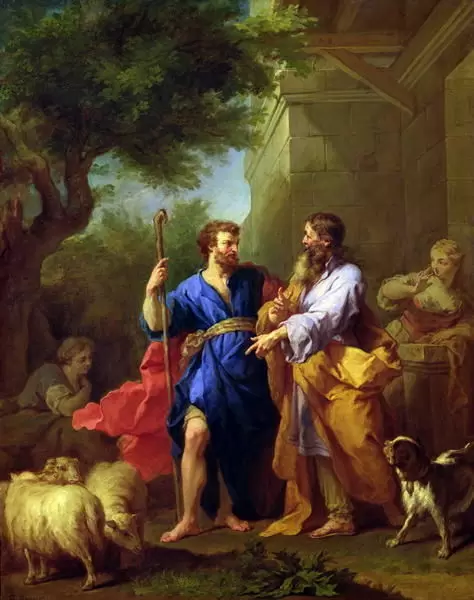
25 As soon as Rachel had borne Joseph, Jacob said to Laban, “Send me away, that I may go to my own home and country. 26 Give me my wives and my children for whom I have served you, that I may go, for you know the service that I have given you.” 27 But Laban said to him, “If I have found favor in your sight, I have learned by divination that the Lord has blessed me because of you. 28 Name your wages, and I will give it.” 29 Jacob said to him, “You yourself know how I have served you, and how your livestock has fared with me. 30 For you had little before I came, and it has increased abundantly, and the Lord has blessed you wherever I turned. But now when shall I provide for my own household also?” 31 He said, “What shall I give you?” Jacob said, “You shall not give me anything. If you will do this for me, I will again pasture your flock and keep it: 32 let me pass through all your flock today, removing from it every speckled and spotted sheep and every black lamb, and the spotted and speckled among the goats, and they shall be my wages. 33 So my honesty will answer for me later, when you come to look into my wages with you. Every one that is not speckled and spotted among the goats and black among the lambs, if found with me, shall be counted stolen.” 34 Laban said, “Good! Let it be as you have said.” 35 But that day Laban removed the male goats that were striped and spotted, and all the female goats that were speckled and spotted, every one that had white on it, and every lamb that was black, and put them in the charge of his sons. 36 And he set a distance of three days’ journey between himself and Jacob, and Jacob pastured the rest of Laban’s flock.

37 Then Jacob took fresh sticks of poplar and almond and plane trees, and peeled white streaks in them, exposing the white of the sticks. 38 He set the sticks that he had peeled in front of the flocks in the troughs, that is, the watering places, where the flocks came to drink. And since they bred when they came to drink, 39 the flocks bred in front of the sticks and so the flocks brought forth striped, speckled, and spotted. 40 And Jacob separated the lambs and set the faces of the flocks toward the striped and all the black in the flock of Laban. He put his own droves apart and did not put them with Laban’s flock. 41 Whenever the stronger of the flock were breeding, Jacob would lay the sticks in the troughs before the eyes of the flock, that they might breed among the sticks, 42 but for the feebler of the flock he would not lay them there. So the feebler would be Laban’s, and the stronger Jacob’s. 43 Thus the man increased greatly and had large flocks, female servants and male servants, and camels and donkeys. – Genesis 30:25-43 ESV

Years earlier, when Jacob had left Beersheba in search of a wife, God had made promised to remain with him. In a vision, God had declared to him, “I am with you and will keep you wherever you go, and will bring you back to this land. For I will not leave you until I have done what I have promised you.” And the story that Moses records clearly reveals how God had been keeping that promise. Jacob had left home as an unmarried man and now he had two wives, an equal number of concubines, and 11 sons. But even Jacob knew that it was time for him to come out from under his father-in-law’s control and return home. He had spent the last 14 years earning the right to marry Rachel and now, after a long delay, she had delivered him a son.

But leaving his father-in-law’s employment would prove to be more difficult than he thought. Laban was resistant to letting go of his two daughters, 11 grandsons, and hard-working son-in-law. He even admitted to Jacob, “I have become wealthy, for the Lord has blessed me because of you” (Genesis 30:27 NLT). It’s difficult to decipher whether Laban was sincere or simply trying to persuade Jacob that his stay in Haran had been a “God thing.” There is no indication that Laban was a religious man or that he worshiped Yahweh. But he knew that Jacob, like his grandfather, Abraham, was committed to God. So, he tried to persuade Jacob that God had ordained his time in Haran. This was true, but it is not clear that Laban had received that message directly from God.

God’s involvement in the entire affair is without question. He had promised to remain with Jacob and bring him back safely to Canaan. In the meantime, God had been protecting Jacob, turning Laban’s deception into a blessing. While Laban had deceived Jacob into marrying Leah, it had resulted in eight of his 11 sons, including Joseph, who would later play an instrumental role in the preservation of Jacob’s family. God had been at work, providing for Jacob’s needs and protecting his life.

The day came when Jacob knew it was time to go. There is no indication that he received a message from God, but it seems that he had finally grown tired of living under another man’s roof and control. So, he approached Laban and said, “Please release me so I can go home to my own country. Let me take my wives and children, for I have earned them by serving you, and let me be on my way. You certainly know how hard I have worked for you” (Genesis 30:25-26 NLT).

It seems that Laban believed Jacob was upset about the way he had been treated and was looking for some kind of compensation for all his labor. For more than 14 years, he had been little more than a slave to Laban and helped make him a wealthy man. And Laban was not ready to give up this valuable resource, so he told Jacob to name his price. What would it take to get him to stay? And Jacob acknowledged that he felt slighted by Laban.

“You know how hard I’ve worked for you, and how your flocks and herds have grown under my care. You had little indeed before I came, but your wealth has increased enormously. The Lord has blessed you through everything I’ve done. But now, what about me? When can I start providing for my own family?” – Genesis 30:29-30 NLT

But Jacob wasn’t interested in staying. He was ready to leaven Haran and Laban behind. Yet, he decided to take Laban up on his offer and proposed a suitable form of compensation.

“Don’t give me anything. Just do this one thing, and I’ll continue to tend and watch over your flocks. Let me inspect your flocks today and remove all the sheep and goats that are speckled or spotted, along with all the black sheep. Give these to me as my wages.” – Genesis 30:31-32 NLT

Jacob asked to be paid in sheep. He proposed that he be allowed to take all the non-white sheep from among Laban’s flocks. The spotted and dark-colored sheep would have been in the minority, leaving Laban with a greater number of pure white sheep which were of greater value. In a sense, Jacob was asking to receive the dregs of Laban’s flocks.

The always wily Laban agreed to Jacob’s offer, but immediately took measures to protect his assets. Before Jacob could have a chance to make his selection, Laban ordered his sons to remove all the spotted and speckled sheep from among his flocks and take them 3-days journey away. He cheated Jacob again. And it seems obvious that Jacob would have seen through this charade. But rather than complain, he took decided to give Laban a taste of his own medicine. What happens next is difficult to explain. Jacob’s actions seem to be based more on superstition and folklore than anything else.

He came up with a rather strange plan that involved the use of “fresh sticks of poplar and almond and plane trees” (Genesis 30:37 ESV). He then peeled off strips of the bark, revealing the lighter-colored interior. “Then he placed these peeled branches in the watering troughs where the flocks came to drink, for that was where they mated” (Genesis 30:38 NLT). What happens next is inexplicable. It seems that when the sheep mated “in front of the white-streaked branches, they gave birth to young that were streaked, speckled, and spotted” (Genesis 30:39 NLT).

There is no scientific explanation for what occurred. It’s likely that Jacob was utilizing what was nothing more than an old wive’s tale. But for some unknown reason, it worked. As the sheep mated, they produced spotted and speckled lambs. When mating season came around again, Jacob reintroduced these spotted sheep into the flock and the result was more of the same. Over time, he used Laban’s non-spotted sheep to produce a flock that was predominantly spotted, speckled and black. And, as if to add insult to injury, Jacob removed all the weak and feeble sheep when it came time to mate, ensuring that all the lambs that were born were healthy and disease-free. And Moses states that Jacob’s rather strange process produced outstanding results.

As a result, Jacob became very wealthy, with large flocks of sheep and goats, female and male servants, and many camels and donkeys. – Genesis 30:43 NLT

This entire process and the results it produced would have required multiple seasons. So, it extended Jacob’s stay but helped transform him into a wealthy and influential man. He was able to parley his sheep-mating venture into a lucrative business that allowed him to buy servants, camels, and donkeys. He would be returning to Canaan as a very rich man.

But, as always, this story is meant to highlight the sovereign power of God. The only explanation for Jacob’s success is Yahweh. Throwing black and white tree branches into the watering troughs at mating time had nothing to do with anything. Jacob may have been convinced that his efforts had produced the outcome he enjoyed, but it was all the handiwork of God. Jacob could attempt to take credit for his own success, but Moses would have his readers understand that God was the actual hero of the story. What had taken place was a miracle. It was no different than when Moses used a staff to part the water of the Red Sea. God used something common and ordinary to do the uncommon and extraordinary. And in a way, the imagery of the speckled and spotted sheep is a fitting metaphor for the people of Israel. God was going to set apart the small, insignificant, and flawed family of Jacob in order to produce a mighty nation. He would take what others considered to be the rejects and transform them into “a kingdom of priests and a holy nation” (Exodus 19:6 ESV). But that is a story for another day.

English Standard Version (ESV) The Holy Bible, English Standard Version. ESV® Permanent Text Edition® (2016). Copyright © 2001 by Crossway Bibles, a publishing ministry of Good News Publishers.

New Living Translation (NLT) Holy Bible, New Living Translation, copyright © 1996, 2004, 2015 by Tyndale House Foundation. Used by permission of Tyndale House Publishers Inc., Carol Stream, Illinois 60188. All rights reserved.

New English Translation (NET)NET Bible® copyright ©1996-2017 by Biblical Studies Press, L.L.C. http://netbible.com All rights reserved.

The Sport of Competitive Conception

3 Then she said, “Here is my servant Bilhah; go in to her, so that she may give birth on my behalf, that even I may have children through her.” 4 So she gave him her servant Bilhah as a wife, and Jacob went in to her. 5 And Bilhah conceived and bore Jacob a son. 6 Then Rachel said, “God has judged me, and has also heard my voice and given me a son.” Therefore she called his name Dan. 7 Rachel’s servant Bilhah conceived again and bore Jacob a second son. 8 Then Rachel said, “With mighty wrestlings I have wrestled with my sister and have prevailed.” So she called his name Naphtali.

9 When Leah saw that she had ceased bearing children, she took her servant Zilpah and gave her to Jacob as a wife. 10 Then Leah’s servant Zilpah bore Jacob a son. 11 And Leah said, “Good fortune has come!” so she called his name Gad. 12 Leah’s servant Zilpah bore Jacob a second son. 13 And Leah said, “Happy am I! For women have called me happy.” So she called his name Asher.

14 In the days of wheat harvest Reuben went and found mandrakes in the field and brought them to his mother Leah. Then Rachel said to Leah, “Please give me some of your son’s mandrakes.” 15 But she said to her, “Is it a small matter that you have taken away my husband? Would you take away my son’s mandrakes also?” Rachel said, “Then he may lie with you tonight in exchange for your son’s mandrakes.” 16 When Jacob came from the field in the evening, Leah went out to meet him and said, “You must come in to me, for I have hired you with my son’s mandrakes.” So he lay with her that night. 17 And God listened to Leah, and she conceived and bore Jacob a fifth son. 18 Leah said, “God has given me my wages because I gave my servant to my husband.” So she called his name Issachar.

19 And Leah conceived again, and she bore Jacob a sixth son. 20 Then Leah said, “God has endowed me with a good endowment; now my husband will honor me, because I have borne him six sons.” So she called his name Zebulun. 21 Afterward she bore a daughter and called her name Dinah.

22 Then God remembered Rachel, and God listened to her and opened her womb. 23 She conceived and bore a son and said, “God has taken away my reproach.” 24 And she called his name Joseph, saying, “May the Lord add to me another son!” – Genesis 30:3-24 ESV

This story reads like a 1970s television soap opera. The interpersonal intrigues are difficult to keep up with and the sheer number of births is mind-boggling. Moses provides no timeline for this narrative, but suffice it to say, Jacob was a busy man. In the span of 19 verses, Moses describes Jacob as fathering seven sons by four different women. And it’s impossible to read this story and not see the similarities found in the lives of Jacob’s parents and grandparents. But it is if Jacob, Rachel, and Leah have taken the art of conception to a whole new level. It has become a competitive sport, with the women in Jacob’s life batting him like a helpless shuttlecock in a game of badminton.

In fact, it got so bad that Jacob functioned more like a prostitute than as the patriarch of his own family. When his wives ordered him to sleep with their maidservants, he seemed to passively comply. At one point, his wife Leah actually sold some mandrakes to Rachel and used sexual access to Jacob as her bartering chip. Having paid for his services, she simply informed Jacob of the arrangement.

“You must come and sleep with me tonight!” she said. “I have paid for you with some mandrakes that my son found.” So that night he slept with Leah. – Genesis 30:16 NLT

It’s difficult to keep up, but at this point in the story, Jacob has fathered 11 sons. Leah has given him Reuben, Simeon, Levi, Judah, Issachar, and Zebulun. Her handmaid Zilpah has added Gad and Asher. Rachel’s handmaid provided Dan and Naphtali. And, after God opened her womb, Rachel delivered Joseph.

Due to her barrenness, Rachel had been unable to bear Jacob any children – until God had intervened. As her husband’s favorite wife, she found herself shamed by her infertility and her frustrating inability to give Jacob the one thing he desired most: A son. So, in an effort to compete with her sister’s prolific child-bearing capabilities, she had come up with the idea to have children through a surrogate.

“Take my maid, Bilhah, and sleep with her. She will bear children for me, and through her I can have a family, too.” – Genesis 30:3 NLT

In a fit of jealousy and driven by purely selfish motives, Rachel ordered Jacob to father a son through her servant. And just as Abraham had followed the same advice from his wife, Sarah, Jacob complied. Not once, but twice. And this little act of competitive conception encouraged Leah to take up the sport. She too offered her servant to Jacob and, once again, he willingly took her up on the offer. The result? Two more sons.

It would be easy to read this story and be left with the impression that things have gotten completely out of control. There is no referee in this game of one-upmanship. Each of these women seems to make up the rules as the game unfolds. And Jacob comes across like a triple-A prospect who suddenly gets called up to the big leagues. This little country boy from Beersheba was going up against the pros.

But, Moses wants his readers to know that this is not some no-rules, make-it-up-as-you-go-along free-for-all. God is fully in control and operating behind the scenes in order to accomplish His divine will. Yes, it’s messy and incorporates all the subterfuge and self-promotion that Rachel and Leah bring to the table, but it is far from out of control. As Moses lists the various names of the boys born to Jacob, his Jewish readers would have recognized the names of their individual tribes. These boys would grow to become men and father 11 of the 12 tribes of Israel. And on two separate occasions, Moses deliberately pauses the narrative at the mention of the names of Judah and Joseph. When Leah had given birth to her fourth son, she had named him Judah, then Moses wrote, “Then she ceased bearing” (Genesis 29:35 ESV). It seems that God had turned off the tap. He sovereignly sealed her womb, not permanently, but for a period of time.

As stated in yesterday’s blog, Judah was to become the tribe through whom the Messiah of Israel would be born. Judah was going to play a major role in the national affairs of Israel and the future fate of the world. And the same thing is true of Joseph.

Rachel, the favored wife of Jacob, could not bear children. That is until God sovereignly ordained it. And when He miraculously opened her womb, Rachel gave birth to a boy named Joseph. Little did Rachel know that this long-awaited son would play a vital role in the future salvation and preservation of the people of Israel. Moses readers would have been highly familiar with the story of Joseph. He would grow to become the favorite son of Jacob, a designation that would make him the envy of his 10 older brothers. Jacob would lavish the favored son of his favorite wife with affection and gifts, a move that would make Joseph the target of his brothers’ ire.

Jacob loved Joseph more than any of his other children because Joseph had been born to him in his old age. So one day Jacob had a special gift made for Joseph—a beautiful robe. But his brothers hated Joseph because their father loved him more than the rest of them. They couldn’t say a kind word to him. – Genesis 37:3-4 NLT

Yet, like Judah, Joseph was destined to play a special role in his family’s future. While Rachel and Leah were busy conniving and competing, God had more serious and world-changing plans in mind. He was using the selfish and shortsighted machinations of these two women to fulfill the covenant promise He had made to Abraham, Isaac, and now, Jacob. As usual, the characters in the story remain oblivious to the unseen actions of God. They believed themselves to be in control and driving the narrative. Oh, they give God lip service.

“God has vindicated me! He has heard my request and given me a son.” – Genesis 30:6 NLT

“God has rewarded me for giving my servant to my husband as a wife.” – Genesis 30:18 NLT

“God has given me a good reward.” – Genesis 30:20 NLT

“God has removed my disgrace…” – Genesis 30:23 NLT

But they were operating according to their own agendas and in keeping with their own selfish desires. Yet, God was righteously redeeming their flawed actions in order to bring about the plan He had developed long before any of them ever existed.

With the birth of Joseph, a new chapter in the story will begin. For nearly two decades, Jacob had been living in Haran with his father-in-law Laban. He had been waiting on word from his mother, Rachel, informing him that Esau had forgiven him and it was safe to return home. But that message had never come. In all likelihood, Rachel had died while Jacob had been away. He now had two wives, two concubines, and 11 sons. God had blessed him and he realized it was time to return to Canaan. According to God, it was there that his inheritance would be found. When Jacob had stopped in Bethel on his way to Haran, God had appeared to him in a dream and said:

“I am the Lord, the God of your grandfather Abraham, and the God of your father, Isaac. The ground you are lying on belongs to you. I am giving it to you and your descendants. Your descendants will be as numerous as the dust of the earth! They will spread out in all directions—to the west and the east, to the north and the south. And all the families of the earth will be blessed through you and your descendants. What’s more, I am with you, and I will protect you wherever you go. One day I will bring you back to this land. I will not leave you until I have finished giving you everything I have promised you.” – Genesis 28:13-15 NLT

Now, it was time to go back to the land because Jacob knew that Canaan was where the promises of God would be fully fulfilled.

English Standard Version (ESV) The Holy Bible, English Standard Version. ESV® Permanent Text Edition® (2016). Copyright © 2001 by Crossway Bibles, a publishing ministry of Good News Publishers.

New Living Translation (NLT) Holy Bible, New Living Translation, copyright © 1996, 2004, 2015 by Tyndale House Foundation. Used by permission of Tyndale House Publishers Inc., Carol Stream, Illinois 60188. All rights reserved.

New English Translation (NET)NET Bible® copyright ©1996-2017 by Biblical Studies Press, L.L.C. http://netbible.com All rights reserved.

The Tables Are Turned

15 Then Laban said to Jacob, “Because you are my kinsman, should you therefore serve me for nothing? Tell me, what shall your wages be?” 16 Now Laban had two daughters. The name of the older was Leah, and the name of the younger was Rachel. 17 Leah’s eyes were weak, but Rachel was beautiful in form and appearance. 18 Jacob loved Rachel. And he said, “I will serve you seven years for your younger daughter Rachel.” 19 Laban said, “It is better that I give her to you than that I should give her to any other man; stay with me.” 20 So Jacob served seven years for Rachel, and they seemed to him but a few days because of the love he had for her.

21 Then Jacob said to Laban, “Give me my wife that I may go in to her, for my time is completed.” 22 So Laban gathered together all the people of the place and made a feast. 23 But in the evening he took his daughter Leah and brought her to Jacob, and he went in to her. 24 (Laban gave his female servant Zilpah to his daughter Leah to be her servant.) 25 And in the morning, behold, it was Leah! And Jacob said to Laban, “What is this you have done to me? Did I not serve with you for Rachel? Why then have you deceived me?” 26 Laban said, “It is not so done in our country, to give the younger before the firstborn. 27 Complete the week of this one, and we will give you the other also in return for serving me another seven years.” 28 Jacob did so, and completed her week. Then Laban gave him his daughter Rachel to be his wife. 29 (Laban gave his female servant Bilhah to his daughter Rachel to be her servant.) 30 So Jacob went in to Rachel also, and he loved Rachel more than Leah, and served Laban for another seven years. – Genesis 29:15-30 ESV

Jacob had found his bride-to-be, and as he shared the purpose of his quest with Laban, he must have divulged his intention to marry Rachel. But Laban appears to have been reluctant to hand over his daughter to this newcomer, despite the fact that Jacob was his own nephew. So, to buy time, he convinced Jacob to stay with him, a delay that soon extended to a solid month. During that time, Jacob must have made himself useful, and it seems likely that he offered to help with the flocks because Rachel was a shepherdess. What better way to get to win the affections of his future wife than by serving alongside her as she performed her daily duties.

At the end of the month, Laban decided to offer Jacob some form of compensation for his services. In other words, he attempted to make Jacob a permanent employee. And when he asked Jacob what his salary should be, the young man asked for the right to marry his youngest daughter, Rachel. Jacob was so infatuated with her that he agreed to a seven-year labor contract in order to earn the right to marry her. It seems odd, given the fact that Jacob had come in search of a bride, that he had brought no gifts or money to offer as a bride price.

When Abraham’s servant had gone in search of a bride for Isaac, he had carried gifts for the bride and her family. When he met Rebekah, he had given her “a gold ring weighing a half shekel, and two bracelets for her arms weighing ten gold shekels” (Genesis 24:22 ESV). And when the servant eventually met Rebekah’s family, he had presented additional gifts.

And the servant brought out jewelry of silver and of gold, and garments, and gave them to Rebekah. He also gave to her brother and to her mother costly ornaments. – Genesis 24:53 ESV

And it’s interesting to note that the brother referred to in this passage was Laban. He too had been received expensive gifts from Abraham’s servant and these items had been intended to serve as a bride price for Rebekah.

But when Jacob showed up in Haran and shared his desire to marry one of Laban’s daughters, no gifts were given or exchanged. A month later, there had still been no bride price offered by Jacob. So, in order to win the right to marry Laban’s daughter, he offered to spend seven years as Laban’s indentured servant.

All of this begs the question: Had Isaac failed to give Jacob any gifts to present? Or had Jacob squandered them along the way? Perhaps Jacob had decided to keep the treasures for himself in order to fund what he knew would be an extended stay in Mesopotamia. After all, his mother had told him to not return until she sent word that it was safe to do so.

“Get ready and flee to my brother, Laban, in Haran. Stay there with him until your brother cools off. When he calms down and forgets what you have done to him, I will send for you to come back.” – Genesis 27:43-45 NLT

Whatever the case, Jacob was committed to a lengthy stay in Haran. And it seems that Laban was once again hoping for some kind of profitable exchange between himself and the grandson of Abraham. His overly enthusiastic welcome of Jacob would suggest that Laban was expecting another big payday. As head of the house, he stood to gain a substantial bride price for allowing Jacob to wed Rebekah. And, since no gifts had forthcoming, Laban decided to accept Jacob’s terms. But this is where the story gets interesting.

Moses points out that the deceit-prone Jacob actually kept his word.

Jacob served seven years for Rachel, and they seemed to him but a few days because of the love he had for her. – Genesis 29:20 ESV

His love for Rachel overpowered any desire he may have had to cut corners or skirt the rules. But his decision to do things the right way would actually end up costing him.

When his seven-year commitment had been fulfilled, Jacob demanded that Laban keep his end of the bargain.

“I have fulfilled my agreement,” Jacob said to Laban. “Now give me my wife so I can sleep with her.” – Genesis 29:21 NLT

You can almost sense Jacob’s impatience as he rather crassly demands the right to consummate his marriage to Rachel. This almost leaves the impression that Jacob and Rachel had been betrothed the entire seven years, and everyone would have known that Laban had agreed to the arrangement. So, this makes what Laban does next especially evil.

Having agreed to the betrothal and marriage, Laban decided to take advantage of Jacob’s unbridled enthusiasm in order to accomplish another pressing matter. It seems that Leah, Rachel’s older sister, remained unmarried. The text states that “Leah’s eyes were weak” (Genesis 29:17 ESV). The Hebrew word is רַךְ (raḵ) and it can be translated as “tender,” “delicate,” or “weak.” Given the fact that Leah’s eyes are being compared to Rachel’s outward beauty (Rachel was beautiful in form and appearance), it would appear that Leah suffered from some kind of eye condition. Perhaps she was partially blind or had some other ocular ailment.

But as a father, Laban would have felt a special responsibility to find a suitable husband for his firstborn daughter. The day would come when he could no longer care for her, so it was essential that he provide her with a man to provide for and protect her after he was gone. This led Laban to do the unthinkable.

After throwing a feast for the newlyweds and, most likely, after ensuring that Jacob was highly inebriated, Laban snuck Leah into the bridal tent in place of Rachel. This time, the firstborn pretended to be the youngest. In the same way that Rebekah helped Jacob to deceive Isaac, Laban assisted Leah in her deception of Jacob. Overcome by the effects of the alcohol and due to the darkness of the tent, Jacob never realized that he had slept with the wrong woman – until the sun came up.

…in the morning, behold, it was Leah! – Genesis 29:25 ESV

What a shock that must have been. And it’s amazing to consider that Leah went along with it all. She willingly participated in the deception, not seeming to consider how her actions would impact her own sister. And the righteous indignation of Jacob, while justified, is still somewhat comical.

“What is this you have done to me? Did I not serve with you for Rachel? Why then have you deceived me?” – Genesis 29:25 ESV

How hypocritical these words sound coming from the mouth of Jacob. The deceiver has just been deceived and he can’t believe it. How dare someone take advantage of him? But Jacob had it coming.

In response to Jacob’s anger, Laban provided a rather lame explanation having to do with local social customs. It was not proper to marry off the younger daughter ahead of her older sister. But this excuse doesn’t explain why Laban failed to disclose this rather important detail before he had made the agreement with Jacob. He had withheld it on purpose, having already decided to use Jacob’s love for Rachel as the pretext for marrying off his less-attractive daughter. In a sense, Laban killed two birds with one stone. And then he had the audacity to suggest that Jacob’s seven years of service would be counted as payment for his marriage to Leah. Another seven-year contract would be required if Jacob wanted Rachel as well.

One can only imagine the look on Jacob’s face as he heard these words come out of Laban’s mouth. He must have been beside himself with rage and frustration. But he was not in a position to declare his rights or negotiate a better deal. If he wanted Rachel, he was going to have to swallow his pride and agree to Laban’s less-than-generous terms. And that’s exactly what he did. After a week of honoring his conjugal responsibilities to Leah, Jacob was allowed to marry Rachel as well. But he would spend the next seven years of his life paying off his debt. Suddenly, his one-month stay in Haran had turned into 14 years of forced labor.  The man who had cheated his own brother out of his birthright and blessing had been taken to the cleaners by his future father-in-law.

But as has become evident all throughout this story, God was operating behind the scene on this occasion as well. Despite the despicable actions of Laban, God had a purpose behind Jacob’s unplanned marriage to Leah. Due to her physical infirmity, she was the unwanted daughter whom no man desired for a wife. But it would be through Leah that the family tree of Jesus would come. This weak-eyed, undesirable woman would become the one through whom God’s plan for the Messiah of Israel would be fulfilled. Jacob loved Rachel. But God had a special love for Leah that would produce the greatest expression of divine affection the world has ever seen.

“For this is how God loved the world: He gave his one and only Son, so that everyone who believes in him will not perish but have eternal life.” – John 3:16 NLT

English Standard Version (ESV) The Holy Bible, English Standard Version. ESV® Permanent Text Edition® (2016). Copyright © 2001 by Crossway Bibles, a publishing ministry of Good News Publishers.

New Living Translation (NLT) Holy Bible, New Living Translation, copyright © 1996, 2004, 2015 by Tyndale House Foundation. Used by permission of Tyndale House Publishers Inc., Carol Stream, Illinois 60188. All rights reserved.

New English Translation (NET)NET Bible® copyright ©1996-2017 by Biblical Studies Press, L.L.C. http://netbible.com All rights reserved.

The Marvelous and Mysterious Ways of God

26 Then his father Isaac said to him, “Come near and kiss me, my son.” 27 So he came near and kissed him. And Isaac smelled the smell of his garments and blessed him and said,

“See, the smell of my son
    is as the smell of a field that the Lord has blessed!
28 May God give you of the dew of heaven
    and of the fatness of the earth
    and plenty of grain and wine.
29 Let peoples serve you,
    and nations bow down to you.
Be lord over your brothers,
    and may your mother’s sons bow down to you.
Cursed be everyone who curses you,
    and blessed be everyone who blesses you!”

30 As soon as Isaac had finished blessing Jacob, when Jacob had scarcely gone out from the presence of Isaac his father, Esau his brother came in from his hunting. 31 He also prepared delicious food and brought it to his father. And he said to his father, “Let my father arise and eat of his son’s game, that you may bless me.” 32 His father Isaac said to him, “Who are you?” He answered, “I am your son, your firstborn, Esau.” 33 Then Isaac trembled very violently and said, “Who was it then that hunted game and brought it to me, and I ate it all before you came, and I have blessed him? Yes, and he shall be blessed.” 34 As soon as Esau heard the words of his father, he cried out with an exceedingly great and bitter cry and said to his father, “Bless me, even me also, O my father!” 35 But he said, “Your brother came deceitfully, and he has taken away your blessing.” 36 Esau said, “Is he not rightly named Jacob? For he has cheated me these two times. He took away my birthright, and behold, now he has taken away my blessing.” Then he said, “Have you not reserved a blessing for me?” 37 Isaac answered and said to Esau, “Behold, I have made him lord over you, and all his brothers I have given to him for servants, and with grain and wine I have sustained him. What then can I do for you, my son?” 38 Esau said to his father, “Have you but one blessing, my father? Bless me, even me also, O my father.” And Esau lifted up his voice and wept.

39 Then Isaac his father answered and said to him:

“Behold, away from the fatness of the earth shall your dwelling be,
    and away from the dew of heaven on high.
40 By your sword you shall live,
    and you shall serve your brother;
but when you grow restless
    you shall break his yoke from your neck.” – Genesis 27:26-40 ESV

Rebekah’s clandestine plan had worked to perfection. Her elderly and half-blind husband had been so thoroughly fooled by Jacob’s slipshod disguise that he truly thought he was about to bestow a blessing on his eldest son, Esau.

Having satiated his appetite with the food that Jacob had prepared, the old man called his son to his side and kissed him. And because Jacob had followed his mother’s advice and was wearing Esau’s clothes, Isaac’s dulled senses were fooled yet again. Esau was an outdoorsman and a hunter, so his clothing carried a unique scent. Isaac described it as “the smell of a field that the Lord has blessed” (Genesis 27:27 ESV). Along with an affectionate fatherly kiss, Isaac bestowed a blessing upon his son. But little did he realize that his blessing was being stolen right from under his clouded eyes.

But completely oblivious to the fraudulent nature of the moment, Isaac placed his hands on his son and passed on the blessing of the firstborn.

“From the dew of heaven
    and the richness of the earth,
may God always give you abundant harvests of grain
    and bountiful new wine.
May many nations become your servants,
    and may they bow down to you.
May you be the master over your brothers,
    and may your mother’s sons bow down to you.
All who curse you will be cursed,
    and all who bless you will be blessed.” – Genesis 27:28-29 NLT

This blessing would have been of great value to Isaac because it had been passed down to him by his own father. There had been a time in Isaac’s life when Abraham had declared these very same words to him, and now he was passing them on to his eldest son – or so he thought.

The words contained in the blessing are a reiteration of the promise that God had made to Abraham. In fact, on the day that Abraham obeyed the word of the Lord and prepared to offer up the life of Isaac as an offering, God had intervened and repeated His covenant promise.

“Because you have obeyed me and have not withheld even your son, your only son, I swear by my own name that I will certainly bless you. I will multiply your descendants beyond number, like the stars in the sky and the sand on the seashore. Your descendants will conquer the cities of their enemies. And through your descendants all the nations of the earth will be blessed—all because you have obeyed me.” – Genesis 22:16-18 NLT

That is the core message behind Isaac’s blessing of Esau. It contains the promises of land, fruitfulness, and power. Isaac is declaring his belief that, even after his own death, God will continue to fulfill every aspect of His covenant promise. But while Isaac’s heart was in the right place, his hands were on the wrong son. He was inadvertently bestowing the blessing on Jacob instead of Esau. But despite Isaac’s confusion, God’s will was actually being fulfilled. This convoluted mess was turning out just as God had planned.

God had declared his intentions regarding these two brothers long before they were born. While Rebekah was still carrying them in her womb, He had revealed their preordained destinies.

“Two nations are in your womb,
    and two peoples from within you shall be divided;
the one shall be stronger than the other,
    the older shall serve the younger.” – Genesis 25:23 ESV

God had already predetermined that Jacob would be the greater of the two. And while Esau had been the first to exit the birth canal providing him with a legal claim to the birthright and the blessing of the firstborn, God had other plans.

This passage provides a powerful reminder that God’s ways are beyond our limited capacity to understand. He declares of Himself, “For my thoughts are not your thoughts, neither are your ways my ways” and then He adds, “For as the heavens are higher than the earth, so are my ways higher than your ways and my thoughts than your thoughts” (Isaiah 55:8-9 ESV). God is not required to explain Himself. And Moses provides no explanation for God’s actions in this story. We are not told why God allowed Rebekah to do what she did. There is no rationale given for why God permitted the deceptive and manipulative Jacob to steal his brother’s blessing. 

Each of the characters in the story comes off as fatally flawed and seemingly out of step with the will of God. And yet, God’s will was being done in spite of them but, more importantly, through them. Each of them had been driven by their own selfish agenda, but their wills were completely subject to the sovereign will of God.

Isaac’s misplaced blessing would prove to have long-term implications, but the outcome would be in keeping with God’s predetermined plan. Jacob, the younger, would be blessed so that he might be a blessing. He would inherit the right to rule over his brothers. And his descendants would enjoy the divine protection of God Almighty. Those who cursed them would be cursed. Those who blessed them would be blessed.

It’s difficult to reconcile this news when one considers the ungodly actions of Rebekah and Jacob. They employed deceit, manipulation, and fraud to accomplish their objective. But God was working behind the scenes to ensure their less-than-righteous actions produced good rather than evil. It is the same message that will be conveyed later on in the story of Genesis, when Joseph, a son of Jacob, confronts his own brothers who, out of jealousy and spite, had sold him into slavery. Through the sovereign will of God, Joseph ended up in Egypt and rose from slavery to the second-highest position in the land. And when his brothers came seeking food because of a severe famine in Canaan, Joseph confronted them about their ill-treatment of him.

“But don’t be upset, and don’t be angry with yourselves for selling me to this place. It was God who sent me here ahead of you to preserve your lives. This famine that has ravaged the land for two years will last five more years, and there will be neither plowing nor harvesting. God has sent me ahead of you to keep you and your families alive and to preserve many survivors. So it was God who sent me here, not you! And he is the one who made me an adviser to Pharaoh—the manager of his entire palace and the governor of all Egypt.” – Genesis 45:5-8 NLT

Joseph could see the hand of God in all that had happened in his life. His brothers had been guilty of selling him into slavery, but Joseph recognized that it had all been a part of God’s sovereign plan. And it is important to remember that Joseph was a son of Jacob, the man who stole the blessing from his own brother. And, even at the end of his life, Joseph was able to reiterate to his brothers his belief in God’s sovereign plan.

“Do not fear, for am I in the place of God? As for you, you meant evil against me, but God meant it for good, to bring it about that many people should be kept alive, as they are today. – Genesis 50:19-20 ESV

But the story of Jacob and Esau is still difficult to read and even more difficult to justify. It all seems so unfair and indefensible, especially when Moses relates the impact it had on the unsuspecting and seemingly innocent Esau. He ultimately comes home to find that his blessing has been stolen and he is beside himself with frustration and anger. This is the second time his brother has taken advantage of him and he declares his well-justified resentment at this most recent injustice.

“…he has cheated me these two times. He took away my birthright, and behold, now he has taken away my blessing.” – Genesis 27:36 ESV

Esau demands to receive a blessing, but Isaac sadly informs him that Jacob has received it all.

“I have made Jacob your master and have declared that all his brothers will be his servants. I have guaranteed him an abundance of grain and wine—what is left for me to give you, my son?” – Genesis 27:37 NLT

There is nothing left to give. Esau’s brother now owns his birthright and his blessing. And when Isaac hears Esau’s anguished pleas to be blessed, all he can do is restate the negative impact that the blessing of Jacob will have on Esau’s life. It is less a blessing than it is a curse.

“You will live away from the richness of the earth,
    and away from the dew of the heaven above.
You will live by your sword,
    and you will serve your brother.
But when you decide to break free,
    you will shake his yoke from your neck.” – Genesis 27:39-40 NLT

While this story is intended to leave the reader with a sense of dissonance, it should also remind them of the unfathomable nature of God’s ways. There are things going on behind the scenes that we cannot see or comprehend. The dysfunctionality of this family is appalling, but even their worse actions are no match for God’s best-laid plans. The fulfillment of His will is not dependent upon their faithfulness. Jacob did not deserve the blessing, yet it was his. Rebekah’s unrighteous behavior is in no way justified by the outcome it seems to have produced. And she will live to regret the division her behavior has created within her own household. Her sins will have consequences. And, as the story unfolds, it will become painfully clear that Jacob’s sins will have serious consequences as well.

English Standard Version (ESV) The Holy Bible, English Standard Version. ESV® Permanent Text Edition® (2016). Copyright © 2001 by Crossway Bibles, a publishing ministry of Good News Publishers.

New Living Translation (NLT) Holy Bible, New Living Translation, copyright © 1996, 2004, 2015 by Tyndale House Foundation. Used by permission of Tyndale House Publishers Inc., Carol Stream, Illinois 60188. All rights reserved.

New English Translation (NET)NET Bible® copyright ©1996-2017 by Biblical Studies Press, L.L.C. http://netbible.com All rights reserved.

A Barren Faith

1 From there Abraham journeyed toward the territory of the Negeb and lived between Kadesh and Shur; and he sojourned in Gerar. 2 And Abraham said of Sarah his wife, “She is my sister.” And Abimelech king of Gerar sent and took Sarah. 3 But God came to Abimelech in a dream by night and said to him, “Behold, you are a dead man because of the woman whom you have taken, for she is a man’s wife.” 4 Now Abimelech had not approached her. So he said, “Lord, will you kill an innocent people? 5 Did he not himself say to me, ‘She is my sister’? And she herself said, ‘He is my brother.’ In the integrity of my heart and the innocence of my hands I have done this.” 6 Then God said to him in the dream, “Yes, I know that you have done this in the integrity of your heart, and it was I who kept you from sinning against me. Therefore I did not let you touch her. 7 Now then, return the man’s wife, for he is a prophet, so that he will pray for you, and you shall live. But if you do not return her, know that you shall surely die, you and all who are yours.”

8 So Abimelech rose early in the morning and called all his servants and told them all these things. And the men were very much afraid. 9 Then Abimelech called Abraham and said to him, “What have you done to us? And how have I sinned against you, that you have brought on me and my kingdom a great sin? You have done to me things that ought not to be done.” 10 And Abimelech said to Abraham, “What did you see, that you did this thing?” 11 Abraham said, “I did it because I thought, ‘There is no fear of God at all in this place, and they will kill me because of my wife.’ 12 Besides, she is indeed my sister, the daughter of my father though not the daughter of my mother, and she became my wife. 13 And when God caused me to wander from my father’s house, I said to her, ‘This is the kindness you must do me: at every place to which we come, say of me, “He is my brother.”’”

14 Then Abimelech took sheep and oxen, and male servants and female servants, and gave them to Abraham, and returned Sarah his wife to him. 15 And Abimelech said, “Behold, my land is before you; dwell where it pleases you.” 16 To Sarah he said, “Behold, I have given your brother a thousand pieces of silver. It is a sign of your innocence in the eyes of all who are with you, and before everyone you are vindicated.” 17 Then Abraham prayed to God, and God healed Abimelech, and also healed his wife and female slaves so that they bore children. 18 For the Lord had closed all the wombs of the house of Abimelech because of Sarah, Abraham’s wife. – Genesis 20:1-18 ESV

With the opening of chapter 20, Moses returns the focus of his narrative to Abraham. And, despite God’s repeated acts of faithfulness and His assurances that Sarah will bear Abraham a child, we find Abraham has reverted to his old ways. This story bears a striking resemblance to the one found in chapter 12. In the early days of his time in Canaan, a famine plagued the land. So, this prompted Abraham to seek refuge in Egypt. But when he arrived in the land of the Pharoahs, he feared that Sarah’s beauty would attract the interest of the Egyptians, so he came up with a plan.

When he was about to enter Egypt, he said to Sarai his wife, “I know that you are a woman beautiful in appearance, and when the Egyptians see you, they will say, ‘This is his wife.’ Then they will kill me, but they will let you live. Say you are my sister, that it may go well with me because of you, and that my life may be spared for your sake.” – Genesis 12:11-13 ESV

Abraham’s fears were justified because the Pharaoh himself found Sarah attractive, and he offered Abraham a bride price to make her a part of his harem. But while Abraham’s plan had been successful in sparing his own life, he had put Sarah in a very uncomfortable predicament. And it was only by the grace of God that she was spared humiliation at the hands of Pharaoh. The Almighty intervened and delivered Sarah back to Abraham. It had been a close call, but a valuable lesson was learned. Or so you would think.

Fast forward to chapter 20 and we find Abraham reliving one of his least flattering moments. He has journeyed from Hebron to Gerar and, once again, he has decided to spread the rumor among the inhabitants that Sarah is his sister. As before, he is telling a half-truth. Sarah is Abraham’s half-sister. But she is also his wife and the woman through whom God has promised to deliver a son. Yet, everywhere Abraham went, he declared of Sarah, “She is my sister” (Genesis 20:2 ESV). It seems likely that the motivation behind this charade was the same as it had been in Egypt. Abraham was out to protect his own skin. Because he was a stranger entering into potentially hostile territory, he feared that his wife’s beauty would attract the interest of the locals. If they discovered she was Abraham’s wife, they might decide to kill Abraham so that they might have a legal claim on her as a widow. Even in the pagan cultures of Canaan, marriage was a respected institution.

But what is amazing to consider is that Sarah is 90-years-old. We would find it difficult to imagine that anyone would find a woman of that age particularly attractive. But Sarah must have been striking, even at her advanced age, because the story goes on to say that Abimelech, the king of Gerar, took Sarah. The woman whom God had chosen to bear the offspring of Abraham was now relegated to the role of a concubine in the harem of a pagan king. Abraham’s plan had backfired again, producing a potentially devastating outcome.

Yet, just as before, God intervened. He came to Sarah’s rescue and turned Abraham’s ill-conceived and ill-fated ploy into a blessing instead of a curse. Nothing was going to prevent God’s sovereign plan from taking place.

Abimelech, oblivious to the truth concerning Sarah, received a disturbing vision from God, in which he was told, “you are a dead man because of the woman whom you have taken, for she is a man’s wife” (Genesis 20:3 ESV). As proof of God’s providence and His divine protection of Sarah, Moses reveals that Abimelech had not laid a hand on her. And the panicked king pleads his innocence before God.

“Lord, will you kill an innocent people? Did he not himself say to me, ‘She is my sister’? And she herself said, ‘He is my brother.’ In the integrity of my heart and the innocence of my hands I have done this.” – Genesis 20:4-5 ESV

How could he have known that Sarah was Abraham’s wife? He had been lied to and, therefore, had done nothing wrong. He had not intended to take another man’s wife.

This entire exchange is fascinating because, as a pagan, Abimelech would have had no prior knowledge of Yahweh, the God of Abraham. This was likely his first encounter with the Almighty, but he knew that he was dealing with a divine being of great power. And God let Abimelech know just how omnipotent and omniscient He was. He revealed to the frightened monarch that He was fully aware of what had happened and had actually prevented Abimelech from doing any harm to Sarah.

“Yes, I know you are innocent. That’s why I kept you from sinning against me, and why I did not let you touch her.” – Genesis 20:6 NLT

Abraham had lied. Abimelech had lusted. But God had the last say. He was in full control of the entire situation and had been divinely orchestrating the outcome. A fearful and faithless Abraham and a lustful and godless king would not prevent God from accomplishing His plan. This story illustrates the truth of the proverb: “Many are the plans in the mind of a man, but it is the purpose of the LORD that will stand” (Proverbs 19:21 ESV). This same thought is expressed in Proverbs 16:9: “The heart of man plans his way, but the LORD establishes his steps.”

If anyone is guilty in this story, it is Abraham. He knew that God had promised to give him a son through Sarah, and he should have understood that God would not allow anything to prevent that promise from being fulfilled. No harm was going to come to Abraham or Sarah. But Abraham was still having a difficult time believing that God was powerful enough to pull off this unlikely miracle. God had set the date for Sarah’s delivery and even provided a name for the son she would bear, but Abraham was still operating in fear and displaying a lack of faith. But God continued to display patience to Abraham, and even referred to him as His prophet. He commanded Abimelech to do the right thing and return Sarah to her husband.

“Now return the woman to her husband, and he will pray for you, for he is a prophet. Then you will live. But if you don’t return her to him, you can be sure that you and all your people will die.” – Genesis 20:7 NLT

As soon as Abimelech woke up from his disturbing nightmare, he shared the Lord’s message with his servants. Then he ordered Abraham to be brought into his presence and proceeded to vent his well-justified frustration.

“What crime have I committed that deserves treatment like this, making me and my kingdom guilty of this great sin? No one should ever do what you have done!  Whatever possessed you to do such a thing?” – Genesis 20:9-10 NLT

Abimelech was livid and rightfully so. Abraham’s deception had almost resulted in the annihilation of Abimelech and his people. This man’s little half-truth could have resulted in the deaths of many innocent people. But, rather than apologize, Abraham attempted to justify his actions and even blamed his behavior on his circumstances.

“I thought, ‘This is a godless place. They will want my wife and will kill me to get her.’ And she really is my sister, for we both have the same father, but different mothers. And I married her. When God called me to leave my father’s home and to travel from place to place, I told her, ‘Do me a favor. Wherever we go, tell the people that I am your brother.’” – Genesis 20:11-13 NLT

Abraham reveals that this strategy had been in place since the very beginning. He had implemented it in Egypt and had continued to use it wherever he went. This seems to be an admission that Abraham had been lying about Sarah the entire time he had been in Canaan. He had displayed a habit of deception that had been motivated by doubt and fear. Only on two occasions did Abraham’s lie produce negative consequences. But even those “close calls” did not stop him from relying on deceit rather than trusting in God.

Yet, despite Abraham’s revealing admission, God chose to bless him. Not only did God return Sarah unharmed, but He also directed Abimelech to give Abraham “some of his sheep and goats, cattle, and male and female servants” (Genesis 20:14 NLT). Not only that, he offered Abraham his choice of land in Gerar and provided him with 1,000 pieces of silver as a form of compensation for the indignity shown to Sarah.

This pagan king showed great discernment and integrity. And his behavior stands in stark contrast to the “righteous prophet” of Yahweh. As a prophet of God, Abraham should have been a source of light in the darkness of Gerar, but instead, he had almost brought down the wrath of God on the unsuspecting citizens of that community.

Verses 17-18 reveal an interesting detail about this story. It appears that God had struck all the women of Gerar with barrenness. When Abimelech had taken Sarah as his concubine, he had inadvertently and unknowingly doomed his city to a future of fruitlessness. The disability that had plagued Sarah her entire adult life was visited upon the women of Gerar. Moses makes it clear that “the Lord had closed all the wombs of the house of Abimelech because of Sarah, Abraham’s wife” (Genesis 20:18 ESV). And it wasn’t until the doubtful and deceptive Abraham prayed for them, that God lifted the curse.

Abraham prayed to God, and God healed Abimelech, and also healed his wife and female slaves so that they bore children. – Genesis 20:17 ESV

Think about the irony of that moment. The man who had continually doubted God’s ability to provide him a son through his barren wife was praying for God to heal the barren women of Gerar. And God heard and answered that prayer. What a powerful lesson this must have been for Abraham and Sarah. God has just rejuvenated the wombs of an entire city of barren women. So, could He not do the same for Sarah? And, as the next chapter will reveal, that is exactly what God was preparing to do.

English Standard Version (ESV) The Holy Bible, English Standard Version. ESV® Permanent Text Edition® (2016). Copyright © 2001 by Crossway Bibles, a publishing ministry of Good News Publishers.

New Living Translation (NLT) Holy Bible, New Living Translation, copyright © 1996, 2004, 2015 by Tyndale House Foundation. Used by permission of Tyndale House Publishers Inc., Carol Stream, Illinois 60188. All rights reserved.

New English Translation (NET)NET Bible® copyright ©1996-2017 by Biblical Studies Press, L.L.C. http://netbible.com All rights reserved.

The Flawed Hope of Self-Salvation

11 When he was about to enter Egypt, he said to Sarai his wife, “I know that you are a woman beautiful in appearance, 12 and when the Egyptians see you, they will say, ‘This is his wife.’ Then they will kill me, but they will let you live. 13 Say you are my sister, that it may go well with me because of you, and that my life may be spared for your sake.” 14 When Abram entered Egypt, the Egyptians saw that the woman was very beautiful. 15 And when the princes of Pharaoh saw her, they praised her to Pharaoh. And the woman was taken into Pharaoh’s house. 16 And for her sake he dealt well with Abram; and he had sheep, oxen, male donkeys, male servants, female servants, female donkeys, and camels.

17 But the Lord afflicted Pharaoh and his house with great plagues because of Sarai, Abram’s wife. 18 So Pharaoh called Abram and said, “What is this you have done to me? Why did you not tell me that she was your wife? 19 Why did you say, ‘She is my sister,’ so that I took her for my wife? Now then, here is your wife; take her, and go.” 20 And Pharaoh gave men orders concerning him, and they sent him away with his wife and all that he had. – Genesis 12:11-20 ESV

Due to a severe famine in the land of Canaan, Abram was forced to seek refuge in Egypt. But upon his arrival, Abram immediately began to second guess the wisdom of his decision. He was far from home and way out of his comfort zone. Find himself in unfamiliar surroundings yet again. Abram quickly recognized that his new neighbors looked and sounded nothing like him. And his reaction to these uncomfortable circumstances reveals a great deal about Abram’s current mindset.

Even before arriving in the land, Abram began to develop a plan for dealing with what he believed would be a far-from-friendly welcome. Just as he was about to cross the border into Egypt, he came up with a strategy for dealing with what he expected would be a culture of questionable morals.

…he said to Sarai his wife, “I know that you are a woman beautiful in appearance, and when the Egyptians see you, they will say, ‘This is his wife.’ Then they will kill me, but they will let you live.” – Genesis 12:11-12 ESV

Abram feared that his wife’s stunning beauty would make her an object of desire to the Egyptians. And he feared that once they discovered that Sarai was his wife, one of them would simply kill him so he could have her as his own. In ancient cultures, women were often seen as little more than the personal property of their husbands. It was usually considered illegal to take a man’s wife. But if the husband were to die “unexpectedly,” then she would become available for purchase.

So, fearing the worst, Abram orders Sarai to tell anyone who asks that she is his sister.

“Say you are my sister, that it may go well with me because of you, and that my life may be spared for your sake.” – Genesis 12:13 ESV

Notice Abram’s self-obsessed outlook. He can’t stop talking about the need to protect his personal well-being. He wanted things to “go well” for him, but he shows little concern for how his little ruse might impact the life of Sarai. And as soon as they crossed the border into Egypt, Abram’s worst fears were realized.

When Abram entered Egypt, the Egyptians saw that the woman was very beautiful. And when the princes of Pharaoh saw her, they praised her to Pharaoh. And the woman was taken into Pharaoh’s house. – Genesis 12:14-15 ESV

Now, to be fair, when Abram commanded Sarai to say that she was his sister, it was technically true. According to Genesis 20:12, Sarai was Abram’s half-sister because they shared the same father but different mothers. And Abram would use this convenient half-truth as a clever means of self-protection when dealing with those of less scrupulous character. But little did Abram know that his plan would backfire in such a dramatic fashion. Pharaoh himself developed an eye for the lively Sarai and had her taken into his house. And, strangely enough, Abram actually benefited from his self-centered strategy.

And for her sake he [Pharaoh] dealt well with Abram; and he had sheep, oxen, male donkeys, male servants, female servants, female donkeys, and camels. – Genesis 12:16 ESV

Believing Abram to be Sarai’s older brother and official guardian, Pharaoh offered Abram what was essentially a bride price for having taken Sarai into his harem. She became Pharoah’s property and Abram was reward for it. All along, it had been Abram’s hope that things would “go well” for him, and now it had. He had benefited greatly from Sarai’s compromising situation.

But, as has been the case all along in the book of Genesis, God was operating in the background, unseen by Abram, Sarai, or Pharaoh. But it wasn’t long before He made His presence known.

…the Lord afflicted Pharaoh and his house with great plagues because of Sarai, Abram’s wife. – Genesis 12:17 ESV

This leader of the nation of Egypt had used his great power and wealth to purchase another trophy for his harem. And Abram had experienced a sizeable boost to his financial net-worth. But both of these men were in for a shock. Pharaoh suddenly found  his royal house facing a series of devastating plagues. Unknowingly, he had taken the bride of Abram and enslaved her as one of his servants. She had gone from being the wife of Abram to just one of the many concubines in Pharaoh’s royal harem.

Once again, the original Jewish audience to whom Moses wrote this book would have sat up and taken notice upon hearing this story from the lives of Abram and Sarai. They would have immediately seen the parallels between the enslavement of Sarai and that of their ancestors. Years later, 70 descendants of Abram would seek refuge in the land of Egypt, attempting to escape a famine in the land. They would enter Egypt as the “bride” of Yahweh. But in time, they would become the personal slaves of Pharaoh. And God would bring upon Pharaoh and his royal house a series of ten plagues, each designed to force the release of His people. The prophet Isaiah would later remind the nation of Israel of their unique status as God’s bride.

For your Maker is your husband,
    the Lord of hosts is his name;
and the Holy One of Israel is your Redeemer,
    the God of the whole earth he is called. – Isaiah 54:5 ESV

So, there are tremendous similarities between the story found in Genesis 12 and that of the Israelites recorded in the book of Exodus. Unlike his successor, the Pharaoh in Abram’s day proved to be teachable and ready to rectify the grave mistake he has made.

So Pharaoh called Abram and said, “What is this you have done to me? Why did you not tell me that she was your wife? Why did you say, ‘She is my sister,’ so that I took her for my wife? Now then, here is your wife; take her, and go.” – Genesis 12:18-19 ESV

Pharaoh, suffering under the judgment of God, was ready to repent and make restitution. Rather than punishing Abram for his deceitfulness and the pain he had brought upon the royal house, Pharaoh released Sarai, and sent Abram on his way with his wife restored and his newly acquired wealth intact.

You would think that Abram learned a valuable lesson from this potentially devastating encounter with Pharaoh. But, amazingly, he would live to lie another day. Just a few chapters later, Moses records yet another incident where Abram pulled this highly flawed strategy out of his bag of tricks. Despite its highly questionable efficacy, Abram would utilize this same plan  years later when dealing with Abimelech, the king of Gerar. He seems to have learned nothing from his former attempt at self-preservation.

And Abraham said of Sarah his wife, “She is my sister.” And Abimelech king of Gerar sent and took Sarah. – Genesis 20:2 ESV

As before, God intervened and delivered a terrifying message to Abimelech in a dream.

“Behold, you are a dead man because of the woman whom you have taken, for she is a man’s wife.” – Genesis 20:3 ESV

Fearful for his life, Abimelech declared his innocence to God and was told to return Sarai to Abraham. Essentially, God told the petrified king, “No harm done.” He had sovereignly protected Abimelech from doing anything to Sarai. But when the king confronted Abram and demanded to know why he had done such a thing, Abram was quick to justify his actions and explain his warped rationale.

“Besides, she is indeed my sister, the daughter of my father though not the daughter of my mother, and she became my wife. And when God caused me to wander from my father’s house, I said to her, ‘This is the kindness you must do me: at every place to which we come, say of me, “He is my brother.”’” – Genesis 20:12-13 ESV

And like the earlier story, Abram walks away blessed rather than chastened by God.

Then Abimelech took sheep and oxen, and male servants and female servants, and gave them to Abraham, and returned Sarah his wife to him.  And Abimelech said, “Behold, my land is before you; dwell where it pleases you.” – Genesis 20:14-15 ESV

God was not rewarding Abram for his deception and dishonesty. Nor was He condoning Abram’s methods. He was simply fulfilling the promise He had made to bless Abram (Genesis 12:2). And he was slowly teaching His stubborn servant a much-needed lesson about divine sovereignty and providential care. Even Abram’s ill-fated attempts to act as his own god could not jeopardize God’s plans or prevent God’s promise from being fulfilled. This was so much bigger than Abram. He was simply a conduit through whom God would bring a blessing to all the nations of the earth. And God was not going to allow Abram to derail the divine plan for mankind’s redemption.

Mankind’s constant attempts at self-salvation will always fall short. But God’s promise of future blessing will never fail to come to fruition.

English Standard Version (ESV) The Holy Bible, English Standard Version. ESV® Permanent Text Edition® (2016). Copyright © 2001 by Crossway Bibles, a publishing ministry of Good News Publishers.

New Living Translation (NLT) Holy Bible, New Living Translation, copyright © 1996, 2004, 2015 by Tyndale House Foundation. Used by permission of Tyndale House Publishers Inc., Carol Stream, Illinois 60188. All rights reserved.

New English Translation (NET)NET Bible® copyright ©1996-2017 by Biblical Studies Press, L.L.C. http://netbible.com All rights reserved.

You Can Doubt God, But Never Discount Him

1 This is now the second letter that I am writing to you, beloved. In both of them I am stirring up your sincere mind by way of reminder, 2 that you should remember the predictions of the holy prophets and the commandment of the Lord and Savior through your apostles, 3 knowing this first of all, that scoffers will come in the last days with scoffing, following their own sinful desires. 4 They will say, “Where is the promise of his coming? For ever since the fathers fell asleep, all things are continuing as they were from the beginning of creation.” 5 For they deliberately overlook this fact, that the heavens existed long ago, and the earth was formed out of water and through water by the word of God, 6 and that by means of these the world that then existed was deluged with water and perished. 7 But by the same word the heavens and earth that now exist are stored up for fire, being kept until the day of judgment and destruction of the ungodly. – 2 Peter 3:1-7 ESV

Peter feared that the “destructive heresies” (2 Peter 2:1 ESV) of the false teachers would take their toll on those who were spiritually immature. He even declared that these men “entice unsteady souls” (2 Peter 2:14 ESV) and lead them down a path of destruction. Driven by greed and the need for power and influence, these false teachers will say anything that might entrap the weak-willed and spiritually vulnerable.

With an appeal to twisted sexual desires, they lure back into sin those who have barely escaped from a lifestyle of deception. – 2 Peter 2:18 NLT

Peter seems to indicate that the ones most susceptible to these attacks will be the newly saved. They lack the spiritual maturity and strength to withstand the assaults on their faith that will come in the form of deceptively alluring lies. And, as a result, they will find themselves being lured back into their old ways of life, marked by slavery to sin rather than freedom in Christ.

…when people escape from the wickedness of the world by knowing our Lord and Savior Jesus Christ and then get tangled up and enslaved by sin again, they are worse off than before. – 2 Peter 2:20 NLT

Peter used two old and probably well-known proverbs to describe such people.

“The dog returns to its own vomit, and the sow, after washing herself, returns to wallow in the mire.” – 2 Peter 2:22 ESV

These two visual metaphors were meant to be vivid reminders of the unacceptable nature of spiritual apostasy. Peter wanted his readers to be appalled at the thought of falling away from the faith. He compared it to a dog eating its own vomit – a thoroughly disgusting image that was meant to illustrate just how unacceptable it was for a believer to become enslaved by sin again.

The author of Hebrews describes how difficult it can be for a fallen believer to return once again to faith. It is not impossible, but it is highly improbable.

For it is impossible to bring back to repentance those who were once enlightened—those who have experienced the good things of heaven and shared in the Holy Spirit, who have tasted the goodness of the word of God and the power of the age to come— and who then turn away from God. It is impossible to bring such people back to repentance; by rejecting the Son of God, they themselves are nailing him to the cross once again and holding him up to public shame. – Hebrews 6:4-6 NLT

Peter and James are not suggesting that believers who are enticed to return to their old sinful ways have lost their salvation. But they are clearly stating that it is possible for an immature Christ-follower to be lured back into their pre-conversion state of slavery to sin. The potential for “backsliding” was an ever-present reality for every follower of Christ, and this is why the apostles so strongly promoted the need for ongoing sanctification.

So put to death the sinful, earthly things lurking within you. Have nothing to do with sexual immorality, impurity, lust, and evil desires. Don’t be greedy, for a greedy person is an idolater, worshiping the things of this world. Because of these sins, the anger of God is coming. You used to do these things when your life was still part of this world. But now is the time to get rid of anger, rage, malicious behavior, slander, and dirty language. Don’t lie to each other, for you have stripped off your old sinful nature and all its wicked deeds. Put on your new nature, and be renewed as you learn to know your Creator and become like him. – Colossians 3:5-10 NLT

Failure to put off the old and put on the new would eventually result in spiritual regression, not spiritual transformation. It would be like a cleanly washed sow returning to the mud and the mire. Unaccustomed to the value of cleanliness, a pig will return to its old familiar and comfortable habits. It’s only natural. And the same thing is true of a believer who fails to supplement his faith with moral excellence, knowledge, self-control, patient endurance, godliness, brotherly affection, and love (2 Peter 1:5-7).

There is no place for complacency in the life of a believer. The Christian life is not intended to be static or stagnant. Growth is expected and intended as a sign of spiritual health and well-being. The presence of the Holy Spirit within the life of a believer is intended to result in heart transformation that produces behavior modification. But the believer who fails to make progress will eventually regress. The constant presence of their old sin nature will lead them to return to the “vomit” of their former life. And though cleansed by the blood of Jesus Christ, they will find themselves covered in the muck and mire of sin once again.

All of this is why Peter makes such a big deal out of the false teachers. He knows they will find a ready and willing audience, and he also knows that some within the congregations to whom he was writing would follow the way of the dog and the pig. So, as he opens up the next section of his letter, he reminds his readers that this is the second time he has had to write them. In his former letter, he spent a great deal of time teaching them about the difference between their current suffering and their future inheritance. He knew that they were undergoing difficult trials because of their faith in Christ. But he also knew that they could live with great expectation because they had “a priceless inheritance—an inheritance that is kept in heaven for you, pure and undefiled, beyond the reach of change and decay” (1 Peter1:4 NLT).

Peter had wanted them to know that, despite all that was happening to them in this life, they could rejoice because God had something incredible in store for them in the next life.

So be truly glad. There is wonderful joy ahead, even though you must endure many trials for a little while. These trials will show that your faith is genuine. It is being tested as fire tests and purifies gold—though your faith is far more precious than mere gold. So when your faith remains strong through many trials, it will bring you much praise and glory and honor on the day when Jesus Christ is revealed to the whole world. – 1 Peter 1:6-7 NLT

And Peter had told them that the prophets of written about this coming salvation, even though they couldn’t fully comprehend its meaning or significance.

They wondered what time or situation the Spirit of Christ within them was talking about when he told them in advance about Christ’s suffering and his great glory afterward. – 1 Peter 1:11 NLT

But their inability to understand the scope of God’s promises did nothing to invalidate the reliability of God’s word. Those men had written under the inspiration of God’s Spirit, declaring the truth concerning God’s redemptive plan – a plan that included the glorious inheritance to which Peter had referred in his first letter. That’s why Peter wrote in his second letter: “I want you to remember what the holy prophets said long ago and what our Lord and Savior commanded through your apostles” (2 Peter 3:2 NLT). He was taking them back to those promises penned by the prophets and then declared by him and his fellow apostles. Peter and his companions had come to understand that Jesus was the fulfillment of the Old Testament prophecies concerning the Messiah and that there was far more to His kingship than a temporal reign in the city of David. Jesus had come to do something far more spectacular than return Israel to power and prominence. He had come to redeem fallen mankind and to one day restore all creation to its former glory. 

And yet, there were false teachers who were questioning the truth of God’s Word as proclaimed by the prophets and contradicting the teachings the apostles had received from Christ Himself. Peter continued to warn that “in the last days scoffers will come, mocking the truth and following their own desires” (2 Peter 3:3 NLT). And he provided a specific example of how they will question the writings of the prophets and the words of the apostles. They will say:

“What happened to the promise that Jesus is coming again? From before the times of our ancestors, everything has remained the same since the world was first created.” – 2 Peter 3:4 NLT

Notice the subtlety of their line of questioning. The apostles had been teaching that the writings of the Old Testament prophets had clearly proclaimed the second coming of Jesus. But these false teachers were arguing that everything remained just as it was when those men had penned their words. Nothing had changed. Jesus had not returned and, by inference, they were suggesting that He never would. The false teachers were propagating a form of deism. They believed that God existed but that He did not involve Himself in the daily affairs of man. In their estimation, Jesus had been nothing more than a godly man whose good life could be emulated. But He had not been God in human flesh who sacrificed His life for sinful mankind.

In essence, the false teachers were accusing the apostles of lying and twisting the words of the prophets. They were suggesting that Peter and his companions had fabricated the whole God-in-human-flesh idea and had made up the story of Jesus’ resurrection. These arrogant men were denying the teachings of the apostles but, more than that, they were calling into question the veracity of God’s Word. Peter boldly declares:

They deliberately forget that God made the heavens long ago by the word of his command, and he brought the earth out from the water and surrounded it with water. Then he used the water to destroy the ancient world with a mighty flood. – 2 Peter 3:5-6 NLT

Whether they believed it or not, God had intervened in the affairs of the world before, and He would do so again. While the false teachers would go on questioning divine intervention and future judgment, it did nothing to alter the reality of either one – a point that Peter made perfectly clear.

…by the same word, the present heavens and earth have been stored up for fire. They are being kept for the day of judgment, when ungodly people will be destroyed. – 2 Peter 3:7 NLT

Just because they had not yet witnessed the second coming of Jesus did not mean it was a figment of the apostles’ imaginations. It was easy for them to point out that Jesus had not yet returned. But Peter attempted to keep their focus on the promises of God. If God said it, He could be trusted to do it. It didn’t matter whether these men believed God or not. God was not hindered by their lack of faith. He was in no way hampered by their doubts about His sovereignty and providential power. God had judged the world before and He would do so again. And, according to Peter, the false teachers were “being kept for the day of judgment, when ungodly people will be destroyed” (2 Peter 3:7 NLT).

English Standard Version (ESV) The Holy Bible, English Standard Version. ESV® Permanent Text Edition® (2016). Copyright © 2001 by Crossway Bibles, a publishing ministry of Good News Publishers.

New Living Translation (NLT) Holy Bible, New Living Translation, copyright © 1996, 2004, 2015 by Tyndale House Foundation. Used by permission of Tyndale House Publishers Inc., Carol Stream, Illinois 60188. All rights reserved.

New English Translation (NET)NET Bible® copyright ©1996-2017 by Biblical Studies Press, L.L.C. http://netbible.com All rights reserved.

A Wake-Up Call to the Spiritually Weak

17 These are waterless springs and mists driven by a storm. For them the gloom of utter darkness has been reserved. 18 For, speaking loud boasts of folly, they entice by sensual passions of the flesh those who are barely escaping from those who live in error. 19 They promise them freedom, but they themselves are slaves of corruption. For whatever overcomes a person, to that he is enslaved. 20 For if, after they have escaped the defilements of the world through the knowledge of our Lord and Savior Jesus Christ, they are again entangled in them and overcome, the last state has become worse for them than the first. 21 For it would have been better for them never to have known the way of righteousness than after knowing it to turn back from the holy commandment delivered to them. 22 What the true proverb says has happened to them: “The dog returns to its own vomit, and the sow, after washing herself, returns to wallow in the mire.” – 2 Peter 2:17-22 ESV

It seems readily apparent that Peter was influenced by the letter written by Jude or perhaps it was the other way around. Both men had strong opinions concerning false teachers and there are a number of noticeable similarities between the way they describe them. Jude wrote:

…these people blaspheme all that they do not understand, and they are destroyed by all that they, like unreasoning animals, understand instinctively. – Jude 10 ESV

And the same unflattering assessment is found in Peter’s letter.

But these, like irrational animals, creatures of instinct, born to be caught and destroyed, blaspheming about matters of which they are ignorant, will also be destroyed in their destruction… – 2 Peter 2:12 ESV

Both men used stories from the Old Testament to highlight the judgment awaiting these false teachers. Peter and Jude each included the judgment that came upon the angels who chose to join Satan in his failed coup attempt against God.

…the angels who did not stay within their own position of authority, but left their proper dwelling, he has kept in eternal chains under gloomy darkness until the judgment of the great day… – Jude 6 ESV

God did not spare angels when they sinned, but cast them into hell and committed them to chains of gloomy darkness to be kept until the judgment… – 2 Peter 2:4 ESV

Jude was unsparing in his criticism of these men, describing them as “hidden reefs…waterless clouds…fruitless trees…wild waves of the sea…wandering stars” (Jude 12-13 ESV). And Peter, while using a few less metaphors was equally as critical. He referred to them as “waterless springs and mists driven by a storm” (2 Peter 2:17 ESV). And both men declare the same fate for these deceptive and unreliable purveyors of falsehood. 

For them the gloom of utter darkness has been reserved. – 2 Peter 2:17 ESV

…for whom the gloom of utter darkness has been reserved forever. – Jude 13 ESV

Peter and Jude both believed that these false teachers were guilty of something far more egregious than sharing opinions that differed from their own. According to Jude, they were “ungodly people, who pervert the grace of our God into sensuality and deny our only Master and Lord, Jesus Christ” (Jude 4 ESV). Peter accused them of having “eyes full of adultery” and of being “insatiable for sin” (2 Peter 2:14 ESV). And he wasn’t done.

“They entice unsteady souls. They have hearts trained in greed. Accursed children!” – 2 Peter 2:14 ESV

Like the apostles, the false teachers’ tool of the trade was words. They propagated their opinions through the use of their powerful oratory skills. That’s why Peter opened his letter by stating, “we did not follow cleverly devised myths when we made known to you the power and coming of our Lord Jesus Christ…” (2 Peter 1:16 ESV).

In his first letter to the church in Corinth, Paul reminded his audience that he had not come to them with “lofty words and impressive wisdom” (1 Corinthians 2:1 NLT). He proudly confessed: “my message and my preaching were very plain. Rather than using clever and persuasive speeches, I relied only on the power of the Holy Spirit. I did this so you would trust not in human wisdom but in the power of God” (1 Corinthians 2:4-5 NLT).

When Paul had first arrived in Corinth, he had not tried to impress his audiences with his oratory skills or rhetorical acumen. In fact, he didn’t rely on human wisdom or his own personal speaking skills at all.

…we do not use words that come from human wisdom. Instead, we speak words given to us by the Spirit, using the Spirit’s words to explain spiritual truths. – 1 Corinthians 2:13 NLT

Peter accused the false teachers of doing just the opposite. Their words were “loud boasts of folly” with which “they entice by sensual passions of the flesh” (2 Peter 2:18 ESV). The Greek word that is translated as “loud boasts” is ὑπέρογκος (hyperogkos), and it literally means “over swollen” or “extravagant.” They used high-sounding language that was meant to impress and their listeners. And Jude used the very same word when describing the false teachers

These are grumblers, malcontents, following their own sinful desires; they are loud-mouthed boasters [hyperogkos], showing favoritism to gain advantage. – Jude 16 ESV

But Peter points out that their over-inflated words were nothing but meaningless vanity. The Greek word is ματαιότης (mataiotēs), which means “what is devoid of truth and appropriateness.” While their words may have been impressive to hear, they were empty of beneficial content. Like waterless springs, they contained no life. To borrow from Shakespeare, the words of these false teachers were nothing more than “a tale told by an idiot, full of sound and fury, signifying nothing.”

And Peter pointed out the folly of their self-proclaimed wisdom.

They promise them freedom, but they themselves are slaves of corruption. – 2 Peter 2:19 ESV

They were the enslaved promising freedom to their fellow captives. They were the blind leading the blind. And as Jesus so succinctly put it, “if one blind person guides another, they will both fall into a ditch” (Matthew 15:14 NLT).

What made these men so dangerous was their ability to coerce and convince others to walk away from the truth. Yet all the while, they were overcome by greed, lust, and the need for power and authority. And Peter knew that, if left unchecked, their powers of coercion would eventually drag others down with them.

…many will follow their sensuality, and because of them the way of truth will be blasphemed. – 2 Peter 2:2 ESV

This was Peter’s greatest concern. He feared that a steady diet of false promises and blasphemous teaching would eventually persuade weak-willed and spiritually immature believers to abandon the faith. Peter knew this was a very real possibility and he even described what it looks like when it happens.

…when people escape from the wickedness of the world by knowing our Lord and Savior Jesus Christ and then get tangled up and enslaved by sin again, they are worse off than before. – 2 Peter 2:20 NLT

It’s important to note that these false teachers were plying their wares within the local congregations. They were not disseminating their false doctrine among the lost, but among those who had placed their faith in Jesus Christ. They had targeted the body of Christ. Like the Serpent in Eden, these individuals had “crept in unnoticed” (Jude 4 ESV), and hidden within God’s garden – the church, where they were subtly and slyly asking, “Did God actually say…?” (Genesis 3:1 ESV). They were questioning the veracity of God’s word concerning Jesus, salvation, sin, and future judgment. They were encouraging infidelity and even immorality, and, ultimately, they were instigating open rebellion against God. And Peter warns his readers how devastating it would be if some of them bought into the lies and turned their backs on God.

It would be better if they had never known the way to righteousness than to know it and then reject the command they were given to live a holy life. – 2 Peter 2:21 NLT

There is a very real and serious question raised by Peter’s language. Is he promoting the idea that believers can somehow lose their salvation? What about once-saved, always-saved? Is Peter inferring that all those who buy into the lies of these false teachers will forfeit their citizenship as sons and daughters of God?

There are two possibilities here. First, Peter is suggesting that there are those within the local fellowship who have claimed to be Christ-followers, but whose faith was not genuine or sincere. Their willing association with the body of Christ had given them the false assurance of salvation, but they had never truly placed their faith in Christ. This made them highly susceptible to the lies of the false teachers.

But the second possibility is that there were within these local congregations, weak and immature believers whose faith was not yet strong enough to withstand the attacks of the enemy. They were those whom Paul referred to as “weaker brothers” (Romans 14; 1 Corinthians 8). Within every local congregation, there will be those who are strong in their faith and able to stand against the enemy’s relentless attacks. But there will also be those who are spiritually immature and prone to fall back into the old, ingrained habits they embraced before coming to faith in Christ.

Peter opened his letter by reminding his readers that God “has granted to us his precious and very great promises, so that through them you may become partakers of the divine nature, having escaped from the corruption that is in the world because of sinful desire” (2 Peter 1:4 ESV). Then he went on to encourage them to “make every effort to supplement your faith with virtue…knowledge…self-control…steadfastness…godliness…brotherly affection…and… love” (2 Peter 1:5-7 ESV).

In other words, Peter expected every believer to grow up in their salvation, continually adding to their character the attributes of Christ through the fruits of the Spirit. To not grow was unacceptable and, ultimately, dangerous.

For whoever lacks these qualities is so nearsighted that he is blind, having forgotten that he was cleansed from his former sins. – 2 Peter 1:9 ESV

Peter went on to remind them, “if you practice these qualities you will never fall” (2 Peter 1:11 ESV). This means that if they failed to practice these qualities, there was a very real possibility that failure was in their future. Falling away does not necessarily mean a loss of salvation. It can simply refer to a lack of fruitfulness in the life of a believer. It can and does happen all the time. When a believer fails to supplement their faith with the character of Christ made possible through the indwelling presence of the Spirit of God, they run the risk of remaining spiritual infants. The apostle Paul revealed that these weak and vulnerable believers were part of the local congregation in Corinth.

Dear brothers and sisters, when I was with you I couldn’t talk to you as I would to spiritual people. I had to talk as though you belonged to this world or as though you were infants in Christ. I had to feed you with milk, not with solid food, because you weren’t ready for anything stronger. And you still aren’t ready, for you are still controlled by your sinful nature. – 1 Corinthians 1:1-3 NLT

Peter was addressing local congregations that were having to deal with the influence of false teachers. His concern was that the weak and spiritually immature among them might fall prey to the predations of these men. He wasn’t worried about believers losing their salvation. But he was concerned that they could be easily persuaded to embrace their former pre-conversion lifestyles. Peter knew that the old sin nature remained actively alive within every believer. And his greatest concern was for those who lacked the spiritual strength to resist “the flaming darts of the evil one” (Ephesians 6:16 ESV).

Peter had a strong desire to warn the weak and vulnerable within the local congregations because they were the most susceptible to the relentless attacks of the enemy.

With an appeal to twisted sexual desires, they lure back into sin those who have barely escaped from a lifestyle of deception. – 2 Peter 2:18 NLT

English Standard Version (ESV) The Holy Bible, English Standard Version. ESV® Permanent Text Edition® (2016). Copyright © 2001 by Crossway Bibles, a publishing ministry of Good News Publishers.

New Living Translation (NLT) Holy Bible, New Living Translation, copyright © 1996, 2004, 2015 by Tyndale House Foundation. Used by permission of Tyndale House Publishers Inc., Carol Stream, Illinois 60188. All rights reserved.

New English Translation (NET)NET Bible® copyright ©1996-2017 by Biblical Studies Press, L.L.C. http://netbible.com All rights reserved.

Sincerely Wrong and Deceptively Deadly

10 Bold and willful, they do not tremble as they blaspheme the glorious ones, 11 whereas angels, though greater in might and power, do not pronounce a blasphemous judgment against them before the Lord. 12 But these, like irrational animals, creatures of instinct, born to be caught and destroyed, blaspheming about matters of which they are ignorant, will also be destroyed in their destruction, 13 suffering wrong as the wage for their wrongdoing. They count it pleasure to revel in the daytime. They are blots and blemishes, reveling in their deceptions, while they feast with you. 14 They have eyes full of adultery, insatiable for sin. They entice unsteady souls. They have hearts trained in greed. Accursed children! 15 Forsaking the right way, they have gone astray. They have followed the way of Balaam, the son of Beor, who loved gain from wrongdoing, 16 but was rebuked for his own transgression; a speechless donkey spoke with human voice and restrained the prophet’s madness. – 2 Peter 2:10b-16 ESV

Who were these false teachers? What were they like? Peter gives us a rather unflattering portrayal of them and wastes no time trying to hide his true feelings about them. He describes them as bold (tolmētēs) and willful (authadēs), two words that portray them as presumptuous and self-willed. Having convinced themselves that their opinions are right, they boldly and arrogantly propagate those heretical opinions to anyone who will listen. And Peter even describes them as blaspheming the glorious ones. The Greek word he used is doxa, and it had a variety of meanings. It is most often translated as “glory,” but can also be used to refer to “that which belongs to God.” But when considering the context of this passage, it appears that Peter was using it to refer to the majesty or glory of angelic beings. Evidently, these false teachers had been in detrimental terms about angels, possibly even questioning their actual existence. This would have aligned their official doctrine very close with that of the Sadducees, a religious/political party that held the majority of the seats in the Sanhedrin, the ruling Jewish religious council of the day. The Sadducees had played a major role in the Sanhedrin’s opposition to and eventual elimination of Jesus.

These wealthy members of the Jewish aristocratic class were extremely self-sufficient and tended to downplay the involvement of God in everyday life. They also denied the doctrine of a bodily resurrection and they would later oppose the apostles’ preaching that Jesus had risen from the dead. Since they refused to accept the possibility of resurrection after death, they denied the existence of an afterlife, teaching instead that the soul simply perished alongside the body. So, it only made sense for them to conclude that there was no form of reward or punishment after life ceased. And this same way of thinking led them to deny the existence of a spiritual world, including the existence of angels or demons. Everything that was to be experienced and enjoyed had to take place in this life because there was nothing that would follow death.

It seems apparent that the false teachers to whom Peter refers had been influenced by this same kind of thinking. Far from shy and anything but unsure about their views, these over-confident “teachers” were promoting their man-made ideas among the vulnerable and sometimes gullible believers who populated the fledgling faith communities of the day. And Peter was genuinely concerned about their growing influence.

He compares them to “irrational animals, creatures of instinct.” Like wild beasts, these individuals were driven by their basest animal urges. Their behavior was motivated by their own self-satisfaction. Jude makes a similar accusation in his letter, saying, “these people blaspheme all that they do not understand, and they are destroyed by all that they, like unreasoning animals, understand instinctively” (Jude 1:10 ESV).

Because these men were so confident in their views, they spoke flippantly and facetiously about things they didn’t understand. There are some scholars who believe their disbelief in angelic beings had led them to speak satirically about the angels who fell alongside Satan when he attempted to rebel against God. The word Peter and Jude both used is βλασφημέω (blasphēmeō) which means “to speak reproachfully, rail at, revile” (“G987 – blasphēmeō (KJV) :: Strong’s Greek Lexicon.” Blue Letter Bible. http://www.blueletterbible.org).

Again, Peter speaks of them blaspheming “the glorious ones,” using the term, δόξα (doxa), a term that be used to refer to angels. In this case, Peter could have been talking about those angels who fell from their once glorious position in heaven and were cast down by God. These false teachers were evidently belittling these fallen angels or denying their existence altogether. But as a way of contrast, Peter indicates that angels – ἄγγελος (aggelos) – “though greater in might and power, do not pronounce a blasphemous judgment against them before the Lord” (2 Peter 2:11 ESV). Here he appears to be referring to those angels who still reside in heaven. These “good” angels do not speak reproachfully to God about those angels who have fallen. Yet these false teachers do. Jude explains that they blaspheme all that they do not understand. They discount or dismiss what they do not know. Peter says they blaspheme “about matters of which they are ignorant.” Blasphemy, at its root, refers to “stupid speech.” It is to speak authoritatively, yet ignorantly, about things you do not understand. And just like the false prophets to whom Peter referred earlier, these men would “be destroyed in their destruction, suffering wrong as the wage for their wrongdoing” (2 Peter 2:12-13 ESV).

It seems apparent that these overconfident purveyors of false doctrine were spouting opinions about a wide variety of matters. They were also conducting their lives in a manner that was inconsistent with true faith in Christ. Peter accused them of wrongdoing, of reveling in the daytime, having eyes full of adultery, and an insatiable appetite for sin. They were hedonistic, driven by their sinful desires, and addicted to the finer things in life. Peter’s reference to their eyes being full of adultery would seem to indicate that their minds were overflowing with thoughts of unfaithfulness to God. While it could mean that they were involved in literal adultery, it makes more sense within the context to see this as an indictment of their faithfulness to God and His Word. Their unfaithfulness was deceiving and leading astray those who had “unsteady” or unstable souls. The spiritually immature were especially susceptible to the teachings of these individuals.

Jude’s description of them is quite revealing.

These are hidden reefs at your love feasts, as they feast with you without fear, shepherds feeding themselves; waterless clouds, swept along by winds; fruitless trees in late autumn, twice dead, uprooted;  wild waves of the sea, casting up the foam of their own shame; wandering stars, for whom the gloom of utter darkness has been reserved forever. – Jude 1:12-13 ESV

They were like waterless clouds. They appeared to bring much-needed rain but were simply blown by the wind, never delivering that which they promised. They were like fruitless trees, dead and uprooted, capable of providing nothing in the way of real nourishment. They were like crashing waves, loud and impressive, but ultimately destructive. And like wandering stars, they were unreliable as guides to the lost. They could not be relied upon for direction in life because they were inconsistent and constantly changing their opinions.

Both Peter and Jude accuse them of following “the way of Balaam.” This refers to a story in the Old Testament when Balaam, a false prophet, was hired by Balak, the king of Moab, to curse the people of Israel. When God prevented Balaam from doing so, the false prophet counseled Balak to invite the people of Israel to join the people of Moab in a feast to honor their false god. The book of Numbers records what happened: “Behold, these, on Balaam’s advice, caused the people of Israel to act treacherously against the Lord in the incident of Peor, and so the plague came among the congregation of the Lord” (Numbers 31:16 ESV).

The Moabites were known for their practice of prostitution as part of the worship of their god. The Israelites, under the deceptive influence of Balaam, soon found themselves participating in the immoral festivities associated with the worship of the false gods of Moab.

While Israel lived in Shittim, the people began to whore with the daughters of Moab. These invited the people to the sacrifices of their gods, and the people ate and bowed down to their gods. So Israel yoked himself to Baal of Peor. – Numbers 25:1-3 ESV

So the false teachers, like Balaam, were guilty of leading the people of God astray. He “loved gain from wrongdoing.” He had been in it for what he could get out of it. And like Balaam, these false teachers would obstinately walk in their own sinful state of delusion, refusing to listen to the words of God and the warnings of His prophets. These false teachers had developed a false sense of security, ultimately believing that what they were saying was true. Their greatest danger was the sincerity and sense of authority they evoked. They appeared to believe that what they taught was true. They came across as confident and sure of themselves. But as Jude describes them, they were like “hidden reefs at your love feasts, as they feast with you without fear, shepherds feeding themselves” (Jude 1:12 ESV).

They were dangerous. They were subtle and seductive. They were self-serving and focused only on satisfying their own desires. So, Peter warned that these people were to be avoided at all costs. They were to be exposed and expelled from the church. They were not bad teachers. In fact, most of them were very good at what they did. The problem was that they were highly influential and inspirational. They were persuasive and their teaching came across as reasonable and right. But that was the hidden danger behind all their sophisticated rhetoric. The bottom line was that they had “wandered off the right road” (2 Peter 2:15 NLT). They had taken the wrong path and were teaching an errant gospel.

In what appears to be a rather humorous self-reference, Peter takes his readers back to the Old Testament story of Balaam. He reminds them that Balaam “was stopped from his mad course when his donkey rebuked him with a human voice” (2 Peter 2:16 NLT). God had intervened and prevented Balaam from cursing the people of Israel. In a highly unlikely miracle, Balaam received a divine word of warning from his own talking donkey. God used this “irrational” and unthinking animal to declare truth to a revered prophet who was blind to the danger he faced. It seems that Peter was portraying himself as the donkey, an unlikely instrument in the hands of God, who was attempting to warn the blind and susceptible believers of the potential danger they faced.   

And, for Peter, that danger was both real and potentially deadly. That’s why he continued to express his strong feelings about these deceptively dangerous promoters of heresy.

English Standard Version (ESV) The Holy Bible, English Standard Version. ESV® Permanent Text Edition® (2016). Copyright © 2001 by Crossway Bibles, a publishing ministry of Good News Publishers.

New Living Translation (NLT) Holy Bible, New Living Translation, copyright © 1996, 2004, 2015 by Tyndale House Foundation. Used by permission of Tyndale House Publishers Inc., Carol Stream, Illinois 60188. All rights reserved.

New English Translation (NET)NET Bible® copyright ©1996-2017 by Biblical Studies Press, L.L.C. http://netbible.com All rights reserved.

An Ever-Present Danger

1 But false prophets also arose among the people, just as there will be false teachers among you, who will secretly bring in destructive heresies, even denying the Master who bought them, bringing upon themselves swift destruction. 2 And many will follow their sensuality, and because of them the way of truth will be blasphemed. 3 And in their greed they will exploit you with false words. Their condemnation from long ago is not idle, and their destruction is not asleep. – 2 Peter 2:1-3 ESV

Peter has just stressed the superiority of the Old Testament prophets and the God-ordained nature of their messages.

…no prophecy of Scripture comes from someone’s own interpretation. For no prophecy was ever produced by the will of man, but men spoke from God as they were carried along by the Holy Spirit. – 2 Peter 1:20-21 ESV

And Peter has confirmed that he and his fellow apostles had seen the validity of their words confirmed in the life of Jesus. In fact, Peter and his companions had received a personal lesson on Messianic prophecies from the lips of Jesus Himself. In one of His many post-resurrection appearances, Jesus surprised His followers by showing up unexpectedly in the room where they had gathered behind locked doors.

Then he said, “When I was with you before, I told you that everything written about me in the law of Moses and the prophets and in the Psalms must be fulfilled.” Then he opened their minds to understand the Scriptures. And he said, “Yes, it was written long ago that the Messiah would suffer and die and rise from the dead on the third day. It was also written that this message would be proclaimed in the authority of his name to all the nations, beginning in Jerusalem: ‘There is forgiveness of sins for all who repent.’ You are witnesses of all these things.” – Luke 24:44-48 NLT

Jesus opened their minds to understand the Scriptures, using books of the law, the prophets, and even the Psalms, revealing every passage that had been written about the coming Messiah and how He had fulfilled each of them.

The prophecies found in God’s Word could be trusted because they had been proven true. But even during the days of Jeremiah, Isaiah, and the other prophets of old, there had been other men who claimed to be speaking on behalf of God. They had declared themselves to be divinely-appointed messengers but their words were contradictory to those of God’s chosen prophets. And the prophet Ezekiel delivered God’s stinging indictment against these charlatans.

Then this message came to me from the Lord: “Son of man, prophesy against the false prophets of Israel who are inventing their own prophecies. Say to them, ‘Listen to the word of the Lord. This is what the Sovereign Lord says: What sorrow awaits the false prophets who are following their own imaginations and have seen nothing at all!’” – Ezekiel 13:1-3 NLT

God exposed them as fakes and frauds. Their messages may have been clever, creative, and even convincing, but they were not from God. In fact, God went on to declare that their messages had been detrimental rather than helpful.

“They have done nothing to repair the breaks in the walls around the nation. They have not helped it to stand firm in battle on the day of the Lord. Instead, they have told lies and made false predictions.” – Ezekiel 13:5-6 NLT

These men were nothing more than liars and deceivers, and their false prophecies were giving the people of Israel false hope. While God’s true prophets were warning the people of Israel of pending judgment for their unfaithfulness and calling for repentance, the false prophets were declaring, “all is peaceful” (Ezekiel 13:10 NLT). God accused them of “whitewashing” the wall of rebellion that the people had built against Him. In other words, they were guilty of trying to put a positive spin on a very negative situation. And God warned them that they would suffer severely for their lies.

“Because what you say is false and your visions are a lie, I will stand against you, says the Sovereign Lord. I will raise my fist against all the prophets who see false visions and make lying predictions, and they will be banished from the community of Israel. I will blot their names from Israel’s record books, and they will never again set foot in their own land. Then you will know that I am the Sovereign Lord.” – Ezekiel 13:8-9 NLT

With all that as a backdrop, Peter’s words take on a much more forceful tone. Just as God had not tolerated the lies and deception of the false prophets, Peter was not about to put up with the fakes and frauds of his day. He knew that whenever the truth of God was proclaimed, it would be accompanied by lies. Yet those who propagated the lies would claim to be speaking the truth.

But there were also false prophets in Israel, just as there will be false teachers among you. They will cleverly teach destructive heresies and even deny the Master who bought them. – 2 Peter 2:1 NLT

It wasn’t a matter of if, but only when. Peter knew that when the truth of God was opposed or contradicted by lies, Satan was behind it all. He could still remember the words that Jesus had spoken to the religious leaders of Israel.

“…you are the children of your father the devil, and you love to do the evil things he does. He was a murderer from the beginning. He has always hated the truth, because there is no truth in him. When he lies, it is consistent with his character; for he is a liar and the father of lies.” – John 8:44 NLT

The enemy hates the truth and will do everything in his power to refute it with cleverly-worded counterclaims that are meant to confuse and mislead. That’s why Peter warns that these self-proclaimed truth-tellers “will cleverly teach destructive heresies” (2 Peter 2:1 NLT). They will promote ideas that are inconsistent with the gospel of the Kingdom, as preached by Peter, Paul, and the rest of the apostles. But they won’t stop there. They will even “deny the Master who bought them” (2 Peter 2:1 NLT). For Peter, this was the most egregious aspect of their deceitful plan. During Peter’s lifetime, he would hear of heretical teaching infiltrating the church that denied the deity of Jesus. These people taught that Jesus had been a man and nothing more. He simply lived an exemplary life that could be easily emulated by His followers. Others taught that Jesus had been divine and had only appeared to be a man. So, according to this teaching, His suffering and death had been simulated and not real.

All of these heresies were attempts to explain away Jesus’ claim to be the God-man, a truly unique individual who was 100 percent God and, at the same time, 100 percent human. Because men found it difficult to resolve this seeming contradiction, they began to use their imaginations to develop more feasible explanations. But in doing so, they were denying the clear teachings of the Word of God, and they were contradicting what Jesus had claimed about Himself.

In essence, they were teaching “a different Jesus,” which is exactly what the apostle Paul had warned the believers in Corinth about.

You happily put up with whatever anyone tells you, even if they preach a different Jesus than the one we preach, or a different kind of Spirit than the one you received, or a different kind of gospel than the one you believed. – 2 Corinthians 11:4 NLT

And Paul was appalled to find out that the churches in Galatia had fallen prey to the same heretical teaching.

I am shocked that you are turning away so soon from God, who called you to himself through the loving mercy of Christ. You are following a different way that pretends to be the Good News but is not the Good News at all. You are being fooled by those who deliberately twist the truth concerning Christ.

Let God’s curse fall on anyone, including us or even an angel from heaven, who preaches a different kind of Good News than the one we preached to you. I say again what we have said before: If anyone preaches any other Good News than the one you welcomed, let that person be cursed. – Galatians 1:6-9 NLT

The enemy had been busy. Satan had raised up a host of false teachers who were disseminating his imaginative but wholly fictitious version of the truth. And Peter expressed his concern that “Many will follow their evil teaching and shameful immorality” (2 Peter 2:2 NLT). He knew these false teachers would find a ready and willing audience to embrace their heretical ideas. The early church was filled with immature believers who were easily susceptible to falsehood. As Peter revealed in his first letter, many of these people were suffering persecution for their faith and struggling with doubts and fears concerning the gospel. Following Christ had turned out to be far more difficult than they had expected. So, when these self-proclaimed apostles or messengers showed up with their more reasonable and acceptable version of the truth, they were all ears. 

But Peter warned that these men were motivated by greed, not the gospel. They were marketing their pseudo-gospel for what they could get out of it. These prophets of profit were users and abusers, and Peter warned thatGod would hold them accountable for their actions.

In their greed they will make up clever lies to get hold of your money. But God condemned them long ago, and their destruction will not be delayed. – 2 Peter 2:3 NLT

But it was not just the false teachers who would suffer. Peter wanted his readers to know that buying into their lies would lead to apostasy, a sin that has always resulted in serious and even deadly consequences. This matter was not to be taken lightly, and false teachers were not to be treated politely.

English Standard Version (ESV) The Holy Bible, English Standard Version. ESV® Permanent Text Edition® (2016). Copyright © 2001 by Crossway Bibles, a publishing ministry of Good News Publishers.

New Living Translation (NLT) Holy Bible, New Living Translation, copyright © 1996, 2004, 2015 by Tyndale House Foundation. Used by permission of Tyndale House Publishers Inc., Carol Stream, Illinois 60188. All rights reserved.

New English Translation (NET)NET Bible® copyright ©1996-2017 by Biblical Studies Press, L.L.C. http://netbible.com All rights reserved.