Under New Management

12 The Lord said to Moses, “Go up into this mountain of Abarim and see the land that I have given to the people of Israel. 13 When you have seen it, you also shall be gathered to your people, as your brother Aaron was, 14 because you rebelled against my word in the wilderness of Zin when the congregation quarreled, failing to uphold me as holy at the waters before their eyes.” (These are the waters of Meribah of Kadesh in the wilderness of Zin.) 15 Moses spoke to the Lord, saying, 16 “Let the Lord, the God of the spirits of all flesh, appoint a man over the congregation 17 who shall go out before them and come in before them, who shall lead them out and bring them in, that the congregation of the Lord may not be as sheep that have no shepherd.” 18 So the Lord said to Moses, “Take Joshua the son of Nun, a man in whom is the Spirit, and lay your hand on him. 19 Make him stand before Eleazar the priest and all the congregation, and you shall commission him in their sight. 20 You shall invest him with some of your authority, that all the congregation of the people of Israel may obey. 21 And he shall stand before Eleazar the priest, who shall inquire for him by the judgment of the Urim before the Lord. At his word they shall go out, and at his word they shall come in, both he and all the people of Israel with him, the whole congregation.” 22 And Moses did as the Lord commanded him. He took Joshua and made him stand before Eleazar the priest and the whole congregation, 23 and he laid his hands on him and commissioned him as the Lord directed through Moses. – Numbers 27:12-23 ESV

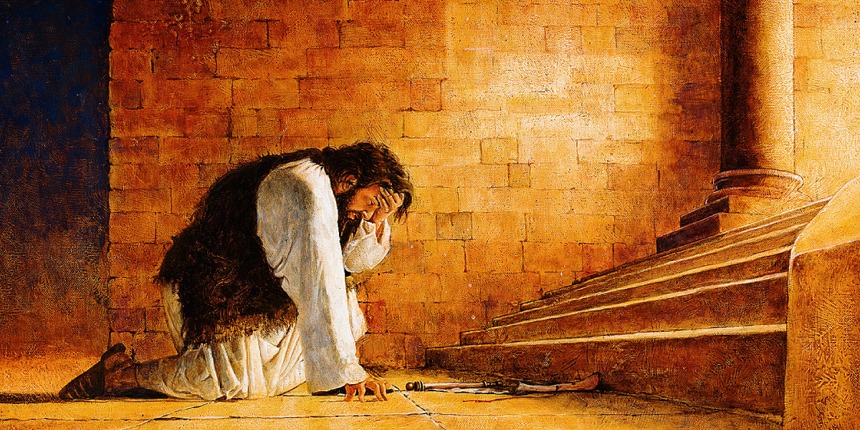
The day Moses had been dreading had finally arrived. He had known for some time that he would not be leading the people of Israel into the land of Canaan. Because of Moses’ uncharacteristic actions in the wilderness of Zin, God had determined to ban his servant from entering the promised land.

“Because you did not trust me enough to demonstrate my holiness to the people of Israel, you will not lead them into the land I am giving them!” – Numbers 20:12 NLT

In a moment of extreme frustration with the constantly-whining Israelites, Moses had snapped and disobeyed the command of God.

“You and Aaron must take the staff and assemble the entire community. As the people watch, speak to the rock over there, and it will pour out its water. You will provide enough water from the rock to satisfy the whole community and their livestock.” – Numbers 20:8 NLT

Rather than speaking to the rock as God had ordered him to do, Moses lashed out in anger and repeatedly struck the rock with his staff. His anger and frustration with the people had caused him to disobey and dishonor God in the eyes of the people. It appears that Moses’ real crime was that he attempted to rob God of glory by claiming responsibility for producing the miracle.

“Listen, you rebels!” he shouted. “Must we bring you water from this rock?”– Numbers 20:10 NLT

His attempt to inflate his own identity in the eyes of the people cost him dearly. While he produced water from the rock and probably gained a bit of respect from the people, his little stunt resulted in a permanent ban from the land of promise. He would never have the pleasure of entering God’s rest. Instead, he would die in the wilderness, just as Miriam and Aaron had.

So, with the Israelites on the verge of entering Canaan, God informed Moses that his days on this earth had come to an end. His debt had come due. But before taking Moses’ life, God gave His servant one more chance to see the land of promise from a distance. God led Moses up a mountain and allowed him to take in the view.

“Climb one of the mountains east of the river, and look out over the land I have given the people of Israel. After you have seen it, you will die like your brother, Aaron, for you both rebelled against my instructions in the wilderness of Zin. When the people of Israel rebelled, you failed to demonstrate my holiness to them at the waters.” – Numbers 27:12-14 NLT

For nearly four decades, this land had been the focus of Moses’ life. Ever since he had led the people out of Egypt, his life’s mission had been to guide them to this very spot. But now, as he looked out over the fertile valley below, he was doing so for the very last time. He would not be going in and it was time to turn over the leadership responsibilities to someone else.

Ever the consummate leader, Moses begged God to find the right man for the task. He knew from firsthand experience just how stubborn and headstrong the people could be and they would never make it without strong leadership.

“O Lord, you are the God who gives breath to all creatures. Please appoint a new man as leader for the community. Give them someone who will guide them wherever they go and will lead them into battle, so the community of the Lord will not be like sheep without a shepherd.”– Nmbers 27:16-17 NLT

While Moses had been required to lead the people across the wilderness, his replacement would be tasked with leading them into battle. The days ahead would be difficult and fraught with danger. The people who had made a habit of whining about the lack of food water and food would certainly find the thought of military service distasteful. So, they were going to need a man who was equal parts warrior and shepherd. He would have to be both a fighting man and a kind-hearted guide who could lead the people with patience and care.

And God already had a man in mind. He suggested Joshua, one of the two men who had been part of the 12-man contingent of spies who had reconnoitered the land 40 years earlier. Joshua and Caleb had been the voices of reason among the fearful and disheartened men who recommended that the people not enter the land of promise. They had deemed it unconquerable and, therefore, to be avoided at all costs. But Joshua and Caleb had provided a dissenting opinion:

Two of the men who had explored the land, Joshua son of Nun and Caleb son of Jephunneh, tore their clothing. They said to all the people of Israel, “The land we traveled through and explored is a wonderful land! And if the Lord is pleased with us, he will bring us safely into that land and give it to us. It is a rich land flowing with milk and honey. Do not rebel against the Lord, and don’t be afraid of the people of the land. They are only helpless prey to us! They have no protection, but the Lord is with us! Don’t be afraid of them!” – Numbers 14:6-9 NLT

And while the people rejected the counsel of Joshua and Caleb, these two men had powerfully declared their faith in God. They demonstrated a belief in God’s power and goodness and called the people to trust and obey.

Four decades later, God chose Joshua to be Moses’ successor.

“Take Joshua son of Nun, who has the Spirit in him, and lay your hands on him. Present him to Eleazar the priest before the whole community, and publicly commission him to lead the people.” – Numbers 27:18-19 NLT

“This spirit was not something that now came upon Joshua, or was temporary (such as the coming of the spirit on the elders in 11:17, 25-26); it already existed in Joshua and was the basis of God’s choice of him. Deut. 34:9 applies the phrase ‘full of the spirit of Wisdom’ to Joshua, confirming the thought here.” – Timothy R. Ashley, The Book of Numbers.

Joshua was God’s man for the moment. He had been chosen by God long before this day arrived, and the Spirit of God had been preparing him for the next phase of Israel’s journey.

But God’s relationship with Joshua would be different than the one He had with Moses. While God had interacted with Moses face-to-face, Joshua would receive his instructions through the high priest and the use of “the Urim—one of the sacred lots cast before the Lord” (Numbers 27:21 NLT). This new method of communication would feature built-in safeguards, allowing Eleazar, the high priest, to act as a source of confirmation for all decisions. This would prevent Joshua from acting on his own and risking the wrath of God.

So Moses did as the Lord commanded. He presented Joshua to Eleazar the priest and the whole community. Moses laid his hands on him and commissioned him to lead the people, just as the Lord had commanded through Moses. – Numbers 27:22-23 NLT

With new leadership called and commissioned, it was time to begin the final phase of the mission. This generation of Israelites was about to do what their mothers and fathers had failed to do: Enter the land of promise. This had been the goal all along. The wilderness had always been intended to be a means to this end. It was never to have been their home. Their inheritance lay across the Jordan River and waited for them to step out in faith and take it as their own.

English Standard Version (ESV) The Holy Bible, English Standard Version. ESV® Permanent Text Edition® (2016). Copyright © 2001

New Living Translation (NLT) Holy Bible, New Living Translation, copyright © 1996, 2004, 2015 by Tyndale House Foundation. Used by permission of Tyndale House Publishers Inc., Carol Stream, Illinois 60188. All rights reserved.
 

Our Great God

17 Moses and Aaron took these men who had been named, 18 and on the first day of the second month, they assembled the whole congregation together, who registered themselves by clans, by fathers’ houses, according to the number of names from twenty years old and upward, head by head, 19 as the Lord commanded Moses. So he listed them in the wilderness of Sinai.

20 The people of Reuben, Israel’s firstborn, their generations, by their clans, by their fathers’ houses, according to the number of names, head by head, every male from twenty years old and upward, all who were able to go to war: 21 those listed of the tribe of Reuben were 46,500.

22 Of the people of Simeon, their generations, by their clans, by their fathers’ houses, those of them who were listed, according to the number of names, head by head, every male from twenty years old and upward, all who were able to go to war: 23 those listed of the tribe of Simeon were 59,300.

24 Of the people of Gad, their generations, by their clans, by their fathers’ houses, according to the number of the names, from twenty years old and upward, all who were able to go to war: 25 those listed of the tribe of Gad were 45,650.

26 Of the people of Judah, their generations, by their clans, by their fathers’ houses, according to the number of names, from twenty years old and upward, every man able to go to war: 27 those listed of the tribe of Judah were 74,600.

28 Of the people of Issachar, their generations, by their clans, by their fathers’ houses, according to the number of names, from twenty years old and upward, every man able to go to war: 29 those listed of the tribe of Issachar were 54,400.

30 Of the people of Zebulun, their generations, by their clans, by their fathers’ houses, according to the number of names, from twenty years old and upward, every man able to go to war: 31 those listed of the tribe of Zebulun were 57,400.

32 Of the people of Joseph, namely, of the people of Ephraim, their generations, by their clans, by their fathers’ houses, according to the number of names, from twenty years old and upward, every man able to go to war: 33 those listed of the tribe of Ephraim were 40,500.

34 Of the people of Manasseh, their generations, by their clans, by their fathers’ houses, according to the number of names, from twenty years old and upward, every man able to go to war: 35 those listed of the tribe of Manasseh were 32,200.

36 Of the people of Benjamin, their generations, by their clans, by their fathers’ houses, according to the number of names, from twenty years old and upward, every man able to go to war: 37 those listed of the tribe of Benjamin were 35,400.

38 Of the people of Dan, their generations, by their clans, by their fathers’ houses, according to the number of names, from twenty years old and upward, every man able to go to war: 39 those listed of the tribe of Dan were 62,700.

40 Of the people of Asher, their generations, by their clans, by their fathers’ houses, according to the number of names, from twenty years old and upward, every man able to go to war: 41 those listed of the tribe of Asher were 41,500.

42 Of the people of Naphtali, their generations, by their clans, by their fathers’ houses, according to the number of names, from twenty years old and upward, every man able to go to war: 43 those listed of the tribe of Naphtali were 53,400.

44 These are those who were listed, whom Moses and Aaron listed with the help of the chiefs of Israel, twelve men, each representing his father’s house. 45 So all those listed of the people of Israel, by their fathers’ houses, from twenty years old and upward, every man able to go to war in Israel— 46 all those listed were 603,550. – Numbers 1:17-46 ESV

Twelve tribes yielded over 600,000 men of fighting age. That is a staggering number, and when you consider that it only included men who were 20-years-old and older, and does not take into account women and children, you can begin to sense the size of the Israelite community. Some scholars have estimated that, based on the size of Israel’s fighting force, the total number of Israelites could have been from one to two million. But those astounding estimates have caused concern among some scholars who question the impossibility of that many people surviving life in the unforgiving wilderness for more than 40 years. The NET Study Bible provides the following summary of their misgivings.

“There has been much discussion about the numbers in the Israelite wilderness experience. The immediate difficulty for even the casual reader is the enormous number of the population. If indeed there were 603,550 men twenty years of age and older who could fight, the total population of the exodus community counting women and children would have been well over a million, or even two million as calculated by some. This is not a figure that the Bible ever gives, but given the sizes of families the estimate would not be far off. This is a staggering number to have cross the Sea, drink from the oases, or assemble in the plain by Sinai. It is not a question of whether or not God could provide for such a number; it is rather a problem of logistics for a population of that size in that period of time. The problem is not with the text itself, but with the interpretation of the word אֶלֶף (’elef), traditionally translated “thousand.” The word certainly can be taken as “thousand,” and most often is. But in view of the problem of the large number here, some scholars have chosen one of the other meanings attested in literature for this word…” – see A. H. McNeile, Numbers, 7; J. Garstang, Joshua-Judges, 120; J. Bright, History of Israel, 144

In an attempt to come up with a more reasonable and believable number, other interpretations of the word אֶלֶף (’elef) have been utilized. And while these rather clever reinterpretations have resulted in a drastic reduction in the number of fighting men and, therefore, the total number of Israelites, they are not without their flaws. One such effort managed to reduce the total size of the Israelite army to about 18,000 men, resulting in an estimated population of 72,000 Israelites. This drastic reduction may make the total number of Israelites more acceptable and believable, but it plays fast and lose with the text.

It is clear that God commanded Moses to “take a census of all the congregation of the people of Israel, by clans, by fathers’ houses, according to the number of names, every male, head by head” (Numbers 1:2 ESV). The Hebrew word translated as “head” is actually גֻּלְגֹּלֶת (gulgōleṯ), which means “skull.” Moses had been instructed to count every skull of every man in the Israelite community.

“…the count appears to have been literal, and the totals calculated accordingly, totals which match other passages in the text. If some formula is used to reduce the thousands in this army, then there is the problem of knowing what to do when a battle has only five thousand, or three thousand men. One can only conclude that on the basis of what we know the word should be left with the translation ‘thousand,’ no matter what difficulties this might suggest to the reader.” – NET Bible Study Notes

There is no accurate way of calculating the overall size of the Israelite community based on these numbers. S,o we must be careful when throwing around numbers like one or two million. We just don’t know. But at the same time, we must refrain from questioning the integrity of the text just because we find it difficult to accept the idea of an army of 603,550 men.

While we may find these numbers difficult to comprehend, the text provides no conclusive evidence to doubt their veracity. If anything, the size of Israel’s army supports the fear that drove Pharaoh to begin persecuting the people of Israel in the first place. The book of Exodus reminds us that during their stay in Egypt the descendants of Jacob had multiplied greatly.

…the people of Israel were fruitful and increased greatly; they multiplied and grew exceedingly strong, so that the land was filled with them. – Exodus 1:7 ESV

The dramatic increase in their numbers had been significant enough to catch the attention of Pharaoh.

“Behold, the people of Israel are too many and too mighty for us. Come, let us deal shrewdly with them, lest they multiply, and, if war breaks out, they join our enemies and fight against us and escape from the land.” – Exodus 1:9-10 ESV

Exodus 13:18 states that when the Israelites left Egypt they marched out like an army arrayed for battle. They were so large that they were required to line up in regiments or groups, most likely according to the various tribes. They were a vast number of men, women, and children. They were even accompanied by non-Israelites as they made their way out of Egypt. And it’s interesting to note that the book of Exodus reports that the number of men who left Egypt was virtually the same as the number of men determined by the census.

And the people of Israel journeyed from Rameses to Succoth, about six hundred thousand men on foot, besides women and children. A mixed multitude also went up with them, and very much livestock, both flocks and herds. – Exodus 12:37-38 ESV

Unless we can find a convincing reason to dismiss the numbers that Moses recorded, it is best to accept them as proof of God’s promise to Abraham that his descendants would become a great nation (Genesis 15:5).

“I believe we should take eleph in census contexts as thousands until further investigation clearly indicates that we should interpret it differently.” – Dr. Thomas L. Constable, Notes on Numbers

During their 400 years of captivity in Egypt, God had been blessing and preparing His people for the future conquest of the land of Canaan. He had multiplied them greatly and transformed them from an army of slaves into a military force made up of freemen who were heirs to the land of promise. The numbers should stagger us. The miraculous nature of Israel’s transformation is meant to amaze us. For more than four centuries, God had protected and provided for them. He had multiplied them. And when the time was right, He had delivered them. Now, He was ready to use their vast numbers to conquer the land of Canaan. And just before his death, Moses reminded the people of Israel that their God would go before them when they entered the land.

“The Lord will cause your enemies who rise against you to be defeated before you. They shall come out against you one way and flee before you seven ways.” – Deuteronomy 28:7 ESV

Their future victories would be the result of God’s greatness and glory, not the size of their army. They were not to place their confidence in the might of their military. They were to trust in the unfathomable greatness of God. The words God later spoke to the prophet Zechariah sum up the attitude the Israelites were to have regarding the results of the census.

“Not by might, nor by power, but by my Spirit, says the LORD of hosts.” – Zechariah 4:6 ESV

Whether their army numbered 60,000 or 600,000, any victory they hoped to have would come from the Lord. He was the Lord of Heavens Armies and their only hope of future success.

English Standard Version (ESV) The Holy Bible, English Standard Version. ESV® Permanent Text Edition® (2016). Copyright © 2001

New Living Translation (NLT) Holy Bible, New Living Translation, copyright © 1996, 2004, 2015 by Tyndale House Foundation. Used by permission of Tyndale House Publishers Inc., Carol Stream, Illinois 60188. All rights reserved.

Don’t Judge by the Numbers

1 The Lord spoke to Moses in the wilderness of Sinai, in the tent of meeting, on the first day of the second month, in the second year after they had come out of the land of Egypt, saying, 2 “Take a census of all the congregation of the people of Israel, by clans, by fathers’ houses, according to the number of names, every male, head by head. 3 From twenty years old and upward, all in Israel who are able to go to war, you and Aaron shall list them, company by company. 4 And there shall be with you a man from each tribe, each man being the head of the house of his fathers. 5 And these are the names of the men who shall assist you. From Reuben, Elizur the son of Shedeur; 6 from Simeon, Shelumiel the son of Zurishaddai; 7 from Judah, Nahshon the son of Amminadab; 8 from Issachar, Nethanel the son of Zuar; 9 from Zebulun, Eliab the son of Helon; 10 from the sons of Joseph, from Ephraim, Elishama the son of Ammihud, and from Manasseh, Gamaliel the son of Pedahzur; 11 from Benjamin, Abidan the son of Gideoni; 12 from Dan, Ahiezer the son of Ammishaddai; 13 from Asher, Pagiel the son of Ochran; 14 from Gad, Eliasaph the son of Deuel; 15 from Naphtali, Ahira the son of Enan.” 16 These were the ones chosen from the congregation, the chiefs of their ancestral tribes, the heads of the clans of Israel. – Numbers 1:1-16 ESV

The book of Numbers is the fourth book of the Pentateuch, which contains the first five books of the Bible. According to verse 1, the author of Numbers was none other than Moses, the man whom God had chosen to deliver the nation of Israel from their captivity in Egypt. Over the centuries, there have been some who have attempted to discount Moses as the author of Numbers and the rest of the books of the Pentateuch. But the Scriptures seem to consistently support the Mosaic authorship of these books sometimes referred to as the Law of Moses.

These are the stages of the people of Israel, when they went out of the land of Egypt by their companies under the leadership of Moses and Aaron. Moses wrote down their starting places, stage by stage, by command of the Lord, and these are their stages according to their starting places. – Numbers 33:2 ESV

Jesus believed Moses to be the one who recorded the content found in the Law of Moses. In one of His post-resurrection appearances to His followers, Jesus told them:

“These are my words that I spoke to you while I was still with you, that everything written about me in the Law of Moses and the Prophets and the Psalms must be fulfilled.” – Luke 24:44 ESV

After first having met Jesus, Phillip declared his belief that he had met the Messiah, the one whom Moses had written about in the first five books of the Hebrew Scriptures.

Philip found Nathanael and said to him, “We have found him of whom Moses in the Law and also the prophets wrote, Jesus of Nazareth, the son of Joseph.” – John 1:45 ESV

It is likely that Moses recorded the books of the Pentateuch late in his life as he prepared the people of Israel to enter into the land of Canaan, promised to them by God as their inheritance. The Pentateuch contains the books of Genesis, Exodus, Leviticus, Numbers, and Deuteronomy. Each was penned by Moses under the inspiration of the Holy Spirit and contains a unique historical record of the people of Israel. Genesis covers the creation of the universe, the fall of man, the dispersal of the nations, and the eventual call of Abram, who would become the father of the Hebrew people. Genesis tells the story of their eventual captivity in Egypt, then the book of Exodus reveals how God used Moses to deliver them from slavery and lead them across the wilderness to the land of promise. The book of Leviticus continues the historical record of Israel’s wilderness wanderings, outlining how God provided His people with the Law and gave specific instructions to the tribe of Levi regarding their God-ordained role to serve as priests and caretakers of the Tabernacle.

The book of Deuteronomy might be considered a collection of sermons or messages that Moses gave to the people of Israel as they prepared to enter the land of Canaan. He would not be joining them as they crossed over the River Jordan, so he wanted to make sure they understood the gravity of what they were about to do. He had led them for more than 40 years and was determined for them to fulfill their God-ordained occupation of the land.

The Book of Numbers essentially bridges the gap between the Israelites receiving the Law (Exodus and Leviticus) and preparing them to enter the Promised Land (Deuteronomy and Joshua). The title of the book is based on the two censuses taken by Moses. Chapters 1-4 record the first “numbering” of the people and chapter 26 records the second. The first 25 chapters of Numbers cover the exploits of the first generation of Israelites who successfully escaped their captivity in Egypt. Under the leadership of Moses, they eventually made their to the border of Canaan but refused to obey God’s command and cross over the Jorden to take possession of the land. Fearing the more formidable nations that occupied Canaan, they turned away and were forced to wander in the wilderness until that rebellious generation died off. The final chapters of Numbers record what happened to the next generation of Israelites. The themes of obedience, rebellion,  repentance, and blessing run through the entire book.

The book of Numbers opens up with the first generation of Israel in the second month of their second year since their escape from Egypt. Chapters 7-10 provide a recap of what happened prior to that point. But the entire book spans a period of nearly 40 years, chronicling what happened to the people of Israel from the time they refused to enter the land the first time until the second generation arrived on the shore of the Jordan River again.

We know from the book of Exodus, that during their 400-year stay in the land of Egypt, the number of Jacob’s descendants had expanded greatly. When Jacob and his family initially entered the land to escape a famine in Canaan, there had only been 70 of them (Exodus 1:5). But during their time of captivity, their numbers had increased significantly.

…the people of Israel were fruitful and increased greatly; they multiplied and grew exceedingly strong, so that the land was filled with them. – Exodus 1:7 ESV

It was their vast numbers that caused Pharaoh to begin a campaign of persecution against the Israelites designed to demoralize them and diminish their numbers.

“Behold, the people of Israel are too many and too mighty for us. Come, let us deal shrewdly with them, lest they multiply, and, if war breaks out, they join our enemies and fight against us and escape from the land.” Therefore they set taskmasters over them to afflict them with heavy burdens. They built for Pharaoh store cities, Pithom and Raamses. But the more they were oppressed, the more they multiplied and the more they spread abroad. And the Egyptians were in dread of the people of Israel. So they ruthlessly made the people of Israel work as slaves and made their lives bitter with hard service, in mortar and brick, and in all kinds of work in the field. In all their work they ruthlessly made them work as slaves. – Exodus 1:9-14 ESV

He even tried to reduce their numbers through infanticide, ordering the Hebrew midwives to execute all male babies born among the Jews.

“When you serve as midwife to the Hebrew women and see them on the birthstool, if it is a son, you shall kill him, but if it is a daughter, she shall live.” – Exodus 1:16 ESV

But these faithful women refused to obey Pharaoh’s command and the number of Israelites continue to increase. Some 430 years later, when Moses led the nation of Israel out of Egypt, they could have been well over a million in number.

And the people of Israel journeyed from Rameses to Succoth, about six hundred thousand men on foot, besides women and children. – Exodus 12:37 ESV

The 600,000 number would have been adult males, many of whom would have been married with children. So, it would not be a stretch of the imagination to estimate a crowd of more than a million people making their way out of Egypt and into the wilderness. Some have estimated that Israel had grown to be 2.4 million in number.

So, the book of Numbers opens up with a census, designed to determine exactly how many Israelites there were according to their tribes. But Moses was particularly interested in how many warriors he had at his disposal because they would be needed when the time came to enter the land and destroy the nations that lived there.

“From the whole community of Israel, record the names of all the warriors by their clans and families. List all the men twenty years old or older who are able to go to war. You and Aaron must register the troops, and you will be assisted by one family leader from each tribe.” – Numbers 1:2-4 NLT

One of the important points to remember is that Moses was under the impression that they were just weeks away from the conquest of the land. He had no way of knowing that the people were going to refuse to obey God’s command and take possession of the land. He was taking a census in order to determine the size of his army and to prepare his forces for the inevitable battles they would face in occupying the land of promise.

According to verse 46, the census revealed a sizeable force of 603,550 men. This number would have consisted of all males over the age of 20 and Moses must have been encouraged by the size of the army God had provided. Their future looked bright. Their success seemed to be assured. With an army of this size and God’s help, the land of Canaan was as good as conquered. Or was it?

English Standard Version (ESV) The Holy Bible, English Standard Version. ESV® Permanent Text Edition® (2016). Copyright © 2001

New Living Translation (NLT) Holy Bible, New Living Translation, copyright © 1996, 2004, 2015 by Tyndale House Foundation. Used by permission of Tyndale House Publishers Inc., Carol Stream, Illinois 60188. All rights reserved.

The Mask of Zoar

12 Then the men said to Lot, “Have you anyone else here? Sons-in-law, sons, daughters, or anyone you have in the city, bring them out of the place. 13 For we are about to destroy this place, because the outcry against its people has become great before the Lord, and the Lord has sent us to destroy it.” 14 So Lot went out and said to his sons-in-law, who were to marry his daughters, “Up! Get out of this place, for the Lord is about to destroy the city.” But he seemed to his sons-in-law to be jesting.

15 As morning dawned, the angels urged Lot, saying, “Up! Take your wife and your two daughters who are here, lest you be swept away in the punishment of the city.” 16 But he lingered. So the men seized him and his wife and his two daughters by the hand, the Lord being merciful to him, and they brought him out and set him outside the city. 17 And as they brought them out, one said, “Escape for your life. Do not look back or stop anywhere in the valley. Escape to the hills, lest you be swept away.” 18 And Lot said to them, “Oh, no, my lords. 19 Behold, your servant has found favor in your sight, and you have shown me great kindness in saving my life. But I cannot escape to the hills, lest the disaster overtake me and I die. 20 Behold, this city is near enough to flee to, and it is a little one. Let me escape there—is it not a little one?—and my life will be saved!” 21 He said to him, “Behold, I grant you this favor also, that I will not overthrow the city of which you have spoken. 22 Escape there quickly, for I can do nothing till you arrive there.” Therefore the name of the city was called Zoar. – Genesis 19:12-22 ESV

As the crowd of blinded deviants groped helplessly outside Lot’s door, his angelic guests warned him of the seriousness of the situation. They wanted him to know that the most pressing problem he faced was not his sex-crazed neighbors but the wrath of a holy God.

“…we are about to destroy this city completely. The outcry against this place is so great it has reached the Lord, and he has sent us to destroy it.” – Genesis 19:13 NLT

Despite Abraham’s aggressive negotiation efforts and God’s promise to spare the city for the sake of 10 righteous residents, destruction was coming. The moral situation in Sodom was so bad that there was less than half that number of righteous individuals living in the city.

The angels ordered Lot to gather his family and prepare to leave the city before the wrath of God fell. It is interesting to note that they posed this command in the form of a question.

“Have you anyone else here? Sons-in-law, sons, daughters, or anyone you have in the city, bring them out of the place.” – Genesis 19:12 ESV

As messengers of God, they would have known exactly who was on the divine list of designated survivors. Yet, they give Lot an opportunity to choose those whom he would consider worthy of salvation. And Lot included the two Sodomite men to whom he had betrothed his daughters. Considering Moses’ earlier revelation that “the men of Sodom were wicked, great sinners against the Lord” (Genesis 13:13 ESV), and that “the men of the city…to the last man, surrounded the house” (Genesis 19:4 ESV), it is difficult to believe that Lot’s two son-in-laws-to-be were righteous. And when he attempted to warn them of God’s pending judgment, they refused to take him seriously.

As the morning sun broke over the horizon, the angels pleaded with Lot to take his wife and two daughters and escape for their lives. For the second time, they warned Lot of the looming judgment of God. The entire city and all its inhabitants were to be completely destroyed. “But he lingered” (Genesis 19:16 ESV). Consider the gravity of that three-word sentence. And to truly appreciate its implications, one must take into account their meaning in Hebrew. The word “lingered” is מָהַהּ (māhah), and it carries the idea of reluctance or doubtful hesitation. This wasn’t a case of Lot delaying his exit so he could pack another bag. It’s almost as if he too found the words of his two guests to be a bit hyperbolic and overblown. Or perhaps he couldn’t bring himself to believe that God would actually destroy all his friends and neighbors. But whatever his reasons, Lot’s hesitation revealed a reluctance to obey the word of the messengers.

So the men seized him and his wife and his two daughters by the hand, the Lord being merciful to him, and they brought him out and set him outside the city. – Genesis 19:16 ESV

Once again, consider the implications of that sentence. In the face of divine judgment, Lot hesitated. He couldn’t bring himself to accept the gravity of the moment or the veracity of the warning. So, in His mercy, God had the two angels drag Lot and his family out of Sodom. We’re not told how the angels managed to navigate their way through the city streets undetected and unmolested. But there is a hint of the miraculous in this scene. And for the Jewish audience to whom Moses had written this book, the salvation of Lot would have reminded them of the liberation of their ancestors from Egypt.

When Moses declares that the angels “brought him out,” he uses the Hebrew word יָצָא (yāṣā’), which means “to bring out” or “to lead out.” It is the very same word that God had spoken to Moses when He delivered His plan to redeem Israel from their captivity.

“Look! The cry of the people of Israel has reached me, and I have seen how harshly the Egyptians abuse them. Now go, for I am sending you to Pharaoh. You must lead my people Israel out (yāṣā’) of Egypt.” – Exodus 3:9-10 NLT

The other word Moses used was יָנַח (yānaḥ), a word that means “to cause to rest.” Lot and his family were led to a place of rest and security – outside the city walls and away from the pending judgment of God. They had been delivered from imminent danger and destruction and awarded with redemption and rest.

Standing outside the gates of the city, Lot found himself in a strange predicament. One doesn’t get the impression that he felt a sense of peace or rest. He had just packed up his belongings, dragged his wife and two daughters out of their home, and was now facing an uncertain future. And, once again, the angels were forced to deal with Lot’s continued reluctance to leave Sodom behind.

“Run for your lives! And don’t look back or stop anywhere in the valley! Escape to the mountains, or you will be swept away!” – Genesis 19:17 NLT

Their message was crystal clear. Lot was not safe as long as he remained anywhere in the vicinity of Sodom or Gomorrah. He may have been standing outside the gate but he remained well within the impact zone of God’s judgment. Time was running out and it was time for Lot to run for his life. God had done His part by mercifully delivering Lot out of harm’s way. But now Lot needed to leave Sodom behind.

Lot found himself facing the most important decision of his life. He had been saved by God, but now he needed to live out that salvation by taking advantage of the freedom he had been graciously given. His situation is similar to that of every Christ-follower. The apostle Paul provides a powerful admonition that could have proved beneficial to Lot.

…throw off your old sinful nature and your former way of life, which is corrupted by lust and deception. – Ephesians 4:22 NLT

Lot could have used the word of warning that Paul gave to his young protege, Timothy.

Run from anything that stimulates youthful lusts. Instead, pursue righteous living, faithfulness, love, and peace. Enjoy the companionship of those who call on the Lord with pure hearts. – 2 Timothy 2:22 NLT

But rather than running for the hills, Lot delayed his departure once again by running his mouth. He chose to bargain with his rescuers. Instead of taking their advice and seeking refuge in the mountains, Lot expressed his preference for a less primitive and desolate destination. He had grown accustomed to the city life and feared that exile to the mountain wilderness would be the death of him.

“You have been so gracious to me and saved my life, and you have shown such great kindness. But I cannot go to the mountains. Disaster would catch up to me there, and I would soon die. See, there is a small village nearby. Please let me go there instead; don’t you see how small it is? Then my life will be saved.” – Genesis 19:19-20 NLT

What Lot failed to realize was that the same God who had just rescued him was fully capable of protecting and providing for him in the wilderness. Lot had grown comfortable living in the city, where all his needs could be easily met. He found the thought of returning to his former nomadic lifestyle unappealing and unacceptable. So, he bargained for an alternative landing place. And the angel of the Lord agreed to Lot’s request.

All right,” the angel said, “I will grant your request. I will not destroy the little village. But hurry! Escape to it, for I can do nothing until you arrive there.” (This explains why that village was known as Zoar, which means “little place”). – Genesis 19:21-22 NLT

Lot got his wish. But there is a profound lesson to be found in Lot’s little victory. He had chosen a small village as his final destination. He even emphasized its diminutive size. It wasn’t really a city, it was just a small, insignificant village. But there lies the lesson. Through his bargaining to escape to Zoar, Lot was relegating himself to a life of insignificance. In Hebrew, the name, Zoar, comes from a root word that means “to be brought low, to grow insignificant.” By choosing Zoar over the mountains, Lot was dooming himself to irrelevance. By refusing God’s will for his life, Lot would never experience the power and provision of God for his life. To Lot, the mountains had appeared unattractive and foreboding. But the little village of Zoar seemed to offer just enough of the pleasures and comforts he had grown to love and appreciate. But God’s people were not meant to live lives of insignificance in Zoar. And it would be just a matter of time before Lot learned the painful reality of that truth.

English Standard Version (ESV) The Holy Bible, English Standard Version. ESV® Permanent Text Edition® (2016). Copyright © 2001 by Crossway Bibles, a publishing ministry of Good News Publishers.

New Living Translation (NLT) Holy Bible, New Living Translation, copyright © 1996, 2004, 2015 by Tyndale House Foundation. Used by permission of Tyndale House Publishers Inc., Carol Stream, Illinois 60188. All rights reserved.

New English Translation (NET)NET Bible® copyright ©1996-2017 by Biblical Studies Press, L.L.C. http://netbible.com All rights reserved.

Far As the Curse Is Found

14 The Lord God said to the serpent,

“Because you have done this,
    cursed are you above all livestock
    and above all beasts of the field;
on your belly you shall go,
    and dust you shall eat
    all the days of your life.
15 I will put enmity between you and the woman,
    and between your offspring and her offspring;
he shall bruise your head,
    and you shall bruise his heel.” – Genesis 3:14-15 ESV

Adam and Eve refused to accept responsibility for their actions, choosing instead to cast themselves as innocent victims. Their desire to “like God, knowing good and evil” had not turned out quite the way they had expected.  Their newly acquired “intuition,” or what they had believed would be god-like insight, had only left them feeling ashamed, dealing with guilt, and attempting to hide from their Creator.

But their efforts to avert God’s wrath by passing blame and avoiding His presence would prove ineffective. God was not fooled. He knew exactly what had taken place and the role that each participant had played. And He began the deliverance of His righteous retribution by focusing on the one who had instigated the entire affair: The serpent. Addressing the serpent for its role in Eve’s rebellion and Adam’s willful compliance, God pronounced the first of three curses. But before looking at the nature of these curses, it’s important to note that they have a direct correlation to the three blessings that God had pronounced earlier upon His creation.

So God created great sea creatures and every living thing that scurries and swarms in the water, and every sort of bird—each producing offspring of the same kind. And God saw that it was good. Then God blessed them, saying, “Be fruitful and multiply. Let the fish fill the seas, and let the birds multiply on the earth.” – Genesis 1:21-22 NLT

So God created human beings in his own image.
    In the image of God he created them;
    male and female he created them.

Then God blessed them and said, “Be fruitful and multiply. Fill the earth and govern it. Reign over the fish in the sea, the birds in the sky, and all the animals that scurry along the ground.” – Genesis 1:27-28 NLT

So the creation of the heavens and the earth and everything in them was completed. On the seventh day God had finished his work of creation, so he rested from all his work. And God blessed the seventh day and declared it holy, because it was the day when he rested from all his work of creation. – Genesis 2:1-3 NLT

On three separate occasions, God had blessed His creation. He had repeatedly deemed it good and pleasing to His sight. With the forming of the man and woman, God had declared His creation to be “very good.” But in one moment of time, through the deceptive lies of the enemy, God’s good creation had become marred by sin. With Eve’s self-willed decision to become like God, she allowed the darkness of sin to enter her heart and diminish her image-bearing and glory-reflecting capacity as a child of God. And like a contagious disease, her decision had infected her husband and would eventually spread throughout the creation. In a sense, what God had blessed, Adam and Eve had cursed. What had been a purely selfish decision would turn out to have long-lasting and far-spreading implications for the rest of the creative order.

“…morality makes sense only when it is grounded in the personhood of the triune God and the subsequent relationship that his image-bearing creatures have with him. Adam’s sin drove a wedge first and foremost between God and man. Then it severed the harmony between man and man, as well as man and creation.” – Scott Christensen, What About Evil: A Defense of God’s Sovereign Glory

According to Herman Bavinck, sin is a “fundamental reversal of all relationships, a revolution by which the creature detached himself from and positioned himself against God, an uprising, a fall in the true sense, which was decisive for the whole world and took it in a direction and on a road away from God” (Herman Bavinck, Reformed Dogmatics).

When God had told Adam, “of the tree of the knowledge of good and evil you shall not eat” (Genesis 2:17 ESV), He had meant it. The Creator had given His creation a clear-cut command that He expected to be followed. And it had come with a warning of serious consequences if disobeyed.

“…for in the day that you eat of it you shall surely die.” – Genesis 2:17 ESV

Perhaps Adam had no way of processing God’s words. He had no mental category for processing the concept of death because He had never experienced it. Adam was surrounded by living creatures and lived in a garden filled with nothing but signs of abundant life. There is no indication that he had ever seen anything die. It would seem that, in those halcyon days of the pre-fall creation, death played no role. Everything had been blessed by God so that it might be fruitful and multiply. Death is nothing more than the expiration of life.

“There is no such thing as cold, only lower degrees of heat (or the complete lack of it).…Death is not the opposite of life, but its privation. A cloth can exist without a hole, but the hole cannot exist without the cloth.…A shadow in nothing but the obstruction of light – not light, no shadow.” – Randy Alcorn, If God Is Good: Faith in the Midst of Suffering and Evil

Satan, disguised in the form of a beautiful and beguiling serpent, had directly refuted the word of God. Adam had clearly heard God say what would happen if he ate the forbidden fruit: “you shall surely die” (Genesis 2:17 ESV). But Satan declared God to be a liar by promising Eve, “You shall not surely die” (Genesis 3:4 ESV). Satan’s denial of God’s word and his denunciation of any punishment for disobeying it would prove to be costly for all the parties involved. And God’s indictments started with him.

“Because you have done this, you are cursed
    more than all animals, domestic and wild.
You will crawl on your belly,
    groveling in the dust as long as you live.” – Genesis 3:14 ESV

First, God curses the serpent for its role in the fall. Whether this creature had been possessed by Satan or the enemy had somehow taken on the form of a serpent, God held it accountable. There are some who believe that, according to this passage, snakes must have had created with legs, but were doomed to crawl on their bellies because of this curse.  For the original readers of Moses’ book, the idea of groveling in the dust was intended to convey the idea of humiliation and subjugation. This same imagery is used elsewhere in the Scriptures to convey a defeated and demoralized people.

For our soul is bowed down to the dust;
    our belly clings to the ground. – Psalm 44:25 ESV

The nations shall see and be ashamed of all their might;
they shall lay their hands on their mouths;
    their ears shall be deaf;
they shall lick the dust like a serpent,
    like the crawling things of the earth… – Micah 7:16-17 ESV

But God had far more than humiliation in mind for the serpent. This is where Satan’s nefarious behind-the-scenes role is exposed. He had been the one behind the whole affair, and he would pay dearly for his actions.

“And I will cause hostility between you and the woman,
    and between your offspring and her offspring.
He will strike your head,
    and you will strike his heel.” – Genesis 3:15 NLT

There has never been a love affair between snakes and humanity. But there is far more to this curse than a mutual and perpetual disdain between these two species. God is addressing Satan, and warning him of a future form of retribution that will result in his demise. This passage has been called the protoevangelium or first gospel. In delivering this curse upon Satan, God was declaring His intention to bring about a future seed of the woman who would fulfill the role that Adam had failed to carry out. Adam’s participation in the eating of the fruit had brought death to humanity. But there would be a second Adam, who would ultimately defeat death and destroy the enemy. The apostle Paul would later reveal the far-reaching implications of Adam’s sin.

When Adam sinned, sin entered the world. Adam’s sin brought death, so death spread to everyone, for everyone sinned. – Romans 5:12 NLT

But Paul clarifies that will be a second Adam, another man, who will bring forgiveness and replace the condemnation of death with the hope of eternal life.

Now Adam is a symbol, a representation of Christ, who was yet to come. But there is a great difference between Adam’s sin and God’s gracious gift. For the sin of this one man, Adam, brought death to many. But even greater is God’s wonderful grace and his gift of forgiveness to many through this other man, Jesus Christ. – Romans 5:14-15 NLT

Adam and Eve listened to the lies of the enemy and rebelled against their good and gracious creator, and their capacity for sin was passed down to their descendants. And sin resulted in separation from God – both spiritually and physically. And yet, according to the protoevangelium, God already had a remedy in place.

For the sin of this one man, Adam, caused death to rule over many. But even greater is God’s wonderful grace and his gift of righteousness, for all who receive it will live in triumph over sin and death through this one man, Jesus Christ.

Yes, Adam’s one sin brings condemnation for everyone, but Christ’s one act of righteousness brings a right relationship with God and new life for everyone. – Romans 5:17-18 NLT

The book of Genesis records the story of how sin entered the world. But as dark and depressing as these opening chapters of God’s Word may appear, they are marked by hope. God was not done. He had not been caught off guard or taken by surprise. The actions of Adam and Eve did not cause God to come up with Plan B. The “offspring” of Adam and Eve had been the plan all along. God had always planned to send His Son to pay for the sins of mankind. Even before He had made the world, God had intended to send His Son to be the Savior of the world. The apostle Peter reminds us of the preordained nature of God’s redemptive plan when he writes:

For you know that God paid a ransom to save you from the empty life you inherited from your ancestors. And it was not paid with mere gold or silver, which lose their value. It was the precious blood of Christ, the sinless, spotless Lamb of God. God chose him as your ransom long before the world began, but now in these last days he has been revealed for your sake. – 1 Peter 1:18-20 NLT

Satan thought he had thrown a wrench into God’s plans, but he was wrong. The fall was inevitable because humanity was incapable of remaining faithful to its calling. But God had a plan in place that would restore order, renew His fallen creation, and redeem His disobedient children. And it would all take place through “Christ’s one act of righteousness” (Romans 5:18 NLT). The apostle Paul describes the difference between the first and last Adam.

“The first man, Adam, became a living person.” But the last Adam—that is, Christ—is a life-giving Spirit. – 1 Corinthians 15:45 NLT

Jesus was destined to deliver fallen humanity from death to life, from cursed to blessed, and from the role of the enemy to that of an heir. And the third stanza of the Christmas carol, Joy to the World, sums it up well.

No more let sins and sorrows grow
nor thorns infest the ground;
he comes to make his blessings flow
far as the curse is found,
far as, far as the curse is found.

English Standard Version (ESV) The Holy Bible, English Standard Version. ESV® Permanent Text Edition® (2016). Copyright © 2001 by Crossway Bibles, a publishing ministry of Good News Publishers.

New Living Translation (NLT) Holy Bible, New Living Translation, copyright © 1996, 2004, 2015 by Tyndale House Foundation. Used by permission of Tyndale House Publishers Inc., Carol Stream, Illinois 60188. All rights reserved.

New English Translation (NET)NET Bible® copyright ©1996-2017 by Biblical Studies Press, L.L.C. http://netbible.com All rights reserved.

Something Worth Rejoicing About

17 The seventy-two returned with joy, saying, “Lord, even the demons are subject to us in your name!” 18 And he said to them, “I saw Satan fall like lightning from heaven. 19 Behold, I have given you authority to tread on serpents and scorpions, and over all the power of the enemy, and nothing shall hurt you. 20 Nevertheless, do not rejoice in this, that the spirits are subject to you, but rejoice that your names are written in heaven.” – Luke 10:17-20 ESV

With everything else that has been revealed about the 12 disciples of Jesus, it would be difficult not to imagine that they were a little bit irritated that with His sending of the 72. After all, these were the same men whom Jesus had reprimanded because they had been arguing which one of them was the greatest (Luke 9:46). And they shared a common belief that they were members of Jesus’ inner circle, conferring on them the exclusive rights and privileges to perform miracles in His name.

John said to Jesus, “Master, we saw someone using your name to cast out demons, but we told him to stop because he isn’t in our group.” – Luke 9:49 ESV

As those who had been chosen to be Jesus’ disciples, the 12 had reason to believe that their relationship with Him somehow made them special and gave them access to privileges and powers not available to any of His other followers. When Jesus had sent them out on their first missionary journey, He had given them “power and authority to cast out all demons and to heal all diseases” (Luke 9:1 NLT). So, when they stood by and watched as Jesus chose 72  of His followers and conferred on them the power to heal (Luke 10:9), it must have left the 12 disciples with confused minds and deflated egos.  And we can only imagine how the disciples must have felt as the 72 began to trickle back in and excitedly share the reports of their excursions with Jesus. Luke records that they were overjoyed and eager to tell Jesus the good news.

“Lord, even the demons are subject to us in your name!” – Luke 10:17 ESV

This bit of information must have struck a nerve with the 12 disciples. If you recall, not long after they had returned from their first missionary journey, they had been confronted by a man who begged them to cast out an evil spirit from his son. But the disciples had been unable to do so.

“I asked your disciples to cast out the evil spirit, but they couldn’t do it.” – Mark 9:18 NLT

And yet, not long before this encounter, these very same men had proven they were more than capable of handling everything from diseases to demons.

…they cast out many demons and healed many sick people. – Mark 6:13 NLT

Now, the disciples were having to listen as these 26 pairs of messengers regaled Jesus with their exploits. Their excited disclosures must have left the disciples feeling jealous and more than a bit conflicted.

And it probably didn’t help that Jesus seemed to applaud the efforts of the 72 when He stated, “I saw Satan fall like lightning from heaven” (Luke 10:18 ESV). It is difficult to know exactly what Jesus meant but the disciples could have easily taken this to be some kind of a statement of approval. It is almost as if He is declaring that He had a ring-side seat to Satan’s defeat as the 72 displayed their power over demonic forces. But there are many who believe Jesus was comparing their experience with His own. In other words, He is putting their experience in proper perspective. There are those who believe that Jesus’ reference to Satan’s fall was meant to declare His deity and authority. As the Son of God, He had been there when Satan attempted to rebel against God but suffered defeat and a demotion for his efforts. The details surrounding this event are recorded by the prophet, Ezekiel.

“You were the model of perfection,
    full of wisdom and exquisite in beauty.
You were in Eden,
    the garden of God.
Your clothing was adorned with every precious stone—
    red carnelian, pale-green peridot, white moonstone,
    blue-green beryl, onyx, green jasper,
    blue lapis lazuli, turquoise, and emerald—
all beautifully crafted for you
    and set in the finest gold.
They were given to you
    on the day you were created.
I ordained and anointed you
    as the mighty angelic guardian.
You had access to the holy mountain of God
    and walked among the stones of fire.

“You were blameless in all you did
    from the day you were created
    until the day evil was found in you.
Your rich commerce led you to violence,
    and you sinned.
So I banished you in disgrace
    from the mountain of God.
I expelled you, O mighty guardian,
    from your place among the stones of fire.
Your heart was filled with pride
    because of all your beauty.
Your wisdom was corrupted
    by your love of splendor.
So I threw you to the ground
    and exposed you to the curious gaze of kings.” – Ezekiel 28:12-17 NLT

While Ezekiel obviously intended this passage to describe the King of Tyre (Ezekiel 28:11), many scholars believe it provides a prophetic picture of Satan’s fall from glory, as mentioned by the prophet, Isaiah.

“How you are fallen from heaven,
    O Day Star, son of Dawn!
How you are cut down to the ground…” – Isaiah 14:12 ESV

In Luke’s passage, it appears that Jesus is making a reference to Satan’s fall in order to make a point to his enthusiastic followers. They had been blown away that the demons had been subject to their commands. But Jesus seems to be encouraging them to tap the brakes a bit. His reference to Satan’s fall may be His way of reminding them of His divinity. While they were able to cast out demons in the power of Jesus’ name, He was there in eternity past when God the Father cast Satan out of heaven. Their ability to cast out demons was the result of God’s sovereign authority over all things. And Jesus assures His followers that, as the Son of God, He has the right to assign authority to His followers.

“I have given you authority over all the power of the enemy, and you can walk among snakes and scorpions and crush them. Nothing will injure you.” – Luke 10:19 NLT

Once again, the 12 must have been discomfited by Jesus words. This declaration by Jesus to His 72 followers would have likely produced in His disciples a certain degree of jealousy. But little did they know that all of this was intended to encourage them. Just before sending out the 72, Jesus had declared, “The harvest is plentiful, but the laborers are few. Therefore pray earnestly to the Lord of the harvest to send out laborers into his harvest” (Luke 10:2 ESV). The 12 disciples did not yet understand the full scope of the ministry that God had in store for them. With Jesus’ death, resurrection, and ascension, His earthly mission would come to an end, but the ministry concerning the kingdom of God would continue unabated. Yet, they would not be able to do it alone. With His commissioning of the 72, Jesus had shown the disciples that there would be others who would help them bear that weight of the kingdom mission. They would not be doing it alone.

And, Jesus assured them that this shared authority would protect all those who ministered on behalf of Jesus in the days to come. His reference to snakes and scorpions seems to be an illusion to the demonic realm. These two creatures were poisonous and potentially deadly, providing an apt metaphor for the spiritual forces that would be arrayed against Christ’s followers. The apostle Paul would later discuss the other-worldly host that aligns itself against God’s children.

For we are not fighting against flesh-and-blood enemies, but against evil rulers and authorities of the unseen world, against mighty powers in this dark world, and against evil spirits in the heavenly places. – Ephesians 6:12 NLT

Jesus’ disciples did not yet grasp the cosmic nature of their mission. They were stuck on a physical plane, viewing the kingdom of God as a temporal reality that would manifest itself in an earthly realm ruled over by Jesus, the Christ. And they were hoping they would rule and reign alongside Him. Their concept of the kingdom focused on the defeat of Rome and the restoration of Israel’s rightful place as the children of God and their heirs of the kingdom.

Even after Jesus had died and resurrected, the disciples would hold onto this hope of Israel’s immediate return to glory. Just before Jesus ascended into heaven, they asked Him, “Lord, will you at this time restore the kingdom to Israel?” (Acts 1:6 ESV). Even then, they were still envisioning an earthly kingdom where all the enemies of Israel had been eradicated, including the Romans.

But Jesus wanted them to know that their true enemy was Satan, not Caesar. And the deliverance they desperately needed was not from Roman oppression but from enslavement to sin and the death sentence that accompanied it. Jesus was revealing to His followers that this world was not the end game. There was far more at stake here than temporal victories over demons and disease. While those things were impressive, they were not eternal. Those individuals who received deliverance from demons were not necessarily free from future possession. And all those who received healing from disease would still be susceptible to illness and destined for death.

The kingdom of God had a future aspect that the disciples did not yet understand or appreciate. But Jesus alluded to it when He said, “don’t rejoice because evil spirits obey you; rejoice because your names are registered in heaven” (Luke 10:20 NLT). This appears to be a reference to the book of life, in which God records the names of all those who belong to Him. The apostle John records the words of Jesus discussing this book with the believers in the church in Sardis.

“All who are victorious will be clothed in white. I will never erase their names from the Book of Life, but I will announce before my Father and his angels that they are mine.” – Revelation 3:5 NLT

Jesus wants His disciples to know that His ultimate victory over Satan, sin, and death, will have far greater and longer-lasting implications than their temporal successes over demons and disease. Those victories are little more than shadows of the greater victory to come. And when Jesus has successfully accomplished the will of His Father and completed His earthly mission, the disciples and all those who believe in His name will receive everlasting deliverance from disease and death in the form of eternal life. And it is in that marvelous reality that they should find joy, encouragement, and hope.

English Standard Version (ESV) The Holy Bible, English Standard Version. ESV® Permanent Text Edition® (2016). Copyright © 2001 by Crossway Bibles, a publishing ministry of Good News Publishers.

New Living Translation (NLT) Holy Bible, New Living Translation, copyright © 1996, 2004, 2015 by Tyndale House Foundation. Used by permission of Tyndale House Publishers Inc., Carol Stream, Illinois 60188. All rights reserved.

The Message (MSG)Copyright © 1993, 1994, 1995, 1996, 2000, 2001, 2002 by Eugene H. Peterson

Identity Crisis

18 Now it happened that as he was praying alone, the disciples were with him. And he asked them, “Who do the crowds say that I am?” 19 And they answered, “John the Baptist. But others say, Elijah, and others, that one of the prophets of old has risen.” 20 Then he said to them, “But who do you say that I am?” And Peter answered, “The Christ of God.”

21 And he strictly charged and commanded them to tell this to no one, 22 saying, “The Son of Man must suffer many things and be rejected by the elders and chief priests and scribes, and be killed, and on the third day be raised.” – Luke 9:18-22 ESV

After recounting the story of Jesus feeding the 5,000, Luke jumps ahead in his narrative to a scene that took place sometime later. A comparison with the other synoptic gospels reveals that Luke chose to skip over a series of other significant events that occurred before Jesus had this important conversation with His disciples. It seems that Luke was attempting to focus on the questions surrounding Jesus’ identity. It began with Herod Antipas, the tetrarch of Galilee, who was perplexed by all the rumors he had heard concerning Jesus. One of the most concerning conclusions he had heard was that Jesus was actually the resurrected John the Baptist. That prospect would not have thrilled Herod since he was the one who had ordered John’s beheading.

There were others who were speculating that Jesus was actually the prophet Elijah. They were basing their conjecture on the prophecy recorded by Malachi.

“Behold, I will send you Elijah the prophet before the great and awesome day of the Lord comes. And he will turn the hearts of fathers to their children and the hearts of children to their fathers, lest I come and strike the land with a decree of utter destruction.” – Malachi 4:5-6 ESV

Another rumor circulating among the people was that Jesus was “one of the other prophets risen from the dead” (Luke 9:8 NLT). But as all these wild opinions filtered into Herod’s palace, he was left with a perplexing question:

“…who is this about whom I hear such things?” – Luke 9:9 ESV

That same question filled the minds of many of those who were present at the feeding of the 5,000. They too were perplexed by this Rabbi from Nazareth. His miracles and messages intrigued them, but they were having difficulty comprehending exactly who He was. It should not be overlooked that the rumors and speculations of the people did not include Jesus being the Messiah. In fact, when Jesus asked His disciples, “Who do the crowds say that I am?” (Luke 9:18 ESV), they too omitted any mention of Jesus being the Messiah. 

And they answered, “John the Baptist. But others say, Elijah, and others, that one of the prophets of old has risen.” – Luke 9:19 ESV

Despite the many miracles Jesus had performed, it seems that the people were not ready to crown Him as their new king. They fully recognized that there was something supernatural and other-worldly about Jesus, but He did not meet their long-held expectations concerning the Messiah. Jesus didn’t look like a conquering king. He obviously had power, but he lacked an army. He was an impressive orator, but He wouldn’t be able to talk the Romans into surrendering. In their minds, Jesus appeared to be much more like an Old Testament prophet than their long-awaited Messiah. After all, He had shown up on the scene preaching a message of repentance, and He had performed miracles much like Elijah and the other prophets had done. So, they concluded that Jesus must be the opening act for the main attraction. Since He didn’t act in a messianic manner, they assumed He must have been sent to prepare the way for the Messiah.

As always, Jesus was most concerned with the thoughts of His 12 disciples. He had chosen these men for a reason and was heavily vested in their training and preparation for the future. So, when they had answered His question, Jesus focused His attention on them, asking, “But who do you say that I am?” (Luke 9:20 ESV).

These men had spent their every waking minute with Jesus. They had seen every one of His miracles and had heard all of His messages. They enjoyed intimate access to Jesus and the privilege of hearing Him explain some of His more cryptic parables. So, Jesus wanted to know who they perceived Him to be. What was their conclusion regarding His identity? And the ever-impulsive Peter was the first to respond.

“The Christ of God.” – Luke 9:20 ESV

The term “Christ” is the Greek equivalent of “Messiah.” Peter was confessing that Jesus was the Messiah. And in his gospel account, Mathew records that Peter added the further description: “the Son of the living God” (Matthew 16:16 ESV). Peter, speaking on behalf of all the disciples, acknowledges Jesus to be the Messiah but also the Son of God. His words revealed a level of understanding and insight that the rest of the people did not share. But Matthew lets us know that Peter did not come to this conclusion on his own. Jesus reveals that Peter had received divine insight from God the Father.

“Blessed are you, Simon Bar-Jonah! For flesh and blood has not revealed this to you, but my Father who is in heaven.” – Matthew 16:17 ESV

God had opened Peter’s partially blinded eyes so that he could see the truth of who Jesus was. This statement from the lips of Peter was like an unexpected epiphany. Even as the words came out of his mouth, Peter must have wondered whether he truly believed them. And He would go on to reveal that his understanding of who Jesus was and what He had come to do was still cloudy and indistinct. He would continue to wrestle with the weight of his own words and the expectations of his own heart. But the time would come when he and his fellow disciples would see everything clearly and distinctly.

This confession earned Peter a blessing from Jesus and yet, Jesus warned the disciples to keep this news to themselves.

…he instructed his disciples not to tell anyone that he was the Christ. – Matthew 16:20 NET

Luke adds, “he strictly charged and commanded them to tell this to no one” (Luke 9:21 ESV). But why? What prompted Jesus to command His disciples not to disclose His true identity to the people? If He was the Messiah of Israel, why would He not want everyone to know?

It all had to do with expectations. Jesus knew that the Israelites were longing for the coming of the Messiah, but their understanding of the Messiah’s role was misguided. They had been raised to believe that the Messiah would come as a conquering king and a powerful military figure who would set them free from their oppressive Roman overlords. Even the 12 disciples were hoping and praying that Jesus was the kind of Messiah they had been taught to expect. It’s likely that Peter hoped his confession would prompt Jesus to get down to business. It was time to stop performing miracles and delivering messages. Like the rest of his companions, Peter wanted Jesus to start acting like a Messiah.

But what Peter failed to understand was that Jesus came to suffer and die, not rule and reign. He had come to sacrifice His life so that they might be freed from their captivity to sin and death. Little did they know that their real problem was not the presence of the Romans but the pervading presence of sin in their lives. Their enemy was not a foreign power but their own fallen natures. And Jesus disclosed to them the part of His mission they had failed to understand.

“The Son of Man must suffer many things and be rejected by the elders and chief priests and scribes, and be killed, and on the third day be raised.” – Luke 9:22 ESV

We know from Matthew’s account, that Peter did not take this news well.

Peter took him aside and began to rebuke him, saying, “Far be it from you, Lord! This shall never happen to you.” – Matthew 16:22 ESV

Peter was appalled by Jesus’ disclosure. He found it so reprehensible and unacceptable that he basically vowed to keep it from happening. And Jesus delivered a stern rebuke to His impulsive, yet well-meaning disciple.

“Get away from me, Satan! You are a dangerous trap to me. You are seeing things merely from a human point of view, not from God’s.” – Matthew 16:23 NLT

Peter did not realize that his rash response reflected a total disregard for the will of God. In a matter of seconds, he had gone from speaking under the influence of God to contradicting the very will of God. He had let his own personal opinion and perspective get in the way. Peter had preconceived agenda for the Messiah and it did not match that of God Almighty. None of the disciples had a concept of the Messiah as a suffering servant. They had no need for a martyred Messiah. What good would a rejected and murdered Messiah do for their dreams of national deliverance and personal prominence?

But Jesus was beginning to reveal the true nature of His incarnation. He was disclosing the part of His coming that they had failed to comprehend. And even as Jesus began to open their eyes to the reality of His mission, they were unable to hear the most important part. He clearly told them that He would die but be raised again on the third day, but all they heard was the bad news. His disclosure regarding His coming resurrection went in one ear and out the other. And these men would continue to wrestle with the news that their Messiah was destined to suffer and die. They had no way of knowing that Jesus’ glorification as the Messiah must be preceded by His humiliation and execution. His death would be the key to eternal life. His sacrifice would result in deliverance. And His ultimate victory would be over sin and death, not the Romans. But Peter and his companions still had a lot to learn.

English Standard Version (ESV) The Holy Bible, English Standard Version. ESV® Permanent Text Edition® (2016). Copyright © 2001 by Crossway Bibles, a publishing ministry of Good News Publishers.

New Living Translation (NLT) Holy Bible, New Living Translation, copyright © 1996, 2004, 2015 by Tyndale House Foundation. Used by permission of Tyndale House Publishers Inc., Carol Stream, Illinois 60188. All rights reserved.

The Message (MSG)Copyright © 1993, 1994, 1995, 1996, 2000, 2001, 2002 by Eugene H. Peterson

You, O Lord, Are God Alone

1 As soon as King Hezekiah heard it, he tore his clothes and covered himself with sackcloth and went into the house of the Lord. 2 And he sent Eliakim, who was over the household, and Shebna the secretary, and the senior priests, covered with sackcloth, to the prophet Isaiah the son of Amoz. 3 They said to him, “Thus says Hezekiah, This day is a day of distress, of rebuke, and of disgrace; children have come to the point of birth, and there is no strength to bring them forth. 4 It may be that the Lord your God heard all the words of the Rabshakeh, whom his master the king of Assyria has sent to mock the living God, and will rebuke the words that the Lord your God has heard; therefore lift up your prayer for the remnant that is left.” 5 When the servants of King Hezekiah came to Isaiah, 6 Isaiah said to them, “Say to your master, ‘Thus says the Lord: Do not be afraid because of the words that you have heard, with which the servants of the king of Assyria have reviled me. 7 Behold, I will put a spirit in him, so that he shall hear a rumor and return to his own land, and I will make him fall by the sword in his own land.’”

8 The Rabshakeh returned, and found the king of Assyria fighting against Libnah, for he heard that the king had left Lachish. 9 Now the king heard concerning Tirhakah king of Cush, “Behold, he has set out to fight against you.” So he sent messengers again to Hezekiah, saying, 10 “Thus shall you speak to Hezekiah king of Judah: ‘Do not let your God in whom you trust deceive you by promising that Jerusalem will not be given into the hand of the king of Assyria. 11 Behold, you have heard what the kings of Assyria have done to all lands, devoting them to destruction. And shall you be delivered? 12 Have the gods of the nations delivered them, the nations that my fathers destroyed, Gozan, Haran, Rezeph, and the people of Eden who were in Telassar? 13 Where is the king of Hamath, the king of Arpad, the king of the city of Sepharvaim, the king of Hena, or the king of Ivvah?’”

14 Hezekiah received the letter from the hand of the messengers and read it; and Hezekiah went up to the house of the Lord and spread it before the Lord. 15 And Hezekiah prayed before the Lord and said: “O Lord, the God of Israel, enthroned above the cherubim, you are the God, you alone, of all the kingdoms of the earth; you have made heaven and earth. 16 Incline your ear, O Lord, and hear; open your eyes, O Lord, and see; and hear the words of Sennacherib, which he has sent to mock the living God. 17 Truly, O Lord, the kings of Assyria have laid waste the nations and their lands 18 and have cast their gods into the fire, for they were not gods, but the work of men’s hands, wood and stone. Therefore they were destroyed. 19 So now, O Lord our God, save us, please, from his hand, that all the kingdoms of the earth may know that you, O Lord, are God alone.” – 2 Kings 19:1-19 ESV

When King Hezekiah’s three emissaries returned with a report of all that the Rabshakeh had said, he was overwhelmed with grief. This self-absorbed and overly confident commander of Sennacherib’s army had ridiculed Hezekiah for placing any hope of rescue in Egypt. Pharaoh would prove to be an unreliable source of help against the much larger and better equipped Assyrian army. And Sennacherib’s cocky commander scoffed at any notion that the God of Judah would come to their aid. Speaking on behalf of his equally arrogant king, the Rabshakeh had boldly declared, “What god of any nation has ever been able to save its people from my power? So what makes you think that the Lord can rescue Jerusalem from me?” (2 Kings 18:35 NLT).

Demoralized by this devastating news, King Hezekiah immediately entered into a state of mourning and sought refuge and solace in the house of God. From there, he sent a  message to the prophet Isaiah.

“Today is a day of trouble, insults, and disgrace. It is like when a child is ready to be born, but the mother has no strength to deliver the baby. But perhaps the Lord your God has heard the Assyrian chief of staff, sent by the king to defy the living God, and will punish him for his words. Oh, pray for those of us who are left!” – 2 Kings 19:3-4 NLT

These were dark days for the nation of Judah, but Hezekiah held out hope that Yahweh would still come to their aid. From his vantage point within the walls of God’s house, Hezekiah must have recalled the prayer that Solomon had offered up to God when he had dedicated the newly constructed temple.

“If your people Israel are defeated by their enemies because they have sinned against you, and if they turn to you and acknowledge your name and pray to you here in this Temple, then hear from heaven and forgive the sin of your people Israel and return them to this land you gave their ancestors.” – 1 Kings 8:33-34 NLT

While Judah had not yet been defeated by the Assyrians, things were not looking good. Their massive army was camped outside the eastern walls and Hezekiah knew it was just a matter of time before the siege brought Jerusalem to its knees. But he still held out hope, turning to the prophet of God and begging him to seek Yahweh’s divine assistance. And the message he received from Isaiah must have sounded far-fetched and too good to be true.

“This is what the Lord says: Do not be disturbed by this blasphemous speech against me from the Assyrian king’s messengers. Listen! I myself will move against him, and the king will receive a message that he is needed at home. So he will return to his land, where I will have him killed with a sword.’” – 2 Kings 19:6-7 NLT

God had heard every boastful and blasphemous word the Rabshakeh had said. And Isaiah assured Hezekiah that he had nothing to fear because God had something in store for Sennacherib that would throw a major wrench into his global conquest plans. The great king of Assyria would suddenly find himself facing unexpected attacks on a number of fronts that would eventually force him to abandon his siege of Jerusalem. But even though Sennacherib had reallocated his forces to other battlefronts, he was not going to give up on his plan to conquer Jerusalem. So, he sent another message to King Hezekiah, demanding that he give up his Don Quixote-like quest for divine rescue. Sennacherib treated the God of Judah with contempt, declaring that He would prove just as powerless as all the other gods of all the other nations that had fallen to the Assyrians.

But Hezekiah took Sennacherib’s letter into the temple and spread it out before the Lord. Then he prayed, “O Lord, God of Israel, you are enthroned between the mighty cherubim! You alone are God of all the kingdoms of the earth. You alone created the heavens and the earth. Bend down, O Lord, and listen! Open your eyes, O Lord, and see! Listen to Sennacherib’s words of defiance against the living God” (2 Kings 19:15-16 NLT).

Hezekiah reminded Yahweh that all the other gods had failed because they were nothing more than the figments of man’s fertile imagination.

“They were not gods at all—only idols of wood and stone shaped by human hands.” – 2 Kings 19:18 NLT

But Yahweh was the living God. He was the all-powerful creator God who had made the heavens and the earth. He was seated on His throne in heaven and fully capable of dealing with King Sennacherib and his seemingly unstoppable army. And Hezekiah called on Yahweh to intervene and demonstrate His sovereign power by rescuing His chosen people. And when the one true God does what no other god could do, delivering Judah from the hands of Sennacherib, all the nations of the earth will recognize “that you alone, O Lord, are God” (2 Kings 19:19 NLT). 

English Standard Version (ESV) The Holy Bible, English Standard Version. ESV® Permanent Text Edition® (2016). Copyright © 2001 by Crossway Bibles, a publishing ministry of Good News Publishers.

New Living Translation (NLT) Holy Bible, New Living Translation, copyright © 1996, 2004, 2015 by Tyndale House Foundation. Used by permission of Tyndale House Publishers Inc., Carol Stream, Illinois 60188. All rights reserved.

The Message (MSG)Copyright © 1993, 1994, 1995, 1996, 2000, 2001, 2002 by Eugene H. Peterson

A Day of Good News

3 Now there were four men who were lepers at the entrance to the gate. And they said to one another, “Why are we sitting here until we die? 4 If we say, ‘Let us enter the city,’ the famine is in the city, and we shall die there. And if we sit here, we die also. So now come, let us go over to the camp of the Syrians. If they spare our lives we shall live, and if they kill us we shall but die.” 5 So they arose at twilight to go to the camp of the Syrians. But when they came to the edge of the camp of the Syrians, behold, there was no one there. 6 For the Lord had made the army of the Syrians hear the sound of chariots and of horses, the sound of a great army, so that they said to one another, “Behold, the king of Israel has hired against us the kings of the Hittites and the kings of Egypt to come against us.” 7 So they fled away in the twilight and abandoned their tents, their horses, and their donkeys, leaving the camp as it was, and fled for their lives. 8 And when these lepers came to the edge of the camp, they went into a tent and ate and drank, and they carried off silver and gold and clothing and went and hid them. Then they came back and entered another tent and carried off things from it and went and hid them.

9 Then they said to one another, “We are not doing right. This day is a day of good news. If we are silent and wait until the morning light, punishment will overtake us. Now therefore come; let us go and tell the king’s household.” 10 So they came and called to the gatekeepers of the city and told them, “We came to the camp of the Syrians, and behold, there was no one to be seen or heard there, nothing but the horses tied and the donkeys tied and the tents as they were.” 11 Then the gatekeepers called out, and it was told within the king’s household. 12 And the king rose in the night and said to his servants, “I will tell you what the Syrians have done to us. They know that we are hungry. Therefore they have gone out of the camp to hide themselves in the open country, thinking, ‘When they come out of the city, we shall take them alive and get into the city.’” 13 And one of his servants said, “Let some men take five of the remaining horses, seeing that those who are left here will fare like the whole multitude of Israel who have already perished. Let us send and see.” 14 So they took two horsemen, and the king sent them after the army of the Syrians, saying, “Go and see.” 15 So they went after them as far as the Jordan, and behold, all the way was littered with garments and equipment that the Syrians had thrown away in their haste. And the messengers returned and told the king.

16 Then the people went out and plundered the camp of the Syrians. So a seah of fine flour was sold for a shekel, and two seahs of barley for a shekel, according to the word of the Lord. 17 Now the king had appointed the captain on whose hand he leaned to have charge of the gate. And the people trampled him in the gate, so that he died, as the man of God had said when the king came down to him. 18 For when the man of God had said to the king, “Two seahs of barley shall be sold for a shekel, and a seah of fine flour for a shekel, about this time tomorrow in the gate of Samaria,” 19 the captain had answered the man of God, “If the Lord himself should make windows in heaven, could such a thing be?” And he had said, “You shall see it with your own eyes, but you shall not eat of it.” 20 And so it happened to him, for the people trampled him in the gate and he died. – 2 Kings 7:3-20 ESV

A protracted siege by the Syrians had left the royal city of Samaria in dire straits. The people inside the walls were starving to death due to the lack of food and some had even resorted to cannibalism, eating their own children to survive. Jehoram, the king of Israel, was powerless to do anything about the situation. He recognized that this was some form of punishment from the hand of Yahweh, but he refused to repent of his apostasy and idolatry. Defenseless against the Syrians and completely powerless to thwart the divine wrath of Yahweh, Jehoram turned his anger and frustration against the prophet Elisha.

Jehoram knew that Elisha was somehow to blame for the devastating conditions in Samaria. And he fully expected the prophet to bring nothing but bad news regarding the ultimate outcome of the siege. But to his surprise, Elisha predicted a dramatic and virtually instantaneous reversal of fortunes.

“By this time tomorrow in the markets of Samaria, six quarts of choice flour will cost only one piece of silver, and twelve quarts of barley grain will cost only one piece of silver.” – 2 Kings 7:1 NLT

Elisha informed the king that within 24 hours, the conditions within the walls of Samaria would improve so dramatically that it would be as if the siege never took place. But Elisha provided no explanation as to how this remarkable transformation would take place. And at least one individual responded to his words with doubt and derision.

The officer assisting the king said to the man of God, “That couldn’t happen even if the Lord opened the windows of heaven!” – 2 Kings 7:2 NLT

The author then transitions his story from the doubting officer to four lepers who sat at the gate of the city. Because of their disease, these men were social outcasts whose survival was based on the generosity of others. They were forced to beg for handouts in order to survive. And the siege had made their circumstances worse than ever. Their appearance in the story at this particular point in time is purely intentional. In a sense, they serve as proxies for the entire nation of Israel. Their disease reflects the spiritual state of God’s people. And their abject state of hopelessness and helplessness is meant to mirror the plight of all those who have abandoned Yahweh.

As they sat at the gate of the city, these four men assessed their situation and determined to do something about it. They could stay where they were and starve to death, or they could risk entering the Syrian camp and placing themselves at the mercy of the enemy. So, sometime before sunrise, they made their fateful decision and walked the short distance from the walls of Samaria to the Syrian encampment. Fully expecting to encounter a Syrian sentry somewhere along the way, they were surprised to find that they were able to walk into the camp uninhibited and unaccosted. The place was a virtual ghost town with not a single Syrian sight. It was as if the entire Syrian army had just evaporated into thin air, leaving behind all their tents, equipment,  and provisions, including mass quantities of food and wine. These four starving lepers found themselves living in a dream come true. Suddenly and unexpectedly, these men who had spent their entire lives begging for food, found themselves surrounded by a seemingly endless supply of delicious delicacies and fine wines.

…they went into one tent after another, eating and drinking wine; and they carried off silver and gold and clothing and hid it. – 2 Kings 7:8 NLT

Like kids let loose in a candy store, they greedily stuffed their faces and their pockets. They had no idea what had happened to the Syrians, and they didn’t seem to care. Their minds were focused on the perpetual feast in front of them and all the silver and gold that had been left for them. Little did they know that their good fortune had been an act of God.

For the Lord had caused the Aramean army to hear the clatter of speeding chariots and the galloping of horses and the sounds of a great army approaching. – 2 Kings 7:6 NLT

Sometime before the lepers had made their decision to enter the Syrian camp, God had performed a miracle. He had caused the Syrians to hear what sounded like a large army headed their way. They immediately concluded that the Israelites had somehow gotten word to their allies and help was on the way.

“The king of Israel has hired the Hittites and Egyptians to attack us!” they cried to one another. So they panicked and ran into the night, abandoning their tents, horses, donkeys, and everything else, as they fled for their lives. – 2 Kings 7:6-7 NLT

There were no Hittites or Egyptians. There were no chariots or horses. It had all been a divine ruse. And when the four lepers finally stopped pillaging long enough to consider the incredible nature of what they were witnessing, they had second thoughts.

“This is not right. This is a day of good news, and we aren’t sharing it with anyone! If we wait until morning, some calamity will certainly fall upon us. Come on, let’s go back and tell the people at the palace.” – 2 Kings 7:9 NLT

But when their good news reached the ears of King Jehoram, he reacted with derision. He saw it as nothing more than a clever ploy by the Syrians to lure the Israelite troops out of the safety of the city. It was all too good to be true. Jehoram could not bring himself to believe that victory could come that easily. There was no way that the long-standing siege could end without a fight and the fall of the city. So, he sent scouts to verify the report of the lepers, and they discovered “a trail of clothing and equipment that the Arameans had thrown away in their mad rush to escape” (2 Kings 7:15 NLT).

It was true. The Syrians were gone and the siege was over. But not only that, the Syrian camp was filled with more than enough food to feed the citizens of the city. And when the Israelites had finished plundering the camp, the conditions within the walls of Samaria were instantaneously reversed.

Then the people of Samaria rushed out and plundered the Aramean camp. So it was true that six quarts of choice flour were sold that day for one piece of silver, and twelve quarts of barley grain were sold for one piece of silver, just as the Lord had promised. – 2 Kings 7:16 NLT

And the author makes sure that we understand the nature of this amazing turn of events.

…everything happened exactly as the man of God had predicted. – 2 Kings 7:17 NLT

God had intervened on behalf of His disobedient children. He had graciously and mercifully delivered them from their enemy and rescued them from imminent death. Overnight, the four lepers had experienced a dramatic shift in their fortunes. They not only had full stomachs but they had hidden enough treasure to transform themselves from paupers to princes. And the people of Samaria were blessed with food they didn’t deserve and riches they had not earned. Their good and gracious God had lovingly spared them – one more time.

But the one man who had expressed doubt concerning God’s ability to deliver His people would find himself suffering a different fate. Elisha had warned him, “You will see it happen with your own eyes, but you won’t be able to eat any of it!” (2 Kings 7:2 NLT). And when the starving masses flowed out of the city to plunder the Syrian camp, this man was crushed to death. He never lived long enough to see what God had done. And not one morsel of the fine Syrian cuisine or one drop of their wine ever touched his lips. He had doubted the power of God and suffered the consequences. The day of good news turned out to be very bad news for him.

English Standard Version (ESV) The Holy Bible, English Standard Version. ESV® Permanent Text Edition® (2016). Copyright © 2001 by Crossway Bibles, a publishing ministry of Good News Publishers.

New Living Translation (NLT) Holy Bible, New Living Translation, copyright © 1996, 2004, 2015 by Tyndale House Foundation. Used by permission of Tyndale House Publishers Inc., Carol Stream, Illinois 60188. All rights reserved.

The Message (MSG)Copyright © 1993, 1994, 1995, 1996, 2000, 2001, 2002 by Eugene H. Peterson

The Faithful Few

1 Ben-hadad the king of Syria gathered all his army together. Thirty-two kings were with him, and horses and chariots. And he went up and closed in on Samaria and fought against it. 2 And he sent messengers into the city to Ahab king of Israel and said to him, “Thus says Ben-hadad: 3 ‘Your silver and your gold are mine; your best wives and children also are mine.’” 4 And the king of Israel answered, “As you say, my lord, O king, I am yours, and all that I have.” 5 The messengers came again and said, “Thus says Ben-hadad: ‘I sent to you, saying, “Deliver to me your silver and your gold, your wives and your children.” 6 Nevertheless I will send my servants to you tomorrow about this time, and they shall search your house and the houses of your servants and lay hands on whatever pleases you and take it away.’”

7 Then the king of Israel called all the elders of the land and said, “Mark, now, and see how this man is seeking trouble, for he sent to me for my wives and my children, and for my silver and my gold, and I did not refuse him.” 8 And all the elders and all the people said to him, “Do not listen or consent.” 9 So he said to the messengers of Ben-hadad, “Tell my lord the king, ‘All that you first demanded of your servant I will do, but this thing I cannot do.’” And the messengers departed and brought him word again. 10 Ben-hadad sent to him and said, “The gods do so to me and more also, if the dust of Samaria shall suffice for handfuls for all the people who follow me.” 11 And the king of Israel answered, “Tell him, ‘Let not him who straps on his armor boast himself as he who takes it off.’” 12 When Ben-hadad heard this message as he was drinking with the kings in the booths, he said to his men, “Take your positions.” And they took their positions against the city. 

13 And behold, a prophet came near to Ahab king of Israel and said, “Thus says the Lord, Have you seen all this great multitude? Behold, I will give it into your hand this day, and you shall know that I am the Lord.” 14 And Ahab said, “By whom?” He said, “Thus says the Lord, By the servants of the governors of the districts.” Then he said, “Who shall begin the battle?” He answered, “You.” 15 Then he mustered the servants of the governors of the districts, and they were 232. And after them he mustered all the people of Israel, seven thousand. – 1 Kings 20:1-15 ESV

With the opening of chapter 20, both Elijah and Elisha, his newly commissioned replacement, suddenly disappear from the scene. Elijah will not be mentioned again until verse 17 of chapter 21. It would appear that he and his young protégé were busy fulfilling the command of God.

“Go, return on your way to the wilderness of Damascus. And when you arrive, you shall anoint Hazael to be king over Syria. And Jehu the son of Nimshi you shall anoint to be king over Israel, and Elisha the son of Shaphat of Abel-meholah you shall anoint to be prophet in your place.” – 1 Kings 19:15-16 ESV

After Elijah had cast his cloak on Elisha, the two of them must have spent a significant amount of time searching for Hazael and Jehu. They would have begun their journey in Abel-meholah, Elisha’s hometown, located about 25 miles south of the Sea of Galilee. As they made their way north to Damascus in Syria, the sovereign plan of God continued to unfold in the land of Israel. In his former state of disillusionment and despair, Elijah had thought he was the last prophet alive in Israel, but he was about to be proven wrong. While he and Elisha were busy searching for the new kings of Syria and Israel, God was going to raise up other prophets to act as His spokesmen to King Ahab.

God’s miraculous defeat of Baal on Mount Carmel had left Ahab and Jezebel unphased and unrepentant. The loss of their 450 prophets had not diminished their enthusiasm for their false god. And they had failed to acknowledge the sudden end of the three-and-a-half-year drought as a gracious act of God. This arrogant and prideful couple remained stubbornly opposed to the God of Israel. But just as the prophets of Baal had been no match for Yahweh, so Ahab and Jezebel would soon discover that their power and prominence would provide them no protection against the judgment of God.

With the end of the drought, the famine that had plagued the land slowly abated. But now, Ahab found himself facing a threat of a different sort. Any sense of relief he felt from the drought’s ending and Elijah’s sudden disappearance quickly faded when the Syrians laid siege to the capital city of Samaria. Surrounded and facing a confederation of forces that greatly outnumbered Israel’s army, Ahab found himself in a difficult situation. And the terms of surrender he received from King Ben-hadad made things far worse.

“Your silver and gold are mine, and so are your wives and the best of your children!” – 1 Kings 20:3 NLT

Operating from a position of weakness, Ahab was forced to agree to Ben-hadad’s terms but stubbornly refused to comply. Perhaps he was trying to buy time. But his delay only aggravated the problem, causing Ben-hadad to up the ante.

“I have already demanded that you give me your silver, gold, wives, and children. But about this time tomorrow I will send my officials to search your palace and the homes of your officials. They will take away everything you consider valuable!” – 1 Kings 20:5-6 NLT

Ahab had been able to survive the drought, living in luxury as his people suffered and died. But now, he was facing the loss of everything he held near and dear. Ben-hadad was threatening to steal Ahab’s glory, and for a man whose identity was derived from what he possessed, this message got his attention.

Ahab, desperate to preserve his status and prevent the loss of everything he considered of value, consulted his advisors. They convinced him to refuse any further negotiations with the Syrians. Their advice was that he keep his original commitment to give up his wives and children and pay Ben-hadad a large tribute of silver and gold. But he was not to allow the Syrians access to the capital so they could plunder all his possessions. Eager to protect his personal domain, Ahab took their counsel and sent word to Ben-hadad. But his message was not well-received. Ben-hadad reacted with anger and issued his final word on the matter in the form of a vow.

“The gods do so to me and more also, if the dust of Samaria shall suffice for handfuls for all the people who follow me.” – 1 Kings 20:10 ESV

The words of Ben-hadad are eerily similar to those delivered by Queen Jezebel to Elijah after he had destroyed the 450 prophets of Baal. She, too, had made an oath to her false gods, swearing to kill Elijah or face their judgment.

“So may the gods do to me and more also, if I do not make your life as the life of one of them by this time tomorrow.” – 1 Kings 19:2 ESV

It’s interesting to note that Ben-hadad, a pagan, believed that his gods were real and capable of giving him success in battle. Yet, Ahab, king over the chosen people of Yahweh, makes no mention of any gods whatsoever, including the gods of his wife. He was operating in his own strength and according to the wisdom of men. And he displays his arrogance and over-confidence in his response to Ben-hadad.

“A warrior putting on his sword for battle should not boast like a warrior who has already won.” – 1 Kings 20:11 NLT

As would be expected, Ben-hadad was infuriated by Ahab’s boastful message and ordered an immediate attack on the city. He was done negotiating with this pompous and pride-filled fool. And, as those reading this story, we fully expect and even hope that God will allow Ahab to get what he so justly deserves.

But God’s ways are not our ways. While we see the Syrians’ attack as the hand of God against wicked King Ahab, the author reveals that God has other plans altogether. As Ahab and the citizens of Samaria brace themselves for the coming attack, God sends a prophet with a message of hope.

“This is what the Lord says: Do you see all these enemy forces? Today I will hand them all over to you. Then you will know that I am the Lord.” – 1 Kings 20:13 NLT

This statement shocks and surprises us. It seems so unexpected and undeserved. Why in the world would God do such a thing for an arrogant and egotistical man like Ahab? He was idolatrous and had led the entire nation of Israel into apostasy. Among all the kings of Israel, he was the poster boy for wickedness and immorality. And yet, here was God giving him a message of divine deliverance.

Ahab responds with a series of questions rather than drop to his knees in humble repentance and gratitude for God’s gracious intervention. First, he asks, “By whom?” He demanded details. Ahab wanted to know who would get the credit for the victory. And the prophet replied, “By the servants of the governors of the districts” (1 Kings 20:14 ESV). Much to Ahab’s disappointment, God was not going to use him as the means of delivering the decisive blow to the Syrians. That prompted Ahab to ask, “Who shall begin the battle?” (1 Kings 20:14 ESV). He desperately wanted to know if he would have any part to play in this divine deliverance. And, once again, to our surprise and dismay, God informs Ahab that he will have the privilege of putting God’s plan into play.

With God’s plan clearly articulated, Ahab set about putting the pieces together to make it happen.

Then he mustered the servants of the governors of the districts, and they were 232. And after them he mustered all the people of Israel, seven thousand. – 1 Kings 20:15 ESV

This verse should bring to mind the promise God had made just before He sent Elijah on his mission to anoint the future kings of Syria and Israel.

“I will preserve 7,000 others in Israel who have never bowed down to Baal or kissed him!” – 1 Kings 19:18 NLT

God had promised His reluctant prophet that He would raise up a remnant from among the apostate people of Israel, and He would use these faithful few to accomplish His will. Now God was using Ahab, the apostate king of Israel, to choose the 7,000 faithful whom God would use to defeat the Syrians in battle. Ahab would begin the battle, but he would not secure the victory. That privilege would fall to those who had not bowed down to Baal.

None of this was about Ahab. He was the king, but, in reality, he was nothing more than a bit player in God’s sovereign plan for the redemption and restoration of His people. Ahab may have worn the crown, but God was King over Israel. And while Ben-hadad’s superior numbers appeared to give him the advantage, God had the faithful few. He was going to bring about a great victory, using those few who had refused to bow their knees to Baal.

God was about to reveal His power through weakness. And He would do so through those whose presence was unknown but whose faith had remained unwavering. With God on their side, this faithful remnant would defeat the enemy, and their unexpected victory would bring great glory to God. And in the Song of Moses recorded in the Book of Deuteronomy, we’re given an explanation for the kind of victory God is about to bring.

How could one person chase a thousand of them,
    and two people put ten thousand to flight,
unless their Rock had sold them,
    unless the Lord had given them up?
But the rock of our enemies is not like our Rock… – Deuteronomy 32:30-31 NLT

English Standard Version (ESV) The Holy Bible, English Standard Version. ESV® Permanent Text Edition® (2016). Copyright © 2001 by Crossway Bibles, a publishing ministry of Good News Publishers.

New Living Translation (NLT) Holy Bible, New Living Translation, copyright © 1996, 2004, 2015 by Tyndale House Foundation. Used by permission of Tyndale House Publishers Inc., Carol Stream, Illinois 60188. All rights reserved.

The Message (MSG)Copyright © 1993, 1994, 1995, 1996, 2000, 2001, 2002 by Eugene H. Peterson