Jehovah-Rapha

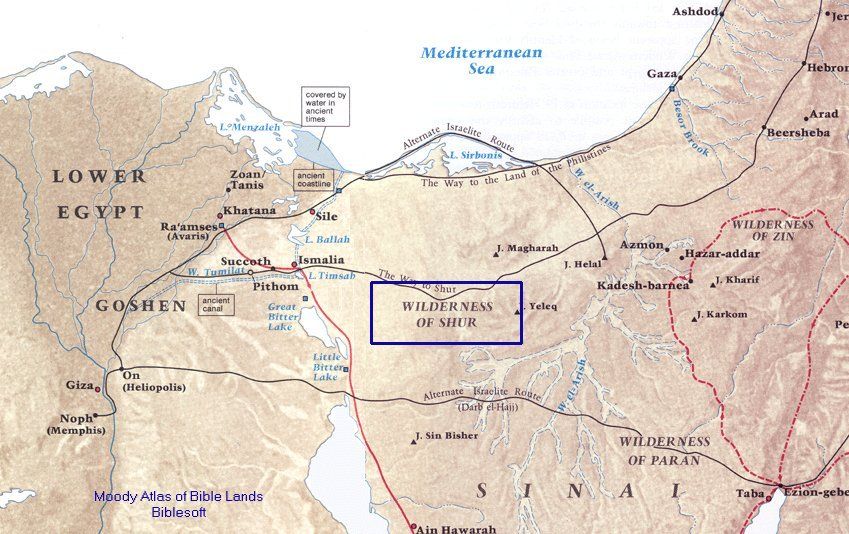
22 Then Moses made Israel set out from the Red Sea, and they went into the wilderness of Shur. They went three days in the wilderness and found no water. 23 When they came to Marah, they could not drink the water of Marah because it was bitter; therefore it was named Marah. 24 And the people grumbled against Moses, saying, “What shall we drink?” 25 And he cried to the Lord, and the Lord showed him a log, and he threw it into the water, and the water became sweet.

There the Lord made for them a statute and a rule, and there he tested them, 26 saying, “If you will diligently listen to the voice of the Lord your God, and do that which is right in his eyes, and give ear to his commandments and keep all his statutes, I will put none of the diseases on you that I put on the Egyptians, for I am the Lord, your healer.”

27 Then they came to Elim, where there were twelve springs of water and seventy palm trees, and they encamped there by the water. – Exodus 15:22-27 ESV

YHWHrāp̄ā’ – “The LORD Who Heals.”The Hebrew word, rāp̄ā’ has many connotations, including “rāp̄ā’ “to cause to cure, heal, physician, repair, make whole” (Strong’s Exhaustive Concordance). Throughout the Old Testament, it is used in a variety of ways. In Genesis 20, Moses describes the occasion when the prayer of Abraham resulted in the healing of a pagan king named Abimelech.

Then Abraham prayed to God, and God healed [rāp̄ā’] Abimelech, and also healed [rāp̄ā’] his wife and female slaves so that they bore children. For the LORD had closed all the wombs of the house of Abimelech because of Sarah, Abraham’s wife. – Genesis 20:17-18 ESV

The context is important because Abraham had “ journeyed toward the territory of the Negeb and lived between Kadesh and Shur, and he sojourned in Gerar” (Genesis 20:1 ESV). While in Gerar, Abraham convinced his wife Sarah to pass herself off as his sister. His reasoning was simple. He believed that if it was discovered Sarah was his wife, one of the polygamous Gerarites might kill him so he could claim her as his own. Abraham had tried this ploy before and it had failed miserably (Genesis 13:10-20).

This instance did not fair any better. Abimelech, the king of Gerar, believing Sarah to be a single, unmarried woman, took her to be his wife. But that night he had a dream in which God threatened him with death.

“Behold, you are a dead man because of the woman whom you have taken, for she is a man’s wife.” – Genesis 20:3 ESV

The Gerarites, while polygamous, did respect the sanctity of marriage. So, Abimelech was appalled to hear that he had taken a married man’s wife into his harem. He was also petrified to hear a disembodied voice warn him of his pending death and that of all his people. Abimelech pleaded his innocence, claiming to have acted on the words of Abraham. He had been told that the woman was unmarried and, fortunately, had not yet touched her. God assured Abimelech that He was aware of the circumstances and had a way for the king to make things right.

“Yes, I know that you have done this in the integrity of your heart, and it was I who kept you from sinning against me. Therefore I did not let you touch her. Now then, return the man’s wife, for he is a prophet, so that he will pray for you, and you shall live. But if you do not return her, know that you shall surely die, you and all who are yours.” – Genesis 20:6-7 ESV

There is no indication that Abimelech was suffering any kind of malady. God did not strike him with a deadly disease or life-threatening illness. But he was facing the loss of his life and he would not be alone. The fate of his entire family and, possibly, that of his nation, was in the hands of the very man who had lied to him.

When Abimelech approached Abraham, he expressed his consternation at having been put in this predicament by Abraham’s deceitfulness. He begged to know what had possessed Abraham to do such a thing. Faced with the blunt-force anger of Abimelech, Abraham didn’t sugarcoat his answer.

I did it because I thought, ‘There is no fear of God at all in this place, and they will kill me because of my wife.’ Besides, she is indeed my sister, the daughter of my father though not the daughter of my mother, and she became my wife.” – Genesis 20:11-12 ESV

Abraham had been in the wrong. Not only was he guilty of deceitfulness but he had failed to trust the faithfulness of Yahweh. For the second time in his life, Abraham displayed his distrust of Yahweh’s protection and provision. But God was watching over His disobedient and distrustful servant. He protected Sarah and preserved the purity of the woman who would ultimately bear Abraham the son who would fulfill all the covenant promises (Genesis 12:1-3).

There is so much going on in this story. In an effort to assuage God’s anger and persuade Abraham to pray for him, Abimelech showered Abraham with 1,000 pieces of silver, as well as sheep, oxen, and male and female servants. Abraham was going to walk away a rich man. But not only that. Abraham would leave the scene with his marriage and his wife’s purity intact. God had healed what was on the verge of being broken. He had graciously repaired what Abraham had damaged. Had God not intervened and interrupted Abimelech’s sleep with a dream, the king would have ultimately consummated his relationship with Sarah. It was just a matter of time. But Jehovah-Rapha stepped in and made whole that which was fractured and falling apart. God cleaned up the mess that Abraham had made.

But God also “healed” [rāp̄ā’] Abimelech and his family. God graciously called off His plan to take Abimelech’s life. Abimelech was not sick, but he was under a curse. His fate was sealed unless he obeyed the words of Yahweh. But because he did, he experienced wholeness instead of brokenness. He was given the gift of life rather than death. God had protected Sarah from being sexually violated by a pagan. He had protected Abraham from becoming a single man with no hope of seeing the promises of God fulfilled. He had protected Abimelech from touching Sarah and from having to suffer death for a sin he had committed in ignorance.

Throughout this story, God’s grace and mercy are on full display. None of the actors in this dark drama deserved what they received. But the LORD Who Heals stepped in and remedied the situation and preserved the integrity of His own plan and the lives of those who were integral to its fulfillment.

Back to the story in Exodus. Moses was attempting to lead the people of Israel from Egypt to the Promised Land. But along the way, they experienced various trials and difficulties. One of the first took place at Marah, an oasis in the desert that contained bitter, undrinkable water. The people had been walking for three days and the joy of their miraculous deliverance from the Egyptians and their inexplicable crossing of the Red Sea on dry ground had worn off. They were tired, thirsty, and in a far-from-happy mood. They complained to Moses and he took the issue to God, who quickly responded and gave Moses a solution.

the Lord showed him a log, and he threw it into the water, and the water became sweet. – Exodus 15:25 ESV

God “healed” the waters. He performed another miracle and transformed the bitter water into sweet, refreshing, life-giving water. But the water was not the only thing that was bitter. The Hebrew word is mar and it can also refer to discontentment. The people of Israel were bitter about their circumstances; they didn’t like the way things were turning out. Their miraculous crossing of the Red Sea had turned into an unpleasant and weariness-producing crossing of a trackless and waterless desert, and they were not in a good mood.

God’s solution to the problem was a simple one. He instructed Moses to take an ʿēṣ and throw it into the water. The Hebrew word is fascinating because it is the same word used in the opening chapters of the Book of Genesis.

…out of the ground the Lord God made to spring up every tree [ʿēṣ] that is pleasant to the sight and good for food. The tree [ʿēṣ] of life was in the midst of the garden, and the tree [ʿēṣ] of the knowledge of good and evil. – Genesis 2:9 ESV

More than a 162 times in the Old Testament, the word ʿēṣ is translated as “tree.” There is no reason not to translate it the same way here. The text doesn’t give the variety of tree that was used, but the outcome is quite clear. When Moses threw the tree in the water, it produced life. The bitter water was transformed. What had been undrinkable and incapable of sustaining life was divinely altered and imbued with life-giving properties. That which was unacceptable became acceptable.

There was more to this miraculous transformation than the Israelites realized. They were content to have their thirst quenched but God had so much more He wanted them to see. Moses writes, “It was there at Marah that the Lord set before them the following decree as a standard to test their faithfulness to him” (Exodus 15:25 NLT).

God wasn’t content to satisfy their craving for water. He wanted to teach them a lesson about faithfulness and trust. He knew they would get thirsty again. Temporary solutions to temporal problems never produce eternal results. As long as they focused their attention on their physical needs they would never learn the spiritual lessons God wanted them to learn. So, along with the water, God gave Moses a message to deliver to his bitterness-prone people.

“If you will listen carefully to the voice of the Lord your God and do what is right in his sight, obeying his commands and keeping all his decrees, then I will not make you suffer any of the diseases I sent on the Egyptians; for I am the Lord who heals you.” – Exodus 15:26 NLT

It’s important to note that God threatens His people with disease if they fail to obey while referring to Himself as their healer. At this moment, they are healthy, whole, and no longer suffering from thirst. But He is warning them that a fate worse than thirst awaits them if they refuse to “do what is right in His sight.” This would not be the last time they complained about a lack of water. There would also be occasions when they grumbled about their less-than-satisfactory diet and their unhappiness with the manna that God provided for them.

What they failed to realize was that their complaining was a source of disobedience. They didn’t trust God. They allowed their circumstances to determine their view of God and dictate the degree of their adoration toward Him.

What’s important to note in this story is that there was water, but it was undrinkable. Their problem wasn’t a lack of something, but it was that the solution to their need was “bitter.” It was plentiful but undrinkable. It wasn’t that the water was non-existent but that it was worthless in its current condition. And this non-potable water contained a powerful lesson for the Israelites.

The Hebrew word translated as “bitter” is מַר (mar), which can also be translated as “angry” or “discontented.” Little did the Israelites know that the water was a symbol of their own spiritual condition. Despite all God had done to set them free from their bondage in Egypt, they were a bitter and discontented people. In a sense, they were unusable. Instead of displaying gratitude for all that God had done, they quickly resorted to anger and blame, and their blatant displays of dissatisfaction were evidence that their hearts were bitter and in need of change.

So, God took this opportunity to teach the Israelites a much-needed lesson on how He was going to transform the bitter condition of their hearts. Hundreds of years later, the prophet Ezekiel would record the following promise that God made to His people.

“I will give you a new heart, and I will put a new spirit in you. I will take out your stony, stubborn heart and give you a tender, responsive heart. And I will put my Spirit in you so that you will follow my decrees and be careful to obey my regulations.” – Ezekiel 3626-27 NLT

From the very beginning, God revealed His desire to transform the hearts of His people. Their real problem had never been slavery; they suffered from a heart condition that left them bitter, angry, and discontented. Their 400-year separation from God had reduced them to a state of spiritual stagnation and impurity. They had become polluted by the culture and robbed of their ability to be a source of life to the nations around them. So, God was going to intervene and, over time, begin His miraculous plan of heart transformation.

God used a tree to transform bitter water into a life-giving source of sustenance. He had just proven, yet again, that He could meet all their needs. Thousands of years later, God would use another tree to heal the sins of mankind. The apostle Peter spoke of the life-transforming and spiritual-healing properties of this tree when he addressed the religious leaders of Israel.

“The God of our fathers raised Jesus, whom you killed by hanging him on a tree. God exalted him at his right hand as Leader and Savior, to give repentance to Israel and forgiveness of sins.” – Acts 5:30-31 ESV

Peter would later deliver the same message to a gathering of Gentiles.

“They put him to death by hanging him on a tree, but God raised him on the third day and made him to appear, not to all the people but to us who had been chosen by God as witnesses, who ate and drank with him after he rose from the dead. And he commanded us to preach to the people and to testify that he is the one appointed by God to be judge of the living and the dead. To him all the prophets bear witness that everyone who believes in him receives forgiveness of sins through his name.” – Acts 10:39-43 ESV

Jehovah-Rapha is The LORD Who Heals. But He wants to do far more than heal our temporal and physical problems. He can provide for all our needs and is more than willing to do so, but His greatest desire is to heal our hearts and restore us to a relationship with Him so that will satisfy our thirst for true life and meaning.

“If anyone thirsts, let him come to me and drink. Whoever believes in me, as the Scripture has said, ‘Out of his heart will flow rivers of living water.’” – John 7:37-38 ESV

English Standard Version (ESV) The Holy Bible, English Standard Version. ESV® Permanent Text Edition® (2016). Copyright © 2001 by Crossway Bibles, a publishing ministry of Good News Publishers.

New Living Translation (NLT) Holy Bible, New Living Translation, copyright © 1996, 2004, 2015 by Tyndale House Foundation. Used by permission of Tyndale House Publishers Inc., Carol Stream, Illinois 60188. All rights reserved.

New English Translation (NET)NET Bible® copyright ©1996-2017 by Biblical Studies Press, L.L.C. http://netbible.com All rights reserved.
Discontentment in the Camp

1 Now Korah the son of Izhar, son of Kohath, son of Levi, and Dathan and Abiram the sons of Eliab, and On the son of Peleth, sons of Reuben, took men. And they rose up before Moses, with a number of the people of Israel, 250 chiefs of the congregation, chosen from the assembly, well-known men. They assembled themselves together against Moses and against Aaron and said to them, “You have gone too far! For all in the congregation are holy, every one of them, and the Lord is among them. Why then do you exalt yourselves above the assembly of the Lord?” When Moses heard it, he fell on his face, and he said to Korah and all his company, “In the morning the Lord will show who is his, and who is holy, and will bring him near to him. The one whom he chooses he will bring near to him. Do this: take censers, Korah and all his company; put fire in them and put incense on them before the Lord tomorrow, and the man whom the Lord chooses shall be the holy one. You have gone too far, sons of Levi!” And Moses said to Korah, “Hear now, you sons of Levi: is it too small a thing for you that the God of Israel has separated you from the congregation of Israel, to bring you near to himself, to do service in the tabernacle of the Lord and to stand before the congregation to minister to them, 10 and that he has brought you near him, and all your brothers the sons of Levi with you? And would you seek the priesthood also? 11 Therefore it is against the Lord that you and all your company have gathered together. What is Aaron that you grumble against him?”

12 And Moses sent to call Dathan and Abiram the sons of Eliab, and they said, “We will not come up. 13 Is it a small thing that you have brought us up out of a land flowing with milk and honey, to kill us in the wilderness, that you must also make yourself a prince over us? 14 Moreover, you have not brought us into a land flowing with milk and honey, nor given us inheritance of fields and vineyards. Will you put out the eyes of these men? We will not come up.” Numbers 16:1-14 ESV

The story of the Israelites’ journey through the wilderness is a fascinating one, filled with plenty of twists and turns, plot changes, and storylines. It’s easy to read this chronicle of the lives of the people of God and wonder how they could be so slow to learn. How could they refuse to obey God after all He had done for them? Why would they continue to whine, complain, and moan about their lot in life when the God of the universe was leading them, providing for them, and revealing Himself to them day after day? But the truth is, as believers, we have the Spirit of God living within us and the Word of God made available to us and yet we still struggle with obedience and belief. So, we probably shouldn’t be too quick to judge the Israelites harshly.

Yet in today’s story from chapter 16, we have another occurrence of jealousy and rebellion. It seems that Korah, a grandson of Kohath, and a member of the tribe of Levi, decided that he had every right to take part in the priestly responsibilities. As a Kohathite, he was part of the clan responsible for the transportation and care of all the vessels and utensils of the Tabernacle. They had been assigned that role by God.

“The duties of the Kohathites at the Tabernacle will relate to the most sacred objects.” – Numbers 4:4 NLT

According to God’s instructions, the Kohathites had a very specific role to play. For them to do that job, Aaron, the high priest, and his sons had to prepare all the sacred objects for transport.

“When the camp moves, Aaron and his sons must enter the Tabernacle first to take down the inner curtain and cover the Ark of the Covenant with it. Then they must cover the inner curtain with fine goatskin leather and spread over that a single piece of blue cloth. Finally, they must put the carrying poles of the Ark in place.” – Numbers 4:5-6 NLT

Every item had to be carefully prepared according to God’s painstaking instructions. If Aaron and his sons failed to do everything just as God had commanded, it would have devastating consequences for Korah and the rest of his clan.

“The camp will be ready to move when Aaron and his sons have finished covering the sanctuary and all the sacred articles. The Kohathites will come and carry these things to the next destination. But they must not touch the sacred objects, or they will die.” – Numbers 4:15 NLT

“Do not let the Kohathite clans be destroyed from among the Levites! This is what you must do so they will live and not die when they approach the most sacred objects. Aaron and his sons must always go in with them and assign a specific duty or load to each person. The Kohathites must never enter the sanctuary to look at the sacred objects for even a moment, or they will die.” – Numbers 4:18-20 NLT

All the holy objects were to be covered with cloths to prevent the Kohathites from inadvertently touching them. The larger items featured poles that were inserted into specially crafted rings that allowed the Kohathites to carry the sacred objects safely and securely without risk of death. It should have been considered an honor to carry these holy furnishings that were essential for the worship of Yahweh. Yet, we learn that Korah was not content with the God-ordained role he and his clan had been assigned. He wanted more.

Driven by jealousy and a desire for greater prominence, he enlisted the support of others, and, together, they incited a rebellion against Moses, along with 250 other leaders of the community; all “prominent members of the assembly” (Numbers 4:2 NLT). It was a coup.

Korah appealed to other men in the camp to join him in his rebellion. He stirred up members of the tribe of Reuben by getting them to see that Moses had taken away the right of the firstborn of every tribe to serve God by replacing them with the sons of Levi. His argument was that every single Israelite was holy; not just Moses, Aaron, and his sons.

He accused Moses of exalting himself above everyone else. He and his compatriots went to Moses and said, “You have gone too far! Everyone in Israel has been set apart by the LORD, and he is with all of us. What right do you have to act as though you are greater than anyone else among all these people of the LORD?” (Numbers 16:3 NLT).

Although Korah was from the tribe of Levi, he and his clan were not allowed to serve as priests, and he found this slight to be unacceptable. He viewed their God-assigned role as “moving men” to be less-than-acceptable and more than a bit demeaning.

In his defense, Korah was basing his argument on a statement given by God when the people of Israel were still in Egypt.

“Now therefore, if you will indeed obey my voice and keep my covenant, you shall be my treasured possession among all peoples, for all the earth is mine; and you shall be to me a kingdom of priests and a holy nation.” – Exodus 19:5-6 NLT

But what Korah failed to remember was that the entire nation had done irreparable damage to their holy status when they had been encamped at Mount Sinai. While Moses had been up on the mountaintop receiving the Ten Commandments from God, the people had decided to turn their back on God and worship a newly constructed golden calf (Exodus 32). And as punishment for their sin, God had given Moses orders to execute all those who had taken part in the idolatrous festivities.

So he stood at the entrance to the camp and shouted, “All of you who are on the Lord’s side, come here and join me.” And all the Levites gathered around him.

Moses told them, “This is what the Lord, the God of Israel, says: Each of you, take your swords and go back and forth from one end of the camp to the other. Kill everyone—even your brothers, friends, and neighbors.” The Levites obeyed Moses’ command, and about 3,000 people died that day. – Exodus 32:26-28 NLT

It had been the Levites who stood by Moses’ side and carried out God’s orders. As a result, Moses rewarded them for their show of faithfulness and obedience.

“Today you have ordained yourselves for the service of the Lord, for you obeyed him even though it meant killing your own sons and brothers. Today you have earned a blessing.” – Exodus 32:29 NLT

But Korah wasn’t satisfied with God’s will. He demanded that a new plan be put in place. Yet, Moses attempted to reason with his disgruntled kinsman.

“Does it seem insignificant to you that the God of Israel has chosen you from among all the community of Israel to be near him so you can serve in the Lord’s Tabernacle and stand before the people to minister to them? Korah, he has already given this special ministry to you and your fellow Levites. Are you now demanding the priesthood as well?” – Numbers 16:9-10 NLT

Moses couldn’t understand why Korah considered himself and his clansmen as second-class citizens. Why was he unable to view their God-ordained role as vital and worthy of their best efforts? And Moses tried to warn them that their complaint was really with God, not himself or Aaron.

The Lord is the one you and your followers are really revolting against! For who is Aaron that you are complaining about him?” – Numbers 16:11 NLT

Korah was walking on thin ice. He was venturing into uncharted waters that would bring him to a far-from-pleasant destination. Moses attempted to reason with Korah’s compatriots, but they refused to listen to what he had to say.

“We refuse to come before you! Isn’t it enough that you brought us out of Egypt, a land flowing with milk and honey, to kill us here in this wilderness, and that you now treat us like your subjects? What’s more, you haven’t brought us into another land flowing with milk and honey. You haven’t given us a new homeland with fields and vineyards. Are you trying to fool these men? We will not come.” – Numbers 16:12-14 NLT

The stage was set. The lines were drawn. Korah and his disenchanted companions stood their ground and refused to heed the warnings of Moses. They were done taking orders from Moses and Aaron. As far as they were concerned, it was their time to shine and they would not be satisfied until they were the ones calling the shots.

But they failed to recognize that their complaints had reached the ears of God. He had been listening to their arrogant demands and knew that their discontentment was ultimately directed at Him. It’s interesting to note that the very people who were responsible for transporting the holy objects from the Tabernacle were carrying resentment for the very one for whom the Tabernacle had been made. They might as well have discarded the holy object on the side of the path somewhere in the wilderness. Their disrespectful and divisive treatment of God’s chosen leader was no less egregious than if they had desecrated the holy objects under their care. Korah despised his God-ordained role and coveted a spot in the limelight. But he would soon discover that his discontentment would be met with God’s disapproval.

English Standard Version (ESV) The Holy Bible, English Standard Version. ESV® Permanent Text Edition® (2016). Copyright © 2001

New Living Translation (NLT) Holy Bible, New Living Translation, copyright © 1996, 2004, 2015 by Tyndale House Foundation. Used by permission of Tyndale House Publishers Inc., Carol Stream, Illinois 60188. All rights reserved.

From Bitter to Better

22 Then Moses made Israel set out from the Red Sea, and they went into the wilderness of Shur. They went three days in the wilderness and found no water. 23 When they came to Marah, they could not drink the water of Marah because it was bitter; therefore it was named Marah. 24 And the people grumbled against Moses, saying, “What shall we drink?” 25 And he cried to the Lord, and the Lord showed him a log, and he threw it into the water, and the water became sweet.

There the Lord made for them a statute and a rule, and there he tested them, 26 saying, “If you will diligently listen to the voice of the Lord your God, and do that which is right in his eyes, and give ear to his commandments and keep all his statutes, I will put none of the diseases on you that I put on the Egyptians, for I am the Lord, your healer.”

27 Then they came to Elim, where there were twelve springs of water and seventy palm trees, and they encamped there by the water. – Exodus 15:22-27 ESV

With their miraculous crossing of the Red Sea, the Israelites were putting a four-century-long season of their life behind them. As the waters of the sea closed behind them, it was as if God closed a lengthy chapter of their existence that had been marked by slavery and persecution. They must have issued a collective sigh of relief as they realized that their days of suffering had finally come to an end. For the first time in centuries, they were a free people and on their way to the land that God had promised as their inheritance. None of them had ever set foot in Canaan before. More than 400 years earlier, their patriarch, Jacob, had entered Egypt of his own free will, bringing along the 70 members of his clan so that they could find refuge from the global famine that had left the land of Canaan a virtual wasteland.

But now, Jacob’s descendants, whose numbers had greatly expanded during their time in Egypt, were returning to the land that he had left. The promise God had made to Abraham was coming true.

“Know for certain that your offspring will be sojourners in a land that is not theirs and will be servants there, and they will be afflicted for four hundred years. But I will bring judgment on the nation that they serve, and afterward they shall come out with great possessions. – Genesis 15:13-14 ESV

And God had reconfirmed that promise to Jacob as he and his family were making their way to Egypt.

“I am God, the God of your father. Do not be afraid to go down to Egypt, for there I will make you into a great nation. I myself will go down with you to Egypt, and I will also bring you up again, and Joseph’s hand shall close your eyes.” – Genesis 46:3-4 ESV

Jacob and his sons all died while living in Egypt. The only time his 12 sons returned to Canaan was in order to bury his body alongside those of Abraham and Isaac. But the brothers were unable to remain in Canaan because the famine had not yet ended. So, they returned to Egypt where they lived out their lifetimes in the land of Goshen.

But now, their numerous descendants were making the long journey home. But after their four-hundred-year stint in Egypt, the Israelites had grown accustomed to their surroundings. They had acclimated to the land and the ways of its people. Over time, they had forgotten the God of their fathers and adopted the Egyptian gods as their own. Canaan had become a distant memory and the promises of Yahweh had long been forgotten as each successive generation became increasingly more “Egyptianized.”

But all that was about to change. Their long-forgotten God had not forgotten them. He had just miraculously delivered them from bondage and was now leading them to their future home in Canaan. And as the scene of their emancipation and the Egyptian army’s annihilation faded into the distance, the people followed the pillar of cloud into the wilderness of Shur. Little did they know that this was going to be the beginning of a new chapter in their collective story. They were entering a new phase of their existence in which they would come to know and understand their “new” God. The ten plagues they had witnessed in Egypt had just been the opening act of His self-revelatory drama.

As they made their way to Canaan, they were going to get a steady dose of divine revelation as God displayed His glory and power. But He would also reveal the expectations He had for His chosen people. He had redeemed them for a reason. They had been set free so that they might live according to His will and display His glory and greatness to the rest of the nations.

The wilderness was to be their classroom, where they learned the painful truth about their own character and discovered the unflinching holiness and unwavering faithfulness of their God. And those lessons began immediately.

Just three days after leaving the Red Sea, they found themselves facing their first test in God’s school of spiritual enlightenment.

They traveled in this desert for three days without finding any water. When they came to the oasis of Marah, the water was too bitter to drink. – Exodus 15:22-23 NLT

Shur was not a desert as much as it was an open expanse of land, and water would have been a constant need for the Israelites. So, during their first three days of travel, the Israelites found no source of potable water. This would have been a serious concern for a group their size. How could they remain alive without water? They knew that their sizeable flocks and herds would quickly diminish if a viable source of water was not found soon.

This unexpected predicament caused the people to turn their anger against Moses. Just as they had done when they found themselves backed up against the sea with the Egyptian army bearing down on them, the people of Israel took out their fear and frustration on God’s appointed leader.

“What are we going to drink?” they demanded. – Exodus 15:24 NLT

And by this time, Moses must have been questioning why he ever agreed to lead this ungrateful and easily disgruntled band of hotheads. As God’s spokesman, he became the target of the people’s wrath. When they became unhappy with their circumstances, they took their complaints to Moses and his brother, Aaron. These two elderly men had shown up in Egypt with lofty promises of emancipation and relocation. They had declared themselves to be the official representatives of Yahweh, the God of Abraham, Isaac, and Jacob, and they had come to lead God’s people out of Egypt and back to the land of promise.

So, when things didn’t go well, the people held Moses and on as responsible. And when Moses felt the heat, he turned to God for help.

So Moses cried out to the Lord for help, and the Lord showed him a piece of wood. Moses threw it into the water, and this made the water good to drink. – Exodus 15:25 NLT

What’s important to note in this story is that there was water, but it was undrinkable. Their problem wasn’t a lack of something, but it was that the solution to their need was “bitter.” It was plentiful but undrinkable. It wasn’t that the water was non-existent but that it was worthless in its current condition. And this non-potable water contained a powerful lesson for the Israelites.

The Hebrew word translated as “bitter” is מַר (mar), which can also be translated as “angry” or “discontented.” Little did the Israelites know that the water was a symbol of their own spiritual condition. Despite all God had done to set them free from their bondage in Egypt, they were a bitter and discontented people. In a sense, they were unusable. Instead of displaying gratitude for all that God had done, they quickly resorted to anger and blame. And their blatant displays of dissatisfaction were evidence that their hearts were bitter and in need of change.

So, God took this opportunity to teach the Israelites a much-needed lesson on how He was going to transform the bitter condition of their hearts. He had Moses take a particular piece of wood and throw it into the bitter water. This act of faith on Moses’ part had an immediate effect, transforming the bitter, worthless water into a refreshing and live-giving source of sustenance for the people of God and all their livestock. The bitterness was removed.

Hundreds of years later, the prophet Ezekiel would record the following promise that God made to His people.

“I will give you a new heart, and I will put a new spirit in you. I will take out your stony, stubborn heart and give you a tender, responsive heart. And I will put my Spirit in you so that you will follow my decrees and be careful to obey my regulations.” – Ezekiel 3626-27 NLT

From the very beginning, God revealed His desire to transform the hearts of His people. Their real problem had never been slavery. They suffered from a heart condition that had left them bitter, angry, and discontented. Their 400-year separation from God had reduced them to a state of spiritual stagnation and impurity. They had become polluted by the culture and robbed of their ability to be a source of life to the nations around them. So, God was going to intervene and, over time, begin His miraculous plan of heart transformation.

One of the things that Moses makes clear is this event at Marah had been a test of their faithfulness. God wanted to know if they were going to trust Him or would they continue to display their distrust through bitter displays of discontentment and dissatisfaction. So, He had Moses give them a warning.

“If you will listen carefully to the voice of the Lord your God and do what is right in his sight, obeying his commands and keeping all his decrees, then I will not make you suffer any of the diseases I sent on the Egyptians; for I am the Lord who heals you.” – Exodus 15:26 NLT

God had used an ordinary piece of wood to transform bitter water into a life-giving source of sustenance. He had just proven, yet again, that He could meet all their needs. And all He was asking in return was that they live in obedience to His commands. If they did, they could expect to see more miraculous evidence of His provision, but they would also experience protection from His judgment. Obedience would bring blessing. Disobedience would result in curses. This would become a recurring theme in their relationship with God. He could both heal and hurt. He could bless and curse. And all He asked of His people was that they could trust and obey so that He could turn them into a life-giving source of sustenance to the nations of the world.

English Standard Version (ESV) The Holy Bible, English Standard Version. ESV® Permanent Text Edition® (2016). Copyright © 2001

New Living Translation (NLT) Holy Bible, New Living Translation, copyright © 1996, 2004, 2015 by Tyndale House Foundation. Used by permission of Tyndale House Publishers Inc., Carol Stream, Illinois 60188. All rights reserved.

An Appetite for Disobedience

16 Then the Lord said to Moses, “Gather for me seventy men of the elders of Israel, whom you know to be the elders of the people and officers over them, and bring them to the tent of meeting, and let them take their stand there with you. 17 And I will come down and talk with you there. And I will take some of the Spirit that is on you and put it on them, and they shall bear the burden of the people with you, so that you may not bear it yourself alone. 18 And say to the people, ‘Consecrate yourselves for tomorrow, and you shall eat meat, for you have wept in the hearing of the Lord, saying, “Who will give us meat to eat? For it was better for us in Egypt.” Therefore the Lord will give you meat, and you shall eat. 19 You shall not eat just one day, or two days, or five days, or ten days, or twenty days, 20 but a whole month, until it comes out at your nostrils and becomes loathsome to you, because you have rejected the Lord who is among you and have wept before him, saying, “Why did we come out of Egypt?”’” 21 But Moses said, “The people among whom I am number six hundred thousand on foot, and you have said, ‘I will give them meat, that they may eat a whole month!’ 22 Shall flocks and herds be slaughtered for them, and be enough for them? Or shall all the fish of the sea be gathered together for them, and be enough for them?” 23 And the Lord said to Moses, “Is the Lord»s hand shortened? Now you shall see whether my word will come true for you or not.”

24 So Moses went out and told the people the words of the Lord. And he gathered seventy men of the elders of the people and placed them around the tent. 25 Then the Lord came down in the cloud and spoke to him, and took some of the Spirit that was on him and put it on the seventy elders. And as soon as the Spirit rested on them, they prophesied. But they did not continue doing it.

26 Now two men remained in the camp, one named Eldad, and the other named Medad, and the Spirit rested on them. They were among those registered, but they had not gone out to the tent, and so they prophesied in the camp. 27 And a young man ran and told Moses, “Eldad and Medad are prophesying in the camp.” 28 And Joshua the son of Nun, the assistant of Moses from his youth, said, “My lord Moses, stop them.” 29 But Moses said to him, “Are you jealous for my sake? Would that all the Lord’s people were prophets, that the Lord would put his Spirit on them!” 30 And Moses and the elders of Israel returned to the camp. Numbers 11:16-30 ESV

Moses was feeling a bit overwhelmed by his responsibilities as the leader of Israel. From the very first moment he had introduced himself to them as their God-appointed deliverer, he had run into opposition. Even when he had successfully led them out of Egypt and across the Red Sea, they proved to be far from compliant and quick to complain. He had been forced to deal with their rebellion at Sinai, when they had begun to worship the golden calves while he was on the mountaintop receiving the Ten Commandments from God.

They were incessantly complaining about everything, from the quality of the food to the scarcity of water. There were those who questioned Moses’ leadership skills and tried to displace him. There were others who tried to mount an insurrection and orchestrate an immediate return to Egypt. Hardly a day went by when Moses wasn’t having to deal with a disgruntled Israelite or face another round of searing criticism. And he had reached the limits of his patience. So, in a state of frustration and self-pity, he decided to turn in his resignation to God.

I can’t carry all these people by myself! The load is far too heavy! If this is how you intend to treat me, just go ahead and kill me. Do me a favor and spare me this misery!” – Numbers 11:14-15 NLT

But God wasn’t going to let Moses off the hook quite so easily. He had more for His servant to do. And God was aware that the Israelites were stubborn people who could be disobedient, disrespectful, and ungrateful. Even on a good day, they were difficult to manage. But when things didn’t go the way they expected or desired, they could be virtually ungovernable and intolerable to deal with.

So, God instructed Moses to choose 70 men from among the elders and leaders of Israel. These hand-picked individuals would serve as Moses’ assistants and provide him with much-needed help in managing the day-to-day affairs of the nation. To ensure their capacity for godly leadership, God promised to anoint them with His Spirit. And to prove to the people that these men had been appointed by God, they would receive the gift of prophecy.

“Prophesying here does not refer to prediction or even to proclamation but to giving (in song or speech) praise and similar expressions without prior training (see the comparable experience of Saul in 1 Sam. 10:9-11)” – Eugene H. Merrill, “Numbers.” In The Bible Knowledge Commentary: Old Testament, pp. 215-58.

Their ability to prophesy would testify to their status as God’s chosen messengers. These men were already recognized as leaders among their people, but now they would be seen as God’s messengers and Moses’ co-administrators.

“They will bear the burden of the people along with you, so you will not have to carry it alone.” – Numbers 11:17 NLT

Having dealt with Moses’ complaint about feeling overworked and overwhelmed, God turned His attention to the peoples’ criticism of the cuisine. They had expressed great displeasure with God’s culinary skills, citing their distaste and disgust for the manna He had provided. They were sick of it and demanded a change in diet. They wanted meat.

“Oh, for some meat!” they exclaimed. “We remember the fish we used to eat for free in Egypt. And we had all the cucumbers, melons, leeks, onions, and garlic we wanted. But now our appetites are gone. All we ever see is this manna!” – Numbers 11:4-6 NLT

So, God informed the Israelites that He was going to give in to their demand.

“Purify yourselves, for tomorrow you will have meat to eat. You were whining, and the Lord heard you when you cried, ‘Oh, for some meat! We were better off in Egypt!’ Now the Lord will give you meat, and you will have to eat it. And it won’t be for just a day or two, or for five or ten or even twenty. You will eat it for a whole month until you gag and are sick of it. – Numbers 11:18-20 NLT

The old adage, “Be careful what you wish for” applies here. In demanding that God give them meat to eat, the people were rejecting the provision of God. They had turned up their noses at the manna He had graciously and miraculously provided. Driven by their physical appetites and controlled by their senses, they had dared to question God’s goodness and began to dictate that their own will take priority over His. They knew what was best.

And God promised to fulfill their wish – in abundance. For a solid month, they would consume nothing but meat. Their chosen diet would soon become repugnant to them. They would come to the point where they longed for the manna of God but would only find more meat on the menu. And this novel 30-day diet plan was God’s way of punishing them for their rejection of Him. This was not about food choices but about their unwillingness to submit to God’s will for them. At the heart of their demand for meat was their rejection of God’s entire redemptive plan for them.

“For you have rejected the Lord, who is here among you, and you have whined to him, saying, ‘Why did we ever leave Egypt?’” – Numbers 11:20 NLT

God was attempting to move them forward – toward Canaan – but they were constantly looking backward – toward Egypt. They refused to trust God’s plan for them. They disliked His chosen path for their lives and wanted to return to the “good old days” of Egypt. But their memories were clouded and their faith had been contaminated by a fear of the unknown and the unpleasant. Their journey to the promised land had not turned out to be a walk in the park. It had been a year since they left Egypt and there were still wandering in the wilderness with no clear end in sight. But the blessings of God required obedience. If they wanted to enjoy His presence, power, and provision, they would have to trust Him. They would have to submit to His will. But for the next 30 days, they would have to submit to His discipline in the form of a meat-only diet.

But when Moses heard what God planned to do, he immediately questioned the logic and logistics of it all. He couldn’t fathom how God intended to provide enough meat to feed that many people. Even if they slaughtered all their livestock and emptied the rivers and streams of every fish, they wouldn’t have enough meat to feed all the people for a month. So, Moses informed God that His plan was impossible. But God reminded His doubting deliverer that He was fully capable of carrying out His plan.

“Has my arm lost its power? Now you will see whether or not my word comes true!” – Numbers 11:23 NLT

God didn’t tell Moses how He was going to accomplish His miracle of the meat. All Moses needed to worry about was selecting the 70 men and bringing them to the tabernacle for their anointing by the Spirit. Which Moses did. And God fulfilled His promise, pouring out His Spirit upon the men whom Moses had chosen and empowering them to prophesy. For some reason, two of the men never made it to the tabernacle. Yet, even though they had remained in the camp, the Spirit of God descended upon them, and they too experienced the gift of prophecy. And when Joshua heard about these two men, he demanded that Moses put a stop to what he believed to be an unauthorized display of divine power. Yet, Moses refused to do so, instead expressing his desire that every single Israelite would receive the same anointing of God.

“Are you jealous for my sake? I wish that all the Lord’s people were prophets and that the Lord would put his Spirit upon them all!” – Numbers 11:29 NLT

For whatever reason, Eldad and Medad had stayed behind in the camp. Yet they had been chosen by Moses and were therefore anointed by God. Their proximity to the tabernacle was not essential to their calling. Their distance from the rest of the 70 men had no impact on their eventual anointing by God. Sixty-eight men ended up prophesying at the tabernacle while two prophesied in the camp. But all 70 displayed the Spirit’s power and God’s approval of their role as His servants. And Moses wished that all the people of Israel could experience that same degree of divine endorsement.

While the people would not receive the anointing of the Spirit, they would have a different kind of blessing poured out upon them. God was going to fulfill His promise of meat on a grand scale. And Moses and the rest of the Israelites would learn that God’s arm had not lost is power – to provide and to punish.

English Standard Version (ESV) The Holy Bible, English Standard Version. ESV® Permanent Text Edition® (2016). Copyright © 2001

New Living Translation (NLT) Holy Bible, New Living Translation, copyright © 1996, 2004, 2015 by Tyndale House Foundation. Used by permission of Tyndale House Publishers Inc., Carol Stream, Illinois 60188. All rights reserved.

The Search for Satisfaction

If you see in a province the oppression of the poor and the violation of justice and righteousness, do not be amazed at the matter, for the high official is watched by a higher, and there are yet higher ones over them. But this is gain for a land in every way: a king committed to cultivated fields.

10 He who loves money will not be satisfied with money, nor he who loves wealth with his income; this also is vanity. 11 When goods increase, they increase who eat them, and what advantage has their owner but to see them with his eyes? 12 Sweet is the sleep of a laborer, whether he eats little or much, but the full stomach of the rich will not let him sleep.

13 There is a grievous evil that I have seen under the sun: riches were kept by their owner to his hurt, 14 and those riches were lost in a bad venture. And he is father of a son, but he has nothing in his hand. 15 As he came from his mother’s womb he shall go again, naked as he came, and shall take nothing for his toil that he may carry away in his hand. 16 This also is a grievous evil: just as he came, so shall he go, and what gain is there to him who toils for the wind? 17 Moreover, all his days he eats in darkness in much vexation and sickness and anger.

18 Behold, what I have seen to be good and fitting is to eat and drink and find enjoyment in all the toil with which one toils under the sun the few days of his life that God has given him, for this is his lot. 19 Everyone also to whom God has given wealth and possessions and power to enjoy them, and to accept his lot and rejoice in his toil—this is the gift of God. 20 For he will not much remember the days of his life because God keeps him occupied with joy in his heart. Ecclesiastes 5:8-20 ESV

As Solomon looks back on his long life as the king of Israel, he reflects on the many life lessons he has learned and, in this section, presents them in the form of a series of proverbs. These short, seemingly unrelated maxims, most often utilize comparisons to drive home a point and to present time-proven truths in a manner that makes wisdom practical and applicable to everyday life.

In verses 8-9, Solomon readdresses the issues of injustice and the oppression of the poor, which he initially covered at the beginning of chapter four. The presence of these problems within a society should not shock or surprise us. The wealthy and powerful, driven by a desire to maintain and even increase their social standing, will be tempted to use their power and influence to take advantage of the less fortunate. And in these verses, Solomon points out that every high official who takes advantage of the poor or practices injustice must answer to yet a higher official who wields even greater authority. In other words, there is a chain of command that ultimately leads to the king.

The more powerful always control and take advantage of the less powerful. It is the nature of things. Injustice and oppression, abuse of power, and unethical leadership seem to be inevitable outcomes of human government. It is unavoidable. But Solomon seems to conclude that a monarchy is preferable to anarchy. Even with its potential for abuse, the government provides a semblance of stability and control that results in cultivated lands. In other words, the very presence of governmental structure and hierarchical authority can result in abuse of power and lead to injustice, but it can also produce corporate benefits that all enjoy.

Underlying so much of what Solomon says in this book is the undeniable reality of sin and the fallen condition of the human heart. Even good men are prone to do bad things. As the prophet Isaiah so aptly put it: “We are all infected and impure with sin. When we display our righteous deeds, they are nothing but filthy rags” (Isaiah 64:6 NLT).

In verses 10-12, Solomon addresses a related topic: The love of money. Solomon flatly states, “Those who love money will never have enough. How meaningless to think that wealth brings true happiness!” (Ecclesiastes 5:10 NLT).

Wealth is not only illusive and hard to come by, but even when you get it, you can never seem to have enough. The pursuit of money can become addictive, and it can be accompanied by a fear of losing what you already have. Money makes conspicuous consumption possible, which Merriam-Webster Dictionary describes as “lavish or wasteful spending thought to enhance social prestige.”

But as Solomon warns, it doesn’t work. It never satisfies. The primary reason we pursue wealth is in order to satisfy our desires. But we tend to find that, with our newfound capacity to acquire and accumulate, the one thing we can’t get our hands on is contentment. Paul warned Timothy against the dangers of making money our master.

Yet true godliness with contentment is itself great wealth. After all, we brought nothing with us when we came into the world, and we can’t take anything with us when we leave it. So if we have enough food and clothing, let us be content.

But people who long to be rich fall into temptation and are trapped by many foolish and harmful desires that plunge them into ruin and destruction. For the love of money is the root of all kinds of evil. And some people, craving money, have wandered from the true faith and pierced themselves with many sorrows. – 1 Timothy 6:6-10 NLT

Increased wealth tends to come with an increase in responsibilities. The more you have, the more you must take care of and maintain, and that requires help. And no one knew this better than Solomon. The book of 1 Kings provides a glimpse into Solomon’s vast wealth and allows us to imagine just how extensive a retinue of servants was required to care for all that he owned.

The daily food requirements for Solomon’s palace were 150 bushels of choice flour and 300 bushels of meal; also 10 oxen from the fattening pens, 20 pasture-fed cattle, 100 sheep or goats, as well as deer, gazelles, roe deer, and choice poultry.

Solomon’s dominion extended over all the kingdoms west of the Euphrates River, from Tiphsah to Gaza. And there was peace on all his borders. During the lifetime of Solomon, all of Judah and Israel lived in peace and safety. And from Dan in the north to Beersheba in the south, each family had its own home and garden.

Solomon had 4,000 stalls for his chariot horses, and he had 12,000 horses. – 1 Kings 4:22-26 NLT

Back in chapter two, Solomon described his vast and expanding network of servants, slaves, employees, and concubines.

I bought slaves, both men and women, and others were born into my household. I also owned large herds and flocks, more than any of the kings who had lived in Jerusalem before me. I collected great sums of silver and gold, the treasure of many kings and provinces. I hired wonderful singers, both men and women, and had many beautiful concubines. I had everything a man could desire! – Ecclesiastes 2:7-8 NLT

He had everything his heart desired, yet he lacked contentment. You can almost sense the philosophy that drove his life: Enough is never enough. And with his addiction to conspicuous consumption came the relentless requirement to feed and care for all those who worked for him. This is what led him to write, “The more you have, the more people come to help you spend it. So what good is wealth—except perhaps to watch it slip through your fingers!” (Ecclesiastes 5:11 NLT).

Solomon had it all, yet he could afford a good night’s sleep. When he states that “the full stomach of the rich will not let him sleep”, he is not referring to indigestion, but to insomnia caused by constant worry over wealth. What you own ends up owning you. You become a slave to that which was intended to serve you. And yet, in contrast, “People who work hard sleep well, whether they eat little or much” (Ecclesiastes 5:12 NLT). 

With his next proverbial statement, Solomon addresses the fleeting nature of wealth. He describes a “grievous evil” that he has witnessed in this life, and it is likely that he is speaking from personal experience, not objective observation. He had first-hand experience with this kind of misfortune, having had his fair share of bad business deals and risky investments.

There is another serious problem I have seen under the sun. Hoarding riches harms the saver. Money is put into risky investments that turn sour, and everything is lost. In the end, there is nothing left to pass on to one’s children. – Ecclesiastes 5:13-14 NLT

All the money and material assets we have worked so hard to accumulate can disappear virtually overnight. They can disappear in an instant, leaving us in poverty and our children with no inheritance. And even if we are able to maintain a hold on all our assets to the bitter end, we face the grim reality that we can’t take any of it with us. When we die, our wealth remains behind. And as Solomon stated earlier, “I must leave to others everything I have earned. And who can tell whether my successors will be wise or foolish? Yet they will control everything I have gained by my skill and hard work under the sun. How meaningless!” (Ecclesiastes 2:18-19 NLT). 

When all was said and done, Solomon was left with one observation that allowed him to extract a bit of hope from all the meaninglessness and despair of life. He saw that man had been gifted by God with the ability “to eat, drink, and enjoy their work under the sun during the short life God has given them, and to accept their lot in life” (Ecclesiastes 5:18 NLT).

Not exactly a cheerful observation, but for Solomon, it was the only thing that kept him from being frustrated, discouraged, and angry. He had resolved to enjoy life as best as he could in the time he had on this planet. Because no one really knows what comes next. What Solomon concludes must be closely examined.

And it is a good thing to receive wealth from God and the good health to enjoy it. To enjoy your work and accept your lot in life—this is indeed a gift from God. God keeps such people so busy enjoying life that they take no time to brood over the past. – Ecclesiastes 5:19-20 NLT

There is a degree of truth to be found in these statements, but we must not fail to recognize that Solomon is speaking from a position of resignation and, in some ways, resentment. He is frustrated by all the inequities and injustices that come with a life lived “under the sun.” He has tried everything to find satisfaction and significance in life but remains discontented and disappointed. And when he states that the only thing left to do is to enjoy your work and accept your lot in life, he is speaking as one who has resigned himself to accept less than what he had hoped for. There is no joy in his statement. He describes God as a divine taskmaster who keeps us busy in order to distract us. If we compare the words of Solomon with those of his father, David, we see a marked difference in how they both perceived life and the God who made it all possible.

Yours, O Lord, is the greatness, the power, the glory, the victory, and the majesty. Everything in the heavens and on earth is yours, O Lord, and this is your kingdom. We adore you as the one who is over all things. Wealth and honor come from you alone, for you rule over everything. Power and might are in your hand, and at your discretion people are made great and given strength.

“O our God, we thank you and praise your glorious name! But who am I, and who are my people, that we could give anything to you? Everything we have has come from you, and we give you only what you first gave us! We are here for only a moment, visitors and strangers in the land as our ancestors were before us. Our days on earth are like a passing shadow, gone so soon without a trace. – 1 Chronicles 29:11-15 NLT

David seemed to understand that this life was a preface to something far more meaningful to come. He was a man who believed in the hereafter. But his son had become obsessed with the here-and-now. Solomon had been on a lifelong quest to discover meaning and significance on this side of death. But David knew he was nothing more than a visitor and stranger here. The best was yet to come. This led David to write, “Surely your goodness and unfailing love will pursue me all the days of my life, and I will live in the house of the LORD forever” (Psalm 23:6 NLT).

Solomon had resolved himself to live for the moment, while his father had decided to live with a more eternal perspective. David’s faith was in God, while Solomon’s hope was in the things that God had provided. He put all his emphasis on this life. And nowhere is this more evident than in a prayer he penned in the book of Proverbs.

…give me neither poverty nor riches!
    Give me just enough to satisfy my needs.
For if I grow rich, I may deny you and say, “Who is the Lord?”
    And if I am too poor, I may steal and thus insult God’s holy name. – Proverbs 30:8-9 NLT

English Standard Version (ESV) The Holy Bible, English Standard Version. ESV® Permanent Text Edition® (2016). Copyright © 2001

New Living Translation (NLT) Holy Bible, New Living Translation, copyright © 1996, 2004, 2015 by Tyndale House Foundation. Used by permission of Tyndale House Publishers Inc., Carol Stream, Illinois 60188. All rights reserved.

Self-indulgence.

For the world offers only a craving for physical pleasure, a craving for everything we see, and pride in our achievements and possessions. These are not from the Father, but are from this world. – 1 John 2:16 NLT

Self-indulgence: indulging one’s own desires, passions, whims, etc., especially without restraint. The second description John gives us to let us know if we are having a love affair with the world is a craving for everything we see or, as the ESV puts it, “the desires of the eyes.” But as I stated in my last post, this is really all about love of self. While it appears to be a reciprocal in nature, it is really one-directional. The world, under the control of its Satan, is only more than happy to oblige our obsession with self and give us what we think we want, need or deserve. It gladly feeds our insatiable appetite for more, like a drug dealer supplies the fix for a junkie. No love is involved. And in the end, a love of self becomes self-destructive. Which is why Jesus warned us that the world would hate us. It seeks our destruction, not our delight. So when we turn to the world to help us fulfill our craving for all we see, it is more than willing to play its part. In fact, it feeds the monster inside us through a steady diet of images and messages designed to tease us and tempt us to have what we don’t really need. Having spent 29 years in the advertising business, I am quite familiar with an old adage that says, “advertising is designed to get people to buy things they don’t need with money they don’t have to impress people they don’t like.” Sadly, there is a lot of truth to that claim. Ads for products and services are designed to get us to become dissatisfied with what we DO have and desire something we DON’T have. A newer car. A bigger home in a better neighborhood. A different perfume that will make us more attractive or a new outfit that will make us more popular. In longing for these things, we make them little gods, expecting them to deliver to us and for us the contentment, joy, satisfaction and sense of self-worth we long for. And it is not that these things are bad. In fact, this symptom of worldly love is quite different than the desire of the flesh we talked about yesterday. That is when we desire or crave something God has forbidden. We say yes to what God has no to. But the desire of the eyes is when we say yes to what God has NOT said yes to. In other words, we indulge our desires without including God in the decision. And for most of us, we do it quite often. Just think about all the purchases you make without giving God’s input a second thought. Would He want you to have that new car? What would He think about your purchase of a new outfit or a new set of golf clubs. It is not that these things are evil or wrong. It is a question of whether they are truly needed. They are typically wants and desires, not necessities.

Over in the gospel of Matthew, we have the words of Jesus warning us to avoid the love of money, because as believers, it is impossible for us to serve two masters. We will end up loving one and hating the other. Then Jesus says, “That is why I tell you not to worry about everyday life—whether you have enough food and drink, or enough clothes to wear. Isn’t life more than food, and your body more than clothing?” (Matthew 6:25 NLT). Then He uses the birds and the flowers as examples of God’s ability to feed and care for His creation. It is all a matter of faith. Do we trust God to provide what we really need or are we going to give in to our natural desire to purchase our satisfaction and contentment from the temporary things this world offers. Jesus would tell us, “So don’t worry about these things, saying, ‘What will we eat? What will we drink? What will we wear?’ These things dominate the thoughts of unbelievers, but your heavenly Father already knows all your needs. Seek the Kingdom of God above all else, and live righteously, and he will give you everything you need” (Matthew 6:31-33 NLT). There is nothing wrong with buying a new dress, a new flat screen TV, a more reliable car, a more comfortable home or new carpet for the living room. It is a matter of motivation. So often, we are driven by our sin nature and we don’t even know it. We are struggling with discontentment and dissatisfaction with life, so we become easy targets for the advertising messages designed to feed our ego, stroke our pride, and make us the center of our world. The danger is that we are to keep God at the center of our world. We are to seek His Kingdom, not our own. We are to fulfill His desires, not our own. Self-indulgence is self-love without restraint, without oversight. It would be like a child let free in a candy store without their parents and with free access to all the treats on the shelves. The outlook, from the child’s perspective would be bright, but the outcome would be less than happy. God longs to be involved in every area of our lives. He wants to be included in our decisions. He wants to be consulted in what we do and how we spend our money. Because He cares. He knows our hearts. He can see the inward motivation and help us steer clear of self-indulgent behavior that is ultimately self-destructive.

Proverbs 7d

Prone To Wander.

“Don’t let your hearts stray away toward her. Don’t wander down her wayward path.” – Proverbs 7:25 NET

O to grace how great a debtor
Daily I’m constrained to be!
Let Thy goodness, like a fetter,
Bind my wandering heart to Thee.
Prone to wander, Lord, I feel it,
Prone to leave the God I love;
Here’s my heart, O take and seal it,
Seal it for Thy courts above.

Those are the lyrics from one of my favorite old hymns and they go well with today’s topic. Prone to wander. That’s a big problem for all of us as Christians today. We have happy feet. We just can’t stand still. Constantly on the move, because we grow quickly dissatisfied and discontent, we find ourselves prone to leave the God we say we love. We stray off the path and start to pursue other temptations, other delights that promise us more and offer to satisfy our passion for pleasure. This proverb is a warning from a father to his son regarding the danger of sexual promiscuity and immorality. It was a problem then, and it remains a problem today. And the enemy knows that we still can’t seem to control our most basic urges and animal instincts. We are far too often driven by the desires of the flesh. If not for sex, then for some other sensual pleasure, whether for food, a good buzz, a momentary thrill, sleep, entertainment, or our insatiable need for acceptance.

It’s interesting that the young men in this proverb are described as naive. They are lacking in common sense and good judgment. They are in the wrong spot at the wrong time. They have put themselves at risk by being where they had no business being. They’re in the wrong neighborhood and after dark. Not a good combination. Spotting her prey, the immoral woman approaches one of them and begins to ply her craft. She is “seductively dressed and sly or heart.” She’s a pro. In her day, before she went professional, she was “the brash, rebellious type, never content to stay at home” (Proverbs 7:11 NLT). On other words, she was a wanderer as well. Now she plies the young man with all kinds of tempting tools of the trade, appealing to his sensual side. She applies false flattery and butters him up with offers of sensual pleasures and forbidden fruit. And before he knows it, he’s hooked, like a striped bass to a lure.

And it all began with a simple step off the path. He wandered away from the truth. He took a dangerous detour and it led to a dead end. But isn’t that always the way sin works. The problem is that it almost always begins with a wandering heart. We find ourselves somehow dissatisfied with life as it is. Unhappy or discontented with our lot in life, we begin to look around. We get off the path. It could be as simple as surfing the Internet while in a state of boredom or mild depression. Or what about channel surfing late at night while everyone else is in bed. Your guard is down. Your sensual side is on high alert. Your body tells you it needs more. It is unhappy and dissatisfied. Pretty soon, you find yourself somewhere you don’t need to be – off the path and in for an attack from the enemy. And he will use all the subtle, seductive and yet sinister resources at his disposal to lure you in and trap you.

So what are we to do? Simple. Don’t wander. Recognize the fact that you are prone to wander and ask God to bind your heart to Him. You see, it’s always a heart issue. It’s about love and misplaced affections. When we begin to fall out of love for God or doubt His love for us, we wander. We start to look for love in other places and from other people. And we all do it. We turn on the TV to anesthetize and numb us, or simply take our mind off our problems by distracting us for a few minutes. Some feel unloved or unwanted, so they turn to the false allure of pornography or sex outside of marriage. Some attempt to shop their way to satisfaction and happiness, or they work themselves to death in an effort to feel a sense of worth and accomplishment. But in the end, all these things turn out to be wrong turns that lead to dead ends and disappointment. Don’t let your hearts stray. Don’t wander. Let the goodness of God bind your wandering heart to Him.

Father, I am prone to wander. I tend to forget all that You have done and are doing in my life and begin to think that something is missing. Then I begin to look elsewhere for something or someone to provide what I think I need to have. But You are all I need. You are sufficient. Bind my heart to You, Father. Continually remind me of just how much You love me. Keep me from wandering off the path and away from Your love. Amen

Ken Miller
Grow Pastor & Minister to Men
kenm@christchapelbc.org

Proverbs 23d

Be Wary of Wealth.

“Don’t wear yourself out trying to get rich. Be wise enough to know when to quit. In the blink of an eye wealth disappears, for it will sprout wings and fly away like an eagle.” – Proverbs 23:4-5 NLT

It was the apostle Paul who warned his protege Timothy, “Yet true godliness with contentment is itself great wealth. After all, we brought nothing with us when we came into the world, and we can’t take anything with us when we leave it. So if we have enough food and clothing, let us be content. But people who long to be rich fall into temptation and are trapped by many foolish and harmful desires that plunge them into ruin and destruction. For the love of money is the root of all kinds of evil. And some people, craving money, have wandered from the true faith and pierced themselves with many sorrows” (1 Timothy 10:6-10 NLT). There are probably no other words of biblical advice and counsel that have been overlooked and ignored quite as much as these. Especially in modern American culture. We are a country that prides itself on its affluence and its ability to produce wealth. It’s the American way, the American dream. Money and material things are how we judge our worth and measure our success. And as a result, we live in the land of discontentment. We are constantly bombarded with advertisements and marketing campaigns that tell us what we have is not enough. We need more. We need bigger and better. We need new. We need what everyone else has. We need what we can’t afford. So we work harder and harder to buy things we don’t really need. Or we go into debt to get our hands on things that we think will make us happier. Only to find that our dream turns into a nightmare of monthly payments that last far longer than whatever it was we purchased.

But Solomon and Paul both warn us against wearing ourselves out on getting rich. Solomon reminds us of the proven fact that wealth can disappear in a heartbeat. We can lose it all in no time and find ourselves back to where we were. Riches are unreliable. Wealth if a fair weather friend. Paul goes even further. He gives us the bad news that we can’t take our riches with us when we die. It stays here when we go. So even if we manage to keep our hands on it in this life, it won’t be going with us into the next one. So Paul encourages us to learn contentment. He advises us to be satisfied with what we have, even if what we have is less than what the world tells us we deserve. Discontentment has a voracious appetite. It is like a monster living inside us that you can’t feed enough to ever satisfy. It constantly desires more and more. We can find ourselves becoming discontent with something new we bought within minutes of purchasing it. We are constantly suffering buyer’s remorse, not so much because we shouldn’t have bought what we did, but because we found something else we wanted even more. Listen to Paul’s warning again: “But people who long to be rich fall into temptation and are trapped by many foolish and harmful desires that plunge them into ruin and destruction. For the love of money is the root of all kinds of evil” (1 Timothy 6:9-10 NLT). Longing to be rich, dreaming of more, desiring greater wealth – can leave us trapped by our own foolish and harmful desires. We become driven by what we want. We can become obsessed by our desire for more. Our love of money can tempt us to do all kinds of things that are ungodly, unrighteous, and unhealthy for our spiritual well-being.

When all is said and done, Solomon would encourage us to pursue wisdom, understanding, godliness and the character of God Himself. Riches are little more than a poor substitute for what God wants to offer us. They tease us with promises of fulfillment, satisfaction, security, and yes, even contentment. But no amount of money will ever deliver what only God can provide. Which is exactly why Paul tells Timothy, “But you, Timothy, are a man of God; so run from all these evil things. Pursue righteousness and a godly life, along with faith, love, perseverance, and gentleness” (1 Timothy 10:11 NLT). Now that’s advice you can take to the bank and count on.

Father, riches are so subtle. They are so alluring and tempting. But contentment needs to be my goal. I want to learn to live with what I have and be satisfied with You. I can so easily find myself believing the lie that more is better. That money can meet my needs. That wealth can satisfy and solve all my problems. But only You can do those things. Money can be such a distraction. All the stuff I own can end up owning me. Open my eyes to the reality of the situation and help me be wary of wealth. Amen.

Ken Miller

Grow Pastor & Minister to Men
kenm@christchapelbc.org