Completion, Not Competition Is the Goal

24 Do you not know that in a race all the runners run, but only one receives the prize? So run that you may obtain it. 25 Every athlete exercises self-control in all things. They do it to receive a perishable wreath, but we an imperishable. 26 So I do not run aimlessly; I do not box as one beating the air. 27 But I discipline my body and keep it under control, lest after preaching to others I myself should be disqualified. 1 Corinthians 9:24-27 ESV

The Christian life is not a competition. It does not pit one believer against another in some kind of race for spiritual supremacy or religious recognition. Christians are not to compare themselves with one another to prove that they are somehow more spiritually superior or further along in their faith. So, Paul’s words in these closing verses of chapter nine are not intended to encourage a spirit of competition between brothers and sisters in Christ. Instead, he is calling believers to strive in the “race” of life. But his emphasis is on completion, not competition.

Paul wants the Corinthians to live their lives with purpose, keeping the ultimate goal of their salvation in mind. It was the way he lived his own life and the reason he told Timothy, “I have fought the good fight, I have finished the race, I have kept the faith. Henceforth there is laid up for me the crown of righteousness, which the Lord, the righteous judge, will award to me on that day, and not only to me but also to all who have loved his appearing” (2 Timothy 4:7-8 ESV).

Paul knew there was more to existence than his earthly, temporal life. He had a strong sense of the eternal and lived with the constant awareness that his days on earth were numbered. The older he got, the more he realized the end of his earthly existence was drawing closer. He even told Timothy, “The time of my departure has come” (2 Timothy 4:6 ESV). He knew that he would die one day and be called to stand before God, where his efforts at running the race on this earth would be judged and rewarded. So as long as he drew breath, he ran with purpose, with his eyes on the ultimate goal. He wanted to finish the race well and was unconcerned about whether he came in first or last place. He simply wanted to give his all for the cause of Christ.

When Paul talks about “the prize”, he is referring to the award given to the victor who participated in the Greek games. It was typically a crown of garlands, but Paul is using the word metaphorically to refer to our heavenly prize: eternal life. It is the same word he used when writing to the Philippian believers.

But one thing I do: forgetting what lies behind and straining forward to what lies ahead, I press on toward the goal for the prize of the upward call of God in Christ Jesus. –Philippians 3:13-14 ESV

The goal of our existence is eternal in nature and is not about earthly superiority, comfort, convenience, pleasure, recognition, or temporal rewards. Our reward doesn’t come in this life; it is reserved for the life to come. We may experience God’s blessings here, but the best is yet to come. So, Paul tells us to run with our eyes fixed on the prize, keeping the proper goal in mind.

This requires self-discipline and a determination to not let yourself be distracted or deterred from your goal. It requires training and persistent practice. Again, Paul encouraged his young protégé, Timothy, to remain committed to the cause of Christ.

Endure suffering along with me, as a good soldier of Christ Jesus. Soldiers don’t get tied up in the affairs of civilian life, for then they cannot please the officer who enlisted them. And athletes cannot win the prize unless they follow the rules. – 2 Timothy 2:3-5 NLT

We have to stay focused because distractions are a constant threat to those of us who are running the race of life as believers. The world would have us pursue other goals and tempt us with different finish lines. We could easily make our lives all about success or significance. We could spend all our time pursuing pleasure and prosperity. We could be driven to win the prize of temporal happiness rather than eternal joy. So Paul tells us to run purposefully, not aimlessly. He encourages us to remain committed to crossing the finish line that God has set for us. The author of Hebrews gives us similar words of encouragement.

Therefore, since we are surrounded by such a huge crowd of witnesses to the life of faith, let us strip off every weight that slows us down, especially the sin that so easily trips us up. And let us run with endurance the race God has set before us. – Hebrews 12:1 NLT

Competitive runners have every right to eat what they want. After all, they expend far more calories than the average person. And because they put so much stress and strain on their bodies, they have the right to sleep in and take it easy. But the most dedicated and determined runners don’t do those things. Instead, they discipline their bodies and forego their rights so that they may gain the prize. To achieve victory, they give up their temporal desires, and that is how it should be with us as believers. We should never let our earthly rights and privileges get in the way of the pursuit of our eternal reward. And because our life on this earth is to be done in the context of community, we are to run the race collectively, not independently.

Paul wanted all the Corinthians to finish strong. He was their coach and cheerleader, running alongside them, urging them on, and keeping them focused on the prize. We are to do the same for one another.

This mindset was demonstrated at the 2016 Summer Olympic Games in Brazil. During one of the longer races in the track and field competition, two young ladies were inadvertently tripped up as all the competitors jockeyed for position. They both fell to the track, ending their hopes of advancing to the next round of competition. But then, in a demonstration of sportsmanship, one of the runners got up and reached down to help her fallen competitor get to her feet. Together, they made their way slowly and painfully around the track until they were able to cross the finish line together.

That is the picture that comes into my mind when I read these words from Paul. At some point, we have to focus our attention on completing rather than competing. We have to make it our aim to finish the race, whatever the cost, because the reward that awaits us is well worth the effort. But along the way, we need to care for those who are running at our side. We should desire to see them make it to the end as well.

Paul would have us run with endurance the race God has set before us, but never to run while ignoring all those who run beside us. Our obsession with crossing the finish line should never be at the expense of other believers who might need our encouragement and assistance along the way.

Father, sometimes we become so focused on the prize that we forget that we need to run the race to receive it. We know that our eternal salvation has been paid for by Christ and is guaranteed by God the Father. But that assurance of salvation can lead to apathy and spiritual laziness in this life. I think that is why Paul stresses the idea of running the race. It is not that I have to earn or win my salvation; that was taken care of by Christ. But I can’t afford to rest on my laurels and live as if there is nothing more for me to do. Paul is calling me to a life marked by determination and a commitment to honor Christ in all that I do. Eternity is the prize and it awaits me at the end of my life. But I want to live like the prize matters. I want it to motivate and determine my actions and attitudes. Help me to run hard and finish well. But never let me ignore all those who are running alongside me in the race of life. Amen

English Standard Version (ESV) The Holy Bible, English Standard Version. ESV® Permanent Text Edition® (2016). Copyright © 2001 by Crossway Bibles, a publishing ministry of Good News Publishers.

New Living Translation (NLT) Holy Bible, New Living Translation, copyright © 1996, 2004, 2015 by Tyndale House Foundation. Used by permission of Tyndale House Publishers Inc., Carol Stream, Illinois 60188. All rights reserved.

The Danger of Misplaced Priorities

1 Solomon made a marriage alliance with Pharaoh king of Egypt. He took Pharaoh’s daughter and brought her into the city of David until he had finished building his own house and the house of the LORD and the wall around Jerusalem. The people were sacrificing at the high places, however, because no house had yet been built for the name of the LORD.

Solomon loved the LORD, walking in the statutes of David his father, only he sacrificed and made offerings at the high places. And the king went to Gibeon to sacrifice there, for that was the great high place. Solomon used to offer a thousand burnt offerings on that altar. 1 Kings 3:1-4 ESV

Chapter two ended with the words, “So the kingdom was established in the hand of Solomon” (1 Kings 2:36-46 ESV). He had successfully completed his purging of those who had played a part in the failed coup attempt that would have robbed him of his right to the throne. He had also kept his father’s dying wish and brought to justice a small list of individuals whom David had declared worthy of judgment.

However, the opening verses of Chapter 3 introduce a shift in tone and purpose to the historical narrative. David has died, and the reign of his son has begun. The last vestiges of David’s influence have been removed, and Solomon has the opportunity to start his rule on his own terms. It is interesting to note that the author records Solomon’s first official act as king as an alliance he made with the Egyptians. The Pharaoh of Egypt sealed their agreement by giving Solomon the hand of his daughter in marriage.

The matter-of-fact manner in which this news is conveyed gives the impression that it was nothing more than an official act of business on the part of the royal administration. Making treaties and alliances was a necessary part of being a king, and marital alliances were commonplace among the nations of the world at that time. But there is something ominous and prophetic about the news of Solomon’s first official act as king. Any Jew who read this historical record would have recognized it.

Long before Israel had a king, God provided His chosen people with a list of prohibitions concerning the behavior of any man who would rule over them. He knew that the kingly role would come with all kinds of temptations and snares. The power and prestige that accompanied the crown would prove to be addictive and dangerous. Therefore, God provided His people with non-negotiable rules to govern and regulate the actions of the kings of Israel.

“You are about to enter the land the LORD your God is giving you. When you take it over and settle there, you may think, ‘We should select a king to rule over us like the other nations around us.’ If this happens, be sure to select as king the man the LORD your God chooses. You must appoint a fellow Israelite; he may not be a foreigner.

“The king must not build up a large stable of horses for himself or send his people to Egypt to buy horses, for the LORD has told you, ‘You must never return to Egypt.’ The king must not take many wives for himself, because they will turn his heart away from the LORD. And he must not accumulate large amounts of wealth in silver and gold for himself.” – Deuteronomy 17:14-17 NLT

As a precautionary measure, God commanded that any man who ruled as king over Israel was to have a personal copy of the Mosaic Law, which he was to read from daily.

“This regular reading will prevent him from becoming proud and acting as if he is above his fellow citizens. It will also prevent him from turning away from these commands in the smallest way. And it will ensure that he and his descendants will reign for many generations in Israel.” – Deuteronomy 17:21 NLT

Notice that the king was prohibited from accumulating all the usual trappings of kingly success. All Israelite kings were to be different, refusing to model their administration on the nations around them. Stables filled with fine horses, treasuries overflowing with great wealth, and palaces full of wives and concubines were off-limits to the kings of Israel. Yahweh also forbade His kings from doing any business with Egypt, even denying them the right to buy horses from their former enemies. Yet, one of the first decisions Solomon made as king was to broker a deal with the Pharaoh of Egypt that would set a dangerous precedent for his reign.

While the author provides no immediate commentary regarding Solomon’s actions, he later reveals the sinister and infectious nature of this decision.

Now King Solomon loved many foreign women. Besides Pharaoh’s daughter, he married women from Moab, Ammon, Edom, Sidon, and from among the Hittites. The LORD had clearly instructed the people of Israel, “You must not marry them, because they will turn your hearts to their gods.” Yet Solomon insisted on loving them anyway. He had 700 wives of royal birth and 300 concubines. And in fact, they did turn his heart away from the LORD. – 1 Kings 11:1-3 NLT

Something is foreboding in the statement that Solomon “brought her into the city of David until he had finished building his own house and the house of the LORD and the wall around Jerusalem” (1 Kings 3:1 ESV). One of his very first acts as king was to bring this foreign-born, pagan princess into the city of David, where her presence would have a profound impact not only on him but also on the entire kingdom. Solomon had not even taken the time to build a palace or begun construction on the Temple for Yahweh, for which his father had provided the funding. He had taken no action to expand and protect the city of Jerusalem through the construction of defensive walls.

But the author clearly states that “Solomon loved the LORD, walking in the statutes of David his father” (1 Kings 3:3 ESV). Yet, it will become increasingly more apparent that Solomon suffered from divided allegiances. Notice the critical contrast between the following verses.

Solomon loved the LORD… 1 Kings 3:3

King Solomon loved many foreign wives… – 1 Kings 11:1

God had warned that any king who accumulated many wives for himself would run the risk of having his heart turned away from the LORD. His love for Yahweh would be distracted and diminished. Because Solomon prioritized forming an alliance with Egypt over building a house for God, he ultimately had to make offerings and sacrifices on the high places (1 Kings 3:3). As a result, his worship became diluted and polytheistic. As will become evident, many of these high places were actually the former sites of pagan shrines to false gods. The Israelites had repurposed them for the worship of Yahweh, but God had given Solomon the responsibility and privilege of constructing a permanent Temple where all worship and sacrifices were to be made. David had provided Solomon with everything he needed to build the Temple, from the construction plans to the financial resources to pay for it. And David had warned Solomon to make this task a high priority.

“So take this seriously. The LORD has chosen you to build a Temple as his sanctuary. Be strong, and do the work.”

Then David gave Solomon the plans for the Temple and its surroundings, including the entry room, the storerooms, the upstairs rooms, the inner rooms, and the inner sanctuary—which was the place of atonement. David also gave Solomon all the plans he had in mind for the courtyards of the LORD’s Temple, the outside rooms, the treasuries, and the rooms for the gifts dedicated to the LORD. The king also gave Solomon the instructions concerning the work of the various divisions of priests and Levites in the Temple of the LORD. And he gave specifications for the items in the Temple that were to be used for worship. – 1 Chronicles 28:10-13 NLT

But Solomon had established other priorities. He chose to align himself with Egypt, making what he believed would be an essential treaty with this once-powerful nation. But in doing so, Solomon placed his hope and trust in something other than God Almighty. At this point in history, Solomon was reigning over one of the most powerful nations in the known world. His father, David, had built Israel into a formidable force in the region, having expanded its boundaries and secured its peace through his victories over the surrounding nations.

Solomon had inherited this kingdom and was privileged to rule during a time of relative peace and security. David had virtually eliminated any threat from the Philistines, Moabites, Edomites, Arameans, Ammonites, and Amalekites.

King David dedicated all these gifts to the Lord, as he did with the silver and gold from the other nations he had defeated—from Edom, Moab, Ammon, Philistia, and Amalek—and from Hadadezer son of Rehob, king of Zobah. – 2 Samuel 8:11-12 NLT

Solomon did not need to make a treaty with Egypt. Their days as a world power were over, and they had nothing to offer Solomon. David had left his son with clear instructions as to the pressing priorities of his reign.

“Realize now that the LORD has chosen you to build a temple as his sanctuary. Be strong and do it!”

“Be strong and brave! Do it! Don’t be afraid and don’t panic! For the LORD God, my God, is with you. He will not leave you or abandon you before all the work for the service of the LORD’s temple is finished.” – 1 Chronicles 28:10, 20 NLT

But rather than heeding his father’s counsel to construct a house for Yahweh, Solomon went about building his kingdom according to his own terms and agenda.

The prophet Isaiah would later warn the people of Israel about their propensity to seek alliances with and assistance from Egypt.

“What sorrow awaits my rebellious children,”
    says the LORD.
“You make plans that are contrary to mine.
    You make alliances not directed by my Spirit,
    thus piling up your sins.
For without consulting me,
    you have gone down to Egypt for help.
You have put your trust in Pharaoh’s protection.
    You have tried to hide in his shade.” – Isaiah 30:1-2 NLT

Without even realizing it, Solomon was stepping outside the protective boundaries of God and pursuing what he believed to be the best strategy for building his kingdom. But through it all, Solomon maintained a love and devotion for God, even offering thousands of sacrifices to Him on the high place in Gibeon. The book of 1 Chronicles provides us with the reason why Solomon chose Gibeon as the place to offer his sacrifices to God.

For the tabernacle of the LORD, which Moses had made in the wilderness, and the altar of burnt offering were at that time in the high place at Gibeon. – 1 Chronicles 21:29 ESV

This location had been designated by God. Formerly the site of a threshing floor, David had purchased it and transformed it into the nation of Israel’s primary worship center. It would be at this critical location that Solomon would receive a gracious and undeserved gift from God. Despite his impulsiveness and blatant disobedience to God’s commands, he would be given the one thing that would set his reign apart from all those who would come after him. It would become the defining characteristic of his life. Solomon didn’t need more horses, wives, wealth, or treaties with his enemies. What he really needed was something only God could provide: Wisdom.

English Standard Version (ESV) The Holy Bible, English Standard Version. ESV® Permanent Text Edition® (2016). Copyright © 2001 by Crossway Bibles, a publishing ministry of Good News Publishers.

New Living Translation (NLT) Holy Bible, New Living Translation, copyright © 1996, 2004, 2015 by Tyndale House Foundation. Used by permission of Tyndale House Publishers Inc., Carol Stream, Illinois 60188. All rights reserved.

The Way of the Wise

20 My son, be attentive to my words;
    incline your ear to my sayings.
21 Let them not escape from your sight;
    keep them within your heart.
22 For they are life to those who find them,
    and healing to all their flesh.
23 Keep your heart with all vigilance,
    for from it flow the springs of life.
24 Put away from you crooked speech,
    and put devious talk far from you.
25 Let your eyes look directly forward,
    and your gaze be straight before you.
26 Ponder the path of your feet;
    then all your ways will be sure.
27 Do not swerve to the right or to the left;
    turn your foot away from evil. – Proverbs 4:20-27 ESV

All this talk of wisdom, knowledge, and understanding could easily leave the impression that Solomon is obsessed with intelligence. It sounds like he is simply trying to encourage his son to get a good education, learn all that he can learn, and apply all that knowledge to living a good life. But Solomon is wise enough to know that there is more to this picture than increased intelligence or a high IQ. He is talking about a way of life that is based on much more than just book learning. All throughout the Proverbs Solomon contrasts two ways of life or two lifestyles. One is marked by wickedness and foolishness. The other is marked by wisdom and righteousness. But the difference isn’t just about one person knowing more than the other. It is the fact that one knows God better than the other. At the end of the day, this is a heart issue. When Solomon pleads his son, and all young people, to “get wisdom” and “don’t turn your back on wisdom,” he is really telling them to pursue God, because He is the source of all wisdom.

In this Proverb, Solomon repeatedly refers to “the way.” He describes life as a journey that offers a variety of different paths to take along the way. He says, “Don’t do as the wicked do, and don’t follow the path of evildoers. Don’t even think about it; don’t go that way. Turn away and keep moving” (Proverbs 4:14-15 NLT).

He compares the way of the righteous with the way of the wicked. One ends in light, the other in darkness. But then Solomon provides us with the key. He says, “Guard your heart above all else, for it determines the course of your life” (Proverbs 14:23 NLT). It is our heart that will determine whether we go the way of the righteous or the way of the wicked. It is our heart that will determine whether we seek God’s way or that of the world. So, we need wise hearts, not brave hearts. We need heart knowledge, not head knowledge. God wants to renew our hearts and change the way we think, act, speak, and live.

Without heart change, all efforts to live wisely will be short-lived and end up in nothing more than behavior modification. When Solomon says, “Avoid all perverse talk; stay away from corrupt speech” (Proverbs 4:24 NLT), he knows he is asking the impossible unless our hearts are changed by God. We will gravitate toward perverse talk and corrupt speech without wise hearts. And only God can give us wise hearts. Only God gives us the ability to make wise choices. Solomon closes his Proverb with these words: “Look straight ahead, and fix your eyes on what lies before you. Mark out a straight path for your feet; stay on the safe path. Don’t get sidetracked; keep your feet from following evil” (Proverbs 4:25-27 NLT). Without a wise heart, that is impossible. God gives us the capacity to know right from wrong, good from evil. He equips us with not only the knowledge to make good choices, but the ability to do so. He changes our hearts. Head knowledge is not enough. Heart knowledge is what we need. Wise hearts and brave souls – men and women living life according to God’s terms and in the power of God’s Spirit.

But even those with wise hearts need to be on constant alert because life is not only a journey that features two different paths, but it comes with a wide assortment of dangerous and, even deadly, distractions. Every day, we face circumstances, situations, and even individuals that can easily distract us from what really matters in life. And before we realize it, we can find ourselves on the wrong path and headed in the wrong direction.

There are fires to put out, problems to handle. difficult people to deal with, deals to close, opportunities to take advantage of, and a myriad of other things, both large and small, that can get our eye off of the prize. We can easily lose focus. We can become distracted and even disoriented, losing touch with what really matters. So, Solomon warns us to keep our eyes straight ahead. He tells us to not lose focus and allow ourselves to get distracted by all that life has to offer.

Look straight ahead,
    and fix your eyes on what lies before you.
Mark out a straight path for your feet;
    stay on the safe path.
Don’t get sidetracked;
    keep your feet from following evil. – Proverbs 4:25-27 NLT

And he is speaking from experience. Remember, he was the wisest and wealthiest king that the nation of Israel ever knew. Yet, consider how he describes his own experience with a loss of focus.

1 I said to myself, “Come on, let’s try pleasure. Let’s look for the ‘good things’ in life.” But I found that this, too, was meaningless. So I said, “Laughter is silly. What good does it do to seek pleasure?” After much thought, I decided to cheer myself with wine. And while still seeking wisdom, I clutched at foolishness. In this way, I tried to experience the only happiness most people find during their brief life in this world.

I also tried to find meaning by building huge homes for myself and by planting beautiful vineyards. I made gardens and parks, filling them with all kinds of fruit trees. I built reservoirs to collect the water to irrigate my many flourishing groves. I bought slaves, both men and women, and others were born into my household. I also owned large herds and flocks, more than any of the kings who had lived in Jerusalem before me. I collected great sums of silver and gold, the treasure of many kings and provinces. I hired wonderful singers, both men and women, and had many beautiful concubines. I had everything a man could desire!

So I became greater than all who had lived in Jerusalem before me, and my wisdom never failed me. 10 Anything I wanted, I would take. I denied myself no pleasure. I even found great pleasure in hard work, a reward for all my labors. 11 But as I looked at everything I had worked so hard to accomplish, it was all so meaningless—like chasing the wind. There was nothing really worthwhile anywhere. – Ecclesiastes 2:1-11 NLT

Wow! Talk about distractions. Pleasure, wine, palaces, vineyards, gardens, parks, reservoirs, slaves, flocks, silver, gold, singers – but it was all like chasing the wind. Fleeting, ephemeral, meaningless and, ultimately, unfulfilling. Solomon had allowed himself to look in the wrong places for what he hoped would be the right solution to his problem. Instead of keeping his eyes focused on God, he got sidetracked and, ultimately, sidelined. And Solomon’s lack of focus wasn’t just a short-lived event, but a lifelong obsession that cost him dearly. Take a look at this recap of the last days of his life.

1 Now King Solomon loved many foreign women. Besides Pharaoh’s daughter, he married women from Moab, Ammon, Edom, Sidon, and from among the Hittites. The Lord had clearly instructed the people of Israel, “You must not marry them, because they will turn your hearts to their gods.” Yet Solomon insisted on loving them anyway. He had 700 wives of royal birth and 300 concubines. And in fact, they did turn his heart away from the Lord.

In Solomon’s old age, they turned his heart to worship other gods instead of being completely faithful to the Lord his God, as his father, David, had been. – 1 Kings 11:1-4 NLT

Solomon didn’t listen to his own advice. He refused his own counsel. He failed to look straight ahead and keep his eyes fixed on the Lord. He strayed off the straight path and found himself wandering around in the high weeds along the road of life. And the same thing can happen to us as believers. We too can lose our focus and become distracted by the cares and comforts of life. We can allow the things of this world to entice and entrap us, leaving us ineffective and a far cry from the victorious conquerors God intended for us to be.

So, Solomon warns us to maintain our focus. He encourages us to keep our eyes on the prize. “Don’t let God out of your sights” he pleads. And for Christ-followers that translates into making our pursuit of Christ our highest priority and greatest joy, because nothing else matters in this life or for eternity.

The author of the book of Hebrews provides us with advice that mirrors that of Solomon. He calls us to fix our eyes on Jesus and walk the same path that He walked.

…let us strip off every weight that slows us down, especially the sin that so easily trips us up. And let us run with endurance the race God has set before us. We do this by keeping our eyes on Jesus, the champion who initiates and perfects our faith. – Hebrews 12:1-2 NLT

Mark out a straight path for your feet so that those who are weak and lame will not fall but become strong. – Hebrews 12:10 NLT

English Standard Version (ESV) The Holy Bible, English Standard Version. ESV® Permanent Text Edition® (2016). Copyright © 2001 by Crossway Bibles, a publishing ministry of Good News Publishers.

New Living Translation (NLT) Holy Bible, New Living Translation, copyright © 1996, 2004, 2015 by Tyndale House Foundation. Used by permission of Tyndale House Publishers Inc., Carol Stream, Illinois 60188. All rights reserved.

New English Translation (NET)NET Bible® copyright ©1996-2017 by Biblical Studies Press, L.L.C. http://netbible.com All rights reserved.


Turning God’s Blessings Into Burdens

1 Now when the queen of Sheba heard of the fame of Solomon concerning the name of the Lord, she came to test him with hard questions. She came to Jerusalem with a very great retinue, with camels bearing spices and very much gold and precious stones. And when she came to Solomon, she told him all that was on her mind. And Solomon answered all her questions; there was nothing hidden from the king that he could not explain to her. And when the queen of Sheba had seen all the wisdom of Solomon, the house that he had built, the food of his table, the seating of his officials, and the attendance of his servants, their clothing, his cupbearers, and his burnt offerings that he offered at the house of the Lord, there was no more breath in her.

And she said to the king, “The report was true that I heard in my own land of your words and of your wisdom, but I did not believe the reports until I came and my own eyes had seen it. And behold, the half was not told me. Your wisdom and prosperity surpass the report that I heard. Happy are your men! Happy are your servants, who continually stand before you and hear your wisdom! Blessed be the Lord your God, who has delighted in you and set you on the throne of Israel! Because the Lord loved Israel forever, he has made you king, that you may execute justice and righteousness.” 10 Then she gave the king 120 talents of gold, and a very great quantity of spices and precious stones. Never again came such an abundance of spices as these that the queen of Sheba gave to King Solomon.

11 Moreover, the fleet of Hiram, which brought gold from Ophir, brought from Ophir a very great amount of almug wood and precious stones. 12 And the king made of the almug wood supports for the house of the Lord and for the king’s house, also lyres and harps for the singers. No such almug wood has come or been seen to this day.

13 And King Solomon gave to the queen of Sheba all that she desired, whatever she asked besides what was given her by the bounty of King Solomon. So she turned and went back to her own land with her servants. 1 Kings 10:1-13 ESV

In the two decades that Solomon had served as king of Israel, the news of his incomparable wisdom, vast wealth, and rapidly expanding kingdom had begun to spread throughout the known world (1 Kings 4:31). News of his skills as a composer, author, horticulturist, and biologist further enhanced his already mythical reputation as the wisest man who ever lived. Intrigued by what they heard, kings and dignitaries from other nations sent their emissaries to Jerusalem to see if all the rumors about him were true.

…kings from every nation sent their ambassadors to listen to the wisdom of Solomon. – 1 Kings 4:34 NLT

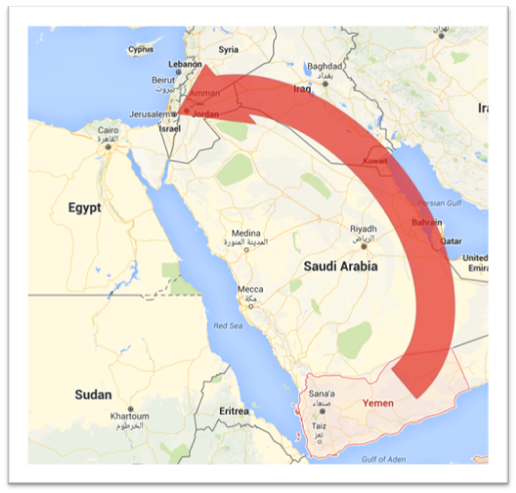
And the author of 1 Kings provides an extended example of one such visit. On this occasion, the Queen of Sheba undertook the long and arduous journey to Jerusalem in order to witness the wisdom of Solomon firsthand. The kingdom of Sheba was located 1200 miles away, on the southwest corner of the Arabian Peninsula, in the region that is now known as Yemen. The queen traveled with a large royal retinue and brought with her a vast amount of spices, gold, and precious stones. And it would seem that the real purpose for her trip was to secure an alliance between her nation and the rapidly expanding kingdom of Solomon. From its location at the confluence of the Sea of Aden and the Red Sea, the kingdom of Sheba had been able to expand its dominance of the spice and incense trade in that region of the world. And a peaceful alliance with a powerful nation like Israel would only further enhance and protect their future prospects.

Upon her arrival, the queen was given a personal appointment with Solomon, where she was able to satisfy her curiosity about his wisdom and wealth. This interrogation was most likely meant to assess the validity of Solomon’s reputation but was also intended to assure the queen whether a treaty with Israel would be beneficial. In the end, she was left breathless by her encounter with Solomon.

…when the queen of Sheba had seen all the wisdom of Solomon, the house that he had built, the food of his table, the seating of his officials, and the attendance of his servants, their clothing, his cupbearers, and his burnt offerings that he offered at the house of the Lord, there was no more breath in her. – 1 Kings 10:4-5 ESV

She was blown away by what she saw and heard. And she confessed that the reality of Solomon’s wisdom and the greatness of his kingdom far exceeded the rumors and her own expectations.

“Everything I heard in my country about your achievements and wisdom is true! I didn’t believe what was said until I arrived here and saw it with my own eyes. In fact, I had not heard the half of it! Your wisdom and prosperity are far beyond what I was told. – 1 Kings 10:6-7 NLT

The inclusion of this personal, third-party assessment of Solomon’s greatness was meant to validate all that the author had written up to this point. Her testimony was intended to prove that all the descriptions concerning Solomon’s wisdom and the wealth of his kingdom were far from rhetorical flourishes or hyperbole. It was all true.

And this pagan queen affirmed the divine nature of Solomon’s reign, deeming the people of Israel as the fortunate recipients of their God’s love because He had chosen to make this just and righteous man their king.

“Praise the Lord your God, who delights in you and has placed you on the throne of Israel. Because of the Lord’s eternal love for Israel, he has made you king so you can rule with justice and righteousness.” – 1 Kings 10:9 NLT

In a way, this statement is meant to remind the Hebrew readers of this book that their nation indeed been blessed by God. His sovereign decision to anoint Solomon as  David’s successor had been a divine act of love and mercy. He had given them a wise, just, and righteous king to rule over them. After decades spent conquering the nations of Canaan and fighting ongoing battles with the Philistines, God had blessed the people of Israel with a time of peace and prosperity. Saul’s reign had ended in failure and disappointment. David’s reign had been marked by war and bloodshed. Now Solomon was leading them into a period of unprecedented growth and success. This was meant to be a golden age for the nation of Israel.

And, almost as further proof of God’s blessing on the nation, the author records that the queen of Sheba gifted Solomon with “9,000 pounds of gold, great quantities of spices, and precious jewels” (1 Kings 10:10 NLT). The blessings just kept coming. Solomon’s great wealth continued to grow. And all of this was in keeping with the promise that God had made to Solomon.

“Because you have asked for wisdom in governing my people with justice and have not asked for a long life or wealth or the death of your enemies—I will give you what you asked for! I will give you a wise and understanding heart such as no one else has had or ever will have! And I will also give you what you did not ask for—riches and fame! No other king in all the world will be compared to you for the rest of your life!” – 1 Kings 3:11-13 NLT

But it’s important to remember that God’s promise had come with a condition.

“…if you follow me and obey my decrees and my commands as your father, David, did, I will give you a long life.” – 1 Kings 3:14 NLT

That important caveat must not be overlooked. And its presence constantly lingers behind the scene portrayed in chapter 10. God was faithfully keeping the promise He had made to Solomon, blessing him with riches and fame beyond belief. But the unspoken question that looms over this entire narrative is whether Solomon, in the midst of his growing wealth and notoriety, will manage to remain faithful to God. Or will he allow the blessings of God to become substitutes for God, distracting his attention and diverting his love.

Almost as an aside, the author reveals another example of God’s blessings on Solomon. He notes that Hiram, the king of Tyre, continued to shower Solomon with incredible gifts of great value.

Hiram’s ships brought gold from Ophir, and they also brought rich cargoes of red sandalwood and precious jewels. – 1 Kings 10:11 NLT

Without having to lift a finger, Solomon’s immense wealth was growing by the minute. God was using these pagan potentates to expand Solomon’s already extensive net worth. But would Solomon view these gifts as the gracious provision of God, meant to underwrite the divine initiatives He had in mind for the nation of Israel? Or would Solomon allow his growing wealth to fund a lifestyle of excess and dissipation? The answer to those questions can be found in the writings of Solomon himself.

Those who love money will never have enough. How meaningless to think that wealth brings true happiness! The more you have, the more people come to help you spend it. So what good is wealth—except perhaps to watch it slip through your fingers! – Ecclesiastes 5:10-11 NLT

Solomon would eventually discover that even the blessings of God become disappointing and disillusioning when they are allowed to take His place. He had allowed his fame and riches, graciously given to him by God, to distract him from his worship of and commitment to God.

I became greater than all who had lived in Jerusalem before me, and my wisdom never failed me. Anything I wanted, I would take. I denied myself no pleasure. I even found great pleasure in hard work, a reward for all my labors. But as I looked at everything I had worked so hard to accomplish, it was all so meaningless—like chasing the wind. There was nothing really worthwhile anywhere. – Ecclesiastes 2:9-11 NLT

But at this point in the story, Solomon is enjoying the blessings of God. And having been exposed to the visual evidence of God’s goodness, the queen of Sheba returned to her kingdom, home more convinced than ever of Solomon’s greatness.

English Standard Version (ESV) The Holy Bible, English Standard Version. ESV® Permanent Text Edition® (2016). Copyright © 2001 by Crossway Bibles, a publishing ministry of Good News Publishers.

New Living Translation (NLT) Holy Bible, New Living Translation, copyright © 1996, 2004, 2015 by Tyndale House Foundation. Used by permission of Tyndale House Publishers Inc., Carol Stream, Illinois 60188. All rights reserved.

The Message (MSG)Copyright © 1993, 1994, 1995, 1996, 2000, 2001, 2002 by Eugene H. Peterson

Undivided Devotion.

I want you to be free from anxieties. The unmarried man is anxious about the things of the Lord, how to please the Lord. But the married man is anxious about worldly things, how to please his wife, and his interests are divided. And the unmarried or betrothed woman is anxious about the things of the Lord, how to be holy in body and spirit. But the married woman is anxious about worldly things, how to please her husband. I say this for your own benefit, not to lay any restraint upon you, but to promote good order and to secure your undivided devotion to the Lord.

If anyone thinks that he is not behaving properly toward his betrothed, if his passions are strong, and it has to be, let him do as he wishes: let them marry—it is no sin. But whoever is firmly established in his heart, being under no necessity but having his desire under control, and has determined this in his heart, to keep her as his betrothed, he will do well. So then he who marries his betrothed does well, and he who refrains from marriage will do even better.

A wife is bound to her husband as long as he lives. But if her husband dies, she is free to be married to whom she wishes, only in the Lord. Yet in my judgment she is happier if she remains as she is. And I think that I too have the Spirit of God. – 1 Corinthians 7:32-40 ESV

There is little doubt that Paul’s view is a bit idealistic. His motivation is sincere, but he is looking at the situation through the lens of his own life. He was a single man who had totally dedicated his life to the mission of spreading the gospel among the Gentile nations. He was totally committed to the commission given to him by Christ and would not allow anything or anyone to distract him. When Paul said, “I wish that all were as I myself am” (1 Corinthians 7:7 ESV), he was referring to his singleness. To the unmarried, he stated his opinion that “it is good for them to remain single as I am” (1 Corinthians 7:8 ESV).

Paul knows that life is difficult. It is full of commitments and requirements on one’s time. There are the daily demands of life such as work, providing for one’s family, relational issues, societal demands and expectations. And for the married individual, those things multiply exponentially. Which is why Paul advocated singleness. But this is where his idealistic nature comes out. He says, “the unmarried man is anxious about the things of the Lord, how to please the Lord” (1 Corinthians 7:32 ESV). Not necessarily, Paul. There are plenty of unmarried men and women who find themselves anxious about anything and everything but the Lord. Singleness is not an antidote to spiritual distraction or the cure for an anemic commitment to Christ. There is no doubt that the fewer earthly commitments and distractions we have, the easier it should be for us to dedicate our time and attention to the things of God. But it doesn’t always work out that way.

Paul writes, “the married man is anxious about worldly things, how to please his wife” (1 Corinthians 7:33 ESV). He is not saying a husband’s commitment to care for the needs of his wife and family are wrong. He is simply emphasizing the reality that the married individual will have a more difficult time finding the time to serve God without neglecting his family. Again, Paul is not indicating that caring for one’s wife and family is somehow non-spiritual or insignificant. In reality, Paul knew well that a Christian was required by God to love his or her spouse and family well. They were required to live out their faith in Christ within the context of the marriage union. To be a godly wife or husband was a huge commitment. That seems to be Paul’s point. As a single man, Paul was completely free to go and do whatever God demanded of him. He had few, if any, commitments that would keep him from responding to God’s call on his life.

Ideally, “the unmarried or betrothed woman is anxious about the things of the Lord, how to be holy in body and spirit” (1 Corinthians 7:34 ESV). For Paul, singleness brought a singularity of focus and he longed for others to experience that same freedom from earthly commitments and concerns. It wasn’t that he experienced no anxiety in his life, but that any anxious moments he had were usually associated with his mission as God’s apostle. Any worries he had were not about domestic issues, but about the state of the church. At one point, he told the Galatians, “I am again in the anguish of childbirth until Christ is formed in you!” (Galatians 4:12 ESV). His concern for their spiritual growth was like a woman anxiously enduring the pains of labor as she waits for her child to arrive healthy and whole. Paul had few worldly distractions. He didn’t have a “honey-do” list. He had no car pool duties, no soccer games to attend, recitals to sit through, or do-it-yourself tasks to perform around the house. He was free to worry about the things of God. And Paul wanted that for each and every believers. Which is why he wrote, “ I want you to do whatever will help you serve the Lord best, with as few distractions as possible” (1 Corinthians 7:36 NLT).

Paul makes it clear that he is not making the single individual more spiritual than a married one. To get married was not a sin. To remain single did not make you a super saint. For Paul, it was a matter of practicality. Single people have fewer distractions and demands on their time. They have more discretion regarding their time.  Paul told Timothy, “No soldier gets entangled in civilian pursuits, since his aim is to please the one who enlisted him” (2 Timothy 2:4 ESV). He seems to have had in mind a stipulation within the Mosaic law that read, “When a man is newly married, he shall not go out with the army or be liable for any other public duty. He shall be free at home one year to be happy with his wife whom he has taken” (Deuteronomy 24:5 ESV).  Undivided attention is difficult when you have divided allegiances. Paul’s primary point in all of this has to do with devotion to God. He believed strongly that he was living in the last days. He lived as if Christ was going to return at any moment. There was no time to waste. The gospel needed to be taken to the ends of the earth. The message of good news in Jesus Christ needed to be heard by every person on every continent. To accomplish that formidable mission, Paul knew he needed the help of every able-bodied believer. He simply wanted the Corinthians to know that he was out to “secure your undivided devotion to the Lord” (1 Corinthians 7:36 ESV). As Jesus had said, “The harvest is plentiful, but the laborers are few” (Luke 10:2 ESV).


Philippians 4:1-9

Stay Focused.

Philippians 4:1-9

And now, dear brothers and sisters, one final thing. Fix your thoughts on what is true, and honorable, and right, and pure, and lovely, and admirable. Think about things that are excellent and worthy of praise. – Philippians 3:8 NLT

As Paul begins to wrap up his letter to the Philippian believers, he summarizes his thoughts and gives them one last set of directives. He had a special affection for these people and wanted to see them grow and prosper in their relationship with Christ and one another. They were under constant pressure from the Judaizers to compromise their freedom in Christ and submit to Jewish laws and rituals as a means of earning favor with God. Paul vehemently stood against that heresy. But on the other end of the spectrum, they were being encouraged by the antinomians (anti-law), to reject any kind of moral law whatsoever and give in to self-indulgence. Both extremes were wrong and dangerous to the well-being of the church. So Paul urges them to maintain their focus. He doesn’t want them to get distracted from what is truly important.

First of all, he calls for unity, and he uses two specific individuals as examples of disunity within the local body of Christ. He appeals to them to settle their dispute because they belong to God. Their mutual disagreement with one another was to take a back seat to their common bond in Christ. Loving one another as fellow believers was more important than being right. They were to find their joy in the Lord, not in winning a dispute or being proven right. He would rather they be known for their reasonableness and consideration than their resilience in winning an argument. Paul reminds them, and the other readers of his letter, not to forget that the Lord is going to return some day. They were to stay focused on what was really important, because on that day, all disputes and arguments are going to seem petty and unimportant.  And they were to replace their worry and anxiety with prayer. If they had a need, they were to take it to God. If they had anything happening among them that was disrupting their unity, they were to bring the matter to Him, praying for one another and thanking God for all He had done for them. As a result, they would experience the peace of God, a supernatural calm in the midst of the storm, protecting their hearts and minds from harmful influences. I can’t help but think that Paul had in mind Isaiah 26:3, which says, “You will keep in perfect peace all who trust in you, all whose thoughts are fixed on you!”

That seems to be the point of this entire section of Paul’s letter, because he goes on to say, “And now, dear brothers and sisters, one final thing. Fix your thoughts on what is true and honorable, and right, and pure, and lovely, and admirable. Think about things that are excellent and worthy of praise” (Philippians 4:8 NLT). It would seem that Paul is encouraging his readers to keep their minds focused on God and all that He has done and is going to do for them. Rather than worry about the things of this world, they were to focus on the world to come, the one that God had promised and was preparing for them. Rather than argue over worldly issues and concerns, they were to fix their thoughts on heavenly ones. It was a matter of focus and priorities. This world is full of distractions and plenty of things to take our eyes off of God. We can easily be persuaded that He is not enough and that this world offers us the things we really want and need. But Paul would argue that the things of this earth are nothing compared to what is to come. Materialism is no match for what God has in store for us. This temporary world can’t compare to the eternity we will spend with God and His Son. So keep your focus. The author of the letter to the Hebrews shared this same sentiment. “…let us strip off every weight that slows us down, especially the sin that so easily trips us up. And let us run with endurance the race God has set before us. We do this by keeping our eyes on Jesus, the champion who initiates and perfects our faith. Because of the joy awaiting him, he endured the cross, disregarding its shame. Now he is seated in the place of honor beside God’s throne” (Hebrews 12:1-2 NLT). When Paul tells us to fix our thoughts on what is true, honorable, right, pure, lovely and admirable, he is telling us to stay focused on God. Nothing in this world has those attributes. No one in this world shares those characteristics. They are the essence of God Himself. What is true is to be found in God alone. What is right will be found in Him who is righteous alone. Whatever is to be admired in this life will be found in the one who is the source of all life. He is to be our focus in this life, not just in the one to come.

Father, this world can be a distracting place. It is so easy to fix our thoughts and our attentions on the things of this earth, and lose sight of You. Material things can become our fixation. We can end up placing our hope and trust in things that won’t last and can’t deliver. We can try and find fulfillment and satisfaction in the temporal rather than the eternal. Keep us focused on You. Help us learn how to keep our eyes fixed on Christ. We need the capacity to endure and to finish strong, keeping our eyes on the goal. Amen.

Ken Miller
Grow Pastor & Minister to Men
kenm@christchapelbc.org

1 Corinthians 7:25-40

A Matter of Priorities.

1 Corinthians 7:25-40

But let me say this, dear brothers and sisters: The time that remains is very short. So from now on, those with wives should not focus only on their marriage. Those who weep or who rejoice or who buy things should not be absorbed by their weeping or their joy or their possessions. Those who use things of the world should not become attached to them. For this world as we know it will soon pass away. – 1 Corinthians 7:29-31 NLT

As Paul continued to answer the questions he had received from the believers in Corinth, he summarized his response with a call to reconsider their priorities. Most of their questions had to do with whether certain things we worth doing or not. Should they get married or remain single? If they were married to an unbelieving spouse, should they leave them? Should a believing couple abstain from sex in order to make their marriage more holy? Paul’s advice, considering the growing persecution they would face, was simple and direct: “I think it is best to remain as you are” (1 Corinthians 7:26 NLT). If you’re single, stay that way. If you’re married, remain so. But then he told them something incredibly significant that seemed intended to refocus their priorities. He informed them that the time was very short. They needed to have more short-term, rather than long-term goals and objectives. They needed to understand that there was going to be a day when the Lord returned. No one knows that day, but it is inevitable and unavoidable. Paul had no idea when the exact date of Christ’s return would be, but he knew that his own time on earth was limited. He understood that this world is a temporary reality and has a limited shelf life. Most of the questions he had received from the Corinthians were evidence that they viewed this world and their life in it as a high priority. Paul was trying to give them a more eternal perspective.

The words of Paul is this passage are difficult for us to hear and even more difficult for us to agree with. He tells the married men, “So then those who have wives should be as those who have none” (1 Corinthians 7:29b NET). This sounds radical and even unbiblical. What is he saying? It would seem that Paul is trying to tell married men to not focus all their attention on their married state. He is not suggesting that they abandon their responsibilities as husbands or that they no longer love their wives as Christ loved the Church. He is telling them that nothing in this world – marriage, singleness, sorrow, happiness, material things or physical pleasures – should demand all our attention and distract us from our true calling as Christ-followers. “For this world as we know it will soon pass away” (1 Corinthians 7:31b NLT).

Paul wanted them to be free from the concerns of this life. He was not suggesting that they abandon their responsibilities and live some kind of ascetic lifestyle, denying themselves any kind of enjoyment or pleasure from this world. He was simply trying to get them to rethink their priorities and refocus their attention on what was really important. For Paul, it was simple. A single man or woman had more available time to serve the Lord. They could dedicate more of their life to Kingdom causes, without having to feel guilty that they were neglecting their marital responsibilities. The more earthly ties we have, the more difficult it will be for us to focus our attention on the things of heaven. This world has a way of distracting us from the things of God. It isn’t that the things of this life are evil or wrong, but if we’re not careful, we can end up focusing all our attention on temporal issues and lose sight of the fact that we are eternal beings and this world as we know it is not our final destination. At the end of the day, Paul just wanted the believers in Corinth to set the priorities of their lives so that they could serve the Lord as successfully as possible. “I want you to do whatever will help you serve the Lord best, with as few distractions as possible” (1 Corinthians 7:35 NLT).

One of the constant risks for us as followers of Christ in this fallen world is to find our value and meaning from the things of this world. We cannot afford to let whether we are married or not define who we are. We cannot afford to let our possessions, or lack of them, define who we are. We cannot afford to let our sadness or happiness determine who we are. We must constantly remind ourselves that we are, first and foremost, disciples of Christ. We are His ambassadors. We are citizens of His Kingdom, not of this world. We are temporary residents in this temporal environment. This world is not our home. We must constantly protect ourselves from divided interests. Again, Paul is not encouraging the Corinthians or us to abandon our earthly responsibilities, but to manage them wisely. Our problem is that we tend to add more and more responsibilities and earthly distractions that keep us from focusing our attention on the spiritual aspect of our lives. We live under the delusion that this world is all there is and that we must grab as much of it as possible while there is time to do so. But the end result is that we become burdened down with distractions that take our eyes off the Lord and absorb all our time, preventing us from serving Him effectively. For Paul, serving God was priority number one. That objective had to be considered at all times. Anything that distracts us from making Him our highest priority has to be evaluated and re-prioritized. That does not mean that we have to leave our spouses, quit our jobs, abandon our friendships, sell all our possessions, or dedicate our lives to full-time Christian service. It simply means that we must never allow anything to become more important than our relationship with and dedication to God. The truth is, when we make Him our highest priority, we become better husbands and wives, fathers and mothers, employees and employers, friends, neighbors, and citizens. It is when we understand that we are to have no other gods, no other idols, no other sources of worth or worship, that we are able to live in this world, but not be absorbed by it.

Father, reset our priorities. Make us Kingdom people who live with the future in mind. Don’t let us buy into the lie that this world is all there is and that we must grab as much of it as we can while we can. Don’t let us lose sight of what is of real importance: Our relationship with You. Amen.

Ken Miller
Grow Pastor & Minister to Men
kenm@christchapelbc.org

Proverbs 4c


Focus.

“Look straight ahead, and fix your eyes on what lies before you. Mark out a straight path for your feet; stay on the safe path. Don’t get sidetracked; keep your feet from following evil.” – Proverbs 4:25-27 NLT

The other day I got a text from my son who is a freshman in college. In his message, he talked about how difficult college was proving to be. One of the things he said to me was very insightful. He simply said that college was full of distractions. Oh, how true. And the same thing can be said of life in general. Every day, we all face circumstances, situations, and even individuals who can easily distract us from what really matters in life. There are fires to put out, problems to handle. difficult people to deal with, deals to close, opportunities to take advantage of, and a myriad of other things, both large and small, that can get our eye off of the prize. We can easily lose focus. We can become distracted and even disoriented, losing touch with what really matters. So Solomon warns us to keep our eyes straight ahead. He tells us to not lose focus and allow ourselves to get distracted by all that life has to offer. And this guy is speaking from experience. Remember, he is the wisest and wealthiest king that the nation of Israel every knew. Listen how he describes his experience with lost focus:

I said to myself, “Come on, let’s try pleasure. Let’s look for the ‘good things’ in life.” But I found that this, too, was meaningless.So I said, “Laughter is silly. What good does it do to seek pleasure?”After much thought, I decided to cheer myself with wine. And while still seeking wisdom, I clutched at foolishness. In this way, I tried to experience the only happiness most people find during their brief life in this world. I also tried to find meaning by building huge homes for myself and by planting beautiful vineyards.I made gardens and parks, filling them with all kinds of fruit trees.I built reservoirs to collect the water to irrigate my many flourishing groves. I bought slaves, both men and women, and others were born into my household. I also owned large herds and flocks, more than any of the kings who had lived in Jerusalem before me. I collected great sums of silver and gold, the treasure of many kings and provinces. I hired wonderful singers, both men and women, and had many beautiful concubines. I had everything a man could desire! So I became greater than all who had lived in Jerusalem before me, and my wisdom never failed me. Anything I wanted, I would take. I denied myself no pleasure. I even found great pleasure in hard work, a reward for all my labors. But as I looked at everything I had worked so hard to accomplish, it was all so meaningless—like chasing the wind. There was nothing really worthwhile anywhere. – Ecclesiastes 2:1-11 NLT

Wow! Talk about distractions. Pleasure, wine, palaces, vineyards, gardens, parks, reservoirs, slaves, flocks, silver, gold, singers – but it was all like chasing the wind. Fleeting, ephemeral, meaningless and, ultimately, unfulfilling. Solomon had allowed himself to look in the wrong places for what he hoped would be the right solution to his problem. Instead of keeping his eyes focused on God, he got sidetracked and, ultimately, sidelined. Solomon’s lack of focus wasn’t just a short-lived event, but a lifelong obsession that cost him dearly. Take a look at this recap of the last days of his life.

Now King Solomon loved many foreign women. Besides Pharaoh’s daughter, he married women from Moab, Ammon, Edom, Sidon, and from among the Hittites. The Lord had clearly instructed the people of Israel, ‘You must not marry them, because they will turn your hearts to their gods.’ Yet Solomon insisted on loving them anyway. He had 700 wives of royal birth and 300 concubines. And in fact, they did turn his heart away from the Lord. In Solomon’s old age, they turned his heart to worship other gods instead of being completely faithful to the Lord his God, as his father, David, had been. – 1 Kings 11:1-4 NLT

Solomon didn’t listen to his own advice. He refused his own counsel. He didn’t look straight ahead. He didn’t keep his eyes fixed on the Lord. He strayed off the straight path and found himself wandering around in the high weeds along the road of life. And the same thing can happen to us as believers. We can lose our focus. We can become distracted. We can allow the things of this world to entice and entrap us, leaving us ineffective and a far cry from the victorious conquerors God intended us to be. Don’t lose your focus. Keep your eye on the prize. Don’t let God out of your sights. Make your pursuit of Christ your highest priority and greatest joy. Nothing else matters.

Father, this world can be a distracting place. We can be like kids in a toy store who find themselves surrounded with all kinds of tempting, tantalizing treasures that promise to bring us joy. But they can’t deliver. Only You can bring us true joy, fulfillment and worth. Help us keep our eyes on You. Amen

Ken Miller
Grow Pastor & Minister to Men
kenm@christchapelbc.org