10 At the end of twenty years, in which Solomon had built the two houses, the house of the LORD and the king’s house, 11 and Hiram king of Tyre had supplied Solomon with cedar and cypress timber and gold, as much as he desired, King Solomon gave to Hiram twenty cities in the land of Galilee. 12 But when Hiram came from Tyre to see the cities that Solomon had given him, they did not please him. 13 Therefore he said, “What kind of cities are these that you have given me, my brother?” So they are called the land of Cabul to this day. 14 Hiram had sent to the king 120 talents of gold.
15 And this is the account of the forced labor that King Solomon drafted to build the house of the LORD and his own house and the Millo and the wall of Jerusalem and Hazor and Megiddo and Gezer 16 (Pharaoh king of Egypt had gone up and captured Gezer and burned it with fire, and had killed the Canaanites who lived in the city, and had given it as dowry to his daughter, Solomon’s wife; 17 so Solomon rebuilt Gezer) and Lower Beth-horon 18 and Baalath and Tamar in the wilderness, in the land of Judah, 19 and all the store cities that Solomon had, and the cities for his chariots, and the cities for his horsemen, and whatever Solomon desired to build in Jerusalem, in Lebanon, and in all the land of his dominion. 20 All the people who were left of the Amorites, the Hittites, the Perizzites, the Hivites, and the Jebusites, who were not of the people of Israel— 21 their descendants who were left after them in the land, whom the people of Israel were unable to devote to destruction—these Solomon drafted to be slaves, and so they are to this day. 22 But of the people of Israel Solomon made no slaves. They were the soldiers, they were his officials, his commanders, his captains, his chariot commanders and his horsemen.
23 These were the chief officers who were over Solomon’s work: 550 who had charge of the people who carried on the work.
24 But Pharaoh’s daughter went up from the city of David to her own house that Solomon had built for her. Then he built the Millo.
25 Three times a year Solomon used to offer up burnt offerings and peace offerings on the altar that he built to the LORD, making offerings with it before the LORD. So he finished the house.
26 King Solomon built a fleet of ships at Ezion-geber, which is near Eloth on the shore of the Red Sea, in the land of Edom. 27 And Hiram sent with the fleet his servants, seamen who were familiar with the sea, together with the servants of Solomon. 28 And they went to Ophir and brought from there gold, 420 talents, and they brought it to King Solomon. – 1 Kings 9:10-28 ESV
 Solomon doesn’t realize it, but he is at the midway point of his 40-year reign. He has just completed the construction of the Temple, his royal palaces, and all the buildings that will house his administrative offices.
With these projects behind him, Solomon turns his attention to other pressing matters. First, he makes an attempt to compensate King Hiram of Phoenicia for all the material and financial aid he provided over the years. Early in his reign, Solomon made an agreement with Hiram that provided all the lumber he needed for his many construction projects, while Hiram received much-needed grain and olive oil in return.
So Hiram supplied as much cedar and cypress timber as Solomon desired. In return, Solomon sent him an annual payment of 100,000 bushels of wheat for his household and 110,000 gallons of pure olive oil. – 1 Kings 5:10-11 NLT
This agreement had lasted for 20 years, and during that time, Solomon compensated King Hiram for all the lumber and paid wages to all the Phoenician wood-workers who helped with the various construction projects (1 Kings 5:6). But now that all the work was done, Solomon wanted to make a gesture of goodwill to his friend in Phoenicia. So, he gave Hiram 20 cities located in the land of Galilee along the border between Israel and Phoenicia. This appears to be a gracious act of generosity on Solomon’s part, but it quickly becomes apparent that his gift was a bit disingenuous. When Hiram personally inspected the cities Solomon had given him, his response reveals his deep disappointment.
“What kind of towns are these, my brother?” he asked. So Hiram called that area Cabul (which means “worthless”), as it is still known today. – 1 Kings 9:13 NLT
Evidently, these towns were located in a region of Galilee that was not conducive to agricultural production. Since Phoenicia occupied a narrow strip of land along the Mediterranean Sea, they were woefully deficient in arable farmland. That’s why Solomon’s compensation for the lumber had taken the form of grain and olive oil. At first glance, it would appear that Solomon had given them what they had always needed: Land on which to grow crops. But Hiram described Solomon’s gift as “Cabul,” a word that means “bound” or “sterile.” And while these 20 towns expanded the range of Hiram’s kingdom, they were essentially worthless. They provided no practical value. What makes Solomon’s gift that much more egregious is that, over the years, Hiram had given Solomon 120 talents of gold. To put that in perspective, that’s nearly 5 tons of gold.
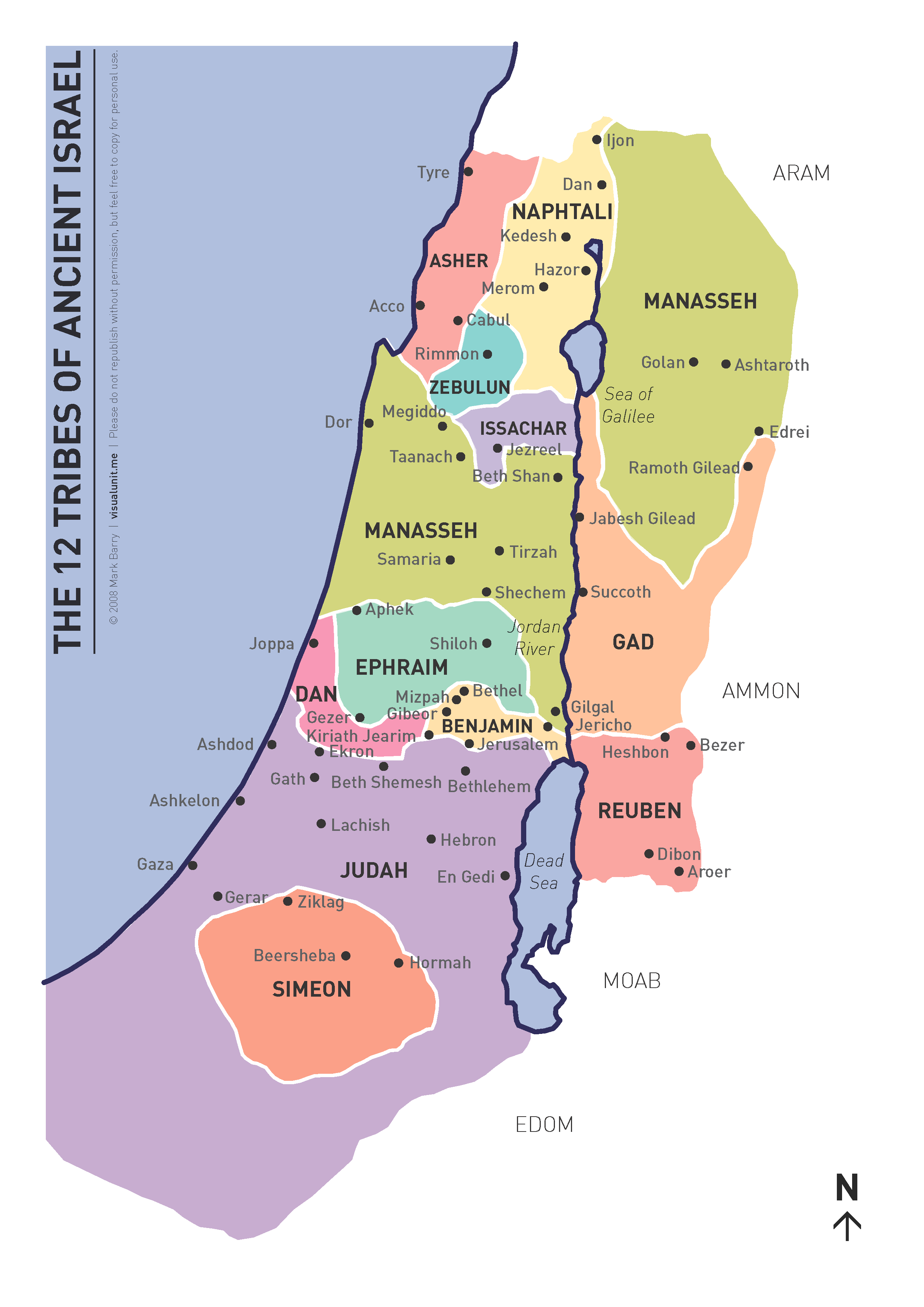 One could almost draw the conclusion that Solomon was somewhat of a Scrooge, a financial tightwad who was more than willing to spend money on himself but was somewhat stingy when it came to others. It is also interesting to note that Solomon had given away land that had been part of the inheritance given by God to the people of Israel.
It’s most likely that the 20 towns were located in territory that belonged to the tribes of Asher, Naphtali, and Zebulun. In awarding these cities to Hiram, Solomon was guilty of giving away land that belonged to the people of God. His willingness to turn over possession of the land, coupled with Hiram’s poor assessment of it, reveals that it held no real value to Solomon.
One of the things that can be learned from studying the history of the Israelites is that every decision they made had long-term ramifications. The Book of Judges reveals that, at one point, the tribes of Asher, Naphtali, and Zebulun were told to conquer and occupy the land allotted to them by God, but they failed.
The tribe of Zebulun failed to drive out the residents of Kitron and Nahalol, so the Canaanites continued to live among them. But the Canaanites were forced to work as slaves for the people of Zebulun.
The tribe of Asher failed to drive out the residents of Acco, Sidon, Ahlab, Aczib, Helbah, Aphik, and Rehob. Instead, the people of Asher moved in among the Canaanites, who controlled the land, for they failed to drive them out.
Likewise, the tribe of Naphtali failed to drive out the residents of Beth-shemesh and Beth-anath. Instead, they moved in among the Canaanites, who controlled the land. Nevertheless, the people of Beth-shemesh and Beth-anath were forced to work as slaves for the people of Naphtali. – Judges 1:30-33 NLT
One of the reasons the Phoenicians even existed was because of the failure of these three tribes to do what God had commanded them to do. As a result of their inability to drive out the inhabitants of the land, the Phoenicians occupied territory that was supposed to belong to the people of God. Now, Solomon had just awarded the Phoenicians with even more of Israel’s God-given inheritance.
Solomon’s primary focus was the city of Jerusalem. Having willingly forfeited the towns located in the north, Solomon poured his time and energy into expanding his royal capital. To do so, Solomon enslaved thousands of non-Jews to work as laborers on his various rebuilding and enlargement projects. He conscripted Amorites, Hittites, Perizzites, Hivites, and Jebusites who were living in the land of Israel to provide slave labor for his ambitious expansion program. These people were used to extend the walls of Jerusalem, connecting the Old City of David with the newer area surrounding the Temple complex, the royal palaces, and administrative headquarters. They “built towns as supply centers and constructed towns where his chariots and horses could be stationed” (1 Kings 9:19 NLT). Solomon was constructing a virtual theme park dedicated to his greatness, complete with palaces, terraces, stables for his numerous horses, and barracks for his expanding army.
And it’s essential to recall that God had warned the people of Israel that their kings were not to rule like the kings of other nations.
The king must not build up a large stable of horses for himself… – Deuteronomy 17:16 NLT
The king must not take many wives for himself… – Deuteronomy 17:17 NLT
And he must not accumulate large amounts of wealth in silver and gold for himself… – Deuteronomy 17:17 NLT
Solomon violated each of these commands. And while at this point, it appears that the daughter of Pharaoh was his only wife, it wouldn’t be long before he expanded his household greatly.
Now King Solomon loved many foreign women. Besides Pharaoh’s daughter, he married women from Moab, Ammon, Edom, Sidon, and from among the Hittites. The LORD had clearly instructed the people of Israel, “You must not marry them, because they will turn your hearts to their gods.” Yet Solomon insisted on loving them anyway. He had 700 wives of royal birth and 300 concubines. And in fact, they did turn his heart away from the LORD. – 1 Kings 11:1-3 NLT
Whether it was wives and concubines or horses and chariots, Solomon always seemed to be in expansion mode. Enough was never enough. He even built a fleet of boats and initiated an aggressive trading venture that yielded 16 tons of gold. For Solomon, bigger was always better. Yet, late in his life, he would make a sad but telling admission.
I increased my possessions:
I built houses for myself;
I planted vineyards for myself.
I designed royal gardens and parks for myself,
and I planted all kinds of fruit trees in them.
I constructed pools of water for myself,
to irrigate my grove of flourishing trees.
I purchased male and female slaves,
and I owned slaves who were born in my house;
I also possessed more livestock—both herds and flocks—
than any of my predecessors in Jerusalem.
I also amassed silver and gold for myself,
as well as valuable treasures taken from kingdoms and provinces.
I acquired male singers and female singers for myself,
and what gives a man sensual delight—a harem of beautiful concubines.
So I was far wealthier than all my predecessors in Jerusalem,
yet I maintained my objectivity.
I did not restrain myself from getting whatever I wanted;
I did not deny myself anything that would bring me pleasure.
So all my accomplishments gave me joy;
this was my reward for all my effort.
Yet when I reflected on everything I had accomplished
and on all the effort that I had expended to accomplish it,
I concluded: “All these achievements and possessions are ultimately profitless—
like chasing the wind!
There is nothing gained from them on earth.” – Ecclesiastes 1:4-11 NLT
They say, “hindsight is 20-20,” and that maxim would prove to be true in Solomon’s life. He would one day discover that his obsession with constant expansion, endless pleasure, and rampant materialism would never satisfy. But at the midway point of his reign, he didn’t know any better. So, he continued to strive to balance his affection for the things of this world with his devotion to God. He continued to accumulate material goods while simultaneously offering sacrifices to God. Without even realizing it, he was worshiping two gods. Solomon was living out the very thing Jesus would later warn His disciples about.
“No one can serve two masters. For you will hate one and love the other; you will be devoted to one and despise the other. You cannot serve God and be enslaved to money.” – Matthew 6:24 NLT
There was a reason Yahweh forbade His kings from accumulating wealth, wives, and material possessions. They were to place their hope and trust in Him alone. Marital alliances with foreign nations were off-limits for Israel’s kings because of the risk of idolatry. Yahweh knew that these pagan women would bring their foreign gods with them, providing a dangerous influence on Israel’s kings. He also prohibited the kings of Israel from establishing fighting forces that used military tactics borrowed from foreign powers. Horses and chariots were off limits because they would give the Israelites a false sense of superiority based on something other than Yahweh. King David had warned about the danger of misplaced hope.
Some nations boast of their chariots and horses,
but we boast in the name of the LORD our God. – Psalm 20:7 NLT
Solomon’s kingdom was growing along with his reputation, and it would seem that his ego was expanding at an equally rapid rate. His unbridled power and influence led him to make decisions that would have unexpected consequences. His enslavement of the former inhabitants of the land and his forced conscription of Israelite citizens would come back to haunt him (1 Kings 12:1-4). But for now, Solomon was living the dream, unaware that his decisions would have long-term ramifications.
English Standard Version (ESV) The Holy Bible, English Standard Version. ESV® Permanent Text Edition® (2016). Copyright © 2001 by Crossway Bibles, a publishing ministry of Good News Publishers.
New Living Translation (NLT) Holy Bible, New Living Translation, copyright © 1996, 2004, 2015 by Tyndale House Foundation. Used by permission of Tyndale House Publishers Inc., Carol Stream, Illinois 60188. All rights reserved.


