The Greater Story

25 When the man of God saw her coming, he said to Gehazi his servant, “Look, there is the Shunammite. 26 Run at once to meet her and say to her, ‘Is all well with you? Is all well with your husband? Is all well with the child?’” And she answered, “All is well.” 27 And when she came to the mountain to the man of God, she caught hold of his feet. And Gehazi came to push her away. But the man of God said, “Leave her alone, for she is in bitter distress, and the Lord has hidden it from me and has not told me.” 28 Then she said, “Did I ask my lord for a son? Did I not say, ‘Do not deceive me?’” 29 He said to Gehazi, “Tie up your garment and take my staff in your hand and go. If you meet anyone, do not greet him, and if anyone greets you, do not reply. And lay my staff on the face of the child.” 30 Then the mother of the child said, “As the Lord lives and as you yourself live, I will not leave you.” So he arose and followed her. 31 Gehazi went on ahead and laid the staff on the face of the child, but there was no sound or sign of life. Therefore he returned to meet him and told him, “The child has not awakened.”

32 When Elisha came into the house, he saw the child lying dead on his bed. 33 So he went in and shut the door behind the two of them and prayed to the Lord. 34 Then he went up and lay on the child, putting his mouth on his mouth, his eyes on his eyes, and his hands on his hands. And as he stretched himself upon him, the flesh of the child became warm. 35 Then he got up again and walked once back and forth in the house, and went up and stretched himself upon him. The child sneezed seven times, and the child opened his eyes. 36 Then he summoned Gehazi and said, “Call this Shunammite.” So he called her. And when she came to him, he said, “Pick up your son.” 37 She came and fell at his feet, bowing to the ground. Then she picked up her son and went out. – 2 Kings 4:25b-37 ESV

Oftentimes, when reading the stories contained in the Scriptures, we find ourselves trying to ascertain their meaning or attempting to discover some helpful point of application. We desperately search for some relevant truth that we might apply to our own lives. And while this is a worthy goal, our relentless quest for a personalized point of application can leave us missing the primary message of the passage. This can be especially true when we lift these stories out of their surrounding context. When we turn the stories of the Bible into Bible stories, we tend to rob them of their Scriptural context and meaning.

In reading the story of the Shunammite woman, it would be easy to focus our attention on the loss of her child and the faith she exhibited by seeking out the prophet. And while there are lessons to be learned from her actions, the author seems to have a far greater and more important point of emphasis. This entire story takes place in the context of Israel’s ongoing apostasy. It is a time of spiritual darkness and moral apathy. The kings of Israel have consistently led the nation away from the worship of Yahweh by promoting their own replacement deities. From the golden calves erected by Jeroboam to the Canaanite gods, Baal and Asherah, the people of Israel have had a host of idols from which to choose. But through it all, Yahweh has remained faithful and all-powerful. And He has chosen to reveal Himself through His prophets. First, He spoke and exhibited His power through Elijah. Then, upon Elijah’s death, God continued to reveal Himself through Elijah’s former servant, Elisha.

But the stories involving Elijah and Elisha are not intended to focus our attention on these two men, as much as they are to draw our eye to the God who worked through them. They were messengers of Yahweh and human conduits of His grace, mercy, power, and, at times, His judgment. They are the human representatives of God Almighty, speaking and acting on His behalf, and displaying before the people His divine attributes.

So, when the Shunammite woman discovers her son is dead and seeks out the prophet of God, it is less a statement about her faith than it is about God’s invasion of the darkness of Israel. All that takes place in this story is intended to point to Yahweh, not the woman, Gehazi the servant, or Elisha the prophet. But because we’re human, we tend to focus all our attention on the human actors in the drama and, in doing so, we run the risk of minimizing the role of the leading actor in the play: God Himself.

If we isolate this story from its context, we will miss out on all that the author has been trying to reveal about God. Earlier, in chapter 17 of 1 Kings, the author told the story of Elijah and the widow of Zarephath. After his decisive victory over the 450 prophets of Baal, Elijah had been threatened with death by Queen Jezebel. So, he had run for his life. But God had intercepted His fearful prophet and sent him to the town of Zarephath in Sidon. There Elijah met a poor widow who was gathering wood in order to cook a final meal for her and her son. But Elijah had performed a miracle, providing the woman with a seemingly never-ending supply of flour that would sustain their lives for a long time to come. Sound familiar? It should. Because a very similar scene took place when Elisha encountered the prophet’s widow in 2 Kings 18. This woman was about to lose her boys to slavery because of an unpaid debt. She was destitute and down to her last jar of oil. But Elisha intervened and miraculously multiplied her oil so that she had enough to satisfy her debt and sustain her boys for years to come.

But the similarities don’t stop there. The feel-good story of the widow of Zarephath also contains a less-than-happy plot twist. Her young son dies unexpectedly, and she confronts Elijah about this devastating turn of events.

“O man of God, what have you done to me? Have you come here to point out my sins and kill my son?” – 1 Kings 17:18 NLT

Even Elijah was at a loss as to why this tragedy had taken place, and he expressed his exasperation to Yahweh.

“O Lord my God, why have you brought tragedy to this widow who has opened her home to me, causing her son to die?” – 1 Kings 17:20 NLT

But the point of the passage is not the woman’s anger or Elijah’s disappointment with God. It is the divine intervention of Yahweh.

And he stretched himself out over the child three times and cried out to the Lord, “O Lord my God, please let this child’s life return to him.” The Lord heard Elijah’s prayer, and the life of the child returned, and he revived! – 1 Kings 17:21-22 NLT

Remember, both Elijah and Elisha had been chosen by God to be the human vessels through whom He revealed Himself to the people of Israel. They were nothing more than men, but God had set them apart for His use. He spoke and acted through them and, oftentimes, in spite of them.

But don’t miss the significant parallels found in all of these stories. The Shunammite woman, like the widow of Zarephath, suddenly finds her joy interrupted by the death of her child. So, she seeks out the prophet of God. This time, it’s Elisha. And she confronts him about this devastating turn of events. Her worst nightmare has come true.

“Did I ask you for a son, my lord? And didn’t I say, ‘Don’t deceive me and get my hopes up’?” – 2 Kings 4:28 NLT

She was angry and justifiably so. And Elijah was caught off guard, having been given no prior insight from God concerning the death of her child. God had not revealed the nature of her distress or given the prophet a solution to remedy it. But once Elisha discovered what had happened, he acted promptly. At one time, Elisha had been the servant of Elijah, and he would have been intimately familiar with the story of the widow of Zarephath. Most likely, he had been there to witness the miraculous death-to-life transformation that had taken place.

So, fully trusting that God would intervene yet again, he commanded his servant to take his staff and lay it on the body of the dead child. But this “remedy” proved ineffective. That was not the way God was going to restore the boy’s life. He wanted Elisha to be personally and physically involved in the miracle. It was not that God could not or would not operate through a staff. He had done so before and could do so again – if He so chose. Consider all the miracles God had performed through the staff of Moses. But on this occasion, God was going to require that Elisha be intimately involved in the delivery of the miracle. And just as Elijah had “stretched himself out over the child” (1 Kings 17:21 NLT), so Elisha “lay down on the child’s body” (2 Kings 4:34 NLT). In both cases, these men acted as God’s hands-on representatives, illustrating His intimate concern for His people through their own physical touch and personal involvement.

In a sense, the God of the universe had required both Elijah and Elisha to have some skin in the game. They became active agents in the delivery of God’s miracle. But neither of these men was meant to be the focus of the story or seen as the source behind the miracle. They were simply instruments in the hand of God. But their personal touch made the transcendent God more knowable and relatable. Through their intimate involvement, they made the care and concern of God tangible and visible. God chose to revive the lives of these two boys through the personal touch of His chosen prophets.

And, once again, let’s not miss the overall context of Scripture. These two stories point to an even greater display of God’s love and intimacy that was to come. Centuries later, God would send His own Son as His anointed messenger, delivering a message of repentance and renewal to the rebellious people of Israel. Jesus would become the final prophet of God, who would make the power and presence of God known through His incarnation. He would become God in human flesh, delivering the divine message of redemption and spiritual rejuvenation. Like Elijah and Elisha, Jesus would be required to personally engage with the nation of Israel. But His involvement in the restoration of life to the spiritually dead nation would require a far greater price than either Elijah or Elisha had paid. Jesus would end up sacrificing His own life so that many might live. He would stretch out His hands on a cruel Roman cross, paying the penalty for mankind’s sin by offering His own sinless life as a substitute. He would die so that we might live. He would pay the ultimate price so that those who were dead in their trespasses and sins might experience new life and enjoy a new relationship with God.

English Standard Version (ESV) The Holy Bible, English Standard Version. ESV® Permanent Text Edition® (2016). Copyright © 2001 by Crossway Bibles, a publishing ministry of Good News Publishers.

New Living Translation (NLT) Holy Bible, New Living Translation, copyright © 1996, 2004, 2015 by Tyndale House Foundation. Used by permission of Tyndale House Publishers Inc., Carol Stream, Illinois 60188. All rights reserved.

The Message (MSG)Copyright © 1993, 1994, 1995, 1996, 2000, 2001, 2002 by Eugene H. Peterson

When Dreams Turn Into Nightmares

8 One day Elisha went on to Shunem, where a wealthy woman lived, who urged him to eat some food. So whenever he passed that way, he would turn in there to eat food. 9 And she said to her husband, “Behold now, I know that this is a holy man of God who is continually passing our way. 10 Let us make a small room on the roof with walls and put there for him a bed, a table, a chair, and a lamp, so that whenever he comes to us, he can go in there.”

11 One day he came there, and he turned into the chamber and rested there. 12 And he said to Gehazi his servant, “Call this Shunammite.” When he had called her, she stood before him. 13 And he said to him, “Say now to her, ‘See, you have taken all this trouble for us; what is to be done for you? Would you have a word spoken on your behalf to the king or to the commander of the army?’” She answered, “I dwell among my own people.” 14 And he said, “What then is to be done for her?” Gehazi answered, “Well, she has no son, and her husband is old.” 15 He said, “Call her.” And when he had called her, she stood in the doorway. 16 And he said, “At this season, about this time next year, you shall embrace a son.” And she said, “No, my lord, O man of God; do not lie to your servant.” 17 But the woman conceived, and she bore a son about that time the following spring, as Elisha had said to her.

18 When the child had grown, he went out one day to his father among the reapers. 19 And he said to his father, “Oh, my head, my head!” The father said to his servant, “Carry him to his mother.” 20 And when he had lifted him and brought him to his mother, the child sat on her lap till noon, and then he died. 21 And she went up and laid him on the bed of the man of God and shut the door behind him and went out. 22 Then she called to her husband and said, “Send me one of the servants and one of the donkeys, that I may quickly go to the man of God and come back again.” 23 And he said, “Why will you go to him today? It is neither new moon nor Sabbath.” She said, “All is well.” 24 Then she saddled the donkey, and she said to her servant, “Urge the animal on; do not slacken the pace for me unless I tell you.” 25 So she set out and came to the man of God at Mount Carmel. – 2 Kings 4:8-25 ESV

When Elijah had been the prophet of God to Israel, his ministry seemed to focus on the royal household. Virtually all of the interactions he had were with King Ahab or his wife, Jezebel. And while Elisha had begun his own prophetic ministry with a confrontation between himself and King Jehoram, he seems to have been a prophet to the people. In the last story, Elisha came to the aid of a recently widowed woman who was facing the prospect of having her two sons sold into slavery because of an unpaid debt. In a sense, this woman represented the nation of Israel. She had been left destitute by her husband, a former prophet of God. While alive, this man of God had incurred a sizeable debt, and had he made no plans for its repayment in the case of his death. In a real sense, the people of Israel found themselves spiritually destitute and owing a large debt to God Almighty. Their kings had taken advantage of God’s love and mercy, using His resources to fund their own profligate lifestyles. They had lived for the moment, never considering what would happen when God called their debt due. Jeroboam, Ahab, Ahaziah, and now, Jehoram, all led the people into idolatry and left them with a debt they could not pay.

But Elisha had intervened on the widow’s behalf, providing her with a miracle that eliminated her debt, spared her sons, and met her needs for a long time to come. Through the actions of His faithful prophet, the God of Israel revealed His love and concern for His covenant people. Now, the story shifts to yet another encounter between Elisha and a woman in need. But this time, the woman isn’t even aware that she has a need.

For some unspecified reason, Elisha and his servant, Gehazi, made regular trips to the northern region of Israel that took them to the city of Shunem. In this city, Elisha made the acquaintance of a local woman who offered the prophet and his servant access to her home so they could rest. Realizing that Elisha was a prophet of Yahweh she showed him hospitality and even had her husband construct a room on the roof of their home where the two men could stay when they were in town.

Unlike the widow in the previous story, this woman was apparently wealthy and well-cared for. She had a husband and enjoyed a comfortable lifestyle. But she was also generous and willing to share what she had with others. The gracious hospitality she extended to the prophet of God reveals that, despite the apostasy all around her, she had maintained her dedication to Yahweh.

Desiring to thank the woman for her courtesy and care, Elisha sent his servant to ask what they could do for her. He wanted to repay her for her kindness. But it’s interesting to note that he offered to speak a good word on her behalf to the king or the commander of the army. Why would the prophet of Yahweh offer to act as an intermediary between this woman and these two apostate leaders of Israel? Perhaps it was a test, designed to see if the woman was a true follower of Yahweh. Would his offer of access to the king pique her interest and reveal a self-aggrandizing side to her personality? Or, instead, would she ask the prophet of God to appeal to Yahweh on her behalf?

But the woman simply responded, “I dwell among my own people” (2 Kings 4:13 ESV). This rather cryptic-sounding statement was her way of saying, “I’m just fine. I’m well-taken care of and in need of nothing.”

Yet, Elisha somehow senses that her answer was not quite honest. She was hiding something. And it was Gehazi who made the keen observation that she and her husband were childless. She had a husband and enjoyed a comfortable lifestyle, but she had no sons to carry on the family name. And Gehazi had recognized that her husband was advanced in years.

While the woman in the previous story had been without a husband, she had been blessed with two sons. But the Shunnamite woman had a husband but no children. For the moment, the woman had no perceived need, but the day was coming when her husband would die with no male heirs to whom he could leave his land and estate. In that culture, the inheritance could not be passed on to the wife. So, without a son, she would be left with nothing. She didn’t realize it, but her predicament was far more precarious than she imagined.

So, Elisha called the woman in and informed her, “Next year at this time you will be holding a son in your arms!” (2 Kings 4:16 NLT). Her reaction to this news reveals that she had long ago given up hope of ever having a son.

“No, my lord!” she cried. “O man of God, don’t deceive me and get my hopes up like that.” – 2 Kings 4:16 NLT

When Elisha had asked the woman what he could do for her, she had hidden the desire of her heart. She gave the impression that she had no need and was perfectly fine. But she had lied. Her heart longed for a son but she had become convinced that her dream would never become a reality. So, she lived with a constant fear of the future. What would happen to her when her husband died? How would she survive?

But, once again, Elisha, operating on behalf of Yahweh, spoke a word of blessing over the woman, predicting that she would give birth to a son. And his words proved true. God did a miracle and gave the woman the desire of her heart. She conceived and gave birth to a son. But the story doesn’t stop there.

In the space of just a few verses, the author reveals that the storybook ending was about to take a dark turn. This precious gift from God was going to be suddenly and unexpectedly taken away. One day, while visiting his father in the fields, the young boy complained of a headache. He was rushed home and, later that same day, he passed away in the arms of his mother. Every detail of this story makes the reader want to ask, “Why?” None of this makes sense. Why would God give this woman a son and then allow him to be taken away? What good did it do for her to give birth to a son if he would never live long enough to become the heir? The woman was no better off than before. If anything, her sorrow was only intensified by the loss of her long-awaited son.

But the actions of the woman reveal something about her faith. Upon her son’s death, she took the body and laid it on the prophet’s bed. Then she ordered her husband to saddle a donkey so she could fetch the prophet. At this point, it seems that the boy’s father was unaware that his son had died. For whatever reason, the woman chose to keep him in the dark, assuring him, “All is well” (2 Kings 4:23 ESV). Her son was dead but she still had hope. She knew that the very same man who had predicted the birth of her son would know what to do. This time, rather than hide her need, she sought the one who could do something about it. And she found Elisha at Mount Carmel, the site of Elijah’s victory over the prophets of Baal.

English Standard Version (ESV) The Holy Bible, English Standard Version. ESV® Permanent Text Edition® (2016). Copyright © 2001 by Crossway Bibles, a publishing ministry of Good News Publishers.

New Living Translation (NLT) Holy Bible, New Living Translation, copyright © 1996, 2004, 2015 by Tyndale House Foundation. Used by permission of Tyndale House Publishers Inc., Carol Stream, Illinois 60188. All rights reserved.

The Message (MSG)Copyright © 1993, 1994, 1995, 1996, 2000, 2001, 2002 by Eugene H. Peterson

The Oil of Gladness

1 Now the wife of one of the sons of the prophets cried to Elisha, “Your servant my husband is dead, and you know that your servant feared the Lord, but the creditor has come to take my two children to be his slaves.” 2 And Elisha said to her, “What shall I do for you? Tell me; what have you in the house?” And she said, “Your servant has nothing in the house except a jar of oil.” 3 Then he said, “Go outside, borrow vessels from all your neighbors, empty vessels and not too few. 4 Then go in and shut the door behind yourself and your sons and pour into all these vessels. And when one is full, set it aside.” 5 So she went from him and shut the door behind herself and her sons. And as she poured they brought the vessels to her. 6 When the vessels were full, she said to her son, “Bring me another vessel.” And he said to her, “There is not another.” Then the oil stopped flowing. 7 She came and told the man of God, and he said, “Go, sell the oil and pay your debts, and you and your sons can live on the rest.” – 2 Kings 4:1-7 ESV

The author has made the corporate nature of Israel’s sin abundantly clear. While he has focused most of his attention on the men who ruled over the northern and southern kingdoms of Israel, he has also exposed the pervasive nature of the unfaithfulness and apostasy that had infected the entire nation. As the kings of Israel continued to stubbornly pursue and promote the worship of false gods, the people followed their example. Yet, despite the ubiquitous presence of idolatry, there was a remnant of those who chose to remain faithful to Yahweh. These faithful few found themselves constantly tempted to compromise their convictions and cave into the pressure to conform. And on those occasions when God was forced to pour out His divine judgment upon the nation, these same individuals suffered alongside their rebellious neighbors.

Yet the author provides an occasional glimpse into the lives of these spiritual holdouts, and when he does, they shine like stars in the darkness of Israel’s apostasy and rebellion. These somewhat rare sightings of the faithful few also provide a powerful reminder of God’s mercy and love. He knows His flock and is well aware of those who still worship Him as God. Not only that, He is fully cognizant of their circumstances and always ready to care for them in their time of need.

Chapter four opens up with one such story, and it follows close on the heels of the account of Israel’s miraculous victory over the Moabites. God had graciously rescued the forces of Jehoram and Jehoshaphat after they had run out of water in the wilderness of Edom. The God of Abraham, Isaac, and Jacob, had intervened on their behalf, refreshing them with water and then rewarding them with a decisive, yet undeserved, victory over the Moabites.

The prophet Elisha had played a crucial role in this memorable affair, delivering the good news of God’s rescue from pending death and His victory over the enemies of Israel. And when the prophet returned home, he found himself facing yet another crisis, one that was much smaller in scale but just as serious in nature. He was approached by the wife of a fellow prophet. Her husband had recently died, leaving her and her two young boys with no source of income. The creditors were already knocking at the door, demanding payment of her husband’s debts. If she failed to settle her accounts in full, her boys would become indentured servants, paying off the debt through years of forced labor.

This was a common practice in those days, even among the Israelites. Those who were unable to pay off their debts could become servants to their creditor, working off their indebtedness through labor. But God had provided regulations concerning these transactions.

“If you buy a Hebrew slave, he may serve for no more than six years. Set him free in the seventh year, and he will owe you nothing for his freedom. If he was single when he became your slave, he shall leave single. But if he was married before he became a slave, then his wife must be freed with him.” – Exodus 21:2-3 NLT

“If one of your fellow Israelites falls into poverty and is forced to sell himself to you, do not treat him as a slave. Treat him instead as a hired worker or as a temporary resident who lives with you, and he will serve you only until the Year of Jubilee. At that time he and his children will no longer be obligated to you, and they will return to their clans and go back to the land originally allotted to their ancestors. The people of Israel are my servants, whom I brought out of the land of Egypt, so they must never be sold as slaves. Show your fear of God by not treating them harshly.” – Leviticus 25:39-43 NLT

This widow found herself in a difficult situation, facing the potential loss of her two young sons, so she appealed to Elisha. We are given no insight into what she was expecting the prophet to do for her. Was she hoping he would intercede with her creditors and beg them for mercy? Did she think the prophet would pay off her debt? Even Elisha questioned her expectations.

“What shall I do for you? Tell me; what have you in the house?” – 2 Kings 4:2 ESV

To the widow, this question must have sounded like a request for payment. She heard the prophet asking what she had to offer in return for his help, so she sadly reported, “Your servant has nothing in the house except a jar of oil” (2 Kings 4:2 ESV). Her circumstances were dire. She had nothing to offer the prophet and no way of paying off her debt. From her perspective, everything was hopeless and her prospects for deliverance were bleak. Even if her sons became indentured servants, it would be years before their labor would pay off the debt and, in the meantime, she would be left alone and with no means of financial support. It couldn’t get any worse.

But Elisha saw things from a different perspective. He had just witnessed His God bring water to a desert and rescue the army of an apostate, unbelieving king. And he fully trusted that God could and would rescue this helpless widow in her time of need. So, Elisha instructed her to gather as many jars, containers, pots, and pans as she could find. She was even to borrow them from her neighbors. He wanted her to be aggressive in her efforts, instructing her to find “not too few” of these empty vessels. When she was done, she and her boys were to close the door to their house and then begin the process of pouring the oil from the jar into the various jugs and jars they had gathered.

So she did as she was told. Her sons kept bringing jars to her, and she filled one after another. Soon every container was full to the brim! – 2 Kings 4:5-6 NLT

At no point did the widow question Elisha’s instructions. Despite how strange his orders may have seemed, she and her boys faithfully did as they had been told. And a miracle took place – right before their eyes. The oil in the jar somehow replenished itself and did not run out until the last jar had been filled. Imagine the excitement of those young boys as they brought jar after jar to their mother and watched as she carefully filled them with the seemingly never-ending supply of oil. Soon, their entire house was filled with jars brimming with oil. And when the supply of jars finally ran out, so did the oil. But not before God had miraculously filled every last vessel.

When the woman informed Elisha what had happened, he showed no sign of surprise, but simply told her to take the oil and sell it. She was to use the proceeds to settle her debt. But God didn’t just bring her indebtedness to zero. He gave her a surplus. Once the oil had been sold, she and her sons would have more than enough money to take care of their needs for a long time to come.

This unnamed woman represents the remnant of the faithful who lived all throughout the nation of Israel at that time. In the midst of all the apostasy and unfaithfulness, there were those who longed to have their needs met by the God of Abraham, Isaac, and Jacob. They had refused to bow the knee to Baal and Asherah. They had resisted the temptation to compromise their convictions. In her time of need, this woman did not call on the false gods of Israel. She sought out the prophet of Yahweh, and she asked for his help. She had no idea what to expect, but she knew that her only hope of rescue would be found by throwing herself at the mercy of the one true God. And He delivered. While Israel had proved to be unfaithful to God, He continued to exhibit His covenant faithfulness to them – in big and small ways. And this story provides a glimpse into the merciful nature of God and His care and concern for those who are “the least of these” (Matthew 25:40).

“For the Lord your God is the God of gods and Lord of lords. He is the great God, the mighty and awesome God, who shows no partiality and cannot be bribed. He ensures that orphans and widows receive justice. He shows love to the foreigners living among you and gives them food and clothing.” – Deuteronomy 10:17-18 NLT

English Standard Version (ESV) The Holy Bible, English Standard Version. ESV® Permanent Text Edition® (2016). Copyright © 2001 by Crossway Bibles, a publishing ministry of Good News Publishers.

New Living Translation (NLT) Holy Bible, New Living Translation, copyright © 1996, 2004, 2015 by Tyndale House Foundation. Used by permission of Tyndale House Publishers Inc., Carol Stream, Illinois 60188. All rights reserved.

The Message (MSG)Copyright © 1993, 1994, 1995, 1996, 2000, 2001, 2002 by Eugene H. Peterson

Under God’s Judgment, But Unrepentant

1 In the eighteenth year of Jehoshaphat king of Judah, Jehoram the son of Ahab became king over Israel in Samaria, and he reigned twelve years. 2 He did what was evil in the sight of the Lord, though not like his father and mother, for he put away the pillar of Baal that his father had made. 3 Nevertheless, he clung to the sin of Jeroboam the son of Nebat, which he made Israel to sin; he did not depart from it.

4 Now Mesha king of Moab was a sheep breeder, and he had to deliver to the king of Israel 100,000 lambs and the wool of 100,000 rams. 5 But when Ahab died, the king of Moab rebelled against the king of Israel. 6 So King Jehoram marched out of Samaria at that time and mustered all Israel. 7 And he went and sent word to Jehoshaphat king of Judah: “The king of Moab has rebelled against me. Will you go with me to battle against Moab?” And he said, “I will go. I am as you are, my people as your people, my horses as your horses.” 8 Then he said, “By which way shall we march?” Jehoram answered, “By the way of the wilderness of Edom.”

9 So the king of Israel went with the king of Judah and the king of Edom. And when they had made a circuitous march of seven days, there was no water for the army or for the animals that followed them. 10 Then the king of Israel said, “Alas! The Lord has called these three kings to give them into the hand of Moab.” 11 And Jehoshaphat said, “Is there no prophet of the Lord here, through whom we may inquire of the Lord?” Then one of the king of Israel’s servants answered, “Elisha the son of Shaphat is here, who poured water on the hands of Elijah.” 12 And Jehoshaphat said, “The word of the Lord is with him.” So the king of Israel and Jehoshaphat and the king of Edom went down to him.

13 And Elisha said to the king of Israel, “What have I to do with you? Go to the prophets of your father and to the prophets of your mother.” But the king of Israel said to him, “No; it is the Lord who has called these three kings to give them into the hand of Moab.” 14 And Elisha said, “As the Lord of hosts lives, before whom I stand, were it not that I have regard for Jehoshaphat the king of Judah, I would neither look at you nor see you.” – 2 Kings 3:1-14 ESV

When Ahab’s son, Ahaziah, died just two years into his reign, his brother Jehoram became the next king of Israel. And he proved to be just as evil as his father and brother. Yet, he did use his royal power to eliminate the worship of Baal in Israel. But “he clung to the sin of Jeroboam the son of Nebat, which he made Israel to sin; he did not depart from it” (2 Kings 3:3 ESV). He refused to remove the false gods that Jeroboam had erected in Dan and Bethel, and his failure to do so kept the spirit of idolatry and unfaithfulness alive in the land of Israel. Rather than call the people to repentance and encourage a return to Yahweh, Jehoram simply maintained the status quo, allowing the people to continue to place their hope in the golden calves Jeroboam had created.

But Jehoram soon found himself in need of divine assistance. His father, who had been a wicked and oppressive king, had managed to make a lot of enemies. One of them was the king of Moab. During his reign, Ahab had forced the Moabites to pay an annual tribute that consisted of “100,000 lambs and the wool of 100,000 rams” (2 Kings 3:4 ESV). But the Moabites found this annual levy to be onerous, and, as soon as the king of Moab heard of Ahab’s death, he refused to make any further payments.

Jehoram viewed this as a blatant act of rebellion against his authority as the king of Israel. His primary concern was not with the loss of the annual tribute but with the potential loss of respect he would face if he did not deal decisively with this blatant affront to his royal reputation. So, he determined to teach King Mesha of Moab a lesson. Jehoram mustered all the fighting men of Israel and then called on Jehoshaphat, the king of Judah, to come to their assistance. Jehoram wanted Jehoshaphat to provide troops and access through Judah’s land because he planned to attack Moab from the south.

King Jehoshaphat agreed to assist Jehoram, stating, “I will go. I am as you are, my people as your people, my horses as your horses” ( 2 Kings 3:7 ESV). This was the second time that King Jehoshaphat threw in his lot with the king of Israel. Back when Ahab had been king, he had requested Jehoshaphat’s help in attacking the Syrian-held city of Ramoth-gilead. And Jehoshaphat had responded to Ahab with the very same words of commitment: “I am as you are, my people as your people, my horses as your horses” (1 Kings 22:4 ESV).

Surely, Jehoshaphat had learned a lesson from that first ill-fated alliance with the king of Israel. It had almost cost him his life and had ended with Ahab dying in a pool of his own blood on the floor of his chariot. But the king of Judah proved to be a slow learner. He agreed to Jehoram’s request, providing Israel with military assistance and unhindered access to Moab through the land of Judah. But because the southern approach to Moab would require Jehoram’s forces to pass through the land of Edom, he had successfully coerced the king of Edom to join their expedition.

For seven days, the combined forces of Israel, Judah, and Edom marched around the Dead Sea’s southern tip, an inhospitable region where rain was rare and fresh water was in short supply. And long before they were able to reach their final objective, they ran out of water. They were in the middle of a virtual wasteland, with no means of slaking the thirst of their troops, horses, or pack animals. This mighty military force had come to a screeching halt. And in a state of panic, Jehoram cried out, “The Lord has brought the three of us here to let the king of Moab defeat us” (2 Kings 3:10 ESV).

It’s interesting to note that in his greatest moment of need, Judah’s apostate king utters the name of yᵊhōvâ – Jehovah, the one true God of Israel. He doesn’t call on the golden calves of Jeroboam. He doesn’t mention Baal, the god his father and mother worshiped. Instead, he interpreted their dire circumstances as a divine judgment from the hand of Jehovah. He concluded that God was out to destroy them.

But King Jehoshaphat provided a voice of reason. Rather than assume the worse, he suggested that they seek the aid of a prophet of God to determine what God would have them do. Perhaps God was simply trying to get their attention. It appears Jehoshaphat suddenly realized that they had started this entire endeavor without seeking a word from the Lord. So, he strongly suggested that they do so now.

It just so happened that Elisha, the newly appointed prophet of God, had chosen to accompany the expedition. We’re not told why Elisha was there, but it seems reasonable to assume that his presence had been divinely decreed and ordained. He was there because God, in His providence, had planned it. The very man who had purified the brackish spring water outside the city of Jericho was there in their midst (2 Kings 2:19-22). In their greatest moment of need, when all seemed lost, God had placed His spokesman among them.

So, Jehoram and Jehoshaphat schedule a meeting with Elisha. But the prophet of God took full advantage of Jehoram’s predicament, chiding the idolatrous king of Israel for his apparent lack of faith in his own false gods.

“Why are you coming to me?” Elisha asked the king of Israel. “Go to the pagan prophets of your father and mother!” – 2 Kings 3:13 NLT

It was obvious that Jehoram put no stock in the golden calves of Jeroboam, and he had no faith that Baal or Asherah would come to their aid. And Elisha couldn’t resist the opportunity to rub the king’s nose in the mess he had made of Israel’s spiritual state. Jehoram, like all his predecessors, had stubbornly and arrogantly chosen to reject Yahweh. He had claimed to believe in a new god. But as soon as he found himself in a predicament that called for divine assistance, his faith became as false as his god.

In his desperation, Jehoram ignored the prophet’s stinging rebuke and declared his strong belief that this was all the work of Yahweh.

“No! For it was the Lord who called us three kings here—only to be defeated by the king of Moab!” – 2 Kings 3:13 NLT

Jehoram was convinced that their expedition was doomed to failure. The God of Elisha had it in for them, and there was nothing they could do about it. But there is no sense of repentance or remorse on Jehoram’s part. He does not confess his apostasy and refuses to acknowledge any guilt regarding his idolatry. In his mind, Yahweh was just another God who happened to oppose their plans. And if Jehoram could get Elisha to appeal to his God, perhaps they could be spared. Was there a sacrifice they could make to appease Elisha’s God? Could they do something to make Jehovah happy? Was there a way to get Yahweh to change His mind? That is all Jehoram was interested in and the only reason he was willing to consult with Elisha. And the prophet was not moved by Jehoram’s desperate cries for help. He knew that Jehoram’s interest in Yahweh was motivated by fear and not faith. The threat of divine judgment, while real, had done nothing to draw Jehoram back to God. And Elisha knew that the king of Israel remained unrepentant and unwilling to acknowledge Yahweh as the one true God. He had no respect for Jehoram, but he agreed to intervene because Jehoshaphat, the king of Judah, had been the one to suggest that they call on the name of Yahweh.

“As surely as the Lord Almighty lives, whom I serve, I wouldn’t even bother with you except for my respect for King Jehoshaphat of Judah.” – 2 Kings 3:14 NLT

Here, in the desolate Dead Sea wilderness, the God of Israel was about to show up in might and power. As He had done so many times before, He would intervene in the lives of His rebellious people. In the midst of their unfaithfulness, the always faithful Yahweh would show up and rescue His unrepentant and undeserving people yet again.

English Standard Version (ESV) The Holy Bible, English Standard Version. ESV® Permanent Text Edition® (2016). Copyright © 2001 by Crossway Bibles, a publishing ministry of Good News Publishers.

New Living Translation (NLT) Holy Bible, New Living Translation, copyright © 1996, 2004, 2015 by Tyndale House Foundation. Used by permission of Tyndale House Publishers Inc., Carol Stream, Illinois 60188. All rights reserved.

The Message (MSG)Copyright © 1993, 1994, 1995, 1996, 2000, 2001, 2002 by Eugene H. Peterson

When the People of God Become the Enemies of God

15 Now when the sons of the prophets who were at Jericho saw him opposite them, they said, “The spirit of Elijah rests on Elisha.” And they came to meet him and bowed to the ground before him. 16 And they said to him, “Behold now, there are with your servants fifty strong men. Please let them go and seek your master. It may be that the Spirit of the Lord has caught him up and cast him upon some mountain or into some valley.” And he said, “You shall not send.” 17 But when they urged him till he was ashamed, he said, “Send.” They sent therefore fifty men. And for three days they sought him but did not find him. 18 And they came back to him while he was staying at Jericho, and he said to them, “Did I not say to you, ‘Do not go’?”

19 Now the men of the city said to Elisha, “Behold, the situation of this city is pleasant, as my lord sees, but the water is bad, and the land is unfruitful.” 20 He said, “Bring me a new bowl, and put salt in it.” So they brought it to him. 21 Then he went to the spring of water and threw salt in it and said, “Thus says the Lord, I have healed this water; from now on neither death nor miscarriage shall come from it.” 22 So the water has been healed to this day, according to the word that Elisha spoke.

23 He went up from there to Bethel, and while he was going up on the way, some small boys came out of the city and jeered at him, saying, “Go up, you baldhead! Go up, you baldhead!” 24 And he turned around, and when he saw them, he cursed them in the name of the Lord. And two she-bears came out of the woods and tore forty-two of the boys. 25 From there he went on to Mount Carmel, and from there he returned to Samaria. – 2 Kings 2:15-25 ESV

After Elijah’s miraculous departure, Elisha was forced to retrace his steps alone. When he arrived at the Jordan River, he used Elijah’s cloak to part the waters, then passed through the river on dry ground. Whether Elisha realized it or not, he was reliving the experience of the people of Israel when they first arrived at the land of Canaan centuries earlier, and he was playing the part of Joshua. When the time had come for the Israelites to occupy the land God had given them for an inheritance, they were under new leadership. Moses had died, and Joshua was his God-appointed replacement. Joshua had inherited the responsibility of leading the nation of Israel across the Jordan River and into the land of promise. And he was old enough to remember that, 40 years earlier, Moses had failed in his first attempt to persuade the people to take possession of the land. So, God promised to give the new leader of His people a sign that He would be with him.

The Lord said to Joshua, “Today I will begin to exalt you in the sight of all Israel, that they may know that, as I was with Moses, so I will be with you.” – Joshua 3:7 ESV

God knew that the people would be reluctant to follow Joshua. That’s why He shared the plan He had put in place to solidify Joshua’s role as Israel’s leader.

“Behold, the ark of the covenant of the Lord of all the earth is passing over before you into the Jordan. Now therefore take twelve men from the tribes of Israel, from each tribe a man. And when the soles of the feet of the priests bearing the ark of the Lord, the Lord of all the earth, shall rest in the waters of the Jordan, the waters of the Jordan shall be cut off from flowing, and the waters coming down from above shall stand in one heap.” – Joshua 3:11-13 ESV

And God’s plan worked to perfection. The waters of Jordan parted, and the people of Israel walked across on dry ground. With their new leader going before them, the nation of Israel left the wilderness behind and began the first part of their God-ordained mission to possess the land He had graciously given them.

Elisha’s crossing of the Jordan mirrors that momentous occasion. Elijah, the former spiritual leader of Israel, was gone, and Elisha, his unproven and inexperienced replacement, required evidence to prove his role as the prophet of God. In a strange case of déjà vu, Elisha found himself mimicking the actions of Joshua once again. The first city the Israelites had encountered after their crossing of the Jordan was Jericho. And that is exactly where Elisha headed. He was met by 50 prophets of God who acknowledged that a transfer of power and leadership had taken place.

…they said, “The spirit of Elijah rests on Elisha.” And they came to meet him and bowed to the ground before him. – 2 Kings 2:15 ESV

But you can sense their reluctance to accept Elisha as Elijah’s replacement. They offer to send a search party to look for Elijah. After all, the prophet had a reputation for disappearing for long periods of time and then showing up unannounced. Perhaps he wasn’t really gone for good. While Elisha tried to talk them out of this vain quest, they persisted, and their search party came back empty-handed.

It’s important to remember that the city of Jericho had been destroyed by Joshua and the people of Israel. It was the very first victory that they had experienced as part of their conquest of the land of Canaan. God had told Joshua, “See, I have given Jericho into your hand, with its king and mighty men of valor” (Joshua 6:2 ESV). And He had given Joshua a rather bizarre strategy for conquering Jericho.

“You shall march around the city, all the men of war going around the city once. Thus shall you do for six days. Seven priests shall bear seven trumpets of rams’ horns before the ark. On the seventh day you shall march around the city seven times, and the priests shall blow the trumpets. And when they make a long blast with the ram’s horn, when you hear the sound of the trumpet, then all the people shall shout with a great shout, and the wall of the city will fall down flat…” – Joshua 6:3-5 ESV

But as strange as God’s tactics may have sounded to Joshua and the people, the results were hard to refute. The walls fell, and the entire city was destroyed. And Joshua placed the city of Jericho under a perpetual curse.

“May the curse of the Lord fall on anyone
    who tries to rebuild the town of Jericho.
At the cost of his firstborn son,
    he will lay its foundation.
At the cost of his youngest son,
    he will set up its gates.” – Joshua 6:26 NLT

This is an important point to consider because when Elisha showed up at Jericho, not only had it been rebuilt, but it was occupied by 50 prophets of Yahweh. They even give the city their Goodhousekeeping Seal of Approval: “This town is located in pleasant surroundings, as you can see” (2 Kings 2:19 NLT). The only problem they had with Jericho was its lack of clean water.

“But the water is bad, and the land is unproductive.” – 2 Kings 2:19 NLT

In Joshua’s day, the city of Jericho had represented the pagan nations that occupied the land of Canaan. It was well-fortified and well-defended. But it had proven to be no match for the God of Israel. He had literally leveled the entire city, and His new leader had “burned the city with fire, and everything in it” (Joshua 6:24 ESV).

Now, centuries later, the city of Jericho had been rebuilt and reoccupied. But not by Canaanites. The people of Israel had made themselves at home in the very city Joshua had cursed, and the prophets of God seemed to have blessed their decision. Yet, the city and the land around it unproductive and unfruitful. It was a town without a pure water supply. The revival of Jericho had been incomplete and insufficient. It was occupied but lacking in vitality and fruitfulness. And, once again, the city had become a symbol of all that was wrong in the land of promise.

When Elisha had crossed over the Jordan, he had entered into enemy territory, just as Joshua and the people of Israel had centuries earlier. But this time, the Israelites were the enemy and not the Canaanites. Under the leadership of wicked kings like Jeroboam and Ahab, the people of Israel had become disobedient and idolatrous. As a result, they were under a curse, having long ago replaced God, their only source of sustenance and refreshment, with the false gods of Canaan.

God, in His covenant faithfulness, led Elisha to restore their source of physical water. But He was really calling the people back to Himself. He was reminding them that He was the only viable and reliable source of salvation and sustenance. The prophet Jeremiah would later describe the spiritual condition of Israel in stark terms.

O Lord, the hope of Israel,
    all who forsake you shall be put to shame;
those who turn away from you shall be written in the earth,
    for they have forsaken the Lord, the fountain of living water. – Jeremiah 17:13 ESV

Elisha purified the water source. In doing so, he made it clear to the people that this was an act of God.

“This is what the Lord says: I have purified this water. It will no longer cause death or infertility.” – 2 Kings 2:21 NLT

God validated Elisha’s ministry, but, more importantly, He vindicated His own status as the One true God. The author clarifies that while the water had been made pure, the people remained stained by sin. The next event the author describes is intended to provide a stark contrast to the water’s purification. As Elisha made his way from Jericho to Bethel, he was confronted by a crowd of “small boys” (2 Kings 2:23 ESV). This description can be a bit misleading. In Hebrew, the phrase is qāṭān naʿar and carries a wide range of possible meanings. The word qāṭān can be translated as “small, little, or young.” The word naʿar was used to refer to a child, a servant, or even a young man. So, based on the rather harsh actions of Elijah, it seems much more likely that he ran into a group of young adolescent males rather than a group of small boys.

These “juvenile delinquents” confronted the prophet of God, “mocking and making fun of him. ‘Go away, baldy!’ they chanted” (2 Kings 2:23 NLT). Whether they recognized Elisha as a prophet is not clear. But their disrespectful treatment of someone who was obviously their elder was a sign of their rebellious hearts. By their actions, these young men represented the people of Israel, showing disdain and dishonor for the prophet of God. They had no fear of Elisha and no respect for his God. From the oldest to the youngest, the entire nation had become hard-hearted and resistant to the leadership of God’s anointed prophet. The next generation of Israelites had been infected by the apostasy and idolatry of their parents. And, in an act of divine judgment, Elisha cursed these young men.

Then two bears came out of the woods and mauled forty-two of them. – 2 Kings 2:24 NLT

This time, there would be no gracious act of mercy from the hand of God. Earlier, Elisha had made impure water clean. But this time, he would judge the unjust actions of impure men. As the prophet of God, Elisha could be an instrument of refreshment and renewal. But he could also serve as God’s divine agent of judgment and condemnation. Yahweh wanted His people to return to Him in humility and repentance. He longed to restore and refresh His people, but He was prepared to discipline them should they refuse to repent.

English Standard Version (ESV) The Holy Bible, English Standard Version. ESV® Permanent Text Edition® (2016). Copyright © 2001 by Crossway Bibles, a publishing ministry of Good News Publishers.

New Living Translation (NLT) Holy Bible, New Living Translation, copyright © 1996, 2004, 2015 by Tyndale House Foundation. Used by permission of Tyndale House Publishers Inc., Carol Stream, Illinois 60188. All rights reserved.

The Message (MSG)Copyright © 1993, 1994, 1995, 1996, 2000, 2001, 2002 by Eugene H. Peterson

A New Prophet But the Same God

1 Now when the Lord was about to take Elijah up to heaven by a whirlwind, Elijah and Elisha were on their way from Gilgal. 2 And Elijah said to Elisha, “Please stay here, for the Lord has sent me as far as Bethel.” But Elisha said, “As the Lord lives, and as you yourself live, I will not leave you.” So they went down to Bethel. 3 And the sons of the prophets who were in Bethel came out to Elisha and said to him, “Do you know that today the Lord will take away your master from over you?” And he said, “Yes, I know it; keep quiet.”

4 Elijah said to him, “Elisha, please stay here, for the Lord has sent me to Jericho.” But he said, “As the Lord lives, and as you yourself live, I will not leave you.” So they came to Jericho. 5 The sons of the prophets who were at Jericho drew near to Elisha and said to him, “Do you know that today the Lord will take away your master from over you?” And he answered, “Yes, I know it; keep quiet.”

6 Then Elijah said to him, “Please stay here, for the Lord has sent me to the Jordan.” But he said, “As the Lord lives, and as you yourself live, I will not leave you.” So the two of them went on. 7 Fifty men of the sons of the prophets also went and stood at some distance from them, as they both were standing by the Jordan. 8 Then Elijah took his cloak and rolled it up and struck the water, and the water was parted to the one side and to the other, till the two of them could go over on dry ground.

9 When they had crossed, Elijah said to Elisha, “Ask what I shall do for you, before I am taken from you.” And Elisha said, “Please let there be a double portion of your spirit on me.” 10 And he said, “You have asked a hard thing; yet, if you see me as I am being taken from you, it shall be so for you, but if you do not see me, it shall not be so.” 11 And as they still went on and talked, behold, chariots of fire and horses of fire separated the two of them. And Elijah went up by a whirlwind into heaven. 12 And Elisha saw it and he cried, “My father, my father! The chariots of Israel and its horsemen!” And he saw him no more.

Then he took hold of his own clothes and tore them in two pieces. 13 And he took up the cloak of Elijah that had fallen from him and went back and stood on the bank of the Jordan. 14 Then he took the cloak of Elijah that had fallen from him and struck the water, saying, “Where is the Lord, the God of Elijah?” And when he had struck the water, the water was parted to the one side and to the other, and Elisha went over. – 2 Kings 2:1-14 ESV

For years, the prophet Elijah had performed his role as God’s spokesman with faithfulness. He had been given the difficult assignment of prophesying on behalf of God during the reign of Israel’s most vile and apostate king – Ahab. To make matters worse, he had been forced to live with a bounty on his head, placed on him by the queen, Jezebel. She had sought to have him killed because he had executed 450 of the prophets to her false god, Baal. Elijah stood as a beacon of light in the spiritual darkness that pervaded the northern kingdom. It was a land filled with apostasy and evil, where Yahweh had been replaced by the pagan gods of Jezebel. Ahab, the king, and Elijah, the prophet, had become spiritual enemies who each represented the polar extremes of God’s relationship with the people of Israel. Ahab was an ambitious schemer who had long ago abandoned his relationship with Yahweh. He operated according to his own agenda and lived to satisfy his personal passions and desires. But Elijah was a man of intense faith who took great risks in order to fulfill the will of God. He regularly stood opposed to the wickedness that permeated Israel, sometimes feeling as if he was the last man standing.

“I have been very jealous for the Lord, the God of hosts. For the people of Israel have forsaken your covenant, thrown down your altars, and killed your prophets with the sword, and I, even I only, am left, and they seek my life, to take it away.” – 1 Kings 19:10 ESV

But God had proven to Elijah that he was far from alone. There were others who had refused to bow the knee to Baal, including the young man, Elisha, whom God had chosen to be Elijah’s replacement. And now that Ahab was dead, God made it clear that Elijah’s assignment was complete. He had done his job, and now it was time for him to receive his reward. God was going to call him home.

But Elijah’s departure would be anything but normal. God had something spectacular in store for Elijah’s final day on earth, and it would serve as a sign approving of Elijah’s faithfulness. But this remarkable event would also provide Elisha with the proof he needed that his all-powerful God would be with him as he began his role as Elijah’s replacement.

It seems evident from the text that God had previously informed Elijah that this would be his last day, and God had told him the nature of his departure.

…the Lord was about to take Elijah up to heaven by a whirlwind. – 2 Kings 2:1 ESV

But Elijah did not seem to know exactly when or how this supernatural event would take place. He and Elisha began their journey in Gilgal, and three separate times Elijah gave his young protégé the opportunity to remain behind. By offering Elisha the option of staying behind while he continued his God-ordained journey, Elijah was testing the young man’s commitment. Was Elisha willing to stand beside his mentor as he followed the path God had laid out before him? And the answer seems apparent. Elisha repeatedly refused to abandon his mentor, saying, “As the Lord lives, and as you yourself live, I will not leave you” (2 Kings 2:2 ESV).

When they arrived in Bethel, Elisha was met by 50 prophets of Yahweh who questioned whether he knew of Elijah’s imminent departure. He assured them that he was well aware of what was about to happen and asked that they say nothing more about it. One can only imagine the fear and sadness that gripped Elisha as he considered the prospect of losing his friend and mentor. He was faced with the formidable task of filling the sandals of one of Israel’s greatest prophets. And he knew that the wickedness of Israel had not abated with Ahab’s death. Ahaziah had proven to be just as idolatrous and unfaithful as his father. When Ahaziah died after a short, two-year reign, his brother Jehoram became king, and he too followed in the footsteps of Ahab.

He did what was evil in the sight of the Lord, though not like his father and mother, for he put away the pillar of Baal that his father had made. Nevertheless, he clung to the sin of Jeroboam the son of Nebat, which he made Israel to sin; he did not depart from it. – 2 Kings 3:2-3 ESV

So, Elisha was fully aware that he was going to have his work cut out for him. And Elijah’s repeated offers that he remain behind would have been extremely tempting. But he refused to compromise his convictions or renege on his commitment to remain by Elijah’s side. The two of them continued their journey from Bethel to Jericho, then on to the banks of the River Jordan. This circuitous route must have confused Elisha because it seemed to have them walking in circles. There appeared to be no clear destination in mind. Yet, Elisha stayed by Elijah’s side every step of the way.

When they arrived at the banks of the Jordan, “Elijah took his cloak and rolled it up and struck the water, and the water was parted to the one side and to the other, till the two of them could go over on dry ground” (2 Kings 2:8 ESV). Elijah’s cloak, like Moses’ staff, was a symbol of his God-given authority and power. And just as Moses used his staff to part the waters of the Red Sea, Elijah used his cloak to provide him and Elisha with a miraculous pathway through the waters of the Jordan. This display of supernatural power was meant to remind Elisha that he served a great God. But for the young prophet, it seems to have had a different result. He appears to have focused on his own inadequacy and ill-preparedness for what lay ahead. So, when Elijah asked him what he could do for him before departing, Elisha asked for a double portion of his spirit. Whatever it was that Elijah had, Elisha wanted twice as much. This was not a power grab or a sign of greed on Elisha’s part. It was an admission of need. He felt inadequate for the job. He didn’t believe that he measured up to Elijah’s standards. So, he asked for a double portion of Elijah’s spirit.

And Elijah seemed to indicate that the young man’s request, while difficult, was tied to his faithfulness. As long as he remained committed to staying by Elijah’s side, he would receive that for which he asked.

As they were walking along and talking, suddenly a chariot of fire appeared, drawn by horses of fire. It drove between the two men, separating them, and Elijah was carried by a whirlwind into heaven. – 2 Kings 2:11 NLT

Literally, out of nowhere, a fiery chariot appeared and separated the two men. This sudden and spectacular display of God’s power could have sent Elisha running for his life. But he remained where he was. And as he stood watching this remarkable scene, Elisha cried out, “My father! My father! I see the chariots and charioteers of Israel!” (2 Kings 2:12 NLT). But as he was distracted by the horses and chariots, Elijah had been carried away by a whirlwind. God had miraculously transported the great prophet into His presence.

And when Elisha came to his senses, he realized what had happened. All that was left of his friend and mentor was his cloak. Elijah was gone, and Elisha was on his own. Or was he? As he made his way to the eastern shore of the Jordan, Elisha held the cloak of Elijah in his hand. And as he stood facing the waters and the prospect of serving as the prophet of God, he cried out, “Where is the Lord, the God of Elijah?” (2 Kings 2:14 ESV). He knew that any hope he had of surviving his tenure as a prophet would be by placing His trust in the God of Elijah. He was going to need Yahweh’s presence and power to succeed. And when he struck the water with Elijah’s cloak, the water parted, and he crossed over on dry ground. Elijah was gone, but Elijah’s God was still there.

The mantel had been passed. Elisha was the God-appointed heir to Elijah. He had the cloak and the double-portion of Elijah’s spirit. But, more importantly, he had access to the power of God. And as Elisha walked across the dry river bed, he had no idea what challenges he would face in the days ahead. But he knew beyond a shadow of a doubt that he was God’s chosen vessel to carry on the work of Elijah. Evil still reigned in Israel. Darkness still pervaded the land. And Elisha was going to have his work cut out for him.

English Standard Version (ESV) The Holy Bible, English Standard Version. ESV® Permanent Text Edition® (2016). Copyright © 2001 by Crossway Bibles, a publishing ministry of Good News Publishers.

New Living Translation (NLT) Holy Bible, New Living Translation, copyright © 1996, 2004, 2015 by Tyndale House Foundation. Used by permission of Tyndale House Publishers Inc., Carol Stream, Illinois 60188. All rights reserved.

The Message (MSG)Copyright © 1993, 1994, 1995, 1996, 2000, 2001, 2002 by Eugene H. Peterson

The Faithful Few

1 Ben-hadad the king of Syria gathered all his army together. Thirty-two kings were with him, and horses and chariots. And he went up and closed in on Samaria and fought against it. 2 And he sent messengers into the city to Ahab king of Israel and said to him, “Thus says Ben-hadad: 3 ‘Your silver and your gold are mine; your best wives and children also are mine.’” 4 And the king of Israel answered, “As you say, my lord, O king, I am yours, and all that I have.” 5 The messengers came again and said, “Thus says Ben-hadad: ‘I sent to you, saying, “Deliver to me your silver and your gold, your wives and your children.” 6 Nevertheless I will send my servants to you tomorrow about this time, and they shall search your house and the houses of your servants and lay hands on whatever pleases you and take it away.’”

7 Then the king of Israel called all the elders of the land and said, “Mark, now, and see how this man is seeking trouble, for he sent to me for my wives and my children, and for my silver and my gold, and I did not refuse him.” 8 And all the elders and all the people said to him, “Do not listen or consent.” 9 So he said to the messengers of Ben-hadad, “Tell my lord the king, ‘All that you first demanded of your servant I will do, but this thing I cannot do.’” And the messengers departed and brought him word again. 10 Ben-hadad sent to him and said, “The gods do so to me and more also, if the dust of Samaria shall suffice for handfuls for all the people who follow me.” 11 And the king of Israel answered, “Tell him, ‘Let not him who straps on his armor boast himself as he who takes it off.’” 12 When Ben-hadad heard this message as he was drinking with the kings in the booths, he said to his men, “Take your positions.” And they took their positions against the city. 

13 And behold, a prophet came near to Ahab king of Israel and said, “Thus says the Lord, Have you seen all this great multitude? Behold, I will give it into your hand this day, and you shall know that I am the Lord.” 14 And Ahab said, “By whom?” He said, “Thus says the Lord, By the servants of the governors of the districts.” Then he said, “Who shall begin the battle?” He answered, “You.” 15 Then he mustered the servants of the governors of the districts, and they were 232. And after them he mustered all the people of Israel, seven thousand. – 1 Kings 20:1-15 ESV

With the opening of chapter 20, both Elijah and Elisha, his newly commissioned replacement, suddenly disappear from the scene. Elijah will not be mentioned again until verse 17 of chapter 21. It would appear that he and his young protégé were busy fulfilling the command of God.

“Go, return on your way to the wilderness of Damascus. And when you arrive, you shall anoint Hazael to be king over Syria. And Jehu the son of Nimshi you shall anoint to be king over Israel, and Elisha the son of Shaphat of Abel-meholah you shall anoint to be prophet in your place.” – 1 Kings 19:15-16 ESV

After Elijah had cast his cloak on Elisha, the two of them must have spent a significant amount of time searching for Hazael and Jehu. They would have begun their journey in Abel-meholah, Elisha’s hometown, located about 25 miles south of the Sea of Galilee. As they made their way north to Damascus in Syria, the sovereign plan of God continued to unfold in the land of Israel. In his former state of disillusionment and despair, Elijah had thought he was the last prophet alive in Israel, but he was about to be proven wrong. While he and Elisha were busy searching for the new kings of Syria and Israel, God was going to raise up other prophets to act as His spokesmen to King Ahab.

God’s miraculous defeat of Baal on Mount Carmel had left Ahab and Jezebel unphased and unrepentant. The loss of their 450 prophets had not diminished their enthusiasm for their false god. And they had failed to acknowledge the sudden end of the three-and-a-half-year drought as a gracious act of God. This arrogant and prideful couple remained stubbornly opposed to the God of Israel. But just as the prophets of Baal had been no match for Yahweh, so Ahab and Jezebel would soon discover that their power and prominence would provide them no protection against the judgment of God.

With the end of the drought, the famine that had plagued the land slowly abated. But now, Ahab found himself facing a threat of a different sort. Any sense of relief he felt from the drought’s ending and Elijah’s sudden disappearance quickly faded when the Syrians laid siege to the capital city of Samaria. Surrounded and facing a confederation of forces that greatly outnumbered Israel’s army, Ahab found himself in a difficult situation. And the terms of surrender he received from King Ben-hadad made things far worse.

“Your silver and gold are mine, and so are your wives and the best of your children!” – 1 Kings 20:3 NLT

Operating from a position of weakness, Ahab was forced to agree to Ben-hadad’s terms but stubbornly refused to comply. Perhaps he was trying to buy time. But his delay only aggravated the problem, causing Ben-hadad to up the ante.

“I have already demanded that you give me your silver, gold, wives, and children. But about this time tomorrow I will send my officials to search your palace and the homes of your officials. They will take away everything you consider valuable!” – 1 Kings 20:5-6 NLT

Ahab had been able to survive the drought, living in luxury as his people suffered and died. But now, he was facing the loss of everything he held near and dear. Ben-hadad was threatening to steal Ahab’s glory, and for a man whose identity was derived from what he possessed, this message got his attention.

Ahab, desperate to preserve his status and prevent the loss of everything he considered of value, consulted his advisors. They convinced him to refuse any further negotiations with the Syrians. Their advice was that he keep his original commitment to give up his wives and children and pay Ben-hadad a large tribute of silver and gold. But he was not to allow the Syrians access to the capital so they could plunder all his possessions. Eager to protect his personal domain, Ahab took their counsel and sent word to Ben-hadad. But his message was not well-received. Ben-hadad reacted with anger and issued his final word on the matter in the form of a vow.

“The gods do so to me and more also, if the dust of Samaria shall suffice for handfuls for all the people who follow me.” – 1 Kings 20:10 ESV

The words of Ben-hadad are eerily similar to those delivered by Queen Jezebel to Elijah after he had destroyed the 450 prophets of Baal. She, too, had made an oath to her false gods, swearing to kill Elijah or face their judgment.

“So may the gods do to me and more also, if I do not make your life as the life of one of them by this time tomorrow.” – 1 Kings 19:2 ESV

It’s interesting to note that Ben-hadad, a pagan, believed that his gods were real and capable of giving him success in battle. Yet, Ahab, king over the chosen people of Yahweh, makes no mention of any gods whatsoever, including the gods of his wife. He was operating in his own strength and according to the wisdom of men. And he displays his arrogance and over-confidence in his response to Ben-hadad.

“A warrior putting on his sword for battle should not boast like a warrior who has already won.” – 1 Kings 20:11 NLT

As would be expected, Ben-hadad was infuriated by Ahab’s boastful message and ordered an immediate attack on the city. He was done negotiating with this pompous and pride-filled fool. And, as those reading this story, we fully expect and even hope that God will allow Ahab to get what he so justly deserves.

But God’s ways are not our ways. While we see the Syrians’ attack as the hand of God against wicked King Ahab, the author reveals that God has other plans altogether. As Ahab and the citizens of Samaria brace themselves for the coming attack, God sends a prophet with a message of hope.

“This is what the Lord says: Do you see all these enemy forces? Today I will hand them all over to you. Then you will know that I am the Lord.” – 1 Kings 20:13 NLT

This statement shocks and surprises us. It seems so unexpected and undeserved. Why in the world would God do such a thing for an arrogant and egotistical man like Ahab? He was idolatrous and had led the entire nation of Israel into apostasy. Among all the kings of Israel, he was the poster boy for wickedness and immorality. And yet, here was God giving him a message of divine deliverance.

Ahab responds with a series of questions rather than drop to his knees in humble repentance and gratitude for God’s gracious intervention. First, he asks, “By whom?” He demanded details. Ahab wanted to know who would get the credit for the victory. And the prophet replied, “By the servants of the governors of the districts” (1 Kings 20:14 ESV). Much to Ahab’s disappointment, God was not going to use him as the means of delivering the decisive blow to the Syrians. That prompted Ahab to ask, “Who shall begin the battle?” (1 Kings 20:14 ESV). He desperately wanted to know if he would have any part to play in this divine deliverance. And, once again, to our surprise and dismay, God informs Ahab that he will have the privilege of putting God’s plan into play.

With God’s plan clearly articulated, Ahab set about putting the pieces together to make it happen.

Then he mustered the servants of the governors of the districts, and they were 232. And after them he mustered all the people of Israel, seven thousand. – 1 Kings 20:15 ESV

This verse should bring to mind the promise God had made just before He sent Elijah on his mission to anoint the future kings of Syria and Israel.

“I will preserve 7,000 others in Israel who have never bowed down to Baal or kissed him!” – 1 Kings 19:18 NLT

God had promised His reluctant prophet that He would raise up a remnant from among the apostate people of Israel, and He would use these faithful few to accomplish His will. Now God was using Ahab, the apostate king of Israel, to choose the 7,000 faithful whom God would use to defeat the Syrians in battle. Ahab would begin the battle, but he would not secure the victory. That privilege would fall to those who had not bowed down to Baal.

None of this was about Ahab. He was the king, but, in reality, he was nothing more than a bit player in God’s sovereign plan for the redemption and restoration of His people. Ahab may have worn the crown, but God was King over Israel. And while Ben-hadad’s superior numbers appeared to give him the advantage, God had the faithful few. He was going to bring about a great victory, using those few who had refused to bow their knees to Baal.

God was about to reveal His power through weakness. And He would do so through those whose presence was unknown but whose faith had remained unwavering. With God on their side, this faithful remnant would defeat the enemy, and their unexpected victory would bring great glory to God. And in the Song of Moses recorded in the Book of Deuteronomy, we’re given an explanation for the kind of victory God is about to bring.

How could one person chase a thousand of them,
    and two people put ten thousand to flight,
unless their Rock had sold them,
    unless the Lord had given them up?
But the rock of our enemies is not like our Rock… – Deuteronomy 32:30-31 NLT

English Standard Version (ESV) The Holy Bible, English Standard Version. ESV® Permanent Text Edition® (2016). Copyright © 2001 by Crossway Bibles, a publishing ministry of Good News Publishers.

New Living Translation (NLT) Holy Bible, New Living Translation, copyright © 1996, 2004, 2015 by Tyndale House Foundation. Used by permission of Tyndale House Publishers Inc., Carol Stream, Illinois 60188. All rights reserved.

The Message (MSG)Copyright © 1993, 1994, 1995, 1996, 2000, 2001, 2002 by Eugene H. Peterson

Learning to Trust the Plan of God

15 And the Lord said to him, “Go, return on your way to the wilderness of Damascus. And when you arrive, you shall anoint Hazael to be king over Syria. 16 And Jehu the son of Nimshi you shall anoint to be king over Israel, and Elisha the son of Shaphat of Abel-meholah you shall anoint to be prophet in your place. 17 And the one who escapes from the sword of Hazael shall Jehu put to death, and the one who escapes from the sword of Jehu shall Elisha put to death. 18 Yet I will leave seven thousand in Israel, all the knees that have not bowed to Baal, and every mouth that has not kissed him.”

19 So he departed from there and found Elisha the son of Shaphat, who was plowing with twelve yoke of oxen in front of him, and he was with the twelfth. Elijah passed by him and cast his cloak upon him. 20 And he left the oxen and ran after Elijah and said, “Let me kiss my father and my mother, and then I will follow you.” And he said to him, “Go back again, for what have I done to you?” 21 And he returned from following him and took the yoke of oxen and sacrificed them and boiled their flesh with the yokes of the oxen and gave it to the people, and they ate. Then he arose and went after Elijah and assisted him. – 1 Kings 19:15-21 ESV

The last three-and-a-half years had taken their toll on Elijah. He had been living in a God-ordained exile in a remote village in the region of Sidon. And while God had miraculously cared for him during that time, he had to live with the knowledge that there was a bounty on his head. King Ahab and his queen, Jezebel, had never forgiven him for the drought he had placed on the land of Israel. And Elijah must have woken up every morning wondering if that would be the day God called him to confront Ahab and Jezebel one more time.

When that day finally came, Elijah obeyed God and made his way to Mount Carmel, where he challenged King Ahab to pit his 450 prophets of Baal against Yahweh, the one true God. And that battle ended up being a lopsided affair, with Elijah’s God as the clear victor and the false god of Ahab and Jezebel exposed as a fraud and a failure. And the dead bodies of his 450 prophets, strewn across the Jezreel Valley, were evidence of his decisive defeat.

But Elijah’s hope for revival in the land was soon replaced by fear for his own life. Jezebel had vowed to kill Elijah for his slaughter of the 450 prophets of Baal. And he had responded to this news by running away. The prophet of God seemed to have lost all faith in God. And yet, even in his deep state of depression and despondency, Elijah was ministered to by God. Yahweh met Elijah right where he was, in the midst of his doubt and despair, and graciously provided him with a visual demonstration of His power. Yet the wind, earthquake, and fire only frightened Elijah, causing him to take refuge in a cave. But it was the quiet whisper of God that drew him out. And the gentle voice of God asked Elijah to explain his presence there. What was he doing so far from the scene of the recent victory over Baal? Why was he in hiding? And Elijah had repeated his earlier answer:

“I have been very jealous for the Lord, the God of hosts. For the people of Israel have forsaken your covenant, thrown down your altars, and killed your prophets with the sword, and I, even I only, am left, and they seek my life, to take it away.” – 1 Kings 19:14 ESV

Elijah described himself as alone and afraid. He had convinced himself that he was the last man standing, with no one to do battle at his side. In the heat of the moment, he had conveniently forgotten about the 100 prophets that God had used Obadiah to protect and preserve (1 Kings 18:13). Elijah felt alienated and alone, but his feelings were not based on reality. God even informed Elijah that He had preserved a remnant of “7,000 others in Israel who have never bowed down to Baal or kissed him!” (1 Kings 19:18 NLT). Elijah was far from alone, and God was far from finished with Elijah. And rather than rebuke His wavering prophet, God gave him his next assignment.

“Go back the same way you came, and travel to the wilderness of Damascus. When you arrive there, anoint Hazael to be king of Aram. Then anoint Jehu grandson of Nimshi to be king of Israel, and anoint Elisha son of Shaphat from the town of Abel-meholah to replace you as my prophet.” – 1 Kings 19:15 ESV

Despite his recent display of faithlessness and fear, Elijah would play a significant role in the next phase of God’s plans for Israel. God gave Elijah three assignments: First, he was to anoint a new king over the Syrians or Arameans. Then, he was to anoint a new king over Israel’s northern kingdom. Finally, he was to anoint his own successor. God provides Elijah little in the way of details. Other than the names of the men he was to anoint, Elijah had no way of knowing what any of this meant or how it would all turn out. But God was letting Elijah know that there were plans in the works of which he was unaware. Whether Elijah realized it or not, Ahab’s days were numbered, and the Syrians would end up playing a part in his eventual demise. There would be a new king in Israel one day. God had defeated the false god, Baal, and now He was going to mete out final judgment on the man responsible for Baal’s presence in Israel.

As if to further convince Elijah that he was not alone and that his mission was far from over, God revealed that the three men Elijah was to anoint would carry on the work that he had started at Mount Carmel. Elijah had slaughtered the 450 prophets of Baal, but there were far more who needed to face the judgment of God for their apostasy and rebellion.

“Anyone who escapes from Hazael will be killed by Jehu, and those who escape Jehu will be killed by Elisha!” – 1 Kings 19:17 NLT

Judgment was coming. God was preparing to purge Israel of all those who had bowed the knee to Baal, and He would start at the top with Ahab and Jezebel. But this divine plan to cleanse Israel would not happen overnight. In fact, it would last long after Elijah was gone. That’s why God informed Elijah that he was to anoint his successor.

“…anoint Elisha son of Shaphat from the town of Abel-meholah to replace you as my prophet.” – 1 Kings 19:16 NLT

God already had Elijah’s replacement identified and ready to carry on His divine plan for Ahab’s punishment and Israel’s purification. A big reason for Elijah’s dejection was because the revival that had started at Mount Carmel had stalled. When he had heard the people cry out, “The Lord, he is God; the Lord, he is God” (1 Kings 18:39 ESV), he had truly believed that God had turned back the hearts of the people. He had expected to see an amazing renewal take place. He may have even believed that Ahab and Jezebel might repent and accept Yahweh as the one true God. But instead, the ever-defiant queen had threatened him with death.

But while Jezebel remained unwavering in her commitment to Baal, Elijah needed to understand that God was unphased by her actions. As the sovereign, omniscient God of the universe, He had a plan in place to deal with Jezebel, Ahab, and all those who had bent the knee to Baal. And while Elijah might not live to see the final phase of that plan, he would play a decisive role in its preparation.

Revived and encouraged by God’s news, Elijah made his way to Abel-meholah, located in the Jordan Valley. While God had clearly told Elijah to travel to the wilderness of Damascus and anoint Hazael to be king of Aram (1 Kings 19:15), it would appear that this was meant to be his final destination. On his way from Mount Sinai, he had to pass through the Jordan Valley, so it only made sense to stop there first and find the man who would be his replacement. He found Elisha plowing with a pair of oxen in a field. This agrarian scene is significant for several reasons. First, it conveys an image of hope and expectation. After three-and-a-half years of drought, the rain had come, and now Elisha was preparing his formerly sun-baked fields for planting. He was anticipating a fruitful harvest sometime in the future. But Elisha’s presence in the field also reveals that he was a man of the land. He was not an influential figure with great wealth and prominence. He was a nondescript nobody whose only credentials were his calling by God.

What happens next appears strange to our modern sensibilities. Elijah walked up to this man, placed his cloak across his shoulders, and then simply walked away. What kind of bizarre ritual did this represent? How was Elisha to take this unexpected action from this unknown stranger? Amazingly, it seems as if Elisha fully understood the significance of Elijah’s symbolic act. The text tells he “left the oxen standing there, ran after Elijah, and said to him, ‘First let me go and kiss my father and mother good-bye, and then I will go with you!’” (1 Kings 19:20 NLT). Perhaps God had already prepared Elisha for this moment, having revealed His plan through a dream or vision. He could have sent an angelic messenger to prepare Elisha for the prophet’s arrival. But whatever the case, Elisha seems to have been unphased by what transpired and fully aware of what it meant. He immediately stopped his plowing and followed the man of God. His words and actions reveal that he knew who Elijah was and what he was asking him to do. His only request was that he be allowed to say goodbye to his family.

Elijah’s response to his request comes across as rather flippant.

“Go back again, for what have I done to you?” – 1 Kings 19:20 ESV

But, in a sense, Elijah was simply emphasizing that this had all been God’s doing, not his. He was simply the messenger. Elisha was free to do as he pleased. And the young farmer-turned-prophet demonstrated his commitment to accept the call of God. He took the plow, the symbol of his former occupation, and used the wood to build an altar. Then, on that altar, he offered up the two oxen with which he had been plowing. Elisha literally burned any and all bridges to his former life. He bid his parents and his past goodbye and “arose and went after Elijah and assisted him” (1 Kings 19:21 ESV).

As Elijah and Elisha made their way from the Jordan Valley, the first phase of the second half of God’s plan began. The revival Elijah had longed for and given up on was coming. His God was not yet done.

English Standard Version (ESV) The Holy Bible, English Standard Version. ESV® Permanent Text Edition® (2016). Copyright © 2001 by Crossway Bibles, a publishing ministry of Good News Publishers.

New Living Translation (NLT) Holy Bible, New Living Translation, copyright © 1996, 2004, 2015 by Tyndale House Foundation. Used by permission of Tyndale House Publishers Inc., Carol Stream, Illinois 60188. All rights reserved.

The Message (MSG)Copyright © 1993, 1994, 1995, 1996, 2000, 2001, 2002 by Eugene H. Peterson

Impressive, Yet Offensive.

53 And when Jesus had finished these parables, he went away from there, 54 and coming to his hometown he taught them in their synagogue, so that they were astonished, and said, “Where did this man get this wisdom and these mighty works? 55 Is not this the carpenter’s son? Is not his mother called Mary? And are not his brothers James and Joseph and Simon and Judas? 56 And are not all his sisters with us? Where then did this man get all these things?” 57 And they took offense at him. But Jesus said to them, “A prophet is not without honor except in his hometown and in his own household.” 58 And he did not do many mighty works there, because of their unbelief. – Matthew 13:53-58 ESV

After completing this series of parables, Jesus left Capernaum and made the 20-mile journey to Nazareth, the place where He had spent His childhood. By all accounts, Jesus would have been returning to familiar territory, where He would have been known and well-received. But things did not turn out that way. In this little section, which ends chapter 13, Matthew provides an important transition that brings his description of Jesus’ rejection by His own to a close.

Upon His return to Nazareth, Jesus made His way to the synagogue. This was not the first time Jesus had visited the synagogue since leaving Nazareth. Luke records that Jesus went back to Nazareth not long after His temptation in the wilderness.

16 And he came to Nazareth, where he had been brought up. And as was his custom, he went to the synagogue on the Sabbath day, and he stood up to read. 17 And the scroll of the prophet Isaiah was given to him. – Luke 4:16-17 ESV

And Jesus had read the following passage to those in the audience that day:

18 “The Spirit of the Lord is upon me,
    because he has anointed me
    to proclaim good news to the poor.
He has sent me to proclaim liberty to the captives
    and recovering of sight to the blind,
    to set at liberty those who are oppressed,
19 to proclaim the year of the Lord’s favor.” – Luke 4:18-19 ESV

And Jesus had followed up His reading of this familiar Messianic passage by stating, “Today this Scripture has been fulfilled in your hearing” (Luke 4:21 ESV). This was an unapologetic claim by Jesus to be the Messiah. And Luke records that the people “all spoke well of him and marveled at the gracious words that were coming from his mouth” (Luke 4:22 ESV). But they had a difficult time reconciling who they knew Jesus to be with what they heard Him saying. They couldn’t help but ask, “Is not this Joseph’s son?” They remembered Jesus growing up in Nazareth, along with his brothers and sister. They viewed Jesus as just another one of the sons of Joseph. They had no concept of the virgin birth or of Jesus’ deity. He was just another son of Joseph the local carpenter.

Luke makes it clear that Jesus knew that, despite their marvel at what He had to say, they would never accept who He claimed to be. In fact, Jesus compared Himself to the Old Testament prophets, Elijah and Elisha, who were also rejected by the people of Israel. During the famine that God had decreed on the nation of Israel, there were many widows in the land, but Elijah had ministered to only one, and she happened to be a Gentile from Zarephath. And while “there were many lepers in Israel in the time of the prophet Elisha, and none of them was cleansed, but only Naaman the Syrian” (Luke 4:27 ESV). Jesus points out that, because of the stubbornness of the people of Israel and their refusal to listen to the words of God’s prophets, the mercy of God was shown to Gentiles.

28 When they heard these things, all in the synagogue were filled with wrath. 29 And they rose up and drove him out of the town and brought him to the brow of the hill on which their town was built, so that they could throw him down the cliff. 30 But passing through their midst, he went away. – Luke 4:28-30 ESV

The Jews didn’t like what Jesus had to say. Their marvel turned to violent hatred and they actually attempted to kill Jesus.

So, here was Jesus speaking in the synagogue in Nazareth yet again. And the people are still wrestling with their perception of who they believe Jesus to be with all that they had heard He had done since leaving Nazareth. They respond:

55 “Is not this the carpenter’s son? Is not his mother called Mary? And are not his brothers James and Joseph and Simon and Judas? 56 And are not all his sisters with us? Where then did this man get all these things?” 57 And they took offense at him. – Matthew 13:55-57 ESV

Jesus, like Elijah and Elisha, was a prophet without honor in His own hometown. This was in fulfillment of the words of John, recorded in his Gospel: “He came to his own people, and even they rejected him” (John 1:11 NLT).

Jesus had faced rejection elsewhere in Israel, particularly by the religious leadership. But if there should have been a place where Jesus found receptive ears and a willing acceptance to His message, it should have been Nazareth. But He found the residents of His hometown to be just as resistant to His claims as anyone else in Israel. As a result, Jesus “did not do many mighty works there, because of their unbelief” (Matthew 13:58 ESV). They would have loved to have seen Jesus perform some of the miracles for which He had become famous. They weren’t opposed to Jesus healing the sick or casting out demons, but they were not willing to accept His claims to be the Messiah.

John records that even the half-brothers of Jesus struggled with doubt concerning His claims. They were more than happy for Jesus to become famous as a miracle worker, but they could not bring themselves to believe that He was their Messiah.

3 and Jesus’ brothers said to him, “Leave here and go to Judea, where your followers can see your miracles! 4 You can’t become famous if you hide like this! If you can do such wonderful things, show yourself to the world!” 5 For even his brothers didn’t believe in him. – John 7:3-5 NLT

Unbelief. That was the problem. The people of Israel refused to believe who Jesus claimed to be. They could not accept this version of the Messiah because it did not reconcile with their preconceived notions. Jesus did not look like what they were expecting. The kingdom of heaven Jesus preached about was unlike the kingdom on earth they expected the Messiah to bring when He came. And so, they rejected Him.

At one point, they had been impressed with Jesus, but ended up being offended by Him. And it all hinged on their unbelief. They could not accept His claims to be the Messiah. But they also refused to tolerate His claims that they were in need of a Savior. Jesus had come to open the eyes of the spiritually blind so that they could see their true condition. He had come to preach a message of good news to the spiritually impoverished. He had come to tell those held captive by sin how to be set free. But the Jews did not like hearing that they were poor, blind, enslaved or in need. They were offended by Jesus’ accusations that they were sinners in need of a Savior.

“The world can’t hate you, but it does hate me because I accuse it of doing evil.” – John 77 NLT

So, rather than being redeemed by Him, they simply because offended with Him.

English Standard Version (ESV)
The Holy Bible, English Standard Version. ESV® Permanent Text Edition® (2016). Copyright © 2001 by Crossway Bibles, a publishing ministry of Good News Publishers.

New Living Translation (NLT)
Holy Bible, New Living Translation, copyright © 1996, 2004, 2015 by Tyndale House Foundation. Used by permission of Tyndale House Publishers Inc., Carol Stream, Illinois 60188. All rights reserved.

The Message (MSG)Copyright © 1993, 1994, 1995, 1996, 2000, 2001, 2002 by Eugene H. Peterson
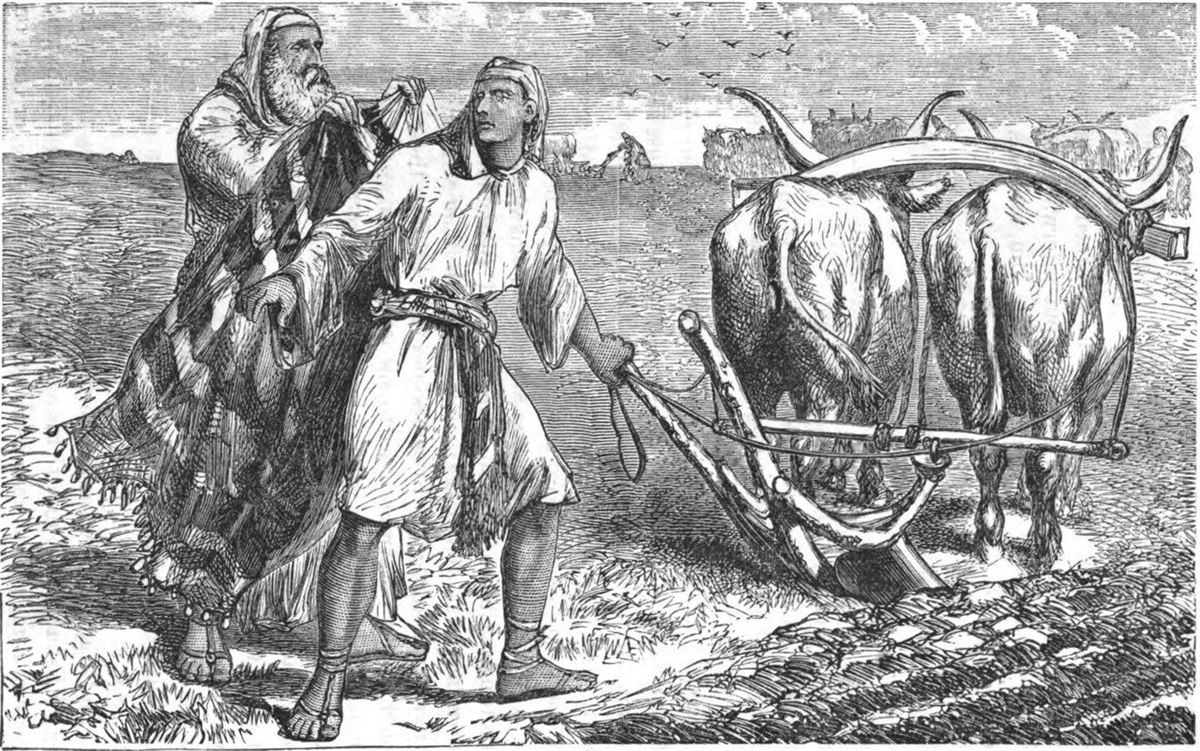
2 Kings 7-8, 2 Corinthians 13

Seeing Isn’t Always Believing.

2 Kings 7-8, 2 Corinthians 13

Then the captain on whose hand the king leaned said to the man of God, “If the Lord himself should make windows in heaven, could this thing be?” But he said, “You shall see it with your own eyes, but you shall not eat of it.” – 2 Kings 7:2 ESV

Doubting God is almost a national pastime for many believers. We regularly hear the Word of God preached and taught, and we hear repeated messages regarding His power and faithfulness. But we still refuse to believe that what God says is true and that what the Bible teaches us about God can be trusted; especially in times of difficulty. When we are suffering, it is difficult to believe that God can and will deliver us. We can easily begin to doubt His Word and question His ability to intervene on our behalf. In 2 King 6 we read about the siege of Samaria by the Syrian army. They have the capital city of Israel surrounded and, to make matters even worse, there was a severe famine in the land. Things had gotten so bad that the people within the walls of Samaria had resorted to eating their own children. The king of Israel had lost all hope and gone into a permanent state of mourning. He wore sackcloth under his clothes and felt powerless to do anything to remedy the situation. He recognized their trouble as coming from God and didn’t believe that God was going to help them in any way. He had come to the point of saying, “Why should I wait for the Lord any longer?” (2 Kings 6:33 ESV). But the king was not alone in his pessimism. Others had begun to doubt God as well. Their dire circumstances had caused them to lose hope.

What does this passage reveal about God?

But even in the midst of the extreme difficulties that Israel was experiencing, God was there. In spite of their open rebellion and years of unfaithfulness to Him, God had not given up on them. God, speaking through His prophet, Elisha, told them, “Tomorrow about this time a seah of fine flour shall be sold for a shekel, and two seahs of barley for a shekel, at the gate of Samaria” (2 Kings 7:1 ESV). This news was met with skepticism and doubt. What Elisha was telling them was unbelievable, even ridiculous. For years, food had become so scarce in Samaria, that “a donkey’s head was sold for eighty shekels of silver, and the fourth part of a kab of dove’s dung for five shekels of silver” (2 Kings 6:25 ESV). Now Elisha was telling them that all that was going to change – overnight. As bad as their circumstances had become, God was telling them that He had the capacity to change those circumstances – immediately. He had the power to remedy their problem and could do so in no time at all. Their condition was going to go from famine to plenty in less than a 24-hour period.

What does this passage reveal about man?

But many doubted Elisha’s words. They just couldn’t trust what he was telling them about God. Their circumstances overwhelmed their capacity to trust God and take Him at His word. The king’s captain put their doubts into words. “If the Lord himself should make windows in heaven, could this thing be?” (2 Kings 7:2 ESV). This man expressed what everyone else was thinking. He could see no way for God to intervene and change their circumstances overnight. There is a certain degree of sarcasm in his statement to Elisha. It is as if he is saying, “Even if God could open up the windows of heaven and pour out resources from His heavenly storehouse, this couldn’t happen.” It was impossible. He saw no way for their conditions to change. It would take a miracle from heaven. And he was right. Elisha told this man that he would see what God was going to do with his own eyes, but he would not get to benefit from it. God was going to work a miracle from heaven, but this man would not get to taste a single morsel of God’s gracious provision. And the next morning, much to the surprise of everyone in Samaria, they woke up to find the Syrian camp deserted and all of the food and provisions left behind. “For the Lord had made the army of the Syrians hear the sound of chariots and of horses, the sound of a great army, so that they said to one another, ‘Behold, the king of Israel has hired against us the kings of the Hittites and the kings of Egypt to come against us.’  So they fled away in the twilight and abandoned their tents, their horses, and their donkeys, leaving the camp as it was, and fled for their lives” (2 Kings 7:6-7 ESV). God had intervened. He had opened the windows of heaven and poured out a blessing, but in a way that was unexpected and unbelievable. He used the very enemies of Israel, who had come intent to destroy them, to bless them. Their conditions were radically changed. Suddenly, they had an abundance of food. So much so, that the prices for flour and barley plummeted overnight – just as God had said they would. But the king’s captain was in for a surprise of his own. When the king discovered the good news regarding their situation, he appointed this very same man to oversee the gate through which the people would pass as the raided the Syrian camp and brought the new-found booty into the city of Samaria. Ironically, this man was trampled in the rush of people storming out of the gates to take advantage of God’s blessing.

How would I apply what I’ve read to my own life?

It is also ironic that doubt should come so easy to those of us who call ourselves believers. We say we believe in God. We claim to believe that the Bible is the word of God. But we doubt what it says. We question God’s ability to work miracles in our lives. We become focused on our conditions and fixate on what we believe to be the reality of our lives. But believing requires faith and faith requires action. It is not enough to say that you believe. You must put that faith to the test, by trusting in God’s love and faithfulness to provide a solution to your need. You must also have faith that God has a purpose behind every circumstance in your life. I doubt that the people of Israel saw any benefit to having their city surrounded by Syrians. They could not have seen any good coming out of a severe famine. But what they needed to understand was that God was in control of all that was going on, and that He had a purpose for what was happening in their lives. He was going to use even these dire circumstances to reveal His power and provide for their needs. The famine was a result of their own sin and rebellion against Him. But had the Syrians never have invaded their land and surrounded their city, their suffering as a result of the famine would have continued. God didn’t end the famine, He simply provided them with an unexpected source of good in the midst of it – from the hands of their enemies. The apostle Paul reminds me, “He is not weak in dealing with you, but is powerful among you. For he was crucified in weakness, but lives by the power of God” (2 Corinthians 13:4 ESV). When the disciples watched Jesus die on the cross, they thought their hopes and dreams of a new kingdom had died along with Him. They couldn’t understand why their Savior had to die. They couldn’t fathom why their King had to be killed by the Romans. But it was all part of God’s plan. He was in complete control. God would use the Romans, the enemies of the Jews, to accomplish His will and bring new life to the people of Israel. He would use death to bring about life. He would use weakness to accomplish His power. It’s interesting to note that lowly lepers were the first to benefit from God’s unexpected bounty that morning outside the walls of Samaria. In their desperation and need they risked everything in the hopes of receiving something that might sustain their lives. And they were rewarded with food and treasure beyond their wildest expectations. When we trust God and step out on faith, we too receive far more than we could ever imagine.

Father, forgive me for the many times I doubt You. Forgive me for the many times I express my belief in You, but fail to step out in faith and trust You to do what You have promised to do. I place way too much stock in my circumstances and not enough faith in Your power. I want to see and believe. I want to trust Your character and lean on Your promises. You can turn my enemies into a means for blessing me. You can turn even the darkest moment into an opportunity to see Your light shine and Your power revealed. You are faithful and good – all the time. Amen

Ken Miller
Grow Pastor & Minister to Men
kenm@christchapelbc.org