God Is Not Yet Done

22 And over the people who remained in the land of Judah, whom Nebuchadnezzar king of Babylon had left, he appointed Gedaliah the son of Ahikam, son of Shaphan, governor. 23 Now when all the captains and their men heard that the king of Babylon had appointed Gedaliah governor, they came with their men to Gedaliah at Mizpah, namely, Ishmael the son of Nethaniah, and Johanan the son of Kareah, and Seraiah the son of Tanhumeth the Netophathite, and Jaazaniah the son of the Maacathite. 24 And Gedaliah swore to them and their men, saying, “Do not be afraid because of the Chaldean officials. Live in the land and serve the king of Babylon, and it shall be well with you.” 25 But in the seventh month, Ishmael the son of Nethaniah, son of Elishama, of the royal family, came with ten men and struck down Gedaliah and put him to death along with the Jews and the Chaldeans who were with him at Mizpah. 26 Then all the people, both small and great, and the captains of the forces arose and went to Egypt, for they were afraid of the Chaldeans.

27 And in the thirty-seventh year of the exile of Jehoiachin king of Judah, in the twelfth month, on the twenty-seventh day of the month, Evil-merodach king of Babylon, in the year that he began to reign, graciously freed Jehoiachin king of Judah from prison. 28 And he spoke kindly to him and gave him a seat above the seats of the kings who were with him in Babylon. 29 So Jehoiachin put off his prison garments. And every day of his life he dined regularly at the king’s table, 30 and for his allowance, a regular allowance was given him by the king, according to his daily needs, as long as he lived. – 2 Kings 25:22-30 ESV

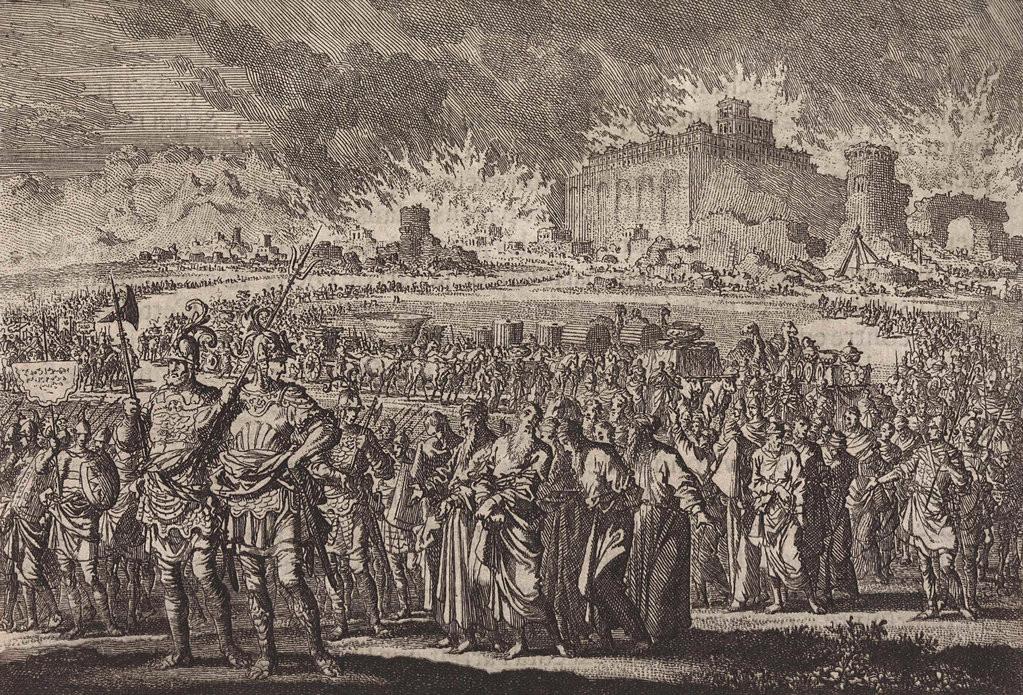
The scene in Jerusalem was one of utter destruction and devastation. The once-formidable city walls had been reduced to rubble. The massive doors that hung at the gates into Jerusalem had been torn from their hinges and burned. The homes of both the rich and the poor had been destroyed, leaving the city virtually uninhabitable. Even the king’s royal palace had been ransacked and turned into a smoldering ruin, and the Babylonians had not spared the house of God either. It had become a place of refuge for many trying to flee from the bloodthirsty Babylonians, but they found no help or hope within the walls of the Temple they had long neglected.

The Babylonians killed Judah’s young men, even chasing after them into the Temple. They had no pity on the people, killing both young men and young women, the old and the infirm. – 2 Chronicles 36:17 NLT

The grand house that Solomon had constructed, the long-standing symbol of God’s presence and power among His people, was desecrated and then destroyed.

The king took home to Babylon all the articles, large and small, used in the Temple of God, and the treasures from both the LORD’s Temple and from the palace of the king and his officials. Then his army burned the Temple of God… – 2 Chronicles 36:18 NLT

And none of this should have come as a surprise to the people of Judah. On the very day that Solomon had consecrated the newly opened Temple, God had warned him:

“I have answered your prayer and your request for help that you made to me. I have consecrated this temple you built by making it my permanent home; I will be constantly present there. You must serve me with integrity and sincerity, just as your father David did. Do everything I commanded and obey my rules and regulations. Then I will allow your dynasty to rule over Israel permanently, just as I promised your father David, ‘You will not fail to have a successor on the throne of Israel.’

“But if you or your sons ever turn away from me, fail to obey the regulations and rules I instructed you to keep, and decide to serve and worship other gods, then I will remove Israel from the land I have given them, I will abandon this temple I have consecrated with my presence, and Israel will be mocked and ridiculed among all the nations. This temple will become a heap of ruins; everyone who passes by it will be shocked and will hiss out their scorn, saying, ‘Why did the LORD do this to this land and this temple?’ Others will then answer, ‘Because they abandoned the LORD their God, who led their ancestors out of Egypt. They embraced other gods whom they worshiped and served. That is why the LORD has brought all this disaster down on them.’” – 2 Kings 9:3-9 NLT

More than three-and-a-half centuries had passed since Yahweh issued that warning to King Solomon. During that time, the majority of the kings of Judah had chosen to abandon Yahweh for the false gods of the nations around them. They led the nation into idolatry and apostasy, and now, as the people of Judah made their way in chains to Babylon, they could look over their shoulders and see the fiery fulfillment of God’s words to Solomon.

As Nebuchadnezzar and his forces departed Judah, they left a destroyed city and a decimated populace behind.

King Nebuchadnezzar took all of Jerusalem captive, including all the commanders and the best of the soldiers, craftsmen, and artisans—10,000 in all. Only the poorest people were left in the land. – 2 Kings 24:14 NLT

Nebuchadnezzar appointed a man named Gedaliah to serve as governor over the greatly diminished and demoralized citizenry of Jerusalem. They would no longer have a king to rule over them. Gedaliah was a Jew, but not a descendant of Solomon. He had no royal blood and would wield no kingly authority. He served at the behest of Nebuchadnezzar and was under the watchful eye of the ever-present Babylonian garrison. His was a thankless job that was more managerial than magisterial. In time, he would come to be seen as nothing more than a puppet of the occupying Babylonian forces.

The commanders of Judah’s army who had fled from the city of Jerusalem when the walls were breached returned when they heard that Gedaliah had been appointed governor. But they didn’t like the pro-Babylonian rhetoric that Gedaliah was spouting.

Gedaliah vowed to them that the Babylonian officials meant them no harm. “Don’t be afraid of them. Live in the land and serve the king of Babylon, and all will go well for you,” he promised. – 2 Kings 25:24 NLT

This compromising stance ultimately cost Gedaliah his life. Ishmael, one of Judah’s former military commanders, orchestrated the assassination of Gedaliah. It’s not clear what Ishmael hoped to accomplish by the murder of the Babylonian-appointed governor, but it seems obvious that this was an act of rebellion against the occupying forces. Ishmael murdered Gedaliah and his Jewish officials, along with members of the Babylonian garrison, and this resulted in a swift reprisal from Nebuchadnezzar. Ishmael’s attempt to drive the Babylonians out of Judah backfired on him. Instead, “all the people of Judah, from the least to the greatest, as well as the army commanders, fled in panic to Egypt, for they were afraid of what the Babylonians would do to them” (2 Kings 25:26 NLT).

This scene is intended to convey a strong sense of irony. The disobedient people of God were returning to the very place from which He had freed them centuries earlier. While some of their friends and family members had been deported to Babylon as slaves, this remnant of God’s chosen people would seek refuge in the land where their forefathers had been served as slaves for more than 400 years.

Once again, all of this had been predicted by God. Centuries earlier, as the people of Israel stood on the shore of the River Jordan, preparing to enter the Land of Promise, He had told them that if they would faithfully obey Him, they would experience His blessings. But if they chose to disobey Him, they would experience “long-lasting afflictions and severe, enduring illnesses” (Deuteronomy 28:59 NLT). Moses went on to warn them, “He will afflict you with all the diseases of Egypt that you feared so much, and you will have no relief. The LORD will afflict you with every sickness and plague there is, even those not mentioned in this Book of Instruction, until you are destroyed.” (Deuteronomy 28:60-61 NLT).

And Moses had been very specific when outlining the devastating nature of the curses they would encounter should they fail to “fear the glorious and awesome name of the LORD your God” (Deuteronomy 28:58 NLT).

The LORD will scatter you among all nations, from one end of the earth to the other. There you will worship other gods that neither you nor your ancestors have known, gods of wood and stone. Among those nations you will have no rest, nor will there be a place of peaceful rest for the soles of your feet, for there the Lord will give you an anxious heart, failing eyesight, and a spirit of despair. Your life will hang in doubt before you; you will be terrified by night and day and will have no certainty of surviving from one day to the next. In the morning you will say, ‘If only it were evening!’ And in the evening you will say, ‘I wish it were morning!’ because of the things you will fear and the things you will see. Then the LORD will make you return to Egypt by ship, over a route I said to you that you would never see again. There you will sell yourselves to your enemies as male and female slaves, but no one will buy you.” – Deuteronomy 28:64-68 NLT

Some 850 years after God had redeemed the people of Israel from their captivity in Egypt, a remnant of their still rebellious descendants would return. But it’s interesting to note that these poor, disheveled exiles would find no hope in Egypt. They won’t even be able to sell themselves as slaves. They will become paupers and aliens living outside the Land of Promise and under the curse of the God they chose to reject.

But despite all the dire imagery portrayed in this closing chapter of the book of 2 Kings, there is a silver lining on the dark cloud of Judah’s history. The author ends his book with a new king ascending to the throne of Babylon. These closing verses seem to be a mirror image of the scene found in the book of Genesis that preceded Israel’s 400-year enslavement in Egypt. Exodus 1:8 records, “Now there arose a new king over Egypt, who did not know Joseph.” This new Pharaoh came to power and, having no first-hand knowledge of Joseph and the people of Israel, decided that they were a threat to his administration. So, he launched a campaign to afflict and enslave them. This would lead to four centuries’ worth of unprecedented misery and maltreatment.

But when Evil-merodach replaced Nebuchadnezzar as the ruler over the Babylonian empire, he made a decision to release King Jehoiachin of Judah from his enslavement. He released him from prison and “spoke kindly to Jehoiachin and gave him a higher place than all the other exiled kings in Babylon” (2 Kings 25:28 NLT). For the remainder of his life in Babylon, Jehoiachin lived like a king. He was given royal robes to wear and was allowed to dine at Evil-merodach’s table.

But why is this important? It foreshadows something highly significant. Back in the book that bears his name, the prophet Jeremiah pronounced a curse on Jehoiachin, who was also known as Coniah.

“Why is this man Jehoiachin like a discarded, broken jar?
    Why are he and his children to be exiled to a foreign land?
O earth, earth, earth!
    Listen to this message from the LORD!
This is what the LORD says:
‘Let the record show that this man Jehoiachin was childless.
    He is a failure,
for none of his children will succeed him on the throne of David
    to rule over Judah.’”– Jeremiah 22:28-30 NLT

And yet, if we fast-forward to the gospel of Matthew, we find the following words in his genealogy of Jesus.

Josiah was the father of Jehoiachin and his brothers (born at the time of the exile to Babylon).
After the Babylonian exile:
Jehoiachin was the father of Shealtiel.
Shealtiel was the father of Zerubbabel.
Zerubbabel was the father of Abiud.
Abiud was the father of Eliakim.
Eliakim was the father of Azor.
Azor was the father of Zadok.
Zadok was the father of Akim.
Akim was the father of Eliud.
Eliud was the father of Eleazar.
Eleazar was the father of Matthan.
Matthan was the father of Jacob.
Jacob was the father of Joseph, the husband of Mary.
Mary gave birth to Jesus, who is called the Messiah. – Matthew 1:11-16 NLT

Here, in the genealogy of Jesus, we find Jehoiachin’s name. The very man who was told that none of his children would succeed him as king is listed as a progenitor of the King of kings. Of Jehoiachin’s seven sons, not one of them would ascend to the throne of David, but Jesus would. Yahweh would graciously reverse the curse, producing a royal heir who would reign in righteousness and deliver His people from their enslavement to sin and death.

Notice one more name in the lineage of Jesus: Zerubbabel. This descendant of Jehoiachin would later become the governor of Judea when the exiles returned from their captivity in Babylon. The prophet Haggai would pronounce a blessing from God on Zerubbabel that foreshadowed a great reversal of fortunes for His chosen people.

“Speak to Zerubbabel, governor of Judah, saying, I am about to shake the heavens and the earth, and to overthrow the throne of kingdoms. I am about to destroy the strength of the kingdoms of the nations, and overthrow the chariots and their riders. And the horses and their riders shall go down, every one by the sword of his brother. On that day, declares the LORD of hosts, I will take you, O Zerubbabel my servant, the son of Shealtiel, declares the LORD, and make you like a signet ring, for I have chosen you, declares the LORD of hosts.” – Haggai 2:21-23 NLT

The Book of 2 Kings ends on a positive note because God’s will concerning the people of Israel was far from done. The story of the redemption of His chosen people and the restoration of the world He created was not yet over. The Messiah, the Savior of the world, would one day come, and His arrival would usher in a new day and a new hope for the people of God and the nations of the world.

English Standard Version (ESV) The Holy Bible, English Standard Version. ESV® Permanent Text Edition® (2016). Copyright © 2001 by Crossway Bibles, a publishing ministry of Good News Publishers.

New Living Translation (NLT) Holy Bible, New Living Translation, copyright © 1996, 2004, 2015 by Tyndale House Foundation. Used by permission of Tyndale House Publishers Inc., Carol Stream, Illinois 60188. All rights reserved.
Reformation 1.0

Then the king sent, and all the elders of Judah and Jerusalem were gathered to him. And the king went up to the house of the LORD, and with him all the men of Judah and all the inhabitants of Jerusalem and the priests and the prophets, all the people, both small and great. And he read in their hearing all the words of the Book of the Covenant that had been found in the house of the LORD. And the king stood by the pillar and made a covenant before the LORD, to walk after the LORD and to keep his commandments and his testimonies and his statutes with all his heart and all his soul, to perform the words of this covenant that were written in this book. And all the people joined in the covenant.

And the king commanded Hilkiah the high priest and the priests of the second order and the keepers of the threshold to bring out of the temple of the LORD all the vessels made for Baal, for Asherah, and for all the host of heaven. He burned them outside Jerusalem in the fields of the Kidron and carried their ashes to Bethel. And he deposed the priests whom the kings of Judah had ordained to make offerings in the high places at the cities of Judah and around Jerusalem; those also who burned incense to Baal, to the sun and the moon and the constellations and all the host of the heavens. And he brought out the Asherah from the house of the LORD, outside Jerusalem, to the brook Kidron, and burned it at the brook Kidron and beat it to dust and cast the dust of it upon the graves of the common people. And he broke down the houses of the male cult prostitutes who were in the house of the LORD, where the women wove hangings for the Asherah. And he brought all the priests out of the cities of Judah, and defiled the high places where the priests had made offerings, from Geba to Beersheba. And he broke down the high places of the gates that were at the entrance of the gate of Joshua the governor of the city, which were on one’s left at the gate of the city. However, the priests of the high places did not come up to the altar of the LORD in Jerusalem, but they ate unleavened bread among their brothers. 10 And he defiled Topheth, which is in the Valley of the Son of Hinnom, that no one might burn his son or his daughter as an offering to Molech. 11 And he removed the horses that the kings of Judah had dedicated to the sun, at the entrance to the house of the LORD, by the chamber of Nathan-melech the chamberlain, which was in the precincts. And he burned the chariots of the sun with fire. 12 And the altars on the roof of the upper chamber of Ahaz, which the kings of Judah had made, and the altars that Manasseh had made in the two courts of the house of the LORD, he pulled down and broke in pieces and cast the dust of them into the brook Kidron. 13 And the king defiled the high places that were east of Jerusalem, to the south of the mount of corruption, which Solomon the king of Israel had built for Ashtoreth the abomination of the Sidonians, and for Chemosh the abomination of Moab, and for Milcom the abomination of the Ammonites. 14 And he broke in pieces the pillars and cut down the Asherim and filled their places with the bones of men.

15 Moreover, the altar at Bethel, the high place erected by Jeroboam the son of Nebat, who made Israel to sin, that altar with the high place he pulled down and burned, reducing it to dust. He also burned the Asherah. 16 And as Josiah turned, he saw the tombs there on the mount. And he sent and took the bones out of the tombs and burned them on the altar and defiled it, according to the word of the LORD that the man of God proclaimed, who had predicted these things. 17 Then he said, “What is that monument that I see?” And the men of the city told him, “It is the tomb of the man of God who came from Judah and predicted these things that you have done against the altar at Bethel.” 18 And he said, “Let him be; let no man move his bones.” So they let his bones alone, with the bones of the prophet who came out of Samaria. 19 And Josiah removed all the shrines also of the high places that were in the cities of Samaria, which kings of Israel had made, provoking the LORD to anger. He did to them according to all that he had done at Bethel. 20 And he sacrificed all the priests of the high places who were there, on the altars, and burned human bones on them. Then he returned to Jerusalem. – 2 Kings 23:1-20 ESV

When it came to reforming and healing the deadly spiritual malaise in Judah, Josiah had his work cut out for him. And when reading the list of his reforms, it’s easy to focus on all the positive steps he took to course-correct Judah’s spiritual trajectory. But why was all of this necessary? How had things gotten so bad in Judah that the king was forced to commit all his time and resources to this spiritual reclamation project? The reader should be shocked and appalled by the abysmal condition of the nation’s faith community; the moral state of the people of Judah had reached an all-time low. And Josiah revealed the extent of their moral decline by reading to them portions of the rediscovered Book of the Covenant – the Pentateuch. It’s likely that his reading included this foundational and oft-repeated admonition from the original Ten Commandments.

“Do not make idols or set up carved images, or sacred pillars, or sculptured stones in your land so you may worship them. I am the LORD your God. You must keep my Sabbath days of rest and show reverence for my sanctuary. I am the LORD. – Leviticus 26:1-2 NLT

Josiah had already begun an aggressive temple renovation project designed to repair the long-neglected house of God. But these restoration efforts were more than cosmetic in nature. Josiah was having to purge and purify the sanctuary of God from the desecrating presence of altars to a litany of pagan idols. His predecessors had repeatedly displayed their disregard for God by defiling the temple that bore His name. They had turned God’s house into a veritable showroom for displaying all their false gods, and the sheer volume of these abominations is staggering.

Then the king instructed Hilkiah the high priest and the priests of the second rank and the Temple gatekeepers to remove from the LORD’s Temple all the articles that were used to worship Baal, Asherah, and all the powers of the heavens. – 2 Kings 23:4 NLT

The king removed the Asherah pole from the LORD’s Temple… – 2 Kings 23:6 NLT

He also tore down the living quarters of the male and female shrine prostitutes that were inside the Temple of the LORD – 2 Kings 23:7 NLT

He removed from the entrance of the LORD’s Temple the horse statues that the former kings of Judah had dedicated to the sun – 2 Kings 23:11 NLT

The king destroyed the altars that Manasseh had built in the two courtyards of the LORD’s Temple. – 2 Kings 23:12 NLT

Josiah was a busy man, and his reforms didn’t stop at the Temple. He was determined to do whatever was necessary to remove every last vestige of idolatry from the land of Judah. He ordered the destruction of all shrines or altars dedicated to false gods, and there were a lot of them. Pagan shrines and high places could be found throughout Judah, from the capital city of Jerusalem to Geba in the north and Beersheba in the south. Their ubiquitous presence required Josiah to launch an extensive seek-and-destroy mission that began in the Temple, extended to the valleys just out Jerusalem, and reached all the way to the northern territory of Israel.

While the northern kingdom of Israel had fallen to the Assyrians and the people had been taken captive, the shrines and altars to their false gods remained. So, Josiah sent special mobile demolition teams as far as Bethel to destroy the altar that Jeroboam had erected decades earlier.

The king also tore down the altar at Bethel—the pagan shrine that Jeroboam son of Nebat had made when he caused Israel to sin. He burned down the shrine and ground it to dust, and he burned the Asherah pole. – 2 Kings 23:15 NLT

This was in direct fulfillment of a centuries-old prophecy God declared against rebellious Jeroboam. After God had split the kingdom of Solomon in half, He had awarded the kingship of the ten northern tribes to Jeroboam, who displayed his loyalty and gratitude by erecting a golden calf in the city of Bethel. This newly appointed king of Israel repaid God by abandoning Him. So, God sent a young, unnamed prophet with a message.

“O altar, altar! This is what the LORD says: A child named Josiah will be born into the dynasty of David. On you he will sacrifice the priests from the pagan shrines who come here to burn incense, and human bones will be burned on you.” – 1 Kings 13:2 NLT

Now, hundreds of years later, the prophecy of God became a reality. Josiah tore down the altar dedicated to the golden calf and then had the ground desecrated by burning human bones on it.

Then Josiah turned around and noticed several tombs in the side of the hill. He ordered that the bones be brought out, and he burned them on the altar at Bethel to desecrate it. (This happened just as the LORD had promised through the man of God when Jeroboam stood beside the altar at the festival.) – 2 Kings 23:16 NLT

The scope of Josiah’s reformation initiative is truly staggering, and it reveals just how bad things had gotten in Judah. The sheer volume of false gods being worshiped by the people of Yahweh should leave us dumbfounded. There were shrines to Baal, Topheth, Ashtoreth, Chemosh, and Molech – just to name a few. But there also altars dedicated “to the sun, the moon, the constellations, and to all the powers of the heavens” (2 Kings 23:5 NLT), as well as horse and chariot statues dedicated to the sun (2 Kings 23:11).

Josiah was faced with a truly formidable task but he took it on with dedicated determination. He tore down, burned down, cut down, smashed, and desecrated the thousands of altars to the myriad of false gods that permeated the landscape and the hearts of the people of Judah. Josiah took his role seriously because he feared God greatly.

His reading of the Book the Covenant reminded him of the dire consequences facing the people of God if they failed to remain faithful to their covenant commitment. He was well aware of what had happened to the northern kingdom, and he knew that Judah was just as deserving of God’s judgment. They had been equally unfaithful and the evidence was everywhere. So, Josiah took it upon himself to cleanse the land of its idolatrous stain. But the greatest challenge he faced was turning the hearts of the people back to Yahweh. He could remove the idols from the land, but could he remove the spirit of idolatry from their hearts? Time would tell.

English Standard Version (ESV) The Holy Bible, English Standard Version. ESV® Permanent Text Edition® (2016). Copyright © 2001 by Crossway Bibles, a publishing ministry of Good News Publishers.

New Living Translation (NLT) Holy Bible, New Living Translation, copyright © 1996, 2004, 2015 by Tyndale House Foundation. Used by permission of Tyndale House Publishers Inc., Carol Stream, Illinois 60188. All rights reserved.
The Power to Revive and Restore

17 After this the son of the woman, the mistress of the house, became ill. And his illness was so severe that there was no breath left in him. 18 And she said to Elijah, “What have you against me, O man of God? You have come to me to bring my sin to remembrance and to cause the death of my son!” 19 And he said to her, “Give me your son.” And he took him from her arms and carried him up into the upper chamber where he lodged, and laid him on his own bed. 20 And he cried to the LORD, “O LORD my God, have you brought calamity even upon the widow with whom I sojourn, by killing her son?” 21 Then he stretched himself upon the child three times and cried to the LORD, “O LORD my God, let this child’s life come into him again.” 22 And the LORD listened to the voice of Elijah. And the life of the child came into him again, and he revived. 23 And Elijah took the child and brought him down from the upper chamber into the house and delivered him to his mother. And Elijah said, “See, your son lives.” 24 And the woman said to Elijah, “Now I know that you are a man of God, and that the word of the LORD in your mouth is truth.” 1 Kings 17:17-24 ESV

God used Elijah to deliver His message of judgment against King Ahab and his foreign queen, Jezebel. In marrying this princess from Sidon, Ahab had also adopted her false god, Baal, and built a temple for its worship. He also erected a shrine to honor Asherah, the moon-goddess and supposed mother of this pagan deity. Angered by these blatant acts of rebellion and apostasy, God had sent Elijah to tell the royal couple that their kingdom would suffer under a great drought. Their disrespect and disregard for God had brought His discipline.

But after Elijah successfully delivered his message, God sent him away. He ended up at a cave, where God graciously and miraculously arranged for ravens to provide all the food he needed to survive. But eventually, Elijah became a victim of the very drought he predicted. Soon, the brook dried up, and the daily deliveries of bread and meat no longer appeared. So, God sent Elijah to the Sidonian town of Zarephath, where he took up residence with a poor widow and her son. She, too, was suffering from the effects of the drought. But, once again, Yahweh proved Himself to be the one true God by causing her meager supply of flour and oil to miraculously multiply and never run out.

In the midst of a drought and severe famine, she had more than enough to sustain herself, her son, and God’s prophet. Through it all, Elijah learned to trust God for all His needs. But even more importantly, Elijah discovered that his God was greater than the gods of Ahab and Jezebel. While Baal, the so-called fertility god, was powerless to stop the drought or reverse the effects of the famine, Yahweh turned “a handful of flour in a jar and a little oil in a jug” (1 Kings 17:12 ESV) into a never-ending food supply for Elijah and his gracious hostess.

Then suddenly, the story takes a dramatic turn for the worse. The woman’s young son dies unexpectedly. Faced with this devastating change in her circumstances, the woman vented all her anger and frustration on the prophet of God.

“O man of God, what have you done to me? Have you come here to point out my sins and kill my son?” – 1 Kings 17:18 NLT

It seems that the woman had falsely assumed that her son’s death was a form of divine retribution for a former sin she had committed. Perhaps by this time, Elijah had shared the details of his encounter with Ahab and Jezebel, explaining that he had been the one to predict the drought as a punishment for their sin. So, when her son suddenly died, she would have naturally reasoned that God was using the prophet to deliver yet another judgment for sin – that of her own.

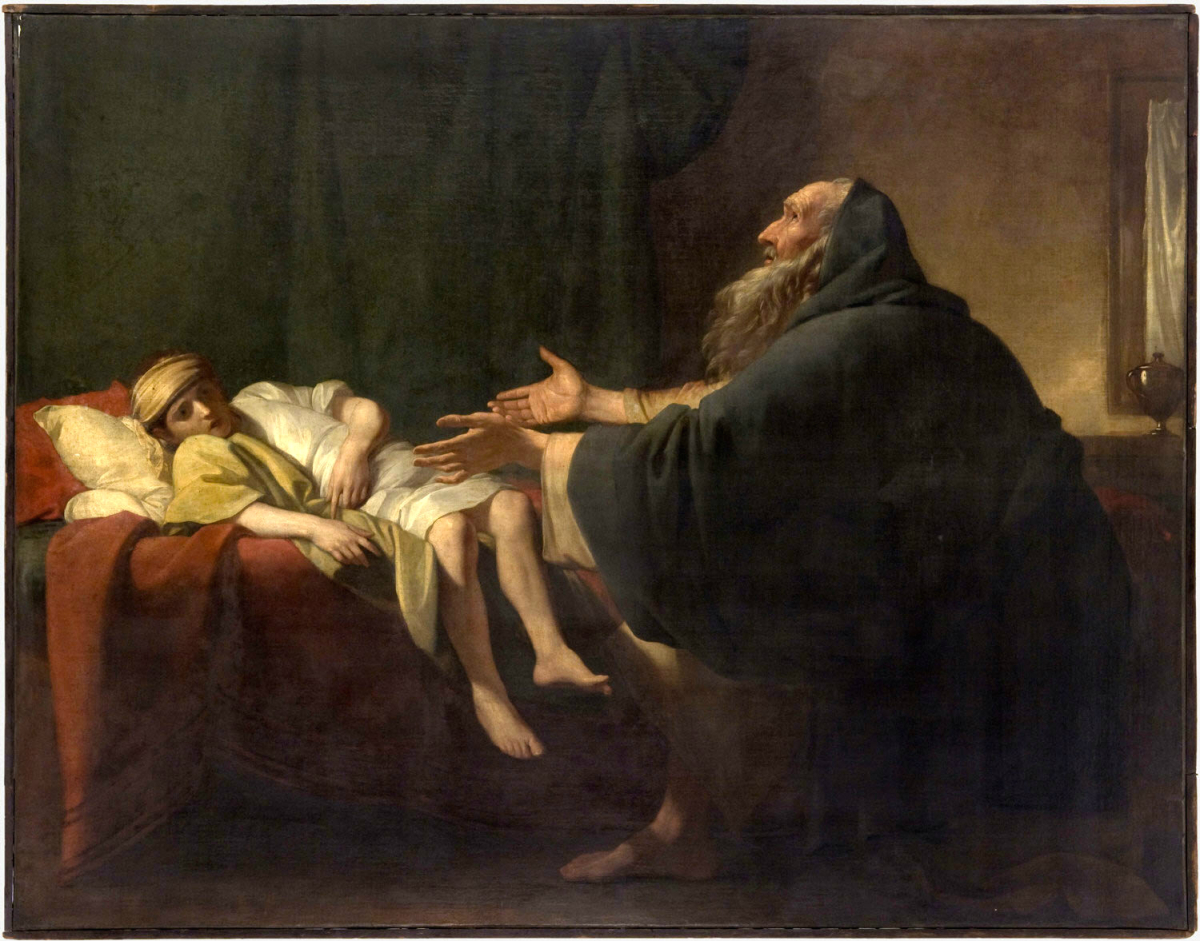
But ignoring her despair-driven accusation, Elijah took the lifeless body of her son and placed it on his own bed. Then Elijah turned his attention to God. But notice the tone of His prayer. He seems to echo the words of the widow, passing the blame up the food chain and questioning the goodness and graciousness of God.

“O LORD my God, why have you brought tragedy to this widow who has opened her home to me, causing her son to die?” – 1 Kings 17:20 NLT

Elijah’s response reveals his firm belief that God is sovereign over all things, but he is perplexed and confused by the seeming injustice of it all. In his frustration, He accuses God of doing something wicked. The Hebrew word is rāʿaʿ, which is most often translated as “evil.” The boy’s death makes no sense to Elijah; it seems unnecessary and completely nonproductive. When Elijah first met the woman, she had been fully expecting her son to die of starvation because of the drought. But God had intervened and provided more than enough food to keep all three of them alive. So, to Elijah, the boy’s death seemed pointless and, if anything, it appeared to be an act of cruelty.

But while Elijah was having a difficult time understanding the ways of God, he remained convinced of the power of God. Three times, he lay across the dead body of the boy and cried out, “O LORD my God, please let this child’s life return to him” (1 Kings 17:21 NLT). And the fact that Elijah repeated this process three separate times demonstrates both his persistence and dependence upon God.

It’s important to consider that Elijah had no precedent on which to base his prayer. He was asking Yahweh to do the impossible – to raise a dead body back to life. There is no indication that Elijah had ever seen or heard of God doing such a thing. Elijah was not basing his request on some past miracle recorded in the Hebrew scriptures. The Pentateuch, the first five books of the Bible, contains no instance of God raising the dead back to life. So, Elijah was asking God to do something that had never been done before. His request was a tremendous act of faith.

In a classic example of understatement, the author simply records, “The LORD heard Elijah’s prayer, and the life of the child returned, and he revived!” (1 Kings 17:22 NLT). One can only imagine Elijah’s shock and surprise when the lifeless body of the boy was suddenly reanimated. Two times, nothing had happened. But on the third try, God chose to intervene and answer Elijah’s prayer. We’re not told why God didn’t answer Elijah’s prayer the first time. Perhaps it was a test of Elijah’s faith to see if he would continue to ask and believe even when his request went unanswered. But God had heard, and He ultimately answered, and in a truly remarkable way. Elijah’s unbridled excitement and enthusiasm were on display as he announced the news to the boy’s grieving mother.

“See, your son lives.” – 1 Kings 17:23 ESV

It would be easy to misread this statement and assume that Elijah is saying something like, “See, I told you so!” It almost appears as if he is chastising the woman for her lack of faith. But at no point in the story did Elijah tell the woman that her son would live. He had no way of knowing whether God would answer his prayer or not. At least two times, God failed to do so. But when God had finally provided the miracle for which Elijah was asking, the prophet couldn’t contain his enthusiasm. The New Living Translation provides a much more accurate rendering of Elijah’s response.

“Look!” he said. “Your son is alive!” – 1 Kings 17:23 NLT

No one was as shocked as Elijah, and his joy overflowed in a display of emotional celebration. He most likely walked into the room, carrying the boy in his arms, and then handed him over to the smothering embrace of his overjoyed mother. And, through tears mixed with laughter, the woman managed to express her gratitude to the prophet by declaring her belief in his God.

“Now I know for sure that you are a man of God, and that the LORD truly speaks through you.” – 1 Kings 17:24 NLT

While Yahweh had been keeping the widow and her son alive, she must have had her doubts about Elijah and his God. But now, as she clutched her resurrected son in her arms, she finally recognized and confessed the sovereignty of God and the authority of His prophet. Her son had been dead but was now alive. Her devastating loss had been miraculously reversed with the return of her son. Her sorrow had been turned to joy.

It is easy to overlook the fact that this miracle took place in an obscure village in the region of Sidon. While Jezebel had brought her false god from Sidon to the land of Israel, Elijah had brought the God of Israel to the land of Sidon. The arrival of Baal had been accompanied by drought and famine. But when Yahweh made His appearance in the pagan land of the Sidonians, He had turned a widow’s poverty into plenty and had replaced death with life. In doing so, He had proved Himself to be the one and only God of the universe.

And God intended this powerful lesson to prepare His prophet for all that was about to happen. Elijah didn’t know it yet, but the most significant test of his faith was in his future. After three years of a debilitating and devastating famine, God was going to send Elijah back to the land of Israel to go face-to-face with the king and queen and toe-to-toe with their false god. If Yahweh could revive the dead son of the Sidonian widow, He was powerful enough to restore the stagnant spiritual state of the people of Israel. But would Elijah continue to believe in Yahweh’s power when the odds were stacked against him and the forces of evil threatened his very existence? Only time would tell.

English Standard Version (ESV) The Holy Bible, English Standard Version. ESV® Permanent Text Edition® (2016). Copyright © 2001 by Crossway Bibles, a publishing ministry of Good News Publishers.

New Living Translation (NLT) Holy Bible, New Living Translation, copyright © 1996, 2004, 2015 by Tyndale House Foundation. Used by permission of Tyndale House Publishers Inc., Carol Stream, Illinois 60188. All rights reserved.

New King – Same Old Story

15 In the twenty-seventh year of Asa king of Judah, Zimri reigned seven days in Tirzah. Now the troops were encamped against Gibbethon, which belonged to the Philistines, 16 and the troops who were encamped heard it said, “Zimri has conspired, and he has killed the king.” Therefore all Israel made Omri, the commander of the army, king over Israel that day in the camp. 17 So Omri went up from Gibbethon, and all Israel with him, and they besieged Tirzah. 18 And when Zimri saw that the city was taken, he went into the citadel of the king’s house and burned the king’s house over him with fire and died, 19 because of his sins that he committed, doing evil in the sight of the LORD, walking in the way of Jeroboam, and for his sin which he committed, making Israel to sin. 20 Now the rest of the acts of Zimri, and the conspiracy that he made, are they not written in the Book of the Chronicles of the Kings of Israel?

21 Then the people of Israel were divided into two parts. Half of the people followed Tibni the son of Ginath, to make him king, and half followed Omri. 22 But the people who followed Omri overcame the people who followed Tibni the son of Ginath. So Tibni died, and Omri became king. 23 In the thirty-first year of Asa king of Judah, Omri began to reign over Israel, and he reigned for twelve years; six years he reigned in Tirzah. 24 He bought the hill of Samaria from Shemer for two talents of silver, and he fortified the hill and called the name of the city that he built Samaria, after the name of Shemer, the owner of the hill.

25 Omri did what was evil in the sight of the LORD, and did more evil than all who were before him. 26 For he walked in all the way of Jeroboam the son of Nebat, and in the sins that he made Israel to sin, provoking the LORD, the God of Israel, to anger by their idols. 27 Now the rest of the acts of Omri that he did, and the might that he showed, are they not written in the Book of the Chronicles of the Kings of Israel? 28 And Omri slept with his fathers and was buried in Samaria, and Ahab his son reigned in his place. 1 Kings 16:15-28 ESV

Zimri’s time in the spotlight was short-lived. This former chariot commander in Israel’s army had murdered King Elah and declared himself the new sovereign over the ten tribes of the northern kingdom. But his reign would last only seven days. Word of his seemingly successful coup attempt reached his fellow soldiers, who were encamped against the Philistines at a place called Gibbethon. Upon hearing of King Elah’s death, the troops threw their support behind Omri, who was the commander of the armies of Israel. They rejected Zimri’s claim to be king and, instead, nominated his superior officer as the obvious choice to replace Elah. Zimri may have caused the vacancy on the throne, but Omri would be the one to fill it.

Within days of seizing the throne from Elah and having secured his victory by liquidating every member of the king’s household, Zimri was safely ensconced in Tirzah, the former king’s capital. But one day he woke up to find that the city was being besieged, not by Philistines or some other foreign power, but by Omri and the rest of the Israelite army. Just seven days into his reign, Zimri had managed to instigate a civil war for which he was both outmanned and unprepared. Stealing the throne had been easy, but retaining it was going to be far more complicated than he could have imagined.

Recognizing the futility of the situation, Zimri chose to take his own life rather than surrender. He knew that Omri would order his execution for the murder of Elah, and he likely knew Omri had his own kingly aspirations. So, Zimri locked himself in the citadel of the king’s palace and burned the entire structure to the ground. In doing so, he controlled his own fate and managed to rob Omri of a palace from which to rule. If he couldn’t sit on the throne in Tirzah, neither would Omri.

But the author makes it clear that while Zimri had taken his own life, it had still been a case of divine judgment for his sins against God.

…he, too, had done what was evil in the LORD’s sight. He followed the example of Jeroboam in all the sins he had committed and led Israel to commit. – 1 Kings 16:19 NLT

When Zimri had entered Tirzah just days earlier, any thought of suicide would have been the last thing to enter his mind. He was focused on the future and dreaming of his newfound power and prestige. After all, he was the self-made king, the supreme ruler over all of Israel. As he sat on his throne in Tirzah, his mind would have been filled with thoughts of success and not suicide. But had he read the proverbs collected by Israel’s former king, Solomon, he would have understood that his plans were irrelevant if they stood in opposition to the will of God.

You can make many plans, but the LORD’s purpose will prevail. – Proverbs 19:21 NLT

We can make our plans, but the LORD determines our steps. – Proverbs 16:9 NLT

Zimri had plans for greatness, but he died in the smoldering rubble of the palace he had stolen through deceit and treachery. God had used this ambitious and self-consumed man to punish Elah for his wickedness, but He would not allow Zimri to benefit from his actions. His reign lasted exactly one week, then ended as quickly as it had begun.

But the sad state of affairs in Israel was far from over. While Omri had managed to seize the capital and secure the crown for himself, the nation was about to enter a time of division and disunity. Just as God had split Solomon’s kingdom in half, Omri would find himself ruling over a divided nation.

But now the people of Israel were split into two factions. Half the people tried to make Tibni son of Ginath their king, while the other half supported Omri. – 1 Kings 16:21 NLT

When Omri received the news that Zimri had killed King Elah, he had been leading his troops against the Philistines, the dreaded enemies of Israel. But now, as the king of Israel, he found himself going to war against his own people. A civil war had broken out, and Omni was forced to lead his troops in battle against the supporters of his rival, Tibni. The nation was divided, and rather than throwing their collective allegiance behind God Almighty, they chose sides and put their hopes in two extremely flawed and fallible men.

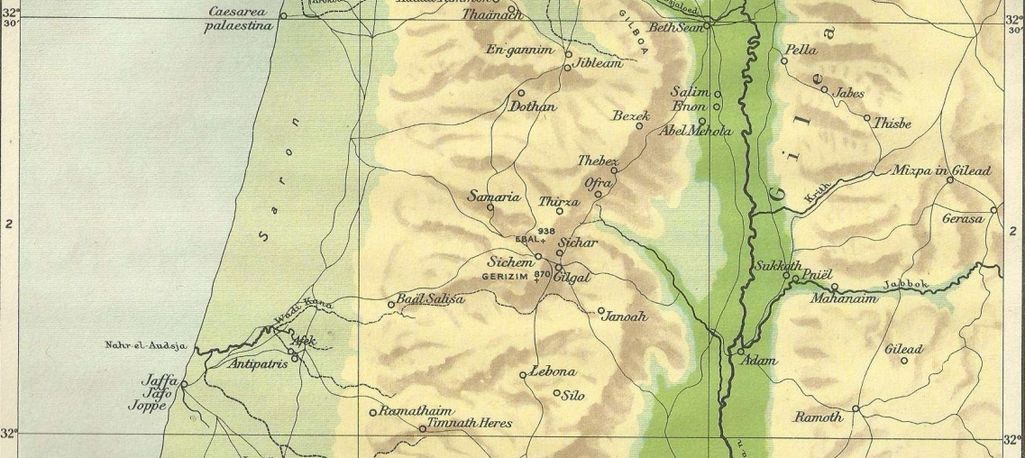
Omri eventually defeated Tibni and his forces, securing his place as the king of Israel. Half of the dozen years he ruled over Israel were spent in Tirzah, the former capital of King Elah. But Omri dreamed of establishing his own royal city from which to rule over the ten tribes of Israel. So, he found a favorable spot just west of Tirzah and purchased the land from a man named Shemer. In time, he built a fortified palace on the elevated portion of the land and named his new capital Samaria.

While the author doesn’t seem to treat this change in the location of the capital city with much importance, his mention of it is meant to foreshadow things to come. Omri would end up establishing a dynasty that would rule over Israel for an extended period of time. His newly established capital would become the focal point for Israel’s continuing spiritual decline and the epicenter of the nation’s eventual destruction.

The author chooses to summarize Omri’s 12-year reign in less-than-flattering terms.

Omri did what was evil in the sight of the LORD, and did more evil than all who were before him. – 1 Kings 16:25 ESV

Israel had a new king and a brand new capital, but they continued to suffer from the same old problem. Omri, like Jeroboam and Nadab before him, failed to use his divinely ordained power as king to lead the people back to God. Instead, he fostered the spirit of spiritual adultery and apostasy. Under his leadership, “the people provoked the anger of the LORD, the God of Israel, with their worthless idols” (1 Kings 16:21 NLT). 

On paper, Omri proved to be a highly accomplished and effective king. His 12 years on the throne of Israel were marked by military victories and peace negotiations with the enemies of Israel. He defeated the Moabites and brokered a treaty with Ethbaal, king of Tyre and Sidon, and this last act would prove to have long-lasting implications. As part of the treaty negotiations, Omri approved a marriage alliance between his son, Ahab, and Ethbaal’s daughter, Jezebel, and those two names will come up again.

While Omri appeared to be having success, he was actually operating outside the revealed will of God. His decisions were made without divine input and in direct violation of God’s commands. Hundreds of years earlier, Moses had warned the people of Israel about their interactions with the nations living in the land of Canaan.

When the LORD your God hands these nations over to you and you conquer them, you must completely destroy them. Make no treaties with them and show them no mercy. You must not intermarry with them. Do not let your daughters and sons marry their sons and daughters, for they will lead your children away from me to worship other gods. Then the anger of the LORD will burn against you, and he will quickly destroy you. – Deuteronomy 7:2-4 NLT

Like his predecessors, Omri was doing things according to his own plan. But as the proverbs warn, “You can make many plans, but the LORD’s purpose will prevail” (Proverbs 19:21 NLT). Omri’s ambitions to expand his kingdom at any cost would actually lead to the eventual fall of the nation. In his hopes of building Israel into a formidable force in the region, he was actually contributing to its downfall. His refusal to shepherd the people of God back to the fold of God would eventually result in their destruction at the hands of God.

English Standard Version (ESV) The Holy Bible, English Standard Version. ESV® Permanent Text Edition® (2016). Copyright © 2001 by Crossway Bibles, a publishing ministry of Good News Publishers.

New Living Translation (NLT) Holy Bible, New Living Translation, copyright © 1996, 2004, 2015 by Tyndale House Foundation. Used by permission of Tyndale House Publishers Inc., Carol Stream, Illinois 60188. All rights reserved.
The Downward Spiritual Spiral

19 Now the rest of the acts of Jeroboam, how he warred and how he reigned, behold, they are written in the Book of the Chronicles of the Kings of Israel. 20 And the time that Jeroboam reigned was twenty-two years. And he slept with his fathers, and Nadab his son reigned in his place.

21 Now Rehoboam the son of Solomon reigned in Judah. Rehoboam was forty-one years old when he began to reign, and he reigned seventeen years in Jerusalem, the city that the Lord had chosen out of all the tribes of Israel, to put his name there. His mother’s name was Naamah the Ammonite. 22 And Judah did what was evil in the sight of the LORD, and they provoked him to jealousy with their sins that they committed, more than all that their fathers had done. 23 For they also built for themselves high places and pillars and Asherim on every high hill and under every green tree, 24 and there were also male cult prostitutes in the land. They did according to all the abominations of the nations that the LORD drove out before the people of Israel.

25 In the fifth year of King Rehoboam, Shishak king of Egypt came up against Jerusalem. 26 He took away the treasures of the house of the LORD and the treasures of the king’s house. He took away everything. He also took away all the shields of gold that Solomon had made, 27 and King Rehoboam made in their place shields of bronze, and committed them to the hands of the officers of the guard, who kept the door of the king’s house. 28 And as often as the king went into the house of the LORD, the guard carried them and brought them back to the guardroom.

29 Now the rest of the acts of Rehoboam and all that he did, are they not written in the Book of the Chronicles of the Kings of Judah? 30 And there was war between Rehoboam and Jeroboam continually. 31 And Rehoboam slept with his fathers and was buried with his fathers in the city of David. His mother’s name was Naamah the Ammonite. And Abijam his son reigned in his place. 1 Kings 14:19-31 ESV

From this point forward, the author will provide a side-by-side chronology of the two kingdoms, alternating his focus from one kingly line to the other. The kingdom over which David and Solomon once reigned has been officially and permanently divided, creating two nations that will each mirror the excesses and exigencies of their rebellious leaders.

He begins with a short recap of Jeroboam’s reign over the ten northern tribes, which became known as the nation of Israel. Notice that the author refers to the wars that Jeroboam had to fight. Unlike Solomon, Jeroboam would not have the pleasure of ruling over a kingdom characterized by peace and prosperity. His entire 22-year reign would be marked by constant wars and territorial conflicts. The land that God had awarded to the ten tribes as their inheritance would become a place of turmoil and unrest. And the pagan nations that had once occupied the land would once again assert themselves and pose a persistent threat to Israel’s peace and security. But two decades into his reign, Jeroboam died, and his son Nadab assumed the throne of Israel.

Meanwhile, in the south, Rehoboam, the son of Solomon, ruled over the nation of Judah. He sat on the throne of his father in the city of Jerusalem, but the extent of his domain had been drastically reduced. He ruled over a single tribe, Judah, and he did so from “the city the LORD had chosen from among all the tribes of Israel as the place to honor his name” (1 Kings 14:21 NLT). This somewhat innocuous line is actually intended to stress the dramatically altered fortunes of Judah and its king. God had graciously allowed Solomon to construct a house for Him in the capital city of Jerusalem. The magnificent Temple that Solomon spent nearly eight years constructing was meant to be the dwelling place of God on earth, and God had agreed to honor this man-made structure by allowing it to be associated with His name.

“I have heard your prayer and your petition. I have set this Temple apart to be holy—this place you have built where my name will be honored forever. I will always watch over it, for it is dear to my heart.” – 1 Kings 9:3 NLT

But God had warned Solomon that this honor was conditional. If Solomon and the people of Israel failed to remain faithful to their covenant commitment, the glorious temple would fail to protect them from the judgment of God.

“As for you, if you will follow me with integrity and godliness, as David your father did, obeying all my commands, decrees, and regulations, then I will establish the throne of your dynasty over Israel forever. …But if you or your descendants abandon me and disobey the commands and decrees I have given you, and if you serve and worship other gods then I will uproot Israel from this land that I have given them. I will reject this Temple that I have made holy to honor my name. I will make Israel an object of mockery and ridicule among the nations. And though this Temple is impressive now, all who pass by will be appalled and will gasp in horror.” – 1 Kings 9:4-8 NLT

But Solomon had failed to live up to his end of the agreement. He allowed his love for his 1,000 forbidden foreign wives and concubines to turn his heart away from God. He became an idol worshiper and ordered the construction of countless shrines and holy sites dedicated to these false gods, which led to the apostasy of the people of Israel. Ultimately, that is what led to the split of his kingdom. But Solomon’s acts of spiritual adultery would pale in comparison to those of his son. Rehoboam’s 17 years of misguided leadership ended up causing the nation of Judah to abandon the one true God for a pantheon of false gods and immoral religious practices.

During Rehoboam’s reign, the people of Judah did what was evil in the LORD’s sight, provoking his anger with their sin, for it was even worse than that of their ancestors. For they also built for themselves pagan shrines and set up sacred pillars and Asherah poles on every high hill and under every green tree. There were even male and female shrine prostitutes throughout the land. The people imitated the detestable practices of the pagan nations the LORD had driven from the land ahead of the Israelites. – 1 Kings 14:22-24 NLT

While the house of God remained in Jerusalem, the people occupied themselves by offering sacrifices at the countless pagan shrines dotting the landscape of Judah. There were literally Asherah poles “on every high hill and under every green tree.” In other words, they were everywhere. Asherah was a female fertility god worshiped by the Syrians, Phoenicians, and many other nations that once called Canaan home. While Rehoboam was king, he encouraged the people to resurrect the gods and religious rituals of the land’s former inhabitants. In essence, he promoted spiritual regression. He led the people to adopt the false gods of the very same nations that had once occupied the land. Years earlier, Moses had clearly communicated God’s will concerning these pagan nations and their false gods.

You must completely destroy the Hittites, Amorites, Canaanites, Perizzites, Hivites, and Jebusites, just as the LORD your God has commanded you. This will prevent the people of the land from teaching you to imitate their detestable customs in the worship of their gods, which would cause you to sin deeply against the LORD your God. – Deuteronomy 20:17-18 NLT

But hundreds of years later, Rehoboam was reviving the “detestable customs” and causing the people to “sin deeply against the LORD.” Judah had become a hotbed of religious syncretism and moral relativism. They even instituted the use of sexual promiscuity as a feature of their worship, utilizing male and female cult prostitutes as priests and priestesses. Nothing was off-limits, and the commands of God became little more than divine suggestions, up to interpretation and easily ignored.

But God would not tolerate their unbridled and unapologetic disobedience. In the fifth year of Rehoboam’s 17-year reign, God sent the Egyptians to mete out His judgment against the rebellious and unrepentant people of Judah.

King Shishak of Egypt came up and attacked Jerusalem. He ransacked the treasuries of the Lord’s Temple and the royal palace; he stole everything, including all the gold shields Solomon had made. – 1 Kings 14;23-24 NLT

Having heard the rumors concerning the grandeur of Solomon’s Temple and the vast extent of his wealth, the Egyptian troops set their sights on these symbols of the nation’s prosperity. They ransacked the Temple and the royal palace, stealing everything, and further diminishing Rehoboam’s status as a king. Now, not only was his domain a fraction of its former size, but his financial net worth was greatly reduced. So much so that he didn’t have enough capital to replace the golden shields his father had commissioned. He was forced to manufacture cheaper replicas made of bronze. This scene portrays a stark contrast between the glory days of his father, Solomon.

So King Solomon became richer and wiser than any other king on earth. Kings from every nation came to consult him and to hear the wisdom God had given him. Year after year everyone who visited brought him gifts of silver and gold, clothing, weapons, spices, horses, and mules.

Solomon had 4,000 stalls for his horses and chariots, and he had 12,000 horses. He stationed some of them in the chariot cities, and some near him in Jerusalem. He ruled over all the kings from the Euphrates River in the north to the land of the Philistines and the border of Egypt in the south. The king made silver as plentiful in Jerusalem as stone. – 2 Chronicles 9:22-27 NLT

During Solomon’s reign, Israel enjoyed unprecedented peace because they were a force to be reckoned with in the region. Even the Egyptians sought alliances with Solomon because of the strength of his army.

Pharaoh, the king of Egypt, had attacked and captured Gezer, killing the Canaanite population and burning it down. He gave the city to his daughter as a wedding gift when she married Solomon. So Solomon rebuilt the city of Gezer. – 1 Kings 9:16-17 NLT

Yet, by the fifth year of Rehoboam’s reign, the Egyptians no longer feared Judah’s strength and took advantage of the nation’s weakened condition. It had only taken five years to transform the once-powerful kingdom of David into a regional laughing stock. And Rehoboam’s fortunes didn’t improve when the Egyptians returned home. He found himself in a constant civil war with King Jeroboam and the ten northern tribes. Twelve years later, at the age of 58, Rehoboam died, and his son took his place as the king of Judah. With this transition of power, a sad and recurring pattern begins to emerge. With each succeeding generation, the kings of Judah and Israel will bequeath to their heirs not only their throne but their propensity for sin, creating a seemingly unbroken chain of ever-increasing rebellion against God.

One of the themes that will be repeated incessantly throughout the rest of the books of 1st and 2nd Kings is the downward spiritual spiral of the men who will lead the two divided nations. Because of Rehoboam’s unfaithfulness and subsequent failed leadership, “Judah did what was evil in the sight of the LORD, and they provoked him to jealousy with their sins that they committed, more than all that their fathers had done” (1 Kings 14:22 ESV). And, sadly, that pattern would repeat itself time and time again as the kings of Israel and Judah continued to violate the covenant commitments made to Yahweh. The fates of both nations were directly tied to the spiritual apostasy of their kings. In time, the truth of the proverb would become a reality.

…when the wicked rule, the people groan. – Proverbs 29:2 ESV

English Standard Version (ESV) The Holy Bible, English Standard Version. ESV® Permanent Text Edition® (2016). Copyright © 2001 by Crossway Bibles, a publishing ministry of Good News Publishers.

New Living Translation (NLT) Holy Bible, New Living Translation, copyright © 1996, 2004, 2015 by Tyndale House Foundation. Used by permission of Tyndale House Publishers Inc., Carol Stream, Illinois 60188. All rights reserved.

Don’t Worry About the Wicked

A psalm of David.

1 Fret not yourself because of evildoers;
    be not envious of wrongdoers!
For they will soon fade like the grass
    and wither like the green herb.

Trust in the LORD, and do good;
    dwell in the land and befriend faithfulness.
Delight yourself in the LORD,
    and he will give you the desires of your heart.

Commit your way to the LORD;
    trust in him, and he will act.
He will bring forth your righteousness as the light,
    and your justice as the noonday.

Be still before the LORD and wait patiently for him;
    fret not yourself over the one who prospers in his way,
    over the man who carries out evil devices!

Refrain from anger, and forsake wrath!
    Fret not yourself; it tends only to evil.
For the evildoers shall be cut off,
    but those who wait for the LORD shall inherit the land.

10 In just a little while, the wicked will be no more;
    though you look carefully at his place, he will not be there.
11 But the meek shall inherit the land
    and delight themselves in abundant peace.

12 The wicked plots against the righteous
    and gnashes his teeth at him,
13 but the LORD laughs at the wicked,
    for he sees that his day is coming.

14 The wicked draw the sword and bend their bows
    to bring down the poor and needy,
    to slay those whose way is upright;
15 their sword shall enter their own heart,
    and their bows shall be broken.

16 Better is the little that the righteous has
    than the abundance of many wicked.
17 For the arms of the wicked shall be broken,
    but the LORD upholds the righteous.

18 The LORD knows the days of the blameless,
    and their heritage will remain forever;
19 they are not put to shame in evil times;
    in the days of famine they have abundance.

20 But the wicked will perish;
    the enemies of the LORD are like the glory of the pastures;
    they vanish—like smoke they vanish away.

21 The wicked borrows but does not pay back,
    but the righteous is generous and gives;
22 for those blessed by the LORD shall inherit the land,
    but those cursed by him shall be cut off.

23 The steps of a man are established by the LORD,
    when he delights in his way;
24 though he fall, he shall not be cast headlong,
    for the LORD upholds his hand.

25 I have been young, and now am old,
    yet I have not seen the righteous forsaken
    or his children begging for bread.
26 He is ever lending generously,
    and his children become a blessing.

27 Turn away from evil and do good;
    so shall you dwell forever.
28 For the LORD loves justice;
    he will not forsake his saints.
They are preserved forever,
    but the children of the wicked shall be cut off.
29 The righteous shall inherit the land
    and dwell upon it forever.

30 The mouth of the righteous utters wisdom,
    and his tongue speaks justice.
31 The law of his God is in his heart;
    his steps do not slip.

32 The wicked watches for the righteous
    and seeks to put him to death.
33 The LORD will not abandon him to his power
    or let him be condemned when he is brought to trial.

34 Wait for the LORD and keep his way,
    and he will exalt you to inherit the land;
    you will look on when the wicked are cut off.

35 I have seen a wicked, ruthless man,
    spreading himself like a green laurel tree.
36 But he passed away, and behold, he was no more;
    though I sought him, he could not be found.

37 Mark the blameless and behold the upright,
    for there is a future for the man of peace.
38 But transgressors shall be altogether destroyed;
    the future of the wicked shall be cut off.

39 The salvation of the righteous is from the LORD;
    he is their stronghold in the time of trouble.
40 The LORD helps them and delivers them;
    he delivers them from the wicked and saves them,
    because they take refuge in him. Psalm 37:1-40 ESV

It’s hard not to worry about the wicked. They’re all around us. Many of them are in positions of power and influence in our country. Others are considered celebrities and stars. They write books, have their own TV shows, create music and art, and define what is in when it comes to everything from clothing to hairstyles. The wicked come in all shapes and sizes, and their wickedness is not always readily apparent or easily recognized. They seem to live lives marked by success, happiness, affluence, and popularity. So it’s sometimes easy to envy or desire to be like them. But David tells us not to worry about the wicked or to covent their lifestyles, because their days are numbered. Yet, we often find ourselves getting angry over the apparent lack of justice in a world where the wicked prosper while the righteous suffer.

Some of these people prosper despite lifestyles marked more by sin than anything else. David reminds us that “it is better to be godly and have little than to be evil and rich” (Psalm 37:16 NLT). To drive the point home, David provides a running contrast between the wicked and the godly. He paints a clear and memorable picture of the stark difference between these two lifestyles.

The wicked will soon fade.
But the godly will find shelter in Him
.

This life is temporal, and its rewards are fleeting and ephemeral. While the wicked may appear to enjoy the good life in this life, they face a future judgment. The righteous may suffer in this life, but they have the assurance of God’s presence, protection, and provision — right here, right now.

The wicked will soon wither.
But the godly will never slip from His path.

Things are not always what they seem. What appears to be prosperity and unbridled success is often accompanied by discontentment and dissatisfaction. Wealth and fame cannot immunize anyone from disease, disappointment, or death. The wicked can hide behind the temporal trappings of worldly success, but their sins will find them out (Numbers 32:33). Yet, the righteous will find security and safety in this life by faithfully following the ways of God.

The wicked will be destroyed.
But the godly will be rescued by God.

The wicked stand opposed to God, and He has a way of holding them accountable for their actions. Their present prosperity and seeming immunity from justice will not last. God will have the last word when it comes to their eternal judgment. In the meantime, the righteous must maintain their confidence in God and trust that His eternal reward is far greater than any temporal treasure or pleasure a life of wickedness may offer.

The wicked will disappear.
But the godly will trust in the Lord and do good.

Leave the fate of the wicked up to God. He knows what He is doing and is not fooled by the deceitful ways of those who ignore His will and reject His sovereignty. Their cleverness and covertness make them feel invincible, but their fate is sealed. Nothing is hidden from the eyes of God and no sin goes unpunished. So, rather than worry about the wicked, the righteous need to spend their time doing what pleases God.

The wicked will be gone.
But the godly will never fall.

The righteous must maintain an eternal perspective. This life is not all there is. We are eternal creatures who have a long future ahead of us. This present life is just a blink of the eye in God’s plan for His children’s prosperity. While there will be trials and tribulations in this life, the one to come will be free from sin, suffering, sorrow, and loss.

The wicked plot against the godly.
But God will take care of the godly because they are innocent.

This world is not always fair, and things don’t always turn out how we think they should. But God is in control at all times, and His ways are always just and righteous — even when circumstances paint a very different picture. Because we are finite creatures living in a temporal world, we can’t see the big picture. Present pain has a way of clouding our future perspective. But we must rest in knowing that God sees all and knows all. He has a firm grasp on what is going on in His world and has a flawless plan to mete out justice and reward the righteous — in His time.

The wicked snarl at them in defiance.
But God will expose the justice of the cause of the godly.

The prosperity of the wicked won’t last forever. It may appear that they get away with murder and escape any form of justice, but God is not done yet. We can’t see what He is doing behind the scenes, but we can know that He will leave no sin unpunished and no wicked individual free from His judgment.

The wicked draw their swords and string their bows.
But God is the fortress of the godly.

The wicked may appear to be powerful and unstoppable. Their string of victories over the righteous seems endless, but they are no match for Jehovah-Sabaoth, the LORD of Hosts. They may win their fair share of battles, but the war between the righteous and the wicked has already been decided.

The wicked kill the poor and oppressed.
But the godly live in peace and prosperity.

Despite all the injustice and inequities in this world, those who place their hope and faith in God can rest assured that He is with them and fights on their behalf. They are not alone and far from defenseless. Yes, evil exists, and atrocities happen, but that does not mean God is powerless or impotent. His ways are not our ways. His methodologies may confuse and confound us, but we must trust that He always knows what He is doing and His ways are always just, righteous, and good.

The wicked slaughter those who do right.
But the Lord directs the steps of the godly.

There are two opposing forces at work in the world. Satan, the prince of this world, has aligned himself against all that is good, righteous, and godly. He and his demonic minions stand in opposition to God and pour out their hatred on His children. The wicked of this world are in Satan’s grip and do his bidding, but their actions are limited by the sovereign power of God. As they do their worst, God is directing the steps of His people, guiding, protecting, and blessing them even as the enemy attempts to destroy them.

The strength of the wicked will be shattered.
But the godly will be taken care of by God.

Give God time. Let Him finish what He began and complete the plan of redemption He put in place before He laid the foundations of the world. Our victory is assured. The future is secure. God’s plan has an end, and the outcome has never been in question.

David continues his comparison between the wicked and the godly, pointing out the glaring differences between the two.

The wicked will die.
But the godly will possess the land.

The wicked will disappear like smoke.
But the godly will never be abandoned.

The wicked borrow and never repay.
But the godly give generous loans to others.

The children of the wicked will die.
But the children of the godly are a blessing.

The wicked wait in ambush for the godly.
But God will honor the godly by giving them the land.

The wicked look for an excuse to kill the godly.
But God teaches the godly right from wrong.

The wicked will not succeed.
But the godly will live safely in the land and prosper.

The wicked will be destroyed.
But a wonderful future awaits the godly.

The wicked will appear to flourish, then are gone.
But the godly will not be disgraced in hard times.

The wicked have no future.
But a wonderful future awaits the godly.

David wasn’t a glass-half-full, perpetual optimist who refused to acknowledge the disparities and difficulties of life. He was painfully aware of the presence of the wicked. He struggled with their apparent success and seeming immunity from judgment. But he trusted God and knew that justice would be served. The wicked would get what they deserved and the godly would be blessed — in time and according to God’s perfect plan.

As believers, we are to put our hope in God. We are to confidently and faithfully trust the path He has chosen for us to follow and not worry about what might appear to be the unfair advantages of the ungodly. God is just, and He will deal with them in His own way and time. I can leave them in God’s hands and concentrate on honoring Him with my life and trusting Him with my future. He will not let the wicked succeed or the godly be condemned. He has it all under control. So don’t worry.

Father, thanks for this timely reminder from the pen of David. The wicked have always been around and they have always given Your people cause for consternation and concern. They appear so happy and so together. They seem to be getting away with their lifestyle of open rebellion to You, but You are not done yet. You are a just and righteous God who will make sure that all things are taken care of rightly and justly. They will not escape Your notice or Your judgment. I can leave them in Your hands and rest in the knowledge that You have me securely in Your loving grasp as well. Amen

English Standard Version (ESV) The Holy Bible, English Standard Version. ESV® Permanent Text Edition® (2016). Copyright © 2001 by Crossway Bibles, a publishing ministry of Good News Publishers.

New Living Translation (NLT) Holy Bible, New Living Translation, copyright © 1996, 2004, 2015 by Tyndale House Foundation. Used by permission of Tyndale House Publishers Inc., Carol Stream, Illinois 60188. All rights reserved.

God’s Ultimate Victory Over Wickedness

Then the angel who talked with me came forward and said to me, “Lift your eyes and see what this is that is going out.” And I said, “What is it?” He said, “This is the basket that is going out.” And he said, “This is their iniquity in all the land.” And behold, the leaden cover was lifted, and there was a woman sitting in the basket! And he said, “This is Wickedness.” And he thrust her back into the basket, and thrust down the leaden weight on its opening.

Then I lifted my eyes and saw, and behold, two women coming forward! The wind was in their wings. They had wings like the wings of a stork, and they lifted up the basket between earth and heaven. 10 Then I said to the angel who talked with me, “Where are they taking the basket?” 11 He said to me, “To the land of Shinar, to build a house for it. And when this is prepared, they will set the basket down there on its base.” Zechariah 5:5-11 ESV

In the previous vision, Zechariah was shown a super-sized scroll containing the names of all those guilty of theft and swearing. Due to its enormous dimensions and subject matter, this scroll likely contained the names of every person living in Judah, including Zechariah, Zerubbabel, and Joshua. In a real sense, the entire nation stood condemned before Yahweh, because each of them was guilty of robbing Him of glory and failing to keep the oath they had sworn to obey His commands. Zerubbabel had led a small contingent of Judahites back to Judah for the express purpose of rebuilding the Temple and yet, the Temple remained unfinished. So God sent a message to Zerubbabel through Haggai the prophet.

“Why are you living in luxurious houses while my house lies in ruins?” – Haggai 1:4 NLT

They had failed to keep their word. The whole reason for their return was to build a house for God, but they had stolen from Yahweh by using their time and resources to build homes for themselves. So, God warned them to change their ways or suffer the consequences. He demanded heart change that results in transformed actions. Failure to do so would bring judgment and removal.

But Zechariah’s visions were far from over. With the image of the scroll still in his mind, Zechariah looks up and sees a large basket. The Hebrew word is ‘êp̄â or ephah, which was a unit of measurement. This basket or receptacle was a common tool of commerce used to measure goods for sale. It served as an ancient Hebrew unit of dry measure, roughly equivalent to a bushel, or approximately 5.8 gallons. Like the scroll, the basket was probably oversized and unrecognizable to Zechariah because it didn’t have the dimensions of a normal ephah. In fact, this ephah was large enough to contain “the sins of everyone throughout the land” (Zechariah 5:6 NLT).

But as Zechariah looked on, the angel ordered the leaden lid of the basket to be lifted.  Inside was a woman who the angel describes as “Wickedness.” She is meant to symbolize the iniquity of the people and represents the allure of evil that draws them away from God. Proverbs 6 contains the words of a father encouraging his son to listen to his instructions. He is attempting to prepare his son to face the temptations of the world, which he compares to an evil, adulterous woman.

For the commandment is a lamp and the teaching a light,
    and the reproofs of discipline are the way of life,
to preserve you from the evil woman,
    from the smooth tongue of the adulteress.
Do not desire her beauty in your heart,
    and do not let her capture you with her eyelashes. – Proverbs 6:23-25 ESV

The previous Proverbs contains an equally negative description of this “wicked” woman.

For the lips of a forbidden woman drip honey,
    and her speech is smoother than oil,
but in the end she is bitter as wormwood,
    sharp as a two-edged sword.
Her feet go down to death;
    her steps follow the path to Sheol;
she does not ponder the path of life;
    her ways wander, and she does not know it. – Proverbs 5:3-6 ESV

This image of the seductive and sin-tempting woman is found throughout Scripture. In the Book of Deuteronomy, God warns the Israelites not to give their sons in marriage to the daughters of the Canaanites, because, “they will turn your sons away from following Me to serve other gods. Then the anger of the LORD will burn against you, and He will swiftly destroy you” (Deuteronomy 7:4 BSB).

The Book of Ecclesiastes also paints a less-than-flattering picture of this female icon of sexual promiscuity and moral degradation.

I discovered that a seductive woman is a trap more bitter than death. Her passion is a snare, and her soft hands are chains. Those who are pleasing to God will escape her, but sinners will be caught in her snare. – Ecclesiastes 7:26 NLT

It should not be overlooked that both Ecclesiastes and Proverbs were authored by Solomon, the great king of Israel. As the son of David, Solomon succeeded his father to the throne of Israel and was blessed by God with great wealth and wisdom. But he had an Achilles Heel: His love for women. God had prohibited the kings of Israel from acquiring many wives for themselves because these women would end up distracting the king from his commitment to God and his concerns for the kingdom (Deuteronomy 17:17 ESV).

The Book of 1 Kings describes what happened to Solomon.

The Lord had clearly instructed the people of Israel, “You must not marry them, because they will turn your hearts to their gods.” Yet Solomon insisted on loving them anyway. He had 700 wives of royal birth and 300 concubines. And in fact, they did turn his heart away from the Lord. – 1 Kings 11:2-3 NLT

So when Solomon warned about the allure of the “seductive woman,” he did so from personal experience.

The Book of Revelation also provides a final, climactic warning about the allure of “wickedness.” In chapter 17, the apostle John describes a vision he was given of “the judgment that is going to come on the great prostitute, who rules over many waters” (Revelation 17:1 NLT). John is told that this “woman,” who is obviously symbolic, has negatively impacted on the world.

“The kings of the world have committed adultery with her, and the people who belong to this world have been made drunk by the wine of her immorality.” – Revelation 17:2 NLT

John is then given a vision of another woman, “sitting on a scarlet beast that had seven heads and ten horns, and blasphemies against God were written all over it” (Revelation 17:3 NLT).

The woman wore purple and scarlet clothing and beautiful jewelry made of gold and precious gems and pearls. In her hand she held a gold goblet full of obscenities and the impurities of her immorality. A mysterious name was written on her forehead: “Babylon the Great, Mother of All Prostitutes and Obscenities in the World.” I could see that she was drunk—drunk with the blood of God’s holy people who were witnesses for Jesus. I stared at her in complete amazement. – Revelation 17:4-5 NLT

From the days of Solomon to the end times, the “wickedness” that allures and entices the godly will continue to spread and grow. Even before the second coming of Christ, the seductive woman will attempt to seduce and destroy all those who believe in Him.

Yet, in his vision, Zechariah watched as two divine beings flew into view, picking up the basket and carrying it away. “Wickedness,” which symbolized the iniquity of the people, was being removed, but Zechariah was curious about its destination. The angel informed him that the basket and its evil content were being taken “To the land of Shinar, to build a house for it. And when this is prepared, they will set the basket down there on its base” (Zechariah 17:11 NLT). 

The land of Shinar was where Babylon was located. This imagery of the stork-like beings taking the sin-filled basket to Babylon was meant to remind Zechariah that God had punished the people of Judah for their sins by sending them into exile in Babylon. But they had returned. Their sins had been forgiven and God was giving them a second chance. But there is another sense in which this vision points to the future. Zechariah is being told that the rise of wickedness will ultimately culminate in the land of Shinar. In the end times, during the Great Tribulation, wickedness will grow rampant on the earth, and, under the reign of the Antichrist, the people of God will suffer great persecution.

In Zechariah’s day, wickedness would continue to be an ever-present problem. But God would not pour out His wrath as He did before. He would remove the penalty for wickedness, delaying its execution for a later date. Once again, John was given insight into these last-day events. God has a plan to deal with “wickedness” once and for all.

“Babylon is fallen—that great city is fallen!
    She has become a home for demons.
She is a hideout for every foul spirit,
    a hideout for every foul vulture
    and every foul and dreadful animal.
For all the nations have fallen
    because of the wine of her passionate immorality.
The kings of the world
    have committed adultery with her.
Because of her desires for extravagant luxury,
    the merchants of the world have grown rich.” – Revelation 18:2-3 NLT

And the kings of the world who committed adultery with her and enjoyed her great luxury will mourn for her as they see the smoke rising from her charred remains. They will stand at a distance, terrified by her great torment. They will cry out,

“How terrible, how terrible for you,
    O Babylon, you great city!
In a single moment
    God’s judgment came on you.” – Revelation 18:9-10 NLT

Zechariah was given a vision of God’s grand plan for the sins of the world. He had no idea what it all meant but he could have confidence that God knew what He was doing. The future was secure. All Zechariah needed to do was convey God’s message to the people and ensure they kept their commitment to rebuilding the Temple. God would take care of the rest.

English Standard Version (ESV)
The Holy Bible, English Standard Version. ESV® Permanent Text Edition® (2016). Copyright © 2001 by Crossway Bibles, a publishing ministry of Good News Publishers.

New Living Translation (NLT)
Holy Bible, New Living Translation, copyright © 1996, 2004, 2015 by Tyndale House Foundation. Used by permission of Tyndale House Publishers Inc., Carol Stream, Illinois 60188. All rights reserved.

The Heart of the Matter

11 ”See, my father, see the corner of your robe in my hand. For by the fact that I cut off the corner of your robe and did not kill you, you may know and see that there is no wrong or treason in my hands. I have not sinned against you, though you hunt my life to take it. 12 May the Lord judge between me and you, may the Lord avenge me against you, but my hand shall not be against you. 13 As the proverb of the ancients says, ‘Out of the wicked comes wickedness.’ But my hand shall not be against you. 14 After whom has the king of Israel come out? After whom do you pursue? After a dead dog! After a flea! 15 May the Lord therefore be judge and give sentence between me and you, and see to it and plead my cause and deliver me from your hand.”

16 As soon as David had finished speaking these words to Saul, Saul said, “Is this your voice, my son David?” And Saul lifted up his voice and wept. 17 He said to David, “You are more righteous than I, for you have repaid me good, whereas I have repaid you evil. 18 And you have declared this day how you have dealt well with me, in that you did not kill me when the Lord put me into your hands. 19 For if a man finds his enemy, will he let him go away safe? So may the Lord reward you with good for what you have done to me this day. 20 And now, behold, I know that you shall surely be king, and that the kingdom of Israel shall be established in your hand. 21 Swear to me therefore by the Lord that you will not cut off my offspring after me, and that you will not destroy my name out of my father’s house.” 22 And David swore this to Saul. Then Saul went home, but David and his men went up to the stronghold. – 1 Samuel 24:11-22  ESV

Some struggle with the Bible’s references to David being “a man after God’s own heart” (1 Samuel 13:14; Acts 13:22). After all, this is the man who committed adultery with Bathsheba, then had her husband killed so he could marry her. He was far from perfect, either morally or spiritually. So why does he deserve to be called a man after God’s own heart?

Today’s passage provides some insight into what God saw in this conflicted and rather complicated young man. Under the worst of conditions and after a great deal of stress and emotional duress, David reveals his true heart, providing a stark contrast to the man who served as his king, employer, mentor, and potential executioner.

David has just passed on the opportunity to take Saul’s life. He had the motive, the means, and the full support of his men but he refused to act, telling his men, “The Lord forbid that I should do this to my lord the king. I shouldn’t attack the Lord’s anointed one, for the Lord himself has chosen him” (1 Samuel 24:6 NLT). Instead of taking Saul’s life in the inner recesses of that cave, he allowed Saul to walk out with his life, but missing a small section of the hem of his royal robe.

When Saul stepped out of the cave and into the light of day, David followed and confronted him. He called out to Saul, addressing him as “My lord the king!” (1 Samuel 24:8 ESV). David didn’t taunt Saul or issue threats; he showed the king honor and respect. There was no screaming, no angry accusations, no claims to be holding the moral high ground. All David wanted to do was to assure Saul that he had nothing to fear. David was not attempting to usurp his throne or take his life. He was still a loyal servant of the king and recognized Saul as the Lord’s anointed (vs. 10).

David started out his address to Saul by referring to him as king. But then he shifted his emphasis, calling Saul, “father” (vs. 11). David was Saul’s son-in-law, but he also viewed Saul as his mentor. He had been Saul’s armor bearer and court musician. He had lived in the palace, served at the king’s side, and ministered to Saul in some of his most dark and lonely moments, playing his lyre to calm Saul’s tormented heart. David had proven to be faithful, serving as one of Saul’s commanders and successfully defeating the enemies of Israel – even while on the run.

He had faithfully continued to serve the king, even while Saul obsessively sought to kill him. So David told Saul, “May the Lord judge between me and you, may the Lord avenge me against you, but my hand shall not be against you” (1 Samuel 24:12 ESV). This is probably the most vivid explanation for David’s designation as a man after God’s own heart. Despite all he had been through and the countless reasons to justify his right to take action against Saul, he responded with self-restraint, focusing his attention on God, rather than Saul. At no point does he judge or accuse Saul. David even gave Saul the benefit of the doubt, excusing his actions as nothing more than the result of bad advice. David was going to leave any vengeance and judgment up to God. As far as David was concerned, If there was any avenging to be done, he would leave that in God’s hands. David was going to trust God.

The heart of David is best seen in the many psalms he wrote. Psalm 57 was written during some of the most difficult days of his life, as he sought to escape Saul’s wrath and found himself living the life of a common criminal. His fall from grace had been surprising and severe. In record time, he had gone from living in the royal residence as the king’s son-in-law to hiding in caves as the king’s number-one enemy. Yet, despite his less-than-ideal circumstances, David remained committed to God and looked to Him for help and hope.

Have mercy on me, O God, have mercy!
    I look to you for protection.
I will hide beneath the shadow of your wings
    until the danger passes by.
I cry out to God Most High,
    to God who will fulfill his purpose for me.
He will send help from heaven to rescue me,
    disgracing those who hound me.
My God will send forth his unfailing love and faithfulness. – Psalm 57:1-3 NLT

Psalm 142 was also written during the same period of David’s life and reflects the intense loneliness and despair he felt as he wrestled with the inexplicable actions of his father-in-law. David was surrounded by friends and faithful followers, but he couldn’t help but feel isolated and alone. He was the focus of Saul’s anger and vengeance but was also expected to be the provider and protector of all those under his care. In his moments of doubt and desperation, David turned to God.

I look for someone to come and help me,
    but no one gives me a passing thought!
No one will help me;
    no one cares a bit what happens to me.
Then I pray to you, O Lord.
    I say, “You are my place of refuge.
    You are all I really want in life.” – Psalm 142:4-5 NLT

David had a heart for God. He sought after God. He trusted in God. During his darkest days, he called out to God, seeking divine deliverance and direction.

As the two men stood outside the cave, David tried to convince Saul that his relentless manhunt was unnecessary. As far as David was concerned, Saul was the king and would remain so until God deemed otherwise. So, he had nothing to fear.

Amazingly, David’s words made an impact on Saul; he was legitimately moved by what he heard. Even he saw the stark contrast between his heart and that of David. Perhaps Saul was affected by the words of the ancient proverb that David quoted: “Out of the wicked comes wickedness.”

This simple truism must have given Saul a sobering glimpse into the darkness of his own heart. He knew what he was doing was wrong. The prophet Samuel had already warned him that his days were numbered. It was only a matter of time before his reign came to an end and his God-ordained replacement took over, and Saul knew the identity of that man. His obsession with killing David was nothing more than an attempt to thwart the will of God and prolong his reign. His actions were a byproduct of his wicked heart.

Many years later, Solomon, the son of David, would record the following proverb: “Keep your heart with all vigilance, for from it flow the springs of life” (Proverbs 4:23 ESV). Jesus echoed those words when He told His disciples, “…what comes out of the mouth proceeds from the heart, and this defiles a person. For out of the heart come evil thoughts, murder, adultery, sexual immorality, theft, false witness, slander. These are what defile a person” (Matthew 15:18-20 ESV).

As David stood before Saul that day, he provided him with a less-than-flattering reminder of all that he had become. David served as a stark counterpoint to Saul’s godlessness, heartlessness, faithlessness, and self-centeredness. As these two men faced one another, Saul couldn’t help but recognize the contrast between them and responded, “You are more innocent than I, for you have treated me well, even though I have tried to harm you” (1 Samuel 24:17 NLT).

These two men, one the anointed king of Israel and the other, the anointed king-elect of Israel, could not have been more different. But the greatest contrast between the two of them was not external, but internal. It was the spiritual condition of their hearts that set them apart. David was committed to seeing his life through the lens of God’s sovereignty. He was going to trust in God’s will and leave his life in God’s all-powerful hands.

Saul was committed to preserving his own legacy, at all costs – even attempting to thwart the revealed will of God. He was a man after his own heart, not God’s. He was self-consumed and overly obsessed with doing whatever he had to do to protect his way of life. As he stood there that day, in a face-to-face encounter with David, he got a glimpse into the true condition of his heart. He was convicted. He even showed remorse and feigned repentance. Confronted by the character of David, Saul walked away but his heart remained unchanged.

In His Sermon on the Mount, Jesus leveled an indictment against the false prophets of His day. He accused these men of being hypocritical and duplicitous and warned His disciples to ignore their words and take careful note of their actions. Jesus’ timeless admonition could just as easily be applied to the situation between Saul and David.

“You can identify them by their fruit, that is, by the way they act. Can you pick grapes from thornbushes, or figs from thistles? A good tree produces good fruit, and a bad tree produces bad fruit. A good tree can’t produce bad fruit, and a bad tree can’t produce good fruit. So every tree that does not produce good fruit is chopped down and thrown into the fire. Yes, just as you can identify a tree by its fruit, so you can identify people by their actions.” – Matthew 7:16-20 NLT

David’s actions revealed the true nature of his heart. He was committed to doing what was right and was willing to honor the king even if it meant further suffering and heartache for himself. He had not been given permission to take Saul’s life. Even when faced with the opportunity to kill Saul in the cave, David acted in keeping with his heart.

Yet, as time will tell, Saul’s outward display of remorse and repentance will prove shortlived. His heart had been exposed as what it really was: Dark, diseased, and devoid of a healthy relationship with God. But seeing the true condition of his heart would not be enough to change his behavior. He would soon provide ample proof that the words of Jesus were true. A bad tree can’t produce good fruit.

English Standard Version (ESV) The Holy Bible, English Standard Version. ESV® Permanent Text Edition® (2016). Copyright © 2001 by Crossway Bibles, a publishing ministry of Good News Publishers.

New Living Translation (NLT) Holy Bible, New Living Translation, copyright © 1996, 2004, 2015 by Tyndale House Foundation. Used by permission of Tyndale House Publishers Inc., Carol Stream, Illinois 60188. All rights reserved.

God’s Hatred for Hidden Sin

11 And the Lord spoke to Moses, saying, 12 “Speak to the people of Israel, If any man’s wife goes astray and breaks faith with him, 13 if a man lies with her sexually, and it is hidden from the eyes of her husband, and she is undetected though she has defiled herself, and there is no witness against her, since she was not taken in the act, 14 and if the spirit of jealousy comes over him and he is jealous of his wife who has defiled herself, or if the spirit of jealousy comes over him and he is jealous of his wife, though she has not defiled herself, 15 then the man shall bring his wife to the priest and bring the offering required of her, a tenth of an ephah of barley flour. He shall pour no oil on it and put no frankincense on it, for it is a grain offering of jealousy, a grain offering of remembrance, bringing iniquity to remembrance.

16 “And the priest shall bring her near and set her before the Lord. 17 And the priest shall take holy water in an earthenware vessel and take some of the dust that is on the floor of the tabernacle and put it into the water. 18 And the priest shall set the woman before the Lord and unbind the hair of the woman’s head and place in her hands the grain offering of remembrance, which is the grain offering of jealousy. And in his hand the priest shall have the water of bitterness that brings the curse. 19 Then the priest shall make her take an oath, saying, ‘If no man has lain with you, and if you have not turned aside to uncleanness while you were under your husband’s authority, be free from this water of bitterness that brings the curse. 20 But if you have gone astray, though you are under your husband’s authority, and if you have defiled yourself, and some man other than your husband has lain with you, 21 then’ (let the priest make the woman take the oath of the curse, and say to the woman) ‘the Lord make you a curse and an oath among your people, when the Lord makes your thigh fall away and your body swell. 22 May this water that brings the curse pass into your bowels and make your womb swell and your thigh fall away.’ And the woman shall say, ‘Amen, Amen.’

23 “Then the priest shall write these curses in a book and wash them off into the water of bitterness. 24 And he shall make the woman drink the water of bitterness that brings the curse, and the water that brings the curse shall enter into her and cause bitter pain. 25 And the priest shall take the grain offering of jealousy out of the woman’s hand and shall wave the grain offering before the Lord and bring it to the altar. 26 And the priest shall take a handful of the grain offering, as its memorial portion, and burn it on the altar, and afterward shall make the woman drink the water. 27 And when he has made her drink the water, then, if she has defiled herself and has broken faith with her husband, the water that brings the curse shall enter into her and cause bitter pain, and her womb shall swell, and her thigh shall fall away, and the woman shall become a curse among her people. 28 But if the woman has not defiled herself and is clean, then she shall be free and shall conceive children.

29 “This is the law in cases of jealousy, when a wife, though under her husband’s authority, goes astray and defiles herself, 30 or when the spirit of jealousy comes over a man and he is jealous of his wife. Then he shall set the woman before the Lord, and the priest shall carry out for her all this law. 31 The man shall be free from iniquity, but the woman shall bear her iniquity.” Numbers 5:11-31 ESV

It was literally impossible for the Israelites to maintain their holiness and purity before God. Sin and sickness, both inevitable outcomes of living in a fallen world, were going to be a constant part of their lives. And because God dwelt in their midst, the ramifications of their sinfulness and sickness were serious. Disease and disobedience both separated the people from God. The very existence of disease was a direct result of sin’s entrance into the world.

Ultimately, disease and disobedience both lead to death. God gave Moses strict instructions about what to do with those who found themselves suffering from potentially contagious diseases; they were to be removed from the camp. This was not an indication that their illness was due to a specific sin they had committed, but a recognition that sickness was the inevitable byproduct of sin’s presence in the world. God expected His people to remain pure, both spiritually and physically, if they wanted to enter into His presence. But as always, God provided a means by which they could be restored to a right relationship with Him, despite sickness or sin.

In today’s passage, we see that God even expected the marriages of His people to be pure and above reproach. To our modern sensibilities, these verses contain some rather bizarre and somewhat disturbing counsel concerning marital unfaithfulness. But while it may be easy to fixate on the almost cultic nature of God’s instructions, it’s important that we not miss the motivation behind them.

God provided Moses with detailed instructions for determining whether a man’s wife was guilty of adultery. It’s interesting to note that in the “test” God provided, the hidden sin of the woman when revealed, would result in sickness. In this case, her sickness would be proof of her sin. It’s no coincidence that the resulting sickness attacked the very organs that had been used to commit the sin in the first place. There is much about this passage that is difficult to understand, but it is clear that God was dealing with sin among His chosen people in a powerful and pronounced way. This “test,” when witnessed by others, would prove to be an effective deterrent to further adultery in the camp.

In the closing part of chapter 6, God gave Moses a blessing to pronounce over the people.

The Lord bless you and keep you; the Lord make his face to shine upon you and be gracious to you; the Lord lift up his countenance upon you and give you peace. – Numbers 6:24-26 ESV

This simple, yet profound blessing reminds us that it was God’s ultimate desire to bless His people and one of the greatest blessings He could bestow on them was the guarantee of His abiding presence. But for God to remain within their midst, He had to deal justly and firmly with the sins committed by them. It was up to God to provide them with peace when their repeated sins and inevitable exposures to disease would leave them alienated from Him.

God alone is the instigator, arbiter, and maintainer of the relationship He has with mankind. It is He who seeks us and not the other way around. Left to our own devices, we will always seek a god of our own choosing, and we will tend to measure our relationship with that god based on our own performance and acts of self-righteousness.

Humanity has always lived under the delusion that life can be lived apart from the one true God. Even those who long for God, believe that He is little more than an objective to be pursued; a giver of gifts whose favor must be earned. They make God the means rather than the end. He becomes little more than a resource to get what they really want: peace, prosperity, contentment, happiness, fulfillment, and significance. This is why men tend to make gods out of anything that might offer them the hope of happiness or a better life.

But we can’t earn favor with God, and we can’t turn Him into some kind of divine lottery ticket that we hope will grant us our heart’s wildest desires. It was impossible for the people of Israel to live up to God’s exacting standards. They would and did continually fail. But God had provided a means of atoning for their inevitable sins and dealing with the inescapable reality of sickness. Sickness is difficult to hide. Skin disorders and diseases would inevitably reveal themselves to the rest of the faith community and, as soon as the sickness became apparent, it had to be dealt with. But sin can remain hidden for a long time, where it is unobserved and invisible to everyone around us. Sin is like cancer that can go undetected among the people of God, slowly spreading and infecting the body over time.

The passage in Numbers 6 contains some rather disturbing and difficult-to-understand directives for dealing with marital unfaithfulness. What God commands almost sounds like a form of witchcraft. It involves the mixing of strange potions and the incantation of curses. There are offerings made and mystical symptoms to be observed.

The whole thing comes across as something the pagan nations might practice. But this was the will of God for His people. It was a divinely ordained process for exposing sin in a marriage that could easily infect the entire faith community.

“Marital deceit is a matter of such seriousness that the truth must be discovered. It is harmful to the sanctity of the community at large, and destructive of one of the bases of community life.” – Philip J. Budd, Numbers

God takes sin seriously and He expected His children to do the same. There was no place for sinful activity among the people of God and yet He knew it would inevitably take place. That is why He established strict guidelines for exposing sin so that the people might continue to enjoy His abiding presence and power in their midst.

“. . . this particular case law is included here because it gives another illustration of God’s personal involvement in the restitution for the sin of the nation. Within God’s covenant with Israel, there could be no hidden sin among God’s people nor any hidden suspicion of sin.

“The law of jealousy shows that through the role of the priest, God was actively at work in the nation and that no sin of any sort could be tolerated among God’s holy people.” – John H. Sailhamer, “The Mosaic Law and the Theology of the Pentateuch.” Westminster Theological Journal 53 (Fall 1991):241-61.

Sin carries a cost. It promises joy and fulfillment but rarely delivers, and hidden sin is the most egregious and dangerous of all. It may lie undetected but its influence continues to spread throughout the body of Christ. We may fool all those around us, but our all-knowing, all-seeing God cannot be deceived or duped. And because He cares for His people, He will see that sin is exposed and expunged. Out of His deep desire to bless His children, God lovingly purifies their lives from the damaging effects of sin.

English Standard Version (ESV) The Holy Bible, English Standard Version. ESV® Permanent Text Edition® (2016). Copyright © 2001

New Living Translation (NLT) Holy Bible, New Living Translation, copyright © 1996, 2004, 2015 by Tyndale House Foundation. Used by permission of Tyndale House Publishers Inc., Carol Stream, Illinois 60188. All rights reserved.

Life Isn’t Fair, But God Is Just

1 “Why are not times of judgment kept by the Almighty,
    and why do those who know him never see his days?
Some move landmarks;
    they seize flocks and pasture them.
They drive away the donkey of the fatherless;
    they take the widow’s ox for a pledge.
They thrust the poor off the road;
    the poor of the earth all hide themselves.
Behold, like wild donkeys in the desert
    the poor go out to their toil, seeking game;
    the wasteland yields food for their children.
They gather their fodder in the field,
    and they glean the vineyard of the wicked man.
They lie all night naked, without clothing,
    and have no covering in the cold.
They are wet with the rain of the mountains
    and cling to the rock for lack of shelter.
(There are those who snatch the fatherless child from the breast,
    and they take a pledge against the poor.)
10 They go about naked, without clothing;
    hungry, they carry the sheaves;
11 among the olive rows of the wicked they make oil;
    they tread the winepresses, but suffer thirst.
12 From out of the city the dying groan,
    and the soul of the wounded cries for help;
    yet God charges no one with wrong.

13 “There are those who rebel against the light,
    who are not acquainted with its ways,
    and do not stay in its paths.
14 The murderer rises before it is light,
    that he may kill the poor and needy,
    and in the night he is like a thief.
15 The eye of the adulterer also waits for the twilight,
    saying, ‘No eye will see me’;
    and he veils his face.
16 In the dark they dig through houses;
    by day they shut themselves up;
    they do not know the light.
17 For deep darkness is morning to all of them;
    for they are friends with the terrors of deep darkness.

18 “You say, ‘Swift are they on the face of the waters;
    their portion is cursed in the land;
    no treader turns toward their vineyards.
19 Drought and heat snatch away the snow waters;
    so does Sheol those who have sinned.
20 The womb forgets them;
    the worm finds them sweet;
they are no longer remembered,
    so wickedness is broken like a tree.’

21 “They wrong the barren, childless woman,
    and do no good to the widow.
22 Yet God prolongs the life of the mighty by his power;
    they rise up when they despair of life.
23 He gives them security, and they are supported,
    and his eyes are upon their ways.
24 They are exalted a little while, and then are gone;
    they are brought low and gathered up like all others;
    they are cut off like the heads of grain.
25 If it is not so, who will prove me a liar
    and show that there is nothing in what I say?” – Job 24:1-25 ESV

The world we live in is anything but fair. Every day, people suffer injustices of all kinds. Children are born into families in which they find themselves unloved and abused. The powerful take advantage of the weak and defenseless. Corrupt governments deny the rights of their citizens. Individuals harm one another. People who have worked all their lives and saved to provide themselves a decent retirement income, lose it all at the hands of unethical corporate executives and greedy lenders. The same was true in Job’s day.

Despite his friends’ assertions that the wicked always face justice at the hand of God, Job argues that this isn’t necessarily so. Plenty of people in Job’s day seemed to walk away without a scratch in spite of their unethical and immoral behavior.

“There are people out there getting by with murder–stealing and lying and cheating. They rip off the poor and exploit the unfortunate, push the helpless into the ditch, bully the weak so that they fear for their lives. The poor, like stray dogs and cats, scavenge for food in back alleys. They sort through the garbage of the rich, eke out survival on handouts. Homeless, they shiver through cold nights on the street; they’ve no place to lay their heads.” – Job 24:2-7 MSG

Job is simply stating the facts as he sees them. This is reality. It is the nature of life lived in a fallen world, and it was true in Job’s day just as it is in ours. Job asks the obvious question:

“Why doesn’t the Almighty open the court and bring judgment? Why must the godly wait for him in vain?” – Job 24:1 NLT

As we watch events taking place in our world, we tend to ask the same basic question. Why doesn’t God step in and do something? When we read news stories of abuse, neglect, corruption, murder, hatred, and bigotry, we can’t help but wonder where God is and why He isn’t doing something about it all. The truth is that the wicked don’t always suffer. Sometimes they actually get away with their actions and profit from their behavior. The innocent suffer while the wicked prosper. It happens all the time. We don’t like it, and we can’t explain it. And the fact is, God isn’t obligated to provide us with an explanation.

But Job finds comfort in knowing that in the end, God will deal with all those who practice ungodliness.

“But God drags away the mighty by his power; though they become established, they have no assurance of life. He may let them rest in a feeling of security, but his eyes are on their ways. For a little while they are exalted, and then they are gone; they are brought low and gathered up like all others; they are cut off like ears of corn.” – Job 24:22-24 NIV

God is always watching. His eyes are fixed on the ways of the wicked and He doesn’t miss a thing. He is not asleep or indifferent. He is not apathetic or disinterested. Job knows that God will act – in His own good time. In the meantime, the righteous will continue to suffer while the wicked seem to prosper. Job isn’t necessarily being pessimistic; he’s simply being realistic. Life isn’t a black-and-white affair. The good don’t always win and the righteous aren’t immune from suffering. Much to our chagrin, the bad guys don’t always get what they deserve. Evil people sometimes prosper and too often than not, the weak and helpless come out on the short end of the stick.

It is a painful reality that Christians face persecution and even death at the hands of malicious governments. Innocent women and children are sold into slavery or used to feed the insatiable desires of the world’s burgeoning sex trade. It’s unfair. It’s immoral. It’s offensive and reprehensible. But it does not mean that God is out of control or disinterested. He is fully aware of what is going on and, one day, He will act. We can rest assured.

“But GOD hasn’t moved to the mountains; his holy address hasn’t changed. He’s in charge, as always, his eyes taking everything in, his eyelids unblinking, examining Adam’s unruly brood inside and out, not missing a thing. He tests the good and the bad alike; if anyone cheats, God’s outraged. Fail the test and you’re out, out in a hail of firestones, drinking from a canteen filled with hot desert wind. GOD’s business is putting things right; he loves getting the lines straight, setting us straight. Once we’re standing tall, we can look him straight in the eye.” – Psalm 11:4-7 MSG

Job’s whole point is that things are not always what they seem. He is trying to get his three friends to understand that their assessment of his situation was inaccurate and unfair. They were judging him falsely because they didn’t have all the facts. They were drawing their conclusions based on circumstantial evidence that gave a false impression of guilt. But God knew the facts of the case, and Job was convinced that He would rule favorably in the end.

“God, in his power, drags away the rich.
    They may rise high, but they have no assurance of life.
They may be allowed to live in security,
    but God is always watching them.
And though they are great now,
    in a moment they will be gone like all others,
    cut off like heads of grain.
Can anyone claim otherwise?
    Who can prove me wrong?” – Job 24:22-25 NLT

Job was content to leave his judgment up to God. But he wasn’t going to allow his friends to ruin his reputation by dragging his name through the mud and questioning his integrity. He was not guilty as charged. Job was perplexed and confused but he was willing to wait on God to make things right. For the moment, things seemed out of sorts and difficult to comprehend. But even in the upside-down world in which Job found himself, he knew he could count on God.

God sees all. He is just. And one day He will make all things right. May He give us patience to wait for His perfect timing. And as we wait, we must pray for strength so that we might be salt and light in the dark world in which we live. May we bring refreshment and hope to the suffering and the lost. Life is not far, but our God is just and righteous. And one day, He will balance the scales and set all things in order.

English Standard Version (ESV) The Holy Bible, English Standard Version. ESV® Permanent Text Edition® (2016). Copyright © 2001

New Living Translation (NLT) Holy Bible, New Living Translation, copyright © 1996, 2004, 2015 by Tyndale House Foundation. Used by permission of Tyndale House Publishers Inc., Carol Stream, Illinois 60188. All rights reserved.