Salvation is Near to Those Who Fear Him

To the choirmaster. A Psalm of the Sons of Korah.

1 LORD, you were favorable to your land;
    you restored the fortunes of Jacob.
You forgave the iniquity of your people;
    you covered all their sin. Selah
You withdrew all your wrath;
    you turned from your hot anger.

Restore us again, O God of our salvation,
    and put away your indignation toward us!
Will you be angry with us forever?
    Will you prolong your anger to all generations?
Will you not revive us again,
    that your people may rejoice in you?
Show us your steadfast love, O LORD,
    and grant us your salvation.

Let me hear what God the LORD will speak,
    for he will speak peace to his people, to his saints;
    but let them not turn back to folly.
Surely his salvation is near to those who fear him,
    that glory may dwell in our land.

10 Steadfast love and faithfulness meet;
    righteousness and peace kiss each other.
11 Faithfulness springs up from the ground,
    and righteousness looks down from the sky.
12 Yes, the LORD will give what is good,
    and our land will yield its increase.
13 Righteousness will go before him
    and make his footsteps a way. Psalm 85:1-13 ESV

The opening lines of this psalm appear to be speaking of God’s deliverance of a remnant of Israelites from their captivity in Babylon. After 70 years in exile, God sovereignly orchestrated their return under Ezra and Nehemiah.

This plan for their restoration had been in place from the very beginning and was announced to the exiled Israelites in a letter written by the prophet Jeremiah.

This is what the Lord says: “You will be in Babylon for seventy years. But then I will come and do for you all the good things I have promised, and I will bring you home again. For I know the plans I have for you,” says the Lord. “They are plans for good and not for disaster, to give you a future and a hope. In those days when you pray, I will listen. If you look for me wholeheartedly, you will find me. I will be found by you,” says the Lord. “I will end your captivity and restore your fortunes. I will gather you out of the nations where I sent you and will bring you home again to your own land.” – Jeremiah 29:10-14 NLT

God kept His word and brought His chosen people home to the land of promise. But their homecoming was anything but joyful. They returned to find Jerusalem in ruins, the Temple completely demolished, and their former homes destroyed. In their absence, other people groups had taken over the land and did everything in their power to stop any plans for resettlement.

When the first wave of Israelites returned to Canaan, word was sent back to Nehemiah in Babylon describing the sorry state of affairs.

“Things are not going well for those who returned to the province of Judah. They are in great trouble and disgrace. The wall of Jerusalem has been torn down, and the gates have been destroyed by fire.” – Nehemiah 1:3 NLT

Under the leadership of Zerubbabel, the remnant of Israelites who returned to the land of promise attempted to rebuild the Temple but were met with fierce opposition.

…the local residents tried to discourage and frighten the people of Judah to keep them from their work. They bribed agents to work against them and to frustrate their plans. – Ezra 4:4-5 NLT

This organized resistance was relentless and long-term. Years later, a contingent of Israel’s enemies wrote a letter to King Artaxerxes, attempting to portray the Israelites as insurrectionists and a threat to his kingdom.

“The king should know that the Jews who came here to Jerusalem from Babylon are rebuilding this rebellious and evil city. They have already laid the foundation and will soon finish its walls. And the king should know that if this city is rebuilt and its walls are completed, it will be much to your disadvantage, for the Jews will then refuse to pay their tribute, customs, and tolls to you.”

“Since we are your loyal subjects and do not want to see the king dishonored in this way, we have sent the king this information. We suggest that a search be made in your ancestors’ records, where you will discover what a rebellious city this has been in the past. In fact, it was destroyed because of its long and troublesome history of revolt against the kings and countries who controlled it. We declare to the king that if this city is rebuilt and its walls are completed, the province west of the Euphrates River will be lost to you.” – Ezra 4:12-16 NLT

The psalmist sees this persistent opposition as a sign of God’s displeasure and calls on Yahweh to relent from His anger and restore His people to favor once again. 

Now restore us again, O God of our salvation.
    Put aside your anger against us once more.
Will you be angry with us always?
    Will you prolong your wrath to all generations? – Psalm 85:4-5 NLT

His assumption was that God remained angry over Israel’s past disobedience and was using their enemies to punish them. So, he pleads with Yahweh to pour out His ḥeseḏ, His unfailing love. This Hebrew word is most often translated as “mercy” and reflects a need for God’s undeserved favor. The psalmist knew the Israelites had done nothing to deserve God’s love and forgiveness. Their days in exile were not marked by repentance or faithful worship of God. Yahweh had returned them to the land in keeping with His promise and as proof of His faithfulness.

But the psalmist understood that their return to the land would be incomplete and unproductive if their relationship with Yahweh remained unrestored. A rebuilt city, restored Temple, and a revitalized local economy would mean nothing without a revived relationship with God. The psalmist knew that spiritual revival would be an important part of Israel’s renewal.

I listen carefully to what God the Lord is saying,
    for he speaks peace to his faithful people.
    But let them not return to their foolish ways.
Surely his salvation is near to those who fear him,
    so our land will be filled with his glory. – Psalm 85:8-9 NLT

Their return to the land could not be marked by the same spiritual apathy and apostasy that led to their fall. Things would need to be different this time around. They had experienced a location change, but God expected heart change. Yahweh desired His people to serve Him willingly and faithfully, not out of coercion or compulsion, but out of love.

Long before the Israelites entered the land of Canaan, God had given them His expectations concerning their behavior. If they obeyed Him, they would experience His blessings.

“If you fully obey the Lord your God and carefully keep all his commands that I am giving you today, the Lord your God will set you high above all the nations of the world. You will experience all these blessings if you obey the Lord your God:

Your towns and your fields
    will be blessed.
Your children and your crops
    will be blessed.
The offspring of your herds and flocks
    will be blessed.
Your fruit baskets and breadboards
    will be blessed.
Wherever you go and whatever you do,
    you will be blessed.

“The Lord will conquer your enemies when they attack you. They will attack you from one direction, but they will scatter from you in seven!

“The Lord will guarantee a blessing on everything you do and will fill your storehouses with grain. The Lord your God will bless you in the land he is giving you. – Deuteronomy 28:1-8 NLT

And the psalmist reveals that he understood that this relationship between God and His covenant people remained unchanged. If the people wanted to experience God’s unfailing love and enjoy the fruits of a relationship with Him, they would need to be faithful. Love, peace, truth, and righteousness were theirs if only they would keep their covenant commitments to Yahweh.

Unfailing love and truth have met together.
    Righteousness and peace have kissed!
Truth springs up from the earth,
    and righteousness smiles down from heaven.
Yes, the LORD pours down his blessings.
    Our land will yield its bountiful harvest.
Righteousness goes as a herald before him,
    preparing the way for his steps. – Psalm 85:10-13 NLT

But God’s blessings would accompany obedience. Rebuilding the city and the Temple would not be enough. The Israelites would need to rebuild their relationship with Yahweh and make Him a non-negotiable priority for their lives.

Father, it’s always been about a relationship with You. Our behavior is important and our actions do matter, but You have always focused on the heart. The things we do for You mean nothing if we do them for the wrong reasons or with a hardened heart. Show me how to make You the top priority in my life, not the things You do for me. I want to be faithful whether things are going well or not. I want to remain committed even when my circumstances don’t make sense and my hope begins to waver. Show me how to fear You so that I might remain faithful to You. Amen

English Standard Version (ESV) The Holy Bible, English Standard Version. ESV® Permanent Text Edition® (2016). Copyright © 2001 by Crossway Bibles, a publishing ministry of Good News Publishers.

New Living Translation (NLT) Holy Bible, New Living Translation, copyright © 1996, 2004, 2015 by Tyndale House Foundation. Used by permission of Tyndale House Publishers Inc., Carol Stream, Illinois 60188. All rights reserved.
God of the Impossible

Then I came to the governors of the province Beyond the River and gave them the king’s letters. Now the king had sent with me officers of the army and horsemen. 10 But when Sanballat the Horonite and Tobiah the Ammonite servant heard this, it displeased them greatly that someone had come to seek the welfare of the people of Israel.

11 So I went to Jerusalem and was there three days. 12 Then I arose in the night, I and a few men with me. And I told no one what my God had put into my heart to do for Jerusalem. There was no animal with me but the one on which I rode. 13 I went out by night by the Valley Gate to the Dragon Spring and to the Dung Gate, and I inspected the walls of Jerusalem that were broken down and its gates that had been destroyed by fire. 14 Then I went on to the Fountain Gate and to the King’s Pool, but there was no room for the animal that was under me to pass. 15 Then I went up in the night by the valley and inspected the wall, and I turned back and entered by the Valley Gate, and so returned. 16 And the officials did not know where I had gone or what I was doing, and I had not yet told the Jews, the priests, the nobles, the officials, and the rest who were to do the work.

17 Then I said to them, “You see the trouble we are in, how Jerusalem lies in ruins with its gates burned. Come, let us build the wall of Jerusalem, that we may no longer suffer derision.” 18 And I told them of the hand of my God that had been upon me for good, and also of the words that the king had spoken to me. And they said, “Let us rise up and build.” So they strengthened their hands for the good work. 19 But when Sanballat the Horonite and Tobiah the Ammonite servant and Geshem the Arab heard of it, they jeered at us and despised us and said, “What is this thing that you are doing? Are you rebelling against the king?” 20 Then I replied to them, “The God of heaven will make us prosper, and we his servants will arise and build, but you have no portion or right or claim in Jerusalem.” Nehemiah 2:9-20 ESV

The time came for Nehemiah to leave behind his comfortable life in Persia and begin the 800-mile journey to Jerusalem. Nehemiah was accompanied by a contingent of royal guards who provided protection for the traveling party, which appears to have been small in number. Once they crossed the Euphrates River and entered “the province Beyond the River” (Nehemiah 2:7), Nehemiah presented the governors of the region with the letters of safe passage Artaxerxes provided.

Once Nehemiah arrived in Jerusalem, two local officials, Sanballat the Horonite and Tobiah the Ammonite, disclosed their displeasure.

they were very displeased that someone had come to help the people of Israel. – Nehemiah 2:10 NLT

When these two men became aware of Nehemiah’s intentions to rebuild the walls of Jerusalem, they couldn’t hide their anger. As Nehemiah’s building plans progressed, they would be joined by a third governor, Geshem the Arab, who assisted them in mocking the Jews.

But when Sanballat, Tobiah, and Geshem the Arab heard of our plan, they scoffed contemptuously. “What are you doing? Are you rebelling against the king?” they asked. – Nehemiah 2:19 NLT

These disgruntled governors were hoping to demoralize the Jews by accusing them of insurrection. They were hoping to turn the local Jewish population against Nehemiah by questioning the wisdom of his actions. If they could raise doubt concerning the viability of Nehemiah’s plans, he would lose his labor force. This intense pressure to intimidate and discourage the Jews was relentless. Chapter Four reveals that Sanballat and his fellow governors continued to ridicule Nehemiah and his grandiose plans.

Sanballat was very angry when he learned that we were rebuilding the wall. He flew into a rage and mocked the Jews, saying in front of his friends and the Samarian army officers, “What does this bunch of poor, feeble Jews think they’re doing? Do they think they can build the wall in a single day by just offering a few sacrifices? Do they actually think they can make something of stones from a rubbish heap—and charred ones at that?” – Nehemiah 4:1-2 NLT

Tobiah joined in the sarcasm-laced rhetoric, stating, “That stone wall would collapse if even a fox walked along the top of it!” (Nehemiah 4:3 NLT). When their words failed to dissuade the Jews, they would begin to consider violence as their only other option.

…when Sanballat and Tobiah and the Arabs, Ammonites, and Ashdodites heard that the work was going ahead and that the gaps in the wall of Jerusalem were being repaired, they were furious. They all made plans to come and fight against Jerusalem and throw us into confusion. – Nehemiah 4:7-8 NLT

But just three days after his arrival, Nehemiah and a few companions made a late-night inspection tour of the city’s walls. He had not yet disclosed his plans to anyone, including the local Jewish leaders, so this excursion was a fact-finding mission designed to determine the scope of the project. As he carefully navigated the rubble-strewn passage around the long-fallen walls, he could have become discouraged at the extent of the damage. At one point, the debris field was so dense that his donkey was unable to pass through. But despite the abysmal condition of the walls, Nehemiah did not lose heart. Upon completing his inspection, he gathered “the priests, the nobles, the officials, or anyone else in the administration” (Nehemiah 2:16 NLT) and presented them with an unexpected and unprecedented challenge.

“You know very well what trouble we are in. Jerusalem lies in ruins, and its gates have been destroyed by fire. Let us rebuild the wall of Jerusalem and end this disgrace!” – Nehemiah 2:17 NLT

For these men, Nehemiah’s words must have sounded like madness. What Nehemiah was suggesting was impossible. Had the darkness prevented him from seeing the full extent of the situation? Did he really believe he could do what no one else had done for nearly 150 years? The walls of Jerusalem had lain in ruins since 586 B.C. when Nebuchadnezzar’s forces leveled them as part of their long-standing siege and eventual takeover of the city.

on January 15, during the ninth year of Zedekiah’s reign, King Nebuchadnezzar of Babylon led his entire army against Jerusalem. They surrounded the city and built siege ramps against its walls. Jerusalem was kept under siege until the eleventh year of King Zedekiah’s reign. – 2 Kings 25:1-2 NLT

On August 14 of that year, which was the nineteenth year of King Nebuchadnezzar’s reign, Nebuzaradan, the captain of the guard and an official of the Babylonian king, arrived in Jerusalem. He burned down the Temple of the Lord, the royal palace, and all the houses of Jerusalem. He destroyed all the important buildings in the city. Then he supervised the entire Babylonian army as they tore down the walls of Jerusalem on every side. – 2 Kings 25:8-10 NLT

It had been 142 years since the walls fell and during that time, no attempt had been made to rebuild them. It was a project of such epic proportions that no one ever dared to take it on – until Nehemiah showed up on the scene.

This newcomer brought with him a renewed sense of hope and expectation. He told the people about his plans but made sure to disclose God’s role in it all. He wanted them to know that he was on a mission sanctioned by Yahweh Himself. The sovereign LORD had even moved the heart of King Artaxerxes to put the full weight of his royal authority behind the project. Nehemiah’s words had an immediate impact on his audience, causing them to declare, “Let us rise up and build” (Nehemiah 2:18 ESV). They were pumped and ready to begin. Nehemiah’s pep talk had left them so enthused that they conveniently overlooked the sheer size of the project and the relentless determination of their enemies.

But as verse 19 reveals, the enthusiastic Jews were soon reminded that their efforts would not come without opposition. Sanballat, Tobiah, and Geshem launched an immediate public relationship campaign designed to discourage and dissuade the Jews from accomplishing their God-ordained task. Yet, Nehemiah countered their attacks with a reminder of God’s presence and power.

“The God of heaven will help us succeed. We, his servants, will start rebuilding this wall. But you have no share, legal right, or historic claim in Jerusalem.” – Nehemiah 2:20 NLT

Nehemiah saw Sanballat, Tobiah, and Geshem as what they were – enemies of God who had no right to question God’s people and no claim on the land that He had given to the Israelites as their inheritance. These men weren’t just opposing the efforts of Nehemiah and his fellow Jews, they were directly violating the will of God Almighty.

Sanballat was probably a Moabite from Horonaim, a city of Moab. Tobiah was an Ammonite. Geshem was an Arab who governed over the region south of Judah. It is interesting to note that these three men represent three distinct people groups that had a love-hate relationship with Israel. The Moabites were descendants of Moab, the son born to Lot as a result of his incestuous relationship with his eldest daughter (Genesis 19:37). The Ammonites were descendants of Ben-ammi, the son born to Lot through his incestuous relationship with his younger daughter (Genesis 19:38). The “Arabs” mentioned in this passage is likely a reference to the Edomites who controlled an area east of the Arabah, from the Zered to the Gulf of Aqaba. They were the descendants of Esau, the twin brother of Jacob. So each of these nations was made up of people who were blood relatives of the Jews but they were not heirs of the promise God made to Abraham, Isaac, and Jacob.

As Nehemiah makes clear, they had “no portion or right or claim in Jerusalem” (Nehemiah 2:20 ESV). These nations had long ago compromised their spiritual standards and comingled with the pagan nations that lived in and around Canaan. They were idolatrous and polytheistic. During Israel’s 70-year exile in Babylon, each of these groups had taken advantage of the situation by claiming Israelite land as their own, and for the last 142 years, they had done everything in their power to oppose the Israelite’s repatriation of the land.

But Nehemiah had come to set things straight. The walls would be rebuilt and the security of Jerusalem would be restored. Despite the odds, Nehemiah knew they had Yahweh on their side.

“The God of heaven will make us prosper, and we his servants will arise and build…” – Nememiah 2:20 ESV

English Standard Version (ESV)
The Holy Bible, English Standard Version. ESV® Permanent Text Edition® (2016). Copyright © 2001 by Crossway Bibles, a publishing ministry of Good News Publishers.

New Living Translation (NLT)
Holy Bible, New Living Translation, copyright © 1996, 2004, 2015 by Tyndale House Foundation. Used by permission of Tyndale House Publishers Inc., Carol Stream, Illinois 60188. All rights reserved.

The Message (MSG)Copyright © 1993, 1994, 1995, 1996, 2000, 2001, 2002 by Eugene H. Peterson

The Story Continues

1 The words of Nehemiah the son of Hacaliah.

Now it happened in the month of Chislev, in the twentieth year, as I was in Susa the citadel, that Hanani, one of my brothers, came with certain men from Judah. And I asked them concerning the Jews who escaped, who had survived the exile, and concerning Jerusalem. And they said to me, “The remnant there in the province who had survived the exile is in great trouble and shame. The wall of Jerusalem is broken down, and its gates are destroyed by fire.”

As soon as I heard these words I sat down and wept and mourned for days, and I continued fasting and praying before the God of heaven. And I said, “O Lord God of heaven, the great and awesome God who keeps covenant and steadfast love with those who love him and keep his commandments, let your ear be attentive and your eyes open, to hear the prayer of your servant that I now pray before you day and night for the people of Israel your servants, confessing the sins of the people of Israel, which we have sinned against you. Even I and my father’s house have sinned. We have acted very corruptly against you and have not kept the commandments, the statutes, and the rules that you commanded your servant Moses. Remember the word that you commanded your servant Moses, saying, ‘If you are unfaithful, I will scatter you among the peoples, but if you return to me and keep my commandments and do them, though your outcasts are in the uttermost parts of heaven, from there I will gather them and bring them to the place that I have chosen, to make my name dwell there.’ 10 They are your servants and your people, whom you have redeemed by your great power and by your strong hand. 11 O Lord, let your ear be attentive to the prayer of your servant, and to the prayer of your servants who delight to fear your name, and give success to your servant today, and grant him mercy in the sight of this man.”

Now I was cupbearer to the king. Nehemiah 1:1-11 ESV

After a 15-year gap, the Book of Nehemiah picks up where the Book of Ezra ended, carrying on the story of the rebuilding and repopulating of Jerusalem by the returned exiles. It has been nearly 150 years since the Babylonians destroyed the city and forced some of its citizens to return with them as slaves. Over the next 70 years, these captives would acclimate to their new surroundings, with some of them turning their backs on Yahweh and worshiping the false gods of the Babylonians. A remnant of Jews would retain their faith in the God of Abraham, Isaac, and Jacob, attempting to maintain their spiritual heritage under difficult circumstances. Their Temple had been destroyed, so they had no way of retaining the sacrificial system God had given them. Many of the Levites and priests who had been captured abandoned their God-given duties as the spiritual leaders of the people. It was a dark time for the people of God, but one that He had warned them about long before it happened.

“‘Even now, if you quit your evil ways, I will let you stay in your own land. But don’t be fooled by those who promise you safety simply because the Lord’s Temple is here. They chant, “The Lord’s Temple is here! The Lord’s Temple is here!” But I will be merciful only if you stop your evil thoughts and deeds and start treating each other with justice; only if you stop exploiting foreigners, orphans, and widows; only if you stop your murdering; and only if you stop harming yourselves by worshiping idols. Then I will let you stay in this land that I gave to your ancestors to keep forever. – Jeremiah 7:3-7 NLT

The people of Judah had a long track record of disobedience. For centuries, they had displayed a strong propensity for unfaithfulness marked by spiritual adultery and moral laxity. Confident in their status as God’s chosen people, they believed they were immune from disaster. After all, their capital city contained the Temple of Yahweh. They viewed this magnificent structure built by Solomon as a virtual talisman that protected them from their enemies. But God had warned them that the Temple could not guarantee their safety.

“So just as I destroyed Shiloh, I will now destroy this Temple that bears my name, this Temple that you trust in for help, this place that I gave to you and your ancestors. And I will send you out of my sight into exile, just as I did your relatives, the people of Israel.” – Jeremiah 7:14-15 NLT

Hundreds of years earlier, God had destroyed the northern kingdom of Israel, sending the Assyrians to invade and destroy their capital city of Samaria and taking its residents as captives. The people of Judah witnessed the destruction of their northern kinsmen but made no attempt to change their ways. They continued to disobey God, ignoring the many prophets He sent who warned of judgment to come unless they repented. Eventually, God ran out of patience and carried out His plan for their judgment.

“And now the Lord of Heaven’s Armies says: Because you have not listened to me, I will gather together all the armies of the north under King Nebuchadnezzar of Babylon, whom I have appointed as my deputy. I will bring them all against this land and its people and against the surrounding nations. I will completely destroy you and make you an object of horror and contempt and a ruin forever. I will take away your happy singing and laughter. The joyful voices of bridegrooms and brides will no longer be heard. Your millstones will fall silent, and the lights in your homes will go out. This entire land will become a desolate wasteland. Israel and her neighboring lands will serve the king of Babylon for seventy years.” – Jeremiah 25:8-11 NLT

Yet, Judah’s covenant-keeping God revealed His plan for their future deliverance and return to the land. After the fall of Jerusalem and the captives were taken to Babylon, God commissioned Jeremiah to send them a letter with the following message:

“You will be in Babylon for seventy years. But then I will come and do for you all the good things I have promised, and I will bring you home again. For I know the plans I have for you,” says the Lord. “They are plans for good and not for disaster, to give you a future and a hope.  In those days when you pray, I will listen. If you look for me wholeheartedly, you will find me. I will be found by you,” says the Lord. “I will end your captivity and restore your fortunes. I will gather you out of the nations where I sent you and will bring you home again to your own land.”– Jeremiah 29:10-14 NLT

God had kept His word and returned a remnant of the exiles to Judah. Over the decades, they rebuilt the Temple and restored much of the city of Jerusalem. Under Ezra’s direction, they had re-established the integrity of the priesthood and revitalized the people’s knowledge of God’s law.

But the Book of Nehehiam opens with bad news. It has been 150 years since the fall of Jerusalem and despite all the achievements of the returned exiles, the walls of the city remain just as the Babylonians had left them. Nehemiah receives news from recent visitors to the city of Jerusalem, who inform him of the surprising state of affairs.

“Things are not going well for those who returned to the province of Judah. They are in great trouble and disgrace. The wall of Jerusalem has been torn down, and the gates have been destroyed by fire.”– Nehemiah 1:3 NLT

The year is 445 B.C. (the twentieth year of Artaxerxes’ reign) and the walls of Jerusalem have been in shambles since 586 B.C. This news surprises Nehemiah, who happens to serve as the cup-bearer to King Artaxerxes (Nehemiah 1:11). This Jewish exile has risen to a position of prominence in the royal court and has access to the Persian king; a fact that will prove beneficial as the story unfolds.

But upon hearing the news of Jerusalem’s disheveled outer defenses, Nehemiah “mourned, fasted, and prayed to the God of heaven” (Nehemiah 1:4 NLT). Saddened by what he heard, Nehemiah took the matter to Yahweh. First, he acknowledges God’s covenant-keeping faithfulness and unwavering love. Then he confesses his own unfaithfulness and that of the people of Judah. Nehemiah admits that they have been inconsistent in their worship of Yahweh. During their extended stay in Babylon, they have failed to obey God’s laws and have allowed their spiritual disciplines to languish. But he reminds Yahweh of His covenant promises.

“Please remember what you told your servant Moses: ‘If you are unfaithful to me, I will scatter you among the nations. But if you return to me and obey my commands and live by them, then even if you are exiled to the ends of the earth, I will bring you back to the place I have chosen for my name to be honored.’ – Nehemiah 1:8-9 NLT

What makes this prayer so interesting is that God has already fulfilled this promise. Several waves of exiles have already returned to the land of Judah. Nehemiah seems to be indicating that there were still faithful Jews living in Babylon who longed to return home. Yes, they had sinned but had also repented and were trying to obey God’s commands. Nehemiah was pleading with God to send more exiles back to Jerusalem to help with the rebuilding efforts. To him, it was a matter of numbers. There weren’t enough men to do the work.

Nehemiah had a plan and he asked God to bless it. He had come up with a strategy for solving the problem back home and was prepared to use his access to the king to make it happen. But he knew he would need God’s permission and help. Nehemiah was concerned about the state of affairs back home and ready to do something about it. He was not willing to sit back and do nothing. His royal position likely afforded him great comfort and convenience. He lacked for nothing. But Nehemiah was unwilling to live in luxury while his homeland lay in ruins. He seems to have understood that his position in the royal court was God-ordained and afforded him the perfect opportunity to appeal for the king’s help, even if it cost him his job or his life. He knew the risks involved and asked God to give him favor.

“Put it into his heart to be kind to me.” – Nehemiah 1:11 NLT

English Standard Version (ESV)
The Holy Bible, English Standard Version. ESV® Permanent Text Edition® (2016). Copyright © 2001 by Crossway Bibles, a publishing ministry of Good News Publishers.

New Living Translation (NLT)
Holy Bible, New Living Translation, copyright © 1996, 2004, 2015 by Tyndale House Foundation. Used by permission of Tyndale House Publishers Inc., Carol Stream, Illinois 60188. All rights reserved.

The Message (MSG)Copyright © 1993, 1994, 1995, 1996, 2000, 2001, 2002 by Eugene H. Peterson


The Good Hand of Our Great God

1 These are the heads of their fathers’ houses, and this is the genealogy of those who went up with me from Babylonia, in the reign of Artaxerxes the king: Of the sons of Phinehas, Gershom. Of the sons of Ithamar, Daniel. Of the sons of David, Hattush. Of the sons of Shecaniah, who was of the sons of Parosh, Zechariah, with whom were registered 150 men. Of the sons of Pahath-moab, Eliehoenai the son of Zerahiah, and with him 200 men. Of the sons of Zattu, Shecaniah the son of Jahaziel, and with him 300 men. Of the sons of Adin, Ebed the son of Jonathan, and with him 50 men. Of the sons of Elam, Jeshaiah the son of Athaliah, and with him 70 men. Of the sons of Shephatiah, Zebadiah the son of Michael, and with him 80 men. Of the sons of Joab, Obadiah the son of Jehiel, and with him 218 men. 10 Of the sons of Bani, Shelomith the son of Josiphiah, and with him 160 men. 11 Of the sons of Bebai, Zechariah, the son of Bebai, and with him 28 men. 12 Of the sons of Azgad, Johanan the son of Hakkatan, and with him 110 men. 13 Of the sons of Adonikam, those who came later, their names being Eliphelet, Jeuel, and Shemaiah, and with them 60 men. 14 Of the sons of Bigvai, Uthai and Zaccur, and with them 70 men.

15 I gathered them to the river that runs to Ahava, and there we camped three days. As I reviewed the people and the priests, I found there none of the sons of Levi. 16 Then I sent for Eliezer, Ariel, Shemaiah, Elnathan, Jarib, Elnathan, Nathan, Zechariah, and Meshullam, leading men, and for Joiarib and Elnathan, who were men of insight, 17 and sent them to Iddo, the leading man at the place Casiphia, telling them what to say to Iddo and his brothers and the temple servants at the place Casiphia, namely, to send us ministers for the house of our God. 18 And by the good hand of our God on us, they brought us a man of discretion, of the sons of Mahli the son of Levi, son of Israel, namely Sherebiah with his sons and kinsmen, 18; 19 also Hashabiah, and with him Jeshaiah of the sons of Merari, with his kinsmen and their sons, 20; 20 besides 220 of the temple servants, whom David and his officials had set apart to attend the Levites. These were all mentioned by name.

21 Then I proclaimed a fast there, at the river Ahava, that we might humble ourselves before our God, to seek from him a safe journey for ourselves, our children, and all our goods. 22 For I was ashamed to ask the king for a band of soldiers and horsemen to protect us against the enemy on our way, since we had told the king, “The hand of our God is for good on all who seek him, and the power of his wrath is against all who forsake him.” 23 So we fasted and implored our God for this, and he listened to our entreaty. Ezra 8:1-23 ESV

The opening verses of chapter 8 provide a more detailed account of the summary in chapter 7, verses 7-9. In this chapter, Ezra recounts his preparations to lead a second wave of exiles back to the promised land. It had been nearly 80 years since King Cyrus had issued his decree authorizing the return of Judah’s captured citizens and underwriting their rebuilding of Jerusalem and its Temple. Zerubbabel, the grandson of King Jehoiachin and a descendant of King David, led a relatively small contingent of Judahites who could prove they were the rightful claimants to the land of their forefathers. Upon their return, this initial group of repatriated citizens found the atmosphere in Jerusalem to be anything but welcoming. They were met with opposition and faced with the formidable task of rebuilding a city that had been decimated by the Babylonians 70 years earlier. The long-abandoned city had become a home to squatters who occupied any still-standing structures. The walls lay in ruins and the once-magnificent Temple had been reduced to rubble. But over the next eight decades, despite relentless opposition and oppressive conditions, the people labored to rebuild, restore, and reclaim the City of David as their own.

A series of kings had ruled the vast Persian Empire with Artaxerxes being the latest. He had authorized Ezra’s request to return to Judah with a contingent of exiles comprised of “priests, Levites, singers, gatekeepers, and Temple servants” (Ezra 7:7 NLT). These men would assist Ezra in his quest to reeducate the people of Judah in the ways of Yahweh. Nearly 150 years had passed since the nation of Judah had fallen to the Babylonians and during that time, the people had long ago abandoned their worship of Yahweh. Their Temple had been destroyed, leaving them with no sacrificial system or a means of receiving forgiveness or atonement. During their days of exile, the Mosaic Law had become an afterthought. With no Temple in which to perform their priestly duties, the Levites faded into obscurity. Yet, God had given these men explicit orders to teach the people of Israel His laws.

“You must distinguish between what is sacred and what is common, between what is ceremonially unclean and what is clean. And you must teach the Israelites all the decrees that the Lord has given them through Moses.” – Leviticus 10:10-11 NLT

Moses outlined the two main job descriptions of the Levites.

“They teach your regulations to Jacob;
    they give your instructions to Israel.
They present incense before you
    and offer whole burnt offerings on the altar.” – Deuteronomy 33:10 NLT

Teaching and sacrifice. Those were the two primary responsibilities of the Levites and, though the Temple had been destroyed, their commission to teach the Law to the people had never been revoked.

Chapter Seven revealed that the main focus behind Ezra’s return was to reacquaint God’s people with His Law.

Ezra had determined to study and obey the Law of the Lord and to teach those decrees and regulations to the people of Israel. – Ezra 7:10 NLT

To accomplish this task, Ezra would need the assistance of qualified men, so he set out to recruit worthy candidates from among the remaining exiles. Verses 1-14 of Chapter Eight contain a partial list of those he found. It appears that this list includes the names of the descendants of the priestly and royal families along with those whose relatives had made the trip 80 years earlier.

After assembling all those who had volunteered to make the arduous trip back to Judah, Ezra reviewed his trip manifest and made a disconcerting discovery.

I went over the lists of the people and the priests who had arrived. I found that not one Levite had volunteered to come along.” – Ezra 8:15 NLT

This news left Ezra with no choice but to delay his departure so he could launch a recruitment effort to find and enlist additional Levites. It is clear from Chapter Six that there was a contingent of Levites already in Jerusalem.

…the people of Israel, the priests and the Levites, and the rest of the returned exiles, celebrated the dedication of this house of God with joy. They offered at the dedication of this house of God 100 bulls, 200 rams, 400 lambs, and as a sin offering for all Israel 12 male goats, according to the number of the tribes of Israel. And they set the priests in their divisions and the Levites in their divisions, for the service of God at Jerusalem, as it is written in the Book of Moses. – Ezra 6:16-18 ESV

But Ezra knew that he would need additional Levites if he was to accomplish his goal of teaching the Law to the people of Judah. Knowing that his recruitment efforts would be met with resistance, Ezra chose nine qualified leaders to relay his invitation. Two additional men joined the expedition who were known for their discernment and wisdom. With the help of Yahweh (Ezra 8:18), Ezra’s recruitment team proved successful and returned with 38 Levites and 220 temple servants.

With his list completed, Ezra prepared to begin the long trek to Judah. But before starting, he called on Yahweh for divine provision and protection.

I gave orders for all of us to fast and humble ourselves before our God. We prayed that he would give us a safe journey and protect us, our children, and our goods as we traveled.” – Ezra 8:21 NLT

Ezra knew they would need God’s assistance because it would be a long and potentially dangerous trip. His call for a fast was partially motivated by his knowledge that there would be no royal military escort to accompany them on their way. It seems that King Artaxerxes had offered the services of his troops but Ezra was too embarrassed to make the request. He had boldly told the king, “Our God’s hand of protection is on all who worship him, but his fierce anger rages against those who abandon him” (Ezra 8:22 NLT). This left him with no option but to trust God; a potentially frightening but providential place to be. Ezra confidently states, “we fasted and earnestly prayed that our God would take care of us, and he heard our prayer” (Ezra 8:23 NLT).

It’s difficult to tell whether this statement reflects Ezra’s faith and confidence at the moment they prayed or if was written in hindsight after Ezra and his fellow travelers arrived in Judah safely. But, either way, Ezra believed in the power and provision of Yahweh. He trusted that his call to return to Judah was of God. He had faith to believe that their trip would be providentially overseen by God. He was confident that their mission to teach the Law of God to the people of God would be successfully carried out by the power of God.

English Standard Version (ESV)
The Holy Bible, English Standard Version. ESV® Permanent Text Edition® (2016). Copyright © 2001 by Crossway Bibles, a publishing ministry of Good News Publishers.

New Living Translation (NLT)
Holy Bible, New Living Translation, copyright © 1996, 2004, 2015 by Tyndale House Foundation. Used by permission of Tyndale House Publishers Inc., Carol Stream, Illinois 60188. All rights reserved.

The Message (MSG)Copyright © 1993, 1994, 1995, 1996, 2000, 2001, 2002 by Eugene H. Peterson

The Non-Negotiable Nature of Faithfulness

1 Now the Philistines fought against Israel, and the men of Israel fled before the Philistines and fell slain on Mount Gilboa. And the Philistines overtook Saul and his sons, and the Philistines struck down Jonathan and Abinadab and Malchi-shua, the sons of Saul. The battle pressed hard against Saul, and the archers found him, and he was wounded by the archers. Then Saul said to his armor-bearer, “Draw your sword and thrust me through with it, lest these uncircumcised come and mistreat me.” But his armor-bearer would not, for he feared greatly. Therefore Saul took his own sword and fell upon it. And when his armor-bearer saw that Saul was dead, he also fell upon his sword and died. Thus Saul died; he and his three sons and all his house died together. And when all the men of Israel who were in the valley saw that the army had fled and that Saul and his sons were dead, they abandoned their cities and fled, and the Philistines came and lived in them.

The next day, when the Philistines came to strip the slain, they found Saul and his sons fallen on Mount Gilboa. And they stripped him and took his head and his armor, and sent messengers throughout the land of the Philistines to carry the good news to their idols and to the people. 10 And they put his armor in the temple of their gods and fastened his head in the temple of Dagon. 11 But when all Jabesh-gilead heard all that the Philistines had done to Saul, 12 all the valiant men arose and took away the body of Saul and the bodies of his sons, and brought them to Jabesh. And they buried their bones under the oak in Jabesh and fasted seven days.

13 So Saul died for his breach of faith. He broke faith with the Lord in that he did not keep the command of the Lord, and also consulted a medium, seeking guidance. 14 He did not seek guidance from the Lord. Therefore the Lord put him to death and turned the kingdom over to David the son of Jesse. – 1 Chronicles 10:1-14 ESV

For nine chapters the chronicler has painstakingly presented the genealogies of the 12 tribes of Israel. His intent was to remind his readers of their unique and rich heritage as God’s chosen people. They may have felt like aliens and strangers in the land of promise, but he wanted them to understand their one-of-a-kind status as the people of God. But they also needed to grasp the reality that their return from exile was due to the grace and mercy of God. The Almighty had kept His word and done exactly as He had promised through Jeremiah the prophet.

“For the Lord says, ‘Only when the seventy years of Babylonian rule are over will I again take up consideration for you. Then I will fulfill my gracious promise to you and restore you to your homeland. For I know what I have planned for you,’ says the Lord. ‘I have plans to prosper you, not to harm you. I have plans to give you a future filled with hope.” – Jeremiah 29:10-11 NLT

Jeremiah wrote the letter containing this promise from God while living in the wasteland that was once the capital city of Jerusalem. The people of Judah who had been left behind after the Babylonian invasion had gone on with their lives. They had a puppet king who had been placed on the throne of David by King Nebuchadnezzar of Babylon. While many of their cities had been destroyed and a large portion of their population had been exiled to Babylon, they went on with life as usual.

Jeremiah’s letter was hand-delivered to “the elders who were left among the exiles, to the priests, to the prophets, and to all the other people who were exiled in Babylon” (Jeremiah 29:1 NLT). Jeremiah informed these exiled Judahites that God had a plan for them but he also warned them not to listen to the “prophets of good news” who were filling their heads with lies.

“You say, ‘The Lord has raised up prophets of good news for us here in Babylon.’ But just listen to what the Lord has to say about the king who occupies David’s throne and all your fellow countrymen who are still living in this city of Jerusalem and were not carried off into exile with you. The Lord of Heaven’s Armies says, ‘I will bring war, starvation, and disease on them. I will treat them like figs that are so rotten they cannot be eaten. I will chase after them with war, starvation, and disease. I will make all the kingdoms of the earth horrified at what happens to them. I will make them examples of those who are cursed, objects of horror, hissing scorn, and ridicule among all the nations where I exile them. For they have not paid attention to what I said to them through my servants the prophets whom I sent to them over and over again,’ says the Lord. ‘And you exiles have not paid any attention to them either,’ says the Lord ‘So pay attention to the Lord’s message, all you exiles whom I have sent to Babylon from Jerusalem.’” – Jeremiah 29:15-20 NLT)

One of those false prophets was a man named Shemaiah, who responded to Jeremiah’s letter with a letter of his own, addressed to Zephaniah, a priest living in Jerusalem. In his missive, Shemaiah accuses Jeremiah of being the false prophet and demands that Zephaniah carry out his duties as a priest and have Jeremiah put “in the stocks with an iron collar around his neck” (Jeremiah 29:26 NLT).

Zephaniah and his fellow false prophets had been trying to convince the exiled people of Judah that their time in Babylon would be short-lived. They refuted Jeremiah’s claim that God was going to leave His people in captivity for 70 years. For them, this was unthinkable and unacceptable. So they delivered a much more user-friendly message that promised a quick deliverance and restoration.

All of this is vital to understanding what is going on in chapter 10. The 70 years had passed and the remnant had returned to the land. In chapter 9, the chronicler describes a reinstituted priesthood and a revitalized sacrificial system at the Temple in Jerusalem. This mention of the holy city reminds the people of their duty to worship God and Him alone. Jerusalem is also the city where the king resides. It is the place where David and Solomon had their palaces and conducted their reigns as the kings of Israel. After seven decades, Zedekiah, the puppet king who served at the behest of Nebuchadnezzar, was long gone. In fact, the Babylonians were no longer in control of Judah at this point in the story; they had been defeated by the Persian Empire. So, when the exiles returned to the land, there was no king ruling in Judah.

In chapter 10, the chronicler gives his audience a refresher course in their own history, reminding them how they got to this less-than-promising point. He starts out by revisiting the unflattering demise of Saul. He juxtaposes the reign of Saul with that of David and he does so by concentrating on Saul’s death. Chapter ten is a virtually word-for-word account of 1 Samuel 31. Both passages provide a stark contrast between the life of Saul and that of David, the man after God’s own heart. Saul had been appointed Israel’s first king as a result of the people’s demand to be ruled by a leader like all the other nations had. They were tired of God’s plan of using judges as temporary deliverers and rulers. They demanded to have a king and God obliged them. He gave them someone who had all the outward characteristics of a leader but who lacked the integrity and character that true godly leadership requires.

Solomon was the king after the people’s heart. His name means “he who was requested.” But Saul had a problem; he refused to obey God and His prophet Samuel. Unlike David, Saul was not a man after God’s own heart. In fact, he really didn’t have a heart for God at all. He refused to listen to God and was prone to do things his own way. This led to God refusing to listen to Saul. God even chose David as Saul’s successor long before his life and his kingdom had come to an end.

The writer makes it clear that Saul died because of his own trespasses. He sinned against God by refusing to obey His commands. In recounting Saul’s story, the chronicler is telling the story of the people of Israel. Their nearly 70 years in exile had been for similar reasons. They had also failed to listen to God and obey His commands. In fact, the very fact that Saul was ever on the throne, to begin with, was due to their stubborn demand for a king. Rather than being satisfied with God as their sovereign ruler, they insisted that they be given a human king.

The following chapters will contrast the faithfulness of David with the unfaithfulness of Saul. David was God’s choice for Israel and he proved to be a flawed, yet faithful leader. Despite his own sinfulness, David remained committed to God and, as a result, his reign was blessed. The book of First Chronicles makes a repeated tie between blessing and faithfulness and judgment and disobedience. His message is timeless and applicable to all generations of God’s people. God is a holy God who demands that His followers live holy lives. But the good news is that He is not expecting us to manufacture this holiness on our own. He supplies all we need through the presence of His Holy Spirit and the guidance of His written Word. Like David, we can live faithful lives and enjoy the blessings of God. We can live in obedience. We can be a people after God’s own heart because He has equipped us to do just that.

The chronicler’s recounting of Saul’s disobedience and subsequent death is intended to be a wake-up call. Israel’s first king “died because he was unfaithful to the Lord” (1 Chronicles 10:13 NLT). Saul had been allowed to lead the people of God according to the will of God, but he had chosen to do things his own way. This sad tale was meant to encourage the returning exiles to avoid the same fate that Saul suffered. They had been given a unique opportunity to restart their relationship with Yahweh. He had graciously returned them to the land and allowed them to rebuild the Temple, reinstitute the sacrificial system, and begin their lives again – in the land of promise. But to experience the full extent of God’s blessings, they would need to be obedient and remain faithful at all costs. They could not afford to make the same mistake their ancestors had made.

Nearly 70 years earlier, Jeremiah had sent a letter to the exiles in Babylon, proclaiming God’s promise to restore them to the land. In that very same letter, he provided them with another message from God that called for faithfulness, obedience, worship, and reliance.

“When you seek me in prayer and worship, you will find me available to you. If you seek me with all your heart and soul, I will make myself available to you. – Jeremiah 29:13-14 NLT

Saul was the poster boy for unfaithfulness. His life was a sad and sobering reminder of what happens when God’s anointed becomes self-absorbed and self-reliant. The people of Judah had a choice to make and God had made that choice perfectly clear.

“…if my people who are called by my name will humble themselves and pray and seek my face and turn from their wicked ways, I will hear from heaven and will forgive their sins and restore their land. – 2 Chronicles 7:14 NLT

They were back in the land but the work of restoration was far from done. They were still the chosen people of God but they needed to live out that identity through acts of faithfulness and obedience. God had plans to prosper them, not harm them; He had plans to give them a future filled with hope (Jeremiah 29:11). But their faithfulness was a non-optional requirement.

English Standard Version (ESV)
The Holy Bible, English Standard Version. ESV® Permanent Text Edition® (2016). Copyright © 2001 by Crossway Bibles, a publishing ministry of Good News Publishers.

New Living Translation (NLT)
Holy Bible, New Living Translation, copyright © 1996, 2004, 2015 by Tyndale House Foundation. Used by permission of Tyndale House Publishers Inc., Carol Stream, Illinois 60188. All rights reserved.

They Had Their Work Cut Out For Them

1 The sons of Reuben the firstborn of Israel (for he was the firstborn, but because he defiled his father’s couch, his birthright was given to the sons of Joseph the son of Israel, so that he could not be enrolled as the oldest son; though Judah became strong among his brothers and a chief came from him, yet the birthright belonged to Joseph), the sons of Reuben, the firstborn of Israel: Hanoch, Pallu, Hezron, and Carmi. The sons of Joel: Shemaiah his son, Gog his son, Shimei his son, Micah his son, Reaiah his son, Baal his son, Beerah his son, whom Tiglath-pileser king of Assyria carried away into exile; he was a chief of the Reubenites. And his kinsmen by their clans, when the genealogy of their generations was recorded: the chief, Jeiel, and Zechariah, and Bela the son of Azaz, son of Shema, son of Joel, who lived in Aroer, as far as Nebo and Baal-meon. He also lived to the east as far as the entrance of the desert this side of the Euphrates, because their livestock had multiplied in the land of Gilead. 10 And in the days of Saul they waged war against the Hagrites, who fell into their hand. And they lived in their tents throughout all the region east of Gilead.

11 The sons of Gad lived over against them in the land of Bashan as far as Salecah: 12 Joel the chief, Shapham the second, Janai, and Shaphat in Bashan. 13 And their kinsmen according to their fathers’ houses: Michael, Meshullam, Sheba, Jorai, Jacan, Zia and Eber, seven. 14 These were the sons of Abihail the son of Huri, son of Jaroah, son of Gilead, son of Michael, son of Jeshishai, son of Jahdo, son of Buz. 15 Ahi the son of Abdiel, son of Guni, was chief in their fathers’ houses, 16 and they lived in Gilead, in Bashan and in its towns, and in all the pasturelands of Sharon to their limits. 17 All of these were recorded in genealogies in the days of Jotham king of Judah, and in the days of Jeroboam king of Israel.

18 The Reubenites, the Gadites, and the half-tribe of Manasseh had valiant men who carried shield and sword, and drew the bow, expert in war, 44,760, able to go to war. 19 They waged war against the Hagrites, Jetur, Naphish, and Nodab. 20 And when they prevailed over them, the Hagrites and all who were with them were given into their hands, for they cried out to God in the battle, and he granted their urgent plea because they trusted in him. 21 They carried off their livestock: 50,000 of their camels, 250,000 sheep, 2,000 donkeys, and 100,000 men alive. 22 For many fell, because the war was of God. And they lived in their place until the exile.

23 The members of the half-tribe of Manasseh lived in the land. They were very numerous from Bashan to Baal-hermon, Senir, and Mount Hermon. 24 These were the heads of their fathers’ houses: Epher, Ishi, Eliel, Azriel, Jeremiah, Hodaviah, and Jahdiel, mighty warriors, famous men, heads of their fathers’ houses.’ 25 But they broke faith with the God of their fathers, and whored after the gods of the peoples of the land, whom God had destroyed before them. 26 So the God of Israel stirred up the spirit of Pul king of Assyria, the spirit of Tiglath-pileser king of Assyria, and he took them into exile, namely, the Reubenites, the Gadites, and the half-tribe of Manasseh, and brought them to Halah, Habor, Hara, and the river Gozan, to this day. – 1 Chronicles 5:1-26 ESV

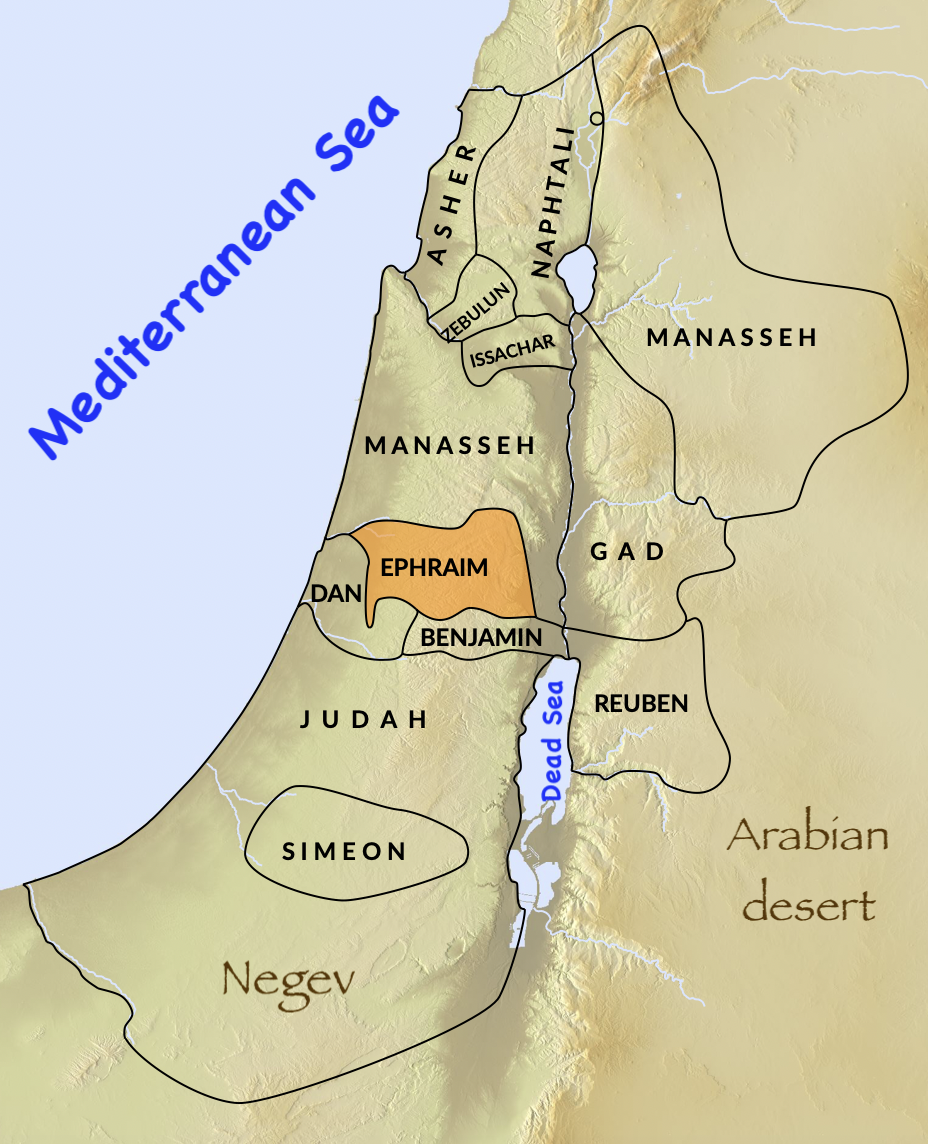
This chapter covers the descendants of the three tribes of Israel that settled on the east side of the Jordan River, outside the designated borders of the promised land. The region in which they settled is often referred to as the Transjordan. Prior to beginning the conquest and occupation of the land of Canaan as God had commanded, the tribes of Reuben, Gad, and Manasseh asked for permission to settle east of the Jordan on fertile land that was perfect for raising their many flock and herds.

The tribes of Reuben and Gad owned vast numbers of livestock. So when they saw that the lands of Jazer and Gilead were ideally suited for their flocks and herds, they came to Moses, Eleazar the priest, and the other leaders of the community. They said, “Notice the towns of Ataroth, Dibon, Jazer, Nimrah, Heshbon, Elealeh, Sibmah, Nebo, and Beon. The Lord has conquered this whole area for the community of Israel, and it is ideally suited for all our livestock. If we have found favor with you, please let us have this land as our property instead of giving us land across the Jordan River.” – Numbers 32:1-5 NLT

Angered by the self-centered nature of their request, Moses gave them an emphatic “No!” as his answer.

“The Lord was angry with Israel and made them wander in the wilderness for forty years until the entire generation that sinned in the Lord’s sight had died. But here you are, a brood of sinners, doing exactly the same thing! You are making the Lord even angrier with Israel. If you turn away from him like this and he abandons them again in the wilderness, you will be responsible for destroying this entire nation!” – Numbers 32:13-15 NLT

Moses feared that if he gave in to their request, they would get comfortable and refuse to assist their brothers in conquering the land of Canaan. This would leave the remainder of the tribes at a distinct disadvantage. However, the elders of the three tribes assured Moses that they would play their part in the conquest of Canaan.

“We simply want to build pens for our livestock and fortified towns for our wives and children. Then we will arm ourselves and lead our fellow Israelites into battle until we have brought them safely to their land. Meanwhile, our families will stay in the fortified towns we build here, so they will be safe from any attacks by the local people. We will not return to our homes until all the people of Israel have received their portions of land. But we do not claim any of the land on the other side of the Jordan. We would rather live here on the east side and accept this as our grant of land.” – Numbers 32:16-19 NLT

While these three tribes refused their inheritance in the land of promise, the chronicler included them in his genealogical listing, along with the rest of the tribes of Israel. Their decision to settle outside the borders of the promised land did not forfeit their right to be called the children of God. It also did not protect them from facing God’s judgment and being conquered by foreign invaders. They too ended up as slaves but not to the Babylonians.

…these tribes were unfaithful to the God of their ancestors. They worshiped the gods of the nations that God had destroyed. So the God of Israel caused King Pul of Assyria (also known as Tiglath-pileser) to invade the land and take away the people of Reuben, Gad, and the half-tribe of Manasseh as captives. The Assyrians exiled them to Halah, Habor, Hara, and the Gozan River, where they remain to this day. – 1 Chronicles 5:25-26 NLT

The inference is that these tribes never returned to the land of promise. Unlike the remaining tribes, the Reubenites, Gadites, and the half-tribe of Manasseh ended up becoming slaves to the Assyrians. Their defeat and deportation took place hundreds of years before the fall of the kingdom of Judah. There is no biblical record of any of the descendants of these tribes returning to the promised land. This closing statement in chapter 5 is meant to remind the returning Israelites of the unique nature of their restoration to the land by God. They were no more deserving than the other three tribes, but God had allowed them to escape their captivity in Babylon and experience the joy of returning to their homeland.

The tribe of Reuben receives special attention because of the actions of their patriarch. He is listed as “the firstborn of Israel” (1 Chronicles 5:1) because he was the oldest son of Jacob. But Reuben had forfeited his rights as the eldest son because “he dishonored his father by sleeping with one of his father’s concubines” and, as a result, “his birthright was given to the sons of his brother Joseph” (1 Chronicles 5:1 NLT). While the chronicler provides little in the way of details, it’s likely his audience was very familiar with the sordid story. The Book of Genesis fills in the gaps.

Then Jacob traveled on and camped beyond Migdal-eder. While he was living there, Reuben had intercourse with Bilhah, his father’s concubine, and Jacob soon heard about it. – Genesis 35:21-22 NLT

Even before the law was given by God, Reuben’s behavior was deemed unacceptable by the prevailing social standards. It seems that his actions were motivated by more than sexual desire. By sleeping with his father’s concubine, Reuben was issuing a direct challenge to his father’s authority and attempting to assert his right to serve as the head of the family. But his act of indiscretion brought down the wrath of his father and the loss of his rights as the firstborn son.

“Reuben, you are my firstborn, my strength,
    the child of my vigorous youth.
    You are first in rank and first in power.
But you are as unruly as a flood,
    and you will be first no longer.
For you went to bed with my wife;
    you defiled my marriage couch.” – Genesis 49:3-4 NLT

The chronicler provides the ramifications of this “curse” issued by Jacob.

For this reason, Reuben is not listed in the genealogical records as the firstborn son. The descendants of Judah became the most powerful tribe and provided a ruler for the nation, but the birthright belonged to Joseph. – 1 Chronicles 5:1-2 NLT

“…because of his sin (v. 1) God passed him over. God blessed Joseph with the double portion of the birthright. He did this by elevating Joseph’s two sons, Ephraim and Manasseh, to equality among Jacob’s other sons, Joseph’s brothers.” – Thomas L. Constable, Notes on 1 Chronicles

Despite his egregious sin, Reuben’s tribe was allowed to settle in the region of Gilead and enjoy the bounty of the land and victories over their enemies.

The tribe of Gad also settled east of the Jordan, sharing the land of Gilead with the Reubenites and expanding their territory into Bashan. They too enjoyed God’s blessings in the form of military success and agricultural abundance.

While these three tribes settled in land outside the borders of the promised land, they were not immune from conflict. They too were seen as foreign invaders by the land’s current occupants and were forced to wage war with their enemies. The chronicler points out that “There were 44,760 capable warriors in the armies of Reuben, Gad, and the half-tribe of Manasseh. They were all skilled in combat and armed with shields, swords, and bows. They waged war against the Hagrites, the Jeturites, the Naphishites, and the Nodabites” (1 Chronicles 5:18-19 NLT). Their occupation of land outside the borders of the designated inheritance did not relieve them of the need to do battle with the enemies of God. The constant conflict they faced led them to trust in the Lord for His assistance. While they could boast of having a large and well-trained army, they knew they were powerless without God’s help. 

The chronicler points out one such occasion when they turned to Yahweh for help.

They cried out to God during the battle, and he answered their prayer because they trusted in him. So the Hagrites and all their allies were defeated. – 1 Chronicles 5:20 NLT

God knew no boundaries. He was not the God of the promised land; He was the God of the people of Israel, and that included the tribes of Reuben, Gad, and Manasseh. Little did these three tribes know that they had settled in land that was always meant to be part of the inheritance God had promised Abraham.

So the Lord made a covenant with Abram that day and said, “I have given this land to your descendants, all the way from the border of Egypt to the great Euphrates River— the land now occupied by the Kenites, Kenizzites, Kadmonites, Hittites, Perizzites, Rephaites, Amorites, Canaanites, Girgashites, and Jebusites.” – Genesis 15:18-21 NLT

God later confirmed this promise with Moses.

“I will fix your boundaries from the Red Sea to the Mediterranean Sea, and from the eastern wilderness to the Euphrates River.” – Exodus 23:31 NLT

God had always planned for the land of Israel to extend all the way to the Euphrates River. But at no point in Israel’s history have their borders included this vast tract of land now occupied by Jordan, Syria, Lebanon, and Iraq. Even during the reigns of David and Solomon, when the borders of Israel expanded greatly, they never included these vast regions. But the day will come when God will complete what He began and fulfill all that He promised to Abraham.

In the meantime, the newly arrived remnant of God’s chosen people needed to be reminded that their ancestors had conquered large portions of Canaan and it was still their rightful possession. But like the tribes of Reuben, Gad, and Manasseh, they would have to trust God if they wanted to enjoy the full scope of their promised inheritance. They were back in the land but the battle was far from over. There was work to be done and they would need to rely upon God if they wanted to see their borders expanded, their homes and towns restored, and their nation renewed.

English Standard Version (ESV)
The Holy Bible, English Standard Version. ESV® Permanent Text Edition® (2016). Copyright © 2001 by Crossway Bibles, a publishing ministry of Good News Publishers.

New Living Translation (NLT)
Holy Bible, New Living Translation, copyright © 1996, 2004, 2015 by Tyndale House Foundation. Used by permission of Tyndale House Publishers Inc., Carol Stream, Illinois 60188. All rights reserved.

The Final Purging

21 In the twelfth year of our exile, in the tenth month, on the fifth day of the month, a fugitive from Jerusalem came to me and said, “The city has been struck down.” 22 Now the hand of the Lord had been upon me the evening before the fugitive came; and he had opened my mouth by the time the man came to me in the morning, so my mouth was opened, and I was no longer mute.

23 The word of the Lord came to me: 24 “Son of man, the inhabitants of these waste places in the land of Israel keep saying, ‘Abraham was only one man, yet he got possession of the land; but we are many; the land is surely given us to possess.’ 25 Therefore say to them, Thus says the Lord God: You eat flesh with the blood and lift up your eyes to your idols and shed blood; shall you then possess the land? 26 You rely on the sword, you commit abominations, and each of you defiles his neighbor’s wife; shall you then possess the land? 27 Say this to them, Thus says the Lord God: As I live, surely those who are in the waste places shall fall by the sword, and whoever is in the open field I will give to the beasts to be devoured, and those who are in strongholds and in caves shall die by pestilence. 28 And I will make the land a desolation and a waste, and her proud might shall come to an end, and the mountains of Israel shall be so desolate that none will pass through. 29 Then they will know that I am the Lord, when I have made the land a desolation and a waste because of all their abominations that they have committed.

30 “As for you, son of man, your people who talk together about you by the walls and at the doors of the houses, say to one another, each to his brother, ‘Come, and hear what the word is that comes from the Lord.’ 31 And they come to you as people come, and they sit before you as my people, and they hear what you say but they will not do it; for with lustful talk in their mouths they act; their heart is set on their gain. 32 And behold, you are to them like one who sings lustful songs with a beautiful voice and plays well on an instrument, for they hear what you say, but they will not do it. 33 When this comes—and come it will!—then they will know that a prophet has been among them.” Ezekiel 33:21-33 ESV

Exactly three years earlier, “in the ninth year, in the tenth month, on the tenth day of the month” (Ezekiel 24:1 ESV), the prophet Ezekiel had received a message from Yahweh concerning the coming destruction of Jerusalem. He was told to “write down today’s date, because on this very day the king of Babylon is beginning his attack against Jerusalem” (Ezekiel 24:2 NLT). And God informed His prophet that the Babylonian siege would last three years, then end with the city’s fall.

“Son of man, on the day I take away their stronghold—their joy and glory, their heart’s desire, their dearest treasure—I will also take away their sons and daughters. And on that day a survivor from Jerusalem will come to you in Babylon and tell you what has happened. And when he arrives, your voice will suddenly return so you can talk to him, and you will be a symbol for these people. Then they will know that I am the Lord.” – Ezekiel 24:25-27 NLT

Up until that point, Ezekiel had been struck mute by God and was completely unable to speak to the people. He was restricted to conveying his messages through dramatic demonstrations as dictated by God. But Ezekiel was informed that his muteness would come to an end on the day he received news of Jerusalem’s destruction. And chapter 33 of Ezekiel records that fateful day.

The night before the messenger arrived from Jerusalem with news of the city’s devastating end, God had opened Ezekiel’s mouth so that he could speak. The prophet’s renewed capacity for speech would be put to use immediately as God provided him with a message for “the scattered remnants of Israel living among the ruined cities” (Ezekiel 33:24 NLT). It seems that for seven-and-a-half years, Ezekiel had only been able to speak when God allowed him to do so.

“I will make your tongue stick to the roof of your mouth so that you will be speechless and unable to rebuke them, for they are rebels. But when I give you a message, I will loosen your tongue and let you speak. Then you will say to them, ‘This is what the Sovereign Lord says!” – Ezekiel 3:26-27 NLT

But with Jerusalem’s demise, this on-again-off-again condition was removed and Ezekiel had full freedom to speak on behalf of God with no restrictions. His first message was to all those Israelites who were living as exiles in foreign lands or who had taken up residence in the wastelands of Canaan. Within these two groups, there were those who believed they had every right to return to the land and make it their own. Their assumption was based on their identity as children of Abraham, and the logic behind it was simple.

“Abraham was only one man, yet he gained possession of the entire land. We are many; surely the land has been given to us as a possession.” – Ezekiel 33:24 NLT

In a sense, they were right. The land had been promised to them by God, but that promise came with conditions. God expected them to live in obedience to His commands. Their status as descendants of Abraham was not enough. Prior to them entering the land of Canaan for the first time, Moses had clearly communicated God’s expectations.

If you fully obey the Lord your God and carefully keep all his commands that I am giving you today, the Lord your God will set you high above all the nations of the world. You will experience all these blessings if you obey the Lord your God.” – Deuteronomy 28:1-2 NLT

Obedience was the key to blessing. And those blessings would help to set them apart as God’s chosen people.

“If you obey the commands of the Lord your God and walk in his ways, the Lord will establish you as his holy people as he swore he would do. Then all the nations of the world will see that you are a people claimed by the Lord, and they will stand in awe of you. – Deuteronomy 28:9-10 NLT

But now, centuries later, the Israelites were the laughingstock of the world. Hundreds of years earlier, the northern kingdom of Israel had fallen to the Assyrians and now the southern kingdom of Judah was a vassal state of the Babylonians. Its cities lay in ruins and its people had been relegated to a life of poverty and dispossession. Yet, they still believed they had every right to return to the land and enjoy all its benefits.

But God had other plans for them because He knew they remained unrepentant and unworthy to occupy His holy land. Their sinful actions had left the land of promise defiled and in need of divine purging, and God was merciless in exposing their culpability.

You eat meat with blood in it, you worship idols, and you murder the innocent. Do you really think the land should be yours? Murderers! Idolaters! Adulterers! Should the land belong to you?” – Ezekiel 33:25-26 NLT

They were law-breakers and covenant violators and God knew that even the fall of Jerusalem would not cause them to acknowledge their sins and repent. Over the centuries, they had developed a track record of stubborn resistance to God’s calls for repentance, and now they were going to experience the full extent of His wrath, just as He had outlined it to Moses centuries earlier.

“…if you do not listen to me or obey all these commands, and if you break my covenant by rejecting my decrees, treating my regulations with contempt, and refusing to obey my commands, I will punish you.” – Leviticus 26:14-16 NLT

God had given Moses a detailed description of His judgments, clearly indicating the escalating nature of their intensity if the people refused to respond.

And if, in spite of all this, you still disobey me, I will punish you seven times over for your sins. – Leviticus 26:18 NLT

“If even then you remain hostile toward me and refuse to obey me, I will inflict disaster on you seven times over for your sins. – Leviticus 26:21 NLT

“And if you fail to learn the lesson and continue your hostility toward me, then I myself will be hostile toward you. I will personally strike you with calamity seven times over for your sins.” – Leviticus 26:23-24 NLT

“If in spite of all this you still refuse to listen and still remain hostile toward me, then I will give full vent to my hostility. I myself will punish you seven times over for your sins. – Leviticus 26:27-28 NLT

Every if-then statement was fulfilled because the people of Israel refused to listen. No judgment awakened their sense of shame or caused them to repent of their sins. They stubbornly clung to their ways and watched as wave after wave of God’s judgments came against them. And now, God declares that He is going to bring the last phase of His judgment, just as He had predicted through the pen of Moses.

“And for those of you who survive, I will demoralize you in the land of your enemies. You will live in such fear that the sound of a leaf driven by the wind will send you fleeing. You will run as though fleeing from a sword, and you will fall even when no one pursues you. Though no one is chasing you, you will stumble over each other as though fleeing from a sword. You will have no power to stand up against your enemies. You will die among the foreign nations and be devoured in the land of your enemies. Those of you who survive will waste away in your enemies’ lands because of their sins and the sins of their ancestors.” – Leviticus 26:36-39 NLT

That day had come. God declares to Ezekiel, “I will completely destroy the land and demolish her pride. Her arrogant power will come to an end” (Ezekiel 33:28 NLT). The time for purging and cleansing had arrived.

And as for the exiles among whom Ezekiel ministered, God had a word for them as well. Their plaintive pleas for the prophet to give them a message from God were a sham. They had no intentions of keeping the commands of God, whether written on a scroll as part of the Mosaic Law or spoken from the lips of His prophet.

“…my people come pretending to be sincere and sit before you. They listen to your words, but they have no intention of doing what you say. Their mouths are full of lustful words, and their hearts seek only after money. – Ezekiel 33:31 NLT

God informs Ezekiel that his audience only feigns interest. They listen politely and intently to what he has to say but have no intentions of changing their behavior. Yet God assures His prophet, “when all these terrible things happen to them—as they certainly will—then they will know a prophet has been among them” (Ezekiel 33:33 NLT). God hints at a day when the people will finally wake up and realize what they have done. The full weight of God’s judgment will have its full effect, awakening His rebellious people to their need for God’s healing and forgiveness. While this chapter ends on a negative note, it gives a glimpse of the good news to come. God’s judgment had a purpose and His plan was not yet complete.

English Standard Version (ESV) The Holy Bible, English Standard Version. ESV® Permanent Text Edition® (2016). Copyright © 2001

New Living Translation (NLT) Holy Bible, New Living Translation, copyright © 1996, 2004, 2015 by Tyndale House Foundation. Used by permission of Tyndale House Publishers Inc., Carol Stream, Illinois 60188. All rights reserved.

Repent and Turn

19 “Yet you say, ‘Why should not the son suffer for the iniquity of the father?’ When the son has done what is just and right, and has been careful to observe all my statutes, he shall surely live. 20 The soul who sins shall die. The son shall not suffer for the iniquity of the father, nor the father suffer for the iniquity of the son. The righteousness of the righteous shall be upon himself, and the wickedness of the wicked shall be upon himself.

21 “But if a wicked person turns away from all his sins that he has committed and keeps all my statutes and does what is just and right, he shall surely live; he shall not die. 22 None of the transgressions that he has committed shall be remembered against him; for the righteousness that he has done he shall live. 23 Have I any pleasure in the death of the wicked, declares the Lord God, and not rather that he should turn from his way and live? 24 But when a righteous person turns away from his righteousness and does injustice and does the same abominations that the wicked person does, shall he live? None of the righteous deeds that he has done shall be remembered; for the treachery of which he is guilty and the sin he has committed, for them he shall die.

25 “Yet you say, ‘The way of the Lord is not just.’ Hear now, O house of Israel: Is my way not just? Is it not your ways that are not just? 26 When a righteous person turns away from his righteousness and does injustice, he shall die for it; for the injustice that he has done he shall die. 27 Again, when a wicked person turns away from the wickedness he has committed and does what is just and right, he shall save his life. 28 Because he considered and turned away from all the transgressions that he had committed, he shall surely live; he shall not die. 29 Yet the house of Israel says, ‘The way of the Lord is not just.’ O house of Israel, are my ways not just? Is it not your ways that are not just?

30 “Therefore I will judge you, O house of Israel, every one according to his ways, declares the Lord God. Repent and turn from all your transgressions, lest iniquity be your ruin. 31 Cast away from you all the transgressions that you have committed, and make yourselves a new heart and a new spirit! Why will you die, O house of Israel? 32 For I have no pleasure in the death of anyone, declares the Lord God; so turn, and live.” Ezekiel 18:19-32 ESV

God has made it clear that the previous generations of Israelites had failed to live their lives in faithful obedience to Him. But He was not going to allow the present generation to blame their current condition on others. They were just as guilty and deserving of punishment as their parents and grandparents had been.

In this message to Ezekiel, God clears up a common misunderstanding and lets them know that each and every individual is responsible for their own behavior. But God has anticipated the reaction Ezekiel will get from his audience.

“What?’ you ask. ‘Doesn’t the child pay for the parent’s sins?’ No! For if the child does what is just and right and keeps my decrees, that child will surely live. The person who sins is the one who will die. The child will not be punished for the parent’s sins, and the parent will not be punished for the child’s sins. Righteous people will be rewarded for their own righteous behavior, and wicked people will be punished for their own wickedness.” – Ezekiel 18:19-20 NLT

God informs His people that His justice is not indiscriminate or applied in a one-size-fits-all manner.

“…if wicked people turn away from all their sins and begin to obey my decrees and do what is just and right, they will surely live and not die. – Ezekiel 18:21 NLT

God was reminding His chosen but rebellious people that there was a way to restore their relationship with Him. All they had to do was reject wickedness for righteousness. If they make the decision to live in obedience to His commands, “all their past sins will be forgotten, and they will live because of the righteous things they have done” (Ezekiel 18:21 NLT). And God informs them that He takes no delight in the deaths of the wicked. His desire is that they repent and replace their wickedness with righteousness.

I want them to turn from their wicked ways and live.” – Ezekiel 18:23 NLT

This divine mindset was meant to be a source of encouragement to the rebellious people of Judah. They still had time to change their ways. They could reverse the downward spiral of their spiritual trajectory by returning to God in humble contrition. It was not too late. But God was not interested in those who were simply seeking “fire insurance.” In other words, He was not offering His forgiveness to those who thought they could go through the motions by offering up a temporary display of repentance to buy themselves time. God wanted to see true repentance that resulted in a long-term lifestyle of righteousness. To return to a life of righteousness only to reverse course and embrace wickedness again would not cut it with God.

“…if righteous people turn from their righteous behavior and start doing sinful things and act like other sinners, should they be allowed to live?” – Ezekiel 18:24 NLT

God answers His own question with an emphatic, “No!” An individual’s temporary display of righteous behavior would not preserve them from judgment if they decided to jettison a  life of godliness for one of wickedness.

“All their righteous acts will be forgotten, and they will die for their sins.” – Ezekiel 18:24 NLT

But God knew that His people found His methods appalling. They even accused Him of practicing injustice.

“The Lord isn’t doing what’s right!” – Ezekiel 18:25 NLT

Because the Jews living in exile believed themselves to be undeserving of their punishment, they found God’s treatment of them to be unfair. He had wrongly punished them for the sins of their forefathers. In their minds, they had done nothing wrong or deserving of such harsh treatment by God. After all, they were His chosen people, the apple of His eye. How could He have allowed their deportation to the land of Babylon?

Yet God pulls no punches when He states, “O people of Israel, it is you who are not doing what’s right, not I.” (Ezekiel 18:29 NLT). They couldn’t blame Him for their predicament. They had brought it on themselves through their repeated acts of unfaithfulness and unrighteousness.

The judgment of God was inescapable without repentance. So God offers them another gracious opportunity to do the right thing and revive their status as His chosen people.

“Therefore, I will judge each of you, O people of Israel, according to your actions, says the Sovereign Lord. Repent, and turn from your sins. Don’t let them destroy you! Put all your rebellion behind you, and find yourselves a new heart and a new spirit. For why should you die, O people of Israel?” – Ezekiel 18:30-31 NLT

As the righteous judge of the universe, God is obligated to deal justly with sin. He cannot overlook or ignore it. He cannot turn a blind eye to HIs peoples’ blatant displays of rebellion and their refusal to live in obedience to His commands. But He wants them to know that His preference for them is that they choose life over death.

I don’t want you to die, says the Sovereign Lord. Turn back and live!” – Ezekiel 18:32 NLT

God’s standard of righteousness was demanding. He expected obedience, faithfulness, adherence to His Law, and unflinching worship of Him and Him alone. And no man was able to meet that standard. That is the whole reason God gave the Israelites the sacrificial system. It was intended to provide His people with a way of receiving atonement and forgiveness for the sins they committed. But they had turned the sacrificial system into a mechanical and ritualistic performance. Their hearts weren’t in it.

“These people say they are mine.
They honor me with their lips,
    but their hearts are far from me.
And their worship of me
    is nothing but man-made rules learned by rote. – Isaiah 29:13 NLT

The prophet Jeremiah declared God’s dissatisfaction with His peoples’ meaningless sacrifices.

“I will not accept your burnt offerings.
    Your sacrifices have no pleasing aroma for me.” – Jeremiah 6:20 NLT

Hundreds of years earlier, God had given His prophet, Amos similarly stinging words to convey to the rebellious citizens of the northern kingdom of Israel. They too had ignored God’s calls to repentance, wrongly assuming that they were immune from God’s judgment. They viewed themselves as deeply religious and, therefore, as righteous in God’s eyes. But God had a different perspective.

“I hate all your show and pretense—
    the hypocrisy of your religious festivals and solemn assemblies.
I will not accept your burnt offerings and grain offerings.
    I won’t even notice all your choice peace offerings.
Away with your noisy hymns of praise!
    I will not listen to the music of your harps.
Instead, I want to see a mighty flood of justice,
    an endless river of righteous living. – Amos 5:21-24 NLT

When King Solomon finished constructing the temple in Jerusalem, he held a magnificent dedication ceremony to commemorate its grand opening. At that event, God made the following promise.

“…if my people who are called by my name will humble themselves and pray and seek my face and turn from their wicked ways, I will hear from heaven and will forgive their sins and restore their land.” – 2 Chronicles 7:14 NLT

That time had come. The people were wicked and the wrath of God had begun to descend upon the citizens of Jerusalem. But more was on its way. God was far from done because the people were far from repentant. But there was always an opportunity for God’s people to humble themselves, pray, seek His face, and turn from their wicked ways, and Ezekiel was letting them know that there was no time like the present.

English Standard Version (ESV) The Holy Bible, English Standard Version. ESV® Permanent Text Edition® (2016). Copyright © 2001

New Living Translation (NLT) Holy Bible, New Living Translation, copyright © 1996, 2004, 2015 by Tyndale House Foundation. Used by permission of Tyndale House Publishers Inc., Carol Stream, Illinois 60188. All rights reserved.

The Righteous Wrath of God

The word of the Lord came to me: “And you, O son of man, thus says the Lord God to the land of Israel: An end! The end has come upon the four corners of the land. Now the end is upon you, and I will send my anger upon you; I will judge you according to your ways, and I will punish you for all your abominations. And my eye will not spare you, nor will I have pity, but I will punish you for your ways, while your abominations are in your midst. Then you will know that I am the Lord.

“Thus says the Lord God: Disaster after disaster! Behold, it comes. An end has come; the end has come; it has awakened against you. Behold, it comes. Your doom has come to you, O inhabitant of the land. The time has come; the day is near, a day of tumult, and not of joyful shouting on the mountains. Now I will soon pour out my wrath upon you, and spend my anger against you, and judge you according to your ways, and I will punish you for all your abominations. And my eye will not spare, nor will I have pity. I will punish you according to your ways, while your abominations are in your midst. Then you will know that I am the Lord, who strikes.

10 “Behold, the day! Behold, it comes! Your doom has come; the rod has blossomed; pride has budded. 11 Violence has grown up into a rod of wickedness. None of them shall remain, nor their abundance, nor their wealth; neither shall there be preeminence among them. 12 The time has come; the day has arrived. Let not the buyer rejoice, nor the seller mourn, for wrath is upon all their multitude. 13 For the seller shall not return to what he has sold, while they live. For the vision concerns all their multitude; it shall not turn back; and because of his iniquity, none can maintain his life.” Ezekiel 7:1-13 ESV

Despite all the judgments God had already brought upon them, the people of Judah remained stubbornly persistent in their spiritual infidelity. King Nebuchadnezzar and his army had left a wake of destruction throughout the land but it had done little to convince the Israelites that reconsider their pattern of unfaithfulness. As God made clear in His last message, the land of Judah was still filled with altars, pagan shrines, and places of worship for their many false gods. Nothing had changed, including the condition of their hearts. Even after having seen their besieged capital city fall to Nebuchdezzar’s forces and tens of thousands of their fellow citizens transported as captives to Babylon, they continued to live as they did before.

But God gave Ezekiel a message intended to communicate that His patience had run out. He would no longer tolerate their impudence and their blatant displays of spiritual adultery.

“Son of man, this is what the Sovereign Lord says to Israel:

“The end is here!
    Wherever you look—
east, west, north, or south—
    your land is finished.
No hope remains,
    for I will unleash my anger against you.
I will call you to account
    for all your detestable sins.
I will turn my eyes away and show no pity.
    I will repay you for all your detestable sins.
Then you will know that I am the Lord.” – Ezekiel 7:2-4 NLT

Once again, God informs His rebellious people that they will come to know Him as Lord, one way or the other. For generations, they had enjoyed the benefit of His power and presence. Under King David, they had grown to be a mighty nation that was a force to be reckoned with in that part of the world. Under the reign of David’s son, Solomon, the kingdom of Israel enjoyed a period of peace and prosperity. God had even allowed Solomon to construct a magnificent temple in His honor and, at its dedication, God delivered a message to the king.

“I have heard your prayer and your petition. I have set this Temple apart to be holy—this place you have built where my name will be honored forever. I will always watch over it, for it is dear to my heart.” – 1 Kings 9:3 NLT

God promised to inhabit the house Solomon had built for Him, but He demanded that Solomon remain faithful and obedient to His commands. As long as Solomon followed his father’s example, leading the people with integrity and godliness, then God promised to extend the Davidic dynasty for generations. But there was a caveat.

“But if you or your descendants abandon me and disobey the commands and decrees I have given you, and if you serve and worship other gods, then I will uproot Israel from this land that I have given them. I will reject this Temple that I have made holy to honor my name. I will make Israel an object of mockery and ridicule among the nations. And though this Temple is impressive now, all who pass by will be appalled and will gasp in horror. They will ask, ‘Why did the Lord do such terrible things to this land and to this Temple?’ – 1 Kings 9:6-8 NLT

And history records that, while Solomon started out well, his reign ended poorly. He was a wise king who made many foolish decisions that ultimately led to the fall of his kingdom. He violated many of God’s commands, but one that led to his downfall was his many marriages to foreign women. He ended up with 700 wives and 300 concubines, and he adopted many of their gods as his own.

In Solomon’s old age, they turned his heart to worship other gods instead of being completely faithful to the Lord his God, as his father, David, had been. Solomon worshiped Ashtoreth, the goddess of the Sidonians, and Molech, the detestable god of the Ammonites. In this way, Solomon did what was evil in the Lord’s sight; he refused to follow the Lord completely, as his father, David, had done. – 1 Kings 11:4-6 NLT

As a result, God determined to divide his kingdom, creating the northern kingdom of Israel and leaving Solomon’s successor to rule over the southern kingdom of Judah. From that point forward, the two rival kingdoms seemed to vie for the reputation of which was the most apostate. King after king came to the thrones of both nations, leading their people to forsake the God of Abraham, Isaac, and Jacob, by pursuing the false gods of the Canaanites.

Eventually, in 791 BC, God sent the Assyrians to conquer the northern kingdom of Israel. And while the southern kingdom witnessed the fall of their northern neighbor, they refused to alter their behavior. They believed that they were invincible because their capital city contained the temple of God. But they had not been faithful to the One for whose name and honor the temple had been dedicated.

Jeremiah, another prophet of God and a contemporary of Ezekiel, had the responsibility of ministering to the people living in Jerusalem. And God gave him a stern warning for all those who believed that they were immune from disaster because they were protected by the temple’s presence.

“Go to the entrance of the LORD’s Temple, and give this message to the people: ‘O Judah, listen to this message from the LORD! Listen to it, all of you who worship here! This is what the LORD of Heaven’s Armies, the God of Israel, says:

“‘Even now, if you quit your evil ways, I will let you stay in your own land. But don’t be fooled by those who promise you safety simply because the LORD’s Temple is here. They chant, “The LORD’s Temple is here! The LORD’s Temple is here!” But I will be merciful only if you stop your evil thoughts and deeds and start treating each other with justice; only if you stop exploiting foreigners, orphans, and widows; only if you stop your murdering; and only if you stop harming yourselves by worshiping idols. Then I will let you stay in this land that I gave to your ancestors to keep forever.

“‘Don’t be fooled into thinking that you will never suffer because the Temple is here. It’s a lie! Do you really think you can steal, murder, commit adultery, lie, and burn incense to Baal and all those other new gods of yours, and then come here and stand before me in my Temple and chant, “We are safe!”—only to go right back to all those evils again? Don’t you yourselves admit that this Temple, which bears my name, has become a den of thieves? Surely I see all the evil going on there. I, the LORD, have spoken!” – Jeremiah 7:2-11 NLT

The temple would not save them. In fact, centuries earlier, God had warned Solomon the temple would be completely destroyed if the people of Israel failed to remain faithful to Him alone. Now, the time had come for God to fulfill His promise, so He gave Ezekiel a message to deliver to all those living in exile in Babylon.

“O people of Israel, the day of your destruction is dawning.
    The time has come; the day of trouble is near.” – Ezekiel 7:7 NLT

Those to whom Ezekiel spoke had long dreamed of returning to their homeland. As long as Jerusalem remained and the temple stood, they believed there was hope that their fortunes would be restored. But they failed to understand the gravity of their sin and God’s hatred for their persistent unfaithfulness.

They had placed all their hope in a place, having turned the temple into little more than an idol. All their dreams of future deliverance were housed within the walls of that man-made structure. It was there, in the Holy of Holies, that they believed the Shekinah glory of God dwelled. But God cannot be confined to a building. He does not reside in and cannot be restricted to a particular place. As He declared through the prophet, Isaiah: “Heaven is my throne, and the earth is my footstool. Could you build me a temple as good as that? Could you build me such a resting place?” (Isaish 66:1 NLT).

From their desolate and desperate vantage point as exiles in the land of Babylon, Ezekiel’s audience must have been shocked to hear the finality of the prophet’s words.

The end is here! Wherever you look—east, west, north, or south—your land is finished.” – Ezekiel 7:2 NLT

The end has come. It has finally arrived. Your final doom is waiting!” – Ezekiel 7:6 NLT

The day of judgment is here; your destruction awaits! – Ezekiel 7:10 NLT

“Yes, the time has come; the day is here!” – Ezekiel 7:12 NLT

The fall of Jerusalem was imminent. The destruction of the temple was impending. And the punishment of God’s people was inevitable and inescapable.

“For what God has said applies to everyone—
    it will not be changed!
Not one person whose life is twisted by sin
    will ever recover.” – Ezekiel 7:13 NLT

The people would pay dearly for their mistaken priorities and misplaced hope. They had turned their backs on God and now He was preparing to pour out His wrath on them. He had endured their rebellion long enough. They had been warned. He had pleaded with them to repent. But they had refused. So, now it was time to pay the piper.

English Standard Version (ESV) The Holy Bible, English Standard Version. ESV® Permanent Text Edition® (2016). Copyright © 2001

New Living Translation (NLT) Holy Bible, New Living Translation, copyright © 1996, 2004, 2015 by Tyndale House Foundation. Used by permission of Tyndale House Publishers Inc., Carol Stream, Illinois 60188. All rights reserved.


Holiness Is Non-Optional

1 “And you, O son of man, take a sharp sword. Use it as a barber’s razor and pass it over your head and your beard. Then take balances for weighing and divide the hair. A third part you shall burn in the fire in the midst of the city, when the days of the siege are completed. And a third part you shall take and strike with the sword all around the city. And a third part you shall scatter to the wind, and I will unsheathe the sword after them. And you shall take from these a small number and bind them in the skirts of your robe. And of these again you shall take some and cast them into the midst of the fire and burn them in the fire. From there a fire will come out into all the house of Israel.

5 “Thus says the Lord God: This is Jerusalem. I have set her in the center of the nations, with countries all around her. And she has rebelled against my rules by doing wickedness more than the nations, and against my statutes more than the countries all around her; for they have rejected my rules and have not walked in my statutes.– Ezekiel 5:1-6 ESV

Can Ezekiel’s assignment get any stranger? He has already been commanded to spend the next 430 days lying in the street next to a miniature model of the city of Jerusalem. Each of those days, he has to act out the siege of Jerusalem while subsisting on a diet of nothing but bread and water. As the months go by, his body will begin to waste away from lack of food, and he will endure the ridicule and rejection of the very people for whom his message was intended.

But God was not done. He added another bizarre twist to this parable-in-a-play, commanding Ezekiel to remove his hair and beard using a sword. God’s choice of a sharp sword as Ezekiel’s shaving instrument was intentional and designed to illustrate the military nature of the siege. The residents of Jerusalem would be armed for battle because their city was under attack by the Babylonians. But the long duration of the siege and the resulting famine inside the city walls would leave its inhabitants hungry and demoralized. And the imagery of Ezekiel’s shaved head and beard was intended to reflect the severe state of mourning that will take place within the walls of Jerusalem.

The Mosaic Law prohibited God’s people from practicing the mourning rituals of the pagan nations around them.

“Since you are the people of the Lord your God, never cut yourselves or shave the hair above your foreheads in mourning for the dead. You have been set apart as holy to the Lord your God, and he has chosen you from all the nations of the earth to be his own special treasure. – Deuteronomy 14:1-2 NLT

The Torah interpreted these verses to be a prohibition on tonsuring, the pulling out or cutting of hair to express sorrow. This was a common practice among the pagan nations living in the land of Canaan. But God commanded His chosen people to abstain from such practices.

Yet, God commanded His prophet, Ezekiel, to shave his head and beard in order to demonstrate the severity of the siege and the humiliation the people would suffer for their rebellion against him. What made this command even more difficult for Ezekiel to obey was that it violated God’s laws concerning the priesthood of Israel.

“The priests must not shave their heads or trim their beards or cut their bodies. They must be set apart as holy to their God and must never bring shame on the name of God. They must be holy, for they are the ones who present the special gifts to the Lord, gifts of food for their God. – Leviticus 21:5-6 NLT

The people who witnessed this shocking display of self-degradation by Ezekiel would have understood its significance. By shaving his head and beard, this young priest would have willingly violated God’s law, rendering himself defiled and unholy. But what they might not have understood was that his action was a demonstration of their own spiritual state before God. They were defiled and unholy as well. Because of their stubborn refusal to repent, they were no longer considered holy or set apart as God’s chosen people.

And God had another bizarre element to add to Ezekiel’s performance. He was to take the hair and weigh it on a scale, dividing it into three equal parts.

“Place a third of it at the center of your map of Jerusalem. After acting out the siege, burn it there. Scatter another third across your map and chop it with a sword. Scatter the last third to the wind, for I will scatter my people with the sword.” – Ezekiel 5:2 NLT

It is important to remember that every phase of God’s instructions to Ezekiel was to be acted out in public. He was required to carry out God’s commands so that his fellow exiles could witness it with their own eyes. This message was for them.

So, God commanded that upon completion of his 430-day demonstration, Ezekiel was to burn one-third of the hair in the center of the model he had built. This was intended to represent all those who would be slaughtered within the city when the Babylonians broke through the walls.

Then God commanded Ezekiel to take another third of the hair and use his sword to chop it up outside the walls of his miniature model of Jerusalem. This action was intended to represent the wholesale massacre of all those who attempted to flee the city. And Ezekiel was commanded to take the final third of the hair and scatter it to the wind, illustrating all those who would end up “blown” by God’s will to the four corners of the earth. Some would escape and relocate to foreign lands, while a large number of the people would end up as captives in Babylon just like Ezekiel and his fellow exiles.

The book of 2 Chronicles records the devastating details surrounding the eventual siege and destruction of Jerusalem.

So the Lord brought the king of Babylon against them. The Babylonians killed Judah’s young men, even chasing after them into the Temple. They had no pity on the people, killing both young men and young women, the old and the infirm. God handed all of them over to Nebuchadnezzar. The king took home to Babylon all the articles, large and small, used in the Temple of God, and the treasures from both the Lord’s Temple and from the palace of the king and his officials. Then his army burned the Temple of God, tore down the walls of Jerusalem, burned all the palaces, and completely destroyed everything of value. The few who survived were taken as exiles to Babylon, and they became servants to the king and his sons until the kingdom of Persia came to power. – 2 Chronicles 36:17-20 NLT

Everything that God commanded Ezekiel to act out would eventually become a painful reality for those still living within the walls of Jerusalem. God was using His young prophet to provide an eerily accurate portrayal of the fall of Jerusalem. He wanted the Jews living as exiles in Babylon to understand that His anger was not yet assuaged. There were some among them in Babylon who were suggesting that their days of suffering were almost over and they would soon be returning home. Others had become comfortable in their new surroundings in Babylon and had long ago given up hope or interest in returning to their homeland.

Even back in Jerusalem, there were those who were propagating the idea that the Babylonian siege would be shortlived and unsuccessful. The civil and religious leaders were trying to convince the people that God was going to rescue them from their predicament. But God had given His prophet, Jeremiah, a dramatically different message to deliver to the people.

“From the least to the greatest,
    their lives are ruled by greed.
From prophets to priests,
    they are all frauds.
They offer superficial treatments
    for my people’s mortal wound.
They give assurances of peace
    when there is no peace.” – Jeremiah 6:13-14 NLT

Rather than confess their sins and return to the Lord in humility, these people were declaring themselves to be innocent and worthy of God’s rescue. Even Jeremiah would attempt to inform God about the deceptive rhetoric of the other self-appointed prophets of Judah.

Then I said, “O Sovereign Lord, their prophets are telling them, ‘All is well—no war or famine will come. The Lord will surely send you peace.’” – Ezekiel 14:13 NLT

He was fighting a one-man battle against disinformation and false news. But Jeremiah wasn’t telling God anything He didn’t already know. In fact, God assured Jeremiah that these false prophets would pay dearly for their lies.

Then the Lord said, “These prophets are telling lies in my name. I did not send them or tell them to speak. I did not give them any messages. They prophesy of visions and revelations they have never seen or heard. They speak foolishness made up in their own lying hearts. Therefore, this is what the Lord says: I will punish these lying prophets, for they have spoken in my name even though I never sent them. They say that no war or famine will come, but they themselves will die by war and famine!” – Ezekiel 14:14-15 NLT

Meanwhile, back in Babylon, Ezekiel was putting on a show for the exiles, attempting to drive home the severity of God’s anger with His people. Their very presence in Babylon was proof that God was serious about sin and was more than willing to punish it severely. And He was far from done. Their fellow Jews back in Jerusalem were continuing to live in disobedience to God’s will and refusing to answer His call to repentance, and their actions had not escaped the eyes of the Almighty.

“…she has rebelled against my regulations and decrees and has been even more wicked than the surrounding nations. She has refused to obey the regulations and decrees I gave her to follow.” – Ezekiel 5:6 NLT

Ezekiel’s lengthy dramatic performance was meant to remind the unrepentant Jews in Babylon that God expects obedience from His chosen people, no matter where they live. And their failure to live holy lives and reflect the glory of God would eventually have devastating consequences.

English Standard Version (ESV) The Holy Bible, English Standard Version. ESV® Permanent Text Edition® (2016). Copyright © 2001

New Living Translation (NLT) Holy Bible, New Living Translation, copyright © 1996, 2004, 2015 by Tyndale House Foundation. Used by permission of Tyndale House Publishers Inc., Carol Stream, Illinois 60188. All rights reserved.