The Final Purging

21 In the twelfth year of our exile, in the tenth month, on the fifth day of the month, a fugitive from Jerusalem came to me and said, “The city has been struck down.” 22 Now the hand of the Lord had been upon me the evening before the fugitive came; and he had opened my mouth by the time the man came to me in the morning, so my mouth was opened, and I was no longer mute.

23 The word of the Lord came to me: 24 “Son of man, the inhabitants of these waste places in the land of Israel keep saying, ‘Abraham was only one man, yet he got possession of the land; but we are many; the land is surely given us to possess.’ 25 Therefore say to them, Thus says the Lord God: You eat flesh with the blood and lift up your eyes to your idols and shed blood; shall you then possess the land? 26 You rely on the sword, you commit abominations, and each of you defiles his neighbor’s wife; shall you then possess the land? 27 Say this to them, Thus says the Lord God: As I live, surely those who are in the waste places shall fall by the sword, and whoever is in the open field I will give to the beasts to be devoured, and those who are in strongholds and in caves shall die by pestilence. 28 And I will make the land a desolation and a waste, and her proud might shall come to an end, and the mountains of Israel shall be so desolate that none will pass through. 29 Then they will know that I am the Lord, when I have made the land a desolation and a waste because of all their abominations that they have committed.

30 “As for you, son of man, your people who talk together about you by the walls and at the doors of the houses, say to one another, each to his brother, ‘Come, and hear what the word is that comes from the Lord.’ 31 And they come to you as people come, and they sit before you as my people, and they hear what you say but they will not do it; for with lustful talk in their mouths they act; their heart is set on their gain. 32 And behold, you are to them like one who sings lustful songs with a beautiful voice and plays well on an instrument, for they hear what you say, but they will not do it. 33 When this comes—and come it will!—then they will know that a prophet has been among them.” Ezekiel 33:21-33 ESV

Exactly three years earlier, “in the ninth year, in the tenth month, on the tenth day of the month” (Ezekiel 24:1 ESV), the prophet Ezekiel had received a message from Yahweh concerning the coming destruction of Jerusalem. He was told to “write down today’s date, because on this very day the king of Babylon is beginning his attack against Jerusalem” (Ezekiel 24:2 NLT). And God informed His prophet that the Babylonian siege would last three years, then end with the city’s fall.

“Son of man, on the day I take away their stronghold—their joy and glory, their heart’s desire, their dearest treasure—I will also take away their sons and daughters. And on that day a survivor from Jerusalem will come to you in Babylon and tell you what has happened. And when he arrives, your voice will suddenly return so you can talk to him, and you will be a symbol for these people. Then they will know that I am the Lord.” – Ezekiel 24:25-27 NLT

Up until that point, Ezekiel had been struck mute by God and was completely unable to speak to the people. He was restricted to conveying his messages through dramatic demonstrations as dictated by God. But Ezekiel was informed that his muteness would come to an end on the day he received news of Jerusalem’s destruction. And chapter 33 of Ezekiel records that fateful day.

The night before the messenger arrived from Jerusalem with news of the city’s devastating end, God had opened Ezekiel’s mouth so that he could speak. The prophet’s renewed capacity for speech would be put to use immediately as God provided him with a message for “the scattered remnants of Israel living among the ruined cities” (Ezekiel 33:24 NLT). It seems that for seven-and-a-half years, Ezekiel had only been able to speak when God allowed him to do so.

“I will make your tongue stick to the roof of your mouth so that you will be speechless and unable to rebuke them, for they are rebels. But when I give you a message, I will loosen your tongue and let you speak. Then you will say to them, ‘This is what the Sovereign Lord says!” – Ezekiel 3:26-27 NLT

But with Jerusalem’s demise, this on-again-off-again condition was removed and Ezekiel had full freedom to speak on behalf of God with no restrictions. His first message was to all those Israelites who were living as exiles in foreign lands or who had taken up residence in the wastelands of Canaan. Within these two groups, there were those who believed they had every right to return to the land and make it their own. Their assumption was based on their identity as children of Abraham, and the logic behind it was simple.

“Abraham was only one man, yet he gained possession of the entire land. We are many; surely the land has been given to us as a possession.” – Ezekiel 33:24 NLT

In a sense, they were right. The land had been promised to them by God, but that promise came with conditions. God expected them to live in obedience to His commands. Their status as descendants of Abraham was not enough. Prior to them entering the land of Canaan for the first time, Moses had clearly communicated God’s expectations.

If you fully obey the Lord your God and carefully keep all his commands that I am giving you today, the Lord your God will set you high above all the nations of the world. You will experience all these blessings if you obey the Lord your God.” – Deuteronomy 28:1-2 NLT

Obedience was the key to blessing. And those blessings would help to set them apart as God’s chosen people.

“If you obey the commands of the Lord your God and walk in his ways, the Lord will establish you as his holy people as he swore he would do. Then all the nations of the world will see that you are a people claimed by the Lord, and they will stand in awe of you. – Deuteronomy 28:9-10 NLT

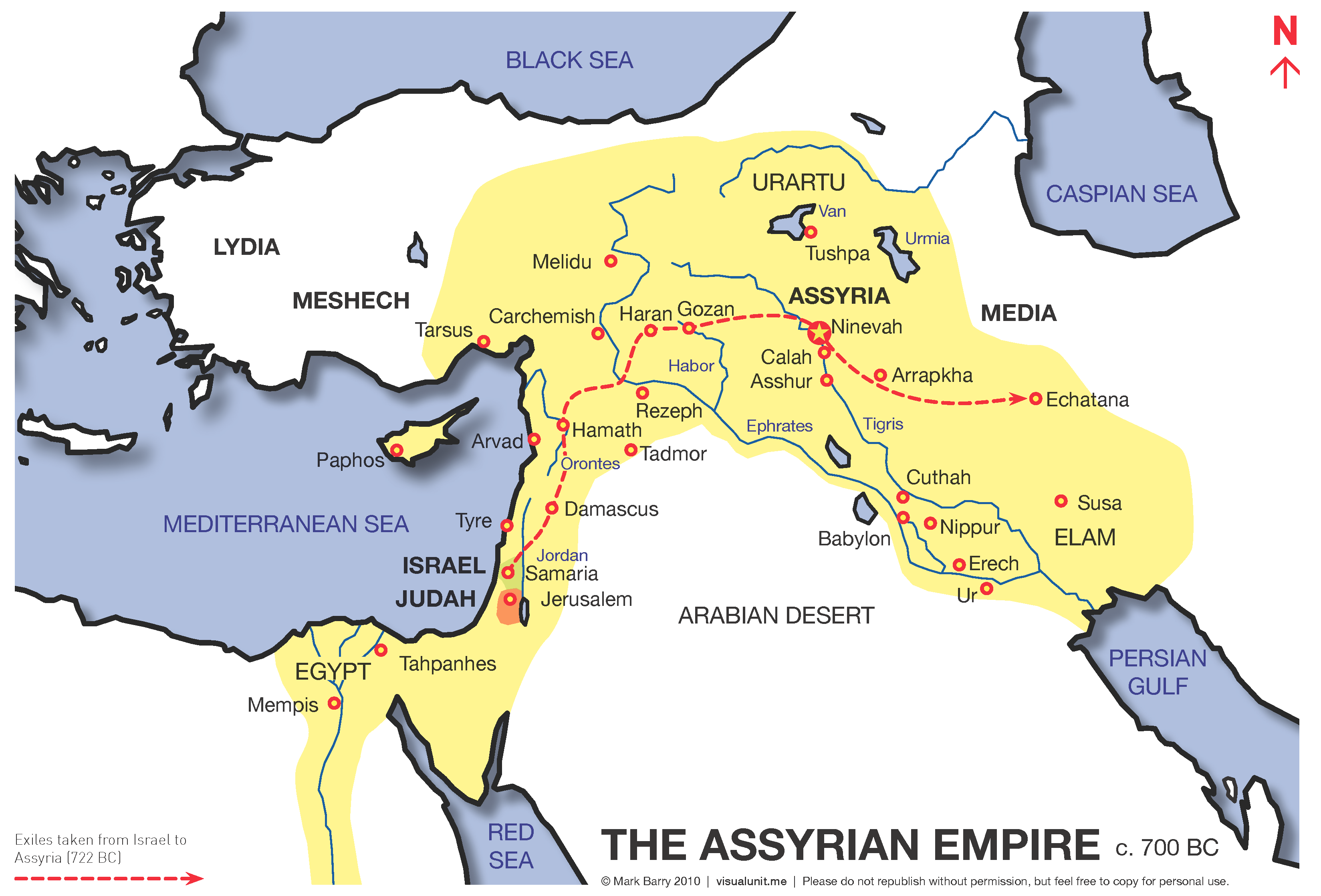
But now, centuries later, the Israelites were the laughingstock of the world. Hundreds of years earlier, the northern kingdom of Israel had fallen to the Assyrians and now the southern kingdom of Judah was a vassal state of the Babylonians. Its cities lay in ruins and its people had been relegated to a life of poverty and dispossession. Yet, they still believed they had every right to return to the land and enjoy all its benefits.

But God had other plans for them because He knew they remained unrepentant and unworthy to occupy His holy land. Their sinful actions had left the land of promise defiled and in need of divine purging, and God was merciless in exposing their culpability.

You eat meat with blood in it, you worship idols, and you murder the innocent. Do you really think the land should be yours? Murderers! Idolaters! Adulterers! Should the land belong to you?” – Ezekiel 33:25-26 NLT

They were law-breakers and covenant violators and God knew that even the fall of Jerusalem would not cause them to acknowledge their sins and repent. Over the centuries, they had developed a track record of stubborn resistance to God’s calls for repentance, and now they were going to experience the full extent of His wrath, just as He had outlined it to Moses centuries earlier.

“…if you do not listen to me or obey all these commands, and if you break my covenant by rejecting my decrees, treating my regulations with contempt, and refusing to obey my commands, I will punish you.” – Leviticus 26:14-16 NLT

God had given Moses a detailed description of His judgments, clearly indicating the escalating nature of their intensity if the people refused to respond.

And if, in spite of all this, you still disobey me, I will punish you seven times over for your sins. – Leviticus 26:18 NLT

“If even then you remain hostile toward me and refuse to obey me, I will inflict disaster on you seven times over for your sins. – Leviticus 26:21 NLT

“And if you fail to learn the lesson and continue your hostility toward me, then I myself will be hostile toward you. I will personally strike you with calamity seven times over for your sins.” – Leviticus 26:23-24 NLT

“If in spite of all this you still refuse to listen and still remain hostile toward me, then I will give full vent to my hostility. I myself will punish you seven times over for your sins. – Leviticus 26:27-28 NLT

Every if-then statement was fulfilled because the people of Israel refused to listen. No judgment awakened their sense of shame or caused them to repent of their sins. They stubbornly clung to their ways and watched as wave after wave of God’s judgments came against them. And now, God declares that He is going to bring the last phase of His judgment, just as He had predicted through the pen of Moses.

“And for those of you who survive, I will demoralize you in the land of your enemies. You will live in such fear that the sound of a leaf driven by the wind will send you fleeing. You will run as though fleeing from a sword, and you will fall even when no one pursues you. Though no one is chasing you, you will stumble over each other as though fleeing from a sword. You will have no power to stand up against your enemies. You will die among the foreign nations and be devoured in the land of your enemies. Those of you who survive will waste away in your enemies’ lands because of their sins and the sins of their ancestors.” – Leviticus 26:36-39 NLT

That day had come. God declares to Ezekiel, “I will completely destroy the land and demolish her pride. Her arrogant power will come to an end” (Ezekiel 33:28 NLT). The time for purging and cleansing had arrived.

And as for the exiles among whom Ezekiel ministered, God had a word for them as well. Their plaintive pleas for the prophet to give them a message from God were a sham. They had no intentions of keeping the commands of God, whether written on a scroll as part of the Mosaic Law or spoken from the lips of His prophet.

“…my people come pretending to be sincere and sit before you. They listen to your words, but they have no intention of doing what you say. Their mouths are full of lustful words, and their hearts seek only after money. – Ezekiel 33:31 NLT

God informs Ezekiel that his audience only feigns interest. They listen politely and intently to what he has to say but have no intentions of changing their behavior. Yet God assures His prophet, “when all these terrible things happen to them—as they certainly will—then they will know a prophet has been among them” (Ezekiel 33:33 NLT). God hints at a day when the people will finally wake up and realize what they have done. The full weight of God’s judgment will have its full effect, awakening His rebellious people to their need for God’s healing and forgiveness. While this chapter ends on a negative note, it gives a glimpse of the good news to come. God’s judgment had a purpose and His plan was not yet complete.

English Standard Version (ESV) The Holy Bible, English Standard Version. ESV® Permanent Text Edition® (2016). Copyright © 2001

New Living Translation (NLT) Holy Bible, New Living Translation, copyright © 1996, 2004, 2015 by Tyndale House Foundation. Used by permission of Tyndale House Publishers Inc., Carol Stream, Illinois 60188. All rights reserved.

Do the Right Thing

1 The word of the Lord came to me: “Son of man, speak to your people and say to them, If I bring the sword upon a land, and the people of the land take a man from among them, and make him their watchman, and if he sees the sword coming upon the land and blows the trumpet and warns the people, then if anyone who hears the sound of the trumpet does not take warning, and the sword comes and takes him away, his blood shall be upon his own head. He heard the sound of the trumpet and did not take warning; his blood shall be upon himself. But if he had taken warning, he would have saved his life. But if the watchman sees the sword coming and does not blow the trumpet, so that the people are not warned, and the sword comes and takes any one of them, that person is taken away in his iniquity, but his blood I will require at the watchman’s hand.

“So you, son of man, I have made a watchman for the house of Israel. Whenever you hear a word from my mouth, you shall give them warning from me. If I say to the wicked, O wicked one, you shall surely die, and you do not speak to warn the wicked to turn from his way, that wicked person shall die in his iniquity, but his blood I will require at your hand. But if you warn the wicked to turn from his way, and he does not turn from his way, that person shall die in his iniquity, but you will have delivered your soul.

10 “And you, son of man, say to the house of Israel, Thus have you said: ‘Surely our transgressions and our sins are upon us, and we rot away because of them. How then can we live?’ 11 Say to them, As I live, declares the Lord God, I have no pleasure in the death of the wicked, but that the wicked turn from his way and live; turn back, turn back from your evil ways, for why will you die, O house of Israel?

12 “And you, son of man, say to your people, The righteousness of the righteous shall not deliver him when he transgresses, and as for the wickedness of the wicked, he shall not fall by it when he turns from his wickedness, and the righteous shall not be able to live by his righteousness when he sins. 13 Though I say to the righteous that he shall surely live, yet if he trusts in his righteousness and does injustice, none of his righteous deeds shall be remembered, but in his injustice that he has done he shall die. 14 Again, though I say to the wicked, ‘You shall surely die,’ yet if he turns from his sin and does what is just and right, 15 if the wicked restores the pledge, gives back what he has taken by robbery, and walks in the statutes of life, not doing injustice, he shall surely live; he shall not die. 16 None of the sins that he has committed shall be remembered against him. He has done what is just and right; he shall surely live.

17 “Yet your people say, ‘The way of the Lord is not just,’ when it is their own way that is not just. 18 When the righteous turns from his righteousness and does injustice, he shall die for it. 19 And when the wicked turns from his wickedness and does what is just and right, he shall live by this. 20 Yet you say, ‘The way of the Lord is not just.’ O house of Israel, I will judge each of you according to his ways.” Ezekiel 33:1-20 ESV

In this chapter, Ezekiel records the message he received from God concerning his ministry and mission. It seems to announce a shift in the focus of Ezekiel’s message. The earlier portions of his book contain repeated warnings of God’s pending judgment. They foreshadow the coming destruction of Judah and the fall of Jerusalem. But in chapters 32-33, Ezekiel received and delivered the news that those prophetic events had become reality. The Babylonian siege of Jerusalem had ended and the city had been destroyed.

At this point, it seems that any calls to repentance would be unnecessary. The people of Judah had failed to turn from their sins and return to the Lord, so the judgment of God had come just as He had promised. But this chapter provides the people of Judah with a much-needed reminder that God was not done with them. His judgment, while just and well-deserved, was not the final chapter in His relationship with them.

The chapter opens with a personal message from God to Ezekiel that explains his role as “a watchman for the house of Israel” (Ezekiel 33:7 ESV), and it is not the first time the prophet has heard these words. All the way back in chapter 3, Ezekiel recorded the original commission he received from God.

“Son of man, I have appointed you as a watchman for Israel. Whenever you receive a message from me, warn people immediately.” – Ezekiel 3:17 NLT

It is as if God is recommissioning Ezekiel. With the fall of Jerusalem, it would have been easy for Ezekiel to assume that his work was done. He had warned of Judah’s coming destruction and now it had taken place. Jerusalem had been leveled and its people taken into captivity or scattered to the four winds. There was no longer any incentive left that might provide the people with sufficient motivation to repent. But God was not done and He wanted Ezekiel to know that his mission had not ended with the fall of Jerusalem. There was more to do.

God begins by reminding Ezekiel of the watchman’s role. He describes the scene of a city facing a possible attack from enemy forces sent by His hand. With the threat of divine judgment looming, the citizens of that city would appoint an individual to serve as an early warning system. His job would be to patrol the walls and announce any signs of enemy encroachment.

In ancient days, most of the larger cities were surrounded by massive defensive walls. On those walls were posted sentries or watchmen, whose responsibility it was to watch for potential threats. Day and night, as long as they were on duty, they had to keep an eye out for possible enemy attacks. When they saw trouble on the horizon, they were to sound an alarm to let the people inside the walls know that danger was imminent and that appropriate action was needed. If the watchman did his job and the people failed to listen, he was absolved of any responsibility for their deaths. But if he saw the threat and refused to warn the people, their deaths would be on his head.

Everything in this message is a repeat of the one Ezekiel received in chapter 3. God is reiterating His call for Ezekiel to serve as the watchman for the people of Israel. While he wasn’t standing high on the wall of a city, Ezekiel was prominently placed in the middle of the exiles living in Babylon. He had a unique vantage point that allowed him to see the future and warn the people of God what was going to happen next. As has already been proven true, his warnings were not idle threats, but God-given predictions of coming disaster, and his job came with obvious dangers. The most prominent one was that if he failed to sound the alarm and warn the people, he would be held responsible for the fate of their souls. But God makes it clear that if Ezekiel continues to do his job and the people fail to listen, then he will be absolved of any responsibility. He would have done his job.

But God wants Ezekiel to know that his ministry is far from done. Though the judgment of God had come and the nation of Judah had fallen to the Babylonians, there was more for Ezekiel to do. That is why God recommissions His prophet by stating, “Now, son of man, I am making you a watchman for the people of Israel” (Ezekiel 33:7 NLT).

This time, God gives Ezekiel a message to deliver to the people that is much more personal than corporate. It focuses on the actions of the individual.

“If I announce that some wicked people are sure to die and you fail to tell them to change their ways, then they will die in their sins, and I will hold you responsible for their deaths. But if you warn them to repent and they don’t repent, they will die in their sins, but you will have saved yourself.” – Ezekiel 33:8-9 NLT

With the fall of Jerusalem, the Jews living in exile alongside Ezekiel found themselves in a state of depression and despair. They had lost hope of ever returning to their homeland and wondered what was going to happen to them. There was a palpable sense of guilt pervading the exiles as they questioned their own culpability in Judah’s fall. Were they responsible? Was God going to bring judgment on them? They had become conscious of their sins and were fearful of the possible repercussions, and God knew exactly what they were thinking.

“Son of man, give the people of Israel this message: You are saying, ‘Our sins are heavy upon us; we are wasting away! How can we survive?’ – Ezekiel 33:10 NLT

The hope of returning to Judah one day was all that had kept them going. Now that hope was gone. With their homeland in shambles, they were stuck in Babylon and facing an uncertain future. But God wanted them to know that it was not too late, and He gave Ezekiel a new message to deliver to His despondent people.

“As surely as I live, says the Sovereign Lord, I take no pleasure in the death of wicked people. I only want them to turn from their wicked ways so they can live. Turn! Turn from your wickedness, O people of Israel! Why should you die?” – Ezekiel 33:11 NLT

In the next nine verses, God delivers a simple message of repentance. He calls on His people to do the right thing. Yes, they were guilty of sin and rebellion against Him, but they could reverse that trend. It was not too late.

In this passage, God is not suggesting that behavior can guarantee one’s eternal security. He is not promoting salvation by works. He is simply explaining the natural consequences of human actions. A man who lives a righteous life and yet commits a sin against God, cannot assume that his past acts of righteousness will exempt him from judgment. And an unrighteous man who decides to turn from his wicked ways must not assume that his past deeds will prevent him from enjoying God’s forgiveness.

God knew that the exiles were accusing Him of injustice. They felt as if they had been treated unfairly and that His judgment of them had been too severe. They exclaimed, “The Lord isn’t doing what’s right” (Ezekiel 33:17 NLT). But God turned the tables on them by stating, “it is they who are not doing what’s right” (Ezekiel 33:17 NLT). He was calling them to repentance and they were refusing to obey. God was looking for a change in attitude that showed up in a change of actions. He expected the righteous to continue pursuing righteousness. If they didn’t, they would face the consequences. He expected the wicked to turn back to Him in repentance. If they did, they would receive forgiveness. If they didn’t, they could expect to be judged accordingly.

And through it all, Ezekiel was expected to maintain his role as God’s watchman and messenger. He was to watch and warn. He was to continue encouraging the people to do the right thing by calling them to pursue righteousness rather than wickedness. God makes the message plain and simple.

“…when righteous people turn away from their righteous behavior and turn to evil, they will die. But if wicked people turn from their wickedness and do what is just and right, they will live.” – Ezekiel 33:18-19 NLT

And God knew that the people would continue to accuse Him of being unjust and unfair, but He reminded them, “I judge each of you according to your deeds” (Ezekiel 33:20 NLT). They each had a personal responsibility to heed the warnings of the prophet and respond accordingly. God, the just and righteous one, was simply reiterating the call He had given them from the very beginning.

“Speak to all the congregation of the people of Israel and say to them, You shall be holy, for I the Lord your God am holy. – Leviticus 19:2 ESV

English Standard Version (ESV) The Holy Bible, English Standard Version. ESV® Permanent Text Edition® (2016). Copyright © 2001

New Living Translation (NLT) Holy Bible, New Living Translation, copyright © 1996, 2004, 2015 by Tyndale House Foundation. Used by permission of Tyndale House Publishers Inc., Carol Stream, Illinois 60188. All rights reserved.
You Will Know

17 In the twelfth year, in the twelfth month, on the fifteenth day of the month, the word of the Lord came to me: 18 “Son of man, wail over the multitude of Egypt, and send them down, her and the daughters of majestic nations, to the world below, to those who have gone down to the pit:

19 ‘Whom do you surpass in beauty?
    Go down and be laid to rest with the uncircumcised.’

20 They shall fall amid those who are slain by the sword. Egypt is delivered to the sword; drag her away, and all her multitudes. 21 The mighty chiefs shall speak of them, with their helpers, out of the midst of Sheol: ‘They have come down, they lie still, the uncircumcised, slain by the sword.’

22 “Assyria is there, and all her company, its graves all around it, all of them slain, fallen by the sword, 23 whose graves are set in the uttermost parts of the pit; and her company is all around her grave, all of them slain, fallen by the sword, who spread terror in the land of the living.

24 “Elam is there, and all her multitude around her grave; all of them slain, fallen by the sword, who went down uncircumcised into the world below, who spread their terror in the land of the living; and they bear their shame with those who go down to the pit. 25 They have made her a bed among the slain with all her multitude, her graves all around it, all of them uncircumcised, slain by the sword; for terror of them was spread in the land of the living, and they bear their shame with those who go down to the pit; they are placed among the slain.

26 “Meshech-Tubal is there, and all her multitude, her graves all around it, all of them uncircumcised, slain by the sword; for they spread their terror in the land of the living. 27 And they do not lie with the mighty, the fallen from among the uncircumcised, who went down to Sheol with their weapons of war, whose swords were laid under their heads, and whose iniquities are upon their bones; for the terror of the mighty men was in the land of the living. 28 But as for you, you shall be broken and lie among the uncircumcised, with those who are slain by the sword.

29 “Edom is there, her kings and all her princes, who for all their might are laid with those who are killed by the sword; they lie with the uncircumcised, with those who go down to the pit.

30 “The princes of the north are there, all of them, and all the Sidonians, who have gone down in shame with the slain, for all the terror that they caused by their might; they lie uncircumcised with those who are slain by the sword, and bear their shame with those who go down to the pit.

31 “When Pharaoh sees them, he will be comforted for all his multitude, Pharaoh and all his army, slain by the sword, declares the Lord God. 32 For I spread terror in the land of the living; and he shall be laid to rest among the uncircumcised, with those who are slain by the sword, Pharaoh and all his multitude, declares the Lord God.” Ezekiel 32:17-32 ESV

Fourteen days later, Ezekiel received the second part of God’s oracle concerning Egypt’s demise. In it, he is told to “weep for the hordes of Egypt and for the other mighty nations” (Ezekiel 32:18 NLT). The scene depicted by God is that of a funeral and Ezekiel is instructed to “bury” Egypt in a grave, sending the deceased nation “to the world below” (Ezekiel 32:18 ESV); to the afterlife. The entire nation of Egypt is portrayed as a corpse ready for burial and Ezekiel is given the responsibility of interring the body and conducting the funeral.

But despite Egypt’s vast wealth and reputation for extravagance as illustrated by its many architectural wonders, the funeral described is that of a pauper. Rather than a royal entombment attended by visiting dignitaries and marked by solemnity and almost worshipful sorrow by the adoring public, this burial is of a relative unknown. God even gives Ezekiel the words of the eulogy he is to speak at the graveside.

“O Egypt, are you lovelier than the other nations?
    No! So go down to the pit and lie there among the outcasts.” – Ezekiel 32:19 NLT

The nation of Egypt would experience the same fate as the “uncircumcised” heathen. When the Babylonians swept through the land, they would be indiscriminate in their destruction. Nebuchadnezzar’s forces would be merciless and show no pity to anyone, leaving the bodies of the wealthy and well-educated lying in the streets alongside the poor and disenfranchised. God even describes their welcome in Sheol with biting sarcasm.

“Down in the grave mighty leaders will mockingly welcome Egypt and its allies, saying, ‘They have come down; they lie among the outcasts, hordes slaughtered by the sword.’” – Ezekiel 32:21 NLT

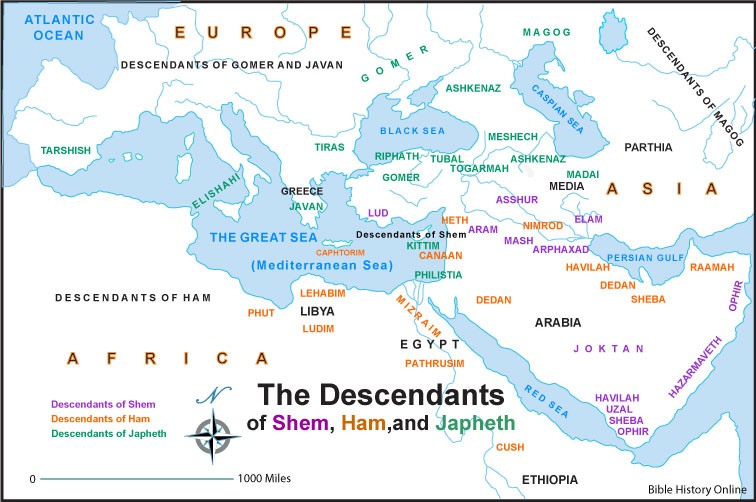
Egypt will join the other nations that have fallen before them. People from Assyria, Elam, Meshech-Tubal, Edom, the princes of the north, and the Sidonians have all entered the grave and will be ready to greet its newest occupant with open arms. At one time, all these nations “struck terror in the hearts of people everywhere, but now they have been slaughtered by the sword” (Ezekiel 32:23 NLT). They had been major players and had enjoyed their moment in the spotlight, but now there were relegated to an eternal existence of obscurity and irrelevance in the grave. And Egypt would suffer the same fate.

This message, given by God to Ezekiel, was intended to be shared with the Jewish exiles living in Babylon. It was meant to persuade these displaced people from putting any hope in Egypt as a potential source of salvation for Judah. When the Babylonians had first appeared on the scene, threatening the peace of the region, the people of Judah looked for help from their more powerful allies. The Egyptians were a logical choice because they had a track record of success. As one of the oldest nations in the region, they had a long history of military dominance and hegemony. So, it was only natural for Judah to place its hope in their neighbor to the south. Even the exiles were tempted to see the Egyptians as the key to the survival of their homeland and the means of their eventual return from captivity.

But God wanted them to know that Pharaoh would not be their savior. While his people believed him to be a god, he was just another man and his nation would prove to be just another victim of Babylon’s seemingly unstoppable global expansion.

“You too, Egypt, will lie crushed and broken among the outcasts, all slaughtered by the sword. – Ezekiel 32:28 NLT

From chapter 25 to chapter 32, the phrase “know I am the LORD” occurs 19 times. The oracles contained within these chapters serve as a powerful indictment against the nations of the world but are really a divine dismissal of the gods of this world. The nation of Judah, like its northern neighbor, Israel, was guilty of spiritual adultery. For centuries, they had made a habit of worshiping the false gods of the nations that occupied the land of Canaan. They had become equal-opportunity idolaters who saw nothing wrong with adopting the gods of their pagan neighbors and treating them with the same awe and reverence they had once reserved for Yahweh.

During their 400-year exile in Egypt, the people of Israel worshiped the gods of the Egyptians. In the process of delivering them from their captivity, God exhibited His superiority over these false gods through the ten plagues He sent against the people of Egypt. Each plague was a direct attack on one of their many gods. And when God had finished His divine smackdown of Egypt’s deities, He led them out of bondage and to the land He had promised them. But even after arriving in the land of Canaan, the people of Israel continued their love affair with false gods. In direct violation of God’s commands, they embraced the gods of the Canaanites and the neighboring nations. And despite God’s repeated calls to repent and return to Him, they stubbornly refused.

Prior to the people of Israel entering the land of Canaan, Moses stood before them and issued a covenant commitment.

“I am making this covenant both with you who stand here today in the presence of the Lord our God, and also with the future generations who are not standing here today.

“You remember how we lived in the land of Egypt and how we traveled through the lands of enemy nations as we left. You have seen their detestable practices and their idols made of wood, stone, silver, and gold. I am making this covenant with you so that no one among you—no man, woman, clan, or tribe—will turn away from the Lord our God to worship these gods of other nations, and so that no root among you bears bitter and poisonous fruit.” – Deuteronomy 29:15-18 NLT

But his words had little or no lasting impact. It didn’t take them long to break their covenant with Moses and violate the laws given to them by God. Their entire history is replete with examples of their unfaithfulness and spiritual infidelity. Now, as Ezekiel ministered to the people of God living as exiles in Babylon, they were reaping the consequences of their disobedience. They were experiencing exactly what Joshua had warned their ancestors would happen in they turned to the false gods of Canaan.

“…as surely as the Lord your God has given you the good things he promised, he will also bring disaster on you if you disobey him. He will completely destroy you from this good land he has given you.  If you break the covenant of the Lord your God by worshiping and serving other gods, his anger will burn against you, and you will quickly vanish from the good land he has given you.” – Joshua 23:15-16 NLT

And all those nations from whom they had adopted their false gods would fall before the righteous wrath of Yahweh. Each would eventually pay the price for its idolatry and refusal to acknowledge the one true God. But their destruction would be a sobering warning to the people of Judah, reminding them of the words of God: “Then they will know that I am the Lord.”

English Standard Version (ESV) The Holy Bible, English Standard Version. ESV® Permanent Text Edition® (2016). Copyright © 2001

New Living Translation (NLT) Holy Bible, New Living Translation, copyright © 1996, 2004, 2015 by Tyndale House Foundation. Used by permission of Tyndale House Publishers Inc., Carol Stream, Illinois 60188. All rights reserved.
And Justice For All

In the twelfth year, in the twelfth month, on the first day of the month, the word of the Lord came to me: “Son of man, raise a lamentation over Pharaoh king of Egypt and say to him:

“You consider yourself a lion of the nations,
    but you are like a dragon in the seas;
you burst forth in your rivers,
    trouble the waters with your feet,
    and foul their rivers.
Thus says the Lord God:
    I will throw my net over you
    with a host of many peoples,
    and they will haul you up in my dragnet.
And I will cast you on the ground;
    on the open field I will fling you,
and will cause all the birds of the heavens to settle on you,
    and I will gorge the beasts of the whole earth with you.
I will strew your flesh upon the mountains
    and fill the valleys with your carcass.
I will drench the land even to the mountains
    with your flowing blood,
    and the ravines will be full of you.
When I blot you out, I will cover the heavens
    and make their stars dark;
I will cover the sun with a cloud,
    and the moon shall not give its light.
All the bright lights of heaven
    will I make dark over you,
    and put darkness on your land,
declares the Lord God.

“I will trouble the hearts of many peoples, when I bring your destruction among the nations, into the countries that you have not known. 10 I will make many peoples appalled at you, and the hair of their kings shall bristle with horror because of you, when I brandish my sword before them. They shall tremble every moment, every one for his own life, on the day of your downfall.

11 “For thus says the Lord God: The sword of the king of Babylon shall come upon you. 12 I will cause your multitude to fall by the swords of mighty ones, all of them most ruthless of nations.

“They shall bring to ruin the pride of Egypt,
    and all its multitude shall perish.
13 I will destroy all its beasts
    from beside many waters;
and no foot of man shall trouble them anymore,
    nor shall the hoofs of beasts trouble them.
14 Then I will make their waters clear,
    and cause their rivers to run like oil,
declares the Lord God.
15 When I make the land of Egypt desolate,
    and when the land is desolate of all that fills it,
when I strike down all who dwell in it,
    then they will know that I am the Lord.

16 This is a lamentation that shall be chanted; the daughters of the nations shall chant it; over Egypt, and over all her multitude, shall they chant it, declares the Lord God.” Ezekiel 32:1-16 ESV

A little less than a year later, God gave Ezekiel another round of mournful lyrics to commemorate the “death” of Egypt. They are delivered as a memorial for Pharaoh, but are intended to recount the sad plight of the entire nation. As their regal representative, Pharaoh stood as their official proxy or substitute. He was the face of the nation and was held accountable by God for the sins of his people. God tells Ezekiel to sing this funeral dirge with Pharaoh in mind.

“Son of man, mourn for Pharaoh, king of Egypt, and give him this message…” – Ezekiel 32:2 NLT

God accuses Pharaoh of imagining himself as “a strong young lion among the nations” (Ezekiel 32:2 NLT). This imagery of the Egyptian leader as a fierce predator was memorialized in the form of the sphinx, a figure that combined the body of a lion and the head of the Pharaoh. Hophra, who was likely the Pharaoh on Egypt’s throne at this time, had his very own sphinx statue and fancied himself to be the king of the jungle. But God diminishes Hophra’s visions of grandeur by comparing him to a crocodile thrashing about in the muddy waters of the Nile.

“You think of yourself as a strong young lion among the nations,
    but you are really just a sea monster,
heaving around in your own rivers,
    stirring up mud with your feet. – Ezekiel 32:2 NLT

Egypt wasn’t the global superpower she envisioned herself to be. She was nothing more than a regional player with global aspirations that were about to come to an abrupt stop. The Babylonians were going to deal Hophra and his troops a decisive blow that would prove to be the nation’s death knell.

God makes it painfully clear that His plans for Egypt involve their complete destruction.

“The sword of the king of Babylon
    will come against you.
I will destroy your hordes with the swords of mighty warriors—
    the terror of the nations.” – Ezekiel 32:11-12 NLT

When the dust had settled, Hophra, his people, and all the other nations on earth would know that Egypt’s downfall had been the work of Yahweh, the God of Israel. Their unexpected demise was going to come as a shock to all the surrounding nations. No one expected Egypt to suffer such a devastating defeat, even at the hands of the Babylonians. As a nation, they had been around for millennium. They had proven to have staying power and the resources to maintain their status as a perennial force in the region. So, when they fell, the other kings and nations would view their demise as a bad omen.

“I will disturb many hearts when I bring news of your downfall to distant nations you have never seen. Yes, I will shock many lands, and their kings will be terrified at your fate. They will shudder in fear for their lives as I brandish my sword before them on the day of your fall. – Ezekiel 32:9-10 NLT

These less powerful nations would quickly conclude that they had no hope against the Babylonian juggernaut, and they would be right. If Egypt couldn’t hold its own against Nebuchadnezzar’s forces, no one could.

And what’s interesting to note is that the events foreshadowed these chapters do not always follow a chronological timeline. This chapter opens with the words, “In the twelfth year, in the twelfth month, on the first day of the month” (Ezekiel 32:1 ESV). But in chapter 33, Ezekiel records another message he received from God two months earlier.

In the twelfth year of our exile, in the tenth month, on the fifth day of the month, a fugitive from Jerusalem came to me and said, “The city has been struck down.” – Ezekiel 33:12 ESV

In other words, by the time Ezekiel received this oracle concerning Egypt’s defeat, the walls of the city of Jerusalem had already fallen and the Babylonians had destroyed the temple. So, as Ezekiel shared the words of this funeral dirge mourning Egypt’s pending demise, his exiled Jewish audience would have already received the devastating news of Jerusalem’s destruction. Word of Egypt’s fate would have functioned as an emotional salve, helping to alleviate some of the pain they felt concerning their city and their friends and family members back in Judah.

And God wanted them to know that the pride-filled Egyptians would not escape His wrath. They too would meet an untimely end at the hands of the Babylonians. There was no guilty party who would escape God’s judgment. Philistines, Ammonites, Moabites, Phoenicians, Assyrians, and Egyptians would all suffer the same fate. And the common denominator would be Nebuchadnezzar.

“The sword of the king of Babylon
    will come against you. – Ezekiel 32:11 NLT

But that sword, while wielded by the Babylon king, would belong to God Almighty. Nebuchadnezzar would be acting on God’s behalf, carrying out His sovereign will and fulfilling His providential plan for the nations.

English Standard Version (ESV) The Holy Bible, English Standard Version. ESV® Permanent Text Edition® (2016). Copyright © 2001

New Living Translation (NLT) Holy Bible, New Living Translation, copyright © 1996, 2004, 2015 by Tyndale House Foundation. Used by permission of Tyndale House Publishers Inc., Carol Stream, Illinois 60188. All rights reserved.

Pride Goes Before the Fall

1 In the eleventh year, in the third month, on the first day of the month, the word of the Lord came to me: “Son of man, say to Pharaoh king of Egypt and to his multitude:

“Whom are you like in your greatness?
    Behold, Assyria was a cedar in Lebanon,
with beautiful branches and forest shade,
    and of towering height,
    its top among the clouds.
The waters nourished it;
    the deep made it grow tall,
making its rivers flow
    around the place of its planting,
sending forth its streams
    to all the trees of the field.
So it towered high
    above all the trees of the field;
its boughs grew large
    and its branches long
    from abundant water in its shoots.
All the birds of the heavens
    made their nests in its boughs;
under its branches all the beasts of the field
    gave birth to their young,
and under its shadow
    lived all great nations.
It was beautiful in its greatness,
    in the length of its branches;
for its roots went down
    to abundant waters.
The cedars in the garden of God could not rival it,
    nor the fir trees equal its boughs;
neither were the plane trees
    like its branches;
no tree in the garden of God
    was its equal in beauty.
I made it beautiful
    in the mass of its branches,
and all the trees of Eden envied it,
    that were in the garden of God.

10 “Therefore thus says the Lord God: Because it towered high and set its top among the clouds, and its heart was proud of its height, 11 I will give it into the hand of a mighty one of the nations. He shall surely deal with it as its wickedness deserves. I have cast it out. 12 Foreigners, the most ruthless of nations, have cut it down and left it. On the mountains and in all the valleys its branches have fallen, and its boughs have been broken in all the ravines of the land, and all the peoples of the earth have gone away from its shadow and left it. 13 On its fallen trunk dwell all the birds of the heavens, and on its branches are all the beasts of the field. 14 All this is in order that no trees by the waters may grow to towering height or set their tops among the clouds, and that no trees that drink water may reach up to them in height. For they are all given over to death, to the world below, among the children of man, with those who go down to the pit.

15 “Thus says the Lord God: On the day the cedar went down to Sheol I caused mourning; I closed the deep over it, and restrained its rivers, and many waters were stopped. I clothed Lebanon in gloom for it, and all the trees of the field fainted because of it. 16 I made the nations quake at the sound of its fall, when I cast it down to Sheol with those who go down to the pit. And all the trees of Eden, the choice and best of Lebanon, all that drink water, were comforted in the world below. 17 They also went down to Sheol with it, to those who are slain by the sword; yes, those who were its arm, who lived under its shadow among the nations.

18 “Whom are you thus like in glory and in greatness among the trees of Eden? You shall be brought down with the trees of Eden to the world below. You shall lie among the uncircumcised, with those who are slain by the sword.

“This is Pharaoh and all his multitude, declares the Lord God.” Ezekiel 31:1-18 ESV

The Egyptians had a pride problem. They had enjoyed a long tenure as a world superpower and had grown accustomed to throwing their weight around. But their days of glory were about to come to an ignominious end. While they still considered themselves to be a major player on the global stage, God held a different opinion. He invites them to consider the Assyrians, whom He compares to “a cedar in Lebanon,
with beautiful branches and forest shade, and of towering height” (Ezekiel 31:3 ESV). This well-watered “tree” thrived and grew to unimaginable heights, towering  “high above all the trees of the field” (Ezekiel 31:5 ESV).

This horticultural metaphor portrays the Assyrian empire as a towering tree that overshadows every other tree in the forest. The upstart Assyrians had asserted their influence in a major way, having expanded their domain throughout that region of the world. At one point, they had no rival and faced no threat to their hegemony. Like the Egyptians, they reveled in their military superiority and took pride in their seeming invincibility. And God took full credit for their meteoric rise to power and prominence.

“Because I made this tree so beautiful,
    and gave it such magnificent foliage,
it was the envy of all the other trees of Eden,
    the garden of God.” – Ezekiel 31:9 NLT

They could not claim responsibility for the dominating nature of their expansion. It had all been God’s doing. He had sovereignty ordained their global expansion, even ordering their invasion of Egypt and the destruction of Thebes 45 years earlier in 633 B.C. The prophet, Nahum, describes the fall of Thebes in graphic detail.

Are you any better than the city of Thebes,
    situated on the Nile River, surrounded by water?
She was protected by the river on all sides,
    walled in by water.
Ethiopia and the land of Egypt
    gave unlimited assistance.
The nations of Put and Libya
    were among her allies.
Yet Thebes fell,
    and her people were led away as captives.
Her babies were dashed to death
    against the stones of the streets.
Soldiers threw dice to get Egyptian officers as servants.
    All their leaders were bound in chains. – Nahum 3:8-10 NLT

What right did the Egyptians have to boast of their great power when they had fallen to the Assyrians? And what hope did the Egyptians have of escaping the Babylonians, the very nation that had destroyed and supplanted the Assyrians? Nebuchadnezzar’s forces had thoroughly trounced the mighty Assyrian army at Haran in 609 B.C., effectively bringing an end to the Assyrian empire.

God hates pride in all its forms. And His hatred of pride is expressed throughout the Scriptures.

Pride goes before destruction, and haughtiness before a fall. – Proverbs 16:18 NLT

Pride leads to disgrace, but with humility comes wisdom.  – Proverbs 11: 2 NLT

But he gives us more grace. That is why Scripture says: “God opposes the proud but gives grace to the humble.” – James 4:6 NIV

All throughout the Old Testament, God speaks of Israel’s arrogance and pride. He blasts them for their extreme self-importance and attitude of insufferable self-worth. God hates pride in His people, but He won’t tolerate it among the nations either. Pride is what caused Satan’s fall. Just before God cast him out of heaven, Satan’s attitude reflected his unparalleled pride and arrogance.

“For you said to yourself, ‘I will ascend to heaven and set my throne above God’s stars. I will preside on the mountain of the gods far away in the north. I will climb to the highest heavens and be like the Most High.'” – Isaiah 14:13-14 NLT

He wanted to be like God. It was the same temptation he used on Adam and Eve in the garden.

The serpent said to the woman, “You surely will not die! For God knows that in the day you eat from it your eyes will be opened, and you will be like God, knowing good and evil.” – Genesis 3:4-5 NASB

Self-reliance and independence lay at the root of pride. We begin to think more highly of ourselves than we ought to. We begin to believe our own press and think that we are something special. Our seeming successes only act to feed our insatiable thirst for recognition, reward, and self-advancement. We even begin to take credit for what God has done and all those things He has made it possible for us to do. You see this reflected in the words of Nebuchadnezzar, king of Babylon, as he stood gazing over his royal capital from his palace balcony.

“Look at this great city of Babylon! By my own mighty power, I have built this beautiful city as my royal residence to display my majestic splendor.” – Daniel 4:30 NLT

At that very moment, God took away Nebuchadnezzar’s kingdom as well as his sanity. And it wasn’t until he looked up and acknowledged the rule and reign of God, that his sanity returned.

In today’s reading, we see God’s anger expressed toward Egypt for her pride and arrogance. Even nations can exhibit an over-inflated sense of self-worth. And Egypt suffered from the same case of bloated ego as the Assyrians. Assyria had once been beautiful, strong, self-reliant, and the envy of the nations. But they had fallen. And so would Egypt. Both failed to recognize that their beauty and greatness were God’s doing, not their own. God had given them their lofty position, and He could remove them from it. God had already used the Babylonians to defeat the Assyrians, and now he would use the very same nation to knock the props out from under Egypt.

Humility is a rare commodity these days. Even among believers. We tend to think more highly of ourselves than we ought to. We take credit for things that are the result of God’s handiwork and not our own. We compare and contrast ourselves with others, looking for those with whom we stack up positively. We want to come out on the winning side, so we look for those with more flaws and weaknesses than we possess. We celebrate their failures and revel in our own successes. But Paul warns us, “Don’t think you are better than you really are. Be honest in your evaluation of yourselves, measuring yourselves by the faith God has given us” (Romans 12:3 NLT).

Egypt’s pride was going to be its downfall. Its arrogance would bring about its demise. Because God hates pride. But He loves to extend His grace to the humble. When we refuse to lift up ourselves and, instead, give Him the credit, we receive His grace. He exalts us at the proper time and in the proper way. Peter put it this way:

Humble yourselves, therefore, under God’s mighty hand, that he may lift you up in due time. – 1 Peter 5:6 NIV

It is far better to humble ourselves than to be humbled by God. It is far healthier to let God exalt us when and how He sees fit than to attempt to preemptively promote ourselves. Because God hates pride.

And God makes sure to clarify for Ezekiel that Egypt’s fate will be just like that of Assyria. There was no reason for the Jews living in Judah or in exile in Babylon to place any hope in receiving salvation from the Egyptians because their days were numbered and their fate was sealed.

“O Egypt, to which of the trees of Eden will you compare your strength and glory? You, too, will be brought down to the depths with all these other nations. You will lie there among the outcasts who have died by the sword. This will be the fate of Pharaoh and all his hordes. I, the Sovereign Lord, have spoken!” – Ezekiel 31:18 NLT

English Standard Version (ESV) The Holy Bible, English Standard Version. ESV® Permanent Text Edition® (2016). Copyright © 2001

New Living Translation (NLT) Holy Bible, New Living Translation, copyright © 1996, 2004, 2015 by Tyndale House Foundation. Used by permission of Tyndale House Publishers Inc., Carol Stream, Illinois 60188. All rights reserved.

Control Over Kings and Countries

20 In the eleventh year, in the first month, on the seventh day of the month, the word of the Lord came to me: 21 “Son of man, I have broken the arm of Pharaoh king of Egypt, and behold, it has not been bound up, to heal it by binding it with a bandage, so that it may become strong to wield the sword. 22 Therefore thus says the Lord God: Behold, I am against Pharaoh king of Egypt and will break his arms, both the strong arm and the one that was broken, and I will make the sword fall from his hand. 23 I will scatter the Egyptians among the nations and disperse them through the countries. 24 And I will strengthen the arms of the king of Babylon and put my sword in his hand, but I will break the arms of Pharaoh, and he will groan before him like a man mortally wounded. 25 I will strengthen the arms of the king of Babylon, but the arms of Pharaoh shall fall. Then they shall know that I am the Lord, when I put my sword into the hand of the king of Babylon and he stretches it out against the land of Egypt. 26 And I will scatter the Egyptians among the nations and disperse them throughout the countries. Then they will know that I am the Lord.” Ezekiel 30:20-26 ESV

Less than four months after receiving the first divine oracle concerning Egypt, Ezekiel was given another installment. The first part came in “the tenth year, in the tenth month, on the twelfth day of the month” (Ezekiel 29:1 ESV). This one arrived “in the eleventh year, in the first month, on the seventh day of the month” (Ezekiel 30:30 ESV). The New Living Translation places the date of this second oracle as “January 7, during the tenth year of King Jehoiachin’s captivity” (Ezekiel 30:20 NLT). Thomas L. Constable calculated the date in question to be April 29. But both agree that it took place in the year 587 B.C.

In this oracle, God informs Ezekiel that the king of Egypt has suffered a debilitating wound that has left him incapable of wielding a sword or putting up a fight. This divinely inflicted wound, while not life-threatening, would prove to be decisive.

“Son of man, I have broken the arm of Pharaoh, the king of Egypt. His arm has not been put in a cast so that it may heal. Neither has it been bound up with a splint to make it strong enough to hold a sword. – Ezekiel 30:21 NLT

Pharaoh’s arm, a symbol of his power, had been broken by God but never set, so it had healed properly. Unable to grasp a sword, Pharaoh was reduced to a state of impotence and defenselessness. As the sovereign ruler over the mighty nation of Egypt, he was reduced to a weakened and helpless state. This imagery was meant to be symbolic in nature, using the king as the representative of the kingdom. Many scholars believe this passage is a reference to Egypt’s debilitating defeat at the Battle of Carchemish.

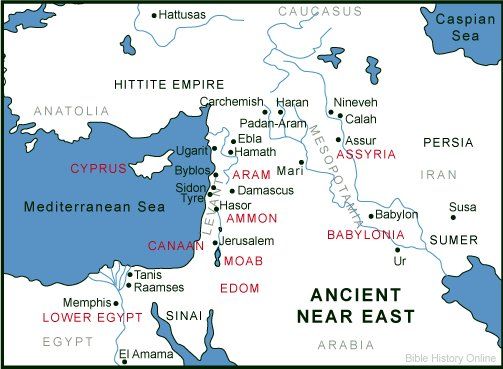
As the Babylonians continued to assert their will in that part of the world, the Egyptians attempted to play the spoiler, clandestinely assisting nations like the Assyrians and Israelites in their efforts to oppose Nebuchadnezzar’s advances. In 612 B.C., the Assyrian capital of Nineveh had fallen to Babylonian forces. Unwilling to admit defeat, the Assyrians moved their capital to Haran. But two years later, that capital suffered the same fate. Still refusing to capitulate, the Assyrians moved their headquarters to Carchemish, some 38 miles east of Haran.

As Pharaoh Neco and his Egyptian forces made their way to Carchemish to fight alongside the Assyrians, King Josiah of Judah decided to stand in his way. This would prove to be an unwise decision on Josiah’s part, resulting in his death from wounds suffered during the battle. The story is recorded in the book of 2 Chronicles.

After Josiah had finished restoring the Temple, King Neco of Egypt led his army up from Egypt to do battle at Carchemish on the Euphrates River, and Josiah and his army marched out to fight him. But King Neco sent messengers to Josiah with this message:

“What do you want with me, king of Judah? I have no quarrel with you today! I am on my way to fight another nation, and God has told me to hurry! Do not interfere with God, who is with me, or he will destroy you.”

But Josiah refused to listen to Neco, to whom God had indeed spoken, and he would not turn back. Instead, he disguised himself and led his army into battle on the plain of Megiddo. But the enemy archers hit King Josiah with their arrows and wounded him. He cried out to his men, “Take me from the battle, for I am badly wounded!”

So they lifted Josiah out of his chariot and placed him in another chariot. Then they brought him back to Jerusalem, where he died. – 2 Chronicles 35:20-24 NLT

This battle at Megiddo delayed Neco’s arrival in Carchemish. And with Josiah’s death, Neco found himself embroiled in the local politics of Judah. Jehoahaz, the son of Josiah, had ascended to the throne, but his reign only lasted three months before Neco had him imprisoned and replaced with one another of Josiah’s sons. Neco ended up pocketing a sizeable fortune in gold and silver in the form of tribute from Judah, but his eventual arrival in Carchemish proved too little, too late. Nebuchadnezzar had already defeated the Assyrians and, when the Egyptians arrived on the scene, they too were soundly routed. The battle of Carchemish brought about the end of the Assyrian Empire and reduced Egypt to a second-rate power in the region.

Now, some 25 years later, God warns that He is going to do a number of Egypt again. This time, He will break both arms, including the recently healed one.

“…this is what the Sovereign Lord says: I am the enemy of Pharaoh, the king of Egypt! I will break both of his arms—the good arm along with the broken one—and I will make his sword clatter to the ground. I will scatter the Egyptians to many lands throughout the world.” – Ezekiel 30:23-23 NLT

The Egyptians had failed to learn their lesson. Despite their weakened state, they continued to try to exert their will in the region. But God wants Ezekiel to know that the Egyptian’s hope of regaining their former stature was a pipe dream. He was going to use Nebuchadnezzar to end their centuries-long role as major players on the world stage.

“…when I put my sword in the hand of Babylon’s king and he brings it against the land of Egypt, Egypt will know that I am the Lord.” – Ezekiel 30:25 NLT

God describes Egypt’s defeat as a mortal blow, not just a couple of broken arms. Without any way to defend themselves against the Babylonians, the Egyptians would suffer a devastating defeat that would render them “mortally wounded, groaning in pain” (Ezekiel 30:24 NLT).

Like the Israelites and the people of Judah, the Egyptians would find themselves scattered to the four winds. Some would end up as captives in Babylon, while others would seek refuge in foreign lands where they would live as refugees and outcasts.

I will scatter the Egyptians among the nations, dispersing them throughout the earth.” – Ezekiel 30:26 NLT

Their defeat will be God’s doing, as will be their dispersion among the nations. This great and powerful nation would fall as a result of God’s sovereign, omnipotent will. Each of these nations; the Egyptians, Assyrians, and Babylonians, were instruments in the hand of God. They served at His pleasure and were nothing more than bit players in the drama of His providential and irrepressible plan.

And, as always, God informs Ezekiel that. with their fall, the Egyptians will know beyond a shadow of a doubt that He is Lord. They will recognize that their defeat was His doing. And when they find themselves scattered to the four winds, living as helpless and hopeless exiles in foreign lands, their recognition of God’s Lordship will be confirmed.

“I will scatter the Egyptians among the nations, dispersing them throughout the earth. Then they will know that I am the Lord.” – Ezekiel 30:26 NLT

As the prophet Daniel so aptly put it, God “controls the course of world events; he removes kings and sets up other kings” (Daniel 2:21 NLT). Neco, Nebuchadnezzar, and even Josiah, lived their lives according to the will of God Almighty. They ruled at His discretion. Their countries flourished only as long as He deemed it necessary and critical to the accomplishment of His overarching plan. Their rise and fall was up to His sovereign will. Nothing happens on earth that is outside the providential plan of Yahweh.

In their hearts humans plan their course, but the LORD establishes their steps. – Proverbs 16:9 NIV

English Standard Version (ESV) The Holy Bible, English Standard Version. ESV® Permanent Text Edition® (2016). Copyright © 2001

New Living Translation (NLT) Holy Bible, New Living Translation, copyright © 1996, 2004, 2015 by Tyndale House Foundation. Used by permission of Tyndale House Publishers Inc., Carol Stream, Illinois 60188. All rights reserved.

Yahweh Alone is God

1 The word of the Lord came to me: “Son of man, prophesy, and say, Thus says the Lord God:

“Wail, ‘Alas for the day!’
    For the day is near,
    the day of the Lord is near;
it will be a day of clouds,
    a time of doom for the nations.
A sword shall come upon Egypt,
    and anguish shall be in Cush,
when the slain fall in Egypt,
    and her wealth is carried away,
    and her foundations are torn down.

Cush, and Put, and Lud, and all Arabia, and Libya, and the people of the land that is in league, shall fall with them by the sword.

“Thus says the Lord:
Those who support Egypt shall fall,
    and her proud might shall come down;
from Migdol to Syene
    they shall fall within her by the sword,
declares the Lord God.
And they shall be desolated in the midst of desolated countries,
    and their cities shall be in the midst of cities that are laid waste.
Then they will know that I am the Lord,
    when I have set fire to Egypt,
    and all her helpers are broken.

“On that day messengers shall go out from me in ships to terrify the unsuspecting people of Cush, and anguish shall come upon them on the day of Egypt’s doom; for, behold, it comes!

10 “Thus says the Lord God:

“I will put an end to the wealth of Egypt,
    by the hand of Nebuchadnezzar king of Babylon.
11 He and his people with him, the most ruthless of nations,
    shall be brought in to destroy the land,
and they shall draw their swords against Egypt
    and fill the land with the slain.
12 And I will dry up the Nile
    and will sell the land into the hand of evildoers;
I will bring desolation upon the land and everything in it,
    by the hand of foreigners;
I am the Lord; I have spoken.

13 “Thus says the Lord God:

“I will destroy the idols
    and put an end to the images in Memphis;
there shall no longer be a prince from the land of Egypt;
    so I will put fear in the land of Egypt.
14 I will make Pathros a desolation
    and will set fire to Zoan
    and will execute judgments on Thebes.
15 And I will pour out my wrath on Pelusium,
    the stronghold of Egypt,
    and cut off the multitude of Thebes.
16 And I will set fire to Egypt;
    Pelusium shall be in great agony;
Thebes shall be breached,
    and Memphis shall face enemies by day.
17 The young men of On and of Pi-beseth shall fall by the sword,
    and the women shall go into captivity.
18 At Tehaphnehes the day shall be dark,
    when I break there the yoke bars of Egypt,
and her proud might shall come to an end in her;
    she shall be covered by a cloud,
    and her daughters shall go into captivity.
19 Thus I will execute judgments on Egypt.
    Then they will know that I am the Lord.” Ezekiel 30:1-19 ESV

Here we have yet another oracle pronouncing Egypt’s “death” at the hands of the Babylonians. This divinely ordained prophecy describes it as “the day of Egypt’s doom” (Ezekiel 30:9 ESV), and Ezekiel is to announce that “the day of the Lord is near” (Ezekiel 30:3 ESV). The content of his message is not to be taken as conjecture or a remote possibility but as an undeniable fact. This event will be the sovereign work of God Almighty. Egypt’s doom will be God’s doing.

Four separate times, the oracle states, “Thus says the Lord God…” (vs 2, 6, 10, 13). This repetitive feature is intended to give Ezekiel’s message divine authority. These are not the words of a man but the promises of God. Yahweh is decreeing the fate of Egypt and her allies, making the outcome of the oracle a foregone conclusion. It will all take place just as God has spoken.

God is not man, that he should lie, or a son of man, that he should change his mind. Has he said, and will he not do it? Or has he spoken, and will he not fulfill it? – Numbers 23:19 ESV

This “day of the Lord” will be devastating in its impact and broad in scope. Not only will the Egyptians suffer the judgment of God, but their neighbors and allies will feel the full weight of God’s wrath.

Cush, and Put, and Lud, and all Arabia, and Libya, and the people of the land that is in league, shall fall with them by the sword. – Ezekiel 30:5 ESV

All of these nations had direct ties to Egypt through trade or conquest. They had allied themselves to the Egyptian Empire and, therefore, were considered to be complicit in Egypt’s guilt. Cush refers to the African nation of Ethiopia, which shared Egypt’s southern border. The reference to Arabia has been debated because it can mean the Arabic region but can also be translated as “the mixed multitude.” There are those who believe it refers to the various ethnic groups who settled in the region and who served as mercenaries in the Egyptian army. It may also include the Jews who had fled to Egypt in an effort to escape the Babylonian invasion.

But God announces that any nation or individual who allies themselves with Egypt in any way or for any reason will share Egypt’s fate.

“For this is what the Lord says:
All of Egypt’s allies will fall,
    and the pride of her power will end.” – Ezekiel 30:6 NLT

For many of these nations, Egypt had become their savior. As the Babylonians continued their seemingly unstoppable conquest of the known world, the Egyptians stood as a last-chance hope against Nebuchadnezzar’s dream of global domination. They were the only other superpower capable of stemming the Babylonian tide and preserving the status quo. But God warns that Egypt will prove woefully inept in its role as savior.

“…they will be slaughtered by the sword,
    says the Sovereign Lord.
Egypt will be desolate,
    surrounded by desolate nations,
and its cities will be in ruins,
    surrounded by other ruined cities…” – Ezekiel 30:6-7 NLT

God describes the slow but steady march of the Babylonian troops as they march through the cities of Egypt, leaving a path of destruction in their wake. The mighty Egyptian army will be no match for Nebuchadnezzar’s forces. Ships will sail down the Red Sea carrying news of Egypt’s fall to the people of Ethiopia, and God declares that “Great panic will come upon them on that day of Egypt’s certain destruction” (Ezekiel 30:9 NLT). The nations of the region will fall like dominoes. One after the other, their cities will be invaded, their people captured, and their hopes destroyed by God’s servant, Nebuchadnezzar. 

“For this is what the Sovereign Lord says:
By the power of King Nebuchadnezzar of Babylon,
    I will destroy the hordes of Egypt.
He and his armies—the most ruthless of all—
    will be sent to demolish the land. – Ezekiel 30:10-11 NLT

God makes it clear that Nebuchadnezzar will be acting as His agent of judgment. It will be God who brings about the destruction of the nations. He will be the one who sends the Babylonians to demolish the land and its inhabitants. And God predicts a catastrophic outcome to the Babylonian invasion. Cities will be leveled, the land will be completely destroyed, and the fabled Nile will dry up. The bodies of the victims will be everywhere, polluting the land and the water. It will be a scene of cataclysmic destruction and no part of Egypt will go unscathed from God’s wrath.

Pathros, Zoan, Thebes, Pelusium, Memphis, On, Pi-beseth, and Tehaphnehes – all of these cities would suffer the same fate. From north to south, from Upper Egypt to lower Egypt, the destruction will be widespread and indiscriminate. And not only will the people of Egypt suffer, but their plethora of gods will be humiliated and exposed as frauds.

“This is what the Sovereign Lord says:
I will smash the idols of Egypt
    and the images at Memphis. – Ezeziel 30:13 NLT

It has been estimated that the Egyptians worshiped as many as 1200 different gods, from Osiris, the god of the underworld, and his wife, Isis, to Ra the sun god. But God announces that He will smash all these false gods and have their idols removed from the land. They will provide no defense against the Babylonian advance and no hope of deflecting God’s judgment.

And even Pharaoh, the god-king, will be of no help against Nebuchadnezzar and his army. When God’s divine judgment is complete, Pharaoh’s dynasty will come to an end, and foreigners will rule over the nation for the foreseeable future. The destruction will be complete. God vows to “break the proud strength of Egypt” (Ezekiel 30:18 NLT). Its cities will fall, its leaders will be replaced, the young men will die in battle, and the women will be taken as slaves. And God assures them that, when the dust settles, they will all know that He is Lord. With their nation destroyed and their gods exposed as frauds, the people of Egypt will have to face the undeniable truth that Yahweh alone is God.

English Standard Version (ESV) The Holy Bible, English Standard Version. ESV® Permanent Text Edition® (2016). Copyright © 2001

New Living Translation (NLT) Holy Bible, New Living Translation, copyright © 1996, 2004, 2015 by Tyndale House Foundation. Used by permission of Tyndale House Publishers Inc., Carol Stream, Illinois 60188. All rights reserved.

Lord of All

17 In the twenty-seventh year, in the first month, on the first day of the month, the word of the Lord came to me: 18 “Son of man, Nebuchadnezzar king of Babylon made his army labor hard against Tyre. Every head was made bald, and every shoulder was rubbed bare, yet neither he nor his army got anything from Tyre to pay for the labor that he had performed against her. 19 Therefore thus says the Lord God: Behold, I will give the land of Egypt to Nebuchadnezzar king of Babylon; and he shall carry off its wealth and despoil it and plunder it; and it shall be the wages for his army. 20 I have given him the land of Egypt as his payment for which he labored, because they worked for me, declares the Lord God.

21 “On that day I will cause a horn to spring up for the house of Israel, and I will open your lips among them. Then they will know that I am the Lord.” Ezekiel 29:17-21 ESV

Some 17 years later, Ezekiel received yet another oracle from God concerning Egypt, and this one came sometime around his 50th birthday. The prophet placed it immediately after the prior message to identify Babylon as the source of Egypt’s fall. King Nebuchadnezzar would be the one wielding the sword against Pharaoh and his people. The same nation that brought about the end of Judah and Tyre would sweep down on the unsuspecting citizens of Egypt, “and the land of Egypt shall be a desolation and a waste” (Ezekiel 29:9 ESV).

The amazing thing about this passage is its insistence that Nebuchadnezzar acted as an agent of God Almighty. He was an instrument in the hands of God, carrying out the divine will exactly as God had intended. Unknowingly serving as God’s instrument of judgment, Nebuchadnezzar would lay siege to Tyre for 13 long years, forcing his army to endure a lengthy and costly campaign that resulted in little benefit.

“Son of man, the army of King Nebuchadnezzar of Babylon fought so hard against Tyre that the warriors’ heads were rubbed bare and their shoulders were raw and blistered. Yet Nebuchadnezzar and his army won no plunder to compensate them for all their work.” – Ezekiel 29:18 NLT

This kind of expenditure against a relatively small coastal city made no sense for a global juggernaut like Babylon. It had little to gain from pouring such much time and resources into a single campaign against a city-state that posed little threat to its empire. But Nebuchadnezzar was doing God’s bidding. He was serving as God’s agent of wrath against Tyre, and he would perform the same role against Egypt.

In fact, God makes it clear that the Egyptian campaign would be a form of payback for Nebuchadnezzar’s losses suffered at Tyre.

“Therefore, this is what the Sovereign Lord says: I will give the land of Egypt to Nebuchadnezzar, king of Babylon. He will carry off its wealth, plundering everything it has so he can pay his army.” – Ezekiel 29:19 NLT

The wealth of Egypt made that of Tyre pale by comparison. Nebuchadnezzar’s plunder of the vast Egyptian empire would more than compensate for any losses he suffered in his capture of Tyre.

In ancient days, plunder was one of the primary sources of payment for a nation’s armed forces. A soldier’s base salary was relatively small but the appeal of military service was in the sense of adventure it provided and the potential windfall of booty a successful campaign might bring. The conquest of a wealthy city could result in a sizeable bonus for the average footsoldier. Part of the incentive for defeating their enemies was the right to ransack and loot at will. Victorious soldiers were free to take whatever riches they could carry off as plunder, and the cities and towns of Egypt would prove to be a boon for the Babylonian forces.

“The scant historical data indicates that Egypt and Tyre became allies under Pharaoh Hophra (Apries). The extended siege of Tyre was perhaps due to the aid Tyre received from the Egyptians. In such an act Hophra was going contrary to God’s purposes. Not only was the siege prolonged by Egyptian support, but some also surmise that Egypt’s maritime aid enabled Tyre to send away her wealth for security during the siege. When Tyre surrendered about 573 B.C. . . ., Babylonia gained almost no spoils from the long siege.” – Ralph H. Alexander, Ezekiel

God rewarded Nebuchadnezzar for services rendered. This pagan king and his army would receive ample compensation for their role in the defeat of Tyre and it would come in the form of a successful military campaign against one of the greatest nations on earth at that time: Egypt.

This stunning victory against a perennial powerhouse in the region would be directly attributable to God, and this insight was meant to bring a sense of joy and hope to the exiled people of Judah.

“I have given him the land of Egypt as a reward for his work, says the Sovereign Lord, because he was working for me when he destroyed Tyre.” – Ezekiel 29:20 NLT

As the Jewish refugees living in Babylon heard this oracle from the lips of Ezekiel, they couldn’t help but recall the long and storied history of Israel’s relationship with Egypt. Their ancestors had lived as exiles in the land of the Pharaohs for more than 400 years. In the land of the pyramids and sphinxes, the descendants of Jacob had labored as slaves, building the very edifices that made Egypt the envy of the world (Exodus 1:8-14). They had heard the stories of how the Pharaoh had ordered the enslavement of their forefathers and foremothers. They knew the chilling details concerning the royal edict that ordered the infanticide of all the male children born to the Israelites (Exodus 1:15-22). The stories of Pharoah’s repeated refusals to allow Moses to lead the people of Israel out of Egypt would have been seared into their collective conscience. The people of Judah had no reason to love the Egyptians, so the report of their demise at the hands of the Babylonians should have come as welcome news to the exiles. Any time an oppressor nation got a taste of its own medicine was music to the ears of all those who had suffered at their hand.

And to add a further ray of hope to the exiles’ dark and difficult existence, God informs them that the day is coming when they will experience His undeserved grace and mercy as He restores them to their former glory as a nation.

“And the day will come when I will cause the ancient glory of Israel to revive, and then, Ezekiel, your words will be respected. Then they will know that I am the Lord.” – Ezekiel 29:21 NLT

God had predicted the falls of Ammon, Moab, Edom, Philistia, Tyre, and now, Egypt. The nations would fall like dominoes under the divinely ordained hand of King Nebuchadnezzar. Even Judah would succumb to Babylon’s insatiable and unstoppable quest to expand its empire and secure its place as the world’s most powerful nation.

But the Babylonians wold prove to be just another pawn in God’s strategic unveiling of His sovereign will for mankind. And while Babylon would enjoy its moment in the sunlight, it would prove to be shortlived. God’s real interest was in the well-being of His chosen people, and back in chapter 28, He revealed His intentions to restore them to the land He had given them.

“This is what the Sovereign Lord says: The people of Israel will again live in their own land, the land I gave my servant Jacob. For I will gather them from the distant lands where I have scattered them. I will reveal to the nations of the world my holiness among my people. – Ezekiel 28:25 NLT

God exists outside of time. He is transcendent and all-knowing, possessing the unique ability to see past, present, and future all at the same time. Time means nothing to Him. As the eternal God, a thousand years are like a day (2 Peter 3:8). For the exiles, their stay in Babylon seemed endless and hopeless. They couldn’t see past the next morning. And all this news of Judah’s destruction just seemed to make matters worse. But God was letting them know that He had plans and was working those plans to perfection. He was in control of all things, including their future. The nations were under His rule and operated according to His sovereign will. Their rise and fall were His doing. Their victories and defeats were ordained from His throne room in heaven. And the exiles living in Judah needed to understand that their God was more powerful than their captor. Their circumstance was not a sign of God’s demise. The news of Jerusalem’s pending fall was not to be read as His abandonment of them. He was still on His throne and fully in control of all things at all times. And the day was coming when they would know that He is and will always be the Lord.

English Standard Version (ESV) The Holy Bible, English Standard Version. ESV® Permanent Text Edition® (2016). Copyright © 2001

New Living Translation (NLT) Holy Bible, New Living Translation, copyright © 1996, 2004, 2015 by Tyndale House Foundation. Used by permission of Tyndale House Publishers Inc., Carol Stream, Illinois 60188. All rights reserved.

The Folly of Misplaced Trust

1 In the tenth year, in the tenth month, on the twelfth day of the month, the word of the Lord came to me: “Son of man, set your face against Pharaoh king of Egypt, and prophesy against him and against all Egypt; speak, and say, Thus says the Lord God:

“Behold, I am against you,
    Pharaoh king of Egypt,
the great dragon that lies
    in the midst of his streams,
that says, ‘My Nile is my own;
    I made it for myself.’
I will put hooks in your jaws,
    and make the fish of your streams stick to your scales;
and I will draw you up out of the midst of your streams,
    with all the fish of your streams
    that stick to your scales.
And I will cast you out into the wilderness,
    you and all the fish of your streams;
you shall fall on the open field,
    and not be brought together or gathered.
To the beasts of the earth and to the birds of the heavens
    I give you as food.

Then all the inhabitants of Egypt shall know that I am the Lord.

“Because you have been a staff of reed to the house of Israel, when they grasped you with the hand, you broke and tore all their shoulders; and when they leaned on you, you broke and made all their loins to shake. Therefore thus says the Lord God: Behold, I will bring a sword upon you, and will cut off from you man and beast, and the land of Egypt shall be a desolation and a waste. Then they will know that I am the Lord.

“Because you said, ‘The Nile is mine, and I made it,’ 10 therefore, behold, I am against you and against your streams, and I will make the land of Egypt an utter waste and desolation, from Migdol to Syene, as far as the border of Cush. 11 No foot of man shall pass through it, and no foot of beast shall pass through it; it shall be uninhabited forty years. 12 And I will make the land of Egypt a desolation in the midst of desolated countries, and her cities shall be a desolation forty years among cities that are laid waste. I will scatter the Egyptians among the nations, and disperse them through the countries.

13 “For thus says the Lord God: At the end of forty years I will gather the Egyptians from the peoples among whom they were scattered, 14 and I will restore the fortunes of Egypt and bring them back to the land of Pathros, the land of their origin, and there they shall be a lowly kingdom. 15 It shall be the most lowly of the kingdoms, and never again exalt itself above the nations. And I will make them so small that they will never again rule over the nations. 16 And it shall never again be the reliance of the house of Israel, recalling their iniquity, when they turn to them for aid. Then they will know that I am the Lord God.” – Ezekiel 29:1-16 ESV

God’s prophecy concerning Tyre had come to Ezekiel “In the eleventh year, on the first day of the month” (Ezekiel 26:1 ESV). Roughly a year earlier, God had given Ezekiel a message concerning Egypt. The prophet records, “In the tenth year, in the tenth month, on the twelfth day of the month, the word of the Lord came to me” (Ezekiel 29:1 ESV). For some undisclosed reason, Ezekiel received this oracle from God a year earlier than the one concerning Tyre but, in recording them, he reversed their order.

God had begun His indictment of the surrounding nations with Ammon, then moved to Moab, Edom, and Philistia. Next on His agenda was the Phoenician city of Tyre. Each of these nations and city-states was located in the vicinity of Judah. Now He moves south, turning His attention to a much larger and more formidable actor on the global stage; the nation of Egypt. In this divine oracle, God directs His attention to Pharaoh, as the royal representative of the nation. Like the “prince” of Tyre, Pharaoh struggles with a bit of a pride problem. As the head of a prosperous and powerful nation, this mere mortal had let his own self-importance get the best of him. He had begun to believe that he was responsible for his own success and even claimed to possess the supernatural powers of a god.

“I am your enemy, O Pharaoh, king of Egypt—
    you great monster, lurking in the streams of the Nile.
For you have said, ‘The Nile River is mine;
    I made it for myself.’ – Ezekiel 29:3 NLT

His attitude was similar to that of Nebuchadnezzar, the great king of Babylon, who also made the mistake of miscalculating his own self-importance.

As he looked out across the city, he said, “Look at this great city of Babylon! By my own mighty power, I have built this beautiful city as my royal residence to display my majestic splendor.” – Daniel 4:30 NLT

Both of these men were under the self-inflicted delusion that their power and authority rivaled that of a god. They viewed themselves as superhuman and were worshiped by their people as deities in human form. God refers to Pharaoh as “the great dragon” (Ezekiel 29:3 ESV). The Hebrew word is tannîn (תַּנִּין) and it means “dragon, serpent, sea monster.” In ancient Near Eastern mythology, this sea monster represented the chaos that ruled the earth before creation. The Egyptians had attributed the destruction of this “chaos monster” to one of the earlier Pharaohs, which had resulted in the creation of the life-giving Nile.

But Yahweh, the true Creator-God, exposes Pharaoh as a fraud, accusing him of being the source of chaos, not its destroyer. He is the “great dragon that lies in the midst of his streams” (Ezekiel 29:3 ESV). Pharaoh was not a god to be worshiped but a dangerous foe to be feared and avoided at all costs; a deadly predator lurking just beneath the surface of the Nile.

At the time Ezekiel was writing his book, Egypt was considered a superpower in the region. The Egyptians had enjoyed great success in expanding their empire and had set their sights on Palestine as a natural next step in their desire for global dominion. When the Assyrians invaded the region, the Egyptians tried to play the spoiler, doing everything they could to thwart the Assyrian takeover of Palestine. When the Assyrians set their sights on the northern kingdom of Israel, King Hoshea turned to Egypt for help.

King Shalmaneser of Assyria attacked King Hoshea, so Hoshea was forced to pay heavy tribute to Assyria. But Hoshea stopped paying the annual tribute and conspired against the king of Assyria by asking King So of Egypt to help him shake free of Assyria’s power. – 2 Kings 17:3-4 NLT

But Hoshea’s reliance upon the Egyptians proved unsuccessful.

Then the king of Assyria invaded the entire land, and for three years he besieged the city of Samaria. Finally, in the ninth year of King Hoshea’s reign, Samaria fell, and the people of Israel were exiled to Assyria. – 2 Kings 17:5-6 NLT

Later, when the Assyrians moved against the southern kingdom of Judah, King Shalmaneser warned them against making alliances with the Egyptians.

“This is what the great king of Assyria says: What are you trusting in that makes you so confident? Do you think that mere words can substitute for military skill and strength? Who are you counting on, that you have rebelled against me? On Egypt? If you lean on Egypt, it will be like a reed that splinters beneath your weight and pierces your hand. Pharaoh, the king of Egypt, is completely unreliable!” – 2 Kings 18:19-21 NLT

And the prophet, Isaiah, reveals that King Shalmaneser’s suspicions were justified. King Hezekiah was intending to turn to Egypt for assistance. But God was not pleased with those plans.

“You make plans that are contrary to mine.
    You make alliances not directed by my Spirit,
    thus piling up your sins.
For without consulting me,
    you have gone down to Egypt for help.
You have put your trust in Pharaoh’s protection.
    You have tried to hide in his shade.
But by trusting Pharaoh, you will be humiliated,
    and by depending on him, you will be disgraced.
For though his power extends to Zoan
    and his officials have arrived in Hanes,
all who trust in him will be ashamed.
    He will not help you.
    Instead, he will disgrace you.” – Isaiah 30:1-5 NLT

God even uses the same imagery as King Shalmaneser when describing Egypt as an unreliable staff made of reeds. 

All the people of Egypt will know that I am the Lord,
    for to Israel you were just a staff made of reeds.
When Israel leaned on you,
    you splintered and broke
    and stabbed her in the armpit.
When she put her weight on you,
    you collapsed, and her legs gave way. – Ezekiel 29:6-7 NLT

What Pharaoh, Nebuchadnezzar, and Shalmaneser all failed to understand was that their 15 minutes of fame had been the work of God. The rise to power had been His doing and not their own. But each of these men and the nations they represented had wrongly assumed that they were the masters of their fates and the arbiters of their own futures. Yet, God warns Pharaoh, “Because you said, ‘The Nile River is mine; I made it,’ I am now the enemy of both you and your river. I will make the land of Egypt a totally desolate wasteland, from Migdol to Aswan, as far south as the border of Ethiopia” (Ezekiel 29:9-10 NLT).

God was going to do to Egypt what He had done to His own people. He would judge their pride and arrogance by orchestrating their defeat at the hands of a more powerful nation. Their cities would be destroyed and their people taken captive to foreign lands. But after 40 years had passed, God would return them to their land.

“But this is what the Sovereign Lord also says: At the end of the forty years I will bring the Egyptians home again from the nations to which they have been scattered. I will restore the prosperity of Egypt and bring its people back to the land of Pathros in southern Egypt from which they came. But Egypt will remain an unimportant, minor kingdom. It will be the lowliest of all the nations, never again great enough to rise above its neighbors.– Ezekiel 29:13-15 NLT

The history of this region of the world reveals the sovereign will of God as each of these mighty nations vied for hegemony. Egypt fell to the Babylonians in 568-567 B.C., and many of its citizens were dispersed throughout the Babylonian Empire. But the Babylonians were later subsumed by the more powerful Persian Empire, and after 40 years in exile, the Egyptians were allowed to return to their land.

For the Jewish exiles listening to this oracle spoken by Ezekiel, these prophetic pronouncements would have sounded far-fetched and difficult to believe. The thought of Egypt, a perennial powerhouse in the region, falling to the upstart Babylonians was unthinkable. But God was reminding them of His unprecedented power and sovereign control over all nations. He had never intended Egypt to be their savior. The people of Judah were have placed their hope and faith in Him, regardless of what was happening to them or around them. And God makes it clear that Egypt’s fall was meant to provide a powerful lesson for the people of Judah.

“Then Israel will no longer be tempted to trust in Egypt for help. Egypt’s shattered condition will remind Israel of how sinful she was to trust Egypt in earlier days. Then Israel will know that I am the Sovereign Lord.” – Ezekiel 29:16 NLT

English Standard Version (ESV) The Holy Bible, English Standard Version. ESV® Permanent Text Edition® (2016). Copyright © 2001

New Living Translation (NLT) Holy Bible, New Living Translation, copyright © 1996, 2004, 2015 by Tyndale House Foundation. Used by permission of Tyndale House Publishers Inc., Carol Stream, Illinois 60188. All rights reserved.

Our Multidimensional and Merciful God

20 The word of the Lord came to me: 21 “Son of man, set your face toward Sidon, and prophesy against her 22 and say, Thus says the Lord God:

“Behold, I am against you, O Sidon,
    and I will manifest my glory in your midst.
And they shall know that I am the Lord
    when I execute judgments in her
    and manifest my holiness in her;
23 for I will send pestilence into her,
    and blood into her streets;
and the slain shall fall in her midst,
    by the sword that is against her on every side.
Then they will know that I am the Lord.

24 “And for the house of Israel there shall be no more a brier to prick or a thorn to hurt them among all their neighbors who have treated them with contempt. Then they will know that I am the Lord God.

25 “Thus says the Lord God: When I gather the house of Israel from the peoples among whom they are scattered, and manifest my holiness in them in the sight of the nations, then they shall dwell in their own land that I gave to my servant Jacob. 26 And they shall dwell securely in it, and they shall build houses and plant vineyards. They shall dwell securely, when I execute judgments upon all their neighbors who have treated them with contempt. Then they will know that I am the Lord their God.” – Ezekiel 28:20-26 ESV

We tend to struggle with a lot of the imagery and words used in a book like Ezekiel. In it, we get a glimpse of God that tends to make us a little bit uncomfortable. He appears angry, vindictive, and violent, using His power like a neighborhood bully.

After a steady diet of the more attractive version of God depicted in the New Testament, the wrathful, vindictive image found in the Old Testament can come across as a bit disconcerting. It can be difficult to reconcile the God found in Ezekiel with the loving, forgiving, merciful, and grace-giving God we have come to know and love.

But the Bible gives us a complete and holistic view of God. Yes, He is at times angry and wrathful. Yet He is also patient and forgiving. He punishes, but He also protects. He destroys, but He also restores. And in each and every case, all that He does is so that the world might know that He alone is God. Every action God takes is aimed at revealing who He is.

Two times in the closing verses of chapter 28, God declares that what He is about to do will result in a greater knowledge of Him.

“Then they will know that I am the Lord God.” – Ezekiel 28:24 ESV

Then they will know that I am the Lord their God.” – Ezekiel 28:26 ESV

Throughout the Bible, we see evidence of God displaying His power. From the creation account in the opening chapters of Genesis to the cataclysmic events recorded in the book of Revelation, the immense and unmatchable power of God is evidenced for all to see. But at the same time, He also reveals His holiness. Not only is He all-powerful, but He is also completely righteous in all that He does.

The LORD is righteous in all his ways and kind in all his works. – Psalm 145:17 ESV

He is the Rock; his deeds are perfect. Everything he does is just and fair. He is a faithful God who does no wrong; how just and upright he is! – Deuteronomy 32:4 NLT

He makes this clear in His message to the Sidonians.

“Give the people of Sidon this message from the Sovereign Lord: ‘I am your enemy, O Sidon, and I will reveal my glory by what I do to you. When I bring judgment against you and reveal my holiness among you, everyone watching will know that I am the Lord.’” – Ezekiel 28:22 NLT

God’s judgment of the people of Sidon and His eventual destruction of them would reveal His holiness. But how? In its simplest form, God’s holiness refers to His set-apartness, His transcendence. He alone is God. There is no one and nothing else like Him. He is distinct and unmatched in all His attributes. He is not a God among gods. He is the only true God. And when God acts against evil and punishes sin, He reveals His distinctive nature. He displays His holiness.

Yet God also reveals His holiness through His kind, gracious, and undeserving treatment of His people. In the same chapter where God warns of His holy judgment against the Sidonians, He promises the restoration of His rebellious people.

“This is what the Sovereign Lord says: The people of Israel will again live in their own land, the land I gave my servant Jacob. For I will gather them from the distant lands where I have scattered them. I will reveal to the nations of the world my holiness among my people. – Ezekiel 28:25 NLT

God declares that He is going to reveal His holiness, distinctiveness, and set-apartness by returning His people to their land and restoring them to a right relationship with Himself. He is a promise-keeping God, and while He must punish His people for their sins, He will never fully abandon them. His holiness required Him to punish them for their sins, but He would also forgive and restore them.

“They will live safely in Israel and build homes and plant vineyards. And when I punish the neighboring nations that treated them with contempt, they will know that I am the Lord their God.” – Ezekiel 28:26 NLT

God reveals His holiness; His unmatched, unparalleled, distinctiveness in all that He does. Both His wrath and restoration reveal His one-of-a-kind nature. There is no other god like Him. There is no other god BUT Him. The Sidonians, neighbors and close allies to the residents of Tyre, were going to experience God’s judgment because of their unfair treatment of the people of Judah. And their false gods would prove to be no match for Yahweh. He declares Himself their enemy and vows to bring judgment against them. And for the third time, God announces, “Then everyone will know that I am the Lord” (Ezekiel 28:23 ESV).

The people of Sidon will know beyond a shadow of a doubt that Yahweh, the God of Judah, is the one true God. They will have experienced His power and irrefutable presence in the form of their own destruction. While the citizens of Tyre and Sidon gloated over Judah’s demise, they had no idea that a far worse fate awaited them. When they had chosen to align themselves against God’s people, they had unknowingly declared war against Him. They had made God Almighty their sworn enemy. But when the dust settled and the realization of their defeat had sunk in, they would know that He alone is the Lord.

The God of judgment and the God of love and mercy are one and the same God. His holiness requires that He judge sin justly and completely. He cannot turn a blind eye to it. That is why He had to punish the sins of Israel and Judah. Even though they were His chosen people, He could not ignore or overlook their rebellion against Him. But God’s judgment of them was always to be temporary and followed by a remarkable display of His unfailing love and covenant faithfulness, and the author of Hebrews reveals just how compassionate and forgiving God can be.

But when God found fault with the people, he said:

“The day is coming, says the Lord,
    when I will make a new covenant
    with the people of Israel and Judah.
This covenant will not be like the one
    I made with their ancestors
when I took them by the hand
    and led them out of the land of Egypt.
They did not remain faithful to my covenant,
    so I turned my back on them, says the Lord.
But this is the new covenant I will make
    with the people of Israel on that day, says the Lord:
I will put my laws in their minds,
    and I will write them on their hearts.
I will be their God,
    and they will be my people.
And they will not need to teach their neighbors,
    nor will they need to teach their relatives,
    saying, ‘You should know the Lord.’
For everyone, from the least to the greatest,
    will know me already.
And I will forgive their wickedness,
and I will never again remember their sins.” – Hebrews 8:8-12 NLT

And centuries earlier, God spoke of this very same covenant to Ezekiel.

“And I will make a covenant of peace with them, an everlasting covenant. I will give them their land and increase their numbers, and I will put my Temple among them forever. I will make my home among them. I will be their God, and they will be my people. And when my Temple is among them forever, the nations will know that I am the LORD, who makes Israel holy.” – Ezekiel 37:26-28 NLT

And when God restores His people, rebuilds His temple, and takes up residence among them once again, the nations will know that He alone is Lord.

English Standard Version (ESV) The Holy Bible, English Standard Version. ESV® Permanent Text Edition® (2016). Copyright © 2001

New Living Translation (NLT) Holy Bible, New Living Translation, copyright © 1996, 2004, 2015 by Tyndale House Foundation. Used by permission of Tyndale House Publishers Inc., Carol Stream, Illinois 60188. All rights reserved.