The Good, the Bad, and the Ugly

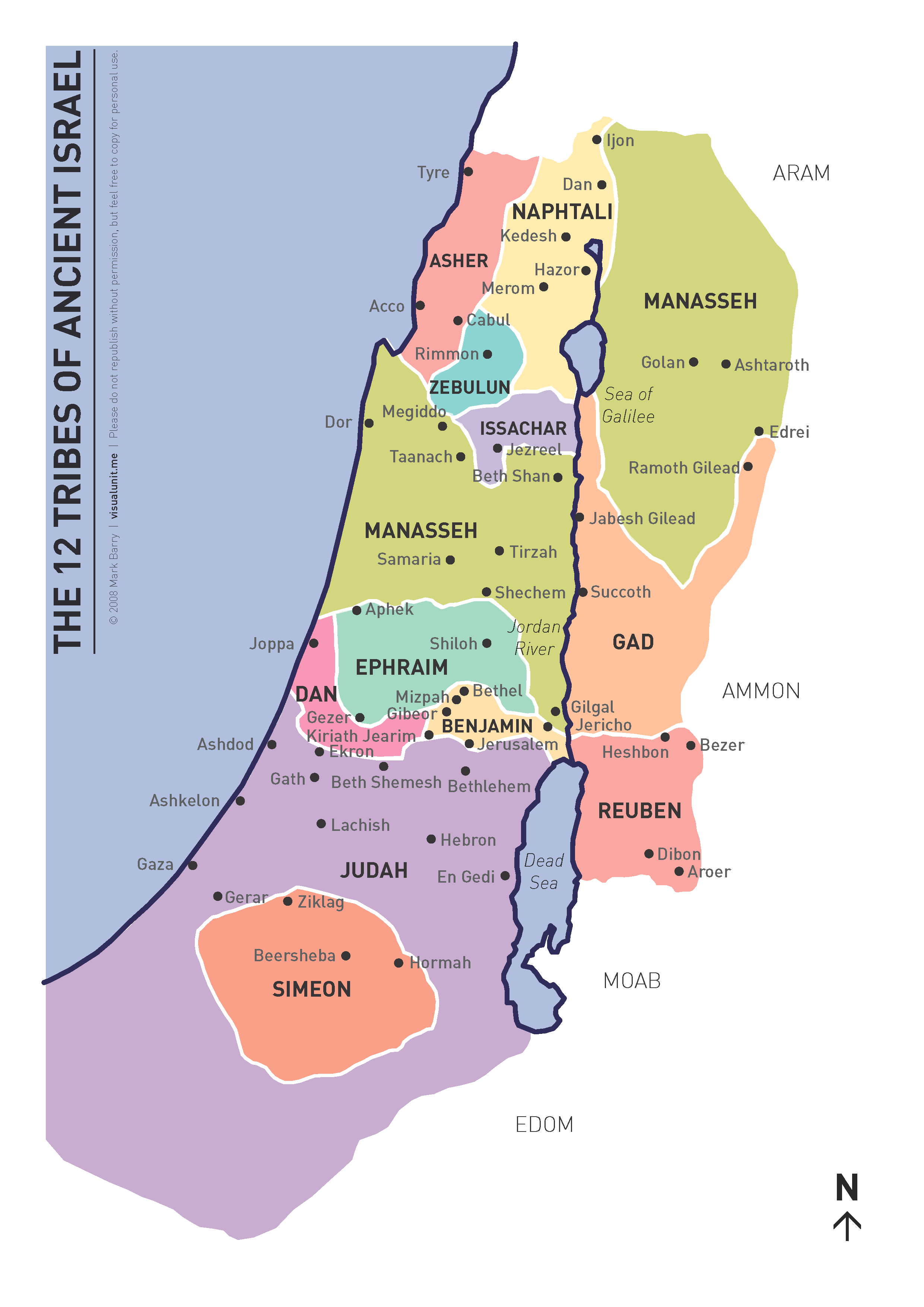
41 Jehoshaphat the son of Asa began to reign over Judah in the fourth year of Ahab king of Israel. 42 Jehoshaphat was thirty-five years old when he began to reign, and he reigned twenty-five years in Jerusalem. His mother’s name was Azubah the daughter of Shilhi. 43 He walked in all the way of Asa his father. He did not turn aside from it, doing what was right in the sight of the Lord. Yet the high places were not taken away, and the people still sacrificed and made offerings on the high places. 44 Jehoshaphat also made peace with the king of Israel.

45 Now the rest of the acts of Jehoshaphat, and his might that he showed, and how he warred, are they not written in the Book of the Chronicles of the Kings of Judah? 46 And from the land he exterminated the remnant of the male cult prostitutes who remained in the days of his father Asa.

47 There was no king in Edom; a deputy was king. 48 Jehoshaphat made ships of Tarshish to go to Ophir for gold, but they did not go, for the ships were wrecked at Ezion-geber. 49 Then Ahaziah the son of Ahab said to Jehoshaphat, “Let my servants go with your servants in the ships,” but Jehoshaphat was not willing. 50 And Jehoshaphat slept with his fathers and was buried with his fathers in the city of David his father, and Jehoram his son reigned in his place.

51 Ahaziah the son of Ahab began to reign over Israel in Samaria in the seventeenth year of Jehoshaphat king of Judah, and he reigned two years over Israel. 52 He did what was evil in the sight of the Lord and walked in the way of his father and in the way of his mother and in the way of Jeroboam the son of Nebat, who made Israel to sin. 53 He served Baal and worshiped him and provoked the Lord, the God of Israel, to anger in every way that his father had done. – 1 Kings 22:41-53 ESV

Once again, the author shifts the focus of his narrative from Israel to Judah. With Ahab’s God-ordained demise, the northern kingdom of Israel found itself with a new ruler, Ahaziah, the son of Ahab. But in Judah, Jehoshaphat, who had survived the failed battle against Ramoth-gilead, continued his long reign over the southern kingdom. While Ahab’s exploits clearly portray him as the most wicked of all the kings of Israel, Jehoshaphat provides a refreshingly stark contrast. The author provides a brief, yet positive summary of his reign:  “Jehoshaphat was a good king, following the example of his father, Asa. He did what was pleasing in the Lord’s sight” (1 Kings 22:43 NLT).

But two significant stains marred Jehoshaphat’s 25-year reign. First, while he remained committed to the worship of Yahweh, he failed to remove all the pagan shrines dedicated to the false gods of the Canaanites. As a result, the people continued to offer practice idolatry in direct violation of God’s command. Secondly, Jehoshaphat had made a treaty with Ahab, the king of Israel. Like his father before him, Jehoshaphat put his faith in an outside power rather than trust in Yahweh. In Asa’s case, he had chosen to align himself with Ben-hadad, the king of the Syrians, hoping he could protect Judah from the ongoing threat of Israelite aggression. But he had been reprimanded for placing his trust in someone other than God.

“Because you relied on the king of Syria, and did not rely on the Lord your God, the army of the king of Syria has escaped you. Were not the Ethiopians and the Libyans a huge army with very many chariots and horsemen? Yet because you relied on the Lord, he gave them into your hand. For the eyes of the Lord run to and fro throughout the whole earth, to give strong support to those whose heart is blameless toward him. You have done foolishly in this, for from now on you will have wars.” – 2 Chronicles 16:7-9 ESV

Now, his son, Jehoshaphat, was guilty of the same sin. Rather than making a treaty with the Syrians, he had chosen to work hand-in-hand with Ahab, the king of Israel. According to 2 Chronicles 19:1, Jehoshaphat made a marriage alliance with Israel, agreeing for his son, Jehoram, to marry Ahab’s daughter, Athaliah. And this decision would end up putting Jehoshaphat in an awkward position, forcing him to side with Ahab in his ill-fated battle against Ramoth-gilead. While Ahab lost his life in the battle, Jehoshaphat was able to return to the safety of Jerusalem, where he was immediately confronted by the prophet of God over his role in the whole affair.

“Should you help the wicked and love those who hate the Lord? Because of this, wrath has gone out against you from the Lord. Nevertheless, some good is found in you, for you destroyed the Asheroth out of the land, and have set your heart to seek God.” – 2 Chronicles 19:2-3 ESV

Yet, despite these two rather egregious mistakes, Jehoshaphat was a good king who tried to encourage the people of Judah to worship God. Early on in his reign, he had sent a contingent of officials, including Levites and priests, to all the cities of Judah, with instructions to teach the Book of the Law to the people (2 Chronicles 17:7-9).

He also appointed judges in the land, instructing them to do their jobs with integrity and honesty, providing the people with just and wise decisions.

“Always think carefully before pronouncing judgment. Remember that you do not judge to please people but to please the Lord. He will be with you when you render the verdict in each case. Fear the Lord and judge with integrity, for the Lord our God does not tolerate perverted justice, partiality, or the taking of bribes.” – 2 Chronicles 19:6-7 NLT

But sadly, the righteous reign of Jehoshaphat did not end well. Once again, he made an unholy and unwise alliance with the king of Israel – this time with Ahaziah, the son of Ahab. We get a more detailed explanation of this failed agreement in the book of 2 Chronicles.

Some time later King Jehoshaphat of Judah made an alliance with King Ahaziah of Israel, who was very wicked. Together they built a fleet of trading ships at the port of Ezion-geber. Then Eliezer son of Dodavahu from Mareshah prophesied against Jehoshaphat. He said, “Because you have allied yourself with King Ahaziah, the Lord will destroy your work.” So the ships met with disaster and never put out to sea. – 2 Chronicles 20:35-37 NLT

What makes this decision by Jehoshaphat so difficult to understand is that it came after God had provided Judah with a stunning victory over the Ammonites and Moabites. The people of Judah had found themselves outnumbered by their enemies, but God had given His assurance that He would fight for them. They had no reason to fear.

“Listen, all you people of Judah and Jerusalem! Listen, King Jehoshaphat! This is what the Lord says: Do not be afraid! Don’t be discouraged by this mighty army, for the battle is not yours, but God’s. Tomorrow, march out against them. You will find them coming up through the ascent of Ziz at the end of the valley that opens into the wilderness of Jeruel. But you will not even need to fight. Take your positions; then stand still and watch the Lord’s victory. He is with you, O people of Judah and Jerusalem. Do not be afraid or discouraged. Go out against them tomorrow, for the Lord is with you!” – 2 Chronicles 20:15-17 NLT

And God had kept His word. Not only did He destroy their enemies, but he blessed the people of Judah with an abundance of unexpected wealth.

When Jehoshaphat and his people came to take their spoil, they found among them, in great numbers, goods, clothing, and precious things, which they took for themselves until they could carry no more. They were three days in taking the spoil, it was so much. – 2 Chronicles 20:25 ESV

Their God had not only protected them, but He had provided for them. They lacked nothing as long as they placed their hope and trust in Yahweh. Yet, for some reason, Jehoshaphat chose to join Ahaziah in the construction of ships to bring back gold from Ophir. But those ships never made it to sea. They were destroyed before they could ever leave the port. Like his father before him, Jehoshaphat placed his trust in someone other than God and paid a high price for his mistake. And his unwise decision left a permanent stain on his legacy.

But as 2 Chronicles 17-19 reveals, there were many positive aspects to Jehoshaphat’s reign. All in all, he was a good king who loved Yahweh and tried to shepherd the people of Judah as his ancestor David had done. Yet, the same thing cannot be said of Ahaziah, the son of Ahab and the king of Israel. The author paints a rather bleak portrait of his short and sin-stained reign.

He did what was evil in the sight of the Lord and walked in the way of his father and in the way of his mother and in the way of Jeroboam the son of Nebat, who made Israel to sin. He served Baal and worshiped him and provoked the Lord, the God of Israel, to anger in every way that his father had done. – 2 Kings 22:52-53 ESV

And with that assessment, the book of 1 Kings comes to an abrupt and less-than-flattering end. The two kingdoms continue the downward spiral that began with the reign of Solomon. There have been brief glimpses of faithfulness, but for the most part, the nations of Israel and Judah remain plagued by infidelity and idolatry. Their kings are revealed as flawed men who tend to use their God-given power to promote themselves and their own agendas rather than lovingly shepherd the flock of God according to the will of God. And that pattern will continue as the author begins the second half of his history of the divided kingdom.

English Standard Version (ESV) The Holy Bible, English Standard Version. ESV® Permanent Text Edition® (2016). Copyright © 2001 by Crossway Bibles, a publishing ministry of Good News Publishers.

New Living Translation (NLT) Holy Bible, New Living Translation, copyright © 1996, 2004, 2015 by Tyndale House Foundation. Used by permission of Tyndale House Publishers Inc., Carol Stream, Illinois 60188. All rights reserved.

The Message (MSG)Copyright © 1993, 1994, 1995, 1996, 2000, 2001, 2002 by Eugene H. Peterson

The Just and Righteous Judgment of God

17 Then the word of the Lord came to Elijah the Tishbite, saying, 18 “Arise, go down to meet Ahab king of Israel, who is in Samaria; behold, he is in the vineyard of Naboth, where he has gone to take possession. 19 And you shall say to him, ‘Thus says the Lord, “Have you killed and also taken possession?”’ And you shall say to him, ‘Thus says the Lord: “In the place where dogs licked up the blood of Naboth shall dogs lick your own blood.”’”

20 Ahab said to Elijah, “Have you found me, O my enemy?” He answered, “I have found you, because you have sold yourself to do what is evil in the sight of the Lord. 21 Behold, I will bring disaster upon you. I will utterly burn you up, and will cut off from Ahab every male, bond or free, in Israel. 22 And I will make your house like the house of Jeroboam the son of Nebat, and like the house of Baasha the son of Ahijah, for the anger to which you have provoked me, and because you have made Israel to sin. 23 And of Jezebel the Lord also said, ‘The dogs shall eat Jezebel within the walls of Jezreel.’ 24 Anyone belonging to Ahab who dies in the city the dogs shall eat, and anyone of his who dies in the open country the birds of the heavens shall eat.”

25 (There was none who sold himself to do what was evil in the sight of the Lord like Ahab, whom Jezebel his wife incited. 26 He acted very abominably in going after idols, as the Amorites had done, whom the Lord cast out before the people of Israel.)

27 And when Ahab heard those words, he tore his clothes and put sackcloth on his flesh and fasted and lay in sackcloth and went about dejectedly. 28 And the word of the Lord came to Elijah the Tishbite, saying, 29 “Have you seen how Ahab has humbled himself before me? Because he has humbled himself before me, I will not bring the disaster in his days; but in his son’s days I will bring the disaster upon his house.” – 1 Kings 21:17-29 ESV

Ahab was busy surveying his newly acquired vineyard when he received a surprise visit from his old arch-nemesis, Elijah the prophet. The king had been making plans to transform Naboth’s vineyard into his own personal garden, but Elijah was about to replace Ahab’s dream with a nightmare.

Elijah, speaking on behalf of God, leveled the charge against Ahab in the form of a condemning question: “Haven’t you committed murder and taken possession of the property of the deceased?” (1 Kings 21:19 NET). Elijah wasn’t looking for a confession from Ahab because his guilt was well-established. Jezebel’s little ploy to falsely accuse Naboth of cursing God and the king had fooled no one, most especially God. And before Ahab could respond, Elijah delivered the next part of his message.

“This is what the Lord has said: ‘In the spot where dogs licked up Naboth’s blood they will also lick up your blood—yes, yours!’” – 1 Kings 21:19 NET

It’s important to recall that Ahab was already under a curse from God for his refusal to execute Ben-hadad, the king of Syria. After Ahab had decided to spare Ben-hadad so that he might sign a trade agreement with him, God had sent a prophet with a dire pronouncement:

“Because you have spared the man I said must be destroyed, now you must die in his place, and your people will die instead of his people.” – 1 Kings 20:42 NLT

Ahab had spared the life of a man whom God had condemned to death, and then he had murdered a man who undeserving of death. And, as a result, Ahab found himself under a double-curse from God. The first prophet had told Ahab that he would die for his first act of rebellion against God. Now, Elijah informed Ahab that his murder of Naboth had determined the nature of his death. It would be a violent and humiliating death, with the king’s blood poured out on the very same spot where Naboth had been unjustly stoned to death. And the only ones present at his death would be the wild dogs that would feast on his blood.

But Elijah’s words appear to have made no impact on Ahab. He simply responded, “So, my enemy, you have found me!” (1 Kings 21:20 NLT). He expresses no fear. He acknowledges no guilt. So, Elijah provided the stubborn and unrepentant king with further details concerning his fate. The prophet had traveled all the way to Jezreel for this confrontation because Ahad was totally committed to doing evil in the sight of the Lord. He had no morals or scruples and displayed no fear of or respect for Yahweh. He did whatever he wanted to do without ever considering whether his actions were in keeping with the will of God. And now he would learn the price he would have to pay for his rebellion. Ahab would face the same fate as two of his predecessors: Jeroboam and Baasha.

“I will bring disaster on you and consume you. I will destroy every one of your male descendants, slave and free alike, anywhere in Israel! I am going to destroy your family as I did the family of Jeroboam son of Nebat and the family of Baasha son of Ahijah, for you have made me very angry and have led Israel into sin.” – 1 Kings 21:21-22 NLT

Ahab’s dreams of building a kingdom and a legacy that would last for generations had been forfeited. There would be no dynasty because God was going to eliminate all his male heirs. Ahab would have no sons to sit on his throne after him. And it should be noted that Elijah delivered this message on the very plot of land on which Ahab had hoped to build a garden. His dreams of fruitfulness were being dashed by God. He and his wicked wife, Jezebel, would be the last of their line because God was going to wipe out their heirs and destroy all hope of them propagating their legacy of sin and rebellion. Elijah let the king know that Jezebel would also pay dearly for her role in leading Israel into idolatry and apostasy. In fact, Ahab’s entire household would end up suffering degrading deaths as judgment for his sin.

“Dogs will eat Jezebel’s body at the plot of land in Jezreel. The members of Ahab’s family who die in the city will be eaten by dogs, and those who die in the field will be eaten by vultures.” – 1 Kings 21:23-24 NLT

At this point, the author provides a parenthetical commentary, intended to explain the harshness of God’s judgment. When it came to committing acts of wickedness and evil among the rulers of Israel, Ahab and Jezebel were the poster-couple. Despite the abysmal track records of Jeroboam and Baasha, Ahab and Jezebel had managed to establish an all-new low when it came to doing evil in the sight of the Lord.

Even for the callous and hard-hearted Ahab, this news was far more than he could bear. When the full scope of God’s judgment had finally registered in Ahab’s brain, he was devastated.

…he tore his clothes and put sackcloth on his flesh and fasted and lay in sackcloth and went about dejectedly. – 1 Kings 21:27 ESV

And, evidently, his display of sorrow and repentance was real because God acknowledged it as such.

“Do you see how Ahab has humbled himself before me? Because he has done this, I will not do what I promised during his lifetime. It will happen to his sons; I will destroy his dynasty.” – 1 Kings 21:29 NLT

Because Ahab had finally managed to display a semblance of humility and remorse for his actions, God would show mercy to Ahab. He would allow Ahab to live out his life, but Ahab’s son, Joram, would have to suffer in his place. Joram would have his blood spilled on the ground where Naboth was stoned to death (2 Kings 9:25-26). And there is no indication that Jezebel ever repented, so she would still have to endure the judgment God had prescribed for her many sins. Her humiliating and gruesome death is recorded in the book of 2 Kings.

When Jezebel, the queen mother, heard that Jehu had come to Jezreel, she painted her eyelids and fixed her hair and sat at a window. When Jehu entered the gate of the palace, she shouted at him, “Have you come in peace, you murderer? You’re just like Zimri, who murdered his master!”

Jehu looked up and saw her at the window and shouted, “Who is on my side?” And two or three eunuchs looked out at him. “Throw her down!” Jehu yelled. So they threw her out the window, and her blood spattered against the wall and on the horses. And Jehu trampled her body under his horses’ hooves.

Then Jehu went into the palace and ate and drank. Afterward he said, “Someone go and bury this cursed woman, for she is the daughter of a king.” But when they went out to bury her, they found only her skull, her feet, and her hands.

When they returned and told Jehu, he stated, “This fulfills the message from the Lord, which he spoke through his servant Elijah from Tishbe: ‘At the plot of land in Jezreel, dogs will eat Jezebel’s body. Her remains will be scattered like dung on the plot of land in Jezreel, so that no one will be able to recognize her.’” – 2 Kings 9:32-37 NLT

Ahab and Jezebel had lived their lives according to their own standards. They had attempted to replace Yahweh with their own gods. They had repeatedly violated His commands and had ruled the people of Israel according to their own selfish agenda. But they would pay dearly for their rebellion. Their wickedness would result in the righteous and just judgment of God.

English Standard Version (ESV) The Holy Bible, English Standard Version. ESV® Permanent Text Edition® (2016). Copyright © 2001 by Crossway Bibles, a publishing ministry of Good News Publishers.

New Living Translation (NLT) Holy Bible, New Living Translation, copyright © 1996, 2004, 2015 by Tyndale House Foundation. Used by permission of Tyndale House Publishers Inc., Carol Stream, Illinois 60188. All rights reserved.

The Message (MSG)Copyright © 1993, 1994, 1995, 1996, 2000, 2001, 2002 by Eugene H. Peterson
Getting to Know God the Hard Way

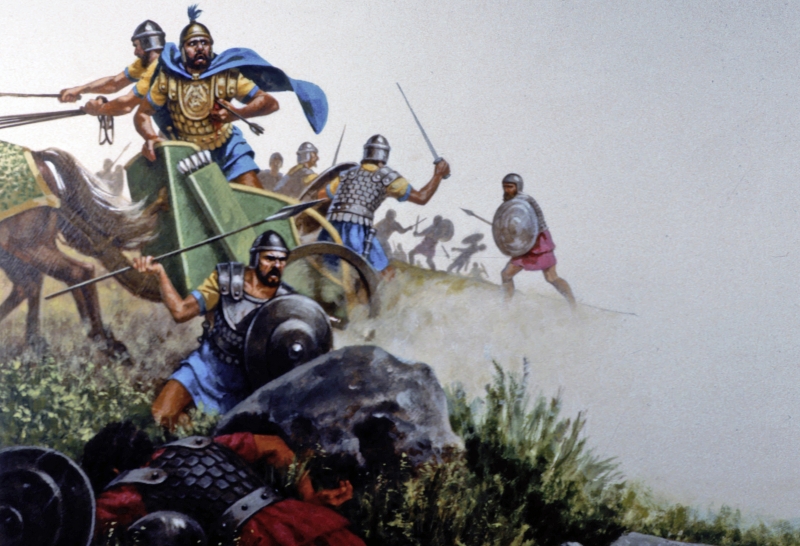
16 And they went out at noon, while Ben-hadad was drinking himself drunk in the booths, he and the thirty-two kings who helped him. 17 The servants of the governors of the districts went out first. And Ben-hadad sent out scouts, and they reported to him, “Men are coming out from Samaria.” 18 He said, “If they have come out for peace, take them alive. Or if they have come out for war, take them alive.”

19 So these went out of the city, the servants of the governors of the districts and the army that followed them. 20 And each struck down his man. The Syrians fled, and Israel pursued them, but Ben-hadad king of Syria escaped on a horse with horsemen. 21 And the king of Israel went out and struck the horses and chariots, and struck the Syrians with a great blow.

22 Then the prophet came near to the king of Israel and said to him, “Come, strengthen yourself, and consider well what you have to do, for in the spring the king of Syria will come up against you.”

23 And the servants of the king of Syria said to him, “Their gods are gods of the hills, and so they were stronger than we. But let us fight against them in the plain, and surely we shall be stronger than they. 24 And do this: remove the kings, each from his post, and put commanders in their places, 25 and muster an army like the army that you have lost, horse for horse, and chariot for chariot. Then we will fight against them in the plain, and surely we shall be stronger than they.” And he listened to their voice and did so. 

26 In the spring, Ben-hadad mustered the Syrians and went up to Aphek to fight against Israel. 27 And the people of Israel were mustered and were provisioned and went against them. The people of Israel encamped before them like two little flocks of goats, but the Syrians filled the country.

28 And a man of God came near and said to the king of Israel, “Thus says the Lord, ‘Because the Syrians have said, “The Lord is a god of the hills but he is not a god of the valleys,” therefore I will give all this great multitude into your hand, and you shall know that I am the Lord.’” – 1 Kings 20:16-28 ESV

King Ahab found himself in a strange predicament. His capital city, Samaria, was under attack by a confederation of 32 kings, led by King Ben-hadad of Syria. But much to Ahab’s surprise, a prophet of Yahweh had appeared with a plan for Israel’s deliverance.

“Thus says the Lord, Have you seen all this great multitude? Behold, I will give it into your hand this day, and you shall know that I am the Lord.” – 1 Kings 20:13 ESV

The very God whom Ahab and Jezebel had attempted to replace with their false gods had announced that He was going to rescue His disobedient and unfaithful people. And God had told Ahab exactly how the victory would take place.

“By the servants of the governors of the districts.” – 1 Kings 20:14 ESV

God was not going to utilize Ahab’s army to fight the Syrians. This is significant because Ahab, like all his predecessors, had assembled a large military force. There is even evidence to that fact, found on an ancient Assyrian stone tablet. It bears an inscription describing the battle of Qarqar between Ahab and his enemy King Shalmaneser III of Assyria. The tablet records the size of the army that assembled to do battle that day: “2,000 chariots and 10,000 men of Ahab king of Israel.”

But on this occasion, God chose to place Ahab’s formidable resources in a secondary position, choosing instead to use “servants” – a group of common people who, when assembled, amounted to only 7,000 in number.

Confident that he would defeat the Israelites, Ben-hadad and his vassal kings were drinking themselves drunk in a pre-victory celebration. So, when scouts arrived with a report that Israelite forces had been seen leaving the city, Beh-hadad had assumed they were bringing news of Israel’s surrender or their decision to continue the battle. While he and his military commanders continued to toast their inevitable victory, the 7,000 servants made their way to the Syrian camp, followed by Ahab and his army.

This surprise attack caught the Syrian forces completely unawares and unable to respond. Led by the 7,000 servants, Ahab’s army quickly routed the Syrians, forcing them to abandon camp and run for their lives. Quickly sobered by this unexpected reversal of fortunes, Beh-hadad managed to escape. But the rest of his forces didn’t fare as well.

And the king of Israel went out and struck the horses and chariots, and struck the Syrians with a great blow. – 1 Kings 20:21 ESV

Notice that the author conveniently eliminates any mention of Ahab’s name. He simply refers to him as “the king of Israel.” He repeats this obvious slight in the very next verse, refusing to give Ahab any credit for the victory. He simply warns him that the battle may be done, but the war is from over.

“Come, strengthen yourself, and consider well what you have to do, for in the spring the king of Syria will come up against you.” – 1 Kings 20:22 ESV

Ben-hadad would be back. He had suffered a devastating defeat, but once he had time to assess what had happened that day, the Syrian king would return, more determined than ever to avenge his loss by destroying the Israelites. And his advisors encouraged his plans by suggesting that his loss had been divinely ordained. In their pagan way of thinking, the only thing that could explain a loss of this magnitude was the intervention of the gods. They rationalized away their defeat by concluding that they had chosen the wrong place to do battle.  They absolved Beh-hadad of any responsibility for the loss by assuring him, “Their gods are gods of the hills, and so they were stronger than we. But let us fight against them in the plain, and surely we shall be stronger than they” (1 Kings 20:23 ESV).

Little did they know how right they were. Their defeat had been the result of divine intervention, but geographic location had played no role in it. Yahweh was the God of the hills and the valleys. He was sovereign over all the earth. Unlike their false gods, Yahweh was unbound by time and space. The extent of His power was limitless. To the God of Israel, the location and the size of the opposing army made no difference. And so, when Ben-hadad’s advisors counseled him to rebuild his army and restructure his military command, it would prove to be futile advice. They had no idea what they were dealing with and their ignorance led them to make some very dangerous assumptions. First, they assumed that the God of Israel was similar to their own gods – limited in power and vulnerable to defeat. After all, their gods had failed to deliver them. So, if they could find Yahweh’s weak spots, the next battle would go their way.

And Ben-hadad, eager to avenge his loss, took their advice and spent the winter rebuilding his army. He replaced the 32 kings with seasoned military commanders. He ordered the construction of new chariots. And he made plans to take the fight to the valley, where the God of Israel would have no power and play no role in the outcome of the battle.

It is fascinating to consider that all of this was in the sovereign will of God. He had orchestrated all the details concerning the original battle, including Ben-hadad’s escape. God had even told Ahab that the Syrians would return. Ben-hadad’s rebuilding and reconfiguring of his army had been part of God’s plan. The original battle had been intended to restore the Israelites’ belief in God. Prior to their victory, God had told them, “I will give it into your hand this day, and you shall know that I am the Lord” (1 Kings 20:13 ESV).

But God knew that little had changed in Israel. Even after their miraculous defeat of the Syrians, the people still remained unconvinced of Yahweh’s status as the one true God. When spring rolled around, they found themselves facing their former foe again. This time, Beh-hadad showed up with a much larger and better-equipped army than before, and rather than laying siege to the city, they gathered in the Valley of Aphek. Ben-hadad had brought a bigger, better army and had chosen a battleground that was outside the reach of Yahweh’s power. Or so he thought.

The stage was set. The enemy of Israel had returned. And the author paints a rather bleak and foreboding picture of the situation.

Israel then mustered its army, set up supply lines, and marched out for battle. But the Israelite army looked like two little flocks of goats in comparison to the vast Aramean forces that filled the countryside! – 1 Kings 20:27 NLT

Here was Israel, outnumbered and underequipped yet again. They were no match for the Syrians. And this time, they would not have the walls of the city to protect them. They would be fighting on open terrain, facing an army equipped with chariots and horses and motivated by revenge.

But God sent another prophet with a promise of His presence and power.

“Thus says the Lord, ‘Because the Syrians have said, “The Lord is a god of the hills but he is not a god of the valleys,” therefore I will give all this great multitude into your hand, and you shall know that I am the Lord.’” – 1 Kings 20:28 ESV

Despite the overwhelming odds, God would provide another victory over their enemy. By the time this day was over, they would know that He was the one true God. But notice that in verse 28, the author leaves out Ahab’s name again. He simply refers to him as “the king of Israel.” God was going to deliver this victory despite Ahab, not because of him. Not only did Ahab deserve to lose this battle, but he also deserved to die for his blatant rebellion against God. But God was acting on behalf of His covenant people. He was doing this to protect the integrity and honor of His name. He had made covenant promises to Abraham, Isaac, and Jacob. He had given His word to Moses and David. And while Ahab had failed to use his position as the shepherd of Israel to lead them in faithful obedience, God would prove Himself true to His word and committed to His covenant promises.

English Standard Version (ESV) The Holy Bible, English Standard Version. ESV® Permanent Text Edition® (2016). Copyright © 2001 by Crossway Bibles, a publishing ministry of Good News Publishers.

New Living Translation (NLT) Holy Bible, New Living Translation, copyright © 1996, 2004, 2015 by Tyndale House Foundation. Used by permission of Tyndale House Publishers Inc., Carol Stream, Illinois 60188. All rights reserved.

The Message (MSG)Copyright © 1993, 1994, 1995, 1996, 2000, 2001, 2002 by Eugene H. Peterson

A Deadly Spiritual Drought

1 After many days the word of the Lord came to Elijah, in the third year, saying, “Go, show yourself to Ahab, and I will send rain upon the earth.” 2 So Elijah went to show himself to Ahab. Now the famine was severe in Samaria. 3 And Ahab called Obadiah, who was over the household. (Now Obadiah feared the Lord greatly, 4 and when Jezebel cut off the prophets of the Lord, Obadiah took a hundred prophets and hid them by fifties in a cave and fed them with bread and water.) 5 And Ahab said to Obadiah, “Go through the land to all the springs of water and to all the valleys. Perhaps we may find grass and save the horses and mules alive, and not lose some of the animals.” 6 So they divided the land between them to pass through it. Ahab went in one direction by himself, and Obadiah went in another direction by himself.

7 And as Obadiah was on the way, behold, Elijah met him. And Obadiah recognized him and fell on his face and said, “Is it you, my lord Elijah?” 8 And he answered him, “It is I. Go, tell your lord, ‘Behold, Elijah is here.’” 9 And he said, “How have I sinned, that you would give your servant into the hand of Ahab, to kill me? 10 As the Lord your God lives, there is no nation or kingdom where my lord has not sent to seek you. And when they would say, ‘He is not here,’ he would take an oath of the kingdom or nation, that they had not found you. 11 And now you say, ‘Go, tell your lord, “Behold, Elijah is here.”’ 12 And as soon as I have gone from you, the Spirit of the Lord will carry you I know not where. And so, when I come and tell Ahab and he cannot find you, he will kill me, although I your servant have feared the Lord from my youth. 13 Has it not been told my lord what I did when Jezebel killed the prophets of the Lord, how I hid a hundred men of the Lord’s prophets by fifties in a cave and fed them with bread and water? 14 And now you say, ‘Go, tell your lord, “Behold, Elijah is here”’; and he will kill me.” 15 And Elijah said, “As the Lord of hosts lives, before whom I stand, I will surely show myself to him today.” 16 So Obadiah went to meet Ahab, and told him. And Ahab went to meet Elijah.

17 When Ahab saw Elijah, Ahab said to him, “Is it you, you troubler of Israel?” 18 And he answered, “I have not troubled Israel, but you have, and your father’s house, because you have abandoned the commandments of the Lord and followed the Baals. 19 Now therefore send and gather all Israel to me at Mount Carmel, and the 450 prophets of Baal and the 400 prophets of Asherah, who eat at Jezebel’s table.”

20 So Ahab sent to all the people of Israel and gathered the prophets together at Mount Carmel. 21 And Elijah came near to all the people and said, “How long will you go limping between two different opinions? If the Lord is God, follow him; but if Baal, then follow him.” And the people did not answer him a word. – 1 Kings 18:1-22 ESV

For nearly three years, Elijah has been living in exile among the Sidonians. God had sent him there to protect and preserve him for the next phase of his mission. Three years earlier, Elijah had delivered God’s message of judgment to King Ahab and his pagan queen, Jezebel. Their joint decision to use their royal power to legislate the worship of Baal had brought down the anger of God in the form of a devastating famine. And knowing this godless couple would seek to kill His messenger, God had sent Elijah away so that he could live to fight another day. And that day had finally come.

In his original encounter with Ahab, Elijah had boldly declared that the famine would last until God ordered him to bring it to an end.

“As surely as the Lord, the God of Israel, lives—the God I serve—there will be no dew or rain during the next few years until I give the word!” – 1 Kings 17:1 NLT

Now, three years later, Elijah had received his marching orders from God.

“Go, show yourself to Ahab, and I will send rain upon the earth.” – 1 Kings 18:1 ESV

God had allowed the drought to take its toll. Three years without rain had resulted in a widespread famine that had even impacted the capital city of Samaria. It was there that Ahab had ordered the construction of a temple to Baal, the Phoenician fertility god.

He erected an altar for Baal in the house of Baal, which he built in Samaria. And Ahab made an Asherah. Ahab did more to provoke the Lord, the God of Israel, to anger than all the kings of Israel who were before him. – 1 Kings 16:32-33 ESV

But Baal’s presence had not spared the royal city. Whatever power the people believed him to possess had failed to stem the ravaging effects of the drought and the life-threatening nature of the resulting famine. Things had gotten so bad that Ahab ordered a search for any land where there might be grass to feed his horses and mules. As king, he was more concerned about the fate of his livestock than he was about the well-being of the people under his care. So, he sent his household manager on a desperate, but futile search for green grass in the midst of a famine. But what Obadiah ended up finding was something neither he nor the king ever expected.

As Obadiah was walking along, he suddenly saw Elijah coming toward him. Obadiah recognized him at once and bowed low to the ground before him. “Is it really you, my lord Elijah?” he asked. – 1 Kings 18:7 NLT

Obadiah was shocked to run into Elijah. After three years, he had probably assumed that the prophet had met an untimely end. But out of reverence and honor, he bowed before Elijah. This man, who served as a royal official in the court of King Ahab, was still a faithful follower of Yahweh. And the author provides an important parenthetical description that lets the reader know that Obadiah can be trusted.

Obadiah was a devoted follower of the Lord. Once when Jezebel had tried to kill all the Lord’s prophets, Obadiah had hidden 100 of them in two caves. He put fifty prophets in each cave and supplied them with food and water. – 1 Kings 18:3-4 NLT

This little detail concerning Obadiah will prove to be important as the narrative unfolds. First, it lets us know that after Elijah had delivered God’s message concerning the drought, Jezebel had launched a campaign to liquidate any and all of God’s prophets from the land of Israel. It seems reasonable to believe that her goal had been to catch and eliminate Elijah, but she was willing to execute any prophet of God who might stand in opposition to her will and the worship of her false god.

But the author’s little aside provides a second detail that will prove important. Jezebel’s death squads had failed to find and kill 100 prophets of Yahweh because they had been protected by Obadiah. At great risk to his own life, this royal official had willfully violated the queen’s command by aiding and abetting those whose executions she had ordered. God had chosen to use ravens to deliver food for Elijah. But in the case of the 100 prophets, He had chosen a member of Ahab’s royal court. Once again, God had used an unlikely and unexpected source to preserve His messengers. And the fact that these 100 prophets exist will become more important as the story unfolds.

Recognizing Obadiah as a member of the royal court, Elijah instructed him to return to the palace with a message for the king.

“Go, tell your lord, ‘Behold, Elijah is here.’” – 1 Kings 18:8 ESV

Obadiah, while a faithful follower of Yahweh, was not overly excited at the prospect of sharing this news with King Ahab. He knew that Elijah was a wanted man with a bounty on his head. Ahab had gone to great lengths in his efforts to locate and eliminate Elijah.

“I swear by the Lord your God that the king has searched every nation and kingdom on earth from end to end to find you” – 1 Kings 18:10 NLT

After three years, Ahab’s quest to find Elijah had proven unsuccessful, and his frustration would have been at an all-time high. Obadiah was afraid that if he delivered Elijah’s message and then the prophet disappeared again, the king would take out his anger on him. In an attempt to let Elijah know that he had already risked his life in the cause of Yahweh, Obadiah shared the story of his rescue of the 100 prophets. Hadn’t that been enough? Was God now requiring him to put his life on the line again just so he could deliver Elijah’s message to the king?

But Elijah promised his reluctant friend that he would not put his life in jeopardy. He wasn’t going anywhere because he had a job to do. In fact, he assured Obadiah that he would appear before the king that very day. So, Obadiah did as the prophet commanded and rode to find the king who was also conducting a futile search for green grass.

When Ahab heard the news, he dropped everything and rode to meet Elijah. Upon seeing the man he loathed and despised, the king sarcastically asked, “Is it you, you troubler of Israel?” (1 Kings 18:17 ESV). This arrogant and apostate king tried to blame Elijah for the nation’s woes. He knew that Elijah had spoken the drought into existence and he held him personally responsible for all the pain and suffering it had caused. His stubborn and unrepentant heart would not allow him to admit his own culpability for what had happened. It was the sin of Ahab and his wife that had brought down the judgment of God. Elijah had just been the messenger. And Elijah immediately placed the blame for Israel’s woes right where it belonged.

“I have made no trouble for Israel,” Elijah replied. “You and your family are the troublemakers, for you have refused to obey the commands of the Lord and have worshiped the images of Baal instead.” – 1 Kings 18:18 NLT

Ahab and his father Omri had led the people of Israel into apostasy by promoting the worship of false gods. They had turned their backs on Yahweh, causing God’s chosen people to commit spiritual adultery by giving their allegiance and affections to the gods of the Canaanites. They were to blame for the drought and the famine it caused.

But it’s important to recall that God had told Elijah to deliver to Ahab a message that would have sounded like good news: “Tell him that I will soon send rain!” (1 Kings 18:1 NLT). Yet, while the drought was about to end, the judgment was far from over. God was about to deliver a devastating blow to the royal couple that would reveal the impotency of their false god and the futility of abandoning the one true God.

Elijah throws down the gauntlet, challenging the king to a public showdown that would pit Baal against Yahweh.

“Now summon all Israel to join me at Mount Carmel, along with the 450 prophets of Baal and the 400 prophets of Asherah who are supported by Jezebel.” – 1 Kings 18:19 NLT

Driven by pride, the king took the challenge and called for an assembly of all the people of Israel. And he ordered all the prophets of his false gods to gather together to do battle with Elijah and His God. Just consider the arrogance required to do what Ahab did. He was willingly and deliberately going to war with God Almighty, and he legitimately thought he could win. But his ego was in for a rude awakening. His gods were about to exposed for what they were: Figments of man’s fertile and futile imagination that would be proven lifeless and powerless before the God of the universe.

English Standard Version (ESV) The Holy Bible, English Standard Version. ESV® Permanent Text Edition® (2016). Copyright © 2001 by Crossway Bibles, a publishing ministry of Good News Publishers.

New Living Translation (NLT) Holy Bible, New Living Translation, copyright © 1996, 2004, 2015 by Tyndale House Foundation. Used by permission of Tyndale House Publishers Inc., Carol Stream, Illinois 60188. All rights reserved.

The Message (MSG)Copyright © 1993, 1994, 1995, 1996, 2000, 2001, 2002 by Eugene H. Peterson
Uncompromising Conviction

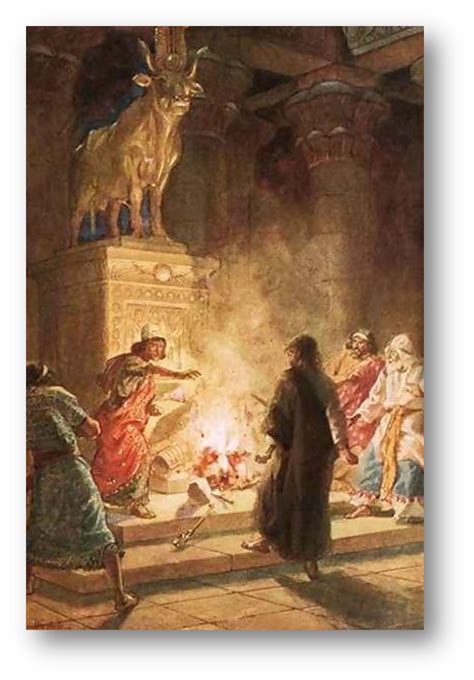
1 And behold, a man of God came out of Judah by the word of the Lord to Bethel. Jeroboam was standing by the altar to make offerings. 2 And the man cried against the altar by the word of the Lord and said, “O altar, altar, thus says the Lord: ‘Behold, a son shall be born to the house of David, Josiah by name, and he shall sacrifice on you the priests of the high places who make offerings on you, and human bones shall be burned on you.’” 3 And he gave a sign the same day, saying, “This is the sign that the Lord has spoken: ‘Behold, the altar shall be torn down, and the ashes that are on it shall be poured out.’” 4 And when the king heard the saying of the man of God, which he cried against the altar at Bethel, Jeroboam stretched out his hand from the altar, saying, “Seize him.” And his hand, which he stretched out against him, dried up, so that he could not draw it back to himself. 5 The altar also was torn down, and the ashes poured out from the altar, according to the sign that the man of God had given by the word of the Lord. 6 And the king said to the man of God, “Entreat now the favor of the Lord your God, and pray for me, that my hand may be restored to me.” And the man of God entreated the Lord, and the king’s hand was restored to him and became as it was before. 7 And the king said to the man of God, “Come home with me, and refresh yourself, and I will give you a reward.” 8 And the man of God said to the king, “If you give me half your house, I will not go in with you. And I will not eat bread or drink water in this place, 9 for so was it commanded me by the word of the Lord, saying, ‘You shall neither eat bread nor drink water nor return by the way that you came.’” 10 So he went another way and did not return by the way that he came to Bethel. – 1 Kings 13:1-10 ESV

In an effort to preserve the kingdom given to him by God, Jeroboam had made a boneheaded decision that ended up offending God. He knew that the Israelites were a religious people and feared that they would continue to travel to Judah to offer sacrifices at the temple Solomon had built in Jerusalem. This continued spiritual connection to the holy city might influence them to restore their relationship with Rehoboam and the people of Judah. So, to prevent this from happening, Jeroboam had made the fateful decision to create an alternate religion for the ten tribes of Israel, complete with priests and golden idols made to look like calves, which he had placed in the cities of Dan and Bethel. Then he convinced the people to turn their backs on Yahweh by offering their sacrifices to the two golden calves.

“It is too much trouble for you to worship in Jerusalem. Look, Israel, these are the gods who brought you out of Egypt!”

He placed these calf idols in Bethel and in Dan—at either end of his kingdom. But this became a great sin, for the people worshiped the idols, traveling as far north as Dan to worship the one there. – 1 Kings 12:28-30 NLT

In following Jeroboam’s lead, the people no longer sought forgiveness, cleansing, and blessing from God Almighty, but placed their hopes in lifeless statues made by human hands. Years later, the prophet Isaiah would describe the futility of worshiping false gods.

How foolish are those who manufacture idols.
    These prized objects are really worthless.
The people who worship idols don’t know this,
    so they are all put to shame.
Who but a fool would make his own god—
    an idol that cannot help him one bit?
All who worship idols will be disgraced
    along with all these craftsmen—mere humans—
    who claim they can make a god.
They may all stand together,
    but they will stand in terror and shame. – Isaiah 44:9-11 NLT

But to Jeroboam, his decision made all the sense in the world. He was a pragmatist who was more interested in preserving his newfound status as king than in promoting the ongoing worship of the one who had made him king. And his decision, while initially successful, was about to prove seriously flawed.

Jeroboam had traveled to Bethel in order to offer sacrifices to one of his false gods. But while there, he received a visit from a prophet of the one true God. This unnamed man had come from Judah with a message from the Almighty. So, as Jeroboam was about to offer sacrifices to his visible, but lifeless god, he was given a word from the invisible, yet all-powerful God of Israel. And the prophet, seemingly ignoring Jeroboam, directed his message at the altar the king had constructed. In a sense, this was one god speaking to another. Yahweh was challenging the false god of Jeroboam by delivering a prophecy concerning its coming destruction.

“O altar, altar! This is what the Lord says: A child named Josiah will be born into the dynasty of David. On you he will sacrifice the priests from the pagan shrines who come here to burn incense, and human bones will be burned on you.” – 1 Kings 13:2 NLT

Jeroboam’s god was going to meet an untimely end. When faced with the power of God Almighty, Jeroboam’s false god proved incapable of defending itself. It remained speechless because it was lifeless. And the warning delivered by the prophet of God carried long-term ramifications. It would be 290 years later before God fulfilled His word, and all during that time, the nation of Israel would continue to worship their false gods. But eventually, God would raise up a king over Judah whose name was Josiah, and he would institute a series of religious reforms in both Judah and Israel. And, in doing so, he would fulfill God’s prophecy against the altar of Jeroboam’s false god.

The king also tore down the altar at Bethel—the pagan shrine that Jeroboam son of Nebat had made when he caused Israel to sin. He burned down the shrine and ground it to dust, and he burned the Asherah pole. Then Josiah turned around and noticed several tombs in the side of the hill. He ordered that the bones be brought out, and he burned them on the altar at Bethel to desecrate it. (This happened just as the Lord had promised through the man of God when Jeroboam stood beside the altar at the festival.) – 2 Kings 23:15-16 NLT

The very fact that this altar was still in existence and in use nearly 300 years later reveals the level of apostasy in Israel. Jeroboam’s decision to replace Yahweh with false gods was going to have long-lasting consequences. In an effort to preserve his kingdom Jeroboam was willing to sacrifice the spiritual well-being of his own people.

And to demonstrate that the words he had spoken were true, “the man of God gave a sign to prove his message” (1 Kings 13:3 NLT).

He said, “The Lord has promised to give this sign: This altar will split apart, and its ashes will be poured out on the ground.” – 1 Kings 13:3 NLT

God was going to validate His word with a powerful sign. There would be an immediate judgment on Jeroboam’s apostasy. His shrine and the golden calf it contained would be destroyed. But, once again, Jeroboam attempted to preserve his kingdom by rejecting the will of God. After the prophet had spoken his word of warning, Jeroboam commanded that he be arrested. He wrongly assumed that he could thwart the will of God by binding the messenger of God. And, in doing so, Jeroboam would establish a precedent that would carry over for generations. His successors to the throne of Israel would continue to reject the will of God by resisting and refusing the messengers of God. Rather than repent and return in humble submission to Yahweh, they would each cling stubbornly to their false gods, dooming their people to the judgment of God.

But Jeroboam’s attempt to stop God’s prophet proved ineffective and injurious. He still ended up with a shattered altar and a paralyzed hand. Suddenly convinced of the prophet’s position as God’s spokesman, Jeroboam begged him to intercede with Yahweh on his behalf.

“Entreat now the favor of the Lord your God, and pray for me, that my hand may be restored to me.” – 1 Kings 13:6 ESV

The prophet prayed and God responded, restoring full mobility to Jeroboam’s paralyzed hand. But Jeroboam’s response to this miracle is revealing. Having just witnessed the miraculous destruction of the altar to his false god and having had his hand paralyzed by God, you would think that Jeroboam would have begged for forgiveness. But instead, he tries to win over the favor of the prophet by inviting him to dinner and offering him a reward. Perhaps Jeroboam feared that the prophet might turn his attention to Dan and destroy the altar there. So, in another attempt to preserve his kingdom, he tried to bribe the prophet of God.

But God, knowing the true nature of Jeroboam’s heart, had warned the prophet not to accept any invitation from this conniving and calculating king.

“Even if you gave me half of everything you own, I would not go with you. I would not eat or drink anything in this place. For the Lord gave me this command: ‘You must not eat or drink anything while you are there, and do not return to Judah by the same way you came.’” – 1 Kings 13:8-9 NLT

Jeroboam was a man who, for the sake of his kingdom, had been willing to compromise his faith in God. And he assumed that this unnamed prophet would be just as willing to make concessions in exchange for monetary gain. But he was wrong. This young prophet was unwilling to sell out his God for personal reward. Even when faced with Jeroboam’s offer of a reward, this faithful servant of God remained uncompromising in his commitment to the will of God. He recognized Yahweh as the one true God and would not allow Jeroboam or anyone else to cause him to compromise his convictions. And his actions reflect his firm and unwavering belief in his God.

This is what the Lord says—
    your Redeemer and Creator:
“I am the Lord, who made all things.
    I alone stretched out the heavens.
Who was with me
    when I made the earth?
I expose the false prophets as liars
    and make fools of fortune-tellers.
I cause the wise to give bad advice,
    thus proving them to be fools.
But I carry out the predictions of my prophets!” – Isaiah 44:24-26 NLT

English Standard Version (ESV) The Holy Bible, English Standard Version. ESV® Permanent Text Edition® (2016). Copyright © 2001 by Crossway Bibles, a publishing ministry of Good News Publishers.

New Living Translation (NLT) Holy Bible, New Living Translation, copyright © 1996, 2004, 2015 by Tyndale House Foundation. Used by permission of Tyndale House Publishers Inc., Carol Stream, Illinois 60188. All rights reserved.

The Message (MSG)Copyright © 1993, 1994, 1995, 1996, 2000, 2001, 2002 by Eugene H. Peterson

Behold Your Gods!

25 Then Jeroboam built Shechem in the hill country of Ephraim and lived there. And he went out from there and built Penuel. 26 And Jeroboam said in his heart, “Now the kingdom will turn back to the house of David. 27 If this people go up to offer sacrifices in the temple of the Lord at Jerusalem, then the heart of this people will turn again to their lord, to Rehoboam king of Judah, and they will kill me and return to Rehoboam king of Judah.” 28 So the king took counsel and made two calves of gold. And he said to the people, “You have gone up to Jerusalem long enough. Behold your gods, O Israel, who brought you up out of the land of Egypt.” 29 And he set one in Bethel, and the other he put in Dan. 30 Then this thing became a sin, for the people went as far as Dan to be before one. 31 He also made temples on high places and appointed priests from among all the people, who were not of the Levites. 32 And Jeroboam appointed a feast on the fifteenth day of the eighth month like the feast that was in Judah, and he offered sacrifices on the altar. So he did in Bethel, sacrificing to the calves that he made. And he placed in Bethel the priests of the high places that he had made. 33 He went up to the altar that he had made in Bethel on the fifteenth day in the eighth month, in the month that he had devised from his own heart. And he instituted a feast for the people of Israel and went up to the altar to make offerings. – 1 Kings 12:25-33 ESV

Because of Solomon’s unfaithfulness, God had divided his vast kingdom in half, placing ten of the 12 tribes under the rule of Jeroboam. This left Rehoboam, the son of Solomon, with only the tribe over which to reign, that of Judah. The sprawling domain he had inherited from his father had been greatly diminished, virtually overnight. This judgment against Solomon created two kingdoms out of one. In the north, the ten tribes would become the nation of Israel. In the south, the tribe of Judah, which was later joined by the tribe of Benjamin, would become known as the nation of Judah.

The 12 tribes of Israel were the descendants of the 12 sons of Jacob, whose name God later changed to Israel. These 12 tribes had been set apart by God and bestowed with a great privilege. They were to be His chosen people.

“For you are a people holy to the LORD your God. The LORD your God has chosen you to be a people for his treasured possession, out of all the peoples who are on the face of the earth.” – Deuteronomy 7:6 ESV

“And the Lord has declared today that you are a people for his treasured possession, as he has promised you, and that you are to keep all his commandments, and that he will set you in praise and in fame and in honor high above all nations that he has made, and that you shall be a people holy to the Lord your God, as he promised.” – Deuteronomy 26:18-19 ESV

God had miraculously rescued them out of their slavery in Egypt and had led them to the land of Canaan, which He had promised to give them as their inheritance. On their way to this promised land, God had graciously provided them with His law, which provided them with detailed instructions regarding their behavior as His chosen people. They were His treasured possession and, as such, they were to reflect their unique status by conducting their lives according to His commands. This would ensure that they remained holy or set apart, living distinctively different lives than all the other nations of the world. And because God knew they would fail to keep all His laws, He provided them with the sacrificial system so that they could receive cleansing from and forgiveness for their sins. But the one thing God required from them was faithfulness. The very first law He had given them to obey concerned their unwavering allegiance to Him.

“You shall have no other gods before me.” – Exodus 20:3 ESV

And because He knew the natural proclivity of man’s heart, God elaborated on His command by adding the following restrictions:

“You shall not make for yourself a carved image, or any likeness of anything that is in heaven above, or that is in the earth beneath, or that is in the water under the earth. You shall not bow down to them or serve them, for I the Lord your God am a jealous God, visiting the iniquity of the fathers on the children to the third and the fourth generation of those who hate me…” – Exodus 20:4-5 ESV

The book of Exodus goes on to record that the very day Moses came down from the top of Mount Sinai with the commandments of God in hand, he discovered the people of Israel had already violated the first command. While he had been on the mountaintop, the people had begun to have second thoughts about his leadership and the God he claimed to represent.

When the people saw that Moses delayed to come down from the mountain, the people gathered themselves together to Aaron and said to him, “Up, make us gods who shall go before us. As for this Moses, the man who brought us up out of the land of Egypt, we do not know what has become of him.” – Exodus 32:1 ESV

Aaron, the brother of Moses, obliged the people and ordered the construction of a golden calf, which the people promptly began to worship. And Moses descended from Mount Sinai to find the people dancing and singing before their new god.

And as soon as he came near the camp and saw the calf and the dancing, Moses’ anger burned hot, and he threw the tablets out of his hands and broke them at the foot of the mountain. He took the calf that they had made and burned it with fire… – Exodus 32:19-20 ESV

This proclivity for unfaithfulness did not stop in the wilderness of Sinai. Even after God graciously led them to the land of Canaan and had assisted them in conquering and occupying the land He had promised to give them, the people continued their pattern of disobedience, which led to further spiritual adultery. Idolatry became a habit for the people of God. And it was his own penchant for false gods that led to the division of Solomon’s kingdom.

…when Solomon was old his wives turned away his heart after other gods, and his heart was not wholly true to the Lord his God, as was the heart of David his father. For Solomon went after Ashtoreth the goddess of the Sidonians, and after Milcom the abomination of the Ammonites. So Solomon did what was evil in the sight of the Lord… – 1 Kings 11:4-6 ESV

But the infidelity of the people of Israel didn’t end with God’s judgment. As this chapter reveals, they seemed to have an endless capacity for unfaithfulness. As soon as Jeroboam had been crowned king over the ten northern tribes, he made an executive decision that he hoped would guarantee his reign for years to come. Fearing that the people would feel obligated to worship God in Jerusalem where Solomon’s temple was located, Jeroboam came up with a plan to erect his own holy cities with his own gods. This would eliminate the need for any Israelite from having to journey to Jerusalem to offer sacrifices. So, buoyed by the advice of his counselors, Jeroboam built these shrines in the cities of Dan and Bethel. And just like Aaron and Solomon, Jeroboam became personally responsible for leading the people into rebellion against God.

This caused Israel to sin; the people went to Bethel and Dan to worship the calves. – 1 Kings 12:20 ESV

And Jeroboam didn’t stop with the construction of these shrines to his man-made gods. He created his own religious system, complete with priests and a sacrificial system. He attempted to replicate all the details of the system established by God and, in doing so, provide the people with an alternative means of cleansing and forgiveness. But everything he did was in direct violation of God’s law.

It’s important to remember that God had given Jeroboam his kingdom and his kingship. He had done nothing to earn his new position or to establish his domain. It had all been handed to him by the sovereign will of God. And yet, fearing that he might lose what he had been given, Jeroboam chose to violate the will of God in order to protect and preserve his newfound power and prestige. Relying on faulty human reasoning, he determined that the best way to maintain the peoples’ allegiance was to provide them with their own gods to worship. And like docile sheep, the people willingly followed the lead of their new shepherd.

On the fifteenth day of the eighth month (a date he had arbitrarily chosen) Jeroboam offered sacrifices on the altar he had made in Bethel. He inaugurated a festival for the Israelites and went up to the altar to offer sacrifices. – 1 Kings 12: 33 NLT

The many shrines that Solomon had built to honor Ashtoreth the goddess of the Sidonians, Milcom the god of the Ammonites, and Chemosh the god of Moab, were still in the land of Judah. The spirit of idolatry had not ended with the split of the kingdom. And now, Jeroboam had just ensured that the ten northern had their own false gods to worship in place of the one true God. And the rest of the Book of Kings will chronicle the sad story of how the divided nation of Israel failed to give God their undivided allegiance.

English Standard Version (ESV) The Holy Bible, English Standard Version. ESV® Permanent Text Edition® (2016). Copyright © 2001 by Crossway Bibles, a publishing ministry of Good News Publishers.

New Living Translation (NLT) Holy Bible, New Living Translation, copyright © 1996, 2004, 2015 by Tyndale House Foundation. Used by permission of Tyndale House Publishers Inc., Carol Stream, Illinois 60188. All rights reserved.

The Message (MSG)Copyright © 1993, 1994, 1995, 1996, 2000, 2001, 2002 by Eugene H. Peterson

Wise But Disobedient

9 And the Lord was angry with Solomon, because his heart had turned away from the Lord, the God of Israel, who had appeared to him twice 10 and had commanded him concerning this thing, that he should not go after other gods. But he did not keep what the Lord commanded. 11 Therefore the Lord said to Solomon, “Since this has been your practice and you have not kept my covenant and my statutes that I have commanded you, I will surely tear the kingdom from you and will give it to your servant. 12 Yet for the sake of David your father I will not do it in your days, but I will tear it out of the hand of your son. 13 However, I will not tear away all the kingdom, but I will give one tribe to your son, for the sake of David my servant and for the sake of Jerusalem that I have chosen.”

14 And the Lord raised up an adversary against Solomon, Hadad the Edomite. He was of the royal house in Edom. 15 For when David was in Edom, and Joab the commander of the army went up to bury the slain, he struck down every male in Edom 16 (for Joab and all Israel remained there six months, until he had cut off every male in Edom). 17 But Hadad fled to Egypt, together with certain Edomites of his father’s servants, Hadad still being a little child. 18 They set out from Midian and came to Paran and took men with them from Paran and came to Egypt, to Pharaoh king of Egypt, who gave him a house and assigned him an allowance of food and gave him land. 19 And Hadad found great favor in the sight of Pharaoh, so that he gave him in marriage the sister of his own wife, the sister of Tahpenes the queen. 20 And the sister of Tahpenes bore him Genubath his son, whom Tahpenes weaned in Pharaoh’s house. And Genubath was in Pharaoh’s house among the sons of Pharaoh. 21 But when Hadad heard in Egypt that David slept with his fathers and that Joab the commander of the army was dead, Hadad said to Pharaoh, “Let me depart, that I may go to my own country.” 22 But Pharaoh said to him, “What have you lacked with me that you are now seeking to go to your own country?” And he said to him, “Only let me depart.”

23 God also raised up as an adversary to him, Rezon the son of Eliada, who had fled from his master Hadadezer king of Zobah. 24 And he gathered men about him and became leader of a marauding band, after the killing by David. And they went to Damascus and lived there and made him king in Damascus. 25 He was an adversary of Israel all the days of Solomon, doing harm as Hadad did. And he loathed Israel and reigned over Syria. – 1 Kings 11:9-25 ESV

Solomon’s name is derived from the Hebrew word, shalowm, which means “peace.” And Solomon had lived up to his name, delivering to his people an unprecedented time of peace and tranquility.

Solomon’s dominion extended over all the kingdoms west of the Euphrates River, from Tiphsah to Gaza. And there was peace on all his borders. During the lifetime of Solomon, all of Judah and Israel lived in peace and safety. – 1 Kings 4:24-25 NLT

While Solomon used his great wealth to purchase thousands of horses and chariots to equip his army, his investment proved unwise and unnecessary because there were no enemies to fight. He had managed to secure the peace through carefully negotiated treaties with the surrounding nations and through marital alliances with princesses from Moab, Ammon, Edom, Sidon, and from among the Hittites.

But those very same women ended up turning Solomon’s heart away from the Lord. By choosing to align himself with these women from pagan nations, Solomon had exposed himself to their false gods. And driven by his own lust for sensual pleasure, Solomon had compromised his convictions, disobeying the command of God.

“You shall not enter into marriage with them, neither shall they with you, for surely they will turn away your heart after their gods.” – 1 Kings 11:2 ESV

To say that Solomon was obsessed with women is not an exaggeration. He had managed to accumulate for himself 700 wives of royal birth, in direct violation of God’s word. And the text reveals that Solomon “clung to these in love” (1 Kings 11:2 ESV). The image conveyed in the Hebrew is that Solomon was clinging to these women, like a child with a toy he refuses to give up. And the Hebrew word for “love” in this passage is ‘ahab, and in the context of this passage, it carries a somewhat negative connotation.  The author seems to be portraying Solomon as driven by lustful, sensual motives that blind him to the dangers of his actions. This man had the financial resources and the power to deny himself nothing his heart desired. He was like an addict with full access to his drug of choice. Solomon loved women and he had more than 700 of them to satisfy his seemingly insatiable sexual desires.

In an attempt to please his many wives, Solomon had constructed altars and shrines to their various gods. To do so would have cost Solomon a great deal of money. Just as he had invested his financial resources to build a temple to the one true God, now he was pouring money and human resources into the construction of worship sites dedicated to the false gods of his many wives. And the presence of these shrines became a source of temptation to the people of Israel, causing them to turn their backs on Yahweh.

God had promised to give Solomon wealth and fame. But now Solomon was using the financial blessings of God to promote the worship of false gods. And his actions would cost him dearly. God delivered a stinging rebuke to Solomon, informing him that his disobedience would have dire consequences.

“Since you have not kept my covenant and have disobeyed my decrees, I will surely tear the kingdom away from you and give it to one of your servants.” – 1 Kings 11:11 NLT

God had chosen Solomon to be the next king of Israel, following in the footsteps of his father David. But Solomon had “refused to follow the Lord completely, as his father, David, had done” (1 Kings 11:6 NLT). Unlike David, Solomon had failed to remain faithful to God. He had a divided allegiance, allowing his love for God to become diluted by his love of the world and his lust for sensual pleasures. So, God was going to bring judgment upon Solomon by dividing his kingdom in half. The vast empire that Solomon had spent so much time, energy, and money building, would be reduced to a fraction of its former glory. And, not only that, the peace that Israel had enjoyed would be disrupted by the arrival of “adversaries” – enemies sent by God to punish His disobedient king and people.

Out of His respect for David, God graciously allowed Solomon to complete his reign with his kingdom intact. It would be Solomon’s son who would have to suffer the consequences of his father’s sin. But, in the meantime, Solomon would have to endure the unpleasant prospect of war. The text clearly states that “the Lord raised up Hadad the Edomite, a member of Edom’s royal family, to be Solomon’s adversary” (1 Kings 11:14 NLT). This was a sovereign act of God. Hadad had been chosen by God to be an instrument of His judgment against Solomon.

Hadad was a member of the Edomite royal family, who had been living in exile in Egypt ever since David’s forces had conquered and occupied their land.

So David became even more famous when he returned from destroying 18,000 Edomites in the Valley of Salt. He placed army garrisons throughout Edom, and all the Edomites became David’s subjects. In fact, the Lord made David victorious wherever he went. – 2 Samuel 8:13-14 NLT

In an attempt to explain Hadad’s animosity toward Solomon, the author reveals that “Hadad and a few of his father’s royal officials escaped and headed for Egypt” (1 Kings 11:17 NLT). Joab, the general over David’s armies, had remained in Edom with a contingent of troops, orchestrating a clean-up operation. They had spent six months methodically and systematically eradicating every last male among the Edomites.

Having fled to Egypt for refuge, Hadad found himself welcomed by Pharaoh with open arms. He was even allowed to marry the sister of the queen. This very brief history of Hadad’s time in Egypt mirrors that of Moses. The one who would become the eventual deliverer of Israel had been born in Egypt, during a perilous time when Pharaoh had ordered the deaths of all the male children of the Hebrews. But Moses had been miraculously delivered, ending up a member of Pharoah’s household. And this young man would eventually be used by God to rescue His people from their enslavement in Egypt. Yet, in Hadad’s case, he was an Edomite who had fled to Egypt for refuge and would be used by God, not to deliver the people of Israel, but to punish them. He would return to the land of promise to bring judgment, not blessing. He would deliver the punishment of God, not peace.

But he would not be alone in his role as God’s agent of judgment. God would also raise up Rezon son of Eliada. While Hadad represented the Edomites in the south, Rezon would rally the northern enemies of Israel. Essentially, God was creating a pincer movement designed to envelop the Israelites from two sides. Solomon was going to find himself surrounded by adversaries. And these two men would use their intense hatred for David and the people of Israel to fuel their ongoing and unrelenting harassment of Solomon.

Rezon was Israel’s bitter adversary for the rest of Solomon’s reign, and he made trouble, just as Hadad did. Rezon hated Israel intensely and continued to reign in Aram. – 1 Kings 11:25 NLT

Solomon’s “love” for his many wives had led him to disobey God. His unbridled lust had led him to make unwise decisions that resulted in ungodly behavior. And now, he was going to pay the consequences.

English Standard Version (ESV) The Holy Bible, English Standard Version. ESV® Permanent Text Edition® (2016). Copyright © 2001 by Crossway Bibles, a publishing ministry of Good News Publishers.

New Living Translation (NLT) Holy Bible, New Living Translation, copyright © 1996, 2004, 2015 by Tyndale House Foundation. Used by permission of Tyndale House Publishers Inc., Carol Stream, Illinois 60188. All rights reserved.

The Message (MSG)Copyright © 1993, 1994, 1995, 1996, 2000, 2001, 2002 by Eugene H. Peterson

The Love of the World

1 Now King Solomon loved many foreign women, along with the daughter of Pharaoh: Moabite, Ammonite, Edomite, Sidonian, and Hittite women, 2 from the nations concerning which the Lord had said to the people of Israel, “You shall not enter into marriage with them, neither shall they with you, for surely they will turn away your heart after their gods.” Solomon clung to these in love. 3 He had 700 wives, who were princesses, and 300 concubines. And his wives turned away his heart. 4 For when Solomon was old his wives turned away his heart after other gods, and his heart was not wholly true to the Lord his God, as was the heart of David his father. 5 For Solomon went after Ashtoreth the goddess of the Sidonians, and after Milcom the abomination of the Ammonites. 6 So Solomon did what was evil in the sight of the Lord and did not wholly follow the Lord, as David his father had done. 7 Then Solomon built a high place for Chemosh the abomination of Moab, and for Molech the abomination of the Ammonites, on the mountain east of Jerusalem. 8 And so he did for all his foreign wives, who made offerings and sacrificed to their gods. – 1 Kings 11:1-8 ESV


In this chapter, the author pulls back the curtain on Solomon’s life, revealing the poorly veiled secret that would prove to be his ultimate downfall. Solomon loved women. And he used his position and power as king to more than satisfy his insatiable desire for the opposite sex. The text reveals the staggering fact that Solomon had amassed a harem of 1,000 wives and concubines. And it had all started with his marriage to the daughter of the Egyptian Pharaoh (1 Kings 3:1). This had probably been a marriage of convenience, allowing Solomon to form a close alliance with another powerful nation. He certainly made the most of this marital union by purchasing thousands of horses and chariots from the Egyptians to equip his army (1 Kings 10:28-29).

But Solomon’s infatuation with women didn’t stop with Pharaoh’s daughter. He went on to add other foreign women to his growing harem, including “Moabite, Ammonite, Edomite, Sidonian, and Hittite women” (1 Kings 11:1 ESV). And the author points out the underlying problem with Solomon’s actions. Solomon had chosen to love foreign women “from the nations concerning which the Lord had said to the people of Israel, ‘You shall not enter into marriage with them, neither shall they with you, for surely they will turn away your heart after their gods’” (1 Kings 11:2 ESV).

Solomon was in direct violation of the command of God, given to the people of Israel during their journey from Egypt to Canaan. God had warned the Israelites that they were not to intermarry with the pagans who currently occupied the land He was giving them as their inheritance. Moses conveyed this command in no uncertain terms.

“When the Lord your God brings you into the land you are about to enter and occupy, he will clear away many nations ahead of you: the Hittites, Girgashites, Amorites, Canaanites, Perizzites, Hivites, and Jebusites. These seven nations are greater and more numerous than you. When the Lord your God hands these nations over to you and you conquer them, you must completely destroy them. Make no treaties with them and show them no mercy. You must not intermarry with them. Do not let your daughters and sons marry their sons and daughters, for they will lead your children away from me to worship other gods. Then the anger of the Lord will burn against you, and he will quickly destroy you.” – Deuteronomy 7:1-4 NLT

And God had also prohibited the Israelites from having anything to do with the Ammonites and Moabites.

These nations did not welcome you with food and water when you came out of Egypt. Instead, they hired Balaam son of Beor from Pethor in distant Aram-naharaim to curse you. But the Lord your God refused to listen to Balaam. He turned the intended curse into a blessing because the Lord your God loves you. As long as you live, you must never promote the welfare and prosperity of the Ammonites or Moabites. – Deuteronomy 23:4-6 NLT

But Solomon was a collector. He had a passion for fine things and filled his palace with treasures of all kinds, including women from all over the known world. He treated them like prized possessions, living symbols of his unsurpassed wealth and proof of his obsession with fulfilling his heart’s every desire. Years later, Solomon would confess his narcissistic propensities.

“I collected great sums of silver and gold, the treasure of many kings and provinces. I hired wonderful singers, both men and women, and had many beautiful concubines. I had everything a man could desire!

So I became greater than all who had lived in Jerusalem before me, and my wisdom never failed me. Anything I wanted, I would take. I denied myself no pleasure.” – Ecclesiastes 2:8-9 NLT

Despite the warnings of God, Solomon “clung to these in love” (1 Kings 11:2 ESV). Even though Solomon had been gifted with wisdom beyond compare, his obsessive-compulsive tendencies led him to make decisions that were clearly foolish and, ultimately, destructive. God had made His will perfectly and plainly clear.

“The king must not take many wives for himself, because they will turn his heart away from the Lord.” – Deuteronomy 17:17 NLT

But Solomon, emboldened by his wisdom and empowered by his position as king, decided that he knew what was best. Fulfilling his physical desires and passions took precedence over his obedience to God. And he would suffer the consequences for his unfaithfulness.

Whenever a child of God places his will above that of God, he will find himself making constant compromises and concessions in order to justify his actions. He will rationalize his decisions in an attempt to convince himself that he is doing the right thing. In doing so, he allows himself to be driven by his desires, rather than guided by the loving hand of God Almighty. And this pattern of behavior can be clearly seen in the life of Solomon. Back in chapter 3, the author declared Solomon’s love for and commitment to God.

Solomon loved the Lord, walking in the statutes of David his father… – 1 Kings 3:3 ESV

But by chapter 11, things had begun to change.

King Solomon loved many foreign women… – 1 Kings 11:1 ESV

Solomon never stopped loving God, but he soon found himself with divided affections and a diminished devotion. His love, or better yet, lust for his many wives made it impossible for Solomon to love God with all his heart, soul, mind, and strength. His capacity to love God had been severely diluted. He had allowed himself to become distracted by the things of this world. And, as the apostle John makes clear, this love affair with material possessions and physical passions always leads to diminished devotion for God.

Do not love this world nor the things it offers you, for when you love the world, you do not have the love of the Father in you. For the world offers only a craving for physical pleasure, a craving for everything we see, and pride in our achievements and possessions. These are not from the Father, but are from this world. And this world is fading away, along with everything that people crave. But anyone who does what pleases God will live forever.  – 1 John 2:15-17 NLT

Chapter 11 provides the sad and sobering turning point in the life of Solomon. Everything had started out so well. He had been appointed by God to replace his father as king of Israel. He had been gifted with great wisdom and rewarded with wealth and fame. His kingdom was marked by peace and prosperity. And he had been given the privilege and honor of building a temple for God. But the honeymoon was over.

Solomon had failed to heed his father’s warning.

“Take courage and be a man. Observe the requirements of the Lord your God, and follow all his ways. Keep the decrees, commands, regulations, and laws written in the Law of Moses so that you will be successful in all you do and wherever you go.” – 1 Kings 2:2-3 NLT

God had made a covenant commitment to David.

“Furthermore, the Lord declares that he will make a house for you—a dynasty of kings! For when you die and are buried with your ancestors, I will raise up one of your descendants, your own offspring, and I will make his kingdom strong. He is the one who will build a house—a temple—for my name. And I will secure his royal throne forever.” – 2 Samuel 7:11-13 NLT

But David had understood that this promise came with conditions. He knew that the covenant blessings would be forfeited if his son refused to remain faithful to God. And David had shared this important caveat with his son while lying on his deathbed.

“If your descendants live as they should and follow me faithfully with all their heart and soul, one of them will always sit on the throne of Israel.” – 1 Kings 2:4 NLT

Yet here we find the son of David committing the unpardonable sin. He had not only disobeyed God by marrying foreign women, but he had begun to worship their false gods.

Solomon went after Ashtoreth the goddess of the Sidonians, and after Milcom the abomination of the Ammonites. So Solomon did what was evil in the sight of the Lord and did not wholly follow the Lord, as David his father had done. – 1 Kings 11:5-6 NLT

His love for the world and all the tempting pleasures it offered had turned his heart from the Lord. His life had become a living example of something Jesus later warned about.

“No one can serve two masters. For you will hate one and love the other; you will be devoted to one and despise the other. You cannot serve God and be enslaved to money.” – Matthew 6:24 NLT

It is fascinating to note that Solomon’s love of women eventually produced in him a devotion for their pagan gods. And his affection for these false gods would prompt him to erect shrines or places of worship in their honor. The man who had built the house for Yahweh, the one true God, found himself building altars to Chemosh and Molech, the gods of the Moabites and Ammonites. But notice where he built them – “on the mountain east of Jerusalem” (1 Kings 11:7 ESV). This was the Mount of Olives, the very same place where, hundreds of years later, another son of David would pray the following prayer: “Father… not my will, but yours, be done” (Luke 22:42 ESV). On the same location where Solomon had erected altars to false gods, Jesus would declare His commitment to faithfully fulfill the will of God.

It was on the Mount of Olives that Solomon and his many wives offered up their sacrifices to  Molech and  Chemosh. But in the very same place, Jesus, the Son of David and the Savior of the world would humbly and obediently sacrifice His own will for that of His Heavenly Father.

English Standard Version (ESV) The Holy Bible, English Standard Version. ESV® Permanent Text Edition® (2016). Copyright © 2001 by Crossway Bibles, a publishing ministry of Good News Publishers.

New Living Translation (NLT) Holy Bible, New Living Translation, copyright © 1996, 2004, 2015 by Tyndale House Foundation. Used by permission of Tyndale House Publishers Inc., Carol Stream, Illinois 60188. All rights reserved.

The Message (MSG)Copyright © 1993, 1994, 1995, 1996, 2000, 2001, 2002 by Eugene H. Peterson
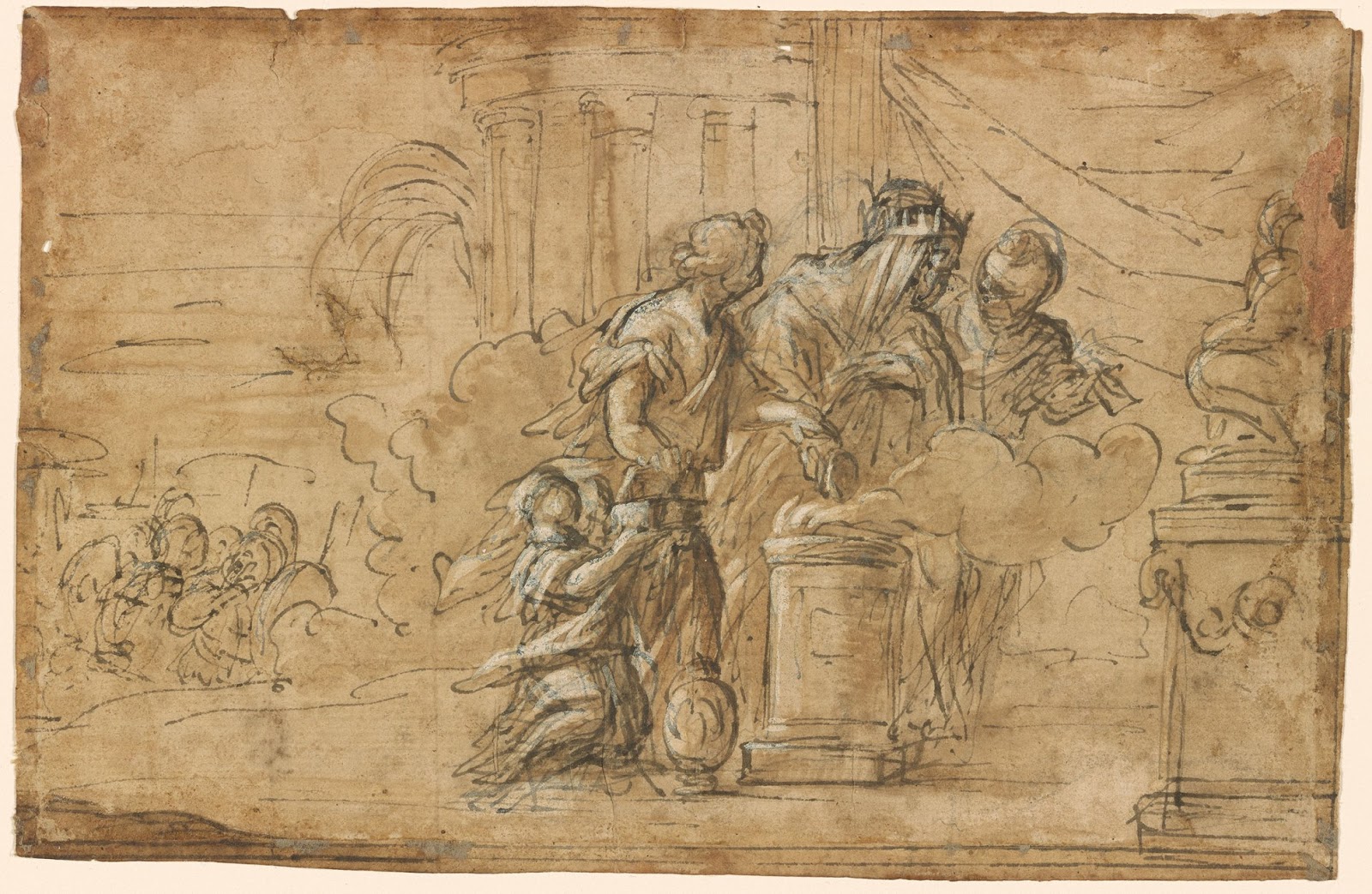
A Man of Divided Allegiance

10 At the end of twenty years, in which Solomon had built the two houses, the house of the Lord and the king’s house, 11 and Hiram king of Tyre had supplied Solomon with cedar and cypress timber and gold, as much as he desired, King Solomon gave to Hiram twenty cities in the land of Galilee. 12 But when Hiram came from Tyre to see the cities that Solomon had given him, they did not please him. 13 Therefore he said, “What kind of cities are these that you have given me, my brother?” So they are called the land of Cabul to this day. 14 Hiram had sent to the king 120 talents of gold.

15 And this is the account of the forced labor that King Solomon drafted to build the house of the Lord and his own house and the Millo and the wall of Jerusalem and Hazor and Megiddo and Gezer 16 (Pharaoh king of Egypt had gone up and captured Gezer and burned it with fire, and had killed the Canaanites who lived in the city, and had given it as dowry to his daughter, Solomon’s wife; 17 so Solomon rebuilt Gezer) and Lower Beth-horon 18 and Baalath and Tamar in the wilderness, in the land of Judah, 19 and all the store cities that Solomon had, and the cities for his chariots, and the cities for his horsemen, and whatever Solomon desired to build in Jerusalem, in Lebanon, and in all the land of his dominion. 20 All the people who were left of the Amorites, the Hittites, the Perizzites, the Hivites, and the Jebusites, who were not of the people of Israel— 21 their descendants who were left after them in the land, whom the people of Israel were unable to devote to destruction—these Solomon drafted to be slaves, and so they are to this day. 22 But of the people of Israel Solomon made no slaves. They were the soldiers, they were his officials, his commanders, his captains, his chariot commanders and his horsemen.

23 These were the chief officers who were over Solomon’s work: 550 who had charge of the people who carried on the work.

24 But Pharaoh’s daughter went up from the city of David to her own house that Solomon had built for her. Then he built the Millo.

25 Three times a year Solomon used to offer up burnt offerings and peace offerings on the altar that he built to the Lord, making offerings with it before the Lord. So he finished the house.

26 King Solomon built a fleet of ships at Ezion-geber, which is near Eloth on the shore of the Red Sea, in the land of Edom. 27 And Hiram sent with the fleet his servants, seamen who were familiar with the sea, together with the servants of Solomon. 28 And they went to Ophir and brought from there gold, 420 talents, and they brought it to King Solomon. – 1 Kings 9:10-28 ESV

Solomon doesn’t realize it, but he is at the midway point of his 40-year reign. He has just completed the construction of the temple, his royal palaces, and all the buildings that will house his administrative offices.

With these projects behind him, Solomon turns his attention to other pressing matters. First, he makes an attempt to compensate King Hiram of Phoenicia for all the material and financial aid he had provided over the years. Early on in his reign, Solomon had made an agreement with Hiram that provided Solomon with all the lumber he needed for his many construction projects, while Hiram received much-needed grain and olive oil in return.

So Hiram supplied as much cedar and cypress timber as Solomon desired. In return, Solomon sent him an annual payment of 100,000 bushels of wheat for his household and 110,000 gallons of pure olive oil. – 1 Kings 5:10-11 NLT

This agreement had lasted for 20 years, and during that time, Solomon had compensated King Hiram for all the lumber and he had paid wages to all the Phoenician wood-workers who had helped with the various construction projects (1 Kings 5:6). But now that all the work was done, Solomon wanted to make a gesture of goodwill to his friend in Phoenicia. So, he gave Hiram 20 cities located in the land of Galilee along the border between Israel and Phoenicia. This appears to be a gracious act of generosity on Solomon’s part, but it quickly becomes apparent that his gift was a bit disingenuous. When Hiram personally inspected the cities Solomon had given him, his response reveals his deep disappointment.

“What kind of towns are these, my brother?” he asked. So Hiram called that area Cabul (which means “worthless”), as it is still known today. – 1 Kings 9:13 NLT

Evidently, these towns were located in a region of Galilee that was not conducive to agricultural production. Since Phoenicia occupied a narrow strip of land along the Mediterranean Sea, they were woefully deficient in arable farmland. That’s why Solomon’s compensation for the lumber had taken the form of grain and olive oil. At first glance, it would appear that Solomon had given them what they had always needed: Land on which to grow crops. But Hiram described Solomon’s gift as “Cabul,” a word that means “bound” or “sterile.” And while these 20 towns expanded the range of Hiram’s kingdom, they were essentially worthless. They provided no practical value. And what makes Solomon’s gift that much more egregious is that, over the years, Hiram had given Solomon 120 talents of gold. To put that in perspective, that’s nearly 5 tons of gold.

One could almost draw the conclusion that Solomon was somewhat of a Scrooge, a financial tightwad who was more than willing to spend money on himself, but was a bit stingy when it came to others. And it’s interesting to note that Solomon had given away land that had been part of the inheritance given by God to the people of Israel.

It’s most likely that the 20 towns were located in territory that had belonged to the tribes of Asher, Naphtali, and Zebulun. In awarding these cities to Hiram, Solomon was guilty of giving away land that belonged to the people of God. His willingness to give it away, coupled with Hiram’s poor assessment of it, reveals that it held no real value to Solomon.

One of the things that can be learned from studying the history of the Israelites is that every decision they made had long-term ramifications. The book of Judges reveals that, at one point, the tribes of Asher, Napthali, and Zebulun had been given the opportunity to conquer and occupy the land allotted to them by God, but they had failed.

The tribe of Zebulun failed to drive out the residents of Kitron and Nahalol, so the Canaanites continued to live among them. But the Canaanites were forced to work as slaves for the people of Zebulun.

The tribe of Asher failed to drive out the residents of Acco, Sidon, Ahlab, Aczib, Helbah, Aphik, and Rehob. Instead, the people of Asher moved in among the Canaanites, who controlled the land, for they failed to drive them out.

Likewise, the tribe of Naphtali failed to drive out the residents of Beth-shemesh and Beth-anath. Instead, they moved in among the Canaanites, who controlled the land. Nevertheless, the people of Beth-shemesh and Beth-anath were forced to work as slaves for the people of Naphtali. – Judges 1:30-33 NLT

One of the reasons the Phoenicians even existed was because of the failure of these three tribes to do what God had commanded them to do. As a result of their failure to drive out the inhabitants of the land, the Phoenicians occupied territory that was supposed to belong to the people of God. Now, Solomon had just awarded the Phoenicians with even more of Israel’s God-given inheritance.

Solomon’s main focus was the city of Jerusalem. Having willingly forfeited the cities located in the north, Solomon poured his time and energy into expanding his royal capital. To do so, Solomon enslaved thousands of non-Jews to work as laborers on his various rebuilding and enlargement projects. He conscripted Amorites, Hittites, Perizzites, Hivites, and Jebusites who were living in the land of Israel to provide slave labor for his ambitious expansion program. These people were used to extend the walls of Jerusalem, connecting the old City of David with the newer area surrounding the temple complex and the royal palaces and administrative headquarters. They “built towns as supply centers and constructed towns where his chariots and horses could be stationed” (1 Kings 9:19 NLT). Solomon was constructing a virtual theme park dedicated to his greatness; replete with palaces, terraces, stables for his many horses, and barracks for his growing army. 

And it’s important to remember that God had warned that His kings were not to refrain from certain actions.

The king must not build up a large stable of horses for himself… – Deuteronomy 17:16 NLT

The king must not take many wives for himself… – Deuteronomy 17:17 NLT

And he must not accumulate large amounts of wealth in silver and gold for himself… – Deuteronomy 17:17 NLT

Solomon was in violation of each of these commands. And while at this point, it appears that the daughter of Pharaoh was his only wife, it wouldn’t be long before he expanded his household greatly.

Now King Solomon loved many foreign women. Besides Pharaoh’s daughter, he married women from Moab, Ammon, Edom, Sidon, and from among the Hittites. The LORD had clearly instructed the people of Israel, “You must not marry them, because they will turn your hearts to their gods.” Yet Solomon insisted on loving them anyway. He had 700 wives of royal birth and 300 concubines. And in fact, they did turn his heart away from the LORD. – 1 Kings 11:1-3 NLT

Whether it was wives and concubines or horses and chariots, Solomon always seemed to be in building mode. Enough was never enough. He even built a fleet of boats and began an aggressive trading venture that netted him 16 tons of gold. For Solomon, bigger was always better. And yet, late in his life, Solomon would make a sad but telling admission.

I increased my possessions:
I built houses for myself;
I planted vineyards for myself.
I designed royal gardens and parks for myself,
and I planted all kinds of fruit trees in them.
I constructed pools of water for myself,
to irrigate my grove of flourishing trees.
I purchased male and female slaves,
and I owned slaves who were born in my house;
I also possessed more livestock—both herds and flocks—
than any of my predecessors in Jerusalem.
I also amassed silver and gold for myself,
as well as valuable treasures taken from kingdoms and provinces.
I acquired male singers and female singers for myself,
and what gives a man sensual delight—a harem of beautiful concubines.
So I was far wealthier than all my predecessors in Jerusalem,
yet I maintained my objectivity.
I did not restrain myself from getting whatever I wanted;
I did not deny myself anything that would bring me pleasure.
So all my accomplishments gave me joy;
this was my reward for all my effort.
Yet when I reflected on everything I had accomplished
and on all the effort that I had expended to accomplish it,
I concluded: “All these achievements and possessions are ultimately profitless—
like chasing the wind!
There is nothing gained from them on earth.” – Ecclesiastes 1:4-11 NLT

They say, “hindsight is 20-20,” and that would prove to be true in Solomon’s life. He would one day discover that his obsession with constant expansion, endless pleasure, and rampant materialism would never satisfy. But at the midway point of his reign, he didn’t know any better. So, he continued to try and balance his love for the things of this world with his love for God.  He kept accumulating material goods, while at the same time, offering sacrifices to God. Without even realizing it, he was worshiping two gods. Solomon was living out the very thing Jesus would later warn His disciples about.

“No one can serve two masters. For you will hate one and love the other; you will be devoted to one and despise the other. You cannot serve God and be enslaved to money.” – Matthew 6:24 NLT

English Standard Version (ESV) The Holy Bible, English Standard Version. ESV® Permanent Text Edition® (2016). Copyright © 2001 by Crossway Bibles, a publishing ministry of Good News Publishers.

New Living Translation (NLT) Holy Bible, New Living Translation, copyright © 1996, 2004, 2015 by Tyndale House Foundation. Used by permission of Tyndale House Publishers Inc., Carol Stream, Illinois 60188. All rights reserved.

The Message (MSG)Copyright © 1993, 1994, 1995, 1996, 2000, 2001, 2002 by Eugene H. Peterson

The Lunacy of Idolatry

18 “What profit is an idol
    when its maker has shaped it,
    a metal image, a teacher of lies?
For its maker trusts in his own creation
    when he makes speechless idols!
19 Woe to him who says to a wooden thing, Awake;
    to a silent stone, Arise!
Can this teach?
Behold, it is overlaid with gold and silver,
    and there is no breath at all in it.
20 But the Lord is in his holy temple;
    let all the earth keep silence before him.” – Habakkuk 2:18-20 ESV

In this final “woe,” God deals with the ubiquitous problem of idolatry. Ever since the Fall, mankind had been on a virtual binge, seeking for comfort, guidance, provision, and protection from anything and everything other than their creator God. In the opening chapter of Romans, Paul portrays this wholesale abandonment of God by fallen humanity in stark terms.

Yes, they knew God, but they wouldn’t worship him as God or even give him thanks. And they began to think up foolish ideas of what God was like. As a result, their minds became dark and confused. Claiming to be wise, they instead became utter fools. And instead of worshiping the glorious, ever-living God, they worshiped idols made to look like mere people and birds and animals and reptiles. – Romans 1:21-23 NLT

They traded the truth about God for a lie. So they worshiped and served the things God created instead of the Creator himself, who is worthy of eternal praise! – Romans 1:25 NLT

Man, made in the image of God, was wired for worship. Adam and Eve had been created by God to have unbroken fellowship with Him. Their lives were intended to bring Him glory through their faithful obedience to His creation mandate.

Then God said, “Let us make human beings in our image, to be like us. They will reign over the fish in the sea, the birds in the sky, the livestock, all the wild animals on the earth, and the small animals that scurry along the ground.”

So God created human beings in his own image.
    In the image of God he created them;
    male and female he created them.

Then God blessed them and said, “Be fruitful and multiply. Fill the earth and govern it. Reign over the fish in the sea, the birds in the sky, and all the animals that scurry along the ground.” – Genesis 1:26-28 NLT

But because of their decision to disobey God by eating the fruit of the one tree He had forbidden, any further access into His presence was denied, and the focal point of their worship was lost. And it didn’t take long before sin had so marred the image of God in man, that the Almighty determined to wipe them from the face of the earth.

The Lord observed the extent of human wickedness on the earth, and he saw that everything they thought or imagined was consistently and totally evil. So the Lord was sorry he had ever made them and put them on the earth. It broke his heart. And the Lord said, “I will wipe this human race I have created from the face of the earth.” – Genesis 6:5-7 NLT

Yet, God had chosen to spare Noah and his family, allowing them to begin the process of repopulating the earth again.

“And you, be fruitful and multiply, increase greatly on the earth and multiply in it.”  – Genesis 9:7 ESV

And, obviously, Noah and his family were successful in fulfilling God’s creation mandate. They were fruitful and refilled the earth. But their fruitfulness was accompanied by ever-increasing faithlessness. According to the apostle Paul, the nations of the earth developed a perverse penchant for substitute gods, choosing to replace the one true God with deities of their own making. And it wasn’t long before their decision to displace God resulted in rampant godlessness.

Their lives became full of every kind of wickedness, sin, greed, hate, envy, murder, quarreling, deception, malicious behavior, and gossip. They are backstabbers, haters of God, insolent, proud, and boastful. They invent new ways of sinning, and they disobey their parents. They refuse to understand, break their promises, are heartless, and have no mercy. They know God’s justice requires that those who do these things deserve to die, yet they do them anyway. Worse yet, they encourage others to do them, too. – Romans 1:29-32 NLT

And yet, God, in His grace and mercy, chose to begin again. He chose a single man, Abraham, and promised to make of him a great nation. This man’s descendants would become God’s treasured possession on whom He would pour out His blessings and with whom He would make an everlasting covenant.

“If you fully obey the Lord your God and carefully keep all his commands that I am giving you today, the Lord your God will set you high above all the nations of the world. You will experience all these blessings if you obey the Lord your God…” – Deuteronomy 28:1-2 NLT

But one of the primary criteria associated with God’s covenant commitment with the descendants of Abraham would be their refusal to worship any other gods.

“You must not have any other god but me. You must not make for yourself an idol of any kind or an image of anything in the heavens or on the earth or in the sea. You must not bow down to them or worship them, for I, the LORD your God, am a jealous God who will not tolerate your affection for any other gods.” – Exodus 20:3-5 NLT

And yet, generations after the death of Abraham, his progeny would have proven their inability to keep their end of the agreement. The nation which had been set apart by God as His own would have established an unprecedented track record of spiritual infidelity. And by the time Habakkuk penned the words of the book that bears his name, the apostasy of God’s people would have become untenable and unforgivable.

The whole reason God was sending the Babylonians against the people of Judah was due to their unfaithfulness. And God had chosen to use an idolatrous nation to bring His judgment upon His idolatrous children. The people of Judah, like their northern kin in Israel, had made a habit of worshiping false gods. So, God was going to fulfill His promise to discipline them for their disobedience. He would do to them exactly as Moses had warned generations earlier.

“The Lord will exile you and your king to a nation unknown to you and your ancestors. There in exile you will worship gods of wood and stone!” – Deuteronomy 28:36 NLT

If they wanted to continue to worship false gods, Yahweh would make sure they had every opportunity – but not in the land that He had graciously provided for them. They would find themselves exiled in a foreign land, surrounded by pagan gods and powerful enemies.

And this final woe points directly at the primary problem going on in Judah. God’s chosen people were guilty of spiritual adultery. They had “exchanged the glory of the immortal God for images resembling mortal man and birds and animals and creeping things” (Romans 1:23 ESV). Or, as the New Living Translation puts it, “…instead of worshiping the glorious, ever-living God, they worshiped idols made to look like mere people and birds and animals and reptiles.”

God reveals the sheer idiocy behind their decision to replace Him with man-made gods.

“Woe to him who says to a wooden thing, Awake;
    to a silent stone, Arise!” – Habakkuk 2:19 ESV

Their decision to substitute the one true God with gods of their own creation was ludicrous. It made no sense. And God sarcastically portrays the stupidity of their decision.

“What good is an idol carved by man,
    or a cast image that deceives you?
How foolish to trust in your own creation—
    a god that can’t even talk!” – Habakkuk 1:18 NLT

“To speechless stone images you say,
    ‘Rise up and teach us!’
    Can an idol tell you what to do?
They may be overlaid with gold and silver,
    but they are lifeless inside.” – Habakkuk 1:19 NLT

This is not the first and only time God had exposed the ridiculous nature of Judah’s idolatry. He had also spoken through Isaiah, clearly denunciating and debunking the veracity and value of idols.

The idol makers encourage one another,
    saying to each other, “Be strong!”
The carver encourages the goldsmith,
    and the molder helps at the anvil.
    “Good,” they say. “It’s coming along fine.”
Carefully they join the parts together,
    then fasten the thing in place so it won’t fall over. – Isaiah 41:6-7 NLT

How foolish are those who manufacture idols.
    These prized objects are really worthless.
The people who worship idols don’t know this,
    so they are all put to shame.
Who but a fool would make his own god—
    an idol that cannot help him one bit? – Isaiah 44:9-10 NLT

The person who made the idol never stops to reflect,
    “Why, it’s just a block of wood!
I burned half of it for heat
    and used it to bake my bread and roast my meat.
How can the rest of it be a god?
    Should I bow down to worship a piece of wood?” – Isaiah 44:19 NLT

Only a fool would fail to recognize the obvious absurdity of idolatry.

The poor, deluded fool feeds on ashes.
    He trusts something that can’t help him at all.
Yet he cannot bring himself to ask,
    “Is this idol that I’m holding in my hand a lie?” – Isaiah 44:20 NLT

And yet, here was the nation of Judah facing the very real prospect of having another idolatrous nation invade their borders and destroy their cities and towns. They were poor, deluded fools who had put their hope and trust in pieces of wood and stone. These lifeless and utterly helpless icons of man’s arrogant pride would prove to be unreliable when the judgment of God fell.

Later on, in the book of Isaiah, God issues a tongue-in-cheek challenge to the people of Judah. They could put their trust in their false gods, but the outcome of their efforts would prove less-than-successful.

“Let’s see if your idols can save you
    when you cry to them for help.
Why, a puff of wind can knock them down!
    If you just breathe on them, they fall over!
But whoever trusts in me will inherit the land
    and possess my holy mountain.” – Isaiah 57:13 NLT

And God points out to Habakkuk that the man-made, lifeless gods the people of Judah had chosen to worship were no substitute for Him.

“But the Lord is in his holy temple;
    let all the earth keep silence before him.” – Habakkuk 2:20 ESV

God was not some elf-on-a-shelf, made from human hands and carried from one place to another. He was “the Lord,” Jehovah, “the existing one.” And He was in His holy temple, looking down on His disobedient and unfaithful people, and preparing to unleash His righteous indignation upon them.

The God of the universe is a jealous God who will not share His glory with anyone or anything. He will not put up with the worship of false gods. Yes, He will tolerate this behavior for a time, patiently putting up with the fickleness and unfaithfulness of fallen humanity. But the day is coming when He will eliminate all the false gods manufactured by fallen men. And all the earth will stand before Him in reverent awe and stunned silence.

English Standard Version (ESV)
The Holy Bible, English Standard Version. ESV® Permanent Text Edition® (2016). Copyright © 2001 by Crossway Bibles, a publishing ministry of Good News Publishers.

New Living Translation (NLT)
Holy Bible, New Living Translation, copyright © 1996, 2004, 2015 by Tyndale House Foundation. Used by permission of Tyndale House Publishers Inc., Carol Stream, Illinois 60188. All rights reserved.

The Message (MSG)Copyright © 1993, 1994, 1995, 1996, 2000, 2001, 2002 by Eugene H. Peterson