Making Much of Man Makes No Sense

10 I appeal to you, brothers, by the name of our Lord Jesus Christ, that all of you agree, and that there be no divisions among you, but that you be united in the same mind and the same judgment. 11 For it has been reported to me by Chloe’s people that there is quarreling among you, my brothers. 12 What I mean is that each one of you says, “I follow Paul,” or “I follow Apollos,” or “I follow Cephas,” or “I follow Christ.” 13 Is Christ divided? Was Paul crucified for you? Or were you baptized in the name of Paul? 14 I thank God that I baptized none of you except Crispus and Gaius, 15 so that no one may say that you were baptized in my name. 16 (I did baptize also the household of Stephanas. Beyond that, I do not know whether I baptized anyone else.) 17 For Christ did not send me to baptize but to preach the gospel, and not with words of eloquent wisdom, lest the cross of Christ be emptied of its power. 1 Corinthians 1:10-17 ESV

It was A. W. Tozer who said, “What comes into our minds when we think about God is the most important thing about us” (A. W. Tozer, The Knowledge of the Holy). Our theology will have a direct impact on how we live our lives, and a faulty view of God will end up dramatically influencing our behavior. That was the situation in Corinth and the reason why Paul mentioned God six times and Jesus Christ ten times in the first ten verses alone. He was refocusing their attention back to the nature of their relationship with God the Father and His Son. They were members of the church of God. They belonged to Him, and their very existence was due to Him. Their salvation was the result of His grace and the sacrificial death of His Son. They enjoyed fellowship with God because Christ paid their sin debt with His own life. So, they owed all that they were to God and His Son.

Yet, they were guilty of worshiping men and had become a house divided. It had come to Paul’s attention that divisive cliques had developed within the church in Corinth. People were taking sides and aligning themselves with different leaders, claiming superiority based on who it was that they followed. Some bragged about their relationship with Apollos. Others claimed allegiance to Cephas (Peter). Much to his dislike, some boasted that Paul was their leader. Then some claimed the high road, claiming to be followers of Christ. The end result was petty arguing and prideful posturing. They had missed the point. It wasn’t supposed to be about Apollos, Paul, or Cephas. None of them had been crucified to pay for the sins of mankind. And neither Apollos, Paul, nor Cephas were preaching their own message of salvation. Instead, each was acting as a messenger of God, proclaiming the good news of Jesus Christ.

Paul believed that a proper view of God should produce proper behavior. If people had an accurate understanding of God and a future-based focus on His plan of redemption, they would not put all their hopes in this life. They would be less likely to make more of the messenger than the message. God had been using Paul, Cephas, and Apollos, but they were simply the bearers of the good news of Jesus Christ. However, the Corinthians had turned these men into celebrities, and this growing cult of personality was dividing the church. The worship of man was inadvertently replacing the proper worship of God. Without realizing it, the believers in Corinth were boasting in men rather than God and attributing their salvation to men, instead of God. This human-based emphasis tended to focus their attention on the here-and-now rather than the hereafter. Arguing over the significance of who baptized them had become far more important to them than why they had been baptized in the first place. They had given their favorite preacher more prominence than they rightfully deserved, and Paul was going to make sure that they saw the error of their way.

The Corinthian believers were just as susceptible to hero worship as we are. They were making much of the messenger, with some naturally attracted to Paul while others found Apollos more appealing. Some found Cephas’ style more to their liking. But they had all allowed their personal preferences to become points of contention, leading to division within the church. They were elevating style over substance. But Paul was determined to make more of the message than the messenger. In the very next chapter, he writes,

And I, when I came to you, brothers, did not come proclaiming to you the testimony of God with lofty speech or wisdom. For I decided to know nothing among you except Jesus Christ and him crucified. And I was with you in weakness and in fear and much trembling, and my speech and my message were not in plausible words of wisdom, but in demonstration of the Spirit and of power, so that your faith might not rest in the wisdom of men but in the power of God. – 1 Corinthians 2:1-5 ESV

It wasn’t about Paul’s preaching style or oratory skills. It wasn’t about his persuasive powers or ability to craft a clever sermon; it was about Jesus Christ and Him crucified. The focus of the message of the gospel is, as it always has been, the redemptive work of Jesus Christ on the cross. It is about the God-ordained, Spirit-empowered transformation of men’s lives who have placed their faith in Christ, the one who died in their place and on their behalf. When we care more about the messenger than we do about the message, we become guilty of idol worship. When we prefer style over substance, we move from having our hearts transformed to having our ears tickled. We want to be entertained and satisfied, rather than sanctified. We find ourselves living for the moment, hoping our favorite preacher will keep us interested for an hour, while God would rather have us living with a much loftier goal: Our ongoing sanctification and future glorification.

One of the most dangerous enemies of the body of Christ is any kind of division or internal strife that creeps into its midst. Infighting and internal dissension can be highly destructive to the unity of a local fellowship. That’s why Paul immediately addresses a situation going on within the body of believers in Corinth. News of the quarrels taking place between believers forced Paul to deal with it at the very beginning of his letter. Paul doesn’t go into great detail regarding the cause of these factions, but it probably had something to do with the role each of these individuals had played in the conversion of the various church members. If someone had been led to faith by Apollos, they naturally held him in high esteem and viewed him as their mentor. If Paul had been the one to lead them to Christ, they would have developed a natural affinity and affection for him. So people were more than likely choosing sides based on the role these men had played in their spiritual birth and development. It had led to arguments and an unhealthy situation within the church.

But Paul calls them out, exposing the danger of their infighting, and demands that they seek unity. He pleads with them, “Be of one mind, united in thought and purpose” (1 Corinthians 1:10 NLT). There was no place within the body of Christ for factions of any kind, especially man-centered “fan clubs” that seemingly elevated individuals to the same status as Jesus Himself.

In the case of Corinth, some of these people were calling themselves followers of man, rather than followers of Christ. Somewhere along the way, they had missed the point. Paul, Cephas, and Apollos were simply tools that God had used to bring the gospel to the Corinthians and assist them in their spiritual growth. These men were essential to the process, but were never intended to be afforded rock star status. But it happens all the time. Cults of personality exist in churches all across the country, with people becoming followers of men rather than followers of Christ. In larger churches with larger staffs, you can end up with factions based on the particular minister or ministry heads and the role they play in the lives of various individuals. Younger people can end up with a natural affinity for younger pastors. Older members of the congregation might tend to prefer a minister closer to their age demographic. If a particular minister played a role in someone’s salvation, it is only natural for that individual to hold that pastor in higher regard. But all of this can lead to divisions and a lack of unity. Again, that is why Paul appealed to them to be of one mind, united in thought and purpose.

Unity and division were common topics in many of the letters Paul wrote to the various churches he helped to found. Disunity was always a threat to the integrity and health of these new congregations. In his book, The Story of God As Revealed in the Holy Bible For All Mankind, Raymond Anderegg writes, “…the apostles make it clear that two of the biggest threats to the kingdom of God are false teachers and division within the Church, and both threats are treated as equally important. Thus, two of the worst sins a Christian can commit are to reject the gospel of Jesus Christ for another gospel (religion) and to cause strife and division among our brethren, the body, or Church, of Christ.”

Disunity is destructive. Division is deadly. It robs the church of its power. It diminishes the body of Christ’s influence among the lost, providing the enemy a foothold and an opportunity to sow strife and dissension in place of love and forgiveness. Christianity is not a man-centered religion based on personality, but a Christ-centered faith based on His sin-defeating work on the cross on our behalf. When we start making the church a cult of personality by making much of men, we diminish the sufficiency and singularity of Christ as the sole focus of our faith.

Father, from the very beginning, humans have struggled with a self-focused obession that strives to make ourselves the point of the story. We tend to worship ourselves or someone else instead of You. We find it easy to make much of men and elevate them to positions of prominence and importance because it gives us hope for ourselves. But it was never meant to be about us. We make lousy gods and even worse saviors. We are incapable of providing long-term, sustainable help and hope for anyone, including ourselves. That is why You sent Your Son, and we are to make much of Him. We are to worship Him and Him alone. Forgive us for the divisions and silly factions we create based on personalities. Help us remember that we are followers of Christ and no one else. Create in us a unity that is focused on Him alone. Amen

English Standard Version (ESV) The Holy Bible, English Standard Version. ESV® Permanent Text Edition® (2016). Copyright © 2001 by Crossway Bibles, a publishing ministry of Good News Publishers.

New Living Translation (NLT) Holy Bible, New Living Translation, copyright © 1996, 2004, 2015 by Tyndale House Foundation. Used by permission of Tyndale House Publishers Inc., Carol Stream, Illinois 60188. All rights reserved.
In Spirit and Truth

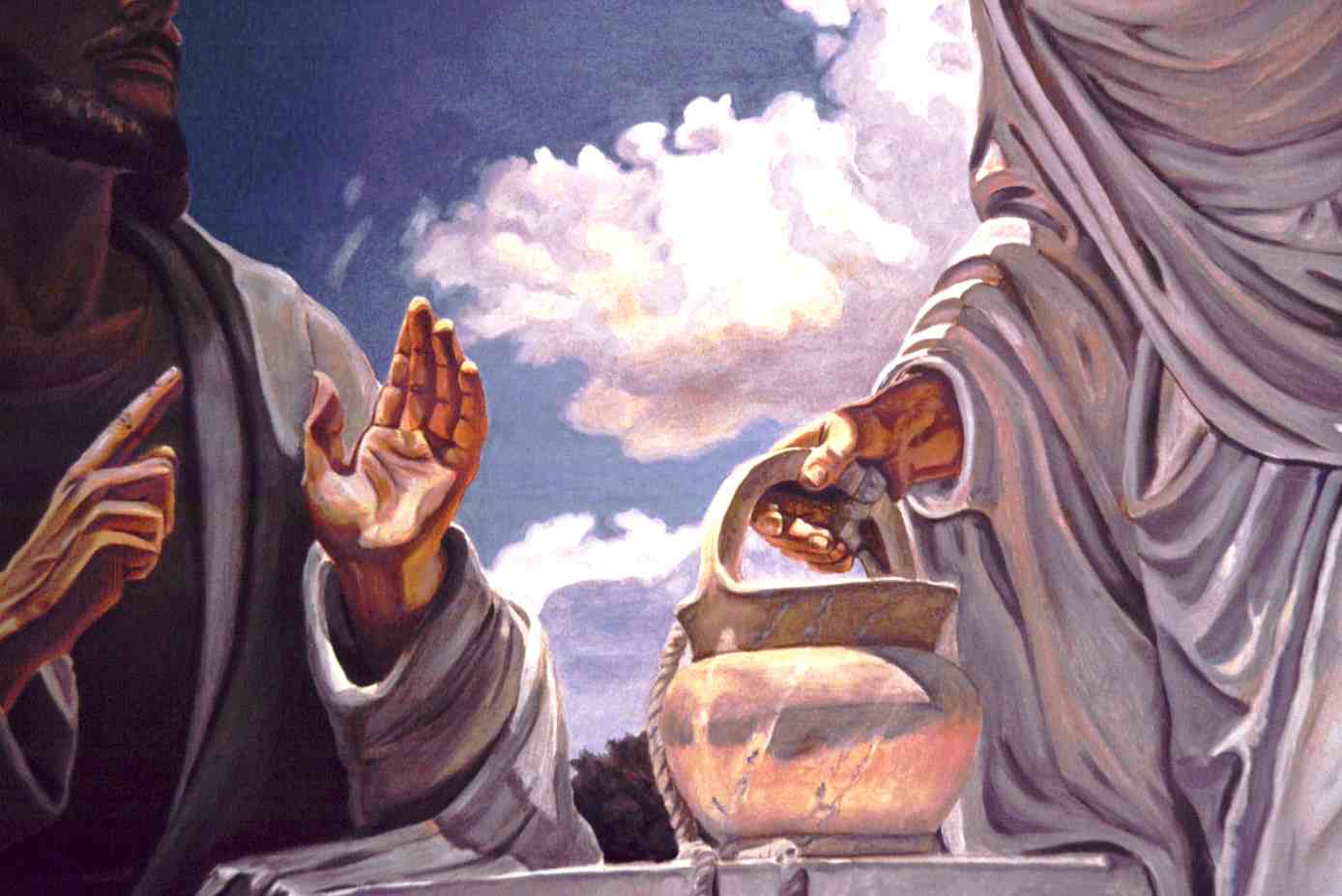
16 Jesus said to her, “Go, call your husband, and come here.” 17 The woman answered him, “I have no husband.” Jesus said to her, “You are right in saying, ‘I have no husband’; 18 for you have had five husbands, and the one you now have is not your husband. What you have said is true.” 19 The woman said to him, “Sir, I perceive that you are a prophet. 20 Our fathers worshiped on this mountain, but you say that in Jerusalem is the place where people ought to worship.” 21 Jesus said to her, “Woman, believe me, the hour is coming when neither on this mountain nor in Jerusalem will you worship the Father. 22 You worship what you do not know; we worship what we know, for salvation is from the Jews. 23 But the hour is coming, and is now here, when the true worshipers will worship the Father in spirit and truth, for the Father is seeking such people to worship him. 24 God is spirit, and those who worship him must worship in spirit and truth.” 25 The woman said to him, “I know that Messiah is coming (he who is called Christ). When he comes, he will tell us all things.” 26 Jesus said to her, “I who speak to you am he.” – John 4:16-26 ESV

The woman wanted what Jesus had to offer. The thought of a source of freely flowing water that would eliminate her constant need to draw water from the well of Jacob was more than appealing to her. But, like Nicodemus, she was missing the point of Jesus’ words. She had come to the well to meet a physical need. Her mission had been to draw water from the well for use in drinking, bathing, and cleaning. Water was a daily necessity that made living in that arid region possible. Without it, life would be impossible.

But even water has its limitations. It can be consumed to quench thirst, but in time, the thirst will return. Water can be used to wash away the dirt and grime of life, but it can’t prevent one from becoming filthy again. That’s why the woman was forced to return to the well on a daily basis. Her need for water was insatiable.

Yet Jesus had piqued the woman’s interest with His mention of  “living water.” But don’t miss how He had opened His conversation with her.

“If you knew the gift of God, and who it is that is saying to you, ‘Give me a drink,’ you would have asked him, and he would have given you living water.” – John 4:10 ESV

The woman was clueless as to Jesus’ identity. When she had arrived at the well, she was surprised to find an unknown Jewish man waiting there. And her surprise turned to shock when this stranger dared to speak to her – “For Jews have no dealings with Samaritans” (John 4:9 ESV). Yet Jesus assured her that, had she known who He was and the nature of the gift He had to offer, she would have been the first to speak that day.

Jesus, in need of water to satisfy His thirst, had stopped at the well. But as the woman pointed out, He had “nothing to draw water with” (John 4:11 ESV). So He had asked her for help because she was the only one who had the means by which to satisfy His need. Yet, the inference behind the story is that the woman had a need for something far greater than water. And if she had only known the true identity of the stranger at the well and what He was capable of offering her, she would have been begging Him for the gift of God. 

It is easy to overlook the fact that both Nicodemus and this woman were worshipers of Yahweh. He was an orthodox member of the sect of the Pharisees. She was a Samaritan. He worshiped the God of Abraham at the temple in Jerusalem. Her people chose to worship Him at Mount Gerizim. Nicodemus prided Himself on his identity as a purebred Jew and a strict adherent to the Mosaic Law. The Samaritan woman, though viewed as a half-breed by the Jews, believed that her people were worshiping Yahweh in the manner prescribed by Moses. But what both failed to take into account was their need for a Savior. While the Jews and the Samaritans believed in the prophecies concerning the coming Messiah, they were clueless as to His real mission. 

The primary message found in chapters 3 and 4 is that of need, and Nicodemus and the Samaritan woman had the same need in common. The need for eternal life. But in order to have eternal life, they would have to experience cleansing from their sin. Jesus had described it to Nicodemus as birth from above. He described it to the woman at the well as living water. Both of these individuals, despite their obvious differences, would be denied access into God’s kingdom for the very same reason: Sin.

Nicodemus, while outwardly righteous in appearance, was guilty of hypocrisy, just like the rest of his fellow members of the Pharisees. Jesus would have some harsh words of indictment against these well-respected members of Israel’s religious elite.

“What sorrow awaits you teachers of religious law and you Pharisees. Hypocrites! For you are so careful to clean the outside of the cup and the dish, but inside you are filthy—full of greed and self-indulgence!” – Matthew 23:25 NLT

“What sorrow awaits you teachers of religious law and you Pharisees. Hypocrites! For you are like whitewashed tombs—beautiful on the outside but filled on the inside with dead people’s bones and all sorts of impurity.” – Matthew 23:27 NLT

But the woman at the well had her own set of issues. Not only was she a Samaritan and, therefore, guilty of practicing idolatry, but she was also guilty of violating the law of God. As Jesus was about to point out, she was an adulteress. When he asked her to go get her husband, she confessed that she was unmarried. But Jesus knew more about her than she could have ever imagined, and He revealed to her the true nature of her need.

“You are right in saying, ‘I have no husband’; for you have had five husbands, and the one you now have is not your husband. What you have said is true.” – John 4:17-18 ESV

Suddenly, Jesus shifted the topic of conversation away from water to sin. He made it painfully personal. And while the woman’s statement had been anything but a confession, Jesus declared that what she had said was more true than she realized. She had no husband because she was in an adulterous relationship. She was guilty of sin.

But in a somewhat awkward attempt to change the subject, the woman declared, “Sir, I perceive that you are a prophet” (John 4:19 ESV). She desperately wanted to talk about something other than her five failed marriages and her current live-in relationship. So, sensing that Jesus had some kind of prophetic powers, she decided to ask Him about an important point of controversy between the Jews and the Samaritans.

“Our fathers worshiped on this mountain, but you say that in Jerusalem is the place where people ought to worship.” – John 4:20 ESV

By refocusing the topic of conversation, she was hoping to divert attention away from her own personal problems. But Jesus was not going to allow that to happen. He addressed her question, but in a way that brought the focus right back on her. In essence, Jesus let her know that the issue had less to do about where God should be worshiped, but the motive behind the worship. The Jews and Samaritans were busy debating about location, but Jesus was far more interested in motivation. Why were they worshiping God?

And Jesus dropped a bombshell on her that must have left her reeling.

“Woman, believe me, the hour is coming when neither on this mountain nor in Jerusalem will you worship the Father. – John 4:21 ESV

The worship of God wasn’t about a temple in Jerusalem or a shrine on Mount Gerizim. It was a matter of the heart. While the Jews had a more accurate understanding of God, they were guilty of worshiping Him falsely. Jesus would later declare of the Jews, “These people honor me with their lips, but their hearts are far from me. Their worship is a farce, for they teach man-made ideas as commands from God” (Matthew 15:8-9 NLT).

And He told the Samaritan woman, “You worship what you do not know” (John 4:22 ESV). The Samaritans practiced a form of syncretism that blended the worship of Yahweh with that of false gods. Their doctrine was polluted and filled with pagan ideas that rendered Yahweh virtually unrecognizable.

Jesus fast-forwarded the conversation to the future, revealing that a day would come when “when the true worshipers will worship the Father in spirit and truth, for the Father is seeking such people to worship him” (John 4:23 ESV). Worship will no longer be about location and the ritual observation of rules and regulations. It will be about a relationship with God based on spirit and truth. And Jesus informed the woman that the future hour to which He referred was actually “now here.” It had arrived. And He had been the one to usher it in.

But what did He mean by “spirit and truth?” And how had His arrival changed the nature of man’s worship of God? The two terms “spirit and truth” are actually meant to convey one idea. Jesus is attempting to define worship that which is “truly spiritual.” In other words, it is not some physical activity practiced in a particular place and according to some man-made set of governing rules. It is a matter of the heart, not the head. It is spiritual in nature and not physical. Going through the religious motions either in Jerusalem or on Mount Gerizim was not going to cut it. Both the Jews and the Samaritans had been guilty of worshiping the one true God falsely and unfaithfully.

But Jesus had come to make the true worship of God possible, by restoring sinful men and women to a right relationship with Him. To do so, they would have to be born of the Spirit, just as He had told Nicodemus. They would have to have their spiritual thirst quenched by the living water Jesus would provide. And just a few chapters later, John will describe Jesus standing in the temple courtyard, shouting:

Anyone who is thirsty may come to me! Anyone who believes in me may come and drink! For the Scriptures declare, ‘Rivers of living water will flow from his heart.’”(When he said “living water,” he was speaking of the Spirit, who would be given to everyone believing in him. But the Spirit had not yet been given because Jesus had not yet entered into his glory.).” – John 7:38-39 NLT

The true worship of God would be made possible by the presence of the indwelling Spirit of God. And to receive the Spirit, one would have to accept the gracious gift of salvation made possible through the sacrifice of God’s own Son.

These words left the woman in a state of confusion. She was having a difficult time following what Jesus had to say. But she proclaimed her belief in the coming of the Messiah and her hope that He would clear up all the confusion regarding where to worship God. And that’s when Jesus boldly proclaimed to her, “I who speak to you am he” (John 4:26 ESV). The not-yet had become the now. The long-awaited Messiah had shown up and He was talking to her. The answer to her question regarding the true worship of God was standing right in front of her.

English Standard Version (ESV) The Holy Bible, English Standard Version. ESV® Permanent Text Edition® (2016). Copyright © 2001 by Crossway Bibles, a publishing ministry of Good News Publishers.

New Living Translation (NLT)
Holy Bible, New Living Translation, copyright © 1996, 2004, 2015 by Tyndale House Foundation. Used by permission of Tyndale House Publishers Inc., Carol Stream, Illinois 60188. All rights reserved.

The Message (MSG)Copyright © 1993, 1994, 1995, 1996, 2000, 2001, 2002 by Eugene H. Peterson

The Leadership Void.

Yet let no one contend, and let none accuse, for with you is my contention, O priest. You shall stumble by day; the prophet also shall stumble with you by night;  and I will destroy your mother. My people are destroyed for lack of knowledge; because you have rejected knowledge, I reject you from being a priest to me. And since you have forgotten the law of your God, I also will forget your children. The more they increased, the more they sinned against me; I will change their glory into shame.

They feed on the sin of my people; they are greedy for their iniquity. And it shall be like people, like priest; I will punish them for their ways and repay them for their deeds. They shall eat, but not be satisfied; they shall play the whore, but not multiply, because they have forsaken the Lord to cherish whoredom, wine, and new wine, which take away the understanding. – Hosea 4:4-11 ESV

God held all of the people of Israel responsible for their sin, but He had a special word of accusation against the spiritual leaders of Israel. The priests and prophets, while not actually men appointed by God, were still going to be held accountable because of their claim to be representatives of God. The priests of Israel were actually unsanctioned by God, because they had been appointed by Jeroboam after the kingdom split in two. He had created his own gods and appointed his own priests. They were not Levites, as God had commanded. So these were actually false priests leading the people in the worship of false gods. So God held them to a higher standard and leveled more severe charges against them. The same was true of the false prophets who were claiming to bring messages from the false gods they worshiped. These men were supposedly speaking new revelations from their gods, giving the people of Israel divine direction. But they were simply misleading the people. The revelations they received, if indeed they received any, were most likely demonic and most definitely not from God.

God’s main accusation against the priests was that they were leading the people away from Him, not toward Him. The people’s knowledge of God was actually diminishing, not increasing. God said, “My people are destroyed for lack of knowledge; because you have rejected knowledge” (Hosea 4:6 ESV). The priests were not seeking after the one true God, so the people were becoming increasingly ignorant of God and His ways. The priests were not teaching the laws of God, so the people were breaking them without even knowing it. And all of this was leading to their destruction, both spiritually and physically.

As priests, these men were to be promoting godliness and the worship of God. They were to be leading the people into a deeper understanding of and appreciation for God. But God said, “The more priests there are, the more they sin against me. They have exchanged the glory of God for the shame of idols” (Hosea 4:7 NLT). They were leaving God out of the equation. They had replaced Him with false gods and the peoples sins were actually increasing, not decreasing. And God even accused the priests of wanting the people to sin more, because the more they sinned, the more sacrifices they had to bring to repent of their sins. And the more sacrifices the people made, the more portions of those sacrifices they got to eat as their priestly payment. They were actually getting fat and happy off of the sins of the people. “When the people bring their sin offerings, the priests get fed. So the priests are glad when the people sin!” (Hosea 4:8 NLT).

There was evidently a common saying among the Israelites that said, “And what the priests do, the people also do” (Hosea 4:9a NLT). These so-called spiritual leaders were actually setting the standard for sin. They were leading the people into idolatry, immorality, and sins of all kinds by their very actions. Which led God to declare, So now I will punish both priests and people for their wicked deeds” (Hosea 4:9b NLT).

One of the saddest results of turning from God and seeking false gods is that the blessings you seek never come to fruition. The benefits you hope to derive from your false god never appear. The satisfaction you want remains illusive and unattainable. And God told the people of Israel, “They will eat and still be hungry. They will play the prostitute and gain nothing from it, for they have deserted the Lord to worship other gods” (Hosea 4:10-11a NLT). If you make money your god, you will never have enough of it to make you happy or bring you satisfaction. If you make popularity or beauty your god, there will always be someone more popular and more beautiful than you are. If you place your hope and trust in an individual, they will inevitably let you down. Whatever you end up worshiping in place of God will always let you down. It is incapable of delivering what you seek.

While the Israelites were guilty of worship golden calves and idols made of wood, our false gods are more sophisticated and subtle. Ours take the form of people, careers, material things, money, politicians, success, entertainment, and even self. And sadly, in our culture, there are those claiming to speak for God who encourage the worship of these false gods. They claim to speak for God, but actually direct people away from Him by encouraging actions and attitudes that are opposed to His will. These false preachers and pastors promote happiness over holiness. They downplay the topic of sin and portray God as some kind of self-help guru who exists to meet all your personal desires. They preach inclusion and tolerance at the expense of God’s holiness and man’s need of repentance and salvation from sin. They teach the love of God as some kind of syrupy, sweet, all-accepting idea where God never opposes sin and never condemns the sinner. In essence, they emasculate God, turning Him into a doddering grandfather in the sky who doles out blessings on any and all, free from judgment and mindless of the idea of accountability. But this is not the God of the Bible. And like the false priests and prophets of Israel, the pastors, teachers, evangelists and prophets of today who lead people away from the one true God, will be held responsible by God for their actions.

When God Is Not Enough.

Say to your brothers, “You are my people,” and to your sisters, “You have received mercy.”

Plead with your mother, plead—for she is not my wife, and I am not her husband—that she put away her whoring from her face, and her adultery from between her breasts; lest I strip her naked and make her as in the day she was born, and make her like a wilderness, and make her like a parched land, and kill her with thirst.

Upon her children also I will have no mercy, because they are children of whoredom. For their mother has played the whore; she who conceived them has acted shamefully. For she said, “I will go after my lovers, who give me my bread and my water, my wool and my flax, my oil and my drink.”

Therefore I will hedge up her way with thorns, and I will build a wall against her, so that she cannot find her paths. She shall pursue her lovers but not overtake them, and she shall seek them but shall not find them. Then she shall say,I will go and return to my first husband, for it was better for me then than now.”

And she did not know that it was I who gave her the grain, the wine, and the oil,
and who lavished on her silver and gold, which they used for Baal. Therefore I will take back my grain in its time, and my wine in its season, and I will take away my wool and my flax, which were to cover her nakedness. Now I will uncover her lewdness in the sight of her lovers, and no one shall rescue her out of my hand. And I will put an end to all her mirth, her feasts, her new moons, her Sabbaths, and all her appointed feasts. And I will lay waste her vines and her fig trees, of which she said, “These are my wages, which my lovers have given me.” I will make them a forest, and the beasts of the field shall devour them. And I will punish her for the feast days of the Baals when she burned offerings to them and adorned herself with her ring and jewelry, and went after her lovers and forgot me, declares the Lord. – Hosea 2:1-13 ESV

The narrative suddenly moves from God giving directions to Hosea regarding his wife and children to His real purpose behind the book: His assessment of Israel’s faithfulness. The whole point in Hosea having marry a woman who would prove unfaithful to him was to illustrate the long-standing unfaithfulness of Israel to God. And God’s command for Hosea to give his children such odd and offensive names was to make a painful point to the people of Israel. Even as the prophet of God, Hosea was going to have an up-close and personal experience with what unfaithfulness really looked and felt like. His own wife would leave him for a life of prostitution, and every time he called his children by name, he would be reminded of this painful fact.

But God’s primary purpose was to communicate to Israel just how grieved and angry He was with their sin of apostasy. From the moment their nation had been formed, they had chosen to reject Him as God. Jeroboam had commanded the construction of his own gods – golden calves – so that the people would not be tempted to return to Jerusalem to worship. He even appointed his own priests and set up his own temples. And God was not pleased.

Verse one appears to be tied directly to the closing verses of chapter one, where God had foretold of the coming restoration of the entire nation of Israel. There was a day coming when He would once again bless Israel and restore them to their privileged position as His children. He would even restore the divided nation, making them one once again. “And the children of Judah and the children of Israel shall be gathered together, and they shall appoint for themselves one head” (Hosea 1:11 ESV). In that day, both Judah and Israel will be able to call each other brothers and claim to be God’s people. The names Hosea gave to his two children would no longer apply. This is a future-oriented prophecy dealing with the millennial kingdom of Christ, but because God is faithful, it is guaranteed to happen.

But until that day arrived, God would deal with Israel according to their sin as a nation. And God made it quite clear to Hosea how He viewed the nation. “But now bring charges against Israel—your mother—for she is no longer my wife, and I am no longer her husband. Tell her to remove the prostitute’s makeup from her face and the clothing that exposes her breasts” (Hosea 2:2 NLT). God was fed up. He had had enough. And the rest of the verses in this passage reflect just what God thought about the nation of Israel. They had been unfaithful to Him. Like a prostitute, they had thrown themselves at any god that had come along, including Baal, the god of the Canaanites. They had sought from false gods what they should have only expected to receive from the hand of God Almighty. In fact, God made it clear that it had been Him who had provided for her all along yet “she did not know that it was I who gave her the grain, the wine, and the oil, and who lavished on her silver and gold” (Hosea 2:8 ESV). And what had they done with all that God had given them? They had used it all to worship a false god. They had taken the blessings of God and used them to make offerings to a god who didn’t even exist.

Now God was going to remove His hand of blessing and protection from them, and they would find no relief from those gods to whom it had turned. Their destruction was coming. Spiritual unfaithfulness always has ramifications. We cannot abuse the grace and mercy of God repeatedly and not expect there to be consequences. Israel was taking its status as God’s chosen people for granted. They were treating His goodness with contempt. And we can do the same thing today. We can be guilty of taking the blessings of God – our talents, resources, gifts, etc. – and using them to “worship” and serve the gods of this world. Like Israel, we can end up turning to false gods rather than the one true God for our hope and help. Trusting in men, money, governments and other institutions rather than God will never provide us with that for which we are looking. God wanted Israel to love and trust Him. He wants us to turn to Him for all our needs. We are to be His people, living life according to His terms and in complete dependence upon His strength.

Genesis 29-30, Matthew 15

A Dangerous Trend.

Genesis 29-30, Matthew 15

But what comes out of the mouth proceeds from the heart, and this defiles a person. For out of the heart come evil thoughts, murder, adultery, sexual immorality, theft, false witness, slander. These are what defile a person. But to eat with unwashed hands does not defile anyone.  – Matthew 15:18-20 ESV

The pattern of deceit and deception found in the story of Jacob and Esau will follow him as he attempts to escape the wrath of his brother Esau. Jacob’s arrival in the land of his uncle, Laban, would appear to be a positive turn in the story of Abraham’s descendants. But we continue to see the sin of man polluting the stream of God’s divine plan. And yet, in spite of it all, God remains faithful to His covenant promise, providing blessings on and through Jacob.

What does this passage reveal about God?

While God seems to be silent throughout much of this portion of the story, He is always there, behind the scenes, orchestrating the outcomes of Jacob’s relationships and circumstances. The men and women in these passages continue to sin, acting selfishly and treating one another contemptuously. Their actions, for the most part, are unrighteous and far from godly. Everyone is looking out for themselves. And yet, in the midst of this competitive and conflict-saturated atmosphere, God is there.

God orchestrates the arrival of Jacob at the well at just the same time that Rachel arrives with her father’s sheep. Jacob, whose very name means “trickster” or “deceiver” is himself deceived by his own uncle. It seems that Laban and Jacob were cut from the same cloth, a detail that had not escaped God’s plans for Jacob. God would use Laban’s deception to bring about the birth of the twelve sons who would make up the future tribes of Israel. All the bickering, bartering, deceit and deception would be redeemed by God for His divine purposes. The passage tells us that “When the Lord saw that Leah was ‘hated,’ he opened her womb, but Rachel was barren” (Genesis 29:31 ESV). God was in control. Even the very names of the children reflect this fact. Reuben means “sees” and refers to God’s recognition of Leah’s situation. Simeon means “hears” and speaks of God’s awareness of Rachel’s hatred for Leah. Judah means “praise” as a reminder of Leah’s gratefulness to God for all He had done for her. Each of the names of each of the children in some way reflect a character quality or attribute of God. God “remembered Rachel, and God listened to her and opened her womb” (Genesis 30:22 ESV).

And God blessed Laban. Even though this man had lied to and cheated his nephew, God blessed him because of Jacob’s very presence. God had promised Abraham that all the nations of the earth would be blessed through him, and this was a partial fulfillment of that promise. And God blessed Jacob. He prospered him and caused his flocks to increase. Jacob thought his unique attempt at genetic engineering was the cause of his success, but in reality, it was all the work of God. And while Laban once again tried to cheat Jacob, God was blessing him. “Thus the man increased greatly and had large flocks, female servants and male servants, and camels and donkeys” (Genesis 30:43 ESV). God was at work. And while the cast of characters in this story bring little in the way of virtue or redeeming qualities, God is still able to accomplish His divine will – for His glory and the ultimate good of man.

What does this passage reveal about man?

Once again, it is not a pretty picture. In Laban, Jacob met his match. He ends up looking in the mirror and sees himself. This entire story is a virtual repeat of what has happened before. Jacob gets cheated by Laban just as Jacob had cheated Esau. Jacob loved Rachel more than Leah, just as his mother had loved him more than his brother Esau. God opened Leah’s womb just as He had Sarah’s. Both Leah and Rachel follow the example of Sarah and give their maid servants to their husband in an attempt to provide him with children. Throughout the story there is an unhealthy competition that results in increasing conflict. Leah bargains with Rachel for the rights to have sexual relations with Jacob, using fruit as the currency of the day. Just as Esau sold his birthright for a bowl of stew, Rachel sells her “rights” to have sexual relations with Jacob – for a handful of fruit.

All throughout this story, we see men and women who are controlled by their flesh or sin natures. They respond to one another selfishly and sinfully, with very little regard for the name of God. You see little in the way of remorse, let alone repentance. They acknowledge the hand of God when it works out in their favor, but respond in anger and resentment when things don’t turn out well. They fight, feud, deceive, cheat, and constantly strive to make sure that everything works out for their own selfish advantage – all the while, unaware of God’s greater plan and the bigger picture He is painting for all mankind.

How would I apply what I’ve read to my own life?

Like Jacob, Rachel, Leah and Laban, I can become so myopic and short-sighted, that I fail to recognize all that God is doing behind the scenes in my life. I can become so self-consumed that I no longer see God’s bigger plan for the human race. I want to make it all about me, but it’s not. It’s all about God and His divine plan for mankind. I find it fascinating that the companion New Testament passage for today’s reading is Matthew 15. In it, we read these sobering words from Jesus Himself. “But what comes out of the mouth proceeds from the heart, and this defiles a person. For out of the heart come evil thoughts, murder, adultery, sexual immorality, theft, false witness, slander. These are what defile a person” (Matthew 15:18-20 ESV).

That’s the story of Genesis. That’s the story of man. What we see happening in chapters 29-30 of Genesis is the effects of heart disease. As Isaiah wrote and Jesus quoted, “This people honors me with their lips, but their heart is far from me” (Matthew 15:8 ESV). Jacob may have been a descendant of Abraham and heir of the promises of God, but at this point in his life, his heart was far from God. He was in self-preservation mode. His lived by the code: “every man for himself.” And far too often, I can find myself living that very same way. The amazing thing is that God continues to bless me in spite of me. He continues to fulfill His promises to me, not because I deserve it or have earned the favor, but out of His amazing grace. Leah, Rachel, Laban and Jacob all gave God lip service. They tipped their hats to His obvious influence in and around their lives. They gave their children names that reflected God’s involvement in their lives. Laban acknowledged God’s influence over his life. But their hearts were far from Him. They failed to truly worship and fear Him. They were incapable of seeing His sovereign plan at work among them. I want to learn from their mistakes and recognize my own spiritual shortcomings as I read about theirs. So that I might become a willing participant in God’s divine plan, not just an unknowing passenger who is along for the ride.

Father, I see myself in this story. I share so many of the qualities and characteristics of Jacob, Rachel, Leah and Laban. I don’t want to be guilty of honoring you with my lips but having a heart that is far from You. Open my eyes and let me see the reality of my own sin nature and my ongoing need for Your Son’s saving and sanctifying work in my life. Amen.

Ken Miller
Grow Pastor & Minister to Men
kenm@christchapelbc.org

Day 109 – Mark 13

False Idols.

Matthew 24

Jesus replied, “Yes, look at these great buildings. But they will be completely demolished. Not one stone will be left on top of another!” – Matthew 24:44 NLT

Chapter 13 of Mark parallels chapter 24 of Matthew, which I covered in yesterday’s blog. So today I want to concentrate on the brief exchange between Jesus and the disciples that set up the whole end times teaching by Jesus. As they were leaving the Temple grounds, the disciples comment on the beautiful buildings. “Teacher, look at these magnificent buildings! Look at the imprestemple_1355295isive stones in the walls” (Mark 13:1 NLT). They were obviously impressed by the architectural wonder of the Temple. Watch the following video from the History Channel for a little bit better idea of the magnitude and magnificence of the Temple and its courtyards.

http://www.history.com/videos/harold-the-great-builds-the-temple-mount

The structure about which the disciples were commenting was actually the third Temple. The original one, built by Solomon, the son of David, was destroyed in 586 B.C. by the Babylonians as part of God’s judgment for the unfaithfulness of the people of Judah. Prior to the fall of Jerusalem and the destruction of Solomon’s Temple, God had warned the people that He was going to judge them. “The Lord said to Jeremiah: Stand in the gate of the Lord’s temple and proclaim this message: “Listen, all you people of Judah who have passed through these gates to worship the Lord. Hear what the Lord has to say. The Lord God of Israel who rules over all says: Change the way you have been living and do what is right. If you do, I will allow you to continue to live in this land. Stop putting your confidence in the false belief that says, ‘We are safe! The temple of the Lord is here! The temple of the Lord is here! The temple of the Lord is here!’ You must change the way you have been living and do what is right. You must treat one another fairly. Stop oppressing foreigners who live in your land, children who have lost their fathers, and women who have lost their husbands. Stop killing innocent people in this land. Stop paying allegiance to other gods. That will only bring about your ruin. If you stop doing these things, I will allow you to continue to live in this land which I gave to your ancestors as a lasting possession”’” (Jeremiah 7:1-7 NLT). God was calling for a change of heart. He was calling the people of God to repentance, much like Jesus had been doing in His day. Yet, they believed they were exempt from judgment because they had the Temple of the Lord. In other words, as long as the Temple was around, so was God. After all, it was His earthly dwelling place. The Temple had become their guarantee of God’s abiding presence. But God warned them to change their ways. They were unfaithful, unrighteous, dishonest, corrupt, and an embarrassment to the name of God. They had made an idol out of the Temple and worshiped it more than they did the God who they believed dwelt within it. It reminds me of the story of the capture of the Ark of the Covenant recorded in 1 Samuel 4. The Israelites had no king at this time. They were surrounded by various groups of people who constantly harassed the attacked them. One of their greatest enemies during those days were the Philistines. On this particular occasion, the Philistines attacked the Israelites and killed 4,000 of their men. After regrouping from their defeat, the Israelites come up with the idea to bring the Ark of the Covenant from Shiloh were it was kept in the Holy of Holies of the Tabernacle. The top of the Ark was called the Mercy Seat, and it was here that the presence of God dwelt within the Tabernacle. This was long before the construction of the Temple by Solomon. The Ark was never to leave the Holy of Holies, but the Israelites disregarded this fact and brought it to the battleground, in the hopes that it would bring them victory. When all the Israelites saw the Ark arrive in their camp, they shouted for joy. Even the Philistines heard all the commotion and became fearful. But when the battle took place, the Israelites were defeated again, this time losing 30,000 men. Not only that, the Ark was captured by the Philistines.

In both of these stories, we see a people who had made false gods out of the Temple and the Ark. These two things were never intended to be worshiped or idolized. They were never meant to replace having awe for God and obedience to His commands. They were no guarantee of His presence or His pleasure. God allowed the Ark to be captured and the Temple to be destroyed. He would later arrange for the recapture of the Ark and the rebuilding of the Temple, but the people would continue to live in disobedience and unfaithfulness. By Jesus day, with a relatively new Temple provided by Herod, the Israelites were feeling pretty good about themselves once again. It was a beautiful structure that was a drastic improvement on the second Temple built after the return of the people from exile. It was a magnificent structure and was the pride of the Hebrew people. But Jesus warns the disciples that this building would be destroyed just like the first Temple. Why? Because nothing had changed. The people of God were still unfaithful. They were religiously zealous, but failed to recognize the Son of God standing in their midst. They fully believed that their attempts at keeping the law, coupled with their special designation as God’s chosen people and the presence of the Temple, would protect them. But Jesus told them, “How I wish today that you of all people would understand the way to peace. But now it is too late, and peace is hidden from your eyes. Before long your enemies will build ramparts against your walls and encircle you and close in on you from every side. They will crush you into the ground, and your children with you. Your enemies will not leave a single stone in place, because you did not accept your opportunity for salvation” (Luke 19:42-44 NLT).

destruction-of-Jerusalem-4In 70 A.D. the words of Jesus would be fulfilled as Titus marched against Jerusalem and destroyed the city and the Temple. More than 6,000 Jews lost their lives and the once beautiful Temple would be leveled and left as a pile of rubble.

For the disciples, this news would have been disturbing and unbelievable. How could God allow His Temple and the city of David to be destroyed? Even they failed to remember that this had all happened before. They didn’t recognize the similarities between ancient Israel and their own generation. They were convinced that the Temple was a sign of God’s favor. It had become an idol in their lives, replacing reverence for and obedience to God. They believed their keeping of the Law and their adherence to the sacrificial requirements were all that they needed to keep on good terms with God. But on more than one occasion, God had warned the people of Israel that it wasn’t sacrifices that He wanted.

“I am sick of your sacrifices,” says the LORD. “Don’t bring me any more burnt offerings! I don’t want the fat from your rams or other animals. I don’t want to see the blood from your offerings of bulls and rams and goats. Why do you keep parading through my courts with your worthless sacrifices? The incense you bring me is a stench in my nostrils! Your celebrations of the new moon and the Sabbath day, and your special days for fasting — even your most pious meetings — are all sinful and false. I want nothing more to do with them. I hate all your festivals and sacrifices. I cannot stand the sight of them!” – Isaiah 1:11-14 NLT

But God would also make it clear what He really wanted from them.

“Wash! Cleanse yourselves! Remove your sinful deeds from my sight. Stop sinning!Learn to do what is right! Promote justice! Give the oppressed reason to celebrate! Take up the cause of the orphan! Defend the rights of the widow!Come, let’s consider your options,” says the Lord. “Though your sins have stained you like the color red, you can become white like snow; though they are as easy to see as the color scarlet, you can become white like wool.” – Isaiah 1:16-18 NET

Heart change. That was what God wanted. And it is still what He wants from us. It is what Jesus was teaching to His disciples. He had come to make a new covenant with the people of God. A covenant that would not be based on the law. Jesus had come to set us free from the keeping of the law. Paul reminds us, “So Christ has truly set us free. Now make sure that you stay free, and don’t get tied up again in slavery to the law” (Galatians 5:1 NLT). He goes on to say, “For if you are trying to make yourselves right with God by keeping the law, you have been cut off from Christ! You have fallen away from God’s grace” (Galatians 5:5 NLT). Jesus came to provide another way, a better way, to be made right with God. But the people of His day could not stop worshiping their religion and rituals. They were obsessed with earning favor with God. It was all up to them. It was all tied up in the Temple and with the sacrificial system. But with the fall of Jerusalem and the destruction of the Temple, the sacrificial system would be eliminated. There would no longer be a Temple or a Holy of Holies. There would be no altar on which to sacrifice unblemished lambs for the forgiveness of their sins. But God had provided an alternative.

The old system under the law of Moses was only a shadow, a dim preview of the good things to come, not the good things themselves. The sacrifices under that system were repeated again and again, year after year, but they were never able to provide perfect cleansing for those who came to worship. If they could have provided perfect cleansing, the sacrifices would have stopped, for the worshipers would have been purified once for all time, and their feelings of guilt would have disappeared.But instead, those sacrifices actually reminded them of their sins year after year. For it is not possible for the blood of bulls and goats to take away sins. That is why, when Christcame into the world, he said to God, “You did not want animal sacrifices or sin offerings. But you have given me a body to offer.You were not pleased with burnt offerings or other offerings for sin.Then I said, ‘Look, I have come to do your will, O God—as is written about me in the Scriptures’” – Hebrews 10:1-7 NLT

The Temple would be destroyed, but it would not eliminate man’s access to God. The sacrificial system would cease to exist, but a final sacrifice had been made. God had provided a way for men to be made right with Him through the death of His own Son. His own body would be destroyed, but God would raise it up again three days later, defeating sin and death once and for all. In just a matter of days, the disciples would witness all of this. And their lives would be transformed forever by the power of the Holy Spirit. Their message would no longer contain praise for the Temple and admiration for the sacrificial system. They would preach Christ crucified and glorified. They would tell of salvation by faith through Christ alone. They would spread the Good News of Jesus Christ throughout the known world. And we are the beneficiaries of their efforts.

Father, thank You that we don’t have to try to earn our favor with You. That we don’t have to go through some kind of overwhelming impossible religious rituals to gain access into Your presence. We don’t need a Temple or a priesthood. We have full access to You because of what Jesus has done for us. Amen.

Ken Miller
Grow Pastor & Minister to Men
kenm@christchapelbc.org

1 Kings 12

A Turn For The Worse.

“After seeking advice, the king made two golden calves. He said to the people, “It is too much for you to go up to Jerusalem. Here are your gods, O Israel, who brought you up out of Egypt.” ­– 1 Kings 12:28 NLT

Solomon is gone. But he has left behind a legacy far more significant than his wisdom, magnificent royal palace and powerful kingdom. His son, Rehoboam, would inherit his throne, but also his love of women and his habit of worshiping the gods of his foreign-born wives. We are told in 1 Kings 11 that while he was still alive, Solomon “followed Ashtoreth the goddess of the Sidonians, and Molech the detestable god of the Ammonites. So Solomon did evil in the eyes of the LORD; he did not follow the LORD completely, as David his father had done” (1 Kings 11:5-6 NLT). As a result, God warned Solomon of he consequences of his rebellion. “Since this is your attitude and you have not kept my covenant and my decrees, which I commanded you, I will most certainly tear the kingdom away from you and give it to one of your subordinates” (1 Kings 11:11 NLT). God would choose Jeroboam, one of Solomon’s servants, and give him ten of the tribes of Israel. Later the tribe of Simeon would later migrate north and join the northern tribes, leaving Rehoboam with only the tribe of Judah and the city of Jerusalem. Solomon’s once powerful kingdom would be no more. And God makes it clear why all this was going to happen: “I will do this because they have forsaken me and worshiped Ashtoreth the goddess of the Sidonians, Chemosh the god of the Moabites, and Molech the god of the Ammonites, and have not walked in my ways, nor done what is right in my eyes, nor kept my statutes and laws as David, Solomon’s father, did” (1 Kings 11:33 NLT).

In chapter 12 we see all that God had predicted taking place. It is almost painful to watch as Rehoboam, the son of the wisest man who ever lived, effectively destroys all that his father had spent years building. Rehoboam is the consummate expression of the fool lived out in real life. He refuses counsel, is wiser than his elders, and rash in his decision making. His foolish leadership causes the people to rebel, splitting the kingdom in two. Even in the northern kingdom, now led by Jeroboam, they end up walking away from God, worshiping gods of their own making. “After seeking advice, the king made two golden calves. He said to the people, ‘It is too much for you to go up to Jerusalem. Here are your gods, O Israel, who brought you up out of Egypt.’ One he set up in Bethel, and the other in Dan. And this thing became a sin; the people went even as far as Dan to worship the one there” (1 Kings 12:28-30 NLT). A split kingdom with two rulers, both with divided hearts. Somehow they both forgotten all that God had done for them. They had failed to remember that God had made them a people. He had given them this land. He had made them His own. He had set them apart for His use and for His glory. But they had made this story all about them. It was their will in place of His. It was their way rather than His. In their eyes, God was replaceable. They didn’t stop worshiping. They just stopped worshiping Him alone. They turned to other gods, rather than to the one true God. They created gods they could control – gods of their own making. And that tendency is alive and well among men today. We are still finding ways to make replacements for God in our lives. We look elsewhere for someone or something to bring us comfort, peace, joy, fulfillment, pleasure, power, confidence, and acceptance. We end up making idols out of just about everything. We worship and adore all kinds of things besides God. And the easiest way to discover what it is we worship is to look at where we spend our time, money, and attention. What do you worry about the most? That is your god. What do you think about the most? That is your god. What do you look to to bring you pleasure? That is your god. Where do you turn when you are in trouble? That is your god. Rehoboam and Jeroboam were both guilty of turning from the one true God to seek after false gods. But their spirit of rebellion didn’t die with them. We have inherited their tendencies. We are tempted to do the same thing. But do we recognize it? Will we turn from it? In his book, Counterfeit Gods, Tim Keller defines an idol this way, “It is anything more important to you than God, anything that absorbs your heart and imagination more than God, anything you seek to give you what only God can give.” Simple, straightforward and convicting. We could each stand to examine our lives and see what we have placed on the altar of our hearts in place of God.

Father, You alone are God. Forgive me for erecting my own gods in an attempt to meet my own needs and live my own life according to my own terms. Help me to learn from the lessons of Rehoboam and Jeroboam. Open our eyes so that we might see the replacements for You we have allowed to come into our lives. Amen

Ken Miller
Grow Pastor & Minister to Men
kenm@christchapelbc.org