The Lord Made It Succeed

19 As soon as his master heard the words that his wife spoke to him, “This is the way your servant treated me,” his anger was kindled. 20 And Joseph’s master took him and put him into the prison, the place where the king’s prisoners were confined, and he was there in prison. 21 But the Lord was with Joseph and showed him steadfast love and gave him favor in the sight of the keeper of the prison. 22 And the keeper of the prison put Joseph in charge of all the prisoners who were in the prison. Whatever was done there, he was the one who did it. 23 The keeper of the prison paid no attention to anything that was in Joseph’s charge, because the Lord was with him. And whatever he did, the Lord made it succeed. – Genesis 39:19-23 ESV
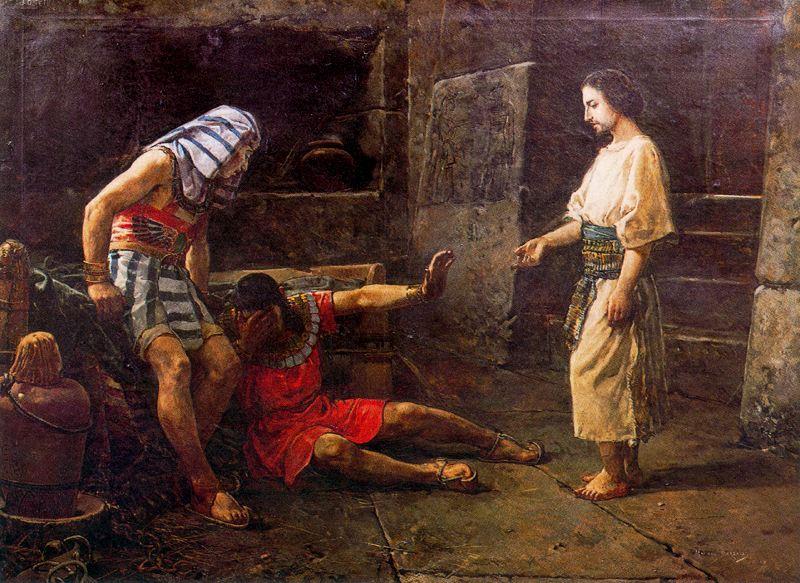
Angered by Joseph’s repeated refusals to accommodate her sexual advances, Potiphar’s humiliated wife falsely and maliciously accused him of attempted rape. And her husband, shocked but also angered by this news, was forced to confine Joseph to prison. Had the master truly believed in Joseph’s guilt, it is likely he would have ordered his execution. After all, for a common slave to attempt to violate his master’s wife would have been a crime worthy of death. Considered to be little more than personal property, a slave had no rights and his life was in the hand of his master. But rather than having Joseph executed for this egregious crime, Potiphar chose to spare his life by confining him to prison.

This echoes the treatment Joseph had received at the hands of his brothers. When he had shown up in Dothan, their first response had been to put him to death.

“Here comes this dreamer. Come now, let us kill him and throw him into one of the pits. Then we will say that a fierce animal has devoured him, and we will see what will become of his dreams.” – Genesis 37:19-20 ESV

But Reuben had intervened and spared Joseph’s life. Rather than committing murder, he suggested that they confine Joseph to an empty cistern, where he would be left to die of natural causes. Reuben had hoped to come back later and rescue Joseph. But before he could do so, Judah convinced his brothers to sell Joseph to Ishmaelite traders. And that sale had resulted in Joseph’s purchase by Potiphar, which eventually led to his imprisonment for a crime of which he was completely innocent. But, as before, Joseph was spared from death.

While preferable to capital punishment, Joseph’s imprisonment was still undeserved and would have been a far-from-pleasant experience. Yet, Moses points out that “the Lord was with Joseph and showed him steadfast love and gave him favor in the sight of the keeper of the prison” (Genesis 39:21 ESV). This theme runs throughout the entire  narrative found in chapter 10. God had been the one to protect Joseph from the murderous intentions of his brothers. And God had been behind Joseph’s sale to the Ishmaelites and his eventual purchase by Potiphar. None of this was blind luck or a case of cosmic karma.

The Lord was with Joseph, and he became a successful man, and he was in the house of his Egyptian master. His master saw that the Lord was with him and that the Lord caused all that he did to succeed in his hands. – Genesis 39:2-3 ESV

God had orchestrated every facet of this story, including Joseph’s imprisonment in the facility reserved solely for the king’s prisoners. This factor will become more important and pertinent as chapter 40 unfolds. But suffice it to say that each and every sequence of this story took place according to the sovereign plan of God.

Just as God had shown Joseph favor in the eyes of Potiphar, He also elevated Joseph in the eyes of the prison’s warden.

the keeper of the prison put Joseph in charge of all the prisoners who were in the prison. Whatever was done there, he was the one who did it – Genesis 39:22 ESV

This innocent young man displayed an uncanny knack for leadership that led the warden to place all the prisoners under Joseph’s supervision. And before long, Joseph found himself functioning more as a prison administrator than a prisoner. He wielded power, authority, and great influence. He had entered as a common criminal but, before he knew it, Joseph was functioning as the second most powerful man in the entire prison.

The warden had no more worries, because Joseph took care of everything. The Lord was with him and caused everything he did to succeed. – Genesis 39:23 NLT

Prison walls were an insufficient barrier against the sovereign hand of God. The vindictive plans of a bitter woman could not derail God’s plans for His child. God’s love for Joseph was far superior to anything Potiphar or his wife could try to do to him. As the psalmist wrote, “The LORD is for me, so I will have no fear. What can mere people do to me?” (Psalm 118:6 NLT). They could falsely accuse Joseph. They could imprison him. They could even threaten to take his life. But as the apostle Paul so aptly put it:

“If God is for us, who can ever be against us?” – Genesis 8:31 NLT

And Paul would go on to remind his readers that God’s love for His children was inseparable and unwavering.

I am convinced that nothing can ever separate us from God’s love. Neither death nor life, neither angels nor demons, neither our fears for today nor our worries about tomorrow—not even the powers of hell can separate us from God’s love. No power in the sky above or in the earth below—indeed, nothing in all creation will ever be able to separate us from the love of God that is revealed in Christ Jesus our Lord. – Romans 8:38-39 NLT

God, out of His marvelous love and mercy, was making Joseph a success – even in prison. He was protecting Joseph’s life, expanding his influence, and preparing him for the next phase of his God-ordained journey. The prison would prove to be a doorway to freedom, a portal to salvation, and a divine pathway to Israel’s promised future. No one would have seen this coming, including Joseph. Potiphar and his wife will disappear into the pages of ancient history, never to be heard from again. Joseph’s brothers will go on with their lives, oblivious of Joseph’s fate and ignorant of their own pre-ordained destiny with drought and famine.

Little did Joseph know that his unexpected and undeserved imprisonment would foreshadow another captivity to come. This son of Abraham would become a symbol for the descendants of Abraham who would one day find themselves also living as captives in the land of Egypt. And they too would discover that, despite their unpleasant circumstances, God was with them. The God of Abraham, Isaac, and Jacob would step into the darkness of their predicament and turn their seeming failure into success.

English Standard Version (ESV) The Holy Bible, English Standard Version. ESV® Permanent Text Edition® (2016). Copyright © 2001 by Crossway Bibles, a publishing ministry of Good News Publishers.

New Living Translation (NLT) Holy Bible, New Living Translation, copyright © 1996, 2004, 2015 by Tyndale House Foundation. Used by permission of Tyndale House Publishers Inc., Carol Stream, Illinois 60188. All rights reserved.

New English Translation (NET)NET Bible® copyright ©1996-2017 by Biblical Studies Press, L.L.C. http://netbible.com All rights reserved.


Genesis 39-40, Matthew 20

A Ransom For Many.

Genesis 39-40, Matthew 20

 For I was indeed stolen out of the land of the Hebrews, and here also I have done nothing that they should put me into the pit. – Genesis 40:15 ESV

Joseph had plenty to complain about. His life had not exactly been easy lately. He went from being thrown into a pit by his brothers and listening to them plot to kill him to being sold into slavery. Then just about when things were taking a turn for the better, he gets falsely accused of attempted rape and is thrown in prison. He had gone from favorite son, wearing fancy robes and enjoying the special favor of his father, to a prisoner in the land of Egypt. But God had a purpose behind it all. There is a divine plan being worked out in ways that even Joseph is not able to comprehend. .

What does this passage reveal about God?

It was not a coincidence that Joseph was sold to Potiphar and that his wife had a near-fatal attraction to him. Moses makes it clear that “The Lord was with Joseph, and he became a successful man, and he was in the house of his Egyptian master” (Genesis 39:2 ESV). Even Potiphar saw the hand of God on Joseph’s life and he made Joseph overseer of all that he had. Potiphar benefited from Joseph’s presence in his home. “…the Lord blessed the Egyptian’s house for Joseph’s sake; the blessing of the Lord was on all that he had in house and field” (Genesis 39:5 ESV). Joseph was a good-looking, successful young man, and Potiphar’s wife took notice. She also tried to take advantage of him, continually pressing him to commit adultery with her. But Joseph repeatedly refused her advances, saying, “How then can I do this great wickedness and sin against God?” (Genesis 39:9 ESV). God was blessing and protecting Joseph. God equipped this young man with a realistic understanding of sin and a healthy fear of Himself.

The next thing Joseph knows, he is in prison, falsely accused and suffering an undeserved punishment again. But God was there. Once again, Joseph prospers, even in less-than-ideal circumstances. God was with him. “But the Lord was with Joseph and showed him steadfast love and gave him favor in the sight of the keeper of the prison” (Genesis 39:21 ESV). It wasn’t happenstance that Joseph ended up a slave to Potiphar, who just happened to work for Pharaoh. When Joseph was thrown in prison, he didn’t end up in just any Egyptian prison; he was placed “where the king’s prisoners were confined” (Genesis 39:20 ESV). That point was important to Moses because it was important to the story. It was in the king’s prison that Joseph would meet two men who worked directly for Pharaoh. God would give Joseph the ability to interpret their dreams, something he had apparently never been able to do before. And one of those men would prove vital to the next step in Joseph’s personal journey of faith and fate at the hands of God.

What does this passage reveal about man?

Potiphar was a powerful man. His wife was a passionate woman. The prison warden literally held the keys to men’s lives. The baker and the cupbearer were two men guilty of crimes against the state. And they were all instruments in the hands of God. Each was acting under their own influence, making decisions and creating circumstances by the choices they had made. But God was behind each moment, divinely orchestrating the outcome of even their most sinful choices. Potiphar’s wife would give in to her seemingly uncontrolled passions and pursue an immoral relationship with Joseph. When her pride was hurt by Joseph’s refusal, she would lash out in anger and revenge, having an innocent man thrown in prison. Her vanity would make her vengeful. Potiphar would exercise his power and have Joseph thrown in prison. He would sacrifice the obvious blessings of God in order to prove his power over man. The prison warden would take advantage of Joseph’s presence in order to make his own life easier, putting Joseph in charge of all the inmates in the prison. His apparent laziness would put Joseph right where God wanted him. The cupbearer, grateful for Joseph’s positive interpretation of his dream, promptly forgets about Joseph when he gains his freedom and his old job back. Each of these people exhibits the characteristics so common among men. They are self-centered and selfish. They are motivated by their own self-interest and self-preservation. Their lives constantly revolve around themselves and they tend to view the world in terms of what they can get out of it. But God would take these self-possessed people and use them to accomplish His divine will for the greater good of mankind. And Joseph would be a central figure in that plan.

How would I apply what I’ve read to my own life?

Over in Matthew 20, we have the famous words of Jesus: “But whoever would be great among you must be your servant,and whoever would be first among you must be your slave,even as the Son of Man came not to be served but to serve, and to give his life as a ransom for many” (Matthew 20:26-27 ESV). It’s interesting that in the story of Joseph, we see a young man who went from favorite son to slave. He went from enjoying the favor of his father to household servant and then a common prisoner. It is not clear that Joseph fully understood all that was happening to him, but he did honor and fear God. He trusted God to help him interpret the dreams of the two men in prison. He knew that God was with him and could sense His hands on his life. But he probably had no idea just how all the events in his life were going to be used by God to accomplish a much greater story that would impact the lives of men for generations to come. Like the disciples, I can spend far too much time worrying about my own significance. I want to play a major part in the story of life. I have no desire to be a bit player. The disciples wanted power, position and prestige. They wanted to sit in the seats of prominence in Christ’s kingdom. They wanted to be important. But Jesus told them that first they would have to serve, that the key to being first was being willing to be last. Jesus Himself would tell them, “For even the Son of Man came not to be served but to serve, and to give his life as a ransom for many” (Mark 10:45 ESV). In the story of Joseph, everyone was looking out for themselves. But Joseph had no capacity to look over himself. He had no control. So he simply served, and he served well. He did what he had to do wherever he found himself. He took whatever role he was given and did it with excellence. He was an excellent household slave. He was an ideal prisoner. He served and God prospered him. He blessed others and God blessed him. The closest thing we get to a complaint from the lips of Joseph was his statement to the cupbearer: “For I was indeed stolen out of the land of the Hebrews, and here also I have done nothing that they should put me into the pit” (Genesis 40:15 ESV). Joseph didn’t deny the unjust nature of his situation. He was fully aware of his innocence. But he didn’t waste time dwelling on it all. He simply served. He did what he had to do and he did it well. God was going to use Joseph in a powerful way in the days to come. But Joseph was content to be used right where he found himself, whether it was in the household of Potiphar or the prison of Pharaoh. I must learn to be content with where I am and serve where God has placed me. He has a plan. I have a job to do. I must serve where I am sovereignly placed.

Father, I don’t always like where I find myself. I don’t always find my circumstances enjoyable or the way I would prefer them. But give me the attitude of Joseph. Give me the mind of Christ. I want to learn to serve where I am and not worry so much about where I think I would like to be. My preferred future has no value compared to Your divine present for my life. Help me see each moment as providential and part of Your plan for my life. Amen.

Ken Miller
Grow Pastor & Minister to Men
kenm@christchapelbc.org

Day 129 – Matthew 26:57, 59-68; Mark 14:53, 55-65; Luke 22:54, 63-65; John 18:24

Guilty As Charged.

Matthew 26:57, 59-68; Mark 14:53, 55-65; Luke 22:54, 63-65; John 18:24

Jesus replied, “I Am. And you will see the Son of Man seated in the place of power at God’s right hand and coming on the clouds of heaven.” – Mark 14:62 NLT

When Jesus was finally brought before Caiaphas, the high priest, He found Himself in a room crowded with leading priests, elders and teachers of religious law. Even the high council or Sanhedrin was there. They had pulled out all the big guns for this final showdown with Jesus. There is little doubt that they intended this evening to result in the elimination of Jesus as a threat to their authority and way of life. He had been a thorn in their side for far too long, and now they were going to deal with Him. The only problem was that they needed solid accusations for which to bring this matter before the Roman authorities. They were wanting to have Jesus put to death and they did not have the authority to do so. They were going to have to convince the Roman authorities that Jesus had committed a crime worthy of death. So all these well-educated religious leaders were attempting to find any evidence that they could use against Jesus. But even when they couldn’t find any charges worthy of death, they didn’t let that stop them. They had arranged for a variety of individuals to come and give witness against Jesus, but they all ended up contradicting one another. These people were more than willing to accuse Jesus, probably for the hope of financial gain. Finally, some men stood up and claimed that they heard Jesus say that He was going to destroy the Temple. “We heard him say, ‘I will destroy this Temple made with human hands, and in three days I will build another, made without human hands’” (Mark 14:58 NLT). These men were actually twisting what Jesus had actually said. What Jesus had actually said was, “Destroy this temple, and in three days I will raise it up (John 2:19 NLT). Jesus had made this statement early in His ministry. It took place immediately after He had cleansed the Temple for the first time. The Jewish leaders had confronted Him, asking Him what He thought He was doing and who gave Him the authority to do it. Then they asked Him to give them a miraculous sign to prove His authority. That’s when Jesus made His statement regarding the destruction and raising of the “temple.” They obviously didn’t understand that He was talking about His own death and resurrection. They saw Jesus’ statement as ridiculous, exclaiming, “What! It has taken forty-six years to build this Temple, and you can rebuilt it in three days?” (John 2:20 NLT).

So in the minds of those accusing Jesus, His statement came across as the words of an insurrectionist. He had claimed He was going to destroy the Temple – Herod’s Temple. Now they were getting somewhere. This was just the kind of evidence they needed to bring before the Romans. The last thing the Roman authorities would want is someone threatening the peace and security of Jerusalem. But to the obvious disappointment of the religious leaders, even the men who accused Jesus couldn’t get their stories straight. So in frustration, the high priest asked Jesus, “Well, aren’t you going to answer these charges? What do you have to say for yourself?” (Mark 14:60 NLT). But Jesus said nothing. The charges were false and He remained silent. Then the high priest asked Him point blank, “Are you the Messiah, the Son of the Blessed One?” (Mark 14:61 NLT). This was the real issue. When all was said and done, this was the main point of contention between Jesus and the religious leaders. He had claimed to be the Messiah. That was the reason the people followed Him. It was for that reason the people welcomed Him with palm branches and shouts of “Hosanna!” when He had arrived in Jerusalem the previous Sunday. He had set Himself up as having been sent by God. Not only that, He had claimed to be the Son of God. Jesus responded to Caiaphas’ question by saying, “I Am. And you will see the Son of Man seated in the place of power at God’s right hand and coming on the clouds of heaven” (Mark 14:62 NLT). His statement brought an immediate reaction from the crowd because they knew exactly what He was saying. He was claiming to be God. His use of the phrase, “I Am” was intentional. It was the very same way God referred to Himself when He spoke to Moses at the burning bush. Moses had asked God what name He should give when the people ask who it was who sent him. God said to tell them, “I Am who I Am” had sent him. Jesus was clearly associating Himself with God. He was using the same language that God had used in order to refer to Himself. On top of that, Jesus claimed that He was going to be sitting at God’s right hand, a place of honor and power, and that He would be returning some day. That was all they needed. Caiaphas tore his clothes in shock. They no longer needed any witnesses. Jesus had committed the unpardonable sin: blasphemy. He had claimed to be God. In reality, it was Jesus’ words that were the problem. Blasphemy was based on injurious or disrespectful words or speech. In their minds, by saying what He said, Jesus had diminished the holiness of God. He had treated God with disrespect and dishonored His “otherness” or set-apartness. By claiming to be God, Jesus had become an offense to God – at least in their minds.

Their immediate response was violent. They began to spit on Him. They blindfolded him and beat Him with their fists. They mocked Him, telling Him to use His “divine” powers to tell them who it was who was hitting Him. The one piece of evidence they needed, Jesus gave them. And all He did was speak the truth. He acknowledged who He was. To do anything other than that would have truly been blasphemy. If Jesus had denied His deity, He would have been an offense to God. So He spoke the truth, and it set in motion everything that was about to happen. Jesus was guilty as charged. Not of blasphemy, but of being the Son of God and the Savior of the world. His crime was being God. And His punishment would be death. But it was for just that purpose He had come. God had come to die on behalf of sinful men. He had come to sacrifice His own life for the lives of all those who deserved death. It was because Jesus was spotless, sinless, and blameless that He was condemned to die. His worthiness was what led to His demise. He was guilty of being God, and nothing else. And it is for that reason that He made a perfect sacrifice. He was guilty as charged and we are innocent because of it.

Father, Your sinless Son was put to death because He was holy, righteous, and fully God. He was killed because He was who He said He was. He died because He was the only one who was undeserving of death. He was innocent, and we were guilty, but He is the one who died. All so that we might have life. What an amazing turn of events. What an incredible plan.  Amen.

Ken Miller
Grow Pastor & Minister to Men
kenm@christchapelbc.org

Proverbs 17e

Correctly Handling Correction.

“A single rebuke does more for a person of understanding than a hundred lashes on the back of a fool.” – Proverbs 17:10 NLT

How do you handle correction? When someone critiques your work or criticizes your efforts, do you get mad, upset, frustrated, lash out, throw it back at them, or simply clam up and turn away in hurt and disappointment? None of us actually like to be corrected, but how we handle it says a lot about the condition of our heart and the degree of our wisdom. You see, a wise person, one who sees things from God’s perspective and attempts to live in obedience to and dependent upon God for all that he does – that person tends to see correction as beneficial and an opportunity to reflect on his life and learn from it. If correction makes us mad, it is usually due to pride and a reluctance to want to see any fault in our lives. We don’t like to have our faults exposed. We don’t like to have our shortcomings made known. We spend a lot of time erecting our facade of respectability and reliability, so when someone corrects or criticizes us, we can naturally react in anger and resentment. But the truly wise person is fully aware of his weaknesses, even when he can’t see them. He knows he is not perfect, but is a work in process – he is constantly being transformed by God through a slow, steady process that requires the revealing of sin so that it might be confessed and forgiven, and the “putting on” of his new nature, the very nature of Christ Himself.

Here’s a simple test. The next time someone critiques or criticizes you, watch your reaction. Do you get angry? Ask yourself why. Take time to determine the cause of your anger. Are you angry because they exposed a mistake and made you look bad? Are you upset because they made you look silly in front of your peers? The truth is, even if their criticism of you is unwarranted and undeserved, if you get angry, there is something being revealed in your life that you need to see and learn from. Criticism oftentimes reveals the condition of our heart. While the person may be exposing a flaw in something we said or did, our reaction to it is revealing a problem with the condition of our heart. Our anger, resentment, desire for revenge, or tendency to pull away in self-pity, all reflect a heart condition. A person of understanding has the capacity to learn from moments like this. He is able to assess and accept the criticism and learn from it. A fool simply gets mad gets even. In fact, this verse tells us that you could beat a fool or give him a whipping of a hundred lashes, and he still won’t learn anything. But a person of understanding will learn from a single word of correction.

Wise people are always learning. They’re always open to critique – in fact, they invite it. They know they are works in process and appreciate any help they can get that helps them see areas of weakness in their lives. They have the capacity to take even correction given in anger as potentially positive, because they view it as if from the very hand of God. This all reminds me of a an incident in the life of King David. His son, Absalom, had taken over his kingdom and David was escaping from Jerusalem in an attempt to save his own life. On his way, a man named Shimei, began throwing stones at David, cursing him and calling him a murderer. David’s men wanted to kill him, but David’s reaction was interesting. He said, “No! Leave him alone and let him curse, for the Lord has told him to do it. And perhaps the Lord will see that I am being wronged and will bless me because of these curses today” (2 Samuel 17:11-12 NLT). David took the words of this man as from the Lord Himself. He viewed the entire affair from a divine perspective. God was in control and God was fully aware of all that was going on. So David was content to let God teach him what he needed to learn through this situation.

How we handle criticism and correction reveals a lot about our relationship with the Lord. If the correction is accurate, we can learn from it. If it is wrong, and yet we still get angry, we can examine our reaction to it and see if there is something in our hearts that needs to be corrected. But either way, we can learn to correctly handle correction, and grow from it.

Father, help me learn to take correction well. Thank You that you are always exposing weaknesses in my life. I am always in need of correction. And I need to be open to critique. Otherwise, I can grow complacent or overly confident, seeing myself as better than I am. Amen.

Ken Miller

Grow Pastor & Minister to Men
kenm@christchapelbc.org