1 You then, my child, be strengthened by the grace that is in Christ Jesus, 2 and what you have heard from me in the presence of many witnesses entrust to faithful men, who will be able to teach others also. 3 Share in suffering as a good soldier of Christ Jesus. 4 No soldier gets entangled in civilian pursuits, since his aim is to please the one who enlisted him. 5 An athlete is not crowned unless he competes according to the rules. 6 It is the hard-working farmer who ought to have the first share of the crops. 7 Think over what I say, for the Lord will give you understanding in everything.
8 Remember Jesus Christ, risen from the dead, the offspring of David, as preached in my gospel, 9 for which I am suffering, bound with chains as a criminal. But the word of God is not bound! 10 Therefore I endure everything for the sake of the elect, that they also may obtain the salvation that is in Christ Jesus with eternal glory. 11 The saying is trustworthy, for:
If we have died with him, we will also live with him;
12 if we endure, we will also reign with him;
if we deny him, he also will deny us;
13 if we are faithless, he remains faithful—
for he cannot deny himself. – 2 Timothy 2:1-13 ESV
Paul, an older and more experienced minister of the gospel, pours out his heart to his young protégé, Timothy, to prepare him for what lies ahead. Paul was imprisoned in Rome, awaiting a hearing before the emperor, and he knew that his fate, while in God’s hands, could end poorly. He had no delusions that he would receive a fair and just trial at the hands of the Romans. The Jews had been relentless in their efforts to hold Paul accountable for what they considered to be his disruptive and divisive ministry, and would do everything in their power to seek the death penalty for Paul.
As he sat in jail awaiting his hearing, Paul wrote to the believers in Philippi, telling them, “It is my eager expectation and hope that I will not be at all ashamed, but that with full courage now as always Christ will be honored in my body, whether by life or by death. For to me to live is Christ, and to die is gain” (Philippians 1:20-21 ESV). He knew that his days were numbered and that death was inevitable. But his greatest concern was to honor Christ, whether through ministry or martyrdom.
As Paul penned this letter to Timothy, he must have thought about the message he received from Christ after praying on three different occasions for his “thorn in the flesh” to be removed. Jesus had told him, “My grace is all you need. My power works best in weakness” (2 Corinthians 12:9 NLT). And this promise from the Savior had prompted Paul to respond, “So now I am glad to boast about my weaknesses, so that the power of Christ can work through me” (2 Corinthians 12:9 NLT).
The power of Christ, made available through His grace, was all Paul needed, and it gave him an overwhelming sense of confidence and peace, regardless of the circumstances he faced.
I have learned how to be content with whatever I have. I know how to live on almost nothing or with everything. I have learned the secret of living in every situation, whether it is with a full stomach or empty, with plenty or little. I can do everything through Christ, who gives me strength. – Philippians 4:11-13 NLT
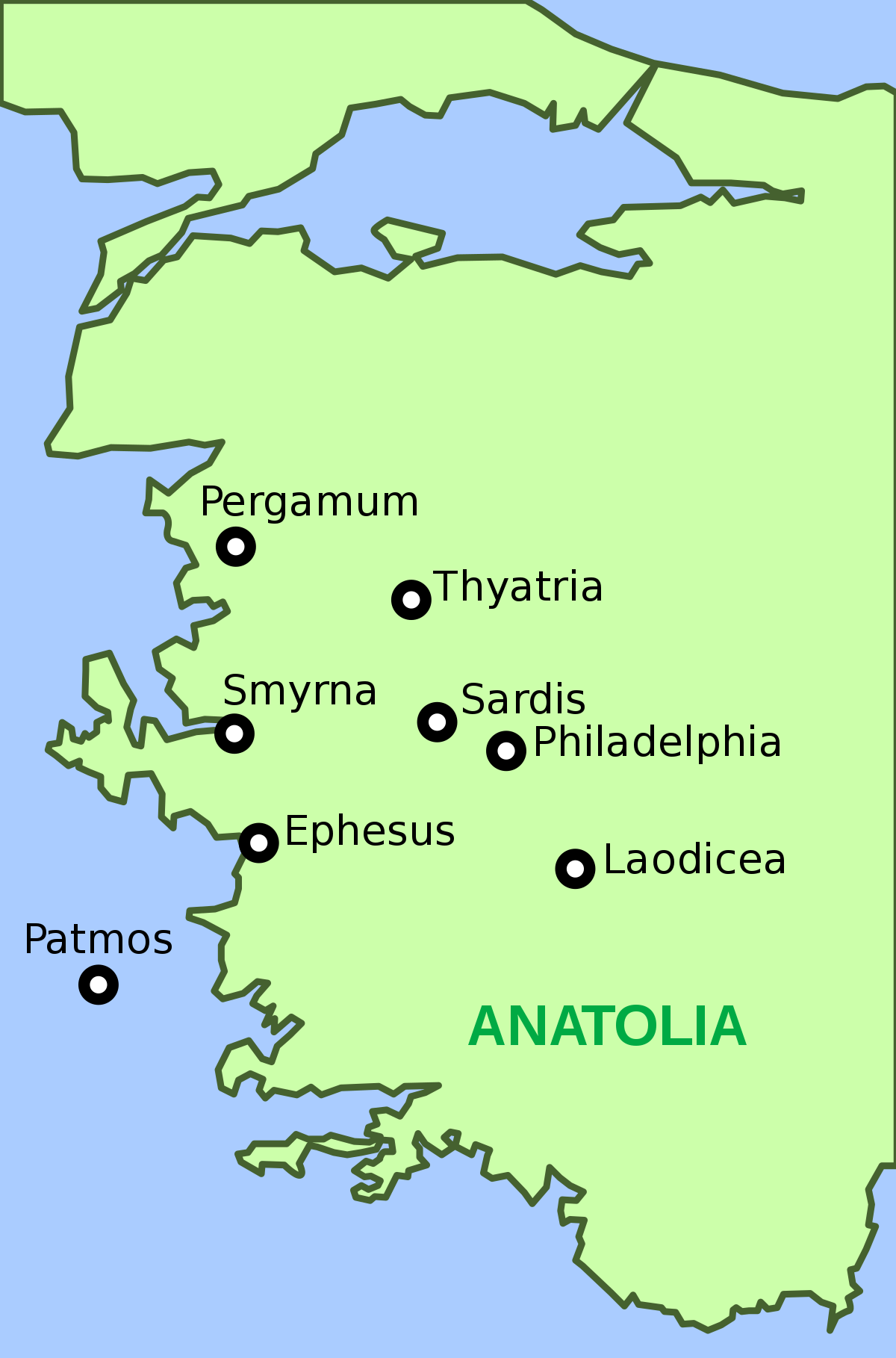
Now, Paul was passing on the promise of Christ’s grace to Timothy. He told him to “be strengthened by the grace that is in Christ Jesus” (2 Timothy 2:1 ESV). Timothy was in a difficult spot, ministering to the fledgling congregation in Ephesus while his mentor sat behind bars in Rome. He was on his own, surrounded by hostile forces that opposed his ministry and message. He also faced dissension in the ranks as some of his own parishioners began to question their decision to follow Christ. Persecution and difficulty had begun to set in, causing some to lose faith, like Phygelus and Hermogenes, who had abandoned Paul in Asia.
Paul wanted Timothy to understand that he was no longer the disciple, but had moved into the role of disciple-maker. His days of serving as Paul’s assistant were behind him. Now it was time for him to step up and embrace his responsibilities as a minister of the gospel; that would require Timothy to raise up others to assist him in his work. Paul had chosen Timothy and determined to teach and train him for gospel ministry; now it was time for Timothy to take the baton and run the next leg of the race on his own. But he was not to run alone. Paul encouraged Timothy to “teach these truths to other trustworthy people who will be able to pass them on to others” (2 Timothy 2:2 NLT).
This was all about propagating and multiplying the ministry by raising up others who could share the burden. Jesus told His disciples, “The harvest is great, but the workers are few. So pray to the Lord who is in charge of the harvest; ask him to send more workers into his fields” (Matthew 9:37-38 NLT). But asking God to supply workers also comes with a responsibility to train them in the disciplines of harvesting, and that would require discipline on Timothy’s part. A landowner would not send inexperienced or untrained workers into his fields to harvest his crops; he would ensure they were trained to do the job well so every ounce of grain was gleaned. No loss. No waste.
Paul drives home the seriousness of Timothy’s role as a disciple-maker with three analogies. First, he compares Timothy to a soldier, who faithfully fulfills his duties, undistracted by the cares of this world.
Endure suffering along with me, as a good soldier of Christ Jesus. Soldiers don’t get tied up in the affairs of civilian life, for then they cannot please the officer who enlisted them. – 2 Timothy 2:3-4 NLT
A distracted soldier will prove to be a disloyal soldier. If Timothy allows himself to become preoccupied with the things of this world, he will lose sight of his God-ordained mission. This is what Jesus warned His disciples about when He said, “If you love your father or mother more than you love me, you are not worthy of being mine; or if you love your son or daughter more than me, you are not worthy of being mine. If you refuse to take up your cross and follow me, you are not worthy of being mine. If you cling to your life, you will lose it; but if you give up your life for me, you will find it” (Matthew 10:37-39 NLT).
Discipleship, like military service, requires a commitment that carries a high cost. Part-time soldiers make less-than-ideal warriors because they lack commitment to the cause. They tend to let other responsibilities distract them from their mission. And, in the same way, believers can allow their love for the things of this world to render them less-than-successful disciple-makers.
The next analogy Paul uses is that of an athlete. This imagery was a favorite of Paul’s, and he used it repeatedly to illustrate the commitment required to live the Christian life.
Don’t you realize that in a race everyone runs, but only one person gets the prize? So run to win! – 1 Corinthians 9:24 NLT
Forgetting the past and looking forward to what lies ahead, I press on to reach the end of the race and receive the heavenly prize for which God, through Christ Jesus, is calling us. – Philippians 3:13-14 NLT
I have fought the good fight, I have finished the race, and I have remained faithful. – 2 Timothy 4:7 NLT
Living the Christian life requires perseverance and determination; no easy paths lead to the finish line, and there are no shortcuts. As Paul warns Timothy, victory is impossible if the runner fails to follow the rules. Timothy was not free to fudge on the God-ordained regulations established for the Christian life. He couldn’t take the path of least resistance and still expect to win the prize at the end of the race. Avoiding difficulty, taking shortcuts in the pursuit of spiritual growth, and running the race just to finish rather than to win are unacceptable. God demands more.
Paul’s final analogy entails farming, highlighting the obvious life lesson that hard work has its rewards.
…hardworking farmers should be the first to enjoy the fruit of their labor. – 2 Timothy 2:6 NLT
In an agrarian culture, laziness could be a death sentence. The farmer who failed to plow and plant could not expect to reap a harvest. But the diligent farmer, who put in the required labor to prepare his fields and plant his crops at the proper time, would enjoy the fruits of his labors. It was only natural, logical, and fair. Paul wanted Timothy to know that the Christian life also required commitment, diligence, perseverance, and hard work. And just in case Timothy missed the very obvious point behind Paul’s three analogies, he assures him that “the Lord will give you understanding in everything” (2 Timothy 2:7 ESV).
Then, as if out of nowhere, Paul changes the topic altogether, shifting his focus to Christ and His resurrection from the dead. But his point remains the same. He is simply using Jesus, “the offspring of David” (2 Timothy 2:8 ESV), as an example of someone who lived a life fully committed to God’s plan for His life. Jesus was a descendant of King David and the rightful heir to the throne, yet He willingly suffered on behalf of sinful mankind so He could become the sinless substitute and selfless source of salvation for all who would believe in Him. Jesus never shirked His God-given responsibility to serve as the sacrificial Lamb who takes away the sins of the world, “becoming obedient to the point of death, even death on a cross” (Philippians 2:8 ESV).
Paul also uses himself as an example of someone who refused to compromise his convictions or cut corners in his spiritual life. After all, he was writing this letter from prison, bound by chains, and facing a trial on trumped-up charges intended to result in a death sentence. But Paul boldly proclaimed, “I am willing to endure anything if it will bring salvation and eternal glory in Christ Jesus to those God has chosen” (2 Timothy 2:10 NLT).
Paul’s bottom line was that faithlessness has no place in the believer’s life. Jesus Christ had sacrificed Himself so that we might live in newness of life. He provided us with the Holy Spirit as a permanent source of power and direction. His death assures us of eternal life, and our endurance in this life comes with the guarantee of an inheritance in the next life. But even if we fail to remain faithful, Jesus Christ will never fail to keep His promise to keep and preserve us.
…if we are faithless, he remains faithful. – 2 Timothy 2:13 ESV
Surrounded by so great a cloud of witnesses
Let us run the race not only for the prize,
But as those who’ve gone before us.
Let us leave to those behind us
The heritage of faithfulness passed on through godly lives.
Oh may all who come behind us find us faithful.
May the fire of our devotion light their way.
May the footprints that we leave
Lead them to believe,
And the lives we live inspire them to obey.
Oh, may all who come behind us find us faithful.
(“Find Us Faithful” – Written by Jon Mohr, performed by Steve Green (From the 1988 album, Find Us Faithful).)
Father, I want to remain faithful — to the end, but it is so easy to get distracted by the cares and concerns of this world. And it doesn’t require a love for the world; even our daily responsibilities and commitments can cause us to lose our perspective and focus. Good things can keep us from accomplishing our mission. That’s why Paul’s words to Timothy are so convicting. Timothy had a mother and grandmother who loved him deeply. He had friends and family members who depended upon him. But Paul was calling him to something higher and greater. He wasn’t asking Timothy to abandon his responsiblities as a son or friend, but he was demanding that he not lose sight of his priorities. Like a dedicated farmer, faithful soldier, or committed athlete, Timothy was to keep the main thing the main thing. His calling by Christ was to take precedence over anything else in his life. I can’t help but think of the shocking words Jesus spoke to His disciples. “If anyone comes to me and does not hate his own father and mother and wife and children and brothers and sisters, yes, and even his own life, he cannot be my disciple” (Luke 14:26 ESV). He wasn’t calling His followers to literally hate their family members; He was demanding a sold-out commitment to Him that allowed nothing or no one to stand in the way. A farmer will not allow his own child’s birthday keep him from planting his crops. A soldier will refuse leave to visit his family if he knows his platoon is headed into battle. An athlete will pass up breakfast with a friend if it means missing a workout. That is the kind of commitment Jesus was calling for. And that is the way I want to live my life: Dedicated, determined, and undistracted. Amen.
English Standard Version (ESV) The Holy Bible, English Standard Version. ESV® Permanent Text Edition® (2016). Copyright © 2001 by Crossway Bibles, a publishing ministry of Good News Publishers.
New Living Translation (NLT) Holy Bible, New Living Translation, copyright © 1996, 2004, 2015 by Tyndale House Foundation. Used by permission of Tyndale House Publishers Inc., Carol Stream, Illinois 60188. All rights reserved.