The LORD Is God

22 Then Elijah said to the people, “I, even I only, am left a prophet of the LORD, but Baal’s prophets are 450 men. 23 Let two bulls be given to us, and let them choose one bull for themselves and cut it in pieces and lay it on the wood, but put no fire to it. And I will prepare the other bull and lay it on the wood and put no fire to it. 24 And you call upon the name of your god, and I will call upon the name of the LORD, and the God who answers by fire, he is God.” And all the people answered, “It is well spoken.” 25 Then Elijah said to the prophets of Baal, “Choose for yourselves one bull and prepare it first, for you are many, and call upon the name of your god, but put no fire to it.” 26 And they took the bull that was given them, and they prepared it and called upon the name of Baal from morning until noon, saying, “O Baal, answer us!” But there was no voice, and no one answered. And they limped around the altar that they had made. 27 And at noon Elijah mocked them, saying, “Cry aloud, for he is a god. Either he is musing, or he is relieving himself, or he is on a journey, or perhaps he is asleep and must be awakened.” 28 And they cried aloud and cut themselves after their custom with swords and lances, until the blood gushed out upon them. 29 And as midday passed, they raved on until the time of the offering of the oblation, but there was no voice. No one answered; no one paid attention.

30 Then Elijah said to all the people, “Come near to me.” And all the people came near to him. And he repaired the altar of the LORD that had been thrown down. 31 Elijah took twelve stones, according to the number of the tribes of the sons of Jacob, to whom the word of the LORD came, saying, “Israel shall be your name,” 32 and with the stones he built an altar in the name of the LORD. And he made a trench about the altar, as great as would contain two seahs of seed. 33 And he put the wood in order and cut the bull in pieces and laid it on the wood. And he said, “Fill four jars with water and pour it on the burnt offering and on the wood.” 34 And he said, “Do it a second time.” And they did it a second time. And he said, “Do it a third time.” And they did it a third time. 35 And the water ran around the altar and filled the trench also with water.

36 And at the time of the offering of the oblation, Elijah the prophet came near and said, “O LORD, God of Abraham, Isaac, and Israel, let it be known this day that you are God in Israel, and that I am your servant, and that I have done all these things at your word. 37 Answer me, O LORD, answer me, that this people may know that you, O LORD, are God, and that you have turned their hearts back.” 38 Then the fire of the LORD fell and consumed the burnt offering and the wood and the stones and the dust, and licked up the water that was in the trench. 39 And when all the people saw it, they fell on their faces and said, “The LORD, he is God; the Lord, he is God.” 40 And Elijah said to them, “Seize the prophets of Baal; let not one of them escape.” And they seized them. And Elijah brought them down to the brook Kishon and slaughtered them there. 1 Kings 18:22-40 ESV

The battle for the hearts of the people of Israel was about to begin. Having accepted Elijah’s challenge, King Ahab had decreed that the people assemble at nearby Mount Carmel. He also ordered the 450 prophets of Baal to come, ready to prove the power of their god. But as Elijah stood before the gathered assembly, he issued them a stern challenge.

“How long will you go limping between two different opinions? If the LORD is God, follow him; but if Baal, then follow him.” – 1 Kings 18:21 ESV

His words are reminiscent of those spoken by Joshua hundreds of years earlier, as he addressed the nation of Israel near the end of his life. He, too, had called the people to choose who they were going to serve, the one true God or the false gods of Egypt and Canaan.

“Now therefore fear the LORD and serve him in sincerity and in faithfulness. Put away the gods that your fathers served beyond the River and in Egypt, and serve the LORD. And if it is evil in your eyes to serve the LORD, choose this day whom you will serve, whether the gods your fathers served in the region beyond the River, or the gods of the Amorites in whose land you dwell. But as for me and my house, we will serve the LORD.” – Joshua 24:14-15 ESV

The fickle nature of the Israelites had not changed much over the centuries. They remained prone to chasing after any and every god who came along. They were equal-opportunity idolaters who seemed to have no sense of guilt or shame. Their willingness to accept and affirm any and all gods placed before them had been a problem from the beginning. While they never entirely abandoned their worship of Yahweh, they were constantly trying out new gods in a vain attempt to cover all their bases. Their syncretistic approach to religion and worship was driven by self-interest and greed. In a sense, they seemed to operate on the belief that two gods were better than one. But Elijah was demanding that they make up their minds. He would not allow them to play the field and continue to offend Yahweh with their spiritual adultery.

In an attempt to stress the lopsided nature of the battle that was about to ensue, Elijah claimed that he was the only prophet of Yahweh still standing in Israel. But he was wrong, and he knew it. In his earlier encounter with Obadiah, he had learned that there were at least 100 prophets whom God had spared through Obadiah’s actions. But Elijah chose to ignore this detail so that he could paint as bleak a picture as possible. At that moment, the odds were 450 to one. He was the sole prophet of God, preparing to face the overwhelming numbers of the prophets of Baal.

But Elijah knew that this day was not about a battle between him and the more numerous adversaries on the other side; it would be a divine display of Yahweh’s power and Baal’s impotence. Just as Baal had been unable to stop the ravages of the drought that had devastated the land for three years, he would prove incapable of hearing and answering the desperate cries of his prophets.

Elijah set the rules of the contest. Each side was to select an appropriate sacrifice, then offer it up on an altar before their respective god. Then they were to cry out to their deity of choice, and whichever god responded by consuming the offering with fire would prove to be the true god.

In describing the ensuing scene, the author clearly attempts to lampoon the efforts of the prophets of Baal. Their energetic and somewhat odd behavior displays their desperate hope that their god will show up.

…they called on the name of Baal from morning until noontime, shouting, “O Baal, answer us!” But there was no reply of any kind. Then they danced, hobbling around the altar they had made. – 1 Kings 18:26 NLT

The harder they tried to garner the attention of their seemingly distant and disinterested god, the more Elijah taunted their efforts.

“You’ll have to shout louder,” he scoffed, “for surely he is a god! Perhaps he is daydreaming, or is relieving himself. Or maybe he is away on a trip, or is asleep and needs to be wakened!” – 1 Kings 18:27 NLT

In desperation and growing frustration, they resort to shedding their own blood, vainly hoping that their self-mutilation might appease and awaken their god to action. But the author summarizes their prolonged and ineffective efforts with the simple statement: “there was no sound, no reply, no response” (1 Kings 18:29 NLT). Their god remained silent and unresponsive.

Broken and bloodied by their hours-long effort to call down fire from their god, they finally gave up. Then it was Elijah’s turn. After rebuilding the altar to Yahweh that Jezebel had ordered destroyed, Elijah had the altar and the sacrifice drenched in water. He purposefully stacked the deck against Yahweh, creating what would appear to be impossible odds. Elijah used 12 stones to build the altar and then drenched the altar and the sacrifice with 12 large jars of water. Even though this event was taking place among the ten tribes of the northern kingdom, Elijah wanted them to realize that Yahweh was the God over the 12 tribes of Israel. They were a divided nation because of idolatry. But in God’s eyes, they were still His chosen people.

Elijah’s simple prayer illustrates his belief that Yahweh longed to restore His covenant people. The God of Abraham, Isaac, and Jacob still loved His people and greatly desired that they would repent and return to Him.

“O LORD, God of Abraham, Isaac, and Jacob, prove today that you are God in Israel and that I am your servant. Prove that I have done all this at your command. O LORD, answer me! Answer me so these people will know that you, O LORD, are God and that you have brought them back to yourself.” – 1 Kings 18:36-37 NLT

No histrionics. No desperate displays of emotional cajoling and pleading. Elijah simply asked God to display His power so that the people might know He was there and that He cared. Elijah was asking God to demonstrate His covenant faithfulness despite their years of unfaithfulness. And, unlike Baal, God heard and responded.

Immediately the fire of the LORD flashed down from heaven and burned up the young bull, the wood, the stones, and the dust. It even licked up all the water in the trench! – 1 Kings 18:38 NLT

The impact of this divine demonstration of power was immediate. Blown away by this supernatural display, the people fell on their faces and cried out, “The LORD—he is God! Yes, the LORD is God!” (1 Kings 18:39 NLT). The altar to Baal remained untouched, just as the prophets had left it. But the altar to Yahweh was consumed entirely, rocks and all. God had more than accepted the sacrifice that Elijah had offered. In doing so, He demonstrated His power, reconfirmed His covenant commitment, and validated His prophet. He was the one true God, and Elijah was His chosen messenger.

As a final demonstration of God’s unparalleled greatness and His prophet’s authority to act on His behalf, Elijah ordered the capture of every single prophet of Baal. The people obeyed his command and brought all 450 of these false prophets to the Kishon Valley, where Elijah meted out divine judgment and justice on every one of them. These men had played a significant role in the nation’s spiritual decline. They were the visual representation of their false god, and their lies and deception had caused the people of Israel to abandon Yahweh for a god that was nothing more than a figment of man’s fertile imagination.

Looking on as this unexpected scene unfolded before their eyes, King Ahab and his wife Jezebel had to have been reeling from the shock of it all. Not only had their god not shown up, but the prophets who observed this false deity were destroyed. But, as we will see, rather than repent for their sins against God, the royal couple will respond in anger and resentment, attempting to take out their wrath on God’s messenger. This arrogant and self-consumed pair will continue to reject Yahweh, stubbornly refusing to admit, “The LORD—he is God! Yes, the LORD is God!”

English Standard Version (ESV) The Holy Bible, English Standard Version. ESV® Permanent Text Edition® (2016). Copyright © 2001 by Crossway Bibles, a publishing ministry of Good News Publishers.

New Living Translation (NLT) Holy Bible, New Living Translation, copyright © 1996, 2004, 2015 by Tyndale House Foundation. Used by permission of Tyndale House Publishers Inc., Carol Stream, Illinois 60188. All rights reserved.

Redemption in the Face of Rebellion

36 Then the Lord spoke to Moses, saying, 37 “Tell Eleazar the son of Aaron the priest to take up the censers out of the blaze. Then scatter the fire far and wide, for they have become holy. 38 As for the censers of these men who have sinned at the cost of their lives, let them be made into hammered plates as a covering for the altar, for they offered them before the Lord, and they became holy. Thus they shall be a sign to the people of Israel.” 39 So Eleazar the priest took the bronze censers, which those who were burned had offered, and they were hammered out as a covering for the altar, 40 to be a reminder to the people of Israel, so that no outsider, who is not of the descendants of Aaron, should draw near to burn incense before the Lord, lest he become like Korah and his company—as the Lord said to him through Moses.

41 But on the next day all the congregation of the people of Israel grumbled against Moses and against Aaron, saying, “You have killed the people of the Lord.” 42 And when the congregation had assembled against Moses and against Aaron, they turned toward the tent of meeting. And behold, the cloud covered it, and the glory of the Lord appeared. 43 And Moses and Aaron came to the front of the tent of meeting, 44 and the Lord spoke to Moses, saying, 45 “Get away from the midst of this congregation, that I may consume them in a moment.” And they fell on their faces. 46 And Moses said to Aaron, “Take your censer, and put fire on it from off the altar and lay incense on it and carry it quickly to the congregation and make atonement for them, for wrath has gone out from the Lord; the plague has begun.” 47 So Aaron took it as Moses said and ran into the midst of the assembly. And behold, the plague had already begun among the people. And he put on the incense and made atonement for the people. 48 And he stood between the dead and the living, and the plague was stopped. 49 Now those who died in the plague were 14,700, besides those who died in the affair of Korah. 50 And Aaron returned to Moses at the entrance of the tent of meeting, when the plague was stopped.  Numbers 16:36-50 ESV

God cleaned house. He purged the wickedness from the midst of the camp of Israel by swallowing the households of Korah, Dathan, and Abiram. Then He consumed the 250 co-conspirators with fire as they attempted to offer unacceptable sacrifices to Him. When the smoke had lifted, all that was left were their bronze censers lying among the ashes with their charred bones.

This macabre scene was the result of a test that Moses had arranged to determine who among the Israelites was truly holy to the Lord.

“Korah, you and all your followers must prepare your incense burners. Light fires in them tomorrow, and burn incense before the Lord. Then we will see whom the Lord chooses as his holy one.” – Numbers 16:6-7 NLT

God had declared the outcome of the test in no uncertain terms; the guilty and unholy had been punished. Yet, their destruction produced a rather strange result. The incense burners these rebels had been carrying at the time of their destruction had been purified in the process. The Lord ordered Moses to have them gathered and hammered into a covering for the altar.

“Tell Eleazar son of Aaron the priest to pull all the incense burners from the fire, for they are holy. Also tell him to scatter the burning coals. Take the incense burners of these men who have sinned at the cost of their lives, and hammer the metal into a thin sheet to overlay the altar. Since these burners were used in the Lord’s presence, they have become holy. Let them serve as a warning to the people of Israel.” – Numbers 16:37-38 NLT

Those men had presented their censers filled with burning incense to the Lord, but He had consumed them with flames because they were guilty of rebelling against Him. But because their incense burners had been presented to God, they had become holy or set apart for His use.

“As we think about the notion of the ‘holy,’ we recognize that things are made holy in Scripture, not because people are holy, but because the things are presented to the Lord, who is holy. Since these wicked men presented their censers to the Lord, the censers are holy, despite the men’s own wickedness.” – Ronald B. Allen, “Numbers.” In Genesis—Numbers. Vol. 2 of The Expositor’s Bible Commentary

This entire story provides a powerful reminder of the ever-present danger of doubt in the life of the follower of God. Doubt has a way of turning into disobedience, and disobedience against God is nothing more than rebellion against His Word and His will.

In chapter eight of Numbers, this pattern was lived out in the lives of Korah, Dathan, Abiram, and On. These men were descendants of Levi and, as such, they were responsible for the care and upkeep of the tabernacle of God. God had set them apart as His servants and their jobs were essential to the spiritual well-being of the people of Israel. However, they were dissatisfied with God’s plan and wanted to debate His distribution of roles and responsibilities; they wanted more authority and a recognition of their own importance.

“You take too much upon yourselves, seeing that the whole community is holy, every one of them, and the Lord is among them. Why then do you exalt yourselves above the community of the Lord?” – Numbers 16:3 NLT

Korah’s thinly veiled expression of care for the entire community was nothing more than a ruse to cover his own desire for a greater role in the affairs of Israel. He and his companions aspired to supplant Moses and Aaron as the designated leaders of the nation. In their estimation, those two men were no better than they were. As citizens of the nation of Israel and members of the tribe of Levi, they felt they were just as qualified for leadership as Moses and his brother.

They doubted God’s order of things and demanded a restructuring of responsibilities and duties. Like Miriam in chapter 12, these men expressed their doubt in God’s preordained order of things and it led to their open disobedience and rebellion.

As a holy, righteous King, God was unwilling to tolerate the blatant actions of these men. While the actions of Korah, Dathan, and Abiram were more pronounced and worthy of God’s wrath, the truth is that the entire congregation was guilty of turning against God. They had allowed the inflammatory words of Korah to sway their thinking and turn them against Moses and Aaron.

Korah assembled the whole community against them at the entrance of the tent of meeting… – Numbers 16:19 NLT

In response to this open display of communal solidarity and insurrection, God swore to pour out His divine judgment, telling Moses, “Separate yourselves from among this community, that I may consume them in an instant” (Numbers 16:21 NLT). But Moses and Aaron interceded and begged God to spare the congregation and punish only the ring leaders. Yet God would not tolerate rebellion among His people because He knew it was like cancer that, if left unchecked, would spread and infect the entire community. So He set out to eradicate it but, in keeping with Moses’ request, He chose to spare the people.

But despite Moses’ intercession and God’s gracious acquittal of the people, the text reveals that “on the next day all the congregation of the people of Israel grumbled against Moses and against Aaron, saying, ‘You have killed the people of the Lord’” (Numbers 16:41 ESV). Unwilling to express gratitude for God’s sparing of their lives, they once again display their ignorance of God’s ways. Refusing to believe that the previous day’s events had been God’s will, they openly rebelled against God’s representatives and accused them of murder.

Once again, God warned Moses and Aaron to separate themselves from the people because He was about to destroy them. But Moses interceded yet again, telling Aaron to take his censer and “carry it quickly to the congregation and make atonement for them, for wrath has gone out from the Lord; the plague has begun” (Numbers 16:36 ESV).

The judgment of God had already begun, and Moses’ quick thinking and Aarons’ immediate response spared the lives of many. Despite the brothers’ rapid response, 14,700 people died that day – at the hand of God. Yet, the number would have been much higher had Moses and Aaron not taken immediate steps to intercede. The rebellion of the people had been a sin against God, and only the atoning work of Aaron, the high priest, had been able to satisfy the righteous judgment of God against them.

Doubt is inevitable and, if left unchecked, it will always result in disobedience and rebellion against God. Mankind is prone to unfaithfulness, even those who call themselves followers of God. Disobedience is in our nature and the risk of rebellion is a constant threat for each of us.

In the gospel of Luke, there is another story of the people of God rebelling against the will of God. He had sent His Son as the Savior of the world but Jesus didn’t come in the form the Israelites had expected. He failed to measure up to the standards they had set for their long-awaited Messiah. Rather than appearing as a conquering king on a white horse leading a powerful army, Jesus had shown up as a carpenter from the small hamlet of Nazareth, accompanied by a rag-tag group of disciples. Instead of revering Jesus as their long-awaited Messiah, the religious leaders of Israel responded with revulsion. As His popularity spread, their desire to eliminate Him grew stronger; they longed to rid themselves of His presence. Eventually, they had Him arrested and dragged before Pilate, the Roman governor. Their goal was to convince Pilate that Jesus was a potential threat to Roman rule by portraying Him as an insurrectionist and troublemaker. Their hope was for a speedy trial and the execution of this upstart Rabbi from Nazareth. But much to their surprise and disappointment, Pilate found Jesus to be innocent of any wrongdoing. He tried repeatedly to release Him, but the Jewish leaders convinced the people to demand His crucifixion. Out of fear that the people would stage a riot, Pilate gave in to their demands.

Their doubt led to disobedience, which resulted in rebellion, and led to the death of the One whom God had sent. They doubted God’s Word and rejected His will. Writing more than 750 years before the events of the crucifixion, the prophet Isaiah predicted, “But he was pierced for our rebellion, crushed for our sins. He was beaten so we could be whole. He was whipped so we could be healed” (Isaiah 53:5 NLT).

God sent His Son to deal with the rebellion of mankind. Yet, Jesus did not come to pour out the wrath of His Father on sinful humanity. In fact, He declared, “I did not come to judge the world but to save the world” (John 12:47 ESV). His incarnation was the first step in God’s grand redemptive plan to restore humanity to a right relationship with Himself. Jesus provided a means by which sinful men and women could be healed and made whole. He paid the debt that humanity’s sin had incurred. He suffered the death that was the penalty for mankind’s rebellion against His Father. He took on the penalty for our rebellion against God.

It’s interesting to note that Aaron was able to atone for the sins of the people by taking fire from the altar of God and using it to ignite incense in a censer. The same fire that had consumed the 250 leaders who had rejected God’s will was used to atone for and spare the rebellious Israelites. An incense burner in the hand of God’s anointed was how God redeemed the unholy and undeserving. The all-consuming fire of God actually averted the deaths of tens of thousands of Israelites who had been deserving of God’s judgment. The plague was averted and the people were spared.

In much the same way, Jesus, the Son of God and the second person of the Trinity provides healing and atonement for sinful humanity. The Light of the world did not come to condemn and consume but to enlighten the darkness and provide life to those living under the penalty of death. As Jesus told the woman accused of adultery, “…neither do I condemn you,” Jesus declared. “Now go and sin no more.” Once again, Jesus spoke to the people and said, “I am the light of the world. Whoever follows Me will never walk in the darkness, but will have the light of life” (John 8:11-12 BSB).

Even in the face of man’s ongoing rebellion, God is gracious to provide a way of redemption.

English Standard Version (ESV) The Holy Bible, English Standard Version. ESV® Permanent Text Edition® (2016). Copyright © 2001

New Living Translation (NLT) Holy Bible, New Living Translation, copyright © 1996, 2004, 2015 by Tyndale House Foundation. Used by permission of Tyndale House Publishers Inc., Carol Stream, Illinois 60188. All rights reserved.
The Uselessness of Fruitlessness

1 And the word of the Lord came to me: “Son of man, how does the wood of the vine surpass any wood, the vine branch that is among the trees of the forest? Is wood taken from it to make anything? Do people take a peg from it to hang any vessel on it? Behold, it is given to the fire for fuel. When the fire has consumed both ends of it, and the middle of it is charred, is it useful for anything? Behold, when it was whole, it was used for nothing. How much less, when the fire has consumed it and it is charred, can it ever be used for anything! Therefore thus says the Lord God: Like the wood of the vine among the trees of the forest, which I have given to the fire for fuel, so have I given up the inhabitants of Jerusalem. And I will set my face against them. Though they escape from the fire, the fire shall yet consume them, and you will know that I am the Lord, when I set my face against them. And I will make the land desolate, because they have acted faithlessly, declares the Lord God.” Ezekiel 15:1-8 ESV

Where was the fruit? God had planted Israel as His choicest vine and had placed them in a position of prominence among all the nations of the world. He had blessed them and designated them His own prized possession. The Almighty had great plans for them that included their prosperity and fruitfulness so that they and the nations around them might know that Yahweh is Lord. But Israel proved to be fruitless and unfaithful.

“But I was the one who planted you, choosing a vine of the purest stock — the very best. How did you grow into this corrupt wild vine.” –Jeremiah 2:21 NLT

“The nation of Israel is the vineyard of the Lord of Heaven’s Armies. The people of Judah are his pleasant garden. He expected a crop of justice, but instead he found oppression. He expected to find righteousness, but instead he heard cries of violence.” – Isaiah 5:7 NLT

Israel had a singular purpose: To produce the fruit of righteousness. The nation of Israel was to be the conduit through which God would work, displaying His glory through adherence to His holy and righteous law. As they lived in keeping with His commands, they would enjoy the benefit of His blessings through His abiding presence, power, and provision. Their unique relationship with Yahweh would serve as visual evidence of His existence and demonstrate to the rest of the world that He alone is God. There is no other.

But Israel’s track record was far from stellar. Its history as a nation was filled with countless episodes that featured blatant disregard for God’s law and repeated examples of spiritual adultery. The nation’s kings had led the people into idolatry. The priests had abused their God-appointed positions, promoting their own prosperity over the spiritual needs of the people. And despite God’s calls to repentance and His warnings of pending judgment, His chosen people had continued to do as they pleased.

And even as Ezekiel declared God’s intentions to destroy the city of Jerusalem and its glorious temple, the exiles in Babylon refused to believe any of it would happen. They lived in a state of denial, clinging to the belief that God would never allow the Babylonians to destroy the house that bore His name. He would never permit the destruction of His chosen people.

But God wanted them to know that their assumptions were wrong. Since they had failed to fulfill their purpose as a nation, they had forfeited their usefulness to God. They had been given a chance to display His glory but had failed to do so. Now, God was going to display His glory through them in a completely different way.

In this brief chapter, God exposes the uselessness of His chosen people. Using the analogy of a grapevine, God declares them to be good for nothing.

“Son of man, how does a grapevine compare to a tree? Is a vine’s wood as useful as the wood of a tree? Can its wood be used for making things, like pegs to hang up pots and pans? No, it can only be used for fuel, and even as fuel, it burns too quickly. Vines are useless both before and after being put into the fire!” – Ezekiel 15:2-5 NLT

God makes it clear to Ezekiel that the wood of a vine is worthless for anything but the production of grapes. A fruitless vine is of no value. As wood, it is too weak and crooked to be of any use. Even as fuel, it burns too quickly to be of any benefit. And God’s point is painfully clear. If His people were not going to do what He had chosen them to do, they were of no use to Him. Because Israel had failed to bear fruit, it had forfeited its right to exist as a nation. There was no need for Israel to be a great nation if it was not going to remain dedicated to God alone and committed to its job of bearing the fruit of righteousness.

But the people of Israel desired greatness. Even the exiled living in Babylon longed for the day when Israel found itself restored to power. Any hopes they had of returning home were dependent upon God protecting and promoting the success of Jerusalem. But spiritual fruitfulness was not high on their list of priorities. Repentance was not on their radar screen. They saw no need for change on their part. Instead, they believed that God was somehow obligated to prosper them regardless of how they treated Him.

But in God’s eyes, Israel had become expendable. They were no longer doing what they had been created to do. From the day God had called Abram out of Ur, He had communicated a clear plan for His chosen people.

The Lord had said to Abram, “Leave your native country, your relatives, and your father’s family, and go to the land that I will show you. I will make you into a great nation. I will bless you and make you famous, and you will be a blessing to others. I will bless those who bless you and curse those who treat you with contempt. All the families on earth will be blessed through you.” – Genesis 12:1-3 NLT

Ultimately, the blessing God promised would be fulfilled through Jesus Christ, the Messiah and Savior of Israel. But even before the coming of Christ, Israel was expected to be a beacon of light in the midst of the darkness of sin that permeated the world. They were to reveal the existence of the one true God as they lived in faithful obedience and dependence upon Him. He was to be their God and they were to be His people.

God was their vine keeper. He had planted them, nourished them, cared for and protected them. But when all was said and done, something was missing: Fruit.

“What more could I have done for my vineyard that I have not already done? When I expected sweet grapes, why did my vineyard give me bitter grapes?” – Isaiah 5:4 NLT

For centuries, God had been looking for fruit – the byproduct of a relationship with Him. But He had repeatedly found His vine to be fruitless and, therefore, worthless. That led God to inform Ezekiel that vines make lousy trees.

“The people of Jerusalem are like grapevines growing among the trees of the forest. Since they are useless, I have thrown them on the fire to be burned.” – Ezekiel 15:6 NLT

Having rejected their God-ordained role to bear the fruit of righteousness, the people of Israel were destined for the fire of destruction. Those living in Jerusalem would soon suffer the deprivations of yet another Babylonian siege, then experience the devastation of their homes and livelihoods as the enemy destroys their city. Their fruitfulness will leave them destined to the flames of God’s righteous wrath.

Yet, God will not completely annihilate His chosen people. He will keep a remnant alive. The faithful will be spared and one day return to the land of Judah to rebuild the city and restore the temple. And He will once again call them to live faithful and fruitful lives.

And God expects the same thing from His chosen people today. He longs for us to produce fruit so that we might demonstrate to a fallen world the power of His presence. As His children, His power resides in us in the form of the indwelling Holy Spirit. And the apostle Paul reminds us that the Spirit exists to make us fruitful.

But the Holy Spirit produces this kind of fruit in our lives: love, joy, peace, patience, kindness, goodness, faithfulness, gentleness, and self-control… – Galatians 5:22-23 NLT

Paul reminded the Ephesian believers that this fruit was to be visible and tangible. It was to produce a lifestyle that stood in stark contrast to the rest of the world.

For once you were full of darkness, but now you have light from the Lord. So live as people of light! For this light within you produces only what is good and right and true. – Ephesians 5:8-9 NLT

Producing fruit is the purpose for which we exist. We have been chosen by God for that purpose and that purpose alone. Christians who fail to bear fruit in their lives are like grapevines that no longer produce grapes. They are no longer fulfilling their God-ordained purpose. But while believers don’t need to fear God’s judgment or worry about suffering the flames of His fury, they should loathe the idea of missing their calling.

May we come to realize that we are here for one reason alone – to allow God to produce His fruit through our lives so that we might be a blessing to those among whom we live. Jesus expressed both the key to and importance of our fruitfulness.

“Abide in me, and I in you. As the branch cannot bear fruit by itself, unless it abides in the vine, neither can you, unless you abide in me. I am the vine; you are the branches. Whoever abides in me and I in him, he it is that bears much fruit, for apart from me you can do nothing. If anyone does not abide in me he is thrown away like a branch and withers; and the branches are gathered, thrown into the fire, and burned. If you abide in me, and my words abide in you, ask whatever you wish, and it will be done for you. By this my Father is glorified, that you bear much fruit and so prove to be my disciples.” – John 15:4-8 ESV

English Standard Version (ESV) The Holy Bible, English Standard Version. ESV® Permanent Text Edition® (2016). Copyright © 2001

New Living Translation (NLT) Holy Bible, New Living Translation, copyright © 1996, 2004, 2015 by Tyndale House Foundation. Used by permission of Tyndale House Publishers Inc., Carol Stream, Illinois 60188. All rights reserved.

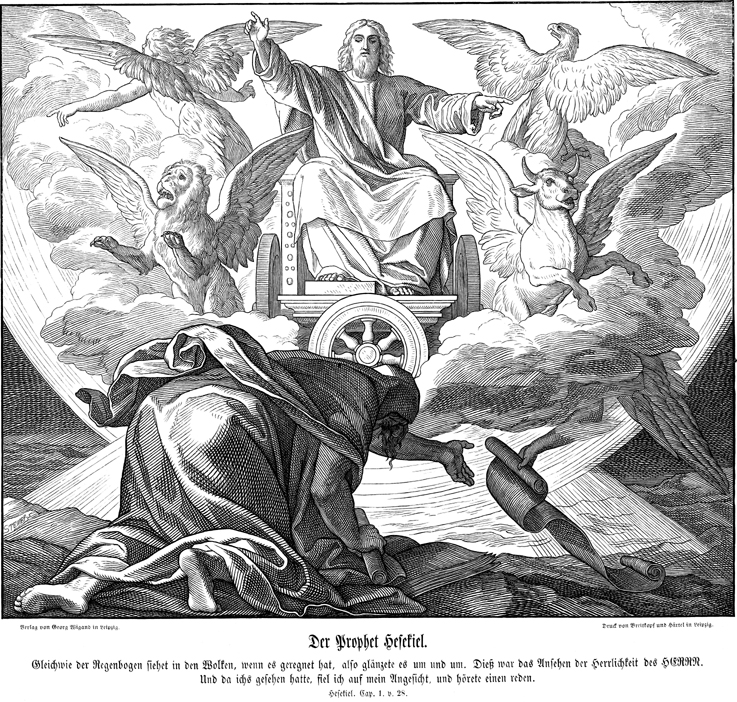
Our Indescribable and Inexplicable God

15 Now as I looked at the living creatures, I saw a wheel on the earth beside the living creatures, one for each of the four of them. 16 As for the appearance of the wheels and their construction: their appearance was like the gleaming of beryl. And the four had the same likeness, their appearance and construction being as it were a wheel within a wheel. 17 When they went, they went in any of their four directions without turning as they went. 18 And their rims were tall and awesome, and the rims of all four were full of eyes all around. 19 And when the living creatures went, the wheels went beside them; and when the living creatures rose from the earth, the wheels rose. 20 Wherever the spirit wanted to go, they went, and the wheels rose along with them, for the spirit of the living creatures was in the wheels. 21 When those went, these went; and when those stood, these stood; and when those rose from the earth, the wheels rose along with them, for the spirit of the living creatures was in the wheels.

22 Over the heads of the living creatures there was the likeness of an expanse, shining like awe-inspiring crystal, spread out above their heads. 23 And under the expanse their wings were stretched out straight, one toward another. And each creature had two wings covering its body. 24 And when they went, I heard the sound of their wings like the sound of many waters, like the sound of the Almighty, a sound of tumult like the sound of an army. When they stood still, they let down their wings. 25 And there came a voice from above the expanse over their heads. When they stood still, they let down their wings.

26 And above the expanse over their heads there was the likeness of a throne, in appearance like sapphire; and seated above the likeness of a throne was a likeness with a human appearance. 27 And upward from what had the appearance of his waist I saw as it were gleaming metal, like the appearance of fire enclosed all around. And downward from what had the appearance of his waist I saw as it were the appearance of fire, and there was brightness around him. 28 Like the appearance of the bow that is in the cloud on the day of rain, so was the appearance of the brightness all around.

Such was the appearance of the likeness of the glory of the Lord. And when I saw it, I fell on my face, and I heard the voice of one speaking. – Ezekiel 1:15-28 ESV

For centuries, artists have attempted to recreate the fantastic scene described in Ezekiel’s vision, and their efforts have resulted in a host of ethereal, otherworldly depictions that almost defy the range of man’s imagination. Their depictions border on the surreal and illustrate man’s incapacity to understand or explain the glory of God. But in their defense, each of them based their artwork on the words of Ezekiel. They simply illustrated what Ezekiel attempted to elucidate. But this young priest was at a great disadvantage because he was trying to describe the indescribable and explain the inexplicable. Hampered by a finite human mind and a limited vocabulary, Ezekiel did his best to recreate his vision with words. But his efforts would prove futile because he was attempting to describe “the appearance of the likeness of the glory of the Lord” (Ezekiel 1:28 ESV).

While Ezekiel appears to be describing a series of different individuals and objects, the scene is meant to illustrate the glory of the Lord. This entire chapter should be viewed as a depiction of the majesty and magnificence of Jehovah, the Creator-God who rules and reigns over all. The all-mighty, transcendent God of the universe was providing Ezekiel with a composite picture of His essence that was intended to engender a response of awe and reverential fear. And it worked, because Ezekiel claims, “When I saw it, I fell face down on the ground” (Ezekiel 1:28 NLT).

Ezekiel got the big picture. He correctly viewed the entire scene as a divine depiction of his God. And, as a priest, Ezekiel would have known that it was impossible for any human being to see God and live to tell about it. He would have been well versed in the words that God spoke to Moses in the wilderness of Sinai. The man whom God had chosen to liberate His people from their captivity in Egypt had expressed his desire to see God’s glory. Moses had seen God’s glory displayed in the burning bush and had repeatedly spoken with Him, but he longed for something greater.

Moses said, “Please show me your glory.” – Exodus 33:18 ESV

But God let Moses that his request was not only impossible, but it would also be suicidal. So, He provided Moses with a viable alternative.

…and he said, “I will make all my goodness pass before you and will proclaim before you my name ‘The Lord.’ And I will be gracious to whom I will be gracious, and will show mercy on whom I will show mercy. But,” he said, “you cannot see my face, for man shall not see me and live.” – Ezekiel 33:19-20 ESV

Like Moses, Ezekiel would see God’s glory and live to tell about it. He would see indescribable things and attempt to explain them with words that could never do them justice. The four living creatures, the wheels within wheels, the crystal expanse, and the sapphire thrown were all intended to depict God’s glory. Ezekiel was being given a rare opportunity to see the Almighty but in a way that produced awe and wonder instead of death.

It was the apostle Paul who described Yahweh as “the blessed and only almighty God, the King of all kings and Lord of all lords” (1 Timothy 6:15 NLT). And he went on to explain God’s transcendent, unapproachable nature.

He alone can never die, and he lives in light so brilliant that no human can approach him. No human eye has ever seen him, nor ever will. All honor and power to him forever! – 1 Timothy 6:16 NLT

It is impossible to know exactly what Ezekiel saw but that has not stopped artists from trying to depict it. But no painting, engraving, or illustration will ever be able to capture the glory of God.

Every aspect of Ezekiel’s vision was meant to reinforce the greatness and glory of God. The four different faces of the four living creatures reveal that God is sovereign over all creation. He rules over humanity, the wild beasts, domesticated animals, and the birds of the air – because He made them all. And the wheels within wheels were intended to depict God’s omnipresence; completely unhindered by time or space. According to Ezekiel, the wheels “went in any of their four directions without turning as they went” ( Ezekiel 1:17 ESV). The rims of the wheels were covered with eyes, illustrating the omniscience of God. He knows all because He sees all.

And He accomplishes all this while sitting on His throne above the great expanse. Ezekiel’s focus becomes fixed upon “a figure whose appearance resembled a man” (Ezekiel 1:26 NLT). But He is far from human in nature.

From what appeared to be his waist up, he looked like gleaming amber, flickering like a fire. And from his waist down, he looked like a burning flame, shining with splendor. All around him was a glowing halo, like a rainbow shining in the clouds on a rainy day. – Ezekiel 1:27-28 NLT

This is no ordinary king seated on a man-made throne. It is the King of kings and Lord of lords. Ezekiel is being given a glimpse of God Almighty, but it is a representation and not the real thing.

“It was a deeply-held tenet of Israelite religion from Moses onwards that God could not be visibly expressed, and for that very reason idolatry was out. But given the possibility of a theophany, no form but the human form could conceivably have been used to represent the Deity. It was, however, no mere human that Ezekiel saw: His radiance was surrounded by the glory of a rainbow, and the prophet could show his awe in no other way than by falling on his face in the dust before his God.” – L. E. Cooper Sr., Ezekiel

It is interesting to note that Ezekiel does not attempt to describe God’s face or countenance. All he writes about is the appearance of gleaming metal, fire, and brightness. According to Paul, God “dwells in unapproachable light” (1 Timothy 6:16 ESV). The psalmist states that God “wraps Himself in light as with a garment” (Psalm 104:2 BSB). The prophet Daniel was also given a vision of God and he described it in similar terms.

…the Ancient of Days took his seat; his clothing was white as snow, and the hair of his head like pure wool; his throne was fiery flames; its wheels were burning fire. – Daniel 7:9 ESV

Both Daniel and Ezekiel were given the privilege of seeing God’s glory, and both found it nearly impossible to put it into words. They were struck by the brightness of His very presence. He emanated light so bright that it could only be described as burning fire. It was intense and virtually unapproachable. This imagery reflects the holiness and purity of God. It was the apostle John who wrote, “God is light, and in him is no darkness at all” (1 John 1:5 ESV).

This majestic, all-knowing, holy, omnipresent God of the universe was reminding Ezekiel that He was still on His throne and well aware of the fate of the people of Judah. He had not turned His back on them. His power had not diminished and His love for them had not faded. The all-powerful, ever-loving, always-faithful God of Abraham, Isaac, and Jacob was about to deliver a message to His chosen people and He had chosen Ezekiel as His messenger. God had gotten Ezekiel’s attention, and now Ezekiel was ready to listen to what his glorious God had to say.

Such was the appearance of the likeness of the glory of the Lord. And when I saw it, I fell on my face, and I heard the voice of one speaking. – Ezekiel 1:28 ESV

English Standard Version (ESV) The Holy Bible, English Standard Version. ESV® Permanent Text Edition® (2016). Copyright © 2001

New Living Translation (NLT) Holy Bible, New Living Translation, copyright © 1996, 2004, 2015 by Tyndale House Foundation. Used by permission of Tyndale House Publishers Inc., Carol Stream, Illinois 60188. All rights reserved.

The Fire of Cleansing

36 Then the Lord spoke to Moses, saying, 37 “Tell Eleazar the son of Aaron the priest to take up the censers out of the blaze. Then scatter the fire far and wide, for they have become holy. 38 As for the censers of these men who have sinned at the cost of their lives, let them be made into hammered plates as a covering for the altar, for they offered them before the Lord, and they became holy. Thus they shall be a sign to the people of Israel.” 39 So Eleazar the priest took the bronze censers, which those who were burned had offered, and they were hammered out as a covering for the altar, 40 to be a reminder to the people of Israel, so that no outsider, who is not of the descendants of Aaron, should draw near to burn incense before the Lord, lest he become like Korah and his company—as the Lord said to him through Moses.

41 But on the next day all the congregation of the people of Israel grumbled against Moses and against Aaron, saying, “You have killed the people of the Lord.” 42 And when the congregation had assembled against Moses and against Aaron, they turned toward the tent of meeting. And behold, the cloud covered it, and the glory of the Lord appeared. 43 And Moses and Aaron came to the front of the tent of meeting, 44 and the Lord spoke to Moses, saying, 45 “Get away from the midst of this congregation, that I may consume them in a moment.” And they fell on their faces. 46 And Moses said to Aaron, “Take your censer, and put fire on it from off the altar and lay incense on it and carry it quickly to the congregation and make atonement for them, for wrath has gone out from the Lord; the plague has begun.” 47 So Aaron took it as Moses said and ran into the midst of the assembly. And behold, the plague had already begun among the people. And he put on the incense and made atonement for the people. 48 And he stood between the dead and the living, and the plague was stopped. 49 Now those who died in the plague were 14,700, besides those who died in the affair of Korah. 50 And Aaron returned to Moses at the entrance of the tent of meeting, when the plague was stopped.  Numbers 16:36-50 ESV

God cleaned house. He purged the wickedness from the midst of the camp of Israel by swallowing the households of Korah, Dathan, and Abiram. Then He consumed the 250 co-conspirators with fire as they attempted to offer unacceptable sacrifices to Him. And when the smoke had lifted, all that was left were their bronze censers lying among the ashes with their charred bones.

This macabre scene was the result of a test that Moses had arranged to determine who among the Israelites was truly holy to the Lord.

“Korah, you and all your followers must prepare your incense burners. Light fires in them tomorrow, and burn incense before the Lord. Then we will see whom the Lord chooses as his holy one.” – Numbers 16:6-7 NLT

And God had declared the outcome of the test in no uncertain terms. The guilty and unholy had been punished. Yet, their destruction produced a rather strange result. The incense burners these rebels had been carrying at the time of their destruction had been purified in the process. The Lord ordered Moses to have them gathered and hammered into a covering for the altar.

“Tell Eleazar son of Aaron the priest to pull all the incense burners from the fire, for they are holy. Also tell him to scatter the burning coals. Take the incense burners of these men who have sinned at the cost of their lives, and hammer the metal into a thin sheet to overlay the altar. Since these burners were used in the Lord’s presence, they have become holy. Let them serve as a warning to the people of Israel.” – Numbers 16:37-38 NLT

Those men had presented their censers and burning incense to the Lord, but He had consumed them with flames because they were guilty of rebellion against Him. But because their incense burners had been presented to God, they had become holy or set apart for His use.

“As we think about the notion of the ‘holy,’ we recognize that things are made holy in Scripture, not because people are holy, but because the things are presented to the Lord, who is holy. Since these wicked men presented their censers to the Lord, the censers are holy, despite the men’s own wickedness.” – Ronald B. Allen, “Numbers.” In Genesis—Numbers. Vol. 2 of The Expositor’s Bible Commentary

This entire story provides a powerful reminder of the ever-present danger of doubt in the life of the follower of God. Doubt has a way of turning into disobedience, and disobedience against God is nothing more than rebellion against His Word and His will. In chapter eight of Numbers, this pattern was lived out in the lives of Korah, Dathan, Abiram, and On. These men were descendants of Levi and, as such, they were responsible for the care and upkeep of the tabernacle of God. God had set them apart as His servants and their jobs were essential to the spiritual well-being of the people of Israel. But they were dissatisfied with things as God had planned them. They wanted more responsibility. They wanted a greater role. They doubted God’s order of things and demanded a restructuring of responsibilities and duties. They pointed their fingers at Aaron and Moses, exclaiming, “You have gone too far! For all in the congregation are holy, every one of them, and the Lord is among them. Why then do you exalt yourselves above the assembly of the Lord?” (Numbers 16:3 ESV). Like Miriam in chapter 12, these men expressed their doubt in God’s preordained order of things and it led to their open disobedience and rebellion.

As a holy, righteous King, God was unwilling to tolerate the open rebellion of these men. While the rebellion of Korah, Dathan, and Abiram was more pronounced and obvious, the reality was that the entire congregation was guilty of turning against God. But Moses and Aaron had interceded and begged God to spare the congregation and punish the ring leaders. God would not tolerate rebellion among His people. He knew it to be like cancer that, if left unchecked, would spread among the people. So He eradicated it in a powerful way. But, according to Moses’ request, He spared the people.

And yet, amazingly, we read, “on the next day all the congregation of the people of Israel grumbled against Moses and against Aaron, saying, ‘You have killed the people of the Lord’” (Numbers 16:41 ESV). Once again, they expressed doubt that what had happened had been God’s will, and they openly rebelled against God’s representatives. So, as before, God warned Moses and Aaron to separate themselves from the people because He was about to destroy them. But Moses interceded yet again, telling Aaron to take his censer and “carry it quickly to the congregation and make atonement for them, for wrath has gone out from the Lord; the plague has begun” (Numbers 16:36 ESV).

God was bringing judgment on the people, and Moses’ quick thinking and Aarons’ immediate response spared the lives of many. In spite of their efforts, 14,700 people died that day – at the hand of God. Yet, there would have been even more, had they not interceded. The rebellion of the people had been a sin against God, and only the atoning work of Aaron, the high priest, had been able to satisfy the righteous judgment of God against them. Doubt is inevitable and, if left unchecked, it will always result in disobedience and rebellion against God. Mankind is prone to unfaithfulness, even those who call themselves followers of God. Disobedience is in our nature. The risk of rebellion is a constant reality for each of us.

In the gospel of Luke, there is another story of the people of God rebelling against the will of God. He had sent His Son as the Savior of the world. But Jesus didn’t come in the form they had anticipated. He failed to meet their expectations. Rather than a conquering king on a white horse leading a powerful army, He had shown up as a carpenter from the small hamlet of Nazareth and accompanied by a rag-tag group of disciples. Instead of revering Jesus as their long-awaited Messiah, the religious leaders responded with revulsion. They longed to rid themselves of His presence. They had Him arrested and dragged before Pilate, the governor, for trial and, ultimately, execution. Even Pilate found Jesus to be innocent of any wrongdoing. He tried repeatedly to release Him, but the people demanded His crucifixion, and they got their wish.

Their doubt led to disobedience, which resulted in rebellion and led to the death of the One whom God had sent. They doubted God’s Word and rejected His will. Writing more than 750 years before the events of the crucifixion, the prophet Isaiah predicted, “But he was pierced for our rebellion, crushed for our sins. He was beaten so we could be whole. He was whipped so we could be healed” (Isaiah 53:5 NLT).

God sent His Son to deal with our rebellion. But rather than snuff us out, He provided a means by which we could be healed and made whole. He paid the debt we owed, He suffered the death that was meant for us. He took on the penalty for our rebellion against God.

And it’s interesting to note that Aaron had been able to atone for the sins of the people by taking fire from the altar of God and using it to ignite incense in a censer. The same fire that had consumed the 250 leaders who had rejected God’s will was used to atone for and spare the rebellious Israelites. An incense burner in the hand of God’s anointed was the means by which God redeemed the unholy and undeserving. The all-consuming fire of God actually averted the deaths of tens of thousands of Israelites who had been deserving of God’s judgment. The plague was averted and the people were spared.

English Standard Version (ESV) The Holy Bible, English Standard Version. ESV® Permanent Text Edition® (2016). Copyright © 2001

New Living Translation (NLT) Holy Bible, New Living Translation, copyright © 1996, 2004, 2015 by Tyndale House Foundation. Used by permission of Tyndale House Publishers Inc., Carol Stream, Illinois 60188. All rights reserved.

A Prophet Pity Party

But he himself went a day’s journey into the wilderness and came and sat down under a broom tree. And he asked that he might die, saying, “It is enough; now, O Lord, take away my life, for I am no better than my fathers.” And he lay down and slept under a broom tree. And behold, an angel touched him and said to him, “Arise and eat.” And he looked, and behold, there was at his head a cake baked on hot stones and a jar of water. And he ate and drank and lay down again. And the angel of the Lord came again a second time and touched him and said, “Arise and eat, for the journey is too great for you.” And he arose and ate and drank, and went in the strength of that food forty days and forty nights to Horeb, the mount of God.

There he came to a cave and lodged in it. And behold, the word of the Lord came to him, and he said to him, “What are you doing here, Elijah?” 10 He said, “I have been very jealous for the Lord, the God of hosts. For the people of Israel have forsaken your covenant, thrown down your altars, and killed your prophets with the sword, and I, even I only, am left, and they seek my life, to take it away.” 11 And he said, “Go out and stand on the mount before the Lord.” And behold, the Lord passed by, and a great and strong wind tore the mountains and broke in pieces the rocks before the Lord, but the Lord was not in the wind. And after the wind an earthquake, but the Lord was not in the earthquake. 12 And after the earthquake a fire, but the Lord was not in the fire. And after the fire the sound of a low whisper. 13 And when Elijah heard it, he wrapped his face in his cloak and went out and stood at the entrance of the cave. And behold, there came a voice to him and said, “What are you doing here, Elijah?” 14 He said, “I have been very jealous for the Lord, the God of hosts. For the people of Israel have forsaken your covenant, thrown down your altars, and killed your prophets with the sword, and I, even I only, am left, and they seek my life, to take it away.” 1 Kings 19:4-14 ESV

While everything had gone extremely well for Elijah on Mount Carmel, he soon found himself disappointed in how things turned out. His challenge of Baal and his false prophets had proven to be successful and, from the immediate reaction of the people, it had appeared that revival had come to the land. And this spiritual renewal of the people seemed to be symbolized by the torrential rain that had brought an end to the three-and-a-half-years of drought. It all appeared as if the nation was headed in the right direction. And as a prophet of God, Elijah longed to see the repentance and restoration of the people of God.

But upon his triumphant return to Jezreel, he was met with intense opposition from the very woman who had begun all this trouble in Israel. Queen Jezebel had become incensed when she heard what had Elijah had done to the 450 prophets of her god. So, she sent Elijah a life-threatening message.

“So may the gods do to me and more also, if I do not make your life as the life of one of them by this time tomorrow.” – 1 Kings 19:2 ESV

She swore an oath to her gods that she would avenge the deaths of the prophets of Baal by killing Elijah within 24 hours. If she failed to do so, her gods could take her life as payment. Despite the abject failure of her god to defeat Yahweh on Mount Carmel, she was still very much a believer. She exhibited no remorse or repentance but instead, warned Elijah that while he had won the battle on Mount Carmel, the war was far from over. She was willing to fight to the death – either his or her own.  And Elijah did not take this news well.

…he was afraid, and he arose and ran for his life and came to Beersheba, which belongs to Judah, and left his servant there. – 1 Kings 19:3 ESV

The man who had run from Mount Carmel to Jezreel after his victory over the prophets of Baal was now running for his life. But this time, he was powered by fear, not faith. And Elijah didn’t stop running until he had reached Beersheba, the last town of any size in the southernmost region of Judah. Then, leaving his servant behind in the city, Elijah traveled another day’s journey into the wilderness, where he finally stopped to rest.

In a state of deep depression and disillusionment, Elijah asked God to take his life. Since Ahab and Jezebel remained fully committed to their false gods, Elijah had concluded that his prophetic mission had been an abysmal failure. There would be no revival in Israel as long as those two wielded all the power and influence over the people. They were calling the shots and determining the nation’s religious affiliation.

Elijah had run out of faith and energy. He was physically, emotionally, and spiritually spent. And in his despondent state, he cried out to God, saying, “I have had enough, Lord.…Take my life, for I am no better than my ancestors who have already died” (1 Kings 19:4 NLT). Exhausted, he fell asleep. But he was soon awakened by an angel who commanded him to eat. There beside him was a loaf of bread and a jar of water. Rather than taking Elijah’s life, God had provided his faith-famished prophet with sustenance, miraculously delivered by the hand of an angel. Elijah may have decided that he was done, but God was not done with Elijah. The prophet ate and fell back asleep. 

But his rest was disturbed yet again by another visit from the angel, who had brought more food and a message.

“Get up and eat some more, or the journey ahead will be too much for you.” – 1 Kings 19:7 NLT

Elijah had not reached his final destination. He had run, but not far enough. And when he had abruptly fled Jezreel, he had done so because he thought his life was over. Either Jezebel was going to take his life or God would. But God had other plans. He sent Elijah on a 40-day journey further south, all the way to Mount Sinai. And the food God provided miraculously sustained Elijah for this long and arduous journey.

…the food gave him enough strength to travel forty days and forty nights to Mount Sinai, the mountain of God. – 1 Kings 19:8 ESV

This trip should have taken no more than 15-20 days by foot, but Elijah found himself wandering in the wilderness for 40 days and nights. This number is significant because it corresponds to the 40 years that the disobedient Israelites had spent wandering in the wilderness because they had failed to obey God and enter the land of Canaan (Numbers 13-14). Having heard the report of the spies that the land was full of giants and well-fortified cities, the people of Israel had refused to trust God and made plans to return to Egypt.

“If only we had died in Egypt, or even here in the wilderness!” they complained. “Why is the Lord taking us to this country only to have us die in battle? Our wives and our little ones will be carried off as plunder! Wouldn’t it be better for us to return to Egypt?” – Numbers 14:2-3 NLT

Now, centuries later, Elijah, the prophet of God, had chosen death in the wilderness rather than face the “giants” in his day. He had determined that Jezebel was too big for God. But God had brought Elijah to the very place where He had revealed Himself to the people of Israel. It had been at Mount Sinai that God had given His law to Moses. And it had been on Mount Sinai that God had displayed His glory and demonstrated His unparalleled power.

And when God had safely sequestered Elijah in the recesses of a cave, He asked His doubting prophet a question: “What are you doing here, Elijah?” (1 Kings 19:9 ESV). He was wanting Elijah to explain the motivation behind his most recent actions, and the prophet responded with a pitiful portrait of his Don-Quixote-like quest to defeat the enemies of God. He deemed himself the last-man-standing, the sole survivor of an ill-fated battle against the forces of evil.

“I have zealously served the Lord God Almighty. But the people of Israel have broken their covenant with you, torn down your altars, and killed every one of your prophets. I am the only one left, and now they are trying to kill me, too.” – 1 Kings 19:10 NLT

Elijah was throwing himself a pity party and he had invited God to attend. But God was not interested in celebrating Elijah’s accomplishments or validating his woe-is-me mentality. Instead, God instructed His despondent prophet to step out of the cave and into the shadow of Mount Sinai. And as Elijah stood there, God revealed Himself. At first, He came in the form of a fierce windstorm so powerful that it blew boulders off the face of the mountain. Then He appeared in the form of a massive earthquake that shook the ground under Elijah’s feet. Finally, God disclosed Himself to Elijah in the form of fire. And all of these manifestations of God’s glory and power were exactly what the people of Israel had seen when God had appeared to them centuries earlier at the very same spot.

On the morning of the third day, thunder roared and lightning flashed, and a dense cloud came down on the mountain. There was a long, loud blast from a ram’s horn, and all the people trembled.… All of Mount Sinai was covered with smoke because the Lord had descended on it in the form of fire. The smoke billowed into the sky like smoke from a brick kiln, and the whole mountain shook violently. – Exodus 19:16, 18 NLT

But in Elijah’s case, these dramatic revelations of God, while impressive, were not meant to represent the presence of God. The text clearly states that the Lord was not in the wind, the earthquake, or the fire. Yes, they were manifestations of His greatness, but they were not how God was going to speak to His prophet. After the ear-piercing blast of the wind, the earth-shaking rumble of the earthquake, and the roar of the fire, Elijah heard “the sound of a low whisper” ( 1 Kings 19:12 ESV). Evidently, the three previous displays of God’s power had driven Elijah back into the recesses of the cave. But upon hearing the gentle sound of the whisper, he timidly made his way back outside. And there, in the quiet of that moment, he heard God repeat His previous question: “What are you doing here, Elijah?” (1 Kings 19:13 NLT). 

And, once again, Elijah gave the same well-rehearsed reply. And don’t miss the focus of Elijah’s response. It was all about him. He alone had zealously served Yahweh. While everyone else in Israel had turned their backs on God, Elijah had remained faithful and fully committed. He was the last line of defense against the forces of evil, and now he was as good as dead.

Where was God? Even after the dramatic displays of divine power on Mount Sinai, Elijah had been unable to get his mind off of himself. For some reason, he believed that the future of Israel had been dependent upon him, and he had failed. He had let God down. Despite his victory over the prophets of Baal, Ahab and Jezebel were firmly entrenched and in charge of the affairs of the nation, or so Elijah thought. From his perspective, all was lost. But God had news for Elijah. And He had plans for Ahab and Jezebel. God was about to whisper His sovereign secret for Israel’s future in the ear of his self-consumed prophet. And Elijah was going to discover God’s answer to the question: “What are you doing here, Elijah?”

English Standard Version (ESV) The Holy Bible, English Standard Version. ESV® Permanent Text Edition® (2016). Copyright © 2001 by Crossway Bibles, a publishing ministry of Good News Publishers.

New Living Translation (NLT) Holy Bible, New Living Translation, copyright © 1996, 2004, 2015 by Tyndale House Foundation. Used by permission of Tyndale House Publishers Inc., Carol Stream, Illinois 60188. All rights reserved.

The Message (MSG)Copyright © 1993, 1994, 1995, 1996, 2000, 2001, 2002 by Eugene H. Peterson

Woe, Woe, Woe.

The second angel blew his trumpet, and something like a great mountain, burning with fire, was thrown into the sea, and a third of the sea became blood. A third of the living creatures in the sea died, and a third of the ships were destroyed.

10 The third angel blew his trumpet, and a great star fell from heaven, blazing like a torch, and it fell on a third of the rivers and on the springs of water. 11 The name of the star is Wormwood. A third of the waters became wormwood, and many people died from the water, because it had been made bitter.

12 The fourth angel blew his trumpet, and a third of the sun was struck, and a third of the moon, and a third of the stars, so that a third of their light might be darkened, and a third of the day might be kept from shining, and likewise a third of the night.

13 Then I looked, and I heard an eagle crying with a loud voice as it flew directly overhead, “Woe, woe, woe to those who dwell on the earth, at the blasts of the other trumpets that the three angels are about to blow!” Revelation 8:8-13 ESV

It is impossible for us to know exactly how the events in these chapter will unfold. We were not there to see what John saw. His descriptions of the events transpiring before his eyes are fantastic and otherworldly. They are difficult for our senses to comprehend and, as each successive trumpet is blown, the accompanying judgment will be increasingly more intense and devastating. With the sounding of the second trumpet, John sees that “something like a great mountain, burning with fire, was thrown into the sea” (Revelation 8:8 ESV). Notice his use of the word, “something.” John is doing the best he can to use well-known, recognizable imagery in an attempt to describe the indescribable and never-before-seen. We cannot be certain of what John saw, but there is no doubt that what transpired before his eyes was shocking and disturbing. When dealing with these judgments of God, the easy route to take is to write them off as nothing more than symbolism. Thus, the mountain becomes nothing more than a physical or natural representation of something more significant. Many have speculated that the mountain symbolizes a government or kingdom. But, other than the unbelievable nature of John’s description, there seems to be no reason for us to allegorize what John is seeing. It is obviously not a mountain but, as John said, something like a mountain. Whatever it was, it came down from heaven, indicating the divine nature of its origin. God had sent it. And this blazing mountain-like object plunged into the sea, turning all the water to blood. Once again, our natural inclination is to write off the literal nature of this description, and simply relegate it to allegory or symbolism. And while there is much symbolism in the book of Revelation, the context in this chapter does not seem to justify taking these fantastic sights as anything less than literal.

God brings judgment on the oceans of the world, turning a third of them to blood, and resulting in the deaths of a third of the creatures living in them. Once again, this is reminiscent of the plagues brought by God upon the land of Egypt. Through Moses His servant, God turned the waters of the Nile into blood. This devastating miracle lasted for a full seven days, turning the Nile, the source of all life for the Egyptians, into a stinking, river of death. So, it should not surprise us that God brings a similar, equally impactful judgment on the nations of the world during the last days. This phenomena will also result in the destruction of a third of the world’s ocean-going vessels. One can only imagine the impact this will have on global commerce. And it doesn’t require much imagination to understand that the death of a third of the sea creatures and the destruction of a third of the ships that sail the seas, is going to have dire consequences on the quality of human life. One of the major food sources for mankind will become a third-less reliable, and the means for transporting goods around the world will be  dramatically reduced.

With the blowing of the third trumpet, John mentions that “a great star fell from heaven, blazing like a torch” (Revelation 8:10 ESV). As before, John struggles to describe what he is seeing and he finds himself relegated to using human words to help us understand the supernatural events taking place. He describes seeing a star falling from heaven. Was it a comet, a literal star, or simply a symbol for something natural and explainable? It seems best to take John at his word and view this as some kind of literal extraterrestrial object that falls from the sky, another indication that this judgment is from the very throne room of God. It turns a third of the waters of the world bitter, causing great sickness to the earth’s population, and leaving many dead as a result.

With the fourth trumpet, God brings judgment on the world by reducing the intensity of the light produced by the sun, moon and stars by one-third. In other words, the world and all those who live on it, will experience a reduction in light, but also global temperatures. The subsequent results will be dramatic and devastating. And there will be no one who does not witness this particular judgment. All will see the sun, moon and stars decrease in intensity, clearly indicating that this judgment is from the hand of God. The very things mankind takes for granted: Food from the sea, the ability to transport goods across the oceans, fresh water and light, will feel the hand of God upon them. In the end times, these gifts, given to mankind by God, will become unreliable and even harmful. Creation will turn on man. The things we take for granted will be taken from us by God, all in an attempt to remind fallen mankind that God alone is sovereign and worthy to be worshiped.

And as is all this was not enough, John describes seeing an eagle flying through the sky and crying out, “Woe, woe, woe to those who dwell on the earth, at the blasts of the other trumpets that the three angels are about to blow!” (Revelation 8:13 ESV). In other words, it’s going to get worse before it gets better. And the truth is, it’s not going to get better at all. There are three more trumpets to be sounded and three more judgments to fall on the world. And the cumulative effect of these judgments will be devastating. Jesus Himself predicted that the judgment of God will be so great that, if He does bring them to an end, the entire world will be destroyed.

And if those days had not been cut short, no human being would be saved. – Matthew 24:22 ESV

The prophet, Joel, provides us with a vivid description of these days.

1 Blow a trumpet in Zion;
    sound an alarm on my holy mountain!
Let all the inhabitants of the land tremble,
    for the day of the Lord is coming; it is near,
a day of darkness and gloom,
    a day of clouds and thick darkness!
Like blackness there is spread upon the mountains
    a great and powerful people;
their like has never been before,
    nor will be again after them
    through the years of all generations. – Joel 2:1-2 ESV

The day is coming when the sinfulness of mankind will be dealt with once and for all. God will bring His judgment on the world. He will no longer put up with man’s open rebellion against His leadership. He will no longer tolerate their rejection of His Son and their refusal to accept His gracious gift of salvation. And the visions of John provide us with a powerful and sobering reminder that our God is in control and will one day right all wrongs. The words of John are difficult to read. The images of death and destruction he describes are hard for us to fathom. They even seem to contradict our understanding of the loving nature of our God. But we must never forget that our God is holy, righteous, and just. He has patiently put up with man’s stubborn rebellion against His authority for centuries. But the day is coming when He will put up with it no longer. Justice will reign. Righteousness will be meted out by the hand of our holy God. He will restore the world He created to its original perfection. He will punish the wicked and reward the righteous. He will end the dominion of death and Satan once for all.


English Standard Version (ESV) The Holy Bible, English Standard Version. ESV® Permanent Text Edition® (2016). Copyright © 2001

New Living Translation (NLT) Holy Bible, New Living Translation, copyright © 1996, 2004, 2015 by Tyndale House Foundation. Used by permission of Tyndale House Publishers Inc., Carol Stream, Illinois 60188. All rights reserved.

The Message (MSG)  Copyright © 1993, 1994, 1995, 1996, 2000, 2001, 2002 by Eugene H. Peterson


Not What They Expected.

1 When the day of Pentecost arrived, they were all together in one place. And suddenly there came from heaven a sound like a mighty rushing wind, and it filled the entire house where they were sitting. And divided tongues as of fire appeared to them and rested on each one of them. And they were all filled with the Holy Spirit and began to speak in other tongues as the Spirit gave them utterance. Acts 2:1-4 ESV

The disciples had been waiting in that upper room, eagerly anticipating the arrival of the Holy Spirit. Jesus had commanded them to return to Jerusalem and to await the Spirit’s coming.

And while staying with them he ordered them not to depart from Jerusalem, but to wait for the promise of the Father, which, he said, “you heard from me; for John baptized with water, but you will be baptized with the Holy Spirit not many days from now.”– Acts 1:4-5 ESV

This reference by Jesus to John’s baptism ties the coming of the Holy Spirit back to those days when John was baptizing in the Judean wilderness. His had been a baptism of repentance for the forgiveness of sins (Luke 3:3). He had been a precursor and herald of the coming Messiah, announcing that the Kingdom of God was at hand. And his offer to the Jews in his audience to submit to baptism had been a call to turn from their sins and prepare for the coming of the Kingdom. John the Baptist called on them to change their ways. He demanded that their behavior be different than before.

10 And the crowds asked him, “What then shall we do?” 11 And he answered them, “Whoever has two tunics is to share with him who has none, and whoever has food is to do likewise.” 12 Tax collectors also came to be baptized and said to him, “Teacher, what shall we do?” 13 And he said to them, “Collect no more than you are authorized to do.” 14 Soldiers also asked him, “And we, what shall we do?” And he said to them, “Do not extort money from anyone by threats or by false accusation, and be content with your wages.”– Luke 3:10-14 ESV

The people didn’t know what to make of John the Baptist, Some even wondered whether he was the long-awaited Messiah. But he told the people, “I baptize you with water, but he who is mightier than I is coming, the strap of whose sandals I am not worthy to untie. He will baptize you with the Holy Spirit and fire” (Luke 3:16 ESV). A direct reference to what was about to happen in the upper room on the day of Pentecost. Jesus was going to usher in a new era, and provide a new means by which men and women could live radically different lives. John had told the people to change their behavior, but Jesus was going to provide the means to make it possible.

Luke records in his gospel the baptism of Jesus.

21 Now when all the people were baptized, and when Jesus also had been baptized and was praying, the heavens were opened, 22 and the Holy Spirit descended on him in bodily form, like a dove; and a voice came from heaven, “You are my beloved Son; with you I am well pleased.”– Luke 3:21-22 ESV

The very same Spirit who would appear to and rest upon the disciples at Pentecost, had descended upon Jesus, empowering Him for His earthly ministry. While Jesus was the Son of God and had all the power of deity available to Him, He conducted His earthly ministry in the power of the Holy Spirit. He lived as a man, submitting Himself to the direction and empowerment of the Spirit of God. He was led by the Spirit. He was ministered to by the Spirit. He was given power by the Spirit to perform miracles. And, after His death, He was raised back to life by the Spirit. And that very same Spirit that had descended upon Him at His baptism, was about to fall on those who were obediently waiting in that upper room.

Luke describes what happened:

Suddenly, there was a sound from heaven like the roaring of a mighty windstorm, and it filled the house where they were sitting. Then, what looked like flames or tongues of fire appeared and settled on each of them. – Acts 2:2-3 NLT

This time, the Spirit didn’t descend as a dove, He was accompanied by sounds and signs that were unmistakable and impossible to miss. There was the sound of a rushing wind. It was a roar, not a gentle breeze. There was something powerfully significant about to happen. And it recalls the conversation Jesus had with Nichodemus, the Pharisee, regarding being born again. Jesus told him:

5 “I assure you, no one can enter the Kingdom of God without being born of water and the Spirit. Humans can reproduce only human life, but the Holy Spirit gives birth to spiritual life. So don’t be surprised when I say, ‘You must be born again.’ The wind blows wherever it wants. Just as you can hear the wind but can’t tell where it comes from or where it is going, so you can’t explain how people are born of the Spirit.” – John 3:5-8 NLT

The wind, the Spirit, is uncontrollable and unpredictable. He does as He wishes. He is inexplicably powerful, unseen to the human eye, and able to accomplish the impossible. It’s interesting to note a conversation Jesus had with the disciples right after His resurrection. He appeared to them quite suddenly and unexpectedly as they were gathered together behind locked doors in the upper room.

19 That Sunday evening the disciples were meeting behind locked doors because they were afraid of the Jewish leaders. Suddenly, Jesus was standing there among them! “Peace be with you,” he said. 20 As he spoke, he showed them the wounds in his hands and his side. They were filled with joy when they saw the Lord! 21 Again he said, “Peace be with you. As the Father has sent me, so I am sending you.” 22 Then he breathed on them and said, “Receive the Holy Spirit. 23 If you forgive anyone’s sins, they are forgiven. If you do not forgive them, they are not forgiven.” – John 20:19-23 NLT

He breathed on them. He literally blew on them with His breath. What a radically different image than the one that took place in that same upper room on the day of Pentecost. I believe Jesus was giving the disciples a subtle foretaste of what was to come. His breath, limited by the restraints of His human body, would turn into a mighty wind when He returned to His rightful place at the Father’s side. He glorification would allow Him to blow the wind of the Spirit in unlimited power and accompanied by unmistakable signs of God’s presence.

The sound of the rushing wind was accompanied by the visual manifestation of flames of fire – just as John the Baptist had said would happen. “He will baptize you with the Holy Spirit and with fire” (Luke 3:16 NLT). The disciples were being baptized with the Spirit and with fire. All throughout the Old Testament, fire represented the presence of God. He led them through the wilderness in the form of a pillar of fire. He appeared to Moses in the form of a burning bush. Every time He spoke to Moses on Mount Sinai, His presence was illustrated by smoke. The author of Hebrews describes God in terms of fire.

28 Since we are receiving a Kingdom that is unshakable, let us be thankful and please God by worshiping him with holy fear and awe. 29 For our God is a devouring fire. – Hebrews 12:28-29 NLT

What appeared as a single flame separated and “settled on each of them” (Acts 2:4 NLT). Every single individual in the room received the filling of the Holy Spirit. They each had a tongue of flame hovering over their heads, and each one was able to see this visible manifestation. So, it was not just the original 11 disciples who received the Spirit, but every single individual who was gathered in the room that day. The Spirit was non-discriminatory. And what these people received was power from on high. They were indwelt with the very power of God, the same power that had raised Jesus from the dead. And what is significant about this is that the 120 disciples gathered in the upper room received the divine power that would allow them to live out what John the Baptist had said to the Jews whom he had baptized.

“Prove by the way you live that you have repented of your sins and turned to God. Don’t just say to each other, ‘We’re safe, for we are descendants of Abraham.’ That means nothing, for I tell you, God can create children of Abraham from these very stones. – Luke 3:8 NLT

The Jews who experienced the water baptism of John were incapable of pulling off what he told them to do. They lacked the power. They were limited by their sinful dispositions. But when the Holy Spirit came, it was a game-changer. Suddenly, those 120 disciples were equipped with a power they had never known before. And it was going to become immediately evident that their lives had been radically transformed and their capacity to live godly live had been dramatically improved. What happened next was a visible and audible demonstration of the Spirit’s power and their newfound potential as God’s instruments of reconciliation.

And everyone present was filled with the Holy Spirit and began speaking in other languages, as the Holy Spirit gave them this ability. – Acts 2:4 NLT

Again, notice that Luke says, “everyone”, not some. There was no mistake that every single individual had been filled with the Spirit. If the tongues of flame hadn’t proved it, the audible tongues did. They were suddenly able to speak in languages they didn’t know. Each one was speaking a different language. Can you imagine what this scene must have looked and felt like to all those present. There is no indication the sound of the rushing wind had stopped. The tongues of flame were probably still floating above each person’s head. There was a cacophony of noise as the various languages mingled with one another and the 120 disciples experienced the awe and wonder of what has happening to them and around them.

None of this would have made sense. Not one of the disciples would have understood what the others in the room were saying. They would not have understood the words coming out of their own mouths. The sound in the room would have been deafening. The flames of fire would have been frightening. And the whole experience would have been a bit confusing. None of it would have been what they had expected. But it was exactly what Jesus had promised. And it’s significance was about to spill out of the room and into the streets of Jerusalem and the lives of the lost. The Spirit had come and the world would never be the same again.

English Standard Version (ESV)
The Holy Bible, English Standard Version. ESV® Permanent Text Edition® (2016). Copyright © 2001 by Crossway Bibles, a publishing ministry of Good News Publishers.

New Living Translation (NLT)
Holy Bible, New Living Translation, copyright © 1996, 2004, 2015 by Tyndale House Foundation. Used by permission of Tyndale House Publishers Inc., Carol Stream, Illinois 60188. All rights reserved.

The Message (MSG)  Copyright © 1993, 1994, 1995, 1996, 2000, 2001, 2002 by Eugene H. Peterson