Take Up Your Cross and Follow Me

24 Then Jesus told his disciples, “If anyone would come after me, let him deny himself and take up his cross and follow me. 25 For whoever would save his life will lose it, but whoever loses his life for my sake will find it. 26 For what will it profit a man if he gains the whole world and forfeits his soul? Or what shall a man give in return for his soul?” – Matthew 16:24-26 ESV

23 And he said to all, “If anyone would come after me, let him deny himself and take up his cross daily and follow me. 24 For whoever would save his life will lose it, but whoever loses his life for my sake will save it. 25 For what does it profit a man if he gains the whole world and loses or forfeits himself? 26 For whoever is ashamed of me and of my words, of him will the Son of Man be ashamed when he comes in his glory and the glory of the Father and of the holy angels.” – Luke 9:24-26 ESV

24 “Truly, truly, I say to you, unless a grain of wheat falls into the earth and dies, it remains alone; but if it dies, it bears much fruit. 25 Whoever loves his life loses it, and whoever hates his life in this world will keep it for eternal life. 26 If anyone serves me, he must follow me; and where I am, there will my servant be also. If anyone serves me, the Father will honor him.” – John 12:24-26 ESV

Jesus told His followers to “make disciples of all nations” (Matthew 28:19 ESV). The phrase “make disciples” comes from the single Greek verb mathēteuō. which can also be translated as “to teach, instruct, or to disciple.” Jesus was not expecting His followers to literally “make” or manufacture disciples but to teach all who chose to accept His message of salvation. That is why Jesus went on to instruct His disciples to teach those individuals all the commands He had spoken in His earthly ministry.

The 12 men whom Jesus called were commonly referred to as His “disciples,” from a related Greek word, mathētēs, which is a noun and describes “a learner” or “pupil.” James, Andrew, Peter, John, and all the others had accepted Jesus’ invitation to follow Him.

While walking by the Sea of Galilee, he saw two brothers, Simon (who is called Peter) and Andrew his brother, casting a net into the sea, for they were fishermen. And he said to them, “Follow me, and I will make you fishers of men.” Immediately they left their nets and followed him. And going on from there he saw two other brothers, James the son of Zebedee and John his brother, in the boat with Zebedee their father, mending their nets, and he called them. Immediately they left the boat and their father and followed him. – Matthew 4:18-22 ESV

After this he went out and saw a tax collector named Levi, sitting at the tax booth. And he said to him, “Follow me.” 28 And leaving everything, he rose and followed him. – Luke 5:27-28 ESV

At a word from Jesus, these men willingly abandoned their former lives and committed themselves to becoming His disciples or students. They each made the fateful decision to spend their lives learning from this itinerant Rabbi named Jesus. They knew little about Him or His ministry but were willing to walk away from their families, friends, and their primary means of livelihood just to hear what He had to say.

In one sense, a disciple is a follower, but for Jesus, following was not enough. He expected His disciples to learn and grow. During His earthly ministry, Jesus had hundreds, if not thousands, of followers. They were attracted by His miracles and enamored with His teachings. But as time went on, the lessons Jesus delivered became increasingly more complex and difficult to understand. As the time of His death drew closer, the more intense and seemingly obscure his teachings became. At one point, He told His followers, “I am the bread of life; whoever comes to me shall not hunger, and whoever believes in me shall never thirst…I have come down from heaven, not to do my own will but the will of him who sent me” (John 6:35, 38 ESV). The Jewish religious leaders in the crowd took exception with His claim to have come down from heaven, stating, “Is not this Jesus, the son of Joseph, whose father and mother we know? How does he now say, ‘I have come down from heaven’?” (John 6:42 ESV). They were following Him but were unreceptive to His teaching.

Discerning their unbelief, Jesus upped the ante and proclaimed, “I am the living bread that came down from heaven. If anyone eats of this bread, he will live forever. And the bread that I will give for the life of the world is my flesh” (John 6:51 ESV). This rather cryptic and confusing comment left the religious leaders further perplexed and put out. Jesus went on to talk about eating His flesh and drinking His blood, imagery that repulsed His critics and confused His disciples. One of the 12 responded, “This is a hard saying; who can listen to it?” (John 6:60 ESV). But rather than rebuking His disciples, Jesus explained that His words were “spirit and life” (John 6:63 ESV). There were things they did not yet understand and their views of Him were clouded by false expectations and faulty concepts concerning His mission. They believed Him to be the Messiah but were confused by the nature of His ministry and messages. He was not acting like a Messiah. His ministry lacked the hallmarks of a revolutionary, Rome-conquering mission that would put the kingdom of Israel back on the map. Jesus knew that some of His “followers” were having second thoughts and said, “There are some of you who do not believe” (John 6:64 ESV). The 12 remained by His side, but “many of his disciples turned back and no longer walked with him” (John 6:66 ESV).

Following Jesus requires commitment. It entails a willingness to listen, learn, and grow even when the lessons make no sense or the circumstances surrounding His calling don’t turn out as expected. Jesus later used a parable to describe the fickle nature of those who follow Him but eventually turn away. He spoke of four different types of soil on which the “seed” of the gospel falls.

“The seed on the rocky soil represents those who hear the message and immediately receive it with joy. But since they don’t have deep roots, they don’t last long. They fall away as soon as they have problems or are persecuted for believing God’s word.” – Matthew 16:20-21 NLT

Failure to establish roots results in no nourishment. The seed sprouts but there are no nutrients to feed and foster growth. Roots imply commitment and a desire to grow. It is a picture of reliance upon the life-giving nature of Jesus’ message. He later told His disciples, “Remain in me, and I will remain in you. For a branch cannot produce fruit if it is severed from the vine, and you cannot be fruitful unless you remain in me. Yes, I am the vine; you are the branches. Those who remain in me, and I in them, will produce much fruit. For apart from me you can do nothing” (John 15:4-5 NLT).

Jesus went on to describe a second type of soil that initially appears to benefit from the sowing of the seed but produces no fruit.

“The seed that fell among the thorns represents those who hear God’s word, but all too quickly the message is crowded out by the worries of this life and the lure of wealth, so no fruit is produced.” – Matthew 16:22 NLT

Faithful-looking followers can end up being fickle and fruitless. Their initial enthusiasm for the gospel can wain as the distractions of life increase and Christ’s call to commitment becomes more difficult. But according to Jesus, true disciples produce fruit.

“When you produce much fruit, you are my true disciples. This brings great glory to my Father.” – John 15:8 NLT

Jesus would later tell His 12 disciples, “I chose you. I appointed you to go and produce lasting fruit, so that the Father will give you whatever you ask for, using my name” (John 15:16 NLT). That is what it means to make disciples. The goal is fruitfulness and faithfulness, not simply a growing number of followers. Disciples are committed. Disciples continue to learn. Disciples keep abiding in Christ even when the going gets tough and the trials of life make it difficult to hold on.

Being a disciple of Christ is not easy. That is why Jesus said, “If anyone would come after me, let him deny himself and take up his cross and follow me” (Matthew 16:24 ESV). It requires sacrifice, self-denial, and the daily putting to death of the old self. Paul put it this way:

My old self has been crucified with Christ. It is no longer I who live, but Christ lives in me. So I live in this earthly body by trusting in the Son of God, who loved me and gave himself for me. – Galatians 2:20 NLT

He told the disciples in the local church in Galatia that their lives should bear the fruit of the Spirit, but to do so they would need to recognize that their former sinful natures had been crucified with Christ on the cross.

Those who belong to Christ Jesus have nailed the passions and desires of their sinful nature to his cross and crucified them there. – Galatians 5:24 NLT

After Jesus’ resurrection and ascension, the disciples would grow to understand that their decision to follow Jesus must be accompanied by a willingness to commit to die to self and live for Christ. But as they lived, they would face the very real possibility of dying on His behalf. This is something Jesus warned them about.

“Truly, truly, I say to you, unless a grain of wheat falls into the earth and dies, it remains alone; but if it dies, it bears much fruit. Whoever loves his life loses it, and whoever hates his life in this world will keep it for eternal life. If anyone serves me, he must follow me; and where I am, there will my servant be also. If anyone serves me, the Father will honor him. – John 12:24-26 ESV

During His days on earth, Jesus repeatedly foreshadowed the days when His disciples would suffer as He did, facing ridicule and rejection but with the knowledge that their reward in heaven would be great.

“What blessings await you when people hate you and exclude you and mock you and curse you as evil because you follow the Son of Man. When that happens, be happy! Yes, leap for joy! For a great reward awaits you in heaven. And remember, their ancestors treated the ancient prophets that same way.” – Luke 6:22-23 NLT

Most of the Old Testament prophets delivered their messages to unrepentant audiences who not only refused to listen and learn but chose to kill the messenger. Yet these men carried out their assignments obediently and resolutely, even when facing the threat of martyrdom.

Discipleship requires commitment and a willingness to walk a path that is often unpleasant and unattractive to most people. It can be a lonely experience because few are willing to pass that way. There’s an old adage that states, “When the going gets tough, the tough get going.” But followers tend to give up or simply get out of Dodge when the going gets tough. When the heat gets turned up, they head for the exits.  Jesus described the path of discipleship as a “narrow way” that is rife with difficulties but that leads to life.

“You can enter God’s Kingdom only through the narrow gate. The highway to hell is broad, and its gate is wide for the many who choose that way. But the gateway to life is very narrow and the road is difficult, and only a few ever find it.” – Matthew 7:13-14 NLT

A more contemporary and equally familiar adage comes to mind: No pain, no gain. While there is a cost to discipleship, it is well worth any sacrifice we might have to make. Jesus made this point clear when He addressed a somewhat boastful pronouncement from Peter. The disciples had just witnessed Jesus’ interaction with a young man who wanted to know what he needed to do to gain eternal life. Jesus, knowing that the young man was wealthy, stated, “Go and sell all your possessions and give the money to the poor, and you will have treasure in heaven. Then come, follow me” (Mark 10:21 NLT). Hearing Jesus’ words, “the man’s face fell, and he went away sad, for he had many possessions” (Mark 10:22 NLT).

Perplexed by this exchange, Peter spoke up and self-righteously declared, “We’ve given up everything to follow you” (Mark 10:28 NLT). Peter had watched the wealthy young man let material possessions keep him from following Jesus and he wanted to remind the LORD that he had sold out to be a Christ follower. But while Jesus agreed, He gave Peter a powerful lesson in spiritual economics, proclaiming that Peter’s return on investment would be greater than he could ever imagine. Whatever he sacrificed in this life would be repaid in full in this life and in the life to come.

“Yes,” Jesus replied, “and I assure you that everyone who has given up house or brothers or sisters or mother or father or children or property, for my sake and for the Good News, will receive now in return a hundred times as many houses, brothers, sisters, mothers, children, and property—along with persecution. And in the world to come that person will have eternal life. – Mark 10:29-30 NLT

Peter and the rest of the disciples were now part of a much larger family consisting of people from all walks of life who shared a mutual relationship with God as their Father. And, one day, they would all enjoy the ultimate reward of eternal life and unbroken fellowship with their Savior and their Heavenly Father.

Discipleship is costly but priceless in terms of its long-term benefits.

English Standard Version (ESV)
The Holy Bible, English Standard Version. ESV® Permanent Text Edition® (2016). Copyright © 2001 by Crossway Bibles, a publishing ministry of Good News Publishers.

New Living Translation (NLT)
Holy Bible, New Living Translation, copyright © 1996, 2004, 2015 by Tyndale House Foundation. Used by permission of Tyndale House Publishers Inc., Carol Stream, Illinois 60188. All rights reserved.

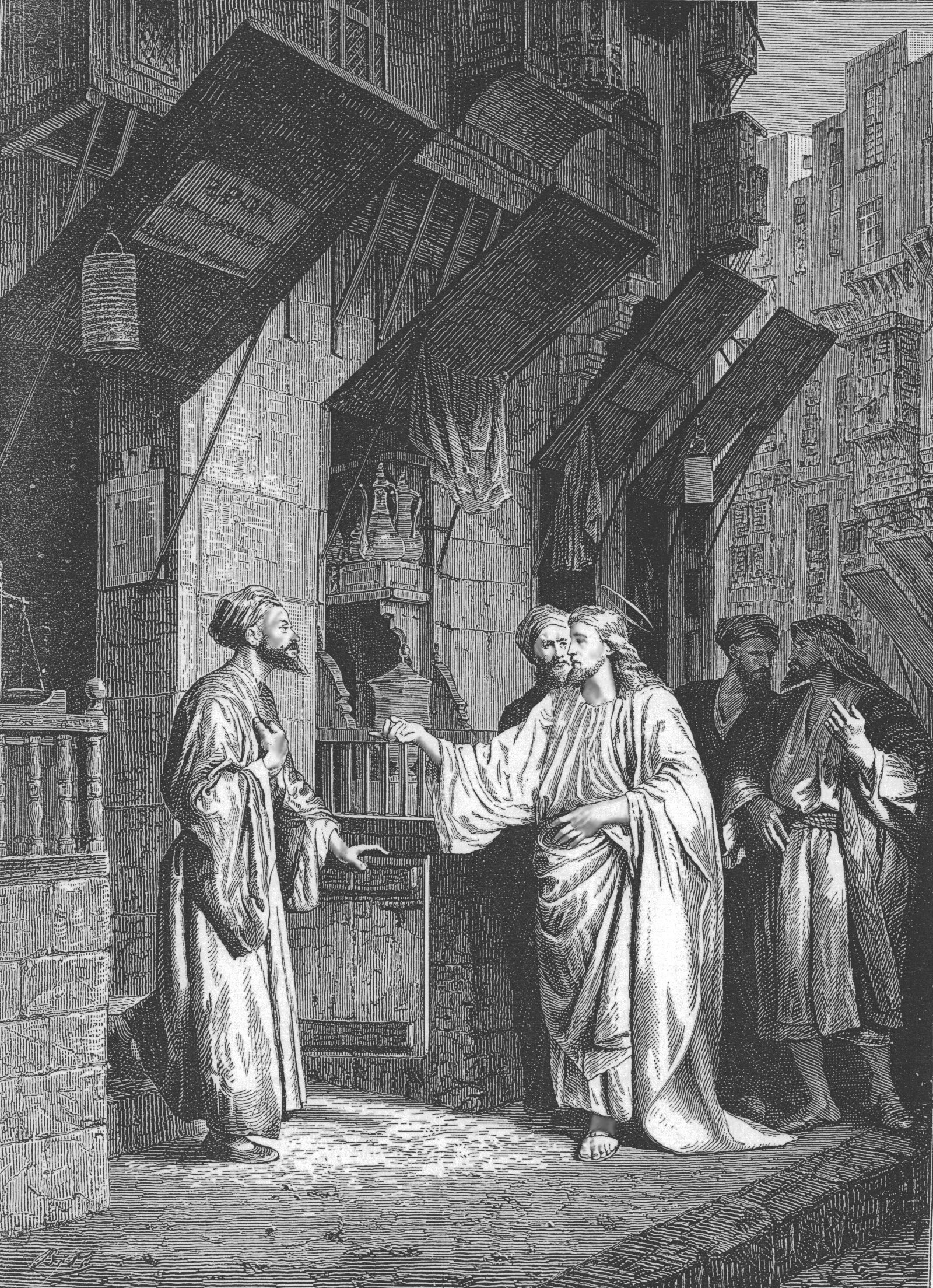
Well Worth the Cost

51 When the days drew near for him to be taken up, he set his face to go to Jerusalem. 52 And he sent messengers ahead of him, who went and entered a village of the Samaritans, to make preparations for him. 53 But the people did not receive him, because his face was set toward Jerusalem. 54 And when his disciples James and John saw it, they said, “Lord, do you want us to tell fire to come down from heaven and consume them? 55 But he turned and rebuked them. 56 And they went on to another village.

57 As they were going along the road, someone said to him, “I will follow you wherever you go.” 58 And Jesus said to him, “Foxes have holes, and birds of the air have nests, but the Son of Man has nowhere to lay his head.” 59 To another he said, “Follow me.” But he said, “Lord, let me first go and bury my father.” 60 And Jesus said to him, “Leave the dead to bury their own dead. But as for you, go and proclaim the kingdom of God.” 61 Yet another said, “I will follow you, Lord, but let me first say farewell to those at my home.” 62 Jesus said to him, “No one who puts his hand to the plow and looks back is fit for the kingdom of God.” – Luke 9:51-62 ESV

The disciples were having difficulty understanding Jesus’ seeming obsession with suffering and dying. He had begun to disclose to them the details regarding the fate awaiting Him in Jerusalem, and they were not thrilled by what they heard. In fact, Jesus had just told them, “Listen to me and remember what I say. The Son of Man is going to be betrayed into the hands of his enemies” (Luke 9:44 NLT). And Luke indicates that this disclosure made no sense to the disciples. They were incapable of grasping its significance because it had been “hidden from them, so they couldn’t understand it, and they were afraid to ask him about it” (Luke 9:45 NLT).

But despite the inability of the disciples to comprehend the true nature of the Messiah’s mission, Jesus was fully aware of His Father’s plans and committed to carrying them out. And Luke subtly reveals the determination with which Jesus went about His divinely ordained task.

When the days drew near for him to be taken up, he set his face to go to Jerusalem. – Luke 9:51 ESV

In doing so, Jesus was fulfilling the prophecy concerning the obedient servant found in Isaiah 50.

The Sovereign Lord has spoken to me,
    and I have listened.
    I have not rebelled or turned away.
I offered my back to those who beat me
    and my cheeks to those who pulled out my beard.
I did not hide my face
    from mockery and spitting.

Because the Sovereign Lord helps me,
    I will not be disgraced.
Therefore, I have set my face like a stone,
    determined to do his will.
    And I know that I will not be put to shame. – Isaiah 50:5-7 NLT

Jesus was not an unwilling or helpless participant caught in the overwhelming flow of God’s grand redemptive plan. He was the fully committed and wholly dedicated co-author of this divine rescue operation. He knew what awaited Him in Jerusalem and He was totally prepared to carry out the assignment He had willingly taken on. And John makes it clear in his gospel that everything Jesus did was out of humble submission to His Heavenly Father and according to His own will.

“No one takes it from me, but I lay it down of my own accord. I have authority to lay it down, and I have authority to take it up again. This charge I have received from my Father.” – John 10:18 ESV

“I do as the Father has commanded me, so that the world may know that I love the Father.” – John 14:31 ESV

After an extended stay in the northern region of Galilee, Jesus was preparing to make the fateful return to Judea and the city of Jerusalem. This change of plans probably thrilled the disciples because they believed it would be in the capital city of Israel that Jesus would finally reveal Himself to be the long-awaited Messiah. It was in Jerusalem that King David had ruled and reigned, and it would be in Jerusalem that the heir to David’s throne would declare His kingship and deliver the people of Israel from their bondage to the Romans. With His return to Jerusalem, the disciples were hoping that Jesus would finally get down to business and use His divine power to “restore the kingdom to Israel” (Acts 1:6 ESV).

But Jesus had other plans. He had come to conquer sin and death, not the Romans. His incarnation had far greater implications than the national renewal of Israel. The apostle Paul explains the full import of Jesus’ earthly ministry.

Though he was God,
    he did not think of equality with God
    as something to cling to.
Instead, he gave up his divine privileges;
    he took the humble position of a slave
    and was born as a human being.
When he appeared in human form,
    he humbled himself in obedience to God
    and died a criminal’s death on a cross. – Philippians 2:6-8 NLT

When the disciples became aware of Jesus’ change in destination, they would envision a throne and a royal crown. But Jesus knew Jerusalem would be a place of rejection, suffering, and death. The only crown awaiting Him would be made of thorns, not gold. And instead of ascending to a royal throne, He would be lifted up and nailed to a wooden cross. But the disciples were oblivious to all of these things. While they were still naively hoping for a coronation, Jesus knew Jerusalem would be the place of His crucifixion. Yet, He set His face to go there.

To reach Jerusalem from Galilee, Jesus and His disciples would have to pass through the land of Samaria. This region was occupied by the descendants of Jews who had remained behind after the fall of the northern kingdom of Israel to the Assyrians. While many of their peers had been exiled to Assyria, these individuals were forced to fend for themselves and ended up intermarrying with other people groups. When the Israelites returned from their captivity, they declared these people to be half-breeds who had abandoned their Hebrew heritage and set up their own sacred site for the worship of Yahweh. The Jews considered them to be unclean and impure and would have nothing to do with them. That is why it was particularly upsetting to the disciples when Jesus had struck up a conversation with the Samaritan woman at the well (John 4).

So, it must have shocked the disciples when Jesus sent a few of them into Samaria to arrange for accommodations. It was one thing to pass through Samaria, but it would have been unthinkable to spend the night there. Yet that is exactly what Jesus intended.

He sent messengers ahead to a Samaritan village to prepare for his arrival. – Luke 9:52 NLT

The disciples who had been given this distasteful task would have been even more upset when they discovered that these unworthy Samaritans were unwilling to have Jesus stay in their village. James and John were particularly upset and offered to “call down fire from heaven to burn them up” (Luke 9:54 NLT). Their rather harsh reaction is almost humorous when you consider that the disciples had been unsuccessful in their attempt to cast out a demon. What led them to believe that they had the power to call down fire from heaven? But their reaction reveals the intensity of their hatred for the Samaritans. These men deemed the Samaritans’ treatment of Jesus as a sin worthy of death. But Jesus didn’t share their animosity. Instead, He rebuked the two “sons of thunder” (Mark 3:17), and made plans to stay in another village.

What the disciples failed to understand was that Jesus had just illustrated the rejection He had been talking about. Even the Samaritans refused to accept Him. They would have been aware of all the miracles He had performed throughout Galilee and it is likely that they would have longed to see Him do something similar among them. But when they heard that Jesus was headed to Jerusalem, they rejected Him. They shared the same sentiment as the woman at the well, who had boldly told Jesus, “you Jews insist that Jerusalem is the only place of worship, while we Samaritans claim it is here at Mount Gerizim, where our ancestors worshiped” (John 4:20 NLT).

They viewed Jesus as a false worshiper because He was headed to the wrong sacred site. But little did they know that, unless Jesus went to Jerusalem, there would be no way for anyone, Jew or Samaritan, to gain access to God. Jesus Himself was about to become the door through which all men had to enter if they wanted to worship God.

“Truly, truly, I say to you, I am the door of the sheep. All who came before me are thieves and robbers, but the sheep did not listen to them. I am the door. If anyone enters by me, he will be saved and will go in and out and find pasture. – John 10:7-9 ESV

As they made their way to another village, someone in Jesus’ retinue stated, “I will follow you wherever you go” (Luke 9:57 NLT). But Jesus warned this well-meaning individual that there was a high cost to following Him. He had just been rejected by the Samaritans. In doing so, they had denied Him a place to lay His head. But that was nothing compared to the true cost of discipleship. Following Jesus was going to require significant sacrifice. So, when Jesus invited another individual in the crowd to follow Him, this man responded, “Lord, first let me return home and bury my father” (Luke 9:59 NLT). It would appear that this person wanted to delay his discipleship commitment until his father had died and he had received his inheritance. There is no indication that the man’s father was already dead. He was simply asking for a deferment. He was not quite ready to risk losing his future inheritance by following Jesus. But Jesus declared that there was something far more important than riches and temporal reward.

“Leave the dead to bury their own dead. But as for you, go and proclaim the kingdom of God.” – Luke 9:60 ESV

Discipleship required sacrifice and commitment. There was work to be done. The good news regarding the kingdom of God needed to be declared. Because without it, all were facing a fate worse than physical death. They were doomed to experience eternal separation from God the Father because of their sin. But Jesus had come to provide a means by which sinful men and women could experience new life, the forgiveness of sins, and a restored relationship with God as citizens of His kingdom.

Finally, a third person accepted Jesus’invitation to follow Him but with one caveat.

“Yes, Lord, I will follow you, but first let me say good-bye to my family.” – Luke 9:61 NLT

And Jesus rather bluntly and unsympathetically responded, “Anyone who puts a hand to the plow and then looks back is not fit for the Kingdom of God” (Luke 9:62 NLT). Jesus was attempting to teach His disciples that the kingdom of God was all about the future, not the past. Burying the dead, saying goodbye to relatives, debating over worship sites, and living with a preoccupation on the here-and-now would render a disciple unfit for the kingdom. Jesus had come to offer something new. He was not presenting a slightly improved version of the present, but a whole new future based on His sacrificial death on the cross. Following Him would be costly, it would be well worth it. Jesus wanted His disciples to consider the cost and, later on in his gospel account, Luke records these sobering words from the lips of Jesus.

“If you want to be my disciple, you must, by comparison, hate everyone else—your father and mother, wife and children, brothers and sisters—yes, even your own life. Otherwise, you cannot be my disciple. And if you do not carry your own cross and follow me, you cannot be my disciple. But don’t begin until you count the cost.” – Luke 14:26-28 NLT

English Standard Version (ESV) The Holy Bible, English Standard Version. ESV® Permanent Text Edition® (2016). Copyright © 2001 by Crossway Bibles, a publishing ministry of Good News Publishers.

New Living Translation (NLT) Holy Bible, New Living Translation, copyright © 1996, 2004, 2015 by Tyndale House Foundation. Used by permission of Tyndale House Publishers Inc., Carol Stream, Illinois 60188. All rights reserved.

The Message (MSG)Copyright © 1993, 1994, 1995, 1996, 2000, 2001, 2002 by Eugene H. Peterson

Called to Follow

16 Passing alongside the Sea of Galilee, he saw Simon and Andrew the brother of Simon casting a net into the sea, for they were fishermen. 17 And Jesus said to them, “Follow me, and I will make you become fishers of men.” 18 And immediately they left their nets and followed him. 19 And going on a little farther, he saw James the son of Zebedee and John his brother, who were in their boat mending the nets. 20 And immediately he called them, and they left their father Zebedee in the boat with the hired servants and followed him. Mark 1:16-20 ESV

After 40 days of fasting and being tested by Satan in the wilderness, Jesus took no time off but went straight to work. But Mark alludes to something very significant that happened before Jesus began His earthly ministry: John the Baptist was arrested.

Now after John was arrested, Jesus came into Galilee, proclaiming the gospel of God, and saying, “The time is fulfilled, and the kingdom of God is at hand; repent and believe in the gospel.” – Mark 1:14-15 ESV

John, the one who had been chosen by God to prepare the way for Jesus’ coming, had been removed from the scene. And Luke provides further details about what happened.

John also publicly criticized Herod Antipas, the ruler of Galilee, for marrying Herodias, his brother’s wife, and for many other wrongs he had done. So Herod put John in prison, adding this sin to his many others. – Luke 3:19-20 NLT

In a sense, John’s work had been completed. He had done what God had commissioned Him to do. The Messiah had come and there was no more need for John to “prepare the way.” So, God sovereignly arranged for John’s ministry to come to an abrupt and final end. While we might find God’s method for terminating John’s employment to be a bit heavy-handed, it is essential that we recognize His sovereign orchestration and timing of this event.

John’s removal from the scene was essential to God’s plan. It was important that John not detract from the ministry and mission of Jesus. His job had been to announce the coming of “the light.”

God sent a man, John the Baptist, to tell about the light so that everyone might believe because of his testimony. John himself was not the light; he was simply a witness to tell about the light. – John1:6-8 NLT

But in the time John had spent preaching and baptizing in the wilderness, he had amassed quite a following.

People from Jerusalem and from all of Judea and all over the Jordan Valley went out to see and hear John. – Matthew 3:5 NLT

And there were all kinds of rumors circulating about John. So much so, that the Jewish religious leaders had sent a delegation into the Judean wilderness in order to determine who he was and what he was doing.

This was John’s testimony when the Jewish leaders sent priests and Temple assistants from Jerusalem to ask John, “Who are you?” He came right out and said, “I am not the Messiah.”

“Well then, who are you?” they asked. “Are you Elijah?”

“No,” he replied.

“Are you the Prophet we are expecting?”[i]

“No.”

“Then who are you? We need an answer for those who sent us. What do you have to say about yourself?” – John 1:19-22 NLT

John was being bombarded with questions concerning who he was. And it seems apparent that there were some who believed him to be the Messiah. As long as John was on the scene, he would continue to draw crowds and create confusion. So, God brought his ministry to an end, removing any further suspicion that he might be the Messiah.

Luke records that Jesus “returned in the power of the Spirit to Galilee, and a report about him went out through all the surrounding country. And he taught in their synagogues, being glorified by all” (Luke 4:14-15 ESV).

But before recounting one of those synagogue sermons, Mark inserts the story of Jesus calling His first four disciples. He was walking along the Sea of Galilee when He spotted Simon and Andrew, two brothers who were standing along the shoreline casting their nets into the sea. Mark indicates that Jesus called to them, “Follow me, and I will make you become fishers of men” (Mark 1:17 ESV), and the two men immediately left their nets and followed him. At first glance, it would appear that Jesus had walked up to two complete strangers, issued them a strange and rather cryptic invitation, and they had dropped what they were doing and robotically got in line behind Him.

But John adds some important details that the Synoptic gospels left out. It appears that this was not the first time that Jesus had met these two men. In his gospel account, John records that Jesus spent some time in Judea in the days following His baptism.

The following day John was again standing with two of his disciples. As Jesus walked by, John looked at him and declared, “Look! There is the Lamb of God!” When John’s two disciples heard this, they followed Jesus.

Jesus looked around and saw them following. “What do you want?” he asked them.

They replied, “Rabbi” (which means “Teacher”), “where are you staying?”

“Come and see,” he said. It was about four o’clock in the afternoon when they went with him to the place where he was staying, and they remained with him the rest of the day.

Andrew, Simon Peter’s brother, was one of these men who heard what John said and then followed Jesus. Andrew went to find his brother, Simon, and told him, “We have found the Messiah” (which means “Christ”).

Then Andrew brought Simon to meet Jesus. Looking intently at Simon, Jesus said, “Your name is Simon, son of John—but you will be called Cephas” (which means “Peter”). – John 1:35-42 NLT

So, this was not the first time that Simon and Andrew had met Jesus. It would seem that they had traveled from Galilee to Judea because of the rumors they had heard about John the Baptist, and Andrew had become one of his disciples.  When Andrew had heard John the Baptist refer to Jesus as “the Lamb of God,” he had immediately followed Jesus and had later brought his brother to meet the one who he referred to as “the Messiah.”

It is likely that Andrews and Simon returned to Galilee sometime during the 40-day period that Jesus was in the wilderness and after John the Baptist was arrested and imprisoned. With these two men out of the picture, the two brothers had returned home and did what they had always done: fish.

But Jesus found them and made His calling of them official. So, their rather abrupt decision to follow Jesus becomes a bit more understandable when all the facts are considered. And with Andrew and Simon in tow, Jesus made His way further up the shoreline until he saw two more brothers who were busy mending their nets. Luke reveals that these two men, James and John, were actually business partners with Andrew and Simon (Luke 5:10). And this was not their first encounter with Jesus either. Luke provides yet another detail concerning Jesus’ previous interactions with all four men.

One day as Jesus was preaching on the shore of the Sea of Galilee, great crowds pressed in on him to listen to the word of God. He noticed two empty boats at the water’s edge, for the fishermen had left them and were washing their nets. Stepping into one of the boats, Jesus asked Simon, its owner, to push it out into the water. So he sat in the boat and taught the crowds from there.

When he had finished speaking, he said to Simon, “Now go out where it is deeper, and let down your nets to catch some fish.”

“Master,” Simon replied, “we worked hard all last night and didn’t catch a thing. But if you say so, I’ll let the nets down again.” And this time their nets were so full of fish they began to tear! A shout for help brought their partners in the other boat, and soon both boats were filled with fish and on the verge of sinking.

When Simon Peter realized what had happened, he fell to his knees before Jesus and said, “Oh, Lord, please leave me—I’m such a sinful man.” For he was awestruck by the number of fish they had caught, as were the others with him. His partners, James and John, the sons of Zebedee, were also amazed.

Jesus replied to Simon, “Don’t be afraid! From now on you’ll be fishing for people!” And as soon as they landed, they left everything and followed Jesus. – Luke 5:1-11 NLT

All four of these men were familiar with Jesus and had even heard Him speak and teach. But they had not yet decided to become His disciples. The very fact that Jesus found them casting and mending nets indicates that they were not yet fully committed to His cause. But when He extended the invitation, they immediately responded by leaving everything behind. Jesus would later tell His disciples, “You didn’t choose me. I chose you” (John 15:16 NLT). Their calling had been up to Jesus and even He would later admit that everyone of His disciples had been given to Him by God (John 17:6, 9). 

Jesus was beginning His earthly ministry by calling a group of unexpected and unqualified men who would become His disciples and, later, would become His apostles and ambassadors of the good news. In time, these four fishermen would be transformed into fishers of men. But that transformation would take more than three years and require the coming of the Holy Spirit before it was fully complete.

tEnglish Standard Version (ESV) The Holy Bible, English Standard Version. ESV® Permanent Text Edition® (2016). Copyright © 2001 by Crossway Bibles, a publishing ministry of Good News Publishers.

New Living Translation (NLT) Holy Bible, New Living Translation, copyright © 1996, 2004, 2015 by Tyndale House Foundation. Used by permission of Tyndale House Publishers Inc., Carol Stream, Illinois 60188. All rights reserved.

The Message (MSG)Copyright © 1993, 1994, 1995, 1996, 2000, 2001, 2002 by Eugene H. Peterson

The Risk and Reward of Discipleship

34 “Do not think that I have come to bring peace to the earth. I have not come to bring peace, but a sword. 35 For I have come to set a man against his father, and a daughter against her mother, and a daughter-in-law against her mother-in-law. 36 And a person’s enemies will be those of his own household. 37 Whoever loves father or mother more than me is not worthy of me, and whoever loves son or daughter more than me is not worthy of me. 38 And whoever does not take his cross and follow me is not worthy of me. 39 Whoever finds his life will lose it, and whoever loses his life for my sake will find it.” – Matthew 10:34-39 ESV

At this point in Jesus’ speech, the disciples must have been wondering whether they had made a huge mistake in accepting the call to follow Him. What began as an exciting announcement that they would be going out, equipped with the power to heal and cast out demons, had turned into a somber lecture on all the dangers they would encounter along the way. Their initial enthusiasm had been dampened by His pronouncements of persecution, rejection, trials, beatings, and even death.

What the disciples didn’t know was that much of what Jesus was saying to them had a prophetic tone to it. He was speaking of future events that would take place after His death, resurrection, and ascension. This entire speech is meant to prepare the disciples for their long-term mission, not just the brief assignment they were about to take on.

One of the things Jesus was trying to do was change the minds of His followers concerning their views of the Messiah and His Kingdom. As Jews, they had been raised on a steady diet of ambitious expectations when it came to the Messiah’s arrival. He would be a conquering king, much like David had been. This anointed one of God would enter the world as a warrior, sent to reestablish Israel as the dominant force in that region of the world. There were countless passages in the Hebrew Scriptures that spoke of the coming of this servant of God, and many of them were found in the writings of Isaiah the prophet.

For to us a child is born,
    to us a son is given;
and the government shall be upon his shoulder,
    and his name shall be called
Wonderful Counselor, Mighty God,
    Everlasting Father, Prince of Peace.
Of the increase of his government and of peace
    there will be no end,
on the throne of David and over his kingdom,
    to establish it and to uphold it
with justice and with righteousness
    from this time forth and forevermore.
The zeal of the Lord of hosts will do this. – Isaiah 9:6-7 ESV

When John the Baptist and Jesus had called the people of Israel to “repent, for the kingdom of heaven is at hand” (Matthew 3:2 ESV), they were expressing the need for a change of mind among the people of Israel. That is what the Greek word for repentance actually means. And a major part of the revised thought process they would have to undergo had to do with their perceptions of the Messiah and the role He would play when He came. They wanted and fully expected a king. They desired to have their status as the whipping boy of the Romans reversed. And, ultimately, as the Isaiah passage appears to promise, they believed the Messiah would bring peace and prosperity to the nation of Israel.

But Jesus drops another bomb on his already shell-shocked disciples when He tells them, “I have not come to bring peace, but a sword” (Matthew 10:34 ESV). And before they can misunderstand His words as describing warfare with the Romans, Jesus clarifies His meaning by stating that the adversary will be domestic, not foreign. Not only that, the enemy will be made up of family members.

I have come to set a man against his father, and a daughter against her mother, and a daughter-in-law against her mother-in-law. And a person’s enemies will be those of his own household.”  – Matthew 10:35-36 ESV

Is He describing a state of civil war? That thought must have crossed the muddled minds of the disciples as they tried to process this latest bit of bad news from the lips of their rabbi, teacher, and friend. How were they supposed to receive this disturbing news?

Once again, Jesus is exposing His disciples to key aspects of His coming kingdom to which they were blind. In their minds, the Romans were the enemy. And any salvation they needed would be from their subjugation to the tyrannical rule of this foreign power. But Jesus had come to deliver men from slavery to sin and death, not from the oppression brought on by Caesar and his occupying forces.

What the disciples did not yet understand was that Jesus had come to die for the sins of mankind. He was going to offer His life as a ransom for many. He would give His life as a substitutionary sacrifice on behalf of sinful men and women, satisfying the just demands of a holy God by offering Himself as the unblemished Lamb “who takes away the sin of the world!” (John 1:29 ESV).

But for anyone to benefit from Christ’s sacrificial death, they would have to acknowledge Him as the Son of God, admit their own sin, and place their faith in Him as their Savior. And that decision was going to end up splitting families right down the middle. Not everyone was going to accept the message of salvation with open arms. The majority of the people of Israel would end up rejecting Jesus as their Messiah, let alone their Savior from slavery to sin. And those who did end up professing Him as their Savior would soon discover their own family members opposing and ostracizing them.

This whole message Jesus is delivering to His disciples is meant to be revelatory in nature. It contained new and radical information of which they were ignorant. When they had chosen to accept Jesus’ invitation and follow Him, they had no idea how costly their decision was going to be. Discipleship does not come cheap. Following Christ, while life-changing, is not free from challenges. And as the months passed, the disciples would discover the reality that their decision to follow Jesus was growing increasingly more difficult. They would eventually see Him arrested, tried, crucified, and placed in a borrowed tomb. And they would scatter. It would feel as if the whole world had turned against them.

Jesus refuses to sugarcoat the truth. He even alludes to His future crucifixion by stating, “whoever does not take his cross and follow me is not worthy of me” (Matthew 10:38 ESV). Not only that, This reference would have had no context for the disciples. They most certainly knew what a cross was and would have been very familiar with the Roman method of capital punishment. But they had no idea that Jesus would face this gruesome fate.

So, His call to hate father, mother, son, and daughter, coupled with a demand that they take up their own personal cross, would have sounded like the words of a madman, a raving, radical revolutionary. The only one in the entire group of disciples who might have found this message the least bit attractive was Simon the Zealot. He was a member of a 1st-Century political movement known for their sometimes overzealous hatred for the Romans. The Jewish historian, Josephus, wrote that the Zealots “agree in all other things with the Pharisaic notions; but they have an inviolable attachment to liberty, and say that God is to be their only Ruler and Lord” (Josephus, Antiquities 18.1.6).

But again, Jesus was not announcing a plan to overthrow the Romans. He was informing His disciples about the nature of redemption as made possible through His death, burial, and resurrection. It would be a gift beyond measure but accompanied by great cost, including the price of His own death. But it would also require each person to die to self, sacrificing their autonomy and submitting their lives to the will of God.

But Jesus informs His disciples that the sacrifice will be well worth it.

“If you cling to your life, you will lose it; but if you give up your life for me, you will find it.” – Matthew 10:39 NLT

When each of the disciples had made their decision to follow Jesus, they had done so because they felt they had something to gain. They believed they were joining a winning team and stood to benefit from their relationship with Jesus. But they had no idea what the price for following Him would be. And sometime later in His time with them, Jesus would elaborate on the true cost of discipleship.

“If any of you wants to be my follower, you must give up your own way, take up your cross, and follow me. If you try to hang on to your life, you will lose it. But if you give up your life for my sake and for the sake of the Good News, you will save it. And what do you benefit if you gain the whole world but lose your own soul? Is anything worth more than your soul? – Mark 8:34-37 NLT

  • Give up to gain.
  • Sacrifice in order to receive.
  • Die in order to live.
  • Lose your life to save it.

Discipleship doesn’t come without a cost, but the return on our investment is priceless.

“And everyone who has given up houses or brothers or sisters or father or mother or children or property, for my sake, will receive a hundred times as much in return and will inherit eternal life. – Matthew 19:29 NLT

English Standard Version (ESV) The Holy Bible, English Standard Version. ESV® Permanent Text Edition® (2016). Copyright © 2001 by Crossway Bibles, a publishing ministry of Good News Publishers.

New Living Translation (NLT)
Holy Bible, New Living Translation, copyright © 1996, 2004, 2015 by Tyndale House Foundation. Used by permission of Tyndale House Publishers Inc., Carol Stream, Illinois 60188. All rights reserved.

The Message (MSG)Copyright © 1993, 1994, 1995, 1996, 2000, 2001, 2002 by Eugene H. Peterson

Sinners in Need of a Savior

As Jesus passed on from there, he saw a man called Matthew sitting at the tax booth, and he said to him, “Follow me.” And he rose and followed him.

10 And as Jesus reclined at table in the house, behold, many tax collectors and sinners came and were reclining with Jesus and his disciples. 11 And when the Pharisees saw this, they said to his disciples, “Why does your teacher eat with tax collectors and sinners?” 12 But when he heard it, he said, “Those who are well have no need of a physician, but those who are sick. 13 Go and learn what this means: ‘I desire mercy, and not sacrifice.’ For I came not to call the righteous, but sinners. – Matthew 9:9-13 ESV

Matthew has pieced together a series of events that provide evidence to support his contention that Jesus was the Son of God and the long-awaited Messiah of Israel. And the identity of Jesus was proven by His obvious authority over sickness, disease, demons, and the creative order. Jesus had both the power and authority to command the winds and waves, representing the natural world, as well as demons, who represent the spiritual realm. He was more than a mere man with a talent for oratory and the gift of healing. Every word He spoke carried weight and left all those who heard Him in a state of awe.

…the people were amazed at his teaching, for he spoke with authority.  – Luke 4:32 NLT

“We have never heard anyone speak like this!” – John 7:46 NLT

The disciples had witnessed Jesus calm a storm by speaking the words, “Peace! Be still!” (Mark 4:39 ESV), and that scene had left them amazed and confused as to just who Jesus really was.

…they were filled with great fear and said to one another, “Who then is this, that even the wind and the sea obey him?” – Mark 4:41 ESV

Now, Matthew chronicles yet another event in the life of Jesus that provides further evidence of His power and authority – this time, over men.

In these verses, Matthew retells the story of his own calling by Jesus, but he does so from the third-person perspective as if he is an outsider recalling a scene he has witnessed. His account, though personal in nature, differs little from those of Luke and Mark. They all describe Jesus coming into contact with Matthew at his place of business, where he served as a tax collector. His “office” was little more than a booth, located on the edge of the city where he collected taxes on trade goods. These taxes, collected on behalf of the Roman government, were a form of sales tax or customs duty, paid by the seller. Matthew would have had a contract with the Romans, most likely purchased at a high cost, that provided him with the authority to collect taxes within a specific geographic region. In order to recoup the cost of his contract, Matthew would have charged fees and commissions on all the taxes he collected, making him a social pariah among his fellow Jews. They would have viewed him as a sell-out to the Romans and a tool of the enemy. And yet, Jesus offered Matthew the same invitation He had extended to Peter, Andrew, James, and John: “Follow me.”

It’s interesting to note that both Mark and Luke record that Jesus “saw” Matthew. This seems to reflect a recognition on the part of Jesus. He saw Matthew and approached him. And yet, there is no dialogue between them. Jesus simply stated, “Follow me.” And all three gospel writers indicate that Matthew accepted the invitation. Luke adds the clarifying note: “leaving everything, he rose and followed him” (Luke 5:28 ESV).

Matthew wasn’t just taking a well-deserved break. Whether he fully realized it or not, he was making a complete break with his past, leaving everything he knew behind. By following Jesus, he was walking away from his booth, his business, and all the benefits and perks that came with his profession.

And both Mark and Luke record that the next thing Matthew did was host Jesus in his own home.

And Levi made him a great feast in his house, and there was a large company of tax collectors and others reclining at table with them. – Luke 5:29 ESV

And as he reclined at table in his house, many tax collectors and sinners were reclining with Jesus and his disciples, for there were many who followed him. – Mark 2:15 ESV

Matthew threw a party for Jesus, the disciples, and an assortment of other interesting guests. All three gospel writers make it clear that the room contained “tax collectors and sinners.” This term is meant to convey a message. The people with whom Jesus was willingly sharing a meal were considered social outcasts by the Jews. The term “sinners” was not a reference to anyone who had broken God’s laws. It was an expression commonly used by the Pharisees for anyone who broke their man-made rules of conduct. Matthew provides an illustration of these rules later on in his gospel.

Some Pharisees and teachers of religious law now arrived from Jerusalem to see Jesus. They asked him, “Why do your disciples disobey our age-old tradition? For they ignore our tradition of ceremonial hand washing before they eat.” – Matthew 15:1-2 NLT

Anyone who refused to live according to their exacting standards was considered a sinner. And Luke records another event in the life of Jesus, where He shared a meal with a Pharisee.

As Jesus was speaking, one of the Pharisees invited him home for a meal. So he went in and took his place at the table. His host was amazed to see that he sat down to eat without first performing the hand-washing ceremony required by Jewish custom. – Luke 11:37-38 NLT

And Jesus had some harsh words for these religious rule-keepers who burdened people with unnecessary and legalistic standards of righteousness that had nothing to do with God.

“…what sorrow also awaits you experts in religious law! For you crush people with unbearable religious demands, and you never lift a finger to ease the burden.” – Luke 11:46 NLT

But the Pharisees were just as appalled by Jesus’ behavior. In their eyes, He was nothing more than a sinner, who broke their laws by associating with the defiled and unclean. Which prompted them to ask His disciples, “Why does your teacher eat with tax collectors and sinners?” (Matthew 9:11 ESV). This question came from the scribes, the experts in religious law, whose man-made additions to the Mosaic Law had turned the righteous commands of God into a petty list of impossible tasks designed to make them look good. But, once again, Jesus had some condemning words for these men, describing their form of worship as “a farce, for they teach man-made ideas as commands from God” (Matthew 15:9 NLT).

The scribes and Pharisees viewed themselves as righteous. They considered themselves to be the true law-keepers, while everyone else was a sinner, including Jesus. And while they looked down their noses at tax collectors and sinners, they did nothing to help them improve their lot in life. Jesus accused them of crushing people with unbearable religious demands, never lifting a finger to ease the burden.

But Jesus answered their question. He explained His presence in the room that day, fully admitting that all those in His midst were indeed sinners. But He added that they were sinners in need of a Savior. And He had come to offer them a way to ease the burden they bore because of their sin. In fact, Jesus would later offer His “great invitation,” imploring sinners just like these to come to Him and find rest.

“Come to me, all of you who are weary and carry heavy burdens, and I will give you rest. Take my yoke upon you. Let me teach you, because I am humble and gentle at heart, and you will find rest for your souls. For my yoke is easy to bear, and the burden I give you is light.” – Matthew 11:28-30 NLT

Jesus was in His element that day. He was surrounded by those He came to save. And He made that point perfectly clear in His answer to the Pharisees and scribes.

“Those who are well have no need of a physician, but those who are sick. – Matthew 9:12 ESV

Jesus was not inferring that the religious leaders were righteous and in no need of salvation. He was condemning their false sense of confidence in their own righteousness. They only thought they were well and in no need of a physician. Jesus came to minister to those who were willing to recognize their own spiritual infirmity and their need for healing. Just as the leper, the Centurion’s servant, and Peter’s mother-in-law needed the healing touch of Jesus, so did the tax collectors and sinners in Matthew’s house. But their illness was spiritual in nature, not physical. They were sinners in need of a Savior. And while the Pharisees and scribes saw themselves as perfectly righteous before God, they too were spiritually sick.

The apostle Paul reminds us that every single individual on this planet is a sinner in need of a Savior and that those of us who have found healing in Christ are the beneficiaries of God’s grace and goodness.

Once you were dead because of your disobedience and your many sins. You used to live in sin, just like the rest of the world, obeying the devil—the commander of the powers in the unseen world. He is the spirit at work in the hearts of those who refuse to obey God. All of us used to live that way, following the passionate desires and inclinations of our sinful nature. By our very nature we were subject to God’s anger, just like everyone else.

But God is so rich in mercy, and he loved us so much, that even though we were dead because of our sins, he gave us life when he raised Christ from the dead. – Ephesians 2:1-5 NLT

Matthew and his dinner guests, as well as the disciples, the Pharisees and scribes, were all in need of a physician. Some recognized it, while others refused to admit their need and chose instead to see themselves as righteous in their own eyes. But Jesus warned them all, telling them, “I came not to call the righteous, but sinners” (Matthew 9:13 ESV).

Jesus had not come to earth so that He might round up all those who had perfectly obeyed the Mosaic law. Those people did not exist. His reference to mercy and sacrifice is meant to let the Pharisees know that law-keeping would not be the means by which people earn a righteous standing with God. It would be through the unmerited mercy extended to them by God through the sacrificial death of His Son. And the apostle Paul stresses that point in his letter to the Galatians.

Now it is evident that no one is justified before God by the law, for “The righteous shall live by faith.” – Galatians 3:11 ESV

All the “sacrifices” of the Pharisees would amount to nothing. Even their most righteous deeds were nothing more than filthy rags in the eyes of God. But the Great Physician was offering them healing from the spiritual infirmity by providing His Son as their Savior from sin. But as long as they arrogantly and errantly considered themselves to be righteous, they would never accept the free gift of salvation.

English Standard Version (ESV) The Holy Bible, English Standard Version. ESV® Permanent Text Edition® (2016). Copyright © 2001 by Crossway Bibles, a publishing ministry of Good News Publishers.

New Living Translation (NLT)
Holy Bible, New Living Translation, copyright © 1996, 2004, 2015 by Tyndale House Foundation. Used by permission of Tyndale House Publishers Inc., Carol Stream, Illinois 60188. All rights reserved.

The Message (MSG)Copyright © 1993, 1994, 1995, 1996, 2000, 2001, 2002 by Eugene H. Peterson

Reluctant Followers

18 Now when Jesus saw a crowd around him, he gave orders to go over to the other side. 19 And a scribe came up and said to him, “Teacher, I will follow you wherever you go.” 20 And Jesus said to him, “Foxes have holes, and birds of the air have nests, but the Son of Man has nowhere to lay his head.” 21 Another of the disciples said to him, “Lord, let me first go and bury my father.” 22 And Jesus said to him, “Follow me, and leave the dead to bury their own dead.” – Matthew 8:18-22 ESV

Jesus delivered His sermon on the mount before a large crowd. And Matthew records that when “he came down from the mountain, great crowds followed him” (Matthew 8:1 ESV). Everywhere Jesus went, He tended to draw large crowds because of His words and miracles. They were amazed by the wisdom of His words and the obvious supernatural power behind the healings He performed. He had laid His hands on a man suffering from leprosy and left him thoroughly cleansed and whole. He had performed a long-distance healing, restoring a Centurion’s servant to perfect health. And with the touch of His hand, He had removed the fever from Peter’s mother-in-law.

Whether they fully understood who Jesus was, the crowds who followed Him were enamored by Him. And they found themselves wanting to spend more time with Him. So, Matthew provides a few cases involving those who felt the urge to hitch their wagon to Jesus’ train.

As His reputation spread, Jesus was occasionally forced to seek refuge from the constant press of the growing crowds. In this case, Jesus ordered His disciples to make preparations to sail to the other side of the Sea of Galilee. But before they could get the boat ready, “a scribe came up and said to him, Teacher, I will follow you wherever you go‘“ (Matthew 8:19 ESV).

This man, an expert in the religious laws of Israel, was expressing his intent to go with Jesus to the other side of the sea. He was enthusiastic and energetic in his response, indicating that he was ready and willing to follow Jesus anywhere. His reference to Jesus as a “teacher” was simply an acknowledgment that he viewed Jesus as a rabbi worthy of respect and honor.  He thought he could learn a lot from this very gifted man who had shared so many enlightening and insightful truths in His sermon the hillside.

But Jesus, having sensed what was in the man’s heart, responded, “Foxes have holes, and birds of the air have nests, but the Son of Man has nowhere to lay his head” (Matthew 8:20 ESV). In a sense, Jesus was warning this man that he had no idea what he was getting himself into. Following Jesus was not going to be a walk in the park. It most certainly would not be a series of sermon-on-the-mount moments where everyone sat at the feet of Jesus filling their heads with divine insights or enjoyed watching a steady diet of mind-boggling miracles.

Jesus was not saying that following Him would require a life of abject poverty, but that it would involve cost and a degree of commitment this man was unwilling to make. It would not be easy. This man had obviously missed the point that Jesus had made in His sermon.

“You can enter God’s Kingdom only through the narrow gate. The highway to hell is broad, and its gate is wide for the many who choose that way. But the gateway to life is very narrow and the road is difficult, and only a few ever find it. – Matthew 7:13-14 NLT

Matthew does not provide us with the man’s response. But it seems safe to assume that the scribe did not end up a passenger in the boat that sailed to the other side of the sea. He most likely decided to walk away. And as Jesus’ ministry continued, that would become the normative pattern among the vast majority of those who followed Jesus. They would prove to be fair-weather followers. In fact, John records the following words of Jesus to His disciples, spoken as He watched the size of the crowds diminish.

At this point many of his disciples turned away and deserted him. Then Jesus turned to the Twelve and asked, “Are you also going to leave?” – John 6:66-67 NLT

Jesus wanted His disciples to know that following Him was not going to be without cost. At another point in His ministry, He delivered a blunt message to the masses who had become His “groupies,” following Him everywhere He went.

A large crowd was following Jesus. He turned around and said to them, “If you want to be my disciple, you must, by comparison, hate everyone else—your father and mother, wife and children, brothers and sisters—yes, even your own life. Otherwise, you cannot be my disciple.  And if you do not carry your own cross and follow me, you cannot be my disciple. But don’t begin until you count the cost.” – Luke 14:25-28 NLT

And it’s interesting to note that a second “disciple,” who had heard what Jesus had said to the scribe, responded with a request for a delay. He was ready and willing to follow Jesus but just not able. He had some unfinished family affairs to take care of and, therefore, a legitimate excuse.

“Lord, let me first go and bury my father.” – Matthew 8:21 ESV

But Jesus wasn’t buying what this man was selling. There is a lot of debate among biblical commentators whether this man’s father was already dead or if the man was simply using the future death of his father as an excuse to delay his full commitment to discipleship. Matthew provides us with no insight into the matter. But Jesus responded, “Follow me, and leave the dead to bury their own dead” (Matthew 8:22 ESV).

This response by Jesus may come across as flippant or callous to us, but it seems that Jesus is trying to establish a hierarchy of priorities for this man’s life. This disciple expressed a desire to follow Jesus, but there were other things that took precedence in his life. Jesus would later describe these kinds of things as “the worries of life.”

“The seed that fell among the thorns represents those who hear God’s word, but all too quickly the message is crowded out by the worries of this life and the lure of wealth, so no fruit is produced.” – Matthew 13:22 NLT

To the first man, Jesus described true discipleship as costly and requiring a commitment. In this man’s case, it was a matter of priorities. He was letting temporal, earthly concerns get in the way of eternal pursuits.  Once again, we have a case of a disciple failing to have heard or comprehended what Jesus had taught in His recent sermon.

“That is why I tell you not to worry about everyday life—whether you have enough food and drink, or enough clothes to wear. Isn’t life more than food, and your body more than clothing?” – Matthew 6:25 NLT

“So don’t worry about these things, saying, ‘What will we eat? What will we drink? What will we wear?’ These things dominate the thoughts of unbelievers, but your heavenly Father already knows all your needs. Seek the Kingdom of God above all else, and live righteously, and he will give you everything you need.” – Matthew 6:31-33 NLT

Jesus was in no way diminishing the care that one should have for their father or mother. But in the grand scheme of things, burying the dead was to take a backseat to the good news of life in Christ. The commitment to following Jesus would prove costly. And normal family relationships should pale when compared to the eternal bond between a disciple and his Savior.

Committing to being a disciple of Jesus was going to require far more than a willingness to be taught and a desire to witness the miraculous. It would demand sacrifice and a level of selflessness that would prove to be uncomfortable and inconvenient. But the list of the rewards that come to those who faithfully follow Christ will be long and long-lasting.

“And everyone who has given up houses or brothers or sisters or father or mother or children or property, for my sake, will receive a hundred times as much in return and will inherit eternal life.” – Matthew 19:29 NLT

English Standard Version (ESV) The Holy Bible, English Standard Version. ESV® Permanent Text Edition® (2016). Copyright © 2001 by Crossway Bibles, a publishing ministry of Good News Publishers.

New Living Translation (NLT)
Holy Bible, New Living Translation, copyright © 1996, 2004, 2015 by Tyndale House Foundation. Used by permission of Tyndale House Publishers Inc., Carol Stream, Illinois 60188. All rights reserved.

The Message (MSG)Copyright © 1993, 1994, 1995, 1996, 2000, 2001, 2002 by Eugene H. Peterson

The Called and the Curious

18 While walking by the Sea of Galilee, he saw two brothers, Simon (who is called Peter) and Andrew his brother, casting a net into the sea, for they were fishermen. 19 And he said to them, “Follow me, and I will make you fishers of men.” 20 Immediately they left their nets and followed him. 21 And going on from there he saw two other brothers, James the son of Zebedee and John his brother, in the boat with Zebedee their father, mending their nets, and he called them. 22 Immediately they left the boat and their father and followed him.

23 And he went throughout all Galilee, teaching in their synagogues and proclaiming the gospel of the kingdom and healing every disease and every affliction among the people. 24 So his fame spread throughout all Syria, and they brought him all the sick, those afflicted with various diseases and pains, those oppressed by demons, those having seizures, and paralytics, and he healed them. 25 And great crowds followed him from Galilee and the Decapolis, and from Jerusalem and Judea, and from beyond the Jordan. – Matthew 4:18-25 ESV

With John the Baptist having been arrested by Herod, Jesus picked up where John left off, continuing to declare the same prophetic message concerning the kingdom of heaven.

From that time Jesus began to preach, saying, “Repent, for the kingdom of heaven is at hand.” – Matthew 4:17 ESV

The phrase, “from that time” is used twice by Matthew, and in each instance, it indicates a major shift in the ministry of Jesus. Here it reveals that Jesus was making His ministry much more public than before. It is not that Jesus had been silent up to this point, but that His efforts became much more visible and aimed at a larger audience. He was moving from relative obscurity to increasing notoriety.

And one of the first things Jesus did was begin the process of selecting the men who would be His disciples. It was a common practice among the Jews for a rabbi or teacher to gather students or disciples who would align themselves with him in order to sit under his teaching. These individuals were known as mathētēs, a Greek word that means “pupil” or “learner.”

Matthew’s account of the selection of the two brothers, Simon (Peter) and Andrew, seems to conflict with that of John in his Gospel. There, John records that Jesus first met Simon and Andrew before John the Baptist was arrested. It seems that Andrew had been a disciple of John the Baptist and had heard him refer to Jesus as “the Lamb of God” (John 1:36 ESV). Upon hearing this news, Andrew and another one of the disciples of John the Baptist had spent the day talking to Jesus. When they had finished, Andrew made a beeline to his brother, Simon, in order to tell him what he had discovered.

One of the two who heard John speak and followed Jesus was Andrew, Simon Peter’s brother. He first found his own brother Simon and said to him, “We have found the Messiah” (which means Christ). He brought him to Jesus. Jesus looked at him and said, “You are Simon the son of John. You shall be called Cephas” (which means Peter). – John 1:40-42 ESV

Yet, Matthew paints a somewhat different picture, describing Jesus as encountering and calling Andrew and Simon while they were fishing along the Sea of Galilee. But this seeming contradiction can easily be explained. It is clear from John’s account that Jesus had previously met these two men. But there is no calling mentioned by John. He only indicates that Jesus gave Simon a new nickname: Cephas, which means, “Peter.” So, Matthew is simply picking up the story at a later point when Jesus met these two brothers a second time. He found them casting their nets into the sea, a common occupation by many who lived in the region. And it was at this point that Jesus issued His official invitation to Simon and Andrew to become His disciples: “Follow me, and I will make you fishers of men” (Matthew 4:19 ESV).

According to John’s Gospel, Simon and Andrew would join Philip and Nathanael, whom Jesus had already included in His growing list of disciples (John 1:43-51). To each of these men, Jesus issued a call to follow Him. To Simon and Andrew, He explained the radical change this call would have on their chosen occupation.  From now on, their fishing would be for men. It is unlikely that this statement made sense to these two brothers when they heard it, but Matthew indicates that they didn’t hesitate to accept Jesus’ invitation. “Immediately they left their nets and followed him” (Matthew 4:20 ESV). John’s account of Andrew’s initial encounter with Jesus makes what appears to be a somewhat knee-jerk response by these two men more plausible. After His first meeting with Jesus, Andrew had become convinced that Jesus was the Messiah, and had told his brother, “We have found the Messiah” (which means Christ)” (John 1:41 ESV). So, the fact that Andrew and Simon walked away from their nets and followed Jesus was due to their belief that Jesus truly was the long-awaited Messiah.

And John records that Nathanael had been blown away by his initial encounter with Jesus, declaring his revelation with the words, “Rabbi, you are the Son of God! You are the King of Israel!” (John 1:49 ESV). These men were not just dropping everything to follow some obscure rabbi they had just met. They were aligning themselves with the one they believed to be the Son of God and the future King of Israel. They had high hopes.

And Matthew indicates that Jesus added two more men to His team when He extended the same invitation to two more brothers, James and John. They, too, were fishermen, and Luke indicates that they were business partners with Simon (Luke 5:10). And they had been eyewitnesses to a miracle that Jesus had performed.

One day as Jesus was preaching on the shore of the Sea of Galilee, great crowds pressed in on him to listen to the word of God. He noticed two empty boats at the water’s edge, for the fishermen had left them and were washing their nets. Stepping into one of the boats, Jesus asked Simon, its owner, to push it out into the water. So he sat in the boat and taught the crowds from there.

When he had finished speaking, he said to Simon, “Now go out where it is deeper, and let down your nets to catch some fish.”

“Master,” Simon replied, “we worked hard all last night and didn’t catch a thing. But if you say so, I’ll let the nets down again.” And this time their nets were so full of fish they began to tear! A shout for help brought their partners in the other boat, and soon both boats were filled with fish and on the verge of sinking.

When Simon Peter realized what had happened, he fell to his knees before Jesus and said, “Oh, Lord, please leave me—I’m such a sinful man.” For he was awestruck by the number of fish they had caught, as were the others with him. His partners, James and John, the sons of Zebedee, were also amazed. – Luke 5:1-10 NLT

This initial encounter with Jesus explains why these two men were so ready and willing to accept the invitation from Jesus and immediately leave their boats and their father behind in order to follow this miracle-working man who claimed to be the Messiah of Israel.

And Matthew summarizes the early ministry of Jesus by stating: “And he went throughout all Galilee, teaching in their synagogues and proclaiming the gospel of the kingdom and healing every disease and every affliction among the people” (Matthew 4:23 ESV). Simon, Andrew, Nathanael, Philip, James, and John were all given a first-hand view of the remarkable power and wisdom of Jesus. Their initial experience as His disciples were a whirlwind of miraculous healings and messages regarding the coming kingdom. It was a lot to take in.

These simple men had to have been blown away by what they saw. Everywhere they went, Jesus was attracting huge crowds. People were bringing the sick and the lame in order to receive healing from Jesus. The groundswell of support from the people had to have encouraged them. They were witnessing a revolution taking place. And they had to have thought how lucky they were to have aligned themselves with Jesus. They were His disciples, and they were going to benefit from their close association with Him. Or so they thought. When they saw the great crowds that followed them “from Galilee and the Decapolis, and from Jerusalem and Judea, and from beyond the Jordan” (Matthew 4:25 ESV), they must have assumed that it would not be long before Jesus had the numbers He needed to make His way into Jerusalem to claim His rightful place as the King of Israel. And, as His closest associates, they were bound to enjoy a place at His side.

But what we see here is a case of man’s misperception of Jesus’ ministry and message. There were many who followed Him because He performed miracles. They were curious to see this man who could heal the sick, cast out demons, give sight to the blind, and restore the ability to walk to the lame. Others were attracted to His messages regarding the kingdom. They were anxious for someone, anyone, to rid them of the oppressive rule of the Romans. Jesus was not the first person to give the people hope that the Messiah had arrived. But maybe He was the real deal.

And James, John, Simon, Andrews, Nathanael, and Philip had accepted the call of Jesus, but their motives had been all over the map. Perhaps they saw it as a chance to leave behind their dead-end occupation as fishermen. Or, believing as Nathanael did, that Jesus was the Son of God and the King of Israel, they probably thought they were getting in on the ground floor of an exciting opportunity.

These early days of Jesus’ ministry were filled with wonder, excitement, and awe. There was a great deal of enthusiasm associated with His growing reputation. But it would not be long before His fame turned to infamy. His popularity would end up polarizing Him from the religious leaders of the day. His miracles would attract crowds and raise the suspicions of the Pharisees and scribes. And the very next section of Matthew’s Gospel will outline Jesus’ message to the people, His Sermon on the Mount, that will describe what life will look like in His Kingdom. It will be an eye-opening, game-changing, paradigm-shifting introduction into the gospel message He came to deliver and the impossible lifestyle He came to make possible.

English Standard Version (ESV) The Holy Bible, English Standard Version. ESV® Permanent Text Edition® (2016). Copyright © 2001 by Crossway Bibles, a publishing ministry of Good News Publishers.

New Living Translation (NLT) Holy Bible, New Living Translation, copyright © 1996, 2004, 2015 by Tyndale House Foundation. Used by permission of Tyndale House Publishers Inc., Carol Stream, Illinois 60188. All rights reserved.
The Message (MSG) Copyright © 1993, 1994, 1995, 1996, 2000, 2001, 2002 by Eugene H. Peterson

Day 18 – Matthew 4:13-22

A Light In the Darkness.

Matthew 4:13-22

“…the people who sat in darkness have seen a great light. And for those who lived in the land where death cast its shadow, a light has shined.” – Matthew 4:16 NLT

A light in the darkness. What a vivid image this conjures up in our minds as we think about the significance of Jesus’ arrival on the scene in Israel. He is like a like shining into a dark void where there has been no light for some time. Over time, the light that was there had slowly diminished, eventually enveloping the people in total darkness. Unable to see, they wander around aimlessly. They are incapable of distinguishing one thing from another. They have no idea what they truly look like. Slowly, imperceptibly, they acclimate themselves to the darkness, and almost begin to believe that this is just the way life is meant to be. They become content with darkness, having long forgotten what the light was really like.

That is the spiritual atmosphere of Israel at the point Jesus appears on the scene. The nation is blanketed in a cloak of spiritual and moral darkness. The nation has gone through a 400-year period of silence in which God refused to speak to them or do any kind of miraculous work among them. No prophets. No judges. No kings. They had endured invasion after invasion by other nations and had been subjected to all kinds of oppression at the hands of their enemies. Now the Romans, their latest conqueror, held them under their iron-fisted rule. But like fish living in the depths of the ocean where no light is able to penetrate, they had simply adapted themselves to the conditions. They had learned to tolerate their circumstances and had actually gotten used to their condition. Their spiritual world was dark and foreboding, but they failed to recognize it. Which is why they also failed to recognize the Messiah when He burst onto the scene. John tells us:

God sent a man, John the Baptist, to tell about the light so that everyone might believe because of his testimony. John himself was not the light; he was simply a witness to tell about the light. The one who is the true light, who gives light to everyone, was coming into the world. He came into the world he created, but the world didn’t recognize him. He came to his own people, and even they rejected him. – John 1:6-11 NLT

Later on in the book of John, we read this statement from the lips of Jesus, “I am the light of the world. If you follow me, you won’t have to walk in darkness, because you will have the light that leads to life.” (John 8:12 NLT). Even Jesus saw Himself as the light of the world and knew that He was the solution to the moral and spiritual darkness in which the people lived. And He called out for them to simply follow Him. Follow the light.

Which is exactly what we see four ordinary fishermen do as they encounter Jesus, the light of the world, for the very first time. There they were, minding their own business, fishing as they always did along the shores of the Sea of Galilee, when along came Jesus, walking along the shore. He called out to them, “Come, follow me, and I will show you how to fish for people!” (Matthew 4:19 NLT). A strange invitation, but Matthew records that “they left their nets at once and followed him” (Matthew 4:20 NLT). Next Jesus encounters James and John, sitting in their fishing boat repairing nets. Jesus offered them the same invitation and, “they immediately followed him, leaving the boat and their father behind” (Matthew 4:22 NLT). The Light had penetrated the darkness of their world and they made the decision to follow it, to follow Him. They couldn’t see into the distant future and know exactly what their decision would lead to, but they had seen enough light to take the first step of obedience. They were attracted to the Light, like moths to a flame. And they followed. Their lives would never be the same again. This man would shed light on their lives and into their souls, exposing their darkness and expanding their vision of what it means to have true life. They would begin to see the world in a different light. Over time, their eyes would begin to adjust to the Light and they would see their surrounding more clearly than they ever had before. This new vision would confuse them and shatter their previous perceptions about everything. Light has a way of exposing and clearing up what was once shrouded in mystery and confusion. It enlightens and informs. It exposes and clarifies. But most important of all, the Light removes the darkness and replaces it with hope, joy, truth, comfort, and peace..

Father, thank You for sending Your Son, the Light of the world, into the darkness. Without Him, we would still be enveloped in a cloak of darkness and the shadow of death, unable to save ourselves and doomed to an eternity apart from You. I am so grateful that the Light of the world illuminated the darkness of my life and allowed me to see truth for the first time. Now help me to be a light to others, pointing them to You. Amen.

Ken Miller

Grow Pastor & Minister to Men
kenm@christchapelbc.org