The Folly of Forsaking God

17 At that time Hazael king of Syria went up and fought against Gath and took it. But when Hazael set his face to go up against Jerusalem, 18 Jehoash king of Judah took all the sacred gifts that Jehoshaphat and Jehoram and Ahaziah his fathers, the kings of Judah, had dedicated, and his own sacred gifts, and all the gold that was found in the treasuries of the house of the Lord and of the king’s house, and sent these to Hazael king of Syria. Then Hazael went away from Jerusalem.

19 Now the rest of the acts of Joash and all that he did, are they not written in the Book of the Chronicles of the Kings of Judah? 20 His servants arose and made a conspiracy and struck down Joash in the house of Millo, on the way that goes down to Silla. 21 It was Jozacar the son of Shimeath and Jehozabad the son of Shomer, his servants, who struck him down, so that he died. And they buried him with his fathers in the city of David, and Amaziah his son reigned in his place. 2 Kings 12:17-21 ESV

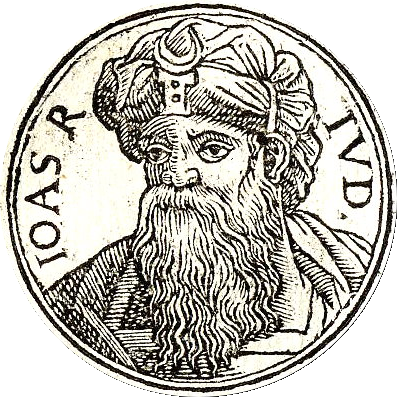
With the death of Jehoiada the priest, King Jehoash became like a ship without a rudder. His former mentor and father figure had been a stabilizing factor in his life, and his departure left the king directionless and vulnerable to the influence of others. The book of 2 Chronicles tells us that not long after Jehoiada’s death, “the leaders of Judah came and bowed before King Joash and persuaded him to listen to their advice. They decided to abandon the Temple of the Lord, the God of their ancestors, and they worshiped Asherah poles and idols instead! Because of this sin, divine anger fell on Judah and Jerusalem” (2 Chronicles 24:17-18 NLT). And though God sent prophets who called the nation to repentance, the people refused to listen. And King Jehoash led the way in rejecting the messengers of Yahweh.

God placed His Spirit upon Zechariah, the son of Jehoiada, who gave a stinging indictment against the nation.

“This is what God says: Why do you disobey the Lord’s commands and keep yourselves from prospering? You have abandoned the Lord, and now he has abandoned you!” – 2 Chronicles 24:20 NLT

But his words fell on deaf ears and hard hearts. Rather than call the people to repentance, King Jehoash repaid his former mentor, Jehoiada, by having his son stoned to death in the temple courtyard. And as Zechariah died, he cried out, “May the Lord see what they are doing and avenge my death!” (2 Chronicles 24:22 NLT).

And this curse from the lips of God’s dying prophet would come to fruition. God would avenge the death of Zechariah and He would do it through the pagan nation of Syria. For years, the Syrians had been harassing the northern kingdom of Israel. All the while Jehoash had been king in Judah, his counterpart in Israel had been waging an ongoing war against the Syrians. King Jehoahaz had ascended to the throne of his father, Jehu, and had picked up where his father had left off, doing “what was evil in the sight of the Lord and followed the sins of Jeroboam the son of Nebat” (2 Kings 13:2 ESV). As a result, God “gave them continually into the hand of Hazael king of Syria and into the hand of Ben-hadad the son of Hazael” (2 Kings 13:3 ESV). This continued throughout the reign of King Jehoahaz.
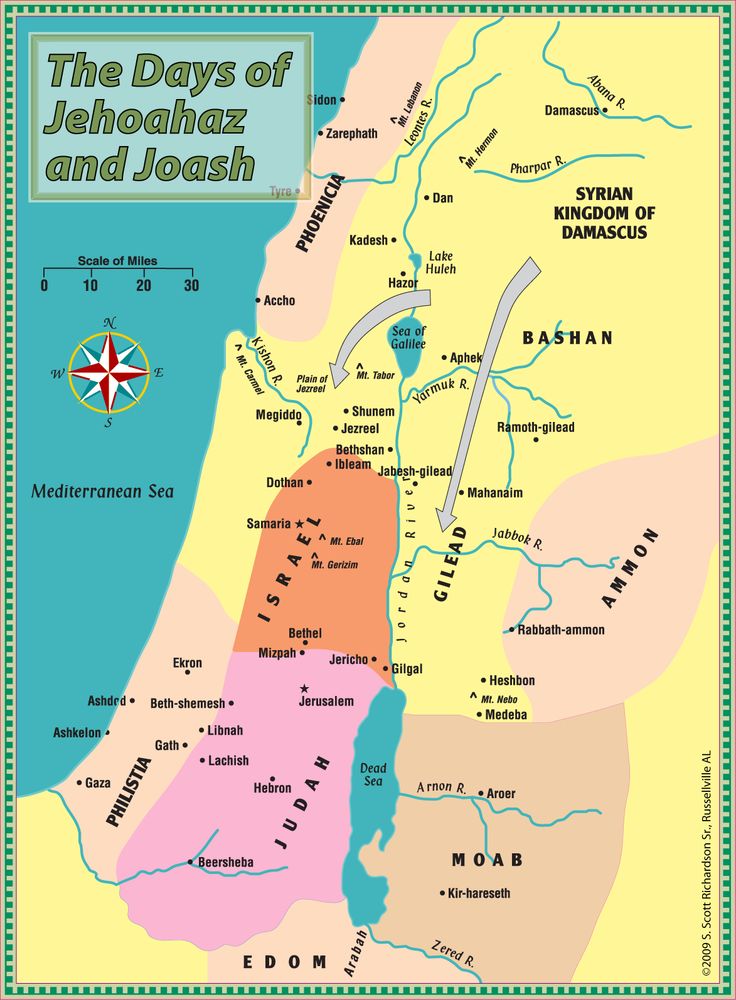
But now, God was going to use the Syrians to punish the rebellious and unrepentant nation of Judah. King Hazael took his campaign of terror further south, moving along the coast of the Mediterranean, and eventually capturing the city of Gath, deep within Judean territory. Then he set sights on Jerusalem. In the spring of the year, Hazael and his army attacked the capital city, “and destroyed all the princes of the people from among the people and sent all their spoil to the king of Damascus” (2 Chronicles 24:23 ESV). And the chronicler goes on to reveal that this victory was God-ordained.

Though the army of the Syrians had come with few men, the Lord delivered into their hand a very great army, because Judah had forsaken the Lord, the God of their fathers. Thus they executed judgment on Joash. – 2 Chronicles 24:24 ESV

The attack left Jehoash wounded. And in desperation, the king decided to do whatever had to do to keep Hazael from capturing the city. So, he stripped bare the temple treasury, sending all the sacred items and the gold to Hazael as a form of ransom.

Jehoash king of Judah took all the sacred gifts that Jehoshaphat and Jehoram and Ahaziah his fathers, the kings of Judah, had dedicated, and his own sacred gifts, and all the gold that was found in the treasuries of the house of the Lord and of the king’s house, and sent these to Hazael king of Syria. Then Hazael went away from Jerusalem. – 2 Kings 12:18 ESV

Rather than turn to God for help, Jehoash took what belonged to God and used it to buy off the enemy. And his plan seemed to work. Hazael took the treasure and left. But Jehoash’s troubles were far from over. Still suffering from the wounds he had received in the attack on Jerusalem, Jehoash was in a vulnerable state. His treasury was bankrupt and he was a physically broken man. And it seems that some of his officials recognized that Judah’s recent defeat at the hands of the Syrians had something to do with Jehoash’s decision to kill Zechariah. The curse uttered by the dying prophet had come true. So, they decided to eliminate the cause of all their troubles.

…his own officials plotted to kill him for murdering the son of Jehoiada the priest. They assassinated him as he lay in bed. – 2 Chronicles 24:25 NLT

The author of 2 Kings even provides us the names of the two conspirators.

The assassins were Jozacar son of Shimeath and Jehozabad son of Shomer—both trusted advisers. – 2 Kings 12:21 NLT

These men would have had easy access to the king. He trusted them. They had become replacements for Jehoiada, providing the king with counsel, and acting as his mentors. But unlike the former priest, these men had no love for Jehoash. They viewed him as a plague upon the nation and determined that his removal might placate God and prevent further judgment. Their actions were the work of God. And it’s interesting to note that these two men were actually foreigners. One was the son of an Ammonite woman, and the other was the son of a Moabite woman. This reference to their birth mothers is significant and it links the events in this chapter all the way back to the book of Genesis.

In chapter 19 of the book of Genesis, there is the account of God’s rescue of Lot and his daughters from the wicked city of Sodom. Lot was the nephew of Abraham who had made a decision to settle in fertile valleys of the Jordan. But it wasn’t long before he “moved his tent as far as Sodom” (Genesis 13:12 ESV). This proved to be a problem, becausethe men of Sodom were wicked, great sinners against the Lord” (Genesis 13:12 ESV). Eventually, Lot relocated his family inside the walls of the city of Sodom. When God determined to destroy Sodom and its neighboring city of Gomorrah for their wickedness, Abraham convinced God to spare Lot and his daughters. But once they were rescued by the angels of God, Lot’s daughters revealed the negative influence of their time spent in Sodom. Fearful that they will never find husbands, they come up with a plan to get their father drunk and commit incest with him, all under the guise of prolonging their father’s lineage. Their mother was dead and their father had no sons. So, in their minds, this was the only way of preserving the family line. But their sinful decision would produce a less-than-ideal outcome.

…both of Lot’s daughters became pregnant by their own father. When the older daughter gave birth to a son, she named him Moab. He became the ancestor of the nation now known as the Moabites. When the younger daughter gave birth to a son, she named him Ben-ammi. He became the ancestor of the nation now known as the Ammonites. – Genesis 19:36 NLT

The Ammonites and Moabites, while distant relatives of the Israelites, were pagan nations that worshiped false gods. And it’s no coincidence that the men who plotted and carried out the assassination of Jehoash had ties to these two nations. God had used the Syrians to inflict judgment upon Judah. Now, He used an Ammonite and a Moabite to bring death to the rebellious and unrepentant Jehoash.

God had preserved and protected Jehoash, allowing him to find sanctuary in the temple and receive instruction from Jehoiada the priest. But when his godly mentor had died, Jehoash was exposed for what he really was – just another king who refused to acknowledge God as the one true Sovereign. Jehoash had started out so well but ended poorly. He had chosen to forsake God and listen to the advice of men. Rather than heed the warnings of God’s prophet, Jehoash had put him to death. And instead of placing his trust in Yahweh, Jehoash had attempted to buy his way out of trouble, using the treasure of God in a failed attempt to escape the judgment of God. And he died trying.

Joash was buried with his ancestors in the City of David. Then his son Amaziah became the next king. – 2 Kings 12:21 NLT

English Standard Version (ESV) The Holy Bible, English Standard Version. ESV® Permanent Text Edition® (2016). Copyright © 2001 by Crossway Bibles, a publishing ministry of Good News Publishers.

New Living Translation (NLT) Holy Bible, New Living Translation, copyright © 1996, 2004, 2015 by Tyndale House Foundation. Used by permission of Tyndale House Publishers Inc., Carol Stream, Illinois 60188. All rights reserved.

The Message (MSG)Copyright © 1993, 1994, 1995, 1996, 2000, 2001, 2002 by Eugene H. Peterson


Two Evils.

“Therefore I still contend with you,
declares the Lord,
    and with your children’s children I will contend.
For cross to the coasts of Cyprus and see,
    or send to Kedar and examine with care;
    see if there has been such a thing.
Has a nation changed its gods,
    even though they are no gods?
But my people have changed their glory
    for that which does not profit.
Be appalled, O heavens, at this;
    be shocked, be utterly desolate,
declares the Lord,
for my people have committed two evils:
they have forsaken me,
    the fountain of living waters,
and hewed out cisterns for themselves,
    broken cisterns that can hold no water.” – Jeremiah 2:9-13 ESV

God wasted no time in prosecuting Judah’s guilt. And He challenged them to try and find another nation that had done anything as blatantly evil as they had done. Thy would find that there was no precedent for their behavior. Even the pagan nations were not guilty of the crime Israel and Judah had committed. God’s people, the ones He had chosen to bless, had forsaken Him. And God points out the ridiculousness of it all by asking, “Has any nation ever traded its gods for new ones, even though they are not gods at all?” (Jeremiah 2:11 NLT). Even the pagan nations were more faithful to their non-existent, imaginary, man-made gods than the Israelites had been to the one true God. And God warns that their actions would have serious consequences. Their decision to forsake Him would have long-lasting, generation-spanning consequences. Even their grandchildren would feel the effects of God’s wrath and suffer His judgment.

God points out the incredible absurdity of Israel’s decision by demanding that the heavens act as witness against them. He describes the heavens as being shocked and appalled at the scene. The stars, sun, moon and planets, part of God’s created order, are dumbfounded that one of their own, man, would refuse to worship the One who had made him. It was King David who wrote: “The heavens proclaim the glory of God. The skies display his craftsmanship” (Psalm 19:1 NLT). Ethan, the Ezrahite, made a similar statement in his psalm: “All heaven will praise your great wonders, Lord; myriads of angels will praise you for your faithfulness. For who in all of heaven can compare with the Lord? What mightiest angel is anything like the Lord? The highest angelic powers stand in awe of God. He is far more awesome than all who surround his throne. O Lord God of Heaven’s Armies! Where is there anyone as mighty as you, O Lord? You are entirely faithful.” (Psalm 85:5-8 NLT).

And the heavens are to be shocked at the two evils that the people of God have committed. First, they were guilty of forsaking God. The Hebrew word is`azab and it means “to depart from, leave behind, leave, let alone” (“H5800 – `azab – Strong’s Hebrew Lexicon (KJV).” Blue Letter Bible). In essence, they had deserted God. Like a husband or wife walking out on their spouse, the people of God had abandoned God. After all He had done for them, they had decided to turn their back on Him. He had chosen them, rescued them out of slavery in Egypt, led them through the wilderness and delivered them into the land, just as He had promised. He gave them victories over their enemies. He provided them with cities they had not constructed, fields and vineyards they had not planted, and homes they had not built. He had given them His law to clearly reveal for them how they were to live as His chosen people. And then He had provided them with the sacrificial system so that they could receive His forgiveness when they failed to live up to His law. He had graciously allowed them to demand a king and had given them Saul. When they discovered just how bad things could be with a king “just like all the other nations” had, He had given them David. And while David had his faults, he was a man after God’s own heart and “he shepherded them according to the integrity of his heart, And guided them with his skillful hands” (Psalm 78:72 NASB).

Over and over again, God had proven His faithfulness to Israel and Judah. But they had returned His favor with faithlessness. They had forsaken Him. But as if that was not enough, God levels the second charge against them. They had chosen replacements for Him. God puts their sin in very descriptive terms: “…they have dug for themselves cracked cisterns that can hold no water at all!” (Jeremiah 2:13 NLT). By forsaking God, they had turned their back on “the fountain of living water.” God had been their sole source of refreshment and nourishment. He had been their means of life support. The term, “living water” refers to fresh, flowing water, as in a stream or a brook. It is pure and free from stagnation or pollution. But it also provides life. It keeps those who drink from it alive and well. But the people of God had chosen to refuse the living water and, instead, had decided to dig cisterns to catch their own water. The picture here is one of stubborn self-sufficiency. Rather than rely on the living water, the free-flowing, life-giving water of God; they had decided to make their own source of water. Cisterns were a common feature in those days. They were simply depressions or holes dug into rock that were designed to collect rain water. In an arid environment, they were a necessity. But the contrast God provides is that of having a free-flowing stream within easy access and choosing to build a cistern instead. One of the natural problems with a cistern is that the water collected in it was prone to stagnation. It was easily contaminated by outside influences such as dust, dirt or even animals. It was less than fresh. That is what makes the comparison sound so absurd. And to make matters worse, God describes the cistern as cracked and, as a result, it leaked. It wasn’t even a good cistern. It failed to do what it was designed to do. What a great description of false gods. They are man-made, designed to deliver life, but incapable of delivering on their intended purpose. The Scriptures are replete with stinging accusations against the absurdity of idols.

Their idols are merely things of silver and gold,
    shaped by human hands.
They have mouths but cannot speak,
    and eyes but cannot see.
They have ears but cannot hear,
    and noses but cannot smell.
They have hands but cannot feel,
    and feet but cannot walk,
    and throats but cannot make a sound.
And those who make idols are just like them,
    as are all who trust in them. – Psalm 115:4-8 NLT

Their gods are like helpless scarecrows in a cucumber field! They cannot speak, and they need to be carried because they cannot walk. Do not be afraid of such gods, for they can neither harm you nor do you any good. – Jeremiah 10:5 NLT

The idol makers encourage one another,
    saying to each other, “Be strong!”
The carver encourages the goldsmith,
    and the molder helps at the anvil.
    “Good,” they say. “It’s coming along fine.”
Carefully they join the parts together,
    then fasten the thing in place so it won’t fall over. – Isaiah 41:6-7 NLT

Idols are like a cistern with a crack in it. Crafted by men, but deaf, dumb and blind, and incapable of providing life. The people of God had turned their back on God Almighty, the one who had defeated the forces of Pharaoh and conquered the nations of Canaan. And in His place, they had set up idols that they had made with their own hands. They had offered sacrifices to blocks of wood and pieces of metal. They had put their hope and trust in those things that had no power to deliver help or provide protection. They had staked their lives on lifeless, inanimate objects. Absurd? No doubt. Ridiculous? Absolutely. But we still do it today. In fact, Tim Keller provides us with a great definition of idolatry that brings it into our modern, 21st-Century context.

What is an idol? It is anything more important to you than God, anything that absorbs your heart and imagination more than God, anything you seek to give you what only God can give…

An idol is whatever you look at and say, in your heart of hearts, “If I have that, then I’ll feel my life has meaning, then I ‘ll know I have value, then I’ll feel significant and secure.” There are many ways to describe that kind of relationship to something, but perhaps the best one is worship. (Tim Keller, Counterfeit Gods: The Empty Promises of Money, Sex, and Power, and the Only Hope that Matters).


English Standard Version (ESV)
The Holy Bible, English Standard Version. ESV® Permanent Text Edition® (2016). Copyright © 2001 by Crossway Bibles, a publishing ministry of Good News Publishers.

New Living Translation (NLT)
Holy Bible, New Living Translation, copyright © 1996, 2004, 2015 by Tyndale House Foundation. Used by permission of Tyndale House Publishers Inc., Carol Stream, Illinois 60188. All rights reserved.

The Message (MSG)Copyright © 1993, 1994, 1995, 1996, 2000, 2001, 2002 by Eugene H. Peterson

Double Iniquity.

Samaria’s king shall perish like a twig on the face of the waters. The high places of Aven, the sin of Israel, shall be destroyed. Thorn and thistle shall grow up on their altars, and they shall say to the mountains, “Cover us,” and to the hills, “Fall on us.”

From the days of Gibeah, you have sinned, O Israel; there they have continued. Shall not the war against the unjust overtake them in Gibeah? When I please, I will discipline them, and nations shall be gathered against them when they are bound up for their double iniquity.

Ephraim was a trained calf that loved to thresh, and I spared her fair neck; but I will put Ephraim to the yoke; Judah must plow; Jacob must harrow for himself. Sow for yourselves righteousness; reap steadfast love; break up your fallow ground, for it is the time to seek the Lord, that he may come and rain righteousness upon you. – Hosea 10:7-12 ESV

Over in the book of Jeremiah, God accused the nations of Judah of having done something even the pagan nations would have never considered. “Has a nation changed its gods, even though they are no gods? But my people have changed their glory for that which does not profit” (Jeremiah 2:11 ESV). Even the idol-worshiping pagan nations would have never dreamed of abandoning their false god for another one. And yet, the people of Judah had forsaken the one true God for a plethora of false gods. And God went on to say, “for my people have committed two evils: they have forsaken me, the fountain of living waters, and hewed out cisterns for themselves, broken cisterns that can hold no water” (Jeremiah 2:13 ESV). They had turned their backs on God, the source of all life, hope, blessing and fruitfulness. Like a source of clear water in the desert, God was to have been vital to their very existence. But instead of relying on His life-giving sustenance, they turned to man-made sources of help and hope that could never deliver. Like cracked cisterns that could not hold water, their idols would prove to be incapable of meeting the expectations of the people of Judah. They had left God and replaced Him with false gods.

The people of northern nation of Israel were guilty of the very same thing. Which is why God warned them that they would be “bound up for their double iniquity” (Hosea 10:10 ESV). Their destruction was coming at the hands of the Assyrians. Their guilt was long-standing, going all the way back to the events surrounding Gibeah. It was there that the concubine of a visiting Levite was brutally raped and murdered by the men of the town who were actually desirous of having sexual relationships with the Levite. Like Sodom and Gomorrah, this town had become highly immoral and completely corrupt. And God accused the entire nation of having followed the example of Gibeah. Immorality, corruption, idolatry, and moral decay had spread throughout the nation. Now God was going to discipline them for their unfaithfulness.

The king and his capital city of Samaria would be destroyed. The high places where the Israelites worshiped their false gods would be abandoned and overgrown with weeds. The city of Bethel, which meant “house of God” would become known as Beth-aven (house of wickedness or vanity). They had abandoned God and now they would discover what it was like to have God abandon them. They would find out what it was like to no longer have His hand protecting them or providing for them.

God compared Israel to a young heifer used for threshing grain. In the early days of His relationship with the nation of Israel, they had enjoyed a unique and relatively easy relationship with Him. Threshing involved a cow or ox walking over the recently harvested wheat in order to separate the edible grain from the chaff. The cow was unmuzzled and free to eat the grain as it worked. It was rewarded for its labor. But now Israel was going to learn what it was like to be under the yoke of oppression, laboring under the hand of its new master, the Assyrians. Rather than threshing grain for God, they would plow for their oppressors. But God told them it was not too late. Even in their captivity, they could seek Him. So He encouraged them, “Plant the good seeds of righteousness, and you will harvest a crop of love. Plow up the hard ground of your hearts, for now is the time to seek the Lord, that he may come and shower righteousness upon you” (Hosea 10:12 NLT). While living in exile in Assyria, they could seek God. They could choose to do His will. As they endured God’s loving discipline, they could respond in repentance, turning from their idolatry and renewing their commitment to and dependence upon Him.

They had committed two sins: They had forsaken God and then tried to replace Him with gods of their own making. And while God, because of His holiness and justice, was required to punish them for their sins, He was also willing to forgive and restore them. But they must willingly return to Him. They must forsake their false gods and return to the fountain of living water. It was Jesus who said, “Anyone who is thirsty may come to me! Anyone who believes in me may come and drink! For the Scriptures declare, ‘Rivers of living water will flow from his heart’” (John 7:37 NLT). He told the woman at the well, “Anyone who drinks this water will soon become thirsty again. But those who drink the water I give will never be thirsty again. It becomes a fresh, bubbling spring within them, giving them eternal life” (John 4:13-14 NLT). God is all about restoration and renewal. He wants to redeem the lost and restore the wandering. So He calls. He invites. 

“Is anyone thirsty? Come and drink—even if you have no money! Come, take your choice of wine or milk—it’s all free! Why spend your money on food that does not give you strength? Why pay for food that does you no good? Listen to me, and you will eat what is good. You will enjoy the finest food. Come to me with your ears wide open. Listen, and you will find life. I will make an everlasting covenant with you. I will give you all the unfailing love I promised to David.” – Isaiah 55:1-3 NLT

2 Chronicles 11-12, 1 Timothy 2

God-less Living Vs Godly Living.

2 Chronicles 11-12, 1 Timothy 2

When the rule of Rehoboam was established and he was strong, he abandoned the law of the Lord, and all Israel with him. – 2 Chronicles 12:1 ESV

After the split of the kingdom, Rehoboam, the son of Solomon, retained two tribes – Judah and Benjamin – as well as control of the city of Jerusalem. And when he made plans to attack Jeroboam and the people of Judah, God told him, “You shall not go up or fight against your relatives. Return every man to his home, for this thing is from me” (2 Chronicles 11:4 ESV). God had brought about the split of the kingdom because of the disobedience and unfaithfulness of Solomon. Because Rehoboam listened to the word of the Lord, he was able to maintain control over the nation of Judah. He even found that those living in the northern kingdom of Israel, who were appalled by Jeroboam’s idolatry, soon joined forces with him and “they strengthened the kingdom of Judah, and for three years they made Rehoboam the son of Solomon secure, for they walked for three years in the way of David and Solomon” (2 Chronicles 11:17 ESV). In other words, they remained faithful to God for three years. Then something happened. “When the rule of Rehoboam was established and he was strong, he abandoned the law of the Lord, and all Israel with him” (2 Chronicles 12:1 ESV). As his kingdom became stronger, Rehoboam became increasingly more independent and saw less and less need for God. He let his success go to his head and it had a direct impact on his heart.

What does this passage reveal about God?

So God stepped in. He brought the Egyptians, along with the Libyans, Sukkum and Ethiopians against Jerusalem. And God made it clear to Rehoboam why this was taking place. “You abandoned me, so I have abandoned you to the hand of Shishak” (2 Chronicles 12:5 ESV). As had happened all throughout the period of the judges, God brought “plunderers” against His people in order to teach them a lesson. And this latest threat had the same impact as all those before them. “Then the princes of Israel and the king humbled themselves and said, ‘The Lord is righteous’” (2 Chronicles 12:6 ESV). They acknowledged that what God was doing was just, righteous and right. They deserved it. They were guilty. And when God saw their response, He said, “I will not destroy them, but I will grant them some deliverance, and my wrath shall not be poured out on Jerusalem by the hand of Shishak. Nevertheless, they shall be servants to him, that they may know my service and the service of the kingdoms of the countries” (2 Chronicles 12:7 ESV). The NET Bible translates that last line as, “Yet they will become his subjects, so they can experience how serving me differs from serving the surrounding nations.” They were going to learn the difference between faithfully serving God and having to unwillingly serve a pagan nation. God wanted His people to be godly. He wanted them to live with Him as the focal point of their individual and corporate lives. But because the people of Judah had turned their backs on God and, in essence, become God-less, He allowed them to experience what life could be like without Him. Shishak and the Egyptians ransacked the temple, taking away all the treasure David and Solomon had accrued. Yet, God spared Judah from complete destruction because they humbled themselves before Him, admitting their guilt and His justified actions against them.

What does this passage reveal about man?

It is amazing that God continued to bless Rehoboam in spite of all he had done to forsake Him. “So King Rehoboam grew strong in Jerusalem and reigned” (2 Chronicles 12:13 ESV). He would reign for 17 years in Jerusalem, “the city that the Lord had chosen out of all the tribes of Israel to put his name there” (2 Chronicles 12:13 ESV). And yet, Rehoboam would not learn from his mistakes. He would not respond to God’s grace and mercy with godly living. Instead, “he did evil, for he did not set his heart to seek the Lord” (2 Chronicles 12:14 ESV). Like Israel’s first king, Saul, and his own father, Solomon, Rehoboam would forsake God. He started out well, but finished poorly. He went from godliness to godlessness. And the amazing thing is that his actions took place even while God was in the midst of blessing him and prospering his kingdom

Over in the book of 1 Timothy, Paul encourages his readers to live godly lives. He challenges them to be people of prayer. He instructs them pray for “all people”, including kings and all who are in high places. His goal? “That we may lead a peaceful and quiet life, godly and dignified in every way” (2 Timothy 2:2 ESV). Our prayers are to be focused on asking God to provide a safe and fertile environment in which to live god-focused lives so that we might influence the culture around us. We are to pray for an atmosphere in which we can live for God and share the good news of Jesus Christ with everyone we meet. Paul encourages the men to be prayerful, uncontentious, and not quarrelsome. He tells the women to be modest in their dress, respectable in their appearance, and self-controlled in their behavior. At the heart of Paul’s message is the power of and need for prayer in the life of the believer. As Dr. Thomas L. Constable so clearly explains, “Prayer is so important because it invites God into the situation we pray about and it secures His working on behalf of those in need” (Dr. Constable’s notes on 1 Timothy, 2007 Edition). Prayer expresses our dependence upon and need for God. It is at the core of godly living. To live a life without prayer is to live a god-less life. It communicates to Him that we have no need for Him in our lives. When Rehoboam and the people humbled themselves before God, they were acknowledging their need for His help and forgiveness.

How would I apply what I’ve read to my own life?

God desires His people to live godly lives – lives that are empowered by His Spirit, obedient to His Word, and dependent upon His help. To forsake God does not require that we completely turn our backs on Him or worship other gods in place of Him. It can simply mean that we have chosen not to depend on Him. We can become self-sufficient, autonomous in our decision making, and convinced that we can somehow live our lives in our own strength and according to our own wisdom. I can’t help but keep reflecting on the fact that Solomon had wisdom and knowledge that had been given to him by God. Yet he ended up turning his back on God and worshiping idols made with human hands. Not exactly the wisest decision he could have made. But even godly wisdom is useless if we don’t put it into effect. It is useless to us if we choose to disobey it. Godliness is nothing more than God-centeredness – living our lives completely dependent upon Him. It is leading peaceful and quiet lives, godly and dignified in every way. “This is good, and it is pleasing in the sight of God our Savior, who desires all people to be saved and to come to the knowledge of the truth” (1 Timothy 2:3-4 ESV). When we live godly lives, made possible through the work of Christ on the cross, we become living testimonies of God’s grace and His life transforming power.

Father, I want to live godly. I want my life to reflect my dependence upon You and reveal Your power through me. I want to be a man of prayer, a man who lives to serve, please and obey You in all that I do. Amen

Ken Miller
Grow Pastor & Minister to Men
kenm@christchapelbc.org