The Gift That Keeps On Giving

7 But grace was given to each one of us according to the measure of Christ’s gift. 8 Therefore it says,

“When he ascended on high he led a host of captives,
    and he gave gifts to men.”

9 (In saying, “He ascended,” what does it mean but that he had also descended into the lower regions, the earth? 10 He who descended is the one who also ascended far above all the heavens, that he might fill all things.) 11 And he gave the apostles, the prophets, the evangelists, the shepherds and teachers, 12 to equip the saints for the work of ministry, for building up the body of Christ, 13 until we all attain to the unity of the faith and of the knowledge of the Son of God, to mature manhood, to the measure of the stature of the fullness of Christ, 14 so that we may no longer be children, tossed to and fro by the waves and carried about by every wind of doctrine, by human cunning, by craftiness in deceitful schemes. – Ephesians 4:7-14 ESV

Paul has encouraged the believers in Ephesus to live together in unity, recognizing their shared faith and common bond in Christ. God had called them and placed them in the body of Christ, and together, they were to bring glory and honor to God. Paul reminded them that God had given them gifts to make their unification possible. Paraphrasing from Psalm 68:18, Paul emphasized that when Jesus ascended back to heaven, He gave gifts to men. This was fulfilled with the coming of the Holy Spirit at Pentecost.

On the day of Pentecost all the believers were meeting together in one place. Suddenly, there was a sound from heaven like the roaring of a mighty windstorm, and it filled the house where they were sitting. Then, what looked like flames or tongues of fire appeared and settled on each of them. And everyone present was filled with the Holy Spirit and began speaking in other languages, as the Holy Spirit gave them this ability. – Acts 2:1-4 NLT

Jesus’ departure guaranteed the arrival of the Holy Spirit. Just before His death, He told His disciples, “If you love me, obey my commandments. And I will ask the Father, and he will give you another Advocate, who will never leave you. He is the Holy Spirit, who leads into all truth” (John 14:15-17 NLT). He went on to prepare them for His pending death, but then assured them, “I will not abandon you as orphans—I will come to you. Soon, the world will no longer see me, but you will see me. Since I live, you also will live. When I am raised to life again, you will know that I am in my Father, and you are in me, and I am in you” (John 14:18-20 NLT).

The Holy Spirit’s arrival was a game-changer for the disciples. He empowered and equipped them for service. He provided them with the capacity to speak languages they didn’t know and perform supernatural miracles of healing. And Jesus had told them this would happen.

“I will send the Holy Spirit, just as my Father promised. But stay here in the city until the Holy Spirit comes and fills you with power from heaven.” – Luke 24:49 NLT

The gift of the Holy Spirit was not just for Jesus’ original disciples. He was to become a permanent fixture in the life of every believer. At the point of salvation, the Holy Spirit takes up residence in a believer, providing them with a gift, a supernatural enablement designed to build up the body of Christ. Paul described the nature of the gifts in his letter to the Corinthians.

A spiritual gift is given to each of us so we can help each other. To one person the Spirit gives the ability to give wise advice; to another the same Spirit gives a message of special knowledge. The same Spirit gives great faith to another, and to someone else the one Spirit gives the gift of healing. He gives one person the power to perform miracles, and another the ability to prophesy. He gives someone else the ability to discern whether a message is from the Spirit of God or from another spirit. Still another person is given the ability to speak in unknown languages,[while another is given the ability to interpret what is being said. It is the one and only Spirit who distributes all these gifts. He alone decides which gift each person should have. – 1 Corinthians 12:7-11 NLT

These gifts are God-ordained, Spirit-empowered, and not man-made. They are not talents or natural capabilities, and no one is born with these gifts.

But the Spirit’s indwelling presence and the gifts He provides are not all that God has given the church. Paul reminds the Ephesians that God has also provided godly leaders for the church. These are divinely appointed individuals whom God has chosen and equipped for the task of leading His people. Just as God chose and appointed Moses to lead the people of Israel out of slavery in Egypt, He also chose David to transform Israel from a kingdom of former slaves to prominence as one of the greatest nations in the world. In the same way, God provided the church with leaders.

Paul describes them as apostles, prophets, evangelists, shepherds, and teachers. An apostle was literally a “sent one” or messenger. The original 11 disciples had been commissioned and sent by Jesus to take the gospel message to the world. Paul, though not one of the original 12 disciples chosen by Jesus, regarded himself as an apostle because he had been commissioned byJesus on the road to Damascus. The primary role of an apostle was to spread the gospel and establish churches throughout the known world.

Prophets were “forth-tellers” who had the divinely enabled ability to speak the truth of God. These individuals were responsible for building up the body of Christ, especially the local churches. Paul provides insight into their role in his letter to the Corinthian believers: “The one who prophesies speaks to people for their upbuilding and encouragement and consolation” (1 Corinthians 14:3 ESV). In the early days of the church, before most of the New Testament had even been written, the role of prophets was vital. These individuals were divinely empowered to discern and disseminate the truth of God in a time when false teachers and false gospels were prevalent.

Evangelists were “heralds of salvation.” They were Spirit-empowered to share the gospel, and their role was essential. These itinerant preachers played a significant part in leading others to Christ. Some evangelists stayed close to home, ministering to their local communities, while others traveled from city to city to spread the good news of Jesus Christ to the Gentiles.

When Paul refers to pastors and teachers, he is likely speaking of a single function, not two. It could be translated as “pastor-teacher,” referring to one role within the church. Regardless of whether Paul was speaking of one or two gifts, these individuals were essential in shepherding and teaching the body of Christ. The term “pastor” literally means “shepherd,” one who ministers to the needs of the flock of Jesus Christ. He was to care for, protect, guide, and feed them. As a teacher, he was responsible for instructing the people of God in everything from the teachings of Jesus to sound doctrine. This particular role was essential to the church’s well-being because of the growing problem of false teaching and divisive doctrine.

Together, these gifted individuals were to minister to God’s people, equipping them for the work of the ministry. It seems quite clear that Paul did not have in mind a professional clergy who did all the work of the ministry on behalf of God’s people. These were lay leaders who were specifically gifted as equippers and trainers, ensuring that the believers under their care were able to do the work of ministry in their local congregations.

It was as individual believers were properly taught, trained, and equipped that they were able to minister to one another and build up the body of Christ. Just a few verses later in this chapter, Paul describes the outcome of a well-equipped church:

He [God] makes the whole body fit together perfectly. As each part does its own special work, it helps the other parts grow, so that the whole body is healthy and growing and full of love. – Ephesians 4:16 NLT

The goal is growth, and the objective is spiritual health and doctrinal soundness. Jesus did not leave His flock defenseless or alone. He provided us with the Holy Spirit, and the Spirit has given the church gifted individuals to lead, guide, and equip the body of Christ.

Paul has in mind not only the spiritual maturity of every believer but also the unity and well-being of the local body of Christ. There was no place for spiritual stagnation or immaturity. There was no excuse for disunity and discord. God expected His people to grow, and so did Paul. But it was to be a team effort. Each individual was expected to do his or her job, selflessly and sacrificially. And the commitment was for the long term.

This will continue until we all come to such unity in our faith and knowledge of God’s Son that we will be mature in the Lord, measuring up to the full and complete standard of Christ. – Ephesians 4:13 NLT

Father, You have given us Your Spirit, equipped us with spiritual gifts, provided us with qualified leaders, and placed us into the body of Christ. In doing so, You have “given us everything we need for life and godliness” (2 Peter 1;3 BSB). We have no excuse. There is no reason we should struggle with uncertainty, disunity, or spiritual ignorance or apathy. Unless, of course, we choose to quench and grieve Your Spirit by refusing to hear His voice and heed His commands. As Paul made clear to the Galatians, we each have a daily choice to either live according to our selfish, sinful flesh or according to the Spirit. We can live empowered by the Spirit or enslaved to our sinful nature. Which is why Paul wrote, “let the Holy Spirit guide your lives. Then you won’t be doing what your sinful nature craves” (Galatians 5:16 NLT). That is the way I want to live, but I know I can’t do it on my own. That is why I am grateful for the gift of Your Spirit. You have given me all that I need and have surrounded me with other like-minded men and women who are Spirit-enabled, empowered, and committed to building up the body of Christ until Your Son returns. May we bring You glory and honor as we carry out Your will. Amen

English Standard Version (ESV) The Holy Bible, English Standard Version. ESV® Permanent Text Edition® (2016). Copyright © 2001 by Crossway Bibles, a publishing ministry of Good News Publishers.

New Living Translation (NLT) Holy Bible, New Living Translation, copyright © 1996, 2004, 2015 by Tyndale House Foundation. Used by permission of Tyndale House Publishers Inc., Carol Stream, Illinois 60188. All rights reserved.

It’s A Family Affair

8 First, I thank my God through Jesus Christ for all of you, because your faith is proclaimed in all the world. 9 For God is my witness, whom I serve with my spirit in the gospel of his Son, that without ceasing I mention you 10 always in my prayers, asking that somehow by God’s will I may now at last succeed in coming to you. 11 For I long to see you, that I may impart to you some spiritual gift to strengthen you— 12 that is, that we may be mutually encouraged by each other’s faith, both yours and mine. 13 I do not want you to be unaware, brothers, that I have often intended to come to you (but thus far have been prevented), in order that I may reap some harvest among you as well as among the rest of the Gentiles. 14 I am under obligation both to Greeks and to barbarians, both to the wise and to the foolish. 15 So I am eager to preach the gospel to you also who are in Rome. – Romans 1:8-15 ESV

Paul had heard about the believers in Rome, but he probably had little or no awareness of any particular individuals, because he had not yet been able to visit the church there. However, he had become aware of the church as a whole and expressed his gratitude to God for them.

I thank my God through Jesus Christ for all of you, because your faith in him is being talked about all over the world. – Romans 1:8 NLT

The church in Rome had gained a reputation for its faith. News of their corporate commitment to the gospel of Jesus Christ had been spread throughout the known world, and Paul longed to see them face to face. He prayed for them consistently and persistently asked God to allow him the opportunity to visit them.

It is clear that Paul loved the believers in Rome even though he had never met them. He was more than an evangelist, spreading the good news about Jesus Christ and watching people come to faith in Him. Paul was a builder. He wanted to see the local congregations that were springing up all around the world grow into spiritual maturity. The majority of his letters were written to local congregations and have a corporate context. There is a tendency to read his letters from an individualistic viewpoint, failing to understand that his words were intended for the congregation as a whole, not the individual believer.

The church in Rome had a corporate reputation for its faith. It was as a body that they had become known for their faith, not as individuals. Somehow, with our Western, individualistic mindsets, we lose sight of the fact that there is a reason we were baptized into both the local and global body of Christ. We have become members of something far greater and more significant than ourselves. For Paul, salvation was not an individual event; it was a team sport.

Later in this same letter, Paul tells the believers in Rome, “Just as our bodies have many parts and each part has a special function, so it is with Christ’s body. We are many parts of one body, and we all belong to each other.r” (Romans 12:4-5 NLT). He wrote something similar to the church in Corinth.

But our bodies have many parts, and God has put each part just where he wants it. How strange a body would be if it had only one part! Yes, there are many parts, but only one body. – 1 Corinthians 12:18-20 NLT

Our tendency is to focus on our own spiritual growth while neglecting the body’s well-being. We concentrate all our efforts on ourselves. But it’s interesting to note Paul’s comment to his brothers and sisters in Rome.

For I long to see you, that I may impart some spiritual gift to strengthen you. – Romans 1:11 ESV

It is unlikely that Paul is saying he wants to lay hands on every one of them and give them a spiritual gift, such as tongues or healing. He clarifies what he means in the very next line.

…that is, that we may be mutually encouraged by each other’s faith, both yours and mine. – Romans 1:12 ESV

In other words, Paul simply wanted to be a source of encouragement to them as he shared his faith with them. And he knew that they would lift him up in his own faith as they ministered to him. He was less focused on any specific spiritual gift than he was on the mutual encouragement that believers receive as members of the body of Christ. Paul’s heart was for unity in the body and a sense of shared concern for one another, so “that there may be no division in the body, but that the members may have the same care for one another. If one member suffers, all suffer together; if one member is honored, all rejoice together” (1 Corinthians 12:25-26 ESV).

Sometimes we make far more of the gifts than the purpose behind them. Paul told the Corinthian believers, “A spiritual gift is given to each of us so we can help each other” (1 Corinthians 12:7 NLT). Whatever gift the Spirit has given, He has done so for the mutual benefit of the body. We exist to build one another up. My presence within the body of Christ is other-oriented, making it all about us and not me. That is why God gave apostles, prophets, evangelists, shepherds, and teachers to the early church  “to equip God’s people to do his work and build up the church, the body of Christ. This will continue until we all come to such unity in our faith and knowledge of God’s Son that we will be mature in the Lord, measuring up to the full and complete standard of Christ” (Ephesians 4:12-13 NLT).

The writer of Hebrews reminds us, “Let us think of ways to motivate one another to acts of love and good works. And let us not neglect our meeting together, as some people do, but encourage one another, especially now that the day of his return is drawing near” (Hebrews 10:24-25 NLT).

The gift of mutual encouragement is desperately needed in the church today. We are in this thing together. We are members of one body, serving one God and sharing a common faith in one Lord and Savior Jesus Christ. May we learn to share our gifts with one another and grow in our desire to love and encourage one another. And may our corporate reputation for faith in Christ spread throughout the world.

Father, we live in an individualistic society where the sense of community has been lost or replaced by a souless focus on identity politics and group think. Our affiiliations are shallow and have little to do with a shared faith or a common bond in a just or righteous cause. Yet, You have placed Your sons and daughters into a family where they are meant to enjoy the benefits of a loving, faith-based community that is empowered by Your Spirit, instructed by Your Word, and built up by their shared belief in a Savior who died for their sins. This isn’t about idealogy or perceived identity. It is all about the saving work of Jesus Christ and how he broke down the barriers of identity, ethnicity, and individuality. His death unified a disperate and diverse group of people into a family where our selfless displays of mutual love and corporate care reveal that we are Your children. But it is so easy to practice an individualistic faith that negates the blessings of community and destroys the testimony of the body of Christ. Jesus said, “Your love for one another will prove to the world that you are my disciples” (John 13:35 NLT). When we live in unity, we are a force to be reckoned with. Together, we become a powerful light shining in the sin-stained darkness of this world. Amen

English Standard Version (ESV) The Holy Bible, English Standard Version. ESV® Permanent Text Edition® (2016). Copyright © 2001 by Crossway Bibles, a publishing ministry of Good News Publishers.

New Living Translation (NLT) Holy Bible, New Living Translation, copyright © 1996, 2004, 2015 by Tyndale House Foundation. Used by permission of Tyndale House Publishers Inc., Carol Stream, Illinois 60188. All rights reserved.
The Grace of Giving

1 We want you to know, brothers, about the grace of God that has been given among the churches of Macedonia, 2 for in a severe test of affliction, their abundance of joy and their extreme poverty have overflowed in a wealth of generosity on their part. 3 For they gave according to their means, as I can testify, and beyond their means, of their own accord, 4 begging us earnestly for the favor of taking part in the relief of the saints— 5 and this, not as we expected, but they gave themselves first to the Lord and then by the will of God to us. 6 Accordingly, we urged Titus that as he had started, so he should complete among you this act of grace. 7 But as you excel in everything—in faith, in speech, in knowledge, in all earnestness, and in our love for you—see that you excel in this act of grace also.

8 I say this not as a command, but to prove by the earnestness of others that your love also is genuine. – 2 Corinthians 8:1-8 ESV

Paul had been overwhelmed by the reception of his previous letter, even though its message had produced sorrow among the Corinthians. However, that sorrow had led to their repentance, and they had responded in grace, love, and gratitude.

Now Paul takes the opportunity to appeal to that same grace to enlist their help with a pressing financial concern. For nearly five years, Paul has been actively soliciting funds from the churches he had helped establish throughout Macedonia, Galatia, Achaia, and Asia Minor. This money was being sent to help Hebrew Christians living in Judea, where they were suffering from the effects of a famine as well as the poverty that came as a result of their conversion to Christianity. Many had lost their jobs, been ostracized by their families, or were having a difficult time trying to do business with their Jewish neighbors. Paul was constantly requesting the churches he helped to start to provide financial assistance to their brothers and sisters in Judea, and Corinth was no exception.

Paul begins by informing the Corinthians of the generosity displayed by the churches in Macedonia, a neighboring region. In referring to the Philippians, Thessalonians, and Bereans, Paul was adroitly using comparison to make his appeal to the Corinthians. He points out that their neighbors to the north “have overflowed in a wealth of generosity on their part” (2 Corinthians 8:2 ESV). And this was in spite of their own “extreme poverty.” Paul says, “they gave not only what they could afford, but far more. And they did it of their own free will” (2 Corinthians 8:3 NLT). Not only that, Paul insists that they begged for the opportunity to give more.

This was not the first time the Corinthians had heard about the need in Judea. Paul had raised this issue in his first letter. He referred to it as the “collection for the saints” (1 Corinthians 16:1). But either the Corinthians had begun to give and then stopped, or they had never fully gotten behind the effort to begin with. Either way, Paul is now appealing to them to allow the grace of God to flow through them, as it did with the believers in Macedonia.

When it came to the body of Christ, the church, Paul had a strong sense of community and unity. He wanted each congregation to understand and embrace their connection with and responsibility to their fellow believers all around the world. They were not to view themselves as independent entities, isolated and removed from the larger context of the family of God. Instead, they were to see themselves as brothers and sisters in Christ, sharing a common bond with all believers everywhere. And Paul wants them to know that God desired to use them to extend His grace to the believers in Judea. Paul had even sent Titus to encourage their participation in this fundraising effort. 

Paul reminds them that they are a gifted church.

…you excel in so many ways—in your faith, your gifted speakers, your knowledge, your enthusiasm, and your love from us… – 2 Corinthians 8:7 NLT

There appears to be a hint of sarcasm in this statement. In his previous letter, Paul had been forced to address their arrogance regarding the gifts of the Spirit they had received and their prideful use of them. But he began by pointing out how they had been enriched by God. 

I always thank my God for you and for the gracious gifts he has given you, now that you belong to Christ Jesus. Through him, God has enriched your church in every way—with all of your eloquent words and all of your knowledge. This confirms that what I told you about Christ is true. Now you have every spiritual gift you need as you eagerly wait for the return of our Lord Jesus Christ. – 1 Corinthians 1:4-7 NLT

Yet, they had been guilty of using their Spirit-endowed gifts for selfish, self-promoting purposes. They had turned the gifts of the Spirit into badges of honor, pridefully comparing their spirituality and boasting in their superiority over one another. This had led Paul to write, “Let there be no divisions in the church. Rather, be of one mind, united in thought and purpose. For some members of Chloe’s household have told me about your quarrels, my dear brothers and sisters” (1 Corinthians 1:10-11 NLT). Paul went on to point out, “You are jealous of one another and quarrel with each other. Doesn’t that prove you are controlled by your sinful nature? Aren’t you living like people of the world?” (1 Corinthians 3:3 NLT).

The Corinthians had become divided and fractured, arguing over who had the superior gift and who followed a particular leader. That prompted Paul to scold them sarcastically.

You think you already have everything you need. You think you are already rich. You have begun to reign in God’s kingdom without us. – 1 Corinthians 4:8 NLT

They were so self-consumed that they couldn’t think about anyone but themselves. Their obsession with their superior giftedness left them puffed up with pride and unwilling to see the needs all around them.

So, in his second letter, Paul begs them to put aside their pride and “ excel also in this gracious act of giving” (2 Corinthians 8:7b NLT). But he doesn’t want them to do it under coercion or as a form of compliance with a command; ist must be done in love. Giving without love is ultimately self-motivated and done to get attention. What is given is soiled by selfishness, regret, and a sense of reluctance.

In His Sermon on the Mount, Jesus taught, “Watch out! Don’t do your good deeds publicly, to be admired by others, for you will lose the reward from your Father in heaven. When you give to someone in need, don’t do as the hypocrites do—blowing trumpets in the synagogues and streets to call attention to their acts of charity! I tell you the truth, they have received all the reward they will ever get” (Matthew 6:1-2 NLT).

If you give to get praise, that is the only reward you will receive. That is what led Paul to write in his first letter, “If I give away all I have, and if I deliver up my body to be burned, but have not love, I gain nothing” (1 Corinthians 13:3 ESV).

The giving of the Corinthians was to be an extension of the grace of God, flowing through them to the believers in Judea. God’s grace is anything but selfish and self-centered; it is an expression of His love. So, by giving to the believers in Judea, the Corinthians would show the love and favor of God through their willing generosity.

Giving is to be seen not as an obligation, but as an opportunity to love others as we have been loved by God – generously, undeservedly, and graciously. In his first letter, Paul sternly reminded the Corinthians, “What do you have that God hasn’t given you? And if everything you have is from God, why boast as though it were not a gift?” (1 Corinthians 4:7 NLT).

They had become arrogant and prideful, seeing themselves as spiritually superior and blessed by God. But everything they enjoyed had come from God. It had all been a result of God’s grace. Their giftedness was God’s doing. Their salvation had been the result of Christ’s death, not their own merit. The reality of their indebtedness to God should have created in them a sense of gratitude that manifested itself in gracious generosity. Their giving was to be a reflection of the joy they felt for all that they had been given.

We love because He first loved us. We give because He has given to us. We bless others because He has graciously blessed us.

Father, this was another painful, but much-needed reminder. Spiritual pride is always a danger for us as believers because it is so easy to view ourselves as somehow superior to others. We can become overly enamored with our status as children of God and somehow think that we are better and more deserving of Your love. But we did nothing to earn Your love or merit the gift of salvation. You loved us while we were yet sinners. You saved us because we couldn’t save ourselves. You showered us with mercy and grace when we deserved wrath and judgment. So, why would we ever think we are better than anyone else? Why would we refuse to share the gift of grace with others? Open our eyes to see that everything we have has come from You, and that every gift we have received is intended to bless those around us. Amen

English Standard Version (ESV) The Holy Bible, English Standard Version. ESV® Permanent Text Edition® (2016). Copyright © 2001 by Crossway Bibles, a publishing ministry of Good News Publishers.

New Living Translation (NLT) Holy Bible, New Living Translation, copyright © 1996, 2004, 2015 by Tyndale House Foundation. Used by permission of Tyndale House Publishers Inc., Carol Stream, Illinois 60188. All rights reserved.

A God of Peace, Not Confusion

26 What then, brothers? When you come together, each one has a hymn, a lesson, a revelation, a tongue, or an interpretation. Let all things be done for building up. 27 If any speak in a tongue, let there be only two or at most three, and each in turn, and let someone interpret. 28 But if there is no one to interpret, let each of them keep silent in church and speak to himself and to God. 29 Let two or three prophets speak, and let the others weigh what is said. 30 If a revelation is made to another sitting there, let the first be silent. 31 For you can all prophesy one by one, so that all may learn and all be encouraged, 32 and the spirits of prophets are subject to prophets. 33 For God is not a God of confusion but of peace.

As in all the churches of the saints, 34 the women should keep silent in the churches. For they are not permitted to speak, but should be in submission, as the Law also says. 35 If there is anything they desire to learn, let them ask their husbands at home. For it is shameful for a woman to speak in church.

36 Or was it from you that the word of God came?  – 1 Corinthians 14:26-33a ESV

The fact that Paul goes into such detail about the gifts reveals that this was a real problem for the church in Corinth. This was not a case of the gifts being in short supply; they seemed to have them in abundance. But they were confused about their purpose and neglected to practice them in a spirit of love. So now, Paul gives more specific comments regarding their use in corporate worship.

“When you come together,” Paul says, “each one has a hymn, a lesson, a revelation, a tongue, or an interpretation” (1 Corinthians 14:26 ESV). The gifts were designed primarily for use within the community, and Paul makes their intended purpose clear: “Let all things be done for building up” (1 Corinthians 14:26 ESV). The gifts were not designed to draw attention or to make the one with the gift look good. And they were certainly not to be used competitively or chaotically. But it seems the Corinthians were in the habit of practicing their gifts almost as if it were a competition. There was no order to their services; everyone was prophesying, singing, teaching, and speaking in tongues at the same time. Which is what led Paul to say, “God is not a God of confusion, but of peace” (1 Corinthians 14:33 ESV).

The gift of tongues was not to dominate the corporate gathering. As Paul made clear earlier, tongues were intended for the lost, not believers. But if someone was going to practice the gift of tongues within the worship service, there must be someone there to interpret what was said. Otherwise, they were to remain silent, and Paul restricted the use of tongues to no more than three individuals per worship service. He did the same thing with the gift of prophecy. “Let two or three prophets speak, and let the others weigh what is said” (1 Corinthians 14:29 ESV).

The worship service was not to be a circus or free-for-all, with everyone speaking at the same time or saying whatever they felt led to say. Even those with a prophetic word were to be evaluated by others with the same gift, so there was a confirmation of what was being said. Just because someone prophesied did not mean that what they said was prophetic or true. There was a need for others with the gift of prophecy to ascertain whether what was being said was of God.

This is an important distinction. Not all tongues are of God. Not all prophecies are from God. Not all revelation is given by God. The gifts can be easily replicated and done apart from the power of the Holy Spirit. Anyone can claim to prophesy in the name of God, but they may not be speaking for Him. There are those who claim to have the gift of tongues, but fail to practice them according to Scripture. They provide no interpretation, and so there is no message for the congregation to receive. So, no one, except the one speaking in tongues, is built up. This was all unacceptable to Paul. It reflected the former pagan background of the Corinthians more than it did God’s intended form of worship for the church.  

The next apparent abuse Paul had to address was that of women speaking in the church services. This is a not-button topic that has caused more than its fair share of controversy over the centuries. But what is Paul’s point? Is he simply being misogynistic or patriarchal? When he flatly states, “Women should keep silent in the churches” (1 Corinthians 14:34 ESV), it comes across as harsh to our modern sensibilities. Was Paul denying women the right to speak in church? That question is easily answered by looking at his statement in Chapter 11. 

…every wife who prays or prophesies with her head uncovered dishonors her head, since it is the same as if her head were shaven. – 1 Corinthians 11:5 ESV

Obviously, women were allowed to pray and prophesy in the church services, so why does Paul state that they must remain silent? As with most controversial or seemingly contradictory matters in Scripture, the answer lies in the context. In chapter 14, Paul discusses the use of the gift of prophecy and the need for order in the church service. He places boundaries or guardrails on the use of all the gifts, including prophecy. If someone exercises the gift of prophecy, their words must be validated by someone else with the same gift. That scenario means the second individual would either corroborate or contradict the first speaker’s words. With that potential scene in mind, Paul instructed women (those with the gift of prophecy) to remain silent. This restriction is directly tied to Paul’s earlier discussion on headship.

In his first letter to Timothy, Paul wrote, “I do not permit a woman to teach or to exercise authority over a man; rather, she is to remain quiet” (1 Timothy 2:12 ESV). This provides additional insight into Paul’s instructions to the Corinthians. For Paul, this was about the God-ordained order of the home and the church. But it was also about proper decorum in the worship services. In Corinth, the corporate gatherings had become chaotic and disordered. It was a free-for-all, with everyone speaking at the same time.

Tongues were being practiced without interpretation. Prophecies were being uttered with no validation or verification. That is why he instructs those who speak in tongues to remain silent when someone else is speaking. In verses 29-31, he commands a prophet to be silent if someone else is prophesying. And then, in verses34-35, he adds that women with the gift of prophecy should refrain from speaking up when a man has prophesied. For Paul, it was all about order and decorum. But it was also about protecting and preserving God’s character.

“The theological point is crucial: the character of one’s deity is reflected in the character of one’s worship. The Corinthians must therefore cease worship that reflects the pagan deities more than the God whom they have come to know through the Lord Jesus Christ. God is neither characterized by disorder nor the cause of it in the assembly.” – Gordon D. Fee, The First Epistle to the Corinthians.

Order. Edification. Peace. Godliness. Love. All of these things are to characterize the corporate worship of the body of Christ. God has given gifts to help build up the saints. When the Spirit of God is at work within the congregation, it should be evident. There will be a spirit of love present. Orderliness, not confusion, will characterize the assembly. The gifts will be complimentary, not competitive. The use of the gifts will be dictated by the Spirit of God, not the selfish desires of men. And the result will be the edification of all, not the elevation of one.

Father, this is a tough passage that has caused a lot of debate and disension over the years. But we tend to misread and misapply it, leaving out the central message Paul was trying to make. Even in debating the content, we lose sight of the context and the central point Paul was trying to make. It is all about order and unity, sanctification and mutual edification. We are a people who sometimes lose sight of Your will and make it all about us. We even have the capacity to treat the spiritual gifts as if they are the proofs of our personal piety and use them to puff up ourselves up rather than build up the body of Christ. Help us to read and apply Paul’s words as intended because they come from You. Give us the ability to read Your Word carefully and apply it diligently, for the good of the flock and for Your glory. Amen

English Standard Version (ESV) The Holy Bible, English Standard Version. ESV® Permanent Text Edition® (2016). Copyright © 2001 by Crossway Bibles, a publishing ministry of Good News Publishers.

New Living Translation (NLT) Holy Bible, New Living Translation, copyright © 1996, 2004, 2015 by Tyndale House Foundation. Used by permission of Tyndale House Publishers Inc., Carol Stream, Illinois 60188. All rights reserved.

Blinded by the Blessings

14 Now the weight of gold that came to Solomon in one year was 666 talents of gold, 15 besides that which came from the explorers and from the business of the merchants, and from all the kings of the west and from the governors of the land. 16 King Solomon made 200 large shields of beaten gold; 600 shekels of gold went into each shield. 17 And he made 300 shields of beaten gold; three minas of gold went into each shield. And the king put them in the House of the Forest of Lebanon. 18 The king also made a great ivory throne and overlaid it with the finest gold. 19 The throne had six steps, and the throne had a round top, and on each side of the seat were armrests and two lions standing beside the armrests, 20 while twelve lions stood there, one on each end of a step on the six steps. The like of it was never made in any kingdom. 21 All King Solomon’s drinking vessels were of gold, and all the vessels of the House of the Forest of Lebanon were of pure gold. None were of silver; silver was not considered as anything in the days of Solomon. 22 For the king had a fleet of ships of Tarshish at sea with the fleet of Hiram. Once every three years the fleet of ships of Tarshish used to come bringing gold, silver, ivory, apes, and peacocks.

23 Thus King Solomon excelled all the kings of the earth in riches and in wisdom. 24 And the whole earth sought the presence of Solomon to hear his wisdom, which God had put into his mind. 25 Every one of them brought his present, articles of silver and gold, garments, myrrh, spices, horses, and mules, so much year by year.

26 And Solomon gathered together chariots and horsemen. He had 1,400 chariots and 12,000 horsemen, whom he stationed in the chariot cities and with the king in Jerusalem. 27 And the king made silver as common in Jerusalem as stone, and he made cedar as plentiful as the sycamore of the Shephelah. 28 And Solomon’s import of horses was from Egypt and Kue, and the king’s traders received them from Kue at a price. 29 A chariot could be imported from Egypt for 600 shekels of silver and a horse for 150, and so through the king’s traders they were exported to all the kings of the Hittites and the kings of Syria. – 1 Kings 10:14-29 ESV

Up to this point in his narrative of Solomon’s reign, the author of 1 Kings seems to have spent far more time describing Solomon’s vast wealth than providing evidence of his great wisdom. He has only offered one concrete example where Solomon utilized his God-given gift of wisdom to settle a dispute between two prostitutes who were fighting over legal custody of a newborn baby (1 Kings 3:16-28). There have been several allusions to Solomon’s wisdom, such as the statement made by the Queen of Sheba.

“Everything I heard in my country about your achievements and wisdom is true! I didn’t believe what was said until I arrived here and saw it with my own eyes. In fact, I had not heard the half of it! Your wisdom and prosperity are far beyond what I was told.” – 1 Kings 10:6-7 NLT

However, it appears that the author has intentionally placed more emphasis on Solomon’s rapidly expanding financial portfolio. God had promised to bless Solomon with riches and honor (1 Kings 3:13), and it is evident that He had kept His word. In just a single year, nearly 25 tons of gold were added to Solomon’s treasury. That’s a staggering figure, but it represents only a fraction of the revenue that flowed into the kingdom each year. Income from his many business ventures, tributes paid by vassal states, and gifts from various kings and dignitaries further enhanced his annual revenue. His proverbial cup was running over.

People from every nation came to consult him and to hear the wisdom God had given him. Year after year everyone who visited brought him gifts of silver and gold, clothing, weapons, spices, horses, and mules. – 1 Kings 10:24-25 NLT

As a result, “King Solomon became richer and wiser than any other king on earth” (1 Kings 10:23 NLT). It seems that his wisdom and wealth shared a symbiotic relationship. Both were gifts that had been made possible by God. Yet, like all God-given gifts, the real test lies in how they are utilized. Both wisdom and wealth can be misused and abused. Any gift from God can be used for ungodly purposes. It seems that Solomon allowed his wisdom and wealth to become a distraction. Somewhere along the way, he had lost sight of the divine purpose for his gifts — to govern the people of Israel with justice (1 Kings 3:11). He began to repurpose his wisdom and riches in a vain search for meaning in life. He would later write of his growing disenchantment with the pursuit of pleasure and prosperity.

I became greater than all who had lived in Jerusalem before me, and my wisdom never failed me. Anything I wanted, I would take. I denied myself no pleasure. I even found great pleasure in hard work, a reward for all my labors. But as I looked at everything I had worked so hard to accomplish, it was all so meaningless—like chasing the wind. There was nothing really worthwhile anywhere. – Ecclesiastes 2:9-11 NLT

Notice how many times Solomon uses the personal pronoun “I.” He had become totally self-consumed, focusing all his attention on what he could gain from what he had been given. Even his God-given wisdom became little more than a tool for trying to decipher the mysteries of life. While he understood wisdom’s inherent value, it wasn’t long before he came to despise this valuable gift from God.

Yet I saw that the wise and the foolish share the same fate. Both will die. So I said to myself, “Since I will end up the same as the fool, what’s the value of all my wisdom? This is all so meaningless!” For the wise and the foolish both die. The wise will not be remembered any longer than the fool. In the days to come, both will be forgotten.

So I came to hate life because everything done here under the sun is so troubling. Everything is meaningless—like chasing the wind. – Ecclesiastes 3:14-17 NLT

Twenty years after ascending to the throne of his father, David, Solomon was experiencing unparalleled success. He had the Midas touch. It seems that everything he touched turned to literal gold. In fact, gold was so prevalent in his kingdom that “silver was considered worthless in Solomon’s day” (1 Kings 10:21 NLT).

Solomon had built his own fleet of ships, which returned every three years with their holds full of additional treasures, including “gold, silver, ivory, apes, and peacocks” (1 Kings 10:22 NLT). He had amassed “a huge force of chariots and horses. He had 1,400 chariots and 12,000 horses” ( 1 Kings 10:26 NLT). And many of those horses had been imported from as far away as Egypt.

All of these descriptions of Solomon’s incredible wealth must be placed within the context of the commands God had given concerning those who would serve as kings over His people.

“The king must not build up a large stable of horses for himself or send his people to Egypt to buy horses, for the Lord has told you, ‘You must never return to Egypt.’ The king must not take many wives for himself, because they will turn his heart away from the Lord. And he must not accumulate large amounts of wealth in silver and gold for himself.” – Deuteronomy 17:16-17 NLT

God had blessed Solomon with unparalleled resources, but Solomon used them in ways that were contradictory to God’s will. His misuse of God’s gracious gift was in clear violation of God’s command. Solomon’s wealth had never been intended to feed his ego or fulfill his wildest dreams. It was meant to enable him to provide the people of Israel with proper care and protection. While accumulating chariots and horses may have sounded like a good strategy for ensuring Israel’s national security, it was in direct violation of God’s will. Solomon’s own father had written about the futility of placing one’s hope in such things.

Now I know that the LORD saves his anointed;
he will answer him from his holy heaven
with the saving might of his right hand.
Some trust in chariots and some in horses,
but we trust in the name of the LORD our God.
They collapse and fall,
but we rise and stand upright. – Psalm 20:6-8 NLT

Solomon appears to have been preoccupied with the outward trappings of royalty. He had built for himself an opulent palace, where exquisite meals were served on golden plates and the finest wine was served in golden goblets. Oppulence was prevalent in Solomon’s kingdom. He spared no expense, spending vast sums of money on frivolous things like decorative shields made of gold and a one-of-a-kind royal throne of incomparable value

Then the king made a huge throne, decorated with ivory and overlaid with fine gold. The throne had six steps and a rounded back. There were armrests on both sides of the seat, and the figure of a lion stood on each side of the throne. There were also twelve other lions, one standing on each end of the six steps. No other throne in all the world could be compared with it! – 1 Kings 10:18-20 NLT

Solomon looked like a king and lived like one. He had all the trappings of success and, from the outsider’s perspective, was living the dream. Yet, the day would come when Solomon finally recognized that he had confused the gift with the Giver.

Those who love money will never have enough. How meaningless to think that wealth brings true happiness! The more you have, the more people come to help you spend it. So what good is wealth—except perhaps to watch it slip through your fingers! – Ecclesiastes 10-11 NLT

The wisdom and wealth given to him by God had never been intended to fulfill his every self-centered desire or satiate his relentless need for self-satisfaction. Solomon had been anointed and blessed so that he might lead the nation of Israel into a period of peace, prosperity, and faithful service to God. Solomon had started out well, even asking God for the capacity to lead the people of Israel with wisdom and discernment.

“Give me an understanding heart so that I can govern your people well and know the difference between right and wrong. For who by himself is able to govern this great people of yours?” – 1 Kings 3:9 NLT

But somewhere along the way, Solomon let the blessings of God go to his head. He had allowed the gifts to take precedence over the Giver and, in doing so, turned the blessings of God into a curse. His insatiable appetite for success and significance would turn his heart away from God. His relentless pursuit of pleasure and personal comfort would distract him from fulfilling his God-given purpose. Yahweh had set him on the throne to promote godliness and faithfulness among the people of Israel.

“…if you will follow me with integrity and godliness, as David your father did, obeying all my commands, decrees, and regulations, then I will establish the throne of your dynasty over Israel forever.” – 1 Kings 9:4-5 NLT

But God’s promise to extend the Davidic dynasty came with a crucial conditional clause.

“But if you or your descendants abandon me and disobey the commands and decrees I have given you, and if you serve and worship other gods, then I will uproot Israel from this land that I have given them. I will reject this Temple that I have made holy to honor my name. I will make Israel an object of mockery and ridicule among the nations.” – 1 Kings 9:6-7 NLT

And as the next chapter unfolds, the outcome of Solomon’s pursuit of pleasure, prosperity, and prestige will become painfully apparent. He would have been wise to heed the words of Moses, spoken to the Israelites as they prepared to enter the land of Canaan.

“Remember the LORD your God. He is the one who gives you power to be successful, in order to fulfill the covenant he confirmed to your ancestors with an oath. But I assure you of this: If you ever forget the LORD your God and follow other gods, worshiping and bowing down to them, you will certainly be destroyed.  – Deuteronomy 8:18-19 NLT

English Standard Version (ESV) The Holy Bible, English Standard Version. ESV® Permanent Text Edition® (2016). Copyright © 2001 by Crossway Bibles, a publishing ministry of Good News Publishers.

New Living Translation (NLT) Holy Bible, New Living Translation, copyright © 1996, 2004, 2015 by Tyndale House Foundation. Used by permission of Tyndale House Publishers Inc., Carol Stream, Illinois 60188. All rights reserved.

No Greater Gift Than God

1 Now when the queen of Sheba heard of the fame of Solomon concerning the name of the LORD, she came to test him with hard questions. 2 She came to Jerusalem with a very great retinue, with camels bearing spices and very much gold and precious stones. And when she came to Solomon, she told him all that was on her mind. 3 And Solomon answered all her questions; there was nothing hidden from the king that he could not explain to her. 4 And when the queen of Sheba had seen all the wisdom of Solomon, the house that he had built, 5 the food of his table, the seating of his officials, and the attendance of his servants, their clothing, his cupbearers, and his burnt offerings that he offered at the house of the LORD, there was no more breath in her.

6 And she said to the king, “The report was true that I heard in my own land of your words and of your wisdom, 7 but I did not believe the reports until I came and my own eyes had seen it. And behold, the half was not told me. Your wisdom and prosperity surpass the report that I heard. 8 Happy are your men! Happy are your servants, who continually stand before you and hear your wisdom! 9 Blessed be the LORD your God, who has delighted in you and set you on the throne of Israel! Because the LORD loved Israel forever, he has made you king, that you may execute justice and righteousness.” 10 Then she gave the king 120 talents of gold, and a very great quantity of spices and precious stones. Never again came such an abundance of spices as these that the queen of Sheba gave to King Solomon.

11 Moreover, the fleet of Hiram, which brought gold from Ophir, brought from Ophir a very great amount of almug wood and precious stones. 12 And the king made of the almug wood supports for the house of the LORD and for the king’s house, also lyres and harps for the singers. No such almug wood has come or been seen to this day.

13 And King Solomon gave to the queen of Sheba all that she desired, whatever she asked besides what was given her by the bounty of King Solomon. So she turned and went back to her own land with her servants. – 1 Kings 10:1-13 ESV

In the two decades that Solomon had served as king of Israel, the news of his incomparable wisdom, vast wealth, and rapidly expanding kingdom had spread throughout the known world (1 Kings 4:31). News of his skills as a composer, author, horticulturist, and biologist further enhanced his already mythical reputation as the wisest man who ever lived. Intrigued by what they heard, kings and dignitaries from other nations sent their emissaries to Jerusalem to see if all the rumors about him were true.

…kings from every nation sent their ambassadors to listen to the wisdom of Solomon. – 1 Kings 4:34 NLT

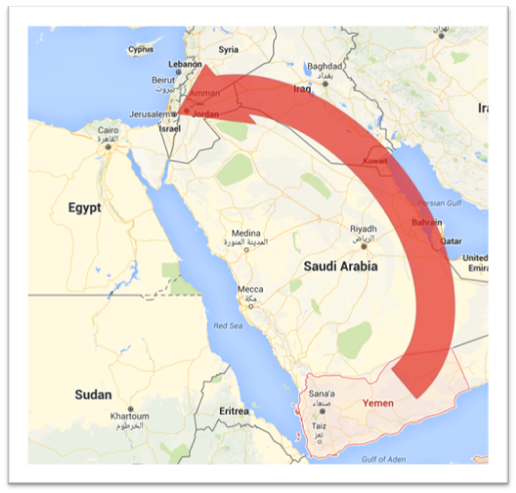
The author of 1 Kings provides an extended example of one such visit. On this occasion, the Queen of Sheba undertook the long and arduous journey to Jerusalem to witness the wisdom of Solomon firsthand. The kingdom of Sheba was located approximately 1,200 miles away, on the southwestern corner of the Arabian Peninsula, in the region now known as Yemen. The queen traveled with a large royal retinue and brought with her a vast amount of spices, gold, and precious stones. It appears that the real purpose of her trip was to secure an alliance between her nation and the rapidly expanding kingdom of Solomon. From its location at the confluence of the Sea of Aden and the Red Sea, the kingdom of Sheba had been able to expand its dominance of the spice and incense trade in that region of the world. A peaceful alliance with a powerful nation like Israel would only further enhance and protect their future prospects.

Upon her arrival, the queen was given a personal appointment with Solomon, where she was able to satisfy her curiosity about his wisdom and wealth. This interrogation was most likely meant to assess the validity of Solomon’s reputation, but was also intended to reassure the queen whether a treaty with Israel would be beneficial. In the end, she was left breathless by her encounter with Solomon.

…when the queen of Sheba had seen all the wisdom of Solomon, the house that he had built, the food of his table, the seating of his officials, and the attendance of his servants, their clothing, his cupbearers, and his burnt offerings that he offered at the house of the LORD, there was no more breath in her. – 1 Kings 10:4-5 ESV

She was blown away by what she saw and heard, and confessed that the reality of Solomon’s wisdom and the greatness of his kingdom far exceeded the rumors and her own expectations.

“Everything I heard in my country about your achievements and wisdom is true! I didn’t believe what was said until I arrived here and saw it with my own eyes. In fact, I had not heard the half of it! Your wisdom and prosperity are far beyond what I was told.” – 1 Kings 10:6-7 NLT

The inclusion of this personal, third-party assessment of Solomon’s greatness was meant to validate all that the author had written up to this point. Her testimony was intended to prove that all the descriptions concerning Solomon’s wisdom and the wealth of his kingdom were far from rhetorical flourishes or hyperbole. It was all true.

And this pagan queen affirmed the divine nature of Solomon’s reign, deeming the people of Israel as the fortunate recipients of their God’s love because He had chosen to make this just and righteous man their king.

“Praise the LORD your God, who delights in you and has placed you on the throne of Israel. Because of the LORD’s eternal love for Israel, he has made you king so you can rule with justice and righteousness.” – 1 Kings 10:9 NLT

In a way, the inclusion of this statement was meant to remind the Hebrew readers of this book that their nation had been blessed by God. His sovereign decision to anoint Solomon as David’s successor was a divine act of love and mercy because He had given them a wise, just, and righteous king to rule over them. After decades spent conquering the nations of Canaan and fighting ongoing battles with the Philistines, God had blessed the people of Israel with a time of peace and prosperity.

Saul’s reign had ended in failure and disappointment. David’s reign had been marked by war and bloodshed. Now Solomon was leading them into a period of unprecedented expansion, prosperity, and peace. This was meant to be a golden age for the nation of Israel.

And, almost as further proof of God’s blessing on the nation, the author records that the queen of Sheba gifted Solomon with “9,000 pounds of gold, great quantities of spices, and precious jewels” (1 Kings 10:10 NLT). The blessings just kept coming. Solomon’s great wealth continued to grow. And all of this was in keeping with the promise that God had made to Solomon.

“Because you have asked for wisdom in governing my people with justice and have not asked for a long life or wealth or the death of your enemies—I will give you what you asked for! I will give you a wise and understanding heart such as no one else has had or ever will have! And I will also give you what you did not ask for—riches and fame! No other king in all the world will be compared to you for the rest of your life!” – 1 Kings 3:11-13 NLT

However, it’s essential to recall that God’s promise came with a condition.

“…if you follow me and obey my decrees and my commands as your father, David, did, I will give you a long life.” – 1 Kings 3:14 NLT

That vital caveat must not be overlooked, and its presence constantly lingers behind the scenes portrayed in Chapter 10. God was faithfully keeping the promise He had made to Solomon, blessing him with riches and fame beyond his wildest imagination. However, the unspoken question that looms over this entire narrative is whether Solomon, in the midst of his growing wealth and notoriety, will be able to remain faithful to God. As his fame and fortune continue to increase, will he allow the blessings of God to become substitutes for God, distracting his attention and diverting his love?

Almost as an aside, the author reveals another example of God’s blessings on Solomon. He notes that Hiram, the king of Tyre, continued to shower Solomon with incredible gifts of great value.

Hiram’s ships brought gold from Ophir, and they also brought rich cargoes of red sandalwood and precious jewels. – 1 Kings 10:11 NLT

Without having to lift a finger, Solomon’s immense wealth was growing by the minute. God was using these pagan potentates to expand Solomon’s already extensive net worth. But would Solomon view these gifts as the gracious provision of God, meant to underwrite the divine initiatives He had in mind for the nation of Israel? Or would Solomon allow his growing wealth to fund a lifestyle of excess and dissipation? The answer to those questions can be found in the writings of Solomon himself.

Those who love money will never have enough. How meaningless to think that wealth brings true happiness! The more you have, the more people come to help you spend it. So what good is wealth—except perhaps to watch it slip through your fingers! – Ecclesiastes 5:10-11 NLT

Solomon would eventually discover that even the blessings of God become disappointing and disillusioning when they become substitutes for Him. The Book of Ecclesiastes chronicles his growing love affair with materialism and hedonism. Over time, he allowed his fame and riches, graciously bestowed upon him by God, to distract him from his worship of and commitment to God.

I became greater than all who had lived in Jerusalem before me, and my wisdom never failed me. Anything I wanted, I would take. I denied myself no pleasure. I even found great pleasure in hard work, a reward for all my labors. But as I looked at everything I had worked so hard to accomplish, it was all so meaningless—like chasing the wind. There was nothing really worthwhile anywhere. – Ecclesiastes 2:9-11 NLT

However, at this point in the story, Solomon appears to recognize that his blessed lifestyle has come from the gracious hand of God. He has not yet succumbed to the temptation to make the gifts of higher value than the Giver. The pessimism of unbridled prosperity and the endless pursuit of insatiable pleasure would eventually set in. But for now, Solomon was content to graciously accept his blessings as gifts from Yahweh.

As for the queen of Sheba, having been exposed to the visual evidence of God’s goodness, she returned to her kingdom more convinced than ever of Solomon’s greatness. The signs of Yahweh’s presence, pleasure, and provision were inescapable. But for Solomon, the blessings of God would prove to be a distraction, filling his royal treasuries with great wealth and his heart with dangerous thoughts about his own self-importance. Possessions, power, pleasure, and prominence can be gifts from God that quickly turn into weapons of self-destruction. Jesus Himself had much to say about the dangers of the love of money and the

“Don’t store up treasures here on earth, where moths eat them and rust destroys them, and where thieves break in and steal. Store your treasures in heaven, where moths and rust cannot destroy, and thieves do not break in and steal. Wherever your treasure is, there the desires of your heart will also be.” – Matthew 6:19-21 NLT

“No one can serve two masters. For you will hate one and love the other; you will be devoted to one and despise the other. You cannot serve God and be enslaved to money.” – Matthew 6:24 NLT

“Beware! Guard against every kind of greed. Life is not measured by how much you own.” – Luke 12:15 NLT

“The seed that fell among the thorns represents others who hear God’s word, but all too quickly the message is crowded out by the worries of this life, the lure of wealth, and the desire for other things, so no fruit is produced.” – Mark 4:18-19 NLT

The queen of Sheba had been enamored with Solomon’s wealth and wisdom. But would Solomon allow those divine gifts to replace his love for the Giver?

English Standard Version (ESV) The Holy Bible, English Standard Version. ESV® Permanent Text Edition® (2016). Copyright © 2001 by Crossway Bibles, a publishing ministry of Good News Publishers.

New Living Translation (NLT) Holy Bible, New Living Translation, copyright © 1996, 2004, 2015 by Tyndale House Foundation. Used by permission of Tyndale House Publishers Inc., Carol Stream, Illinois 60188. All rights reserved.

All According to Plan

16 When the report was heard in Pharaoh’s house, “Joseph’s brothers have come,” it pleased Pharaoh and his servants. 17 And Pharaoh said to Joseph, “Say to your brothers, ‘Do this: load your beasts and go back to the land of Canaan, 18 and take your father and your households, and come to me, and I will give you the best of the land of Egypt, and you shall eat the fat of the land.’ 19 And you, Joseph, are commanded to say, ‘Do this: take wagons from the land of Egypt for your little ones and for your wives, and bring your father, and come. 20 Have no concern for your goods, for the best of all the land of Egypt is yours.’”

21 The sons of Israel did so: and Joseph gave them wagons, according to the command of Pharaoh, and gave them provisions for the journey. 22 To each and all of them he gave a change of clothes, but to Benjamin he gave three hundred shekels of silver and five changes of clothes. 23 To his father he sent as follows: ten donkeys loaded with the good things of Egypt, and ten female donkeys loaded with grain, bread, and provision for his father on the journey. 24 Then he sent his brothers away, and as they departed, he said to them, “Do not quarrel on the way.”

25 So they went up out of Egypt and came to the land of Canaan to their father Jacob. 26 And they told him, “Joseph is still alive, and he is ruler over all the land of Egypt.” And his heart became numb, for he did not believe them. 27 But when they told him all the words of Joseph, which he had said to them, and when he saw the wagons that Joseph had sent to carry him, the spirit of their father Jacob revived. 28 And Israel said, “It is enough; Joseph my son is still alive. I will go and see him before I die.” – Genesis 45:16-28 ESV

It didn’t take long before the news that Joseph had been reunited with his family began to spread like wildfire throughout the royal compound. Soon, even Pharaoh himself had been informed that Joseph had brothers from whom he had long been separated. This news pleased Pharaoh and he determined to show his love and respect for Joseph by making the generous offer of gifts and land to his family. Pharaoh suggested that Joseph’s brothers return home and bring back the rest of their clan, including their aged father, Jacob. He even underwrote the cost of their trip and equipped them with wagons, pack animals, and enough supplies to sustain them all the way to Canaan and back. And he promised that, upon their return, he would give them “the best of all the land of Egypt” (Genesis 45:20 ESV) in which to live.

Joseph, pleased with Pharaoh’s kind and gracious offer, convinced his brothers to return home and bring their families to Egypt. He knew that, according to Pharaoh’s dreams, there were at least five more years of famine remaining, and his clan’s only chance of survival lay in Egypt. So, Joseph ordered all the supplies Pharaoh had suggested and then he showered his brothers with additional gifts. He gave each of his brothers a set of new clothes, but to Benjamin “he gave five changes of clothes and 300 pieces of silver” (Genesis 45:22 NLT).

Benjamin and Joseph were both the sons of Rachel and, therefore, they shared a close bond. Joseph’s affection for his younger brother had been amplified by their long separation. And now that they had been reunited, he showed favoritism to Benjamin, much like his father had done to him. But because of his wealth, Joseph was able to bless his brother with far more than a single multicolored robe. He gave him a virtual wardrobe of expensive garments and rewarded him with 300 pieces of silver, a king’s ransom that would set Benjamin up for life.

And while Moses doesn’t reveal the reaction of Joseph’s brothers to this obvious act of favoritism, it is quite easy to speculate that it didn’t escape their notice. But it’s unlikely that it produced the same degree of jealousy that had driven them to sell Joseph into slavery. No, this time, they were grateful to be alive, reunited with their brother, and enjoying the favor of Pharaoh, one of the most powerful men in the world.

But Joseph seemed to know that his brothers had not completely changed. As he distributed his gifts among them, he warned them, “Don’t quarrel about all this along the way!” (Genesis 45:24 NLT). Over the course of the long journey back to Canaan, he knew that his brothers would have ample time to think about the inequity of the gifts they had received. Not only had Joseph given Benjamin more garments and a large sum of money, but he had also sent his father “ten male donkeys loaded with the finest products of Egypt, and ten female donkeys loaded with grain and bread and other supplies he would need on his journey” (Genesis 45:23 NLT).

Every day of the journey they would see those 20 donkeys bearing the gifts that Joseph had given to their father, and be reminded that all they had received was a single change of clothing. And to make matters worse, their younger brother could go five days in a row without wearing the same outfit, and he probably had several pack animals just to carry his hoard of cash.

So, Joseph reminded them not to fall back into their old habit of jealousy and bitter infighting. They had been blessed by God and enjoying the outpouring of His providential provision. They had much for which to be grateful and, upon their return, they would find themselves living in a rich and fertile land, free from the effects of the famine and under the protection of Pharaoh himself.

“The picture of Joseph is a picture of restoration—not just the restoration of the good fortune of Jacob, but, as a picture, the restoration of the blessing that was promised through the seed of Jacob. This picture is also a blueprint for the hope that lies for the people of Israel at the end of the Pentateuch. They are to go into the land and enjoy it as God’s good gift (Deuteronomy 30:5).” – John H. Sailhamer, The Pentateuch as Narrative: A Biblical-Theological Commentary

Joseph was fully convinced that this was all part of God’s sovereign plan. He had already told his brothers, “It was God who sent me here ahead of you to preserve your lives” (Genesis 45:5 NLT). His destiny had been preordained by God and there had been a divine purpose behind every facet of his life, from his sale into slavery and his ultimate imprisonment to his rise to power in Pharaoh’s court. His entire life had been set apart by God for a specific purpose: To preserve and protect the seed of Jacob.

“God has sent me ahead of you to keep you and your families alive and to preserve many survivors. So it was God who sent me here, not you! And he is the one who made me an adviser to Pharaoh—the manager of his entire palace and the governor of all Egypt.” – GEnesis 45:7-8 NLT

So, his brothers made the long journey home and delivered the exciting news to their father: “Joseph is still alive!” (Genesis 45:26 NLT). And this unexpected announcement left Jacob in a state of shock. After all these years, the son whom he had long thought dead was alive and well and living in Egypt. Buoyed by the sight of the caravan loaded with gifts and grain, Jacob came to his senses and embraced the reality of the too-good-to-be-true news. His son Joseph really was alive and he was going to have the joy of seeing him again before he died.

But the real point of the story is not the coming reunion of Jacob with Joseph. No, Moses wanted his readers to understand the remarkable nature of God’s sovereign will and how the Almighty used the life of one man to prepare the way for an entire nation. As Israelites, they would have been familiar with the story of Joseph, but Moses wanted to remind them that their very existence as a people was the result of one man’s life. Long before any of them existed, Joseph had been born, favored, betrayed, sold, enslaved, accused, imprisoned, released, rewarded, and elevated to a place of power and prominence. And every peak and valley of his roller-coaster life had been the sovereign handiwork of Yahweh. The very fact that Jacob and his family ended up living in Egypt had been ordained by God and made possible by the life of Joseph. And Moses wanted his Israelite audience to know that Jacob’s journey to Egypt had been predicted and preordained by God.

Long before Jacob had been born, his grandfather, Abraham, had received a promise from God.

Then the Lord said to Abram, “Know for certain that your offspring will be sojourners in a land that is not theirs and will be servants there, and they will be afflicted for four hundred years. But I will bring judgment on the nation that they serve, and afterward they shall come out with great possessions. As for you, you shall go to your fathers in peace; you shall be buried in a good old age. And they shall come back here in the fourth generation, for the iniquity of the Amorites is not yet complete.” – Genesis 15:13-16 ESV

The first phase of the promise was about to be fulfilled. As a result of Pharaoh’s generosity and Joseph’s ingenuity, Jacob and his family would find themselves living in “a land that is not theirs.” Their relocation was part of God’s plan. And it would be in this foreign that a relatively small family, just 70 in number, would grow to be a mighty nation, the chosen people of God. In His divine wisdom, the Almighty had chosen to fulfill His promise to Abraham by sending a small and insignificant clan to a foreign land where they would be able to grow in number until the time came for them to inherit the land God had given them for their inheritance.

English Standard Version (ESV) The Holy Bible, English Standard Version. ESV® Permanent Text Edition® (2016). Copyright © 2001 by Crossway Bibles, a publishing ministry of Good News Publishers.

New Living Translation (NLT) Holy Bible, New Living Translation, copyright © 1996, 2004, 2015 by Tyndale House Foundation. Used by permission of Tyndale House Publishers Inc., Carol Stream, Illinois 60188. All rights reserved.

New English Translation (NET)NET Bible® copyright ©1996-2017 by Biblical Studies Press, L.L.C. http://netbible.com All rights reserved.

Work While You Wait

7 The end of all things is at hand; therefore be self-controlled and sober-minded for the sake of your prayers. 8 Above all, keep loving one another earnestly, since love covers a multitude of sins. 9 Show hospitality to one another without grumbling. 10 As each has received a gift, use it to serve one another, as good stewards of God’s varied grace: 11 whoever speaks, as one who speaks oracles of God; whoever serves, as one who serves by the strength that God supplies—in order that in everything God may be glorified through Jesus Christ. To him belong glory and dominion forever and ever. Amen. – 1 Peter 4:7-11 ESV

One thought that Peter and the other apostles couldn’t get out of their heads was the words Jesus had spoken to them not long before He left them.

“Don’t let your hearts be troubled. Trust in God, and trust also in me. There is more than enough room in my Father’s home. If this were not so, would I have told you that I am going to prepare a place for you? When everything is ready, I will come and get you, so that you will always be with me where I am. And you know the way to where I am going.” – John 14:1-4 NLT

While they didn’t fully understand the gist of His message at the time, the promise contained in it had stayed with them. And their eager anticipation of His return can be found throughout their writings. Peter clearly reveals his belief that Jesus’ return, which will signal the end of this age, could not be far away: “The end of all things is at hand” (1 Peter 4:7 ESV). But he was not alone in that estimation. James wrote:

You, too, must be patient. Take courage, for the coming of the Lord is near. – James 5:8 NLT

The apostle Paul, writing with equal intensity and eager anticipation, put it this way:

This is all the more urgent, for you know how late it is; time is running out. Wake up, for our salvation is nearer now than when we first believed. The night is almost gone; the day of salvation will soon be here. – Romans 13:11-12 NLT

John understood that the Antichrist and the persecution he would bring would precede the return of Christ. He could sense the increasing intensity of persecution and suffering in the world and believed that the end was nearing.

Dear children, the last hour is here. You have heard that the Antichrist is coming, and already many such antichrists have appeared. From this we know that the last hour has come. – 1 John 2:18 NLT

And the author of the book of Hebrews encouraged his readers to eagerly await the return of Christ.

And just as each person is destined to die once and after that comes judgment, 28 so also Christ was offered once for all time as a sacrifice to take away the sins of many people. He will come again, not to deal with our sins, but to bring salvation to all who are eagerly waiting for him. – Hebrews 9:27-28 NLT

Each of these men lived with a sense of anticipation and expectation. They understood that that the return of the Lord was a vital part of God’s redemptive plan. As Paul put it, “the day of salvation” was tied directly to the second coming of Jesus. His return was an essential and non-negotiable requirement for the Kingdom to be restored, and each of these men still longed to see that happen in their lifetimes. Jesus’ departure had delayed but not diminished their hopes. He had promised to return and they believed Him.

“I am leaving you with a gift—peace of mind and heart. And the peace I give is a gift the world cannot give. So don’t be troubled or afraid. Remember what I told you: I am going away, but I will come back to you again. If you really loved me, you would be happy that I am going to the Father, who is greater than I am. I have told you these things before they happen so that when they do happen, you will believe.” – John 14:27-29 NLT

At the time Peter wrote his letter, the apostle John had not yet received his vision from God that eventually produced the book of Revelation. Late in his life, John found himself living on the desolate island of Patmos. He had been exiled there by the Roman Emperor as a punishment for his continued promotion of “the Way” – the derogatory name used by the Romans to refer to the Jewish sect that still followed the martyred Rabbi, Jesus. But as John sat imprisoned on Patmos, he was given a divinely inspired vision of the future, delivered to him by an angel of God.

This is a revelation from Jesus Christ, which God gave him to show his servants the events that must soon take place. He sent an angel to present this revelation to his servant John, who faithfully reported everything he saw. This is his report of the word of God and the testimony of Jesus Christ. – Revelation 1:1-2 NLT

Notice that he too believed that the things he saw and later recorded would “soon take place.” John was not given a detailed timeline for the events described in the revelation he received from Jesus. But it seems clear that he believed he would live to witness their arrival. And, once again, he was given ample reason to reach that conclusion when he heard and wrote down the last words Jesus spoke in his vision.

He who testifies to these things says, “Surely I am coming soon.” – Revelation 22:20 ESV

John and his fellow apostles lived with a deep longing to see their Savior again. They had been faithful to fulfill the commission He had given them and had taken the gospel of the Kingdom to Jerusalem, Judea, Samaria, and to the ends of the earth (Acts 1:8). The size of the church had increased significantly but so had the persecution. And these 1st-Century saints found motivation and determination in the promise of Christ’s return. They lived with the end in mind.

That’s why Peter told his readers to “be self-controlled and sober-minded for the sake of your prayers” (1 Peter 4:7 ESV). According to Peter, the end of all things was close at hand. In other words, the return of Christ was imminent. It could happen at any moment. Peter knew that his readers were undergoing intense persecution and it would be easy for them to become fixated on their circumstances and lose hope. So, he called them to refocus their attention on the promise of Christ’s return. This was going to require that they think clearly and evaluate their circumstances soundly. The apostle Paul encouraged the believers in Colossae to have the same kind of attitude about life.

Since you have been raised to new life with Christ, set your sights on the realities of heaven, where Christ sits in the place of honor at God’s right hand. Think about the things of heaven, not the things of earth. For you died to this life, and your real life is hidden with Christ in God. And when Christ, who is your life, is revealed to the whole world, you will share in all his glory. – Colossians 3:1-4 NLT

A clear-headed understanding of Christ’s place of power and prominence at God’s right hand would result in a much-needed reminder of His sovereign control over all things, including their suffering and persecution. Nothing they would endure in this life would prevent their experience of eternal life. But, as Peter warns, the failure to think clearly about the present and the future would negatively influence their prayer lives. When believers lose sight of the goal, their prayers become focused on their present problems and their hope for the immediate gratification of their desires. This life becomes all there is. That’s why Paul said, “set your sights on the realities of heaven.”

It was Jesus who provided His disciples with a model prayer designed to refocus their petitions to God.

“When you pray, don’t babble on and on as the Gentiles do. They think their prayers are answered merely by repeating their words again and again. Don’t be like them, for your Father knows exactly what you need even before you ask him! Pray like this:

Our Father in heaven,
may your name be kept holy.
May your Kingdom come soon.
May your will be done on earth,
as it is in heaven.” – Matthew 6:7-10 NLT

Even Jesus promoted a future-minded mentality. It is by focusing on the reality of the future, as prescribed by God, that believers can make sense of the present. Jesus went on to encourage prayers for daily provision, forgiveness, and protection from temptation. But all these requests are intended to provide the endurance necessary to survive in this world while waiting for the next. They are focused on the end.

But Peter went on to encourage a lifestyle marked by grace-based love, complaint-free hospitality, and a God-glorifying use of their spiritual gifts. They were to love as they had been loved by God. They were to open their hearts and homes, providing the same gracious and warm welcome into the family of God that they had received. And they were to use the gifts given to them by the Spirit of God in order to bless the people of God. As they waited for the return of the Lord, they were to remain busy about the business of doing good.

So let’s not get tired of doing what is good. At just the right time we will reap a harvest of blessing if we don’t give up. Therefore, whenever we have the opportunity, we should do good to everyone—especially to those in the family of faith. – Galatians 6:9-10 NLT

English Standard Version (ESV) The Holy Bible, English Standard Version. ESV® Permanent Text Edition® (2016). Copyright © 2001 by Crossway Bibles, a publishing ministry of Good News Publishers.

New Living Translation (NLT) Holy Bible, New Living Translation, copyright © 1996, 2004, 2015 by Tyndale House Foundation. Used by permission of Tyndale House Publishers Inc., Carol Stream, Illinois 60188. All rights reserved.

New English Translation (NET)NET Bible® copyright ©1996-2017 by Biblical Studies Press, L.L.C. http://netbible.com All rights reserved.


Generous Grace.

We want you to know, brothers, about the grace of God that has been given among the churches of Macedonia, for in a severe test of affliction, their abundance of joy and their extreme poverty have overflowed in a wealth of generosity on their part. For they gave according to their means, as I can testify, and beyond their means, of their own accord, begging us earnestly for the favor of taking part in the relief of the saints—and this, not as we expected, but they gave themselves first to the Lord and then by the will of God to us. Accordingly, we urged Titus that as he had started, so he should complete among you this act of grace. But as you excel in everything—in faith, in speech, in knowledge, in all earnestness, and in our love for you—see that you excel in this act of grace also. I say this not as a command, but to prove by the earnestness of others that your love also is genuine.   2 Corinthians 8:1-8 ESV

Paul had been overwhelmed by the reception of his previous letter, even though it had ended up causing the Corinthians some serious sorrow. That sorrow had led to their repentance and they had responded in grace, love and gratitude. Now Paul takes the opportunity to appeal to that same grace in order to enlist their help with a pressing financial concern. For nearly five years, Paul had been actively soliciting funds from the churches he had helped establish throughout Macedonia, Galatia, Achaia, and Asia Minor. This money was being sent to help Hebrew Christians living in Judea, where they were suffering from the effects of a famine as well as the poverty that came as a result of their conversions to Christianity. Many had lost their jobs, been ostracized by their families or were having a difficult time trying to do business with their Jewish neighbors. Paul was constantly requesting that the churches over which he had influence, would participate in providing financial aid to their brothers and sisters in Judea. And Corinth would be no exception.

Paul began by informing the Corinthians of the generosity displayed by the churches in Macedonia, a neighboring region. In referring to the Philippians, Thessalonians, and Bereans, Paul was adroitly using comparison to make his appeal to the Corinthians. He points out that their neighbors to the north “have overflowed in a wealth of generosity on their part” (2 Corinthians 8:2 ESV). And this was in spite of their own “extreme poverty.” Paul says, “they gave not only what they could afford, but far more. And they did it of their own free will” (2 Corinthians 8:3 NLT). Not only that, they begged Paul for the opportunity to give. This was not the first time the Corinthians had heard about the need in Judea. Paul had raised this topic with them before in his first letter. He referred to it as the “collection for the saints” (1 Corinthians 16:1). But either the Corinthians had begun to give and then stopped, or they had never fully gotten behind the effort to begin with. Either way, Paul is now appealing to them to allow the grace of God to flow through them as it had done with the believers in Macedonia. Paul had a strong sense of community and unity when it came to the body of Christ. He wanted each congregation to understand and embrace their connection with and responsibility to the other fellowships located all around the world at that time. They were not to view themselves as independent entities, isolated and removed from the larger context of the family of God. They were to see themselves as brothers and sisters in Christ, sharing a common bond with believers all around the world. And Paul wants them to know that God desired to use them to extend His grace to the believers in Judea. Paul had even sent Titus to encourage their participation in this fund-raising effort. 

Paul reminds them that they are a gifted church. They excel “in faith, in speech, in knowledge, in all earnestness” (2 Corinthians 8:7 ESV). Paul had told them in his first letter, “I give thanks to my God always for you because of the grace of God that was given you in Christ Jesus, that in every way you were enriched in him in all speech and all knowledge—even as the testimony about Christ was confirmed among you—so that you are not lacking in any gift” (1 Corinthians 1:4-7 ESV). Now he wants them to add to their resume of giftedness this “act of grace.”  Paul tells them, “I want you to excel also in this gracious act of giving” (2 Corinthians 8:7b NLT). But he doesn’t want them to do it under coercion or as a form of compliance to a command. It must be done in love. Giving without love is ultimately self-motivated, in order to get attention. Or what is given is soiled with selfishness, regret and sense of reluctance. In His sermon on the mount, Jesus taught, “Watch out! Don’t do your good deeds publicly, to be admired by others, for you will lose the reward from your Father in heaven. When you give to someone in need, don’t do as the hypocrites do—blowing trumpets in the synagogues and streets to call attention to their acts of charity! I tell you the truth, they have received all the reward they will ever get” (Matthew 6:1-2 NLT). If you give in order to get praise, that is the only reward you will receive. That is what led Paul to write in his first letter, “If I give away all I have, and if I deliver up my body to be burned, but have not love, I gain nothing” (1 Corinthians 13:3 ESV).

The giving of the Corinthians was to be an extension of the grace of God, flowing from Him through them and to the believers in Judea. God’s grace is anything but selfish and self-centered. It is an expression of His love. So in giving to the believers in Judea, the Corinthians would be showing the love and favor of God through their willing generosity. Giving was to be seen, not as an obligation, but as an opportunity to love others as they had been loved by God – generously, undeservedly, and graciously. In his first letter, Paul had sternly reminded the Corinthians, “What do you have that God hasn’t given you? And if everything you have is from God, why boast as though it were not a gift?” (1 Corinthians 4:7 NLT). They had become arrogant and prideful, seeing themselves as spiritual superior and blessed by God. Paul scolded them, “You think you already have everything you need. You think you are already rich” (1 Corinthians 4:8 NLT). But all that they enjoyed had come from God. It had all be a result of the grace of God. Their giftedness was God’s doing. Their salvation had been the result of Christ’s death, not their own merit. The reality of their indebtedness to God should have created in them a sense of gratitude that manifested itself in gracious generosity. Their giving was to be a reflection of the joy they felt for all that they had been given. We love because He first loved us. We give because He has given to us. We bless others because He has graciously blessed us.


The Bond Of Love.

Now you are the body of Christ and individually members of it. And God has appointed in the church first apostles, second prophets, third teachers, then miracles, then gifts of healing, helping, administrating, and various kinds of tongues. Are all apostles? Are all prophets? Are all teachers? Do all work miracles? Do all possess gifts of healing? Do all speak with tongues? Do all interpret? But earnestly desire the higher gifts.

And I will show you a still more excellent way.

If I speak in the tongues of men and of angels, but have not love, I am a noisy gong or a clanging cymbal. And if I have prophetic powers, and understand all mysteries and all knowledge, and if I have all faith, so as to remove mountains, but have not love, I am nothing. If I give away all I have, and if I deliver up my body to be burned, but have not love, I gain nothing.– 1 Corinthians 12:27-13:3 ESV

Paul says that we are individuals who, together, make up the one Body of Christ, the church. We are individuals and we are each, in a sense, indispensable. We have each been given a gift by the Holy Spirit that is intended for the corporate good of body of Christ. God has designed it so that none of us are independent agents operating in isolation. As Paul points out to the Corinthians, the body of Christ was made up of some who were gifted to be apostles. Others were assigned the gift of prophecy or teaching. Some worked miracles or performed healings, while others used their gift of administration or helping. And then there were those who had been given the gift of tongues. Each was necessary. Yes, some of the gifts might appear to have greater significance or importance, but all were essential to the overall well-being of the church. As typical human beings, the Corinthians were prone to elevate one gift over another and experience jealousy or pride depending upon the particular gift they had been given. So Paul determined to show them a “more excellent way.”

Essentially, Paul is going to address the one things holds the Body of Christ together. Interestingly enough, it isn’t going to be our shared faith in Christ. That is what places us in the Body of Christ, but it is not the glue that holds us together. Even our giftedness is not enough to keep us unified and operating in mutual compatibility. So what is the glue that holds this unique collection of individuals together? What prevents our diversity, even in our areas of giftedness, from creating division, disorder and dysfunctionality?

For Paul, it was simple: It was love.

Within the Corinthian church, there was evidently a tendency to make much of the gift of tongues. Obviously, it was a more flamboyant, outwardly obvious gift that garnered attention and created an aura of spirituality for the one who practiced it. But Paul is going to take a handful of the gifts, including tongues, and show that they are each worthless without love.

If I speak in the tongues of men and of angels, but have not love, I am a noisy gong or a clanging cymbal. – 1 Corinthians 13:1 ESV

The gift of tongues, practiced without love, is nothing more than a loud, irritating noise. It may be unavoidably noticeable, but it will also be undeniably unprofitable. Tongues, like all the gifts, was intended to build up and edify the body. To practice tongues without love would be to focus on self and to neglect the overall health of the Body of Christ. The goal would end up being garnering attention for oneself, rather than allowing the Spirit to use the gift for the good of others.

Paul is not done yet.

And if I have prophetic powers, and understand all mysteries and all knowledge, and if I have all faith, so as to remove mountains, but have not love, I am nothing. – 1 Corinthians 13:2 ESV

You could have legitimate prophetic power to foretell the future and reveal undisclosed truth from God, but if you did it without love, you would be nothing. In essence, Paul is saying that, while your gift might make you a somebody in the eyes of others, in God’s eyes you would be a nobody – unimportant and non-essential. Your lack of love would negate any value your gift might have had. To claim to understand the mysteries of God and to grasp the knowledge of God is nothing if it is not accompanied by love for others. And even if you had enough faith to move a mountain, but did so without loving others,  you would still be a nobody in the eyes of God, because your accomplishment would lack any redeeming value.

But Paul brings up a seemingly contradictory example.

If I give away all I have, and if I deliver up my body to be burned, but have not love, I gain nothing. – 1 Corinthians 13:3 ESV

Isn’t sacrifice always motivated by love? Wouldn’t love be the only thing that would cause someone to give their life? After all, Jesus Himself said, “Greater love has no one than this, that someone lay down his life for his friends” (John 15:13 ESV). But Paul’s point is that even the gift of giving, to the extreme point of martyrdom, can be done without love. You can die for a cause, but fail to do so out of love for others. You can give away all your possessions to gain the praise of men, but not out of love for them. It was Jesus who also said, “when you give to the needy, sound no trumpet before you, as the hypocrites do in the synagogues and in the streets, that they may be praised by others. Truly, I say to you, they have received their reward” (Matthew 6:2 ESV). You may get the accolades of men, but you will gain nothing from God.

Love is essential, because God is love. To practice any of the gifts without love would be ungodly. It would be out of character. It is possible for us to emulate or imitate the spiritual gifts. We can easily confuse talents with gifts. Just because we are a capable leader in the marketplace, does not mean we have the gift of leadership or administration in the body of Christ. We may be a gifted teacher, in an earthly sense, but that does not mean we have the spiritual gift of teaching. When the Spirit of God gives a gift, it is always accompanied by love. It is intended to build up others in the body. It is inherently selfless in its expression. It doesn’t ask the question, “What’s in it for me?” A truly spiritual gift simply gives, expecting nothing in return. Because that is the essence of love.

As Paul will make clear in the following verses, love is the only thing that will last. There is a day coming when all of the spiritual gifts will be unnecessary. They will have served their purpose. There will be no need for tongues, prophecy, healing, or miracles. We will no longer need faith or hope, because all things will have been fulfilled and made complete. But love will never end. It is the glue that holds heaven together. It is the bond of unity between God the Father, God the Son, and God the Holy Spirit. Love is the more excellent way.