The Always Faithful Jehovah

1 In the eighteenth year of Jehoshaphat king of Judah, Jehoram the son of Ahab became king over Israel in Samaria, and he reigned twelve years. 2 He did what was evil in the sight of the LORD, though not like his father and mother, for he put away the pillar of Baal that his father had made. 3 Nevertheless, he clung to the sin of Jeroboam the son of Nebat, which he made Israel to sin; he did not depart from it.

4 Now Mesha king of Moab was a sheep breeder, and he had to deliver to the king of Israel 100,000 lambs and the wool of 100,000 rams. 5 But when Ahab died, the king of Moab rebelled against the king of Israel. 6 So King Jehoram marched out of Samaria at that time and mustered all Israel. 7 And he went and sent word to Jehoshaphat king of Judah: “The king of Moab has rebelled against me. Will you go with me to battle against Moab?” And he said, “I will go. I am as you are, my people as your people, my horses as your horses.” 8 Then he said, “By which way shall we march?” Jehoram answered, “By the way of the wilderness of Edom.”

9 So the king of Israel went with the king of Judah and the king of Edom. And when they had made a circuitous march of seven days, there was no water for the army or for the animals that followed them. 10 Then the king of Israel said, “Alas! The LORD has called these three kings to give them into the hand of Moab.” 11 And Jehoshaphat said, “Is there no prophet of the LORD here, through whom we may inquire of the LORD?” Then one of the king of Israel’s servants answered, “Elisha the son of Shaphat is here, who poured water on the hands of Elijah.” 12 And Jehoshaphat said, “The word of the LORD is with him.” So the king of Israel and Jehoshaphat and the king of Edom went down to him.

13 And Elisha said to the king of Israel, “What have I to do with you? Go to the prophets of your father and to the prophets of your mother.” But the king of Israel said to him, “No; it is the LORD who has called these three kings to give them into the hand of Moab.” 14 And Elisha said, “As the LORD of hosts lives, before whom I stand, were it not that I have regard for Jehoshaphat the king of Judah, I would neither look at you nor see you.” – 2 Kings 3:1-14 ESV

When Ahab’s son, Ahaziah, died just two years into his reign, his brother Jehoram became the next king of the northern kingdom of Israel, and he proved to be just as evil as his father and brother had been. While he did use his royal power to eliminate the worship of Baal in Israel, “he clung to the sin of Jeroboam the son of Nebat, which he made Israel to sin; he did not depart from it” (2 Kings 3:3 ESV). He refused to remove the false gods that Jeroboam had erected in Dan and Bethel, and his failure to do so kept the spirit of idolatry and unfaithfulness alive in the land of Israel. Rather than calling the people to repentance and encouraging a return to Yahweh, Jehoram simply maintained the status quo, allowing the people to continue placing their hope in the golden calves that Jeroboam had created.

But Jehoram soon found himself in need of divine assistance. His father, who had been a wicked and oppressive king, had managed to make many enemies. One of them was the king of Moab. During his reign, Ahab forced the Moabites to pay an annual tribute consisting of “100,000 lambs and the wool of 100,000 rams” (2 Kings 3:4 ESV). But the Moabites found this yearly levy to be onerous, and, as soon as the king of Moab heard of Ahab’s death, he refused to make any further payments.

Jehoram viewed this as a blatant act of rebellion against his authority as the king of Israel. His primary concern was not the loss of the annual tribute, but the potential loss of respect he would face if he did not deal decisively with this blatant affront to his royal reputation. So, determined to teach King Mesha of Moab a lesson, Jehoram mustered all the fighting men of Israel and called on Jehoshaphat, the king of Judah, to come to their assistance. Jehoram wanted Jehoshaphat to provide troops and access through Judah’s land because he planned to attack Moab from the south.

King Jehoshaphat agreed to assist Jehoram, stating, “Why, of course! You and I are as one. My troops are your troops, and my horses are your horses” ( 2 Kings 3:7 NLT). This was not the first time that Jehoshaphat aligned himself with an Israelite king. Jehoram’s father, Ahab, had also sought the aid of King Jehoshaphat, requesting his help in winning back the Syrian-held city of Ramoth-gilead. The eager-to-please king of Judah had responded to Ahab with the very same words of commitment.

“Why, of course! You and I are as one. My troops are your troops, and my horses are your horses.” – 1 Kings 22:4 NLT

Jehoshaphat should have learned a lesson from that first ill-fated alliance with the king of Israel. It almost cost him his life and ended with Ahab dying in a pool of his own blood on the floor of his chariot. But the king of Judah proved to be a slow learner. He agreed to Jehoram’s request, providing Israel with military assistance and unhindered access to Moab through the land of Judah. Since the southern approach to Moab would require Jehoram’s forces to pass through the land of Edom, he also successfully coerced the king of Edom to join their expedition.

For seven days, the combined forces of Israel, Judah, and Edom marched around the southern tip of the Dead Sea, an inhospitable region where rain was scarce and fresh water was in short supply. And long before they could reach their final objective, they ran out of water. They found themselves in the middle of a virtual wasteland, with no means of slaking the thirst of their troops, horses, or pack animals. This mighty military force had come to a screeching halt. In a state of panic, Jehoram cried out, “The LORD has brought the three of us here to let the king of Moab defeat us” (2 Kings 3:10 ESV).

It’s interesting to note that in his most significant moment of need, Judah’s apostate king uttered the name of yᵊhōvâ – Jehovah, the one true God of Israel. He didn’t call on the golden calves of Jeroboam. He didn’t mention Baal, the god that his wicked parents worshiped. Instead, he interpreted their dire circumstances as a divine judgment from the hand of Jehovah, and concluded that He was out to destroy them.

But King Jehoshaphat provided a voice of reason. Rather than assume the worst, he suggested that they seek the aid of a prophet of God to determine what they should do. Perhaps God was simply trying to get their attention. It appears that Jehoshaphat suddenly realized they had started this entire endeavor without seeking a word from the Lord. So, he strongly suggested that they do so now.

It just so happened that Elisha, the newly appointed prophet of God, had chosen to accompany the expedition. We’re not told why Elisha was there, but it seems reasonable to assume that his presence had been divinely decreed and ordained. He was there because God, in His providence, had planned it. The very man who had purified the brackish spring water outside the city of Jericho was in their midst (2 Kings 2:19-22). In their greatest moment of need, when all seemed lost, God had placed His spokesman among them.

So, Jehoram and Jehoshaphat schedule a meeting with Elisha. But the prophet of God took full advantage of Jehoram’s predicament, chiding the idolatrous king of Israel for his apparent lack of faith in his own false gods.

“Why are you coming to me?” Elisha asked the king of Israel. “Go to the pagan prophets of your father and mother!” – 2 Kings 3:13 NLT

It is evident that Jehoram put no stock in the golden calves of Jeroboam, and he had no faith that Baal or Asherah would come to their aid. But Elisha couldn’t resist the opportunity to rub the king’s nose in the mess he had made of Israel’s spiritual state. Jehoram, like all his predecessors, had stubbornly and arrogantly chosen to reject Jehovah. He had claimed to believe in a new god. But as soon as he found himself in a predicament that called for divine assistance, his faith became as false as his god.

In his desperation, Jehoram ignored the prophet’s stinging rebuke and declared his strong belief that this was all the work of Jehovah.

“No! For it was the LORD who called us three kings here—only to be defeated by the king of Moab!” – 2 Kings 3:13 NLT

Jehoram was convinced that their expedition was doomed to failure. The God of Elisha had it in for them, and there was nothing they could do about it. But while Jehoram seems to recognize God’s hand in their predicament, he displays no sign of repentance or remorse. He does not confess his apostasy or acknowledge any guilt regarding his idolatry. In his mind, Jehovah was just another God who happened to oppose their plans. If Jehoram could get Elisha to appeal to his God, perhaps they could be spared. Was there a sacrifice they could make to appease Elisha’s God? Could they do something to please Jehovah? Was there a way to get Yahweh to change His mind? That was all Jehoram cared about, and the only reason he was willing to consult with Elisha.

The prophet was not moved by Jehoram’s desperate cries for help. He knew that Jehoram’s interest in Jehovah was motivated by fear and not faith. The threat of divine judgment, although real, had failed to draw Jehoram back to God. Elisha also knew that the king of Israel remained unrepentant and unwilling to acknowledge Jehovah as the one true God. Elisha had no respect for Jehoram, but he agreed to intervene out of respect for Jehoshaphat, the king of Judah. After all, it had been Jehoshaphat who suggested they call on the name of the Lord.

“As surely as the LORD Almighty lives, whom I serve, I wouldn’t even bother with you except for my respect for King Jehoshaphat of Judah.” – 2 Kings 3:14 NLT

Here, in the desolate wilderness surrounding the Dead Sea, the God of Israel was about to show up in might and power. As He had done so many times before, He would intervene in the lives of His rebellious people. In the midst of their unfaithfulness, the always faithful Jehovah would reveal Himself and rescue His unrepentant and undeserving people yet again. Despite their years of blatant disregard for His honor and rejection of His sovereign will, they would find themselves the recipients of his unmerited grace and mercy. Neither Jehoram nor Jehoshaphat will utter a word of confession or repentance. Still, Jehovah will graciously and miraculously meet their need for water and provide them with victory over their enemy. The always faithful Jehovah will satisfy their thirst and deliver the Moabites into their hands.

English Standard Version (ESV) The Holy Bible, English Standard Version. ESV® Permanent Text Edition® (2016). Copyright © 2001 by Crossway Bibles, a publishing ministry of Good News Publishers.

New Living Translation (NLT) Holy Bible, New Living Translation, copyright © 1996, 2004, 2015 by Tyndale House Foundation. Used by permission of Tyndale House Publishers Inc., Carol Stream, Illinois 60188. All rights reserved.

Just When You Thought It Couldn’t Get Any Worse

29 In the thirty-eighth year of Asa king of Judah, Ahab the son of Omri began to reign over Israel, and Ahab the son of Omri reigned over Israel in Samaria twenty-two years. 30 And Ahab the son of Omri did evil in the sight of the LORD, more than all who were before him. 31 And as if it had been a light thing for him to walk in the sins of Jeroboam the son of Nebat, he took for his wife Jezebel the daughter of Ethbaal king of the Sidonians, and went and served Baal and worshiped him. 32 He erected an altar for Baal in the house of Baal, which he built in Samaria. 33 And Ahab made an Asherah. Ahab did more to provoke the LORD, the God of Israel, to anger than all the kings of Israel who were before him. 34 In his days Hiel of Bethel built Jericho. He laid its foundation at the cost of Abiram his firstborn, and set up its gates at the cost of his youngest son Segub, according to the word of the LORD, which he spoke by Joshua the son of Nun. – 1 Kings 16:29-34 ESV

Things have not been going well in the northern kingdom of Judah. The downward spiritual spiral that began with the reign of Jeroboam has continued unabated. His decision to re-image the God of Israel as a golden calf had been in direct violation of the command given to Moses by God hundreds of years earlier.

“I am the LORD your God, who rescued you from the land of Egypt, the place of your slavery. You must not have any other god but me. You must not make for yourself an idol of any kind or an image of anything in the heavens or on the earth or in the sea. You must not bow down to them or worship them, for I, the LORD your God, am a jealous God who will not tolerate your affection for any other gods. I lay the sins of the parents upon their children; the entire family is affected—even children in the third and fourth generations of those who reject me.” – Exodus 20:1-5 NLT

And yet, despite God’s clear instructions, Jeroboam made his own gods and then attempted to claim that they, not Yahweh, had delivered the nation from their captivity in Egypt.

So on the advice of his counselors, the king made two gold calves. He said to the people, “It is too much trouble for you to worship in Jerusalem. Look, Israel, these are the gods who brought you out of Egypt!”

He placed these calf idols in Bethel and in Dan—at either end of his kingdom. But this became a great sin, for the people worshiped the idols, traveling as far north as Dan to worship the one there. – 1 Kings 12:28-30 NLT

Jeroboam’s decision brought a curse from God upon his dynasty. As a result, his son, Abijah, died in infancy. Another son, Nadab, inherited the throne upon Jeroboam’s death, but in the second year of his reign, he was assassinated by a man named Baasha, who declared himself king. Baasha fulfilled the curse God had placed over the house of Jeroboam by putting to death every one of his descendants. But because Baasha proved to be a wicked king who led the people into further idolatry, God placed a curse on his house as well. Baasha was assassinated by Zimri, the commander of his chariots, who then proceeded to wipe out the entire royal household. But Zimri’s reign would last only seven days. When faced with a coup led by Omri, his former superior officer, Zimri chose to commit suicide. Omri then declared himself to be the legitimate king of Israel. But his reign would prove to be no better than that of his predecessor. In fact, the author flatly states, “Omri did what was evil in the sight of the LORD, and did more evil than all who were before him. For he walked in all the way of Jeroboam the son of Nebat, and in the sins that he made Israel to sin, provoking the LORD, the God of Israel, to anger by their idols” (1 Kings 16:25-26 ESV).

There has been no break in Israel’s downward trajectory. Like water in a sink when the plug is pulled, the spiritual state of the nation continued to spiral down the drain. And just when it appears that Israel has reached an all-time low, another character is introduced who manages to establish himself as the official record holder for apostasy and wickedness.

Omri was succeeded by his son, Ahab, and in more ways than one. Not only did this young man ascend to his father’s throne, but he managed to eclipse his father’s record of sin and rebellion. The author introduces Ahab’s reign with the stinging indictment: “Ahab the son of Omri did evil in the sight of the LORD, more than all who were before him” (1 Kings 16:30 ESV). Then he follows up that far-from-flattering assessment with tangible proof.

He compares the wickedness of Ahab with that of Jeroboam, the first king of the northern tribes of Israel. Jeroboam had been guilty of making his own false gods and attributing to them the credit for something Yahweh had done. In a sense, Jeroboam had tried to create his own version of the one true God. But Ahab decided to abandon Yahweh altogether, replacing Him with Baal, the god of the Canaanites, and his choice of this particular god was influenced by his wife, Jezebel. His marriage to Jezebel had been orchestrated by his father as part of a treaty he had made with Ethbaal, the king of Tyre and Sidon. To form an alliance with this pagan nation, Omri arranged a marriage between his son and Ethbaal’s daughter. This unholy alliance was in direct violation of God’s command.

When the LORD your God hands these nations over to you and you conquer them, you must completely destroy them. Make no treaties with them and show them no mercy. You must not intermarry with them. Do not let your daughters and sons marry their sons and daughters, for they will lead your children away from me to worship other gods. – Deuteronomy 7:2-3 NLT

While the marriage had been Omri’s idea, the author refuses to absolve Ahab of any guilt for his role in the affair. He had been fully compliant and complicit.

…he took for his wife Jezebel the daughter of Ethbaal king of the Sidonians, and went and served Baal and worshiped him. – 1 Kings 16:31 ESV

Just as God had warned, Ahab’s pagan wife ended up having a powerful and detrimental influence over him. This marriage, arranged purely for political purposes, was destined to have dire spiritual implications. What Omri had done to secure the state of his kingdom would end up sealing its fate. Jezebel would do more to degrade the spiritual health of the nation than any king, including her own husband.

This pagan princess introduced her new husband to the gods of her people. The Phoenicians and Canaanites considered Baal to be the most powerful of all the gods. According to their mythology, he was the offspring of El, the chief god, and Asherah, the moon goddess. Baal was sometimes referred to as the sun god or the god of thunder. He was considered a fertility god who rewarded those who worshiped him with fruitfulness, in the form of children and abundant crops.

Ahab willingly and eagerly adopted the false gods of Jezebel, ordering the construction of a temple dedicated to Baal and the erection of an Asherah pole for the worship of Baal’s mother, the moon goddess. These actions stand in stark contrast to those of Solomon, who constructed a Temple for Yahweh in the capital city of Jerusalem. Now, here was Ahab, the king of the northern tribes of Judah, building a temple in the capital city of Samaria dedicated to the worship of the false god of the Canaanites. The people of Israel had sunk to an all-time low, and it was going to get even worse.

The author provided a foreshadowing of things to come when he stated that Ahab “did more to provoke the anger of the LORD, the God of Israel, than any of the other kings of Israel before him” (1 Kings 16:33 NLT). This foreboding statement is followed by another tangible expression of Ahab’s ill-fated actions. It seems that Ahab had given orders to rebuild the destroyed city of Jericho. This task was assigned to a man named Hiel, but the endeavor proved costly. While overseeing the construction of the city, Hiel ended up losing two of his own sons. 

This somewhat strange and seemingly out-of-place narrative is meant to illustrate Ahab’s blatant disregard for the will of God. His determination to rebuild the city of Jericho was in direct violation of God’s command. Hundreds of years earlier, when the Israelites had first entered the land of Canaan, Jericho had been the first city they had defeated and destroyed. God had given them a supernatural victory over the city and its inhabitants, and then He commanded its destruction, placing a curse on anyone who tried to rebuild the ruins.

“Cursed before the Lord be the man who rises up and rebuilds this city, Jericho.

“At the cost of his firstborn shall he
    lay its foundation,
and at the cost of his youngest son
    shall he set up its gates.” – Joshua 6:26 ESV

Hiel, under direct orders from Ahab, ended up violating the command of God, and, as a result, he inadvertently found himself suffering the curse of God. The author sadly states that this poor man “laid its foundation at the cost of Abiram his firstborn, and set up its gates at the cost of his youngest son Segub, according to the word of the LORD” (1 Kings 16:34 ESV).

The marriage of Ahab and Jezebel would prove to be one of the worst things that ever happened to the people of God. This unholy alliance ended up bringing great sorrow upon the nation, leading the people into further rebellion against God. Eventually, Jezebel became the poster girl for wickedness and evil. Her very name would become a byword for all that stands opposed to God. In fact, her name appears in the very last book of the Bible, as a less-than-flattering description of a woman who would end up leading the church at Thyatira into immorality and the worship of false gods.

“But I have this complaint against you. You are permitting that woman—that Jezebel who calls herself a prophet—to lead my servants astray. She teaches them to commit sexual sin and to eat food offered to idols. I gave her time to repent, but she does not want to turn away from her immorality.” – Revelation 2:20-21 NLT

But the devastating exploits of this power couple were just beginning. As will become painfully evident, their evil actions would not go unnoticed or unpunished by God. He is omniscient and omnipotent, possessing the divine capacity to see and know all things, and the power to deal with the wickedness of man justly and sovereignly. Ahab and Jezebel would wield tremendous authority and display an unbridled arrogance toward Yahweh. Their failure to honor and revere Him as God would come back to haunt them. The actions of this royal couple would bring down God’s wrath, not just because they refused to honor Him, but because they influenced others to follow their lead. The apostle Paul describes the fate of all those who follow the path of Ahab and Jezebel.

Since they thought it foolish to acknowledge God, he abandoned them to their foolish thinking and let them do things that should never be done. Their lives became full of every kind of wickedness, sin, greed, hate, envy, murder, quarreling, deception, malicious behavior, and gossip. They are backstabbers, haters of God, insolent, proud, and boastful. They invent new ways of sinning, and they disobey their parents. They refuse to understand, break their promises, are heartless, and have no mercy. They know God’s justice requires that those who do these things deserve to die, yet they do them anyway. Worse yet, they encourage others to do them, too. – Romans 1:28-32 NLT

English Standard Version (ESV) The Holy Bible, English Standard Version. ESV® Permanent Text Edition® (2016). Copyright © 2001 by Crossway Bibles, a publishing ministry of Good News Publishers.

New Living Translation (NLT) Holy Bible, New Living Translation, copyright © 1996, 2004, 2015 by Tyndale House Foundation. Used by permission of Tyndale House Publishers Inc., Carol Stream, Illinois 60188. All rights reserved.

The LORD Has Spoken

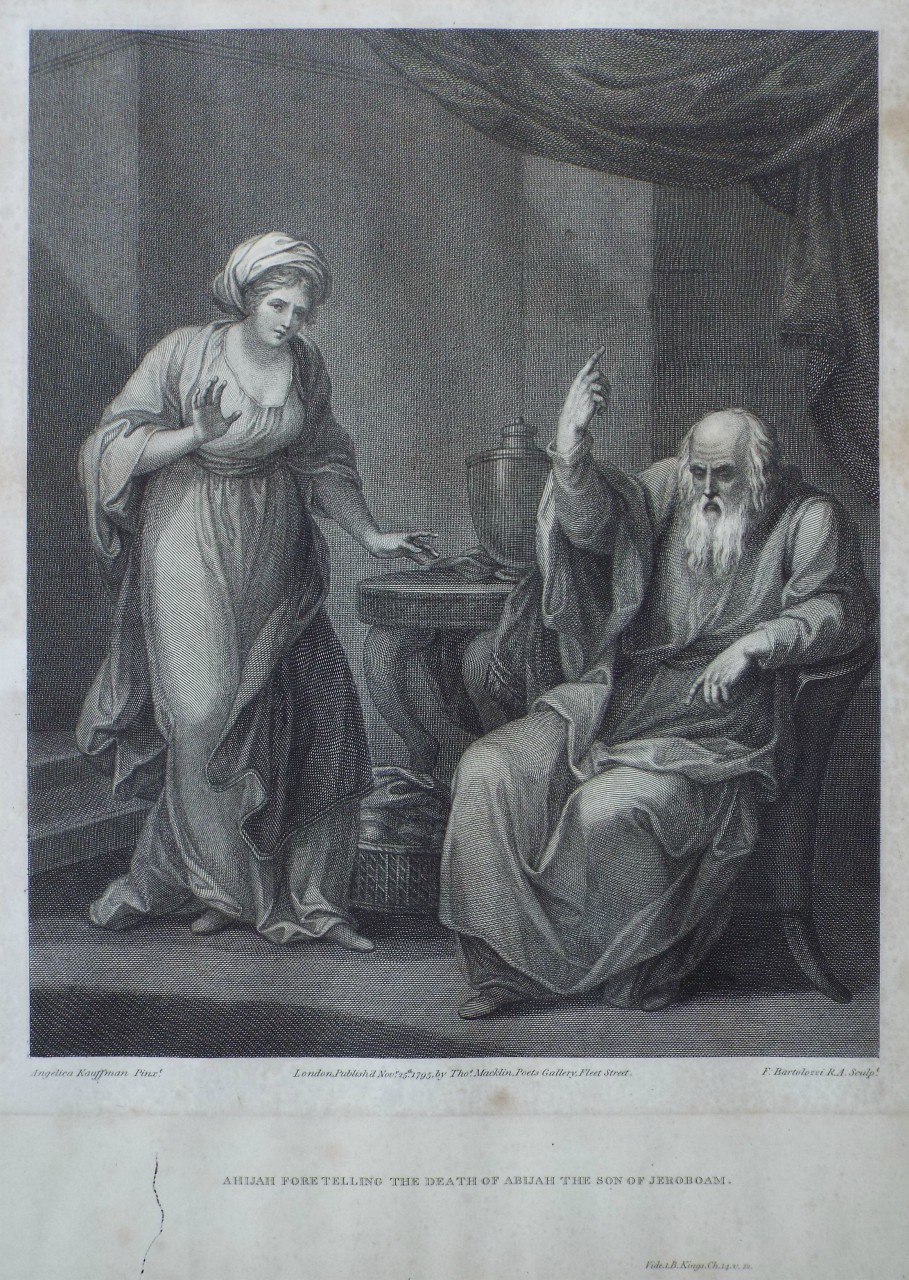
1 At that time Abijah the son of Jeroboam fell sick. 2 And Jeroboam said to his wife, “Arise, and disguise yourself, that it not be known that you are the wife of Jeroboam, and go to Shiloh. Behold, Ahijah the prophet is there, who said of me that I should be king over this people. 3 Take with you ten loaves, some cakes, and a jar of honey, and go to him. He will tell you what shall happen to the child.”

4 Jeroboam’s wife did so. She arose and went to Shiloh and came to the house of Ahijah. Now Ahijah could not see, for his eyes were dim because of his age. 5 And the LORD said to Ahijah, “Behold, the wife of Jeroboam is coming to inquire of you concerning her son, for he is sick. Thus and thus shall you say to her.”

When she came, she pretended to be another woman. 6 But when Ahijah heard the sound of her feet, as she came in at the door, he said, “Come in, wife of Jeroboam. Why do you pretend to be another? For I am charged with unbearable news for you. 7 Go, tell Jeroboam, ‘Thus says the LORD, the God of Israel: “Because I exalted you from among the people and made you leader over my people Israel 8 and tore the kingdom away from the house of David and gave it to you, and yet you have not been like my servant David, who kept my commandments and followed me with all his heart, doing only that which was right in my eyes, 9 but you have done evil above all who were before you and have gone and made for yourself other gods and metal images, provoking me to anger, and have cast me behind your back, 10 therefore behold, I will bring harm upon the house of Jeroboam and will cut off from Jeroboam every male, both bond and free in Israel, and will burn up the house of Jeroboam, as a man burns up dung until it is all gone. 11 Anyone belonging to Jeroboam who dies in the city the dogs shall eat, and anyone who dies in the open country the birds of the heavens shall eat, for the LORD has spoken it.”’ 12 Arise therefore, go to your house. When your feet enter the city, the child shall die. 13 And all Israel shall mourn for him and bury him, for he only of Jeroboam shall come to the grave, because in him there is found something pleasing to the LORD, the God of Israel, in the house of Jeroboam. 14 Moreover, the LORD will raise up for himself a king over Israel who shall cut off the house of Jeroboam today. And henceforth, 15 the LORD will strike Israel as a reed is shaken in the water, and root up Israel out of this good land that he gave to their fathers and scatter them beyond the Euphrates, because they have made their Asherim, provoking the LORD to anger. 16 And he will give Israel up because of the sins of Jeroboam, which he sinned and made Israel to sin.”

17 Then Jeroboam’s wife arose and departed and came to Tirzah. And as she came to the threshold of the house, the child died. 18 And all Israel buried him and mourned for him, according to the word of the LORD, which he spoke by his servant Ahijah the prophet. – 1 Kings 14:1-18 ESV

God had spoken His word of judgment against the false gods of Israel, and used a young, unnamed prophet to deliver it. This unidentified servant of God spoke his divine message directly to the altar itself. In the presence of King Jeroboam and the people of Israel, he addressed the sacred site itself, the place they had set up to worship and seek the favor of their man-made god. This shrine was located in the city of Bethel, in the southern region of the land belonging to the ten tribes. Jeroboam had constructed a second altar just like it in the northern city of Dan. In an attempt to prevent his people from returning to Judah to offer sacrifices to Yahweh at the temple in Jerusalem, he provided them with two new and more convenient worship sites. But these alternate sites and the altars they contained were adorned with golden calves, the man-made symbols of Jeroboam’s false gods. So, Yahweh had His prophet deliver a stinging indictment against one of these pseudo-sacred sites.

“O altar, altar! This is what the LORD says: A child named Josiah will be born into the dynasty of David. On you he will sacrifice the priests from the pagan shrines who come here to burn incense, and human bones will be burned on you.” – 1 Kings 13:2 NLT

Even these inanimate places of worship would be judged by God for the role they played in Israel’s apostasy. These carefully constructed sites made of handcrafted stones would end up desecrated and dishonored. The golden idols to which they were dedicated would be exposed for what they were: lifeless and powerless lumps of metal. The psalmist sardonically described the utter futility of these false gods.

Their idols are merely things of silver and gold,
    shaped by human hands.
They have mouths but cannot speak,
    and eyes but cannot see.
They have ears but cannot hear,
    and noses but cannot smell.
They have hands but cannot feel,
    and feet but cannot walk,
    and throats but cannot make a sound.
And those who make idols are just like them,
as are all who trust in them. – Psalm 115:4-8 NLT

Since Jeroboam had been responsible for the creation of these altars and the gods they contained, he too would experience the judgment of God. While he had been forced to stand and watch as the prophet destroyed one of his sacred shrines, he walked away unscathed. He was still the king, and his life went on just as it had before. After ordering the reconstruction of the altar, Jeroboam went about his business and soon forgot all that had happened at Bethel. But God had not forgotten the sins of Jeroboam.

Somewhere along the way, Jeroboam’s wife gave birth to a son, ensuring that he would have an heir to his throne to perpetuate his dynasty. But this joy was soon overshadowed by the news that Jeroboam’s son had become seriously ill. Concerned for his son’s health and his dynasty’s future, Jeroboam sent his wife to ask the prophet Ahijah for a divine prognosis. He wanted to know if his son would live or die.

Jeroboam likely chose to send his wife to Ahijah because the prophet had been the one to pronounce his kingship. Years earlier, Ahijah had been sent by Yahweh to inform Jeroboam that he had been selected to be the first king of the northern kingdom of Israel.

One day as Jeroboam was leaving Jerusalem, the prophet Ahijah from Shiloh met him along the way. Ahijah was wearing a new cloak. The two of them were alone in a field, and Ahijah took hold of the new cloak he was wearing and tore it into twelve pieces. Then he said to Jeroboam, “Take ten of these pieces, for this is what the LORD, the God of Israel, says: ‘I am about to tear the kingdom from the hand of Solomon, and I will give ten of the tribes to you!” – 1 Kings 11:29-31 NLT

The prophet made it clear that Jeroboam’s reign was the result of Solomon’s sin. The son of David had refused to remain faithful to Yahweh, having erected shrines and altars to the false gods of his many wives. As a result, God would divide his kingdom and establish ten of the 12 tribes as a separate nation-state. Jeroboam had done nothing to deserve his rise to power and prominence; it was the sovereign will of God.

The prophet also informed Jeroboam that Jerusalem would remain the place where Yahweh was to be worshiped. The two nations were to remain devoted to the worship of Yahweh and use the Temple in Jerusalem as their sole sacred site. As the newly installed king of Israel, Jeroboam would need to follow David’s example and encourage the ten northern tribes to remain faithful to Yahweh.

“I will place you on the throne of Israel, and you will rule over all that your heart desires. If you listen to what I tell you and follow my ways and do whatever I consider to be right, and if you obey my decrees and commands, as my servant David did, then I will always be with you. I will establish an enduring dynasty for you as I did for David, and I will give Israel to you.” – 1 Kings 11:37-38 NLT

But Jeroboam had failed to heed the prophet’s warning, and now he was suffering the consequences. Yet, when his son became ill, he chose to send his wife to the only man he believed could help him.

Even though Jeroboam’s wife had disguised herself to hide her identity as the queen, the old, blind prophet knew who she was as soon as she walked in the door. Ahijah had been given a divine “heads-up,” informing him of her visit and its purpose.

“Jeroboam’s wife will come here, pretending to be someone else. She will ask you about her son, for he is very sick. Give her the answer I give you.” – 1 Kings 14:5 NLT

As soon as this worried and grieving mother walked in the door, she was met with devastating news. Before she could speak a word, the prophet delivered a message of divine judgment against the house of Jeroboam. The woman who had delivered to Jeroboam an heir to his throne would now be charged with delivering a grim message of his dynasty’s destruction.

“Give your husband, Jeroboam, this message from the LORD, the God of Israel:…I will bring disaster on your dynasty and will destroy every one of your male descendants, slave and free alike, anywhere in Israel. I will burn up your royal dynasty as one burns up trash until it is all gone.” – 1 Kings 14:7, 10 NLT

The prophet made sure she understood that her husband’s reign had been a gift from God. Yahweh had “ripped the kingdom away from the family of David” and given it to Jeroboam (1 Kings 14:8 NLT), and Jeroboam had returned the favor by turning his back on God and causing the ten northern tribes to worship false gods. Just as God had predicted the future destruction of Jeroboam’s altars, He now decreed the destruction of Jeroboam’s heirs.

“The members of Jeroboam’s family who die in the city will be eaten by dogs, and those who die in the field will be eaten by vultures. I, the LORD, have spoken.” – 1 Kings 14:11 NLT

And much to his wife’s dismay, it would all begin with the death of his son.

“Go on home, and when you enter the city, the child will die.” – 1 Kings 14:12 NLT

It’s impossible to fathom the level of grief this woman felt upon hearing this devastating news. In just a matter of minutes, she had been informed that her entire world was about to collapse. Her husband’s kingdom was going to be destroyed, and her young son would die. The prophet made it painfully clear that it was all her husband’s fault. The message she had been given to deliver to Jeroboam left no doubts as to his culpability and sole responsibility for all that was about to happen.

“…you have not been like my servant David, who obeyed my commands and followed me with all his heart and always did whatever I wanted. You have done more evil than all who lived before you. You have made other gods for yourself and have made me furious with your gold calves.” – 1 Kings 14:8-9 NLT

But while this poor woman was still trying to process all that she had heard, Ahijah continued to deliver more bad news.

“In addition, the LORD will raise up a king over Israel who will destroy the family of Jeroboam. This will happen today, even now!” – 1 Kings 14:14 NLT

Jeroboam’s sin was going to have long-lasting consequences. His decision to lead the people of Israel into apostasy would be replicated by his successors, creating a lengthy lineage of spiritual adulterers among God’s chosen people. He had set the tone for their future rebellion, ensuring their eventual removal from the land of promise and their exile “beyond the Euphrates River” (1 Kings 14:15 NLT). Centuries later, God would use the nation of Assyria as His agents of judgment against the northern kingdom of Israel.

In 722 BC, this pagan nation conquered Israel and turned the chosen people of God into slaves. More than 200 years would pass before this devastating event took place. In the meantime, the kings of Israel would follow the pattern established by Jeroboam, leading the people of God into increasing rebellion and wickedness.

But at this point in the story, Jeroboam remains on the throne of Israel. For the moment, God allowed him to maintain his kingdom, but the die had been cast. The damage had been done, and the judgment of God had been decreed.

When Jeroboam’s poor wife returned home, the message of the prophet was confirmed.

“…as she came to the threshold of the house, the child died.” – 1 Kings 14:17 ESV

The judgment of God had begun.

English Standard Version (ESV) The Holy Bible, English Standard Version. ESV® Permanent Text Edition® (2016). Copyright © 2001 by Crossway Bibles, a publishing ministry of Good News Publishers.

New Living Translation (NLT) Holy Bible, New Living Translation, copyright © 1996, 2004, 2015 by Tyndale House Foundation. Used by permission of Tyndale House Publishers Inc., Carol Stream, Illinois 60188. All rights reserved.

Close, But No Cigar

18 Then Jehu assembled all the people and said to them, “Ahab served Baal a little, but Jehu will serve him much. 19 Now therefore call to me all the prophets of Baal, all his worshipers and all his priests. Let none be missing, for I have a great sacrifice to offer to Baal. Whoever is missing shall not live.” But Jehu did it with cunning in order to destroy the worshipers of Baal. 20 And Jehu ordered, “Sanctify a solemn assembly for Baal.” So they proclaimed it. 21 And Jehu sent throughout all Israel, and all the worshipers of Baal came, so that there was not a man left who did not come. And they entered the house of Baal, and the house of Baal was filled from one end to the other. 22 He said to him who was in charge of the wardrobe, “Bring out the vestments for all the worshipers of Baal.” So he brought out the vestments for them. 23 Then Jehu went into the house of Baal with Jehonadab the son of Rechab, and he said to the worshipers of Baal, “Search, and see that there is no servant of the Lord here among you, but only the worshipers of Baal.” 24 Then they went in to offer sacrifices and burnt offerings.

Now Jehu had stationed eighty men outside and said, “The man who allows any of those whom I give into your hands to escape shall forfeit his life.” 25 So as soon as he had made an end of offering the burnt offering, Jehu said to the guard and to the officers, “Go in and strike them down; let not a man escape.” So when they put them to the sword, the guard and the officers cast them out and went into the inner room of the house of Baal, 26 and they brought out the pillar that was in the house of Baal and burned it. 27 And they demolished the pillar of Baal, and demolished the house of Baal, and made it a latrine to this day.

28 Thus Jehu wiped out Baal from Israel. 29 But Jehu did not turn aside from the sins of Jeroboam the son of Nebat, which he made Israel to sin—that is, the golden calves that were in Bethel and in Dan. 30 And the Lord said to Jehu, “Because you have done well in carrying out what is right in my eyes, and have done to the house of Ahab according to all that was in my heart, your sons of the fourth generation shall sit on the throne of Israel.” 31 But Jehu was not careful to walk in the law of the Lord, the God of Israel, with all his heart. He did not turn from the sins of Jeroboam, which he made Israel to sin.

32 In those days the Lord began to cut off parts of Israel. Hazael defeated them throughout the territory of Israel: 33 from the Jordan eastward, all the land of Gilead, the Gadites, and the Reubenites, and the Manassites, from Aroer, which is by the Valley of the Arnon, that is, Gilead and Bashan. 34 Now the rest of the acts of Jehu and all that he did, and all his might, are they not written in the Book of the Chronicles of the Kings of Israel? 35 So Jehu slept with his fathers, and they buried him in Samaria. And Jehoahaz his son reigned in his place. 36 The time that Jehu reigned over Israel in Samaria was twenty-eight years. – 2 Kings 10:18-36 ESV

Jehu’s meteoric rise to power left the people of Israel in a state of shock and confusion. Virtually overnight, he had radically altered the political landscape of the country, completely eradicating any vestige of the former regime. Ahab and Jezebel’s three-decade-long reign of evil had come to an abrupt and ignominious end. But what would happen now? What kind of king would Jehu prove to be? To most of the citizens of Israel, Jehu remained a mystery. He had not campaigned for office or taken time to communicate his particular political platform. This man had suddenly appeared out of nowhere, upsetting the status quo and creating a spirit of anxiety and confusion among the people. And he was far from done.

Jehu proved to be a clever and cunning individual who used his relative anonymity to his advantage. Having literally cleaned house by killing off every one of Ahab’s male descendants, as well as all of his relatives and former administrative officials, Jehu turned his attention to the godless citizens of Israel. And it appears he focused his attention on the capital city of Samaria.

The new king called for a solemn assembly, a mandatory gathering of all the worshipers of Baal. Since Jehu’s political and religious positions were unknown to anyone, he was able to leave the people with the impression that he was an ardent worshiper of Baal. He even pledged to outdo Ahab in his commitment to this false god of fertility.

“Ahab’s worship of Baal was nothing compared to the way I will worship him! Therefore, summon all the prophets and worshipers of Baal, and call together all his priests. See to it that every one of them comes, for I am going to offer a great sacrifice to Baal. Anyone who fails to come will be put to death.” – 2 Kings 10:18-19 NLT

He commanded that every priest and faithful adherent to Baal join him for a special assembly, to be held in the house of Baal in Samaria. He even sent messengers all over Israel, informing the people to gather for this great occasion. And as the news spread, the excitement among the people began to build. So, when the big day arrived, “They all came—not a single one remained behind—and they filled the temple of Baal from one end to the other.” (2 Kings 10:21 NLT).

Next, Jehu instructed that every Baal worshiper be given a special vestment or robe. And, as if to keep this solemn assembly free from contamination, he commanded that no worshipers of Yahweh be allowed in the building. This was going to be an exclusive, members-only service dedicated to the great god, Baal. You can almost sense the excitement and the air of eager anticipation as the people waited to see what would happen next. And when Jehu, their new king, offered up a sacrifice to their god, they had to have been beside themselves with joy and pride. Baal was being given a place of prominence and priority in the new administration. But little did they know that the whole affair had been nothing more than a clearly disguised ruse. They had been lured to their own deaths. When Jehu had pledged to make a great sacrifice to Baal, he had been talking about them. They were to be the sacrifice.

And Jehu ordered the slaughter of every single priest and parishioner. Within seconds, the standing-room-only crowd began to realize what was happening. Screams echoed through the halls as Jehu’s men made their way through the panic-stricken mass of humanity, striking down any and all who stood in their path. It was a virtual blood bath. Those who did not fall victim to the sword were likely trampled to death as they attempted to find the nearest exit. But Jehu had posted guards to ensure that no one escaped alive.

At some point, the killing ended, but Jehu was far from done. He ordered the destruction of any and all idols dedicated to Baal. If they were made of stone, they were demolished. If they were carved from wood, they were burned. In a sense, Jehu attempted to purge the memory of Baal from the nation of Israel. And in one last act of desecration, he ordered that the temple to Baal be converted into a public toilet.

And the author seems to give Jehu high marks for his actions that day.

Thus Jehu wiped out Baal from Israel. – 2 Kings 10:17 ESV

His campaign to eradicate the worship of Baal had been a rousing success. The false god of Ahab and Jezebel had been removed and reduced to a memory. But there was a problem. While Jehu had focused all his time and energy on the removal of Baal, he had failed to deal with the root problem that plagued the nation of Israel: Idolatry.

Baal had been a symptom, not the disease. The reason the people had so readily accepted the false god of Jezebel was that they had a long-standing track record for apostasy and idolatry. From the very moment when God had split the kingdom of Solomon in half, the ten northern tribes had dedicated themselves to the worship of false gods. Their newly appointed king, Jeroboam, had made the fateful decision to erect golden calves in the cities of Dan and Bethel. And while Ahab and Jezebel had promoted Baal as the premier god of the Israelites, the people had not abandoned the gods of Jeroboam. And, sadly, the author reveals that Jehu’s purging of Baal, while effective, was insufficient.

But Jehu did not turn aside from the sins of Jeroboam the son of Nebat, which he made Israel to sin—that is, the golden calves that were in Bethel and in Dan. – 2 Kings 10:29 ESV

The people of Israel remained idolatrous and unfaithful. And Jehu’s fervor for Yahweh proved to be far from perfect.

Jehu was not careful to walk in the law of the Lord, the God of Israel, with all his heart. He did not turn from the sins of Jeroboam, which he made Israel to sin. – 2 Kings 10:31 ESV

Jehu had addressed the symptom, but not the disease. In a sense, he had successfully removed the tumor, but the cancer cells remained. And it was only a matter of time before evidence of the deadly disease surfaced once again.

Jehu had done what God had commanded him to do. He had faithfully fulfilled the instructions of the prophet and was rewarded for his obedience.

“Because you have done well in carrying out what is right in my eyes, and have done to the house of Ahab according to all that was in my heart, your sons of the fourth generation shall sit on the throne of Israel.” – 2 Kings 10:30 ESV

But what Jehu had failed to do was reestablish the worship of Yahweh. He had removed Baal but had left the golden calves. He allowed the people to continue their pursuit of false gods rather than lead them back to the worship of the one true God.

For the next 28 years, Jehu would reign over Israel, but his kingdom would grow progressively weaker and smaller. His partial purging of Israel’s idols would allow the cancer of unfaithfulness to spread. Jehu had been successful in removing the foreign gods of Jezebel, but he had turned a blind eye to the home-grown gods of Jeroboam. And God had been very specific about his prohibition of false gods of any kind.

“You must not have any other god but me. You must not make for yourself an idol of any kind or an image of anything in the heavens or on the earth or in the sea. You must not bow down to them or worship them, for I, the LORD your God, am a jealous God who will not tolerate your affection for any other gods.” – Exodus 20:3-5 NLT

But Jehu refused to obey the command of God. He not only tolerated the gods of Jeroboam, but he also promoted them. As the king of Israel, he encouraged the people to give their affection and attention to something other than Yahweh. And, as a result, God diminished the extent of his kingdom and, eventually, brought his dynasty to an end. Jehu proved to be a good king, but not a great one. He had been faithful to purge the kingdom of Ahab’s evil influence, but he had failed to lead the people back to Yahweh.

English Standard Version (ESV) The Holy Bible, English Standard Version. ESV® Permanent Text Edition® (2016). Copyright © 2001 by Crossway Bibles, a publishing ministry of Good News Publishers.

New Living Translation (NLT) Holy Bible, New Living Translation, copyright © 1996, 2004, 2015 by Tyndale House Foundation. Used by permission of Tyndale House Publishers Inc., Carol Stream, Illinois 60188. All rights reserved.

The Message (MSG)Copyright © 1993, 1994, 1995, 1996, 2000, 2001, 2002 by Eugene H. Peterson


It Is Not God.

Set the trumpet to your lips! One like a vulture is over the house of the Lord, because they have transgressed my covenant and rebelled against my law. To me they cry, “My God, we — Israel — know you.” Israel has spurned the good; the enemy shall pursue him. They made kings, but not through me. They set up princes, but I knew it not. With their silver and gold they made idols for their own destruction. I have spurned your calf, O Samaria. My anger burns against them. How long will they be incapable of innocence? For it is from Israel; a craftsman made it; it is not God. The calf of Samaria shall be broken to pieces. – Hosea 8:1-6 ESV

Ever since the split of the kingdom, the northern nation of Israel had made a habit of ignoring God, transgressing His covenant and rebelling against His law. It had all begun with King Jeroboam’s disastrous decision to make his own gods, in an attempt to keep the people from going back to Jerusalem in the south to worship.

So the king took counsel and made two calves of gold. And he said to the people, “You have gone up to Jerusalem long enough. Behold your gods, O Israel, who brought you up out of the land of Egypt.” And he set one in Bethel, and the other he put in Dan. Then this thing became a sin, for the people went as far as Dan to be before one. He also made temples on high places and appointed priests from among all the people, who were not of the Levites. – 1 Kings 12:28-31 ESV

Jeroboam had deemed himself a god-maker and led the entire nation into idolatry. And now, years later, after decades of unfaithfulness to God, the Assyrians were poised, ready to wreak destruction on the people of Israel – as part of God’s punishment for their blatant forsaking of Him as their god. But now that their world was falling apart, they had suddenly decided to call on God, saying , “My God, we — Israel — know you.” But nothing could have been further from the truth. Had they truly known God, they would not have committed the blatant acts of unfaithfulness that had marked their brief and less-than-stellar history. They had appointed kings without God’s approval. They had set over themselves princes and leaders without seeking God’s direction. And the original two golden calves had not been the only idols they erected and worshiped. Idols to Baal and other false gods were located throughout the kingdom.

But God condemned their idols, made with human hands, and He declared, “It is not God.” They were going to discover the simple truth behind that statement as they called out to their false gods in hopes of escaping the wrath of the Assyrian army. And when their idols failed to provide them with a miracle of deliverance, they would finally turn to God. But it would prove too little, too late. Their return would not be heartfelt and would lack true repentance. Their sorrow was not for their sins against God, but because of their circumstances. They weren’t repentant. They were simply remorseful. And their calling on God was nothing more than a last-minute attempt to escape the disaster looming over them.

It is not God. That is the key lesson they were to learn. Their false gods were not gods at all. They were man-made objects lacking life and devoid of any ability to provide help or hope. Their golden calves would end up broken and destroyed. Their places of worship would be torn down. Their reliance upon Egypt and other foreign powers would prove futile. Their real hope should have been in God alone. As the psalmist wrote, “Some nations boast of their chariots and horses, but we boast in the name of the LORD our God” (Psalms 20:7 NLT). The prophet Isaiah warned against placing your trust in anything other than God. “What sorrow awaits those who look to Egypt for help, trusting their horses, chariots, and charioteers and depending on the strength of human armies instead of looking to the LORD, the Holy One of Israel” (Isaiah 31:1 NLT).

But how easy it is to trust in what we can see. How quickly we can turn to those things that appear to be real and worthy of our trust – instead of trusting in God. But as God’s people, we are to place all our confidence in Him. He is to be our strength, our comfort, protector and provider. But God is not to be treated like an in-case-of-emergency button. He doesn’t want to be our go-to God when all else fails. And yet, so often, we turn to God only after we have exhausted all other options. When we no longer have any tricks up our sleeves, we reach out to him for help. Our desperation prompts us to display an insincere form of remorse. But what God wants is true repentance, a brokenness of heart that causes us to reach out to Him in love and sincere sorrow. David said it well. “The sacrifice you desire is a broken spirit. You will not reject a broken and repentant heart, O God” (Psalm 51:17 NLT). The prophet Joel provided a picture of the kind of response God desires from His people:

That is why the Lord says, “Turn to me now, while there is time. Give me your hearts. Come with fasting, weeping, and mourning. Don’t tear your clothing in your grief, but tear your hearts instead.” Return to the Lord your God, for he is merciful and compassionate, slow to get angry and filled with unfailing love. He is eager to relent and not punish. Who knows? Perhaps he will give you a reprieve, sending you a blessing instead of this curse. Perhaps you will be able to offer grain and wine to the Lord your God as before. – Joel 2:12-14 NLT

God desires hearts that are sincerely sorrowful over their sin. He longs for His people to return to Him in heartfelt repentance, legitimately willing to turn from worshiping false gods and ready to place their hope in Him. If our only goal is to escape His judgment, we miss the point. If our repentance is not motivated by His love and a desire to be restored to a right relationship with Him, we are treating Him as nothing more than a get-out-of-jail-free card. Sometimes our difficulties and trials are an opportunity for us to realize that the thing we have been worshiping is not a god. The things we have been putting all our hope in is incapable of delivering what we have been expecting. It is not God. But He is. And He wants to be the God of our lives, providing hope, healing, help, and an ever-increasing holiness of character in our lives.

The Leadership Void.

Yet let no one contend, and let none accuse, for with you is my contention, O priest. You shall stumble by day; the prophet also shall stumble with you by night;  and I will destroy your mother. My people are destroyed for lack of knowledge; because you have rejected knowledge, I reject you from being a priest to me. And since you have forgotten the law of your God, I also will forget your children. The more they increased, the more they sinned against me; I will change their glory into shame.

They feed on the sin of my people; they are greedy for their iniquity. And it shall be like people, like priest; I will punish them for their ways and repay them for their deeds. They shall eat, but not be satisfied; they shall play the whore, but not multiply, because they have forsaken the Lord to cherish whoredom, wine, and new wine, which take away the understanding. – Hosea 4:4-11 ESV

God held all of the people of Israel responsible for their sin, but He had a special word of accusation against the spiritual leaders of Israel. The priests and prophets, while not actually men appointed by God, were still going to be held accountable because of their claim to be representatives of God. The priests of Israel were actually unsanctioned by God, because they had been appointed by Jeroboam after the kingdom split in two. He had created his own gods and appointed his own priests. They were not Levites, as God had commanded. So these were actually false priests leading the people in the worship of false gods. So God held them to a higher standard and leveled more severe charges against them. The same was true of the false prophets who were claiming to bring messages from the false gods they worshiped. These men were supposedly speaking new revelations from their gods, giving the people of Israel divine direction. But they were simply misleading the people. The revelations they received, if indeed they received any, were most likely demonic and most definitely not from God.

God’s main accusation against the priests was that they were leading the people away from Him, not toward Him. The people’s knowledge of God was actually diminishing, not increasing. God said, “My people are destroyed for lack of knowledge; because you have rejected knowledge” (Hosea 4:6 ESV). The priests were not seeking after the one true God, so the people were becoming increasingly ignorant of God and His ways. The priests were not teaching the laws of God, so the people were breaking them without even knowing it. And all of this was leading to their destruction, both spiritually and physically.

As priests, these men were to be promoting godliness and the worship of God. They were to be leading the people into a deeper understanding of and appreciation for God. But God said, “The more priests there are, the more they sin against me. They have exchanged the glory of God for the shame of idols” (Hosea 4:7 NLT). They were leaving God out of the equation. They had replaced Him with false gods and the peoples sins were actually increasing, not decreasing. And God even accused the priests of wanting the people to sin more, because the more they sinned, the more sacrifices they had to bring to repent of their sins. And the more sacrifices the people made, the more portions of those sacrifices they got to eat as their priestly payment. They were actually getting fat and happy off of the sins of the people. “When the people bring their sin offerings, the priests get fed. So the priests are glad when the people sin!” (Hosea 4:8 NLT).

There was evidently a common saying among the Israelites that said, “And what the priests do, the people also do” (Hosea 4:9a NLT). These so-called spiritual leaders were actually setting the standard for sin. They were leading the people into idolatry, immorality, and sins of all kinds by their very actions. Which led God to declare, “So now I will punish both priests and people for their wicked deeds” (Hosea 4:9b NLT).

One of the saddest results of turning from God and seeking false gods is that the blessings you seek never come to fruition. The benefits you hope to derive from your false god never appear. The satisfaction you want remains illusive and unattainable. And God told the people of Israel, “They will eat and still be hungry. They will play the prostitute and gain nothing from it, for they have deserted the Lord to worship other gods” (Hosea 4:10-11a NLT). If you make money your god, you will never have enough of it to make you happy or bring you satisfaction. If you make popularity or beauty your god, there will always be someone more popular and more beautiful than you are. If you place your hope and trust in an individual, they will inevitably let you down. Whatever you end up worshiping in place of God will always let you down. It is incapable of delivering what you seek.

While the Israelites were guilty of worship golden calves and idols made of wood, our false gods are more sophisticated and subtle. Ours take the form of people, careers, material things, money, politicians, success, entertainment, and even self. And sadly, in our culture, there are those claiming to speak for God who encourage the worship of these false gods. They claim to speak for God, but actually direct people away from Him by encouraging actions and attitudes that are opposed to His will. These false preachers and pastors promote happiness over holiness. They downplay the topic of sin and portray God as some kind of self-help guru who exists to meet all your personal desires. They preach inclusion and tolerance at the expense of God’s holiness and man’s need of repentance and salvation from sin. They teach the love of God as some kind of syrupy, sweet, all-accepting idea where God never opposes sin and never condemns the sinner. In essence, they emasculate God, turning Him into a doddering grandfather in the sky who doles out blessings on any and all, free from judgment and mindless of the idea of accountability. But this is not the God of the Bible. And like the false priests and prophets of Israel, the pastors, teachers, evangelists and prophets of today who lead people away from the one true God, will be held responsible by God for their actions.