A Time For Everything

14 Then the disciples of John came to him, saying, “Why do we and the Pharisees fast, but your disciples do not fast?” 15 And Jesus said to them, “Can the wedding guests mourn as long as the bridegroom is with them? The days will come when the bridegroom is taken away from them, and then they will fast. 16 No one puts a piece of unshrunk cloth on an old garment, for the patch tears away from the garment, and a worse tear is made. 17 Neither is new wine put into old wineskins. If it is, the skins burst and the wine is spilled and the skins are destroyed. But new wine is put into fresh wineskins, and so both are preserved.” – Matthew 9:14-17 ESV

One of the things I appreciate about the Word of God is that it provides an honest look into the lives of the characters contained within its pages.

They are not sanitized or canonized, making them unrelatable or, better yet, unbelievable. The people presented to us in the Bible are flawed and prone to failure, just as we are. They wrestle with doubts and fears. Their minds constantly struggle with questions about everything, from fairness to God’s faithfulness.

Even the ones who displayed a heart for the things of God found themselves wondering out loud about the seeming incongruities of life. The world in which they lived was not a kind and gentle place, but could be harsh and unforgiving. Even the Jews, the chosen people of God, found their religion, with all its rules and requirements, to be a difficult lifestyle to maintain. This is what prompted Jesus to say, “Come to me, all of you who are weary and carry heavy burdens, and I will give you rest” (Matthew 11:28 ESV).

Theirs was a religion based on works. Yes, their was faith involved, but essentially, they were required to keep all of God’s commands if they wanted to enjoy His blessing and approval. Rule-keeping was intended to be God-pleasing. So, when some of John the Baptist’s disciples noticed that the men who followed Jesus failed to fast, they were confused and probably a bit shocked.

Both Mark and Luke record this scene a bit differently than Matthew. They indicate that the question regarding fasting came from some anonymous person in the crowd, who asked Jesus:

“John the Baptist’s disciples fast and pray regularly, and so do the disciples of the Pharisees. Why are your disciples always eating and drinking?” – Luke 5:33 ESV

Mark adds the important detail, “Now John’s disciples and the Pharisees were fasting” (Mark 2:18 ESV), which leaves the impression that the fasting was taking place at that very moment. If that is so, it is likely that the disciples of John, who were having to go without food, were a bit put out that the disciples of Jesus were free to eat and drink. So, they sent someone to get an answer from Jesus. But their intent was not to seek clarification but to offer a bit of condemnation. This whole scene smells of competition and comparison. As disciples of John, they had viewed the arrival of Jesus and His chosen followers as a kind of turf war. Before Jesus had shown up on the scene, their leader had been the primary show in town. Even Matthew describes the popularity of John.

Jerusalem and all Judea and all the region about the Jordan were going out to him. – Matthew 3:5 ESV

Yet, with the arrival of Jesus, the popularity of John had faded. His 15-minutes of fame had ended abruptly and now Jesus and His disciples had taken center stage. This probably left John’s followers a bit jealous and feeling as if their decision to follow John had all been in vain. And when they saw that the disciples of Jesus were little more than rule-breakers, that inflamed their sense of fairness and propriety. The wanted answers. They demanded an explanation. And Jesus gave them one.

But notice how Jesus responded to their request. He picked up on a theme their very own leader had used to describe his relationship with Jesus. John had clearly understood his role and the part he had been called by God to play.

“The one who has the bride is the bridegroom. The friend of the bridegroom, who stands and hears him, rejoices greatly at the bridegroom’s voice. Therefore this joy of mine is now complete. He must increase, but I must decrease.” – John 3:29-30 ESV

John understood himself to be little more than a friend of the bridegroom. He was inconsequential when compared to the groom. In fact, he fully realized that he was destined to play a diminishing part in the story surrounding Jesus’ life and ministry.

Using John’s own metaphor of the groom and the wedding, Jesus responds to their request by stating:

“Can the wedding guests mourn as long as the bridegroom is with them? The days will come when the bridegroom is taken away from them, and then they will fast.” – Matthew 9:15 ESV

Mark and Luke provide a slightly different take on Jesus’ words.

“Can the wedding guests fast while the bridegroom is with them? As long as they have the bridegroom with them, they cannot fast.” – Mark 2:19 ESV

“Can you make wedding guests fast while the bridegroom is with them? 35 The days will come when the bridegroom is taken away from them, and then they will fast in those days.” – Luke 5:34-35 ESV

Notice that they both put the emphasis on fasting. But Matthew stresses the idea of mourning. The Greek word Matthew used carries the idea of wailing or an outward expression of grief. Fasting was often linked to an individual’s repentance over sin in their lives. It was a physical way of expressing their sorrow by denying themselves such necessities as food and water.

In this case, Jesus reminds the disciples of John that it made no sense for the friends of the groom to mourn while he was still with them. There would be a proper time for them to grieve over the loss of their friend, but right in the middle of his wedding celebration would not be appropriate.

The Book of Ecclesiastes illustrates the need to recognize that there are a proper time and place for everything.

For everything there is a season,
    a time for every activity under heaven.
A time to be born and a time to die.
    A time to plant and a time to harvest.
A time to kill and a time to heal.
    A time to tear down and a time to build up.
A time to cry and a time to laugh.
A time to grieve and a time to dance. – Ecclesiastes 3:1-3 ESV

What the disciples of John failed to understand was that denying themselves food or water, while beneficial when done at the proper time and for the right reason, was inappropriate when the Messiah was in their midst.

The Messiah’s arrival should have been a time for feasting and celebration, not fasting and self-denial. By fasting, a man was attempting to restore himself to a right relationship with God. But Jesus had come to take care of that problem by offering Himself on their behalf. And that should have been a cause for joy, not for mourning and asceticism.

Jesus was trying to let them know that a new day had dawned. They were living in a new era when the old ways were being replaced with something far grander and significant. That is why He uses the imagery of a piece of new, unwashed cloth being sewn as a patch onto an old garment. After washing, the new cloth would shrink, causing the old garment to tear and rendering it of no value. The new way of the Kingdom was not compatible with the old way of law-keeping. Gone were the days of trying to earn your way into God’s good graces. Jesus had come to make possible a new means of justification and salvation.

The disciples of John were living under the old system of law-keeping and self-produced righteousness. They were still attempting to keep God happy by doing things that proved their spiritual superiority. It seems that the disciples of John viewed themselves as somehow more godly that the disciples of John, by virtue of their commitment to fasting. But Jesus is accentuating the radical nature of the new covenant He came to bring. He even compares it to new wine. This carries the idea of freshness and future fermentation. As wine aged, it would expand, placing great strain on the vessel in which it was contained. Old wineskins were brittle from age and incapable of accommodating the rapidly fermenting nature of new wine. The pressure would cause them to burst.

Once again, Jesus is accentuating the newness and freshness of what He had come to do. It was not that He had come to abolish or replace the law. He had actually come to fulfill it. But it was going to require something altogether new and different. The apostle Paul describes the radically new and regenerative nature of Christ’s work on the cross.

But now we have been released from the law, for we died to it and are no longer captive to its power. Now we can serve God, not in the old way of obeying the letter of the law, but in the new way of living in the Spirit. – Romans 7:6 NLT

Paul goes on to describe the law as “spiritual and good” (Romans 7:14 NLT). Jesus even said He had not come to abolish the law but in order to fulfill it. So, rather than fasting, the disciples of John should have been feasting. They should have been celebrating rather than abstaining. There had always been a time and a place for fasting, but Jesus was letting them know that it was now a time for feasting.  The Messiah was in their midst. The bridegroom was with them. So, let the party begin.

English Standard Version (ESV) The Holy Bible, English Standard Version. ESV® Permanent Text Edition® (2016). Copyright © 2001 by Crossway Bibles, a publishing ministry of Good News Publishers.

New Living Translation (NLT)
Holy Bible, New Living Translation, copyright © 1996, 2004, 2015 by Tyndale House Foundation. Used by permission of Tyndale House Publishers Inc., Carol Stream, Illinois 60188. All rights reserved.
The Message (MSG)Copyright © 1993, 1994, 1995, 1996, 2000, 2001, 2002 by Eugene H. Peterson

Sinners in Need of a Savior

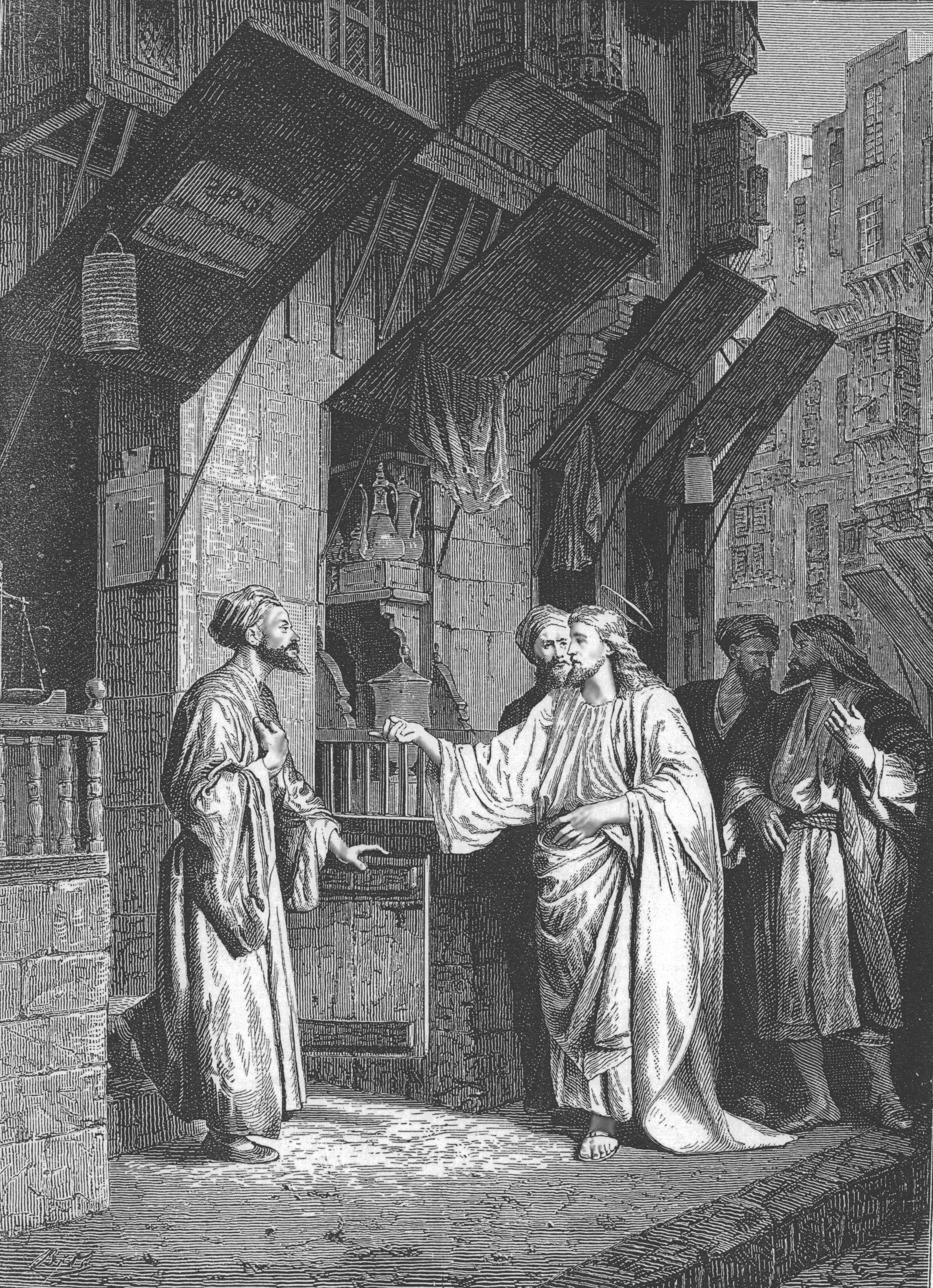
9 As Jesus passed on from there, he saw a man called Matthew sitting at the tax booth, and he said to him, “Follow me.” And he rose and followed him.

10 And as Jesus reclined at table in the house, behold, many tax collectors and sinners came and were reclining with Jesus and his disciples. 11 And when the Pharisees saw this, they said to his disciples, “Why does your teacher eat with tax collectors and sinners?” 12 But when he heard it, he said, “Those who are well have no need of a physician, but those who are sick. 13 Go and learn what this means: ‘I desire mercy, and not sacrifice.’ For I came not to call the righteous, but sinners. – Matthew 9:9-13 ESV

Matthew has pieced together a series of events that provide evidence to support his contention that Jesus was the Son of God and the long-awaited Messiah of Israel. And the identity of Jesus was proven by His obvious authority over sickness, disease, demons, and the creative order. Jesus had both the power and authority to command the winds and waves, representing the natural world, as well as demons, who represent the spiritual realm. He was more than a mere man with a talent for oratory and the gift of healing. Every word He spoke carried weight and left all those who heard Him in a state of awe.

…the people were amazed at his teaching, for he spoke with authority.  – Luke 4:32 NLT

“We have never heard anyone speak like this!” – John 7:46 NLT

The disciples had witnessed Jesus calm a storm by speaking the words, “Peace! Be still!” (Mark 4:39 ESV), and that scene had left them amazed and confused as to just who Jesus really was.

…they were filled with great fear and said to one another, “Who then is this, that even the wind and the sea obey him?” – Mark 4:41 ESV

Now, Matthew chronicles yet another event in the life of Jesus that provides further evidence of His power and authority – this time, over men.

In these verses, Matthew retells the story of his own calling by Jesus, but he does so from the third-person perspective as if he is an outsider recalling a scene he has witnessed. His account, though personal in nature, differs little from those of Luke and Mark. They all describe Jesus coming into contact with Matthew at his place of business, where he served as a tax collector. His “office” was little more than a booth, located on the edge of the city where he collected taxes on trade goods. These taxes, collected on behalf of the Roman government, were a form of sales tax or customs duty, paid by the seller. Matthew would have had a contract with the Romans, most likely purchased at a high cost, that provided him with the authority to collect taxes within a specific geographic region. In order to recoup the cost of his contract, Matthew would have charged fees and commissions on all the taxes he collected, making him a social pariah among his fellow Jews. They would have viewed him as a sell-out to the Romans and a tool of the enemy. And yet, Jesus offered Matthew the same invitation He had extended to Peter, Andrew, James, and John: “Follow me.”

It’s interesting to note that both Mark and Luke record that Jesus “saw” Matthew. This seems to reflect a recognition on the part of Jesus. He saw Matthew and approached him. And yet, there is no dialogue between them. Jesus simply stated, “Follow me.” And all three gospel writers indicate that Matthew accepted the invitation. Luke adds the clarifying note: “leaving everything, he rose and followed him” (Luke 5:28 ESV).

Matthew wasn’t just taking a well-deserved break. Whether he fully realized it or not, he was making a complete break with his past, leaving everything he knew behind. By following Jesus, he was walking away from his booth, his business, and all the benefits and perks that came with his profession.

And both Mark and Luke record that the next thing Matthew did was host Jesus in his own home.

And Levi made him a great feast in his house, and there was a large company of tax collectors and others reclining at table with them. – Luke 5:29 ESV

And as he reclined at table in his house, many tax collectors and sinners were reclining with Jesus and his disciples, for there were many who followed him. – Mark 2:15 ESV

Matthew threw a party for Jesus, the disciples, and an assortment of other interesting guests. All three gospel writers make it clear that the room contained “tax collectors and sinners.” This term is meant to convey a message. The people with whom Jesus was willingly sharing a meal were considered social outcasts by the Jews. The term “sinners” was not a reference to anyone who had broken God’s laws. It was an expression commonly used by the Pharisees for anyone who broke their man-made rules of conduct. Matthew provides an illustration of these rules later on in his gospel.

Some Pharisees and teachers of religious law now arrived from Jerusalem to see Jesus. They asked him, “Why do your disciples disobey our age-old tradition? For they ignore our tradition of ceremonial hand washing before they eat.” – Matthew 15:1-2 NLT

Anyone who refused to live according to their exacting standards was considered a sinner. And Luke records another event in the life of Jesus, where He shared a meal with a Pharisee.

As Jesus was speaking, one of the Pharisees invited him home for a meal. So he went in and took his place at the table. His host was amazed to see that he sat down to eat without first performing the hand-washing ceremony required by Jewish custom. – Luke 11:37-38 NLT

And Jesus had some harsh words for these religious rule-keepers who burdened people with unnecessary and legalistic standards of righteousness that had nothing to do with God.

“…what sorrow also awaits you experts in religious law! For you crush people with unbearable religious demands, and you never lift a finger to ease the burden.” – Luke 11:46 NLT

But the Pharisees were just as appalled by Jesus’ behavior. In their eyes, He was nothing more than a sinner, who broke their laws by associating with the defiled and unclean. Which prompted them to ask His disciples, “Why does your teacher eat with tax collectors and sinners?” (Matthew 9:11 ESV). This question came from the scribes, the experts in religious law, whose man-made additions to the Mosaic Law had turned the righteous commands of God into a petty list of impossible tasks designed to make them look good. But, once again, Jesus had some condemning words for these men, describing their form of worship as “a farce, for they teach man-made ideas as commands from God” (Matthew 15:9 NLT).

The scribes and Pharisees viewed themselves as righteous. They considered themselves to be the true law-keepers, while everyone else was a sinner, including Jesus. And while they looked down their noses at tax collectors and sinners, they did nothing to help them improve their lot in life. Jesus accused them of crushing people with unbearable religious demands, never lifting a finger to ease the burden.

But Jesus answered their question. He explained His presence in the room that day, fully admitting that all those in His midst were indeed sinners. But He added that they were sinners in need of a Savior. And He had come to offer them a way to ease the burden they bore because of their sin. In fact, Jesus would later offer His “great invitation,” imploring sinners just like these to come to Him and find rest.

“Come to me, all of you who are weary and carry heavy burdens, and I will give you rest. Take my yoke upon you. Let me teach you, because I am humble and gentle at heart, and you will find rest for your souls. For my yoke is easy to bear, and the burden I give you is light.” – Matthew 11:28-30 NLT

Jesus was in His element that day. He was surrounded by those He came to save. And He made that point perfectly clear in His answer to the Pharisees and scribes.

“Those who are well have no need of a physician, but those who are sick.” – Matthew 9:12 ESV

Jesus was not inferring that the religious leaders were righteous and in no need of salvation. He was condemning their false sense of confidence in their own righteousness. They only thought they were well and in no need of a physician. Jesus came to minister to those who were willing to recognize their own spiritual infirmity and their need for healing. Just as the leper, the Centurion’s servant, and Peter’s mother-in-law needed the healing touch of Jesus, so did the tax collectors and sinners in Matthew’s house. But their illness was spiritual in nature, not physical. They were sinners in need of a Savior. And while the Pharisees and scribes saw themselves as perfectly righteous before God, they too were spiritually sick.

The apostle Paul reminds us that every single individual on this planet is a sinner in need of a Savior and that those of us who have found healing in Christ are the beneficiaries of God’s grace and goodness.

Once you were dead because of your disobedience and your many sins. You used to live in sin, just like the rest of the world, obeying the devil—the commander of the powers in the unseen world. He is the spirit at work in the hearts of those who refuse to obey God. All of us used to live that way, following the passionate desires and inclinations of our sinful nature. By our very nature we were subject to God’s anger, just like everyone else.

But God is so rich in mercy, and he loved us so much, that even though we were dead because of our sins, he gave us life when he raised Christ from the dead. – Ephesians 2:1-5 NLT

Matthew and his dinner guests, as well as the disciples, the Pharisees and scribes, were all in need of a physician. Some recognized it, while others refused to admit their need and chose instead to see themselves as righteous in their own eyes. But Jesus warned them all, telling them, “I came not to call the righteous, but sinners” (Matthew 9:13 ESV).

Jesus had not come to earth so that He might round up all those who had perfectly obeyed the Mosaic law. Those people did not exist. His reference to mercy and sacrifice is meant to let the Pharisees know that law-keeping would not be the means by which people earn a righteous standing with God. It would be through the unmerited mercy extended to them by God through the sacrificial death of His Son. And the apostle Paul stresses that point in his letter to the Galatians.

Now it is evident that no one is justified before God by the law, for “The righteous shall live by faith.” – Galatians 3:11 ESV

All the “sacrifices” of the Pharisees would amount to nothing. Even their most righteous deeds were nothing more than filthy rags in the eyes of God. But the Great Physician was offering them healing from the spiritual infirmity by providing His Son as their Savior from sin. But as long as they arrogantly and errantly considered themselves to be righteous, they would never accept the free gift of salvation.

English Standard Version (ESV) The Holy Bible, English Standard Version. ESV® Permanent Text Edition® (2016). Copyright © 2001 by Crossway Bibles, a publishing ministry of Good News Publishers.

New Living Translation (NLT)
Holy Bible, New Living Translation, copyright © 1996, 2004, 2015 by Tyndale House Foundation. Used by permission of Tyndale House Publishers Inc., Carol Stream, Illinois 60188. All rights reserved.

The Message (MSG)Copyright © 1993, 1994, 1995, 1996, 2000, 2001, 2002 by Eugene H. Peterson

What Sort of Man is This?

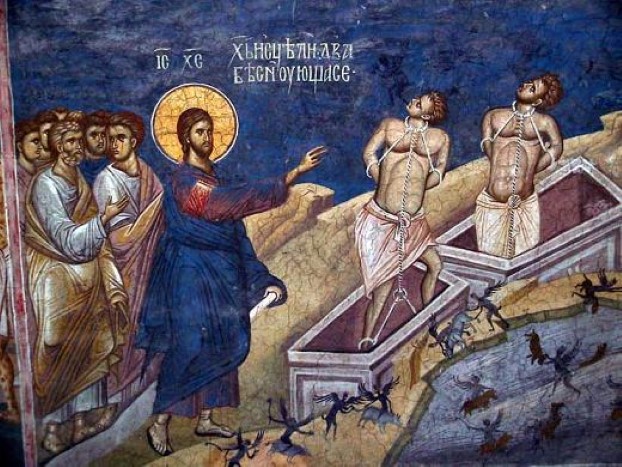
28 And when he came to the other side, to the country of the Gadarenes, two demon-possessed men met him, coming out of the tombs, so fierce that no one could pass that way. 29 And behold, they cried out, “What have you to do with us, O Son of God? Have you come here to torment us before the time?” 30 Now a herd of many pigs was feeding at some distance from them. 31 And the demons begged him, saying, “If you cast us out, send us away into the herd of pigs.” 32 And he said to them, “Go.” So they came out and went into the pigs, and behold, the whole herd rushed down the steep bank into the sea and drowned in the waters. 33 The herdsmen fled, and going into the city they told everything, especially what had happened to the demon-possessed men. 34 And behold, all the city came out to meet Jesus, and when they saw him, they begged him to leave their region. – Matthew 8:28-34 ESV

The first question we must address is why Matthew included two demon-possessed men in his account of this event, while Mark and Luke mention only one. The simple and honest answer is that we don’t know. It could be that Mark and Luke were describing the more radical and intimidating one of the two men. They both provide detailed descriptions of the man’s demon-possessed state.

…no one could bind him anymore, not even with a chain, for he had often been bound with shackles and chains, but he wrenched the chains apart, and he broke the shackles in pieces. No one had the strength to subdue him. – Mark 5:3-4 ESV

For a long time he had worn no clothes, and he had not lived in a house but among the tombs.…He was kept under guard and bound with chains and shackles, but he would break the bonds and be driven by the demon into the desert. – Luke 8:27, 29 ESV

The fact that Luke and Mark mention only one demoniac does not invalidate or contradict Matthew’s account that there were actually two. Each of these men compiled their gospel accounts with a particular audience in mind, with a singular focus intended, and from their own personal perspectives. So, while there appears to be some discrepancy between their accounts, each of the gospel writers provides a unique take on a shared experience.

It is important to recall the immediate context that accompanies this story. The disciples have just experienced a life-threatening storm at sea and had been eye-witnesses to Jesus’ miraculous calming of the wind and the waves with nothing more than a command. This had left the disciples in a state of joyful relief, but also confused disbelief, as they asked, “What sort of man is this, that even winds and sea obey him?” (Matthew 8:27 ESV). With each passing day and every miraculous display of His power, the disciples were receiving more insight into Jesus’ identity, but much of it left them increasingly more confused as to who He was and what He had come to do.

Upon reaching the eastern side of the Sea of Galilee, the disciples must have been relieved to be back on dry land. After their harrowing experience in the storm, the beaches and hills of Gadara were a welcome sight. But their relief was to be short-lived because as soon as they disembarked from their boats, they discovered that they had landed in the vicinity of Gentile burial ground. And to make matters worse, from among the tombs appeared two naked, wild-eyed, demon-possessed men.

Gadara, the regional capital of the Decapolis, was located on the southeastern side of the Sea of Galilee. It was a predominantly Gentile region and would not have been a common destination for the Jewish disciples of Jesus. The presence of the graveyard and the arrival of demoniacs made their landing in this particular location that much more uncomfortable and unattractive. This was the last place any of these men wanted to be.

But this encounter, like all the others the disciples of Jesus would experience, was God-ordained. Everything that had taken place over the preceding hours had resulted in this every scene taking place. The storm had driven them southeast, far from their original destination. The disciples would never have intended to land at a place like Gadara. But that was exactly what God had sovereignly ordained. This encounter with the demoniacs was not a case of chance or bad luck but was all part of a divine plan to display the true identity of Jesus. Remember the question the disciples asked immediately after the calming of the storm: “What sort of man is this, that even winds and sea obey him?” Mark recorded their question this way: “Who then is this…?” (Mark 4:41 ESV). And God was about to give them an answer to their question from a very unexpected and unlikely source.

…two demon-possessed men met him, coming out of the tombs, so fierce that no one could pass that way. And behold, they cried out, “What have you to do with us, O Son of God?” – Matthew 8:28-29 ESV

The demons which possessed these men addressed Jesus as the Son of God. They spoke to Him, fully cognizant of His identity and authority. They even ask Him, “Have you come here to torment us before the time?” (Matthew 8:29 ESV). These demons were fallen angels, agents of Satan whose sole responsibility was to torment men and women. At one time, they had been part of the heavenly host who worshiped God Almighty, but they had joined in Satan’s attempted coup against God and been cast out of God’s presence. They were now relegated to seeking out refuge in the bodies of helpless humans, tormenting and slowly destroying them.

It’s important to stop and consider how all of this was impacting the disciples of Jesus. Remember, they are Jews, and they have suddenly found themselves on Gentile soil, in close proximity to a graveyard, and accosted by two demon-possessed men. Everything about this scene shouts, “unclean!” They were not to associate with Gentiles. To do so would render them unclean. They were forbidden to come into contact with anything dead. If they did, they would be considered unclean. And to have anything to do with demons was unthinkable. Yet, here they were.

And they were hearing these demons address their rabbi and teacher as the Son of God. If you recall, this is exactly how God addressed Jesus at His baptism.

“This is my beloved Son, with whom I am well pleased.” – Matthew 3:17 ESV

God had confirmed the identity of Jesus. But now, He was providing further evidence by allowing the disciples to witness the proof of Jesus’ divine power and authority through the wind and waves, and even the words of demons.

And as if the location and the unexpected company were not bad enough, Matthew is about to reveal that the disciples were in eye-shot of a herd of pigs. This would have been one more proof to these men that they were not where they were meant to be. Pigs were considered unclean to Jews, and they were to have nothing to do with them. Yet, here they were, in a Gentile land, in the company of two demon-possessed Gentiles, in close proximity to a Gentile cemetery, and with a herd of pigs nearby. Could it get any worse?

But all of this was pre-ordained by God. There is nothing about this story that should be viewed as happenstance or coincidence. This was all meant to be. And the overwhelming sense of uncleanness and impurity is intended. Jesus, the Son of God and the Savior of the world, is right where He is supposed to be, surrounded by darkness and confronted by the impurity that pervades and permeates the world. John records in His gospel:

In him was life, and the life was the light of men. The light shines in the darkness, and the darkness has not overcome it. – John 1:4-5 ESV

The disciples would have sensed the darkness of their surroundings. They would have longed to enter their boats and sail away, risking another storm at sea rather than spending another moment in that God-forsaken, sin-infested region. But Jesus was right where He was supposed to be. He was the light of God shining amid the darkness. He was the Son of God, confronting sin and casting out the demons of darkness and destruction. And even the demons recognized that they were no match for Jesus. They also knew that their reign of terror on this earth was going to be short-lived because God had a plan in place for their ultimate defeat. That is why they asked Jesus, “Have you come here to torment us before the time?”

The Book of Revelation reveals that there is a future judgment for Satan and all of his demonic followers. John describes it in graphic terms.

Then the devil, who had deceived them, was thrown into the fiery lake of burning sulfur, joining the beast and the false prophet. There they will be tormented day and night forever and ever. – Revelation 20:10 ESV

These demons inherently know that they have met their match in Jesus. And all they can do is beg to be cast into a herd of swine. Later on in his gospel, Matthew records the words of Jesus concerning the need for demons to have a host to possess. Their entire existence is based on possession and manipulation.

“When the unclean spirit has gone out of a person, it passes through waterless places seeking rest, but finds none. Then it says, ‘I will return to my house from which I came.’ And when it comes, it finds the house empty, swept, and put in order. Then it goes and brings with it seven other spirits more evil than itself, and they enter and dwell there, and the last state of that person is worse than the first.” – Matthew 12:43-45 ESV

These demons knew what Jesus was about to do, so they request that He allow them to possess the herd of pigs. And this request speaks volumes when it comes to Satan’s outlook on humanity. We are little better than swine to Satan and his demons.

And when Jesus cast the demons into the swine, the entire herd “rushed down the steep bank into the sea and drowned in the waters” (Matthew 8:32 ESV). These soul-less animals proved to be poor hosts for the demons, ending their lives and leaving the demons to pass through waterless places seeking rest, but finding none.

But the reaction of the helpless pigs stands in stark contrast to that of the herdsman. Matthew tells us that they “fled, and going into the city they told everything, especially what had happened to the demon-possessed men” (Matthew 8:33 ESV). And Mark provides us with additional insight, describing them returning to find the formerly possessed men in a dramatically altered state.

…the one who had had the legion, sitting there, clothed and in his right mind, and they were afraid… – Mark 5:14-15 ESV

The herdsman returned with their neighbors and friends, but rather than reacting with amazement and wonder at the amazing transformation of these two men who used to terrorize their community, they respond in fear. And Matthew records that “they begged him [Jesus] to leave their region” (Matthew 8:34 ESV). They wanted nothing to do with Jesus.

Consider all the responses recorded in this story. The demons begged to be spared. The pigs plunged to their deaths. The herdsman ran in terror. The townspeople returned in curiosity. But they all begged Jesus to leave. There was no revival in Gadara that day. But the lives of two men were dramatically changed. And Jesus sent them back into their community with a charge to tell what He had done for them.

“Go home to your friends and tell them how much the Lord has done for you, and how he has had mercy on you.” And he went away and began to proclaim in the Decapolis how much Jesus had done for him, and everyone marveled. – Mark 5:19-20 ESV

The only reaction that Matthew fails to record is that of the disciples. We’re left to wonder what they thought about all of this. But just imagine the sheer volume of questions that must have been running through their minds as they considered all that they had just witnessed. This entire scenario must have left them dumbfounded and confused. But God was slowly and methodically answering their question: What sort of man is this?

English Standard Version (ESV) The Holy Bible, English Standard Version. ESV® Permanent Text Edition® (2016). Copyright © 2001 by Crossway Bibles, a publishing ministry of Good News Publishers.

New Living Translation (NLT)
Holy Bible, New Living Translation, copyright © 1996, 2004, 2015 by Tyndale House Foundation. Used by permission of Tyndale House Publishers Inc., Carol Stream, Illinois 60188. All rights reserved.

The Message (MSG)Copyright © 1993, 1994, 1995, 1996, 2000, 2001, 2002 by Eugene H. Peterson

Fear Versus Faith

23 And when he got into the boat, his disciples followed him. 24 And behold, there arose a great storm on the sea, so that the boat was being swamped by the waves; but he was asleep. 25 And they went and woke him, saying, “Save us, Lord; we are perishing.” 26 And he said to them, “Why are you afraid, O you of little faith?” Then he rose and rebuked the winds and the sea, and there was a great calm. 27 And the men marveled, saying, “What sort of man is this, that even winds and sea obey him?” – Matthew 8:23-27 ESV

“His disciples followed him.”

Did this group include the two individuals who had approached Jesus, expressing a desire to follow Him? Matthew doesn’t tell us. But it seems likely that they were not on board when the boat sailed – either literally or figuratively. One considered the cost of discipleship far too high. The other allowed the worries of this world to take precedence over his commitment to the cause of Christ.

And it’s interesting to note what happened to those who did step into the boat with Jesus that fateful day. Perhaps Peter, James, John, and the other disciples were a bit full of themselves as the boat left the shore, thinking themselves to be true disciples of Jesus because of their presence in the boat. They had literally followed Him. And they were enjoying the privileged position of being His faithful disciples. And then, suddenly, the storm appeared.

Remember, this little excursion had begun with a simple request from Jesus that they sail to the other side of the Sea of Galilee in order to escape the crush of the crowds.

Now when Jesus saw a crowd around him, he gave orders to go over to the other side. – Matthew 8:18 ESV

But long before they made it to the opposite shore, a violent storm arose. Mark describes it as “a great windstorm,” with waves so high that they broke over the sides of the boat, causing it to fill with water (Mark 4:37) These kinds of storms were not uncommon on the Sea of Galilee. This relatively small body of water lies 680 feet below sea level and is surrounded by hills that can reach a height of 2,000 feet. When the cool, dry air from these hills comes into contact with the warm, moist air found at sea level, the results can be dramatic. Extreme temperature and pressure changes can produce severe storms with violent winds, which can whip across the relatively shallow waters of the Sea of Galilee, causing massive waves that can sink a small boat with relative ease.

That is the very situation in which the disciples found themselves. And they were not alone, because Mark records that other boats had accompanied them on this crossing. What had begun as a simple boat ride to the other side had quickly escalated into a life-threatening encounter with Mother Nature. And Peter, Andrew, James, and John, who were professional fishermen, found themselves in fear for their lives. They had seen these kinds of storms before and they knew what could happen. They knew their lives were in danger and while they made every attempt to use their knowledge of the sea and their skills as boatmen to save themselves, they eventually turned to Jesus for help.

But first, they had to wake Him up.

While they were busy bailing water and fearing the worst, Jesus was fast asleep in the hold of the ship. The contrast is stark and intentionally so. They were in a panic and Jesus was at peace. They were filled with worry and anxiety, while Jesus enjoyed a well-deserved rest. Their thoughts were on the immediate danger of their circumstances. Jesus was resting in the sovereign authority of His Heavenly Father. He knew He was not going to die in a storm at sea. He was fully confident in God’s plan for His life and His Father’s sovereign control over the affairs of His life.

But the minds of the disciples were focused on the wind, the waves, and what looked like the threat of death. So, in their panic, they awakened Jesus and shouted, “Save us, Lord; we are perishing” (Matthew 8:25 ESV). Mark adds a bit of nuance to their words that reveal their doubts about Jesus’ care for them.

“Teacher, do you not care that we are perishing?” – Mark 4:38 ESV

None of this made sense to them. Their minds were filled with questions.

How did this happen?

What’s going to happen to us?

Why isn’t Jesus doing something about it?

Does He not care about us?

Does He not love us?

Sound familiar? They should. Because they are exactly the kinds of question we raise when we find ourselves in difficulty. When the winds and waves of life suddenly appear and threaten to overwhelm us, we begin to question the goodness and the greatness of God. We see the storms of life as anomalies and unwanted interruptions that seem to indicate God’s disinterest in or dissatisfaction with us. He appears to be asleep at the wheel, and oblivious to what is going on all around us.

But it is at those very moments that God cries out to us just as Jesus did to His disciples as the waves crashed over their boat.

“Why are you afraid, O you of little faith?” – Matthew 8:26 ESV

Before Jesus confronted the waves and the wind, He confronted the fear and faithlessness of His followers. His question was aimed at exposing the real problem they faced, and it was not the storm. They were suffering from a lack of faith, not an over-abundance of rain and boat-rocking wind.

If you recall, when the Centurion had heard that Jesus was willing to come to his home to heal his servant, he had responded, “Lord, I am not worthy to have you come under my roof, but only say the word, and my servant will be healed. For I too am a man under authority, with soldiers under me. And I say to one, ‘Go,’ and he goes, and to another, ‘Come,’ and he comes, and to my servant, ‘Do this,’ and he does it” (Matthew 8:8-9 ESV). And Jesus, amazed by the words of this Roman soldier, had said, “Truly, I tell you, with no one in Israel have I found such faith” (Matthew 8:10 ESV).

This pagan Gentile had believed that Jesus was powerful enough to step into his life circumstance and provide a solution. He somehow knew that Jesus had authority over sickness. He exhibited no doubts as to whether Jesus was capable of doing what He said He would do. He believed, and Jesus rewarded his belief by the healing of his servant and a commendation for his faith.

But as to the rain-drenched, fear-saturated disciples, Jesus questioned their faith. They exhibited no belief in His power or authority. They questioned His seeming lack of concern for their well-being. They had followed Jesus, but as soon as the waves and wind showed up, they were ready to bail – not just water from the boat – but from their commitment to following Him. This was not what they had signed up for.

But rather than reprimand them, Jesus rescued them. Matthew records that he “rose and rebuked the winds and the sea, and there was a great calm” (Matthew 8:26 ESV). This verse almost comes across as a play on words. The calming of the storm was accompanied by the calming of the disciples’ fears. As the waves and the winds subsided, so did the anxiety of the disciples. And their fear was replaced by wonder.

“What sort of man is this, that even winds and sea obey him?” – Matthew 8:27 ESV

And their question reveals their incomplete understanding of just who Jesus was. They had seen Him heal the leper and had heard Him declare the Centurion’s servant healed. They had even witnessed Him remove the fever from Peter’s mother-in-law. But this was an altogether different kind of miracle. Jesus had spoken to the wind and waves, and they had obeyed His command.

The disciples were wrestling with the identity of Jesus. The more time they spent with Him, the more they wondered just who they had decided to follow. Was He a rabbi, a teacher, a prophet, a miracle worker, their long-awaited Messiah, or something more? The actions of Jesus were out-of-the-ordinary and unexpected. His words were powerful. His miracles were inexplicable. His identity was unclear. But with each passing day and each successive miracle and mind-boggling encounter, they were growing to know Him better and learning to trust Him more.

English Standard Version (ESV) The Holy Bible, English Standard Version. ESV® Permanent Text Edition® (2016). Copyright © 2001 by Crossway Bibles, a publishing ministry of Good News Publishers.

New Living Translation (NLT)
Holy Bible, New Living Translation, copyright © 1996, 2004, 2015 by Tyndale House Foundation. Used by permission of Tyndale House Publishers Inc., Carol Stream, Illinois 60188. All rights reserved.

The Message (MSG)Copyright © 1993, 1994, 1995, 1996, 2000, 2001, 2002 by Eugene H. Peterson

Reluctant Followers

18 Now when Jesus saw a crowd around him, he gave orders to go over to the other side. 19 And a scribe came up and said to him, “Teacher, I will follow you wherever you go.” 20 And Jesus said to him, “Foxes have holes, and birds of the air have nests, but the Son of Man has nowhere to lay his head.” 21 Another of the disciples said to him, “Lord, let me first go and bury my father.” 22 And Jesus said to him, “Follow me, and leave the dead to bury their own dead.” – Matthew 8:18-22 ESV

Jesus delivered His sermon on the mount before a large crowd. And Matthew records that when “he came down from the mountain, great crowds followed him” (Matthew 8:1 ESV). Everywhere Jesus went, He tended to draw large crowds because of His words and miracles. They were amazed by the wisdom of His words and the obvious supernatural power behind the healings He performed. He had laid His hands on a man suffering from leprosy and left him thoroughly cleansed and whole. He had performed a long-distance healing, restoring a Centurion’s servant to perfect health. And with the touch of His hand, He had removed the fever from Peter’s mother-in-law.

Whether they fully understood who Jesus was, the crowds who followed Him were enamored by Him. And they found themselves wanting to spend more time with Him. So, Matthew provides a few cases involving those who felt the urge to hitch their wagon to Jesus’ train.

As His reputation spread, Jesus was occasionally forced to seek refuge from the constant press of the growing crowds. In this case, Jesus ordered His disciples to make preparations to sail to the other side of the Sea of Galilee. But before they could get the boat ready, “a scribe came up and said to him, Teacher, I will follow you wherever you go‘“ (Matthew 8:19 ESV).

This man, an expert in the religious laws of Israel, was expressing his intent to go with Jesus to the other side of the sea. He was enthusiastic and energetic in his response, indicating that he was ready and willing to follow Jesus anywhere. His reference to Jesus as a “teacher” was simply an acknowledgment that he viewed Jesus as a rabbi worthy of respect and honor.  He thought he could learn a lot from this very gifted man who had shared so many enlightening and insightful truths in His sermon the hillside.

But Jesus, having sensed what was in the man’s heart, responded, “Foxes have holes, and birds of the air have nests, but the Son of Man has nowhere to lay his head” (Matthew 8:20 ESV). In a sense, Jesus was warning this man that he had no idea what he was getting himself into. Following Jesus was not going to be a walk in the park. It most certainly would not be a series of sermon-on-the-mount moments where everyone sat at the feet of Jesus filling their heads with divine insights or enjoyed watching a steady diet of mind-boggling miracles.

Jesus was not saying that following Him would require a life of abject poverty, but that it would involve cost and a degree of commitment this man was unwilling to make. It would not be easy. This man had obviously missed the point that Jesus had made in His sermon.

“You can enter God’s Kingdom only through the narrow gate. The highway to hell is broad, and its gate is wide for the many who choose that way. But the gateway to life is very narrow and the road is difficult, and only a few ever find it.” – Matthew 7:13-14 NLT

Matthew does not provide us with the man’s response. But it seems safe to assume that the scribe did not end up a passenger in the boat that sailed to the other side of the sea. He most likely decided to walk away. And as Jesus’ ministry continued, that would become the normative pattern among the vast majority of those who followed Jesus. They would prove to be fair-weather followers. In fact, John records the following words of Jesus to His disciples, spoken as He watched the size of the crowds diminish.

At this point many of his disciples turned away and deserted him. Then Jesus turned to the Twelve and asked, “Are you also going to leave?” – John 6:66-67 NLT

Jesus wanted His disciples to know that following Him was not going to be without cost. At another point in His ministry, He delivered a blunt message to the masses who had become His “groupies,” following Him everywhere He went.

A large crowd was following Jesus. He turned around and said to them, “If you want to be my disciple, you must, by comparison, hate everyone else—your father and mother, wife and children, brothers and sisters—yes, even your own life. Otherwise, you cannot be my disciple.  And if you do not carry your own cross and follow me, you cannot be my disciple. But don’t begin until you count the cost.” – Luke 14:25-28 NLT

And it’s interesting to note that a second “disciple,” who had heard what Jesus had said to the scribe, responded with a request for a delay. He was ready and willing to follow Jesus but just not able. He had some unfinished family affairs to take care of and, therefore, a legitimate excuse.

“Lord, let me first go and bury my father.” – Matthew 8:21 ESV

But Jesus wasn’t buying what this man was selling. There is a lot of debate among biblical commentators whether this man’s father was already dead or if the man was simply using the future death of his father as an excuse to delay his full commitment to discipleship. Matthew provides us with no insight into the matter. But Jesus responded, “Follow me, and leave the dead to bury their own dead” (Matthew 8:22 ESV).

This response by Jesus may come across as flippant or callous to us, but it seems that Jesus is trying to establish a hierarchy of priorities for this man’s life. This disciple expressed a desire to follow Jesus, but there were other things that took precedence in his life. Jesus would later describe these kinds of things as “the worries of life.”

“The seed that fell among the thorns represents those who hear God’s word, but all too quickly the message is crowded out by the worries of this life and the lure of wealth, so no fruit is produced.” – Matthew 13:22 NLT

To the first man, Jesus described true discipleship as costly and requiring a commitment. In this man’s case, it was a matter of priorities. He was letting temporal, earthly concerns get in the way of eternal pursuits.  Once again, we have a case of a disciple failing to have heard or comprehended what Jesus had taught in His recent sermon.

“That is why I tell you not to worry about everyday life—whether you have enough food and drink, or enough clothes to wear. Isn’t life more than food, and your body more than clothing?” – Matthew 6:25 NLT

“So don’t worry about these things, saying, ‘What will we eat? What will we drink? What will we wear?’ These things dominate the thoughts of unbelievers, but your heavenly Father already knows all your needs. Seek the Kingdom of God above all else, and live righteously, and he will give you everything you need.” – Matthew 6:31-33 NLT

Jesus was in no way diminishing the care that one should have for their father or mother. But in the grand scheme of things, burying the dead was to take a backseat to the good news of life in Christ. The commitment to following Jesus would prove costly. And normal family relationships should pale when compared to the eternal bond between a disciple and his Savior.

Committing to being a disciple of Jesus was going to require far more than a willingness to be taught and a desire to witness the miraculous. It would demand sacrifice and a level of selflessness that would prove to be uncomfortable and inconvenient. But the list of the rewards that come to those who faithfully follow Christ will be long and long-lasting.

“And everyone who has given up houses or brothers or sisters or father or mother or children or property, for my sake, will receive a hundred times as much in return and will inherit eternal life.” – Matthew 19:29 NLT

English Standard Version (ESV) The Holy Bible, English Standard Version. ESV® Permanent Text Edition® (2016). Copyright © 2001 by Crossway Bibles, a publishing ministry of Good News Publishers.

New Living Translation (NLT)
Holy Bible, New Living Translation, copyright © 1996, 2004, 2015 by Tyndale House Foundation. Used by permission of Tyndale House Publishers Inc., Carol Stream, Illinois 60188. All rights reserved.

The Message (MSG)Copyright © 1993, 1994, 1995, 1996, 2000, 2001, 2002 by Eugene H. Peterson

The Outcast, the Alien, and the Sick

1 When he came down from the mountain, great crowds followed him. 2 And behold, a leper came to him and knelt before him, saying, “Lord, if you will, you can make me clean.” 3 And Jesus stretched out his hand and touched him, saying, “I will; be clean.” And immediately his leprosy was cleansed. 4 And Jesus said to him, “See that you say nothing to anyone, but go, show yourself to the priest and offer the gift that Moses commanded, for a proof to them.”

5 When he had entered Capernaum, a centurion came forward to him, appealing to him, 6 “Lord, my servant is lying paralyzed at home, suffering terribly.” 7 And he said to him, “I will come and heal him.” 8 But the centurion replied, “Lord, I am not worthy to have you come under my roof, but only say the word, and my servant will be healed. 9 For I too am a man under authority, with soldiers under me. And I say to one, ‘Go,’ and he goes, and to another, ‘Come,’ and he comes, and to my servant, ‘Do this,’ and he does it.” 10 When Jesus heard this, he marveled and said to those who followed him, “Truly, I tell you, with no one in Israel have I found such faith. 11 I tell you, many will come from east and west and recline at table with Abraham, Isaac, and Jacob in the kingdom of heaven, 12 while the sons of the kingdom will be thrown into the outer darkness. In that place there will be weeping and gnashing of teeth.” 13 And to the centurion Jesus said, “Go; let it be done for you as you have believed.” And the servant was healed at that very moment.

14 And when Jesus entered Peter’s house, he saw his mother-in-law lying sick with a fever. 15 He touched her hand, and the fever left her, and she rose and began to serve him. 16 That evening they brought to him many who were oppressed by demons, and he cast out the spirits with a word and healed all who were sick. 17 This was to fulfill what was spoken by the prophet Isaiah: “He took our illnesses and bore our diseases.” – Matthew 8:1-17 ESV

Jesus followed up His words with action. Once He had delivered His message, He didn’t seek a quiet place to rest and enjoy some alone-time. He immediately began to do what God had sent Him to do.

“The Spirit of the Lord is upon me, for he has anointed me to bring Good News to the poor. He has sent me to proclaim that captives will be released, that the blind will see, that the oppressed will be set free, and that the time of the Lord’s favor has come.” – Luke 4:18-19 NLT

Jesus was a man on a mission. He knew His time on earth was limited, and all His time and energy were focused on fulfilling His Father’s will. And it did not take long before Jesus’ empathy for the down-and-out, and the down-trodden began to reveal itself. Matthew records three distinctively different encounters between Jesus and a person in need. The first was a leper. The second was a Roman Centurion. And the third was the mother-in-law of one of His own disciples.

The leper, who was most likely a Jew, was a social outcast and a pariah. Because of his disease, he was required by law to announce himself by the words, “Unclean, unclean!” He was to be avoided and shunned at all costs. He was even refused access to the Temple grounds, making it impossible for him to receive atonement for his sins. And in the Jewish mindset, his disease was viewed as a curse from God, the outcome of some heinous sin in his life.

The second man Jesus encounters was a Roman Centurion, and most likely a Gentile. He was an officer in the Roman army with responsibility for 100 battle-hardened soldiers. To the Jews, he would have been a painful and daily reminder of the oppressive regime that had occupied Israel and forced its people into subjugation. He would have been despised and seen as an oppressor whose presence in their land was unwanted and unappreciated.

The final individual was the mother-in-law of Peter, one of the Lord’s recently recruited disciples. Because it is safe to assume that Peter’s wife was a Jew, we can conclude that his mother-in-law would be as well. And all we know from the text is that she had come down with a fever that had left her bedridden. She was helpless and in need of healing.

Three very different individuals whose circumstances could not have been more disparate: A Jewish man with a disfiguring and life-threatening disease, a Roman Centurion with an ailing servant, and a Jewish woman with a fever. And yet, each of them has an encounter with Jesus Christ, the Son of God, and the Messiah of the Jewish people.

It’s important to remember that Matthew wrote his gospel with the goal of proving Jesus’ claim to be the King of the Jews and their long-awaited Messiah. In His just-completed sermon on the mount, Jesus had discussed the nature of life in His Kingdom. Now, Matthew reveals three encounters that provide proof of Jesus’ power and His rightful claim to be the heir to the throne of David.

Back in chapter four, Matthew provided a summary of Jesus’ earthly ministry.

And he went throughout all Galilee, teaching in their synagogues and proclaiming the gospel of the kingdom and healing every disease and every affliction among the people. – Matthew 4:23 ESV

Now, in chapter eight, we see the healing aspect of that ministry displayed in three separate scenes. Matthew does not allow himself to be restricted by the chronology behind these events. Instead, he arranges them in such a way that they create a comprehensive picture of who Jesus was and what He came to do. Matthew seems to be much more interested in developing a theme than in trying to provide a reliable timeline of events. These three encounters are grouped together for a reason and provide us with a somewhat 3-dimensional image of the Savior.

The leper was the disease-riddled outcast who had no place within the faith community of Israel because of what was believed to be his obvious sin. He was unwanted. He was considered untouchable and unredeemable by every other Jew. Yet, he called out to Jesus, “Lord, if you will, you can make me clean” (Matthew 8:2 ESV). At this point, it is interesting to consider the words of Jesus when He was confronted by the self-righteous Pharisees because of His association with tax-collectors and sinners. He simply stated: “Those who are well have no need of a physician, but those who are sick” (Matthew 9:12 ESV).

This leper had no problem acknowledging his need. He was sick and in need of cleansing – both physically and spiritually. His disease had left him ceremonially impure and incapable of receiving atonement for his sins. He desperately longed to be clean and whole again. And he saw in Jesus a source of hope and help. So, he called out in faith, and “Jesus stretched out his hand and touched him” (Matthew 8:3 ESV). Don’t miss the significance of that statement. Jesus touched him. In doing so, Jesus defiled himself. He became impure and took on the disqualifying nature of that man’s condition. An audible gasp must have leaped from the throats of all those who witnessed this scene. And yet, Matthew states that the man’s leprosy was immediately cleansed. He was made whole – in an instance. Jesus could have spoken a word and the man would have received the healing he desired. But Jesus went out of His way to touch him. He associated with an outcast. He showed love and mercy to undesirable and undeserving.

In the case of the Centurion, Jesus met a man who was just as despised by the Jews, but for different reasons. He was an outsider or alien. He had no place in Israel. He was the enemy and a pagan oppressor of the Jewish people whose very presence made their lives a living hell. Yet, this man approached Jesus with dignity and respect, pleading that He come to the aid of his ailing servant.

The leper had said, “if you will, you can make me clean,” and Jesus had responded, “I will.” The Centurion made no request, but simply stated the need, and Jesus responded, “I will come and heal him” (Matthew 8:7 ESV). Jesus was just as willing to heal the servant of a Roman soldier than He was to cleanse the disease of a Jewish leper.

And when the Centurion heard the words of Jesus, he was blown away, declaring that he saw no need for Jesus to go out of His way or trouble Himself. Embarrassed to think of Jesus visiting his humble home, he declared, “only say the word, and my servant will be healed” (Matthew 8:8 ESV). This Gentile soldier expressed faith that Jesus could simply speak a word and his servant would be healed. And Jesus, blown away by this foreigner’s faith, stated, “Truly, I tell you, with no one in Israel have I found such faith” (Matthew 8:10 ESV). And Matthew matter-of-factly reports, “the servant was healed at that very moment” (Matthew 8:13 ESV).

Then, Matthew records the healing of Peter’s mother-in-law. It is a simple recounting of what appears to be a much-less perilous problem. She had a fever. But there was no indication that her life was in danger. And in this case, Matthew tells us that Jesus saw, He touched, and she was healed. No request for healing was made. No faith was exhibited. Jesus simply saw a need, and graciously provided a solution.

An outcast, an alien, and a sick woman. Three different individuals with three different needs and three distinctively different backgrounds. But all sharing a common trait. They were helpless to do anything about their condition. They each had a need they could not meet: A devastating skin disease, a desperately ill servant, and a demobilizing fever. And Jesus, the King, provided healing and help.

And it didn’t stop there. These three were just the beginning of many more who would find their way to the feet of Jesus in the hopes of finding a solution to their problems. And Matthew records that Jesus “cast out the spirits with a word and healed all who were sick. This was to fulfill what was spoken by the prophet Isaiah: “He took our illnesses and bore our diseases” (Matthew 8:16-17 ESV).

Matthew is telegraphing a message regarding Jesus’ real intentions. The physical healings He performed were a visible sign of the spiritual renovation He had come to bring to a fallen world. The leper, the servant, and the mother-in-law each received healing from their diseases, but the day would come when each of them would experience another disease or illness, and eventually, each would succumb to the inevitability of death. When Jesus later said, “I came that they may have life and have it abundantly” (John 10:10 ESV), He was speaking of far more than a life free from disease, sickness, or pain. He was talking about eternal life that begins with a saving relationship with Him, a lifelong process of Spirit-empowered sanctification, and that ends with the believer’s ultimate glorification.

The primary ailment plaguing mankind that Jesus came to deal with is the penalty of sin. With His death on the cross, Jesus conquered both sin and the grave. He paid the penalty for the sins of mankind, offering His sinless life as the sacrificial substitute for sinful men and women. As the prophet Isaiah so beautifully stated:

But he was pierced for our transgressions; he was crushed for our iniquities; upon him was the chastisement that brought us peace, and with his wounds we are healed. – Isaiah 53:5 ESV

English Standard Version (ESV)
The Holy Bible, English Standard Version. ESV® Permanent Text Edition® (2016). Copyright © 2001 by Crossway Bibles, a publishing ministry of Good News Publishers.

New Living Translation (NLT)
Holy Bible, New Living Translation, copyright © 1996, 2004, 2015 by Tyndale House Foundation. Used by permission of Tyndale House Publishers Inc., Carol Stream, Illinois 60188. All rights reserved.

The Message (MSG)Copyright © 1993, 1994, 1995, 1996, 2000, 2001, 2002 by Eugene H. Peterson

Approval Brings Access

“Ask, and it will be given to you; seek, and you will find; knock, and it will be opened to you. For everyone who asks receives, and the one who seeks finds, and to the one who knocks it will be opened. Or which one of you, if his son asks him for bread, will give him a stone? Or if he asks for a fish, will give him a serpent? If you then, who are evil, know how to give good gifts to your children, how much more will your Father who is in heaven give good things to those who ask him!” – Matthew 7:7-11 ESV

As Jesus begins to bring His message to a close, we must remind ourselves that He is still addressing those who desire to be blessed or approved by God. Many in the audience that day, including His disciples, will be among those who one day find approval from God through faith in Jesus. At this point in the story, they have not yet embraced Him as their Savior. But they will.

Jesus is speaking prophetically. His words convey an understanding that there will be those in His audience who will come to faith in Him as their Messiah. But it is still early on in His ministry, and most are not yet aware of His true identity. They view Him as a rabbi or teacher, and a worker of miracles, but have no idea that He is actually the Son of God and their long-awaited Messiah. But the day will come when many believe and express as Peter did, “You are the Christ, the Son of the living God” (Matthew 16:16 ESV).

It is to these individuals Jesus is speaking when He says, “Keep on asking, and you will receive what you ask for. Keep on seeking, and you will find. Keep on knocking, and the door will be opened to you” (Matthew 7:7 NLT). Jesus is describing an intimate relationship with God the Father that provides His children with constant access into His presence. With three simple words: ask, seek, and knock, Jesus is letting them know that all who are approved by God will enjoy a special relationship with Him that will be far greater than any earthly relationship they have known.

There are those who try to give these verses an evangelistic interpretation, turning them into an invitation to salvation. But if kept in their context, it is clear that these verses are not inviting anyone into a saving relationship with Jesus. Instead, they are encouraging those who have already been approved by God because of their faith in Christ, to take advantage of their newfound relationship with Him.

“For everyone who asks, receives. Everyone who seeks finds. And to everyone who knocks, the door will be opened.” – Matthew 7:9 NLT

We can ask of God and receive from Him. We can seek Him and find Him. We can knock, and He will open the door to us. Gone are the days of trying to win access to God’s presence through vain attempts to keep the law. There is no longer any need to try to win God’s approval and get His attention through human effort or achievement.

Jesus was letting His audience know that the day was coming when the blessed or approved by God would have unparalleled intimacy with God. And His use of these three words: ask, seek, and knock; are directly tied to His words regarding fasting, prayer, and alms-giving. If you think about it, fasting was intended to give up something earthly in order to focus one’s attention on God. It was an attempt to seek intimacy and fellowship with God by denying oneself the pleasures of this life. Prayer was a means by which men could come to God and petition Him for their needs. And alms-giving was mercy-based generosity shown to those who came to you with their needs. Jesus is telling us that we can knock at God’s door and receive mercy from Him. He opens His door and invites us into His presence.

God is good and loving. He is gracious and kind. We can ask of Him, and He will answer. We can seek Him and find Him. We can knock and find access to His presence. All because of what Jesus Christ has accomplished on our behalf. And Jesus reminds His listeners that God is far more generous and loving than any earthly father. Even a human father, despite his own sinfulness, would never give something harmful in response to his child’s request. It would be ludicrous to think of any dad giving his child a stone rather than bread, or a snake instead of fish. And our heavenly Father is far more loving, gracious, and good than any earthly father. We can ask, seek, and knock, knowing that He will answer us, reveal Himself to us, and give us access into His presence.

For the average Jew, God was a distant deity. He was not viewed as easily accessible or readily approachable. The entire sacrificial system pointed to a God who demanded cleansing from impurity before access could be granted. Sin was a constant barrier to God for the Jews. And they were required to go through the priests in order to have their sins forgiven, and their relationship with God restored. But Jesus is introducing something radical and new. With His coming death on the cross, the veil in the temple will be torn in half, symbolizing the barrier between God and man having been destroyed and eliminated once for all. With the shedding of His own blood, Jesus will eliminate the need for the blood of bulls and goats. He will act as both the sacrificial lamb and the high priest, offering His own life as a sacrifice for the sins of mankind. And those who place their faith in His sacrifice will enjoy unbroken fellowship with God.

These verses tie directly back to the opening lines of Jesus’ sermon. Those who are approved by God, even the poor in spirit will be citizens of God’s kingdom. Though they will experience days of mourning in this life, they will receive comfort from God. And their willing meekness or submission to the will of God for their lives will garner them the earth as their inheritance. When they hunger and thirst for the righteousness of God, they will be completely satisfied. When they choose to show mercy to others, they will continue to receive mercy from God. And their purity of heart will allow them to see God in their lives. When they seek to be at peace with men and introduce them to the means to have peace with God, they will be recognized as the sons of God. And finally, any persecution they face in this life because of their faith will be well worth it, because they have been guaranteed a place in God’s kingdom.

Ask, seek, and knock. Three words of invitation to all those who have been approved by God. And they should produce in us a joy that is unparalleled and unsurpassed. Like the psalmist we should say:

Come, let us sing to the Lord!
    Let us shout joyfully to the Rock of our salvation.
Let us come to him with thanksgiving.
    Let us sing psalms of praise to him.
For the Lord is a great God,
    a great King above all gods.
He holds in his hands the depths of the earth
    and the mightiest mountains.
The sea belongs to him, for he made it.
    His hands formed the dry land, too.

Come, let us worship and bow down.
    Let us kneel before the Lord our maker,
    for he is our God.
We are the people he watches over,
    the flock under his care. – Psalm 95:1-7 NLT

English Standard Version (ESV)
The Holy Bible, English Standard Version. ESV® Permanent Text Edition® (2016). Copyright © 2001 by Crossway Bibles, a publishing ministry of Good News Publishers.

New Living Translation (NLT)
Holy Bible, New Living Translation, copyright © 1996, 2004, 2015 by Tyndale House Foundation. Used by permission of Tyndale House Publishers Inc., Carol Stream, Illinois 60188. All rights reserved.

The Message (MSG)Copyright © 1993, 1994, 1995, 1996, 2000, 2001, 2002 by Eugene H. Peterson

Divided Allegiance

“Do not lay up for yourselves treasures on earth, where moth and rust destroy and where thieves break in and steal, but lay up for yourselves treasures in heaven, where neither moth nor rust destroys and where thieves do not break in and steal. For where your treasure is, there your heart will be also.

“The eye is the lamp of the body. So, if your eye is healthy, your whole body will be full of light, but if your eye is bad, your whole body will be full of darkness. If then the light in you is darkness, how great is the darkness!

“No one can serve two masters, for either he will hate the one and love the other, or he will be devoted to the one and despise the other. You cannot serve God and money.” – Matthew 6:19-24 ESV

The kingdom life is an other-worldly life. In other words, the kind of life Jesus is describing is not natural to this world. It is marked by…

…heavenly values, not earthly ones

…an eternal perspective, not a temporal one

For the average Jew, material prosperity was viewed as a sign of God’s blessing. Affluence was proof of God’s approval. To have much was to be loved much by God. But in this section of His sermon, Jesus refutes that mindset.

“Do not lay up for yourselves treasures in earth…but lay up for yourselves treasures in heaven.…For where your treasure is, there your heart will be also.” – Matthew 6:19, 20, 21 ESV

Jesus is attempting to shift the focus of His audience from earth to heaven. He is promoting an eternal mindset over a temporal one. Jesus knew that His fellow Jews were predisposed toward a life focused on the here-and-now. Their desires were driven by the temporal pleasures this world offers. Even King Solomon, the son of David, shared their propensity for earthly pleasures and treasures.

I said to myself, “Come on, let’s try pleasure. Let’s look for the ‘good things’ in life.” But I found that this, too, was meaningless. So I said, “Laughter is silly. What good does it do to seek pleasure?” After much thought, I decided to cheer myself with wine. And while still seeking wisdom, I clutched at foolishness. In this way, I tried to experience the only happiness most people find during their brief life in this world.

I also tried to find meaning by building huge homes for myself and by planting beautiful vineyards. I made gardens and parks, filling them with all kinds of fruit trees. I built reservoirs to collect the water to irrigate my many flourishing groves. I bought slaves, both men and women, and others were born into my household. I also owned large herds and flocks, more than any of the kings who had lived in Jerusalem before me. I collected great sums of silver and gold, the treasure of many kings and provinces. I hired wonderful singers, both men and women, and had many beautiful concubines. I had everything a man could desire!

So I became greater than all who had lived in Jerusalem before me, and my wisdom never failed me. Anything I wanted, I would take. I denied myself no pleasure. I even found great pleasure in hard work, a reward for all my labors. But as I looked at everything I had worked so hard to accomplish, it was all so meaningless—like chasing the wind. There was nothing really worthwhile anywhere. – Ecclesiastes 2:1-11 NLT

Solomon sadly concluded that It was all meaningless in the end because you can’t take it with you. None of it was capable of delivering what it promised. And Jesus told a parable with a similar lesson:

“Beware! Guard against every kind of greed. Life is not measured by how much you own.”

Then he told them a story: “A rich man had a fertile farm that produced fine crops. He said to himself, ‘What should I do? I don’t have room for all my crops.’ Then he said, ‘I know! I’ll tear down my barns and build bigger ones. Then I’ll have room enough to store all my wheat and other goods. And I’ll sit back and say to myself, “My friend, you have enough stored away for years to come. Now take it easy! Eat, drink, and be merry!”’

“But God said to him, ‘You fool! You will die this very night. Then who will get everything you worked for?’

“Yes, a person is a fool to store up earthly wealth but not have a rich relationship with God.” – Luke 12:15-21 NLT

A right relationship with God for eternity versus a rich lifestyle that ends in death. The problem is not with the temporal things themselves, but with the affections we have for them. And Paul provides us with some insight into how we should refocus our attention on those things that truly matter.

Since you have been raised to new life with Christ, set your sights on the realities of heaven, where Christ sits in the place of honor at God’s right hand. Think about the things of heaven, not the things of earth. For you died to this life, and your real life is hidden with Christ in God. And when Christ, who is your life, is revealed to the whole world, you will share in all his glory. – Colossians 3:1-4 NLT

Teach those who are rich in this world not to be proud and not to trust in their money, which is so unreliable. Their trust should be in God, who richly gives us all we need for our enjoyment. Tell them to use their money to do good. They should be rich in good works and generous to those in need, always being ready to share with others. By doing this they will be storing up their treasure as a good foundation for the future so that they may experience true life. – 1 Timothy 6:17-19 NLT

Money and materialism are not the cause of our problem. It is our inordinate love of them that causes us so much pain and sorrow.

Yet true godliness with contentment is itself great wealth. After all, we brought nothing with us when we came into the world, and we can’t take anything with us when we leave it. So if we have enough food and clothing, let us be content.

But people who long to be rich fall into temptation and are trapped by many foolish and harmful desires that plunge them into ruin and destruction. For the love of money is the root of all kinds of evil. And some people, craving money, have wandered from the true faith and pierced themselves with many sorrows. – 1 Timothy 6:6-10 NLT

The treasures of this earth offer short-term returns on our investment in them. They are temporal, not eternal. Instead, we are to treasure that which is lasting. And we are to set our eyes on the things of God. Which is what Jesus reveals in verse 22:

Your eye is like a lamp that provides light for your body. When your eye is healthy, your whole body is filled with light. – vs 22

The word “healthy” in Greek is haplous (hah-ploos), and it means “single, whole, singleness of purpose, undivided loyalty.” Jesus is saying that your eye, like a lamp, is to have a single purpose. The one who is approved by God is to have unswerving loyalty to God’s kingdom purposes. Jesus is talking about heart fidelity toward God. The good eye is the one fixed on God, unwavering in its gaze, and constant in its focus. We should not suffer from a “wandering eye.” An eye that has a single focus will have a single byproduct: Light (purity).

…but if your eye is bad, your whole body will be full of darkness. – vs 23

The word “bad” in Greek is ponēros (pah-ney-rahs), and it means “bad, blind, or wicked.” Jesus is referring to spiritual blindness or an inability to focus on the right things. It results in darkness (a void of God’s precepts). A dim light is a light without focus or purpose. It results in darkness. The one who is approved by God will live a life of single-mindedness. Consider the following Old Testament passages regarding the one with a “bad eye.”

A stingy man [a man whose eye is evil] hastens after wealth and does not know that poverty will come upon him. – Proverbs 28:22 ESV

Do not eat the bread of a man who is stingy; [a man whose eye is evil] do not desire his delicacies. – Proverbs 23:6 ESV

Take care lest there be an unworthy thought in your heart and you say, “The seventh year, the year of release is near,” and your eye look grudgingly [be evil] on your poor brother, and you give him nothing, and he cry to the Lord against you, and you be guilty of sin. – Deuteronomy 15:9 ESV

In verse 25, Jesus sums up this part of his message with a warning about duplicity or divided allegiance.

“No one can serve two masters, for either he will hate the one and love the other, or he will be devoted to the one and despise the other. You cannot serve God and money.” – Matthew 6:24 ESV

This is about loyalty. It forces us to ask the question, “What do we love most, the things of this earth or the kingdom of God?” During trials, our true allegiances get revealed. When we face the potential loss of those things we love dearly, our true affections get exposed.

You can’t serve the kingdom of God and the kingdom of this earth equally. That’s why Jesus calls us to have an eternal perspective. When we love the things of this world, it becomes obvious, and our love shows up in the form of anxiety. Worry is a common malady to all men, regardless of income level or social status. We worry about not having enough or losing what we already have. Five times in 10 verses, Jesus uses the word “anxious,” and He ties it to temporal, earthly things:

  • Life
  • Food and drink
  • The body
  • Clothes
  • The future (on earth)

In contrast, Jesus reminds us that those who are approved by God trust Him for all of the following things:

  • Life
  • Food and drink
  • Our bodies
  • Our clothes
  • The future

We are to seek first the kingdom of God and His righteousness. Our allegiance is to be undivided – focusing on Him and Him alone. God knows what we need, and He can provide for those needs. But notice Jesus’ emphasis on NEEDS and not wants. We have a tendency to turn wants into needs. It is not enough to be clothed – we want to be richly clothed. It is not enough to be fed – we want to be well fed. It is not enough to have health – want to be immune to all illnesses. It is not enough to have life – we have to have abundant life (on our terms). So we want, and we worry. But when we make the things of this earth our focus, the desire for them produces unwarranted worry and unnecessary anxiety.

Consider these two reminders about worry, one from the lips of Jesus and the other from the pens of Peter and Paul.

The seed that fell among the thorns represents those who hear God’s word, but all too quickly the message is crowded out by the worries of this life and the lure of wealth, so no fruit is produced. – Matthew 13:22 NLT

Don’t worry about anything; instead, pray about everything. Tell God what you need, and thank him for all he has done. Then you will experience God’s peace, which exceeds anything we can understand. His peace will guard your hearts and minds as you live in Christ Jesus. – Philippians 4:6-7 NLT

So humble yourselves under the mighty power of God, and at the right time he will lift you up in honor. Give all your worries and cares to God, for he cares about you. – 1 Peter 5:6-7 NLT

Worldly pleasures and treasures produce divided allegiance and result in worry and stress. But when we make God our focus and the treasures He has laid up for us our greatest desire, we will be truly blessed and find that there is no reason for worry. Our God will meet all our needs, both now and for eternity.

English Standard Version (ESV)
The Holy Bible, English Standard Version. ESV® Permanent Text Edition® (2016). Copyright © 2001 by Crossway Bibles, a publishing ministry of Good News Publishers.

New Living Translation (NLT)
Holy Bible, New Living Translation, copyright © 1996, 2004, 2015 by Tyndale House Foundation. Used by permission of Tyndale House Publishers Inc., Carol Stream, Illinois 60188. All rights reserved.

The Message (MSG)Copyright © 1993, 1994, 1995, 1996, 2000, 2001, 2002 by Eugene H. Peterson

The Love of God

“You have heard that it was said, ‘You shall love your neighbor and hate your enemy.’ But I say to you, Love your enemies and pray for those who persecute you, so that you may be sons of your Father who is in heaven. For he makes his sun rise on the evil and on the good, and sends rain on the just and on the unjust. For if you love those who love you, what reward do you have? Do not even the tax collectors do the same? And if you greet only your brothers, what more are you doing than others? Do not even the Gentiles do the same? You therefore must be perfect, as your heavenly Father is perfect.” – Matthew 5:43-48 ESV

Jesus has just finished addressing His listeners’ wrong perspective regarding the “law of retaliation” or lex talionis. The law, as they understood it, said “an eye for an eye and a tooth for a tooth.” In other words, it gave permission to seek retaliation against an enemy as long as it was equal in weight. But Jesus gave them a whole new interpretation of that law, saying, “Do not resist the one who is evil” (Matthew 5:39 ESV). And He follows up His counsel to turn the other cheek and go the extra mile with something even more shocking. He tells them to love their enemies and to pray for those who persecute them. Jesus is attempting to move their emphasis off of retaliation and on to love and reconciliation. But not just toward their friends and neighbors.

Once again, Jesus clarifies what was a wrong perception on their part regarding the law of God. And it is essential that we know what the law actually said. The specific law regarding love of your neighbor is found in the book of Leviticus.

“You shall not hate your brother in your heart, but you shall reason frankly with your neighbor, lest you incur sin because of him. You shall not take vengeance or bear a grudge against the sons of your own people, but you shall love your neighbor as yourself: I am the Lord.” – Leviticus 19:18-19 ESV

Notice that there is no mention of hating your enemy in this passage. And also notice that the law forbade hatred for a brother and clarified that hatred emanated from the heart. Hatred wasn’t necessarily a visible action but was most certainly an inward attitude, and its source was the heart. Yet the Jews had somehow taken this law and added to it an addendum that prescribed hatred for their enemies. Where the law was silent, they gave it a voice and one that was loudly and vociferously hateful to all those who didn’t meet their definition of neighbor. Because, as far as they could tell, the law only required them to “love your neighbor as yourself.”

In their simplistic way of looking at things, they believed this law taught that love has its limits. The kind of love it demanded was reserved for neighbors, not enemies.  Enemies are unworthy of our love. But as He has done so many times already in this message, Jesus dismantles their false arguments and replaces it with the reality of what God was demanding when He gave this law. Jesus was trying to get them to understand that godly love knows no bounds. The law of God provided no place for partiality or personal preferences regarding who your neighbor might be.

This passage brings to mind a story that Jesus would later tell to an expert in the religious laws of the Jews. Luke records it for us in his gospel.

One day an expert in religious law stood up to test Jesus by asking him this question: “Teacher, what should I do to inherit eternal life?”

Jesus replied, “What does the law of Moses say? How do you read it?”

The man answered, “‘You must love the Lord your God with all your heart, all your soul, all your strength, and all your mind.’ And, ‘Love your neighbor as yourself.’”

“Right!” Jesus told him. “Do this and you will live!”

The man wanted to justify his actions, so he asked Jesus, “And who is my neighbor?” – Luke 10:25-29 NLT

The man’s question to Jesus had to do with eternal life. More specifically, he was asking Jesus what he must do to inherit eternal life. He was wanting Jesus to tell him what actions he must take to be approved by God. And, as Jesus was so often prone to do, He answered the man’s question with a question. He asked the expert in religious law what he thought the law of Moses actually taught. And the man answered by quoting from part of the Shema, the morning and evening prayer recited by all faithful Jews.

“‘You must love the Lord your God with all your heart, all your soul, all your strength, and all your mind.’ And, ‘Love your neighbor as yourself.’”  – Luke 10:27 ESV

And while Jesus affirmed that the man’s answer was correct, He also told him that it would require living it out in real life. So the man asked Jesus the next logical question, “And who is my neighbor?” What do you think this expert in the religious laws of the Jews expected Jesus to say? He was looking for Jesus to agree with his understanding of the word, “neighbor”. But instead of answering the man’s question, Jesus tells him a story.

A Jewish man was traveling from Jerusalem to Jericho. On his way, he was attacked by robbers and left for dead. In the course of the day, three men will see him lying on the roadside. A Jewish priest came by but crossed to the other side of the road. Next, a temple assistant, another Jews, saw the man, stopped to look at him, but left him there. Finally, a Samaritan, a non-Jew, saw the man and stopped to offer him aid. Not only that, he paid to provide for the man’s ongoing care until he could get back on his feet.

After telling His story, Jesus asked the expert in the law, “Now which of these three would you say was a neighbor to the man who was attacked by bandits?” (Luke 10:36 NLT). And the man responded, “The one who showed him mercy.” And, once again, Jesus affirmed that the man had answered correctly, but told him, “now go and do the same.”

What makes Jesus’ story so compelling is it presents a Samaritan as the hero. Samaritans and Jews hated one another. Samaritans were considered half-breeds by the Jews. They were the descendants of Jews who had been left behind when the Babylonians had conquered Judah and taken tens of thousands in captivity in Babylon. Many of those who were left intermarried with the pagan nations. The Samaritans were looked down on by the Jews and were often referred to as dogs. They were enemies of the Jews. But in Jesus’ story, it was the Samaritan who showed mercy and love to a Jew. He treated him as he would a neighbor or fellow Samaritan. But the two Jews in the story refused to do anything to assist their fellow Jew.

So what does this story have to do with what Jesus had to say that day on the hillside in Galilee? In essence, Jesus was telling the Jews in His audience that they don’t get to choose who they love and hate. He was presenting a new paradigm, a new way of life, in which those who are approved by God will love in the same manner and with the same intensity as they had been loved by God. And the apostle Paul reminds us of just how great God’s love really is:

But God showed his great love for us by sending Christ to die for us while we were still sinners. – Romans 5:8 NLT

And he tells us we are to imitate God, following the example of love He provided through His Son’s sacrificial death on the cross.

Imitate God, therefore, in everything you do, because you are his dear children. Live a life filled with love, following the example of Christ. He loved us and offered himself as a sacrifice for us, a pleasing aroma to God. – Ephesians 5:1-2 NLT

And Jesus takes this kind of love one step further, encouraging his listeners to pray for those who might persecute them. The natural human response would be to curse them and ask God to bring down hurt and heartache on them. But Jesus says,  don’t curse them, don’t wish ill on them and don’t seek revenge against them. And Paul would pick up on Jesus’ strange-sounding counsel, telling the believers living in pagan Rome:

Bless those who persecute you. Don’t curse them; pray that God will bless them. – Romans 12:14 NLT

Peter would also echo the words of Jesus:

Don’t repay evil for evil. Don’t retaliate with insults when people insult you. Instead, pay them back with a blessing. That is what God has called you to do, and he will bless you for it. – 1 Peter 3:9 NLT

It would be natural to ask Jesus, “Why?” What purpose is there in loving our enemies and praying for those who persecute us? What possible good could come out of living and loving like that? And Jesus gives us the answer.

…so that you may be sons of your Father who is in heaven… – vs 45

This takes us back to verse 9: “Blessed are the peacemakers, for they shall be called sons of God.” 

Those who are blessed or approved by God will emulate Him. They will reflect His character. They will love like He loves. God is indiscriminate is His goodness, “For he gives his sunlight to both the evil and the good, and he sends rain on the just and the unjust alike” (Matthew 5:45 NLT). He shows His love even to those who hate Him. He bestows His blessings on those who curse Him. He sent His Son to die for all who had rebelled against Him. Jesus Himself, while hanging on the cross, was able to pray, “Father, forgive them, for they don’t know what they are doing” (Luke 23:34 NLT). And while He prayed that prayer, the Roman soldiers who nailed His hands and feet to the cross gambled over His clothes right beneath Him.

The love Jesus came to reveal was not a reciprocal kind of love. To love those who love you is an insufficient, earthly love. It is a selfish, what’s-in-it-for-me kind of love. But Jesus would later say, “There is no greater love than to lay down one’s life for one’s friends” (John 15:13 NLT). And Paul would clarify that even our friends are undeserving of the kind of love to which Jesus is referring.

When we were utterly helpless, Christ came at just the right time and died for us sinners. Now, most people would not be willing to die for an upright person, though someone might perhaps be willing to die for a person who is especially good. But God showed his great love for us by sending Christ to die for us while we were still sinners. – Romans 5:6-8 NLT

Jesus is calling for a love that emulates the love of God Himself. It is a selfless kind of love. It is a non-discriminatory kind of love. It is not based on the loveliness or lovableness of the other person. We are called to love as we have been loved by God. And our love is not to be reciprocal in nature, but redemptive. Our goal is restoration and reconciliation, not so much with us, but between our enemy and God.

English Standard Version (ESV)
The Holy Bible, English Standard Version. ESV® Permanent Text Edition® (2016). Copyright © 2001 by Crossway Bibles, a publishing ministry of Good News Publishers.

New Living Translation (NLT)
Holy Bible, New Living Translation, copyright © 1996, 2004, 2015 by Tyndale House Foundation. Used by permission of Tyndale House Publishers Inc., Carol Stream, Illinois 60188. All rights reserved.

The Message (MSG)Copyright © 1993, 1994, 1995, 1996, 2000, 2001, 2002 by Eugene H. Peterson

Truly Blessed

2 And he opened his mouth and taught them, saying:

3 “Blessed are the poor in spirit, for theirs is the kingdom of heaven.

4 “Blessed are those who mourn, for they shall be comforted.

5 “Blessed are the meek, for they shall inherit the earth.

6 “Blessed are those who hunger and thirst for righteousness, for they shall be satisfied.

7 “Blessed are the merciful, for they shall receive mercy.

8 “Blessed are the pure in heart, for they shall see God.

9 “Blessed are the peacemakers, for they shall be called sons of God.

10 “Blessed are those who are persecuted for righteousness’ sake, for theirs is the kingdom of heaven.

11 “Blessed are you when others revile you and persecute you and utter all kinds of evil against you falsely on my account. 12 Rejoice and be glad, for your reward is great in heaven, for so they persecuted the prophets who were before you.” – Matthew 5:2-12 ESV

Jesus wastes no time. Once the crowd has taken their seats in front of Him, He jumps right into His lecture, and begins with what has come to be known as the “beatitudes.”  This portion of His message derives its name from the repetitive use of the word “blessed” that appears at the beginning of each line. The Greek word for blessed in the original text of Matthew’s gospel is makarios. In the Latin Vulgate, the word is beati, which is derived from the Latin beatitudo/beatus. Therefore, the name of this section of Jesus’ message became known as “The Beatitudes.”

In order to fully understand what Jesus was saying, we must know what He meant by using the word “blessed.”  There is no doubt that it has a positive connotation. To be blessed was a good thing. But what kind of blessing did Jesus have in mind? We tend to use the word quite loosely and indiscriminately. Perhaps you’ve heard someone say something like, “He’s been blessed with good genes” or “Grandchildren are such a blessing.” From our perspective, we can be blessed by good health, a new job, a strong constitution, a loving spouse, and good friends.

Even in Jesus’ day, the word carried the connotation of being “supremely blest; by extension, fortunate, well off” (“G3107 – makarios – Strong’s Greek Lexicon (KJV).” Blue Letter Bible. Web. 21 Apr, 2017). The problem we face in reading The Beatitudes is applying our definition or understanding of what it means to be blessed and missing out on what Jesus was actually saying. Our natural tendency, just like the 1st-Century Jews sitting in Jesus’ audience that day, is to think that the blessings to which He refers are purely physical in nature and apply to our personal prosperity and happiness. But Jesus had something far more significant in mind.

Our natural tendency is to think that the blessings to which He refers are purely physical in nature and apply to our personal prosperity and happiness. But Jesus had something far more significant in mind.

Warren Wiersbe states that the blessing to which Jesus referred is “an inner satisfaction and sufficiency that does not depend on outward circumstances for happiness.” So, while we might connote blessing with personal prosperity and a lack of problems, Jesus was speaking of something entirely different. The root idea behind blessing is approval. God does not bless that which He does not approve. If you take the full context of Jesus’ message, it becomes clear that He is teaching about the Kingdom of Heaven and the character of those who belong to it. In essence, He is teaching about justification; how to be made right or approved by God. In the very next section, Jesus will bring up the Mosaic law. Why? Because for the Jews in His audience, the Law had always been the sole requirement for attaining a right standing with God. It was through the keeping of the Law that man attempted to gain God’s approval or blessing.

All the way back in the book of Deuteronomy, we have recorded the words spoken by Moses to the people of Israel on behalf of God.

“Now listen! Today I am giving you a choice between life and death, between prosperity and disaster. For I command you this day to love the Lord your God and to keep his commands, decrees, and regulations by walking in his ways. If you do this, you will live and multiply, and the Lord your God will bless you and the land you are about to enter and occupy.” – Deuteronomy 30:15-16 NLT

They were to live in obedience to the commands of God. If they did so, they would be blessed by God. If they refused to do so, they would be cursed. In the previous chapter, Moses made clear just what the blessing He promised would entail.

“You are standing here today to enter into the covenant of the Lord your God. The Lord is making this covenant, including the curses. By entering into the covenant today, he will establish you as his people and confirm that he is your God, just as he promised you and as he swore to your ancestors Abraham, Isaac, and Jacob.” – Deuteronomy 29:12-13 NLT

By obeying God, they would enjoy the approval and presence of God. They would know what it was like to have His protection and to experience His provision. The curses would be the result of having lost that relationship. But the Jews had ended up placing a higher value on the material blessings they enjoyed than on God’s approval. The idea that the God of the universe approved of them was less important to them than the personal prosperity they enjoyed as God’s people. And this misunderstanding of the blessing of God had resulted in them turning the Law into a means to an end. They tried to keep the Law in an effort to keep God happy so that He would keep blessing them with the things that kept them happy. He had become nothing more to them than a conduit to more important things: health, happiness, material goods, crops, children, peace, long life, or whatever else they desired.

They tried to keep the Law in an effort to keep God happy, so that He would keep blessing them with the things that kept them happy.

So, here comes Jesus, preaching a radically different message of what it means to be truly blessed by God. And what He said must have rocked the world of His listeners. Much to their shock and dismay, He tied the blessing of God to such things as poverty, mourning, meekness, deprivation, and persecution. He talked about heavenly rewards versus earthly ones. He commanded His listeners to rejoice when they were persecuted, to turn the other cheek when they were slapped, to willingly go the second mile, to love their enemies, and to give to those who ask to borrow, expecting no payment in return.

None of this would have made sense to His listeners. None of it would have sounded the least bit appealing. In the mind of the average Jew, it was the wealthy who were blessed by God, while the sick and the lame were cursed by God. They believed material prosperity was a sign of God’s blessing, so poverty must be a curse.

But what Jesus says in this passage turns the tables on that kind of thinking. A great deal of His message is in direct contradiction to their skewed understanding of the Law and what they believed was necessary to be right with God. They tied proof of righteousness (a right relationship with God) to outward signs of His blessing. But Jesus was going to blow up that presupposition. He was going to go to the heart of the issue – literally. Because Jesus was out to change the hearts of men. With His coming, the days were finished when men would be able to judge their righteousness based on outward evidence.

God looks at the heart. And Jesus came to die so that men’s hearts might be redeemed, and their behavior radically changed. What Jesus describes in this passage is a new way of living, based not on human effort, but on divine empowerment.

What Jesus describes in this passage is a new way of living, based not on human effort, but on divine empowerment.

He is speaking to a pre-cross crowd, explaining to them a post-cross reality. He knows something to which they are oblivious. He recognizes that all He is saying to them is not only impossible for them to understand, but impossible to pull off until He has died, been resurrected, and the Holy Spirit comes. His words are preparatory in nature. He is expanding on His previous message of “Repent, for the kingdom of heaven is at hand” (Matthew 3:2 ESV).

Things were about to change. The Messiah had come. The Savior of the world was in their midst. And the means by which men might be made right with God, permanently and perfectly, had finally arrived. But before anyone could accept what Jesus had come to provide, they would have to recognize their need. And Matthew later records Jesus’ offer of the Great Invitation:

“Come to me, all of you who are weary and carry heavy burdens, and I will give you rest. Take my yoke upon you. Let me teach you, because I am humble and gentle at heart, and you will find rest for your souls. For my yoke is easy to bear, and the burden I give you is light.” – Matthew 11:28-30 NLT

The Sermon on the Mount is not intended to be a new list of laws, rules, and requirements for people to follow in order to gain God’s approval. It is a glimpse into the lifestyle of those who will find their approval by God through faith in the finished work of Christ on the cross. It is a pre-cross explanation of how right behavior will flow from having a right relationship with God made possible by the sacrificial death of Jesus for the sins of mankind. The key message behind the Sermon on the Mount is the approval of God. And Jesus is in the process of helping His audience understand that right behavior stems from having a right relationship with God, not the other way around.

English Standard Version (ESV)
The Holy Bible, English Standard Version. ESV® Permanent Text Edition® (2016). Copyright © 2001 by Crossway Bibles, a publishing ministry of Good News Publishers.

New Living Translation (NLT)
Holy Bible, New Living Translation, copyright © 1996, 2004, 2015 by Tyndale House Foundation. Used by permission of Tyndale House Publishers Inc., Carol Stream, Illinois 60188. All rights reserved.

The Message (MSG)Copyright © 1993, 1994, 1995, 1996, 2000, 2001, 2002 by Eugene H. Peterson