The Cost of Commitment

11 Beloved, I urge you as sojourners and exiles to abstain from the passions of the flesh, which wage war against your soul. 12 Keep your conduct among the Gentiles honorable, so that when they speak against you as evildoers, they may see your good deeds and glorify God on the day of visitation.

13 Be subject for the Lord’s sake to every human institution, whether it be to the emperor as supreme, 14 or to governors as sent by him to punish those who do evil and to praise those who do good. 15 For this is the will of God, that by doing good you should put to silence the ignorance of foolish people. 16 Live as people who are free, not using your freedom as a cover-up for evil, but living as servants of God. 17 Honor everyone. Love the brotherhood. Fear God. Honor the emperor. – 1 Peter 2:11-17 ESV

What does it mean to be “a chosen race, a royal priesthood, a holy nation, a people for his own possession” (1 Peter 2:9 ESV)? Peter has told his audience that their new status comes with a responsibility:

…that you may proclaim the excellencies of him who called you out of darkness into his marvelous light. – 1 Peter 2:9 ESV

But what does that look like in real life? Those who have been transformed by God are expected to live in such a way that their character and conduct give evidence of their new status as children of God. What Peter seems to be telling his audience is that, while their circumstances may not have changed for the better, their lives should be radically different than before. At one time, they were living in complete spiritual darkness and, as the apostle Paul puts it, “alienated from God” (Colossians 1:21 BSB). Paul also reminded the believers in Ephesus of their former alienation from God.

Don’t forget that you Gentiles used to be outsiders. You were called “uncircumcised heathens” by the Jews, who were proud of their circumcision, even though it affected only their bodies and not their hearts. In those days you were living apart from Christ. You were excluded from citizenship among the people of Israel, and you did not know the covenant promises God had made to them. You lived in this world without God and without hope. – Ephesians 2:11-12 NLT

But Paul went on to give them the good news: “Once you were far away from God, but now you have been brought near to him through the blood of Christ” (Ephesians 2:13 NLT). And with that same thought in mind, Peter gives his readers a much-needed lesson on what it looks like to be God’s people.

Beloved, I urge you as sojourners and exiles to abstain from the passions of the flesh, which wage war against your soul. – 1 Peter 2:11 ESV

First, he reminds them that they are loved. But in using the word “beloved” (ἀγαπητός), Peter doesn’t seem to be expressing his feelings for them. While there is little doubt that Peter had great affection for those to whom he wrote, he was much more interested in helping them understand that they were loved by God. Another way of translating his statement is “those who are loved by God.” They had experienced the love of God as expressed in the gracious gift of His Son. The apostle Paul expressed the remarkable nature of this love when he wrote: “But God showed his great love for us by sending Christ to die for us while we were still sinners” (Romans 5:8 NLT).

Peter was urging them to return God’s love for them by manifesting the transformed nature of their lives. First, they were to consider themselves to be “temporary residents and foreigners” (1 Peter 2:11 NLT) on this earth. Peter is alluding to their new status as citizens of heaven, exactly what Paul meant when he wrote: “He has delivered us from the domain of darkness and transferred us to the kingdom of his beloved Son” (Colossians 1:13 ESV).

These people were wrestling with the reality of being kingdom citizens while still having to live on this earth. They were experiencing what it was like to be God’s ambassadors, charged with the task of living in a “foreign land” and representing their sovereign King. And as His ambassadors, they were expected to represent Him well. Which meant that their behavior was to reflect His character and constantly honor the trust He had placed in them. Which meant that they were to “keep away from worldly desires that wage war against your very souls” (1 Peter 2:11 NLT). They were not to blend in with the local customs and conduct of their assigned posting. As ambassadors, they were forbidden from compromising their divine commission by taking on the qualities of their host country. But at the same time, Peter did not want them to live aloof and isolated lives. They were not to separate themselves from the “riff-raff” of this world, looking down on them in judgment and pride. No, Peter told them to “Be careful to live properly among your unbelieving neighbors” (1 Peter 2:12 NLT).

It’s important to consider the context in which these people were having to live their lives. Most, if not all of them, had come to faith out of pagan backgrounds. And their decision to follow Christ had required a great deal of sacrifice. It is likely that they had been treated as outcasts by their own families. Some were suffering ostracization, finding themselves as social pariahs within their own community. They had lost their jobs, their influence, and any sense of social credibility. When they walked down the street, everyone pointed their fingers at them in ridicule. These people were considered outsiders and treated scorn and derision.

And yet, Peter encourages them to keep a close watch on their conduct. They were to behave in such a way that their unbelieving neighbors and friends would see the transformed nature of their lives. But Peter acknowledges that this determination to conduct their lives with care would not be met with praise or applause. But it will make an impact.

Then even if they accuse you of doing wrong, they will see your honorable behavior, and they will give honor to God when he judges the world. – 1 Peter 2:12 NLT

Peter wanted them to know that their righteous behavior was going to be met with ridicule and defamatory accusations. But Jesus suffered in the same way. He too was treated with scorn. His righteous conduct left Him labeled as a drunkard and a friend of prostitutes and sinners. He was accused of blasphemy and accused of being on the payroll of Satan. But Jesus’ response was to simply keep doing what He had come to do – what He had been sent to do.

Peter is attempting to get his readers to understand the calling God has placed on their lives. In a sense, he is echoing the words of Paul, delivered to the believers in Philippi.

…you must live as citizens of heaven, conducting yourselves in a manner worthy of the Good News about Christ. – Philippians 1:27 NLT

And just to ensure that they understood the practical nature of his message, Peter gave them a very tangible example.

For the Lord’s sake, submit to all human authority—whether the king as head of state, or the officials he has appointed. For the king has sent them to punish those who do wrong and to honor those who do right. – 1 Peter 2:13-14 NLT

These people were living in a pagan culture ruled over by a godless government. And yet, Peter was telling them to submit to all human authority, including the king. As citizens of heaven living in Asia Minor, they found themselves living under the jurisdiction of the Roman Emperor, Nero. This egotistical and homicidal ruler had made it his personal mission to persecute Christians all throughout the Roman world. He saw them as a threat to the Roman way of life and he was intent on exterminating them. But here we have Peter demanding that these persecuted believers submit to the Emperor and all those who work on his behalf. This is the same message Paul sent to believers who were living in the Roman capital.

Everyone must submit to governing authorities. For all authority comes from God, and those in positions of authority have been placed there by God. So anyone who rebels against authority is rebelling against what God has instituted, and they will be punished. For the authorities do not strike fear in people who are doing right, but in those who are doing wrong. Would you like to live without fear of the authorities? Do what is right, and they will honor you. The authorities are God’s servants, sent for your good. But if you are doing wrong, of course you should be afraid, for they have the power to punish you. They are God’s servants, sent for the very purpose of punishing those who do what is wrong. So you must submit to them, not only to avoid punishment, but also to keep a clear conscience. – Romans 13:1-5 NLT

Both Peter and Paul were acknowledging the God-ordained role of government. They were not suggesting that all governments are godly. But they were declaring that the role of government had been determined by God. The fact that governments can become corrupt and godless was obvious to Peter and Paul because they had both suffered at the hands of the Roman authorities. Both had been arrested, imprisoned, beaten, and threatened by agents working on behalf of the Roman government. But at no point did either one of them suggest insurrection or revolution as the proper response to government overreach or abuse. Both of them had been falsely accused, poorly treated, and wrongly incarcerated – simply for doing their jobs as ambassadors for Christ. And Peter wanted his readers to know that their lives would be no different. That’s why he told them:

It is God’s will that your honorable lives should silence those ignorant people who make foolish accusations against you. – 1 Peter 2:15 NLT

It didn’t matter whether those foolish accusations came from the government, a family member, or a neighbor. Followers of Christ were to respond by living honorable lives that reflect their ultimate allegiance and submission to God. And Peter was speaking from personal experience. Early on in his ministry, he had been dragged before the high council of Israel for preaching about the resurrected Christ. And the high priest was infuriated with Peter’s refusal to obey his commands.

“We gave you strict orders never again to teach in this man’s name!” he said. “Instead, you have filled all Jerusalem with your teaching about him, and you want to make us responsible for his death!” – Acts 5:28 NLT

They had been arrested and warned before. They had been commanded to refrain from teaching anything about Jesus, especially His resurrection. But Peter stood before these rulers of Israel and calmly replied, “We must obey God rather than any human authority” (Acts 5:29 NLT).

When it came to obeying God or obeying the governmental authorities, Peter drew a distinct line. If earthly authorities demanded compliance that stood in the way of obedience to the call of Christ, the decision was a no-brainer. We must obey God rather than any human authority. For Peter, that meant he was willing to suffer imprisonment for proclaiming Christ. He was willing to suffer the consequences for remaining faithful to his God-given mission. He was going to conduct his life in a manner worthy of the gospel – at all times and at all costs.

English Standard Version (ESV) The Holy Bible, English Standard Version. ESV® Permanent Text Edition® (2016). Copyright © 2001 by Crossway Bibles, a publishing ministry of Good News Publishers.

New Living Translation (NLT) Holy Bible, New Living Translation, copyright © 1996, 2004, 2015 by Tyndale House Foundation. Used by permission of Tyndale House Publishers Inc., Carol Stream, Illinois 60188. All rights reserved.

New English Translation (NET)NET Bible® copyright ©1996-2017 by Biblical Studies Press, L.L.C. http://netbible.com All rights reserved.

 

Giving God What Is Rightfully His

19 The scribes and the chief priests sought to lay hands on him at that very hour, for they perceived that he had told this parable against them, but they feared the people. 20 So they watched him and sent spies, who pretended to be sincere, that they might catch him in something he said, so as to deliver him up to the authority and jurisdiction of the governor. 21 So they asked him, “Teacher, we know that you speak and teach rightly, and show no partiality, but truly teach the way of God. 22 Is it lawful for us to give tribute to Caesar, or not?” 23 But he perceived their craftiness, and said to them, 24 “Show me a denarius. Whose likeness and inscription does it have?” They said, “Caesar’s.” 25 He said to them, “Then render to Caesar the things that are Caesar’s, and to God the things that are God’s.” 26 And they were not able in the presence of the people to catch him in what he said, but marveling at his answer they became silent. – Luke 20:19-26 ESV

While some of Jesus’ parables left the crowds scratching their heads in confusion, this was not one of them. Its meaning was far from hidden or obscured. And Luke indicates that the scribes and the chief priests understood that they had been portrayed as the villains in His story. The only thing that kept them from arresting Jesus right on the spot was their fear of the people. They knew they would have a riot on their hands if they so much as touched Jesus. So, they decided to bide their time, waiting for a better opportunity to catch Jesus saying or doing something that would justify His arrest.

As they had done on so many other occasions, the religious leaders sent some of their own to spy on Jesus. These men were instructed to blend in with the crowds by pretending to be sincere followers of Jesus. Luke doesn’t reveal whether they ditched their clerical robes in order to disguise their identities, but it seems likely that they did what they could to fit in with the rest of the people who flocked around Jesus. Of course, it could be that they hired individuals to act as spies. The Greek word for “spies” is egkathetos and it means “one who is bribed by others to entrap a man by crafty words” (“G1455 – egkathetos – Strong’s Greek Lexicon (kjv).” Blue Letter Bible. Web. 2 Oct, 2021.).

But whoever these people were, their mission was simple: “get Jesus to say something that could be reported to the Roman governor so he would arrest Jesus” (Luke 20:20 NLT). They were tasked with shadowing Jesus and looking for some kind of proof that He was a threat to the Roman government. By this time, the religious leaders had already decided that Jesus needed to die (Luke 19:47), but the Romans prohibited the Jews from carrying out capital punishment. So, it was important that they find evidence that would incriminate Jesus and force the Roman authorities to put Him to death. In chapter 23, where Luke records Jesus trial before Pilate, the Roman governor of Judea, the Sanhedrin level a charge against Jesus that they knew would seal His fate:.

“This man has been leading our people astray by telling them not to pay their taxes to the Roman government and by claiming he is the Messiah, a king.” – Luke 23:2 NLT

This accusation had not come out of thin air, but it was a blatant misrepresentation of Jesus’ answer to a question the spies had directed to Him. Not long after telling His parable about the wicked tenants, the spies sent by the Sanhedrin asked Jesus one of their cleverly worded questions.

“Teacher,” they said, “we know that you speak and teach what is right and are not influenced by what others think. You teach the way of God truthfully. Now tell us—is it right for us to pay taxes to Caesar or not?” – Luke 20:21-22

This question had been carefully crafted and was designed to put Jesus in an awkward and untenable predicament. It was a simple question, but because it involved the Roman government and the hot-button topic of taxation, it was politically charged and a potential landmine.

In keeping with their charge to feign sincerity, these men prefaced their question with statements of false flattery designed to disguise their real intent. But Jesus saw through their little charade and knew exactly what they were attempting to do. So, He asked someone in the crowd for a denarius, a Roman coin that bore the image of the emperor. Holding up the coin for all to see, Jesus asked, “Whose picture and title are stamped on it?,” and the crowd answered, “Caesar’s” (Luke 20:24 NLT).

Jesus had not been stumped by their trick question. The spies had thought it would put Jesus in a no-win situation. If He declared that the Mosaic law required the Jews to pay taxes or tribute, the people would turn on Him because they despised the oppressive and excessive burden place on them by the Romans. But if Jesus stated that the Jews owed no taxes to Rome because it was a godless and immoral government, He could be accused of undermining the authority of Caesar. This would give the Sanhedrin what they were looking for – evidence that Jesus was fomenting political unrest.

But Jesus avoided controversy by stating, “Well then, give to Caesar what belongs to Caesar, and give to God what belongs to God” (Luke 20:25 NLT). In other words, if the coin bears Caesar’s image and name, then it is rightfully his and must be returned. But the spies took this very clear statement from Jesus and twisted it into a declaration of rebellion and anarchy. They misrepresented Jesus’ words and told the Sanhedrin that Jesus had promoted tax evasion, and that is exactly what the religious leaders later reported to Pilate.

“This man has been leading our people astray by telling them not to pay their taxes to the Roman government and by claiming he is the Messiah, a king.” – Luke 23:2 NLT

These men were willing to do anything to get rid of Jesus, including lie. And Jesus had already confronted them about their propensity for falsehood.

“For you are the children of your father the devil, and you love to do the evil things he does. He was a murderer from the beginning. He has always hated the truth, because there is no truth in him. When he lies, it is consistent with his character; for he is a liar and the father of lies.” – John 8:44 NLT

Because they were unable to trick or trap Jesus, they resorted to lies. They fabricated their own version of the truth, propagating a false narrative that would protect and preserve their domain.

But Jesus had not promoted social unrest or some kind of affirmative action. He had clearly told them to give Caesar what rightfully belonged to him. But He had also stated that the Jews were obligated to do the same with God.

“…give to God what belongs to God.” – Luke 20:25 NLT

The denarius bore the image of Caesar, but mankind bears the image of God. Genesis 1:27 records that God made the first man and woman in His own image.

God created man in his own image, in the image of God he created him; male and female he created them.

Just as the Roman coin was stamped with the image of Caesar, every man and woman is stamped with the image of their Creator. And even in their fallen state, they still reflect the ownership of the one who made them. So, in effect, Jesus was encouraging His audience to honor Caesar by returning his property to him. But at the same time, Jesus was insisting that they honor God by returning to God what was rightfully His: Their lives. The apostle Paul would later expand on this idea in his letter to the Romans. In chapter13 of that letter, he gave a series of admonitions to honor and submit to governing authorities because “all authority comes from God, and those in positions of authority have been placed there by God” (Romans 13:1 NLT).

Paul went on to address the topic of paying taxes.

So you must submit to them, not only to avoid punishment, but also to keep a clear conscience. Pay your taxes, too, for these same reasons. For government workers need to be paid. They are serving God in what they do. – Romans 13:5-6 NLT

The same Roman government was in charge during Paul’s day. Nothing had really changed. Rome was no less authoritarian and abusive, yet Paul continued to promote the very same mindset that Jesus had recommended.

Pay to all what is owed to them: taxes to whom taxes are owed, revenue to whom revenue is owed, respect to whom respect is owed, honor to whom honor is owed. – Romans 13:7 ESV

The last part of this verse reflects what Jesus had been trying to convey. If Caesar wanted his coins back, then return them to him. But it is God alone who deserves man’s respect and honor. Because we bear His image, we belong to Him. And Jesus was demanding that the people of Israel give God what was rightfully His: Their lives and their unwavering devotion.

At the heart of this entire exchange is man’s love affair with money and materialism. All the way back in His sermon on the mount, Jesus had warned about the dangers of a divided love.

“Don’t store up treasures here on earth, where moths eat them and rust destroys them, and where thieves break in and steal. Store your treasures in heaven, where moths and rust cannot destroy, and thieves do not break in and steal. Wherever your treasure is, there the desires of your heart will also be.” – Matthew 6:19-21 NLT

He knew that the people were inordinately tied to the treasures of this world and, as a result, they had a divided allegiance. So, He warned them:

“No one can serve two masters. For you will hate one and love the other; you will be devoted to one and despise the other. You cannot serve God and be enslaved to money.” – Matthew 6:24 NLT

The religious leaders of Israel were enslaved to money, materialism, power, and prestige. They may have faithfully worshiped at the altar of Yahweh but the real focus of their devotion and desire was earthly treasures. And while they had no love for the Roman government, they were willing to do business with the enemy because they benefited greatly from the relationship. Their greatest fear was that Jesus would disrupt their symbiotic and self-serving relationship with the Romans. They had a bird’s nest on the ground and this upstart Rabbi from Nazareth was threatening to destroy it all. That’s why Caiaphas the high priest would later tell his fellow members of the Sanhedrin that Jesus’ death was preferable to the nation’s demise at the hands of the Romans.

“You don’t realize that it’s better for you that one man should die for the people than for the whole nation to be destroyed.” – John 11:50 NLT

Caiaphas was out to preserve the status quo, and if it required the death of one man, then it would be well worth it. But what Caiaphas failed to realize was that his words were really prophetic.

He did not say this on his own; as high priest at that time he was led to prophesy that Jesus would die for the entire nation. And not only for that nation, but to bring together and unite all the children of God scattered around the world. – John 11:51-52 NLT

Jesus, as “the image of the invisible God” (Colossians 1:15), would eventually give back to God what was rightfully His. He would sacrifice His own life on behalf of sinful mankind and satisfy the just demands of a holy God by offering His body as the ultimate tribute. Through the willing sacrifice of His life, Jesus would render unto God what was rightfully His.

For in him all the fullness of God was pleased to dwell, and through him to reconcile to himself all things, whether on earth or in heaven, making peace by the blood of his cross. – Colossians 1:19-20 NLT

English Standard Version (ESV) The Holy Bible, English Standard Version. ESV® Permanent Text Edition® (2016). Copyright © 2001 by Crossway Bibles, a publishing ministry of Good News Publishers.

New Living Translation (NLT) Holy Bible, New Living Translation, copyright © 1996, 2004, 2015 by Tyndale House Foundation. Used by permission of Tyndale House Publishers Inc., Carol Stream, Illinois 60188. All rights reserved.

The Message (MSG)Copyright © 1993, 1994, 1995, 1996, 2000, 2001, 2002 by Eugene H. Peterson

Lousy Leadership.

Multiply yourselves like the locust;
    multiply like the grasshopper!
You increased your merchants
    more than the stars of the heavens.
    The locust spreads its wings and flies away.

Your princes are like grasshoppers,
    your scribes like clouds of locusts
settling on the fences
    in a day of cold—
when the sun rises, they fly away;
    no one knows where they are.

Your shepherds are asleep,
    O king of Assyria;
    your nobles slumber.
Your people are scattered on the mountains
    with none to gather them.
There is no easing your hurt;
    your wound is grievous.
All who hear the news about you
    clap their hands over you.
For upon whom has not come
    your unceasing evil? – Nahum 3:15b-19 ESV


Nineveh was a wealthy city full of prosperous people who had benefited from the global expansion of the Assyrian empire. Along with tremendous amounts of plunder, the city of Nineveh had become a powerful trading hub, with merchants coming and going all the time, bringing in commodities from all around the known world. It was a great time to be alive if you lived in Nineveh. You had a powerful king with an army that was second to none. You lived in a city that was well-fortified and the envy of all your enemies. Every imaginable produce was available for purchase or trade within its walls. The signs of affluence were everywhere. You were surrounded by elaborate temples, sumptuous palaces, and fine homes. Wealthy and influential individuals walked the streets. Dignitaries from all around the world flocked to Nineveh to strike alliances and bring tribute to the king. As a result of all the Assyrian conquests, there were so many slaves, virtually anybody could have one. It was a great time to be alive.

But not for long. Nahum sarcastically tells the Assyrians to keep on multiplying. It is as if he is saying, “Keep it up. Just keep doing what you’re doing. Enjoy your moment in the sun, because it is about to get very dark, very quickly.” Nahum has no problem if their army keeps on expanding and their population continues to increase, because it won’t do them any good. Their many military victories had brought financial success. Business was booming, with the number of merchants plying their trade growing daily. They were like locusts. Too many to count. Their army was massive in size. In fact, Nahum refers to them in verse 17. The word translated as “princes” is actually the Hebrew word for “captains” and it most likely refers to the military leaders who oversaw the vast Assyrian army. The term translated as “scribes” literally means “crowned ones” and probably refers to the large number of princes and royal officials who helped oversee the administration of the massive bureaucracy of the Assyrian government. He compares these two groups to locusts and grasshoppers. They were everywhere and their numbers were too many to count. But Nahum warns that the day is coming when they will all disappear and no one will know where they all went. The merchants, princes and captains will be no more. Like locusts that cover the land, they will suddenly vanish. Here today, gone tomorrow.

And Nahum has a special word for the leaders of Nineveh. He compares them to shepherds who are responsible for the care of the sheep, but accuses them of being asleep on the job. They are negligent. The king and his officials are so busy building an empire, that they have forgotten to care about the common man. Global expansion had taken precedence over everything else. These men believed that surrounding their people with military might and financial success was all that was needed. They had the fortifications and the army to defend them. No one would dare attack the impregnable city of Nineveh. They had grown cocky and overconfident, drunk on their own success. They wouldn’t see the disaster until it was upon them.

But the word translated as “slumber” has another meaning. It was used as a figurative expression of someone dying. It is as if Nahum is warning that the day is fast approaching when all the princes, captains, royal officials, and the king himself, will all be dead. And the result will be that the sheep, those under their care, will end up scattered. No longer safe within the walls of Nineveh, they will flee to the mountains and try to escape capture at the hands of the Medes and Babylonians.

And there is nothing that can be done to stop what is going to happen. Nahum warns them, “There is no easing your hurt; your wound is grievous” (Nahum 3:19 ESV). This is going to be terminal. There is no escaping what God is bringing upon them. So, they could keep on growing and expanding, trading and doing business around the world, but none of it would prevent the inevitable. God’s judgment was coming and there was nothing they could do to stop it.

The Bible makes it clear that God is the one who puts kings on their thrones. He is the one who established kingdoms. And in every case, He expects those in authority to rule justly and care for those under their authority. Paul reminds us, “Everyone must submit to governing authorities. For all authority comes from God, and those in positions of authority have been placed there by God” (Romans 13:1 NLT). And he says that, “The authorities are God’s servants, sent for your good” (Romans 13:4 NLT). It is important to remember that, when Paul wrote this, he was addressing Christians who were living under the heavy-handed rule of the Roman government. But God has established the role of all government to provide rule and order and to protect and provide for those under its care. And He will hold all governments responsible for the role He has given them. He will hold to account each and every king, dictator, despot, president, government official, senator or member of congress. God even held the leaders of Israel accountable for their leadership over those under their care. Take a look at what He had to say to the shepherds of Israel:

“Son of man, prophesy against the shepherds, the leaders of Israel. Give them this message from the Sovereign Lord: What sorrow awaits you shepherds who feed yourselves instead of your flocks. Shouldn’t shepherds feed their sheep? You drink the milk, wear the wool, and butcher the best animals, but you let your flocks starve. You have not taken care of the weak. You have not tended the sick or bound up the injured. You have not gone looking for those who have wandered away and are lost. Instead, you have ruled them with harshness and cruelty. So my sheep have been scattered without a shepherd, and they are easy prey for any wild animal. They have wandered through all the mountains and all the hills, across the face of the earth, yet no one has gone to search for them.” – Ezekiel 34:2-6 NLT

“What sorrow awaits the leaders of my people–the shepherds of my sheep–for they have destroyed and scattered the very ones they were expected to care for,” says the LORD. – Jeremiah 32:1 NLT

God takes leadership seriously. He allows men and women to enjoy roles of responsibility, but He expects them to wield their power and influence for the good of their people. Even pagan kings and communist dictators are expected by God to provide their people with protection and the provision of their needs. But in so many instances, we have seen governments spend more money on their military than they do on meeting the needs of their people. They build vast military complexes while their people suffer from a lack of the basic necessities of life. God will not allow that to go on forever. He will hold all leaders accountable, regardless of their political ideology or spiritual philosophy.

And lousy leaders are never missed. Their untimely exit from the stage of life is applauded, not mourned. Everyone loves to see the bad guys get their just desserts. As Nahum so aptly puts it: “All who hear the news about you clap their hands over you” (Nahum 3:19 ESV). Eventually, everyone says good riddance to bad leadership.

English Standard Version (ESV)
The Holy Bible, English Standard Version. ESV® Permanent Text Edition® (2016). Copyright © 2001 by Crossway Bibles, a publishing ministry of Good News Publishers.

New Living Translation (NLT)
Holy Bible, New Living Translation, copyright © 1996, 2004, 2015 by Tyndale House Foundation. Used by permission of Tyndale House Publishers Inc., Carol Stream, Illinois 60188. All rights reserved.

The Message (MSG)Copyright © 1993, 1994, 1995, 1996, 2000, 2001, 2002 by Eugene H. Peterson

Honor the Emperor.

Be subject for the Lord’s sake to every human institution, whether it be to the emperor as supreme, or to governors as sent by him to punish those who do evil and to praise those who do good. For this is the will of God, that by doing good you should put to silence the ignorance of foolish people. Live as people who are free, not using your freedom as a cover-up for evil, but living as servants of God. Honor everyone. Love the brotherhood. Fear God. Honor the emperor. – 1 Peter 2:13-17 ESV

In verses 9-12, Peter provided his readers with some indicative statements regarding their new status in Christ. He matter-of-factly stated some realities that applied to them as followers of Christ. He told them that they were a chosen race, a royal priesthood, a holy nation and God’s possession. They were sojourners and exiles living in this land on temporary assignment. They had received the undeserved mercy of God. They were God’s people and He was their God. So, what should their response be? How should they react to this news? This is where Peter began to list out some imperatives or commands that illustrate how their status as children of God should impact the way they live. First of all they were to abstain from the passions of the flesh. In other words, they were not to live as they had before, giving in to and satisfying their sinful desires. Instead they were to conduct themselves among the lost around them in an honorable and righteous way. Their actions were to bring glory to God because it was the Spirit of God within them that made it possible for them to live set apart from and distinctively different from those who did not know Christ.

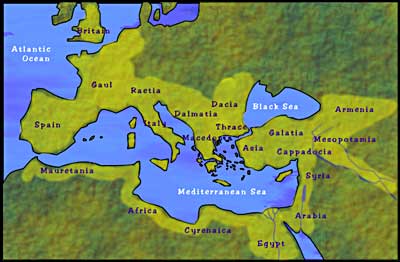
But there was more. Peter provided even more imperatives to give shoe leather to their faith. He told them, “Be subject for the Lord’s sake to every human institution, whether it be to the emperor as supreme, or to governors” (1 Peter 2:13-14 ESV). Keep in mind, these people were living in a Roman province, under the authority of the most powerful government of that age. His readers were living in Pontus, Galatia, Cappadocia, Asia and Bithynia, all located in northern Asia Minor. As his letter reveals, the churches in this regions were experiencing persecution. And under future Roman rulers like Nero, the intensity of the persecution against Christians would increase dramatically. And yet, here is Peter telling his readers to “be subject to” those in authority over them. His words sound very familiar to those Paul wrote to the believers living in Rome.

Let every person be subject to the governing authorities. For there is no authority except from God, and those that exist have been instituted by God. Therefore whoever resists the authorities resists what God has appointed, and those who resist will incur judgment. For rulers are not a terror to good conduct, but to bad. Would you have no fear of the one who is in authority? Then do what is good, and you will receive his approval, for he is God’s servant for your good. – Romans 13:1-4 ESV

Paul told Timothy,

First of all, then, I urge that supplications, prayers, intercessions, and thanksgivings be made for all people, for kings and all who are in high positions, that we may lead a peaceful and quiet life, godly and dignified in every way. This is good, and it is pleasing in the sight of God our Savior… – 1 Timothy 2:1-3 ESV

Paul gave a similar admonishion to Titus,

Remind them to be submissive to rulers and authorities, to be obedient, to be ready for every good work, to speak evil of no one, to avoid quarreling, to be gentle, and to show perfect courtesy toward all people. – Titus 3:1-2 ESV

Peter told his readers that there was no authority except from God. In fact, he said that they had been instituted by God. Government was and is a God-ordained institution. A properly run government should provide peace and stability so that the gospel can spread unhindered. And it is interesting to note that the amazing spread of the gospel and the incredibly rapid growth of Christianity in the first and second centuries took place primarily under the age of Roman rule. Rome had established the Pax Romana or Roman Pax RomanaPeace and it lasted from roughly 27 B.C. to 180 A.D. Rome’s territory spread all the way  from Spain to Israel, into Africa and Egypt and even as far as Britain. They brought peace and a certain amount of stability to the world. Their intricate network of roads made travel not only easier, but safer. It was during this time that Paul was able to travel all throughout the Roman world sharing the good news of Jesus Christ. Yes, the Roman government could be highly corrupt. Their presence in any land could be heavy handed and at times, oppressive. They ruled with an iron fist. They taxed their subjects mercilessly. They brought their polytheistic religion wherever they went. And yet, they tended to be surprisingly tolerant of the religious faiths of their subjects.

With all that in mind, the words of Peter take on a whole new degree of significance. He told his readers to be subject to the Roman authorities “for the Lord’s sake.” They were to view their submission to Rome as submission to God. It was a matter of trusting in God’s sovereign will and His ability to use even pagan governments to accomplish His divine plan. The Old Testament is filled with examples of God using Pharaoh in Egypt to provide the people of Israel with protection and provision, and then using that same authority to display His power and supremacy over man-made institutions. God used Nebuchadnezzar to punish disobedient Judah. He used Cyrus, the king of Persia to fund the return of the Jewish exiles to the promised land. He did the same thing with Artaxerxes. The lesson learned from these stories is that God is in control. He is sovereign over all, including governments and political leaders.

We have to approach those in authority with an attitude that they have been placed their by God. That doesn’t mean they are godly. Rome certainly wasn’t. But God has us where we are, living during a specific time frame for a reason. Peter told his readers to “live as people who are free, not using your freedom as a cover-up for evil” (1 Peter 2:16 ESV). They were to “Honor everyone. Love the brotherhood. Fear God. Honor the emperor” (1 Peter 2:17 ESV). Christians should make the best citizens, even though we are actually citizens of another Kingdom. Of all people, we should be the most respectful and obedient, treating those in authority over us as servants of God. If our government is evil or corrupt, we are to trust that God knows and He will deal with them justly and appropriately. If our government provides us with a modicum of peace and tranquility, we are to thank God for it and use our freedom to spread the gospel.

Ultimately, we must recognize the fact that God is our King. Everyone else works for Him and under Him. And one day they will all answer to Him. So when we submit to those in authority over us, we are really submitting to God. When we honor the emperor, we are honoring God as our ultimate, supreme authority.

The Law of Love.

Owe no one anything, except to love each other, for the one who loves another has fulfilled the law. For the commandments, “You shall not commit adultery, You shall not murder, You shall not steal, You shall not covet,” and any other commandment, are summed up in this word: “You shall love your neighbor as yourself.” Love does no wrong to a neighbor; therefore love is the fulfilling of the law. – Romans 13:8-10 ESV

Paul had just finished encouraging his readers to, “Pay to all what is owed to them: taxes to whom taxes are owed, revenue to whom revenue is owed, respect to whom respect is owed, honor to whom honor is owed” (Romans 13:7 ESV). And he was not alone in his thoughts on this topic. At one point in His earthly ministry, Jesus was approached by some Pharisees and supporters of King Herod, attempting to trick Jesus into saying something they could use against Him. Hypocritically addressing Him as “Teacher” they said, “we know how honest you are. You are impartial and don’t play favorites. You teach the way of God truthfully. Now tell us—is it right to pay taxes to Caesar or not? Should we pay them, or shouldn’t we?”(Mark 12:14-15 NLT).  Jesus saw through their scheme and requested them to show Him a Roman coin. When He asked whose image was on the coin, they responded, “Caesar.” And Jesus matter-of-factly told them, “give to Caesar what belongs to Caesar, and give to God what belongs to God” (Mark 12:17 NLT). For Jesus, the issue had little to do with money, public policy, governmental authority or the rule of earthly law. It had to do with the Kingdom of God. And God’s Kingdom is not of this world. At his trial before Pilate, Jesus told him, “My Kingdom is not an earthly kingdom. If it were, my followers would fight to keep me from being handed over to the Jewish leaders. But my Kingdom is not of this world” (John 18:36 NLT).

Paul understood what Jesus meant. That is why he told his readers, “there is no authority except from God” (Romans 13:1 ESV) and “whoever resists the authorities resists what God has appointed” (Romans 13:2 ESV). For Paul, it all had to do with the sovereignty and rule of God. As believers, we are to be far more concerned about what He would have us do. Unless those in authority over us are causing us to disobey God, we are to see them as placed over us by God. And we are to show them the honor and respect they deserve as God’s servants.

We are to be debt-free when it comes to our submission to earthly authorities. If fact, Paul says we are to owe no one anything except love. That debt is never paid off. We owe love to everyone because of the priceless gift of love that God showered on us. Paul has already reminded his readers, “But God showed his great love for us by sending Christ to die for us while we were still sinners” (Romans 5:8 ESV). And now Paul says that when we love others we are fulfilling the law. For all the commandments, including not to commit adultery, not to murder, not to steal and not to covet, are really accomplished by love. When we truly love others the very idea of taking something from them that doesn’t belong to us would never cross our minds. That is why, when Jesus was asked what the greatest commandment was, He responded:

You must love the Lord your God with all your heart, all your soul, and all your mind. This is the first and greatest commandment. A second is equally important: Love your neighbor as yourself. The entire law and all the demands of the prophets are based on these two commandments. – Matthew 22:37-40 NLT

Paul writes, “Love does not wrong to a neighbor” (Romans 13:10 ESV). In other words, the kind of love Jesus was talking about is incapable of harming or taking advantage of someone else. The law of God was designed to manage and legislate man’s relation with his fellow man and with God. But if we truly love God and love others, the requirements of the law will be naturally fulfilled. If we love God, we will not worship other gods. If we love God, we will honor His name with the way we live our lives. If we love others, we will treat them with dignity and respect, and never consider taking advantage of them for our own pleasure or benefit.

Earlier in his letter, Paul wrote, “For God has done what the law, weakened by the flesh, could not do. By sending his own Son in the likeness of sinful flesh and for sin, he condemned sin in the flesh, in order that the righteous requirement of the law might be fulfilled in us, who walk not according to the flesh but according to the Spirit” (Romans 8:3-4 ESV). We have the ability to live according to the law, in love. Love is the key to fulfilling the law of God. And not only have we experienced the love of God through the gift of His Son, we have the power and capacity to love selflessly because of the presence of the Spirit of God within us. Jesus told His disciples, “So now I am giving you a new commandment: Love each other. Just as I have loved you, you should love each other. Your love for one another will prove to the world that you are my disciples” (John 13:34-35 NLT). Our love for believers and non-believers is an indication of our relationship with Christ and His Spirit’s presence within us. In Paul’s way of thinking, we should worry less about what the government may be taking from us and concern ourselves with what God would require of us: Love.

Sovereign Over All.

Let every person be subject to the governing authorities. For there is no authority except from God, and those that exist have been instituted by God. Therefore whoever resists the authorities resists what God has appointed, and those who resist will incur judgment. For rulers are not a terror to good conduct, but to bad. Would you have no fear of the one who is in authority? Then do what is good, and you will receive his approval, for he is God’s servant for your good. But if you do wrong, be afraid, for he does not bear the sword in vain. For he is the servant of God, an avenger who carries out God’s wrath on the wrongdoer. Therefore one must be in subjection, not only to avoid God’s wrath but also for the sake of conscience. For because of this you also pay taxes, for the authorities are ministers of God, attending to this very thing. Pay to all what is owed to them: taxes to whom taxes are owed, revenue to whom revenue is owed, respect to whom respect is owed, honor to whom honor is owed. – Romans 13:1-7 ESV

At the heart of this passage is the sovereignty of God. That should not be overlooked or under-emphasized. All throughout his letter, Paul has been dealing with the subject of man’s justification before God. He has made it clear that this is the work of a sovereign God. He is the one who calls, justifies, sanctifies and ultimately glorifies all believers. And even in this section of his letter, where Paul is talking about the practical outflow of one’s faith in relationship to others, he keeps emphasizing God’s sovereignty. In chapter 12, Paul talked about spiritual gifts and their role in the body of Christ. Because they are given by God, there is no room for pride or boasting. Like salvation, they are a gift from God and have nothing to do with human merit. Paul wanted his readers to remember that they had “gifts that differ according to the grace given to us” (Romans 12:6 ESV).

Now, as Paul addresses the subject of the believer’s relationship with civil authority, He continues to emphasize God’s sovereignty. It is important that we keep the words of Paul within their context. He is writing to believers who live in Rome, the capital of the Roman government, representing the most powerful nation in the world at the time. Both the Jews and the Gentiles who made up the church in Rome knew what it was like to live under the authority of the Roman government. And as far as the Romans were concerned, the Christians were little more than a break-off sect of the Hebrew religion. Their only real knowledge of Christianity was tied to the individual for which it was named, Jesus Christ, who was crucified by Pontus Pilate for claiming to be King of the Jews. The Christians, like the Jews, were tolerated by the Romans and given certain freedoms to practice their religions in peace. But the Jewish Christians would have had no affinity for the Romans, knowing full well that their people had lived under the weight of Roman rule for years.

Yet Paul tells his readers, “Let every person be subject to the governing authorities” (Romans 13:1 ESV). The word Paul uses is hypotassō and it means “to subject one’s self, obey” (Greek Lexicon :: G5293 (KJV). Blue Letter Bible. Web. 23 Dec, 2015). In this passage, Paul does not address the question of what Christians are to do when those in authority over them overstep their God-given authority and begin to persecute their subjects. He simply encourages believers to submit to those in authority over them. And he was not alone in promoting this kind of behavior. The apostle Peter said something very similar. “For the Lord’s sake, submit to all human authority—whether the king as head of state, or the officials he has appointed. For the king has sent them to punish those who do wrong and to honor those who do right” (1 Peter 2:13-14 NLT). And Paul provides the “why” behind his words. “For there is no authority except from God, and those that exist have been instituted by God” (Romans 13:1 ESV). It is a case of the sovereignty of God. Jesus lived out this very idea, having submitted Himself to the Roman authorities and submitting to their ultimate decision to crucify Him. But He knew that what He was doing was ultimately an act of submission to God. During His trial, when Pilate asked Him, “Don’t you realize that I have the power to release you or crucify you?” (John 19:10 NLT), Jesus responded, “You would have no power over me at all unless it were given to you from above” (John 19:11 NLT).

The very existence of the Romans as a nation-state was decreed by God. And their presence in the land of Palestine and their rule over the people of Israel was not something that caught God off guard. Paul wrote in his letter to the Galatians, “But when the fullness of time had come, God sent forth his Son, born of woman, born under the law, to redeem those who were under the law, so that we might receive adoption as sons” (Galatians 4:4-7 ESV). At just the right time, God sent His Son. Right when Roman rule was at its zenith and the Jewish people were living under their control, the Messiah appears on the scene. The very existence of the Roman government in the land of Israel was going to play a vital role in fulfilling the promises of God. The death of Jesus, predicted in Isaiah 53, was fulfilled in detail because of the Romans and their practice of crucifixion. Jesus’ submission to the Roman authorities was based on His understanding of God’s sovereign will for His life.

When Paul encourages our subjection to governing authorities, he does so based on his understanding that all authority exists by God’s decree. And for a believer to resist God-given authority is to resist God. Again, Paul does not address the issue of what a Christian is to do when the government encourages disobedience to God. But if we follow the example of Paul, he submitted to the governmental authorities on many occasions, but was willing to go to jail when their demands contradicted the will of God for his life. Ultimately, Paul would even find himself in Rome as a prisoner, because of his faith. There may come a time when the believer has to resist and disobey civil authority, but we must always be willing to suffer the consequences for our disobedience, even if it means persecution.

Paul makes it clear that governing authorities are appointed by God. They are “God’s servant for your good” (Romans 13:4 ESV). They are “ministers of God” (Romans 13:6 ESV). Ultimately, our submission to civil authority is to be seen as submission to God. He is in control. We are to live our lives with the understanding that our God is sovereign and rules over all, including nations, governments, leaders, parliaments, presidents, dictators, senates, and man-made authorities of all kinds. His will will be done. His plan for this world will be fulfilled. Our lives are to be lived out in submission to and trust in His sovereign power.

Proverbs 28c

The Leadership Void.

“When there is moral rot within a nation, its government topples easily. But wise and knowledgeable leaders bring stability.” – Proverbs 28:2 NLT

Don’t get me wrong. We have no shortage of leaders in this country. It’s just that we don’t have very many godly leaders. There are plenty of ambitious, intelligent, capable and sometimes even moral men and women who hold positions of leadership in our nation, but most of them lack the wisdom that only God can provide. The verse above paints a pretty bleak picture for a nation that finds itself with a moral and spiritual leadership void. The Message paraphrases verse two this way: “When the country is in chaos, everybody has a plan to fix it – But it takes a leader of real understanding to straighten things out.” What an apt description of our own country at this stage of the game. We are in chaos, and everybody has a plan to fix it. We have an abundance of “princes” as the NIV describes them. These so-called leaders and political pundits all offer up solutions to our nation’s myriad problems, but none of them really have a clue what to do about the economy, terrorism, or any other issue facing us. They fail to realize that the root of all our problems is a spiritual one. Our economy is a symptom of a much more serious issue. Neither raising or lowering taxes is going to fix what needs to be fixed. A larger or smaller government will neither one prove to be a panacea for our problems.

In the very next chapter Solomon gives us the real solution. He says, “When the godly are in authority, the people rejoice” (Proverbs 29:2 NLT). In other words, when godly men and women lead our nation according to godly principles and guide us with wisdom and insight directly from God Himself, the people find themselves living in peace and moral prosperity. Godly leaders make godly decisions. They are not selfish and self-centered. They are not greedy and out to benefit only themselves. They are not motivated by pride or consumed with the need for recognition. They view any power they have as given to them from God, to whom they must report and by whom they will be held accountable. What we pass off as leadership today is a far cry from what God intends. All you have to do is look at the leadership style of Jesus and you see a marked difference. Jesus came to serve, not be served. He came to give His life away for the sake of others. He was concerned with and consumed by the will of His Father. He was obedient to God to the point of laying down His life. He knew that the world’s problems were spiritual in nature and the solution would have to be a spiritual one. Toppling the Roman government was not going to bring peace to the Jews. Only a Savior could save them from what ailed them. They needed deliverance from sin, not relief from high taxes. They needed dependence on God, not independence from Rome. The same thing is true for us today. We are looking to a government or political leader to bring us relief and restoration. We are wanting a flawed, failed system to deliver us, when God has already provided a deliverer – His very own Son. Godly leaders point a nation back to God. They don’t try to act as a substitute for Him. We find ourselves in trouble as a nation, not because of a bad economy or the presence of terrorism, but because we have appointed leaders who have no respect for God. Without Him, they are helpless and hopeless to lead us because they lack the wisdom required for the job. We need to pray that God will raise up men and women who know Him, love Him and are willing to live for Him. But we also need to pray for a spiritual reawakening among the people of God who have become complacent and sometimes even contributors to the moral chaos facing our nation. We lack godly leaders because we have become a godless nation.

Father, we desperately need Your help. Only You can solve the problems we face as a country. Our issues are so much deeper than the economy or global terrorism. Our problem is a moral one. Re-energize Your Church, that we might become the salt and light You have called us to be. May out of our midst come godly leaders who will step into the chaos and provide godly direction and wise leadership – pointing us back to You. Amen.

Ken Miller

Grow Pastor & Minister to Men
kenm@christchapelbc.org