Sinners in Need of a Savior

As Jesus passed on from there, he saw a man called Matthew sitting at the tax booth, and he said to him, “Follow me.” And he rose and followed him.

10 And as Jesus reclined at table in the house, behold, many tax collectors and sinners came and were reclining with Jesus and his disciples. 11 And when the Pharisees saw this, they said to his disciples, “Why does your teacher eat with tax collectors and sinners?” 12 But when he heard it, he said, “Those who are well have no need of a physician, but those who are sick. 13 Go and learn what this means: ‘I desire mercy, and not sacrifice.’ For I came not to call the righteous, but sinners. – Matthew 9:9-13 ESV

Matthew has pieced together a series of events that provide evidence to support his contention that Jesus was the Son of God and the long-awaited Messiah of Israel. And the identity of Jesus was proven by His obvious authority over sickness, disease, demons, and the creative order. Jesus had both the power and authority to command the winds and waves, representing the natural world, as well as demons, who represent the spiritual realm. He was more than a mere man with a talent for oratory and the gift of healing. Every word He spoke carried weight and left all those who heard Him in a state of awe.

…the people were amazed at his teaching, for he spoke with authority.  – Luke 4:32 NLT

“We have never heard anyone speak like this!” – John 7:46 NLT

The disciples had witnessed Jesus calm a storm by speaking the words, “Peace! Be still!” (Mark 4:39 ESV), and that scene had left them amazed and confused as to just who Jesus really was.

…they were filled with great fear and said to one another, “Who then is this, that even the wind and the sea obey him?” – Mark 4:41 ESV

Now, Matthew chronicles yet another event in the life of Jesus that provides further evidence of His power and authority – this time, over men.

In these verses, Matthew retells the story of his own calling by Jesus, but he does so from the third-person perspective as if he is an outsider recalling a scene he has witnessed. His account, though personal in nature, differs little from those of Luke and Mark. They all describe Jesus coming into contact with Matthew at his place of business, where he served as a tax collector. His “office” was little more than a booth, located on the edge of the city where he collected taxes on trade goods. These taxes, collected on behalf of the Roman government, were a form of sales tax or customs duty, paid by the seller. Matthew would have had a contract with the Romans, most likely purchased at a high cost, that provided him with the authority to collect taxes within a specific geographic region. In order to recoup the cost of his contract, Matthew would have charged fees and commissions on all the taxes he collected, making him a social pariah among his fellow Jews. They would have viewed him as a sell-out to the Romans and a tool of the enemy. And yet, Jesus offered Matthew the same invitation He had extended to Peter, Andrew, James, and John: “Follow me.”

It’s interesting to note that both Mark and Luke record that Jesus “saw” Matthew. This seems to reflect a recognition on the part of Jesus. He saw Matthew and approached him. And yet, there is no dialogue between them. Jesus simply stated, “Follow me.” And all three gospel writers indicate that Matthew accepted the invitation. Luke adds the clarifying note: “leaving everything, he rose and followed him” (Luke 5:28 ESV).

Matthew wasn’t just taking a well-deserved break. Whether he fully realized it or not, he was making a complete break with his past, leaving everything he knew behind. By following Jesus, he was walking away from his booth, his business, and all the benefits and perks that came with his profession.

And both Mark and Luke record that the next thing Matthew did was host Jesus in his own home.

And Levi made him a great feast in his house, and there was a large company of tax collectors and others reclining at table with them. – Luke 5:29 ESV

And as he reclined at table in his house, many tax collectors and sinners were reclining with Jesus and his disciples, for there were many who followed him. – Mark 2:15 ESV

Matthew threw a party for Jesus, the disciples, and an assortment of other interesting guests. All three gospel writers make it clear that the room contained “tax collectors and sinners.” This term is meant to convey a message. The people with whom Jesus was willingly sharing a meal were considered social outcasts by the Jews. The term “sinners” was not a reference to anyone who had broken God’s laws. It was an expression commonly used by the Pharisees for anyone who broke their man-made rules of conduct. Matthew provides an illustration of these rules later on in his gospel.

Some Pharisees and teachers of religious law now arrived from Jerusalem to see Jesus. They asked him, “Why do your disciples disobey our age-old tradition? For they ignore our tradition of ceremonial hand washing before they eat.” – Matthew 15:1-2 NLT

Anyone who refused to live according to their exacting standards was considered a sinner. And Luke records another event in the life of Jesus, where He shared a meal with a Pharisee.

As Jesus was speaking, one of the Pharisees invited him home for a meal. So he went in and took his place at the table. His host was amazed to see that he sat down to eat without first performing the hand-washing ceremony required by Jewish custom. – Luke 11:37-38 NLT

And Jesus had some harsh words for these religious rule-keepers who burdened people with unnecessary and legalistic standards of righteousness that had nothing to do with God.

“…what sorrow also awaits you experts in religious law! For you crush people with unbearable religious demands, and you never lift a finger to ease the burden.” – Luke 11:46 NLT

But the Pharisees were just as appalled by Jesus’ behavior. In their eyes, He was nothing more than a sinner, who broke their laws by associating with the defiled and unclean. Which prompted them to ask His disciples, “Why does your teacher eat with tax collectors and sinners?” (Matthew 9:11 ESV). This question came from the scribes, the experts in religious law, whose man-made additions to the Mosaic Law had turned the righteous commands of God into a petty list of impossible tasks designed to make them look good. But, once again, Jesus had some condemning words for these men, describing their form of worship as “a farce, for they teach man-made ideas as commands from God” (Matthew 15:9 NLT).

The scribes and Pharisees viewed themselves as righteous. They considered themselves to be the true law-keepers, while everyone else was a sinner, including Jesus. And while they looked down their noses at tax collectors and sinners, they did nothing to help them improve their lot in life. Jesus accused them of crushing people with unbearable religious demands, never lifting a finger to ease the burden.

But Jesus answered their question. He explained His presence in the room that day, fully admitting that all those in His midst were indeed sinners. But He added that they were sinners in need of a Savior. And He had come to offer them a way to ease the burden they bore because of their sin. In fact, Jesus would later offer His “great invitation,” imploring sinners just like these to come to Him and find rest.

“Come to me, all of you who are weary and carry heavy burdens, and I will give you rest. Take my yoke upon you. Let me teach you, because I am humble and gentle at heart, and you will find rest for your souls. For my yoke is easy to bear, and the burden I give you is light.” – Matthew 11:28-30 NLT

Jesus was in His element that day. He was surrounded by those He came to save. And He made that point perfectly clear in His answer to the Pharisees and scribes.

“Those who are well have no need of a physician, but those who are sick. – Matthew 9:12 ESV

Jesus was not inferring that the religious leaders were righteous and in no need of salvation. He was condemning their false sense of confidence in their own righteousness. They only thought they were well and in no need of a physician. Jesus came to minister to those who were willing to recognize their own spiritual infirmity and their need for healing. Just as the leper, the Centurion’s servant, and Peter’s mother-in-law needed the healing touch of Jesus, so did the tax collectors and sinners in Matthew’s house. But their illness was spiritual in nature, not physical. They were sinners in need of a Savior. And while the Pharisees and scribes saw themselves as perfectly righteous before God, they too were spiritually sick.

The apostle Paul reminds us that every single individual on this planet is a sinner in need of a Savior and that those of us who have found healing in Christ are the beneficiaries of God’s grace and goodness.

Once you were dead because of your disobedience and your many sins. You used to live in sin, just like the rest of the world, obeying the devil—the commander of the powers in the unseen world. He is the spirit at work in the hearts of those who refuse to obey God. All of us used to live that way, following the passionate desires and inclinations of our sinful nature. By our very nature we were subject to God’s anger, just like everyone else.

But God is so rich in mercy, and he loved us so much, that even though we were dead because of our sins, he gave us life when he raised Christ from the dead. – Ephesians 2:1-5 NLT

Matthew and his dinner guests, as well as the disciples, the Pharisees and scribes, were all in need of a physician. Some recognized it, while others refused to admit their need and chose instead to see themselves as righteous in their own eyes. But Jesus warned them all, telling them, “I came not to call the righteous, but sinners” (Matthew 9:13 ESV).

Jesus had not come to earth so that He might round up all those who had perfectly obeyed the Mosaic law. Those people did not exist. His reference to mercy and sacrifice is meant to let the Pharisees know that law-keeping would not be the means by which people earn a righteous standing with God. It would be through the unmerited mercy extended to them by God through the sacrificial death of His Son. And the apostle Paul stresses that point in his letter to the Galatians.

Now it is evident that no one is justified before God by the law, for “The righteous shall live by faith.” – Galatians 3:11 ESV

All the “sacrifices” of the Pharisees would amount to nothing. Even their most righteous deeds were nothing more than filthy rags in the eyes of God. But the Great Physician was offering them healing from the spiritual infirmity by providing His Son as their Savior from sin. But as long as they arrogantly and errantly considered themselves to be righteous, they would never accept the free gift of salvation.

English Standard Version (ESV) The Holy Bible, English Standard Version. ESV® Permanent Text Edition® (2016). Copyright © 2001 by Crossway Bibles, a publishing ministry of Good News Publishers.

New Living Translation (NLT)
Holy Bible, New Living Translation, copyright © 1996, 2004, 2015 by Tyndale House Foundation. Used by permission of Tyndale House Publishers Inc., Carol Stream, Illinois 60188. All rights reserved.

The Message (MSG)Copyright © 1993, 1994, 1995, 1996, 2000, 2001, 2002 by Eugene H. Peterson

Failure to Love

“You have heard that it was said to those of old, ‘You shall not murder; and whoever murders will be liable to judgment.’ But I say to you that everyone who is angry with his brother will be liable to judgment; whoever insults his brother will be liable to the council; and whoever says, ‘You fool!’ will be liable to the hell of fire. So if you are offering your gift at the altar and there remember that your brother has something against you, leave your gift there before the altar and go. First be reconciled to your brother, and then come and offer your gift. Come to terms quickly with your accuser while you are going with him to court, lest your accuser hand you over to the judge, and the judge to the guard, and you be put in prison. Truly, I say to you, you will never get out until you have paid the last penny.” – Matthew 5:21-26 ESV

Jesus has just finished saying, “Therefore whoever relaxes one of the least of these commandments and teaches others to do the same will be called least in the kingdom of heaven” (Matthew 5:19 ESV). This was a direct reference to Pharisees and other religious leaders who were guilty of playing fast and loose with the Law. Jesus would make a habit of referring to these individuals as hypocrites, accusing them of putting their own man-made laws ahead of God’s commands. They would find ways to create loopholes regarding the Law by making their own set of counter-commands that allowed them to claim strict obedience while actually ignoring God’s commands altogether. So, Jesus puts a kibosh on their little scheme by revealing that adherence to God’s Law was not open to interpretation or alteration. Not even He, the Son of God, was free to eliminate or amend a single one of God’s commands. In fact, Jesus is about to show that obedience to the Law requires far more than external adherence. Keeping the letter of the law was not enough. It wasn’t so much about rule-keeping as it was about the condition of the heart.

One of the phrases you will see Jesus repeatedly use in this section of his sermon is, “You have heard that it was said.” Each time Jesus says it, He will juxtapose it with the words, “But I say.”  Jesus is setting up an important contrast between what His audience believed and what was actually true. He is addressing perception versus reality.

With the “help” of the religious leaders and interpreters of the law, the Jews had become confused concerning which were the commands of God and which were those of men. By stating, “You have heard,” Jesus was claiming that their understanding of the law was skewed and inaccurate. Somewhere along the way, they had missed the whole point. It really wasn’t about legalism and rule-keeping. It was about the condition of the heart. Refraining from doing something did not mean the desire to do so was absent. Righteousness was not a matter of moral restraint, but of an inner conviction of the heart.

For instance, concerning God’s command not to commit murder, Jesus infers that the general perception of the Jews concerning this law was inaccurate and insufficient. God’s prohibition against the taking of life was really about the problem of hatred, and hatred was a problem of the heart. In fact, Jesus is getting to the heart of the issue (excuse the pun). Murder is an expression of hatred or contempt. And just because you manage not to commit murder, doesn’t mean you don’t have the desire to do so in your heart. Later on, in this same Gospel, Matthew records the words of Jesus where He clarifies the true source of murder and why God created a law against it.

“But the words you speak come from the heart—that’s what defiles you. For from the heart come evil thoughts, murder, adultery, all sexual immorality, theft, lying, and slander. These are what defile you.” – Matthew 15:18-20 NLT

Jesus spoke these words in response to an accusation leveled against His disciples by the scribes and Pharisees. They had come to Jesus in a huff, wondering why the disciples failed to wash their hands before they ate. This was just one of the many man-made laws they had created and had deemed of equal importance to the rest of God’s commands. They were obsessed with outward purity and were accusing the disciples of eating with impure, defiled hands. And Jesus had some very strong words for these men:

“Woe to you, scribes and Pharisees, hypocrites! For you clean the outside of the cup and the plate, but inside they are full of greed and self-indulgence.” – Matthew 23:25 ESV

“Woe to you, scribes and Pharisees, hypocrites! For you are like whitewashed tombs, which outwardly appear beautiful, but within are full of dead people’s bones and all uncleanness. So you also outwardly appear righteous to others, but within you are full of hypocrisy and lawlessness.” – Matthew 23:27-28 ESV

God is concerned about the condition of the heart. That is why Jesus makes the argument that it is not only those who commit physical murder who are guilty and worthy of judgment but those who hate.

But I say to you that everyone who is angry with his brother will be liable to judgment.” – Matthew 5:22 ESV

Whoever insults his brother or, out of hatred, calls him a fool, is just as guilty as a murderer. Jesus knew the heart of man. He was well aware of the pride that welled up in the hearts of those who could claim to have kept God’s law because they had never committed murder. But Jesus gives them the bad news that, in God’s eyes, their hatred was just as condemning. 

Most Bible translations label the topic of this section of Jesus’ sermon as “Murder.” But what Jesus is really talking about is love or the lack of it. Most of us have kept God’s command not to murder, but every one of us is guilty of having hated another human being. You see, our perception is that murder is forbidden, and everyone who commits murder will be judged. But Jesus presents a much different reality. Hatred is forbidden, and anyone who hates his brother is just as guilty before God as if they had murdered him.

God’s ultimate desire for us is not that we simply refrain from murder, but that we replace our hatred with love.  Animosity and hatred were rife within the Jewish community, and they saw nothing wrong with it. In fact, they would come before God with their offerings and sacrifices, while harboring hatred for one another. This is why Jesus says, “if you are presenting a sacrifice at the altar in the Temple and you suddenly remember that someone has something against you, leave your sacrifice there at the altar. Go and be reconciled to that person. Then come and offer your sacrifice to God” (Matthew 5:23-24 NLT). How can you expect to show love to God by offering sacrifices to Him when you can’t even show love to those around you. The apostle John reveals the absurdity of that mindset.

If someone says, “I love God,” but hates a Christian brother or sister, that person is a liar; for if we don’t love people we can see, how can we love God, whom we cannot see? And he has given us this command: Those who love God must also love their Christian brothers and sisters. – 1 John 4:20-21 NLT

It is so easy for us to excuse our hatred of another human being. We justify it and rationalize it away while claiming that our hatred is well-deserved. We see our hatred as harmless. But Jesus claims that it devalues the life of another human being in the same way that murder does. It takes away their dignity. It diminishes their worth. We view them as undeserving of our love, all the while forgetting that God sent His Son to die for us “while we were yet sinners” (Romans 5:8). He had every right to hate us, but instead, He showed us love. The apostle Paul reminds us of the amazing reality of that love.

Once you were dead because of your disobedience and your many sins. You used to live in sin, just like the rest of the world, obeying the devil—the commander of the powers in the unseen world. He is the spirit at work in the hearts of those who refuse to obey God. All of us used to live that way, following the passionate desires and inclinations of our sinful nature. By our very nature we were subject to God’s anger, just like everyone else.

But God is so rich in mercy, and he loved us so much, that even though we were dead because of our sins, he gave us life when he raised Christ from the dead. (It is only by God’s grace that you have been saved!). – Ephesians 2:1-5 NLT

God loves, and so should we. This isn’t about an absence of murder, but the presence of hatred and a lack of love for others. A world devoid of murderers would not necessarily be a place marked by love. A decline in the crime rate does not reflect a change in the hearts of men. It is more likely a result of increased law enforcement. The law can enforce compliance, but cannot change the hearts of men. Consider what Paul wrote concerning his former relationship with God’s law.

I would never have known that coveting is wrong if the law had not said, “You must not covet.” But sin used this command to arouse all kinds of covetous desires within me! – Romans 7:7-8 NLT

Paul could try to refrain from coveting, but his heart would do everything in its power to disobey God’s law. Coveting could not be stopped by a law. It could only be controlled. The law can manage behavior, but it cannot change the motivation behind the behavior. A speed limit sign does not get rid of the desire to speed. It simply controls it by threatening punishment for disobedience. But fear is never the right motivation for obedience. It can force compliance, but it can never change the sinful disposition within.

Jesus came to change the hearts of men and women. He came to do what the law could never have done. Paul tells us the good news of what Jesus later accomplished by His death on the cross.

The law of Moses was unable to save us because of the weakness of our sinful nature. So God did what the law could not do. He sent his own Son in a body like the bodies we sinners have. And in that body God declared an end to sin’s control over us by giving his Son as a sacrifice for our sins. He did this so that the just requirement of the law would be fully satisfied for us, who no longer follow our sinful nature but instead follow the Spirit. – Romans 8:3-4 NLT

Not only are we capable of refraining from committing murder, but we are also able to love one another. We can even love our enemies. Not in our own human strength, but because of the power of the Holy Spirit within us. We have the capacity to love as God has loved us.

Dear friends, let us continue to love one another, for love comes from God. Anyone who loves is a child of God and knows God. But anyone who does not love does not know God, for God is love. – 1 John 4:7-8 NLT

English Standard Version (ESV)
The Holy Bible, English Standard Version. ESV® Permanent Text Edition® (2016). Copyright © 2001 by Crossway Bibles, a publishing ministry of Good News Publishers.

New Living Translation (NLT)
Holy Bible, New Living Translation, copyright © 1996, 2004, 2015 by Tyndale House Foundation. Used by permission of Tyndale House Publishers Inc., Carol Stream, Illinois 60188. All rights reserved.

The Message (MSG)Copyright © 1993, 1994, 1995, 1996, 2000, 2001, 2002 by Eugene H. Peterson

God’s True Feelings About False Religion.

13 “But woe to you, scribes and Pharisees, hypocrites! For you shut the kingdom of heaven in people’s faces. For you neither enter yourselves nor allow those who would enter to go in. 15 Woe to you, scribes and Pharisees, hypocrites! For you travel across sea and land to make a single proselyte, and when he becomes a proselyte, you make him twice as much a child of hell as yourselves.

16 “Woe to you, blind guides, who say, ‘If anyone swears by the temple, it is nothing, but if anyone swears by the gold of the temple, he is bound by his oath.’ 17 You blind fools! For which is greater, the gold or the temple that has made the gold sacred? 18 And you say, ‘If anyone swears by the altar, it is nothing, but if anyone swears by the gift that is on the altar, he is bound by his oath.’ 19 You blind men! For which is greater, the gift or the altar that makes the gift sacred? 20 So whoever swears by the altar swears by it and by everything on it. 21 And whoever swears by the temple swears by it and by him who dwells in it. 22 And whoever swears by heaven swears by the throne of God and by him who sits upon it.

23 “Woe to you, scribes and Pharisees, hypocrites! For you tithe mint and dill and cumin, and have neglected the weightier matters of the law: justice and mercy and faithfulness. These you ought to have done, without neglecting the others. 24 You blind guides, straining out a gnat and swallowing a camel!

25 “Woe to you, scribes and Pharisees, hypocrites! For you clean the outside of the cup and the plate, but inside they are full of greed and self-indulgence. 26 You blind Pharisee! First clean the inside of the cup and the plate, that the outside also may be clean.

27 “Woe to you, scribes and Pharisees, hypocrites! For you are like whitewashed tombs, which outwardly appear beautiful, but within are full of dead people’s bones and all uncleanness. 28 So you also outwardly appear righteous to others, but within you are full of hypocrisy and lawlessness.

29 “Woe to you, scribes and Pharisees, hypocrites! For you build the tombs of the prophets and decorate the monuments of the righteous, 30 saying, ‘If we had lived in the days of our fathers, we would not have taken part with them in shedding the blood of the prophets.’ 31 Thus you witness against yourselves that you are sons of those who murdered the prophets. 32 Fill up, then, the measure of your fathers. 33 You serpents, you brood of vipers, how are you to escape being sentenced to hell? 34 Therefore I send you prophets and wise men and scribes, some of whom you will kill and crucify, and some you will flog in your synagogues and persecute from town to town, 35 so that on you may come all the righteous blood shed on earth, from the blood of righteous Abel to the blood of Zechariah the son of Barachiah, whom you murdered between the sanctuary and the altar. 36 Truly, I say to you, all these things will come upon this generation. – Matthew 23:13-36 ESV

Brooklyn_Museum_-_Woe_unto_You,_Scribes_and_Pharisees_(Malheur_à_vous,_scribes_et_pharisiens)_-_James_Tissot

The Pharisees and teachers of religious law were not fans of Jesus. In fact, they despised Him and had been searching for ample cause to have Him eliminated. So, at this point in Matthew’s account, he portrays Jesus amping up His rhetoric in an unabashed attack on these so-called religious leaders. As He prepares to follow His Father’s will and head to the cross, Jesus goes out of His way to expose the truth about His enemies. But Jesus’ words are not intended to be a vindictive attack on those who disagree with Him. He is pulling aside the veil and revealing the long-hidden truth regarding these men. They are not what they seem. And, before He leaves this earth, Jesus wants to ensure that His disciples understood what true religion should look like.

Religion that is pure and undefiled before God the Father is this: to visit orphans and widows in their affliction, and to keep oneself unstained from the world. – James 1:27 ESV

At this point, Jesus makes His message much more direct by turning His attention directly to the Pharisees and teachers of religious law. This is the part where He pronounces His seven woes or warnings against them. It is important to recognize that this is all about two distinctly different ways to approach God. What Jesus has to say is less about their behavior than the focus of their ministry.

Woe #1: They had a false view of the Kingdom of Heaven and how to enter it. Not only was their errant view making entry into God’s Kingdom impossible for them, but it was also slamming the door in the face of every person under their influence. They had made the attainment of righteousness all about human effort. In their minds, entry into the Kingdom of Heaven was reserved for law-keepers, and they viewed themselves as the quintessential keepers of the law.

Woe #2: Their false view of the Kingdom of Heaven had deadly consequences. Their refusal to accept Jesus as the Messiah was condemning themselves and others to hell. They were eager to convert others to their way of thinking and to their view of the Kingdom, but the result was that these individuals ended up as lost as they were. By following the teaching of these men, the people of Israel were being deceived into believing a lie. They were placing their faith in the faulty confidence professed by these false teachers.

Woe #3: In spite of all their knowledge of the Mosaic Law, they were blind to the one to whom the law and the prophets pointed. Jesus had already told these men that He was the primary focal point of the Hebrew Scriptures.

“You search the Scriptures because you think they give you eternal life. But the Scriptures point to me!” – John 5:39 NLT

But in their arrogance and prideful knowledge, they had missed the whole point. They had misunderstood what was of real value in the Kingdom of Heaven. Jesus points out that the temple, which God had set apart as His own, was holy, not the gold used to adorn it. The altar, the place God had set aside for sacrifice, was holy and anything that touched it became holy as well. Ultimately, it is God who makes heaven holy and gives it its value.

The religious leaders were focusing their attention on the wrong things. They were materially-minded, rather than spiritually-focused. Their whole practice of making and keeping oaths was little more than a series of man-made loopholes and escape clauses designed to give them an easy out from having to do what they swore to do. They could appear to be holy and righteous without having to accept any of the cost or consequences. And Jesus pointed out that they were really minimizing and trivializing the holiness of God.

Woe #4:They misunderstood the true nature of the Kingdom because they tended to major on the minors. Since they believed that entrance into the Kingdom was based on the keeping of the law, they ended up nitpicking the law to death. Jesus accused them of being meticulously observant of laws concerning the tithing of fruit, grain, and other produce – to the point of absurdity. But in doing so, they conveniently overlooked the more important commandments concerning justice, mercy, and faith.

Jesus borrowed from their own Scriptures to remind them of God’s own words concerning this matter.

No, O people, the Lord has told you what is good,
    and this is what he requires of you:
to do what is right, to love mercy,
    and to walk humbly with your God. – Micah 6:8 NLT

In all their zeal to tithe unscrupulously, they were failing to keep the two greatest commandments: To love God and to love others.

Woe #5: They had a false understanding of what constitutes righteousness in God’s Kingdom. God was interested in the INSIDE, not the OUTSIDE. Yet their focus was solely on the externals. They made behavior modification their goal, rather than heart transformation. Yet Jesus had taught just the opposite.

“But the things that come out of the mouth come from the heart, and these things defile a person. For out of the heart come evil ideas, murder, adultery, sexual immorality, theft, false testimony, slander. These are the things that defile a person; it is not eating with unwashed hands that defiles a person.” – Matthew 15:18-20 NLT

These men were all about appearances. They lived to impress and were addicted to the praise of men. As long as they looked good, they believed they were good. External appearances and outward behavior were the criteria by which they judged a man’s righteousness, but God looks at the condition of the heart.

Woe #6: This one supports the previous one. It reveals their false concept of what it took to become clean or righteous. Again, they had replaced heart transformation with behavior modification. They spent all their time obsessing about outward appearances while ignoring the internal state of their souls. Rather than heartfelt repentance, they focused on outward reformation. Rather than acknowledge their sin, they simply attempted to cover it up with good deeds and religious effort.

Jesus described them as painted tombs. Not exactly a compliment. Their outward display of righteous behavior was like putting makeup on a pig. It didn’t change reality. A well-manicured grave, covered with flowers and its tombstone meticulously clean, can’t change the fact that beneath the surface lies death and decay.

Woe #7: In failing to recognize their own sinful condition, they had become just like their ancestors – rebellious, stubborn, and resistant to God. The Israelites had built tombs and monuments to honor the prophets of God but had failed to listen to their words of warning. In fact, they had killed many of them. And Jesus made it clear that the religious leaders of Israel had done the same thing in His day, rejecting the most recent prophet of God: John the Baptist. And in just a matter of days, they would arrange to have the very Son of God put to death. After Jesus was out of the way, they would end up persecuting and killing the disciples as well.

“Therefore, I am sending you prophets and wise men and teachers of religious law. But you will kill some by crucifixion, and you will flog others with whips in your synagogues, chasing them from city to city.” – Matthew 23:34 NLT

Misplaced passion

Why was Jesus so upset with these men? What drove Him to treat them so harshly? They were passionate. They were zealous. They were religious. BUT THEY WERE DANGEROUS! They had become obstacles to the Kingdom of Heaven. Their misplaced zeal had led them to become stumbling blocks.

Jesus said to his disciples, “Stumbling blocks are sure to come, but woe to the one through whom they come! It would be better for him to have a millstone tied around his neck and be thrown into the sea than for him to cause one of these little ones to sin.” – Luke 17:1-2 NET

These men DID NOT represent the way into the Kingdom of Heaven. They didn’t even know the directions. But where do we see this today? In the myriad of false and pseudo-Christian religions. We see it in anyone who denies that salvation is through faith alone in Christ alone. We need to learn to look for these characteristics.

  1. Posing as spokesmen for God, but denying people access to the Kingdom of God
  2. Giving people false hope by offering them a false gospel
  3. Providing easy workarounds to true holiness and commitment to God
  4. Judging righteousness based on their own standards, rather than God’s
  5. Refusing to acknowledge sin, while emphasizing self-righteousness
  6. Putting undue emphasis on the praise of men, rather than that of God
  7. Failing to see their status as enemies of God

The spirit of the Pharisees is alive and well today. It’s evident in every religion that refuses to acknowledge Jesus Christ as the only way. It’s prevalent in many main-stream denominations that preach a gospel of works, not grace. It can be found anytime legalism and rule-keeping replaces a love for God and others. It shows up whenever our religion becomes more important than our relationship with Christ. It takes the form of hypocrisy, when what we say we believe fails to impact the way we behave. When we love the praise of man more than pleasing God.

English Standard Version (ESV)
The Holy Bible, English Standard Version. ESV® Permanent Text Edition® (2016). Copyright © 2001 by Crossway Bibles, a publishing ministry of Good News Publishers.

New Living Translation (NLT)
Holy Bible, New Living Translation, copyright © 1996, 2004, 2015 by Tyndale House Foundation. Used by permission of Tyndale House Publishers Inc., Carol Stream, Illinois 60188. All rights reserved.

(MSG)Copyright © 1993, 1994, 1995, 1996, 2000, 2001, 2002 by Eugene H. Peterson

Follow the Leader.

1 Then Jesus said to the crowds and to his disciples, “The scribes and the Pharisees sit on Moses’ seat, so do and observe whatever they tell you, but not the works they do. For they preach, but do not practice. They tie up heavy burdens, hard to bear, and lay them on people’s shoulders, but they themselves are not willing to move them with their finger. They do all their deeds to be seen by others. For they make their phylacteries broad and their fringes long, and they love the place of honor at feasts and the best seats in the synagogues and greetings in the marketplaces and being called rabbi by others. But you are not to be called rabbi, for you have one teacher, and you are all brothers. And call no man your father on earth, for you have one Father, who is in heaven. 10 Neither be called instructors, for you have one instructor, the Christ. 11 The greatest among you shall be your servant. 12 Whoever exalts himself will be humbled, and whoever humbles himself will be exalted.” – Matthew 23:1-12 ESV

Christ-and-the-pharisees_by-Ernst-Zimmerman.jpegJesus had left the Pharisees speechless. Matthew records that, “no one was able to answer him a word, nor from that day did anyone dare to ask him any more questions” (Matthew 22:46 ESV). They had come with their questions, designed to trip Jesus up and expose Him to. the people as a fraud and a fake. But Jesus had turned the tables on them, asking them a question of His own and exposing their ignorance of the Scriptures they revered and their blindness to the reality of His position as their Messiah.
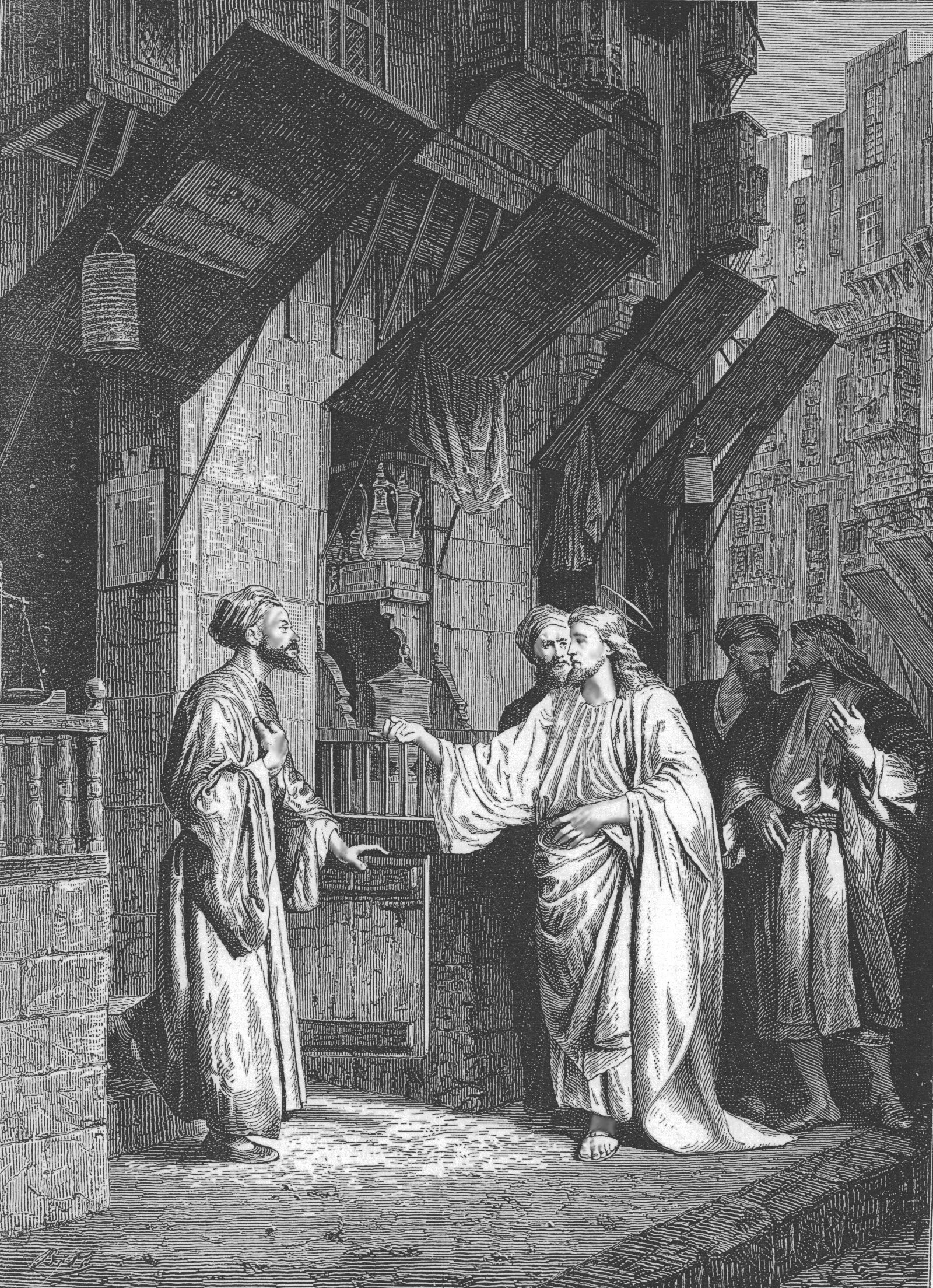
These men were part of the spiritual leadership of Israel. They were revered and looked up to by the people. They, along with the Sadducees and scribes, were experts in the law of Moses. And yet, Jesus revealed that their knowledge of the Scriptures was insufficient and incomplete. In fact, in John’s gospel, we have recorded these powerful words of Jesus, pointing out their obsession with the written word of God, but their stubborn refusal to accept the incarnate Word of God who came that they might have life.

“You pore over the Scriptures because you presume that by them you possess eternal life. These are the very words that testify about Me, yet you refuse to come to Me to have life.” – John 5:39-40 BSB

Immediately after His latest and last confrontation with the Pharisees, Jesus turned to those around Him and delivered a blistering attack on these very same men. Chapter 23 of Matthew contains some of the harshest words found in the Scriptures. In it, we find Jesus unloading on the Pharisees in a rather uncharacteristic way. But this was NOT a personal attack. He was dealing with those who had become roadblocks to the Kingdom. By rejecting Him, they were rejecting the rule and reign of God Himself. These men were supposed to be pointing people to God but were actually doing just the opposite.

Earlier in His earthly ministry, the Pharisees had accused Jesus of working for and by the power of Satan. But He had responded to their accusation by saying, “Anyone who isn’t with me opposes me, and anyone who isn’t working with me is actually working against me. So I tell you, every sin and blasphemy can be forgiven – except blasphemy against the Holy Spirit, which will never be forgiven.” (Matthew 12:30-31 NLT).

The religious leaders had positioned themselves against Jesus and therefore, against God. They were denying the work of God as manifested by the power of God (the Holy Spirit), and attributing it all to Satan. So, in this particular teaching moment, Jesus pronounced a series of warnings or “woes” against the religious leaders of Israel. But rather than direct His attack at the source of the problem, Jesus chose to speak to those who were the unsuspecting victims of the Pharisees’ influence.

All of the warnings found in this passage would have come as a shock to the average Jew because they looked up to and admired the religious leaders as icons of virtue and the keepers of religious law. But Jesus gives His audience a few pieces of advice regarding these men.

 1. Don’t follow their lead

The Pharisees had set themselves up as the official interpreters of the Law of Moses. They were the “experts.” But God had not appointed them as such. They were a man-made organization, and their name was derived from an Aramaic word that means “separated.” They were separatists and saw themselves as the true keepers of the law of Moses. And they certainly knew the law, which is why Jesus told the people to listen to and obey what the Pharisees said concerning the law.

“So practice and obey whatever they tell you…” – Matthew 23:3a NLT

But notice what Jesus said next:

“…but don’t follow their example. For they don’t practice what they teach.” – Matthew 23:3b NLT

In other words, don’t do as they do. As long as they are talking about the content of the Law, listen. But when it came to behavior based on the Law, the people were not to use them as a model.

2. Don’t do what they do

Jesus made it painfully clear. These men were nothing but hypocrites. The Greek word Jesus used was a term commonly used to refer to actors in the popular Greek plays of the day. The actors would commonly play multiple roles and simply don a different mask to assume a new character. Since most of the performers were male, they would even be required to play any female roles written into the play. So, the word hypocrite made its way into the common vernacular to refer to anyone who was a “mask-wearer.” They were performing a role and were not what they appeared to be.

And Jesus pointed out that the Pharisees were nothing but play-actors, for whom everything was about appearances. They had perfected the art of performance. This is why Jesus warned, “Everything they do is for show” (Matthew 23:5 NLT).

3. Don’t love what they love

These men loved recognition and being noticed for their “spirituality.” In fact, they were addicted to being the center of attention. It showed up in their obsession with titles. They enjoyed being called “rabbi” or “teacher.” They took great pride in being recognized for their knowledge and expertise. Not only that, they saw their superior intellect and spiritual elitism as deserving of the peoples’ praise. They expected to be served and had no desire or inclination to serve others. They loved themselves more than they loved God and viewed others as inferiors. In essence, these men were religious exhibitionists! They were little more than performance artists who had perfected the art of impressing others. But they failed to impress God and His Son.

4. Have a higher standard

Jesus seems to have focused His attention directly on His disciples when He said, “But you are not to be called rabbi, for you have one teacher, and you are all brothers” (Matthew 23:8 ESV). He didn’t want His followers to be obsessed with titles. He didn’t want them seeking the praise of men. They were to be brothers. Their role in the Kingdom of God was not to be about rank and privilege or power and position. In fact, their whole perspective was to change, as they recognized the heavenly nature of their new relationship with God.

“…call no man your father on earth, for you have one Father, who is in heaven…” – Matthew 23:9 ESV

And they were not to seek the title of “teacher” or “instructor.” In other words, they were not to covet the role of the expert as the Pharisees had.

“Neither be called instructors, for you have one instructor, the Christ…” – Matthew 23:10 ESV

Contrary to what the Pharisees believed, Jesus was to be the disciples’ sole instructor in the things of God. The word Jesus used is kathēgētēs and it means, “master, guide, or instructor.” The Messiah was to be their source of all wisdom. Even the written word of God points to the incarnate Word of God. To become an expert in the Scriptures, but fail to obey the One of whom the Scriptures speak, would be futile and, ultimately, folly.

Finally, Jesus reminded His disciples of their need to live lives of servitude, not significance.

“The greatest among you shall be your servant. Whoever exalts himself will be humbled, and whoever humbles himself will be exalted.” – Matthew 23:11-12 ESV

Their lives were to mirror His own, not those of the Pharisees. This was not new information to the disciples. Jesus had already told them, “For even the Son of Man came not to be served but to serve others and to give his life as a ransom for many” (Matthew 20:28 ESV). They were to model their lives after His. And in just a matter of days, they would stand by and watch as their rabbi, teacher, friend, and Messiah practiced what He preached. They would see Him betrayed, unjustly tried, brutally beaten, wrongly accused, and violently crucified. All so that they might have eternal life. Jesus was anything but a play-actor. He was far from a hypocrite. He would prove to be the way, the truth, and the life. And the role model for every Christ-follower.

And the apostle Paul reminds us that Jesus is to be our example, setting for us a higher and more holy standard for life and godliness.

You must have the same attitude that Christ Jesus had.

Though he was God,
    he did not think of equality with God
    as something to cling to.
Instead, he gave up his divine privileges;
    he took the humble position of a slave
    and was born as a human being.
When he appeared in human form,
    he humbled himself in obedience to God
      and died a criminal’s death on a cross. – Philippians 2:5-8 NLT

English Standard Version (ESV)
The Holy Bible, English Standard Version. ESV® Permanent Text Edition® (2016). Copyright © 2001 by Crossway Bibles, a publishing ministry of Good News Publishers.

New Living Translation (NLT)
Holy Bible, New Living Translation, copyright © 1996, 2004, 2015 by Tyndale House Foundation. Used by permission of Tyndale House Publishers Inc., Carol Stream, Illinois 60188. All rights reserved.

(MSG)Copyright © 1993, 1994, 1995, 1996, 2000, 2001, 2002 by Eugene H. Peterson

Blind Guides.

1 Then Pharisees and scribes came to Jesus from Jerusalem and said, “Why do your disciples break the tradition of the elders? For they do not wash their hands when they eat.” He answered them, “And why do you break the commandment of God for the sake of your tradition? For God commanded, ‘Honor your father and your mother,’ and, ‘Whoever reviles father or mother must surely die.’ But you say, ‘If anyone tells his father or his mother, “What you would have gained from me is given to God,” he need not honor his father.’ So for the sake of your tradition you have made void the word of God. You hypocrites! Well did Isaiah prophesy of you, when he said:

“‘This people honors me with their lips,
    but their heart is far from me;
in vain do they worship me,
    teaching as doctrines the commandments of men.’”

10 And he called the people to him and said to them, “Hear and understand: 11 it is not what goes into the mouth that defiles a person, but what comes out of the mouth; this defiles a person.” 12 Then the disciples came and said to him, “Do you know that the Pharisees were offended when they heard this saying?” 13 He answered, “Every plant that my heavenly Father has not planted will be rooted up. 14 Let them alone; they are blind guides. And if the blind lead the blind, both will fall into a pit.” 15 But Peter said to him, “Explain the parable to us.” 16 And he said, “Are you also still without understanding? 17 Do you not see that whatever goes into the mouth passes into the stomach and is expelled? 18 But what comes out of the mouth proceeds from the heart, and this defiles a person. 19 For out of the heart come evil thoughts, murder, adultery, sexual immorality, theft, false witness, slander. 20 These are what defile a person. But to eat with unwashed hands does not defile anyone.” – Matthew 15:1-20 ESV

Matthew now moves the scene from Jesus walking on water to Him walking the streets of Jerusalem, where He was confronted by a contingent of Pharisees and scribes. These self-righteous religious leaders had a bone to pick with Jesus, and were anxious to expose what they believed to be His blatant disregard for the tradition of the elders. This was a reference to the man-made rules and regulations established by men and found in the Mishnah. In this case, the Pharisees and scribes were wanting to know why the disciples of Jesus did not follow the regulations concerning ceremonial cleansing. This had nothing to do with personal hygiene, but was about cleansing from defilement, including that which resulted from contact with Gentiles.

These men were not accusing the disciples of violating the Mosaic law, but of failing to keep the rabbinical interpretations of the law. So, Jesus responds to them with a question of His own, asking them, “why do you break the commandment of God for the sake of your tradition?” (Matthew 15:3 ESV). This was a bold move on the part of Jesus, because it exposed the real issue at hand and blatantly accused these religious leaders of breaking the Mosaic law.

But before they could respond, Jesus provided proof for His accusation, explaining their tradition of korban. This was a form of offering that entailed the dedication of a gift to God that was to be offered at a later date. Think of it as a kind of tax-free savings plan. According to the tradition of the elders, someone could dedicate money or an item of value to God, but not be required to offer it immediately. The actual offering was postponed indefinitely, allowing the individual to continue to benefit from the item in the meantime. And Jesus gave an example of this interesting loophole that allowed someone to openly disregard God’s command to honor your father and mother.

This man-made rule allowed someone to circumvent their God-given responsibility to care for their aging parents by simply claiming that their resources had been dedicated to God. But all the while, they would retain full access to those resources. And Jesus exposes this clever plan for what it was: Hypocrisy and an open disregard for the law of God.

“So for the sake of your tradition you have made void the word of God.” – Matthew 15:6 ESV

And Jesus used the words of God, found in the writings of Isaiah the prophet, to condemn them.

8 “These people honor me with their lips,
    but their hearts are far from me.
Their worship is a farce,
    for they teach man-made ideas as commands from God.” – Matthew 15:8-9 NLT

These men were revered for their apparent righteousness. They were respected for their knowledge of and adherence to the Mosaic law. But Jesus exposed them as hypocrites. They were all about appearances. Their concern for what men thought about them took precedence over how God perceived them. And Jesus revealed that the real issue here had nothing to do with ceremonial cleansing, but defiled hearts.

“…it is not what goes into the mouth that defiles a person, but what comes out of the mouth; this defiles a person.” – Matthew 15:11 ESV

While the Pharisees and scribes were concerned about defiling themselves by failing to properly following the prescribed forms of ritual purification, Jesus revealed that their problem was an internal one. And the religious leaders were fully aware of what Jesus was implying and offended by it. His disciples, somewhat naively asked Jesus, “Do you know that the Pharisees were offended when they heard this saying?” (Matthew 15:12 ESV). Yes, He knew and that had been His intention all along.

According to Jesus, these men may have been religious leaders, but they had not been commissioned by God. They were self-appointed and little more than blind guides. In other words, they were worthless leaders. They had no idea where they were going and anyone who followed them would end up in a ditch. This would not be the last time Jesus attacked the hypocrisy of these men. Later on in his gospel, Matthew records even more scathing words from Jesus aimed at the Pharisees and scribes.

23 “What sorrow awaits you teachers of religious law and you Pharisees. Hypocrites! For you are careful to tithe even the tiniest income from your herb gardens, but you ignore the more important aspects of the law—justice, mercy, and faith. You should tithe, yes, but do not neglect the more important things. 24 Blind guides! You strain your water so you won’t accidentally swallow a gnat, but you swallow a camel!

25 “What sorrow awaits you teachers of religious law and you Pharisees. Hypocrites! For you are so careful to clean the outside of the cup and the dish, but inside you are filthy—full of greed and self-indulgence! 26 You blind Pharisee! First wash the inside of the cup and the dish, and then the outside will become clean, too.

27 “What sorrow awaits you teachers of religious law and you Pharisees. Hypocrites! For you are like whitewashed tombs—beautiful on the outside but filled on the inside with dead people’s bones and all sorts of impurity. 28 Outwardly you look like righteous people, but inwardly your hearts are filled with hypocrisy and lawlessness.– Matthew 23: 23-28 NLT

Peter, most likely speaking on behalf of all the disciples, asked Jesus to explain Himself. Peter felt like Jesus was using yet another parable and was anxious to understand what He meant. But Jesus, expressing surprise at their lack of understanding, explained, “For out of the heart come evil thoughts, murder, adultery, sexual immorality, theft, false witness, slander” (Matthew 15:19 ESV). This was all about the condition of the heart, not the keeping of man-made rules. Ritual purification could do nothing to change the inner state of a man. Keeping rules regarding outward purity will not produce a clean heart. But a defiled heart will produce all kinds of unclean behavior. The religious leaders were focusing all their attention on the outside, but Jesus had come to renew the inside. He was offering true cleansing from sin that began with a new heart.

As will be the case from this point on, Jesus is attempting to teach His disciples some very important truths regarding righteousness. It begins in the heart. Our outward behavior cannot make us righteous before God, because He sees the true condition of our hearts. And His assessment is that the human heart is in bad shape.

“The human heart is the most deceitful of all things,
    and desperately wicked.
    Who really knows how bad it is?
10 But I, the Lord, search all hearts
    and examine secret motives.
I give all people their due rewards,
    according to what their actions deserve.” – Jeremiah 17:9-10 NLT

No man can make himself righteous before God through outward adherence to rules and regulations. Our good behavior, even on our best day, is viewed by God as tainted by sin.

We are all infected and impure with sin. When we display our righteous deeds, they are nothing but filthy rags. – Isaiah 64:6 NLT

The problem with the Pharisees and scribes was that they were blind to their need for a Savior. They viewed themselves as right before God because they were religious about rule-keeping. They were ritually pure, but sadly, inwardly defiled because of their sin-filled hearts. And they refused to accept the remedy for their heart problem: Jesus Christ.

English Standard Version (ESV)
The Holy Bible, English Standard Version. ESV® Permanent Text Edition® (2016). Copyright © 2001 by Crossway Bibles, a publishing ministry of Good News Publishers.

New Living Translation (NLT)
Holy Bible, New Living Translation, copyright © 1996, 2004, 2015 by Tyndale House Foundation. Used by permission of Tyndale House Publishers Inc., Carol Stream, Illinois 60188. All rights reserved.

The Message (MSG)Copyright © 1993, 1994, 1995, 1996, 2000, 2001, 2002 by Eugene H. Peterson

False Professions.

“Not everyone who says to me, ‘Lord, Lord,’ will enter the kingdom of heaven, but the one who does the will of my Father who is in heaven. On that day many will say to me, ‘Lord, Lord, did we not prophesy in your name, and cast out demons in your name, and do many mighty works in your name?’ And then will I declare to them, ‘I never knew you; depart from me, you workers of lawlessness.’– Matthew 7:21-23 ESV

Jesus is not done addressing the danger of false prophets. He has referred to them as ravenous wolves in sheep’s clothing, whose appearance may be deceptive, but whose fruit is not. They can disguise their true nature, but they can’t hide what comes out of their hearts. They can claim to be followers of Christ, but Jesus makes it clear, “You will recognize them by their fruits” (Matthew 7:16 ESV).

In today’s passage, Jesus will go on to describe their fruit as lawlessness. The Greek word is anomia, and it literally means “without law.” It can be translated iniquity or wickedness but refers to contempt for and violation of the law. These false prophets may claim to prophesy in the name of Jesus, but He refers to their actions as lawless and, therefore, wicked. And they are not alone. Jesus lists others who will claim to be His followers, but who will prove to be nothing more than fakers and posers. Calling Jesus “Lord” is not what gets you into heaven. Expressing allegiance to Him is not what saves you or brings you the approval and blessing of God.

Later on in His ministry, Jesus is approached by a group of Jews who had been present the day He had miraculously fed a large crowd with nothing more than a few loaves of bread and a couple of fish. Jesus knows why they are there and exposes their motives:

“Truly, truly, I say to you, you are seeking me, not because you saw signs, but because you ate your fill of the loaves.” – John 6:26 ESV

In other words, they were there for more food. So, Jesus told them:

“Do not work for the food that perishes, but for the food that endures to eternal life, which the Son of Man will give to you.” – John 6:27 ESV

Jesus was trying to offer them something far greater and more beneficial than temporary food. He was inviting them to discover eternal life, but their minds were stuck on a horizontal plane and driven by their base desire for more food. So, they responded:

“What must we do, to be doing the works of God?” Jesus answered them, “This is the work of God, that you believe in him whom he has sent.” – John 6:28-29 ESV

The work of God, that which God would have them do, was to believe in Jesus as their Savior. Addressing Him as “Lord, Lord” did not qualify as proof of belief. And Jesus made it clear that a day was coming when those claiming to be His followers would be exposed for what they really were: Hypocrites. The difficult thing is that these very people will appear to be doing all that they do in Jesus’ name. They will prophesy in His name, cast out demons in His name, and do mighty works in His name. But Jesus describes their actions as lawless because they do not truly represent Him.

In our current age, there are many who claim to be speaking on behalf of Jesus. They speak His name and call Him, “Lord, Lord.” Some even do miracles and perform mighty works in His name. But Jesus would have us investigate their fruit – the fruit of their hearts. They may not be all that they appear to be. And the outward display of their allegiance to Christ may be nothing more than a cover-up for their true motives. The trouble is that, while we are here on this earth, we will be surrounded by fakers and charlatans. And many of them will be placed in our midst by Satan himself. Jesus makes this clear in a parable He told.

“The Kingdom of Heaven is like a farmer who planted good seed in his field. But that night as the workers slept, his enemy came and planted weeds among the wheat, then slipped away. When the crop began to grow and produce grain, the weeds also grew.

“The farmer’s workers went to him and said, ‘Sir, the field where you planted that good seed is full of weeds! Where did they come from?’

“‘An enemy has done this!’ the farmer exclaimed.

“‘Should we pull out the weeds?’ they asked.,

“‘No,’ he replied, ‘you’ll uproot the wheat if you do. Let both grow together until the harvest. Then I will tell the harvesters to sort out the weeds, tie them into bundles, and burn them, and to put the wheat in the barn.’” – Matthew 13:24-30 NLT

We will not always be able to tell the wheat from the tares. But Jesus assures us that both will be there. It is a guarantee. But when He says, “On that day…”, He is referring to a future day when the wheat and the tares will be divided, and those that don’t belong will be judged and dealt with. There is a judgment coming, and God will separate the sheep from the goats, the saved from the lost. And there will be those who will claim, “Lord, Lord, did we not prophesy in your name, and cast out demons in your name, and do many mighty works in your name?” But they will hear Jesus say, “‘I never knew you; depart from me, you workers of lawlessness” (Matthew 7:23 ESV).

There have been and always will be those who claim to followers of Christ, but who are really nothing more than false professors. Their spirituality is not what saves them. Their use of Jesus’ name and faithful church attendance do not bring them approval with God. Why? Because they refuse to do the will of God, to believe in Jesus as their Savior and Lord. Instead, they believe that their religious fervor will save them. They put their trust in their good deeds, prayers, fasts, and acts of generosity. They go to church. They attend Bible studies. They listen to countless sermons. But they refuse to do the one thing God has commanded that all must do if they desire to be made right with Him and gain His approval: Believe in His Son as their sin substitute.

When the Philippian jailer asked Paul and Silas what he must do to be saved, they simply stated: “Believe in the Lord Jesus and you will be saved” (Acts 16:31 NLT). Belief, not behavior, is the key to salvation. That is not to say that behavior is not important, but that behavior is a byproduct of true belief. That is why Jesus said, “You will recognize them by their fruits” (Matthew 7:16 ESV). The fruit of the Spirit is what flows out of the life of the one who has placed His faith in Christ. But the fruit of those who refuse to believe in Him is of a completely different character. The apostle Paul describes it as “sexual immorality, impurity, lustful pleasures, idolatry, sorcery, hostility, quarreling, jealousy, outbursts of anger, selfish ambition, dissension, division, envy, drunkenness, wild parties, and other sins like these” (Galatians 5:19-21 NLT).

Just a few verses earlier in his letter to the Galatians, Paul wrote: “For the desires of the flesh are against the Spirit, and the desires of the Spirit are against the flesh, for these are opposed to each other, to keep you from doing the things you want to do” (Galatians 5:17 ESV). Here Paul is referring to believers who find themselves living their lives according to (in the power of) the flesh rather than according to the Spirit. When a Christ-follower chooses to live according to their old sinful nature, even the good things they want to do, their “good intentions” (NLT), will result in “works of the flesh.” Their attempts at producing the fruit of righteousness apart from the power of the Holy Spirit will prove woefully unsuccessful. So, even legitimate believers can produce the wrong kind of fruit if their efforts are flesh-based and not Spirit-induced.

But back to Jesus’ main point in today’s passage: False professions. There will be those who claim to be followers of Christ, but their motives will be wrong. They will say all the right things. They will do many of the things a Christ-follower would be expected to do. They will sit next to us in the pews on Sunday morning, attend our small groups, go on mission trips, give their money, and devote their time to worthy causes. But the day will come when they will say, “Lord, Lord” and He will say, “‘I never knew you; depart from me.”

Remember, Jesus has already warned us that the gate is narrow and the path is difficult that leads to the Kingdom of God. And while there are few who will take that path, there will still be some who appear on it who don’t belong there. Their presence on the path will have nothing to do with faith in Christ but will be based on human effort. They will profess to be followers of Christ, but will really be relying on their own merit to earn entrance into the Kingdom. They will appear to be on the path, but rather than relying on the power of the Holy Spirit, they will be walking in the flesh. Rather than depending upon the guidance of the Holy Spirit, they will be following the desires of their own hearts and the counsel of men. And the day will come when their false professions will come face to face with the truth of the gospel and Jesus’ claim, “I am the way, and the truth, and the life. No one comes to the Father except through me” (John 14:6 ESV).

English Standard Version (ESV)
The Holy Bible, English Standard Version. ESV® Permanent Text Edition® (2016). Copyright © 2001 by Crossway Bibles, a publishing ministry of Good News Publishers.

New Living Translation (NLT)
Holy Bible, New Living Translation, copyright © 1996, 2004, 2015 by Tyndale House Foundation. Used by permission of Tyndale House Publishers Inc., Carol Stream, Illinois 60188. All rights reserved.

The Message (MSG)Copyright © 1993, 1994, 1995, 1996, 2000, 2001, 2002 by Eugene H. Peterson


Pray Like This.

“Pray then like this: Our Father in heaven, hallowed be your name. Your kingdom come,
your will be done, on earth as it is in heaven. Give us this day our daily bread, and forgive us our debts, as we also have forgiven our debtors. And lead us not into temptation, but deliver us from evil.

“For if you forgive others their trespasses, your heavenly Father will also forgive you, but if you do not forgive others their trespasses, neither will your Father forgive your trespasses. – Matthew 6:9-15 ESV

Jesus has just told His audience how not to pray. They were not to pray hypocritically, pretending to be concerned with God, but actually trying to impress those around them with their prayerful piety. And He told them not to pray lengthy, repetitive prayers, in the hopes that God might see them as more holy, and answer their prayers more readily. Jesus knew there was a lot about the practice of prayer that was misunderstood by His listeners and causing them to misuse and abuse it. They had turned prayer into little more than an outward display of their own apparent righteousness. They prayed to impress and to gain the approval of men. So, what should proper prayer look like? That is the question that Jesus answers in these verses. He opens with the statement: “Pray then like this…” (Matthew 6:9 ESV).  What follows is a model for prayer. It was not intended to be a stand-in for your own prayers or to become some kind of daily recitation that we pray routinely and mechanically. In these verses, Jesus provides us with a model to be followed, not a prayer to be recited. It contains the key elements that should be found in all of our prayers. And it provides a simple, easy-to-follow outline for proper prayer.

First of all, Jesus would have us remember that prayer is not about us. It is, first and foremost, about God and our relationship with Him as child to Father. We are more than free to come to God with our needs, wants, and even our desires. But we must attempt to bring those needs, wants and desires within His will. So, Jesus begins His model prayer with the words:

Our Father in heaven…

Jesus sets up an interesting juxtaposition. He refers to God as our Father, but reminds us that His residence is in heaven. The term “father” communicates intimacy. We are to come before God as a child, recognizing that He loves and cares for us. Realizing that He is our provider and protector. He loves and cares for us, and He is also responsible for us. Which is why Jesus would have us never forget that, in prayer, we are talking to the transcendent God of the universe. He is in heaven. We are on earth. The word, “heaven” is intended to remind us of God’s divinity. He is divine and we are human. He is eternal and we are temporal. He is holy, while we are marred by sin. And yet, we can come before Him and talk with Him. In fact, the author of Hebrews tells us to “come boldly to the throne of our gracious God. There we will receive his mercy, and we will find grace to help us when we need it most” (Hebrews 4:16 NLT). But we must always remember that God is both good and great. He is approachable, but we must never come into His presence flippantly or disrespectfully. One of the problems that can develop from the father/child relationship is a spirit of over-familiarity. Children can become too comfortable with their parents and begin to treat them like peers. A parent who refuses to maintain their proper position of authority may end up with a child who becomes demanding toward them, even demeaning. The old phrase, “familiarity breeds contempt”, can become true of the parent/child relationship. It can produce an attitude of flippancy and disrespect. And the same thing can happen in our relationship with God the Father. We are His children, but that relationship should not cause us to forget about His sovereignty over us. We are never to forget that it is Christ who provides us with access to God. Jesus would later say, “No one comes to the Father except through me” (John 14:6 ESV). And Paul reminds us:

Because of Christ and our faith in him, we can now come boldly and confidently into God’s presence. – Ephesians 3:12 NLT

But let us do so respectfully, honoring Him as both God and Father. We must not let our newfound familiarity with God breed contempt for Him.

Next. Jesus provides us with an interesting way to address our Father God.

…hallowed be your name…

Now, why would Jesus insert this line in His model prayer? Think about what this statement is saying. The word translated “hallowed” is from the Greek word hagiazo, which means “to separate from profane things and dedicate to God.” The English word “hallow” means “to honor as holy; consider sacred; venerate.” But why would we need to say to God that His name be treated as holy? Isn’t His name always holy? One of the things we must understand is the extreme importance a man’s name held in the Hebrew culture. A man’s name was tied to his character. So to say to God, “hallowed be your name” was a statement of desire. We are not asking God to keep His name holy, but that we, as His children, might live in such a way that we do nothing to profane His name. To say, “hallowed be your name” is to express to him our desire and intention to live in such a way that we bring honor and glory to Him. We are pledging to treat His name as holy, and we do so by our actions. God will never do anything that will discredit or dishonor His own name. But as His children, we can do immeasurable harm to the character of God by the manner in which we conduct our lives on this planet.

The next part of Jesus’ model prayer states:

…your kingdom come, your will be done, on earth as it is in heaven…

Notice the emphasis: His kingdom. His will. Not ours. Prayer is not to be focused on us, but on God. Prayer is not primarily when we get to tell God things all the things we think He doesn’t know and the lengthy list of things we think we need. Jesus has just said, “your Father knows what you need before you ask him” (Matthew 6:8 ESV). Prayer is an opportunity to align our will with His. It is a chance to remind ourselves that we exist for the good of His kingdom, not the other way around. And to ask that His kingdom and will be done “on earth as it is in heaven” is to say to God that we want His rule and reign to permeate every area of our life, just as it does in heaven. It is a will submission to His authority over us.

One of the things Jesus seems to want us to know is that prayer is about sharing our hearts, not information. Prayers allows us to…

…realign our perspective

…refocus our attention

…reveal our sin

…refresh our commitment

…request His assistance

Prayer should focus on His kingdom, not ours. It should stress His will, not ours. But that does not mean we are not free to ask of God. But Jesus provides us with a sobering reminder of just what we should focus on when we ask of God.

Give us this day our daily bread…

Here is the interesting thing about Jesus’ model prayer. Wanting God’s will to be done should change what we ask for. If we truly believe that God is all-knowing, all-powerful, all-loving and fully capable of providing for us what we need for life, we will trust Him to do so. Our priorities will change. Rather than seeking significance and satisfaction from those things the world offers, we will be content to trust God to meet our daily needs. Thomas L. Constable describes our daily bread as:

“the necessities of life, not its luxuries. This is a prayer for our needs, not our greeds. The request is for God to supply our needs day by day.” – Thomas L. Constable, Notes on Matthew, 2008 Edition

The next request Jesus makes in His prayer is that of forgiveness.

…and forgive us our debts, as we also have forgiven our debtors…

But weren’t all our sins paid for on the cross? Why do we need forgiveness? Because we still have sin natures. Because we still sin. And sin creates a barrier between God and us. The forgiveness Jesus is talking about has nothing to do with salvation, but with restoring fellowship with God. Sin indebts us to God. When we confess those sins, it brings forgiveness.

If we confess our sins, he is faithful and just to forgives us our sins and to cleanse us from all unrighteousness. – 1 John 1:9 ESV

Confession restores fellowship. Fellowship with God should mean more to us than anything else. But is Jesus teaching that our forgiveness from God is tied to our willingness to forgive others? To refuse to forgive others shows open disregard for the forgiveness of God. To refuse to forgive is sin. It is against the will of God for His children.

Since God chose you to be the holy people he loves, you must clothe yourselves with tenderhearted mercy, kindness, humility, gentleness, and patience. Make allowance for each other’s faults, and forgive anyone who offends you. Remember, the Lord forgave you, so you must forgive others. – Colossians 3:12-13 NLT

The next part of His prayer is intriguing.

…and lead us not into temptation…

Is Jesus suggesting that we ask God not to tempt us? If so, He would be contradicting what James would later write, “Let no one say when he is tempted, ‘I am being tempted by God,’ for God cannot be tempted with evil, and he himself tempts no one” (James 1:13 ESV). Paul seems to muddy the waters even more:

No temptation has overtaken you that is not common to man. God is faithful, and he will not let you be tempted beyond your ability, but with the temptation he will also provide the way of escape, that you may be able to endure it. – 1 Corinthians 10:13 ESV

The Greek word for “temptation” is peirasmos and it can mean a trial or testing. It can refer to an inner temptation to sin, but also to a trial that tests the character. So what is Jesus suggesting? That we have an awareness of our dependence upon God. That we recognize that God’s way never leads us to sin. That doesn’t mean we WON’T sin. It is to ask God to protect us from falling into sin along the way. We need His help not to sin as He leads us. Following God’s leadership will not be easy. There will be trials along the way. Which is what Jesus is referring to when He adds:

…but deliver us from evil…

God will not only lead us, He will deliver us. He can keep us from committing evil. He can protect us from the evil committed against us. Remember what Jesus prayed in the garden:

I do not ask that you take them out of the world, but that you keep them from the evil one. – John 17:15 ESV

Jesus ends this section by revisiting the issue of forgiveness. It was obviously important to Him. An unforgiving person has never fully understood or appreciated the forgiveness of God. How can we, who have been forgiven so much, be unwilling to forgive others? The key to receiving God’s forgiveness is confession – an acknowledgement of our sin. To not forgive others is to sin against them. And we can’t just confess that sin, we need to rectify it. We need to forgive, as we have been forgiven. In fact, we demonstrate whether we have been forgiven by whether or not we will forgive others.

English Standard Version (ESV)
The Holy Bible, English Standard Version. ESV® Permanent Text Edition® (2016). Copyright © 2001 by Crossway Bibles, a publishing ministry of Good News Publishers.

New Living Translation (NLT)
Holy Bible, New Living Translation, copyright © 1996, 2004, 2015 by Tyndale House Foundation. Used by permission of Tyndale House Publishers Inc., Carol Stream, Illinois 60188. All rights reserved.

The Message (MSG)Copyright © 1993, 1994, 1995, 1996, 2000, 2001, 2002 by Eugene H. Peterson

Praying For Praise.

And when you pray, you must not be like the hypocrites. For they love to stand and pray in the synagogues and at the street corners, that they may be seen by others. Truly, I say to you, they have received their reward. But when you pray, go into your room and shut the door and pray to your Father who is in secret. And your Father who sees in secret will reward you.

“And when you pray, do not heap up empty phrases as the Gentiles do, for they think that they will be heard for their many words. Do not be like them, for your Father knows what you need before you ask him. – Matthew 6:5-8 ESV

The Jews were a prayerful people. Prayer was an important part of their religious practice. They had prayers, like the Shema, that were to be recited both morning and evening. Services were held throughout the day at the synagogue where the people of Israel would gather for prayer. So, prayer was not uncommon or unfamiliar among those who heard Jesus speak that day on the hillside. But Jesus was not promoting the necessity of prayer, He was trying to expose the false motivation behind their prayers.

As He has done throughout His sermon, Jesus begins with a warning against hypocrisy – a form of play-acting, where outward appearances were meant to deceive or delude. The Greek word is hypokritēs and was used to describe an actor in a play. An actor’s job was to portray a particular character, altering his voice and appearance to give the illusion that he was someone else. A good actor was able to distort reality and suspend belief, if only for a short period of time.

The problem Jesus is attempting to address is the presence of hypocrisy in matters of faith. Posing and pretending was not to be part of the life of a child of God. Prayer was important to God. He considered the communication between Himself and His chosen people as vital and worthy of reverence. He had provided prayer as a means by which men could express their needs to Him, but also declare His goodness and glory. They could ask things of Him, but they were also expected to offer praises to Him for all He had done for them already.

And yet, prayer had become just another means of promoting personal piety. Praying in public, where others could see and hear you, was done to get noticed and to seek the admiration of others for your superior spirituality. Public praying was a way to put your righteousness on display, for all to see. But Jesus says, “When you pray, don’t be like the hypocrites who love to pray publicly on street corners and in the synagogues where everyone can see them” (Matthew 6:5 NLT).

He redefines the purpose of prayer. It was not to get noticed by men, but heard by God. Prayer was not meant to be a public display of your piety or personal righteousness. Remember what He said just a few verses earlier? “Beware of practicing your righteousness before other people in order to be seen by them” (Matthew 6:1 ESV). Like alms-giving, prayer had become nothing more than a means to an end, and the end was the praise of men. When Jesus warns them not to practice “your righteousness” before other people, He is not offering them a compliment for their apparent righteousness. He is not telling them that their giving of alms and public prayers were righteous acts. He is describing their actions as self-righteousness. They were guilty of displaying a self-produced brand of righteousness. And just so we’re clear, Jesus is not saying that alms-giving and public prayer are wrong. He is simply using these two things as examples of good and godly things that had become misunderstood and misused by those who were desperately wanting others to see them as something they were not. In a desperate desire to be viewed by their peers as righteous and holy, they did everything to get noticed.

But Jesus tells them that they are focused on the wrong audience. They are busy trying to convince others of their righteousness when it should have been God they were worried about. He should have been the focus of their prayers. Rather than wasting their time trying to convince others of their own righteousness, they would have been better off confessing their unrighteousness to God. It was Os Guinness who wrote, “I live before the audience of One – before others I have nothing to gain, nothing to lose, nothing to prove.”

It is important that we recognize that Jesus is not condemning public prayer. But prayer is intended, first and foremost, to be a spiritual activity. It is meant to be a conversation between man and God. Prayer is intended for adoration, confession, thanksgiving, and supplication. It is a way for man to give to God (glory, honor, adoration). But it also a means by which men can get from God (forgiveness, healing, guidance). Jesus is rejecting the idea of righteousness being inextricably linked to public prayerfulness. He is saying that, if you pray to impress men, you will fail to gain approval from God. Acts of righteousness done with nothing more than recognition in mind are not acts of righteousness at all. In a sense, they become nothing more than right actions done for the wrong reasons.

Jesus is exposing the kind of prayer that is self-focused and meant to get you seen and heard. It’s prayer meant to impress, not confess. It’s prayer meant to gain the praise of men, but that fails to offer praise to God. It’s prayer designed to boost our reputation before men and that lacks confession of our transgressions toward God.

So, what are we to do? Not pray? No, Jesus challenges His audience to rethink their perspective on prayer. He tells them to go into their room, shut the door and pray to God – in private – where no one else can see. And God, who sees all, will not only see them but hear and reward them. He will bless them, approve of them, and express His pleasure with them by answering their prayers. The apostle John would later expand on the message of Jesus,

And we are confident that he hears us whenever we ask for anything that pleases him. And since we know he hears us when we make our requests, we also know that he will give us what we ask for. – 1 John 5:14-15 NLT

In essence, Jesus is telling us that if we pray to impress others, we will get exactly what we seek: Their praise. But we won’t get the approval of God. If getting noticed for our prayers is more important to us than getting our prayers answered by God, we will become well-known and revered for our prayer life, but God won’t receive glory for answering our prayers. Prayers prayed to get noticed by men, will always fail to get men to notice God. But our responsibility as God’s children is to bring glory to Him, not us. We are here to point men and women to God, not to us. We are meant to lift Him up, not ourselves.

Jesus goes on to describe an aspect of prayer with which we all struggle. How do you get God to hear and answer you? Even if you pray in private, where no one can hear you but God, how do you make sure He really does hear you? Once again, Jesus exposes a misconception. He states, “When you pray, don’t babble on and on as the Gentiles do. They think their prayers are answered merely by repeating their words again and again” (Matthew 6:7 NLT).

When you talk to God, don’t try to impress Him with the length of your prayer or by the careful choice of your words. Don’t drone on and on, somehow thinking that God will be more prone to hear you if your prayers display a proper amount of fervor. It is neither the intensity or longevity of our prayers that cause God to answer. It is the motivation of the heart. James tells us, “when you ask, you don’t get it because your motives are all wrong – you want only what will give you pleasure” (James 4:3 NLT). Wrong methods. Wrong motives. That’s the problem. Later on, in this same message, Jesus will say:

“Keep on asking, and you will receive what you ask for. Keep on seeking, and you will find. Keep on knocking, and the door will be opened to you. For everyone who asks, receives. Everyone who seeks, finds. And to everyone who knocks, the door will be opened.

“You parents—if your children ask for a loaf of bread, do you give them a stone instead? Or if they ask for a fish, do you give them a snake? Of course not! So if you sinful people know how to give good gifts to your children, how much more will your heavenly Father give good gifts to those who ask him.” – Matthew 7:7-11 NLT

We are to ask. And we are to trust God for the answer. He isn’t going to give us something we don’t need or can’t use. But it’s important to remember that God is not going to give us everything we ask for because too often our motives are wrong. Also, we don’t always know what it is we actually need. We may think we need healing, but God knows that what we really need is increased faith. We may ask God for a solution to a financial need, but He knows that the real issue is spiritual in nature. We have a greed problem. So, rather than give us money, He teaches us to live within our means, learning to trust Him for our needs.

Sometimes, we spend far too much time asking God for things. But Jesus reminds us, “your Father knows exactly what you need even before you ask him!” (Matthew 6:8 NLT). This doesn’t mean we don’t have a responsibility to ask God for things, but that the purpose behind our prayer is not to share information with God, but to communicate our dependence upon Him. We don’t pray to keep God up to speed with all that is going on in our life. He already knows. We pray in order to convey to Him our complete reliance upon Him for everything in our life. Prayer is an act of submission to God. It is the adoration of God. It is a means by which we offer up our thankfulness for all that He has done and is doing in and around our life.

Prayer isn’t meant to get you noticed by men. But, on the other hand, it isn’t intended to get you noticed by God. He already knows everything there is to know about you. Prayer is an expression of humility to God, showing Him that we are completely dependent upon Him for all things. But how easy it is to make prayer an expression of pride and self-promotion. So, Jesus warns us not to pray that way. And then He provides us with an example of how to pray. But that’s for tomorrow.

English Standard Version (ESV)
The Holy Bible, English Standard Version. ESV® Permanent Text Edition® (2016). Copyright © 2001 by Crossway Bibles, a publishing ministry of Good News Publishers.

New Living Translation (NLT)
Holy Bible, New Living Translation, copyright © 1996, 2004, 2015 by Tyndale House Foundation. Used by permission of Tyndale House Publishers Inc., Carol Stream, Illinois 60188. All rights reserved.

The Message (MSG)Copyright © 1993, 1994, 1995, 1996, 2000, 2001, 2002 by Eugene H. Peterson

Day 106 – Matthew 23:1-39; Mark 12:38-40; Luke 20:45-47

The Seven Woes.

Matthew 23:1-39; Mark 12:38-40; Luke 20:45-47

“What do you think about the Messiah? Whose son is he?” They replied, “He is the son of David.” – Matthew 22:42 NLT

Chapter 23 of Matthew is one of the harshest sections of the Scriptures. In it, we find Jesus unloading on the Pharisees in a rather uncharacteristic way. But this is NOT a personal attack. He is dealing with those who had become roadblocks to the Kingdom. By rejecting Him, they were rejecting the Kingdom, rule, and reign of God Himself. These men were supposed to be pointing people to God, but were actually doing just the opposite! Remember what Jesus had said to the Pharisees back when they accused Him of working for and by the power of Satan: “Anyone who isn’t with me opposes me, and anyone who isn’t working with me is actually working against me. So I tell you, every sin and blasphemy can be forgiven–except blasphemy against the Holy Spirit, which will never be forgiven.” (Matthew 12:30-31 NLT).

The religious leaders had positioned themselves against Jesus and therefore, against God. They were denying the work of God manifested by the power of God (Holy Spirit), and attributing it all to Satan. So Jesus pronounces a series of warnings or “woes” against them. But rather than direct His attack directly at the Pharisees, He speaks to the crowd surrounding Him. All of these warnings would have been shocking to the average Jew because they looked up to and admired the religious leaders as icons of virtue and the keepers of religious law. But Jesus gives His audience a few pieces of advice regarding these men:

Don’t follow their lead

The Pharisees had set themselves up as the official interpreters of the Law of Moses. They were the “experts.” But they were usurpers to the title – God had not appointed them as such. They certainly KNEW the Law, so Jesus told the people to listen to what the Pharisees SAID. The problem was, they failed to KEEP the Law, so Jesus said don’t do what they DO. In other words, don’t follow their example. As long as they are talking about the content of the Law, listen. But when it comes to conduct based on the Law, don’t use them as a model. “So practice and obey whatever they tell you, but don’t follow their example. For they don’t practice what they teach” (Matthew 23:3 NLT).

Don’t do what they do

Jesus makes it clear. These men are nothing but hypocrites. The Greek word Jesus uses was a term commonly used when referring to actors in the Greek plays. In the plays of those days, the actors would commonly play multiple roles and simply don a different mask to change characters. So the word became common for referring to anyone who was a “mask-wearer” or hypocrite. They were not what they appeared to be. For the Pharisees, everything was all about appearances. They had perfected the art of performance. “Everything they do is for show” (Matthew 23:5 NLT).

Don’t love what they love

They loved recognition and getting noticed for their “spirituality.” In fact, they were addicted to being the center of attention. It showed up in their obsession with titles. They enjoyed being called “rabbi” and recognized for their knowledge and expertise. They wanted to be served, not serve. They loved themselves more than they loved God or others. In essence, these men were religious exhibitionists! WHICH WOULD NOT BE AS BIG A PROBLEM – EXCEPT FOR THEIR ROLE AS LEADERS

God’s true feelings about false religion

At this point, Jesus makes His message much more direct by turning His attention directly to the Pharisees and teachers of religious law. This is the part where He pronounces His seven woes or warnings against them. It is important to recognize that this is all about two distinctly different ways to approach God. What Jesus has to say is less about their behavior than the focus of their ministry.

Woe #1

“What sorrow awaits you teachers of religious law and you Pharisees. Hypocrites! For you shut the door on the Kingdom of Heaven in people’s faces. You won’t go in yourselves, and you don’t let others enter either.” – Matthew 23:13-14 NLT

They had a false view of the Kingdom of Heaven and how to enter it. It was keeping them out AND everyone else they influenced.

Woe #2

“What sorrow awaits you teachers of religious law and you Pharisees. Hypocrites! For you cross the land and sea to make one convert, and then you turn that person into twice the child of hell you yourselves are!”Matthew 23:15 NLT

Their failure to accept Jesus as Messiah was condemning others to hell. Their false view of the Kingdom of Heaven was having deadly consequences. They were zealous to convert others to their way of thinking and to their view of the Kingdom, but the result was that these individuals ended up as lost as they were.

Woe #3

“Blind guides! What sorrow awaits you! For you say it means nothing to swear ‘by God’s Temple,’ but that it is binding to swear ‘by the gold in the Temple.’” – Matthew 23:16 NLT

In spite of all their knowledge of the Law, they were blind and couldn’t see the point of it all. They had misunderstood what really was of value in the Kingdom of Heaven. It was the Temple, that God had set apart as His own, that was holy, not the gold used to cover it. It was the altar, the place God had set aside for sacrifice, that was holy, and made anything placed on it holy. Ultimately, it is God who makes heaven holy and gives it its value. They focused their attention on the wrong things. They were materially minded, not spiritually focused.

Woe #4

“What sorrow awaits you teachers of religious law and you Pharisees. Hypocrites! For you are careful to tithe even the tiniest income from your herb gardens, but you ignore the more important aspects of the law – justice, mercy, and faith.” – Matthew 23:23 NLT

They misunderstood the true nature of the Kingdom because they tended to major on the minors. They nitpicked the Law to death, but missed the two most important commandments: Love God and love others (Justice, mercy and faith).

Woe #5

“What sorrow awaits you teachers of religious law and you Pharisees. Hypocrites! For you are so careful to clean the outside of the cup and the dish, but inside you are filthy – full of greed and self-indulgence!” – Matthew 23:25 NLT

They had a false understanding of what constitutes righteousness in the Kingdom. It was the INSIDE God was interested in, not the OUTSIDE. Their focus was on the externals rather than the internal. They made behavior modification their goal, rather than heart transformation. But Jesus had taught just the opposite. “But the things that come out of the mouth come from the heart, and these things defile a person. For out of the heart come evil ideas, murder, adultery, sexual immorality, theft, false testimony, slander. These are the things that defile a person; it is not eating with unwashed hands that defiles a person” (Matthew 15:18-20 NLT).

Woe #6

“What sorrow awaits you teachers of religious law and you Pharisees. Hypocrites! For you are like whitewashed tombs – beautiful on the outside but filled on the inside with dead people’s bones and all sorts of impurities.” – Matthew 23:27 NLT

This one supports the previous one. It reveals their false concept of what it took to become clean or righteous. Again, they had replaced heart transformation with behavior modification. They spent all their time obsessing about outward appearances, while ignoring the internal state of their souls. Rather than heart-felt repentance, they focused on outward reformation. Rather than acknowledge their sin, they simply attempted to cover it up with good deeds and religious effort.

Woe #7

“What sorrow awaits you teachers of religious law and you Pharisees. Hypocrites! For you build tombs for the prophets your ancestors killed, and you decorate the monuments of the godly people your ancestors destroyed. Then you say, ‘If we had lived in the days of our ancestors, we would never have joined them in killing the prophets.’” – Matthew 23:29-30 NLT

In failing to recognize their own sinful condition, they had become just like their ancestors – rebellious, stubborn and resistant to God. They built tombs and monuments to honor the prophets, but had failed to listen to God’s prophet: John the Baptist. In just a few days, they would arrange to have the very Son of God put to death, just as Jesus had predicted. And after Jesus was out of the way, they would end up persecuting and killing the disciples as well . “Therefore, I am sending you prophets and wise men and teachers of religious law. But you will kill some by crucifixion, and you will flog others with whips in your synagogues, chasing them from city to city” (Matthew 23:34 NLT).

Misplaced passion

Why was Jesus so upset with these men? What drove Him to treat them so harshly? They were passionate. They were zealous. They were religious. BUT THEY HAD BECOME DANGEROUS! They had become obstacles to the Kingdom of Heaven. Their misplaced zeal had led to them becoming stumbling blocks. “Jesus said to his disciples, ‘Stumbling blocks are sure to come, but woe to the one through whom they come! It would be better for him to have a millstone tied around his neck and be thrown into the sea than for him to cause one of these little ones to sin.’” (Luke 17:1-2 NET).

These men DO NOT represent the way to the Kingdom of Heaven. They don’t even know the directions. But where do we see this today? In the myriad of false and pseudo-Christian religions. We see it in anyone who denies that salvation is through faith alone in Christ alone. We need to learn to look for these characteristics.

  1. Posing as spokesmen for God, but denying people access to the Kingdom of God
  2. Giving people false hope by offering them a false gospel
  3. Providing easy work-arounds to true holiness and commitment to God
  4. Judging righteousness based on their own standards, rather than God’s
  5. Refusing the acknowledge sin, while emphasizing self-righteousness
  6. Putting undue emphasis on how men see them, rather than God
  7. Failing to see their status as enemies of God

The spirit of the Pharisees is alive and well today. It’s evident in every religion that refuses to acknowledge Jesus Christ as the only way. It’s prevalent in many main-stream denominations that preach a gospel of works, not grace. It can be found anytime legalism and rule-keeping replaces love. It shows up whenever our religion becomes more important than our relationship with Christ. It takes the form of hypocrisy, when what we say we believe fails to impact our behavior. It’s alive and well when we love the praise of man more than pleasing God.

Father, it’s easy to follow the lead of the Pharisees and become all about appearances. It is so tempting to try to deny our true condition by putting up a good front and acting the part. But You look for sincerity and integrity of heart. You are not impressed with our performance, because You can see into our hearts. Keep us from following the example of the Pharisees, but help us live humbly, obediently and dependently on You. Amen.

Ken Miller
Grow Pastor & Minister to Men
kenm@christchapelbc.org

Day 59 – Matthew 15:1-20; Mark 7:1-23

Silly Rituals. Serious Business.

Matthew 15:1-20; Mark 7:1-23

“These people honor me with their lips, but their hearts are far from me. Their worship is a farce, for they teach man-made ideas as commands from God.” – Mark 7:6-7 NLT

The Pharisees took themselves way too seriously. But in reality, they were silly. They had become so wrapped up in their “age-old traditions” that they lost sight of just how ridiculous it all appeared. They had all kinds of cleansing ceremonies they went through before they could eat. Mark tells his primarily Gentile audience just how silly it all was. “The Jews, especially the Pharisees, do not eat until they have poured water over their cupped hands, as required by their ancient traditions” (Mark 7:3 NLT). Notice he makes a point of saying that this was required by their ancient traditions, not God. He goes on to say that “Similarly, they don’t eat anything from the market until they immerse their hands in water. This is but one of the many traditions they have clung to – such as their ceremonial washing of cups, pitchers and kettles” (Mark 7:4 NLT). They had convinced themselves that all this madness somehow made them clean and acceptable before God. They lives in fear that they could have somehow become defiled by coming into contact with something unclean of unholy. But they gave no thought to what was going on in their own hearts. Jesus makes this distinction quite clear. When they confront Jesus and demand to know why His disciples don’t follow their traditions, Jesus pulls no punches. He quotes the prophet Isaiah who was quoting God Himself. “These people honor me with their lips, but their hearts are far from me. Their worship is a farce, for they teach man-made ideas as commands from God” (Mark 7:6-7 NLT). This was God speaking against the city of of Jerusalem and the people of Judah. Their religion had become routine. They were going through the motions. They thought that offering sacrifices was enough. But God was more concerned about their hearts than their offerings. And Jesus was more concerned about the hardened hearts of the Pharisees than He was their silly ceremonies for staying clean.

Their real problem was that they gave more credence to their own rules than God’s commands. They came up with all kinds of convenient work-arounds and loop holes that allowed them to ignore God’s commands and do what they wanted to do. And Jesus made it clear what they were doing. “And so you cancel the word of God in order to hand down your own tradition” (Mark 7:13 NLT). Their rules trumped God’s laws. Their silly rituals held more sway in their lives than the righteous demands of a holy God. And not only that, their rituals were worthless. They didn’t even accomplish what they hoped they would. Because the only impurity God is concerned about is that which is on the inside. God is obsessed with clean hearts, not clean hands. Jesus tells the crowd, “It is what comes from inside that defiles you” (Mark 7:20 NLT), not what comes from the outside. It is that which comes from a person’s heart that defiles him, and no amount of ceremonial hand washing is going to fix that problem.

These men had focused on the wrong thing. They were wasting their time obsessing over the externals, when inside they were corrupt, selfish, self-centered, egotistical, and in direct opposition to the will of God. They refused to acknowledge Jesus as the Messiah. They credited His power as having come from Satan. They called Him a drunk. They ridiculed Him and tried everything in their power to discredit Him and, ultimately, would go out of their way to see that He was put to death. Their example of ceremonial hand washing and ritualistic cleansing was sending a wrong message to the people, and Jesus cleared it up. He made it painfully obvious that these men were far from pure and anything but holy. And the list He gave was more than likely one that applied to these sanctimonious religious leaders. “For from within, out of a person’s heart, come evil thoughts, sexual immorality, theft, murder, adultery, greed, wickedness, deceit, lustful desires, envy, slander, pride and foolishness. All these vile things come from within; they are what defile you” (Mark 7:21-23 NLT). Interestingly enough, there is no recorded response from the Pharisees. No rebuttal. No defense. No denial. The conversation simply ends. Which speaks volumes. Jesus knew their hearts better than they did. And while they were content to play their silly games and pretend that they were holy, Jesus was letting them know that God takes holiness seriously and saw the true condition of their hearts.

Father, You can see into our hearts and You know things about us that we don’t even know ourselves. Forgive us thinking that the silly religious rituals we go through somehow make us right with You. Keep us focused on our own hearts and never let us forget that only You can cleanse the heart. We simply need to confess our sin and allow You to forgive and cleanse. You are in the heart transformation business. Don’t let us settle for the anything less. Amen.

Ken Miller

Grow Pastor & Minister to Men
kenm@christchapelbc.org