When the Light Goes Out

6 Thus says the Lord:

“For three transgressions of Israel,
    and for four, I will not revoke the punishment,
because they sell the righteous for silver,
    and the needy for a pair of sandals—
7 those who trample the head of the poor into the dust of the earth
    and turn aside the way of the afflicted;
a man and his father go in to the same girl,
    so that my holy name is profaned;
8 they lay themselves down beside every altar
    on garments taken in pledge,
and in the house of their God they drink
    the wine of those who have been fined. – Amos 2:6-8 ESV

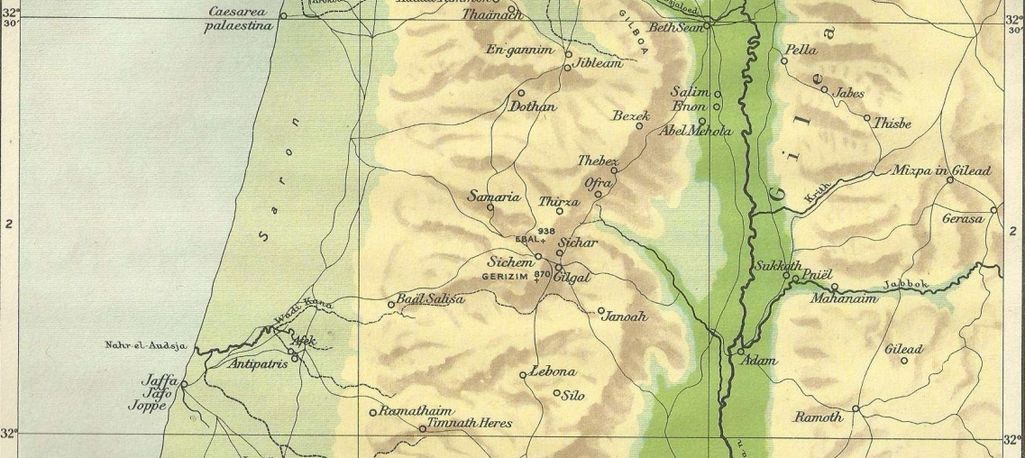
God saves His longest and most detailed declaration of condemnation and judgment for the northern kingdom of Israel. It had been God who divided the kingdom of Solomon in half, allowing the ten northern tribes to secede under the leadership of Jeroboam. But it had been the newly crowned Jeroboam who had immediately led the people into apostasy and open rebellion against God Himself. Not long after the northern tribes had split away from Judah, Jeroboam had come up with a plan to consolidate and conserve his new leadership role. His control over the ten tribes was tenuous at best and highly vulnerable to failure. And he knew that the presence of the temple in Jerusalem would provide King Rehoboam with a strong advantage. The ten northern tribes would feel a constant obligation to return to the capital city of Judah for the annual feasts and festivals commanded by God. And this prospect concerned him greatly.

“Unless I am careful, the kingdom will return to the dynasty of David. When these people go to Jerusalem to offer sacrifices at the Temple of the Lord, they will again give their allegiance to King Rehoboam of Judah. They will kill me and make him their king instead.” – 1 Kings 12:26-27 NLT

Driven by fear and motivated by self-preservation, Jeroboam came up with a plan to deal with this potential problem.

So on the advice of his counselors, the king made two gold calves. He said to the people, “It is too much trouble for you to worship in Jerusalem. Look, Israel, these are the gods who brought you out of Egypt!”

He placed these calf idols in Bethel and in Dan—at either end of his kingdom. But this became a great sin, for the people worshiped the idols, traveling as far north as Dan to worship the one there. – 1 Kings 12:28-30 NLT

Jeroboam created his own religion, complete with false gods, a priestly cast, and places of worship. He even decreed an annual festival to compete with the Feast of Booths, ensuring that his constituents no longer had to make the annual pilgrimage to Jerusalem. Jeroboam laid the foundation on which the future kings of Israel built their apostate dynasties. And God would hold Jeroboam personally responsible for his role in Israel’s spiritual rebellion.

“I promoted you from the ranks of the common people and made you ruler over my people Israel. I ripped the kingdom away from the family of David and gave it to you. But you have not been like my servant David, who obeyed my commands and followed me with all his heart and always did whatever I wanted. You have done more evil than all who lived before you. You have made other gods for yourself and have made me furious with your gold calves. And since you have turned your back on me, I will bring disaster on your dynasty and will destroy every one of your male descendants, slave and free alike, anywhere in Israel. I will burn up your royal dynasty as one burns up trash until it is all gone. The members of Jeroboam’s family who die in the city will be eaten by dogs, and those who die in the field will be eaten by vultures. I, the Lord, have spoken.” – 1 Kings 14:7-11 NLT

And God would fulfill this promise within one generation. Jeroboam’s son, Nadab, inherited the throne but only lasted two years. He was assassinated by Baasha, who then declared himself the new king of Israel. And to secure his hold on the crown, Baasha exterminated Jeroboam’s entire family.

He immediately slaughtered all the descendants of King Jeroboam, so that not one of the royal family was left, just as the Lord had promised concerning Jeroboam by the prophet Ahijah from Shiloh. This was done because Jeroboam had provoked the anger of the Lord, the God of Israel, by the sins he had committed and the sins he had led Israel to commit. – 1 Kings 15:29-30 NLT

But Israel’s new king proved to be just as bad as the old one. Baasha “did what was evil in the Lord’s sight and followed the example of Jeroboam, continuing the sins that Jeroboam had led Israel to commit” (1 Kings 15:34 NLT). And that pattern would continue, year after year, dynasty after dynasty. A long line of kings would come and go, but the hearts of the people would remain stubbornly committed in their rejection of God. The prophet, Hosea, would record the words of God declaring His displeasure with His chosen people.

“Wine has robbed my people
    of their understanding.
They ask a piece of wood for advice!
    They think a stick can tell them the future!
Longing after idols
    has made them foolish.
They have played the prostitute,
    serving other gods and deserting their God.” – Hosea 4:11-12 NLT

And their love affair with idolatry had eventually led them to commit gross acts of immorality, prompting God to declare them as an abomination in His eyes. 

“But then they deserted me for Baal-peor,
    giving themselves to that shameful idol.
Soon they became vile,
    as vile as the god they worshiped.” – Hosea 9:10 NLT

The Hebrew word that is translated as “vile” in this verse was usually associated with an actual idol. God considered these man-made gods to be detestable because they were intended to be substitutes for Him. Men that God had given life had turned around and manufactured these mindless and lifeless pieces of stone, wood, and precious metal as His replacements. And, in doing so, the chosen people of God became as detestable and abominable in His eyes as the gods they had made. But unlike their lifeless idols, the Israelites were fully capable of committing egregious acts of immorality. According to Hosea, the people of Israel were guilty of a wide range of sins against God and one another.

“There is no faithfulness, no kindness,
    no knowledge of God in your land.
You make vows and break them;
    you kill and steal and commit adultery.
There is violence everywhere—
    one murder after another.” – Hosea 4:1-2 NLT

And Amos discloses that the ten northern tribes had managed to violate every single one of God’s holy commandments. Because they had no love for God, they had no capacity to show love and respect for one another.

They sold the innocent for silver,
the needy for a pair of sandals.
They trample on the dirt-covered heads of the poor;
they push the destitute away.
A man and his father go to the same girl;
in this way they show disrespect for my moral purity. – Amos 2:6-7 NLT

They were not only immoral, but they were also unjust. Their failure to love and honor God by keeping His holy commands resulted in an inability to care for one another. Centuries earlier, Moses had told the people of Israel, “Listen, O Israel! The Lord is our God, the Lord alone. And you must love the Lord your God with all your heart, all your soul, and all your strength” (Deuteronomy 6:4 NLT). But God expected their love for Him to show up in the way that they loved one another. So, when Jesus was asked by the Pharisees to name the greatest commandment in the Law of Moses, He responded, “‘You must love the Lord your God with all your heart, all your soul, and all your mind.’ This is the first and greatest commandment. A second is equally important: ‘Love your neighbor as yourself.’ The entire law and all the demands of the prophets are based on these two commandments” (Matthew 22:37-40 NLT).

Bu the people of Israel were guilty of abandoning God and abusing one another. They had actually made themselves gods, practicing a brand of religion that was motivated by an unhealthy obsession with self and a disdain for others. Ignoring all of God’s commands regarding the just and holy treatment of their neighbor, the Israelites practiced a form of injustice that was unheard of even among the pagan nations surrounding them.

They stretch out on clothing seized as collateral;
they do so right beside every altar!
They drink wine bought with the fines they have levied;
they do so right in the temple of their God! – Amos 2:8 NLT

The Israelites were to have been a light to the nations, illustrating the way in which the just and holy laws of God could produce a community of loving and compassionate people whose lives were dedicated to honoring Him and caring for one another. But they had failed miserably. The spiritual light had gone out in Israel. They were living in the darkness of sin, the blind leading the blind, and their pervasive pride kept them from recognizing their sorrow state and returning to God in repentance.

Their arrogance testifies against them,
    yet they don’t return to the Lord their God
    or even try to find him. – Hosea 7:10 NLT

And, as Amos will point out, they had forgotten all that God had done for them. Enjoying the recent signs of success made possible by the leadership of Jeroboam II, the people of Israel had grown content, cocky, and spiritually complacent. Like the church of Laodicea in the book of Revelation, the people of Israel were blissfully ignorant of their true condition. They were boastfully declaring, “I am rich. I have everything I want. I don’t need a thing” and yet, they were actually “wretched and miserable and poor and blind and naked” (Revelation 3:17 NLT). And their over-confidence would bring down the judgment of God.

English Standard Version (ESV) The Holy Bible, English Standard Version. ESV® Permanent Text Edition® (2016). Copyright © 2001 by Crossway Bibles, a publishing ministry of Good News Publishers.

New Living Translation (NLT) Holy Bible, New Living Translation, copyright © 1996, 2004, 2015 by Tyndale House Foundation. Used by permission of Tyndale House Publishers Inc., Carol Stream, Illinois 60188. All rights reserved.

The Message (MSG)Copyright © 1993, 1994, 1995, 1996, 2000, 2001, 2002 by Eugene H. Peterson

A Divine Word Against Lip-Service

4 Thus says the Lord:

“For three transgressions of Judah,
    and for four, I will not revoke the punishment,
because they have rejected the law of the Lord,
    and have not kept his statutes,
but their lies have led them astray,
    those after which their fathers walked.
5 So I will send a fire upon Judah,
    and it shall devour the strongholds of Jerusalem.” – Amos 2:4-5 ESV

Now God turns His attention to the two southern tribes of Judah and Benjamin. At one time, the 12 tribes of Israel were unified and enjoyed a period of great peace and prosperity under the wise leadership of King Solomon. But even with all his wisdom, Solomon still succumbed to the temptation of sin, marrying 700 wives and 300 concubines. God had expressly commanded that Israel’s king “must not take many wives for himself, because they will turn his heart away from the LORD” (Deuteronomy 17:17 NLT). But it seems that Solomon had inherited his father’s love for women, which led him to violate God’s command and live out in real life what God had warned would happen. Solomon married women from such countries as Egypt, Moab, Ammon, Edom, and Sidon. And, “In Solomon’s old age, they turned his heart to worship other gods instead of being completely faithful to the Lord his God, as his father, David, had been” (1 Kings 11:4 NLT).

So, God delivered the fateful news to Solomon that the great kingdom he had inherited from his father, David, would be split in two.

“Since you have not kept my covenant and have disobeyed my decrees, I will surely tear the kingdom away from you and give it to one of your servants.” – 1 Kings 11:11 NLT

Solomon had willingly disobeyed the covenant established between Yahweh and the nation of Israel. And his love affair with his foreign wives and their false gods had led the people of Israel down a path marked by idolatry and apostasy.

God graciously informed Solomon that he would be allowed to complete his reign over a unified Israel. But God also broke the devastating news that, upon Solomon’s death, his son, Rehoboam would be left with a kingdom that was a shadow of its former glory.

“But for the sake of your father, David, I will not do this while you are still alive. I will take the kingdom away from your son. And even so, I will not take away the entire kingdom; I will let him be king of one tribe, for the sake of my servant David and for the sake of Jerusalem, my chosen city.” – 1 Kings 11:12-13 NLT

Actually, Rehoboam would end up ruling over Judah and the much smaller tribe of Benjamin, while the other ten tribes revolted, declaring themselves to be an independent nation with Jeroboam as their king.

Rehoboam was severely short-changed when it came to the kingdom he inherited from his father. But it seems that he inherited every bit of his father’s love affair with idolatry. Rehoboam’s mother was an Ammonite and it would appear that she also had a strong influence over his spiritual life. Like his father before him, Rehoboam led the people to disobey and forsake God. During his reign, “the people of Judah did what was evil in the Lord’s sight, provoking his anger with their sin, for it was even worse than that of their ancestors” (1 Kings 14:22 NLT). And this pattern of rebellious behavior would continue on and off for centuries, periodically broken during the reign of one of a handful of godly kings who ruled over Judah.

One such king was Uzziah, who was on the throne of Judah during the time that Amos prophesied against the northern kingdom of Israel. According to 2 Chronicles, Uzziah was a good king who remained faithful to Yahweh.

He did what was pleasing in the Lord’s sight, just as his father, Amaziah, had done. Uzziah sought God during the days of Zechariah, who taught him to fear God. And as long as the king sought guidance from the Lord, God gave him success. – 2 Chronicles 26:4-5 NLT

We’re even told that “God helped him in his wars against the Philistines, his battles with the Arabs of Gur, and his wars with the Meunites” (2 Chronicles 26:7 NLT). Yet, even good King Uzziah had his flaws. It seems that all his military successes went to his head and his ego got the best of him.

…when he had become powerful, he also became proud, which led to his downfall. He sinned against the Lord his God by entering the sanctuary of the Lord’s Temple and personally burning incense on the incense altar. Azariah the high priest went in after him with eighty other priests of the Lord, all brave men. They confronted King Uzziah and said, “It is not for you, Uzziah, to burn incense to the Lord. That is the work of the priests alone, the descendants of Aaron who are set apart for this work. Get out of the sanctuary, for you have sinned. The Lord God will not honor you for this!”

Uzziah, who was holding an incense burner, became furious. – 2 Chronicles 26:16-19 NLT

Like Solomon, Uzziah violated the covenant commandments of God. According to the Mosaic law, he was forbidden from performing the duties of a priest. God had expressly forbidden anyone but an ordained and consecrated priest from entering the sanctuary of God.

“Appoint Aaron and his sons to carry out the duties of the priesthood. But any unauthorized person who goes too near the sanctuary must be put to death.” – Numbers 3:10 NLT

For his act of insurrection against the commands of God, Uzziah was spared death but was stricken with leprosy. His disease would force him to live in a form of exile, quarantined in a separate house, and banned from ever entering the temple of God again.

So, when God announced through Amos that He was bringing judgment upon the nation of Judah, He gave only cause for His action:

“They have rejected the instruction of the Lord,
    refusing to obey his decrees.” – Amos 2:4 NLT

When God had originally given the people of Israel the law, He told them that obedience to it would result in blessings, but disobedience would result in curses. He fully expected them to keep His commands, but He had given them the sacrificial system because He knew they would repeatedly fail to do so. Through the practice of blood sacrifice, the people could have their sins atoned for and forgiven. But even the sacrificial system had become nothing more than a ritualistic form of religious observance that was devoid of meaning and emptied of all its intended benefits. Even the great king, David, knew that God wanted far more than lip service and heartless religious observances.

You do not desire a sacrifice, or I would offer one.
    You do not want a burnt offering.
The sacrifice you desire is a broken spirit.
    You will not reject a broken and repentant heart, O God. – Psalm 51:16-17 NLT

David had learned this invaluable lesson from his old mentor, the prophet Samuel.

“What is more pleasing to the LORD: your burnt offerings and sacrifices or your obedience to his voice? Listen! Obedience is better than sacrifice, and submission is better than offering the fat of rams.” – 1 Samuel 15:22 NLT

And God would later explain His dissatisfaction with the feigned devotion of His people.

“These people say they are mine. They honor me with their lips, but their hearts are far from me. And their worship of me is nothing but man-made rules learned by rote.” – Isaiah 29:13 NLT

The nation of Judah stood before God as guilty. Yes, they had enjoyed the godly leadership of a few faithful kings but, for the most part, they had been just as disobedient as their northern neighbors. They had regularly displayed their disdain and disregard for God by chasing after the false gods of the surrounding nations. And even when a godly king came along and attempted to reform the ways of the people, his efforts would be short-lived and the pattern of apostasy would begin again.

So, God warns the people of Judah that their day of destruction is coming. And God’s prophetic statement regarding their demise would come about in 586 B.C. when Nebuchadnezzar and his Babylonian army invaded Judah and destroyed the city of Jerusalem. This devastating event would take place hundreds of years after the fall of Israel to the Assyrians. Even after watching the fall and exile of their northern neighbor, the people of Judah would continue to reject the law of God and refuse to obey His decrees. And their stubborn refusal to repent would cost them dearly.

English Standard Version (ESV) The Holy Bible, English Standard Version. ESV® Permanent Text Edition® (2016). Copyright © 2001 by Crossway Bibles, a publishing ministry of Good News Publishers.

New Living Translation (NLT) Holy Bible, New Living Translation, copyright © 1996, 2004, 2015 by Tyndale House Foundation. Used by permission of Tyndale House Publishers Inc., Carol Stream, Illinois 60188. All rights reserved.

The Message (MSG)Copyright © 1993, 1994, 1995, 1996, 2000, 2001, 2002 by Eugene H. Peterson
Not An Easy Job

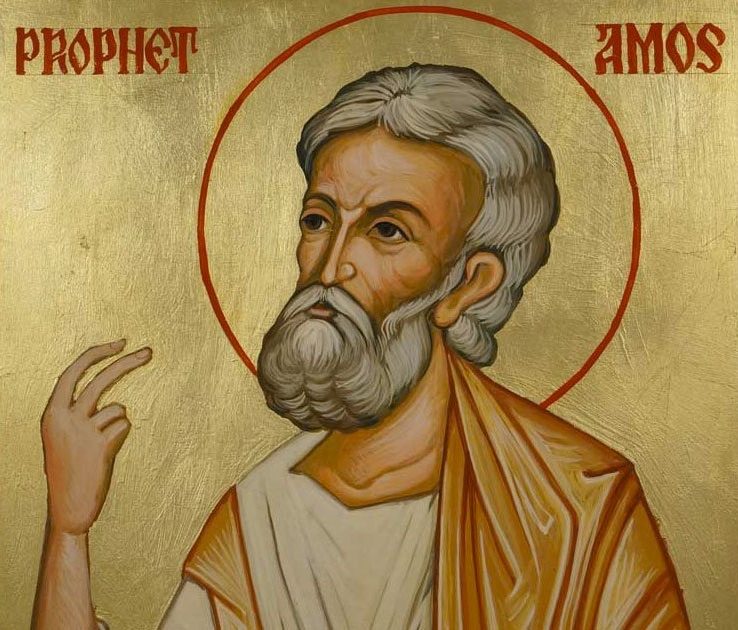
1 The words of Amos, who was among the shepherds of Tekoa, which he saw concerning Israel in the days of Uzziah king of Judah and in the days of Jeroboam the son of Joash, king of Israel, two years before the earthquake.– Amos 1:1 ESV

Amos describes himself as a shepherd from Tekoa, a city located 10 miles south of Jerusalem in the southern kingdom of Judah. And later on in his book, he elaborates on his background by adding a few additional facts: “I was no prophet, nor a prophet’s son, but I was a herdsman and a dresser of sycamore figs. But the Lord took me from following the flock, and the Lord said to me, ‘Go, prophesy to my people Israel.’” (Amos 7:14-15 ESV). Amos’ somewhat adamant-sounding statement, “I was no prophet” may seem strange, considering the fact that he admits that he was called by God to prophesy to the northern kingdom of Israel.

But Amos was only trying to make the point that he had not always been a prophet. For most of his adult life, Amos had been a herdsman (bôqēr), a Hebrew term that was often translated as “shepherd.” Over the centuries, biblical scholars have speculated that Amos was actually far more than a lowly shepherd. In the opening verse of his book, he refers to himself as a being “among the shepherds of Tekoa.” The term he uses there is nōqēḏ, which can be translated as sheep-raiser or sheep-dealer. It is the same term used in 2 Kings to describe the king of Moab.

Now Mesha king of Moab was a sheep breeder (nōqēḏ), and he had to deliver to the king of Israel 100,000 lambs and the wool of 100,000 rams. – 2 Kings 3:4 ESV

Either Amos worked as a shepherd-for-hire, contracting himself out to the sheep breeders of Tekoa, or he was one of them. When he refers to himself as a “dresser of sycamore figs,” he seems to be describing the process of “gathering” (bālas) the fruit of the tree. This involved the scoring or cutting of the skin of the fruit so that it would ripen. So, it could be that Amos was nothing more than a seasonal day-laborer, who made his living by hiring himself out as a shepherd or field hand.

But regardless of whether Amos was a wealthy sheep breeder or a lowly sheepherder, he found himself going through a mid-life career change that was divinely ordained. Amos was called by God to leave behind the figs and flocks and begin his new life as a prophet. And whether Amos was rich or poor, highly successful or barely making ends meet, this would have been a significant change in his career trajectory.

A prophet (nāḇî’) was considered to be an “inspired man” – a divinely commissioned spokesman who operated under the influence of the Spirit. The Hebrew word actually means “to bubble forth, as from a fountain.” A prophet of God was divinely inspired to speak on behalf of God. And that is exactly what God had commissioned Amos to do.

“Go, prophesy to my people Israel…” – Amos 7:15 ESV

What is interesting is that Amos, a citizen of the southern kingdom of Judah, was being called to go as a prophet to the northern kingdom of Israel. Ever since the end of King Solomon’s reign, the nation of Israel had been divided into two kingdoms. The northern kingdom was comprised of ten of the original 12 tribes of Israel. Samaria was its capital and Jeroboam II was its king at the time Amos was called. The southern kingdom was made up of the tribes of Judah and Benjamin, and their king was Uzziah, who ruled from the throne of David in Jerusalem.

It is important to note that this division of the kingdom of Israel had come about because of Solomon’s disobedience and unfaithfulness. As the son of David, Solomon had inherited a powerful kingdom that was marked by peace and prosperity. And while Solomon had been gifted by God with great wisdom, he ended up amassing a harem of 700 wives and 300 concubines. And the author of the book of 1 Kings makes it clear that Solomon’s actions were far from acceptable to God.

King Solomon loved many foreign women, along with the daughter of Pharaoh: Moabite, Ammonite, Edomite, Sidonian, and Hittite women, from the nations concerning which the Lord had said to the people of Israel, “You shall not enter into marriage with them, neither shall they with you, for surely they will turn away your heart after their gods.” – 1 Kings 11:1-2 ESV

Solomon allowed his love of women to diminish his love for God. In order to appease his many foreign wives, he allowed them to worship their foreign gods. But eventually, he became influenced by their idolatry and began to promote the worship of false gods within the land of Israel.

…when Solomon was old his wives turned away his heart after other gods, and his heart was not wholly true to the Lord his God, as was the heart of David his father. For Solomon went after Ashtoreth the goddess of the Sidonians, and after Milcom the abomination of the Ammonites. So Solomon did what was evil in the sight of the Lord and did not wholly follow the Lord, as David his father had done. – 1 Kings 11:4-6 ESV

As a result, God determined to punish Solomon for his unfaithfulness by splitting his kingdom in half. Solomon would be allowed to finish out his reign, but his son would inherit a kingdom much diminished in power, size, and influence.

“Since this has been your practice and you have not kept my covenant and my statutes that I have commanded you, I will surely tear the kingdom from you and will give it to your servant.” – 1 Kings 11:11 ESV

By the time Amos comes along, the two kingdoms have co-existed for hundreds of years, but their relationship was strained and marked by constant conflict. From its inception, the northern kingdom of Israel had been plagued by idolatry and apostasy. Its very first king, Jeroboam I, had commissioned the creation of two golden calf idols, placing one in Dan and the other in Bethel. Then he instructed the people of Israel:

“You have gone up to Jerusalem long enough. Behold your gods, O Israel, who brought you up out of the land of Egypt.” – 1 Kings 12:28 ESV

From that point forward, the people of the northern kingdom of Israel were effectively “paganized.” They no longer kept the Law of God or made the annual pilgrimages to Jerusalem to celebrate the prescribed feasts and festivals. Instead, they made their way to their own sacred sites to worship their own man-made gods. And Amos will declare God’s dissatisfaction with them.

“Come to Bethel, and transgress;
    to Gilgal, and multiply transgression;
bring your sacrifices every morning,
    your tithes every three days;
offer a sacrifice of thanksgiving of that which is leavened,
    and proclaim freewill offerings, publish them;
    for so you love to do, O people of Israel!”
declares the Lord God. – Amos 4:4-5 ESV

And God will use Amos to call the rebellious people of Israel to repent.

For thus says the Lord to the house of Israel:

“Seek me and live;
   but do not seek Bethel,
and do not enter into Gilgal
    or cross over to Beersheba;
for Gilgal shall surely go into exile,
    and Bethel shall come to nothing.” – Amos 5:4-5 ESV

And Amos, the newly appointed prophet, will begin his career by calling his northern neighbors to give up their idolatrous ways and return to the worship of Yahweh.

Seek good, and not evil,
    that you may live;
and so the Lord, the God of hosts, will be with you,
    as you have said.
Hate evil, and love good,
    and establish justice in the gate;
it may be that the Lord, the God of hosts,
   will be gracious to the remnant of Joseph. – Amos 5:14-15 ESV

But Amos will find his new job to be much more difficult than tending sheep or dressing figs. He will quickly discover the obstinance of the people of Israel and, eventually, he will be required to deliver a sobering message to their king, Jeroboam II.

“‘Jeroboam shall die by the sword,
    and Israel must go into exile
    away from his land.’” – Amos 7:11 ESV

Just imagine the change that took place in Amos’ life as a result of God’s call. His world was turned upside down. He went from herding sheep to haranguing kings. Rather than scoring figs so that they might ripen, he was now excoriating the faithless so they might repent. Amos would quickly learn that being a prophet was a far-from-glamorous job that required great commitment and total reliance upon God. Despite the divine origin of his message, he would find his audience unreceptive and his presence unwelcome. He spoke on behalf of God but was treated as a pariah by the people of God. They didn’t want what he was selling, and they will repeatedly reject the God he was representing.

English Standard Version (ESV) The Holy Bible, English Standard Version. ESV® Permanent Text Edition® (2016). Copyright © 2001 by Crossway Bibles, a publishing ministry of Good News Publishers.

New Living Translation (NLT) Holy Bible, New Living Translation, copyright © 1996, 2004, 2015 by Tyndale House Foundation. Used by permission of Tyndale House Publishers Inc., Carol Stream, Illinois 60188. All rights reserved.

The Message (MSG)Copyright © 1993, 1994, 1995, 1996, 2000, 2001, 2002 by Eugene H. Peterson

Things That Were Not Right

1 In the twelfth year of Ahaz king of Judah, Hoshea the son of Elah began to reign in Samaria over Israel, and he reigned nine years. 2 And he did what was evil in the sight of the Lord, yet not as the kings of Israel who were before him. 3 Against him came up Shalmaneser king of Assyria. And Hoshea became his vassal and paid him tribute. 4 But the king of Assyria found treachery in Hoshea, for he had sent messengers to So, king of Egypt, and offered no tribute to the king of Assyria, as he had done year by year. Therefore the king of Assyria shut him up and bound him in prison. 5 Then the king of Assyria invaded all the land and came to Samaria, and for three years he besieged it.

6 In the ninth year of Hoshea, the king of Assyria captured Samaria, and he carried the Israelites away to Assyria and placed them in Halah, and on the Habor, the river of Gozan, and in the cities of the Medes.

7 And this occurred because the people of Israel had sinned against the Lord their God, who had brought them up out of the land of Egypt from under the hand of Pharaoh king of Egypt, and had feared other gods 8 and walked in the customs of the nations whom the Lord drove out before the people of Israel, and in the customs that the kings of Israel had practiced. 9 And the people of Israel did secretly against the Lord their God things that were not right. They built for themselves high places in all their towns, from watchtower to fortified city. 10 They set up for themselves pillars and Asherim on every high hill and under every green tree, 11 and there they made offerings on all the high places, as the nations did whom the Lord carried away before them. And they did wicked things, provoking the Lord to anger, 12 and they served idols, of which the Lord had said to them, “You shall not do this.” 13 Yet the Lord warned Israel and Judah by every prophet and every seer, saying, “Turn from your evil ways and keep my commandments and my statutes, in accordance with all the Law that I commanded your fathers, and that I sent to you by my servants the prophets.”

14 But they would not listen, but were stubborn, as their fathers had been, who did not believe in the Lord their God. 15 They despised his statutes and his covenant that he made with their fathers and the warnings that he gave them. They went after false idols and became false, and they followed the nations that were around them, concerning whom the Lord had commanded them that they should not do like them. 16 And they abandoned all the commandments of the Lord their God, and made for themselves metal images of two calves; and they made an Asherah and worshiped all the host of heaven and served Baal. 17 And they burned their sons and their daughters as offerings and used divination and omens and sold themselves to do evil in the sight of the Lord, provoking him to anger. 18 Therefore the Lord was very angry with Israel and removed them out of his sight. None was left but the tribe of Judah only. – 2 Kings 17:1-18 ESV

Chapter 17 marks the beginning of the end of the northern kingdom of Israel. It had been two centuries since God had divided Solomon’s domain in half and placed the ten northern tribes under the leadership of Jeroboam. Now, some 200 years later, God was about to bring judgment upon His disobedient children. And it all takes place during the reign of Hoshea, who will have the not-so-pleasant privilege of serving as the last king of Israel. Like many of his predecessors, Hoshea had come to the throne by means of intrigue and insurrection. Under King Pekah’s leadership, Israel had suffered great losses in terms of both land and lives. King Tiglath-Pileser had conducted a relentless campaign of terror, eventually capturing “the towns of Ijon, Abel-beth-maacah, Janoah, Kedesh, and Hazor. He also conquered the regions of Gilead, Galilee, and all of Naphtali, and he took the people to Assyria as captives” (2 Kings 15:29 ESV). 

These actions left the nation in a state of disarray and weakened Pekah’s hold on the throne of Israel. Hoshea took full advantage of the volatile conditions and launched a coup that results in Pekah’s assassination and his own ascension to the throne of Israel. But he had chosen a poor time to become king. The Assyrians had completely dominated and demoralized the Israelite army, leaving Hoshea with no choice but to become a vassal to King Tiglath-Pileser. He was nothing more than a puppet king, answering to the more powerful king of Assyria. But when Tiglath-Pileser was forced to return to Mesopotamia to deal with problems in his own land, Hoshea rebelled and declared Israel to be free from Assyrian rule. He stopped all tribute payments to Assyria and, in an effort to prevent further invasions, he made an alliance with the Egyptians. Things appeared to be going in his favor.

Tiglath-Pileser eventually died and was replaced by his son, Shalmaneser. For two years, the new king of Assyria remained preoccupied with problems on the home front. But in 725 BC, he once again set his sights on the land of Philistia. One of the first things Shalmaneser did was order the arrest and imprisonment of the recalcitrant king of Israel. Hoshea was removed from the throne and placed in a prison cell, where he would wait out the fall of his kingdom. For three years, the Assyrians laid siege to the capital city of Samaria, and in 722 BC it fell.

…in the ninth year of King Hoshea’s reign, Samaria fell, and the people of Israel were exiled to Assyria. They were settled in colonies in Halah, along the banks of the Habor River in Gozan, and in the cities of the Medes. – 2 Kings 17:6 NLT

But even worse than the fall of the capital was the capture and deportation of the people. They were forcibly removed from the land and taken as prisoners to Assyria. They were herded like animals and marched out of Israel, never to step foot in the land of promise again. And the author makes it painfully clear why they were suffering this horrific fate.

This disaster came upon the people of Israel because they worshiped other gods. They sinned against the Lord their God, who had brought them safely out of Egypt and had rescued them from the power of Pharaoh, the king of Egypt. – 2 Kings 17:7 NLT

And none of this should have come as a surprise. God had warned them repeatedly that they would face serious consequences if they chose to rebel against Him. Long before they had entered the land of Canaan, God had given them a detailed description of what would happen if they refused to remain faithful to their covenant commitment to Him. Moses pulled no punches when he outlined for them the devastating consequences for their rebellion.

“The Lord will exile you and your king to a nation unknown to you and your ancestors. There in exile you will worship gods of wood and stone! You will become an object of horror, ridicule, and mockery among all the nations to which the Lord sends you.” – Deuteronomy 28:36-37 NLT

“You will have sons and daughters, but you will lose them, for they will be led away into captivity.” – Deuteronomy 28:41 NLT

“Just as the Lord has found great pleasure in causing you to prosper and multiply, the Lord will find pleasure in destroying you. You will be torn from the land you are about to enter and occupy.” – Deuteronomy 28:63 NLT

And now, centuries later, the words of Moses had been proven true. God had done what He had said He would do. And the author of 2 Kings puts all the blame on the people of Israel.

They had followed the practices of the pagan nations… – vs 8

The people of Israel had also secretly done many things that were not pleasing to the Lord their God. – vs 9

They built pagan shrines for themselves… – vs 9

They set up sacred pillars and Asherah poles… – vs 10

They offered sacrifices on all the hilltops, just like the nations the Lord had driven from the land ahead of them… – vs 11

Yes, they worshiped idols, despite the Lord’s specific and repeated warnings. – vs 12

And they had done all of this despite the repeated warnings of God’s prophets.

Again and again the Lord had sent his prophets and seers to warn both Israel and Judah: “Turn from all your evil ways. Obey my commands and decrees—the entire law that I commanded your ancestors to obey, and that I gave you through my servants the prophets.” – 2 Kings 17:13 NLT

But they had refused to listen. They rejected the words of the prophets and refused to believe that God would follow through on His warnings. In fact, the author states that “they despised all his warnings” (2 Kings 17:15 NLT). And it had all begun as soon as God had placed the ten northern tribes in the hands of Jeroboam. In response to this tremendous responsibility given to him by God, Jeroboam had ordered the creation of two idols of gold made in the form of a calf. These false gods became the first of many that the people of Israel would worship in place of Yahweh.

They set up an Asherah pole and worshiped Baal and all the forces of heaven. They even sacrificed their own sons and daughters in the fire. They consulted fortune-tellers and practiced sorcery and sold themselves to evil, arousing the Lord’s anger. – 2 Kings 17:16-17 NLT

King after king, generation after generation, the people of Israel would repeat the sins of their fathers. And the prophets of God would repeat the warnings of Moses, calling the people to repent and return to their covenant commitment.

But the Israelites would not listen. They were as stubborn as their ancestors who had refused to believe in the Lord their God. – 2 Kings 17:14 NLT

So, God “swept them away from his presence” (2 Kings 17:18 NLT). In a sense, the ten northern tribes ceased to exist. Yes, even after the exile, there would be many who remained in the land, but they would never have another king to rule over them. They would live under the constant threat of enemy attack. The land of promise would become a place of hopelessness and heartache. The residual impact of the Assyrian invasion would be long-term and devastatingly difficult, just as God had warned.

Its armies will devour your livestock and crops, and you will be destroyed. They will leave you no grain, new wine, olive oil, calves, or lambs, and you will starve to death. – Deuteronomy 28:51 NLT

The people of God had turned their backs on Him. Despite His many blessings and the constant reminders of His covenant faithfulness, they had made a conscious decision to replace Him. He had warned them, but they had refused to listen. And now they were facing the consequences.

English Standard Version (ESV) The Holy Bible, English Standard Version. ESV® Permanent Text Edition® (2016). Copyright © 2001 by Crossway Bibles, a publishing ministry of Good News Publishers.

New Living Translation (NLT) Holy Bible, New Living Translation, copyright © 1996, 2004, 2015 by Tyndale House Foundation. Used by permission of Tyndale House Publishers Inc., Carol Stream, Illinois 60188. All rights reserved.

The Message (MSG)Copyright © 1993, 1994, 1995, 1996, 2000, 2001, 2002 by Eugene H. Peterson


So, He Saved Them

23 In the fifteenth year of Amaziah the son of Joash, king of Judah, Jeroboam the son of Joash, king of Israel, began to reign in Samaria, and he reigned forty-one years. 24 And he did what was evil in the sight of the Lord. He did not depart from all the sins of Jeroboam the son of Nebat, which he made Israel to sin. 25 He restored the border of Israel from Lebo-hamath as far as the Sea of the Arabah, according to the word of the Lord, the God of Israel, which he spoke by his servant Jonah the son of Amittai, the prophet, who was from Gath-hepher. 26 For the Lord saw that the affliction of Israel was very bitter, for there was none left, bond or free, and there was none to help Israel. 27 But the Lord had not said that he would blot out the name of Israel from under heaven, so he saved them by the hand of Jeroboam the son of Joash.

28 Now the rest of the acts of Jeroboam and all that he did, and his might, how he fought, and how he restored Damascus and Hamath to Judah in Israel, are they not written in the Book of the Chronicles of the Kings of Israel? 29 And Jeroboam slept with his fathers, the kings of Israel, and Zechariah his son reigned in his place. – 2 Kings 14:23-29 ESV

Sometime during the reign of King Jehoash of Judah, the other King Jehoash of Israel made his son, Jeroboam II, his co-regent. He was named after the very first king who ruled over the northern kingdom after God had divided the nation of Israel in half. This division of Solomon’s kingdom was done as a punishment for his idolatry and apostasy. In the latter years of his reign, Solomon had begun to worship the false gods of his many foreign wives.

So Solomon did what was evil in the sight of the Lord and did not wholly follow the Lord, as David his father had done. Then Solomon built a high place for Chemosh the abomination of Moab, and for Molech the abomination of the Ammonites, on the mountain east of Jerusalem. And so he did for all his foreign wives, who made offerings and sacrificed to their gods. – 1 Kings 11:6-8 ESV

As punishment for Solomon’s unfaithfulness, God raised up Jeroboam and placed him over the ten northern tribes of Israel. But Jeroboam proved to be just as unfaithful as Solomon. One of his first official acts as king was to establish his own religion, complete with golden calf idols erected in the cities of Dan and Bethel. He even created his own priesthood and sacrificial system so that the ten northern tribes would have no reason to go to Jerusalem to worship at the temple of Yahweh.

And it reveals a lot about the character of King Jehoash of Israel that he chose to name his son after this man. But the author seems to assure his readers that this decision was fitting because Jeroboam II lived up to the reputation of his infamous predecessor.

And he did what was evil in the sight of the Lord. He did not depart from all the sins of Jeroboam the son of Nebat, which he made Israel to sin. – 2 Kings 14:24 ESV

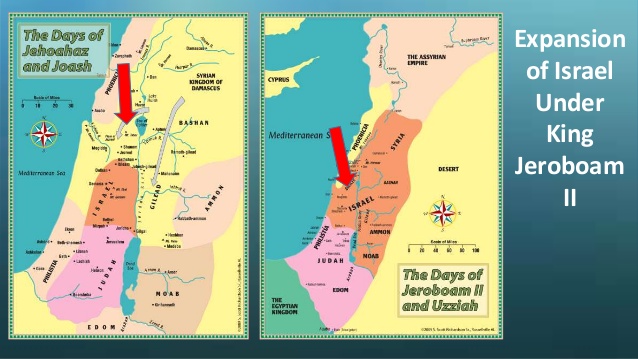
At his father’s death, Jeroboam II transitioned from his position as co-regent to that of king over all the northern tribes, a title he would hold for 41 years. He would become the longest-reigning king in the history of Israel, outlasting the monarchy of King Jehoash of Judah and that of his son, Amaziah. But other than the note describing the sinful disposition of Jeroboam’s reign, the author provides few other details about his accomplishments. There is a brief mention of his expansion of the territorial boundaries of Israel but it would appear that this was the work of God and not Jeroboam.

Verse 25 mentions the name of Jonah. He was one of three prophets, including Hosea and Amos, who ministered to the ten northern tribes of Israel. This is the same Jonah who would later receive a divine commission from God to call the pagan people of Ninevah to repentance (Jonah 1:1-2). But long before Jonah was sent to the Assyrians, his responsibility was to act as God’s spokesman to the kings and the people of Israel. It would appear from the text that Jonah gave King Jeroboam a word from Yahweh, commanding him to expand the borders of Israel, and the king obeyed.

He restored the border of Israel from Lebo-hamath as far as the Sea of the Arabah, according to the word of the Lord, the God of Israel, which he spoke by his servant Jonah the son of Amittai, the prophet, who was from Gath-hepher. – 2 Kings 14:25 ESV

By faithfully fulfilling this divine mandate, Jeroboam II was able to restore the borders of Israel close to where they had been during the reign of King Solomon. While Jeroboam was anything but a godly king, he did prove to be an accomplished leader who helped reestablish Israel’s power and prominence. In fact, both the northern and southern kingdoms would experience unprecedented prosperity during this period of time. This fact seems difficult to reconcile when you consider that both kingdoms were being ruled over by godless kings who promoted idolatry and apostasy. Yet, the author reveals that God was at work, behind the scenes, protecting and preserving His people.

…the Lord had not said that he would blot out the name of Israel from under heaven, so he saved them by the hand of Jeroboam the son of Joash. – 2 Kings 14:27 ESV

God had made a covenant commitment to preserve His people. Despite their repeated demonstrations of disobedience and unfaithfulness, He had never allowed them to suffer the full and well-deserved consequences of their sin. He had stepped in and rescued them time and time again. Long before they ever entered the land of Canaan or established themselves as a nation, God had clearly communicated His expectations to them.

If you fully obey the Lord your God and carefully keep all his commands that I am giving you today, the Lord your God will set you high above all the nations of the world. You will experience all these blessings if you obey the Lord your God… – Deuteronomy 28:1-2 NLT

Then God outlined all the blessings they could expect if they lived in obedience to His will. But He had also warned them that disobedience would bring curses.

But if you refuse to listen to the Lord your God and do not obey all the commands and decrees I am giving you today, all these curses will come and overwhelm you… – Deuteronomy 28:15 NLT

The list of potential curses that followed was intense and terrifying and ended with the warning: “The Lord will exile you and your king to a nation unknown to you and your ancestors. There in exile you will worship gods of wood and stone! You will become an object of horror, ridicule, and mockery among all the nations to which the Lord sends you[ (Deuteronomy 28:36-37 NLT).

There would be dire and devastating consequences should they choose to disobey. But as the author of 2 Kings reveals, “the Lord had not said that he would blot out the name of Israel from under heaven” (2 Kings 14:27 ESV). While God had warned of destruction and even eventual deportation, He had never spoken of Israel’s obliteration. He was committed to keeping the promise He had made to Abraham, Isaac, and Jacob. And it was Jacob whom God had renamed Israel.

“Your name is Jacob, but you will not be called Jacob any longer. From now on your name will be Israel.” So God renamed him Israel.

Then God said, “I am El-Shaddai—‘God Almighty.’ Be fruitful and multiply. You will become a great nation, even many nations. Kings will be among your descendants! And I will give you the land I once gave to Abraham and Isaac. Yes, I will give it to you and your descendants after you.” – Genesis 35:10-12 NLT

This scene took place in Bethel, and it just so happens that Bethel became one of the towns in which the original Jeroboam set up a golden calf idol. The very place where God had promised to make of Jacob (Israel) a great nation, Jeroboam I had erected an idol that would lead the people away from Yahweh. He had promoted disobedience and, in doing so, had brought upon the people of Israel the curses of God.  And yet, the author of 2 Kings reveals that God chose to show His rebellious people compassion.

…the Lord saw the bitter suffering of everyone in Israel, and that there was no one in Israel, slave or free, to help them. – 2 Kings 14:26 NLT

Yes, they were rebellious. The people of Israel had forsaken Him time and time again. But God looked on His chosen people and saw them as helpless and hopeless. They had no one to save them. Their kings had proven themselves unwilling and incapable of providing godly leadership. Jeroboam II was no different than his namesake. And yet, God chose to use this godless king to protect His chosen people.

…because the Lord had not said he would blot out the name of Israel completely, he used Jeroboam II, the son of Jehoash, to save them. – 2 Kings 14:27 NLT

God was preserving His people. Not because they deserved it, but because He had a plan that required their continued existence. Hundreds of years earlier, God had made a promise to the patriarch, Abraham:

“I will certainly bless you. I will multiply your descendants beyond number, like the stars in the sky and the sand on the seashore. Your descendants will conquer the cities of their enemies. And through your descendants all the nations of the earth will be blessed—all because you have obeyed me.” – Genesis 22:17-18 NLT

God had made a commitment to bless the nations of the earth through Abraham’s descendants. Yet, as we have seen, the seed of Abraham had proven to be anything but a blessing. They had brought shame to the name of God through their repeated demonstrations of unfaithfulness. But God was choosing to preserve them because He had a plan in place that would bring about the blessing of the nations. And He would do it through the “seed” of Abraham. And the apostle Paul tells us exactly how God fulfilled that promise.

Now the promises were made to Abraham and to his offspring. It does not say, “And to offsprings,” referring to many, but referring to one, “And to your offspring,” who is Christ. – Galatians 3:16 NLT

God preserved the Israelites so that Jesus, who was born a descendant of Abraham, might become the ultimate fulfillment of God’s promise to bless the nations. And Paul goes on to describe how God’s commitment to protect and preserve the nation of Israel has impacted all the nations of the earth.

There is neither Jew nor Greek, there is neither slave nor free, there is no male and female, for you are all one in Christ Jesus. And if you are Christ’s, then you are Abraham’s offspring, heirs according to promise. – Galatians 3:28-29 NLT

All along the way, God had been watching out for His chosen people because He had set them apart for a reason. They were to be the conduit through which He brought the blessing of salvation to a lost and dying world. And that is why, even after He eventually sent them into exile in Babylon, God restored them to the land of promise.

“I myself will tend my sheep and give them a place to lie down in peace, says the Sovereign Lord. I will search for my lost ones who strayed away, and I will bring them safely home again. I will bandage the injured and strengthen the weak. But I will destroy those who are fat and powerful. I will feed them, yes—feed them justice!” – Ezekiel 34:15-16 NLT

God was faithful to keep His promise and preserve His people so that, one day, He might send His Son as the Messiah of Israel and the Savior of the world.

English Standard Version (ESV) The Holy Bible, English Standard Version. ESV® Permanent Text Edition® (2016). Copyright © 2001 by Crossway Bibles, a publishing ministry of Good News Publishers.

New Living Translation (NLT) Holy Bible, New Living Translation, copyright © 1996, 2004, 2015 by Tyndale House Foundation. Used by permission of Tyndale House Publishers Inc., Carol Stream, Illinois 60188. All rights reserved.

The Message (MSG)Copyright © 1993, 1994, 1995, 1996, 2000, 2001, 2002 by Eugene H. Peterson
 

The Word of the Lord

1 Now Elijah the Tishbite, of Tishbe in Gilead, said to Ahab, “As the Lord, the God of Israel, lives, before whom I stand, there shall be neither dew nor rain these years, except by my word.” 2 And the word of the Lord came to him: 3 “Depart from here and turn eastward and hide yourself by the brook Cherith, which is east of the Jordan. 4 You shall drink from the brook, and I have commanded the ravens to feed you there.” 5 So he went and did according to the word of the Lord. He went and lived by the brook Cherith that is east of the Jordan. 6 And the ravens brought him bread and meat in the morning, and bread and meat in the evening, and he drank from the brook. 7 And after a while the brook dried up, because there was no rain in the land.

8 Then the word of the Lord came to him, 9 “Arise, go to Zarephath, which belongs to Sidon, and dwell there. Behold, I have commanded a widow there to feed you.” 10 So he arose and went to Zarephath. And when he came to the gate of the city, behold, a widow was there gathering sticks. And he called to her and said, “Bring me a little water in a vessel, that I may drink.” 11 And as she was going to bring it, he called to her and said, “Bring me a morsel of bread in your hand.” 12 And she said, “As the Lord your God lives, I have nothing baked, only a handful of flour in a jar and a little oil in a jug. And now I am gathering a couple of sticks that I may go in and prepare it for myself and my son, that we may eat it and die.” 13 And Elijah said to her, “Do not fear; go and do as you have said. But first make me a little cake of it and bring it to me, and afterward make something for yourself and your son. 14 For thus says the Lord, the God of Israel, ‘The jar of flour shall not be spent, and the jug of oil shall not be empty, until the day that the Lord sends rain upon the earth.’” 15 And she went and did as Elijah said. And she and he and her household ate for many days. 16 The jar of flour was not spent, neither did the jug of oil become empty, according to the word of the Lord that he spoke by Elijah. – 1 Kings 17:1-16 ESV

Almost as if out of nowhere, a new character appears on the scene. His sudden and unexpected arrival seems intended to accentuate the divine nature of his mission. We’re given no background story and little in the way of biographical information, other than his name and the identity of his hometown.

His introduction into the narrative is timed to coincide with the rise to power of King Ahab and his Sidonian queen, Jezebel. With this new power couple ruling over the northern kingdom of Israel, the spiritual state of the ten northern tribes has reached an all-time low. The author ended chapter 16 with an unflattering description of their influence over the nation.

…he took for his wife Jezebel the daughter of Ethbaal king of the Sidonians, and went and served Baal and worshiped him. He erected an altar for Baal in the house of Baal, which he built in Samaria. And Ahab made an Asherah. Ahab did more to provoke the Lord, the God of Israel, to anger than all the kings of Israel who were before him. – 1 Kings 16:31-33 ESV

To say that Ahab had managed to anger God more than any of his predecessors is saying a lot. He was following in the footsteps of some world-class. all-star-quality apostates. But when it came to wickedness and unfaithfulness, Ahab set the new gold standard. He became the proverbial poster boy for all that is wicked and ungodly, while his wife managed to earn herself a permanent spot in the hall of infamy.

In the middle of their sin-fueled and self-absorbed reign, God decides to deliver a message to them, utilizing an obscure and unknown man named Elijah. This will not be the first time God has sent a prophet to deliver a message to a wayward and rebellious king. When Jeroboam had made the fateful decision to replace Yahweh with his own false gods, an unnamed prophet had appeared on the scene with a dire message for the king, and he demonstrated God’s anger by destroying one of the altars Jeroboam had dedicated to his false god. Later on, Jeroboam sent his wife to consult with another prophet of God, in hopes of getting a prognosis regarding his young son’s illness. But what he got was bad news. He was told that his son would die and that every one of his male heirs would die before they could inherit the throne. In other words, any hopes of establishing a dynasty would be destroyed.

As the seventh king to reign over the northern kingdom of Israel, Ahab would not be the first to receive a message from God. But, in his case, the prophet would play a more pronounced and prolonged role in his life. The sins of Ahab and his wife were so egregious that God made his prophet a permanent fixture in their kingdom.

Elijah’s very first encounter with the king and queen was far from favorable. He stood before this powerful couple and boldly proclaimed, “As the Lord, the God of Israel, lives, before whom I stand, there shall be neither dew nor rain these years, except by my word” (1 Kings 17:1 ESV). That took guts and a fair amount of faith. He was claiming to have the God-given authority to withhold rain from the kingdom of Israel. Any way you look at it, this had to come across as a less-than-veiled threat to Ahab and Jezebel. But before they had time to cut this arrogant upstart down to size, God gave him instructions to get out of town.

“Depart from here and turn eastward and hide yourself by the brook Cherith, which is east of the Jordan.” – 1 Kings 17:3 ES

Elijah had done his job, but now it was time for God to prepare him for the next phase of his assignment. Before sending his prophet back into the mouth of the lion’s den, God planned to equip him for what was to come. He was determined to make Elijah a faithful and obedient messenger, strong enough to handle all the vitriol and violence that was about to come his way. Standing up to Ahab and Jezebel was not going to be easy, so God graciously eased Elijah into his new role with a hands-on experience that would teach him to trust and obey.

While in God’s preparatory school for prophets, Elijah was miraculously fed and cared for. He received a twice-daily ration of bread and meat, delivered to his cave by ravens. And outside the cave was a ready source of clean, pure water. But in time, “the brook dried up, because there was no rain in the land” (1 Kings 17:7 ESV). In other words, Elijah’s prediction of drought had come true and he was suffering just like everyone else. And without rain, that meant there was no more bread or meat for the ravens to deliver. Elijah’s little oasis in the wilderness had become a death trap. So, God gave him new instructions.

“Go and live in the village of Zarephath, near the city of Sidon. I have instructed a widow there to feed you.” – 1 Kings 17:8 NLT

This would have been a long and arduous journey under normal conditions, but the presence of drought made it even more so. Interestingly, God sent Elijah to a city in the region of Sidon, the very kingdom over which Jezebel’s father was king. Elijah was being sent to the very place Ahab had acquired a queen and her false god, Baal. Zarephath lay in between Tyre and Sidon, two of the most prominent Phoenician cities. But as the story makes clear, the drought had made its way all the way to the coast of the Mediterranean Sea.

God had provided Elijah with few details regarding what to do when he arrived in Zarephath. The prophet had no food and had received no word from God regarding when and how it would come – if it did at all. So, when Elijah encounters a widow gathering sticks, he decides to throw himself on her mercy. He asks for a drink of water and a morsel of bread. But then he finds out that this woman’s state was worse than his own.

“I swear by the Lord your God that I don’t have a single piece of bread in the house. And I have only a handful of flour left in the jar and a little cooking oil in the bottom of the jug. I was just gathering a few sticks to cook this last meal, and then my son and I will die.” – 1 Kings 17:12 NLT

The drought had left this woman with no food with which to feed herself or her young son. The drought had taken its toll. And it shouldn’t be overlooked that Baal, the god of the Phonecians, was considered a fertility god. He was the provider of bountiful blessings, whether in the form of crops or children. And yet, this woman was living in a drought and watching her young son starve to death. There was nothing bountiful taking place in Zarephath. Baal was nowhere to be found.

Then, God gave Elijah a message to deliver to the woman.

“Don’t be afraid! Go ahead and do just what you’ve said, but make a little bread for me first. Then use what’s left to prepare a meal for yourself and your son. For this is what the Lord, the God of Israel, says: There will always be flour and olive oil left in your containers until the time when the Lord sends rain and the crops grow again!” – 1 Kings 17:13-14 NLT

While the god of the Phoenicians had failed to provide, the God of Israel would meet her needs and preserve the lives of both her and her son. Even in a time of drought, God would miraculously provide flour and oil in abundance – until He decided to open up the skies and end the drought.

And the woman faithfully obeyed the word of the prophet and “There was always enough flour and olive oil left in the containers, just as the Lord had promised through Elijah” (1 Kings 17:16 NLT). God graciously provided for this Sidonian widow and her son, and He continued to meet the needs of His prophet. But more than anything, God was teaching Elijah that He could be trusted. He was greater than the god of the Phoenicians. He was more powerful than the god of Ahab and Jezebel. The brook may have dried up, but the resources of God remained unending and plentiful. The ravens may have stopped showing up, but the miracle-working power of God remained undiminished. There was no circumstance too great for God.

English Standard Version (ESV) The Holy Bible, English Standard Version. ESV® Permanent Text Edition® (2016). Copyright © 2001 by Crossway Bibles, a publishing ministry of Good News Publishers.

New Living Translation (NLT) Holy Bible, New Living Translation, copyright © 1996, 2004, 2015 by Tyndale House Foundation. Used by permission of Tyndale House Publishers Inc., Carol Stream, Illinois 60188. All rights reserved.

The Message (MSG)Copyright © 1993, 1994, 1995, 1996, 2000, 2001, 2002 by Eugene H. Peterson
The Downward Spiritual Spiral

29 In the thirty-eighth year of Asa king of Judah, Ahab the son of Omri began to reign over Israel, and Ahab the son of Omri reigned over Israel in Samaria twenty-two years. 30 And Ahab the son of Omri did evil in the sight of the Lord, more than all who were before him. 31 And as if it had been a light thing for him to walk in the sins of Jeroboam the son of Nebat, he took for his wife Jezebel the daughter of Ethbaal king of the Sidonians, and went and served Baal and worshiped him. 32 He erected an altar for Baal in the house of Baal, which he built in Samaria. 33 And Ahab made an Asherah. Ahab did more to provoke the Lord, the God of Israel, to anger than all the kings of Israel who were before him. 34 In his days Hiel of Bethel built Jericho. He laid its foundation at the cost of Abiram his firstborn, and set up its gates at the cost of his youngest son Segub, according to the word of the Lord, which he spoke by Joshua the son of Nun. – 1 Kings 16:29-34 ESV

Things have not been going well in the northern kingdom of Judah. The downward spiritual spiral that began with the reign of Jeroboam has continued unabated. His decision to re-image the God of Israel as a golden calf had been in direct violation of the command given to Moses by God hundreds of years earlier.

“I am the Lord your God, who rescued you from the land of Egypt, the place of your slavery. You must not have any other god but me. You must not make for yourself an idol of any kind or an image of anything in the heavens or on the earth or in the sea. You must not bow down to them or worship them, for I, the Lord your God, am a jealous God who will not tolerate your affection for any other gods. I lay the sins of the parents upon their children; the entire family is affected—even children in the third and fourth generations of those who reject me.” – Exodus 20:1-5 NLT

And yet, in spite of God’s clear instructions, Jeroboam made his own gods and then attempted to claim that they, not Yahweh, had delivered the nation from their captivity in Egypt.

So on the advice of his counselors, the king made two gold calves. He said to the people, “It is too much trouble for you to worship in Jerusalem. Look, Israel, these are the gods who brought you out of Egypt!”

He placed these calf idols in Bethel and in Dan—at either end of his kingdom. But this became a great sin, for the people worshiped the idols, traveling as far north as Dan to worship the one there. – 1 Kings 12:28-30 NLT

Jeroboam’s decision brought a curse from God upon his dynasty. As a result, his son, Abijah, died in infancy. Another son, Nadab, inherited the throne upon Jeroboam’s death, but in the second year of his reign, he was assassinated by a man named Baasha, who declared himself king. Baasha fulfilled the curse God had placed over the house of Jeroboam by having every one of his descendants put to death. But because Baasha proved to be a wicked king who led the people into further idolatry, God placed a curse on his house as well. Baasha was assassinated by Zimri, the commander of his chariots, who then proceeded to wipe out the entire royal household. But Zimri’s reign would last only seven days. When faced with a coup led by Omri, his former superior officer, Zimri chose to commit suicide. Omri then declared himself to be the legitimate king of Israel. But his reign would prove to be no better than that of his predecessor. In fact, the author flatly states, “Omri did what was evil in the sight of the Lord, and did more evil than all who were before him. For he walked in all the way of Jeroboam the son of Nebat, and in the sins that he made Israel to sin, provoking the Lord, the God of Israel, to anger by their idols” (1 Kings 16:25-26 ESV).

There has been no break in Israel’s downward trajectory. Like water in a sink when the plug is pulled, the spiritual state of the nation continues to spiral down the drain. And just when it appears that Israel has reached an all-time low, another character is introduced who manages to establish himself as the official record holder for apostasy and wickedness.

Omri was superseded by his son, Ahab, but in more ways than one. Not only did this young man ascend to his father’s throne, but he managed to eclipse his father’s record of sin and rebellion. The author introduces Ahab’s reign with the stinging indictment: “Ahab the son of Omri did evil in the sight of the Lord, more than all who were before him” (1 Kings 16:30 ESV). And then he follows up that far-from-flattering assessment with tangible proof.

He compares the wickedness of Ahab with that of Jeroboam, the first king of the northern tribes of Israel. Jeroboam had been guilty of making his own false gods and giving them credit for something Yahweh had done. In a sense, Jeroboam had tried to create his own version of the one true God. But Ahab had decided to abandon Yahweh altogether, replacing Him with Baal, the god of the Canaanites. But his choice of this particular god was influenced by his wife, Jezebel. His marriage to Jezebel had been orchestrated by his father as part of a treaty he had made with Ethbaal, the king of Tyre and Sidon. In order to form an alliance with this pagan nation, Omri had arranged a marriage between his son and Ethbaal’s daughter. This unholy alliance was in direct violation of God’s command.

When the LORD your God hands these nations over to you and you conquer them, you must completely destroy them. Make no treaties with them and show them no mercy. You must not intermarry with them. Do not let your daughters and sons marry their sons and daughters, for they will lead your children away from me to worship other gods. – Deuteronomy 7:2-3 NLT

While the marriage had been Omri’s idea, the author refuses to absolve Ahab of any guilt for his role in the affair. He had been fully compliant and complicit.

…he took for his wife Jezebel the daughter of Ethbaal king of the Sidonians, and went and served Baal and worshiped him. – 1 Kings 16:31 ESV

And just as God had warned, Ahab’s pagan wife ended up having a powerful and negative influence over him. This marriage that had been arranged for purely political purposes was going to have dramatic spiritual implications. What Omri had done to secure the state of his kingdom would end up sealing its fate. Jezebel would end up doing more to degrade the spiritual health of the nation than any king, including her own husband.

This pagan princess introduced her new husband to the gods of her people. The Phoenicians and Canaanites considered Baal to be the most powerful of all the gods. According to their mythology, he was the offspring of El, the chief god, and Asherah, the moon goddess. Baal was sometimes referred to as the sun god or the god of thunder. He was considered a fertility god, who rewarded those who worshiped him with fruitfulness, in the form of children and abundant crops.

Ahab seems to have willingly and eagerly adopted the false gods of Jezebel, ordering the construction of a temple dedicated to Baal and the erection of an Asherah pole for the worship of Baals’s mother, the moon goddess. These actions stand in stark contrast to those of Solomon, who had built a temple for Yahweh in the capital city of Jerusalem. Now, here was Ahab, the king of the northern tribes of Judah, building a temple in the capital city of Samaria in which to worship the false god of the Canaanites. The people of Israel had sunk to an all-time low. And it was going to get even worse.

The author provides a foreshadowing of things to come when he states that Ahab “did more to provoke the anger of the Lord, the God of Israel, than any of the other kings of Israel before him” (1 Kings 16:33 NLT). And then he gives a tangible expression of Ahab’s ill-fated actions. It seems that Ahab had given orders to rebuild the destroyed city of Jericho. This task was assigned to a man named Hiel. But the endeavor would prove costly. While overseeing the construction of the city, Hiel would end up losing two of his own sons. 

This somewhat strange and seemingly out-of-place narrative is meant to illustrate Ahab’s blatant disregard will of God. His determination to rebuild the city of Jericho was in direct violation of God’s command. When the Israelites had first entered the land of Canaan, hundreds of years earlier, Jericho had been the first city they had defeated and destroyed. God had given them a supernatural victory over the city and its inhabitants. And then He commanded its destruction, placing a curse on anyone who tried to rebuild the ruins.

“Cursed before the Lord be the man who rises up and rebuilds this city, Jericho.

“At the cost of his firstborn shall he
    lay its foundation,
and at the cost of his youngest son
    shall he set up its gates.” – Joshua 6:26 ESV

Hiel, under direct orders from the king, ended up violating the command of God, and, as a result, he inadvertently found himself suffering the curse of God. The author sadly states that this poor man “laid its foundation at the cost of Abiram his firstborn, and set up its gates at the cost of his youngest son Segub, according to the word of the Lord” (1 Kings 16:34 ESV).

The marriage of Ahab and Jezebel would prove to be one of the worst things that ever happened to the people of God. This unholy alliance would end up bringing great sorrow upon the nation, leading the people into further rebellion against God. And, eventually, Jezebel would become the poster girl for wickedness and evil. Her very name would become a byword for all that stands opposed to God. In fact, her name appears in the very last book of the Bible, as a less-than-flattering description of a woman who would end up leading the church at Thyatira into immorality and the worship of false gods (Revelation 2:20).

But the devastating exploits of this power couple were just beginning. And, as we will see, their evil actions would not go unnoticed or unpunished by God.

English Standard Version (ESV) The Holy Bible, English Standard Version. ESV® Permanent Text Edition® (2016). Copyright © 2001 by Crossway Bibles, a publishing ministry of Good News Publishers.

New Living Translation (NLT) Holy Bible, New Living Translation, copyright © 1996, 2004, 2015 by Tyndale House Foundation. Used by permission of Tyndale House Publishers Inc., Carol Stream, Illinois 60188. All rights reserved.

The Message (MSG)Copyright © 1993, 1994, 1995, 1996, 2000, 2001, 2002 by Eugene H. Peterson

Another New King But the Same Old Story

15 In the twenty-seventh year of Asa king of Judah, Zimri reigned seven days in Tirzah. Now the troops were encamped against Gibbethon, which belonged to the Philistines, 16 and the troops who were encamped heard it said, “Zimri has conspired, and he has killed the king.” Therefore all Israel made Omri, the commander of the army, king over Israel that day in the camp. 17 So Omri went up from Gibbethon, and all Israel with him, and they besieged Tirzah. 18 And when Zimri saw that the city was taken, he went into the citadel of the king’s house and burned the king’s house over him with fire and died, 19 because of his sins that he committed, doing evil in the sight of the Lord, walking in the way of Jeroboam, and for his sin which he committed, making Israel to sin. 20 Now the rest of the acts of Zimri, and the conspiracy that he made, are they not written in the Book of the Chronicles of the Kings of Israel?

21 Then the people of Israel were divided into two parts. Half of the people followed Tibni the son of Ginath, to make him king, and half followed Omri. 22 But the people who followed Omri overcame the people who followed Tibni the son of Ginath. So Tibni died, and Omri became king. 23 In the thirty-first year of Asa king of Judah, Omri began to reign over Israel, and he reigned for twelve years; six years he reigned in Tirzah. 24 He bought the hill of Samaria from Shemer for two talents of silver, and he fortified the hill and called the name of the city that he built Samaria, after the name of Shemer, the owner of the hill.

25 Omri did what was evil in the sight of the Lord, and did more evil than all who were before him. 26 For he walked in all the way of Jeroboam the son of Nebat, and in the sins that he made Israel to sin, provoking the Lord, the God of Israel, to anger by their idols. 27 Now the rest of the acts of Omri that he did, and the might that he showed, are they not written in the Book of the Chronicles of the Kings of Israel? 28 And Omri slept with his fathers and was buried in Samaria, and Ahab his son reigned in his place. – 1 Kings 16:15-28 ESV

Zimri’s time in the spotlight was short-lived. This former chariot commander in Israel’s army had murdered King Elah and declared himself the new sovereign over the ten tribes of the northern kingdom. But his reign would last only seven days. Word of his seemingly successful coup attempt reached his fellow soldiers, who were encamped against the Philistines at a place called Gibbethon. Upon hearing of King Elah’s death, the troops threw their support behind Omri, who was the commander of all Israel’s armies. They rejected Zimri’s claim to be king and, instead, nominated his superior officer as the obvious choice to replace Elah. Zimri may have caused the vacancy on the throne, but Omri would be the one to fill it.

Within days of seizing the throne from Elah, and having secured his victory by liquidating every member of the king’s household, Zimri was safely ensconced in Tirzah, the former king’s capital. But one day he woke up to find that the city was being besieged, not by Philistines or some other foreign power, but by Omri and the rest of the Israelite army. Just seven days into his reign, Zimri had managed to instigate a civil war for which he was completely outmanned and unprepared for the situation. Stealing the throne had been easy, but retaining it was going to be far harder than he could have imagined.

Recognizing the futility of the situation, Zimri chose to take his own life rather than surrender. He knew that Omri would order his execution for the murder of Elah, and it’s likely that he knew Omri had his own kingly aspirations. So, Zimri locked himself in the citadel of the king’s palace and burned the entire structure to the ground. In doing so, he controlled his own fate and managed to rob Omri of a palace from which to rule. If he couldn’t sit on the throne in Tirzah, neither would Omri.

But the author makes it clear that while Zimri had taken his own life, it had still been a case of divine judgment for his sins against God.

…he, too, had done what was evil in the Lord’s sight. He followed the example of Jeroboam in all the sins he had committed and led Israel to commit. – 1 Kings 16:19 NLT

When Zimri had entered Tirzah just days earlier, any thought of suicide would have been the last thing to enter his mind. He was focused on the future and dreaming of his newfound power and prestige. After all, he was the self-made king, the supreme ruler over all of Israel. And as he sat on his throne in Tirzah, his mind would have been filled with thoughts of success and not suicide. But had he read the proverbs collected by Israel’s former king, Solomon, he would have understood that his plans were irrelevant if they stood in opposition to the will of God.

You can make many plans, but the LORD’s purpose will prevail. – Proverbs 19:21 NLT

We can make our plans, but the LORD determines our steps. – Proverbs 16:9 NLT

Zimri had plans for greatness, but he died in the smoldering rubble of the palace he had stolen through deceit and treachery. God had used this ambitious and self-consumed man to punish Elah for his wickedness, but He would not allow Zimri to benefit from his actions. His reign lasted exactly one week, then ended as quickly as it had begun.

But the sad state of affairs in Israel was far from over. While Omri had managed to seize the capital and secure the crown for himself, the nation was about to enter a time of division and disunity. Just as God had split Solomon’s kingdom in half, Omri would find himself ruling over a divided nation.

But now the people of Israel were split into two factions. Half the people tried to make Tibni son of Ginath their king, while the other half supported Omri. – 1 Kings 16:21 NLT

When Omri had received the news that Zimri had killed King Elah, he had been leading his troops against the Philistines, the dreaded enemies of Israel. But now, as the King of Israel, he found himself going to war against his own people. A civil war had broken out and Omni was forced to lead his troops in battle against the supporters of his rival, Tibni. The nation had become divided. And rather than throwing their collective allegiance behind God Almighty, they were choosing sides and putting their hopes in two extremely flawed and fallible men.

Omri eventually defeated Tibni and his forces, securing his place as the king of Israel. Half of the dozen years he ruled over Israel were spent in Tirzah, the former capital of King Elah. But Omri dreamed of establishing his own royal city from which to rule over the ten tribes of Israel. So, he found a favorable spot just west of Tirzah and purchased the land from a man named Shemer. In time, he built a fortified palace on the elevated portion of the land and named his new capital, Samaria.

While the author doesn’t seem to treat this change in the location of the capital city with much importance, his mention of it is meant to be a foreshadowing of things to come. Omri would end up establishing a dynasty that would rule over Israel for an extended period of time. And his newly established capital would become the focal point for Israel’s continuing spiritual decline and the epicenter of the nation’s eventual destruction.

The author chooses to summarize Omri’s 12-year reign in less-than-flattering terms.

Omri did what was evil in the sight of the Lord, and did more evil than all who were before him. – 1 Kings 16:25 ESV

Israel had a new king and a brand new capital, but they continued to suffer from the same old problem. Omri, like Jeroboam and Nadab before him, failed to use his divinely ordained power as king to lead the people back to God. Instead, he fostered the spirit of spiritual adultery and apostasy. Under his leadership, “The people provoked the anger of the Lord, the God of Israel, with their worthless idols” (1 Kings 16:21 NLT). 

On paper, Omri proved to be a highly accomplished and effective king. His 12 years on the throne of Israel were marked by military victories and peace negotiations with the enemies of Israel. He defeated the Moabites and brokered a treaty with Ethbaal, king of Tyre and Sidon. And this last act would prove to have long-lasting implications. As part of the treaty negotiations, Omri approved a marriage alliance between his son, Ahab, and Ethbaal’s daughter, Jezebel. And those two names will come up again.

While Omri appeared to be having success, he was actually operating outside the revealed will of God. His decisions were made without divine input and in direct violation of God’s commands. Hundreds of years earlier, Moses had warned the people of Israel about their interactions with the nations living in the land of Canaan.

When the LORD your God hands these nations over to you and you conquer them, you must completely destroy them. Make no treaties with them and show them no mercy. You must not intermarry with them. Do not let your daughters and sons marry their sons and daughters, for they will lead your children away from me to worship other gods. Then the anger of the LORD will burn against you, and he will quickly destroy you. – Deuteronomy 7:2-4 NLT

Like his predecessors, Omri was doing things according to his own plan. But as the proverbs warned, “You can make many plans, but the LORD’s purpose will prevail” (Proverbs 19:21 NLT). Omri’s ambitions to expand his kingdom at any cost would actually lead to the eventual fall of the nation. In his hopes of building Israel into a formidable force in the region, he was actually contributing to its downfall. His refusal to shepherd the people of God back to the fold of God would eventually result in their destruction at the hands of God.

English Standard Version (ESV) The Holy Bible, English Standard Version. ESV® Permanent Text Edition® (2016). Copyright © 2001 by Crossway Bibles, a publishing ministry of Good News Publishers.

New Living Translation (NLT) Holy Bible, New Living Translation, copyright © 1996, 2004, 2015 by Tyndale House Foundation. Used by permission of Tyndale House Publishers Inc., Carol Stream, Illinois 60188. All rights reserved.

The Message (MSG)Copyright © 1993, 1994, 1995, 1996, 2000, 2001, 2002 by Eugene H. Peterson

God is the Ultimate Kingmaker

8 In the twenty-sixth year of Asa king of Judah, Elah the son of Baasha began to reign over Israel in Tirzah, and he reigned two years. 9 But his servant Zimri, commander of half his chariots, conspired against him. When he was at Tirzah, drinking himself drunk in the house of Arza, who was over the household in Tirzah, 10 Zimri came in and struck him down and killed him, in the twenty-seventh year of Asa king of Judah, and reigned in his place.

11 When he began to reign, as soon as he had seated himself on his throne, he struck down all the house of Baasha. He did not leave him a single male of his relatives or his friends. 12 Thus Zimri destroyed all the house of Baasha, according to the word of the Lord, which he spoke against Baasha by Jehu the prophet, 13 for all the sins of Baasha and the sins of Elah his son, which they sinned and which they made Israel to sin, provoking the Lord God of Israel to anger with their idols. 14 Now the rest of the acts of Elah and all that he did, are they not written in the Book of the Chronicles of the Kings of Israel? – 1 Kings 16:8-14 ESV

Being the heir to a king in Israel could be a dangerous occupation, particularly if your father was under judgment from God. There was Nadab, the son of Jeroboam, who was assassinated in the second year of his reign. Baasha, his murderer, took his place on the throne of Israel. And Baasha secured his kingdom by having the entire extended family of Jeroboam executed. That way there would be no heirs to try and reclaim the throne.

Twenty-four years later, Baasha’s son, Elah ascended to the throne after his father’s death. But he too would enjoy a reign of only two years before being assassinated by Zimri, one of his own military officers. And Zimri also took drastic measures to protect his newfound power and position.

Zimri immediately killed the entire royal family of Baasha, leaving him not even a single male child. – 1 Kings 16:11 NLT

Both Jeroboam and Baasha were under the judgment of God. In Jeroboam’s case, God had placed his entire lineage under a curse because he had led the northern tribes of Israel to worship false gods.

“You have done more evil than all who lived before you. You have made other gods for yourself and have made me furious with your gold calves. And since you have turned your back on me, I will bring disaster on your dynasty and will destroy every one of your male descendants, slave and free alike, anywhere in Israel. I will burn up your royal dynasty as one burns up trash until it is all gone.” – 1 Kings 14:9-10 NLT

And though Baasha was not a descendant of Jeroboam, he would find himself under a similar curse because he had chosen to follow Jeroboam’s example.

“I lifted you out of the dust to make you ruler of my people Israel, but you have followed the evil example of Jeroboam. You have provoked my anger by causing my people Israel to sin. So now I will destroy you and your family, just as I destroyed the descendants of Jeroboam son of Nebat. The members of Baasha’s family who die in the city will be eaten by dogs, and those who die in the field will be eaten by vultures.” – 1 Kings 16:2-4 NLT

These two men had been elevated by God from obscurity to places of power and great influence. But rather than respond to God in gratitude and reverence, they let their success go to their heads. They lost sight of the fact that they had been placed on the throne by God and it was He who deserved their honor, worship, and faithfulness. It was the prophet, Daniel, who told King Nebuchadnezzar of Babylon, “Praise the name of God forever and ever, for he has all wisdom and power. He controls the course of world events; he removes kings and sets up other kings” (Daniel 2:20-21 NLT). And the psalmist, Asaph,  added, “it is God who executes judgment, putting down one and lifting up another” (Psalm 75:7 ESV).

Power is intoxicating. It has a highly attractive quality to it that, once tasted, can become addictive and habit forming. As has been made abundantly clear, the position of king was highly coveted in Israel. Since Jeroboam, a relative nobody had been able to enjoy his 15-minutes of fame and fortune, everyone believed the position was open to anyone with enough drive and ambition to take it. Baasha had deemed himself a far better candidate than Nadab, so he took matters into his hands, eliminated the competition, and crowned himself king. But in doing so, he failed to realize that he was nothing more than an instrument in the hand of God. The Almighty had used him to bring judgment against the house of Jeroboam. And God would have used Baasha if he had recognized the hand of God in his life and given Him the glory and honor He so richly deserved. But Baasha became blinded by his own glory.

The history of the kings of Judah and Israel has come a long way since the day when Solomon asked God for “an understanding mind” (1 Kings 3:9 ESV). As the newly crowned king of the still united nation of Israel, Solomon was aware of his shortcomings. He knew he was young and ill-prepared to rule over the vast kingdom his father had built. And, faced with the formidable task of following in his father’s footsteps, Solomon had sought the assistance of God.

“I am like a little child who doesn’t know his way around. And here I am in the midst of your own chosen people, a nation so great and numerous they cannot be counted! Give me an understanding heart so that I can govern your people well and know the difference between right and wrong. For who by himself is able to govern this great people of yours?” – 1 Kings 3:7-9 NLT

Notice that Solomon understood that the people of Israel were God’s chosen people, not his. He was simply a figurehead, serving on behalf of God and by the sovereign will of God. At this early stage of his reign, Solomon seems quite aware of his place on the depth chart. He has no delusions of grandeur or shows no signs of an overinflated sense of self-worth. He is humble, submissive, and fully aware of his need for God’s help. But over his four-decades-long reign, Solomon would grow increasingly more self-reliant and obsessed with the trappings of power and success. He began to seek fulfillment and satisfaction in all the wrong places and, ultimately, he was forced to confess that his quest had left him unfulfilled and dissatisfied.

I became greater than all who had lived in Jerusalem before me, and my wisdom never failed me. Anything I wanted, I would take. I denied myself no pleasure. I even found great pleasure in hard work, a reward for all my labors. But as I looked at everything I had worked so hard to accomplish, it was all so meaningless—like chasing the wind. There was nothing really worthwhile anywhere. – Ecclesiastes 2:9-11 NLT

In essence, Solomon had become an idol-factory. He manufactured all kinds of substitutes for God, hoping to discover meaning and purpose for his life. In the early days of his reign, he had turned to God. But as the years progressed, he began to seek help and hope in all the wrong places.

I also tried to find meaning by building huge homes for myself and by planting beautiful vineyards. I made gardens and parks, filling them with all kinds of fruit trees. I built reservoirs to collect the water to irrigate my many flourishing groves. I bought slaves, both men and women, and others were born into my household. I also owned large herds and flocks, more than any of the kings who had lived in Jerusalem before me. I collected great sums of silver and gold, the treasure of many kings and provinces. I hired wonderful singers, both men and women, and had many beautiful concubines. I had everything a man could desire! – Ecclesiastes 2:4-8 NLT

He had it all, but he had nothing. Surrounded by all the trappings of success, Solomon found himself empty and trapped in an existential maze with no hope of finding the exit. He was lost. Yet the answer to his problem was all around him. It was God who had given him wisdom and wealth. His fame and fortune were the handiwork of God. But Solomon had begun to read his own press clippings and assumed that his greatness was his own doing. He lost sight of God, and that ultimately led him to seek help from his menagerie of false gods. That decision would have long-lasting ramifications, resulting in the division of his kingdom and the rise of men like Rehoboam, Jeroboam, Nadab, Abijah, Baasha, and Zimri.

The pattern established by Solomon continued for generations to come. Each successive king seemed to lose sight of his calling and, in time, lost touch with his God. They each became guilty of making substitutes for God, a fact that the author 1 Kings makes painfully clear.

So Zimri destroyed the dynasty of Baasha as the Lord had promised through the prophet Jehu. This happened because of all the sins Baasha and his son Elah had committed, and because of the sins they led Israel to commit. They provoked the anger of the Lord, the God of Israel, with their worthless idols. – 1 Kings 16:12-13 NLT

Late in his life, long after his meaningless quest for significance had left him empty-handed, Solomon came to a painful, yet important epiphany.

Then I realized that these pleasures are from the hand of God. For who can eat or enjoy anything apart from him? God gives wisdom, knowledge, and joy to those who please him. But if a sinner becomes wealthy, God takes the wealth away and gives it to those who please him. This, too, is meaningless—like chasing the wind. – Ecclesiastes 2:24-26 NLT

He had allowed God to become obscured by the pleasures and trappings of success. He had spent his entire life pursuing wealth, treasures, fame, and influence. But in doing so, he had turned His back on the very one who had made it all possible. It was God who had placed Solomon on the throne. It was God who had blessed Solomon with wisdom and wealth. And it was God who would take it all away and give it to someone else. Now, years later, the pattern continues to repeat itself, providing further proof of the validity of Asaph’s words: “it is God who executes judgment, putting down one and lifting up another.”

English Standard Version (ESV) The Holy Bible, English Standard Version. ESV® Permanent Text Edition® (2016). Copyright © 2001 by Crossway Bibles, a publishing ministry of Good News Publishers.

New Living Translation (NLT) Holy Bible, New Living Translation, copyright © 1996, 2004, 2015 by Tyndale House Foundation. Used by permission of Tyndale House Publishers Inc., Carol Stream, Illinois 60188. All rights reserved.

The Message (MSG)Copyright © 1993, 1994, 1995, 1996, 2000, 2001, 2002 by Eugene H. Peterson

God’s Sovereignty and Man’s Responsibility

1 And the word of the Lord came to Jehu the son of Hanani against Baasha, saying, 2 “Since I exalted you out of the dust and made you leader over my people Israel, and you have walked in the way of Jeroboam and have made my people Israel to sin, provoking me to anger with their sins, 3 behold, I will utterly sweep away Baasha and his house, and I will make your house like the house of Jeroboam the son of Nebat. 4 Anyone belonging to Baasha who dies in the city the dogs shall eat, and anyone of his who dies in the field the birds of the heavens shall eat.”

5 Now the rest of the acts of Baasha and what he did, and his might, are they not written in the Book of the Chronicles of the Kings of Israel? 6 And Baasha slept with his fathers and was buried at Tirzah, and Elah his son reigned in his place. 7 Moreover, the word of the Lord came by the prophet Jehu the son of Hanani against Baasha and his house, both because of all the evil that he did in the sight of the Lord, provoking him to anger with the work of his hands, in being like the house of Jeroboam, and also because he destroyed it. – 1 Kings 16:1-7 ESV

The back-and-forth nature of the author’s writing style can it difficult to keep up with all that is going on. One minute he’s writing about the king of Judah, then he quickly shifts the narrative to focus on the king of Israel. But his side-by-side comparison of the two kingdoms allows him to track the spiritual trajectory of the two nations simultaneously, providing a comparative analysis of their faithfulness and ultimate fate. And, though the nations are divided, they tend to follow eerily similar paths.

With the opening of chapter 16, the narrative has shifted back to the northern kingdom of Israel, where Baasha reigned as king. It’s important to note that this man was not of the royal lineage of Jeroboam. He was a usurper to the throne who had conspired to assassinate Nadab, the son of Jeroboam, who had become the king after his father’s death. Nadab’s reign had only lasted two years, but he had managed to establish a reputation for wickedness that rivaled that of his father.

He did what was evil in the sight of the Lord and walked in the way of his father, and in his sin which he made Israel to sin. – 1 Kings 15:26 ESV

But his death at the hands of Baasha was not a result of his own sin, but because of the actions taken by his father, Jeroboam. When God divided the kingdom of Solomon, He awarded the ten tribes in the north to Jeroboam, making him king over what would now become known as the nation of Israel. But in response to this undeserved promotion, Jeroboam had made the unwise decision to solidify his kingship by creating his own religion, complete with his own false gods and priests. And this had resulted in the people of Israel turning their backs on God. And Jeroboam’s foolish decision brought down the wrath of God, who delivered a prophetic message of judgment upon his entire household.

“…you have done evil above all who were before you and have gone and made for yourself other gods and metal images, provoking me to anger, and have cast me behind your back, therefore behold, I will bring harm upon the house of Jeroboam and will cut off from Jeroboam every male, both bond and free in Israel, and will burn up the house of Jeroboam, as a man burns up dung until it is all gone.” – 1 Kings 14:9-10 ESV

Upon Jeroboam’s death, his son Nadab ascended to the throne. But, as stated earlier, his reign was short-lived. Two years into his reign, God raised up Baasha, “the son of Ahijah, of the house of Issachar” (1 Kings 15:27 ESV). Seemingly out of nowhere, this man appeared on the scene and led a successful coup that resulted in the death of Jeroboam’s heir and son, Nadab. But Baasha, in an attempt to secure his newfound reign, ordered the annihilation of Jeroboam’s entire family.

…as soon as he was king, he killed all the house of Jeroboam. He left to the house of Jeroboam not one that breathed, until he had destroyed it, according to the word of the Lord that he spoke by his servant Ahijah the Shilonite. It was for the sins of Jeroboam that he sinned and that he made Israel to sin, and because of the anger to which he provoked the Lord, the God of Israel. – 1 Kings 15:29-30 ESV

All that Baasha did was in fulfillment of the word of God spoken through Ahijah the prophet. He was used by God to deliver divine judgment on Jeroboam and his entire household. He was an instrument in the hands of a holy and righteous God, meting out divine justice upon the guilty and purging Israel of its wickedness. But Baasha seems to have been oblivious to God’s role in his meteoric rags-to-riches ascent to the throne of Israel. He saw himself as a self-made man who had asserted his own will and paved the way to his own success.

It’s not difficult to recognize the pattern of autonomy and self-assured independence that shows up in all these stories. The kings of Israel and Judah all seemed to share the same inflated sense of self-worth and over-confidence. As soon as they ascended to the throne, it was as if all the newfound power and prestige went to their heads. They got cocky. They became self-reliant. And they left God out of the picture.

Baasha was no different. This obscure individual from the small tribe of Issachar had, overnight, become the most powerful man in all of Israel. But rather than recognize his rapid ascent to the throne as the handiwork of God, he pridefully assumed it had all been his doing. In the book of 1 Chronicles, there is an interesting statement regarding the tribe of Issachar. It says that it was made up of “men who had understanding of the times, to know what Israel ought to do” (1 Chronicles 12:32 ESV). This could indicate that they shared a unique capacity for discernment that allowed them to take advantage of any opportunity in order to further the well-being of their tribe. It seems that Baasha fit this description. He was a pragmatist who had seen an opportunity to improve his lot in life and had seized it. But he made the grave mistake of failing to honor God, and he would pay dearly.

God sent yet another prophet with a message of judgment. And He informed the overly self-confident Baasha that, because he had followed the example of Jeroboam, he would suffer the same fate as Jeroboam.

“Since I exalted you out of the dust and made you leader over my people Israel, and you have walked in the way of Jeroboam and have made my people Israel to sin, provoking me to anger with their sins, behold, I will utterly sweep away Baasha and his house, and I will make your house like the house of Jeroboam the son of Nebat.” – 1 Kings 16:2-3 ESV

Baasha had been used by God to wipe out the wicked dynasty of Jeroboam, but rather than call the nation of Israel back to God, he had led them into further idolatry and unfaithfulness. Both Jeroboam and Baasha had been given God-ordained opportunities to do the right thing. Jeroboam had been gifted with the responsibility of ruling over the ten northern tribes. His moment in the sun had been the direct result of Solomon’s unfaithfulness to God. But rather than learn from Solomon’s mistakes, Jeroboam unwisely repeated them.

And the same was true of Baasha. God used him to enact His judgment upon Jeroboam and his equally wicked son. But rather than recognize the hand of God and worship him accordingly, Baasha took credit for his success. He refused to acknowledge God and, instead, chose to continue the wicked practices of the very man God had sent him to replace. So, he would face a similar fate. But, according to chapter 15, Baasha would remain on the throne for 24 years. From a human perspective, it would appear as if his decisions had produced more-than-favorable results. But chapter 15 also indicates that “He did what was evil in the sight of the Lord and walked in the way of Jeroboam and in his sin which he made Israel to sin” (1 Kings 15:34 ESV). Those 24 years were filled with further acts of wickedness and rebellion against God. So, while the ten tribes of Israel had a new king, they were stuck in the same old rut, continuing to live their lives in open rebellion against God.

But the story of Baasha ends on a sad note. He had been given a chance to redeem and restore the nation of Israel but he refused to do so. As a result, he ended up suffering the judgment of God. And the author makes it clear that Baasha’s punishment at the hands of God was due to two factors. One, because he “had done what was evil in the Lord’s sight (just as the family of Jeroboam had done)” and “also because Baasha had destroyed the family of Jeroboam” (1 Kings 16:7 NLT). Not only would Baasha have to atone for his sin of leading the people into further idolatry and apostasy, but he would be held accountable for his role in Nadab’s death and the destruction of the house of Jeroboam.

From a human point of view, this last point may appear unjust and unfair. After all, God had chosen to use Baasha as His instrument of judgment upon Jeroboam. So, why was he going to be held responsible for what was clearly a God-ordained and divinely sanctioned action? But the Scriptures are full of other incidents when God chose to use an individual or a nation to enact His judgment, but then held them culpable for their actions.

In the book of Jeremiah, the prophet records the words of God spoken against the nation of Babylon. They would be responsible for the fall of Jerusalem and the destruction of the temple. But the prophet clearly states, “Babylon has been a gold cup in the Lord’s hands, a cup that made the whole earth drunk. The nations drank Babylon’s wine, and it drove them all mad” (Jeremiah 51:7 NLT). In other words, they were being used by God to accomplish His divine will. But, at the same time, God would hold them accountable for their role.

“Flee from Babylon! Save yourselves!
    Don’t get trapped in her punishment!
It is the Lord’s time for vengeance;
    he will repay her in full.” – Jeremiah 51:6 NLT

The Babylonians did what they did willingly and eagerly. They were used by God to accomplish He will, but everything they did was according to their own wishes. That is why God warns of coming judgment against them because their actions were still considered a sin against Him.

“Yes, prepare to attack Babylon,
    all you surrounding nations.
Let your archers shoot at her; spare no arrows.
    For she has sinned against the Lord.” – Jeremiah 50:14 NLT

While God’s sovereignty and man’s free will are difficult to reconcile, in the end, we must rest in the knowledge that God is not only in control of all things, but he is righteous and just in all that He does. Baasha had been used by God to bring judgment upon the house of Jeroboam, but Baasha would be held accountable by God for his actions. Why? Because Baasha did what he did of his own free will. He had not been an unwilling or helpless actor in the divine drama. And while his actions accomplished the divine will of God, he would not get a free pass from suffering the consequences.

English Standard Version (ESV) The Holy Bible, English Standard Version. ESV® Permanent Text Edition® (2016). Copyright © 2001 by Crossway Bibles, a publishing ministry of Good News Publishers.

New Living Translation (NLT) Holy Bible, New Living Translation, copyright © 1996, 2004, 2015 by Tyndale House Foundation. Used by permission of Tyndale House Publishers Inc., Carol Stream, Illinois 60188. All rights reserved.

The Message (MSG)Copyright © 1993, 1994, 1995, 1996, 2000, 2001, 2002 by Eugene H. Peterson