Just When You Thought It Couldn’t Get Any Worse

29 In the thirty-eighth year of Asa king of Judah, Ahab the son of Omri began to reign over Israel, and Ahab the son of Omri reigned over Israel in Samaria twenty-two years. 30 And Ahab the son of Omri did evil in the sight of the LORD, more than all who were before him. 31 And as if it had been a light thing for him to walk in the sins of Jeroboam the son of Nebat, he took for his wife Jezebel the daughter of Ethbaal king of the Sidonians, and went and served Baal and worshiped him. 32 He erected an altar for Baal in the house of Baal, which he built in Samaria. 33 And Ahab made an Asherah. Ahab did more to provoke the LORD, the God of Israel, to anger than all the kings of Israel who were before him. 34 In his days Hiel of Bethel built Jericho. He laid its foundation at the cost of Abiram his firstborn, and set up its gates at the cost of his youngest son Segub, according to the word of the LORD, which he spoke by Joshua the son of Nun. – 1 Kings 16:29-34 ESV

Things have not been going well in the northern kingdom of Judah. The downward spiritual spiral that began with the reign of Jeroboam has continued unabated. His decision to re-image the God of Israel as a golden calf had been in direct violation of the command given to Moses by God hundreds of years earlier.

“I am the LORD your God, who rescued you from the land of Egypt, the place of your slavery. You must not have any other god but me. You must not make for yourself an idol of any kind or an image of anything in the heavens or on the earth or in the sea. You must not bow down to them or worship them, for I, the LORD your God, am a jealous God who will not tolerate your affection for any other gods. I lay the sins of the parents upon their children; the entire family is affected—even children in the third and fourth generations of those who reject me.” – Exodus 20:1-5 NLT

And yet, despite God’s clear instructions, Jeroboam made his own gods and then attempted to claim that they, not Yahweh, had delivered the nation from their captivity in Egypt.

So on the advice of his counselors, the king made two gold calves. He said to the people, “It is too much trouble for you to worship in Jerusalem. Look, Israel, these are the gods who brought you out of Egypt!”

He placed these calf idols in Bethel and in Dan—at either end of his kingdom. But this became a great sin, for the people worshiped the idols, traveling as far north as Dan to worship the one there. – 1 Kings 12:28-30 NLT

Jeroboam’s decision brought a curse from God upon his dynasty. As a result, his son, Abijah, died in infancy. Another son, Nadab, inherited the throne upon Jeroboam’s death, but in the second year of his reign, he was assassinated by a man named Baasha, who declared himself king. Baasha fulfilled the curse God had placed over the house of Jeroboam by putting to death every one of his descendants. But because Baasha proved to be a wicked king who led the people into further idolatry, God placed a curse on his house as well. Baasha was assassinated by Zimri, the commander of his chariots, who then proceeded to wipe out the entire royal household. But Zimri’s reign would last only seven days. When faced with a coup led by Omri, his former superior officer, Zimri chose to commit suicide. Omri then declared himself to be the legitimate king of Israel. But his reign would prove to be no better than that of his predecessor. In fact, the author flatly states, “Omri did what was evil in the sight of the LORD, and did more evil than all who were before him. For he walked in all the way of Jeroboam the son of Nebat, and in the sins that he made Israel to sin, provoking the LORD, the God of Israel, to anger by their idols” (1 Kings 16:25-26 ESV).

There has been no break in Israel’s downward trajectory. Like water in a sink when the plug is pulled, the spiritual state of the nation continued to spiral down the drain. And just when it appears that Israel has reached an all-time low, another character is introduced who manages to establish himself as the official record holder for apostasy and wickedness.

Omri was succeeded by his son, Ahab, and in more ways than one. Not only did this young man ascend to his father’s throne, but he managed to eclipse his father’s record of sin and rebellion. The author introduces Ahab’s reign with the stinging indictment: “Ahab the son of Omri did evil in the sight of the LORD, more than all who were before him” (1 Kings 16:30 ESV). Then he follows up that far-from-flattering assessment with tangible proof.

He compares the wickedness of Ahab with that of Jeroboam, the first king of the northern tribes of Israel. Jeroboam had been guilty of making his own false gods and attributing to them the credit for something Yahweh had done. In a sense, Jeroboam had tried to create his own version of the one true God. But Ahab decided to abandon Yahweh altogether, replacing Him with Baal, the god of the Canaanites, and his choice of this particular god was influenced by his wife, Jezebel. His marriage to Jezebel had been orchestrated by his father as part of a treaty he had made with Ethbaal, the king of Tyre and Sidon. To form an alliance with this pagan nation, Omri arranged a marriage between his son and Ethbaal’s daughter. This unholy alliance was in direct violation of God’s command.

When the LORD your God hands these nations over to you and you conquer them, you must completely destroy them. Make no treaties with them and show them no mercy. You must not intermarry with them. Do not let your daughters and sons marry their sons and daughters, for they will lead your children away from me to worship other gods. – Deuteronomy 7:2-3 NLT

While the marriage had been Omri’s idea, the author refuses to absolve Ahab of any guilt for his role in the affair. He had been fully compliant and complicit.

…he took for his wife Jezebel the daughter of Ethbaal king of the Sidonians, and went and served Baal and worshiped him. – 1 Kings 16:31 ESV

Just as God had warned, Ahab’s pagan wife ended up having a powerful and detrimental influence over him. This marriage, arranged purely for political purposes, was destined to have dire spiritual implications. What Omri had done to secure the state of his kingdom would end up sealing its fate. Jezebel would do more to degrade the spiritual health of the nation than any king, including her own husband.

This pagan princess introduced her new husband to the gods of her people. The Phoenicians and Canaanites considered Baal to be the most powerful of all the gods. According to their mythology, he was the offspring of El, the chief god, and Asherah, the moon goddess. Baal was sometimes referred to as the sun god or the god of thunder. He was considered a fertility god who rewarded those who worshiped him with fruitfulness, in the form of children and abundant crops.

Ahab willingly and eagerly adopted the false gods of Jezebel, ordering the construction of a temple dedicated to Baal and the erection of an Asherah pole for the worship of Baal’s mother, the moon goddess. These actions stand in stark contrast to those of Solomon, who constructed a Temple for Yahweh in the capital city of Jerusalem. Now, here was Ahab, the king of the northern tribes of Judah, building a temple in the capital city of Samaria dedicated to the worship of the false god of the Canaanites. The people of Israel had sunk to an all-time low, and it was going to get even worse.

The author provided a foreshadowing of things to come when he stated that Ahab “did more to provoke the anger of the LORD, the God of Israel, than any of the other kings of Israel before him” (1 Kings 16:33 NLT). This foreboding statement is followed by another tangible expression of Ahab’s ill-fated actions. It seems that Ahab had given orders to rebuild the destroyed city of Jericho. This task was assigned to a man named Hiel, but the endeavor proved costly. While overseeing the construction of the city, Hiel ended up losing two of his own sons. 

This somewhat strange and seemingly out-of-place narrative is meant to illustrate Ahab’s blatant disregard for the will of God. His determination to rebuild the city of Jericho was in direct violation of God’s command. Hundreds of years earlier, when the Israelites had first entered the land of Canaan, Jericho had been the first city they had defeated and destroyed. God had given them a supernatural victory over the city and its inhabitants, and then He commanded its destruction, placing a curse on anyone who tried to rebuild the ruins.

“Cursed before the Lord be the man who rises up and rebuilds this city, Jericho.

“At the cost of his firstborn shall he
    lay its foundation,
and at the cost of his youngest son
    shall he set up its gates.” – Joshua 6:26 ESV

Hiel, under direct orders from Ahab, ended up violating the command of God, and, as a result, he inadvertently found himself suffering the curse of God. The author sadly states that this poor man “laid its foundation at the cost of Abiram his firstborn, and set up its gates at the cost of his youngest son Segub, according to the word of the LORD” (1 Kings 16:34 ESV).

The marriage of Ahab and Jezebel would prove to be one of the worst things that ever happened to the people of God. This unholy alliance ended up bringing great sorrow upon the nation, leading the people into further rebellion against God. Eventually, Jezebel became the poster girl for wickedness and evil. Her very name would become a byword for all that stands opposed to God. In fact, her name appears in the very last book of the Bible, as a less-than-flattering description of a woman who would end up leading the church at Thyatira into immorality and the worship of false gods.

“But I have this complaint against you. You are permitting that woman—that Jezebel who calls herself a prophet—to lead my servants astray. She teaches them to commit sexual sin and to eat food offered to idols. I gave her time to repent, but she does not want to turn away from her immorality.” – Revelation 2:20-21 NLT

But the devastating exploits of this power couple were just beginning. As will become painfully evident, their evil actions would not go unnoticed or unpunished by God. He is omniscient and omnipotent, possessing the divine capacity to see and know all things, and the power to deal with the wickedness of man justly and sovereignly. Ahab and Jezebel would wield tremendous authority and display an unbridled arrogance toward Yahweh. Their failure to honor and revere Him as God would come back to haunt them. The actions of this royal couple would bring down God’s wrath, not just because they refused to honor Him, but because they influenced others to follow their lead. The apostle Paul describes the fate of all those who follow the path of Ahab and Jezebel.

Since they thought it foolish to acknowledge God, he abandoned them to their foolish thinking and let them do things that should never be done. Their lives became full of every kind of wickedness, sin, greed, hate, envy, murder, quarreling, deception, malicious behavior, and gossip. They are backstabbers, haters of God, insolent, proud, and boastful. They invent new ways of sinning, and they disobey their parents. They refuse to understand, break their promises, are heartless, and have no mercy. They know God’s justice requires that those who do these things deserve to die, yet they do them anyway. Worse yet, they encourage others to do them, too. – Romans 1:28-32 NLT

English Standard Version (ESV) The Holy Bible, English Standard Version. ESV® Permanent Text Edition® (2016). Copyright © 2001 by Crossway Bibles, a publishing ministry of Good News Publishers.

New Living Translation (NLT) Holy Bible, New Living Translation, copyright © 1996, 2004, 2015 by Tyndale House Foundation. Used by permission of Tyndale House Publishers Inc., Carol Stream, Illinois 60188. All rights reserved.
New King – Same Old Story

15 In the twenty-seventh year of Asa king of Judah, Zimri reigned seven days in Tirzah. Now the troops were encamped against Gibbethon, which belonged to the Philistines, 16 and the troops who were encamped heard it said, “Zimri has conspired, and he has killed the king.” Therefore all Israel made Omri, the commander of the army, king over Israel that day in the camp. 17 So Omri went up from Gibbethon, and all Israel with him, and they besieged Tirzah. 18 And when Zimri saw that the city was taken, he went into the citadel of the king’s house and burned the king’s house over him with fire and died, 19 because of his sins that he committed, doing evil in the sight of the LORD, walking in the way of Jeroboam, and for his sin which he committed, making Israel to sin. 20 Now the rest of the acts of Zimri, and the conspiracy that he made, are they not written in the Book of the Chronicles of the Kings of Israel?

21 Then the people of Israel were divided into two parts. Half of the people followed Tibni the son of Ginath, to make him king, and half followed Omri. 22 But the people who followed Omri overcame the people who followed Tibni the son of Ginath. So Tibni died, and Omri became king. 23 In the thirty-first year of Asa king of Judah, Omri began to reign over Israel, and he reigned for twelve years; six years he reigned in Tirzah. 24 He bought the hill of Samaria from Shemer for two talents of silver, and he fortified the hill and called the name of the city that he built Samaria, after the name of Shemer, the owner of the hill.

25 Omri did what was evil in the sight of the LORD, and did more evil than all who were before him. 26 For he walked in all the way of Jeroboam the son of Nebat, and in the sins that he made Israel to sin, provoking the LORD, the God of Israel, to anger by their idols. 27 Now the rest of the acts of Omri that he did, and the might that he showed, are they not written in the Book of the Chronicles of the Kings of Israel? 28 And Omri slept with his fathers and was buried in Samaria, and Ahab his son reigned in his place. – 1 Kings 16:15-28 ESV

Zimri’s time in the spotlight was short-lived. This former chariot commander in Israel’s army had murdered King Elah and declared himself the new sovereign over the ten tribes of the northern kingdom. But his reign would last only seven days. Word of his seemingly successful coup attempt reached his fellow soldiers, who were encamped against the Philistines at a place called Gibbethon. Upon hearing of King Elah’s death, the troops threw their support behind Omri, who was the commander of the armies of Israel. They rejected Zimri’s claim to be king and, instead, nominated his superior officer as the obvious choice to replace Elah. Zimri may have caused the vacancy on the throne, but Omri would be the one to fill it.

Within days of seizing the throne from Elah and having secured his victory by liquidating every member of the king’s household, Zimri was safely ensconced in Tirzah, the former king’s capital. But one day he woke up to find that the city was being besieged, not by Philistines or some other foreign power, but by Omri and the rest of the Israelite army. Just seven days into his reign, Zimri had managed to instigate a civil war for which he was both outmanned and unprepared. Stealing the throne had been easy, but retaining it was going to be far more complicated than he could have imagined.

Recognizing the futility of the situation, Zimri chose to take his own life rather than surrender. He knew that Omri would order his execution for the murder of Elah, and he likely knew Omri had his own kingly aspirations. So, Zimri locked himself in the citadel of the king’s palace and burned the entire structure to the ground. In doing so, he controlled his own fate and managed to rob Omri of a palace from which to rule. If he couldn’t sit on the throne in Tirzah, neither would Omri.

But the author makes it clear that while Zimri had taken his own life, it had still been a case of divine judgment for his sins against God.

…he, too, had done what was evil in the LORD’s sight. He followed the example of Jeroboam in all the sins he had committed and led Israel to commit. – 1 Kings 16:19 NLT

When Zimri had entered Tirzah just days earlier, any thought of suicide would have been the last thing to enter his mind. He was focused on the future and dreaming of his newfound power and prestige. After all, he was the self-made king, the supreme ruler over all of Israel. As he sat on his throne in Tirzah, his mind would have been filled with thoughts of success and not suicide. But had he read the proverbs collected by Israel’s former king, Solomon, he would have understood that his plans were irrelevant if they stood in opposition to the will of God.

You can make many plans, but the LORD’s purpose will prevail. – Proverbs 19:21 NLT

We can make our plans, but the LORD determines our steps. – Proverbs 16:9 NLT

Zimri had plans for greatness, but he died in the smoldering rubble of the palace he had stolen through deceit and treachery. God had used this ambitious and self-consumed man to punish Elah for his wickedness, but He would not allow Zimri to benefit from his actions. His reign lasted exactly one week, then ended as quickly as it had begun.

But the sad state of affairs in Israel was far from over. While Omri had managed to seize the capital and secure the crown for himself, the nation was about to enter a time of division and disunity. Just as God had split Solomon’s kingdom in half, Omri would find himself ruling over a divided nation.

But now the people of Israel were split into two factions. Half the people tried to make Tibni son of Ginath their king, while the other half supported Omri. – 1 Kings 16:21 NLT

When Omri received the news that Zimri had killed King Elah, he had been leading his troops against the Philistines, the dreaded enemies of Israel. But now, as the king of Israel, he found himself going to war against his own people. A civil war had broken out, and Omni was forced to lead his troops in battle against the supporters of his rival, Tibni. The nation was divided, and rather than throwing their collective allegiance behind God Almighty, they chose sides and put their hopes in two extremely flawed and fallible men.

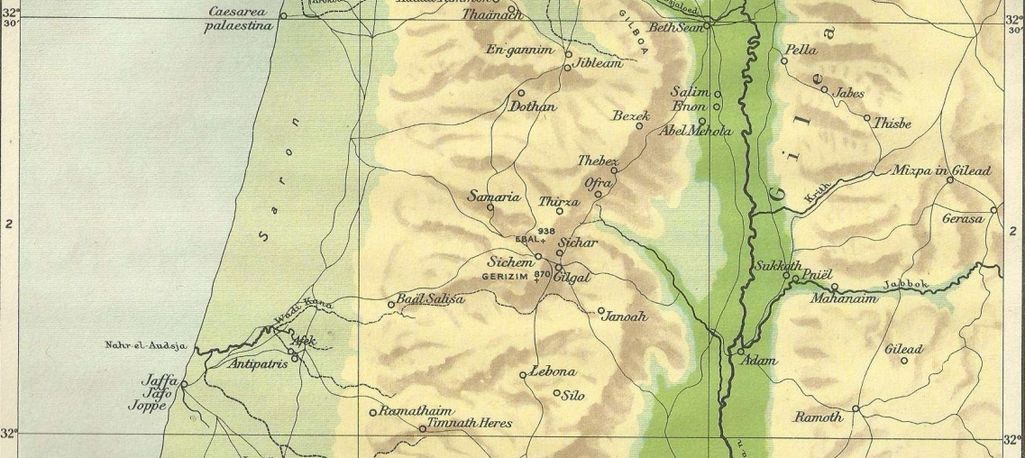
Omri eventually defeated Tibni and his forces, securing his place as the king of Israel. Half of the dozen years he ruled over Israel were spent in Tirzah, the former capital of King Elah. But Omri dreamed of establishing his own royal city from which to rule over the ten tribes of Israel. So, he found a favorable spot just west of Tirzah and purchased the land from a man named Shemer. In time, he built a fortified palace on the elevated portion of the land and named his new capital Samaria.

While the author doesn’t seem to treat this change in the location of the capital city with much importance, his mention of it is meant to foreshadow things to come. Omri would end up establishing a dynasty that would rule over Israel for an extended period of time. His newly established capital would become the focal point for Israel’s continuing spiritual decline and the epicenter of the nation’s eventual destruction.

The author chooses to summarize Omri’s 12-year reign in less-than-flattering terms.

Omri did what was evil in the sight of the LORD, and did more evil than all who were before him. – 1 Kings 16:25 ESV

Israel had a new king and a brand new capital, but they continued to suffer from the same old problem. Omri, like Jeroboam and Nadab before him, failed to use his divinely ordained power as king to lead the people back to God. Instead, he fostered the spirit of spiritual adultery and apostasy. Under his leadership, “the people provoked the anger of the LORD, the God of Israel, with their worthless idols” (1 Kings 16:21 NLT). 

On paper, Omri proved to be a highly accomplished and effective king. His 12 years on the throne of Israel were marked by military victories and peace negotiations with the enemies of Israel. He defeated the Moabites and brokered a treaty with Ethbaal, king of Tyre and Sidon, and this last act would prove to have long-lasting implications. As part of the treaty negotiations, Omri approved a marriage alliance between his son, Ahab, and Ethbaal’s daughter, Jezebel, and those two names will come up again.

While Omri appeared to be having success, he was actually operating outside the revealed will of God. His decisions were made without divine input and in direct violation of God’s commands. Hundreds of years earlier, Moses had warned the people of Israel about their interactions with the nations living in the land of Canaan.

When the LORD your God hands these nations over to you and you conquer them, you must completely destroy them. Make no treaties with them and show them no mercy. You must not intermarry with them. Do not let your daughters and sons marry their sons and daughters, for they will lead your children away from me to worship other gods. Then the anger of the LORD will burn against you, and he will quickly destroy you. – Deuteronomy 7:2-4 NLT

Like his predecessors, Omri was doing things according to his own plan. But as the proverbs warn, “You can make many plans, but the LORD’s purpose will prevail” (Proverbs 19:21 NLT). Omri’s ambitions to expand his kingdom at any cost would actually lead to the eventual fall of the nation. In his hopes of building Israel into a formidable force in the region, he was actually contributing to its downfall. His refusal to shepherd the people of God back to the fold of God would eventually result in their destruction at the hands of God.

English Standard Version (ESV) The Holy Bible, English Standard Version. ESV® Permanent Text Edition® (2016). Copyright © 2001 by Crossway Bibles, a publishing ministry of Good News Publishers.

New Living Translation (NLT) Holy Bible, New Living Translation, copyright © 1996, 2004, 2015 by Tyndale House Foundation. Used by permission of Tyndale House Publishers Inc., Carol Stream, Illinois 60188. All rights reserved.

When Men Play God

9 Thus says the Lord:

“For three transgressions of Tyre,
    and for four, I will not revoke the punishment,
because they delivered up a whole people to Edom,
    and did not remember the covenant of brotherhood.
10 So I will send a fire upon the wall of Tyre,
    and it shall devour her strongholds.” – Amos 1:9-10 ESV

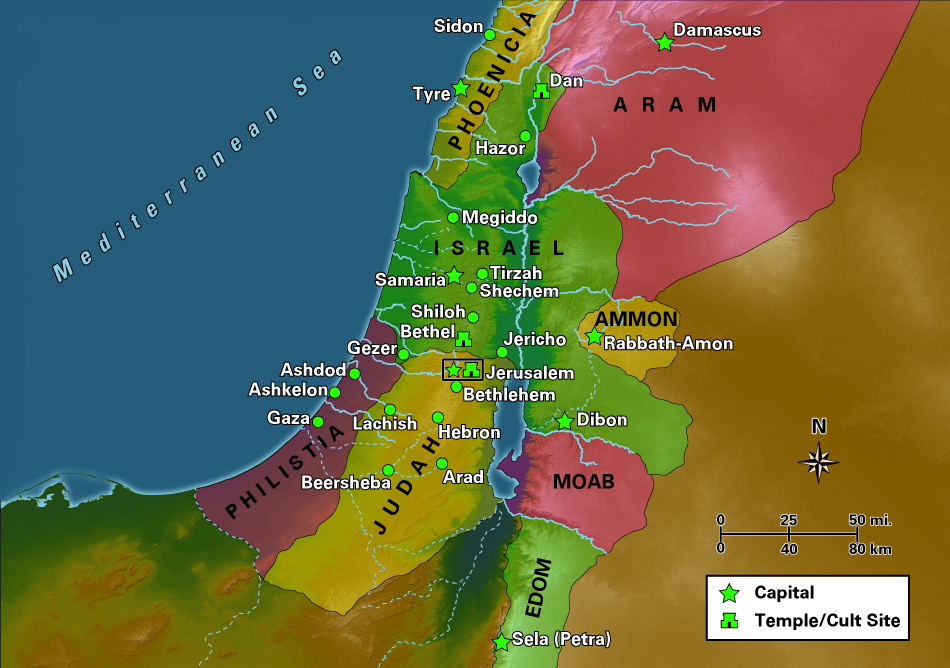
From Philistia in the south, Amos now moves up the coastline of the Mediterranean Sea, focusing the reader’s attention on the Phoenician city of Tyre. Tyre was an ancient coastal community that had been in existence long before the descendants of Abraham entered the land of Canaan. Due to their location along the Mediterranean coast, Tyre and its sister city of Sidon became commercial hubs for international trade. Tyre became wealthy and world-renowned for its purple dye. The prophet Isaiah referred to Tyre as “the fortress of the sea” (Isaiah23:4 NLT), most likely because of its impenetrable fortress perched atop the rocky coastline. While Phoenicia was a relatively small state within the region, it had tremendous influence over the lives of its inhabitants and the other nations around it. Isaiah goes to describe Tyre as “that great creator of kingdoms,” and he alludes to her significant financial influence by stating, “Her traders were all princes, her merchants were nobles” (Isaiah 23:8 NLT).

When the Israelites had entered the land of Canaan, God had awarded the tribe of Asher with the region of Phoenicia as part of its inheritance. But the book of Judges indicates that they failed to fully conquer or occupy the coastal communities, including the cities of Tyre and Sidon. When David ascended to the throne of Israel, he formed an alliance with Hiram king of Tyre, negotiating a trade agreement that brought “cedar timber and carpenters and stonemasons” (2 Samuel 5:11 NLT) to Jerusalem for the construction of his royal palace. When David’s son, Solomon, became king, he continued this symbiotic relationship, utilizing the shipping and trading capacities of his northern neighbor to access building materials for his many construction projects, including the temple.

At the end of twenty years, in which Solomon had built the two houses, the house of the Lord and the king’s house, and Hiram king of Tyre had supplied Solomon with cedar and cypress timber and gold, as much as he desired, King Solomon gave to Hiram twenty cities in the land of Galilee. – 1 Kings 9:10-11 ESV

Israel’s congenial relationship with Phoenicia continued, even after the split of the kingdom after the reign of Solomon. But it took a marked turn for the worse when Ahab become king of the northern tribe of Israel.

But Ahab son of Omri did what was evil in the Lord’s sight, even more than any of the kings before him. And as though it were not enough to follow the sinful example of Jeroboam, he married Jezebel, the daughter of King Ethbaal of the Sidonians, and he began to bow down in worship of Baal. First Ahab built a temple and an altar for Baal in Samaria. Then he set up an Asherah pole. He did more to provoke the anger of the Lord, the God of Israel, than any of the other kings of Israel before him. – 1 Kings 16:30-33 NLT

Like all the other nations that occupied the land of Canaan, the Phoenicians were pagan idolaters. And when King Ahab married Jezebel, he violated the expressed command of God that prohibited intermarriage with the nations living in the land of Canaan.

Make no treaties with them and show them no mercy. You must not intermarry with them. Do not let your daughters and sons marry their sons and daughters, for they will lead your children away from me to worship other gods. Then the anger of the LORD will burn against you, and he will quickly destroy you. This is what you must do. You must break down their pagan altars and shatter their sacred pillars. Cut down their Asherah poles and burn their idols. For you are a holy people, who belong to the LORD your God. Of all the people on earth, the LORD your God has chosen you to be his own special treasure. – Deuteronomy 7:2-6 NLT

And Ahab’s marriage to Jezebel would end up proving the truth behind God’s warning. She would have a strong and devastating influence over the spiritual direction of the nation.

But besides their love affair with false gods, it seems that the Phoenicians had another pressing problem: The pride and arrogance that stemmed from their great wealth and influence. And the prophet Ezekiel delivered a stinging indictment from God against the pride-filled king of Tyre.

“Son of man, give the prince of Tyre this message from the Sovereign Lord:

“In your great pride you claim, ‘I am a god!
    I sit on a divine throne in the heart of the sea.’
But you are only a man and not a god,
    though you boast that you are a god.
You regard yourself as wiser than Daniel
    and think no secret is hidden from you.
With your wisdom and understanding you have amassed great wealth—
    gold and silver for your treasuries.
Yes, your wisdom has made you very rich,
    and your riches have made you very proud.

“Therefore, this is what the Sovereign Lord says:
Because you think you are as wise as a god,
    I will now bring against you a foreign army,
    the terror of the nations.
They will draw their swords against your marvelous wisdom
    and defile your splendor!
They will bring you down to the pit,
    and you will die in the heart of the sea,
    pierced with many wounds.
Will you then boast, ‘I am a god!’
    to those who kill you?
To them you will be no god
    but merely a man!
You will die like an outcast
    at the hands of foreigners.
    I, the Sovereign Lord, have spoken!” – Ezekiel 28:2-10 NLT

According to Amos, the city of Tyre and, by extension, the nation of Phoenicia, was guilty of unfaithfulness. They had broken their covenantal relationship with the people of Israel.

“They broke their treaty of brotherhood with Israel…” – Amos 1:9 NLT

Ever since the days of David and Solomon, the Phoenicians and Israelites had enjoyed a close and mutually beneficial relationship. But it would appear that the Phoenicians were little more than opportunists. At the end of the day, they were business people who entered into agreements and partnerships with other nations with their eyes focused on the bottom line. They were in it for what they could get out of it. Like all good capitalists, they measured success by looking at the return on their investment.

And it appears that they had found a way to profit from their southern neighbors by capturing and selling some of them as slaves to the Edomites. So, they were guilty of the same sin as the Philistines.

The Phoenicians were more interested in amassing wealth than in keeping their word. And they had found a way to take advantage of their peace agreements with Israel, surreptitiously selling out their partners to the highest bidder. And they thought they could get away with it. But God warned the king of Tyre, “you are only a man and not a god, though you boast that you are a god” (Ezekiel 28:2 NLT).

Yes, the king of Tyre had grown incredibly wealthy. And God acknowledges that “your wisdom has made you very rich” (Ezekiel 28:5 NLT). But God also warns that the king’s great wisdom and wealth did not make him a god. He could not do as he wished with the lives of God’s people.

It’s interesting to note that Jezebel made a marriage covenant with Ahab, the king of Israel. In essence, she married into the family of God. But she wanted nothing to do with the God of Israel. Instead, she promoted the worship of her false gods. And at one point she ordered the deaths of the prophets of Yahweh (1 Kings 18:13). But this prideful Phoenician princess would pay dearly for her sins. The book of 2 Kings describes her ignominious end.

When Jezebel, the queen mother, heard that Jehu had come to Jezreel, she painted her eyelids and fixed her hair and sat at a window. When Jehu entered the gate of the palace, she shouted at him, “Have you come in peace, you murderer? You’re just like Zimri, who murdered his master!”

Jehu looked up and saw her at the window and shouted, “Who is on my side?” And two or three eunuchs looked out at him. “Throw her down!” Jehu yelled. So they threw her out the window, and her blood spattered against the wall and on the horses. And Jehu trampled her body under his horses’ hooves. – 2 Kings 9:30-33 NLT

And, speaking on behalf of God, the prophet Amos describes an equally violent end to the people of Tyre.

“So I will send down fire on the walls of Tyre,
    and all its fortresses will be destroyed.” – Amos 1:10 NLT

Years later, long after the fall of the northern kingdom of Israel, Jerusalem would be invaded and destroyed by the Babylonians. And the opportunistic Phoenicians would take advantage of Judah’s demise. They would see the fall of Jerusalem as a chance to enrich themselves at Judah’s expense. But the prophet Ezekiel would warn them that such selfish behavior would prove costly.

“Son of man, Tyre has rejoiced over the fall of Jerusalem, saying, ‘Ha! She who was the gateway to the rich trade routes to the east has been broken, and I am the heir! Because she has been made desolate, I will become wealthy!’” – Ezekiel 26:2 NLT

The Phoenicians would attempt to profit from the situation, declaring themselves the self-appointed heirs of Judah’s lucrative trading business. But God had other plans in mind for the capitalistic and opportunistic Phoenicians.

Therefore, this is what the Sovereign Lord says: I am your enemy, O Tyre, and I will bring many nations against you, like the waves of the sea crashing against your shoreline. They will destroy the walls of Tyre and tear down its towers. I will scrape away its soil and make it a bare rock! It will be just a rock in the sea, a place for fishermen to spread their nets, for I have spoken, says the Sovereign Lord. Tyre will become the prey of many nations, and its mainland villages will be destroyed by the sword. Then they will know that I am the Lord. – Ezekiel 26:3-6 NLT

The Phoenicians made a pragmatic and rationalistic decision to violate their covenantal agreements with Israel and Judah. It seemed like the right thing to do. The numbers added up. The cost-benefits analysis made good business sense. But God let them know that their return on investment would have a dramatically different impact on their bottom line.

“They will plunder all your riches and merchandise and break down your walls. They will destroy your lovely homes and dump your stones and timbers and even your dust into the sea. I will stop the music of your songs. No more will the sound of harps be heard among your people. I will make your island a bare rock, a place for fishermen to spread their nets. You will never be rebuilt, for I, the Lord, have spoken. Yes, the Sovereign Lord has spoken!” – Ezekiel 26:12-14 NLT

English Standard Version (ESV) The Holy Bible, English Standard Version. ESV® Permanent Text Edition® (2016). Copyright © 2001 by Crossway Bibles, a publishing ministry of Good News Publishers.

New Living Translation (NLT) Holy Bible, New Living Translation, copyright © 1996, 2004, 2015 by Tyndale House Foundation. Used by permission of Tyndale House Publishers Inc., Carol Stream, Illinois 60188. All rights reserved.

The Message (MSG)Copyright © 1993, 1994, 1995, 1996, 2000, 2001, 2002 by Eugene H. Peterson

Preserving and Protecting the Line of David

13 When Athaliah heard the noise of the guard and of the people, she went into the house of the Lord to the people. 14 And when she looked, there was the king standing by the pillar, according to the custom, and the captains and the trumpeters beside the king, and all the people of the land rejoicing and blowing trumpets. And Athaliah tore her clothes and cried, “Treason! Treason!” 15 Then Jehoiada the priest commanded the captains who were set over the army, “Bring her out between the ranks, and put to death with the sword anyone who follows her.” For the priest said, “Let her not be put to death in the house of the Lord.” 16 So they laid hands on her; and she went through the horses’ entrance to the king’s house, and there she was put to death.

17 And Jehoiada made a covenant between the Lord and the king and people, that they should be the Lord’s people, and also between the king and the people. 18 Then all the people of the land went to the house of Baal and tore it down; his altars and his images they broke in pieces, and they killed Mattan the priest of Baal before the altars. And the priest posted watchmen over the house of the Lord. 19 And he took the captains, the Carites, the guards, and all the people of the land, and they brought the king down from the house of the Lord, marching through the gate of the guards to the king’s house. And he took his seat on the throne of the kings. 20 So all the people of the land rejoiced, and the city was quiet after Athaliah had been put to death with the sword at the king’s house.

21 Jehoash was seven years old when he began to reign. – 2 Kings 11:13-21 ESV

For six years, Joash, the young heir to David’s throne, had lived in the temple of Yahweh – and right under Athaliah’s nose. The house of God proved to be the perfect hiding place for the young boy because it would have been the last place Athaliah would have ever looked. Like her parents, Ahab and Jezebel, she was a committed Baal worshiper. So, any chance of her running into Joash at the house of God would have been highly unlikely. In this story, the temple of the one true God plays a significant role. It is a reminder that, in Judah, Yahweh still played a major role in the lives of the people. While some of the kings of Judah had successfully introduced the worship of idols, the people had not abandoned Yahweh. The temple Solomon had built still stood, and the sacrificial system remained in place. Jehoiada and his fellow priests faithfully maintained God’s house and looked after the spiritual well-being of God’s people. And now, Jehoiada had provided sanctuary for God’s chosen king in the house that bore God’s name. And it must not be overlooked that the temple of God had direct ties all the way back to King David.

It had always been David’s dream to build a great temple in honor of Yahweh. But God informed David that He had other plans.

“And I will give you rest from all your enemies. Moreover, the Lord declares to you that the Lord will make you a house. When your days are fulfilled and you lie down with your fathers, I will raise up your offspring after you, who shall come from your body, and I will establish his kingdom. He shall build a house for my name, and I will establish the throne of his kingdom forever.” – 2 Samuel 7:11-13 ESV

God went on to promise David, “your house and your kingdom shall be made sure forever before me. Your throne shall be established forever” (2 Samuel 7:16 ESV). God was going to build David’s house or dynasty.  But it would be David’s son, Solomon, whom God would give the privilege of constructing a house that would bear His name and in which His glory would dwell. And now, the house built by Solomon had become the means by which God fulfilled His promise to preserve the house of David. Joash, the descendant of David and the rightful heir to the throne of Judah, was alive because he had been given sanctuary and protection in the house of God.

When word got out that Joash was alive and that he had been crowned the king of Judah, the crowds flocked to the temple to see if the news was true. And it wasn’t long before Athaliah was told about the great commotion taking place at the temple of Yahweh. So, she went to see for herself.

Much to her shock and surprise, there stood her seven-year-old grandson, Joash, very much alive and well, and wearing a crown on his head. In a matter of seconds, Athaliah’s house of cards began to crumble. Her insidious plan to eradicate all the heirs to her son’s throne had failed. For six years she had lived under the delusion that she had successfully secured her place as the queen of Judah. But little did she know that God had been protecting and preserving the seed of David until he was ready to take the throne. And it must not be overlooked that when Jehoiada placed the crown on the head of Joash, he had also presented the young king with a copy of the Mosaic Law.

Jehoiada brought out Joash, the king’s son, placed the crown on his head, and presented him with a copy of God’s laws. – 2 Kings 11:12 NLT

This practice was in keeping with the commands of God concerning the kings of Israel.

“When he sits on the throne as king, he must copy for himself this body of instruction on a scroll in the presence of the Levitical priests. He must always keep that copy with him and read it daily as long as he lives. That way he will learn to fear the Lord his God by obeying all the terms of these instructions and decrees. This regular reading will prevent him from becoming proud and acting as if he is above his fellow citizens. It will also prevent him from turning away from these commands in the smallest way. And it will ensure that he and his descendants will reign for many generations in Israel.” – Deuteronomy 17:18-20 NLT

Athaliah, an ungodly and unauthorized queen, was standing before the God-appointed king of Judah. And this young man was backed by the law of God, the priests of God, and had the full support of the people of God. But declared the entire scene to be nothing less than an act of treason. She refused to acknowledge Joash as the rightful heir to the throne because she refused to acknowledge Yahweh as the one and only God of Judah.

But her claims of treason were met with an order from Jehoiada the priest, commanding that she be taken from the temple and executed. She was the one who had been guilty of treason and so, she was the one who deserved to die.

With her death, a spirit of revival broke out in the land of Judah. Jehoiada immediately “made a covenant between the Lord and the king and the people that they would be the Lord’s people” (2 Kings 11:17 NLT). In a sense, he called the people to repent and return to the worship of Yahweh. They had a new king but Jehoiada knew that it would mean nothing without a renewed commitment to God. Joash was just a seven-year-old boy with no leadership skills or experience. But if he and the people under his care would recommit themselves to the Word and the will of God, they would find themselves enjoying the blessings of God once again.

In a decisive demonstration of their renewed zeal for Yahweh, the people tore down the temple of Baal. Its very presence indicates that Athaliah and her ungodly relatives in Israel had played a major role in the declining spiritual state within Judah. The city of Jerusalem, home to the temple of God, also had a temple dedicated to Baal, the false god of Ahab and Jezebel. But in the revival-like atmosphere that accompanied Joash’s crowning, the people were moved to eradicate every last vestige of Baal worship from their midst.

They demolished the altars and smashed the idols to pieces, and they killed Mattan the priest of Baal in front of the altars. – 2 Kings 11:18 NLT

With Athaliah and her false god out of the way, it was time for Joash to move from God’s house to David’s palace. So, Jehoiada led a processional from the temple to the royal residence, where “the king took his seat on the royal throne” (2 Kings 11:19 NLT). And at that moment, God reaffirmed the promise He had made to David.

“Your house and your kingdom will continue before me for all time, and your throne will be secure forever.” – 2 Samuel 7:16 NLT

God was committed to keeping His word because He had a far greater plan in store that would involve the line of David. His preservation of David’s house was crucial because there was to be one final descendant of David who would rule and reign, not just over Judah and Israel, but over all the kingdoms of the world. The prophet Isaiah spoke of this coming King and the day when He will bring salvation to the world.

In that day the heir to David’s throne
    will be a banner of salvation to all the world.
The nations will rally to him,
    and the land where he lives will be a glorious place. – Isaiah 11:10 NLT

Joash had been protected so that David’s line could be preserved. Despite the unfaithfulness of His people, God was faithfully keeping His promise to David so that His plans for the future redemption of the world could be fulfilled in Christ.

English Standard Version (ESV) The Holy Bible, English Standard Version. ESV® Permanent Text Edition® (2016). Copyright © 2001 by Crossway Bibles, a publishing ministry of Good News Publishers.

New Living Translation (NLT) Holy Bible, New Living Translation, copyright © 1996, 2004, 2015 by Tyndale House Foundation. Used by permission of Tyndale House Publishers Inc., Carol Stream, Illinois 60188. All rights reserved.

The Message (MSG)Copyright © 1993, 1994, 1995, 1996, 2000, 2001, 2002 by Eugene H. Peterson


A Gift From God

1 Now when Athaliah the mother of Ahaziah saw that her son was dead, she arose and destroyed all the royal family. 2 But Jehosheba, the daughter of King Joram, sister of Ahaziah, took Joash the son of Ahaziah and stole him away from among the king’s sons who were being put to death, and she put him and his nurse in a bedroom. Thus they hid him from Athaliah, so that he was not put to death. 3 And he remained with her six years, hidden in the house of the Lord, while Athaliah reigned over the land.

4 But in the seventh year Jehoiada sent and brought the captains of the Carites and of the guards, and had them come to him in the house of the Lord. And he made a covenant with them and put them under oath in the house of the Lord, and he showed them the king’s son. 5 And he commanded them, “This is the thing that you shall do: one third of you, those who come off duty on the Sabbath and guard the king’s house 6 (another third being at the gate Sur and a third at the gate behind the guards) shall guard the palace. 7 And the two divisions of you, which come on duty in force on the Sabbath and guard the house of the Lord on behalf of the king, 8 shall surround the king, each with his weapons in his hand. And whoever approaches the ranks is to be put to death. Be with the king when he goes out and when he comes in.”

9 The captains did according to all that Jehoiada the priest commanded, and they each brought his men who were to go off duty on the Sabbath, with those who were to come on duty on the Sabbath, and came to Jehoiada the priest. 10 And the priest gave to the captains the spears and shields that had been King David’s, which were in the house of the Lord. 11 And the guards stood, every man with his weapons in his hand, from the south side of the house to the north side of the house, around the altar and the house on behalf of the king. 12 Then he brought out the king’s son and put the crown on him and gave him the testimony. And they proclaimed him king and anointed him, and they clapped their hands and said, “Long live the king!” – 2 Kings 11:1-12 ESV

Meanwhile, back in Judah.

Once again, the author shifts the focus of his narrative back to the southern kingdom. While Jehu had been systematically and brutally eliminating the legacy of Ahab from Israel, a regime change had taken place in Judah as well. While the two nations operated independently of one another, they had developed close ties through intermarriage and military alliances. Ahab and Jezebel had a daughter, Athaliah, who had married King Jehoram of Israel. Her influence over him is readily apparent when you read how God assessed his reign and disclosed the nature of his death.

“…you have been as evil as the kings of Israel. You have led the people of Jerusalem and Judah to worship idols, just as King Ahab did in Israel. And you have even killed your own brothers, men who were better than you. So now the Lord is about to strike you, your people, your children, your wives, and all that is yours with a heavy blow. You yourself will suffer with a severe intestinal disease that will get worse each day until your bowels come out.” – 2 Chronicles 21:13-15 NLT

And when Jehoram ending up dying just as God had predicted, he was replaced by Ahaziah, the son he shared with Athalia. During his reign, Ahaziah maintained a close relationship with his family back in Israel, even making a trip to visit his uncle, King Jehoram, who was recuperating from battle injuries at his summer palace in Jezreel. But the timing of his trip proved both ill-planned and ill-fated. He had arrived in Jezreel at the exact moment when Jehu was launching his coup against the house of Ahab. And his decision to be in Israel at that precise moment proved deadly.

When King Ahaziah of Judah saw what was happening, he fled along the road to Beth-haggan. Jehu rode after him, shouting, “Shoot him, too!” So they shot Ahaziah in his chariot at the Ascent of Gur, near Ibleam. He was able to go on as far as Megiddo, but he died there. His servants took him by chariot to Jerusalem, where they buried him with his ancestors in the City of David. – 2 Kings 9:27-28 NLT

In a single day, Jehu had managed to kill the kings of Israel and Judah, creating an immediate power vacuum in both nations. He would end up filling the void left by King Jehoram in Israel, but the battle for control of Ahaziah’s empty throne would prove more complicated and deadly.

As soon as Athalia received the news that her son had been murdered by Jehu, she launched a brutal campaign to secure the crown for herself. Rather than mourn the death of her son, “she arose and destroyed all the royal family” (2 Kings 11:1 ESV). She callously eliminated any and all competition. And thanks to her husband’s sins against Yahweh, her work had been made much easier. As punishment for Jehoram’s ungodly leadership, God had brought judgment against Judah in the form of enemy raiding parties.

Then the Lord stirred up the Philistines and the Arabs, who lived near the Ethiopians, to attack Jehoram. They marched against Judah, broke down its defenses, and carried away everything of value in the royal palace, including the king’s sons and his wives. Only his youngest son, Ahaziah, was spared. – 2 Chronicles 21:16-17 NLT

Now, with Ahaziah out of the picture, Athaliah had few competitors for the throne. But she still went out of her way to eliminate anyone who might jeopardize her plan to rule over Judah. In doing so, Athaliah was going against the revealed will of God. He had made a covenant commitment to David that one of his descendants would sit on his throne forever.

“When your days are fulfilled and you lie down with your fathers, I will raise up your offspring after you, who shall come from your body, and I will establish his kingdom. He shall build a house for my name, and I will establish the throne of his kingdom forever.

“And your house and your kingdom shall be made sure forever before me. Your throne shall be established forever.” – 2 Samuel 7:12-13, 16 ESV

Athaliah was not a descendant of David, but she was not about to let that minor detail stand in her way. So, she set out to clear her path to power by systematically wiping out anyone who might claim to be the rightful heir to David’s throne. 

Having successfully eliminated the competition, Athaliah became the self-appointed queen of Judah, and she would hold that title for the next six years. But little did she know that all the while she sat on the throne, the true king of Judah was being protected in the house of God. During her ambitious and murderous power-grab, she had inadvertently overlooked one minor detail: A young boy named Joash. He was the son of King Ahaziah and, therefore, the rightful heir to the throne.

When Athaliah had begun her murderous spree, her step-daughter, Jehosheba, had risked her life by protecting Joash, the infant son of Ahaziah. The book of 2 Chronicles provides us with a detailed description of her brave rescue attempt.

Ahaziah’s sister Jehosheba, the daughter of King Jehoram, took Ahaziah’s infant son, Joash, and stole him away from among the rest of the king’s children, who were about to be killed. She put Joash and his nurse in a bedroom. In this way, Jehosheba, wife of Jehoiada the priest and sister of Ahaziah, hid the child so that Athaliah could not murder him. – 2 Chronicles 22:11 NLT

Don’t miss the sovereign hand of God in all of this. It just so happens that Jehosheba was not only the daughter of the king and, therefore, the half-sister of Joash, but she was also the wife of Jehoiada the priest. These relationships were God-ordained and providentially established to not only keep Joash alive but to preserve the promise that God had made to David years earlier. After initially hiding Joash in a room within the palace, Jehosheba and her husband, Jehoiada, moved him to the temple. And for the next six years, the young boy would find protection in the house of God. Yahweh, the God of David, was preserving the seed of David so that He might fulfill the promise He had made to David. And what makes this so significant is that God was preserving David’s seed so that He might one day send His own Son as the ultimate fulfillment of the Davidic Covenant. The psalmist writes, “The Lord swore to David a sure oath from which he will not turn back: ‘One of the sons of your body I will set on your throne’” ( Psalm 132:11 ESV). And the apostle Paul reminds us that Jesus was the Son whom God had in mind when He made that promise to David.

God promised this Good News long ago through his prophets in the holy Scriptures. The Good News is about his Son. In his earthly life he was born into King David’s family line, and he was shown to be the Son of God when he was raised from the dead by the power of the Holy Spirit. He is Jesus Christ our Lord. – Romans 1:2-4 NLT

But had Jehosheba not been there to preserve the life of her brother, the line of David would have come to an abrupt end. And had her husband not been Jehoiada the priest, the young boy would not have been given sanctuary in the temple of God. All of this was the handiwork of God Almighty, who was operating behind the scenes in order to preserve and protect His covenant promise. Nothing was going to stand in the way of God’s long-term redemptive plan for the people of Israel and the nations of the world – including Athaliah.

And in time, Athaliah’s 15-minutes of fame came to an end. When Joash reached the age of seven, Jehoiada the priest called for the captains of the Carites, who served as royal bodyguards. He brought them into the temple and introduced them to Joash, the rightful heir to the throne. This would have been shocking news to these men. None of them would have had any idea that Joash was alive. Jehoiada’s decision to use the temple as the venue for revealing this exciting news was intended to remind these men that God was at work. He had them swear an oath before God that they would protect the new king at all costs, and they agreed. Then, as if to solidify their commitment, he equipped these men with “spears and shields that had been King David’s, which were in the house of the Lord” ( 2 Kings 11:10 ESV). This was intended as a not-so-subtle reminder that Joash was a descendant of the great king, David, and the rightful heir to the throne of Judah.

Having instigated plans to provide protection for Joash, Jehoiada took the next steps to make inaugurate the new king of Judah.

Then he brought out the king’s son and put the crown on him and gave him the testimony. And they proclaimed him king and anointed him, and they clapped their hands and said, “Long live the king!” – 2 Kings 11:12 ESV

After six years under the reign of Athaliah, the fate of Judah was about to take a dramatic turn. From the holy temple of God, a cry would go out, declaring that Judah had a new king. The sovereign plan of God was alive and well, and it was about to be revealed in the life of a seven-year-old boy named Joash. And it’s interesting to note that Joash’s name means, “given by the Lord.” He would be a gracious gift from God Almighty, providing immediate hope for the people of Judah and a link to the future promise of the Messiah.

English Standard Version (ESV) The Holy Bible, English Standard Version. ESV® Permanent Text Edition® (2016). Copyright © 2001 by Crossway Bibles, a publishing ministry of Good News Publishers.

New Living Translation (NLT) Holy Bible, New Living Translation, copyright © 1996, 2004, 2015 by Tyndale House Foundation. Used by permission of Tyndale House Publishers Inc., Carol Stream, Illinois 60188. All rights reserved.

The Message (MSG)Copyright © 1993, 1994, 1995, 1996, 2000, 2001, 2002 by Eugene H. Peterson


Close, But No Cigar

18 Then Jehu assembled all the people and said to them, “Ahab served Baal a little, but Jehu will serve him much. 19 Now therefore call to me all the prophets of Baal, all his worshipers and all his priests. Let none be missing, for I have a great sacrifice to offer to Baal. Whoever is missing shall not live.” But Jehu did it with cunning in order to destroy the worshipers of Baal. 20 And Jehu ordered, “Sanctify a solemn assembly for Baal.” So they proclaimed it. 21 And Jehu sent throughout all Israel, and all the worshipers of Baal came, so that there was not a man left who did not come. And they entered the house of Baal, and the house of Baal was filled from one end to the other. 22 He said to him who was in charge of the wardrobe, “Bring out the vestments for all the worshipers of Baal.” So he brought out the vestments for them. 23 Then Jehu went into the house of Baal with Jehonadab the son of Rechab, and he said to the worshipers of Baal, “Search, and see that there is no servant of the Lord here among you, but only the worshipers of Baal.” 24 Then they went in to offer sacrifices and burnt offerings.

Now Jehu had stationed eighty men outside and said, “The man who allows any of those whom I give into your hands to escape shall forfeit his life.” 25 So as soon as he had made an end of offering the burnt offering, Jehu said to the guard and to the officers, “Go in and strike them down; let not a man escape.” So when they put them to the sword, the guard and the officers cast them out and went into the inner room of the house of Baal, 26 and they brought out the pillar that was in the house of Baal and burned it. 27 And they demolished the pillar of Baal, and demolished the house of Baal, and made it a latrine to this day.

28 Thus Jehu wiped out Baal from Israel. 29 But Jehu did not turn aside from the sins of Jeroboam the son of Nebat, which he made Israel to sin—that is, the golden calves that were in Bethel and in Dan. 30 And the Lord said to Jehu, “Because you have done well in carrying out what is right in my eyes, and have done to the house of Ahab according to all that was in my heart, your sons of the fourth generation shall sit on the throne of Israel.” 31 But Jehu was not careful to walk in the law of the Lord, the God of Israel, with all his heart. He did not turn from the sins of Jeroboam, which he made Israel to sin.

32 In those days the Lord began to cut off parts of Israel. Hazael defeated them throughout the territory of Israel: 33 from the Jordan eastward, all the land of Gilead, the Gadites, and the Reubenites, and the Manassites, from Aroer, which is by the Valley of the Arnon, that is, Gilead and Bashan. 34 Now the rest of the acts of Jehu and all that he did, and all his might, are they not written in the Book of the Chronicles of the Kings of Israel? 35 So Jehu slept with his fathers, and they buried him in Samaria. And Jehoahaz his son reigned in his place. 36 The time that Jehu reigned over Israel in Samaria was twenty-eight years. – 2 Kings 10:18-36 ESV

Jehu’s meteoric rise to power left the people of Israel in a state of shock and confusion. Virtually overnight, he had radically altered the political landscape of the country, completely eradicating any vestige of the former regime. Ahab and Jezebel’s three-decade-long reign of evil had come to an abrupt and ignominious end. But what would happen now? What kind of king would Jehu prove to be? To most of the citizens of Israel, Jehu remained a mystery. He had not campaigned for office or taken time to communicate his particular political platform. This man had suddenly appeared out of nowhere, upsetting the status quo and creating a spirit of anxiety and confusion among the people. And he was far from done.

Jehu proved to be a clever and cunning individual who used his relative anonymity to his advantage. Having literally cleaned house by killing off every one of Ahab’s male descendants, as well as all of his relatives and former administrative officials, Jehu turned his attention to the godless citizens of Israel. And it appears he focused his attention on the capital city of Samaria.

The new king called for a solemn assembly, a mandatory gathering of all the worshipers of Baal. Since Jehu’s political and religious positions were unknown to anyone, he was able to leave the people with the impression that he was an ardent worshiper of Baal. He even pledged to outdo Ahab in his commitment to this false god of fertility.

“Ahab’s worship of Baal was nothing compared to the way I will worship him! Therefore, summon all the prophets and worshipers of Baal, and call together all his priests. See to it that every one of them comes, for I am going to offer a great sacrifice to Baal. Anyone who fails to come will be put to death.” – 2 Kings 10:18-19 NLT

He commanded that every priest and faithful adherent to Baal join him for a special assembly, to be held in the house of Baal in Samaria. He even sent messengers all over Israel, informing the people to gather for this great occasion. And as the news spread, the excitement among the people began to build. So, when the big day arrived, “They all came—not a single one remained behind—and they filled the temple of Baal from one end to the other.” (2 Kings 10:21 NLT).

Next, Jehu instructed that every Baal worshiper be given a special vestment or robe. And, as if to keep this solemn assembly free from contamination, he commanded that no worshipers of Yahweh be allowed in the building. This was going to be an exclusive, members-only service dedicated to the great god, Baal. You can almost sense the excitement and the air of eager anticipation as the people waited to see what would happen next. And when Jehu, their new king, offered up a sacrifice to their god, they had to have been beside themselves with joy and pride. Baal was being given a place of prominence and priority in the new administration. But little did they know that the whole affair had been nothing more than a clearly disguised ruse. They had been lured to their own deaths. When Jehu had pledged to make a great sacrifice to Baal, he had been talking about them. They were to be the sacrifice.

And Jehu ordered the slaughter of every single priest and parishioner. Within seconds, the standing-room-only crowd began to realize what was happening. Screams echoed through the halls as Jehu’s men made their way through the panic-stricken mass of humanity, striking down any and all who stood in their path. It was a virtual blood bath. Those who did not fall victim to the sword were likely trampled to death as they attempted to find the nearest exit. But Jehu had posted guards to ensure that no one escaped alive.

At some point, the killing ended, but Jehu was far from done. He ordered the destruction of any and all idols dedicated to Baal. If they were made of stone, they were demolished. If they were carved from wood, they were burned. In a sense, Jehu attempted to purge the memory of Baal from the nation of Israel. And in one last act of desecration, he ordered that the temple to Baal be converted into a public toilet.

And the author seems to give Jehu high marks for his actions that day.

Thus Jehu wiped out Baal from Israel. – 2 Kings 10:17 ESV

His campaign to eradicate the worship of Baal had been a rousing success. The false god of Ahab and Jezebel had been removed and reduced to a memory. But there was a problem. While Jehu had focused all his time and energy on the removal of Baal, he had failed to deal with the root problem that plagued the nation of Israel: Idolatry.

Baal had been a symptom, not the disease. The reason the people had so readily accepted the false god of Jezebel was that they had a long-standing track record for apostasy and idolatry. From the very moment when God had split the kingdom of Solomon in half, the ten northern tribes had dedicated themselves to the worship of false gods. Their newly appointed king, Jeroboam, had made the fateful decision to erect golden calves in the cities of Dan and Bethel. And while Ahab and Jezebel had promoted Baal as the premier god of the Israelites, the people had not abandoned the gods of Jeroboam. And, sadly, the author reveals that Jehu’s purging of Baal, while effective, was insufficient.

But Jehu did not turn aside from the sins of Jeroboam the son of Nebat, which he made Israel to sin—that is, the golden calves that were in Bethel and in Dan. – 2 Kings 10:29 ESV

The people of Israel remained idolatrous and unfaithful. And Jehu’s fervor for Yahweh proved to be far from perfect.

Jehu was not careful to walk in the law of the Lord, the God of Israel, with all his heart. He did not turn from the sins of Jeroboam, which he made Israel to sin. – 2 Kings 10:31 ESV

Jehu had addressed the symptom, but not the disease. In a sense, he had successfully removed the tumor, but the cancer cells remained. And it was only a matter of time before evidence of the deadly disease surfaced once again.

Jehu had done what God had commanded him to do. He had faithfully fulfilled the instructions of the prophet and was rewarded for his obedience.

“Because you have done well in carrying out what is right in my eyes, and have done to the house of Ahab according to all that was in my heart, your sons of the fourth generation shall sit on the throne of Israel.” – 2 Kings 10:30 ESV

But what Jehu had failed to do was reestablish the worship of Yahweh. He had removed Baal but had left the golden calves. He allowed the people to continue their pursuit of false gods rather than lead them back to the worship of the one true God.

For the next 28 years, Jehu would reign over Israel, but his kingdom would grow progressively weaker and smaller. His partial purging of Israel’s idols would allow the cancer of unfaithfulness to spread. Jehu had been successful in removing the foreign gods of Jezebel, but he had turned a blind eye to the home-grown gods of Jeroboam. And God had been very specific about his prohibition of false gods of any kind.

“You must not have any other god but me. You must not make for yourself an idol of any kind or an image of anything in the heavens or on the earth or in the sea. You must not bow down to them or worship them, for I, the LORD your God, am a jealous God who will not tolerate your affection for any other gods.” – Exodus 20:3-5 NLT

But Jehu refused to obey the command of God. He not only tolerated the gods of Jeroboam, but he also promoted them. As the king of Israel, he encouraged the people to give their affection and attention to something other than Yahweh. And, as a result, God diminished the extent of his kingdom and, eventually, brought his dynasty to an end. Jehu proved to be a good king, but not a great one. He had been faithful to purge the kingdom of Ahab’s evil influence, but he had failed to lead the people back to Yahweh.

English Standard Version (ESV) The Holy Bible, English Standard Version. ESV® Permanent Text Edition® (2016). Copyright © 2001 by Crossway Bibles, a publishing ministry of Good News Publishers.

New Living Translation (NLT) Holy Bible, New Living Translation, copyright © 1996, 2004, 2015 by Tyndale House Foundation. Used by permission of Tyndale House Publishers Inc., Carol Stream, Illinois 60188. All rights reserved.

The Message (MSG)Copyright © 1993, 1994, 1995, 1996, 2000, 2001, 2002 by Eugene H. Peterson


Zeal is No Excuse for Disobedience

1 Now Ahab had seventy sons in Samaria. So Jehu wrote letters and sent them to Samaria, to the rulers of the city, to the elders, and to the guardians of the sons of Ahab, saying, 2 “Now then, as soon as this letter comes to you, seeing your master’s sons are with you, and there are with you chariots and horses, fortified cities also, and weapons, 3 select the best and fittest of your master’s sons and set him on his father’s throne and fight for your master’s house.” 4 But they were exceedingly afraid and said, “Behold, the two kings could not stand before him. How then can we stand?” 5 So he who was over the palace, and he who was over the city, together with the elders and the guardians, sent to Jehu, saying, “We are your servants, and we will do all that you tell us. We will not make anyone king. Do whatever is good in your eyes.” 6 Then he wrote to them a second letter, saying, “If you are on my side, and if you are ready to obey me, take the heads of your master’s sons and come to me at Jezreel tomorrow at this time.” Now the king’s sons, seventy persons, were with the great men of the city, who were bringing them up. 7 And as soon as the letter came to them, they took the king’s sons and slaughtered them, seventy persons, and put their heads in baskets and sent them to him at Jezreel. 8 When the messenger came and told him, “They have brought the heads of the king’s sons,” he said, “Lay them in two heaps at the entrance of the gate until the morning.” 9 Then in the morning, when he went out, he stood and said to all the people, “You are innocent. It was I who conspired against my master and killed him, but who struck down all these? 10 Know then that there shall fall to the earth nothing of the word of the Lord, which the Lord spoke concerning the house of Ahab, for the Lord has done what he said by his servant Elijah.” 11 So Jehu struck down all who remained of the house of Ahab in Jezreel, all his great men and his close friends and his priests, until he left him none remaining.

12 Then he set out and went to Samaria. On the way, when he was at Beth-eked of the Shepherds, 13 Jehu met the relatives of Ahaziah king of Judah, and he said, “Who are you?” And they answered, “We are the relatives of Ahaziah, and we came down to visit the royal princes and the sons of the queen mother.” 14 He said, “Take them alive.” And they took them alive and slaughtered them at the pit of Beth-eked, forty-two persons, and he spared none of them.

15 And when he departed from there, he met Jehonadab the son of Rechab coming to meet him. And he greeted him and said to him, “Is your heart true to my heart as mine is to yours?” And Jehonadab answered, “It is.” Jehu said, “If it is, give me your hand.” So he gave him his hand. And Jehu took him up with him into the chariot. 16 And he said, “Come with me, and see my zeal for the Lord.” So he had him ride in his chariot. 17 And when he came to Samaria, he struck down all who remained to Ahab in Samaria, till he had wiped them out, according to the word of the Lord that he spoke to Elijah. – 2 Kings 10:1-17 ESV

Jehu was methodical and ruthless in carrying out God’s judgment against the house of Ahab. After killing King Jehoram and ordering the execution of the queen-mother, Jezebel, he turned his attention to Ahab’s 70 male descendants. Jehu knew that as long as any of them remained alive, his hopes of consolidating the kingdom under his rule would be in jeopardy. These boys and young men were under the care and protection of royal guardians who served in Ahab’s administration. More than likely, they had answered to Jezebel. But now that she was out of the picture, Jehu issued a challenge to these protectors of Ahab’s dynasty.

“…select the best qualified of your master’s sons to be your king, and prepare to fight for Ahab’s dynasty.” – 2 Kings 10:3 NLT

Jehu proposed that they do battle for control of the kingdom. He and his allies would go up against the chosen heir of Ahab and the forces of Israel, and whoever was left standing would become the next king of the northern kingdom. But his offer was quickly rejected. The elders and officials of Samaria recognized that Jehu had the upper hand and any attempt to defeat him in battle would be ill-advised and ill-fated.

So, these men informed Jehu that they had no intentions of protecting or promoting the heirs of Ahab. But he demanded that they prove their loyalty by beheading all 70 of Ahab’s sons. The next day, the elders and officials of Samaria showed up in Jezreel and presented to Jehu their rather macabre coronation gift. He ordered that the 70 heads be placed in two piles beside the city gate, as a gruesome reminder of God’s divine judgment against the house of Ahab. No one who entered or exited the city of Jezreel could miss the message this hideous sight was meant to convey.

But the next morning, Jehu called the nervous citizens of Jezreel together. These people were caught in the middle of a violent and deadly change in administrations. For more than 30 years they had lived under the rule of Ahab and Jezebel. But almost overnight, their way of life had come to an abrupt end. They had witnessed the assassination of their king, the violent death of his mother, and the annihilation of every living male heir to the throne. They had no way of knowing what kind of king Jehu would be. So, in an effort to assuage their fear and apprehension, Jehu took full responsibility for the death of King Jehoram but then vowed that he would avenge the deaths of Ahab’s sons. This rather disingenuous display of righteous indignation was intended to win over the hearts of the people. But he failed to admit that he had been the one who ordered their executions. In his zeal to carry out the command of God, Jehu overstepped his authority. Rather than simply punishing the house of Ahab as God had ordered, Jehu used his newfound power to enact a bloody purging that spread far beyond his original assignment.

Jehu killed all who were left of Ahab’s relatives living in Jezreel and all his important officials, his personal friends, and his priests. So Ahab was left without a single survivor. – 2 Kings 10:11 NLT

We are not told the motivation behind Jehu’s actions, but we are given God’s response to it. Over in the book of Hosea, God provides a glimpse into His displeasure with Jehu’s overzealous and bloody purge. In the opening verses of the book, the prophet Hosea has just discovered that he is a new father. His wife, Gomer, a former prostitute, has given birth to a son. And God informs Hosea that he is to call the boy Jezreel.

And the Lord said to him, “Call his name Jezreel, for in just a little while I will punish the house of Jehu for the blood of Jezreel, and I will put an end to the kingdom of the house of Israel. And on that day I will break the bow of Israel in the Valley of Jezreel.” – Hosea 1:4-5 ESV

The entire book of Hosea is meant to display the unfaithfulness of Israel through the relationship between the prophet and his unfaithful wife. The name given to their son was meant to be a permanent reminder of Jehu’s ungodly actions that day in Jezreel. He had decided to do God’s will his way. By taking the lives of the elders and officials of Samaria, Jehu had overstepped his God-given authority. He had exceeded his role as an instrument of God’s judgment against the house of Ahab. Innocent people had died unnecessarily and he would pay for his costly mistake.

In a sense, Jehu was obedient to the command of God. He had been anointed by the prophet of God and given the task of eliminating the house of Ahab. And he did as he had been told. He killed King Jehoram. He ordered the death of Jezebel. He orchestrated the executions of all of Ahab’s heirs. He had even taken it upon himself to kill King Ahaziah of Judah because he was the grandson of Jezebel. The tentacles of Jezebel’s influence had reached all the way into the southern kingdom, infecting Judah and its people.

At one point, Jehu had an unexpected encounter with some of these royal relatives of Jezebel from Judah. Unaware of all that had transpired in Israel, they were on their way to visit the queen-mother. But when Jehu discovered their identity, he ordered their immediate executions.

“We are relatives of King Ahaziah. We are going to visit the sons of King Ahab and the sons of the queen mother.”

“Take them alive!” Jehu shouted to his men. And they captured all forty-two of them and killed them at the well of Beth-eked. None of them escaped. – 2 Kings 10:14 NLT

His determination to eliminate every last vestige of Ahab’s influence was comprehensive and commendable. He left no stone unturned. This dedicated servant of God did what he had been anointed to do.

…he struck down all who remained to Ahab in Samaria, till he had wiped them out, according to the word of the Lord that he spoke to Elijah. – 2 Kings 10:17 ESV

But in doing so, he had gone above and beyond his official commission, ordering the deaths of the innocent. While Jehu could justify his actions by claiming that the elders and officials had murdered the sons of Ahab, they had only done so because he had given them no other choice. Jehu had delegated to these men a responsibility that had been given to him alone. It was he who should have taken the lives of the 70 sons of Ahab. It was he who should have executed Jezebel. But he had ordered her death by commanding her servants to throw her down from the window of the palace. Jehu had used his newfound power and authority in ways that God had not ordered or ordained. He had chosen to accomplish God’s will according to his ways. And no amount of zeal, enthusiasm, or good intentions can justify disobedience.

Hundreds of years later, the apostle Paul would commend the nation of Israel for its enthusiasm toward the things of God. But he would also point out that their zeal was misplaced and misdirected. In their energetic effort to please God, they were actually living in disobedience to His will and in violation of His ways.

I know what enthusiasm they have for God, but it is misdirected zeal. For they don’t understand God’s way of making people right with himself. Refusing to accept God’s way, they cling to their own way of getting right with God by trying to keep the law. – Romans 10:2-3 NLT

Zeal is never an excuse for disobedience.


English Standard Version (ESV) The Holy Bible, English Standard Version. ESV® Permanent Text Edition® (2016). Copyright © 2001 by Crossway Bibles, a publishing ministry of Good News Publishers.

New Living Translation (NLT) Holy Bible, New Living Translation, copyright © 1996, 2004, 2015 by Tyndale House Foundation. Used by permission of Tyndale House Publishers Inc., Carol Stream, Illinois 60188. All rights reserved.

The Message (MSG)Copyright © 1993, 1994, 1995, 1996, 2000, 2001, 2002 by Eugene H. Peterson


The Cycle of Sin Continues

30 When Jehu came to Jezreel, Jezebel heard of it. And she painted her eyes and adorned her head and looked out of the window. 31 And as Jehu entered the gate, she said, “Is it peace, you Zimri, murderer of your master?” 32 And he lifted up his face to the window and said, “Who is on my side? Who?” Two or three eunuchs looked out at him. 33 He said, “Throw her down.” So they threw her down. And some of her blood spattered on the wall and on the horses, and they trampled on her. 34 Then he went in and ate and drank. And he said, “See now to this cursed woman and bury her, for she is a king’s daughter.” 35 But when they went to bury her, they found no more of her than the skull and the feet and the palms of her hands. 36 When they came back and told him, he said, “This is the word of the Lord, which he spoke by his servant Elijah the Tishbite: ‘In the territory of Jezreel the dogs shall eat the flesh of Jezebel, 37 and the corpse of Jezebel shall be as dung on the face of the field in the territory of Jezreel, so that no one can say, This is Jezebel.’” – 2 Kings 9:30-37 ESV

Having killed King Jehoram of Israel and King Ahaziah of Judah, Jehu returned to the summer palace in Jezreel, because there still remained one last piece of unfinished business. Ahaziah’s mother, Jezebel, was still alive and well, and Jehu knew that as long as she remained so, she would continue to have a devastating influence over the kingdom of Israel. She had proven herself to be resilient and stubbornly opposed to any attempt to restore the worship of Yahweh in Israel. Not only was she committed to her false gods, but she willing to do anything to maintain her vise-like grip on the kingdom over which her husband once ruled.

By the time Jehu showed up, Jezebel had been informed of her son’s death. And in an obvious effort to disguise any sign of sorrow that might be mistaken for weakness, Jezebel “painted her eyes and adorned her head” (2 Kings 9:30 ESV). She got dressed in her royal robes and presented herself at the window of the palace. It seems likely that she believed herself to be the rightful heir to her son’s throne and hoped to convince the crowds gathered outside her window that she was still in charge. She called out to Jehu, “Is it peace, you Zimri, murderer of your master?” (2 Kings 9:31 ESV). This statement was meant to put Jehu in his place, comparing him to another former traitor, who 44 years earlier had assassinated King Elah of Israel. Whether she realized it or not, this was an apt comparison, because Zimri had been used by God to fulfill His judgment upon the house of another wayward and wicked king.

There has been a recurring cycle of sin and judgment taking place throughout the books of 1st and 2nd Kings. It had all begun with Jeroboam, whom God had placed over the northern kingdom of Israel after He divided Solomon’s kingdom in half. But Jeroboam proved to be a wicked king who led the ten northern tribes into idolatry. As a result, God swore that He would punish Jeroboam and his descendants for their unfaithfulness.

“I will bring harm upon the house of Jeroboam and will cut off from Jeroboam every male, both bond and free in Israel, and will burn up the house of Jeroboam, as a man burns up dung until it is all gone. Anyone belonging to Jeroboam who dies in the city the dogs shall eat, and anyone who dies in the open country the birds of the heavens shall eat, for the Lord has spoken it.” – 1 Kings 14:10-11 ESV

Eventually, Jeroboam died and his son, Nadab, ascended to the throne of Israel. But he proved to be just as wicked as his father, continuing to encourage the Israelites to worship false gods. So, God raised up Baasha, who killed Nadab and crowned himself the king of Israel.

“as soon as he was king, he killed all the house of Jeroboam. He left to the house of Jeroboam not one that breathed, until he had destroyed it, according to the word of the Lord… – 1 Kings 15:29 ESV

But nothing changed. Baasha kept the legacy of Jeroboam alive and well, promoting idolatry and apostasy among the ten northern tribes of Israel. So, God was forced to deliver another message of judgment against the reigning king of Israel. This time, it had to do with Baasha.

“Since I exalted you out of the dust and made you leader over my people Israel, and you have walked in the way of Jeroboam and have made my people Israel to sin, provoking me to anger with their sins, behold, I will utterly sweep away Baasha and his house, and I will make your house like the house of Jeroboam the son of Nebat. Anyone belonging to Baasha who dies in the city the dogs shall eat, and anyone of his who dies in the field the birds of the heavens shall eat.” – 1 Kings 16:2-4 ESV

The pattern continues. God removes one king for his rebellion and replaces him with another who demonstrates the same stubborn penchant for doing things his own way. Baasha had been given an opportunity to lead the people back to God, but had failed to do so. Eventually, he died and his son, Elah became the king of Israel. This is where Zimri comes into the story.

Zimri came in and struck him down and killed him, in the twenty-seventh year of Asa king of Judah, and reigned in his place. When he began to reign, as soon as he had seated himself on his throne, he struck down all the house of Baasha. He did not leave him a single male of his relatives or his friends. Thus Zimri destroyed all the house of Baasha, according to the word of the Lord… – 1 Kings 16:10-12 ESV

And now, years later, here was Jezebel making an unfavorable comparison between Jehu and this former traitor and usurper to the throne. But little did she realize that Jehu, like Zimri, was acting on behalf of God Almighty. He had been anointed by the prophet of God and given divine instructions to bring judgment against the house of Ahab.

“Thus says the Lord, the God of Israel, I anoint you king over the people of the Lord, over Israel. And you shall strike down the house of Ahab your master, so that I may avenge on Jezebel the blood of my servants the prophets, and the blood of all the servants of the Lord. For the whole house of Ahab shall perish, and I will cut off from Ahab every male, bond or free, in Israel. And I will make the house of Ahab like the house of Jeroboam the son of Nebat, and like the house of Baasha the son of Ahijah. And the dogs shall eat Jezebel in the territory of Jezreel, and none shall bury her.” – 2 Kings 9:6-10 ESV

The next rotation in the cycle of sin and judgment was about to come full circle. Jezebel stood in the window of her palace, her makeup freshly applied and her royal gown glistening in the sunlight. But she could not disguise the darkness that lurked within. She may have looked like a queen and she probably believed in her heart that she deserved to be queen. But God had other plans for Jezebel.

Down in the courtyard, still seated in his chariot, Jehu cried out, “Who is on my side? Who?” (2 Kings 9:32 ESV). At the sound of his voice, several servants peered out the window to see who it was who was speaking. Then they heard him shout, “Throw her down” (2 Kings 9:33 ESV). And without a moment’s hesitation, they grabbed the well-adorned queen and threw her from the upper-story window of the palace. These lowly servants could see that the tide had turned and their queen had lost her power. So, when commanded to choose sides, they had not trouble making their decision. They cast their votes by casting Jezebel to the courtyard below. And the author provides a graphic description of her ignominious end:

…some of her blood spattered on the wall and on the horses, and they trampled on her.” – 2 Kings 9:33 ESV

His gruesome assignment completed, Jehu calmly entered the palace and sat down to a meal. When he finally gave the order for Jezebel’s body to be given a decent burial, all they found was her skull, feet, and the palms of her hand. In keeping with God’s prophecy, wild scavenging dogs had picked her corpse apart, leaving little left to be buried. For more than 30 years this woman had used her power and influence to shape the spiritual condition of the nation of Israel. Jezebel had fiercely promoted and defended her false gods, choosing to do everything in her power to eliminate the worship of Yahweh from Israel. But just as her 450 prophets had failed to defeat Elijah, the prophet of God, Jezebel had failed in her quest to dethrone Yahweh as the God of Israel.

She was dead, but Yahweh was alive and well. Even a seemingly ceaseless cycle of apostate kings could not thwart the will of God. They could abandon Him, but He was not going away. He remained committed to the covenant He had made with Abraham, Isaac, and Jacob. And even if His chosen people refused to fulfill their end of the covenant agreement, He would do what He had promised to do.

English Standard Version (ESV) The Holy Bible, English Standard Version. ESV® Permanent Text Edition® (2016). Copyright © 2001 by Crossway Bibles, a publishing ministry of Good News Publishers.

New Living Translation (NLT) Holy Bible, New Living Translation, copyright © 1996, 2004, 2015 by Tyndale House Foundation. Used by permission of Tyndale House Publishers Inc., Carol Stream, Illinois 60188. All rights reserved.

The Message (MSG)Copyright © 1993, 1994, 1995, 1996, 2000, 2001, 2002 by Eugene H. Peterson


God Cleans House

14 Thus Jehu the son of Jehoshaphat the son of Nimshi conspired against Joram. (Now Joram with all Israel had been on guard at Ramoth-gilead against Hazael king of Syria, 15 but King Joram had returned to be healed in Jezreel of the wounds that the Syrians had given him, when he fought with Hazael king of Syria.) So Jehu said, “If this is your decision, then let no one slip out of the city to go and tell the news in Jezreel.” 16 Then Jehu mounted his chariot and went to Jezreel, for Joram lay there. And Ahaziah king of Judah had come down to visit Joram.

17 Now the watchman was standing on the tower in Jezreel, and he saw the company of Jehu as he came and said, “I see a company.” And Joram said, “Take a horseman and send to meet them, and let him say, ‘Is it peace?’” 18 So a man on horseback went to meet him and said, “Thus says the king, ‘Is it peace?’” And Jehu said, “What do you have to do with peace? Turn around and ride behind me.” And the watchman reported, saying, “The messenger reached them, but he is not coming back.” 19 Then he sent out a second horseman, who came to them and said, “Thus the king has said, ‘Is it peace?’” And Jehu answered, “What do you have to do with peace? Turn around and ride behind me.” 20 Again the watchman reported, “He reached them, but he is not coming back. And the driving is like the driving of Jehu the son of Nimshi, for he drives furiously.”

21 Joram said, “Make ready.” And they made ready his chariot. Then Joram king of Israel and Ahaziah king of Judah set out, each in his chariot, and went to meet Jehu, and met him at the property of Naboth the Jezreelite. 22 And when Joram saw Jehu, he said, “Is it peace, Jehu?” He answered, “What peace can there be, so long as the whorings and the sorceries of your mother Jezebel are so many?” 23 Then Joram reined about and fled, saying to Ahaziah, “Treachery, O Ahaziah!” 24 And Jehu drew his bow with his full strength, and shot Joram between the shoulders, so that the arrow pierced his heart, and he sank in his chariot. 25 Jehu said to Bidkar his aide, “Take him up and throw him on the plot of ground belonging to Naboth the Jezreelite. For remember, when you and I rode side by side behind Ahab his father, how the Lord made this pronouncement against him: 26 ‘As surely as I saw yesterday the blood of Naboth and the blood of his sons—declares the Lord—I will repay you on this plot of ground.’ Now therefore take him up and throw him on the plot of ground, in accordance with the word of the Lord.”

27 When Ahaziah the king of Judah saw this, he fled in the direction of Beth-haggan. And Jehu pursued him and said, “Shoot him also.” And they shot him in the chariot at the ascent of Gur, which is by Ibleam. And he fled to Megiddo and died there. 28 His servants carried him in a chariot to Jerusalem, and buried him in his tomb with his fathers in the city of David.

29 In the eleventh year of Joram the son of Ahab, Ahaziah began to reign over Judah. – 2 Kings 9:14-29 ESV

Once Jehu had received the news that he was to be the next king of Israel, he wasted no time. Immediately after his anointing by the prophet of God, he departed Ramoth-gilead and headed straight to the winter palace in Jezreel, where King Jehoram was recovering from the injuries he had suffered in his battle against the Syrians.

Jehu had the full support of his fellow generals, so he ordered them to secure the city of Ramoth-gilead and prevent anyone from escaping and leaking his plans to King Jehoram. Jehu mounted his chariot and, accompanied by a contingent of loyal troops, he made his way to Jezreel. Guards posted on the watchtower of the city spotted them from a distance and gave notice to King Jehoram. Assuming it was his own troops returning from the battle against the Syrians, he sent out a messenger to meet them, anxious to know the outcome of the conflict. When the messenger road out to greet the returning soldiers, he asked them, “Is it peace?”, but Jehu gave him a rather cryptic, non-answer, and commanded him to ride along with them to the city.

After sending out a second messenger who failed to return, Jehoram became more anxious than ever to know what had happened. So, despite his wounds, he ordered his chariot and rode out to meet the returning troops. He was accompanied by King Ahaziah of Judah, who had come to visit him as he recuperated in Jezreel. When the two kings intercepted Jehu, Jehoram asked him, “Is it peace?” But Jehu’s response was not what he had been expecting.

“How can there be peace as long as the idolatry and witchcraft of your mother, Jezebel, are all around us?” – 2 Kings 9:22 NLT

Jehu called out King Jehoram, accusing him of allowing his mother, Jezebel, to lead the nation of Israel into apostasy with her idolatry and witchcraft. Though Ahab was long gone, Jezebel still continued to wield a powerful and deadly influence over the nation. Not only had she promoted the worship of false gods, but she had introduced occult practices that included the use of sorcery and incantations. And God had declared these things to be off-limits for the people of Israel.

There shall not be found among you anyone who burns his son or his daughter as an offering, anyone who practices divination or tells fortunes or interprets omens, or a sorcerer or a charmer or a medium or a necromancer or one who inquires of the dead, for whoever does these things is an abomination to the Lord. – Deuteronomy 18:10-12 ESV

Jehu’s mention of Jezebel indicates that he understood just how decisive her role had been in leading the nation away from Yahweh. Any attempt he made to eradicate the evil influence of Ahab and his descendants would have to include her. As long as Jezebel remained alive, the nation would never recover from its state of spiritual apathy and apostasy.

Suddenly aware that his life was in danger, King Jehoram ordered his chariot driver to make a hasty retreat to the safety of the city. But they never made it. Jehu killed the escaping king with a well-placed arrow to the back. And then he ordered that Jehoram’s body be dumped on the land that used to belong to Naboth. This brings the story full-circle, linking the sins of Ahab with those of his son, Jehoram. Back in 1 Kings 21, Jezebel had arranged to illegally confiscate a vineyard that belonged to Naboth so that she could give the property to Ahab. She had Naboth falsely accused and convicted of cursing God and the king. The result was that the innocent man was stoned to death on his very own land. And God had warned King Ahab, “In the place where dogs licked up the blood of Naboth shall dogs lick your own blood” (1 Kings 21:20 ESV). And he had pronounced a similar fate for Jezebel because of her role in the affair.

“The dogs shall eat Jezebel within the walls of Jezreel.” – 1 Kings 21:23 ESV

But Ahab had eventually repented of his role in Naboth’s death and, as a result, God had chosen to spare him.

“Because he has humbled himself before me, I will not bring the disaster in his days; but in his son’s days I will bring the disaster upon his house.” – 1 Kings 21:29 ESV

Now, years later, God was fulfilling His promise to bring disaster upon the house of Ahab. The blood of Jehoram, the son of Ahab and Jezebel, would be poured out on the very same spot where Naboth had been stoned to death. Jehu, who had served as one of King Ahab’s generals, was familiar with the whole sordid affair concerning Naboth. He had even been present when God issued His divine judgment against Ahab through the prophet Elijah.

“Take him up and throw him on the plot of ground belonging to Naboth the Jezreelite. For remember, when you and I rode side by side behind Ahab his father, how the Lord made this pronouncement against him: ‘As surely as I saw yesterday the blood of Naboth and the blood of his sons—declares the Lord—I will repay you on this plot of ground.’ Now therefore take him up and throw him on the plot of ground, in accordance with the word of the Lord.” – 2 Kings 9:25-26 ESV

In all of this, Jehu was acting as God’s hand of judgment against the house of Ahab. He had been anointed by God to deliver divine justice and cleanse the nation of Israel from the pervasive and pernicious influence of Ahab and Jezebel. God had had enough. The time had come to fulfill His pronouncement of judgment against the house of Ahab.

“Behold, I will bring disaster upon you. I will utterly burn you up, and will cut off from Ahab every male, bond or free, in Israel. And I will make your house like the house of Jeroboam the son of Nebat, and like the house of Baasha the son of Ahijah, for the anger to which you have provoked me, and because you have made Israel to sin.” – 1 Kings 21:21-22 ESV

The purge had begun. God was cleaning house. And even King Ahaziah of Judah would not escape the purifying judgment of the Almighty. As he attempted to escape, he was struck by an arrow and only made it as far as Megiddo before he died from his wound. Ahaziah had close familial ties to the house of Ahab. His mother, Athaliah, was the granddaughter of King Omri of Israel. And it appears that he may also have married one of Ahab’s daughters.

He also walked in the way of the house of Ahab and did what was evil in the sight of the Lord, as the house of Ahab had done, for he was son-in-law to the house of Ahab. – 2 Kings 8:27 ESV

He was an unwise and wicked king who had aligned himself with one of the most infamous royal families in Israel’s sordid history. And he paid for his mistake with his life.

Because of the disobedience of Solomon, God had divided Israel into two kingdoms. This had been His punishment for Solomon’s foray into idolatry during the latter years of his life and reign. But the kings of Israel and Judah had decided to take matters into their own hands, attempting to realign the two nations through treaties and marital alliances. But they had neglected to fix the primary problem that had caused God to divide them in the first place: Idolatry. But God was not interested in a reunited nation that remained spiritually rebellious. So, He sent Jehu to bring an abrupt end to the man-made alliance between Israel and Judah by killing their two kings. It was time to start over. But as we will see, Jehu had one last piece of unfinished business.

English Standard Version (ESV) The Holy Bible, English Standard Version. ESV® Permanent Text Edition® (2016). Copyright © 2001 by Crossway Bibles, a publishing ministry of Good News Publishers.

New Living Translation (NLT) Holy Bible, New Living Translation, copyright © 1996, 2004, 2015 by Tyndale House Foundation. Used by permission of Tyndale House Publishers Inc., Carol Stream, Illinois 60188. All rights reserved.

The Message (MSG)Copyright © 1993, 1994, 1995, 1996, 2000, 2001, 2002 by Eugene H. Peterson


The Lord’s Anointed

1 Then Elisha the prophet called one of the sons of the prophets and said to him, “Tie up your garments, and take this flask of oil in your hand, and go to Ramoth-gilead. 2 And when you arrive, look there for Jehu the son of Jehoshaphat, son of Nimshi. And go in and have him rise from among his fellows, and lead him to an inner chamber. 3 Then take the flask of oil and pour it on his head and say, ‘Thus says the Lord, I anoint you king over Israel.’ Then open the door and flee; do not linger.”

4 So the young man, the servant of the prophet, went to Ramoth-gilead. 5 And when he came, behold, the commanders of the army were in council. And he said, “I have a word for you, O commander.” And Jehu said, “To which of us all?” And he said, “To you, O commander.” 6 So he arose and went into the house. And the young man poured the oil on his head, saying to him, “Thus says the Lord, the God of Israel, I anoint you king over the people of the Lord, over Israel. 7 And you shall strike down the house of Ahab your master, so that I may avenge on Jezebel the blood of my servants the prophets, and the blood of all the servants of the Lord. 8 For the whole house of Ahab shall perish, and I will cut off from Ahab every male, bond or free, in Israel. 9 And I will make the house of Ahab like the house of Jeroboam the son of Nebat, and like the house of Baasha the son of Ahijah. 10 And the dogs shall eat Jezebel in the territory of Jezreel, and none shall bury her.” Then he opened the door and fled.

11 When Jehu came out to the servants of his master, they said to him, “Is all well? Why did this mad fellow come to you?” And he said to them, “You know the fellow and his talk.” 12 And they said, “That is not true; tell us now.” And he said, “Thus and so he spoke to me, saying, ‘Thus says the Lord, I anoint you king over Israel.’” 13 Then in haste every man of them took his garment and put it under him on the bare steps, and they blew the trumpet and proclaimed, “Jehu is king.” – 2 Kings 9:1-13 ESV

In 1 Kings 19:15-16, we have the record of God’s final commission to Elijah. He had given the prophet three tasks to accomplish. One of them was to anoint Hazael to be the next king of Syria. A second was to anoint Jehu to be the king of Israel. And the third was to anoint Elisha as his own successor.

It’s clear that Elijah followed God’s instructions regarding Elisha. At this point in the story, the new prophet has fully established himself as Elijah’s God-ordained replacement. It would also appear that Elijah kept God’s command concerning the anointing of Hazael. In 2 Kings 8, the author revealed the morbid details concerning Hazael’s ascension to the throne of Syria. While King Ben-hadad was weak and recovering from a recent illness, Hazael murdered him by suffocating him to death with a wet sheet. And the prophet Elisha had wept when he realized the deadly consequences for Israel that would accompany this man’s rise to power.

“Because I know the evil that you will do to the people of Israel. You will set on fire their fortresses, and you will kill their young men with the sword and dash in pieces their little ones and rip open their pregnant women.” – 2 Kings 8:12 ESV

But as 2 Kings 9 opens up, it becomes apparent that there was one aspect of Elijah’s assignment he had neglected to complete. Either that, or he had chosen to pass on the responsibility to his successor. Jehu had not yet been anointed King of Israel. Jehoram, the son of Ahab and Jezebel, still occupied the throne and was continuing his parents’ legacy of apostasy and unfaithfulness. But the time had come for God’s prophecy concerning Ahab and his descendants to be fulfilled. He had warned Ahab that his stubborn determination to lead the people of Israel into idolatry would not go unpunished.

“So now the Lord says, ‘I will bring disaster on you and consume you. I will destroy every one of your male descendants, slave and free alike, anywhere in Israel! I am going to destroy your family as I did the family of Jeroboam son of Nebat and the family of Baasha son of Ahijah, for you have made me very angry and have led Israel into sin.’” – 1 Kings 21:21-22 NLT

God had used the prophet, Elijah, to deliver this message of pending destruction. He was not going to allow Ahab and Jezebel to go unpunished for their blatant disregard for His law or their arrogant dismissal of His sovereignty over Israel. God would do to them what He had done to Jeroboam and Baasha. He would completely wipe out their hopes for establishing a dynasty by destroying all their male descendants.  When considering this curse that God leveled against Ahab, it is important to compare it with the promise God had made to King David.

“When your days are fulfilled and you lie down with your fathers, I will raise up your offspring after you, who shall come from your body, and I will establish his kingdom. He shall build a house for my name, and I will establish the throne of his kingdom forever. I will be to him a father, and he shall be to me a son. When he commits iniquity, I will discipline him with the rod of men, with the stripes of the sons of men, but my steadfast love will not depart from him, as I took it from Saul, whom I put away from before you. And your house and your kingdom shall be made sure forever before me. Your throne shall be established forever.’” – 2 Samuel 7:12-16 ESV

While Ahab, Jeroboam, and Baasha would all see their dreams of establishing long-lasting dynasties come to an end, God had promised David that his house and throne would be established forever. And God was going to fulfill this promise through the southern kingdom of Judah. Despite the fact that most of the kings who eventually ruled over Judah proved to be just as godless and wicked as the northern kings, God would keep His promise to secure the Davidic dynasty. And He would do so through Jesus Christ, the descendant of David and the Messiah of Israel.

But God had something far less glorious in store for King Jehoram of Israel. As he sat in his summer palace in Jezreel, he had no idea that God was about to remove him from power and bring his father’s wicked legacy to an abrupt and permanent end.

Once again, it would appear that Elijah had never completed his assignment to anoint Jehu as the next king of Israel. So, Elisha was left with the responsibility of completing God’s three-part anointing plan. But even Elisha seems to have delegated this final job to an underling. He selected one of the prophets and gave him very specific instructions: “take this flask of olive oil with you. Go to Ramoth-gilead, and find Jehu son of Jehoshaphat, son of Nimshi. Call him into a private room away from his friends, and pour the oil over his head. Say to him, ‘This is what the Lord says: I anoint you to be the king over Israel.’ Then open the door and run for your life!” (2 Kings 9:1-3 NLT). That last sentence could not have left the young prophet feeling confident and encouraged as he made his way to Ramoth-gilead.

But despite the fact that Elijah had passed the buck to Elisha and Elisha had reassigned the responsibility to someone else, God’s will was going to be done. This young prophet, flask in hand, was going to be used to anoint Jehu as the divine instrument of God’s wrath against Ahab and his descendants.

When the prophet arrived in Ramoth-gilead, he found Jehu in a meeting with his fellow generals. He summoned Jehu into a private room, where he poured the oil on his head and informed the surprised general of his new position and commission.

“This is what the Lord, the God of Israel, says: I anoint you king over the Lord’s people, Israel. You are to destroy the family of Ahab, your master. In this way, I will avenge the murder of my prophets and all the Lord’s servants who were killed by Jezebel. The entire family of Ahab must be wiped out. I will destroy every one of his male descendants, slave and free alike, anywhere in Israel.” – 2 Kings 9:6-8 NLT

All of this was unexpected news to Jehu. There is no indication that he had been plotting Jehoram’s death and his own ascension to the throne. But the shocking news of his kingship had to have been overshadowed by the clear conditions associated with it. He was to completely wipe out every last male descendant of Ahab. Not only that, he was to see to it that Jezebel met her end as well.

“Dogs will eat Ahab’s wife Jezebel at the plot of land in Jezreel, and no one will bury her.” – 2 Kings 9:10 NLT

God was commanding Jehu to launch an insurrection against the king and his family. And as Jehu sat with oil running down his head and the prophet’s words racing through his brain, the king’s generals waited with curiosity on the other side of the door. Having completed his assignment, the prophet fled for his life, leaving Jehu to rejoin his fellow generals and face their questions about what had just happened. He attempted to downplay his encounter with the prophet, but they sensed he was hiding something and pressed him for details.

Jehu wisely chose not to divulge all the specifics of his conversation with the prophet. He simply stated, “He said to me, ‘This is what the Lord says: I have anointed you to be king over Israel’” (2 Kings 9:12 NLT). And, must to his relief and surprise, the reaction he received from his peers was positive and encouraging. 

Then they quickly spread out their cloaks on the bare steps and blew the ram’s horn, shouting, “Jehu is king!” – 2 Kings 9:13 NLT

His fellow generals declared their overwhelming support of his anointing as the next king of Israel. Of course, they weren’t aware of the second half of the prophet’s message concerning the complete annihilation of Ahab’s family. But at this point, they were fully on board with Jehoram’s removal and Jehu’s rise to power. Some of their enthusiasm could have been the result of the king’s recent defeat against the Syrians at Ramoth-gilead. Jehoram had been wounded in the battle and was recuperating at Jezreel. These generals could have lost confidence in Jehoram’s leadership ability and welcomed the idea of having a king with a military background. The Syrians remained a threat to the nation and Jehoram had proven himself to be a less-than-reliable commander-in-chief.

But, as always, this was the sovereign hand of God orchestrating every single detail of the storyline so that His divine will might be accomplished. He had pledged to destroy Ahab’s dynasty and now He was about to implement His plan to make it happen. And that plan was going to include Jehu, who found himself in the unexpected but highly important role of the Lord’s anointed.

English Standard Version (ESV) The Holy Bible, English Standard Version. ESV® Permanent Text Edition® (2016). Copyright © 2001 by Crossway Bibles, a publishing ministry of Good News Publishers.

New Living Translation (NLT) Holy Bible, New Living Translation, copyright © 1996, 2004, 2015 by Tyndale House Foundation. Used by permission of Tyndale House Publishers Inc., Carol Stream, Illinois 60188. All rights reserved.

The Message (MSG)Copyright © 1993, 1994, 1995, 1996, 2000, 2001, 2002 by Eugene H. Peterson